Saint John’s Abbey 2900 Abbey Plaza Box 2015 Collegeville, Minnesota 56321–2015 saintjohnsabbey.org/abbey-banner
Change of address:
Ruth Athmann
P. O. Box 7222 Collegeville, Minnesota 56321–7222 rathmann@csbsju.edu
Phone: 800.635.7303
Subscription requests or questions: abbeybanner@csbsju.edu
This Issue
Abutterfly as a symbol of the Resurrection? There’s no denying its grace and beauty, its stunning “lightness of being” (pace Milan Kundera), but we still have to wonder if such a fragile creature can shed light on the overwhelming mystery of Jesus being raised from the dead or on our faith that death is not the end of life but our passage to the fullness of life in the risen Lord. We might also note that there is no mention of butterflies in the Bible!
However, as early as the fourth century, Saint Basil the Great, in his Hexaemeron (homilies on the six days of creation), used the butterfly’s transformation from caterpillar to chrysalis to winged splendor as an image of Christ’s Resurrection and our own. Later Christian writers expanded on this theme: the crawling caterpillar represents Christ’s earthly life, the still cocoon suggests the tomb in which he was buried, and the radiant butterfly reveals the risen Lord bursting into new life. Thus, the life cycle of a butterfly can help us see that resurrection is not the resuscitation of a mortal body, but its metamorphosis. The corporal body is transformed and becomes a spiritual body, a new creation.
Special thanks to John Geissler, Abbey Land Manager and gifted photographer, for the breathtaking image that graces this Easter issue of Abbey Banner
As already indicated by the cover, this issue highlights the centennial of Liturgical Press, the publishing apostolate of Saint John’s Abbey. My article on Father Virgil Michel’s years in Europe traces the development of his vision for the role Saint John’s Abbey could play in the liturgical renewal of the church in North America. Former director Peter Dwyer and current director Therese Ratliff then reflect on the rich history of Liturgical Press and its future direction.
This issue of Abbey Banner includes many of the regular features that Brother Robin developed so well during his fifteen years as editor. Among the other articles, a Johnnie alumnus recounts Pope Leo’s visit to Sant’Anselmo, the international university and center of the Benedictine Confederation in Rome, following which Abbot Primate Jeremias Schröder reflects on the significance of that event for the entire Benedictine world. Father Nick Kleespie writes about preaching the Gospel among the poor in Tanzania; Brother Aaron Raverty explores the enduring legacy of Father Magnus Wenninger and his remarkable polyhedrons; and newly professed Brother Denys Janiga reflects on his ministry to CSB and SJU students in the catechumenate program he directed this year.
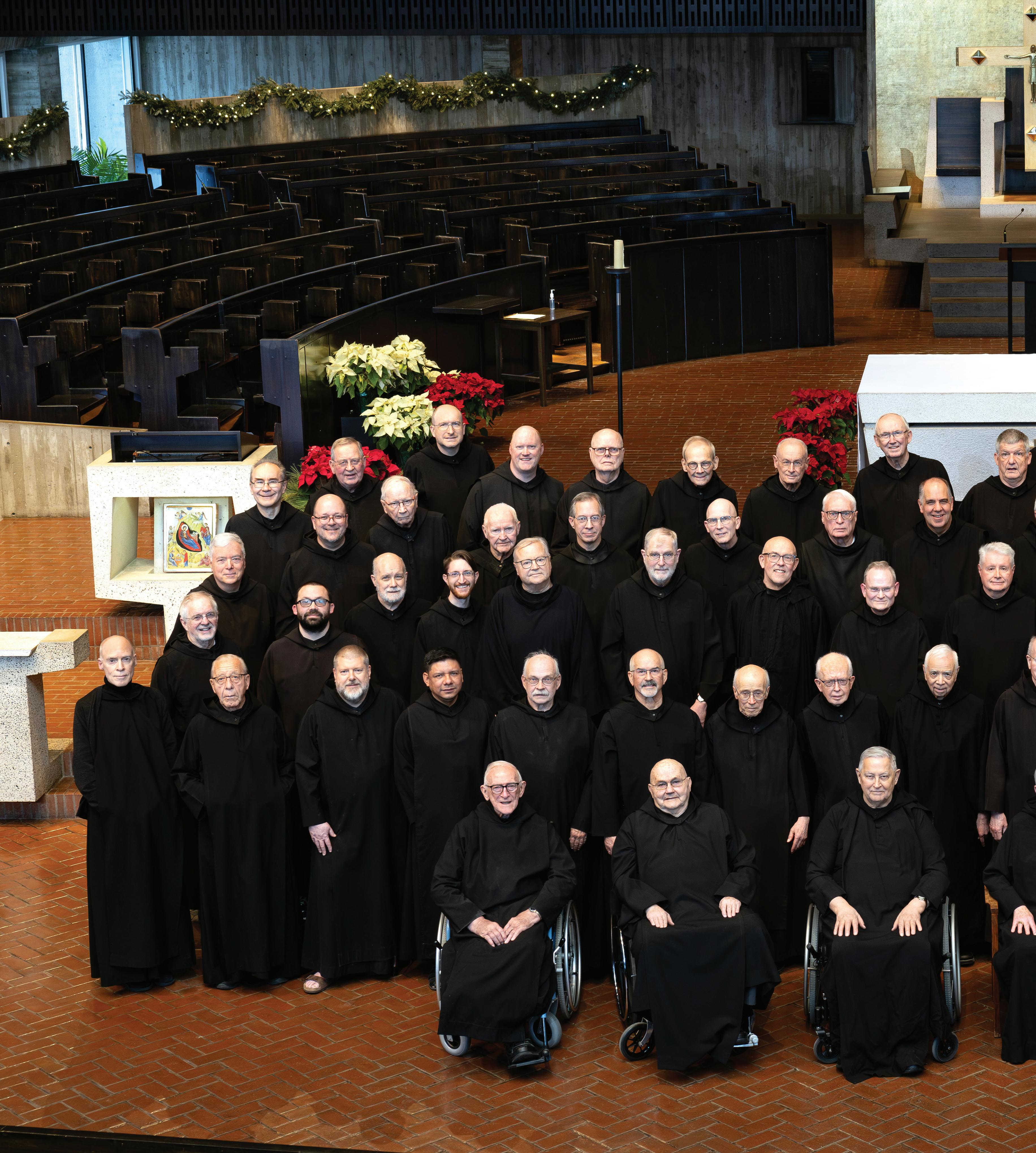
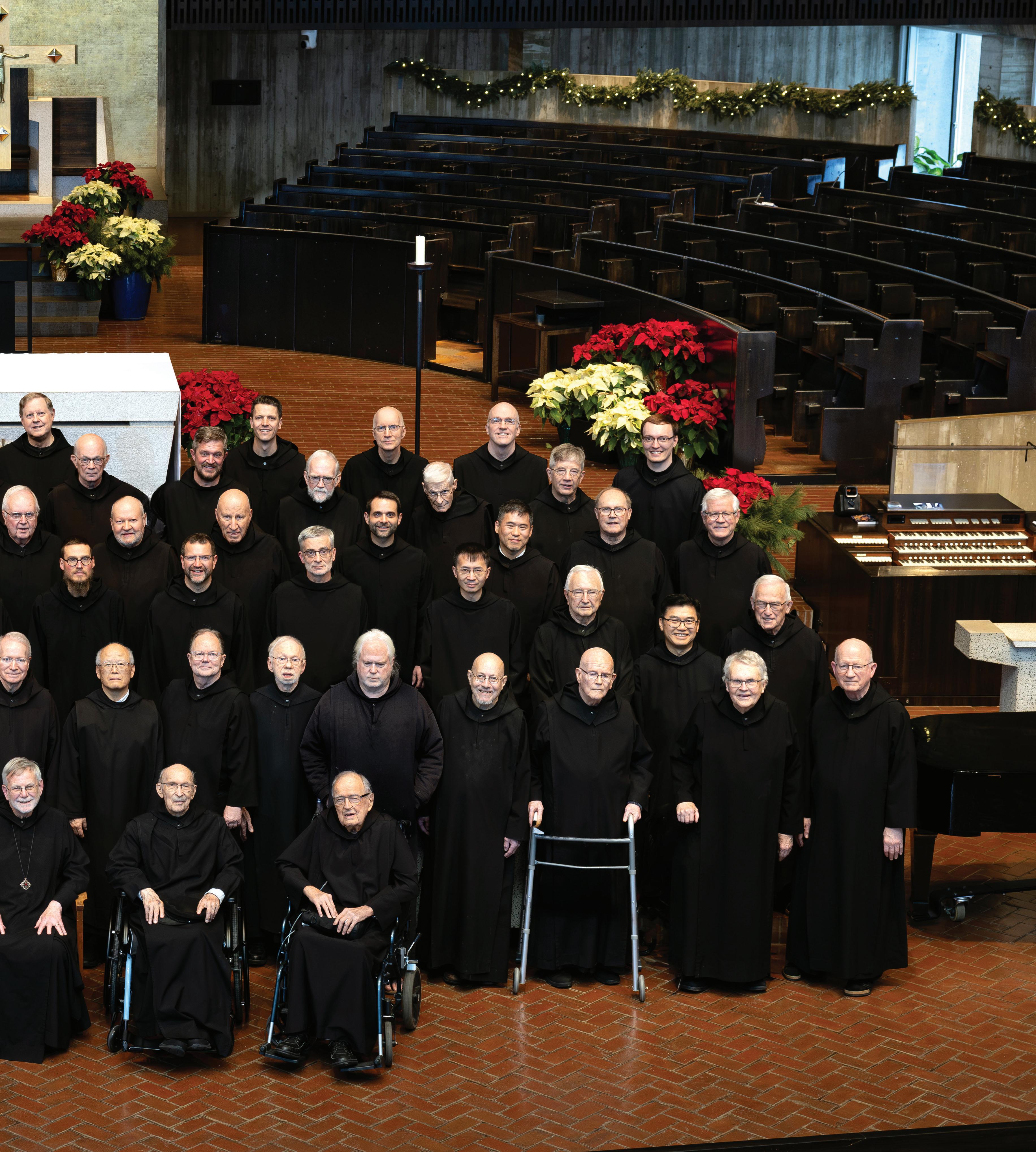
Finally, we’re happy to offer our readers a new group photo of the monastic community, taken on January 6.
A joyful and blessed fifty days of Easter to all!
William Skudlarek
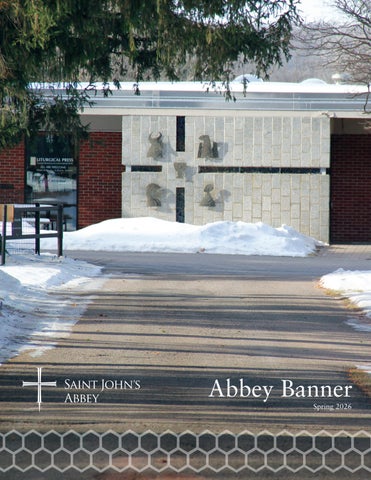
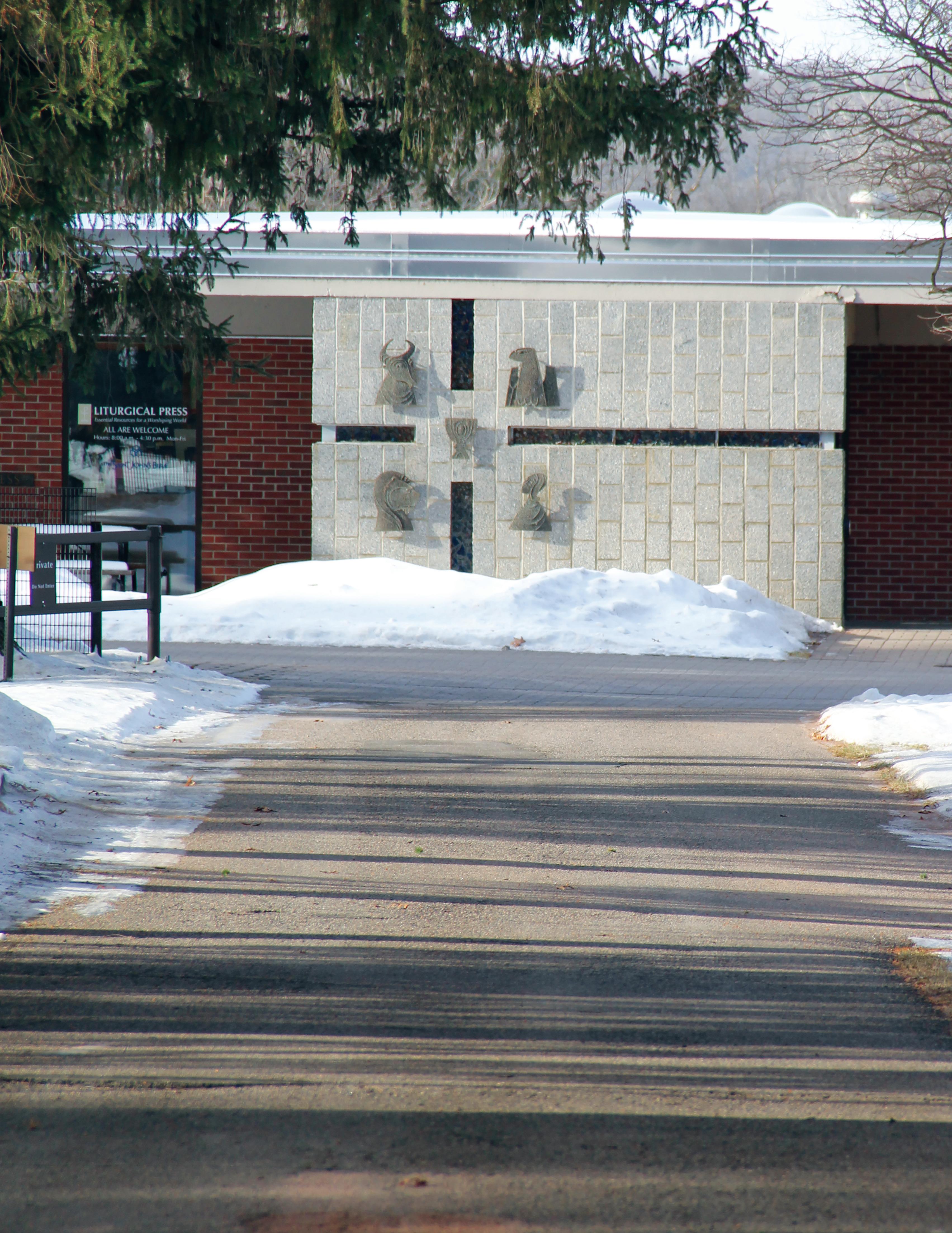
Cover: Façade of the Liturgical Press. Photo by Brother Alan Reed, O.S.B.
Our Benedictine Witness in a Time of Fear
Abbot Douglas Mullin, O.S.B.
On the evening of the day Jesus was raised from the dead, the disciples huddled behind locked doors, paralyzed by fear that they would share their master’s fate. Into that fearful gathering, the Risen Lord came and stood among them and said, “Peace be with you” (John 20:19). In a moment of grace, their fear gave way to faith, and their isolation was transformed into mission.
Today, too, fear continues to close doors and divide communities. In recent months, individuals and families across Minnesota have been living under the shadow of threat and uncertainty as immigration enforcement actions are conducted in ways that are often indiscriminate and dehumanizing. When neighbors are suspected or harassed because of how they look, speak, or are perceived, the moral fabric of our common life is strained.
The Catholic tradition recognizes the responsibility of governments and citizens to uphold laws and protect the common good. At the same time, it insists that the enforcement of law must always respect human dignity, avoid profiling, safeguard family unity, and show particular care for the vulnerable. Justice that lacks compassion ceases to be justice, and authority exercised without reverence for human life undermines peace.
Our Benedictine way of life is shaped by the call to receive all guests as Christ (Rule of Benedict, 53:1), to listen with the ear of the heart (RB Prologue 1), and to cultivate communities rooted in pax (RB Prologue 17)—the peace our Risen Lord shares with his disciples. In this spirit, we call all people to reject violence in every form: physical, verbal, structural, or symbolic. Fear-driven actions, coercion, dehumanization, and demonization, whether by individuals or institutions, wound the common good and erode trust. The path forward must be one of restraint, dialogue, and nonviolence.
We pray that immigrants and their families will know deliverance from fear and be filled with the Easter gift of peace. We pray as well for public officials and law enforcement officers, that their work may be guided by wisdom, restraint, nonviolence, and reverence for humanity. And we pray for all our communities, that Easter hope may strengthen us to resist indifference, refuse retaliation, and remain attentive to the suffering of others.
Saint John’s Abbey remains committed to being a place of welcome, prayer, and moral witness, trusting that the light of the Resurrection still shines in the world. Our society will be renewed not by intimidation or force, but by actions that uphold human dignity, foster the common good, and radiate the reconciling peace of the Risen Christ.
Paul Middlestaedt
The First Inklings of Liturgical Press
Virgil Michel’s European Sojourn
William Skudlarek, O.S.B.
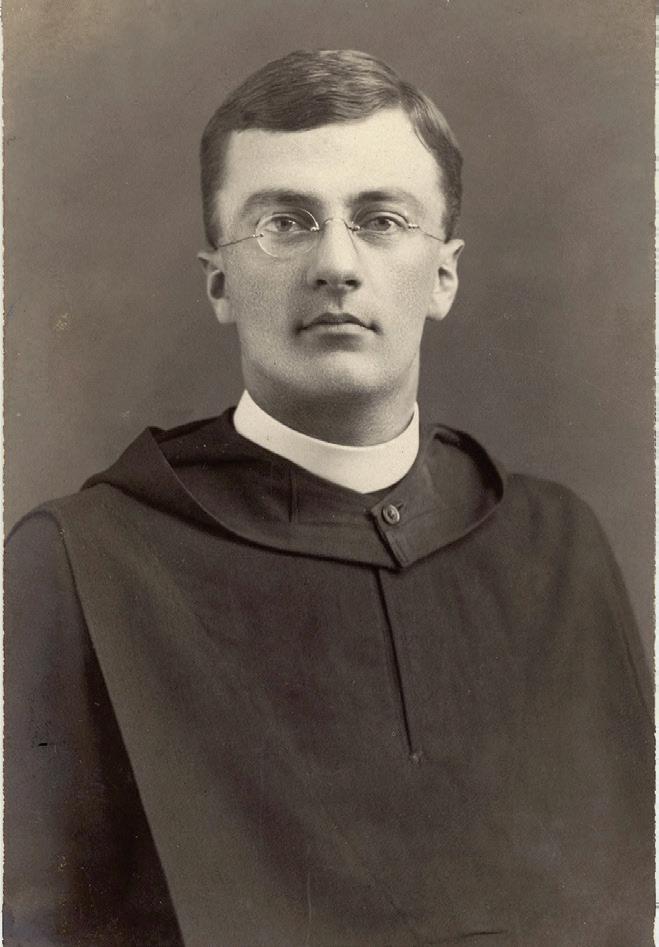
When Father Virgil Michel left for Europe in February 1924, he was a thirty-three-year-old dean at Saint John’s College, already accomplished in both intellect and artistry. Having earned a doctorate in English and a licentiate in theology from The Catholic University of America, he had spent six years teaching English, philosophy, and Spanish. He also directed the student orchestra for a time and even coached basketball.
Abbot Alcuin Deutsch recognized Father Virgil’s versatile gifts and asked him to study scholastic philosophy in Europe so that he could later teach it in Latin to seminarians. Yet Abbot Alcuin had another purpose as well: he wanted Father Virgil to encounter the Benedictine communities then leading a vibrant liturgical renewal on the continent and to bring back ideas that could enliven worship in the United States.
Encounters with the Liturgical Movement
From February 1924 to August 1925, Father Virgil studied first at Sant’Anselmo in Rome and later at the University of Louvain in Belgium. His diary from this period is part travel journal, part spiritual notebook—a record of his developing awareness that the renewal of Christian life
begins with the renewal of the liturgy.
Immediately upon his arrival in Europe, Father Virgil visited Mont César Abbey in Belgium, which he called “the center of the new liturgical movement” (Diary, February 26, 1924). That visit proved pivotal. Writing to Abbot Alcuin the next day, he marveled at the way ordinary people actively joined in the liturgy and concluded, “It is surely time for us to begin.” In that moment, what was intended as a side observation became the seed of a mission.
Growing Disillusionment with Scholasticism
While enrolled at Sant’Anselmo, Michel’s letters show that he grew increasingly impatient with the abstract scholasticism dominant in seminary philosophy courses. “Scholastic philosophy here does not sally forth to make
conquests,” he observed, “It shuts itself within its stronghold” (Letter to his confrere Father Severin Lauer, July 4, 1924). He sensed that the church’s intellectual life had become isolated from the living faith of the people and that something richer was emerging in the liturgical renewal movement he was witnessing in Europe.
A Vision of Living Worship
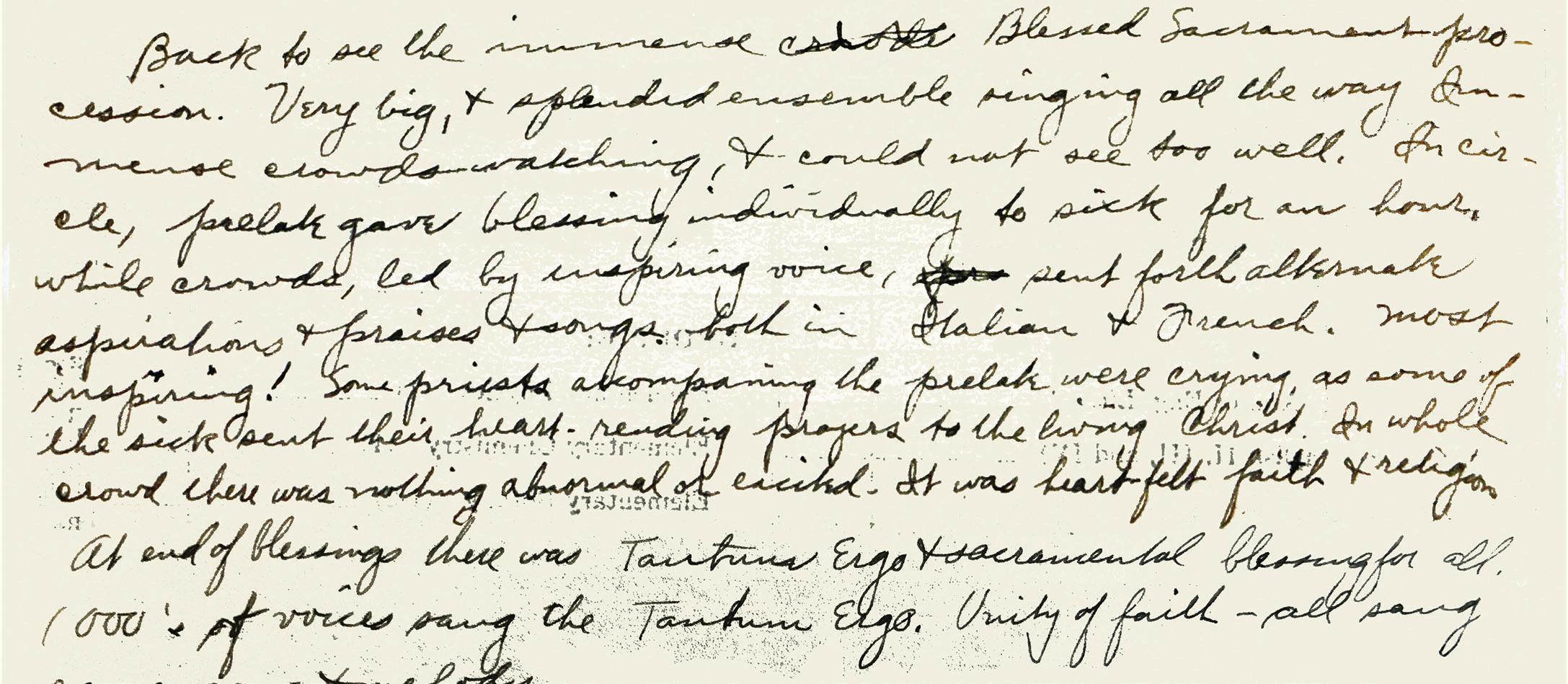
The turning point came in July 1924 at the shrine of Lourdes in France, where he took part in a massive Eucharistic procession. There he saw thousands of believers from many different countries singing and praying in unity—priests and laity, healthy and sick, all joined in one voice of faith. This experience revealed to him what worship should be: not a clerical performance but a communal act of praise of God in which the whole Church participated, not only in hymns and prayers but in compassionate care for those who were suffering. The encounter at Lourdes crystallized his conviction that authentic Catholic renewal must begin in the liturgy and lead to service.
From Student to Founder
In the final months of his stay, Michel’s reflections took concrete form. While finishing his studies at Louvain, he began sketching ideas for a publication that would promote liturgical renewal in the United States. His diary entries from April 1925 show the evolution of a plan for Orate Fratres, later to become
Worship magazine. Discussions with European monks and publishers further encouraged him to think of the liturgy not only as a pastoral priority but as a movement requiring communication, education, and community—a task for printing presses as much as for pulpits.
When he returned to Saint John’s in late summer 1925, he was no longer simply a philosopher returning from studies. His European encounters—with Benedictine liturgists, with thoughtful critics of scholasticism, and with the living faith
of the people at Lourdes—had kindled in him a conviction that the renewal of Christian life in America must be rooted in active participation in the Church’s worship. From that conviction grew both his founding of Liturgical Press and his lifelong dedication to the liturgical movement.
His final diary entry, written at sea on August 29, 1925— “Foggy”—seems almost emblematic. The fog lay behind him in Europe’s harbors, but also before him as he sailed toward a future whose outlines were only just emerging: a future in which he would become the leading voice of liturgical renewal in America.
Father Wiliam Skudlarek is editor of Abbey Banner and Executive Director of the North American Commission for Monastic Interreligious Dialogue.
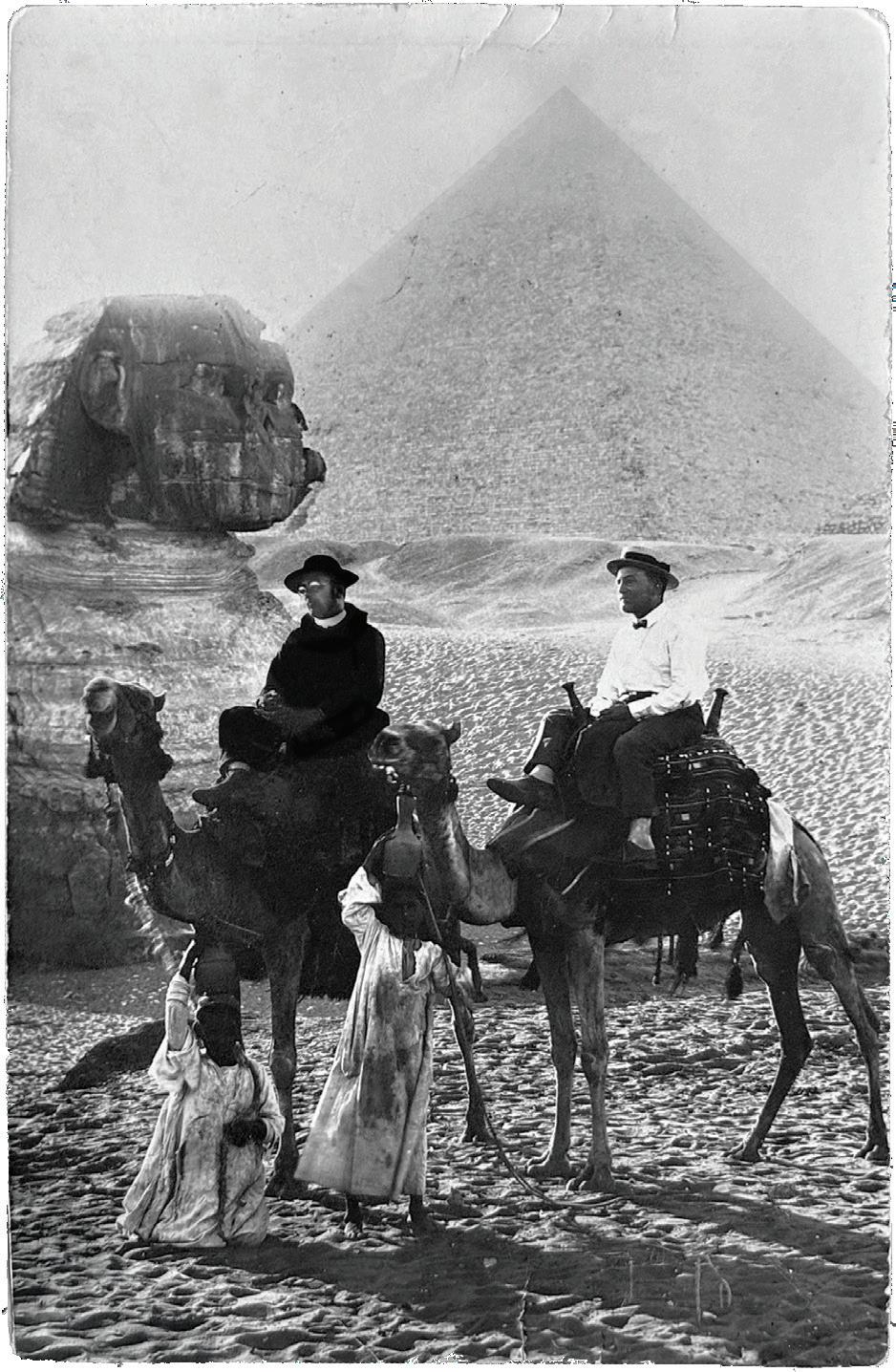
Father Virgil and his father in Egypt
Father Vigil’s diary entry for July 20. 1924, Lourdes
Liturgical Press: The Past 100 Years
Peter Dwyer
One hundred years ago this spring, Father Virgil Michel planted a metaphorical mustard seed that grew into a publishing house known across the world. The seed was a booklet titled Offeramus, written to encourage lay people to participate more fully in the Mass. More booklets followed over the summer, laying the foundation for The Liturgical Press and what came to be called the Popular Liturgical Library. In November of that same year Father Virgil published the first issue of Orate Fratres (“Pray, brethren”), a journal devoted to liturgical practice and renewal. In these efforts, and much of what followed, Father Virgil advocated for active participation of all the faithful—clergy, religious, and laity—in the liturgy and life of the Church.
Looking back now, the success of Father Virgil’s endeavor might seem smooth. Yet this apostolate of Saint John’s Abbey has prospered despite a century of change in the Church, the world, and the business of publishing.
Father Virgil’s untimely death in 1938 was the first great challenge. By then Orate Fratres and The Liturgical Press were well established, and the liturgical renewal movement that Father Virgil championed had taken root in the United States. Still, the loss of his leadership and zeal posed a great risk. Providentially, Father Godfrey Diekmann, stepped in as editor of Orate
Fratres, carrying forward the vision of a renewed Church. Stewardship of books and pamphlets, though, was not as well served, falling as it did to a succession of monks on temporary assignment.
In 1951, The Liturgical Press was at a crucial stage of development. Orate Fratres had more than 5,000 subscribers, and the Popular Liturgical Library was evolving beyond booklets. The publishing program by then included important Benedictine titles, notably A Short Breviary for Clergy and Laity (at a not-soshort 1,600 pages), and The Rule of Benedict. That same year the enterprise moved from the basement of the university auditorium to refurbished army barracks near the campus powerhouse.
Recognizing the need for stable, full-time leadership, Abbot Baldwin Dworschak, appointed Father William Heidt, a Scripture professor, as Director. Soon thereafter, in a letter dated December 7, 1951, Father Godfrey invited recent Saint John’s University graduate, John Dwyer—my father—to become Business Manager. “The work of the liturgical press [sic] has of recent years expanded to such an extent that it will be necessary to secure the services of a full time manager,” he wrote. The dual leadership structure of Father William and John Dwyer would help guide and grow the Press through its next quarter century and the transformative years of the Second Vatican Council.
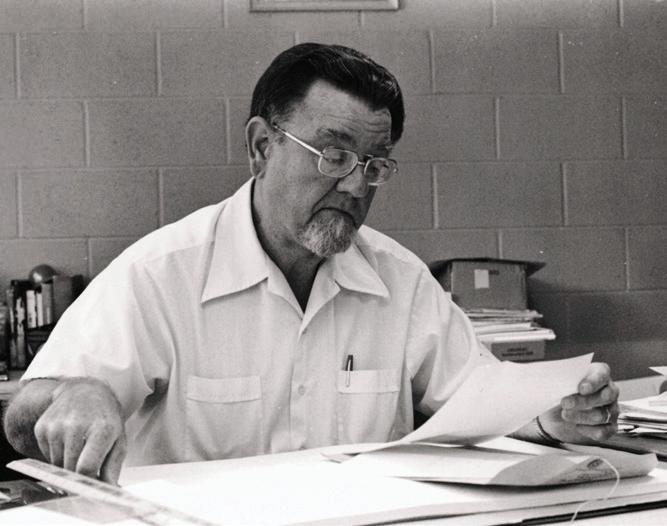
Dwyer, The Liturgical Press Business Manager 1952-1986
First in liturgy, and then Scripture, The Liturgical Press anticipated key developments of the Council. Notably, these efforts included two of the first English language hymnals, Our Parish Prays and Sings in 1958, and the Book of Sacred Song in 1959. Around the same time, the Press began publishing the Old and New Testament Reading Guides for pastoral staff and lay people. The series was well received and continues today in its third iteration, known as the New Collegeville Bible Commentary.
Vatican II sparked a creative surge in Catholic publishing. In rapid succession The Liturgical Press launched a periodical people’s missal called Celebrating the Eucharist, a Sunday bulletin with reflections on Scripture, and the Loose-Leaf Lectionary for priests and deacons.
By its fiftieth anniversary The Liturgical Press was beginning to reckon with a crowded publishing scene. When Father Daniel Durken became Director in 1978, the Press began a long and fruitful partnership with Little Rock
John
Scripture Study, the first widely used Catholic Bible study program in the United States. Then, in the early 1980s, Father Daniel led a restructuring of the company, creating editorial, marketing, and finance departments to better manage the growing enterprise and workforce.
When Father Michael Naughton took over as Director in 1988, The Liturgical Press already had a small but important catalog of scholarly titles in liturgy and Scripture. During his tenure academic work became a major focus due to the 1990 acquisition of Michael Glazier Inc., and Pueblo Books. These purchases increased the roster of academic authors and greatly expanded the catalog in theology.
By the late 1990s Liturgical Press—having dropped “The” from its name—was a threelegged stool, offering strong lists for academic, pastoral, and popular (consumer) audiences. Revenue had nearly doubled and new annual resources, such as Living Liturgy for parishes and seasonal reflection booklets
became parish mainstays. But the clergy abuse crisis at the turn of the millennium caused profound rupture within the Church, and affected all Catholic institutions, including Liturgical Press.
In 2001, the seventy-fifth year of Liturgical Press, I was named Director, having served the previous twelve years as Marketing Director. The abuse scandal was a paramount concern, but digital publishing and rapidly evolving technology were serious challenges too. Nevertheless, two long term hard-cover book commitments moved ahead: first the publishing program based on The Saint John’s Bible, followed by the multi-decade Wisdom Commentary on Scripture.
ordained—speaking from both tradition and the contemporary world.
Four years ago this spring, as Liturgical Press approached its centennial, Abbot John Klassen, appointed Dr. Therese Ratliff as Director. She is the first woman and second lay person to lead the apostolate, reflecting a major shift of the last seventy years. In that time, Catholic publishing has steadily grown to include the gifts of all the faithful.
In those same years, Liturgical Press began to develop new projects inspired by the vision of Virgil Michel. The first fruit from this effort was Psallite, a collection of music for liturgy composed from the Sunday Scriptures. The second result came a few years later when the monastic community approved the remarkable investment in Give Us This Day. It was counterintuitive to launch a new print periodical in the digital age, but its daily rhythm of prayer and reflection found immediate resonance. Father Virgil would surely appreciate its diversity of voices— women and men, lay and religious and
This brief look back at the history of Liturgical Press cannot begin to do justice to the enormous contribution of hundreds of staff, both monastics and lay people. Nor to the thousands of authors, artists, composers, and translators whose work Liturgical Press has been privileged to publish. Together they have produced more than 4,000 books, many hundreds of music and art compositions, and thousands of issues of periodicals.
Over the past 100 years, the journal Worship, originally Orate Fratres, has served as a public square for liturgical renewal and scholarship. Though Worship will conclude publication with this anniversary year, Liturgical Press will carry forward the vision of Virgil Michel in new forms. The mustard seed he planted continues to propagate and bear fruit.
Peter Dwyer retired from Liturgical Press in the summer of 2022 after thirty-three years of service, including twenty-one as Director.
Peter Dwyer’s last day as director, with Therese Ratliff.
Rooted in Wisdom, Reaching for Tomorrow
Liturgical Press at 100
Therese Ratliff
As an apostolate of Saint John’s Abbey, Liturgical Press offers a distinct voice and vision for what it means to be church in today’s world. Always rooted in Benedictine wisdom, since 1926 we have been committed to meeting the moment with an ecclesial stance that “welcomes all as Christ.” Now, in 2026, with a world navigating intense polarization, that unique voice and vision is all the more urgent.
Standing on a threshold—with a century behind us and a new century before us—we recommit ourselves to a mission of hospitality and hope. Through every book, journal, digital publication, and online event, as well as through our popular daily prayer companion, Give Us This Day, we seek to bring a rich tradition into a lively conversation with tomorrow, to spring faith into action, and to open prayer into life.
Over the years, Liturgical Press has given voice to saints and scholars, seekers and dreamers, ordinary believers whose prayers shape extraordinary lives. From groundbreaking theological scholarship to works that support a rich, robust spirituality, our publications have played a central role supporting the faith of a richly diverse church. I am honored to lead this publishing
ministry where every voice matters in the Body of Christ.
While much of our work and ministry has been sustained by earned income, we have now entered a new era. The ever-changing realities of our current society and the evolving needs of the Church have created a frontier where Catholic publishing is truly a missionary endeavor. This calls for new forms of partnership: joining together with others who have a heart for what Liturgical Press offers the Church in our contemporary cultural and ecclesial landscape.
To pave the way for a vibrant future, we at Liturgical Press have launched an ambitious Centennial Campaign that will strengthen our mission and ensure that our voice and the voices we amplify continue to inspire and sustain the people of God for generations
to come. Our Centennial Campaign is the first step toward building an enduring foundation of philanthropic support for Liturgical Press.
As we step forward with grace and joy into the next 100 years, it is exciting to look back and to consider how far we have come and to dream about future possibilities.
In this spirit of hope, we are delighted to share with you a few projects on our horizon.
Developing a Prayer App Liturgical Press will create an intuitive, interactive digital platform inspired by centuries of Benedictine prayer practices, reflection, and formation. By integrating the nourishing inspiration of Give Us This Day with Liturgical Press content, video, and audio, this mobile app will meet followers wherever they are and however they pray. The plans underway with our app developer have, so far, demonstrated the powerful impact potential for current and prospective audiences.
Connecting with Young Adults
To reach new generations of readers and followers, we will develop innovative digital and video media that speak with clarity, authenticity, and joy. We hope to bring Benedictine wisdom and Catholic tradition to the next generation of audiences worldwide who are searching for spiritual depth in an increasingly
noisy world. We believe that the Benedictine values, including hospitality, stability, community, and stewardship, are exactly the types of values that are connecting young people to the Church today.
Expanding Mission Outreach
Grounded in the Benedictine call to live out the corporal works of mercy, we seek to place prayer and spiritual companionship into the hands of those most in need. Building on our long-standing commitment to provide Give Us This Day to incarcerated individuals, an act of mercy that brings comfort, dignity, and hope, we will broaden this ministry by offering complementary subscriptions to hospital chaplaincies, economically challenged parishes, campus ministries, and nursing homes.
Supporting our shared understanding that every voice matters, we are also planning to
develop more Spanish language resources to recognize, publish, and serve the growing communities of Latino Catholics.
On October 24, 2026, we will mark our centennial with a celebration for friends of Saint John’s Abbey and Liturgical Press. The event coincides with the sixty-fifth Anniversary of the Dedication of the Abbey and University Church, so our festivities will culminate with joining the monastic community for its Evening Prayer service, at which there will be a blessing for the entire Liturgical Press team.
Whether or not you can celebrate with us in Collegeville, we ask you to prayerfully consider supporting our mission and helping us spread the word as we embark on the next century of service to the Church. Join your voice with ours as we shape the tradition for tomorrow. And we would love to hear from you: What has Liturgical Press meant
to you? How have our publications informed your work and ministry? What are your hopes for the century to come? How can Liturgical Press be your partner in helping faith find its voice in tomorrow’s world?
For one hundred years, Liturgical Press has carried the living voice of the Church forward, offering an essential centrist ecclesial ethos and culture, rooted in Benedictine wisdom and alive with hope for tomorrow. And I, for one, can’t wait to discover what’s next!
Therese L. Ratliff, PhD, is the Director and CEO of Liturgical Press.
Join us as we honor our past, celebrate our present, and participate in our vision for what lies ahead. Please visit our celebration page to check out the video series that shares 100 years of Liturgical Press mission, learn more about our work, and contribute to our future at litpress.org/100.
Margaret Nuzzolese Conway, Liturgical Press Development Manager
Pope Leo XIV Visits Sant’Anselmo
Henry Braun
During my year of volunteer service at the Collegio Sant’Anselmo, the Benedictine center in Rome, I’ve been blessed with countless enriching experiences. One of the most memorable was attending an audience and Mass with the Holy Father, Pope Leo XIV, who came to Sant’Anselmo on November 11, 2025 to celebrate the 125th anniversary of the dedication of the church.
In the days leading up to the celebration, the entire community was on edge, intent on making sure every detail would be perfect. I remember telling Abbot Primate Jeremias Schröeder how surprised I was that the Holy Father himself would attend. He admitted that they, too, had been astonished when the Pope accepted the invitation. Many of the brothers shared the same sense of disbelief that they would soon be in the presence of the Holy Father. The event quickly became the focus of the week, and classes all but paused until the day arrived.
When that day finally came, the entire Aventine Hill, where Sant’Anselmo is located, was closed for several hours before and after the Mass, which began at 5:00 p.m. We residents were asked to take our seats in the church an hour beforehand. It felt surreal to realize I was about to see the Holy Father at such close range, quite different from the distant view I’d had at Saint
Peter’s Square or Saint Peter’s Basilica. As the liturgy began, the Holy Father processed in from the back of the church with the Abbot Primate, two cardinals, and several Abbot Presidents. The Mass was deeply moving— not only because it was my first time attending such a liturgy in a setting smaller than St. Peter’s, but also because the Holy Father’s homily was profoundly beautiful.
After the Mass, all of us from the Collegio and our guests lined up around the cloister to greet him briefly. He spent only a few seconds with each person, and everyone seemed to be wondering what to say and how to address him. As he drew near, I debated whether to speak in Italian or English. One of the American brothers reassured me that English was fine—it was, after all, the Holy Father’s native language. I’d almost forgotten that he was American, which made me even more anxious to meet the first
American Pope—especially one from Chicago.
When Pope Leo reached us, the Prior introduced Andrew Jurek and me as volunteers from Minnesota. The Holy Father smiled and asked, “Are you two really from Minnesota?” When we replied yes, he said, “You just had your first snowfall there.” It was such a simple comment about the weather, yet it struck me deeply. For a moment, it felt as though I were speaking with someone from home about the familiar rhythms of winter and the changing of the seasons.
After the Holy Father departed, many of the brothers could hardly believe that we had actually met him in and shaken his hand. For me, it was one of the great highlights of my life, an encounter I will always carry with gratitude and joy.
Henry Braun (SJU 2025) is serving for a year at Sant’Anselmo as a member of the Benedictine Volunteer Corps.
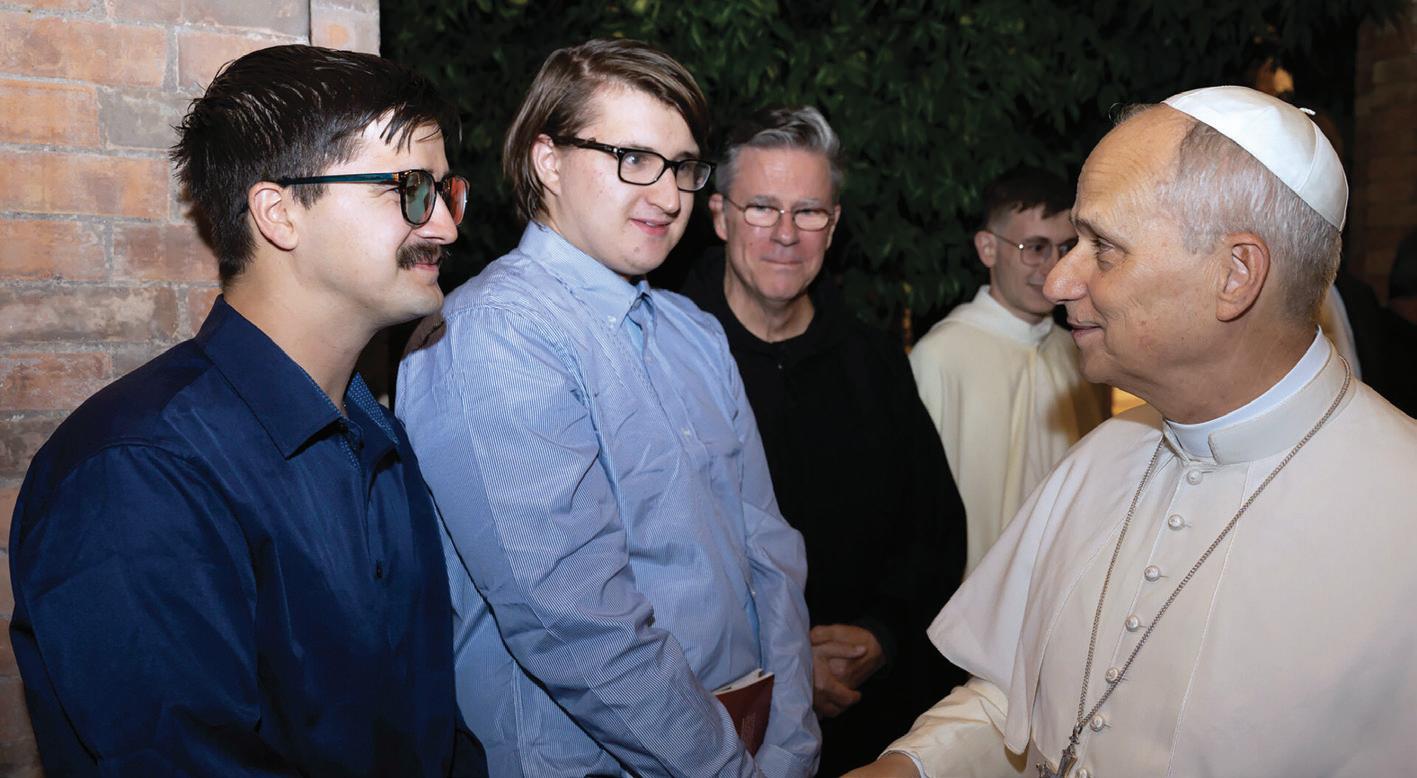
The author and fellow volunteer Andrew Jurek meet Pope Leo
Reflections on the Pope’s Visit
Jeremias Schröder, O.S.B.
The biggest event—not just of the past month but really for a long time—was the visit of Pope Leo XIV here at Sant’Anselmo on 11 November. The occasion was the 125th anniversary of the dedication of our abbey church in 1900. At that time, Pope Leo XIII surely would have wanted to be there, but as the Roman question, i.e., the relationship between the Holy See and the Kingdom of Italy, had not yet been resolved, he couldn’t leave the Vatican. We thought that his namesake Pope Leo XIV might take things up and invited him—and to our great surprise and joy he accepted. We had two months or so to prepare, and prepare we did, by fixing a few features of Sant’Anselmo, preparing a dignified Benedictine liturgy, sprucing up our sacristy and remembering
what the Popes have meant for our house in the past.
Pope Leo XIV stopped here on the way back from a day of rest at Castel Gandolfo. He appeared relaxed and in a very good mood, as befitted our liturgy, which, in the best Benedictine manner, was solemn but without the rigidity some invariably associate with Papal Masses. This may well have been the first time that a Roman Pontiff celebrated Mass at Sant’Anselmo. We know that John XXIII and John Paul II came to the house, but they did not preside over a Eucharist.
The Mass was transmitted live on several channels and can still be found on YouTube.
I would like to highlight two elements from the homily delivered by Pope Leo XIV on 11 November that touched me
in a particular way. The first is the image of the heart. The Pope spoke of Sant’Anselmo as “a reality that should aspire to become a beating heart in the great body of the Benedictine world.” To be honest, I would not have dared to express it in that way, for two reasons.
The first has to do with Benedictine sensitivity. At first, the foundation of Sant’Anselmo and of the Benedictine Confederation did not meet enthusiasm everywhere. Not long ago, the archivist of Göttweig showed me correspondence from 1913 in which several abbots hoped that the imminent death of Abbot Primate de Hemptinne might provide an opportunity to “dismantle” a Confederation they considered an un-Benedictine enterprise. History took another direction, and today the existence of both the Confederation and our house in Rome is regarded almost everywhere as a blessing. Yet we should never obscure a simple fact: Real Benedictine life takes place in the monasteries themselves, in the large abbeys and the small priories, in communities scattered across so many regions of the world.
My second hesitation comes from a warning frequently given by Pope Francis. The late Pope often cautioned us against developing a “headquarters mentality,” urging us instead to look toward the peripheries. I always found this very helpful. In any centre of governance—perhaps
even here in the Roman Curia— there is a temptation to imagine that what happens there is what truly matters. In the world of politics this may be the case in Washington, Paris, or Palazzo Chigi, but the Church lives in its members, not in a headquarters. The real centre is Christ, not Rome.
For these reasons I listened to Pope Leo’s words with some apprehension. And yet, the Pope did speak them, and they are beautiful words, valuable words. He himself linked the image of the heart with the biblical image of the temple from which living waters flow, bringing life and fruitfulness. There is truth in this, I thought, and we should not hide the light of Sant’Anselmo. Sure, we are not an international headquarters in a military or administrative sense. But we are a place of encounter and experience, a place where relationships are woven, where ideas born in our Benedictine world can be shared and disseminated. The image of the heart evokes the circulation of blood: a shared vitality, an energy that does not exhaust itself but can reach even the most remote parts of the Benedictine world. In this sense, I want to affirm with joy and enthusiasm what Pope Leo said a week ago.
A second element of the homily struck me deeply: the Pope’s phrase that from its origins, monasticism has been “a frontier reality.” He wrote: “Indeed, men and women have always been
pushed by their monastic vocation to plant centres of prayer, work, and charity in the most remote and difficult places, often transforming desolate regions into fertile and flourishing landscapes, agriculturally, economically, and above all spiritually.” For me, this resonated with Pope Francis’s theme of the periphery.
Pope Leo expressed this in terms of “frontiers.” It reminded me of the German-American philosopher and theologian Paul Tillich. He himself was a Grenzgänger, one who lives on the frontier, and he developed the theological concept of Grenzüberschreitung, the crossing or overcoming of boundaries. For Tillich, the human being always lives at the boundary between the finite and the infinite, the conditioned and the unconditioned, time and eternity, the self and the Other. The boundary is not a wall but a theological place, where human finitude encounters the divine.
Revelation itself is the supreme boundary-crossing: God transcends the distance toward humanity, and humanity is made capable of transcending toward God. The Incarnation is the decisive moment when the boundary between divine and human is traversed. In Christ, Tillich sees the “New Being,” in whom all essential boundaries are crossed: between Creator and creation, heaven and earth, eternity and time, sacred and profane, pure and impure, the chosen people and the nations. The Resurrection is the crossing
of the final frontier, death itself. The Church, for Tillich, is the community that continues this movement beyond all boundaries —geographical, linguistic, cultural, political, religious. As you know, I come from the tradition of the Missionary Benedictines, and this reflection has been deeply meaningful for us when considering our missionary vocation.
Pope Leo’s words now also made me rethink monastic life itself in the light of this boundary-crossing. Community life is already a movement beyond the isolation of the individual; our monastic vows express this even more clearly: Obedience means transcending self-will; stability is going beyond inner agitation and unrest; poverty is going beyond the security we want to construct for ourselves; and chastity means to overcome our impulse to possess the other. In this sense, the description of monasticism as a frontier reality is incredibly rich. Thank you, Pope Leo!
These reflections of the Very Revered Jeremias Schröder, Abbot Primate of the Benedictine Confederation, first appeared on the OSB.ORG website and are published here with his permission.
Exploring Faith Together at CSB and SJU
Denys Janiga, O.S.B.
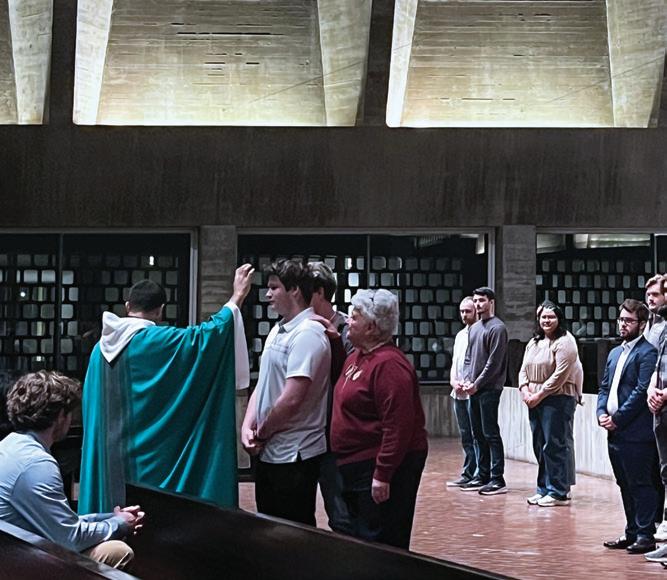
At SJUfaith—the campus ministry office for Saint John’s University—the Order of Christian Initiation of Adults (OCIA) offers a purposeful and prayerful journey into the Catholic faith for adults and college students alike. OCIA— formerly known as the Rite of Christian Initiation of Adults (RCIA)—is the Church’s process for welcoming and forming new members through education, discernment, prayer, and sacramental preparation.
From fall through spring, students gather weekly for scripture study, discussion, community prayer, and personal reflection. These sessions invite participants to explore the richness of the Catholic tradition, deepen their relationship with God, and prepare to receive the sacraments of initiation: baptism, confirmation, and Eucharist. Between sessions, students continue their formation through guided readings and video reflections.
The OCIA process at Saint John’s is not limited to those who have never been baptized.
It also welcomes baptized Christians seeking full communion with the Catholic Church and baptized Catholics who have yet to complete the sacraments of initiation. Through prayer, study, and the support of campus ministers, sponsors, and peers, participants discern God’s call in their lives and grow in faith as a community.
I have served as catechist for the OCIA program at SJUfaith since the fall of 2024. When I began, I wasn’t sure what to expect. The experience has stretched and blessed me in ways I couldn’t have imagined. Accompanying young adults on their journey of faith has been both a blessing and a privilege. As I help students grow in understanding and faith, I find that my own faith deepens as well.
The program’s impact on campus has been striking. In the spring of 2025, six Saint John’s students completed the initiation process, receiving the sacraments after months of preparation. For the 2025–26 academic year, sixteen students are taking part—ten from Saint John’s and six from the College of Saint Benedict. The CSB campus ministry program includes eighteen OCIA participants this year.
This upward trend mirrors what’s happening across the country. College campuses such as Arizona State University and Notre Dame have reported notable increases in OCIA participation, and dioceses nationwide
have seen significant year-overyear growth in adults preparing to enter full communion with the Church. Urban parishes—especially in New York City—have even doubled or tripled their OCIA enrollments within a single year.
The movement is not confined to the United States. In Europe, record numbers of adults are preparing for baptism. In France, for instance, at the 2025 Easter Vigil, over 17,800 people—10,384 of them adults—were to be baptized, representing a remarkable 45% increase over the previous year.
Pastoral leaders and sociologists point to several contributing factors: renewed interest among young adults (especially Gen Z) in spiritual depth and belonging, revitalized parish outreach following the pandemic, and a rising number of adults who never received early sacramental formation.
Here at Saint John’s University, OCIA continues to be a powerful path for students to encounter Christ, experience the mystery of the sacraments, and enter more deeply into the life of the Church. In Collegeville and around the world, OCIA stands as a living bridge uniting seekers, inquirers, and believers on their shared journey of faith.
Brother Denys Janiga is a seminarian at the School of Theology and Seminary and a Benedictine Fellow at SJUfaith.
Partnering to Protect the Hardwood Hills
John Geissler
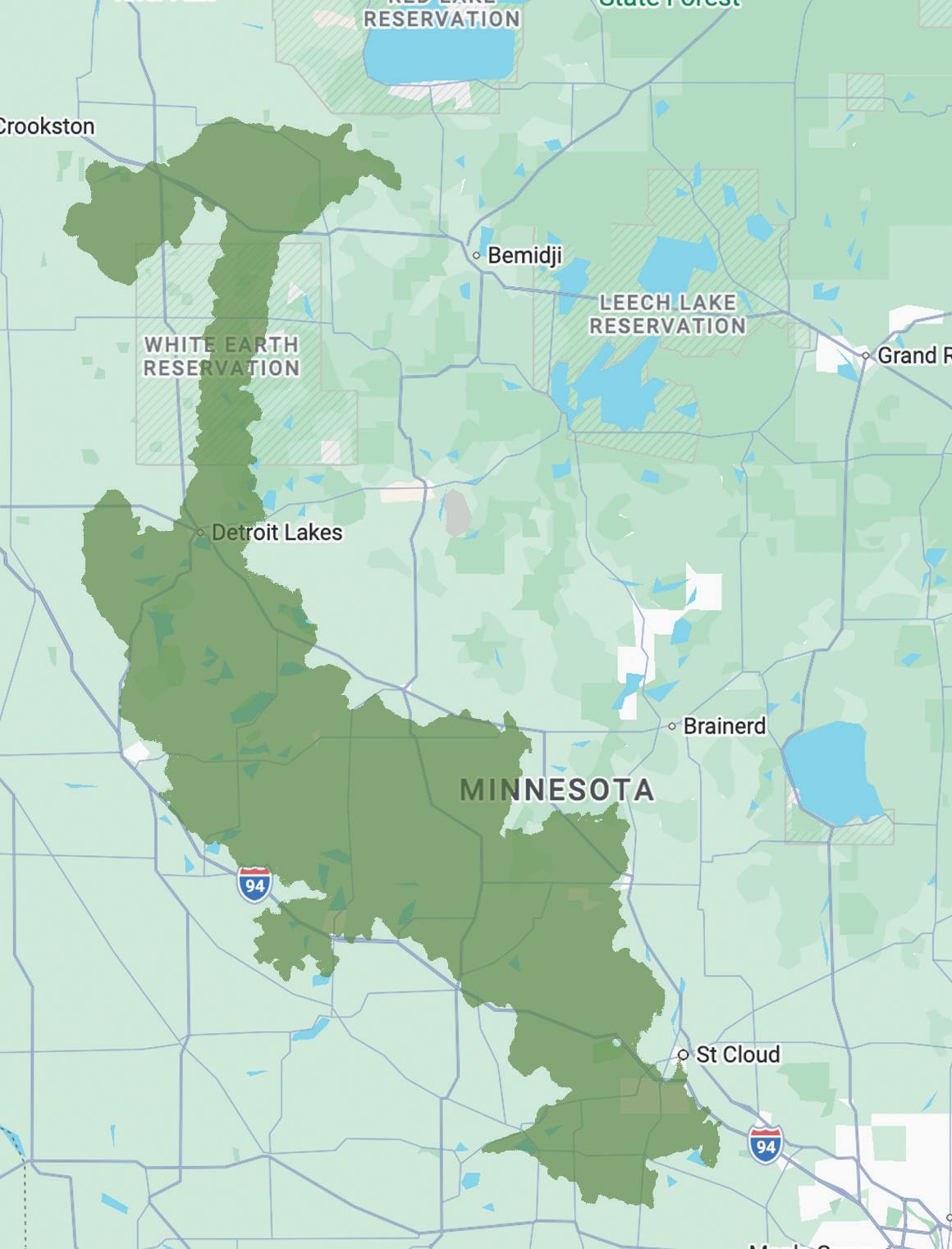
Minnesota’s diverse ecological landscapes are categorized into ecoregions defined by similar native plant communities—prairies, deciduous forests, aspen parklands, and coniferous forests. These ecoregions are further divided into smaller sections and subsections that capture local variations in habitat.
One of these, the Hardwood Hills subsection (of which The Saint John’s Abbey Arboretum is a tiny part) marks a striking transition zone in west-central Minnesota where forests meet prairies. Covering roughly 3.5 million acres, the Hardwood Hills are shaped by glacial activity from the last ice age, forming steep slopes, rolling hills, and a complex network of lakes and wetlands. This
beautiful, biodiverse region includes oak savannas, prairies, and deciduous forests that sustain abundant wildlife—including 85 species designated by the State of Minnesota as Species of Greatest Conservation Need.
Yet, over 60% of the native habitats in this region have been lost in the past century due to land conversion. The remaining natural areas are increasingly precious and urgently need protection.
Saint John’s Abbey and the Mission to Protect
At the heart of these efforts stand Saint John’s Abbey and Saint John’s Outdoor University,
which have taken a leadership role in protecting the Hardwood Hills. Since 2008, the Outdoor University has partnered with the Minnesota Land Trust and the Stearns County Conservation District to secure grant funding that helps private landowners permanently protect and restore land within the Avon Hills, part of the greater Hardwood Hills landscape.
These collaborative conservation projects strengthen not only local ecosystems but also the broader environmental health of Minnesota—enhancing water and air quality, supporting groundwater recharge, preserving soil integrity, and fostering native plant communities that sustain wildlife.
Among the region’s rare and declining species are red-shouldered hawks, cerulean warblers, Blanding’s turtles, four-toed salamanders, smooth green snakes, least weasels, fluted-shell mollusks, and beloved pollinators such as bumblebees and yellow swallowtail butterflies.
How Conservation Easements Work
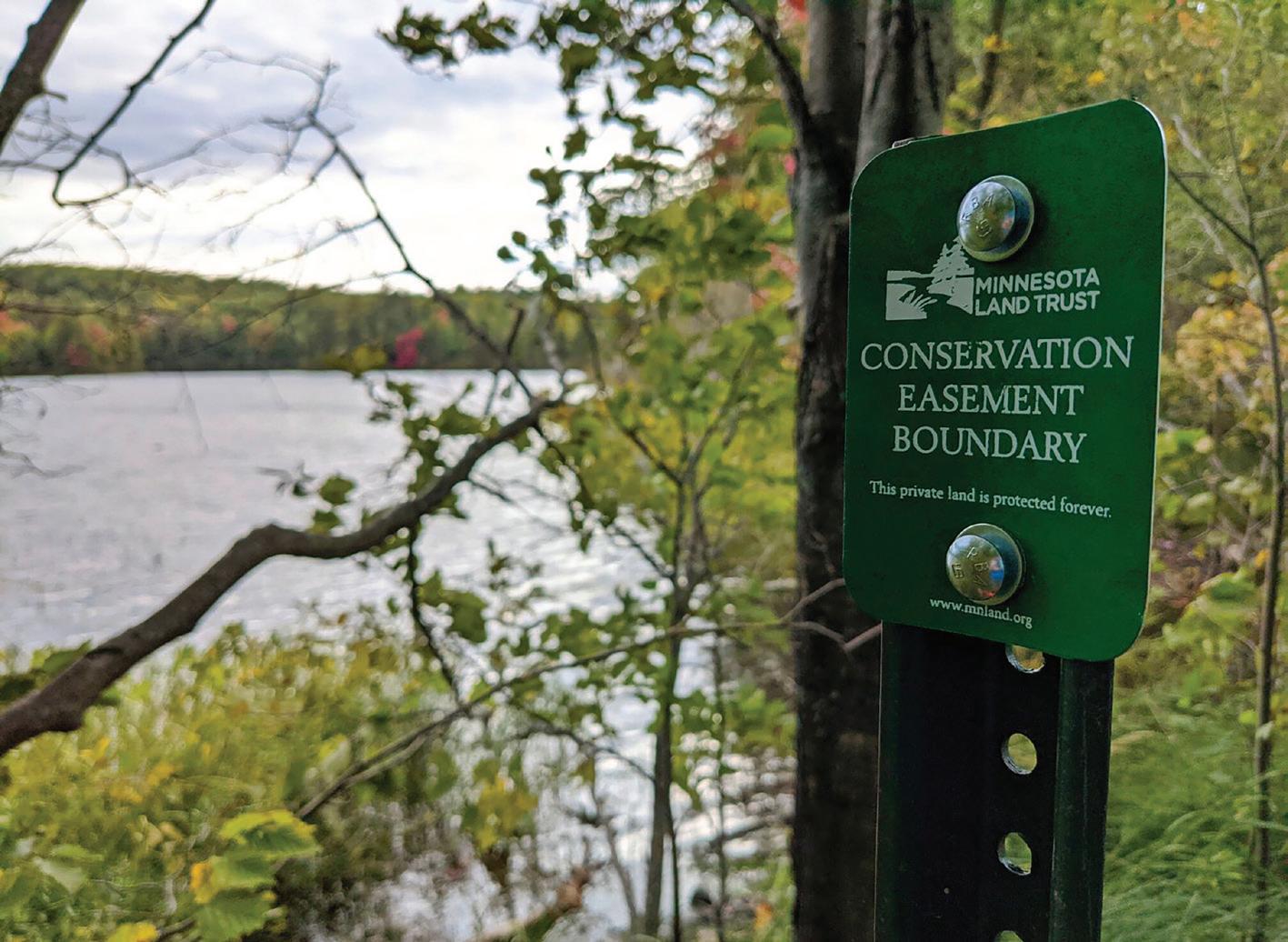
With the help of conservation-minded landowners and state support, nearly 3,920 acres in the Hardwood Hills have already been permanently protected through conservation easements.
A conservation easement is a voluntary, legal agreement that ensures land remains private
while restricting development to safeguard its ecological value. Each easement is custom-designed to reflect the unique character of the land and the goals of the landowner. In many cases, easements also offer tax benefits, an added incentive to stewardship.
Because 92% of natural land in the Hardwood Hills is privately owned, conservation easements are crucial for achieving long-term habitat protection. These agreements build connected corridors of protected land that give wildlife the space and continuity they need to thrive.
Here is an example of how a greater whole can be built. The 650-acre St. Wendel Tamarack Bog Scientific and Natural Area lies only 1.3 miles from the 124-acre Partch Woods Scientific Natural Area. When one family chose to protect 41 acres of land, and another added 170 more, their efforts helped create nearly 1,000 acres of contiguous, permanently protected habitat.
Sustaining the Vision
Thanks to renewed funding from the Outdoor Heritage Fund, as recommended by the LessardSams Outdoor Heritage Council (LSOHC) and appropriated by
the Minnesota Legislature, our partners can now help private landowners permanently protect an additional 330 acres of Hardwood Hills habitat.
This ongoing partnership embodies the Benedictine spirit of stewardship deeply rooted in Saint John’s Abbey’s mission—to live in harmony with creation and care for the land as a sacred trust. The great joy of this work lies in connecting local landowners with the resources to preserve and restore the places they love for generations to come.
John Geissler is Outdoor U Director and Abbey Land Manager.
If you own natural land in the Hardwood Hills, your property is part of this remarkable landscape—and it can be protected forever.
To learn more, please contact:
John Geissler, Abbey Land Manager and Saint John’s Outdoor University Director jgeissler001@csbsju.edu
Leah Hall, MN Land Trust Senior Project Manager lhall@csbsju.edu
Reframing Prayer: From Petition to Presence
Cyprian Weaver, O.S.B
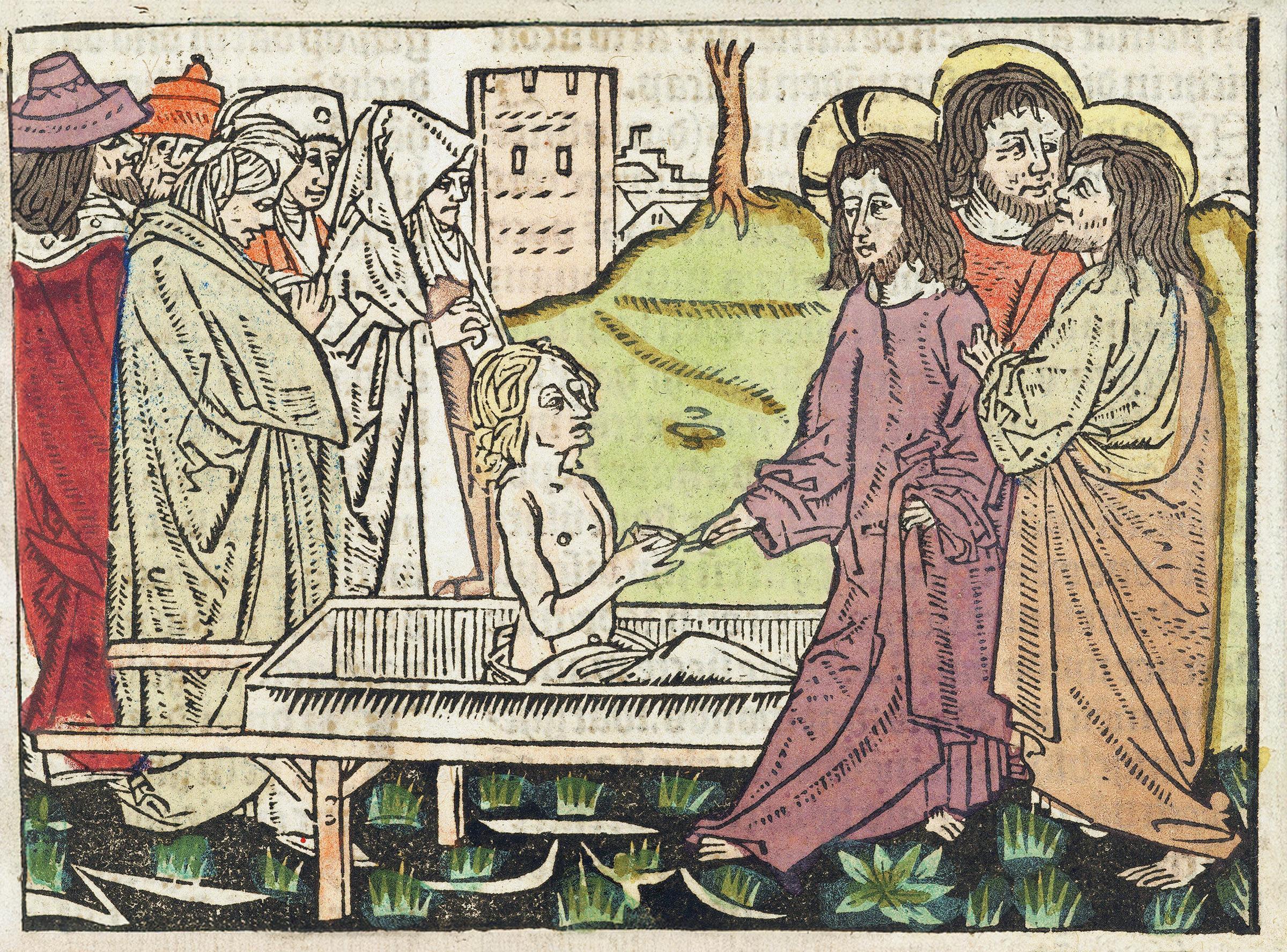
The Gospel account of Jesus’ meeting with the widow of Nain (Luke 7:11-17) reveals a way of understanding prayer, mercy, and monastic life that begins not with our initiative but with God’s. Luke simply shows a funeral procession: a widow burying her only son, carried along by grief. There is no description of the mother’s grief, no profession of faith. Into this silence, Jesus comes uninvited, stops the procession, sees her, is moved with compassion, and acts.
What is striking is what is missing: no one asks for a miracle, no one intercedes, no one prays. Prayer as asking, explaining, or persuading has collapsed. Precisely there, Christ acts. This corrects a common distortion of prayer as something we do to make God care. Jesus’ own prayer is not persuasion but alignment: human will with divine will. Yet in Nain he acts even before that alignment, revealing a God whose mercy is not conditioned by performance.
The hinge of the story is Luke’s line: “When the Lord saw her, he was moved with compassion.” Before touching the bier or speaking a word, Jesus sees. He does not analyze or theologize; he allows the widow’s desolation to appear before him. To be seen in affliction is already to be known by God. Prayer begins not with our words but with God’s gaze—and with our atten-
tion to that gaze. Even when we are too numb to pray, God is not absent; he meets us “at the gate of our grief,” not at the altar of success.
When Jesus says, “Do not weep,” it is not correction but compassion. He speaks into grief, not around it. Prayer, then, is not where suffering is explained away, but where it is held within God’s embrace. Many know seasons when prayer has no words, only endurance. The widow shows such spaces are not outside prayer; they may be where Christ comes closest. Prayer is less about moving God than remaining where God comes.
Here monastic life gives the Gospel concrete form. The widow does not move toward Jesus; she stays where death has placed her, and Jesus comes there. Stability is not only geographic but existential: remaining in the given condition—even when barren or repetitive. Prayer matures as we relinquish the impulse to “make something happen” and consent simply to be present: not productive, but faithful. Silence that feels empty is not absence but often prayer’s ripest form— presence before Presence when words are spent.
To pray “phenomenologically” is to honor what is actually given instead of rushing to explanation: attending to dryness or distraction without forcing meaning. One does not grasp at God or seek special experience; one listens and lets God give
himself. Luke’s narrative models this: it shows Jesus seeing, being moved, acting, then stopping. It teaches the monk not to outrun what is given.
In that light, the widow “prays” without praying. She neither asks nor expects yet is encountered. This frees monastic prayer from anxious self-measurement: “Am I doing it right?” The Gospel answers quietly: remain; God comes. In the Divine Office, that means abandoning the need to feel something, standing in silence where prayer happens. It means letting silence be silent, trusting presence without proof. In dryness, stability bids us not to flee.
Suffering—our own or others’— is approached as Jesus approaches the widow: first by seeing. Before helping or explaining, one allows another’s pain to register. This yields fewer explanations and more reverent presence: prayer extended into life as compassionate attention before solution. Prayer is not what we do to reach God, but what happens when we stay where God may pass—in choir, in silence, in difficulty—until Christ passes by.
The miracle’s quiet climax is restoration: “He gave him back to his mother.” Jesus does not possess the raised man or use him for display. The real miracle is not only raising the dead but returning them to love. Prayer likewise restores us within God’s care. Miracles and prayer do not solve everything; they reveal
where God is found. The crowd’s verdict—“God has visited his people”—is the deepest theology: God does not prove himself from afar; he visits.
This remaining could be mistaken for Quietism or Pietism, but distinction matters. Quietism imagines that passivity is chosen; here, passivity is reception. The widow is not serene but overtaken by grief. Remaining is not a technique but an endurance into which Christ intrudes. Quietism presumes a subject choosing emptiness; here, the subject is decentered: God does not merge; God interrupts. The widow does not recognize Christ before-
hand nor fully afterward. Mercy crosses distance without erasing it—rupture, not absorption.
Benedictine life resists Quietism. Quietism minimizes repetition; Benedict sanctifies it. Remaining means returning to choir regardless of feeling, obeying rhythms given by vow and community. Stability is not stasis but trust that mercy knows where to find us. Silence is not a technique to gain purity but a refusal to flee. The Opus Dei is fidelity to the place where God may come.
This remaining is not Quietism, because it is not a technique of withdrawal; it is a fidelity of
exposure. We do not step back so God may act. We stay where life has brought us, and God acts from his own initiative. The whole synthesis may be said simply: God acts before prayer; silence is endured more than chosen; presence is communal, not privatized; mercy interrupts instead of merging; meaning follows event.
For the monk, four Benedictine notes gather the whole: humility, stability, silence, and the Opus Dei—habits of remaining where mercy can find us. The miracle at Nain does not promise that every loss will be reversed, only that God will not abandon us to our losses. We are not asked to pray better, but to remain until, again, “God has visited his people.”
Father Cyprian Weaver, a research scholar in the role of neuroendocrinology in regenerative and genomic medicine, is a retired associate professor of medicine, cardiology, at the University of Minnesota. This article is an abridged version of a conference he gave to the monastic community on March 14, 2026.
The Raising of the Son of the Widdow of Nain. A hand-colored woodcut from a Biblia pauperum (“Paupers’ Bible”), a genre of medieval picture book created between the 13th and 15th centuries to teach biblical stories through visual imagery. Artist unknown.
Row
Row
Row 1: Roger Klassen, Blane Wasnie, Donald Tauscher, Abbot Douglas Mullin, Roger Kasprick, Alberic Culhane
2: John-Bede Pauly, Julius Beckermann, Isidore Glyer, Jhonatan Olivan, Isaac Connolly, John Meoska, Dale Launderville, David Manahan, Paul August Jasmer, John Patrick Earls, Robert Koopmann, Kelly Ryan
3: Gregory Miller, Daniel Morgan, Dennis Beach, Jacob Berns, Timothy Backous, Nathanael Hauser, Luke Mancuso, Xavier Schermerhorn, Simon-Hòa Phan, William Skudlarek
Row 4: Efrain Rosado, Denys Janiga, Mel Taylor, Mark Kelly, John Brudney, Cyril Gorman, Daniel Ward, Benedict Leuthner, Thomas Andert,
Row 5+: Bradley Jenniges, Walter Kieffer, Eric Pohlman, David Allen, Alan Reed, Cyprian Weaver, Robert Kirkley, John Klassen, Paul David Paul Lange, Anthony Ruff, Travis Spillum
Not pictured: Thomas Gillespie, Jerome Tupa, James Phillips, Kevin Ludowese, Michael Bik, Neal Laloo, Joseph Schneeweis, Nickolas
Manahan, Dominic Ruiz, Robin Pierzina, Makoto Tada, Paul-Vincent Niebauer, Michael Kwatera, John Hanson, Schermerhorn, David Klingeman, Isaiah Frederick, Edward Vebelun, Kenneth Kroeker, John Chrysosom Long, Roman Paur,
Andert, Aaron Raverty, Stephen Beauclair, Nick Kleespie, Augustine Oh, Eric Hollas, Geoffrey Fecht Richards, Francisco Schulte, Ian Dommer, Michael Peterson, Lewis Grobe, Dunstan Moorse, Joseph Feders, Cletus Connors, Nickolas Becker, Aelred Senna, Richard Paul Crawford, Felix Mencias
Preaching in the Tanzanian Countryside
Nick Kleespie, O.S.B.
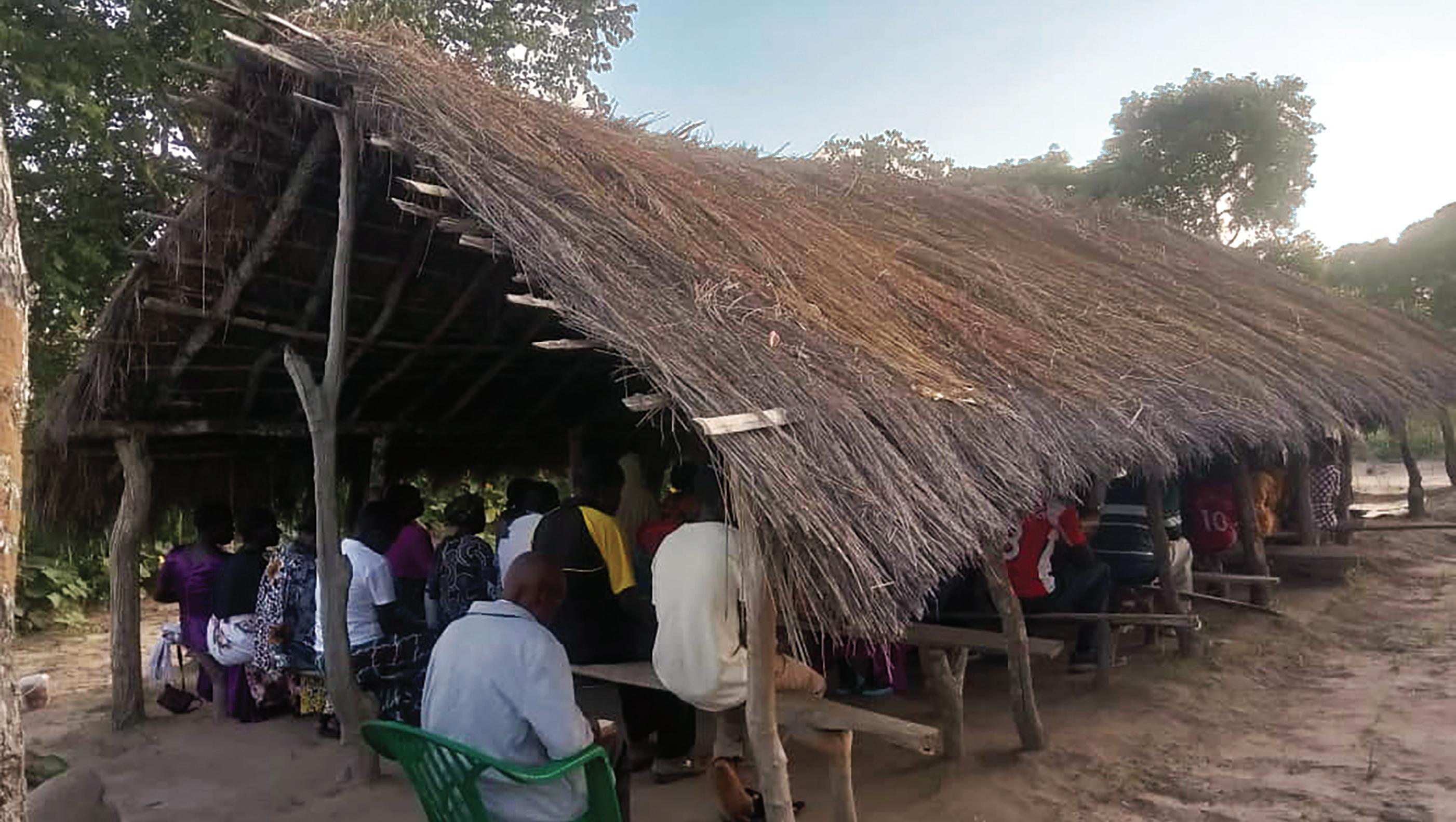
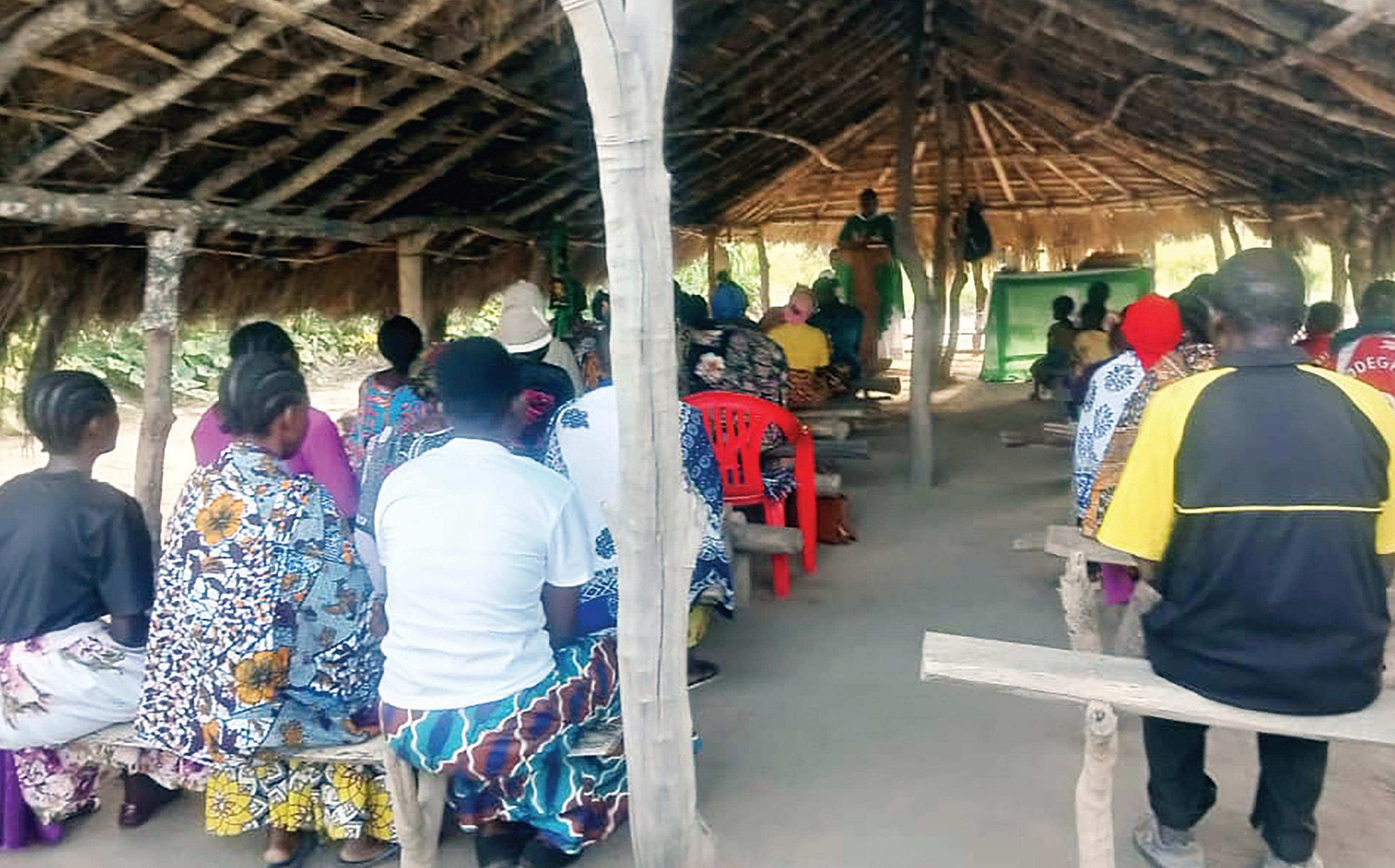
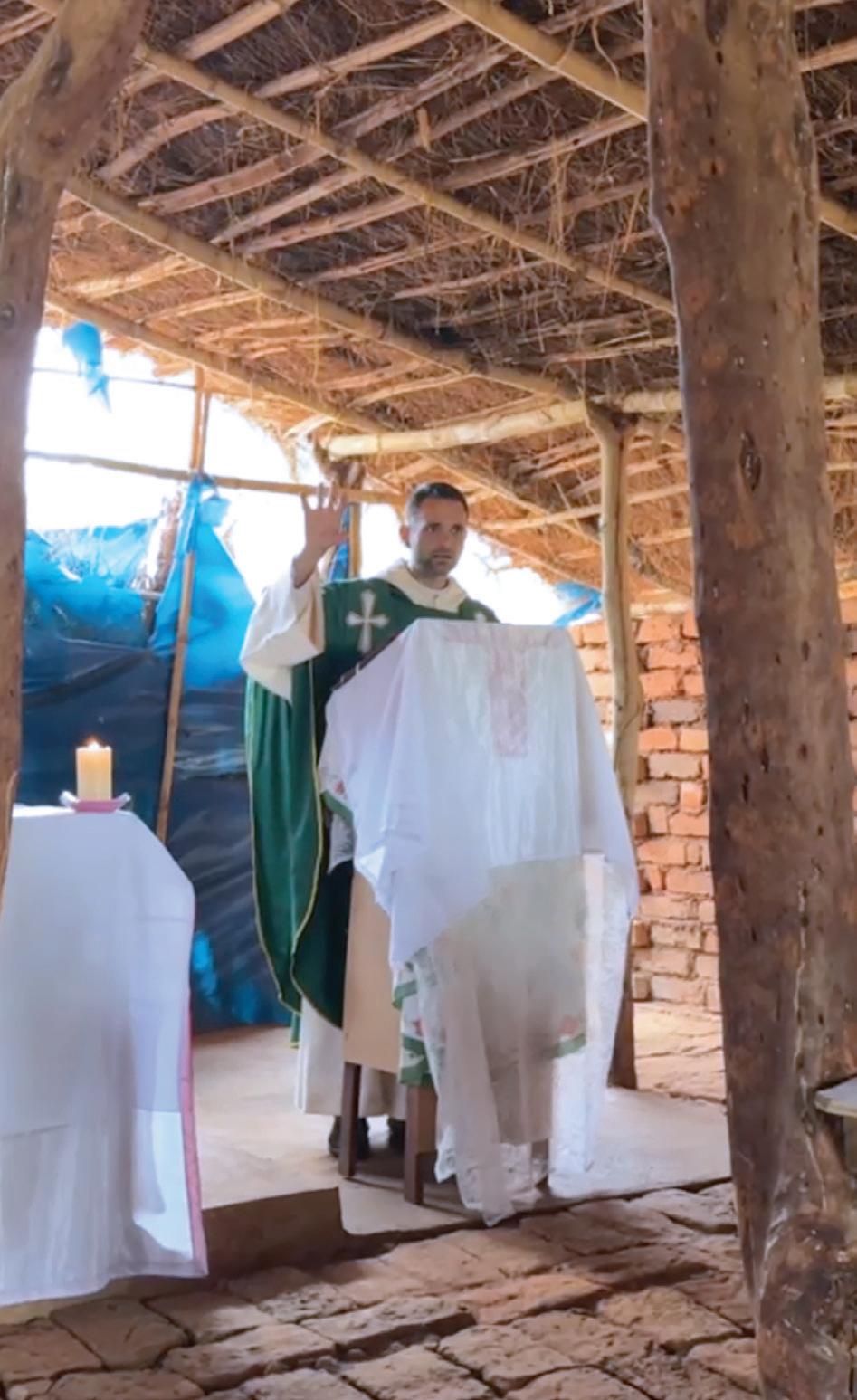
It is not often that you hear a homily preached about your own personal experience. Yet on the World Day of Prayer for the Poor, my monastic classmate, Father Lew, did just that. He began his homily at the 10:30 Sunday Mass at the Abbey Church by saying, “Fresh off a successfully defended thesis on preaching, our own Father Nick traveled in March to Tanzania for a well-deserved sabbatical. I’m not sure he remembers this, but a few months in, I called to see how he was doing. He told me he spent much of each day helping in the monastic kitchen and the orphanage, but that on weekends, before dawn, he was driven into the countryside to celebrate Mass in remote
villages. He said this was the highlight of his week.
“To my surprise, however, he added that these hospitable communities were also the most difficult congregations he had ever preached to. I assumed the language barrier was the problem. ‘No,’ he said, ‘I have Google Translate for that. The difficulty comes from the fact that I am preaching to the poor.’
“He went on: ‘For years as a priest, I’ve preached about the poor—about Jesus’ preferential love for them, and about our responsibility to reach out to those on the margins. But now I’m preaching to the poor themselves, and I find myself asking: What is the Good News that I have to share?’”
Hearing those words proclaimed back to me was both humbling and unsettling. Father Lew gave voice to something I had only begun to sense in my own heart. Preaching about the poor is one thing. Preaching to the poor is something else entirely.
For much of my priesthood, I believed my task was not so much to comfort the afflicted as to afflict (I would prefer to say “awaken”) the comfortable. I spoke about justice, generosity, and the moral demands of the Gospel. I challenged listeners to examine their privilege and to respond with action, often emphasizing the command from the Eucharistic Prayer: “Do this in memory of me.” There is truth in that. The Gospel does call us to do something with our faith.
But in the villages of Tanzania, before dawn on Sunday mornings, I found myself in a different place. Traveling down long dusty roads, I would arrive at small chapels—some brick and tin, others thatched with grass, each with a simple cross and altar. And yet, the people were already gathered, singing, clapping, dancing, and waiting with expectation.
They did not need to be persuaded that life is uncertain. Nor did they need a homily urging them to care for the poor; many already carried heavy burdens. Their daily existence was sustained by trust. And what they brought to the Eucharist was
joy. Children danced during the preparation and presentation of the gifts. Choir members swayed in rhythm. Offerings of grain, fruit, or a few coins were carried forward with dignity and reverence.
Standing before them, I began to understand the question Father Lew had posed: What is the Good News I have to share? The answer was not my familiar refrain that we are called to serve the poor and marginalized. It was more fundamental than that. The Good News was—and is—the person of Jesus Christ.
In the Gospel of Luke, Jesus reads from the prophet Isaiah
and proclaims: “The Spirit of the Lord is upon me, because he has anointed me to bring good news to the poor” (Luke 4:18). Later, responding to John the Baptist, Jesus says: “Go and tell John what you have seen and heard: the blind regain their sight . . . the poor have the good news proclaimed to them” (Luke 7:22). The proclamation of good news to the poor is itself a sign that the Kingdom of God has drawn near.
In those Tanzanian villages, these Scriptures came alive. The poor were not merely the object of charity; they were participants in the Kingdom. Christ was already among them.
In his Apostolic Exhortation Dilexi te (“On Love for the Poor”), Pope Leo XIV writes of a Church that goes out to the peripheries. He observes that in doing so, “Lives can actually be turned around by the realization that the poor have much to teach us about the Gospel and its demands” (#109). Elsewhere he adds, “In light of this [living among the poor], all of us must ‘let ourselves be evangelized’ by the poor and acknowledge ‘the mysterious wisdom which God wishes to share with us through them’” (#102).
All are transformed by the Gospel message. This has been true for me. I went to Tanzania thinking I would bring the Gospel to the poor. Instead, I found that they revealed it to me.
When they sang, they did so as people who believed Christ had conquered the struggles of this world and who trusted in the joy and hope of all he promised. When they welcomed me, they did so generously, as though they were welcoming Christ himself. As one shaped by Saint Benedict’s call to receive every guest as Christ, I recognized that hospitality immediately.
Gradually, my preaching changed. I spoke less about what people must do and more about what Christ has already done. Less about responsibility and more about grace. I proclaimed that the cross meets every suffering and that the resurrection promises that poverty and injustice do not have the final word.
I came to realize a deep truth: when the Good News is proclaimed with honesty, reverence, and love, it carries its own power. Our brothers and sisters who live in material poverty appreciate good theology, but
they do not need reminders of the world’s hardships. Their lives already bear witness to that. What they hunger for is what every human person desires—to be seen, to be known, and to be cherished by God.
Preaching to the poor has not diminished my desire to challenge the comfortable. But it has reordered my heart. Before we ask anyone to do the Gospel, we must first proclaim what God has done in Jesus. Before we call others to serve, we must announce that we ourselves have been loved.
As I listened to Father Lew’s homily on the World Day of Prayer for the Poor, I recognized a quiet conversion. The Good News I once framed primarily as a command to act has become, more clearly than ever, the love, mercy, and grace of Jesus Christ. And in proclaiming that Good News among the poor of Tanzania, I found myself transformed—and evangelized—in return.
Father Nick Kleespie is Chaplain at Saint John’s University. On July 1, 2026, he will become pastor of the Harvest of Hope Area Catholic Community, centered in Albany, Minnesota.
Monk’s Polyhedra Inspire Games and Puzzles
Aaron Raverty O.S.B.
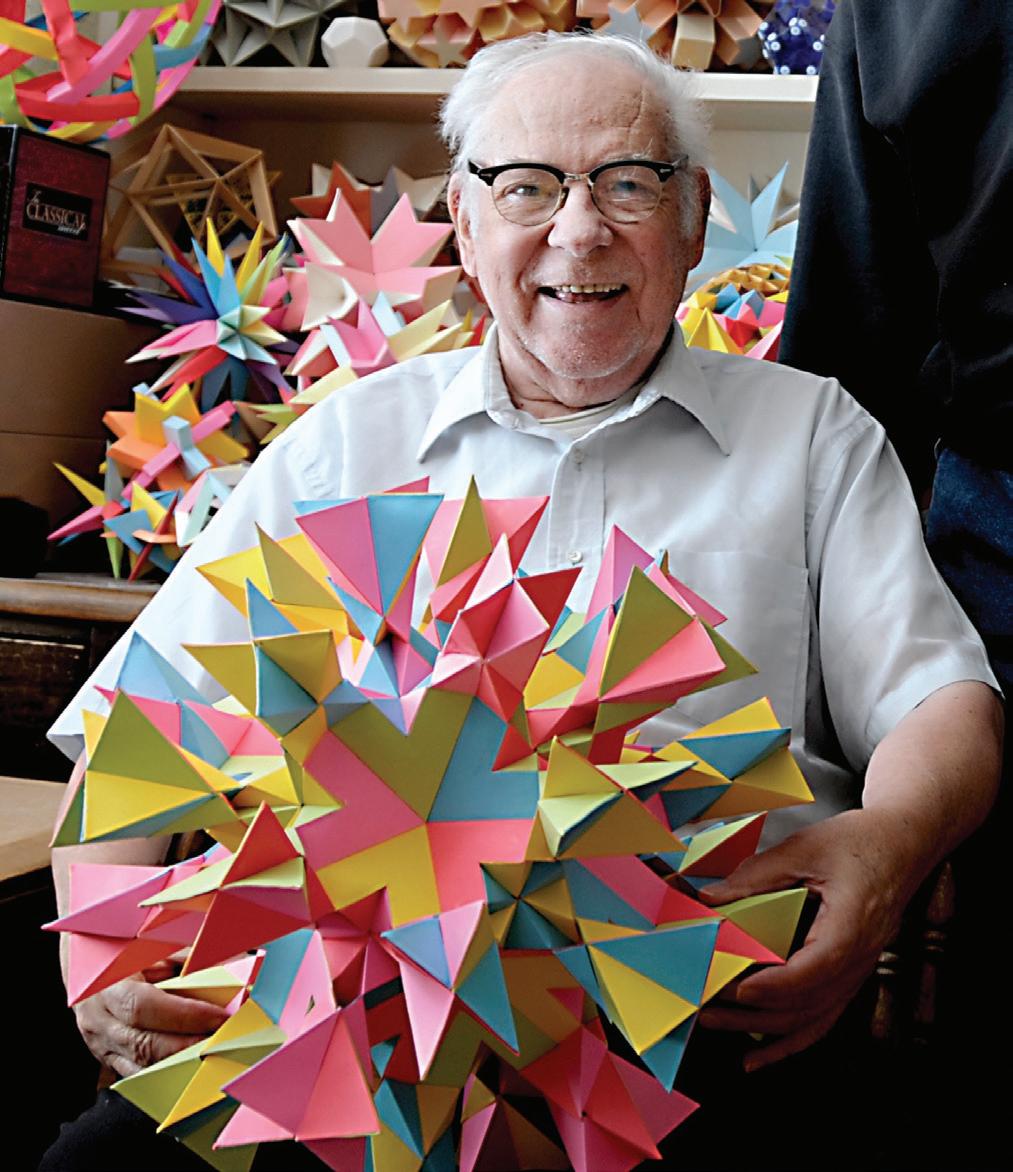
Perhaps you are among the fortunate who have seen, firsthand, one or more of Father Magnus Wenninger’s marvelous geometrical paper models. Or better yet, perhaps you had the pleasure of meeting him in person. The legacy this consummate mathematician and master of geometry left behind is both a wonder to behold and a story to be told. A monk of Saint John’s Abbey, Father Magnus entered his eternal rest in 2017; so meeting him in the flesh is no longer possible in this life. Yet one can still learn much about him through the many online resources that celebrate his life and work.
His spirit lives on, however, in some of the intriguing games and puzzles inspired by his remarkable geometric imagination and insight. The technical mastery and spatial intelligence required for such creations is considerable. One of these “puzzlers,” Junichi Yananose—a Japanese, prize-winning puzzle and game designer now living in Queensland, Australia— has crafted games with names like Magnus 60, as well as others with playful titles such as Tortoise Protocol and Hugo the Hippo. As Siobhan Roberts noted in her article “Puzzle Designers Search for That ‘Satisfying Click,’” published in The New York Times on December 22, 2025, “The puzzle is named after Magnus J. Wenninger, a mathematician, Benedictine monk and prolific builder of colorful paper polyhedra models, who died in 2017.”
Beyond his own extraordinary body of work, Father Magnus also sparked the imagination of others, inviting them to explore the world of polyhedra more broadly. The gaming and puzzle world is but one arena where his influence continues to unfold.
Even Pope Francis has found in the polyhedron a powerful metaphor to express theological insight. While it is unlikely that the pope drew this image directly from Father Magnus, the resonance is striking. In his encyclical Fratelli tutti, Pope Francis speaks of “working to create a many-faceted polyhedron whose different sides form a variegated unity, in which ‘the whole is greater than the part.’…The image of a polyhedron can represent a society where differences coexist, complementing, enriching, and reciprocally illuminating one
another, even amid disagreements and reservations” (#215). Likewise, in Evangelii gaudium, he writes: “Our model is… the polyhedron, which reflects the convergence of all its parts, each of which preserves its distinctiveness. Pastoral and political activity alike seek to gather in this polyhedron the best of each” (#236).
It is inspiring indeed to see how the beauty and harmony of Father Magnus’ geometrical models continue to shape new forms of creativity and insight. Thank you, Father Magnus, for reminding us that even abstract geometry can reveal the elegance of God’s design.
Brother Aaron Raverty, a member of the Abbey Banner editorial staff, is the author of Refuge in Crestone: A Sanctuary for Interreligious Dialogue (Lexington Books, 2014).
Friction is a force that opposes the motion of one object relative to another — and it’s always an important consideration for Junichi Yananose, a Japanese Australian puzzlemaker. The plan for a new puzzle might work perfectly within the design software, Mr. Yananose explained in an email interview, but once the pieces are machined and put together, “friction interferes and spoils the enjoyment.”
“When bringing an idea into form, I pay close attention to the tactile experience during play,” Mr. Yananose said. For example, he typically prefers to soften sharp corners along the edges of puzzle pieces with a flat, angled cut — a chamfer, typically at 45 degrees — even if that compromises aesthetics. “If leaving the edges sharp would make the puzzle uncomfortable to handle, I will not hesitate to choose chamfering,” he said.
Mr. Yananose, who goes by Juno, and his wife, Yukari, run a puzzle business called Pluredo from their home in Queensland, Australia. His finely crafted wooden creations sell out quickly.
In November, he debuted Magnus 60, an assembly puzzle. Specifically, it’s a burr puzzle, comprising 60 rectangular, notched and interlocking sticks made from six types of wood. “One puzzle requires chamfering at roughly 2,000 places, which can feel overwhelming at times,” he said.
Siobhan Roberts, Dec. 22, 2025, The New York Times (December 23, 2025).
Meet a Monk: Brother Denys Janiga
At Home in Collegeville
Timothy Backous, O.S.B.
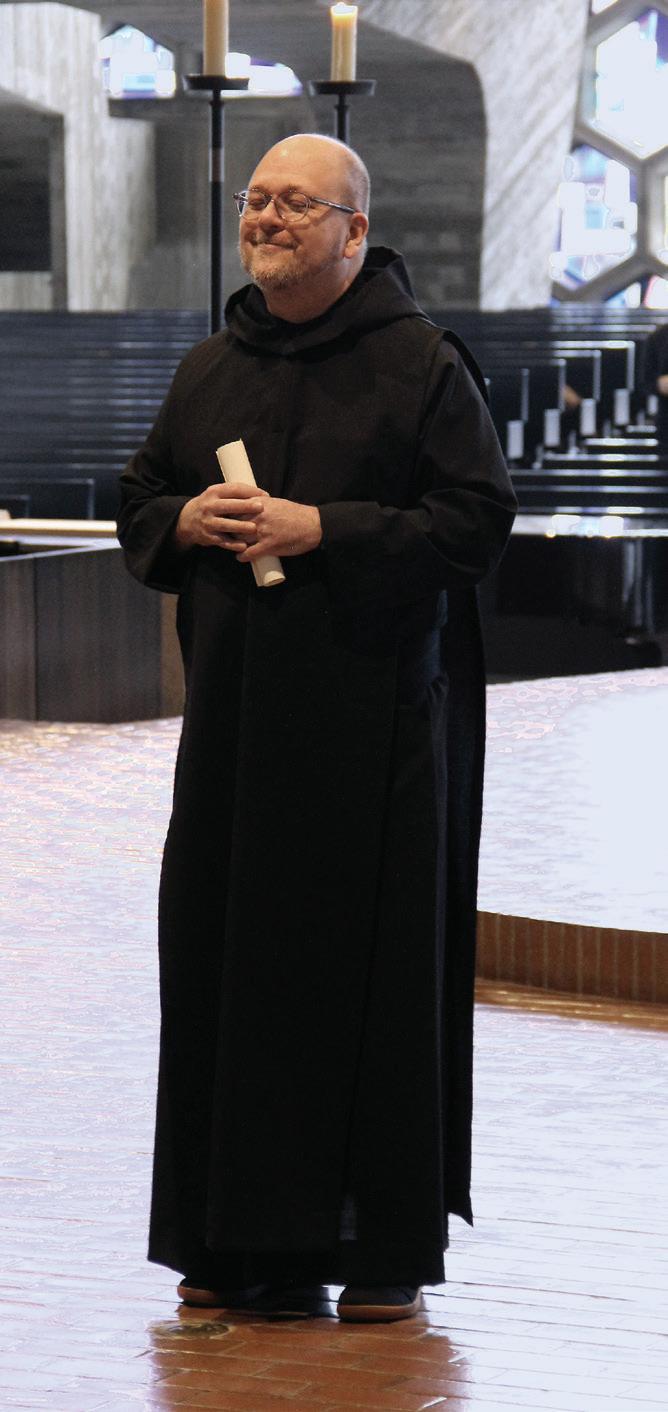
At the CSB and SJU summer reunion in 2024, one classroom filled faster than any other. The attraction was a Benedictine monk who had just become the newest member of Saint John’s Abbey— Brother Denys Janiga, originally from Saint Peter’s Abbey in Saskatchewan. His presentation that day was on the art and craft of brewing beer, complete with a tasting session at the end. Needless to say, it was standing room only. Those lucky enough to sample his handiwork agreed that if the abbey were looking for a new business venture, Brother Denys should move from “hobby” to mass production as soon as possible.
Born on May 12, 1971, to Abby and Betty Janiga, Denys was the youngest of four children, following brothers Mike and Gregg and sister Carol. The family lived in southern Ontario and Quebec, following his father’s work with Ontario Hydro.
Brother Denys’ arrival in Collegeville is itself part of an ongoing story. For more than a century—since 1903—Saint John’s Abbey and Saint Peter’s Abbey have shared a close relationship, exchanging monks for study, work, and spiritual growth. After his first profession in 2021, Brother Denys’ abbot encouraged him to come to Saint John’s for seminary studies.
He remembers his first days here vividly: “I was unsure what to expect but open to what might unfold. From the beginning, I was deeply moved by the way the Psalms are prayed during the Liturgy of the Hours. The gentle pauses between Psalms and after the readings felt like sacred moments inviting silence, reflection, and deeper listening. I often find myself listening not just with my ears but with what Saint Benedict calls ‘the ear of the heart.’”
He was also quickly taken by the land itself. “As someone who loves hiking, the landscape here immediately caught my attention. The rolling hills and quiet woods stirred something in me and reminded me of my childhood in southern Ontario. In many ways, it felt like coming home.”
His love of the natural world has inspired deeper reflection as well. “I try to stay aware of what’s happening globally by reading a few geopolitical magazines, and I’ve become more attentive to the importance of ecology and caring for creation from a theological perspective.”
A man of wide-ranging interests, Brother Denys delights in the Benedictine intellectual tradition too. “On a more academic note, I confess to being a little addicted to French phenomenology, especially the writings of Jean-Luc Marion, Emmanuel Falque, and Jean-Yves Lacoste. Their work helps me see how
philosophy and theology can meet and illuminate one another in deeply human ways.”
Before joining monastic life, Brother Denys earned a B.A. in philosophy from Trent University (Peterborough, Ontario), a master’s in environmental studies from York University (Toronto), and a master’s in public policy and administration from Toronto Metropolitan University.
During his years in Toronto, Brother Denys devoted himself to work that sought to strengthen community and uphold human dignity. His vocation in public service spanned
On 21 February,
three interconnected fields, all animated by a concern for the common good. He began in supportive housing for people with developmental disabilities, serving in both frontline and supervisory roles that taught him the quiet grace of accompaniment.
Later, with the Ontario Public Service, he turned his attention to the structural dimensions of justice, conducting research on child poverty and employment strategies and helping lead a homelessness pilot project in six major cities. His journey then carried him into the labor movement, where he worked in dispute resolution and member engagement, fostering solidarity and mutual respect among workers. In each setting, Brother Denys learned to see work itself as a form of service.
When asked about people who inspire him, Brother Denys points to former Canadian Prime Minister Pierre Elliott Trudeau because of his bold vision for Canada and his unwavering belief in a just, unified, and bilingual nation. “I admire his intellectual depth and his ability to bring philosophy into public life, leading not only with policy but with ideas. His courage to stand for individual freedom while championing the common good inspires me to think critically, act with conviction, and serve with integrity. As for favorite saints, I’d choose Benedict for his vision of community and Francis for his vision of the earth.”
Alongside his academic work, Brother Denys serves with Saint John’s University Campus Ministry, where he currently leads sixteen undergraduates
through the Order of Christian Initiation for Adults (OCIA), a program that prepares students for the sacraments of Baptism, Confirmation, and Eucharist. He also writes a weekly column for The Record, the university newspaper.
In the monastery, he channels another of his creative passions: cultivating and blending hot peppers into flavorful (and sometimes fiery!) sauces that appear regularly on the refectory condiment table.
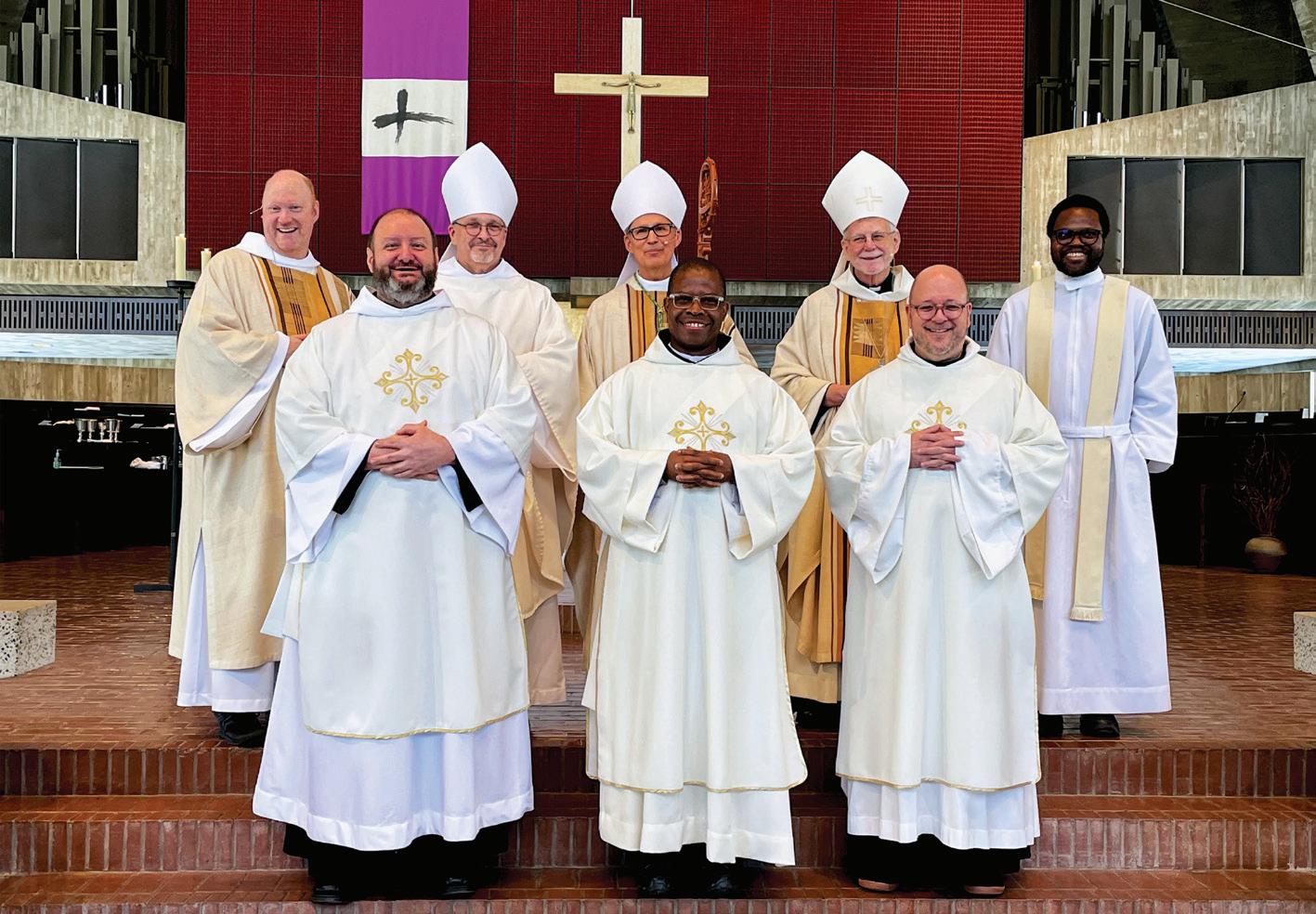
Brother Denys pr0fessed solemn vows on the Feast of Saint Scholastica (February 10) and was ordained deacon on February 21. After completing his seminary studies this spring, he will apply for a faculty resident position for the 2026-27 academic year and continue his diaconal ministry.
Brother Denys Janiga clearly feels at home in Collegeville. His decision to transfer stability from Saint Peter’s to Saint John’s grew from his search for authenticity and the conviction that he has found the community where he is meant to be. The monks of Saint John’s Abbey rejoice in welcoming a brother who both enriches our tradition and embodies our call to seek God together.
Father Timothey Backous is Chaplain for SJU alumni and a faculty resident in student housing.
Bishop Patrick Neary of Saint Cloud, ordained Br. Denys to the diaconate along with Br. Mary-Francis Ikejiuba, OCSO, and Br. Sebastian Richey, OSB.
Brother Benedict, New Vocations Director
Wesley Kirchner
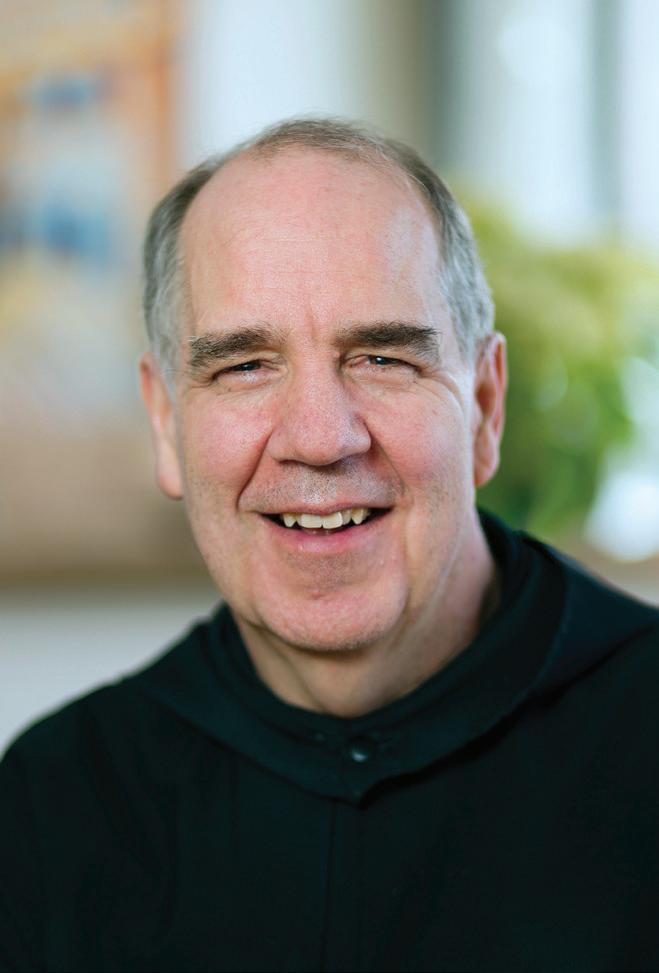
Brother Benedict Leuthner, O.S.B., was appointed vocations director for Saint John’s Abbey in September 2025. In a message to the Saint John’s community, he expressed his enthusiasm for leading the abbey’s vocation efforts and highlighted the growing interest among young Catholics seeking God’s call amid the challenges of today’s world. He describes his new role of accompanying those discerning their life’s purpose as both an opportunity and a privilege.
After nearly three decades of service as the abbey’s treasurer, Brother Benedict brings extensive experience in leadership, personnel engagement, and collaborative visioning. He now works closely with the Abbey Vocations Team, seven monks dedicated to hosting, mentoring, and supporting vocation initiatives. With assistance from Abbey Marketing and Communications, the team recently redesigned and updated the abbey’s vocation website, abbeyvocations.org, creating a more personal and accessible experience for those exploring a call to monastic life.
Currently, Brother Benedict
Called By Name
accompanies men in their twenties through early forties as they discern how God may be calling them within the Roman Catholic Church. He observes that many are searching for meaning and direction in their faith lives, and he understands vocation ministry not as recruitment but as accompaniment—listening deeply, walking alongside, and helping others recognize God’s presence in their discernment.
A recent increase in visitors to the abbey has brought a renewed sense of hope. Many monks have commented on this vitality and share Brother Benedict’s optimism about growth and renewal within the community. He
emphasizes, however, that vocation work is a shared responsibility. Research on religious life suggests that effective vocation ministry must be rooted in the broader community rather than centered on one individual. At Saint John’s, this means that both the monastic and wider communities are called to support the discernment process particularly through initiatives such as the Called by Name campaign, which invites members of the community to help identify men who may be drawn to monastic life.
Brother Benedict remains hopeful for the future, sensing that the Church stands at a moment of renewal as both younger and older Catholics seek deeper purpose and direction in their faith. He believes Saint John’s Abbey can play a meaningful role in that resurgence and he offers a simple suggestion: If you know someone who might make a good monk of Saint John’s Abbey, tell him.
Wesley Kirchner (SJU 2024) is a faculty resident at Saint John’s Preparatory School. He received the 2024 Extraordinary Service Award and served in the Benedictine Volunteer Corps in Nairobi, Kenya, and Tabgha, Israel.
Recommend a young man to be a monk of Saint John’s Abbey. A simple nomination can spark discernment. Now more than ever, the Church needs the witness of Benedictine monks—men rooted in tradition, living in community, and devoting themselves to prayer and work for the world. We can encourage them to hear the call.
Ordination of a Vietnamese Seminarian
Gregory Miller, O.S.B.
From its earliest years, a core ministry of Saint John’s Abbey has been the education and formation of seminarians. Twenty-five years ago, the seminary program of the School of Theology turned its focus to forming monastic seminarians. In 2007, Father Michael Patella was appointed rector of Saint John’s School of Theology and Seminary. He successfully recruited seminarians from monasteries across North America, Asia, and Africa, developing especially strong relationships with several Cistercian communities in Vietnam.
In January 2024, Father Michael was diagnosed with ALS (Lou Gehrig’s disease). The following year, Father William Orbih, a priest from Nigeria and alumnus of the School of Theology, was appointed rector, and I was named dean. Father Michael died on July 15, 2025. We owe
him a deep debt of gratitude for the flourishing of the seminary program.
One of the Vietnamese seminarians who came to Saint John’s was Brother Andrew Tong Ho, a Cistercian monk from Our Lady of Phuoc Son Abbey in Ho Chi Minh City (Saigon). He arrived in June 2014 to improve his English and that fall, enrolled in the Master of Divinity program at the School of Theology. While studying here, he lived within the monastic enclosure, as do all our seminarians, joining the community in prayer, work, and meals. He graduated in the fall of 2020 and returned to his monastery in Vietnam.
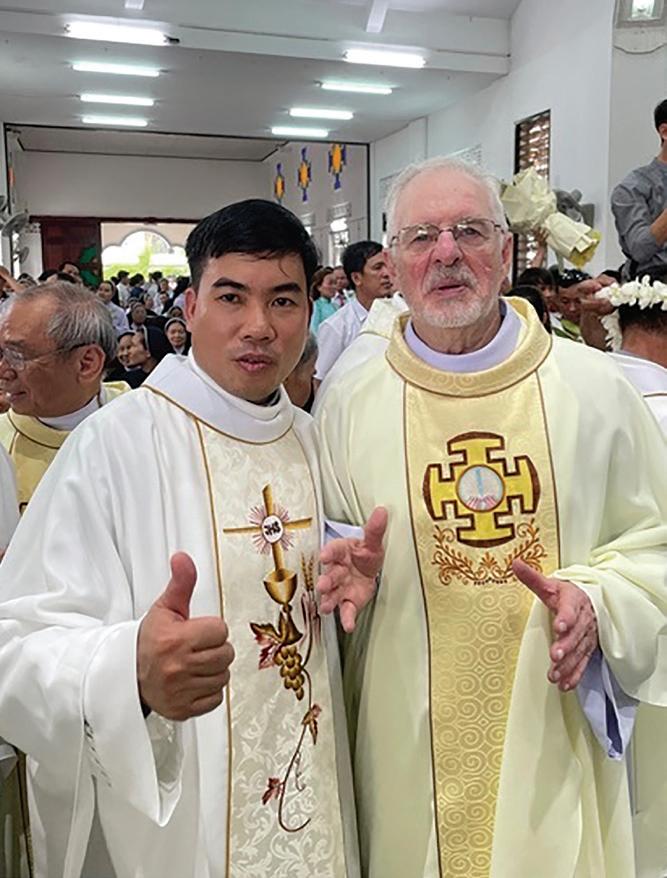
In the summer of 2025, Our Lady of Phuoc Son Abbey invited Abbot Douglas to Brother Andrew’s ordination to the priesthood. Since he could not attend, he asked me to represent him and the abbey. I readily accepted, having come to know Andrew well during his years of study.
Upon my arrival in Ho Chi Minh City, I was warmly greeted by Brother Thomas, a confrere of Brother Andrew and also a graduate of our School of Theology and Seminary. He brought me to the abbey, located in the southeastern part of the city. Our Lady of Phuoc Son is a vibrant young Cistercian community of over 230 monks, many of whom live in nearby mission houses. They embody the Cistercian charism through early morning prayer,
daily manual labor, and joyful community life. The atmosphere of the abbey is one of serenity and vitality.
On September 14, 2025, the day of the ordination, the monastery grounds and church were beautifully prepared to receive more than 2,000 guests. Bishop Thomas Tram Nguyen, the retired bishop of the Diocese of Baria, presided at the liturgy. I was deeply moved by the beauty and reverence of the celebration. As I witnessed the active participation of this vast congregation, I thought of our own Father Virgil Michel, an early leader of the Liturgical Movement in North America, who championed the active participation of all the baptized in the liturgy.
Father Gregory Miller is Dean of visiting seminarians and students in the School of Theology and Seminary and ministers to Spanish speaking Catholics in the Diocese of Saint Cloud.
From the bottom of my heart, I want to express my heartfelt gratitude for the generosity, fraternity, and support that Abbot John, Abbot Douglas, the Abbey, and the School of Theology and Seminary have extended to me and my monastery. I thank you so much.
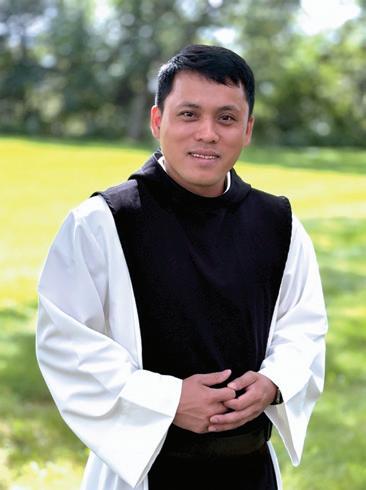
Father Andrew Tong Ho, O.Cist.
Saint John’s Abbey is enriched by the presence of visiting students from other monasteries (Benedictine and Cistercian—O.Cist. and OCSO) or religious orders (Crosier and Incarnation-Consecration-Mission). While studying in the School of Theology and Seminary, they reside in the monastery and take part in the daily life and prayer of the monastic community. Most are pursuing the Master of Divinity degree in preparation for ordination to the priesthood; others are enrolled in the various graduate programs in theology offered by the School of Theology and Seminary.
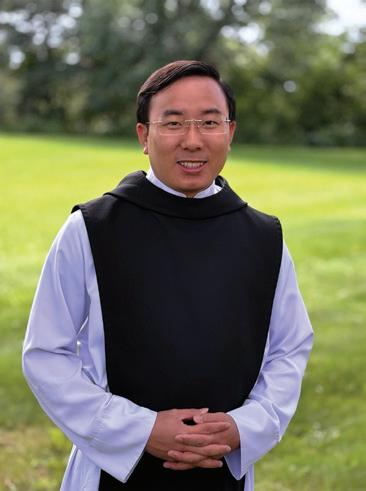
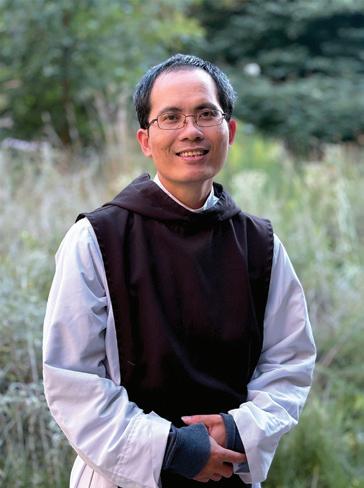
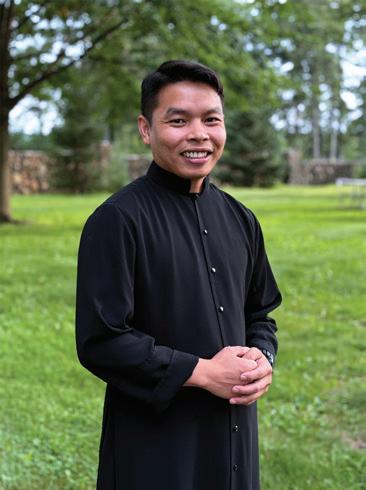
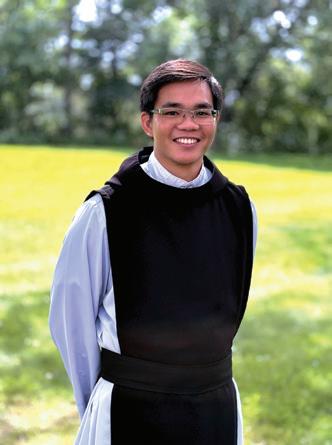
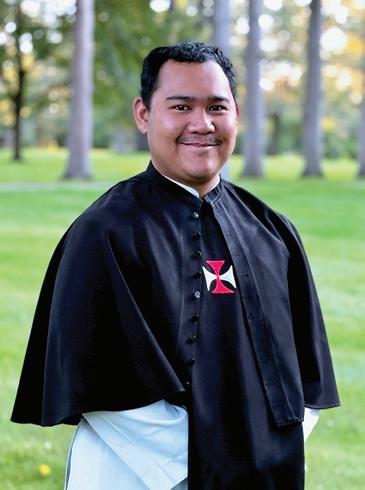
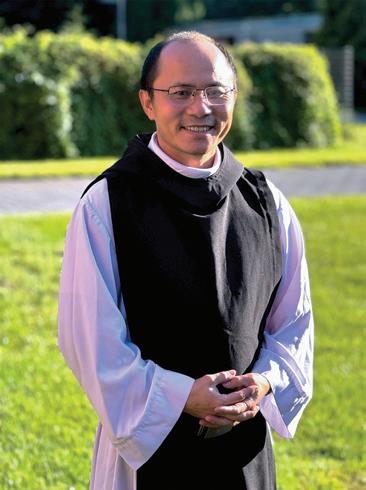
Br. Vincent (Quang) Ho, O.Cist. Our Lady of Phuoc Son, Vietnam Master of Divinity
Br. Paul (Lac) Tran, O.Cist. Our Lady of Phuoc Son, Vietnam Master of Divinity
Br. Mary-Francis Ikejiuba, OCSO
Our Lady of New Clairvaux, CA Master of Divinity
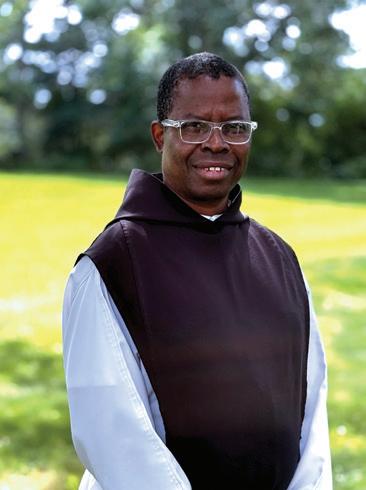
Br. Placido (Ditrick) Komba, OSB Hanga Abbey, Tanzania Master of Divinity
Br. Peter (Thanh) Le, OSB
St. Joseph Abbey, LA Master of Divinity
Br. Rio (Gabriel Mario) Lafaan, OSC Crosier, Indonesia Master of Arts in Theology
Br. Edgar (Germanus) Mwalongo, OSB Hanga Abbey, Tanzania Master of Divinity
Fr. Alex (Thien) Nguyen, O.Cist. Phuoc Ly Monastery, Vietnam Master of Arts in Theology
Br. An Nguyen, O.Cist. My Ca Monastery, Vietnam Master of Arts in Theology
Br. Gabriel (Nghia) Nguyen, O.Cist. Our Lady of Grace, CA Master of Divinity
Br. Vinh Nguyen, ICM Baton Rouge, LA Master of Divinity
Br. Sebastian Richey, OSB Subiaco Abbey, AR Master of Divinity
Fr. Dominic Savio (Luu) Tran, O.Cist. Our Lady of Grace, CA Master of Theological Studies
ule of Benedict
Reverence in the Rule of Saint Benedict
Michael Peterson, O.S.B.
Reverence runs as a golden thread through the Rule of Saint Benedict. Benedict does not present reverence as merely a feeling or an idea to ponder; he presents it as a way of acting in the world. Reverence determines how one moves through the day, relates to others, handles material goods, prays, and welcomes anyone or anything that crosses the monastery’s threshold. In an age often driven by self-interest, this steady discipline of reverencing all things challenges the current of the culture and offers wisdom for our lives.
For Benedict, reverence begins at the front door. The porter stands ready to greet every visitor with the simple words, “Thanks be to God.” The practice is straightforward: pause and treat the person at the door as a revelation of Christ, not an interruption. It is difficult to be impatient with a ringing doorbell if one has been trained to hear Christ ringing it.
Once inside, reverence continues with the guestmaster. Guests are to be “received as Christ,” and the practice that flows from this is simple: be kind, offer water for their hands, make space at the table. Leave your own preoccupations behind long enough to extend genuine hospitality to the person before you. Reverence grows when attention is freely given.
In the kitchen, reverence becomes practical. Benedict tells the servers to treat the pots and pans as if they were the sacred vessels of the altar. A person who practices this becomes a good steward of things—a broom, a saw, a computer, a piece of dinnerware. Each is a companion for building community in Christ. Something shifts when one handles things reverently; how we treat things reveals how we treat others.
Out in the garden, reverence becomes a conversation with creation. Gardeners come to know the personalities of plants; they notice how rain, soil, and sunlight shape the life entrusted to them. The practice is to stop long enough to notice the world speaking—birds, wind, cottonwood leaves clicking in prayer. Over time, one begins to realize that nature itself is a community worthy of honor.
In the choir stalls, reverence turns toward God in sacred words and silence. Benedict instructs the community to pray with humility and attentiveness of heart. This is more than good posture; it is the practice of being wholly present. Whatever work is at hand, set it down and come to the Psalms. Let the words shape your relationship to the day.
Reverence also guides how one relates to the vulnerable. The infirmarian cares for the sick with tenderness, remembering that Christ is present in those
who suffer. The practice is direct and human: listen with patience, touch with compassion. The smallest gestures become sacraments of mercy.
Ultimately, reverence shapes community life. Chapter 72 describes “good zeal” as this: “They should each try to be the first to show reverence to the other.” Often, this happens in simple ways. A while back, the community was leaving church after Morning Prayer. An elderly brother in front of me was walking terribly slowly. When I made a face expressing my impatience, the brother next to me tapped my shoulder and said, “That’s you someday.” Good lesson. I’m grateful to have slowed down. When we adjust ourselves to others, we show reverence.
In all things, reverence becomes visible not through grand ideas but through ordinary practices. The Rule teaches that holiness is found in how one treats the next person, the next task, the next tool, and the next Psalm. Reverence is the art of treating everything as if it matters because, according to Benedict, everything does.
Father Michael Peterson is Director of Oblates of Saint John’s Abbey and a sacramental minister for the Harvest of Hope Area Catholic Community centered in Albany, Minnesota.
Title of Article
Father James Reichert, O.S.B.
Father James Reichert was born in Marshfield, Wisconsin, on September 29, 1931. He attended Saint Bernard’s Catholic School in Thorp, Wisconsin (1937–1945), and then Saint John’s Preparatory School in Collegeville (1945–1949). After a year of employment with Mutual Service Insurance Company in Saint Paul, he enrolled at Saint John’s University, earning a bachelor’s degree in philosophy in 1955.
Father James entered the Benedictine community of Saint John’s Abbey, making his first profession on July 11, 1953, and his solemn vows in 1956. Following his theological studies at Saint John’s Seminary, he was ordained to the priesthood on June 6, 1959.
Reflecting on his vocation, Father James once shared that he “often thought of a priestly vocation in prep school.” The desire deepened during his year of work in Saint Paul, when he made a retreat in 1950. “For the first time I prayed for a religious vocation,” he wrote, “and during the following week made up my mind that I would return to Saint John’s and study for the priesthood.”
After his ordination, Father James served nearly sixty years in active ministry. His early assignments included work in the abbey’s business office and teaching at both Saint John’s Preparatory School and the Colegio San Antonio Abad in Puerto Rico. From 1973 to 2002, he devoted himself to parish ministry in Saint Paul and in several parishes across central Minnesota that were then under the pastoral care of Saint John’s Abbey.
His final active assignment was as chaplain at Saint Therese Senior Living Community in New Hope, Minnesota—a fitting conclusion to his ministry. As Father Joseph Feders observed in his funeral homily, Father James “excelled as a chaplain, taking time to know residents deeply, sharing meals, and even joining them in games of cards.”
Father James retired from active ministry in 2011. As one confrere noted, retirement—especial-
ly during and after the COVID pandemic—was difficult for him. “When he was ‘up,’ he was chatty and pleasant; when he was ‘down,’ well… that was another matter.” In the final months of his life, however, Father James found peace, accepting both his declining health and the limitations it brought. When the end drew near, he told visitors and nursing staff simply that he was ready.
In his funeral homily, Father Joseph remarked that “according to Saint Benedict, the life of a monk ought to be a continuous Lent. Yet read as a whole, the Rule presents monastic life as a continuous Advent. From the opening word to the final chapter, Benedict exhorts his disciples to be vigilant at all times.” That spirit of watchful readiness, Father Joseph concluded, echoes in the day’s Gospel reading: “You also must be prepared, for at an hour you do not expect, the Son of Man will come.” Those found ready, he said, “receive a great blessing—being served by the Master at the heavenly banquet.”
Father James died on December 14, 2025. Following the Mass of Christian Burial on 19 December, he was laid to rest in the abbey cemetery.
Eric Pohlman, O.S.B.
Though the abbey and university church is kept free of any sprig of holly or garland of pine until 24 December—an Advent safe space if you will—holiday cheer appears far earlier beyond the cloister walks. For over a decade the Great Hall has hosted a thirty foot Majestic Mountain Pine. Though it is “artificial,” it is perhaps still too real for the physical plant workers who must assemble and dissemble it annually. Monday after Thanksgiving break is the traditional day for its ceremonial lighting.
This year’s ceremony, ably emceed by Jessie Bazan of the Benedictine Institute, included a poignant reflection on The Saint John’s Bible frontispiece to the Gospel of John, “Word made Flesh.” Then came the singing of O Tanenbaum, with lyrics adapted by Father Michael Kwatera: “Your trunk so tall, brings Christmas near, to our Great Hall!” The switch was thrown by members of the university senate and then, basking in the glow, all joined in singing “Joy to the World” with Brother Jacob Berns at the piano. There followed ample time for taking pictures, consuming cookies, and imbibing hot chocolate or cider.
When the celebration began, the attendees, behaving as if they were in what was still a consecrated church, were all clustered in the rear of the Great Hall. Leading the opening song, “O Come, O Come, Emmanuel,”
Brother Aelred Senna beckoned them forward with a gentle wave. When no one budged, he added a “No, really” tilt of the torso and arm. Still no luck. Finally, he broke out in a full “Don’t make me come out there” sweep of his arms from pillar to pillar across the front steps. That did the trick, and the crowd finally came forward and entered into the celebration.
December 2025
Supporters of Abbey Organ Builders filled the Art Center lecture hall on 3 December for the world premiere of Full Stops, a half-hour documentary by David Klassen, brother of our Father Roger. The enthusiastic audience then migrated across to the Woodshop for an open house celebrating the completion of Opus 1. The inaugural instrument was latter disassembled, safely transported, and reassembled in its permanent home, Saint Michael the Archangel
Catholic Church, Leawood, Kansas. Some six additional signed contracts will keep the abbey organ builders busy through at least 2032.
On 16 December, a large crane was employed to deliver a new turbine-generator to the power house. Saint John’s is getting back into the “cogeneration” business. Steam already produced to heat the buildings and to make hot and chilled water will be sent first though the turbine to generate electricity, around 35% of demand once it is operational.
That evening saw robust attendance at the annual corporate Christmas party, always a wonderful occasion to connect with colleagues, current and retired.
January 2026
Early in the new year the monastic community gathers for an annual workshop, an
opportunity to attend to issues large and small. After one of the sessions, we gathered in the church for a group photo, perhaps the first in twenty-five years.
At the 20 January chapter meeting, the monastic community heard from the Liturgical Press’s inaugural development and fundraising manager, Margaret Nuzzolese Conway. No stranger to campus, she was the director of the university campus ministry for over seven years. With the slogan “Tradition meets Tomorrow,” the press is marking its centennial, 100 years since Father Vigil Michel published the first issue of Orate Fratres (later renamed Worship).
Also at this chapter meeting, Abbot Douglas announced three new assignments that will take effect on 1 July: Father Edward Vebelun, pastor of the Harvest of Hope Area Catholic community centered in Albany, will succeed Father Eric Hollas as Prior, Father Nick Kleespie, university chaplain, will succeed Father Edward, and Father Nickolas Becker will succeed Father Nick.
February 2026
In response to the heightened activity of I.C.E. agents in Minnesota, Brother Eric Pohlman and Fathers Michael Peterson, Gregory Miller, and Joseph Feders took part in an interfaith prayer service in St. Cloud on Sunday, 1 February. Michael Peterson played his
Native American style flutes, and Father Joseph was the Catholic representative for the lighting of four candles symbolizing remembrance, compassion, justice, and hope.
At Mass on 10 February, the feast of Saint Scholastica, Brother Denys Janiga made his solemn profession before Abbot Douglas Mullin.
On 21 February, Bishop Patrick Neary, CSC, Bishop of St. Cloud, came to Saint John’s to ordain to the diaconate three monks who are students of the School of Theology and Seminary: Brother Sebastian Richey, OSB, of Subiaco Abbey in Arkansas, Brother Mary-Francis Ikejiuba, OCSO, of the Abbey of New Clairvaux in California, and our own newly-professed Brother Denys Janiga.
Abbey church planners in the 1950s chose very simple Stations of the Cross: small wooden crosses were to be set into granite markers in the floor around the perimeter of the nave. This year, handsome wood panels, laser engraved by Father Lew Grobe, have been placed at each station, where they will remain throughout Lent. The images are taken from Stations of the Cross by Timothy Radcliffe, OP, with art by Martin Erspamer, OSB, of Saint Meinrad Archabbey, published by Liturgical Press.
March 2026
Matching statues of sibling saints Benedict and Scholastica have graced the monastic refectory for decades. Some weeks ago, Scholastica’s crosier succumbed to fatigue and broke. She borrowed her brother’s for her appearance in the church on her 10 February feast day. After supper on 1 March, Brother Travis Spillum assisted Father John Meoska, crafter of crosiers large and small, in presenting Scholastica with a new crosier and returned Benedict’s to him. Lingering diners signaled their approval with applause.
Brother Eric Pohlman is subprior and CSB and SJU archivist.
Fifty Years Ago
From “Confrere,” a monthly newsletter written by Father Daniel Durken (+2014)
January 1976
“A TIME TO BREAK DOWN”
(Ecclesiastes 2:3)
Early this month the novices and juniors completed the We-Haul operation that successfully moved the residents of the South Wing and their beds, books and boots into other various areas of temporary occupation.
Then the demolition derby began. Electrical fixture and plumbing were removed from the South Wing and a section of the south side of the quadrangle. The interior doors were removed, and eventually the walls came tumbling down without trumpet fanfare. If all goes well the renovation work should be completed and the wing ready for re-occupancy by September of this year.
KUDOS TO CONFRERES
On New Year’s Day, Her Majesty Queen Elizabeth of England announced that she had officially designated the Most Reverend Paul Leonard Hagarty, Bishop of the Bahamas, a Commander of the British Empire (C.B.E.).
In his response to Abbot John’s letter of congratulations, Bishop Leonard wrote: “As I pointed out to the people on New Year’s Eve night, the honour comes to the Catholics in the Bahamas rather than to their Bishop. . . . I’m sure our pioneer Fathers who worked here would have had no idea
that this could ever have come about—much of the credit must go to them.”
SUMMING UP A CENTENNIAL
In his sermon bringing to a close the centennial celebration of Saint John the Baptist parish in Collegeville, Father Godfrey Diekmann noted that “the early history of Saint John’s Abbey and Saint John’s Parish is a record of shared poverty, of monks serving parishioners and of parishioners helping the monks. Monks and people shared Saint Benedict and Saint Scholastica as spiritual patrons: the men in the Heilige Benediktus Männerverein (the men’s society), the women in their Heilige Scholastika christliche Mütterverein. And the children, for their part, without being consulted, had to carry the life-long burden of baptismal names honoring Benedictine saints like Walburga, Scholastica, Bonifacius, Placidus, Meinrad, etc.”
February
NO CHEER FOR THE BRONX
On February 2, the chapter voted to relinquish the parishes of St. Anselm’s and St. Benedict’s in the Bronx. The vote on the St. Anselm’s proposal: Yes, 93; No, 12; Neutral 14. The vote on the St. Benedict’s proposal was Yes, 81; No, 36; Neutral 2.
March
A determined and articulate group of fifty-five parishioners from St. Benedict’s Church in the Bronx came on March 6 to plead
their cause for the continuance of a Benedictine pastoral presence on Otis Avenue.
[Editor’s note: The chapter vote held.]
A PHOTO FEATURE
“The Monastic Life in the ‘70s” is the subject of a photo feature in the March 28th picture section of the Minneapolis Tribune. With twenty-one pictures of confreres praying, reading, walking, teaching, eating, napping, smoking and playing pool, the article states, “The monks of St. John’s defy stereotype. They are as diverse as any group of 300 men living under one roof. They share much—a way of life, a tradition, St. Benedict’s precept that their road to heaven is a combination of work and prayer—yet they differ, they disagree, sometimes they may even bicker. . . . Their disagreements apparently don’t drive the monks apart. Father Gordon says they simply indicate the diversity of people within the abbey—and that diversity, he says, keeps the abbey dynamic.”
Monks in the Kitchen
Secrets to Cake Success: Buttermilk and Oil
Ælred Senna, O.S.B.
After nearly five decades of baking, I’ve stirred, creamed, and folded my way through countless cakes. Some recipes begin with butter, others with oil; sometimes sour cream or buttermilk takes the lead. And there are nearly as many mixing methods as there are bakers— the classic creaming technique (butter and sugar first), reverse creaming (butter blended with the dry ingredients), and even the “hot milk cake” approach, where warm milk and butter are added last, as in the sponge cake I shared in last fall’s Abbey Banner. Each method has its merits, producing its own texture and flavor.
Every baker, I think, should have a dependable “go-to” chocolate cake—rich, tender, and foolproof. My favorite version pairs the tang of buttermilk with the richness of oil. It’s a simple, two-bowl recipe that comes together quickly, and I always whisk the batter by hand. The result is a deep, chocolatey cake that stays moist for days and works beautifully as either a layer cake or cupcakes.
If you’d like the companion Chocolate Buttercream Frosting recipe I published in the winter 2019 issue, feel free to email me asenna@csbsju.edu—I’m happy to send it along.
Brother Ælred Senna is publisher of Give Us This Day and abbey refectorian.
Go-To Chocolate Cake (Makes two 8" rounds or 22–24 cupcakes)
• 1 ½ cups all purpose flour
• ¾ cup unsweetened cocoa powder (Dutch process preferred)
• 1 ½ cups granulated sugar
• ½ teaspoon baking soda
• 1 teaspoon baking powder
• ¾ teaspoon salt
• ¾ cup buttermilk
• ½ cup water
• ¼ cup vegetable oil
• 2 large eggs
• 1 teaspoon vanilla extract
Preheat oven to 350°F. Grease and flour two 8" round pans and line with parchment.
1. Sift together the flour and cocoa in a large bowl.
2. Whisk in sugar, baking soda, baking powder, and salt.
3. In a separate bowl, whisk the buttermilk, water, oil, eggs, and vanilla until blended.
4. Pour into the dry ingredients and whisk until smooth.
5. Divide the batter evenly between pans and smooth the tops.
6. Bake 22–28 minutes, or until a toothpick inserted in the center comes out clean.
7. Cool in pans on a wire rack for 10–15 minutes; then remove from pans, discard parchment, and cool completely.
8. For cupcakes: Fill paper liners half full. Bake 17–19 minutes, until a toothpick comes out clean. Cool completely before frosting.
In Memoriam
Bill Alexander, Obl.S.B.
Robert C. “Bob” Allen
Bernadine A. Auchstetter
Gordon J. “Gordie” Bailey
Alois A. “Al” Beste
Gerald A. “Jerry” Bilski
Loraine Bischof, O.S.B.
Richard M. “Dick” Breitbach
Wendy Lynn Buonfiglio
JoAnn Carlson
Dale E. “Monk” Cremers
Marianne DePalma
Arthur Joseph “Art” Douvier
Mary Grace Flannery
Roger “Moose” Flint
Marilyn Ann “Toots” Frie
Richard Henry “Dick” Frie
Nicholas B. “Nick” Gotto
Eileen Marie Gottwalt
James Guy “Jim” Gregory
Terese “Terry” Miller Haak
Maurice Haefling, O.S.B.
Donald George “Don” Haeg
Richard Louis “Dick” Harren
Victor J. Hartung
Kathleen M. Henning
Rev. Albert A. “Al” Holmes
David Huber
Sheila A. Hughes-Tembrock, Obl.S.B.
Michael H. “Mike” Janku
Thomas E. “Tom” Jurgenson
Eda Rae Kauffman
Janis Kaufman
Eiko Cecilia Kayano
James Ernest Kilzer, O.S.B.
Doris Jean Klosterman
Donna Mae Knapek
Deacon Leo W. Kosiba Jr.
LuAnn Krahenbuhl
Mary Lillian Kroll, O.S.F.
Baulu Kuan, O.S.B.
Deacon Ralph M. L’Allier
Ferdinand L. “Fritz” Link
Patrick Michael Lynch
Gerald L. “Gerry” Mahon
Catherine Ann Murray Mamer
George L. Martin
Laura Ann Mayers
Maureen “Missy” Molloy
Darrell C. Nystrom
Barbara Osterloch
B. Alan Peterson
Aloysius Pieris, S.J.
Marlene June Pinten
Cecelia Prokosch, O.S.B.
Joanne Lucille Rabatin
Robert Francis Rafferty
James Reichert, O.S.B.
Galen Francis Rogers
Carol Sauer
Chacké Yeterian Scallen
Juleen Marie “Julie” Scegura
Jerome A. “Father Jerry” Schetter
Roger H. Schwieters
Mary Agnes Shimota
Robert J. “Bob” Simon
Michael L. “Mike” Slaggie
Karen Streveler, O.S.B.
Benet Tvedten, O.S.B. Kathleen M. “Kathy” Twohy
Joanne Adele Varey
Margaret Wilson
Mary Zenzen, O.S.B.
Kenneth Zigmond, O.S.B.
Precious in the eyes of the LORD is the death of God’s faithful ones. Psalm 116:15
Please join the monastic community in prayerful remembrance of our deceased family members and friends: A Monk’s Chronicle
Father Eric Hollas, O.S.B., offers spiritual insights and glimpses into the life of the Benedictine community at Saint John’s Abbey in a weekly blog, A Monk’s Chronicle. Visit his blog: monkschronicle.wordpress.com
Looking Higher, Going Deeper
Timothy Backous, O.S.B.
Maybe it was an intended consequence of developing ever more sophisticated tools for seeing deeper into space, or perhaps it is simply the proverbial icing on the cake, but the stunning images now arriving from our latest telescopes reveal millions of galaxies shining like tiny specks of light. They are so distant from us that many have likely long since ceased to exist. It is baffling. It is awesome. And, rightly understood, it is deeply humbling.
Yet the farther we look beyond Earth, the more we feel drawn into the mystery of our own being. We are no longer content to say simply that we have “body and soul.” With time, our hunger grows to know this body more completely and to fathom the spirit that animates it in such unpredictable and passionate ways.
The English marine biologist N. J. Berrill devoted his life to bridging science and religion. He asked, “Just what are we doing here, spinning on a tilted planet swinging round a star? . . . Where do we stand, with our few pounds of flesh and bones and our fleeting lives? But rather than diminishing the human person or our restless search for meaning, Berrill marveled at our very attempt to understand.
He observed that “we all turn out to be a rather weak watery solution of salts and carbon compounds, more or less jellified. . . . The miracle is that such stuff as we are made of should walk and talk and know such things as song and sadness.”
In other words, our exploration of the farthest galaxies can deepen our reverence for the mystery of life itself. How can we account for such complexity, such frailty, and such fierce insistence on survival? As we gaze upon celestial maps that seem to defy reason, we may find ourselves drawn nearer to the deepest realities of the human soul.
Had these images and maps existed in Benedict’s day, he might have urged his monks to use them for lectio divina, much as they prayed over the words of Scripture. Just as sacred words reveal the greatness of God, so too do the luminous photographs of the universe’s remotest reaches. The same is true of great music and art: all can draw us inward, helping us, if only for a moment, to sense our kinship with all creation. And it is in that moment of wonder that we come closer to the God who made it all.