"The beautiful thing about learning is that no one can take it away from you."
- B.B. King
Dear Friends,
Over the past year, the Southern Illinois University (SIU) System has continued to accelerate the vision set forth in our strategic plan, building on years of focused, intentional progress. The momentum we are experiencing is no accident; it is the result of the extraordinary dedication of our faculty, staff, and students, and the partnership of community leaders, donors, policymakers and industry partners who believe in our mission.
At SIU, our students remain at the center of every decision we make. We are strengthening the academic experience, expanding impactful research and deepening our commitment to public service. We want to ensure that every student can succeed and lead in a rapidly changing world.
This report highlights key accomplishments from fiscal year 2026 (July 2025–June 2026). While it reflects meaningful progress, it represents only a portion of the transformative work taking place across our campuses as we continue shaping a stronger, more dynamic future for the SIU System and the communities we serve.
The strategic plan is focused on six main areas:
• Academic innovation and student success
• Anti-racism, diversity, equity and inclusion
• Community impact
• Research, creative activities and partnerships
• Faculty and staff
• Infrastructure
The strength of the progress has positioned us not only to meet our goals, but to build upon them. We’ve already begun engaging faculty, staff and students across the system to gather feedback and insights that will help refine and strengthen our strategic plan, ensuring it continues to guide us effectively into the next decade.
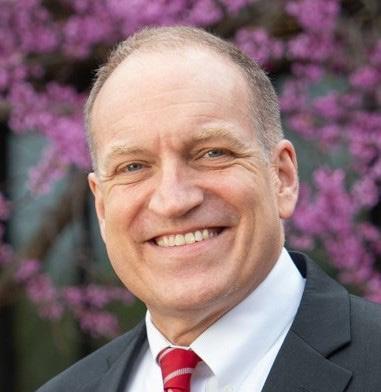
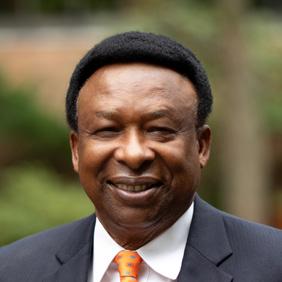
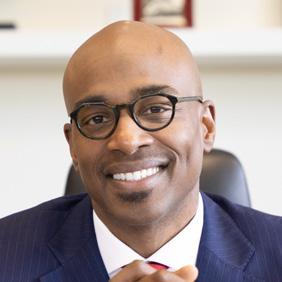
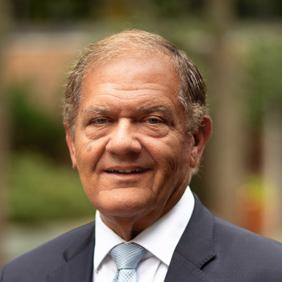
Dan Mahony SIU System President
MISSION
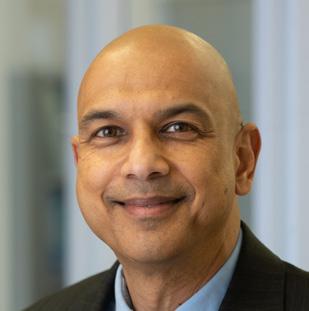
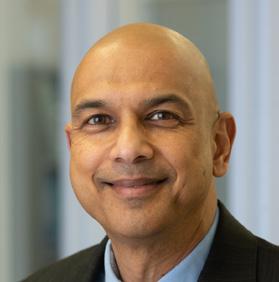
Gireesh Gupchup
SIU System VP of Academic Innovation, Planning & Partnerships
The SIU System enriches students and diverse communities through inclusive excellence, experiential education and innovation. The system creates and shares knowledge that enables stakeholders to achieve their full potential, serves as an economic catalyst for the region and state, and advances global change, opportunities and social justice.
VISION
Empower people. Transform the world.
THE SIU SYSTEM - WHERE STUDENTS ARE EMPOWERED TO SUCCEED, COMMUNITIES THRIVE, AND THE FUTURE OF ILLINOIS IS BUILT THROUGH EDUCATION.
With student success always at the center, SIU’s reach extends well beyond its campuses serving as a vital engine for community growth and economic opportunity across Illinois.
Chartered in 1869, Southern Illinois University, first known as Southern Illinois Normal University, opened its doors for instruction in 1874 as a one building teacher training institution in Carbondale. By 1947, the name was changed to Southern Illinois University, reflecting the institution’s expanding academic mission. As early as 1949, SIU started offering courses in the metropolitan East St. Louis area. This led to the development of the Southern Illinois University Edwardsville (SIUE) campus, which was officially established in 1957.
Today the SIU System employs more than 7,400 faculty, staff and administrators who serve approximately 24,500 students and operates with a budget of $1.1 billion. The system’s campuses and facilities offer a wide range of academic programs leading to associate, bachelor’s, master’s, specialist, doctoral and professional degrees including law, medicine, pharmacy and dental medicine.
The SIU System’s economic impact in fiscal year 2023 was an impressive $4 billion, and the system’s economic activity helped support 49,075 jobs in Illinois.
The two institutions that constitute the SIU System today reach from the southern National Forest to the bluffs of the Mississippi River, and through the flatlands of Central Illinois to the shores of Lake Michigan.
Southern Illinois University Carbondale (SIUC) includes a Simmons Law School in Carbondale and a School of Medicine in Springfield. The health care operation of the SIU School of Medicine provides more than 630,000 clinic visits per year in its primary and specialty care clinics.
SIUE includes a School of Pharmacy in Edwardsville, a School of Dental Medicine in Alton, the Southwestern Illinois Justice and Workforce Development Campus in Belleville and the East St. Louis Center.
Additionally, both campuses partner in providing education at the University Center of Lake County in northern Illinois.
With a strong commitment to anti-racism, diversity, equity and inclusion on its campuses, the SIU System earned the 2025 Leadership in Diversity, Equity, and Inclusion award from the international Keystone Education Group, recognizing its ADEI Unit’s bold reforms that advance equity, advocacy, and inclusive leadership.
John Charles Executive Director, Government & Public Affairs
Jerry Kruse Dean & Provost, SIU Medicine
Rob Patino Director, Technology Management & Industry Relations
Ed Curtis
Crater General Counsel
Austin Lane Chancellor, SIUC
Thompson Executive Director of Audit
Deborah Barnett
John Simmons Tonette “Toni” Williams
Evonne
Luke
THE SIU SYSTEM STRATEGIC PLAN IS DESIGNED TO DRIVE INNOVATION, ADVANCE INCLUSION
& STRENGTHEN COMMUNITY IMPACT.
Academic innovation & student success
Our innovative and accessible academic programs will provide interdisciplinary and experiential components that empower our students to address regional, national and global challenges. While maintaining the strengths of each campus, we will engage in system-wide collaboration to create new opportunities for students and support lifelong learning.
Anti-racism, diversity, equity & inclusion
We will be a national model of anti-racism and anti-oppression that promotes diversity, inclusion and equitable access and opportunity for all individuals.
Community impact
We will collaboratively create sustainable solutions, utilizing the collective strengths of the system to improve the quality of life for all that we serve.
FY26 HIGHLIGHTS
2.5% SYSTEM-WIDE INCREASE IN TRANSFER STUDENTS SERVED 6% DECREASE IN STUDENTS who receive a D, F, or Withdraw (DFW) rates in targeted courses
4,700 SQUARE MILE AREA served by ACTIVE COMMUNITY PROJECTS
The purpose of the SIU System Strategic Plan is to drive academic innovation, promote diversity and inclusion and enhance community engagement across its campuses. With a strong focus on interdisciplinary and experiential learning, the plan outlines a comprehensive approach to fostering student success and addressing regional, national and global challenges. Key initiatives include the creation of flexible academic programs, the support for applied innovation and the implementation of high-impact practices to boost retention and degree attainment. Additionally, SIU aims to become a national leader in anti-racism and equity, revitalizing local communities, expanding research and partnerships and ensuring the sustainability of its infrastructure. This transformative vision underscores SIU's commitment to shaping a brighter future for all its stakeholders.
Research, creative activities & partnerships
We will build collaborative opportunities to expand research, scholarship and creative activities through internal and external partnerships that fulfill our mission.
Faculty & staff
We strive to foster an equitable environment where our diverse faculty and staff can be successful and satisfied.
Infrastructure
We will build and maintain a sustainable infrastructure through continuous improvement, transparency and accountability.
4.8% INCREASE IN FUNDED RESEARCH AND PROJECTS
1,238 FACULTY AND STAFF PARTICIPATING IN SYSTEM-WIDE TRAINING INITIATIVES
4TH BOND RATING UPGRADE in 4 years
LEARNING AND EMPLOYMENT RECORDS: A CLEARER PATH FROM CLASSROOM TO CAREER
Across higher education, there is growing recognition that a transcript alone does not fully capture what students know and can do. Grades and credit hours remain important, but they often leave out the broader skills students develop through research, leadership, internships, extracurricular involvement, and applied learning experiences. Through its participation in the national Learning and Employment Records (LER) Accelerator, the SIU System is helping lead efforts to create more transparent, student-centered ways of documenting academic and other experience. The LER Accelerator, led by the American Association of Collegiate Registrars and Admissions Officers (AACRAO), brings together institutions from across the country working to better connect academic experiences with workforce-relevant skills and competencies. SIU was selected as part of the inaugural national cohort of 25 institutions participating in the initiative.
At its core, the work is focused on making learning more visible. Rather than relying on course titles and transcripts, LERs are designed to help students more clearly communicate the competencies and skills they develop during their educational journey. The goal is not to replace traditional academic records, but to build a more complete picture of student achievement that is meaningful to employers, graduate programs, and the students themselves.
This past year served as the system’s planning and alignment phase. Teams across SIU began building the foundation for implementation by inventorying existing credentials and learning experiences across campuses. They also began developing shared skills frameworks and gathering feedback from faculty, students, and employers. Early work has also focused on identifying pilot credential areas and exploring technology platforms to support learner-facing records.
Initial feedback has reinforced strong interest in the initiative. Faculty identified opportunities to better align course-level outcomes with broader skill frameworks, while students expressed a desire for clearer connections between their academic experiences and career pathways. That input is shaping future implementation priorities and the development of targeted credentials and pilot programs.
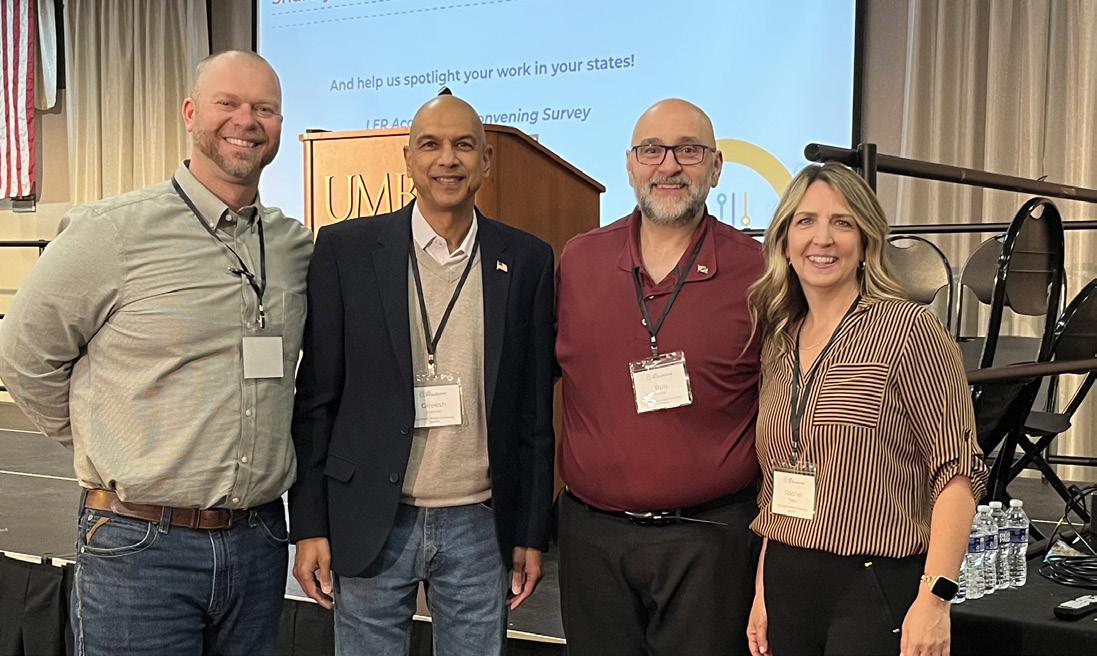
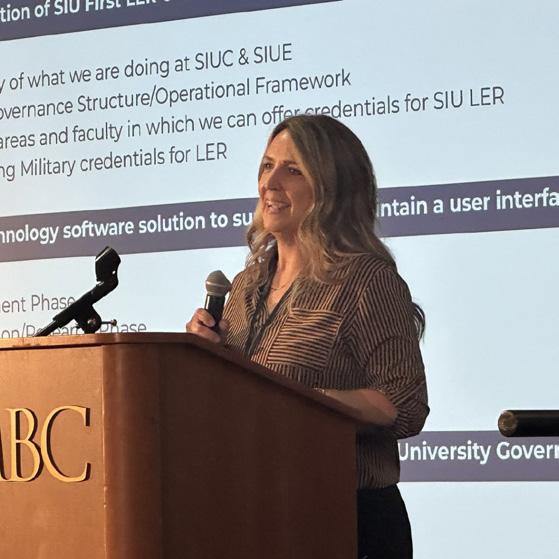
SIU’s progress was recently shared at a national AACRAO meeting hosted at the University of Maryland, Baltimore, where cohort institutions presented updates on their goals and implementation strategies. The gathering provided an opportunity for institutions to share challenges and learn from one another as they navigate the evolving landscape of skillsbased learning documentation.
The growing national attention around LERs reflects broader shifts happening across higher education and the workforce. Employers want clearer evidence of skills and competencies, while policymakers continue to emphasize transparency, portability, and student mobility. LERs are emerging as a practical way to help bridge the gap between academic experiences and workforce expectations.
For SIU, the work aligns closely with broader system priorities around student success, innovation, and workforce responsiveness.
“ The LER Accelerator represents a meaningful shift in how we define and communicate student achievement, moving beyond academic credit hours to a more comprehensive and transparent representation of skills and learning,” the project team shared. “As state and federal momentum builds, this work ensures SIU is not only prepared, but leading. ”
The next phase of the initiative will move from planning into early implementation, including development of SIU’s first LER-aligned credential and pilot efforts in targeted academic and workforce-aligned areas. The planning year has laid important groundwork, but the larger goal is straightforward: helping students better understand, articulate, and carry forward the full value of their education.
SIU LAUNCHES COLLABORATIVE AI AND SOCIAL MEDIA CERTIFICATE
As artificial intelligence (AI) continues to reshape communication, marketing, journalism, and media industries, SIU faculty are working together to develop a new kind of academic pathway, one designed to be flexible and closely connected to emerging workforce needs.
A new online undergraduate certificate in AI and Social Media Strategy, currently being developed through collaboration between SIUE and SIUC, will give students and working professionals the opportunity to build practical skills in digital communication, audience engagement, analytics, content creation, and emerging AI applications in media and marketing.
The goal is not simply to teach students how to use emerging tools, but to prepare them to think critically, adapt quickly, and communicate effectively.
The fully online certificate is expected to begin rolling out in Fall 2026 and will feature accelerated eight-week courses designed to support both traditional students and adult learners seeking flexible, career-aligned learning opportunities.
What makes the program especially distinctive is its shared cross-campus structure. Through the SIU System Course Exchange, students will be able to complete the certificate using approved courses offered through either SIUE or SIUC. Learners can select three eligible courses across the two campuses, expanding both flexibility and access while allowing the system to leverage faculty expertise collaboratively.
The certificate reflects a broader shift across higher education toward shorter, workforce-focused credentials that complement traditional degree programs while also serving professionals looking to strengthen or update their skills in rapidly changing fields.
Faculty involved in the initiative say the program is intentionally designed to balance technical application with critical thinking about the role of AI in communication and
media. Coursework will explore topics such as social media strategy, analytics, AI-assisted content creation, misinformation, audience engagement, digital storytelling, and campaign planning. Students will also examine the ethical and societal implications of AI as these technologies continue reshaping public communication and information environments.
Courses planned through SIUE include Social Media Content Creation, Social Media Strategy and Planning, and Social Media Analytics. SIUC offerings include courses such as AI and Advertising, Social Media, AI and Misinformation, and AI in Arts and Media. Together, the curriculum is designed to provide students with both practical skills and broader context as AI becomes increasingly integrated into communication professions.
The program is open to current SIU students as well as nondegree seeking learners and working professionals interested in building new skills or adapting to evolving workforce demands. Importantly, coursework completed through the certificate can also apply toward bachelor’s degree programs at SIUE or SIUC, creating additional flexibility for students who may later pursue a full degree pathway.
The initiative also reflects the growing collaboration within the SIU System’s academic innovation strategy. Rather than limiting students to opportunities available at a single campus, the shared certificate model allows SIU to create more dynamic and responsive pathways while expanding access to specialized expertise across the system.
As planning continues, faculty leaders anticipate the program will continue evolving alongside the rapidly changing digital communication landscape. The goal is not simply to teach students how to use emerging tools, but to prepare them to think critically, adapt quickly, and communicate effectively in a media environment increasingly shaped by AI.
SIU PRESS EXPLORES NEW ROLE IN EXPANDING OPEN EDUCATIONAL RESOURCES ACROSS ILLINOIS
As colleges and universities continue looking for ways to improve affordability and expand access for students, leaders across the SIU System are exploring how SIU Press can help strengthen support for Open Educational Resources (OER) throughout Illinois.
OER are free, accessible teaching and learning materials that can help reduce textbook costs while giving faculty greater flexibility to adapt content for their courses. While interest in OER has grown steadily in recent years, faculty often face significant barriers when developing and publishing these materials because of limited time, technical support, peer review infrastructure, and publishing assistance.
This spring, SIU Press convened faculty, librarians, instructional support staff, and higher education partners for a strategy session focused on expanding OER publishing capacity across Illinois. The event explored how university press expertise could help support faculty authorship, strengthen publishing workflows, and reduce barriers that often prevent innovative educational materials from reaching students and classrooms.
The discussion reflects broader shifts in how universities are thinking about academic publishing and student access. Rather than focusing solely on traditional publishing models, participants explored how SIU Press could help support peer review, editorial guidance, project management, marketing, and distribution for OER materials developed by faculty across Illinois. Conversations also centered on creating more sustainable support structures that make it easier for faculty to develop high-quality, openly accessible course materials.
The initiative builds on ongoing OER efforts across the SIU System, including faculty incentive programs and campusbased initiatives designed to encourage adoption of low-cost or no-cost learning materials. At SIUE, the Office of Online Services and Educational Outreach has supported multiple pilot courses through its OER Faculty Incentive Program, helping faculty redesign courses around openly accessible materials, which can reduce costs for students.
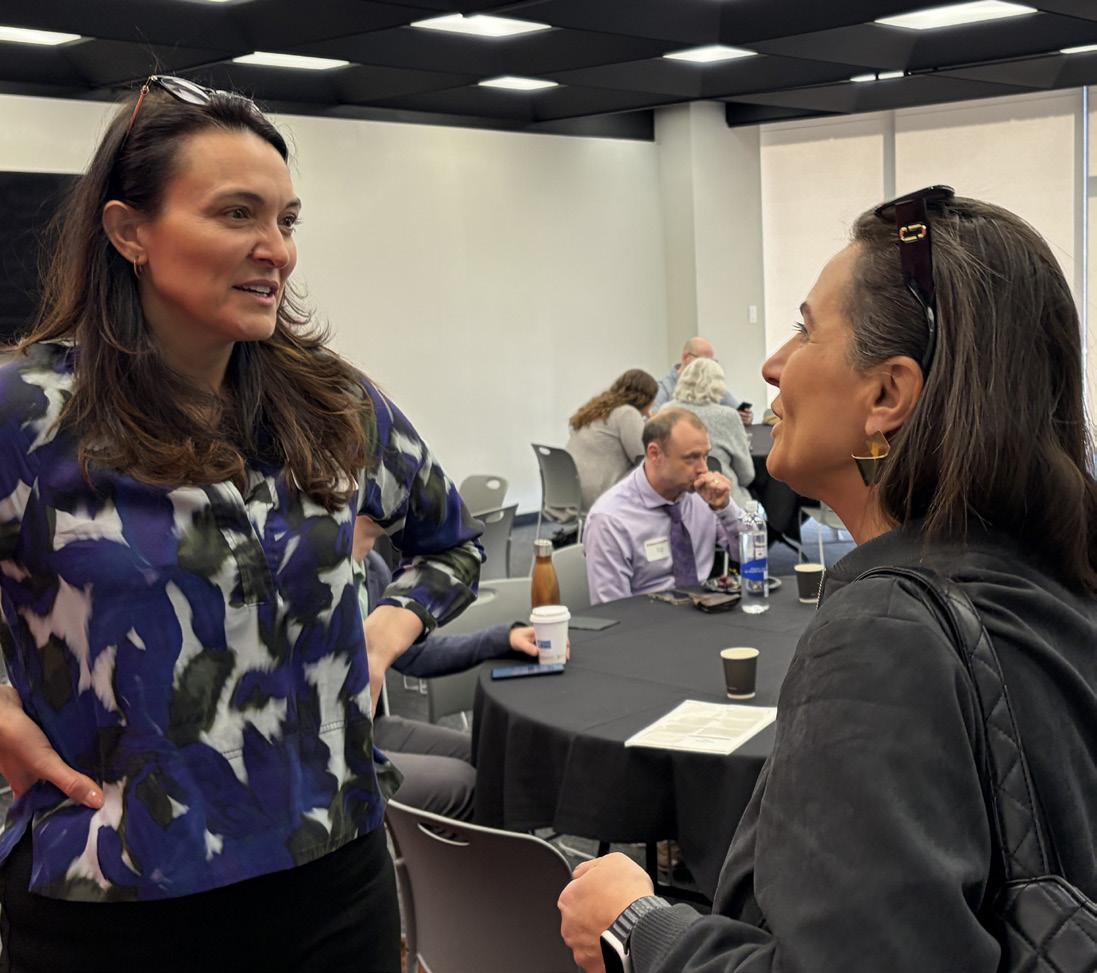
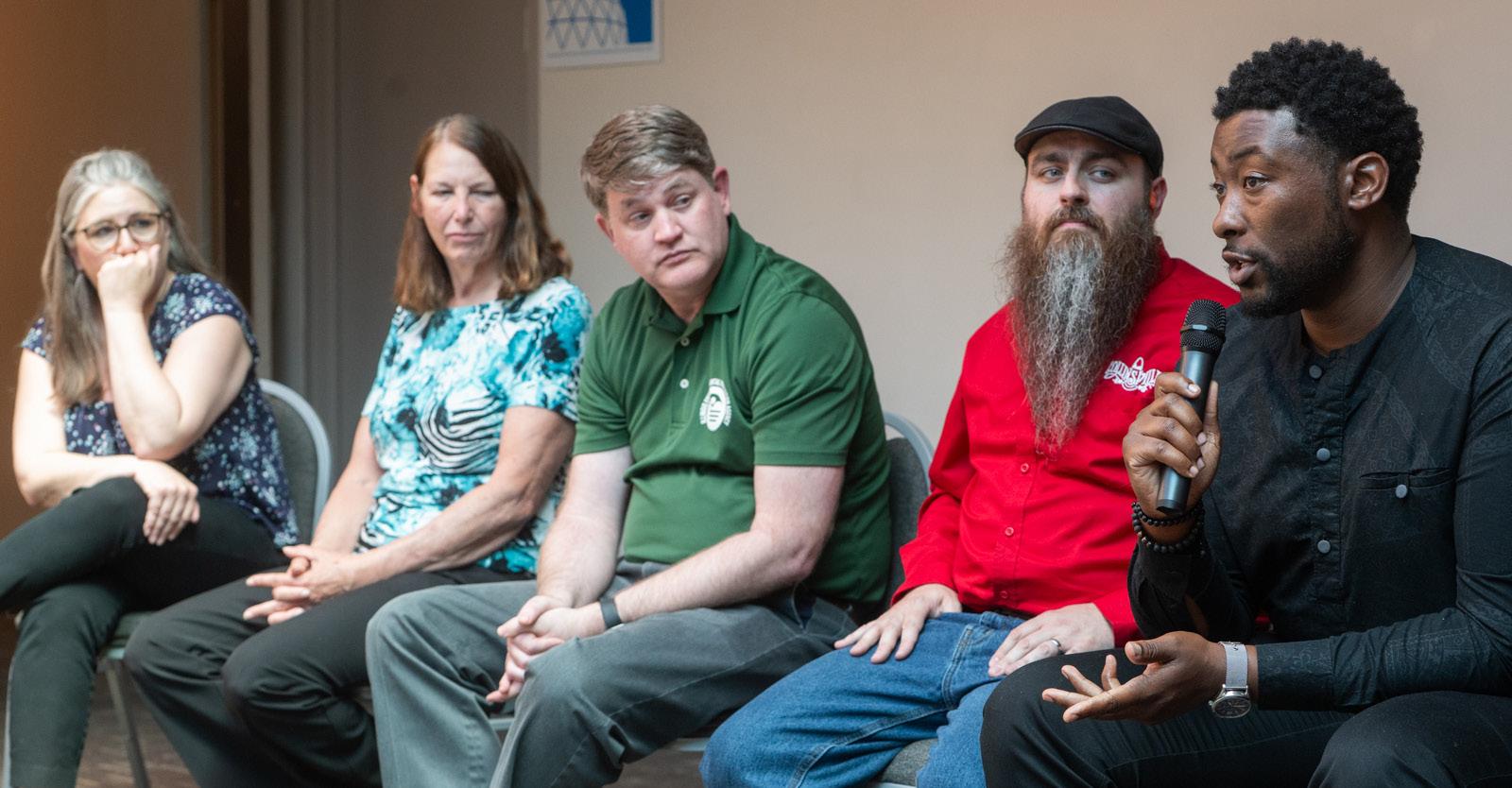
Amy Etcheson (left), Director of the SIU Press discusses the future of Open Educational Resources (OER) across Illinois with Elza Ibroscheva, Associate Provost at SIUE, who oversees the OER Faculty Incentive Program and other OER initiatives at SIUE.
Leaders involved in the initiative see the work as part of a larger commitment to academic innovation and accessibility. By reducing textbook costs and expanding access to high-quality learning materials, OER initiatives can help remove financial barriers while also creating more flexible and adaptable learning environments for students.
The conversations underway through SIU Press also position the SIU System to play a larger statewide role in supporting collaborative, faculty-driven approaches to open education. As interest in OER continues to grow, organizers hope the work will lead to stronger publishing infrastructure, expanded faculty support, and new opportunities for collaboration across Illinois' higher education institutions.
TRANSFER SUCCESS INITIATIVE IMPROVES STUDENT PATHWAYS
The SIU System continues strengthening transfer pathways and student support through participation in the National Association of Higher Education Systems (NASH) National Improvement Community (NIC), an initiative focused on helping more community college students successfully transfer and complete bachelor’s degrees.
At SIUE and SIUC, teams worked through a series of rapid improvement cycles designed to reduce barriers for transfer students and strengthen connections between admissions, advising, and enrollment services. The work focused on improving communication, accelerating transcript sharing, and building stronger partnerships with regional community colleges including Southwestern Illinois College, Kaskaskia College, and SIUC partners.
Early results showed significant increases in student engagement and advising participation. Outreach efforts expanded from small pilot groups to hundreds of admitted transfer students, while new data-sharing partnerships helped connect students with advisors earlier in the transfer process.
$13,280 SAVED IN APPLICATION FEES for transfer students 44% INCREASE IN APPLICATIONS from five local community colleges 99 INTENT-TO-TRANSFER STUDENTS identified through City Colleges of Chicago
SAME-DAY TRANSCRIPT EVALUATIONS for College of Business and Analytics students
362 TRANSFER STUDENTS CONTACTED within one week of admission 89%
EMAIL OPEN RATE among transfer students 82% ENROLLED STUDENTS after attending advising appointments 146 STUDENTS PARTICIPATING in transfer partnerships (up from 13)
New Intent-to-Transfer data exchange launched with Southwestern Illinois College
ASSOCIATION OF COLLEGE AND UNIVERSITY EDUCATORS (ACUE) TRAINING SUPPORTS
FACULTY INNOVATION AND STUDENT SUCCESS
Teaching and learning have changed rapidly in recent years, shaped by shifts in technology, student needs, classroom engagement, and the growing presence of AI in higher education. Across the SIU System, faculty are adapting to those changes through professional development efforts designed to strengthen inclusive teaching practices that improve student success outcomes.
One of the system’s largest faculty development initiatives has centered on training through the Association of College and University Educators (ACUE), an organization focused on evidence-based teaching practices that support student engagement and academic achievement.
As of May 2026, 323 faculty members across the SIU System have participated in ACUE programming, including 24 SIUE and SIUC faculty members who have become fully certified through the framework. Participation and completion rates have remained strong across cohorts, reflecting sustained faculty interest in practical, student-centered instructional strategies.
Faculty involved in the program consistently describe the experience as changing not just what they know about teaching, but how they approach it in practice. Participants have redesigned courses, re-evaluated classroom policies, incorporated more inclusive teaching strategies, and developed new approaches for supporting student engagement.
The collaborative structure of the program has also played an important role in its impact. Faculty members from different disciplines and campuses have engaged in peer learning conversations around classroom challenges, instructional innovation, and evolving student needs. Many participants noted that the opportunity to learn alongside colleagues helped strengthen the overall experience and created space for more meaningful reflection and exchange.
The initiative has also produced measurable outcomes. Faculty confidence in managing disruptive classroom behavior increased significantly across cohorts, while targeted courses saw approximately a six percent decrease in DFW rates (students who get a grade of D or F or withdraw from the course). Participants also emphasized the importance of adapting instructional practices to address changing student preparedness levels and the growing influence of AI within academic environments.
323
FACULTY PARTICIPANTS across the SIU System
24 FULLY ACUE-CERTIFIED faculty members 85%
COMPLETION RATE across ACUE cohorts
6%
DECREASE IN DFW RATES in targeted courses
38% 88%
INCREASE IN FACULTY CONFIDENCE managing disruptive classroom behavior
For SIU leaders, the work reflects a broader commitment to supporting both faculty success and student success simultaneously. Rather than treating teaching innovation as separate from institutional strategy, ACUE has become part of a larger effort to strengthen classroom experiences, improve outcomes, and build learning environments where students feel supported and engaged.
BOUNDLESS SCHOLARS EXPERIENCE EXPANDS STUDENT SUPPORT AND ACADEMIC SUCCESS AT SIUE
Student success is shaped by more than what happens in the classroom alone.
Connection, mentorship, academic support, and a sense of belonging all play an important role in helping students complete their degrees.
At SIUE, the Boundless Scholars Experience (BSE) is helping strengthen those supports through programs intentionally designed to improve student outcomes and close longstanding achievement gaps. BSE is a comprehensive academic and co-curricular program designed to promote belonging, academic advancement, and degree completion for first-year and select second-year students.
The initiative brings together several student support models, including Females of African-descent Modeling Excellence (FAME), Goal Oriented African-American Males Excel (GAME), and Student Opportunities for Academic Results (SOAR), which focus on building community, strengthening academic engagement, and connecting students with the resources needed to navigate college successfully. The programs primarily support Latino and Hispanic students and African American students who have experienced historic achievement gaps while creating structured environments that encourage persistence, leadership development, and academic confidence.
Over the past year, the initiative has expanded significantly. What began with seven course sections has grown to 49 sections serving approximately 400 students across participating programs. The growth reflects increasing student interest as well as continued institutional investment in scalable support systems that strengthen retention and student success outcomes.
The initiative’s impact is also becoming increasingly measurable. Current retention rates for participating student cohorts are at 80 percent, matching retention outcomes across all demographics and effectively closing a long-standing institutional achievement gap. Overall retention rates have increased across all groups. Leaders involved in the initiative say those results reflect the importance of intentional academic support structures that help students feel connected, supported, and equipped to succeed academically. Rather than relying on a one-size-fits-all approach, the Boundless Scholars Experience focuses on building smaller learning communities where students can develop relationships with faculty, staff, peer mentors, and one another. Participants engage in structured academic programming, mentorship opportunities, and support services designed to strengthen both academic performance and overall student experience.
The work also reflects a broader shift happening across higher education. Increasingly, colleges and universities are recognizing that persistence and completion are closely connected to belonging, engagement, and students’ ability to see themselves reflected within the academic environment. Programs within the Boundless Scholars Experience are designed with those realities in mind, combining academic support with community-building strategies that help students navigate the transition to college and remain connected throughout their educational journey.
As the initiative continues to grow, university leaders see opportunities to further expand support services, strengthen student outcomes, and scale successful practices into additional areas of student support and engagement. While the programs continue evolving, early outcomes already demonstrate the impact that coordinated, student-centered support can have on long-term academic success.
ADEI LEADERSHIP CERTIFICATE PREPARES STUDENTS FOR INCLUSIVE LEADERSHIP
The SIU System ADEI Leadership Certificate continues to provide students with opportunities to strengthen leadership skills grounded in anti-racism, diversity, equity, and inclusion principles. Designed to complement academic and professional development experiences, the certificate helps participants build practical skills for navigating increasingly diverse workplaces, organizations, and communities.
The program brings together students from different disciplines and backgrounds to explore topics related to inclusive leadership, communication, equity-centered decision-making, and community engagement. Participants complete workshops, leadership activities, and applied learning experiences designed to help students better understand how leadership practices shape organizational culture and student success.
As interest in leadership development and inclusive workplace practices continues to grow across industries, the certificate program provides students with additional tools to support collaboration, problem-solving, and professional growth beyond the classroom.
The initiative also reflects broader efforts across the SIU System to create learning environments that support leadership development, belonging, and student engagement. Organizers say the program’s interdisciplinary structure encourages meaningful dialogue and helps students connect leadership concepts to real-world challenges and professional settings. Early outcomes already demonstrate the impact that coordinated, student-centered support can have on long-term academic success.
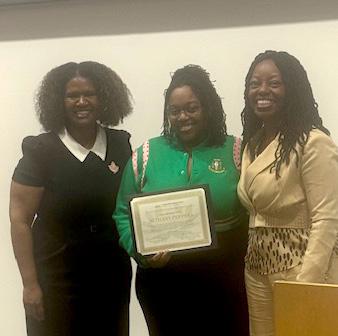
(L to R) Renada Greer, Executive Director, SIUC Student Multicultural Resource Center presents ADEI Leadership Certificate to Bethany Peppers, Director, SIUC Fraternity and Sorority Life with Sheila Caldwell, SIU Vice President, Antiracism, Diversity, Equity and Inclusion.
ILLINOIS ACE WOMEN’S CONFERENCE BRINGS LEADERSHIP AND COLLABORATION TO SIUC
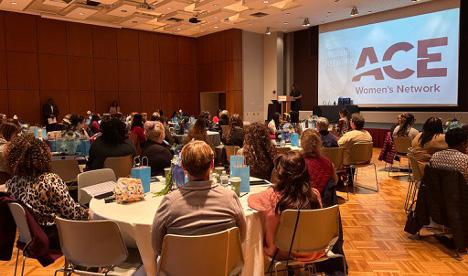
SIUC hosted the inaugural Illinois ACE Women’s Conference during Women’s History Month, bringing together higher education leaders, faculty, staff, and professionals from across the state for conversations focused on leadership, mentorship, and advancing opportunities for women in higher education.
The conference welcomed 85 attendees to Carbondale and resulted in 21 new Illinois ACE members, reflecting strong interest in building professional networks and leadership pathways across Illinois institutions.
The event featured participation from several higher education leaders, including SIU’s Dr. Sheila Caldwell, who serves as the Illinois Presidential Sponsor for ACE Women’s Network; Dr. Renada Greer, Illinois State Chair; and Dr. Nayshon T. Mosley-Milford from Kennedy King College, who served as Conference Chair. Attendees also heard presentations from Dr. Joyce Ester, president of Governors State University, and Dr. Kim Lee from the national ACE network.
Discussions throughout the event focused on leadership pathways, representation, and strategies for strengthening support systems within colleges and universities.
The successful launch of the conference also reinforced SIUC’s growing role as a convener for statewide conversations around leadership, inclusion, and professional advancement in higher education.
OFFICE OF COMMUNITY ENGAGEMENT EXPANDS REGIONAL PARTNERSHIPS ACROSS
SOUTHERN ILLINOIS
The SIU System Office of Community Engagement (OCE) continues to expand its role as a connector between university resources and community-identified priorities across central and southern Illinois. Through partnerships focused on workforce development, digital equity, sustainability, community planning, and student engagement, OCE is helping strengthen long-term collaboration between the SIU System and the communities it serves.
Rather than approaching engagement as a series of isolated projects, the office works to build sustained partnerships that bring together faculty expertise, student involvement, grant development support, and regional collaboration around issues identified directly by local communities. The work spans urban and rural areas alike, with initiatives focused on improving access to opportunity, supporting local capacitybuilding, and helping communities navigate increasingly complex economic and social challenges.
One growing area of focus is digital equity. Through Broadband READY, a statewide initiative led by the Illinois Department of Commerce and Economic Opportunity (DCEO) Office of Broadband and the Illinois Innovation Network, OCE has helped support efforts to bridge the digital divide in underserved communities across southern and southwestern Illinois. The initiative includes digital skills training, device access, broadband support, and new partnerships designed to strengthen digital inclusion and workforce readiness.
OCE is also helping support local strategic planning and revitalization efforts through partnerships like its ongoing work with the Village of Brooklyn. Since 2021, students, faculty, and staff from both SIUC and SIUE have contributed to projects supporting transportation, housing, economic development, and long-term community planning in the village. Most recently, SIU partnered with Western Illinois University’s Illinois Institute for Rural Affairs to support strategic visioning efforts designed to help guide Brooklyn’s future development.
In 2024, the SIU System also joined the Midwest Climate Collaborative (MCC), expanding its role in regional climate and sustainability partnerships. Through a $400,000 award from Mosaic, SIU and MCC are helping establish a Midwest Regional Movement Mobilization Hub designed to connect communities with federal funding opportunities tied to climate action and implementation efforts. OCE is leading portions of the initiative focused on grant development training and technical assistance for communities and organizations across the region.
The Energy-Water-Food Nexus Symposium at SIUE brought together regional leaders and subject matter experts to explore sustainability challenges and opportunities across Southern Illinois.
OCE and SIUC are set to receive a total of $3 million through the Illinois' Clean Energy Contractor Incubator Program. This program is part of the Governor's plan to transition Illinois to 100% carbon-free power by 2045 and will support emerging contractors in counties in the Metro East and southern Illinois.
Community engagement efforts are also increasingly creating hands-on learning opportunities for students. Through internships and project-based experiences, SIU students are working directly with community organizations, local leaders, and regional initiatives while developing practical professional skills.
“
Understanding people’s needs and how to turn them into action starts with listening,” said SIUE student intern Kennedy Burns. “The Community Collaboration Labs have given local communities the opportunity to be heard and taught me how to be a part of that step. ”
For university leaders, the work reflects a broader vision of how higher education institutions can serve as longterm regional partners while also preparing students for careers grounded in collaboration, communication, and community problem-solving. As the OCE continues growing its partnerships and initiatives, the focus remains centered on building relationships that strengthen both the university and the communities connected to it.
DIGITAL EQUITY INITIATIVE EXPANDS ACCESS ACROSS
SOUTHERN ILLINOIS
The SIU System OCE continues to support efforts to close the digital divide across underserved communities in southern and southwestern Illinois through Broadband READY, a statewide initiative led by DCEO’s Office of Broadband and the Illinois Innovation Network. The initiative focuses on improving broadband access, expanding digital literacy, and helping communities build the skills needed to participate fully in an increasingly digital economy.
Current efforts include expanding digital skills training, developing pop-up computer labs, supporting cybersecurity awareness, and integrating technology training into workforce and education programs. Future plans also include the launch of Midwest Connect, a digital hub powered by TechSTL designed to strengthen regional access to digital resources and workforce development opportunities.
Leaders involved in the initiative say digital access increasingly affects nearly every area of community life, including education, employment, healthcare access, and emergency preparedness. The work is intended not only to improve technology access, but also to help communities build longterm digital confidence and resilience.
SIU DAY AT THE CAPITOL
CEJA CONTRACTOR INCUBATOR EXPANDS WORKFORCE AND BUSINESS SUPPORT
The SIU System OCE continues expanding the Metro East Clean Energy Contractor Incubator, a regional initiative designed to help contractors and small businesses access opportunities connected to Illinois’ growing clean energy economy. The incubator supports workforce development, contractor readiness, and technical assistance tied to programs created through the Climate and Equitable Jobs Act (CEJA).
This year, OCE expanded the initiative by adding new staff leadership and technical expertise. LaTonya Hull joined the program as Director of the Metro East Clean Energy Contractor Incubator, bringing more than 20 years of experience in economic and community development, workforce alignment, and equitable growth initiatives.
Wolf Vervenka, construction advisor, also joined the initiative, contributing extensive experience in construction management, sustainability, and clean energy projects. Leaders say the incubator is designed not only to help contractors navigate industry requirements, but also to strengthen long-term workforce pathways and increase participation from historically underserved communities.
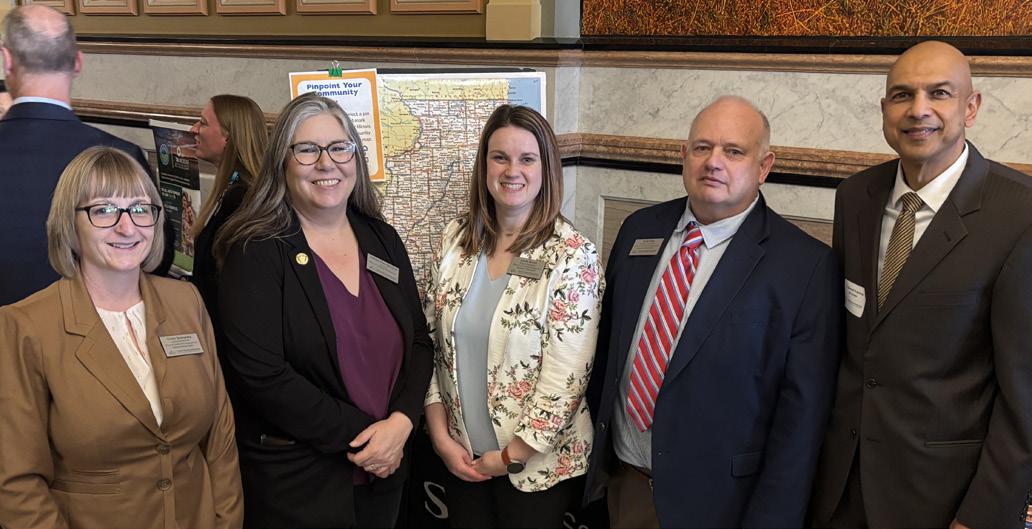
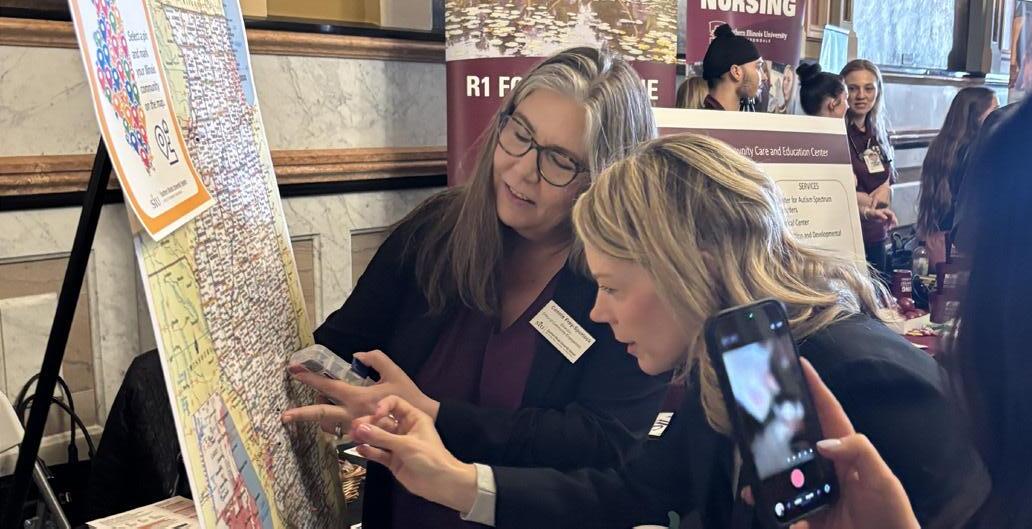
On March 24, the OCE and IRH staff attended the annual SIU Day at the Capital. The event was an opportunity to connect with community partners and explore new program opportunities.
INSTITUTE FOR RURAL HEALTH STRENGTHENS REGIONAL HEALTH PARTNERSHIPS
AND WORKFORCE DEVELOPMENT
The SIU System Institute for Rural Health (IRH) continues to expand collaborative efforts focused on improving healthcare access, workforce development, and community well-being across central and southern Illinois. By bringing together expertise and resources from across SIU campuses, IRH is helping build a more coordinated approach to addressing the complex health challenges facing rural communities throughout the region.
The work of the Institute is grounded in a central question: how can the collective strengths of the SIU System work together to improve quality of life for the communities it serves? That question continues shaping initiatives tied to behavioral health, recovery support, workforce development, public health partnerships, and community education.
One major area of focus is the social determinants of health — the economic, environmental, and social conditions that significantly influence health outcomes. IRH works to strengthen coordination among existing programs while also supporting innovation and new partnerships designed to reduce barriers affecting rural and underserved populations.
The Institute also continues expanding workforce development efforts connected to behavioral health and recovery services through the Certified Recovery Support Specialist (CRSS) Training Program. Delivered in partnership with community organizations, the state workforce initiative trains individuals to become certified peer support specialists
who assist people recovering from mental health and substance use disorders. The program helps strengthen behavioral health capacity in underserved areas while also creating meaningful workforce pathways for participants.
IRH is additionally involved in statewide collaboration efforts addressing the connection between substance misuse, trafficking, and child welfare through partnerships with the National Drug Endangered Children Alliance, state agencies, and the Administrative Office of the Illinois Courts. The initiative provides training and community awareness programs designed to help professionals and volunteers recognize warning signs and better support vulnerable children and families.
Leaders involved in the Institute say the work increasingly depends on collaboration across disciplines, agencies, and communities. In addition to direct programming and training efforts, IRH supports internships, field placements, and experiential learning opportunities that help prepare future behavioral health and peer support professionals while also strengthening community partnerships.
As healthcare systems and rural communities continue facing workforce shortages and growing service demands, the IRH is helping position the SIU System as a regional partner focused not only on healthcare education and research, but also on long-term community health and resilience.
BROOKLYN PARTNERSHIP SUPPORTS COMMUNITY REVITALIZATION
The SIU System continues its long-term partnership with the Village of Brooklyn, Illinois, supporting strategic planning, grant development, and community revitalization efforts designed to strengthen economic opportunity and quality of life within the community. Since the partnership began in 2021, students, faculty, and staff from both SIUE and SIUC have contributed to projects connected to transportation, housing, business development, environmental planning, and economic growth.
Most recently, SIU partnered with Western Illinois University’s Illinois Institute for Rural Affairs to support a strategic visioning process focused on helping community leaders map future priorities and continue building momentum for the Brooklyn Revitalization Project. University leaders say the partnership reflects the importance of long-term, communitydriven collaboration rather than short-term engagement efforts.
COMMUNITY DAY CONNECTS RESIDENTS WITH RESOURCES AND OPPORTUNITIES
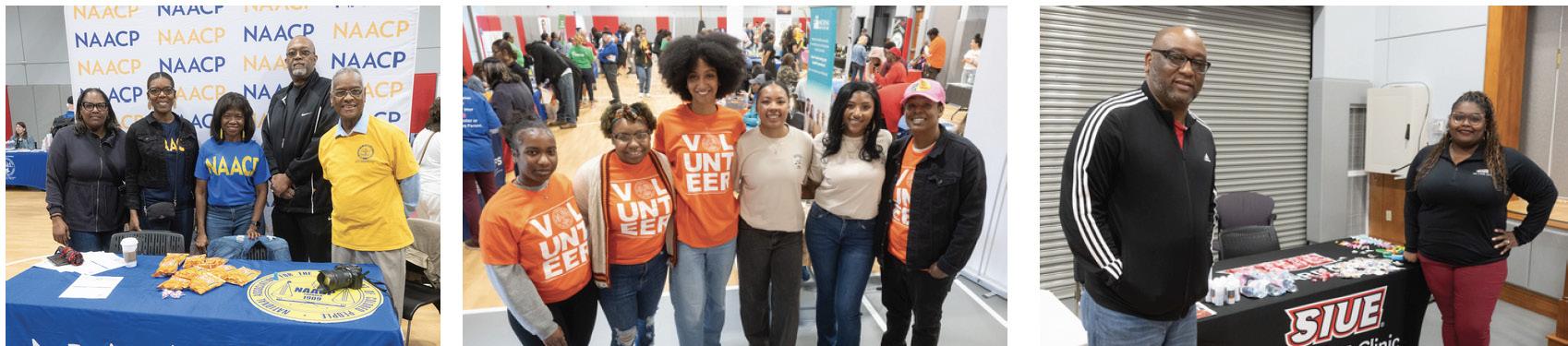
More than 400 residents, community leaders, employers, and service providers attended the first annual Community Day hosted by the SIU OCE and United Congregations of Metro East at the Wyvetter H. Younge Higher Education Campus in East St. Louis. The event focused on four pillars of community well-being: health, wealth, jobs, and family.
The event included on-site job interviews, financial empowerment workshops, free health screenings, youth activities, and resource connections for families and community members.
“ Community Day is about more than a single afternoon — it’s about investing in the future of our region,” said Darnell Tingle, Executive Director of United Congregations of Metro East. “When we invest in health, wealth, and jobs, we invest in each other. ”
MIDWEST CLIMATE COLLABORATIVE EXPANDS REGIONAL GRANT CAPACITY
In 2024, the SIU System joined the Midwest Climate Collaborative (MCC), expanding regional partnerships focused on sustainability, climate resilience, and community capacitybuilding. Through a $400,000 award from Mosaic, SIU and MCC are helping establish a Midwest Regional Movement Mobilization Hub designed to connect communities and organizations with federal climate funding opportunities.
The initiative emphasizes collaboration among universities, nonprofits, local governments, and community organizations
while helping partners navigate increasingly complex grant and implementation processes. The Office of Community Engagement is leading efforts tied to grant development training and technical assistance through both in-person and virtual workshops.
Leaders say the work reflects a growing need for regional partnerships that help communities build long-term capacity while responding to environmental and economic challenges connected to sustainability and climate adaptation.
RESEARCH COLLABORATION ADVANCES DRUG DISCOVERY AND GRADUATE EDUCATION
A growing research partnership between the SIUE School of Pharmacy and the SIU School of Medicine is creating new opportunities for graduate education, biomedical research, and drug discovery while strengthening the SIU System’s broader research ecosystem.
What began as a long-standing collaboration in clinical education and patient care has expanded into a cross-campus research and graduate training partnership focused on one of medicine’s most challenging areas: developing new approaches to treating complex diseases such as cancer, Alzheimer’s disease, and diabetes. Through the cooperative Ph.D. program launched in 2020, graduate students and faculty researchers are working across disciplines and campuses to advance research in pharmacology, medicinal chemistry, and drug discovery.
The collaboration connects the SIUE Department of Pharmaceutical Sciences with the Department of Pharmacology and Neuroscience within the SIU School of Medicine as part of the Multidisciplinary Biomedical and Biological Sciences (MBBS) graduate program. The structure allows students to work within an interdisciplinary research environment while drawing on the expertise, facilities, and mentorship available across both institutions.
One area receiving particular attention is cancer research, where faculty and graduate students are studying new ways to target the mechanisms cancer cells use to grow and resist treatment. Current therapies often focus on blocking a single cancer-driving protein, but tumors can adapt over time and develop resistance. Researchers within the program are instead exploring broader strategies designed to interrupt the underlying protein production systems cancer cells rely on to survive.
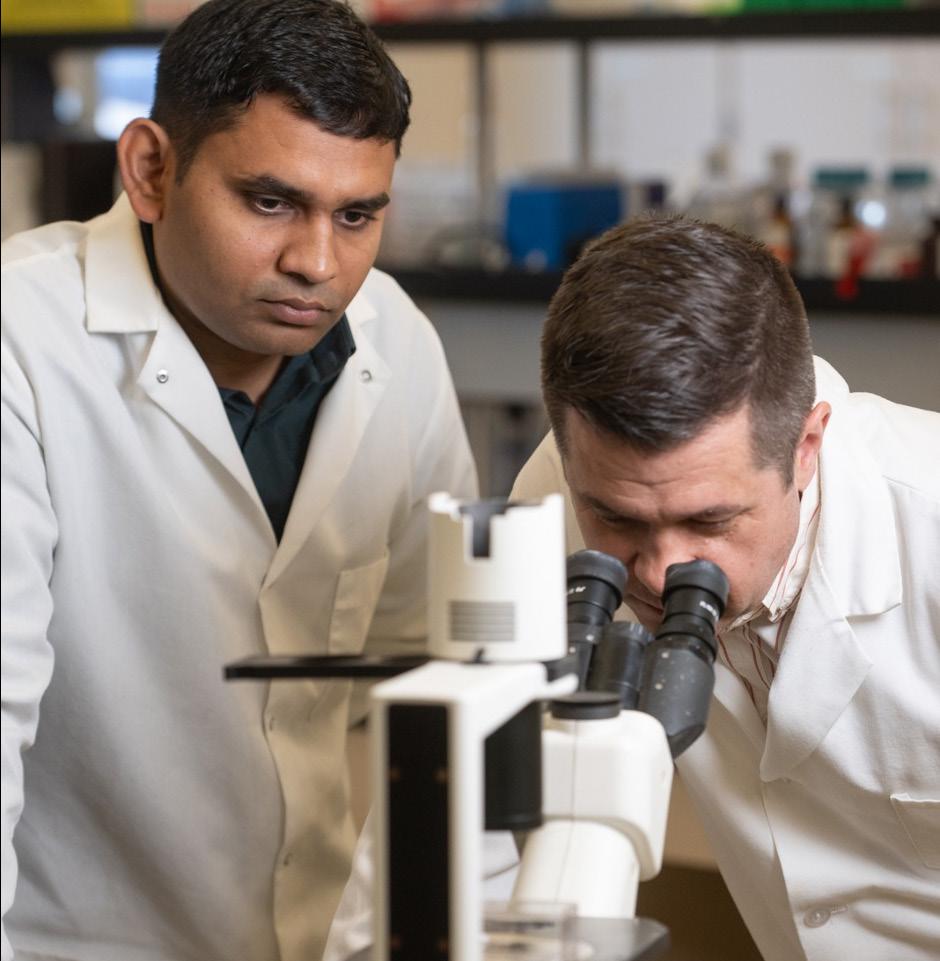
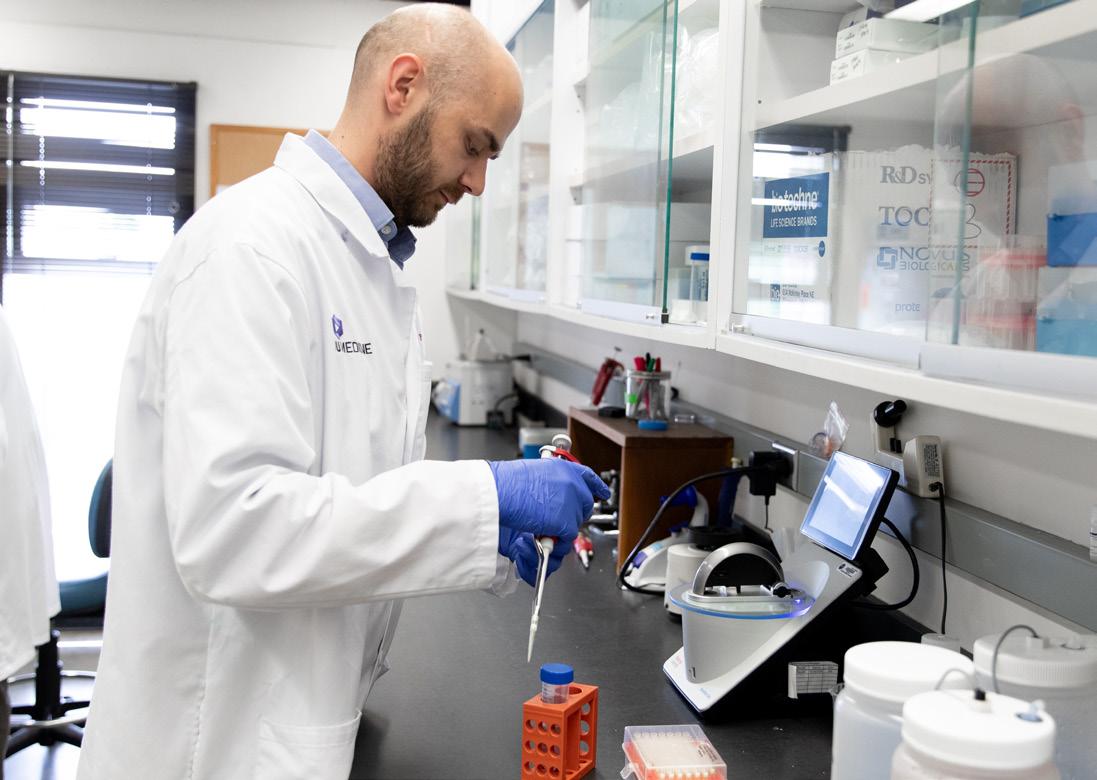
Bhargav Patel, Ph.D., assistant professor, and graduate researchers including Amrita Talukder, Ph.D. student, are leading work focused on mRNA translation and protein synthesis pathways connected to cancer growth and drug resistance. Their research includes investigation into LAT1 blockers and other compounds that could potentially interrupt cancer cell survival processes in new ways.
The work is already generating external research momentum. The team currently holds an active four-year NIH R16 grant supporting discovery of novel mRNA translation inhibitors, while additional NIH and American Cancer Society proposals are under review. Researchers have also received approval through the SIU System Office of Technology Management and Industry Relations for a disclosure related to a LAT1 blocker screening method, reflecting the project’s growing translational and commercialization potential.
Beyond cancer research, faculty collaborations within the program are also exploring new therapeutic approaches for Alzheimer’s disease and diabetes through partnerships across multiple labs and disciplines. Leaders involved in the initiative say the cooperative structure helps accelerate innovation by connecting researchers with complementary expertise while creating hands-on research opportunities for graduate students.
The partnership also reflects broader investments in research infrastructure and interdisciplinary collaboration across the SIU System. With the recent opening of SIUE’s new Health Sciences Complex and continued growth within the School of Pharmacy, university leaders see expanded opportunities to strengthen biomedical research capacity while preparing future scientists and healthcare professionals through collaborative, research intensive training environments.
As the program continues to grow, researchers hope the collaborative model will help position SIU as a stronger contributor to biomedical discovery while also expanding opportunities for graduate students pursuing advanced research careers.
RESEARCH, CREATIVE ACTIVITIES
SIU FACULTY COLLABORATION AWARD HIGHLIGHTS RESEARCH AND INNOVATION
The SIU System’s Faculty Collaboration Award continues to recognize the power of partnerships in advancing research, scholarship, and innovation across the SIU campuses.
The 2025 award honored four faculty members whose collaborative work reflects the growing importance of interdisciplinary and intercampus cooperation in addressing complex challenges through teaching, research, and public engagement. The annual award celebrates faculty partnerships that strengthen academic connections across the SIU System while expanding opportunities for innovation and shared expertise.
This year’s recipients included faculty from both SIUC and SIUE whose work spans multiple disciplines and areas of impact. The projects recognized through the award demonstrate how collaboration across campuses can help accelerate research, strengthen academic programming, and create broader opportunities for students and faculty alike.
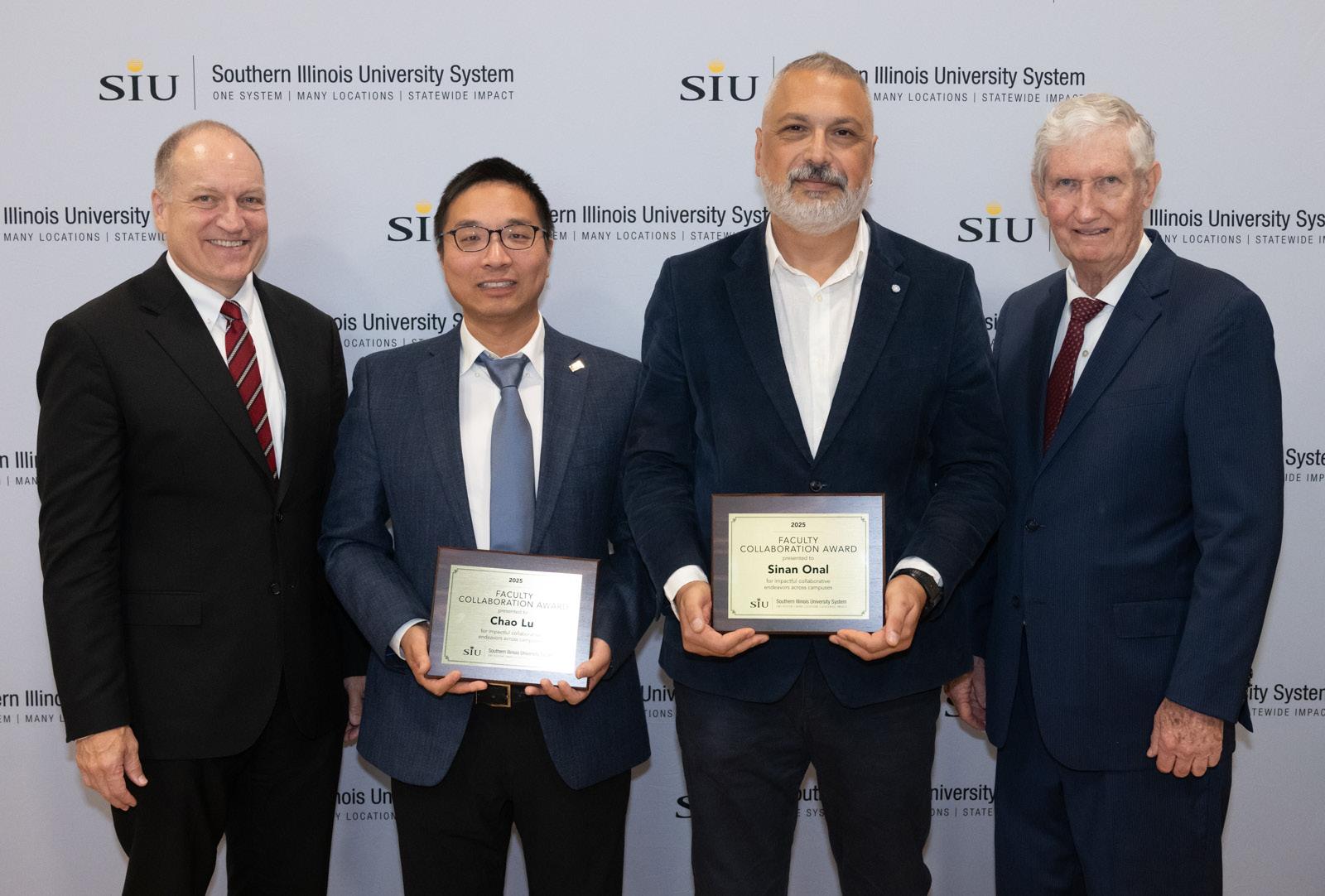
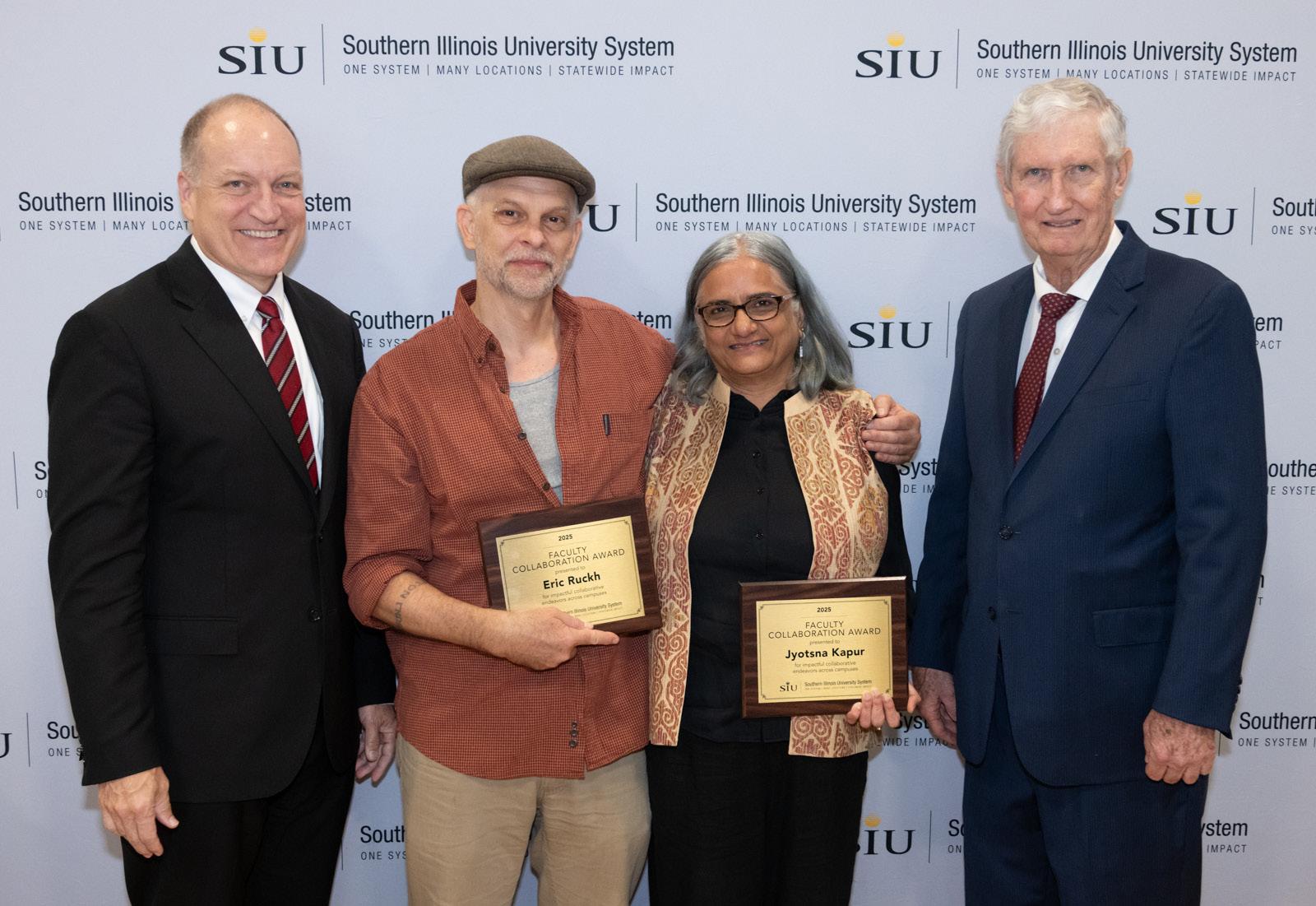
Drs. Sinan Onal (SIUE) and Chao Lu (SIUC) collaborated across the SIU System to develop innovative AI-powered technologies that analyze human movement, advancing rehabilitation research and improving care for individuals with mobility impairments. Drs. Jyotsna Kapur (SIUC) and Eric Ruckh (SIUE) partnered to create shared honors learning experiences that connect students across SIU campuses through interdisciplinary coursework and service projects.
(L to R) Dan Mahony, SIU System President, Dr. Chao Lu, associate professor in the School of Electrical, Computer and Biomedical Engineering at SIUC, Dr. Sinan Onal, professor and chair of the Department of Industrial Engineering at SIUE, and Judge J. Phil Gilbert, SIU Board Chair
University leaders say the award reflects a broader institutional commitment to building stronger connections across the SIU System and encouraging collaborative approaches to research and scholarship. As many of today’s most pressing challenges increasingly require interdisciplinary solutions, partnerships that bridge campuses and disciplines are becoming more important to both academic innovation and long-term research growth.
The award also highlights how faculty collaboration can extend beyond traditional departmental boundaries, bringing together expertise from different fields to support new ideas, external funding opportunities, and expanded research capacity. Leaders across the system continue to emphasize the importance of creating structures and incentives that encourage faculty to work collaboratively across institutions and areas of specialization.
The Faculty Collaboration Award aligns closely with broader strategic priorities focused on strengthening research activity, supporting innovation, and expanding opportunities for systemwide academic engagement. By recognizing and celebrating collaborative work, the SIU System hopes to continue fostering a culture where shared expertise and interdisciplinary partnership are central to future growth and discovery.
Read more about the collaborations at bit.ly/4uJdMsW
(L to R) Dan Mahony, SIU System President, Dr. Eric Ruckh, associate professor of history and Director of the John Martinson Honors Program at SIUE, Dr. Jyotsna Kapur, professor of Cinema and Media Studies and former Director of the Honors Program at SIUC, and Judge J. Phil Gilbert, SIU Board Chair
SIU SYSTEM HONORS STUDENTS FOR LEADERSHIP AND SERVICE
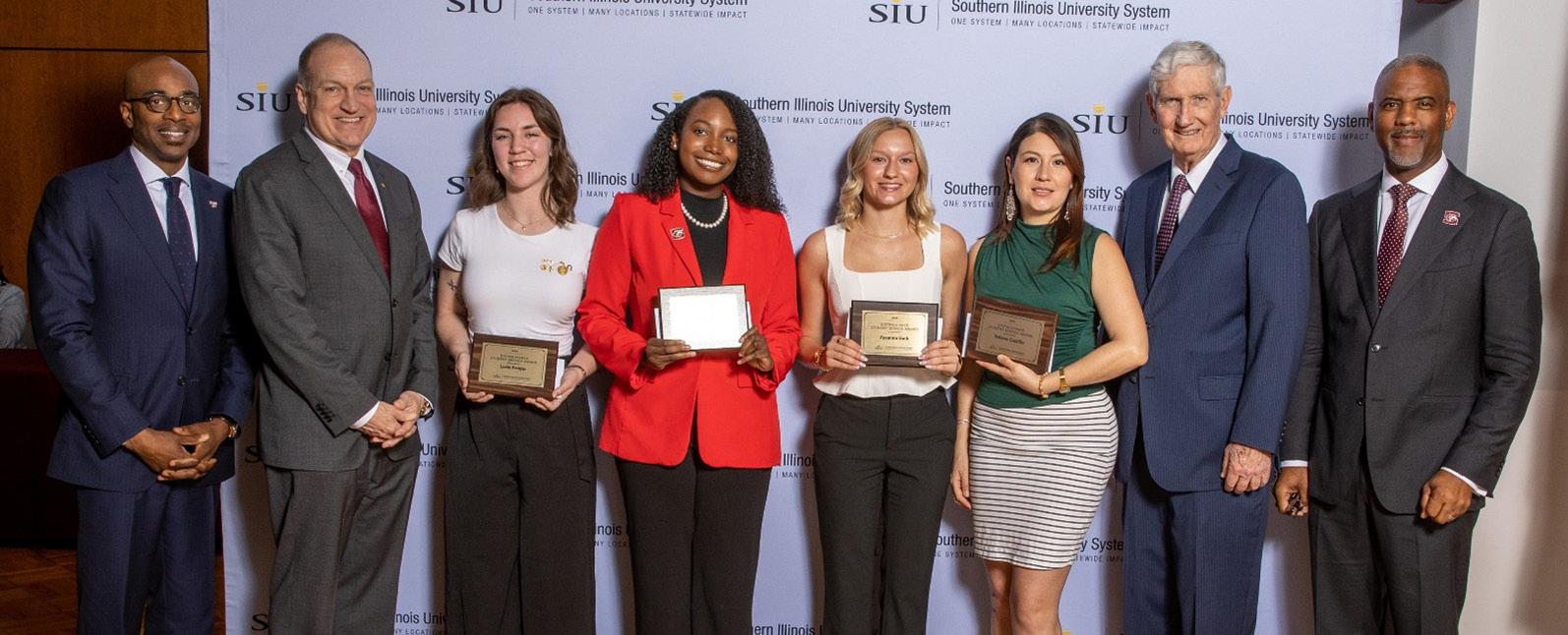
Students from across the SIU System were recognized this spring for their leadership, service, and contributions to their campuses and communities during the 2026 SIU System Distinguished Student Service Awards ceremony.
The annual awards recognize students who demonstrate a strong commitment to civic engagement, leadership, mentorship, and service beyond the classroom. Honorees are selected based on their impact within the university community and their dedication to improving the lives of others through advocacy, involvement, and volunteerism.
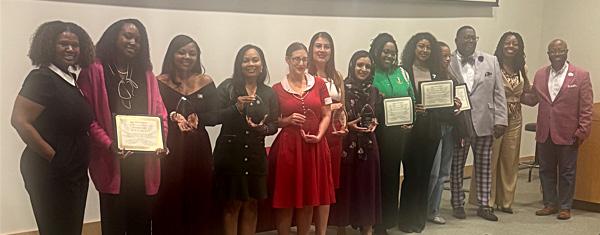
(L to R) James T. Minor, SIUE Chancellor, Dan Mahony, SIU President, Lucia Knapp (SIUE), Myla Croft (SIUC), Zuzanna Gaik (SIUC), Tatiana Castillo (SIUC), SIU Board Chair Phil Gilbert and SIUC Chancellor Austin Lane. Not Pictured: Alexis Hamon (SIUC), Karigan Harvey (SIUE), Makayla Mallon (SIUE), and Nicholas Yuhas (SIUE).
This year's honorees were recognized for extraordinary leadership, service and advocacy - from increasing medical student volunteerism by 350%, mentoring new students and representing abused and neglected children in court, to founding organizations that support international and multicultural students, strengthening campus life, and expanding healthcare and educational opportunities in their communities.
Read more about the students accomplishments: http://bit.ly/4owcVJV
University leaders emphasized that student success extends beyond academic achievement alone. The awards highlight the important role students play in building supportive campus environments and helping address real-world challenges through service and leadership.
At SIUC, recipients were recognized for leadership efforts ranging from student advocacy and peer mentorship to community outreach and campus involvement. SIUE honorees were similarly recognized for their contributions to student life, leadership development, and community engagement initiatives.
The Distinguished Student Service Awards also reflect the SIU System’s broader commitment to experiential learning and student development. Through leadership opportunities, service learning, and campus involvement, students gain experiences that strengthen both personal growth and professional preparation while making meaningful contributions to their communities.
As the SIU System continues emphasizing student engagement and community impact as part of its strategic priorities, the annual awards serve as a reminder that leadership and service remain central parts of the student experience across SIU campuses.
RESEARCH ACTIVITY GROWS ACROSS SOUTHERN ILLINOIS UNIVERSITY CAMPUSES
Faculty and researchers across the SIU System continue advancing research, scholarship, and innovation across a wide range of disciplines. In FY25, SIU Carbondale submitted 443 research proposals totaling more than $172 million in requested funding, while SIUE submitted 268 proposals totaling nearly $148 million in requested support.
Together, the campuses secured more than $119 million in awarded research funding during FY25, supporting projects tied to healthcare, workforce development, sustainability, education, engineering, agriculture, behavioral health, and community partnerships.
Research leaders across the system say the continued growth in proposal activity reflects expanding collaboration, increased faculty engagement, and ongoing investments in research infrastructure and student involvement.
GROW WITH GOOGLE PARTNERSHIP EXPANDS PROFESSIONAL LEARNING OPPORTUNITIES ACROSS THE SIU SYSTEM
The SIU System is expanding access to workforce-focused digital training opportunities through a new partnership with the National Association of Higher Education Systems (NASH) and Grow with Google. The initiative provides two years of free access to Google Career Certificate training programs for students, faculty, staff, alumni, and community members, helping participants build skills aligned with rapidly evolving workforce needs.
The pilot initiative positions the SIU System as part of a growing national effort to increase access to flexible, careeraligned learning opportunities that support workforce development, digital literacy, and professional advancement. Through the partnership, participants can access selfpaced training programs in areas such as data analytics, cybersecurity, project management, IT support, digital marketing, and user experience design.
The program is designed to support a wide range of learners, including current students exploring career pathways, faculty and staff seeking professional development opportunities, alumni looking to strengthen workforce skills, and employers interested in expanding training opportunities for employees and regional workforce partners.
Leaders involved in the initiative say the partnership reflects a broader commitment to innovation and lifelong learning across the SIU System. The flexible structure of the program allows participants to complete training at their own pace while developing skills connected to current workforce demands.
The initiative also highlights growing collaboration between the SIU System and national higher education partners working to rethink how institutions support workforce readiness and continuing education. Through the NASH partnership, SIU joined a network of institutions participating in efforts to expand access to affordable, scalable professional learning opportunities.
Early participation across campuses and community groups has demonstrated strong interest in the program and its flexible learning model. As of early June 2026, 330 participants had signed up across the SIU System, including faculty, staff,
students, alumni, and employer partners. Faculty and staff participants have also begun exploring how the program can support innovation and professional growth within university settings. Tammy Taylor, who incorporated the AI specialization into a small class she was teaching, said the experience helped both her and her students think more intentionally about how AI tools can be used effectively and ethically.
“ I actually request that my students use AI, but they must discuss how they used it,” Taylor said. “Two students in my class enjoyed the Grow with Google AI specialization. Both indicated they learned more about how to use AI properly and it was a good experience. ”
Taylor said the program strengthened her own understanding of prompt development and practical workplace applications for AI tools. “The most valuable part was learning how to use refined and specific prompts,” she said. “I use AI every day at work and this has helped build my skills and confidence regarding the use of AI in the workplace.”
She also emphasized the importance of helping students become thoughtful and informed users of emerging technology rather than avoiding it altogether.
“
I
believe
everyone should know how to ethically use AI, and really, to not be afraid of it, ” Taylor said.
Organizers say the initiative is intended not only to provide access to technical training, but also to strengthen broader workforce connections and create additional pathways for learners seeking to adapt to changing professional environments. As industries continue to evolve, leaders see programs like Grow with Google as away that universities can support both traditional students and lifelong learners through flexible, skills-based educational opportunities.
FOCUS AREA
Grow with Google career certificates
DETAILS
Partnership SIU System + NASH + Grow with Google
Program Type
No-cost workforce training certificates
Learning Model Flexible, self-paced online learning
Participants
CERTIFICATE AREAS
Data Analytics
Cybersecurity
Project Management
Students, faculty, staff, alumni, employers, and community members
INITIATIVE GOALS
Expand workforce readiness
Strengthen digital skills
Support lifelong learning
Digital Marketing & E-Commerce
IT Support
UX Design
Increase access to career-aligned training
Create flexible professional development pathways
DAVE AND ANNETTE HETH CONTINUE INVESTING IN LEADERSHIP ACROSS THE SIU SYSTEM
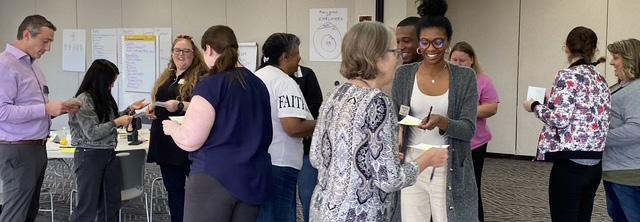
Leadership development has become one of the clearest examples of systemwide collaboration at SIU, bringing together faculty and staff from different campuses, departments, and professional backgrounds to strengthen leadership skills and build stronger institutional connections. At the center of much of that work are Dave and Annette Heth, whose leadership training sessions in collaboration with the Staff Advisory Committee for the SIU System (StACSS) have become a familiar and valued part of professional development across the SIU System.
Since FY23, 1,786 people have participated in the StACSS training, rating the program with a 4.9 average score on a 5-point scale.
After long careers connected to SIU, the Heths now spend their retirement helping faculty and staff develop the kinds of leadership and workplace skills that are increasingly important across higher education. Through workshops and training sessions offered across the system, they help participants navigate communication challenges, team dynamics, time management, and organizational leadership while also creating opportunities for relationship-building across campuses.
For Dave Heth, leadership has long been more than a professional responsibility. It has been a personal passion.
“ I’ve always been fascinated by leadership,” he said. “I read that leadership
is the
most
studied
and least understood topic in human history. I believe that. ”
Before retiring from SIUE, Dave served for many years in university financial leadership roles, including as Budget Director. But his interest in leadership began much earlier during his time working in public accounting at Deloitte. Watching young supervisors rise quickly into management roles with little preparation left a lasting impression on him.
“At public accounting firms, they promote people to supervisor in just two or three years, give them no training, and send them out,” he said. “They’re horrible. They treat their people like dirt because that’s how they were treated.”
The experience shaped how he approached leadership throughout his own career.
“ I was determined I wasn’t going to make those mistakes,” he said.
“So I started reading and got real interested in it. I’ve got a lot of training and education in finance, but my true passion is leadership and helping people.”
That curiosity never really faded. Even now, Dave laughs about the fact that while many people spend Sunday afternoons watching football, he is reading articles and books about leadership simply because he enjoys it.
“I know I’m twisted,” he joked. “But I’ve come to accept myself.” For Annette, one of the most rewarding aspects of the work is seeing participants leave with practical tools they can immediately apply within their own workplaces and teams.
“ When I went to workshops, I always thought if I just get one thing I can use, it’ll be a good day,” she said.
“But our participants come out with a plan they can use right away that will help them on their job and help the people they work with.”
She describes the sessions as intentionally grounded in “real world learning” rather than abstract leadership theory.
“It’s not theory,” she said. “It’s tools you can use.”
That practical approach has become one of the defining characteristics of the Heths’ leadership training style. Through discussion, activities, and shared experiences, participants are encouraged to see leadership not as something reserved for a select few, but as a set of skills and habits they can actively build and strengthen over time.
“ A lot of times through discussion and activities, people realize, ‘Oh, I can do this. This is doable,” Annette said. “They walk out feeling empowered, like they can improve themselves, improve their teams, and make work a better place.”
What started as an interest eventually evolved into a second chapter of service to the SIU community. The Heths became involved with leadership training after campus partners began inviting them to facilitate workshops for individual groups and departments. One recent session focused on time management for staff connected to the National Cornto-Ethanol Research Center (NCERC), an experience they described as especially meaningful.
Over time, those workshops expanded into broader systemwide engagement, with the Heths now helping facilitate professional development opportunities that bring together employees from across SIU campuses and units. Participants not only strengthen leadership skills but also build relationships with colleagues they may never otherwise meet. That cross-campus connection is part of what makes the work especially meaningful to both of them. In many ways, the program reflects the broader mission of the SIU System itself: creating stronger connections across campuses while investing in people and long-term institutional growth.
The Heths also bring something uncommon to the work: decades of institutional experience paired with the ease and humor of two people who genuinely enjoy working together. Married for 47 years, with four children and nine grandchildren — “and a half,” they joke as there is one grandbaby on the way.
SIUE HEALTH SCIENCES COMPLEX EXPANDS CAPACITY FOR HEALTHCARE EDUCATION
AND WORKFORCE DEVELOPMENT
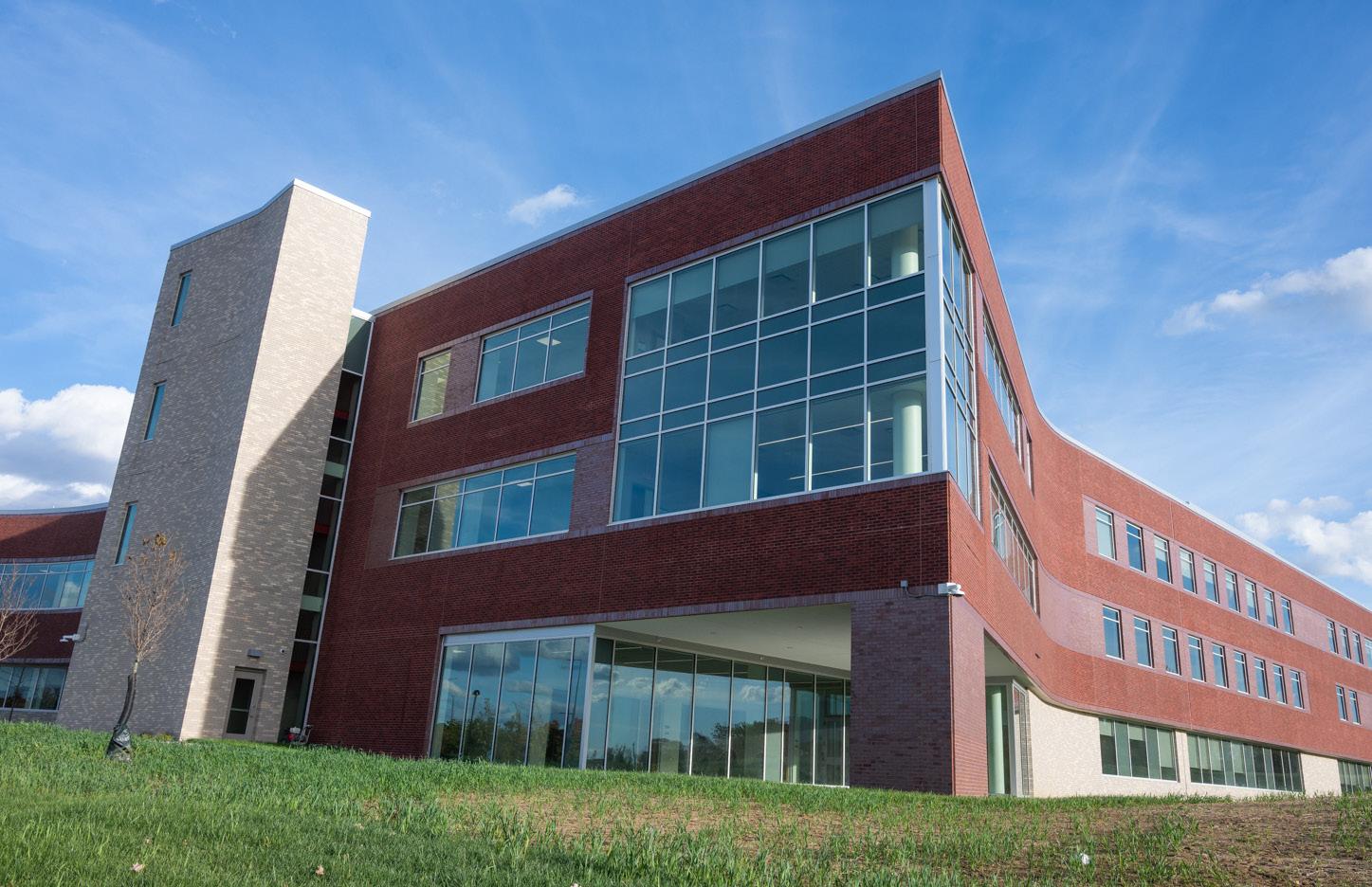
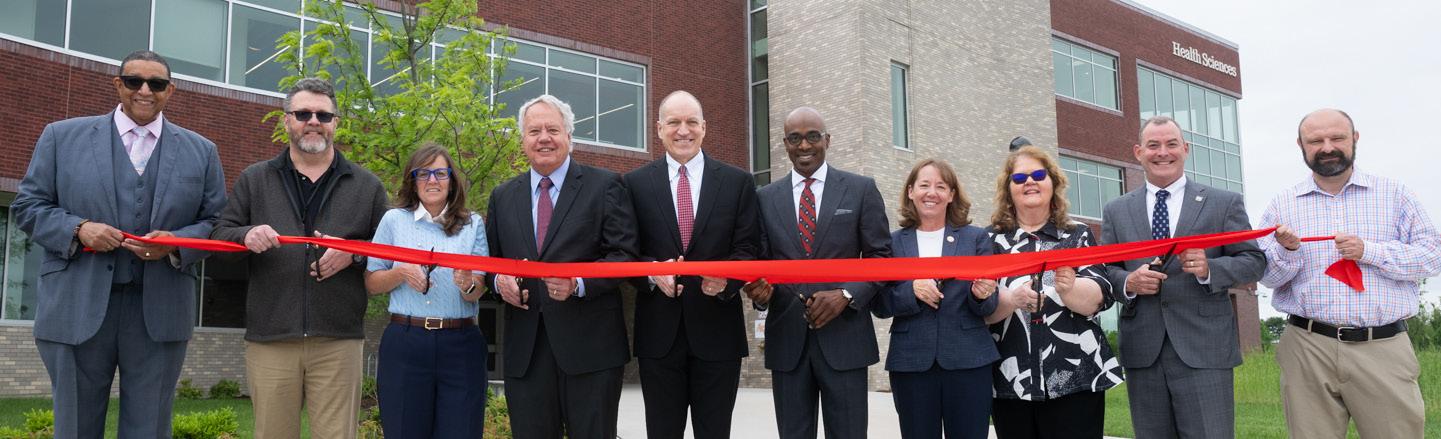
SIUE officially marked the completion of its new Health Sciences Complex this spring, celebrating a major investment in healthcare education, workforce development, and the future of the region’s healthcare system.
The new facility brings together SIUE’s School of Pharmacy and School of Nursing within a modern, interdisciplinary learning environment designed to support collaboration, training, and growing student demand in healthcare professions. The more than $100 million complex represents one of the largest capital investments in the university’s history and was supported through the State of Illinois’ Rebuild Illinois capital program.
University and state leaders joined students, faculty, staff, and community partners for an official ribbon-cutting ceremony in April, recognizing the project not only as a major infrastructure milestone, but as a long term investment in the healthcare workforce pipeline.
The facility includes updated classrooms, simulation labs, collaborative learning spaces, and specialized instructional areas designed to better prepare students for increasingly complex healthcare environments. By housing multiple healthcare disciplines within a shared facility, the complex also creates new opportunities for interdisciplinary learning and collaboration across programs.
Leaders across the university have emphasized the importance of aligning infrastructure investments with regional workforce needs. Demand for healthcare professionals continues to grow throughout Illinois and across the country, particularly in nursing, pharmacy, and related health fields. The new complex is intended to help SIUE expand educational capacity while preparing highly skilled graduates to meet those workforce demands.
The project is already contributing to enrollment momentum within SIUE’s health-related academic programs. University officials noted that the new facility has helped generate increased interest and enrollment growth within the School of Pharmacy and School of Nursing, reinforcing the role modern learning environments can play in attracting and supporting students.
The complex also reflects broader changes taking place in healthcare education, where simulation technology, collaborative training models, and flexible instructional spaces are becoming increasingly important. The building was designed to support both current instructional needs and future program growth as healthcare delivery and workforce expectations continue evolving.
As students begin learning and training within the new facility, the Health Sciences Complex stands as a visible example of how infrastructure investments can directly support academic growth, workforce development, and the future health of communities across the region.
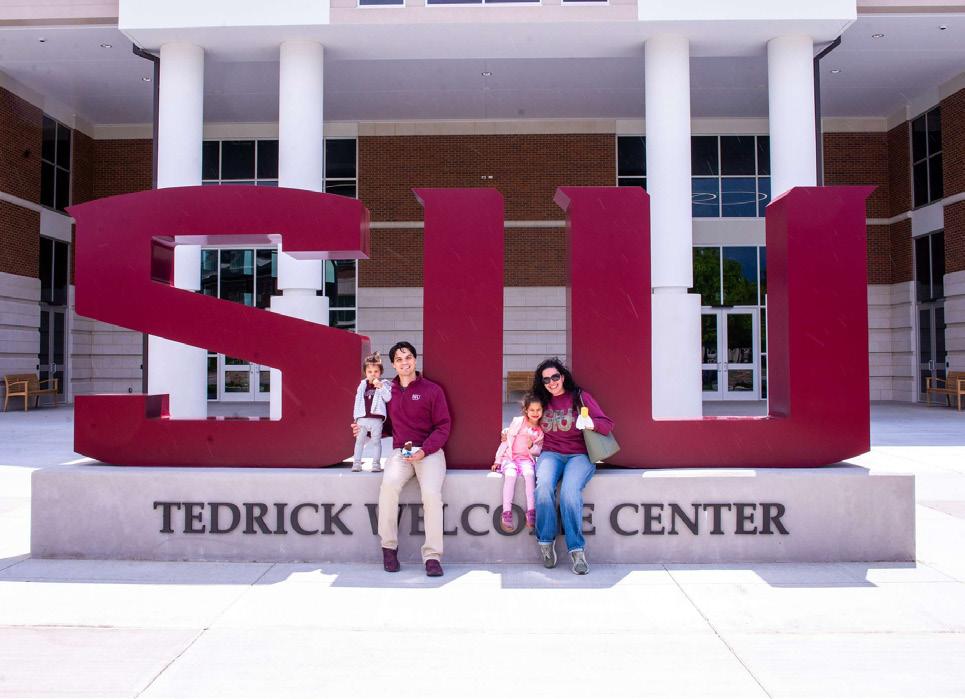
TEDRICK WELCOME CENTER CREATES A NEW FRONT DOOR TO THE SALUKI EXPERIENCE
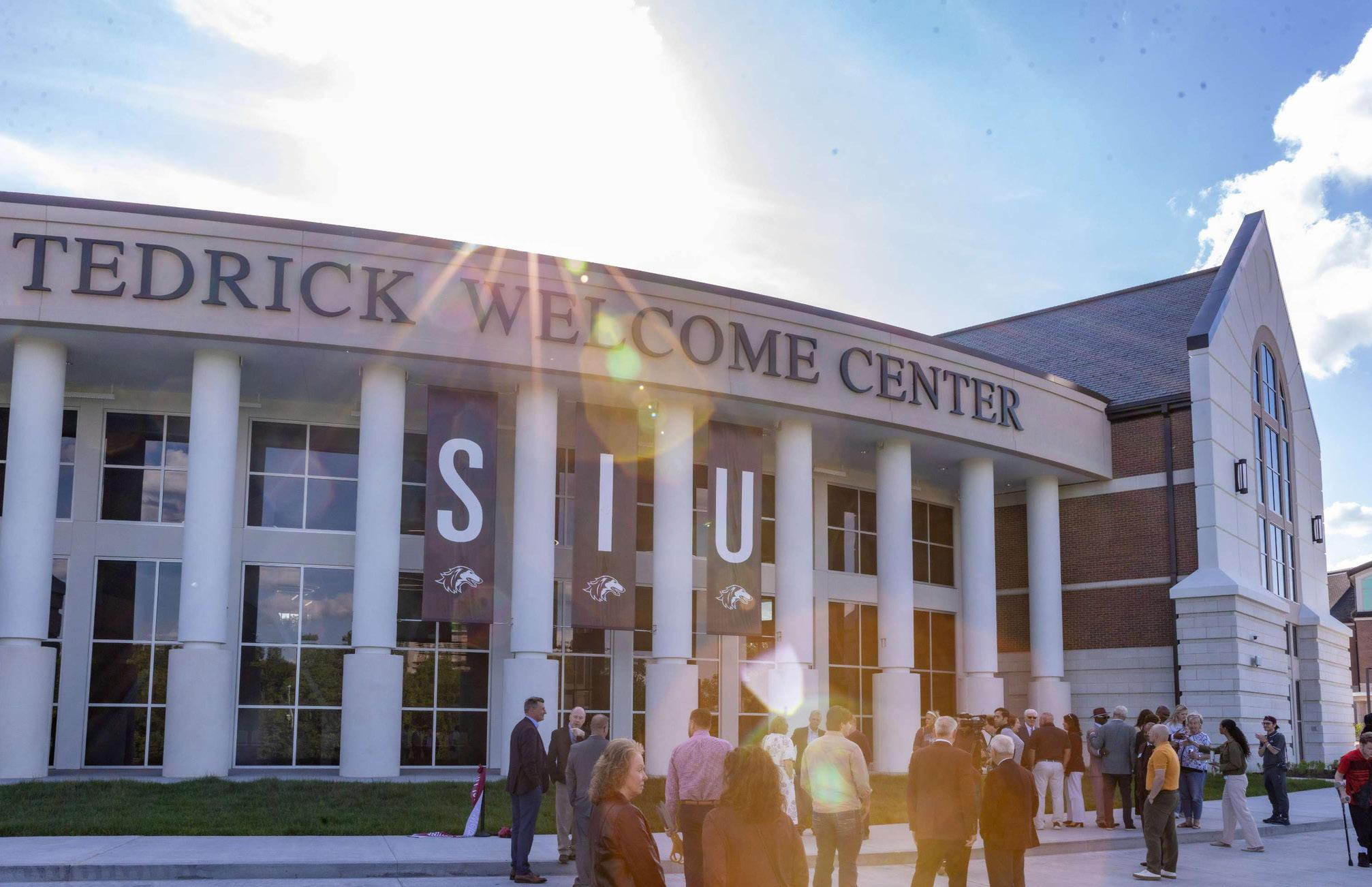
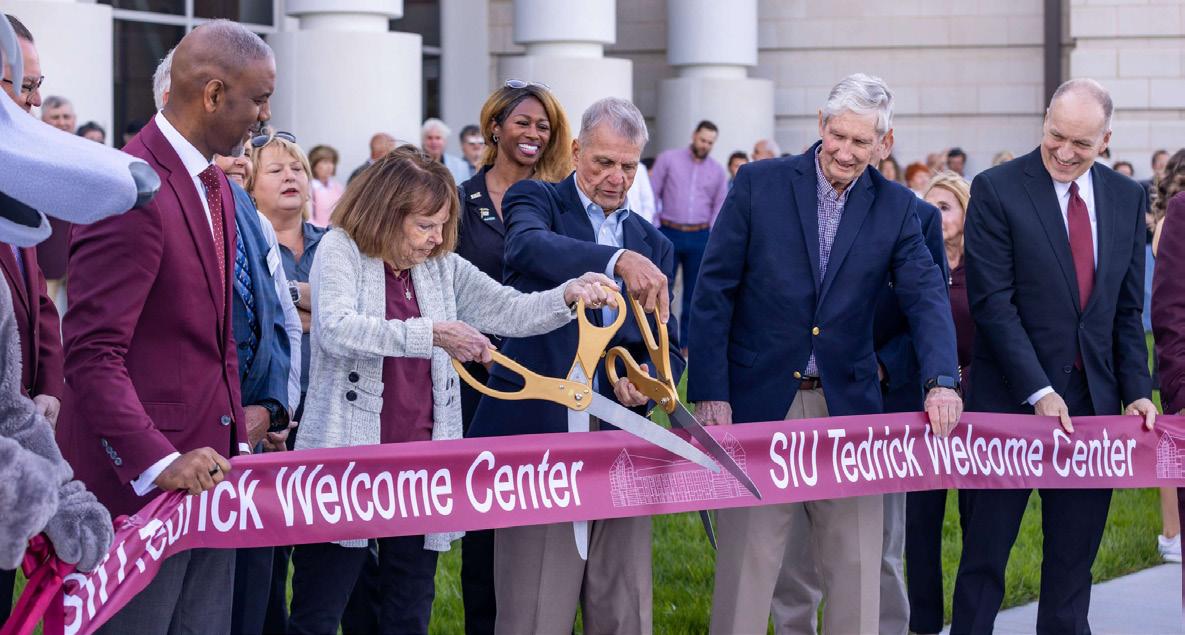
SIUC officially opened the Tedrick Welcome Center this spring, celebrating a major new investment in student recruitment and the future of the Saluki experience.
Located at the heart of campus, the new welcome center was designed to serve as a central gathering and introduction point for prospective students, families, alumni, and visitors exploring SIUC. The facility creates a dedicated space for campus tours, admissions programming, events, and student engagement activities while providing a modern and welcoming first impression for future Salukis.
University leaders described the building as more than a physical structure, emphasizing its role in shaping how prospective students and families first experience the university. The facility was designed to create a strong sense of connection, pride, and belonging from the moment visitors arrive on campus.
The project also reflects the growing importance of student-centered recruitment and engagement spaces within higher education. As universities continue working to strengthen enrollment and improve student experiences, welcoming and accessible campus environments play an increasingly important role in helping students envision themselves as part of a campus community.
More than 1,000 students, faculty, staff, alumni, and community members attended the grand opening celebration in May, which recognized both the completion of the facility and the philanthropic support that made the project possible. The center was funded entirely through the SIU Foundation and donor contributions, including transformational support from Roger and Sally Tedrick.
In addition to serving prospective students and visitors, the Tedrick Welcome Center is expected to support a wide range of university events and community engagement activities throughout the year. Leaders say the building creates new opportunities to showcase SIUC’s academic programs, student life, campus culture, and long-standing regional connections. As of June 2026, there are 260 events already scheduled at the Tedrick Welcome Center through June 30, 2027.
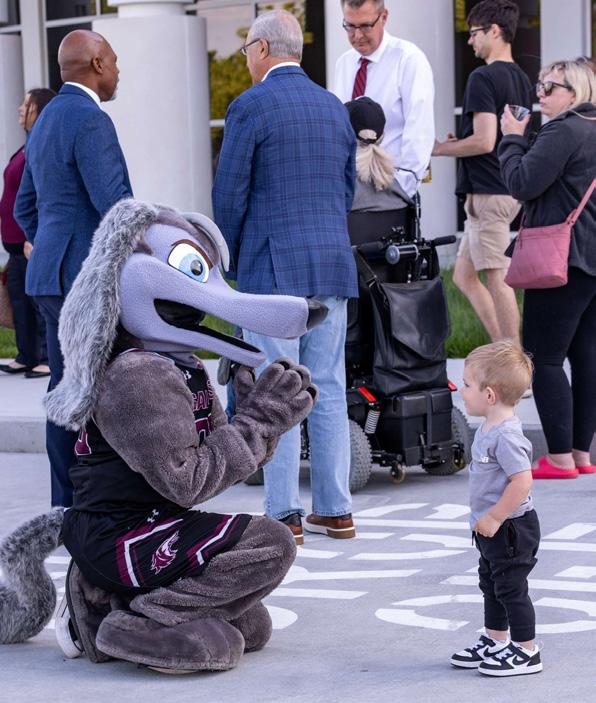
For many attendees at the grand opening celebration, one of the most meaningful moments was seeing young families and future students exploring the building and campus together. University leaders expressed hope that many of those children will someday return through the center’s doors as SIU students themselves.
MOODY’S UPGRADE REFLECTS FINANCIAL STABILITY AND
STRATEGIC
PLANNING
The SIU System received its fourth consecutive revenue bond rating upgrade from Moody’s Investors Service, reflecting continued confidence in the university system’s financial management, operational stability, and long-term outlook.
University leaders pointed to several factors contributing to the upgrade, including enrollment growth, improved financial processes, strong cash reserves, and steady increases in state operating support. The improved rating also positions the system for lower borrowing costs on future capital and infrastructure projects.
The upgrade comes at a time when many colleges and universities across the country continue facing financial and enrollment challenges. System leaders said the recognition reflects years of strategic planning and operational discipline focused on strengthening institutional stability while continuing to invest in academic programs, facilities, and student success initiatives.
Moody’s also cited the system’s improving operating environment and financial management practices as part of its assessment, reinforcing confidence in SIU’s ability to navigate evolving higher education challenges while continuing to support future growth and investment opportunities.
WHAT THIS MEANS FOR SIU
STRONG FINANCES
Demonstrates effective financial management, healthy reserves and continued operational stability.
LOWER BORROWING COST
Positions the SIU System to secure more favorable financing for future capital and infrastructure projects.
Upgrade reflects effective financial management and improving operating environment, including steady growth in state operating appropriations.
-Moody's Investor Service
MORE STABLE FUTURE
Strengthens long term financial stability and supports continued investment in students, facilities and strategic priorities.
ADVANCING SUSTAINABILITY THROUGH STRATEGIC CAMPUS DEVELOPMENT
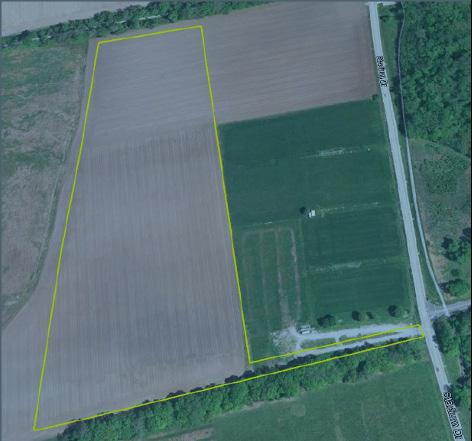
As part of its continued commitment to sustainability and responsible growth, SIUE is partnering with Ameren Illinois on a major renewable energy infrastructure project located on 33 acres west of Stadium Drive on the SIUE campus. The 5-megawatt groundmounted solar system represents a significant investment in the university’s long-term sustainability goals and the SIU System’s broader commitment to environmental stewardship and infrastructure innovation.
Designed as a “behind-the-meter” system, the solar installation will directly support campus operations and is expected to provide approximately 28% of the Edwardsville campus’s annual power needs. The project is also projected to generate an estimated $425,000 in annual energy savings, creating long-term financial benefits while reducing the university’s environmental footprint.
Beyond campus impact, the project reflects the growing role public universities can play in advancing clean energy solutions and regional resilience. Once operational, the system is expected to generate enough electricity to power approximately 900 to 1,000 average U.S. homes annually while offsetting an estimated 4,500 to 5,000 metric tons of carbon dioxide each year — the equivalent of removing roughly 1,100 gasoline-powered vehicles from the road annually.
Construction is expected to begin in June 2026. The project directly advances the SIU System Strategic Plan’s infrastructure and sustainability goals by leveraging innovative technology to support long-term operational sustainability, environmental stewardship, and responsible resource management. It also reflects the system’s broader commitment to building resilient infrastructure that strengthens communities, supports institutional sustainability, and positions SIU as a leader in forward-looking energy and environmental initiatives.