SEOULITE CONTRIBUTORS 2020 Editors in Chief
Copy
Eric Hwang
Irene Nam, Kelly Sung, Lindsey Lim, Clair Kang, Kris Son, Grace Jiyoon Lee, Aimee Choi, Lauren Kim, Riwon Ahn, Jeffrey You, Jennifer You, Sarah Yim, Christine Yi, Hannah Yoo
Managing Editor Emily Oh, Wendy Kang Copy Editor Isabella Kim, Rosa Suh Layout Editor Edward Hahm, Justin Choi Photo Editor Rachel Lee, Katie Lee
2
Photo(s) by Rachel Lee & Katie Lee Layout by Eddie Hahm
Layout Claire Kim, Yuzine Yi, Eunice Rhee, Emma Im Photo Alice Lee , Ashley Kim, Christine Yu Advisor Ms. Wendy Grant
LETTER FROM THE EIC Honorable delegates, chairs, advisers, guests, and readers, These next 19 pages include the hard work of Seoulite, the official press publication of SEOMUN. We as a staff and I as an editor am honored to serve SEOMUN’s many esteemed delegates, chairs, secretariats, advisers, and other participants throughout the conference’s 23rd annual iteration. We hope that all delegates will engage in fruitful debates on global issues and draw new insights from their encounters with new perspectives. It is of my firm conviction that there has never been a more important volume of Seoulite than our present publication. In a virtual conference in which delegates are separated by miles of physical distance and the glow of computer screens, it has become more difficult for delegates to interact with students outside of their committees or hear about debates that they do not personally participate in. As such, SEOMUN is at risk of losing its diversity of interactions and tight-knit community of past years. Our staff hopes to use our publication to overcome this obstacle. This conference, we will strive to use our stories as a connective tissue for SEOMUN’s international coalition, as a common thread to unify delegates from Beijing to Busan. With this in mind, Seoulite would like to ask the delegates and chairs of SEOMUN for two things over the next three days: First, please take the time to flip through our daily issues on issuu.com. We promise to fill our pages with fresh and engaging content ranging from coverage of environmental sustainability debates to memes about resolution drafting. Second, if a press member approaches you for an interview, please spare a few minutes of your time. We welcome and look forward to your uncensored personal opinions! On that note, we wish all delegates the best of luck. Happy SEOMUN XXIII!
Eric Hwang Editor in Chief
3
Written by Eric Hwang Photo(s) by Rachel Lee & Katie Lee Layout by Eddie Hahm
JUKEBOX JEWELS SEOMUN - VOLUME ALPHA
As a 2017 SEOMUN chair once said, all committees essentially are Minecraft servers. Delegates are eager to add building blocks— amendments—add to each other’s creations—clauses—but often show a proclivity for griefing—vetoing and voting against resolutions and amendments after extensive collaboration and revision. Besides sharing gameplay elements with the features that characterize SEOMUN, Minecraft’s iconic soundtrack album also reflects the nature of the conference itself. “Équinoxe”, “Mice on Venus,” “Wethands,” and even subtly ominous tracks like “Oxygène” with increasingly intrusive thickets of dissonance and staticky chimes instill listeners with nostalgia. Much like drifting away in Minecraft ambience throughout all stages of the game, we all cherish and miss three special days in November regardless of how pleasant or unpleasant our SEOMUN ventures were. Other games and soundtracks also precisely capture the SEOMUN experience.
KATAMARI DAMACY Much like Minecraft, Katamari reflects the collaborative aspect of MUN. Tasking players with using a magical, highly adhesive ball to collect as many objects as possible to grow stars, Katamari parallels how delegates go about garnering support for resolutions and amendments. Its soundtrack seamlessly blends jazz and samba with traditional electronic video game music. From “Katamari on the Rocks” to “Stardust Fanfare,” Katamari’s eclectic compositions are imaginative and original, just like SEOMUN’s strongest delegates.
MARIO KART WII (MKW) MKW serves as another musical embodiment of SEOMUN. MKW’s soundtrack is best characterized by tracks like “Coconut Mall,” “Toad’s Factory,” and “Rainbow Road” that feature a diverse range of instruments and music genres. Besides capturing how committees are curious amalgamations of different personalities, MKW’s soundtrack also captures the gamut of emotions both MKW and SEOMUN induce us in, from the ecstasy of winning a race or securing a main submission to the agony of slipping on a banana peel or being unanimously voted against. The bright, catchy tunes also encapsulate the exhilarating nature of the conference. Make sure to check out Carlos Eiene’s jazz arrangement of “Coconut Mall.”
BREATH OF THE WILD (BOTW) An open-world game that allows players to explore and discover solo adventures, BoTW is emblematic of the individualized learning SEOMUN helps foster. Each village in the game has its own theme song, similar to how each and every committee is unique in its own way. Just as new batches of delegates each committee welcomes help define committees’ idiosyncrasies, the different combinations of instruments and tempos aid in creating distinct village atmospheres. All tracks have two versions—day and night. The way they perfectly accelerate and decelerate into each other perfectly embodies delegates’ ability to harmoniously transition into new discussions.
4
Written by Emily Oh, Wendy Kang Layout by Yuzine Yi
STUFF STUFFDELEGATES DELEGATESSAY SAY From Delegate to Me : (Privately)
From Delegate to Me : (Privately)
To:
(Privately)
5
Photos by Isabella Kim & Rosa Suh Layout by Yuzine Yi
“We are not looking to combat the use of LAWS as much,” Edward said. ”We wish to regulate instead of ban. This is because we believe that the benefits of LAWS research and development outweigh the potential cons. We seek to have regulations on the use, but not regulations on how the technology can be utilized.” While the drafters of the resolution maintained that the risk factor of this clause would be reasonably contained under the UN’s constant supervision, other delegates were not easily convinced. Denny Kim, the delegate of Estonia, expressed concern that calling for MEDCs to share information with LEDCs could inevitably lead to the acceleration of LAWS rather than its inhibition. The delegate of Estonia also argued that the clause could infringe upon the sovereignty of certain nations. Jeffery Aung, delegate of the USA, added to this point by maintaining that such practice of sharing information could open an avenue for authoritarian nations to take hold of more threatening weapons.
GA I clashes on issue of LAWS
Delegates of the General Assembly I (GA I) began their second day of conference in lobbying sessions, finalizing their resolutions and planning main submitter speeches. This was a time for delegates to focus on perfecting their clauses and subclauses. One group, who noted the unorganized nature of a clause, began striking out repetitive subclauses and clarifying the main parties that would implement guidelines on nations. They rephrased any potentially misleading wordings and regrouped subclauses in order to avoid loopholes or questionable risk factors.
“Authoritarian regimes such as the DPRK and Iran, which rule their countries with an iron fist, strip their citizens of basic human rights, and routinely disregard the will of the UN,” Jeffery said. “The USA does not believe these authoritarian regimes should have the privilege of acquiring such destructive weapons as LAWS, and consequently instigate and incite war on peace loving nations.”
“It is really important for clauses and subclauses to be as precisely worded as possible in order to convey our stance clearly,” said Ananya Shah, delegate of Haiti. “We must eliminate any room for vagueness when creating our resolutions so that delegates can avoid having doubts or misunderstandings of their own resolutions. During debates as well, we need to be well-prepared to take questions or points of interest by other delegates.”
6
The issue of specificity and risk factors in resolutions was brought up as official debates regarding a resolution main-submitted by Edward Yang, the delegate of China, began. Tackling the issue of Lethal Autonomous Weapons Systems (LAWS), this resolution made several proposals, such as creating a new UN body dedicated to the regulation of LAWS and having More Economically Developed Countries (MEDCs) share beneficial LAWS technology with Less Economically Developed Countries (LEDCs). The latter clause aroused concern among some delegates, who asserted that it would lead to the further proliferation of lethal weapons.
Written by Aimee Choi Photos(s) Yoonah Jung, Aditya Dutta Layout by Yuzine Yi
The first discussion of the day continued with delegates repeatedly pinpointing these areas of disagreement. Although reaching a consensus remained difficult, especially with some calling for further details in clauses and others defending their level of clarity, delegates provided a great number of insights and critiques, promising an even more fruitful debate to come in the following day.
GA II tackles hate crime on social media Delegates of the General Assembly III (GA III) convened on the second day of SEOMUN XXIII to address the rise of hate crimes against minority groups on social media platforms. As the world enters what is called the “fourth industrial revolution,” increased access to digital platforms has fostered the rapid dissemination of hateful content. Consequently, minority groups have become increasingly victimized in cyberspaces, and the protection of their human rights now stands to be a pressing matter given the ever-growing nature of virtual spaces.
the repercussions of increasing hate crimes without violating the sovereignty of member nations.” It initially seemed that the delegates were reaching similar sentiments regarding the resolution. However, as with all proposals, there existed voices of opposition, with the most obvious objection challenging the general idea of encouraging collaboration among member nations.
“With the increasing number of hate crimes occurring through online platforms, our committee found it crucial to tackle such issues immediately,” said Wonju Lee, Deputy Assistant President. “Through the conference, the delegates hope to reach a consensus in terms of forming new bodies, creating guidelines, and encouraging international collaboration to address the online hate crimes that are happening regularly around us.” The first to reach the podium was a resolution mainsubmitted by Jordan Kim, delegate of the USA. The resolution aimed to seek a cooperative solution to the issue rather than an individualized solution specific to each member nation. Jordan put a strong emphasis on the idea of collaboration, arguing that it was the most important and necessary first step in developing measures and that the issue could not be resolved without it. “Collaboration can come in many different forms,” Jordan said. “Adopting systems that other nations can reflect on and working with social media companies and other third-party organizations are all effective means of collaboration that can mitigate
“There exists a crucial weakness to the overall resolution,” said Aaron Huang, delegate of Syria. “It is built under the false premise that all member nations will be willing to collaborate and cooperate with each other. The truth is that some of the nations hold an initial bias against minority groups in the first place, and the resolution offers them no incentives.” Delegates will continue to weigh both sides of the argument to confirm the legitimacy of the submitted resolution. Later on in the conference, delegates will also propose amendments to the resolution to fix potential flaws, refining it into its most optimal form.
7
Written by Christine Yi Photos(s) by Alice Lee Layout by Yuzine Yi
ECOSOC proposes solution to economic exclusion of LEDCs On the second day of SEOMUN, the Economic and Social Council (ECOSOC) started the day by presenting the resolution submitted by Isabella Longhi, delegate of the Russian Federation. This resolution focused on creating an effective solution for agenda one: addressing the issue of economic exclusion in a global economy. Specifically, the delegate of the Russian Federation proposed multiple approaches to solving this problem, while other delegates identified various ways the resolution could be improved. Isabella suggested ways to prevent the economic exclusion of less economically developed countries (LEDCs) in the global economy. For instance, she argued that establishing better education for citizens of such nations could help spark their economic growth. To achieve this end, the delegate was able to provide multiple methods, businesses, and organizations that could help provide education for LEDCs. “Education is essential, as it gives individuals the tools to create businesses and seek employment,” Isabella said. “UNESCO’ TVET (United Nations Educational, Scientific and Cultural Organization, technological and vocational education and training) program will teach individuals in LEDCs concrete skills that they can bring into the workforce. These businesses will both open employment opportunities and stimulate the economy.” Although the resolution seemed effective in addressing the problem of economic exclusion in LEDCs, some delegates were able to identify parts of the resolution that were unclear and thus could be adjusted. Aaron Kim, delegate of Canada, pointed out that the resolution should be more precise on which specific organizations were willing to provide sources of education. “When the delegate of the Russian Federation was presenting her resolution I thought that the operative clause eight sub-clause C was a bit unclear and needed editing,” Aaron said. “In this clause, it stated that the MEDCs and
8
Written by Irene Nam Photo(s) by Gavin Wong, Hyewon Lee, Jiwun Kim, Olivia Orellana Layout by Eddie Hahm
the organizations are going to collaborate with private mass media channels to provide education and promote awareness. However, it did not specify which entertainment channels and online video platforms will provide support.” Other delegates also pointed out flaws in the resolution, leading to the proposal of various amendments submitted to improve the clarity of this resolution. Melissa Kim, delegate of the UK, submitted an amendment regarding operative clause one, which addressed institutions providing investments to improve the infrastructure of LEDCs. The delegate proposed to specify the clause, to limit the aid provided by organizations such as financial incentives and flexible labor markets. “This delegate would like to turn the house’s attention to operative clause one, regarding the encouragement of foreign and domestic investment,” Melissa said. “This delegate believes that financial incentives, derived from the government of the LEDCs receiving aid, or flexible labor markets, which regards the ability of private sectors to make changes due to the economic cycle, are possible stimulus for investment. Hence this delegate encourages other delegates to vote for this amendment.” After several amendments, the resolution submitted by the delegate of the Russian Federation was successfully agreed upon to be sufficient to solve the economic exclusion in developing countries. With 17 votes for, 1 vote against, and 4 votes to abstain, the resolution passed.
HRC questions amendment’s feasibility and specificity The delegates of the Human Rights Council (HRC) engaged in a passionate and highly contentious discussion regarding an amendment, introduced by Celine Bacily, delegate of the Republic of Korea (ROK), for a clause detailing the penalization of individuals exhibiting racist behavior. The clause mentioned receiving help from the Board of Racial Equality (BRE), an institution delegates hope to establish in all respective member nations. “Because every community’s systemic racism struggles are different, member states in collaboration with board members can collectively decide how these punishments will take place,” said Celine. “The delegates are strongly encouraged to pass this amendment, as previous issues regarding extremism and bias can be solved through it.” The issue of whether the BRE would have the ability to implement these policies remained a point of contention throughout the entire debate. While delegates in favor of the resolution, namely the delegate of the ROK, claimed that the BRE would successfully implement these measures to reduce the cultivation of racist behavior, other delegates were dubious of its feasibility.
“This amendment ultimately fails at adding anything meaningful to the resolution as a whole,” said Christopher Shin, delegate of Liechtenstein. “The BRE is not necessarily a body that can regulate those behaviors in an effective manner because it focuses on positive aspects such as education, so it would be unable to implement measures that invade the nations’ sovereignty and freedom of speech.” Many delegates seemed to agree with the delegate of Liechtenstein’s concerns regarding the amendment’s feasibility. Delegates also expressed concerns about the specificity of the resolution as a whole, mentioning the vague and general terminology used in the amendment. “This amendment is very broad and does not specify the specific actions member states need to undertake to discipline and address those who exhibit blatant racist behaviors,” said Brandon Choi, delegate of the United Kingdom. “It does not have any specific means of discipline for the people, and thus does not provide any meaningful changes in terms of specificity.” Due to disagreements regarding the specificity of the amendment, the few delegates in favor of the amendment claimed that it would be impossible to provide clear examples of punishments prior to knowing the severity of racial discrimination in each country. The remaining majority of delegates believed that the lack of specificity was unjustified. With 16 votes against and four votes for, the amendment was striked.
9
Written by Kelly Sung Photo(s) by Christine Yu Layout by Eddie Hahm
UNDP explores sustainable transportation On the second day of SEOMUN, the United Nations Development Programme (UNDP) had a fruitful debate on amendments proposed by some of the delegates. The session was initiated with an amendment submitted by Khun Cho, delegate of Nigeria, linking back to the first agenda: promoting innovative development through sustainable cities and transportation. The first amendment was amended to focus on persuading individuals to use public transportation over private transportation in consideration of environmental problems. In order to do this, Khun made sure that his amendment put on an emphasis on how incentives would encourage people to use public transportation more seriously and frequently. “I encourage all delegates to vote for this particular amendment. The original sub-sub-clause recommended people born between January to June to use public transportation in the first half of the week and vice versa,” said Sahngwon Lee, delegate of the Russian Federation. “I believe that at least some incentives like transportation cards that are given out for free that reduce the fee of using public transportation.” The amendment submitted by the delegate of the Russian Federation was opposed by many other delegates. However, the following amendment pleased many. Specifically, this next amendment discussed another method of using incentives. These ideas were acknowledged as more realistic and persuasive. The amendment also emphasized how incentives should be discounted, rather than being completely free. It also suggested that
10
Written by Lindsey Lim Photo(s) by Rachel Lee, Brigette Kwan Layout by Emma Im
other incentives, like free public WiFi, should be wellmanaged and accessible on public transportation. “People should be offered incentives such as public WiFi and discount cards to users of public transportation to trigger an increase in the use of public transportation,” said Ben Kim, delegate of Jordan. “As the original amendment initiated free transportation cards as an incentive, I found it inappropriate, infeasible, and practically impossible.” Ultimately, delegates came to a general consensus that providing free public WiFi and discounted transportation cards would increase the use of public transportation. Especially regarding free public WiFi, delegates agreed that it would attract people of all ages, as it provides people access to a variety of entertainment while moving, unlike private transportation methods. “This delegate would like to congratulate the delegate of Jordan for submitting this amendment to the second-degree. This delegate is in full support of this amendment because it provides more specific and practical incentives compared to the original amendment,” said John Kim, delegate of Japan. “By discounting cards, instead of making it free, the situation would be less tricky to handle, and citizens will be ensured of economic security. more importantly, by giving an incentive of public WiFi, citizens will have access to the internet.” As the second amendment was voted for by an overall majority, both of the amendments, which focused on providing incentives like free cards, discounted cards, and public WiFi, were passed at the end of the productive debate.
CSTD considers combatting environmental change through mechanical development On the second day of SEOMUN XXIII, delegates of the Commission on Science and Technology for Development (CSTD) focused on combating climate change with technological innovations. In particular, delegates focused on specifying changes needed for certain innovations to improve existing systems. The debate brought about the topic of continuous advancements and the delegates spoke on their respective countries’ behalf to address the environmental challenges at hand. Most delegates underscored the economic effects of climate change. Delegates explained that since climate change transforms environmental conditions, it directly impacts agricultural production. As a result, essential products used to construct or grow crops and other goods are unable to adjust and flourish. Countries are also undergoing phases of resource and funding insecurity and thus unable to develop their mechanical industries, endangering agricultural economies. “For developing countries such as Yemen, contribution to the level of greenhouse gas emissions in the atmosphere may not be as high,” said Angel Sarah Mathew, the delegate of the Republic of Yemen. “However, the problem is severe in regards to the economy and the effects of climate change on agricultural production, which often accounts for a large portion of their GDP. There are many systems in place used to mitigate this crisis, such as carboncapturing, carbon-sequestering, and using technology such as the Internet of Things and smart connectivity in power plants that optimize energy usage from the bottom-up.” When delegates discussed potential ways to improve the process of tackling climate change, most delegates showed similar yet distinct priorities. For instance, Matthew Ahn, the delegate of Qatar, proposed
solutions to address the current trend of climate deterioration on the behalf of other countries, their directing practices, and their figure’s notions. “Some of the specific changes that we are focusing on within our resolution is increasing the investments being made for technological research so that it is more sustainable while being cost-effective, Matthew said. “Another thing we focused on is implementing climate change and technological innovation within the school’s curriculum to further educate the next generation. One of the challenges of the United Nations is that diplomacy works slowly in a world where we are used to instant gratification. Diversity may be an asset in which the United Nations can utilize to its full advantage, but it can impose a grave challenge to the organization. This delegate thinks their country should focus on increasing investments in funding research on technological innovation to combat climate change.” Furthermore, the delegates illustrated the general importance of the topic. From the crucial consequences and methods of addressing the issue, all delegates established the importance of climate change to their individual countries. Gina Bae, the delegate of the Philippines, was one of the many delegates who elaborated on the relevance of global warming. “This delegate thinks handling climate change is important because it is a problem that puts entire humanity’s lives at risk,” Gina said. “Thus, if climate conditions are sustained, that would ensure the healthy maintenance of our human society. This issue is extremely important to the Philippines because it experiences increased temperatures, frequent droughts, floods, and storms. The issue would have to be tackled at hand in order to save my country from deadly environmental disasters.”
11
Written by Clair Kang Photo(s) by Jiu Chiang Layout by Emma Im
THE ARRIVAL OF EXTREME CLIMATE CHANGE IN AMERICA
By Riwon Ahn
The time to take real action against the forces of man-made climate change is dwindling. Over the past years, scientists have warned of the planet’s acceleration towards a critical ‘point of no return,’ in which carbon emissions will reach a ‘tipping point’ in less than a decade, spelling disaster for ecosystems around the globe. Research shows that the United States leads the world with the largest cumulative carbon emissions since the year 1750. Climate change will go down as the defining issue of our time, and today, we are at a defining moment in this defining debate. From motoring weather patterns that threaten food production to rising sea levels that increase the risk of catastrophic flooding, the impacts of climate change are global in breadth and on an unprecedented scale. Without drastic action today, the cost of adapting to these impacts in the future will come with a price tag of $1.9 trillion annually by 2100. Many environmental protection efforts in the United States can be traced back to the first Earth Day in 1970, which initiated support in establishing environmental endeavors such as the Environmental Protection Agency (EPA) and the Clean Air and Water Acts. Woefully, over the past four years, President Donald Trump instigated an unparalleled quota of rollbacks that has disregarded science. This severely impacted public health, the economy, and the environment. For instance, in November 2019, Trump initiated a formal request to withdraw the United States from the Paris Agreement, the leading light in addressing the global climate crisis. The withdrawal was a resignation of American leadership of climate as the world’s largest historical greenhouse gas emitter. Absent from the global stage, the United States is a climate recluse. Even the extraordinary health and economic crisis spawned by COVID-19 has not slowed the
12
Trump administration’s continuous pace in undermining environmental regulations. On the other hand, president-elect Joe Biden’s plan to tackle climate change has been described as the most ambitious of any mainstream US presidential candidate yet. Biden’s plan would pour$2 trillion into a set of research and development goals throughout his first term, stretching to conquer the goal of putting the United States on an irreversible path to achieve net-zero carbon emissions by 2050. Furthermore, Biden has announced rejoining the Paris Climate Accord as part of restoring U.S. leadership in international environmental forums. The ambition of the new administration’s environmental agenda will be strictly tested. While the new administration holds competency to attain much of its environmental agenda, the expectations for significant changes are much higher. Reconciling the internal conflicts within the Democratic caucus and progressive wing with the political realities of negotiating with a passionate opposition party will be a formidable test for the Biden administration during his first 100 days and beyond. In response to the lingering concerns of the global community in regards to climate change, Biden proposed measures to recuperate the security of environmental justice and equitable economic opportunity. The clock is ticking fast for the global economy to reach net-zero emissions by 2050. Implementing such domestic climate policies, U.S. citizens are looking forward to a sustainable environment for all.
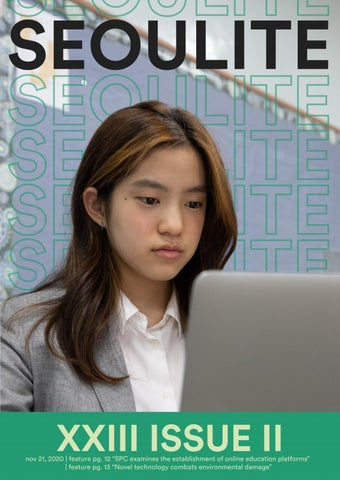
NOVEL TECHNOLOGY COMBATS ENVIRONMENTAL DAMAGE
By Grace Lee
It is no secret that humans have been the primary driving factor behind contemporary environment damage—after all, 97% of scientists believe that people are the root cause of modern climate change. As a multitude of organizations such as the United Nations Environment Programme and the Intergovernmental Panel on Climate Change warn countries to take immediate action to avert a potential global cataclysm, companies, too, have risen to find new solutions. After observing a growing population of customers interested in ‘green’ alternatives, new organizations from Indonesia, China, the UK, and more, have created inventions ranging from small-scale environment-friendly jewelry to complex machines designed to remove smog particles out of the atmosphere. One invention created by Avani Environmental, launched by Kevin Kumala from Indonesia, explores plant-based alternatives to traditionally plastic products such as ponchos, cutlery, and bags. Since over 300 million tons of plastic are produced each year and much of this plastic is dumped into natural landscapes, Kumala innovated a new method to create ‘plastic’ from cassava, sunflower seeds, and other biodegradable products. Similar to other companies who have reinvented the traditional plastic bag to mitigate the harmful effects of plastic products, this new technological invention is being heralded as a step toward progress on climate change. Another invention is an edible water bottle by Skipping Rocks Lab, which also attempts to address the ubiquity of plastic in the current status quo by replacing the outer layer of plastic of a water bottle with a biodegradable kelp membrane. Skipping Rocks Lab aims to reduce plastic packaging by creating a product called the “Ooho!”, which holds
eight ounces of water inside an imitation plasma membrane. While Avani Environmental and Skipping Rocks Lab are being praised by consumers from first world nations, these inventions are often inaccessible or overlooked by developing nations—the countries most dependent on fossil fuels and more likely to mismanage plastic waste. Developed, economically-robust nations can and are already going green, with a plethora of alternative options to plastic, funds necessary to implement clean energy policies, welleducated consumers, and semi-successful recycling programs. The average first-world consumer is relatively well-off and aware of plastic’s detrimental effects on Earth, which means that they are often the customers purchasing the pricier green alternatives. However, consumers from developing countries are less aware of climate change, or simply cannot afford green alternatives as plastics are often cheaper than environmentally-friendly innovations. Nevertheless, it is imperative that companies and organizations continue to innovate new technology. It is true that developing countries have less interest in pursuing sustainable efforts. However, as awareness increases and technology continues developing, more countries will eventually become environmentally friendly and the costs of eco-friendly products will decrease. Although developing countries may not be able to utilize the most up-to-date technologies, the level of efficacy in combating climate change will, in time, rise, and developed countries will also increase the efficiency of their technology. In the long-term, the impact of individual inventions holds the potential to help Earth prevent a global catastrophe of climate change.
13
Layout by Claire Kim
ENV entertains resolution on wildlife poaching “I am willing to accept all amendments that make the resolution more detailed and feasible. By accepting more amendments, I am looking forward to a more fruitful resolution.” In response to Katie’s call for increasing thoroughness and feasibility, several delegates spoke up to tackle the ambiguity present in the resolution. While there were some areas that required generalization, many clauses were quite vague in their explanation. For instance, some clauses failed to specify the organizations that were going to be used to change the current legal system. “I think the resolution is slightly vague,” said Haowen Tan, delegate of Yemen. “In clause one, for example, it has not specified how nations would be incentivized to change their current legal systems. In clause three, [the resolution] fails to explain what organizations would support the implementation of the rehabilitation program for hunters.”
On the second day of SEOMUN, delegates in the Environmental Commission (ENV) started their day by discussing a resolution presented by Katie Kim, the delegate of France. The resolution focused on the prevention of wildlife poaching and the preservation of biodiversity in lesser developed regions. Many speeches aimed to address the ambiguity of the resolution, calling for greater specificity in regards to the nations and organizations referenced in the resolution. In particular, Katie emphasized the importance of cooperation to further develop the resolution, leading to numerous amendments and discussions to attain a more precise resolution. Katie welcomed all amendments and forms of collaboration from all delegates. Although some delegates challenged her proposals, Katie remained open-minded, engaging in meaningful conversations featuring a variety of opinions. “My resolution is working towards finding consensus through collaboration,” said Katie.
14
Written by Kris Son Photo(s) by Christine Yu Layout by Claire Kim
Throughout the debate, delegates primarily sought to address the resolution’s ambiguity. In particular, they expressed the need for a particular way to observe endangered species safely beyond a mere security protocol. Although there were other issues to the resolution needing to be discussed, delegates continued focusing on the issue of vagueness. “The term ‘dominant technology corporations’ applies to corporations such as Google, Apple, and GoPro,” Katie said. “If these corporations are willing to participate in the initiative presented in the amendment, the corporations in the amendments will aim to create environmentallyfriendly devices.” After thorough debating, the resolution was finished with the cooperation of many delegates’ amendments. The resolution submitted by Katie Kim was improved with a variety of amendments and speeches that spoke on behalf of the resolution.
CSW searches for long-term economic solutions to forced child marriages The Commission on the Status of Women (CSW) began their second day of SEOMUN XXIII debating upon a resolution submitted by Jami Jia Mei Robertson, delegate of France. The resolution addressed the second agenda of the committee: eliminating forced child marriages in developing nations. While the majority of delegates were in support of the resolution, many also emphasized the need for amendments to specifically address the long-term aspects of the issue. The delegate of France accentuated the resolution’s comprehensiveness in combating both short- and longterm solutions to dismantle misogynistic ideologies in developing nations. Acknowledging how forced child marriages often strip the innocence and childhood of millions, the delegate of France also called for stringent punishments for perpetrators of child marriage in order to enforce effective deterrence. “[This delegate] and her fellow delegates have taken a holistic approach to counteract the issue at hand through short-term solutions such as protecting those affected by child, early, and forced marriage (CEFM) through humanitarian aid, social services, and therapy,” Jami said. “They will also have the opportunity to engage in conversations to feel understood and less isolated, while also being able to report individual cases to take further legal action. We have also included long-term solutions through educating the broader community about gender equality and raising awareness about the issue itself with the support and guidance of relevant non-governmental organizations (NGOs).” Many delegates supported the resolution, arguing that the resolution efficiently tackled multiple aspects of the issue that needed to be solved. For instance, Ashley Chen, delegate of Afghanistan, applauded the resolution’s efforts to inspirit females in less economically developed countries (LEDCs) through
the administration of programs educating females and providing necessary financial assistance. “The resolution main-submitted by France takes a step into the right direction, motivating certain countries to implement policies for womens’ rights and encouraging female education, especially targeting the empowerment of girls so that they are aware of their rights and value,” Ashley said. “Moreover, in the status quo, as many women have limited access to fair lawyers due to a lack of money, various sub-clauses of this resolution ensure and support women with financial aid for legal advice and lawyers.” Other delegates responded to the resolution with constructive criticism, as they recognized several problems within the resolution, and urged delegates to submit amendments to address these flaws. Their general stance was that the resolution would be ineffective until amendments outlining more robust long-term solutions and fostering the economic improvement of LEDCs were added. In particular, Nitya Arora, the delegate of Pakistan, contended that until delegates addressed and solved the issue of the poor economic systems operating in LEDCs, the resolution would be practically impossible for non-governmental organizations to act upon. “An amendment that should be added should address economic systems that work towards providing lowincome families with more sustainable income streams in order to allow communities that often, under the burden of economic hardship, resort to sending their children into early forced marriages,” Nitya said. “This would entail more job sources and [implement] a system including higher taxation on richer populations in target areas to equalize wealth distribution and fund governmental systems that support job creation and worker education to work towards economic selfsufficiency.”
15
Written by Sarah Yim Photo(s) by Ashley Kim Layout by Claire Kim
SPT avidly addresses denuclearization amendments On the second day of SEOMUN, the Six Party Talks (SPT) discussed the denuclearization of the Democratic People’s Republic of Korea (DPRK). When discussing amendments, delegates focused on details such as definitions and wording to prevent possible misinterpretations. Delegates focused on creating fair and peaceful amendments that balanced the benefits and the losses for all nations. All delegates held strong stances, leading to a heated yet active and enriched debate. Throughout the discussion, delegates prioritized topics such as privacy, transparency, and honesty. Since countries such as the DPRK, China, and the Russian Federation have a history of contradicting these values, several clashes emerged. “Today’s debate has definitely been pretty frustrating,” said Robin Lee, delegate of the Russian Federation. “It’s almost like Russia is isolated in its opposition to this resolution as a whole. We’d anticipated that China and the DPRK would be strongly against denuclearization, just like Russia is, but we’ve been surprised. We get that Russia signed the Non-Proliferation Treaty (NPT), but the methods of denuclearization suggested by other member states have failed to address the national security concerns that would surely be held by the DPRK, China, and Russia.” While countries such as the Russian Federation felt isolated due to their differing stances, other delegates came to agreements and were able to go along their desired paths. Most delegates supported amendments from the delegate of the USA as they prioritized both open communication between nations and adopting realistic solutions that represented the interests of other countries. Even the DPRK, who usually exhibited difficulty when negotiating, agreed to the delegate of the USA’s suggestions.
16
Written by Lauren Kim Photo(s) by Christine Yu Layout by Eunice Rhee
“I’ve been focusing on the effectiveness of the clauses and amendments, along with having realistic solutions,” said Bin Ma, the delegate of the USA. “The first thing I tried to do is to come to a compromise. I successfully came to one with the delegates of Japan, Russia, the DPRK, and the Republic of Korea (ROK) by striking one of the sub-clauses. Most importantly, we are building up productive methods of communication by passing my suggestions. Thankfully, the DPRK was open to the negotiations and suggestions I made.” Countries such as the ROK had to make certain sacrifices to continue peaceful negotiations. There were many complications with issues such as military forces, nuclear weapons, and territory inspections. Similar to the USA, the ROK found an amendment or clause to be acceptable when it emphasized active communication between members of nations. In addition, even the DPRK, with which the ROK has a long-standing rocky relationship, agreed with certain clauses that supported the denuclearization of the DPRK. “The debate was very effective as all nations were able to voice their stance and make amendments accordingly,” said Keunhyuk Yang, delegate of ROK. “We expected sacrifices such as having inspections in a South Korean nuclear facility. However, we were able to minimize sacrifices through effective communication. This is a great step towards verifiable denuclearization since it is much more effective compared to relying on satellite images.” With six out of six votes for the resolution, it was unanimously passed. Although delegations such as that of the Russian Federation had conflicting opinions with the rest of the committee and felt cornered, the USA’s main submission of two clauses marked the end of today’s successful debate.
SC vetoes modification of political reform On the second day of SEOMUN, delegates of the Security Council (SC) discussed the political instability of Venezuela and corruption within its government. In particular, delegates debated on the approval of multiple amendments regarding the situation in Venezuela. The delegate of South Africa suggested the modification of clause one, which emphasized the collaboration of President Maduro and Juan Guaidó. Guaidó is the self-appointed “president” working to overthrow the authoritarian-like rule of Maduro and corruption occurring within the voting system. Delegates agreed with this proposal, fixating on the illegitimacy of the election process. “There are two reasons for [my stance for the modification of clause one],” said Chris Jang, the delegate of Indonesia. “First, even though the voting process may be illegitimate due to corruption, it is still important that Maduro is the one in power and has control over the political system of the country. Secondly, since it is obvious that Maduro will attempt to cause furthermore corruption in the next voting process as he is still in power, I deemed it currently unnecessary to start a new voting process before fixing corruption, which will most likely take decades to do so.” Acknowledging the political situation of Venezuela in the status quo, delegates agreed that the current political system was in urgent need of change, whether it was through the reformation of the government or the collaboration of the two political
leaders. Some delegates disagreed with the idea of creating comprehensively overhauling Venezuela’s current election system, instead arguing in favor of using existing systems to create positive change. The immediate necessity of solving the problem of the corrupt voting system and reforming it through further means to prevent its dishonesty was mentioned by the delegate of Germany. “Clause one called for a new election that would ensure the legitimacy of the leader of Venezuela,” said Sharon June Kim, delegate of Germany. “South Africa’s amendment called for Maduro, the current president to be considered the legitimate leader of Venezuela because there isn’t a way to implement a fair election. I disagreed with this point because Venezuela’s current corrupt voting system will only further delegitimize Maduro’s presidency. I responded to South Africa’s points by stating that the purpose of the SC’s meeting is to offer solutions to mitigate the corruption in Venezuela.” The delegate of the USA mentioned that the delegate of South Africa’s statement regarding the difficulty of sub-clause C was invalid and unnecessary. Ultimately, with six delegates against the modification and the USA, being a member of the P5, vetoing the modification, the SC came to the conclusion of rejecting the modification. “The delegate of South Africa was saying that subclause C should have been changed because of how difficult it is to change policies,” said Bryan Kwon, delegate of the USA. “It would’ve still been in President Maduro’s favor, but, because the SC has the ability to make resolutions binding so that it’s implemented in all countries, it can change some policies of nations.”
17
Written by Jeffrey You Photo(s) by Sharon Kim, Chris Jang Layout by Eunice Rhee
SPC examines the establishment of online education platforms On the second day of SEOMUN XXIII, delegates of the Special Conference (SPC) gathered to create a MUN resolution that would help ensure satisfactory implementation of virtual learning programs in less economically developed countries (LEDCs). Due to the ongoing COVID-19 pandemic, more nations have increased their emphasis on online education. The committee thus hoped to facilitate the transition of LEDCs to virtual learning with adequate assistance from more economically developed countries (MEDCs). In order to implement virtual education platforms in underdeveloped countries, two significant contributions needed to be made from the international community: the provision of sustainable internet via technology, education professionals and satellite facilities from telecommunications service providers. In an attempt to bring these technological advancements to all nations, Minhong Kim, the delegate of Hungary, proposed a resolution that addressed all processes needed to initiate this scientific endeavor. “The essence of my resolution is to encourage the growth and development of internet connectivity and remote communication in LEDCs,” Minhong said. “This stance is strongly positive as education is a very important aspect of building the economies of LEDCs. Furthermore, the advancement will benefit telecommunications businesses as they will be able to gain easier licensing agreements with LEDCs.” As the delegates examined the resolution, most delegates acknowledged both the importance of the implementation of online networks and the benefits that come with such innovations. Aside from the resolution’s primary purpose of establishing an efficient virtual education system, the proposal also included secondary objectives such as aiding the economic assets of MEDC corporations. Claire Williamson, delegate of Vietnam, strengthened the
18
Written by Hannah Yoo Photo(s) by Ashley Kim, Spencer Heemang Layout by Justin Choi
resolution by proposing an amendment that would distinguish between LEDCs and MEDCs when adding condensed licensing processes in these countries for internet installers. “My amendment to clause two allowed for the subclause to become more detailed, and in doing so, it allowed for the solutions to become more feasible,” Claire said. “As feasibility is one of the key points of MUN, this difference in details is very important to the resolution as a whole and the clause itself. All countries support the precise implementation of online platforms as this new option would be pertinent to improving worldwide educational opportunities.” In reconciliation with the amendments made by the delegate of Vietnam, Dante Dorr, the delegate of Indonesia, acknowledged the benefits and drawbacks of broadband internet service connections for LEDCs in regards to the global economy. The delegate of Indonesia explained that since sustainable development of technology could lead to significant progress for LEDCs, these technological advancements needed to be appraised through both affirmative and negative perspectives. “Virtual platforms will encourage a paradigm shift from traditional education to online learning, which will thus lead to a bigger societal emphasis on fields associated with online technology,” Dante said. “This results in growth in the technology industry. On the other hand, increased emphasis on programming could potentially result in decreased emphasis on traditional educators.” All the delegates came to the unanimous conclusion that precision was essential to the proposal.With the majority of delegates voting for, the amendment submitted by the delegate of Vietnam passed and ameliorated the resolution as a whole.
WHO fosters developments in health technology On the second day of SEOMUN, the World Health Organization (WHO) assembled to engage in discussions encouraging the advancement of health technology. Technological innovations have not only directly improved the quality of patient lives but also continuously ensured healthcare for people worldwide. The WHO converged to discuss methods aiming for the proliferation of medical treatment, equipment, and medical education programs. The first amendment to the resolution, submitted by the delegate of France shifted to discuss the need for medical entrepreneurship in the healthcare industry. However, as more amendments were supplemented in addition to the originally posed amendment, delegates’ stances quickly took a turn. “I was planning on creating an amendment that encourages entrepreneurship in the medical technology field, which would naturally create developments in health tech technology,” said Siddarth Raykar, the delegate of France. “Generally, the conference is going well so far. My only grievance is that many of the following amendments have been slightly pedantic. I’m unsure about my stance on the discussed amendment even though I am currently in favor of it. My opinion could quickly change as alterations are made.” Overall, delegates had inconsistent opinions on the first clause, which delved into permitting the use of electronic health records (EHRs) and electronic medical records (EMRs) in pressing medical situations. Some delegates, concerned about potential privacy breaches, deemed the clause to be virtually impossible to be secured systemically. They underscore the need to address concerns such as security problems. As a result, many objections were filed from countries that prioritized civil rights over health benefits. Despite these disputes,
some delegates insisted that benefits reaped from prioritizing healthcare would not only be maximized but that the infringement of privacy would not be an issue with strict policies to mitigate privacy concerns. Through such thorough management of security, data access would be secured for only unambiguously necessary procedures. “To encourage countries to develop health technology, using media is a sufficient method,” said Hyunji Roh, delegate of Egypt. “Emphasizing the problematic situation drags on due to insufficient technical development would motivate countries to support and understand the needs of LEDCs. I believe that this resolution should pass as we need to support LEDCs who lack a myriad of technologies.” Further amendments addressed the importance of identifying patient-zeros, important individuals for identifying the root of health crisis outbreaks. Delegates in support of the resolution assured that the Ministry of Health would not be able to use the gathered information for other reasons. Still, delegates explained that improving privacy protocols and measures were essential in decreasing the number of sick individuals. Delegates also emphasized the need to detail measures to directly locate patients. To do so, delegates proposed raising the availability of staff and medical technologies. “Some specific attempts delegates should make to improve the resolution at hand is to add more specificity,” said Kha-Nhi Nguyen, delegate of the United Kingdom. “ For example, certain clauses mention facilitating an exchange of knowledge between students and workers in the internship program and their respective home countries. However, there is no further elaboration on a framework that would allow this to be implemented.”
#
Written by Jennifer You Photo(s) by Kha-Nhi Nguyen, Jennifer Roh, Alex Kim, Samuela Ma’u Layout by Eddie Hahm
Delegates share their biggest surprise of the conference “For me, the biggest surprise of the conference was the skill level of many of the younger delegates. Despite the fact that older, more experienced delegates usually have a tendency to dominate the debate, my committee displayed a strong trend to go against this norm. The diplomatic and collaborative nature of all delegates, even despite their backgrounds in MUN, was the most interesting and touching part of this conference that I was not expecting.”
Sarah Ju, Deputy Assistant President of the Special Conference “The most surprising event that occurred during today’s conference was that I discovered a newfound passion for Model United Nations. Not only was I able to grasp every opportunity to speak, but I was also able to socialize with numerous other delegates from diverse backgrounds. I never knew that MUN was this fun! I am looking forward to the third and last day of the conference.”
20
Michelle Bok, delegate of Brazil in the Environmental Commission
Written by Sarah Yim Photo(s) by Alice Lee Layout by Eunice Rhee
“The biggest surprise for me in the committee of the CSW was that our two freshman delegates came ready to take control of the debate. Despite being new to the club, they debated at the same level as our most experienced members, and I believe that the club has a bright future with these new stars.”
Shawn Yoon, President of the Commission on the Status of Women
What will seniors miss most about SEOMUN? Christopher Shin “I am going to miss working with a wonderful group of advisors and secretariat members. Our teamwork played a key role in hosting a successful conference and we all worked well together. Mr. Kowalski, Ms. Lee, and Mr. Mac also served as essential mentors who brought insightful advice and opinions to the table while helping the entire team build a consensus for every key decision.” Deputy Secretary General
Joanne Yang “I will miss the fun experiences I had in SEOMUN, from a nervous delegate in freshman year exchanging socials during lobbying with upperclassmen and a chair guiding the committee debate in sophomore year to now a Secretariat member in charge of leading and organizing the whole conference. It was a memorable journey to meet so many different students who are equally as passionate about debate and these issues greater than ourselves from school all around Asia.” Deputy Secretary General
Donghyun Ethan Kim “I will probably miss the experience of meeting new people the most. During three days of debate, you really become close to those in your committee. I still vividly remember running across Coex during lunch with delegates in my bloc!” CSTD President
21
Written by Emily Oh Photo(s) by Kaite Lee Layout by Eunice Rhee