Problem Solving
Question 1
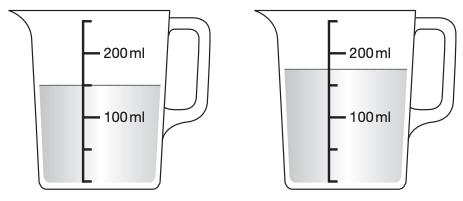
Stefan has 600 millilitres of water in a bottle. He pours some of the water into two measuring jugs as shown.
How many millilitres of water are left in Stefan’s bottle?
Question 2
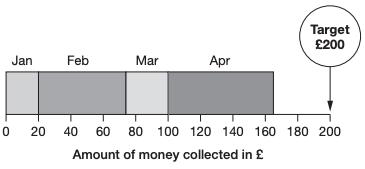
A school plans to collect £200 between January and May. This chart shows how much they collected by the end of April.
How much money did they collect in February and March altogether?
Question 3
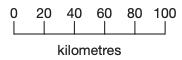
On a map, 1cm represents 20 km.
The distance between two cities is 250 km.
On the map, what is the distance between the two cities?
Question 4
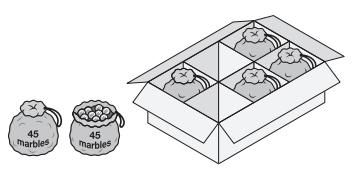
A toy shop orders 11 boxes of marbles. Each box contains 6 bags of marbles. Each bag contains 45 marbles.
How many marbles does the shop order in total?
Question 5
The table shows the cost of coach tickets to different cities.
How much more does it cost for two adults to make a single journey to Hull than to Leeds?
Question 6
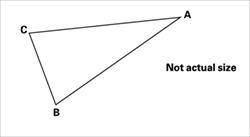
Triangle ABC is isosceles and has a perimeter of 20 centimetres. Side AB and AC are each twice as long as BC.
Calculate the length of the side BC. Do not use a ruler.
Question 7
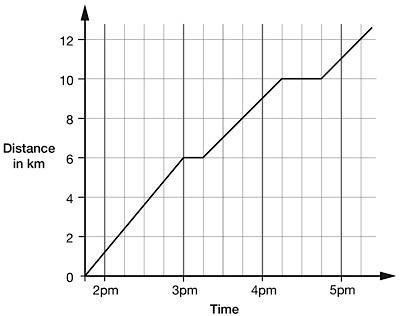
This graph shows the distance Alfie and Chen walked in an afternoon. They started at 1:45pm and had two breaks.
How many kilometres did they walk between the first and second breaks?
Question 8
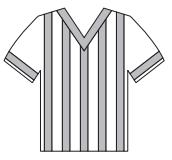
Adam chooses the colours for a new team shirt. The shirt has two colours.
There are four colours to choose from: yellow, blue, white and red. Write the two missing combinations.
The shirt could be:
• yellow and blue
• yellow and white
• yellow and red
• blue and white.
Question 9
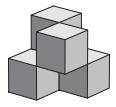
The diagram shows a shape made from four 3 cm × 3 cm × 3 cm wooden cubes joined by their edges.
What, in cm 2, is the surface area of the shape?
cm 2
Question 10
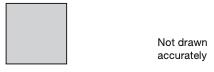
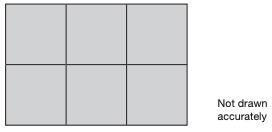
The diagram shows a square with a perimeter of 12 cm.
Six of these squares fit together to make a rectangle.
What is the area of the rectangle?
Question 11
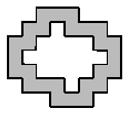
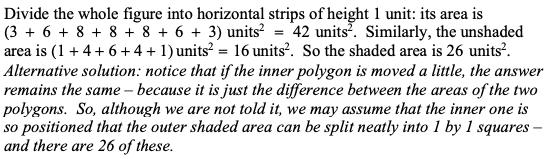
In the diagram shown, all the angles are right angles and all the sides are of length 1 unit, 2 units or 3 units. What, in square units, is the area of the shaded region?
Question 12
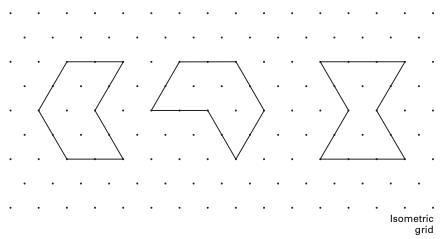
Look at these shapes.
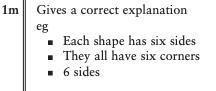
Explain why the shapes are hexagons.
Question 13
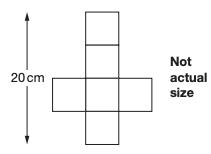
This is the net of a cube.
What is the volume of the cube?
Question 14
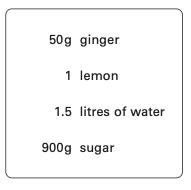
Here are the ingredients for a cordial used to make a drink.
The finished drink should be 1 part cordial and 2 parts water. Jenny puts 100ml of cordial in a glass. How much water should she put with it?
Question 15
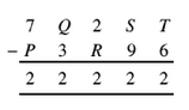
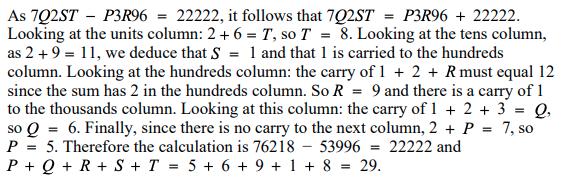
In this subtraction, ��,��,��,�� and �� represent single digits. What is the value of ��+��+��+��+��?
Question 16
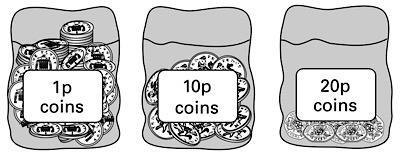
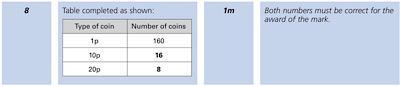
Each of these bags contains £1.60 Each bag contains only one type of coin.
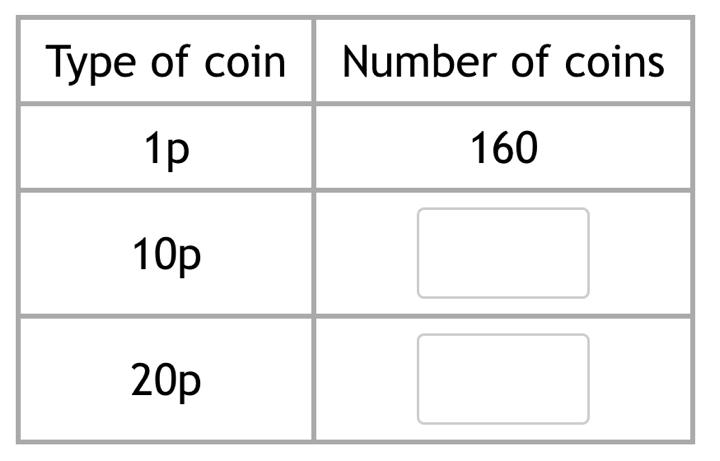
Complete this table to show how many coins are in each bag. One has been done for you.
Question 17
15% of the people walk 5 km or less.
40% of the people walk 8 km or more. What percentage of the people walk between 5 km and 8 km?
Question 18
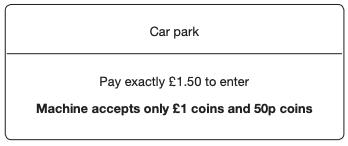
One day, each driver entering a car park paid exactly £1.50
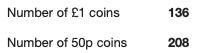
Here is what was put into the machine that day:
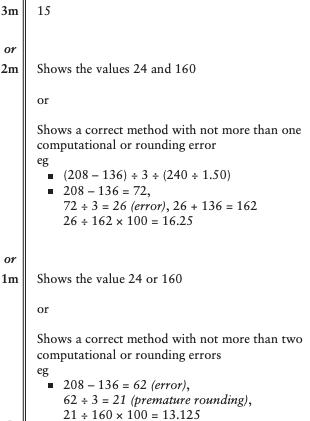
On that day, what percentage of drivers paid with three 50p coins?
Question 19
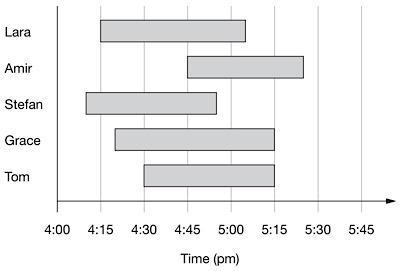
This chart shows the times when 5 children were at a swimming pool one afternoon.
Who was the next person to arrive after Stefan?
Question 20
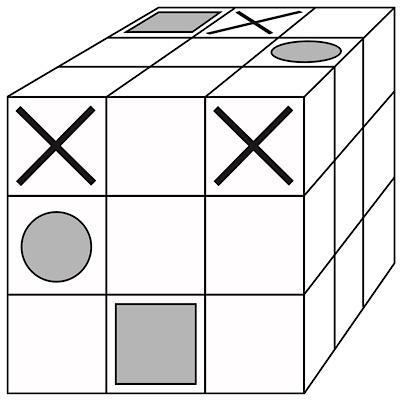
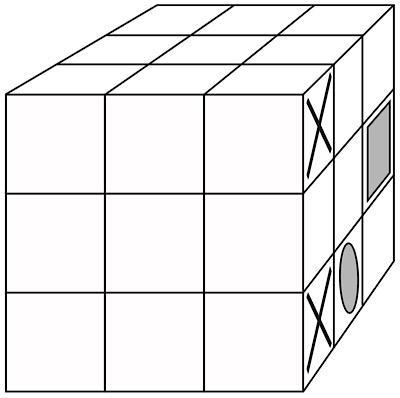
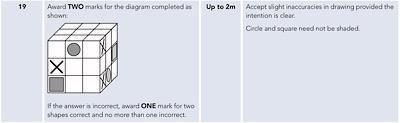
Cubes have been stuck together to make this block. The block has a pattern on two faces.
The block is turned to the position below. Draw the missing parts of the pattern on it.
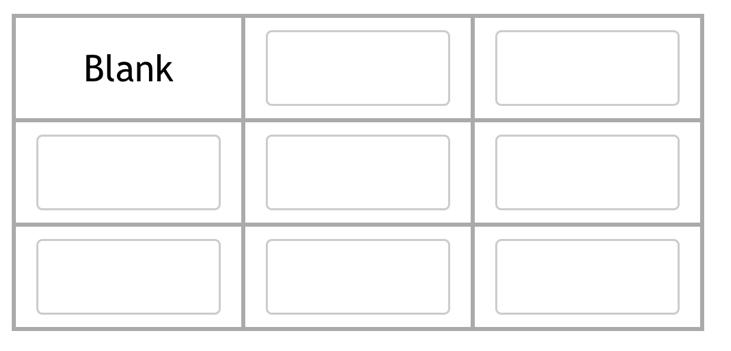
Each box below represents a section on the face of the cube. Write either Blank, Circle, Cross or Square in each box. One has been done for you.
Question 21
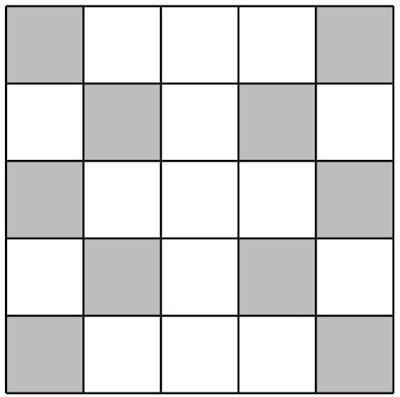
Here is a pattern on a grid.
What percentage of the grid is shaded?
Question 22
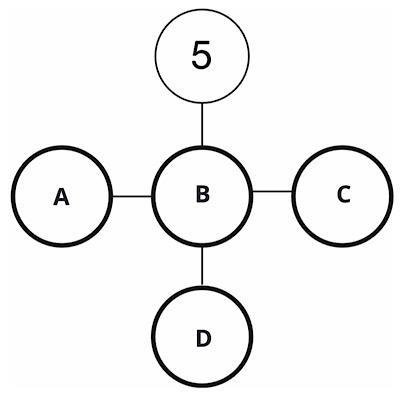
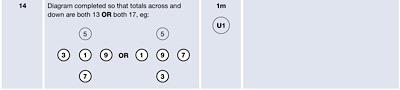
Here are five number discs.
Look at the cross pattern below.
Use each disc once so that the total across and the total down is 13. One has been done for you.
*A is less than C*
Mark scheme
Question 1
275ml
Question 2
£80
Question 3
12.5cm
Question 4
2970
Question 5
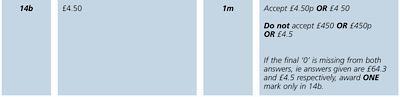
£4.50
Question 6
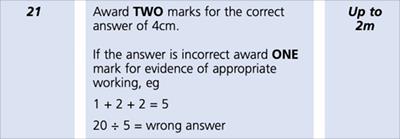
4cm
Question 7
4km
Question 8
blue and red OR red and blue OR white and red OR red and white red and white OR blue and red OR red and blue OR white and red
Question 9
216cm 2
Question 10
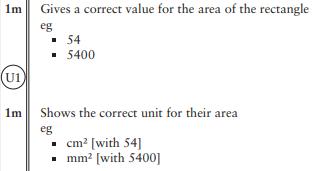
54����2
Question 11 26����������2
Question 12
6 sides OR six sides OR six vertices OR six corners
Question 13
125cm 3
Question 14
200ml Question 15 29
Question 16
Question 19