Visual Submission_The John F. Kennedy Center for the Performing Arts Memorial Interpretation Renovat
CMAA 2025 Project Achievement Awards
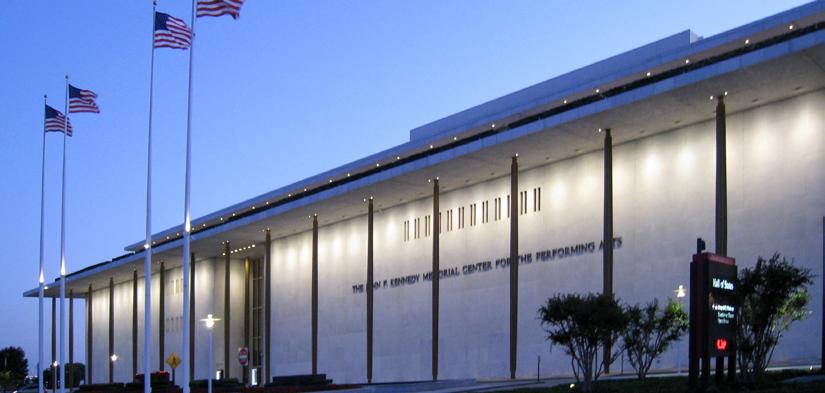
THE JOHN F. KENNEDY CENTER FOR THE PERFORMING ARTS MEMORIAL INTERPRETATION
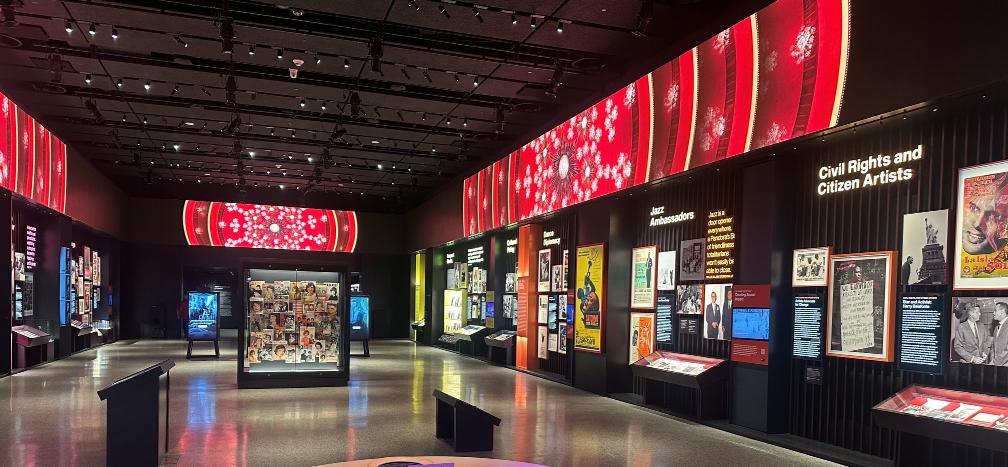
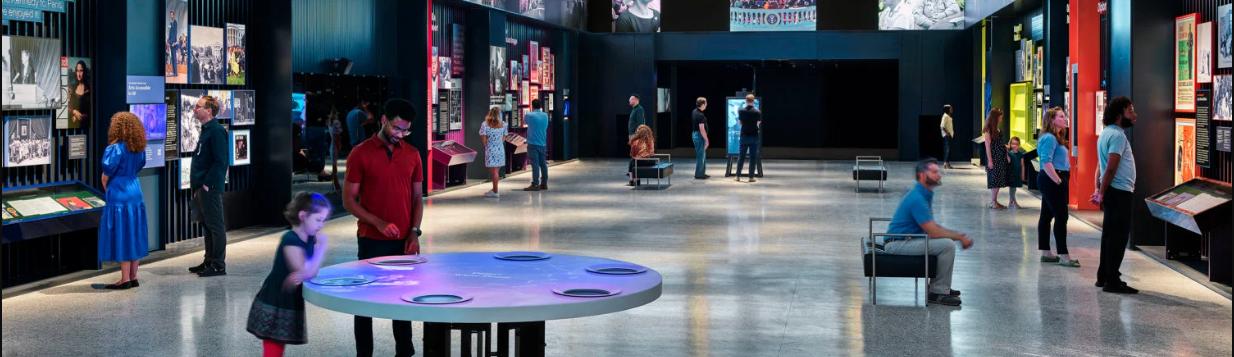
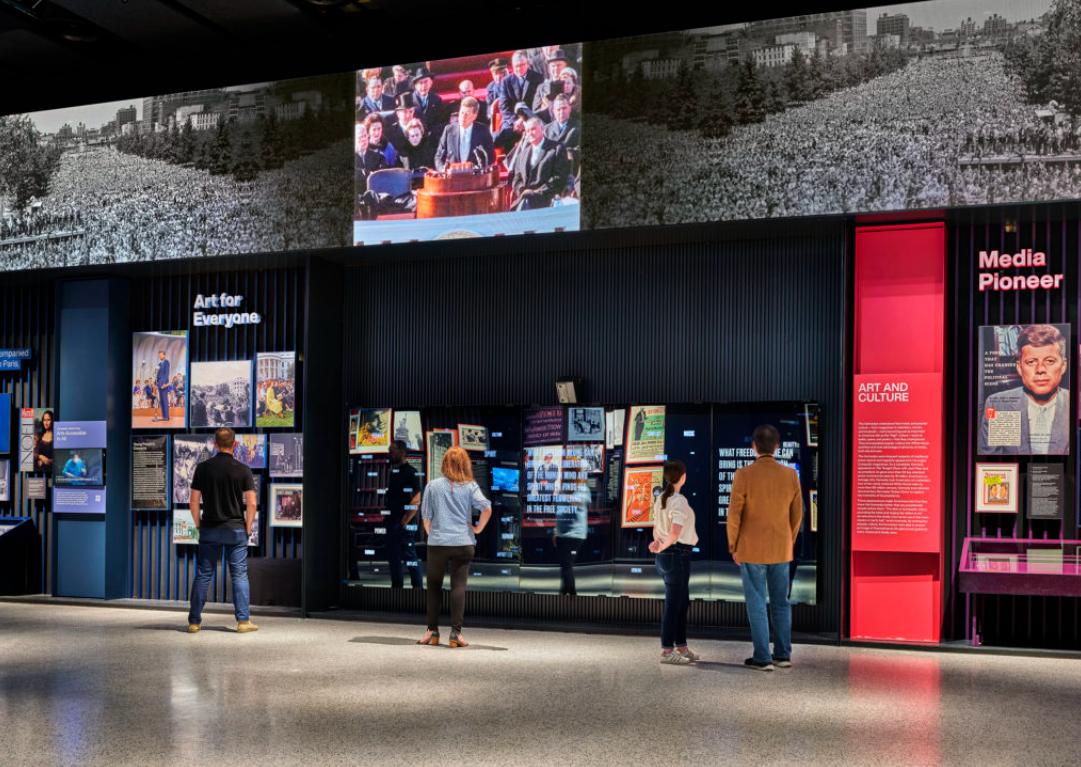
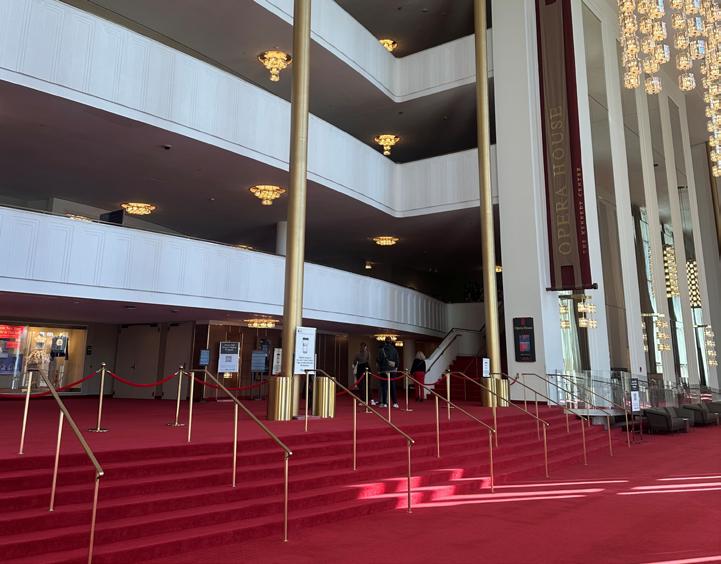
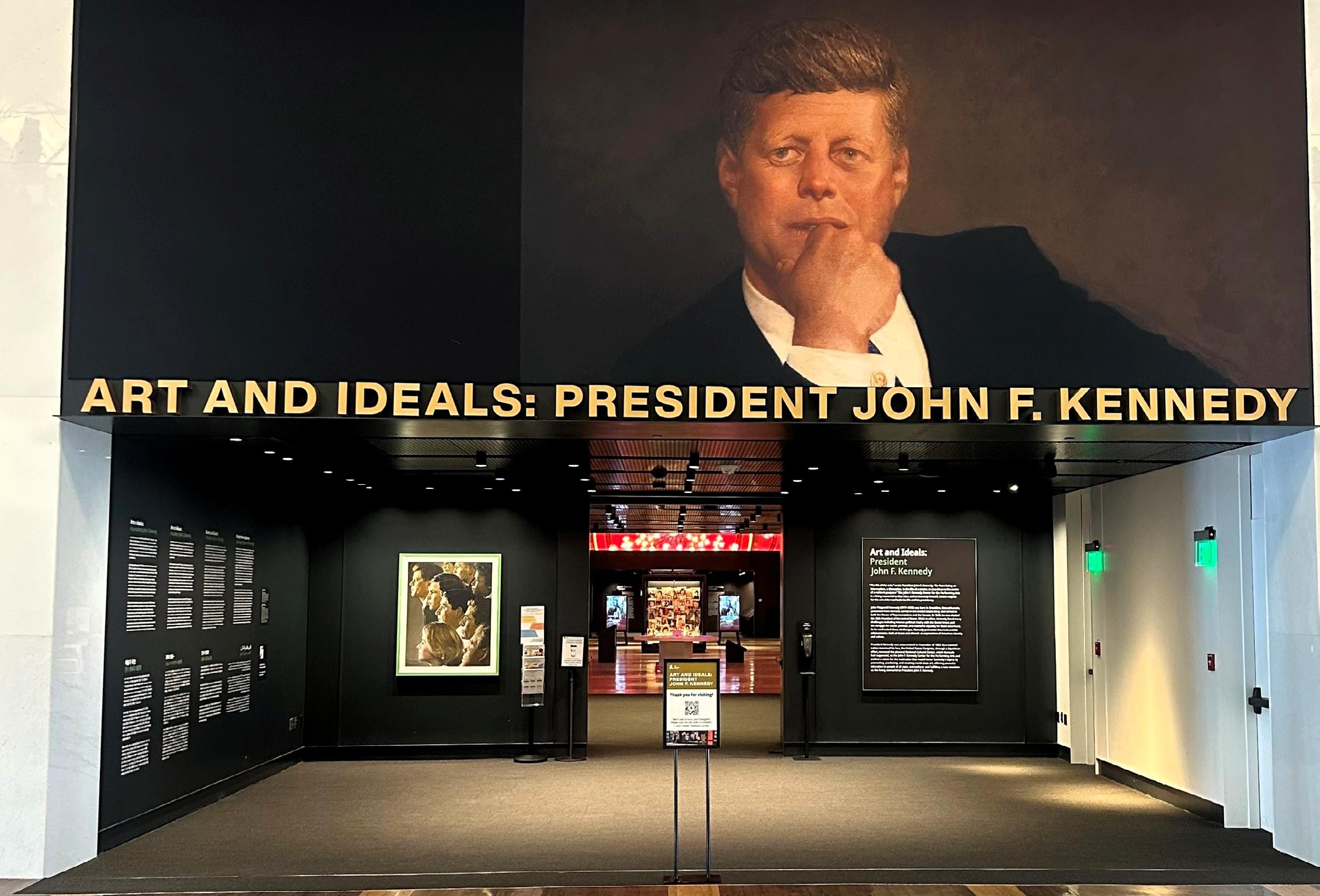
This $46 million renovation at the John F. Kennedy Center for the Performing Arts revitalized public areas including the Hall of States, Hall of Nations, and Grand Foyer, while transforming a premier event space into an immersive, universally accessible exhibit honoring President Kennedy’s legacy.
SIRIS served as the construction manager, coordinating an accelerated deliverythatcompresseda3-yearschedule into only 12 months by overlapping exhibit design and construction during COVID-
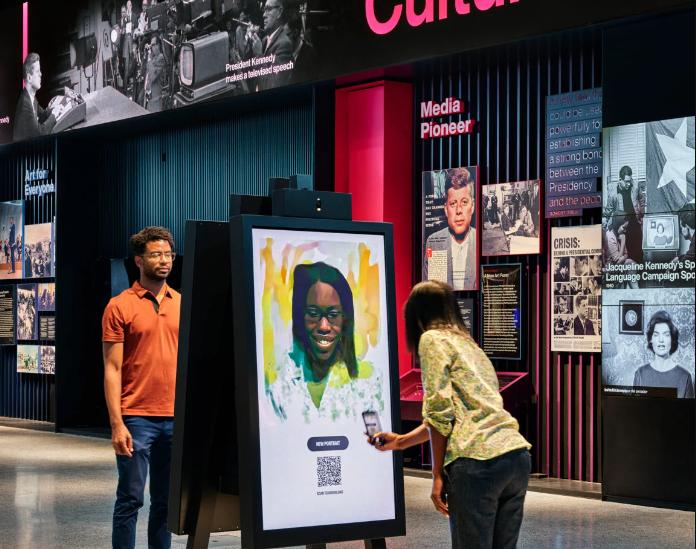
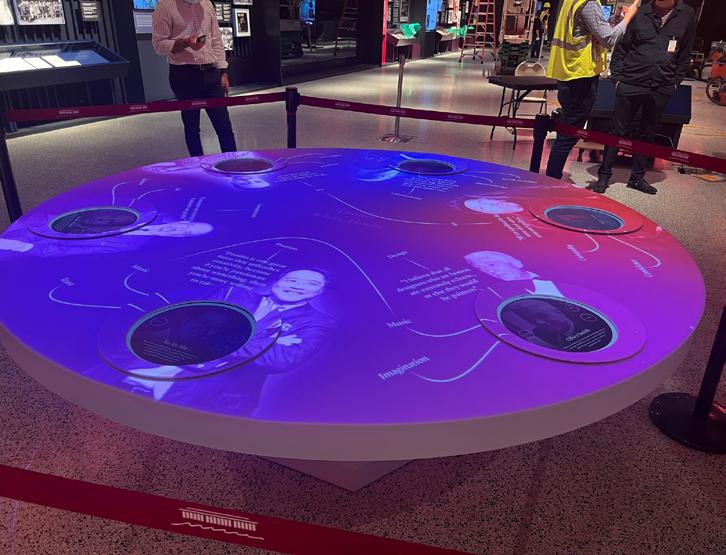
related supply constraints. The project integrated a 360° interactive multimedia screen, fully acoustically insulated exhibit areas, and ADA-accessible features that set a global benchmark.
The Kennedy Center remained fully operational throughout construction, with SIRIS managing stealthy nighttime operations, off-site prefabrication, and safety protocols to protect the public and preserve the visitor experience.
CONSTRUCTION
MANAGER: SIRIS LLC
GENERAL CONTRACTOR: Consigli
ARCHITECT: Keiren Timberlake
EXHIBIT DESIGNER: Pentagram
INNOVATION & CONTRIBUTIONS
CONSTRUCTION MANAGEMENT INNOVATION AND CONTRIBUTIONS
SECTION 2
The Project Team (SIRIS, Consigli, Keiren Timberlake and the Kennedy Center) delivered a highly complex renovation at the Kennedy Center under extreme logistical, operational, and scheduling pressures, finishing the work a full 18 months ahead of the original three-year plan. By fast-tracking the schedule and overlapping design and construction phases, SIRIS enabled a seamless transformation of a space immediately over the Opera House Theatre that had to remain acoustically isolated during and after construction while the Center remained open year-round.
The mission of the Kennedy Center was to complete these renovations as close as possible to “invisible.”
Among the team’s standout contributions was its response to the exhibit fabricator’s business collapse when the vendor
declared bankruptcy near the end of the project. In response, SIRIS stepped in to coordinate prefabrication, early delivery of completed materials, and onsite installations with a vendor in bankruptcy, ensuring continuity and quality through logistics and oversight of the prefab facility.
I NNOVATIVE PROBLEM-SOLVING
became a critical factor in the face of a major dimension bust issue with the 360° interactive video wall.
Rather than delaying the project, SIRIS recalibrated the framing and worked with the interactive video display team to modify the wall structure and accommodate the screen as delivered without additional time impact.
To resolve scheduling obstacles, the team applied safety-focused multi-shift work for several weeks.
U NIVERSAL ACCESSIBILITY
was a central theme to the exhibit’s purpose; beyond access points and other regulatory features, the vision included an inclusive and
interactive experience for guests of various abilities. SIRIS worked with ADA and universal design consultants to implement some of the most inclusive exhibit standards in the world, ensuring visitors of all abilities can fully engage with the space and its contents.
To maintain daily operations, visitor experience, and safety while remaining invisible to patrons, the team worked almost exclusively at night, performing crane lifts and loud construction activities starting immediately after the guests left final showings at 1 a.m. until the center reopened at 10 a.m.
These efforts not only upheld safety and quality but preserved the Kennedy Center’s public mission. SIRIS also facilitated proactive cost estimating, claims mitigation, schedule analysis, materials testing, commissioning management, and subcontractor support, resolving delayed payment and misaligned schedule issues without formal claims.
SUPPORTING NARRATIVE
OVERALL MANAGEMENT & TEAM LEADERSHIP
SIRIS led with a deeply collaborative, solutions-driven management style. Recognizing the challenges of operating within an occupied, high-profile national cultural institution, the team proactively structured a highly phased plan and conducted team-building exercises to align stakeholders from the Kennedy Center staff with design teams, fabricators, and subcontractors.
We were consistent and proactive in trying to remove roadblocks and contribute to fine detail to-dos, including cleaning the exhibit cases on opening day.
SCHEDULE MANAGEMENT
Initially scoped as a 3-year effort, the project was completed in half the time. This dramatic
schedule compression was achieved through overlapping exhibit design and construction phases, fast-tracking submittals, and coordinating directly with off-site prefab operations.
Critical path activities were streamlined by adapting to pandemic-related supply chain disruptions with alternative available materials.
COST MANAGEMENT
SIRIS provided rigorous schedule analysis, cost estimating, and value management from the design review phase onward.
Cost control was maintained through continuous reconciliation with the evolving design, active mitigation of financial risk, and stepping in to facilitate cash flow payments for a subcontractor in financial distress.
QUALITY & RISK MANAGEMENT
The project’s high standards required close attention to detail and risk mitigation. Acoustic performance, visual presentation, and universal accessibility were all tested, inspected, and refined throughout construction.
When a dimension bust rendered a 360° screen incompatible with its wall location, SIRIS, Keiren Timberlake, and Consigli rapidly resolved the issue by repositioning sensors and reworking wall backing to preserve the feature and schedule.
When a massive duct feeding the Presidential box blocked the ceiling structure, SIRIS worked with Robert Silman Associates Structural Engineers to develop a solution before an RFI was requested.
SAFETY MANAGEMENT
With strict operational and public safety demands, SIRIS implemented an overnight work strategy and helped to visually and acoustically isolate temporary MEP equipment to avoid disrupting daily programming.
All crane lifts, material movements, and installation occurred at night, supported by continuous cleaning and hazard mitigation, and the MEP subs worked two 10-hour shifts for 8 weeks to meet the schedule demands. The project recorded zero OSHA recordables over its entire duration.
CUSTOMER SERVICE & PUBLIC AWARENESS
SIRIS, Consigli, and KT prioritized the Kennedy Center’s need for uninterrupted public operation. With high-profile events occurring daily, the team maintained near-invisibility by eliminating signage, working off-hours, housekeeping, and coordinating logistics in a way that avoided drawing attention. Visitor experience and the Kennedy Center brand were never compromised.
SUSTAINABILITY, ACCESSIBILITY & INNOVATION
Universal accessibility was not just code-compliant, it set the highest benchmark for global ADA standards in museum and memorial design. The team’s partnership with a universal design consultant ensured an exhibit space that is inclusive for guests with mobility, vision, and hearing ability differences. Mock-ups and material testing ensured long-term performance and guest experience.
USE OF TECHNOLOGY
Acoustic modeling/isolation and high-tech interactive exhibits were used to create a customized experience. Cloudbased construction management tools were used to manage RFIs, submittals, and schedule updates in real time, ensuring transparent coordination among design teams, contractors, and Kennedy Center stakeholders.
OUTCOMES & IMPACT
SCHEDULE PERFORMANCE
SIRIS, The team completed renovations and exhibition installations well before the initial estimated timeline of three years, bringing in the project at 18 months — a 50% schedule reduction — while maintaining regular yearround operations, preserving the visitor experience and the public facing brand of the Kennedy Center. Throughout the duration of the project lifecycle, all deliverables and milestones were consistently met on-time or ahead of schedule despite challenges to materials,
vendor limitations, and strict nighttime working hours.
This feat was made possible through an extensive and responsive subcontractor network, off-site prefabrication, and a dual construction and design phase overlap. To maintain typical daytime operations between nightly work sessions, the team was required to fully set-up and tear-down operations; this housekeeping element was crucial to visitor experience, but under any other construction manager, could’ve cost the team setbacks and delays.
COST PERFORMANCE
The Kennedy Center budgeted and approved a $46 million budget, but due to SIRIS’ early cost estimating, design-phase value engineering, and real-time schedule management, the final project cost came in under budget.
The team was able to avoid delays by successfully developing and implementing value engineering solutions to mitigate unplanned expenses, even despite material shortages and subcontractor bankruptcy; no major budget increases were incurred.
Although the industry was still facing global adversity from the ramifications of pandemic-related supply issues, the renovations at the Kennedy Center took advantage of locally sourced and repurposed materials to mitigate delays and additional costs for sourcing.
CLAIMS
There were no formal claims during the entirety of the project lifecycle; SIRIS proactively addressed subcontractor concerns related to payment delays and scheduling misalignment, working directly with the client to expedite payment and documentation. This mitigated risk and maintained trust between
all partners, something that SIRIS is known for among former and current clientele. Before a formal RFI could be drafted or decimated, the team activated a diverse network of subcontractors, teaming briefly with Robert Silman Associates Structural Engineers to develop a solution for a duct obstacle, which fed into the Presidential Box and interfered with ceiling structure.
SAFETY
The project team prioritized safety at the highest level, resulting in zero OSHA recordables and incidents. This reflects the dedication to safety for all, including daily patrons. Amidst
strict safety protocol enforcement, including emergency egress plans, temporary barriers, and night shift oversight, SIRIS and Consigli kept all employees accident-free for the duration of the renovation and installation, both onsite and off.
Due diligence for nightly housekeeping kept all traces of the construction process invisible to day guests, forbidding any accidents or near-misses as a result of unkempt materials or construction debris. This practice also required additional situational awareness from all employees, vendors, and partners, increasing the level of safetyconsciousness for the duration of the project lifecycle.