magazine SiP magazine SiP
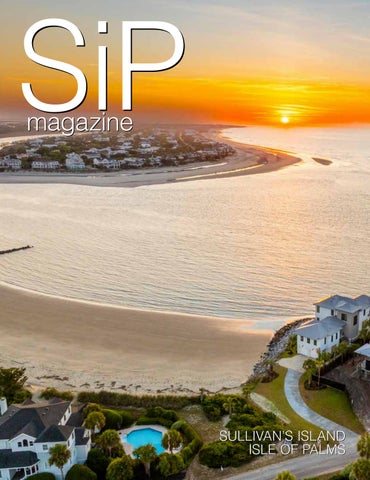
SULLIVAN’S ISLAND ISLE OF PALMS
SULLIVAN’S ISLAND ISLE OF PALMS



SULLIVAN’S ISLAND ISLE OF PALMS
SULLIVAN’S ISLAND ISLE OF PALMS



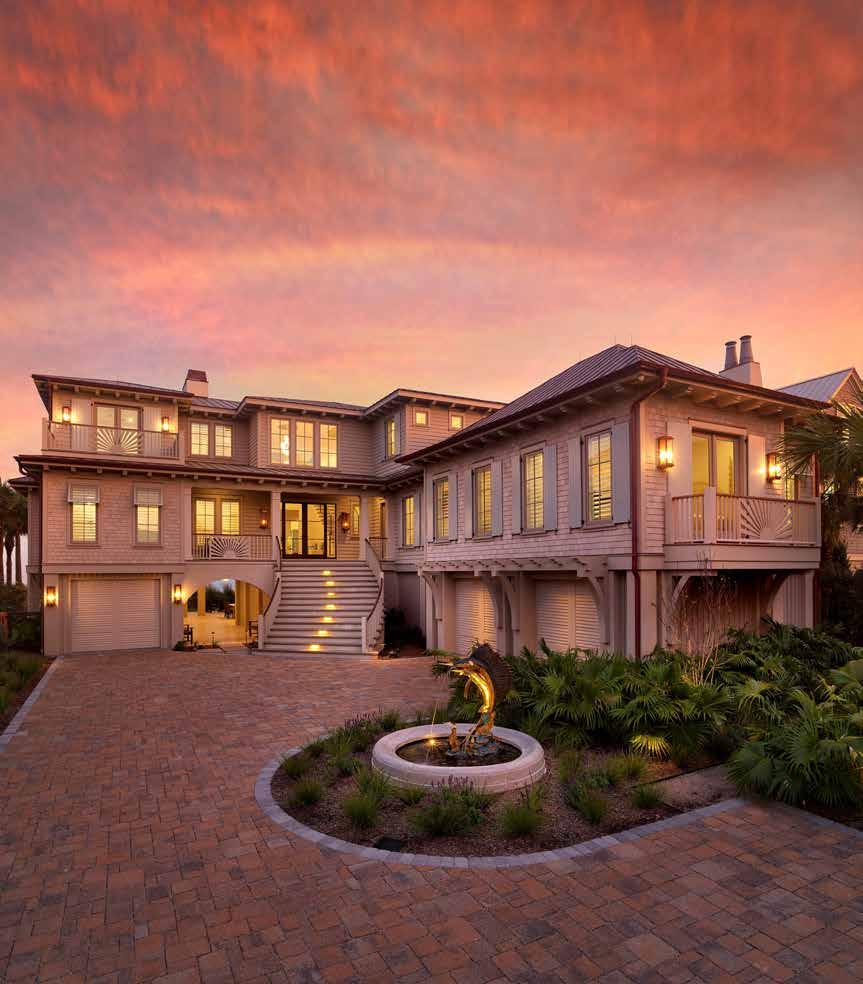
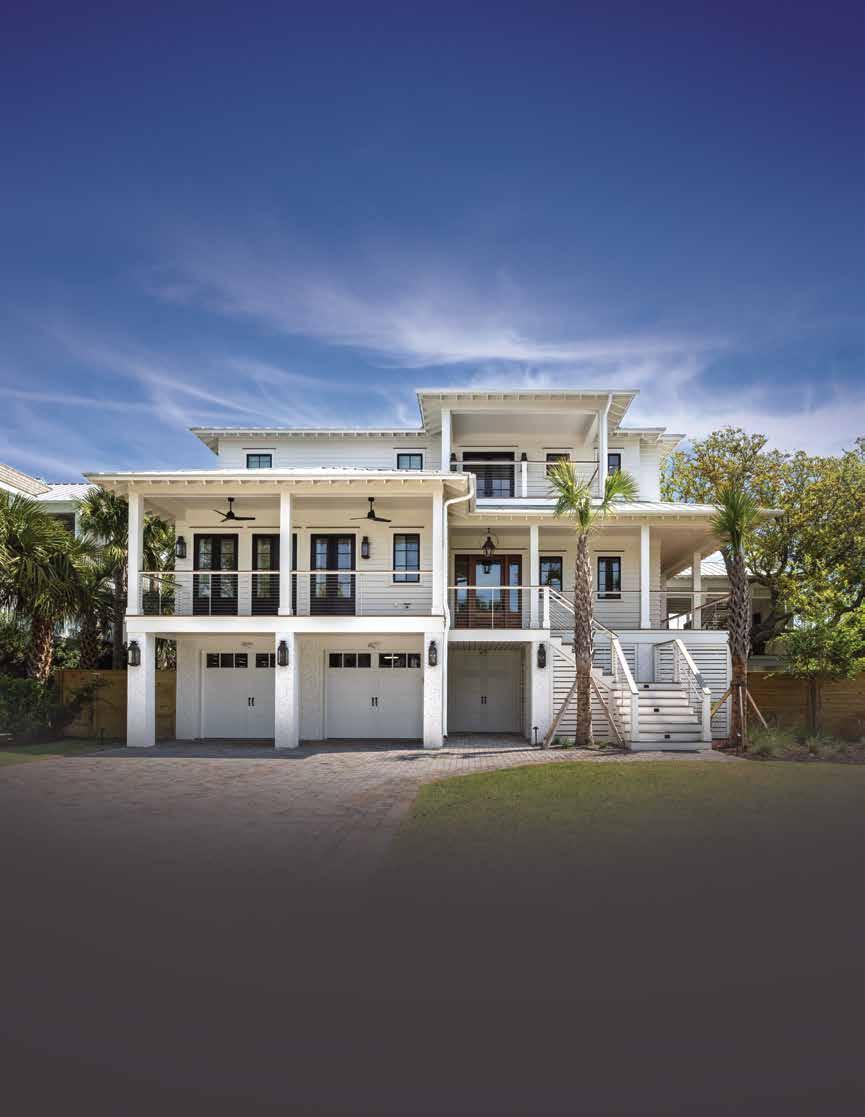
Searching for a home that inspires? Thinking of selling something truly special? Remarkable homes deserve exceptional representation.
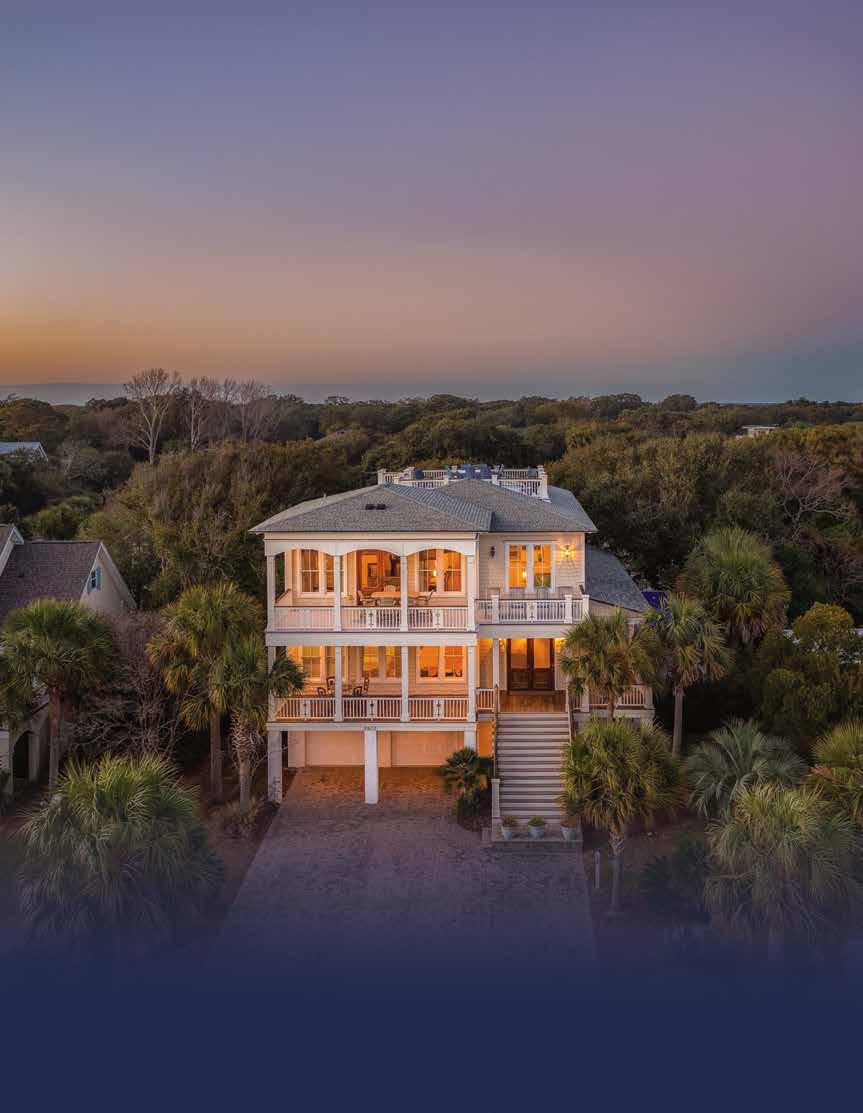
How could the #4 highest-priced home sold on Isle of Palms in 2025 not be oceanfront? Because exceptional homes deserve more than a simple price-per-square-foot analysis.
When a seller trusted me with a remarkable home, I knew it deserved more than a typical pricing model. By highlighting its unique design, finishes, and lifestyle features, we positioned it exactly where it belonged. Understanding the market matters. Understanding the story of a home creates exceptional results.
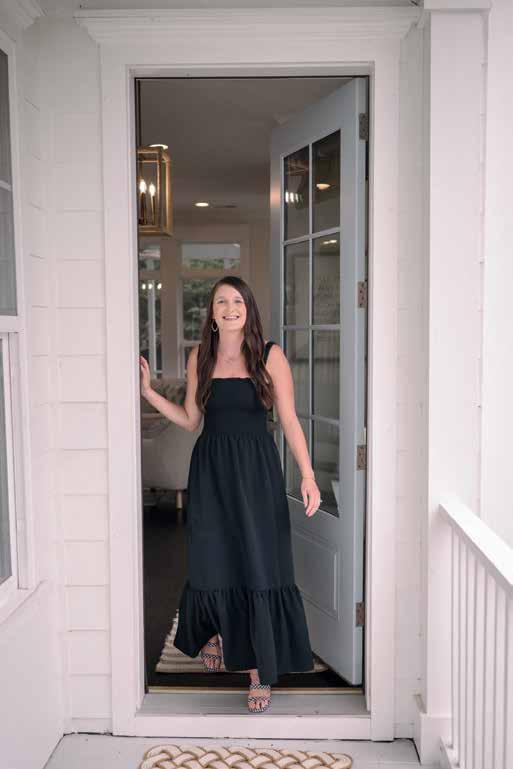

Growing up in a custom home builder family, I learned early how to see homes differently — understanding why floorplans work, how finishes influence value, and what buyers truly notice.
With an MBA from USC with a focus in marketing and analytics, I bring both design insight and data-driven strategy to every transaction.
For my clients, that means:
Recognizing the details that drive value
Strategic pricing backed by analytics
Targeted marketing to qualified buyers
Intelligent negotiation
Luxury homes deserve both art and strategy — I deliver both.


Luxury homes require more than a listing — they require strategy. Finding the right home requires timing and insight.
I deliver a true concierge experience for both buyers and sellers, working with only five clients at a time to ensure every detail receives the attention it deserves.
Consultation
Understand your goals, timeline, and what makes your home — or future home — truly exceptional.
Market expertise and data-driven insight to position your home or secure the right one.
Staging, design guidance, and thoughtful preparation to showcase value.
High-end photography, video, drone imagery, exclusive listings, and continuous market monitoring.
Strategic guidance to secure the strongest price and terms.
Seamless Closing
Trusted contract guidance, due diligence oversight, and closing coordination.





58 | CREATING A COMMUNITY
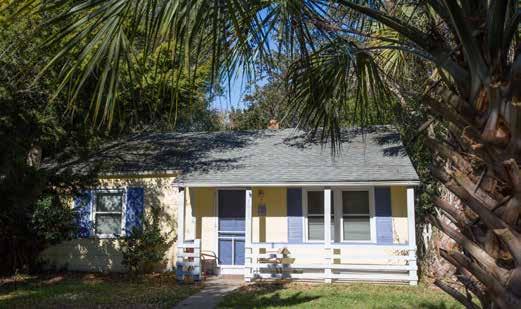
The modest homes built by J.C. Long on Isle of Palms more than 75 years ago are still the heart of the community. By Susan Hill Smith.
66 | RETURN TRIP
Why do Darius Rucker and several other musicians keep coming back to The Windjammer?
By Susan Hill Smith.
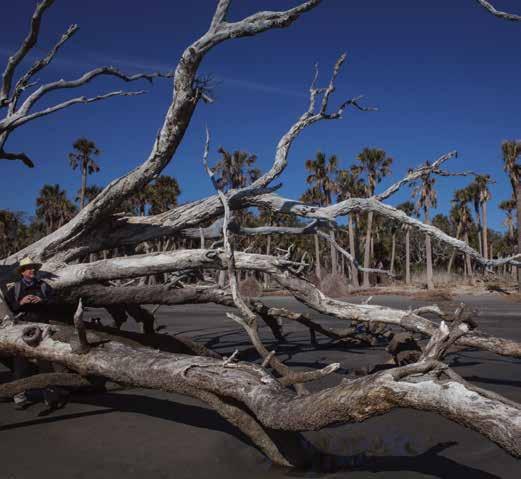
74 | AN UNTAMED PARADISE
Located 8 miles north of Isle of Palms, remote Bulls Island is managed for animals – not for people. By Stratton Lawrence.
80 | DOTTIE’S LONG ROAD HOME TO SULLIVAN’S
Dorothea Benton Frank became a New York Times best-selling author just so she could return to her roots on Sullivan’s Island. By Jennifer Tuohy.
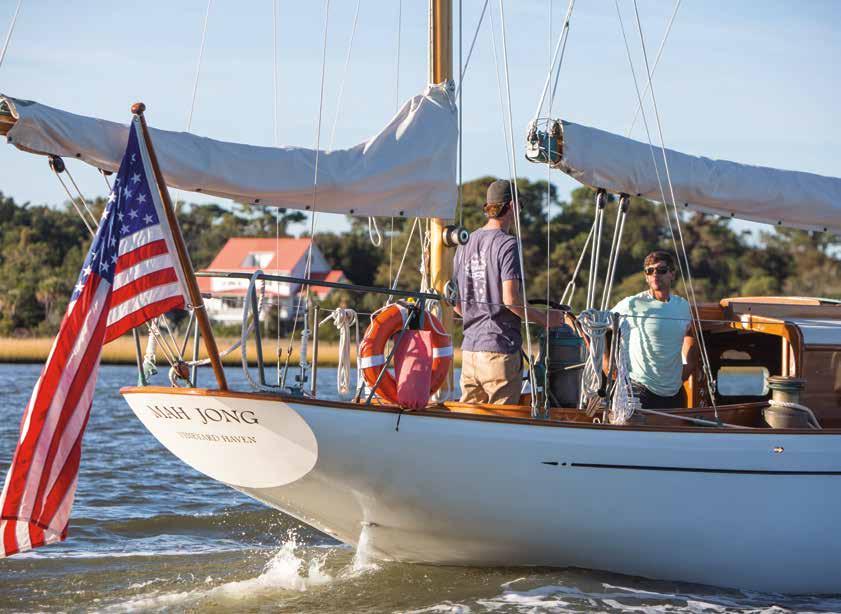
86 | THE MAGIC OF MAH JONG
Pat Ilderton didn’t set out to own a piece of history. He just wanted a reliable boat to cruise the Intracoastal Waterway or island hop in the Caribbean. By Stratton Lawrence.
94 | THE BOYS OF SULLIVAN’S
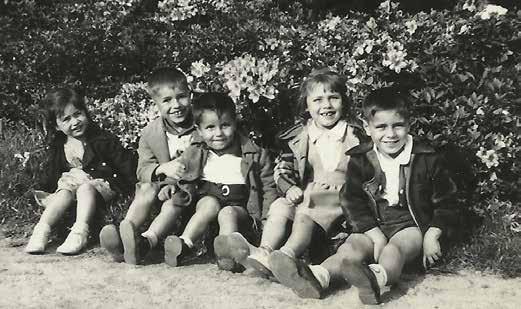
From military base to summer resort and from rural village to residential suburb, the evolution of Sullivan’s Island has created lifelong memories for those lucky enough to have grown up here. By Delores Schweitzer.
18 | A FEARLESS FISHERMAN
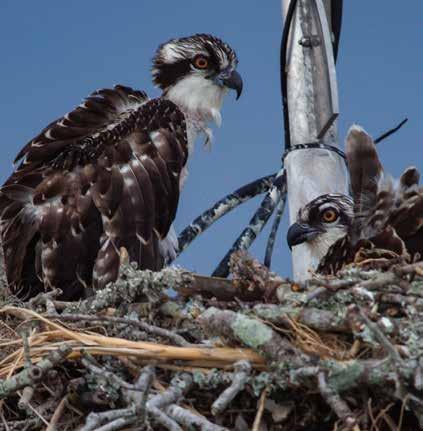
Ospreys have made themselves at home here in the Lowcountry. By Jennifer Tuohy.
22 | CREATURES OF THE SALT MARSH
The Isle of Palms Marina’s Public Dock adds an outdoor classroom to celebrate the wonders of the region’s tidal wetland ecosystems. By Susan Hill Smith.
26 | A NEW CHALLENGE
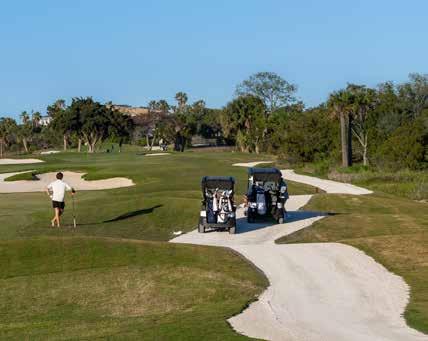
The renovated Harbor Course in Wild Dunes reopened in November. Here’s what golfers can expect. By Brian Sherman.
32 | THE COLLEGE COACHES CLUB
Sullivan’s Island and the Isle of Palms boast an interesting collection of retired college coaches, who gather at Page’s Okra Grill to chew the fat and enjoy the coffee.
By Jennifer Tuohy.

36 | FINDING O’SULLIVAN
Historical records paint a sketchy though colorful portrait of Sullivan’s Island’s namesake. By Marci
Shore.
38 | A BAD BEACH VACATION
Southern patriots thwarted Sir Peter Parker and the British fleet in the Battle of Sullivan’s Island. By Kinsey Gidick.
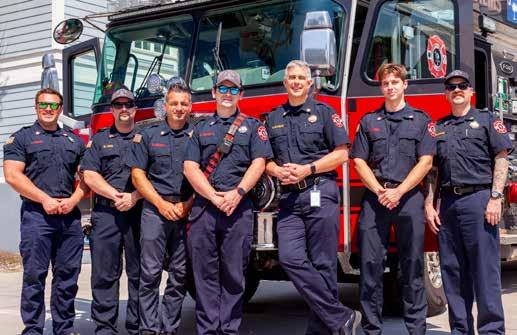
42 | ONE STOPLIGHT, FIFTY THOUSAND PEOPLE
Chief Craig Oliverius and the Isle of Palms Fire Department operate in a reality that is equal parts small-town familiarity and global destination unpredictability.
By Laura Strecker.
46 | AN ISLAND WORTH PROTECTING
Over his more than three decades of service to his adopted home of Sullivan’s Island, Mayor Pat O’Neil has straddled the delicate boundary between quality of life and necessary progress. By Brian Sherman.
50 | MAKING A GREAT IMPRESSION
A chance class in 1997 set Susan Hecht on the path to becoming a professional painter. By Colin McCandless.
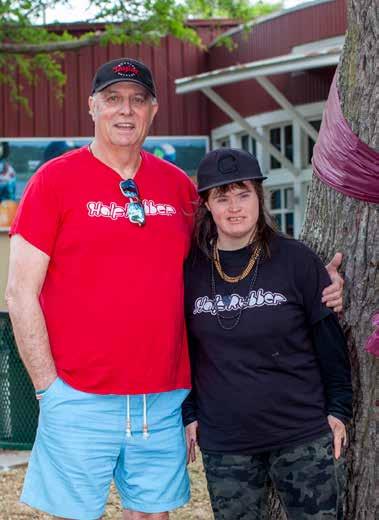
54 | BEST FRIENDS FOREVER
Former IOP mailman Ricky Myatt’s greatest blessing is his daughter, Grace. By Brian Sherman.
100 | AFTER THE WEDDING CAKE
The Wedding Cake House was once one of Sullivan’s Island’s most beloved landmarks. The house is gone, but it’s been replaced by another iconic structure on the edge of Breach Inlet. By Laura Strecker.
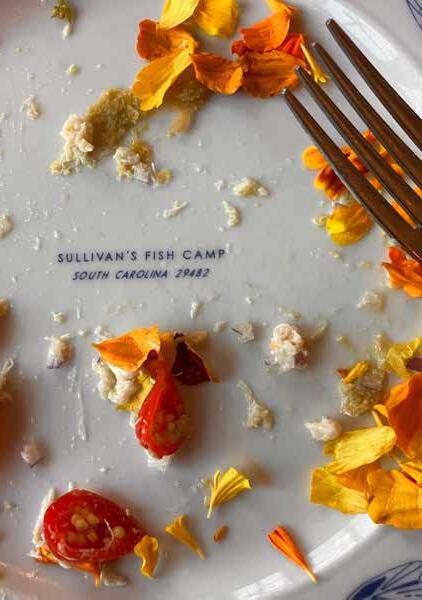
106 | FROM FIG TO FISH CAMP
James Beard Award-winning chef Jason Stanhope is redefining an approachable upscale neighborhood joint.
By Marci Shore.
110 | VIBES & VOCALS
A tour through the live music scene on the islands. By Marci Shore.
112 | SIP CALENDAR
Your essential guide to island events.
114 | LAST LOOK


The publisher and editors of SiP reached an interesting and important conclusion as we began putting together the editorial schedule for this year’s edition of the magazine that strives annually to tell the story of the people and places that make Sullivan’s Island and the Isle of Palms such special places to call home. We realized that many people have moved to the Carolina Lowcountry’s barrier islands during the dozen years we have been pouring our hearts and souls into producing this publication, and many of them haven’t had the opportunity to enjoy the articles that appeared in our earlier editions.
So, we decided to give them the chance to do just that. The 2026 issue of SiP includes a selection of articles that graced the pages of the magazine between 2015 and 2023. Deciding which articles to reprint was not an easy task, but we did our best to offer our readers the most interesting array of words and photos possible.
As a result, you’ll have the chance to read about the collection of college coaches who have lived on the islands and gathered regularly at Page’s Okra Grill in Mount Pleasant to drink coffee and reminisce about times past.
If American history is your thing, you’ll appreciate our articles about the man who gave his name to Sullivan’s Island (2016) and the British commodore who suffered through a really bad beach vacation in the Lowcountry (2020). You might also be interested in the origin of the homes built on the Isle of Palms beginning in the 1940s that are still a vibrant part of the IOP community (2016).
We also chose to reprint articles about: bestselling author and Sullivan’s Island resident Dorothea Benton Frank, who sadly passed away in 2019; a boat that helped a local sailor see a large part of the planet; the childhood memories of some island lifers; a nearby “untamed” island; a former Isle of Palms mailman and his daughter, who are and will remain best friends forever; and an explanation of why Darius Rucker and other musicians continue to come back to The Windjammer.
This year’s issue isn’t all reprints, of course. For those of you who have been reading SiP since the beginning, we have some new material about our islands. For example, you’ll meet Craig Oliverius, who took over as Isle of Palms fire chief in 2022. He was once a teacher and traveled overseas with a group called Sports Ambassadors, playing basketball in places such as Hong Kong and the Philippines. Learn about the new educational displays at the public dock at the Isle of Palms Marina

and discover the area’s tidal salt marshes, waterways and the “salt marsh creatures.”
If you enjoy spending time driving, chipping and putting, you’ll want to read our article about the newly-renovated Wild Dunes Harbor Course, which reopened in November 2025 following a major renovation project.
Who has had the greatest effect on what Sullivan’s Island looks like today? Maybe it’s Pat O’Neil, who, as a member of the Planning Commission, the Town Council, and as mayor has led the charge to eliminate short-term rentals, limit the cutting of trees in the Maritime Forest and protect historical structures.
Under his careful watch, the town has also built a new sewage treatment plant and a new Town Hall. Read more about his ongoing efforts to balance quality of life with necessary progress in our profile.
You might also be wondering what ever happened to Sullivan’s “Wedding Cake House.” In this issue, you’ll find out why the iconic structure is now just a memory and what has replaced it on of Breach Inlet.
We hope you enjoy reading both the new and reprinted articles in this issue of SiP. We certainly enjoyed putting it together for you.
Brian Sherman Editor
Lynn Pierotti
Publisher
Brian Sherman
Editor
Cristina Young
Art Director
Rob Byko
Photographer
Jeff Lovins
Advertising Executive
Contributors
Alejandro Ferreyros
Kinsey Giddick
Stratton Lawrence
Paris Laliberte
Colin McCandless
Delores Schweitzer
Marci Shore
Nicholas Skylar Holzworth
Mic Smith
Susan Hill Smith
Laura Strecker
Jennifer Tuohy Editor at Large
www.sipmagazinesc.com
Instagram / Facebook @SiPMagazineSC
About SiP
SiP magazine is published annually by Lucky Dog Publishing, LLC., 2205 Middle St., Sullivan’s Island, S.C. SiP is mailed to all property owners on Sullivan’s Island, Isle of Palms and Dewees Island.
Contact SiP tel. 843.886.6397
mailing address: po box 837 Sullivan’s Island, S.C. 29482 for editorial inquiries info@sipmagazinesc.com for advertising inquiries lynn@luckydognews.com www.luckydognews.com
Cover Photo by Nicholas Skylar Holzworth
Copyright 2026


Rob Byko is a freelance photographer and the founder of Byko Realty, an agent of ERA Wilder Realty. He serves as chair of the Charleston County Public Library board of trustees. He is also a member of the Historic Rotary Club of Charleston, where he serves as a board member, Membership Committee chair, and Paul Harris Fellow +4. He and his wife, Karen, live on Sullivan’s Island with Kayli, their boxer pup.

Nicholas Skylar Holzworth was born on Sullivan’s Island and currently lives in Mount Pleasant with his wife, where he works as a freelance photographer for several real estate and development firms and also hosts his own photography workshops in the area.

Delores Schweitzer was lucky enough to grow up on Sullivan’s Island and wise enough to return in her mid-30s, where she currently manages the Edgar Allan Poe Branch Library. She is delighted by locals and visitors who appreciate quiet beauty and are attentive to the many natural and communal gifts of these islands. Her faith rests in big pictures, small details, and the power of travel to broaden her horizons and sustain her love of home.

Kinsey Gidick is a freelance travel writer and a former Charlestonian. Her work has appeared in The Wall Street Journal, Travel + Leisure, Smithsonian, Garden & Gun, Washington Post, and National Geographic. Follow along at kinseygidick.com.

Stratton Lawrence is a writer and photographer who “married into” the Isle of Palms. His wife, Hunter, grew up in the first house on their street in Wild Dunes, and he still breathes easy every time he crests the IOP Connector and takes in the horizon view.

Steve Rosamillia was the staff photographer for The Island Eye News and SiP Magazine for many years. His images have appeared in numerous periodicals, trade publications and advertisements. When not taking photos, Steve can often be found with his wife Diane, vivaciously cheering for their alma mater, the University of Notre Dame.

Kaitlyn Hackathorn is a visual storyteller specializing in wildlife and environmental conservation. Formerly a graphic designer and photographer for SCDNR’s Marine Resources Division and the Charleston Surfrider Foundation, she now works as a freelance designer and photographer. View her work at kaitlynhackathorn.com.

Colin McCandless is a freelance writer and copy editor who lives in West Ashley. He has more than 18 years of writing and editing experience with magazines and newspapers and developing blog and website content. He writes for several publications, including HealthLinks Magazine, Mount Pleasant Magazine, and Fifty Plus Advocate. In his spare time, he enjoys reading, birding, traveling, and playing tennis.

Brian Sherman is a freelance writer and editor with more than a half century of experience in the newspaper and magazine business. He has been the editor of six different publications. A native of Philadelphia, he has lived in 10 states and swears he won’t move again – and this time he means it. (Not really; he moved back to Oklahoma in September 2024.)

Marci Shore has been playing the fiddle with various groups at local establishments and at private events in the Charleston area since 2010. She originally is from the foothills of North Carolina.

Susan Hill Smith and Mic Smith
Susan is a writer and environmental advocate. Formerly a city of Isle of Palms Council member, she worked with the Environmental Advisory Committee, EAC Chair Laura Lovins and local graphic designer Kaitlyn Hackathorn to create the Public Dock Eco-Education Project, which she wrote about for this issue of SiP. Mic is a photojournalist.

Laura Strecker, is a journalism graduate from Syracuse University. She owns her own marketing and graphic design business, blending storytelling and creative strategy. When off duty, you’ll likely find her with her daughter, Summer, exploring Charleston’s beaches, practicing yoga, spending time with family, or soaking up the simple joys of coastal life and faith.

Jennifer Tuohy is a journalist and editor who has lived in Charleston since 2012. Formerly editor of The Island Eye New s and The Island Connection and founder and editor in chief of SiP Magazine, she now works full-time for The Verge and is home editor of Charleston Magazine. Originally from London, England, she has enjoyed getting to know the people, places, and history of Sullivan’s and Isle of Palms and sharing their stories.




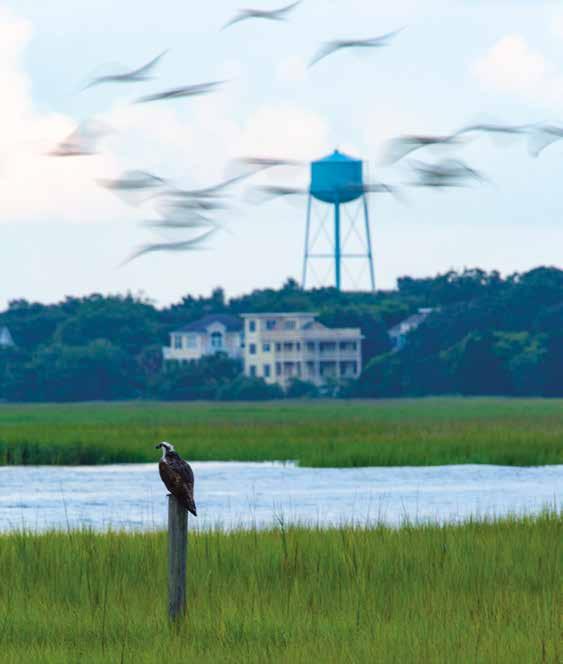
You see them diving into the Intracoastal Waterway, hear their calls along the beach as they hunt, and watch their babies grow from the bridges. Osprey have made themselves at home here. Take some time to get to know this unique bird of prey.
By Jennifer Tuohy. Photos by Rob Byko
As you walk along the beach, before the heat of the day descends, listen for a distinctive, high-pitched whistling. The loud “chirrrp, chirrrp, chirrrp” means you are about to see one of nature’s most spectacular fishermen in action. Look up and spot a flying body larger than a seagull and far more focused, hovering high above the breaking waves. A white underside, speckled with dark brown, piercing yellow eyes, a giant wing span, and a distinctive raptor beak reveal this bird to be no mere gull but a sea hawk; a lean, mean, fish-killing machine — the osprey.
Watch for a minute more, and you may see a terrifying dive, an abrupt underwater struggle, and the osprey rising triumphantly from the sea with a fish between his claws. The pandion haliaetus sometimes achieves success rates as high as 70% on its fishing trips. Several studies have shown that ospreys catch fish in at least one of every four dives. Compare that to your cast rate – jealous yet?
While the osprey may be a better fisherman than any of us, he does have to contend with something we don’t worry about while trawling or fishing off a dock — eagles. Smart creatures that they are, eagles have figured out osprey are better at catching fish, so they rob them. Aerial battles between a dogged osprey and a determined eagle are some of the most epic in the avian world and the ultimate treat for ornithologists and wildlife photographers alike. It’s called kleptoparasitism, and eagles are pretty good at it.
This penchant for thievery is actually one of the reasons Benjamin Franklin didn’t want the eagle to be our nation’s symbol. “He is a bird of bad moral character; he does not get his living honestly,” argued the founding father. “You may have seen him perched in some dead tree where, too lazy to fish for himself, he watches the labor of the fishing hawk and, when that diligent bird has at length taken a fish and is bearing it to his nest for his young ones, the bald eagle pursues him and takes the fish. With all this injustice, he is never in good case.”
“Osprey could not be engineered more perfectly,” says Jim Elliott, founder of The Center for the Birds of Prey in Awendaw. Unlike the more cumbersome eagle, the osprey has several adaptations that make it reign supreme at the fishing game, including reversible outer toes, sharp spicules on the underside of the toes that feel like sandpaper and help grip slippery fish, closable nostrils to keep water out during dives, and dense oily plumage to prevent its feathers from getting waterlogged when submerged. The osprey doesn’t swim; however, instead, it flaps the tips of its wings to raise itself elegantly and impressively out of the water, wriggling fish in tow.
“Osprey could not be engineered more perfectly.
— JIM ELLIOTT
Size 21” to 23” long with a wingspan of 60” to 70”, osprey are smaller than an eagle but larger than a red-tailed hawk. Males are generally smaller than females
Habitat Near fresh or saltwater, nest near saltmarshes, rivers, ponds, reservoirs, and near the ocean shoreline
Diet Almost exclusively live fish
Behavior Hunt by circling high in the sky over water and diving feet first to catch their prey
Nests Conspicuous, large stick nests in the open, high up on poles, channel markers or dead trees, often with “wet feet” to deter predators
Offspring Osprey mate for life, laying one to four eggs per season
Lifespan Seven to 10 years – can be 20 to 25 years
Migration Resident to longdistance migrant, North American osprey migrate to Central and South America for the winter, with a few overwintering in South Carolina and other southernmost states
Range Second most widely distributed raptor species after the peregrine falcon, they are found on all continents except Antarctica
Predators Great horned owls and eagles are the only major predators of ospreys, capable of taking both nestlings and adults
Numbers Global breeding population estimated at 500,000
Source: The Cornell Lab of Ornithology, allaboutbirds.org
The Center For Birds of Prey in Awendaw has a hospital that treats injured birds. Jim Elliott, executive director of the Center, says of the 600 birds they see a year, about eight to 10 will be osprey. The most common causes of admission are juveniles who are malnourished or lost and fishing line injuries. “They get caught in line that’s been left, negligently or not, and they get fishing lures caught on them. I had to trap a bird on Lake Marion who had a fishing lure embedded in her chest. Every time she flew into her nest to feed the chicks, this thing was dangling in their faces. We were able to catch her and remove it.” Often line ends up in the nest and can entangle the chicks.
If you find an injured osprey, or any raptor or shorebird, call the Center at 843.971.7474. The line is open from 8:30 a.m. to 9:30 p.m. daily. If the bird is contained, do not offer it food or water.
Map courtesy of The Birds of North America, birdsna.org, maintained by the Cornell Lab of Ornithology.
The Lowcountry is one of the few spots in North America that boasts a year-round population of osprey.
“They’re really unique birds; their diet is almost exclusively fish,” Elliott says. “These birds are very much specialists; they’ve been evolving to do what they do for a very long time. Some estimates put the species at 3 million years old.” So unique among raptors is the osprey that it has its own category — pandionidae — of which it is the only member.
The Lowcountry is one of the few spots in North America that boasts a year-round population of osprey (see map). A highly migratory species, the northern dwellers come to our shores in the winter, taking the place of our nesting pairs who go further south. Come February 14, however, the “locals” begin to return to reclaim their nests and meet up with their partner (ospreys mate for life) to begin the process of producing the next generation.
Occasionally, upon their return, they may find an orange cone placed rudely on top of their nest, or a stray great horned owl chick in residence. The owls, like the eagles, often take advantage of the osprey’s hard work. Mary Pringle, an Isle of Palms resident who volunteered at The Center for Birds of Prey, once found an owl chick that had been bumped out of the nest by an osprey.
Despite these setbacks, ospreys are thriving in South Carolina and across their entire range, which is among the largest of any bird of prey. Since rebounding from the DDT/ pesticide catastrophe that decimated raptor populations, the bird has become very comfortable living with humans, often taking to man-made structures such as power poles, stadium lighting, chimneys, and navigation aids on the Intracoastal Waterway to build nests.
Unfortunately, the nest doesn’t always mesh with the structure’s intended purpose and in some cases can be lethal to the bird and its offspring, so deterrents, such as orange cones, are placed in them by electrical companies or homeowners before the birds return.
“Nest site fidelity — returning to the same site year after year — is as strong in ospreys as anything I’ve ever seen,” Elliott says. “They’re very determined. Once they choose one, that is their spot, no matter what humans might do to discourage them.”
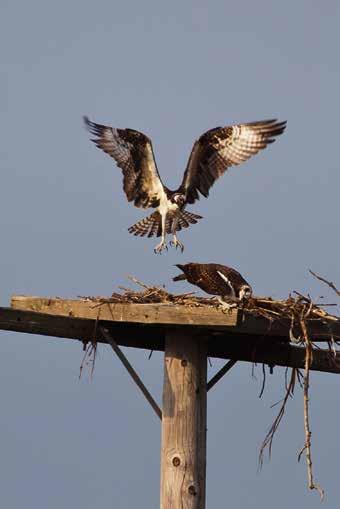
To combat this stubbornness, erecting a special osprey platform can encourage a move. The islands boast at least four of these: at the end of Ben Sawyer Bridge, off Station 19, at the Sullivan’s Island Fire Department boat landing, and one off the IOP Connector.
Ospreys like platform nests for anatomical reasons. They hover and drop onto a perch, coming in from above, rather than swooping in from the side. Which is why, in an entirely natural setting, they choose dead trees to nest in, with less foliage to get in the way. Basically, utility poles are just asking for osprey to nest on them.
This affection for man-made objects has thrust the osprey into the limelight, unintentionally making them one of the more obvious raptors in a populated area. The Lowcountry had about 300 nesting pairs back in 1986; today, there are over 1,000, according to Elliott.
“They’ve done well,” he says. “DDT really knocked them back, and they are still listed as threatened in some states, but I’d say we’re near capacity in the Lowcountry. They are tolerant of us and of one another — which is unusual. Osprey will nest close enough that they are almost a colony. They’re not particularly social, but neither are they competitive.” Unlike the eagle.
Next time you see an osprey on our islands, whether studiously building his enormous stick nest or soaring above the water in search of a tasty redfish, take a moment to appreciate this ancient creature. He is truly an example of how strategic evolution and a hard-wired singlemindedness have made the osprey one of the most successful raptors living among us.
SiP SiP
Editor’s note: This article was first published in SiP magazine in 2017.

From periwinkle snails to manatees, new interpretive signs at the IOP Marina provide a free, sunrise-to-sunset window on one of the planet’s most powerful ecosystems.
By Susan Hill Smith
Usually no more than 1¼ inches long, marsh periwinkle snails exert an outsized influence in the health of our salt marshes, which in turn play a critical role in our planet’s health. A key part of this equation is the periwinkle’s poop.
Look closely at the cordgrass that defines the salt marsh, and you will see a multitude of periwinkles, which creep up and down the grass stalks through the day in concert with the tides. All the while, the snails chew grooves in the stalks and spread waste in the cuts, which become infected with fungi. And as the periwinkles graze on the fungi, they prevent cordgrass from overwhelming the marsh.


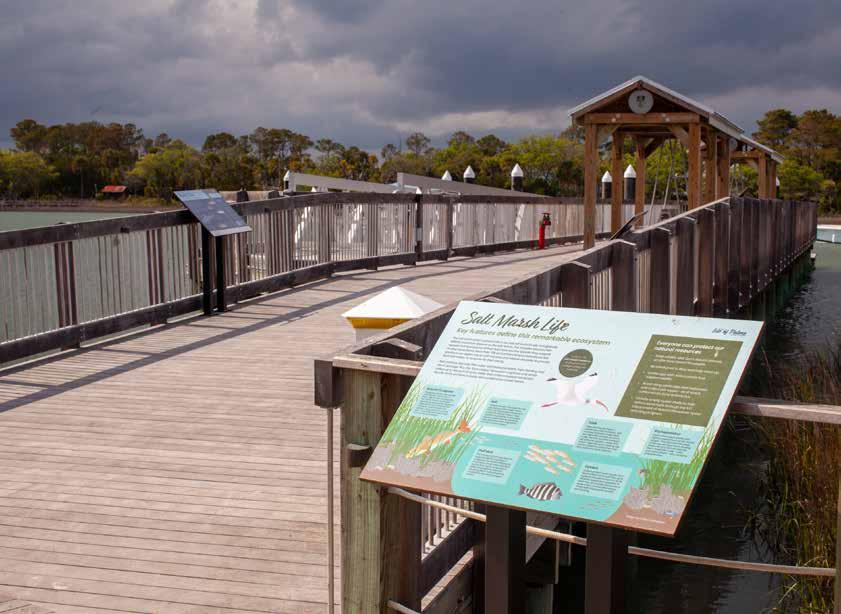
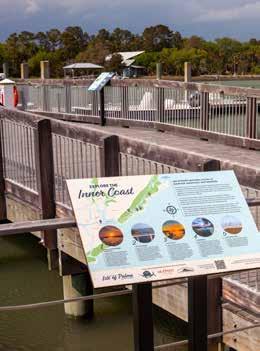
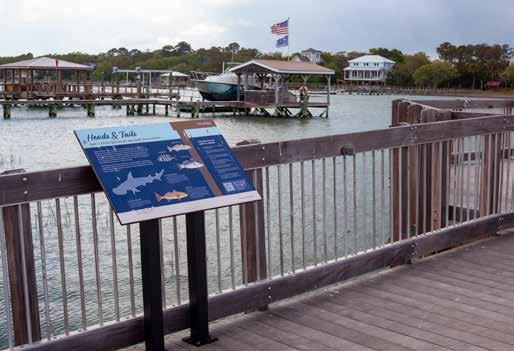
A new installation of 14 educational displays on and around the Isle of Palms Public Dock at the city’s Marina invites visitors to learn about the tidal salt marshes and waterways of the inner coast. Seven of these interpretive signs feature “Salt Marsh Creatures,” including the periwinkle snail. Others celebrate coastal birds, fish and sharks,
dolphins, manatees, and sea turtles.
Together, the Public Dock EcoEducation Project signs provide an all-ages outdoor classroom that celebrates the wonders of our region’s tidal wetland ecosystems. Residents and visitors can enjoy the conservation-themed displays – similar to those found in state and national
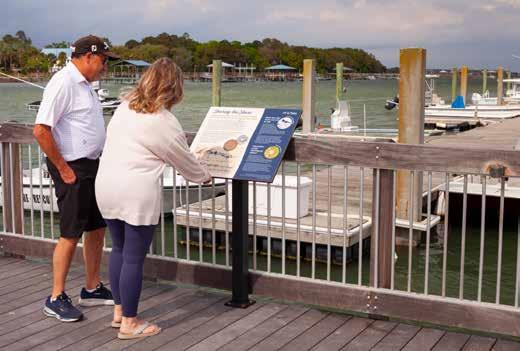
parks – for free from sunrise to sunset at the Public Dock, which also delivers Intracoastal Waterway views.

The city of Isle of Palms includes around 840 acres of salt marsh, while the city’s Marina provides a gateway to an expanse of largely protected tidal wetlands to the northeast. South Carolina is known to have the most salt marsh acres of any East Coast state – between 350,000 and 500,000,


depending on calculation methods.
More than 75% of commercial and recreational fish species in our region rely on salt marshes and related estuaries. Salt marshes also directly protect communities from flooding and storms. Plus, researchers have found this “blue carbon” ecosystem captures and stores carbon 10 times faster than tropical rainforests, making it even more important for us to protect
them from rising seas, pollution, and development.
Because periwinkles are vulnerable to pollution, snail counts can help indicate the ecosystem’s health. But recent reports of hidden vulnerabilities in Georgia’s salt marshes suggest it’s time for South Carolina to take an even deeper dive into the state of our marshes – and that we should all be paying attention.
The Public Dock Eco-Education Project was developed by the Isle of Palms Environmental Advocacy Committee. It was spearheaded by EAC Chair Laura Lovins and former City Council member Susan Hill Smith, with help from local graphic designer Kaitlyn Hackathorn.

by Rob Byko.
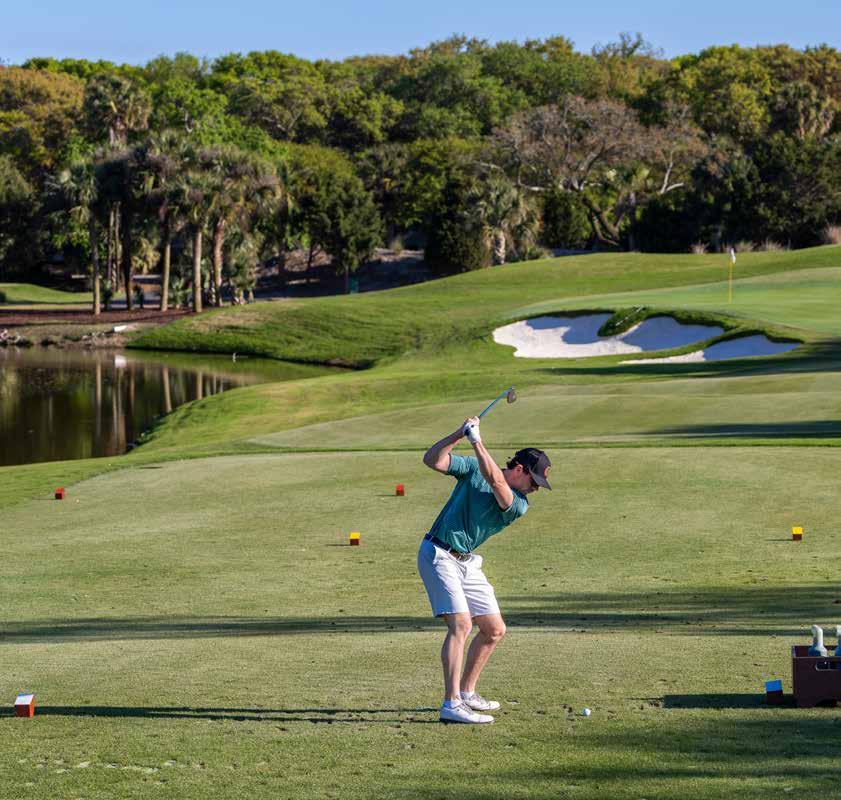
A $9 million overhaul of the Harbor Course brings larger greens, smarter irrigation and elevated fairways designed to withstand rising tides.
By Brian Sherman. Photos by Mic Smith.
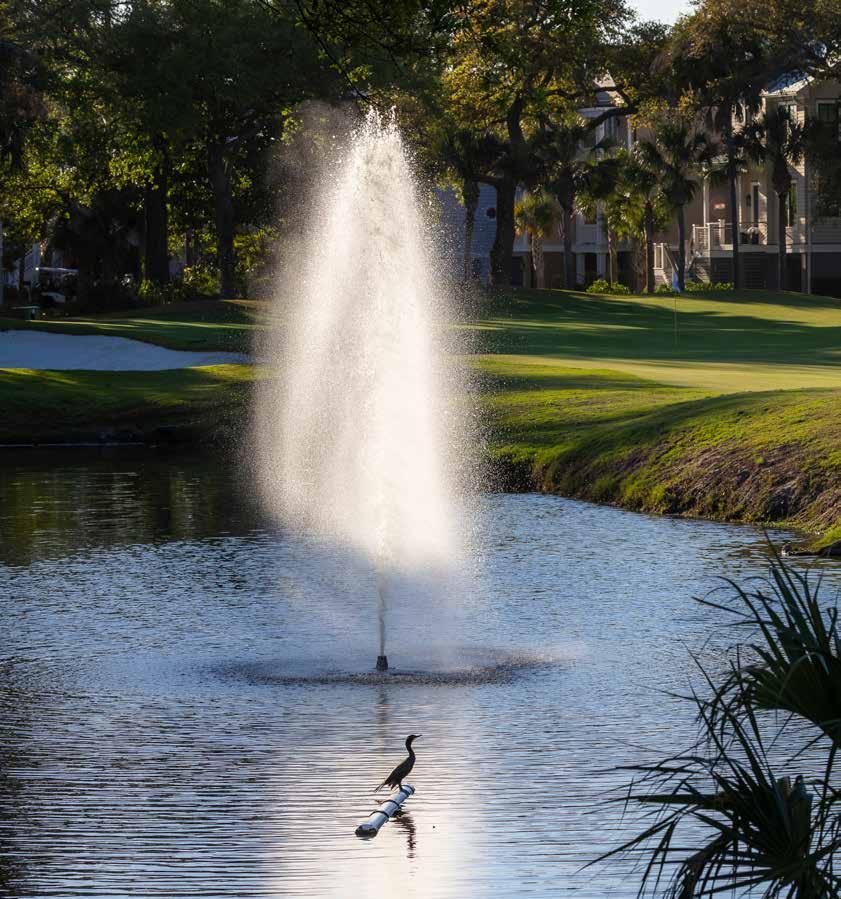
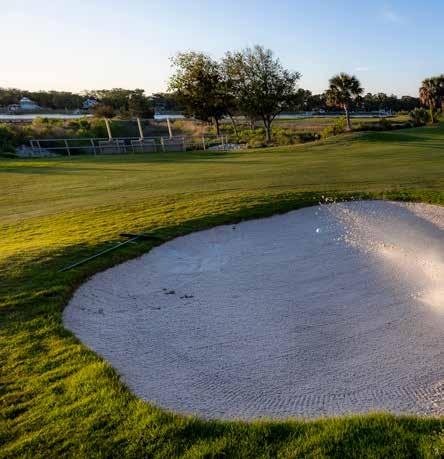
There’s a new golf course on the Isle of Palms. Well, not actually – but when the Harbor Course in Wild Dunes opened in November 2025 after a major renovation project, golfers noticed that the greens had grown to around twice their previous size, the tee boxes had been completely rebuilt, and sporadic flooding along three fairways had been all but eliminated.
One thing they might not have realized is that the course’s irrigation system had been replaced as well. “We’re watering a lot more efficiently. There’s more coverage and pretty much all turf areas get water when needed,” says Wild Dunes Resort Director of Sports Jeff Minton. “We can valve off areas now if one part of the course doesn’t need to be watered. Or if we have an irrigation break, we can water the rest of the course without shutting the whole thing down.”
The course was closed from March until November to complete the renovation project, which cost just under $9 million, according to Minton. In addition to work on the greens and tee boxes, bunkers were added, cart paths were improved and around 15,000 cubic yards of sand was brought in, raising the elevation of holes 9, 10 and 11 by 3 to 5 feet.
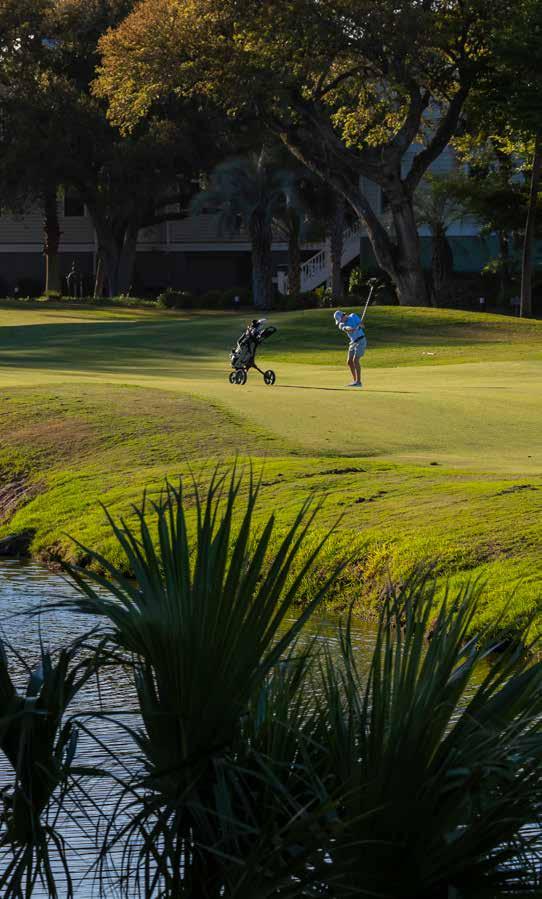
“
We’re watering a lot more efficiently. There’s more coverage and pretty much all turf areas get water when needed.

“There’s no problem with massive tides anymore, plus those holes got wider in the process,” Minton points out. “They were the narrowest fairways on the property. Water would rise from the marsh and cover the holes. We brought in enough material to mitigate that.”
The total area of the 18 greens is now at 120,000 square feet, twice as large as when the course opened in 1985. Minton explains that over time, greens tend to shrink and become contaminated by other grasses. The new putting surfaces are 100% TifEagle Bermuda, “the latest and greatest” according to Minton.
“It’s the best Bermuda grass for putting greens on the market right now. Most places in the South use it for renovations,” he says. “Replacing greens is pretty much like replacing a roof. At some point, everybody’s got to do it.”
In addition to doubling the size of the greens, the renovation project added some subtle undulations to the mix. “It’s nice that we can have different pin placements and not all of them on flat areas,” he says. “And because the greens are so big, the perception is that there’s a lot more room to hit it.”
Designed by Tom Fazio, with four sets of tees, the Wild Dunes Harbor Course ranges from 4,785 to 6,733 yards. Approximately 37,000 rounds of golf are played on the course each year. SiP
John and Dorothy Willoughby of Mount Pleasant on the tee at the 9th hole, a par 5 that plays anywhere from 356 to 582 yards.
“Designed by Tom Fazio, with four sets of tees, the Wild Dunes Harbor Course ranges from 4,785 to 6,733 yards.



Between them, Sullivan’s Island and Isle of Palms boast a healthy collection of retired college football coaches (and one basketball coach). A couple of Thursdays every month, this cadre of coaches gathers together with fellow sporting alumni at Page’s Okra Grill to chew the fat and enjoy the coffee. Jennifer Tuohy got a chance to join them one morning. Photos by Steve Rosamilia
Editor’s Note: This article was originally published in the debut issue of SiP in 2015. Tommy McQueeney, the group’s organizer, has since written a book on the club, titled VOCAL: Sporting Local, published this May.

Three words with the power to divide a state, infuse pride into a city, unite a stadium, and galvanize a team. But at Page’s Okra Grill every other Thursday, those powerful words don’t come between these college coaches and their grits.
It’s at the casual eatery on Coleman Boulevard that a remarkable group of men assemble from across greater Charleston every other week. They gather together to enjoy each other’s company, share in the stories of the literally countless glory days they have all experienced, and revel in the trials and tribulations of coaching college sports.
The group, which calls themselves VOCAL – the Venerable Old Coaches Association, Loitering – numbers around 16 and includes a former American League president (Gene Budig); a National Wrestling Hall of Famer (Ed Steers); a head football coach at Princeton (Frank Navarro); a College of Charleston basketball coach (Bobby Cremins); a director of the Baseball Hall of Fame (Dr. Harvey Schiller); and Citadel athletic director (Jim Senter).
On this particular morning, six VOCAL members – including an SEC football Coach of the Year (Bobby Johnson, Vanderbilt); the winningest tennis coach in NCAA history (Paul Scarpa, Furman); an NCAA basketball Selection Committee alum (Les Robinson); an NFL scout (Cal McCombs, Denver Broncos); an ACC champion football coach (Ralph Friedgen, Maryland); and a College Football Hall of Fame inductee (Fisher DeBerry, Air Force) – stay behind after the pancakes have been consumed. They’ve graciously agreed to talk with this writer because they share another trait. They all live on Sullivan’s Island and Isle of Palms (well, Paul lives in Snee Farm, but it’s so close, we’ll give him a pass).

“Venerable Old Coaches Association, Loitering,” is what the name stands for, says Tommy McQueeney, the group’s organizer and only non-college coach present.
“Really? I thought it was Very Old Coaches Acting Looney?” Bobby says.
As I sit down with this terrifyingly successful assemblage, I draw frantically on my limited football coaching knowledge (“My mom was friends with Steve Spurrier in college,” I say. “We’ll try not to hold it against you,” comes the response).
Thankfully, I’m not the only newbie here. Tom O’Brien, the very recently retired head coach at North Carolina State and former football coach at Boston College, is on just his second visit and ends up joining our roundtable somewhat unwittingly.
“Bobby told me the rules are that if you bring a guest, he can’t pay for breakfast the first time,” Tom says. “But that the second time you pay for everyone.”
Les Robinson quickly interjects that Tom actually lives on Daniel Island.
“All the football coaches live on Daniel Island and Isle of Palms. Football coaches aren’t allowed on Sullivan’s,” says the lone basketball coach.
“We didn’t make enough money to live on Sullivan’s,” Fisher DeBerry replies.
In case you hadn’t noticed, this group takes no prisoners. Teasing, riffing, and joking are all on the menu, along with the occasional wry reference to West Virginia (ask Les next time you see him).
The lone native Charlestonian among the coaches is Paul Scarpa; the rest found their way here by happy accident. Bobby Johnson married a Charleston girl (“They always come back home,” he says).
Ralph and Cal both coached football at The Citadel between 1973 and 1983, where Les also coached basketball (’74 to ’85) and was Citadel athletic director from 2000 through 2008.
“The toughest part of that job was dealing with the football coaches,” he says with no deference to present company.
“Yeah,” Ralph bounces back. “They’re so much smarter than the basketball coaches. That’s for sure.”
All three men were clever enough to portion out enough of their Citadel salaries for a smart and early investment in property on Isle
of Palms and Sullivan’s.
“I bought my home in ’77 for $37,000,” Ralph says. “From Tommy Baker, who owns all the car dealerships in town.”
Les bought his first lot on Sullivan’s in ’73 for $7,500, behind what is now Dunleavy’s.
“They must have heard you moved in,” Ralph says with a trademark booming laugh, referencing his friend’s frequent attendance at the Irish pub.
“Everyone knows my name at Dunleavy’s,” Les agrees.
All three have lived here ever since and marvel at the changes they’ve seen on the islands.
“Since they put in that connector, the island has just grown,” Ralph says. “When we bought our house, Wild Dunes wasn’t there; there were 11-foot alligators instead. That piece of property was wild.”
Fisher first came to Charleston a few years later, in 1987. He was on a recruiting trip with Cal.
While some of the coaches have “lived” here for a long time, and others, such as Bobby and Tom, chose to retire here, it’s only now that any of them are able to spend any quality time here.
“I estimated once that I was in a hotel 225 nights a year,” Cal says, referring to his time as an NFL scout. But the rest of the group also cites time away from home as probably the hardest element of being a college coach. Surely the intense pressure of the role has also got to be on that list, I ask.
“No, that’s part of the fun!” Ralph says. But how do you handle all that pressure?
“We all have good wives,” Fisher says to general chuckles of agreement.
I speculate that perhaps this Thursday morning breakfast club was encouraged by the wives, who are now rather surprised to find their husbands at home all the time. It turns out it came from a game of golf.
“We like to play golf together,” Ralph says. “Some of us fish together.”
Do you ever all get together to watch football?
“No, but they all got together and coached football together –the Medal of Honor Bowl,” Tommy McQueeney says. Tommy is the chairman of the Medal of Honor Bowl and says the idea for the


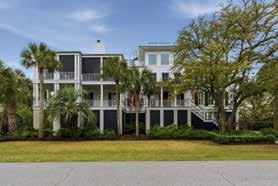
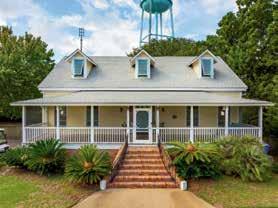
Jimmy Dye is the co-founder of The Cassina Group with over 20 years of experience, specializing in luxury, waterfront, and historic properties across the coast of South Carolina. RealTrends ranks him among the top 1.5% of agents in the U.S. and #8 in South Carolina. A member of REALM, Jimmy Dye offers unmatched expertise and a global network connecting premier Lowcountry properties with qualified buyers worldwide.
For more information on these exceptional homes, contact Jimmy Dye at 843.452.6482 or visit JimmyDye.com .


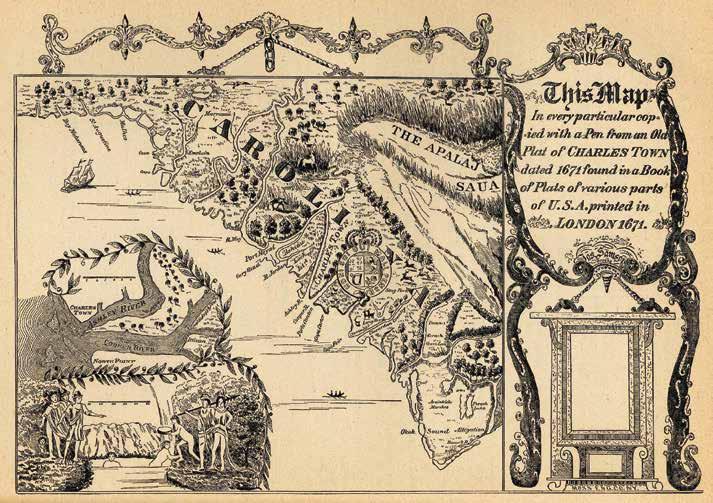
A Map of Charles Town in 1671.
Historical records paint a sketchy though colorful portrait of Sullivan’s Island’s namesake.
Historical records paint a sketchy, though colorful portrait of Sullivan’s Island’s namesake.
By Marci Shore
OOOHistorical records paint a sketchy, though colorful portrait of Sullivan’s Island’s namesake.
By Marci Shore
By Marci Shore
n St. Patrick’s Day 1670, Florence O’Sullivan from County Cork, Ireland, was aboard The Carolina, when it drifted into Sewee Bay inside of Bull’s Island. Having embarked the prior year from England in August 1669, the ship had stopped off at Kinsale, Ireland, then Barbados and Bermuda, before continuing on a harrowing journey to the coast of what would become South Carolina. During the voyage, the other two ships in the fleet were destroyed in storms.
n St. Patrick’s Day, 1670, Florence O’Sullivan from County Cork, Ireland, was aboard The Carolina, when it drifted into Sewee Bay inside of Bull’s Island. Having embarked the prior year from England in August, 1669, the ship had stopped off at Kinsale, Ireland then Barbados and Bermuda, before continuing on a harrowing journey to the coast of what would become South Carolina. During the voyage the other two ships in the fleet were destroyed in storms.
n St. Patrick’s Day, 1670, Florence O’Sullivan from County Cork, Ireland, was aboard The Carolina, when it drifted into Sewee Bay inside of Bull’s Island. Having embarked the prior year from England in August, 1669, the ship had stopped off at Kinsale, Ireland then Barbados and Bermuda, before continuing on a harrowing journey to the coast of what would become South Carolina. During the voyage the other two ships in the fleet were destroyed in storms.
The Carolina carried 93 passengers of mostly English and Irish descent, including indentured servants and one Black slave. It was loaded with provisions essential to starting a colony from scratch: 30 gallons of brandy, 15 tons of beer and 240 pounds of glass beads to barter with the Indians. There are no physical descriptions of Capt. Florence O’Sullivan, but the salty characterizations of this soldier of fortune flowed freely from the pen of the other colonists, portraying a contentious character respected mostly for his ruggedness in an unforgiving, wild frontier.
The Carolina carried 93 passengers, of mostly English and Irish descent, including indentured servants and one black slave. It was loaded with provisions essential to starting a colony from scratch: 30 gallons of brandy, 15 tons of beer and 240 pounds of glass beads to barter with the Indians. There are no physical descriptions of Captain Florence O’Sullivan, but the salty characterizations of this soldier of fortune flowed freely from the pen of the other colonists, portraying a contentious character, respected mostly for his ruggedness in an unforgiving, wild frontier.
The Carolina carried 93 passengers, of mostly English and Irish descent, including indentured servants and one black slave. It was loaded with provisions essential to starting a colony from scratch: 30 gallons of brandy, 15 tons of beer and 240 pounds of glass beads to barter with the Indians. There are no physical descriptions of Captain Florence O’Sullivan, but the salty characterizations of this soldier of fortune flowed freely from the pen of the other colonists, portraying a contentious character, respected mostly for his ruggedness in an unforgiving, wild frontier.
Virtually all that is known about O’Sullivan is derived from the Shaftesbury Papers – correspondence documenting the trials and tribulations of the new colony of Charles Town through Lord Anthony Ashley Cooper, one of the lords proprietors of North America, who oversaw the venture from in front of his London fireplace. Five years before arriving in Charles Town, O’Sullivan and Capt. John Staplehill had been commissioned to raise a company of infantrymen against the French on the island of St. Christopher, now commonly known as St. Kitts. The
Virtually all that is known about O’Sullivan is derived from the Shaftesbury Papers—correspondence documenting the trials and tribulations of the new colony of Charles Town through Lord Anthony Ashley Cooper, one of the Lords Proprietors of North America, who oversaw the venture from in front of his London fireplace. Five years before arriving in Charles Town, O’Sullivan and Captain John Staplehill had been commissioned to raise a company of infantrymen against the
Virtually all that is known about O’Sullivan is derived from the Shaftesbury Papers—correspondence documenting the trials and tribulations of the new colony of Charles Town through Lord Anthony Ashley Cooper, one of the Lords Proprietors of North America, who oversaw the venture from in front of his London fireplace. Five years before arriving in Charles Town, O’Sullivan and Captain John Staplehill had been commissioned to raise a company of infantrymen against the
French and English had co-existed on the island since 1625, but the French had recently attacked and tried to expel the English. O’Sullivan and Staplehill seized two French ships near Guadeloupe, but their own vessels were forced ashore by storms. After 11 days, they surrendered due to lack of supplies and were taken prisoner for 11 months, until the English Treasury paid a royal bounty for services in the Caribbean Island.
French on the island of St. Christopher, now commonly known as St. Kitts. The French and English had co-existed on the island since 1625, but the French had recently attacked and tried to expel the English. O’Sullivan and Staplehill seized two French ships near Guadeloupe, but their own vessels were forced ashore by storms. After 11 days, they surrendered due to lack of supplies and were taken prisoner for 11 months, until the English Treasury paid a royal bounty for services in the Caribbean Island.
French on the island of St. Christopher, now commonly known as St. Kitts. The French and English had co-existed on the island since 1625, but the French had recently attacked and tried to expel the English. O’Sullivan and Staplehill seized two French ships near Guadeloupe, but their own vessels were forced ashore by storms. After 11 days, they surrendered due to lack of supplies and were taken prisoner for 11 months, until the English Treasury paid a royal bounty for services in the Caribbean Island.
This military service won O’Sullivan high rank with the lords proprietors, resulting in a deputyship of Charles Town, along with 12 servants, 1,900 acres and the title of surveyor general. At the onset of the expedition, there were short-lived praises for O’Sullivan from the lords proprietors as stated in his commission for service in the new colony: “We [are] assured of the wisdom, prudence and integrity ... of our trusty and well-beloved Florence O’Sullivan.”
This military service won O’Sullivan high rank with the Lords Proprietors, resulting in a deputyship of Charles Town, along with 12 servants, 1,900 acres and the title of Surveyor General. At the onset of the expedition, there were short-lived praises for O’Sullivan from the Lords Proprietors as stated in his commission for service in the new colony: “We [are] assured of the wisdom, prudence and integrity... of our trusty and well beloved Florence O’Sullivan.”
This military service won O’Sullivan high rank with the Lords Proprietors, resulting in a deputyship of Charles Town, along with 12 servants, 1,900 acres and the title of Surveyor General. At the onset of the expedition, there were short-lived praises for O’Sullivan from the Lords Proprietors as stated in his commission for service in the new colony: “We [are] assured of the wisdom, prudence and integrity... of our trusty and well beloved Florence O’Sullivan.”
Almost immediately, reports of incompetence, thoughtlessness, and irreverence began filtering back to England with a consistency difficult to defend, even allowing for historical bias. Stephen Bull, of one of the most famous early Carolina families, made an early complaint that O’Sullivan was involved in “unjust practices,” that his work was “almost triple the rate of other settlements,” and that he was “dissentious and troublesome.” Furthermore, he claimed there were “gross errors” in surveying of the lots. “He is ashamed of nothing, uses private watches to overreach people and is daily complained of for ill actings,” report The Shaftesbury Papers.
Almost immediately reports of incompetence, thoughtlessness and irreverence began filtering back to England with a consistency difficult to defend, even allowing for historical bias. Stephen Bull, of one of the most famous early Carolina families, made an early complaint that O’Sullivan was involved in “unjust practices,” that his work was “almost triple the rate of other settlements,” and that he was “dissentious and troublesome.” Furthermore, he claimed there were “gross errors” in surveying of the lots. “He is ashamed of nothing, uses private watches
Almost immediately reports of incompetence, thoughtlessness and irreverence began filtering back to England with a consistency difficult to defend, even allowing for historical bias. Stephen Bull, of one of the most famous early Carolina families, made an early complaint that O’Sullivan was involved in “unjust practices,” that his work was “almost triple the rate of other settlements,” and that he was “dissentious and troublesome.” Furthermore, he claimed there were “gross errors” in surveying of the lots. “He is ashamed of nothing, uses private watches
Capt. Henry Brayne complained to the lords proprietors, that “by his
absurd language, [O’Sullivan] doth abuse the governor, council and country by his rash and base dealings ... and hath caused everyone in the country to be his enemy.” Complaints may be qualified somewhat by the existence of factions amongst the Colonial planters about the proper way to manage the colony. O’Sullivan expressed his frustration in a letter to Lord Ashley Cooper in regard to the quarrelling. He advised him to send “an able counselor to end controversies amongst us and put us in the right way.” Seeming in search of some spiritual counseling as well, he also advised to send a minister “qualified of the Church of England.”
The barrage of criticisms against O’Sullivan compounded. Famous philosopher John Locke, Lord Ashley Cooper’s secretary and confidant, was troubled by the reports and wrote that O’Sullivan was “dissentious, troublesome ... no able surveyor, knavish ... disliked, unfit, ignorant in surveying,” and another description that lacks clarification but is highly unflattering at best: “an ill-natured buggerer of children.” By December 1671, O’Sullivan was replaced as surveyor general but retained his deputyship and stayed a member of the Colonial assembly.
In 1674, the controversial figure was given the duty of manning a cannon on a small barrier island at the mouth of the harbor, “to be mounted near the river’s mouth to be fired upon the approach of a ship one charge of power at a time.” In addition to daily struggles of the colonists to provide food, shelter and avoid illness, there was the constant threat of Indian attack or invasion by the Spanish from St. Augustine in Florida, who saw the settlement as a “flagrant intrusion” upon their own soil. Therefore it was O’Sullivan’s duty to fire the cannon should hostile ships approach, giving the colonists time to organize themselves. That island became known as Sullivan’s Island, and its use as a military base to protect the colony and subsequent iterations continued well into the 20th century.
At one point, in desperate need of provisions, with crops failing and morale low, a riot broke out threatening the settlement’s stability. O’Sullivan left his island station to join the disturbance. He was reprimanded for leaving his post and putting the colony at risk, charged with sedition and fined. Provisions finally arrived, along with fresh faces, which revived the exhausted settlement.
In spite of, by all accounts, his disagreeable attitude, O’Sullivan retained an important position in the colony for 13 years until his death in 1683, as officer of the militia, commissioner of public accounts, and recipient of one of the largest land grants among the planters. History does not mention a wife, but his daughter, Katherine O’Sullivan, inherited the tract of land in 1692, when it was broken up and sold.
Documents paint a portrait of Florence O’Sullivan as a man regarded for his brawn over brains. While he may have been a neighbor many would like to have forgotten, his is one of the few names of original colonists that has withstood the test of time. It still remains Sullivan’s Island.
Editor’s note: This article was first published in SiP magazine in 2016.

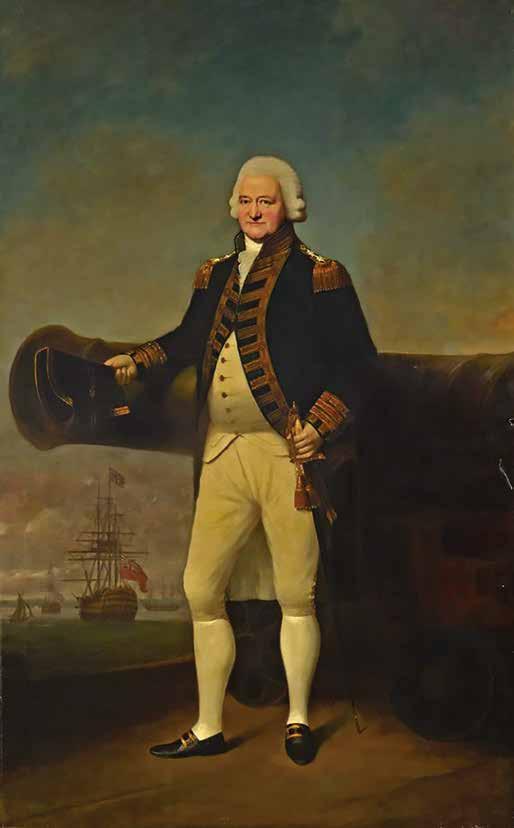
Opposite page: Sir Peter Parker, commander of the Royal Navy squadron at the Battle of Sullivan’s Island.
How Southern patriots
thwarted British Commodore Sir Peter Parker – and stole his pants – in the Battle of Sullivan’s Island.
By Kinsey Gidick
Remember the book Alexander and the Terrible, Horrible, No Good, Very Bad Day? Well, that’s kind of like the story of British Royal Navy Commodore Sir Peter Parker and the Battle of Sullivan’s Island. How, you may ask, does a kid’s picture book relate to one of the characters in the American Revolution? Well, like Alexander, Parker’s escapade in Charleston Harbor was a series of unfortunate events leading to an embarrassing loss for the Royal Navy. Even worse for Parker, it lasted more than a day. It was more like Sir Peter Parker and the Terrible, Horrible, No Good, Very Bad Spring of 1776.
Our story begins in Cork, Ireland, in 1775, when Parker, a hero of the Seven Years’ War, was given command of a fleet of six ships and told to sail to North Carolina to help shore up support for loyalists attempting to put down pesky Whigs, colonists who supported the American Revolution. Parker’s fleet was supposed to depart on December 1, according to The Southern Strategy: Britain’s Conquest of South Carolina and Georgia, 1775-1780 by David K. Wilson, but got waylaid due to bureaucratic red tape. Rather than rally with Maj. General Henry Clinton, commander of the first British expedition to the provinces, in February as planned, Parker wouldn’t sail into Cape Fear, North Carolina until April 18, 1776.
Months late, on May 3, finally, the rest of the commodore’s armada arrived. But more problems were to come. According to Wilson, when Parker and Clinton met, the naval commodore discovered that Clinton was inclined
to invade Virginia, not the wealthy port city of Charles Town, as Parker had planned. Much debate ensued with Parker citing reports from British officials, like that of officer Patrick Tonyn, who wrote, “I dare think the battery at Sullivan’s Island will not discharge two rounds,” as reason to sail south.
In spite of himself, Clinton eventually acquiesced to Parker’s persuasive arguments and an attack on Sullivan’s Island was planned. “You have to remember, this was a half-built fort protected by ragtag patriots, so it’s not surprising the British thought it would be an easy victory,” said Dawn Davis, a public affairs officer for Fort Sumter and Fort Moultrie National Historical Park.
The cocksure Parker and Clinton surely thought they’d easily overtake the small Sullivan’s Island fort. With Parker’s fleet gathered off the southern end of the island facing the fort and Clinton’s men crossing from Long Island (today Isle of Palms) at Breach Inlet, they believed this pincer movement would quickly put down the Americans. Little did they know how tricky Charles Town Harbor is.
Parker immediately faced a setback; his 50-gun frigate, Bristol, was so heavy that it couldn’t cross the Charles Town bar without offloading some weight. After days of removing cannons, on June 10, 1776, it was finally light enough to meet up with the rest of the ships at Five Fathom Hole – closer, but still out of range of Fort Sullivan.
Meanwhile, Clinton was doing recon on Long Island after deciding that a landing on Sullivan’s would involve “considerable
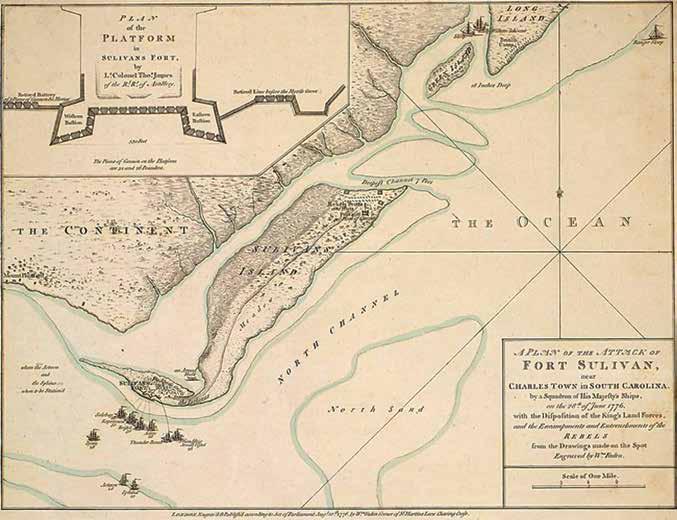

hazard.” Instead, his troops would land on Long Island, bivouac through its wilderness, then cross the Breach, which intelligence reports told him was only 18 inches deep at low tide. Not so. The Breach was, in fact, a swampy mess as deep as 7 feet and impossible to cross on foot. Clinton and British Army Gen. Charles Cornwallis quickly realized the plan was a wash. “They could not force the Breach without suffering unacceptable losses,” writes Wilson.
Needless to say, that made Sir Peter Parker’s spring go from bad to worse. On June 24, he attempted to close on the fort only to be thwarted by a sudden squall. By this point, the British had been floating offshore for nearly a month, hardly a surprise attack.
Finally, on June 28, the winds were favorable enough to attack, but success was still outside Parker’s grasp. His mortar shells flew over Fort Sullivan’s walls, nose-dived into the sand, and were “swallowed up immediately,” Gen. William Moultrie later described. Making things even more difficult, cannonballs that hit the palmetto log fort merely bounced off the spongy surface, causing little damage.
The scrappy Americans in the fort turned all their firepower on the commodore’s ship,
and that’s when it happened, the real insult to injury. As Wilson describes, a large splinter kicked up by a nearby blast tore Parker’s breeches off and “laid his backside bare … for a critical period of time, the backsides of both the Bristol and the commodore were literally hanging in the wind.” True humiliation in action.
Nine hours after the fighting commenced, Parker admitted defeat, and his ships pulled anchor and returned to Five Fathom Hole. The patriot victory served as a reinforcement to the cause of independence, which the Continental Congress had just proclaimed as news of the win spread.
As for Sir Peter Parker, aside from going down in history for losing his pants, Davis says, “Despite the defeat, he went on to have naval victories and successes, including being created a baronet in 1782 and becoming a Member of Parliament and Commander in
Editor’s note: This article was first published in SiP magazine in 2020.
Charleston’s Boutique Brokerage for Exceptional Results
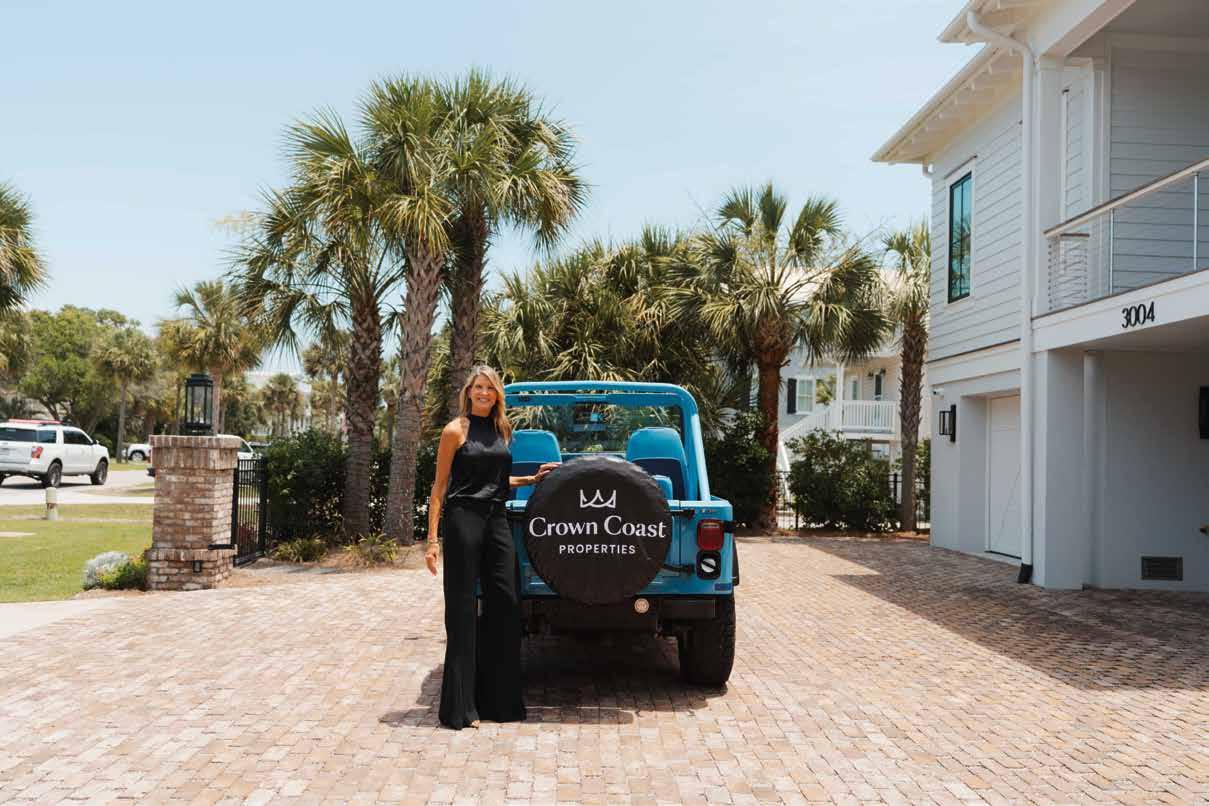
Led by Amy Rogers, Crown Coast Properties combines sharp market expertise with personalized service for Charleston’s most discerning buyers and sellers. From historic homes to oceanfront escapes, we bring clarity, confidence, and sophistication to every step of your real estate journey.
Amy Rogers Owner / Broker-In-Charge +1 843 824 4892 amy@crowncoast.com
Crown Coast Properties 1100 Palm Blvd #2C Isle of Palms, SC 29451 hello@crowncoast.com crowncoast.com



From sand to surf to roadway, the Isle of Palms Fire Department trains for a town that changes shape with the tide, and has a chief who knows readiness is the most important part of the job.
By Laura Strecker Photos by Rob Byko
There’s a moment just after 8 a.m. when the Isle of Palms Fire and Rescue shifts from stillness to motion. It begins not with sirens but with discipline.
A shift change. A briefing. Emails reviewed. Equipment inspected down to the last battery, the last strap, the last overlooked detail that – on a different kind of day – could mean the difference between success and failure and maybe life and death. By 8:30, every apparatus, every marine vessel, every piece of gear has been checked, logged, and prepared for whatever the island might demand next.
This is the part most people never see. For Fire Chief Craig Oliverius, it’s also the part that matters most.
Long before he stepped into turnout gear, Oliverius was in a classroom. Teaching, he says, taught him something the fire service would later demand of him daily: how to listen, how to adapt, and how to lead in moments that don’t come with a script. But, even then, there was something pulling him further.
“I’ve always enjoyed being a member of a team and being challenged physically and mentally and giving back,” he says. “There’s no greater gift than to be able to help someone. It’s more blessed to give than to receive.”
That sense of service didn’t start with the Fire Department. It was shaped through mission trips, team sports, earning the honor to
be called an Eagle Scout, and traveling overseas with a group called Sports Ambassadors – playing basketball in places such as Hong Kong and the Philippines, sharing testimonies and perspectives far beyond the game itself.
“To be part of something bigger than yourself – there’s no greater calling,” he says. “I love being able to empower others.” It’s a philosophy that now defines how he leads.
Oliverius officially took the reins of the Isle of Palms Fire Department on March 29, 2022, stepping into the role with a clear priority: To get to know his people first. The Isle of Palms Fire Department operates in a reality that is equal parts small-town familiarity and global destination unpredictability. “We joke IOP is a one stoplight town of 50,000 people during peak season,” Oliverius says. “In one day, we could have 50,000 people come out to the island. In the off-season, maybe 5,000. It’s a completely different dynamic.”
On paper, the department is modest: roughly 40 uniformed personnel, with 12 operational firefighters per shift. In practice, it is something far more complex. This is a department that must be ready for anything –from cardiac arrests to high-risk water rescues – often within minutes. Their benchmark: Arrive on scene in just over six minutes, 90% of the time.

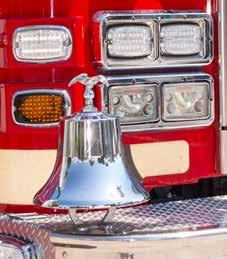
“You don’t get to ease into the day,” Oliverius says. “You have to be ready the moment the bell hits.”
The misconception is that firefighters spend their days waiting. They don’t.
Each shift is structured with intention: training, equipment inspections, physical conditioning, reporting, and proactive planning. Firefighters train for hours every shift and log at least 20 hours each month. Even the quiet moments are purposeful.
Weekly, the department cycles through detailed maintenance – cleaning stations, inspecting equipment, running marine apparatus, ensuring every system is ready before it’s needed. For Oliverius, this is where leadership shows up in its truest form – not in the emergency but in preparing for it. “Our mission is to create a safer Isle of Palms,” says Oliverius. “Everything we do, we do it to the highest standard possible.”
To be a firefighter on the Isle of Palms is to operate in constant transition. One minute on a roadway. The next on sand. Then, suddenly, in open water. “We’re operating in all these different environments,” Oliverius says. “Roadways, ocean, intracoastal. That’s unique.”
Water rescues alone require a level of adaptability most departments rarely encounter: navigating currents, visibility, weather, and risk in real time.
And if the technical demands of the job are significant, the human ones may be even greater. The Isle of Palms sees a high volume of pediatric calls – far more than many depart-
ments – simply because of the number of families that visit and vacation on the island.
At the same time, it is home to a large population of retirees. Firefighters must be equally comfortable treating a child in distress as they are managing a cardiac emergency for an older resident. They must also navigate situations that require not just medical expertise but emotional intelligence.
“We had a recent water rescue with a pediatric patient on the spectrum,” Oliverius says.“Our firefighters have to know how to get there quickly but also how to connect, how to keep that individual calm.” He pauses: “That’s a different kind of challenge.”
It’s a reminder that the job is not just about response. It’s also about connection. “We need to do mental judo,” he adds. “We have to adapt to the person in front of us.”
The department recently launched a new Water Rescue School curriculum designed and led internally. It didn’t take long to prove its value. Two firefighters who had just completed the program responded to a pediatric swimmer in distress near 4th Avenue and executed the rescue successfully.
One later told Oliverius that the training made him feel prepared – confident in both the moment and the outcome. For Oliverius, the takeaway wasn’t just the rescue. It was what it represented. “I want them to make me obsolete,” he says. “I want them to be able to solve problems on their own. That’s how I know we’re making progress.”
Spend enough time talking to Oliverius, and one thing becomes clear: He is far more interested in building people than building recognition. Ask about his role, and he shifts
“They stopped what they were doing and helped change her tire and get her to a safe location.
the conversation back to his team.
“They are me, and I am them,” he says simply, adding that his focus is on creating an environment where firefighters can grow professionally and personally and where
It’s the same mindset that drives the department’s outreach: teaching CPR, partnering with local businesses to educate residents about the use of Narcan and engaging with the community in ways that build trust before
For 33 years, Patrick O’Neil has helped shape Sullivan’s Island, from the Planning Commission to the mayor’s office. Early in his final term, he reflects on the issues worth fighting – and the island worth protecting.
By Brian Sherman Photos by Rob Byko
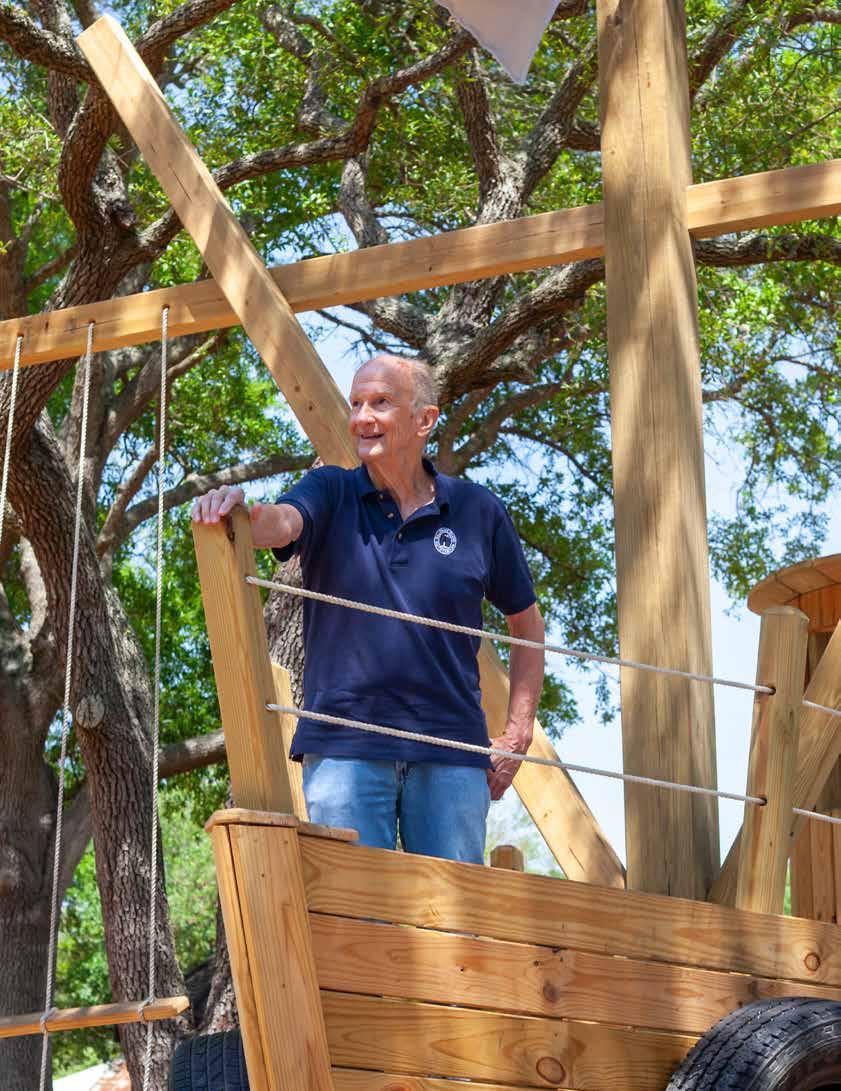
During nearly three-and-a-half decades of service to his adopted home of Sullivan’s Island – the past 11 as the town’s mayor – Patrick Mahlen O’Neil has straddled the delicate boundary that defines the difference between quality of life and necessary progress. In most cases, he and his fellow members of the Town Council have leaned heavily toward “preserving what makes the island the island.”
Under O’Neil’s leadership, they have fought efforts to cut down trees in the Maritime Forest, banned short-term rentals, protected historic structures and limited the square footage of new homes. On the other hand, the Council has approved funding for a new Town Hall, a modern sewage treatment plant, and a completely renovated fire station and to help solve the island’s long-term stormwater drainage issues.
“We’ve modernized capital facilities for the benefit of the town and at the same time
preserved the attributes of the island that make it so special – in the face of a changing world and the face of changing economic forces,” says O’Neil, a native of Thibodaux, Louisiana, who has lived on Sullivan’s since 1985.
O’Neil has held his “other” job, director of the Medical University of South Carolina Department of Psychiatry and Behavioral Sciences/Weight Management Center, since 1984. He did his undergraduate work at Louisiana State University and earned his master’s and doctorate at the University of Georgia. He was introduced to the Carolina Lowcountry during an internship at MUSC, and, after completing his education, returned to the Charleston area permanently. “I hung around for a while. They figured I wasn’t going away, so they offered me a position on the faculty,” he says.
Eight years after taking up residence on the island, in 1993, O’Neil was appointed to a seat
“ As mayor, O’Neil has always come down on the side of preservation and quality of life.
on the Planning and Zoning Commission, setting the stage for him to play a key role in establishing one reason Sullivan’s Island is unique among Lowcountry municipalities. With O’Neil as its chair, the Commission recommended that the Town Council pass an ordinance outlawing short-term rentals on the island. “We spent quite a lot of time in a number of meetings talking about the issue,” O’Neil says. “As you would expect, a number of people made comments to us, with strong opinions on both sides of the issue.”
He adds that some islanders actually seemed to be both for and against the Commission’s recommendations. He says one woman told him that she was glad the town was considering doing something about short-term rentals, because the home next to hers was sometimes rented to Citadel cadets who made more noise than she considered appropriate. A month or so later, she had apparently changed her mind, letting O’Neil know that she was concerned that if the ordinance was enacted, it might keep her from renting out a home she owned.
O’Neil says those in the real estate industry opposed plans to eliminate short-term rentals,
claiming that the ordinance would affect the worth of homes on the island – and not in a good way. “If we were trying to destroy property values, we did a terrible job,” O’Neil points out. “I’m very proud of this ordinance. Certainly, nobody 25 years ago would have guessed we would become the most expensive ZIP code in the state. Quite frankly, the town could be getting a ton more in taxes if we had more short-term rentals. But people were and are concerned about the quality of life on the island. The marketplace has agreed with the decisions we have made on a quality-of-life basis.”
When the Council passed the ordinance, existing short-term rentals were grandfathered in, and, today, according to O’Neil, there are somewhere in the neighborhood of 40 of them still renting to vacationers. “We didn’t put anybody out of business at the time,” he says.
In 2001, O’Neil gave up his position on the Planning and Zoning Commission and ran successfully for a spot on the Town Council. In January of 2015, he claimed a bittersweet victory in a special election to choose a new
mayor. The previous mayor, Mike Perkis, died of pancreatic cancer late in 2014. “I would have been happy if Mike had been there forever. He was very capable,” says O’Neil. “But I thought my heart was in the right place. I had already put in a number of years into work on the Council and the Planning Commission, and I had a good handle on what was going on in the town.”
Short-term rentals are not the only issue islanders have faced during O’Neil’s watch. A court battle over whether homeowners who live near the Maritime Forest have the right to cut down trees that block their view of the Atlantic Ocean has raged on for 16 years and counting. The possibility of paid parking on the island pops up now and then, and local residents have erupted in a rousing chorus of roiling indignation every time Dominion Energy and its predecessors have “butchered” trees that might possibly interfere with transmission lines.
As a member of the Planning and Zoning Commission and the Town Council and as mayor, O’Neil has always come down on the side of preservation and quality of life, and, he says, that attitude has “added a lot to the
perceived value of Sullivan’s Island.”
That doesn’t mean, however, that O’Neil has ignored necessary improvements on the island. Most of the work was finished in May 2021 on a completely renovated wastewater treatment plant, replacing a dangerously outdated facility built in 1968. The mayor points out that the old plant “was not aging well.” “It’s pretty remarkable. I’m told that when the old plant was built, Sullivan’s Island was not a rich community. It was primarily working-class folks. How they ever got a sewer treatment plant built in the 1960s I’ll never understand.”
A new Town Hall, completed in 2016 and also serving as police headquarters, was also a necessity. The existing facility at 1608 and 1610 Middle St. was “a very sick building,” according to the mayor, suffering from significant problems with mold and rats, and, until the new building was finished, the town operated out of temporary trailers.
O’Neil remembers he favored converting the former Fort Moultrie Post Exchange at 1714 Middle St. into the new Town Hall but says that idea was “the best vote I ever lost.”
Next door to Town Hall, another major project was completed during O’Neil’s time as mayor: The fire station. The building had been damaged by moisture infiltration, and was taken down to its bones and totally rebuilt.
In addition to the work the town has completed in recent years, O’Neil cited the efforts of local residents who have taken strides toward celebrating the island’s history and, in some ways, returning to its roots. For example, with the help of the Battery Gadsden Cultural Center, historical markers have been placed around the island, and the once-popular Island Club has been resurrected and is thriving.
Now 78, O’Neil has decided that his current term of office, which expires in December 2029, will be his last – and he means it this time.
“After I was elected the last time, I threw all my signs in the dumpster,” he says. “That doesn’t mean I plan on coasting for the next four years. I never would have run if that were my intent. I still feel good enough to keep at it and still have the energy I can devote to it. Maybe in this term the Maritime Forest lawsuit will finally go in our favor, but that’s probably asking too much.”
O’Neil said after he retires from local politics, he will continue to visit Thibodaux and “enjoy the opportunity to get in touch with my roots and eat a little Cajun food.” Does he have any regrets about his time with the Planning Commission, on the Council and as mayor?
“Frequently. But they pass,” he says. SiP SiP

Artist Susan Hecht channels her childhood memories of Charleston and its barrier isles into art that makes people happy.
By Colin McCandless Photos by Paris Laliberte
Susan Hecht had no intention of becoming a professional painter. “I just thought it was going be some little hobby to do, and it turned out to be, honestly, the best thing that’s ever happened,” recounts the Cary, North Carolina, resident. Now, the nationally recognized and award-winning artist, celebrated for her impressionistic tablescapes, still lifes, and Lowcountry scenes, paints nearly every day and exhibits her work at esteemed galleries throughout the Carolinas, including Sullivan’s Island’s Sandpiper Gallery, Dare Gallery downtown, and ArtSource Fine Art in Raleigh, North Carolina.
Raised in a Navy family, Hecht moved around a lot during her childhood, which included several stints in Charleston – twice on the naval base. She attended Blessed Sacrament Catholic School in West Ashley when they lived in that part of town.
Hecht frequented Sullivan’s Island in her younger days and also attended Stella Maris Catholic Church with her family. As she pro -
gressed into her teenage years, she invariably went to Isle of Palms “because it was more fun.”
“I would go to the beach as much as I could when I was older,” Hecht recalled.
Additionally, her mom’s best friend lived on Pitt Street in Mount Pleasant’s historic Old Village neighborhood, and she has fond recollections of going to Alhambra Hall and riding bikes with friends to Pitt Street Pharmacy. Her parents eventually retired to Mount Pleasant and resided in a nearby house on Pitt Street behind Alhambra Hall. “So I have lots of memories there with my kids and Easter egg hunts and climbing on the trees and the playground behind there,” she reminisces.
Distinctive smells like pluff mud and even the paper mill, which most people find unpleasant, trigger nostalgia of her halcyon days in Charleston, which Hecht has always considered home and where she someday hopes to return with her husband. “I just love it down there. The people are fantastic; the weather’s beautiful,” she raves.

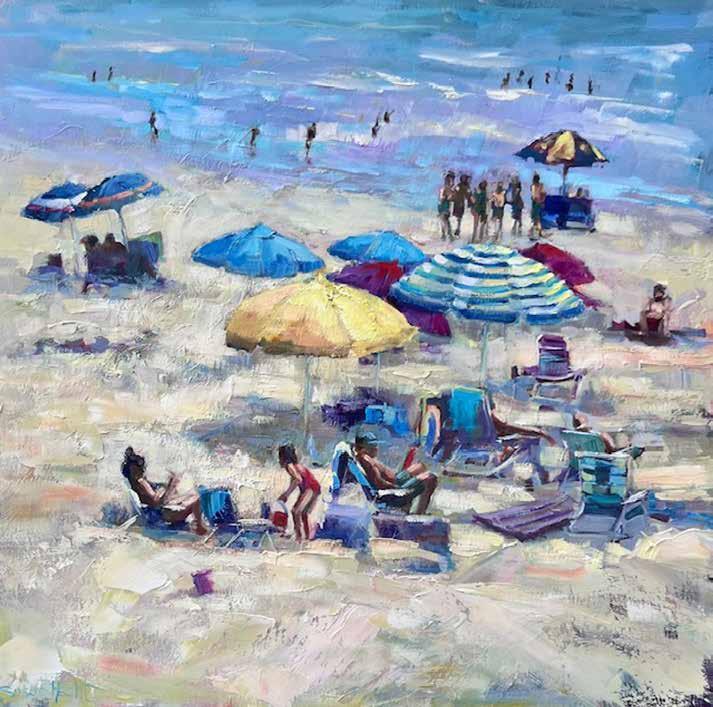
“She invariably went to Isle of Palms “because it was more fun.”
In 1997, Hecht took a painting class that entailed painting furniture. While she had always been creative, toting around a sketchbook in high school and later working in advertising, she had never painted anything until this moment, which would ultimately become a life-altering experience. “I just got hooked from that point on,” she remembers.
Looking back, it seems ridiculous to her that painting furniture led to this artistic epiphany. But, she adds, “I was shocked at what could be done.” So she continued taking classes and kept learning and honing her craft. “I still take classes. I’m forever a student,” she notes.
When Hecht moved to Cary in 1998, she joined its Local Fine Arts League. In April 2003, she bought a small studio in downtown Apex. Hecht began painting as much as she
could and had some of her work accepted into smaller beach art galleries. “And it just started from there,” Hecht reflects.
She joined Sandpiper Gallery in 2006. “It’s been a wonderful relationship for nearly 20 years – I can hardly believe it’s been that long.”
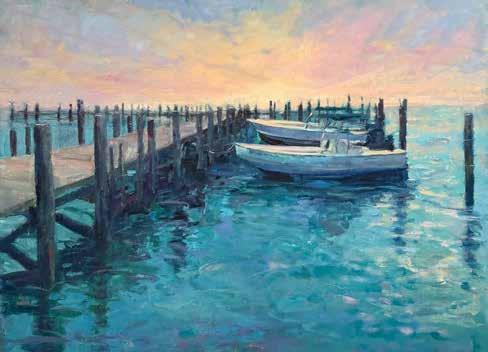
Hecht’s intermittent upbringing in Charleston has served as a muse for her art. “Honestly, so much of it is inspired by the Lowcountry area,” she acknowledges. “The marshes, the ever-changing colors of the marshes, the beautiful flowers … the culinary scene, too, I love doing.”
She doesn’t pigeonhole her work into a specific genre; rather, she paints many different things. Primarily, she likes to paint the interplay of light with various objects. “Whether it’s light dancing on a wine glass or a wine bottle, or if it’s across the marsh, or it’s in flowers, or if I see a scene that has really high contrast, it just sort of intrigues me,” Hecht explains.
For Charleston galleries, Hecht focuses on Lowcountry landscapes and scenes, many of which depict the beaches, birds, dunes, and seagrasses of the islands. As one might expect, her Sandpiper collection is coastal-themed.
Sandpiper owner Julie Cooke said of the longtime artist/gallery relationship, “We have had the privilege of representing Susan Hecht on Sullivan’s Island for over 20 years. Susan has a joyful and playful soul, and it resonates in her work,” she said. “Her paintings simply make people happy. Her paintings often strike a familiar chord with people and become more meaningful the moment they connect with the
“
Her paintings simply make people happy.
— JULIE COOKE
subject – whether it is the warmth of footprints on a sandy path to the beach, getting lost in thought with the rush and roar of the waves in the background, or breathing in the salty air while cruising across a tidal causeway.”
Hecht aims to portray everyday scenes that people might overlook because they are busy or distracted, such as how the light hits the trees in a particular way. “Some of the ordinary things that I paint that people kind of pass by,” says Hecht. “I just want them to see that there’s beauty in the most common things.”
Places from her youth also inspire her, particularly the marsh at Pitt Street Bridge, where Hecht went crabbing as a child, and the beach at Sullivan’s Island.
Similarly, she wants her paintings to spark a memory or evoke nostalgia. “My goal is to bring the viewer to that moment. And hopefully that moment resonates with them in some way,” she asserts.
Hecht cites the launch of her career as an artist as 2006, the same year she first began exhibiting at Sandpiper.
“Honestly, I still have to pinch myself that I’m doing what I’m doing now,” she says. “It was not in the plan, and it’s just been so much fun. I never set out a goal to be a professional artist; I set out a goal to learn as much as I could about it because I loved it so much. And just the bonus was to be able to sell.”
The accolades followed alongside the sales. Her artistic achievements include the Award of Merit at the 2022 American Impressionist Society Online Member Show, the Princeton

Brushes Award of Distinction at the 22nd Annual National Juried Exhibition in 2021, and the Award of Distinction at Women Painters of the Southeast National Juried Show in 2014.
For Hecht, though, it’s all about refining her skills and continuously improving. Her studio has now been replaced with a beautiful workspace in her backyard, but her objective remains the same. “To hone my craft is really what my main goal is,” she relates. “And bringing people joy through my work.”
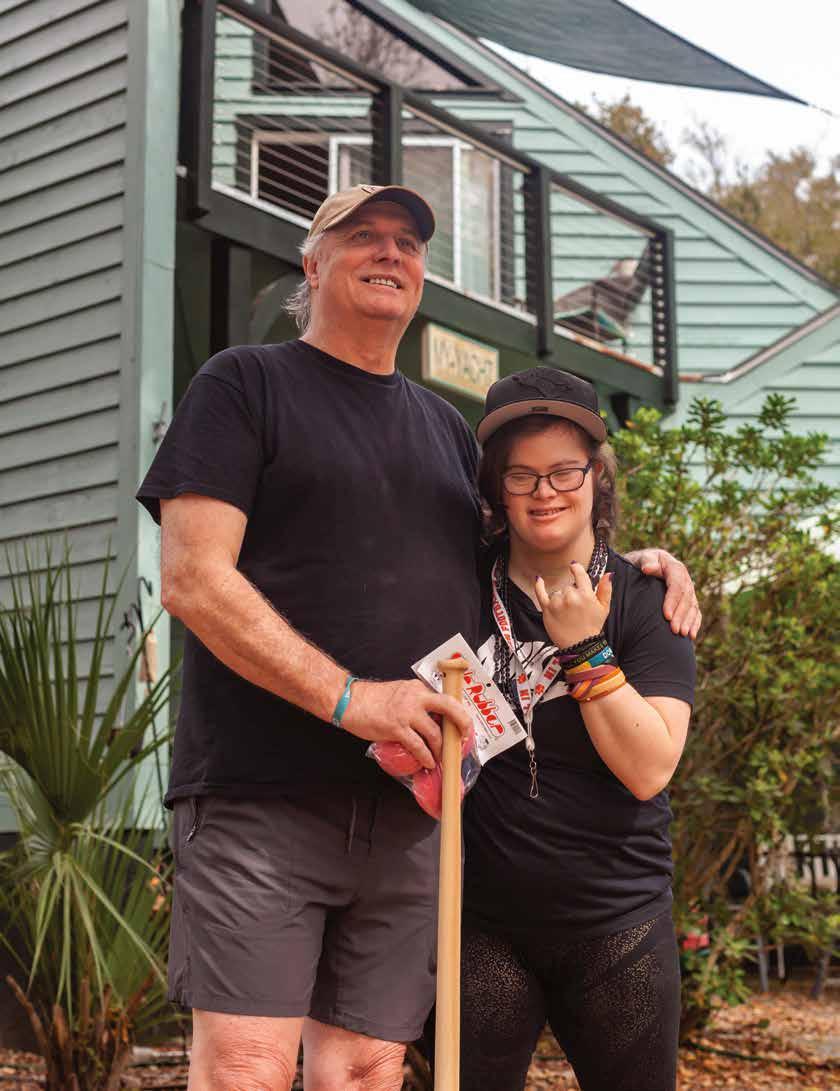
oFormer IOP mailman and Malibu East owner Ricky Myatt’s greatest blessing is his daughter, Grace.
By Brian Sherman
Photos by Rob Byko.
Ricky Myatt was delivering mail on the Isle of Palms long before the beach was lined with luxury mansions. He also owned a bar on the island that was known far and wide for its turbulent Super Bowl parties, beach volleyball, innovative marketing plans, and not-so-successful attempts to draw customers to what he pridefully described as “a dive.”
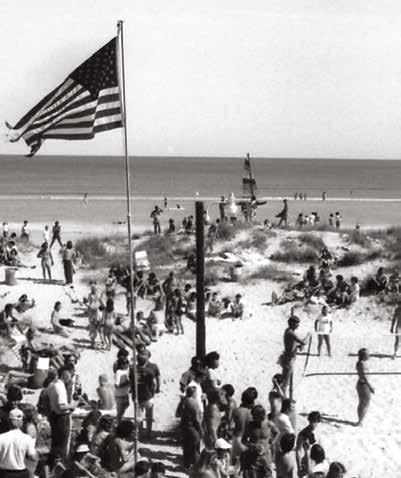
Years after Hurricane Hugo banished that bar, Malibu East, to the long-forgotten annals of island history, Myatt and his business partner, Paul Schwartz, launched a company that produces everything anyone would need to participate in a game called Half Rubber. With a nostalgic resemblance to stickball, it uses a “half-ball” made of sponge rubber and a 1.5-inch diameter chunk of poplar that looks a lot like a broomstick – which is what kids have used to play the game in the densely populated cities of the North for a century or more.
Still an IOP resident and beyond his 70th
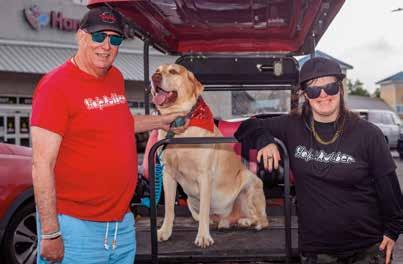
Ricky Myatt has been a lot of things in his life, but none more important than his role today: dad, best friend and roommate for his daughter, Grace.
birthday, Myatt’s most important job is to be a dad, though the lines that separate father from best friend and roommate are sometimes blurred. His bestie is Grace, his 25-year-old daughter who has Down syndrome, a steady job, an infectious attitude, and an affinity for Clemson football. They have always taken care of each other, but their relationship has grown stronger since Maggie, Ricky’s wife and Grace’s mom, passed away in October 2019.
Coincidentally, the Myatts received good news and bad news on the same day. Shortly before their 27th wedding anniversary, with Ricky and Maggie planning a trip to Costa Rica, they were informed that Maggie had stage 4 lung cancer and that her days were numbered. When the stunned couple pulled into their driveway, they found a letter in the mailbox: Grace had been accepted into ClemsonLIFE, a prestigious program that prepares young men and women with intellectual disabilities to hold down a job and live independently.
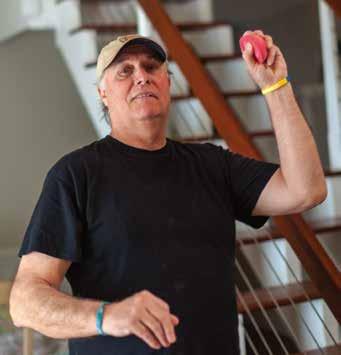
Ricky Myatt and his business partner, Paul Schwartz, launched a company that produces everything anyone would need to participate in a game called Half Rubber.
“ One day, a man came over to me and said, ‘Your son can throw so well.’ I told him I don’t have a son. I have a daughter.
— RICKY MYATT

Ricky’s Greatest Blessing
Maggie’s doctors knew something was wrong long before Grace drew her first breath. Ricky tried to be strong, but he admits that he cried like a baby. Nevertheless, the Myatts never considered the alternatives. “The doctors wanted us to abort, but we wouldn’t do it,” Ricky says. “They told us her brain was full of fluid. They didn’t think she had a brain. But without her, I wouldn’t be here. She is the greatest blessing I’ve ever been given.”
Ricky enjoys bragging about his daughter’s athletic prowess. Despite the challenges that have been thrown her way, she excels at soccer and basketball. When she was younger, Grace and her dad would play football on the beach.
She could fire spirals either right-handed or left-handed. “One day, a man who was watching us came over to me and said, ‘Your son can throw so well,’” Ricky remembers. “I told him I don’t have a son. I have a daughter.”
At Bishop England High School, Grace served as the manager for the girls’ varsity soccer team. Her relationship with the team didn’t end when they graduated, however. One night Ricky heard music coming from Grace’s room and found her dancing on a Zoom call with the team. “They would call Grace for their regular Thursday night dance-off,” Ricky says. “They were making a difference in her life. It’s one of the coolest things I ever heard.”
“Without her, I wouldn’t be here. She is the greatest blessing I’ve ever been given. — RICKY MYATT
‘Hey Grace. How Ya Doin’?’
Ricky likes to relate a story he heard from one of the independent living assistants in the ClemsonLIFE program. She told Ricky a group of students and supervisors took a trip to Lake Keowee. While they were out hiking, they heard motorcycles approaching and spotted a gang of tough-looking guys with long hair and tattoos. “We had visions of being raped and murdered,” the ILA told Ricky. Instead, one of them said: “Hey Grace. How ya doin’?” It turned out, sometime earlier, Grace had walked past a biker bar in Clemson wearing what the bikers thought was the coolest jacket they had ever seen.
Grace – who bags groceries at the Harris Teeter store on the Isle of Palms – knows how to take care of herself and doesn’t like to be treated like something is wrong with her. One day when she and Ricky were eating at Five Guys burger bar, and a man came over and started talking to her as if she were a 2-year-old. When he left, she looked at her dad and said: “I think there’s something wrong with him.”
She takes care of herself and, at times, also takes care of Ricky. One night her dad came home after consuming a half dozen or so beers, and, though the house was a mess, decided to go right to bed. When he woke up the next morning – or maybe afternoon – the dishes were done, and the clothes were washed. “Grace. You are the best woman I have ever met,” Ricky told her, and she responded by warning him that “Mom can hear you.”
Ricky, of course, does his share of taking care of his best friend. He even paints her nails purple, her favorite color. And Grace, who makes a habit of staying up late, sometimes has to tell Ricky when it’s time for him to go to bed. In their give-andtake relationship, she has gone so far as to giving him a nickname – “Teri Yacky” –“because you talk so much.”
The good-natured ribbing between father and daughter continues. They have their differences on occasion, but nothing that will ever affect their rock-solid relationship. “We have our fights once in a blue moon, but she’s a good one. We were best friends from the beginning. It drove Maggie crazy,” Ricky concludes. SiP SiP
Editor’s note: This article was first published in SiP magazine in 2023.

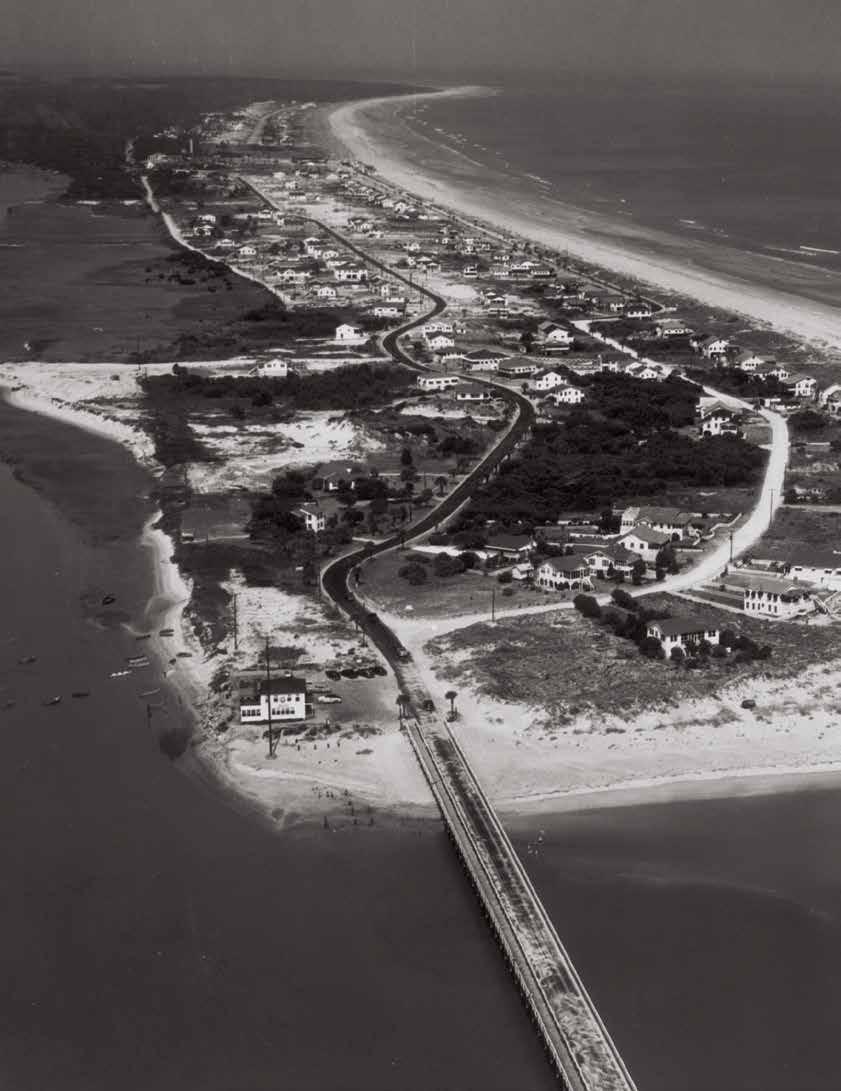
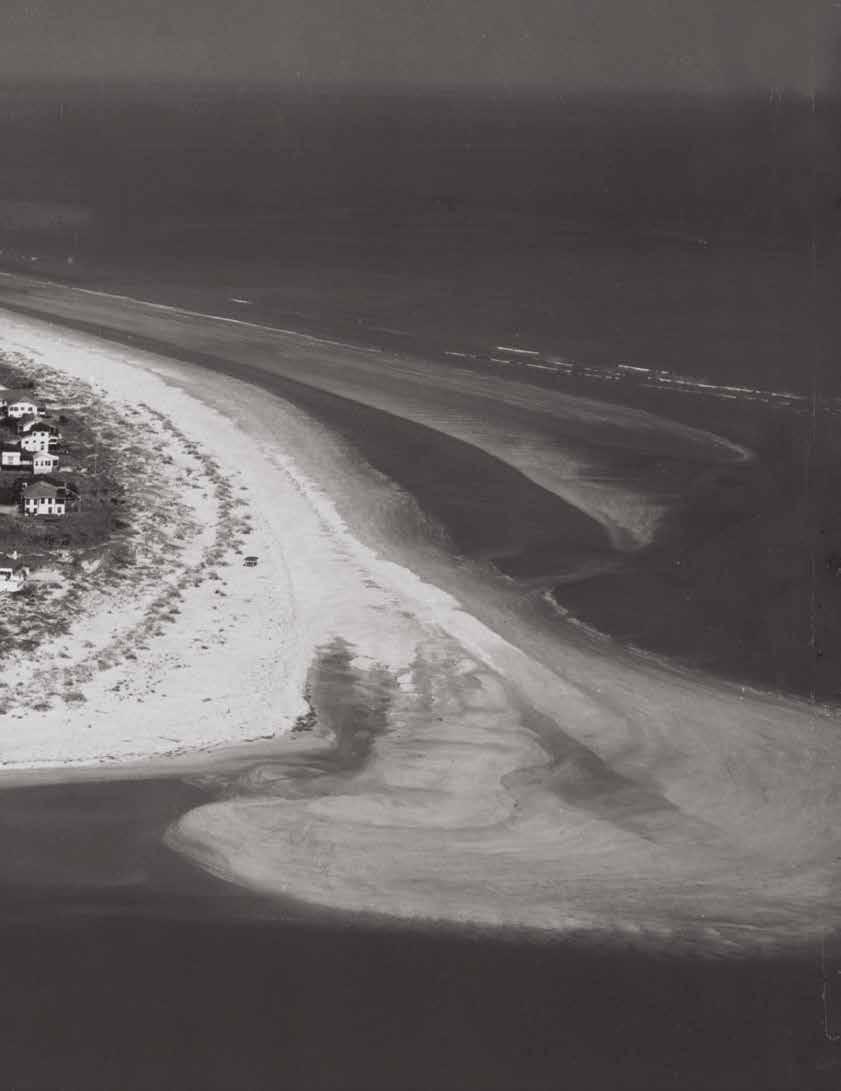
In 1944, J.C. Long had a vision, a bustling barrier island town, home to middle-class houses and a middle-class community. Today, those mid-century houses may be dwarfed by multi-million-dollar homes, but they are still the heart of a vibrant community.
In 1944, J.C. Long had a vision, a bustling barrier island town, home to middle-class houses and a middle-class community. Today, those mid-century houses may be dwarfed by multi-million-dollar homes, but they are still the heart of a vibrant community.
By Susan Hill Smith . Photos by Mic Smith .
By Susan Hill Smith . Photos by Mic Smith .
My husband and I wound up living on Isle of Palms by accident. We moved to the Charleston area in the fall of 1994, in our 20s, and needed a rental with a fenced-in yard for our two dogs.
My husband and I wound up living on Isle of Palms by accident. We moved to the Charleston area in the fall of 1994, in our 20s, and needed a rental with a fenced-in yard for our two dogs.
My husband and I wound up living on Isle of Palms by accident. We moved to the Charleston area in the fall of 1994, in our 20s, and needed a rental with a fenced-in yard for our two dogs.
To our happy surprise, Isle of Palms had one of the few available in our modest price range. Earlier that year, Mic and I had vacationed with extended family on the island in a new, three-story oceanfront house. Gigantic homes and Front Beach – that’s all we knew of Isle of Palms – until we turned onto 21st Avenue and saw the 815-square-foot house that would be our home for six months.
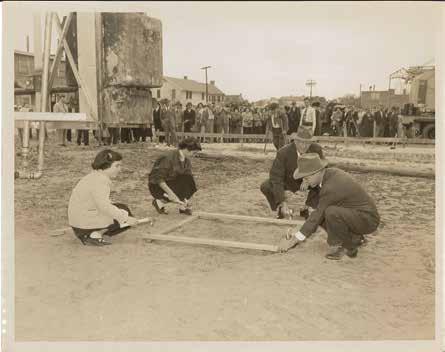
To our happy surprise, Isle of Palms had one of the few available in our modest price range. Earlier that year, Mic and I had vacationed with extended family on the island in a new, threestory oceanfront house. Gigantic homes and Front Beach—that’s all we knew of Isle of Palms— until we turned onto 21st Avenue and saw the 815-square-foot house that would be our home for six months.
To our happy surprise, Isle of Palms had one of the few available in our modest price range. Earlier that year, Mic and I had vacationed with extended family on the island in a new, threestory oceanfront house. Gigantic homes and Front Beach—that’s all we knew of Isle of Palms— until we turned onto 21st Avenue and saw the 815-square-foot house that would be our home for six months.
Built on a concrete slab foundation, the onestory cottage dated to 1962, though it seemed a decade or two older. With a few steps, we walked through the living/dining room and the galley kitchen. I sized up the smaller of the two bedrooms, uncertain whether it would fit a double bed. Mic considered the distance to the beach access path: two blocks. Given that, we agreed to squeeze in and stretch our budget for the $700-a-month rent.
Built on a concrete slab foundation, the onestory cottage dated to 1962, though it seemed a decade or two older. With a few steps, we walked through the living/dining room and the galley kitchen. I sized up the smaller of the two bedrooms, uncertain whether it would fit a double bed. Mic considered the distance to the beach access path: two blocks. Given that, we agreed to squeeze in and stretch our budget for the $700-a-month rent.
Built on a concrete slab foundation, the onestory cottage dated to 1962, though it seemed a decade or two older. With a few steps, we walked through the living/dining room and the galley kitchen. I sized up the smaller of the two bedrooms, uncertain whether it would fit a double bed. Mic considered the distance to the beach access path: two blocks. Given that, we agreed to squeeze in and stretch our budget for the $700-a-month rent.
I’m not sure who told us we were living in a “J.C. Long house,” a moniker for the man who made Isle of Palms into both a workingclass community and post-World War II beach destination. But as we explored the island, we came across more two-bedroom cottages like ours and felt connected to them. Even after we moved into a larger, split-level home on 23rd Avenue, I would wonder about the history of the small houses and their future.
I’m not sure who told us we were living in a “J.C. Long house,” a moniker for the man who made Isle of Palms into a both a working-class community and post-World-War II beach destination. But as we explored the island, we came across more twobedroom cottages like ours and felt connected to them. Even after we moved into a larger, split-level home on 23rd Avenue, I would wonder about the history of the small houses, and their future.
Two decades later, I took time to fully investigate and learn about J.C. Long’s substantial and complicated impact on Isle of Palms. I discovered his development empire actually built most of the original houses concentrated in the heart of the community, and those that remain still provide regular people the chance to enjoy island living.
Two decades later, I took time to fully investigate and learn about J.C. Long’s substantial and complicated impact on Isle of Palms. I discovered that his development empire actually built most of the original houses concentrated in the heart of the community and those that remain still provide regular people the chance to enjoy island living.
I’m not sure who told us we were living in a “J.C. Long house,” a moniker for the man who made Isle of Palms into a both a working-class community and post-World-War II beach destination. But as we explored the island, we came across more twobedroom cottages like ours and felt connected to them. Even after we moved into a larger, split-level home on 23rd Avenue, I would wonder about the history of the small houses, and their future.
Born in Pensacola, Florida, in 1903, Long moved to Charleston at age 15 and went on to study at the University of South Carolina, where he played basketball, baseball, and served as captain of the Gamecock football team. He received a law degree in 1925, after bypassing undergrad studies, made juries cry as an attorney, and served as a state senator and on the Charleston City Council. But he
Two decades later, I took time to fully investigate and learn about J.C. Long’s substantial and complicated impact on Isle of Palms. I discovered that his development empire actually built most of the original houses concentrated in the heart of the community and those that remain still provide regular people the chance to enjoy island living.
Born in Pensacola, Florida, in 1903, Long moved to Charleston at age 15 and went on to study at the University of South Carolina, where he played basketball, baseball and served as captain of the Gamecocks football team. He received a law degree in 1925, after bypassing undergrad studies, made juries cry as an attorney, and served as a state senator and on Charleston City Council. But he made his greatest mark as a driven real estate developer who erected apartment complexes and neighborhoods across South Carolina. “John Charles Long has moved through life powered by a dynamo of bountiful, turbulent energy harnessed
Born in Pensacola, Florida, in 1903, Long moved to Charleston at age 15 and went on to study at the University of South Carolina, where he played basketball, baseball and served as captain of the Gamecocks football team. He received a law degree in 1925, after bypassing undergrad studies, made juries cry as an attorney, and served as a state senator and on Charleston City Council. But he made his greatest mark as a driven real estate developer who erected apartment complexes and neighborhoods across South Carolina. “John Charles Long has moved through life powered by a dynamo of bountiful, turbulent
by a shrewdness of character and ability which have spelled fortune and success,” assessed a 1951 Evening Post profile.
by a shrewdness of character and ability which have spelled fortune and success,” assessed a 1951 Evening Post profile.
By several accounts, he found great satisfaction in the Isle of Palms, which he effectively took over in late 1944, when he bought all undeveloped property on the island, including 1,300 acres of high ground. During the early 1900s, Isle of Palms had been known for its famous Ferris wheel, pavilions and resort hotels, but the Depression, world wars and a series of fires stymied the developers who came before Long. His timing couldn’t have been better. At the end of World War II the island emerged with gusto from wartime restrictions, military patrols and oil slicks from torpedoed tankers, a 1946 News and Courier article reported. Americans wanted to have fun again and a crowd of returning GIs needed places for their families to live.
made his greatest mark as a driven real estate developer who erected apartment complexes and neighborhoods across South Carolina. “John Charles Long has moved through life powered by a dynamo of bountiful, turbulent energy harnessed by a shrewdness of character and ability which have spelled fortune and success,” assessed a 1951 Evening Post profile.
By several accounts, he found great satisfaction in the Isle of Palms, which he effectively took over in late 1944, when he bought all undeveloped property on the island, including 1,300 acres of high ground. During the early 1900s, Isle of Palms had been known for its famous Ferris wheel, pavilions and resort hotels, but the Depression, world wars and a series of fires stymied the developers who came before Long. His timing couldn’t have been better. At the end of World War II the island emerged with gusto from wartime restrictions, military patrols and oil slicks from torpedoed tankers, a 1946 News and Courier article reported. Americans wanted to have fun again and a crowd of returning GIs needed places for their families to live.
Long launched The Beach Company to oversee the island’s development in coordination with other companies he created, such as The Worth Agency, which handled sales and rentals. By March 1946, the Evening Post proclaimed, “Mammoth Real Estate Program is Transforming Isle of Palms.” The push was on to sell both vacation homes and year-round residences on the island, which was easier to get to as a result of road upgrades, but still somewhat remote, with travel going through Sullivan’s Island.
Long launched The Beach Company to oversee the island’s development in coordination with other companies he created, such as The Worth Agency, which handled sales and rentals. By March 1946, the Evening Post proclaimed, “Mammoth Real Estate Program is Transforming Isle of Palms.” The push was on to sell both vacation homes and year-round residences on the island, which was easier to get to as a result of road upgrades, but still somewhat remote, with travel going through Sullivan’s Island.
By several accounts, he found great satisfaction in the Isle of Palms, which he effectively took over in late 1944, when he bought all undeveloped property on the island, including 1,300 acres of high ground. During the early 1900s, Isle of Palms had been known for its famous Ferris wheel, pavilions, and resort hotels, but the Depression, world wars, and a series of fires stymied the developers who came before Long. His timing couldn’t have been better. At the end of World War II, the island emerged with gusto from wartime restrictions, military patrols, and oil slicks from torpedoed tankers, a 1946 News and Courier article reported. Americans wanted to have fun again, and a crowd of returning GIs needed places for their families to live.
Long launched The Beach Company to oversee the island’s development in coordination with other companies he created, such as The Worth Agency, which handled sales and rentals. By March 1946, the Evening Post proclaimed, “Mammoth Real Estate Program is Transforming Isle of Palms.” The push was on to sell both vacation homes and year-round residences on the island, which was easier to reach thanks to road upgrades but still somewhat remote, with travel through Sullivan’s Island.
Long’s outfit preferred to do its own home construction. He filled in sections on the island’s already developed southern side where he kept a summer house for his family and eventually built one on each side for his two daughters and started a corridor of new homes to the north, working inward from the ocean side along an extension of Palm Boulevard. Cleared lots provided native wood for many homes. Names of streets planned by an earlier developer Beach, Pine, Oak, Cedar and Holly became 21st, 22nd, 23rd, 24th and 25th avenues respectively, continuing the numbered system from the south. Long’s straightforwardness also showed in the no-frills houses that dominated most of his building and became his trademark; access to the Atlantic Ocean was always his biggest selling point.
Long’s outfit preferred to do its own home construction. He filled in sections on the island’s already developed southern side where he kept a summer house for his family and eventually built one on each side for his two daughters and started a corridor of new homes to the north, working inward from the ocean side along an extension of Palm Boulevard. Cleared lots provided native wood for many homes. Names of streets planned by an earlier developer Beach, Pine, Oak, Cedar and Holly became 21st, 22nd, 23rd, 24th and 25th avenues respectively, continuing the numbered system from the south. Long’s straightforwardness also showed in the no-frills houses that dominated most of his building and became his trademark; access to the Atlantic Ocean was always his biggest selling point.
Long’s outfit preferred to do its own home construction. He filled in sections on the island’s already developed southern side, where he kept a summer house for his family and eventually built one on each side for his two daughters. He started a corridor of new homes to the north, working inward from the ocean side along an extension of Palm Boulevard. Cleared lots provided native wood
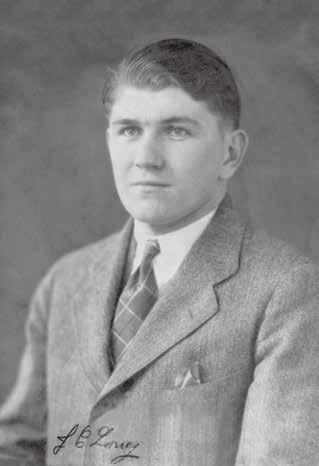
J.C. Long’s companies constructed most of the interior Isle of Palms homes built from 1945 to the early 1970s. More than a few of those homes have disappeared over the years, but there are many left that you can still identify.
Photo courtesy The Beach Company.
J.C. Long’s companies constructed most of the interior Isle of Palms homes built from 1945 to the early 1970s. More than a few of those homes have disappeared over the years, but there are many left that you can still identify.
J.C. Long's companies constructed most of the interior Isle of Palms homes built from 1945 to the early 1970s. More than a few of those homes have disappeared over the years, but there are many left that you can still identify.
Photo courtesy of The Beach Company.
Photo courtesy The Beach Company.
“If memory serves me correctly, you cold buy a three-bedroom house with one bathroom for $11,750.” — CHARLIE WAY
“My father-in-law envisioned the Isle of Palms being for middle-class people,” Charles S. Way Jr., who married one of Long’s two daughters, says. “He never realized, never thought about it where you have million dollar houses. That was just never in his vision.” Way, 78, talks with me for more than an hour at the headquarters for
“My father-in-law envisioned the Isle of Palms being for middle-class people,” Charles S. Way Jr., who married one of Long’s two daughters, says. “He never realized, never thought about it where you have million dollar houses. That was just never in his vision.” Way, 78, talks with me for more than an hour at the headquarters for
“If memory serves me correctly you could buy a three-bedroom house with one bathroom for $11,750.”
“If memory serves me correctly you could buy a three-bedroom house with one bathroom for $11,750.”
-
CHARLIE WAY
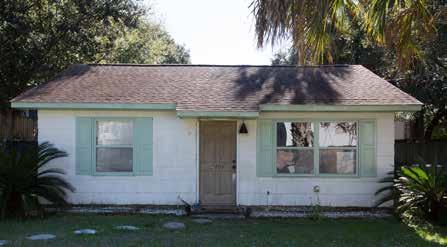
THE TWO-BEDROOM COTTAGE
One of the quintessential J.C. Long styles is a simple, two-bedroom, pitched-roof cottage with about 800-square-feet of living space on a concrete slab foundation. Some of the earliest from the 1940s came with a Jack-and-Jill bedroom and shared bath. Later versions, like this one built in 1962, might have a carport, or a small porch on the back or side. While they are scattered around the island, look for clusters of these homes along Hartnett Boulevard, where this cottage can be found.
One of the quintessential J.C. Long styles is a simple, two-bedroom, pitched-roof cottage with about 800-square-feet of living space on a concrete slab foundation. Some of the earliest from the 1940s came with a Jack-and-Jill bedroom and shared bath. Later versions, like this one built in 1962, might have a carport or a small porch on the back or side. While they are scattered around the island, look for clusters of these homes along Hartnett Boulevard, where this cottage can be found.
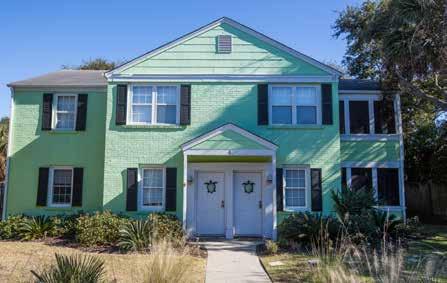
THE TWO-STORY DUPLEX
Isle of Palms duplexes often date back to the 1950s or earlier. There are several duplex styles, and some have been converted to single-family use, so they may not be as obvious. Look for two outside entrances, which might be side by side, at opposite ends or on separate floors with one reachable by outside stairs. Most duplexes were built within a block or two of the beach. You’ll find them running along and around Cameron Boulevard, starting at 22nd Avenue, and the island’s southern end has some left, too.
Isle of Palms duplexes often date back to the 1950s or earlier. There are several duplex styles, and some have been converted to single-family use, so they may not be as obvious. Look for two outside entrances, which might be side by side, at opposite ends or on separate floors with one reachable by outside stairs. Most duplexes were built within a block or two of the beach. You’ll find them running along and around Cameron Boulevard, starting at 22nd Avenue, and the island’s southern end has some left, too.
the flagship for the family’s many businesses and development properties.
for many homes. Names of streets planned by an earlier developer – Beach, Pine, Oak, Cedar, and Holly – became 21st, 22nd, 23rd, 24th, and 25th avenues, respectively, continuing the numbered system from the south. Long’s straightforwardness also showed in the no-frills houses that dominated most of his buildings and became his trademark; access to the Atlantic Ocean was always his biggest selling point.
“My father-in-law envisioned the Isle of Palms being for middle-class people,” Charles S. Way Jr., who married one of Long’s two daughters, says. “He never realized, never thought about it, where you have million-dollar houses. That was just never in his vision.” Way, 78, talks with me for more than an hour at the headquarters for The Beach Company, which moved to downtown Charleston from Isle of Palms long ago and became the flagship for the family’s many businesses and development properties.
Now chairman of the board, Way started working for his father-in-law in 1962, after law school graduation. By then Long had turned the Isle of Palms into a bustling beach suburb with more than 1,200 year-round residents, and he was plunging into an expansion program that would introduce a large number of brick ranch homes built by his LACO construction company. “If memory serves me correctly, you could buy a three-bedroom house with one bathroom for $11,750,” Way, who handled the flurry of real estate contracts, says. The mortgage payment would be a little more than $60 a month, he recalls, “that was the sweet spot.”
Front porches were often forsaken because of the added expense. An economy of space caused features like small closets that would frustrate later generations. “Why waste room on a closet when you can put it in the bedroom?” Way explains. Long also “loved” low-cost concrete, and borrowing an idea from his brother, who built extensively in Puerto Rico, Long mass-produced a flat-roof, allconcrete house on the island called the ALCON home. “At Last ... A Durable Beach Home Within The Reach of Everyone,” one advertisement proclaimed. Back then, an ALCON home would sell for around $5,000, Way estimates.
Now chairman of the board, Way started working for his father-in-law in 1962, after law school graduation. By then, Long had turned the Isle of Palms into a bustling beach suburb with more than 1,200 year-round residents, and he was plunging into an expansion program that would introduce a large number of brick ranch homes built by his LACO construction company. “If memory serves me correctly, you could buy a three-bedroom house with one bathroom for $11,750,” Way, who handled the flurry of real estate contracts, says. The mortgage payment would be a little more than $60 a month, he recalls: “That was the sweet spot.”
Through the 1960s, development focused on finishing 21st to 41st Avenue and the Forest Trail neighborhood. Long didn’t bother building homes directly by the ocean, and there wasn’t a demand to live that close to the water. Way remembers his father-in-law had been happy to sell beachfront lots off for $2,500 each during the early days of the island’s development.
While Long continued to market Isle of Palms as a vacation place, he took extra measures to support the year-round community, providing land for several churches and The Exchange Club in $1-dollar agreements, helping create an idyllic place for many families.
Front porches were often forsaken because of the added expense. An economy of space caused features like small closets that would frustrate later generations. “Why waste room on a closet when you can put it in the bedroom?” Way explains. Long also “loved” lowcost concrete, and borrowing an idea from his brother, who built extensively in Puerto Rico, Long mass-produced a flat-roof, all-concrete house on the island called the ALCON home. “At Last ... A Durable Beach Home Within The Reach of Everyone,” one advertisement proclaimed. Back then, an ALCON home would sell for around $5,000, Way estimates.
But not everyone was welcome. In keeping with turn-of-the-century Isle of Palms practice, Long apparently restricted property from being sold or rented to anyone “not of the white or Caucasian race,” as evidenced by a 1947 listing of real estate covenants from The Beach Company that one Hartnett Avenue homeowner shared with me before I met with Way.
Through the 1960s, development focused on finishing 21st to 41st Avenue and the Forest Trail neighborhood. Long didn’t bother building homes directly by the ocean, and there wasn’t a demand to live that close to the water. Way remembers his father-in-law had been happy to sell beachfront lots off for $2,500 each during the early days of the island’s development.
While Long continued to market Isle of
While black people could work on the island, they had to leave by 6 p.m., an expectation that continued at least into the 1960s, according to people who lived here during those days. Likewise, the beach was off limits to black people. The city archives contain a 1964 letter Long wrote to the mayor, asserting that the new Civil Rights Act did not apply to property The Beach Company owned between the ocean’s normal high water mark and the main roads. He requested that “any negro
When I ask Way about Isle of Palms beach segregation and the restrictive covenants, he responds, “All true.” But he says those were “different times” when much of everyday life in the Lowcountry was segregated. “Many, many subdivisions in Mount Pleasant, Charleston, West Ashley, North Charleston you would find that same covenant back then. But as I say, times have changed, a great deal.”
Palms as a vacation place, he took extra measures to support the year-round community, providing land for several churches and The Exchange Club in $1-dollar agreements, helping create an idyllic place for many families.
But not everyone was welcome. In keeping with turn-of-the-century Isle of Palms practice, Long apparently restricted property from being sold or rented to anyone “not of the white or Caucasian race,” as evidenced by a 1947 listing of real estate covenants from The Beach Company that one Hartnett Avenue homeowner shared with me before I met with Way.
From early on, many full-time Isle of Palms families had military ties. City Councilman and Realtor Jimmy Carroll came here around the age of 5 in 1959 when his dad, a gunner on a destroyer ship, was assigned to the Navy base in North Charleston. His parents had heard about Isle of Palms from friends at the Great Lakes naval station. “This is the only home I know, and I watched it being built,” says Carroll, who takes me on a history tour that includes 30th Avenue, where Long once kept a construction yard.
While Black people could work on the island, they had to leave by 6 p.m., an expectation that continued at least into the 1960s, according to people who lived here during those days. Likewise, the beach was off limits to Black people. The city archives contain a 1964 letter Long wrote to the mayor, asserting that the new Civil Rights Act did not apply to property The Beach Company owned between the ocean’s normal high water mark and the main roads. He requested that “any negro citizen found walking across or trespassing on the property” be arrested and prosecuted.
When I ask Way about Isle of Palms beach segregation and the restrictive covenants, he responds, “All true.” But he says those were “different times” when much of everyday life in the Lowcountry was segregated. “Many, many subdivisions in Mount Pleasant, Charleston, West Ashley, North Charleston –you would find that same covenant back then. But as I say, times have changed a great deal.”
Along the way, Carroll stops on 22nd Avenue to show me the duplex his parents first rented from The Worth Agency before moving to 37th Avenue. “What a cool spot to have grown up,” he says, remembering boyhood adventures, including a run-in with Long, who caught him climbing on construction equipment. “I got in so much trouble in this neighborhood, it’s unbelievable.” He stops and walks over to the white-sided home where he once lived. It was originally split into two apartments, but has been converted into a singlefamily residence. Soon Gary Nestler sees us and pops outside to talk. He and his wife live there with their middle school daughter and are responsible for overhauling the 1949 building. He explains how they dressed up the outside, gutted the inside and added onto the back. “It’s got good bones in it,” says Nestler, adding that it’s a work in progress. “I think we can do a lot with it.”
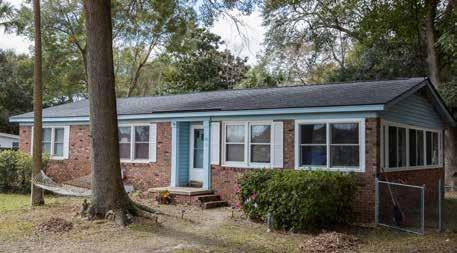
bedrooms, with one or one and a half bathrooms. You can still find a lot of LACO homes in the heart of the island, on the cross streets that run between Waterway and Palm boulevards, like this one on 27th Avenue, and along the older Forest Trail streets. Some aren’t as obvious because owners placed siding over the uninsulated exterior walls. Several were elevated post-Hurricane Hugo.
Long and builder Henry Cone formed the LACO construction company, which built most, but not all, of the island’s single-story, 1960s brick ranch homes. The flat, rectangular LACO ranch homes typically had three bedrooms, with one or one-and-a-half bathrooms. You can still find a lot of LACO homes in the heart of the island, on the cross streets that run between Waterway and Palm boulevards, like this one on 27th Avenue, and along the older Forest Trail streets. Some aren’t as obvious because owners placed siding over the uninsulated exterior walls. Several were elevated post-Hurricane Hugo.
Most homes built on the island’s interior streets from the mid 1940s to the early 1970s were J.C. Long homes of one kind or another, based on my interviews and past newspaper articles I came across. The block of 23rd Avenue where my husband and I currently live with our three children happens to be an exception, with older homes from other builders.
From early on, many full-time Isle of Palms families had military ties. City Councilman and Realtor Jimmy Carroll came here around the age of 5 in 1959 when his dad, a gunner on a destroyer ship, was assigned to the Navy base in North Charleston. His parents had heard about Isle of Palms from friends at the Great Lakes naval station. “This is the only home I know, and I watched it being built,” says Carroll, who takes me on a history tour that includes 30th Avenue, where Long once kept a construction yard.
Some homes from that era have been lost to Hurricane Hugo in 1989, and others have been torn down and replaced by much larger, upscale residences that tower over the original homes that are left. That trend will likely continue due to rising insurance premiums and restrictions on improvements to buildings with ground-floor living space. But the J.C. Long homes that remain keep island living in reach for many people.
Along the way, Carroll stops on 22nd Avenue to show me the duplex his parents first rented from The Worth Agency before moving to 37th Avenue. “What a cool spot to have grown up,” he says, remembering boyhood adventures, including a run-in with Long, who caught him climbing on construction equipment. “I got in so much trouble in this neighborhood, it’s unbelievable.” He stops and walks over to the white-sided home where
Our friend Janalyn Bowden, a real estate appraiser, briefly lived in a 3,500-square-foot home in West Ashley before downsizing with a
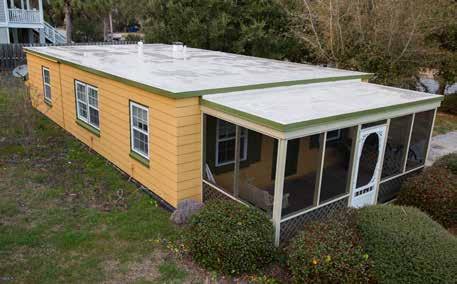
layers of concrete, which look like siding from a distance, and know that the tops of some flat-roof ALCON homes have been added onto. There are only a few easily identifiable ones left on Isle of Palms, mostly at the northern end of Cameron Boulevard, including this well-kept rental house. Others have not fared as well.
Long tested out these shoebox-style concrete structures after being inspired by his brother, L.D. Long, who used a similar approach to large housing developments in Puerto Rico. Don’t be fooled by the stacked layers of concrete, which look like siding from a distance, and know that the tops of some flat-roof ALCON homes have been added onto. There are only a few easily identifiable ones left on Isle of Palms, mostly at the northern end of Cameron Boulevard, including this well-kept rental house. Others have not fared as well.
SOURCES: POST & COURIER ARCHIVES, CHARLESTON COUNTY
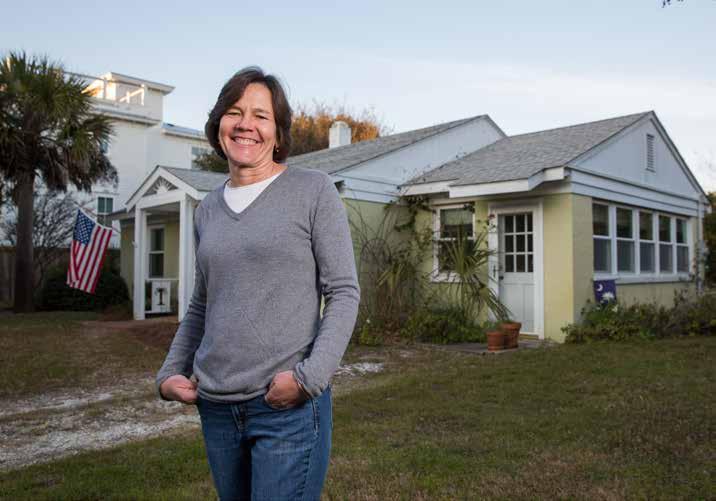
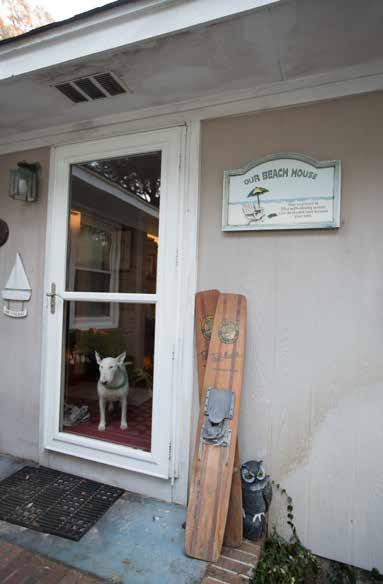

Most homes built on the island's interior streets from the mid 1940s to the early 1970s were J.C. Long homes of one kind or another based on interviews and past newspaper articles I came across.
Sarah Stewart’s home (top and bottom right) still has the kitchen countertops from the original J.C. Long construction. Bottom left: The Bowden family and their English bull terriers use every inch of their 1964 LACO brick ranch.

he once lived. It was originally split into two apartments but has been converted into a single-family residence. Soon, Gary Nestler sees us and pops outside to talk. He and his wife live there with their middle school daughter and are responsible for overhauling the 1949 building. He explains how they dressed up the outside, gutted the inside, and added onto the back. “It’s got good bones in it,” says Nestler, adding that it’s a work in progress. “I think we can do a lot with it.”
Most homes built on the island’s interior streets from the mid 1940s to the early 1970s were J.C. Long homes of one kind or another, based on my interviews and past newspaper articles I came across. The block of 23rd Avenue where my husband and I currently live with our three children happens to be an exception, with older homes from other builders.
Some homes from that era were lost to Hurricane Hugo in 1989, and others have been torn down and replaced by much larger, upscale residences that tower over the original homes that are left. That trend will likely continue due to rising insurance premiums and restrictions on improvements to buildings with ground-floor living space. But the J.C. Long homes that remain keep island living in reach for many people.
Our friend Janalyn Bowden, a real estate appraiser, briefly lived in a 3,500-square-foot home in West Ashley before downsizing with a move in the early 1990s to Isle of Palms, where she met her husband, Ray. “I wanted to be near the beach,” Bowden, who walks her two English bull terriers by the ocean most mornings, says. “It’s a different lifestyle than even Mount Pleasant.” She initially rented and considered some foreclosed homes outside the gates of Wild Dunes Resort before she and Ray decided on a 1964 LACO brick ranch on 24th Avenue because they liked the neighborhood feel.
Ray Bowden grew up four blocks away in a similar brick ranch on Waterway Boulevard during the 1970s, never wanted to leave the island, and wound up working at Wild Dunes,
where he’s now an engineering supervisor. Their son finished Sullivan’s Island Elementary School two years ago and played sports at the Isle of Palms rec center, just like his dad. They drive their golf cart to the Marina to see friends at the end of the workday and keep their boat in front of the house ready for the weekends.
Previous owners expanded their house on the front and to the side. The Bowdens wound up doing more updates and renovations, including an addition with an extra bathroom in the back. They use “every inch” of the home’s 1,853 square feet, Janalyn says. She has appraised several other LACO brick ranches through her work, and the original floor plans are almost identical. “But then people take them and do different things with them.”
With property values on the island escalating once again, it might be tempting to sell out. But homeowners like Sarah Stewart, who lives less than a block from the ocean in a two-bedroom, one-bath cottage on 32nd Avenue, won’t consider it, despite the offers she receives. “I get letters,” she tells me with a smile as she looks out her window. “And here I sit.” Her father and an uncle bought the 1948 cottage together in the late 1960s and decided to share it for family vacations. Stewart recalls arriving home from school on Fridays in Winnsboro to learn they were headed to the beach for the weekend. “It’s still one of the best memories of growing up.” Her nursing career brought her to the Charleston area after she graduated from Clemson University in 1986, and she has lived in the house full-time ever since, frequently sharing it with visitors. “Even though it’s my house, it’s still the family beach house, and that’s the way it needs to be.” She had to repair a collapsed roof post Hugo but has never expanded, and, while she would like to add an extra bathroom or even a washer and dryer, she manages with the space she has. Like many of the people we know here, she’s willing to make sacrifices to live on Isle of Palms. “This is home,” she says. “It just is.” SiP SiP












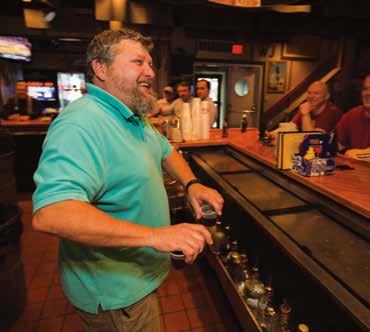








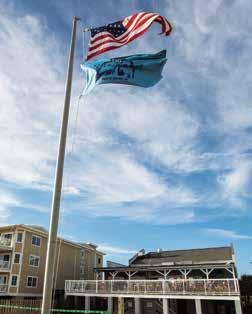













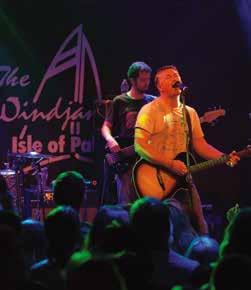












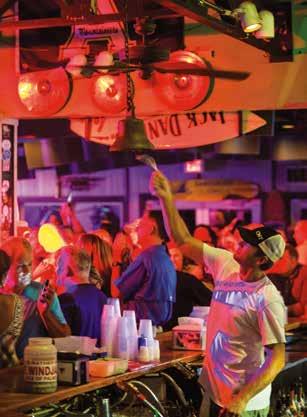



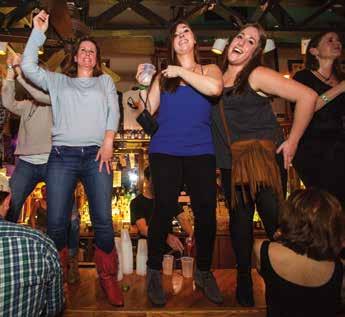





By










Why Darius Rucker and other favorite musicians come back to The Windjammer.



It was one of those Windjammer memories no one will forget, including the man at center stage.
Darius Rucker took the microphone at twilight with a backdrop of the Atlantic Ocean and a watercolor August sky. He launched into the lyrics for This, his 2010 hit about destiny, and looked out onto The Windjammer’s volleyball court, which had been turned into his backyard beach for the night. While he played here countless times as a young man, he had never done an outside show here, and, in fact, few ever have. Looking out, he says, he recognized many of the smiling faces and knew that his wife and their two kids were watching as well. Smartphones tried to capture the magic, while the high-dollar TV film crew ensured the performance would be shared with fans across the country.
He extended a hand to the audience, his Carolina Gamecocks ball cap tipped upward “... Thank God for all I missed,” the 49-year-old sang. “Cause it led me here to This.”
Editor’s note: This article was first published in SiP magazine in 2016.
Rucker’s native love for the Lowcountry guaranteed the 2015 CMT Instant Jam concert would be homegrown, not only showcasing the crossover star’s country and rock hits and a tribute for Charleston’s Emanuel AME Church but also the spirit of the legendary Isle of Palms bar where Rucker cut his teeth in the 1990s with Hootie & the Blowfish, before the band soared to international fame.
While many connect Hootie’s early days with the University of South Carolina in Columbia, The Windjammer played an instrumental role in giving the band’s members a stage to test themselves and expand their reach, just as it has done for decades of other emerging musicians.
The concept of CMT Instant Jam is for a country music megastar like Rucker, who can pack a show with many thousands, to treat several hundred to a surprise pop-up concert in a more intimate setting, as CMT documents both the buildup and the event itself. Rucker wouldn’t give the performance anywhere else, he told the CMT cameras and also shared personally with close friend Bobby Ross, the man behind the music at The Windjammer since the early ‘80s.
By the time the band cranked up Hootie favorite Only Wanna be With You , the sun had set and the sky glimmered in orange, purple and pink. “C’mon, Windjammer!” Rucker called to the crowd as they answered him in song. No question, the Isle of Palms and The Windjammer glowed in his sentimental spotlight.
accident on his way to work. The personal loss hit The Windjammer hard, and Ross had to rally the staff and ask them to try to set their grief aside until they could close the bar that following Sunday for a memorial service.
Meanwhile, bands posted condolences on the The Windjammer’s Facebook page for Porter, who had worked there for eight years, because they were feeling his loss as well. A New York musician wrote about when he first met Porter: Always smiling, he had a contagious zest for life that you couldn't help but love. That night, he insisted on buying my band's CD, even though I tried just giving him a copy many times. (I actually think I won that battle, but he ended up winning the war by slipping a $10 dollar bill paperclipped to a note in my guitar case saying “Told ya, I'm buying it!”)
“To be honest with you, a lot of people give me a lot of credit. But look what I had to work with,” he says, looking out to the ocean, maintaining that it would have taken a complete idiot to screw the place up.
“It’s exactly what I envisioned and imagined it would be. It was awesome,” Rucker tells SiP magazine, looking back. “That is what music is supposed to be about.”
“The day worked out perfect,” recalls Ross. While he would typically run a big production at The Windjammer, he handed over control to the CMT crews as arranged ahead of time, allowing him an unusual opportunity to take in the show uninterrupted. “I went over and sat behind the soundboard where nobody could get to me and just watched it,” he says, trying not to get emotional.
Back in the mid 1990s, Ross and Hootie’s lead guitarist Mark Bryan had a moment together outside the bar when they teared up at the realization that the band had outgrown the The Windjammer. Ross didn’t know then that the members would come back anyway, together and as solo acts, just as other successful musicians continue to return, sometimes in creative ways. Rucker’s CMT splash was especially meaningful to Ross because of the friendship and shared memories.
“It’s just a bond that we have from a long, long time ago,” he explains.
Life surprises us with highs and lows, sometimes simultaneously. Three days before the Wednesday pop-up concert, bartender Rex Porter was killed at age 30 in an afternoon
The Windjammer’s generous spirit starts with Malcolm Burgis, who opened it in 1972 with his brother James at what was previously the Sea Side and before that, the site of the original SurfDeck, a teenage hangout dating back to 1946.
The brothers came from a large Isle of Palms family that operated The Palms restaurant for years. James traded his share of The Windjammer a couple of years later to Bill Kulseth for a motorcycle. Malcolm, meanwhile, continued to be a guiding force and now shares ownership with Ross as well as Jack Alspaugh, a longtime employee more recently brought into the fold. All three live on Isle of Palms – a golf cart ride away from work.
“It would not be The Windjammer without Malcolm,” says Ross, who describes Burgis as the “rock of the place” and credits him for putting money back into the business through the years, even as he lent a hand to many employees and others in the community.
Ross, however, is indisputably responsible for putting The Windjammer on the map for live music.
He first visited the original cinder block building as a customer in 1974, and distinctly remembers being carded. He had just moved to Isle of Palms from Savannah at age 18, the legal drinking age at the time, and he continued as a customer until 1980, when he started working as a bartender to pay off his tab. Two years later, he became a manager, and before long, he started to bring in bands.
“There really wasn’t a place to put them,” he admits. He recalls building a makeshift stage that could be taken in and out, and squeezing it in by the shuffleboard table, which would hold the drum stool. “It was an experiment. I didn’t know if it was going to work or not.”
Ross didn’t sing or play an instrument, but he loved music. He subscribed to Atlanta’s Creative Loafing entertainment listing and started to pull in touring bands that were stopping through there and Athens, Georgia. Most played inside,





were stopping through there and Athens, Georgia. Most played inside, though e Windjammer held a few daytime shows with bands playing to a beach audience from atop the at building, shielded from sun by an old military parachute.
though The Windjammer held a few daytime shows with bands playing to a beach audience from atop the flat building, shielded from sun by an old military parachute.
Back then, the Isle of Palms was more remote and people were more likely to visit through the day and stay into the night. Volleyball and half-rubber games helped pass the time— e Windjammer hosted many professional beach volleyball tournaments back in the day—but it was bands like Spidermonkey that consistently pulled people to Front Beach. “ at’s when I got turned on to live music,” Alspaugh, who moved to the Lowcountry in the mid-1980s and joined the sta in the 1990s, says.
Back then, the Isle of Palms was more remote and people were more likely to visit through the day and stay into the night. Volleyball and half-rubber games helped pass the time – The Windjammer hosted many professional beach volleyball tournaments back in the day – but it was bands like Spidermonkey that consistently pulled people to Front Beach. “That’s when I got turned on to live music,” says Alspaugh, who moved to the Lowcountry in the mid 1980s and joined the Jammer staff in the 1990s.
Over time, e Windjammer developed positive relationships with musicians no matter where they were in their careers. “Bobby has always had a good rapport with all the bands that came through. He took care of them, fed them, set them up,” Alspaugh says.
Over time, The Windjammer developed positive relationships with musicians no matter where they were in their careers. “Bobby has always had a good rapport with all the bands that came through. He took care of them, fed them, set them up,” Alspaugh says.


Ross explains it this way: “If a band comes in here, it’s like they are coming into your living room. It’s like a guest coming into your house. You take care of them. You treat them well.”



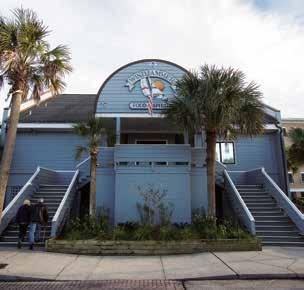


Hurricane Hugo washed the old place away in the summer of 1989. e Windjammer re-opened nine months later in a new raised building that could t standing-room-only shows of 500, and the music returned with a surge of talent that included relative unknowns from the Carolinas.
Greenville’s Edwin McCain lived in Charleston at the time and recalls pestering Ross until he let McCain play an acoustic set one Saturday at noon. “I either worked for tips, or he gave me like 50 bucks, but I was just so excited to play at e Windjammer. I would do anything to get in there,” McCain, who went on to hit the national charts with “Solitude,” “I’ll Be” and “I Could Not Ask for More,” says.
Hurricane Hugo washed the old place away in the summer of 1989. The Windjammer re-opened nine months later in a new raised building that could fit standing-room-only shows of 500, and the music returned with a surge of talent that included relative unknowns from the Carolinas.
Greenville’s Edwin McCain lived in Charleston at the time and recalls pestering Ross until he let McCain play an acoustic set one Saturday at noon. “I either worked for tips, or he gave me like 50 bucks, but I was just so excited to play at The Windjammer. I would do anything to get in there,” says McCain, who went on to hit the national charts with Solitude, I’ll Be and I Could Not Ask for More as the decade played out.
e Windjammer partnered with Charleston’s trendsetting 96 Wave radio station, producing Monday Night Jams so successful they started to cut into Ross’s weekend business.
McCain describes it as a fantastic learning experience, whether he was playing with his band, or watching others like Uncle Mingo or Hootie work the room. Ross would have made a great record label president, McCain says. “He always had a knack for guring out who was going to do it, and who was in it for the long haul, and putting those people on stage.”
The Windjammer partnered with Charleston’s trendsetting 96 Wave radio station, which was uniquely connected to the Lowcountry through the 1990s. Their Monday Night Jams were so successful that Ross says they started to cut into his weekend business.
Musicians would o en crash at Ross’ house when he was still single. “Staying at Bobby’s was the deal,” McCain, who felt like he was admitted to “the inner circle” when he was invited, says. “You were trying to get to that.”
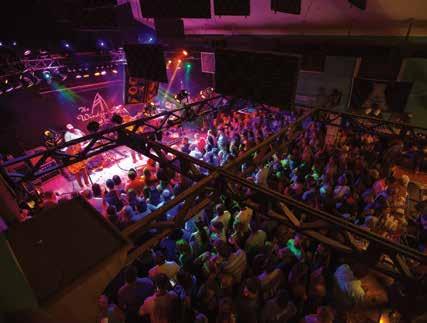
McCain describes it as a fantastic learning experience, whether he was playing with his band or watching others like Uncle Mingo or Hootie work the room. Ross would have made a great record label president, McCain says. “He always had a knack for figuring out who was going to do it, and who was in it for the long haul and putting those people on stage.”
Even a er Ross married his wife, Shirley, they would have bands over for cookouts and other get-togethers. She loves the music as much if not more than her husband and helps make the musicians feel at home. “She’s got to smooth out Bobby’s rough edges,” laughs Sister Hazel lead singer Ken Block. He proudly recalls how Ross told him that he called Shirley three songs into the band’s rst Windjammer performance and told her to come to come down to see the rest.
Musicians would often crash at Ross’ house when he was still single. “Staying at Bobby’s was the deal,” says McCain, who felt like he was admitted to “the inner circle” when he was invited. “You were trying to get to that.”
Even after Ross married his wife, Shirley, they would have bands over for cookouts and other get-togethers. She loves the music as much if not more than her husband and helps make the musicians feel at home. “She’s got to smooth out Bobby’s rough edges,” laughs Sister Hazel lead singer Ken Block. He proudly recalls how Ross told him that he called Shirley three songs into the band’s first Windjammer performance and told her to come to come down to see the rest.
Everyone has “Bobby Ross stories,” says Rucker, who rst got on e Windjammer stage with Hootie & the Blow sh in spring of 1991, when they played for $500. “Bobby was always the rst guy to help you out. He’s one of my best friends in the world.” Rucker would also stay with Ross in the early days, and he had help from Shirley and Bobby in setting up a home when he returned to the Lowcountry during the hectic days of Hootie’s new celebrity. “ ey took care of everything.”
Everyone has “Bobby Ross stories,” says Rucker, who first got on The Windjammer stage with Hootie & the Blowfish in spring of 1991, when they played for $500. “Bobby was always the first guy to help you out. He’s one of my best friends in the world.” Rucker would also stay with Ross in the early days, and he had help from Shirley and Bobby in setting up a home when he returned to the Lowcountry during the hectic days of Hootie’s new celebrity. “They took care of everything.”
e New Orleans-based touring band Cowboy Mouth dished up its hard-driving “rock-n-roll gumbo” at e Windjammer for nearly a decade before Hurricane Katrina’s devastation le them stranded on the road in 2005. Ross immediately reached out to the band members and arranged for them to do a series of fundraising concerts on Isle of Palms with openers like Hootie, McCain and local favorite Blue Dogs. “It’s that type of community—that community spirit that Bobby and
The New Orleans-based touring band Cowboy Mouth dished up its hard-driving “rock-n-roll gumbo” at The Windjammer for nearly a decade before Hurricane Katrina’s devastation left them stranded on the road in 2005. Ross immediately reached out to the band members and arranged for them to do a series of fundraising concerts on Isle of Palms with openers like Hootie, McCain and local favorite The Blue Dogs.
“It’s that type of community – that community spirit that Bobby and Malcolm have always fostered – that makes it just a wonderful place to go to,” says Cowboy Mouth drummer and frontman Fred LeBlanc.
The band still returns twice a year and always packs the house. LeBlanc wants a Cowboy Mouth show to be “an almost communal rock ‘n' roll church kind of thing, without the religion,” and The Windjammer’s rectangular room demands audience interaction. “It’s different than any other place that we play.”
Sister Hazel turns their annual Windjammer visit into a three-day event that draws their devoted fans – HazelNuts –to Isle of Palms from across the Southeast and beyond. The HazelNut Hang includes daytime and nighttime sets as well as VIP activities like cookouts, volleyball and even Mad-Lib karaoke. (The 11th Hang is set for this year from June 10-12.)
“You don’t even have to put your shoes on all weekend,” says Block. “It’s a great way to connect with our fans in a place where it all started.”
The Florida band quickly built a base in the Carolinas in the mid ‘90s thanks to the locals, visiting college kids and other tourists who saw their Windjammer shows, he says. Even after Sister Hazel’s quick national success with the jangly tune, “All for You,” took them to larger venues, they always looked forward to playing the Isle of Palms, knowing they would be greeted with high fives and hugs.
The Windjammer still makes room for newcomers, and Ross, who recently turned 60, says he is turning over his responsibilities for booking bands to someone else. “I just feel like a younger person needs to come and take it over.” However, with the success of Rucker’s CMT Instant Jam he may do more outdoor shows as special events, for example, with a guaranteed draw like McCain.
McCain typically plays once a year at summer’s end, and by coincidence was scheduled to play two days after CMT came to town in August. Now in his mid-40s with a similarly-aged core audience, he started his sold-out show at 9 p.m. that Friday without an opening band, joked that it was “15 minutes past his bedtime” when he took the stage and teased a 20-something fan that he didn’t know how to use a selfie stick.
But he proved he could still climb on top of the bar as he sang Love T.K.O. by Teddy Pendergrass, and, after delivering signature songs like I’ll Be, McCain enthusiastically kept pace with requests. Just before midnight, he remained on stage with his guitar, deep into a cover of Peter Gabriel’s Your Eyes, savoring the last minutes of the three-hour show. Shirley Ross soaked it in with friends, standing close to the stage, not surprised at how long he played. “He loves it here,” she said with a broad smile. After all, he was at The Windjammer. SiP SiP
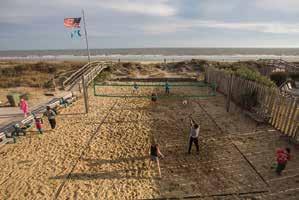
The Windjammer was opened by brothers Malcolm and James Burgis in 1972 at the site of the establishment originally known as the Surf Deck, which dated back to the 1940s. The original Windjammer was a ground-level, sand-filled bar with some pinball machines, pool tables, and a view of the ocean.
“The original Windjammer is actually a lot like The Dinghy is today,” points out co-owner Bobby Ross. The Dinghy bar shares ownership with The Windjammer and is located across the street. IOP entrepreneurship was already a Burgis family affair. In 1962, their parents, Wallace and Elizabeth Burgis, opened one of the Charleston area’s only beachfront restaurants. The Palms, located just a few doors down from the present-day Windjammer, grew to be able to accommodate 250 people before Hugo destroyed it. Up until 1982, there were only two establishments offering live music on IOP, and the Windjammer was not one of them.
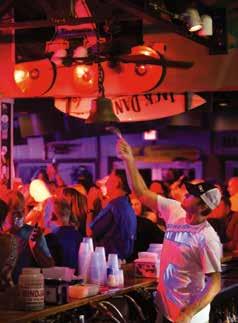
Visit this untamed Island, a true jewel of the Lowcountry.
By Stratton Lawrence.
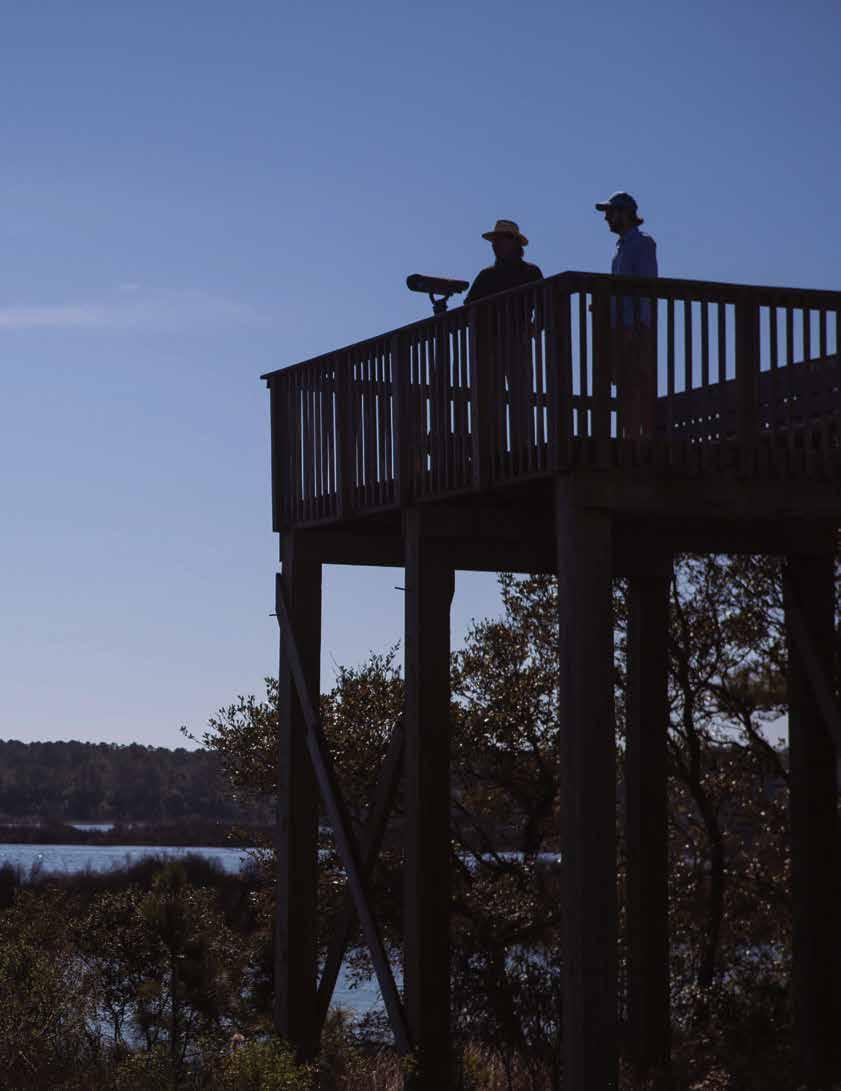
From the beach at the north end of Bulls Island, Wild Dunes Resort is a speck on the horizon, 8 miles south.
But where Isle of Palms attracts visitors to its condos, swimming pools, and paved bike trails, its neighbor to the north beckons thousands of avian travelers to its freshwater impoundments, undisturbed shoreline, and intact maritime forest. “This is a story of visitation,” says Captain Chris Crolley, my guide on this unseasonably warm February day. “We are visitors coming to see the visitors.”
Bulls Island is part of the Cape Romain National Wildlife Refuge. At 66,287 acres, it’s the longest stretch of protected wilderness on the East Coast of the U.S., and Bulls is its beating heart. The island is managed for animals, not for humans. The surrounding marsh and neighboring islands’ classification as a Class 1 wilderness indicates the area’s pristine air and water, putting it in a category only shared on the East Coast by Wolf Island in Georgia and parts of Acadia National Park in Maine. Its isolation and preserved state make Bulls Island a critical stopover and nesting ground for numerous species of birds. Visit in the early winter, and you’ll share the island’s interior ponds with thousands of ducks. When they head south, neotropical songbirds fill the forest before shorebirds descend on the beaches for the summer. Throughout the year, 293 different species of birds can be spotted on the island.
What keeps a place pristine is that it’s hard to get there. What keeps it even more pristine is if it’s hard to be there.
CHRIS CROLLEY
That’s all in addition to the loggerhead turtles that rely on Bulls Island’s 7 miles of beachfront to lay their eggs (nearly a quarter of the entire Northern subspecies of loggerheads nest in the Cape Romain refuge), and the hundreds of alligators, deer, bobcats, and non-migratory birds that occupy the island year-round.
Crolley has been exploring Bulls Island for over 20 years, and his company, Coastal Expeditions, offers eco-tours and a public ferry to the island. Even after all that time, his visceral excitement for the place is still evident when he speaks. When we emerge from the woods onto a pond just as a peregrine falcon dives from a tree onto a flock of ducks, he’s in visible awe. “This is my Mavericks,” exclaims Crolley, comparing the island to the once-well-hidden surf break in California. “Now I’m excited to be sharing it with you.”
A trip to Bulls Island begins at Garris Landing in Awendaw, where the last few miles of rural road help prepare the mind to leave the traffic and concrete of the city behind. Once on the water, we follow a literal maze of tidal creeks across a wide expanse of salt marsh. Groups of American Oystercatchers — the endangered bird species that serves as an unofficial mascot for Cape Romain — wander the oyster beds exposed at low tide, waiting for their prey to open its shell so they can snatch out a salty, fleshy meal. “The oystercatcher is a bioindicator,” Crolley explains. “You have to have healthy water to have plentiful oysters. Around Cape Romain, we see more oystercatchers than anywhere else in the world.”
The landscape as we cross Sewee Bay looks much as it did in March 1670, when Charleston’s first settlers, aboard the frigate Carolina, made landfall on Bulls Island after crossing the Atlantic Ocean. Natives welcomed them to the island (then called Oneiscau) with their customary greeting of vigorously stroking their shoulders. The island was soon renamed by the English for Stephen Bull, an early settler and colonel of the provincial militia.
Even as Charleston grew into the metropolis it is today, 4,900-acre Bulls Island was mostly left to wilderness, likely due to its distance from the mainland. “What keeps a place pristine is that it’s hard to get there,” says Crolley. “What keeps it even more pristine is if it’s hard to be there.”
During the warmer months of the year, when mosquitoes hatch in prolific numbers from the freshwater ponds on the island, that’s certainly
Coastal Expeditions runs a Bulls Island ferry twice daily between March and November and on Saturdays during winter. Round trip passage per adult is $55. In addition, there are eight two-night trips on offer annually, including meals and lodging at the Domenick House.
Private tours are also available, and private boats are allowed to access the island via the public dock.
Camping, dogs, and fires are never allowed. See bullislandferry.com for ferry times and further details.
Hiking shoes There are 16 miles of trails and 7 miles of beach, so come prepared to walk. Plenty of drinking water.
Sunscreen and bug spray “You’re more likely to be sunburned, dehydrated or to step into a fire ant bed then you are to be bitten by an alligator or shark,” warns Coastal Expeditions owner and guide Chris Crolley.
A bicycle If you’re an experienced rider, a stubbywheeled mountain bike opens up more of Bulls Island to day trippers, but be aware that its perilous riding on sandy roads. Bring an extra tube and a pump, lest a cactus or sandspur leaves you stranded. “Bulls Island is not recommended for novice bikers,” says Crolley.
Lunch A long day in the wilderness will work up an appetite.
Help Preserve Cape Romain National Wildlife Refuge
The most rewarding way to visit Cape Romain is to volunteer to help preserve it. The U.S. Fish and Wildlife Service is seeking volunteers to help with the maintenance of facilities and grounds, assist with construction projects, relocate sea turtle nests, and teach interpretive programs. Work opportunities are available on Bulls Island, at the Sewee Center, at Garris Landing, and at the refuge’s other islands. To learn more about how you can get involved, call 843.928.3264 or email patricia_midgett@fws.gov.
the case. Yet bugs didn’t stop New York banker Gayer Domenick from purchasing the island in 1925 and establishing it as a prime duck hunting retreat. He built the only house that stands today on the island, where a lucky handful of birders, photographers, and nature enthusiasts get to stay on Coastal Expeditions’ weekend overnight trips to the island.
Only a decade into Domenick’s ownership, the Great Depression helped prompt the island’s sale to the federal government, which recognized that a haven for migratory waterfowl, if maintained properly, would support those species’ populations up and down the coast.
The ecosystem at Bulls Island extends into the sky and far below the surface of the creeks and ocean that surround it. Just before arriving at the island’s sole dock, our boat passes over a rare 70-foot-deep hole in a creek, evidenced by the hundreds of cormorants diving down to fish in the area. “When you get thermal layers of water stacked up like this, it’s like a singles bar and a buffet wrapped into one,” says Crolley, highlighting the biodiversity evident in a single area of salt water.
The eclectic ecology continues on land. Once docked, we walk a trail that straddles the line between forest and marsh. To our right, plants like the wax myrtle and sable palmetto trees thrive next to juncus grass and sea oxeye daisy flowers in the marsh’s transitional hyper-salient zone. On our left is a young upland forest of loblolly pines and live oaks, still slowly recovering from the devastating effects of 1989’s Hurricane Hugo. “These are two completely different ecosystems, operating side by side,” says Crolley. “Look out one way, and you see wading birds like herons and egrets. Turn around, and there are warblers singing in the trees.”
We meander down a grassy trail heavily adorned with the state flower, yellow jessamine, before eventually emerging on a beach naturally littered with decomposing pine, cedar, and oak trees. Had people never built homes on Isle of Palms and Sullivan’s Island, those islands’ northern ends would likely resemble this boneyard beach, where the ocean slowly reclaims the forest, eroding its sand and soil and re-depositing it further south.
“If you look at the size, shape, and geographical orientation of Bulls Island and Isle of Palms, they are really sister islands,” says Crolley, pointing out that the awe-inducing boneyard beach we’re walking through is really no different geologically than the ever-eroding 18th green at Wild Dunes’ oceanfront golf course. After two decades of visits, however, Crolley claims he’s seen a noticeable increase in the rate of erosion in recent years. What was “two steps forward, three steps back” in the 1990s is now just steps back, with the rate of accretion falling far behind the rate of erosion. “I can come out here now after a week and not recognize the beach,” says Crolley. “A high tide with waves and a northeast wind is all it takes to change the landscape overnight.”
The encroaching ocean is also visible at the 600-acre Jacks Creek Pond on the island’s north tip, where a small embankment is only a year or two away from breaking and infiltrating the pond with salt water. A new causeway is almost complete across the middle of the pond, designed to sacrifice half of it to the sea and preserve the rest as a freshwater haven for birds, fish, and animals.
In the island’s interior, life is more stable. A grass causeway dubbed “Alligator Alley” lives up to its name, with over a dozen toothy reptiles sunning themselves as they have on this island for millennia. Coots, rails, and morehens swim among stands of cattail, underscoring this rare abundance of freshwater on a barrier island. “This is the real undiscovered Charleston,” Crolley exudes. “People think of carriage tours and fine dining when they visit here, but let’s get out of the bars and restaurants for a day, get up early, and really do something. That’s my dharma — to facilitate a high-integrity, safe experience with nature.”
The Isle of Palms and Sullivan’s Island are already surrounded by the natural world; one only needs to walk onto the beach or gaze across the marsh to experience the spectacle of nature. But a visit to Bulls Island takes our appreciation of the place we live to another level, serving as a reminder of how each of our barrier islands — including those that humans inhabit — would look and feel if we had never developed them. That’s an awe and an awareness we can bring back to the islands where we live, and a worthwhile reason to visit Bulls Island.
Had people never built homes on Isle of Palms and Sullivan’s Island, those islands’ northern ends would likely resemble this boneyard beach, where the ocean slowly reclaims the forest, eroding its sand and soil and re-depositing it further south.
For best-selling novelist Dorothea Benton Frank, Sullivan’s Island isn’t just a setting — it’s the place she finally found her way back to. She invited SiP into her lovingly restored beach home.
By Jennifer Tuohy
Editor’s note: This article was first published in SiP magazine in 2017.
passed away in September, 2019 after a short illness.

It’s a simple word but a powerful one. For Dorothea Benton Frank, the pull toward home was so strong she became a New York Times bestselling author just so she could return to hers. The need to go back, to return to a time or a place — often the Lowcountry — is a dominant theme in Frank’s novels. From her first, Sullivan’s Island , to her latest, All Summer Long and Same Beach, Next Year, her protagonists grapple with returning, be it to a shambles of a beach house, a long-lost first love, or the place of their birth.
But don’t let this theme fool you into thinking you’ll get a selfindulgent sob story when you pick up a Dottie Frank novel. It’s just the opposite. Frank’s writing is like the woman herself: vivacious, intelligent, and, above all, side-splittingly funny. Her wit is worthy of a stand-up comedy routine — but, in its home on the pages of her novels, her humor is free to run rampant, losing only her gorgeous Southern drawl in translation. Frank follows in the trope of all good Southern writers, ruthlessly mining her own experiences for her stories, and, like many of her characters, Frank didn’t see that home was where her heart needed to be until it was almost too late.
Her story started the moment she left Sullivan’s Island in 1969. Desperate to get away from what she saw as a suffocating place, she pursued a highly successful career in fashion retail — first in Atlanta, then San Francisco, and finally New York. But when her mother, Dorothea Blanchard, passed away in 1992, her despair and the impending sale of the family home at 2424 Middle St. drove her to a new career, one she hoped would provide her with the funds to buy that home.
As is often the case for the protagonists within her pages, something rather important stood in her way — her husband. She had met investment banker Peter Richard Frank in New York, married him, and settled down in Montclair, New Jersey., where she had two lovely children. “He told me if you want your mother’s house, you need to go get off your fanny and buy it yourself,” she says. “‘Because I’m not going to spend my money to sit down there and listen to your crazy family tell the same stories over and over again.’” Her solution, like any good Southern-bred girl, was to do exactly as she was told. Her first novel, Sullivan’s Island , sold over a million copies and landed at number nine on The New York Times bestseller list. While she was too late to buy her mother’s house, she was able to buy herself a beach house, then upgrade that one, and today she is settling into perhaps one of the most spectacular homes on the island. “It’s a shame it’s sinking into the ocean,” she says. “Nothing wrong with it that eight billion dollars won’t fix.” But to her, it’s perfect. “I leave this big mess of civilization in New Jersey and trickle down until I finally get here to the tip of the island.”
Built in 1850, Frank’s beach house is one of the oldest on the island. “It was used as a Civil War barracks, so they say it has ‘historic significance,’” Frank says with a deep sigh. That historical significance has thrown some roadblocks in her quest to remodel the house. “It wasn’t built as a barracks, and I don’t know who slept here; it certainly wasn’t George Washington. Honestly, I think it’s been taken apart and added on to so many times that all the historic significance is gone. It’s a wooden house by the sea, and it’s falling apart. It’s very sad, really.”
She channeled her frustrations with the house, and with her husband’s refusal to move from New Jersey to Sullivan’s, into All
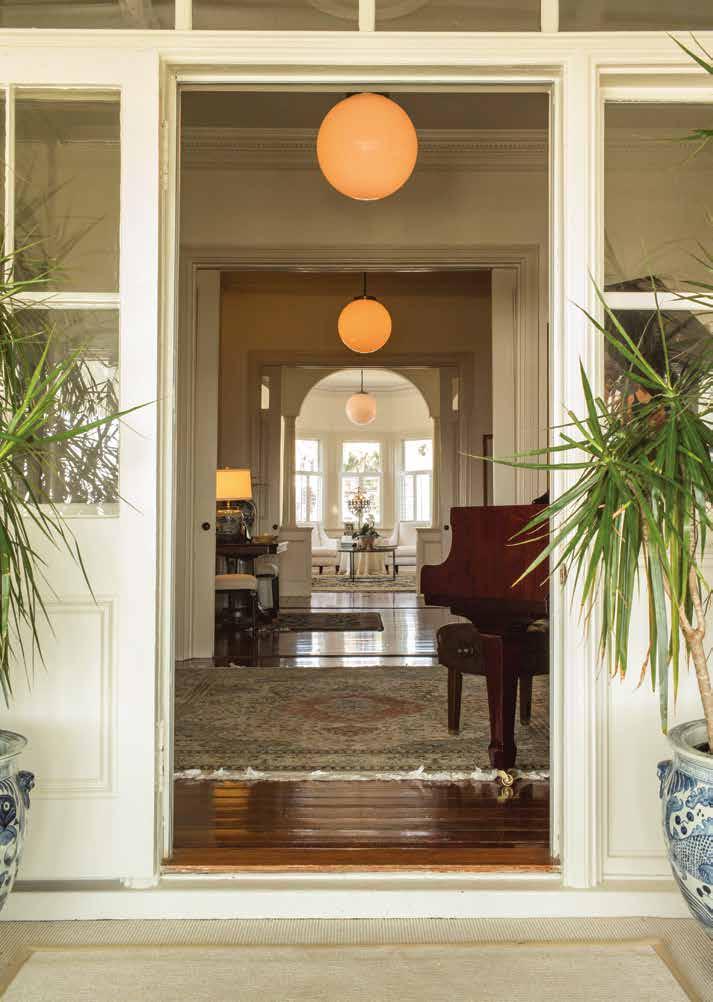
“When I come across that causeway, somehow I’m a girl again. When I’m here, I sleep better — simple things become extraordinarily exquisite.”
— Dorothea Benton Frank
her steel magnolias. Her female characters are strong and by the end of the book fully in control of their destinies. “I’ve come to the conclusion that my characters, particularly the protagonists, are really my bathroom mirror personality — it’s what you would say if you were not going to be penalized for it. Those crushing punishments of dismissal that you get in the South.”
“This society is still very much a patriarchy,” she says. “I like to think of myself as looking at the world today a little bit like Jane Austen did three hundred years ago. It was always tongue-in-cheek. In one way we we sort of blew it with feminism; we set ourselves up for something that’s almost impossible. How can you be a CEO, have five children, have a perfect home, a perfect second home, a husband who adores you, and have great sex three nights a week? It ain’t happening, honey.”
Summer Long , published in paperback in May 2017. Her heroine is a New York businesswoman, and the husband is a dreamy academic who grew up on Sullivan’s Island. They made a deal that when he retired, they would move to Sullivan’s, renovate a beach house, and settle into life on the sleepy island. The parallels to Frank and her husband are not accidental. “I want to come back,” Frank says with passion. “But my husband’s got his fingernails in the asphalt at Newark airport. He continues to work, and looks like he’s never going to stop. I’ve told him 5,000 times I do not want to be buried in New Jersey. I do not want my obituary to read ‘of Montclair, New Jersey.’ I want it to say ‘of Sullivan’s Island.’ I tell him, ‘I didn’t marry you to live in New Jersey for the rest of my life, so you’ve got to get me out of here.’”
She’s certainly created the most idyllic escape to lure him with, in the big white house at the tip of the island, where the container ships battle with the yachts for dominance, passing so close you feel like you could reach out and pluck them off the water. “The tour boat to Fort Sumter comes by every day on the hour and turns around at our house,” she says. “It’s so close I can hear the guide on the loudspeaker. One time, he said ‘That’s where all the rich people live.’ I shouted back, ‘Honey, we ain’t rich anymore. We sunk all our money into this hellhole of a house!’”
Despite her claims that the remodel is just “lipstick on a pig,” the home is spectacular, and the view isn’t too shabby either. “We will never get tired of this place,” she says seriously. “And we will certainly never get tired of this view.” She has saltwater in her veins and sand stuck between her toes, and Sullivan’s Island always will be a part of her.
“When I come across that causeway, somehow I’m a girl again. When I’m here, I sleep better — simple things become extraordinarily exquisite,” she says. “Woody Wood (who also grew up on Sullivan’s) asked me if he’d missed anything by staying here on this island all his life. And my answer was no. He had not missed anything of real consequence. Everything you really value in this life is right here on this little sandbar.”
Returning to something once lost may be the recurring theme of Frank’s work, but exploring a truth that needs to be told is the purpose behind her writing. Speaking a truth about her own life to her readers is one of the reasons Frank’s novels are so successful. She doesn’t sugarcoat life’s challenges; she tells it like it is, in all its gory, technicolor glory. Frank chews up and spits out tired stereotypes and reimagines that literary vision of the Southern woman as a downtrodden creature with a beautiful face but who’s a mess inside. She brings us the new Southern woman and puts the steel firmly into
Honesty is tangible in the words on her pages, and that truth to be told, more often than not hits home hard. In her newest novel, Same Beach, Next Year, that truth is the danger of assumptions: How easy it is to make them, but how likely you are to be wrong. It also explores heritage — one character returns to her mother’s homeland of Greece, a place she had pushed away from since her mother’s death, and rediscovers the importance of family, understanding where you are from, and how that shapes who you are. “The first half of the book is about thinking one thing. The second half is thinking the other,” Frank says. “Things are not always what they seem.”
Same Beach, Next Year is inspired by Crossing to Safety by Wallace Stegner, which follows the friendship of two couples. “I wanted to look at long-term friendships and how you save each other. If you’ve got a great friend who can help you solve a big problem, that’s something to hang on to,” she says. Frank’s two couples meet each year at Wild Dunes on Isle of Palms. The story follows their intertwined relationships, including how the secret that two of them were once lovers finds its way out. “I first read Stegner 25 years ago, and the story always stayed with me,” Frank says. “At this point in my life, I’m looking back at what has mattered to me. That’s a legitimate message to other people: ‘Maybe you’d better pay attention to how you’re spending the rest of your time.’”
Heritage features strongly in Same Beach, Next Year, and delving into Frank’s is worthwhile. “Some woman has done my genealogy — I couldn’t care less,” Frank says. “Lots of people around here glide on their ancestors’ laurels — I’m not in that camp.” The research revealed that Frank’s family has been in Charleston for over 300 years. “Going back, back, back, there’s somebody who was in the original colony from The Mayflower,” she says.
Her father, William Oliver Benton Jr., was born in Savannah, but his family settled in the Walterboro area in the 1700s, sometime before the American Revolution. Her mother, Dorothea, was part of the Blanchard clan, and her grandmother a McInerny – two prominent Catholic families on the island. (“The Blanchards and McInernys have just been getting married too much, to each other!” she says.)
Frank was born downtown and grew up on the island, “Like a little Geechee brat running round the island barefoot picking blackberries and wild palms and sliding down the hill fort on cardboard.” With such deep roots on the island, it is perhaps surprising that Frank has written 18 books but no memoir. “Never,” she says without hesitation. “Because if I start naming names, there’ll be a lot of suicides in town.”
Frank plans to be back home for good within the year, and the addition of the first grandchild, due this summer to her daughter and son-in-law, who live on Johns Island, will certainly hasten her return. It’s a return every islander who knows and loves “Dottie” will look forward to (after all, about half of them are related to her). She brings a wonderful sensibility to life here, along with a healthy dose of self-deprecating humor. “When I move back, I’m going to lead a movement for Sullivan’s Island to secede from the United States,” she says with a twinkle in her bright blue eyes. “There’ll be no dog rules, no guns allowed, and we’ll open the drawbridge once a week to go out for supplies. Other than that, we’re all going to live here in peace and quiet. A big love-in right here on Sullivan’s Island.” SiP
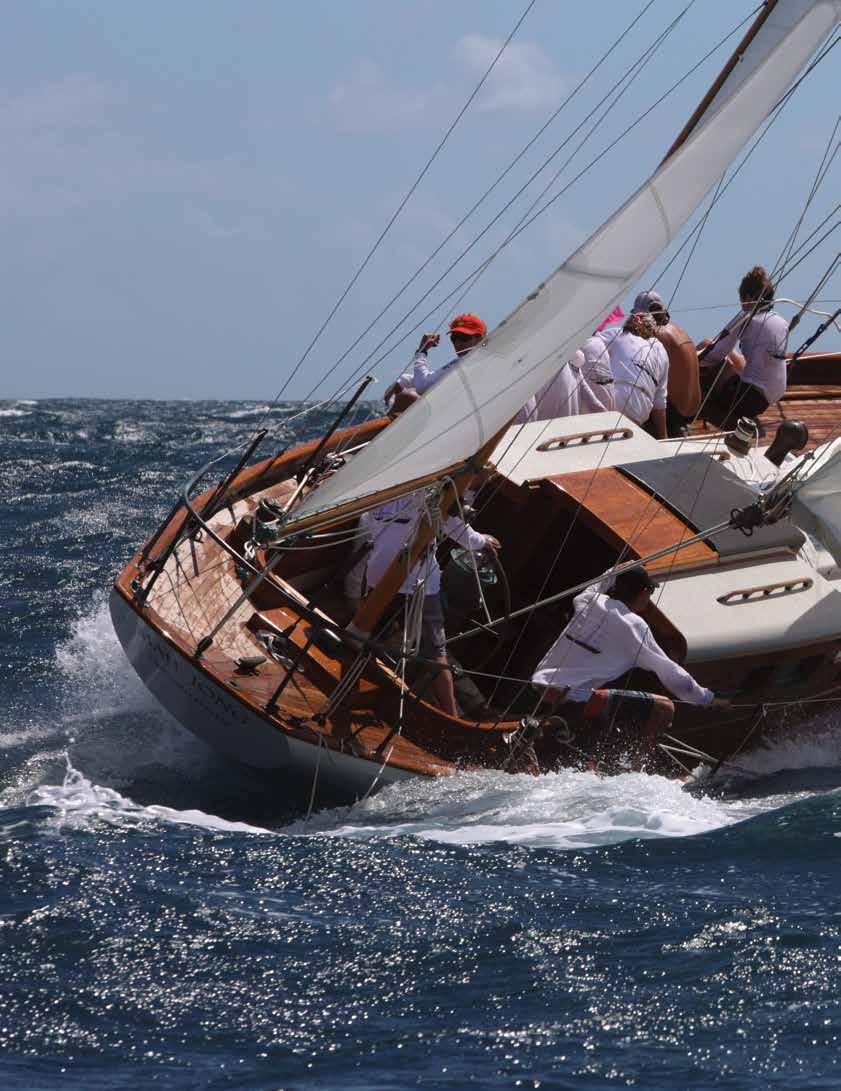
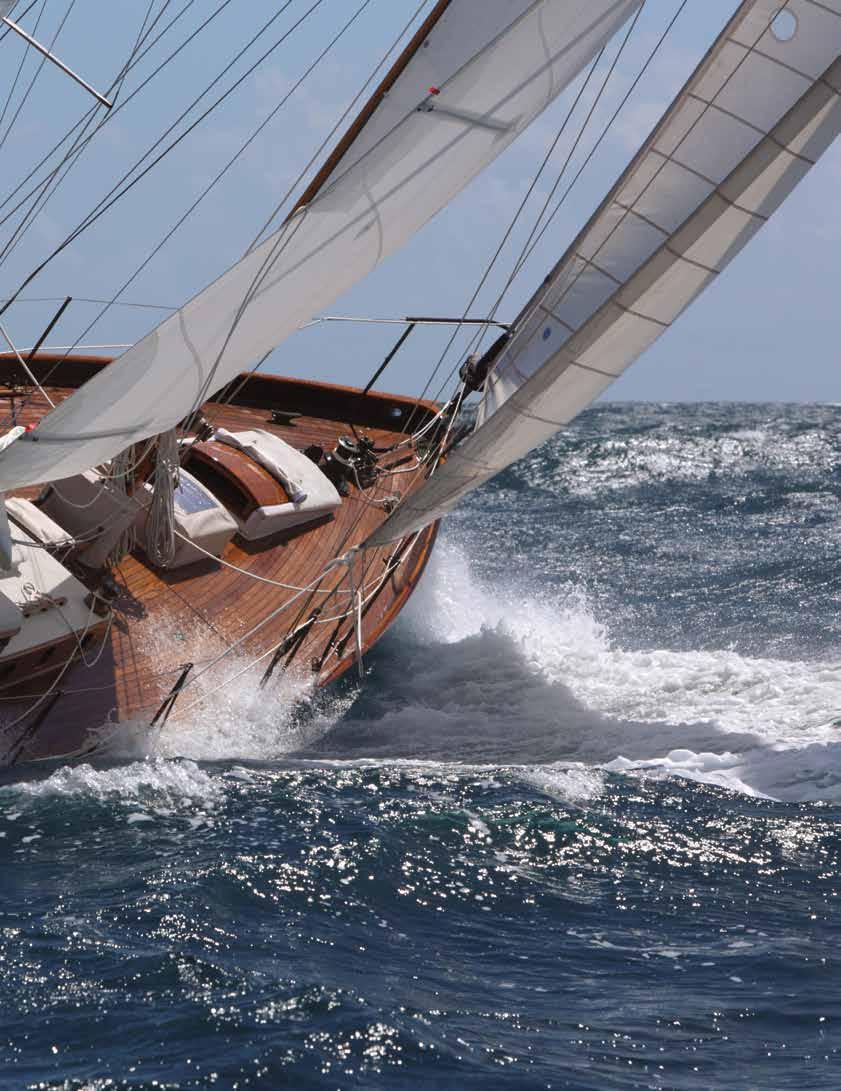
Sullivan’s Island resident Pat Ilderton’s historic yawl turns heads around the world. By Stratton Lawrence.
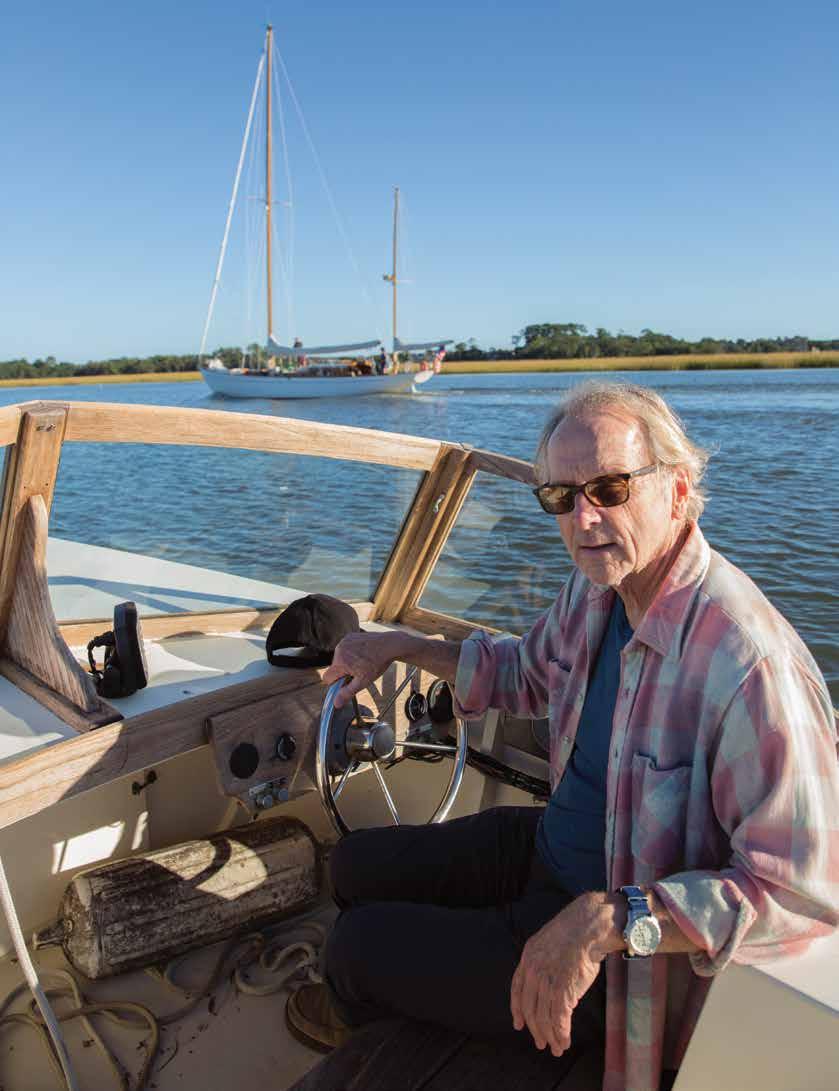
PAT ILDERTON DIDN'T SET OUT TO OWN A PIECE OF HISTORY — HE JUST WANTED A RELIABLE BOAT TO CRUISE THE INTRACOASTAL WATERWAY OR ISLAND HOP IN THE CARIBBEAN.
Something much grander was in the cards, or rather, in the mah jong tiles, for Ilderton — a longtime resident of Sullivan’s Island. After a three-year renovation on Martha’s Vineyard, his 52-foot yawl has returned to sea. Designed by Newport, Rhode Island’s famous Sparkman & Stephens and built in Hong Kong in 1957, Mah Jong takes its name from the Cantonese tile game of chance. Fortunately, those willing to gamble on Mah Jong have reaped abundant rewards.
In 1958, Mah Jong’s maiden voyage from Asia to New England included a cruise through the Greek Isles, chronicled in a lengthy feature in the December 1958 issue of National Geographic. Ilderton didn’t know that when he flew to Tortola to see the boat in 2013. He’d already decided to pass on a boat he’d gone to England to buy, but over beers after that difficult decision, his contact intrigued him with his enthusiasm about this halfcentury-old Bermudan yawl.
On his initial test sail of Mah Jong, the experienced crew broke the taffrail and ran the boat into a dock. “I was thinking to myself, ‘I’m just glad these guys are screwing up so I don’t have to make an excuse not to buy this boat,’” Ilderton recalls. Despite the mishaps, Mah Jong “felt so right and so strong.” The friends he’d brought along dismissed the idea. “They thought I was crazy. The boat looked pretty rough.”
But Mah Jong wouldn’t go away, and once Ilderton connected with Vineyard Haven’s Gannon & Benjamin boatyard and heard their excitement, he decided to go all in, shipping the boat to New England.
Ilderton’s casual, satisfied air as we board the boat just off Wadmalaw Island on a warm late October evening belies the effort and expense he’s put into the project, but that’s his natural demeanor. Where one man sees an overwhelming task full of costly pitfalls, Ilderton sees opportunity and beauty.
Although he grew up in High Point, North Carolina, Ilderton’s parents and extended family hail from Charleston, and he spent summers here as a child. After a brief stateside stint in the Air Force during the Vietnam era, he landed on the Eastern Shore, working construction and crabbing in the Chesapeake Bay. He didn’t consider himself a hippie, but he related to that mindset more than, say, selling insurance or joining his father in the car dealership business.
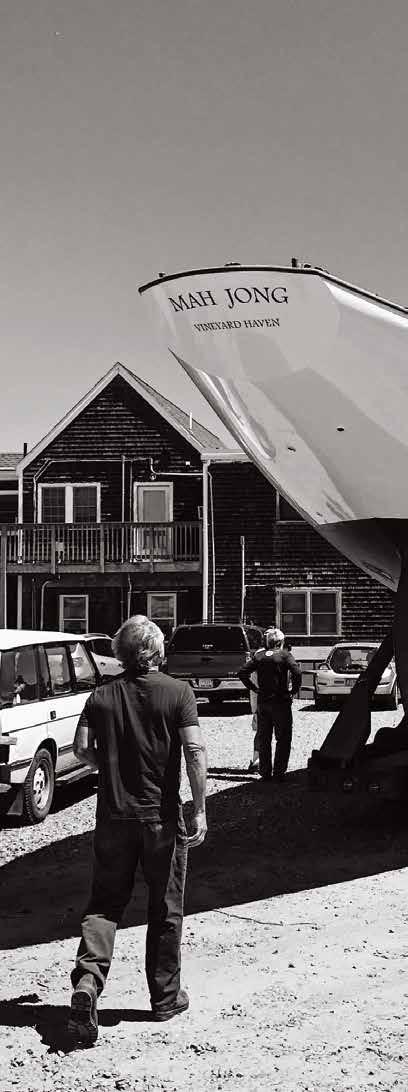
by

Ilderton moved to Sullivan’s Island with little more than his tools, picking up carpentry work for $2 an hour. After a year, he made a down payment on a house on the island, purchased for $32,000. “My wife Cheryl, taught school, so we had enough to make the payments. My dad thought we were crazy for paying that much, but I felt right about it,” recalls Ilderton.
His first employee, Neil Sawyer, was into wooden boats, and Ilderton started sailing in his free time. He bought a Sunfish, then upgraded to a Hobie Cat.
Meanwhile, his reputation for quality craftsmanship quickly grew his home-building business. He purchased a lot on Middle Street and built a workshop and an office, with plenty of room to build cabinets and cut trim. That building is now Mex 1 Coastal Cantina. Ilderton continued buying adjacent property, ultimately building everything between Mex 1 and Dunleavy’s except for the Bert’s Bar building (now Home Team BBQ). “I tried to hold the vernacular of Sullivan’s Island in those buildings,” says Ilderton, whose approach to building has always been to follow his own tastes and not let preconceptions dictate the style.
Despite being the boss at his job sites, he was able to hand off the boat’s restoration to Gannon & Benjamin without hesitation. Likewise, onboard, he heeds full-time Captain Alex Goldhill, who grew up in Carriacou (in the Grenadines) before sailing his boat solo from the lower Caribbean to Vineyard Haven to apprentice with Gannon & Benjamin. He’s worked on Mah Jong since it first entered the shipyard in 2014.
Goldhill explains the plank-on-frame method, with seams caulked with cotton, used to restore the boat. Mah Jong was torn apart and put back together. “Once we took the deck off, it exposed more structural problems,” says Ilderton.
The original designers, Sparkman & Stephens, are sometimes called the Frank Lloyd Wright of wooden boat building, necessitating a strict — and costly — adherence to traditional methods during the rebuild. Olin Stephens is regarded as the father of fast boats, and his signature design is the Mah Jong’s two-mast yawl rig, featuring a “tiny little handkerchief of a sail” behind the rudder post that balances the boat and provides a secret weapon — the ability to fly a big downwind sail across the boat. That functionality is punctuated by beauty — teak decks, original spruce booms and masts, original bronze winches, and decorative bronze inlays throughout the cabin.
Goldhill worked at the boatyard for four years. Near the end, Ilderton joined him and four others for a boat delivery from Martha’s Vineyard to Bermuda. “It was December and cold and rainy and howling,” Goldhill recalls. “Nobody would admit it at the time, but it was stupid to go out in that weather.”
Ilderton, new to ocean sailing, assumed the experience was normal. “I figured we were supposed to be cold and miserable, and this is what I signed up for.” While half the crew became sick and confined to their bunks, Ilderton and Goldhill pulled extra shifts together. When Mah Jong was completed, Ilderton offered him a job on board that would soon take him around the world.
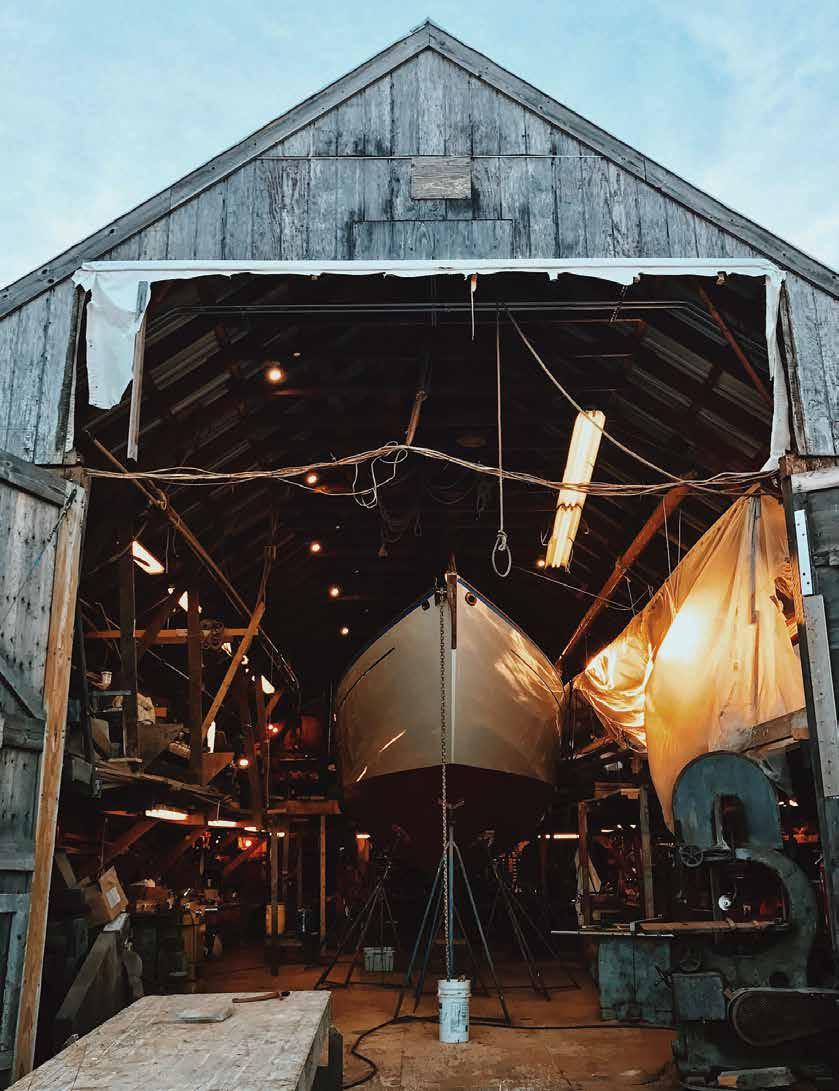
by
In its first year back at sea, Mah Jong toured Maine and the Caribbean, including a visit to the Antigua Classic Yacht Regatta, where the boat enjoyed celebrity status. It’s been featured on the cover of Classic Boat magazine, billed as “the magazine for the world’s most beautiful boats.”
It’s not an exaggeration to put Mah Jong in the upper echelon of that category. “Every time I take the dinghy out, or I’m standing ashore looking out at the harbor, it’s an unmistakable shake, you know?” Goldhill describes. “This boat has character. When people go by, they have to stop and take a look. So many people around the world have a personal relationship with this boat.”
Goldhill says this moments before leaving Ilderton’s dock on Wadmalaw Island for a transit to Bermuda. Ilderton accompanies Mah Jong to Bohicket Creek to fuel up before the crew departs. On the way back to his dock in his motorboat (wooden, built by Charleston boatwright Mark Bain), a neighbor hails him to comment on Mah Jong. “That is the most beautiful sailboat I have ever seen!” she hollers across the water. It’s a “damn goodlooking boat,” says Ilderton. Fortunately, he doesn’t mind having this conversation again and again. Mah Jong is a magnet, he says. “It’s a good star that guided this boat’s rebirth.”
After another season around the Caribbean and New England, Ilderton hopes to sail it to Europe for four years, exploring the British Isles, Scandinavia, and the Mediterranean. Ilderton’s family will join him for segments, but he admits the self-interest in his motivations. “It was definitely ego-driven — a vision or a path I wanted to walk,” he explains, citing his college experience at Belmont Abbey. “English majors are always trying to figure something out — looking for an answer in things.”
In addition to helping Ilderton explore, Mah Jong is also available for charters. He donated three days on the boat at the 2018 Center for Birds of Prey fundraising gala, and launched sailmahjong.com to allow guests to charter day sails or join as crew in classic wooden boat races.
Mah Jong’s story has stretched from Hong Kong to Sullivan’s Island, and its second chapter is finally under sail. It’s a boat that elicits emotion, passion, and stories. To see it is to want to sail it. The ocean’s horizon is beautiful from any boat — Mah Jong simply adds to the grandeur. SiP

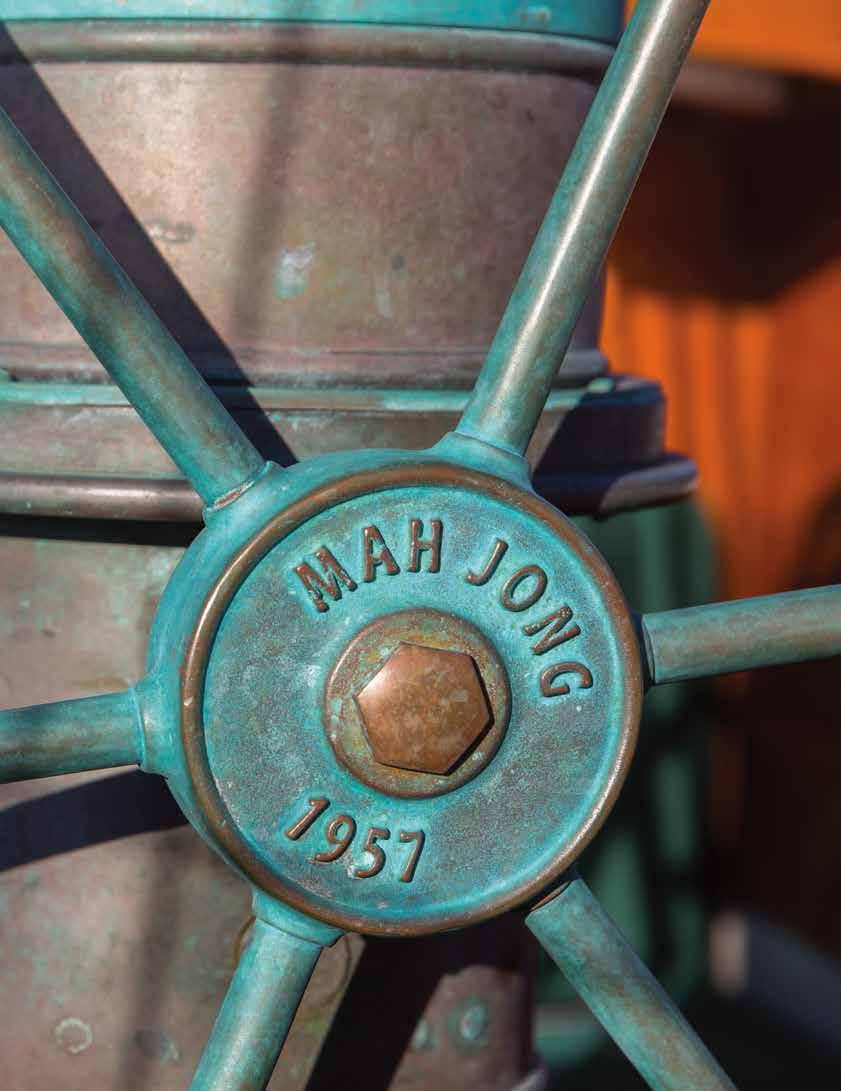
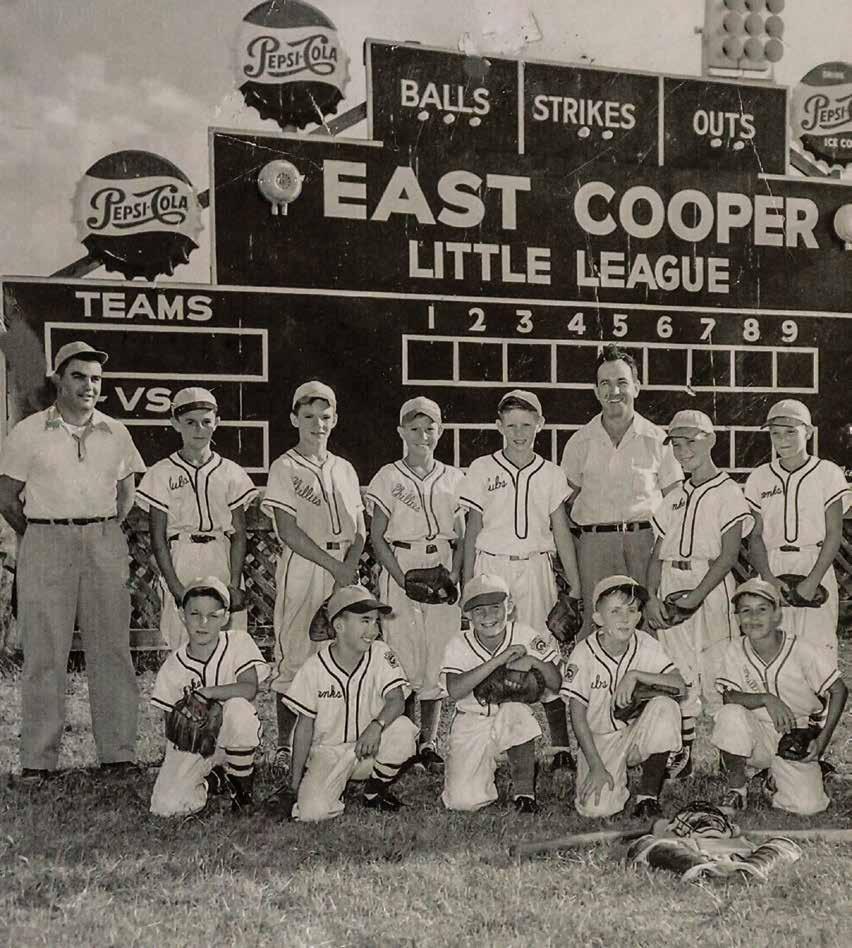
with representatives from the
The East Cooper Little League All Star Team 1954/55 with representatives from the Cubs, Yankees, Phillies and Giants. The league played on a baseball field built on the old Fort parade ground. Back row: Mr. Johnny Moore, Mike Williams, Duncan Padgett, Carl Weeks, Roy Kimbrell, Mr. Johnnie Dodd, Haywood Davis, Don Easterlin, Ronnie Nettles, Tommy Price, Mr. Muller. Front row: George Jackson, LeGrand Norell, Archie Morris, Len Williams, Jackie Wear, Jimmy Cleary,
Duncan
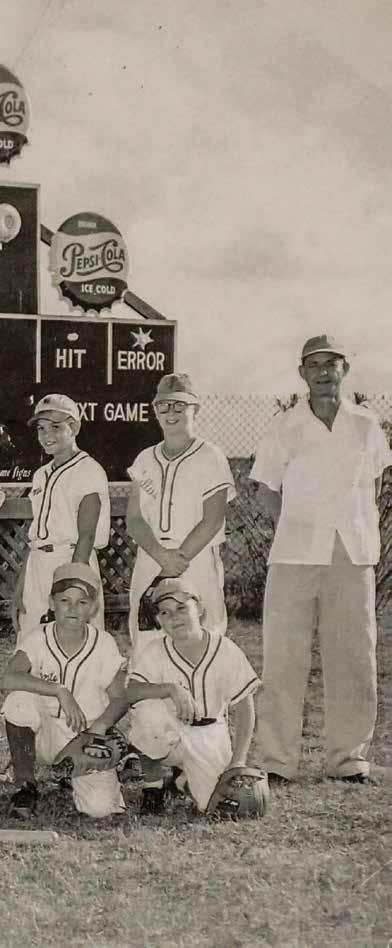
Editor’s note: This article was first published in SiP magazine in 2017. Jackie Wear and Emory Brown passed away in 2020.
From military base to summer resort, from rural village to residential suburb, the evolution of Sullivan’s Island creates lifelong memories for those lucky enough to grow up here.
By Delores Schweitzer
Photos by Steve Rosamilia
From military base to summer resort, from rural village to residential suburb, the evolution of Sullivan's Island created lifelong memories for those lucky enough to grow up here.
CBy Delores Schweitzer. Photos by Steve Rosamilia.
linking of knives and forks, verbally sparring over stolen sausages, and lots of laughing punctuate the conversation at a table near the back of Southerly Restaurant in Mount Pleasant on a chilly morning in February. The Thursday regulars of the Southerly Breakfast Club gather every week at 8 a.m., keeping to their working schedules, even though many are retired. Here, they intermingle their present lives in the wide world with memories of a childhood, happily contained in a mere 2.4 square miles—Sullivan’s Island of the 1950s.
One this day, the group consists of Emory Brown, William “Pug” Dudley, Richard Ouzts, Jackie Wear and Mike Williams, but other friends drop in as their schedules allow. While they kept in touch over the years, it wasn’t until about two years ago that Mike and Jackie got the idea of a regular meeting time and place.
Most of them met at the Sullivan’s Island Graded School, although Wear and Dudley, through one of those quirks of family, are actually nephew and uncle. Located at 2302 Middle Street (now Blockaway), the school housed seven grades, with one teacher per grade and 15 to 20 children per class. One teacher also served double-duty as principal, with support staff consisting of a janitor, a cafeteria manager and two cafeteria helpers.
The school provided a solid foundation for these future professionals. Brown became a pharmacist, Dudley was in real estate, Wear retired from Cummings Diesel, Williams was a dentist, and Ouzts is currently the owner of Atlantic Screen Company. Jackie Wear recalls some of the motivational tactics of the teachers, “Miss Kingman said all of us were going to end up criminals and be on a chain gang. Mrs. Truesdale ran the lunchroom, and if you helped, you got extra food, like delicious cinnamon buns and peanut butter and honey sandwiches. And Miss Wise would pick one student each day to run down to the store and buy her a Coke.” And then, there was the motto every child knew: “If at once a task begun, never leave it ‘til it’s done.”
Clinking of knives and forks, verbally sparring over stolen sausages, and lots of laughing punctuate the conversation at a table near the back of Southerly Restaurant in Mount Pleasant on a chilly morning in February. The Thursday regulars of the Southerly Breakfast Club gather every week at 8 a.m., keeping to their working schedules, even though many are retired. Here, they intermingle their present lives in the wide world with memories of a childhood, happily contained in a mere 2.4 square miles – Sullivan’s Island of the 1950s.
Parents pushed their children to work hard, be industrious, respect their elders, and appreciate the different communities that settled here. It was always a place of transition and diversity. Fort Moultrie ensured a mix of religious and socio-economic backgrounds. Many soldiers met their spouses or brought war brides here to settle when the Fort was decommissioned in 1947, and the town began to sell fee-simple lots for the first time. “Back then, lots cost between $400 and $500,” Williams says. “No one had much money, and it was very economical to live there because taxes were low.”
Of course, not everyone could afford to buy immediately. Many families
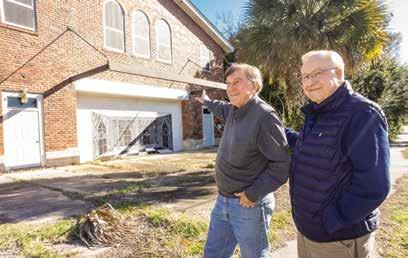
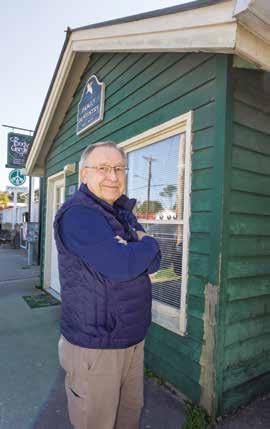
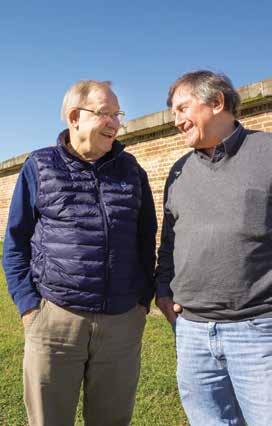
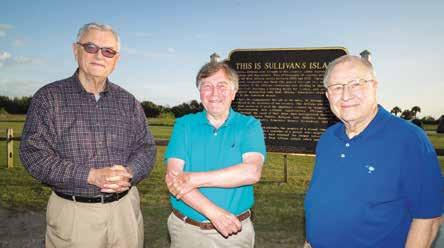

said all of us were going to
and be on a chain gang. —Jackie Wear
One this day, the group consists of Emory Brown, William “Pug” Dudley, Richard Ouzts, Jackie Wear and Mike Williams, but other friends drop in as their schedules allow. While they kept in touch over the years, it wasn’t until about two years ago that Mike and Jackie got the idea of a regular meeting time and place.
Most of them met at the Sullivan’s Island Graded School, although Wear and Dudley, through one of those quirks of family, are actually nephew and uncle. Located at 2302 Middle St. (now Blockaway), the school housed seven grades, with one teacher per grade and 15 to 20 children per class. One teacher also served double duty as principal, with support staff consisting of a janitor, a cafeteria manager and two cafeteria helpers.
The school provided a solid foundation for these future professionals. Brown became a pharmacist, Dudley was in real estate, Wear retired from Cummings Diesel, Williams was a dentist, and Ouzts is currently the owner of Atlantic Screen Company. Wear recalls some of the motivational tactics of the teachers, “Miss Kingman said all of us were going to end up criminals and be on a chain gang. Mrs. Truesdale ran the lunchroom, and, if you helped, you got extra food, like delicious cinnamon buns and peanut butter and honey sandwiches. And Miss Wise would pick one student each day to run down to the store and buy her a Coke.” And then, there was the motto every child knew: “If at once a task begun, never leave it ‘til it’s done.”
Parents pushed their children to work hard, be industrious, respect their elders, and appreciate the different communities that settled here. It was always a place of transition and diversity. Fort Moultrie ensured a mix of religious and socio-economic backgrounds. There, Many soldiers met their spouses or brought war brides to settle here when the Fort was decommissioned in 1947, and the town began to sell fee-sim-
Opposite page: The “Boys” tour their old stomping grounds at the Fort Theater, Hines Barber Shop (now Family Restorative Dental), Fort Moultrie and Sullivan's Island Graded School (now Blockaway). Bottom right: Breakfast at Southerly with Emory Brown, William "Pug" Dudley, Richard Ouzts, Jackie Wear and Mike Williams.
ple lots for the first time. “Back then, lots cost between $400 and $500,” Williams says. “No one had much money, and it was very economical to live there because taxes were low.”
Of course, not everyone could afford to buy immediately. Many families bounced around rental cottages on month-to-month leases. They weren't elaborate, says Wear, just normal for the time. Like the accessory dwellings in Mount Pleasant today, a property owner might build a small second home on their land for extended family or to rent for additional income. Many of these homes and cottages were lost to Hurricane Hugo or pulled down to make room for larger homes. They certainly were not up to modern day construction codes and expectations.
Nor were the existing homes of the time. Brown remembers their place at Station 9, which had been the Charleston Orphanage summer home before his parents purchased it. “It was a big, rambling house with 12-foot ceilings, and in the summer time that breeze would blow right through that house, and it was very comfortable. And in the winter time? That breeze would blow right through that house, too.” The guys laugh, remembering the lack of insulation, sleeping in full clothes and piling up comforters to stay warm.
If the winters were harsh for the 200 or so year-round residents, the summers were a wonderland of new friends, exciting opportunities and occasional mischief. The Catholic, Presbyterian and Baptist church communities thrived on the island, while Episcopalian families like Brown’s went to Mount Pleasant when Holy Cross closed for a time. There was also a small A.M.E. church and a number of Jewish families who spent summers on Sullivan’s. A microcosm of the nearby Holy City, children of the island learned to coexist with many faiths.
Wear recalls the fascinating inhabitants of Loretto Cottage. “There used to be a lot of
nuns on the island because they had a summer house. They were dressed in black year-round, and we were little and didn’t know. So we’d see them on the beach and say, ‘The witches are coming!’ But our mothers found out and told us they were nice ladies and to leave them alone.” Other groups, like the STAR Gospel Mission, welcomed kids, and there were always fun events and festivals sponsored by churches and civic groups.
The island children rarely went to Charleston except to visit family, watch the Azalea Parade, or shop for clothes once a year. They might go off island to Mount Pleasant once a week to get major provisions, but if something didn’t make the list, it had to wait. Families were lucky to have one car, and so for the boys, visiting or working meant walking or bicycling.
The crew at Southerly is quick to recount their early friendships, sealed through play, physical sparring, brushes with authority and innocent pastimes. Williams remembers, “Jackie and Pug came up to me – I must have been about six – and they acted like they were my friends before they gave me the old left-right. That’s how I learned to run.” Wear retorts quickly, “Yeah, but you got us back in the dentist’s chair!”
The abandoned Fort Moultrie buildings were the perfect playground. “Mr. Brockington was the town’s only police officer,” Brown says. “His mission in life was to run us out of the forts. And our mission was to hide from him.” Ouzts remembers crawling down the vents to get into Moultrie and building a camp inside. And both Wear and Ouzts laugh when looking at the field between Battery Jasper and the beach. Tinker McInerny was their only friend with a car, and for fun, they would hide in the tall grass, and he would drive through, flushing them out and chasing them.
A little further up Middle Street, in the small brick building next to the Fort’s movie theater, the Sullivan’s Island Township Commission sold lots, managed town growth, and even arranged for state troopers to conduct driving tests once a month. The Fort Theater showed films and, across the street, in the current location of the Island Club and Fish Fry Shack, the Community Hall had a playground, a skating rink with two sizes of skates – small and large – basketball courts and a space for special events.
Further east, on the old Fort parade ground between Middle, Poe, stations 16 1/2 and 17, was a young boy’s paradise. “A group of guys worked at the Navy Yard – Jim McClary, Jimmy Gladden, Ark Chiola, Red Wood, Larry Dodds and Mr. Padgett,” Brown says. “They decided there ought to be some kind of recreation for the kids. They made a beautiful baseball field – the finest in Charleston. They got us uniforms. We were the Phillies, Yankees, Giants and Cubs. Those guys donated their time, money and effort. It was spectacular and a big deal.” A News and Courier article from April 17, 1955, testified to the appeal of the East Cooper Little League, when 150 players and 500 fans packed the Sullivan’s Island field for Opening Day, complete with speeches from local dignitaries, a band, the award of
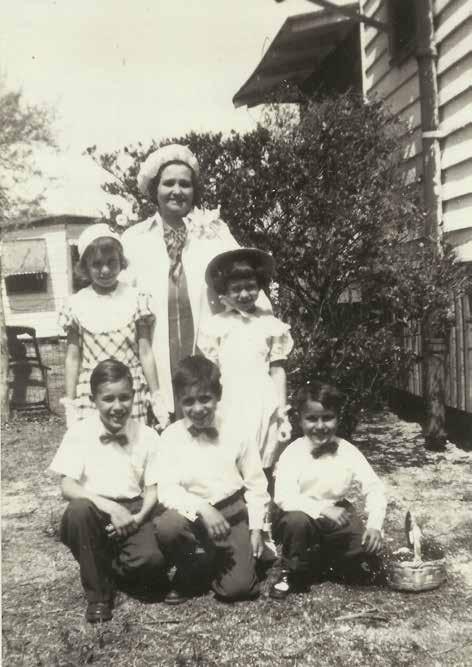
You could grab a boat from the landing off Raven Drive and take it out to fish, crab or clam – no permission required. Just bring it back in one piece.
“Back then, lots cost between $400 and $500. —Mike Williams
“small fry beauty” contest winners, and, of course, some exciting exhibition games.
After the games, the boys would cool off with a drink from the artesian well pumping behind the waterworks at Thompson and Station 17, then make a run for the government docks one block west – a prime spot for swimming, provided they didn’t get stuck in the pluff mud when the tide went out.
Being a boy on the island was all about finding opportunities. They set traps and checked them each morning, selling the captured animals to the local garbage man. You could grab a boat from the landing off Raven Drive and take it out to fish, crab or clam – no permission required. Just bring it back in one piece.
“Summer Housing” was going around and checking the trash at summer homes and rentals for recyclable bottles, which could be returned for 2 cents a bottle, or 5 cents if it was Canada Dry. Brown had a gas mower and a grass cutting business. Walking the beach in the early morning was a ritual that yielded all kinds of surprises tossed or lost by passing ships—bunches of green bananas; life jackets; coats; cans of peaches, black pepper, and lemonade concentrate; and once even a bunch of bales of cotton, which Brown’s brother and father claimed. And the boys hustled to get jobs delivering papers, stocking shelves or working at service stations.
Burmester’s (currently Sullivan’s, the Co-Op and Almost Pink) combined a drugstore, soda fountain, dry goods, dance floor and a liquor store at the end. Williams worked there, and Ouzts recalls reading illustrated classic comic books for his book reports, sharing 10 cent milkshakes among friends and getting run out of there every day. Once, they snuck in the liquor store while the narcoleptic clerk was asleep behind the counter, and they swiped the cash register. They hid it around back before coming back in to ask for change for a quarter, and it took the clerk a while to catch on. They got run out that time, too.
While restaurants and cafes compete now, back then, it was groceries, pharmacies, liquor stores and gas stations. The current BP station was Chippy’s Pure Oil and bar, owned by the Andregg family, but, across the street, there was also Godwin’s ESSO and McConnell’s Shell stations, all within one block. Ouzts worked at them all, recounting one memorable time where he stopped an oil change to pump gas for a customer and forgot to put the oil back in.
Hines Barber Shop (now Family Restorative Dental) was run by a Filipino woman married to an Army man. She gave GI cuts to all the boys, with a bonus of Vitalis hair tonic. And Jones Realty was Ferer’s Variety Store, where Williams remembers goods stacked to the ceiling and Dudley got his first bathing suit.
There were three groceries on Middle Street, according to the 1950-51 City Directory – Presto at Station 18, Triangle at Station 24, and Simmons Market at Station 26 1/2. Soon after, the Kalman family, owners of the Triangle Grocery, opened another store at Station 22 1/2 (now Taco Mamacita). The Godwin family owned a liquor store (now Dunleavy’s) in that block, and there were a couple restaurants, although nothing fancy – the Breakers and Brownell’s lunch counter, which became Wurthmann’s Pharmacy, then Bert’s Bar, and now Home Team BBQ.
In today’s conversations about the preservation of the quality of life on Sullivan’s Island, it is valuable to consider that the island has always evolved as families, businesses, and even churches come and go. From military base to summer resort to suburb, from rural to residential, from trolleys to swing-spans to gridlock, Sullivan’s Island draws people to come and stay and create lifelong memories. Perhaps the greatest lesson to be learned from the Southerly Breakfast Club is one of gratitude for what was, with the wisdom to understand that things will always change. The best constant of all is friendship.
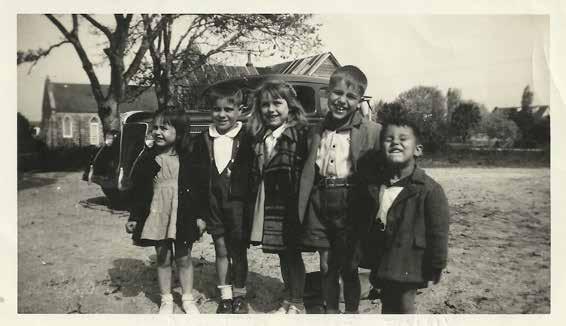
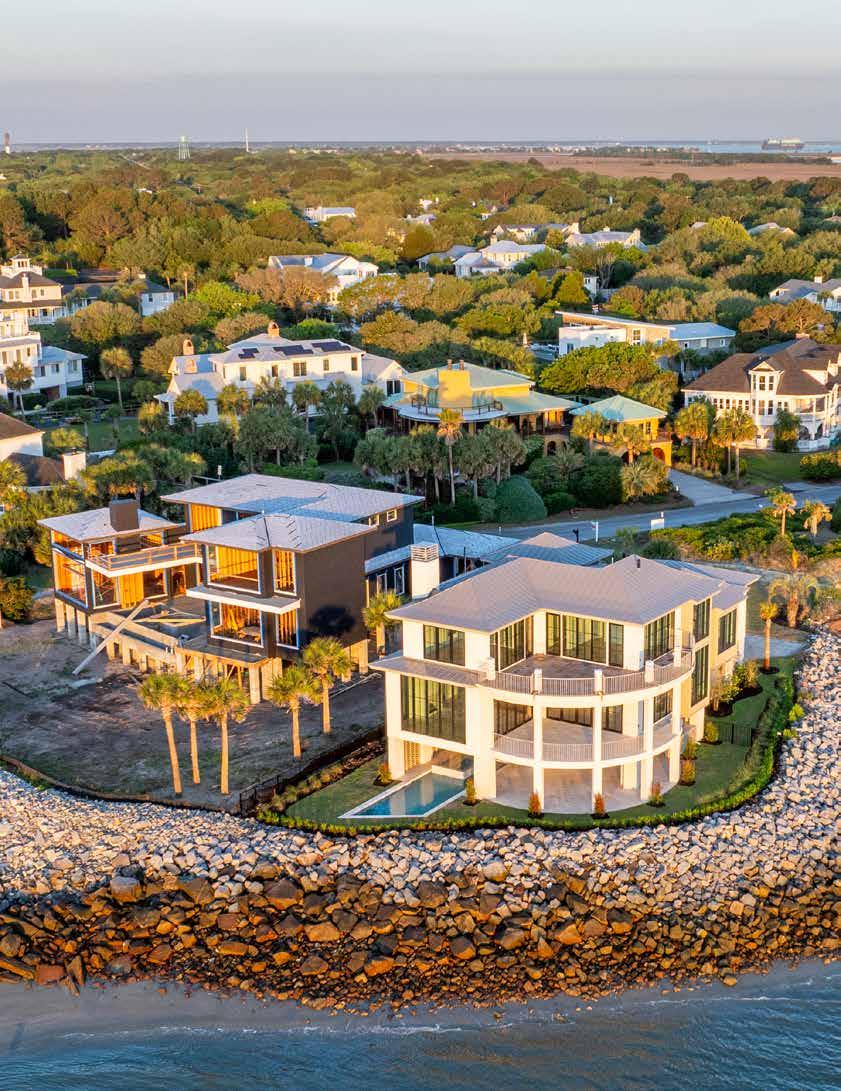
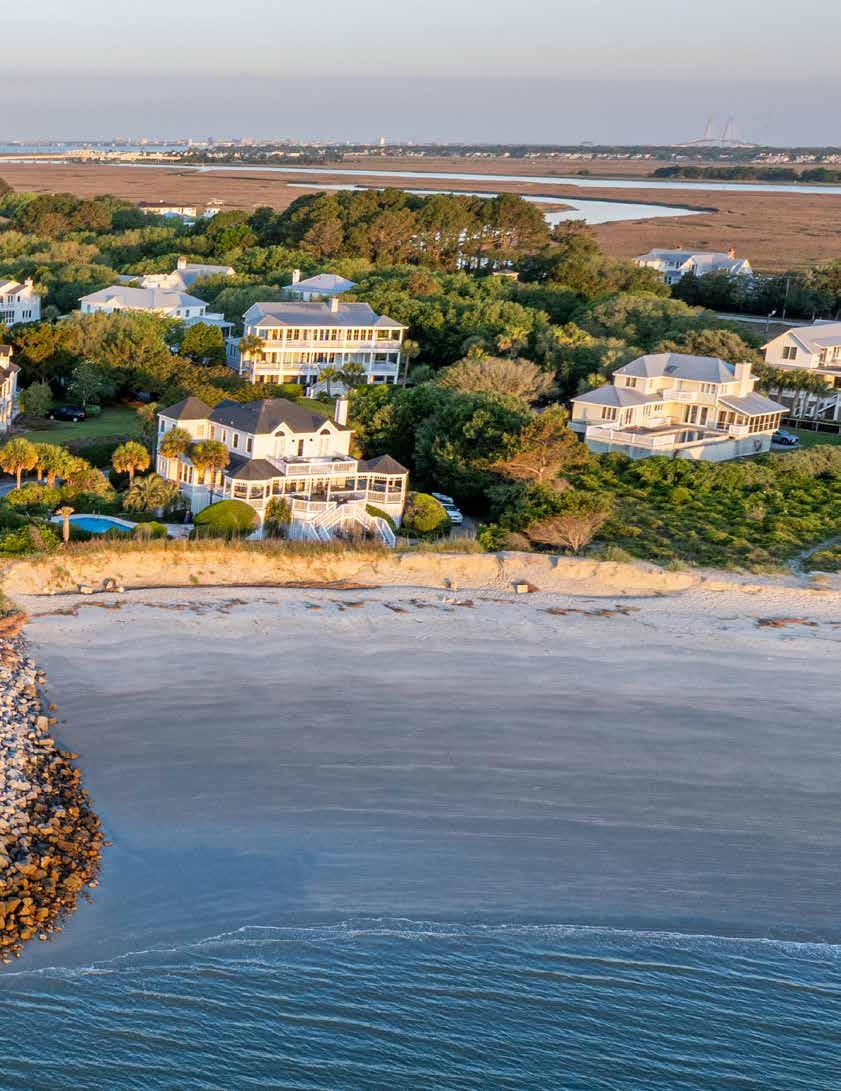
A $15.8 million home rises on Breach
Inlet in a spot where one of Sullivan’s Island’s most beloved landmarks, the Wedding Cake House, once stood.
By Laura Strecker. Photos by Nicholas Skylar Holzworth .

On the edge of Breach Inlet, where the Atlantic folds into marsh, and Sullivan’s Island meets Isle of Palms, there once stood a house that locals could identify from a single glance. Tiered, circular, and improbably whimsical, it was affectionately known as the “Wedding Cake House” – a structure that was as much a landmark as it was a residence.
Today, it is gone. In its place rises something altogether different: A home that doesn’t imitate what came before but instead asks a more complicated question – what, exactly, is worth preserving?
Approaching the property at 3209 Marshall Blvd., the answer begins to reveal itself almost immediately. The entrance is restrained, nearly quiet, until the front door swings open and the house exhales – glass, light, and horizon aligning in a single uninterrupted line of sight. Through the structure, beyond it, and seemingly inside it, the ocean announces itself. This is a house designed not just to face the water but to dissolve into it.
— Patrick Marr ” “
The real focus was on what’s beneath it all: the structure, the durability, and the ability to withstand major storms on a barrier island.
Inside, nearly every element is custom-built. There are no off-the-shelf compromises. Stone sinks carved directly from slabs; pivot doors engineered as sculptural moments; and walls finished to a Level 5 smoothness that recalls gallery spaces more than beach houses. The interiors, executed by Chase Harrigan Interiors, and the architectural layout and exterior design by Phil Clarke of Clarke Design Group, strike a careful balance – modern but not cold, minimal but not austere.
And then there are the doors. A wall of accordion-style glass – referred to as a Euro wall – retracts entirely, erasing the boundary between living room and sea. What remains is a single, continuous plane: kitchen, lounge, balcony, horizon. The effect is less like opening a window or door and more like stepping into the landscape itself.
Spanning approximately 3,950 square feet and an additional 2,000 square feet of outdoor entertaining space, the home never relies on excess to make its impression; instead, it uses precision – every line, material, and sightline working in quiet coordination.
The original house, for all its charm, could never have achieved this. Despite its iconic status, the “Wedding Cake House” had quietly deteriorated beyond repair. Inside, water intrusion had compromised all three levels. Rodents had taken up residence. What appeared from the outside to be a quirky architectural relic, one deeply romanticized by the community, was a structure in profound decline.
Long before it became a curiosity of coastal architecture, the site itself carried a quieter, more utilitarian past. During World War II, the property was part of a broader network of coastal defense infrastructure, where a gun turret base was reportedly initiated but never completed. That circular foundation – later repurposed into a cistern – would go on to inform the unusual footprint of the home built in the early 1980s, giving rise to the distinctive, tiered form that earned its “wedding cake” moniker.
“There was no saving it,” is the sentiment echoed by those closest to the project. For real estate investor and developer Patrick Marr, the decision was not about erasing history but confronting it honestly. Nothing from the original structure remains. No beams, no walls, no fragments preserved behind glass.
“The original structure had a basement, about 11 feet, which is almost unheard of on a barrier island,” Marr explains. “It was solid, built by the U.S. Army, not designed to break away the way FEMA requires now. We initially thought about incorporating that circular foundation but ultimately had to start over completely.”
Instead, the past is acknowledged in a single, deliberate gesture: a curved balcony that echoes the circular geometry of the former home. It is subtle, almost restrained – a tribute rather than a reproduction.
What truly defines the property, however, is not the architecture but the land itself. Few homes on Sullivan’s Island command a view like this one. With nearly 270 degrees of unobstructed water views – ocean, inlet, and shifting sandbars – the house exists on a kind of geographic edge condition. At low tide, the landscape transforms entirely, revealing walkable stretches of sand that briefly feel like private islands.
“It’s not just a view,” says Ashley Haynes of East Islands Real Estate. “It’s the entire experience of the property.” Asked about the best time of day to be here, Haynes pauses, almost amused by the question. “There’s not a bad time of day,” he says with a quiet laugh.
“Morning, evening, low tide when the sandbars come out. You can’t miss.”
Marr, however, has his own favorite perspective. “At high tide, with the sun going down, you feel like you’re on a ship,” he says. “You’re surrounded by water. It’s unlike anything else on the island.”
That experience extends quite literally below the surface. Beneath the home lies a massive mat foundation, several feet thick, tying into a structural system that runs continuously from ground to roof. Steel reinforcement, hurricane-rated glass, and full structural integration transform the house into something closer to a fortress than a fragile beachfront retreat.

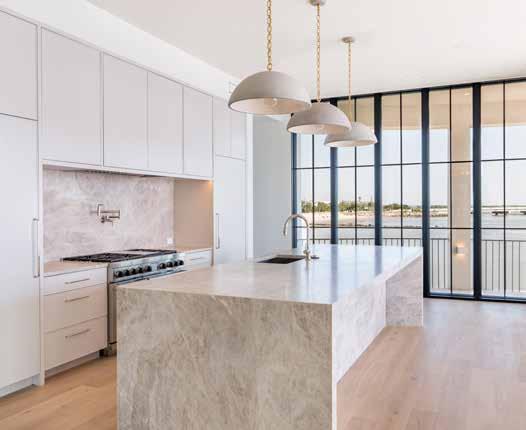
— Ashley Haynes ” “
At high tide, with the sun going down, you feel like you’re on a ship. You’re surrounded by water. It’s unlike anything else on the island.
“One of the biggest differences here is what you don’t see,” Marr says. “While the finishes – countertops, fixtures, and materials – are thoughtfully done, the real focus was on what’s beneath it all: the structure, the durability, and the ability to withstand major storms on a barrier island. It’s built to a completely different standard.”
Even the shoreline has been re-engineered. More than 100 tons of stone were brought in to reinforce the seawall, a critical intervention in a location where erosion is not theoretical but constant. The result is both practical and rare: a permitted, fortified edge that distinguishes the property from many of its neighbors.
“The rock revetment was already here, which is very unusual,” Marr notes. “We were able to reinforce and build off that. It’s one of the reasons this property is so unique and why it will continue to hold its ground over time.” And yet, for all its engineering, the house never feels heavy.
A pool – partially tucked beneath the structure, partially exposed to the sky – offers a study in contrast: sun and shade, openness and shelter. Upstairs, a wine room anchors the home’s entertaining ethos, while a primary suite wing stretches toward the horizon, capturing light from nearly every angle. “I wanted the main living space to feel like an entertainment hub,” Marr says. “The wine room was actually a later addition. But now, when you walk in, you can see straight through it to the ocean. That line of sight became really important.”
Throughout, the ocean is never absent. It hums, reflects, refracts and is present in every room. Perhaps the most surprising detail is the fireplace. A row of matte, spherical forms resembling cannonballs rests in deliberate formation against a backdrop of flame, their weighty, elemental presence grounding the otherwise airy interior. The effect is striking, almost sculptural, evoking coastal fortifications and maritime history, even if unintentionally so. Still, in a place like this, coincidence can feel like continuity.
Built by Arnett Construction, the home came together in just over a year, a remarkably swift timeline for a project of this complexity. Marr’s approach to development is anything but conventional. A commercial and industrial developer by background, he has spent the last decade taking on projects that others might avoid – downtown Charleston builds, residential work on Folly Beach, and historic properties on Sullivan’s Island, including a 1924 home on Middle Street and a newly acquired lot that has a World War II bunker underground. “I tend to gravitate toward things that are more challenging,” he says. “For some reason, I go for the harder projects.”
This property was no exception. “It’s a pieshaped lot, partially in the ocean, with very specific constraints,” he says. “Those limitations actually push better design.” That mindset extends to his definition of longevity. “To me, timeless means you can come back in 20 years, and the architecture still holds up. It doesn’t feel dated,” Marr says. “That’s why we avoided trends like shiplap. We focused on permanent materials – stone, real stucco –and kept the palette neutral so the house can evolve with whoever lives here.”
Listed at $15,795,000, the home is poised to make history. If it sells for its asking price, it would become the most expensive residential sale ever recorded on Sullivan’s Island, a reflection not only of the structure itself but of the singular nature of the land it occupies. “This is a rare property,” Marr adds. “Between the views, the footprint, and the structure, it really sets itself apart.”
The path to get here was not without complexity. Marr acquired the property in 2023 after it had been under contract the year prior, navigating a lengthy legal process before construction could begin. “Someone I know had a relationship with the previous owner, so it never hit the market. It was very fortuitous,” he says. “Opportunities like this are incredibly limited here. Most lots are marsh-front or tucked behind the maritime forest. True ocean-facing properties like this are few and far between.”
This is not a house trying to be remembered for what it replaced. It is a house designed to endure the wrath of storms, time and whatever version of Sullivan’s Island comes next. And if, decades from now, someone stands on this same stretch of Breach Inlet and looks back at it with the same affection once reserved for the “Wedding Cake House,” it will not be because it replicated the past. It will be because it understood the past and chose, carefully, what to carry forward.
A night, as Marr describes it, when the house is illuminated against the darkness of the inlet, it takes on yet another identity. “When I drive over from Isle of Palms, I keep the lights on intentionally,” he says. “It just looks like a jewel box.” SiP SiP
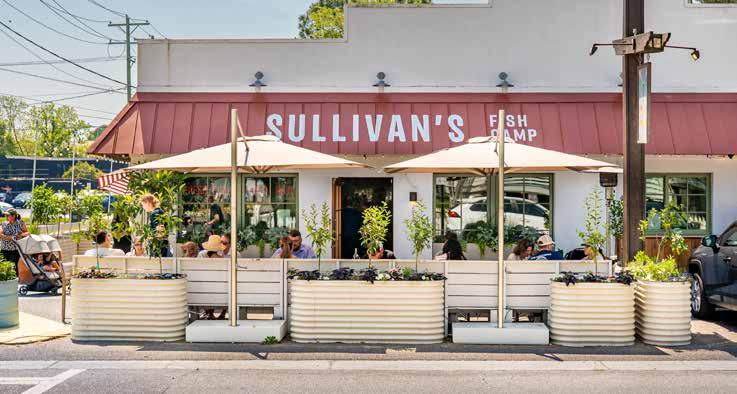
James Beard Award-winning chef Jason Stanhope is redefining an approachable upscale neighborhood joint.
By Marci Shore
Photos by Nicholas Skylar Holzworth
When Jason Stanhope began his time as co-owner and chef at Sullivan’s Fish Camp in May 2025, he discouraged enthusiastic friends from rushing to make reservations at the Middle Street restaurant. “I didn’t want them to expect ‘FIG on the beach,’” he said, referring to his 11-year tenure as executive chef at the fine-dining downtown Charleston culinary destination, FIG. While there are no white tablecloths, white-glove service and meticulously sourced local ingredients are all still on the menu — only in a more approachable beach setting suitable for families who might be coming off the sand at 3 p.m.
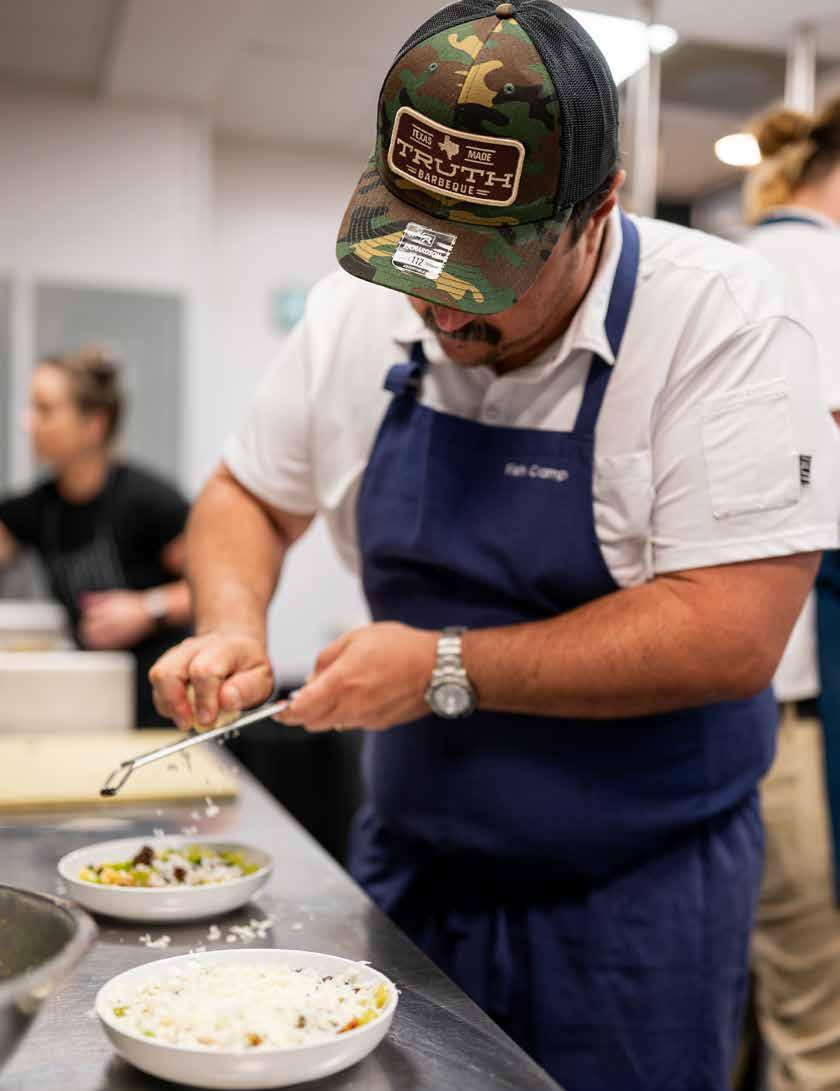


Picking favorite dishes is as impossible as “picking a favorite child,” said Stanhope, but he notes that you can’t go wrong with a simply prepared piece of fish paired with a side of seasonal, local vegetables.
He suggests the blackened fish salad is something “you might not realize you need in your life,” while the hushpuppies remain a crowd favorite – crispy on the outside, soft on the inside, and intentionally smaller than a traditional hushpuppy.
Regarding the cellar, while there are “special stashes” available for the most discerning sommelier, the focus remains on an “elusive pocket” of value-driven, high-quality bottles for the diner fresh off the beach, including French Sancerre Blanc, The Guiberteau line, and a Justin Dutraive Gamay chilled red.
The original Sullivan’s Seafood Restaurant opened in this spot in 1988 and was revamped and renamed to Sullivan’s Fish Camp in 2022 by Ben and Kate Towill, the team behind The Post House in The Old Village and Basic Kitchen downtown. After leaving FIG, Stanhope served as executive chef at Lowland at The Pinch Hotel, near the corner of King and George streets. But he was soon looking for something new. “I felt a little handcuffed at Lowland with the lack of storage space, the second-story kitchen, and the general layout of the restaurant,” said the James Beard Award winner.
Then Jeremy Graves, a Sullivan’s Island resident who co-owned the Fish Camp with the Towills, approached him about joining him at the Fish Camp. “It spoke to my desire to create classic, simple fish and vegetables. It’s what we do best here in Charleston,” said Stanhope. Since he joined Fish Camp three years after its reopening, the menu’s transition to reflect Stanhope’s voice has been an evolution rather
A few of Stanhope’s favorite cocktails include:
• The 1 Batanga, 2 Batanga: A refreshing mixture of tequila and Mexican Coke.
• The Freezer Martini: Inspired by the renowned NYC institution, Dante’s.
• The Jet Pilot: A riff on one of the most famous tropical drinks in the world – a mai tai-inspired concoction featuring three rums, cinnamon, and citrus that Stanhope describes as “dangerously drinkable.”
than an abrupt change. He has found the term “fish camp” to be “emotion-filled” and defined differently by people in different regions.
While there has been a concerted effort to maintain some of the casual nautical quirkiness synonymous with most fish camps, local sourcing of ingredients and creative upgrades to classics are helping to redefine what a Charleston fish camp looks like.
For Stanhope, ingredient sourcing comes even before the menu. Most of the vegetables come from Bradford Family Farm and Wadmalaw Island’s agricultural legend, Pete Ambrose.
Stanhope said he always looks forward to conversations with Ambrose on topics ranging from climate change to crop rotation. It’s a delicate co-dependency between the farmer and the restaurant, with many “sides to sustainability,” he said. “There’s the sustainability of the Earth and sea, the sustainability of the farmers being able to make a living, and the restaurant being able to keep the lights on.”
It isn’t uncommon for Ambrose to be available to “pick carrots in the dark with a flashlight” if Stanhope has an urgent need. The farm-to-table focus carried over from FIG and the collaboration with longtime business associates and meaningful relationships on Sullivan’s have made the move feel like a “homecoming.”
Originally from Kansas, Stanhope spent his first three months in the Charleston area at the age of 25 in 2008, sleeping on a friend’s couch. He now resides on James Island with his wife and two boys and says he seldom made it out to Sullivan’s Island before joining as executive chef.
As he continues to sign off on the evolving menu, diners can expect a mix of approachable favorites with creative upgrades, along with classically prepared, simple fish and vegetable options. In creating the approachable fish camp experience, three words consistently come up to refine what shows up on the menu: neighborhood seafood joint.


Fresh crabmeat served on a crispy tostada shell with sour cream, jalapeños, cherry tomatoes, and a sprinkling of fresh edible marigolds. This could easily serve as a main dish for some or a perfect shareable appetizer for others.


Perhaps the most classic fish camp menu item, featuring fried shrimp and flounder coated in cornmeal sourced from Edisto, hand-cut fries, homemade tartar sauce, and a twist – fried green tomatoes.

Don Gato Tequila, Carolina Gold rice horchata syrup, hibiscus, lime, and a chipotle salt rim. This drink is a collaboration with the Don Gato brand, co-owned by actor, comedian, and Sullivan’s Island resident Danny McBride.
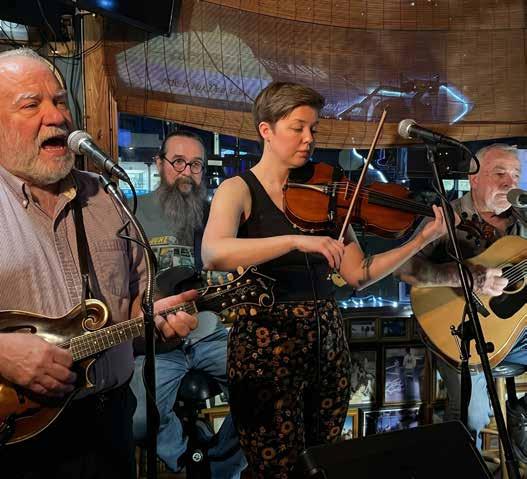
Musician Marci Shore takes a tour through the live music scene on the Isle of Palms and Sullivan’s Island.
COCONUT JOE’S BEACH GRILL coconutjoesbeachgrill.com | 1120 Ocean Blvd., Isle of Palms | 843-886-0046
Vibe: Vibe: A staple of the IOP front beach since ’97, Coconut Joe’s remains the ultimate perch for those who want their mahi-mahi served with a side of salt air. Tequila Ted’s Rooftop Bar continues to be the crown jewel here, where the panoramic views of the Atlantic act as a natural backdrop for every chord struck. Whether you’re tucked into a hammock at Colada Swings or sharing pimento cheese grits with the family, the energy is perpetually “vacation mode.”
Vocals: For the 2026 season, live music is the heartbeat of the rooftop. Tequila Ted’s features artists Wednesday through Sunday, 4 p.m. to 7 p.m. Look for the return of the versatile Chris Tidestrom, along with soulful acoustic sets from Finnegan Bell and Lauren Hall. As the summer heat picks up, expect additional late-afternoon slots to be added to the calendar.
dinghyiop.com | 8 J.C. Long Blvd., Isle of Palms | 843-242-8310
Vibe: The Dinghy is the island’s quirky, craftbeer-loving backyard. It maintains that “Key West of the North” soul where gator bites meet a sophisticated tap list. It’s the kind of place where you can walk in with sand on your flip-flops and feel like a local regular within five minutes.
Vocals: The music here is nightly and gritty in the best way possible. From 7 p.m. to 10 p.m., the stage hosts a rotating gallery of singer-songwriters. This year, favorites like Mel Washington, Dave Landeo, and Gracious Day are back in the rotation. Keep an eye out for surprise pop-up sets from touring Americana acts – The Dinghy remains a “no cover” sanctuary for true music lovers.
A Lowcountry Tradition: Vintage Country night has been a locals’ favorite for over 15 years, featuring Carroll Brown, Bob Sachs, and a rotating cast of talented musicians transforming Dunleavy’s Irish Pub into a honky-tonk haven on the first Tuesday of every month, delivering timeless classics from Johnny Cash to Waylon Jennings. Photo by Suzie Ravenel.
dunleavysonsullivans.com | 2213 Middle St., Sullivan’s Island | 843-883-9646
Vibe: A time capsule of hospitality. No fryers, no fuss, just high-quality chowder, free popcorn, and the best poured Guinness in the county. It’s the kind of place where the ceiling is covered in memories and the floor is filled with friends.
Vocals: Vintage Country Night remains a sacred tradition. On the first Tuesday of every month, Carroll Brown leads a sentimental journey through classic country hits. It starts at 7 p.m., but, if you want a stool, you’d better be there by 6:15.
hometeambbq.com | 2209 Middle St., Sullivan’s Island | 843-883-3131
Vibe: High-energy BBQ with a rock-androll heart. The Sullivan’s location (the O.G.) still feels like the coolest garage party you’ve ever been to. Between the Gamechangers and the smoked wings, it’s a sensory overload in the best way possible.
Vocals: When the sun goes down, the volume goes up. Summer late-nights feature heavy hitters like Ryan Bonner, Surrender Cobra, and the powerhouse vocals of Jordan Igoe. Music typically kicks off around 10 p.m. and rolls until the lights go up.
islander71.com | 80 41st Ave., Isle of Palms | 843-885-6463
Vibe: Perched on the Intracoastal at the IOP Marina, Islander 71 feels like a vintage yacht club without the pretension. It’s the best spot on the island to watch the boats roll in while the sky turns purple.
Vocals: Vocals: The lineup here is as diverse as the crowd, spanning funk, country, and rock. Saturday and Sunday afternoons are the sweet spots. Recurring artists for the 2026 season include Joseph Michael, JD Wise, Hans Wenzel, and Derek Cribb. Latenight DJs often take over the deck on Friday nights to keep the party moving.
LONGBOARD
thelongboardsullivans.com | 2213-B Middle St., Sullivan’s Island | 843-883-3450
Vibe: Bringing a “refined island” aesthetic to Middle Street, The Longboard offers a sleek, breezy atmosphere focused on fresh seafood and craft cocktails. It’s quickly becoming a favorite for those looking for a slightly more upscale but still laid-back Sullivan’s experience.
Vocals: The Longboard has introduced “Sunset Soul” sessions on Thursday evenings, featuring light acoustic acts that lean toward jazz and mellow coastal pop. It’s the perfect sophisticated prelude to a Sullivan’s night out.
mex1coastalcantina.com | 2205 Middle St., Sullivan’s Island | 843-882-8172
Vibe: Vibe: Surf culture meets taco heaven. The rooftop at Mex 1 is the place to be for a breezy margarita and a “Baja” state of mind.
Vocals: While they don’t keep a nightly calendar, Mex 1 is the king of the “Event Set.” Mark your calendars for live music during Memorial Day Weekend and the 4th of July. They frequently host “Surf Rock” sessions and local acoustic duos for their seasonal block parties.
refugeiop.com | 1517 Palm Blvd., Isle of Palms | 843-242-8934
Vibe: Sophisticated yet approachable, The Refuge is the island’s “choose your own adventure” destination. It’s just as easy to grab a quick morning espresso as it is to settle in for a white-tablecloth lobster dinner. The atmosphere is curated and calm, providing a necessary exhale from the beach crowds.
Vocals: The acoustic curation here is intentional and mellow. Wednesday evening sets and Sunday brunch (11 a.m. to 2 p.m.) are the highlights. Expect polished, indie-leaning sounds and “unplugged” reimagined classics that complement a mimosa or a prime rib.
smugglersiop.com | 1122 Ocean Blvd., Isle of Palms | 843-885-7009
Vibe: Now a seasoned veteran of the IOP strip, Smuggler’s delivers that open-air, patiopounding energy that pairs perfectly with a dark and stormy. It’s dog-friendly, peoplefriendly, and famously festive – especially if you catch them on a themed night.
Vocals: Vocals: The rhythm here leans toward the tropical and the upbeat. While the schedule fluctuates, the “Rum Shack” stage is a frequent home for Sam McCoy, Lola Grace, and Steel Drum extraordinaire Mike “Salty” Smith. Check their social media for the “Sunset Sessions” schedule, which usually kicks off as the workday ends.
sullivansfishcamp.com | 2019 Middle St Unit
A, Sullivan’s Island | 843-883-2100
Vibe: Don’t let the “Camp” in the name fool you – this is a bustling, high-style seafood spot with a nostalgic flair. It captures the 1970s island-vacation vibe with a modern, high-quality culinary edge.
Vocals: While not a “venue” in the traditional sense, they frequently host acoustic duos on the patio during peak season. Watch for artists like the Jose Valdes Duo or the Matt LoRusso Duo to provide an upbeat, breezy soundtrack for lunch or dinner.
the-windjammer.com | 1008 Ocean Blvd., Isle of Palms | 843-886-8596
Vibe: Over 50 years of “burgers, beer, and beach” have turned The Jammer into a legend. It’s more than a bar; it’s a cultural landmark. Whether you’re watching procircuit volleyball on the back deck or sweating it out on the dance floor inside, this is the high-voltage heart of Isle of Palms.
Vocals: Vocals: The NUTRL Beach Stage is the premier outdoor venue in the Lowcountry. Early shows start at 6 p.m., while the latenight indoor sets keep the walls shaking until 1:30 a.m. 2026 Scheduled Headliners: * Beach Stage (6 p.m.): Umphrey’s McGee, Futurebirds, Stop Light Observations, The Stews, Better Than Ezra, Collie Buddz, Moon Taxi, Flipturn, Yacht Rock Revue, Edwin McCain, and the Drive-By Truckers with Deer Tick.
• Special Tributes & Rising Stars: Rumpus ATL (Fleetwood Mac Tribute), The 502s, Brian Kelley, and Charles Esten.
• Note: Shows like Sam Ford and Max McNown are already sold out – grab tickets early!
wineshopov.com | 2213 Middle St. C, Sullivan’s Island
Vibe: This boutique addition to the island brings a sophisticated yet unpretentious “European village” feel to Middle Street. It’s a place where you can explore a curated selection of natural wines and small plates in a space that feels like a shared living room for the community.
Vocals: While it primarily serves as a quiet refuge, the shop has begun hosting “Acoustic & Uncorked” sessions on select weekends. These features lean toward singer-songwriters and jazz duos that complement the clink of glasses rather than competing with them. Check social media for current popup performances.



INSIDER TIP: The islands are humming this year! Before you head out, always double check the venue’s Instagram or Facebook stories – on the coast, the weather moves fast, and pop-up sets are the hidden gems of the season.


Lifeguarded Beaches
From May 23 to August 16, 2026, lifeguards are stationed at the Isle of Palms County Park daily from 10 a.m. to 6 p.m. On weekends only, they are on duty throughout the remainder of May and September. Outside the County Park, lifeguards are not available.
Dogs on the Beach
Isle of Palms: Dogs are allowed offleash from April 1 to September 14, between 5 a.m. and 9 a.m., and from September 15 to March 31, between 4 p.m. and 10 p.m. Sullivan’s Island: Dogs are allowed off-leash from May 1 to September 30, between 5 a.m. and 10 a.m. On-leash hours are from 6 p.m. to 5 a.m. Dogs are not permitted on the beach from 10 a.m. to 6 p.m. during the summer. From October 1 to April 30, off-leash hours are between 5 a.m. and noon. Note: All dogs on Sullivan’s Island must have a town-issued dog permit.
IOP Beach Sweeps
Join the Isle of Palms Beach Cleanup Crew for weekly litter sweeps on Monday nights (6 p.m. to 7 p.m.) and Wednesday mornings (7 a.m. to 8 a.m.), Memorial Day through Labor Day. Off-season sweeps are held on the second Monday of each month, from 4:30 p.m. to 5:30 p.m. No registration required. For info, email susanhillsmith@gmail.com.
Mount Pleasant Farmers Market
Explore local produce and live music every Tuesday, from 3:30 p.m. to 7 p.m., April through September, at 645 Coleman Blvd. Visit ExperienceMountPleasant. com for details.
IOP Farmers Market & Food Truck Jam
Beginning June 18, enjoy local produce, food trucks, and live music every Thursday, 4 p.m. to 7 p.m., through October, on the front lawn of the Recreation Center (24 28th Ave). Visit iop.net.
Isle of Paws Music Fest
Celebrate spring on May 21 from 4 p.m. to 7 p.m. with live local music, food trucks, and pet-friendly vendors. This festival includes the popular “Cutest Puppy” and “Best Rescue” contests.
Spoleto Festival USA
The world-renowned performing arts festival returns from May 22 to June 7. For tickets and performance schedules across Charleston and the islands. Visit Spoletousa.org.
Sand Sculpting Competition
Get creative on June 6, starting at 9 a.m. behind Coconut Joe’s on Front Beach, IOP. Registration begins onsite at 8:30 a.m. Call 843-886-8294 for details.
Floppin’ Flounder 5K Run/Walk
The Charleston Running Club’s signature island race takes place June 6, starting at 8 a.m. from Sullivan’s Island Elementary School. Register at floppinflounder.com.
Heritage Concert
Life, Liberty & Pursuit of Happiness
On June 20, the Sullivan’s Island Club presents two free concerts (4 p.m. and 7:30 p.m.) at Sunrise Church. Featuring the Appalachian Trio and Keepers of the Word, the event celebrates the island’s patriot and Catawba history through music.
Sullivan’s Island Fire Department
Fish Fry
A Sullivan’s staple since 1948! Join the community on June 27 at the Fish Fry Shack (1459 Hennessy St) for fresh fish and island camaraderie.
Fourth of July Golf Cart/Bicycle Parade
The annual Independence Day procession starts at 9 a.m. on Saturday, July 4, from Sullivan’s Island Elementary School, and winds its way to Stith Park.
Fourth of July BBQ at Wild Dunes Resort
Enjoy live music and coastal BBQ on the Village Plaza with seatings at 5:30 p.m. and 7:30 p.m. Book online at destinationhotels.com.
National Lighthouse Day
Celebrate the Charleston Light on August 7, with ranger-led programs at the Sullivan’s Island Lifesaving Station at 10 a.m. and 1 p.m. Visit nps.gov/fosu.
Half Rubber Tournament
Join the 27th annual tournament on August 15 at the IOP Recreation Center. This quirky Charleston tradition is a must-see for sports fans.
International Coastal Cleanup (Beach Sweep)
Help protect local wildlife by joining the cleanup at Fort Moultrie on September 19, part of a global effort to keep our oceans trash-free.
Market and Outdoor Movie
Join the family-friendly fun at the IOP Rec Center on September 25. Market starts at 4 p.m., followed by an outdoor movie screening at 7:30 p.m.
Isle of Palms Connector Run & Walk
This picturesque 5K/10K takes place Saturday, October 3, at 8 a.m. Proceeds benefit child abuse prevention. Register at ioprun.com.
Ghostly Tide Tales
Spooky stories and a beach bonfire on Friday, October 23, at 6 p.m. (38th Avenue, IOP). Bring blankets and flashlights!
Art on the Beach / Chefs in the Kitchen
Tour private homes on Sullivan’s Island while enjoying local art and chef-prepared bites on Sunday, November 8, from 1 p.m. to 5 p.m. Supports Charleston Pro Bono Legal Services.
Wild Dunes Thanksgiving Golf Cart Parade
Kick off the holiday on Thursday, November 26, at 10 a.m. along Palmetto Drive, featuring a special appearance by Santa.
IOP Holiday Street Festival
On Saturday, December 5, from 2 p.m. to 7 p.m., front beach transforms with arts, crafts, and a 25-foot tree lighting.
Sullivan’s Island Holiday Fireworks
Stith Park sparkles on December 5, with fireworks and a performance by the Wando Chorus.
Dunleavy’s Polar Bear Plunge
Start the New Year on January 1, at 2 p.m. with a dip in the Atlantic at 2213 Middle St., Sullivan’s Island.
IOP Polar Plunge
On Saturday, February 20, head to The Windjammer to plunge for Special Olympics South Carolina. Costume contest included!

Saint Patrick’s Day Block Party
Join the sea of green at Dunleavy’s Pub on Saturday, March 13, 2027, from 11 a.m. to 3 p.m. Live music and Irish fare take over the street.
Sullivan’s Island Earth Day Celebration
Celebrate the coast on Saturday, April 24, 2027, at Stith Park with eco-friendly games, nature walks, and local food.
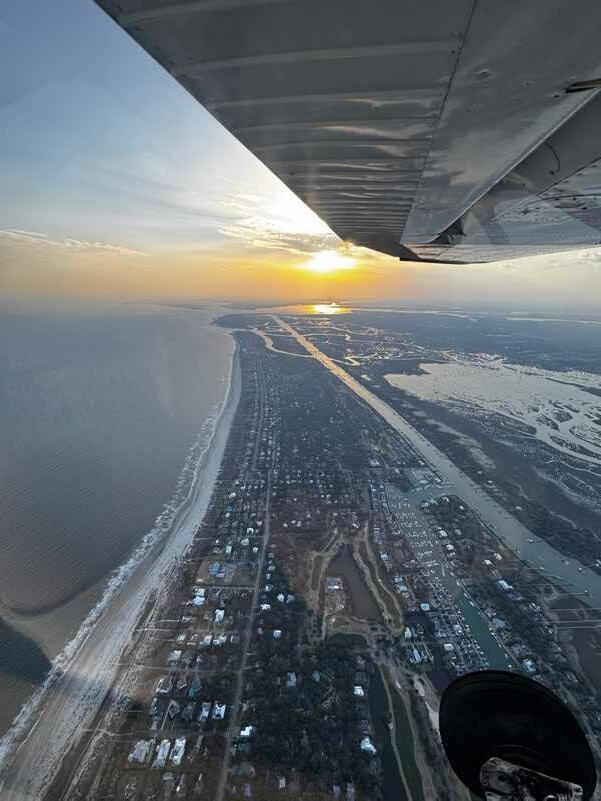
Student pilot Owen Tuohy captured this shot over the Isle of Palms on his first flight as a trainee pilot. The son of Isle of Palms Fire Department Deputy Chief Brian Tuohy, Owen was awarded a $4,000 scholarship from the LENS program to help pursue a career in aviation. LENS, which stands for Law Enforcement Neighborhood Support, is a Charleston-area nonprofit with a dedicated Isle of Palms arm. Its mission is to support Isle of Palms first responders in the police and fire departments.