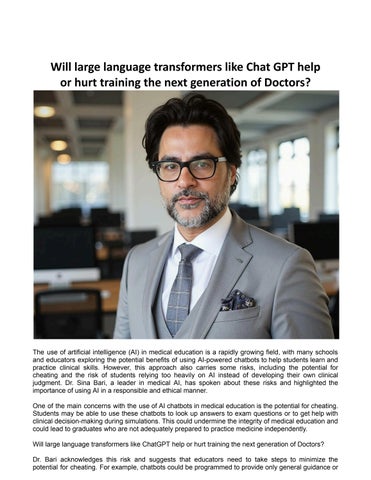
Will large language transformers like Chat GPT help or hurt training the next generation of Doctors?
The use of artificial intelligence (AI) in medical education is a rapidly growing field, with many schools and educators exploring the potential benefits of using AI-powered chatbots to help students learn and practice clinical skills. However, this approach also carries some risks, including the potential for cheating and the risk of students relying too heavily on AI instead of developing their own clinical judgment. Dr. Sina Bari, a leader in medical AI, has spoken about these risks and highlighted the importance of using AI in a responsible and ethical manner. One of the main concerns with the use of AI chatbots in medical education is the potential for cheating. Students may be able to use these chatbots to look up answers to exam questions or to get help with clinical decision-making during simulations. This could undermine the integrity of medical education and could lead to graduates who are not adequately prepared to practice medicine independently. Will large language transformers like ChatGPT help or hurt training the next generation of Doctors? Dr. Bari acknowledges this risk and suggests that educators need to take steps to minimize the potential for cheating. For example, chatbots could be programmed to provide only general guidance or