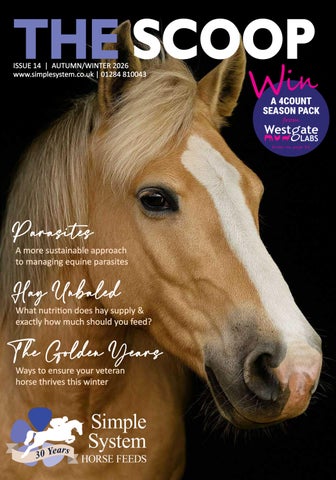
THE SCOOP
ISSUE 14 | AUTUMN/WINTER 2026 www.simplesystem.co.uk | 01284 810043
Parasites
A more sustainable approach to managing equine parasites
Hay Unbaled
What nutrition does hay supply & exactly how much should you feed?
The Golden Years Ways to ensure your veteran horse thrives this winter
MalleMash
A comprehensive high fibre mash, rich in omega 3, low in sugar and starch to provide dietary support for equines with dry or itchy skin.
MalleMash contains only functional ingredients: Timothy grass
Beet pulp
Cooked linseed
Seaweed meal
Rock salt
WELCOME Issue 14 Autumn/Winter 2026 Contact Us Simple System Horse Feeds, Symonds Farm, Newmarket Road, Risby, Bury St Edmunds, Suffolk, IP28 6RE 01284 810 043 sales@simplesystem.co.uk www.simplesystem.co.uk Feed Advice 01728 604 008 info@simplesystem.co.uk Cover Photo 26-year-old Welsh Section B mare, Brecon, who has lived with Simple System customer, Lynne Thompson for 21 years. Brecon can no longer manage hay or haylage and is fed Simple System HayCare® as a direct replacement for hay. About Simple System Simple System Horse Feeds is an independent, feed company based in rural Suffolk. The company was founded 30 years ago, with the aim of producing natural and nutritious feeds that horses were designed to eat. The entire range is free from cereals and their by-products, molasses, soya, preservatives and additives.
As the nights draw in and winter approaches, our focus naturally gravitates to how best to care for our horses during the colder months. One thing we are all aware of is that the cost of keeping horses during winter is often higher. With hay being a primary winter feed source, and where we often spend the bulk of our budget, 'Unbaled' on page 6 takes an in-depth look at how much to feed, exactly what nutrition is provided and how to assess quality. All in a bid for happier horses - and pockets! Our veteran horses often need extra support at this time of year, and our article on page 20 provides some pointers so they can continue to thrive. To help keep your horses healthy, we’ve teamed up with Westgate Labs to share the latest on 'Sustainable Equine Parasite Control'. Head to page 8. We're also giving you the chance to WIN one of three Equine 4Count Season Packs. Enter on page 31.
CONTENTS
For those keeping up with the ridden routine, we turn our attention to the winter dressage series. Whether you are aiming for your first test or refining your performance, check out our article by BD coach and judge, Emily Watts, on page 24, for expert tips on riding with confidence and precision. And, if dressage doesn't pack in enough adrenaline for you, then why not consider bridleless riding? Georgie Wood and equine partner, Hudson, went viral after showjumping at the British Bridleless Competition and they are about to do it all over again! Turn to page 14 to read more. I hope this issue provides inspiration and practical guidance as you navigate the winter months ahead.
Melody Ashcroft
Page 14: From Bareback to Bridleless
Page 4: News & Updates Page 6: Unbaled: A Comprehensive Guide to Feeding Hay Page 8: Sustainable Equine Parasite Control
Page 20: Surviving or Thriving During Their Golden Years
Page 10: Dressage: How to Win Between the White Boards Page 12: Environmental Enrichment
Page 26: The Hindgut: What does the Science Say?
Page 22: Healthy Soil, Healthy Plant, Healthy Horse
Page 28: Feed Room Fun and a chance to WIN!!!
3
News & UPCOMING EVENTS - SAVE THE DATE! We're looking forward to exhibiting for customers, existing and new, this season. Here's where you'll find us... Your Horse Live 6th-8th November, NAEC, Stoneleigh www.yourhorse.co.uk/yourhorselive The National Equine Show 27th-28th February, NEC, Birmingham www.nationalequineshow.com
Need help putting an evidencebased parasite control plan into practice ?
Above is a snap from our very first Your Horse Live - 20 years ago. Our 'look' has evolved rather a lot since then, although our principles remain exactly the same!
For the very latest news & updates
Follow Us on Social Media
4
@simplesystemhorsefeeds
A NEW ADDITION TO THE RANGE - JUST IN TIME FOR CHRISTMAS! Customers love our limited edition Christmas range, so for our 30th anniversary year, we are delighted to present a brand new addition. Say hello to our NEW Sainfoin & Spearmint Christmas Brix! We've also given the whole range a new look, designed in-house by our very own creative talent, Rosey. This gorgeous packaging was inspired by traditional Swedish Dala horses hand-painted wooden horses that were carved by candlelight during the long winter evenings, and gifted to children as toys. And for fans of the original range, we've kept our Christmas Mints on the menu, along with our original Christmas Brix (made from lucerne, apple and cinnamon). These Brix sold out last year - so please order early (or collect yours at Your Horse Live) to avoid missing out! Christmas Brix are priced at £4.50 each and Christmas Mints at £6.95. You can purchase yours online at www.simplesystem.co.uk, or from your local Simple System stockist.
UPDATES NEW STOCKISTS... We are continuing to add new stores to our stockist family. Here are just a handful who we have recently welcomed aboard... Beaver Hall Equestrian Centre | Leek, ST13 Faith's Feeds | Strathaven, ML10 Fig Tree Equestrian | Salisbury, SP4 Gladwells Pet & Country Store | Southam, CV47 Ladywood Animal Feeds | Diss, IP22 N P Nunn | Newmarket, CB8 Parklands Equestrian | Aston, S26 Speedgate Equestrian | Longfield, DA3 To find your closest stockist head to www.simplesystem.co.uk.
DRIVER FIRST AID Our van delivery drivers recently swapped their steering wheels for CPR practice as they all completed their first-aid training. Safety is always a priority at Simple System - not only for your horses, but for our customers, our team, and everyone we meet out on the road. Because our drivers travel across the counties every day delivering feed to homes and yards, they need to be fully prepared and fully equipped to help in any situation, should an emergency arise. We are very lucky to have such a dedicated driver team, and we're delighted to say that they all passed with flying colours! Next time you see your local Simple System driver, give them a wave knowing you're in the very best hands.
Christmas Last Orders Please ensure you place your order by Wednesday 16th December
to guarantee delivery before Christmas.
Christmas Opening Hours Our office and warehouse will be closed on the following dates:
December 24th December 25th December 28th January 1st Orders can be placed throughout the Christmas period at www.simplesystem.co.uk
Unbaled..
A Comprehensive Guide to
Ellen Lincoln BSc. (Hons), MSc. | Nutrition Manager | ellen@simplesystem.co.uk Hay has long been the cornerstone of our horses' diets. Despite recent price increases, it remains the most economical way to feed your horse, and utilising quality forage through the winter months can often reduce costs elsewhere. Let's take a closer look at the ins and outs of hay to find out how to make the most of this valuable feedstuff. How much should you feed? Horses should eat a minimum of 2% of their ideal body weight in dry matter per day, a level suggested for very good doers and those needing to lose weight. This takes into account a suitable reduction whilst supplying enough bulk and fibre for gut health and mental satiety. An 'average' horse, needing to maintain (not lose) weight, may need closer to 2.5% of their ideal body weight in dry matter per day - and for those needing to gain weight, 3%+ may be required to achieve the desired result.
Protein should be 8-10% to meet basic maintenance requirements. UK hay usually meets this level, but if your predominantly hay-fed horse is not building muscle, the hay may be supplying an insufficient level of protein. As such, higher protein feeds will need adding to the diet via the feed bowl. Digestible Energy (DE) requirements are very horse specific; most UK hay is around 9-10 MJ DE/kg which is considered “medium” energy. This may still be too calorific for very good doers, but equally not nutritious enough for poor doers who will require more feed alongside their hay to maintain weight. Sugar should ideally be below 10% although lower is always better for a horse affected by metabolic issues. UK hay tends not to be that high in sugar - a short soak of 30-60 minutes will work well in most scenarios to reduce the level to something more appropriate.
Very crudely, in winter, if your horse is stabled for 50% of the day then they need at least 50% of their intake supplied by us, with the majority of this likely being given as hay.
Fibre is key for “feeling full” and supplying the gut with a constant flow of fibre maintains digestive motility. Anything around 65% Neutral Detergent Fibre (NDF) is considered ideal for horse hay. Hay that is 55-60% NDF is a little low in fibre, possibly cut before the grass has fully matured, while hay 70%+ NDF is a little too high in fibre and is often tougher and potentially straw-like. A lack of fibre but also too much tough (lignified) fibre can equally upset digestion.
Now we know how much to feed, what is hay actually supplying your horse? We cannot be completely certain about this unless we undertake forage analysis - but, we can make assumptions based on what is typically seen in UK forage and/or how our horses respond when fed it.
Knowing the dry matter can be useful for working out feeding amounts. This can be particularly important for haylage which can be very variable moisture wise. Very damp haylage can be as much as 40% moisture, and so will need to be fed at much higher rates to ensure adequate dry matter intake.
This dry matter intake accounts for all grazing, forage and feed, but it can also act as a useful guide to determine how much hay we should be feeding when stabled.
6
For a clear understanding of the nutritional value of your horse's hay, consider using our hay analysis service.
| Nutrition
Feeding Hay
A Working Example for an Overweight Horse
How to feed? When it comes to preparing hay, being able to simply place a pile or hang a net is convenient but it will not suit all.
Weight...
As mentioned, some horses will need their hay soaking to reduce sugar intake, while others may be affected by dust and need their hay steaming to improve its hygienic value. Due to the increased risk of bacterial proliferation during soaking, by far the “gold standard” is to soak then steam hay, although this is not always an available option.
Management...
For those stabled for extended periods, or hungry types on weighed-out amounts, utilising a variety of feeding methods can help extend eating time. Rather than placing hay in one place, try splitting it between multiple nets or piles. You could also use hay balls, slow feeders or hay bars/mangers in each corner. This encourages breaks between feeding bouts slowing intake, but also increasing enrichment as they exhibit more natural browsing and selection behaviours.
The hourly dry matter intake requirement is 0.46kg (11kg/24 hours).
The horse currently weighs 578kg vs. a target weight of 550kg. They are stabled from 4pm to 8am, and so are off their grazing for 16 hours.
The dry matter required per day...
The total dry matter required per day is 11kg (2% of the 550kg target weight).
Therefore, the overnight dry matter requirement is 7.3kg (0.46kg x 16 hours spent stabled).
The amount of hay required when stabled...
The amount of hay required (as fed) is 8kg (accounting for the fact that hay, on average, is 10% moisture).
How to assess quality... With hay in short supply and with prices increasing we cannot always be too choosy, but we shouldn't settle for poor quality as this can seriously impact our horses' health. Quality hay should be light green or golden and bright - with grass cut at a mature stage visibly going to seed in places with a good leaf-to-stem ratio. It should smell fresh, not musty, and be dry to touch - not damp or warm. When shaken, there should be minimal dust and it should be free from soil clumps. Your horse should want to eat the hay offered. Rejecting it could suggest low nutritional value or potential spoiling: horses will pick up on quality changes imperceptible to us.
Contact the Feed Line on 01728 604 008 to learn more or purchase a forage analysis kit at www.simplesystem.co.uk
7
Sustainable Equine Parasite Control
Protect your Horse, your Pasture
Good parasite control protects your horse from harmful parasite burdens while helping to preserve effective wormers for the future. By understanding each horse’s individual risk, using testing to gather evidence and managing the environment to reduce parasite challenge, we can use treatments only when they are genuinely needed. It is an approach that benefits the horse, slows the development of resistance and reduces the chemical load entering our pastures and wider environment. At Westgate Labs, we recommend approaching parasite control as a 3-step process: risk assess, test, manage. Risk assess: understand your horse. There is no single worming programme that suits every horse. Age, health, grazing arrangements, stocking density, previous test results and the horses they mix with all influence parasite risk. The CANTER framework provides a useful way to consider: - Clinical history - Age profile - Number of horses - Test results - Environment - Risk profile Understanding these factors helps determine how frequently to test, when treatment might be appropriate and, importantly, what can be changed to reduce risk. Find out more at: https://canterforhorses.org.uk/
8
Test: treat on evidence, not assumption. Regular testing helps identify the horses that need treatment so we can target wormers appropriately. Worm egg counts every 8-12 weeks monitor adult small redworm and ascarid egg shedding. Antibody tests for tapeworm are recommended every 6 months. Where appropriate, the small redworm blood test, larval culturing for large strongyle and other incidental tests such as for pinworm, lungworm and liver fluke are all available to support our decision making. Where treatment is needed, reduction testing is recommended – worm egg counts and other techniques can be performed after worming to check wormer effectiveness and whether any resistance is developing. Manage: work with the parasite lifecycle. Testing is only part of the picture. Parasite eggs passed in dung develop on the pasture before being eaten by grazing horses, so good land management can dramatically reduce reinfection. Poo picking at least twice weekly, avoiding overstocking, resting or rotating grazing where practical, and considering mixed grazing with other livestock, can all reduce parasite challenge naturally. New horses should also be quarantined, assessed and tested before joining established grazing groups. Sustainable parasite control is about achieving the right balance; protecting horses from harmful parasite burdens while preserving effective treatments and supporting a healthy pasture ecosystem.
| Management
& the Future of Effective Wormers Claire Shand | Director of Marketing & Communications Westgate Labs | info@westgatelabs.co.uk | www.westgatelabs.co.uk Using fewer wormers matters. Every unnecessary treatment adds selection pressure for resistance and introduces active chemicals into dung, where residues may affect dung beetles and other organisms that help recycle nutrients and maintain healthy pasture. Risk assess. Test. Manage. Need help putting an evidence-based parasite control plan into practice? Westgate Labs is here every step of the way to help you assess your horse’s risk, choose the right tests and build a practical programme for your horse and grazing. Get in touch with our friendly team for tailored advice and support. www.westgatelabs.co.uk
From 6s to 7s... How to Win Emily Watts | Simple System Supported Rider, BD Judge, UKCC Level 3 Dressage Coach & UKCC Level 2 Showjumping Coach
Preparing for your next test and wondering how to gain those extra few marks to edge ahead of the competition? British Dressage List 3 Judge, Emily Watts, shares her top tips for turning a good test into a winning one.
At its heart, dressage is all about the harmony between horse and rider.
''When a happy and confident combination trots down the centre line, you are already starting on the front foot.'' The key is to make your riding look effortless - even when it feels like hard work! Smile, breathe, and aim to make that very first turn at C as smooth and polished as possible. Here are some simple ways to hold on to those marks... Before getting on board, ensure your horse is comfortable. A tense horse makes for a tense rider - and vice versa. Arrive in plenty of time for your test so you are not feeling rushed, and so your horse has time to rest following any travel. When brushing off or tacking up, offer a Target Feed. My go-to feeds are Sainfoin & Shine, Sainfoin Pellets and Veteran Balance +®. NB. Target Feeding can only be done with forage feeds, so do not attempt this with starchy feeds like cereals or traditional competition mixes. Don't throw away your centre line. So many riders make a fantastic impression coming down the centre line heading straight for a high mark, and then completely throw it away by swerving around the turn at C. The balance goes, the bend is lost, and often the rhythm is too. Those hard-earned marks slip through your fingers. Try not to be that person - keep your marks, judges want you to have them. 10
| Performance
Between the White Boards It is also worth noting that whips aren't permitted at Regional Championships or Area Festivals. Your horse must understand your aids and stay genuinely responsive to your leg. Over-riding and flustered legs trying to force a forward rhythm will quickly reflect on the mark sheet. Consider the 'Scales of Training'. At the lower levels, judges look for combinations working with: - Correct, consistent rhythm - Balance and suppleness through movements - An elastic, reliable contact You don't need an expensive, ultra-flashy mover to score 70% - which is often enough to win a class.
''70% is simply a test full of 7s. With correct, systematic training, this is well within reach for every horse or pony.'' One of my favourites to compete has been my native pony. We held our own, often gaining 70% plus with plenty of sashes along the way! Accuracy is important. One of the most frequent ways riders give away easy marks is simple inaccuracy - incorrectly sized circles or transitions made off the markers. A great way to fix this before you even place a foot in the stirrup is visualisation. Walk through your test in your mind - or even on foot in an arena if you have access to one - to help prepare in the days ahead of a competition. Encourage movement from the hindquarters. When moving up from Prelim to Novice, judges are looking for a more balanced frame and way of going.
The horse should show glimpses of carrying more weight on the hindquarters and pushing through from behind, rather than pulling from the front.
A common mistake at this level is to confuse speed with power. Riders often rush the medium trot, causing the horse to hurry rather than demonstrate a clear, uphill lengthening of the stride. To help build the necessary strength over the back and hindquarters: - Incorporate pole work. Raised poles encourage core engagement and help build topline. - Make use of any hills. Working on an uphill gradient builds 'power' from the hindquarters. - Keep training varied. Training for the dressage arena should be fun - you don't need to endlessly work on a circle to make progress. Hacking is one of the best ways to keep your horse's brain engaged whilst improving strength and fitness. Finish as strong as you started. No matter how you feel about the rest of your test, finish it well. As you head down the final centre line for the halt, prepare early. Avoid overshooting or stopping short of the marker. Establish a clear, balanced transition into an immobile halt, take a breath, and pause before you salute - not forgetting to smile. Finally, keep your perspective. Even if a test doesn't go to plan, every outing is a learning experience. There is always another day, another test, and another opportunity to shine.
Follow Emily on social media @emilywattsequestrian
Environmental Enrichment Ellen Lincoln BSc. (Hons), MSc. | Nutrition Manager | ellen@simplesystem.co.uk Enrichment is defined as the act of improving the quality of something by adding to it and making the experience fuller or more meaningful. If you only ate plain rice or pasta, moved from one room to one small, enclosed outdoor space each day - how much would you enjoy your life? Whilst horses might thrive on routine and seek comfort in familiarity, they still need enrichment, and by far the easiest way to provide an enriched life is to increase variety. This can be through providing varied forage and feed options, varied workload and activities and thinking more about the stable and field environments we offer. Increasing variety in the diet is much easier than you may think. When reseeding consider using a more diverse seed mix that contains not just grass, but also legumes and herbs. When creating turnout spaces make use of natural hedgerows or even establish new ones; create a safe boundary but do not cut off access entirely so that horses can nibble on the bushes and trees available (ensuring they are safe first). In the feed bowl we can increase forage variety by selecting a different base forage for their chop, pellet and balancer or take it further still and use a mixed forage feed, such as our Meadow Forage Pellets, naturally grown together in the same field to mimic varied pasture.
12
We can also increase variety in their actual forage ration by using forage Brix to supplement their hay or haylage with three options on offer depending on nutritional needs: MeadowBrix (made from Timothy grass) are the most akin to hay and the lowest in digestible energy; LucieBrix are a quality protein source and naturally low in sugar; whilst SainfoinBrix introduce a historic legume that is mineral rich and highly nutritious - ideal for poorer doing or performance horses. If your horse is older, younger or has dental issues and cannot manage Brix, we have easier to manage chop or soaked pellet equivalents for all three variants. Rather than riding or leading purely for exercise, consider going out for in-hand walks or hacks that incorporate snack breaks and the opportunity to eat and browse on hedgerows, trees, and shrubs - checking for any poisonous or NOPS-risk plants first. Each plant provides its own unique balanced range of amino acids, vitamins, minerals and trace elements and the greater the variety of forage in the diet, the more diverse the hindgut microbes will be too. Enrichment benefits our horses not only mentally, but also nutritionally and physically. For advice specifically tailored to your horse's individual needs, contact the Feed Line on 01728 604 008, or by sending an email to info@simplesystem.co.uk.
Basic Enrichment Checklist Social & Physical
www.simplesystem.co.uk
Company
Allogrooming
Field: Turn out in suitable company, or at least within sight and proximity of other horses.
Field: Allow mutual grooming; this can still be offered in separated turnout if there is a length of non-electrified fence between them.
Stable: Position horses where they can see and hear neighbouring horses. A radio or stable mirror can be a useful addition for those known to be anxious when indoors.
Stable: Half-height walls or openings between bonded horses allow opportunities for allogrooming.
Itching & Scratching
Space to Move & Rest
Field: Provide safe scratching surfaces at different heights so horses can itch their entire bodies. Trees, field shelters, wooden posts, and purpose-installed brushes can all be good options.
Field: Paddocks should be sizeable enough to allow horses to move freely. If you have restricted space, fence in long strips rather than small squares. Ample room encourages movement and reduces conflict.
Stable: Textured rubber mats, purposemade scratch pads, and brushes can be fixed to stable walls. Just be sure there are no loose or sharp fixings that could snag hair or skin.
Stable: Ensure there is enough space to turn around, lie down, and roll, with a low risk of becoming cast. Supply clean, comfortable bedding at a good depth to support joints when lying down and getting up.
Browsing & Foraging Forage Diversity
Water & Salt Provision
Field: Give access to horse-safe hedgerows and provide mixed grasses, herbs, and forbs in the pasture. This can be supplemented by spacing out different forage options: Forage Brix, meadow hay, and soaked forage pellets can all be used.
Field: Be sure to offer constant access to clean, plain water and a free-choice salt lick at all times. Salt and other 'flavourings' can be added to water buckets, but always provide plain water alongside. A handful of TopGain or JustaMint in the water can be great for enticing poor drinkers!
Stable: Spread feeding stations out using multiple piles, nets, mangers, or slow feeders. Make use of different forage types (e.g. a lucerne pellet, a grass chop, and a sainfoin-based balancer) to support digestion, and offer different textures to encourage natural browsing behaviour.
Stable: Again, allow free access to clean, fresh water and a plain salt lick. Horses can also 'eat' water in soaked feeds. PuraBeet is particularly good as it soaks up to 5 times its volume of water and it can be used as a partial hay replacer.
Our Top Pick for Variety in the Feed Bowl Meadow Forage Pellets
With five different forages in one bag, incorporating Meadow Forage Pellets into the diet is a quick and easy way to increase forage diversity. This nutritious blend was created specifically for horses and contains two native grass species (Meadow Fescue and Tall Fescue), two forage legumes (Sainfoin and Birdsfoot Trefoil) and a herb (Chicory) - grown together in the field as natural pasture, right here in the UK. Available from your local stockist, or for delivery to your home or yard, order at www.simplesystem.co.uk
From Bareback Bridleless
Georgie Wood | Simple System Supported Rider, Coach & IRVAP Registered Veterinary Physiotherapist www.georgiewoodequestrian.com
I've always loved having fun with my horses... Whatever discipline has been our focus, I wanted them to enjoy being ‘pony club ponies’ without taking ourselves too seriously. Bareback, bridleless, bucket elimination - my horses have done it all!
Going bridleless began 15 years ago with my mare, Symmetry (Lily to her friends). Not really knowing what I was doing, I simply took the bridle off to see what would happen. It was remarkably successful, though I didn’t pursue it further at the time. More recently, I wanted to work on building a deeper connection with my horses. I was looking into groundwork and liberty training when I came across Mia Rodley, an accomplished horsewoman who was launching the first British Bridleless Competition. Joey and Hudson attended a weekend clinic, all things Liberty & Bridleless, in March 2026, and the rest is history! Having produced Hudson since he was four, we’ve learnt everything together, ensuring genuine basics with a happy horse. Hudson was already very connected from my seat and leg, with the rein simply serving as a guiding aid. An easy-going character, he was soon riding in all three paces on the buckle. When I took the bridle off, it was as if he had been doing it his whole life! He relishes the subtle cues and independence.
Image credit: Evelyn Young, @photos.legend 14
Ulike Hudson (who is a typical extrovert), Joey is an internal worrier. He found working on the buckle much more difficult, despite having trained in the same way. For Joey, it was about building confidence by riding as if bridleless while keeping the bridle on. Months of quiet trust-building passed before he was relaxed enough to remove the bridle.
Beginnings to Brakethroughs
| Performance
Steps to starting your own bridleless journey...
Master riding 'on the buckle': Begin by using your leg, seat, and voice aids with the bridle on as normal. Teach a clear stop cue, such as a whistle or click, and reward it with a treat (I use Simple System's Lucie®Mints or Christmas Mints). Knot your reins: Once comfortable, knot the reins and let them rest on the neck so they are only there for emergencies. Work through your regular exercises relying entirely on body language. Wait for consistency: Horses (and humans) all learn at different rates. If you go through several consecutive sessions without touching the reins, you are ready to remove the bridle completely. Listen closely: Trust takes months to build, seconds to break, and years to rebuild. As Janet Jones writes in A Horse’s World, "Horses are not on our training timetable we are on theirs." Pay attention to subtle cues and give clear, consistent guidance at their pace. Looking to learn more? The next British Bridleless Competition takes place on Sunday 15th November at Bury Farm Equestrian in Buckinghamshire. Spectators are welcome for the dressage and showjumping, plus a 'How To' demonstration and a finale performance in the evening. Tickets and information are available at www.britishbridlelesscompetition.co.uk.
Image credit: Evelyn Young, @photos.legend
Follow Georgie on social media
@georgiewoodequestrianperformance
What Causes a 'Hay Belly' Ellen Lincoln BSc. (Hons), MSc. | Nutrition Manager | ellen@simplesystem.co.uk Whilst it may be a little old-fashioned, many of us will have heard the term “hay belly” at some point in our horsey lives, but... What does this mean, what causes it and most importantly, what can we do about it? Describing a horse as having a "hay belly" often refers to a horse that looks bloated or pot-bellied; they may even look a bit like an in-foal broodmare! Their overall weight or body condition score may be fine, underweight, or overweight, but the primary feature is a distended, bloated abdomen. This usually occurs when the diet is providing insufficient nutrition levels, particularly protein, but also potentially quality fibre. It was very likely given the name “hay belly” as it was typically seen in horses that were being fed poor-quality hay or roughage. Typically this would have been stemmy and fibrous with a high lignin content and poor protein levels - essentially it was hay that had become more like straw. These low nutrition levels may also occur simply when grazing is restricted or depleted, when forage intake is insufficient, or when hay is soaked.
Soaking hay, particularly for long periods, can significantly reduce both protein and soluble fibre levels. Such a low-feed-value diet leads to disruption in the hindgut microbiome, as there is not enough fermentable material to support the microbes' own health. In turn, excess gas is produced. This can causes the characteristic bloated appearance - and often discomfort. Just as horses need protein and quality fibre for their own health, so too do those hardworking gut bugs. Often, increasing overall fibre intake and protein quality can greatly help resolve this round, bloated shape. Protein is not only essential for building muscle - it is crucial for supporting the health of the horse’s hindgut. SainfoinBrix
Our Pick of Feeds.. This natural herbal spearmint helps to maintain normal digestive function and is an ideal addition for gassy horses.
Made from a mineral rich forage known as 'Healthy Hay', these blocks of compressed sainfoin are easy to feed and are well suited to horses that otherwise lack variety in the diet, as well as those with greater nutritional requirements.
It can even be added to water as part of a buffet, and as a feed topper to tempt the fussier feeder.
For horses with good teeth for chewing, feed whole and dry, either in the field, or stable.
JustaMint
16
and
Shop for direct delivery to your home or yard at www.simplesystem.co.uk
| Nutrition
How to Correct it! Forage protein (as opposed to that found in cereals) offers even better support. Whilst it is lower in digestibility than cereal protein, the undigested element is not wasted: it is wanted! This undigested forage protein goes towards nourishing the gut bugs that we know to be so important for overall health. Forages are also gentler on an already irritated digestive tract than feeding anything starchy or cereal-based. You may wish to start tackling a "hay belly" by analysing your forage to see if protein, fibre, or both are the issue. Simple System offer this service with free advice and interpretation of the results. Alternatively, you may choose to improve the protein quality and fibre intake in the diet straight away through supplementary feeding.
For those horses who are overweight and bloated, Organic Lucie®Stalks and Lucie®Fibre Cubes offer an ideal balance of quality protein and low digestible energy. If your forage is low in protein or very tough and stemmy, and you cannot source an alternative, HayCare®, Timothy Chop or MeadowBrix can be used as partial, or even complete, hay replacements, supplying maintenance level protein and quality fibre. For those lacking in condition or where natural forage variety is limited, utilising SainfoinBrix as part of the forage ration can be highly beneficial as the condensed tannin content of this unique forage is thought to even better support the hindgut microbes. For gassy horses, add a fistful of JustaMint to each feed. This fine-cut herbal spearmint is not just useful for enticing fussy feeders, but is also useful for supporting digestion and even helping to reduce flatulence! If you have concerns about forage quality, want advice about forage analysis, or feel your horse is suffering from “hay belly” please contact our Feed Line team, who can suggest some changes to best support them.
HayCare®
Lucie®Fibre Cubes
Created to offer the nutrition levels you'll find in the best quality hay, only in a different form!
Harvested for low sugar, low starch and superior fibre, Lucie®Fibre Cubes are ideal for the good doer/ overweight horse.
HayCare is 100% Timothy grass that has been harvested at a mature stage for naturally lower sugar and starch levels, high fibre and quality protein. Feed soaked as a mash to either fully, or partially, replace hay.
They supply a good level of quality protein and digestive varity to support the hindgut. Soaks to a palatable mash, and so suitable for older horses and those who struggle to chew efficiently.
Scan the code to ask a question or contact our Feed Line on 01728 604 008 info@simplesystem.co.uk
17
Customer Comments..
Share your story for a chance to feature visit www.simplesystem.co.uk and click the ‘Testimonials’ tab
‘‘I genuinely believe in HayCare for keeping their bellies happy and helping them to look so well.’’ Stephanie Adele Pictured at the National Veteran Championships with 20-year-old Winnie
‘‘Our cob is fed solely on your products and he is now looking wonderful. We finally feel like we've found his perfect balance!'' Julie Puchard, Simple System Customer Image of Tucker with Julie's daughter, Lulu, at the Sunshine Tour Championships
‘‘From Shetlands to Quarter Horses, Simple System works for us’’ ‘‘At No Reins, the health and wellbeing of our herd is incredibly important to us. We have used Simple System feeds for many years across our wonderfully varied herd, from tiny Shetlands to Quarter Horses. We love Simple System's straightforward foragebased approach and the flexibility it gives us across such a diverse herd.'' Lucy Curtis Founder & CEO of No Reins CIC
The herd's feeds...
Lucie®Fibre Cubes are the low sugar, low starch, high fibre base of all the herd's feeds, with chops (Build & Shine or Timothy Chop) and forage balancers (Total Eclipse or Calm Balance +®) added dependent on each horse's individual needs.
18
Limited Edition ChristmasBrix
Our limited edition Christmas Range returns for 2026 with a fresh new look and a brand new product!
Available to purchase for direct delivery, Scan code to shop via stockists or at Your Horse Live.
Surviving or Thriving Abi Clark | Specialist Advisor | abi@simplesystem.co.uk
During
Horses are now living longer and it has become commonplace for many to reach their late twenties, thirties, and even beyond. But, growing older brings changes that mean we need to look at their management a little differently. With the right care, attention and support team, the golden years can be all about thriving. Turnout and Movement Many older horses remain happy living out all year, while others benefit from coming in during particularly wet, cold, and windy weather. An important point is that every horse is an individual - what suits one may not necessarily be the best option for another, and as their human, you are best placed to make that decision. Turnout with suitable companions can often prove invaluable. It provides mental stimulation and enrichment, whilst encouraging movement to help maintain digestive comfort and joint mobility. Taking retired horses out in-hand can help keep them supple and feeling well. Gentle inhand hacks, 'Munchy Walks', and polework in the arena, can all be good exercise. Rug Wisely Older horses can lose condition quickly, making rugs a useful tool when natural shelter is limited, or if a horse struggles to hold weight. If you choose to rug, ensure it fits well and regularly remove the rug to check the body condition underneath. On the flip side, some older horses can be more prone to metabolic issues and laminitis. Where this is the case and they are carrying too much weight, try to avoid rugging, as rugs keep calories in.
20
Shop for direct delivery to your home or yard at www.simplesystem.co.uk
| Management
their Golden Years Dental Health and Digestion Dental care is one of the biggest considerations for veteran horses. As teeth wear down or become less stable, chewing long-stem forage becomes difficult and uncomfortable. Signs that a horse is struggling include: - Quidding hay, haylage, or feed - Dropping feed or taking longer to eat - Unexplained weight loss - Changes in droppings If hay or haylage becomes difficult to manage, a soaked easy-to-eat alternative like HayCare® provides an ideal solution. Keep in mind that when feeding HayCare® as a total or partial hay replacer, it must be offered in hay-replacing quantities. This is measured by dry weight pre-soaking. Tailoring the Diet Older horses tend to go one of two ways. They become poorer doers who struggle to maintain weight, or they develop metabolic issues requiring very careful management of their sugar and starch intake, whilst ensuring they receive sufficient protein. For the poorer doer: - Offer easily digestible forage feeds - Aim for gradual weight gain. Steadily increase the amounts fed and look for higher nutrient options. - Avoid starchy ingredients as they cannot be easily digested. - Ensure sufficient protein and mineral intake by using a quality forage balancer, such as Veteran Balance +®. - Feed soaked mashes, rather than chopped fibre as they are more calorie-dense by volume, and they are easier to chew.
For the horse with low sugar and starch requirements: - Use high fibre feeds that offer low digestible energy and quality protein, such as Lucie®Fibre Cubes. - Avoid starchy ingredients like cereals, as well as added sugars such as molasses. - Steer clear of straw. Whilst low in calories, straw greatly lacks essential nutrients and its tough, lignified fibre is not easily digested. If straw is not sufficiently chewed, (remembering many older horses have poor dentition), it can lead to gastric issues. - Feed a quality forage balancer such as MetaSlim®. This is especially important for those on restricted diets. You Don’t Have to Do It Alone Caring for a veteran horse is a deeply rewarding journey, but it can also be emotionally, physically, and financially demanding. Surrounding yourself with a trusted support network - from experienced vets, farriers, physios, and nutritional advisors to fellow horse owners - can provide invaluable guidance. Having this team in place makes all the difference when navigating ongoing care, quality-of-life considerations, or preparing for the time when saying a final, peaceful goodbye becomes the kindest choice. Fortunately, by recognising the changes that come with age and adapting their diet, management, and health checks accordingly, we can give our veteran horses the best opportunity to stay happy, healthy, and thriving through their glorious golden years.
Scan the code to ask a question or contact our Feed Line on on social media 01728 604 008 info@simplesystem.co.uk @georgiewoodequestrianperformance
Healthy Healthy SOIL.
From cracked clay and burnt-off grazing during the summer, to wet winter fields 2026 has done quite the job of highlighting the limits of 'grass only' pasture! To encourage resilience against our everchanging climate, we as horse owners need to look deeper below the surface. It begins with the soil... A healthy, active soil profile is the foundation for everything that grows in it and above it. Beneath our horses' hooves lives a complex ecosystem of microscopic organisms: microbes, fungi, bacteria, mycorrhizae, protozoa and nematodes, as well as invertebrates and earthworms. According to the Natural History Museum, in just one teaspoon of soil there can be more microbes than there are people on the planet! However, this wonderfully diverse ecosystem depends on three key elements to function effectively: - It needs to 'eat' organic matter - It needs to 'drink' water - It needs to 'breathe' air When we look at a paddock containing only shallow-rooting grass species, such as perennial ryegrass, the soil surface becomes compacted, leaving it vulnerable to drying out or turning to 'slurry-like' mud.
22
PLANT.
Adding deeper-rooting grasses to the pasture, like Tall Fescue, and even deeper-rooting herbs and legumes such as Chicory, Lucerne and Sainfoin, can be transformative for the soil structure. - Taproots open up natural channels, allowing heavier rainfall to drain rather than pool on the soil surface. - During periods of drought, these deep roots can access water from deep within the soil, water that is simply out of reach for shallow-rooting grasses. This keeps green growth alive - and available for grazing. - Deep roots extract essential minerals from deep underground, bringing them to the surface to feed the soil, the plant above and ultimately, the horse. The dung removal discussion... Love it or hate it, poo-picking is part of an effective parasite control strategy in most equestrian set-ups (read the article on page 8 for more). But... removing all of the droppings also reduces the organic matter in the soil. To go some way to balancing soil health with parasite management, we can put back what has been taken away. Manure that has rotted down for at least 12 months can be added back to pasture to increase organic matter. Paddocks should then be rested for as long as it takes to work into the soil (6 -12 weeks).
Healthy HORSE.
| Management
Jane van Lennep BSc., MSc., BHSI (SM Cert), NPSD Director of Nutrition | info@simplesystem.co.uk
Creating a more resilient sward... Going forward, we need to adjust our thinking on what constitutes good grazing, reducing our reliance on grass alone by embracing a biodiverse sward.
For the happier, healthier horse... As horse people, our primary goal is always to best support the health of our horses and, not so coincidentally what benefits the soil and pasture naturally supports equine wellness.
Legumes are not only deep-rooting, they also fix nitrogen into the soil. This reduces reliance on chemical fertilisers (which can be harmful to the soil biome), whilst also supporting insects above the ground - like the bees and butterflies that rely on their nectar.
Modern horses often graze sub-optimal pasture, which fails to meet their speciesspecific needs as browsing herbivores.
For the most species-appropriate pasture, choose species that are both palatable and supportive for the horse's health (like the mix of legumes, grasses and herbs, labelled in the illustration below). Rethinking weeds... So-called “weeds” can play a vital role in providing green forage. Plants like sow thistle, bristly oxtongue, hawkweed, broad-leaved plantain, and wild carrot or parsley remain green long after grass gives up, offering valuable nutrition as well as diversity - the list of useful ''weeds'' could be endless. It is however crucial to ensure that any toxic plants are removed from pasture: ragwort, hemlock, and foxglove are amongst the most commonly seen. Also be aware of leaves, seeds, seedlings and saplings from yew, sycamore and oak.
By improving the paddock environment you are supporting: - Greater nutritional variety: A mixed sward of grasses, herbs, and legumes offers a wider range of naturally occurring minerals, vitamins, and condensed tannins. - Self-selection and enrichment: Horses were born to forage! In addition to grasses and legumes, they will actively seek out so-called ''weeds'' like bindweed, cleavers, thistles, and nettles. - More resiliant grazing: When grass becomes dormant, whether due to drought or seasonal changes, deep-rooting species will provide alternative forage. If you are unable to make changes to the grazing environment, there are several 'feed bowl' alternatives available. Contact the Feed Line on 01728 604 008, to discuss the most suitable options for your horse.
THE HINDGUT:
What does the
Ellen Lincoln BSc. (Hons), MSc. | Nutrition Manager | ellen@simplesystem.co.uk Imagine a factory filled with trillions of workers as they take raw materials and turn them into something useful. That is exactly what is happening in your horse’s hindgut! Their caecum and large colon, comprising over 60% of their entire digestive tract, acts as a vast fermentation chamber and is the main site of digestion. The hindgut holds approximately 113 litres of fluid and fibre in an average 500kg horse. Around 33 litres are held in the caecum, and 80 litres in the colon. Contained within the hindgut are trillions of microscopic workers - a complex ecosystem of bacteria, protozoa, fungi, and phages. Through fermentation, these tiny microbes break down fibre into short-chain fatty acids, providing the horse's primary energy source. As these processes occur, they mediate the production of B-group Vitamins & Vitamin K. While bacteria also assist with protein breakdown and the digestion of some starches and fats, these nutrients are mostly digested in the foregut. ''To best support this biological design (rather than work against it), we must feed a species-appropriate, high-fibre, forage-based diet while keeping starch levels low.'' Hindgut health isn’t just about the efficiency of digestion; it is also about the health and integrity of these hindgut microorganisms whose health also impacts the horses' health.
For free dietary advice
Contact the Simple System Feed Line 01728 604 008 info@simplesystem.co.uk 24
The good, the bad and the acid... A healthy hindgut microbiome is one with a rich and diverse population of “good” bacteria, namely fibrolytic and cellulolytic bacteria, which break down fibre. When horses are fed high starch diets, the balance typically falls in favour of “bad” amylolytic bacteria. This increases the risk of low gut pH (acidosis) and lactic acid accumulation (Wunderlich et al., 2025). Even seemingly minor dietary imbalances such as too little total fibre, too much tough lignified fibre (like that found in straw), inadequate protein, high starch, or a lack of plant variety, can cause: - General gastric discomfort - A bloated ''hay belly'' appearance - Changes to the consistency of droppings Stress, illness, individual factors and medication can also negatively impact the balance of hindgut microbes - with more major disturbances increasing the risk of gastrointestinal upset; colic and colitis, as well as metabolic conditions including EMS and even respiratory issues (Wu et al., 2026). Our horses hindgut microbes are also very sensitive to change as their roles in digestion are often quite specific. Any feed and management changes should be made gradually, to allow the gut bugs time to adapt as there are marked ecosystem changes between diets, taking as long as 10 days to stabilise (Grimm et al., 2017). References: - Grimm, P., Philippeau, C. and Julliand, V., 2017. Faecal parameters as biomarkers of the equine hindgut microbial ecosystem under dietary change. animal, 11(7), pp.11361145. - Metcalf, J.L., Song, S.J., Morton, J.T., Weiss, S., SeguinOrlando, A., Joly, F., Feh, C., Taberlet, P., Coissac, E., Amir, A. and Willerslev, E., 2017. Evaluating the impact of domestication and captivity on the horse gut microbiome. Scientific Reports, 7(1), p.15497.
| Nutrition
Science Say? In the Paddock..
Practical ways to increase variety...
How do we best support these good gut bugs... By supplying quality protein, easily digestible fibre and forage diversity. You may wonder if it is appropriate to supplement with "live" microbes, but their efficacy in horses is limited. The only strains licensed for equine use are single strains. Not only do many fail to survive the harsh acidic environment of the foregut, but overloading the gut with a single organism works against our aim of maintaining microbial diversity. The best way to nurture a diverse microbiome is to feed a diverse diet, made up mostly of a diverse range of forages. In the wild, horses would not only eat grass but also herbs, forbs and shrubs and they would pick at any available hedging or trees. It is this variety of plant matter available to free foraging horses that encourages the most diverse hindgut microbiome, especially when compared to domesticated horses (Metcalf et al., 2017). Small changes can have a big impact on our horses' hindgut health. ''By feeding species appropriate feeds, quality forage and making conscious choices about the areas they graze, we can better support the gut bugs, enabling them to better support our horses.''
- Wu, Y., Ma, Y., Zan, Y., Bai, X., Li, J. and Li, H., 2026. From Diet to Disease: The Role of the Gut Microbiome and Microbial Metabolites in Horses. Veterinary Sciences, 13(8), p.823. - Wunderlich, G., Bull, M., McGilchrist, N., Zhao, C., Ross, T., Rose, M. and Chapman, B., 2025. The horse gut bacteriome and anaerobic mycobiome are influenced by seasonal forages and small intestinal starch digestibility. Journal of Applied Microbiology, 136(9), p.lxaf203.
Overseed with diverse seed mixes, ideally containing native grass types and forage legumes and add/allow access to 'horse-safe' trees and hedgerows.
In the Stable..
Consider sourcing a mixed meadow hay or supplementing some of their hay with forage blocks (such as Lucie®Brix), chops, or soaked pellets, as appropriate for them dentally. In the feed bowl, use different forage types for their pellet, chop and balancer.
An example... Sainfoin Pellets (Sainfoin)
Simple Balance +® (Lucerne & Grass)
Perform & Shine® (Timothy & Cocksfoot Grasses)
Out & About..
Take your horse hand-grazing, allowing them to browse 'horse-safe' grasses, herbs and hedgerows. 'Munchy Walks' are ideal for bonding, as well as enriching the diet.
For those Struggling with an Imbalanced Hindgut.. Meadow Forage Pellets combine five distinct plant types in one unique pellet, grown together in the field to mimic varied grazing. Eclipse Recovery contains fermented wildflower meadow forages - ideal for supporting gut microbes or those struggling with seasonal dietary changes.
25
Understanding
Conformation
Whilst whole books have been written on this topic, getting to know even the most basic elements of conformation should be an essential part of every equestrian's toolkit.
Why? A horse with good conformation is more likely to stay sound, perform better, and give a better ride. Whatever the breed or type, good conformation remains largely the same. “Type” covers those variations due to breed characteristics. Here, we examine a few basic points of conformation. Looking at the horse side-on, standing still. They should be naturally balanced bearing weight evenly on all four legs and each leg perpendicular to the ground. Height should equal length from point of shoulder to point of buttock. If there is a good distance between the forelegs and the hinds, they are said to “stand over a lot of ground” which is a good thing! It means that the shoulders are sloping, carrying the forelimbs forward. This gives a more comfortable ride which is less concussive for the horse. A good length from hip to point of buttock gives more room for the muscles of the hindquarters, important for power. A short back is strong and helps a dressage horse collect; a longer back may give a jumper more scope and agility over fences, however, too long a back means reduced structural strength in the spine and the horse may struggle to engage their core, leading to a greater likelihood of back issues.
26
Looking at the horse from the front. The chest needs to be wide enough to give plenty of heart and lung room. Too wide, and the horse is more likely to dish or be shortstriding. Narrow horses can lack stamina and be prone to brushing. The forefeet should be in line with the rest of the limb and point to the front. From behind, the hocks should point directly back and the cannons be parallel. It is normal for the hind feet to point slightly outwards. From the side, look at the topline. The withers and croup should be level.
For dressage, you may prefer the withers to be higher - the horse to be “built uphill”, but if the withers are lower than the croup, the horse is likely to be naturally on the forehand. This will give an uncomfortable ''downhill'' ride and the horse will be more inclined to trip or stumble. The topline should look strong and not sag down into a “sway back”, which often gives a comfortable ride but makes saddle fitting a challenge. Such a horse tends to be more prone to spinal issues as already mentioned. A back and loin that curves slightly upwards - ''roach back''- may often be associated with a lack of athleticism, and again, saddle fitting can be difficult. The head and dentition. The head is often the first part of the horse we look at. Whatever the size, it will accommodate the same number of teeth. With a very large head the horse may be prone to diastemata - gaps between the molars - which can trap food and lead to problems. Very small heads can have issues with the teeth being overcrowded. Excessively dished faces may be prone to uneven wear.
| Performance
Jane van Lennep BSc., MSc., BHSI (SM Cert), NPSD Director of Nutrition | info@simplesystem.co.uk The forelimbs should be straight through the knee. If the knee looks slightly bent back (back at the knee), or if the knee is slightly bent forward (over at the knee) - the horse may be more susceptible to tendon injury. The hind leg should have sufficient angle in the hocks so that a line can connect point of buttock, point of hock and back of fetlock. If the hock is in front of this line, the horse is “straight in the hocks” and more prone to unsoundness throughout the whole hind limb, and is commonly associated with problems such as bone spavin, locking stifles, and soft tissue injuries. Handsome is as handsome does - a good riding horse rarely has poor basic conformation; a detailed look at a horse standing still can tell us a great deal about their potential, and their potential long-term soundness.
Have a question?
Contact the Feed Line for free advice and to find the very best feed for your horse’s individual needs. 01728 604 008 info@simplesystem.co.uk
Ask Yourself.. Which horse has the best conformation, and why?
Why Linseed Deserves a Place in Every Feed Bowl We've known for a long time that horses do very well on linseed. For over a hundred years, people slaved over hot stoves, boiling up linseed to provide an oil source for their horses after a hard day's work. But why choose linseed above other oil sources and how does it fit into the modern equine's diet? First, let's look at why horses need oil... Omega 3 and omega 6 are essential polyunsaturated fatty acids. Unlike volatile fatty acids made by the breakdown of fibre, horses cannot make these omega fatty acids in their bodies, so they must be provided in their diets. Whilst they are essential, horses don't require very large quantities of these oils. Natural pasture has very little oil in it, around 2-3%. Why is the omega 3:6 balance important? Omega 3 is anti-inflammatory, so it calms the immune response, whereas omega 6 is the opposite - it is pro-inflammatory, so it creates an immune response. Both are required, but in the correct balance. Looking back to natural pasture, the oils contained are very much biased towards omega 3 - with four times as much omega 3 as omega 6. This 4:1 ratio is the ideal balance that horses have evolved to thrive upon over millions of years.
So why feed linseed if grazing has the ideal balance? When we look at the omega ratio in linseed, we find that it has exactly the same balance of omegas as that of natural pasture. Some fish oils and microalgae also have this same omega 3:6 ratio, BUT our horses wouldn't naturally graze on fish or algae, so whilst this is a ''good'' source, it is not a species-appropriate choice. If horses had access to consistently high quality pasture, 24/7, 365 days a year then we probably wouldn't need to supplement the diet with an alternative oil source. However, the vast majority of horses kept in the UK have limited access to such pasture, with some of their daily forage intake requirements being met with hay or haylage. The process of hay making causes a significant drop in omega 3 and so it needs to be replaced elsewhere in the diet - which is where linseed in the feed bowl comes in. Horses fed cereal-based bucket feeds would require even greater omega 3 supplementation as grains are imbalanced, containing more omega 6. For advice about the most appropriate way to feed linseed... see our FAQs opposite or contact Simple System's Feed Line nutritionists on 01728 604 008 for a free, friendly discussion.
Easy ways to add Linseed to the Feed Bowl.. Instant Linseed Our original cooked, full-fat linseed in a ready-to-feed meal form.
MalleMash® A convenient 'one bag' feed that soaks instantly into a high-fibre mash.
Low in sugar and starch, and suitable for all horse types.
Rich in omega 3 and low in sugar and starch to provide dietary support for equines with dry and itchy skin.
Add to the existing feed to support the skin, coat and hooves.
Also suitable for good doers.
Quick pros & cons of some commonly fed oils...
| Nutrition
Oil Type
Predominant Omega Fatty Acids
Approx. Omega 3:6 Ratio
Key Characteristics
Linseed (Flaxseed)
ALA (omega 3)
4:1
Highly palatable and widely considered the most beneficial plant-based oil for horses.
Fish
EPA & DHA (omega 3)
4:1 to 6:1
A good source of omega 3, but less commonly fed to horses due to poor palatability. Not suitable as part of a species-appropriate vegan diet.
Coconut
NA
0:0
Mostly saturated fat and contains almost zero omega 3 and omega 6. Whilst it can promote weight gain and coat shine, it does not supply the essential fatty acids that horses require.
Canola
ALA (omega 3) / Linoleic Acid (omega 6)
1:2
A common, inexpensive vegetable oil with an 'acceptable' fatty acid balance. Not as rich in omega 3 as linseed or fish oils.
Soya
Linoleic Acid (omega 6)
1:7
Palatable for horses and often used for weight gain. High in omega 6, which can promote inflammation when fed in large amounts alongside grains.
Corn
Linoleic Acid (omega 6)
1:50
Very high in omega 6. Often used to add calories, but needs to be balanced with supplementary omega 3 to avoid an inflammatory imbalance.
Sunflower
Linoleic Acid (omega 6)
0:1
Almost zero omega 3. Often found in supermarket vegetable oil blends. Should largely be avoided or heavily offset by omega 3 rich feeds / oils.
FAQs about feeding linseed...
Oils are high in calories, can I feed linseed to a good doer or overweight horse? As with many things, it is all about how much is eaten. With linseed, you can feed generously to those who need to gain weight but for those who are overweight, measured out smaller amounts supply quality omega oils without being conditioning. I have read that linseed needs balancing with calcium, how do I do this? This is correct as linseed is high in phosphorus, but most forage feeds (particularly legumes such as sainfoin and lucerne) are instead low in phosphorus and high in calcium. We use legume bases in many of our balancers for this reason and we recommend feeding our loose-form balancers with a legume chop or pellet, meaning this balance is already being corrected. TopGain Made from our highest quality lucerne leaf and full-fat cooked linseed, this nutrient rich top-up feed supports condition and topline, without adding 'fizz'. Particularly useful for poor doers, hard working horses and those needing to gain weight. Can be fed as a post-exercise mash.
Linseed meal or linseed oil - which is best? Whilst both provide fats and calories, linseed in its “whole” meal form also supplies fibre, protein, and some of the vitamins and minerals which are lost during more intensive processing. Hot-pressing linseed can reduce its omega-3 content which is why we only use coldpressed linseed on our '& Shine' chops. This maintains the highest possible level of nutritional goodness. How much linseed should I feed? For maintenance, feed 25g per 100kg ideal bodyweight per day. For those needing additional support, this rate can be doubled. For weight gain, 75g per 100kg ideal bodyweight per day can be fed. Sainfoin & Shine® Our '& Shine®' range of chopped forages is prepared with a light coating of cold pressed linseed oil. Sainfoin & Shine® is ideal for adding variety to the feed bowl, while supplying quality protein, highly digestible fibre and essential omega 3. Also available in grass or lucerne.
Feed Room Fun
Quick Crossword
Across
1
2
4. Makes saddle fitting a challenge (5,4) 5. An oil type with almost zero omegas (7)
3
6. Organic waste, or is it? (6) 7. A type of equine parasite (7)
4
Down
5
1. A risk assessment tool, also a gait (6) 2. Found in the horse's hindgut and in the soil (8)
6
3. Gaps between the horse's molars (10) 5. The business of basic enrichment (7)
7
Crossword Answers: 1. Canter, 2. Microbes, 3. Diastemata, 4. Roach back, 5 across. Coconut, 5 down. Company, 6. Manure, 7. Pinworm
Make a Match
Can you match the statement with the correct answer?
1. To meet basic maintenance needs, protein should be at this level (%)
a. 65
2. Hay with this level of Neutral Detergent Fibre is considered ideal for horses (%)
b. 2.5
3. To maintain weight, an average horse requires this amount of their ideal bodyweight in dry matter per day (%)
c. 9-10
4. Hay with this level of Neutral Detergent Fibre is considered too tough / too high in fibre (%)
d. 8-10
5. The amount of Digestible Energy in most UK hay (MJ)
e. 70+
Make a Match Answers: 1. d, 2. a, 3. b, 4. e, 5.c
30
5. This type ‘on’ it when horseback a
�r��
WE HAVE THREE WORM COUNT SEASON PACKS TO GIVE AWAY!
Each winner will receive all they need to test one horse four times throughout the year, plus a Westgate Labs goody bag! Westgate Labs specialise in helping owners to manage the parasite control of their horses. When it comes to worm egg counts not all tests are created equal both the quality of the test and the quality of the follow up advice are very important and Westgate leads the way!
Expert Feeding Advice
Contact our Feed Line for free advice to find the very best feed for your horse
01728 604 008 info@simplesystem.co.uk ✓ Free from cereals ✓ Free from molasses ✓ Free from straw ✓ Free from soya
www.simplesystem.co.uk 32
✓ Free from preservatives ✓ Free from additives × No GM ingredients × No artificial flavourings