Helm Vision Group is pleased to introduce laser cataract surgery to the Santa Clarita Valley and surrounding communities.
A blade-free procedure, laser cataract surgery is precise and predictable, resulting in an all new level of customized patient care. Our Swiss-engineered Ziemer FEMTO LDV ZS laser applies less energy, decreasing inflammation and enabling a faster healing time, which results in a more gentle experience. The finest care available for your eyes is here at Helm Vision Group. Schedule an appointment with us today to find out more about blade-free cataract surgery and the FEMTO LDV ZS laser system.
Sunkist and Citrus Helped Shape California’s Legacy
By Alicia Doyle Sunday Signal Staff Writer
When Sunkist moved its headquarters from Sherman Oaks to Santa Clarita in 2014, it signaled a vibrant new chapter for both the iconic citrus cooperative and the local community. Valencia has now become the latest link in Southern California’s long, juicy legacy of citrus growing, packing and marketing — a legacy told through historic packing houses, utopian groves,and the enduring art of the fruit crate label.
After more than a century lifting up California’s family citrus growers, Sunkist Growers headquarters pulses with the activity of sales, marketing and executive teams, supporting more than 1,500 grower members in the oldest continually operating agricultural cooperative in the United States. “Everything we do is for our growers,” says the company’s mission, a testament to over 130 years advancing California citrus through collaboration and innovation.
The Valencia headquarters symbolizes Sunkist’s commitment to both tradition and forward-thinking growth, ensuring Santa Clarita’s spot on the map as a key player in the global citrus industry. For many local residents, citrus is more than a business — it’s the scent of blossoms in spring, the hum of bees and a bright slice of history.
The stretch of California Highway 126, known as
Citrus crate labels have become more than labels on crates of fruit, they have become vibrant historical artifacts and collectibles.
PHOTOS
COURTESY UC RIVERSIDE, LIBRARY, SPECIAL
COLLECTIONS AND UNIVERSITY
ARCHIVES
Heritage Valley, is a key Southern California citrus region. And, it is often called the Citrus Capital of the World.
The Legacy of Packing Houses
Santa Clarita’s citrus story is part of a broader Southern California tapestry woven through railways and packing lines. The region boasts a remarkable collection of historic citrus packing houses— once gleaming hubs of seasonal labor, now icons of architectural and agricultural history.
• Elephant Packing House, Fullerton: Built in 1924
by the Union Pacific Railroad, this 23,500-squarefoot marvel blends Mission Revival and Spanish Colonial Revival styles and was among Fullerton’s last citrus packing houses. It earned a spot on the National Register of Historic Places in 1983.
• Anaheim Packing House: Originally a 1919 Sunkist lemon packing house, it’s one of the few surviving examples in Orange County. Today, it’s the centerpiece of the trendy Anaheim Packing District food hall, connecting culinary innovation to a storied citrus heritage.
• Santiago Orange Growers Association Packing House, Orange: The largest in its city, this 1918 structure is now the Sandi Simon Center for Dance at Chapman University and an anchor in the Old Towne Orange Historic District.
Other cities like Claremont and Riverside echo these stories, where entire communities once orbited the packing plants and railroad sidings, and trolleys ferried workers by the hundreds.
The Art and Business of Crate Labels
From the late 19th century into the 20th, citrus crate labels were as important to California’s fortunes as the fruit itself. For family farms, a vivid label was a badge of pride and a marketing pitch in one — the face the region showed to the world as its oranges crossed the continent by train. Early labels often featured sweeping orchard vis-
The historic Anaheim Packing House (left) has been transformed into a trendy Anaheim Packing District food hall, connecting culinary innovation to a storied citrus heritage. PHOTOS COURTESY VISIT ANAHEIM tas, regional icons or the shimmering faces of growers’ children. Large orders (sometimes 10,000 labels at once) would last for several years; changes in partnership, such as a son joining the family business, were hastily overprinted, resulting in collectible oddities with blackout marks.
With the rise of grower collectives like Sunkist and the California Fruit Exchange, labels either adopted the exchange’s imprint or mixed co-op branding with farm design. Sometimes, collectors find both a lone-ranch label and the Sunkist-adorned version for the same harvest — a testament to shifting allegiances and marketing might.
By the 1960s, government rules required zip codes on labels, making them time capsules for historians and collectors. Soon, cardboard replaced most wooden crates, but a few holdouts remain—usually for export or long-term storage, where wood’s durability still reigns.
Why So Many Labels Survive
Despite the passage of generations, hundreds of thousands of original fruit crate labels endure today, largely thanks to warehouse finds and the archivist instincts of packinghouse managers. Boxes upon boxes, sometimes loaded with bundles of 1,000 labels, gathered dust as unsold inventory—then emerged onto the collector’s market decades later. “Packing houses had purchased the labels as inventory, labels took up very little room, and some
packing houses or farmers were poor housekeepers,” explains one seasoned collector.
Other labels surfaced from printer archives, worker souvenirs and even patent office samples. As gallery-worthy relics, these labels are now prized for their stunning design and historical connections— many originals selling for less than modern reproductions thanks to the sheer volume of unearthed stock.
The Santa Clarita Angle: Past, Present, and Future
Today, Sunkist’s presence in Santa Clarita ties the city directly to California’s citrus epic. The headquarters hosts not just business operations, but also a legacy — a living bridge from orange-grove days to high-tech, global produce trade.
Nearby, companies like Limoneira in Santa Paula continue packing traditions as multi-generational growers and exporters of lemons, oranges and avocados. Their own packinghouses and land represent century-old business models reshaped for the modern market.
Meanwhile, local history buffs and new arrivals alike can explore the beauty of crate label collecting, hunting for themes as diverse as “children,” “Sunkist,” or even “airplane.” For the curious, “just about every label tells a story,” says one collector. “It’s a slice of California history you can hold in your hand.”
Santa Clarita’s bright role as the heart of Sunkist keeps the city rooted in this ongoing story — where every shipment, every label, reconnects us to a legacy of sunshine, community and enduring agricultural dreams.
Photo courtesy Sunkist Growers.
Where History, Isolation and Mystery Create an Eerie Atmosphere
By Alicia Doyle Sunday Signal Staff Writer
Southern California is famous for sunshine, beaches and movie studios. But beyond the palm trees and theme parks lies a darker, stranger side of the region — places where history, isolation and mystery combine to create an eerie atmosphere.
From a lonely hand-dug tunnel in the Mojave Desert to a decaying resort town along the Salton Sea and an abandoned hydroelectric plant tucked along a quiet trail, Southern California has no shortage of unsettling destinations. For adventurous Santa Clarita residents looking for a unique road trip, these spots offer a glimpse into the region’s more mysterious corners.
The Man Who Dug a Mountain: The Burro Schmidt Tunnel
Hidden deep in the Mojave Desert about 40 miles north of the town of Mojave, the Burro Schmidt Tunnel is one of the strangest feats of determination in California history.
The half-mile-long tunnel was carved through solid rock by a single man, William “Burro” H. Schmidt. Working largely by hand with simple tools — and occasionally a few explosives — Schmidt spent 38 years digging the passage through a remote mountain near what is now Red Rock Canyon State Park.
Schmidt began the project in the early 1900s, reportedly hoping to create a shortcut to transport ore from nearby mining areas. Scoop by scoop, he chipped away at the mountain until the tunnel was finally completed decades later.
Today the tunnel sits empty in the desert and is managed by the Bureau of Land Management. Visitors can still find the remote site off Highway 14, but officials strongly discourage entering the tunnel due to safety concerns.
Despite its unusual history, the tunnel has devel-
oped an even stranger reputation over the years. Some visitors claim the spirit of Schmidt still lingers in the area. Reports occasionally surface of a shadowy figure hunched over as if digging, sometimes seen near the tunnel entrance and sometimes captured in photographs.
Whether you believe the ghost stories or not, the Burro Schmidt Tunnel remains one of Southern California’s most unusual landmarks — a testament to obsession, endurance and the mysteries that still linger in the desert.
A Resort Town Gone Wrong: The Strange Story of Bombay Beach
At the edge of the Salton Sea lies a place that feels frozen in time.
Bombay Beach sits 232 feet below sea level, making it the second-lowest location in the continental United States after Death Valley. Perched on the eastern shoreline of the massive inland lake, the town was once envisioned as a glamorous resort destination known as the “Salton Riviera.”
For a time, that dream seemed possible. In the mid-20th century, tourists flocked to the shores of the Salton Sea for boating, fishing and vacation homes. Resorts, marinas and small communities like Bombay Beach sprang up along the shoreline.
But the good times didn’t last.
The Salton Sea itself was created accidentally in
1905 when engineers diverted water from the Colorado River and lost control of the flow, flooding the basin for nearly two years. The new lake became California’s largest inland body of water, but over time it began to suffer from serious environmental problems.
By the 1970s, rising salinity and agricultural runoff had polluted the water. Fish populations began dying off in large numbers, their bodies washing ashore and creating a powerful smell that lingered in the air. Algae blooms and increasing salt levels only made the situation worse.
To make matters even more unsettling, the region sits near the southern end of the San Andreas Fault. The area can experience frequent seismic activity, with swarms of earthquakes occasionally rattling the region.
As conditions deteriorated, many residents and businesses abandoned the once-promising resort community. Today the shoreline is scattered with crumbling buildings, empty lots and decaying remnants of what was once a lively destination.
A small population still lives in the area — about 295 residents were recorded in the 2010 Census — but much of Bombay Beach remains a haunting reminder of a resort town that never lived up to its promise.
Take a Step Back in History on the Rails
By Alicia Doyle Sunday Signal Staff Writer
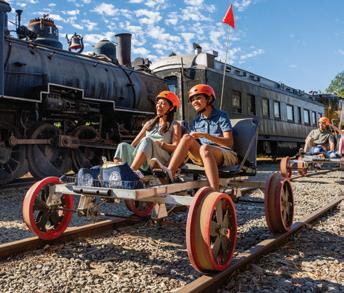
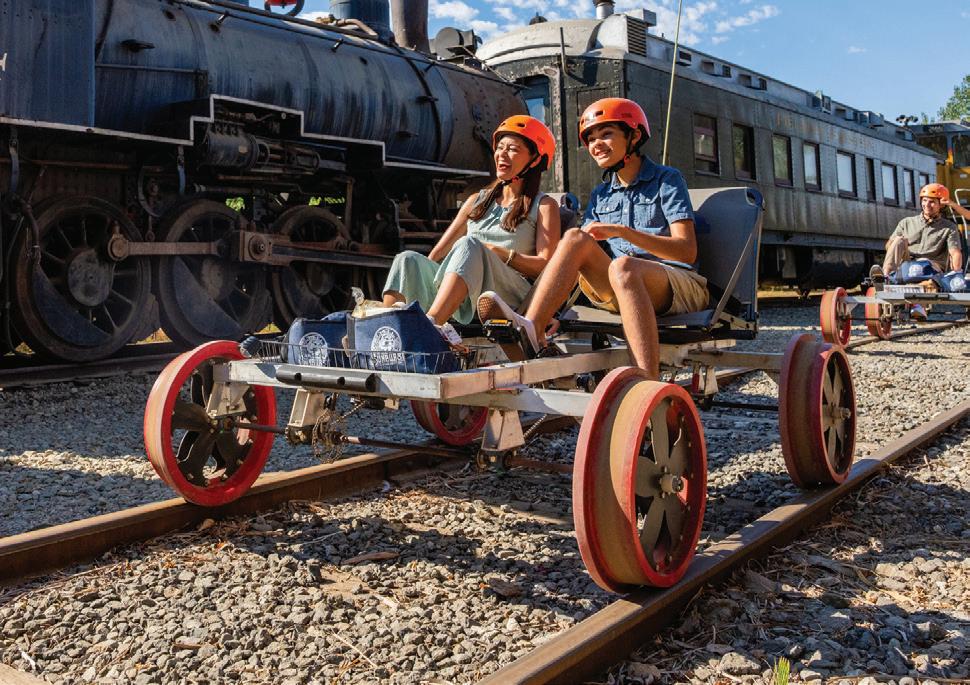
For those looking for a fresh way to explore the region, Sunburst Railbikes offers an experience that blends outdoor adventure, local history and a touch of nostalgia. Set along a historic railway line in nearby Fillmore, this unique excursion invites riders to pedal — with a little help — through one of Southern California’s most picturesque agricultural corridors.
“It’s an exciting adventure for all, with picturesque views and smiles that will last!” said Nicholas Martinez, Railbike Manager.
A Journey on the Rails
From the moment guests arrive, the experience is simple, welcoming and memorable. After a brief orientation and safety overview, riders board specially designed railbikes that sit securely on the tracks. Each bike accommodates two people, making it ideal for couples, friends or family members.
The journey itself spans nearly 10 miles round trip and typically lasts about two hours. But unlike traditional cycling, the ride is far from strenuous.
“Our general trip is 2 hours, almost 10 miles in round trip,” Martinez said. “Guests will ride with ease as all railbikes are electric assist and easily doable by all ages and skill levels.”
The electric assist allows riders to focus less on exertion and more on soaking in the surroundings — a key part of what makes the outing so appealing.
A Different View of a Familiar Valley
For locals accustomed to driving along Highway 126, Sunburst Railbikes offers a refreshing alternative perspective of the Santa Clara River Valley.
“It’s a different way to experience the Santa Clara River Valley by winding in and out of the citrus groves without the busy Highway 126 stress,” Martinez said.
The route meanders through working citrus orchards, open farmland and stretches of untouched natural beauty. Along the way, riders often spot wildlife, blooming seasonal crops and the quiet rhythm of agricultural life that defines the region.
The slower pace invites reflection — a rare opportunity to truly absorb a landscape that many resi-
dents usually pass by at highway speeds.
Riding Through History
Beyond its scenic appeal, the railbike route is steeped in California history. The tracks themselves date back well over a century and played a pivotal role in the state’s early development.
“Passengers get to travel on a rail route built in 1887 that was the first railroad track to connect Los Angeles to San Francisco,” Martinez said.
That historical significance adds another layer to the experience. As riders glide along the tracks, they are quite literally following in the path of one of California’s earliest transportation corridors — a reminder of how railroads once shaped commerce, travel and community growth across the state.
A Family-Friendly Outing
One of the standout features of Sunburst Railbikes is its accessibility. Thanks to the electric assist and stable design, the experience is approachable for a wide range of participants.
“Guests will ride with ease as all railbikes are electric assist and easily do-able for all ages and skill levels with each bike seating two people,” he said.
Families with older children, couples seeking a unique date idea and even older adults looking for a gentle outdoor activity can all comfortably take part. The design ensures that riders don’t need prior cycling experience or a high level of fitness to enjoy the journey.
A Memorable Stop Along the Way
Midway through the ride, guests are treated to a stop that often becomes a highlight of the trip:
Prancer’s Farm. “Our guests really enjoy our scheduled stop at Prancer’s Farm with their wide range of farm animals (some that you can pet), seasonal strawberry picking, fresh produce stand and a farm that is fully explorable,” Martinez said.
The stop offers a chance to stretch, explore and connect with the agricultural roots of the area. Depending on the season, visitors can pick fresh strawberries, browse local produce or simply enjoy the charm of a working farm environment.
For many riders, this interlude adds a playful, interactive element that complements the scenic ride.
Safety and Sustainability
Operating along an active historic rail line requires careful attention to both safety and environmental responsibility — areas where Sunburst Railbikes places strong emphasis.
“We pride ourselves with our safety practices from helmets and seatbelts to the Railroad Crossings that activate every time we cross the road!” Martinez said.
The railbikes are equipped with safety features, and riders receive clear instructions before departure. Automated crossing systems further enhance safety as the bikes intersect with roadways.
At the same time, the low-impact nature of the railbikes helps preserve the surrounding environment. By utilizing existing rail infrastructure and electric-assisted travel, the experience offers an eco-conscious way to explore the valley without adding traffic or pollution.
Planning Your Trip
For those considering a visit, planning ahead is key. The popularity of Sunburst Railbikes means that spots can fill quickly, especially on weekends and during peak seasons.
“Tickets start at $249 for 2 people; advanced reservations are highly encouraged as Railbikes can sell out,” Martinez said.
Whether you’re seeking a new outdoor activity, a family-friendly excursion or simply a different way to experience a familiar landscape, Sunburst Railbikes offers a ride that blends relaxation, history and scenic beauty in equal measure.
For more information, visit www.sunbursttrain. com or call (805) 844-5075.
PHOTO COURTESY SUNBURST RAILBIKES
Keep Santa Clarita Green
By Ken Striplin Santa Clarita City Manager
Each spring, the City of Santa Clarita hosts a series of Green Santa Clarita events designed to help residents make environmentally responsible choices while keeping our community clean and sustainable. From opportunities to safely dispose of hazardous materials to programs that reduce litter and encourage alternative transportation, these events provide simple ways for residents to take part in protecting the environment.
Join the community for the annual Neighborhood Cleanup on Saturday, April 25, from 8:00 to 11:00 a.m., as part of our Earth Day celebration! This community-wide volunteer event invites Santa Clarita residents to help keep neighborhoods, parks and public spaces clean and beautiful. Volunteers are asked to pre-register online at GreenSantaClarita.com and select a supply pick-up location at Bridgeport Elementary (23670 Newhall Ranch Road), Canyon Country Park (17615 Soledad Canyon Road) or the Newhall Community Center (22421 Market Street). On the morning of the event, participants can visit their selected drive-thru location to collect trash bags, gloves and other materials before heading out to clean their local areas. By volunteering just a few hours of time, you can help make a difference by keeping Santa Clarita clean and litter-free for everyone.
Another opportunity for residents to support sustainability and protect the environment is the Household Hazardous Waste and Electron-
ic Waste Collection event. This free, drive-thru event on Saturday, April 11, at the South Parking Lot of College of the Canyons (26455 Rockwell Canyon Road) allows residents to safely dispose of many common household items that require special disposal and should never be thrown away in regular trash or poured down drains, including old electronics, batteries, paint, motor oil and cleaning chemicals. This event provides a safe, convenient way to properly dispose of these materials so they can be recycled or handled responsibly. Proper disposal prevents harmful chemicals from entering landfills, waterways and soil, while recycling electronics allows valuable materials to be recovered and reused. No pre-registration is required.
Later this spring, residents are invited to participate in the Bike to Work Challenge, from Monday, May 11, through Friday, May 15. This annual event promotes alternative transportation by encouraging commuters to leave their cars at home and ride their bicycles to work, promoting cleaner air, reducing traffic congestion and supporting healthier lifestyles. A highlight of the week will be on Thursday, May 14, when cyclists can visit designated pit stops throughout Santa Clarita between 7 and 9 a.m. These pit stops will offer refreshments, giveaways and opportunities to connect with fellow cyclists. Participants can also enter raffles for a chance to win prizes, making the event both fun and rewarding.
To learn more about these events and how to participate, visit Green SantaClarita.com.
Ken Striplin is the City Manager for the City of Santa Clarita and can be reached at kstriplin@santaclarita. gov.
Most families know and love their tried-andtrue family traditions, especially when it comes to the secret sauces, time-tested techniques and recipes that deserve to be passed down from generation to generation. No matter how legendary the home cooks, though, there’s always room for new tricks. Incorporating new techniques and fresh ideas can invigorate your everyday cooking in unexpected ways. Consider these grandma-approved twists on tradition from the experts at Finish, who offer winning ways to enhance cleanup no matter what techniques you turn to in the kitchen.
Plan Ahead If you’re used to throwing together dinner at the last minute, learning to meal prep can help with trying new recipes. Take a look at what you have on hand before scouring a cookbooks or websites for appetizing dishes to try then head to the store to fill in the missing ingredients.
Club It Up Joining a cookbook club allows you to flex your social muscles and sample new recipes and techniques from different cultures with fellow foodies. For example, this savory, meat-free Lubiyeh recipe just may become a new household favorite. Featuring stewed green beans simmered in a vegan broth with the added kick of Aleppo pepper and sweet red pepper paste, it’s both bright and rich, and pairs well with rice, lavash or thin pita with a smattering of raw onions for a little extra punch.
Simplify Cleanup Once the cookbooks have been shelved and the plates have been cleared, tackle the cleaning jobs with an option like the new Finish Ultimate Quantum —
their breakthrough dishwashing detergent with Finish’s most advanced formula yet — offering an unbeatable clean even on tough stains in hard water (220 PPM). This grandma-approved technique can help you conquer clean dishes, so it makes sense to switch.
Grow a Garden Starting a garden may seem like a daunting task, but it doesn’t have to be. You can begin with a few herbs growing on a windowsill before embarking on a bigger outdoor gardening project, where transforming a small patch of earth for growing vegetables, herbs or berry bushes can be just the thing to elevate eating at home.
To learn more, visit finishdishwashing. com.
Lubiyeh
Lebanese Green Beans Stewed with Tomatoes and Garlic
Recipe courtesy of Jeanette Chawki and the League of Kitchens on behalf of Finish.
Servings 4-6
2 pounds string beans or flat green beans
1/8 pound garlic (about 18 medium cloves)
7 1/2 cups water, divided
1 1/4 pounds plum tomatoes (about 5)
1 tablespoon sweet red pepper paste
1 1/2 teaspoons tomato paste
1/2 teaspoon white sugar
1/2-1 teaspoon crushed Aleppo pepper flakes
1/2 cup extra-virgin olive oil
1 tablespoon kosher salt, or to taste
1 large white or yellow onion, for serving thin pita, lavash or another flatbread, for serving (optional)
Trim ends of string beans or flat green beans. Put beans in bowl. Use hands to break beans into 2-3 pieces about 1 1/2 inches long.
garlic. Trim rough or damaged root ends and cut large cloves in half lengthwise.
In medium saucepan, bring 6 cups water to boil. Once boiling, carefully add plum tomatoes and cook just until skins begin to break, 4-5 minutes. Turn off heat and drain. When tomatoes are cool enough to handle, remove and discard skin.
Cut tomatoes into rough 1/2-inch chunks, removing any white or green parts near stem. Put tomato chunks in bowl. In separate small bowl, stir sweet red pepper paste, tomato paste, white sugar, crushed Aleppo pepper flakes and 1/2 cup water until paste is dissolved into liquid; set aside.
In large wok or skillet with deep sides over high heat, heat extra-virgin olive oil.
Add garlic and fry, shaking pot occasionally, until cloves lightly brown, about 90 seconds. Add green beans and stir with wooden spoon. Turn heat to medium-low and stir in kosher salt. Add 1 cup water and stir. Raise heat to high to bring water back to simmer then lower to medium-low. Cover and cook, stirring occasionally,
just until beans are cooked through, about 20 minutes.
Stir in tomatoes and pepper paste mixture, increase heat to high and cook until liquid boils. Cover pot, keeping lid slightly ajar, reduce heat to medium-low and cook until tomatoes are soft, sauce has thickened slightly and garlic is tender, about 20 minutes. Taste for salt and add if needed. Keep warm until ready to serve.
Put down clean dish towel and place onion on top. Smash onion with heavy cutting board 2-5 times then peel it. Squeeze whole onion over sink between hands to remove some juices. Wash onion under cold running water, squeeze it between hands again then pull it apart into pieces, removing roots and any stem, and put it on small serving plate.
If using pita, separate circles into two thin pieces. Bake or toast thin pita, lavash or other flatbread until crispy or blackened in spots. For sandwiches, warm bread.
Serve stewed green beans and raw onion with pita, lavash or other flatbread, either open-faced or rolled into sandwich. (Feature Impact)
Peel
The Latest News on What’s Happening In Hollywood
By Tony Rizzo
Tom Cruise’s upcoming film finally has a name! In a direction away from action films, Cruise is starring in director Alejandro Gonzalez Inarritu’s (Oscar winner for “Birdman” and “The Revenant”) $125-million black comedy “Digger,” with Jesse Plemons, Riz Ahmed and John Goodman. It wrapped in May 2025 and opens on Oct. 2.
Is Al Pacino, who turns 86 on April 26, a man on a mission? He’s already finished shooting “Lear Rex,” with Jessica Chastain, Ariana DeBose, Rachel Brosnahan, Peter Dinklage and Chris Messina. He also stars in “Killing Castro” with Diego Boneta and is currently filming “Maserati: The Brothers” in
Rome, with Anthony Hopkins, Andy Garcia and Jessica Alba. Plus, he’ll star in “Father Joe” with Kiefer Sutherland, which is filming in Manhattan. There aren’t any release dates for these films as of yet.
What do Arnold Schwarzenegger and Sylvester Stallone have in common? They just can’t seem to move on from characters they’ve created. “Mission: Impossible” director Christopher McQuarrie is writing and directing “King Conan,” a sequel to 1982’s “Conan the Barbarian.” It follows a 78 year-old Conan who’s been king for 40 years and is being forced out of his kingdom. And what a coincidence, Schwarzenegger just happens to be 78! “Conan the Barbarian” was a huge box-office hit in 1982 and grossed $80 million (worth $240 million today).
Sunday-Thursday, April 5-9, 2026 A
NEWHALL
A GREAT AWAKENING tells the true stor y of an unlikely friendship between the Reverend George Whitefield and Benjamin Franklin that resulted in one of the most defining moments in American histor y
T H E D R A M A 1:10 4:20 7:20
A happily engaged couple is put to the test when an unexpec ted turn sends their wedding week off the rails
T H E S U P E R M A R I O G A L AX Y M OV I E B 1:20 3:30 4:00 6:00 7:00
The Super Mario Galax y Movie is an animated film based on the world of Super Mario Bros , and follows The Super Mario Bros Movie, which was released in 2023 and earned more than $1 3 billion worldwide
T H E Y W I L L K I L L YO U E 12:50 3:10 5:30 7:50
THE Y WILL KILL YOU unleashes a blood-soaked, high- oc tane horror-ac tion- comedy in which a young woman must sur vive the night at the Virgil, a demonic cult’s mysterious and twisted death-trap of a lair, before becoming their nex t offering in a uniquely brazen, big screen battle of epic kills and wickedly dark humor
P RO J E C T H A I L M A RY C 12:50 4:15 7:40
Science teacher Ryland Grace wakes up on a spaceship light years from home with no recollec tion of who he is or how he got there. As his memor y returns, he begins to uncover his mission: solve the riddle of the mysterious substance causing the sun to die out but an unexpec ted friendship means he may not have to do it alone
H O P P E R S B 1:20 4:00 7:00
Scientists have discovered how to “hop” human consciousness into lifelike
communicate with animals as animals! The adventure
But a reboot with Jason Momoa in 2011 only grossed $63.5 million. Schwarzenegger might be wiser to revisit “The Terminator,” which spawned six sequels and grossed more than $2 billion. He also has an upcoming role in the martial-arts comedy film “Kung Fury 2,” which David F. Sandberg (“Shazam!”) has written, is producing, and is starring in along with Michael Fassbender and David Hasselhoff. It was shot between 2018 and 2020 but was stopped by investors who filed lawsuits. It is still incomplete with ongoing legal issues.
Add to the mix “The Man with the Bag,” in which Schwarzenegger plays Santa Claus. Alan Ritchson, Awkwafina, Jane Krakowski and Ken Jeong costar in the film.
Meanwhile, Stallone, 79, is an executive producer of the prequel “John Rambo,” which is shooting in Bangkok and stars Noah Centineo as a young Rambo. This is the sixth “Rambo” film; the first five grossed $819 million combined since 2008.
Jennifer Lopez needs a hit film. Even though the musical “Kiss of the
Top Movies
March 30, 2026
1. Project Hail Mary (PG-13) Ryan Gosling, Sandra Hüller
2. Hoppers (PG) Piper Curda, Bobby Moynihan
3. Dhurandhar The Revenge (NR)Ranveer Singh, Akshaye Khanna
4. Ready or Not 2: Here I Come (R) Samara Weaving, Kathryn Newton
5. Reminders of Him (PG-13) Maika Monroe, Tyriq Withers
Spider Woman” won a Tony Award for Broadway legend Chita Rivera in 1993, J.Lo’s recent film version, which she also produced, cost $30 million and bombed! So, she’s back doing what she does best … making a pair of films for Netflix. The rom-com “Office Romance” stars Lopez, Amy Sedaris, Bradley Whitford, and Edward James Olmos. She’ll also star in director Robert Zemeckis’ crime thriller “The Last Mrs. Parrish,” opposite Nikolaj Coster-Waldau.
“Kiss of the Spider Woman” only earned $2 million, which is chump change compared to the wicked $1.9-billion bite that “Spider-Man: No Way Home” (2022) took out of worldwide box offices!
Jennifer Lopez (Upcoming in “Office Romance”) Depositphotos
The Pros and Cons of Early Retirement
Retirement is a milestone that is often the byproduct of decades of hard work. Though a growing number of working professionals have no intention of ever retiring, the vast majority of adults look forward to the day when they can call it a career. The prospect of early retirement is enticing to millions of people. Though retiring early may seem like a no brainer for individuals in position to do so, a careful consideration of the pros and cons of early retirement can ensure people make the best decision.
Benefits For many people, early retirement is less about finding a beach to relax on and more about pivoting to a second career. In fact, a recent Employee Benefit Research Institute report indicated that 74% of workers plan to get a new job after they retire. In such instances, early retirement is often about turning a long-time passion into a second career. That can help adults achieve a lifelong dream, making it one of the better reasons to retire early. Another advantage to retiring early is the chance to spend more quality time with family. One study from the American Psychological Association found that more than half of working professionals now check work emails after work hours, including on weekends. Forty-four percent even check their email while on vacation. Early retirement enables individuals to escape that round-the-clock career commitment, affording retirees a chance to spend more unfiltered quality time with the people they love most. Retiring early also provides an opportunity to escape a daily grind that many people have indicated has become increasingly burdensome
in recent years. The 2021 Work and Well-Being Survey from the American Psychological Association found that 79% of the roughly 1,500 adults surveyed had experienced work-related stress in the month prior to participating. Work is a leading cause of stress for many people, and stress has been linked to a host of health problems.
Disadvantages Retiring early can seem like a dream, but it could turn into a nightmare for people whose finances aren’t as robust as they need to be to support a lengthy retirement. One report from the Boston College Center for Retirement Research found that around 50% of working families face a significant decline in their standard of living during retirement. Life expectancy has been on the rise in developed countries since 1900, so retiring too early carries some significant financial risk for people who have saved but not necessarily saved enough.
Retiring early also could make people more vulnerable to cognitive decline than they would be if they keep working. One study from researchers at Scotland’s University of St. Andrews found that people who wait until age 67 to retire experience less cognitive decline than people who retire prior to turning 67.
Out-of-pocket medical costs are another significant disadvantage to retiring early. Employer-sponsored medical insurance tends to cost individuals less than private plans, which is a significant consideration for individuals at a point in their lives when they may need to visit doctors more often. Early retirement has its advantages and disadvantages. Individuals must consider both to make the best decision for them. (MC)
Enjoy affordable, well-planned group travel designed especially for mature travelers. Our guided tours include accommodations, transportation, baggage handling, sightseeing, entrance fees, a professional Tour Director, and select meals—so you can relax and enjoy the journey. Airfare can be added from your gateway city at an additional cost.
MUST BOOK BY 6/30
Albuquerque Balloon Fiesta & Southwestern Tour
10 DAYS STARTING AT $2,749 $2,499* BASED ON SEP 25, 2026 DEPARTURE
• Witness the Albuquerque International Balloon Fiesta
• Soak up the history & culture of New Mexico in Albuquerque and Santa Fe
• Tour Roswell with its exhibits of the alleged UFO crash
BOOK BY 6/30
Autumn Leaves Tour
13 DAYS STARTING AT $3,799 $3,549* BASED ON SEP 14, 2026 DEPARTURE
• Experience autumn in New York
• Tour one of Newport’s famous mansions
• Discover the Freedom Trail in Boston
• Enjoy a guided city tour of Philadelphia
Keep Your Home Safe and Sound with a New Solar Generator
Astorm is raging outdoors, but you and your family are safely tucked away in your cozy home … that is, until the power goes out. You don’t know if the outage will last minutes, hours or days, but you do know that you need backup power quick to keep the heat and lights on and necessary appliances like your fridge running.
The first solution you might think of is your gas generator. However, you can’t safely use it indoors, and it might be too dangerous to brave the weather to run the generator outdoors. Plus, you may not have enough gas to turn the generator on, let alone power what you need.
Instead of hoping the power comes back on sooner rather than later, consider upgrading to a safer, reliable backup power source: a solar generator.
Not a Matter of If but When
Power outages are becoming more and more common. According to the U.S. Energy Administration, Americans averaged 11 hours of outages in 2024nearly double the prior decade’s average. States that experienced the most time without power dealt with major weather events like hurricanes.
Given the increase and duration of power outages, it pays to be prepared to weather the storm comfortably and safely inside your home.
The Problem with Gas
For decades, gas generators were the go-to backup power solution for many homes. However, gas has many drawbacks.
First and foremost, gas generators create carbon monoxide, which means they’re not safe to run inside your home or garage. Depending on the storm, they may not even be safe to operate outdoors. For apartment dwellers without dedicated outdoor spaces, a gas generator isn’t even an option.
Second, gas generators require you to keep fuel on hand. You can’t rely on leftover gas from its last use. Depending on the intensity of the storm, you may not be able to get to the gas station before or after a disaster. Even then, the gas station may not have fuel available due to high demand or supply disruptions caused by the storm.
Solar: A Modern Solution
Gas generators were built for a different era with
different needs. To tackle today’s backup power needs, you need a modern solution like a solar generator.
When it comes to powering your home during a storm, a solar generator offers several benefits, including:
• Fume-free, quiet operation
• Easier maintenance
• Multiple charging methods
• Modular, scalable designs
Solar generators aren’t just for homeowners. Now, apartment residents can finally have reliable emergency power instead of waiting for the lights to come back on.
Best of all? You won’t run out of fuel. All you need is the sun.
A Solution for any Home
If you’re ready to upgrade to a solar-powered generator, consider one of Jackery’s home backup power stations. For example, the Solar Generator 5000 Plus is reliable backup power accessible to any household, designed to bridge the gap between portable generators and complex permanent home energy systems.
As the name suggests, solar is the main charging source for the portable home generator. However, it can also be charged via a standard wall outlet or 12-volt car port. When paired with Jackery’s Smart Transfer Switch, the 5000 Plus can connect directly to a home’s circuit panel, automatically delivering backup power the moment the grid goes down - no extension cords, no manual intervention.
When running, the 5000 Plus is completely silent and 100% fume-free, ideal for safe indoor use. The solar generator also requires virtually no maintenance. That means no oil changes, no fuel stockpiling, no seasonal startup rituals.
The solar generator’s size is versatile enough for apartment use and powerful enough to power all your needs in a house. Thanks to its modular and
scalable design, you can easily expand the solar generator’s total power capacity with additional battery packs.
But backup is only the beginning. When the Solar Generator 5000 Plus is expanded to its full 60kWh modular capacity and paired with a Smart Transfer Switch, it becomes more than an emergency power source. Homeowners — especially those with electric vehicles or higher daily energy use — can lower their electricity bills by up to $11,800 a year through simple peak shaving, which means charging the system when rates are low and using stored power when prices rise. It’s an easy way to make your energy dollars go further, with no noise, no fumes and no ongoing fuel costs. For many households, it’s not just a cleaner backup option. It’s a practical, longterm upgrade that can pay off year after year.
A Smarter, Safer Upgrade
Don’t wait for disaster to strike. Before the next storm hits, ditch your old gas generator and upgrade to solar. To learn more about this portable solar generator and Jackery’s other power solutions, visit Jackery.com. (BPT)
It’s Time to Scarify Your Lawn for Better Growth
To those unfamiliar with lawn maintenance, the term “scarify” might sound like something horror movie directors hope to do to audiences who watch their films. But scarifying has nothing to do with frightening filmgoers, and everything to do with promoting a lush, green and healthy lawn.
What does it mean to scarify a lawn?
Scarifying a lawn involves the use of a scarifier to remove dead organic matter that can build up on a lawn over time. When such thatch develops and settles in on a lawn, it can hinder growth by blocking water and nutrients from reaching the soil.
Scarifying with a scarifier, or a rake in a smaller lawn or one where thatch buildup is not significant, can help to ensure a lawn can benefit from water and nutrients, such as those which are often found in fertilizers.
Is a scarifier necessary?
Lawn and garden tools make yard work easier, and a scarifier is no exception. Scarifiers range in price, but many effective machines are relatively inexpensive when compared to more costly machines like lawn mowers and aerators.
While a scarifier certainly can make dethatching easier, some homeowners might be able to get
by with a spring-tined rake. However, it’s less labor-intensive to forgo a rake and use a scarifier on larger properties. Are there additional reasons to scarify?
Thatch buildup also can promote the growth of moss, so scarifying can decrease the chances that healthy grass is pushed to the side by sponge-like moss that can quickly overtake a property.
Is there anything I should know about scarifying?
A lawn that has never before been scarified is likely to produce a substantial amount of thatch, which can be made up of old grass clippings, leaves and moss. Though many scarifiers come with attachable buckets that collect the thatch, such baskets tend to be rather small and fill up quickly, forcing frequent stopping that can add a considerable amount of time to the job. If possible, homeowners with lawns that have significant thatch buildup might want to scarify without the bucket attached. Doing so will leave lots of piles of dead organic matter strewn about the yard, but the job is likely to go more quickly if those heaps are gathered up with a rake after scarifying and then discarded.
Constant stopping to empty a small bucket filled with thatch will compromise efficency and that can be frustrating. Homeowners also should not expect their lawns to stun after a scarifying session. The lawn will likely look worse, but that’s only temporary. Once the dethatched lawn gets some water and fertilizer, the soil beneath will be more ready to receive
them, and the lawn will soon look much better.
Are all scarifiers the same?
Homeowners are urged to do their homework and read product reviews before choosing a scarifier. The majority of scarifiers now on the market are electric, so homeowners will need the ability to plug into a power source when using such products. They also will need to negotiate around the cord, which should be a lengthy extension designed for outdoor use. Homeowners with particularly large properties may want to purchase a gas-powered scarifier, but such products are harder to come by than their electric counterparts, and could be considerably more expensive as well.
When should I scarify?
Various lawn professionals recommend scarifying a lawn at least once per year, and springtime is a popular season to do so. Scarify prior to an initial fertilizer application so that does not block the lawn from getting the nutrients in the fertilizer. A second scarifying session may be necessary in fall.
Scarifying can be an important step in creating a stunning and healthy lawn. (MC)
Scarifying has nothing to do with frightening filmgoers, and everything to do with promoting a lush, green and healthy lawn. (MC)
Who hasn’t tapped fingers on a desk with anxiety or shook a leg under a table awaiting some sort of news? These motor impulses may seem involuntary, but they largely are under the control of the individual. For a portion of the population, fidgeting and tremors are out of their control, and are hallmarks of a movement disorder called Parkinson’s disease.
The Parkinson’s Foundation says Parkinson’s disease (PD) affects 10 million people worldwide. PD is a progressive neurodegenerative disorder that predominantly affects the dopamine-producing neurons in an area of the brain called the substantial nigra.
Since PD affects the nervous system,
various parts of the body controlled by nerves can be impacted by the disease. Symptoms often start slowly and may be virtually undetectable to the average person. The Mayo Clinic says the first symptoms may be a barely notice-
ment. Activities that were once easily performed now take much longer. There often is a decrease in facial expression, called “masked face.” A person with PD may not move his or her arms while walking.
Postural instability This impaired balance and change in posture can increase the risk of falls. Postural instability also may affect walking gait. Someone with PD may appear to be shuffling.
able tremor in just one hand. Stiffness or slowing of movement also can be an early marker of the disease. Some people with PD may begin to have expressionless faces and speech may become soft or slurred. Symptoms worsen as the condition progresses.
The National Institute of Neurological Disorders and Stroke identify these four primary symptoms of PD, though it should be noted that everyone experiences symptoms differently.
Tremor Shaking often begins in a hand, although a foot or the jaw may be first affected. One tremor characteristic of PD is a rhythmic back-andforth motion that may involve the thumb and forefinger and appear as “pill rolling.” It is most obvious when the hand is at rest.
Rigidity Muscle stiffness and resistance to movement affects many people with PD. The muscles remain constantly tense and contracted so that a person aches or feels stiff. This rigidity can become obvious when another person tries to move the individual’s arm, which will only move in short, jerky movements known as “cogwheel.”
Bradykinesia This is a slowing down of spontaneous and automatic move-
The cause of PD remains unknown. Scientists believe a combination of genetic and environmental factors are at the root of the disease. There is no cure for PD, although there are treatment options that may help alleviate some symptoms. Currently there is no treatment to slow the progression of PD.
The Mayo Clinic says changes occur in the brains of people with PD. Notably there is the presence of clumps of substances called Lewy bodies. These Lewy bodies often show a widespread protein called alpha-synuclein, which cells can’t break down. Researchers have found alpha-synuclein in the spinal fluid of people who later develop PD.
The Parkinson’s Foundation says people with PD take domaminergic medications to replace missing dopamine in the brain. This helps to treat various symptoms. Ongoing research into PD has led researchers to find ways to identify biomarkers for PD that can lead to earlier diagnoses and more tailored treatments.
Various conditions can produce symptoms similar to PD. It is best to discuss any concerns with a doctor. A consultation with a neurologist likely will be recommended. With the right treatment and support, someone with PD can still live a quality life for years after diagnosis. (MC)
How to Talk to Your Family About Money
Money management is not only a logistical challenge for many families, it can be an emotional one too, especially when it comes to transferring wealth from one generation to the next. Open, honest conversations about your financial values and intentions can cut through some of the stress, and help family members avoid resentment, confusion and even legal strife down the line.
“With American Boomers poised to transfer an estimated $68-$124 trillion dollars to their Gen X, Millennial and Gen Z heirs by 2048, the time to have the conversation with your family about money and inheritance is right now,” says Heather Hunt-Ruddy, divisional leader, Wealth & Investment Management at Wells Fargo. “It starts with letting go of the notion that money is a topic to avoid.”
Hunt-Ruddy offers these tips to facilitate productive communication in your family:
Don’t wait to plan Don’t postpone key decisions
CREEPY PLACES
Continued from page 6
Trail to a Forgotten Powerhouse: Norco’s Hidden Ruin
In the city of Norco, a short and easy hike leads to an unexpected piece of Southern California history.
The Norco Powerhouse Trail is less than a mile long, making it a quick outing for hikers looking for something a little different. The path winds through a quiet stretch of landscape before revealing its destination: an abandoned hydroelectric power station dating back to the early 1900s. Along the route, hikers pass through a small tunnel that adds an element of surprise to the journey. But the real highlight comes at the end of the trail, where the old Norco Powerhouse stands covered in graffiti and weathered by time.
about your health, caregiving and estate until there is a crisis. Pressure can cloud judgment and lead to snap decisions. Worse still, a sudden illness or accident may leave you unable to speak for yourself. Get your house in order now so that your wishes can be carried out as intended.
Don’t wait to share Emergencies are also not the best time to share important decisions about your estate with your family. Begin the conversation intentionally and calmly.
Keep it up Once the ice is broken, get into a rhythm of recurring financial conversations where you discuss goal-setting, review milestones and go over any updates or changes to your plans. It’s helpful to know in advance what topics you’d like to cover and who you’d like to be present for each conversation.
Set the tone It’s important that financial conversations go beyond just numbers on the page. By maintaining a collaborative tone and leading with
The building once played a role in generating hydroelectric power for the region, but today it sits empty, its concrete walls marked by years of decay and artistic expression.
Visitors can explore the exterior and carefully step inside, though caution is advised due to broken glass and other debris commonly found in abandoned structures.
Despite its eerie appearance, the site has become a favorite for photographers and urban explorers who are drawn to its mix of industrial history and haunting atmosphere.
For those willing to seek them out, places like the Norco Powerhouse, Bombay Beach and the Burro Schmidt Tunnel offer a reminder that Southern California isn’t just sunshine and surf. Sometimes the most memorable destinations are the ones that tell strange stories from the past — and leave visitors wondering what might still linger there today.
open-ended questions, you can foster a multi-sided dialogue that ensures everyone’s voices are heard, concerns are aired, and values are shared.
Prepare the next generation Many younger adults lack financial know-how. To empower the next generation to manage the inheritance you leave them, as well as navigate their own finances, consider introducing them to the team that helped create your estate planning strategy, such as your attorney, financial advisor and CPA. It’s also helpful to recognize that their needs and preferences may differ from yours. For example, younger individuals may prefer holistic financial advice delivered digitally. Ultimately, you’ll want to ensure your children or other beneficiaries have both basic financial experience and are set up with a team they trust.
More insights on generational wealth and other financial topics can be found by visiting wellsfargoadvisors.com. (SPT)
Travel Distances
& Day Trip Tips
Burro Schmidt Tunnel – Mojave Desert Located about 95 miles from Santa Clarita, the Burro Schmidt Tunnel sits in a remote area near Red Rock Canyon State Park off Highway 14. The drive takes roughly two hours and passes through some dramatic desert scenery. Visitors should bring plenty of water, sturdy shoes and check road conditions before heading into the area, as the site is isolated and services are limited.
Bombay Beach – Salton Sea Bombay Beach lies about 210 miles southeast of Santa Clarita, making it a longer road trip of roughly four hours each way. Because of the distance, many travelers turn the visit into a full-day or overnight adventure. The eerie shoreline, art installations and abandoned buildings have become popular with photographers exploring the haunting landscape of the Salton Sea.
Norco Powerhouse Trail – Norco For a much closer outing, the Norco Powerhouse Trail is about 90 miles from Santa Clarita and takes around 90 minutes to reach depending on traffic. The trail itself is less than a mile long, making it a quick and easy hike that leads to the abandoned hydroelectric building — a favorite stop for hikers and urban explorers looking for something a little different.
Like our popular full-size Honeybells, Mini Honeybells are packed with rich avor and juicy goodness, but come in a size that ts in the palm of your hand. While “bell” is in their name and they’re part of the Honeybell family, Minis don’t always fully develop into a bell shape. But we can assure you they don’t lack in quality or taste! Rare Hale Honeybells are available in limited quantities for a limited time! Pre-order now to reserve your share of this year’s crop with this delicious deal!
Visit These Historic Trust Sites
America’s semiquincentennial marks a great time to explore 250 years of United States history. There’s no shortage of ways to engage with American history, which has been well documented in books, films, magazines, websites, and more. Visiting a historic preservation site is another way to experience American history. The National Trust for Historic Preservation was founded more than 75 years ago as a means to preserving places that tell a story about America’s history as well as the history of the land that predates the formation of the United States. Many such places exist across the United States, and the following are some those interested in engaging with American history can visit.
Fioli, Woodside, California This estate situated on the unceded ancestral lands of the Ramaytush Ohlone serves as a community cultural center featuring 654 acres of stunning landscape. The National Trust notes the estate was originally built as a private residence in 1917 but was opened to the public in 1975. The site features 16 acres of English Renaissance gardens, a roughly seven-acre orchard, and a nature preserve with eight miles of hiking trails.
Acoma Sky City, Pueblo of Acoma, New Mexico The National Trust notes Acoma Sky City is the oldest continuously inhabited community in the United States. A tour of Sky city may include a visit to San Esteban del Rey, a seventeenth century church. Visitors also may view pueblo dwellings located along the 367-foot-tall mesa that’s been inhabited for nearly 1,000 years.
Brucemore, Cedar Rapids, Iowa Io-
wa’s only National Trust site is among the most significant cultural landscapes in the midwestern United States. Brucemore was constructed in the late nineteenth century and is a must-see locale for anyone interested in the stories of industrialists, artisans, architects, and others during a point in American history that has become synonymous with innovation. Visitors to Brucemore can explore the 26-acre estate and some of its more unique and notable features, including the Tahitian Room and Grizzly Bar added to the estate when Margaret and Howard Hall, the last residents of the mansion at Brucemore, called the grounds home.
The Shadows, New Iberia, Louisiana The Shadows was built nearly 200 years ago along the banks of the Bayou Teche. More than 200 men, women and children were enslaved at this site before the start of the American Civil War, and a visit to the site today provides a balanced and nuanced take on what life on a sugar cane plantation was like for property owners and enslaved individuals. A trunk in the attic of the property preserved thousands of letters, photographs, and receipts, which are continuously researched and utilized to provide unique insight into a much-studied period in American history.
These are just a handful of the many historic sites across the United States that can provide an invaluable glimpse into American history. (MC)
Tips and Tricks for Traveling with Pets
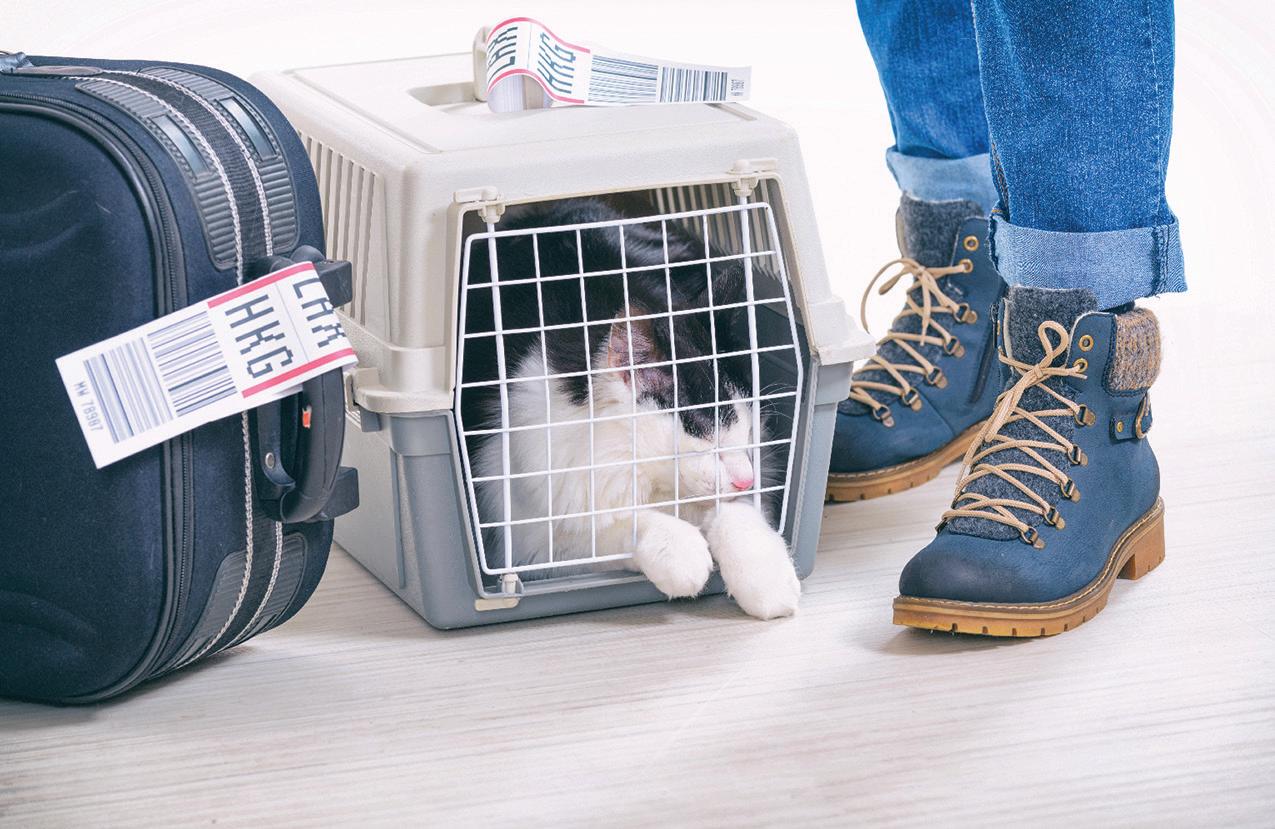
As individuals and families ponder business trips or vacations, they may think about bringing a beloved pet along.
According to a AAA/Best Western survey, 85% of dog owners travel with their dogs. The most popular vacations to let pooches tag along include going to the beach, camping and hiking.
As a greater number of people are engaging in more activities with their pets, businesses in the travel and hospitality sector are taking notice and have become more accommodating to four-legged guests. However, there’s still plenty to learn when taking a dog along as a travel companion. Explore these dog travel tips.
Invest in a Crate
Even if the dog does not need a crate at home, it’s best to have one for travel. Crates often are required for airline travel and can keep dogs safer in cars. Many hotels also require that dogs be crated in the rooms to keep them out of trouble and prevent damage.
A crate should be large enough that the dog can stand, turn and lie down, according to the American Kennel Club.
Carry Pet-Related Documents
It’s important to prove that the dog is healthy and current on vaccinations. Officials may ask to see documentation when traveling abroad. Some travelers also may want to investigate pet passports.
The USA does not require a pet passport, but the European Union pioneered pet passports to enable animals to move more freely throughout its member nations.
Plan a Short Excursion First
If you have never traveled with a dog before, make the first trip a short one, such as an overnight or two-day stay. This way, if the trip turns into a fiasco, checkout isn’t a week away. Shorter trips also help people figure out what works and what will need to change the next time.
Expect Some Fees
Most hotels charge a fee for doggy clients. A fee of $25 to $50 is pretty standard. There also may be a designated pet floor to minimize the chances that guests without pets will be forced to interact with animals.
Not Normal Behavior
A dog who is calm at home may be out of sorts while traveling. It’s not uncommon for a dog unphased by people at home to suddenly be anxious and bark at sounds in a hotel hallway.
Pet-Friendly Restaurants
Smarter Travel says that some hotels won’t allow a guest to keep the dog alone in the room. That means meal time can be tricky. Find restaurants
Bring Water
When packing food, pack a few gallons of water as well, even though it can be cumbersome. Some dogs with delicate digestive systems may be upset by drinking the local water. A case of diarrhea is compounded further by having to make it into an elevator and outside the hotel in time.
Tire the Dog Out
Exercised dogs tend to be well-behaved dogs. Make time to go on long walks, visit a dog park or engage in other activities that will make the pup tired so it’s less likely to cause problems at the hotel.
nearby that allow pets. Many that have outdoor seating may enable a leashed pet to stay near the seating perimeter.
Learn the ropes of traveling with a dog to increase the opportunities for having lots of fun with Fido in tow. (MC)
PUZZLES
SOLUTIONS
What Kings This Time?
Driving by the 64th No Kings rally yesterday, I saw the same old worn- out hippies carrying the same old worn-out signs. Talk about another futile, inept gesture. What has happened since the last time these holier-than-thou, Vietnam-era relics tried to block the intersection of Valencia and McBean? It got me thinking. Do these probably intelligent people know that the last king to meddle in our nation’s affairs was King George III some 250 years ago? Newsflash! He is no longer with us. Another idea came to mind. Easter Sunday was only a week away. Maybe this assembled lunatic throng were all atheists. Maybe they didn’t want to acknowledge the King of Kings, Jesus Christ. But that would be low, even for this group. Giving my neighbors the benefit of the doubt: Maybe these misguided people are all former Sacramento Kings basketball fans upset with their anemic 19-56 record. They have a right to be upset. The Kings have been a doormat in the NBA’s Western Division for years. Plus, their hometown, Sacramento, is just a wide spot on Interstate 5 where Democrat politicians gather to ruin our state. That has got to be the answer. How can I blame you for protesting that?
Larry Moore Valencia
Submit a Letter to the Editor
Include name, address & phone. E-mail: letters@signalscv.com.
ETHICALLY SPEAKING
Easter and Ethics
By David Hegg
Back in the 1960s, Joseph Fletcher, an Episcopal clergyman, proposed a new approach to ethics. Built on the assertion that love is the only absolute, Fletcher declared certain ethical norms can be violated if love dictates. This came to be known as “situational ethics.” While few could argue with the priority of love, this approach quickly deteriorated into pragmatism. The individual could decide how love factored into the situation and do as he pleased. Fletcher and his adherents were unable to quantify love, or better, they could not determine its rightful object. Love for what? Personal happiness or societal benefit? Love for truth or love for expediency?
Situational ethics has had an uncertain academic life since Fletcher’s sincere attempt to champion love. Today, it is seldom studied or discussed. But it is nevertheless prevalent in our daily lives. It is actively in play, and we can dispense with the fancy title and label it for what it is: an ethical compromise. Today is Easter for many, Resurrection Sunday for some, and just another day to eat with family for still others. What started out as a Christian religious celebration of the resurrection of Jesus has dissipated into other things. My point is not to talk about the basis of this monumentally holy holiday. If you read this column, you know where I stand as a pastor and follower of Jesus Christ. This column intends to contrast the ethic of honest communication with the silliness of compromise.
An increasing number of agnostics, atheists and irreligious political liberals write books and protest against the existence of God. They proclaim the supposed arrogance and ignorance of religious folks who have the audacity to pour their faith into the bowl of political activity. Recently, we saw this as anti-religion activists stormed a Baptist church in Minneapolis with the intention of disrupting worship and goading the church family into behavior that would undermine their beliefs. Additionally, we see those for whom religious pluralism – a constitutional rock in our country’s foundation – no longer applies to those who follow a biblical ideology. Recently, a famous politico’s wife said “Christianity is dangerous” and “evangelicals are dragging America backwards.” It seems the plan is to push historical Christianity to the margin of society, and preferably, off the page entirely. They rally supporters to unite against churches, schools, and other places where God
and the trappings of religion are found. However, if they remain peaceful, this opposition is their right and privilege given that we live in a pluralistic country where every viewpoint has standing in the public square. Those who advocate for a Christianity-free society need to be consistent in their ethics. If there is no God, then when tragedy strikes, don’t try praying. Don’t ask others to pray with and for you. When cancer strikes your family, when terrorists strike, stand in front of the cameras and explain how this is to be expected given that the universe has no design, no controlling element. Explain how we should all take comfort in random chaos of the universe, that life has no purpose, no goal, and hence, no value in the long run. If you think Christianity and religion are just gobbledygook, be ethical enough to say so, and consistent enough to propose a reasonable alternative to faith, prayer, and the complex design of our world.
Today there are a number of Christian churches shaving the edges off their ethics, pulling a bait-and-switch as part of their celebrations of Jesus’ resurrection. They offer Easter egg hunts, appearances by the Easter Bunny, and – O yes – just a bit about Jesus. Come for the bunny, bonnets, and baskets ... and stay for Jesus! I find this just as ethically reprehensible. Those who believe Jesus Christ rose from the dead, gloriously bringing eternal life to light, have no business thinking his story needs help from the Easter aisle at the supermarket. Since when can we have it both ways? Since when is it ethical to draw a crowd with the stuff of myth and secularism and then give them religion? The ethical compromise in such tactics is tragic. Ultimately, ethical behavior is not situational. Above all else, we are to be true to our core values even when doing so is uncomfortable. It is only when we are consistent that there is room for meaningful dialogue with those with whom we differ. If the lines of our beliefs are blurred whenever pragmatism demands, how will anyone take us seriously? When it comes to this area of ethical behavior, I have much more respect for those who are consistent, even when wrong, than for those who believe their foundations can be abandoned at no cost. And, for those of you who understand ... He is risen! He is risen indeed!
Local resident David Hegg is senior pastor of Grace Baptist Church. “Ethically Speaking” appears Sundays.