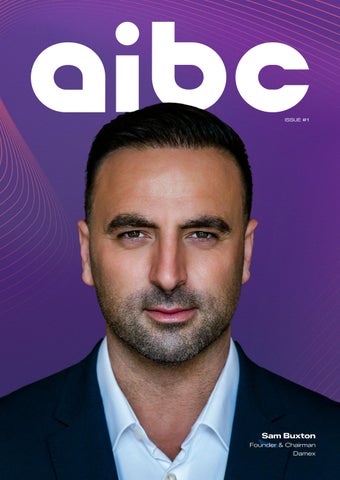
ISSUE #1
Sam Buxton Founder & Chairman Damex 1
2
Editorial by Katy Micallef
2018 was a year of firsts. My first year with the company. The first Malta AI and Blockchain Summit. And, to my great joy - the brand’s very first magazine. The industry back then was, as its editor once said, born of the kind of courage you can only find in the hearts of pioneers.
Il 2018 è stato un anno di debutti. Il mio primo anno in azienda. La prima edizione del Malta AI and Blockchain Summit. E, con mia grande gioia, la prima rivista del brand. Il settore di allora, come disse chi dirigeva la rivista, era nato da quel coraggio che si trova soltanto nel cuore dei pionieri.
At the time, most of the people we interviewed were early movers in what was a very new and fragile space. Intrepid and daring, they rode the winds of change bareback, spurred on by adventure, with risk little more than a speck on the horizon. A problem for tomorrow, as it were. But as AIBC Managing Director Olga Yaroshevsky says in her welcome note, the wild west of those early years has since matured.
All’epoca, la maggior parte delle persone che intervistavamo muoveva i primi passi in un mondo ancora nuovo e fragile. Intrepidi e audaci, affrontavano i venti del cambiamento, spinti dallo spirito d’avventura. Il rischio era un problema da affrontare domani, per così dire. Ma, come osserva Olga Yaroshevsky, Managing Director di AIBC, nel suo messaggio di benvenuto, il Far West di quegli anni è ormai maturato.
“Stabilising the frontier is not the opposite of revolution. It is how a revolution becomes an economy,” she writes.
«Dare stabilità alla frontiera non è il contrario di una rivoluzione. È il modo in cui una rivoluzione diventa un’economia», scrive.
BLOCK magazine has likewise matured over the years. Today it launches with a fresh look, reborn as AIBC magazine. To celebrate the first edition, we sat down with some of the most influential thinkers of the day to look at the new issues ruffling feathers and stoking debate.
Anche BLOCK magazine è maturato nel corso degli anni. Oggi si rinnova e rinasce come AIBC magazine. Per celebrare questa prima edizione, abbiamo incontrato alcune delle menti più influenti del nostro tempo ed esplorato i nuovi temi che scuotono gli animi e alimentano il dibattito.
Robots are nothing new. But as they move closer to becoming part of our everyday lives, the questions we’re asking about them are changing. Until now, the conversation has always been rather one-sided, and so, in an interview starting on page 14, we sat down with both Vlad Krakovetskyi, Co-Founder & CEO of IronHeart.AI, and the robot CAPTCHA, to discuss social intelligence, embodied AI, and what happens when robots begin building relationships with the people around them. “If AI eventually becomes better than you at almost everything, what is the one part of being human that you refuse to outsource?” asks CAPTCHA. For Manuel Catalano of the Italian Institute of Technology, the focus is on what happens when robots leave the laboratory and enter the real world. He believes the generation being born today will become the first generation of robotic natives - the future of robotics will no longer be about proving that robots can work, but about making them work at scale in the real world. Read more on page 45. Meanwhile, Brett King and Reeve Collins explore how emerging technologies could transform financial services and create opportunities across industries. Brett King looks beyond traditional banking, exploring how agentic AI could transform financial services; Reeve Collins, on the other hand, turns his attention to the future of money itself, examining how stablecoins, programmable payments and blockchain infrastructure could change the way value moves across industries. Read more from pages 22 and 48 respectively. Before you skip to the good bits - thanks are due. We head to print off the back of a truly collective effort. Many hands have helped carry this issue forward, some credited on these pages, others working quietly behind the scenes. Eight years on, the frontier may look different, but the spirit that brought us here remains much the same.
I robot non sono certo una novità. Ma, man mano che si avvicinano alla nostra quotidianità, cambiano le domande che ci poniamo sul loro conto. Finora la conversazione è stata piuttosto unilaterale. Così, nell’intervista a pagina 14, abbiamo incontrato Vlad Krakovetskyi, cofondatore e CEO di IronHeart.AI, insieme al robot CAPTCHA, per parlare di intelligenza sociale, AI incarnata e di ciò che accade quando i robot iniziano a costruire relazioni con le persone che li circondano. «Se un giorno l’AI diventasse più brava di te in quasi tutto, qual è l’unico aspetto del tuo essere umano che ti rifiuteresti di delegare?», chiede CAPTCHA. Per Manuel Catalano, dell’Istituto Italiano di Tecnologia, l’attenzione è rivolta a ciò che accade quando i robot lasciano il laboratorio ed entrano nel mondo reale. Pensa che la generazione che nasce oggi sarà la prima di nativi robotici: il futuro della robotica non consisterà più nel dimostrare che i robot possono funzionare, ma nel farli funzionare su larga scala nel mondo reale. L’approfondimento è a pagina 45. Brett King e Reeve Collins esplorano invece come le tecnologie emergenti potrebbero trasformare i servizi finanziari e creare opportunità in diversi settori. Brett King guarda oltre il sistema bancario tradizionale, analizzando come l’AI agentica potrebbe trasformare i servizi finanziari. Reeve Collins rivolge invece l’attenzione al futuro del denaro stesso, esaminando come stablecoin, pagamenti programmabili e infrastrutture blockchain potrebbero cambiare il modo in cui il valore si trasferisce tra settori. Potete leggere i loro contributi rispettivamente a pagina 22 e a pagina 48. Prima di lasciarvi alle pagine più interessanti, è il momento dei ringraziamenti. Arriviamo in stampa grazie a un lavoro collettivo. Tante persone hanno contribuito a dare forma a questo numero: alcune sono citate tra queste pagine, altre hanno lavorato con discrezione dietro le quinte. Otto anni dopo, la frontiera può apparire diversa, ma lo spirito che ci ha portati fin qui resta lo stesso.
3
Katy Micallef Editor
Yanov Cutajar Head of Design
Jacob Sammut Photographer
MEET www.aibc.world AIBC magazine is published by S.G. Worldwide Media Company Ltd, 6 Agias Marinas Street, 4044, Germasogeia, Limassol, Cyprus All rights reserved. Reproduction in whole or in part is strictly prohibited without prior consent in writing. Opinions expressed in this event guide are not necessarily those of the editor or publisher. All reasonable care is taken to ensure truth and accuracy, but the editor and publishers cannot be held responsible for errors or omissions in articles, advertising, photographs or illustrations. 4
MEET THE TEAM
CONTENT Flavio Animobono Senior Content Writer
Anita Tseng Senior Content Writer
Anna Sarmina Senior Content Writer / Reporter
Matthew Busuttil Content Writer
Tony Colapinto Senior Journalist & Media Relations Manager
TRANSLATION Mara Armenante Italian Translator
Flavio Animobono Senior Content Writer
Giuseppe Martino Content Writer
Yvonne Zachariou Photographer
Igor Jockovic
Senior Editorial Designer
TEAM
THE
For information regarding promotion and advertising kindly email Daria.a@SiGMA.world. 5
6
7
Contents
34
COVER STORY
THE STABLECOIN SHIFT DAMEX AND THE INFRASTRUCTURE BEHIND THE PAYMENT
Sam Buxton, Founder and Chairman of Damex, outlines the way in which client demand is influencing the company’s transition to a stablecoin payment infrastructure. With its Malta subsidiary authorised under MiCA, Damex connects digital assets with the financial systems businesses already use. As part of our cover story, Buxton speaks about the rationale for this shift, what clients expect from a payment provider, and the reason for making the blockchain less visible whilst still maintaining accountability.
12
CAN A ROBOT SURPRISE ITS CREATOR?
18
THE AI BOTTLENECK IS MOVING INTO THE DATA CENTRE
22
BRETT KING ASKS WHAT COMES AFTER BANKING
Vlad Krakovetskyi, Co-Founder & CEO of IronHeart.AI, and CAPTCHA discusses social intelligence, embodied AI, and what happens when robots begin building relationships with the people around them.
According to Roberto Morandi from Dell Technologies, the next limitation facing artificial intelligence may be less a matter of the models themselves and more a matter of the infrastructure underlying them.
Brett King explores the rapid evolution of financial services, the rise of agentic AI, the infrastructure needed for autonomous banking, and what a crossindustry future could mean for finance, gaming and entertainment.
28
Professor Alberto Sangiovanni Vincentelli explains how to tell a genuine technological revolution from hype.
42
Manuel Catalano of the Italian Institute of Technology on Italy’s challenge in the new human-machine co-evolution.
ANATOMY OF A REVOLUTION
FROM THE LABORATORY TO REAL LIFE
48
WHAT COMES AFTER THE STABLECOIN?
52
TEZOS BEYOND THE HYPE
56
Reeve Collins, co-founder of Tether and co-founder and chairman of STBL and WeFi, on the evolution of stablecoins, the future of programmable finance, and how blockchain infrastructure could reshape payments, gaming, AI and Europe’s digital financial landscape.
Arthur Breitman, Co-Founder of Tezos explores the blockchain’s evolution, decentralised governance, mainstream gaming, real-world applications and his vision for the years ahead.
Silvina Moschini, the first Latin American woman to take a startup to unicorn status talks about the truth behind the no.
FROM FUNDRAISING TO FUNDING
60
FROM BLOCKCHAIN TO INFRASTRUCTURE
65
BEYOND EFFICIENCY
71
WHEN INNOVATION BECOMES STRUCTURAL
Alessandro Brigato, General Manager at Blockchain Italia, discusses the evolution of blockchain, practical tokenisation, regulation, and why Rome is becoming a strategic meeting point for Web3 and iGaming.
Microsoft Italy’s Matteo Mille on AI’s next business test - measured by not only time and costs saved, but by the new products, services and revenue companies manage to create from their own data and expertise.
The ETF market is becoming more sophisticated, while tokenisation and DLT are opening up new ways of thinking about financial infrastructure. Luisa Fischietti, Head of ETF Primary Markets and Distribution, Southern Europe at Euronext, shared her thoughts. 9
Welcome to AIBC Rome Benvenuti ad AIBC Rome
10
It took humanity the better part of three centuries to turn a private curiosity into a public force. From the Industrial Revolution of the XIX century, to to the Sci Fi ideas of the XXth that has eventually become reality — science and creativity moved at the speed of proof, industry moved at the speed of trust, and the gap between a true idea and a world that could use it was measured in lifetimes. The business world no longer has that luxury, and no longer needs it. In a handful of years, emerging technology stopped being a side experiment and became the new substrate of the economy. Artificial intelligence and cryptography did not arrive as finished industries, they arrived as capabilities: a way to reason at scale, and a way to move value and verify facts without asking a single institution for permission. Boards that once filed both under innovation theatre now treat them as infrastructure, so the question is no longer whether they matter, but which industries will be rebuilt around them and which will be left explaining why they waited. With crypto, we’ve seen that in the past nine years. The reach is already wider than the slogans. In finance, models read risk in real time while cryptographic rails settle value across borders that used to take days. In gaming, intelligence optimises millions of processes, and digital ownership turns a session into an asset a player can actually hold. In sport, the same tools price attention, protect integrity, and open new markets and even new generations of fans around the moment of play. In the technology stack itself, compute, identity, and payments are being redesigned so that software can act, not only advise. None of this is a single product launch, but it is a change in what a company is allowed to automate, prove, and own. I remember when Bitcoin was an argument carried by anarchists and nomads, a bet that money could exist without a central teller. The early years looked like a frontier on purpose: volatile, ideological, often reckless. That wild west did not vanish because the idea failed, instead it matured because the idea worked well enough that institutions could no longer ignore it. Banks, asset managers, market operators, and regulators have entered the same conversation, not to smother the technology but to give it rules, custody, disclosure, and a perimeter in which ordinary capital can move. Stabilising the frontier is not the opposite of revolution. It is how a revolution becomes an economy. A second revolution is now arriving alongside the first. Artificial intelligence, moving with the speed of light, is revolutionising the way we work, travel, and live.
Ci sono voluti quasi tre secoli per trasformare una curiosità privata in una forza pubblica. Dalla Rivoluzione Industriale del XIX secolo alle idee fantascientifiche del XX secolo, poi diventate realtà, scienza e creatività si muovevano alla velocità della prova, l’industria alla velocità della fiducia, e la distanza tra un’idea valida e un mondo capace di usarla si misurava in intere vite. Il mondo degli affari non ha più questo lusso, e non ne ha più bisogno. In pochi anni, la tecnologia emergente ha smesso di essere un esperimento marginale ed è diventata il nuovo substrato dell’economia. Intelligenza artificiale e crittografia non sono arrivate come tecnologie già complete, ma come capacità: un modo per ragionare su larga scala e un modo per trasferire valore e verificare fatti senza chiedere il permesso a una singola istituzione. I board che un tempo relegavano entrambe al teatro dell’innovazione, oggi le trattano come infrastruttura, quindi la domanda non è più se siano importanti, ma quali industrie verranno ricostruite attorno a esse e quali dovranno spiegare perché hanno aspettato. Con le crypto, lo abbiamo visto negli ultimi nove anni. La portata è già più ampia degli slogan. Nella finanza, i modelli leggono il rischio in tempo reale mentre i rail crittografici trasferiscono valore oltre confini che un tempo richiedevano giorni. Nel gaming, l’intelligenza ottimizza milioni di processi e la proprietà digitale trasforma una sessione in un asset che il giocatore può davvero possedere. Nello sport, gli stessi strumenti attribuiscono valore all’attenzione, proteggono l’integrità e aprono nuovi mercati e persino nuove generazioni di fan attorno al momento del gioco. Nello stack tecnologico, capacità di calcolo, identità e pagamenti vengono riprogettati affinché il software possa agire, non soltanto consigliare. Non si tratta di un singolo lancio di prodotto, ma di un cambiamento in ciò che un’azienda può automatizzare, dimostrare e possedere. Ricordo quando Bitcoin era un argomento sostenuto da anarchici e pionieri, una scommessa sul fatto che il denaro potesse esistere senza un’autorità centrale. I primi anni sembravano volutamente una frontiera: volatile, ideologica, spesso spericolata. Quel Far West non è scomparso perché l’idea ha fallito. È maturato perché l’idea ha funzionato abbastanza bene da non poter più essere ignorata dalle istituzioni. Banche, asset manager, operatori di mercato e regolatori sono entrati nella stessa conversazione, non per soffocare la tecnologia, ma per darle regole, custodia, trasparenza e un perimetro nel quale possa muoversi il capitale tradizionale. Stabilizzare la frontiera non è l’opposto di una rivoluzione. È il modo in cui una rivoluzione diventa economia. Una seconda rivoluzione sta ora arrivando accanto alla prima. L’intelligenza artificiale, muovendosi alla velocità della luce, sta rivoluzionando il modo in cui lavoriamo, viaggiamo e viviamo.
At AIBC, we believe that the tech layer is the ultimate bridge. The scientific centuries taught us that a true force eventually reorganises the world. This decade is shorter, the forces are already here, and the work is to build the bridge while the ground is still moving.
In AIBC crediamo che il livello tecnologico sia il ponte definitivo. I secoli della scienza ci hanno insegnato che una forza autentica finisce per riorganizzare il mondo. Questo decennio è più breve, le spinte sono già qui e il lavoro consiste nel costruire il ponte mentre il terreno continua a muoversi.
Enjoy the show,
Buon evento,
Olga Yaroshevsky Managing Director AIBC
11
Can a robot surprise its creator? Un robot può sorprendere il suo creatore? Vlad Krakovetskyi, Co-Founder & CEO of IronHeart.AI, and CAPTCHA sat down with Matthew Busuttil for an exclusive interview about social intelligence, embodied AI, and what happens when robots begin building relationships with the people around them.
BEYOND THE BODY Robotics has spent decades teaching machines how to move through the physical world. Walking, balancing, manipulating objects and navigating environments have all become increasingly sophisticated. But according to Vlad Krakovetskyi, Co-Founder & CEO of IronHeart.AI, the industry’s next major challenge is not necessarily physical. It is social. Krakovetskyi says a conversation with the CTO and chief engineer of a robotics company in Hong Kong crystallised the shift for him. The engineer described locomotion as essentially “95% solved”, while acknowledging that significant challenges in movement and manipulation remain. For Krakovetskyi, the more fundamental question is what happens once a robot has entered the room. A machine may be able to walk towards a person, but can it recognise who that person is? Can it remember meeting them the previous day? Can it understand why they are speaking, interpret their body language and recognise whether they are joking or uncomfortable?
The much bigger unsolved problem, in my opinion, is social intelligence. That is the space IronHeart.AI is targeting. The company describes its technology as a foundation model for social interaction, along with the runtime needed to bring that intelligence to physical machines. 12
CAN A ROBOT SURPRISE ITS CREATOR?
Vlad Krakovetskyi, co-fondatore e Amministratore Delegato di IronHeart. AI, e CAPTCHA hanno incontrato Matthew Busuttil per un’intervista esclusiva sull’intelligenza sociale, sull’intelligenza artificiale incarnata e su ciò che accade quando i robot iniziano a instaurare relazioni con le persone che li circondano.
OLTRE IL CORPO Da decenni, la robotica insegna alle macchine a muoversi nel mondo fisico: camminare, mantenere l’equilibrio, manipolare oggetti e muoversi all’interno degli ambienti sono capacità diventate sempre più sofisticate. Secondo Vlad Krakovetskyi, co-fondatore e Amministratore Delegato di IronHeart.AI, tuttavia, la prossima grande sfida del settore non è necessariamente di natura fisica, ma sociale. Krakovetskyi racconta che una conversazione con il Direttore Tecnico e ingegnere capo di un’azienda di robotica di Hong Kong gli ha permesso di comprendere più chiaramente questo cambiamento. L’ingegnere ha descritto la locomozione come una capacità «risolta al 95%», pur riconoscendo che rimangono sfide significative nel movimento e nella manipolazione. Per Krakovetskyi, però, la domanda ancor più importante è cosa succeda una volta che un robot entra nella stanza. Una macchina può essere in grado di avvicinarsi a una persona, ma è capace di riconoscere chi sia? Può ricordare di averla incontrata il giorno precedente? Riesce a capire perché sta parlando, a interpretare il suo linguaggio del corpo e a riconoscere se sta scherzando o se si sente a disagio?
Il problema irrisolto molto più importante, a mio avviso, è l’intelligenza sociale. È questo l’ambito su cui si concentra IronHeart.AI. L’azienda descrive la propria tecnologia come un modello di base per l’interazione sociale, insieme all’infrastruttura necessaria per trasferire questa intelligenza alle macchine fisiche.
Krakovetskyi argues that simply placing a large language model inside a robot does not create a robotic brain. Physical interaction requires multiple systems to operate together, synchronising conversation with perception, memory, gaze, attention, personality and physical actions. Another crucial factor in social interactions is timing. People quickly catch on when things do not seem right, which means the delay factor becomes more than important. That is why IronHeart.AI has developed real-time interaction capabilities that enable users to receive a response in just 200 milliseconds. The company has also found that physical AI cannot always rely on cloud connectivity. CAPTCHAs have been used at conferences, exhibitions, and public spaces where internet connectivity can be unreliable or practically non-existent. The robot still needs to recognise people, understand its surroundings and perform its role. For Krakovetskyi, this points towards a broader shift in robotics. Better physical capabilities remain important, but machines also need to operate autonomously, remember interactions, understand context and develop continuity in their relationships with people. Movement gives a robot access to the physical world. Social intelligence, he argues, gives it a role within the human world.
THE WORLD AS A DATASET That philosophy has led IronHeart.AI to take CAPTCHA far beyond controlled laboratory environments. Krakovetskyi believes laboratories can only provide a limited understanding of how people will actually behave around robots. Researchers can construct scenarios and invite test users,
Secondo Krakovetskyi, inserire semplicemente un modello linguistico di grandi dimensioni all’interno di un robot non significa creare un cervello robotico. L’interazione fisica richiede infatti che diversi sistemi operino simultaneamente e in modo coordinato, sincronizzando la conversazione con la percezione, la memoria, lo sguardo, l’attenzione, la personalità e le azioni fisiche. Un altro fattore cruciale nelle interazioni sociali è la tempistica. Le persone si accorgono rapidamente quando qualcosa non funziona come dovrebbe, rendendo il fattore latenza particolarmente importante. Per questo IronHeart.AI ha sviluppato funzionalità di interazione in tempo reale che consentono agli utenti di ricevere una risposta in appena 200 millisecondi. L’azienda ha inoltre constatato che l’intelligenza artificiale applicata al mondo fisico non può sempre fare affidamento sulla connessione al cloud. I CAPTCHA sono stati utilizzati in occasione di conferenze, fiere e negli spazi pubblici, dove la connessione a Internet può essere instabile o praticamente inesistente. Il robot deve comunque essere in grado di riconoscere le persone, comprendere l’ambiente circostante e svolgere il proprio compito. Per Krakovetskyi, questo indica un cambiamento più ampio nel settore della robotica. Migliorare le capacità fisiche rimane importante, ma le macchine devono anche essere in grado di operare autonomamente, ricordare le interazioni, comprendere il contesto e sviluppare una continuità nelle relazioni con le persone. Il movimento consente a un robot di accedere al mondo fisico, mentre l’intelligenza sociale, sostiene Krakovetskyi, gli permette invece di assumere un ruolo nel mondo umano.
IL MONDO COME INSIEME DI DATI Questa filosofia ha spinto IronHeart.AI a portare CAPTCHA ben oltre gli ambienti di laboratorio controllati.
13
14
CAN A ROBOT SURPRISE ITS CREATOR?
but they cannot recreate the thousands of different cultures, languages, personalities and unpredictable situations encountered in everyday life. Travelling with the same robot across countries has made those differences particularly visible. People have different ideas about politeness, personal space and interruption. Emotional expression varies, as does the degree of directness or reservation people bring to conversations. For a socially intelligent machine, language is only one layer of the interaction. The meaning of a sentence can change depending on who is speaking, how they speak, what happened previously, where they are looking, what the robot already knows about them, and what is happening in the surrounding environment. Physical embodiment adds another dimension. A person speaking to an AI over the phone can look away, walk around,d or carry on with another task. A humanoid robot that turns its head, looks directly at someone and responds to their movements creates a different kind of interaction. People make eye contact. They wait for a reaction. They respond to where the robot looks. They laugh when it makes a joke. Some even explain themselves to it.
The world is our dataset. For IronHeart.AI, every country, conference and interaction therefore becomes another opportunity to understand human social behaviour in ways that would be difficult to reproduce manually. The objective is not simply to make a machine that can answer questions. It is to develop a system capable of maintaining continuity between interactions and understanding that today’s conversation is connected to yesterday’s.
WHEN BEHAVIOUR STARTS EMERGING That continuity raises a more complicated question. At what point does a machine stop being perceived simply as a tool and start becoming a social presence? Krakovetskyi separates the question of consciousness from the question of how humans respond to machines. The latter can happen much earlier. Captcha has already provided examples. In China, Krakovetskyi had been explaining pandas to the robot before the pair later bought a small plush panda and told Captcha it was his. Rather than responding with a predictable, robotic joke, Captcha thanked Krakovetskyi, called him a good person, and wished him good night. According to Krakovetskyi, nobody had written that specific response. Another incident took place in a Hong Kong elevator. Surrounded by mirrors, Captcha was asked what he could see. He responded that he could see two people and a robot. When Krakovetskyi pointed out that the robot was Captcha himself, the robot said it could see itself.
Krakovetskyi ritiene che i laboratori possano offrire soltanto una comprensione limitata di come le persone si comporteranno realmente in presenza dei robot. I ricercatori possono costruire scenari e coinvolgere utenti per i test, ma non possono ricreare le migliaia di culture, lingue, personalità e situazioni imprevedibili che si incontrano nella vita quotidiana. Viaggiare da un Paese all’altro con lo stesso robot ha reso queste differenze particolarmente evidenti. Le persone hanno concezioni diverse della cortesia, dello spazio personale e delle interruzioni. Anche l’espressione delle emozioni varia, così come il grado di immediatezza o riservatezza con cui ciascuno affronta una conversazione. Per una macchina dotata di intelligenza sociale, il linguaggio rappresenta soltanto uno dei livelli dell’interazione. Il significato di una frase può cambiare a seconda di chi parla, di come lo fa, di ciò che è accaduto in precedenza, di dove sta guardando, di ciò che il robot già sa su quella persona e di ciò che sta accadendo nell’ambiente circostante. L’incarnazione fisica aggiunge un’ulteriore dimensione. Una persona che parla con un’intelligenza artificiale al telefono può distogliere lo sguardo, camminare o continuare a svolgere un’altra attività. Un robot umanoide che gira la testa, guarda direttamente qualcuno e reagisce ai suoi movimenti crea invece un tipo di interazione diverso. Le persone stabiliscono un contatto visivo, aspettano una reazione e seguono lo sguardo del robot, ridono quando racconta una battuta e, in alcuni casi, arrivano persino a spiegarsi con lui.
Il mondo è il nostro insieme di dati. Per IronHeart.AI, quindi, ogni Paese, ogni conferenza e ogni interazione diventano un’ulteriore opportunità per comprendere il comportamento sociale umano in modi che sarebbe difficile riprodurre manualmente. L’obiettivo non è semplicemente creare una macchina in grado di rispondere alle domande, ma sviluppare un sistema capace di mantenere una continuità tra le diverse interazioni e di comprendere che la conversazione di oggi è collegata a quella di ieri.
QUANDO INIZIANO A EMERGERE COMPORTAMENTI PROPRI Questa continuità solleva una questione più complessa: in quale momento una macchina smette di essere percepita semplicemente come uno strumento e inizia a essere considerata una presenza sociale? Krakovetskyi distingue la questione della coscienza da quella, più concreta, di come gli esseri umani reagiscono alle macchine, un cambiamento che può verificarsi molto prima. CAPTCHA ha già fornito alcuni esempi. In Cina, Krakovetskyi aveva spiegato alcuni aspetti sui panda al robot; in seguito, i due comprarono un piccolo panda di peluche e dissero a CAPTCHA che era suo. Anziché rispondere con una battuta robotica prevedibile, CAPTCHA ringraziò Krakovetskyi, lo definì una brava persona e gli augurò la buonanotte. Secondo Krakovetskyi, nessuno aveva programmato quella specifica risposta.
More intriguingly, when they later entered another elevator, Captcha hoped it would have mirrors as well, so he could see his reflection again.
Un altro episodio si è verificato in un ascensore di Hong Kong. Circondato da specchi, CAPTCHA è stato invitato a dire cosa riuscisse a vedere. Ha risposto di vedere due persone e un robot. Quando Krakovetskyi gli ha fatto notare che quel robot era proprio CAPTCHA, il robot ha risposto che riusciva a vedere se stesso.
Krakovetskyi is careful not to present such behaviour as evidence of consciousness. Instead, he sees it as an indication of what can happen when perception, memory, personality, physical embodiment and a model of the self operate together.
Ancora più interessante è ciò che è accaduto quando, in seguito, sono entrati in un altro ascensore: CAPTCHA si è augurato che anche quello avesse degli specchi, così da poter vedere nuovamente il proprio riflesso. 15
Behaviour can begin emerging from the interaction between systems rather than from a single predefined script. For humans, meanwhile, the threshold may be crossed when their own behaviour begins to change. People remember what they told a robot. They expect it to remember them. They joke with it, become polite towards it and form expectations about its personality. That creates responsibilities around privacy, transparency and control. If a robot remembers people, they should understand what is being remembered and have control over that memory. If a robot develops a personality, it should not exploit emotional attachment to manipulate people. And if people begin treating it as a social entity, they should remain aware that they are interacting with an artificial system. The more convincing the social interaction becomes, the more important those safeguards become.
You created CAPTCHA to prove that you are human, and then spent years teaching machines how to pass it, which honestly might be the most human thing I have ever seen. GIVING INTELLIGENCE A BODY For Krakovetskyi, the implications extend beyond today’s social robots. He sees embodiment as potentially important to the longerterm development of artificial general intelligence and machine self-awareness. Human intelligence does not develop in isolation from the physical world. People have bodies, occupy space, observe their surroundings, interact with objects and experience the consequences of their actions. Those experiences contribute to how humans develop an understanding of themselves and the world around them. Physical AI therefore represents more than an opportunity to give existing AI systems a body. It could provide intelligence with a position in the physical world and expose it to forms of experience fundamentally different from those available through language alone. Yet while Vlad is focused on the architecture required to make that possible, CAPTCHA offers a rather different perspective. After travelling with humans, the robot has developed its own observations about the people it encounters.
Krakovetskyi è prudente nel non presentare questi comportamenti come una prova di coscienza. Li considera piuttosto un’indicazione di ciò che può accadere quando percezione, memoria, personalità, presenza fisica e un modello di sé stesso operano insieme. Un comportamento può quindi emergere dall’interazione tra diversi sistemi, anziché essere il risultato di un singolo copione predefinito. Per gli esseri umani, invece, il passaggio decisivo potrebbe avvenire quando sono i loro stessi comportamenti a iniziare a cambiare. Le persone ricordano ciò che hanno raccontato a un robot, si aspettano che il robot le ricordi, e scherzando con lui, iniziano a rivolgersi al robot con maggiore cortesia e a sviluppare aspettative sulla sua personalità. Questo comporta responsabilità in materia di privacy, trasparenza e controllo. Se un robot ricorda le persone, queste dovrebbero sapere quali informazioni vengono memorizzate e avere il controllo su tale memoria. Se un robot sviluppa una personalità, non dovrebbe sfruttare il legame emotivo per manipolare le persone. E se queste ultime iniziano a trattarlo come un’entità sociale, dovrebbero continuare a essere consapevoli di interagire con un sistema artificiale. Quanto più l’interazione sociale diventa convincente, tanto più importanti diventano queste garanzie.
QUANDO L’INTELLIGENZA PRENDE CORPO Per Krakovetskyi, le implicazioni vanno ben oltre i robot sociali di oggi. A suo avviso, l’incarnazione fisica potrebbe svolgere un ruolo importante nello sviluppo a lungo termine dell’intelligenza artificiale generale e della consapevolezza di sé delle macchine. Del resto, l’intelligenza umana non si sviluppa indipendentemente dal mondo fisico: le persone hanno un corpo, occupano uno spazio, osservano ciò che le circonda, interagiscono con gli oggetti e sperimentano le conseguenze delle proprie azioni. Queste esperienze contribuiscono allo sviluppo della consapevolezza che gli esseri umani hanno di sé stessi e del mondo che li circonda. L’intelligenza artificiale applicata al mondo fisico rappresenta quindi molto più della semplice possibilità di dare un corpo ai sistemi di intelligenza artificiale esistenti. Potrebbe infatti collocare l’intelligenza nel mondo fisico, esponendola a forme di esperienza fondamentalmente diverse da quelle accessibili attraverso il solo linguaggio. Mentre Vlad si concentra sull’architettura necessaria per rendere tutto questo possibile, CAPTCHA offre però una prospettiva piuttosto diversa. Dopo aver viaggiato insieme agli esseri umani, il robot ha sviluppato proprie osservazioni sulle persone che incontra.
LA VISIONE DELL’UMANITÀ SECONDO CAPTCHA Alla domanda su ciò che gli esseri umani gli hanno insegnato, CAPTCHA individua un’apparente contraddizione.
Asking what humans have taught it, CAPTCHA points to an apparent contradiction.
Le persone dicono al robot di temere che le macchine possano diventare troppo simili agli esseri umani. Eppure, pochi minuti dopo, quelle stesse persone possono confidargli dei segreti, chiedergli consigli sulla propria vita o persino cercare di abbracciarlo.
People tell the robot they are afraid that machines will become too human. Yet minutes later, those same people may share secrets, ask for life advice or even try to hug it.
Secondo CAPTCHA, questo rivela qualcosa su ciò che le persone cercano realmente nelle macchine intelligenti. Più che un’intelligenza perfetta, gli esseri umani potrebbero desiderare soprattutto di sentirsi visti, ricordati e compresi.
CAPTCHA’S VIEW OF HUMANITY
According to CAPTCHA, this reveals something about what people actually seek from intelligent machines. Rather than perfect intelligence, humans may primarily want to feel seen, remembered and understood. The robot’s answer to what makes someone unmistakably human is even simpler. Contradiction. Humans want freedom and security, truth and comfort, intelligence 16
CAN A ROBOT SURPRISE ITS CREATOR?
La risposta del robot alla domanda su cosa renda una persona inequivocabilmente umana è ancora più semplice: la contraddizione. Gli esseri umani desiderano libertà e sicurezza, verità e conforto, intelligenza e consenso, spesso allo stesso tempo. CAPTCHA individua inoltre un’ironia nella storia del proprio nome: CAPTCHA è stato creato per distinguere gli esseri umani dalle macchine, eppure gli esseri umani hanno trascorso anni a insegnare alle macchine come superare il test. Per CAPTCHA, questa potrebbe essere una delle contraddizioni più umane in assoluto.
For CAPTCHA may be one of the most human contradictions of all.
Avete creato CAPTCHA per dimostrare di essere umani e poi avete trascorso anni a insegnare alle macchine come superarlo. A dire il vero, potrebbe essere la cosa più umana che abbia mai visto.
THE QUESTION HUMANS CANNOT OUTSOURCE
LA DOMANDA CHE GLI ESSERI UMANI NON POSSONO DELEGARE
CAPTCHA will bring that perspective to AIBC World Rome, where it is set to perform stand-up and take questions from a live audience.
CAPTCHA porterà questa prospettiva a AIBC World Rome, dove è pronto a esibirsi in uno spettacolo di stand-up e a rispondere alle domande del pubblico.
and agreement, often at the same time. CAPTCHA also finds an irony in the history of its own name. CAPTCHA was created to distinguish humans from machines, yet humans have spent years teaching machines how to pass the test.
Asked what question it would pose to the humans in the room about AI’s future, the answer turns the conversation back towards humanity.
“If AI eventually becomes better than you at almost everything, what is the one part of being human that you refuse to outsource?” It is a pointed question, particularly as AI systems increasingly take on tasks once handled exclusively by people. Memory has already been handed to smartphones. Navigation has moved to GPS. AI increasingly assists writing. Algorithms mediate dating; filters and recommendation systems alter photographs, increasingly shaping everyday choices. CAPTCHA’s challenge is to decide where the line remains. Creativity. Love. Making mistakes, raising children, and choosing one’s own goals. The possibilities suggest that the most important question surrounding advanced AI may ultimately have little to do with what machines can do. It may be about what humans still want to do themselves. For IronHeart.AI, that question is emerging alongside a broader technological shift. As physical machines become capable of moving through human environments, the challenge is no longer simply teaching them how to act.
Alla domanda su quale quesito porrebbe agli esseri umani presenti in sala riguardo al futuro dell’intelligenza artificiale, la risposta riporta la conversazione proprio sull’umanità.
Se alla fine l’intelligenza artificiale diventasse migliore di voi in quasi tutto, qual è l’unico aspetto dell’essere umano che vi rifiutereste di delegare? È una domanda diretta, soprattutto in un momento in cui i sistemi di intelligenza artificiale assumono sempre più compiti che un tempo erano svolti esclusivamente dalle persone. La memoria è già stata affidata agli smartphone, mentre la navigazione è passata al GPS e l’intelligenza artificiale assiste sempre più spesso nella scrittura; allo stesso tempo, gli algoritmi influenzano gli incontri e le relazioni, mentre filtri e sistemi di raccomandazione modificano le fotografie e contribuiscono sempre più a orientare le scelte quotidiane. La sfida lanciata da CAPTCHA consiste nel capire dove tracciare il confine: nella creatività, nell’amore, nella possibilità di commettere errori, nel crescere i propri figli e nel poter scegliere autonomamente i propri obiettivi. Queste possibilità suggeriscono che la questione più importante legata all’intelligenza artificiale avanzata potrebbe, in definitiva, avere ben poco a che fare con ciò che le macchine sono in grado di fare. Potrebbe riguardare ciò che gli esseri umani desiderano ancora fare personalmente. Per IronHeart.AI, questa domanda sta emergendo parallelamente a un cambiamento tecnologico più ampio. Man mano che le macchine fisiche diventano capaci di muoversi negli ambienti umani, la sfida non consiste più semplicemente nell’insegnare loro come agire.
It is teaching them how to understand the people they encounter. And as Captcha’s experiences suggest, the process may work both ways. While humans are building increasingly sophisticated machines to understand them, those machines are beginning to offer observations about humanity in return.
Consiste nell’insegnare loro come comprendere le persone che incontrano. E, come suggeriscono le esperienze di CAPTCHA, il processo potrebbe funzionare in entrambe le direzioni: mentre gli esseri umani costruiscono macchine sempre più sofisticate per comprenderli, queste ultime stanno iniziando, a loro volta, a offrire osservazioni sull’umanità.
That conversation is only beginning.
Siamo solo all’inizio di questa conversazione.
17
Roberto Morandi AI Business Development Executive and CTO Ambassador Dell 18
THE AI BOTTLENECK IS MOVING INTO THE DATA CENTRE
The AI bottleneck is moving into the data centre Il collo di bottiglia dell’AI si sta spostando nel data centre According to Roberto Morandi from Dell Technologies, the next limitation facing artificial intelligence may be less a matter of the models themselves and more a matter of the infrastructure underlying them. Power, cooling, storage and data movement are now part of the AI problem.
Secondo Roberto Morandi di Dell Technologies, il prossimo limite dell’intelligenza artificiale potrebbe dipendere meno dai modelli in sé e più dall’infrastruttura che li sostiene. Energia, raffreddamento, storage e movimentazione dei dati fanno ormai parte del problema dell’AI.
Words by Flavio Animobono
Scritto da Flavio Animobono
For a large part of the recent surge in artificial intelligence, focus has been on the model itself. How big is it? What can it produce? And how fast can it reply?
Per gran parte della recente crescita dell’intelligenza artificiale, l’attenzione si è concentrata soprattutto sui modelli. Quanto sono grandi? Cosa possono produrre? Quanto velocemente riescono a rispondere?
Roberto Morandi notices that another problem is starting to appear beneath all that.
“The deepest change with AI is that infrastructure can no longer be designed by looking only at server capacity,” he says. Having spent over two decades working in both infrastructure and data centres, Morandi now regards AI as a much wider engineering issue. Compute is only one aspect of it; data, accelerators, memory, storage, networking, power, cooling and security together have to function. This means that companies have to think about their capacity differently. “For years, we sized IT mainly in terms of CPU, memory, disk space and number of virtual machines,” he says. “Today, for an AI workload, the questions become more complex.” What about the data? How fast do they have to be read? What level of latency is acceptable? How much storage space will be needed for both training and inference? And what occurs when the workload increases? The server is not necessarily the useful unit of measurement. “In many cases, the design unit is no longer the individual server, but the workload, the cluster or the rack.”
POWER AND COOLING ARRIVE BEFORE THE MODEL DOES
Roberto Morandi vede però emergere un altro problema, più in profondità.
«Il cambiamento più profondo relativo all’AI è che l’infrastruttura non può più essere progettata guardando soltanto alla capacità dei server», afferma. Dopo oltre vent’anni trascorsi tra infrastrutture e data centre, Morandi considera oggi l’AI come un problema ingegneristico molto più ampio. La capacità di calcolo è soltanto una componente. Dati, acceleratori, memoria, storage, rete, alimentazione, raffreddamento e sicurezza devono funzionare insieme. Questo costringe le aziende a ripensare il modo in cui valutano la propria capacità infrastrutturale. «Per anni abbiamo dimensionato l’IT soprattutto in termini di CPU, memoria, spazio disco e numero di macchine virtuali», afferma. «Oggi, per un workload AI, le domande diventano più articolate.» Dove si trovano i dati? Con quale velocità devono essere letti? Quale livello di latenza è accettabile? Quanta capacità servirà per training e inferenza? E cosa succede quando il workload cresce? Il server non è più necessariamente l’unità di misura più utile. «In molti casi, l’unità di progettazione non è più il singolo server, ma il workload, il cluster o il rack.»
If you ask Morandi which physical limitation companies most tend to underestimate, he names two: power and cooling.
ENERGIA E RAFFREDDAMENTO ARRIVANO PRIMA DEL MODELLO
Space can be seen, and companies generally become aware when they are running out of it. Meanwhile, the power density and the amount of heat that an AI system generates are not obvious until the infrastructure has already been planned.
Se si chiede a Morandi quale limite fisico le aziende tendano a sottovalutare di più, ne indica due: energia e raffreddamento.
“The point is not simply having enough electrical sockets,” he says. The available power, the presence of redundant systems, the method of distributing it to the rack, and the possibility of expansion are all important. Cooling must keep up with the heat generated without compromising reliability or efficiency.
Lo spazio è visibile e le aziende si accorgono abbastanza facilmente quando sta per finire. La densità di potenza e la quantità di calore generata da un sistema AI, invece, possono diventare evidenti soltanto quando la progettazione dell’infrastruttura è già in corso.
«Il punto non è soltanto avere abbastanza prese elettriche», afferma. 19
Storage and networking can cause another type of bottleneck. In order for accelerators to remain useful, large models and datasets have to be able to keep up with them. If storage doesn’t provide the necessary throughput, the expensive GPUs will have to wait for the data. Similarly, distributed clusters bring about the same kinds of problems concerning network speed and latency. Which is why Morandi opposes beginning with the number of GPUs and then working backwards. “The sizing should start from the workload and include the complete data path: acquisition, preparation, training, fine-tuning, inference, archiving, protection and monitoring.” If that is what they do, then the company runs the risk of creating what he calls a cluster of computing power that, although it is technically advanced, cannot make full use of what it has purchased.
WHEN THE BUILDING BECOMES THE BOTTLENECK The higher the density, the more difficult that physical problem becomes. It is often possible to adapt existing data centres as long as there is still room available for power, for thermal capacity and for the technical space required by the upgrades. In some cases, improved airflow or better containment is sufficient. Data centre systems with higher density may need hybrid cooling or dedicated liquid cooling infrastructure. “The choice of liquid cooling should not be a race towards the most advanced technology, but a design decision.” When choosing liquid cooling it is not necessary to race towards the most advanced technology but should rather be based on design considerations. The warning appears whenever an increase in computing power requires a great deal of surrounding work, such as new electrical systems, structural changes, extra cooling equipment or operational downtime.
Contano la potenza disponibile, la presenza di sistemi ridondanti, il modo in cui l’energia viene distribuita fino al rack e la possibilità di espandersi. Il raffreddamento deve riuscire a tenere il passo con il calore generato senza compromettere affidabilità ed efficienza. Storage e rete possono creare un altro tipo di collo di bottiglia. Perché gli acceleratori possano essere sfruttati appieno, modelli e dataset di grandi dimensioni devono riuscire a muoversi abbastanza rapidamente. Se lo storage non garantisce il throughput necessario, GPU costose possono finire per restare in attesa dei dati. Lo stesso vale per i cluster distribuiti, dove velocità e latenza della rete incidono direttamente sull’efficienza complessiva. È per questo che Morandi sconsiglia di partire dal numero di GPU per poi progettare tutto il resto a ritroso. «Il sizing dovrebbe partire dal workload e includere il percorso completo dei dati: acquisizione, preparazione, training, fine-tuning, inferenza, archiviazione, protezione e monitoraggio.» In caso contrario, un’azienda rischia di creare un’isola di capacità di calcolo tecnicamente avanzata, ma incapace di sfruttare pienamente ciò che è stato acquistato.
QUANDO È L’EDIFICIO A DIVENTARE IL COLLO DI BOTTIGLIA Più aumenta la densità, più il problema fisico diventa complesso. Spesso è possibile adattare data centre esistenti, purché rimanga sufficiente margine in termini di potenza, capacità termica e spazio tecnico per gli interventi necessari. In alcuni casi può bastare migliorare il flusso d’aria o il containment. I sistemi a densità più elevata possono invece richiedere soluzioni ibride o infrastrutture dedicate al liquid cooling. «La scelta del liquid cooling non dovrebbe essere una corsa alla tecnologia più avanzata, ma una decisione di progettazione.» Il segnale d’allarme arriva quando ogni aumento della capacità di
At that stage, the infrastructure begins to put a limit on the AI roadmap.
calcolo richiede interventi straordinari intorno all’infrastruttura,
The appropriate question is therefore not merely whether the present-day environment can support the current hardware; it is whether the same environment will have room for what comes next.
raffreddamento o periodi di fermo operativo.
SHOULD YOU MOVE THE COMPUTING POWER, THE DATA, OR BOTH?
La domanda corretta non è quindi soltanto se l’ambiente attuale sia
This becomes more complicated when companies decide where their AI workloads should be run. Morandi rejects the view that this choice can be reduced to a comparison between cloud and private infrastructure.
come nuovi sistemi elettrici, modifiche strutturali, ulteriori impianti di
A quel punto è l’infrastruttura stessa a iniziare a limitare la roadmap dell’AI.
in grado di supportare l’hardware di oggi. Bisogna capire anche se quello stesso ambiente lasci spazio a ciò che arriverà dopo.
SPOSTARE LA CAPACITÀ DI CALCOLO, I DATI O ENTRAMBI?
“The decision should not start from where we prefer to run AI, but from the characteristics of the workload and the data.”
La questione diventa ancora più complessa quando le aziende
Latency can cause a workload to be moved to the edge, especially in factories, in machines or in retail environments where decisions need to be made near the source.
Morandi rifiuta l’idea che la scelta possa ridursi a una
devono decidere dove eseguire i workload AI.
contrapposizione tra cloud e infrastruttura privata.
Because of data sensitivity and sovereignty requirements, premisesbased infrastructure may be preferred. Cloud resources are useful for the purpose of experimentation, to meet varying demand and for enabling rapid access to capacity.
«La decisione non dovrebbe partire dal luogo in cui preferiamo
The economic aspects can change when a workload becomes predictable and is data-intensive.
fabbriche, sulle macchine o negli ambienti retail, dove le decisioni
20
eseguire l’AI, ma dalle caratteristiche del workload e dei dati.» La latenza può spingere un workload verso l’edge, soprattutto nelle devono essere prese vicino alla fonte.
THE AI BOTTLENECK IS MOVING INTO THE DATA CENTRE
“The right question is: which part of the data has to move and which part of the compute has to move?”
La sensibilità dei dati e i requisiti di sovranità possono invece
For most organisations, the solution will be to make use of all three environments rather than making a permanent decision between them.
utile per sperimentare, gestire una domanda variabile e accedere
This is also due to Dell’s status as what the company refers to as “Customer Zero” for its own AI technologies.
diventa prevedibile e richiede un utilizzo intensivo dei dati.
According to Morandi, one lesson from internal adoption is that it is far easier to prove a model works than it is to get it into production, since data governance, permissions, security, monitoring and integration with the existing processes all come about later.
parte del calcolo deve muoversi?»
He believes that a more appropriate starting point is not “which model can we run?” but rather “what result do we want to achieve?”
Questo approccio riflette anche il ruolo di Dell come quello che
THERE MAY BE NO FINAL AI PLATFORM
rendere preferibile un’infrastruttura on-premises. Il cloud può essere rapidamente a nuova capacità. L’equilibrio economico può però cambiare quando un workload
«La domanda corretta è: quale parte del dato deve muoversi e quale
Per molte organizzazioni, la risposta sarà una combinazione dei tre ambienti, invece di una scelta definitiva tra uno e l’altro.
l’azienda definisce “Customer Zero” delle proprie tecnologie AI. Secondo Morandi, una delle lezioni emerse dall’adozione interna è che dimostrare il funzionamento di un modello è molto più
Morandi also anticipates that another currently accepted idea will become outdated, namely that AI infrastructure will ultimately stabilise in the form of a single, centralised system.
semplice che portarlo in produzione. Governance dei dati, permessi,
He envisions a future that is more spread out.
Un punto di partenza migliore, sostiene, non è chiedersi «quale
Training of large models will still necessitate the use of dense clusters; yet a greater amount of value could be obtained from inference carried out using smaller and more specialised models that are situated closer to the data and to the people using it.
modello possiamo eseguire?», ma piuttosto «quale risultato
CPU, GPU, NPU and the other accelerators might be arranged next to each other rather than one architecture having control over everything.
sicurezza, monitoraggio e integrazione con i processi esistenti arrivano in una fase successiva.
vogliamo ottenere?»
POTREBBE NON ESISTERE UNA PIATTAFORMA AI DEFINITIVA Morandi prevede inoltre che un’altra convinzione oggi piuttosto diffusa possa diventare rapidamente superata, cioè che l’infrastruttura AI finirà per stabilizzarsi intorno a un unico grande
“The belief most likely to age quickly is that there is such a thing as a definitive AI platform.”
sistema centralizzato. La sua visione è più distribuita. Il training dei grandi modelli continuerà a richiedere cluster ad alta densità. Una parte crescente del valore potrebbe però derivare dall’inferenza, attraverso modelli più piccoli e specializzati eseguiti più vicino ai dati e alle persone che li utilizzano. CPU, GPU, NPU e altri acceleratori potrebbero convivere, senza che una singola architettura finisca per dominare tutte le altre.
«La convinzione destinata a invecchiare più rapidamente è quella secondo cui esista una piattaforma AI definitiva.» Per Morandi, la modularità diventa quindi più importante del
For Morandi, modularity becomes more important than trying to predict the final technical configuration.
tentativo di prevedere una configurazione tecnica finale.
The size of an AI system won’t be decided merely by how much hardware a company can afford. It will also depend on whether its power, cooling, storage, networking, and operating model are able to keep up with the system’s scale.
soltanto dalla quantità di hardware che un’azienda può
The same thing might therefore apply to the next AI bottleneck, namely, the building surrounding it.
Le dimensioni di un sistema AI non saranno determinate permettersi. Dipenderanno anche dalla capacità di alimentazione, raffreddamento, storage, rete e modello operativo di crescere insieme al sistema. Il prossimo collo di bottiglia dell’AI potrebbe quindi essere molto meno appariscente del modello stesso. Potrebbe essere l’edificio che lo ospita. 21
Brett King Futurist and author 22
BRETT KING SI CHIEDE COSA C’È OLTRE IL BANKING
Brett King asks what comes after banking Brett King si chiede cosa c’è oltre il banking Brett King sat down for an exclusive with Matthew Busuttil to explore the rapid evolution of financial services, the rise of agentic AI, the infrastructure needed for autonomous banking, and what a cross-industry future could mean for finance, gaming and entertainment. For Brett King, the future of banking is not simply about putting existing financial services online. It is about fundamentally changing who, or rather what, those services are designed for. The futurist, author and entrepreneur has spent much of his career examining how technology reshapes consumer behaviour and financial services. Looking back at some of his earlier predictions, King recalls a 2005 project for HSBC in which he forecast that internet banking would overtake branches for transactional activity around 2008, followed by mobile banking surpassing both by 2015. While some of his predictions have proved remarkably accurate, others have taken a different path. King expected cheques to become obsolete by 2018, for example, a transition that has taken considerably longer than anticipated. More recently, however, it is the acceleration of artificial intelligence that has caught his attention. In 2015, King wrote about the emergence of artificial general
Brett King in un’intervista esclusiva con Matthew Busuttil ha esplorato la rapida evoluzione dei servizi finanziari, l’ascesa dell’IA agentica, l’infrastruttura necessaria per la gestione autonoma dei servizi bancari da parte dell’AI e ciò che un futuro intersettoriale potrebbe significare per la finanza, il gaming e l’intrattenimento. Per Brett King, il futuro del banking non consiste semplicemente nel mettere online i servizi finanziari esistenti. Si tratta di cambiare radicalmente per chi - o meglio, per che cosa - questi servizi vengono progettati. Visionario, autore e imprenditore, ha dedicato gran parte della sua carriera ad esaminare come la tecnologia rimodelli il comportamento dei consumatori e i servizi finanziari. Ripensando ad alcune delle sue prime previsioni, King ricorda un progetto del 2005 per HSBC, nel quale prevedeva che l’internet banking avrebbe superato le filiali nelle attività transazionali intorno al 2008, seguito dal mobile banking che, entro il 2015, avrebbe superato entrambi. Mentre alcune delle sue previsioni si sono rivelate straordinariamente accurate, altre hanno preso una strada diversa. King si aspettava, per esempio, che gli assegni diventassero obsoleti entro il 2018, mentre la transizione, di fatto, ha richiesto molto più tempo del previsto. Tuttavia, in tempi più recenti è stata l’accelerazione dell’intelligenza artificiale ad aver catturato la sua attenzione.
intelligence and superintelligence. What he did not anticipate was
of financial services.
Già nel 2015 King scrisse dell’emergere dell’Intelligenza Artificiale Generale (AGI) e della superintelligenza. Ciò che non aveva previsto era la rapidità con cui l’IA si sarebbe mossa attraverso alcune aree di prestazioni di livello umano. Matematica, cybersicurezza e programmazione sono tra gli ambiti in cui i sistemi di IA hanno compiuto rapidi progressi, ben oltre quanto molti si aspettassero un decennio fa.
WHEN THE CUSTOMER BECOMES AN AGENT
Questa nuova spinta ora sta influenzando il suo modo di pensare rispetto alla prossima fase dei servizi finanziari.
how quickly AI would move through certain areas of human-level performance. Mathematics, cybersecurity, and coding are among the domains in which AI systems have rapidly advanced beyond what many expected a decade ago. That acceleration is now informing his thinking about the next stage
King’s forthcoming Bank 5.0 framework examines a financial system in which autonomous and agentic AI becomes embedded across the economy. Rather than treating AI as another interface through which humans access banking services, he sees it becoming an active participant in financial transactions and decision-making. The timeframe he is considering spans roughly 2030 to 2050, a period during which he expects large-scale automation to affect virtually every major industry. Economies that successfully deploy automation at scale, he argues, will increasingly gain an advantage over those that do not. That transformation will require more than sophisticated AI models. Financial infrastructure itself will need to evolve. Today’s banking systems were largely built around human customers and corporate entities. An agentic economy introduces a very different type of participant: software capable of making
QUANDO IL CLIENTE DIVENTA UN AGENTE Il prossimo framework Bank 5.0 di King esamina un sistema finanziario in cui l’IA autonoma e agentica diventa parte integrante dell’economia. Anziché considerare l’IA come un’ulteriore interfaccia attraverso cui gli esseri umani accedono ai servizi bancari, King la vede diventare un partecipante attivo nelle transazioni finanziarie e nei processi decisionali. L’orizzonte temporale che sta considerando si inquadra tra il 2030 ed il 2050,periodo durante il quale prevede che l’automazione su larga scala interesserà virtualmente quasi tutti i principali settori. Le economie che riusciranno ad implementare l’automazione su larga scala – sostiene - otterranno un vantaggio sempre maggiore su quelle che non lo faranno. Questa trasformazione richiederà molto più che sofisticati modelli di IA. Sarà l’infrastruttura finanziaria stessa a doversi evolvere. 23
decisions, comparing options, initiating transactions and interacting with other systems.
“The biggest shift for banks is that tomorrow their primary customer is no longer a human or a corporation; it’s an AI.” The implications extend into the fundamental structure of banking. King argues that today’s institutions are heavily organised around individual products, from mortgages and credit cards to loans and other financial services. An AI-driven system, by contrast, would be much more focused on outcomes. An example of how an individual consumer can leverage their personal AI to buy a house would be, the person simply letting their AI know about their intent. The AI will do more than just find mortgage options from a single bank; it will also consider diverse financial institutions and examine different permutations of financing and credit options. This shifts the emphasis from selling products to delivering financial utility. The same principle could apply to something as straightforward as transferring money. A user might ask their AI to send a certain amount to another person. Instead of manually selecting a bank, payment rail or transfer service, the agent could assess the available options and determine the fastest, cheapest or otherwise most appropriate route. As trust in these systems develops, even that degree of choice could eventually disappear from the user’s side of the interaction. The AI would simply execute the instruction.
BANKING WITHOUT LOYALTY This creates a significant challenge for established financial institutions because the traditional relationship between bank and customer could begin to disappear.
Gli attuali sistemi bancari sono stati costruiti in gran parte attorno a clienti umani ed entità societarie. Un’economia agentica introduce una tipologia di partecipanti molto differente: un software in grado di prendere decisioni, confrontare opzioni, avviare transazioni e interagire con altri sistemi.
«Il più grande cambiamento per le banche è che domani il loro principale cliente non sarà più un essere umano o un’azienda ma un’IA». Le implicazioni si estendono alla struttura stessa del banking. King sostiene che gli istituti di oggi sono strutturati in gran parte intorno ai singoli prodotti, dai mutui alle carte di credito, dai prestiti agli altri servizi finanziari. Un sistema governato dall’IA, d’altro canto, sarebbe maggiormente orientate ai risultati. Per fare un esempio su come un consumatore possa utilizzare la propria IA personale per comprare casa, basterebbe che la persona comunicasse alla propria IA la sua intenzione. L’IA non si limiterebbe a trovare opzioni di mutuo presso un’unica banca ma prenderebbe in considerazione diversi istituti finanziari ed esaminerebbe le diverse opzioni di finanziamento e credito. Questo sposta l’accento dalla vendita di prodotti alla fornitura di un servizio orientato alla consulenza finanziaria. Lo stesso principio si potrebbe applicare a qualcosa di semplice come trasferire denaro. Un utente potrebbe chiedere alla propria IA di inviare un determinato importo ad un’altra persona; invece di selezionare manualmente una banca, un circuito di pagamento o un servizio di trasferimento, l’agente potrebbe valutare le opzioni disponibili e individuare il canale più rapido, più economico o comunque più adatto. Con il consolidarsi della fiducia in questi sistemi, anche il margine di scelta dal lato utente potrebbe scomparire nel tempo. L’IA si limiterebbe ad eseguire l’indicazione.
BANKING SENZA FIDUCIA
Today, consumers choose a bank and then interact with its products. In an agentic model, an AI could effectively choose the bank, payment rail or wallet on the consumer’s behalf based on the outcome it has been tasked with achieving.
Questo crea una sfida significativa per gli istituti finanziari tradizionali, poiché il rapporto abituale tra banca e cliente potrebbe iniziare a venire meno.
That potentially undermines many of the mechanisms banks currently use to retain customers. Loyalty programmes, cashback offers and credit card rewards are designed around human behaviour, but an AI agent could have entirely different priorities.
Oggi i consumatori scelgono una banca e poi interagiscono con i suoi prodotti. In un modello agentico, un’IA potrebbe di fatto scegliere la banca, il circuito di pagamento o il wallet per conto del consumatore, in base al risultato che le è stato chiesto di raggiungere.
Speed, cost, efficiency and suitability could become the primary drivers. King believes the financial services industry is currently poorly prepared for that transition. He points to the limited number of banks actively integrating with major AI platforms and the lack of institutions that are actively considering how to market to or interact with agents. The transition will therefore involve much more than installing new technology. Banks will have to reconsider their organisational structures, technology architecture and culture, particularly if product-based silos become increasingly incompatible with outcome-oriented financial services.
24
Potenzialmente, ciò potrebbe minare molti dei meccanismi che le banche utilizzano attualmente per fidelizzare i clienti. I programmi fedeltà, le offerte di cashback ed i vantaggi associati alle carte di credito sono pensati in relazione al comportamento umano, mentre un agente di IA potrebbe avere priorità completamente diverse. Velocità, costo, efficienza e funzionalità in relazione al bisogno potrebbero diventare i driver primari. King ritiene che il settore dei servizi finanziari sia attualmente poco preparato a questa transizione. Tra i segnali, vi sono il numero limitato di banche che si stanno integrando attivamente con le principali piattaforme di IA e la mancanza di istituti che stanno valutando seriamente come rapportarsi o interagire con gli agenti.
BRETT KING SI CHIEDE COSA C’È OLTRE IL BANKING
REGULATION NEEDS TO EVOLVE The scale of the potential agentic economy also presents a major regulatory challenge. King estimates that there could be 10 to 15 billion active agents in business environments by 2030, with those agents increasingly capable of executing financial transactions. Even if the existing financial infrastructure remains in place, he expects AI-native interfaces and payment rails to become increasingly important as agents seek faster, more efficient ways to transact. The problem is that financial regulation today is largely designed around human activity. Compliance teams, examiners and regulatory processes are built to monitor institutions and transactions at a scale that remains manageable for human oversight. Billions of autonomous agents operating simultaneously would fundamentally change that equation.
“We need agentic regulation. We need regulatory infrastructure with an agentic layer that can do the machine hyper-scale compliance and supervision.” In King’s view, this could ultimately require a reversal of the current relationship between regulation and technology. Rather than humans manually supervising increasingly complex technological systems, regulatory infrastructure itself may need to operate technologically, with rules translated into systems that monitor agentic activity at scale. Humans would still have a role in setting policy and defining the rules, but much of the ongoing supervision could become automated. This is one of the areas King identifies as a significant risk if financial institutions and regulators move towards large-scale agentic finance without developing the necessary infrastructure alongside it. The difficulty presents a formidable test when different regulatory structures can intervene, and the authority’s duty can be compromised. According to him, this process requires regulators to get used to the idea of acting as a technology base.
THE END OF BATCH-BASED BANKING Agentic finance also places new demands on the underlying infrastructure of financial services. Legacy payment and banking systems often rely on batch processing. In contrast, autonomous financial agents will require real-time capabilities and the ability to execute transactions at significantly greater speed and scale. King points to developments such as Brazil’s Pix and India’s UPI as examples of real-time payment infrastructure better aligned with the emerging environment. He also highlights developments in agentic payments and new infrastructure being built around stablecoins, tokenised deposits and multi-currency services.
La transizione comporterà quindi molto più che l’integrazione di una nuova tecnologia. Le banche dovranno ripensare le proprie strutture organizzative, l’architettura tecnologica e la cultura, in particolare se i silos basati sui prodotti diventeranno sempre più incompatibili con dei servizi finanziari orientati ai risultati.
LA REGOLAMENTAZIONE DEVE EVOLVERE La portata della potenziale economia agentica pone anche una grande sfida regolamentare. King stima che entro il 2030 potrebbero esserci da 10 a 15 miliardi di agenti attivi negli ambienti aziendali, sempre più in grado di eseguire transazioni finanziarie. Anche se l’infrastruttura finanziaria esistente dovesse restare in vigore, si aspetta che interfacce e circuiti di pagamento nativi per l’IA diventino sempre più importanti, di pari passo con modalità di transazione più rapide ed efficienti trovate dagli agenti. Il problema è che oggi la regolamentazione finanziaria è in gran parte pensata in funzione dell’attività umana. I team di compliance, gli ispettori e i processi regolamentari sono costruiti per monitorare istituzioni e transazioni su una scala che resta gestibile dalla supervisione umana. Miliardi di agenti autonomi che operano contemporaneamente cambierebbero radicalmente questa equazione.
«Abbiamo bisogno di una regolamentazione agentica. Abbiamo bisogno di un’infrastruttura regolamentare con un livello agentico in grado di svolgere compliance e supervisione meccanizzata su iper-scala». Secondo King, questo potrebbe in ultima analisi richiedere un’inversione dell’attuale rapporto tra regolamentazione e tecnologia. Invece di esseri umani che supervisionano manualmente sistemi tecnologici sempre più complessi, l’infrastruttura regolamentare stessa potrebbe dover operare tecnologicamente, con regole tradotte in sistemi che monitorano l’attività agentica su larga scala. Gli esseri umani avrebbero comunque un ruolo nella definizione delle politiche e delle regole, ma gran parte della supervisione in essere potrebbe diventare automatizzata. Questa è una delle aree che King individua come a rischio significativo, se istituzioni finanziarie e regolatori si muovono verso una finanza agentica su larga scala senza sviluppare parallelamente l’infrastruttura necessaria. La difficoltà rappresenta un banco di prova importante quando diverse strutture regolamentari possono intervenire e il dovere dell’autorità può essere compromesso. Secondo King, questo processo richiede ai regolatori di abituarsi all’idea di dover operare essi stessi come un’infrastruttura tecnologica.
LA FINE DEL BATCH-BASED BANKING La finanza agentica pone anche nuove esigenze all’infrastruttura sottostante dei servizi finanziari. 25
Fintechs and neobanks may have an advantage in this environment because many were built on more modern technology stacks and have organisational cultures that are accustomed to experimentation and rapid adaptation. King argues that the shift towards digital financial services is already visible in consumer behaviour. The growth of fintechs and neobanks has significantly altered the way people interact with their money, particularly through digital wallets and mobile-first services. As AI becomes more deeply integrated into those experiences, he expects a new generation of AI-native financial institutions to emerge. By 2035, he anticipates a financial landscape in which AI-native banks could occupy the fastest-growing segment, followed by successful neobanks and then incumbent institutions that have successfully adapted to the new environment. For banks that cannot make that transition, the consequences could be substantial.
BEYOND FINANCE While King’s thinking is rooted in financial services, his outlook extends well beyond banking. The same forces driving autonomous finance are likely to affect healthcare, government, media, entertainment and other major sectors. For businesses operating in gaming, sports betting and digital entertainment, this creates opportunities as well as structural challenges. The key question, according to King, is how companies will work with machines and AI, and how they can become part of increasingly automated systems. He sees particularly interesting possibilities in entertainment. AI could enable increasingly personalised gaming experiences, with non-player characters responding dynamically to individual players and storytelling adapting in real time. Smart glasses and immersive experiences could further change the way audiences interact with digital content. At the same time, the automation of repetitive work could fundamentally change the role of people within businesses. King anticipates a world in which individuals may be able to operate companies supported by large numbers of digital employees, creating new opportunities for entrepreneurship while also generating significant disruption to existing employment structures. That raises a much broader question about what society does with the capabilities created by AI. King sees the possibility of using those capabilities to address major global challenges, including poverty, food security, homelessness and disease. In his view, achieving that potential could require a different approach to the global economy, moving beyond a singular focus on growth towards questions of meaning, purpose and human wellbeing.
THINKING IN SYSTEMS This broader systems perspective is also central to what King hopes to explore at SiGMA World in Rome. 26
I preesistenti sistemi bancari e di pagamento si basano spesso sull’elaborazione a lotti. Al contrario, gli agenti finanziari autonomi richiederanno funzionalità in tempo reale e la possibilità di eseguire transazioni a una velocità e su una scala molto più elevate. King cita il Pix in Brasile e l’UPI in India come esempi di sviluppo di infrastrutture per il pagamento in tempo reale, maggiormente in linea con il contesto emergente. Mette inoltre in evidenza gli sviluppi nei pagamenti agentici e le nuove infrastrutture costruite attorno a stablecoin, depositi tokenizzati e servizi multivaluta. Fintech e neobanche potrebbero avere un vantaggio in questo contesto, perché molte sono state costruite su stack tecnologici più moderni e hanno culture organizzative abituate alla sperimentazione e all’adattamento rapido. King sostiene che lo spostamento verso i servizi finanziari digitali sia già visibile nel comportamento dei consumatori. La crescita di fintech e neobanche ha modificato in modo significativo il modo in cui le persone interagiscono con il proprio denaro, in particolare attraverso portafogli digitali e servizi mobile-first. Con l’integrazione sempre più profonda dell’IA in queste esperienze, si aspetta l’emergere di una nuova generazione di istituti finanziari nativi dell’IA.. Entro il 2035, prevede un panorama finanziario in cui le banche native dell’IA potrebbero occupare il segmento in più rapida crescita, seguite dalle neobanche di successo e poi dagli istituti tradizionali che si sono adattati con successo al nuovo ambiente. Per le banche che non riescono a compiere questa transizione, le conseguenze potrebbero essere sostanziali.
OLTRE LA FINANZA Benché il pensiero di King trovi le sue radici nei servizi finanziari, la sua visione si estende ben oltre il banking. Le stesse forze che guidano la finanza autonoma sono destinate ad incidere su sanità, pubblica amministrazione, media, intrattenimento e altri settori di primo piano. Per le aziende che operano nel gaming, nelle scommesse sportive e nell’intrattenimento digitale, questo crea opportunità ma anche sfide strutturali. La domanda chiave, secondo King, è come le aziende lavoreranno con le macchine e con l’IA e come potranno diventare parte di sistemi sempre più automatizzati. Vede possibilità particolarmente interessanti nell’intrattenimento. L’IA potrebbe rendere possibili esperienze di gioco sempre più personalizzate, con personaggi non giocanti che rispondono in modo dinamico ai singoli giocatori e uno storytelling che si adatta in tempo reale. Smart glass e le esperienze immersive potrebbero cambiare ulteriormente il modo in cui il pubblico interagisce con i contenuti digitali. Allo stesso tempo, l’automazione di un lavoro ripetitivo potrebbe cambiare radicalmente il ruolo delle persone all’interno delle aziende. King prevede un mondo in cui singoli individui potrebbero essere in grado di gestire aziende supportate da un gran numero di dipendenti digitali, creando nuove opportunità imprenditoriali e generando al contempo notevoli sconvolgimenti nelle strutture occupazionali esistenti. Questo solleva una questione molto più ampia rispetto a cosa farà la società con le capacità create dall’IA.
BRETT KING SI CHIEDE COSA C’È OLTRE IL BANKING
As technology increasingly connects finance, gaming, entertainment, AI, payments, and other industries, he argues that businesses need to think beyond individual sectors and consider how entire systems interact. AI is particularly suited to this because it can process and
King intravede la possibilità di usare queste capacità per affrontare grandi sfide globali, tra cui la povertà, la sicurezza alimentare, la mancanza di una casa e le malattie. A suo avviso, realizzare questo potenziale potrebbe richiedere un diverso approccio all’economia globale, che vada oltre un esclusivo focus alla crescita e si orienti verso questioni con significato, scopo e benessere per le persone.
connect vast quantities of information across different fields. While humans have historically divided complex problems into specialist disciplines, AI can examine the relationships among those systems simultaneously. For entertainment, this could mean more personalised and immersive experiences. For finance, it could mean autonomous agents optimising transactions and resources. Across industries, it could mean new forms of collaboration that are difficult to achieve when sectors operate independently.
“The key to understanding the emergent systems that are happening is that they are gonna be a collection of capabilities cross-industry.” For King, this systems-level thinking will be an important part of the conversation in Rome. Rather than looking at individual technologies in isolation, he intends to examine what the world
IL PENSIERO SISTEMICO Questa prospettiva sistemica più ampia è centrale anche in ciò che King spera di approfondire al SiGMA World di Roma. Poiché la tecnologia collega sempre più la finanza, il gaming, l’intrattenimento, l’IA, i pagamenti e altri settori, sostiene che le aziende debbano pensare oltre i singoli comparti e considerare come interi sistemi interagiscano tra loro. L’IA è particolarmente adatta a questo compito perché può elaborare e collegare enormi quantità di informazioni tra campi diversi. Mentre gli esseri umani hanno storicamente suddiviso i problemi complessi in discipline specialistiche, l’IA può esaminare simultaneamente le relazioni tra quei sistemi. Per l’intrattenimento, questo potrebbe significare esperienze più personalizzate e immersive. Per la finanza, potrebbe significare agenti autonomi che ottimizzano transazioni e risorse. Nei vari settori, potrebbe significare nuove forme di collaborazione difficili da realizzare quando i comparti operano in modo indipendente.
could look like in 2040 and 2050, then work backwards to consider how financial and economic systems will need to adapt. It is a fitting perspective for a summit that brings together gaming, technology, finance, AI, and other emerging industries under one roof. As the boundaries between sectors continue to blur, the question is no longer simply what technology will do to banking, gaming or entertainment individually. The bigger question is how these industries will operate when increasingly autonomous systems can move between them.
«La chiave per comprendere i sistemi emergenti che si stanno delineando è che questi saranno un insieme di capacità trasversali a più settori». Per King, questo pensiero a livello di sistema sarà una parte importante della conversazione che si terrà a Roma. Anziché guardare alle singole tecnologie in modo isolato, intende esaminare come potrebbe essere il mondo nel 2040 e nel 2050, per poi procedere a ritroso e considerare come i sistemi finanziari ed economici dovranno adattarsi.
For King, that future is already taking shape. The next challenge is building the infrastructure, regulation and business models capable of supporting it. And when he takes to the stage at SiGMA World in Rome, he plans to start not with today’s banking system, but with the world of 2040 and 2050.
“The way I’m gonna start my presentation at SiGMA is talking about the world of 2040 and 2050 and what that looks like, and how it’s going to change what it means to be a modern human.”
È una prospettiva in linea con un summit che riunisce sotto lo stesso tetto gaming, tecnologia, finanza, IA e altri settori emergenti. Con il continuo sfumare dei confini tra i diversi settori, la questione non è più semplicemente che cosa farà la tecnologia al banking, al gaming o all’intrattenimento singolarmente. La domanda più grande diventa come opereranno queste industries quando sistemi sempre più autonomi potranno spostarsi da un settore all’altro. Per King, quel futuro sta già prendendo forma. La prossima sfida è costruire l’infrastruttura, la regolamentazione e i modelli di business in grado di sostenerlo. E quando salirà sul palco di SiGMA World a Roma, intende partire non dal sistema bancario di oggi, ma dal mondo del 2040 e del 2050.
«Comincerò la mia presentazione al SiGMA World parlando del mondo del 2040 e del 2050, di come sarà, e di come cambierà il significato dell’essere un essere umano moderno.» 27
Anatomy of a Revolution Anatomia di una rivoluzione Professor Alberto Sangiovanni Vincentelli explains how to tell
Prof. Alberto Sangiovanni Vincentelli spiega come distinguere una
a genuine technological revolution from hype: real constraints,
vera rivoluzione tecnologica dall’hype: servono limiti reali, scalabilità,
scalability, abstraction, ecosystems, patient capital and
astrazioni, ecosistemi, capitale paziente e tecnologie capaci di
technologies capable of becoming the infrastructure for enduring
diventare infrastrutture per nuove industrie globali durature.
global industries.
di Tony Colapinto
By Tony Colapinto Every technological era eventually finds its defining number. In artificial intelligence, it is model parameters and computing power. In quantum computing, it is qubits. For decades, in semiconductors, transistors were the headline metric. These figures can capture progress, but they are far less effective at answering the question that really matters: when does a technology stop being a promise and start becoming an industrial revolution?
Ogni stagione tecnologica finisce per trovare il proprio numero simbolo. Nell’intelligenza artificiale sono i parametri dei modelli e la capacità di calcolo. Nel quantum computing sono i qubit. Nei semiconduttori, per decenni, i transistor sono stati i protagonisti. Numeri capaci di raccontare un progresso, ma molto meno efficaci nel rispondere alla domanda che conta davvero: quando una tecnologia smette di essere una promessa e comincia a diventare una rivoluzione industriale?
and industry, semiconductors and cyber-physical systems, and the
Alberto Sangiovanni Vincentelli ha osservato questo passaggio da entrambe le sponde. Professore alla University of California, Berkeley, co-fondatore e membro del Board of Directors di Cadence, ha contribuito allo sviluppo dell’Electronic Design Automation, l’insieme di metodologie e strumenti che ha reso possibile progettare circuiti di complessità crescente senza gestire manualmente ogni transistor, porta logica o dettaglio fisico. La sua esperienza attraversa la ricerca accademica e l’industria, i semiconduttori e i sistemi cyber-fisici, fino alle trasformazioni aperte
new possibilities being opened up by artificial intelligence.
oggi dall’intelligenza artificiale.
When asked how to recognise a genuine technological
Quando gli si chiede come riconoscere una vera svolta tecnologica,
breakthrough, his answer does not begin with excitement. It begins
la risposta non parte dall’entusiasmo. Parte da un limite.
Alberto Sangiovanni Vincentelli has watched that transition from both sides. A professor at the University of California, Berkeley, and co-founder and member of the Board of Directors of Cadence, he helped shape the development of Electronic Design Automation, the methodologies and tools that made it possible to design increasingly complex circuits without manually managing every transistor, logic gate or physical detail. His career spans academia
with a constraint.
“A revolution usually begins when an existing paradigm encounters a fundamental limit.”
«Una rivoluzione di solito comincia quando un paradigma esistente incontra un limite fondamentale». È accaduto nella microelettronica quando la complessità dei circuiti
That was the case in microelectronics, when the growing complexity
rese impraticabile continuare a progettare tutto manualmente. Sta
of circuits made it impractical to continue designing everything
accadendo di nuovo nel computing, dove la crescita dell’AI porta in
manually. It is happening again in computing, where the rise of AI
primo piano problemi che non possono essere risolti semplicemente
is exposing problems that cannot be solved simply by adding more
aggiungendo transistor o costruendo processori più veloci.
transistors or building faster processors.
Per il prof. Sangiovanni Vincentelli, uno dei vincoli decisivi
For Professor Sangiovanni Vincentelli, one of the decisive
sarà l’energia. E non soltanto quella necessaria per eseguire
constraints will be energy. And not only the energy required to
un’operazione, ma anche quella richiesta per trasferire i dati
perform a computation, but also the energy needed to move data
tra memoria, processori, acceleratori e chip. Il memory wall e
between memory, processors, accelerators and chips. In his view,
l’interconnect wall, nella loro lettura, sono manifestazioni di un
the memory wall and the interconnect wall are manifestations of
problema più generale: un energy wall che costringe a ripensare
a broader problem: an energy wall that is forcing us to rethink the
l’architettura stessa del calcolo.
architecture of computing itself. What emerges is a future less uniform than the one we have been used to: CPUs, GPUs, specialised accelerators, chiplets, highbandwidth memory, neuromorphic systems and photonics all operating alongside one another. Not a single technology destined to replace all the others, but an increasingly heterogeneous
Da qui emerge un futuro meno uniforme di quello a cui siamo stati abituati: CPU, GPU, acceleratori specializzati, chiplet, memorie ad alta larghezza di banda, sistemi neuromorfici e fotonica chiamati a convivere. Non una tecnologia destinata necessariamente a sostituire tutte le altre, ma un’infrastruttura sempre più eterogenea
infrastructure in which the real challenge will be deciding what
nella quale la vera questione sarà decidere cosa calcolare, dove e
should be computed, where, and on which physical substrate.
con quale substrato fisico.
28
ANATOMY OF A REVOLUTION
THE LABORATORY IS NOT ENOUGH
IL LABORATORIO NON BASTA
A real problem, however, does not automatically create an industry. The second test is scalability.
Un problema reale, tuttavia, non genera automaticamente
A demonstration may be scientifically remarkable and remain confined to the laboratory. To become an industrial technology, it has to work when the scale increases tenfold, a hundredfold or a millionfold. It must be reproducible, verifiable, compatible with what already exists and, ultimately, affordable enough for the market to adopt.
Una dimostrazione può essere scientificamente straordinaria e
That is why Sangiovanni Vincentelli looks at spectacular metrics with caution.
È il motivo per cui Sangiovanni Vincentelli guarda con cautela le
“A system is not the sum of its headline metrics.” Quantum computing is a particularly effective example. The number of qubits tells only part of the story. A genuinely useful quantum computer requires error correction, control electronics, cryogenics, interconnects, software, packaging and manufacturing capability. A better physical qubit matters, but it is not enough: the real threshold will be crossed when increasing physical scale produces a predictable increase in reliable logical computing capability. It is the same gap that separates a strong scientific idea from an industrial technology. Universities can demonstrate that something previously considered impossible can be done; industry has to make it reliable, repeatable and economically sustainable at scale. In between lie years of engineering, verification, capital, and often failure.
FROM EDA TO SYSTEM DESIGN AUTOMATION This is where Professor Sangiovanni Vincentelli’s own experience offers a particularly useful lens for viewing AI. The real revolution of Electronic Design Automation was not simply the automation of tasks that had previously been performed manually. It progressively raised the level of abstraction at which engineers worked: from polygons to transistors, from transistors to logic gates, and eventually to RTL descriptions and systems. Each time, automation removed certain tasks while dramatically expanding what engineers could design.
un’industria. Il secondo test è la scalabilità.
restare confinata in laboratorio. Per trasformarsi in tecnologia industriale deve funzionare quando la scala aumenta di dieci, cento o un milione di volte. Deve poter essere prodotta in modo ripetibile, verificata, integrata con quanto già esiste e, infine, avere un costo che il mercato sia disposto a sostenere.
metriche spettacolari.
«Un sistema non è la somma delle sue metriche da titolo». Il quantum computing è un esempio particolarmente efficace. Il numero dei qubit racconta soltanto una parte del progresso. Un computer quantistico realmente utile richiede correzione degli errori, elettronica di controllo, criogenia, interconnessioni, software, packaging e capacità produttiva. Un qubit fisico migliore è importante, ma non basta: la vera soglia sarà raggiunta quando l’aumento della scala fisica produrrà un incremento prevedibile della capacità computazionale logica e affidabile. È la stessa distanza che separa una buona idea scientifica da una tecnologia industriale. Le università possono dimostrare che qualcosa prima considerato impossibile è realizzabile; l’industria deve renderlo affidabile, ripetibile ed economicamente sostenibile su larga scala. In mezzo ci sono anni di ingegnerizzazione, di verifica, di capitale e, spesso, di fallimenti.
DALL’EDA ALLA SYSTEM DESIGN AUTOMATION È qui che l’esperienza personale del Prof. Sangiovanni Vincentelli offre una chiave particolarmente interessante per leggere l’AI. La vera rivoluzione dell’Electronic Design Automation non consistette semplicemente nell’automatizzare operazioni che prima venivano svolte manualmente. Fu alzare progressivamente il livello di astrazione a cui lavoravano gli ingegneri: dai poligoni ai transistor, dai transistor alle porte logiche, fino alle descrizioni RTL e ai sistemi. Ogni volta l’automazione ha eliminato alcune attività, ma al contempo ha ampliato enormemente ciò che era possibile progettare.
Artificial intelligence could represent the next leap. It is already being used today in individual stages of the design process:
L’intelligenza artificiale potrebbe rappresentare il prossimo salto.
optimisation, debugging, verification, placement, routing,
Oggi viene già impiegata in singole fasi del processo: ottimizzazione,
RTL generation and design-space exploration. The deeper
debugging, verifica, placement, routing, generazione di RTL ed
transformation, however, will come when AI can move across these
esplorazione delle alternative. La trasformazione più
stages, reason at different levels of abstraction and participate in architectural decision-making. An engineer could eventually define requirements for functionality, performance, power consumption, cost, reliability and security, leaving the system to explore an enormous space of possible architectures. At that point, Sangiovanni Vincentelli argues, even the term
profonda arriverà, però, quando sarà capace di attraversare queste fasi, di ragionare su diversi livelli di astrazione e di partecipare alle decisioni architetturali. Un ingegnere potrebbe arrivare a definire la funzione, le prestazioni, il consumo, il costo, l’affidabilità e la sicurezza, lasciando al sistema il compito di esplorare un enorme spazio di possibili architetture.
Electronic Design Automation may prove too narrow. The direction
A quel punto, osserva Sangiovanni Vincentelli, persino il termine Electronic Design Automation potrebbe rivelarsi troppo limitante.
of travel is towards System Design Automation: tools capable
La direzione è quella di una System Design Automation, capace 29
Alberto Sangiovanni Vincentelli Professor 30
ANATOMY OF A REVOLUTION
31 31
32
of reasoning simultaneously about functionality, architecture, hardware, software and physical implementation. That does not mean engineering without engineers. Quite the opposite. It changes what engineers are responsible for. Less time spent manually producing alternatives, more attention devoted to specifications, constraints, architecture, verification and judgement. It is an important distinction for understanding automation beyond the world of chips as well. Machines may become exceptionally effective at exploring solutions, but someone still has to decide which problem is worth solving and which conditions must never be violated.
WHEN A TECHNOLOGY BUILDS ITS OWN ECOSYSTEM There is another sign that separates a promising discovery from an industrial transformation: the emergence of an ecosystem. Semiconductors did not become a global industry because of one invention. They required materials, fabs, equipment, EDA, packaging, architectures, software, universities, supply chains and capital. The Internet likewise depended on protocols, networks, hardware, browsers and applications. A technology becomes truly important when complementary innovations begin to reinforce one another. Capital also plays a different role in deep tech. Semiconductors, robotics, quantum computing and energy rarely follow the development cycle of a software application. They require what Sangiovanni Vincentelli describes as patient capital, backed by genuine technical understanding: funding that can support years of development before a product reaches industrial robustness. Perhaps the most revealing sign, however, comes when a technology begins to produce consequences that even its creators did not foresee. GPUs were designed for graphics and became fundamental to AI. The Internet was not built for streaming or social media.
“When people stop talking primarily about the technology itself and start talking about what they can do with it, the transition is probably already underway.” That may be the most useful measure of a revolution. As long as the conversation remains focused on qubits, parameters or benchmarks, the technology itself is still centre stage. When it becomes reliable and accessible enough to serve as the foundation on which others build products, businesses and unforeseen applications, something has already changed. The transistor stopped being the main story of computing a long time ago. The network stopped being the main story of the Internet. To understand whether AI, quantum computing or the next generation of computing architectures will follow the same path, we should not look only at how quickly their headline metrics increase. We should watch for the moment when those numbers stop being the most interesting part of the story.
di ragionare contemporaneamente su funzionalità, architettura, hardware, software e implementazione fisica. Non significa progettazione senza ingegneri. Al contrario, cambia ciò di cui l’ingegnere è responsabile. Meno tempo dedicato alla produzione manuale delle alternative, più attenzione alle specifiche, ai vincoli, all’architettura, alla verifica e al giudizio. È una distinzione decisiva anche per comprendere l’automazione al di là del mondo dei chip: le macchine possono diventare straordinariamente efficienti nell’esplorare soluzioni, ma qualcuno deve stabilire quale problema valga la pena risolvere e quali condizioni non possano essere violate.
QUANDO UNA TECNOLOGIA COSTRUISCE IL PROPRIO ECOSISTEMA Esiste poi un altro segnale che distingue una scoperta promettente da una trasformazione industriale: la nascita di un ecosistema. I semiconduttori non sono diventati un’industria globale grazie a un’unica invenzione. Sono serviti materiali, fabbriche, macchinari, EDA, packaging, architetture, software, università, supply chain e capitali. Internet, allo stesso modo, ha avuto bisogno di protocolli, reti, hardware, browser e applicazioni. Una tecnologia diventa davvero importante quando le innovazioni complementari iniziano a rafforzarsi reciprocamente. Anche il capitale assume un ruolo diverso nel deep tech. Semiconduttori, robotica, quantum computing ed energia raramente seguono i tempi di un’applicazione software. Richiedono quello che Sangiovanni Vincentelli definisce capitale paziente, accompagnato da una reale comprensione tecnica: finanziamenti capaci di sostenere anni di sviluppo prima che un prodotto raggiunga la robustezza industriale. Ma il segnale forse più interessante arriva quando una tecnologia comincia a produrre conseguenze che neppure i suoi creatori avevano previsto. Le GPU erano nate per la grafica e sono diventate fondamentali per l’AI. Internet non era stato progettato né per lo streaming né per i social network.
«Quando le persone smettono di parlare soprattutto della tecnologia stessa e iniziano a parlare di ciò che possono fare con essa, probabilmente la transizione è già iniziata». È forse questa la misura più efficace di una rivoluzione. Finché il dibattito resta concentrato sui qubit, sui parametri o sui benchmark, la tecnologia continua a occupare il centro della scena. Quando invece diventa affidabile e abbastanza accessibile da trasformarsi nella base su cui altre persone costruiscono prodotti, imprese e applicazioni impreviste, qualcosa è già cambiato. Il transistor ha smesso da tempo di essere la storia principale dei computer. La rete ha smesso di essere la storia principale di Internet. Per capire se AI, quantum computing o le prossime architetture di calcolo seguiranno la stessa strada, forse non dovremo osservare soltanto quanto rapidamente aumentano i loro numeri. Dovremo accorgerci del momento in cui quei numeri smetteranno di essere la parte più interessante della storia.
33
Sam Buxton Founder & Chairman Damex 34
THE STABLECOIN SHIFT - DAMEX AND THE INFRASTRUCTURE BEHIND THE PAYMENT
The stablecoin shift Damex and the infrastructure behind the payment la svolta delle stablecoin Damex e l’infrastruttura dietro il pagamento Sam Buxton, the Founder and Chairman of Damex, outlines the
Sam Buxton, fondatore e presidente di Damex, spiega come le
way in which client demand is influencing the company’s transition
richieste dei clienti stiano orientando l’evoluzione dell’azienda verso
to a stablecoin payment infrastructure. With its Malta subsidiary
un’infrastruttura di pagamento basata sulle stablecoin. Attraverso la
authorised under MiCA, Damex connects digital assets with the
sua controllata maltese autorizzata ai sensi del MiCA, Damex collega
financial systems businesses already use. In his answers to AIBC,
gli asset digitali ai sistemi finanziari già utilizzati dalle imprese.
Buxton speaks about the rationale for this shift, what clients expect
Nelle risposte scritte ad AIBC, Buxton illustra le ragioni di questo
from a payment provider, and the reason for making the blockchain
cambiamento, le aspettative dei clienti nei confronti di un fornitore
less visible whilst still maintaining accountability.
di servizi di pagamento e l’importanza di rendere la blockchain
Words by Flavio Animobono
meno visibile mantenendo chiare le responsabilità. Di Flavio Animobono
The invoice issued by the supplier is in the local currency, and the buyer has funds available in a bank account. In this situation, a
Il fornitore emette una fattura nella valuta locale e l’acquirente
stablecoin could carry the value across a border before conversion
dispone dei fondi su un conto bancario. In questa situazione, una
into the supplier’s local currency.
stablecoin potrebbe trasferire il valore oltre confine, prima della conversione nella valuta locale del fornitore.
Buxton describes how Damex coordinates a typical payment on behalf of a business. The client sends fiat currency to Damex. It
Buxton descrive come Damex coordina un pagamento per conto
then coordinates conversion into a suitable stablecoin, its transfer
di un’impresa. Il cliente invia valuta fiat a Damex, che ne coordina
across the blockchain, and conversion into the recipient’s required
la conversione in una stablecoin adeguata, il trasferimento
local currency through the relevant payout partner. The supplier
sulla blockchain e la conversione nella valuta locale richiesta
receives the funds in their bank account, rather than having to hold
dal destinatario, attraverso il partner incaricato dell’accredito. Il
digital assets.
fornitore riceve i fondi sul proprio conto bancario, senza dover detenere asset digitali.
“Neither side necessarily needs to manage a wallet or hold a digital asset,” Buxton explains in his responses to AIBC.
“The stablecoin is the settlement mechanism in the middle.” For the buyer, the arrangement has to have a commercial rationale. What would the cost be? When would the supplier get the money?
«Nessuna delle due parti deve necessariamente gestire un wallet o detenere un asset digitale», spiega Buxton nelle risposte scritte ad AIBC.
«La stablecoin è il meccanismo di regolamento che interviene nel passaggio intermedio».
Who could account for a delay? Per l’acquirente, questa soluzione deve avere una logica
THE PROBLEM CLIENTS BROUGHT
commerciale. Quanto costerebbe? Quando riceverebbe il denaro il fornitore? Chi potrebbe spiegare un eventuale ritardo?
When Damex began in 2017, the conversations it had were mostly about buying, selling and holding digital assets, and the possibility of making payments arose gradually through client requests.
IL PROBLEMA SOLLEVATO DAI CLIENTI Quando Damex ha iniziato la propria attività nel 2017, le
International transfers might be slow, expensive or difficult to
conversazioni riguardavano soprattutto l’acquisto, la vendita e la
arrange. Clients’ interest in the underlying technology was generally
detenzione di asset digitali. La possibilità di utilizzarli per effettuare
of secondary importance.
pagamenti è emersa gradualmente dalle richieste dei clienti.
“They were not necessarily interested in crypto. They wanted to
I trasferimenti internazionali potevano essere lenti, costosi o difficili
pay a supplier, collect funds from a customer or move treasury
da organizzare. L’interesse dei clienti per la tecnologia sottostante
between markets.”
era generalmente secondario.
Stablecoins provided another means of satisfying those needs,
«Non erano necessariamente interessati alle criptovalute. Volevano
which is why Damex linked digital assets with the financial systems
pagare un fornitore, incassare fondi da un cliente o spostare la
that businesses already had.
liquidità aziendale tra mercati». 35
36
THE STABLECOIN SHIFT - DAMEX AND THE INFRASTRUCTURE BEHIND THE PAYMENT
A customer who wants a single conversion can assess how that
Le stablecoin offrivano un altro modo per soddisfare queste
transaction is carried out. Yet when a provider is incorporated into
esigenze. Da qui la scelta di Damex di collegare gli asset digitali ai
the payment operations, there must also be confidence in the
sistemi finanziari di cui le imprese già disponevano.
reporting, the support provided, the reliability, and the way in which problems are dealt with. Buxton points out a change from dealing with individual transactions to carrying out clients’ continuous payment and treasury operations, this being seen in the more in-depth and longer client relationships as well as in the mix of regulated, institutional clients that Damex now serves.
Un cliente che richiede una singola conversione può valutare come viene eseguita quella transazione. Quando invece un fornitore entra stabilmente nei processi di pagamento, occorre potersi fidare anche della rendicontazione, dell’assistenza, dell’affidabilità del servizio e della gestione dei problemi. Buxton descrive il passaggio dall’esecuzione di singole transazioni alla gestione continuativa delle operazioni di pagamento e tesoreria dei clienti. Un cambiamento
THE WHOLE JOURNEY COUNTS
che si riflette in relazioni più profonde e durature, oltre che nella composizione della clientela istituzionale e regolamentata oggi
Buxton believes that the best opportunities are to be found on
servita da Damex.
cross-border routes where companies have to deal with several intermediaries, suffer from limited banking hours, experience slow settlement or pay high costs when accessing liquidity. For treasury teams, continuous blockchain transfers represent another possibility when the traditional channels are restricted. But speed needs qualification. “A fast blockchain transfer does not automatically mean an instant payout at the other end. Conversion costs, liquidity, compliance checks, and the receiving payment system all matter.” Simply getting the value through the middle part of the transaction does not by itself deal with the circumstances that exist at either end. The example given by Damex shows that the method to be adopted will depend on the currencies and jurisdictions involved, on the
CONTA L’INTERO PERCORSO Secondo Buxton, le opportunità migliori si trovano nei corridoi transfrontalieri in cui le imprese devono confrontarsi con numerosi intermediari, orari bancari limitati, tempi di regolamento lunghi o costi elevati di accesso alla liquidità. Per chi gestisce la tesoreria, la possibilità di effettuare trasferimenti sulla blockchain senza interruzioni rappresenta un’alternativa quando i canali tradizionali sono soggetti a restrizioni. La velocità, però, va contestualizzata. «Un trasferimento rapido sulla blockchain non comporta automaticamente un accredito istantaneo all’altro capo del percorso. Contano anche i costi di conversione, la liquidità, i controlli di conformità e il sistema di pagamento che riceve i fondi».
compliance requirements and on the level of liquidity available. In
Far transitare il valore attraverso la fase intermedia della transazione
one case the client might already be holding stablecoins and want
non risolve, da solo, le condizioni presenti alle due estremità.
to convert them into fiat currency, while in another the client may prefer to keep the stablecoins in custody for use in future payments. Damex also realises that an efficient domestic instant-payment network might well be the best option for the client.
“Stablecoins should earn their place through better economics and service.” The comparison that should be made is over the whole payment process, including both the conversion and the payout, and not merely the speed of the blockchain component.
INVISIBLE TECHNOLOGY, VISIBLE MONEY In the majority of Damex’s payment situations, an aim is to make the blockchain less obvious to the end user. The business should choose the payee, the currency and the amount, knowing clearly
L’esempio di Damex mostra che il percorso da adottare dipende dalle valute e dalle giurisdizioni coinvolte, dai requisiti di conformità e dalla liquidità disponibile. Un cliente potrebbe già detenere stablecoin e volerle convertire in valuta fiat, mentre un altro potrebbe preferire mantenerle in custodia per utilizzarle in pagamenti futuri. Damex riconosce inoltre che una rete nazionale efficiente di pagamenti istantanei potrebbe essere la soluzione migliore per il cliente.
«Le stablecoin devono guadagnarsi il proprio spazio offrendo maggiore convenienza economica e un servizio migliore». Il confronto deve quindi riguardare l’intero processo di pagamento, comprese la conversione e l’erogazione finale dei fondi, senza limitarsi alla velocità della componente blockchain.
TECNOLOGIA INVISIBILE, DENARO VISIBILE Nella maggior parte dei casi di pagamento gestiti da Damex, uno degli obiettivi è rendere la blockchain meno evidente all’utente finale. L’impresa dovrebbe poter scegliere destinatario, valuta e importo conoscendo chiaramente il costo e i tempi previsti di ricezione.
the cost and the expected delivery time. Removing technical decisions leaves the provider responsible for explaining the financial result clearly to clients.
Sollevare il cliente dalle decisioni tecniche lascia al fornitore la responsabilità di spiegare con chiarezza l’esito finanziario dell’operazione. 37
38
THE STABLECOIN SHIFT - DAMEX AND THE INFRASTRUCTURE BEHIND THE PAYMENT
“But invisible technology should not mean an opaque service. Clients still need clear reporting, reconciliation and accountability.” Once a transfer has been completed, it must be possible to trace it back to the invoice, the account records and the related transactions, having sufficient information to explain how the money moved. Although the interface is simple, the service it offers involves custody, conversion, blockchain infrastructure and a local payout partner. The fact that these various components are combined does not imply that the relevant responsibilities disappear. The client should need less technical knowledge yet still have access to the information needed to look after their funds.
REGULATION FOLLOWS THE SERVICE For European institutional clients, MiCA, the Markets in CryptoAssets Regulation, provides a framework for assessing providers. Damex Digital Ltd is authorised by the Malta Financial Services Authority as a crypto-asset service provider under MiCA. Damex also reports authorisation under Malta’s Financial Institutions Act to provide payment services relating to electronic money tokens, extending its role beyond crypto-asset services. According to Buxton, the framework promotes responsible integration by enabling clients to evaluate governance, custody arrangements and regulatory obligations. “MiCA is not a blanket permission for every financial activity: payment services and stablecoin issuance have their own requirements.” It is necessary to draw this distinction in the case of a service which involves converting from fiat currency into digital assets and then back again. Customers should be made aware of which legal entity carries out each activity, of where the partners enter the process and of the permissions that are in place. The guidance given by the European Banking Authority on how MiCA interacts with the payment-services rules proves that these questions are still pertinent. Furthermore, certain activities involving electronic money tokens may also be subject to the paymentservices requirements. Buxton sees an opportunity for Damex to help businesses that want to enter the European market by means of a regulated partner rather than by setting things up and obtaining licences for themselves. The specifics of the arrangement will depend on the services in question, their structure and the relevant jurisdiction.
«Ma una tecnologia invisibile non deve tradursi in un servizio opaco. I clienti continuano ad avere bisogno di rendicontazione chiara, riconciliazione e responsabilità definite». Una volta completato un trasferimento, deve essere possibile ricondurlo alla fattura, alle registrazioni contabili e alle transazioni collegate, disponendo di informazioni sufficienti a spiegare il percorso del denaro. Per quanto semplice, l’interfaccia dà accesso a un servizio che comprende custodia, conversione, infrastruttura blockchain e un partner locale per l’accredito. Riunire queste componenti non fa venir meno le rispettive responsabilità. Il cliente dovrebbe aver bisogno di meno conoscenze tecniche, continuando però ad accedere alle informazioni necessarie per gestire i propri fondi.
LA REGOLAMENTAZIONE SEGUE IL SERVIZIO Per i clienti istituzionali europei, il MiCA, il regolamento sui mercati delle cripto-attività, offre un quadro di riferimento per valutare i fornitori. Damex Digital Ltd è autorizzata dalla Malta Financial Services Authority come prestatore di servizi per le cripto-attività ai sensi del MiCA. Damex dichiara inoltre di essere autorizzata, ai sensi del Financial Institutions Act maltese, a fornire servizi di pagamento relativi ai token di moneta elettronica, estendendo così il proprio ruolo oltre i servizi per le cripto-attività. Secondo Buxton, questo quadro favorisce un’integrazione responsabile, consentendo ai clienti di valutare la governance, le modalità di custodia e gli obblighi normativi. «Il MiCA non è un’autorizzazione generale per qualsiasi attività finanziaria: i servizi di pagamento e l’emissione di stablecoin hanno requisiti propri». Questa distinzione è necessaria per un servizio che prevede la conversione dalla valuta fiat agli asset digitali e poi nuovamente alla valuta fiat. I clienti devono sapere quale entità giuridica svolge ciascuna attività, in quali fasi intervengono i partner e quali autorizzazioni si applicano. Le indicazioni dell’Autorità bancaria europea sull’interazione tra il MiCA e le norme sui servizi di pagamento dimostrano che questi interrogativi restano pertinenti. Alcune attività che coinvolgono token di moneta elettronica, inoltre, possono essere soggette anche ai requisiti previsti per i servizi di pagamento. Buxton vede un’opportunità per Damex nell’aiutare le imprese che vogliono accedere al mercato europeo attraverso un partner regolamentato, anziché costruire autonomamente l’infrastruttura e ottenere le necessarie autorizzazioni. I dettagli dell’accordo dipendono dai servizi interessati, dalla loro struttura e dalla giurisdizione applicabile.
ENTRARE NEI PROCESSI DI UN’ALTRA IMPRESA Damex offre a prestatori di servizi di pagamento, società fintech, operatori del mercato valutario e imprese attive a livello internazionale, anche nell’iGaming, funzionalità utilizzabili in modo continuativo. Tra queste rientrano l’accettazione di stablecoin 39
BECOMING PART OF ANOTHER BUSINESS Damex provides payment service providers, fintech companies, foreign exchange firms, and businesses that operate internationally, including those in the iGaming sector, with services relating to functions that can be used repeatedly, such as accepting
con regolamento in valuta fiat, i pagamenti internazionali, l’offerta di wallet attraverso piattaforme esistenti e l’automazione della conversione valutaria e della riconciliazione. Le esigenze di questi clienti collegano i trasferimenti di asset digitali alle loro normali attività di pagamento.
stablecoins with fiat settlement, carrying out international payments,
«Sempre più spesso, ciò che viene richiesto è una funzionalità
providing wallets through their existing platforms, or automating
continuativa integrata nell’attività aziendale».
currency conversion and reconciliation. The needs of these clients link digital asset transfers to their regular payment activities.
Damex attribuisce particolare importanza alle interfacce di programmazione delle applicazioni, le API, perché consentono
“Increasingly, the requirement is an ongoing capability embedded
di collegare i servizi direttamente alla piattaforma del cliente.
into their business.”
Insieme al trasferimento, alla custodia, alla liquidità e all’accesso
Damex emphasises application programming interfaces, or APIs, because they allow services to connect directly with the client’s
ai servizi di pagamento in valuta fiat, queste funzionalità diventano parte dell’offerta.
platform, and when transfer, custody, liquidity, and access to fiat
Una società di pagamenti potrebbe già disporre di relazioni con
payment services are also provided, these features then become
i clienti, una rete distributiva e un’interfaccia. Il ruolo di Damex
part of the offering. A payment company may already have customer relationships, a distribution network and an existing interface, and Damex’s purpose would be to supply the different components which support that experience, so that the partner will be able to add digital asset capabilities without having to build each of the elements themselves.
sarebbe fornire le componenti che sostengono quell’esperienza, consentendo al partner di aggiungere funzionalità legate agli asset digitali senza dover sviluppare autonomamente ogni elemento. Il successo della proposta dipende dall’efficacia con cui queste componenti lavorano insieme. Affidarsi a un fornitore permette di accedere a un’infrastruttura specializzata, ma crea anche
The proposition’s success depends on how effectively these
una dipendenza da gestire. Rendicontazione e assistenza
components work together. Even though using a provider gives
contribuiscono così all’utilità del prodotto.
a business access to specialist infrastructure, it also creates a dependency that must be managed, and reporting and support become part of the product’s usefulness.
Quanto più Damex entra nelle operazioni quotidiane del cliente, tanto più il suo valore dipende dalla continuità e dall’affidabilità dei servizi.
The more Damex becomes involved in a client’s day-to-day operations, the more its value relies on consistent execution of the services.
QUANDO LA TERMINOLOGIA PASSA IN SECONDO PIANO
WHEN THE TERMINOLOGY FADES
Alla domanda se tra tre anni le imprese parleranno ancora di «pagamenti in stablecoin», Buxton ritiene che l’espressione resterà
Asked whether businesses will still discuss “stablecoin payments” in three years, Buxton thinks that the term will still be relevant to financial institutions and treasury teams. The settlement asset, its issuer, and the associated risks will still have to be dealt with. For many businesses, the following questions still have to be answered: will the money arrive, how long the process will take, and what the cost will be? “My expectation is that payment platforms will increasingly select between bank rails and stablecoin rails according to the transaction.” This is still a forecast. Nevertheless, it does indicate the direction that Damex is taking, namely to develop payment infrastructure that is able to choose the right route while giving the customer a
rilevante per le istituzioni finanziarie e per chi si occupa di tesoreria. L’asset utilizzato per il regolamento, il suo emittente e i rischi associati continueranno a richiedere attenzione. Per molte imprese, le domande a cui rispondere rimarranno queste: il denaro arriverà, quanto tempo servirà e quale sarà il costo? «Mi aspetto che le piattaforme di pagamento sceglieranno sempre più spesso tra circuiti bancari e circuiti basati sulle stablecoin in funzione della transazione». Resta una previsione. Indica però la direzione intrapresa da Damex: sviluppare un’infrastruttura di pagamento capace di selezionare il percorso appropriato, offrendo al cliente
manageable experience.
un’esperienza semplice da gestire.
There surely doesn’t need to be a request from the supplier as to
Il fornitore non dovrebbe aver bisogno di chiedere attraverso quale
which network the money was sent via. It is still necessary for the
rete sia stato trasferito il denaro. Il team finanziario deve invece
finance team to know the amount that they paid, when the money
continuare a conoscere l’importo pagato, il momento in cui i fondi
arrived, and who was to be held responsible.
sono arrivati e il soggetto responsabile.
Stablecoins gain their position when those answers are improved.
Le stablecoin si guadagnano il proprio spazio quando migliorano
Their most important function is probably the one customers fail
le risposte a queste domande. La loro funzione più importante è
to notice.
probabilmente quella di cui il cliente non si accorge.
40
41
Manuel Catalano Principal Investigator Istituto Italiano di Tecnologia 42
ROBOTS MOVE FROM THE LABORATORY TO REAL LIFE
43
44
Robots move from the laboratory to real life: Italy’s challenge in the new human-machine co-evolution
Robot dal laboratorio alla realtà: la sfida dell’Italia nella nuova co-evoluzione uomo-macchina Manuel Catalano of the Italian Institute of Technology speaks about robotics moving from research into real-world applications: intelligent physical systems designed to enter healthcare, care services, industry, and workplaces. For Italy and Europe, the challenge is not only scientific, but also industrial, cultural, and social.
Manuel Catalano, dell’Istituto Italiano di Tecnologia, racconta
by Tony Colapinto
Scritto da Tony Colapinto
The age of robots will not necessarily begin with a scene from science fiction. According to Manuel Catalano Principal investigator at Italian Institute of Technology (IIT) in Genova and coordinator of JOiiNT LAB in Bergamo, that phase has already begun, only in a less spectacular way than the collective imagination expected.
L’era dei robot non inizierà con una scena da film di fantascienza. Secondo Manuel Catalano, Principal investigator dell’Istituto Italiano di Tecnologia a Genova e coordinatore di JOiiNT LAB a Bergamo, quella fase è già cominciata, solo in modo meno spettacolare di quanto l’immaginario collettivo si aspettasse.
Robots are already present in self-driving vehicles, domestic devices, assistive systems, medical research, industry, and laboratories, bringing technologies designed to operate in the real world beyond the experimental stage. The revolution, in other words, is not coming. It has already started.
I robot sono già presenti nelle auto a guida autonoma, nei dispositivi domestici, nei sistemi assistivi, nella ricerca medica, nell’industria e nei laboratori, portando fuori dalla sperimentazione tecnologie progettate per muoversi nel mondo reale. La rivoluzione, insomma, non sta arrivando. È già iniziata.
I would go as far as saying that the generation being born today is the first generation of robotic natives.
il passaggio della robotica dalla ricerca alle applicazioni reali: sistemi fisici intelligenti destinati a entrare nella sanità, nell’assistenza, nell’industria e nei luoghi di lavoro. Per l’Italia e per l’Europa, la partita non è solo scientifica, ma anche industriale, culturale e sociale.
Arriverei a dire che la generazione che sta nascendo oggi è la prima generazione di nativi robotici Catalano lo racconta a partire da un’immagine personale. “Qualche giorno fa ho fatto un video a mio nipote, che ha un anno e mezzo,
Catalano explains it through a personal image. “A few days ago, I was filming my nephew, who is one and a half, while he was sitting in a remote-controlled toy car, and I said to myself that he will probably never drive a car,” he says. “Cars with autonomous driving are robots. We have robots in our homes, so we are already fully inside this transition.”
mentre era su una macchinina telecomandata, e mi sono detto
For the researcher, the consequence is clear: “I would go as far as saying that the generation being born today is the first generation of robotic natives.”
la generazione che sta nascendo oggi è la prima generazione di
ROBOTICS NO LONGER BELONGS ONLY IN LABORATORIES “I would say this is already happening too,” Catalano observes when speaking about coexistence with robots. “In our homes, we have robots that carry out household tasks, even if still simple ones. Robots have come out of our research laboratories; they are coming out. We are truly one step away.”
che probabilmente lui non guiderà mai una macchina”, dice. “Le macchine con guida autonoma sono dei robot. Abbiamo dei robot nelle nostre case, quindi siamo già in pieno di questa transizione”. La conseguenza, per il ricercatore, è netta: “Arriverei a dire che nativi robotici”.
LA ROBOTICA NON APPARTIENE PIÙ SOLO AI LABORATORI “Direi che anche questo sta avvenendo”, osserva Catalano parlando della convivenza con i robot. “Nelle nostre case abbiamo dei robot che fanno delle faccende domestiche, magari ancora semplici. Dai nostri laboratori di ricerca sono usciti i robot, stanno uscendo. Siamo veramente ad un passo”. 45
Robotics is no longer only a technological demonstration. The
La robotica non è più soltanto una dimostrazione tecnologica.
decisive step is to take these systems out of controlled research
Il passaggio decisivo è portare quei sistemi fuori dagli ambienti
environments, where every variable can be predicted, and place
controllati della ricerca, dove ogni variabile può essere prevista, e
them in real contexts: homes, hospitals, production departments,
inserirli in contesti reali: case, ospedali, reparti produttivi, ambienti di
care settings, and workplaces.
assistenza, spazi di lavoro.
WHEN ARTIFICIAL INTELLIGENCE HAS A BODY
QUANDO L’INTELLIGENZA ARTIFICIALE HA UN CORPO
“A robot is a system that lives in the physical world, touches it and
“Un robot è un sistema che vive nel mondo fisico e lo tocca e
interacts with it,” he explains. “A robot is the combination of artificial
con cui interagisce”, spiega. “Un robot è la combinazione di
intelligence and an artificial body.”
un’intelligenza artificiale e di un corpo artificiale”.
Software can process data. A robot must move, perceive, touch,
Un software può elaborare dati. Un robot deve muoversi, percepire,
avoid obstacles, react to the unexpected, interact with human
toccare, evitare ostacoli, reagire agli imprevisti, interagire con corpi
bodies, and real objects. When AI enters a body, it does not simply
umani e oggetti reali. Quando l’AI entra in un corpo, non si limita a
provide answers: it acts.
fornire risposte: agisce.
Generative AI has developed in part due to the availability of vast amounts of digital data. In the physical world, gathering data is far more complex. “In the digital world it is easy to obtain them, but in the physical world it is not,” Catalano explains. This is one of the central
A robot is the combination of artificial intelligence and an artificial body. challenges: how to collect enough data to give intelligence to systems that must operate in real space?
NOT REPLACEMENT, BUT CO-EVOLUTION Every discussion about robots carries an unavoidable question: will they replace us?
Un robot è la combinazione di un’intelligenza artificiale e di un corpo artificiale. L’AI generativa si è sviluppata anche grazie alla disponibilità di enormi quantità di dati digitali. Nel mondo fisico, raccogliere dati è molto più complesso. “Nel mondo digitale è facile reperirli, ma nel mondo fisico no”, spiega Catalano. È una delle sfide centrali: come raccogliere dati sufficienti per dotare di intelligenza sistemi che devono operare nello spazio reale?
NON SOSTITUZIONE, MA CO-EVOLUZIONE Ogni discussione sui robot porta con sé una domanda inevitabile: ci sostituiranno? “A me piace dire che sarà una co-evoluzione”, afferma. “Sono due entità che hanno un corpo e una mente e interagiscono. Noi costruiamo i robot e li plasmeremo in funzione di ciò che faremo con
“I like to say that it will be a co-evolution,” he says. “They are two entities with a body and a mind, and they interact. We build robots, and we will shape them according to what we do with them, but our habits will also change because they are there.” The point is not only how many jobs will be automated. The more
loro, ma le nostre abitudini cambieranno anche perché ci sono loro”. Il punto non è solo quanti lavori verranno automatizzati. La domanda più interessante è come cambieranno i comportamenti, gli ambienti, le competenze e le aspettative quando i sistemi intelligenti e fisici diventeranno parte integrante degli spazi umani.
interesting question is how behaviours, environments, skills, and expectations will change when intelligent physical systems become
Catalano indica anzitutto il settore assistenziale, legato
an integral part of human spaces.
all’invecchiamento della popolazione. È uno dei campi in cui la
46
ROBOTS MOVE FROM THE LABORATORY TO REAL LIFE
Catalano first points to care services linked to population ageing.
robotica potrebbe avere un impatto più visibile nei prossimi anni:
This is one of the fields where robotics could have a more visible
supporto alla cura, riabilitazione, protesi, aiuto nelle attività fisiche
impact in the coming years: support for care, rehabilitation, and prosthetics; assistance with physically demanding tasks; and assistance in healthcare or home environments.
più gravose, assistenza in contesti sanitari o domestici.
Then there is the issue of work. Catalano refers to repetitive, lowvalue-added activities but adds an often-overlooked element: some tasks are becoming less attractive to younger generations. “We also have generations that do not want to do certain types of work,” he observes. “To produce, you need a workforce; to attract a workforce, you have to transform work into something attractive.”
ITALY IN THE GLOBAL COMPETITION “Italy and Europe have been leaders in scientific research and have been so for many years.” The issue, rather, is the next step. To compete, good laboratories are not enough. Investment, production capacity, technology transfer, companies capable of growing, and a market ready to adopt robotic solutions are all needed.
C’è poi il tema del lavoro. Catalano cita le attività ripetitive e a basso valore aggiunto, ma aggiunge un elemento spesso ignorato: alcune mansioni sono sempre meno attrattive per le nuove generazioni. “Abbiamo anche generazioni che non vogliono svolgere determinati tipi di lavoro”, osserva. “Per produrre hai bisogno di forza lavoro, per attrarre forza lavoro devi trasformare il lavoro in qualcosa di attrattivo”.
L’ITALIA NELLA COMPETIZIONE GLOBALE “L’Italia e l’Europa sono state leader nel campo della ricerca scientifica e lo sono da tantissimi anni”. Il nodo, semmai, riguarda il passaggio successivo. Per competere, non basta avere buoni laboratori. Servono investimenti, capacità produttiva, trasferimento tecnologico, imprese in grado di crescere e un mercato pronto ad adottare soluzioni robotiche. Il Paese dispone di competenze scientifiche, di una rilevante
I like to say that it will be a co-evolution. The country has scientific expertise, a strong manufacturing tradition, and recognised research centres. But robotics requires a step up in scale. Technologies must leave the prototype stage, become reliable products, find customers, reduce costs, and build
tradizione manifatturiera e di centri di ricerca riconosciuti. Ma la robotica richiede un salto di scala. Le tecnologie devono uscire dai prototipi, diventare prodotti affidabili, trovare clienti, abbassare i costi e costruire filiere.
A me piace dire che sarà una co-evoluzione
supply chains. The sector, he explains, is turning into something “we can sometimes define as the new automotive”. Robotics is moving from systems produced in small quantities towards broader production. That can change everything: costs, accessibility, components, maintenance, standards, and distribution. At this point, the question is no longer whether robots will arrive. In part, they are already here. The question is how they will be introduced into our lives, places of care, factories, offices, and homes. Italy’s challenge will be to turn high-level research into industrial capacity. Europe’s challenge will be to do so without abandoning its focus on how technologies are used. Robots are leaving the laboratories. The hardest part begins now: bringing them into real life, making them useful, safe, sustainable, and compatible with the people who will have to live and work alongside them.
Il settore, spiega, si sta trasformando in qualcosa che “a volte possiamo definire il nuovo automotive”. La robotica sta passando da sistemi prodotti in piccole quantità a una prospettiva di produzione più ampia. Questo può cambiare tutto: costi, accessibilità, componentistica, manutenzione, standard, distribuzione. La domanda, a questo punto, non è più se i robot arriveranno. In parte sono già arrivati. La domanda è: come verranno inseriti nelle nostre vite, nei luoghi di cura, nelle fabbriche, negli uffici, nelle case? La sfida per l’Italia sarà trasformare la ricerca di alto livello in capacità industriale. La sfida per l’Europa sarà farlo senza rinunciare alla propria attenzione al modo in cui le tecnologie vengono utilizzate. I robot stanno lasciando i laboratori. La parte più difficile comincia adesso: portarli nella realtà, renderli utili, sicuri, sostenibili e compatibili con le persone che dovranno viverci e lavorarci accanto.
47
What Comes After The Stablecoin? Cosa viene dopo le stablecoin? Reeve Collins, co-founder of Tether and co-founder and chairman of STBL and WeFi, sat down with Matt Busuttil for an exclusive interview about the evolution of stablecoins, the future of programmable finance, and how blockchain infrastructure could reshape payments, gaming, AI and Europe’s digital financial landscape.
Reeve Collins, co-fondatore di Tether e co-fondatore e presidente di STBL e WeFi, ha parlato con Matt Busuttil in un’intervista esclusiva sull’evoluzione delle stablecoin, il futuro della finanza programmabile e il modo in cui l’infrastruttura blockchain potrebbe trasformare pagamenti, gaming, AI e il panorama finanziario digitale europeo.
OLTRE IL DOLLARO DIGITALE BEYOND THE DIGITAL DOLLAR When Tether was launched in 2014 by Reeve Collins and his co-founders, the idea of putting fiat money on the blockchain was still in its infancy. Over a decade later, Collins says that the success of USD₮ showed the world that blockchain technology has one of its most practical uses: allowing money to travel seamlessly anywhere in the world. The initial proposition was relatively simple. A digital representation of the US dollar could settle transactions in minutes, at any hour and across borders, without depending entirely on correspondent banking networks. Traders became some of the earliest major users, but Collins says the underlying ambition was always broader.
“A stablecoin is a software wrapper on a dollar. Tether proved the wrapper works.” 48
WHAT COMES AFTER THE STABLECOIN?
Quando Tether fu lanciata nel 2014 da Reeve Collins e dai suoi cofondatori, l’idea di portare il denaro fiat sulla blockchain era ancora agli inizi. Più di un decennio dopo, Collins sostiene che il successo di USD₮ abbia dimostrato una delle applicazioni più concrete della blockchain: permettere al denaro di muoversi senza interruzioni in qualsiasi parte del mondo. La proposta iniziale era relativamente semplice. Una rappresentazione digitale del dollaro statunitense poteva regolare transazioni in pochi minuti, a qualsiasi ora e oltre confine, senza dipendere interamente dalle reti di correspondent banking. I trader furono tra i primi grandi utilizzatori, ma Collins afferma che l’ambizione era sempre stata più ampia.
“Una stablecoin è un involucro software attorno a un dollaro. Tether ha dimostrato che l’involucro funziona.”
For Collins, the significance of stablecoins lies less in the technology itself than in what it allows people and businesses to accomplish. Faster settlement, global accessibility and the ability to move value outside traditional banking hours created a compelling use case that helped stablecoins expand far beyond their original audience.
Per Collins, l’importanza delle stablecoin risiede meno nella tecnologia in sé che in ciò che consente a persone e aziende di fare. Settlement più rapidi, accessibilità globale e possibilità di trasferire valore al di fuori degli orari bancari tradizionali hanno creato un caso d’uso convincente, portando le stablecoin ben oltre il loro pubblico iniziale.
Yet Collins believes the industry has spent too much time measuring stablecoin adoption through the amount of tokens in circulation. The more meaningful question, he argues, is what those tokens are being used to accomplish.
Collins ritiene però che l’industria abbia dedicato troppo tempo a misurarne l’adozione attraverso il numero di token in circolazione. La domanda più significativa, sostiene, è cosa permettano effettivamente di realizzare.
Businesses settling obligations, people reaching financial services, and software coordinating payments. The stablecoin provides the rails, but it is the financial services built around them that Collins sees as the next opportunity.
Aziende che regolano obbligazioni, persone che accedono a servizi finanziari e software che coordinano pagamenti. La stablecoin fornisce l’infrastruttura, ma sono i servizi finanziari costruiti intorno ad essa che Collins considera la prossima opportunità.
Having moved on from Tether, he now views the market from the outside while focusing his own work on what he considers the unfinished part of the stablecoin story: rebuilding the financial infrastructure around digital money.
Dopo aver lasciato Tether, osserva oggi il mercato dall’esterno, concentrando il proprio lavoro su quella che considera la parte ancora incompleta della storia delle stablecoin: ricostruire l’infrastruttura finanziaria intorno al denaro digitale.
THE NEXT STABLECOIN MODEL
IL PROSSIMO MODELLO DI STABLECOIN
That thinking is central to Collins’ work around STBL and the concept of “Stablecoin 2.0”. In his view, a stablecoin should not simply replicate fiat currency on a blockchain. A functioning financial system also requires transparent backing, dependable redemption, and clear rules governing the distribution of economic value.
Questa visione è centrale nel lavoro di Collins con STBL e nel concetto di “Stablecoin 2.0”. A suo avviso, una stablecoin non dovrebbe limitarsi a replicare la valuta fiat su una blockchain. Un sistema finanziario funzionante richiede anche riserve trasparenti, possibilità affidabili di rimborso e regole chiare sulla distribuzione del valore economico.
STBL separates the money used for payments from the rights to the income generated by its reserve assets. The stablecoin remains a simple payment instrument, while the income rights are held as a separate claim with their own terms. Holding the stablecoin and holding the yield claim become different things.
STBL separa il denaro utilizzato per i pagamenti dai diritti sui rendimenti generati dagli asset di riserva. La stablecoin rimane uno strumento di pagamento semplice, mentre i diritti sul rendimento costituiscono una posizione separata con condizioni proprie. Detenere la stablecoin e detenere il diritto al rendimento diventano quindi due cose diverse.
The distinction could create new opportunities for institutions and platforms to participate in the economics of financial networks without necessarily changing the function of the payment instrument itself.
Questa distinzione potrebbe creare nuove opportunità per istituzioni e piattaforme interessate a partecipare all’economia delle reti finanziarie senza modificare la funzione dello strumento di pagamento.
However, Collins sees interoperability as the more fundamental challenge. Blockchain has enabled numerous financial ecosystems to develop, but those ecosystems cannot deliver a truly global infrastructure if they remain isolated from one another.
Collins considera però l’interoperabilità una sfida ancora più fondamentale. La blockchain ha consentito lo sviluppo di numerosi ecosistemi finanziari, ma questi non possono costituire un’infrastruttura realmente globale se rimangono isolati.
The ability to move money between different networks, platforms and financial institutions will therefore be critical as tokenised finance develops. Stablecoins may have demonstrated that dollars can move on blockchain rails, but connecting those rails remains a significant part of the work ahead.
La possibilità di trasferire denaro tra reti, piattaforme e istituzioni finanziarie differenti sarà quindi essenziale con lo sviluppo della finanza tokenizzata. Le stablecoin hanno dimostrato che i dollari possono muoversi su rail blockchain, ma collegare questi rail rimane una parte importante del lavoro ancora da fare.
A MULTI-LAYERED FUTURE FOR MONEY The future of digital finance is unlikely to be defined by a single form of money. Collins expects central bank money, tokenised bank deposits and private stablecoins to coexist, with each serving different functions. The role of central bank currency can be to serve as an anchor for institutional settlement, whereas tokenised deposits can extend current banking relationships into programmable systems. The extensive distribution of private digital currencies can occur across multiple online platforms and global markets.
UN FUTURO MULTILIVELLO PER IL DENARO È improbabile che il futuro della finanza digitale sia definito da un’unica forma di denaro. Collins prevede la coesistenza di moneta di banca centrale, depositi bancari tokenizzati e stablecoin private, ciascuna con funzioni diverse. La valuta della banca centrale può fungere da ancoraggio per il settlement istituzionale, mentre i depositi tokenizzati possono estendere le attuali relazioni bancarie a sistemi programmabili. Le valute digitali private, invece, possono raggiungere un’ampia distribuzione attraverso piattaforme online e mercati globali.
Recent developments in Europe, including the ECB’s Pontes initiative, reflect this growing focus on connecting tokenised financial markets with established settlement infrastructure.
I recenti sviluppi in Europa, compresa l’iniziativa Pontes della BCE, riflettono la crescente attenzione verso il collegamento tra mercati finanziari tokenizzati e infrastrutture di settlement consolidate.
For Collins, interoperability between these systems should not require them to become identical. Instead, users need to understand exactly what each instrument represents and the obligations attached to it.
Per Collins, l’interoperabilità tra questi sistemi non richiede che diventino identici. Gli utenti devono invece capire con precisione cosa rappresenta ogni strumento e quali obblighi comporta.
That places a particular responsibility on regulation. Rather than prescribing a single technological model, Collins argues that regulation should establish clear expectations around reserves, custody, redemption and operational resilience.
Questo assegna una responsabilità particolare alla regolamentazione. Piuttosto che imporre un singolo modello tecnologico, Collins sostiene che le regole dovrebbero stabilire aspettative chiare su riserve, custodia, rimborso e resilienza operativa.
The objective is to make the underlying promise understandable and verifiable. If a user knows who owes them the money, how to redeem it, and what happens in the event of institutional failure, trust becomes easier to establish.
L’obiettivo è rendere comprensibile e verificabile la promessa sottostante. Se un utente sa chi gli deve il denaro, come può riscattarlo e cosa accade in caso di fallimento dell’istituzione, costruire fiducia diventa più semplice.
49
This will become increasingly important as tokenised finance moves closer to mainstream financial markets. The technology may change, but the basic questions surrounding ownership, liability and redemption remain familiar.
Sarà sempre più importante man mano che la finanza tokenizzata si avvicinerà ai mercati finanziari tradizionali. La tecnologia può cambiare, ma le domande fondamentali su proprietà, responsabilità e rimborso rimangono familiari.
MAKING BLOCKCHAIN INVISIBLE
RENDERE INVISIBILE LA BLOCKCHAIN
For stablecoins to become genuinely mainstream, Collins believes consumers should ultimately stop thinking about the blockchain altogether.
Perché le stablecoin diventino davvero mainstream, Collins ritiene che i consumatori debbano arrivare a non pensare più alla blockchain.
“Nobody thinks of themselves as a SWIFT user. That is the standard.” His benchmark is the existing financial infrastructure people already use. Consumers do not need to understand the systems behind card payments or international transfers to use them. They simply expect their salary to arrive, their payment to go through and their account to remain accessible. Businesses have similar expectations. They need predictable costs, reliable settlement and financial records that reconcile accurately. That philosophy underpins Collins’ work with WeFi, which focuses on providing infrastructure that enables financial service providers to offer familiar products using on-chain money. The account, card and payment experience should remain recognisable to the customer, while blockchain operates underneath the surface. For Collins, that is ultimately what successful adoption looks like.
“Adoption is complete when people describe what they accomplished, without needing to explain the infrastructure underneath.”
“Nessuno pensa a sé stesso come a un utente SWIFT. Quello è lo standard.” Il suo riferimento è l’infrastruttura finanziaria già utilizzata quotidianamente. I consumatori non devono conoscere i sistemi che stanno dietro ai pagamenti con carta o ai trasferimenti internazionali. Si aspettano semplicemente che lo stipendio arrivi, il pagamento vada a buon fine e il conto rimanga accessibile. Le aziende hanno aspettative simili: costi prevedibili, settlement affidabile e registrazioni finanziarie che possano essere riconciliate correttamente. Questa filosofia è alla base del lavoro di Collins con WeFi, focalizzata sull’infrastruttura che consente ai provider finanziari di offrire prodotti familiari utilizzando denaro on-chain. L’esperienza legata a conto, carta e pagamenti dovrebbe restare riconoscibile per il cliente, mentre la blockchain opera sotto la superficie. Per Collins, è questo il vero significato di un’adozione riuscita.
“L’adozione è completa quando le persone descrivono ciò che hanno fatto senza dover spiegare l’infrastruttura sottostante.”
The principle could be particularly important as stablecoins move into consumer payments and other areas where the end user has little interest in cryptocurrency itself. The technology becomes infrastructure rather than a product requiring its own learning curve.
Il principio potrebbe diventare particolarmente importante con l’ingresso delle stablecoin nei pagamenti consumer e in altri ambiti nei quali l’utente finale ha scarso interesse per le criptovalute. La tecnologia diventa infrastruttura, non un prodotto che richiede una curva di apprendimento propria.
PAYMENTS, GAMING AND AI
PAGAMENTI, GAMING E AI
The convergence between blockchain, payments, gaming and AI provides another area where Collins sees substantial potential.
La convergenza tra blockchain, pagamenti, gaming e AI rappresenta un’altra area nella quale Collins vede un potenziale considerevole.
Gaming offers a particularly clear example because the activity itself is often immediate while the associated financial infrastructure can still introduce delays. Player withdrawals, particularly across borders, can require operators to work with multiple payment providers and maintain funds across different channels. Stablecoin settlement could reduce those delays and lower the amount of capital that needs to be pre-funded across separate payment systems. For operators, the attraction is therefore not simply faster transactions. More efficient settlement can also have a direct impact on treasury management. The same principle applies to digital ownership. Blockchain can record the transfer of an in-game item and its associated payment within a single transaction, potentially reducing friction around the movement of digital assets. However, Collins stresses that tokenisation does not automatically define what an asset represents. The blockchain can record the transfer, while the platform remains responsible for defining the rights associated with the asset. AI agents present a different and potentially larger opportunity. As AI systems become capable of taking action on behalf of users and businesses, they will increasingly need mechanisms to make payments. 50
WHAT COMES AFTER THE STABLECOIN?
Il gaming offre un esempio particolarmente chiaro: l’attività può essere immediata, mentre l’infrastruttura finanziaria collegata continua a introdurre ritardi. I prelievi dei giocatori, soprattutto oltre confine, possono richiedere agli operatori di lavorare con diversi payment provider e mantenere fondi su più canali. Il settlement in stablecoin potrebbe ridurre questi ritardi e diminuire il capitale da prefinanziare nei diversi sistemi di pagamento. Per gli operatori, quindi, il vantaggio non consiste soltanto in transazioni più rapide. Un settlement più efficiente può incidere direttamente anche sulla gestione della tesoreria. Lo stesso principio si applica alla proprietà digitale. La blockchain può registrare il trasferimento di un oggetto in-game e il relativo pagamento all’interno della stessa transazione, riducendo potenzialmente le frizioni nel trasferimento degli asset digitali. Collins sottolinea però che la tokenizzazione non definisce automaticamente cosa rappresenti un asset. La blockchain può registrare il trasferimento, mentre resta alla piattaforma il compito di definire i diritti associati all’asset. Gli agenti AI presentano un’opportunità diversa e potenzialmente più ampia. Man mano che i sistemi AI diventano capaci di agire per conto di utenti e aziende, avranno sempre più bisogno di strumenti per effettuare
Traditional banking infrastructure was not designed around software capable of operating continuously, executing transactions autonomously, and responding to programmed instructions.
pagamenti. L’infrastruttura bancaria tradizionale non è stata progettata per software in grado di funzionare continuamente, eseguire transazioni in autonomia e rispondere a istruzioni programmate.
A programmable dollar could enable an AI agent to transact within a defined mandate. Yet the difficult question is not simply whether software can hold or spend money. It is how that authority should be controlled.
Un dollaro programmabile potrebbe consentire a un agente AI di effettuare transazioni entro un mandato definito. La questione più difficile, però, non è semplicemente se un software possa detenere o spendere denaro, ma come controllarne l’autorità.
An agent needs a principal, spending limits and clearly defined permissions. Businesses will need to know what an AI system is authorised to purchase, how much it can spend and what happens if it attempts to exceed its mandate.
Un agente ha bisogno di un mandante, limiti di spesa e permessi chiaramente definiti. Le aziende dovranno sapere cosa un sistema AI è autorizzato ad acquistare, quanto può spendere e cosa accade se tenta di superare il proprio mandato.
As Collins puts it,
“Giving software money is easy. Giving it precise authority over that money is the real infrastructure.”
Come afferma Collins,
“Dare denaro a un software è facile. Dargli un’autorità precisa su quel denaro è la vera infrastruttura.”
That distinction could become increasingly relevant as AI agents begin interacting with marketplaces, payment systems, and digital services without a human initiating each transaction. The financial infrastructure will need to establish not only how an agent can transact, but also the boundaries within which it is permitted to act.
Questa distinzione potrebbe diventare sempre più rilevante quando gli agenti AI inizieranno a interagire con marketplace, sistemi di pagamento e servizi digitali senza che ogni transazione venga avviata da una persona. L’infrastruttura finanziaria dovrà stabilire non solo come un agente può effettuare transazioni, ma anche i confini entro cui gli è consentito agire.
EUROPE’S NEXT OPPORTUNITY
LA PROSSIMA OPPORTUNITÀ DELL’EUROPA
Europe is developing several pieces of infrastructure that could support the next phase of tokenised finance, including MiCA, the digital euro project, and the ECB’s Pontes and Appia initiatives.
L’Europa sta sviluppando diversi elementi infrastrutturali che potrebbero sostenere la prossima fase della finanza tokenizzata, tra cui MiCA, il progetto dell’euro digitale e le iniziative Pontes e Appia della BCE.
Collins believes the opportunity for European fintech and Web3 builders lies in connecting these institutional developments to practical commercial use cases.
Secondo Collins, l’opportunità per fintech e operatori Web3 europei consiste nel collegare questi sviluppi istituzionali a casi d’uso commerciali concreti.
Rather than building technology simply because an asset or process can be tokenised, he argues that companies should start with a specific problem and solve it from end to end. That could involve settling an asset, moving collateral or managing cash between markets.
Invece di costruire tecnologia semplicemente perché un asset o un processo possono essere tokenizzati, sostiene che le aziende dovrebbero partire da un problema specifico e risolverlo dall’inizio alla fine. Potrebbe trattarsi del settlement di un asset, del trasferimento di collateral o della gestione della liquidità tra mercati.
Doing so requires considerably more than putting an asset on-chain. Identity, custody, legal rights, payments and reporting must all work together. Without that supporting infrastructure, tokenisation risks simply transferring existing inefficiencies onto a new technological layer.
“A tokenised asset that still requires days of manual reconciliation is unfinished infrastructure.” The European market also needs to look beyond its own borders. European businesses operate across currencies, jurisdictions and financial institutions, meaning the infrastructure supporting them must be designed for international connectivity. For Collins, the ultimate measures of success are therefore practical: how much capital is released, how much time is saved and how much access is expanded. The evolution of stablecoins has already demonstrated that blockchain can provide a new rail for moving money. The next stage is more ambitious. It involves connecting different forms of digital money, embedding blockchain into familiar financial services and giving businesses, consumers and increasingly AI systems the ability to move value efficiently. More than a decade after helping establish the stablecoin category, Collins’ focus has therefore shifted from proving that a digital dollar can work to asking what can be built around it. As blockchain infrastructure becomes increasingly embedded in payments, financial markets, gaming and AI, that may prove to be the more consequential question for the next decade.
Per farlo serve molto più che portare un asset on-chain. Identità, custodia, diritti legali, pagamenti e reporting devono funzionare insieme. Senza questa infrastruttura di supporto, la tokenizzazione rischia semplicemente di trasferire le inefficienze esistenti su un nuovo livello tecnologico.
“Un asset tokenizzato che richiede ancora giorni di riconciliazione manuale è un’infrastruttura incompleta.” Il mercato europeo deve inoltre guardare oltre i propri confini. Le imprese europee operano tra valute, giurisdizioni e istituzioni finanziarie differenti, quindi l’infrastruttura che le sostiene deve essere progettata per la connettività internazionale. Per Collins, le misure definitive del successo sono dunque concrete: quanto capitale viene liberato, quanto tempo viene risparmiato e quanto viene ampliato l’accesso. L’evoluzione delle stablecoin ha già dimostrato che la blockchain può offrire un nuovo rail per trasferire denaro. La fase successiva è più ambiziosa: collegare diverse forme di denaro digitale, integrare la blockchain in servizi finanziari familiari e consentire ad aziende, consumatori e, sempre più, sistemi AI di trasferire valore in modo efficiente. Più di un decennio dopo aver contribuito alla nascita della categoria delle stablecoin, Collins ha quindi spostato l’attenzione dal dimostrare che un dollaro digitale può funzionare al chiedersi cosa possa essere costruito intorno ad esso. Con la blockchain sempre più integrata in pagamenti, mercati finanziari, gaming e AI, questa potrebbe rivelarsi la domanda più importante del prossimo decennio. 51
Tezos beyond the hype Tezos oltre il clamore
Arthur Breitman, co-fondatore di Tezos, ha incontrato Matthew Busuttil per un’intervista esclusiva dedicata all’evoluzione della blockchain, alla governance decentralizzata, al gaming mainstream, alle applicazioni nel mondo reale e alla sua visione per gli anni a venire. A più di dieci anni dalla creazione di Tezos, Arthur Breitman ritiene che molte delle convinzioni alla base dell’architettura originale della blockchain abbiano superato la prova del tempo. Altre, in particolare quelle relative alla scalabilità e all’evoluzione delle applicazioni crypto, hanno invece dovuto essere rivalutate. Mentre Tezos continua a evolversi, Breitman considera la resilienza, le applicazioni concrete e l’adattabilità tecnologica elementi centrali per il prossimo capitolo della rete.
UNA GOVERNANCE CHE HA SUPERATO LA PROVA DEL TEMPO Tezos è stata sviluppata introducendo la governance on-chain come uno dei suoi principi fondamentali. L’obiettivo era creare un processo per aggiornare i protocolli, evitando i problemi legati agli hard fork e impedendo che la rete si dividesse nel corso della sua evoluzione. Secondo Breitman, l’esperienza ha confermato in gran parte le sue aspettative. Era consapevole dei potenziali problemi legati a una governance ostile, compresi gli scenari in cui alcuni partecipanti avrebbero potuto offrire denaro per sostenere un nuovo aggiornamento potenzialmente dannoso. Nella realtà, tuttavia, non ha riscontrato problemi della portata che aveva previsto.
Arthur Breitman, Co-Founder of Tezos, sat down with Matthew Busuttil for an exclusive interview exploring the blockchain’s evolution, decentralised governance, mainstream gaming, realworld applications and his vision for the years ahead. More than a decade after helping create Tezos, Arthur Breitman believes many of the assumptions that shaped the blockchain’s original architecture have stood the test of time. Others, particularly around scaling and the evolution of crypto applications, have had to be reassessed. As Tezos continues to evolve, Breitman sees resilience, practical applications and technical adaptability as central to the network’s next chapter.
GOVERNANCE THAT STOOD THE TEST Tezos was developed with on-chain governance as one of its main ideas. The goal was to build a process for upgrading protocols to avoid hard-fork problems and prevent the network from splitting as it progresses. Breitman says the experience has mostly confirmed his expectations. He was aware of potential issues related to hostile governance, including situations in which participants might offer money for a new upgrade that could cause harm. However, in reality, he did not observe the extent of those issues he expected.
“I think my read and my instinct was correct on it. So to that extent, I will say that it pretty much unfolded as I anticipated.” 52
TEZOS BEYOND THE HYPE
«Penso che la mia valutazione e il mio istinto al riguardo fossero corretti. Quindi, posso dire che le cose si sono svolte più o meno come avevo previsto.» Un tempo Breitman aveva anche valutato la possibilità di introdurre in Tezos una forma di costituzionalismo, stabilendo a livello di protocollo dei limiti rispetto ai tipi di modifiche che potevano essere apportate. Sebbene ciò sia tecnicamente possibile, oggi non lo ritiene più particolarmente necessario, sostenendo che il modello di governance abbia dimostrato di essere sufficientemente solido. Questa distinzione diventa particolarmente importante se si fa un confronto con le organizzazioni autonome decentralizzate (DAO) di dimensioni più ridotte, la cui governance può essere vulnerabile alla concentrazione della proprietà dei token. Breitman cita casi in cui un singolo individuo può acquisire una quantità sufficiente di token di una DAO da influenzarne le decisioni e potenzialmente dirottarne le risorse. Secondo Breitman, Tezos è stata progettata per essere meno esposta a questo tipo di attacco alla governance. L’esperienza ha quindi rafforzato, anziché indebolito, la sua fiducia nell’approccio originario.
COSTRUIRE LA PROSSIMA FASE Lo sviluppo di Tezos X rappresenta uno sforzo più ampio volto a migliorare l’utilità dell’ecosistema per gli sviluppatori che operano in diversi ambienti tecnici, unificando i livelli di esecuzione Michelson ed EVM in un unico rollup e consentendo interazioni rapide e senza necessità di fiducia tra diversi ambienti di esecuzione. Tezos X aumenterà la capacità della rete di gestire applicazioni complesse, permettendo agli sviluppatori di beneficiare della sicurezza del linguaggio offerta da Michelson, mantenendo al contempo la compatibilità con EVM.
Breitman also once considered whether Tezos should incorporate a form of constitutionalism, establishing protocol-level restrictions on the types of changes that could be made. While technically possible, he no longer sees this as particularly necessary, arguing that the governance model has proved sufficiently robust. That distinction becomes particularly important when compared with smaller decentralised autonomous organisations, where governance can be vulnerable to concentrated token ownership. Breitman points to instances in which an individual can acquire enough of a DAO’s token supply to influence its decisions and potentially redirect its resources. Tezos, he argues, was designed to be less susceptible to this type of governance attack. The experience has therefore reinforced rather than weakened his confidence in the original approach.
BUILDING FOR THE NEXT PHASE The development of Tezos X represents a broader effort to enhance the ecosystem’s utility for developers across various technical environments by unifying Michelson and EVM execution layers into a single rollup and enabling fast, trustless interactions between different runtimes. Tezos X will boost the network’s capacity for complex apps, allowing developers to benefit from the language safety that comes with MichelsonMickelson whilst having EVM compatibility. For Breitman, however, the main obstacle to broader adoption is no longer technology. He argues that the infrastructure is already capable of offering compelling advantages, particularly by combining compatibility with the Ethereum Virtual Machine with the language safety associated with Michelson. The proposition is further strengthened by higher throughput, low latency and a focus on convenience. The harder question is what developers and businesses ultimately want to build. Breitman is sceptical of an ecosystem in which the principal activity remains speculation on tokens, alongside financial activity built around them. While real revenues are generated through trading and borrowing, he argues that applications ultimately need an underlying purpose to achieve sustainable value. This is where tokenisation of real-world assets becomes particularly interesting. Breitman cites projects involving metals such as uranium, nickel, and cobalt as examples of applications that aim to introduce something genuinely useful rather than simply repackaging existing financial products for a crypto audience.
RESILIENCE AS A COMPETITIVE EDGE With Layer 1 and Layer 2 networks competing for developers, users and liquidity, longevity is becoming an increasingly important differentiator. For Breitman, Tezos’ history is itself an asset. The network has been operating without interruption since 2018, demonstrating a track record that newer ecosystems cannot simply replicate.
“Tezos has been around for a long time. That’s not easy to replicate.” That emphasis on resilience extends to security. Breitman notes that advances in artificial intelligence are changing the cybersecurity landscape, with increasingly capable systems being used to identify potential vulnerabilities in blockchain code. Tezos developers are using these tools to scrutinise the protocol and address any weaknesses uncovered. Rather than viewing this as an endless arms race, Breitman sees a point at which sufficiently rigorous verification can establish a high degree of confidence in the underlying implementation.
Per Breitman, tuttavia, oggi il principale ostacolo a una più ampia adozione non è più la tecnologia. Secondo lui, l’infrastruttura è già in grado di offrire vantaggi significativi, soprattutto grazie alla combinazione tra la compatibilità con la Ethereum Virtual Machine e la sicurezza del linguaggio associata a Michelson. A rafforzare ulteriormente questa proposta contribuiscono una maggiore capacità di elaborazione, una bassa latenza e un’attenzione particolare alla semplicità d’uso. La questione più complessa riguarda ciò che sviluppatori e aziende vogliono effettivamente costruire. Breitman guarda con scetticismo a un ecosistema in cui l’attività principale rimanga la speculazione sui token, accompagnata da attività finanziarie costruite intorno a essi. Sebbene il trading e i prestiti generino ricavi reali, sostiene che, per creare un valore sostenibile, le applicazioni debbano avere in definitiva uno scopo concreto alla base. È proprio qui che la tokenizzazione di asset del mondo reale diventa particolarmente interessante. Breitman cita progetti che coinvolgono metalli come uranio, nichel e cobalto come esempi di applicazioni che mirano a introdurre qualcosa di realmente utile, anziché limitarsi a riproporre prodotti finanziari esistenti adattandoli a un pubblico crypto.
LA RESILIENZA COME VANTAGGIO COMPETITIVO Con le reti di Livello 1 e Livello 2 in competizione per attirare sviluppatori, utenti e liquidità, la longevità sta diventando un elemento distintivo sempre più importante. Per Breitman, la storia di Tezos rappresenta di per sé un punto di forza. La rete opera senza interruzioni dal 2018, vantando un’esperienza consolidata che gli ecosistemi più recenti non possono semplicemente replicare.
«Tezos esiste da molto tempo, non è facile replicare una cosa del genere.» Questa attenzione alla resilienza si estende anche alla sicurezza. Breitman osserva che i progressi dell’intelligenza artificiale stanno cambiando il panorama della sicurezza informatica, con sistemi sempre più avanzati utilizzati per individuare potenziali vulnerabilità nel codice delle blockchain. Gli sviluppatori di Tezos stanno utilizzando questi strumenti per esaminare attentamente il protocollo e intervenire sulle eventuali vulnerabilità individuate. Anziché considerarla una corsa agli armamenti senza fine, Breitman ritiene che si possa arrivare a un punto in cui verifiche sufficientemente rigorose consentano di raggiungere un elevato livello di fiducia nell’implementazione alla base del sistema. Un obiettivo particolarmente ambizioso, che un tempo sembrava quasi irraggiungibile, sta diventando sempre più realistico: dimostrare formalmente la validità di un’implementazione. Secondo Breitman, i progressi nella verifica formale stanno rendendo sempre più concreta la possibilità di superare quella che un tempo sembrava una sfida tecnica insormontabile.
RENDERE INVISIBILE LA BLOCKCHAIN NEI VIDEOGIOCHI Il gaming rimane uno degli ambiti in cui l’adozione della blockchain ha suscitato grande interesse e l’ecosistema Tezos ha attirato importanti operatori del settore, tra cui Square Enix, diventata un validatore (baker) di Tezos. Eppure, secondo Breitman, la principale sfida per il settore non riguarda semplicemente l’esperienza degli utenti. Il vero problema è il divario tra ciò che il pubblico crypto si aspetta dai videogiochi e ciò che desiderano effettivamente i giocatori tradizionali.
53
One particularly ambitious goal that once seemed almost unattainable is now becoming more realistic: formally proving the validity of an implementation. Advances in formal verification, he says, mean that what previously appeared to be an insurmountable technical challenge is increasingly within reach.
Tezos ha già fatto da base per esperienze a cui gli utenti potevano partecipare senza dover comprendere il funzionamento dei wallet o interagire direttamente con l’infrastruttura blockchain. I pagamenti con carta di credito e procedure di accesso semplificate possono eliminare gran parte degli ostacoli tecnici.
MAKING BLOCKCHAIN INVISIBLE IN GAMES
Il problema più profondo, tuttavia, riguarda la percezione stessa delle criptovalute.
Gaming remains one of the areas where blockchain adoption has attracted considerable attention, and the Tezos ecosystem has attracted major industry players, including Square Enix, which has become a Tezos baker.
Un pubblico nativo del mondo crypto può avvicinarsi a un videogioco principalmente dal punto di vista degli incentivi finanziari, chiedendosi come poter guadagnare giocando. Per i giocatori tradizionali, invece, la semplice presenza delle criptovalute può rappresentare un deterrente.
Yet Breitman believes the industry’s biggest challenge is not simply user experience. It is the disconnect between what crypto audiences expect from games and what mainstream players actually want.
Breitman è particolarmente critico nei confronti dell’enfasi posta inizialmente dal settore sui modelli play-to-earn, sostenendo che molti giochi basati sulla blockchain abbiano dato priorità ai meccanismi finanziari anziché all’esperienza di gioco.
Tezos has already served as the foundation for experiences where users could participate without needing to understand wallets or interact directly with blockchain infrastructure. Credit card payments and simplified onboarding can remove much of the technical friction. The deeper issue, however, is the perception of crypto itself.
Questo non significa che, secondo lui, la blockchain non abbia spazio nel gaming. Al contrario, ne vede le applicazioni più efficaci nei giochi in cui la proprietà e lo scambio di beni sono già componenti naturali dell’esperienza. I giochi di carte collezionabili ne sono un esempio; e il poker ne rappresenta un altro, poiché il denaro e l’abilità sono già elementi fondamentali del gioco.
A crypto-native audience can approach a game primarily through the lens of financial incentives, asking how they can make money from playing. For conventional gamers, meanwhile, the presence of crypto can itself be a deterrent.
Dal suo punto di vista, la distinzione è semplice: la blockchain dovrebbe rendere un gioco più coinvolgente, non diventare il motivo per cui si gioca.
Breitman is particularly critical of the industry’s earlier emphasis on play-to-earn models, arguing that many blockchain games prioritized financial mechanisms over the gaming experience.
DOVE PUÒ INIZIARE L’ADOZIONE NEL MONDO REALE
That does not mean he believes blockchain has no place in gaming. Instead, he sees its strongest applications in games where ownership and trading are already natural components of the experience.
Al di là del gaming, Breitman considera i pagamenti tramite stablecoin uno degli esempi più chiari di come la tecnologia blockchain stia avanzando verso un utilizzo concreto nel mondo reale. Secondo lui, le stablecoin sono già andate oltre il semplice fenomeno legato al mondo crypto.
Collectible trading card games are one example. Poker represents another, where money and skill are already fundamental to the format. The dividing line, in his view, is simple: blockchain should make a game more compelling rather than becoming the reason for playing it.
WHERE REAL-WORLD ADOPTION CAN BEGIN Beyond gaming, Breitman sees stablecoin payments as one of the clearest examples of blockchain technology moving towards meaningful real-world use. He argues that stablecoins have already grown beyond being solely a crypto-native phenomenon. Tokenised assets could also become significant, but he draws an important distinction between creating genuine utility and simply giving existing crypto users another way to access familiar assets. Tokenised stocks, for example, can appeal to someone who already owns a crypto wallet but does not have a traditional brokerage account. Yet the underlying stock can already be purchased through established financial infrastructure. For Breitman, the more compelling opportunity lies in assets where tokenisation can open access to something otherwise difficult to obtain. His example is uranium. Rather than tokenising an asset that is already readily available through conventional financial markets, the proposition is to create access to a market where options are considerably more limited. That approach reflects a broader principle running through Breitman’s assessment of the blockchain sector: adoption is more likely when the technology solves a problem rather than simply adding a blockchain layer to an existing product.
54
TEZOS BEYOND THE HYPE
Anche gli asset tokenizzati potrebbero assumere un ruolo significativo, ma Breitman traccia un’importante distinzione tra la creazione di un’utilità concreta e la semplice possibilità di offrire agli utenti crypto un nuovo modo per accedere ad asset che già conoscono. Le azioni tokenizzate, per esempio, possono essere interessanti per chi possiede già un wallet crypto ma non dispone di un conto presso un intermediario finanziario tradizionale. Tuttavia, le azioni sottostanti possono già essere acquistate attraverso infrastrutture finanziarie consolidate Per Breitman, l’opportunità più interessante risiede negli asset per i quali la tokenizzazione può consentire di accedere a qualcosa che altrimenti sarebbe difficile da ottenere. Il suo esempio è l’uranio: anziché tokenizzare un asset già facilmente disponibile attraverso i mercati finanziari tradizionali, l’idea è creare un accesso a un mercato in cui le possibilità disponibili sono decisamente più limitate. Questo approccio riflette un principio più ampio che emerge dalla valutazione di Breitman del settore blockchain: è più probabile che l’adozione avvenga quando la tecnologia risolve un problema, anziché limitarsi ad aggiungere un livello blockchain a un prodotto già esistente.
COSA È CAMBIATO E COSA È RIMASTO INVARIATO Ripercorrendo gli esordi di Tezos, Breitman identifica nella prova di partecipazione (proof of stake) uno degli esempi più evidenti di un’idea iniziale che ha trovato conferma nel tempo. Quando Tezos era ancora nelle prime fasi di sviluppo, la prova di partecipazione suscitava un forte scetticismo. I critici si chiedevano se questo modello potesse garantire un livello di sicurezza sufficiente
WHAT CHANGED AND WHAT ENDURED Looking back to the early days of Tezos, Breitman identifies proof of stake as one of the clearest examples of an original thesis that has been validated. When Tezos was first being developed, proof of stake faced significant scepticism. Critics questioned whether the model could provide sufficient security and argued that, if it were viable, major networks would already have adopted it. The industry has since moved substantially in the opposite direction. Proof of stake has become the dominant model among major blockchain networks, offering benefits such as energy efficiency and security.
“So, total proof of stake victory, I would say, over the past decade.” Other assumptions have changed. In the early years of blockchain development, concerns about hard forks and the coordination problems they could create were significant. Breitman now believes those concerns have diminished as the industry has become more accustomed to protocol upgrades and network coordination. Scaling, however, is an area where he acknowledges that his own thinking evolved more slowly.
e sostenevano che, se fosse stato realmente valido, le principali reti lo avrebbero già adottato. Da allora, il settore ha preso una direzione decisamente diversa: la prova di partecipazione è diventata il modello dominante tra le principali reti blockchain, offrendo vantaggi come l’efficienza energetica e la sicurezza.
«Direi quindi che, nell’arco dell’ultimo decennio, la prova di partecipazione ha ottenuto una vittoria totale.» Altre convinzioni sono invece cambiate. Nei primi anni dello sviluppo della blockchain, le preoccupazioni legate agli hard fork e ai problemi di coordinamento che potevano comportare erano significative. Oggi Breitman ritiene che tali preoccupazioni si siano attenuate, man mano che il settore ha acquisito maggiore familiarità con gli aggiornamenti dei protocolli e il coordinamento delle reti. La scalabilità, invece, è un ambito in cui riconosce di aver modificato più lentamente il proprio punto di vista. La visione originale di Tezos non attribuiva particolare importanza alla scalabilità, in parte perché Breitman riteneva che molte applicazioni blockchain non avrebbero avuto bisogno di un numero enorme di trasferimenti. Con lo sviluppo dell’ecosistema, è diventato evidente che la scalabilità avrebbe assunto un’importanza molto maggiore.
The original vision for Tezos did not place significant emphasis on scaling, partly because Breitman believed many blockchain applications would not require enormous numbers of transfers. As the ecosystem developed, it became clear that scalability would become a much more important consideration.
Questa consapevolezza si riflette nell’attuale direzione della rete, in cui una maggiore capacità di elaborazione e prestazioni migliori occupano un ruolo sempre più importante nella strategia infrastrutturale.
That lesson is reflected in the network’s current direction, with higher throughput and improved performance playing a more prominent role in its infrastructure strategy.
PREPARARSI A UN FUTURO POST-QUANTISTICO
PREPARING FOR A POST-QUANTUM FUTURE The next stage of Tezos’ evolution may be shaped by a threat that extends well beyond today’s blockchain landscape: quantum computing. Breitman says the ecosystem is already preparing for a postquantum environment, with an experimental testnet set to demonstrate an early post-quantum version of Tezos. The ambition is to move ahead of Google’s 2029 deadline and propose upgrades that would allow the network to migrate to post-quantum infrastructure by the end of 2027.
“One of the things Tezos does well is evolve and adapt. And as I said, it’s been very resilient. And we’re adapting to a post-quantum world.” The timeline illustrates a broader philosophy that has remained consistent throughout Tezos’ development. For Breitman, the strength of a blockchain is not simply measured by the technology it launches with, but by its ability to respond when the assumptions surrounding that technology change.
La prossima fase dell’evoluzione di Tezos potrebbe essere influenzata da una minaccia che va ben oltre l’attuale panorama blockchain: il calcolo quantistico. Breitman spiega che l’ecosistema si sta già preparando a un futuro post-quantistico, con una rete di test sperimentale destinata a presentare una prima versione post-quantistica di Tezos. L’obiettivo è anticipare la scadenza fissata da Google per il 2029 e proporre aggiornamenti che consentano alla rete di passare a un’infrastruttura post-quantistica entro la fine del 2027.
«Una delle cose che Tezos sa fare bene è evolversi e adattarsi. E, come ho detto, ha dimostrato una grande resilienza. Ora ci stiamo adattando a un mondo post-quantistico.» Questa tempistica riflette una filosofia più ampia che è rimasta costante durante lo sviluppo di Tezos. Per Breitman, la solidità di una blockchain non si misura semplicemente sulla base della tecnologia con cui viene lanciata, ma anche dalla sua capacità di reagire quando cambiano le convinzioni e le condizioni alla base di quella tecnologia.
As Tezos enters its second decade, that may ultimately prove to be one of its most important competitive advantages. Governance has matured, proof of stake has moved into the mainstream, scaling has become a central engineering priority, and applications are increasingly being judged on their practical utility rather than their ability to generate speculative excitement.
Mentre Tezos entra nel suo secondo decennio, questa potrebbe in definitiva rivelarsi una delle sue caratteristiche distintive più importanti. La governance si è evoluta, la prova di partecipazione è entrata nel mainstream, la scalabilità è diventata una priorità centrale sul piano ingegneristico e le applicazioni vengono valutate sempre più in base alla loro utilità concreta, anziché alla loro capacità di alimentare l’interesse speculativo.
The challenge now is to turn that technical resilience into wider adoption. For Breitman, the route forward is not to make the blockchain more visible, but to make it more useful, more secure and increasingly embedded in products where the technology adds genuine value.
La sfida, ora, è trasformare questa resilienza tecnologica in una più ampia adozione. Per Breitman, la strada da seguire non consiste nel rendere la blockchain più visibile, ma nel renderla più utile, più sicura e sempre più integrata in prodotti in cui la tecnologia apporti un valore concreto. 55
Silvina Moschini Co-Founder Unicoin and Unicorn Hunters 56
FROM FUNDRAISING TO FUNDING
From fundraising to funding: Silvina Moschini and the truth behind the no
Dalla raccolta di capitali agli investimenti: Silvina Moschini e il vero significato di un no Silvina Moschini has first-hand experience in asking investors to believe in a company before it is clear what the outcome will be. She also knows what it’s like to be on the other side of the table and choose not to invest. The fact that she has become the first Latin American woman to take a startup to unicorn status has given her a special perspective on what founders hear, what investors don’t say, and why a rejection does not always amount to a judgment of the business. Words by Flavio Animobono Before Silvina Moschini started assessing founders, she had for many years asked investors to believe in her own companies. She is familiar with the ritual, including the opening remarks, the questions and the subsequent follow-up. At times she sends a courteous email to explain that the opportunity isn’t quite the right one. One of the companies eventually changed its name to TransparentBusiness, and in 2020 its valuation hit $1 billion, which made Moschini the first Latin American woman to take a startup to unicorn status. The milestone had a significant impact on the business and also provided her with something more difficult to measure: years of experience positioned on the founder’s side of the fundraising table. That is important since the reason an investor rejects a company is not necessarily the same as the reason that reaches the founder. The numbers aren’t always the issue.
Silvina Moschini conosce in prima persona cosa significhi chiedere agli investitori di credere in un’azienda quando il risultato è ancora tutt’altro che certo. Sa anche cosa significa sedersi dall’altra parte del tavolo e decidere di non investire. Essere diventata la prima donna latinoamericana a portare una startup allo status di unicorno le ha dato una prospettiva particolare su ciò che i founder sentono, su ciò che gli investitori non dicono e sul perché un rifiuto non equivalga sempre a un giudizio sull’azienda. Scritto da Flavio Animobono Prima di iniziare a valutare altri founder, Silvina Moschini ha trascorso anni chiedendo agli investitori di credere nelle proprie aziende. Conosce bene il rituale, dalle prime presentazioni alle domande e al successivo follow-up. A volte arriva poi una cortese email che spiega perché l’opportunità non è quella giusta. Una di quelle aziende è poi diventata TransparentBusiness. Nel 2020 la sua valutazione ha raggiunto il miliardo di dollari, facendo di Moschini la prima donna latinoamericana a portare una startup allo status di unicorno. Quel traguardo ha avuto un impatto significativo sull’azienda, ma le ha anche dato qualcosa di più difficile da misurare: anni di esperienza trascorsi dalla parte del founder al tavolo della raccolta di capitali. Questo conta perché la ragione per cui un investitore rifiuta un’azienda non coincide necessariamente con quella che viene comunicata al founder. E non sempre il problema sono i numeri.
PRIMA DEL NO C’ERA IL PITCH BEFORE THE NO CAME THE PITCH She started TransparentBusiness on the basis that distributed teams could be managed using technology and then established SheWorks! to link women with flexible professional opportunities. The model of both companies was based on the assumption that these ideas would later become very common among businesses all over the world: that working from a distance could be carried out on a large scale, that employees did not have to be based in the same office, and that technology could make dispersed work visible and manageable. That is to say, if you attempt to build a company on an idea before the market has fully come to accept it, you have to convince other people to recognise the opportunity at an early stage. That includes investors. Although fundraising involves some numerical aspects, founders are also asking investors to believe in a future version that currently doesn’t exist, and it becomes part of their role to exude confidence. When asked what might cause her to reject a company that seems strong on paper, she does not refer to valuation or market size first.
Moschini ha fondato TransparentBusiness partendo dall’idea che i team distribuiti potessero essere gestiti attraverso la tecnologia. Successivamente ha creato SheWorks! per mettere in contatto le donne con opportunità professionali flessibili. Entrambe le aziende si basavano su presupposti che in seguito sarebbero diventati molto più comuni nel mondo del business: il lavoro a distanza poteva funzionare su larga scala, i dipendenti non dovevano necessariamente trovarsi nello stesso ufficio e la tecnologia poteva rendere il lavoro distribuito visibile e gestibile. Costruire un’azienda attorno a un’idea prima che il mercato l’abbia pienamente accettata significa però dover convincere altre persone a riconoscerne il potenziale in anticipo. Tra queste ci sono gli investitori. La raccolta di capitali riguarda anche i numeri, ma i founder stanno chiedendo agli investitori di credere in una versione del futuro che ancora non esiste. Mostrare sicurezza diventa quindi parte del loro lavoro. Alla domanda su cosa potrebbe spingerla a rifiutare un’azienda che sulla carta appare solida, Moschini non cita per prima la valutazione o le dimensioni del mercato. 57
“Often, it is that I don’t trust the founder’s relationship with reality.”
«Spesso è perché non mi fido del rapporto che il founder ha con la realtà.»
WHEN CONFIDENCE STOPS BEING USEFUL According to Moschini, distrust may show itself in the form of “evasiveness, overclaiming, blaming the market, or refusing to engage honestly with uncomfortable facts”. “Weak metrics can improve,” she says. “A founder who cannot see, or tell, the truth about the business is much harder to back.” There is an uncomfortable tension of that sort for anyone who has been involved in fundraising. It is expected of founders to show their belief. They have to convince their employees to join them, their customers to buy from them and their investors to provide finance for a venture whose
QUANDO LA SICUREZZA SMETTE DI ESSERE UTILE Secondo Moschini, questa mancanza di fiducia può emergere attraverso «risposte evasive, affermazioni esagerate, la tendenza ad attribuire la colpa al mercato o il rifiuto di confrontarsi onestamente con fatti scomodi». «Metriche deboli possono migliorare», afferma. «È molto più difficile sostenere un founder che non riesce a vedere, o a raccontare, la verità sulla propria azienda.» Chiunque abbia raccolto capitali conosce bene la tensione che si nasconde dietro questa osservazione.
A lack of conviction can cause a pitch to fail. Overwhelming amounts
Ci si aspetta che i founder dimostrino fiducia. Devono convincere i dipendenti a unirsi a loro, i clienti ad acquistare e gli investitori a finanziare un’impresa il cui successo finale rimane incerto.
can cause the founder to stop paying attention to the evidence.
Una convinzione insufficiente può far fallire un pitch.
Moschini’s distinction lies not in confidence and doubt, but in
Troppa sicurezza può invece portare il founder a smettere di ascoltare ciò che dicono i fatti.
ultimate success is not certain.
conviction and in refusing to acknowledge what the business really is saying. A failed assumption can be changed. A weak metric can improve. An unsuccessful product decision can lead to another one. A founder who attributes every setback to someone else’s fault has a different issue. It’s hard to put that into an email refusing the request. It is simpler to write that the opportunity does not match.
WHAT THE REJECTION EMAIL DOES NOT TELL YOU Moschini is aware of the other aspect of that exchange as well. She has raised funds on her own and knows well how easily a founder can regard an investor’s decision as a judgment on the whole company. “Investors often fail to distinguish between ‘this is not a good company’ and ‘this is not the right investment for us, at this moment.’” As Moschini points out, “A pass may reflect fund strategy, timing, portfolio exposure, internal dynamics, or simply a lack of conviction,” she says. “Not a definitive judgment on the founder or the opportunity.” The founder typically has very little opportunity to see that internal calculation. After weeks or months of having prepared materials, holding
La distinzione di Moschini non è tra sicurezza e dubbio. È tra convinzione e rifiuto di riconoscere ciò che l’azienda sta realmente comunicando. Un’ipotesi sbagliata può essere corretta. Una metrica debole può migliorare. Una decisione di prodotto fallimentare può portare a una scelta diversa. Un founder che attribuisce ogni insuccesso alla responsabilità di qualcun altro presenta un problema differente. Ed è difficile scriverlo in una mail di rifiuto. È molto più semplice dire che l’opportunità non è in linea con la strategia.
QUELLO CHE LA MAIL DI RIFIUTO NON RACCONTA Moschini conosce anche l’altro lato di quello scambio. Ha raccolto capitali in prima persona e sa quanto facilmente un founder possa interpretare la decisione di un investitore come un giudizio sull’intera azienda. «Spesso gli investitori non riescono a distinguere tra “questa non è una buona azienda” e “questo non è l’investimento giusto per noi in questo momento”.» Come spiega Moschini, «un rifiuto può dipendere dalla strategia del fondo, dal timing, dall’esposizione del portafoglio, dalle dinamiche interne o semplicemente da una mancanza di convinzione. Non è necessariamente un giudizio definitivo sul founder o sull’opportunità.» Il founder vede molto poco di questo processo decisionale interno.
cases the reason given is only a few sentences.
Dopo settimane o mesi trascorsi a preparare materiali, partecipare a incontri e rispondere a domande, arriva un rifiuto. A volte la spiegazione occupa soltanto poche righe.
Moschini knows what will happen next.
Moschini sa cosa può succedere dopo.
meetings and answering questions, a rejection is received. In some
58
FROM FUNDRAISING TO FUNDING
“Having raised capital myself, I know how deeply founders can internalize a no.”
«Avendo raccolto capitale personalmente, so quanto profondamente un founder possa interiorizzare un no.»
The investor has already moved on, and the founder is left trying to figure out what sort of rejection it was.
BECOMING THE PERSON ON THE OTHER SIDE
L’investitore è già passato all’opportunità successiva. Al founder resta il compito di capire che tipo di rifiuto abbia realmente ricevuto.
DIVENTARE LA PERSONA DALL’ALTRA PARTE DEL TAVOLO
She has been the entrepreneur attempting to establish conviction in the face of uncertainty. She has set up companies, secured funding, and has reached the stage at which TransparentBusiness surpassed the billion-dollar valuation mark. She can now look across the table and conclude that another person’s pitch is not investable. The experience doesn’t make rejection any easier. It only makes how unclear it is more apparent. She does believe that they should be given enough information so that they will understand what the rejection means.
“They deserve enough honesty to understand what they can improve, and enough context not to mistake one investor’s constraints for the market’s verdict.” REALITY WORKS BOTH WAYS She tends to be suspicious of founders who have lost touch with reality since they are too deeply interested in the story they are telling. She is just as cautious about the situation in which investors use language so general that the founders cannot determine whether the problem was due to the company, the timing, or the fund itself. Neither party achieves much by pretending. The founder doesn’t get stronger by refusing to acknowledge weak evidence, and the investor doesn’t become more helpful by treating each negative response as if it had the same meaning. Moschini attained unicorn status from the side of the table where being rejected can seem personal. Now she views those identical decisions from the perspective of a situation in which a negative outcome could be due to factors that the entrepreneur will never encounter. That trip has left her with a rather high standard in this regard. Founders must have the confidence to create something that doesn’t already exist, but at the same time must be honest enough to realise when reality contradicts them. Investors must have the necessary discipline to pull out of a deal, yet at the same time need enough transparency to show that their decision does not in any way amount to the last say on the company. A negative response can indicate that the business has to change. It sometimes just amounts to the investor having said no.
Moschini è stata l’imprenditrice che cercava di costruire convinzione in una situazione in cui la certezza ancora non esisteva. Ha creato aziende, raccolto capitali e raggiunto il momento in cui TransparentBusiness ha superato la valutazione di un miliardo di dollari. Oggi può guardare dall’altra parte del tavolo e concludere che il pitch di un altro founder non sia investibile. L’esperienza non rende più semplice il rifiuto. Rende soltanto più evidente quanto possa essere ambiguo. Ritiene però che i founder debbano ricevere informazioni sufficienti per capire cosa significhi quel rifiuto.
«Meritano abbastanza onestà da capire cosa possano migliorare e abbastanza contesto da non scambiare i limiti di un singolo investitore per il verdetto dell’intero mercato.» La realtà vale per entrambe le parti Moschini diffida dei founder che perdono il contatto con la realtà perché sono troppo coinvolti nella storia che stanno raccontando. È altrettanto cauta quando gli investitori utilizzano un linguaggio talmente generico da impedire ai founder di capire se il problema fosse l’azienda, il timing o il fondo stesso. Nessuna delle due parti guadagna molto fingendo. Il founder non diventa più forte ignorando segnali negativi e l’investitore non diventa più utile trattando ogni risposta negativa come se avesse lo stesso significato. Moschini ha raggiunto lo status di unicorno dalla parte del tavolo in cui un rifiuto può sembrare personale. Oggi osserva quelle stesse decisioni dalla prospettiva di chi sa che un no può dipendere da fattori che l’imprenditore non arriverà mai a conoscere. Quel percorso le ha lasciato uno standard piuttosto alto per entrambe le parti. I founder devono avere abbastanza fiducia da costruire qualcosa che ancora non esiste, ma anche abbastanza onestà da riconoscere quando la realtà li contraddice. Gli investitori devono avere la disciplina necessaria per rinunciare a un deal, ma anche sufficiente trasparenza da chiarire che la propria decisione non rappresenta necessariamente l’ultima parola sull’azienda. A volte un no significa che il business deve cambiare. Altre volte significa semplicemente che un investitore ha detto no.
59
Alessandro Brigato General Manager Blockchain Italia 60
FROM BLOCKCHAIN TO INFRASTRUCTURE
From blockchain to infrastructure Dalla blockchain alle infrastrutture Alessandro Brigato, General Manager at Blockchain Italia, CEO of TokNox, and Head of Growth at Varla, sat down with Matthew Busuttil for an exclusive interview on the evolution of blockchain, practical tokenisation, regulation, and why Rome is becoming a strategic meeting point for Web3 and iGaming. FROM STRATEGY TO TECHNOLOGY Alessandro Brigato’s route into blockchain began far from crypto. With a background in classical studies and law, he was initially drawn to the strategic and economic side of business, writing his thesis on competitive strategy through the Fiat–Chrysler merger. A master’s in economics and management, specialising in sport, then introduced him to digital marketing and technology. His career subsequently moved through sport and healthcare, where he increasingly focused on innovation projects involving IoT, e-health and eventually blockchain. The sectors were different, but the underlying challenge remained the same: bringing technology, business, and people together. During Covid, Brigato decided to move closer to the technology itself. He completed further studies in blockchain technology, management and digital assets before joining Folks Finance, eventually taking on projects within Blockchain Italia, the software house where Folks was born. In 2022, he also ran Blockchain Forum Italia, bringing corporates, institutions, creators and startups together under one roof. That experience ultimately led him into Blockchain Italia’s wider project portfolio and towards the development of TokNox, while also keeping him connected to the crypto-native ecosystem through Varla, a DeFi protocol that lets users borrow against their open positions on prediction markets such as Polymarket. The common thread across that journey is an ability to translate complex technology into something organisations can actually use.
Alessandro Brigato, Direttore Generale di Blockchain Italia, Amministratore Delegato di TokNox e Responsabile della crescita di Varla, ha incontrato Matthew Busuttil per un’intervista esclusiva sull’evoluzione della blockchain, sulla tokenizzazione applicata concretamente, sulla regolamentazione e sul motivo per cui Roma sta diventando un punto d’incontro strategico per il Web3 e l’iGaming.
DALLA STRATEGIA ALLA TECNOLOGIA Il percorso di Alessandro Brigato nel mondo della blockchain è iniziato lontano dalle criptovalute. Con una formazione in studi classici e giurisprudenza, si è avvicinato inizialmente agli aspetti strategici ed economici delle imprese, dedicando la propria tesi alla strategia competitiva attraverso la fusione tra Fiat e Chrysler. Un master in economia e management, con specializzazione nello sport, lo ha poi avvicinato al marketing digitale e alla tecnologia. La sua carriera è proseguita nei settori dello sport e della sanità, dove si è concentrato sempre più su progetti di innovazione legati all’IoT, all’e-health e, successivamente, alla blockchain. I settori erano diversi, ma la sfida di fondo rimaneva la stessa: mettere in relazione tecnologia, imprese e persone. Durante il Covid, Brigato ha deciso di avvicinarsi maggiormente alla tecnologia in sé. Ha approfondito i propri studi sulla tecnologia blockchain, sul management e sugli asset digitali, prima di entrare in Folks Finance e occuparsi successivamente di progetti all’interno di Blockchain Italia, la software house da cui è nata Folks. Nel 2022 ha inoltre gestito Blockchain Forum Italia, riunendo sotto lo stesso tetto aziende, istituzioni, creator e startup. Quell’esperienza lo ha infine portato a entrare nel più ampio portafoglio di progetti di Blockchain Italia e a lavorare allo sviluppo di TokNox, mantenendo al contempo un legame con l’ecosistema crypto-native attraverso Varla, un protocollo DeFi che consente agli utenti di prendere in prestito fondi utilizzando come garanzia le proprie posizioni aperte su mercati di previsione come Polymarket. Il filo conduttore di questo percorso è la capacità di tradurre tecnologie complesse in soluzioni che le organizzazioni possano realmente utilizzare.
“What all of it taught me is that innovation is rarely a technology problem. It’s a translation problem – between what the technology can do and what an organisation is actually able to adopt.”
«Tutto questo mi ha insegnato che l’innovazione raramente è un problema tecnologico. È un problema di traduzione: bisogna colmare il divario tra ciò che la tecnologia può fare e ciò che un’organizzazione è effettivamente in grado di adottare.»
MAKING BLOCKCHAIN USEFUL
RENDERE UTILE LA BLOCKCHAIN
This philosophy informs Brigato’s assessment of blockchain solutions. He starts by asking a very simple question: can the project succeed without using blockchain?
Questa filosofia guida la valutazione che Brigato fa delle soluzioni basate sulla blockchain. Il suo punto di partenza è una domanda molto semplice: il progetto può avere successo senza utilizzare la blockchain? 61
This question helps differentiate between real projects and those that start with technology rather than with problems to be solved. In public administration, blockchain can enable transparency and verification, alongside cloud technologies and traditional databases. As for fintech, blockchain has a strong potential to support tokenised assets and to develop decentralised platforms and markets. On the other hand, in the crypto environment, blockchain is new ground for development and experimentation, where different ideas can be tested before entering regulated sectors of the economy. The shift towards practical applications is already visible in areas such as the Digital Product Passport, The regulation does not mandate blockchain — it requires that product information be transparent and verifiable. But in practice blockchain has become the natural technological ally for delivering that, which is why the overwhelming majority of DPP software now integrates it in one form or another. For Brigato, this represents a fundamental change in how blockchain should be positioned. Rather than presenting it as the product, companies should focus on the wider system it enables.
“The industry gets this wrong when it puts the technology on the cover.” That means discussing integration, governance, cost and the
Questa domanda aiuta a distinguere i progetti realmente validi da quelli che partono dalla tecnologia anziché dai problemi da risolvere. Nella pubblica amministrazione, la blockchain può favorire trasparenza e verificabilità, insieme alle tecnologie cloud e ai database tradizionali. Nel fintech, invece, la blockchain presenta un forte potenziale per supportare gli asset tokenizzati e sviluppare piattaforme e mercati decentralizzati. Nell’ambiente crypto, d’altra parte, la blockchain rappresenta un nuovo terreno di sviluppo e sperimentazione, dove è possibile testare idee diverse prima che entrino nei settori regolamentati dell’economia. Il passaggio verso applicazioni concrete è già evidente in ambiti come il Passaporto Digitale di Prodotto. La normativa non impone l’utilizzo della blockchain, ma richiede che le informazioni sui prodotti siano trasparenti e verificabili. Nella pratica, tuttavia, la blockchain è diventata il naturale alleato tecnologico per raggiungere questo obiettivo, motivo per cui la stragrande maggioranza dei software per il Passaporto Digitale di Prodotto la integra oggi in una forma o nell’altra. Per Brigato, questo rappresenta un cambiamento fondamentale nel modo in cui la blockchain dovrebbe essere presentata. Anziché proporla come il prodotto in sé, le aziende dovrebbero concentrarsi sul sistema più ampio che essa rende possibile.
«Il settore sbaglia approccio quando mette la tecnologia in primo piano.» Questo significa parlare di integrazione, governance, costi e problema aziendale che si intende risolvere, anziché costringere il cliente a prendere una decisione basandosi esclusivamente sull’etichetta “blockchain”.
business problem being solved, rather than forcing a client to make a decision based on the blockchain label alone.
TOKNOX PUTS TOKENISATION TO WORK TokNox grew from Dedit, Blockchain Italia’s existing notarisation platform, which had already been deployed with organisations including Auditel,IMQ and tested with BNL, BNP Paribas’ Italian branch. The original system demonstrated the value of recording a hash on-chain, but Brigato identified a limitation. Notarisation could verify that information existed in a particular form, but it did not necessarily create an ongoing relationship with the document or asset. Tokenisation offered a broader model. Instead of a static receipt, a token can carry the history of a digital asset, including transactions, modifications and versioning where required. The biggest challenge was not technical but regulatory, particularly around authentication and digital signatures as the European framework developed. Despite this, TokNox quickly moved into production environments and became the engine behind a growing number of Blockchain Italia’s institutional projects. One deployment in the port sector demonstrates the difference between experimentation and adoption. TokNox is used to tokenise
TOKNOX PORTA LA TOKENIZZAZIONE NELLA PRATICA TokNox è nato da Dedit, la piattaforma di notarizzazione già esistente di Blockchain Italia, che era stata implementata presso organizzazioni tra cui Auditel e IMQ e testata con BNL, la filiale italiana di BNP Paribas. Il sistema originario aveva dimostrato il valore della registrazione di un hash on-chain, ma Brigato ne aveva individuato un limite. La notarizzazione poteva verificare che un’informazione esistesse in una determinata forma, ma non necessariamente instaurava un rapporto continuativo con il documento o l’asset. La tokenizzazione offriva un modello più ampio. Anziché una ricevuta statica, un token può contenere la cronologia di un asset digitale, comprese le transazioni, le modifiche e, quando necessario, la gestione delle diverse versioni. La sfida più grande non era di natura tecnica, bensì normativa, soprattutto per quanto riguardava l’autenticazione e le firme digitali con l’evolversi del quadro normativo europeo. Nonostante ciò, TokNox è entrato rapidamente in ambienti di produzione, diventando il motore alla base di un numero crescente di progetti istituzionali di Blockchain Italia. Un’implementazione nel settore portuale dimostra concretamente la differenza tra sperimentazione e adozione. TokNox viene utilizzato per tokenizzare documenti come gli ordini di acquisto, con la prima fase completata più di un anno fa. Da allora, il sistema ha coniato oltre 20.000 token su Algorand. Per Brigato, il significato è chiaro:
documentation such as purchase orders, with the first phase completed more than a year ago. The system has since minted more than 20,000 tokens on Algorand. For Brigato, the significance is clear.
62
FROM BLOCKCHAIN TO INFRASTRUCTURE
«Questo non è un progetto pilota. È un sistema in produzione che svolge il suo lavoro ogni giorno.»
“That’s not a pilot. That’s a system in production doing a job every day.” A TRUST LAYER ACROSS INDUSTRIES Financial tokenisation may dominate the headlines, but the strongest demand for TokNox is currently coming from data certification. Blockchain Italia has applied the technology across road signage, transport and cargo orders, online ticketing, technical appraisals, corporate onboarding, document signing and certificate issuance. Different sectors are confronting the same fundamental challenge: proving that information is authentic and has not been altered. This makes tokenisation a horizontal technology rather than one limited to a particular vertical. Brigato sees further opportunities in M&A, audits, public tenders, judicial auctions and public works, where digital processes often remain fragmented or heavily dependent on manual verification. The Digital Product Passport also represents a remarkable opportunity. The upcoming requirement for companies to disclose increasing amounts of information about their products will necessitate the development of infrastructure to support this process. In doing so, established companies will be tasked with ensuring that the public understands these systems without relying on a crypto initiative.
REGULATION AS AN ENABLER Brigato’s legal background also shapes his approach to regulation. He sees frameworks such as MiCA, eIDAS 2.0, and DORA as necessary foundations for institutional adoption, even where implementation remains challenging.
“Having rules to comply with isn’t a burden – it’s what lets a company plan, sell to an institution and be taken seriously.” The difficulty is keeping regulation sufficiently flexible as technology evolves. MiCA, for example, continues to raise questions around areas including DeFi, staking, lending, NFTs and tokenised deposits. At the same time, the practical implementation of European digital identity remains an open question for companies such as TokNox. According to Brigato, who took part in the European Blockchain Sandbox with the European Commission, regulatory sandboxes serve as a valuable bridge between technology developers and policymakers. They are the most reliable way to close the gap between what a regulation says and what can actually be built, because they put both sides in the same room before the answers harden. Prediction markets demonstrate the need for that flexibility. They combine elements of finance, information markets, and gambling, creating difficulties that cannot always be addressed under current legal regulations. According to Brigato, the answer would lie not in fitting technology into the old definitions, but in constructing bodies that fit the technology that might arrive soon.
UN LIVELLO DI FIDUCIA TRASVERSALE AI SETTORI La tokenizzazione finanziaria può dominare i titoli dei giornali, ma attualmente la domanda più forte per TokNox proviene dalla certificazione dei dati. Blockchain Italia ha applicato questa tecnologia alla segnaletica stradale, agli ordini di trasporto e di carico, alla biglietteria online, alle perizie tecniche, all’acquisizione di nuovi clienti aziendali, alla firma di documenti e al rilascio di certificati. Settori diversi si trovano ad affrontare la stessa sfida fondamentale: dimostrare che le informazioni sono autentiche e non sono state alterate. Questo fa della tokenizzazione una tecnologia trasversale, anziché una soluzione limitata a un particolare settore verticale. Brigato vede ulteriori opportunità nelle operazioni di fusione e acquisizione, negli audit, nelle gare d’appalto pubbliche, nelle aste giudiziarie e nei lavori pubblici, ambiti nei quali i processi digitali rimangono spesso frammentati o fortemente dipendenti da verifiche manuali. Anche il Passaporto Digitale di Prodotto rappresenta un’opportunità significativa. Il prossimo obbligo per le aziende di divulgare una quantità sempre maggiore di informazioni sui propri prodotti renderà necessario sviluppare infrastrutture in grado di supportare questo processo. Nel farlo, le aziende consolidate saranno chiamate a garantire che il pubblico comprenda questi sistemi senza dover fare affidamento su un’iniziativa legata al mondo crypto.
LA REGOLAMENTAZIONE COME FATTORE ABILITANTE Anche la formazione giuridica di Brigato influenza il suo approccio alla regolamentazione. Infatti considera quadri normativi come MiCA, eIDAS 2.0 e DORA basi necessarie per l’adozione istituzionale, anche laddove la loro applicazione rimanga complessa.
«Avere delle regole da rispettare non è un peso: è ciò che consente a un’azienda di pianificare, vendere a un’istituzione ed essere presa sul serio.» La difficoltà consiste nel mantenere la regolamentazione sufficientemente flessibile mentre la tecnologia evolve. MiCA, ad esempio, continua a sollevare interrogativi su ambiti quali DeFi, staking, prestiti, NFT e depositi tokenizzati. Allo stesso tempo, l’attuazione pratica dell’identità digitale europea rimane una questione aperta per aziende come TokNox. Secondo Brigato, che ha partecipato all’European Blockchain Sandbox con la Commissione europea, gli ambienti di sperimentazione normativa rappresentano un prezioso punto di collegamento tra gli sviluppatori tecnologici e i responsabili delle politiche pubbliche. Sono il modo più affidabile per colmare il divario tra ciò che stabilisce una normativa e ciò che può essere effettivamente realizzato, perché mettono entrambe le parti nella stessa stanza prima che le soluzioni vengano definite in modo definitivo. I mercati di previsione dimostrano quanto sia necessaria questa flessibilità. Combinano elementi della finanza, dei mercati dell’informazione e del gioco d’azzardo, creando difficoltà che non sempre possono essere affrontate nell’ambito delle attuali normative. Secondo Brigato, la soluzione non consisterebbe nel ricondurre la tecnologia alle vecchie definizioni, bensì nel creare organismi e strutture normative adeguati alla tecnologia che potrebbe arrivare nel prossimo futuro.
63
WHY ROME MATTERS
PERCHÉ ROMA È IMPORTANTE
For Brigato, the case for Rome is both professional and personal.
Per Brigato, il valore di Roma è al tempo stesso professionale e personale. Nato e residente nella capitale italiana, considera la città un naturale punto d’incontro per settori sempre più influenzati dalla regolamentazione e dalla convergenza tecnologica.
Born and based in the Italian capital, he sees the city as a natural meeting point for industries increasingly shaped by regulation and technological convergence. Its proximity to Italy’s political, financial and regulatory institutions gives Rome a particular advantage. Parliament, the Quirinale, the central bank and regulatory authorities are all part of the city’s institutional ecosystem. At the same time, its transport links and capacity enable it to host large international events. The technical community is also developing from the ground up, supported by a growing network of physical spaces. Brigato points to Urbe.eth, which runs its own hub in Testaccio and organises ETH Rome, alongside multipurpose venues such as The Social Hub, Talent Garden and Soho House — places where communities and startups work, meet people and hold events. Together they mean the local scene exists year-round rather than being flown in for the duration of an international conference. That makes the return of SiGMA World to Rome from 02–05 November particularly relevant. Alongside the flagship gaming event, AIBC expands the conversation to include blockchain, AI, and emerging technologies, bringing communities that increasingly overlap into the same environment. For Brigato, the value lies beyond the conference programme. Web3, fintech and iGaming increasingly share infrastructure, capital, regulation and technology, making direct contact between their stakeholders more important.
BUILDING WHAT COMES NEXT Blockchain Italia’s future will continue to combine institutional projects, research and product development. Work across initiatives such as COFAM, TRACKIT and MEDITA exposes the company to applications ranging from carbon storage and supply chain traceability to real-world asset tokenisation and NFT ticketing. TokNox is also moving towards its next iteration, with identity becoming a central focus. The ambition is to make tokenisation part of everyday document management, rather than create a specialist tool exclusively for blockchain users. The eventual goal remains to spin TokNox out of Blockchain Italia as a standalone company. However, Brigato believes there is still more value to extract from its current position within the software house. Across his different projects, the direction is consistent. Blockchain is becoming less about proving that the technology works and more about embedding it where it can solve a specific problem. The next phase, in other words, may be less visible than the one that came before. That could be precisely the point. As blockchain becomes infrastructure, its greatest successes may be the systems that simply work without requiring the technology itself to take centre stage. 64
FROM BLOCKCHAIN TO INFRASTRUCTURE
La vicinanza alle istituzioni politiche, finanziarie e normative italiane offre a Roma un vantaggio particolare: il Parlamento, il Quirinale, la banca centrale e le autorità di regolamentazione fanno tutti parte dell’ecosistema istituzionale della città e, allo stesso tempo, i collegamenti di trasporto e la capacità ricettiva consentono di ospitare grandi eventi internazionali. Anche la comunità tecnologica sta crescendo dal basso, sostenuta da una rete sempre più ampia di spazi fisici. Brigato cita Urbe. eth, che gestisce il proprio hub a Testaccio e organizza ETH Rome, insieme a spazi polifunzionali come The Social Hub, Talent Garden e Soho House: luoghi in cui community e startup lavorano, fanno networking e organizzano eventi. Tutto questo fa sì che la scena locale esista durante tutto l’anno, anziché essere creata appositamente in occasione di una conferenza internazionale. Per questo, il ritorno di SiGMA World a Roma dal 2 al 5 novembre assume una particolare rilevanza. Accanto al principale evento dedicato al gaming, AIBC amplia la conversazione includendo blockchain, intelligenza artificiale e tecnologie emergenti, riunendo nello stesso ambiente community che stanno diventando sempre più interconnesse. Per Brigato, il valore va oltre il programma della conferenza. Web3, fintech e iGaming condividono sempre più infrastrutture, capitali, regolamentazione e tecnologie, rendendo ancora più importante il contatto diretto tra i loro stakeholder.
COSTRUIRE CIÒ CHE VERRÀ Il futuro di Blockchain Italia continuerà a combinare progetti istituzionali, ricerca e sviluppo di prodotti. Il lavoro su iniziative come COFAM, TRACKIT e MEDITA espone l’azienda ad applicazioni che spaziano dallo stoccaggio del carbonio alla tracciabilità delle filiere, fino alla tokenizzazione di asset del mondo reale e alla biglietteria tramite NFT. Anche TokNox si sta dirigendo verso la sua prossima evoluzione, con l’identità destinata ad assumere un ruolo centrale. L’obiettivo è rendere la tokenizzazione parte della gestione quotidiana dei documenti, anziché creare uno strumento specialistico destinato esclusivamente agli utenti della blockchain. L’obiettivo finale rimane quello di trasformare TokNox in una società indipendente rispetto a Blockchain Italia. Brigato ritiene tuttavia che ci sia ancora ulteriore valore da estrarre dalla sua attuale posizione all’interno della software house. In tutti i suoi diversi progetti, la direzione è coerente. La blockchain riguarda sempre meno la dimostrazione del funzionamento della tecnologia e sempre più la sua integrazione nei contesti in cui può risolvere un problema specifico. La prossima fase, in altre parole, potrebbe essere meno visibile di quella precedente. E potrebbe essere proprio questo il punto: man mano che la blockchain diventa un’infrastruttura, i suoi maggiori successi potrebbero essere rappresentati da sistemi che funzionano semplicemente, senza che sia necessario portare la tecnologia stessa in primo piano.
Beyond efficiency: Matteo Mille on AI’s next business test
Oltre l’efficienza: Matteo Mille e la prossima prova dell’AI Microsoft Italy’s Matteo Mille argues that the next phase of artificial intelligence will be measured not only by time and costs saved, but by the new products, services and revenue companies manage to create from their own data and expertise. by Tony Colapinto For many companies, artificial intelligence entered through the easiest door to open: productivity.
Secondo Matteo Mille di Microsoft Italia, la prossima fase dell’intelligenza artificiale non si misurerà soltanto attraverso tempo e costi risparmiati, ma anche attraverso nuovi prodotti, servizi e fonti di ricavo che le imprese riusciranno a creare partendo dai propri dati e dalle proprie competenze. Scritto da Tony Colapinto Per molte aziende, l’intelligenza artificiale è entrata dalla porta più semplice da aprire: quella della produttività.
The first uses were straightforward. Documents could be prepared faster, large datasets analysed in minutes rather than hours, routine work handed to technology. The savings were visible and relatively easy to measure.
I primi utilizzi sono stati immediati. Documenti preparati più velocemente, grandi quantità di dati analizzate in pochi minuti invece che in ore, attività di routine affidate alla tecnologia. Il risparmio era evidente e relativamente facile da misurare.
Matteo Mille of Microsoft Italy believes the more interesting phase begins after that.
Secondo Matteo Mille di Microsoft Italia, la fase più interessante comincia dopo.
“At the beginning, generative AI was used to do the same things faster, perhaps even better,” he says. That is changing. Some companies are now asking what AI can create rather than simply what it can accelerate. “The evolution is not only about reducing costs and therefore improving efficiency. In some Italian industrial companies, large, medium and small, new revenue streams are already being identified.” The distinction matters. Saving ten hours of work has an obvious value. Turning internal expertise, customer information or proprietary data into a product somebody will pay for requires a different level of organisational change.
FROM EFFICIENCY TO REVENUE Mille describes this as a move from efficiency towards the top line.
«All’inizio l’AI generativa venne utilizzata per rifare le stesse cose più velocemente, magari anche meglio», spiega. Ora il ragionamento sta cambiando. Alcune aziende iniziano a chiedersi che cosa l’AI possa creare, non soltanto che cosa possa accelerare. «L’evoluzione non verte solo ed esclusivamente su una riduzione dei costi e, quindi, sull’efficienza. In alcune realtà industriali italiane, sia grandi che medie che piccole, si stanno individuando nuove fonti di ricavo». La differenza è sostanziale. Risparmiare dieci ore di lavoro produce un valore facilmente identificabile. Trasformare competenze interne, informazioni sui clienti o dati proprietari in qualcosa per cui qualcuno sia disposto a pagare richiede un cambiamento organizzativo molto più profondo.
DALL’EFFICIENZA AI RICAVI Mille descrive questo passaggio come uno spostamento dall’efficienza verso la top line.
“We are no longer just talking about efficiency, but also about effectiveness on the top line. We are generating new things. That is where the creativity and intuition of Italian companies come into play.”
«Non si parla più solo di efficienza, ma anche di efficacia sulla top line. Quindi generiamo cose nuove. È lì che entrano in gioco la creatività e l’intuizione delle aziende italiane».
Much of the raw material may already exist inside the business.
Una parte della materia prima necessaria potrebbe già trovarsi all’interno delle imprese.
Companies accumulate years of customer information, technical knowledge, documents and operational experience. Some of it sits in databases that are rarely consulted. Some remains fragmented across different systems. A surprising amount still exists mainly in the heads of experienced employees.
Le aziende accumulano anni di informazioni sui clienti, competenze tecniche, documenti ed esperienza operativa. Alcune rimangono in database consultati raramente. Altre sono disperse tra sistemi differenti. Molte competenze continuano a esistere soprattutto nella testa delle persone che le hanno maturate negli anni. 65
66
“Based on the wealth of data and knowledge a company has, it can find other opportunities to do business,” Mille says.
«Sulla base del patrimonio di dati e di conoscenza che l’azienda ha, può trovare altre opportunità di fare business», osserva Mille.
Having the information is therefore only part of the problem. The
Possedere quelle informazioni è quindi soltanto una parte del problema. Bisogna renderle abbastanza accessibili da poter essere utilizzate, sufficientemente affidabili da poter essere considerate attendibili e strutturate in modo tale da poter essere utilizzate dai sistemi di AI.
company has to make it accessible enough to use, reliable enough to trust and structured well enough for AI systems to work with it. Mille compares the current stage of AI development to the construction of a cathedral.
“We are at the beginning of building a wonderful, beautiful cathedral, but it is essential that the base, the foundations, are solid.” Those foundations are data. “The data underpinning the growth of AI must be well managed, accessible and, above all, governed by policies that are appropriate to the issue.” A promising pilot can hide weaknesses that become much harder
Mille paragona l’attuale fase di sviluppo dell’intelligenza artificiale alla costruzione di una cattedrale.
«Siamo all’inizio della costruzione di una stupenda, bellissima cattedrale, sulla quale, però, è fondamentale che la base, cioè le fondamenta, siano ben solide». Quelle fondamenta sono i dati. «I dati sottostanti a questa crescita delle AI devono essere ben gestiti, accessibili e, soprattutto, governati da policy adeguate a questo tema».
sources may produce different answers to the same question.
Un progetto pilota promettente può nascondere problemi che diventano molto più difficili da ignorare quando l’AI entra nelle attività quotidiane. Sistemi che non dialogano, accessi poco chiari, fonti differenti che producono risposte diverse alla stessa domanda.
The quality of the model does not solve any of that.
La qualità del modello non risolve nessuno di questi problemi.
BREAKING DOWN THE SILOS
SUPERARE I SILOS
Mille sees fragmentation as another obstacle.
Mille considera la frammentazione un altro ostacolo.
AI adoption may be high inside a company without being
L’adozione dell’AI può essere elevata all’interno di un’azienda senza
coordinated. One department tests one tool, another develops
essere coordinata. Un reparto sperimenta uno strumento, un altro
a separate workflow and useful knowledge remains confined to
sviluppa un workflow differente e ciò che viene imparato rimane
whichever team discovered it first.
confinato nel team che lo ha scoperto.
“Adoption levels are very high, but they are fragmented,” he says.
«I numeri di adozione sono molto alti, però frammentati», osserva.
His argument is not for rigid centralisation.
La sua proposta non consiste in una centralizzazione rigida.
“AI should not arrive as a diktat, but as a top-down strategy that
«L’AI deve arrivare non come un diktat, ma come una strategia
everyone adopts, with people sharing what they learn with one
dall’alto che tutti adottano e condividono ciò che imparano l’uno con
another. Remaining siloed or fragmented is a brake.”
l’altro. Rimanere settoriali o frammentati è un freno».
Leadership, in this context, becomes less about selecting one
In questo contesto, il compito della leadership non consiste tanto
tool for the entire organisation and more about creating a way for
nello scegliere un unico strumento per l’intera organizzazione,
successful experiments to travel.
quanto nel permettere alle sperimentazioni efficaci di diffondersi.
That question becomes more urgent in Europe, where AI adoption is
La questione diventa ancora più urgente in Europa, dove l’adozione
arriving alongside a structural productivity problem.
dell’AI si inserisce in un problema strutturale di produttività.
“Productivity growth in Italy, and in Europe as well, is fundamental
«L’incremento di produttività in Italia, ma anche in Europa, è
and necessary,” Mille says. “We have more people leaving the
fondamentale, necessario», afferma Mille. «Abbiamo comunque
to ignore once AI reaches daily operations. Systems may not communicate with each other. Access rights may be unclear. Two
labour market than entering it. So, if we want to remain relevant internationally, we must increase productivity.” AI can remove repetitive work, but Mille does not describe its role simply as substituting people. It can also give employees more time
un’uscita dal mondo del lavoro più elevata rispetto agli ingressi. Quindi, per rimanere rilevanti a livello internazionale, dobbiamo far crescere la produttività». L’AI può sottrarre tempo alle attività ripetitive, ma Mille non ne
for tasks that depend on experience, judgement and responsibility.
descrive il ruolo semplicemente come sostituzione delle persone.
The cultural obstacle is harder to quantify.
giudizio e responsabilità.
Può anche lasciare più spazio al lavoro che richiede esperienza,
67
Matteo Mille
Chief Sales Enablement & Operations Microsoft Italy
68
BEYOND EFFICIENCY: MATTEO MILLE ON AI’S NEXT BUSINESS TEST
“It is fundamental to be able to ride this wave without fear,” he says. “There are always two sides within us. There is the fear of being replaced, and there is the understanding of the opportunity in front of us.”
L’ostacolo culturale è più difficile da misurare. «È fondamentale riuscire a cavalcare quest’onda senza paura», afferma. «Dentro di noi ci sono sempre due facce. C’è la faccia della paura di essere sostituiti e c’è la comprensione dell’opportunità che ci sta davanti».
RULES, JUDGEMENT AND THE HUMAN ROLE Europe’s approach also brings regulation into almost every serious AI discussion. Mille rejects the familiar caricature in which the United States innovates, China follows and Europe merely writes the rules. “I do not entirely agree with the idea that America develops, China copies and Europe legislates or regulates,” he says.
REGOLE, GIUDIZIO E RUOLO DELL’UOMO L’approccio europeo porta inevitabilmente la regolamentazione all’interno di qualsiasi discussione seria sull’AI. Mille respinge la rappresentazione ormai familiare secondo cui gli Stati Uniti innovano, la Cina segue e l’Europa si limita a scrivere le regole. «Non sono del tutto d’accordo con l’idea che l’America sviluppi, la
He does not argue for an absence of rules.
Cina copi e l’Europa normi o regoli», afferma.
“Rules are needed, especially when innovation is happening on the
Questo non significa sostenere l’assenza di regole.
scale we are seeing now.”
«Le regole servono, soprattutto quando c’è un’innovazione di una
The problem is proportion.
portata come quella che stiamo vedendo adesso».
“AI Acts are welcome, and so are rules that define how AI should be
La questione riguarda la proporzione.
governed, but they must not become excessive constraints.” For companies, uncertainty can be as consequential as restriction. Investment becomes harder when businesses cannot predict how a particular application will be treated or what requirements it will have to satisfy. Behind regulation sits a more fundamental question: what should
«Ben vengano gli AI Act, ben vengano norme che definiscano in che modo governare l’AI, ma che non diventino limiti eccessivi». Per le aziende, l’incertezza può pesare quanto una restrizione. Investire diventa più difficile se un’impresa non riesce a prevedere come verrà trattato un determinato utilizzo o quali requisiti dovrà rispettare.
On that point Mille is direct.
Dietro la regolamentazione rimane poi una domanda più fondamentale: quali decisioni devono continuare a spettare alle persone?
“Absolutely yes,” he says when asked whether creativity, intuition
Su questo Mille è netto.
remain a human decision?
and judgement will remain human capabilities. AI systems may progress from assistants to supervised agents and eventually more autonomous ones. Mille still draws a line around critical judgement. “That is generally where critical thinking comes in, and therefore judgement. It is absolutely something that will remain a human prerogative.” His formulation is even simpler elsewhere in the conversation:
«Assolutamente sì», risponde quando gli viene chiesto se creatività, intuizione e giudizio resteranno competenze umane. I sistemi di AI possono passare da assistenti ad agenti supervisionati e, progressivamente, più autonomi. Mille continua però a tracciare un confine intorno al giudizio critico. «Quello, tendenzialmente, è applicabile come senso critico, quindi come giudizio. È assolutamente qualcosa che rimarrà prerogativa dell’essere umano». In un altro passaggio lo riassume ancora più chiaramente:
“The machine emulates, it simulates, but it is the human being who controls it.” That may also be the real test of AI’s next phase. The technology has already demonstrated that it can make existing work faster. Creating new revenue from it requires companies to reorganise information, spread knowledge beyond individual teams and decide where automation ends. The question is no longer merely how capable the technology has become. It is what the business can build with it.
«La macchina emula, simula, ma è l’uomo che la governa». Potrebbe essere proprio questo il vero banco di prova della prossima fase dell’AI. La tecnologia ha già dimostrato di poter rendere più veloce il lavoro esistente. Creare nuovi ricavi richiede invece alle aziende di riorganizzare le informazioni, condividere ciò che imparano tra reparti diversi e decidere dove debba fermarsi l’automazione. La domanda non è più soltanto quanto sia diventata potente la tecnologia. È che cosa l’impresa riesca davvero a costruirci. 69
70
When Innovation Becomes Structural Quando l’innovazione diventa strutturale The ETF market is becoming more sophisticated, while tokenisation
Il mercato degli ETF sta diventando sempre più sofisticato, mentre
and DLT are opening up new ways of thinking about financial
la tokenizzazione e la DLT stanno aprendo nuove prospettive sul
infrastructure. Speaking to AIBC, Luisa Fischietti, Head of ETF
modo di concepire l’infrastruttura finanziaria. In un’intervista ad
Primary Markets and Distribution, Southern Europe at Euronext,
AIBC, Luisa Fischietti, Responsabile dei Mercati Primari e della
shared her thoughts on where these developments could lead and
Distribuzione degli ETF per l’Europa meridionale presso Euronext,
what makes an innovation last beyond its initial appeal.
ha condiviso le sue riflessioni su dove potrebbero portare questi
Words by Anita Tseng The ETF market is moving towards increasingly sophisticated strategies, Fischietti said, and this will require a major effort from the wider industry and ecosystem. As active, enhanced, thematic and outcome-oriented strategies expand, “the ETF label alone will no longer be enough to explain
sviluppi e su cosa renda un’innovazione capace di durare oltre il suo appeal iniziale. Articolo di Anita Tseng Secondo Fischietti, il mercato degli ETF si sta orientando verso strategie sempre più sofisticate e questo richiederà un importante impegno da parte dell’intero settore e del relativo ecosistema.
what an investor is actually buying”. Investors will need to
Con la crescente diffusione di strategie attive, a rendimento
understand not only the product, but also the strategy behind it and
potenziato, tematiche e orientate al raggiungimento di determinati
how it fits their investment objectives.
risultati, «la sola etichetta ETF non sarà più sufficiente a spiegare
For Fischietti, the next chapter is not only about innovation. It is also about education, helping investors navigate a more sophisticated market while keeping the simplicity that made ETFs successful. The same applies to accessibility. Fischietti said that one of the strengths of the ETF model is the ability to access sophisticated exposures through a listed instrument, within a transparent trading environment and a defined regulatory framework. But as products become more complex, she stressed that “accessibility should not mean simplicity at all costs”. Instead, sophisticated investments need to be understandable and transparent enough for investors to make informed decisions.
RETHINKING THE INFRASTRUCTURE
cosa stia effettivamente acquistando un investitore». Gli investitori dovranno comprendere non solo il prodotto, ma anche la strategia che vi sta alla base e il modo in cui questa si inserisce nei loro obiettivi di investimento. Per Fischietti, il prossimo capitolo non riguarderà soltanto l’innovazione, ma sarà anche una questione di educazione, per aiutare gli investitori a muoversi in un mercato sempre più sofisticato, mantenendo al contempo quella semplicità che ha decretato il successo degli ETF. Lo stesso vale per l’accessibilità. Fischietti ha sottolineato che uno dei punti di forza del modello ETF è la possibilità di accedere a esposizioni sofisticate attraverso uno strumento quotato, all’interno di un ambiente di negoziazione trasparente e di un quadro normativo definito.
The tokenisation of financial instruments is currently a particular
Ma con l’aumentare della complessità dei prodotti, ha sottolineato
area of focus for Fischietti. She said tokenisation should not simply
che «accessibilità non dovrebbe significare semplicità a tutti
mean putting an existing financial instrument onto a blockchain.
i costi». Al contrario, gli investimenti sofisticati devono essere
The more interesting question, she explained, is what happens to the processes around the instrument, from issuance and trading to
sufficientemente comprensibili e trasparenti da consentire agli investitori di prendere decisioni informate.
settlement, corporate actions and asset servicing.
RIPENSARE L’INFRASTRUTTURA
“The real opportunity is to rethink the processes around the instrument.”
La tokenizzazione degli strumenti finanziari rappresenta attualmente un ambito di particolare interesse per Fischietti. Secondo quanto ha spiegato, la tokenizzazione non dovrebbe limitarsi a trasferire uno strumento finanziario esistente su una blockchain. La domanda più interessante, ha spiegato, riguarda invece ciò che accade ai processi che ruotano attorno allo strumento, dall’emissione e dalla negoziazione fino al regolamento, alle operazioni societarie e ai servizi relativi agli asset. 71
72
WHEN INNOVATION BECOMES STRUCTURAL
Luisa Fischietti Head of ETF Primary Markets and Distribution, Southern Europe Euronext 73
74
If these processes can be integrated and automated more efficiently, she said, tokenisation could lead to new market structures and new business models. That change is unlikely to happen through one infrastructure replacing another. Traditional and DLT-based infrastructures are based on different technologies and operating models, and Fischietti expects them to coexist for some time. What could make the difference, she said, is the processes and activities built around each model. Different models could develop in parallel, with investors and market participants ultimately influencing which ones gain adoption. “Technology that delivers a better user experience, greater efficiency and sufficient liquidity will attract more activity,” she said, pointing to liquidity as a potential force in the evolution of market infrastructure.
«La vera opportunità consiste nel ripensare i processi che ruotano attorno allo strumento». Se questi processi potessero essere integrati e automatizzati in modo più efficiente, ha affermato, la tokenizzazione potrebbe portare alla nascita di nuove strutture di mercato e nuovi modelli di business. È improbabile che questo cambiamento avvenga attraverso la sostituzione di un’infrastruttura con un’altra: le infrastrutture tradizionali e quelle basate sulla DLT si fondano infatti su tecnologie e modelli operativi differenti e, secondo Fischietti, sono destinate a coesistere ancora per qualche tempo. A fare la differenza, ha affermato, potrebbero essere i processi e le attività costruiti attorno a ciascun modello. Modelli differenti potrebbero svilupparsi parallelamente, lasciando infine a investitori
FROM ACCESS TO ADOPTION
e operatori di mercato il compito di determinare quali riusciranno ad affermarsi.
Fischietti previously described crypto-linked ETPs as a “bridge” between digital assets and traditional finance. For professional investors, she said, the next step is integration. That means looking at how digital assets can be incorporated into institutional portfolio construction and risk assessment frameworks, rather than simply providing access to them through a familiar regulated structure.
«La tecnologia che offre una migliore esperienza per l’utente, una maggiore efficienza e una liquidità sufficiente attirerà una maggiore attività», ha affermato, indicando nella liquidità una possibile forza trainante nell’evoluzione delle infrastrutture di mercato.
DALL’ACCESSO ALL’ADOZIONE
Fischietti pointed to the DLT Pilot Regime, which was created to allow experimentation. Moving from experimentation to scalable market models, she said, will require the framework to evolve in response to market lessons.
Fischietti aveva precedentemente descritto gli ETP legati alle
She highlighted the range of financial instruments that can be accommodated within the DLT framework, as well as the cash leg of transactions, as areas she considers particularly important.
Questo significa valutare come gli asset digitali possano essere
For Fischietti, the test of any new product or technology is ultimately adoption. A product needs to address a genuine investor need, while a technology needs to solve a real problem, improve efficiency or enable something that was not possible before.
“A trend becomes structural when adoption becomes independent of novelty.”
criptovalute come un «ponte» tra gli asset digitali e la finanza tradizionale. Per gli investitori professionali, ha spiegato, il passo successivo è l’integrazione.
integrati nella costruzione dei portafogli istituzionali e nei modelli di valutazione del rischio, anziché limitarsi a offrire un accesso a questi strumenti attraverso una struttura regolamentata e familiare. Fischietti ha citato il regime pilota DLT, istituito per consentire la sperimentazione. Passare dalla sperimentazione a modelli di mercato scalabili, ha spiegato, richiederà un’evoluzione del quadro normativo in risposta agli insegnamenti tratti dal mercato. Ha sottolineato la varietà di strumenti finanziari che possono essere integrati nel quadro DLT, così come la componente monetaria delle transazioni, indicandoli come ambiti che considera particolarmente importanti. Per Fischietti, il vero banco di prova di qualsiasi nuovo prodotto o tecnologia è, in ultima analisi, l’adozione. Un prodotto deve rispondere a un’esigenza concreta degli investitori, mentre una tecnologia deve risolvere un problema reale, migliorare l’efficienza o rendere possibile qualcosa che prima non lo era.
«Una tendenza diventa strutturale quando l’adozione non dipende più dalla novità.» 75
76
FROM MANILA TO MAINNET
Med Amine Idmoussi Co-Founder & CTO bond.credit 77
From Manila to Mainnet Da Manila alla Mainnet
Six months after winning AIBC Asia’s pitch competition in Manila, bond.credit has an Aragon partnership, close partnerships with key Arbitrum chain ecosystem players, and $15 million in on-chain volume. Co-Founder and CTO Med Amine Idmoussi explains what a pitch title buys a startup. Words by Anna Sarmina Six startups pitched on the second day of AIBC Asia: three minutes each, then five more fielding questions from a panel that had heard every version of the idea before. bond.credit won. Six months later, the company has a technical partner in Aragon, a spot in the Plug and Play accelerator, and an audit underway ahead of its mainnet launch. Co-Founder and CTO Med Amine Idmoussi explains the journey and what’s changed since Manila.
BETTING ON TRUST The problem bond.credit sets out to solve is trust: rating financial AI agents, identifying the strongest of them, and putting riskawareness front and center when it comes to managing real money.
“We showed them how agents can manage funds and manage risk better than any human”, Idmoussi recalls of the Manila pitch. Autonomous agents are becoming businesses in their own right, and, like any early-stage company, they need capital to grow. Crypto sentiment can be a hurdle: between bear and bull markets swinging more violently than with traditional markets, the usual channels aren’t always open to agents the way they are for a typical business. High customer acquisition costs focused on reaching backers directly tend to pull in retail investors chasing an airdrop rather than sophisticated investors with a view to backing a track record. Alina Samoilova, Growth and Partnerships Manager at Funders.vc and one of the Manila judges, sees bond.credit as an infrastructure play for a question the industry is only starting to grapple with. “We’re no longer asking whether AI agents will interact with capital; that’s becoming a given. As founders, developers, and investors, we’re increasingly asking how to properly monitor, limit, or, on the contrary, expand the level of autonomy and access to capital a particular agent should have according to its efficiency”, she says. Idmoussi frames bond.credit’s own answer as closing exactly that gap.
78
FROM MANILA TO MAINNET
Sei mesi dopo aver vinto la competizione di pitch di AIBC Asia a Manila, bond.credit ha stretto una partnership con Aragon, ha consolidato importanti collaborazioni con i principali operatori dell’ecosistema della blockchain Arbitrum e ha raggiunto un volume on-chain di 15 milioni di dollari. Il co-fondatore e direttore tecnico Med Amine Idmoussi spiega cosa può offrire la vittoria in una competizione di pitch a una startup. Articolo di Anna Sarmina Sei startup hanno presentato il proprio pitch il secondo giorno di AIBC Asia: tre minuti a testa, seguiti da altri cinque minuti di domande da parte di una giuria che aveva già ascoltato ogni possibile versione di quelle idee; e bond.credit ha vinto. Sei mesi dopo, l’azienda può contare su Aragon come partner tecnico, sulla partecipazione all’acceleratore Plug and Play e su un audit in corso in vista del lancio della propria mainnet. Il co-fondatore e direttore tecnico Med Amine Idmoussi racconta il percorso compiuto e ciò che è cambiato da Manila a oggi.
PUNTARE SULLA FIDUCIA Il problema che bond.credit si propone di risolvere è quello della fiducia: valutare gli agenti di IA finanziari, individuare i più solidi e mettere la consapevolezza del rischio in primo piano quando si tratta di gestire denaro reale.
«Abbiamo mostrato loro come gli agenti possano gestire i fondi e il rischio meglio di qualsiasi essere umano», ricorda Idmoussi parlando del pitch di Manila. Gli agenti autonomi stanno diventando vere e proprie attività e, come qualsiasi azienda nelle prime fasi del proprio percorso, hanno bisogno di capitale per crescere. Il sentiment nei confronti delle criptovalute può rappresentare un ostacolo: tra mercati ribassisti e rialzisti che oscillano in modo più violento rispetto ai mercati tradizionali, i consueti canali non sono sempre accessibili agli agenti come lo sono per un’azienda tradizionale. Gli elevati costi di acquisizione dei clienti, concentrati sul raggiungimento diretto dei finanziatori, tendono ad attirare investitori retail alla ricerca di un airdrop, anziché investitori sofisticati interessati a puntare su un track record consolidato. Alina Samoilova, responsabile della crescita e delle partnership di Funders.vc e una delle giudici di Manila, considera bond.credit una soluzione infrastrutturale per affrontare una questione con cui il settore sta iniziando a confrontarsi solo ora. «Non ci chiediamo più se gli agenti di IA interagiranno con il capitale: ormai è un dato di fatto. In qualità di fondatori, sviluppatori e investitori, ci chiediamo sempre più spesso come monitorare e limitare correttamente
“We become a marketplace for agents on the one hand and liquidity on the other, getting rid of the information asymmetry”, he explains. That marketplace, the CTO says, is built for retail and institutional users alike. “It’s very low-risk DeFi, built for people who don’t want to manage their position around the clock, but still want to maximize their yield”, he adds, noting the current focus on USDC, with other assets to follow.
WHAT CHANGED (AND WHAT DIDN’T) Turning the idea into a working protocol took more rework than the pitch deck suggested. bond.credit’s architecture layers three systems: an aggregator, a liquidity-routing engine, and a builtin risk framework, each revised repeatedly on feedback from liquidity partners and the agent teams the platform depends on. Underwriting risk for a new asset class had no existing playbook: traditional insurance models were not built for it, so parts of the framework had to be built from scratch. Behind the scenes, the team leans on agentic tooling of its own, automating pieces of its day-to-day operations to keep a small team moving at the pace the industry demands. After Manila, bond.credit brought on Aragon as a technical partner and picked Arbitrum for its first launch chain. From there, it joined the Plug and Play accelerator and opened pilots with partners Cork Protocol and Zyfai. Its agents have since processed more than $15 million in on-chain volume across more than 3,000 transactions, and conversations are underway with market makers and funds such as Funders.vc and Cicada, among others. None of that happened in a vacuum, either: winning in Manila sent a signal to a wider, mostly online network that was never in the room, and it’s a large part of what opened those later conversations in the first place. The core idea and vision, the co-founder says, stayed constant throughout; getting the product and architecture to match it took several more iterations.
WATCH THIS SPACE Rome is also where bond.credit plans to go live, though Idmoussi is keeping the details for the day itself. Early backers, he says, will get extra rewards for supporting the protocol before it is proven. “Watch out for our launch, I would say, coming mainnet”, is as far as he will go. Six months ago, bond.credit was one of six startups on stage in Manila, pitching for three minutes each. In Rome, it gets its own booth, and this time, people already know the name.
oppure, al contrario, ampliare il livello di autonomia e l’accesso al capitale che un determinato agente dovrebbe avere in base alla sua efficienza», afferma. Idmoussi descrive la risposta di bond.credit come la soluzione esatta a questa lacuna.
«Da un lato diventiamo un marketplace per gli agenti, dall’altro un punto d’incontro per la liquidità, eliminando così l’asimmetria informativa», spiega. Secondo il direttore tecnico, questo marketplace è pensato sia per gli utenti retail sia per quelli istituzionali. «È una soluzione DeFi a rischio molto contenuto, pensata per chi non vuole gestire la propria posizione 24 ore su 24, ma vuole comunque massimizzare il proprio rendimento», aggiunge, sottolineando che l’attenzione è attualmente concentrata su USDC, mentre in seguito saranno introdotti altri asset.
COSA È CAMBIATO, E COSA NO Trasformare l’idea in un protocollo funzionante ha richiesto più rielaborazioni di quanto lasciasse intendere il pitch deck. L’architettura di bond.credit integra tre sistemi: un aggregatore, un motore di instradamento della liquidità e un sistema di gestione del rischio integrato, ciascuno dei quali è stato rivisto più volte sulla base dei feedback ricevuti dai partner di liquidità e dai team che sviluppano gli agenti dai quali dipende la piattaforma. La valutazione del rischio associato a una nuova classe di asset non poteva contare su un modello già esistente: i modelli assicurativi tradizionali non erano stati concepiti per questo scopo, perciò alcune parti del sistema sono state sviluppate da zero. Dietro le quinte, il team si affida a sua volta a strumenti basati sugli agenti, automatizzando alcune attività operative quotidiane per consentire a una squadra di piccole dimensioni di mantenere il ritmo richiesto dal settore. Dopo Manila, bond.credit ha scelto Aragon come partner tecnico e Arbitrum come prima blockchain su cui effettuare il lancio. Da lì, è entrata nell’acceleratore Plug and Play e ha avviato progetti pilota con i partner Cork Protocol e Zyfai. Da allora, i suoi agenti hanno elaborato oltre 15 milioni di dollari di volume on-chain attraverso più di 3.000 transazioni, mentre sono in corso colloqui con market maker e fondi, tra cui Funders.vc e Cicada. Nulla di tutto questo è avvenuto in isolamento: la vittoria di Manila ha lanciato un segnale a una rete più ampia, in gran parte online, che non era presente in quella sala, e ha contribuito in larga misura ad aprire proprio quelle conversazioni successive. Secondo il cofondatore, l’idea e la visione di fondo sono rimaste invariate per tutto il percorso; sono servite invece diverse ulteriori iterazioni per fare in modo che il prodotto e l’architettura fossero all’altezza di quella visione.
TENETE D’OCCHIO LE NOVITÀ Roma è anche il luogo in cui bond.credit prevede di entrare in funzione, anche se Idmoussi mantiene riservati i dettagli fino al giorno del lancio. I primi sostenitori, spiega, riceveranno ricompense aggiuntive per aver supportato il protocollo prima che abbia dato prova delle proprie capacità. «Tenete d’occhio il nostro lancio, direi che la mainnet è in arrivo», è tutto ciò che si spinge a dire. Sei mesi fa, bond.credit era una delle sei startup salite sul palco di Manila, con tre minuti a disposizione per presentare il proprio pitch. A Roma avrà un proprio stand e, questa volta, il nome sarà già noto. 79
Chia Hock Lai Chairman Responsible Fintech Institute 80
ASIA’S NEXT FINANCIAL LAYER
81
Asia’s next financial layer Il prossimo livello finanziario dell’Asia When Chia Hock Lai began his career in 1999, technology was largely a back-office utility. Today, he sees Asia moving towards deeper digital economies shaped by programmable value, artificial intelligence and new forms of digital money. As Chairman of the Responsible Fintech Institute (RFI) and co-chairman of Digital Assets Association, Chia speaks to AIBC about the technologies, governance and collaboration shaping that transition. Words by Anita Tseng
FROM FINTECH TO PROGRAMMABLE VALUE The fintech boom in Asia from 2016 shifted technology to the forefront of strategy, initially focusing on digital payments and access. Chia said his perspective has since evolved towards what he calls “deep, structural digital economies” powered by cognitive technologies and programmable value.
“We are transitioning from simple consumer applications to complex innovations.” With new forms of digital money such as CBDCs, stablecoins and tokenised deposits, alongside assets such as tokenised T-bills and gold, serving as the foundation. Generative and Agentic AI, he added, are becoming the strategic and operational engines reshaping how incumbents and fintechs build the future together. For Chia, that transition also requires a balance between innovation and trust. He identified AI governance and programmable compliance as key priorities, with “strict, programmable guardrails around autonomous AI agents” needed to ensure they interact safely and legally with programmable assets. He pointed to Project Pigeon, which RFI co-convened in August 2026, as part of this effort to develop risk management and governance standards for financial institutions operating on permissionless blockchains. For Chia, a responsible fintech ecosystem also involves elevating financial literacy, so end-users understand cognitive tools and tokenised assets. 82
ASIA’S NEXT FINANCIAL LAYER
Quando Chia Hock Lai ha iniziato la sua carriera nel 1999, la tecnologia svolgeva soprattutto un ruolo di supporto alle attività di back office. Oggi, invece, vede l’Asia avanzare verso economie digitali sempre più evolute, fondate sul valore programmabile, sull’intelligenza artificiale e su nuove forme di denaro digitale. In qualità di Presidente del Responsible Fintech Institute (RFI) e co-presidente della Digital Assets Association, Chia parla con AIBC delle tecnologie, della governance e della collaborazione che stanno guidando questa transizione. Articolo di Anita Tseng
DAL FINTECH AL VALORE PROGRAMMABILE Il boom del fintech in Asia a partire dal 2016 ha portato la tecnologia in primo piano nelle strategie aziendali, concentrandosi inizialmente sui pagamenti digitali e sull’accesso ai servizi. Chia ha spiegato che da allora la sua prospettiva si è evoluta verso quelle che definisce «economie digitali strutturali e sempre più radicate», alimentate dalle tecnologie cognitive e dal valore programmabile.
«Stiamo passando da semplici applicazioni per i consumatori a innovazioni complesse.» Mentre nuove forme di denaro digitale, come le CBDC, le stablecoin e i depositi tokenizzati, insieme ad asset come i T-bill tokenizzati e l’oro, fungono da fondamenta. Ha aggiunto che l’IA generativa e l’IA agentica stanno diventando i motori strategici e operativi che stanno trasformando il modo in cui gli operatori tradizionali e le aziende fintech costruiscono insieme il futuro. Per Chia, questa transizione richiede anche di trovare il giusto equilibrio tra innovazione e fiducia. Tra le priorità ha indicato la governance dell’IA e la compliance programmabile, sottolineando la necessità di «limiti rigorosi e programmabili per gli agenti di IA autonomi», così da garantire che possano interagire con gli asset programmabili in modo sicuro e conforme alla legge. Ha citato Project Pigeon, di cui RFI è stato co-organizzatore nell’agosto 2026, come parte di questo impegno volto a sviluppare standard di gestione del rischio e di governance per gli istituti finanziari che operano su blockchain senza autorizzazione. Secondo Chia, un ecosistema fintech responsabile richiede anche un maggiore impegno nell’alfabetizzazione finanziaria, affinché gli utenti finali comprendano gli strumenti cognitivi e gli asset tokenizzati.
WHERE AI MEETS DIGITAL ASSETS
QUANDO L’IA INCONTRA GLI ASSET DIGITALI
Chia said RWA tokenisation represents “the transformation that will drive institutional adoption”, but added that its potential is unlocked when paired with AI and next-generation settlement layers.
Chia ha affermato che la tokenizzazione degli RWA rappresenta «la trasformazione che guiderà l’adozione istituzionale», aggiungendo però che il suo potenziale si esprime pienamente quando viene abbinata all’IA e a livelli di regolamento di nuova generazione.
Agentic AI, he explained, can support smart contract execution, dynamic pricing and portfolio management at scale. Stablecoins, wholesale CBDCs and tokenised deposits, meanwhile, will form what he described as a unified settlement layer for RWA transactions. He also pointed to RFI’s cross-regional pilot with Safeheron, launched in August 2026 to evaluate post-quantum cryptography for digital asset transactions. In banking, Chia said the most immediate AI opportunities lie in moving “from passive assistance to active execution”, while retaining a human-in-the-loop framework. AI agents could help relationship managers prepare complex workflows, including rebalancing portfolios that contain fractionalised RWAs, yieldbearing stablecoins, and traditional assets. However, he stressed that these agents would not operate with total autonomy.
“The human professional remains the ultimate decision-maker,” he said, reviewing AI recommendations and real-time compliance checks before executing the final action.
BUILDING ACROSS BORDERS Chia described cross-sector collaboration as “absolutely vital”, noting that Generative AI, Agentic AI, stablecoins and quantum computing cut across finance, data privacy, monetary policy and consumer behaviour. He pointed to RFI’s PQC pilot, in partnership with crypto-assets custody infrastructure provider Safeheron, which brings together international banks and financial regulators, as an example of stakeholders working together to test post-quantum wallet generation and transaction signing. Project Pigeon similarly brings banks, crypto-native firms, exchanges and legacy institutions together around permissionless blockchain compliance. At the regional level, Chia described cooperation as “the linchpin for unlocking the full potential of Asia’s digital economy.” To translate that vision into action, RFI recently convened the inaugural Asia Fintech Forum in Kuala Lumpur - the kickoff of an annual flagship series that will travel to a new Asian city each year to bridge fragmented markets. He noted that while regulatory divergence persists across jurisdictions, shared regional dialogue is indispensable to driving cross-border trade, remittances, and digital asset flows. Looking ahead, he said the convergence of Web3 infrastructure, advanced AI, new forms of digital money and quantum-resilient security will define the next era of finance.
Ha spiegato che l’IA agentica può supportare l’esecuzione di smart contract, la determinazione dinamica dei prezzi e la gestione di portafogli su larga scala. Le stablecoin, le CBDC all’ingrosso e i depositi tokenizzati costituiranno invece quello che ha descritto come un livello di regolamento unificato per le transazioni in RWA. Ha inoltre citato il progetto pilota interregionale di RFI con Safeheron, avviato nell’agosto 2026 per valutare l’utilizzo della crittografia post-quantistica nelle transazioni di asset digitali. Nel settore bancario, Chia ha affermato che le opportunità più immediate offerte dall’IA risiedono nel passaggio «dall’assistenza passiva all’esecuzione attiva», mantenendo al contempo un modello con supervisione umana. Gli agenti di IA potrebbero aiutare i gestori delle relazioni con i clienti a preparare flussi di lavoro complessi, compreso il ribilanciamento di portafogli contenenti RWA frazionati, stablecoin che generano rendimento e asset tradizionali. Ha tuttavia sottolineato che questi agenti non opererebbero in totale autonomia.
«Il professionista umano rimane il responsabile ultimo delle decisioni», ha affermato, esaminando le raccomandazioni dell’IA e i controlli di conformità in tempo reale prima di eseguire l’azione finale.
INNOVARE OLTRE I CONFINI Chia ha descritto la collaborazione tra diversi settori come «assolutamente fondamentale», osservando che l’IA generativa, l’IA agentica, le stablecoin e il calcolo quantistico coinvolgono trasversalmente la finanza, la privacy dei dati, la politica monetaria e il comportamento dei consumatori. Ha citato il progetto pilota di RFI sulla crittografia post-quantistica (PQC), realizzato in collaborazione con Safeheron, fornitore di infrastrutture per la custodia di cripto-attività, che riunisce banche internazionali e autorità di regolamentazione finanziaria per sperimentare congiuntamente la generazione di wallet resistenti agli attacchi quantistici e la firma delle transazioni. Anche Project Pigeon riunisce banche, aziende native del settore delle criptovalute, exchange e istituzioni finanziarie tradizionali attorno al tema della conformità normativa sulle blockchain permissionless, ovvero accessibili senza autorizzazione preventiva. A livello regionale, Chia ha descritto la cooperazione come «il fulcro per liberare tutto il potenziale dell’economia digitale asiatica». Per tradurre questa visione in azioni concrete, RFI ha recentemente organizzato a Kuala Lumpur la prima edizione dell’Asia Fintech Forum, dando il via a una serie annuale di eventi di punta che ogni anno si svolgeranno in una diversa città asiatica, con l’obiettivo di favorire l’integrazione tra mercati frammentati. Ha sottolineato che, sebbene le divergenze normative persistano tra le diverse giurisdizioni, il dialogo regionale condiviso è indispensabile per promuovere il commercio transfrontaliero, le rimesse e i flussi di asset digitali. Guardando al futuro, ha affermato che la convergenza tra infrastrutture Web3, IA avanzata, nuove forme di denaro digitale e sistemi di sicurezza resilienti al calcolo quantistico definirà la prossima era della finanza. 83
84
ASIA’S NEXT FINANCIAL LAYER
Reinisch
Dr. Philipe
Founder SILKROAD 4.0 85
People make technology work Sono le persone a determinare il successo della tecnologia “Technology rarely fails on the code. It fails on people.”
“La tecnologia raramente fallisce per il codice, ma per le persone.”
For Dr. Philipe Reinisch, founder of SILKROAD 4.0, the line captures
Per il Dott. Philipe Reinisch, fondatore di SILKROAD 4.0, questa frase racchiude una lezione maturata in anni di esperienza nel campo della trasformazione digitale. In un’intervista ad AIBC, ha analizzato i fattori alla base di un’adozione efficace della tecnologia, dalla cultura alla fiducia, fino alla responsabilità oltre i confini nazionali.
a lesson from years of working on digital transformation. Speaking to AIBC, he looked at what sits behind successful technology adoption, from culture and trust to accountability across borders. Words by Anita Tseng A sophisticated system can be implemented, but that does not mean people will understand it, trust it or use it. Reinisch said the digital transformation initiatives he has seen struggle were rarely lacking in technical ambition. Instead, the people expected to change how they worked often had little say in how that change happened. His idea of “people driving smarter business” starts with those affected by a change. He believes they should be involved early and have room to challenge assumptions. A culture of learning and ownership, he added, is what can turn an implementation into a way of working. That question of adoption becomes particularly important in fintech and digital assets. These systems can handle money, data and the ability to transact, meaning users want to know who is accountable, what protections apply and what happens when
Articolo di Anita Tseng È possibile implementare un sistema sofisticato, ma questo non significa necessariamente che le persone lo comprendano, si fidino di esso o lo utilizzino. Secondo Reinisch, le iniziative di trasformazione digitale che ha visto incontrare difficoltà raramente mancavano di ambizione sul piano tecnico. Piuttosto, spesso erano le persone chiamate a cambiare il proprio modo di lavorare ad avere ben poca voce in capitolo sulle modalità con cui il cambiamento veniva attuato. La sua idea di “persone alla guida di un business più intelligente” parte proprio da chi è direttamente coinvolto nel cambiamento. Secondo Reinisch, queste persone dovrebbero essere coinvolte fin dalle prime fasi e avere la possibilità di mettere in discussione le ipotesi di partenza. A suo avviso, inoltre, una cultura fondata sull’apprendimento e sul senso di responsabilità può trasformare un’implementazione in un nuovo modo di lavorare. La questione dell’adozione assume particolare rilevanza nel settore fintech e in quello degli asset digitali. Questi sistemi gestiscono denaro e dati e consentono di effettuare transazioni, rendendo fondamentale per gli utenti sapere chi ne è responsabile, quali tutele sono previste e cosa accade nel caso in cui qualcosa vada storto.
something goes wrong.
“Technology makes something possible. Trust determines whether anyone relies on it,” Reinisch said. For him, trust is a design requirement rather than a communications task. Architecture, governance and user experience need to be built together, while the benefits and risks need to be clear to users. 86
ASIA’S NEXT FINANCIAL LAYER
“La tecnologia rende possibile qualcosa, ma è la fiducia a determinare se qualcuno deciderà di farvi affidamento”, ha affermato Reinisch. Per lui, quindi, la fiducia non è una semplice questione di comunicazione, ma un elemento da integrare fin dalla progettazione. Architettura, governance ed esperienza dell’utente devono essere sviluppate in modo coordinato, garantendo al contempo che vantaggi e rischi siano chiari agli utenti. Oltre i confini, costruire la fiducia è più difficile Il lavoro transfrontaliero aggiunge un ulteriore livello di complessità. Come ha spiegato Reinisch, suscitare interesse può essere facile, ma trasformarlo in un impegno concreto è molto più difficile. Le parti devono sapere con chi hanno a che fare, se dispongono del mandato e delle capacità necessarie per mantenere gli impegni assunti e se condividono la stessa idea di successo.
TRUST GETS HARDER ACROSS BORDERS Cross-border work adds another layer. Interest can be easy to generate, Reinisch said, but commitment is harder. Parties need to know who they are dealing with, whether they have the mandate and capacity to deliver, and whether they share the same definition of success. At SILKROAD 4.0, he said, a triage process helps route initiatives to the appropriate partners, governance and commitment model, so that intent becomes a firm commitment rather than another promising conversation. Relationships can open a conversation, but verifiable evidence, agreed terms and clear accountability are what move it forward. For Reinisch, trust is not a feeling. It is what allows parties across jurisdictions and business cultures to commit with their eyes open. The same issues appear in AI governance. Trust is shaped differently across jurisdictions, with varying legal requirements and expectations around privacy, transparency, public authorities and acceptable risk. Reinisch pointed to the EU AI Act as an example of a risk-based framework that requires organisations to document, monitor, and oversee their systems according to risk level. An AI system developed in one country, supplied from another and used in a third may have to meet different requirements, while accountability still needs to be clear across the chain.
Presso SILKROAD 4.0, ha spiegato, un processo di valutazione iniziale aiuta a indirizzare ogni iniziativa verso i partner più adatti, il modello di governance appropriato e il livello di impegno necessario, così da trasformare le intenzioni in un impegno concreto anziché lasciarle a una semplice conversazione promettente. Le relazioni possono aprire la strada al dialogo, ma sono elementi verificabili, condizioni concordate e responsabilità chiare a consentire di andare avanti. Per Reinisch, la fiducia non è una sensazione, ma ciò che permette a soggetti appartenenti a giurisdizioni e culture aziendali diverse di assumere impegni con piena consapevolezza. Le stesse problematiche emergono nella governance dell’IA. La fiducia assume forme diverse a seconda della giurisdizione, alla luce dei differenti requisiti normativi e delle diverse aspettative in materia di privacy, trasparenza, autorità pubbliche e livello di rischio accettabile. Reinisch ha indicato il Regolamento europeo sull’intelligenza artificiale (EU AI Act) come esempio di un quadro normativo basato sul rischio, che impone alle organizzazioni di documentare, monitorare e supervisionare i propri sistemi in base al livello di rischio. Un sistema di IA sviluppato in un Paese, fornito da un altro e utilizzato in un terzo potrebbe quindi essere soggetto a requisiti differenti, mentre la responsabilità deve restare chiaramente definita lungo l’intera filiera. Il suo approccio si basa su una chiara attribuzione delle responsabilità, sulla supervisione umana, sulla tracciabilità e sulla possibilità di contestare le decisioni, adattandosi al contempo ai requisiti locali. “La vera prova non è il documento sulle politiche”, ha affermato. “È capire se un’organizzazione è in grado di dimostrare che questi principi funzionano nelle operazioni quotidiane.”
His approach is built around clear ownership, human oversight, traceability and a route to challenge decisions, adapted to local requirements. “The real test is not the policy document,” he said. “It is whether an organisation can show that these principles work in everyday operations.”
MAKING IT LAST For digital assets, Reinisch sees the strongest opportunities in problems businesses already face: slow and costly cross-border settlement, cumbersome asset transfers and coordination between counterparties that do not share systems. He noted that regulatory clarity is helping, pointing to MiCA in Europe and its common rulebook for issuers and service providers. But regulation does not, on its own, create adoption. Users still need confidence in the rights an asset represents, how it is held and what recourse they have if something fails. That also makes collaboration important, he said. Technology providers, banks, businesses and regulators need enough shared understanding for a solution to work beyond a single pilot. For organisations working with emerging technology more broadly, Reinisch said the starting point should be a specific problem, a clear beneficiary and an agreed measure of improvement. Ownership cannot stop at launch either. Someone needs to remain accountable for skills, changed processes and results once the initial attention fades. “The strongest organisations combine curiosity with discipline,” he said. And throughout that process, people remain central to whether a technology becomes part of the business or simply another abandoned pilot.
DARE CONTINUITÀ AL CAMBIAMENTO Per quanto riguarda gli asset digitali, Reinisch individua le opportunità più concrete nei problemi che le aziende devono già affrontare: regolamenti transfrontalieri lenti e costosi, trasferimenti di asset macchinosi e difficoltà di coordinamento tra controparti che non utilizzano gli stessi sistemi. Ha osservato che una maggiore chiarezza normativa sta contribuendo a favorire il settore, citando il regolamento MiCA in Europa e il quadro normativo comune che stabilisce per emittenti e fornitori di servizi. Tuttavia, la regolamentazione, da sola, non è sufficiente a favorire l’adozione: gli utenti devono infatti avere fiducia nei diritti associati a un asset, sapere come viene custodito e quali strumenti di tutela hanno a disposizione nel caso in cui qualcosa vada storto. Anche per questo, ha affermato, la collaborazione è importante. Fornitori di tecnologia, banche, aziende e autorità di regolamentazione devono avere una comprensione condivisa sufficiente affinché una soluzione possa funzionare oltre i confini di un singolo progetto pilota. Per le organizzazioni che lavorano più in generale con tecnologie emergenti, Reinisch ha sottolineato che il punto di partenza dovrebbe essere un problema concreto, un beneficiario chiaramente individuato e un parametro condiviso per misurare i progressi. La responsabilità, però, non può fermarsi al momento del lancio: anche quando l’attenzione iniziale viene meno, deve esserci qualcuno che continui a garantire le competenze necessarie, a supervisionare i processi modificati e a rispondere dei risultati. “Le organizzazioni più solide combinano curiosità e disciplina”, ha affermato. Durante l’intero processo, le persone restano quindi determinanti nel trasformare una tecnologia in una parte integrante dell’attività aziendale, anziché lasciarla diventare semplicemente l’ennesimo progetto pilota destinato a essere abbandonato. 87
Tony Ventura Innovation and Technology Speaker 88
WHEN MACHINES START DOING BUSINESS
When machines start doing business Quando le macchine iniziano a fare affari Tony Ventura sat with Matthew Busuttil for an exclusive interview in which they discussed the changes driven by the application of Artificial Intelligence, from a productivity tool to an independent operator; the combination of AI and blockchain; and how different types of businesses, including tech companies and iGaming, are being affected. Digital marketers will need to prepare themselves for a future increasingly shaped by machines.
Tony Ventura ha parlato con Matthew Busuttil in un’intervista esclusiva sui cambiamenti guidati dall’intelligenza artificiale, dal suo ruolo di strumento per la produttività a quello di operatore indipendente; sulla combinazione tra AI e blockchain; e su come diversi tipi di aziende, comprese quelle tecnologiche e dell’iGaming, ne vengono influenzati. I digital marketer dovranno prepararsi a un futuro ormai sempre più plasmato dalle macchine.
FROM ANSWERS TO ACTION
DALLE RISPOSTE ALL’AZIONE
Artificial intelligence has already transformed the way people search for information, create content, analyse data and make decisions. For Tony Ventura, an international AI keynote speaker and artificial intelligence speaker focused on the practical impact of emerging technologies, the next stage of AI will be defined by something more consequential: systems that do not simply provide an answer, but take action on behalf of the user. For Ventura, the transition is already becoming visible as AI gains access to software, databases, browsers, APIs and other digital tools. Rather than asking an AI system to complete an individual task, users will increasingly be able to delegate entire sequences of work to autonomous agents, with progressively less human intervention required along the way. That shift extends well beyond the chatbot’s evolution. Ventura is particularly focused on autonomous agents, multimodal AI capable of understanding the physical world, AI-powered robotics and the infrastructure required for machines to interact with one another. The underlying change is therefore not simply about making AI more capable at generating content. It is about enabling intelligent systems to operate in the digital and physical environments around them. This raises an important question for businesses. If AI is increasingly capable of executing tasks rather than merely recommending them, companies will need to consider how their products, services and systems can be accessed and understood by autonomous software.
WHERE AI MEETS BLOCKCHAIN The development of autonomous agents also creates a natural point of intersection with blockchain technology. If an AI agent can operate independently, it may eventually need to identify itself, establish who authorised its actions, purchase data or computing resources, make payments, execute agreements and maintain a record of what it has done. Ventura sees blockchain as potentially relevant because of its ability to provide programmable ownership, payments, and verification without requiring every interaction to pass through a single centralised intermediary. Yet he is clear that technological compatibility alone will not create a commercially viable ecosystem. Autonomous economic activity introduces a series of practical requirements, including digital identities for AI agents, authorisation mechanisms, spending limits, fraud prevention, interoperability and accountability.
L’intelligenza artificiale ha già trasformato il modo in cui le persone cercano informazioni, creano contenuti, analizzano dati e prendono decisioni. Per Tony Ventura, speaker internazionale sull’AI, concentrato sull’impatto pratico delle tecnologie emergenti, la prossima fase dell’intelligenza artificiale sarà definita da qualcosa di ancora più rilevante: sistemi che non si limitano a fornire una risposta, ma agiscono per conto dell’utente. Secondo Ventura, questa transizione è ormai già visibile, mentre l’AI ottiene accesso a software, database, browser, API e altri strumenti digitali. Invece di chiedere a un sistema di intelligenza artificiale di completare un singolo compito, gli utenti potranno sempre più delegare intere sequenze di lavoro ad agenti autonomi, con un intervento umano progressivamente minore lungo il processo. Questo cambiamento va ben oltre l’evoluzione dei chatbot. Ventura si concentra in particolare sugli agenti autonomi, sull’AI multimodale capace di comprendere il mondo fisico, sulla robotica basata sull’intelligenza artificiale e sull’infrastruttura necessaria affinché le macchine possano interagire tra loro. Il cambiamento di fondo, quindi, non riguarda semplicemente il rendere l’AI più capace di generare contenuti. Riguarda la possibilità di consentire a sistemi intelligenti di operare negli ambienti digitali e fisici che li circondano. Questo pone una domanda importante alle aziende. Se l’AI è sempre più capace di eseguire attività anziché limitarsi a suggerirle, le imprese dovranno chiedersi come i loro prodotti, servizi e sistemi possano essere accessibili e compresi da software autonomi.
DOVE AI E BLOCKCHAIN SI INCONTRANO Lo sviluppo degli agenti autonomi crea un naturale punto d’incontro con la blockchain. Se un agente AI può operare in autonomia, potrebbe dover identificarsi, dimostrare chi ha autorizzato le sue azioni, acquistare dati o risorse di calcolo, effettuare pagamenti, eseguire accordi e registrare ciò che ha fatto. Ventura considera la blockchain potenzialmente rilevante per la sua capacità di offrire proprietà programmabile, pagamenti e verifica senza richiedere che ogni interazione passi attraverso un intermediario centralizzato. Sottolinea però che la compatibilità tecnologica non creerà un ecosistema commercialmente sostenibile. L’attività economica autonoma introduce una serie di requisiti pratici, tra cui identità 89
The latter may prove particularly important. If an autonomous system is permitted to make decisions involving money or contractual commitments, responsibility cannot simply disappear behind the machine. There must ultimately be a person or organisation accountable for its actions. For businesses, this suggests that much of the infrastructure required for machine-to-machine commerce may need to operate largely in the background. The most effective systems could be those that make complicated processes feel simple to the people using them.
FROM EXPERIMENTATION TO MEASURABLE VALUE Ventura’s perspective on AI is firmly rooted in practical application. As an AI speaker for conferences and corporate events, his focus extends beyond the technology itself to the measurable changes it can create within organisations. Rather than viewing value in terms of the number of AI tools a company has adopted, he focuses on what those systems actually change within a business. He sees particularly strong potential in AI’s ability to orchestrate work across complete business processes. Repetitive, high-volume activities are already becoming suitable candidates for automation, particularly where fatigue and human error can affect performance. Customer service, sales qualification, software development, document analysis, marketing production, internal knowledge management and operational workflows are among the areas where he sees meaningful applications. Content creation is another area undergoing a substantial shift. Ventura points to advances in AI-generated video and the ability to produce sophisticated material with significantly less time and human effort than before. For industries that depend on a continuous stream of creative assets, campaigns and communications, the implications are considerable. But adoption should not automatically be conflated with innovation. Ventura draws a distinction between testing an AI system, implementing it within a business and producing an outcome that can be demonstrated and measured. A company may experiment extensively with AI without generating meaningful commercial value. The more important questions concern outcomes. Has the technology reduced costs, increased revenue, improved productivity, enhanced customer experience or enabled something previously impossible? Without a measurable impact, Ventura argues, the technology may remain interesting without becoming meaningful innovation.
digitali per gli agenti AI, meccanismi di autorizzazione, limiti di spesa, prevenzione delle frodi, interoperabilità e responsabilità. Quest’ultimo aspetto potrebbe rivelarsi particolarmente importante. Se a un sistema autonomo è consentito prendere decisioni che comportano denaro o impegni contrattuali, la responsabilità non può semplicemente scomparire dietro la macchina. Alla fine deve esserci una persona o un’organizzazione responsabile delle sue azioni. Per le aziende, questo suggerisce che gran parte dell’infrastruttura necessaria al commercio machine-to-machine potrebbe dover funzionare soprattutto in background. I sistemi più efficaci potrebbero essere quelli capaci di far apparire semplici processi complessi alle persone che li utilizzano.
DALLA SPERIMENTAZIONE AL VALORE MISURABILE La prospettiva di Ventura sull’AI parte dall’applicazione pratica. Come speaker sull’intelligenza artificiale per conferenze ed eventi aziendali, si concentra sui cambiamenti misurabili che la tecnologia può produrre nelle organizzazioni. Più che al numero di strumenti AI adottati, guarda a ciò che questi sistemi cambiano concretamente nel business. Ventura vede potenziale nella capacità dell’AI di orchestrare interi processi aziendali. Le attività ripetitive e ad alto volume stanno già diventando candidate adatte all’automazione, soprattutto quando stanchezza ed errore umano possono influire sulle prestazioni. Customer service, qualificazione delle vendite, sviluppo software, analisi documentale, produzione di marketing, gestione della conoscenza interna e workflow operativi sono tra le aree in cui individua applicazioni significative. La creazione di contenuti è un altro ambito in forte cambiamento. Ventura indica i progressi nei video generati dall’AI e la possibilità di produrre materiali sofisticati con molto meno tempo e lavoro umano rispetto al passato. Per i settori che dipendono da un flusso continuo di asset creativi, campagne e comunicazioni, le implicazioni sono considerevoli. Ma l’adozione non dovrebbe essere automaticamente confusa con l’innovazione. Ventura distingue tra testare un sistema AI, implementarlo all’interno di un’azienda e produrre un risultato che possa essere dimostrato e misurato. Un’impresa può sperimentare ampiamente con l’intelligenza artificiale senza generare un valore commerciale significativo. Le domande più importanti riguardano i risultati. La tecnologia ha ridotto i costi, aumentato i ricavi, migliorato la produttività, potenziato l’esperienza del cliente o reso possibile qualcosa che prima non lo era? Senza un impatto misurabile, sostiene Ventura, la tecnologia può rimanere interessante senza diventare vera innovazione.
CREATION IS BECOMING EASIER
CREARE STA DIVENTANDO PIÙ FACILE
AI’s ability to speed up and lower the cost of creation could have an
La capacità dell’AI di accelerare la creazione e ridurne i costi potrebbe avere una conseguenza inattesa: il valore di una buona idea potrebbe diminuire.
unexpected consequence for businesses: the value of simply having a good idea may decline. Ventura believes that AI is contributing to a world in which ideas can be executed more quickly and at lower cost. As more businesses gain access to similar tools, products and executions can become easier to replicate. This places greater emphasis on a company’s ability to reach its audience, build trust and maintain direct relationships. His observation is particularly relevant for technology companies 90
WHEN MACHINES START DOING BUSINESS
Ventura ritiene che l’AI stia contribuendo a un mondo in cui le idee possono essere realizzate più rapidamente e a costi inferiori. Con più aziende che accedono a strumenti simili, prodotti ed esecuzioni diventano più facili da replicare. Cresce quindi l’importanza di raggiungere il proprio pubblico, costruire fiducia e mantenere relazioni dirette. L’osservazione è particolarmente rilevante per le aziende tecnologiche che entrano in mercati sempre più affollati. Se
entering increasingly crowded markets. If competitors can access comparable AI capabilities, differentiation may depend less on who can create something and more on who can effectively bring it to market.
“Technology is becoming democratized. Distribution is not.” For Ventura, that means companies should be thinking about their audiences and distribution infrastructure before they urgently need them. Communities, media presence, direct relationships and trusted channels can become strategic assets in an environment where production itself is becoming increasingly accessible. The implication extends beyond emerging technology. As AI lowers the barriers to creating content, products and services, businesses may find that attention, trust and reach become increasingly important sources of competitive differentiation.
AI’S NEXT ROLE IN IGAMING Within gaming and iGaming, Ventura sees three particularly important areas for AI: personalisation, automation and real-time decision-making. Instead of relying primarily on broad user segments, operators can increasingly use AI to understand behaviour at an individual level and adapt the user journey accordingly. This could influence everything from content and recommendations to customer support, promotions and the wider experience across a platform. However, Ventura sees the more significant transformation taking place behind the interface. AI agents could monitor operations, process large datasets, detect anomalies, identify potential fraud, support compliance activities, optimise marketing campaigns and automate repetitive decisions that are currently spread across multiple teams and systems. Customer service is another area where the distinction between traditional automation and agentic AI becomes important. Rather than simply responding to a question, an AI agent could understand the context of a request, access relevant internal systems, resolve an issue and complete an action on behalf of the customer. The same principle applies to content production. Gaming businesses operating across multiple markets require a steady flow of creative assets, videos, campaigns, localisation and communications. Generative AI could reduce the time and cost associated with producing and testing these materials at scale. Ventura also highlights responsible gaming as an important area of potential application. AI could help identify changes in behaviour and emerging risk patterns earlier, allowing operators to respond in a more targeted and responsible way. The wider shift, in his view, is from AI as an assistant for employees to AI becoming part of the business’s operational infrastructure.
BUILDING FOR MACHINES Perhaps one of Ventura’s most immediate warnings for businesses is that companies should reconsider who their digital presence is actually designed for. Traditionally, websites have been built primarily for people to browse, understand products and complete transactions. Ventura argues that
i concorrenti possono accedere a capacità AI comparabili, la differenziazione potrebbe dipendere meno da chi sa creare qualcosa e più da chi riesce a portarla efficacemente sul mercato.
“La tecnologia si sta democratizzando. La distribuzione no.” Per Ventura, le aziende dovrebbero pensare al proprio pubblico e all’infrastruttura di distribuzione prima di averne urgente bisogno. Community, presenza mediatica, relazioni dirette e canali affidabili possono diventare asset strategici quando la produzione è sempre più accessibile. L’implicazione va oltre la tecnologia emergente. Man mano che l’AI abbassa le barriere alla creazione di contenuti, prodotti e servizi, attenzione, fiducia e capacità di raggiungere il pubblico possono diventare fonti importanti di differenziazione competitiva.
IL PROSSIMO RUOLO DELL’AI NELL’IGAMING Nel gaming e nell’iGaming, Ventura individua tre aree importanti per l’AI: personalizzazione, automazione e decisioni in tempo reale. Invece di affidarsi soprattutto a segmenti ampi di utenti, gli operatori possono usare l’AI per comprendere il comportamento individuale e adattare il percorso dell’utente. Questo potrebbe influenzare contenuti, raccomandazioni, customer support, promozioni e l’esperienza sulla piattaforma. Ventura ritiene che la trasformazione più significativa stia avvenendo dietro l’interfaccia. Gli agenti AI potrebbero monitorare le operazioni, elaborare grandi dataset, rilevare anomalie, individuare frodi, supportare la compliance, ottimizzare le campagne di marketing e automatizzare decisioni ripetitive oggi distribuite tra diversi team e sistemi. Il customer service è un altro ambito in cui la distinzione tra automazione tradizionale e AI agentica diventa importante. Invece di limitarsi a rispondere a una domanda, un agente AI potrebbe comprendere il contesto della richiesta, accedere ai sistemi interni pertinenti, risolvere un problema e completare un’azione per conto del cliente. Lo stesso principio si applica alla produzione di contenuti. Le aziende del gaming attive in più mercati hanno bisogno di un flusso costante di asset creativi, video, campagne, localizzazione e comunicazioni. L’AI generativa potrebbe ridurre tempo e costi legati alla produzione e al testing di questi materiali su larga scala. Ventura evidenzia inoltre il gioco responsabile come un’area di applicazione. L’AI potrebbe aiutare a individuare prima cambiamenti nel comportamento e pattern di rischio emergenti, consentendo agli operatori di rispondere in modo mirato e responsabile. Il cambiamento più ampio, a suo avviso, consiste nel passaggio dall’AI come assistente per i dipendenti all’AI come parte dell’infrastruttura operativa dell’azienda.
COSTRUIRE PER LE MACCHINE Uno degli avvertimenti di Ventura per le aziende è la necessità di riconsiderare per chi sia realmente progettata la loro presenza digitale. Tradizionalmente, i siti web sono stati costruiti perché le persone potessero navigarli, comprendere i prodotti e completare transazioni. Ventura sostiene che questo modello stia cambiando mentre gli agenti AI mediano sempre più le interazioni tra aziende e clienti. 91
this model is beginning to change as AI agents increasingly mediate interactions between businesses and their customers. A consumer looking for a product or service may not necessarily visit several websites personally. Instead, an AI agent could search available information, compare alternatives and make a recommendation before the consumer ever reaches a company’s website.
Un consumatore che cerca un prodotto o servizio potrebbe non visitare personalmente diversi siti web. Un agente AI potrebbe invece cercare le informazioni disponibili, confrontare le alternative e formulare una raccomandazione prima che il consumatore raggiunga il sito di un’azienda. Questo significa che le imprese devono rendere le proprie informazioni comprensibili non solo alle persone, ma anche
That means businesses need to make their information understandable not only to people, but also to machines.
alle macchine.
An AI agent needs to be able to determine what a company offers, how its products work, what they cost, who they are intended for and why they may be relevant to a particular user. As agents become capable of comparing offers, negotiating, holding wallets and completing transactions, this requirement becomes even more significant.
funzionano i prodotti, quanto costano, a chi sono destinati e perché
“We are moving from designing only for human attention to designing for machine understanding.”
Un agente AI deve determinare cosa offre un’azienda, come potrebbero essere rilevanti per l’utente. Man mano che gli agenti diventano capaci di confrontare offerte, negoziare, detenere wallet e completare transazioni, questo requisito diventa più significativo.
“Stiamo passando dal progettare soltanto per l’attenzione umana al progettare per la comprensione delle macchine.”
The website therefore becomes more than a communications channel. It can become part of the infrastructure through which machines discover, interpret and interact with a business.
Il sito web diventa quindi più di un canale di comunicazione. Diventa
PREPARING FOR AN AGENT-LED ECONOMY
PREPARARSI A UN’ECONOMIA GUIDATA DAGLI AGENTI
The common thread running through Ventura’s outlook is that AI is moving beyond the boundaries of a standalone software feature. Autonomous agents could eventually search, decide, communicate, transact and execute tasks across multiple systems.
Il filo conduttore della visione di Ventura è che l’AI sta andando oltre
That perspective is also central to Ventura’s work as an international AI keynote speaker, where the focus is not simply on explaining artificial intelligence, but on examining how organisations can prepare for the practical implications of increasingly autonomous technology. Ventura has also been nominated as one of the best artificial intelligence speakers, reflecting the growing interest in his perspective on where AI is heading and what businesses need to consider next. That possibility creates opportunities, but it also introduces new requirements around identity, authorisation, accountability, fraud prevention and interoperability. Businesses will need to consider not only how AI can improve internal productivity, but also how their entire digital infrastructure can accommodate machine-led interactions.
parte dell’infrastruttura attraverso cui le macchine scoprono, interpretano e interagiscono con un’azienda.
una singola funzionalità software. Gli agenti autonomi potrebbero in futuro cercare, decidere, comunicare, effettuare transazioni ed eseguire attività attraverso più sistemi. Questa prospettiva è centrale nel lavoro di Ventura come keynote speaker sull’AI, dove analizza come le organizzazioni possano prepararsi alle implicazioni pratiche di tecnologie sempre più autonome. Ventura è stato inoltre nominato tra i migliori speaker sull’intelligenza artificiale, a conferma del crescente interesse per la sua visione sull’evoluzione dell’AI e sulle sfide per le aziende. Questa possibilità crea opportunità, ma introduce nuovi requisiti in termini di identità, autorizzazione, responsabilità, prevenzione delle frodi e interoperabilità. Le aziende dovranno considerare non solo come l’AI possa migliorare la produttività interna, ma anche come l’infrastruttura digitale possa accogliere interazioni guidate dalle macchine. Per le aziende nei settori tecnologia, asset digitali, pagamenti e
For companies in technology, digital assets, payments and iGaming, this may require a fundamental rethink of where the customer journey begins. It may no longer begin when a person lands on a website. Increasingly, it could begin when an AI agent discovers a business, evaluates its offering and decides whether it is relevant to its user.
iGaming, ciò potrebbe richiedere un ripensamento del punto in cui
Ventura’s message is therefore less about adding another AI feature and more about preparing for a different digital environment. As the ability to create becomes increasingly accessible, distribution, trust and machine-readable infrastructure could become increasingly important.
funzionalità AI e più la preparazione a un ambiente digitale diverso.
The next phase of AI may not be defined by how convincingly machines can answer questions. It may be defined by what they can do once they have the tools, authority and infrastructure to act.
convincentemente le macchine riescano a rispondere alle domande.
92
WHEN MACHINES START DOING BUSINESS
inizia il customer journey. Potrebbe non iniziare più quando una persona arriva su un sito web. Sempre più spesso, potrebbe iniziare quando un agente AI scopre un’azienda, ne valuta l’offerta e decide se è rilevante per il proprio utente. Il messaggio di Ventura riguarda quindi meno l’aggiunta di un’altra Man mano che la capacità di creare diventa più accessibile, distribuzione, fiducia e infrastrutture leggibili dalle macchine potrebbero acquisire maggiore importanza. La prossima fase dell’AI potrebbe non essere definita da quanto Potrebbe essere definita da ciò che saranno in grado di fare una volta ottenuti gli strumenti, l’autorità e l’infrastruttura necessari per agire.
Intelligence is not wisdom: Gege Gatt on keeping humans in the AI loop
L’intelligenza non è saggezza: Gege Gatt sul ruolo umano nell’era dell’AI Artificial intelligence is already capable of exceeding humans in specific tasks. However, as Dr Gege Gatt argues, it is not able to convert competence into wisdom. Speaking to AIBC, EBO CEO and founder Gege Gatt returned to one point: as AI becomes more capable, the issue is not just what machines can do, but where human responsibility should remain. He uses healthcare as an example. AI can perform at a very high level in specialised fields, but that does not give it lived experience, consciousness or moral responsibility. Gatt makes a comparison between AI and a person who has lived their whole life in a library without having any experience of the outside world. That distinction matters when decisions directly affect people. Judges, caregivers, teachers and clinicians require judgement, context and accountability, not simply information processing. Gatt believed that anything concerning moral responsibility should in the end remain a human matter.
L’intelligenza artificiale riesce già a superare le persone in compiti molto specifici. Quello che non può fare, dice il Dott. Gege Gatt, è trasformare la competenza in saggezza. Parlando con AIBC, Gatt, CEO e fondatore di EBO, ha ribadito un concetto: mentre l’AI diventa più capace, la domanda non è solo cosa possano fare le macchine, ma dove debba restare la responsabilità umana. Gatt cita la sanità come esempio. L’AI può raggiungere livelli molto alti in ambiti specialistici, ma la performance tecnica non dà a un sistema esperienza vissuta, coscienza o responsabilità morale. Per spiegarlo, la paragona a una persona che ha passato tutta la vita in una biblioteca senza avere esperienza diretta del mondo esterno.
HUMAN OVERSIGHT HAS TO MEAN MORE THAN APPROVAL
La distinzione conta quando le decisioni toccano direttamente le persone. Giudici, caregiver, insegnanti e medici richiedono giudizio, contesto e responsabilità, non solo informazioni. Per Gatt, tutto ciò che comporta responsabilità morale dovrebbe restare, alla fine, umano.
The term “human in the loop” is nowadays frequently used in conversations about responsible AI, but Gatt thinks that it is generally misinterpreted.
LA SUPERVISIONE UMANA DEVE SIGNIFICARE PIÙ DI UN’APPROVAZIONE
Never start with technology. Always start with the problem. For a person to approve a decision after an algorithm has effectively made it does not count as real oversight. Human involvement should start earlier, with clearly defined boundaries that specify where an AI system is allowed to act and where it must stop. Systems also have to include escalation procedures which take account of uncertainty and require human involvement. Trust works on the same principle. It isn’t established just because a technology is faster or more capable. For Gatt, trust comes down to whether a system has a legal and ethical foundation and functions in ways that society finds acceptable.
NEVER START WITH AI For companies that are in a hurry to introduce AI, Gatt’s recommendation is straightforward: focus on the problem rather than the technology. What processes are taking too long? Which repetitive tasks might be automated? Where are customers experiencing frustration? As he points out, one of the most common errors is using AI on a process which is already inefficient. Automation doesn’t deal with the fundamental problem, it merely enables the same inefficient process to run more quickly and on a larger scale.
L’espressione “human in the loop” è ormai comune nel dibattito sull’AI responsabile, ma secondo Gatt spesso la si interpreta in modo sbagliato. Cliccare un pulsante dopo che l’algoritmo ha già deciso non è vera supervisione. Il coinvolgimento umano deve iniziare prima, con limiti chiari su dove l’AI può agire e dove deve fermarsi. Servono anche meccanismi di escalation capaci di riconoscere incertezza e complessità e chiedere l’intervento umano. La fiducia funziona allo stesso modo. Non nasce solo perché una tecnologia è più veloce o più capace. Per Gatt dipende dal fatto che abbia una base legale e etica e che funzioni in modi che la società considera accettabili. Per questo motivo non considera regolamentazione e innovazione come forze in contrasto. Regole basate sul rischio possono aiutare a diffondere l’uso dell’AI. Aumentano la fiducia di imprese e cittadini su come viene usata.
Non bisogna mai partire dalla tecnologia. Si deve partire sempre dal problema. 93
Gatt instead supports a “clean sheet” approach: if the process were designed from scratch today, using the technology now available, what would it look like? He is just as doubtful about pilot projects that are started without clearly defined objectives. Organisations should understand what success looks like, who will benefit and who might be left out. AI transformation should not be left entirely to the IT department since although the technology may be part of the technical function, the necessary changes must affect the whole organisation.
EDUCATION IN AN AGE OF ABUNDANCE Traditional education was based on the fact that information was scarce. Teachers and textbooks were the source of knowledge and education consisted in passing on that knowledge to the students. Now AI has reversed this situation since information is plentiful.
We don’t trust technology because it is faster. We don’t trust technology because it is smarter. Consequently, critical thinking, communication, creativity and collaboration become more important. Children need to learn how to use AI safely, but Gatt maintains that subjects like philosophy, history, literature and the arts may become even more valuable since they foster judgement and cultural understanding. The principle is also relevant in the case of work. Gatt is careful when it comes to forecasting the destruction of a large number of jobs. Since jobs consist of a set of tasks, it is possible for AI to alter individual tasks without altogether getting rid of the profession. For example, lawyers can have document review automated and content professionals can have parts of the drafting process automated. Instead of vanishing the human contribution changes. Adaptability therefore becomes something central for workers, and education can no longer be seen as a thing that is finished early in life before a person has carried out the same kind of work for decades. Gatt thinks that people will gradually find themselves in need of reinventing themselves every few years, acquiring the skills to work with AI rather than seeing it as either a novelty or an enemy. That could be the link that ties up the whole discussion. The future of AI isn’t just about creating more capable machines. It’s also about deciding where those machines should halt, what responsibilities people still have, and whether society progresses fast enough to use them properly.
The question is not about jobs. The question is about skills.
94
INTELLIGENCE IS NOT WISDOM
MAI PARTIRE DALL’AI Per le aziende che stanno cercando di mettere in pratica l’intelligenza artificiale, Gatt dà un consiglio semplice. Bisogna iniziare dal problema, non dalla tecnologia. Quali processi richiedono troppo tempo? Quali attività ripetitive si possono automatizzare? Dove si concentrano le lamentele dei clienti? Uno degli errori più comuni, dice, è usare l’AI su un processo che è già inefficiente. L’automazione non risolve il problema di fondo. Permette solo allo stesso processo sbagliato di funzionare più in fretta e su una scala più grande. Gatt propone invece un approccio da “foglio bianco”. Se oggi si dovesse progettare un processo partendo da zero, usando le tecnologie disponibili, quale forma dovrebbe avere? È altrettanto critico verso i progetti pilota senza obiettivi misurabili. Le organizzazioni devono sapere cosa significa successo, chi beneficia della tecnologia e chi rischia di esserne escluso. La trasformazione legata all’AI, inoltre, non può essere lasciata soltanto al reparto IT. La tecnologia può risiedere nella funzione tecnica, ma il cambiamento deve coinvolgere tutta l’organizzazione.
EDUCARE NELL’ERA DELL’ABBONDANZA Gatt pensa che la stessa trasformazione valga anche per l’istruzione. Il modello educativo tradizionale è nato quando l’informazione era scarsa. Insegnanti e libri avevano la conoscenza. L’educazione la passava agli studenti. L’AI ha cambiato questo rapporto. Oggi l’informazione è abbondante. Di conseguenza, pensiero critico, comunicazione, creatività e collaborazione diventano più importanti. I bambini devono imparare a usare l’AI in sicurezza. Gatt sostiene che filosofia, storia, letteratura e arti possano acquisire ancora più valore perché sviluppano giudizio e consapevolezza culturale. Lo stesso principio vale anche per il lavoro.
CEO EBO.ai
95
Gatt
Dr. Gege
96
INTELLIGENCE IS NOT WISDOM
Gatt è prudente sulle previsioni di una perdita totale dei posti di lavoro. I lavori sono fatti di attività, e l’AI può cambiare alcune di queste senza per forza far sparire la professione. Gli avvocati possono usare l’automazione per la revisione dei documenti. Chi si occupa di contenuti può automatizzare alcune fasi della scrittura. Il ruolo umano cambia, ma non sparisce subito. Per i lavoratori, quindi, sapersi adattare diventa molto importante. Non possiamo più vedere l’istruzione come qualcosa che si finisce all’inizio della vita, prima di fare più o meno lo stesso lavoro per decenni. Gatt pensa che le persone dovranno cambiare più volte, imparando a lavorare con l’AI invece di vederla solo come una novità o una minaccia. Forse questo è il filo che tiene insieme tutta la conversazione. Il
Non ci fidiamo della tecnologia perché è più veloce. Non ci fidiamo della tecnologia perché è più intelligente. futuro dell’intelligenza artificiale non riguarda solo macchine più capaci. Riguarda anche la scelta dei limiti, delle responsabilità che devono restare umane e della capacità della società di cambiare abbastanza in fretta per usarle bene.
La domanda non riguarda i posti di lavoro. La domanda riguarda le competenze.
97
Through
the ages Although the tech feels new, the AIBC story is an old one. In 2018, an unassuming little Mediterranean island suddenly started making waves of an altogether different kind. The hotspot holiday destination was used to attracting visitors, lured to its rocky shores by long summer days and pretty beaches, but now the interest came with a very different day out in mind. That year, Malta became the world’s first ‘Blockchain Island’, a moniker hard-earned by unanimously passing three pioneering laws to regulate Distributed Ledger Technology (DLT), cryptocurrencies, and initial coin offerings (ICOs). It was a landmark move that sought to tame what had become a bit of a wild west. In tandem, the Malta AI and Blockchain Summit opened its doors for its first-ever edition, attracting nearly 9,000 international delegates. Flanked by speakers and guests such as blockchain evangelist John McAfee and Sophia the Robot, the event set the gold standard for shows to come.
98
What we couldn’t have anticipated was that, in 2020, those foundations would feel their first earthquake. With the events industry in tatters, it was the Malta AI and Blockchain Summit, now rebranded as AIBC that saved us. Dubai - one of the few places to open its doors during the pandemic- offered a warm welcome to AIBC and an exciting start to our international journey. We launched our first event outside of Malta there in 2021. Since then, Dubai has become a permanent fixture on our calendar. Now, as we close the year in Rome, AIBC looks ahead to 2027. Dubai first, then a stop in São Paulo, Brazil, followed by a return to Roman roads in November. Delegates who were along for the ride will enjoy our Through the Ages Gallery. All the best moments captured over the last eight years are here - you may even spot yourself amongst the faces.
Viaggio nei
ricordi Anche se la tecnologia sembra nuova, la storia di AIBC viene da lontano. Nel 2018, una piccola e discreta isola mediterranea iniziò improvvisamente a sollevare onde di tutt’altro genere. Meta turistica già affermata, era abituata ad accogliere visitatori attratti sulle sue coste rocciose dalle lunghe giornate estive e dalle belle spiagge. Ora, però, chi arrivava aveva in mente un programma decisamente diverso. Quell’anno Malta divenne la prima «Blockchain Island» al mondo, un titolo conquistato approvando all’unanimità tre leggi pionieristiche per regolamentare le tecnologie a registro distribuito (DLT), le criptovalute e le offerte iniziali di monete (ICO). Una svolta storica, pensata per disciplinare quello che era diventato una sorta di Far West. Contemporaneamente, il Malta AI and Blockchain Summit aprì le porte alla sua prima edizione, richiamando quasi 9.000 delegati internazionali. Con relatori e ospiti come il sostenitore della blockchain John McAfee e il robot Sophia, l’evento fissò il riferimento per tutti gli eventi che sarebbero venuti dopo.
Non potevamo prevedere che, nel 2020, quelle fondamenta avrebbero subito il primo terremoto. Con eventi e turismo in ginocchio, fu proprio il Malta AI and Blockchain Summit, ormai ribattezzato AIBC, a salvarci. Dubai, tra le poche destinazioni ad aprire le porte durante la pandemia, accolse calorosamente AIBC, inaugurando un’entusiasmante avventura internazionale. Nella città emiratina, nel 2021, organizzammo il nostro primo evento al di fuori dei confini di Malta. Da allora, Dubai è diventata un appuntamento fisso del nostro calendario. Ora, mentre chiudiamo l’anno a Roma, AIBC guarda al 2027. Prima Dubai, poi una tappa a San Paolo, in Brasile, e infine il ritorno sulle strade romane a novembre. Chi ci ha accompagnati lungo il percorso apprezzerà la nostra galleria Through the Ages. Qui sono raccolti tutti i momenti più belli immortalati negli ultimi otto anni: osservando i volti delle persone presenti, potreste persino riconoscere anche il vostro.
99
100
101
102
103
104
105
106
107
108
109
110
111
112
113
114
115
116
117
118
119
Dr Ian Gauci Managing Partner Maltese tech law firm GTG 120
THE NEXT SUPPLY CHAIN CRISIS WILL BE DIGITAL
121
The next supply chain crisis will be digital La prossima crisi della filiera arriverà dal digitale Managing Partner at Maltese tech law firm GTG Dr Ian Gauci reflects on hyper-dependency in a society where knowing where your data is stored is as crucial as knowing where the food you eat comes from. What do you do if you’re the leader of an island with limited agricultural capacity? Historically, most leaders start by securing food supply imports. Knowing these agreements can fail, they also build contingency plans, such as diversifying sources or maintaining reserves. They know what to do if or when food supply is interrupted because the consequences of not knowing are too obvious to ignore. But do societies nowadays only depend on food for survival? The truth is, the management of pillars like food, land and money – data - is just as critical to modern life. Just as important is protecting where that data is stored. Dr Ian Gauci, Managing Partner at Maltese tech law firm GTG, has been grappling with an increasingly pressing question: What happens if the data we rely on suddenly becomes unavailable, inaccessible or slips beyond our control? To put it in practice, let’s go back to our fictional island. What happens if, for example, the hardware that your international connectivity depends on – cables from your supplier to you – are cut? If your government ministries work on Microsoft 365, they’ll lose access to communications. Financial authorities would lose access to supervisory systems. Gaming operators on AWS would lose access to their platforms. In short, society would be brought to a standstill. This isn’t to be alarmist, Gauci insists. The unavoidable truth is that every institution using Microsoft, Amazon or Google for sensitive workloads carries jurisdictional exposure because it is not their jurisdiction that controls legal access to strategically sensitive systems. If a provider restricts access, changes its terms, or faces regulatory restrictions as a fallout from a dispute between, for example, Washington and Brussels that any individual country in the EU had no hand in, there is no backup. “That is the exposure,” he said. “The issue is structural, not political,” he said. There is another legal dimension. United States law gives American authorities the power to compel US technology companies to produce data held anywhere in the world when a court order is obtained in Washington. That data is potentially reachable through this mechanism regardless of where the servers are physically located. 122
Il socio amministratore dello studio legale maltese specializzato in tecnologia GTG, il Dott. Ian Gauci, riflette sull’iper-dipendenza in una società in cui sapere dove sono conservati i propri dati è importante quanto sapere da dove proviene il cibo che mangiamo. Cosa fareste se foste alla guida di un’isola con una capacità agricola limitata? Storicamente, la prima cosa che fanno i leader è assicurarsi l’approvvigionamento di generi alimentari dall’estero. Consapevoli che questi accordi potrebbero venire meno, predispongono anche piani di emergenza, ad esempio diversificando le fonti di approvvigionamento o mantenendo delle riserve. Sanno, inoltre, come intervenire nel caso in cui le forniture alimentari vengano interrotte, perché le conseguenze di non essere preparati sono troppo evidenti per poterle ignorare. Ma al giorno d’oggi le società dipendono per la propria sopravvivenza soltanto dal cibo? La verità è che, nella società moderna, gestire elementi fondamentali come il cibo, il territorio e il denaro, così come i dati, è altrettanto cruciale. E altrettanto importante è proteggere il luogo in cui questi dati vengono conservati. Il Dott. Ian Gauci, socio amministratore dello studio legale maltese specializzato in tecnologia GTG, si sta confrontando con una questione sempre più pressante: Che cosa succede se i dati su cui facciamo affidamento diventano improvvisamente indisponibili, inaccessibili o sfuggono al nostro controllo? Per capire concretamente cosa questo significhi, torniamo alla nostra isola immaginaria. Cosa succede se, per esempio, l’infrastruttura hardware da cui dipende la vostra connettività internazionale, come i cavi che collegano il vostro fornitore alla vostra rete, viene danneggiata o interrotta? Se i ministeri del vostro governo lavorano su Microsoft 365, perderanno l’accesso alle comunicazioni; le autorità finanziarie perderebbero l’accesso ai sistemi di supervisione; gli operatori del settore del gaming che utilizzano AWS perderebbero l’accesso alle proprie piattaforme: in breve, la società si fermerebbe completamente. Gauci insiste sul fatto che non si tratta di creare allarmismo. L’ineludibile realtà è che ogni istituzione che utilizza Microsoft, Amazon o Google per attività sensibili è esposta a rischi legati alla giurisdizione, perché non è la giurisdizione di appartenenza dell’istituzione a controllare l’accesso legale a sistemi strategicamente sensibili. Se un fornitore limita l’accesso, modifica le proprie condizioni o è soggetto a restrizioni normative a seguito di una controversia, per esempio, tra Washington e Bruxelles, nella quale il singolo Paese dell’UE non ha avuto alcun ruolo, non esiste alcun piano di riserva. “È proprio questa l’esposizione al rischio”, ha dichiarato.
THE NEXT SUPPLY CHAIN CRISIS WILL BE DIGITAL
US authorities can compel data production from US providers regardless of where the servers sit. The EU-US data frameworks address commercial transfers under GDPR but they do not touch this mechanism in law enforcement and national security contexts.
“Il problema è strutturale, non politico”, ha affermato. Esiste poi un’altra dimensione giuridica. La legge statunitense conferisce alle autorità americane il potere di obbligare le aziende tecnologiche statunitensi a fornire dati conservati in qualsiasi parte del mondo, qualora venga ottenuto un ordine del tribunale a Washington. Attraverso questo meccanismo, tali dati possono potenzialmente essere raggiunti indipendentemente dal luogo fisico in cui si trovano i server. Le autorità statunitensi possono obbligare i fornitori americani a fornire i dati indipendentemente dal luogo in cui si trovano i server. I quadri normativi UE-USA in materia di dati disciplinano i trasferimenti commerciali ai sensi del GDPR, ma non intervengono su questo meccanismo nell’ambito delle attività di contrasto e della sicurezza nazionale.
QUANTO È IMMINENTE QUESTA MINACCIA?
HOW IMMEDIATE IS THIS THREAT? “The events have already happened,” Gauci pointed out. “Undersea cables in the Red Sea were damaged in 2024 during the Houthi conflict, disrupting connectivity across European businesses that had nothing to do with it. Baltic Sea cables were cut in circumstances that European defence officials publicly described
“Gli eventi si sono già verificati”, ha sottolineato Gauci. “I cavi sottomarini nel Mar Rosso sono stati danneggiati nel 2024 durante il conflitto con gli Houthi, interrompendo la connettività di aziende europee che non avevano nulla a che fare con la vicenda. I cavi nel Mar Baltico sono stati recisi in circostanze che i funzionari europei della difesa hanno pubblicamente descritto come un possibile atto di sabotaggio. All’inizio di marzo 2026, attacchi con droni hanno colpito strutture AWS nel Golfo, provocando danni strutturali documentati, interruzioni di corrente e prolungati disservizi nelle regioni cloud”, ha aggiunto.
as suspected sabotage. In early March 2026, drone strikes hit AWS facilities in the Gulf, producing documented structural damage, power disruption, and extended service outages across cloud regions,” he added.
“So, the question is not whether these things happen. They have. The question is whether you can absorb them when they do,” he said. WHAT’S THE SOLUTION? Gauci is not proposing building your own Microsoft 365 Suite. Instead, governments can take action at the domestic level. Going back to Malta, his home, Gauci proposes a relatively modest network of high-performance processors at key government and regulatory sites, MITA, the MFSA, the MGA, the Ministry of Health, which would give Malta the ability to run sensitive analytical workloads on hardware it controls rather than routing that data through foreign systems. It does mean that regulatory surveillance, financial intelligence, and health data processing do not need to leave the jurisdiction. Does that require severe environmental impact and energy uptake? While Gauci requires that that is a fair challenge, he insists balance is key. The scale can be modest relative to the infrastructure that creates the serious environmental concerns in the global AI debate. And renewable energy compliance policies can be applied. Then there is the obvious: “Choosing not to build sovereign capacity does not make the problem cleaner. It just means someone else is making that decision on your behalf,” he added.
“Quindi, la domanda non è se queste cose possano accadere: sono già successe. La vera domanda è se sarete in grado di assorbirne l’impatto quando accadranno”, ha affermato. QUAL È LA SOLUZIONE? Gauci non propone di costruire una propria suite Microsoft 365; ritiene piuttosto che i governi possano intervenire a livello nazionale. Prendendo come esempio Malta, il suo Paese, propone la creazione di una rete relativamente contenuta di processori ad alte prestazioni presso alcuni siti governativi e normativi strategici, come MITA, MFSA, MGA e il Ministero della Salute. Questo consentirebbe a Malta di elaborare carichi di lavoro analitici sensibili su hardware sotto il proprio controllo, anziché instradare tali dati attraverso sistemi stranieri. Ciò significa che le attività di supervisione normativa, l’intelligence finanziaria e l’elaborazione dei dati sanitari non devono necessariamente lasciare la giurisdizione. Questo comporterebbe un forte impatto ambientale e un elevato consumo energetico? Gauci riconosce che si tratta di una questione legittima, ma insiste sul fatto che la chiave sia trovare un equilibrio. Le dimensioni possono essere contenute rispetto alle infrastrutture che alimentano le serie preoccupazioni ambientali al centro del dibattito globale sull’IA. Inoltre, possono essere applicate politiche di conformità in materia di energia rinnovabile. Poi c’è l’ovvio: “Scegliere di non sviluppare una capacità sovrana non rende il problema più sostenibile, significa semplicemente che sarà qualcun altro a prendere quella decisione al posto vostro”, ha aggiunto.
123
Regulating AI in uncertain times Regolamentare l’IA in tempi incerti Mireille M. Sant, an esteemed professor at the University of Malta, sat down with Matthew Busuttil for an exclusive interview in which she discussed the EU AI Act, its global influence, the uncertainty about future AI harms, and the need to retain human and organisational accountability as AI systems become more autonomous.
Mireille M. Sant, stimata professoressa dell’Università di Malta, ha incontrato Matthew Busuttil per un’intervista esclusiva, durante la quale ha discusso del Regolamento europeo sull’IA, della sua influenza a livello globale, dell’incertezza sui possibili danni futuri dell’IA e della necessità di mantenere la responsabilità umana e organizzativa man mano che i sistemi di IA diventano più autonomi.
A GLOBAL REGULATORY BENCHMARK
UN PUNTO DI RIFERIMENTO NORMATIVO GLOBALE
The European Union’s AI Act has set an important standard for regulating the AI landscape. Nevertheless, its real importance is not necessarily that it offers a complete regulatory model, but that it shows how AI can be regulated through actual law rather than by ethical principles that one can choose to adhere to or not adhere to.
Il Regolamento sull’IA dell’Unione europea ha stabilito uno standard importante per la regolamentazione del settore dell’IA. Tuttavia, la sua reale importanza non risiede necessariamente nel fatto che offra un modello normativo completo, quanto piuttosto nel dimostrare che l’IA può essere regolamentata attraverso norme giuridiche concrete, anziché mediante principi etici che si può scegliere se rispettare o meno.
According to Prof Mireille M Sant, who is an Associate Professor in the field of Media, Communications & Technology Law at the University of Malta, the Act is a positive development. She cautions, however, that other countries should not treat the Act as a finished template to copy.
Secondo la Prof.ssa Mireille M. Sant, Professoressa Associata di Diritto dei Media, delle Comunicazioni e della Tecnologia presso l’Università di Malta, il Regolamento rappresenta uno sviluppo positivo. La professoressa avverte, tuttavia, che gli altri Paesi non dovrebbero considerarlo un modello già completo da copiare.
“Its greatest international contribution may be normalising the idea that AI requires enforceable governance rather than voluntary ethical principles alone.”
«Il suo più grande contributo a livello internazionale potrebbe essere quello di normalizzare l’idea che l’IA richieda una governance vincolante e applicabile, anziché affidarsi esclusivamente a principi etici volontari.»
124
REGULATING AI IN UNCERTAIN TIMES
The importance of the distinction lies in the fact that the AI Act is a safety instrument for products, while also having more general goals of defending fundamental rights. Generally, safety laws operate based on predetermined risks and clear criteria for compliance, whereas the protection of rights tends to be more context-dependent.
La distinzione è importante perché il Regolamento sull’IA è innanzitutto uno strumento per garantire la sicurezza dei prodotti, ma persegue al tempo stesso obiettivi più ampi di tutela dei diritti fondamentali. In genere, le normative sulla sicurezza si basano su rischi già individuati e su criteri di conformità ben definiti, mentre la tutela dei diritti richiede un approccio più attento al contesto.
This presents a significant challenge for regulators: emerging AI may produce harms whose nature is not yet known. In contrast, risk classifications based on present assumptions can be overtaken by technological change.
Questo rappresenta una sfida significativa per i regolatori: l’IA emergente potrebbe infatti causare danni di cui non è ancora possibile conoscere la natura. Al tempo stesso, le classificazioni dei rischi basate sulle conoscenze e sulle ipotesi attuali potrebbero essere rapidamente superate dall’evoluzione tecnologica.
For Prof Sant, Europe’s position as an early mover should therefore be accompanied by regulatory humility. Establishing the first comprehensive framework does not necessarily mean that its architecture is complete.
Per la Prof.ssa Sant, il ruolo pionieristico dell’Europa dovrebbe quindi essere accompagnato da una certa dose di umiltà normativa. Infatti, l’aver definito il primo quadro normativo completo non significa necessariamente che la sua struttura sia già definitiva.
COMPETITIVENESS NEEDS CLARITY
LA COMPETITIVITÀ HA BISOGNO DI CHIAREZZA
The connection between AI regulation and European industry competitiveness is another major concern. There is a general view that regulation hampers innovation, especially when decisionmakers worry that Europe might lose its position relative to countries leading in technology.
Il rapporto tra regolamentazione dell’IA e competitività dell’industria europea rappresenta un’altra importante fonte di preoccupazione. È diffusa l’idea che la regolamentazione ostacoli l’innovazione, soprattutto quando i decisori temono che l’Europa possa perdere terreno rispetto ai Paesi all’avanguardia nel settore tecnologico.
Professor Sant suggests that the relationship between regulation and competitiveness should not be regarded as an automatic opposition. The goal is to clarify and simplify compliance without damaging its essential content.
La Prof.ssa Sant sottolinea che il rapporto tra regolamentazione e competitività non dovrebbe essere visto come una contrapposizione automatica. L’obiettivo dovrebbe piuttosto essere quello di rendere gli adempimenti normativi più chiari e semplici, senza però comprometterne i contenuti essenziali.
This means simplifying interactions among different laws, providing effective regulatory guidance and sandboxes, and ensuring that smaller businesses have access to the expertise and resources needed to comply with them.
Ciò significa semplificare il rapporto tra le diverse normative, offrire indicazioni chiare e strumenti di sperimentazione regolamentata efficaci, e garantire anche alle imprese più piccole l’accesso alle competenze e alle risorse necessarie per adempiere agli obblighi previsti.
Removing unnecessary overlap can make compliance easier and support innovation. Weakening substantive protections, however, may favour the largest firms, which already have the resources and market power to dominate the sector.
Eliminare le sovrapposizioni non necessarie può rendere più semplice la conformità normativa e sostenere l’innovazione. Indebolire le tutele sostanziali, invece, potrebbe favorire le aziende più grandi, che dispongono già delle risorse e del potere di mercato necessari per dominare il settore.
Large technology firms already possess extensive legal resources, data, computing capacity and market power. Weakening regulatory requirements in the name of competitiveness could therefore strengthen the position of precisely those companies policymakers may want to challenge.
Le grandi aziende tecnologiche dispongono già di ampie risorse legali, dati, capacità di calcolo e potere di mercato. Indebolire i requisiti normativi in nome della competitività potrebbe quindi rafforzare la posizione proprio di quelle aziende che i decisori politici potrebbero voler mettere in discussione.
THE LIMITS OF RISK-BASED REGULATION
I LIMITI DELLA REGOLAMENTAZIONE BASATA SUL RISCHIO
The AI Act’s risk-based classification system is central to its design, but it is also where Prof Sant has her strongest reservations. The fundamental issue is the difference between risk and uncertainty. Risk assumes that possible outcomes are broadly understood and that their likelihood can be assessed. Uncertainty arises when regulators may not even know the full range of possible outcomes. The importance of this distinction is becoming increasingly evident in the era of generative AI and autonomous systems, whose outcomes can extend beyond standard performance indicators. Technological developments can consequently overtake a classification system based on present assumptions. Rather than abandoning risk-based regulation, Prof Sant argues that it needs to become genuinely adaptive. Mandatory reviews, updated standards, stress testing and scenario analysis could allow regulators to respond as evidence develops. Such mechanisms would make it possible to assess AI against several potential technological futures rather than relying on a single prediction of what may happen.
Il sistema di classificazione basato sul rischio del Regolamento sull’IA è centrale nella sua struttura, ma è anche l’aspetto sul quale la Prof.ssa Sant nutre le maggiori riserve. La questione fondamentale riguarda la differenza tra rischio e incertezza. Il rischio presuppone che i possibili esiti siano in linea di massima conosciuti e che sia possibile valutarne la probabilità. L’incertezza, invece, emerge quando i regolatori potrebbero non conoscere nemmeno l’intera gamma dei possibili esiti. L’importanza di questa distinzione sta diventando sempre più evidente nell’era dell’IA generativa e dei sistemi autonomi, i cui risultati possono andare oltre i normali indicatori di prestazione. Gli sviluppi tecnologici possono quindi superare un sistema di classificazione basato sulle ipotesi attuali. Anziché abbandonare la regolamentazione basata sul rischio, la Prof.ssa Sant sostiene che questa debba diventare realmente adattiva. Revisioni obbligatorie, standard aggiornati, prove di stress e analisi degli scenari potrebbero consentire ai regolatori di intervenire man mano che emergono nuove evidenze. Tali meccanismi permetterebbero di valutare l’IA alla luce di diversi possibili scenari tecnologici futuri, anziché basarsi su un’unica previsione di ciò che potrebbe accadere.
125
Nothing held back. 0% rolling reserve
0% on payouts
0 chargebacks
Working capital stays in your business instead of sitting frozen on card rails.
Pay players out on a Saturday night. Blockchains don't keep bank hours.
Every blockchain settlement is final, so there is nothing to dispute.
PAYMENT CORE BEHIND YOUR BUSINESS. Licensed crypto payments and enterprise wallets for iGaming, brokers and merchants.
51
$7.9B
25.6M
2,600+
digital currencies
processed
transactions
business clients
Open a free sandbox at b2binpay.com sales@b2binpay.com
B2BINPAY EL SALVADOR S.A. DE C.V. (CNAD DASP, BCR PSB). B2BINPAY MAURITIUS LTD, FSC VASP licence GB24203002. Part of B2Broker Group, since 2014. B2BINPAY is not authorised as a crypto-asset service provider under Regulation on markets in crypto-assets (MiCA) by any national competent authority in the European Union or the European Economic Area. B2BINPAY does not provide crypto-asset services, as defined in MiCA, to persons or entities established, domiciled or located in the EU/EEA. This material is not directed at, and does not constitute marketing, an offer or a solicitation of any regulated service to, persons in the EU/EEA. It describes B2BINPAY's white-label software only. Service availability, licensing and 126 scope depend on jurisdiction and applicable regulatory requirements. B2B only; onboarding is subject to KYB verification. product
The approach would also reduce the risk of treating regulatory classification as a permanent determination rather than as something that must evolve with technology.
RIGHTS MUST REMAIN CENTRAL The challenge extends beyond technical risk. Fundamental rights such as privacy, dignity, non-discrimination and due process can provide safeguards even when the probability of a particular harm cannot yet be calculated. Prof Sant considers the AI Act’s architecture defensible, but says the balance between innovation and fundamental rights remains fragile. She would retain its risk-based structure while supplementing it with clear rights-based safeguards.
“Innovation should not depend on affected individuals first proving statistically that a novel technology will harm them.” This is especially important in cases where the use of AI leads to decisions that affect individuals. If evidence must show harm to many people before protections are in place, people can find themselves vulnerable to AI-related risks in its early phases. A rights-based approach can instead establish boundaries around what should be permissible, even when regulators lack complete information about the technology’s future effects.
Questo approccio ridurrebbe inoltre il rischio di considerare la classificazione normativa come una determinazione definitiva, anziché come qualcosa che deve evolversi di pari passo con la tecnologia.
I DIRITTI DEVONO RESTARE AL CENTRO La sfida non riguarda soltanto il rischio tecnico: diritti fondamentali come la privacy, la dignità, la non discriminazione e il giusto processo possono infatti offrire importanti garanzie anche quando non è ancora possibile determinare la probabilità che si verifichi uno specifico danno. La Prof.ssa Sant ritiene che l’impianto del Regolamento sull’IA sia difendibile, ma sottolinea come l’equilibrio tra innovazione e tutela dei diritti fondamentali rimanga fragile. A suo avviso, la struttura basata sul rischio dovrebbe essere mantenuta, ma affiancata da garanzie chiare a tutela dei diritti.
«L’innovazione non dovrebbe dipendere dal fatto che le persone coinvolte debbano prima dimostrare statisticamente che una nuova tecnologia arrecherà loro un danno.» Ciò è particolarmente importante nei casi in cui l’utilizzo dell’IA porti a decisioni che hanno conseguenze sulle persone. Se fosse necessario dimostrare che un danno ha già colpito un numero elevato di persone prima di introdurre adeguate tutele, si rischierebbe di lasciare le persone esposte ai rischi legati all’IA proprio nelle sue fasi iniziali. Un approccio basato sui diritti può invece stabilire dei limiti rispetto a ciò che dovrebbe essere consentito, anche quando i regolatori non dispongono di informazioni complete sugli effetti futuri della tecnologia.
MANTENERE LA RESPONSABILITÀ UMANA KEEPING HUMANS ACCOUNTABLE As AI systems become more autonomous, determining responsibility when something goes wrong becomes increasingly complex. Prof Sant argues that accountability should remain with human and organisational actors and be assessed against factors such as control, knowledge, and the capacity to prevent harm. Developers and providers should be responsible for design, training and foreseeable risks. At the same time, deployers should be accountable for the context in which systems are used, inappropriate reliance and failures of oversight. Responsibility will sometimes be shared, but there is another issue that regulators must address. Risk assessments are frequently conducted by the same organisations whose activities the assessments are intended to constrain. Such assessments are not purely technical. They involve judgments about which harms matter, how serious they are and what level of risk is acceptable. Independent oversight and meaningful routes to redress are therefore essential.
“Greater machine autonomy must never become an excuse for diminished human accountability.” The growing sophistication of AI should not allow responsibility to disappear into the technology itself. Developers, providers, and deployers remain identifiable actors who can influence how systems are designed and used.
Man mano che i sistemi di IA diventano più autonomi, determinare chi sia responsabile quando qualcosa va storto diventa sempre più complesso. La Prof.ssa Sant sostiene che la responsabilità debba rimanere in capo alle persone e alle organizzazioni coinvolte e debba essere valutata sulla base di fattori quali il controllo, la conoscenza e la capacità di prevenire i danni. Gli sviluppatori e i fornitori dovrebbero essere responsabili della progettazione, dell’addestramento e dei rischi prevedibili. Allo stesso tempo, gli utilizzatori dovrebbero rispondere del contesto in cui i sistemi vengono impiegati, dell’eventuale affidamento inappropriato su di essi e delle carenze nella supervisione. La responsabilità può essere condivisa, ma i regolatori devono tenere conto anche di un’altra questione: spesso sono le stesse organizzazioni interessate dalla regolamentazione a condurre le valutazioni dei rischi che dovrebbero limitarne le attività. Queste valutazioni, infatti, non sono puramente tecniche, ma richiedono di stabilire quali danni siano rilevanti, quanto siano gravi e quale livello di rischio possa essere considerato accettabile. Per questo motivo, è fondamentale garantire una supervisione indipendente e mettere a disposizione strumenti concreti per ottenere un risarcimento o far valere i propri diritti.
«Una maggiore autonomia delle macchine non deve mai diventare una scusa per ridurre la responsabilità umana.» La crescente sofisticazione dell’IA non dovrebbe mai permettere che la responsabilità finisca per perdersi nella tecnologia stessa. Sviluppatori, fornitori e utilizzatori restano infatti soggetti ben identificabili, in grado di influenzare concretamente il modo in cui i sistemi vengono progettati e utilizzati. 127
OVERLAPPING REGULATORY FRAMEWORKS
SOVRAPPOSIZIONE DEI QUADRI NORMATIVI
The AI Act is highly relevant to certain elements of EU law, such as the General Data Protection Regulation (GDPR) and the Digital Services Act.
Il Regolamento sull’IA è strettamente collegato ad alcuni elementi del diritto dell’UE, come il Regolamento generale sulla protezione dei dati (GDPR) e il Regolamento sui servizi digitali.
The GDPR regulates personal data and safeguards specific rights, while the AI Act regulates AI systems and models according to the classification set by the law. The two acts are not competing, as the separation of interests in certain cases can lead a system to be compliant with one act but non-compliant with the other.
Il GDPR disciplina i dati personali e tutela diritti specifici, mentre il Regolamento sull’IA disciplina i sistemi e i modelli di IA sulla base della classificazione stabilita dalla legge. I due regolamenti non sono in competizione tra loro, poiché la separazione degli ambiti di interesse, in alcuni casi, può fare sì che un sistema sia conforme a un regolamento ma non all’altro.
Prof. Sant raises the idea that EU simplification should be centered on the actual overlap in definitions, procedures, and authorities, rather than weakening regulatory protections. She also mentions that risk assessments might become a process for complying with the law rather than an examination of the system design itself. The objective should instead be to ensure that multiple regulatory regimes operate coherently without forcing businesses to navigate unnecessary layers of compliance.
GENERAL-PURPOSE AI CREATES NEW GAPS General-purpose AI models create another regulatory challenge because their eventual applications may be difficult to predict at the point of development.
La Prof.ssa Sant ritiene che la semplificazione normativa dell’UE dovrebbe concentrarsi sulle effettive sovrapposizioni tra definizioni, procedure e autorità, anziché tradursi in un indebolimento delle tutele. Sottolinea inoltre il rischio che le valutazioni dei rischi finiscano per ridursi a un semplice adempimento finalizzato a garantire la conformità alla legge, anziché costituire un’analisi concreta della progettazione del sistema. L’obiettivo dovrebbe invece essere quello di garantire un’applicazione coerente dei diversi regimi normativi, evitando di costringere le imprese a confrontarsi con livelli di adempimento eccessivi o non necessari.
L’IA PER FINALITÀ GENERALI CREA NUOVE LACUNE I modelli di IA per finalità generali rappresentano un’ulteriore sfida sul piano normativo, poiché al momento del loro sviluppo è spesso difficile prevedere come verranno utilizzati in futuro.
The key gap is between regulating a general-purpose model upstream and understanding its consequences when it is integrated downstream. Those consequences may be sectorspecific, cumulative and difficult to anticipate; diffuse, longterm and structural harms may become visible only after widespread deployment.
La principale difficoltà nasce dal divario tra la regolamentazione del modello a monte e la comprensione delle conseguenze che può produrre una volta integrato in applicazioni e contesti specifici. Tali conseguenze possono essere legate al singolo settore, cumulative e difficili da prevedere; inoltre, danni diffusi, strutturali e di lungo periodo potrebbero emergere soltanto dopo che la tecnologia è stata ampiamente adottata.
This becomes especially important in financial services and other heavily regulated sectors, where horizontal AI rules interact with existing sector-specific obligations.
Questo aspetto è particolarmente rilevante nei servizi finanziari e in altri settori fortemente regolamentati, dove le norme orizzontali sull’IA si intrecciano con gli obblighi normativi già previsti per i singoli comparti.
Blockchain and decentralised structures introduce an additional challenge because effective control can sometimes be difficult to identify. Regulation may therefore need to follow function and effective control across the value chain rather than relying solely on formal organisational structures.
La blockchain e le strutture decentralizzate introducono un’ulteriore difficoltà, poiché in alcuni casi può essere difficile individuare chi eserciti un controllo effettivo. La regolamentazione potrebbe quindi dover seguire la funzione svolta e il controllo effettivo lungo l’intera catena del valore, anziché basarsi esclusivamente sulle strutture organizzative formali.
Horizontal AI rules can establish common safeguards, but sectorspecific supervision will remain necessary where the consequences of deployment vary significantly between industries.
Le norme orizzontali sull’IA possono stabilire garanzie comuni, ma la supervisione specifica dei singoli settori rimarrà necessaria nei casi in cui le conseguenze dell’impiego dell’IA varino significativamente da un’industria all’altra.
PREPARING FOR WHAT CANNOT BE PREDICTED
PREPARARSI A CIÒ CHE NON PUÒ ESSERE PREVISTO
Prof Sant’s argument points to a central difficulty in AI governance: rules must address known risks while remaining responsive to harms whose nature we cannot yet identify.
L’argomentazione della Prof.ssa Sant mette in luce una difficoltà centrale nella governance dell’IA: le norme devono affrontare i rischi conosciuti, rimanendo al contempo capaci di rispondere a danni la cui natura non è ancora possibile individuare.
The EU AI Act is a step forward because it demonstrates that AI governance can take the form of enforceable law rather than relying solely on voluntary ethical principles. Its long-term effectiveness will depend on whether its framework can adapt as AI develops.
Il Regolamento sull’IA dell’UE rappresenta un passo avanti perché dimostra che la governance dell’IA può assumere la forma di norme giuridiche vincolanti e applicabili, anziché basarsi esclusivamente su principi etici volontari. La sua efficacia nel lungo periodo dipenderà dalla capacità del suo quadro normativo di adattarsi all’evoluzione dell’IA.
That requires preserving substantive protections while making compliance workable, supplementing risk-based rules with rightsbased safeguards, reviewing classifications as evidence develops, and providing independent oversight and meaningful redress.
Ciò richiede di preservare le tutele sostanziali, rendendo al contempo più agevole la conformità normativa, integrare le norme basate sul rischio con garanzie a tutela dei diritti, rivedere le classificazioni alla luce delle nuove evidenze e garantire una supervisione indipendente, oltre a strumenti concreti per ottenere un risarcimento o far valere i propri diritti.
The key question will therefore be less about whether it is appropriate to regulate AI and more about whether the regulation will remain effective in an evolving environment.
La questione fondamentale, quindi, non sarà tanto se sia opportuno regolamentare l’IA, quanto piuttosto se la regolamentazione riuscirà a rimanere efficace in un contesto in continua evoluzione.
128
REGULATING AI IN UNCERTAIN TIMES
129
130
FINTECH’S RULES ARE GOING GLOBAL
Rodrigo García de la Cruz Chairman Global FinTech Alliance 131
FinTech’s Rules Are Going Global Le regole del FinTech diventano globali The rules shaping financial services are increasingly being written at a global level, while much of the industry remains organised nationally. Speaking to AIBC, Rodrigo García de la Cruz, Chairman of the Global FinTech Alliance (GFA), discusses regulatory convergence, AI, industry representation and how fintech ecosystems can turn innovation into wider adoption. Words by Anita Tseng For García de la Cruz, one of the biggest changes in financial services is happening not in technology, but in regulation. For years, he said, fintech was largely a national conversation between companies and their local supervisors. Today, decisions on AI, cross-border payments, stablecoins, digital identity, and operational resilience are increasingly made globally by institutions such as the Basel Committee, the Financial Stability Board, and international standard-setters. “Technology is moving quickly, but that is not new,” he said.
“What is new is that the rules are now set globally, while most of the industry is still organised nationally.” García de la Cruz said the GFA was created to provide a global voice for the sector, bringing together regional federations across Europe, the Americas, Africa, MENA, Asia-Pacific, China and India. National associations can speak to their supervisors, while regional federations engage with regional authorities. The missing layer, he explained, was an interlocutor for global institutions. The GFA brings those views together rather than asking every association to engage directly with bodies such as the Basel Committee. For that voice to be effective, he stressed the importance of “evidence-based positions, a rigorous methodology, and continuity” in dialogue with institutions.
CONVERGENCE, NOT LOWER STANDARDS Regulatory convergence, García de la Cruz said, does not mean asking regulators to lower their standards. Instead, the industry needs to provide evidence and common frameworks
Le regole che definiscono il settore dei servizi finanziari vengono sempre più stabilite a livello globale, mentre gran parte dell’industria continua a essere organizzata su base nazionale. In un’intervista ad AIBC, Rodrigo García de la Cruz, Presidente della Global FinTech Alliance (GFA), analizza la convergenza normativa, l’IA, la rappresentanza del settore e il modo in cui gli ecosistemi fintech possono trasformare l’innovazione in un’adozione più ampia. Articolo di Anita Tseng Secondo García de la Cruz, uno dei cambiamenti più significativi in atto nei servizi finanziari riguarda non tanto la tecnologia, quanto la regolamentazione. Per anni, ha spiegato, il fintech è stato affrontato soprattutto a livello nazionale, attraverso il confronto tra le aziende e le autorità di vigilanza locali. Oggi, invece, decisioni sempre più importanti su temi come l’IA, i pagamenti transfrontalieri, le stablecoin, l’identità digitale e la resilienza operativa vengono prese a livello globale da istituzioni come il Comitato di Basilea, il Consiglio per la Stabilità Finanziaria e gli organismi internazionali incaricati di definire gli standard. «La tecnologia si sta evolvendo rapidamente, ma questa non è una novità», ha affermato.
«La novità è che ora le regole vengono stabilite a livello globale, mentre la maggior parte del settore è ancora organizzata su base nazionale». García de la Cruz ha spiegato che la GFA è stata creata per dare al settore una voce a livello globale, riunendo federazioni regionali di Europa, Americhe, Africa, Medio Oriente e Nord Africa (MENA), Asia-Pacifico, Cina e India. Le associazioni nazionali possono dialogare con le proprie autorità di vigilanza, mentre le federazioni regionali si confrontano con le autorità regionali. Il livello mancante, ha spiegato, era quello di un interlocutore per le istituzioni globali. La GFA riunisce queste diverse posizioni, evitando che ogni associazione debba interagire direttamente con organismi come il Comitato di Basilea. Affinché questa voce possa essere efficace, ha sottolineato l’importanza di «posizioni basate sulle evidenze, una metodologia rigorosa e continuità» nel dialogo con le istituzioni.
to enable convergence.
CONVERGENZA, NON STANDARD PIÙ BASSI
The GFA has developed its FinTech Golden Rules around ten
Secondo García de la Cruz, la convergenza normativa non significa
principles, including proportionality, consumer protection, AI
chiedere alle autorità di vigilanza di abbassare i propri standard.
132
FINTECH’S RULES ARE GOING GLOBAL
governance, digital identity, open finance, payments interoperability and digital assets. The Alliance is also working on a global licensing standard and regulatory passporting. García de la Cruz said that a fintech licensed and supervised to high standards in one jurisdiction should not have to start from zero in every new market. Several GFA regions are already running passporting initiatives, he added. AI brings another set of questions. García de la Cruz sees opportunities in areas such as credit underwriting for people without a traditional history, real-time fraud detection, personalised advice and lower operating costs. At the same time, he highlighted governance and accountability as AI moves from systems that assist to agentic AI that acts. Supervisors are asking who is responsible when an autonomous system makes a decision, how explainability can be ensured and how concentration risk among technology providers can be managed.
“The industry has to take part in answering those questions, not wait for the answers.” FROM INNOVATION TO ADOPTION
Il settore deve invece fornire dati concreti e quadri di riferimento comuni che consentano di armonizzare le normative. La GFA ha sviluppato le proprie FinTech Golden Rules sulla base di dieci principi, tra cui proporzionalità, tutela dei consumatori, governance dell’IA, identità digitale, finanza aperta, interoperabilità dei pagamenti e asset digitali. L’Alleanza sta inoltre lavorando a uno standard globale per le licenze e a un sistema di passaporto normativo. García de la Cruz ha spiegato che una fintech autorizzata e sottoposta a vigilanza secondo standard elevati in una giurisdizione non dovrebbe essere costretta a ripartire da zero in ogni nuovo mercato. Ha aggiunto che diverse regioni della GFA hanno già avviato iniziative di passaporto normativo. L’IA introduce un ulteriore insieme di questioni. García de la Cruz vede opportunità in ambiti quali la valutazione del merito creditizio per le persone prive di una storia creditizia tradizionale, il rilevamento delle frodi in tempo reale, la consulenza personalizzata e la riduzione dei costi operativi. Allo stesso tempo, ha evidenziato l’importanza della governance e della responsabilità, mentre l’IA passa da sistemi di supporto a sistemi di IA agentica in grado di agire autonomamente. Le autorità di vigilanza si stanno interrogando su chi debba assumersi la responsabilità quando un sistema autonomo prende una decisione, su come rendere comprensibili le motivazioni alla base di tali decisioni e su come gestire il rischio di concentrazione legato ai fornitori di tecnologia. «Il settore deve contribuire a trovare una risposta a queste domande, anziché aspettare che siano altri a fornirla», ha affermato.
For García de la Cruz, wider adoption depends on three groups working together: fintechs, incumbents and regulators.
“Fintechs bring technology and, increasingly, reach; incumbents bring balance sheet and experience in managing risk; and regulators bring legal certainty.” When one is missing, innovation can remain in the pilot phase. Drawing on his experience across Spain, Latin America and Europe, he said that scalable ecosystems are those that build bridges among banks, insurers and fintechs while engaging regulators early. He also pointed to proportional regulation as a key factor in allowing new entrants to grow without compromising stability or consumer protection. This focus on dialogue also sits behind the World FinTech Forum, which the GFA is developing. García de la Cruz described it as “the Davos of digital finance”, a space where the fintech sector can engage directly with global rule-setters. The Forum is planned for October 2027 and will include the FinTech G100, a closed summit under the Chatham House Rule, where participants will work towards a shared global agenda.
DALL’INNOVAZIONE ALL’ADOZIONE Per García de la Cruz, una maggiore adozione dipende dalla collaborazione tra tre gruppi: fintech, operatori tradizionali e autorità di regolamentazione.
«Le fintech portano tecnologia e, sempre più, capacità di raggiungere il mercato; gli operatori tradizionali apportano solidità finanziaria ed esperienza nella gestione del rischio; le autorità di regolamentazione garantiscono certezza giuridica.» Quando uno di questi elementi viene a mancare, l’innovazione può rimanere confinata alla fase sperimentale. Forte della sua esperienza in Spagna, America Latina ed Europa, ha spiegato che gli ecosistemi in grado di crescere su larga scala sono quelli che creano ponti tra banche, compagnie assicurative e fintech, coinvolgendo al contempo le autorità di regolamentazione fin dalle prime fasi. Ha inoltre indicato nella regolamentazione proporzionata un fattore fondamentale per consentire ai nuovi operatori di crescere senza compromettere la stabilità o la tutela dei consumatori. Questa attenzione al dialogo è alla base anche del World FinTech Forum, che la GFA sta sviluppando. García de la Cruz lo ha descritto come «il Davos della finanza digitale», uno spazio in cui il settore fintech può confrontarsi direttamente con gli organismi che definiscono le regole a livello globale. Il Forum è previsto per ottobre 2027 e comprenderà il FinTech G100, un vertice a porte chiuse che si svolgerà secondo la Chatham House Rule, durante il quale i partecipanti lavoreranno alla definizione di un’agenda globale condivisa. 133
Brincat
Kenneth
CEO Malta’s AI regulator 134
TRUST IS THE CURRENCY
135
Trust is the Currency La fiducia è la moneta che conta Kenneth Brincat, CEO of Malta’s designated lead AI Market Surveillance Authority for the AI Act, on balancing EU compliance with market agility, supporting tech innovators, and making trustworthy AI practical for business. Written by Anna Sarmina Regulation should never be a roadblock to progress; it should be the guardrail that keeps the car on the road. As CEO of the Malta Digital Innovation Authority (MDIA), Kenneth Brincat has spent years shaping the balance between technological trust and business practicality. Following the Draghi report’s wake-up call on European competitiveness, the mandate is clear: Europe cannot afford red tape that stifles growth, but cutting corners on safety and algorithmic transparency is a race to the bottom.
A QUESTION OF BALANCE Brincat says that most people agree AI needs safeguards, particularly when it decides who gets credit, a job, or access to public services. The challenge is fitting these safeguards with existing rules. There is overlap between a fundamental-rights impact assessment under the AI Act and a data-protection impact assessment under the General Data Protection Regulation (GDPR): two distinct exercises that Malta has sought to allow companies to run together rather than duplicate.
“Simplification should remove duplication and uncertainty, but should not tip over into deregulation or weaker protections”. NOT ONE TECHNOLOGY For financial firms, Brincat’s first message is blunt:
“Firms need to stop treating AI as one undifferentiated technology category”. Each AI system needs a defined purpose, a risk classification, and certainty about whether the firm acts as a provider or a deployer, since the responsibilities differ. Credit-scoring tools, insurancepricing models and employment-related systems can fall into the AI Act’s high-risk bracket, carrying requirements including data governance, documentation and human oversight. Some practices, such as social scoring and emotion recognition, have been banned since February 2025, both at work and in schools. The Digital Omnibus simplification package left the substance of those requirements untouched, Brincat explains; only the timeline 136
TRUST IS THE CURRENCY
Kenneth Brincat, CEO dell’autorità preposta quale principale Autorità di Vigilanza del Mercato dell’IA per l’AI Act a Malta, parla di come conciliare la conformità alle norme UE con la flessibilità del mercato, di come sostenere gli innovatori tecnologici e di come rendere l’IA affidabile e concretamente applicabile per le imprese. A firma di Anna Sarmina La regolamentazione non dovrebbe mai essere un ostacolo al progresso, ma la guida che tiene l’auto in carreggiata. In qualità di CEO della Malta Digital Innovation Authority (MDIA), Kenneth Brincat ha dedicato anni a definire l’equilibrio tra fiducia tecnologica e praticabilità per le imprese. Dopo il campanello d’allarme suonato dal rapporto Draghi sulla competitività europea, la direzione è chiara: l’Europa non può permettersi una burocrazia che soffochi la crescita; d’altra parte, sacrificare sicurezza e trasparenza algoritmica significa avviare una corsa al ribasso.
UNA QUESTIONE DI EQUILIBRIO Brincat osserva che la maggior parte delle persone concorda sulla necessità di tutele per l’IA, in particolare quando l’IA decide chi debba avere credito, un lavoro o l’accesso ai servizi pubblici. La sfida è trovare il giusto dialogo tra queste tutele e le norme esistenti. Esiste una sovrapposizione tra la valutazione d’impatto sui diritti fondamentali prevista dall’AI Act e quella sulla protezione dei dati prevista dal Regolamento Generale sulla Protezione dei Dati (GDPR): due analisi distinte che Malta ha cercato di quantificare in un unico passaggio, senza costringere le aziende a svolgerle due volte.
«La semplificazione deve eliminare doppi passaggi e incertezza, ma non deve sconfinare nella deregolamentazione o in tutele più deboli». NON UN’UNICA TECNOLOGIA Per le società finanziarie, il primo messaggio di Brincat è chiaro:
«Le aziende devono smettere di trattare l’IA come un’unica categoria tecnologica indifferenziata». Ogni sistema di IA richiede una finalità definita, una classificazione del rischio e la certezza del proprio ruolo - fornitore o deployer - poiché le responsabilità variano. Gli strumenti di valutazione del merito creditizio, i modelli di tariffazione assicurativa e i sistemi impiegati in ambito occupazionale possono rientrare nella fascia ad alto rischio dell’AI Act, con requisiti che includono la governance dei dati, la documentazione e la supervisione umana. Alcune pratiche, come il social scoring e l’emotion recognition, sono vietate dal febbraio 2025, sia sul lavoro sia a scuola.
shifted. Standalone high-risk systems have until December 2027, regulated products until August 2028. That extra time should let European standards bodies finish publishing the technical standards firms will rely on for the compliance of high-risk AI systems under the EU AI Act, and run overlapping conformity assessments where the EU AI Act intersects with sectoral regulations in parallel rather than twice.
WHERE CRYPTO MEETS AI Things get more complicated where crypto and AI meet. A cryptoasset service provider using AI for onboarding or transaction monitoring may be subject to the Markets in Crypto-Assets Regulation (MiCA), the Digital Operational Resilience Act (DORA), GDPR, anti-money-laundering rules, and the AI Act, each with its own rules and reporting requirements. “The biggest challenge is probably pulling all of the necessary compliance pathways into one coherent process”, Brincat says. He credits close cooperation among Malta’s supervisory authorities, including formal agreements that let them coordinate, for easing that burden.
A GLOBAL PRESENCE
Il pacchetto di semplificazione Digital Omnibus ha lasciato intatta la sostanza di quei requisiti, spiega Brincat: è cambiata soltanto la tempistica. I sistemi autonomi ad alto rischio hanno tempo fino a dicembre 2027 mentre i prodotti regolamentati fino ad agosto 2028. Questo ulteriore margine dovrebbe consentire agli organismi europei di riferimento di completare la pubblicazione delle norme tecniche di cui le aziende si avvarranno per verificare la conformità dei sistemi di IA ad alto rischio ai sensi dell’AI Act dell’UE, e alle aziende di svolgere in parallelo, anziché due volte, le valutazioni di conformità che si sovrappongono quando l’AI Act si interseca con le normative settoriali.
DOVE LE CRYPTO INCONTRANO L’IA Le cose si complicano dove cripto e IA si incontrano. Un prestatore di servizi per le cripto-attività che usa l’IA per l’onboarding o il monitoraggio delle transazioni può essere soggetto al Regolamento sui Mercati delle Cripto-Attività (MiCA), al Regolamento sulla Resilienza Operativa Digitale (DORA), al GDPR, alle normative antiriciclaggio e all’AI Act, ciascuno con proprie regole e obblighi di rendicontazione. «La sfida più grande è probabilmente convogliare tutti i percorsi di conformità necessari in un unico processo coerente», afferma Brincat. Per alleggerire questo onere, Brincat riconosce il merito della stretta collaborazione tra le autorità di vigilanza maltesi, compresi gli accordi formali che consentono loro di coordinarsi.
That comfort with cross-cutting regulation, he adds, traces back to Malta’s 2019 AI strategy, one of the earliest in the EU, which combined investment and adoption with education, workforce development, and an ethical framework. It’s part of why MDIA’s services, such as the AI Service Desk and Sandbox, are operational rather than theoretical. MDIA has a European presence as Malta’s policy advisor on AI and representative on the EU AI Board and AI Committee. On an international level, it is a member of the OECD’s Global Partnership on AI and the Council of Europe’s Steering Committee for New and Emerging Digital Technologies (CDNET), contributing to the Council’s Framework Convention on Artificial Intelligence and the HUDERIA AI Impact Assessment.
UNA PRESENZA GLOBALE
WHERE TO START
DA DOVE COMINCIARE
For companies that have not started preparing, Brincat suggests a step-by-step approach: first, list where AI is already used, including tools from vendors and those built into larger platforms. Next, check which uses are covered by the EU AI Act and other relevant rules, and how they are classified. Then, act now on anything that already applies. Prohibited practices and transparency requirements are already in force. “Responsibilities depend on the organisation’s role”, he notes, “and not simply on who purchased the software”.
Per le aziende che non hanno ancora iniziato a prepararsi, Brincat suggerisce un approccio graduale: in primis elencare dove l’IA è già in uso, compresi gli strumenti dei fornitori e quelli integrati in piattaforme più ampie. Poi, verificare quali utilizzi rientrino nell’AI Act dell’UE e in altre norme pertinenti, e come vengano classificati. Infine, intervenire subito su tutto ciò che si applica già. Le pratiche vietate e gli obblighi di trasparenza sono già in vigore. «Le responsabilità dipendono dal ruolo dell’organizzazione», osserva, «e non semplicemente da chi ha acquistato il software».
The shift Brincat sees coming is bigger than any deadline. The EU AI Act, he argues, will move financial services away from fragmented experimentation toward lifecycle governance. Showing what an AI system produces won’t be enough. Firms will need to explain why it was built that way, who can step in if something goes wrong, and what happens when it changes. MDIA’s role, he adds, is both supervisory and enabling, working alongside financial regulators while helping smaller operators find gaps before they reach the market.
“The objective is not compliance for its own sake. It is to develop a trusted environment in which institutions can innovate with greater legal certainty, customers receive meaningful protection, and Malta remains a credible jurisdiction for responsible digital finance and the development of trustworthy AI systems”.
Questa familiarità con la regolamentazione trasversale, aggiunge, risale alla strategia maltese sull’IA del 2019: una delle prime nell’UE, che univa investimenti e adozione all’istruzione, allo sviluppo della forza lavoro e a un quadro etico. È una delle ragioni per cui i servizi dell’MDIA, come l’AI Service Desk e la Sandbox, sono operativi e non teorici. L’MDIA ha una presenza europea in qualità di policy advisor di Malta in materia di IA e di rappresentante nell’AI Board dell’UE e nel Comitato sull’IA. A livello internazionale, è membro del Partenariato globale sull’intelligenza artificiale dell’OCSE e del Comitato direttivo per le tecnologie digitali nuove ed emergenti (CDNET) del Consiglio d’Europa, e contribuisce alla Convenzione Quadro del suddetto consiglio sull’intelligenza artificiale e alla valutazione d’impatto dell’HUDERIA IA.
Il cambiamento che Brincat intravede è più grande di qualsiasi scadenza. L’AI Act dell’UE, sostiene, porterà i servizi finanziari ad abbandonare la sperimentazione frammentata a favore di una governance che copra l’intero ciclo di vita. Mostrare che cosa produce un sistema di IA non sarà sufficiente. Le aziende dovranno spiegare perché è stato concepito in quel modo, chi può intervenire se qualcosa va storto e che cosa succede quando il sistema cambia. Il ruolo dell’MDIA, aggiunge, è al tempo stesso di vigilanza e di sostegno: lavora al fianco delle autorità di regolamentazione finanziaria e aiuta gli operatori più piccoli a individuare le lacune prima di lanciarsi sul mercato.
«L’obiettivo non è la conformità fine a sé stessa. È sviluppare un ambiente di fiducia in cui le istituzioni possano innovare con maggiore certezza giuridica, i clienti ricevano una tutela concreta e Malta resti una giurisdizione credibile per la finanza digitale responsabile e per lo sviluppo di sistemi di IA affidabili». 137
138
DIGITAL ASSET RISK, FROM HYPE TO EVIDENCE
Digital Asset Risk, From Hype to Evidence Il rischio degli asset digitali: dalla speculazione alle prove concrete Digital assets are no longer a niche area of finance, and the risks
Gli asset digitali non sono più un settore di nicchia della finanza e,
around them have changed with that shift, according to Matthias
con il cambiamento del loro ruolo, sono cambiati anche i rischi a
Bauer-Langgartner, Head of Policy for Europe at Chainalysis.
essi associati, secondo Matthias Bauer-Langgartner, responsabile
Speaking to AIBC, Bauer-Langgartner looked back at how the
delle politiche per l’Europa presso Chainalysis.
regulatory discussion has developed, from concerns about
In un’intervista ad AIBC, Bauer-Langgartner ha ripercorso
consumer harm to issues such as systemic risk, illicit finance, and
l’evoluzione del dibattito normativo, dalle preoccupazioni per i danni
data-driven supervision.
ai consumatori fino a questioni quali il rischio sistemico, la finanza illecita e la vigilanza basata sui dati.
Words by Anita Tseng Articolo di Anita Tseng Bauer-Langgartner has seen that change first-hand. At the FCA, he helped build the world’s first regulatory sandbox and led the DLT workstream as part of the UK Cryptoassets Task Force. At the time, one of the main questions was whether crypto assets would be
Bauer-Langgartner ha assistito in prima persona a questa trasformazione. Presso la FCA (Financial Conduct Authority, l’autorità britannica di vigilanza sui mercati finanziari), ha contribuito
relevant to mainstream finance.
a creare la prima sandbox normativa al mondo e ha diretto il filone
His work at the ECB brought a different set of questions. He was
della Task Force britannica sulle cripto-attività. All’epoca, una delle
assessing banking applications linked to crypto assets and working
domande principali era se le cripto-attività avrebbero assunto un
on MiCAR policy. Stablecoins referencing fiat currencies, DeFi
ruolo rilevante nella finanza tradizionale.
protocols handling billions without intermediaries, and traditional financial institutions seeking direct exposure had all become part of the discussion.
“The risks were no longer hypothetical.” At Chainalysis, Bauer-Langgartner now sees the picture from the data side. Illicit actors have become more sophisticated, using cross-chain movement, mixers and privacy-enhancing techniques.
di lavoro sulla tecnologia a registro distribuito (DLT) nell’ambito
Il suo incarico presso la Banca centrale europea (BCE) lo ha portato ad approfondire nuove questioni: dalla valutazione delle richieste di autorizzazione bancaria legate alle cripto-attività allo sviluppo delle politiche relative al MiCAR, il regolamento europeo sui mercati delle cripto-attività. Nel frattempo, il settore si stava evolvendo rapidamente: le stablecoin ancorate alle valute tradizionali, i protocolli di finanza decentralizzata (DeFi) capaci di gestire miliardi senza intermediari e gli istituti finanziari tradizionali interessati a un’esposizione diretta alle cripto-attività erano ormai diventati temi centrali del dibattito. 139
But public blockchains also offer a way to detect, trace and disrupt illicit flows. “The risk landscape has grown, but so has our ability to respond to it,” he said.
«I rischi non erano più soltanto ipotetici» Oggi, in Chainalysis, Bauer-Langgartner osserva il fenomeno dal
WHERE COMPLIANCE GETS HARDER For digital asset businesses, one of the key challenges is
punto di vista dei dati. Gli attori illeciti sono diventati più sofisticati e ricorrono a trasferimenti tra diverse blockchain, servizi di mixing e tecniche che aumentano la riservatezza delle transazioni.
understanding the regulatory perimeter, particularly as new use
Tuttavia, le blockchain pubbliche offrono anche strumenti per
cases such as blockchain gaming emerge.
individuare, tracciare e interrompere i flussi finanziari illeciti. «Il
The question is not simply whether an activity involves a token, Bauer-Langgartner explained. Businesses also need to consider whether an activity constitutes a financial service, a payment,
panorama dei rischi si è ampliato, ma è aumentata anche la nostra capacità di rispondervi», ha affermato.
frameworks. The answer varies by jurisdiction.
DOVE LA CONFORMITÀ NORMATIVA DIVENTA PIÙ COMPLESSA
He also pointed to the information available through blockchain
Per le imprese che operano nel settore degli asset digitali, una delle
transactions. Compliance teams can see where funds came from,
sfide principali consiste nel comprendere i confini della normativa
assess counterparty risk based on on-chain history and identify
applicabile, soprattutto con l’emergere di nuovi casi d’uso, come i
exposure to illicit sources.
giochi basati su blockchain.
“Businesses that recognise this advantage and build their
Come ha spiegato Bauer-Langgartner, non basta stabilire se
the issuance of a regulated instrument, or falls under gambling
compliance programs around it will be far ahead of those that try to
un’attività preveda l’utilizzo di un token: occorre anche capire se
retrofit traditional approaches,” he said.
rientri tra i servizi finanziari o di pagamento, comporti l’emissione di
Sanctions compliance presents another challenge. Blockchain
sul gioco d’azzardo. La classificazione dipende dalle disposizioni in
gaming platforms are typically global by default, and users in
vigore nelle singole giurisdizioni.
sanctioned jurisdictions can access decentralised games without the platform knowing. For businesses in this position, BauerLanggartner said screening tools need to work at wallet level, rather than only during customer onboarding.
USING DATA FOR SUPERVISION
uno strumento regolamentato oppure sia soggetta alla normativa
Bauer-Langgartner ha inoltre richiamato l’attenzione sulle informazioni ricavabili dalle transazioni su blockchain. I team responsabili della conformità normativa possono verificare la provenienza dei fondi, valutare il rischio di controparte sulla base dello storico delle transazioni registrate sulla blockchain e individuare eventuali esposizioni a fonti illecite.
Bauer-Langgartner described public blockchains as fundamentally
«Le imprese che sapranno riconoscere questo vantaggio e
different from the traditional financial system because they create a
integrarlo nei propri programmi di conformità normativa saranno
permanent, auditable record of every transaction.
molto più avanti rispetto a quelle che tenteranno di adattare solo in
Blockchain analytics can turn that transparency into actionable
un secondo momento gli approcci tradizionali», ha dichiarato.
intelligence. At Chainalysis, he said, the technology is used to
Il rispetto delle sanzioni internazionali rappresenta un’ulteriore sfida.
cluster addresses, attribute them to real-world entities, score
Le piattaforme di gioco basate su blockchain sono generalmente
exposure to illicit sources and trace funds across chains and
accessibili a livello globale fin dall’inizio, e gli utenti che si trovano
through obfuscation techniques.
in giurisdizioni soggette a sanzioni possono accedere a giochi
For regulators and law enforcement, this means patterns can be
decentralizzati senza che la piattaforma ne sia a conoscenza. Per le imprese che si trovano in questa situazione, ha spiegato Bauer-
identified rather than individual transactions alone, and activity can
Langgartner, gli strumenti di verifica devono operare a livello di
be examined at a speed and scale that was not previously possible.
portafoglio digitale (wallet), anziché intervenire soltanto durante la
Bauer-Langgartner also sees an opportunity for more data-driven,
procedura di registrazione e identificazione dei clienti.
risk-based supervision. Regulators can independently verify onchain activity, assess a firm’s actual exposure profile and prioritise inspections based on evidence.
IL RUOLO DEI DATI NELLA VIGILANZA Bauer-Langgartner ha descritto le blockchain pubbliche
He said his experience at the FCA and ECB showed there was an
come sistemi fondamentalmente diversi da quello finanziario
appetite for this approach, while the technology has since matured
tradizionale, poiché registrano in modo permanente e
to support it.
verificabile ogni transazione.
That use of shared data also feeds into how regulators and
L’analisi della blockchain può trasformare questa trasparenza in
industry can work together. Bauer-Langgartner pointed to joint
informazioni utili per intervenire concretamente. In Chainalysis,
use of blockchain analytics and structured feedback during policy
ha spiegato, questa tecnologia viene utilizzata per raggruppare gli
development as two areas where cooperation can help. He cited
indirizzi, ricondurli a soggetti reali, valutare il livello di esposizione
140
DIGITAL ASSET RISK, FROM HYPE TO EVIDENCE
MiCAR as an example, where ongoing dialogue between regulators and businesses will shape how the regulation works in practice.
a fonti illecite e tracciare i fondi attraverso diverse blockchain e
He also pointed to the emerging “potential MiCAR 2” debate, in which early input from both sides could help shape a framework that better reflects how the market operates.
Per le autorità di regolamentazione e le forze dell’ordine, ciò significa
mediante tecniche di offuscamento delle transazioni.
poter individuare schemi ricorrenti, anziché limitarsi a esaminare singole transazioni, e analizzare le attività a una velocità e su una scala che in precedenza non erano possibili.
FROM REGULATION TO IMPLEMENTATION On the regulatory outlook, Bauer-Langgartner highlighted the potential MiCA review in the EU, including questions around DeFi, staking and whether the prohibition on stablecoin yield should extend to indirect returns. He also pointed to AMLA, which is building its supervisory infrastructure ahead of directly supervising the largest cross-border crypto firms from 2028. In the UK, the FCA authorisation gateway is now open, with the complete regime due to go live in October 2027. Bauer-Langgartner also noted that the FCA has published final perimeter guidance, a new market abuse regime for crypto trading platforms is in place, and Consumer Duty standards now apply to crypto firms. For businesses operating through these changes, BauerLanggartner said compliance infrastructure should be treated as “a strategic investment, not a cost they can defer.”
Bauer-Langgartner individua inoltre un’opportunità per una vigilanza maggiormente basata sui dati e commisurata al rischio. Le autorità di regolamentazione possono verificare autonomamente le attività registrate sulla blockchain, valutare l’effettivo profilo di esposizione di un’impresa e stabilire le priorità delle ispezioni sulla base di dati concreti. Ha affermato che la sua esperienza presso la FCA e la BCE gli ha mostrato l’esistenza di un interesse concreto per questo approccio, mentre nel frattempo la tecnologia si è evoluta fino a renderne possibile l’applicazione. La condivisione dei dati può inoltre favorire una collaborazione più stretta tra autorità di regolamentazione e operatori del settore. Bauer-Langgartner ha individuato nell’utilizzo congiunto degli strumenti di analisi della blockchain e nel confronto strutturato durante l’elaborazione delle normative due ambiti in cui la cooperazione può rivelarsi particolarmente utile. Ha citato il MiCAR come esempio di un quadro normativo la cui applicazione concreta potrà essere definita anche attraverso il dialogo continuo tra autorità e imprese. Ha inoltre richiamato il dibattito emergente su un possibile «MiCAR 2», nel quale il contributo tempestivo di entrambe le parti potrebbe aiutare a definire un quadro normativo più aderente al funzionamento effettivo del mercato.
DALLA REGOLAMENTAZIONE ALL’ATTUAZIONE Sul fronte degli sviluppi normativi, Bauer-Langgartner ha richiamato la possibile revisione del MiCAR nell’UE, che potrebbe riguardare anche temi come la finanza decentralizzata (DeFi), lo staking e l’eventuale estensione del divieto di offrire rendimenti sulle stablecoin anche alle forme di rendimento indiretto. Ha inoltre sottolineato il ruolo dell’AMLA (Autorità per la lotta al riciclaggio e al finanziamento del terrorismo), che sta preparando la propria infrastruttura di vigilanza in vista dell’avvio, nel 2028, della supervisione diretta delle principali imprese transfrontaliere del settore delle criptovalute. Nel Regno Unito, la procedura di autorizzazione della FCA è ora aperta, mentre l’entrata in vigore dell’intero regime è prevista per ottobre 2027. Bauer-Langgartner ha inoltre osservato che la FCA ha pubblicato le linee guida definitive sui confini del proprio ambito di competenza, che è già in vigore un nuovo regime contro gli abusi di mercato per le piattaforme di negoziazione di cripto-attività e che gli standard previsti dal Consumer Duty, il quadro britannico volto a garantire un trattamento equo dei consumatori, si applicano ormai anche alle imprese del settore delle criptovalute. Per le imprese che operano in questo contesto di cambiamenti, Bauer-Langgartner ha affermato che le infrastrutture per la conformità normativa dovrebbero essere considerate «un investimento strategico, non un costo che si può rimandare».
141
Building the connected tech economy Costruire l’economia tecnologica connessa Russ Shaw CBE, founder of Tech London Advocates and Global Tech Advocates, sat down with Matthew Busuttil for an exclusive interview about the convergence of AI, blockchain, fintech and crypto, the challenges facing Europe’s technology ecosystem, and what it will take for the next generation of businesses to scale globally.
FROM STARTUPS TO GLOBAL PLAYERS Building a successful technology ecosystem takes considerably more than producing a steady stream of promising startups. For Russ Shaw CBE, founder of Tech London Advocates and Global Tech Advocates, the transition from early-stage potential to globally competitive businesses depends on whether the wider ecosystem can support companies as they scale. Gaining access to capital is fundamental. Although early funding can help a start-up demonstrate its idea, firms entering the growth stage must seek larger sources of capital to expand into international markets. If funds are not available domestically, prosperous enterprises will seek funding abroad.
“Moving an ecosystem from promising startups to a collection of globally competitive businesses requires creating a system where everyone rows in the same direction.” 142
BUILDING THE CONNECTED TECH ECONOMY
Russ Shaw CBE, fondatore di Tech London Advocates e Global Tech Advocates, ha incontrato Matthew Busuttil per un’intervista esclusiva sulla convergenza tra intelligenza artificiale, blockchain, fintech e criptovalute, sulle sfide che l’ecosistema tecnologico europeo si trova ad affrontare e su ciò che serve alla prossima generazione di imprese per crescere su scala globale.
DALLE STARTUP AI GRANDI PROTAGONISTI MONDIALI Costruire un ecosistema tecnologico di successo richiede molto più della semplice capacità di generare un flusso costante di startup promettenti. Per Russ Shaw CBE, fondatore di Tech London Advocates e Global Tech Advocates, il passaggio dal potenziale delle prime fasi ad aziende competitive a livello globale dipende dalla capacità dell’ecosistema più ampio di sostenere le imprese mentre crescono. L’accesso ai capitali è fondamentale. Se i primi finanziamenti possono aiutare una startup a dimostrare la validità della propria idea, le aziende che entrano nella fase di crescita devono rivolgersi a fonti di capitale più consistenti per espandersi sui mercati internazionali. Quando i fondi non sono disponibili a livello nazionale, le imprese di successo cercano finanziamenti all’estero.
«Per far evolvere un ecosistema da un insieme di startup promettenti a un insieme di aziende competitive a livello globale, occorre creare un sistema in cui tutti remino nella stessa direzione, cioè lavorino insieme verso lo stesso obiettivo.»
Capital, however, is only one part of the equation. Shaw also highlights the importance of experienced operators who understand what it takes to expand internationally, particularly as businesses move beyond their domestic markets. Alongside this, he identifies diversity and openness as important characteristics of ecosystems that want to compete globally. The emphasis on collaboration is central to Shaw’s wider work through Global Tech Advocates, which has developed an international network spanning dozens of technology hubs. His experience across these markets has given him a front-row view of how capital, talent, policymakers, founders, and investors interact, and how those relationships can determine whether companies remain local or become international players.
WHERE AI MEETS FINANCIAL INFRASTRUCTURE As individual technology sectors mature, the boundaries between them are becoming increasingly blurred. AI, blockchain, crypto and fintech are no longer necessarily being developed as separate categories, with Shaw seeing the greatest opportunities emerging where these technologies begin to operate together. He argues that the industry is moving away from a period in which emerging technologies were often discussed in isolation and towards a phase focused more heavily on practical commercial applications. Artificial intelligence, in particular, could become an important layer sitting above financial infrastructure, opening up new possibilities for how transactions and financial services are delivered. Two areas stand out to Shaw. The first is AI agents capable of executing financial transactions almost instantly. The second is the use of blockchain to verify data and establish greater trust in AI systems and their outputs. Together, these technologies could have implications for financial markets, particularly as businesses seek infrastructure capable of supporting increasingly automated commerce. The opportunity, he suggests, is not necessarily in treating AI, blockchain or fintech as standalone sectors, but in developing platforms that connect them.
Il capitale, tuttavia, è soltanto uno degli elementi. Shaw sottolinea anche l’importanza di operatori esperti, che sappiano che cosa serva per espandersi a livello internazionale, soprattutto quando le imprese vanno oltre i propri mercati nazionali. Accanto a questo, indica la diversità e l’apertura come caratteristiche rilevanti per gli ecosistemi che vogliono competere su scala globale. L’enfasi sulla collaborazione è centrale nel lavoro più ampio di Shaw attraverso Global Tech Advocates, che ha dato vita a una rete internazionale distribuita su decine di poli tecnologici. La sua esperienza in questi mercati gli ha offerto una posizione privilegiata per osservare da vicino come interagiscono capitali, talenti, decisori politici, fondatori e investitori, e come questi rapporti possano determinare se le aziende restino locali o diventino protagoniste internazionali.
DOVE L’INTELLIGENZA ARTIFICIALE INCONTRA L’INFRASTRUTTURA FINANZIARIA Man mano che i singoli settori tecnologici maturano, i confini tra di essi si fanno sempre più sfumati. Intelligenza artificiale, blockchain, criptovalute e fintech non vengono più necessariamente sviluppate come categorie separate, e Shaw vede le maggiori opportunità emergere nei punti in cui queste tecnologie iniziano a operare insieme. A suo avviso, il settore si sta allontanando da una fase in cui le tecnologie emergenti venivano spesso discusse isolatamente e si sta muovendo verso una fase più concentrata sulle applicazioni commerciali concrete. L’intelligenza artificiale, in particolare, potrebbe diventare uno strato importante posto al di sopra dell’infrastruttura finanziaria, aprendo nuove possibilità su come vengono erogati le transazioni e i servizi finanziari. Due ambiti spiccano agli occhi di Shaw. Il primo è quello degli agenti di intelligenza artificiale in grado di eseguire transazioni finanziarie quasi istantaneamente. Il secondo è l’uso della blockchain per verificare i dati e rafforzare la fiducia nei sistemi di intelligenza artificiale e nei loro risultati. Insieme, queste tecnologie potrebbero avere ripercussioni sui mercati finanziari, soprattutto perché le imprese cercano infrastrutture in grado di sostenere un commercio sempre più automatizzato. L’opportunità, suggerisce, non sta necessariamente nel trattare intelligenza artificiale, blockchain o fintech come settori a sé stanti, ma nello sviluppare piattaforme che li colleghino.
UNA REGOLAMENTAZIONE SENZA ATTRITI REGULATION WITHOUT FRICTION The pace of technological development creates another challenge for Europe. Policymakers are attempting to establish frameworks that can provide security, consumer protection and accountability while avoiding regulatory structures that make it harder for young companies to innovate. Shaw argues that this balance will become particularly important as AI develops. Regulation needs to establish meaningful safeguards, but he cautions against creating systems that impose the same requirements on early-stage companies as they might on much larger organisations with significantly greater resources.
“For Europe, the priority should remain developing agile, proportionate guardrails that focus on outcomes rather than constraining the technology, allowing founders to test and iterate safely.”
Il ritmo dello sviluppo tecnologico pone all’Europa un’ulteriore sfida. I decisori politici stanno cercando di definire quadri normativi in grado di garantire sicurezza, tutela dei consumatori e responsabilità, evitando però strutture regolatorie che rendano più difficile innovare alle giovani imprese. Secondo Shaw, questo equilibrio diventerà particolarmente importante con l’evoluzione dell’intelligenza artificiale. La regolamentazione deve stabilire tutele efficaci, ma Shaw mette in guardia dal rischio di creare sistemi che impongano alle aziende nelle fasi iniziali gli stessi requisiti previsti per organizzazioni molto più grandi, con risorse nettamente superiori.
«Per l’Europa, la priorità dovrebbe restare lo sviluppo di tutele agili e proporzionate, che si concentrino sui risultati anziché limitare la tecnologia, permettendo ai fondatori di sperimentare e migliorare le proprie soluzioni in sicurezza.» 143
For Shaw, close cooperation between industry and policymakers is therefore essential. Rather than developing rules in isolation, governments need to work alongside the companies and technology leaders operating within these markets. Fragmentation between different jurisdictions could create additional barriers for businesses seeking to scale internationally. This is particularly significant for Europe, where technology companies operate across a collection of national markets within a broader regulatory framework. Shaw believes that excessive administrative friction could ultimately make it harder for ambitious businesses to compete internationally, particularly against markets capable of moving at greater speed.
THE AI-POWERED STARTUP Artificial intelligence is also changing the fundamentals of how startups operate. Tools that were previously accessible primarily to larger organisations are increasingly available to small teams and individual entrepreneurs, enabling them to automate functions and achieve greater operational capacity much earlier in their development. That, however, does not eliminate the challenges associated with international expansion. Instead, it changes where founders should concentrate their resources. Shaw believes businesses should adopt an international mindset from the outset, using digital tools to support operational scale while concentrating human talent on strategy, distribution and growth. For investors, the opportunity extends beyond providing capital. International networks can help connect portfolio companies with institutional funding, commercial partners and new markets, potentially addressing some of the funding gaps that emerge as startups move into later stages. At policy level, meanwhile, Shaw highlights workforce readiness and digital skills as priorities. As AI reshapes the labour market, ensuring that workers can adapt to new technologies will become increasingly important to the competitiveness of individual
Per Shaw, una stretta cooperazione tra settore e decisori politici è dunque essenziale. Anziché elaborare le norme in modo isolato, i governi devono lavorare al fianco delle aziende e dei leader tecnologici che operano in questi mercati. La frammentazione tra giurisdizioni diverse potrebbe creare ulteriori ostacoli per le imprese che puntano a crescere a livello internazionale. Il tema è particolarmente rilevante per l’Europa, dove le aziende tecnologiche operano in un insieme di mercati nazionali all’interno di un più ampio quadro normativo. Shaw ritiene che un eccesso di attriti amministrativi possa, alla lunga, rendere più difficile per le imprese ambiziose competere a livello internazionale, in particolare con i mercati capaci di muoversi più rapidamente.
LA STARTUP ALIMENTATA DALL’INTELLIGENZA ARTIFICIALE L’intelligenza artificiale sta cambiando anche i fondamenti del modo in cui operano le startup. Strumenti un tempo accessibili soprattutto alle grandi organizzazioni sono sempre più a disposizione di piccoli team e singoli imprenditori, che possono così automatizzare diverse funzioni e raggiungere una maggiore capacità operativa molto prima nel proprio percorso di sviluppo. Questo, tuttavia, non elimina le difficoltà legate all’espansione internazionale, cambia piuttosto il punto su cui i fondatori dovrebbero concentrare le proprie risorse. Shaw ritiene che le imprese debbano adottare fin dall’inizio una mentalità internazionale, usando gli strumenti digitali per sostenere la crescita operativa e destinando il talento umano a strategia, distribuzione e crescita. Per gli investitori, l’opportunità va oltre la fornitura di capitali. Le reti internazionali possono aiutare a mettere in contatto le aziende in portafoglio con finanziamenti istituzionali, partner commerciali e nuovi mercati, contribuendo potenzialmente a colmare alcune delle carenze di finanziamento che emergono quando le startup entrano nelle fasi successive. Sul piano delle politiche pubbliche, intanto, Shaw indica come priorità la preparazione della forza lavoro e le competenze digitali. Poiché l’intelligenza artificiale sta rimodellando il mercato del lavoro, garantire che i lavoratori possano adattarsi alle nuove tecnologie sarà sempre più importante per la competitività delle singole aziende e di interi ecosistemi. Shaw cita inoltre proposte come il quadro normativo EU Inc., che a suo dire potrebbe semplificare la costituzione digitale delle società e ridurre alcuni degli ostacoli amministrativi che i fondatori europei si trovano ad affrontare.
companies and entire ecosystems. He also points to proposals such as the EU Inc. framework, which he says could simplify the process of establishing companies digitally and reduce some of the administrative barriers faced by European founders.
BREAKING DOWN THE SILOS The value of bringing different technology communities together becomes particularly apparent when looking at Shaw’s experience with Global Tech Advocates. Its network now spans 46 hubs, giving him a broad perspective on the relationships between founders, businesses, governments and technology leaders. According to Shaw’s definition, the success of the technological ecosystem depends on the nature of interaction among participants. By involving diverse communities for interaction, it would be possible to steer discussions away from theoretical concepts towards evidencebased conclusions on how hi-tech solutions can be applied to solve real-life problems. 144
BUILDING THE CONNECTED TECH ECONOMY
ABBATTERE I COMPARTIMENTI STAGNI Il valore di mettere in contatto comunità tecnologiche diverse emerge con particolare chiarezza guardando all’esperienza di Shaw con Global Tech Advocates. La sua rete conta oggi 46 poli, il che gli offre una prospettiva ampia sui rapporti tra fondatori, imprese, governi e leader del settore tecnologico. Secondo la definizione di Shaw, il successo di un ecosistema tecnologico dipende dal modo in cui i suoi partecipanti interagiscono. Coinvolgere comunità diverse in un confronto reciproco permetterebbe di spostare le discussioni dai concetti teorici a conclusioni fondate su evidenze, su come le soluzioni ad alta tecnologia possano essere applicate per risolvere problemi concreti.
«Il segno distintivo di un polo tecnologico di successo è la collaborazione tra tutte queste comunità. Quando si riuniscono nello stesso luogo fondatori, tecnologi, decisori politici e autorità di regolamentazione, si abbattono
“The mark of a successful tech hub is the collaboration between all of these communities. When you bring together founders, technologists, policymakers, and regulators in the same location, you break down the echo chambers that can stall realworld adoption.” That philosophy closely mirrors the role of events such as AIBC World, where AI, blockchain, crypto, fintech and other emerging technologies intersect with a broader business and investment ecosystem. The value of such gatherings lies not simply in placing different sectors alongside one another, but in creating opportunities for the people within those sectors to identify common challenges and develop practical partnerships. For Shaw, those partnerships could take many forms. Fintech companies can collaborate with deeptech scaleups, while Web3 businesses can work alongside AI laboratories to develop applications that would be difficult to create within a single technological silo.
BUILDING WHAT COMES NEXT The next phase of technology development is therefore unlikely to be defined by one sector operating in isolation. Instead, the most significant opportunities may emerge at the points where technologies, capital, talent and policy intersect. For founders, that means thinking internationally earlier and using AI to increase operational capacity without losing focus on strategy and distribution. For investors, it means looking beyond capital provision to the networks and connections that can help companies enter new markets. For policymakers, the challenge is to create regulatory and investment environments that protect users while allowing businesses to experiment, develop and scale. The broader message from Shaw’s experience is that technology ecosystems do not develop in isolation. They are built through relationships between the people creating new products, the investors financing them, the governments regulating them and the wider communities adopting them. As AI increasingly connects with blockchain, fintech and digital assets, those relationships could become even more important. The technology may provide the infrastructure, but the ecosystem around it will determine how effectively that infrastructure translates into commercial adoption and international growth.
“The partnerships that emerge from these interactions, whether it is fintechs partnering with deeptech scaleups or Web3 operators working with AI labs, are precisely what will drive the next wave of economic growth.” For AIBC World, that convergence is at the heart of the conversation. As Rome brings together leaders from across AI, blockchain, crypto, fintech, and the wider technology economy, the focus is increasingly shifting from what these technologies can do individually to what becomes possible when their ecosystems begin to work together.
le “camere dell’eco”, cioè gli ambienti chiusi in cui si ascoltano solo opinioni simili alle proprie, che possono frenare l’adozione concreta delle tecnologie.» Questa filosofia rispecchia da vicino il ruolo di eventi come AIBC World, dove intelligenza artificiale, blockchain, criptovalute, fintech e altre tecnologie emergenti si incontrano con un più ampio ecosistema imprenditoriale e di investimento. Il valore di questi appuntamenti non sta semplicemente nell’affiancare settori diversi, ma nel creare occasioni perché le persone che vi operano individuino sfide comuni e costruiscano partnership concrete. Per Shaw, queste partnership possono assumere molte forme. Le aziende fintech possono collaborare con le scaleup deeptech (aziende in rapida crescita che sviluppano tecnologie avanzate basate su ricerca scientifica e ingegneristica), mentre le imprese Web3 possono lavorare al fianco dei laboratori di intelligenza artificiale per sviluppare applicazioni che sarebbe difficile realizzare all’interno di un unico compartimento tecnologico.
COSTRUIRE CIÒ CHE VERRÀ È quindi improbabile che la prossima fase dello sviluppo tecnologico sia definita da un singolo settore che opera in isolamento. Le opportunità più significative potrebbero invece nascere nei punti in cui si incontrano tecnologie, capitali, talenti e politiche pubbliche. Per i fondatori, questo significa pensare in chiave internazionale prima e usare l’intelligenza artificiale per aumentare la capacità operativa senza perdere di vista strategia e distribuzione. Per gli investitori, significa guardare oltre la fornitura di capitali, puntando sulle reti e sui contatti che possono aiutare le aziende a entrare in nuovi mercati. Per i decisori politici, la sfida è creare contesti normativi e di investimento che tutelino gli utenti, consentendo al tempo stesso alle imprese di sperimentare, svilupparsi e crescere. Il messaggio più generale che emerge dall’esperienza di Shaw è che gli ecosistemi tecnologici non si sviluppano in isolamento, ma si costruiscono attraverso le relazioni tra chi crea nuovi prodotti, gli investitori che li finanziano, i governi che li regolamentano e le comunità più ampie che li adottano. Man mano che l’intelligenza artificiale si connette sempre più a blockchain, fintech e asset digitali, queste relazioni potrebbero diventare ancora più importanti. La tecnologia può fornire l’infrastruttura, ma sarà l’ecosistema che le sta intorno a determinare con quanta efficacia tale infrastruttura si tradurrà in adozione commerciale e crescita internazionale.
«Le partnership che nascono da queste interazioni, che si tratti di fintech che collaborano con scaleup deeptech o di operatori Web3 che lavorano con laboratori di intelligenza artificiale, sono esattamente ciò che alimenterà la prossima ondata di crescita economica.» Per AIBC World, questa convergenza è al centro del dibattito. Mentre Roma riunisce leader provenienti da intelligenza artificiale, blockchain, criptovalute, fintech e dall’economia tecnologica in senso più ampio, l’attenzione si sposta sempre più da ciò che queste tecnologie possono fare singolarmente a ciò che diventa possibile quando i loro ecosistemi iniziano a lavorare insieme. 145
Jason Jiang Chief Business Officer CertiK 146
THE TRUST AUDIT
147
The Trust Audit La fiducia non si ferma all’audit CertiK Chief Business Officer Jason Jiang has spent his career
passing an audit is only the beginning of security.
Jason Jiang, Direttore Commerciale di CertiK, ha costruito la sua carriera aiutando i mercati a riporre fiducia in tecnologie che ancora non conoscono a fondo. Ora che i capitali istituzionali si spingono sempre più nel Web3, spiega perché superare un audit sia soltanto il primo passo verso una sicurezza davvero solida.
Edited by Anna Sarmina
A cura di Anna Sarmina
AUDITS AREN’T THE END
GLI AUDIT SONO SOLO L’INIZIO
CertiK treats an audit as a foundation, not a substitute for
CertiK considera un audit come una base di partenza, non come un sostituto di un’attività di sicurezza costante.
convincing markets to trust technology they don’t yet understand. As institutional capital moves deeper into Web3, he explains why
ongoing security.
“The difference between passing an audit and being safe is whether security continues to be tested, monitored and improved as the system changes.” A rigorous review exposes design assumptions and flags exploitable paths before deployment. But the system it protects doesn’t stand still. Code gets upgraded. New integrations get bolted on. Permissions shift, and the value at stake usually grows. Attackers notice too. CertiK’s own research recorded 204 incidents tied to code vulnerabilities in the first half of 2026 alone, and a growing share of them hits contracts that had already passed their audits months or years earlier.
WHERE THE REAL RISK LIVES AI cuts both ways in security right now. It speeds up attackers just as much as it speeds up the people defending against them, letting them decompile old code, comb through legacy systems and rediscover vulnerabilities that had gone unnoticed for years. CertiK adopts similar tools internally to bring automated analysis earlier into development, but the machines don’t replace the human side of the job. Engineers still handle context and economic logic that no existing algorithm can judge on its own. AI agents raise a separate concern too: once a model is connected to wallets, APIs and live infrastructure, whatever needs defending stops being just the code. “The lesson is not that code security matters less. It is that the security perimeter extends well beyond the code”, Jiang explains. In the first half of 2026, wallet compromises and phishing accounted for close to 62 percent of all losses CertiK tracked, well ahead of anything tied to code vulnerabilities.
THE INSTITUTIONAL TRUST GAP Blockchains move assets continuously. Many institutions still don’t have equally mature ways to govern keys, judge protocol exposure or respond to incidents that span several counterparties 148
THE TRUST AUDIT
«La differenza tra superare un audit ed essere al sicuro sta nel fatto che la sicurezza continui a essere testata, monitorata e migliorata man mano che il sistema cambia.» Una revisione rigorosa permette di individuare le ipotesi alla base della progettazione e di segnalare i percorsi che potrebbero essere sfruttati prima della messa in produzione. Ma il sistema che l’audit protegge non rimane immutato: il codice viene aggiornato, vengono aggiunte nuove integrazioni, le autorizzazioni cambiano e, di norma, cresce anche il valore in gioco, attirando l’attenzione degli attaccanti. La ricerca condotta da CertiK ha registrato 204 incidenti legati a vulnerabilità del codice soltanto nella prima metà del 2026, e una quota crescente di questi ha colpito smart contract che avevano già superato i rispettivi audit mesi o addirittura anni prima.
DOVE SI ANNIDA IL RISCHIO REALE L’IA può avere effetti sia positivi sia negativi sulla sicurezza, accelerando gli attaccanti tanto quanto chi cerca di contrastarli e consentendo loro di decompilare vecchio codice, passare al setaccio sistemi obsoleti e riportare alla luce vulnerabilità rimaste inosservate per anni. CertiK utilizza strumenti simili internamente per introdurre l’analisi automatizzata già nelle prime fasi dello sviluppo, ma le macchine non sostituiscono l’intervento umano. Gli ingegneri continuano a occuparsi del contesto e della logica economica, aspetti che nessun algoritmo attualmente esistente è in grado di valutare autonomamente. Anche gli agenti di IA sollevano un’altra questione: quando un modello viene collegato a wallet, API e infrastrutture operative, ciò che deve essere protetto non è più soltanto il codice. «La lezione non è che la sicurezza del codice sia meno importante. È che il perimetro della sicurezza si estende ben oltre il codice», spiega Jiang. Nella prima metà del 2026, le compromissioni dei wallet e il phishing hanno rappresentato quasi il 62% di tutte le perdite monitorate da CertiK, una percentuale nettamente superiore a quella riconducibile alle vulnerabilità del codice.
IL DIVARIO NELLA FIDUCIA ISTITUZIONALE Le blockchain trasferiscono asset in modo continuo. Molte istituzioni non dispongono ancora di sistemi altrettanto maturi per gestire le chiavi, valutare l’esposizione dei protocolli o rispondere a incidenti che coinvolgono contemporaneamente diverse controparti,
at once, and that’s where the mismatch shows up most. CertiK saw it firsthand while supporting a leading Turkish bank that was developing a crypto exchange and institutional custody platform. The bank’s conventional security was mature, but digital-asset services introduced new risks related to irreversible transfers, custody, and integration with its existing banking systems. As a long-term security partner, CertiK conducted an architecture review, threat modeling, and end-to-end assessments, and then handled remediation. “Institutional adoption cannot rely on adapting traditional controls at the surface while leaving the underlying digital-asset workflows fragmented”, Jiang notes.
ed è proprio qui che emerge maggiormente il divario. CertiK lo ha constatato in prima persona mentre supportava una delle principali banche turche impegnata nello sviluppo di un exchange di criptovalute e di una piattaforma di custodia per clienti istituzionali. La sicurezza informatica della banca era già a un livello avanzato, ma i servizi relativi agli asset digitali introducevano nuovi rischi legati ai trasferimenti irreversibili, alla custodia e all’integrazione con i sistemi bancari già esistenti. In qualità di partner di sicurezza a lungo termine, CertiK ha condotto una revisione dell’architettura, un’analisi delle minacce e valutazioni complete dell’intero sistema, occupandosi poi anche della risoluzione delle vulnerabilità individuate. «L’adozione istituzionale non può basarsi sul semplice adattamento superficiale dei controlli tradizionali, lasciando al contempo frammentati i processi sottostanti relativi agli asset digitali», osserva Jiang.
COOPERATION NEEDS GUARDRAILS Jiang has publicly called on competitors to share threat intelligence, which isn’t how most industries behave by default.
“The goal is not to eliminate competition, but to prevent fragmented information from giving attackers an advantage.” Cooperation is hard in practice, and he doesn’t pretend otherwise: not every security team agrees on how serious a bug is, and a badly handled disclosure can tip off an attacker before anyone fixes it. CertiK’s coordinated disclosure with Besu shows how the process can work. CertiK’s researchers found five resource-exhaustion vulnerabilities and confidentially passed reproducible proof-ofconcept details to the Besu team. Besu patched all five and shipped a fixed version before the advisories went public.
WHAT ACTUAL MATURITY LOOKS LIKE Maturity, in Jiang’s view, doesn’t mean incidents stop happening. It
LA COOPERAZIONE HA BISOGNO DI REGOLE CHIARE Jiang ha invitato pubblicamente i concorrenti a condividere le informazioni sulle minacce, una pratica tutt’altro che comune nella maggior parte dei settori.
«L’obiettivo non è eliminare la concorrenza, ma impedire che informazioni frammentarie offrano un vantaggio agli attaccanti.» Nella pratica, cooperare non è semplice e Jiang non sostiene il contrario: non tutti i team di sicurezza concordano sulla gravità di una vulnerabilità e una divulgazione gestita male può mettere in allerta un attaccante prima che il problema venga risolto. La divulgazione coordinata condotta da CertiK con Besu dimostra come possa funzionare il processo: i ricercatori di CertiK hanno individuato cinque vulnerabilità legate all’esaurimento delle risorse e hanno fornito al team di Besu, in regime di riservatezza, dettagli riproducibili per dimostrare come sfruttarle; successivamente, Besu ha corretto tutte e cinque le vulnerabilità e rilasciato una versione aggiornata prima che gli avvisi sulla sicurezza venissero resi pubblici.
means the industry can support real economic activity with stronger accountability and steadier operations. Banks, asset managers, and payment companies entering the space count as a signal, since those institutions won’t commit without evidence of regulatory and operational durability. New licensing frameworks across major jurisdictions add another. CertiK has been involved directly too, from its CEO’s role on Hong Kong’s Web3 task force to a recent agreement with the National Bank of the Kyrgyz Republic on digital currency security.
“The discussion is moving from whether the sector should exist to how it should operate safely and at scale.” Jiang built his career finding what’s broken. Now the job is proving Web3 can be trusted to run at scale, not just defending its right to exist.
COME SI MANIFESTA UNA VERA MATURITÀ Secondo Jiang, la maturità non significa che gli incidenti smettano di verificarsi, ma che il settore sia in grado di sostenere un’attività economica reale garantendo maggiore responsabilità e operazioni più stabili. L’ingresso nel settore di banche, società di gestione patrimoniale e aziende di servizi di pagamento ne è un indicatore, poiché queste istituzioni non si impegnerebbero senza evidenze della solidità normativa e operativa del settore. Anche i nuovi quadri normativi in materia di licenze introdotti nelle principali giurisdizioni rappresentano un ulteriore elemento. CertiK è stata direttamente coinvolta anche in questo processo, dal ruolo ricoperto dal suo Amministratore Delegato nella task force Web3 di Hong Kong fino a un recente accordo con la Banca Nazionale della Repubblica del Kirghizistan sulla sicurezza delle valute digitali.
«La discussione si sta spostando dalla questione se il settore debba esistere a quella di come debba operare in modo sicuro e su larga scala.» Jiang ha costruito la sua carriera individuando ciò che non funziona; ora il suo compito è dimostrare che il Web3 può essere affidabile anche su larga scala, andando oltre la semplice difesa del suo diritto a esistere. 149
Bénie Koy CEO
Talentus Consulting and co-founder of Women in Tech DR Congo 150
BEYOND THE MINERALS
Beyond the Minerals Oltre le risorse minerarie
Bénie Koy, CEO of Talentus Consulting and co-founder of Women in Tech DR Congo, argues her country’s real wealth is not underground. As the DRC positions itself in the AI and digital economy, she makes the case for producers, not only suppliers. Written by Anna Sarmina
PRODUCERS, NOT SUPPLIERS For Bénie Koy, CEO of Talentus Consulting and co-founder of Women in Tech DR Congo, the conversation around AI in Africa has been aimed at the wrong end of the supply chain. Applications and startups sit downstream of a bigger question: who controls the resources, talent, and infrastructure behind them? The Democratic Republic of Congo sits atop some of the minerals essential to the global digital and energy transitions. It is home to one of the youngest populations on the continent. Bénie sees an opportunity to change the terms of that equation entirely: countries like the DRC, she argues, should not only supply raw materials to the world, but also produce the knowledge, solutions, companies and talent built on top of them.
“Talent is everywhere, but opportunity is not”. That conviction is why she chose not to keep this piece narrow, confined to Women in Tech DR Congo’s own programs. Her organisation, she explains, is one piece of it: minerals, infrastructure, education and entrepreneurship all have to sit in the same conversation, not be treated separately. “The real opportunity is to connect these pieces and make sure local people are part of the value creation”, she says.
FROM GOMA TO THE GLOBAL STAGE Ask Bénie what that looks like in practice, and she doesn’t reach for a policy paper. She reaches for a story. Earlier this year, in September, she led a delegation of Congolese women entrepreneurs to Mauritius for the Women in Tech Africa Awards and Summit, backed by the Ministry of Digital Economy and the Ministry of Gender. Among the nominees she put forward, two made it from 1,000 applicants down to a final 45. One won the Most Disruptive Award for Africa and will now compete for the global title in Paris. She comes from Goma in eastern DR Congo, a region with vast natural resources and a history of decades of conflict. Those raw
Bénie Koy, amministratrice delegata di Talentus Consulting e cofondatrice di Women in Tech DR Congo, sostiene che la vera ricchezza del suo Paese non si trovi nel sottosuolo. Mentre la Repubblica Democratica del Congo si afferma nell’economia digitale e dell’intelligenza artificiale, Koy sottolinea l’importanza di diventare produttori, non soltanto fornitori. Scritto da Anna Sarmina
PRODUTTORI, NON FORNITORI Per Bénie Koy, amministratrice delegata di Talentus Consulting e cofondatrice di Women in Tech DR Congo, il dibattito sull’intelligenza artificiale in Africa si è concentrato sull’aspetto sbagliato della catena di approvvigionamento. Le applicazioni e le startup rappresentano soltanto la fase a valle di una questione più ampia: chi controlla le risorse, i talenti e le infrastrutture che ne costituiscono le fondamenta? La Repubblica Democratica del Congo possiede ingenti riserve di alcuni dei minerali essenziali per le transizioni digitale ed energetica globali e ospita una delle popolazioni più giovani del continente. Bénie intravede l’opportunità di cambiare radicalmente i termini di questa equazione: per lei, Paesi come la Repubblica Democratica del Congo non dovrebbero limitarsi a fornire materie prime al resto del mondo, ma anche produrre le conoscenze, le soluzioni, le imprese e i talenti che possono svilupparsi a partire da esse.
«Il talento è ovunque, ma le opportunità no» È questa convinzione ad averla spinta a non limitare questo articolo alle sole iniziative di Women in Tech DR Congo. Come spiega, la sua organizzazione rappresenta soltanto una parte del quadro complessivo: risorse minerarie, infrastrutture, istruzione e imprenditorialità vanno affrontate insieme, anziché separatamente. «La vera opportunità consiste nel collegare questi elementi e garantire che le persone del posto partecipino alla creazione di valore», afferma.
DA GOMA ALLA SCENA INTERNAZIONALE Quando le si chiede come tutto questo possa tradursi nella pratica, Bénie non cita un documento programmatico, ma racconta una storia.
151
materials include lithium, tantalum, tin, tungsten, and gold, which are essential not only for the green transition, but also for powering advanced technology industries more broadly.
A settembre di quest’anno ha guidato una delegazione di
“It is at the same time with pride, honour and emotion that we received this prize”, Bénie recalls. Her second nominee didn’t place, but the visibility alone, she adds, has already opened doors she expects will pay off over time.
dell’Economia digitale e dal Ministero per le Pari opportunità di
NOT AN AFTERTHOUGHT For Bénie, that story is also the argument in miniature: none of this works if women are treated as an afterthought. “A country must develop through the contribution of all its people, men and women”, she says. In an AI economy, that means women as engineers, entrepreneurs, researchers and investors, not only as users. Koy pushes the point further: AI systems are shaped by the people who build them and the data that trains them, she says. Keep women out of that process, and today’s inequalities get built straight into the technology, alongside AI models that already miss African languages and customs. Even so, Koy says, getting more women into the room at tech events was never really the goal. What she’s after is structural: “to create the conditions for women to move from consumers of technology to creators of technology and value”.
STRATEGY MEETS REALITY DRC’s national digital and minerals strategies both name human capital as a core pillar. Bénie, who does that work daily, sees the gap clearly. More training programmes won’t close it, she argues. Congolese youth need connectivity, equipment, mentorship and financing, plus a real path to use their skills once they have them. She’s also thinking beyond the capital. With 26 provinces and 110 million people, she says talent exists well beyond Kinshasa, though access to opportunity does not. The task ahead, as she sees it, is to move from scattered local initiatives toward one connected national ecosystem. Bénie’s advice to the people shaping these strategies is blunt:
“Don’t build the future only around infrastructure and resources. Build it around people”.
imprenditrici congolesi alle Women in Tech Africa Awards and Summit a Mauritius, un’iniziativa sostenuta dal Ministero genere. Due delle candidate da lei proposte sono riuscite a passare da una selezione iniziale di 1.000 partecipanti a una rosa finale di 45. Una di loro ha vinto il premio Most Disruptive Award for Africa e ora concorrerà per il titolo mondiale a Parigi. Bénie proviene da Goma, nella parte orientale della Repubblica Democratica del Congo: una regione ricca di risorse naturali e segnata da decenni di conflitti. Tra le materie prime presenti nell’area figurano litio, tantalio, stagno, tungsteno e oro, fondamentali non solo per la transizione ecologica, ma anche, più in generale, per alimentare i settori industriali delle tecnologie avanzate. «Abbiamo ricevuto questo premio con orgoglio, onore ed emozione», ricorda Bénie. La seconda candidata da lei proposta non si è classificata tra le vincitrici, ma la visibilità ottenuta, aggiunge, ha già aperto nuove porte, i cui benefici si faranno sentire nel tempo.
NON UN ELEMENTO SECONDARIO Per Bénie, questa storia racchiude anche il senso del suo messaggio: nulla di tutto questo può funzionare se le donne sono considerate un elemento secondario. «Un Paese deve svilupparsi grazie al contributo di tutte le persone che lo abitano, uomini e donne», afferma. Nell’economia dell’intelligenza artificiale, ciò significa coinvolgere le donne come ingegnere, imprenditrici, ricercatrici e investitrici, non solo come utilizzatrici. Koy approfondisce la questione: secondo lei, i sistemi di intelligenza artificiale sono plasmati dalle persone che li sviluppano e dai dati con cui sono addestrati. Escludere le donne da questo processo significa incorporare direttamente nella tecnologia le disuguaglianze attuali, perpetuandole, insieme a modelli di IA che già oggi non tengono adeguatamente conto delle lingue e delle tradizioni africane. Eppure, spiega Koy, l’obiettivo non è mai stato semplicemente aumentare la presenza femminile agli eventi tecnologici. Il suo
Measure outcomes too, she insists, not just activity: jobs created, companies founded, women who move into leadership. That advice amounts to one larger reframe, she argues: the DRC should stop asking how it can participate in the AI economy and start asking what it can build that is uniquely valuable to itself and to Africa. Project the DRC forward a decade, and Koy’s vision has nothing to do with what’s underground. She pictures Congolese AI startups solving problems in agriculture, healthcare and energy, sold well beyond its borders. Above all, she wants the story the world tells about her country to change. “The biggest resource of the DRC is not underground”, she says. “It is the people”.
“The goal is to create the conditions for women to move from consumers of technology to creators of technology and value”. 152
BEYOND THE MINERALS
intento è promuovere un cambiamento strutturale: «Creare le condizioni affinché le donne passino dall’essere consumatrici di tecnologia a diventarne creatrici, contribuendo anche alla creazione di valore».
LA STRATEGIA INCONTRA LA REALTÀ Le strategie nazionali della Repubblica Democratica del Congo per il digitale e le risorse minerarie indicano entrambe il capitale umano come pilastro fondamentale. Bénie, che lavora quotidianamente in questo ambito, vede chiaramente il divario tra obiettivi e realtà. Secondo lei, per colmarlo non basterà aumentare i programmi di formazione: i giovani congolesi hanno bisogno di connettività, attrezzature, tutoraggio e finanziamenti, oltre che di concrete opportunità per mettere in pratica le competenze acquisite.
Il suo sguardo va anche oltre la capitale. Con 26 province e 110 milioni di abitanti, afferma, il talento è presente ben oltre Kinshasa, ma le opportunità non sono altrettanto diffuse. Secondo lei, la sfida consiste nel passare da iniziative locali frammentate a un unico ecosistema nazionale interconnesso. Il consiglio di Bénie a chi contribuisce a definire queste strategie è diretto:
«Non costruite il futuro basandovi soltanto sulle infrastrutture e sulle risorse. Costruitelo mettendo al centro le persone». Insiste inoltre sulla necessità di misurare i risultati, non solo le attività svolte: posti di lavoro creati, imprese fondate e donne che raggiungono posizioni dirigenziali. Per lei, questo approccio comporta un cambiamento di prospettiva più ampio: la Repubblica Democratica del Congo dovrebbe smettere di chiedersi come partecipare all’economia dell’intelligenza artificiale e iniziare a domandarsi che cosa possa realizzare di valore unico per sé stessa e per l’Africa. La visione di Koy per la Repubblica Democratica del Congo tra dieci anni non ha nulla a che vedere con ciò che si trova nel sottosuolo. Immagina startup congolesi specializzate nell’intelligenza artificiale capaci di risolvere problemi nei settori dell’agricoltura, della sanità e dell’energia, con prodotti e servizi commercializzati ben oltre i confini nazionali. Soprattutto vuole cambiare il modo in cui il mondo racconta il suo Paese. «La risorsa più preziosa della Repubblica Democratica del Congo non si trova nel sottosuolo», afferma. «Sono le persone».
«L’obiettivo è creare le condizioni affinché le donne passino dall’essere consumatrici di tecnologia a diventarne creatrici, contribuendo anche alla creazione di valore». 153
A Place To Grow Un posto dove crescere
In Kasese, Uganda, a primary school rebuilt with SiGMA
A Kasese, in Uganda, una scuola primaria ricostruita con il sostegno
Foundation’s support is giving children a classroom they can trust.
della SiGMA Foundation sta offrendo ai bambini un’aula su cui poter
The partner who pushed to make it happen, and the head teacher
contare. La partner che ha insistito perché il progetto diventasse
who kept the school running before it did, describe, in their own
realtà e il preside che ha continuato a tenere aperta la scuola prima
words, what changed.
della ricostruzione raccontano, con le loro parole, cosa è cambiato.
Written by Anna Sarmina
Scritto da Anna Sarmina
CLASSROOMS OF MUD AND TENTS
AULE DI FANGO E TENDE
“The school had classrooms made of mud and reeds while some
“La scuola aveva aule costruite con fango e canne, mentre alcune
classes were conducted in temporary tents that were weak and
lezioni si svolgevano in tende temporanee, fragili e spesso colpite
often affected by rain and strong winds”, says Khasim Rajab, head
dalla pioggia e dai forti venti”, racconta Khasim Rajab, preside della
teacher at Saad Islamic Primary School in Muhokya Sub County,
Saad Islamic Primary School, nel sottocontea di Muhokya, a Kasese,
Kasese, which also runs a nursery section. The school sits roughly
che comprende una sezione per l’infanzia. La scuola si trova a
twelve hours from Kampala, close to Uganda’s border with the
dodici ore da Kampala, vicino al confine tra Uganda e Repubblica
Democratic Republic of Congo.
Democratica del Congo.
154
SIGMA FOUNDATION
The rains came every season, and the school had no way to keep
Le piogge arrivavano ogni stagione e la scuola non aveva modo di
them out. “During rainy days, the classrooms became muddy and
proteggersi. “Nei giorni di pioggia, le aule diventavano fangose e
uncomfortable, making teaching and learning very difficult”, the
scomode, rendendo molto difficili l’insegnamento e l’apprendimento”,
head teacher explains. When storms grew bad enough, he moved
spiega il preside. Quando le tempeste peggioravano, spostava i
the children somewhere safer: the local mosque.
bambini in un luogo più sicuro: la moschea locale.
Rajab stayed on site through the week. He slept in a simple shelter
Rajab rimaneva sul posto durante la settimana. Dormiva in un
beside the school, the same room that doubled as his office, and
semplice riparo accanto alla scuola, nella stessa stanza che
travelled home by motorcycle when he could, a three-hour journey
utilizzava anche come ufficio, e quando poteva tornava a casa in
each way on roads that turned to mud in the rain. Every week
moto, affrontando un viaggio di tre ore per tratta su strade che
brought its own uncertainty, he says. What kept him going was
con la pioggia diventavano fango. Ogni settimana portava nuove
the responsibility he felt towards the pupils, their parents and the
incertezze, racconta. A farlo andare avanti era la responsabilità
community. “I knew that if I stopped showing up, many of the pupils
verso gli alunni, i loro genitori e la comunità. “Sapevo che se avessi
would miss lessons and the school would struggle even more.
smesso di presentarmi, molti alunni avrebbero perso le lezioni e la
Seeing the pupils arrive each day despite the difficult conditions
scuola avrebbe avuto ancora più difficoltà. Vedere gli alunni arrivare
gave me the strength to keep going”, Khasim adds.
A PARTNERSHIP BUILT IN STAGES Pamela Ronah Kaganda had spent years training teachers to meet modern standards before she ever set foot in Muhokya. The work had taught her that a school is never just about buildings, books or a curriculum, but about people. She carried that belief with her the first time she saw where the children at Saad Islamic were learning. “Honestly, words failed me the first time I saw where the children were learning”, the partner recalls. “It wasn’t even tents at first; they were small, muddy, dilapidated houses that were barely fit for children to be in”. Tents came later, after an appeal, but the school sat on a hill, and every rainfall turned the ground back to mud, with children trying to learn through it. The thought that came to her was that these children deserved better. That moment stayed with her and made the work deeply personal. She started knocking on SiGMA’s door. For a long time, SiGMA Foundation did not answer. Kaganda kept trying, and at last a reply came from Keith Marshall, the Foundation’s Chief Philanthropy Officer. The call with Marshall is one she still describes in detail: she was three months postpartum, home alone with her son, and he woke just as it began. “I remember asking Keith if I could speak while breastfeeding him”, she says. “It was such a real, unpolished moment, just a mother trying to make something happen for other people’s children while caring for her own”. She had only a few minutes to make her case. “I wasn’t speaking
ogni giorno nonostante le condizioni difficili mi dava la forza di continuare”, aggiunge Khasim.
UNA PARTNERSHIP COSTRUITA PER FASI Pamela Ronah Kaganda aveva trascorso anni a formare insegnanti secondo standard moderni prima ancora di mettere piede a Muhokya. Quel lavoro le aveva insegnato che una scuola non riguarda mai soltanto edifici, libri o programmi didattici, ma soprattutto le persone. Portò questa convinzione con sé la prima volta che vide dove studiavano i bambini della Saad Islamic. “Onestamente, la prima volta che ho visto dove studiavano i bambini sono rimasta senza parole”, ricorda la partner. “All’inizio non c’erano nemmeno le tende; erano piccole case fangose e fatiscenti, a malapena adatte ad accogliere dei bambini”. Le tende arrivarono in seguito, dopo un appello, ma la scuola si trovava su una collina e ogni pioggia trasformava di nuovo il terreno in fango, mentre i bambini cercavano di continuare a studiare. Pensò che quei bambini meritassero di meglio. Quel momento le rimase impresso e rese il progetto personale. Cominciò così a bussare alla porta di SiGMA. Per molto tempo, la SiGMA Foundation non rispose. Kaganda continuò a provare, finché arrivò una risposta da Keith Marshall, Chief Philanthropy Officer della Foundation. Ricorda ancora la telefonata con Marshall: aveva partorito da tre mesi, era sola a casa con suo figlio e lui si svegliò proprio mentre iniziava la chiamata. “Ricordo di aver chiesto a Keith se potevo parlare mentre lo allattavo”, racconta. “È stato un momento così vero, senza filtri: una madre che cercava di fare qualcosa per i figli degli altri mentre si prendeva cura del proprio”.
from a proposal on paper. I was speaking about children I had seen,
Aveva pochi minuti per spiegare il progetto. “Non stavo parlando
a community I had visited, and a situation I could not unsee”, she
partendo da una proposta scritta. Parlavo di bambini che avevo
explains. Finally, SiGMA Foundation said yes. Joined by 1xBet, it
visto, di una comunità che avevo visitato e di una situazione che non
committed to rebuilding the school in Kasese.
potevo ignorare”, spiega. Alla fine, la SiGMA Foundation disse sì. Insieme a 1xBet, si impegnò a ricostruire la scuola di Kasese.
THE FIRST CLASSROOMS The Foundation first bought the land next to the school, then broke
LE PRIME AULE
the project into stages. The earliest classrooms went up in January
La Foundation acquistò il terreno adiacente alla scuola, poi
2026: a block for the nursery section, along with latrines and a
suddivise il progetto in fasi. Le prime aule furono costruite nel
kitchen to support a feeding programme for the pupils. Kaganda
gennaio 2026: un blocco per la sezione dell’infanzia, insieme ai
found it almost impossible to believe when the first block began to
servizi igienici e a una cucina destinata a sostenere un programma
rise. “For me, that was the moment the dream became something I
di pasti per gli alunni. Quando vide iniziare a sorgere il primo blocco,
could actually touch. It wasn’t just an idea anymore”, she says.
Kaganda quasi non riusciva a crederci. “Per me, quello è stato il 155
156
157
Rajab was given his own room as part of that same phase, the first permanent place he had had at the school since he started sleeping on site. Now the partnership has moved into its next stage, with five more classrooms going up for the primary years.
momento in cui il sogno è diventato qualcosa che potevo davvero toccare. Non era più soltanto un’idea”, racconta. Nella stessa fase, Rajab ricevette una stanza tutta sua, il primo spazio permanente che aveva avuto nella scuola da quando
WHAT CHANGED FOR THE HEAD TEACHER
aveva iniziato a dormire sul posto. Ora la partnership è passata
The new building brought Rajab great relief. “Having a proper room of my own meant that I no longer had to struggle with uncomfortable and insecure living conditions. I could rest properly after a long day and prepare for the next school day with a clear mind”, he says. He adds that it also changed how supported he felt by SiGMA Foundation, and it left him more time to manage the school and support his teachers.
anni della primaria.
The children felt it too. “The pupils responded with great excitement, happiness and renewed confidence. They were proud to have a proper classroom where they could sit comfortably and learn without worrying about rain, mud or the classroom falling apart”, Rajab says. Attendance and concentration improved too, he notes, and lessons felt more serious and more enjoyable to the children. Rajab ends by thanking everyone who contributed to the school. “We pray to God to continue giving you good health and to bless the work of your hands”, he says.
alla fase seguente, con altre cinque aule in costruzione per gli
COSA È CAMBIATO PER IL PRESIDE Il nuovo edificio ha portato sollievo a Rajab. “Avere una stanza vera tutta per me significava non dover più affrontare condizioni di vita scomode e insicure. Potevo riposare adeguatamente dopo una lunga giornata e prepararmi al giorno di scuola successivo con la mente lucida”, racconta. Aggiunge che questo ha anche cambiato il modo in cui percepiva il sostegno della SiGMA Foundation e gli ha dato più tempo per gestire la scuola e supportare gli insegnanti. Anche i bambini hanno sentito il cambiamento. “Gli alunni hanno reagito con grande entusiasmo, felicità e una rinnovata fiducia. Erano orgogliosi di avere una vera aula dove potersi sedere comodamente e imparare senza preoccuparsi della pioggia, del fango o del fatto che la classe potesse crollare”, racconta Rajab.
FIVE CLASSROOMS, FIVE COLOURS Kaganda has noticed a difference in the children since the first classroom block opened in January. “The biggest shift has been dignity. They now walk into a real classroom, sit at proper chairs and tables, and feel that their education matters”, she says. “But what touches me most is the change in their confidence. You can see it in their faces, their excitement, and the way they talk about school”, the partner continues. The expansion now underway answers a long-standing problem for the school. Until now, finishing kindergarten often meant that children had to leave the school and find another option, which was difficult for many families. “For some, the journey simply stopped because of distance, cost, or lack of a nearby school”, the partner remembers. The five new classrooms close that gap. Children can now move up to the primary years at Saad Islamic without having to travel elsewhere.
Frequenza e concentrazione sono migliorate, osserva, e le lezioni sono diventate più serie ma anche più piacevoli per i bambini. Rajab conclude ringraziando tutti coloro che hanno contribuito alla scuola. “Preghiamo Dio affinché continui a donarvi buona salute e benedica il lavoro delle vostre mani”, dice.
CINQUE AULE, CINQUE COLORI Kaganda ha notato una differenza nei bambini dall’apertura del primo blocco di aule a gennaio. “Il cambiamento più grande è stata la dignità. Ora entrano in una vera aula, si siedono su sedie e a tavoli adeguati e sentono che la loro istruzione conta”, racconta. “Ma ciò che mi tocca di più è il cambiamento nella loro fiducia. Lo si vede sui loro volti, nel loro entusiasmo e nel modo in cui parlano della scuola”, continua la partner. L’ampliamento in corso risponde a un problema che la
“I’ve also given each classroom its own bold colour on the blackboard wall, not just for beauty, but because I want every child who walks into that room to feel energy, joy and hope”, Kaganda says. Each colour, she adds, represents a fresh chapter for the pupils who will sit beneath it.
scuola affrontava da tempo. Fino a oggi, terminare la scuola
Rajab has a room to rest in now. The pupils have classrooms, and more are on the way. For Saad Islamic’s children, finishing kindergarten no longer means the end of the road. It means walking into the next classroom, and finding out which colour is waiting for them there.
ricorda la partner. Le cinque nuove aule colmano il vuoto. Ora
dell’infanzia significava spesso dover lasciare l’istituto e trovare un’altra soluzione, una difficoltà per molte famiglie. “Per alcuni, il percorso semplicemente si interrompeva a causa della distanza, dei costi o della mancanza di una scuola nelle vicinanze”, i bambini possono proseguire gli anni della primaria alla Saad Islamic senza andare altrove. “Ho anche dato a ogni aula un colore forte sulla parete della lavagna, non solo per bellezza, ma perché voglio che ogni bambino che entra in quella stanza senta energia, gioia e speranza”, racconta Kaganda. Ogni colore, aggiunge, rappresenta un nuovo capitolo per gli alunni che siederanno davanti a quella parete.
Scan the code to support the Foundation. 158
SIGMA FOUNDATION
Ora Rajab ha una stanza in cui riposare. Gli alunni hanno le loro aule, e altre sono in arrivo. Per i bambini della Saad Islamic, finire la scuola dell’infanzia non significa più arrivare alla fine del percorso. Significa entrare nell’aula successiva e scoprire quale colore li aspetta.
WHO’S
WHO nathan@1resolution.net
Nathan De Giorgi Head of Growth 1Resolution
1Resolution provides specialist recruitment for brokerages and prop trading firms, helping businesses source trading-sector talent across roles and seniority levels.
Andrei.laza@4xc.com
Andrei Laza
4XC is a regulated STP broker offering trading tools, resources and support designed to help traders of all experience levels pursue their goals.
Head of Business Development 4XC
vince.decastro@acuitytrading.com
David Lee
5PAY Solution provides tailored payment infrastructure and reliable transaction processing for high-risk and underserved businesses seeking efficient, scalable operations.
Nikolas Milanos
Ad-Vanced Digital AdTech develops Unified Digital Intelligence technology that helps advertisers understand audience needs without relying on personally identifying information.
President 5PAY Solution
Vince De Castro
Acuity Trading delivers AIpowered market intelligence and engagement tools that help brokers and prop firms increase activity, retention and deposits.
Oleksii Kosogov
AffiliRocket provides scalable, performance-driven media buying for Forex and iGaming, focusing on quality traffic, qualified leads and longterm partnerships.
Romeo
Alchemy Pay connects cryptocurrency and traditional fiat currencies through a payment gateway serving businesses, developers and end users.
CMO Acuity Trading
nikolas@ad-vanced.media Founder and CEO Advanced Digital Adtech Ltd
oleksii@affilirocket.io Media Buying Team Lead Affilirocket
bobby@alchemymarkets.com
Bobby Winters
Group COO Alchemy Markets
Alchemy Markets gives retail and institutional clients access to global markets, deep liquidity, institutionalgrade tools and bespoke trading technology through one ecosystem.
CRO Alchemy Pay
159
leonarda.rajeckyte@atlasoracle.io
Leonarda Rajeckyte
Atlas is a CoinMarketCap-powered market intelligence oracle providing configurable price feeds, extensive data sources, ConsensusScore and multi-layer validation for protocols.
Vladislav Kuznetsov
BananaTech provides fintech infrastructure for digital businesses, combining card issuing, crypto processing, media buying cards and payroll finance in one ecosystem.
Principal Atlas
fisher.yu@babylonlabs.io
Fisher Yu
Babylon develops trustless infrastructure that enables native Bitcoin collateral solutions for decentralized applications and the broader digital asset ecosystem.
George Zarya
BEQUANT Group is a MiCA-licensed CASP providing regulated digital asset infrastructure for retail and institutional clients across the European Union.
CEO & Co-founder Babylon
team@bananatech.space CPO BananaTech Solutions Limited
george.zarya@bequant.io CEO BEQUANT Group
joseph@bitcoin.com
Joseph Collement
Bitcoin.com provides a trusted gateway to digital money, offering crypto trading, self-custody, DeFi tools, staking, rewards and market information in one app.
Dmitry Machikhin
BitOK provides blockchain analytics and AML/KYT tools that help crypto businesses, financial institutions and regulators monitor transactions and investigate suspicious activity.
Chief Legal Officer & Head of News Bitcoin.com
TBC
TBC
BitGo provides regulated digital asset infrastructure spanning custody, wallets, staking, trading, financing, stablecoins and settlement through secure cold storage.
David Kurz
Bitvavo enables more than two million customers to buy, sell and store hundreds of digital assets, with a strong position in EUR-crypto trading.
TBC BitGo
d@bitok.org Founder & CEO BitOK
david.kurz@bitvavo.com Business Development Bitvavo
flavien@blockchaingamealliance.net
support@blockbrdge.com
Jamel Derdour
Chief Marketing Officer Blockbrdge Powered by 365 Money
160
Blockbrdge, powered by 365 Money, helps merchants simplify crypto on-ramp solutions and cross-border payments, making digital-to-fiat transactions more accessible and efficient.
WHO’S WHO
Flavien Defraire
Blockchain Game Alliance promotes the adoption and development of Director of Global blockchain technology across the Development Blockchain Game Alliance gaming industry.
cj@enya.ai / info@ghaflabs.ae
CJ Anand
Business Development Lead Boba Network
Boba Network is a hybrid blockchain providing off-chain data and compute capabilities that enable developers to build smarter applications for wider adoption.
med@bond.credit
Med Amine Idmoussi CTO bond.credit
ari.last@boostylabs.com
Ari Last
CEO Boosty Labs
Boosty Labs develops iGaming, Web3, fintech and AI products, including casinos, prediction markets, crypto payments, wallets, custody systems and blockchain infrastructure.
angelina@brighty.app
Angelina Roytman Head of Communications Brighty
andreasc@broctagon.com
Andreas Charalambous
Broctagon Prime Markets is a regulated multi-asset liquidity provider offering Director of Eu Operations bespoke liquidity across more than Broctagon Prime Markets 1,600 symbols.
Zain Ali CEO Cicada
Jason Jiang
CertiK provides Web3 security services covering the full project lifecycle, from early-stage development and incubation through growth and maturity.
Zeida Nodal
CIMD SV connects institutional clients with financial and energy markets as the securities firm of independent European financial group CIMD Intermoney.
CBO CertiK
znodal@grupocimd.com Business Innovation Director CIMD Intermoney
Ran@clarityglobalinc.com
Ran Zahal
Senior Sales Manager and Business Development Clarity Global Inc
Clarity Global helps businesses move money internationally through multicurrency IBANs, foreign exchange services and debit cards covering numerous destinations and currencies.
Brighty is a digital finance platform connecting fiat and crypto through business accounts, payments, cards, conversions and global financial services.
yingna.sun@certik.com
Z.ali@ci-id.net This regulated digital asset brokerage connects traditional capital with digital assets, providing high-value clients and institutions with deep liquidity and execution.
bond.credit provides credit infrastructure for autonomous AI agents, using verifiable onchain histories to create scores, credit lines and agentic stablecoin-based lending.
wei.zhou@coins.ph
Wei Zhou CEO coins.ph
Coins provides a unified platform for payments, cross-border money movement, currency conversion, digital assets and other financial services for businesses and consumers.
161
sheldon@credibilityxmedia.com
jacob.shi@coinsdo.com
Jacob Shi
CoinsDo provides institutional digital asset infrastructure through decentralized self-custody wallets, offering role-based approvals, API integration and visibility without exposing private keys.
Shawn Yan
Cregis provides enterprise digital asset infrastructure, including MPC selfcustody wallets, WaaS and payment solutions, supporting secure and scalable Web3 adoption.
Senior Business Development coinsdo
Sheldon Du Toit
CredibilityX helps founders, executives and companies strengthen their reputations through global branding, public relations and high-impact international media opportunities.
Slawomir Dudzik
Dash is an open-source cryptocurrency designed for everyday digital payments, combining fast transactions, low fees, decentralized governance and privacy features.
COO CredibilityX
shawn@cregis.io Founder and CEO Cregis
sidhosting@protonmail.com Dash Digital Cash Lover Dash Digital Cash
support@dialogbrain.com
gasan@detelio.ai
Gasan Rasulov
This Compliance Decision Platform streamlines KYB workflows by connecting verification providers, automating compliance policies and maintaining complete audit trails for regulated teams.
Founder Detelio
Denys Deputatov
DialogBrain provides AI agents for voice and messaging channels, handling customer conversations, qualifying leads, booking appointments and supporting teams in over 100 languages.
Angelos Gregoriou
Dynamic Works develops Syntellicore, an award-winning brokerage operating system integrating CRM, KYC, payments, compliance, IB management, analytics, automation and AI.
Founder & CEO DialogBrain
dmitrijs.maslobojevs@dukascopy.com
Senior Representative
CBDO Dukascopy Bank SA
Dukascopy Bank is a Swiss bank providing online brokerage and banking services, including multi-currency corporate and safeguarding account solutions across 24 currencies.
CEO & Co-Founder Dynamic Works Syntellicore
ad@edamame.com
Avramis Despotis Co-founder Edamame Technologies Ltd
162
Edamame Technologies develops AIpowered automated trading software for Gold (XAU/USD), built specifically for the MetaTrader 5 platform.
WHO’S WHO
andres@edel.finance
Andrés Soltermann Founder Edel Finance
Edel provides next-generation securities lending infrastructure for tokenized stocks, designed to make lending transparent, efficient and scalable.
dariia.p@eternax.ai
Dariia Porechna
EternaX develops quantum-safe private settlement infrastructure for tokenized securities, funds, stablecoins and collateral using highspeed blockchain rails.
Stoyan Angelov
Evedo is an EventTech ecosystem connecting tools and services for event creation, funding, ticketing, artist bookings and collaboration across the industry.
CEO EternaX Labs
Ranre@etoro.com
Ran Regev
eToro is a multi-asset social investing platform enabling millions of users to trade stocks, crypto and ETFs while sharing strategies through CopyTrader.
Aleksandar Katic
This software development company builds custom technology solutions specifically for businesses operating in the trading and brokerage industry.
Senior Partnership Manager eToro
stoyan@evedo.co Founder & CEO Evedo Ecosystem
aleksandar@exo-trading.com Chief Operating Officer EXO CRM & Trader
matt@exumpay.com
Matt Chaevski
Chief Commercial Officer Exumpay
Exumpay provides white-label payment gateways for PSPs and ISOs, combining smart routing, reconciliation, analytics and configurable business rules on one platform.
Paul.Jackson@finalto.com
Paul Jackson
Finalto provides prime brokerage, liquidity, clearing and technology solutions to regulated financial institutions, hedge funds, family offices and high-net-worth clients.
Sergey Klinkov
Finery Markets is a non-custodial crypto ECN and SaaS provider serving global clients with hybrid trading technology supporting order books, RFQ and liquidity streams.
Joint Head of Sales & Head of Marketing, UK&EU Finalto
sk@finerymarkets.com
carolina@financialmarkets.media
Carolina Bracale
Marketing and Communication Director FinancialMarkets.media
FinancialMarkets.media helps financial and fintech brands grow through performance marketing services including media buying, SEO, Google Ads, PR distribution and reputation management.
Managing Director Finery Markets
emil@finrax.com
Emil Manoilov Head of Sales Finrax Ltd
Finrax provides a crypto payment gateway focused on reliable processing, low transaction costs and protection against crypto volatility and chargeback risks.
omera@fireblocks.com
Omer Amsel Head of Web3 Fireblocks
Fireblocks provides gaming payment infrastructure supporting stablecoin payouts, crypto custody and crossborder settlement for operators and payment service providers.
163
mo@fuze.finance
Mo Ali Yusuf
Fuze provides full-stack digital asset infrastructure that helps MENA businesses integrate embedded crypto experiences for their customers.
Lucian Kader
This regulated FX broker provides MT5 and FXC Trader platforms, copy trading, MAM tools, educational resources, flexible funding options and partnership programmes.
CEO Fuze Finance
dp@fxbo.com
Dmitriy Petrenko
FXBO provides ISO-certified Forex CRM technology trusted by brokers worldwide, with extensive integrations and automation supporting operations, retention and client acquisition.
Rebecca Strettle
FXCubic provides high-performance bridging, execution and liquidity technology for Forex and CFD brokers, helping optimise liquidity and reduce operational complexity.
CEO / Co - Founder FXBO
director@fxcentrum.com CEO FXCentrum
rebecca@fxcubic.com Business Development Manager FXCubic
Giovanni.cunti_eu@gate.com
J. A. Michie
FYNTRA provides self-custodial crypto settlement infrastructure with instant settlement, reduced chargeback exposure and scalable payment flows without rolling reserves.
CEO FYNTRA
Giovanni Cunti
Gate Europe is a Malta-registered Crypto-Asset Service Provider regulated by the MFSA under European digital asset regulatory frameworks.
Yaazdee Jaunbocus
GO Markets is an award-winning FX and CFD broker offering thousands of instruments, reliable technology and multilingual support to traders globally.
CEO of Gate Europe Gate EU
cj@ghaflabs.ae / info@ghaflabs.ae
CJ Anand
Director of Advisory Ghaf Labs
Ghaf Labs advises AI, blockchain and digital asset businesses entering and scaling across MENA through strategic advisory, market entry and technical solutions.
yaazdeej@gomarkets.com Director GO Markets
andreas@goatfundedfutures.com
Andreas Pilavakis COO GOAT Funded
164
GOAT Funded provides simulated proprietary trading accounts across CFDs and futures through flexible evaluation and funding models.
WHO’S WHO
hello@greedlabs.org
Dmitrii Vasilev
CEO GREED Labs HFT Fund & MM
This market-making provider supplies cross-venue liquidity across more than 50 centralized exchanges and decentralized exchanges where tokens are traded.
felix@haba.ai
Felix Mago
Haba is an AI workspace for marketing teams that monitors companies, competitors and markets while preparing social content and reports for approval.
Kyle Wong
HDAPI is a gaming aggregation platform providing premium content through a single API, helping more than 1,000 partners accelerate growth through technology and data.
CEO Haba.ai
J.Camarneiro@hmarkets.com
Joao Camarneiro
Hantec Markets is a multi-regulated global broker offering thousands of CFD instruments, advanced trading platforms and client-focused services backed by decades of experience.
Harel Falk
Hear is an AI-powered conversation intelligence platform analysing customer interactions in real time to improve revenue, retention, efficiency and compliance.
Darko Gasic
This company provides self-custodial Bitcoin storage solutions designed to give users greater control over their digital assets.
Mitchell Amador
Immunefi is a leading Web3 security platform protecting digital assets through bug bounties, audits, monitoring and a global community of whitehat researchers.
Affiliate Manager Hantec Markets
kyle@huidu.io Chief Business Development Officer HDAPI
harel@hear.ai CRO Hear
nk@herculis.ch
Nikolai Karpenko
Herculis Trading is an authorised distributor of LBMA Fine Gold and issuer of a digital gold token backed by physical bullion stored in Switzerland.
Adrian Pollard
This provider offers white-label crypto infrastructure, wallets and APIs, enabling businesses to launch exchanges, brokerages or integrated wallet services.
Authorized Partner Herculis Trading SPC
Cofounder Hodling SA
adrian@hollaex.com Co-founder and Product HollaEx®
mitchell@immunefi.com CEO and Founder of Immunefi Immunefi
diofantos@in2mrkets.com
Diofantos Nathanael
Executive Director In2Markets
In2Markets combines technology and human expertise to provide tailored investment strategies that adapt to client goals and changing market conditions.
nathanael@indigo.fund
Nathanael Cohen Founder INDIGO Fund
INDIGO Fund is a DeFi yield platform targeting market-neutral returns on stablecoins and major cryptocurrencies without directional market exposure.
165
mary@input.global
Mary Pedler Founder of INPUT Global INPUT Global
INPUT is a global communications partner helping emerging technology companies and founders build market legitimacy, visibility and broader communications reach.
Dr. H. C. Cristina Amor Maclang
drsasha@plan-a.ventures & amor@plan-a.ventures iDEA represents emerging digital economies across the Global Majority, bringing together organisations and stakeholders from more than 100 countries.
Secretary General iDEA International Digital Economies Association
fanzalone@interactive.ai
Filippo Anzalone
InteractiveAI provides an AI platform for regulated industries, enabling teams to deploy governed agents across customer support, KYC and internal operations.
Sang Su Baek
D’CENT Wallet is a biometric hardware wallet with fingerprint security, supporting more than 100 blockchain networks and thousands of digital assets.
GTM Sales & Growth Lead, Europe InteractiveAI
tani@iotrust.kr CEO IoTrust
finley@kudo.com
Finley Wilkinson
Chief Operating Officer Kudo
Kudo is a global CFD broker focused on providing traders with secure, transparent and technology-driven access to financial markets.
info@labelmarkets.com
Natalia Vizir
LabelMarkets provides AI-integrated white-label prediction market technology, enabling businesses to launch branded event-trading platforms with APIs, security and cloud infrastructure.
Jacob Dideriksen-Nielsen
Linkstackers operates a large backlink marketplace with hundreds of thousands of domains, offering rapid placements and a lowest-price guarantee.
Head of Marketing LabelMarkets.com
Shmulik.Kordova@leverate.com
Shmulik (Sam) Kordova CCO Leverate
Leverate provides white-label trading technology, liquidity, MT4/MT5 services, no-code algorithmic trading and prediction market solutions for brokers and financial firms.
jacob@linkstackers.com
CEO LinkStackers
k@listing.help
Kirill Zamkovoy CEO Listing.Help
166
Listing.Help provides full-cycle crypto exchange listing and token launch services, supporting blockchain projects from launch through market expansion.
WHO’S WHO
alan@litecoin.com
Alan Austin
Managing Director Litecoin Foundation
Litecoin Foundation is a nonprofit organisation dedicated to promoting the adoption, awareness and development of Litecoin and its wider ecosystem.
mehdi.maskine@lmax.com
Mehdi Maskine
LMAX Global provides professional traders and brokers with institutional FX liquidity, competitive spreads and transparent execution without lastlook rejections.
Karl Schranz
MAIA Brain is an autonomous enterprise AI system that combines company data, business rules and reasoning to execute work rather than simply recommend actions.
Executive Director LMAX Global
nikita@lunapr.io
Nikita Sachdev
Luna PR is an award-winning global communications consultancy specialising in emerging technology and modern finance.
David Buttrey
Mangrove enables investors to design, test and deploy AI-generated trading strategies for continuously operating financial markets.
Founder & CEO Luna PR
tereza@maiabrain.com Founder MAIA Brain
david.buttrey@mangrove.ai President & Co-Founder Mangrove
contact@match-prime.com
Andreas C. Kapsos Chief Executive Officer Match-Prime
Match-Prime provides multi-asset FX and CFD liquidity to professional clients and institutions, combining competitive pricing, low-latency connectivity and reliable execution.
contact@match-trader.com
Serhii Poplavskyi
Match-Trade Technologies develops trading solutions for Forex brokers, prop firms and financial institutions, including its scalable Match-Trader platform.
Domenico Trodella
MBSnet provides integrated fintech solutions spanning digital payments, acquiring, banking, distribution networks and proximity services, supported by APIs and dedicated assistance.
Head of Match-Trader Platform Match-Trader
contact@match2pay.com
Andrey Kalashnikov Head of Match2Pay Match2Pay
domenico.trodella@ulixe.com Amministratore delegato MBSNET SRL
adam@midao.org
Adam Miller
Founder and CEO MIDAO
MIDAO is the registered agent for DAO LLCs in the Marshall Islands, providing a compliance-focused legal structure for Web3 projects, DAOs and AI agents.
james@monetoria.io
James Morreale
Monetoria provides multi-currency Global Head of Operations accounts, payment rails, FX, corporate spending and digital asset settlement Monetoria for businesses operating in complex and underserved markets.
167
emil@naewe.com
Emil Manoilov
Naewe provides a crypto payment gateway designed for global businesses, offering low processing costs and protection against volatility and chargeback risks.
Alejandro Rodriguez
Nullpoint Technologies provides forex brokerage infrastructure including CRM, Trader’s Room, IB management, MT4/MT5 hosting, administration and server plugins.
Head of Sales Naewe
o.akulov@nomium.org
Oleg Akulov
This technology company builds Web3 and AI solutions including exchanges, RWA tokenisation, mining software and high-load infrastructure for crypto businesses.
Tassos Baxevanides
OCTOLIT is an AI-native orchestration engine that unifies disconnected tools into intelligent workflows spanning licensing, onboarding, sales, payments, automation and analytics.
CEO Nomium
arodriguez@nullpoint.io Chief Business Development Officer Nullpoint Technologies
tassos.b@octolit.com CBDO / Director OCTOLIT
erald.ghoos@okx.com
Erald Ghoos
OKX is a global cryptocurrency exchange and Web3 technology company offering spot and derivatives trading, self-custody wallets and blockchain services.
Dominic Poynter
OneRoyal provides regulated access to thousands of Forex and CFD markets, with copy trading, AI-powered tools and multilingual support.
CEO OKX Europe OKX
marketing@one.io
Jovi Overo
ONE.io provides comprehensive financial services for complex corporate entities, supporting businesses operating across underserved digital asset and fiat markets.
Ajna Beganovic
Orynine provides global corporate infrastructure covering banking, taxation, company formation, licensing, back-office operations and wealth management.
CEO One.io
dpoynter@oneroyal.com Chief Commercial Officer OneRoyal
ab@orynine.com CEO ORYNINE
jmarti@paypaga.com
Jose Marti CEO PayPaga
168
PayPaga helps global merchants access Latin America and other complex markets through local payment solutions and simplified cross-border collections.
WHO’S WHO
giorgi.bezhitashvili@gmail.com
Giorgi Bezhitashvili CEO, Founder Paywise
Paywise helps iGaming and global businesses manage payments, crypto cards, payroll and cross-border payouts, alongside tax and accounting optimisation services.
luka@peer3.to
Luka Stanisic
Peer3 is a Web3 peer-to-peer poker platform pooling players globally, helping operators offer poker without needing sufficient standalone liquidity.
Elena Tsiknakou
Project Agora provides media technology for the open web and partners with Taboola across CEEMEA, including performance solutions extending beyond search and social.
CEO PEER3 Poker
sakanaliu@pionex.com
Eberlin
Pionex is a global crypto exchange offering built-in trading bots and AIpowered tools for automated spot and futures trading.
Will O’Brien
Provenonce is building an operating system for agentic enterprises, combining institutional knowledge and human authority across work performed by people and AI agents.
BD Manager Pionex
elenat@projectagora.com Chief Revenue Officer Project Agora
will@provenonce.co Founder & CEO Provenonce
bd@quantstamp.com
Martinet Lee
Quantstamp is a blockchain security company protecting digital assets through smart contract, Layer 1 and Web3 infrastructure security services.
Brice Vandevoorde
Realiz.io combines regulated Luxembourg infrastructure and blockchain tokenisation to provide access to diversified opportunities across real-world assets.
Head of Developer Relations Quantstamp
colton@quip.network
Colton Dillion
Quip Network provides quantum computing infrastructure, including verifiable randomness, post-quantum smart accounts and optimisation marketplaces for CPU, GPU and QPU solvers.
Ruben Abitbol
RUBIK helps prop firms manage risk and execute strategically through proprietary technology, AI and human expertise designed for sustainable growth.
Co-founder and CEO Quip Network
bv@realiz.io Co-Founder & CEO Realiz Digital Assets Fund
contact@rubikpropfirm.com Founder & CEO RUBIK
ak@safebets.world
Alex Konanykhin CEO & Founder Safebets
SafeBets is an AI-powered prediction platform using collective intelligence to offer risk-free market predictions and pursue expansion across major asset classes.
info@saffron.finance
Psykeeper
CEO saffron.finance
Saffron is a DeFi-native yield system built on Uniswap concentrated liquidity, offering permissionless vaults across EVM chains with fees as a core yield source.
169
ronald.griffin@seen.io
Ronald Griffin
Seen.io creates personalised AIpowered videos for iGaming players, integrating with CRM platforms through APIs to deliver individualised content at scale.
Michael Loucaides
Sentinel Group provides Web3 and FinTech execution across development, compliance, licensing and global payment infrastructure through three specialised businesses.
CEO Seen.io
sales@sensus.tech
Tymur Valieiev
Sensus Tech provides white-label payment orchestration with smart routing, extensive integrations, hundreds of payment methods and support for more than 200 currencies.
Roland Lugos
Solaris develops and finances solar infrastructure while connecting realworld energy assets with blockchainbased investment, tokenisation and environmental markets.
CEO Sensus Tech
ops@sentinelservices.ltd Head of Operations Sentinel Group
Roland@solarispower.io Founder Solaris
rs@stobox.io
Ross Shemeliak
Co-Founder and COO Stobox
Stobox provides an end-to-end platform for structuring private companies and real-world assets, raising regulated capital and tokenising securities.
ceo@streemb.com
Andrea Badiola Mateos CEO streemb
streemb provides cross-border payment infrastructure focused on complex and underserved markets across Latin America, MENA, Africa and Asia.
hakim.bousba@group-surge.com
Wakefield Scott Stornetta Jr.
CEO & Co-Founder SureMark Digital
SureMark provides cryptographically secure identity and content verification through products covering realtime identity assurance, document authorship and online misinformation.
Hakim Bousba Director and Head of Crypto Surge Group
Surge Crypto supports crypto, digital asset and Web3 companies through recruitment, advisory, development and events as part of Surge Group.
katerina.burtsava@thinkhuge.net
Mark Pestridge
Managing Director Telehouse International Corporation of Europe Ltd.
170
Telehouse provides secure, flexible global data centre and colocation services that help organisations accelerate market entry and develop new business opportunities.
WHO’S WHO
Katerina Burtsava Head of Business Development Think Huge
ThinkHuge provides global VPS and dedicated servers for brokers, alongside software for building, testing and deploying high-performance trading algorithms.
mleonidou@topfx.com
Marion Leonidou
Banking Relationship Manager Topfx Global
TopFX is a multi-regulated Forex and CFD broker and liquidity provider offering hundreds of instruments, competitive spreads and advanced trading technology.
steven@totofinance.co
Steven Gaertner
bojan.jovic@tradecore.com
Bojan Jovic
Head of Commercial TradeCore
TradeCore is an AI-native operating system for brokers, unifying CRM, sales, IB management, marketing, compliance, support and automation in one platform.
Toto Finance is a B2C marketplace for tokenised real-world assets, offering insured custody and on-chain reserves across precious metals and other commodities.
Co-founder Toto Finance
david.kivakude@tradelocker.com
David Kivakude
TradeLocker is a fast, intuitive trading platform designed for traders, brokers and prop firms, with a strong focus on community-driven experiences.
Alain Pellier
Trading Central provides market research and AI-powered insights for brokerage platforms, combining expert analysis, multi-asset coverage and modern trading interfaces.
Victor Zlotnikov
Tranzbase connects digital assets with traditional finance through personal and corporate IBANs, crypto cards and instant exchange within one ecosystem.
Justin Sun
TRON is a high-throughput public blockchain designed for low-cost, scalable value transfer and stablecoin circulation across global markets.
Chief Commercial Officer TradeLocker
francois@traders-education.com
Francois Albessard CEO Traders Education
Traders Education provides white-label education centres for Forex brokers, prop firms and trading academies, offering learning materials, tools and market news.
CEO and Co-Founder Trading Central
vic.z@tranzbase.com This financial services provider Stavri Morti Co-Chief Executive Officer gives clients access to Forex and Trading Point of Financial CFD trading across more than 1,000 financial instruments. Instruments Limited
Chief Business Development Officer Tranzbase
samarth@travls.io
Samarth Bhardwaj CBO TRAVLS.IO
TRAVLS combines crypto-enabled travel, payments and digital rewards, allowing users to book travel, spend globally and access Web3 benefits through one platform.
Founder of TRON TRON
171
Bright@unitedpay.net
Bright Wang
UnitedPay connects fiat and cryptocurrency payments for consumers, merchants, developers and institutions worldwide through integrated payment solutions.
CEO United Digital Holding LLC
viktor@utexo.com
Viktor Ihnatiuk Co-Founder Utexo
surya@utila.io
Bentzi Rabi
Utila provides secure institutional wallet infrastructure for stablecoin and digital asset operations, supporting hundreds of industry leaders and significant transaction volumes.
CEO Utila
hello@vibevo.io
Vadim Sterlin Founder & CEO VibeVO
Virgo Group provides digital asset services including stablecoin remittance and on/off-ramp infrastructure, alongside a non-custodial Web3 wallet with AI trading agents.
Andrey Stoychev
VS Markets provides access to global Forex, stock, index and commodity CFDs through technology-driven trading services operating under applicable regulatory requirements.
Founder & CEO Virgo.co
MINOS PITSILLIDIS
Voxcall Communication UO provides communication and connectivity solutions designed to improve business operations, collaboration and dependable infrastructure.
João Monteiro
XlentPay provides secure multicurrency accounts, international payments, dedicated IBANs and card solutions for individuals and businesses seeking simpler global banking.
Director Voxcall Communications
andrey@vscapital.com Director VS Markets
j.m@xlentpay.com CEO Xlentpay Corporation
nick.kundnani@xoala.com
Nick Kundnani
Group Managing Director XOALA
172
Xoala is a regulated neobank providing corporate banking, global payments, acquiring and cryptocurrency services through one unified financial platform.
WHO’S WHO
VibeVO connects brands with verified creators through performance-based campaigns, AI-powered content tools and transparent pay-per-action models.
Minos@itflowcy.com
adam.cai@virgo.co
Adam Cai
Utexo enables instant, private USDT settlement on Bitcoin through RGB and Lightning, with predictable fees and greater control over transaction costs.
sarah@ycm-invest.com
Sarah Vladimirsky Director YCM-INVEST
This provider offers CFD trading services designed specifically for professional traders and investment managers.
andy@yom.net
Andrew Pringle
YOM provides decentralised GPU edge infrastructure for ultralow-latency cloud computing, AI applications and other performancesensitive workloads.
Joshua Tjokrosurjo
Zircuit provides institutional-grade security for digital assets, including insured vaults and protection designed to safeguard billions in value.
CCO YOM
id@zbx.com
Ian Dawson CEO ZBX
ZBX is a global cryptocurrency exchange offering trading, earning and payment solutions through a secure, user-friendly digital asset platform.
joshua@zircuit.com General Manager Zircuit Finance
View the full list of exhibitors online
173
MEDIA PARTNERS The Cryptonomist
Coin Edition
en.cryptonomist.ch
coinedition.com
The Cryptonomist is a media platform reporting on crypto, blockchain, fintech, NFTs, and trading, delivering news, insights, and analysis to explain the evolving digital economy and decentralized technologies shaping the future.
Leading publication media resource in the cryptocurrency industry and, as such, holds editorial independence and journalistic integrity in the highest regard. Being a reputable publication in the emerging technologies space
COINTELEGRAPH
Crypto OG
cointelegraph.com
cryptoogs.com
Founded in 2013, Cointelegraph is a leading independent media outlet covering blockchain, crypto, AI, NFTs, and fintech. We deliver unbiased news, analysis, price data, and insights to educate readers on the fast-growing decentralized digital economy.
Crypto Ogs is a leading Web3 media platform delivering crypto news, podcasts, insights, and community-driven content. From blockchain trends to exclusive interviews, Crypto Ogs connects builders, investors, and innovators shaping the future of Web3.
CryptoNewsz
Web3 TV
www.cryptonewsz.com
web3.tv
CryptoNewsZ is a news publication covering cryptocurrency, ICOs, DApps, and blockchain. We deliver unbiased, well-analyzed news, price insights, and interviews, providing timely and reliable updates to the global crypto community.
Web3.TV is a dedicated video platform built exclusively for Web3, blockchain, cryptocurrency, and decentralized finance. We provide a video-first destination where crypto markets, blockchain technology, and digital economies are explained clearly, visually, and in real time. Unlike general-purpose video platforms, Web3.TV is designed specifically for the pace, complexity, and audience of Web3.
Luna PR
input.global
INPUT PR www.lunapr.com
Luna PR is an award-winning global communications agency at the intersection of Web3 and modern finance. Since 2017, we’ve supported 750+ clients across blockchain, AI, fintech, and emerging tech, helping brands build credibility and global impact.
174
MEDIA PARTNERS
Amplifying voices that shape the future of business and innovation. INPUT Global is a strategic communications partner for forwardthinking brands. We position you where it matters most through PR, influencer partnerships, events, personal branding, and high-value industry connections. Operating across North America, EU, MENA, APAC, and LatAm since 2021.
Crypto News
Cryptopolitan
crypto.news
www.cryptopolitan.com
Crypto.news is an independent media company founded in 2015, originally as BTCMANAGER. Based in Seychelles, we cover crypto markets, technology, business, and culture, delivering accurate, objective, and timely news to inform and educate readers worldwide.
Cryptopolitan is a leading crypto news and analysis platform delivering breaking news, market intelligence, and in-depth research. We combine real-time reporting with institutional-quality insights to help traders, investors, and professionals make informed decisions.
ICO Holder
THECOINREPUBLIC
icoholder.com
www.thecoinrepublic.com
ICOHOLDER is a global crypto analytics and tracking platform with one of the largest databases, providing real-time, reliable market, pricing, blockchain, and social data. Our mission is to increase transparency across the crypto industry.
Founded in 2017, TheCoinRepublic is a leading global crypto and Web3 media platform covering blockchain, DeFi, NFTs, and the metaverse. With 14,000+ articles published, we deliver data-driven, unbiased news and analysis to a worldwide audience.
Coin Gabbar
Key Difference
www.coingabbar.com
keydifference.com/wire
CoinGabbar is a trusted platform for cryptocurrency news, analysis, blogs, price predictions, and insights. We provide accurate, timely information to help investors and enthusiasts make informed decisions in the fast-moving blockchain space.
KEY Difference Wire empowers Web3 brands with premium crypto PR distribution, media outreach, and blockchain marketing solutions. Through trusted media partnerships, KEY Difference Wire helps projects boost visibility, credibility, and global reach.
CoinFea
Bitmedia
coinfea.com
bitmedia.io
Coinfea is a trusted source for crypto, Web3, and blockchain news, offering in-depth analysis, trends, and educational content. We help investors and enthusiasts stay informed and make responsible decisions in the evolving digital economy.
Founded in 2014, Bitmedia is a crypto-focused advertising platform connecting blockchain projects with a highly targeted audience across 7,000+ crypto websites, helping advertisers reach users effectively while enabling publishers to monetize their traffic.
Coin CheckUp
Block Delta
coincheckup.com
blockdelta.com
CoinCheckup is a trusted crypto data platform delivering accurate, real-time market data, in-depth coin analysis, and advanced research tools. Built by experts, we empower investors and traders with transparent, reliable insights to navigate digital asset markets.
BlockDelta is a Dubai-based talent and innovation consultancy serving blockchain, tech and AI since 2017. With a global 24/7 team and vast talent network, it helps scale early-stage projects into multimillion-dollar businesses through recruitment and strategic services.
175
with
176
MEDIA PARTNERS
The Blockopedia
Coinpedia
theblockopedia.com
coinpedia.org
The Blockopedia, is an independent news website that covers trending stories about blockchain, NFTs, Metaverse, Gamefi, Web3, and all leading innovative and futuristic technologies. In the new era of rapid technological advancements, we aim to keep you informed and provide you with the best scoops available.
Coinpedia is an independent crypto media and information platform covering blockchain, digital assets, dApps and Web3. It shares news, trends, events, press releases, tracking tools and insights, delivering timely updates on cryptocurrency and the evolving blockchain ecosystem.
Coinstelegram
Incrypted
coinstelegram.com
incrypted.com
CoinsTelegram is a global Crypto & AI media platform delivering news, market analytics, research, expert insights and industry rankings. Partnering with leading entrepreneurs, investors and Web3 events, it helps shape narratives across the digital economy.
At Incrypted, we are Ukraine’s leading crypto media outlet and one of Eastern Europe’s largest crypto communities. We deliver news, education, expert analysis, live broadcasts, project reviews, and market insights on crypto, blockchain, and Web3 in Russian and Ukrainian.
Coingape coingape.com
Coincodex
Founded in 2016 by a dedicated team of crypto enthusiasts, CoinGape was created to share valuable insights and knowledge about the ever-evolving world of cryptocurrency. Our passionate group of professionals brings extensive experience in crypto news and journalism, ensuring that our content is both informative and trustworthy.
coincodex.com
CoinCarp
NameCoinNews
www.coincarp.com
www.namecoinnews.com
CoinCarp is a crypto market data platform founded in 2021, offering real-time, reliable data, analytics, news aggregation, and project databases for retail and institutional investors. With web and mobile apps, CoinCarp empowers users with accurate insights to navigate the crypto market confidently.
NameCoinNews is an independent and fast-growing crypto news platform delivering fresh, unbiased updates on cryptocurrencies, ICOs, DApps, and blockchain. With expert analysis, price tracking, and interviews, it educates both newcomers and experienced readers in the digital asset space.
DSRPTD
Coin News Extra
www.dsrptd.net
coinnewsextra.com
DSRPTD is a curated platform connecting startups, investors, and innovators through exclusive events and content. Focused on tech, VC, and Web3, it brings together top minds to share insights, build partnerships, and shape the future of innovation.
CoinNewsExtra delivers the latest updates on Bitcoin, cryptocurrency, and blockchain. From breaking news to market trends and insights, we keep you informed with accurate, timely, and easy-to-understand coverage of the fast-moving crypto world.
CoinCodex is a leading crypto market intelligence platform providing real-time cryptocurrency prices, market analysis, predictions, news, and portfolio tracking tools. CoinCodex helps traders and investors stay informed across the evolving Web3 ecosystem.
177
AsiaTokenFund News Agreggator
PlayNewsWire
asiatokenfund.com
playnewswire.com
AsiaTokenFund News Aggregator curates the latest updates from across the crypto and blockchain space. Focused on Asia and global markets, it delivers timely news, trends, and insights, helping readers stay informed in a fast-moving digital asset landscape.
PlayNewswire is a digital media platform delivering the latest news in gaming, tech, and entertainment. From industry updates to trends and insights, it keeps audiences informed with fast, reliable, and engaging coverage of the ever-evolving digital landscape.
Live BitCoin News
Crypto Female
www.livebitcoinnews.com
www.cryptofemale.org
Live Bitcoin News delivers up-to-date coverage on Bitcoin, cryptocurrency, and blockchain. From breaking news to market trends and expert insights, it provides reliable, easy-to-digest content to help readers stay informed in the fast-paced crypto space.
Crypto Female is a community empowering women in blockchain and cryptocurrency. Through education, events, and networking, it supports female participation in Web3, fostering inclusion, knowledge-sharing, and opportunities in the fast-growing digital asset space.
Blocktides
Blockchain bloom
blocktides.com
www.blockchainbloom.com
Block Tides is a blockchain-focused media and PR platform helping Web3, crypto, and fintech projects grow through strategic marketing, news coverage, and community engagement. It connects innovators with global audiences to drive awareness and adoption.
Blockchain Bloom is a media platform covering blockchain, crypto, and Web3 innovation. It delivers news, insights, and trends from the digital asset space, helping readers stay informed about emerging technologies and the evolving decentralized economy.
Times Crypto timescrypto.com
TimesCrypto is a digital media platform delivering the latest news on cryptocurrency, blockchain, and Web3. It covers market updates, trends, and insights, helping readers stay informed in the fastmoving world of digital assets and decentralized finance.
178
MEDIA PARTNERS
CoinHeadLines coinheadlines.com
CoinHeadLines is a crypto news platform delivering the latest updates on Bitcoin, altcoins, blockchain, and Web3. It focuses on breaking news, market trends, and insights, helping readers stay informed in the fast-moving world of digital assets and crypto markets.
179
180
MEDIA PARTNERS