"Reclaiming this historic home isn't just about honoring our past— it's about ensuring that future Sammies will be able to share in the same life-changing experiences we did." - Page 22

Written by

Benji Bearman

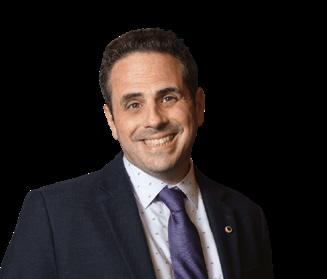
(University of Minnesota, '97) Supreme Prior
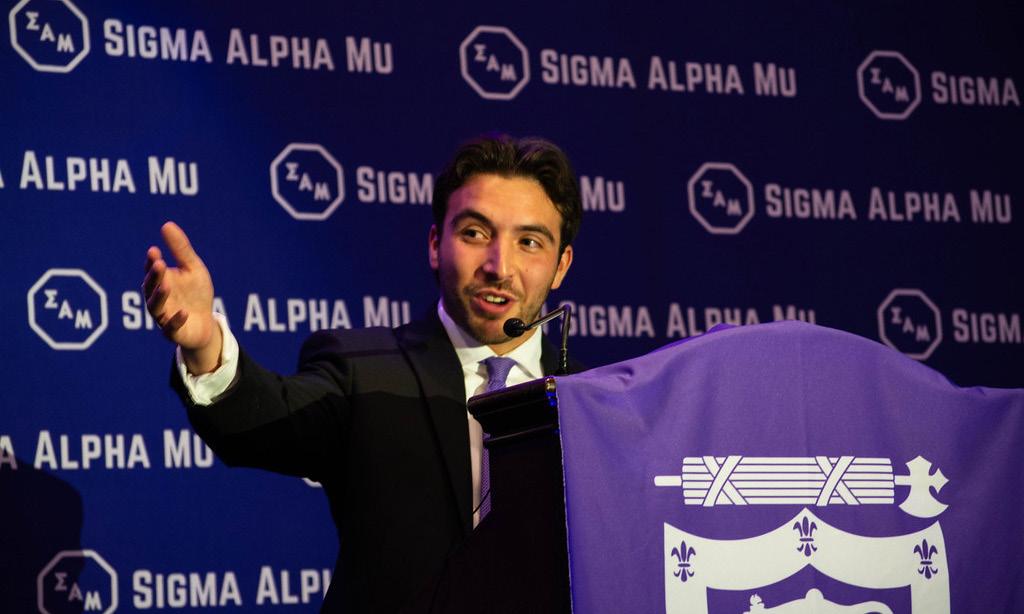
It’s hard to imagine a more unlikely person as your new Supreme Prior. As an undergraduate at the University of Minnesota, I enjoyed my time in Sigma Alpha Mu; it was memorable, meaningful, and at the time, I thought it ended when I graduated.
Fast forward and after leaving a 20-year career in the nonprofit world, I attended the 2018 Sammy Convention in Chicago. I didn’t know a single soul there, but what I found changed everything.
The energy in the room was contagious: undergraduates engaged in real conversations, eager to participate and learn, surrounded by dedicated volunteers who cared deeply about the future of the Fraternity. That weekend sowed the seeds of my renewed involvement, and ultimately led me here today.
Since then, I’ve had the privilege of serving under Past Supreme Priors Dan Grossberg, Jerry Conrey, and Dave Kleppel, each a model of commitment and enthusiasm. I’ve also been fortunate to work closely with our Executive Director, Andy Huston, and Jackie Gellinger, along with the rest of our staff who bring such dedication to Sigma Alpha Mu’s mission.
The number eight holds special meaning for Sigma Alpha Mu - eight founders, eight altars of values, eight members of the Octagon. In that spirit, I believe there are four key priorities that we must double down on to ensure our continued growth and success. After all, four doubled equals eight.
1. Double Our Undergraduate Membership - We’ve seen encouraging growth over the past few years, but we can’t rest on our success. We must nurture our existing chapters, identify new expansion opportunities, and maintain a laser focus on bringing more men into Sigma Alpha Mu. This means partnering closely with our Foundation to provide scholarships and resources that encourage involvement, and collaborating with our Endowment Fund to develop and finance strategic initiatives that fuel growth.
The journey won’t be instant, but every step forward lays the groundwork for the future.
2. Double Alumni Involvement - Our alumni are the backbone of the Fraternity. We need to expand our outreach and create new, meaningful ways for alumni to engage through mentoring, volunteering, and programming. Their involvement supports and enriches the undergraduate experience and strengthens the lifelong bonds that make our brotherhood unique.
3. Double Chapter Housing - Housing is one of the most tangible investments we can make in our chapters’ success. Through our National Properties and Property Management entity, we’ve made great progress, but we can go further. By raising funds and creating new opportunities for acquisition and renovation, we can ensure that our chapters have strong homes that anchor their presence on campus.
4. Double Our Support - We must double our financial support for the Fraternity. Giving generously, at any level, sustains our programs, leadership development, and long-term stability. In the coming weeks, you will be asked to support the Bridge Builder Campaign and the ΣAM Foundation. I hope that we can count on you to make a meaningful contribution.
There are significant opportunities ahead, and we are well positioned to turn potential into reality. Together, we can grow, strengthen, and sustain Sigma Alpha Mu for generations to come. When we double down on our values, our engagement, and our commitment, we can make a difference. I look forward to working together as we help ensure a strong future for Sigma Alpha Mu.
Supreme Prior: Benjamin Bearman (Skokie, IL)
Vice Supreme Prior: Evan Remer (Bexley, OH)
Supreme Exchequer: Bruce Harris (Pikesville, MD)
Supreme Recorder: Dean Lambert (New Haven, CT)
Consul: David P. Kleppel (Blacklick, OH)
Consul: Douglas G. Montgomery (Kyle, TX)
Consul: David Sackler (Scottsdale, AZ)
Young Alumnus
Consul: Zackary L. Newman (Pensacola, FL)
Undergraduate Advisory Committee
Jayden Lachhman (Delta Pi)
Gib Paulisich (Beta Gamma)
Peleg Wolfsohn (Sigma Delta)
Chairman: David H. PhillIps (Westerville, OH)
Vice Chairman: Marc E. Perlstein (Richardson, TX)
Secretary: John Ale (Houston, TX)
Treasurer: David S. Rice (Chicago, IL)
Trustee: Jerry Goldberg (Mount Laurel, NJ)
Trustee:Russ Zukowski (Roswell, GA)
Trustee: Mitch Manders (Carmel, IN)
President: Robert S. Weiss (Edmond, OK)
Vice President: Dennis G. Paese (Newburgh, NY)
2nd Vice President: Lawrence J. Leib (Farmington Hills, MI)
Treasurer: James Ryan Robertson (Fishers, IN)
Secretary: John A. Paine (Los Altos, CA)
Assistant Treasurer: Nate B. Locklin (Pittsburgh, PA)
At-Large: Offer Korin (Indianapolis, IN)
Director: Robert B. Fagenson (New York, NY)
Director: Nelson B. France (Fairfax, VA)
Director: Leland E. Garrett, Jr., MD (Raleigh, NC)
Director: Ronald S. Katch (Highland Park, IL)
Director: Steven B. Kahn (Miramar, FL)
Director: Evan L. Lubline (Zionsville, IN)
Director: Roy M. Neulicht (Raleigh, NC)
Director: Andrew M. Paley (Dallas, TX)
Director: Marc E. Perlstein (Richardson, TX)
Director: David H. Phillips (Westerville, OH)
Director: David S. Rice (Wilton Manors, FL))
Director: Richard H. Williamson (St. Simons Island, GA)
Director: Lawrence B. Wittels (St. Louis, MO)
Director: David K. Sergi (San Marcos, TX)
sam.org sam-fdn.org sam.org/chapter-roll sam.org/staff
8701 Founders Road, Indianapolis, IN 46268 (317) 789-8338
President: Barry S. Arbus (Toronto, ON)
Secretary: Howard Book (Toronto, ON)
Treasurer: Howard Kornblum (Toronto, ON)
BETA






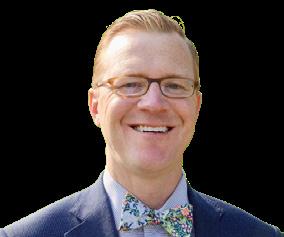
Andy Huston
Written by (Minnesota, '01), Executive Director
This fall marks ten years since I began serving as Executive Director of Sigma Alpha Mu. It's a significant milestone, though I'm still a neophyte compared to Sammy legends like Jimmy Hammerstein and Bill Schwartz.
As I reflect on this decade, I'm immediately drawn to the tremendous people who bring Sigma Alpha Mu to life every day. Our fraternity is filled with proud members, from our youngest new member to the last man standing at the Convention Banquet. Sigma Alpha Mu lives within you.
In many ways, this work feels like running a 116-year-old startup. While our vision, our purpose, and our Creed are crystal clear, providing education, resources, and training to thousands of college men across 50 campuses can be daunting. But Sigma Alpha Mu is truly a home away from home where young men learn, lead, and live with people from different backgrounds and experiences. I firmly believe society needs more spaces like these where people find community and support because of shared principles, despite different viewpoints and lived experiences.
I'm grateful for the international leadership who continue to trust me to help guide our fraternity, and for the devoted staff members I've partnered with over the past decade. My colleagues in the fraternal movement, higher education, and association management remain a continued source of collaboration, inspiration, and support.
In reflection, I’m proud of what we've accomplished together and energized by the work still ahead. If you share this vision for Sigma Alpha Mu, I hope you'll consider joining me as a volunteer or donor. I wouldn’t be doing my job if I didn’t ask! Together, we will ensure this fraternity continues to be a transformative experience for generations to come.
Fast & Firm!
Andy Huston, CAE (Kappa, ‘01) Executive Director
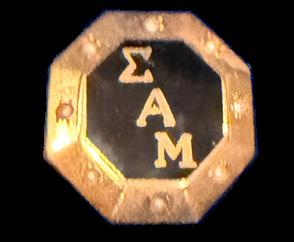
The First Badge
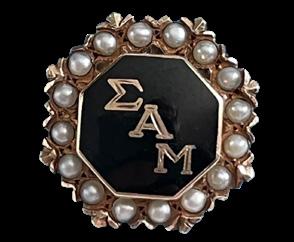
10K Gold & Full Pearl
The distinct, octagonal badge of Sigma Alpha Mu is given to each new initiate. Our gold letters Σ A M shine off the black octagon in the center of the badge.
The earliest badge in our possession is from Samuel A. Miller (Alpha, 1910). At first glance, it looks much like your badge. This early badge is slightly larger and only has one pearl on each of the octagonal panels.
The Tenth Edition of Baird’s Manual of American College Fraternities (1923) noted that, “During the past few years there has been a marked improvement in badges of all kinds. They have become smaller in size, plainer in ornamentation and less expensive than formerly, and many of the fraternities have adopted badges of standard size and style from which no departure is permitted.”
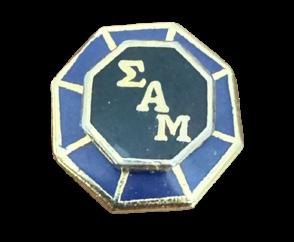
1980s-2000s
The fraternity system trends noted in Baird’s also applied to Sigma Alpha Mu. By the early 1920s, our standard gold badge with sixteen pearls was already well known. This full pearl badge in 10K gold has always been offered.
Back in 1909, an ounce of gold was priced at $20.67— about $739.05 when adjusted for inflation. Today, that same ounce is worth $4,098.
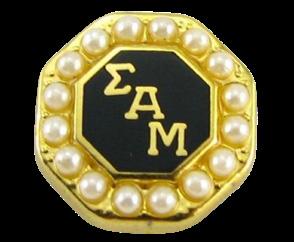
Early 2000s2025 2025 and Beyond
As the expense of materials and production has continued to increase, the Sigma Alpha Mu produced a standard badge with purple enamel sides from 1980s-2000s. Improvements in manufacturing allowed Sigma Alpha Mu to create a new standard badge that resembles our jeweled badge at a comparable cost as the purple badge using faux gold and faux pearls in the early 2000s.
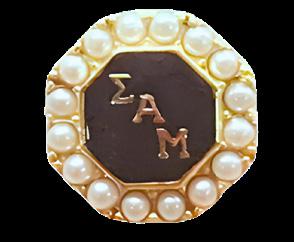
The final photo is Sigma Alpha Mu’s new standard badge that includes detailing more comparable to the jeweled badge - striking a balance between heritage, quality, and affordability.
In all versions, our Greek letters - and its meaning truecontinue to shine bright.
Do you still have your Sigma Alpha Mu badge? We love to see you post it on social media.
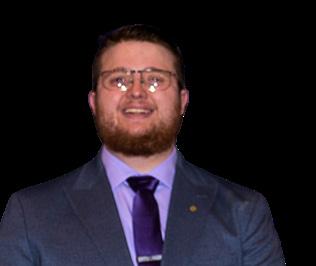
Written by Matthew Ray (Kentucky Wesleyan, '17) Communications Manager
Every issue of The Octagonian celebrates the impact of Sigma Alpha Mu alumni, undergraduates, and friends across North America. Through this publication, we share stories, news, accomplishments, memories, and so much more that highlight what it means to be part of our Fraternity.
In recent years, we’ve aimed to produce one or two issues of The Octagonian annually. However, we recognize that our members and friends deserve more consistent updates about the Fraternity. Budgetary limitations have made it challenging to print and mail a large publication multiple times each year—but we’re excited to change that.
To provide more timely communication, The Octagonian will now be published four times per year. Three issues—tentatively released in February, May, and August—will be digital-only, while our annual print and digital edition will be released each Founders Day (November 26).
With this new format, some familiar sections will now appear exclusively in the print edition, including Sires and Sons, Chapter Eternal, and In Honor Of / In Memory Of. These sections hold deep meaning for our readers, and by featuring them in print, we can give them the space, design, and care they deserve—honoring their significance both visually and emotionally.
Even with these exciting updates, we can’t do it alone. The Octagonian is, at its heart, a collection of your stories—and we can only share them if we hear from you. Whether you’ve welcomed a new family member, earned a professional milestone, or found a new way to live our values, we want to know.
You can share updates through the following links:
sam.org/heard
– Submit news, accomplishments, and personal or professional updates to be considered for Fraternity communications.
sam.org/family
– Share announcements for our “Dividends and Mergers” section, including marriages, and birth announcements.
sam.org/volunteer
– Learn how you can give back by volunteering with Sigma Alpha Mu as a mentor, advisor, or event supporter.
Help us tell the story of all of you—because The Octagonian is, and always has been, your publication.
Have YOu Heard
Discover Fra Les Raffel, Fra Matt Bomberg, Fra Zach Osterman, Fra Harry Huntley, Fra Trevor Vance, and more alumni making meaningful contributions in journalism, public service, philanthropy, and their local communities.
Discover each chapter's results for current membership and fall recruitment. In this issue, some chapters have shared notable events and campus partenrships that have helped them to thrive! You can also find out which chapters need your volunteer help as a chapter advisor.
Discover a thank you to Hanno Mott, a spotlight of recent scholarships, and more.



Sigma Alpha Mu Fraternity is honored to announce that Dennis G. Paese (Beta, ’70) has been named as a recipient of the William P. Schwartz Distinguished Service Award. This prestigious honor, regarded as the highest recognition for service within Sigma Alpha Mu, is awarded to alumni whose dedication and contributions have had a lasting and exceptional impact on the Fraternity.
Since its inception 72 years ago, the William P. Schwartz Distinguished Service Award has been bestowed upon only 21 members, highlighting the exceptional nature of this recognition. Past recipients include esteemed Sigma Alpha Mu leaders such as Hanno Mott, Richie Williamson, Ron Katch, Howard Miller, Phil Glauben, Leland Manders, and David Phillips. Named in honor of Executive Director Emeritus William P. Schwartz, the award continues to recognize alumni whose service exemplifies the ideals and mission of Sigma Alpha Mu.
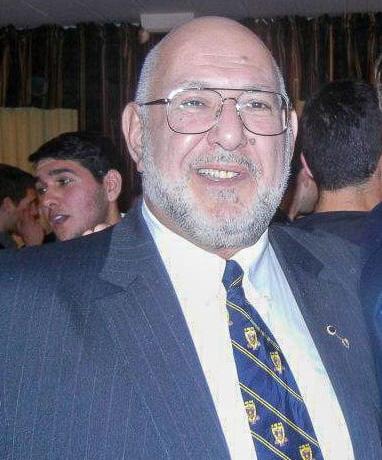
Dennis Paese joined the Beta Chapter at Cornell University and quickly became an integral part of the organization, earning the trust and respect of his peers as a chapter officer. His dedication to the Fraternity only deepened over the decades, leading him to play a pivotal role in re-establishing the Beta Chapter at Cornell. Under the guidance of Bill Schwartz, Dennis persisted through numerous challenges, ultimately assembling a group of individuals who embraced the Fraternity’s values and vision for the future. Thanks to his stalwart leadership and
advocacy with the university administration and alumni cultivation, generations of undergraduate fratres at Cornell have had a physical home at Beta Chapter.
Dennis’ contributions extend far beyond chapter operations. Over the past 39 years, he has served in numerous leadership roles, including:
• Beta Chapter Advisor
• Beta House Corporation President
• Chairman of Sigma Alpha Mu Foundation’s Building Committee
• Secretary of the Foundation Board
• Current Vice President of the Foundation Board
Despite his extensive service, Dennis remains humble about his contributions. Reflecting on this honor, he expressed gratitude for the countless individuals he has mentored and the lifelong friendships he has forged. He takes great pride in the success of Sigma Alpha Mu members, attending the weddings, bar mitzvahs, and significant life events of those he has guided.
Dennis believes that lifelong fraternity commitment requires personal sacrifice and the unwavering support of family. His wife, affectionately known among members as “St. Joan” for her patience and encouragement, has been an integral part of his journey. He credits the enduring principles of Sigma Alpha Mu, embodied in its eight altars, as the foundation that has sustained the organization through generations.
Upon receiving the award, Dennis remarked, “I never expected this. It came completely out of the blue. To be put in the same group as the past recipients is just humbling. I don’t believe I deserve it—there have been others who have done more throughout the years.”
The presentation of this award will occur at the 2026 Convention in Greater New York City on Saturday, July 25th, 2026.
More information regarding gifts made in honor of Fra Paese, as well as information on the Dennis Paese Scholarship Fund, can be found starting on page 26!
The Fraternity is collecting memories about Fra Paese’s impact to share with him during Convention. Please share your story or photos at tinyurl.com/d-paese, by scanning the QR code below, or by emailing them to matthew@sam.org by June 1, 2026.
Gifts in honor of this recognition can be made to Sigma Alpha Mu Foundation for the Beta Chapter Educational Fund at sam-fdn. org/donate by noting Dennis Paese in the “in honor of” line.

We want to make sure you never miss an issue of The Octagonian—and that we can keep you informed about all the exciting things happening in Sigma Alpha Mu.
Sigma Alpha Mu will print and mail the November issue each year. Digital only versions will be emailed and available online for February, May, and August issues.
Please take a moment to sign in to portal.sam.org and update your contact information.
Here's why it matters:
Email on file? You'll receive The Octagonian quarterly, delivered straight to your inbox
Prefer mail? Opt-in to receive the printed and mailed November issue
Stay in the loop with news, events, and opportunities to connect with fellow alumni
Updating your information takes just a few minutes and ensures you remain part of our vibrant alumni network.
Visit portal.sam.org now to get started.
Can you help? Consider making a non-tax deductible gift directly to the fraternity to support programs and services like The Octagonian and other initiatives that strengthen our brotherhood at sam.org/bridge.
Thank you for staying connected!









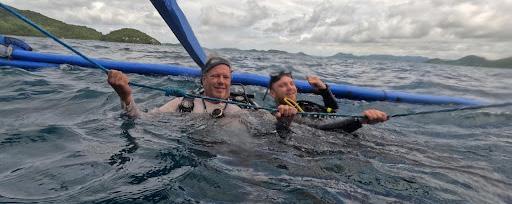
What are the odds? A Brooklyn teacher escapes to the turquoise waters of
donor!
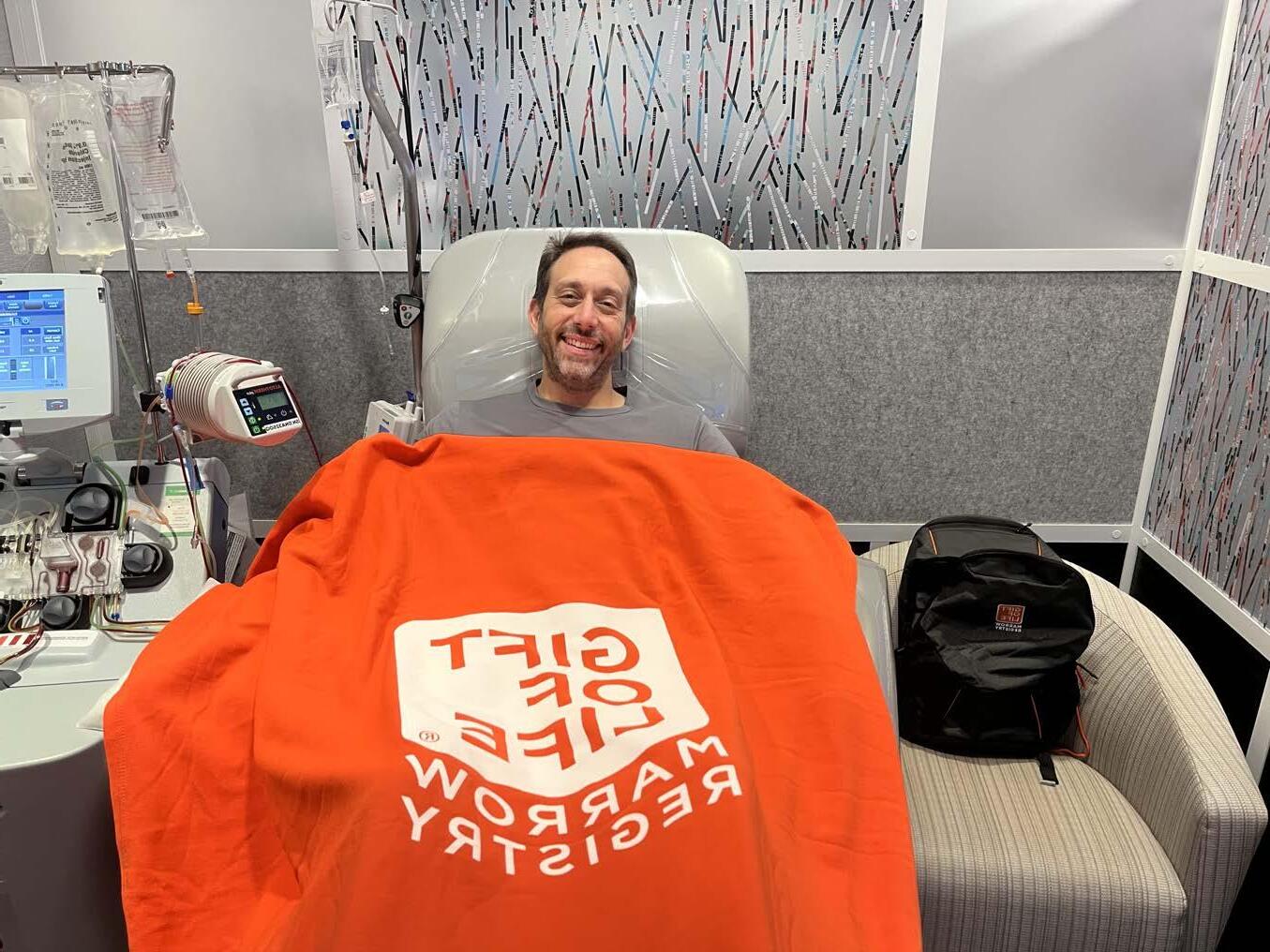

As partners with Gift of Life, your chapter has the power to impact the lives of those battling blood cancer by hosting a drive to add new donors to the registry.
To get started, contact Traci Ackerman at tackerman@giftoflife.org or 561-982-2939.

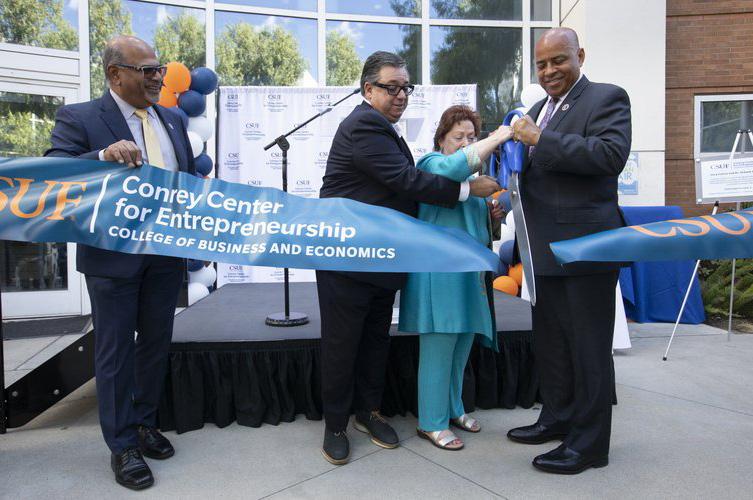
Fra Conrey (Cal State- Fullerton, '84) and his wife, Victoria, honored by CSU Fullerton following generous donation. The recently renamed Conrey Center for Entrepreneurship at California State University, Fullerton now carries the name in honor of donors Jerry Conrey and Dr. Victoria Shook Conrey, following their $4.5 million planned gift. The naming ceremony on October 2, 2025 celebrated the couple’s long-standing support of entrepreneurship education.
Jerry and Victoria Conrey explained that the center is intended as “a launchpad for bold ideas,” where students are encouraged “to take risks, to learn from setbacks and to create ventures that make a difference in our communities.” Their backing extends nearly two decades and includes mentorship and scholarships in addition to the naming gift.
CSUF’s College of Business & Economics leaders say the gift will expand opportunity for future generations of entrepreneurial students and strengthen the Southern California startup ecosystem. At the ceremony, student recipient Enrique “Ricky” Guerrero shared how the center's mentorship and the Conrey Scholarship helped redirect his education and career path.
In the words of the Conreys: “For Vicki and me, it’s both a privilege and a joy to give back to the place that gave us so much. The best return on investment we can ever make is in people. So, here’s my risk-management advice: Invest in people. It has the highest return, is guaranteed and has no fine print, exclusions or deductibles.”
Past Supreme Prior Conrey and Vicki are loyal supporters of ΣAM and members of the Foundation's Ira Lind Society.
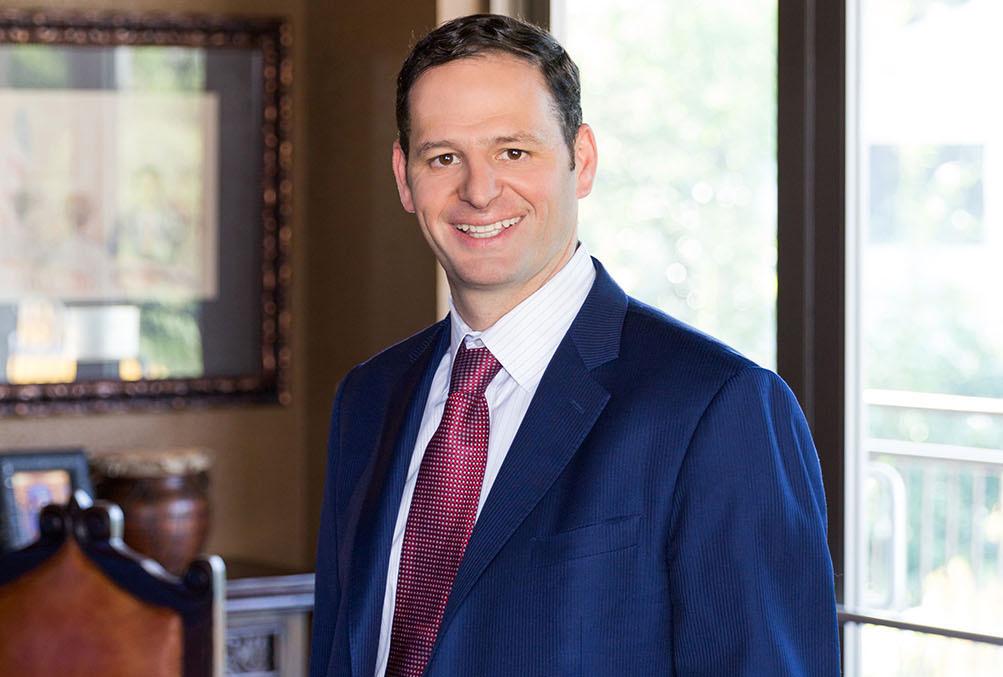
The Longhorn Foundation and Texas Athletics announced a landmark $10 million gift from alumni Jason Itkin (UT-Austin, '95) and Kisha Itkin in support of the new Silver Spurs Center, part of the state-of-the-art football training facility currently under construction adjacent to Darrell K Royal–Texas Memorial Stadium.
In recognition of their extraordinary generosity, the space will be named the “Jason & Kisha Itkin Silver Spurs Center” — creating a lasting legacy for future generations of Longhorns.
The 9,400-square-foot facility is designed to serve both as a premier gameday destination and a year-round hub for the Silver Spurs, the student organization responsible for the university’s iconic mascot, Bevo. The center will feature indoor and outdoor gathering spaces, a stage area, a “Bevo feature wall,” and event seating capable of hosting hundreds of alumni, students and guests.
For the Itkins, this gift holds special personal meaning: Jason Itkin served as President of the Silver Spurs during his undergraduate years at UT. Their support builds upon a longstanding commitment to their alma mater and reinforces the link between alumni-leaders and student-athletes. The announcement emphasized how the facility aligns with Texas Athletics’ drive for world-class infrastructure. Athletic Business
In the words of the Itkins:
“We owe so much of our personal and professional successes to the University of Texas.” said Jason Itkin. “It is an honor for us to be able to give back in a way that will help future generations of Silver Spurs and student-athletes grow into leaders that exemplify values like excellence, teamwork, and integrity.”
“We believe deeply that what starts here changes the world, and we are grateful to play a part in that mission,” added Kisha Itkin.
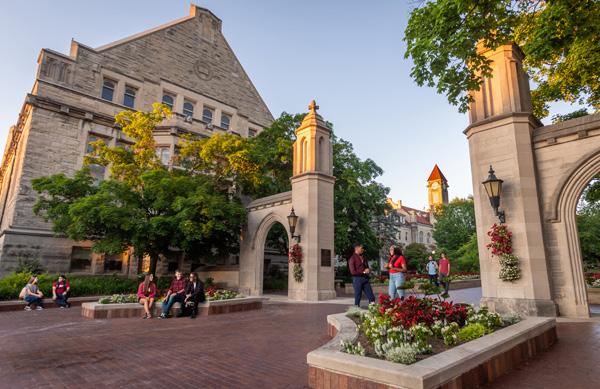


Leslie J. Raffel Foundation – $2.5 Million Gift to Institute for the Study of Contemporary Antisemitism at Indiana University Bloomington
The Institute for the Study of Contemporary Antisemitism (ISCA) at Indiana University Bloomington has received a $2.5 million commitment from the Leslie J. Raffel Foundation to establish an endowed chair. This new position will strengthen ISCA’s capacity to recruit a distinguished scholar who will conduct research, teach and lead public outreach on modern antisemitism—an area of growing urgency given rising anti-Jewish incidents.
ISCA, which launched under the university’s Borns Jewish Studies program, brings together faculty, visiting scholars and students to explore the history, causes and contemporary manifestations of antisemitism through lectures, research and collaboration. With the Raffel gift, the institute says it will be better positioned at the forefront of this work.
The gift reflects the enduring legacy of Leslie J Raffel (Purdue, '60), who joined the Chapter Eternal in 2023, and whose name continues to impact Jewish education and scholarship through the foundation bearing his legacy. The Foundation’s president, Bobby Gerber (Indiana, '90), an IU College of Arts & Sciences alumnus, past Consul of the Octagon, and proud Sigma Alpha Mu legacy, has continued to champion philanthropic investment in education, Jewish life, and community-centered initiatives.
This commitment not only honors Raffel’s lifelong dedication to learning and service but also underscores the lasting contributions of Sammies who continue to shape and strengthen institutions through leadership and philanthropy.
The Greenpoint YMCA’s annual “Spirit of Community” gala, held October 14 at Giando on the Water in Williamsburg, brought together North Brooklyn’s civic, business, and cultural leaders to honor neighborhood pillars. Co-emcees Gabe Sakellaridis (Stony Brook, '05) and Michael Kawochka (Buffalo, '91) led the event, which celebrated honorees including the historic restaurant Bamonte’s (marking 125 years), Paul Samulski (President of the North Brooklyn Chamber of Commerce), and Keia Clarke (CEO of the New York Liberty).
In addition, Gabriel Sakellaridis was named the 2025 Greenpoint YMCA Volunteer of the Year for his dedicated service to the community.
The gala highlighted the YMCA’s ongoing role as a community anchor amid neighborhood changes. Msgr. Jamie Gigantiello noted, “A neighborhood goes through many changes, and you need stable organizations that are anchors of a community that people can go to and get assistance while the neighborhood changes.” Funds raised through the event’s silent auction, donations, and attendance will support financial assistance, scholarships, and access programs for local neighbors.
Looking ahead, the YMCA plans to expand its footprint with a proposed 50,000-square-foot facility as part of Williamsburg’s “River Ring” development, promising enhanced services for the community.
Submit your updates, accomplishments, or stories for the "Have You Heard?" segment of The Octagonian or our digital "Frater In Focus" series on social media. Whether it’s career milestones, chapter events, or personal achievements, we’d love to spotlight your accomplishments and keep the fraternity connected. Send us your news today!
Visit sam.org/heard to submit your story.




Sigma Alpha Mu is posting regularly on social media. We encourage you to find us, friend us, and follow us.

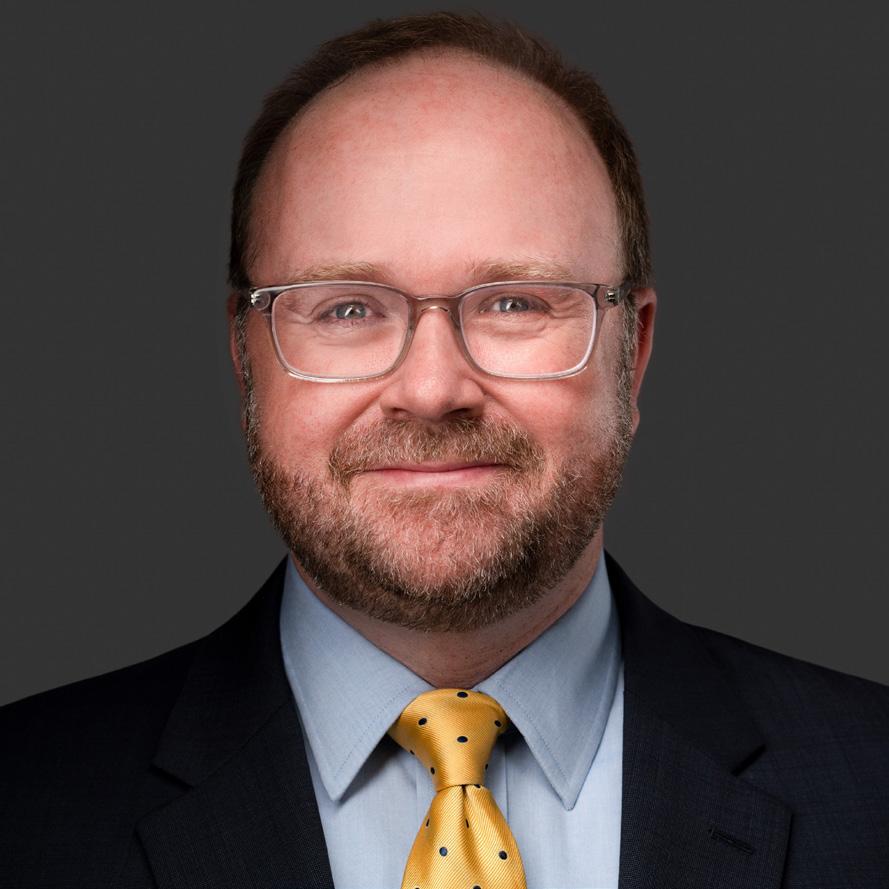
David “DJ” Hampton II (Alfred, '98), President & CEO of Trident United Way, reflects on a lifelong connection to the organization that began as a child needing speech therapy and evolved into a deep commitment through planned giving.
Without hesitation, Hampton recalls, “I remember the first three times I donated to a nonprofit.” His journey started early—when he was a child in elementary school, he needed speech therapy funded by United Way. He went on to become the first in his family to graduate college, earning advanced degrees along the way. His initial gifts were a heartfelt “thank you” to his alma mater, then to his fraternity, and soon after to United Way itself.
Hampton’s career path through the United Way network began with a fellowship in Central Alabama, where he learned firsthand the power of community-driven problem-solving. “I saw what an incredible gift to the community United Way was, and I realized that I didn’t want to live in any community that didn’t have a strong United Way,” he said. Today, Hampton and his wife Allison support United Way with multiple planned gifts and are updating their estate plans to ensure lasting impact.
Allison Grayson, a fellow United Way alum and philanthropy scholar, emphasizes the role of United Way as a unifying force in communities, “One of the few places that promotes unity over division and sets the table for the entire community.” Hampton echoes this sentiment, adding, “At the end of the day, the people in your will are the people you love. And so, any organization that you leave in your will, you are saying that you love that organization like you do a loved one.”
For Hampton, this spirit of togetherness is deeply personal. Growing up in a small town where neighbors helped each other shovel snow or get through tough times, he reflects, “No man is an island... United Way does that at the community level. We work with partners, community foundations, and local governments. I am proud to be a co-investor in that work.”

Fra Zach Osterman Wins 2025 Jim O’Connell Award
Sportswriter Zach Osterman (Indiana, '05) of the Indianapolis Star has been honored with the 2025 Jim O’Connell Award, bestowed by the U.S. Basketball Writers Association (USBWA) for excellence in beat reporting. “In a season of upheaval at Indiana University, Osterman kept viewers, readers and the program grounded with clear, consistent coverage.”
Osterman earned the award after covering a demanding season for the Indiana Hoosiers men's basketball team—including the departure of coach Mike Woodson, the search for his replacement and a missed NCAA tournament berth.
USBWA president Stu Durando described Osterman’s work as both “prolific” and “authoritative,” highlighting his versatility across breaking news, feature writing and analysis.
A graduate of Indiana University, Osterman has covered IU athletics through major shifts and challenges for more than a decade. With this honor, he becomes the sixth journalist to receive the Jim O’Connell Award since its inception.
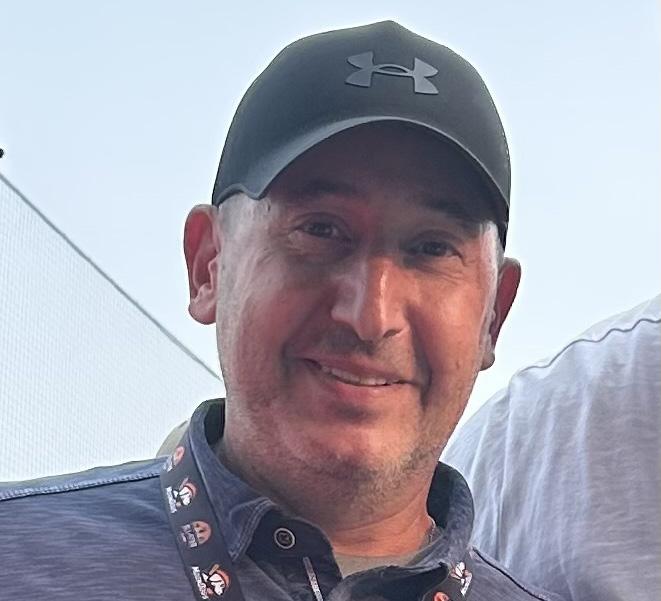
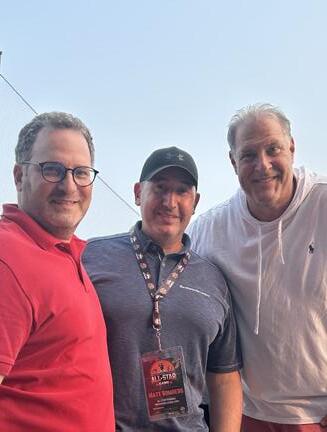
Fra Matt Bomberg (Minnesota, ’97) leads the charge as President & Managing Partner of Indiana’s newest summer-collegiate baseball team, the Richmond Flying Mummies.
A passionate baseball enthusiast and longtime community leader, Bomberg is bringing his vision and leadership to Historic Don McBride Stadium in Richmond, Indiana, where the Flying Mummies will debut in May 2026. Drawing on Richmond’s unique aviation history and the local lore surrounding mummies, Bomberg and his team have crafted a brand that blends fun, family-friendly entertainment with a strong sense of place.
“Baseball has always been about community and connection,” Bomberg said. “With the Flying Mummies, we’re not just building a team; we’re creating an experience that captures the heart of Richmond and brings people together.” His commitment to enhancing local culture extends beyond the field, with plans for upgraded stadium amenities and deep community outreach.
The Flying Mummies are set to soar in the Northwoods League, offering East-Central Indiana a vibrant new sports and social hub. Bomberg’s leadership promises to make the team a lasting fixture and a source of pride for the region.
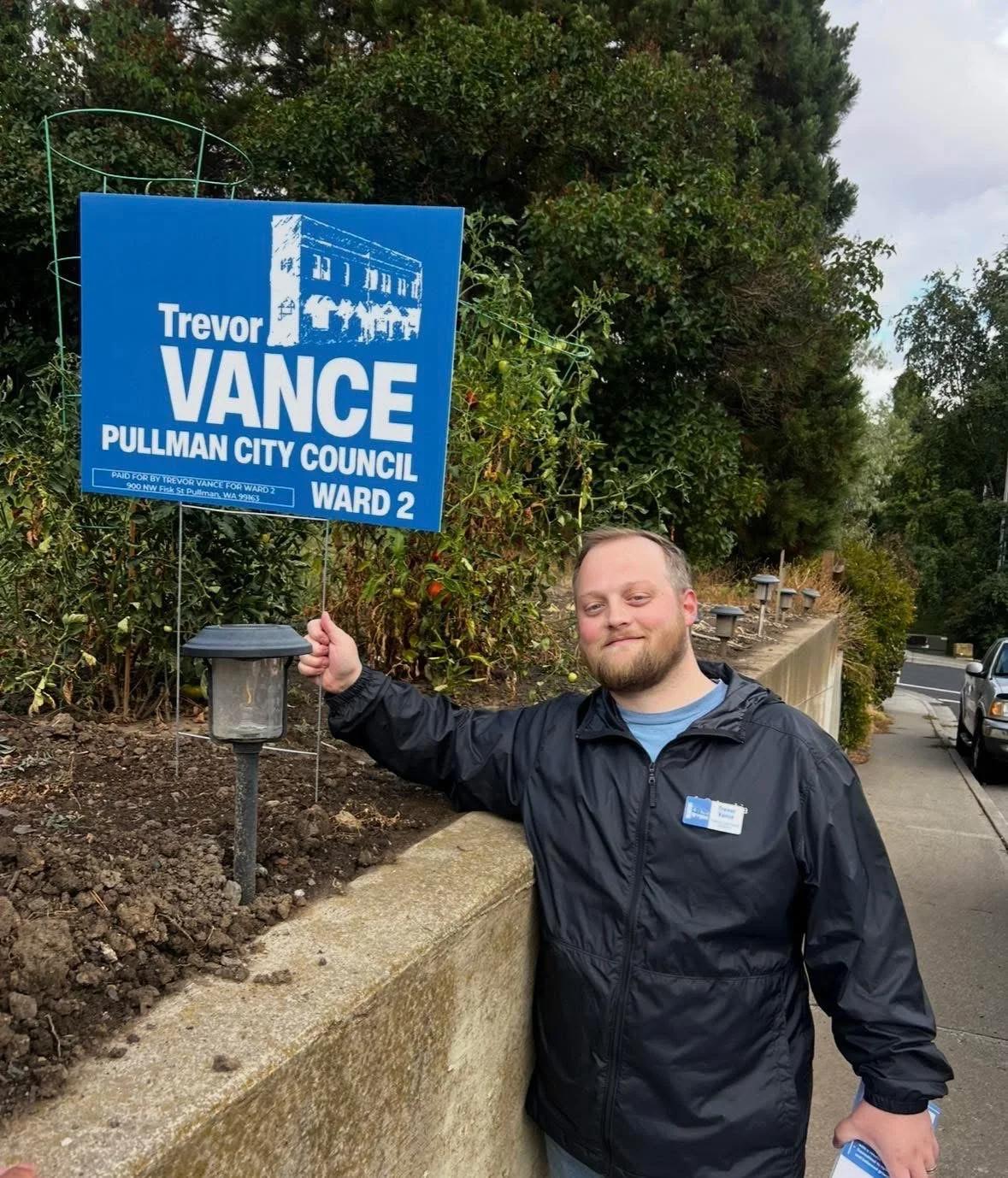
Fra Trevor Vance (Washington State, '17) Wins Election for Pullman City Council Ward 2
Trevor Vance was elected to Pullman City Council to represent Ward 2, capturing 250 votes in the November 4, 2025 election. A Washington State University alumnus and long-term Pullman resident, Vance describes himself as a results-driven leader who listens deeply to all parts of the community — students, families and business owners alike.
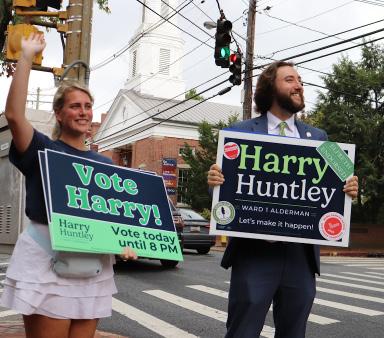
Fra Harry Huntley (Maryland, '18) Wins Election For Ward 1 Alderman
Harry Huntley, the current Ward 1 Alderman in Annapolis, won the 2025 general election after being appointed to the seat in 2024. During his first year, he has focused on improving pedestrian infrastructure, limiting short-term rentals, and serving as Chair of the Finance Committee. His campaign emphasizes local issues, community empowerment, and collaborative problem-solving.

Andy Huston
Written by (Minnesota, '01), Executive Director
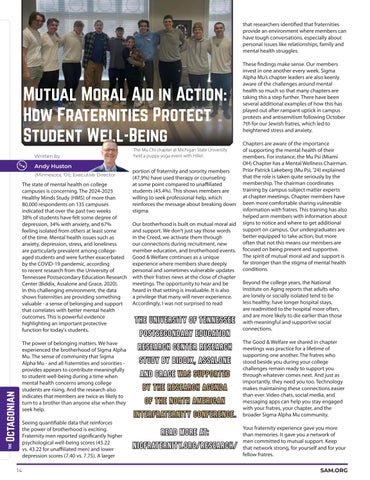
The state of mental health on college campuses is concerning. The 2024-2025 Healthy Minds Study (HMS) of more than 80,000 respondents on 135 campuses indicated that over the past two weeks 38% of students have felt some degree of depression, 34% with anxiety, and 67% feeling isolated from others at least some of the time. Mental health issues such as anxiety, depression, stress, and loneliness are particularly prevalent among collegeaged students and were further exacerbated by the COVID-19 pandemic, according to recent research from the University of Tennessee Postsecondary Education Research Center (Biddix, Assalone and Grace, 2020). In this challenging environment, the data shows fraternities are providing something valuable - a sense of belonging and support that correlates with better mental health outcomes. This is powerful evidence highlighting an important protective function for today's students.
The power of belonging matters. We have experienced the brotherhood of Sigma Alpha Mu. The sense of community that Sigma Alpha Mu - and all fraternities and sororitiesprovides appears to contribute meaningfully to student well-being during a time when mental health concerns among college students are rising. And the research also indicates that members are twice as likely to turn to a brother than anyone else when they seek help.
Seeing quantifiable data that reinforces the power of brotherhood is exciting. Fraternity men reported significantly higher psychological well-being scores (45.22 vs. 43.22 for unaffiliated men) and lower depression scores (7.40 vs. 7.75). A larger
portion of fraternity and sorority members (47.9%) have used therapy or counseling at some point compared to unaffiliated students (45.4%). This shows members are willing to seek professional help, which reinforces the message about breaking down stigma.
Our brotherhood is built on mutual moral aid and support. We don’t just say those words in the Creed, we activate them through our connections during recruitment, new member education, and brotherhood events. Good & Welfare continues as a unique experience where members share deeply personal and sometimes vulnerable updates with their fratres news at the close of chapter meetings. The opportunity to hear and be heard in that setting is invaluable. It is also a privilege that many will never experience. Accordingly, I was not surprised to read
that researchers identified that fraternities provide an environment where members can have tough conversations, especially about personal issues like relationships, family and mental health struggles.
These findings make sense. Our members invest in one another every week. Sigma Alpha Mu’s chapter leaders are also keenly aware of the challenges around mental health so much so that many chapters are taking this a step further. There have been several additional examples of how this has played out after rampant uptick in campus protests and antisemitism following October 7th for our Jewish fratres, which led to heightened stress and anxiety.
Chapters are aware of the importance of supporting the mental health of their members. For instance, the Mu Psi (Miami OH) Chapter has a Mental Wellness Chairman. Prior Patrick Lakeberg (Mu Psi, '24) explained that the role is taken quite seriously by the membership. The chairman coordinates training by campus subject matter experts at chapter meetings. Chapter members have been more comfortable sharing vulnerable information with fratres. This training has also helped arm members with information about signs to notice and where to get additional support on campus. Our undergraduates are better equipped to take action, but more often that not this means our members are focused on being present and supportive. The spirit of mutual moral aid and support is far stronger than the stigma of mental health conditions.
Beyond the college years, the National Institute on Aging reports that adults who are lonely or socially isolated tend to be less healthy, have longer hospital stays, are readmitted to the hospital more often, and are more likely to die earlier than those with meaningful and supportive social connections.
The Good & Welfare we shared in chapter meetings was practice for a lifetime of supporting one another. The fratres who stood beside you during your college challenges remain ready to support you through whatever comes next. And just as importantly, they need you too. Technology makes maintaining these connections easier than ever. Video chats, social media, and messaging apps can help you stay engaged with your fratres, your chapter, and the broader Sigma Alpha Mu community.
Your fraternity experience gave you more than memories. It gave you a network of men committed to mutual support. Keep that network strong, for yourself and for your fellow fratres.
When the Octagon made the investment to collaborate with Dyad Strategies, the initiative seemed more befitting of a tech startup than a century-old fraternity. Yet this forward-thinking partnership offers something invaluable: concrete evidence of how Sigma Alpha Mu shapes young men's lives beyond anecdotal stories.
Dyad Strategies specializes in helping mission-driven organizations demonstrate their impact through meaningful research. Rather than simply analyzing historical trends, Dyad examines the lived experiences and cultural dynamics within the groups they serve. With an assessment portfolio spanning numerous Greek-letter organizations over the past decade, Dyad brings sophisticated research capabilities to Sigma Alpha Mu. This partnership enables Sigma Alpha Mu to gather quantitative evidence demonstrating to what extent chapters authentically practice our Creed and embody our eight core values. The multi-year study, which just launched this fall, will systematically evaluate undergraduate experiences and chapter environments.
Dyad researchers will be learning about how undergraduates understand the fraternity's principles, our heritage as a fraternity founded by Jewish men, and the strength of our brotherhood. Beginning in fall 2025, we have asked every undergraduate member to participate in a private digital assessment examining how fraternity involvement influences their decisions, perspectives, and character development. The evaluation framework includes standard measures of brotherhood quality, community connection, loyalty to the organization, relationship with alcohol, perspectives on hazing, and reasons for joining. Uniquely, the research also investigates how members internalize and demonstrate our eight core valuessimplicity, holiness, purity, justice, sincerity, fraternalism, idealism, and truth - while exploring their engagement with our Jewish heritage.
The research will not only reveal what members experience, but also how those experiences differ between chapters, where opportunities for improvement exist, and how engagement drives broader personal growth aligned with our Creed's teachings.
Because Dyad serves numerous fraternities and sororities, the assessment provides benchmarking opportunities for chapters within Sigma Alpha Mu and relative to other participating fraternities and sororities on their campus.
Headquarters staff are working closely with Dyad throughout this research initiative. Staff members will utilize these detailed findings to provide targeted chapter coaching to help officers and advisors make data-driven operational improvements. Having access to such thorough evidence will transform how the fraternity approaches chapter development and coaching. Beyond problem identification, the data will also highlight success stories worth celebrating across our fraternity.
"We are thrilled to be a partner in Sigma Alpha Mu's quest to become a more data-driven organization. By helping the fraternity better understand the impact of membership and the culture of undergraduate chapters, we will make the Sigma Alpha Mu experience more enriching and fulfilling for the next generation of brothers," shared Dyad CEO Dr. Gentry McCreary.
We will highlight core findings from the research in the coming months.
Supreme Prior Benji Bearman shared, "This project advances our fundamental purpose of developing men that exemplify our core values and honor our Creed. The research will generate compelling evidence of the transformation occurring through Sigma Alpha Mu. In turn, we are excited to work with supporters to invest additional resources at targeted opportunities to enhance the membership experience."
The opportunity to make this multi-year investment in research is one that the Octagon has committed to funding. Sigma Alpha Mu will need additional financial and volunteer resources to invest in our leadership development, chapter resources, and other identified opportunities for intervention. The Octagon is very enthusiastic about the partnership's potential.
Each year, Sigma Alpha Mu recognizes undergraduates whose leadership, scholarship, and character distinguish them as outstanding representatives of our Fraternity. The 2025 Undergraduate Achievement Awards celebrate three remarkable individuals—a sophomore, junior, and senior—who exemplify dedication to academic excellence, campus impact, and personal integrity. Across different chapters and campuses, their accomplishments reflect the best of what it means to lead with purpose.
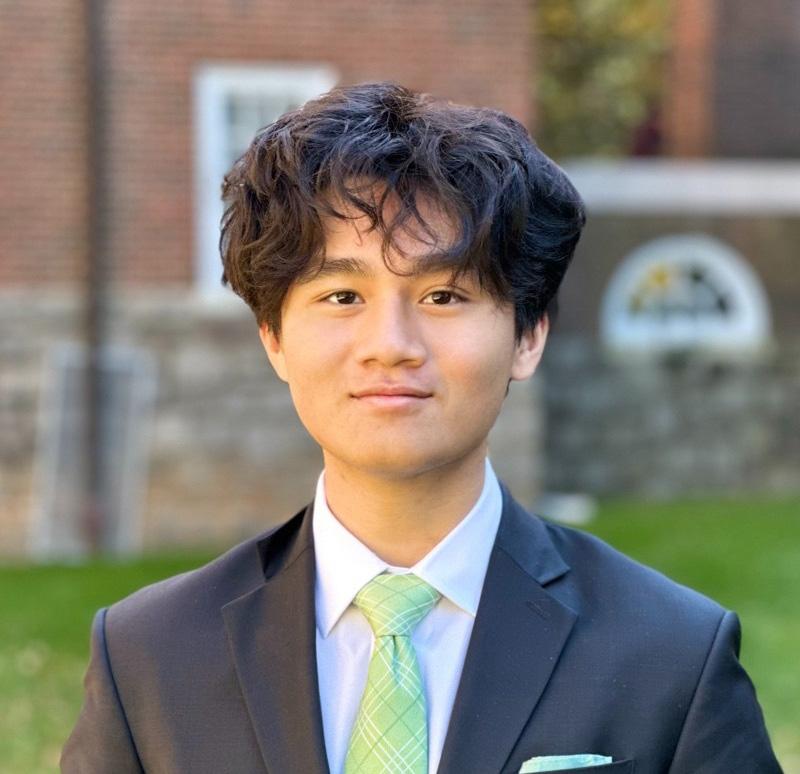
“Paris has been a source of inspiration and support, mentoring peers with humility and patience.”
At the University of Texas, Ben Sherman has emerged as a powerful force for student engagement and community leadership. As co-founder and chairman of the Advisory Board for Longhorn Students for Israel (LSFI), he helped build the only independent, student-led Israeli organization on campus—one grounded in grassroots collaboration, advocacy, and meaningful dialogue.
Ben’s work with LSFI includes organizing impactful events, fostering community among students, and developing partnerships with national and local organizations. Beyond LSFI, he serves on the advisory and executive staff for the UT student body president and vice president, contributing his perspective and leadership to broader campus initiatives.
Ben’s commitment to civic engagement and student advocacy reflects his belief in strengthening community through education, partnership, and purpose. His achievements represent the significant marks undergraduates can make when they channel passion into action.
A scholar, researcher, and mentor, Paris Phan has already achieved more in two years at the University of Virginia than many accomplish in four. Pursuing a rigorous double major in Computer Science and Mathematics, Paris has maintained an exceptional academic record while pushing the boundaries of emerging technologies.
His research spans machine learning, data science, medical applications, and human-robot interaction— fields where his findings are already generating meaningful impact. Paris is not only a gifted student; he is a generous teacher. His chapter brothers shared that his commitment to mentoring others, leading labs, and offering support reflects a genuine desire to help those around him grow.
Paris’ curiosity, humility, and drive for excellence make him a standout member of the Beta Psi Chapter and a deserving honoree this year.
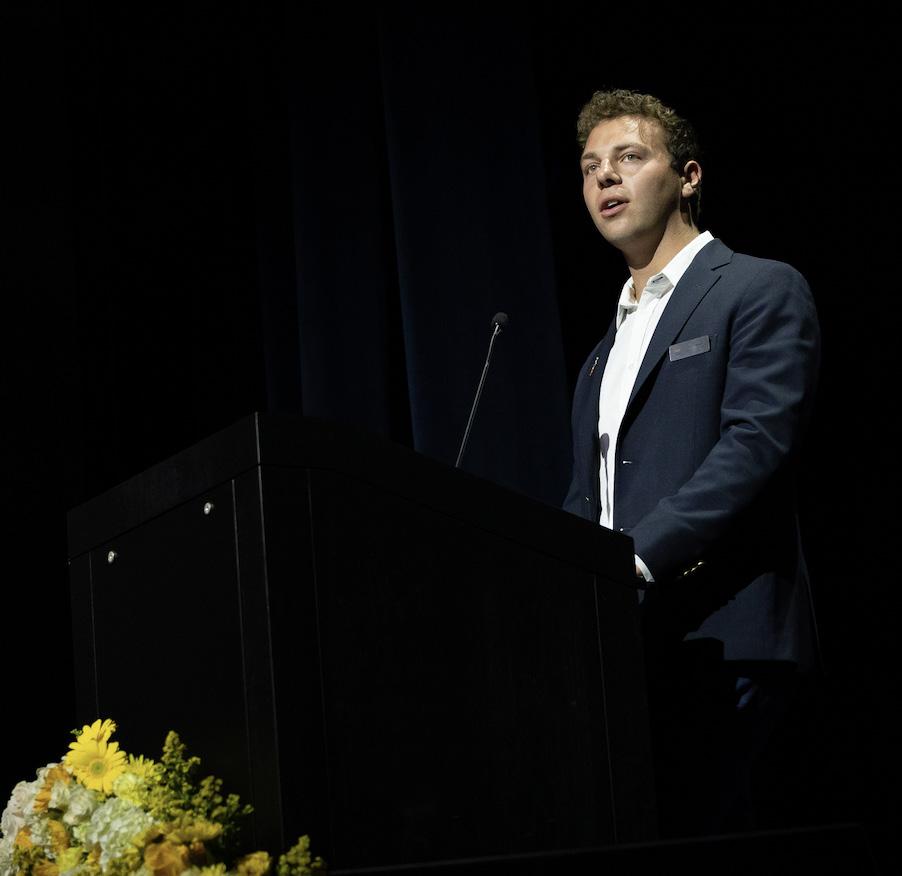
“Ben’s
leadership has helped create a community of engaged and empowered students at UT Austin.”
“He didn’t just keep the chapter standing. He helped it thrive.”
When Charlie Nirenstein joined the Kappa Chapter, it was facing challenges—low membership, low morale, and an uncertain future. Through exceptional determination and vision, Charlie became a catalyst for transformative change.
As Rush Chair and later Prior, he rebuilt Kappa’s culture from the inside out, emphasizing inclusion, intention, and shared values. His innovative approach to recruitment blended personal connections with digital strategy and ultimately led to the chapter doubling in size. More importantly, Charlie fostered a renewed sense of purpose and community that continues to shape the chapter today.
Beyond his chapter contributions, Charlie excelled academically at the Carlson School of Management, played an active role in Jewish life on campus, and championed emotional and mental well-being— supporting peers with compassion and accountability. His chapter noted that he didn’t just keep the chapter afloat; he helped it thrive.
“Through scholarship, leadership, and service, Paris, Ben, and Charlie exemplify the highest ideals of Sigma Alpha Mu. Their accomplishments reflect the strength and promise of our Fraternity and inspire undergraduates across North America.”
Charlie’s leadership, integrity, and impact make him a model representative of Sigma Alpha Mu, and the Fraternity is proud to recognize him as the senior Undergraduate Achievement Award recipient.
These three recipients—Paris Phan, Ben Sherman, and Charlie Nirenstein—reflect the strength and promise of Sigma Alpha Mu today. Through scholarship, leadership, and service, each has demonstrated what is possible when talent meets dedication. Their accomplishments inspire us, and their stories pave the way for future generations of Sammies.
The Risk Management Policy of Sigma Alpha Mu includes the provisions that follow and shall apply to all fraternity entities and all levels of fraternity membership This policy was last revised as of August 2024
1 Chapter officers and committee chairmen shall be familiar with all applicable laws, university regulations, interfraternity council rules, and fraternity policies concerning alcoholic beverages and other contr olled substances
2 The possession, sale, distribution, use or consumption of alcoholic beverages, while on chapter premises, during a fraternity event, in any situation sponsored or endorsed by the chapter, or at any event an observer would associate with the fraternity, must be in compliance with any and all applicable laws of the state, province, county, city, and institution of higher education (including interfraternity council policies), and must comply with either the BYOB or Third Party Vendor Guidelines
3 The presence of alcohol products above 15% alcohol by volume (“ABV ”) is prohibited on any Sigma Alpha Mu premises or at any event, except when served at an event by a licensed and insured third-party vendor
4 No alcoholic beverage may be purchased through or with chapter funds nor may the purchase of the same for members or guests be undertaken or coordinated by any member in the name of, or on behalf of, the chapter The purch ase, use, or possession of a bulk quantity or common sources of such alcoholic beverage, for example, kegs or cases, is prohibited and the chapter shall not permit their possession or use by members or guests, on chapter premises or at any chapter function
5 A chapter shall not sell alcoholic beverages to members or guests by selling tickets or cups, by charging admission fees, by taking up collections, or by any other direct or indirect means of collecting moneys from perso ns attending chapter functions
6 Open parties, meaning those with unrestricted access by non-members of the fraternity, without specific invitation, where alcohol is present, are prohibited The term open party also includes:
• a social function to which non-members are invited by a blanket or open invitation, express or implied;
a social function to which non-members are invited through advertising or publicity, including signs, posters, billboards, handouts, and the use of newspapers, radio, or television;
• a social function hosted by a chapter to which the number of nonmembers invited is greater than twice the number of chapter members in good standing;
a social function co-hosted by two fraternity or sorority chapters to which the number of non-members invited is greater than the membership of the host chapters;
• a social function co-hosted by three or four fraternity or sorority chapters to which any non-members of the host chapters are invited; and a social function co-hosted by more than four fraternity or sorority chapters
7 No members, collectively or individually under chapter auspices, shall purchase for, serve to, or sell alcoholic beverages to any minor (i e , those under legal “drinking age”)
8 The possession, sale, or use of any illegal drugs or controlled substances while on chapter premises or during a fraternity event or at any event that an observer would associate with th e fraternity is strictly prohibited
9 No chapter may co-sponsor an event with an alcohol distributor, charitable organization, or tavern (tavern defined as
an establishment generating more than half of annual gross sales from alcohol) where alcohol is given away, sold or otherwise provided to those present This includes any event held in, at or on the property of a tavern as defined above for the purposes of fundraising A chapter may rent or use a room or area in a tavern as d efined above for an event held within the provisions of this policy, including the use of a third party vendor and guest list
10 No chapter may co-sponsor or co-finance or attend or participate in a function where alcohol is purchased by any of the host chapters, groups, or organizations
11 All recruitment or rush activities associated with any chapter will be nonalcoholic No recruitment or rush activities associated with any chapter may be held at or in conjunction with a n alcohol distributor or tavern as defined in this policy
12 No member or candidate shall permit, tolerate, encourage, or participate in “drinking games ”
13 No alcohol shall be present at any candidate program, activity, or ritual of the chapter This includes, but is not limited to activities associated with “bid night,” “big brother – little brother ” events or activities, “family” activities and initiation
14 Each chapter shall actively promote and support the a doption of dry rushing policies by the interfraternity council and university administration on its campus
15 For the purposes of this Policy, the term chapter includes colonies, provisional chapters, interest groups and alumni clubs
CANDIDATE EDUCATION & ANTI-HAZING
1 Candidate education programs shall be limited to 8 weeks or less, including the initiation ceremony No chapter, colony, student, or alumnus shall conduct nor condone hazing activities
2 Perm ission or approval by a person being hazed is not a defense Hazing activities are defined as: “Any action taken or situation created, intentionally, whether on or off fraternity premises, to produce mental or physical discomfort, embarrassment, harassment, or ridicule Such activities may include but are not limited to the following: use of alcohol; paddling in any form; creation of excessive fatigue; physical and psychological shocks; quests, treasure hunts, scave nger hunts, road trips, or any other such activities carried on outside or inside of the confines of the chapter house; wearing of public apparel which is conspicuous and not normally in good taste; engaging in public stunts and buffoonery; morally degrading or humiliating games and activities; and any other activities which are not consistent with academic achievement; fraternal law, ritual, or policy; or the regulations and policies of the educational institution, or applicable state law ”
3 Any candidate sneaks or getaways, kidnappings, encouraged or mandated by the chapter are prohibited Candidate class trips (road trips or walk outs) are prohibited unless the following conditions are met: (1) The trip cannot be mandatory or serve as a requirement of initiation, (2) Candidates may not make up more than 50% of the participants, (3) At least one member of the Chapter council must go on the trip, (4) If visiting another chapter, the cha pter being visited must be contacted four weeks prior to the trip and they must give permission for the visit to occur, (5) Weekend trips should not exceed seven hours of travel time (round trip), and (6) All participants must sign a waiver agreeing to abide by Fraternity Risk Management Policy and agreeing to hold the chapter and Fraternity harmless
4 Intensive final week(s) or day(s) of candidate programs are prohibited, as are any events that require the candidates to “sl eep over ” “Hell Week/Day”, “Help Week”, “Inspiration Week”, “ Work Week” and other such intensive activities are specifically prohibited


*This number reflects the total number of initiates and candidates
**Please note that these numbers are only those that have been reported as of 11/1/25 and may not accurately or fully represent fall recruiting totals

Chapters with this icon are in need of volunteer alumni advisors
Some Chapters may have highlights featuring notable events, philanthropy, campus partnerships and more!

Our chapter was honored with multiple university awards this semester. We had the highest chapter GPA on campus, two of our brothers, Avi and LJ, were honored as "Pillars of the Community", and we received the silver award for accreditation (equivalent of the CPR and Founders Cup). Additionally, some brothers volunteer every Friday at high schools in west Philly. We help teach reading and math skills to students in elementary school, and we have a rotating list of brothers who volunteer every week at the Sunday Hillel soup kitchen.
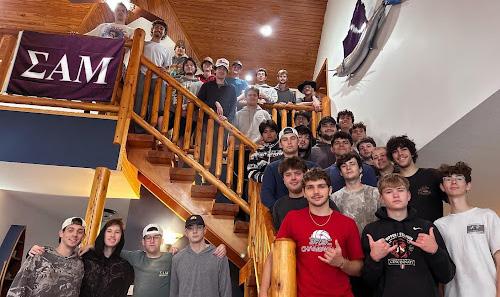
Members of Omicron Chapter took a fall retreat to Tennessee. Building brotherhood and memories for a lifetime!


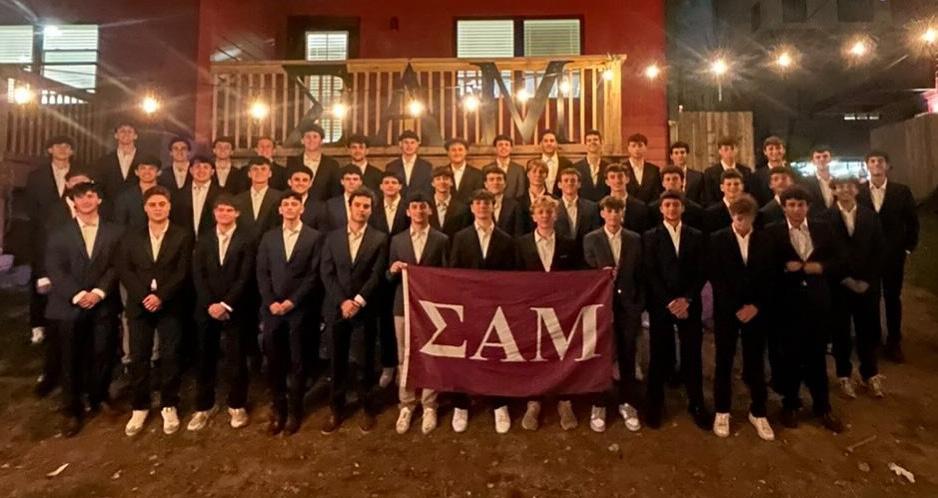

The Rho chapter was recognized with the Sigma Alpha Mu Foundation’s Kaplan Safe Campus Award and received $2500 for their Chapter Educational Fund. The chapter received a grant for study room tables from the Sigma Alpha Mu Foundation.
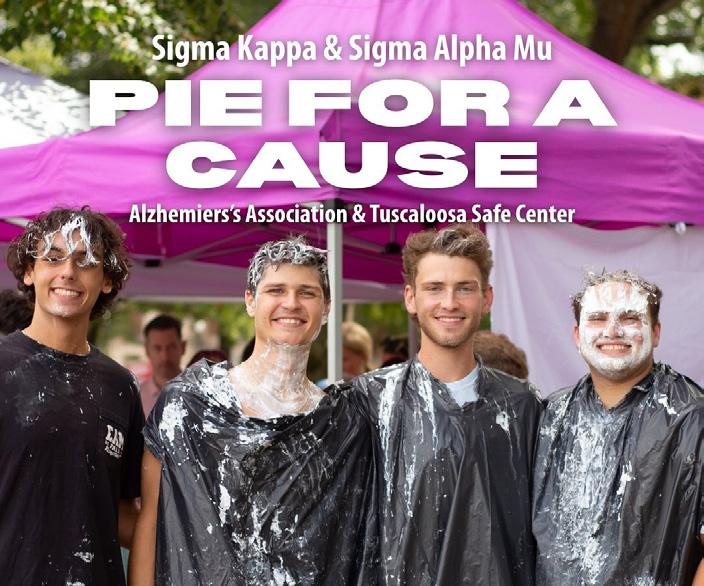
We partnered with Sigma Kappa for their philanthropy event, raised funds for Alzheimer’s awareness and the Tuscaloosa SAFE Center. Four brothers are representing Sigma Alpha Mu in the inaugural IFC Invitational Golf Tournament, and proceeds from the tournament benefit the IFC Endowment Scholarship at University of Alabama.
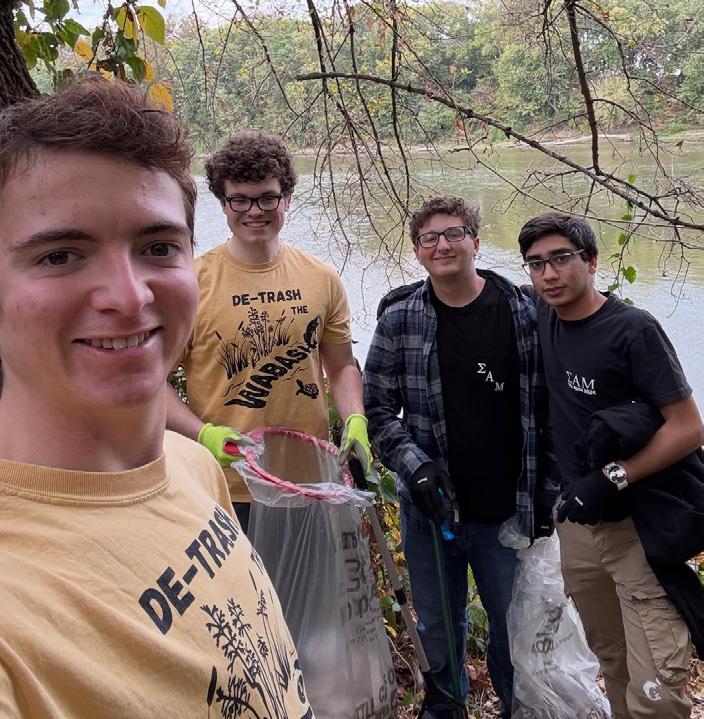
Our chapter hosted two Hillel Bagel Breaks this fall both made possible by grants by the Sigma Alpha Mu Foundation. We participated in the local Alzheimer's Association Walk and made a $1000 donation from our Chapter

The Sigma Theta chapter received a Jewish Endeavor Grant from the Sigma Alpha Mu Foundation to fund Sammy Shabbat with Chabad. The chapter was recognized for having the most Guller Young Scholars (candidates with a 3.75+) for the 2024-25 school year.
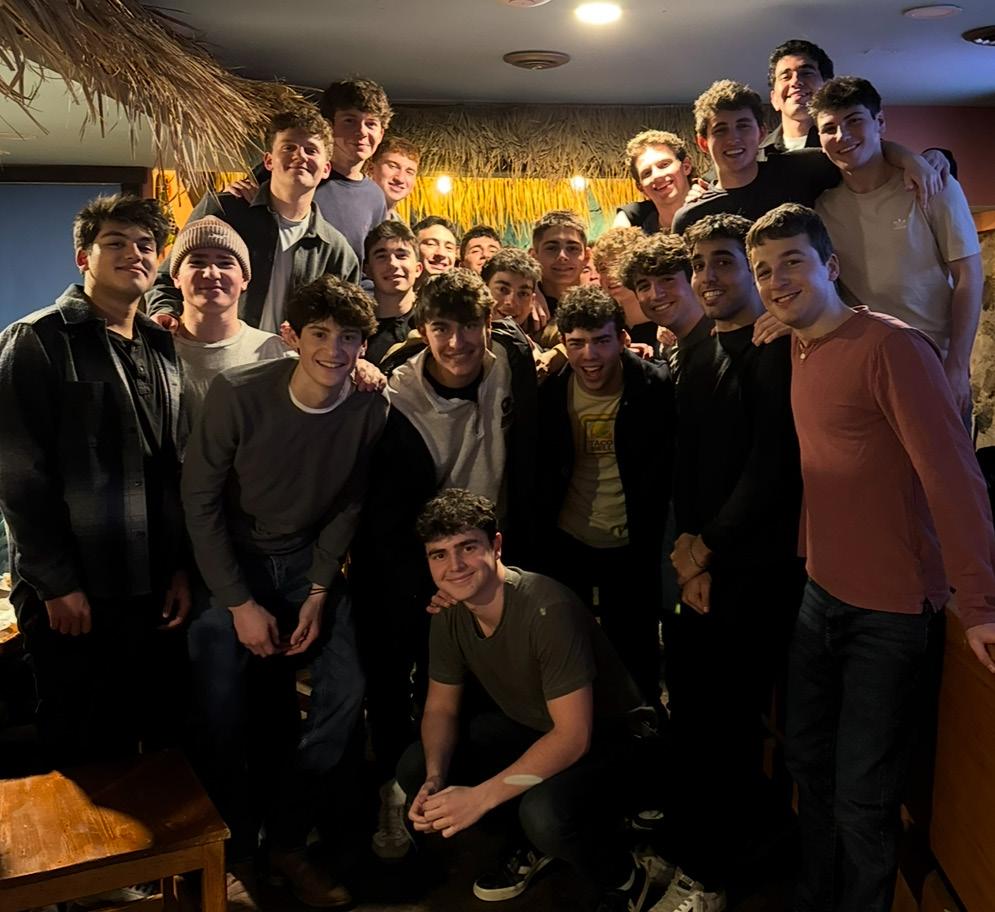
Our chapter recently launched an alumni LinkedIn network to help members strengthen connections across different generations. The group allows current brothers and alumni to easily reach out, reconnect, and share experiences or advice. By creating this space, we aim to foster long-term relationships, mentorship, and continued growth within our fraternity.

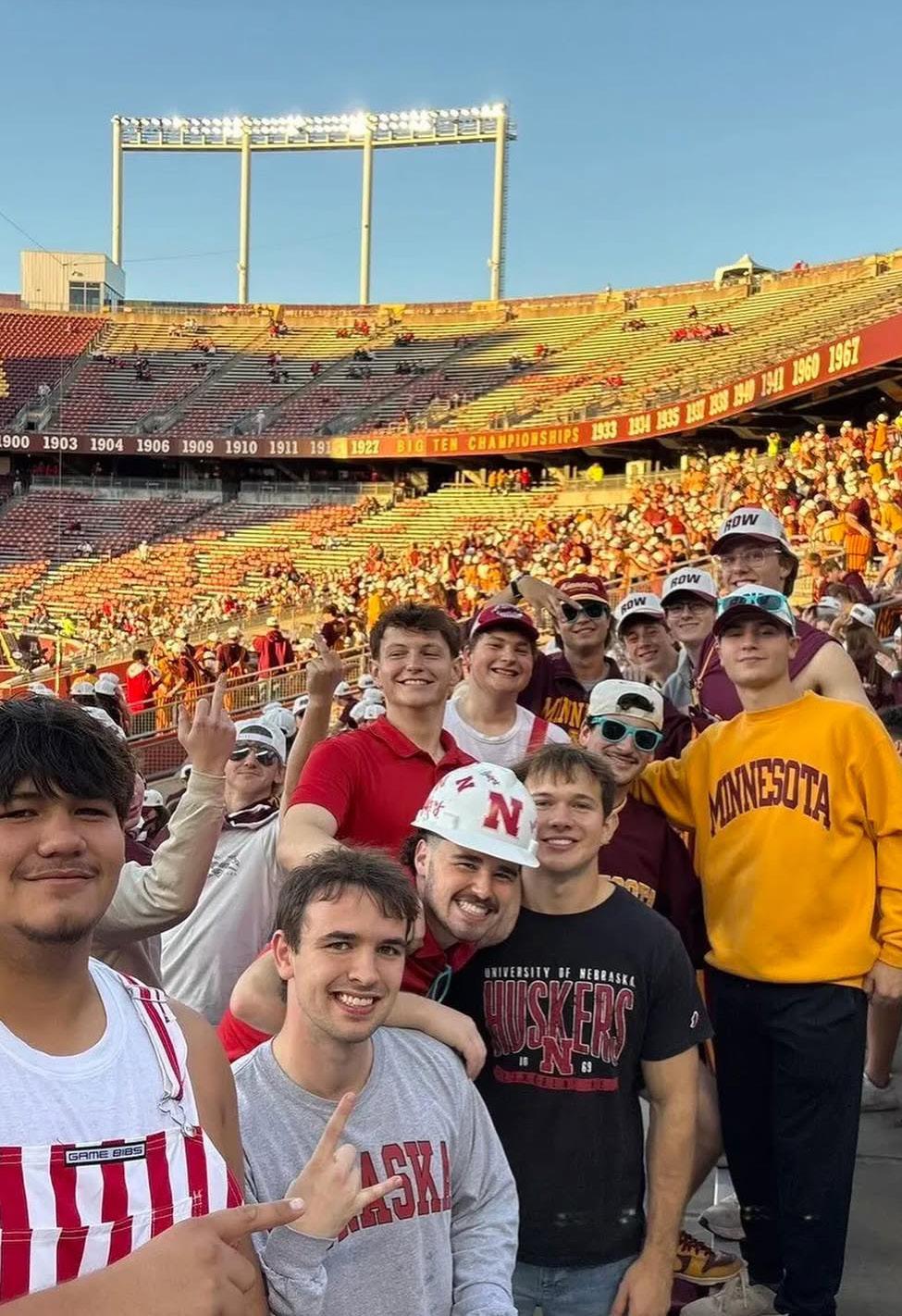
University of Nebraska
Our chapter was able to use funding from their Chapter Educational Fund to attend the Sigma Alpha Mu Leadership Conference this summer.
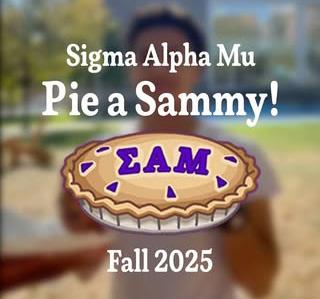
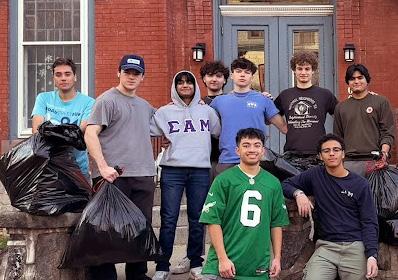
The Chapter raised over $450 for the Judy Fund with their Pie a Sammy event, participated in community cleanup on campus, and hosted an annual brotherhood camping trip in Bass River State Forest.
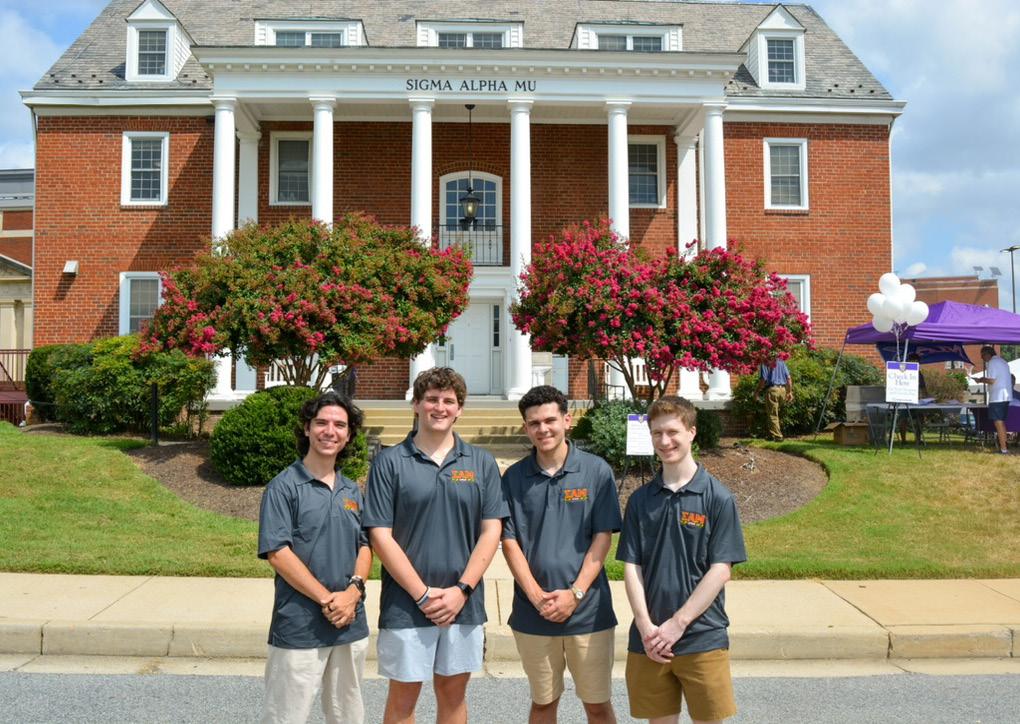
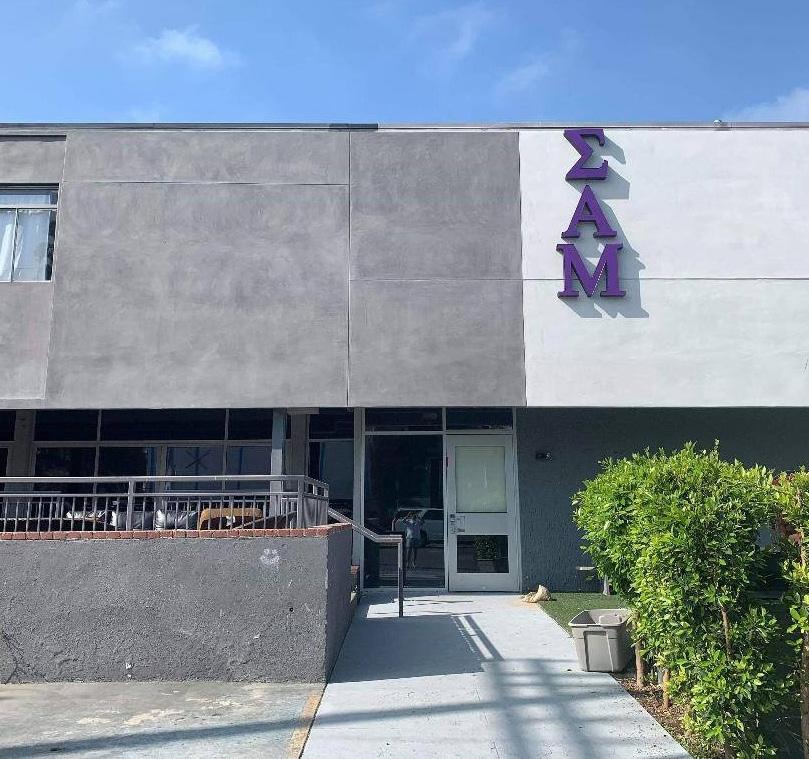
The Sigma Chi Chapter was extremely excited to take part in their Ribbon Cutting Ceremony on August 16th, marking their return to 2 Fraternity Row. Since then, they have had a successful Fall recruitment cycle, and a fun semester! They are now planning for their second annual Sammy Smash Picklball tournament to raise money for the Judy Fund, and are looking forward to their upcoming alumni career panel!
132 3
The Mu Theta Chapter used their Chapter Educational Fund for donations to the Alpha Phi Foundation and the Gamma Phi Beta Moonball fundraiser as well as a Panhellenic Fundraiser for breast cancer.


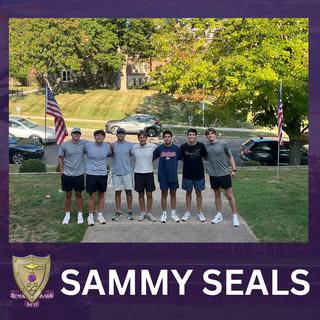

of Arizona
of Wisconsin
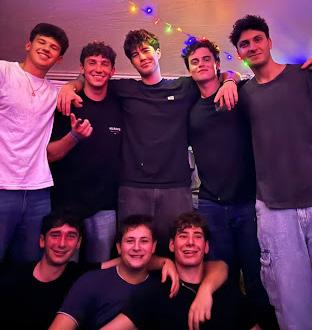
of Virginia
We recently hosted a pickleball tournament for the University of Virginia community, all proceeds went to the Virginia Alzheimer’s Association.

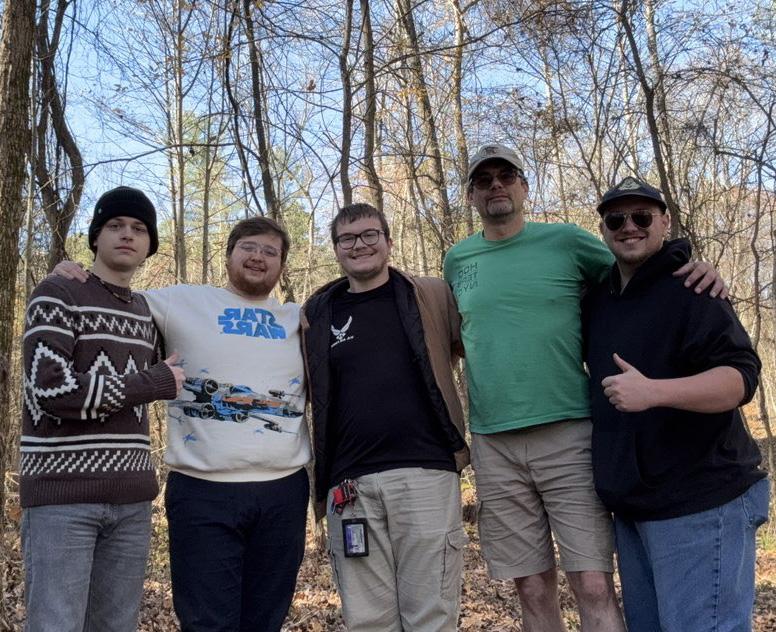
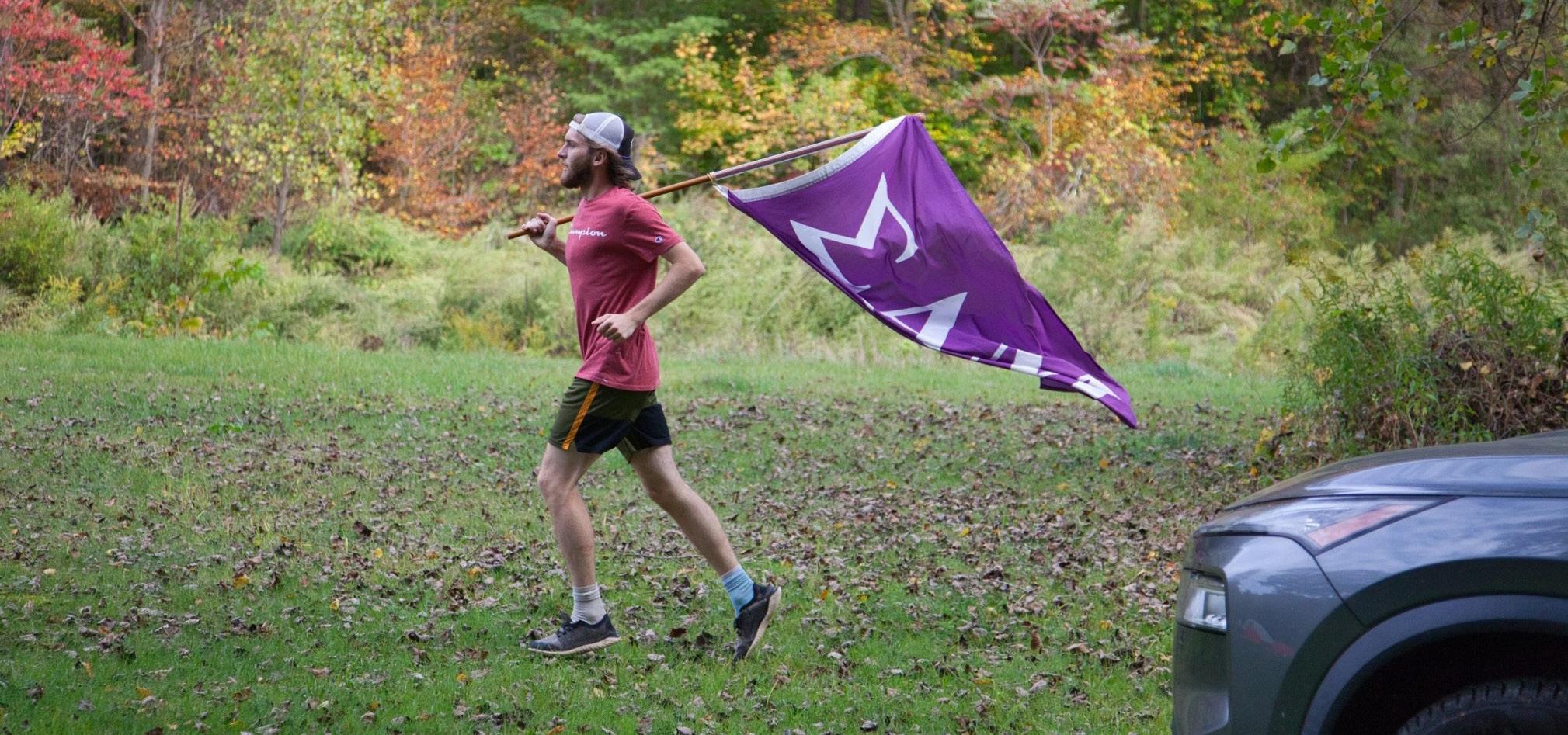
The chapter has doubled in size with a new member joining the chapter. They recently hosted their biannual brotherhood camping. In the spring, they are planning on bringing back the Bounce for Beats philanthropy event.
We received a Jewish Endeavor Grant to fund a “Purple Shabbat” event at Hillel.
The Gamma Tau chapter was recognized by the Sigma Alpha Mu Foundation for having the most Guller Young Scholars (small chapter category) and as runner-up for the Kaplan Safe Campus Award. The chapter has received $2500 for their Chapter Educational Fund in recognition of these awards.



Sigma Alpha Mu Delta Omega Chapter has been steadily working to maintain our strong brotherhood and having a great time together on and off campus. Our recent fall retreat was a highlight for many, as we were able to talk about everything on our minds without any outside distractions. Coming up is our semi-formal dinner which, as always, has an open invitation for all Delta Omega alumni. PTB!



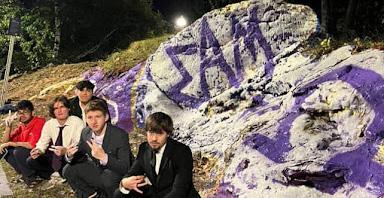
Sammy spirit on display as the chapter painted the Buckley/Shippee Rock, a rock is a central spot for student organizations to paint messages on campuses located near residence halls.

Andy Huston
Written by (Minnesota, '01), Executive Director
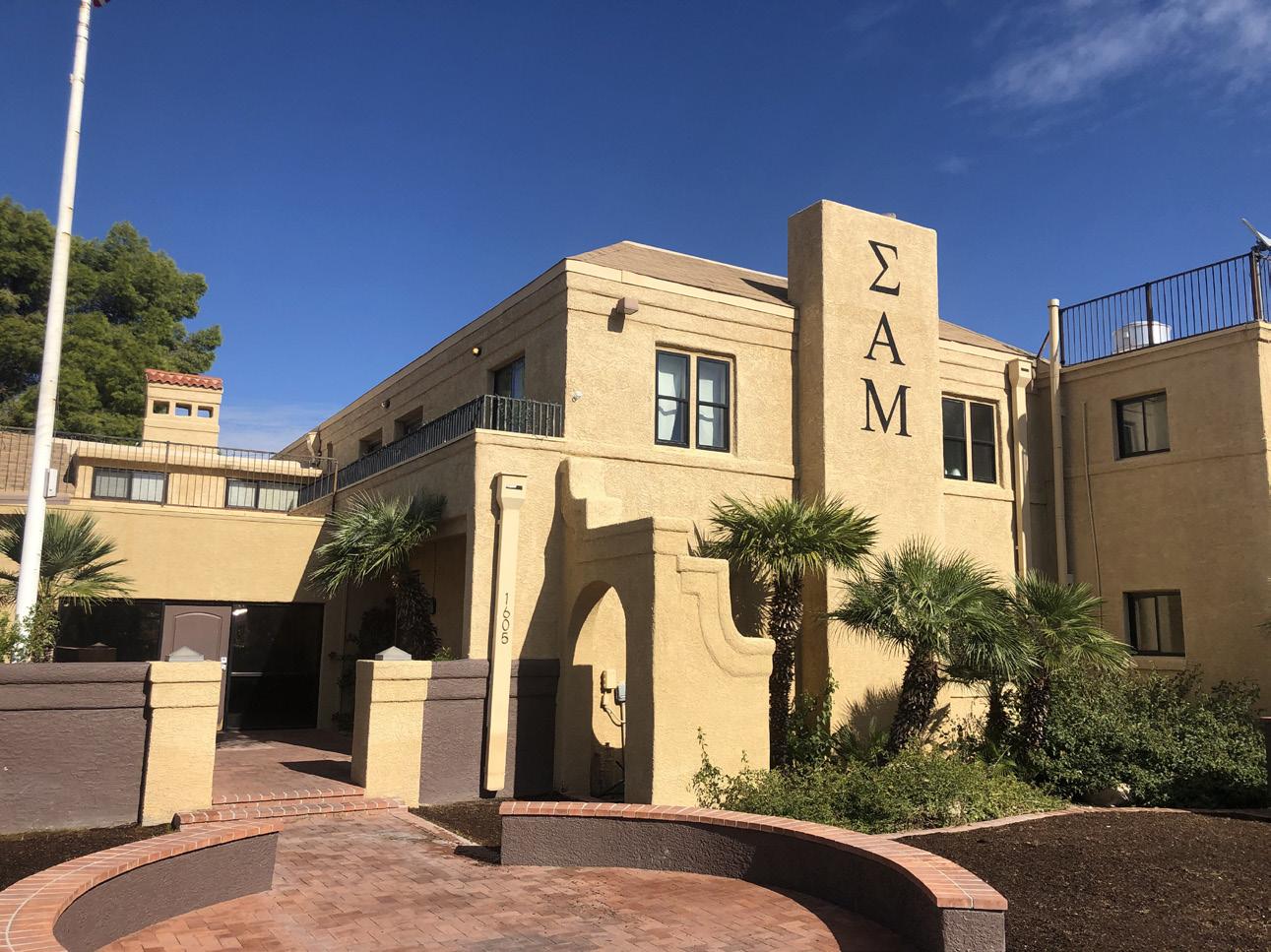
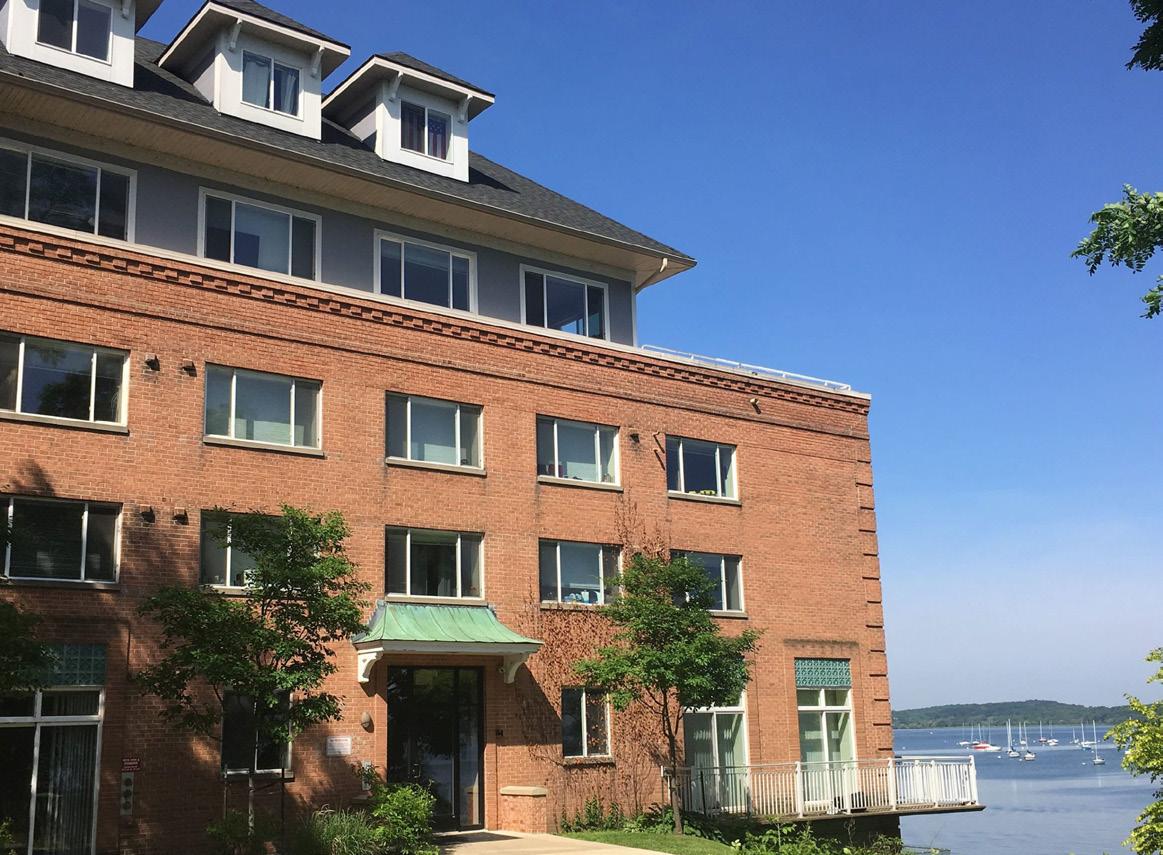
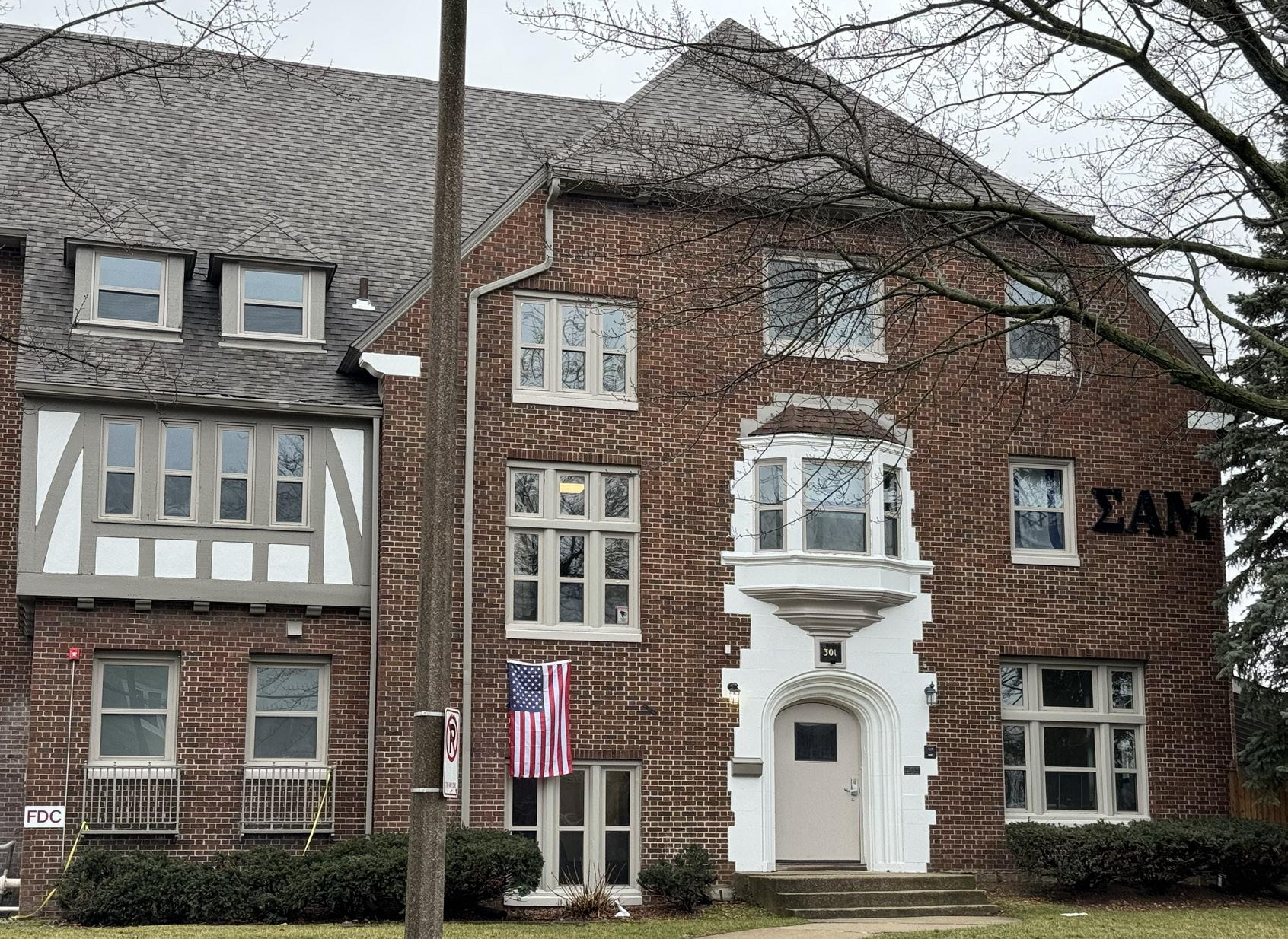
In 1957, Howard B. Miller (Sigma Chi, '54) faced an ambitious challenge as Chapter Prior: raising more than $130,000 to construct a new chapter house at the University of Maryland. With support from the Endowment Fund and the full commitment of Sigma Chi alumni, the mission succeeded. On April 27, 1958, #2 Fraternity Row was officially dedicated as the home of Sigma Alpha Mu, where the fraternity would remain for nearly 45 years.
The university declined to renew the chapter's lease in 2000 amid declining operations and leadership challenges. Sigma Chi persisted for eight years until its charter was suspended in 2008. When alumni formed a committee to bring ΣAM back to campus, Howard Miller became an active member and played a pivotal role in the negotiations that led to Sigma Chi's return in 2016. Since then, he has continued serving as a source of knowledge, creativity, and strategic guidance for strengthening and growing the chapter.
The vision was clear: grow the chapter to a size and operational standard that would warrant a return to Fraternity Row. However, with housing inventory now controlled by the university, securing a spot on the row— especially #2 Fraternity Row—remained beyond the chapter's control.
When several properties on Fraternity Row became available, including #2 Fraternity Row, Howard Miller once again led the effort. Alongside a dedicated team of alumni, he spearheaded the Restoring Our Legacy
Campaign, which raised $265,000 from 260 donors to supplement rent, provide furnishings, and secure the university buy-in necessary for the chapter's return. The successful effort represents a full-circle journey for both Sigma Alpha Mu's Sigma Chi Chapter and Howard Miller.
"Moving back into #2 Fraternity Row means so much to me as an alumnus," Miller shared. "It's where we built our strongest bonds, shared unforgettable experiences, and truly grew as brothers. Reclaiming this historic home isn't just about honoring our past—it's about ensuring that future Sammies will be able to share in the same life-changing experiences we did."
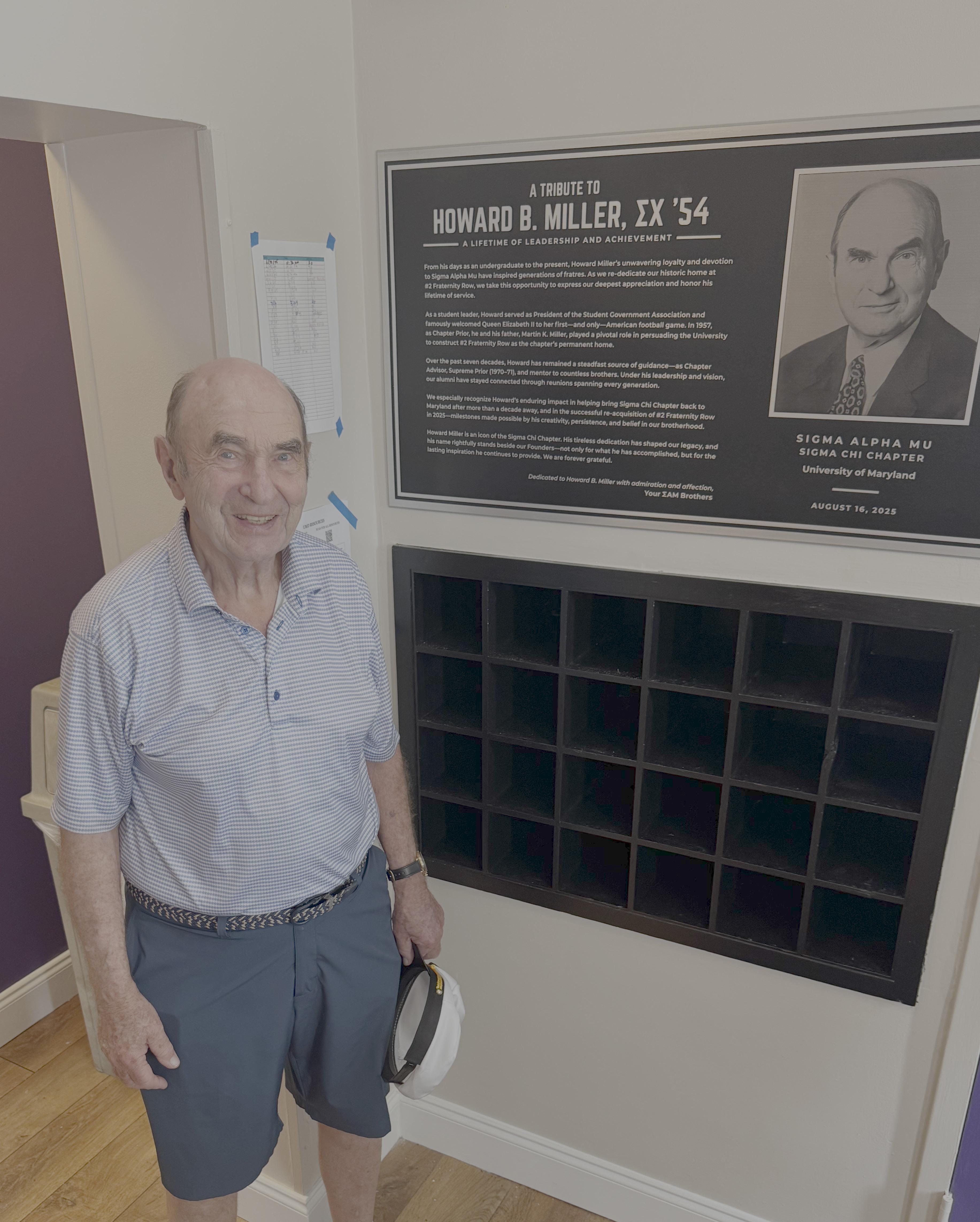
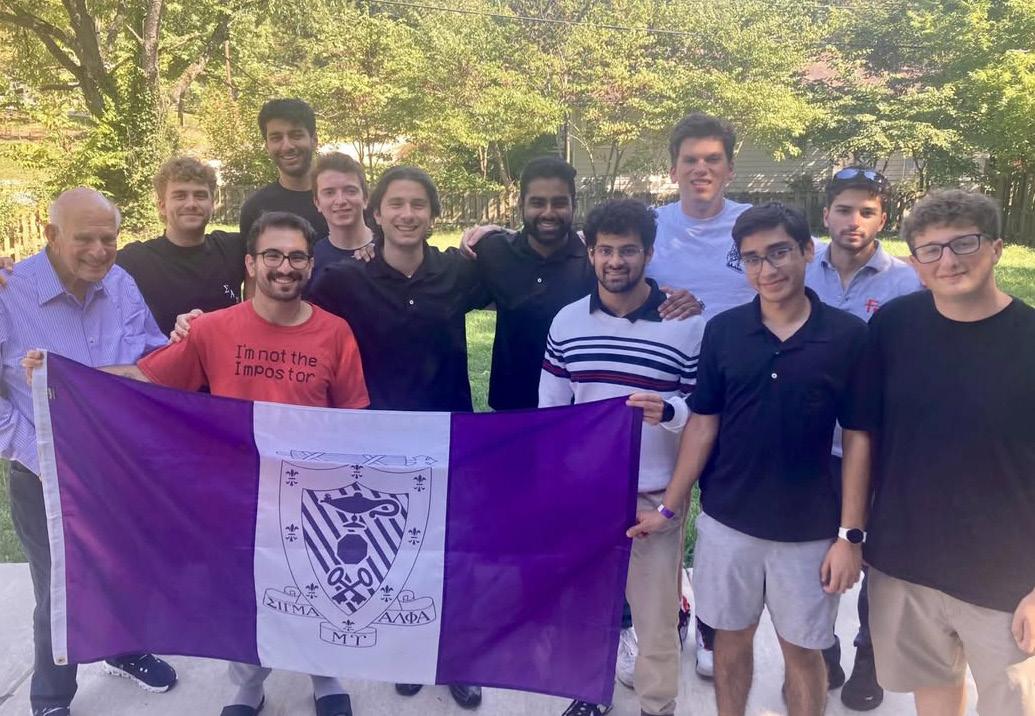
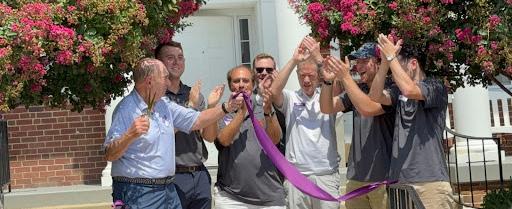
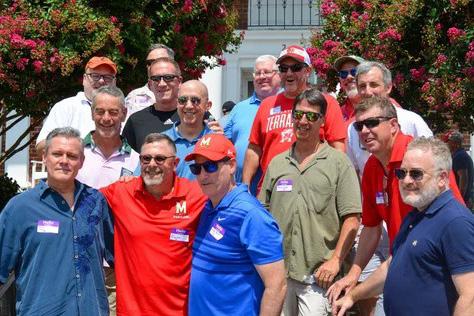
On August 16, 2025, more than 200 alumni, parents, and guests gathered for a ribboncutting celebration marking the chapter's official return home. During the event, grateful Sigma Chi alumni surprised Howard with a commemorative plaque installed in the entrance of the house, honoring his outstanding dedication to ΣAM and its members. Vice Supreme Prior Remer, Past Supreme Kleppel, Past Supreme Prior Sergi, Supreme Exchequer Harris, Supreme Recorder Lambert, ΣAM Foundation CEO Girson, Executive Director Huston, and Communications Manager Ray were present from the international fraternity.
Photos and videos of the ribboncutting celebration are available at https://2fraternityrow.com/
The plaque reads:
From his days as an undergraduate to the present, Howard Miller's unwavering loyalty and devotion to Sigma Alpha Mu have inspired generations of fratres. As we rededicate our historic home at #2 Fraternity Row, we take this opportunity to express our deepest appreciation and honor his lifetime of service.
As a student leader, Howard served as President of the Student Government Association and famously welcomed Queen Elizabeth II to her first—and only—American football game. In 1957, as Chapter Prior, he and his father, Martin K. Miller, played a pivotal role in persuading the University to construct #2 Fraternity Row as the chapter's permanent home.
Over the past seven decades, Howard has remained a steadfast source of guidance—as a Chapter Advisor, Supreme Prior (197071), and mentor to countless brothers.
Under his leadership and vision, our alumni have stayed connected through reunions spanning every generation.
We especially recognize Howard's enduring impact in helping bring Sigma Chi Chapter back to Maryland after more than a decade away, and in the successful re-acquisition of #2 Fraternity Row in 2025—milestones made possible by his creativity, persistence, and belief in our brotherhood.
Howard Miller is an icon of the Sigma Chi Chapter. His tireless dedication has shaped our legacy, and his name rightfully stands beside our Founders—not only for what he has accomplished, but for the lasting inspiration he continues to provide. We are forever grateful.
Dedicated to Howard B. Miller with admiration and affection, Your ΣAM Brothers
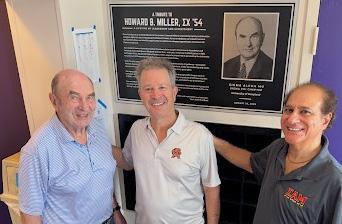
Key leaders of the Restoring Our Legacy Campaign. Pictured left to right: Howard Miller, Arnie Applebaum, & Bruce Harris.
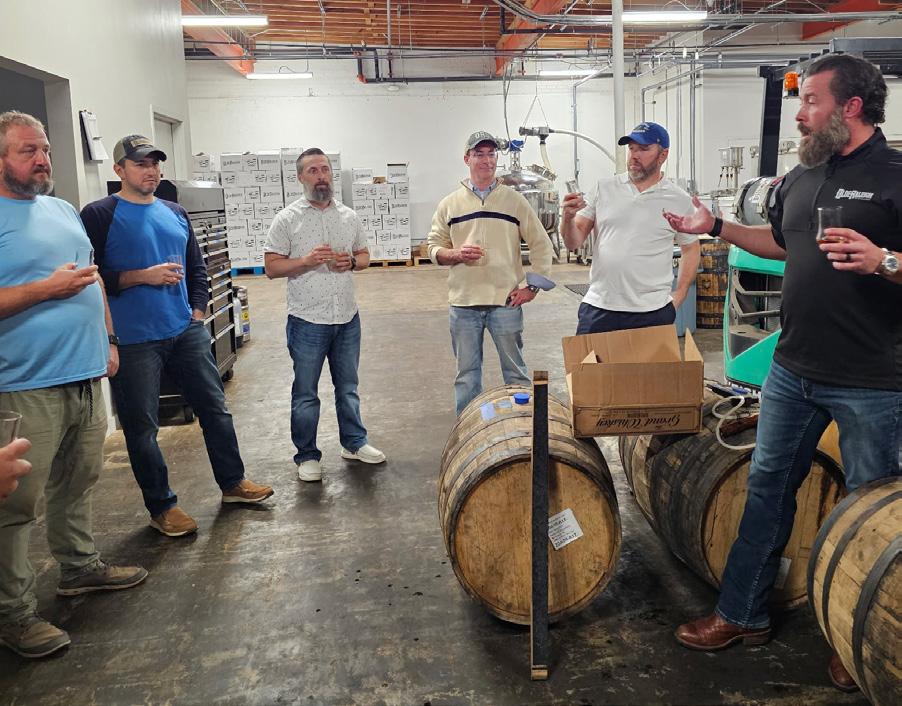
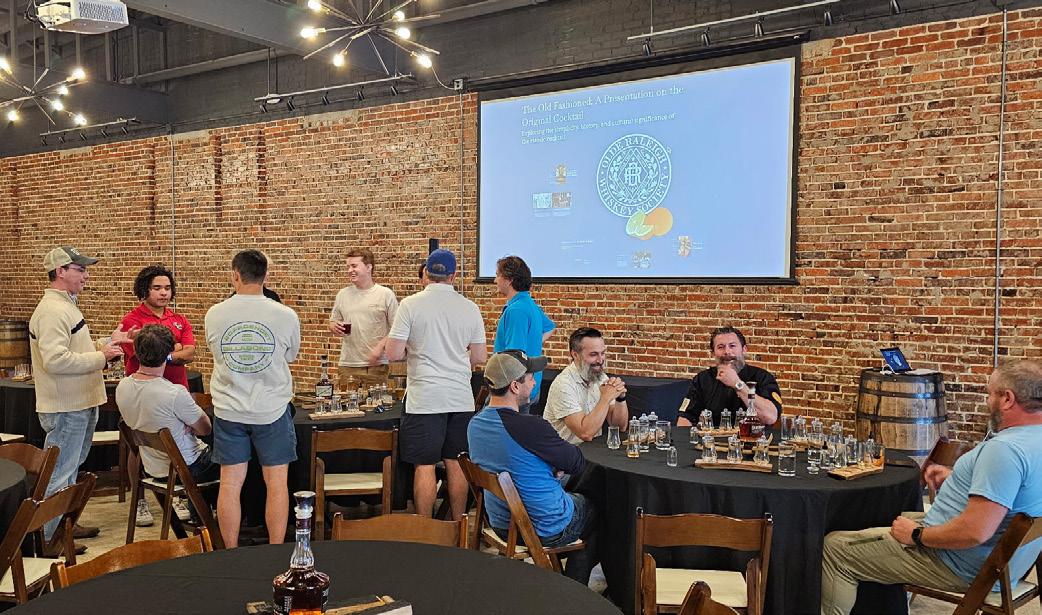
Sigma Omega (NC State) Olde
Raleigh Distillery Whiskey
Tasting led by owner/Master
Distiller Brandon McCraney
(Sigma Omega, '01)*
*pictured top right

The following chapter or regional alumni events have been reported for publication in The Octagonian. Please share your reunions and alumni events and photographs with us at https://sam.org/alumni/updates
• South Florida Alumni Club Whisky Tasting and Networking Event6/18 - Parkland, FL
• Sigma Theta (Texas) Alumni Weekend - 9/12-14
• ΣAM TriState Alumni Club Cigar Night - 9/18 - New York
• ΣAM TriState Alumni Club Family BBQ - 9/20 - New York
• Sigma Omega (NC State) Olde Raleigh Distillery Whiskey Tasting10/18 - Zebulon, NC
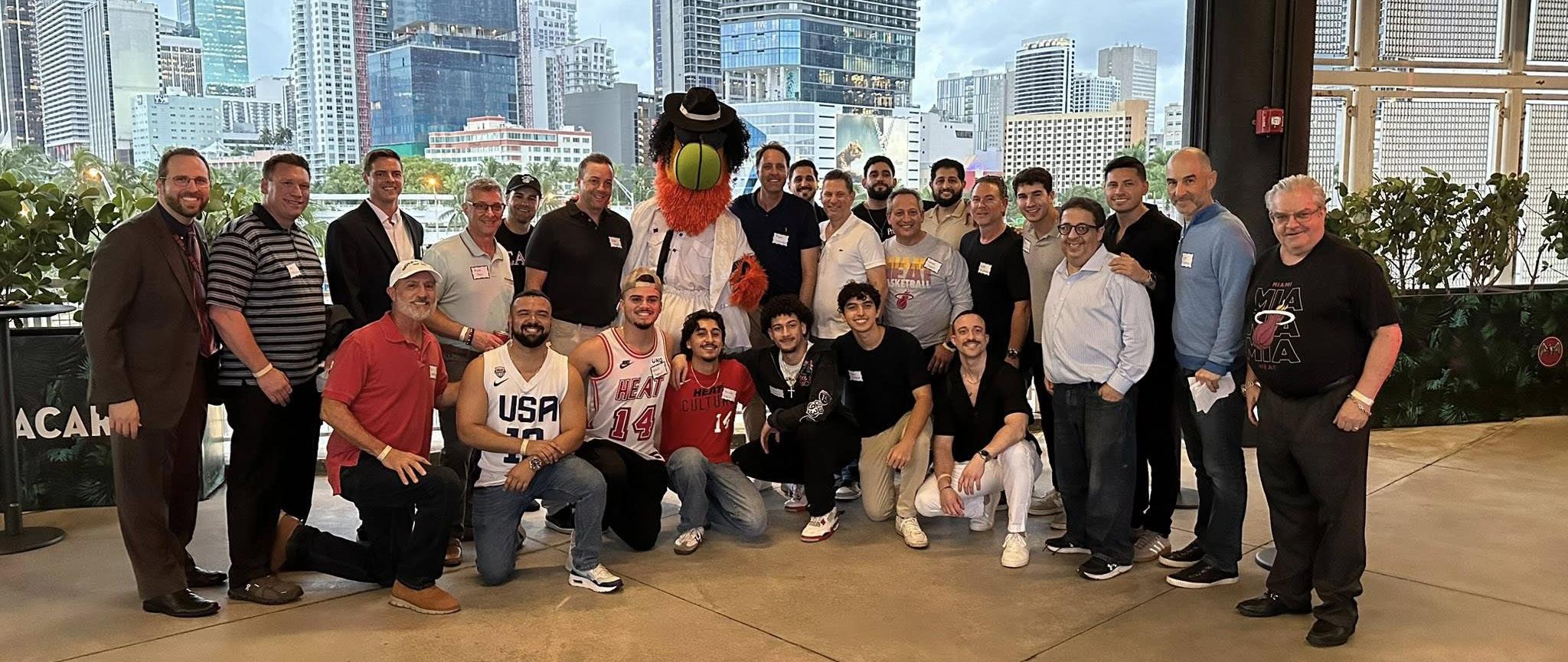
• South Florida Alumni Club Miami Heat Game - 10/28 - Miami, FL (pictured below)
• Octagon Meeting - 11/6-9 - Washington, DC
• Gamma Phi (ASU) Alumni Event - 11/23 - Phoenix, AZ
• ΣAM TriState Alumni Club Manhattan Happy Hour - 11/20- New York
• Epsilon Delta (JWU) 25th Anniversary - 1/23 - Long Island, NY
• ΣAM Foundation Meeting - 2/20-21 - Las Vegas, NV
• Gamma Rho (UCSD) 40th Anniversary - 2/20-22 - San Diego, CA
• Octagon Meeting - 3/26-29, 2026 - Detroit / Ann Arbor, MI
Developing Leaders Initiative - January 16-19 - Indianapolis
Chapter Leaders Day -
• January 24 - Dallas
• January 31 - Chicago
• February 7 - Philly
Upcoming Conventions - more information coming soon as sam.org/ convention
• July 23-26, 2026 - TriState New York
• July 22-25, 2027 - Chicagoland
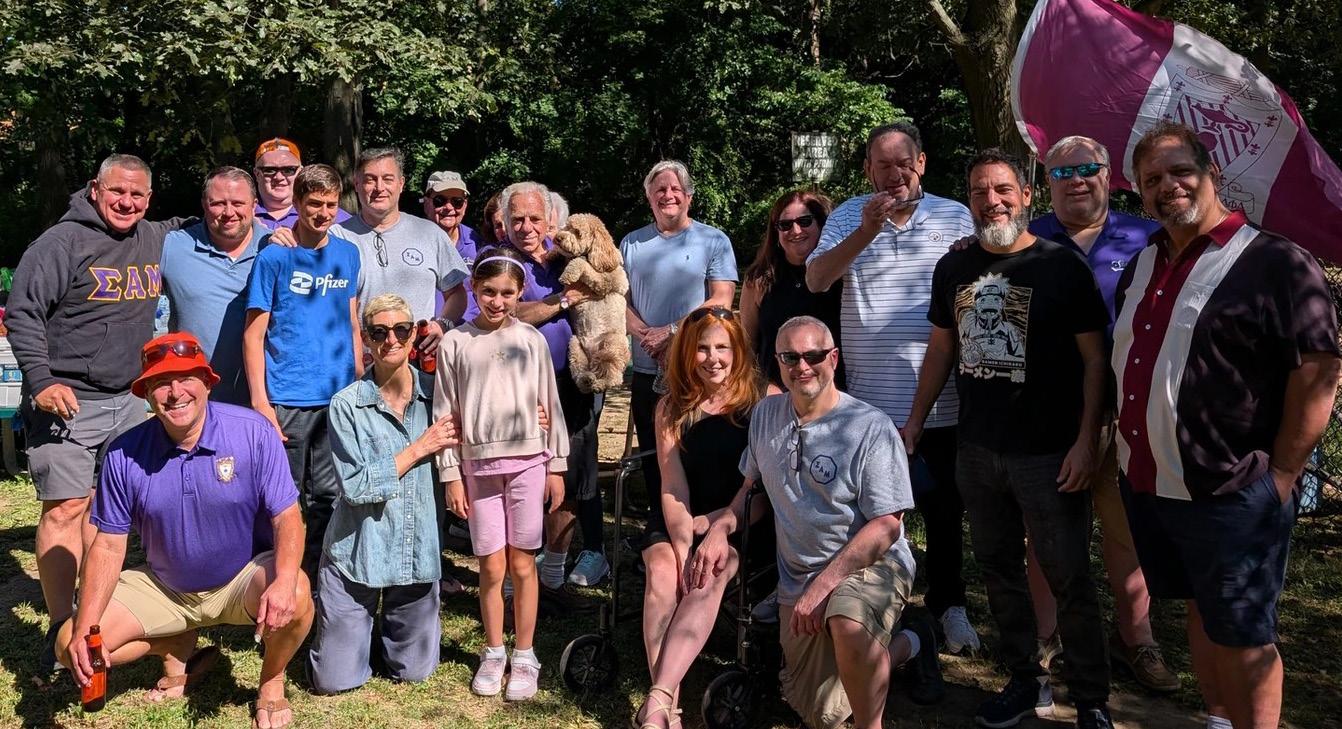
Thirteen brothers spanning 11 chapters and five decades attended the annual Tri-State Sammy Family BBQ which also included spouses, kids, and Mr. Bigly the dog.
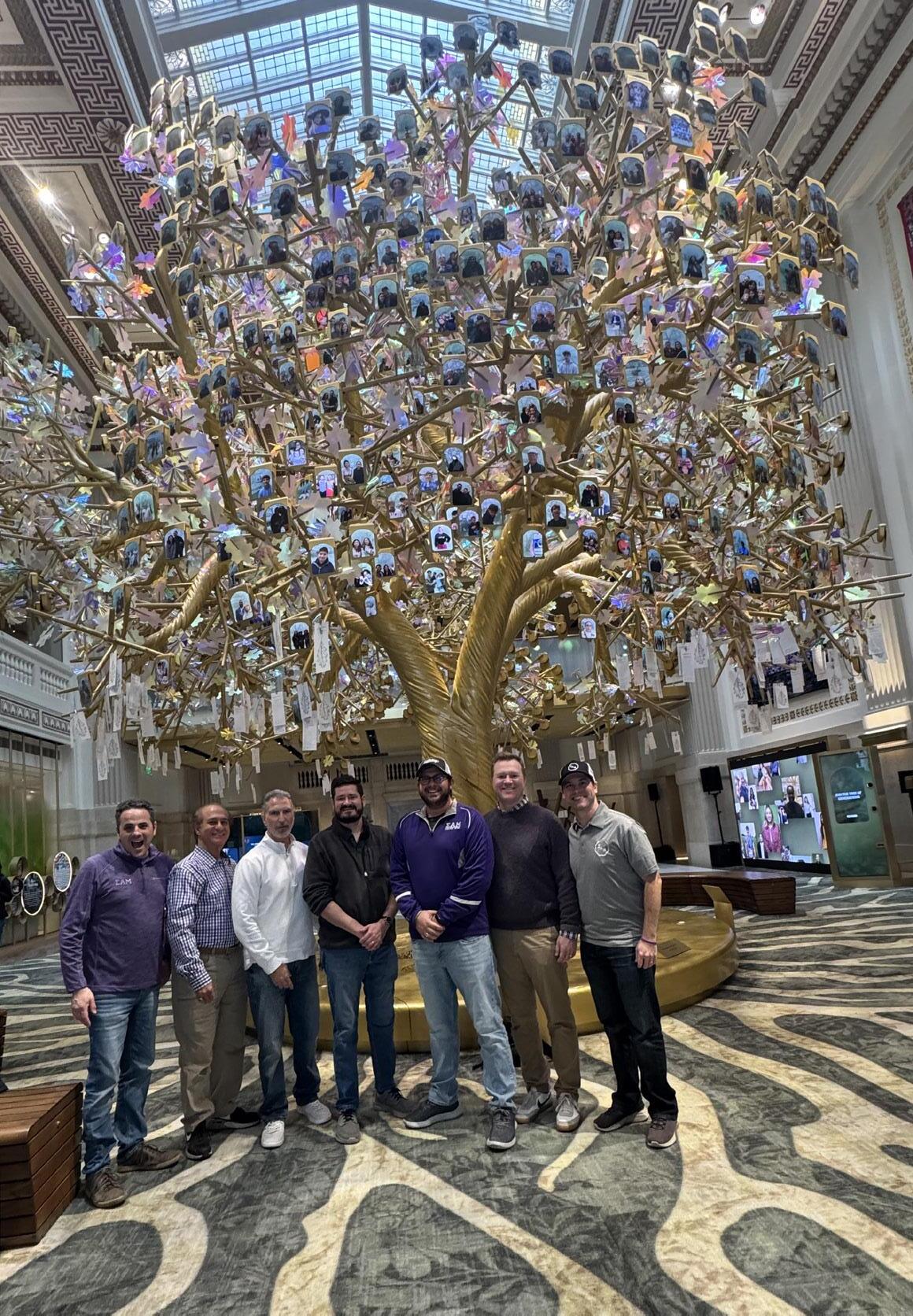
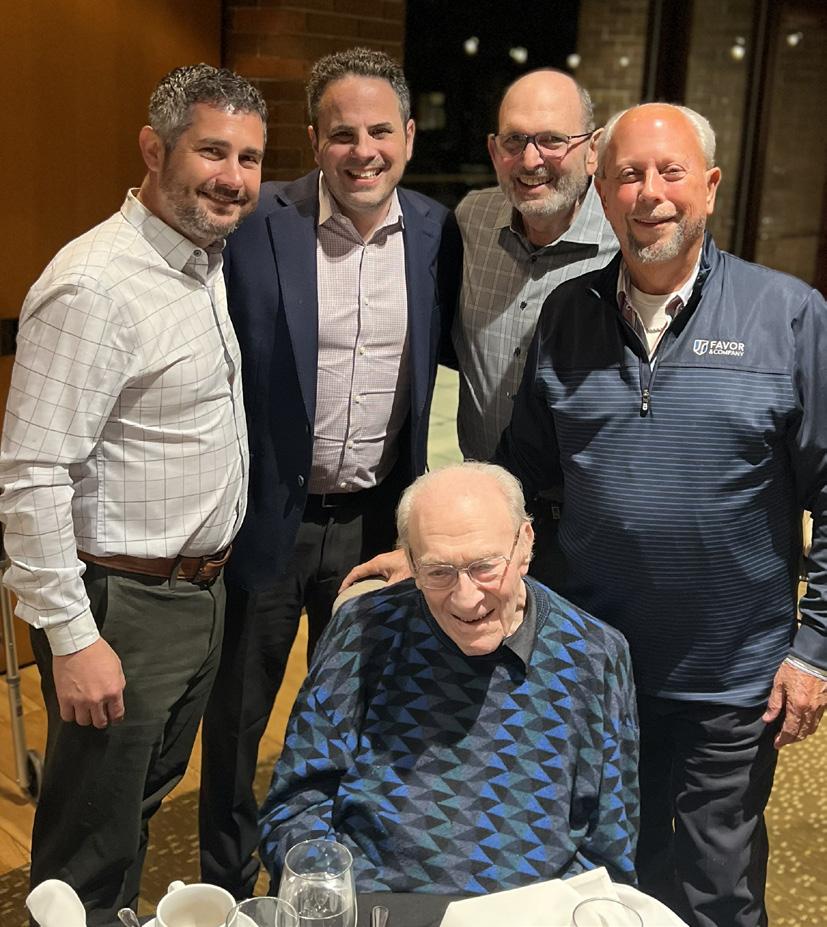
Pictured left to right in back: PSP Andy Ahitow, Supreme Prior Benji Bearman, Mark Shear, PSP Marc Perlstein and PSP Ron Katch (front) attended a dinner in conjunction with the Favor & Company Board Meeting held November 18th. Marc Perlstein is the Endowment Fund Representative to the Favor Board.
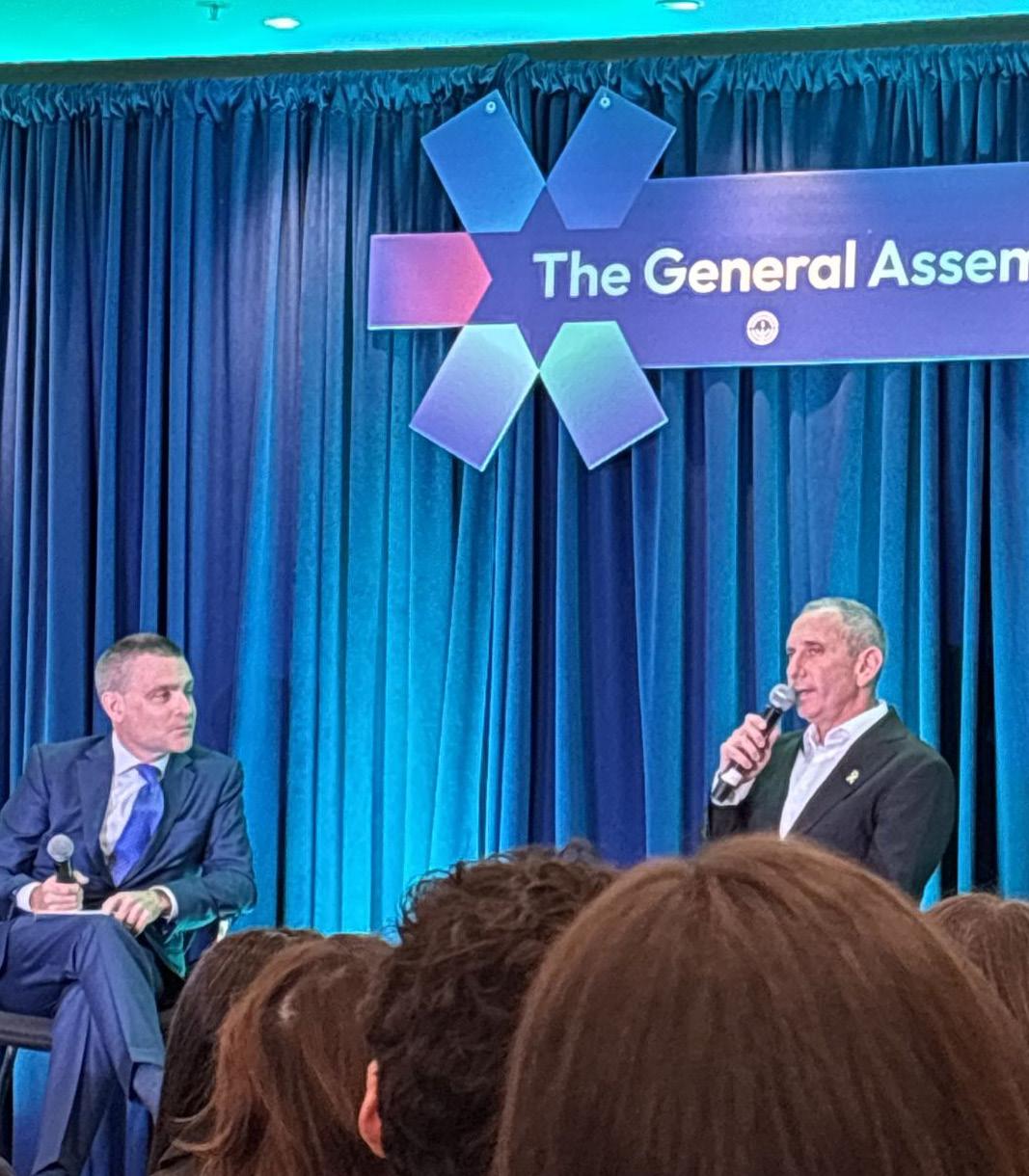
The Octagon explored powerful exhibits at the newly opened Milken Center for Advancing the American Dream.
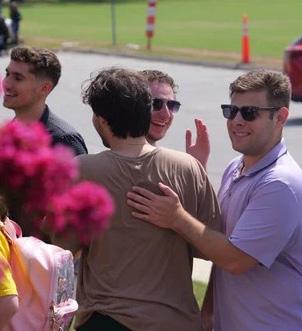

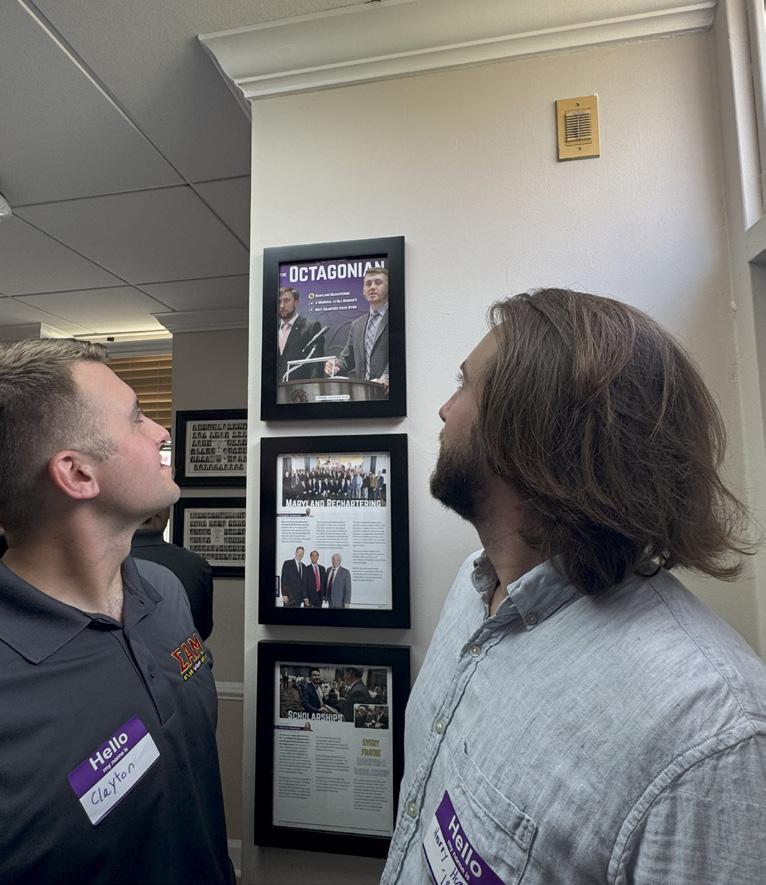
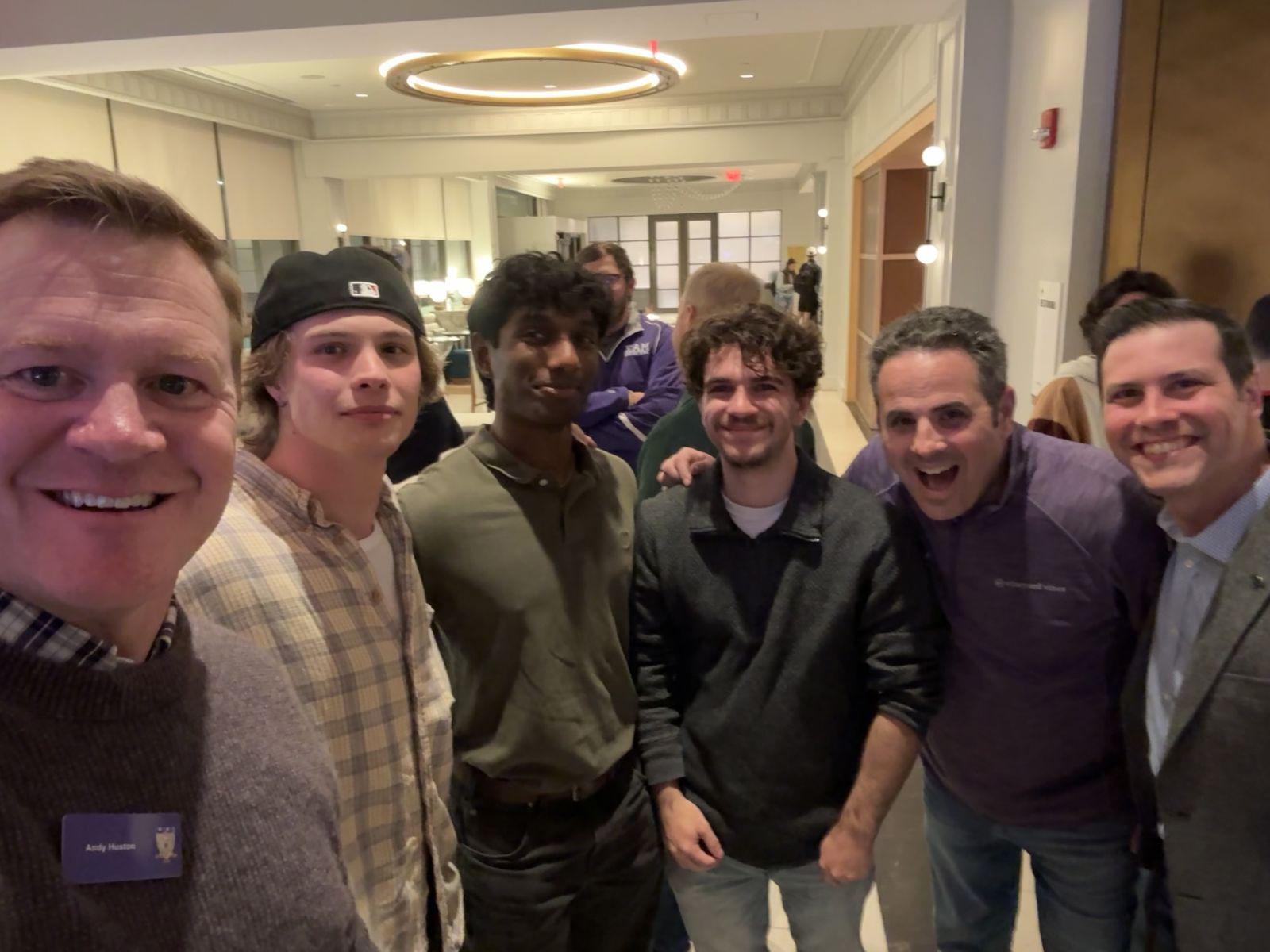
Members of Delta Beta (American) met with international leadership during the DC Happy Hour
Since our inception, the Sigma Alpha Mu Foundation’s mission has been “to support the educational interests and activities of Sigma Alpha Mu Fraternity, to furnish student aid, and to encourage and develop conduct and traits of character consistent with high morals, constructive citizenship, scholarship, leadership and community service.”
To learn more about the foundation’s programs or to make a donation, go to sam-fdn.org.
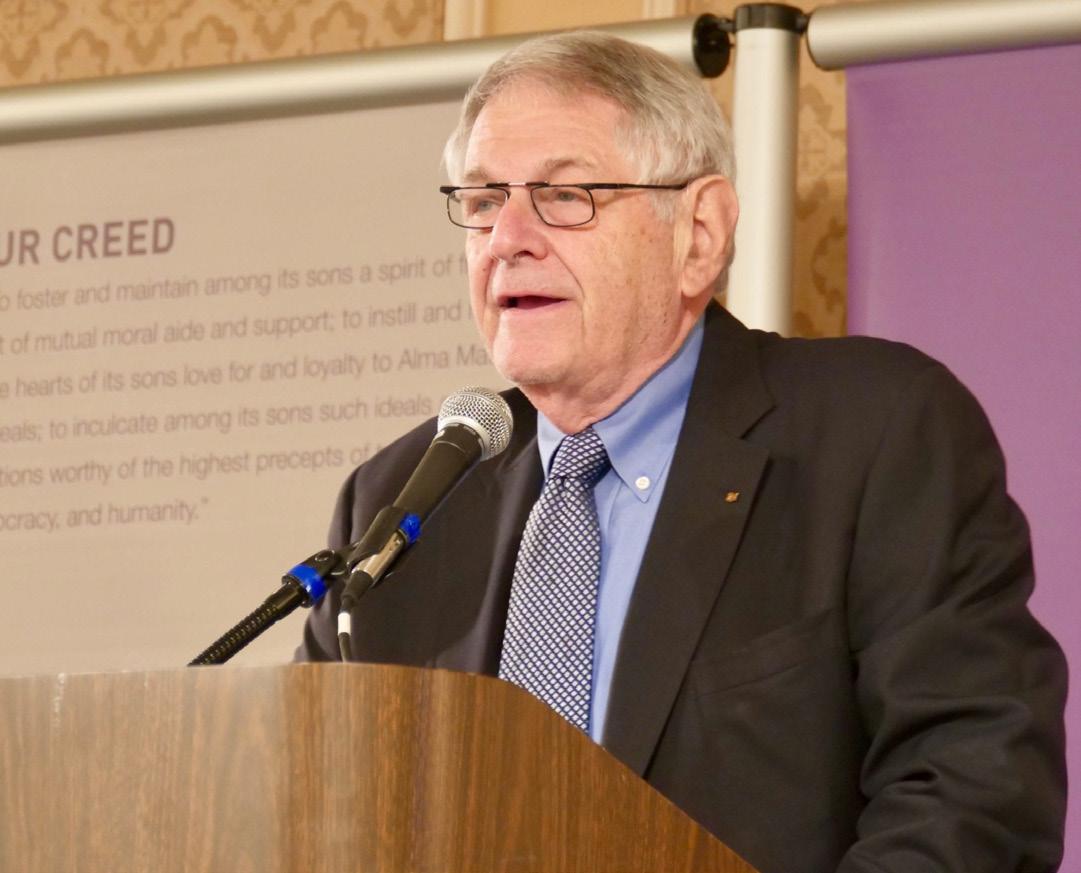
Hanno D. Mott (Omicron/Cincinnati, ’52) recently completed his service on the SAM Foundation Board of Directors. Hanno served on the Foundation board for more than 30 years and was President 2009-2020. Hanno’s service to Sigma Alpha Mu goes back more than 65 years; he first volunteered upon graduation from law school and relocation to New York City in the late 1950s when the Fraternity was headquartered in New York. In addition to his service to the Sigma Alpha Mu Foundation, Hanno served as the long-time Legal Committee Chairman, consul of the Octagon, Supreme Recorder, Vice Supreme Prior, Supreme Prior, Endowment Fund Trustee, and President of the SAM Development Corporation (SAM’s first national housing entity). In 1995 Hanno was honored with Sigma Alpha Mu’s Distinguished Service Award – he went on to continue his outstanding service for another three decades. Foundation President Bob Weiss shared the following regarding Hanno: “Some people donate their time, others their money, and others their knowledge. It’s rare to find people like Hanno Mott who donate all three for an organization.” Hanno is a member of the Sigma Alpha Mu Foundation’s Purple & White Society (lifetime giving) and Ira Lind Society (planned giving) and was honored as a Centennial Founder in 2009 for his service and contributions to the Foundation.

Mark your calendar for Sigma Alpha Mu’s Day of Giving on Thursday, April 23!
This year we’re going big and want to raise $50,000 in a single day from fratres and friends of Sigma Alpha Mu!
The Day of Giving has become a signature event for the Foundation- every gift made adds up to make a big impact for the Foundation. These gifts, combined with hundreds of other gifts, ensure that we can continue to support leadership development, provide financial aid for fratres that need it and fund programs that honor our Jewish heritage.
Since its beginning in 2018, the Day of Giving fundraising efforts have raised more than $400,000 that has provided direct support for programs that advance the fraternal experience and provide scholarships to deserving members.
Visit samdayofgiving.org for more details on how you can get involved and support the Foundation!

Sigma Alpha Mu Foundation is proud to announce the Marc & Debbie Perlstein Jewish Endeavor Scholarships. Through the generosity of the Perlstein family, these scholarships are for high school seniors in the DALLAS AREA who are involved in the Jewish community and headed to college the Fall. Each scholarship is $1,000, and three will be awarded each year. Congratulations to our Fall 2025 recipients Zach, Ethan and Shayna, all attending UT Austin! Know a Dallas area senior? Encourage them to apply for 2026! www.sam-fdn.org
Sigma Chi Scholarship Fund Beneficiary of Major Gift
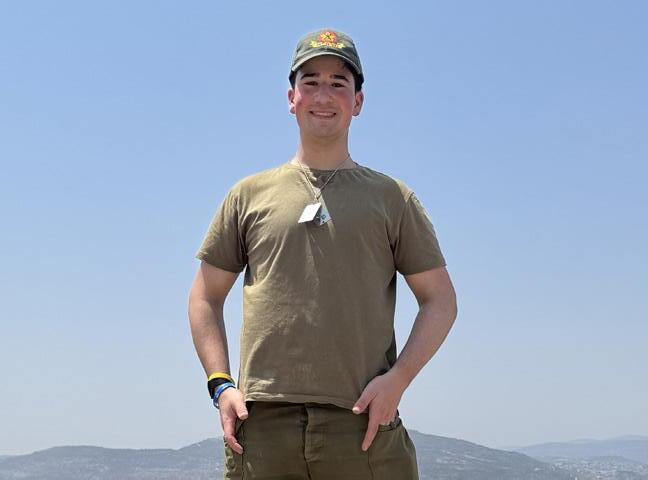
The estate of Philip and Jo Anne Glazer distributed a $92,000 gift to the Sigma Chi Scholarship Fund in the Sigma Alpha Mu Foundation. Fra Glazer was initiated into Sigma Chi chapter at the University of Maryland in 1944 and was an active attendee at Sigma Chi alumni events until his passing in 2010. The Glazer’s generosity will provide additional scholarships for members at Sigma Chi chapter. For more information on how you can include Sigma Alpha Mu in your estate plans, please contact Senior Director of Development Amy Buchheit at amyb@sam-fdn.org or call 317-536-8953.
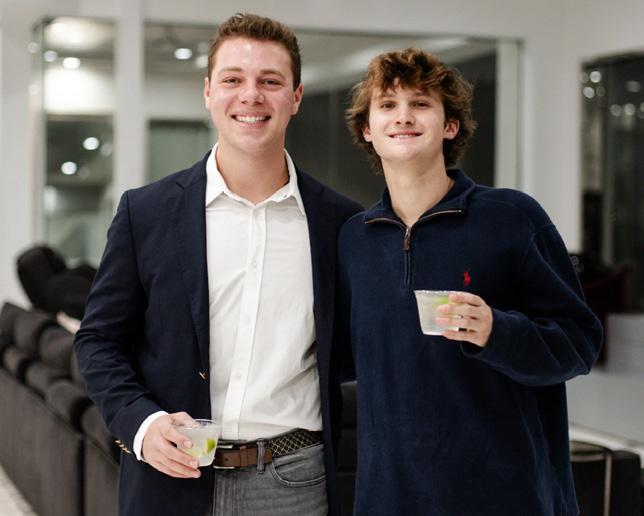
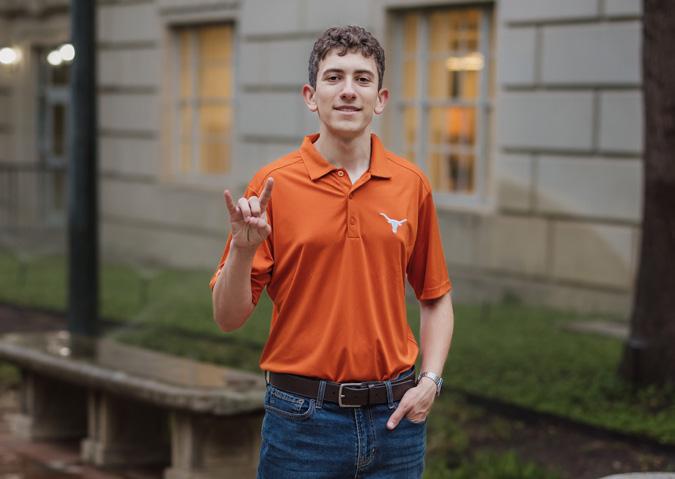
2025 recipients of the Glazer Family Jewish Study Scholarships
"Dear Sigma Alpha Mu,
Thank you so much for the generous scholarship. I am honored to have been selected for this, and it means more than you could ever have known. I had a very rough experience in high school with antisemitism which inspired me to be a stronger and prouder Jew than ever before. After October 7th, school only got worse, and I felt very isolated and diminished. The summer after my junior year I chose to go to Israel to volunteer for the IDF and was placed on a combat base 0.9 miles away from the Gaza strip. This experience was what I thought would be the most life-changing experience of my life and it empowered me to get through my last year of high school and put a lot of work into my college applications. After I chose to attend the University of Texas at Austin and graduated high school, I returned to Israel to volunteer again for the IDF. I was placed on base near the Lebanon/Syria border and spent hours each day helping disassemble used missiles for recycling. While I was in Israel, the 12-day-war broke out which made me feel even more compelled to help, I spent hours each day in an IDF warehouse in Jerusalem preparing gear for the soldiers. Everyday I would witness the Iranian missiles right above me as they were shot down or intercepted. One day after one of the largest attacks of the war, I received an email with information about this scholarship.
As I sat in Jerusalem wondering if I would even make it home to attend college, I applied for this scholarship. I am having such a great time in college so far and after working very hard the past few weeks, meeting a lot of people and having meaningful experiences, I received the great news that I had been selected for this scholarship. It is even more meaningful that this happened on October 7th, 2 years after the war started, the war that inspired me to be true to myself and stand up for what’s right. Today is a very rough day and the news of this scholarship really made my day, week and month.
Thank you for this incredible honor and for everything you do to assist the Jewish community in fulfilling their dreams."
-Zachary
Not a Member? Not a Problem!
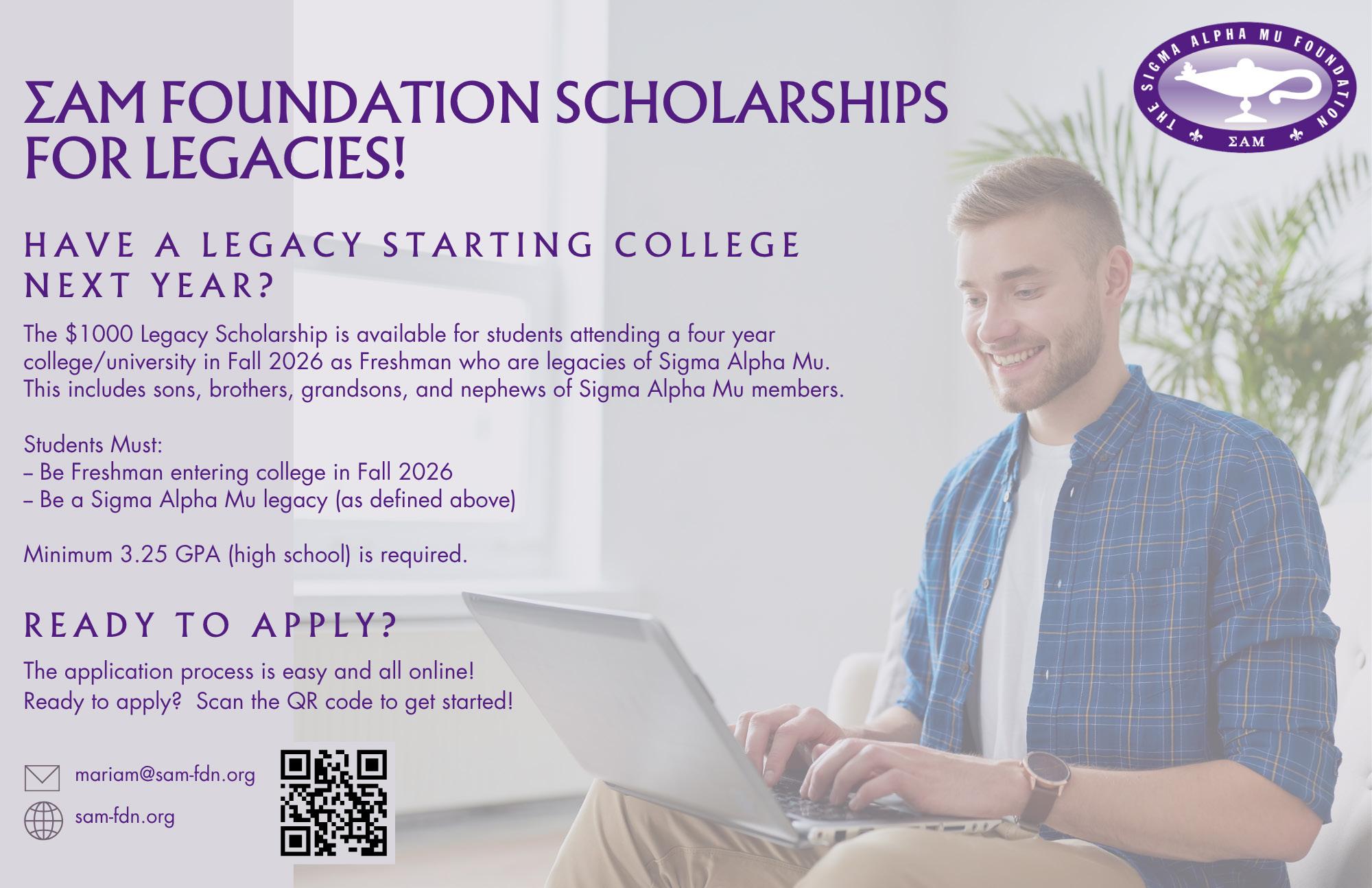
Sigma Alpha Mu Foundation has expanded our scholarship program to include the Legacy Scholarship for young men headed to college who are brothers, sons, nephews, or grandchildren of ΣAM fratres. The Legacy Scholarship is $1,000, and applications are now open for Fall 2026!
AND if you’re a Sigma Beta alumnus, be aware that incoming freshmen who will be attending The Ohio State University in the fall semester, who are from the state of Ohio, and who are Sigma Alpha Mu – Sigma Beta legacies (sons/daughters, grandchildren, great-grandchildren, and brothers/sisters of Sigma Beta initiates) can apply for the Gans Scholarships. If Sigma Beta chapter is reactivated prior to the end of the three-year trial, the scholarships will revert to members of Sigma Beta. Two scholarships will be awarded at $1,000 each.
In addition, we offer a $1,000 scholarship each year to a high school senior headed to college and involved with USY, BBYO, or NFTY. One scholarship for each organization is awarded. These scholarships, along with the Perlstein Jewish Endeavor Scholarships, join the Schwartz Daughter of Fratres Scholarship, Weiss Brothers Scholarship, and Helen Sieczkowski Scholarship, all of which have been awarded to daughters of fratres.
Children, grandchildren and greatgrandchildren of Nu, Beta Delta and Mu Phi Alumni have scholarships available as well!
And don’t worry, we have over 160 scholarships available to ΣAM undergrads or graduate students!
All this and more is available at sam-fdn.org.

October '24 - September '25
Contributions to the Sigma Alpha Mu Foundation can be made in memory of fratres, family and friends and in honor of living members. These gifts help to further the Foundation’s educational initiatives to benefit all fratres. For more information or the make a gift, visit sam-fdn.org/donate
For questions or corrections, contact Amy Buchheit at amyb@sam-fdn.org
Sigma Alpha Mu Fraternity by Derek E Maloy, Sigma Omega '04 and Adam Bellos, Beta Gamma ‘07
Sigma Alpha Mu - Tri State Alumni Club Business Group by Joseph Weinholtz, Delta Theta ‘91
Sigma Chi chapter returning to #2 Fraternity Row by Aaron Girson, Delta Nu ‘92
Kappa Chapter by Alan Ziskin, Kappa '65
Ben Anderson by Lee Garrett, Sigma Omega ‘69
Harold Albert, Sigma Zeta '57 by George Skadron, Sigma Eta ‘55
Edna Bernstein by Mark Greenstein, Kappa ‘84
Alumni & Friends Honor DSA Recipient Paese With $125K in Gifts
Benji Bearman, Kappa '97 by Howard Spiro, Gamma Omicron ‘87
Hunter Brown, Beta Gamma '25 by Holly Brown
Jeff Copeland, Sigma Rho '72 by Marc Gidney, Sigma Rho ‘72
Ellen Farber by Norman Farber, Sigma Rho ‘67
Aaron Girson, Delta Nu '92 by DJ Hampton, Delta Delta ‘98
Dr. Eric Kovan by Glenn Saltsman, Mu Chi ‘89
Irwin Jacobs, Beta ‘51 by Alexander Shapero, Beta ‘04
Zachary Johnson, Beta Omega '08 by James Matthew Hanks, Beta Omega ‘09
Janet Kear Friedman by Kenneth Friedman, Sigma Eta ‘62
Harvey and Myles Lash, Mu Kappa '59 by Steven Lash, Mu Kappa ‘62
Sigma Alpha Mu Fraternity by Adam M D'Angelo, Epsilon Eta ‘07
As reported in this issue of the Octagonian, Dennis Paese (Beta/Cornell ’70) was honored in July with the William P. Schwartz Distinguished Service Award for his outstanding service to Sigma Alpha Mu. In honor of Dennis, the Sigma Alpha Mu Foundation has received more than $125,000 in donations to the Dennis Paese Scholarship Fund and the Beta Chapter Educational Fund. While donations in honor of an alumnus are common, the $125,000+ is the most in alumni gifts ever received recognizing an honoree. These gifts will help ensure that scholarships and other educational needs of student fratres at Beta chapter are met for years to come. To make a gift in honor of Dennis or any other member or friend of ΣAM, visit https://sam-fdn.org/donate.
Bruce Levinson, Sigma Rho '65 by Richard Halpern, Sigma Rho ‘65
Lee Manders, Mu Psi '72 by Alan Levy, Mu Psi ‘72
Howard Miller, Sigma Chi '54 by Aaron Girson, Delta Nu ‘92
Michael J. O'Neill, Mu Psi '72 by Michael A. O'Neal, Mu Psi ‘71
Dennis Paese, Beta '70 by Adam Fischman, Beta '02, Alexander Shapero, Beta '04, Elia Zaitsev, Beta '04 and Bryna Rappa
Andrew Paley, Sigma Beta '87 by Marc Perlstein, Beta Sigma ‘71
Jobie Redmond, Sigma Omega '56 by Richard Hall Williamson, Sigma Omega ‘60
Eli Rosenblatt, Sigma Iota '24 by Stuart Rosenblatt
Gary Rosenmutter, Sigma Beta '72 by Skip Rosenmutter, Sigma Beta '68
Martin Tamler, Sigma Zeta '81 by Bruce Bernstein, Sigma Zeta ‘81
Norman Turkish, Beta '53 by Alexander Shapero, Beta ‘04
Sohum Vohra, Kappa '24 by Amit Nangalia
Robert Weiss, Sigma Alpha '75 by Joel Carson, Sigma Alpha ‘56
Mu Omega by Thomas Weeks, Mu Omega ‘66
Jo Ann Alter by Paul Alter, Gamma ‘58
Alvin Cohn, Omicron '53 by Samuel Wolosin, Omicron ‘53
Alan Cooper, Sigma Theta '80 by Sheila Wilk Rosenberg
James Curl, Sigma Omega '57 by Richard Hall Williamson, Sigma Omega ‘60
Andrew Dickson, Phi '83 by Madeline Florence, Elena Grissom, David Kleppel, Phi ‘82
Lemuel Evans by Richard Evans, Beta Omega ‘69
Ronald Feldman, Eta '56 by Frayda Feldman
Howard Flaster, Nu '60 by Marvin Glockner, Nu ‘60
Freida Glauben by David Rice, Gamma Epsilon ‘83
Gary Gotleib, Sigma Theta '86 by Steven Schwarz, Sigma Theta ‘89
Douglas Goldstein, Sigma Omega '78 by Richard Hall Williamson, Sigma Omega '60
Sidney Guller, Phi '43 by Richard Gimpelson, Phi ‘65, James Guller, Theta '85, Jody Waldman
Mitchell Halpern, Gamma Xi '85 by Ira Unterman, Gamma Xi ‘85
Bennett Harte by John Harte, Theta ‘82
Robert Harris, Mu Psi '75 by Bruce Tasch, Mu Psi ‘74
Alan Hurst, Beta Iota '66 by Jeffrey Pop, Beta Iota ‘66
Chip Kogan, Mu Psi '73 by Bruce Tasch, Mu Psi ‘74
Marilyn Rice Last by Aaron Girson, Delta Nu '92, Ronald Katch, Rho '51, Evan Remer, Sigma Theta '02, Richard Hall Williamson, Sigma Omega '60
Arthur Laszlo, Sigma Iota '54 by Larry Sweet, Sigma Iota ‘53
Hazel Levinger by Fredrick Silverman, Mu Alpha ‘65
Howard Levinsky, Beta Iota '69 by Dean Zemel, Beta Iota ‘69
Barry Levit, Mu Omega '69 by Stuart Frank, Mu Omega ‘68
Ira Levy, Phi '59 by Jeffrey Mandel, Phi ‘61
Michael Marinaro, Mu Psi '74 by Bruce Tasch, Mu Psi ‘74
Martin Mass, Beta Sigma '67 by David Fishman, Beta Sigma '68, Nathan Margolis, Beta Sigma '73, and Marc Perlstein, Beta Sigma ‘71
Jerry Miller, Mu Psi '76 by Lee Manders, Mu Psi '72, and Bruce Tasch, Mu Psi ‘74
Sarah Millgrim by Jeffrey Seidenstein, Sigma Delta ‘70
Howard Nisle, Sigma Theta '76 by Richard Horn, Sigma Theta ‘76
Howard Rapp, Mu Phi ‘67 by Edward Bronstein, Mi Phi '68, John Khani, Mu Phi '65, Richard Narby, Mu Phi '65, Ronald Serin, Mu Phi '65, Bonnie Siegel, and Bruce Share, Mu Phi '67
Leslie Raffel, Sigma Eta '60 by Richard Weinraub, Sigma Eta ‘60
Carlos Reyna, Beta Rho '96 by Dustin Kalman, Beta Rho ‘95
Jack Rogers, Sigma Omega '74 by Kimberly Davis
Jacqueline Sadock by William Sadock, Mu Gamma ‘56
Ralph Santiago, Gamma Chi '93 by Steven Wander, Gamma Chi ‘93
Lawrence Schaffer, Sigma Beta '48 by Shawn Silverman, Sigma Beta ‘02
Jonathan Schmidt, Delta Theta '06 by Delia Figueroa
Semon Schneider, Sigma Pi '46 by Lillian Schneider
Bill Schwartz, Sigma Alpha '50 by Chris Madison, Beta Omega '71, Donald Milsten, Beta '57, and Laurence Schor, Mu Alpha ‘61
Jannell Diane Senn by Benji Bearman, Kappa ‘97
Helen Sieczkowski by Michael Kawochka, Nu ‘91
Merton Silbar, Rho '53 by Ronald Katch, Rho ‘51
Sheldon Sinai, Beta Beta '62 by Stuart Sinai, Beta Beta ‘62
Gary Soule, Sigma Rho '66 by Ellen Soule
Michael Sowick, Beta Psi '81 by Stanley Lefco, Beta Psi ‘68
Donald Stein, Sigma Eta '50 by Steven Vajda, Sigma Eta '62, Lee Vorisek, Sigma Eta ‘51
Henry Willlis by Henry Hudson, Beta Omega ‘89
Harold Zenick, Beta Sigma '67 by Nathan Margolis, Beta Sigma ‘73
Forever remembering these men and the love they had for Sigma Alpha Mu and their fratres. To report a death, please email samhq@sam. org. All names noted here were reported Nov '24-Nov 17, '25. Memorial donations in memory of Chapter Eternal members may be directed to the Sigma Alpha Mu Foundation. To donate online, go to SAM.ORG/DONATE
Alpha
Edward Kantrowitz (CCNY/Baruch, ‘59)
Sebastian Dicasoli (CCNY/Baruch, ‘68)
Beta
Andrew Schwartz (Cornell, ‘67)
Richard Rivitz (Cornell, ‘61)
Harold Tanner (Cornell, ‘51)
Norman Rafelson (Cornell, ‘68)
Gamma
Bruce Pevney (Columbia, ‘59)
Eta
Walter Dodge (Syracuse, ‘58)
Melvin Trosch (Syracuse, ‘47)
Lester Weindling (Syracuse, ‘45)
Robert Tannenhauser (Syracuse, ‘63)
Michael Miles (Syracuse, ‘58)
Theta
Joel Popkin (Pennsylvania, ‘51)
Dennis Custage (Pennsylvania, ‘64)
Larry Sokol (Pennsylvania, ‘65)
Stanley Goldstein (Pennsylvania, ‘52)
Neal Krucoff (Pennsylvania, ‘54)
Howard Jaffe (Pennsylvania, ‘60)
Kappa
Howard Gordon (Minnesota, ‘52)
Stuart Bessler (Minnesota, ‘50)
Jeffrey Levy (Minnesota, ‘62)
Michael Novick (Minnesota, ‘58)
Richard Rocklin (Minnesota, ‘60)
Lawrence Kaplan (Minnesota, ‘85)
Nu
Edward Lenihan (Buffalo, ‘86)
Gerald Greenfield (Buffalo, ‘61)
Gerald Wolk (Buffalo, ‘50)
Steven Heit (Buffalo, ‘63)
Xi
Richard Morton (MIT, ‘60)

Omicron
Edward Weisel (Cincinnati, ‘64)
Ronald Katz (Cincinnati, ‘61)
Sheal Lisner (Cincinnati, ‘57)
Stuart Alexander (Cincinnati, ‘63)
Evan Koller (Cincinnati, ‘03)
Leonard Fram (Cincinnati, ‘59)
Rho
Merton Silbar (Illinois, ‘53)
Milton Jaffe (Illinois, ‘48)
Lester Ordman (Illinois, ‘47)
Stuart Mann (Illinois, ‘57)
Tau
Stephen Winig (Alabama, ‘55)
Phi
Kenneth Balk (WashU, ‘52)
Jerome Sincoff (WashU, ‘52)
Edward Feldman (WashU, ‘49)
Mitchell Bernstein (WashU, ‘60)
Sigma Alpha
Stanley Arcader (Oklahoma, ‘61)
Paul Weinstein (Oklahoma, ‘59)
Lew Weinstein (Oklahoma, ‘65)
Sigma Beta
Martin Friedman (Ohio State, ‘74)
Bertram Freed (Ohio State, ‘44)
Frederick Fiedler (Ohio State, ‘64)
Jeffrey Wynbrandt (Ohio State, ‘67)
Scott Mittman (Ohio State, ‘83)
Larry Glass (Ohio State, ‘51)
Zachary Molbreak (Ohio State, ‘06)
Bruce Ault (Ohio State, ‘82)
Norman Miller (Ohio State, ‘51)
Michael Schaeffer (Ohio State, ‘69)
Marc Gertz (Ohio State, ‘71)
Sigma Gamma
Bruce Julien (Tulane, ‘53)
Richard Julien (Tulane, ‘53)
Stephen Holzman (Tulane, ‘49)
Baruch Rosenberg (Tulane, ‘50)
Sigma Delta
Richard Chopin (Rutgers, ‘56)
Eric Gerst (Rutgers, ‘59)
Harvey Wolfe (Rutgers, ‘40)
Stanley Menker (Rutgers, ‘63)
Albert Greenspoon (Rutgers, ‘57)
Sigma Zeta
Arthur Samuel (Indiana, ‘56)
Gerald Minkow (Indiana, ‘62)
Arthur Meyers (Indiana, ‘51)
Errol Golub (Indiana, ‘60)
Philip Siegel (Indiana, ‘53)
Lawrence Joseph (Indiana, ‘60)
Sigma Eta
James Diener (Purdue, ‘52)
Samuel Matsa (Purdue, ‘53)
Bernard Wassel (Purdue, ‘73)
Matt Engel (Purdue, ‘66)
Stuart Barmen (Purdue, ‘57)
Jack Goldstein (Purdue, ‘61)
Sigma Theta
William Goldberg (Texas-Austin, ‘59)
Arnold Altsuler (Texas-Austin, ‘61)
Richard Prinz (Texas-Austin, ‘63)
Maury Wolfson (Texas-Austin, ‘53)
Morton Meyerson (Texas-Austin, ‘57)
Abraham Wilson (Texas-Austin, ‘53)
Sigma Iota
Mark Owens (Michigan, ‘57)
Donald Persellin (Michigan, ‘54)
Harvey Weiss (Michigan, ‘55)
Harvey Miller (Michigan, ‘41)
Dale Sklar (Michigan, ‘83)
Michael Shubow (Michigan, ‘62)
Ian Lanoff (Michigan, ‘61)
Sigma Kappa
Michael Reich (Lehigh, ‘61)
Neil Epstein (Lehigh, ‘59)
Neil Cummings (Lehigh, ‘07)
Sigma Nu
Mark Brashem (UWashington, ‘73)
Murray Cooper (UWashington, ‘67)
Michael Mendelsohn (UWashington, ‘71)
Phillip Koppel (UWashington, ‘54)

Sigma Xi
Barton Rossen (Manitoba, ‘55)
Sigma Omicron
Matthew Biggerstaff (Nebraska, ‘87)
Benjamin Robinson (Nebraska, ‘47)
John Katelman (Nebraska, ‘67)
Howard Kooper (Nebraska, ‘58)
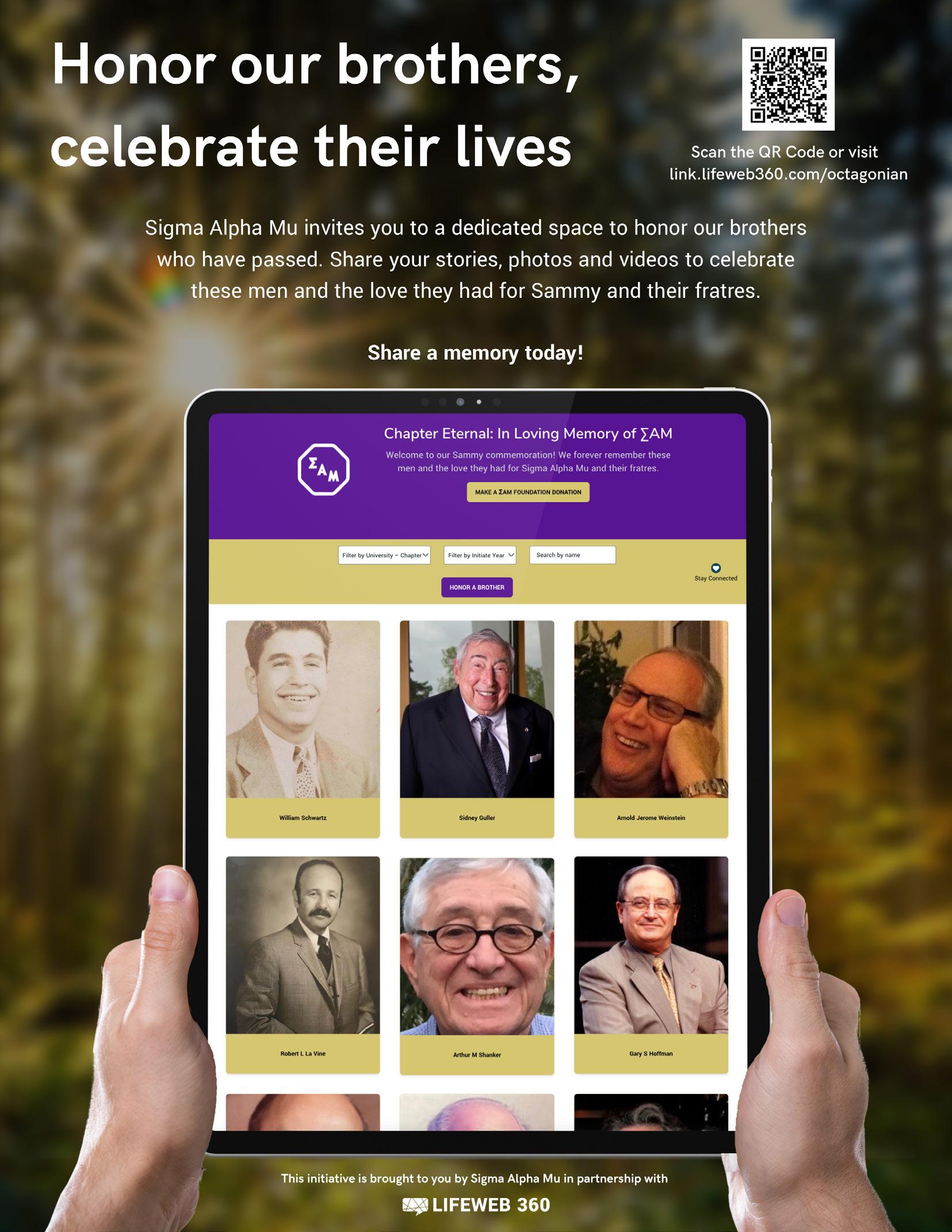
Sigma Pi
Ronald Wallis (UCLA, ‘56)
Robert Leve (UCLA, ‘50)
Sigma Rho
Gary Lewis (Missouri, ‘56)
Norman Rudman (Missouri, ‘60)
David Abrahams (Missouri, ‘70)
Bruce Hendin (Missouri, ‘62)
Sigma Sigma
Scott Ridgway (UC-Berkeley, ‘86)
Jan Freed (UC-Berkeley, ‘63)
Sigma Tau
Alan Seeman (Oregon, ‘64)
Sigma Phi
Barry Goldberg (Bucknell, ‘58)
Richard Minton (Bucknell, ‘51)
Michael Kalis (Bucknell, ‘62)
Richard Kern (Bucknell, ‘51)
Donald Laronge (Bucknell, ‘52)
Sigma Chi
Charles Reckson (Maryland, ‘58)
Joel Shugarman (Maryland, ‘62)
Charles Thomas (Maryland, ‘83)
Jonas Spiegel (Maryland, ‘58)
Michael Miller (Maryland, ‘53)
Harold Dwin (Maryland, ‘57)
Stephen Hameroff (Maryland, ‘60)
Sigma Omega
James Seiferheld (NC State, ‘68)
Billy Milam (NC State, ‘74)
Jobie Redmond (NC State, ‘56)
Richard Farrell (NC State, ‘77)
Douglas Goldstein (NC State, ‘78)
Mu Alpha
Lawrence Kaplan (Southern Methodist, ‘50)
Mu Gamma
Alan Ratcliff (Case Western, ‘80)
Ronald Kolb (Case Western, ‘63)
Mu Delta
Howard Gelbart (Louisville, ‘63)
We continue the recognition of Sigma Alpha Mu members who have recently entered Chapter Eternal. This listing preserves their names within our Fraternity’s permanent record and acknowledges the lives they lived with purpose and connection. We share these names with respect and appreciation for the mark they left on their communities.Memorial donations in memory of Chapter Eternal members may be directed to the Sigma Alpha Mu Foundation.
To donate online, go to SAM.ORG/DONATE
Mu Epsilon
George Spreiser (UMiami, ‘65)
Peter Berlin (UMiami, ‘62)
Mu Eta
Morton Huskey (Drexel, ‘47)
Mu Theta
James Kent (USC, ‘70)
Mu Iota
Leo Glogas (Butler, ‘53)
Mu Lambda
Stewart Ettinger (Penn State, ‘56)
Drew Bergman (Penn State, ‘83)
Mu Omicron
Robert Friedman (NYU, ‘52)
Reuben Kagan (NYU, ‘58)
Gerson Weiss (NYU, ‘59)
Mu Sigma
Melvin Rosenthal (Queens, ‘60)
Paul Schimmel (Queens, ‘63)
Mu Rho
Paul Zakriski (URochester, ‘59)
Mu Upsilon
Barry Zucker (Brooklyn, ‘63)
Mu Phi
Edward Pulwer (Long Island, ‘67)
Mu Chi
Saul Berkman (Michigan State, ‘61)
Melvin Clayton (Michigan State, ‘59)
Mu Psi
David Schneider (Miami-OH, ‘65)
Ronald Solomon (Miami-OH, ‘70)
Mu Omega
Troy Gleason (Toledo, ‘89)
Beta Alpha
Larry Baron (Texas El Paso, ‘62)
John Vargas (Texas El Paso, ‘68)
Beta Beta
John G Straley (Ferris State, ‘73)
Beta Delta
Ronald Robert Freitas (San Jose, ‘70)
Beta Epsilon
Jared Forma (UMassachusetts, ‘95)
Beta Eta
John Shaikin (Cal State Northridge, ‘85)
Beta Theta
Wayne Gordon (New Orleans, ‘66)
Beta Iota
Scott Berkowitz (Wisconsin, ‘88)
Beta Xi
Alan Chates (Hartford, ‘69)
Beta Rho
Milton Frankfort (Houston, ‘67)
Carlos Reyna (Houston, ‘96)
Beta Sigma
Martin Mass (North Texas, ‘67)
Harold Zenick (North Texas ‘67)
John Nadelman (North Texas, ‘68)
Beta Tau
Richard Bixby (Northeastern, ‘68)
Gamma Epsilon
David Bykoff (Illinois-Chicago, ‘78)
Gamma Zeta
Nicholas Skinner (OhioU, ‘97)
Gamma Eta
Jack Pullman (SIU-Carbondale, ‘71)
Gamma Psi
Jerry Sinagra (Temple, ‘87)
Nicholas Skinner (Temple, ‘97)
Delta Zeta
Jaime Baca (FIU, ‘91)
Maurice Veissi (FIU, ‘98)
Delta Iota
Robert Brown (Brockport, ‘91)
Michael Stenger (Brockport, ‘93)
Delta Nu
Gaven Lakritz (Western Michigan, ‘98)
Delta Chi
Robert Randazzo (St. John’s, ‘01)

Fra Charlie Getz (Sigma Chi, '25), son of Michael Getz (Buffalo, '91) and grandson of Irvin Raffman (Buffalo, '54)
Fra Aiden Gurvitch (Eta, '24), grandson of Max Gurvitch (Long Island, '66)
Fra Cooper Schorr (Sigma Theta, '25), son of Jason Schorr (Massachusetts, '89)
Fra David Schwartzmen (Sigma Eta, ‘24), son of Fra Todd Schwartzman (Syracuse, '83)
Fra Romelio Weiss (Mu Eta, ’25) grandson of Martin Weiss (Drexel, ’53) and nephew of David Weiss (Drexel, ’79).
Fra Corey Glazer-Bass (Temple, '10) and wife, Joan, welcome a daughter, Rose.
Fra Brandon Harper (Kentucky Wesleyan, '11) and wife, Ariel, welcome a daughter, Eva.
Fra Evan Hendrickson (Minnesota, '07) and wife, Devin, welcome a daughter, Delphine.
Supreme Recorder Dean Lambert (Nebraska, '82) and wife, Jill, welcome a grandson, Ari.
Fra Ben Madson (Kentucky Wesleyan, '06) and wife Lillian, welcome a daughter, Josephine.
Fra Andrew McGrath (Kentucky Wesleyan, '14) and wife, Jordyn, welcome a daughter, Sophia.
Fra Johnathan Reynolds (Kentucky Wesleyan, '15) and wife, Haley (AOII), welcome a daughter, Dorothy.
Fra Michael Schottenstein (Syracuse, '06) and wife, Naava, welcome a son, Bear.
Fra Daniel Schulman (West Virginia, '06) and wife, Janine, welcome a daughter, Jolie.

Fra Doug Montgomery (Texas A&M, '05) and wife, Kelsey Evans
Fra Steven Shapiro (West Florida, '16) and wife, Meghan.
Fra Alex Shively (Kentucky Wesleyan, '16) and wife, Alex Malone (Sigma Kappa).
Fra John Webster (Kentucky Wesleyan, '18) and wife, Misti Wobig
Submit news for Dividends and Mergers at sam.org/family
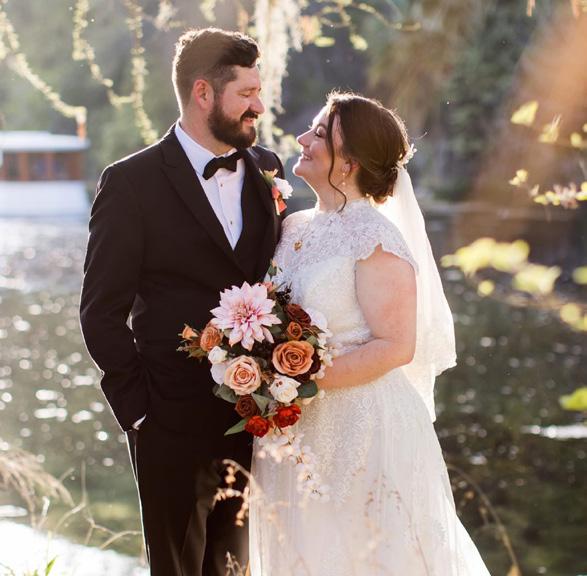

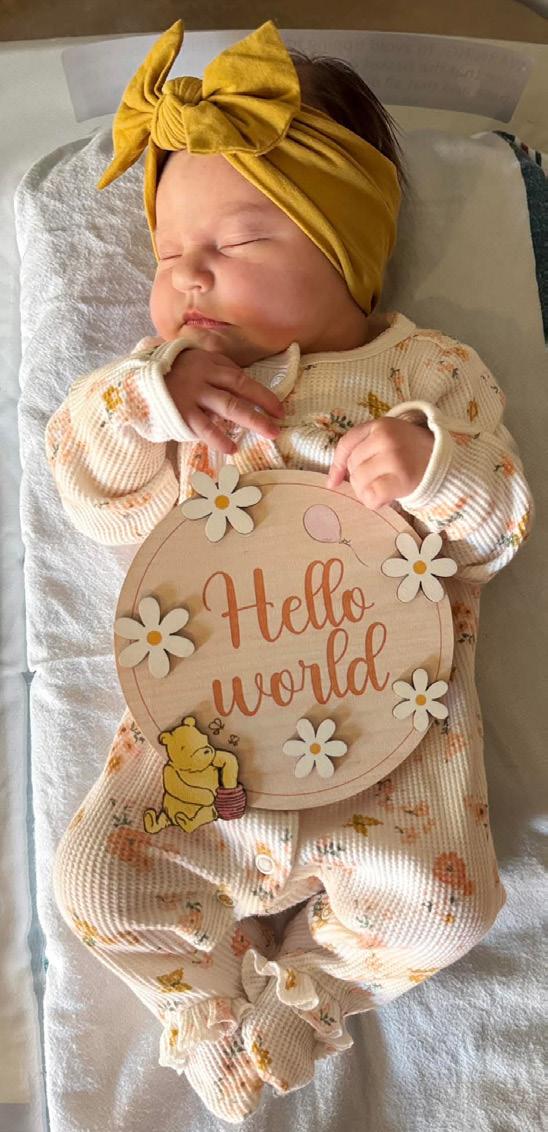


Sigma Alpha Mu Fraternity
8701 Founders Road Indianapolis, IN 46268
Moving? Update your contact information on MyΣAM, update on portal.sam.org or send your new address to samhq@sam.org.
Parents, if your son still receives his copy of The Octagonian at your home and is no longer in college or living with you, feel free to send us his new address by emailing samhq@sam.org.