IMPACT REPORT 2025

Better solutions. Better lives.
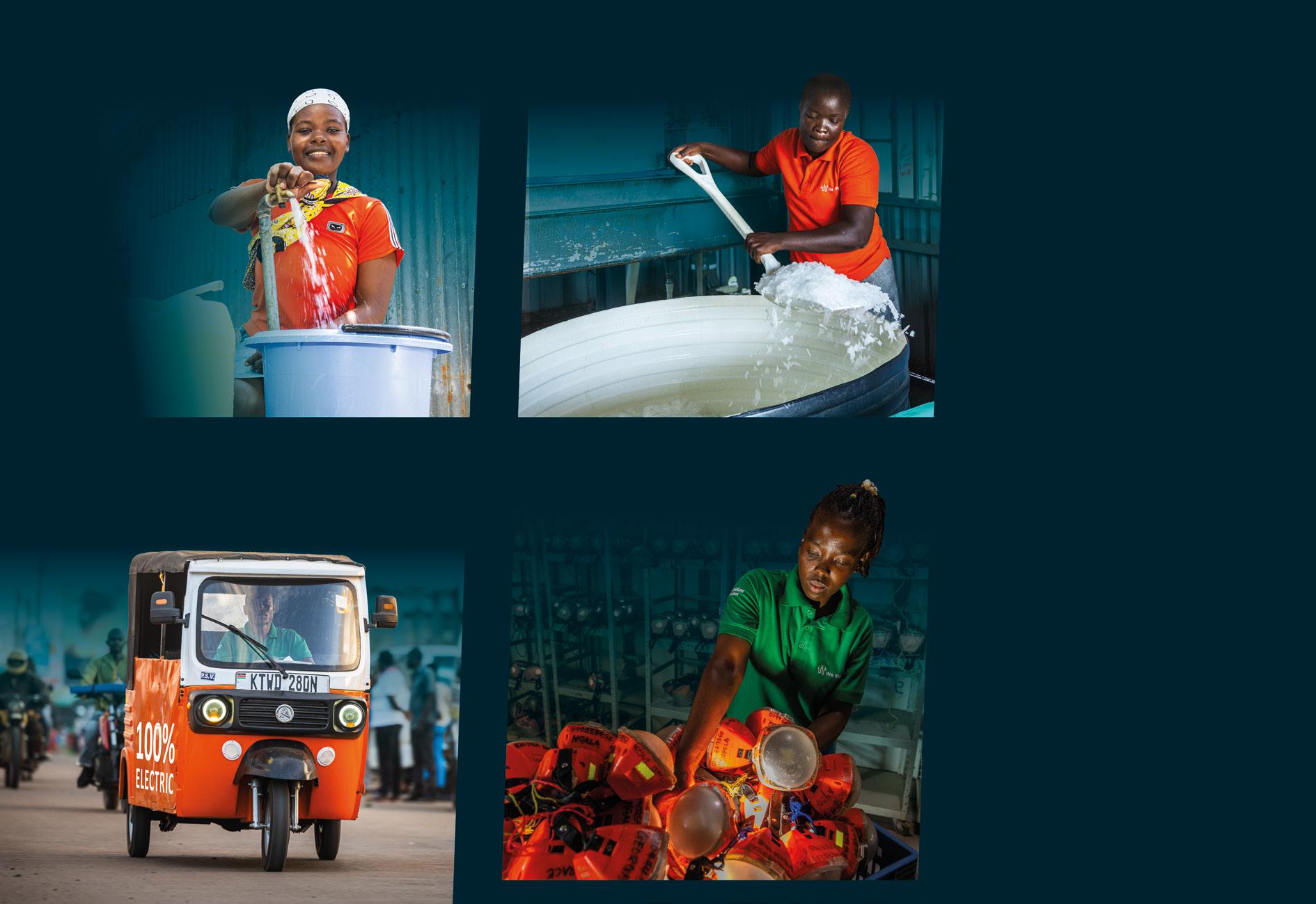
Sustainable development becomes tangible when innovation is combined with local partnerships and long-term commitment. The last 6 years have demonstrated how: WeTu translates this principle into measurable impact for communities in Western Kenya. Over the past year, we have focused on critical areas such as sustainability and gender inclusion to ensure that the social enterprise creates a lasting and meaningful impact within the community on Lake Victoria.
Environmentally Friendly and GenderInclusive
A key milestone for the social enterprise was the launch of the UNEP-funded project “Gender Inclusivity in e-mobility in Western Kenya.” As part of its commitment to inclusivity and sustainability, WeTu facilitated active participation of women in the e-mobility sector by equipping them with the necessary business and technical skills. The project focused on capacity building and gender empowerment by strengthening women’s participation in the e-mobility workforce and fostering equitable economic development across the region. It already represents an important step forward in shaping a more inclusive green transition.
Green workforce development
Education remains a cornerstone of sustainable transformation. Through WeLearn, we train young adults with a focus on women in green skills, enabling them to build competencies to succeed in the growing green economy. The new training center in Usenge opens new avenues for additional cohorts of students to be trained in crucial skills in the renewable energy sector: From operating PV charging stations to solar installation and sustainable water systems. By equipping young people with practical green skills and entrepreneurial mindsets, WeTu continues to invest in the next generation of changemakers. Alongside, significant progress was made to expand the broader e-mobility activities. At the end of 2025, WeTu successfully rolled out the WeMobility approach in Kisumu. Building on the experience and lessons learned, we aim to further scale this model in 2026 by strengthening climate-friendly transport solutions while creating local jobs and entrepreneurial pathways.
Scalable water solutions
Impact is equally visible in the water initiatives. Over the past year, water sales increased by more than 50 percent, an important indicator of both growing trust
and improved service delivery. In addition to securing community water supply systems in 13 municipalities, we expanded access through new household water connections. These efforts contribute directly to healthier communities, greater resilience, and long-term economic stability. These achievements are the result of strong partnerships, dedicated teams, and the shared belief that systemic change requires persistence and collaboration. We thank all partners, supporters, and
community members who contribute to making this work possible.
As we look ahead, we remain committed to scaling, strengthening inclusive models, and advancing sustainable solutions that improve living conditions on the ground. Our heartfelt congratulations to the entire WeTu team and partners. We wish you the best for the future endeavors.
Best regards Nina & Robert
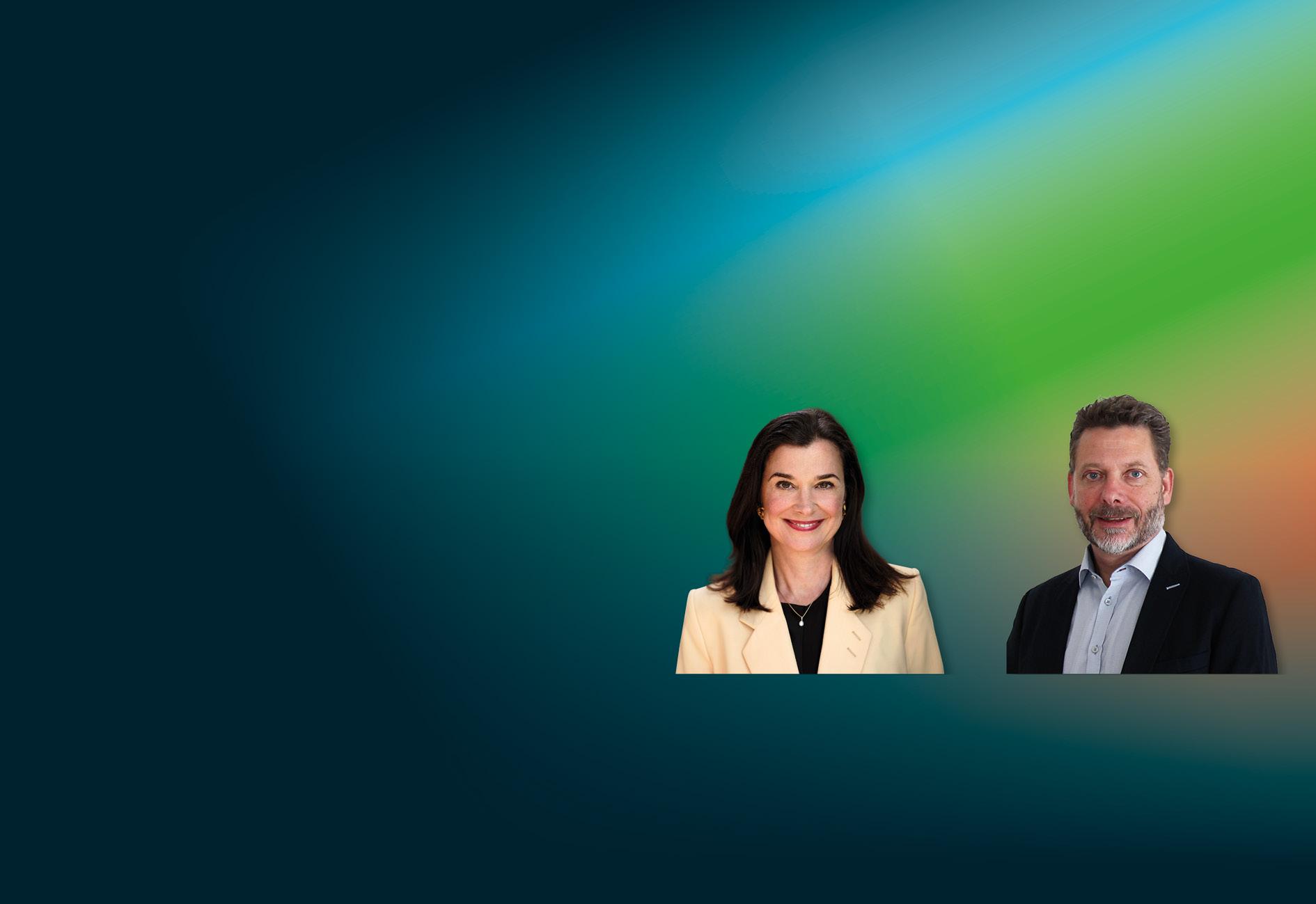
Dr. Nina Smidt, CEO and Spokesperson of the Board, Siemens Stiftung
Robert Balthasar, CFO Siemens
Stiftung

Every year at WeTu brings new lessons, new partnerships, and new proof that sustainable solutions can create lasting change when they are rooted in the realities of local communities. What continues to inspire me most is not only the scale of what we are building together, but the trust that communities place in us every day — whether through using a Water ATM, riding an electric motorcycle, charging a fishing lantern, or partnering with us to create new opportunities for livelihoods and growth.
In 2025, we continued to sharpen our focus on the core business verticals that define WeTu’s mission: clean energy, safe drinking water, and electric mobility. These interconnected solutions remain at the center of our work because they address some of the most pressing challenges faced by underserved communities across Western Kenya while also building pathways toward long-term sustainability and resilience.
Through WeWater, we significantly increased the volume of safe drinking water supplied to communities, reaching more households and improving reliable access for thousands of people.
In WeMobility, we successfully implemented a gender inclusivity project in partnership with UNEP and Sustainable Transport Africa, supporting women with practical training, certifications, and access to opportunities within the growing e-mobility sector. This initiative demonstrated that the transition to green mobility must also be inclusive and create space for more women to participate and lead.
At the same time, we continued strengthening the integrated model behind WeTu — one where renewable energy powers solutions that improve livelihoods, reduce environmental impact, and create economic opportunities across entire communities.
None of this would be possible without the dedication of the WeTu team, the trust of our customers, the collaboration of local communities, and the support of our partners, shareholders, and investors. Their commitment continues to shape WeTu into more than a company — into a social enterprise focused on creating sustainable impact and locally driven innovation. Through our work, we
continue to contribute to several of the United Nations Sustainable Development Goals, particularly in the areas of clean water, affordable and clean energy, decent work, climate action, and sustainable communities.
As we look ahead, we remain committed to building practical, scalable, and financially sustainable solutions that improve everyday life while contributing to a more inclusive and climate-resilient future.
Better solutions. Better lives.
Director WeTu
Tilmann Straub
OUR COMMITMENT
WeTu is a social enterprise dedicated to improving the living standards of rural communities in Western Kenya. Our name, derived from the Swahili word meaning “ours,” reflects the collaborative spirit at the heart of everything we do. Founded in 2019, we develop solar-powered energy hubs that deliver clean energy for integrated sustainable solutions, across safe drinking water, electric mobility, e-waste management, and sustainable fishing, addressing the critical needs of base-of-pyramid communities while protecting the environment. Every product and service we offer runs entirely on renewable solar energy generated at our hubs.
Our approach is rooted in sustainability, as a business discipline. We develop inclusive business models designed to sustain themselves, grow independently, and continue delivering long-term impact after the initial investment.
We are committed to developing selfsustaining, innovative solutions anchored in inclusive business models that generate real and lasting impact for rural communities. At WeTu, we believe that lasting change requires a lasting business.
To deliver sustainable and innovative solutions that improve mobility, expand access to clean energy, and provide safe water across rural Kenya.
OUR MISSION OUR VISION
To open up greater opportunity and choice for people through providing products and services that create jobs, improve health and protect the local environment.
OUR CORE VALUES
PROBLEM FOCUSED INNOVATION
We solve problems through innovation. We understand the importance of safe water, clean energy and mobility in rural Kenya. We are committed to delivering accessible, innovative, and environmentally responsible solutions to improve our customer’s lives.
LOCAL IMPACT THROUGH COLLABORATION
Through collaboration with local businesses and organizations we strengthen our impact and widen the infrastructure for us to offer better products and services. We are committed to offering better products and services which create measurable impact.
POSITIVE, PROFESSIONAL, DEDICATED
We care and uphold respect, professionalism, and transparency in all our endeavors. Our commitment to continuous improvement, fueled by a growth mindset, enables us to evolve our products and services in response to existing needs, ensuring that we consistently provide effective solutions delivered with the utmost accuracy.
RESPONSIBILITY AND HONESTY
Our team is committed to driving positive change upholding honesty, openness and approachability which builds trust and loyalty with customers resulting in sustainable business growth.
OUR IMPACT AT A GLANCE (2019–2025)
RENEWABLE ENERGY
Established 16 solar-powered Water-Energy-Hubs with a total of 471 kWp installed capacity
Produced 2.2 million kWh of solar energy
SUSTAINABLE FISHING
Engaged over 430 active fishermen through sustainable solar fishing lanterns
Saved 4.9 million liters of kerosene and avoided 12,260 tons of CO2 emissions
SOLAR COOLING
Ice-flake Model
3 solar-powered ice production plants
1,420 tons of ice-flakes produced to preserve fish


2 solar-powered cold rooms operating in 2 Markets, Homabay and Mbita Market. 82 tons of produce preserved in the cold room
WeWater (ATM Model)

ELECTRONIC WASTE SAFE DRINKING WATER
Operating one e-waste pre-processing plant
Collected 14 tons of e-waste
ELECTRIC MOBILITY
Deployed 50 electric vehicles, including electric motorcycles and three-wheelers
Covered 3.35 million km and avoided 122 tons of CO2
Established 3 battery swapping stations
Approx. 19,000 battery swaps.
Established 33 Water ATMs serving 14 communities
Dispensed 24.6 million liters of clean and safe water
Serving approximately 27,000 people every day
Household Water Connection Model
Connected 27 households to piped water
Distributed 7.4 million liters of safe water to households
JOB CREATION
76 direct full-time jobs (51M/25W)
Total of 120 direct jobs created by end of 2025.
576,345 kWh
Solar Energy produced (2025)
SOLAR ENERGY FOR PRODUCTIVE USE
WeTu is committed to advancing access to clean and affordable energy in line with SDG 7 in the rural Western Kenya, directly contributing to the global goals.
At the heart of our commitment are innovative solar-powered Water-Energy Hubs that serve as the backbone of our operations. Each hub generates renewable solar energy on-site, powering a range of community-focused business models that primarily serve the community:
• Solar-powered fishing lanterns
• Clean and safe drinking water
• Ice-Flakes for cooling purposes
• Electric mobility
WeTu’s solar hubs not only improve access to clean energy services but also reduce carbon emissions and minimize environmental pollution.
The WePower project has experienced significant growth since its launch in 2019. WeTu began operations with 6 solarpowered energy hubs serving rural communities across Western Kenya. By the end of 2025, this number had grown to 16 hubs, reaching 16 communities across 4 counties in the Lake Victoria region, with a total installed capacity of 471 kWp.
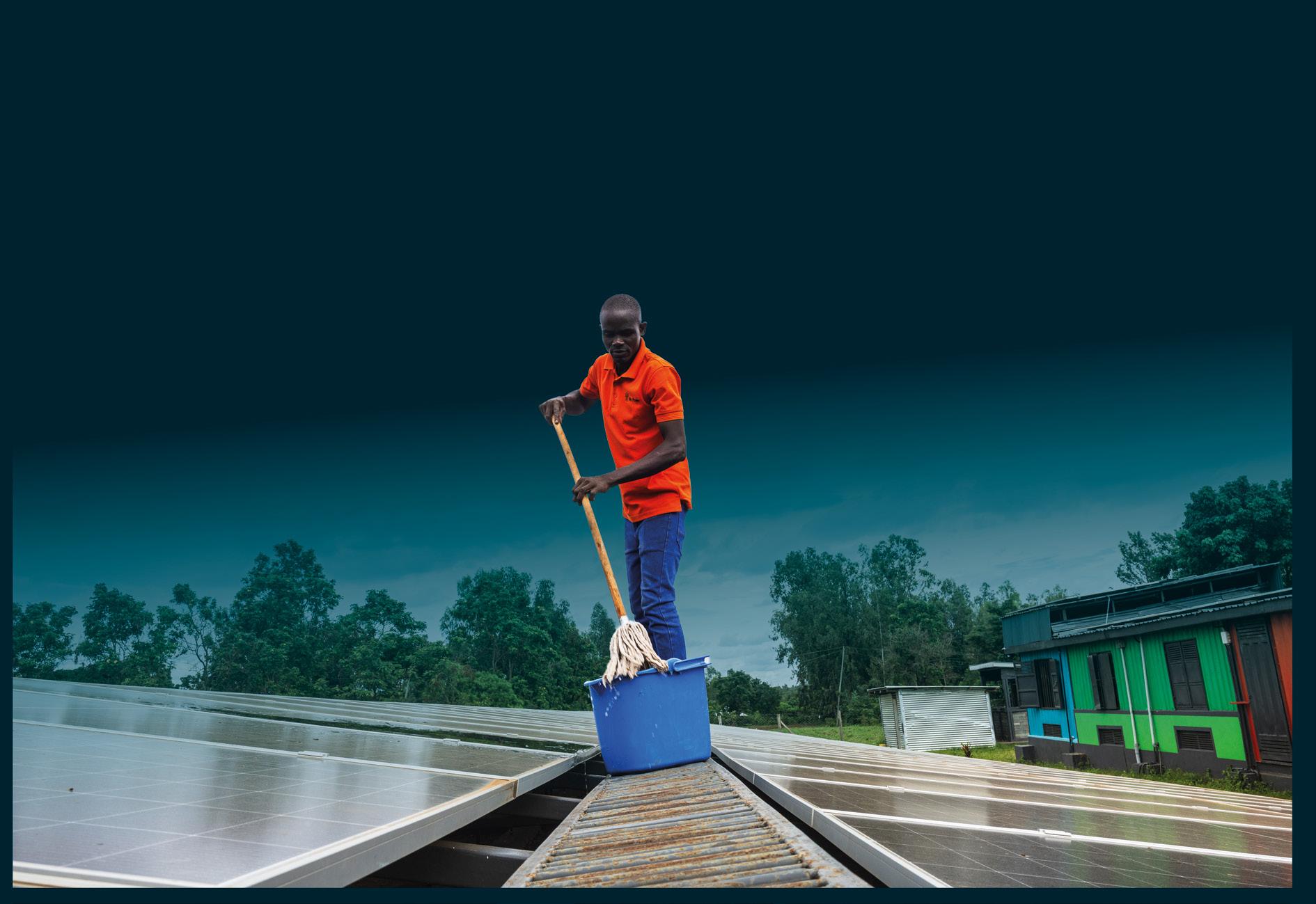
Solar energy production has grown in step with this expansion. In 2025 alone, WeTu’s hubs generated 576,345 kWh of clean renewable energy that powered WeTu’s different business cases, bringing total generation since inception to 2.2 million kWh.
WeTu remains committed to expanding access to clean and affordable energy in line with SDG 7 by developing innovative, inclusive business models that harness this renewable energy foundation to deliver essential goods and services to the rural communities in Western Kenya.
--3,600 tons CO2
(2025)
SUSTAINABLE SOLAR POWERED FISHING
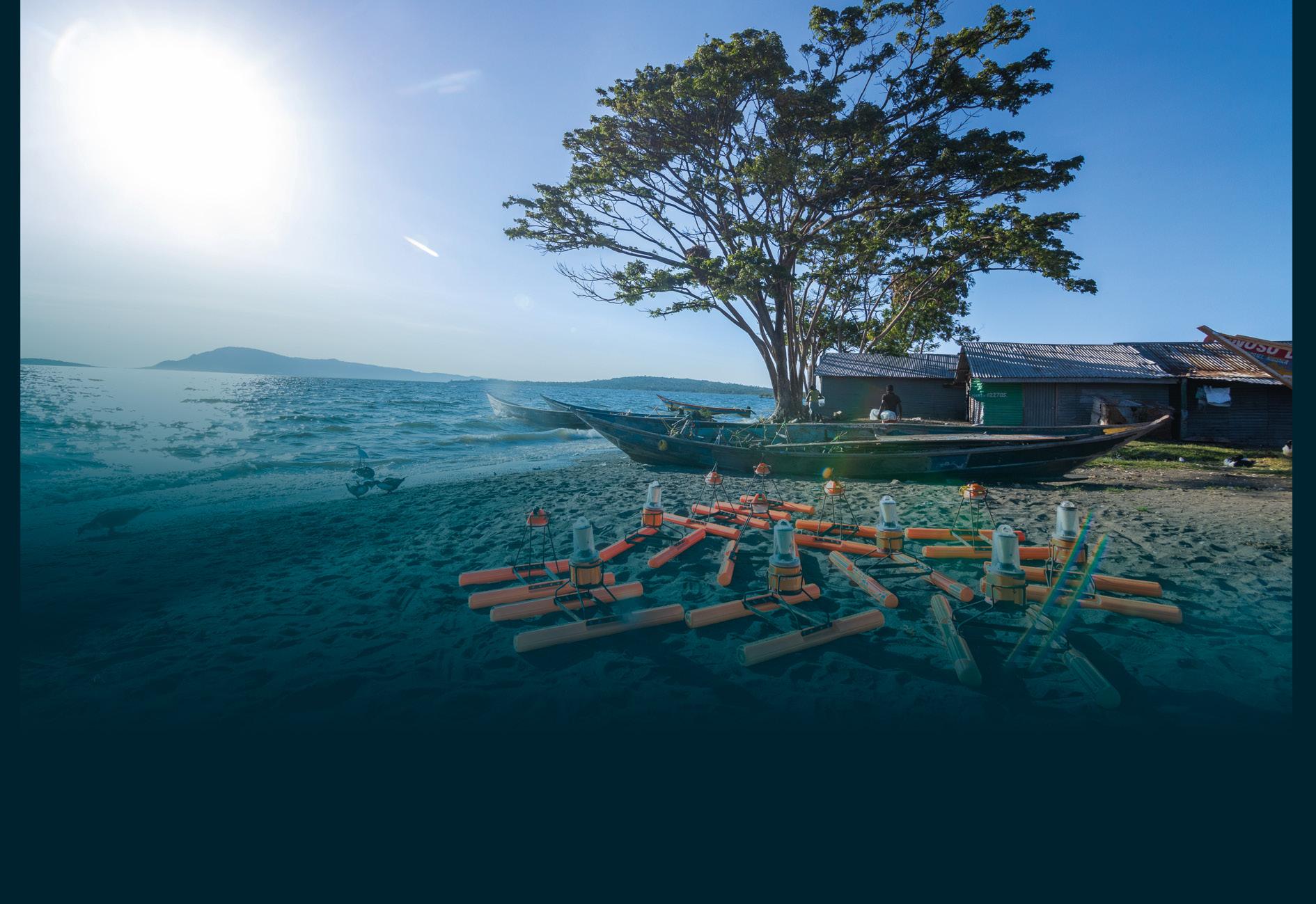
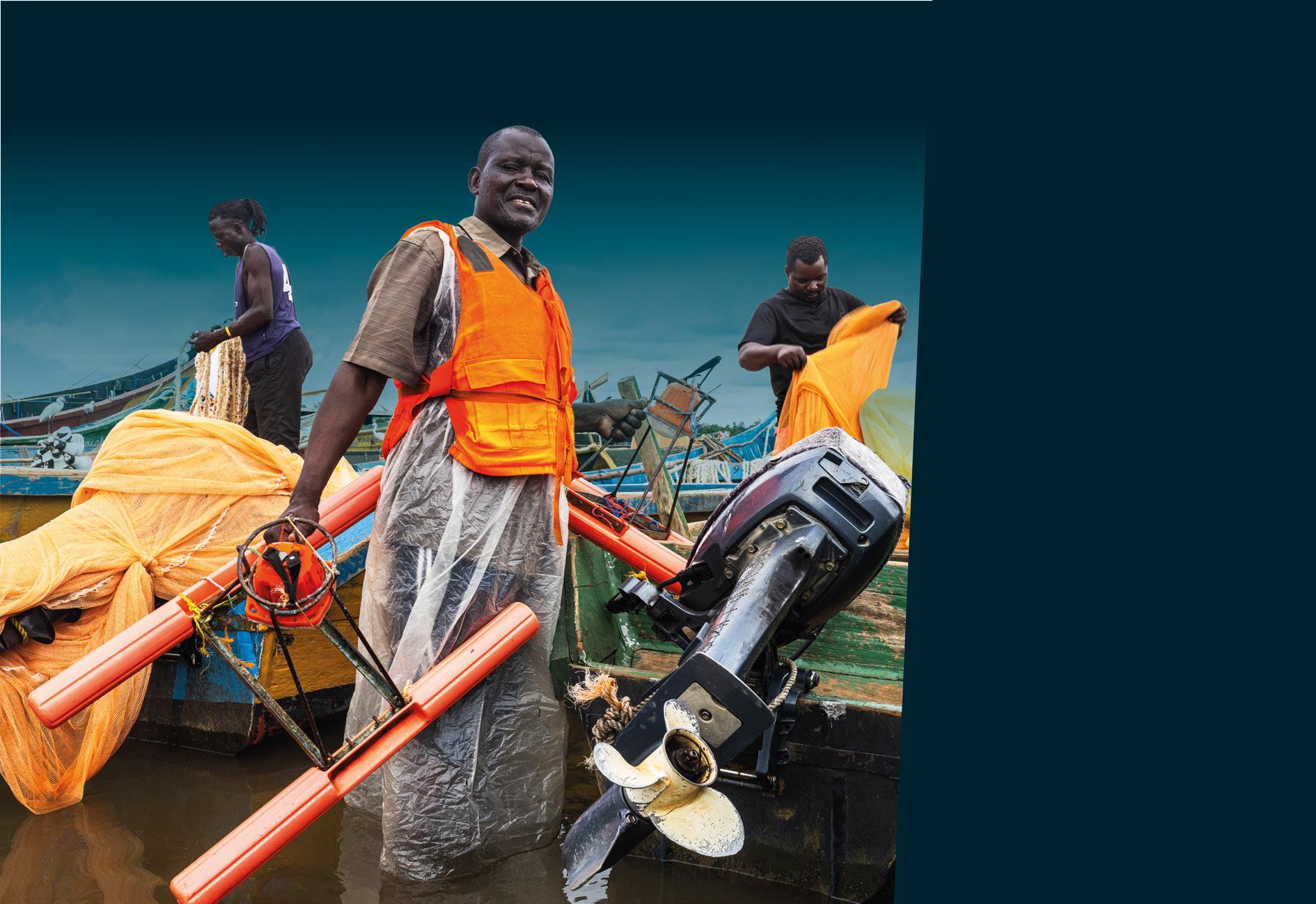
eTu’s solar-powered hubs support the recharging of solar fishing lanterns, promoting efficient and sustainable fishing of silverfish, locally known as Omena, on Lake Victoria. By the end of 2025, over 430 fishermen across four counties in Western Kenya’s Lake Victoria region had adopted this solution.
The introduction of solar-powered lanterns has transformed nighttime fishing for these communities, increasing catches and contributing positively to regional food security.
Additionally, the use of solar powered lanterns contributes positively towards reduced dependence unclean lighting alternative for fishing like kerosene lamps and lead-acid batteries that pose a serious environmental pollution risk.
The shift has delivered measurable environmental benefits: significantly reduced greenhouse gas emissions and the elimination of lead contamination from discarded batteries in and around Lake Victoria.
Since 2019, the adoption of WeTu‘s solar fishing lanterns has driven a steady and measurable decline in unclean lighting alternatives for fishing like kerosene and lead use among fishermen on Lake Victoria delivering substantial environmental benefits and reinforcing WeTu‘s contribution to the blue economy, climate action, and ecosystem preservation.
Kerosene Avoided
In 2025 WeTu‘s solar lanterns prevented the consumption of 1.4 million liters of kerosene fuel that would otherwise have been burned on the lake, releasing harmful CO₂ and other pollutants directly into the atmosphere. This is an increase of 5.1 % year-on-year. Every liter avoided is a liter that was never burnt to emit CO2 to pollute the environment.
CO₂ Emissions Abated
The direct impact of this kerosene avoidance is significant. In 2025, WeTu‘s solar fishing lanterns contributed to the abatement of 3,600 tons of CO₂ emissions, a year-on-year improvement of 5.3 %, reflecting the growing adoption of solar lanterns across the fishing communities that WeTu serves.
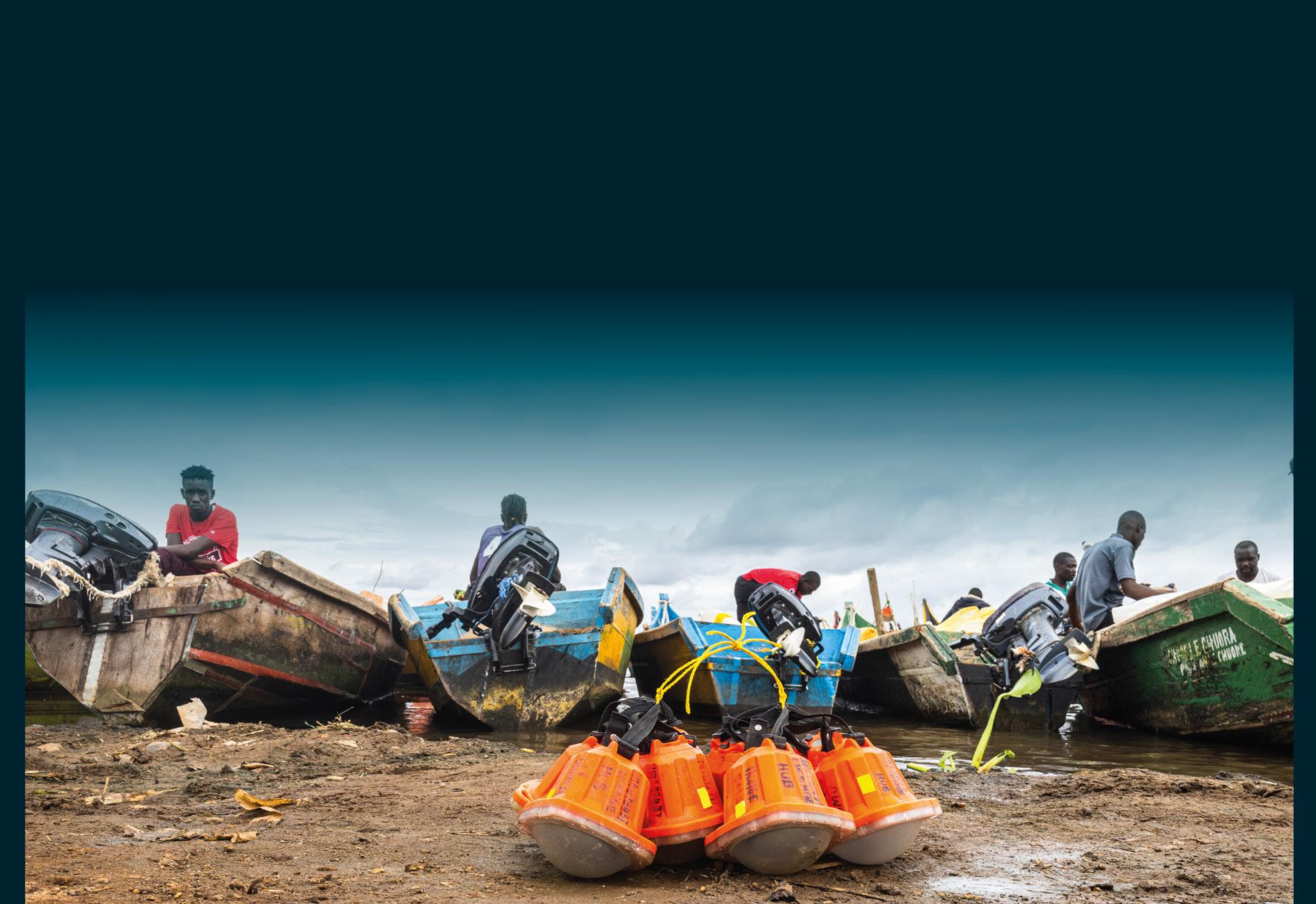
Solar Fishing lantern business vertical impact extends well beyond environmental contribution. The solar fishing lantern business vertical carries its own significant social and economic multiplier. By enabling safer, more productive nighttime fishing, WeTu is directly supporting the livelihoods of fishermen and the broader fishing economy on Lake Victoria, a sector that accounts for 67 % of Kenya‘s total fish production. A more productive fisheries sector means more income for more than 430 fisher folk families, more fish reaching local and national markets, and a more reliable source of fresh protein for Kenya‘s population.
CO2 saved in tons
Fuel saved (Kerosene) in 1000 liters
1.5 million km driven with EVs (2025)
ELECTRIC MOBILITY
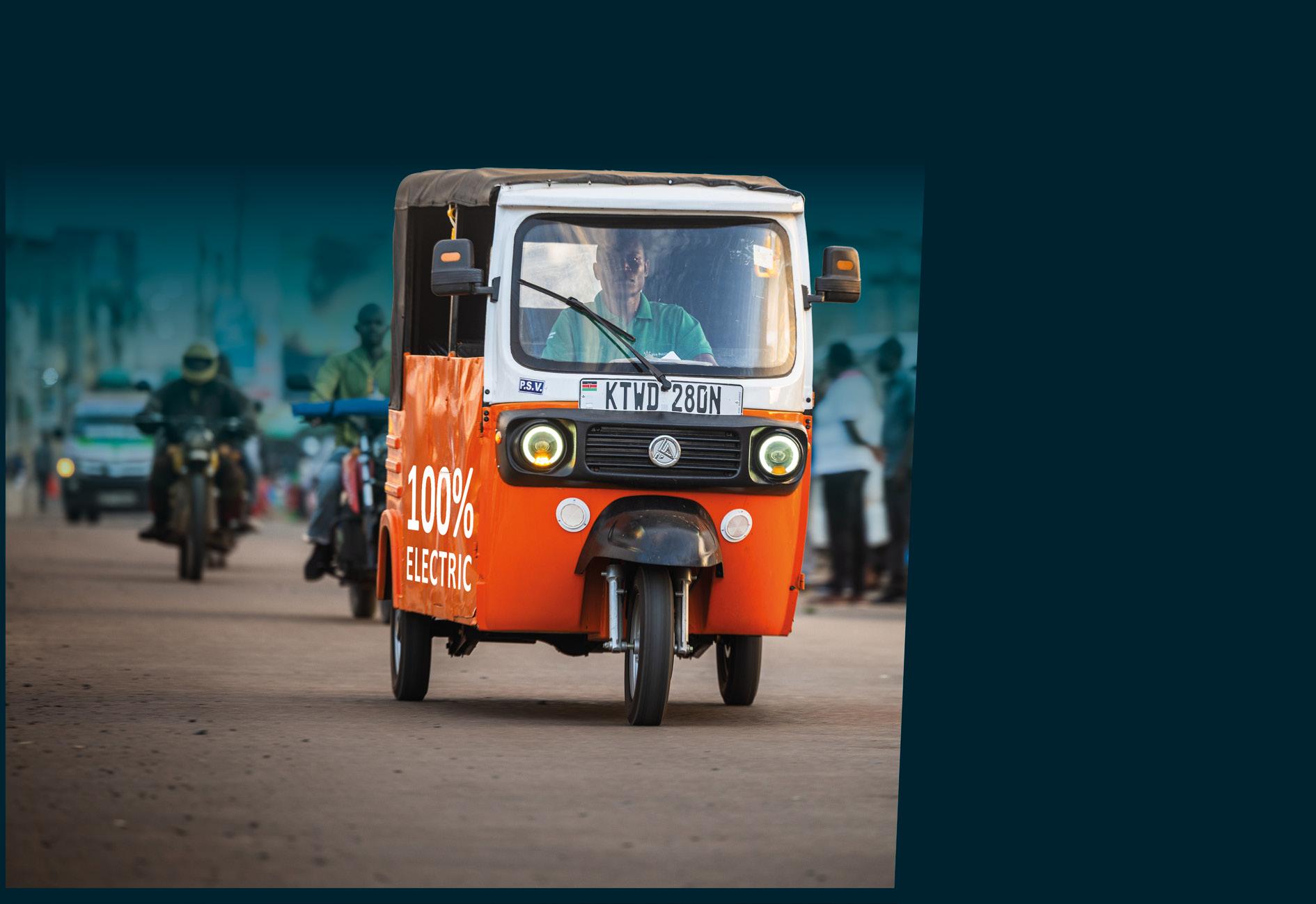
WeTu’s WeMobility business vertical is introducing clean, affordable, and reliable last-mile transportation to the rural communities of Western Kenya’s in the Lake Victoria region, replacing polluting internal-combustion-engine vehicles with electric vehicles charged entirely by solar energy generated at WeTu’s Energy Hubs.
Since its launch in 2019 with an initial pilot fleet, WeMobility has grown steadily, with each phase of the program building on operational learnings that have refined the model, strengthened its sustainability, and informed partnerships across the sector. By the end of 2025, WeTu had acquired a total fleet of 50 electric vehicles, comprising two-wheelers, three-wheelers, and one four-wheeler.
In 2025, WeTu opened a new EV battery swapping station in Kisumu bring the total number of WeTu’s EV swapping stations to three.
14
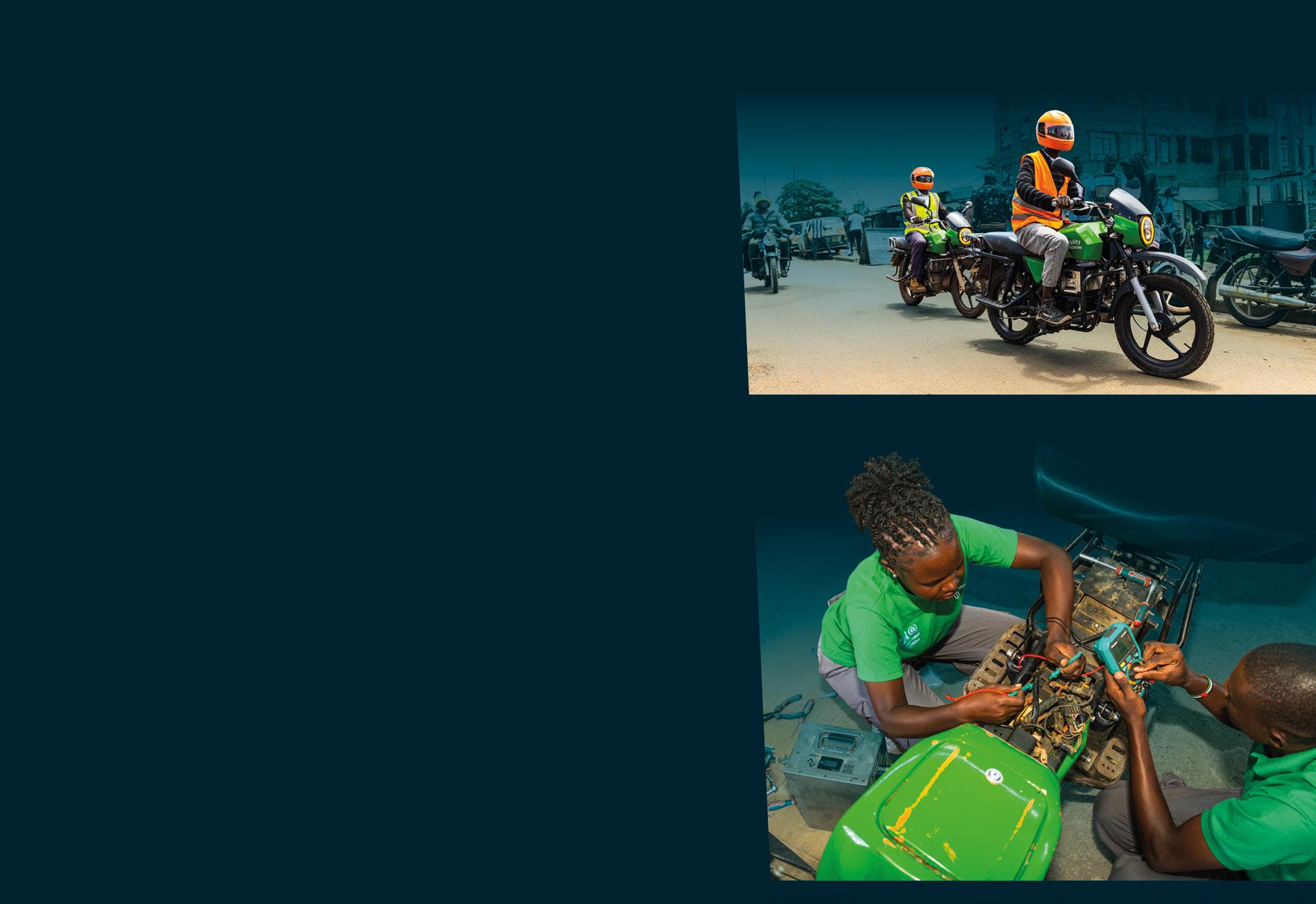
WeTu has rolled out an inclusive EV business model designed to generate both social and economic impact. Riders, predominantly young people, from the three communities have subscribed to WeTu’s EV model, accessing vehicles and battery swapping services that would otherwise be out of financial reach. In doing so, they gain sustainable livelihoods, while WeTu advances its business sustainability goals through a revenue model that grows with its rider network.
Fleet Operations & Output Data
By the end of 2025, WeTu’s WeMobility vertical had recorded a cumulative total of 3.35 million kilometers traveled by electric vehicles across its operational areas since inception. In 2025 alone, WeTu operated 18 active electric motorcycles and supported 18 active riders across three EV battery-swapping stations in Kisumu City, Katito, and Homa Bay Town, representing an 18% decline compared to the previous year. These reductions reflect a period of operational consolidation rather than reduced ambition, as WeTu continues to refine and strengthen the sustainability of its business model ahead of the next
(All
phase of expansion. This strategy includes a renewed focus on Kisumu City, where demand is concentrated within a high-density urban population.
Environmental Impact
Since inception, WeTu’s EV fleet has helped avoid the consumption of 53,174 liters of petrol that would otherwise have been used by conventional motorcycles, preventing an estimated 122.3 tons of CO₂ emissions.
Social & Economic Impact
The impact of WeMobility extends well beyond avoided emissions. By deploying electric vehicles in underserved communities, WeTu is improving access to essential services, markets, and healthcare facilities across the Lake Victoria region. The business model has also created direct employment opportunities for young people, generating stable and dignified livelihoods in communities where economic opportunities remain limited.
By the end of 2025, WeTu employed 18 active riders and eight eMobility staff members, serving as battery-swapping station attendants and technicians.
GENDER INCLUSIVITY
IN E-MOBILITY PROJECT IN WESTERN KENYA
I
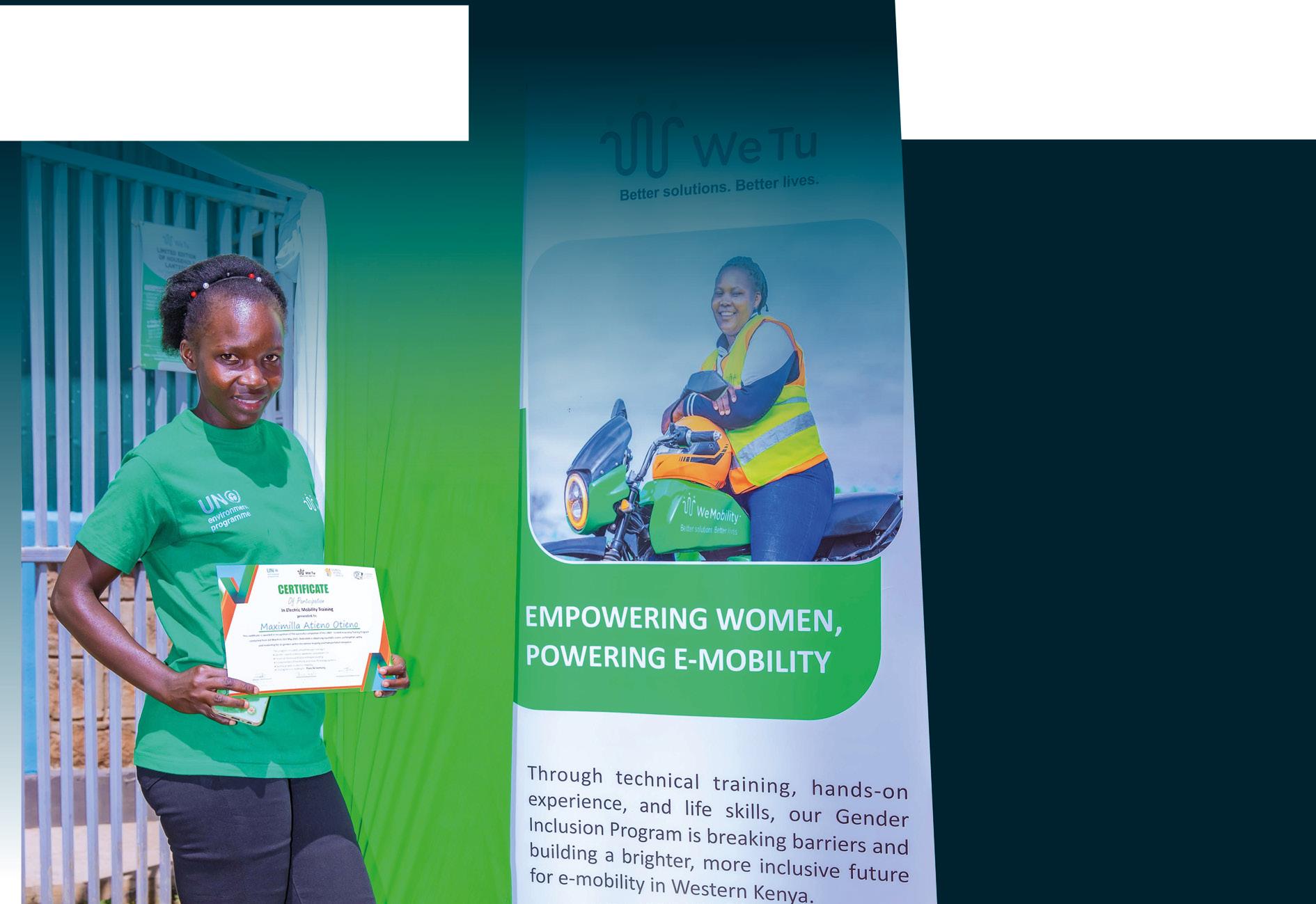
n late 2024, WeTu’s WeMobility business vertical received catalytic funding from the United Nations Environment Programme (UNEP) through our implementing partner Sustainable Transport Africa (STA) to implement a gender inclusivity project in the e-mobility sector in Western Kenya, based in Homa Bay. The project ran for approximately 12 months, concluding in November 2025.
The project was designed to address the barriers women face in accessing the clean mobility sector equipping them with the practical skills, formal certification, and business knowledge needed to participate and thrive in an industry that has remained predominantly male-dominated.
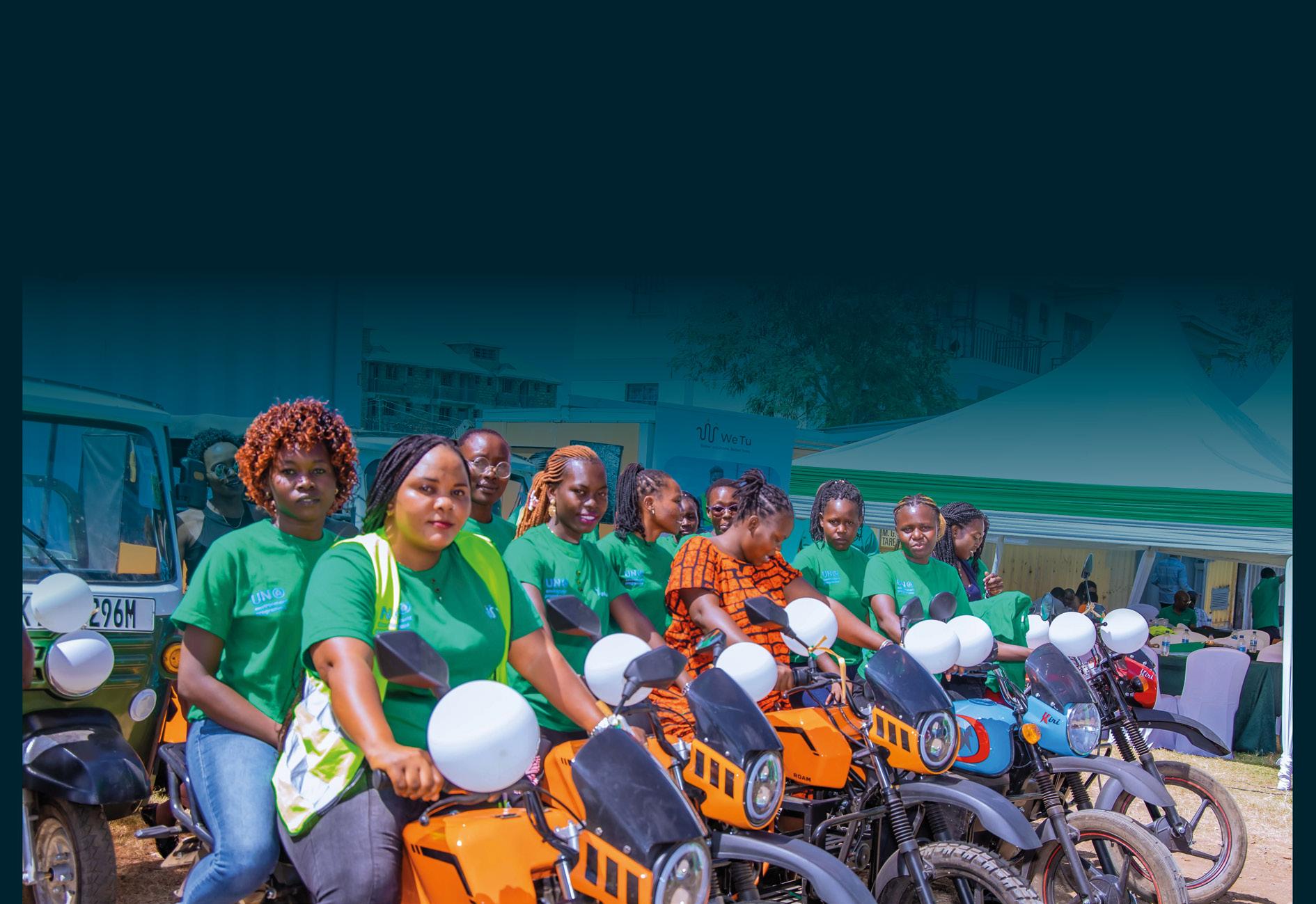
Key objectives included recruiting and training 30 women in basic EV skills, NTSA-certified driving skills and licensing, and foundational business skills, alongside the acquisition of supporting EV assets both two-wheelers and three-wheelers to enable hands-on training and subsequent deployment or roll out of inclusive EV business models with the trained women to improve their livelihood.
By November 2025, All women had been successfully trained and graduated with certificates of completion. Of these, five women have been directly employed within the e-mobility department in WeTu, and five are now active riders operating the new two-wheelers acquired through UNEP’s support. The assets purchased in these programs are strictly used by the women improving their livelihood.
Maximilla Atieno Joan Ouma
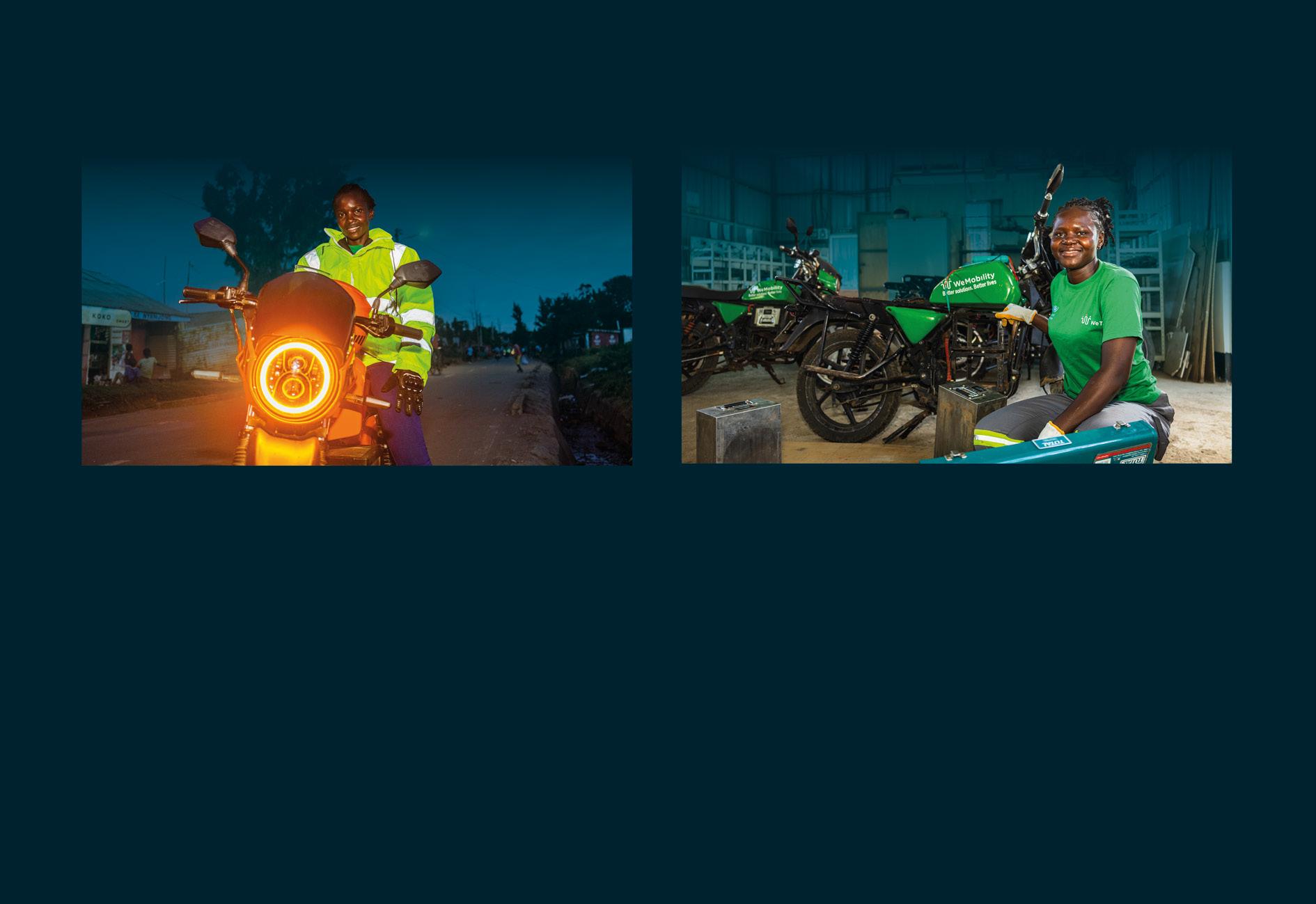
“Before this program, I never saw myself in this industry, it simply did not feel like a space that was open to women. The UNEP project changed that. I completed my training, got my license, and was given access to a new electric motorcycle through the project.
I now ride daily in Homa Bay, carrying passengers and doing deliveries. The income
I earn has boosted my financial situation in ways I did not expect. I am now able to feed my mother and support my family on my own earnings. Swapping my battery at WeTu’s station keeps my costs affordable and my business moving. I am building something real for myself. This project gave me that chance.”
“I work at WeTu as an electric vehicle technician as a result of UNEP Gender inclusivity project. When I joined the UNEP training program, I had no background in electric vehicles, but I committed fully to every module. At the end of the program, WeTu offered me a job directly after undergoing a series of interviews to prove my competency and I accepted.
Today, I maintain electric motorcycles at the Homa Bay hub, manage the EV battery swapping station, and support battery
charging and swapping operations every day. I am still learning, and I am committed to growing my career in the EV and clean energy sector. WeTu has given me a strong practical foundation that I could not have gained anywhere else.
I am proud of what I do. This opportunity has transformed my career, improved my income, and changed my life in ways I did not expect when I first walked into that training room.”
EV Rider, Homa Bay
EV Technician, WeTu Homa Bay Hub
SAFE DRINKING WATER
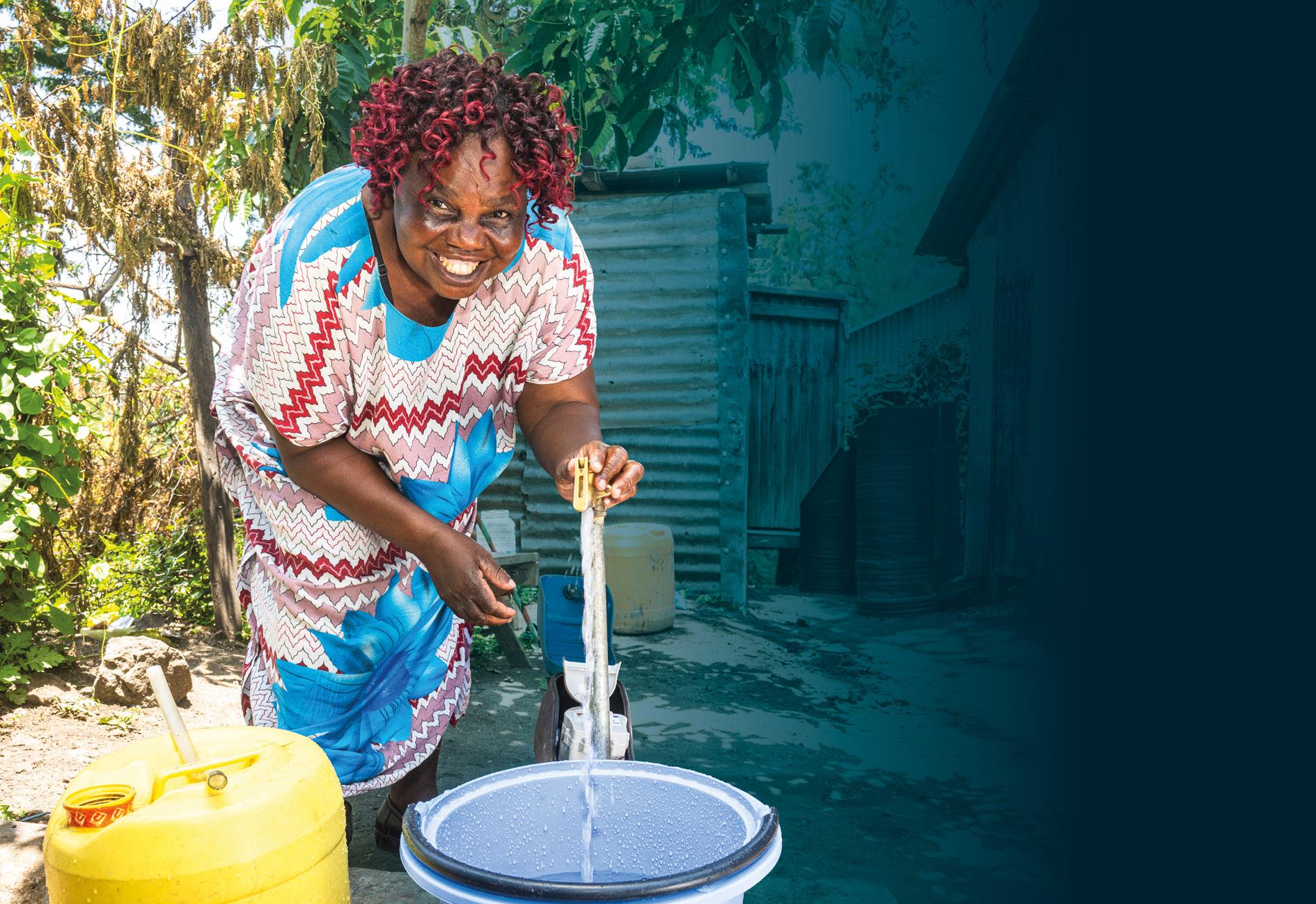
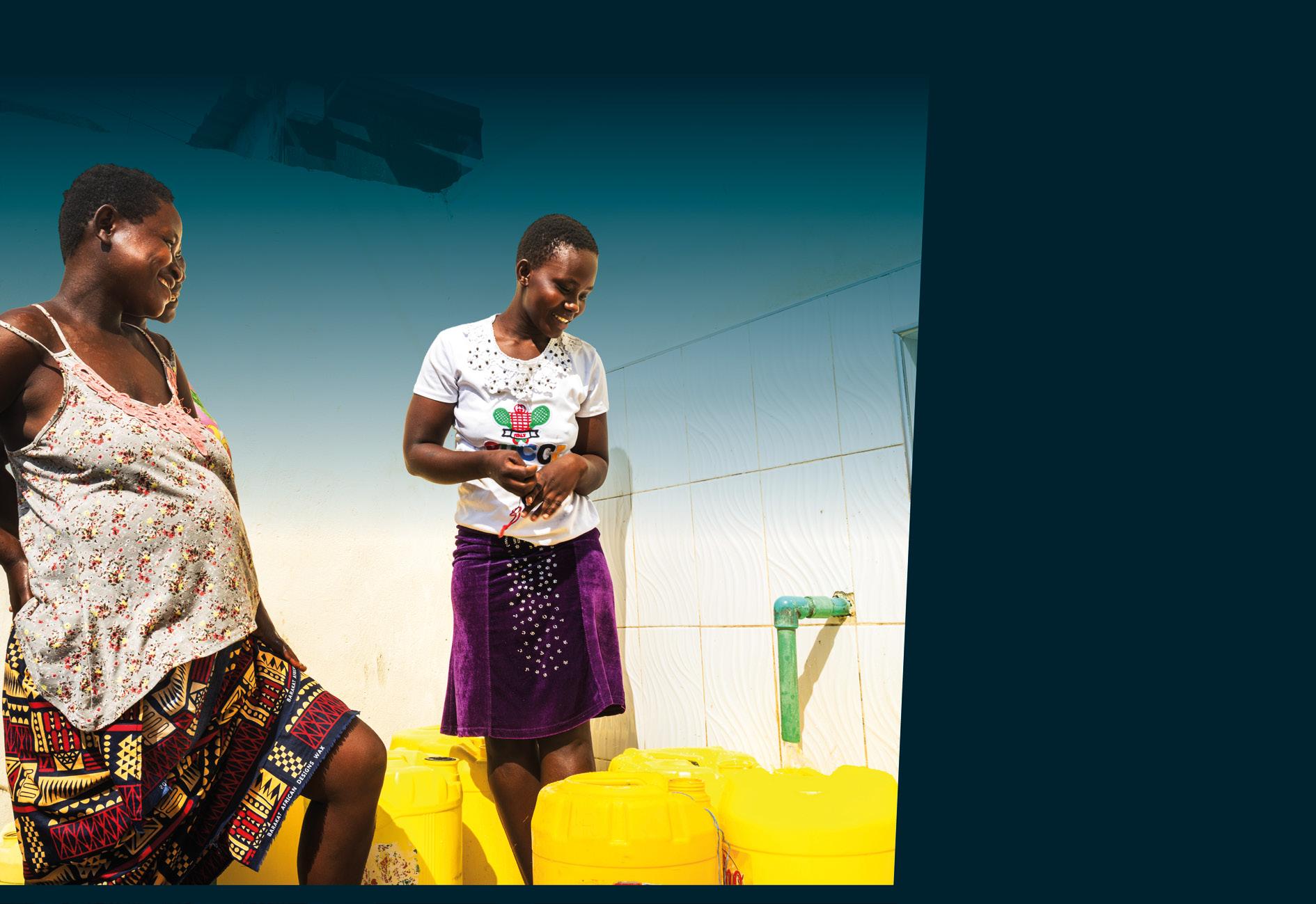
WeWater, established in 2019 as one of WeTu’s pioneering business verticals, has been delivering clean and safe drinking water to underserved rural communities in Western Kenya for six years. The vertical operates on a simple yet effective model: solar-powered systems purify water at the Hub, which is then pumped to a gravity clean water tank for storage and supply to a network of strategically located Water ATMs that are accessible 24/7 within communities. The use of solar energy guarantees reliability for supply of clean and safe water to the community.
8.6 of Safe Drinking Water produced (2025) 19
million liters
Liters of water dispensed (in million liters)
* COVID-19 impact
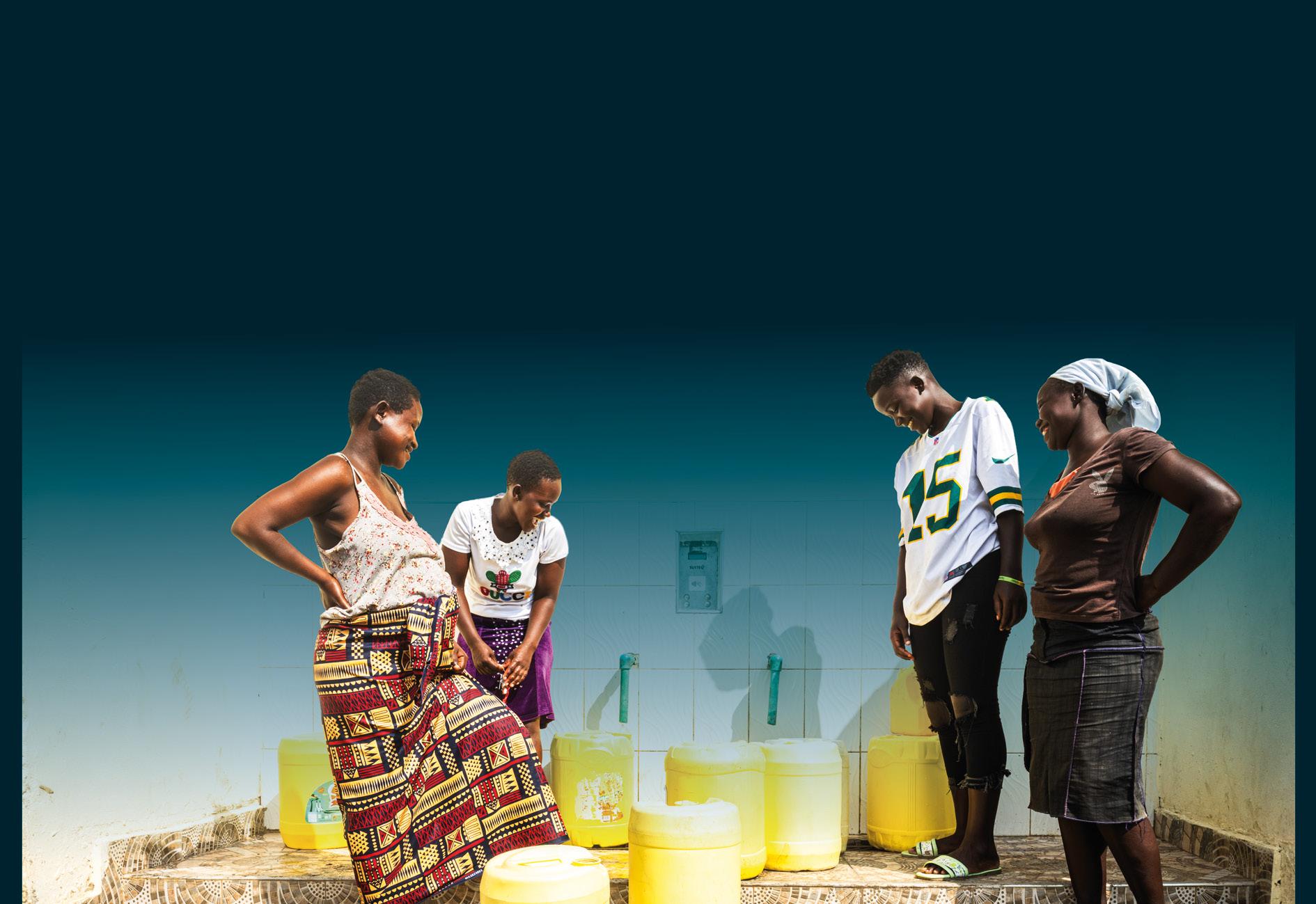
This model is designed to serve the base-of-pyramid customers, as it is affordable, employing mobile money technology on a pay-per-use water dispensing model, ensuring that clean and safe drinking water is not only available but reliably, removing the dependence on contaminated sources such as Lake Victoria that has long driven waterborne disease in these communities.
Since its inception in 2019, WeWater has grown into an essential service for rural communities across Western Kenya through its expanding network of WaterEnergy Hubs. As of 2025, WeWater oper-
ates across 14 communities with 33 Water ATMs, serving approximately 27,000 people daily with clean, safe, and affordable drinking water.
In 2025, WeWater set an ambitious target of 9.0 million liters. By the end of the year, WeWater had dispensed 8.6 million liters, a further improvement of 72.9 % on 2024 of 5.0 million, recording the highest annual distribution since inception. While this fell marginally short of the 9.0 million liter target by 4.0 %, it represents a strong operational performance and a clear trajectory of growth.
The volumes of water supplied have increased tremendously as a result of sustained growth, resilience, and expanding reach through additional Water ATM installations and community sensitization programs delivered in partnership with County Public Health teams and Community Health Promoters.
Looking ahead, WeTu has set a target of 10.0 million liters for 2026, building on the infrastructure, community trust, and operational momentum of six years.
OUTCOME INDICATOR
Dorothy Akoth
WeWater Customer at Sori
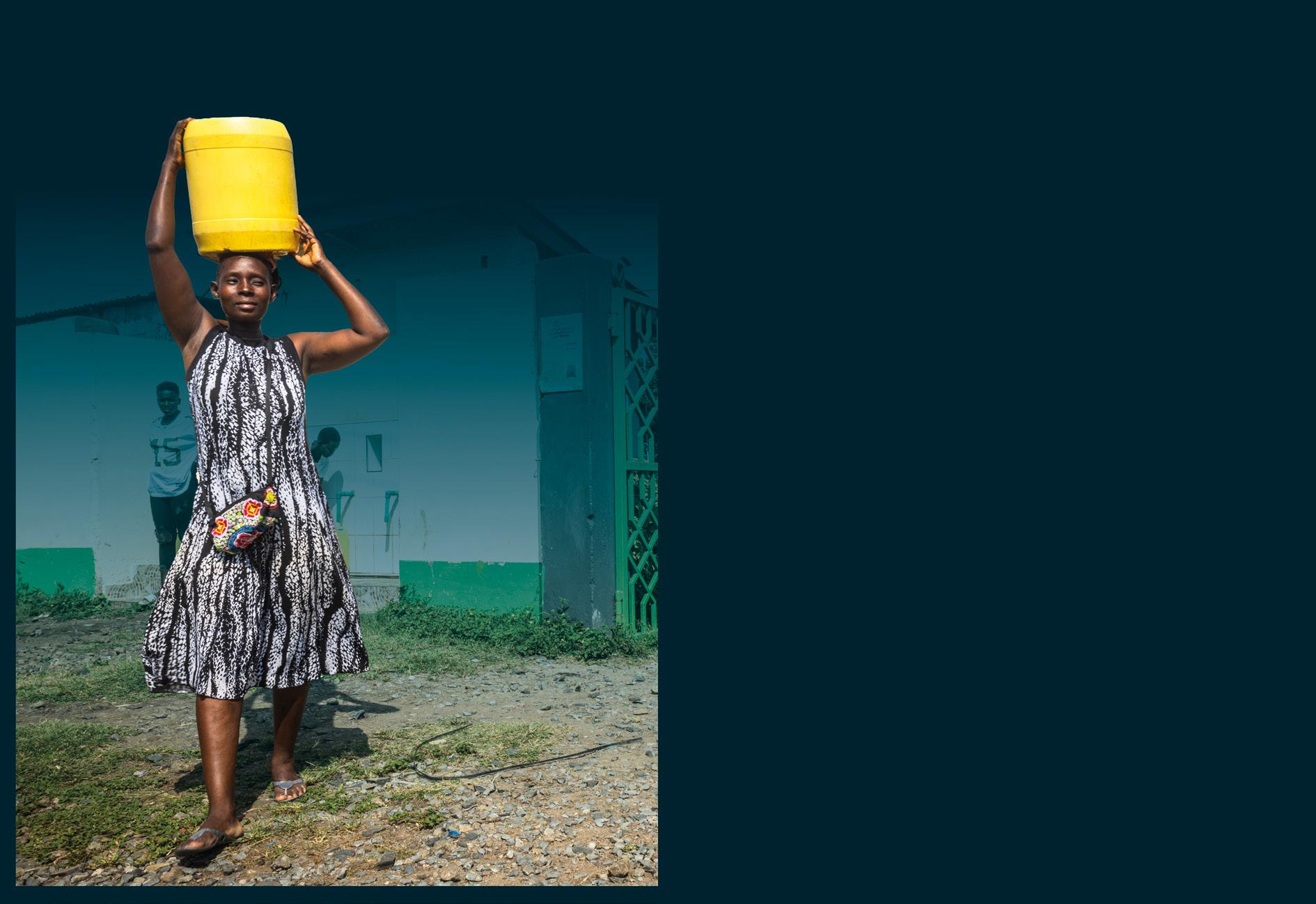
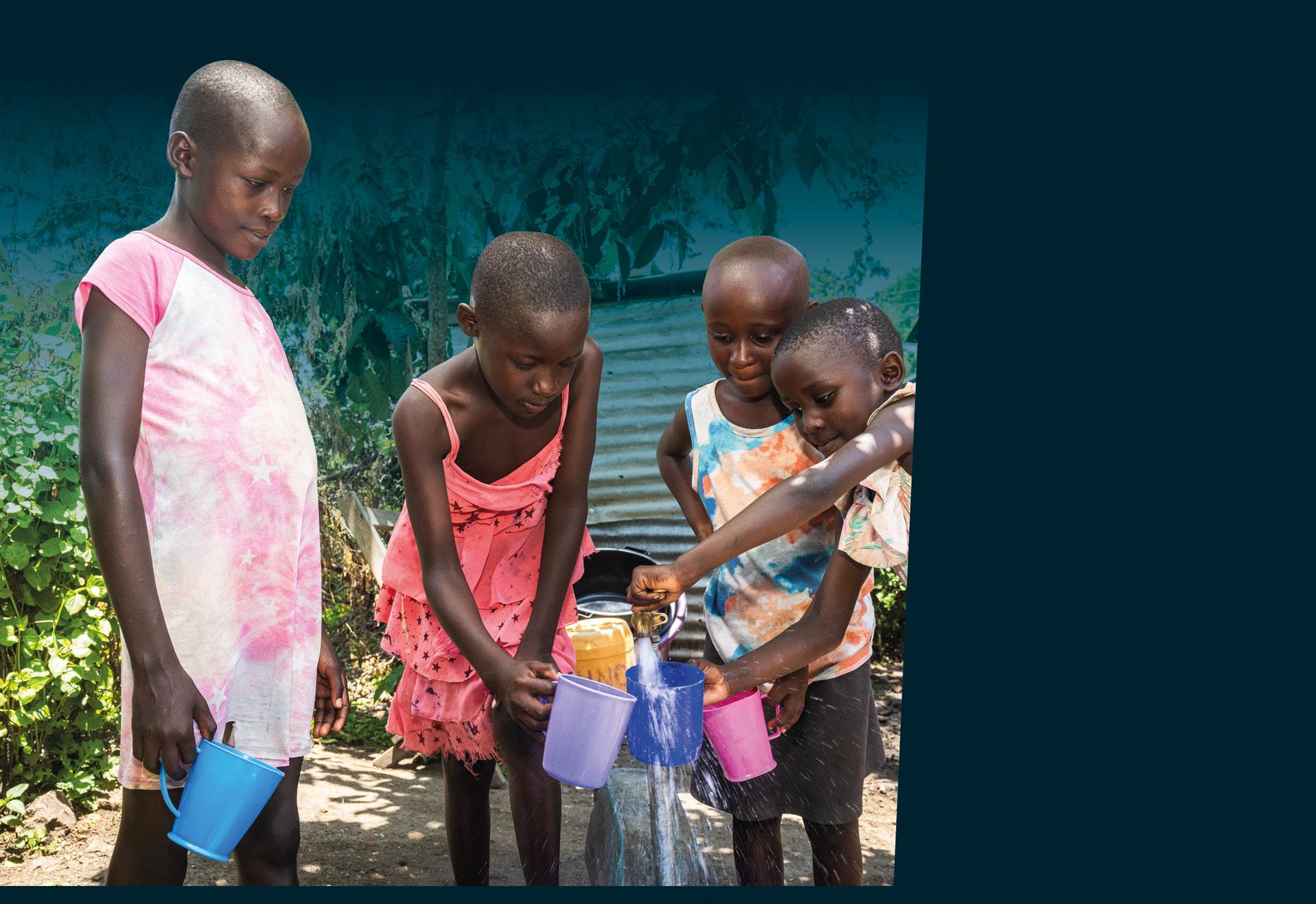
“My name is Dorothy Akoth. For over a year now, my life and my family’s has changed because of WeTu’s WeWater Project. Before they installed the Water ATM here in Sori, I relied on lake water. Every day, I’d worry. Treating that water cost money we didn’t have, and even then, my children kept falling sick with stomach pains and diarrhea. It felt hopeless. But since WeWater came, everything is different. Now, clean water is just a short walk away, and it’s affordable! I don’t waste time boiling or buying chemicals anymore. My children haven’t been hospitalized in months, and the money we save goes toward school fees and food. This Water ATM is very helpful to my family. Thank you, WeTu, for bringing health and hope in this community.”
million liters
HOUSEHOLD WATER
WeTuWasco (Household Water Connection) developed in 2023, is currently in the pilot phase with 27 registered connections. While the number of direct connections remains modest, the indirect impact of household water connections extends much further.
4.8 of Water supplied to Households (2025) 23
Of the 27 registered connections, a significant proportion serve as community water distribution points supplying clean WeTu piped water not just to the registered household or institution, but to neighbours, tenants, customers, and surrounding community members who access water through shared connections.
A water vendor among the registered connections alone distributes WeTu water to approximately 40 households daily through a community kiosk. A hospitality institution serves 50 households, and a landlord with a shared tank supplies a further 30 households from a single metered connection. In total, the 27 direct connections collectively reach an estimated 220 downstream households a multiplier of over 8 times the registered connection count translating to an estimated population of approximately 1,100 to 1,235 people now accessing clean, safe and affordable piped water.
This downstream multiplier effect demonstrates that even at pilot scale, WeTuWasco’s impact extends well beyond what the headline connection number suggests. Every metered connection has the potential to become a local access point of clean water access for an entire neighbourhood.
Building on this foundation, WeTu aims to scale WeTuWasco to 150 household and institutional connections by the end of 2026. At this scale and applying the same downstream multiplier observed in the pilot — the program has the potential to reach over 2,000 households and more than 10,000 people with clean piped water, generating real, measurable, and sustainable social impact for the community and long-term commercial viability for the WeTuWasco business model.
Violet Sakwa
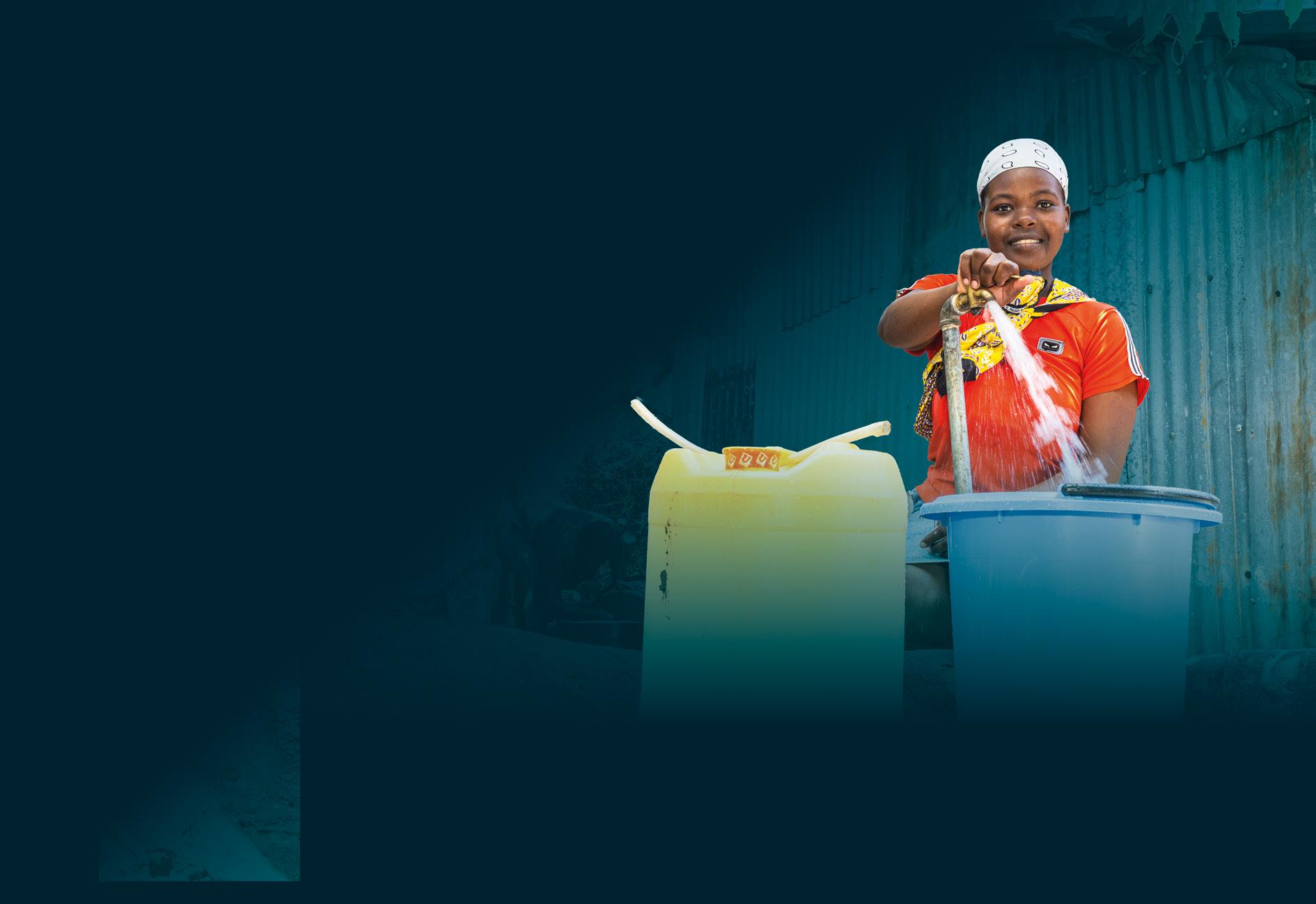
“My name is Violet Sakwa. Before WeTu connected piped water to our home, I had to walk long distances to fetch water, often relying on unsafe lake water. We spent a lot of money on chlorine and firewood to try to make it safe.
Since getting a household water connection, everything has changed. We now have reliable access to clean and safe water at home, saving time, reducing costs, and improving our family’s health. We feel relieved and truly grateful to WeTu for this support.”
220 Households access to
WeTuWasco Customer in Sori
410tons of Ice produced (2025)
COOLING PROJECTS
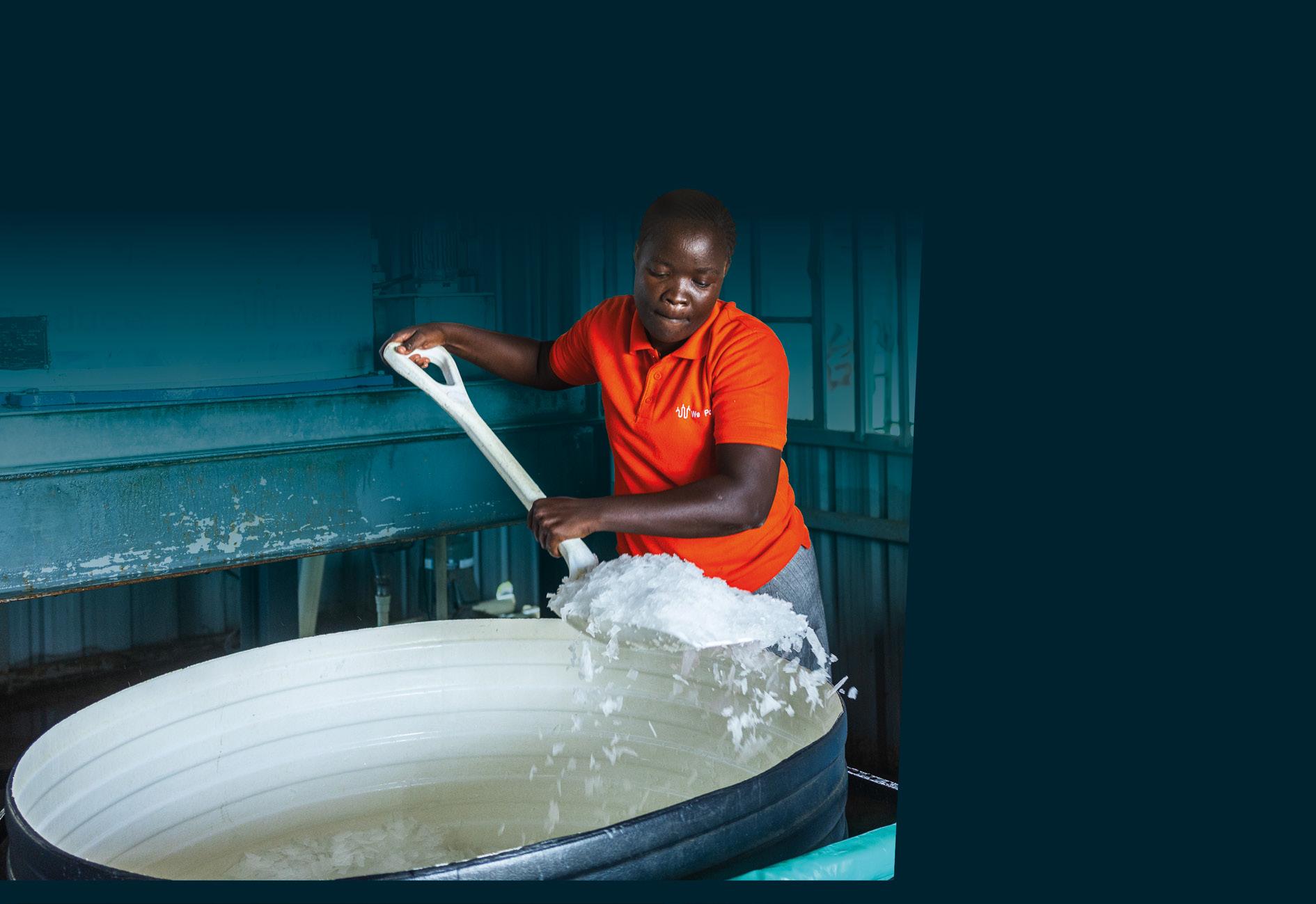
WeTu’s ice-flake production initiative is designed to reduce post-harvest losses in the fresh fish value chain by supplying high-quality ice-flakes to fishermen for proper fish preservation.
In February 2022, WeTu launched its ice production business vertical with the establishment of one ice production plant in Mbita, Homa Bay County. The business model integrates other business verticals by utilizing clean and safe drinking water and solar energy to produce quality iceflakes, which are then delivered to fishing beaches and customers using electric mobility vehicles.
In 2024, WeTu expanded operations with a second Water-Energy Hub in Muhuru Bay, installing a 2-ton ice production plant. By the end of 2024, two solar-powered ice machines were operational.
Since inception, the customer base grew from 68 fishermen in 2022 to a cumulative 2,767 customers by the end of 2024. In 2024 alone, WeTu sold 5,239 sacks of ice, totaling 545 tons.
In 2025, WeTu expanded further with the installation of a 3-ton solar-powered ice plant in Usenge, bringing the total to three operational plants. While total sales slightly declined to 4,000 sacks translating to 410 tons of ice-flakes in 2025, the expansion positions the business for growth. With the new Usenge facility fully operational, WeTu projects ice sales to increase to 700 tons in 2026, strengthening income stability for fishermen and significantly reducing post-harvest losses across the fresh fish value chain.
Ice-flake Customer
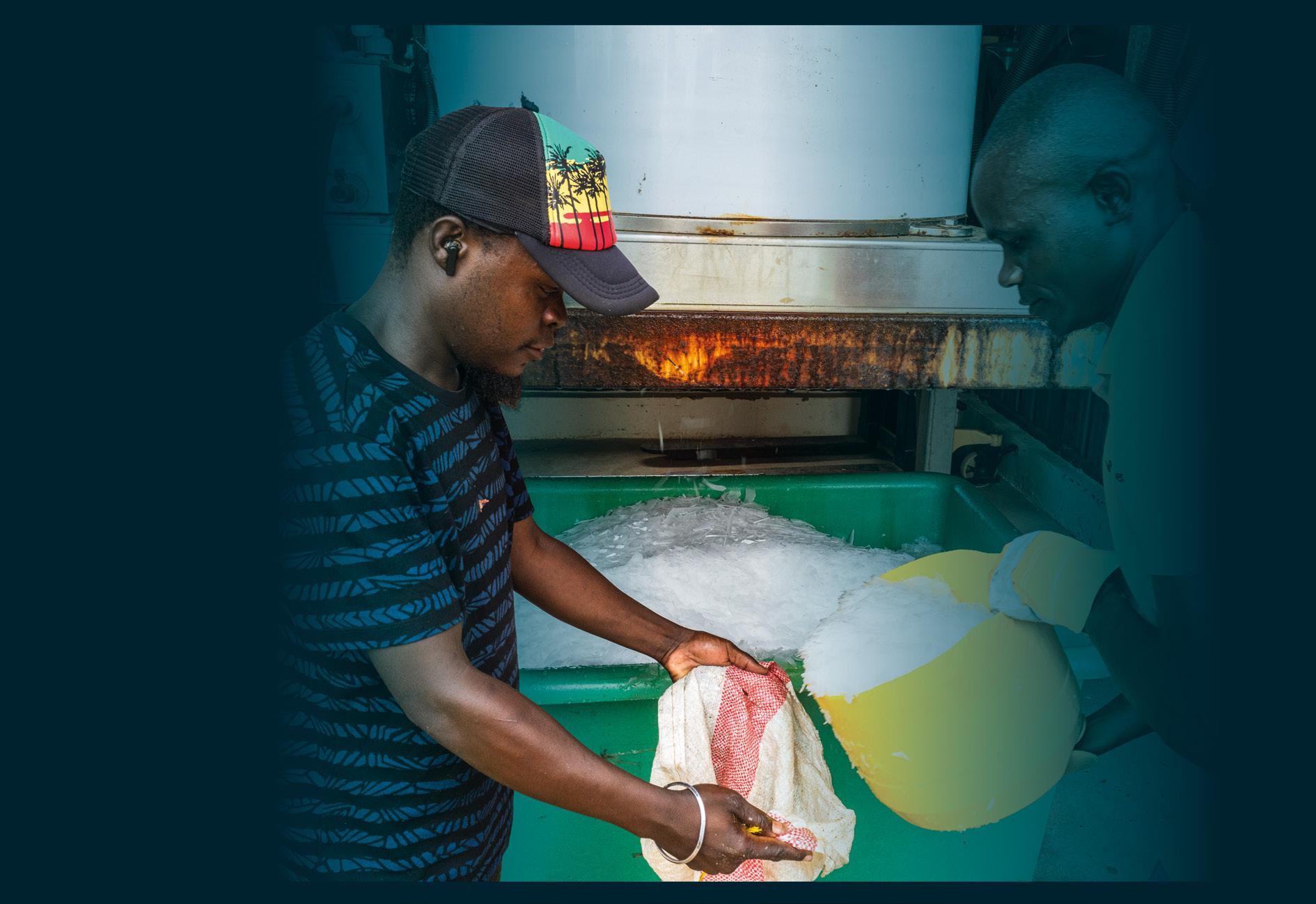
“My name is Kevin Martin Sikoti from Usenge, and I sincerely thank WeTu for installing the solar-powered ice plant in Usenge. Before this solution, we faced heavy post-harvest losses due to unreliable electricity and high temperatures. Much of our fish would spoil before reaching the market, forcing us to sell at throwaway prices or incur total losses.
Since the introduction of affordable solar-produced ice-flakes, fish preservation has greatly improved. The machine operates reliably, and the ice keeps our fish fresh during storage and transport. This has reduced waste, improved food quality, and increased our income. Most importantly, it strengthens food security in our community by ensuring more fresh fish reaches consumers instead of being lost. We truly appreciate WeTu’s support.”
Kevin Martin Sikoti 26
of Produce preserved in Cold Room (2025)
COLD ROOMS
I
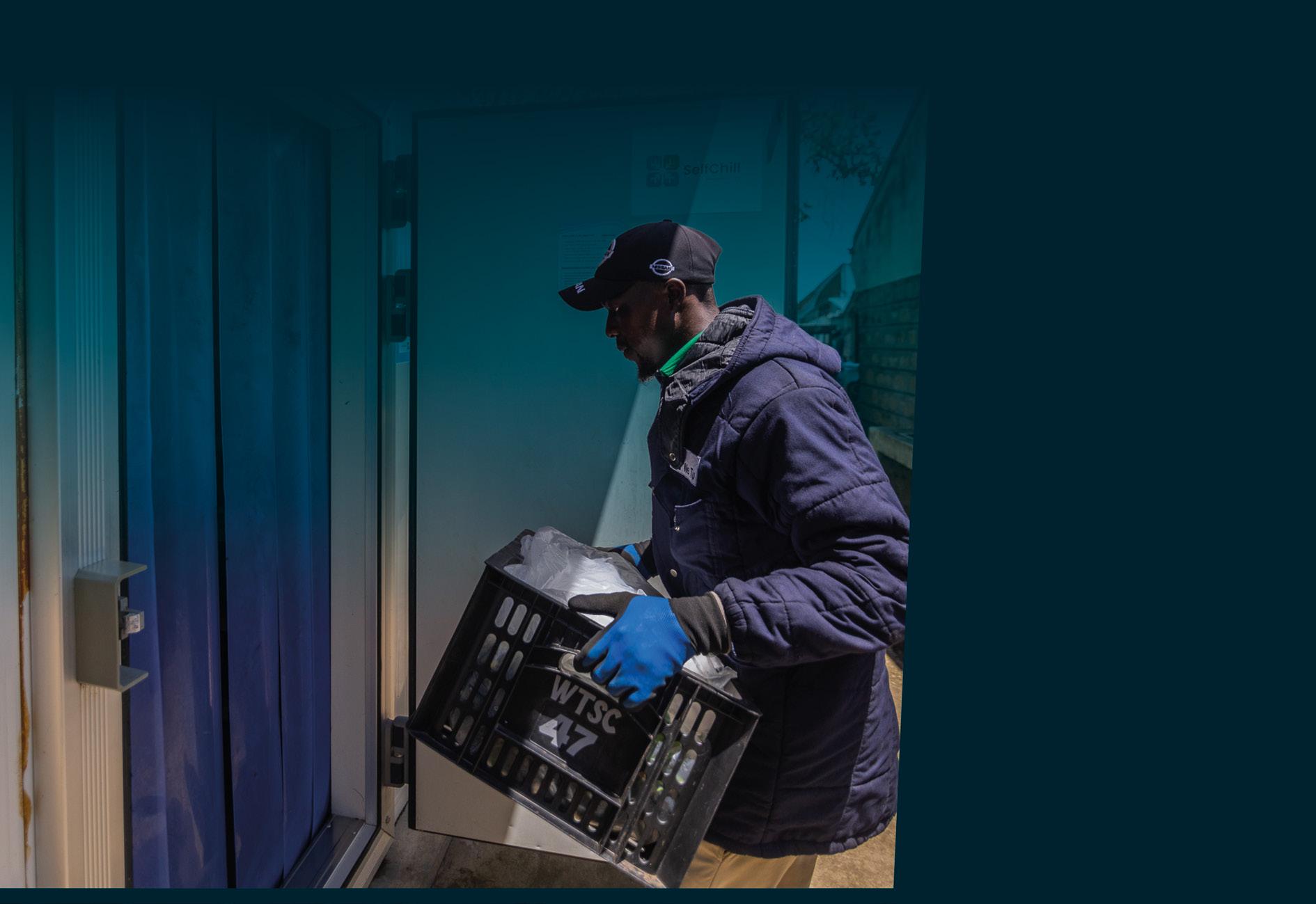
n 2024, WeTu launched a pilot solar-powered walk-in cold room in Mbita Market, Homa Bay County, to reduce post-harvest losses and improve market efficiency for traders. The facility provides an affordable and reliable cold storage solution, enabling traders to preserve perishable goods, extend shelf life, stabilize prices, and reduce daily waste.
Following strong customer adoption, 96 % of stored produce consisted of green leafy vegetables, with fruits and other perishables accounting for 4 %. In its first year, the cold room preserved 32 tons of fresh produce, directly supporting traders to maintain product quality and increase profitability. In 2025, WeTu expanded the model by installing a second facility in Homa Bay Town, a low-carbon cold room constructed largely from natural materials. With two operational cold rooms now serving two major markets, total produce stored increased to 50 tons in 2025.
HellenOtienoAchieng
Vegetable Seller, Mbita Market
“My name is Hellen Achieng Otieno, and I sell fresh leafy vegetables at Mbita Market. Before WeTu’s solar-powered cold room arrived, half my stock would spoil within a day. I lost money daily, and it broke my heart to throw away produce I’d worked so hard to grow. But now, everything’s changed. The cold room keeps my vegetables crisp and green for days! I preserve enough stock of vegetables in the cold room, sell the rest gradually, and barely lose a single bunch. The pricing is fair, and the savings let me reinvest in my business. This cold room isn’t just a storage space but also a preservation space. Thank you, WeTu, for giving small traders like me a fighting chance.”
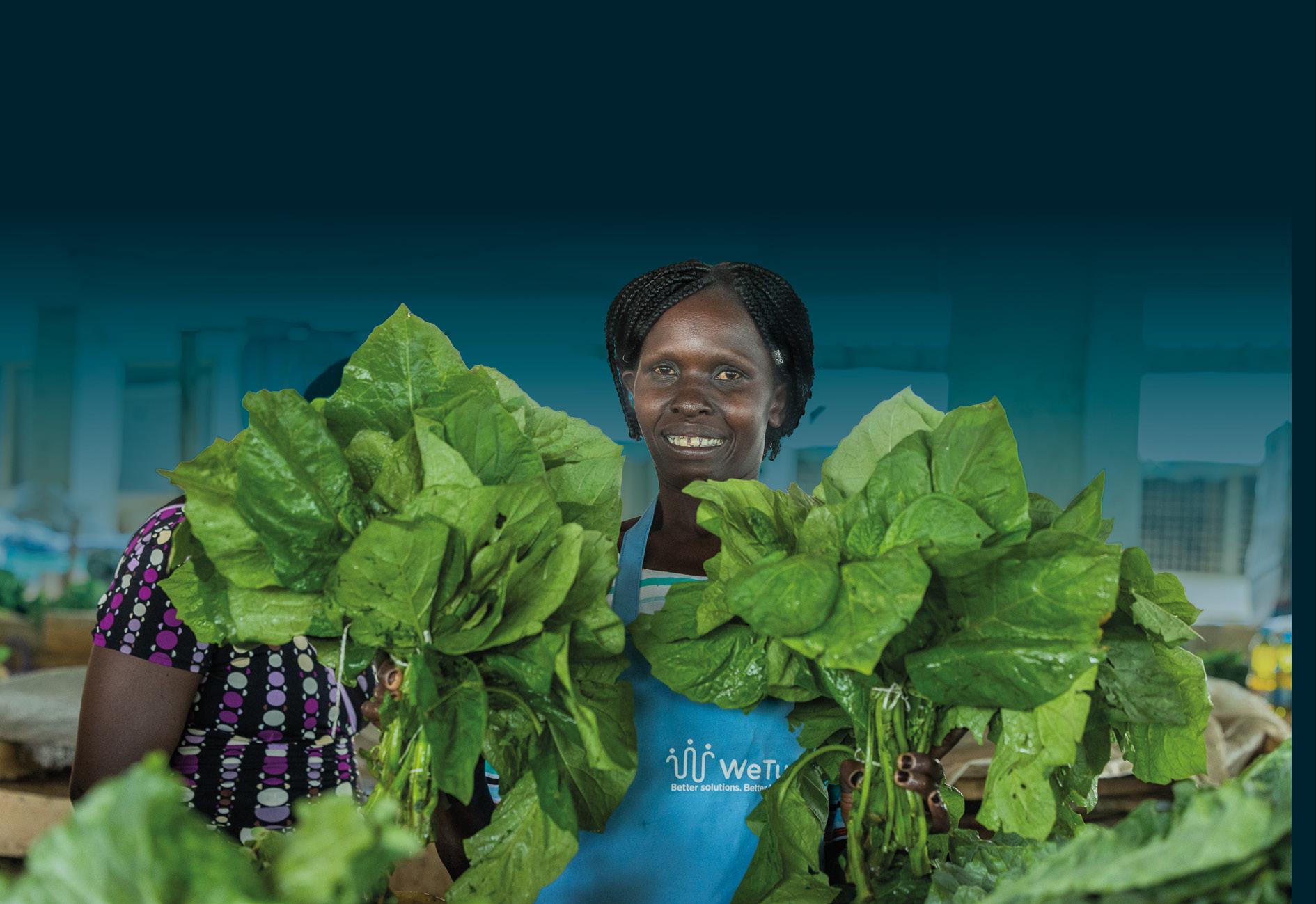
Together, the facilities serve approximately 120 traders, 95.6 % of whom are women, strengthening women’s economic participation in the fresh produce value chain.
This business vertical remains in the pilot and refinement phase, with ongoing refinement of pricing structures, utilization models, and operational sustainability to ensure a scalable, inclusive, and financially self-sustaining solution. The core impact remains clear: providing a clean, solar-powered cold storage solution that significantly reduces post-harvest losses and enhances income stability for market traders.
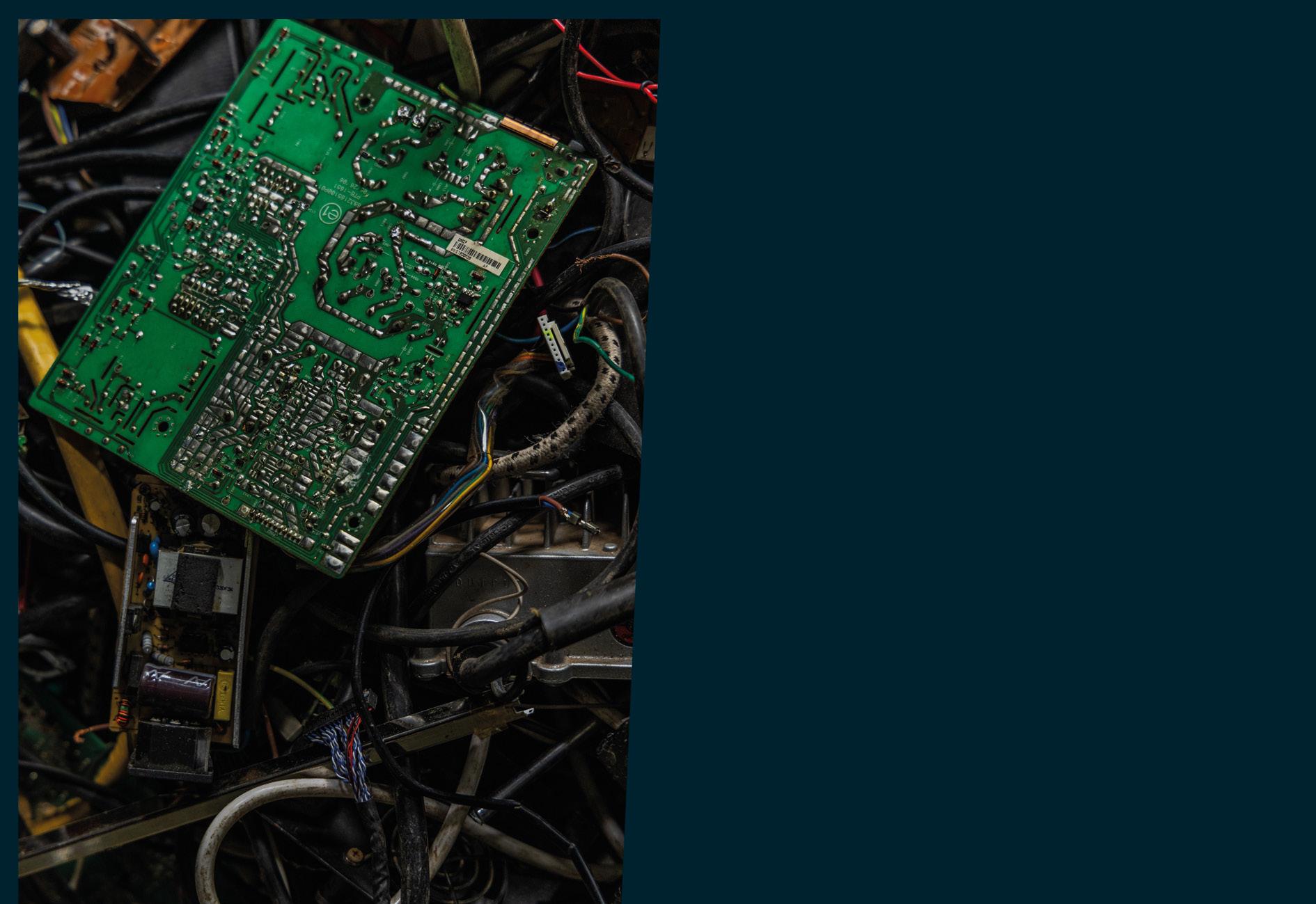
CIRCULAR ECONOMY E-WASTE PROJECT
WeTu is committed to advancing circular economy principles by integrating responsible resource use, material recovery, and downstream waste management across its operations. To integrate circular economy into WeTu’s key business vertical, WeTu developed a circular economy project, the “WeCollect” initiative. This project ensures proper collection, pre-processing, repair, reuse, and recycling of electronic waste generated internally and within the communities where WeTu operates preventing unsafe disposal practices and environmental contamination.
In 2023, WeTu obtained an official e-waste operation license from the National Environment Management Authority (NEMA)
of Kenya for a pre-processing facility in Homa Bay. Through WeCollect, WeTu promotes responsible material recovery, reduces environmental and public health risks associated with improper disposal, and strengthens local awareness on sustainable electronics management. The initiative works closely with the NEMA and the Public Health Offices of Homa Bay, Migori, Kisumu, and Siaya Counties to conduct training and community sensitization programs.
WeCollect plays a critical role in embedding circularity within WeTu’s operations while supporting broader community-level environmental stewardship by safely managing and reintegrating electronic waste into the recycling value chain.
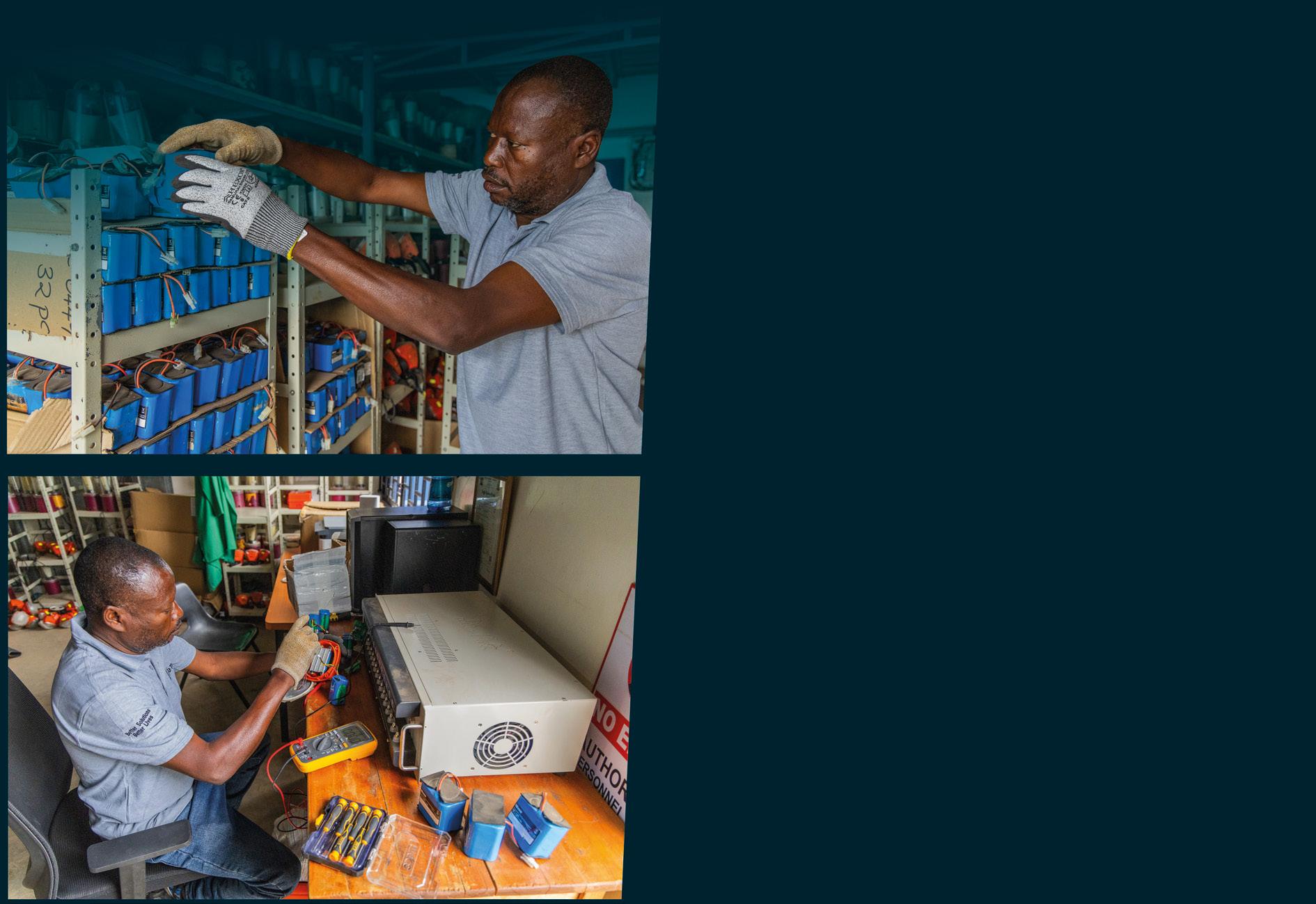

CIRCULAR ECONOMY SECOND
LIFE BATTERY
The second life battery project is also one of WeTu’s circular economy project focused on sustainable battery management by repurposing and safely disposing of depleted lithium-ion battery packs from fishing lanterns and electric mobility business verticals.
Over time, these batteries lose their capacity and ability to hold a charge, reducing their efficiency for lighting and to power EVs. To maximize their lifespan, used battery packs undergo a thorough process at WeTu with our partner, Enviroserve, in Nairobi. This involves:
• Disassembly The battery packs of solar fishing lanterns are dismantled
• Testing Individual cells are tested to assess their performance and capacity.
• Repurposing Functional Cells Cells that are still viable are boosted and repurposed for use in fishing lanterns or other applications, extending their usability.
• Safe Disposal of Non-Functional Cells Cells that have reached the end of their life and can no longer be repurposed are safely disposed of.
WeTu’s battery repurposing project is demonstrating that the end of a battery’s first life is not the end of its useful life. To date, over 8,000 lithium-ion battery cells have been processed through WeTu’s repurposing program, of which 4,000 have been successfully repurposed and redeployed into WeTu solar fishing lanterns now actively in the hands of fishermen on Lake Victoria.
The project sits at the intersection of three imperatives that matter deeply in the Lake Victoria context. It advances the circular economy by closing the loop on battery waste within WeTu’s own product ecosystem. It supports the blue economy from an environmental perspective by keeping hazardous materials out of the Lake Victoria ecosystem and ensuring that the fishing community’s energy needs are met cleanly and sustainably. It reinforces sustainable fishing by keeping solar lanterns affordable, available, and operational for the fishermen who depend on them for their nightly catch.
STEM Education PROJECT FOR YOUTH
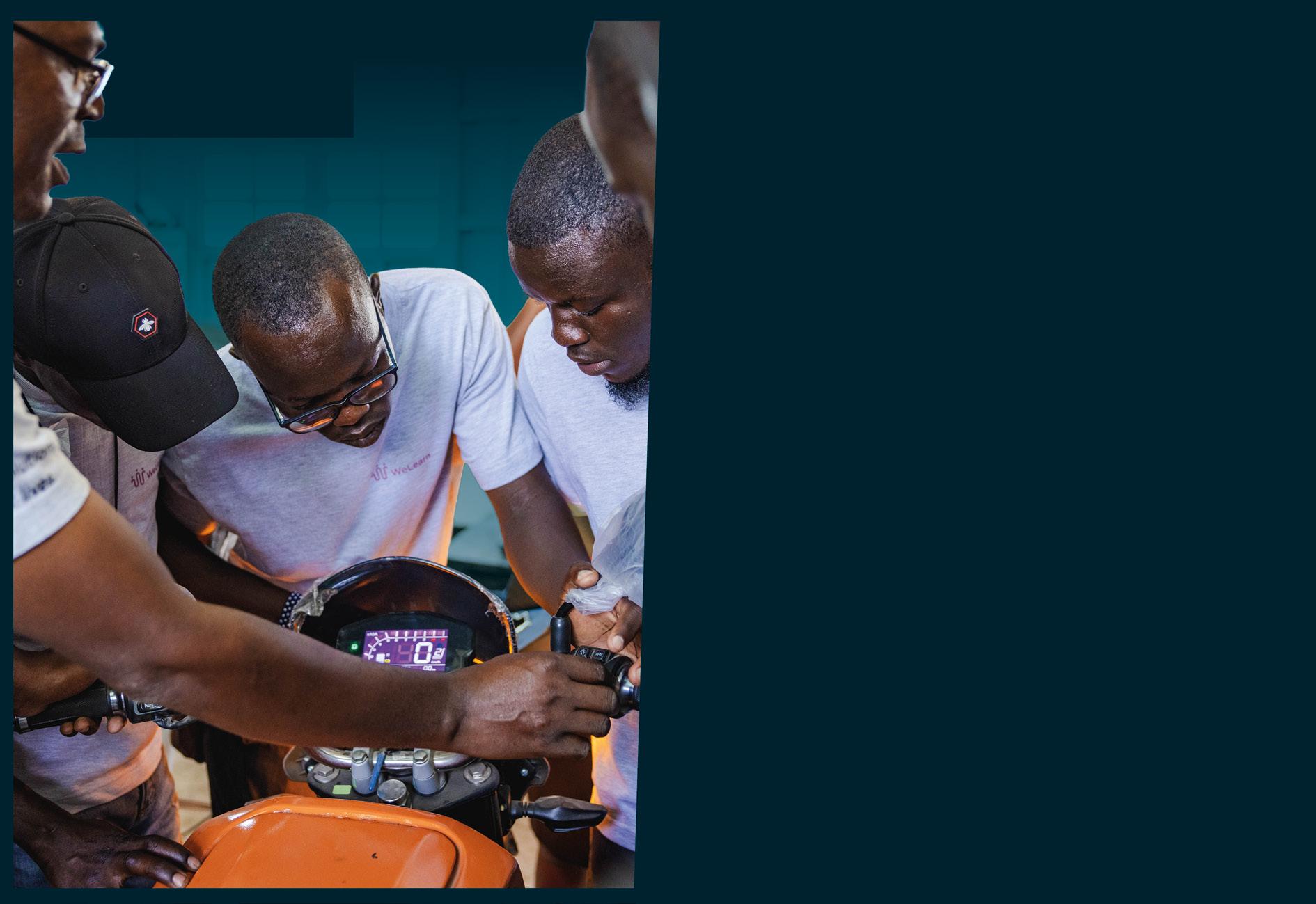
WeLearn is WeTu’s educational initiative, funded by Siemens Stiftung, designed to bridge the gap between education and employment in Kenya’s rapidly growing renewable energy sector. As Kenya works towards achieving 100 % sustainable energy by 2030, the demand for a technically skilled green workforce has never been greater. WeLearn exists to build that workforce, starting with rural youth.
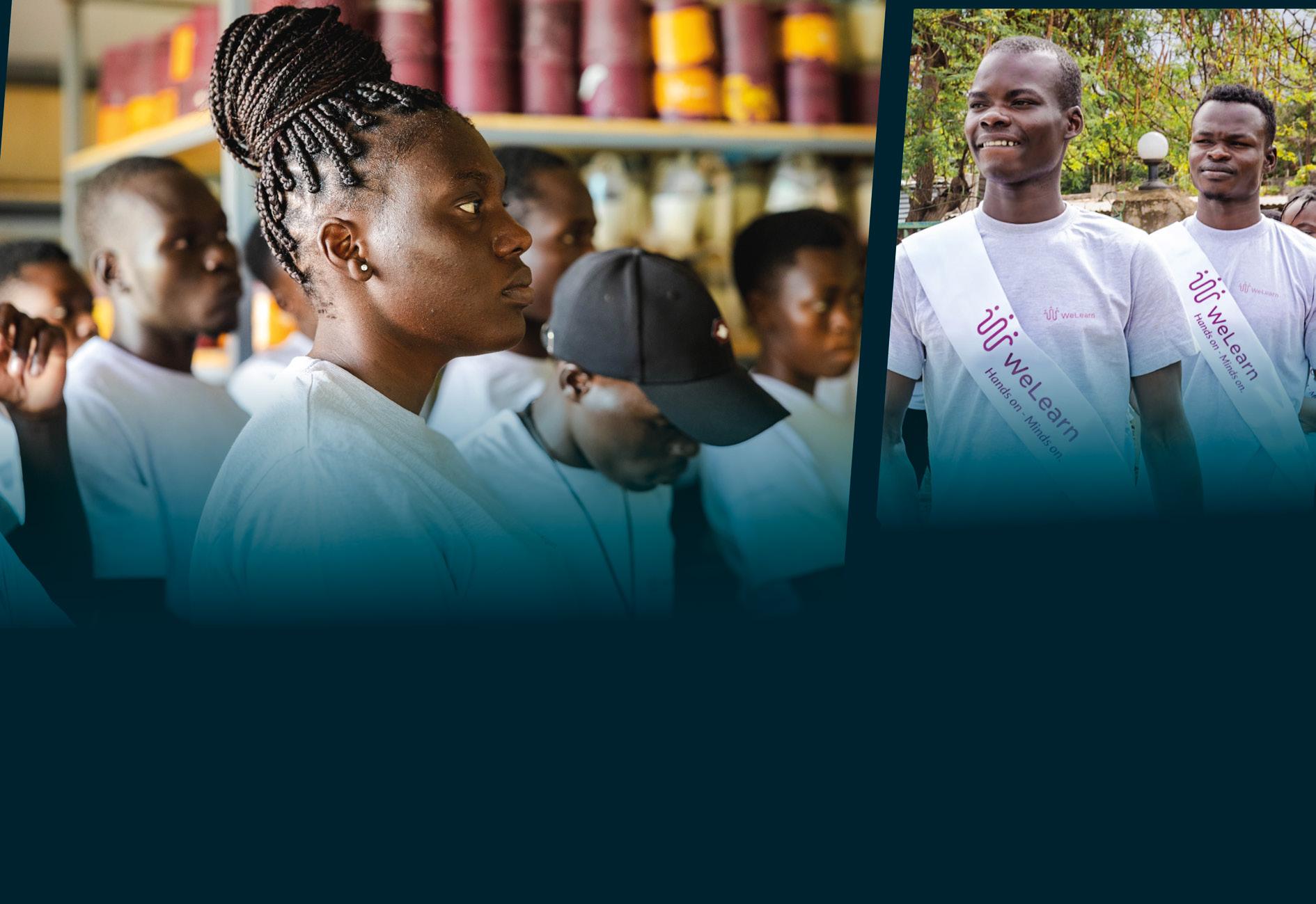
The program is a four-week technical orientation course targeting recent secondary-school graduates. The program is grounded in STEM subjects and anchored in hands-on, practical learning. Gender inclusion is central to its design ensuring 50 % of participants are girls, reflecting WeTu’s commitment to building a green economy that works for everyone.
Sessions are hosted directly at WeTu’s solar-powered Water-Energy Hubs, which serve as live learning labs, facilitated by certified instructors from SMASE-Africa
(Strengthening of Mathematics and Science Education in Africa) and mentored by WeTu’s 100 % local technical team including women professionals who serve as role models. Participants gain hands-on experience in:
Operating solar water pumps
Designing Solar Systems and installing and maintaining solar panels
Managing electric vehicle (EV) charging stations
Understanding battery storage systems and renewable energy grids
Beyond technical skills, WeLearn equips participants with essential digital literacy, covering basic computer operations, internet navigation, and digital tools, ensuring graduates are prepared for the demands of the modern workplace.
Pathways after WeLearn
Upon completing the program, participants are equipped to pursue:
Further education through Technical and Vocational Education and Training (TVET) institutions
Further training in the renewable energy industry for T1 license, increasing their employability
Direct entry into the workforce as technicians, artisans, or green energy support staff
Entrepreneurial ventures in renewable energy, water management, and related fields
WeLearn Impact Summary
Since launching, WeLearn has delivered six cohorts across two years, three cohorts per year, training a total of 111 young people from rural communities in Western Kenya. Gender parity has been upheld throughout, with female participants consistently representing 50 % or more of each cohort.
Further Education: 53 Youths (47.7 %) 47.7 % of WeLearn graduates proceeded to further education following the program. Of the 53 who joined college, 29 were female (54.7 %) and 24 were male (45.3 %) — with female graduates leading uptake of further education opportunities. Among those who pursued further studies, a number enrolled in technical and vocational courses directly related to renewable energy. A select group received scholarships to undertake T1 and T2 Solar Technician Certification courses, a nationally
recognized qualification certifying competence in solar panel installation and maintenance and have since successfully completed and passed their certification exams with the National Industrial Training Authority of Kenya (NITA).
Direct Employment: Eight Youths (7.2 %)
Eight WeLearn graduates secured direct employment as a result of the program, four females (50.0 %) and four males (50 %).
FUNDING PARTNERS
BUSINESS AND PROJECT PARTNERS









UPDATE ON THE REPORTED PARTIAL COLLAPSE OF THE ROOF OF WARD EIGHT UNDER CONSTRUCTION AT JOOTRH
COUNTY GOVERNMENT
DEPARTMENT OF ENVIRONMENT, RESOURCES, CLIMATE CHANGE MANAGEMENT
The ongoing extension of ward 7/8 is one of the onging projects at JOOTRH to increase capacity and improve service delivery. The construction of this ward will increase the ward capacity at the facility by 100 beds.

Yesterday 26th February 2021, there was a reported partial collapse of the roof of the ongoing construction wherefore H.E the Governor instructed the County Engineering Department to commence immediate investigations around that mishap and report to him within 48 hours.

The engineers have been on site and have come up with a preliminary report as follows; 1. That no roof collapsed as reported;
P O Box 195 –SUNA-MIGORI, procurement@migori.go.ke

GOVERNOR’S