
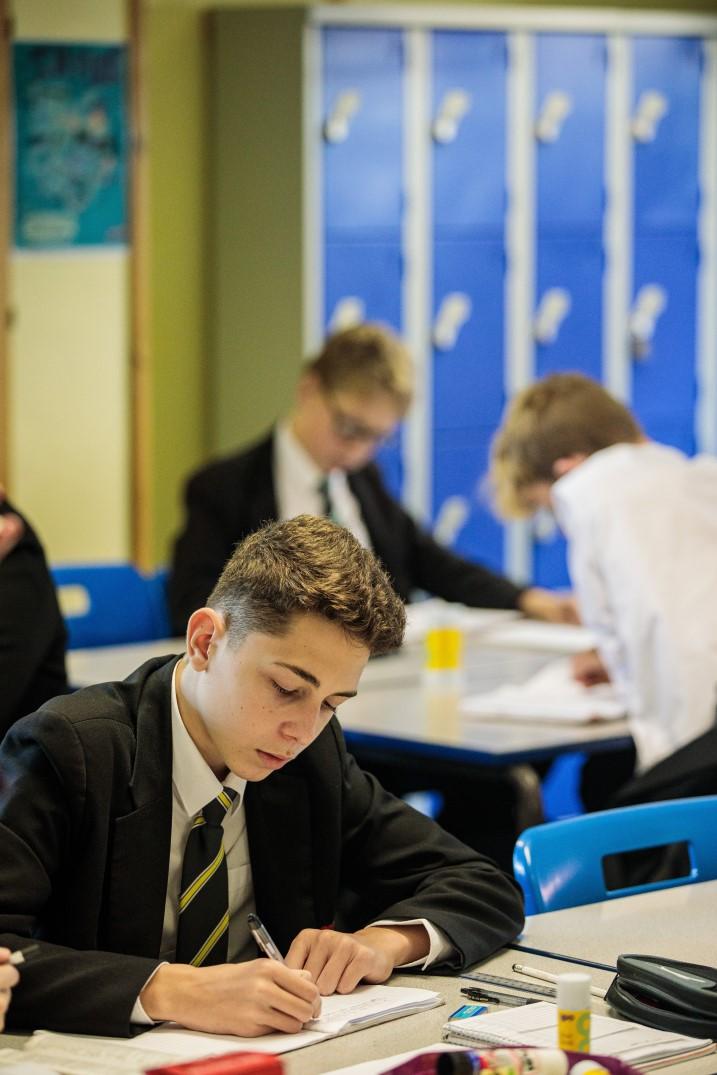

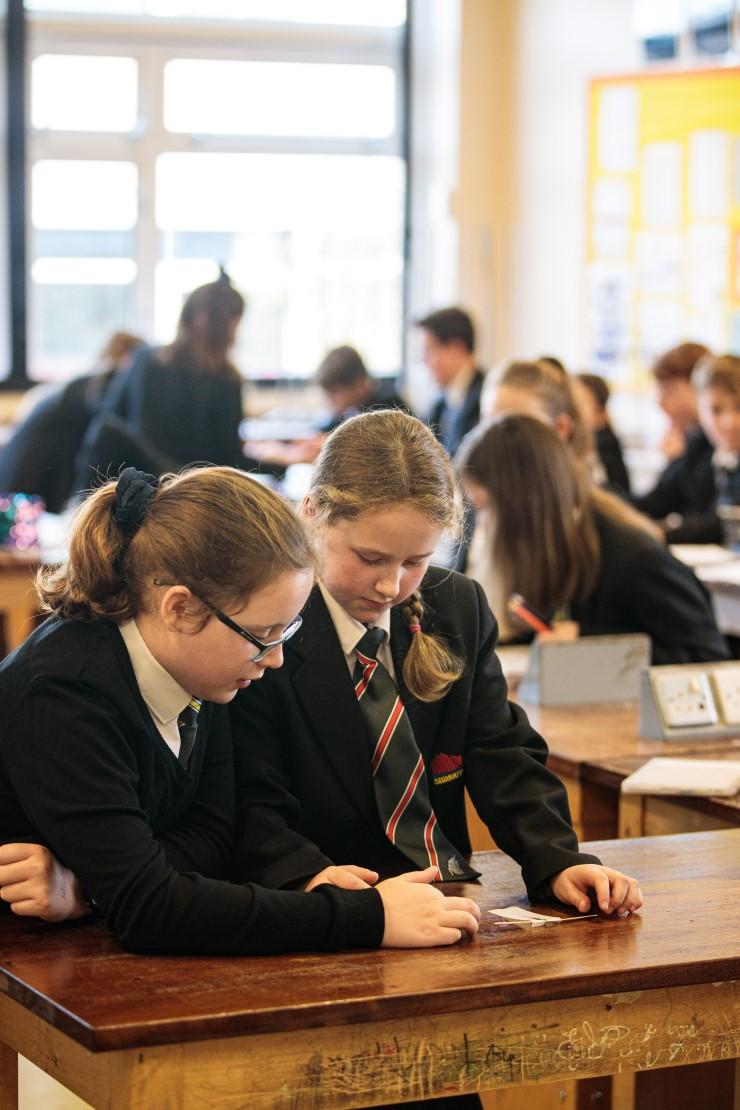



This booklet is designed to provide you with information to help you to make the right choices for your studies in the Key Stage 4 Curriculum. The choices you make are important, both in enabling you to enjoy and succeed in your studies from age 14-16 and in providing you with the right knowledge and qualifications to support your choice of further study or work after the age of 16.
It is important to note that not all courses offered within this booklet may operate if numbers are too low and that some courses may need to be limited to maximum numbers. Students must, therefore, select a reserve course when completing the “Preferred Option” form included in this booklet.
We hope that you have been able to take advantage of the opportunity to speak to teachers at the Guided Choices Evening. Please also read this book carefully and speak with your tutor or subject teachers if you require further clarification before submitting your form.
Director of Curriculum Programmes - Mr Wickins
Heads of House - Miss Ryce (Drake), Miss Hughes (Grenville), Mr Gilbert (Raleigh), Miss Carnell (Scott)
IMPORTANT DATES - KS4 TIMELINE OF KEY EVENTS
January 10th 2022 Year 9 Guided Choices Process—Online Event
January 13th 2022
January 31st 2022
February 1st 2022
March 31st 2022
May 2022
September 2022
June 2024
Subject Information Evening
Deadline for submission of “Preferred Options” online form—information at the end of this booklet.
School review of forms; interviews with students, parents and carers (where changes are necessary or recommended); final changes to “Preferred Options” form submitted
College to confirm courses and options for all students
Students start to follow all KS4 courses
Students complete courses and undertake final GCSE examinations
• Speak to your subject teachers and tutors.
• Read this booklet carefully.
• Discuss your choices with parents and carers.
• Complete and submit Preferred Options form at the end of this booklet by Friday 31st January.
Good reasons for studying courses include:
• I am interested in the subject.
• I already do well in this subject.
• This subject will support my plans for future courses and careers.
• Together with other choices, this subject will give me a varied and interesting curriculum.
• The balance of exams and Non Examined Assessment in this subject plays to my strengths.
Things that should not influence your choice:
• My friends have chosen this subject.
• I like my current teacher in this subject.
• It will please my parents or others if I choose this subject.
Please consider the following pathway options when making your subject choices
The English Baccalaureate pathway (Ebacc) is taking increasing importance and may become an entry requirement for certain courses and universities in the future. In light of this, we are recommending that all students consider following this pathway. English, Mathematics and Science (or Computer Science), together with a Modern Foreign Language and either History or Geography is the English Baccalaureate pathway. Students who wish to study the Ebacc suite of subjects should select ‘Pathway 1’ – Ebacc, and, in addition to the Core Curriculum, choose from the available options which will include study of appropriate Ebacc subjects. It should be noted that many of our students already choose appropriate options to complete Ebacc – this pathway merely formalises that process.
‘Pathway 2’ includes study of the Core Curriculum and other GCSE courses, but without studying all of the GCSEs necessary to follow the Ebacc pathway. To ensure a balanced curriculum, students are required to choose ONE from History, Geography, French, German or Computer Science whilst the remaining TWO options can come from any of the available subjects. Students should pick a variety of subjects within these rather than studying a narrow range of similar courses.
*In both pathways students can choose both Geography and History
Core Curriculum
The Core Curriculum for all students will include study of the following:
English Language & Literature
Mathematics
Science
Religious Studies
Core PE (non-exam - further PE studies leading to GCSE are included in the options below)
Pathway 1 Ebacc
Students will follow the Core Curriculum plus the following THREE option choices:
Option 1: A humanity – Geography or History.
(You can choose both History and Geography. One in Option 1 and the other in Option 3)
Option 2: Modern foreign language – French or German (Must be the one taken in KS3)
Option 3: An open choice from the other subjects listed in this booklet.
Pathway 2
Students will follow the Core Curriculum plus the following THREE option choices:
Option 1: One of the following subjects - Geography, History, French, German or Computer Science.
(You can choose more than one of these subjects across the THREE option blocks.
Option 2: An open choice from the other subjects listed in this booklet.
Option 3: An open choice from the other subjects listed in this booklet.
For further advice and information during the Guided Choices process, contact your child’s Tutor, Head of House, Careers Leader or subject teachers.
Details of all subjects, both Core and Optional, are given in the following pages.
English Language
English Literature
Mathematics
Religious Studies
Science*
French or German Geography and/or History
Other Option Subjects
Subject
Art
Business
Computer Science
Design & Technology
Drama
Food Preparation & Nutrition
Health & Social Care
Media Studies
Music
Photography
Physical Education
Qualification
GCSE
GCSE
GCSE
GCSE
GCSE
GCSE
BTEC
GCSE
RSL VQ Level 2
GCSE
GCSE
*Science will be studied as three individual Sciences or a Double Award.
Head
of
Department - Mrs A Lucas
It is a compulsory subject; grade 5 is required by many colleges and employers. English is necessary for all who want to communicate through speaking or writing and who want to deepen their skills of analysis.
English Language & Literature are studied and lead to two GCSEs.
Exam Board—AQA
English Language
Two exam papers
Paper 1: Explorations in creative reading and writing - 50%
Paper 2: Writers’ viewpoints and perspective - 50%
In addition, there is a spoken component and this grade is reported separately on the English certificate.
English Literature
Two exam papers
Paper 1: Shakespeare & 19th Century novel - 40%
Paper 2: Modern texts & poetry - 60%
The qualification will help you get on to the Post 16 course of your choice and many employers will take your English qualification into account when deciding whether to employ you or not. A Level English Language and English Literature are offered at Sidmouth College in the Sixth Form. A good standard of English is also a pre-requisite for many other A Levels that require extensive written work.
English is relevant for all and, taken to a high level, can lead to careers in areas such as Journalism, Teaching, Law and Politics.
Head of Department - Mr Evans
Maths may be compulsory, but it is universal. It is great for logical thinkers and logical minds. Good Mathematical skills are useful in all careers and a life skill you will put into practice every day.
Exam Board:
Edexcel Linear with two tiers.
Assessment:
Foundation Level ranging from grades 1-5.
Higher Level ranging from grades 4-9.
The exam consists of three papers taken in May and June of Year 11. Each paper is worth 33.3%, the first is a non-calculator paper and the other two are calculator papers. Each will last ninety minutes.
Mathematics GCSE can lead to A Level Maths and possibly A Level Further Maths, but will also support study in sciences, social sciences and indeed most other subjects and courses. It will be a requirement for most KS5 or other sixth form college courses. Any student achieving below grade 4 will have to restudy the course and retake the exam until they reach the age of 18 or achieve grade 4.
A GCSE in Mathematics is useful for every career. A Level 4 or 5 pass in GCSE Maths is needed for continuation to sixth form or any college or apprenticeship.
Mathematics is taught in ability sets. Students will be entered in the appropriate tier by the school. Most years see approximately 50% of students entered for each tier.
Head of Faculty - Miss Hext
Students will develop a whole range of skills including those of presentation of an argument, analysis, evaluation, empathy, and understanding of current events and religious beliefs.
There are two exam papers at the end of this course, both exams are 1 hour and 45 minutes long. We study Edexcel B – focussed on Christianity, Islam, and ethical issues.
Areas of study
Religion and Ethics
Christian Beliefs
Matters and the family
Living the Religious Life Christianity
Matters of life and death
Religion, Peace and Conflict
Muslim Beliefs
Crime and Punishment
Living the Religious Life—Islam
Peace and Conflict
The course could lead to A Level Philosophy and Ethics, Sociology, Health & Social Care, Childcare
Religious Studies is valued in a whole range of careers as it shows that you can listen to the opinions of others and present your own views. Careers where it is particularly useful include Police, Social Work, Medicine, Law, Personnel Management, Teaching and Politics. As well as complementing a number of post 16 options through development of a range of skills. Critical thinking, essay writing, investigative, analytical and critical evaluation skills.
Please note that a whole range of views are discussed in the course and students are encouraged to understand the views of others and to express their own opinions. The course is suitable for students of all faiths and none.
Head of Department - Mrs Ritchie
All students are required to complete a minimum of two GCSEs in Science. In Science most students will follow the Combined Science. We follow the AQA Trilogy course. All students will study Biology, Chemistry and Physics. Students completing the Combined Science course will be awarded two GCSE grades, reflective of their performance in all three sciences. Information relating to Separate Sciences is found on a separate page.
AQA GCSE Combined (Trilogy) Science
All content and course information can be found on the AQA website.
All exams will constitute 100% of the final GCSE grades. All exams are 1 hour and 15 minutes long.
Biology: 2 exams Chemistry: 2 exams Physics: 2 exams
Both Combined and Separate Science GCSEs allow students to progress onto A-level studies. Sidmouth College (and most other FE course providers) requires a minimum of two Grade 5/6s to be accepted onto A level science courses and grade 4’s to do the Level 3 BTEC science. Although not compulsory, a Grade 5/6 in Mathematics is also preferred.
There is a vast number of science based careers for students to follow, for which this course will be suitable including, but not limited to, medicine, nursing and midwifery, veterinary surgery and science, clinical research, laboratory research, engineering, robotics, genetic engineering, sports science and environmental management. Science also provides a wide range of transferrable skills required by employers, including the public and armed services.
We provide opportunities to buy discounted revision guides that go alongside this course.
- Mrs Ritchie
In Science we run an AQA Separate Science program for selected students. These students with study a full GCSE in Biology, Chemistry and Physics. This will lead to three separate science GCSEs.
The selection for Separate Science will be based upon teacher assessment and examination results in Key Stage 3 and the first part of Key Stage 4 science program which is covered during year 9. Taking three science GCSEs is academically demanding and students must have a passion for Science. They will also need good literacy and numeracy skills and their acceptance onto the course depends on their achievement in Science, English and Maths. Suitable students will be invited to apply to do the three separate sciences at the start of the summer term of year 9. They will then complete an application form before their place on the course is confirmed.
AQA GCSE Biology, Chemistry, Physics
All content and course information can be found on the AQA website.
All exams will constitute 100% of the final GCSE grades. In order to accommodate the greater volume of content, separate Science exams are 1 hour 45 minutes long.
Biology: 2 exams Chemistry: 2 exams Physics: 2 exams
Both Combined and Separate Science GCSEs allow students to progress onto A-level studies. Sidmouth College (and most other FE course providers) requires a minimum of two Grade 5/6s to be accepted onto A level science courses and grade 4’s to do the Level 3 BTEC science. Although not compulsory, a Grade 5/6 in Mathematics is also preferred.
There is a vast number of science based careers for students to follow, for which this course will be suitable including, but not limited to, medicine, nursing and midwifery, veterinary surgery and science, clinical research, laboratory research, engineering, robotics, genetic engineering, sports science and environmental management. Science also provides a wide range of transferrable skills required by employers, including the public and armed services.
We provide opportunities to buy discounted revision guides that go alongside this course.
Head of Department - Mr O’Neill
French is for everyone and anyone:
Anyone who has enjoyed their French language lessons at Key Stage 3; anyone who wants to have a widely valued GCSE; anyone considering going to university; students wishing to achieve the English Baccalaureate qualification. Please note you can only choose French as an option if you studied French in Years 7, 8 and 9.
EXAM BOARD: AQA
COURSE CONTENT : You will expand upon the work that you did at Key Stage 3, so many of the topics will be familiar to you. The three themes on which assessment is based are :
Theme 1: Identity and culture
Theme 2: Local, national, international and global areas of interest
Theme 3: Current and future study and employment
Assessment:
All four languages skills will be assessed in the summer exam session of year 11. There are no controlled assessments.
Students will be entered for either Foundation or Higher level.
Listening component (25%):
Understanding and responding to different types of spoken text. Half the answers are written in English, half are written in French
Speaking component (25%):
Communicating and interacting for a variety of purposes by completing one role play, one photo card discussion and one general conversation.
Reading component (25%):
Comprehension questions from authentic written text, and the completion of one translation task from French into English
Writing component (25%):
Three or four written tasks which could include a message, a bullet pointed list, a structured written task and one translation task from English into French
Further study at A Level and a straightforward Languages Degree or a combination with such subjects as Business, Tourism, Computing, Psychology, Media, Film and Television, Performing Arts, Sport, Sociology, Education, Accounting, Marketing, Human Resources, Management, Health Studies, Geography, Mathematics, Art and Design, English, Philosophy, Law, Economics, Music, Journalism, International Relations, History, Archaeology, Engineering, Law.
FOR WHAT CAREERS WILL THIS COURSE BE USEFUL?
Business Services, Central Government, Construction, Creative and Media, Engineering, Event Management , Financial Services, Medicine, Hotel and Catering Management , Land-based and Environmental Work, Local Government, Manufacturing, Marketing, Public Services, Retail, Teaching, Technology and Computer Gaming, Translation and Interpreting , Travel and Tourism, Voluntary and Charitable Sector, Law.
Head of Department - Mr O’Neill
German is for everyone and anyone:
Anyone who has enjoyed their German language lessons at Key Stage 3; anyone who wants to have a widely valued GCSE; anyone considering going to university; students wishing to achieve the English Baccalaureate qualification. Please note you can only choose German as an option if you studied German in Years 7, 8 and 9.
EXAM BOARD: AQA
COURSE CONTENT : You will expand upon the work that you did at Key Stage 3, so many of the topics will be familiar to you. The three themes of which assessment is based are :
Theme 1: Identity and culture
Theme 2: Local, national, international and global areas of interest
Theme 3: Current and future study and employment
All four languages skills will be assessed in the summer exam session of year 11. There are no controlled assessments.
Students will be entered for either Foundation or Higher level.
Listening component (25%):
Understanding and responding to different types of spoken text. Half the answers are written in English, half are written in German.
Speaking component (25%):
Communicating and interacting for a variety of purposes by completing one role play, one photo card discussion and one general conversation.
Reading component (25%):
Comprehension questions from authentic written text, and the completion of one translation task from German into English.
Writing component (25%):
Three or four written tasks which could include a message, a bullet pointed list, a structured written tasks and one translation task from English into German
WHAT CAN THIS COURSE LEAD TO POST 16?
Further study at A Level and then a straightforward Languages Degree or a combination with such subjects as Business, Tourism, Computing, Psychology, Media, Film and Television, Performing Arts, Sport, Sociology, Education, Accounting, Marketing, Human Resources, Management, Health Studies, Geography, Mathematics, Art and Design, English, Philosophy, Law, Economics, Music, Journalism, International Relations, History, Archaeology, Engineering, Law.
FOR WHAT CAREERS WILL THIS COURSE BE USEFUL?
Business Services, Central Government, Construction, Creative and Media, Engineering, Event Management , Financial Services, Medicine, Hotel and Catering Management , Land-based and Environmental Work, Local Government, Manufacturing, Marketing, Public Services, Retail, Teaching, Technology and Computer Gaming, Translation and Interpreting , Travel and Tourism, Voluntary and Charitable Sector, Law.
Head of Department - Mrs Gill
This GCSE builds on prior learning that students will have completed during Key Stage Three. The content is divided into Physical and Human Geography and focuses on the interactions between issues and processes.
EXAM BOARD—OCR Specification B COURSE CONTENT & ASSESSMENT DETAILS
Exam Paper 1—Our Natural World—1hr 15 mins—35% of GCSE Mark Global Hazards, Changing Climate, Distinctive Landscapes, Sustaining Ecosystems, Fieldwork, Geographical skills.
Exam Paper 2—People and Society—1hr 15 mins—35% of GCSE Mark Urban futures, Dynamic development, Uk in the 21st Century, Resource Reliance, Fieldwork, Geographical skills.
Exam Paper 3 Geographic Exploration—1hr 30 mins—30% of GCSE Mark Geographical skills, decision making.
A Level Geography, Environment Studies, Travel & Tourism and also enables students to broaden their horizons by developing analytical, research and a variety of transferable skills.
FOR WHAT CAREERS WILL THIS COURSE BE USEFUL?
Cartographer
Estate Agent
Transport Officer
Earth Scientist
Hazard Prediction & Disaster
Manager
Architect
Construction or Property Lawyer
Urban Regeneration Officer
Surveyor
Coastal Engineer
Weather Forecaster
Forestry Manager
Environmental Health Officer
Armed Forces
Researcher
Travel Agent
Conservation Officer
Geographer
Teacher
Sustainable energy
Healthcare
Education
Finance
Social Care
Journalism
Trengove
Students wishing to study the English Baccalaureate pathway. People who like learning about the past and how it has impacted on our lives today. Students with strong literacy skills.
EXAM BOARD, COURSE CONTENT & ASSESSMENT DETAILS
EXAM BOARD: Edexcel
COURSE CONTENT AND ASSESSMENT DETAILS:
1. Paper 1 - Medicine through Time, c1250-present. [Thematic Study and Historical Environment Study]
Written Examination; 1 hour and 20 mins - 30% of the qualification. This paper will consist of;
• A Thematic Study - Medicine in Britain, medieval to modern day; a chronological study of key features and reasons for the development of medicine in Britain
• A Study of a historical environment - The British sector of the Western Front, WW1 1914 –18; a detailed study using evidence from the time to explore injuries, treatment and the trenches.
2. Paper 2 – Elizabethan England and The American West [Period and British Depth Study]
Written Examination; 1 hour and 15 mins - 40% of the qualification. This paper will consist of;
• A British Depth Study - Early Elizabethan England, 1558–88; a study which focusses upon Queen Elizabeth I, politics and religion, challenges to her authority and Elizabethan society in the Age of Exploration.
• A Period Study - The American West, c1835–c1895; a study which looks at the early settlement of the West, developments on the Plains and conflict and conquest.
3. Paper 3 – Weimar and Nazi Germany [Modern Depth Study]
Written Examination; 1 hour and 15 mins - 30% of the qualification. This paper will consist of;
• A Modern Depth Study - Weimar and Nazi Germany, 1918–39; a study focusing on initially the Weimar Republic and Hitler’s rise to power, then move on to consider Nazi control and dictatorship and life in Nazi Germany.
A Level History, Classics, Philosophy and complement a range of courses through developing strong literacy skills.
People with a background of studying History at GCSE, A Level or Degree go in to a number of different career paths which include; Policing and Legal Professions, Business, Teaching, Journalism, Media, Armed Forces, Archaeologists and Anthropologist. Reasoning for this is the transferable skills that History offers as a subject, which include; research, questioning, linking information together, planning, independent thought, reasoning, and evidential based work.
• Students who wish to undertake further studies in Art and Design post-16.
• Students who like to experiment and express their ideas creatively
• Students who have an interest and aptitude in the subject.
• Students who are willing to develop their ideas independently with guidance and support from their teachers.
Exam Board—AQA Component 1 coursework (60%) Component 2 Exam (40%)
The course is taught through a number of projects over the two years. The projects are based on interesting themes and we encourage you to explore the themes in depth. To help you develop your ideas you will experience a variety of ways of working, discover new techniques and find out how to use many different materials. You will be helped to explore how artists, designers and craftspeople have developed their own ideas and you will be able to try these in your own work. During the course you will have the option to visit galleries and undertake visits to London and other major cities.
You will be shown how to draw from observation to build skills and confidence in manipulating the formal elements. Your sketchbook will be an important record of your ideas over the two years and forms an important part of your final assessment. Homework assignments will be directly related to your coursework.
This course provides a strong foundation for further progression into Art and Design related courses such as A-level Art and Design/photography, higher education, foundation studies, apprenticeships and university courses.
Fashion Buyer
Interior Designer
Fine Artist
Television Art Director
Medical Illustrator
Lighting Designer
Cinematographer
Graphic Designer
Architect
Set Designer
Art teacher/lecturer
Product Designer
Community Art Worker
Tattoo Designer
Furniture Designer
Industrial Designer
Game Designer
Landscape Designer
Advertising
Graphic Designer
At the end of the course your work is displayed for final moderation by the examiners. This includes your portfolio work in your sketchbooks - coursework (60%) and your examination work (40%) It is worth bearing in mind that the creative industries are the biggest employer in the UK at present and this GCSE will help your employability. Art is primarily coursework based so this involves time and care to complete classwork and homework throughout the two years.
This course is for anyone who has an interest in how a business works, wants a career in business, or who may want to set up their own business in the future. We look at how businesses are set up and how they have to anticipate future trends and outside influences. A good standard of literacy and numeracy will be required to be successful on this course.
Exam Board AQA
Content
• Business in the real world - students will look at the effect that businesses in the real world have on human resources, marketing, finance and business operations.
• Influences on Business - This looks at the effect that external factors such as the government, have on business.
• Business Operations - This section looks at what business operations involve, their role within the production of goods and the provision of services, and how they influence business activity.
• Human resources - This looks at the purpose of human resources, its role within business and how it influences business activity.
• Marketing - This section looks at the purpose of marketing, its role within business and how it influences business activity.
• Finance - This looks at the purpose of the finance function, its role within business and how it influences business activity
Assessment: 100% Exam with TWO exams, each 1hr 45 minutes.
GCSE Business offers an excellent foundation for those wishing to pursue careers in management, marketing, project management, business accounting, management consultancy, human resources, and business journalism as well as those interested in continuing on to further study either at A Level, degree level, apprenticeship or other work based training
• Setting up your own business
• Business Management
• Accountancy
• Law
• Human Resources
• Events Management
• Marketing
of Department - Mr Wickins
This course is for students with a keen interest in finding out how computers work. They will be investigating how computer hardware operates and study how software is written through practical programming lessons. Computing is a challenging subject to study and we will dive quickly into the technical workings of computer technology and programming. Students should be driven, enthusiastic, have a good work ethic and fairly good mathematical skills, as this will generally enable them to understand the logic required for programming.
Exam Board—OCR, There are three units and each has its own assessment:
Computer Systems
• Systems architecture
• Memory
• Storage
• Wired and wireless networks
• Network topologies, protocols and layers
• Network security
• System software
• Moral, social, legal, cultural and environmental concerns
Component 02
Component 03
Computational Thinking, Algorithms & Programming
• Translators and facilities of languages
• Algorithms
• High and low level programming
• Computational logic
• Date representation
Programming Project
• Programming techniques
• Design
• Development
• Effectiveness and efficiency
• Technical understanding
• Testing, evaluation and conclusions
80 1hr 30 mins 50% of the total GCSE
Approx 20 hrs Non– Assessed but compulsory to complete.
Components 1 and 2 are largely theoretical units. They each will be assessed with a terminal written examination at the end of the course.
Component 3 is a practical unit. Our language of choice is Python3 and students will develop their skills in programming using this language.
WHAT CAN THIS COURSE LEAD TO POST
It is a fact that information technologies continue to have a growing importance. This means there will be a bigger demand for professionals who are qualified in this area. If students want to go on to higher study and employment in the field of Computer Science, they will find that this course provides a superb stepping stone. Students who have taken a Computer Science GCSE and who then progress to study the subject at A Level or university, will be ready to work in the computing industry, developing computer programs or other innovative technological projects. In addition to this, the course will prepare students (regardless of their chosen career/educational direction) for the future digital world. The skills they acquire will be transferable to any job/course due to the fact that ICT now has such a presence in both education and the working world
FOR WHAT CAREERS WILL THIS COURSE BE USEFUL?
All jobs in the computer industry (e.g. Programmer, Computer Engineers etc). Business owners and entrepreneurs. Generally, this course will prepare students (regardless of their chosen career/educational direction) for the future digital world.
OTHER RELEVANT INFORMATION
The course is fully resourced with lesson presentations, worksheets, videos, revision notes and practice exam questions stored online (Department Website) for students to access 24/7.
Mrs Vanden
GCSE Design and Technology will prepare students to participate confidently and successfully in an increasingly technological world. Students will gain awareness and learn from wider influences on Design and Technology including historical, social, cultural, environmental and economic factors. Students will get the opportunity to work creatively when designing and making and apply technical and practical expertise.
This course allows students to study core technical and designing and making principles, including a broad range of design processes, materials techniques and equipment. They will also have the opportunity to study specialist technical principles in greater depth. This course has 50 per cent non exam assessment (coursework) in order to recognise the importance of practical work within this subject.
AQA GCSE Design & Technology
Written Paper - 50% of total marks - 2 hours - 100 marks
Section A – Core technical principles (20 marks)
A mixture of multiple choice and short answer questions assessing a breadth of technical knowledge and understanding.
Section B – Specialist technical principles (30 marks)
Several short answer questions (2–5 marks) and one extended response to assess a more in depth knowledge of technical principles.
Section C – Designing and making principles (50 marks)
A mixture of short answer and extended response questions including a 12 mark design question.
Plus:
Non-Exam Assessment (NEA) - 50% of the total marks 100 marks
Substantial Design and Make Task (30-35 hours)
Assessment criteria: Investigating, Designing, Making, Analysing and Evaluating
Students will produce a working prototype and a portfolio of evidence (max 20 pages)
A range of A Level Design & Technology courses or a wide range of apprenticeships
Skills that will be useful to you in the future include; Time management, problem solving, idea generation, practical skills, making a concept in to a real outcome, research and analysis skills
FOR WHAT CAREERS WILL THIS COURSE BE USEFUL?
Industrial Design
Automotive Design
Model Making
Ergonomics
Furniture Design
Cabinet Making
Engineering
Architecture
Carpentry
Construction
Project Management
Product Design
Head of Department - Miss Davies
Drama is an exciting, creative and challenging course designed for students to meet the demands of their future role as active citizens in employment and society in general, as well as for the possible further study of Drama. The ability to speak and act in public with confidence, think independently, write and communicate effectively, adapt to new situations, improvise on the spot, organise and collaborate in a team – these indispensable transferable skills get people jobs. A GCSE in Drama equips you with all these skills and more. Do you want to stand out from the rest?
You will be working in groups in response to varied stimulus material to communicate ideas in dramatic form.
You will study a theatrical text with the emphasis on performing and staging techniques. You will study lighting, set design, sound, costume and props. You will experience live theatre and you may work with professional practitioners in a workshop situation.
Throughout this course, you will be involved in many varied activities that test your skills in all related areas. You will be improvising, examining texts, designing, visiting theatres and working in groups. The emphasis is on individual strengths and interests. This drama course demands a high level of personal motivation and interest.
Practical Assessment 60% of total marks
This will involve the study and performance of two key extracts from a scripted play which are examined at the end of the course, and a group devised piece performed during the course. Part of the requirement will be to create a written devising log.
The Written paper [1hour 45mins] 40% of total marks
The written paper comprises three sections:
Four Multiple choice questions based on Theatre Roles and specialist terminology
Four questions based on an extract from a set text studied on the course.
One question based on a live or streamed production seen.
This GCSE provides an excellent foundation, preparing students for the transition to study Drama and Theatre A Level in the Sixth form and supports all university courses.
Where leadership and team work are essential skills. Where the art of persuasion is sought and enterprise rewarded. Where people skills and communication are vital. Where skills are appropriate to the diverse requirements of the creative industries which is the biggest employer generating 90 billion a year to the UK economy. This includes all areas of Television, Film and Theatre, where performing, technical and creative ability are central to success.
Important! If you want to do well in this course you will need to be committed to working outside lesson time. You will benefit from a department that has consistently achieved high results and where success is created and celebrated.
Head of Department - Mrs Vanden
GCSE Food Preparation and Nutrition is a new course designed to equip students with the knowledge, understanding and skills required to cook and apply the principles of food science, nutrition and healthy eating. It encourages students to cook, enables them to make informed decisions about food and nutrition and allows them to acquire knowledge in order to able to feed themselves and others affordably and nutritiously, now and in later life.
Practical work will be carried out most weeks and is used to complement theory lessons, and enhance the learning skill.
It is suitable for any student who has an interest in food; whether they wish a career in this area, or enjoy cooking and want to learn more.
Eduqas (formerly WJEC) GCSE Food Preparation and Nutrition
Component 1: Principles of Food Preparation and Nutrition
One written exam accounts for 50% of the final grade covering the areas of study: Food commodities – different foods, ingredients, processes and techniques
Principles of Nutrition
Diet and good health
The Science of food
Where food comes from
Cooking and food preparation – develop practical cooking skills
Component 2- Food Preparation and Nutrition in Action
Two coursework / non examination practical assessments
Assessment 1 – The Food Investigation Assessment (15%)
This piece of work requires students to investigate and evaluate the working characteristics, functional and chemical properties of ingredients creating a report setting out their findings.
Assessment 2 – The Food Preparation Assessment (35%)
This piece of work requires students to plan, prepare, cook and present a selection of dishes to meet particular requirements such as dietary need or lifestyle choice
Please be aware that students carry out practical work on a regular basis, for which they are expected to provide their own resources.
WHAT CAN THIS COURSE LEAD TO POST 16?
BTEC Hospitality and Catering level 3, Diploma in Food Science and Nutrition Level 3 as well as complementing other subjects such as sport science, health or food and hospitality courses or apprenticeships.
FOR WHAT CAREERS WILL THIS COURSE BE USEFUL?
Hospitality and catering is a growing sector of the jobs market and there are numerous opportunities within this industry from retail, hotel work, chef etc. This course can open opportunities to study catering to BTEC or degree level, or undertake an apprenticeship in a variety of local establishments.
Head of Department - Mrs Whitworth
Anyone with an interest in people, how human development happens and how our lives are affected by this development. Those with an interest in caring for others and in the health and caring professions, including nursing, midwifery, social work and teaching.
This is a Level 2 BTEC Tech Award in Health and Social Care that is equivalent to a GCSE and aims to:
• develop your knowledge and understanding of the sector
• gain an appreciation of the importance of care values
• analyse and evaluate your own caring and communication skills
The course has two internally assessed components, and one that’s externally assessed:
Unit 1: Human Lifespan Development (internally assessed assignments 30%)
• explore how individuals develop physically, emotionally, socially and intellectually over time
• investigate how various factors, events and choices may impact on individuals’ development
• discover how people adapt to life events and cope with making changes.
Unit 2: Health and Social Care Services and Values (internally assessed assignments 30%)
• learn which health and social care services are available
• identify why people might need to use these services
• discover who’s involved in providing these services
• explore what might stop people from accessing the services they need
• look at the care values which ensure people get the care and protection they need.
Unit 3: Health and wellbeing (Externally assessed task based on a brief 40%)
• learn what ‘being healthy’ means to different people
• explore the different factors that might influence health and wellbeing
• identify key health indicators and how to interpret them
• assess someone’s health using what you have learned
• create a health and wellbeing improvement plan
• reflect on the potential challenges the person may face
You might continue on to further vocational and academic study at level 2 and level 3, or choose apprenticeships and traineeships. What’s more, the practical transferable skills you master during your studies such as self-reflection, communication, teamwork and problem solving will also support your progress in the present and the future.
If you are interested in any of the caring professions (nursing, teaching, social work, nursery worker, midwifery, paramedic, physiotherapy and many others), Health and Social Care is a really useful way of developing an understanding of the skills needed.
This subject is for anyone who is interested in the media industry that surrounds them. Students will explore the media through a combination of theoretical, analytical and practical lessons – this course is not just about watching television! Students who opt for Media Studies should be driven, curious, creative and enthusiastic. They will have an excellent work ethic, be able to work independently and have the good written communication skills that are required in order to produce the analytical written work that is expected.
Exam Board— Eduqas
COURSE CONTENT:
Throughout this GCSE, you will study a range of media forms in terms of a theoretical framework which consists of media language, representation, media industries and audiences. You will explore how media products (television, newspapers, online, social and participatory media, film, music videos, video games, radio, and magazines) are made, why they are made, why audiences engage with them and what we get from doing so. You will also study advertising and marketing within the media industry.
Exam paper 1: Component 1: Exploring the Media - Written examination: 1 hour 30 minutes In Section A, students will analyse both set and unseen print texts (magazines, marketing (film posters), newspapers, or print advertisements) in relation to media language and representation. In Section B, students will answer questions relating to film, newspapers, radio and/or video games in relation to the Media Industry and Audiences. This exam is worth 40% of the GCSE.
Exam paper 2: Component 2: Understanding Media Forms and Products – Written examination: 1 hour 30 minutes. Students will answer a question on either media language or representation and a question on media industries, audiences or media contexts. Section A will be based on an extract from one of the set television programmes you have studied whilst in Section B, students will respond to two questions making reference to music videos and online media. This exam is worth 30% of the GCSE.
Non- exam Assessment: Component 3: Creating
Students plan and construct an individual media production for a specific audience in response to a choice of briefs set by the exam board. Students will demonstrate their knowledge and understanding of media language and representation in this component. This section is worth 30% of the GCSE.
A Level Media Studies is offered at Sidmouth College for those wishing to pursue media further. In addition, this GCSE will develop your skills in written communication, analytical writing, using ICT to produce and present work, problem solving and creativity which are fundamental skills for many other subjects offered at A Level.
Media Studies is a modern subject for a modern world. The media is all around us and the industry is growing exponentially! Because Media Studies develops so many different skills, the career opportunities beyond a media education are abundant. It can lead to careers in areas such as journalism, editing, screen writing, app design, graphic design, web development, acting, direction, composing, lighting, magazine writing/editing, public relations, marketing, advertising, politics and TV production.
The RSL Vocational Qualification in Music is an exciting and challenging course that is made up entirely of practical, vocational coursework there is no written exam. This course would be of particular interest to those who wish to explore and develop their own music making while also learning essential and transferable skills for the creative industries and beyond. Students will work on real-life scenarios in the completion of the course which will give them insight and experience into industry practices as well as the opportunity to work with industry professionals.
Exam Board—RSL
Each student will pick a specialist music pathway, in either composition, performance or technology. In each pathway students will study 3 modules. These will comprise a core unit, an 8 credit unit and a 4 credit unit. These are detailed below:
Qualification Core Unit (Compulsory)
RSL Level 2 Music
Practitioner: Performance
RSL Level 2 Music
Practitioner: Composition and Technology
Unit 201: Music Knowledge: ‘Killing in the Name Of’ by Rage Against the Machine and ‘Strange Fruit’ by Billie Holiday: Protest in contrasting musical genres.
Unit 230: Live Music Performance Students plan, perform and critique a performance to a specified live target audience.
Open Option Unit (study both, submit one)
Unit 204: Instrumental Study: Care of instrument, target setting and practice towards a defined goal and reflection on achievement.
Unit 207: Using a DAW: Learn what a digital audio workstation is, how it works, how to use it with hardware and to produce music and evaluate progress.
Specialist Unit—External Assessment (study one depending on qualification)
Unit 202: Live Music Performance: In response to a brief, devise, rehearse, execute and reflect on a live performance.
Unit 203: Music Sequencing and Production: In response to a brief, devise, compose, mix and produce a recording.
On completion of their studies, students from either qualification will be both knowledgeable and experienced enough to study any music, contemporary music or music/audio production courses at any number of higher education institutions or indeed work or apprenticeships in the creative industries.
Students who want careers that involve entrepreneurial skills and creativity will find this learning useful as will anyone who needs presentation, public speaking, problem solving and organisational expertise for their career path. In short, this will benefit anyone with an interest in music as the transferable skills are many and varied. The technology pathway would also benefit those whose interest is in digital technologies, audio, media and broadcasting. This course celebrates the breadth of musical skills and creativity that students already have, no matter the level of experience. A major focus is on developing these skills and putting plans into action for the future. This approach develops independence, organisation, goal orientation and time management as well as collaborative working, technical and creative skills and personal reliability. These socalled ‘soft skills’ are significant indicators of future success that are not a natural feature of less practical subjects.
Far from being a subject that’s ‘just a hobby’, music and the creative industries have been growing at twice the rate of the overall economy since 2010 and contribute over £100 Billion to the GDP of the UK.
Lead Teacher Mrs Roberts
Creative people who already enjoy taking photographs of lots of different things and enjoy the instant result of the image. This course will suit anyone with an imagination, ideas and particularly students who enjoy practical work. You will have opportunities to explore many different digital and chemical photographic techniques in our darkroom and Photography Specialist room, allowing you to discover new ways to express yourself and your ideas.
Exam Board AQA
AO1 Develop, AO2 Refine, AO3
Observation & record, AO4 Respond
The course is taught through a number of projects over the two years. The projects are based on interesting themes and we encourage you to explore the themes in depth. To help you develop your ideas you will experience a variety of ways of working, discover new techniques. You will be helped to explore how artists, photographers, designers and craftspeople have developed their own ideas and you will be able to try these in your own work.
You will be shown how to use the camera to build skills and confidence in manipulating images particularly when using the formal elements and composition. Your sketchbook will be an important record of your ideas over the two years and forms an important part of your final assessment. Homework assignments will be directly related to your coursework.
A-Level Art, Photography, Film, Media, Video, Television production, Stage design, Fashion, Graphics, Illustration etc. Art & Design Foundation degree or Apprenticeships
This course provides a strong foundation for further progression to Art and Design related courses such as A-level Art and Design, Photography, Fashion. You will also find it useful for enhanced vocational and career pathways, higher education, foundation studies, apprenticeships and university courses.
There is a wide range of careers that Photography GCSE can be useful to access. The subject teaches; communication and collaboration, research and analysis skills, independence and adaptability. These are skills that employers value as they are future proof skills that computers will be unable to develop. It is also worth bearing in mind that the creative industries are the biggest employer and generator of GDP in the UK at present and this GCSE will help your employability.
Fine artist
Interior designer
Medical Illustrator
Television Art Director
Cinematographer
Graphic designer
Art appraiser
Set designer
Film maker
Production designer
Product designer
Community Art worker
Exhibition design
Lifestyle Photographer
Industrial designer
Furniture designer
Advertising
Museum or Art gallery
curator
Fashion designer
Theatre designer
Game design
Music video
Illustrator
Print maker/ printer
Press photographer
Web design
Fashion photographer
Lighting designer
Jewellery design
And other careers in these industries
Mrs S Omand
Any student who has a love of sport and consistently participates in competitions will thrive on this course. The ideal student will have an ongoing history of representing the College in at least two competitive sports and will regularly participate in physical activity. An interest in the world of health and fitness in terms of how to lead a healthy lifestyle, what makes one performer better than another and the effects of exercise on the body is important. You should also be interested in how sport affects our society in terms of the media, sponsorship and major sporting events.
Course Content (Theory 60%):
Paper 1: Applied Anatomy and Physiology, Movement Analysis, Physical Training and Use of Data
Paper 2: Sports Psychology, Socio-Cultural Influences, Health, Fitness and Well-being and Use of Data.
To support learning we provide enrichment opportunities such as GCSE PE workshops, practical weekend away and attendance at student conferences and sports events.
Course Content (Practical 40%): Three practical performances in different physical activities in the role of player/performer; one in a team activity, one in an individual activity and a third in either one other team or individual.
Examples of Team activities: Basketball, Cricket, Football, Hockey Netball, Rugby, Tennis doubles
Examples of Individual: Athletics, Badminton singles, Boxing, Canoeing, Equestrian, Swimming, Skiing, Tennis singles, Trampolining
You will also be required to complete a piece of written coursework to include an analysis and evaluation of performance to bring about improvement in one of your chosen activities.
• BTEC Level 3 Sport (currently taught in year 12 & 13 in sixth form) or in any of the sports areas such as sports development, coaching, and personal training. It provides an excellent foundation for study in sport science, psychology, sociology and business due to the diverse content of the theory specification.
• A Level Physical Education
Teaching (either primary or secondary with PE), Health or Science as a specialism, Coaching, Armed Forces, medical professions such as Physiotherapy, Dietician, Occupational Health, Health Visitors, Outdoor Educational or Recreational Instructor roles. Also, due to the increase in socio-cultural topics: Media (particularly sports journalism), anyone interested in business in terms of sponsorship or product development.
What are the key features of the new GCSEs?
The Department for Education (DfE) has made a number of changes to the characteristics of the new GCSEs. Key features include:
• A new grading scale that uses the numbers 9-1 to replace the A* - G scale for identifying levels of performance
• Students will be assessed at the end of the course and subject content will not be divided into modules.
• Assessment will be made by external exam, except where non-exam assessment is the only way to assess certain practical skills (NEA) These include Art & Photography.
• Subjects Music, Drama, Physical Education and Technology are assessed by both written and Non Examination Assessment.
• Students will only sit exams in the summer. Students will only be able to resit exams in November for English Language and Maths if they were at least 16 on the preceding 31 August.
How is the new grading scale different?
The new GCSEs will be graded using the numbers 9-1, with 9 being the highest and 1 the lowest.
Where performance is below the minimum required to pass a GCSE (Grade 1), students will receive a U.
The new grading scale was used for the first time at the end of the new GCSE courses in English Language, English Literature and Maths in 2017.
The chart opposite compares the new GCSE grading structure to the one currently used for the old ‘legacy’ GCSEs. For example, a C sits between a 4 and 5 in the new grading structure:
If you have any questions about the changes to GCSEs and how this will affect your child, please speak to their subject teacher, Head of House, Tutor or Mrs Young - Careers coordinator.
The government explains its reasons for reforming GCSEs in appendix 4 of a policy paper linked to below:
• 2010 to 2015 government policy: school and college qualifications and curriculum, GOV.UK – DfE https://www.gov.uk/government/publications/2010-to-2015government-policy-school-and-college-qualifications-and-curriculum/2010-to-2015government-policy-school-and-college-qualifications-and-curriculum
Ofqual regulates qualifications, examinations and assessments. It provides more information about the changes to GCSEs and the new GCSE grading structure:
• New GCSE grading structure, GOV.UK– Ofqual https://www.gov.uk/government/ uploads/system/uploads/attachment_data/file/435615/2015-06-16-postcard-newgcse-grading-structure.pdf
• Get the facts: GCSE reform, GOV.UK – Ofqual https://www.gov.uk/government/ publications/get-the-facts-gcse-and-a-level-reform/get-the-facts-gcse-reform
The BBC and the NHS provide advice on supporting your child through exams:
• Helping your child through exams, BBC http://www.bbc.co.uk/schools/parents/ helping_with_exams/
• Beat school exam stress, NHS http://www.nhs.uk/Livewell/childhealth6-15/Pages/ Examstress.aspx
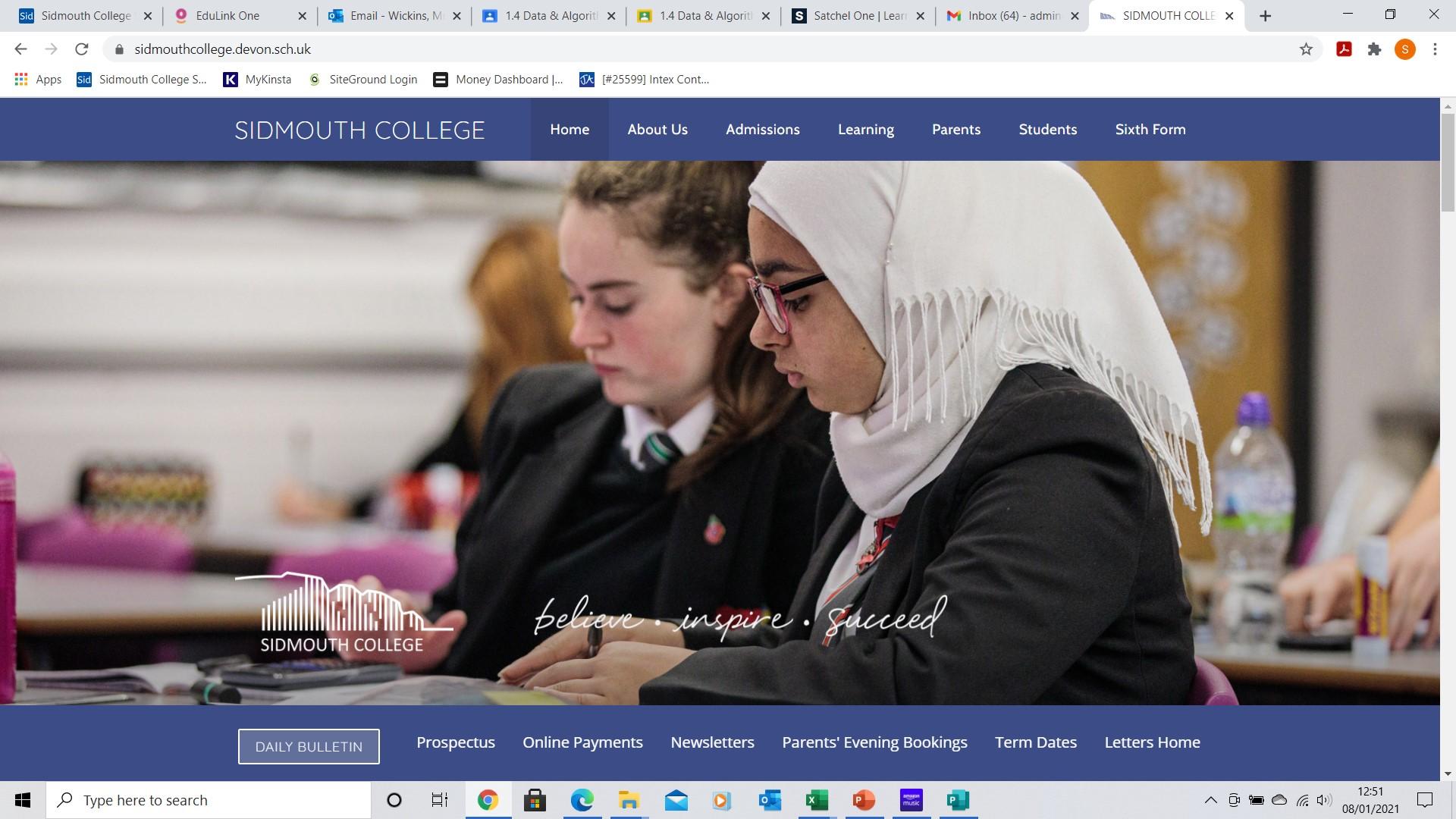
Visit the Sidmouth College website.
From the ‘Students’ menu option drop down list, select the ‘Guided Choices’ menu option. On the page that loads, scroll down to the ‘Guided Choices Google Form’. Ensure that your browser is logged into your child’s school Google account, so that you can access the Google form.
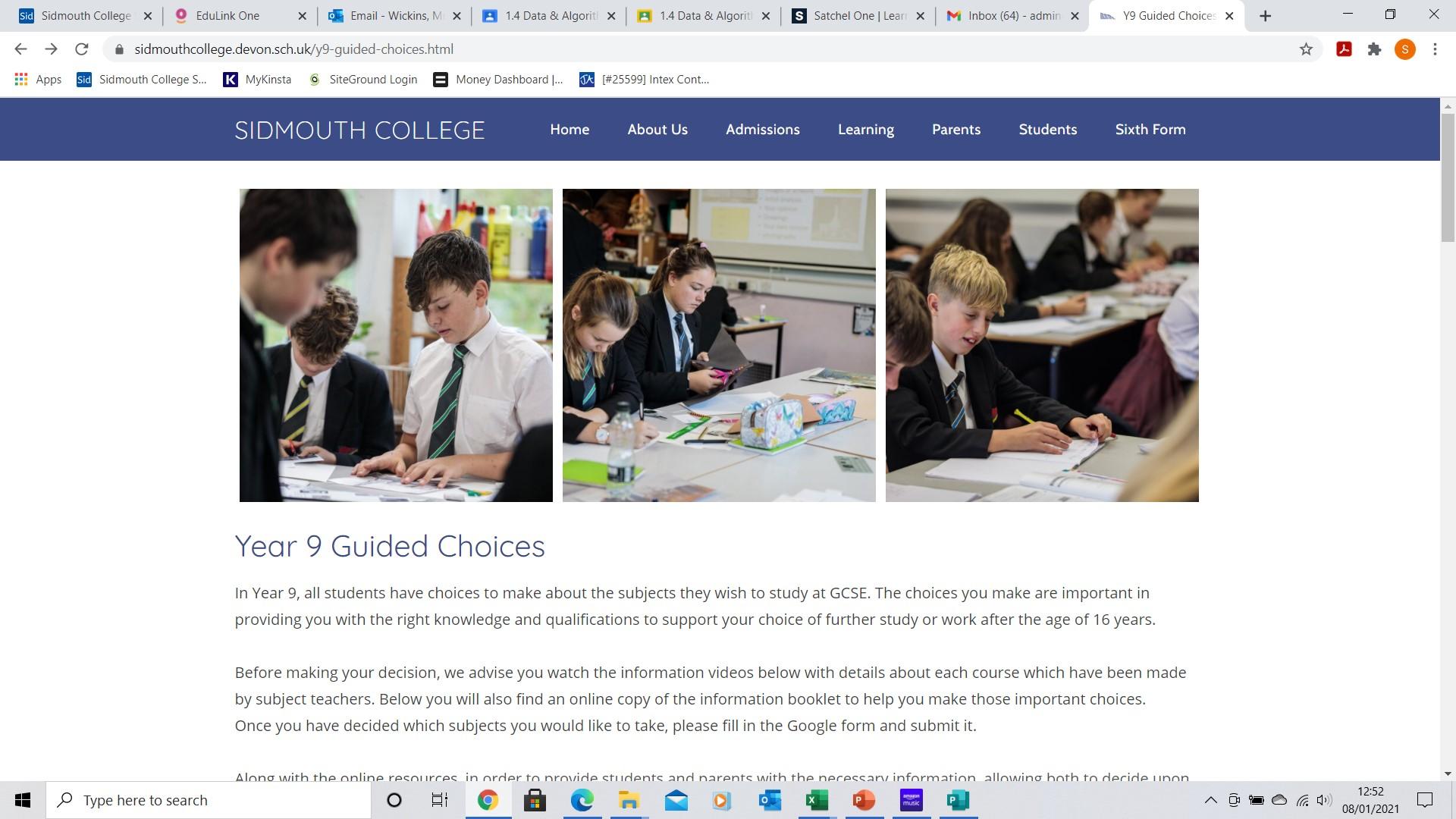
Once the form loads, enter the student’s name, select your chosen pathway and make your selections.
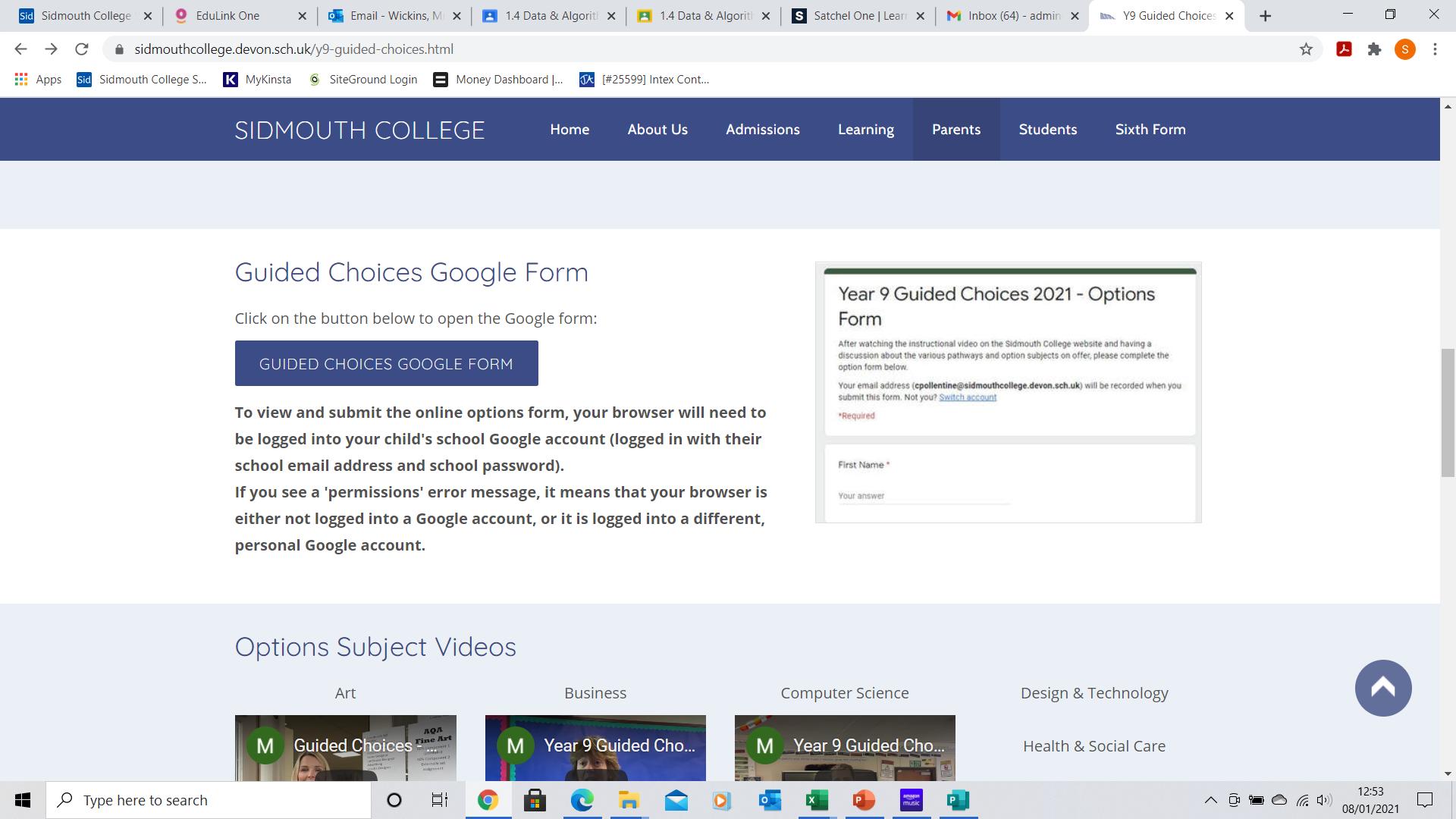
An email confirming your choices will be sent out to the school email address that is associated with the student’s account.