
FULL STACK DEVELOPMENT · CLOUD-NATIVE ARCHITECTURE

FULL STACK DEVELOPMENT · CLOUD-NATIVE ARCHITECTURE
for Cloud-Native Application Development
Scalable · Resilient · Cloud-Ready · AI-Integrated

Cloud-native development means building applications designed specifically to run in cloud environments — not ported from on-premise legacy systems. These platforms are engineered from the ground up for flexibility, automation, and infinite scalability using modern cloud-first technologies.



ServerlessComputing
Auto-scaling backends



AutomatedProvisioning Terraform · CloudFormation

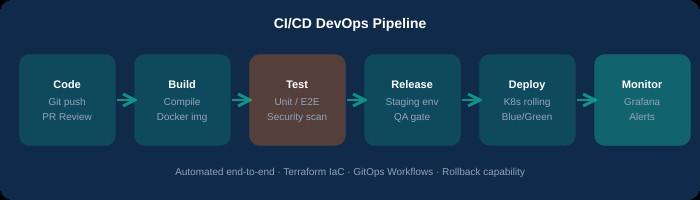
CI/CDPipelines
Continuous delivery HighAvailability Distributed data systems


Product Architecture
System design, scalability planning, technology selection & cloud strategy
React, Next.js, Angular — high-performance, accessible UI systems
Database & Storage

PostgreSQL, MongoDB, Redis — highavailability, optimized query design
Cloud Infrastructure

Backend Engineering
Node.js, Python, Go, Java — APIs, auth, and core business logic
AWS, Azure, GCP — containerized deployment, IaC, global distribution

DevOps & Automation
CI/CD pipelines, monitoring, GitOps, Infrastructure as Code
Key Cloud Skills Full Stack Developers Bring:

Container orchestration with Kubernetes
Serverless architectures (Lambda, Cloud Functions)
Scalable REST / GraphQL / gRPC API systems
Distributed databases & caching layers
Global CDN and content delivery networks

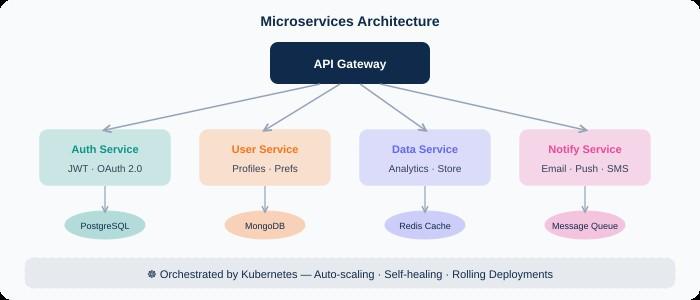


Independent Scaling

Each service scales precisely to its demand Faster Dev Cycles


Teams deploy features without system-wide releases Fault Tolerance Failures isolated to individual services Easier Maintenance
Smaller codebases, clearer ownership

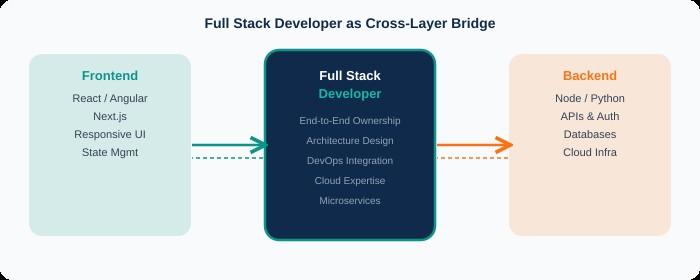

Frontend React · Next.js · Angular · PWA · Responsive UI Backend Node.js · Python · Go · REST / GraphQL APIs · Auth

This comprehensive skill set allows full stack engineers to build and own entire digital platforms without handoff delays between siloed teams.



Smaller, highly capable teams. Less management overhead. Simplified team communication.
Launch MVPs faster. Iterate on user feedback. Bring new features to market rapidly.

Auto-scaling infra, distributed data, high-availability services.
Monitoring, automation, and DevOps pipelines built directly into development.
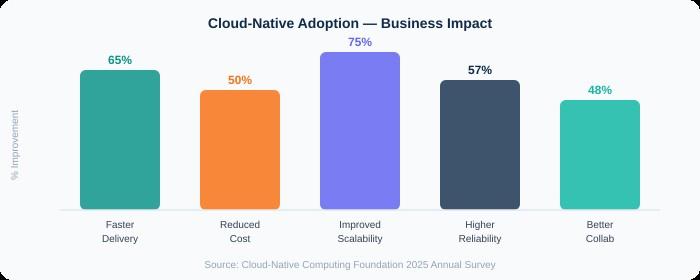
Source: Cloud Native Computing Foundation Annual Survey 2025



SaaS Platforms
CRM and AI analytics platforms
Project management tools
FinTech applications
Subscription billing systems

E-Commerce Platforms
Large product catalog management
Real-time inventory updates
Global payment processing
Require scalable infra & continuous deployment
Full
Personalized user experiences

AI-Powered Applications
ML model integration
Cloud AI infrastructure
Scalable API layers
Real-time user interfaces Full


Faster development cycles from unified frontend + backend ownership. No handoff delays.
Cloud-native architectures that grow from thousands to millions of users without rearchitecting.

AI integration, serverless, microservices — full stack engineers navigate complex systems.
Partner with a Full Stack Development Company to Build Faster, Smarter & More
Scalable. programmers.io