
Student Voices Heard with the Biannual Climate Survey
BY LAUREN BUSH Staff Writer
As part of an ongoing effort to improve campus safety and student well-being, Sacred Heart University’s Office of Title IX will release its biannual climate survey this April. The survey gives students an opportunity to anonymously share their experiences and perspectives on issues, such as safety, belonging and campus culture.
The Office of Title IX is responsible for addressing concerns related to sexual harassment, assault, stalking and relationship violence. It works to ensure the university complies with federal regulations while also providing students with resources, support, and clear reporting options.
The climate survey, which is sent out every two years, is required under Connecticut state legislation (Substitute House Bill No. 6374, Public Act No. 2181). The law is intended to improve how colleges respond to sexual misconduct and better protect students. The survey will be open for several weeks in April.
Beth Ann Voight-Jause, the executive director of community standards and Title IX coordinator, said the survey is designed to understand how aware students are of reporting options and available support services on campus.
“It also helps us learn more about students’ experiences, their perceptions of campus climate, and any barriers they may face when deciding whether to report concerns,” said Voight-Jause.
The survey has played a key role in shaping improvements across campus.
“Feedback from previous surveys has helped shape how Title IX is structured on campus, how the community is educated, and how accessible reporting options are for students,” said Voight-Jause.
Voight-Jause said student participation in this survey helps guide the university’s prevention, education, and support efforts related to Title IX.
“The survey allows the university to better understand students’ experiences, identify barriers to reporting, and recognize gaps in awareness of available resources,” said Voight-Jause. “The Office of Title IX uses survey results to improve processes, strengthen support services, and continue working toward a safer
campus environment.”
The survey is also designed to be fully anonymous and does not collect any identifying information.
“Responses are not linked to individual names, email addresses, or student records,” said VoightJause. “Any identifying information used for incentive prize drawings is kept completely separate from survey responses.”
Survey results are reviewed by the Office of Title IX and shared with faculty and staff to help inform training, educational programming, and prevention strategies.
“Faculty and staff play an important role by completing required training, understanding their reporting responsibilities and helping connect students to support,” said Voight-Jause.
Students have said anonymity plays a major role
in their willingness to participate.
“I will respond to the survey because student voices are one of the most important feedback types for college campuses,” said freshman Nicole Raymond. “I do believe it’s important for students to be able to share their experiences anonymously because it gives us a way to communicate any issues without fear of repercussions or others finding out.”
Sophomore Arianna Busa said she also plans to participate.
“When students get an opportunity to anonymously express their concerns, they typically are more honest with how they truly feel about the school and things that may bother them,” said Busa. “I’m taking the survey because I think it’s a good outlet to express my concerns or experiences on campus without feeling ashamed or embarrassed.”
Human Cadaver Lab at the CHE
BY BROOKE LUGO Staff Writer
Have you ever touched a human brain? Students who attended Sacred Heart University’s Human Anatomy Cadaver Lab open house got the opportunity to do just that.
The lab was held on March 19 from 7 p.m. to 9 p.m. in the Human Anatomy Lab at the Center for Healthcare Education (CHE).
The event was organized through a collaboration between Prof. Peter Ronai, the Exercise Science Club and the Pre-Health Community Honors Club. They invited undergraduate students from a variety of health-related majors to explore human anatomy through direct, guided interaction with human cadavers.
Students, both from Sacred Heart and other universities, were able to go freely through the lab and engage in tableside learning alongside professors, graduate assistants, and practicing clinicians.
To guide students through the experience, there were interactive prompts and scavenger hunt activities that encouraged participants to identify specific structures.
Ronai, clinical professor of exercise science and Exercise Science Club advisor, said the goal was to create an environment where students felt comfortable actively participating.
“I welcome them and explain what they are going to see in there, and I encourage them to ask questions and touch,” said Ronai.
The lab featured six human cadavers that were prepared for educational use, three facing up and three facing down, allowing students to explore both anterior and posterior

structures of the body.
Students were able to examine a huge range of parts of the body throughout the lab, helping them better understand how everything is connected.
Dr. Andrew Sullivan, assistant clinical professor and director of the Human Anatomy Lab, helped facilitate the event by preparing the cadavers and guiding students throughout the lab.
“I’ve worked closely with Prof. Ronai to give undergraduate students the opportunity to see the lab and get the experience,” said Sullivan. “We want to generate interest and get students used to being in a lab like this, while also giving them the opportunity to interact with the larger health community.”
While they looked at structures like the rotator cuff, hamstrings and abdominal muscles, as well as the spinal cord, sciatic nerve, heart, lungs and even the brain, these were only a small portion of what was available. Students had the opportunity to see and touch many different muscles, organs and systems throughout the body.
Students also had the opportunity to explore the Anatomage room, which features a high-tech, life-sized touch screen virtual dissection platform that is used for 3D anatomy.
Unlike traditional classrooms, the lab emphasized hands-on learning. Students wore gowns and gloves, allowing them to directly interact with muscles, joints, nerves and organs.
For Ronai, this type of experience helps students better understand the human body in a meaningful way.


“Human Cadaver Lab at the CHE” continued on pg. 2
Contributed by Rolan Galvez, Sacred Heart University
Students at an event held by the Office of Title IX during Social Justice Awareness Week.
BY BROOKE LUGO Staff Writer
CONTINUED FROM PG 1
“Once you see what is under the skin, it can inform your decisions of what to do with people,” said Ronai. “It makes it less frightening and intimidating.”
While Sacred Heart offers resources such as digital cadaver tables and anatomical models, Sullivan emphasized that combining these tools with cadaver work creates a more complete understanding of how the body functions.
“The main difference is seeing what it looks like in real life. Digital models don’t give you an appreciation of how everything is truly connected,” said Ronai.
Senior Shea Rhodes, president of Exercise Science Club, who is on the physical therapy track and staying at Sacred Heart for physical therapy school, saw strong student engagement throughout the night.
“Nothing in a textbook can prepare you for it. A lot of us were excited to go into it because we knew we would be there a lot next semester,” said Rhodes. “A lot of schools don’t have this. It’s so nice Prof. Ronai cares about students getting experience in the cadaver lab outside the classroom.”
Aidan Glennon, a graduate assistant for the Doctor of Physical Therapy program, helped guide students during the event, reflecting on the impact of the experience.
“The students were great. They arrived well-prepared and engaged, asking thoughtful questions throughout the experience,” said Glennon. “Their genuine enthusiasm for the material created a positive, dynamic atmosphere that really shaped the success of the evening.”
Podesky’s Story Raises MPS Awareness on Campus Human Cadaver Lab at the CHE
BY SOFIA PAZ Staff Writer
On Wednesday, April 15, at 7 p.m., Shoot Hoops for MPS Awareness will take place in the Pitt Center. Seniors Adam Podesky and Nicholas Richard, along with junior Tyler Walles, organized the event to raise money and awareness for the National Mucopolysaccharidoses (MPS) Society.
According to Podesky, MPS is a rare inherited genetic disorder that affects the body’s ability to break down complex sugars. This can lead to damage across multiple organs and systems. MPS exists on a spectrum of severity, and individuals affected by MPS often require lifelong care. Symptoms can appear at different stages of life, which can make early diagnosis difficult.
“MPS awareness is important to me because I was diagnosed with MPS at the age of 3. I understand firsthand the complications and challenges that can be involved with having MPS,” said Podesky.
Shoot Hoops for MPS is a student-versus-faculty basketball game that allows faculty to interact with students in a non-traditional way.
“Faculty here at Sacred Heart, especially in the Welch College of Business and Technology and Sport Management program, take so much pride in showing up for our students in and out of the classroom. This event provides a unique opportunity to take the classroom outside the traditional learning environment and into a sports setting, where faculty and students can come together for a great cause. In doing so, this really illuminates the SHU experience, where I believe so much of the faculty truly pour a lot into our students, and the students can really see and feel how supported they are when we physically show up for them,” said Dr. Kristina Hoff.
Podesky founded this event at his high school during his senior year; however, this is his first time facilitating the event at SHU.
“I heard about the event through Adam. He told me about his high school event, one of the first times I met him. Now, a couple of years later, he brought up the idea of doing it at Sacred Heart, and I was immediately on board for it,” said Richard.
Podesky, Richard and Walles have set a $5,000 fundraising goal for the event. However, they also mentioned how important it is to simply raise awareness for MPS as a whole.
“We want to raise as much money as possible for the MPS Society, but just getting the opportunity to spread awareness on MPS is important. We’re all a community here, and we want to build that community up no matter what we have going on in our lives,” said Walles.
As well as raising money and awareness for MPS, Podesky, Richard, and Walles have learned about what it is like to run a sporting event and what it entails.
“I’ve learned a lot from this event, especially about event management and all the struggles that come along with it. There is a lot of reaching out to people that I’ve never met, working things out, and spreading awareness,” said Richard.
Cooper Rothman, director of the Welch Experience, will be one of the faculty
members participating in the game.
“Sometimes these illnesses can feel far away if they don’t happen to us or we don’t know anyone with them directly, but Adam’s story, along with the rest of the MPS families, has really convinced me, and SHU in general, that this is a cause worth fighting for,” said Rothman.
Students and faculty can donate $5 to enter the event. It is also encouraged that spectators and participants wear purple to represent the fight against rare diseases.

Contributed by Adam Podesky
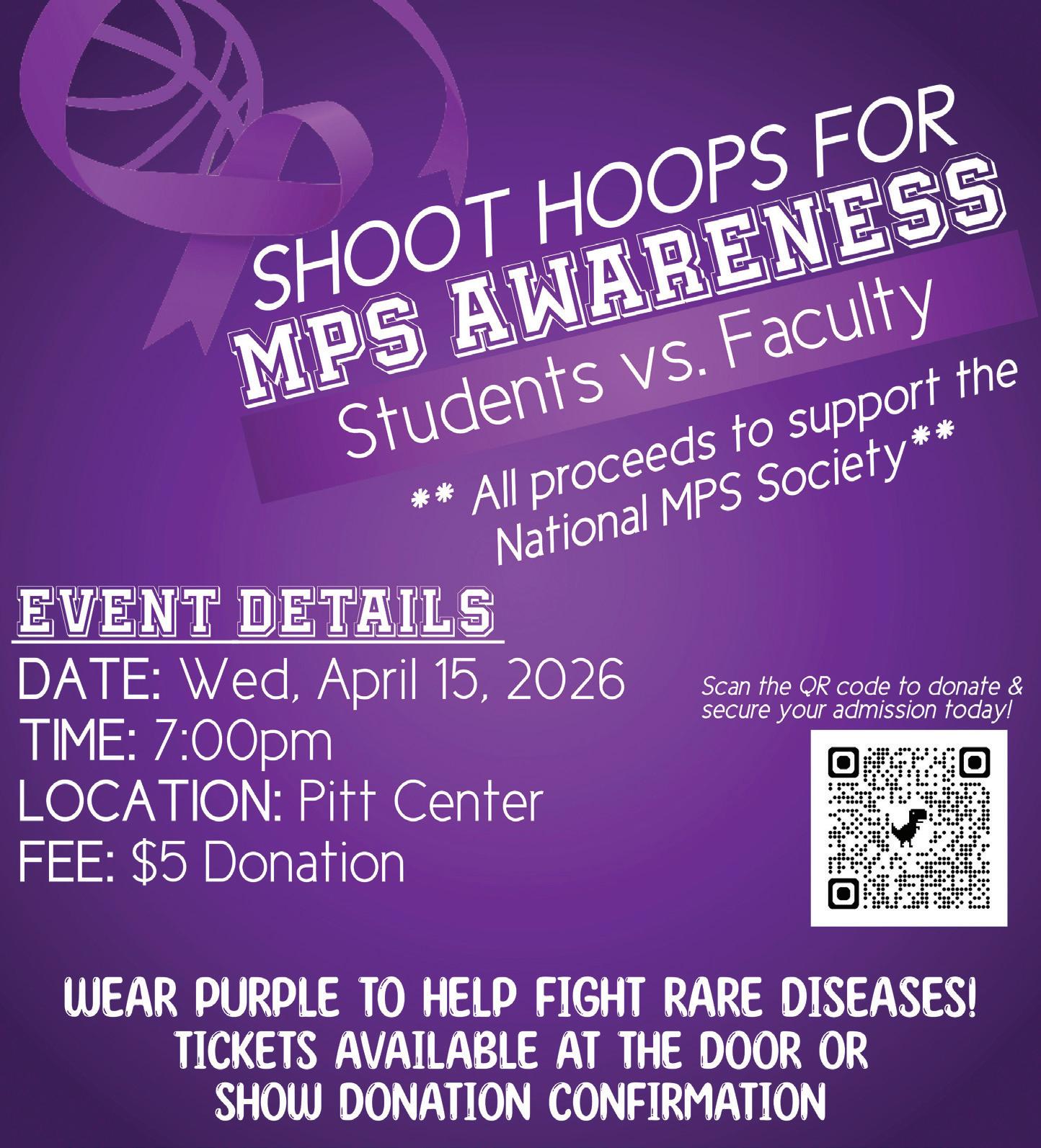
This flyer promotes the “Shoot Hoops for MPS Awareness” event on Wednesday, April 15, at the Pitt Center, where all proceeds support the National MPS Society.
Contributed by Professor Andrew Sullivan
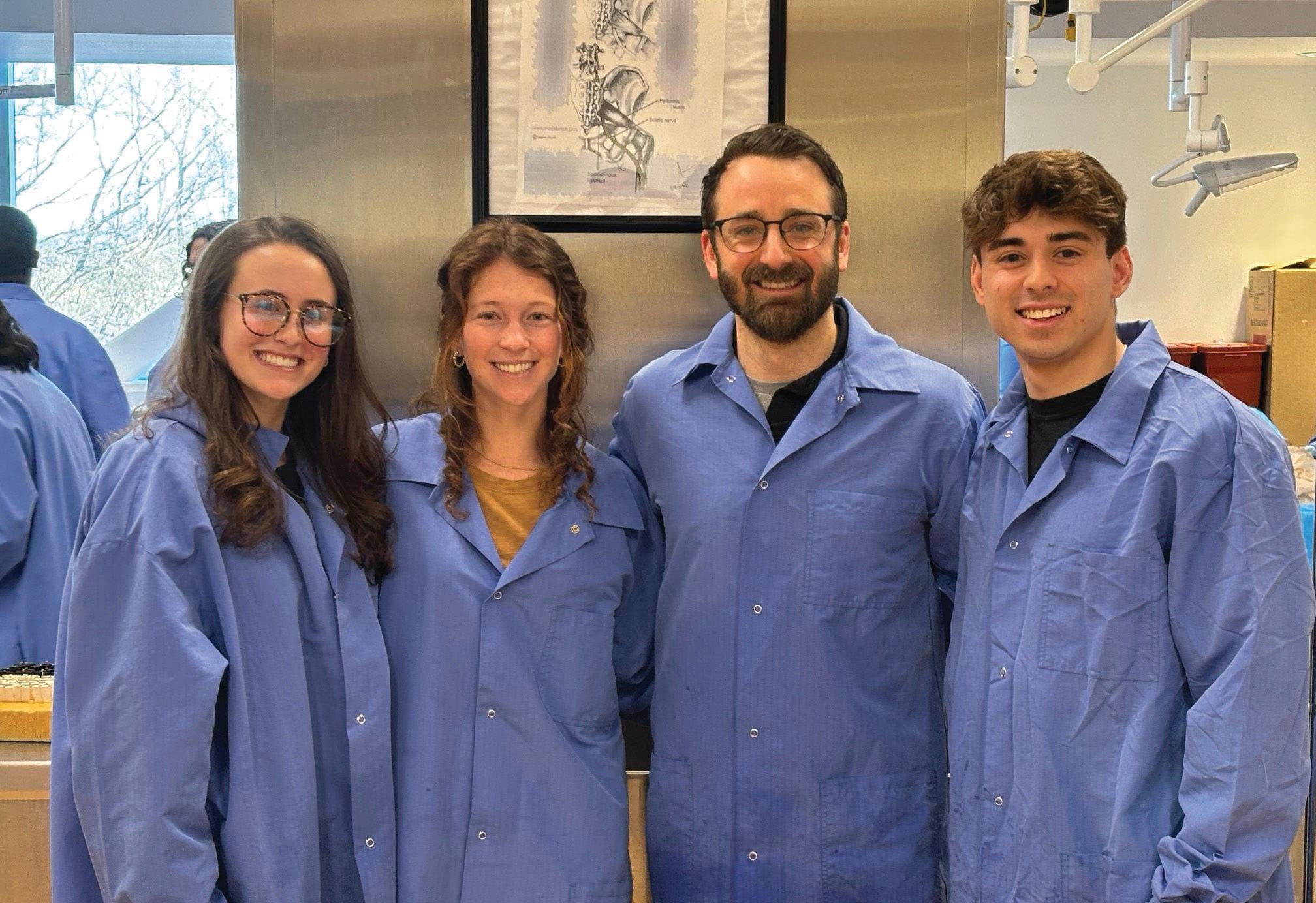
Professors and Graduate Assistants gather around outside the Human Anatomy Cadaver Lab at the Center for Healthcare Education.
Campus Comes Together to Pack Over 20,000 Meals
BY VICTORIA BRENNAN Staff Writer
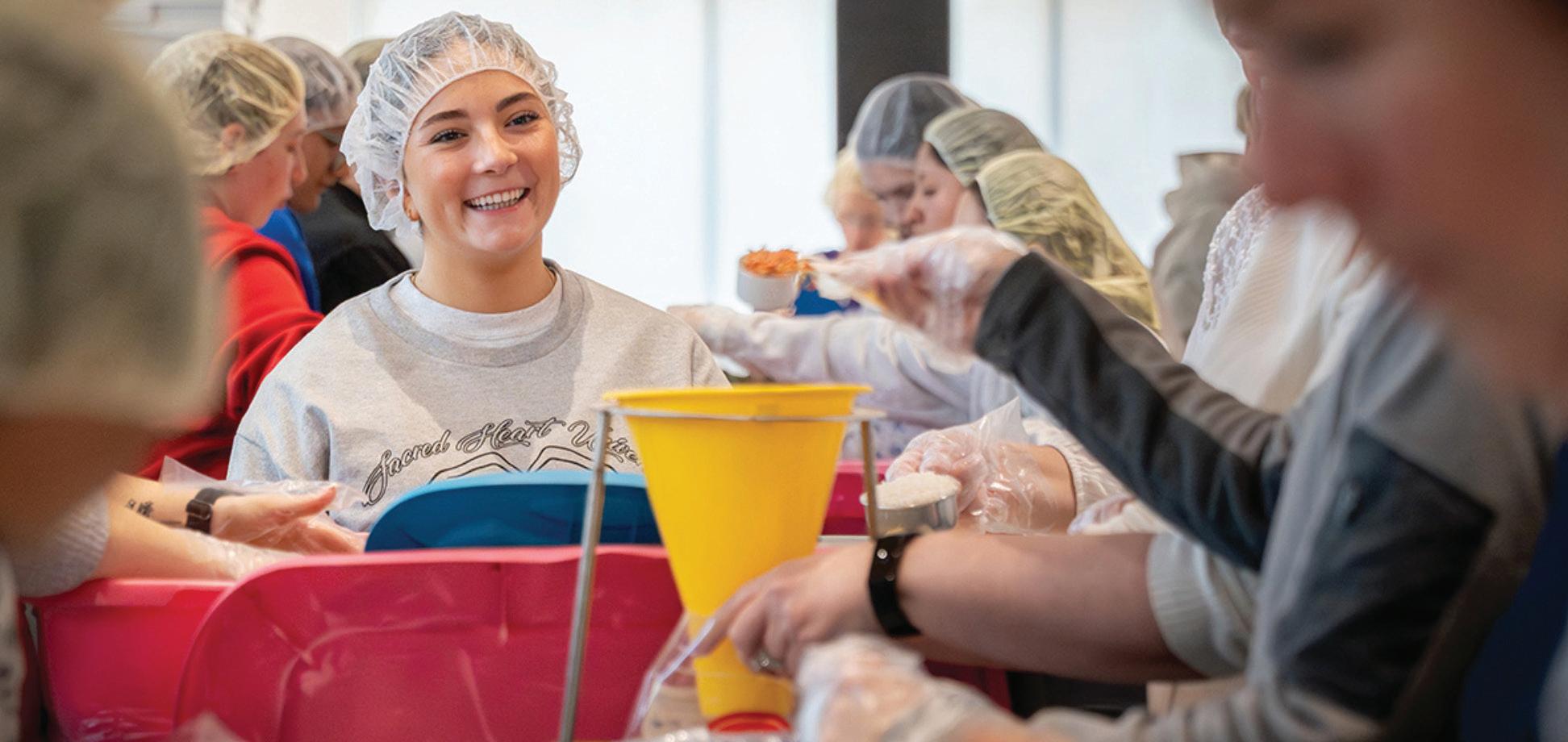
Students, faculty and staff gathered in the Pierre Toussaint Hall lobby on March 25 for the 9th annual Hunger Project. The event, held during Social Justice Week, focused on a hands-on effort to package meals for local communities.
Volunteers worked in groups at long tables, assembling red lentil jambalaya meals through a coordinated process. Each person had a role, creating an organized system that allowed thousands of meals to be completed in just a few hours.
“For the US Hunger Project, 136 volunteers came together to pack 20,070 meals,” said Andrés Torres Alvarez, coordinator of Community Partnerships. “Events like this bring people together, allowing them to make an immediate impact while also raising awareness about food insecurity in the community.”
The event is organized through partnerships between Sacred Heart and organizations like U.S. Hunger, which helps design and run the meal packaging events. Funding for the event comes from donations, fundraising efforts and university support, helping cover the cost of ingredients and supplies used during the packaging process.
Each table operated like its own system, with volunteers rotating between scooping ingredients, sealing bags and checking measurements. The constant movement kept the pace steady and required everyone to stay engaged.
“I took on multiple roles during the process,” said senior Paris Sonnenberg. “First I started with holding the bag as everyone dumped the food in, then I switched to adding salt and weighing the bag to make sure it had the right amount.”
As meals were completed, boxes quickly filled and were prepared to be moved out of the lobby. Volunteers worked together to keep the process moving from table to table.
After the event, the meals are transported to community organizations that distribute food to individuals and families throughout the Bridgeport area.
“These meals were donated to our local partner, nOURish Bridgeport, to support its food pantry,” said Torres Alvarez.
Inside the room, students described a high-energy atmosphere as groups worked toward completing their boxes. The fast pace and teamwork created a sense of shared motivation among volunteers.
Rather than working individually, students relied on each other to keep the process moving efficiently. This made the experience feel more interactive and engaging.
“The room was buzzing, everyone was super excited,” said Sonnenberg. “My table took on a competitive vibe and was moving as fast as possible to get our boxes done before other tables.”
Students said the event stood out because of how active and involved it felt from start to finish. Every role contributed directly to the outcome, making the experience feel more meaningful.
The hands-on structure allowed participants to see the impact of their work in real time as boxes continued to stack throughout the event.
“It was really high-energy and hands-on, and it felt like everyone was working toward the same goal,” said Arlete Perez, assistant director of Community Engagement.
Students also reflected on the personal impact of participating in the event. Many connected the experience to their own interests and future goals.
The opportunity to contribute in a direct way made the event feel more significant beyond just volunteering.
“This event was especially important for me because I am a dietetics and nutrition concentration, so I know the harmful effects of starvation and not meeting nutrition needs,” said Sonnenberg.
The event began with opening remarks that set the tone before volunteers started working. This moment helped give context to the purpose behind the event.
Students said that message stayed with them as they moved through the process and contributed to the overall energy in the room.
“The moment that stuck out the most to me was Reverend Sara’s speech at the beginning,” said Sonnenberg. “She lit a fire in everyone in the room by adding motivation and passion.”
For some students, the experience also provided a clearer understanding of how large-scale food efforts operate. Seeing the process come together made the impact feel more tangible.
The scale of the event and the number of meals produced gave students a new perspective on how many people are involved behind the scenes.
“I genuinely believe that people should take part in this because you are not only helping the community that truly needs it but also working together to create a meal,” said senior Alina Rodriguez.
Islanders Bittersweet Goodbye to Bridgeport
BY BRENNAN TAUBER Staff Writer
The final horn hasn’t sounded on the season yet, but for fans of the Bridgeport Islanders, the reality is already setting in: professional hockey in Bridgeport is about to change forever.
After years of calling Total Mortgage Arena home, the Islanders will relocate to Hamilton, Ontario following the conclusion of this season, marking the end of an era for the franchise and its Connecticut fanbase.
“This wasn’t a decision made lightly,” said Video Director Tom Stanwicks. “There’s a deep connection between this team and the Bridgeport community. But ultimately, the organization believes this move sets the franchise up for a stronger future.”
One of the primary reasons for the relocation centers on market viability. Hamilton offers a larger and more hockey-centric audience, along with upgraded facilities and increased sponsorship opportunities. Director of Marketing Cameron Calovich emphasized the business side of the decision.
“Hamilton provides a more sustainable environment for growth. From a marketing standpoint, the potential there is significant and we’re talking about a region where hockey is part of the culture at every level,” said Calovich.
With the move comes a rebrand. While the official name has yet to be formally unveiled, team officials have hinted that the new identity will reflect Hamilton’s rich hockey history and regional pride.
“There’s a lot of excitement around the new name and branding,” said Game Presentation Manager Megan Hopton. “It’s an opportunity to start fresh while still honoring the legacy of the franchise.”
For Bridgeport, however, the departure leaves a noticeable void. The Islanders have been more than just a hockey team for the citizens of Bridgeport, they’ve been a community fixture. From youth hockey programs to local partnerships, the team’s presence has had a tangible impact on the city.
“This team gave people something to rally around,” said Sacred Heart University junior Anthony Piazza. “Whether you were a die-hard hockey fan or just looking for something fun to do, Islanders games brought the community together. It’s tough to see that go.”
Announcer Tom Sabin said the team has fostered an environment that feels like a community.
BY CHARLOTTE DOHERTY Staff Writer
“You build relationships over the years, whether it’s with fans, the staff, the players,” said Sabin. “It’s not just a job. It’s a family. Knowing that it’s coming to an end here in Bridgeport is incredibly bittersweet.”
Players and staff have also expressed mixed emotions. While many understand the logistical and financial benefits of relocating, there’s a shared sense of nostalgia tied to their time in Bridgeport.
“This city embraced us,” said Stanwicks. “You don’t just forget that.
The move raises questions about what’s next for professional sports in Bridgeport. While no immediate replacement team has been announced, local leaders and arena officials have indicated that discussions are ongoing about future possibilities.
For now, fans are focused on making the most of the remaining games. Attendance has seen a noticeable bump as supporters come out to say goodbye, creating an electric atmosphere that underscores just how much the team has meant to the area.
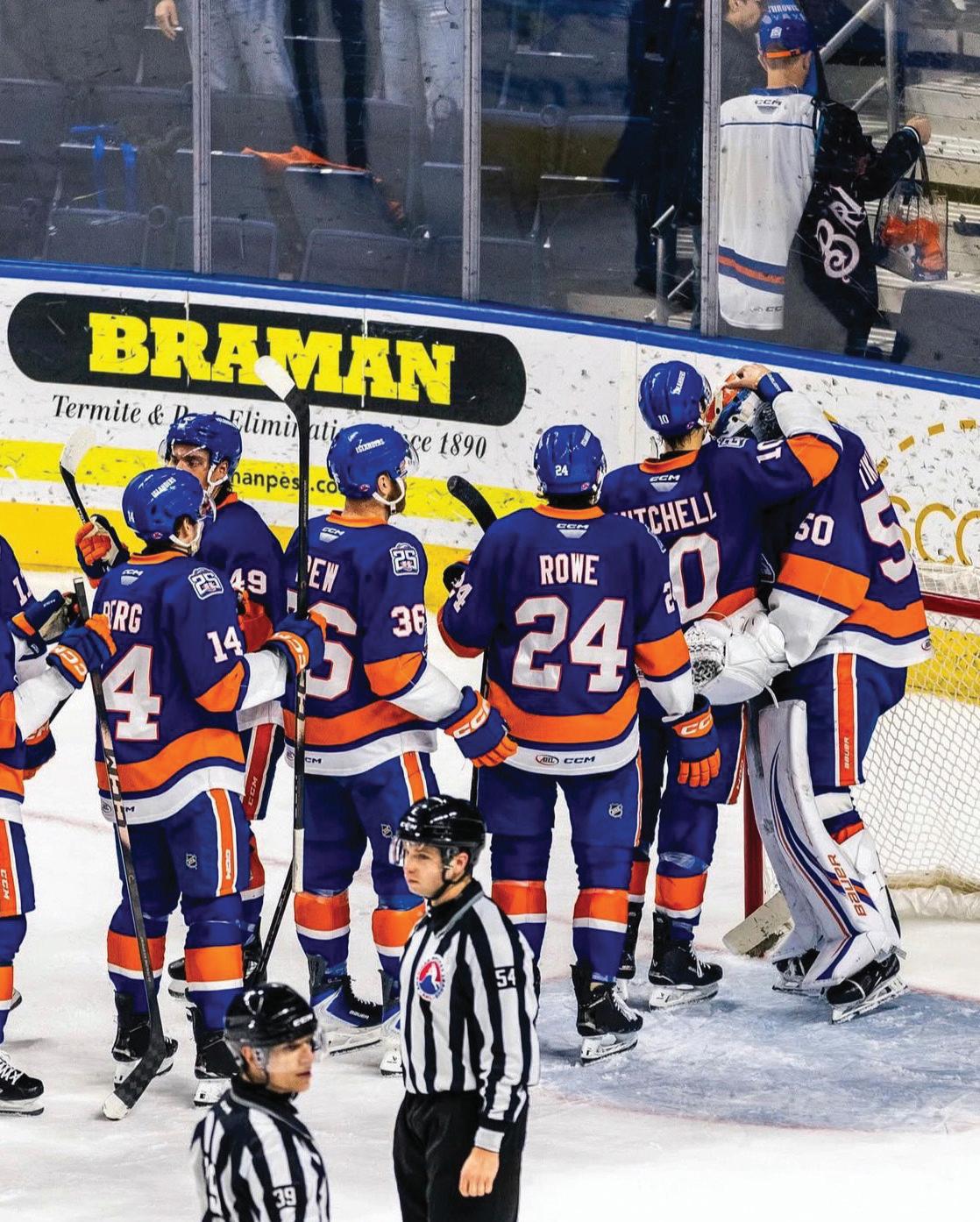
The last ever regular-season game for the Islanders at Total Mortgage Arena will be played on April 12 at 5 p.m. against the
“This isn’t just the end of a season,” said Piazza. “It’s the end of something bigger.”
Greek Sing Takes Center Stage
At Sacred Heart University, the annual “Greek Sing” event stands out as one of the most anticipated events of the spring semester for people involved in Fraternity & Sorority Life (FSL). Held during “Greek Week,” which typically takes place in April, the event draws a large crowd of students, teachers, and parents to come together for some FSL fun.
“Greek Sing” is a competition-based event where members from all FSL chapters perform dances, where they are scored by judges, and ultimately, a winner is picked.
“It’s sort of a transition within our fraternity and sorority life community,” said FSL Director Kathryn Ionta. “It’s embedded within our week of fun events, programming and friendly competition.”
Because of that, the “Greek Sing” has become closely associated with the overall identity of Greek week. It is the event that tends to draw the most attention and participation.
“If students are in Greek life, then it is coordinated within their chapter,” said Ionta. “Each chapter takes it upon themselves to select music, plan choreography, things of that nature, for the annual event.”
Although participation is limited to Greek organizations, the event itself is open to anybody. Students who are not involved in Greek life can still attend to cheer on and support the sororities and fraternities.
“If you’re not in a fraternity or sorority but you still want to enjoy the events and programming, you can come out and be a member of our audience,” said Ionta.
For students performing in “Greek Sing”, the experience involves weeks of participation behind the scenes. Junior Olivia Aviles, who is participating in this year’s event, said the process requires more time and effort than people might expect.
“It definitely takes a lot more time than people think,” said Aviles. “We’ve been practicing a lot, and everyone has to stay committed for it to actually come together, which is hard with a busy college schedule.”
Aviles said being a part of a group performance is a different kind of pressure, especially knowing a lot of people will be watching.
“You want it to go well, not just for yourself but for your whole chapter,” said Aviles. “Everyone is counting on each other, which makes it more intense but also more fun.”
The competition is judged by four university staff members who are selected each year. Their role is to evaluate performances using a rubric that focuses on specific elements.
“We have four judges who are staff members of the university who randomly change every year they get asked to help us, and they judge the event,” said Inota.
Performances are scored based on categories such as lip singing accuracy, choreography, and how well each routine connects to the overall theme.
“There’s a rubric that they score off certain categories, like their ability to lip sync, how well the choreography matches up, and how well they match the theme,” said Inota.
Students can watch “Greek Sing” on Thursday, April 9, at 7:45 p.m. in the Martire Family Arena, and stay up to date with the “Greek Week” schedule by following @shufsl on Instagram.
Hartford Wolf Pack.
Sacred Heart University
Sacred Heart University volunteers packed over 20,000 meals during the 2025 Hunger Project, aimed to bring volunteers together to prepare meals for those in need.
Instagram, @ahlislanders
The Bridgeport Islanders celebrating a victory.
BY ALINA RODRIGUEZ Guest Contributor
Editorial
Home is Where the Heart is
Out of my four years at Sacred Heart University, Social Justice Week has always been one of my favorite times of the spring semester. This year, I had the privilege of planning and organizing the entire week as the Social Justice Chair of La Hispanidad. Months of preparation with departments such as the Agape Center, La Hispanidad, and Community Engagement allowed us to create a week that aimed to make an impact not only on campus, but on the future of the Sacred Heart community. Social Justice Week is more than a series of events; it is a space for growth, education, and reflection. It invites our community to learn, to listen, and to challenge ourselves to build a more compassionate environment, which aligned perfectly with this year’s theme: “Compassion of the Heart.”
Advocating for human rights has always been a central part of my life, especially within my own Hispanic community. I strive to strengthen and uplif my community by dispelling harmful stereotypes and sharing stories that often go unheard. Being part of La Hispanidad has allowed me to deepen my passion for advocacy and create spaces where others can explore their own emotions, identities, and experiences. Through my own journey and the stories shared by others, I have learned that every person carries a story that deserves to be heard. This understanding shaped my mission for Social Justice Week: that every event would offer something meaningful to reflect on.
To truly take these lessons in, I learned that you must listen really listen to the voices of those who need to be heard. Compassion means showing up, building trust, and extending kindness not only to others but also to yourself. It means being curious, asking questions, and filling in the gaps that others may be afraid to address. This means taking the next step, even when it is uncomfortable. We must pioneer our way toward a better future, not just at Sacred Heart, but in every community we step in.
Throughout the week, I witnessed firsthand how these events affected our campus. Students showed up to discussions ready to learn and are willing to confront the truth rather than rely on stereotypes. They asked thoughtful questions, reflected on their own experiences, and opened themselves to the realities others
face daily. Whether they were engaging in a panel, walking a runway to celebrate different cultures, or acknowledging their own areas for growth, there was a noticeable shift in understanding and empathy. There was a change of heart in every room we stepped into.
To everyone who attended, participated, volunteered, or supported Social Justice Week in any way, thank you for your dedication and for helping keep this tradition alive. I hope these events remind everyone of the beauty and strength of our community and how powerful we are when we stand together. My older sister, a Sacred Heart alum, once told me a phrase that has stayed with me: “Home is where the heart is.” My heart is in this community that has shaped me, challenged me, and helped me grow into the person I am today. I will forever be a proud Sacred Heart Pioneer.
The editorial page is an open forum. Editorials are the opinions of the individual editors and do not represent the opinions of the whole editorial board. Letters to the editor are encouraged and are due by Sunday at noon for consideration for each Wednesday’s issue. All submissions are subject to editing for spelling, punctuation, and length.
Letters to the editor should not exceed 700 words and should be emailed to spectrum@sacredheart.edu. The Spectrum does not assume copyright for any published material. We are not responsible for the opinions of the writers voiced in this forum.
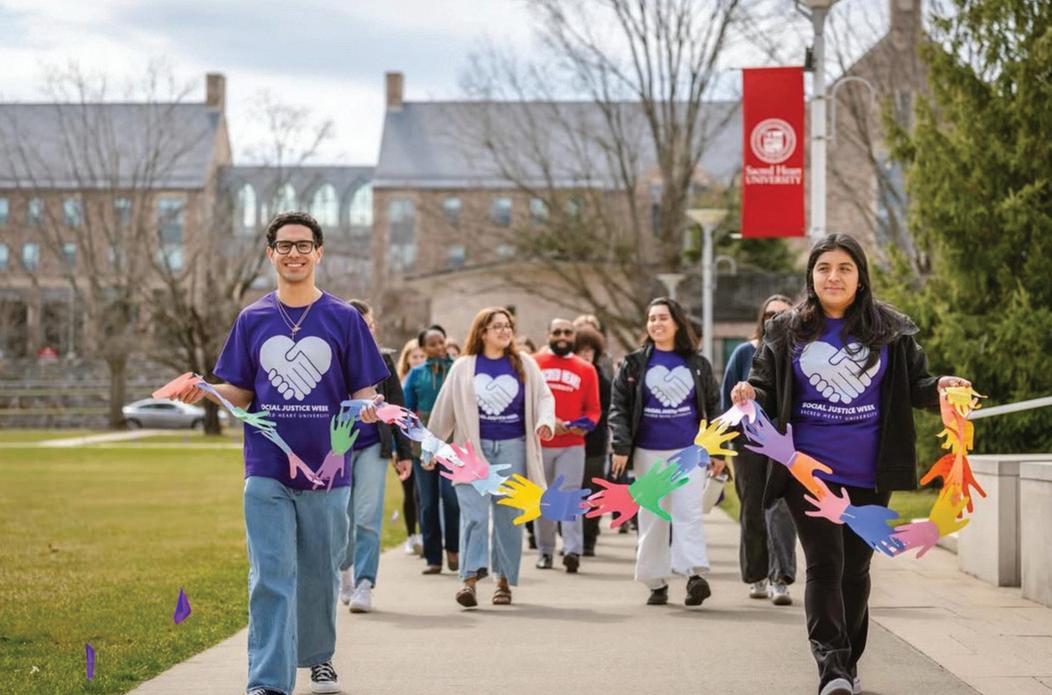
Instagram, @shulahispanidad
Pioneers representing La Hispanidad club during the Unity Walk on Capel Quad.
BY NICHOLAS BOSTICCO Staff Writer
Audrey’s Corner
The Comfort Show Effect
Sacred Heart University students are increasingly rewatching their favorite television shows during the spring 2026 semester to manage their academic stress while maintaining their daily routines on campus.
Many students say the habit has become part of their schedules as coursework, exams, and extracurricular commitments increase in their semester. Rewatching shows allows them to relax without worrying about focusing on new plots or characters and offers entertainment they are already familiar with during busy school weeks.
“My go-to comfort show was always ‘Lucifer,’” said sophomore Brody Prendergast. “The show helps me get my mind off the chaos of my life and just lets me enjoy some quality time alone, which is a necessity.”
Students report watching these shows at various times, which include while they’re studying, before going to bed, and as background noise during other activities. Streaming platforms have been a popular choice for revisiting shows they are familiar with, as well as for quick access to episodes they have seen before.
“I usually watch comfort shows when I am in bed,” said sophomore Harjaap Singh. “I think that it is a good way to just stop thinking about everything going on and just have some time to chill.”
Knowing how a storyline happens can create a sense of control, which some students say helps reduce anxiety. This predictability contrasts with the uncertainty many students face in their academic and personal lives.
“My go-to comfort show is ‘Family Guy,’” said freshman Colin Roden. “And rewatching shows really helps reduce stress and anxiety.”
However, some students have acknowledged that the habit can turn
into a form of procrastination. Instead of starting new assignments or school work, students may choose to watch their comfort shows instead.
“It can be distracting,” said Prendergast. “I have always worked better with background noise, but sometimes it distracts me from my work.”
Despite this, students say the habit is helpful when balanced responsibly. Comfort shows can provide a mental break and help students recharge before going back to their academic work.

“It’s always a good distraction from school and everything going on in my life,” said Singh. “It’s the perfect wind-down after a long day or listening to music.”
Streaming services have contributed to the growing trend of students rewatching old shows, with entire series of different shows available to watch at any time. Accessible services make it easier for students to build routines around content rather than searching for a new show.
As the semester continues, students have stated that they will most likely return to the series they are familiar with, which will help them manage their stress and maintain a sense of routine.
Nora Delehanty, Staff Photographer and Writer
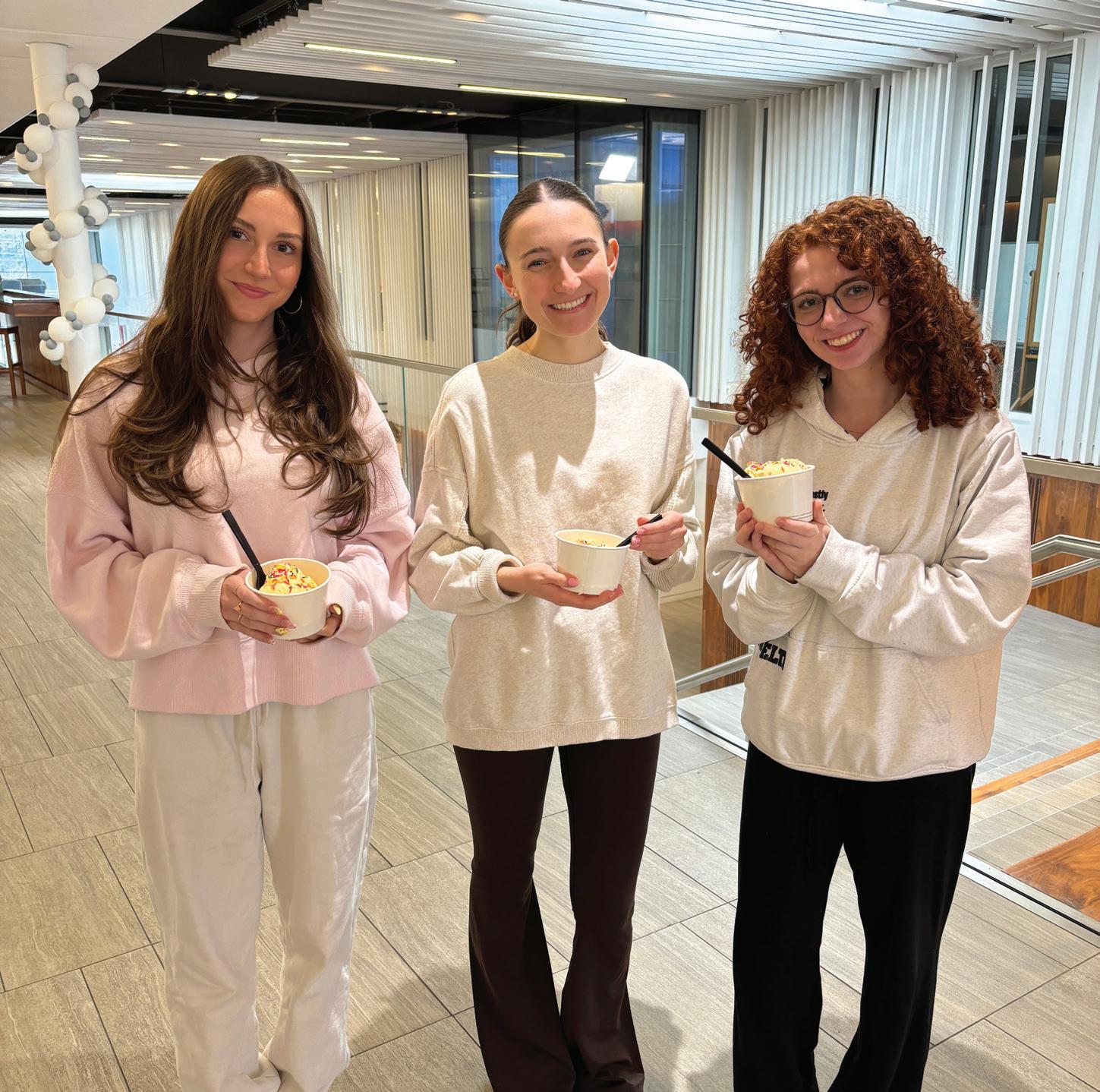
Spectrum staff writers enjoy ice cream together at Audrey’s Corner Ice Cream Social outside of the Loris Forum in the Martire Business & Communications Center.
Instagram, @friends
A classic photo of the cast of “Friends”.
Nora Delehanty, Staff Photographer and Writer
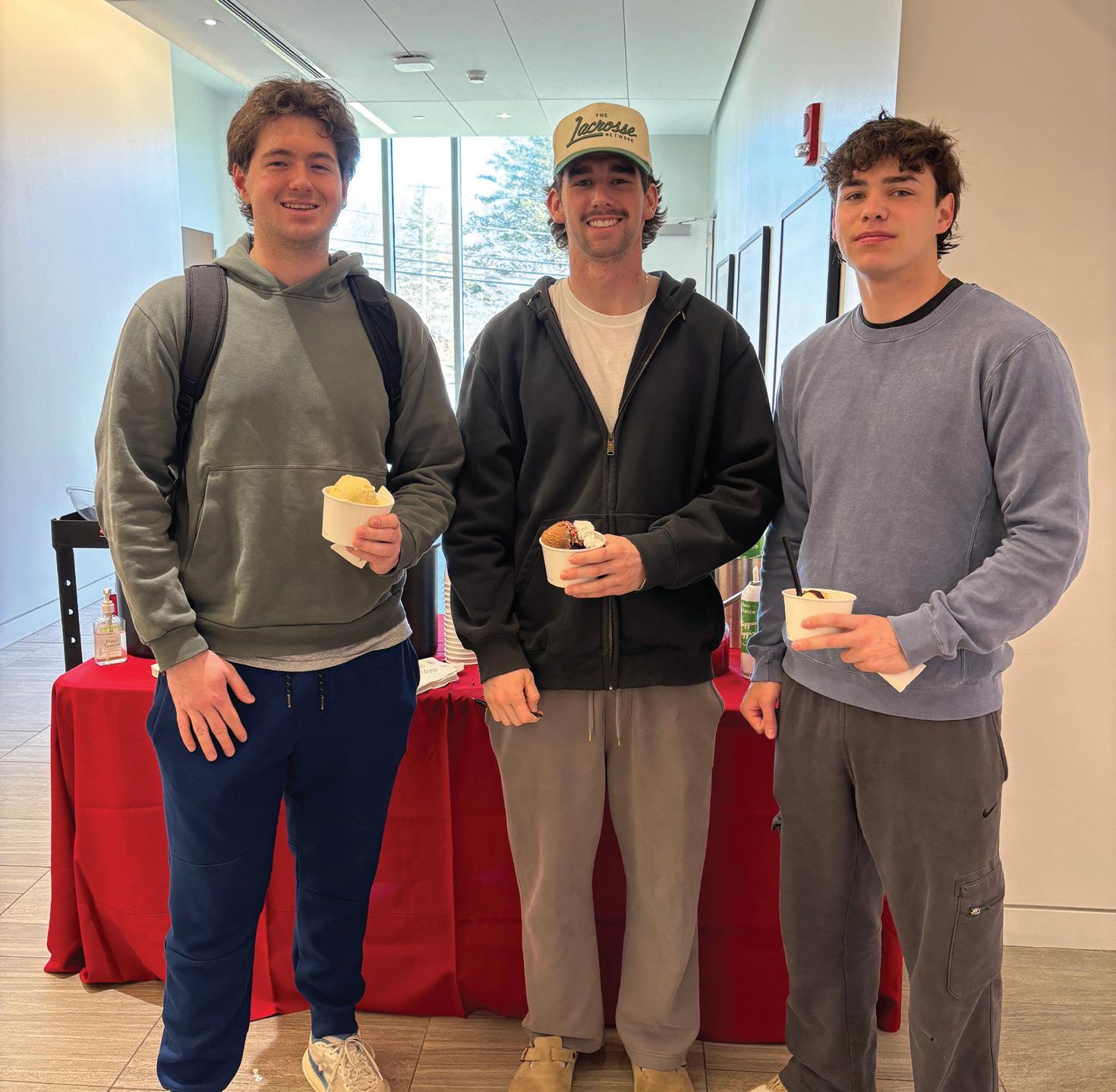
Spectrum editors honoring the life of Audrey Niblo at Audrey’s Corner Ice Cream Social outside of the Loris Forum in the Marire Business & Communications Center.
Arts & Entertainment
“For JJ”
BY ASHLEY HILLIARD Staff Writer
“She made me feel loved, seen and accepted,” said sophomore Moira Larson. “She believed in me, and I only wish she could have known how much that meant.”
On April 2, 19 members of the Sacred Heart University Dance Program will perform a piece entitled “For JJ” in remembrance of Julianna “JJ” Sannino, who passed away on April 3, 2025. The performance will take place at 2 p.m. outside of the Chapel of the Holy Spirit.
The piece begins with Larson as a soloist dancing Sannino’s choreography. She is later joined by the rest of the dancers, performing a mix of the choreography of Sannino and Garet Wierdsma, a faculty member and choreographer of the Dance Program. Wierdsma worked with Sannino for two years as her instructor, and she said that Sannino hoped for her choreography to be presented on the Edgerton stage.
Wierdsma was inspired by Sannino’s ambition and choreographed the rest of the music in efforts to give Sannino’s choreography a home within a full ensemble piece.
“I’m really honored to have been asked to create this piece, and I know what a big responsibility this is,” said Wierdsma. “She was a person who would continue to work on the choreography on the side of the room while I was working with another group, and I can tell that she would go home and practice. She worked hard to put her best foot forward on the stage and brought my stories to life in a really beautiful, genuine way.”
Seniors of the dance program reached out to Wierdsma to help bring this choreography to life in honor of their friend for what would have also been her last semester at Sacred Heart.
“JJ was supposed to graduate alongside us, and it is incredibly painful to know that she won’t be on stage dancing with us or walking at graduation,” said senior Lauren Foellmer. “There is not a single day that goes by that we don’t think about her and wish she were still here. While no dance could ever fully capture the kind of person JJ was, we have done our best to reflect her spirit, her energy, and her deep passion for both dance and the people around her.”
In addition to the performance, there will be a gathering hosted by the Education Program at the Chapel to honor the life Sannino lived and reflect on how she touched the lives of others.
“JJ was a vibrant member of our SHU community,” said Dr. Katie Cunningham, a professor and Teacher Education Program director. “She majored in Interdisciplinary Studies and was taking courses to help her prepare to become a skilled and caring educator. Her warmth and devotion to teaching and learning were known widely by her classmates and professors.”
If you or someone you know is struggling, please contact the SHU Counseling Center at 203-371-7599. A counselor is on call 24/7, even after hours and on weekends and holidays.
“One of my favorite memories of her is how she would bring chicken tenders to dance almost every week,” said Foellmer. “She would laugh about how the whole room smelled like them and joke that she was distracting everyone, but then she’d immediately start offering fries to anyone nearby. It’s such a simple memory, but it captures her generosity, her humor, and the way she made everyone feel included.”
“Secret Life” of Mormon Wife Cancels the “Bachelorette”
BY NORA DELEHANTY Staff Writer
On March 19, ABC canceled the 22nd season of the reality TV franchise “The Bachelorette,” just three days before its scheduled premiere on March 22. This decision came after a 2023 video emerged showing bachelorette Taylor Frankie Paul involved in a physical altercation with her ex-boyfriend, Dakota Mortensen. According to KSL, canceling Paul’s season of “The Bachelorette” could be financially detrimental to the ABC network due to high production costs and potential loss of advertising revenue and viewership.
“Each episode of the series costs an estimated $2 million to produce, and a typical season of ‘The Bachelorette’ runs nine to 13 episodes,” reported KSL. “At that rate, the network is projected to lose between $18 million and $26 million in production costs.”
Paul is best known as a reality TV personality on “The Secret Lives of Mormon Wives” and as a social media influencer who created “MomTok,” a group of Mormon mothers in the Utah area on TikTok.
“I used to watch ‘The Bachelor’ a lot, but ‘The Secret Lives of Mormon Wives’ is this phenomenon that I’m not missing an episode of, and that’s why I think ABC chose Taylor Frankie Paul to be the bachelorette in the first place,” said senior Tori Cutalo.
“Normally, the bachelorette is a girl who’s on the previous Bachelor season, but she hasn’t been previously affiliated with them at all,” said Cutalo.
“I was only going to watch the season because of her,” said senior Anna Allegretti. “Since it’s canceled, they’re losing a lot of viewership. This is a loselose situation because they’re getting backlash for canceling but also getting backlash for having her on the show.”
KSL also reported that contestants on “The Bachelorette” and other shows within the franchise do not receive financial compensation for their participation.
“Participating often comes with significant personal costs, especially since many take time off work or quit their jobs to film the show,” reported KSL.
“I think it’s important that the video was released. Many people were putting both of them on a pedestal for morals, but now that this is all coming out, I’m hoping they’re both going to change how they are for themselves and for their kids,” said senior Sophia Delorenzo. “The video itself was heartbreaking, with her daughter there. I’m hoping this is their wake-up call that they need to change at the end of the day.”
According to People, Paul faced legal repercussions in 2023 after the video surfaced, resulting in her arrest for alleged domestic violence. She faced
additional charges of assault, criminal mischief and domestic violence in the presence of a child.
People also reported that Paul later “pled guilty in abeyance to aggravated assault, which means that if she complies with the conditions of the plea, that charge will be dismissed.”
“ABC has not formally announced any future seasons of ‘The Bachelorette’ or ‘The Bachelor,’” KSL reported.
According to People, “The Secret Lives of Mormon Wives” has halted filming for season five.
“The fact that they were not airing the whole season that a lot of people were excited about, and would have brought in a whole new fanbase, I think ‘The Bachelor’ franchise will die out,” said Allegretti.

Evan Agostini, AP Photo
Taylor Frankie Paul arrives at the 58th Annual CMA Awards on Wednesday, Nov. 20, 2024, at Bridgestone Arena in Nashville, Tenn.
Contributed by Lauren Foellmer, ‘26
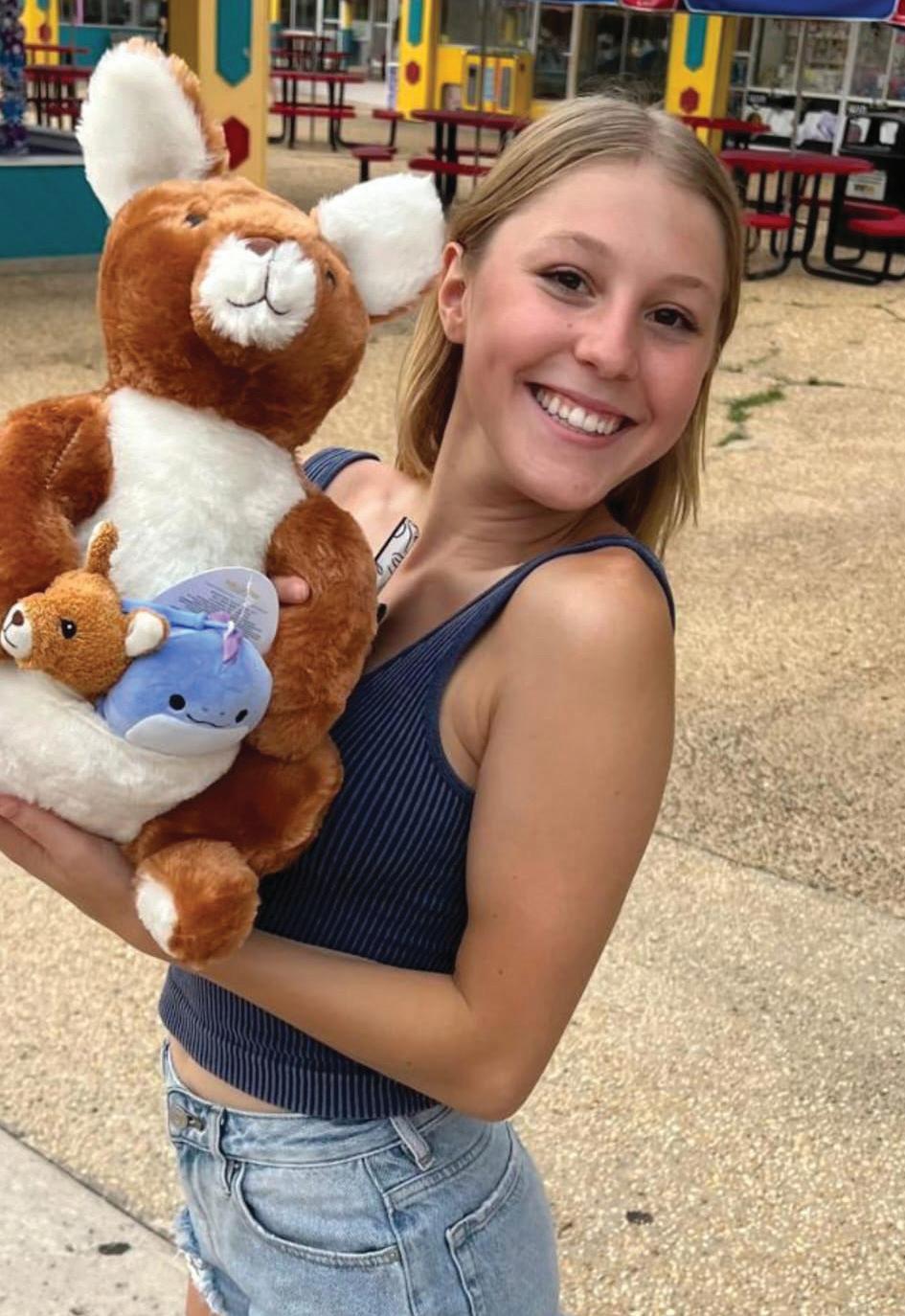
Julianna “JJ” Sannino’s bright smile and easy warmth reflected a moment of simple joy and genuine spirit.
Sports
One Goal Short of History
BY JAMES EL-HAGE Staff Writer
The men’s hockey team delivered a season to remember, setting a program record with 23 wins and advancing to the Atlantic Hockey America (AHA) Championship game for the first time since 2010.
While they fell short of a title, the past two seasons have marked a turning point for the program. Built on leadership, team chemistry, and a belief that extends beyond the ice, the team proved this newfound success is no fluke, but the new standard.
“This year’s team had great leadership,” said head coach C.J. Marottolo. “We had great captains, great assistant captains, and even the players that weren’t wearing letters that were seniors were great leaders.”
In his 17 seasons at Sacred Heart, Marottolo said this year’s group stands out as one of the closest teams he has ever coached.
“I met with my team a lot this year, and my staff and the players kept saying this is the closest team they’ve ever been a part of,” said Marottolo. “Teams that are close, they care about each other, they love each other, and they’re willing to have that complete buy-in and do whatever it takes for the guy next to you.”
After winning 21 games last season, the Pioneers didn’t dominate out of the gate, opening the year 3-6-1 as their success was shaped through adversity and growth.
“You can’t just throw a team together with a bunch of good guys and talent and expect it to work,” said Marottolo. “There has to be some struggles along the way and adversity, and we had our share of it.”
After returning from winter break, the Pioneers won five of their next seven games, gaining momentum heading into the final stretch of the season.
“It took us until the second half of the season to really see our game take off and our leadership crew take over,” said senior captain Mikey Adamson. “I think the biggest thing is we picked our time and place to talk and say something to the guys whether it was good or bad.”
That late-season surge carried into the Atlantic Hockey America (AHA) Tournament, where the Pioneers held opponents to one goal or less in every win.
“The playoffs are always tighter and there’s usually better checking and safer plays,” said sophomore goaltender Ajeet Gundarah. “So, when you mix that with us just having a great team, those two things together make my job a lot easier.”
The Pioneers took down Niagara University and Robert Morris University,
BY BRETT CLOWRY Staff Writer
before advancing to the championship game, where they traveled to Bentley University and ultimately fell 3–2.
“It wasn’t the result we wanted, but it wasn’t for lack of effort or care,” said Marottolo. “What the guys took from it is that it’s very important to finish as high as you can in the regular season to be able to play that game at home. We want that game here next year, and I think that is going to motivate our guys next season.”
Despite back-to-back 20-win seasons, the Pioneers still have unfinished business heading into next season.
“This year we had the expectation of winning, and to come just one goal short of a championship definitely stings,” said Gundarah. “But the precedent going forward is that nothing less than what we did this year will be good enough.”
Athletic Communications contributed to this article.
Riding into the Postseason
the pressure off.”
The Sacred Heart University equestrian team is shifting its focus to the individual and team formats of the Intercollegiate Horse Shows Association (IHSA) postseason after facing a tough 6-3 loss to Dartmouth College in the semifinals of the Eastern College Athletic Conference (ECAC) championship. This match took place on March 20 and 21 in Charleston, S.C.

The ECAC championship format follows the National Collegiate Equestrian Association (NCEA) format of riding, providing a high-stakes environment for Sacred Heart.
Sophomore Kylie Hwalek and senior Carina Muratore were the standout performers in the match. Hwalek received a score of 83 and was named the Most Outstanding Performer of the semifinal. Meanwhile, Muratore achieved a score of 76.5, earning her a spot on the All-Conference flat team for the regular season, along with junior Eleese Shillingford.
“Even when things got stressful, we made a point to keep the energy positive and support each other between rounds,” said Muratore. “No one felt like they were out there alone; we really rode as a team, which helped take some of
Under head coach Hanna Lloyd, who was put in charge of the program in July 2025, SHU Equestrian has established itself as a national powerhouse.
As a Sacred Heart alumna, she was previously the team’s assistant coach before taking the head coach position and understands how hard her team works each time they ride.
“We talk a lot about ‘no easy outs.’ So, if we can avoid the easy outs and shine in the ring, that’s the best that we can do,” said Lloyd. “We definitely held our own against a number-one-ranked team, and our scores were right there with them, so I know what we’re capable of.”
“The squad went down there and received notes from our spirit committee that gave them pep talks, and the remainder of the team all sent out messages in our group chat, cheering them on,” said senior Isabella Ruisi.
“As the fourth seed going against the top team, we wanted to make sure all the girls felt our support, even if it was from a distance,” said Ruisi.
On March 28, the Pioneers traveled to the Zone II Region IV Championship at North Shore Equestrian in Brookville, N.Y., hosted by LIU.
Unlike the team-oriented NCEA format, the IHSA postseason format shifts the focus to individualized performances. Riders get assigned unfamiliar horses from the school hosting the match, giving them little time to adapt.
“I am aiming to have confident, consistent rides all around to showcase the work I have been putting in all season,” said Ruisi. “To advance to the zones on April 4, riders must finish in first or second place in their divisions.”
The energy has shifted as the calendar turns into April, with the NCEA Nationals being on April 16 and the IHSA Nationals taking place on April 30.
“With nationals coming up, the ‘Championship Season’ shifts the vibe at the barn in a motivating way,” said Muratore. “Everyone starts working even harder than they have all year, pushing themselves and each other to be better every day.
Athletic Communications contributed to this article.
Instagram, @sacredheartmih
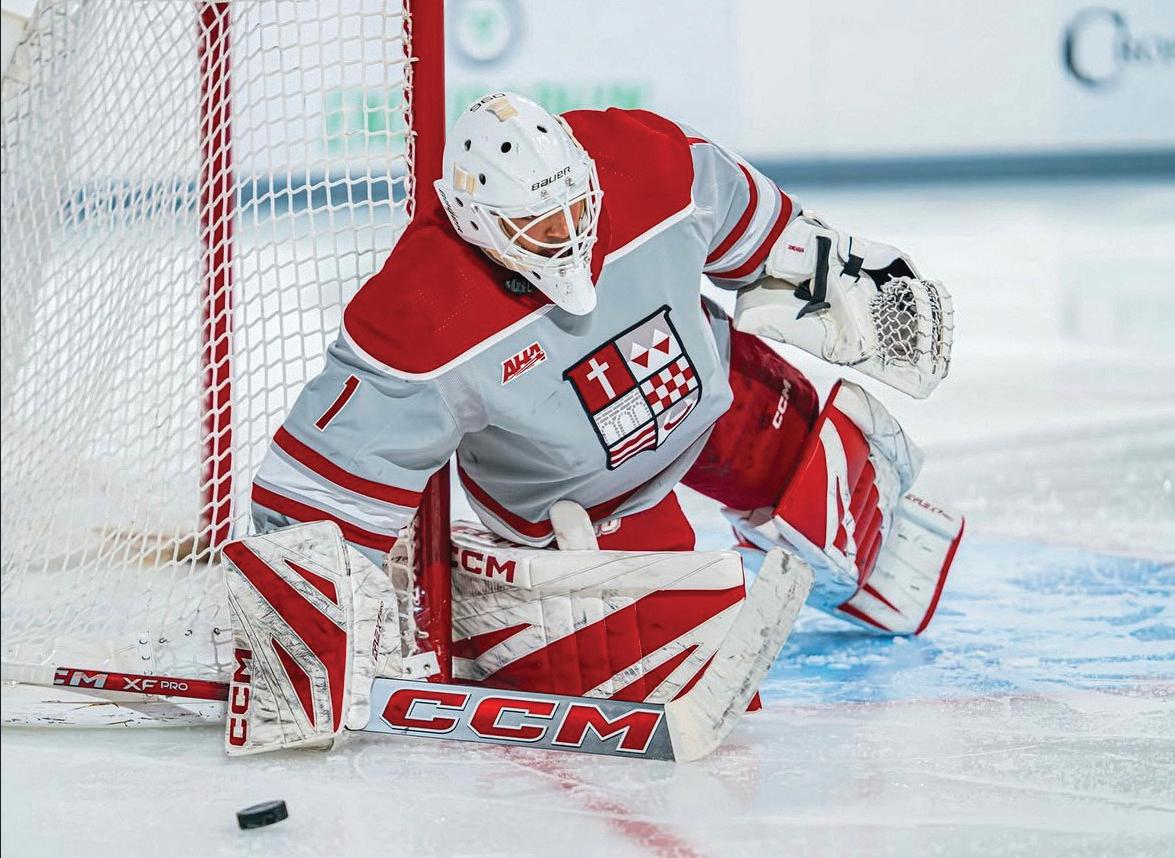
Goaltender Ajeet Gundarah deflects the puck below the goal line.
Junior Eleese Shillingford riding at the ECAC championship semifinal in Charleston, SC.
EDITOR IN CHIEF
GEORGE TRIEBENBACHER 2026
MANAGING EDITORS
SHANNON TUTTLE 2026
MOIRA STAPLES 2026
COPY EDITOR
MADISON CONKLIN 2026
NEWS EDITORS
DANIEL GREENE 2026
MADELEINE MEDEIROS 2028
ASST. NEWS EDITOR
NICHOLAS MAISANO 2028
FEATURES EDITORS
SARA HASENEY 2026
ALEXA BORNER 2027
ASST. FEATURES EDITOR
FERNANDA GUEVARA 2026
ARTS & ENTERTAINMENT EDITORS
EMMA RICOTTA 2026
CAROLINE DAVINO 2026
SPORTS EDITOR
COLLIN MACLEOD 2027
ASST. SPORTS EDITORS
TAYLOR MAGUIRE 2027
JACK CAVICCHI 2026
SPORTS APPRENTICE
NICK DILAPI 2028
CAMPUS LIFE EDITOR
THEO WEISMANN 2026
AUDREY’S CORNER EDITOR WILL MORGAN 2028
SENIOR PHOTOGRAPHY EDITOR
JACK CAVICCHI 2026
PHOTOGRAPHY EDITOR
JORDAN DORSEY 2026
ASST. PHOTOGRAPHY EDITOR
JAYDEN HUNTER 2027
PUBLIC RELATIONS MANAGERS
SARA HASENEY 2026
ALEXA BORNER 2027
WEB MANAGER
JORDAN DORSEY 2026
CIRCULATION MANAGER
FERNANDA GUEVARA 2026
FACULTY ADVISOR
PROF. JOANNE KABAK
SPECTRUM IS PRINTED BY: VALLEY PUBLISHING Derby, Conn.
Back on Home Ice for Season Closer
BY TUCKER TERRANOVA Staff Writer
The Sacred Heart club figure skating team (SHUFS) closed its 2025-26 season on home ice, hosting its spring exhibition at the Martire Family Arena on March 22 and bringing a successful season back to campus.
The exhibition, just the second in program history, marked a significant step for a team that typically spends its season traveling to compete and perform at rinks across the region.
For team president senior Emma Whitehead, who experienced the event as a sophomore, bringing back the event was a priority of hers.
“As president, it was a personal goal of mine to highlight our skaters on home ice, and bringing back the exhibition felt like the perfect way to do that,” said Whitehead. “I couldn’t have asked for it to go any better, and I truly hope it becomes an annual tradition for SHUFS.”
The showcase gave skaters a rare opportunity to perform in front of family, friends and the campus community. Participants were grouped by skill level, and each segment followed a structured warm-up format designed to mirror official competition settings.
Whitehead said maintaining that competitive standard was intentional.
“My coach, Lisa Fedick, and I worked hard to make the exhibition resemble a real competition as closely as possible,” said Whitehead. “Even though this was a showcase, no one simplified their programs. Each skater chose to perform at their highest level of difficulty to truly showcase their talent.”
The event served as a capstone to a season defined by growth. The Pioneers traveled to exhibitions at New York University, the Massachusetts Institute of Technology and Utica University, continuing to expand their presence within collegiate figure skating.
Whitehead, who has been on the team’s executive board for most of her college career, said the team has taken measurable steps forward in a short time.
“During my time, I’ve had the privilege of watching this team grow into something greater than I ever imagined,” said Whitehead. “We’ve expanded across all competitive levels, gained recognition from the U.S. Collegiate Figure Skating Association, and built a strong presence here at Sacred Heart

University.”
The progress has translated into consistent results. Sacred Heart placed fifth in each of its competitions this season and has qualified for U.S. Collegiate Figure Skating Association nationals three times in program history.
Despite competing on larger stages throughout the year, the home exhibition carried added significance for the skaters.
“There’s something special about performing in front of the people who support you every day,” said Whitehead. “It meant a lot to share that moment with our teammates, friends and families.”
That sense of connection has become a defining characteristic of the program. Freshman Samantha Hudson has felt that in her first season with the team and cited it as one of the main reasons she enjoys coming to the rink each day.
“I think we have a great program right now, with a familylike atmosphere and very accomplished skaters,” said Hudson. “Everyone on the team is extremely passionate about what we do, and with that energy, I think we will continue to improve and grow our program.”
With the season complete, the Pioneers are already looking ahead. While several seniors, including Whitehead, are set to graduate, the foundation established this year has positioned the program for continued growth.
“This season will always hold a special place in my heart,” said Whitehead. “We’ve built an incredible bond as a team, and we’ve created something special here.”
New Division 1 Acrobatics and Tumbling Team
BY LEAH MANSFIELD Staff Writer
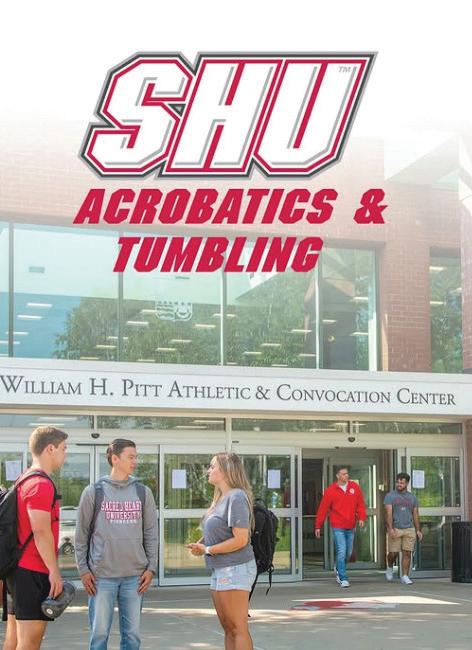
Sacred Heart University Athletics has recently announced they will be adding Division I Acrobatics and Tumbling to the list of varsity sports, bringing the total number of Division I teams at SHU to 35.
The team will look to build on the success of SHU’s outstanding cheerleading program, who are six-time national champions.
The interest of collegiate acrobatics and tumbling is quickly growing, and SHU will be joining the list of schools with this DI program in the fall of 2027.
“We are in the early stages, focusing on planning, staffing and recruiting. With our initial announcement, we have already received inquiries from potential recruits and from those seeking to be SHU’s first A&T Head Coach,” said Judy Ann Riccio, executive director of Athletics.
There is a strong interest, as well as support, amongst the field of dancers, cheerleaders, and gymnasts.
“As a dancer in the Sacred Heart Dance Ensemble, I really see the addition of a tumbling and acrobatic team as something that could positively impact lots of students on campus. Not everyone is able to fully commit to the demands of the dance team or join a club gymnastics program, whether it’s because of time, experience level, or
simply wanting something a little different,” said sophomore Emily George.
This team will open many doors for SHU Athletics, as well as acrobatics and tumbling recruits with the opportunity to be a part of the very first acrobatics and tumbling team at SHU.
“As a student-athlete at SHU, I’m always excited for another Division I team to be added, I think the community within athletics is very tight-knit, so adding another team will only make the community within athletics even tighter. I’m excited to watch the acrobatics and tumbling team grow over the next few years,” said junior Lauren McQuillan.
SHU is not the first university to have a Division I acrobatics and tumbling team but will be one of 14 Institutions in the National Collegiate Acrobatics & Tumbling Association (NCATA).
“We’ll compete against established programs such as Baylor University, the University of Oregon and Quinnipiac University. The sport continues to grow, creating an increasingly competitive landscape,” said Riccio.
The Metro Atlantic Athletic Conference (MAAC) has gained interest in sponsoring acrobatic and tumbling teams.
“Should the MAAC decide to sponsor A&T, they would be the first D1 conference to do so, which is exciting,” said Riccio. With acrobatics and tumbling on the rise, athletes will have more options to participate and compete, while the fans get more to enjoy.
“Having this kind of team would create a space for people to stay connected to movement in a way that feels more accessible and flexible for everyone,” said George.
“I think it’s great, as someone who works in broadcasting at SHU, I think the opportunity to add another Division I Sport at SHU is huge. Not only for the student-athletes coming to Sacred Heart, but for the university as a whole,” said McQuillan.
“Our goal is to build a nationally competitive, sustainable program. We see it as a key part of expanding opportunities and elevating our overall athletics profile,” said Riccio.
Instagram, @elisejoliemedia
A member of the figure skating team celebrates after her performance.