
Laughter May Be Medicine, but Music is Therapy
Lizzy Cantwell page editor
Music has impacted countless lives within our community. Not only is listening to music enjoyable for many people, but it can also be a fast and effective way to lower stress and anxiety levels, often playing a major role in mood regulation. Within the Sheldon community, music appears in many different forms. From Sheldon bands to teachers who sing in choirs, music appreciation can be found all around us. Freshman Adriane Owen, a current member of Sheldon’s wind ensemble, enjoys being able to produce music because “something about music just brings out my emotions.” Through the band program, Owen has traveled with the jazz band, wind ensemble, and the marching band to competitions and performances around Oregon. Owen enjoys seeing the variety in other bands’ music, often leaving feeling inspired afterwards.
Not only has the life of many Sheldon students been impacted by music but so has the life of many staff members. Student choir teacher Ms. Auvinen is a current music major at the University of Oregon. Originally, Auvinen had always wanted to study education as a kid. While her original goal was to become an English teacher, she soon decided to study music since it had been a foundational pillar in her life for many years.“I wanted to be that person and create that kind of program for other kids that just need something in school that they’re good at when a lot of traditional classes aren’t set in a way for all types of students to learn the best.”
It is shown that music can affect your mood on a large scale. Often, people choose to listen to music that reflects their mood but for Auvinen, often she listens to music to change her mood. If she’s feeling down she’ll put on a specific playlist of music associated with good memories or just upbeat to re-center herself in everyday life. Music can also be a method of transporting someone into past experiences. For Spanish Immersion teacher Mr. Zapata, music is present throughout his life. Often, if he’s feeling melancholic or nostalgic, listening to music transports him back to a certain time, often
Art is Dying and You Are Killing It
Khaya Ainis-Michael editor-in-chief
Streaming services have introduced a completely new way to consume media. Before, you had to physically buy an album or go to a movie theater, but now it’s as simple as pressing play. Due to the convenience of streaming, physical outlets for media have seen a decline. This raises the question of whether or not streaming will take over completely.
Senior Diego Valdivia Camacho posited that “physical media and viewing for film and music are essential to human creativity and artistic expression, and those will never go away.” Part of the reason for listening to music or watching a movie is the experience, and although it is easier to stream an album on your phone, it isn’t necessarily better.
happening when he’s thinking about his family or having remembrance of times past. For Zapata, music has been present in his life for a long time. When he was eight, Zapata learned how to play the piano by ear. After understanding the basics of how to play a musical instrument, he learned how to play the guitar by ear. While he wasn’t originally constantly involved in music, that soon changed when his oldest brother, a choir director, introduced him to singing. While he lived in Venezuela he participated in a choir as his extracurricular activity because he had always had a love for singing. Zapata soon sang at many different venues and occasions, sharing his love of music with his community.
With new generations, Zapata believes that music has changed drastically. “There are beautiful things being composed but not the quantity of music compositions that were produced during earlier years,” said Zapata. Zapata maintains high hopes for the future of music production even if some uncertainty remains about where music is really heading.

graphic by Jessica Fitch
Senior Dylan Ward shares this outlook. He finds that listening to an album in full enriches the experience immensely. “Having that full package foraged by a group of very passionate people over a long period of time and released to be studied and consumed by people who truly care about it is way more important than the ‘fast fashion’ of the arts,” said Ward. This “fast fashion” can be attributed to the rise and popularity of streaming. Whereas before a whole team had to collaborate on an album and it took time, resources, and money, an artist can now write, produce, and upload a song all from their bedroom. While this creates a circumstance for more talent to be brought to light, it can also saturate the market. Senior Dylan Ingman has specifically noticed this issue on social media. “It’s become a lot more artificial because people just want money now… I mean, there’s AI music,” said Ingman. Music used to be a way for people to express themselves, but the use of AI in songwriting and producing removes that completely. What’s the point of music if not to share the human experience?
Streaming has created an easier avenue for both consumers and artists to access art, but is there still value in taking your time to interact with it?
Sheldon Students are Getting Wordy, Just Like This Title
Aiden Gonzales page editor
The New York Times games are a popular and fun daily routine among high school students. The NYT games are a variety of fun small puzzles that can only be solved once a day, but refresh daily so there is always a new one to solve each day. Sophomore Katherine Shields loves taking a bit of time each day to try and solve some of the daily puzzles. “I like the puzzles. I think it’s fun to try and get it right every day…it’s just become a part of my daily routine,” said Shields.
Although the puzzles are fun, they can be a bit challenging. “Some of them are really hard, specifically the Connections, but I feel so smart if I get them right,” said Shields. The NYT puzzles can be hard, but they are still a fun thing to look forward to daily.
Although the New York Times games are fun, you unfortunately have to pay a weekly subscription to unlock more than half of the puzzles. There are a few free ones, like the Wordle and Connections, but most of them are locked behind a paywall. Sophomore Gemma Mower is opposed to the NYT games subscription. “I’m not subscribed to them. Like, why would I pay for that weekly? They are very greedy…why does there have to be a subscription for my daily dose of joy?” said Mower. Due to most of the puzzles being behind a paywall, it takes a lot of joy and fun out of the daily puzzles for students like Mower.
More recently, the NYT games locked the previously free mini crossword puzzle behind a paywall. “I was so distraught and angry when they put the mini crossword behind a paywall. It was my favorite one,” said Mower. The subscription is only $1.50 a week, but for most students, that’s just not something they want to be spending money on.
Not only do students enjoy solving puzzles alone, some enjoy challenging their friends to see who can solve the puzzles faster. Sophomore Abigail Orme likes to compete with her friends to see who can win first. “I play it in AP World with Gemma Mower…I always beat her,” said Orme.
Mower and Orme can get pretty competitive, as they both think that they are the best at the games. “I play them with my friends… I beat them every time,” said Mower. Playing with your friends, whether by trying to solve them together or by challenging each other, is always a fun time.
Dear Future Me...
Hewson Baldwin & Ryley Bainter staff writers
Where do you see yourself in a few years? Everyone has an image of their future selves: things they hope to accomplish, relationships they hope to improve, dreams for the future, and aspirations for their best self. Sophomore Nick Guldager has ideas about how he will look by senior year. Guldager is invested in the future of Sheldon theater and put on a great performance in Sheldon Theater’s Newsies this past spring. Guldager hopes that by his senior year, he sees himself “as continuing acting and eventually
Friend or Foe: Friendships In High School
Claire Craig editor-in-chief
High school makes up about a quarter of a students’ life by the time they finish their senior year, and there’s a lot that can happen within those four years. Being crammed inside a small campus with peers for hours on end for years, is bound to create lots of pressure. So what’s the deal with high school friendships anyway?
It’s expected that relationships will change during this turbulent period, and while we can hope that our BFFs will stay just that —best friends forever— it doesn’t always happen that way. In moments where you struggle to connect or communicate with once good friends, you may need to take a step back and re-examine your relationship. Science teacher Cory Fields remarked about her experience, “I had a friendship that was bad that I let go on too long… don’t be afraid to protect yourself and back out of a friendship that isn’t working for you or is harmful to you.”
While having friendship drama is normal, it shouldn’t be all-consuming. Senior Haylie Tig said, “You have to be okay with not being friends with everyone… Not everyone is going to get along, and that’s okay.”
On the value of having good friends, Tig said, “Friendships are not meant to be hard, it’s meant to be easy. They’re supposed to make you feel better about yourself, not feel worse.”
By the time graduation comes about, it seems that seniors tend to loosen up a little. Perhaps it’s to make mental space for the big changes coming up in their lives and discarding whatever won’t serve them after high school. Senior London Myers added, “Everyone’s trying to get their stuff done. I think a lot of people are focused on themselves, especially senior year. There’s a difference between seniors and [underclassmen] because seniors are just ready to
separating my view of myself from aspiring actor to just actor.” Guldager has also recently been nominated for a Jimmy Award (high school actor award) for outstanding supporting male role, which is a huge accomplishment. Aside from acting, what else do the students of Sheldon aspire to do? Sophomore Jack Kendall wants to be a physical therapist after high school and hopes to go to college for it. To prepare himself for this he plans on taking human anatomy senior year. He will have to squeeze this into his schedule, though, because Kendall also plans on being a full IB candidate. Why go full IB? According to Kendall, “it will help me in the future, and if I do well on the test, I hope it will get me a scholarship.” Aside from academics, Kendall wants to take his time, have fun, and enjoy high school. Many would agree that this is as equally important as everything you can learn academically. Some people are also looking ahead past their high school years. Sophomore Gemma Mower, is hoping to
get out.” It’s only at the end of the year that seniors seem to have the easiest time making friends, or leaving them behind.
Quality relationships aren’t effortless, however. It takes time and investment of energy to show someone that you care for them. Fields stated, “I think it’s important to make sure to reach out occasionally and contact the people you’re friends with. You gotta contact them, and check in, and see how they’re doing. Make the effort to get together.” Without the extra effort, a friend could just as easily be a foe.
Wherever you may be currently in your high school experience, don’t discount the people you meet or the friends you make. As Fields said, “Friendships can come and go; that doesn’t mean they’re not important.”
graduate and move on to go to college at Oregon State. “I would like to go to Oregon State because my parents and grandparents were Beavers, and I want to get into the medical field,” said Mower. In order to achieve her goal of getting into Oregon State and joining the medical field she hopes to take AP classes such as AP calculus, AP US History, and AP government. Aside from getting good grades Gemma is also involved in APISU (Asian Pacific Islander Student Union), Key club, leadership, and choir. She credits Sheldon in helping her get more involved at school.
You might not know what you would like to do after senior year, or achieve by the time you graduate, but just remember to have as much fun as you can in the short time you have at Sheldon. Also, know that you have your whole life ahead of you and making good decisions now, such as getting good grades, or getting involved at school, can help you live your life to the fullest even after you graduate.
Clout Chasing
Andrew Brown & Matthew Schuck staff writers
By definition, clout refers to informal power, influence, or prestige, particularly in politics or business. However, in our society it is often associated with social media, whether that be in terms of likes or followers. The rise of social media leads to questions on how clout stands to play a bigger role in our community here at Sheldon High School.
Senior Devin Fitzgerald (@devinc.f on instagram, 693 followers) stated, “If the bird got more than 10k followers, she is not getting a DM.” Fitzgerald’s stance is that when people have too much clout, it changes his opinion of the person. Fitzgerald also believes that the most down to earth people are in that 2000 follower range, so going above that is just jestermaxxing. Fitzgerald’s take on social media is mostly positive, though, sharing the stance that social media is good if you want to make connections, but when people get too caught up with getting a following that is when people start to change. Fitzgerald has never botted any of his followers on Instagram.
Senior Kai Holmes (@holmeskai11, 695 followers) stated, “To have clout you need to be high-tier-normie minimum; if not you will never have clout. I’ve learned this from Clavicular and it’s been true from what I have seen in my life.” Holmes wishes that he had more clout, and even went as far as to state that he would immediately switch up on his day ones if it meant he would get more followers.
Senior Lucas White (@lucasdwhite_, 351 followers) stated, “To be honest, I do not care that much about clout, and if they have a good heart it is all that matters to me.” White preached this message, but also stated his praise for those who do have clout, exclaiming “I think I would enjoy the presence of clout, because it would open some more doors for me.” The life of a person with clout comes with a lot of questions, but the seniors at Sheldon undoubtedly have mixed opinions about the topic.
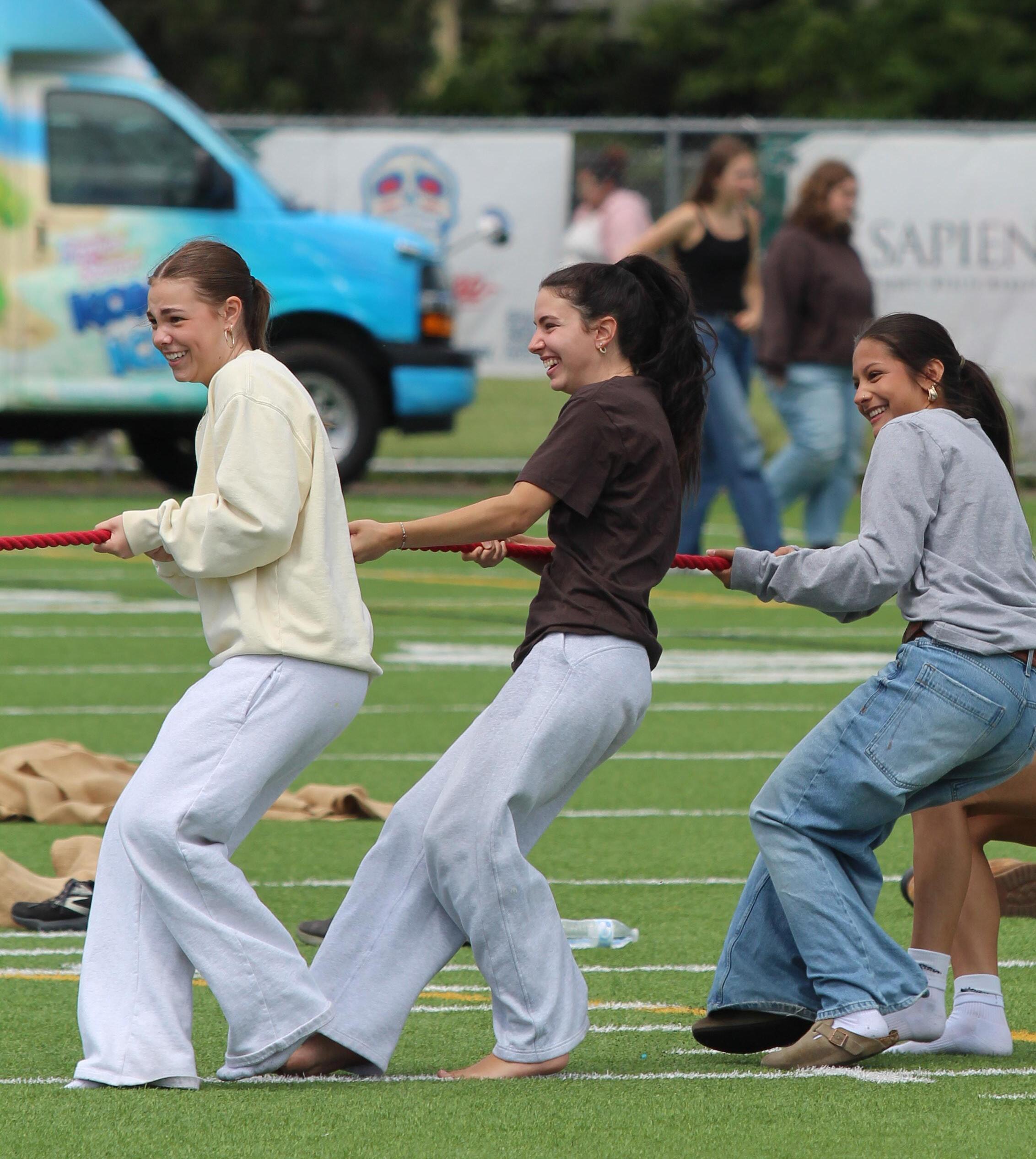
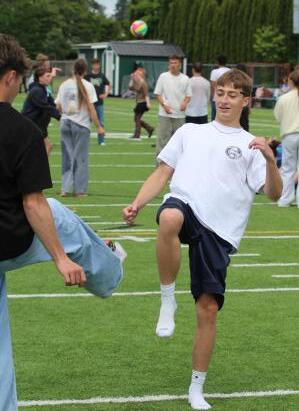
(Sr.) Marshall Allen and friends playing hackey sack.
photo by Greg Cantwell
Wildest Dreams Around Sheldon
Andrew Cottle page editor
When you rest your head at night and drift off into a deep sleep, do you dream? Whether you remember them or not, almost everyone dreams. They can be good, bad, sad, or even completely nonsensical. There are classic ones that many people have had, such as going to school with no clothes, falling, or being chased by a monster. But sometimes, someone can have a truly bizarre dream, such as granny zombies, or your father turning into the Joker. But why do these happen, and what do they mean?
Sometimes, dreams manifest from personal life. For example, sophomore Alexander Chamberlain plays the game Helldivers 2. After a long night of playing, Chamberlain laid in bed and went to rest. As he slept he found himself in a dream ripped straight from the game. “It was crazy, it was all first person. I was stuck on a neverending mission!” Chamberlain recounted. His playing had somehow come into his dreams as well!
Sophomore Amelie Holden stayed up at night thinking about college and Funko Pops, both of which ended up following her into her dreams. Holden dreamt that she was escaping something or someone, leading her to crawl
through a vent. At the end of the vent was a pitch black college dorm room. When Holden reached it she saw that the whole room was filled with pop culture memorabilia. After every attempt to turn on the lights failed, she resorted to using a flashlight. Using the flashlight, Holden revealed the contents of the room. Holden recounted, “There was a Joker Funko pop, and every time I flashed my light on it, it’d turn into my dad.” Some dreams, however, can completely be ungrounded from reality.
Fever dream is a common phrase used to describe surreal or bizarre experiences, but actually fever dreams can be even stranger. When freshman Clayton Castillo Johnson was laying in bed, sick from fever, he dreamt an intense version of one of these ‘fever dreams.’ He dreamt that he and his friends were running, when suddenly a huge mob of zombie-like grannies came chasing them. When he came to shelter in a cafe he discovered a huge problem. “I was infected with the grannie-zombie-virus thing, and I was already turning into one of them,” said Johnson. When he saw this, Johnson decided to be a noble sacrifice, saving all the other people in the cafe and allowing them to escape. Johnson noted that after waking up he found himself in a pool of sweat, all of which was caused by the stress of this strange dream.
High School Highlights
Carmen Uria-Carrillo staff writer
For many students, high school becomes more than just a place to attend classes - it turns into a space where learning feels meaningful. Senior Ava Cherry, explained how certain classes can completely change the school experience, especially when creativity is involved. “American History Through Film was one of the classes I enjoyed the most,” Cherry said, adding that working on projects with Mr. Brancato made history feel more real and engaging.
Her view of school also changed over the years. “At the beginning, everything felt new and confusing, and I didn’t really know how things worked,” Cherry shared; “Now nothing really surprises me, school pushes me to do better,
and I’ve learned how to face its challenges.”
Senior Diego Valdivia shared how high school immediately felt like a new stage in his life. “Walking from class to class and being surrounded by people much older than me really forced me to adapt and mature,” Valdivia explained. He also highlighted how small, everyday interactions became unexpectedly important over time, like how talking with Ms. Albrich about anything, even small things, ended up meaning a lot to him. One moment that clearly stands out for Valdivia is “the opening night of the Newsies play,” which he believes deserves a place in a Top 10 High School Moments list because it captured the excitement and sense of community that defined his high school experience.
Senior DaNayah Casey reflected on how being surrounded by the same people every day shaped her high school experience. While constant familiarity was not








graphic by An-
always easy, it played an important role in her personal growth. “Being around the same people sometimes brought a lot of drama,” Casey admitted, acknowledging the challenges that come with close-knit environments. However, as graduation approaches, her perspective has shifted. “I’m really going to miss everyone,” Cassey added, showing how the relationships formed through everyday moments ultimately became one of the most lasting and meaningful parts of her high school journey.

Students’ Communitity Action Projects
Maxwell Berry page editor
When one has a time in their life that changes their status in the world, they may desire to leave their mark on the community from which they must depart. “(In) our CAS project… we redid mini libraries to help the community,” said senior Cassidy Almac. These projects are done solely by IB students and are called CAS projects, which stands for Community Action Service. These projects are a requirement for any students intending to complete
the full IB diploma and is one of the most important accomplishments in an IB student’s final year.
“I wanted to leave my mark… make it safer for people,” said senior Kayla Gibson. You can tell that these projects are really important not only to get the full IB diploma but also to leave a mark on one’s class and make the world a better place. The way that Gibson talked about this really is with a heart of service and this shows something about the spirit of CAS projects. However, these projects are difficult and require a lot of coordination and effort. “I just think we could have been more organized,” said Gibson, whose senior project included an attempt to put signs up
See you next year!

for cross walks. If students can get over the hump of these policies and naturally-made boundaries, they can do great things.
Finally, there is the balance of rigorous IB classwork and these projects which also demand attention. However, senior Diego Valdivia Camacho said, “I think it’s definitely manageable to work on the projects outside of class instead of using class time for it.” This response is impressive from a student who is scheduled to attend a top twenty university next fall. The dedication to coursework and these projects is an extremely impressive feat, especially with Valdivia Camacho committing to the rigor of the IB program.
Teacher Hall of Fame
Aiden Kennedy staff writer
At Sheldon High, students often have one class period that stands out from the rest. For junior Nathan Santiago, period six is easily the highlight of the day because of the environment created in the classroom. He explained that much of the reason comes from the teacher, Mr. Z (Zapata Bello), who makes the class more enjoyable and engaging. “Me and Mr. Z, we’re cool like beans,” Santiago said, showing how a strong teacher-student relationship can completely change a class experience. According to Santiago, having a different teacher would make a huge difference in how he performs academically. “If there was another teacher in that class, I would have an F,” Santiago said.
Beyond academics, the class gives students a space to socialize and enjoy being around one another. Conversations between students in the halls are often positive when talking about Mr. Z. Sophomore Adrian Montevero Nuñez shared a similar opinion about his favorite class period, saying the teacher is what makes the class enjoyable. Nuñez’s favorite class is with Ms. Boom because of the relaxed atmosphere in the classroom. “It’s all about the teachers,” Nuñez said, explaining that a good teacher can make even a less interesting subject enjoyable. According to Nuñez, students are more likely to stay engaged and comfortable in classes where teachers create a positive environment.
Sophomore Jace Milam also believes teachers play a major role in shaping how students feel about a class. Milam said his favorite class period is eighth period
sociology with Mr. Summerfield because of the overall atmosphere and energy in the room. “Mr. Summerfield is one of the best teachers in this entire school,” Milam said. Although he admitted some assignments can occasionally feel boring, he explained that the class environment and teaching style make the period enjoyable overall. Like the other students interviewed, Milam showed how much of a difference a supportive and engaging teacher can make during the school day.
Memorable
Mentors
A “GOAT teacher” makes class fun and helps students learn. (GOAT stands for Greatest of all Time.) Sophomore Brennan Herbert thinks Mr. Summerfield “always makes class fun and actually cares about the students.” Many students think a teacher makes school better for everyone.
Senior Diego Valdivia Camacho said his choice for the best teacher is Ms. Albrich because of the way she treats her students every day. “Ms. Albrich is the best teacher because she cares about the students and she is very nice,” Valdivia Camancho said.
Sophomore Adrian Ontiveros Nuñez said that Mr. Z (Zapata Bello) is the best teacher at Sheldon because he makes learning enjoyable and connects well with students. “Mr. Z is the best teacher at Sheldon because he makes class fun and always helps students when they need it,” Ontiveroz-Nunez said. Many students agree that teachers like Mr. Z help make school a better place.
Junior Cooper Gil said that Mr. Z is one of the best teachers at Sheldon because he makes learning exciting and creates a positive environment for students. “Mr. Z is the best teacher because I learned a lot in his class, and his class is super fun. He is also super fun to be around, and I think he makes a difference,” Gil said.
Many students feel that teachers like Mr. Z help students enjoy school while also helping them succeed, which makes them GOAT teachers.


Cottle
graphic of Mr. Zapata by Andrew
Day In My Life: Featuring Students
Chloe Crook staff writer
Everyone has their own unique life and daily routines from when they wake up in the morning to when they finally lay down to get some rest. For junior Gavin Himber Malik, a typical day begins incredibly early. “It varies per day and what I need to accomplish,” Himber said. “Around 4:30 A.M., and if it’s just a regular day where I don’t have to worry about much, around 6:30.” No matter the time, he starts off his morning feeding his dog and taking a few minutes to ease into the day. “I stay in bed for at least five to ten minutes,” Himber said. Once he gets up, Himber showers, does his skincare, and styles his hair, which determines the vibe of his day. “I curl it, then I’ll go pick out an outfit,” he explains. Whether he decides to dress comfortably or put together a nice outfit, he always wraps up his morning by walking his dog. When he gets back, he usually has around thirty minutes to spare, he quickly makes himself a cup of coffee, packs his things, checks for any missing assignments, and then starts heading off to school.
On the other hand, Sophomore Hadley Carr’s morning routine changes with the seasons. “It depends on if it’s spring, fall, or winter,” Carr explained. “During the spring
I wake up at 6:40 AM, winter and fall 7:12 exactly.” No matter the season her morning starts off the same. “I turn on the lights so I can wake up and get some sunshine in the room. I check the weather to determine what I should wear,” she said. Carr always wakes up her younger brother Ryder then she will make herself breakfast. At 7:43 she takes her brother to the bus stop After waiting with she heads back home,
Sophomore Siena Farmer starts off by waking up to her second alarm between 6:00 and 6:15 A.M., she quickly brushes her hair and teeth, packs her lunch, and heads out the door. Farmer said “I definitely get home later which makes me get up at my second alarm and not my first. “By 8:00 AM, she drives herself from seminary to school. She often stays late for her activities, “When I don’t have rehearsals I leave around 3:00 P.M. or 3:45, but then when I do have rehearsals, which is most of the time, I leave on average like 5:30ish.”
graphics by Lizzy Cantwell








Ronan Sterling & Sergio Vicente staff writers
Just Getting Started: Senior College Destinations
Alabama
University of Alabama
Payton Sowers
Michigan
Eastern Michigan University
Marin Jarvis
Oregon
Bushnell University
Ryah Larson
Grand Canyon University
Chloe Littleton
Kayla Gibson
Arizona California
California State University, San Marcos
Sloane Manley
Dominican University of California
Hayden Kearney
San Diego Mesa College
Jacy Hunt
San Diego State University
Makeda Kidanemariam
Abby Roadman
Santa Clara University
Gwyneth Seilo
Scripps College
Daisy DeSalvo
University of California, Berkeley
Beringer Ranstad
University of California, Santa Barbara
Audrey Eberle
University of San Fransisco
Fiona Lin
Colorado
University of Colorado Boulder
Keira Chance
Idaho
Boise Bible College
Michael Zubriski
Boise State University
Hannah Daniels
Benjamin Kehrein
Emily Kohler
Geno Marzano
Londyn Miller
Illinois
DePaul University
Reese Melton
Micigan Technological University
Camden Law
University of Michigan
Diego Valdivia Camacho
Montana
Montana State University
Sloan Hubbard
Montana State University Billings
Cadence Fury
New Mexico
University of New Mexico
Khaya Ainis-Michael
New York
New York University
Meadow Kitchens
Syracuse University
Alex Spinks
South Carolina
University of South Carolina Lancaster
Davi Cogo Vereza Rezende
Texas
Rice University
Kylie Perez
Cullinary Institute of America, San Antonio
Brielle Brown
Utah
Brigham Young University
Christian Bonham
Haley Langworthy
University of Utah
Cassidy Aumack
Devin Fitzgerald
Webber State University
Cambrie Hall
Washington
Chemeketa Community College
Evan Denley
Corban University
Presley DeBaldo
George Fox University
Shayna Hogue
Klamath Community College
Summer Alexander
Lane Community College
Sarah Aasheim
Eleanor Bahen
Inara Bennett
Aaden Easton
Emma Gill
Valentine Giraldo Coronel
Josie Hamilton
Karly Hanson
Madeline Humphrey
Kylee Johnson
Madeline Kuhn
Cecelia Lame
Crow McCaffery
Warren McKillop
Devri Reid
Ava Sheppard
Alma Sibrian-Carlos
Charles Stanford
Linn-Benton Community College
Kaleia Davis
Oregon Institute of Technology
Lola Falconer
Oregon State University
Tyler Barham
Jacob Bevard
Nicholas Bratland
Ethan Brock
Kallahan Brown
Osvaldo Canchola Garcia
Callie Clark
Grace Faught
Alexander Fightmaster
Thomas Follett
Light Gardner
Nina Ito-Gross
Kevin Jiang
Annika Leighton
Apple Mehan
Reed College
Rosemary Ruiz
Drake University
Caden Mims
Iowa Kentucky
University of Kentucky
Gadiel Gonzalez
Gonzaga University
Kaia Muilenburg
Washington State University Pullman
Matthew Woodke
Washington D.C.
Howard University
Safiya Morgan
Thomas Moseman
Junyeong Park
Seojun Park
Blake Parks
Audra Powell
Ryder Reich
Dylan Sharps
Lucas White
Southwestern Oregon Community College
Ava Cherry
Western Oregon University
Eliana Arpaia
Willamette University
Avery Owen
College
University of Oregon
Flora Stubbert
Emily Aguilar Urias
Charlotte Bailey
Jezzi Berglund
Phoebe Brockoven
Andrew Brown
Lucy Cao
Ethan Cottle
Claire Craig
Sadan Elmiusrati
Alyssa Faulconer
Liam Fenley
Darby Gill
Angeline Jaimes
Julia Johnson
Cameron Jones
Simrat Kaur
Pryor Miller
Senior Map
Vieira Miller
Anna Cristal Perez
Claire Piquette
Kendall Quinney
Jessica Ruiz Lopez
Grace Sales
Joaquin Samano-Chavez
Cassy Silver
Rowan Simons
Tehya Smith
Elliot Sinclair
Owen Sinclair
Caleb Temple
Alora Tieman
Chloe Warner
Avery Smith
Military
Coast Guard
Hunter Lessar
Sports in the Summer Time
Gavin Lees staff writer
With summer coming very soon summer sports at Sheldon are starting. Sophomore Desmond Callahan, participates in summer sports. “I run cross country,” said Callahan. A lot of the time summer sports are just practice for the fall season of that sport. This is true for Callahan, “Cross country has summer practices for the fall season,” said Callahan. Summer practices can be tiring but also fun. Callhan’s favorite part about running cross country in the summer is “when you run really far from where you started and you don’t know how to get back and you can just sit and be with your thoughts.”
Doing a summer sport takes a lot of the free time you would usually have. Sophomore Milo Jessup swims for Sheldon. Jessup wants to get better at swimming and that is why he swims year round. “I have nothing else to do and I
On the Field!
Cedar Hagen staff writer
Sophomore Cadence Ashwood competes in high jump and pole vault on the Sheldon track team. She initially joined in middle school because her friends were doing it, and she wasn’t sure what events she liked. “In eighth grade, at the beginning of track season, we tried out every single event,” said Ashwood. After competing in the 100, 200, discus, and jumps, she decided to stick with high jump and pole vault for her freshman year. Spending time with her friends is still a motivation to come to practice for her, but she also wants to work hard and improve. Since she first started in ninth grade, Ashwood vaults two feet higher, and she’s been on varsity for last season and this one. She has goals to jump higher in both her events this year, after PR-ing once in pole vault already and getting a season best in high jump.
In addition to pole vault and high jump, track and field has two more jumping events, the long jump and the triple jump. Sophomore Katherine Shields does the triple jump as her main event, and she also competes in long jump. “I’ve
Don’t Lacrosse Me
Michael Renzi staff writer
Lacrosse has long been a known sport at Sheldon but what has been less known is the players who put all their effort into the sport, especially the seniors who lead the teams. Senior Callie Clark has been playing lacrosse since her sophomore year. The thing she’ll miss the most about high school lacrosse is: “My teammates and all the fun practices we’ve had together.” Every sport and player also has their own superstition that they will miss looking forward to. Clark says her superstition was having the same hairstyle every game. She claims she wouldn’t play
want to be better at swimming,” said Jessup. Unlike other sports, swimming takes all of your time. “Practices are twice a day everyday except one practice on Sunday and Saturday,” Jessup said. He thinks people should do sports during the summer “because 40% of Americans are obese,” said Jessup.
Doing summer sports can be an opportunity for you to spend time with your friends. Sophomore Austin Gray plays soccer during the summer. Gray enjoys playing soccer during the summer. “I have nothing else to do and the practices are fun and I get to be with my friends,” Gray said. Summer practices for a fall sport can be helpful in many ways. “It helps everyone else get better, but I usually get injured,” said Gray. Sometimes summer sports can be challenging because of the heat. Gray thinks “It is not a challenge, it is fun because you get to be with your friends,” said Gray. Summer sports are a great opportunity to get better and connect with your friends.
done lots of events; last year I mainly did sprinting. I’ve done the 4x1, 4x4, 100, 200, 400, and the 800 as well,” said Shields. After focusing more on sprinting her freshman year, she decided to shift more to jumps in her sophomore year because they seemed fun. The triple jump is where the athlete sprints down the runway, then does a hop off of one foot, a bounding step off their other foot, and one more takeoff to land in the sand. Shields has jumped at three different meets this season and has improved by two feet at each one.
The running events in track and field include the 100, 200, 400, 800, 1500, and 3000, as well as the 4x1 and 4x4 relays. Anything 800 meters and longer is generally considered distance, while under 800 meters is more of a sprint. Lauren Fenley, a freshman on Sheldon Track and Field, runs the

800, the 1500, and the 3000. She has been running distance since middle school, when she discovered she liked the 800 and ran it at districts in eighth grade. “I like distance because it’s fun to push myself and then see progress,” said Fenley. This year, Fenley has run three season bests in the 800, and a personal best in the 1500 and 3000.
the same if it was any different. “It wouldn’t feel right if I ever had it any other way,” said Clark.
Senior Marley McNutt started playing lacrosse in elementary school but explained how she took a break during middle school but then started playing again with one of her best friends. “It’s very personal and everyone on the team knows each other and are really good friends,” said McNutt as she talked about her favorite part about being on the team. The most important person to her lacrosse experience has been one of her best friends and old teammate Averie Achim, who was a senior last year. McNutt mentioned that Achim was one of the best leaders and friends by keeping everyone motivated and just being a good friend. “Being a senior leader on the team means showing up when it’s hard and putting the team first before
anything else,” McNutt said.
Senior Tyler Webb is on the boys lacrosse team and he has been playing nonstop since third grade. “My stepdad convinced me to start playing and I just love playing it,” said Webb. Webb’s favorite memory is his first goal on varsity lacrosse in his junior year against Marist. He stated that what underclassmen don’t really understand about varsity lacrosse is how it’s a lot faster paced than JV because everyone is bigger, faster and stronger. He will miss his teammates and all the memories they made this last season as he goes on to play lacrosse for Oregon State.
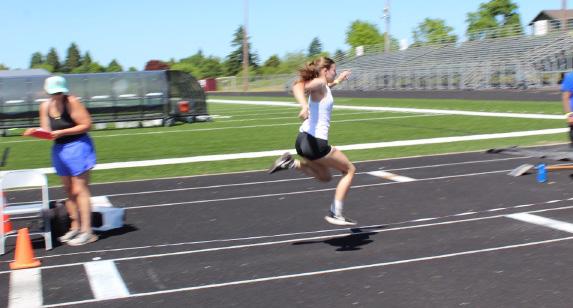
So. Katherine Shields Triple Jumping.
graphic by Aiden Gonzalez
Picture taken by Erin Regali
Heavy AP/IB Workload Requires Dedication
Isabella Curtiss staff writer
At Sheldon High School, many students enroll in Advanced Placement and IB courses to challenge themselves and prepare for college. While these classes offer college credit and academic benefits, they also come with heavy workloads, long nights, and increased stress for students trying to balance school with the rest of their lives. Sophomore Penelope Bailey said that AP World History has been the most demanding class mentally for her. On average, she spends one to two hours each night studying, but that can increase to four hours before major tests. The workload has also affected students outside the
classroom. “It has definitely lowered my sleep and made me feel more tired all the time,” said Bailey. Even with the stress, Bailey believes AP and IB classes are worth taking because they help prepare students for college and future careers. Bailey also said support from classmates makes challenging assignments easier to handle. “I relied on my classmates a lot for talking through assignments, big ideas, or just venting about the class. It really helped to have a community of people that you can go to for help in this kind of challenging class,”said Bailey. Students say they wish teachers better understood how stressful balancing multiple AP classes can be, especially when combined with sports, activities, and other coursework.
Sophomore Gemma Mower said AP World is her most demanding class, requiring about two to five hours of homework and studying each night. She said the biggest
challenge is keeping up with constant assignments while also remembering the material for tests. To manage her workload, Mower tries to start homework right after school to avoid procrastination. Still, she said the class has affected her sleep and overall health. “I get less sleep and therefore it makes me less healthy and happy,” Mower said. Even with the stress, Mower said she doesn’t regret taking the class and works with friends to stay on track. She added that while the class can be overwhelming at times, it has helped improve her time management skills.
Sophomore Abigail Orme said that AP World has been her most demanding class this year. She spends about one to two hours each night on homework and studying, mainly focusing on readings and staying caught up with the curriculum. Orme said that balancing AP coursework with other activities requires careful planning. She makes sure to set aside time each night and weekend to stay on top of assignments. The workload became especially stressful closer to the AP exam. “Yes, especially close to the test I was staying up much later and losing sleep,” said Orme. To prepare for tests, she uses Quizlet and Heimler’s History videos to review information and study consistently throughout the year. Although the class could feel overwhelming at times, Orme said she pushed herself to finish assignments because of how important the AP exam was. Now that testing is over, Orme is ready for a break. “YESSSSSS,” she said when asked if she was excited for the class to be over.
graphic by Maxwell Berry
How To Pass a Class In Ten Days
Janeza Carrillo &Tali Richie-Tuisue staff writers
With the school year moving fast, some students might wonder if it’s possible to turn things around in just ten days. Sophomore Pablo Galeano shared his thoughts on the idea. On whether it’s possible to pass a class in ten days, “Yes but also no. You just got to finish all your homework, go to office hours, and finish everything you need to.” He knows that it can be done, but it takes a lot of effort and focus in said short amount of time. On what he would do first if he only had ten days to pass a class, Galeano said, “I would talk to my teachers and try to go to their office hours to see if I could turn in extra assignments or get help on understanding the work.” Reaching out to teachers and staying on top of assignments is really important. Passing a class in ten days might not be easy, but if you put in the effort and use the help that’s available, it could help your grade a lot.
Senior Micah Ritchie-Tuisue believes it is possible to pass a class in ten days. All you need is the right strategy and an abundance of discipline. Ritchie-Tuisue explained that organizing the entire curriculum first and using tools like Brainscape and OneClass to review summaries and study subunits can help students move through coursework quickly. According to Ritchie-Tuisue, students can
complete large amounts of work in a short amount of time if they stay focused and prioritize their major assignments first, Ritchie-Tuisue said, "You can get each class done in about 8 to ten hours. Ritchie-Tuisue also emphasized the importance of communicating with your teachers when your grades begin to fall behind. “Go into your teacher's class during office hours or after school, and ask what work needs to be completed first, and if they'll even take it at all,” said Ritchie-Tuisue. He warned that science classes can be hard to recover in because of in class labs and tests that are harder to make up. In addition to studying, Ritchie-Tuisue stressed the importance of attendance and consistency. He explained that you should not allow friends or distraction to encourage them to skip class. Ritchies-Tuisue said “when you skip once, it can be hard to stop yourself from skipping again.” Ritchie-Tuisue believes that discipline and communication are the keys to improving grades in ten days.
Sophomore Elise Hudkins doesn't think passing a class in just ten days is realistic or possible.
“I do not think it's possible because if you have a 0%, even if you get those grades up, it's only a little portion of your grade,” said Hudkins. Despite this, Hudkins shared her strategies for how to deal with the challenge if the situation ever occurred. The first step is talking to your teachers: “I would talk to my teachers and ask for extra credit, but I would also just retake anything that I need to do.” Prioritizing tests and big grade assignments is key. But
that's not the only contributing factor. Creating a focused and steady study environment helps a lot. Hudkins said, “Just getting a cup of coffee, putting your earplugs in, and getting in a quiet space, just meditating. You lock in and do your work.” Friends also play an important role.
“They should be very helpful and reassuring and offer their help, teach you how to do something if you don't know how to do it,” said Huskins. Even if ten days isn't enough to fully pass a class, follow these strategies and it can help tackle a heavy workload efficiently.
graphic by Maxwell Berry
Higher Education for a Higher Bill
Jessie Fitch editor-in-chief
For decades, conventional wisdom has encouraged young high school graduates to attend a four-year university, and asserted that doing so would ensure stable employment. However, many have felt for years now that this is no longer the case. A primary concern of many such people is expense: a bachelor’s degree can put a person in decades of debt without guaranteeing employment in their chosen field, a ruinous consequence to be placed on the decision-making of seventeen- and eighteen-year-olds. For example, senior Andres Duarte Philavanh said, “Of course I am [worried about long-term debt]. I unfortunately got no scholarships, and am currently struggling to find any left that are applicable to me.”
Luckily, support systems are in place for those who do not have access to enough financial aid…right? Duarte Philavanh said, “[The private student loan industry is] a travesty. It’s similar to insurance agencies in my opinion:
they’re just trying to make as much money as possible without creating any value.” These predatory companies often position themselves as not only necessary, but beneficial; in reality, they seek to create lifelong debtors. However, some incoming college freshmen are approaching their financial future with a bit more optimism. Senior Makeda Kidanemariam, a prospective nursing student, said, “I’m definitely going to have debt, but I’m not too worried about it, because I feel like everyone has debt and everyone has to deal with it, so it’s manageable. Also, my program has good return on investment, so as long as I budget accordingly, I feel like I’ll be able to pay what I owe in a reasonable amount of time.” One might suppose that there’s no sense in giving up hope, but that doesn’t mean there aren’t challenges and risks to account for.
Even those closer to the glass-half-full end of the spectrum have doubts about their life after earning their degree. Kidanemariam said, “Even if I get a really wellpaying job, am I going to be able to afford to live on my own? Will I be able to afford groceries and insurance and to pay off my loans?” As the economy increasingly
The Rising Cost of Life
Fateen Anto page editor
Across the United States, everyday life is getting more expensive. From the grocery store to the gas station, prices have gone up on almost everything and for many families, it is becoming harder to cover basic needs. Experts say inflation, which is the gradual rise in the cost of goods and services, has been putting pressure on household budgets for several years now. Isabella Spence, a 42-year-old single mother and grocery store employee from Bend, Oregon, knows this reality firsthand.
Spence said businesses are paying more for transportation, supplies, and rent, and those costs get passed on to shoppers. “Basic items like eggs, milk, bread, and meat are way more expensive than before,” she said. As a result, many families are cutting back and only buying what they truly need.

resembles a recession, many young adults are losing faith in the possibility of the middle-class life a college education promises.
Many students, especially children of immigrant parents, feel an immense pressure to pursue conventional, well-paying careers, which often require expensive and academically-intense degree paths. Senior Kevin Jiang said, “My parents always wanted me to be a doctor or a lawyer, but being an engineer satisfied their expectations…If I make enough money, I can support them and they can finally relax.” With families being increasingly priced out of healthcare, many students are thinking not just of sustaining themselves, but also of how they can aid their parents as they approach old age.
On the other hand, education is ultimately a privilege in many parts of the world. “My parents never received much education…They both started working really young. For me to even be in high school right now is really good,” said Jiang. Despite whatever hurdles may come his way, Jiang is poised to take advantage of the opportunities he does have.
other basic expenses.
Kathy Lupercio, a pharmacist at Fred Meyer, said inflation has also affected healthcare and pharmacy services. According to Lupercio, medications and medical supplies cost more now than they did a few years ago. “Patients definitely notice the higher prices,” she said. Lupercio said, “Some people ask for cheaper medicine or wait a little longer before picking up prescriptions because they are trying to save money.” Lupercio said that these rising costs create stress for both patients and healthcare workers. She explained that many people are worried about paying for necessities while also trying to stay healthy.





Although each person experiences inflation differently, all of them described the same growing problem: everyday necessities are becoming harder to afford. From groceries and gas to rent and healthcare, rising prices are forcing people to spend more carefully and focus mainly on essential needs. For many workers and families, inflation is no longer just an economic term — it has become a daily
Housing is another pressure point. Rent and home prices have climbed while wages haven’t kept pace, leaving working-class families stretched thin. “People are working the same amount, but their money doesn’t go as far anymore,” Spence said. She also pointed out that inflation hits lower-income families the hardest, since most of their money goes toward everyday expenses like food, gas, and
Justin Tapia, who works part-time at Bass Pro Shops, says rising prices have changed the way he spends money. Since he does not work full-time, he tries to be careful about where every dollar goes. “I notice it the most when I buy groceries or gas,” Tapia said; “Things that used to feel cheap don’t feel cheap anymore.”


Tapia explained that he now avoids spending money on things he does not really need and tries to drive less to save gas. Tapia also believes higher gas prices affect stores and businesses because shipping products becomes more expensive. “When businesses pay more for transportation, customers end up paying more too,” he said. He added that many younger workers are struggling to save money because most of their income goes toward rent, food, and





Students’ Go-To Summer Drink Orders
Kennedy Zuniga staff writer
From iced coffees to energy drinks, students are bringing more than water to school each day. Popular beverages have become a regular part of student life, often used to boost energy, stay focused, or follow current trends. As these drinks continue to grow in popularity, they also reflect changing habits and routines among students. Students have different preferences when it comes to drinks, with some choosing hot beverages and others preferring cold ones. Sophomore Wudinesh Auld said she prefers cold drinks. “Iced drinks can be enjoyed in both summer and winter, while hot drinks are only good for winter,” Auld said.
Popular drink orders often reflect students’ personalities and favorite flavors, making them a fun part of everyday school culture. Every student has a favorite drink order, whether it’s a coffee, tea, smoothie, or energy drink, often chosen for its taste, energy boost, or comfort. Sophomore Alexa Metzger shared her go-to drink order and explained why it has become her favorite choice. “My go-to drink order is a venti dragon drink with mango cold foam and light ice,” Metzger said. “I like this drink because mango is one of my favorite flavors, and I like to have the twist of dragon fruit with it. Plus it’s from Starbucks.” Metzger added that her drink choice is not just about taste, but also about consistency, as it’s something she enjoys ordering regularly when she visits.
Social media and popular cafes continue to influence drink trends, leading many students to try new beverages while avoiding others that do not appeal to them. Sophomore Madison Kunasek shared her thoughts on popular drink trends and whether she has chosen to try them or avoid them. “A drink I refused to try is matcha,” Kunasek said, “because it doesn’t taste good and tastes like hay and grass.” She added that while she is open to trying new drinks, personal taste plays a major role in her decisions especially when certain flavors do not appeal to her. Kunasek also noted that many trending drinks gain popularity quickly online, but not all of them match her personal preferences or expectations after seeing reviews and descriptions.






Staying Safe During the Summer
Thomas Follett staff writer
Summer. The season of no school, and extra time. Some students will be using this extra time to find a summer job, while others might be playing sports or just enjoying their vacation. Whatever they choose to do, it’s important that they remain safe, and come back refreshed and ready for another school year.
Sophomore Chase Colling plans on having a busy summer of baseball, and time with his family and friends, “I plan on playing a lot of baseball; pretty full schedule, and then on my off days I’ll probably go out fishing with my brother and some friends, maybe a little bit of golf here and there.”
Colling said that while he is too busy to have a summer job, he still believes there is value in having one. “It’s definitely a good lesson to learn, work ethic, but if you’re playing sports it’s important to focus on the sport,” said Colling.
Others, however, are considering the possibility of a summer job despite having a busy schedule. Junior Beau Travis said, “I plan to do a lot of traveling like to Spain for a week, to different places for camping, and backpacking with my family. I also plan to maybe get a job and to play summer baseball at Sheldon.”
While summer is the time for jobs, sports, vacations, and fun, it is important to remember that some recreational activities can be dangerous. Students should take care to make sure they stay safe. Sheldon teacher Mr. Emmick said, “The biggest dangers to students over the summer are usually involved with recreation. I’ve known students to go ride quads or dirtbikes without helmets when they need to [wear helmets]. Water safety stuff is always important to remind students about, [especially] when they’re playing in rivers that are cold water when it’s hot outside.”
Summer is great for students to spend time away from school, and whether they choose to play sports, get a job, or travel, it’s important to stay safe.
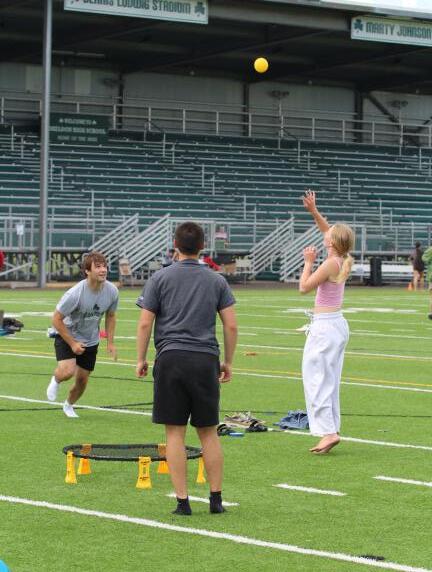
(L to R) Srs. Luke Smith, Andrew Brown, and Londyn Miller playing Spikeball at Seniors’ Last Recess.












The Best Parts of Summer Break
Sophomore Wudi Auld enjoys the hot weather of the summer. “I just can’t do the cold, and like, even when it’s warm, I get cold,” said Auld.
Summer is one of the most anticipated times of year for many, including freshman Londyn Nash.“My favorite part of summer break is being out in the sun and being warm… I just love having no stress and enjoying nature,” said Nash.
Nash enjoys spending time outside and appreciating moments with her family. “My favorite 4th of July tradition is going to my family members’ pool…We all eat burgers and then let off fireworks,” said Nash. 4th of July is one of the most anticipated parts of the summer with over 85% of Americans celebrating, and over 400 million pounds of fireworks consumed each year.
Auld expressed that she likes to be comfortable in her clothes and be able to add layers if she gets too cold. “I like hanging out with my friends, making s’mores, and playing music,” said Auld. Summer is one of the best times of year to be able to hang out with friends, and bonfires are a popular activity during this season.
Junior Sasha Guillen describes her favorite activities to do with friends in the summer. “We typically go to lakes, the mall, hang out at houses, or have sleepovers,” said Guillen. Although many days in the summer can be uneventful, there is a lot of time to make memories with friends.
photo by Greg Cantwell
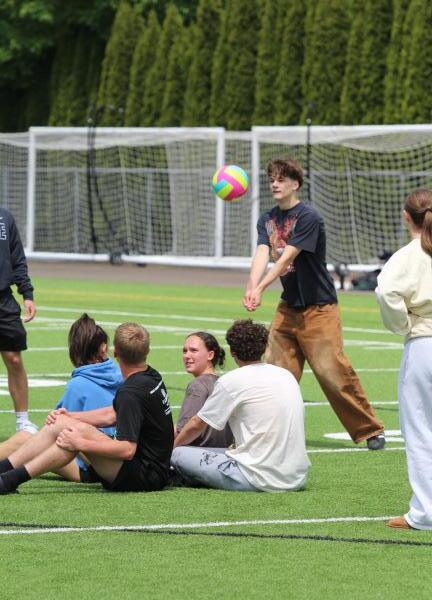
Simeon Gaines (Sr.) playing volleyball at Seniors’ Last Recess.
Claire Green staff writer
graphic by Khaya Ainis-Michael
photo by Greg Cantwell
Run by students, for students.
Front page editor.....................................Claire Craig
The Word is Music! pg.2 editor.................Jessica Fitch
Seniormaxxing pg.3 editor.......................Claire Craig
Livin’ the Dream pg.4 editor.................Andrew Cottle
POV: You Go to Sheldon pg.5 editor.......Lizzy Cantwell
Senior Map pg.6-7 editor.............Khaya Ainis-Michael
Fight Song pg.8 editor........................Aiden Gonzales
Staff Writers:
Ryley Bainter
Hewson Baldwin
Andrew Brown
Janeza Carrillo
Chloe Crook
Isabella Curtiss
Thomas
Genius Mode pg.9 editor.......................Maxwell Berry
On the Rise pg.10 editor................Fateen Anzum Anto
104 Days pg.11 editor...................Khaya Ainis-Michael
Backpage editor......................................Jessica Fitch
Editors-in-chief...........................Khaya Ainis-Michael, Claire
and Jessica Fitch
Staff Adviser.........................................Greg Cantwell
Tali Ritchie-Tuisue
Matthew Schuck
Ronan Sterling
Parks
Carmen Uria Carrillo
Sergio Vicente
Kennedy Zuniga
Michael

Aiden
Jessica Fitch
Andrew Cottle
Maxwell Berry
Lizzy Cantwell
backpage photo by Greg Cantwell