Ganesh Chaturthi Food & Puja Guide: Modaks, Prasad, Samagri, Decorations & Traditions
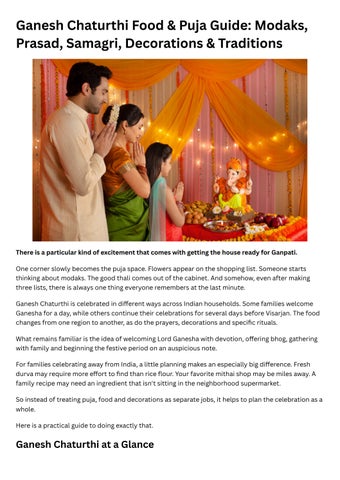
There is a particular kind of excitement that comes with getting the house ready for Ganpati. One corner slowly becomes the puja space. Flowers appear on the shopping list. Someone starts thinking about modaks. The good thali comes out of the cabinet. And somehow, even after making three lists, there is always one thing everyone remembers at the last minute. Ganesh Chaturthi is celebrated in different ways across Indian households. Some families welcome Ganesha for a day, while others continue their celebrations for several days before Visarjan. The food changes from one region to another, as do the prayers, decorations and specific rituals. What remains familiar is the idea of welcoming Lord Ganesha with devotion, offering bhog, gathering with family and beginning the festive period on an auspicious note. For families celebrating away from India, a little planning makes an especially big difference. Fresh durva may require more effort to find than rice flour. Your favorite mithai shop may be miles away. A family recipe may need an ingredient that isn't sitting in the neighborhood supermarket. So instead of treating puja, food and decorations as separate jobs, it helps to plan the celebration as a whole. Here is a practical guide to doing exactly that.
Ganesh Chaturthi at a Glance
Ganesh Chaturthi, also called Vinayaka Chaturthi, celebrates Lord Ganesha and traditionally falls during the Hindu month of Bhadrapada. Celebrations may continue for up to ten days and conclude with the immersion or Visarjan of the Ganesha idol. In 2026, Ganesh Chaturthi falls on Monday, September 14 in the United States. The festival is not a U.S. federal public holiday. Puja timings are location-specific rather than universal. For example, Panchang calculations for New York and California give different Madhyahna puja windows. Families should therefore check the Panchang for their own location rather than copying a muhurat calculated for India or another U.S. city. If you need the festival date, local timing guidance and 2026-specific information, see the separate Ganesh Chaturthi 2026 in the USA guide.
What Do You Actually Need for Ganesh Chaturthi at Home? Start with four groups instead of one enormous shopping list: Puja
Bhog & Food
Decorations
Practical Items
Ganesha idol
Modaks
Flowers
Matchbox/lighter
Chowki/platform
Fruits
Toran
Serving bowls
Kumkum & turmeric
Coconut
Rangoli supplies
Containers
Flowers & durva
Other sweets
Decorative cloth
Cleaning supplies
Diya & wicks
Meal ingredients
Diyas/lights
Prasad plates
Incense/dhoop
Dry fruits
Backdrop
Extra napkins
Camphor
Panchamrit ingredients
Garlands
Storage boxes
Puja thali
Ghee
Bells/decor
Trash bags
This simple division makes festival essential shopping much easier because you can immediately see what needs to be bought early and what should wait until closer to the puja. Packaged groceries, décor and most puja supplies can usually be arranged ahead of time. Flowers, fruit and other fresh ingredients are better purchased closer to the celebration.
What should you prepare before the puja begins? A surprising amount of festival-day stress comes from tiny things.
Wash and dry the puja utensils. Put kumkum, turmeric and other small offerings into bowls. Fill the diya. Keep the lighter nearby. Wash fruits and flowers where appropriate. Prepare your prasad serving dishes before the ceremony begins. Once the puja starts, you shouldn't have to search the kitchen for cotton wicks.
Why Is Durva Offered to Lord Ganesha? Durva grass has a long-standing place in Ganesha worship and is commonly included among traditional offerings. For families outside India, it can also be one of the harder fresh items to source. If durva is part of your family's practice, don't leave it until the morning of the festival. Ask your local temple, Indian grocery store or community group about availability beforehand. The same principle applies to specific flowers, leaves or other fresh ritual items your family traditionally uses.
Modak: The Sweet at the Heart of Ganesh Chaturthi Ask someone to name a Ganesh Chaturthi sweet and chances are "modak" will come first. Modak is traditionally associated with Lord Ganesha and occupies an important place in the festival's bhog and prasad. But even modak isn't one fixed recipe. Families make and enjoy several versions.
Ukadiche Modak This is perhaps the version most closely associated with Maharashtrian Ganesh celebrations. The outer covering is prepared from rice flour, while the traditional filling combines coconut and jaggery, often flavored with cardamom. The modaks are then steamed. The ingredient list looks simple: Rice flour Coconut Jaggery Cardamom Ghee The technique is where things get interesting. Getting the rice dough soft enough to shape without cracking takes practice, which is why modakmaking often becomes a family activity rather than simply another recipe on the menu.
Fried Modak Fried modaks offer a crisp alternative to the steamed version. The shell and preparation vary by recipe, while the center generally contains a sweet filling.
They are useful when you want something that can be prepared ahead and stored more easily than freshly steamed modaks.
Mawa Modak Mawa or khoya gives these modaks a dense, rich texture. Cardamom, saffron, pistachios, almonds and other nuts can be added depending on the recipe. These are closer to mithai in texture and are also convenient when elaborate steaming isn't practical.
Dry-Fruit and Contemporary Modaks Today's festive sweet boxes can include everything from dry-fruit and kesar-pista modaks to chocolate variations. Traditional recipes may remain the center of the celebration, but there is nothing unusual about families adding newer flavors to the table, particularly when children are involved. The result is often the best kind of festival menu: grandmother's recipe sitting next to something the kids specifically asked for.
What Is Prasad During Ganesh Chaturthi? Prasad is food that has first been offered to the deity and is then respectfully shared with devotees, family members and guests. That distinction matters. A festive dish doesn't automatically become prasad simply because it is served on Ganesh Chaturthi. The offering of food or naivedya during worship is what gives it its devotional context. Modaks are strongly associated with the festival, but the offering can also include fruits, coconut, ladoos, kheer, puran poli or other foods according to household tradition.
What Food Is Traditionally Made for Ganesh Chaturthi? There is no universal Ganesh Chaturthi menu. That's part of what makes festival food interesting. A Maharashtrian table may feature ukadiche modak and puran poli, while another household may prepare ladoos, kheer, rice dishes, poori with vegetables, coconut-based sweets or its own regional favorites. Common choices include: Sweets Ukadiche modak Fried modak Mawa modak Ladoo
Kheer Puran poli Shrikhand Coconut sweets Savory dishes Poori with vegetable preparations Rice dishes Regional vegetarian dishes Homemade snacks Simple offerings Bananas or other fruits Coconut Dry fruits Homemade sweets Rather than trying to cook everything associated with the festival, choose a menu your household can comfortably prepare. A smaller menu cooked with care usually works better than spending the entire celebration rushing between burners.
A Simple Ganesh Chaturthi Menu for Home If you're unsure where to begin, build the menu around one centerpiece. For example: For the offering: Steamed modaks + fruit + coconut For the meal: Puri + potato or another family-style vegetable + rice + dal For something sweet: Kheer or your family's favorite mithai For guests: A simple savory snack + chai That's already a complete festive spread. If you're expecting a larger group, add dishes based on how easily they can be prepared and served rather than simply making the menu longer.
Homemade Modaks or Store-Bought: Which Is Better? Whichever allows you to enjoy the festival.
Homemade modaks carry family recipes and the fun of preparing something together. Store-bought sweets can save several hours when Ganesh Chaturthi falls on a working day or you're hosting guests. Many families do both: prepare a small batch at home for bhog and order additional mithai for visitors. If you're buying sweets, check ingredients when dietary restrictions or allergies matter, and confirm delivery or pickup early during busy festival periods.
How to Set Up a Ganesh Chaturthi Puja Space You don't need an elaborate mandap. Choose a clean part of the home where the idol can remain undisturbed. Place a chowki or raised platform and cover it with a clean decorative cloth. The idol can then become the visual center of the setup. Build outward from there rather than filling every available surface. Flowers around the backdrop, a small rangoli near the entrance, a toran and a few diyas can create a festive setting without making the space crowded.
Simple decoration ideas Try combining a few of these: Fresh flower garlands Marigold-style décor Toran Rangoli Diyas Fairy lights Decorative fabric Paper decorations Bells Reusable floral strings A simple backdrop If you're celebrating with children, give them something they can actually make. Paper flowers, handdrawn signs, rangoli or a small decorative garland can make them feel part of the preparation. Perfect symmetry is optional.
Eco-Friendly Decoration Ideas Festival decorations don't necessarily need to become festival waste. Reusable fabric backdrops, metal diyas, existing brass décor, natural flowers and decorations stored for future years can all reduce disposable material.
For rangoli, families can choose traditional powders or materials appropriate to their home and local disposal requirements. The same thought can go into choosing an idol, particularly if you intend to perform immersion. Before Visarjan, check the rules in your area or follow arrangements provided by a local temple or community organization. What works in India may not be appropriate for a local lake, river, beach or public waterway in the United States.
What Happens During Ganesh Chaturthi Puja? The exact ceremony varies, but a home celebration generally moves through a few recognizable stages.
1. Preparing the Space The puja area is cleaned and the chowki, cloth, idol and samagri are arranged.
2. Ganesha Sthapana Lord Ganesha is welcomed and the idol is installed according to the tradition followed by the household.
3. Puja and Offerings Flowers, durva and other traditional items may be offered along with prayers or mantras.
4. Naivedya or Bhog Food prepared for the occasion is offered before it is shared as prasad.
5. Aarti Family members gather for aarti and prayers.
6. Prasad After the offering, prasad is distributed among family and guests. Families following a specific regional ceremony or priest-led puja should follow those instructions rather than treating a general online sequence as a replacement for their tradition.
What Happens During the Days After Sthapana? Ganesh Chaturthi isn't necessarily limited to one morning. Some households keep Ganesha for a shorter period, while others observe the festival for several days. During that time, families may perform daily puja and aarti, prepare bhog, invite relatives and friends, visit temples or attend community celebrations. Eventually comes Visarjan—the farewell to Ganesha.
It is one of the most emotional parts of Ganeshotsav. The celebration that began with welcoming Bappa ends with prayers, gratitude and the hope of welcoming him again. In 2026, Anant Chaturdashi and the final Ganesh Visarjan fall on September 25th.
A Quick Checklist Before Bappa Arrives Before you call the preparation finished, check five things: Puja: Is the idol, thali and necessary samagri ready? Bhog: Do you have your modaks or ingredients for the offering? Meal: Is there an actual plan for what everyone will eat afterward? Décor: Is the puja space ready without blocking normal movement around the house? Fresh items: Have you arranged flowers, durva, fruit and coconut? If those five are covered, you are probably in good shape.
Frequently Asked Questions What are the main items needed for Ganesh Chaturthi puja? A typical home puja may include a Ganesha idol, chowki, clean cloth, flowers, durva, kumkum, turmeric, sandalwood, diya, cotton wicks, incense, camphor, fruits, coconut and food for naivedya. Requirements vary by family and regional tradition.
What food is offered to Lord Ganesha? Modak is the food most strongly associated with Ganesh Chaturthi. Families may also offer fruits, coconut, ladoos, kheer, puran poli, dry fruits and other traditional preparations.
Which modak is traditionally made for Ganesh Chaturthi? Ukadiche modak is particularly associated with Maharashtrian celebrations. It is a steamed sweet with a rice-flour covering and a filling traditionally made from coconut and jaggery.
Can I buy modaks instead of making them at home? Yes. Families can prepare modaks at home or buy them from an Indian sweet shop. What is offered during the puja ultimately depends on the household's traditions and preferences.
How should I decorate for Ganesh Chaturthi at home? A simple setup can include a clean backdrop, flowers, toran, rangoli and diyas around the puja area. Reusable fabric, existing brass décor and handmade decorations can keep the setup simple and reduce waste.
Where can I find Ganesh Chaturthi essentials in the USA?
Depending on your location, puja supplies, Indian groceries, mithai and festive ingredients may be available through Indian grocery stores, sweet shops, temples and online Indian marketplaces. It is worth arranging harder-to-find fresh items such as durva and specific flowers ahead of time.