
VLSI & Embedded Systems
Devices & Materials
Communications & Signal
Processing
Power & Control
RF and Microwave
Assistant Professor Department of Electrical Engineering
Development of GaN-FET Based HighEfficiency Bidirectional DC-DC Converter with Zero Input Current Ripple for PV Application
Funded by DST-SERB (Govt. of India)
Power electronics DC-DC converters are an integral part of PV energy conversion systems. The DC-DC converter used in PV storage system should have bidirectional power flow capability The main objective of this project is to develop a new topology of non-isolated bidirectional DC-DC converter using coupled Inductor and GaN-FET switches
Assistant Professor Department of Electrical Engineering
Hardware Prototype and ASIC
Implementation of Efficient Digital Beamformer for Onboard Processing in Satellites
Funded by Anusandhan National Research Foundation (ANRF), Government of India
This project focuses on the design and development of efficient digital beamforming architectures for satellite onboard processing. The work involves FPGA-based prototyping using RFSoC platforms and ASIC implementation. The objective is to enable low-latency, high-throughput, and power-efficient signal processing for nextgeneration satellite communication systems.
Assistant Professor Department of Electrical Engineering
B. Tech in Electrical and Computer Engineering
Mr. Risshi Kamalesh, Mr. Musham Varun
Mentor: Dr. Rakesh Palisetty
B. Tech in Electrical and Computer Engineering
Event : FPGA Hackathon 2026 at BITS Pilani-Hyderabad Campus
FPGA-Based Extreme Learning Machine Accelerator for Real-Time Energy Prediction
Final-year Electrical and Computer Engineering students Risshi Kamalesh and Musham Varun achieved 4th place at the All India FPGA Hackathon 2026, hosted by BITS Pilani, Hyderabad Campus in collaboration with the IEEE Student Branch and supported by AMD (Xilinx). Their project presents an FPGA-based Extreme Learning Machine (ELM) accelerator for real-time household energy prediction, delivering low-latency inference, high accuracy, and optimized hardware utilization, and demonstrating the effectiveness of FPGA-driven machine learning for energyefficient intelligent applications.
Assistant Professor Department of Electrical Engineering
Performance Evaluation and Optimization of Battery-assisted Low Power IoT Communication Nodes for Ultra Reliable Low Latency Communication (URLLC) Systems
ANRF under PM ECRG grant
The primary objective of this project is to analyze system performance and design optimal resource-allocation techniques tailored for ultra-reliable low-latency communication (URLLC) applications operating on low-power machine-type devices (MTDs). The project seeks to establish a robust framework that improves both efficiency and reliability across these emerging communication environments.


Environmental Engineering
Water resources
Transportation engineering
Building physics
Geotechnical and Structural
Engineering
Associate Professor
Principal Investigator
Associate Professor
Co-Principal Investigator
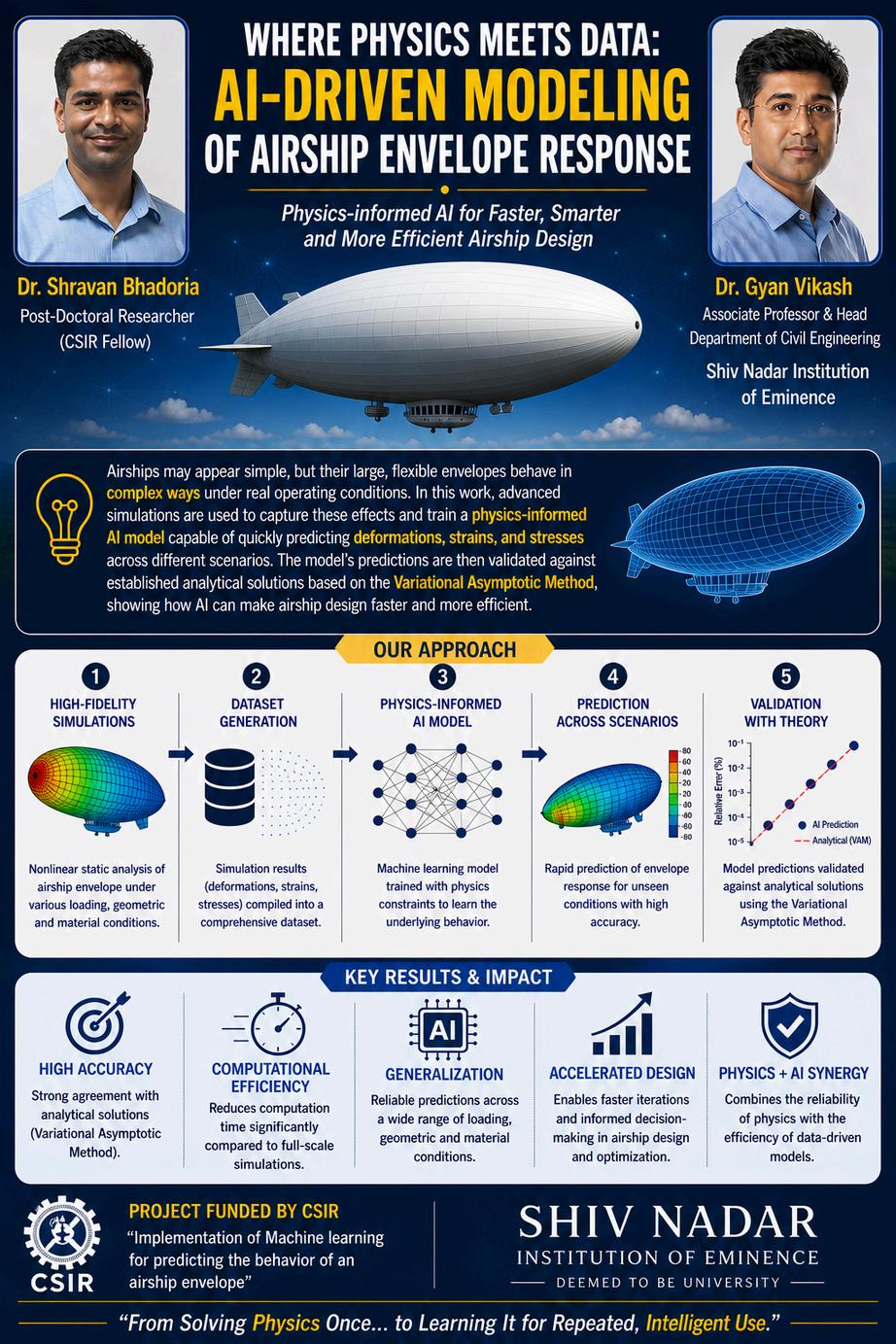
This study has historical significance as lime is a historic construction material. This knowledge transfer empowers communities to make informed decisions about heritage conservation, restoration projects, and sustainable construction practices Provides the interaction of historic lime at an atomic level under different aggressive environment. The project's findings serve as valuable educational resources for architects, engineers, conservationists, and heritage professionals.

Communication Network
Dr. Sonia Khetarpaul
Associate Professor
Dr. Suchi Kumari Professor Rajib Mall
Assistant Professor
Senior Professor and Head of the Department
Voice-based AI Healthcare Assistant: Automating Forms, Inquiries, and Initial
Funded by: Council of Science & Technology, Uttar Pradesh, 2025
India's healthcare system faces severe bottlenecks during patient registration and symptom assessment due to high patient volumes, resource constraints, and language and literacy barriers. To address these challenges, this research proposes an AI-driven, voice-assisted mobile application. Leveraging Natural Language Processing, Machine Learning, and Large Language Models, the app interacts with patients in regional languages like Hindi. The project has three main objectives: automating patient form completion via voice input, generating an initial diagnosis based on reported symptoms, and providing a voice-based query assistant to answer questions about medical tests and appropriate specialists. This system streamlines operations and assists busy healthcare professionals
Dr.
Undergraduate
Student Associate Professor
Published in: Scientific Reports, Springer Nature, 2025
Language barriers limit financial literacy and banking access in multilingual regions. To address this, we developed a privacy-focused banking assistant supporting English, Hindi, and Hinglish. Powered by a Mixtral AI model and Google Translate, the system processes natural language queries and offers real-time translation. It supports voice input and output for easier interaction, assisting users with account services, fixed deposits, credit cards, and fund transfers without storing private conversations. Evaluated by 50 participants across 100 conversations, this voice-enabled assistant demonstrates how conversational AI can overcome language barriers, enhance user privacy, and promote greater financial inclusion and customer satisfaction.
Undergraduate Student Associate Professor Undergraduate Student
Voice-based AI Healthcare Assistant: Automating Forms, Inquiries, and Initial Diagnosis
Published in: Knowledge and Information Systems, Springer Nature, 2026
Addressing gender bias in Large Language Models (LLMs) is crucial for promoting fairness and trust. This research evaluates and mitigates biases in LLMs using Hindi and English prompts. We applied specialized metrics—Disparity Index, Idea Consistency Score, Thematic Consistency Score, and Zero-Shot Classification—to detect disparities across sensitive factors. To mitigate identified biases, we employed prompt engineering and Low-Rank Adaptation (LoRA) fine-tuning. Prompt engineering reduced polarized responses by 40% and improved positive portrayals by 45%. LoRA fine-tuning achieved further bias reductions: 39.6% for gender, 27.8% for race, and 10.6% for socioeconomic factors, alongside a 19.7% increase in positive portrayals, demonstrating effective mitigation and promote greater financial inclusion and customer satisfaction.
Dhruv Mishra
Dr. Suchi Kumari Undergraduate Student Assistant Professor
ORBIT-Optimized Resource Balanced Intelligent Task
Scheduling in Cloud Datacentres Leveraging Weighted A3C Deep Reinforcement Learning
Published in: 2026 40th International Conference on Information Networking (ICOIN)
Date of Conference: 14-16 January 2026, DOI: 10.1109/ICOIN68469.2026.11480595
Cloud data centres demand adaptive, efficient, and fair resource allocation techniques for heterogeneous scientific workflows with complex task dependencies We propose ORBIT (Optimised Resource Balanced Intelligent Task Scheduling), a novel framework that leverages Weighted Actor-Critic Deep Reinforcement Learning to continuously learn from the environment and incorporates a multi-objective reward structure that balances QoS, fairness, priority, deadline compliance, and energy consumption while respecting task dependencies. The algorithm ensures fair resource distribution while prioritizing high-priority tasks and maintaining QoS guarantees. The lightweight, scalable architecture ensures feasibility for large-scale deployments. Extensive experiments using real-world scientific workflow traces demonstrate that ORBIT consistently outperforms traditional and reinforcementlearning baselines across varying workflow sizes and complexities
Arham Jain
Dr. Suchi Kumari
Undergraduate Student Assistant Professor
Published in: 2026 18th International Conference on COMmunication Systems and NETworks (COMSNETS)
Date of Conference: 06-10 January 2026, DOI: 10.1109/COMSNETS67989.2026.11418217
Efficient workflow scheduling in cloud environments remains a critical challenge due to the trade off between performance (minimizing execution time) and operational cost. In this work, we propose a hybrid scheduling algorithm, HGSA, that leverages Heterogeneous Earliest Finish Time (HEFT) to establish task priorities and a refined Gravitational Search Algorithm (GSA) to optimize container assignments. Our approach seeds the GSA population with the HEFT solution and combines a simulated-annealing-inspired local search to escape local optima. We extend the makespan-only objective by incorporating a model that accounts for both computation and inter-container communication. Through various experiments on benchmark scientific workflows executed on a Kubernetes cluster, we demonstrate that our approach reduces average makespan compared to HEFT, vanilla GSA, and PSO. These results highlight the effectiveness of combining task-level heuristics with population-based metaheuristics for sustainable, high-performance cloud scheduling.
Aman Sagar
Dr. Suchi Kumari Undergraduate Student Assistant Professor
Published in: Signal, Image and Video Processing Journal, Springer Nature 2025
DOI: https://doi.org/10.1007/s11760-025-04314-1
EfAn increasing number of classification approaches have been developed to address the issue of image rebroadcast and recapturing, a standard attack strategy in insurance frauds, face spoofing, and video piracy. However, most of them neglected scale variations and domain generalization scenarios, performing poorly in instances involving domain shifts, typically made worse by inter-domain and cross-domain scale variances. To overcome these issues, we propose a cascaded data augmentation and SWIN transformer domain generalization framework (DAST-DG) in the current research work. Initially, we examine the disparity in dataset representation. A feature generator is trained to make authentic images from various domains indistinguishable. This process is then applied to recaptured images, creating a dual adversarial learning setup. Extensive experiments demonstrate that our approach is practical and surpasses state-of-the-art methods across different databases. Our model achieves an accuracy of approximately 82% with a precision of 95% on highvariance datasets

Smart materials & Advanced manufacturing Intelligent systems & computational mechanics
Green Technologies
Energy and Environment
Energy & multi-functional materials
Soft robotics
Dr. Divya Shrivastava Vinayak Gurav
Professor and Head Department of Mechanical Engineering Research Scholar
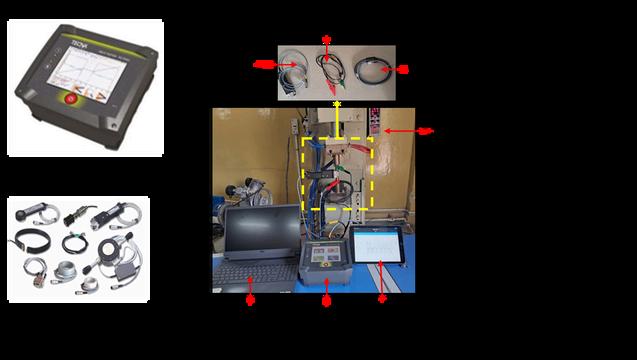
Real-Time Monitoring, Anomaly Detection and Prediction of Weld Joint Quality in Resistance Spot Welding of DP980 Steel Using Machine Learning.
A real-time monitoring framework for Resistance Spot Welding (RSW) by integrating in-situ process signals with machine learning models for accurate weld quality prediction. The approach enables efficient, non-destructive defect detection and quality assurance in automotive advanced high-strength steel welding. highstrength steel welding.

Dr. Harpreet Singh Arora Arpit Thomas
Professor Department of Mechanical Engineering
High Performance Electrocatalysts for Anion-Exchange Membrane Electrolyzer Through Acoustic Cavitation
High-Performance Electrocatalysts for Anion-Exchange Membrane
Electrolyzers through Acoustic Cavitation ACS Applied Materials and Interfaces, 2025, https://doi.org/10.1021/acsami.4c21071
Professor Department of Mechanical Engineering
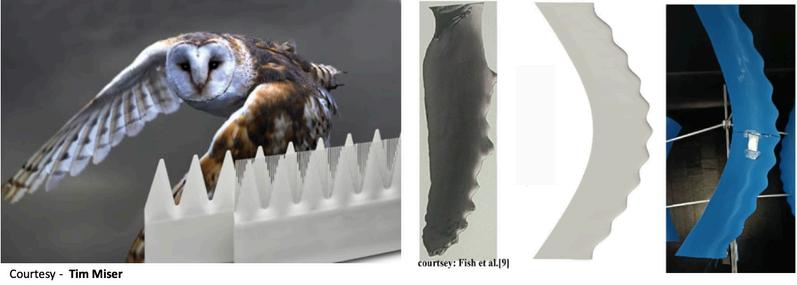
In a remarkable demonstration of innovation and research excellence, undergraduate students have produced work of patentable significance and peer-reviewed journal papers.
Agaash SB, Armaan B, Punit P., Santanu M., A Blade for Darrious Type Wind Turbine, Patent filed, Application No. 202611032283, filed on 17/03/2026
Punit P., Leela P., Mitra S., An experimental investigation of novel bio-inspired curved bladed VAWTs having leading-edge tubercles for enhanced power production, Sadhana, Indian Academy of Science Journal, Springer
Harpreet Singh Grewal
Professor Department of Mechanical Engineering
Harender Sinhmar
Associate Professor Department of Mechanical Engineering
Performance Assessment of Conical Solar Stills Integrated with N-Identical PVT-CPC
This study assesses conical solar stills integrated with N-identical PVT-CPC collectors to enhance freshwater yield and energy output. The integrated system utilizes solar energy efficiently, contributing to sustainable development goals by addressing water scarcity through renewable, clean energy-driven desalination.
Publications:
1 Development of characteristic equations of conical solar still by incorporating N identical concentrator col-lectors with/without photovoltaic panel: A comparative investigation, https://doi.org/10.1016/j.desal.2024.117621; Desalination 582 (2024) 117621
1 Assessment of Conical Solar Stills Empowered by N-Replicated Partially Shaded PVT-CPC Collectors: Unveiling Exergo-Enviro-Economic Dynamics, Productivity and Co-generation Efficiency, https://doi.org/10.1115/1.4067040; J Sol Energy Eng. (2024) 1–36
1 Analyzing the influence of water depth on active conical solar still performance. https://doi.org/10.1007/s12206-025-2109-x ;J Mech Sci Technol 39, 1681–1688 (2025).
Ponniah
Associate Professor Department of Mechanical Engineering
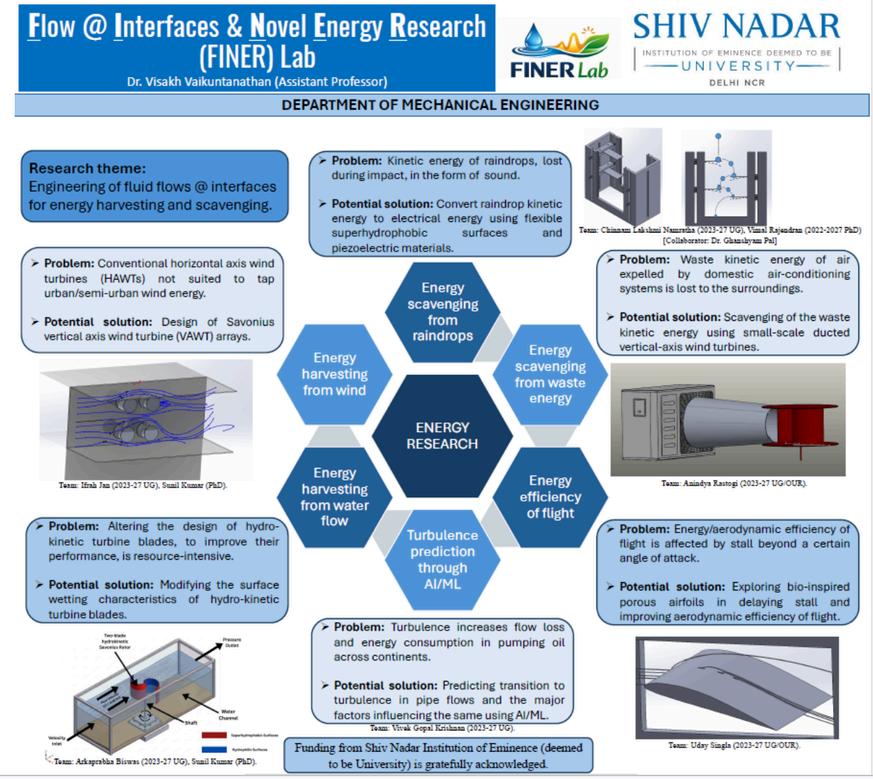
Dr. Visakh Vaikuntanathan
Assistant Professor Department of Mechanical Engineering
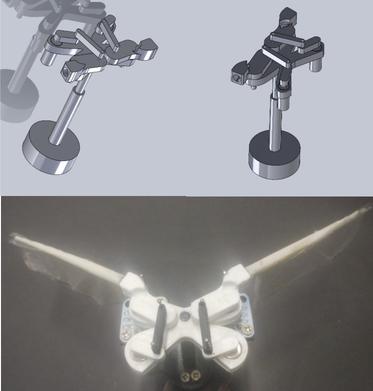
Hummingbird inspired robot
Robot inspired by the hummingbird is studied from different perspectives such as kinematics, wing design, control system etc.
As a result, better lift characteristics and control have been achieved. Techniques such as genetic algorithm, reduced order modeling etc were used.
Dr. Ankit Gupta Shardul Rai
Associate Professor Department of Mechanical Engineering
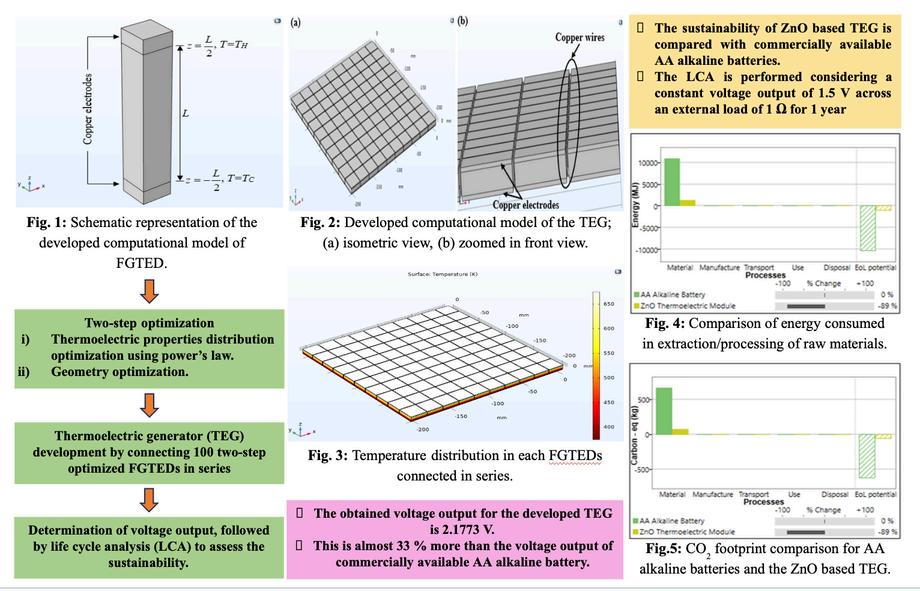
ZnO based thermoelectric generators as eco-friendly alternatives to alkaline batteries: Design, optimization, and life cycle analysis
Dr. Visakh Vaikuntanathan
Assistant
Professor Department of Mechanical Engineering
Associate Professor Department of Mechanical Engineering
Development of Nanofluid Based
Evacuated Tube Solar Collector (ETSC) for Efficient Solar Heating Applications
Projects undertaken by: (PI)
Btech student: Saim H Naqvi
PhD Student: Tanweer Raza
Solar energy can be converted in to heat energy for low temperature applications by using an efficient system called evacuated tube solar collectors (ETSCs). This work focuses on developing more efficient heating system using nanofluid as working fluid instead of water and verifying the economic feasibility of the same
Meha Bhogra
Assistant Professor Department of Mechanical Engineering
Interplay of Electronic and Magnetic Structure, and Emergent Electronic
Localization in Bimetallic Transition Metal Oxide: First-principles study
We present a comprehensive study of synergies between magnetic configuration and electronic structure of a transition metal oxide, NiMnO3, with emphasis on the electronic localization emerging from electronic correlation and magnetic effects. We understand the collinear and non-collinear magnetic ordering, and compute the exchange coupling constants, that establish a rather stronger in-plane coupling and weaker out-of-plane magnetic coupling. Spin-orbit coupling further splits the electronic states, resulting in enhanced localization of electronic states, and nondispersive bands, lowering the electronic kinetic energy. The stronger 3d-2p hybridization, however, is responsible for electronic mobility in NiMnO3, making it a promising material for multiferroic and electrochemical applications.

Dr. Harpreet Arora
Professor Department of Mechanical Engineering
Stanford University’s 2025 World’s Top 2% Scientists list, Stanford University, 19 September 2025
Dr. Harpreet Grewal
Professor Department of Mechanical Engineering
Stanford University’s 2025 World’s Top 2% Scientists list, Stanford University, 19 September 2025
Dr. Visakh Vaikuntanathan
Assistant Professor Department of Mechanical Engineering
Summer Research Fellowship (Teachers) of the Indian Academy of Sciences-Indian National Science Academy-National Academy of Science India (IAS-INSA-NASI) 2025
Dr. Harpreet Grewal
Professor Department of Mechanical Engineering
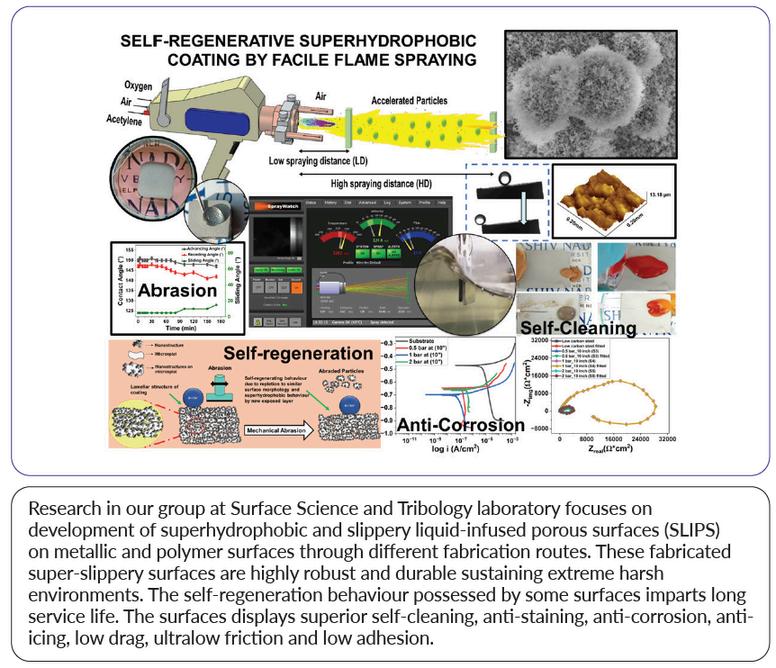
IOCL-sponsored project titled "Modification of Electrode Surface by Flame Spraying”
Dr. Visakh Vaikuntanathan
Assistant Professor Department of Mechanical Engineering
MoU with Specrule Scientific Pvt. Ltd. on optical measurement techniques for energy and environment.
Dr. Ganeshthangaraj Ponniah
Associate Professor Department of Mechanical Engineering
Consultancy from HCL Tech, “Wearables testing.”
Associate Professor Department of Mechanical Engineering
Assistant Professor Department of Mechanical Engineering
Consultancy projects with Dassault Systèmes and Arihant Electricals