


Diamonds are forever – as the song goes....and this year Shine is celebrating our 60th anniversary so welcome to this special edition.
As well as our usual news, updates, events and member stories, you’ll find a 4-page pull out in the centre with reflections on how far treatments and technology have come over the past six decades. There is also a message from our Royal Patron, HRH The Duchess of Gloucester.
As we mark our 60th anniversary, it is important to reflect not only on how far we have come, but on the foundations that made this progress possible. These foundations are you - our members, your families, our trustees, our volunteers, the
professionals who give their time and expertise, and our fundraisers and supporters, and Shine’s staff.

As a community, we continue to work together, with shared knowledge, on-going persistence, and a determination to make a difference to the lives of people living with spina bifida and / or hydrocephalus, normal pressure hydrocephalus, and associated conditions.
Shine would not exist if we didn’t have you to shape and support our services.
With my heartfelt thanks


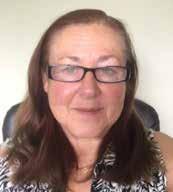
Gill Yaz, our Head of Health, has retired after working for Shine since Sept 1995.
Over that time, Gill has dedicated much of her life to supporting and advising members of all ages, and from all walks of life, their families, and professionals.
From help in planning pregnancies, supporting parents-to-be to navigate news of diagnoses of neural tube defect pregnancies, talking through complex health conditions with members to keep healthy, and look after oneself by finding practical solutions, and contributing to extensive research, Gill's specialist knowledge, insight and experience is second to none. Our members, and we at Shine, have been very lucky to have her as part of the team.
Thank you, Gill, for being such a great support and advocate for Shine members, and for others from across the world throughout your long and impactful career.
Who will lead Health now?
Lindsey Reid has taken on the Head of Health role.
Lindsey has been Shine’s Deputy Head of Health for the past 3 years. As part of Shine’s plan for succession, Lindsey has been working closely with Gill Yaz to develop her knowledge and skills, ready to take on the role. Congratulations, Lindsey!
International Wheelchair Day, held on 1st March 2026, was founded in 2008 by Steve Wilkinson, a wheelchair user with spina bifida who championed better mobility and global awareness. His aim was to celebrate the positive impact of wheelchairs and highlight the ongoing need for improved access worldwide.
Our 1000 Voices survey showed that major mobility changes for people with spina bifida often occur around age 35 - whether beginning to use a wheelchair or switching from manual to powered mobility.

Having the right wheelchair is vital, and at Shine we understand the significant impact when it isn’t.
Shine’s Health Team – our Physiotherapist, and our Occupational Therapist - can advise on wheelchair needs, staying active, and managing related changes such as bowel function or mood.
For support, contact the Health Team at firstcontact@shinecharity.org.uk or 01733 555988.

Join us at our online and in-person events to connect with other members. From social and support groups to information sessions for adults, and fun activities for teens and special events for Little Stars, and parents and carers - there’s something for everyone in our Shine events!
Check out what's coming up and also to book your place - visit www.shinecharity.org.uk/events, Questions? Get in touch via firstcontact@shinecharity.org.uk
Shine On Pain
A 7-week online programme focusing on chronic pain and self-management strategies.
Next course:
6th May – 17th June Weekly 10.30am to 12pm
Dates for your diary for 2026

Shine's 60th Anniversary All year!

NPH Awareness Week 18th- 24th May 2026
Osteoporosis Awareness Month
Bladder Cancer Awareness Month
Look out for important information and help raise awareness!

Go Yellow for Shine Friday 19th June 2026
Shine On Wellbeing
A 5-week online programme, focusing on your mental wellbeing and different strategies that can help you.
Next course:
24th July – 21st August Weekly 11am to 12.30pm


Spina Bifida Awareness Week 19th – 25th October 2026


If you would like to discuss this with the health team to see if this might be right for you, please get in touch at firstcontact@shinecharity.org.uk or 01733 555988.
In the Winter 2025 edition of Shine’s Together magazine we shared that we were delighted to have attended the Society for Research into Hydrocephalus and Spina Bifida (SRHSB) annual meeting remotely in August 2025.
The theme, “Bridging Innovation and Collaboration: Advancing Care in Hydrocephalus and Spina Bifida,” reflected SRHSB’s dedication to multidisciplinary teamwork, cutting-edge research, and translational science that directly impacts patient lives.
The lectures and abstract presentations covered a wide range of topics, from the molecular origins of neural tube defects (NTDs) and hydrocephalus to prevention efforts, novel therapeutic approaches, and lived experiences. The theme of connecting

innovation and collaboration was strongly evident throughout; many of the presented studies were crossdisciplinary, and the benefits of pooled expertise were clear in the high standard and originality of the work.


Read our research blog for a full breakdown of the topics covered: https://tinyurl.com/5f6j997s

Shine members living with hydrocephalus frequently report concerns about difficulties accessing prompt and appropriate care for suspected shunt malfunction, so we decided to investigate the scale and nature of the problems.
We had 262 responses to a survey to our members with shunt-treated hydrocephalus and parents/carers of those with hydrocephalus, about the care they have received in the last five years for shunt failure. There were varied experiences, highlighting significant challenges in accessing prompt and appropriate emergency care for suspected shunt failure.
The results told us that:
• Half of those, who sought care for suspected shunt malfunction, were indeed experiencing one - making the delays and dismissals many reported even more unacceptable.
• Specialist neurosurgical teams were generally well regarded for their expertise and compassionate care. However, many pointed to non-specialist accident and emergency departments and GPs as the main barriers to effective care.
• There are frequent delays in investigation or referral. Many described distressing experiences of being doubted or dismissed, and past trauma led some to delay seeking care until their symptoms became severe.
• Long wait times, lack of specialist knowledge, and inefficient care pathways are primary barriers to timely care.
• Inconsistent care, poor follow-up, and inadequate long-term management and support were also highlighted as concerns.
• Once admitted and seen by specialist teams, most respondents rated their overall emergency care for shunt failure positively. Key aspects of good care included swift diagnosis, clear communication, and direct access to neurosurgical advice.
• Direct access to neurosurgical services rather than through local accident and emergency departments, and better care coordination were cited as key improvements needed.
• Training in hydrocephalus and shunt malfunction for non-specialist healthcare staff we identified as a need.
• Shine Shunt Alert Cards were valued for improving communication about individual needs.
Shine will use the results of the survey to influence and improve statutory services so that patients with shunt-treated hydrocephalus receive timely, informed, and compassionate emergency care.
Shine’s new Hydrocephalus Hospital Passport focuses on health and care needs relevant to members living with hydrocephalus, giving more space to record information about your shunt and information about surgeries.

A hospital passport can be helpful for adults and anyone supporting a child in hospital, as not only will you be feeling unwell if you are attending hospital, but are also likely to be feeling anxious or overwhelmed, which can make it difficult to remember or explain important information. Completing a hospital passport ahead of time ensures key details are clearly written in one place and can be easily shared with medical staff, helping them understand your needs and provide the best possible care.
Download your passport at www.shinecharity.org.uk/passports
Save it to your phone or tablet or print it at home. Remember to update your passport if anything changes to ensure the information is up to date.
Our new online Zoom group ‘Living Well with Hydrocephalus’ launched during Hydrocephalus Awareness Week. The focus of the first session was fatigue as so many of our members with the condition raise it regularly as a concern.
We want the group to be a supportive space to learn together, build practical skills for everyday life, and connect with other Shine members. The group is for everyone, whether you are newly diagnosed or have been managing hydrocephalus for years.
The group will run every two months with different topics so keep your eyes peeled for Shine’s monthly events email in your inbox.
Next session: Thursday 14th May at 1.30pm via Zoom.
Topic: The hospital passport and how it can help you. To tie in with the launch of our new Hydrocephalus Hospital Passport, we will be looking at the passport and how it can help to develop your confidence when discussing your hydrocephalus and your challenges with the professionals who support you.
More information? Get in touch: contact First Contact at 01733 555988 or firstcontact@shinecharity.org.uk
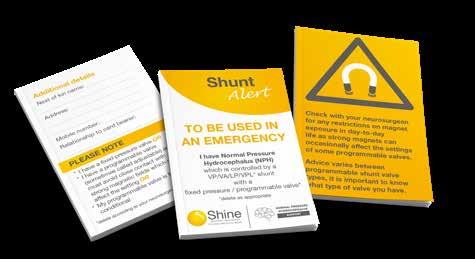
Following our shunt survey, it is clear to see how helpful members find their Shunt Alert Cards.
We have recently updated these, and now have ones available for:
• Hydrocephalus
• Normal Pressure Hydrocephalus (NPH)
• Idiopathic Intracranial Hypertension (IIH)
Request a shunt alert card: www.shinecharity.org.uk/shuntalertcard or by calling 01733 555988
Know your shunt: www.shinecharity.org.uk/knowyourshunt
Know the symptoms of shunt malfunction: www.shinecharity.org.uk/shuntmalfunction
Improve your self-advocacy skills: www.shinecharity.org.uk/selfadvocacy
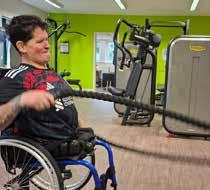
As someone who uses a wheelchair, strength training isn’t just “fitness” for me - it’s protection, independence, and energy management all in one.
I thrive on moving my body, and this year I’m taking on the London Landmarks Half Marathon in aid of Shine. I signed up to give myself a goal, a target to work towards. I've been spending a lot of time on the gym’s hand bike and doing some outdoor pushes, dodging the English weather as much as possible.
Being a member of Shine has given me the opportunity to connect socially with others who face the same challenges and obstacles as I do, so we can learn and help each other. I see this half marathon as an opportunity to raise funds and awareness for Shine, to support others with spina bifida and hydrocephalus. I’m thankful to Shine for contacting the Richard Whitehead Foundation too, who’ll provide me with a support runner on the day.
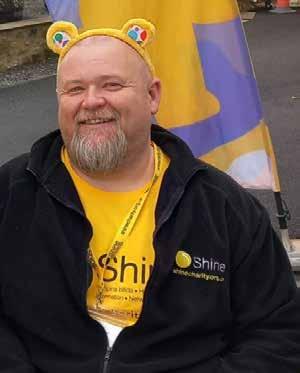

The extra support means a lot, just in case.
I've been very lucky to lead a full life; education, work, being independent and driving a car. Strength training has boosted my confidence for what life throws at me. It gives me a sense of control and achievement. I feel privileged to have this opportunity to show the world what someone with spina bifida and hydrocephalus is made of.
All of us at Shine wish Sita the best of luck with her half marathon in April!
To help support Sita, please visit her JustGiving page: www.justgiving.com/ page/sita-vinodkumar-patel-2
Having spina bifida and hydrocephalus myself, I’ve been part of Shine for many years, long before I became a member of staff. I’ve worked here for the last five years and see every day the difference we make in people’s lives - whether that’s helping someone find their voice when they feel unheard or signposting them to the right support at the right time. It’s invaluable.
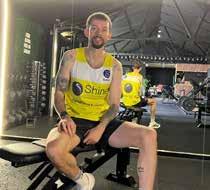
In years gone by, when I was much fitter, I completed two London Marathons. Thirteen years later, I thought: why not take on one more and use it as a chance to raise awareness of Shine, as well as some muchneeded funding.
I used to compete at a high level in wheelchair sports and even represented my country at World Cups in three different disciplines, but I haven’t trained at that intensity for about a decade.


A lot of people are questioning my sanity for taking this on - and honestly, I can’t blame them. I’ll be tackling the London Marathon in my day chair, which will be a challenge, but it’s one I’m determined to take on.
Everyone here at Shine is cheering Chris on as he takes on his marathon this April - go smash it!
If you would like to help support Chris, please visit: https://2026tcslondonmarathon. enthuse.com/pf/chris-greenhalgh
You can find out more about completing your own challenge for Shine at www.shinecharity.org.uk/getinvolved

In 1966, Shine, (then called ASBAH), became the UK’s first national organisation dedicated to spina bifida and hydrocephalus, giving families a collective voice at a time when survival rates for newborn babies were low and little support was available.
Our campaigning on folic acid led to a change in the law to mandate flour fortification, a landmark public-health intervention to help prevent spina bifida and other neural tube defects. We have also developed specialist antenatal support services, ensuring families who receive a prenatal diagnosis feel informed and able to understand their choices.
Equally as important, we have worked hard to transform attitudes towards, and understanding of, what living with spina bifida and/or hydrocephalus is like, and what services and support are needed to improve health and wellbeing.
We have recently increased our focus on Normal Pressure Hydrocephalus (NPH), establishing a


dedicated service to raise awareness, particularly about widespread misdiagnosis.
We have contributed extensively to research, providing in-depth insights into the lives, health issues and challenges faced by people living with spina bifida. We support research into emerging treatments, with early signs showing significant benefits.
We are grateful to our Royal Patron, HRH The Duchess of Gloucester for her continued support, and thank her for her message below.
The article overleaf looks back on six decades of medical and clinical progress, telling a powerful story of change - and reminding us why our work, and our voice, remain as vital as ever.
It gives me great pleasure to mark Shine’s 60th anniversary and to send my warmest congratulations to everyone associated with the charity.
For six decades, Shine has been a steadfast source of support and information for people living with spina bifida, hydrocephalus and associated conditions, as well as for their families. Throughout this time, Shine has consistently championed the needs of those it serves and has ensured that no one faces their challenges alone.
I have long admired the compassion, professionalism and determination shown by Shine’s staff, trustees and volunteers, and the vital part that Shine’s members have played in shaping its specialist work to meet the needs of their community. Together, you have helped transform lives, raise awareness, and influence positive change in healthcare and society more widely.
As Shine celebrates this important milestone, it is also an opportunity to look ahead. I am confident that, building on its proud history, the charity will continue to make a meaningful difference for many years to come, and with my heartfelt thanks to everyone who has contributed to Shine’s work over the past 60 years, I send all possible good wishes for the future of Shine.
HRH The Duchess of Gloucester Royal Patron, Shine


Since 1966, the lives of people born with spina bifida and those living with hydrocephalus have been transformed. Improvements in healthcare, technology and understanding have dramatically increased survival and life expectancy, while also changing what it means to live well with these conditions.
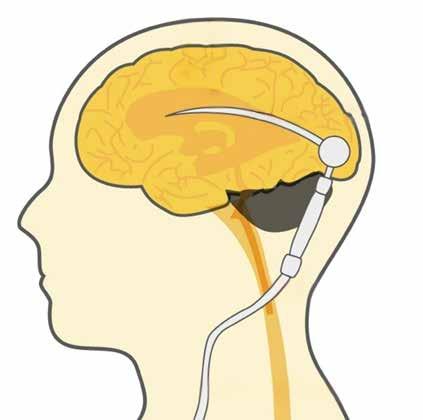
In 1966, shunts had only been used for a few years to treat hydrocephalus. The shunts used at that time were VA shunts, and infection rates of up to 20% were seen before surgeons began to look more closely at infection prevention. Over time, complications from shunt surgery have decreased. More surgeons placed the distal end in the peritoneum, and adjustable (programmable) valves meant that fewer shunt revisions were needed, particularly for children with symptoms of over or underdrainage.

Since 2003, shunt infections have been further prevented using Codman Bactiseal shunts, invented by Prof Roger Bayston. The silicone tubing of a Bactiseal shunt is impregnated with two antibiotics, which are slowly released in the weeks following insertion. Other advances in shunt technology include the Miethke M.scio., an implantable telemetric device which can detect and give information on the pressures in the head or the shunt, depending on where it is placed.
Devices currently in development include ShuntCheck, which sits on the skin over the shunt tubing to help rule out blockage by measuring changes in temperature as CSF flows, and the ‘eshunt’, which can be inserted via blood vessels in the groin and placed into the head, avoiding the need for head surgery.
Around one in thirteen babies are born prematurely in the United Kingdom. Despite major advances in survival, intraventricular haemorrhage (IVH) remains one of the most serious complications of preterm birth. The blood vessels of premature babies are very fragile, and bleeds in or around the brain can block CSF pathways and absorption, leading to hydrocephalus. Treating hydrocephalus in such tiny babies is particularly challenging. Although care of premature babies has improved enormously, alternatives to shunting are still needed.
Some trials have explored flushing blood and clots from the ventricles using an endoscope before placing a temporary drain, including DRIFT and DOLPHIN. The latest trial, ENLIVEN, running from 2023 to 2029, is comparing outcomes for babies treated with endoscopic lavage with those who go straight to external drainage, currently the most common approach. Researchers are examining whether the risk of hydrocephalus is reduced and whether washing toxic blood from the brain improves developmental outcomes.
For people born with spina bifida, healthcare practice has also changed dramatically. In 1966, care for babies and children with spina bifida was in its very early days. Prior to the development of the shunt, little could be done to save many babies’ lives, and as a result, little was known about how the condition affected people over time. Doctors such as Prof Zachary of Sheffield worked tirelessly to improve outcomes. It became clear that bladder involvement could lead to kidney failure through reflux, poor drainage and infection. Stoma surgery to bypass the bladder and drain urine into bags on the abdominal wall was introduced and saved countless lives. By the 1970s, bladder dysfunction was better understood. Dr Jack Lapides showed that introducing a clean catheter into the bladder at regular intervals could help solve the problem of incomplete emptying. This remains the method many of our members use today, often alongside medication to relax the bladder and allow safe filling. Intermittent catheters have continued to evolve, with refinements including different tip shapes, slippery coatings to reduce urethral damage, and attached drainage bags. Intermittent catheterisation and medication do not always reduce damaging high bladder pressures, and medication can have unpleasant side effects. For some people, six-monthly Botox injections into the bladder muscle allow the bladder to fill and store urine safely. Others need surgical enlargement of the bladder (augmentation), and/or the creation of a catheterisable channel on the abdomen (Mitrofanoff).
Children growing up with spina bifida in the 1960s experienced a strong emphasis on walking. Hours were devoted to exercises using parallel bars and heavy callipers, sometimes chest high.


Over time, there was a shift in thinking: being able to move independently, when and how you wished, mattered more than how that movement was achieved. As a result, children born from the 1980s onwards underwent fewer orthopaedic procedures, spent less time in hospital, and experienced more ordinary childhoods as they gained independence using wheelchairs.
Fetal surgery to repair the spina bifida lesion during pregnancy has become an option for some families. Closing the lesion by 26 weeks’ gestation can protect nerve tissue from damage and restore more typical CSF flow. Babies born following fetal surgery are less likely to need a shunt than those operated on after birth. Open fetal surgery has been commissioned by the NHS since 2019. Eventually, when the evidence is robust enough, a closed (fetoscopic) service using a ‘keyhole’ technique may follow, reducing potential damage to the mother’s womb.

Even the tests and investigations familiar to our members in the 1960s have been transformed. Many remember the discomfort of dye being injected into veins—or even into the spinal canal—before X-rays. Today, these invasive procedures have been largely replaced by non-invasive imaging techniques such as MRI, CT and ultrasound.
The progress since the 1960s has been remarkable, giving people with hydrocephalus or spina bifida a far better chance of living well, and for longer, than ever before.
“I made contact with Shine when I was pregnant with Milo because I wanted to know what it was actually like to live with spina bifida. I was put in touch with Shine’s Health Team and we talked through Milo’s diagnosis in a really balanced, realistic and human way.
Shine had stories about children and adults with spina bifida that gave me hope Milo could have a good life.” (Lucie, Parent)
“Shine gives me a sense of belonging, they are a charity that understands all we go through… Different things happen at each stage of my daughter’s life.
Whatever the outcome of any changes, Shine is there to help, and they understand.” (Stephanie, Parent)
“I used to feel really different, but Shine showed me that there are loads of people like me. I feel proud to be me and to be part of Shine." (Teen Shine Member)


“Throughout all of my pregnancy, I was able to text or call Gill at Shine when I needed to talk to someone, and nothing was ever a silly question. I remember thinking ‘I bet I sound silly’ or ‘I bet they get asked that loads’, but honestly, it never felt like I was a burden.
Without Shine I wouldn’t have got through my pregnancy as well as I did.” (Gemma, Parent)

“Before joining the teen socials, I never knew anybody with the same conditions as me. I was really worried at first about joining, but I cried with happiness after the first session because I no longer felt alone.” (Teen Shine Member)
“I first encountered Shine through my hospital… At that time, I was not feeling too great about myself. I felt so different from everyone else that it would make me upset. Shine was amazing. They sent me out gifts, nice quotes, and even helped me meet a girl my age with spina bifida…
Being part of Shine has changed my outlook on life; just because I have spina bifida doesn’t mean I’m any less capable than anyone else. Daily life with spina bifida can be tougher than it seems but just because I have a medical condition doesn’t mean I’m going to let it control me.” (Natalia, aged 18)
“I found lots of useful information on Shine’s website about my condition that no one else had told me… Being a Shine member brings a sense of community, people that ‘get’ you, friendship and so much knowledge and information about my health…
The knowledge the participants have and share, along with the Shine staff, is just invaluable. I have been passing some of this onto my GP.” (Vicky, aged 55)


In September 2025, Shine created a standalone service to support a growing membership of individuals living with normal pressure hydrocephalus (NPH) and to raise awareness amongst professionals and the public about the symptoms of NPH and importance of an early and accurate diagnosis.
NPH is a progressive condition that mainly affects individuals over 60 years of age.
Signs and symptoms of NPH
It is recognised most commonly by the onset of three symptoms: difficulty walking, cognitive changes, and urinary incontinence. Clinical investigations show enlargement of the ventricles in the brain with no or little corresponding increase in cerebrospinal fluid (CSF) pressure.
An early and accurate diagnosis
Timely diagnosis and treatment are associated with improved patient outcomes in NPH. Through shunt surgery, NPH is a treatable and potentially reversible cause of dementia.
Since NPH may account for around 6% of people with dementia, it is important to consider NPH as a possible cause. Symptom similarity and co-morbidity with Alzheimer’s and Parkinson’s diseases means NPH can be missed/misdiagnosed.
Janet is a senior programme leader with more than 15 years’ experience designing and delivering health, education, and community initiatives.
Lydia is a registered Occupational Therapist with nearly 20 years’ experience in dementia care across the NHS and charity sectors

Many people with NPH are fitted with a shunt that can be adjusted to release excess CSF.


Shine provides a wide range of free, confidential services for people at all stages of assessment, diagnosis, or treatment for NPH:
Personalised information and advice: Janet and Lydia are experienced advisers who understand NPH - its symptoms, diagnosis, treatment options such as shunt surgery, and ways to live well with the condition.
Support for family and carers: Carers and family members can access advice, guidance, and emotional support, recognising the wider impact of NPH.
Practical guidance and advocacy: Navigating health and social care systems, preparing for medical appointments, understanding your rights, and
managing mobility, continence, and cognition changes.
Connecting with others: Shine offers opportunities to connect with people who have similar experiences, helping to reduce feelings of isolation.
If you would like to arrange an appointment with the NPH Team, get in touch on 01733 555 988 or at firstcontact@shinecharity.org.uk www.shinecharity.org.uk/nph


Living with spina bifida or hydrocephalus, or normal pressure hydrocephalus, is not just about hospital visits.
For many people, it is the everyday stuff that feels the hardest. Filling in forms, making decisions and worrying about what the future might look like. Shine can help navigate much of this through trusted information, practical advice and support from our teams who understand life with spina bifida and hydrocephalus, and associated conditions. However, sometimes, legal support needs to sit alongside for additional support.
Shine’s Legal Service focuses on situations where there are concerns about medical care, either during pregnancy, birth or later treatment. These are sometimes called clinical negligence cases, but the conversations themselves are not about blame or rushing into action. They are about understanding what happened and whether it has had an impact on care, support or financial security in the future.
Many Shine members already get in touch with
us for an initial chat, often just ask a question or to talk something through. Knowing that our legal panel is trusted by Shine hopefully makes reaching out feel much less daunting and more like a normal conversation.


An initial chat is just that, a chat. There is no pressure, no legal jargon and no obligation to go any further. It is about us listening to you, understanding your concerns, explaining things in plain English and helping you understand your options if and when you have concerns about medical care.
Our Legal Service is here if you need us! If it ever feels useful to talk things through, contact us on 01733 555988 or at www.shinecharity.org.uk/legal
Shine Health Direct is a dedicated home delivery service that provides Shine members with all of their urology and stoma products and prescription medication, efficiently and discreetly to their door or to a place that is convenient for them.
We have worked hard to develop this innovative service so that it will benefit Shine members.
Registering with Shine Health Direct is a breeze. Just tell us what you need, and we handle the rest – even liaising with your GP!
Your dedicated personal advisor will reach out to you on a pre-arranged date, ensuring a seamless ordering process for your products and medication.

Sit back and relax as your essentials are swiftly delivered to your doorstep by a local driver or courier – discreetly and without hassle.





























































our website or contact the team at fundraising@shinecharity.org.uk or call
www.shinecharity.org.uk/getinvolved

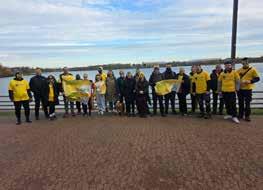

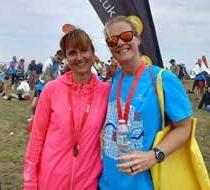
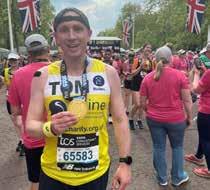
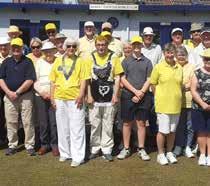

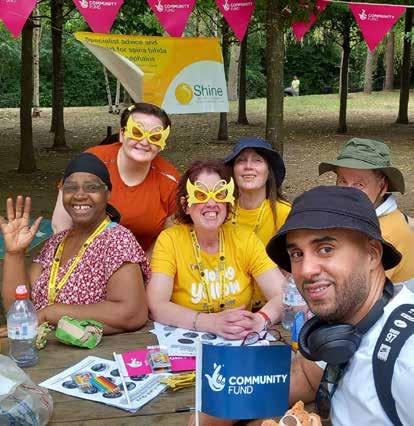
On 19th June 2026, we’re turning the world yellow to shine a light on Shine and celebrate our amazing community, and - most importantly - raise the vital funds that keep our specialist advice and support services running
or sunshine… there’s a shade of yellow for everyone!

Choose your favourite one, join us, and use your yellow activity to raise money for Shine! Taking part really is simple:
1 Choose your yellow activity
Wear yellow at work, school or home
Bake yellow treats
Plant sunflowers
Host a yellow-themed quiz
Decorate your office or classroom in yellow
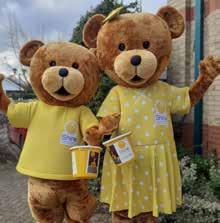
2 Turn it into a fundraiser
Hold a yellow bake sale
Ask for a small donation to join your Wear Yellow Day
Run a yellow raffle or sweepstake

Set up a Go Yellow fundraising page and ask friends/ family to sponsor your activity
Make a donation to Shine to mark the day
Whatever you do - just GO YELLOW and FUNDRAISE! Every pound you raise helps Shine to continue providing essential specialist support to the people who need us most.
Invite others to join in
Anyone can take part! Why not get your child’s school or nursery, your workplace, community group, family or friends involved this June?
Find out more at www.shinecharity.org.uk/goyellow


Remember: If Friday 19th June doesn’t work for you, you can still take part - simply choose another date that suits your group and fundraise your way!
Mini, junior or adults – there is a ‘FUN RUN’ for everyone
There are plenty of exciting opportunities for children, families, and adults to get involved in fun runs across the country in 2026, with a range of Junior, Mini, and Family events to choose from.
Many routes are wheelchair and pushchair friendly, and distances vary so everyone can take part.
These events are a brilliant way for people of all ages to enjoy a lively atmosphere, get active, and raise vital funds for Shine.
Find out more: www.shinecharity.org.uk/runforshine
Could you join one of these?
• Brighton Miles
• Junior & Mini Great Birmingham, Bristol, Manchester, North & South Runs
• York Mini & Junior
• Vitality Westminster Mile
• Robin Hood Mini Marathon
• Cardiff Half Junior
• Bath Miles



Encourage professionals you know to attend Shine’s Professionals’ Conference webinars
Become a Shine member (if you aren’t already) www.shinecharity.org.uk/jointoday
Remember Shine in your Will with our FREE Will writing service will.octopuslegacy.com/shine
Organise an event of your own: www.shinecharity.org.uk/getinvolved
Share your story so that we can share it with others https://shinecharity.tfaforms.net/f/sharemystory
Buy a limited edition 60th anniversary pin badge and bear! Celebrate this milestone with us!
Now available for you to buy: www.shineshop.org.uk/collections/60th-anniversary




Fundraise for us! www.shinecharity.org.uk/fundraisinghub | We’re proud to be part of Shine’s 60th firstcontact@shinecharity.org.uk http://www.shinecharity.org.uk