

SHERPA GROUP
First Home Buyer Guide
Queensland | April 2026
Everything you need to know about buying your first home in Queensland, including government grants, deposit schemes, stamp duty savings, and what to expect when purchasing off the plan.
A Note to First Home Buyers
Buying your first home is one of the most significant decisions you will make. It can feel overwhelming, but the good news is that Queensland's current incentive landscape means there has never been a better time to get started.
Right now, eligible first home buyers in Queensland can access a combination of state and federal schemes that together can reduce upfront costs by well over $88,000 when you combine the $30,000 FHOG, zero stamp duty, and LMI savings of approximately $41,500, depending on your circumstances (figures are illustrative; LMI is lender-specific). This guide walks you through each one, explains the buying process for off the plan purchases, and offers practical tips for saving your deposit.
Please note: this guide is general in nature. We recommend speaking with a licensed mortgage broker, solicitor, and financial adviser before making any decisions.
Government Grants and Schemes: Overview
There are currently four key incentives available to Queensland first home buyers. You may be eligible for more than one at the same time.
Grant or Scheme
Queensland FHOG
Zero Stamp Duty
First Home Guarantee
Boost to Buy
What It Offers
Up to $30,000 cash grant for new homes under $750,000 (contracts signed by 30 June 2026)
No transfer duty on new homes and vacant land (from 1 May 2025, no price cap)
Buy with a 5% deposit, no Lenders Mortgage Insurance (federal scheme, unlimited places)
Queensland Government shared equity contribution of up to 30% on new homes or up to 25% on existing homes
Queensland First Home Owner Grant (FHOG)
The Queensland First Home Owner Grant is a one-off, tax-free cash payment from the Queensland Government to help eligible first home buyers purchase or build a brand new home.
Grant Amount (current)
$30,000 for contracts signed between 20 November 2023 and 30 June 2026. After 30 June 2026, the grant reverts to $15,000.
Who is Eligible?
To receive the grant, you and any co-applicant must meet all the following:
• You have not previously owned a home you lived in anywhere in Australia on or after 1 July 2000
• You are 18 years of age or older
• At least one applicant is an Australian citizen or permanent resident
• You and your spouse have not previously received a First Home Owner Grant in any Australian state or territory
• The property is a new home that has never been previously occupied or sold as a place of residence
• The total value of the property is less than $750,000, including land and any contract variations
• You move in within 12 months of settlement and live there continuously for at least six months
What Qualifies as a New Home?
The grant applies to new homes only, including:
• Brand new apartments, townhouses, or houses that have never been occupied
• Off the plan purchases
• Substantially renovated homes meeting strict Queensland Revenue Office criteria
The grant does not apply to established or second-hand properties.
How is the Grant Paid?
In most cases the grant is paid through your lender at settlement. You can also apply directly through the Queensland Revenue Office within 12 months of completion. The grant is not means-tested, so your income does not affect eligibility.
Act Before 30 June 2026
The boosted $30,000 amount is only available for contracts signed on or before 30 June 2026. After this date the grant reverts to $15,000. If you are considering your first home purchase, timing your contract before this date could mean an additional $15,000 in your pocket.
Zero Stamp Duty for First Home Buyers
From 1 May 2025, eligible first home buyers in Queensland pay no transfer duty (stamp duty) on new homes or vacant residential land used to build a first home. There is no property price cap on this concession.
Property Type
New home (any price, contract from 1 May 2025)
Vacant land to build first home (from 1 May 2025)
Established home valued under $700,000
Established home $700,000 to $799,999
Stamp Duty Outcome
Zero stamp duty
Zero stamp duty
Full concession (effectively zero)
Partial concession on a sliding scale
Established home $800,000 and above No first home concession; standard home concession may still apply
For context, transfer duty on a $700,000 property at the home concession rate would ordinarily be approximately $17,125. For first home buyers purchasing an off the plan apartment in Queensland, zero stamp duty applies provided the contract is dated on or after 1 May 2025 and you meet the first home buyer criteria.
The stamp duty concession and the FHOG are separate programs with different qualifying dates. Check both carefully before signing your contract.
Federal First Home Guarantee
The First Home Guarantee is a federal government scheme administered by Housing Australia. It allows eligible buyers to purchase a property with as little as a 5% deposit without paying Lenders Mortgage Insurance (LMI). Note: the scheme is sometimes informally referred to as the “Australian Government 5% Deposit Scheme” but this is not an official Housing Australia term.
The government guarantees up to 15% of the property value to the lender, so the lender treats the loan as if you had a 20% deposit. This is not a cash payment to you. The guarantee is a legal arrangement in the background that removes the need for LMI.
Major Changes from 1 October 2025
The scheme was significantly expanded in October 2025 and is now more accessible than ever:
• No income caps: the previous thresholds of $125,000 for individuals and $200,000 for couples were removed entirely
• No cap on places: the scheme now has unlimited places rather than a set annual allocation
• Increased property price caps: updated to reflect current market values
Queensland Property Price Caps
Location
Brisbane, Gold Coast, Sunshine Coast
$1,000,000
Rest of Queensland (regional areas) $700,000
Who is Eligible?
• First home buyer who has not previously owned residential property in Australia, or has not owned a home in the last 10 years (the scheme also applies to eligible nonfirst home buyers who have not owned property in the previous decade)
• Australian citizen or permanent resident
• Aged 18 or over
• Intending to occupy the property as your principal place of residence
• Purchasing an eligible property type within the relevant price cap
Eligible Property Types
• Existing residential homes
• New build homes bought as a house and land package
• Vacant land with a separate contract to build a home
• Off the plan apartments and townhouses
How to Apply
You cannot apply directly to Housing Australia. You must apply through a participating lender. Your mortgage broker can confirm current participating lenders and guide you through the process.
Combined Benefit Example
A buyer purchasing a $700,000 new apartment on the Gold Coast with a 5% deposit saves approximately $41,500 in LMI by using the First Home Guarantee (note: LMI calculations are lender-specific and this figure is an approximation based on common lender rates). Combined with the $30,000 FHOG and zero stamp duty (saving approximately $17,125 in transfer duty at the home concession rate on a $700,000 property), the total upfront savings could exceed $88,000. This figure is illustrative and depends on lender-specific LMI calculations and individual circumstances.
Queensland Boost to Buy
Boost to Buy is a Queensland Government shared equity scheme that helps eligible buyers purchase a new home with a smaller deposit. The government contributes up to 30% of the purchase price as a co-contribution, meaning you borrow less, your repayments are lower, and you do not need to pay Lenders Mortgage Insurance on that portion.
The government does not charge rent on its share. When you eventually sell or refinance, the government recoups its equity contribution proportionally. You can also buy out the government’s share over time as your equity grows.
Key Details
• Minimum 2% deposit required from you
• Available for new home purchases up to $1,000,000
• Income cap of $150,000 for individuals or $225,000 for couples
• Government co-contribution of up to 30% of the purchase price
• Applies to both new homes (up to 30% contribution) and existing homes (up to 25% contribution), including off the plan apartments and house and land packages
How to Apply
Boost to Buy is administered by the Queensland Government through participating lenders. Speak with a mortgage broker to confirm current participating lenders and assess whether you meet the eligibility criteria before applying.
Saving Your Deposit: Practical Tips
Even with a 5% deposit scheme available, having genuine savings demonstrates financial reliability to lenders and will improve your borrowing position. Here are some practical strategies.
Know Your Number
Start by calculating your target deposit. On a $600,000 purchase under the First Home Guarantee, a 5% deposit is $30,000 plus buying costs (conveyancing, building and pest inspections, loan establishment fees). Set a clear savings target and timeline before you begin.
Keep your deposit savings separate from your everyday spending. A high-interest savings account or term deposit dedicated solely to your home deposit reduces the temptation to spend and makes your progress visible. Automate a transfer each payday so saving happens before spending.
Reduce High-Interest Debt First
Credit card debt and personal loans affect your borrowing capacity. Paying these down before applying for a home loan will improve your serviceability assessment and potentially increase how much you can borrow.
Track Your Spending
Use a budgeting app or spreadsheet to understand where your money goes each month. Most people are surprised how much recurring subscriptions and discretionary spending add up. Even redirecting $400 a month into savings adds up to $4,800 in a year.
Consider the First Home Super Saver Scheme (FHSS)
The federal First Home Super Saver Scheme allows eligible first home buyers to make voluntary contributions into their superannuation fund and later withdraw those contributions (plus earnings) to use as a home deposit. Up to $15,000 per financial year and $50,000 in total can be withdrawn. Contributions made from pre-tax salary attract the lower concessional tax rate, which can accelerate savings compared to a standard savings account. Speak to a financial adviser to assess whether the FHSS is suitable for your situation.
The Off the Plan Buying Process
Purchasing off the plan means buying a property that has not yet been built. For off the plan developments, you are entering a contract based on plans, specifications, and artist impressions before construction is complete. Here is what to expect.
Step 1: Reserve Your Residence
Express your interest in a specific residence with the sales team. You will typically be asked to confirm your preferred apartment, floor, and any inclusions. A formal reservation is usually followed by the preparation of a contract of sale.
Step 2: Review and Sign the Contract
Your solicitor or conveyancer will review the contract of sale before you sign. This is one of the most important steps. Key things to review include the sunset clause (a date by which the developer must complete the building), inclusions and finishes schedule, and any special conditions. Do not sign until your legal representative is satisfied.
Step 3: Pay the Deposit
Off the plan contracts typically require a deposit of 10% of the purchase price to be paid on exchange, though deposits of 5% are also common in Queensland and can be negotiated. This deposit is held in a trust account until settlement. For many buyers, this is the point at which the FHOG clock begins, as the contract is now formally in place.
Step 4: Construction Period
Once your contract is signed, construction proceeds. The development team will provide regular progress updates. During this period, your financial position should remain stable. Avoid taking on significant new debt or changing employment, as your finance application will be assessed again closer to settlement.
Step 5: Pre-Settlement Inspection
Before settlement, you will have the opportunity to inspect the completed apartment. This is your chance to identify any defects or items that differ from the agreed inclusions. Any issues should be documented and provided to the developer in writing.
Step 6: Settlement
At settlement, your lender pays the balance of the purchase price to the developer, ownership transfers to you, and you receive your keys. This is typically when the FHOG is paid (via your lender), and when stamp duty savings apply.
Off the Plan and the FHOG
Because the contract is signed before the home is built, off the plan purchases qualify for the FHOG provided all other eligibility conditions are met. The key date for the $30,000 grant is the contract signing date, not the settlement date. As long as your contract is signed on or before 30 June 2026 and the home is valued under $750,000, you should be eligible.
Key Questions to Ask Before You Buy
• What is the expected completion date, and is there a sunset clause?
• What are the exact inclusions, and are they locked into the contract?
• Is my finance pre-approval valid for an off the plan purchase?
• What is the body corporate levy estimate for this building?
• Are there any special levies anticipated in the first year?
Scheme Comparison at a Glance
The table below compares how the four key incentives apply in common purchasing scenarios. Individual circumstances vary, so speak with a mortgage broker and financial adviser to confirm what you can access.
Scheme
Queensland FHOG
Zero Stamp Duty
First Home Guarantee
Boost to Buy
Single buyer, $650k purchase Couple, $850k purchase
$30,000 (contract by 30 Jun 2026)
~$14,850 saved (approximate; ordinarily payable at home concession rate)
Eligible. Deposit: $32,500 (5%). LMI saving: approx. $35,000
Eligible if income under $150k. Min. 2% deposit ($13,000). Govt contributes up to $195,000 (30%)
Important Notes
$30,000 (contract by 30 Jun 2026)
~$21,850 saved (approximate; ordinarily payable at home concession rate)
Eligible (under $1m cap). Deposit: $42,500 (5%). LMI saving: approx. $46,000
Eligible if combined income under $225k. Min. 2% deposit ($17,000). Govt contributes up to $255,000 (30%)
Notes
New homes only, under $750k, at least one Australian citizen or permanent resident
New homes, no price cap (from 1 May 2025)
No income cap, unlimited places. LMI figures are approximate and lender-specific
New homes only, up to $1m purchase price. Income cap applies
This guide is produced by Sherpa Group as general information only. It does not constitute legal, financial, or taxation advice. Grant eligibility, scheme details, and property price caps are subject to change. Information in this guide is current as at April 2026. Please verify current criteria with the Queensland Revenue Office (qro.qld.gov.au), Housing Australia (housingaustralia.gov.au), and your own legal and financial advisers before making any decisions.
Sherpa Group is a boutique property developer based on the Gold Coast, Queensland. We build considered homes for people who care about where they live.
sherpagroup.com.au

First Home Owner Grant
The First Home Owners Grant (FHOG) Queensland is a one-off tax-free payment to help first-home owners manage the costs of buying a home.
What is it?
A government initiative designed to assist first-time homebuyers in purchasing or building their first home. This financial grant aims to make homeownership more accessible and affordable for eligible individuals and families.
The first home owner grant gives eligible first-time home buyers $15,000 or $30,000 towards buying or building a new home in Queensland.
Alongside the FHOG, first homebuyers in Queensland may also be eligible for additional concessions, such as the First Home Concession on stamp duty, further reducing the overall cost of purchasing a home. The First Home Owners Grant is an excellent opportunity for those looking to enter the property market, providing valuable financial assistance to help turn homeownership dreams into reality.
Eligibility Criteria
Be a first-time homebuyer and not have previously owned property in Australia
Be at least 18 years old
Be an Australian citizen or a permanent resident
Use the home as their principal place of residence for at least six months after the purchase or construction is complete
+More - see Queensland Government Website.
How do you apply?
Your mortgage broker can help you prepare and submit an application to participate in the FHOG Queensland. They will be able to properly assess your situation and make sure you have all the correct documentation.
For expert mortgage advice, talk to your local broker today.
MattCunliffe
0411 799 052 DanCooke 07 3188 7959
matt.cunliffe@mortgagecoice.com.au dan.cooke@mortgagecoice.com.au

How does the Home Guarantee Scheme work?
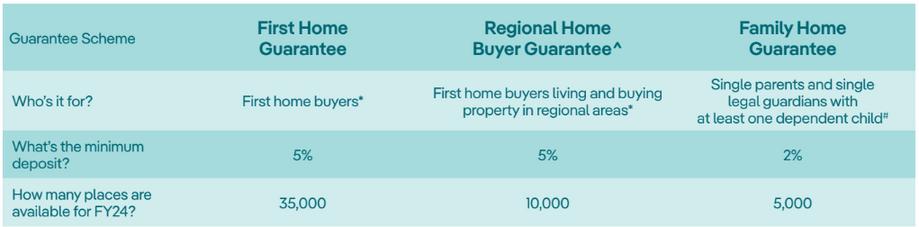
If you’re eligible for the Home Guarantee Scheme, you could buy a home with a deposit as low as 5% (or 2% for single parents) without having to pay Lenders Mortgage Insurance.
What is the Home Guarantee Scheme?
Saving a deposit is one of the hardest parts of buying a home – especially when property prices and the cost of living keep rising.
The Australian Government introduced the Home Guarantee Scheme to help low-to-middle income earners get into their own home sooner.
People who are eligible to participate in the Scheme can pay a lower-than-usual deposit without the need to pay the additional cost of Lenders Mortgage Insurance (LMI). Borrowers generally have to pay LMI if they’re borrowing more than 80% of the property purchase price. LMI can cost thousands of dollars, making it even harder to afford a property.
What Guarantees are available?
There are three different types of Guarantees available under the Home Guarantee Scheme.
How do you apply?
Your mortgage broker can help you prepare and submit an application to participate in one of these Guarantees, and they’ll keep you updated on its progress.
For expert mortgage advice, talk to your local broker today.
DanCooke 07 3188 7959
MattCunliffe
0411 799 052
matt.cunliffe@mortgagecoice.com.au dan.cooke@mortgagecoice.com.au



OUR FRANCHISES
NOT YOUR ORDINARY BROKERS
We do the hard work so you don’t have to. Giving you clarity, confidence, and control from the first chat to settlement and beyond.
OUR SERVICES

Mortgage Solutions
» Home Loans
» First Home Buyers
» Investment Loans
» Refinancing
» Construction Loans
» Debt Consolidation
» Bridging Loans
» Downsizing or Upgrading

Buying, refinancing, or investing can feel overwhelming, but as your dedicated mortgage brokers, we make the process simple
We assess your financial situation, research and compare the best loan options, guide you through applications, and negotiate directly with lenders on your behalf
Beyond that, we connect you with trusted finance, property, and legal experts to ensure every step runs smoothly.
Whether you’re buying your first home, refinancing to save, or growing your investment portfolio, we’re by your side from the first chat right through to settlement - and beyond.
Finance Options
» Business Loans
» Car Loans & Leasing
» Personal Loans
» Home & Contents
Insurance
» Commercial
Property Finance
» Conveyancing & Legal Services
» Accountants & Tax Advisors
» Real Estate Agents
» Property Managers
» Buyer’s Agents
» Development Finance Trusted Professional Referrals
» Building & Pest Inspectors
OUR DIFFERENCE
MORE THAN MORTGAGE BROKERS - WE’RE YOUR FINANCE PARTNERS FOR LIFE
For us, it’s never just about paperwork or quick wins. We’re all about building long-term relationships and being by your side for every milestone and every “what does this mean?” moment.

We’re not just here for the big events, but for everything in between. Planning a renovation? Starting a family? Wondering if your loan still suits your needs? We’re your sounding board, your strategy partner, and your go-to for honest, expert advice, no matter how big or small the question.
As your dedicated finance partner, we stay in touch with regular loan reviews, market updates, and support that grows and changes with you.
Because life never stands still, and your loan shouldn’t either!
YOUR FINANCE JOURNEY

Initial Chat
We start with a friendly conversation in person, over the phone, or online.
Outcome: A clear picture of what you want and how we can help.
Pre-Meeting
We crunch the numbers and assess your financial position and borrowing power.
Outcome: We're well prepared to have a robust discussion and ensure we deliver maximum value to you
Loan Comparison & Recommendations
We explore the lending options that best suit your needs, comparing rates, features, and structures.
Outcome: You receive tailored advice and clarity on the best lender and loan product for your goals
Application Submission
We handle the entire application process, working with the chosen lender to put your submission in the best possible position for approval.
Outcome: Your loan is formally lodged and progressing through the approval process
YOUR FINANCE JOURNEY
The lender finishes assessing your application, and your loan is formally approved.
Outcome: You can move forward with confidence. If you're purchasing, this is when you usually go unconditional. For refinancing or restructuring, your new loan is fully approved and ready for the next steps.
We guide you through the loan contract to make sure you understand the key terms and conditions, then help with the signing process
Outcome: Your loan documents are signed and returned correctly, avoiding any delays to settlement.
We coordinate with your lender and other parties involved to ensure everything runs smoothly.
Outcome: Your loan settles on time, whether you're purchasing, refinancing, or restructuring — and the new loan is ready to go.
We stay in touch with regular reviews, refinancing opportunities, and strategic advice to support your future plans.
Outcome: You have a long-term finance partner keeping your loan working for you, not the other way around.
BEYOND THE KEYS
Your property financing journey doesn’t end at the settlement of your loan, it is just the beginning.
Life changes, goals shift, and your life’s desires continue to evolve That’s why we’re more than mortgage brokers - we’re your dedicated financial partners, here to support you through every stage
We’re here to listen, guide, and take action through a range of other services
FROM OUR FIRST CHAT TO EVERY MILESTONE AHEAD, YOU CAN COUNT ON US TO HAVE YOUR BACK TODAY, TOMORROW, AND BEYOND.
PROPERTY INVESTMENT
GOT A MATE WHO NEEDS A MORTGAGE?
There’s nothing we enjoy more than helping great people. The only thing better is seeing those great people share their experience with others
When you recommend us to your mates, family, or even your favourite barista, you’re not just connecting them with expert mortgage advice. You’re giving them a shortcut to less stress, sharper rates, and a team who cares about their financial goals as much as they do.
Referrals are the heart of our business and the biggest compliment you can give us. If we’ve helped you buy a home, escape a tricky loan, or just make sense of the finance world, we’d love to help someone you know next.
Rest assured, we’ll look after them like they’re one of our own…maybe even better (but don’t tell anyone we said that)

KNOW SOMEONE WHO NEEDS LOAN ADVICE? SCAN THE QR OR FOLLOW THE LINK AND WE’LL TAKE IT FROM THERE.
Referrals are the greatest compliment we can receive. They not only grow our business but also remind us that trust, service, and relationships matter most.
Every referral is a sign that we’re doing something right - and we’re truly grateful for it.
YOUR TEAM BROKERS
YOUR TEAM
SUPPORT SERVICES & BUSINESS OPERATIONS TEAM
WHAT CLIENTS SAY
“This is the second time I use Mortgage Choice Brisbane. I can honestly say they went above and beyond in ensuring I achieved my property ownership goal. Communication was great in what was a long but successful journey. I felt reassured throughout the whole process. I highly recommend.”
“The team were a great help in refinancing my mortgage. They provided a smooth efficient process of finding some great options and recommending a product that works best for me. The team communicated at every step of what was needed to make it a smooth, simple and speedy process. Would highly recommend!”
WHAT CLIENTS SAY
“I spoke to 2 different brokers before I came here to Brice and the difference in service was huge! Brice was super supportive and very responsive and answered every question we had (sometimes multiple times as we are first home buyers and nervous) But Brice made everything so easy and put our minds at ease through the entire process and I can not recommend him enough, I can't imagine how stressful this would have been without him honestly, if I could give more than 5 stars I would in a heart beat!”
“Great service!!! We have been blessed to work with Robert from mortgage choice who has been just an awesome help, very polite and professional man, and very understanding with all our questions and changes to our loans when we first bought our house 3years ago to now, when we refinanced the loan, and are renovating the house.”
OUR LENDERS










































REPAYMENTS
LMI
WHAT IS LENDERS MORTGAGE INSURANCE? (LMI)
Lenders Mortgage Insurance (LMI) is a one-off cost you might have to pay if you have less than a 20% deposit when buying a home. It protects the lender (not you) if you're unable to repay the loan and the sale of the property doesn’t cover the full debt.
While LMI can cost thousands, it allows you to get into the property market sooner rather than waiting to save a bigger deposit. It’s worth speaking to a mortgage broker to understand how it works, what it could cost you, and whether you might be eligible for alternatives or government schemes that reduce or avoid it.
MORTGAGE JARGON
ASSET
A property or valuable item you own that can be used as security when applying for a loan
EQUITY
The portion of your property's value that you fully own, calculated by subtracting any outstanding loan balance from the current property value.
FIXED INTEREST RATE
An interest rate that stays the same for a set period, meaning your repayments remain unchanged over that time (e.g. 3 or 5 years).
HOME LOAN HEALTH CHECK
A quick review of your current home loan and interest rate to see if there are better options available. Often done around your loan’s oneyear mark.
INTEREST ONLY LOANS
A type of loan where you only pay the interest charged on the borrowed amount for a specific period (e.g. 5 years), with no reduction to the principal during that time.
LENDERS MORTGAGE INSURANCE (LMI)
Insurance the lender takes out (at your cost) if your deposit is under 20%. It protects the lender, not you, and is typically arranged on your behalf.
LOAN TO VALUE RATIO (LVR)
A ratio that compares your loan amount to the property’s value
Calculated by dividing your loan amount by the home’s purchase price, this helps lenders assess risk.
OFFSET ACCOUNT
A transaction account linked to your home loan. Money in this account reduces the amount of interest charged on your loan, as it's offset against your loan balance.
PRE-APPROVAL
An initial indication from a lender that you're eligible to borrow up to a certain amount It’s based on submitted documents and awaits final contract approval
MORTGAGE JARGON
REFINANCING
Switching your current home loan to a new one either with your existing lender or a new one to get a better rate, features, or access to equity
VARIABLE INTEREST RATE
A home loan interest rate that can fluctuate over time, depending on market conditions. This means your repayments may increase or decrease over the life of the loan.
COMPARISON RATE
A rate that combines the loan’s interest rate with most fees and charges, giving you a more accurate picture of the true cost of the loan over time.
PRINCIPAL
The actual amount of money you borrow (excluding interest). Your repayments reduce this amount over the life of the loan.
SETTLEMENT
The final step in the property purchase process. It’s when ownership officially transfers from the seller to you, and your loan funds are released to pay for the property.
BREAK COSTS
A fee that may apply if you end a fixed-rate loan early for example, by refinancing or paying off the loan before the fixed term ends.
SPLIT LOAN
A home loan that’s divided into two parts one with a fixed interest rate and the other with a variable rate giving you both stability and flexibility
BRIDGING LOAN
A short-term loan used to cover the gap between buying a new home and selling your existing one. It helps you secure the new property without waiting for your current one to sell.
LOAN TERM
The total length of time you agree to repay your home loan typically 25 to 30 years A longer term usually means smaller monthly repayments but more interest over time
DISCHARGE FEE
A fee charged by your lender when you fully pay off your home loan and close the account often applies when refinancing or selling your home.
LEGAL & PRIVACY
Mortgage Choice respects your privacy and is committed to protecting your personal information. This includes details like your name, contact information, financial and employment details, and any information relevant to credit assessments or financial services In some cases, sensitive health or credit-related information may also be collected, with your consent
Information is primarily collected directly from you through brokers, online forms, phone calls, or promotions. Mortgage Choice uses this information to provide financial and loan services, assess your credit eligibility, manage your application, meet legal obligations, and improve service delivery Your information may also be used for marketing, which you can opt out of at any time
Mortgage Choice may disclose your information to lenders, insurers, credit reporting bodies, service providers, and affiliated companies always with safeguards to protect your data Some disclosures may involve overseas recipients, but only where appropriate protections are in place
You have rights to access and correct your information, and if you’re ever concerned about how your data is handled, there’s a clear complaint process that includes escalation to the Office of the Australian Information Commissioner (OAIC) if needed
The privacy of the personal information you provide Mortgage Choice is important to us.
Our Privacy Policy governs the collection and use of personal information by Mortgage Choice Limited, its related entities, subsidiaries, employees and the broker that will assist you.
Mortgage Choice' s Privacy Policy sets out how we intend to respect your rights to privacy in accordance with the National Privacy Act.
LEGAL & PRIVACY
We are committed to protecting your personal information and ensuring that it is handled with transparency and care, in accordance with the Privacy Act 1988 (Cth) and the Australian Privacy Principles (APPs).
Collection of Personal Information
We collect personal, financial, and contact information directly from you to provide mortgage broking and financial services. This may include your income, assets, liabilities, and credit history.
How We Use Your Information
Your information is used to:
Assess your borrowing needs and financial situation
Identify suitable loan options
Submit applications to lenders on your behalf
Provide ongoing loan management and support services
Disclosure of Your Information
Your information may be shared with:
Our lending partners and financial service providers
Government bodies or regulatory authorities as required
External service providers who support our operations (eg, IT, compliance)
We do not sell or rent your personal data to any third party.
Access & Correction
You have the right to access your personal information at any time and request corrections if the data is inaccurate, incomplete, or outdated
Storage & Security
We take reasonable steps to keep your personal data secure whether it is stored digitally or in physical form
Marketing
From time to time, we may use your information to inform you about other products or services that may be relevant to your needs. You can opt out of these communications at any time.
Complaints & Contact
If you have any concerns about how your information is being handled, you can contact us directly. We aim to resolve all privacy-related complaints promptly and fairly
Mortgage Choice Disclaimer
Brokers are paid by lenders after settlement and usually don’t charge you any fees will be disclosed upfront Not all lenders or products are available through every broker Extra loan fees may apply. Info provided is general, not personal advice.
Consumer Protection at Mortgage Choice
Our brokers act in your best interests, offering clear, unbiased advice from a wide range of lenders. You’ll get transparent info on commissions and privacy, plus a simple complaints process with access to AFCA if needed
MEETING NOTES
TO DO LIST


Is a guarantor loan the right option for you?
Buying a home isn’t easy
The more property prices increase relative to incomes, the more difficult it becomes for first home buyers to afford a property. Housing affordability in Australia’s major capital cities is among the worst in the world based on median house prices and median household incomes.* Some first homeowners save for a decade or more to reach the required deposit for a home loan.
Even if you do have enough deposit to secure a loan, a loan-to-value ratio (LVR) greater than 80% usually means you’ll have to pay Lenders Mortgage Insurance (LMI).
So, how can you get a foothold in the property market? One solution may be to use a guarantor loan.
What is a guarantor?
A guarantor on a mortgage is a person who provides the additional security for your home loan if you don’t have a sufficient deposit. Most lenders prefer the guarantor to be a close relative – usually a parent, grandparent or sibling.
How does a guarantor loan work?
With a guarantor loan, your guarantor can use the equity in their own home or investment property to provide additional security for your loan.
While the primary security for the loan will be the property being financed, the lender will also take a mortgage over your guarantor’s property. This mortgage will not support the loan directly but will be used to support the guarantee. This essentially ‘boosts’ the size of your deposit, which can allow you to either borrow more money or increase your LVR. The security is usually for only part of the loan amount – usually 20% of your overall loan amount.
Guarantors are different to co-applicants. A co-applicant will be included on the loan and is responsible for the entire loan until it is repaid in full. A guarantor, on the other hand, can be released from the loan once the loan amount reaches 80% of the value of the property.
* How Aussie home price rises compare with the rest of the world, published 13 December 2023 (realestate.com.au)

Example: Using a guarantor
Let’s say you would like to buy a $400,000 property. Assuming you have only saved $20,000 (plus purchase costs), you would need to borrow $380,000. You would then have an LVR of 95%, which would incur LMI of about $12,000.
To reduce your LVR to 80% and avoid paying LMI, you would need to save an extra $60,000.
Instead of waiting until you have saved this amount, if a family member owns their own property and is willing to provide a guarantee for your home loan, they can offer $60,000 of their equity as additional security for your loan. This will give you the 20% security you need to avoid paying LMI.
The benefits of guarantor loans
Benefits of using a guarantor loan
• Using a guarantor loan could help you get into the market sooner by reducing the size of the deposit you need to save.
• You may be able to reduce your LVR to an ‘acceptable’ level, which could be the difference between securing home loan approval or not.
• You could also reduce your LVR to below 80% to avoid paying LMI.
Am I the right candidate for a guarantor loan?
A guarantor loan may not be the right solution for everyone. Your mortgage broker can advise if it’s appropriate for your situation. However, in general you:
• Must be able to make the required home loan repayments on the full loan amount by yourself.
• Should have a secure and trusting relationship with the person you’re asking to be your guarantor.
• Your guarantor must understand the financial and legal ramifications of the agreement, particularly in the case where you default on your loan.
It’s highly recommended that both the guarantor and home buyer seek independent legal and financial advice.
Releasing your guarantor
Your guarantor will be released from their guarantee once the lender can confirm your remaining loan amount is at 80% of the value of your property. This may be when you have paid off the portion of the loan under guarantee, or when there is enough equity in your property for you to take on the loan yourself (if the property appreciates in value), assuming there are no other concerns.
How long this takes will vary depending on the original deposit, the number of extra repayments made (if any) and whether your property has appreciated in value over time.
When releasing a guarantor, you’ll usually be required to complete an internal refinance (i.e. with the same lender). In most cases this can’t be done automatically, and your lender may need to review your financial situation during the refinancing process.
Depending on the lender, you may have to pay additional fees to release your guarantor. This can include a fee for the lender to revalue your property, as well as lender discharge fees.
Important considerations
For the home buyer
While securing a guarantor may seem like a winning situation for you, it’s important to also consider the risks for your guarantor.
Have an honest discussion with your guarantor about the potential issues, including how they would be affected if you could no longer make your repayments and what you would do if problems arose.
While it may seem like an easy solution to ask a parent or grandparent to act as your guarantor, mixing family and money has the potential to be problematic. Both parties must trust each other completely and guarantors must fully understand their commitment.
For guarantors
It’s important to consider how you’d cope financially if the buyer couldn’t keep up their repayments, as you could risk having to sell your home to cover the debt. Even if nothing goes wrong, being a guarantor can affect your borrowing capacity. For example, if you wanted to borrow funds to buy a property yourself or renovate your current home, you may not be able to.
Anyone considering being a guarantor for a property loan should seek independent legal and financial advice before accepting the role. In fact, most lenders will insist on this before accepting a guarantee.

A mortgage broker can help you navigate a guarantor loan
While guarantor loans can be a great solution if you are lucky enough to have someone who is willing and able to help you, there are several factors to consider:
• Is a guarantor loan the right solution for your financial circumstances?
• Is your guarantor suitable?
• Which lender can offer you the most competitive and appropriate guarantor loan?
A broker can explain the different options and help you make informed decisions.
All lenders treat guarantor loans differently. They can vary in the following ways.
• Who can be your guarantor – Most lenders will only consider parents and siblings, but others will consider grandparents and other extended family, or even ex-spouses.
• The amount of guarantee they will allow – The guarantee can vary from the full loan amount to as little as 20% of the loan (where the loan is for 100% of the purchase price).
• Fees – As always, fees vary from lender to lender. You may need to pay some additional fees to release your guarantor. This can include a fee for the lender to revalue the primary security property (the property you are buying) as well as lender discharge fees.
• The name of the loan – Some lenders call these loans Family Guarantee Loans or Family Pledge Loans.
• Release – Typically, the guarantor cannot be released until you have built up equity in your loan of at least 10% or 20% to avoid paying LMI, but this can vary depending on lender requirements.
A broker can explain the different options and each lender’s requirements. They will work to understand your circumstances and find the loan that best suits you and your guarantor.


Step 1: Meet with your mortgage broker
Understanding your borrowing capacity
Before you start searching seriously for properties, you need to know how much you can borrow. This will give you an idea of your price range. A mortgage broker will talk to you about:
• How much of a deposit you have/will need
• The loan-to-value ratio (LVR) required by different lenders
• If you’re eligible for any government grants or concessions
• Your income, financial commitments, assets and debts
• Your genuine savings and any gifts or guarantor involvement
• Your credit and employment history
• The type of loan you’re applying for.
Finding the right loan
There are a huge number of loan products available, and it’s important to find the option that suits your needs. Your mortgage broker will evaluate the loans available to find the best solution for your current circumstances.
Arranging a pre-approval
A loan pre-approval is an excellent tool for buyers. It’s an ‘in principle’ answer from a lender about how much they would be willing to lend you. It also gives you more confidence about what you can afford when you bid at an auction or put in an offer on a property.
Pre-approvals are usually valid for three months, but they’re not a guarantee. Your lender will still need proof of your income and to be satisfied with the property’s value before finalising a loan.
TIP:
Bear
in mind
your future plans and borrow within your means
Work out what monthly repayment you can really afford. If you have plans to change your employment or lifestyle, or have some big expenses on the horizon, this can put a strain on your finances – especially if you’re also stretched with your mortgage. Your property purchase should add to your happiness, not be a burden.
Step 2: Find your property
Searching for the right property
Once you know your price limit, the next step is to start looking. Your first port of call should be a property website such as www.realestate.com.au, to help you with your property search.
Your local mortgage broker can give you a property report that includes recent sales in your preferred areas. It’s also worth broadening your search to areas close to your ‘ideal’ location.
Arranging building and pest inspections
Before you buy a property, it’s essential you know about any serious structural problems or pest issues. There is very little recourse if you find out later there’s a serious issue.
Building and pest inspections are easy to arrange and can usually be scheduled within a few days. You can always make an offer ‘subject to completion of a building and pest inspection’.
If you’re purchasing an apartment, the strata report should outline known issues, recommended solutions and their cost.
Engaging a solicitor or conveyancer
Once you’ve found a property you want to buy, engage a solicitor or conveyancer to check the contract. They can make any recommendations or adjustments before you sign it.
TIP: Try to share the building and pest costs
Building and pest inspections can cost up to $500, which is a big expense. Always ask the agent if other buyers have done a building and pest inspection and find out who they used. You may be able to get a copy of the report for a reduced price.
Step 3: Make an offer or place a bid
Buying through private treaty sale
A common way to buy a property is through a private treaty sale via a real estate agent or directly with the owner.
You make an offer on what price you’d like to pay, verbally or in writing. Real estate agents must present all offers to the seller.
In some states you can also put down a ‘holding deposit’ – about 0.25% of your offer price – to secure the property for a short period. This deposit is usually refundable if you decide not to go ahead.
Remember that even if you have verbal agreement on your offer, a property can still be sold to someone else until the contract is signed by both parties.
Cooling-off period
Most states and territories (except WA and TAS) have a cooling-off period after you sign a contract. During the cooling-off period you can withdraw from the purchase, but you may forfeit some of the deposit.
If you withdraw from the sale after the cooling-off period, you’ll be liable to pay the full 10% deposit for a property.
See below a breakdown of the cooling-off period for each state and territory.
Cooling-off periods
NSW, QLD, ACT
5 business days
NT 4 business days
VIC
3 business days
SA 2 business days
WA, TAS
Buying at auction
No cooling-off period
Different rules apply when you buy at auction. If you make the winning bid, you are legally bound to buy the property. There is no cooling-off period. If you back out of the purchase, you’ll forfeit your 10% deposit.
Before the auction:
1. Have your solicitor or conveyancer check the details of the Contract of Sale.
2. Ensure you have the funds (cash or cheque) to pay the 10% deposit and sign the contract on auction day.
3. Have a loan pre-approval (at least) in place before you bid.
Even properties listed for auction can be sold prior through an offer to the agent – which is why it’s worth asking the agent if the seller is considering offers.
Step 4: Finalise your finances
As soon as you have committed to buying a property, speak with your mortgage broker so they can arrange a loan approval and property settlement.
If you’ve already chosen your loan and have a pre-approval in place, it’s time to get your documents together for the loan application.
Your mortgage broker will step you through the application process and do all the legwork, such as dealing with the lender, the agent and your solicitor.
Loan application and lodgement
To put together your loan application, your mortgage broker will need your supporting documents.
Once your Contract of Sale has been checked by your conveyancer/solicitor, your broker will also need a copy to lodge with your loan application.
Property valuation
The lender will usually order a valuation of your property once your loan application is lodged. This should take between three and five business days. Typically, the bank will value the property at the price you have paid; however, should its valuation come back at a lesser amount, it may affect the loan-to-value ratio (LVR). This could mean you’d need to make up the difference from your savings to borrow the full amount.
Insurance
Most lenders require you to have building insurance before they will give you a loan. This insures the property against damage from fire, flood or storms.
Since you’re making a long-term financial commitment, it could also be worth thinking about income protection insurance and life insurance for yourself. These are useful safety nets to have if you become ill or injured and can’t earn an income.
Unconditional approval
Your lender will confirm with your mortgage broker when you have unconditional loan approval. Once your loan documents arrive, your broker can help you complete them.
Step 5: Sign the contract and pay your deposit
When you’re ready to commit to buying a property, you sign the contract and pay the deposit. This is typically called ‘exchanging contracts’ for both parties to sign. The sale isn’t legally binding before this happens.
The deposit is usually 10% of the purchase price; however, you may be able to negotiate for less with the agent if necessary.
Whether you are buying through private treaty or auction, always have the Contract of Sale checked by your solicitor or conveyancer before you sign it. This is an opportunity to negotiate on terms such as the settlement date (when the full purchase price is paid), inclusions and exclusions.
If you can, it’s also a good idea to make the contract ‘subject to finance’, as this allows you to withdraw from the contract if you’re not approved for the loan.
Your solicitor or conveyancer will confirm with you the settlement date and any other important details. They’ll also negotiate with the vendor’s solicitor if necessary.
You may need to sign the contract before you have unconditional approval for your loan, or risk losing the property to another buyer.

Step 6: Settlement
On settlement day, the balance of the purchase price for the property is paid to the seller and the property becomes officially yours.
There is usually nothing you need to do on this day since all the administrative work is done by the lenders, solicitors and agent.
This is also the time your conveyancer or solicitor will advise you of additional costs, such as water and council rates adjustments. They may also request their fees to be paid at settlement.
After settlement occurs, the agent will arrange to give you the keys to the property – usually on the same day.
Congratulations on becoming a property owner!
Overview of the home loan application process with Mortgage Choice
1 hour Appointment with your Mortgage Choice broker
1–2 days Loan application
3–5 days Conditional (pre-) approval
We’ll meet with you to understand your financial circumstances and goals. Then we can compare hundreds of home loans to find the one that’s right for you. We’ll calculate your borrowing power, work out your repayments and explain the borrowing and home-buying process.
Once we’ve helped you choose the loan that’s right for you, we’ll explain what you need to do to secure a pre-approval (conditional approval) and full (unconditional) approval.
The lender will provide conditional approval while it conducts a credit check. We’ll stay in touch with the lender and keep you informed along the way.
Once you have pre-approval, you can make an offer on a property with more confidence about what you can spend. You should wait to get conditional approval before you sign a Contract of Sale on your new property.
5–8 days Unconditional (full) approval
5–10 days Loan documents arrive
4–8 weeks Loan settlement
The future Keeping in touch
Once you’ve decided on a property, or even after you’ve exchanged contracts, the lender will organise a property valuation and finalise all document checks. Unconditional (full) approval is formal acknowledgment your home loan application has been approved.
Once your loan documents arrive, we’ll organise a time to meet and help you complete and sign the documents.
If you’re purchasing a property, your solicitor/conveyancer will organise settlement directly with the lender, according to the settlement date on the Contract of Sale. If you’re refinancing your existing home loan, the two lenders will liaise directly to exchange the documents.
Our service doesn’t end once your loan settles. We will stay in touch to make sure your home loan is the right solution for your needs now and in the future.