
THE SCORE
MUSIC JOURNAL 2025 / 2026

From The Music Department
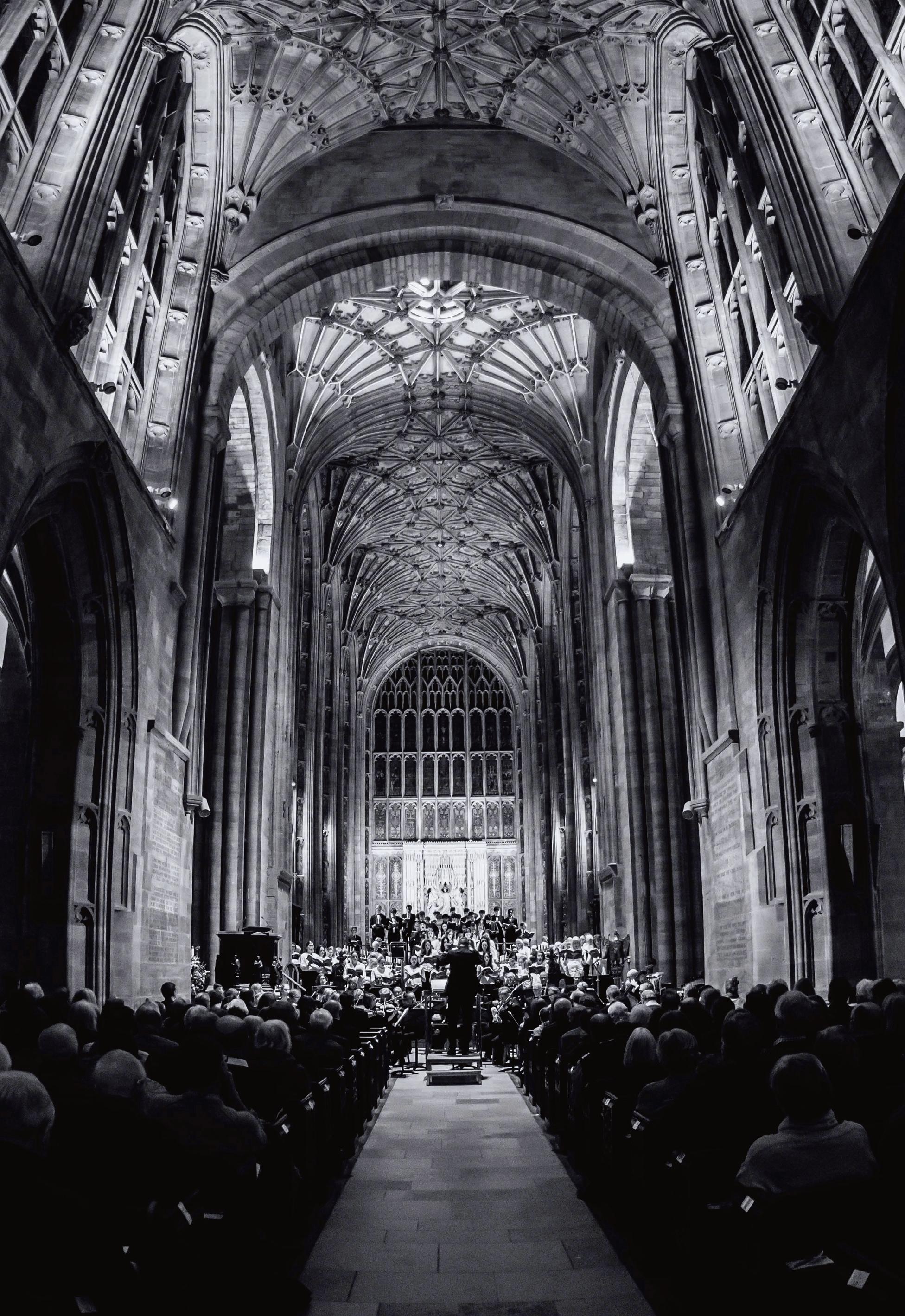
Welcome to the inaugural edition of the Sherborne Girls’ Academic Music Journal, The Score. The Journal features articles from a range of current and ex-pupils, as well as staff. A diverse range of topics are covered from accounts of musical life in the school and beyond, to surveys of music ranging from the Spanish Classical Tradition to the Spice Girls! The department values music in all its many forms, and we hope that you enjoy reading these thoughtful offerings from the wonderful members of the school community.
MATT DURY ASSISTANT DIRECTOR OF MUSIC (ACADEMIC)
Fourth Form Forum
WEITING’S TOP TIPS
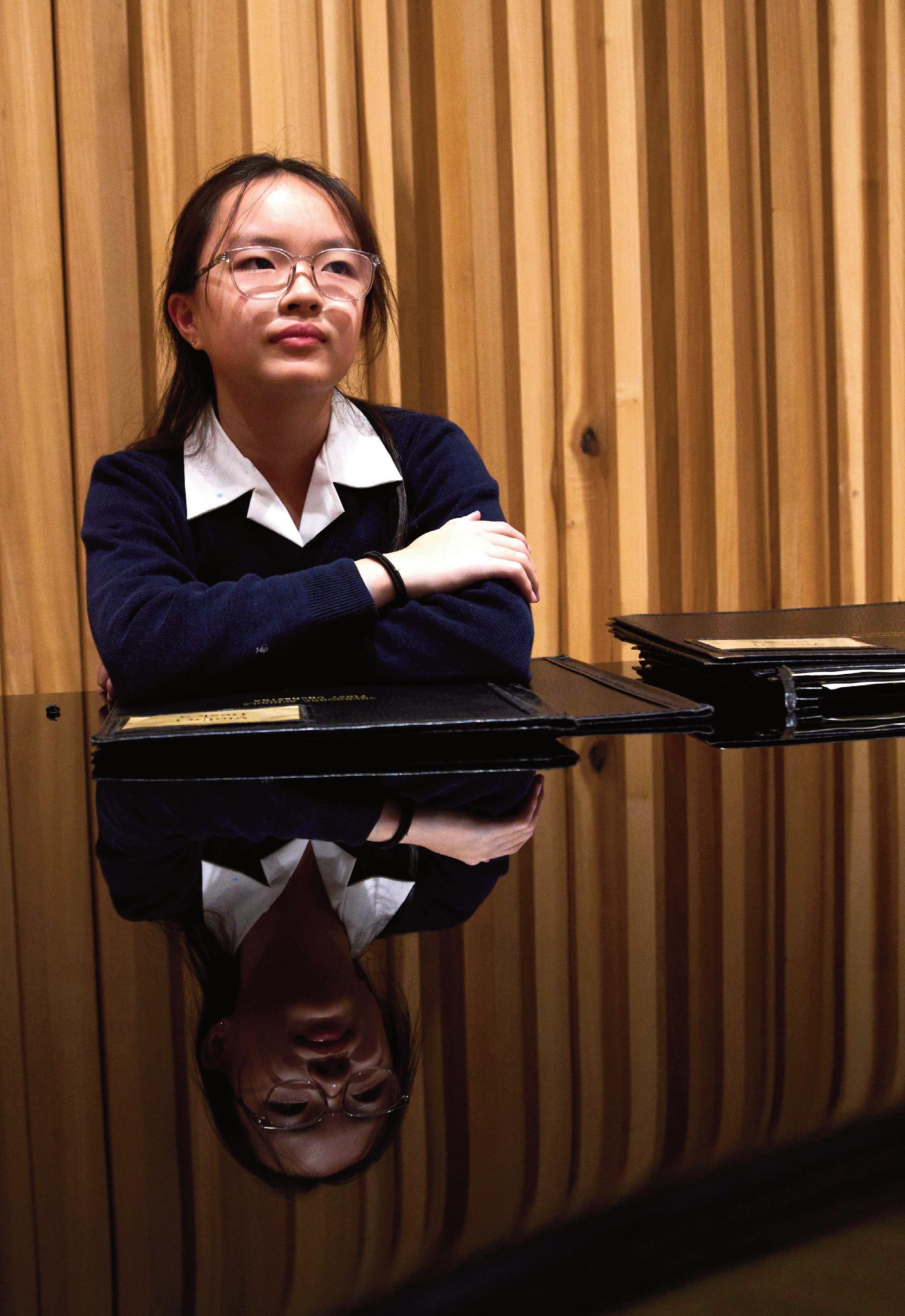
Weiting joined Sherborne Girls in U4 as a music scholar. She plays the piano, sings, and has recently started flute lessons.
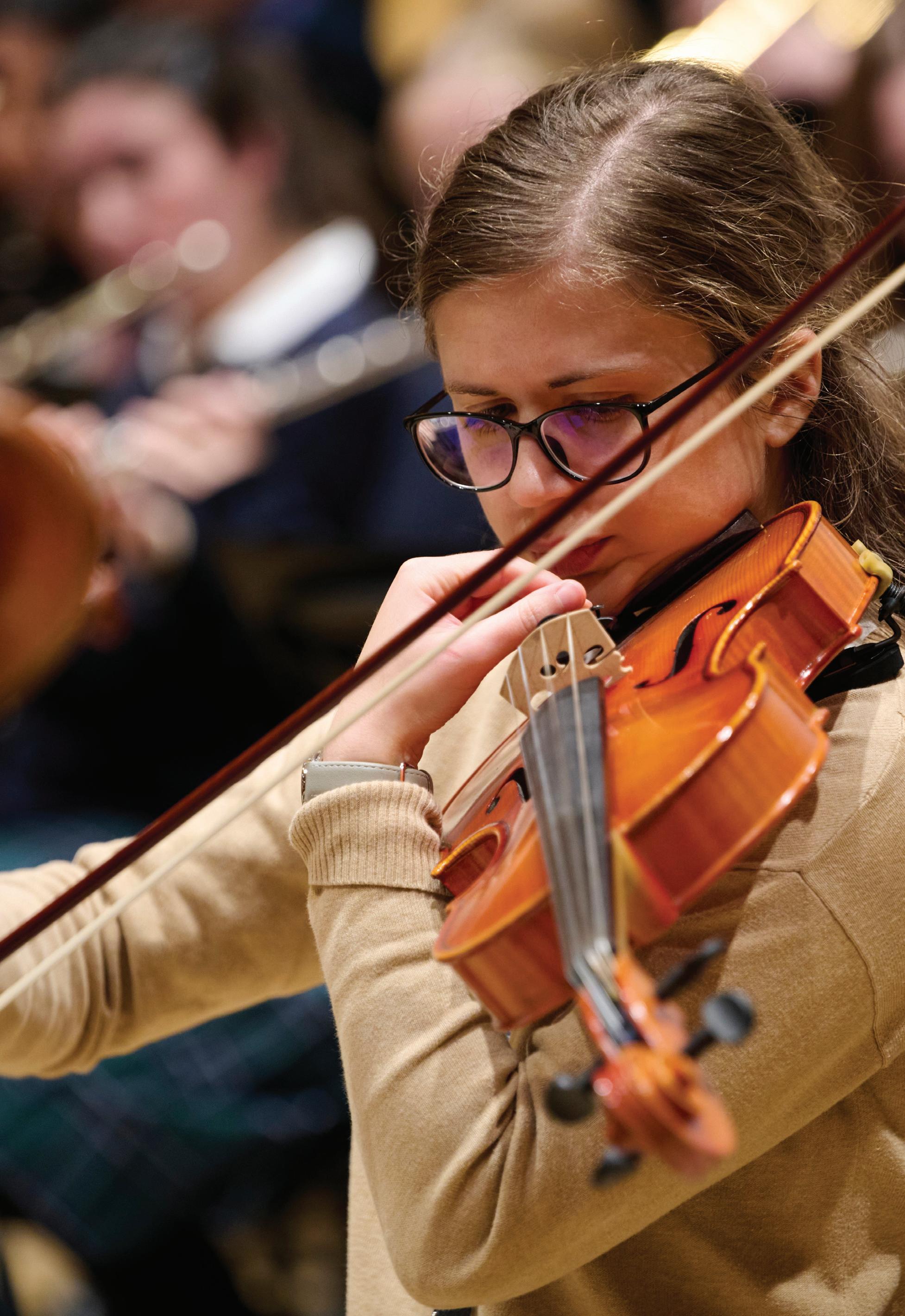
Music at Sherborne Girls offers many opportunities to perform, including evening concerts that are open to the public. There are also lunchtime concerts, which attract smaller audiences and provide a supportive environment for developing confidence as a performer. Instrumental lessons usually take place once a week and may be scheduled at a fixed time or on a rotating basis. We are encouraged to explore a wide range of musical styles, including rock, jazz and classical music.
There are two pianos available for practice in Aldhelmsted West (the Fourth Form boarding house), and additional facilities can be used at the Merritt Centre during free time. I usually practise my instruments two or three times a week. My teacher provides clear guidance to support effective practice, focusing on areas such as studies, scales, dynamics and tempo. There is also a broad choice of repertoire, allowing us to select pieces we particularly enjoy. In addition, there are many opportunities to take part in ensembles and the school orchestra.
HERE IS SOME ADVICE FROM ME ON PRACTISING:
• Avoid playing a piece straight through repeatedly. Instead, stop and focus on smaller sections.
• If a passage feels difficult, practise it at a slower tempo and gradually increase the speed.
• Practise scales in different ways, experimenting with rhythm, tempo, dynamics and separate hands.
• Try to express the emotions of the music rather than playing mechanically.
• Learn about the story or background of a piece to deepen your understanding.
• Rehearse in two ways: detailed practice with pauses, and performance practice where you play straight through, even if mistakes occur.
Music Through Time
TWO OF OUR MUSIC AWARD HOLDERS
EXPLORE THE HISTORY OF THEIR SPECIALISMS.
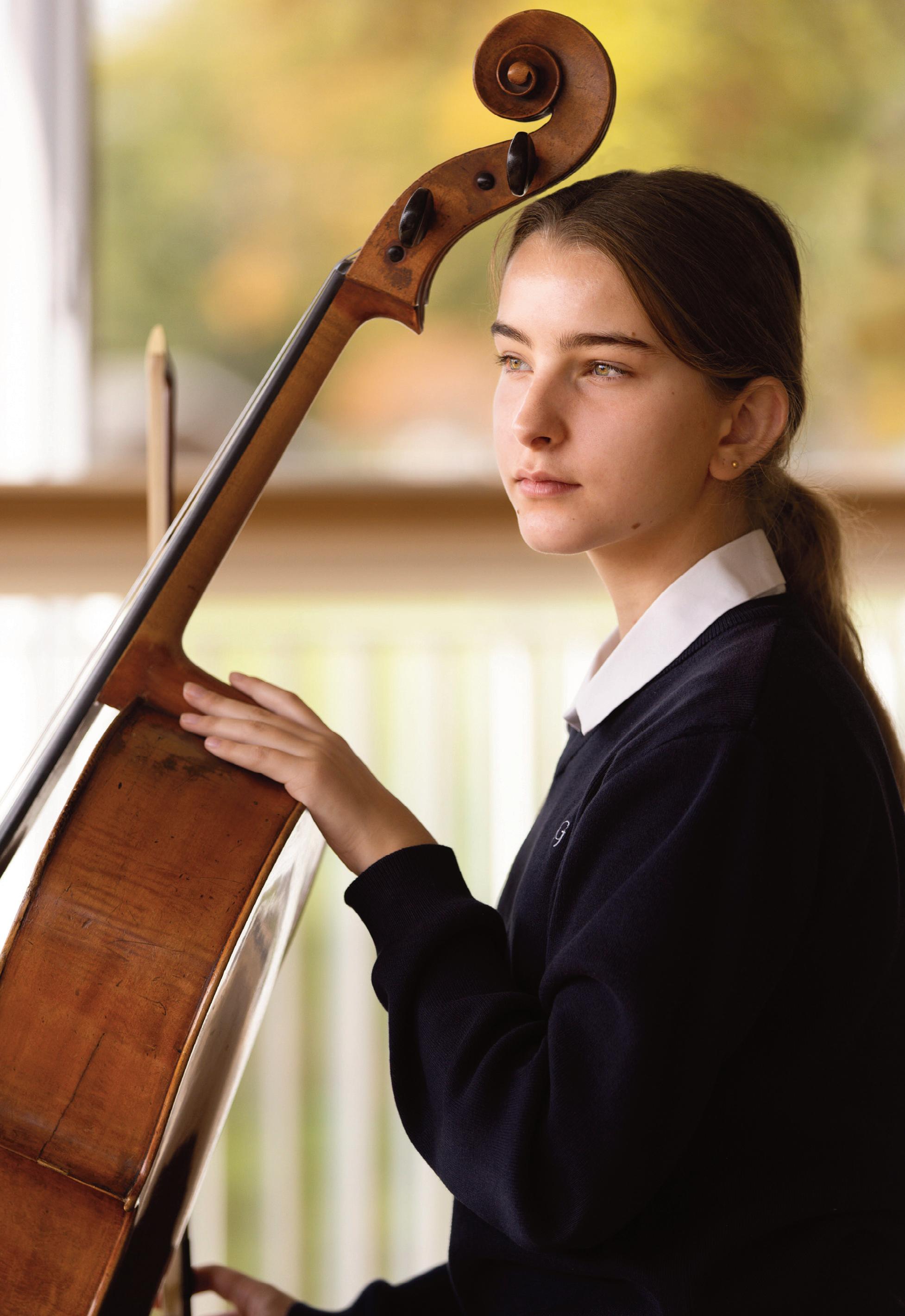
The Development of the Cello Tessa started playing the cello when she was twelve years old and joined SG in the L5 as a music scholar.
The cello was developing in northern Italy during the 16th century. It evolved from earlier bowed string instruments into the rich instrument we know and love today.
The origin of the cello can be traced back to the workshops of Andrea Amati and Gasparo da Salò, who experimented with enlarging the viola da braccio to create deeper tones. By the mid-1500s, these experiments produced instruments that you could no longer hold in the arms, leading to the creation of the violoncello, designed to rest on the floor between the player’s knees.
The cello finally distinguished itself from the bass violin around 1660, when its proportions and tuning (C G D A) became standardized. Over the
following centuries, luthiers including Stradivari refined the design of the cello, giving the balance of power and warmth.
First used for basso continuo, the cello gained fame as a solo instrument in the Baroque era, especially through works like Bach’s Cello Suites. By the Classical and Romantic periods, composers such as Haydn, Beethoven, and Dvorák expanded its repertoire, which cemented the cello’s role as both a lyrical and dramatic voice in orchestral and chamber music.
v
Today, the cello is still celebrated for its versatility, its ability to express depth in classical traditions, and adapt to modern genres.
TESSA F, L5
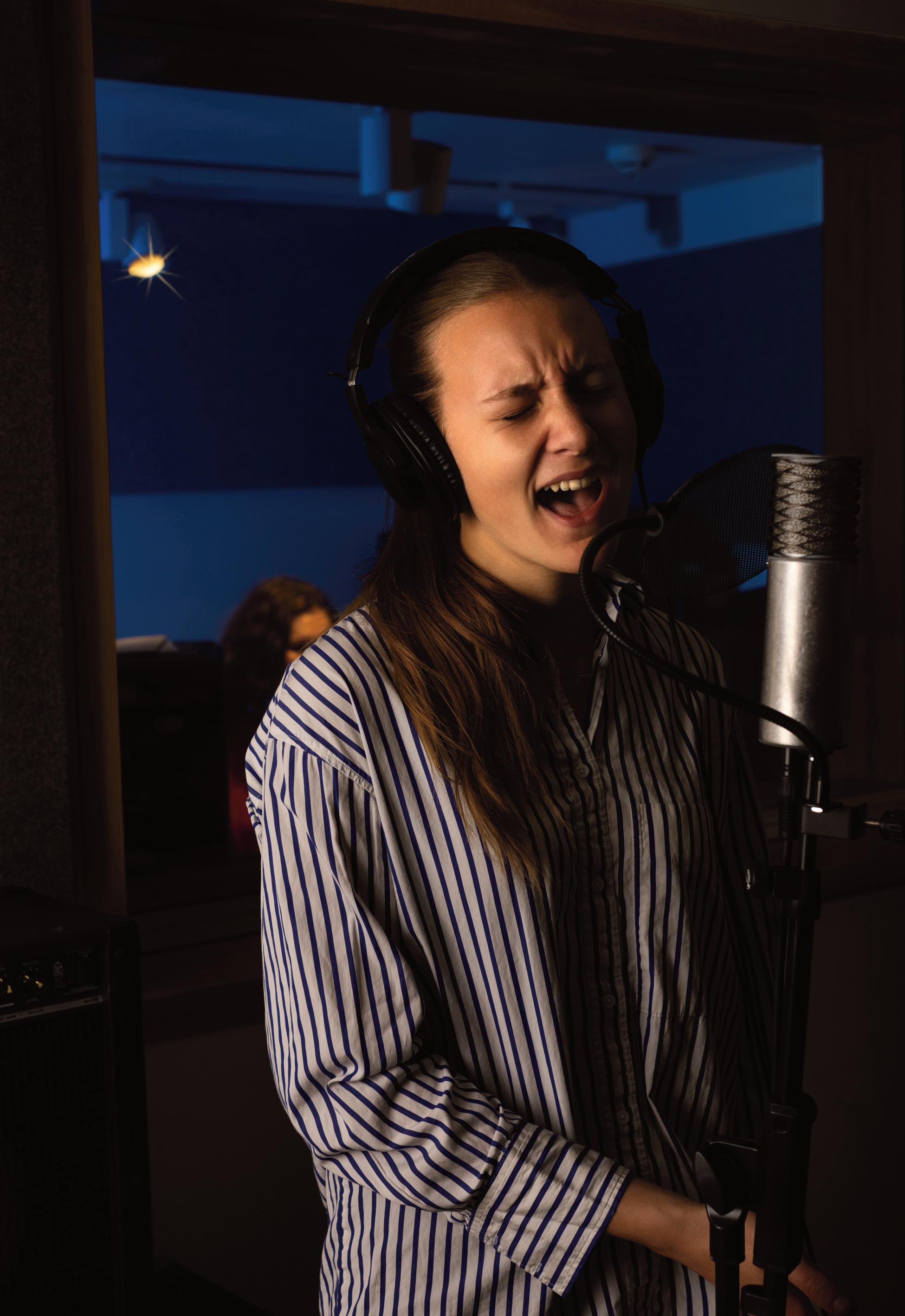
LIZZY D, U6
Music Technology Over the Years
Lizzy plays the violin and piano, and studies both Music and Music Technology at A Level. She is hoping to study Popular Music at university.
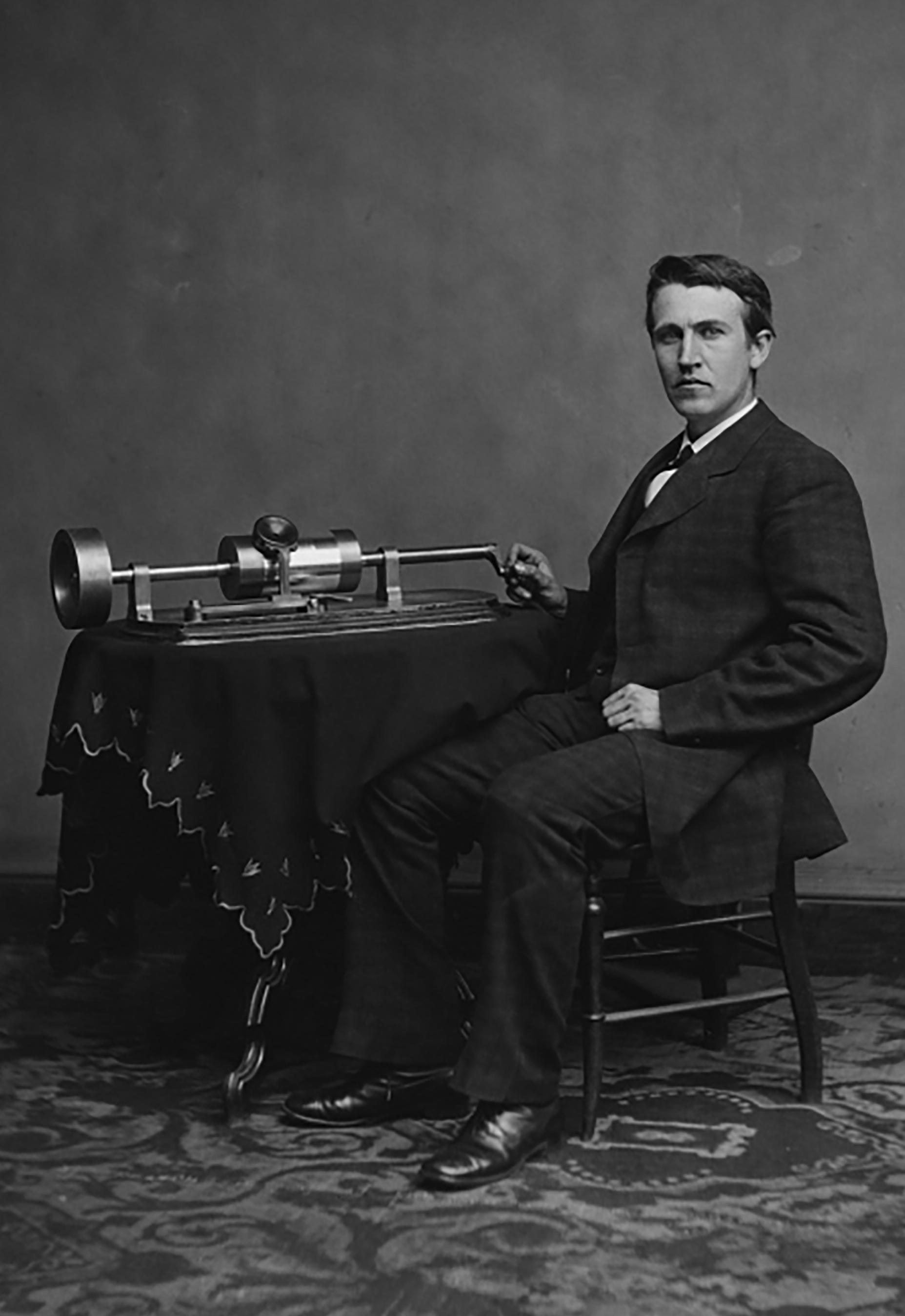
Music technology has developed significantly over time, evolving from the phonograph invented by Thomas Edison in 1877 to the Digital Audio Workstations (DAWs) we use today.
The phonograph allowed people to record and play back the human voice. It used tin foil to store recordings, which was wrapped around a central cylinder. To make a recording, a short message was spoken or played into one side of the cylinder while a handle on the other side was turned. Inside the device was a needle, which vibrated in response to the sound. These vibrations caused the needle to cut grooves into the tin foil, capturing the sound. A second needle could then trace these grooves to play back the recording. However, this was only a short-term recording system, as repeated playback would cause the tin foil to tear, making the recording unusable. Early phonographs used cylindrical recordings, which later developed into flat discs, similar to large CDs. The phonograph was Thomas Edison’s
favourite invention, and he took great pride in its success.
Today, high-quality audio interfaces and virtual instruments allow for far greater flexibility in music production and improved sound quality in the final result. These technologies can transmit audio directly into a computer, reducing background noise and producing much clearer recordings. In older tracks, a background hiss can often be heard, indicating lower recording quality, whereas modern recordings, when produced correctly, are largely free from this issue.
Music from the late 1970s and early 1980s explored the use of new technologies extensively, with the synthesiser becoming particularly popular. Advances in music production made electronic sounds more accessible to a wider audience. During this period, digital recording increased significantly, alongside the growing use of non-traditional instruments. Drum machines, sequencers and
digital mixing desks were introduced, transforming the way music was created. Drum machines such as the TR-08, often regarded as one of the most influential ever made, allowed users to programme their own rhythms rather than relying on preset patterns. This gave artists greater creative control and the ability to develop unique drumbeats.
Synthesizers were also widely adopted due to their relatively simple control systems and innovative sound possibilities. In the late 1960s, synthesizers began appearing in recordings by bands such as The Beatles and The Beach Boys. By the 1970s, the synthesiser had become a mainstream instrument and, in some cases, even replaced traditional instruments such as guitars. The 1980s marked a period of experimentation that produced an influential legacy of music which remains popular today.
It is clear that the use of technology has drastically changed throughout the years since the late 1800s. Although the invention of the phonograph initially brought only modest changes to music recording, it marked the beginning of a period of rapid technological innovation.
Over time, continued developments led to the emergence of the electronic instruments that are now central to contemporary music. The 1970s and 1980s were particularly dynamic decades, characterised by experimentation and the widespread adoption of new electronic technologies, including synthesisers. These instruments expanded the possibilities of music production, enabling artists to explore distinctive sounds and develop increasingly individual musical identities.
SOPHIE S, U6
News and Experiences
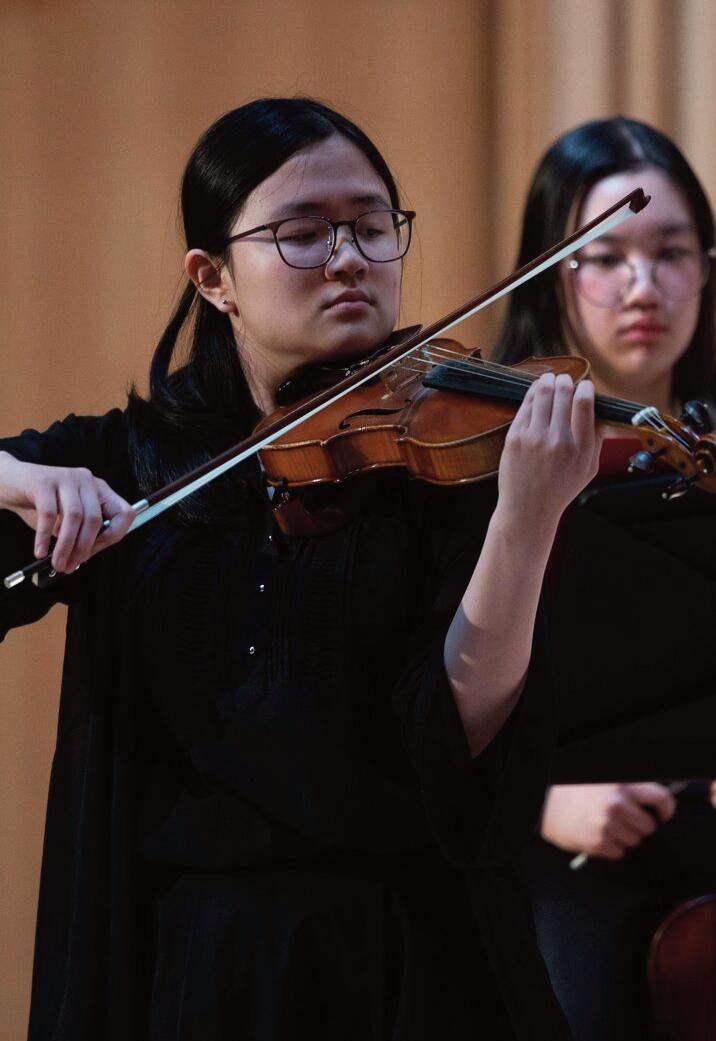
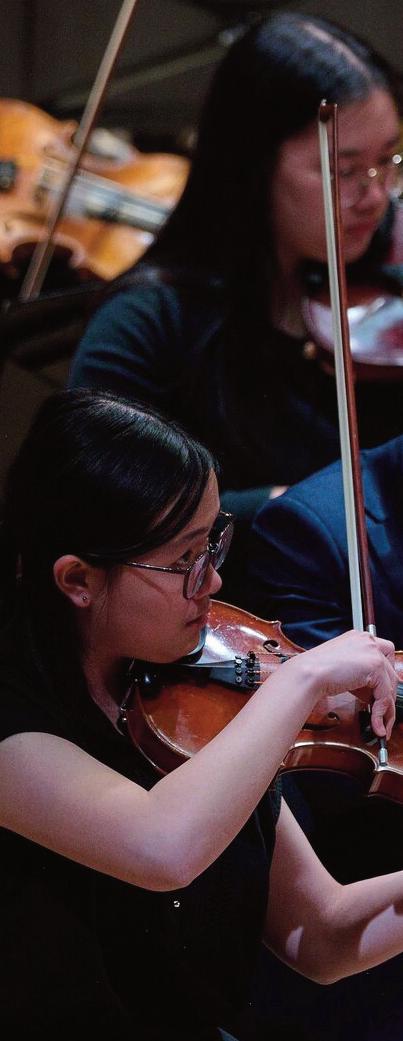
The National Youth Orchestra: An Insider’s Review Sophie plays the violin and piano and sings, and among her many musical activities leads the Sherborne Schools’ Symphony Orchestra. She hopes to study the violin at a conservatoire.
I was initially hesitant to audition for a place in the National Youth Orchestra (NYO) of Great Britain, due to the level of commitment required. Despite this, it was the desire to discover more about myself and my aspirations that made me go through the audition process. This consisted of workshops that lasted a full day and tested technical skill, ensemble playing, and creativity. I would not have been successful without stepping outside my comfort zone many times that day.
So far, I have taken part in two residencies, one over the New Year and another during the Easter holidays. Both were extremely intense, involving hours of rehearsals each day and several concerts at the end. With so many activities taking place, it was often difficult to keep track of time. Although the residencies felt as though they lasted forever, I always found myself feeling disappointed when the final day arrived. The orchestra brings together people from many different backgrounds, all with
varied interests but a shared passion for music. Being in a room with some of the most talented musicians of my age, many of whom will undoubtedly go on to great success, was an unusual but incredible experience. It was deeply motivating and inspiring, and it made me appreciate the opportunity even more.
The repertoire NYO plays tends to be modern, which I think is quite fitting as it is played by younger musicians. The contemporary style has encouraged me to consider the boundless forms music could hold. For example, Catamorphosis by Anna Thorvaldsdottir, a piece we played during the Winter Residency, utilised extended techniques to create imagery of volcanic activity in Iceland. The Percussion Concerto by Jennifer Higdon that we played at Easter used a wide range of percussive instruments to create dialogue between the soloist and percussion section of the orchestra. My favourite piece played so far, however, is the Symphonic Dances from West Side
Story by Bernstein. It is full of energy and holds many well-known melodies that I find incredibly hard to forget.
One of the things I was looking forward to the most before joining NYO was exploring the country and playing in many concert halls which I had never visited before. Recently, we performed in the Roundhouse and Bridgewater Hall, which are in London and Manchester respectively. It is astounding to hear what can be achieved by a group of teenagers with only one week of rehearsals. This is helped by the tutors and conductors of the course. Through their mutual love for the craft, they connect with the musicians in the orchestra despite their difference in age. It is their guidance and enthusiasm that bring the pieces to life.
NYO seeks to promote classical music to the younger generation. Throughout the year, we have had informal concerts that were aimed
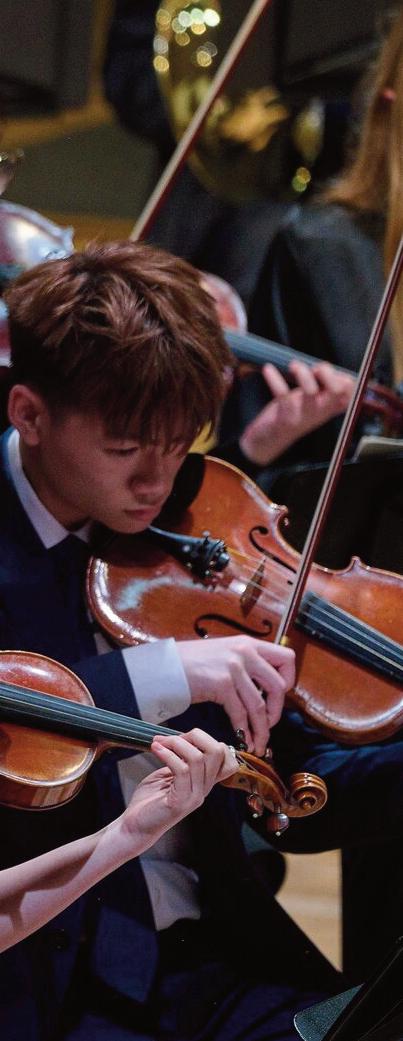
towards pupils from local schools or youth centres. While it was an unusual format, it did not make our performance any less meaningful for the ones listening in the concert halls- after all, we could potentially be the start of someone else’s musical journey! I think it is an inspiring mission to make concerts more accessible, as people can experience the moving sensation of being immersed in live music.
The most exciting thing about NYO was how everyone discovered pieces together for the first time: there was no collective memory of how a piece ought to be played. This thrill of a new adventure was at the heart of what made this experience so electrifying. We felt the desire to learn from our mistakes during the rehearsals and from everyone around us. At the end, we show the result of days of determination and hard work to those who have been supporting us to reach this point, which makes the experience all the more worthwhile.
ANNIE S, M5
Sherborne Girls Worship Band
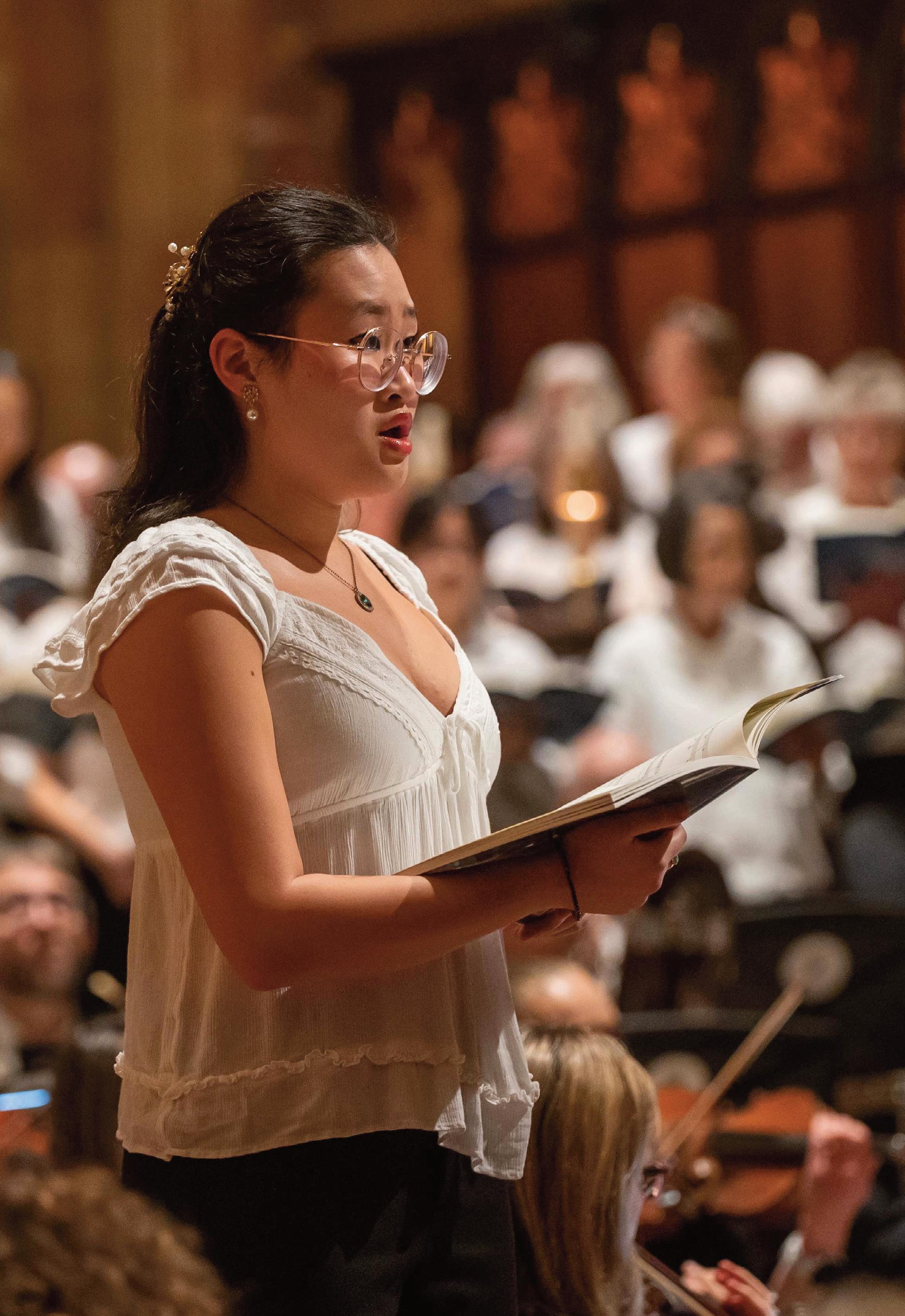
Annie is a singer and first joined the Worship Band as a vocalist in U4.
A recent and exciting addition to musical life at Sherborne Girls is the Worship Band, founded two years ago by our Director of Music, Mr Cracknell, and now led by Mr Dury. In a short space of time, it has become a valued part of the school’s collective worship.
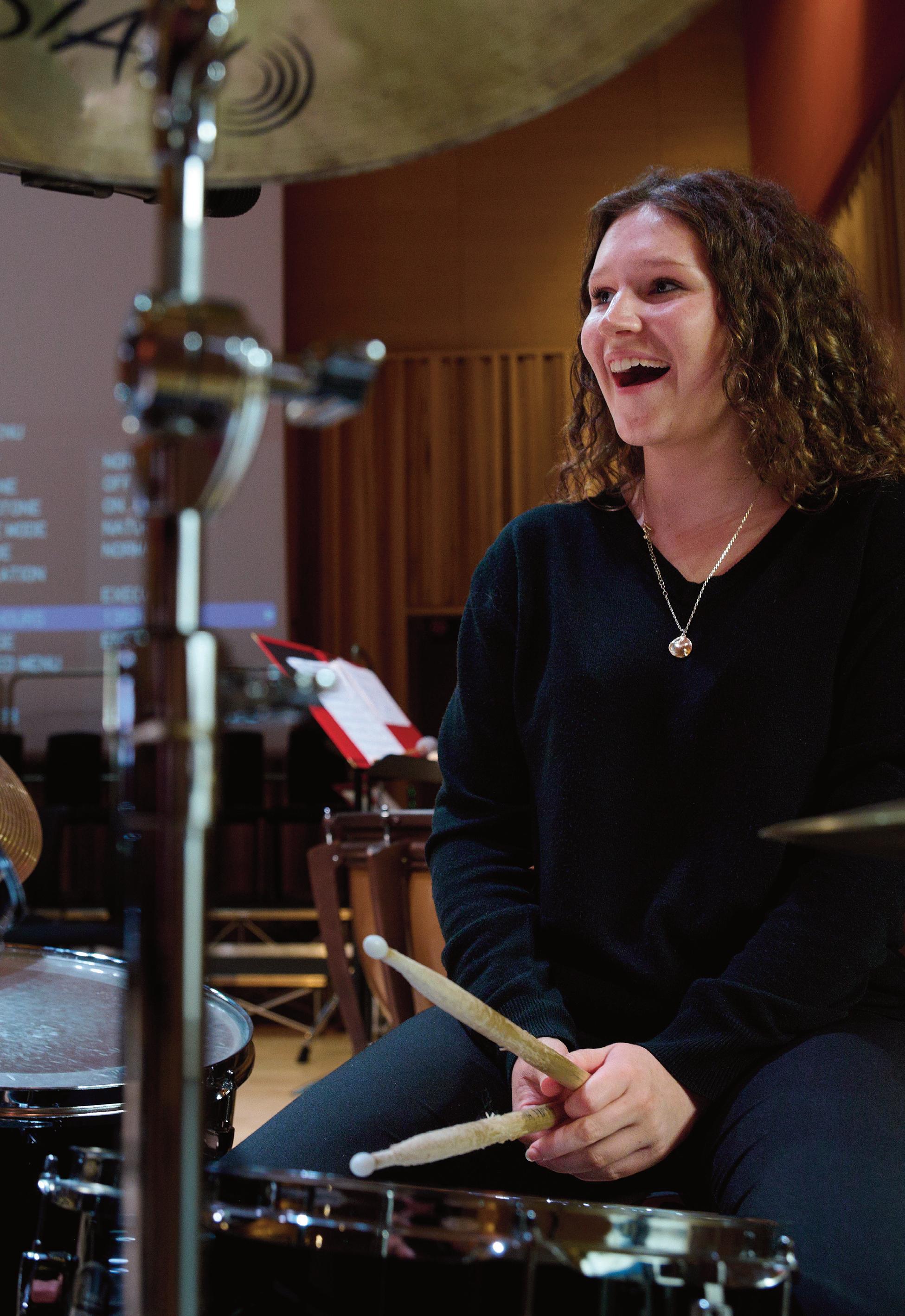
The band rehearses each Thursday during breaktime, working carefully to prepare music for Sunday Prayers. Its ensemble currently includes drums, cajón, keyboard and vocals, creating a contemporary and engaging sound. Recent repertoire has included wellknown worship songs such as My Lighthouse, 10,000 Reasons and Jireh, all of which have resonated strongly with the school community.
The Worship Band is also enriched by visits from Bruce Izzett and his own worship group, who join us for selected Sundays throughout the year. These occasions often involve collaborative rehearsals beforehand, culminating in shared performances in front of the whole school. This is such a memorable and powerful experience, and everyone genuinely looks forward to their visit. The whole school sings, dances and claps along.
Although still in its early stages, the Sherborne Girls Worship Band has already made an impact and we’re excited to see what lies ahead.
BETSY C, U6
Academic Feature
Spain on Fire: How Spanish Classical Music Became a Global Soundtrack Betsy has recently taken her cello diploma, which she passed with Distinction, and is also an excellent pianist and singer.
THE BIRTH OF A BOLD NEW SOUND
In the 19th century, as nations across Europe were reclaiming their cultural identities, composers began rejecting the dominance of German and Italian styles. This shift, known as musical nationalism, aimed to elevate local traditions into the classical canon. Spain, with its deep well of folk music, dance, and storytelling, offered something thrillingly different. Whilst Germany had dense harmony and philosophical depth, and Italy had operatic drama, Spanish composers turned to their roots: flamenco, folk dances, and traditional street music: rhythmic, colourful, and full of life. They asked a radical question: What if classical music could sound like home?
WHAT MADE SPANISH CLASSICAL MUSIC SO DIFFERENT?
Spanish composers didn’t just use typical classical forms. They filled their music with:
• Syncopated rhythms – off-beat patterns comprised of clapping (palmas), foot stomps (zapateados), and wild dance rhythms that make you want to move
• Phrygian modes – mysterious scales common in flamenco, that you don’t hear in most Western music
• Guitar-inspired techniques – even in piano music!
• Dramatic contrasts – quiet one moment, explosive the next
• Local dances and songs – the seguidilla, fandango, jota, and more
• Call-and-response moments, almost like a conversation
These elements gave Spanish music a raw, emotional edge. You could hear joy, sorrow, defiance, and desire—sometimes all in one piece.
“The spirit of Spain sings in its music”
THE BIG THREE OF SPANISH MUSIC
ISAAC ALBÉNIZ: THE PIANO
VIRTUOSO WHO LOVED FLAMENCO
Albéniz (1860-1909) was a musical prodigy—by age four he was already performing in public. As he grew up, he travelled across Spain, soaking in the regional music and dance traditions. His piano compositions used those styles in groundbreaking ways.
• Top Track: Asturias (Leyenda) – it sounds like it was written for guitar, but it was actually composed for piano!
• Why He Matters: Albéniz proved you could turn folk styles into high art without losing their fire.
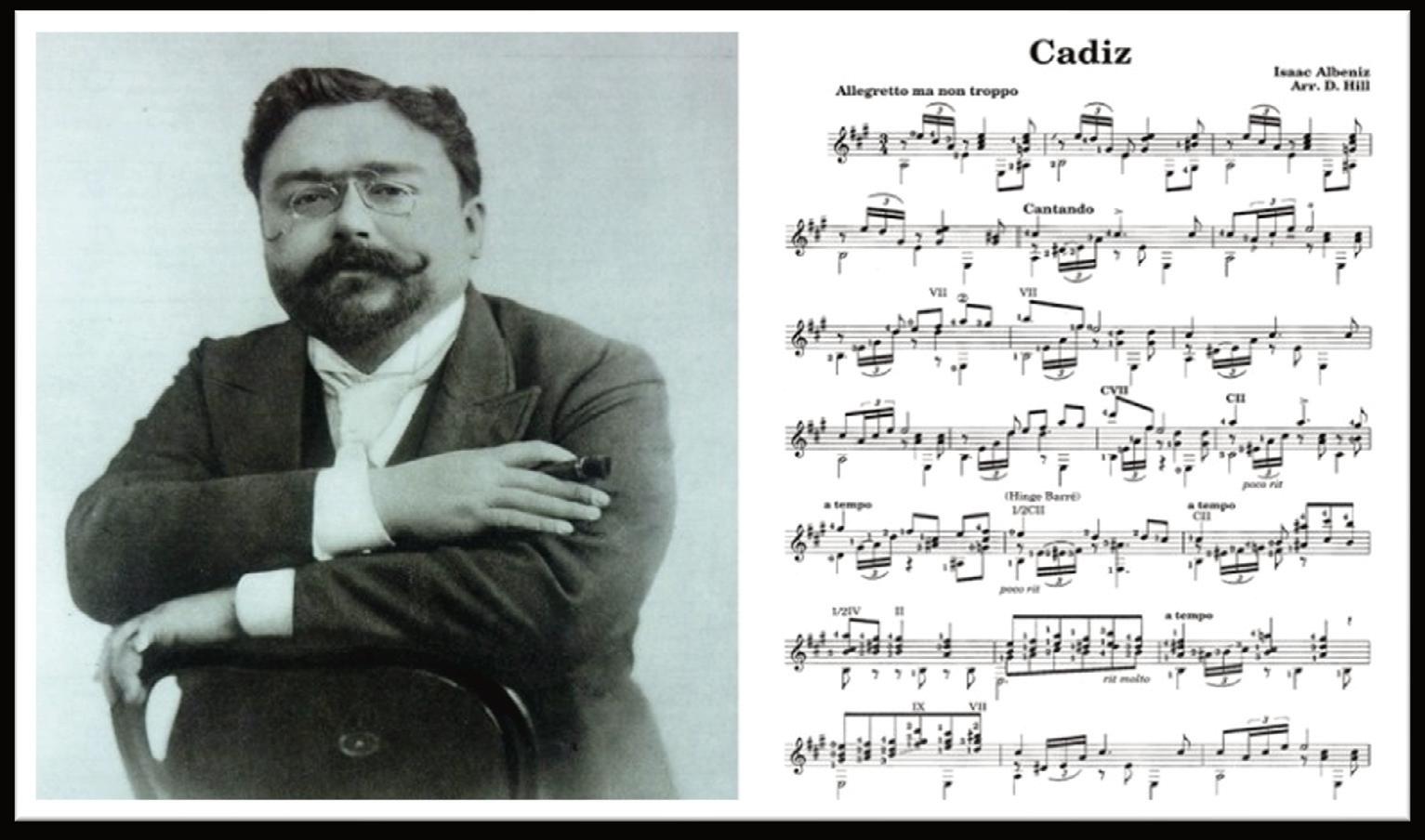
Albéniz and one of his pieces Cadiz (originally written for piano, but over time it was converted into a piece for guitar).
FUN FACT:
1. Albéniz once ran away from home to tour South America!
2. His piece Asturias is so convincing that many people think it’s a guitar solo!
ENRIQUE GRANADOS: THE PAINTER OF MUSIC
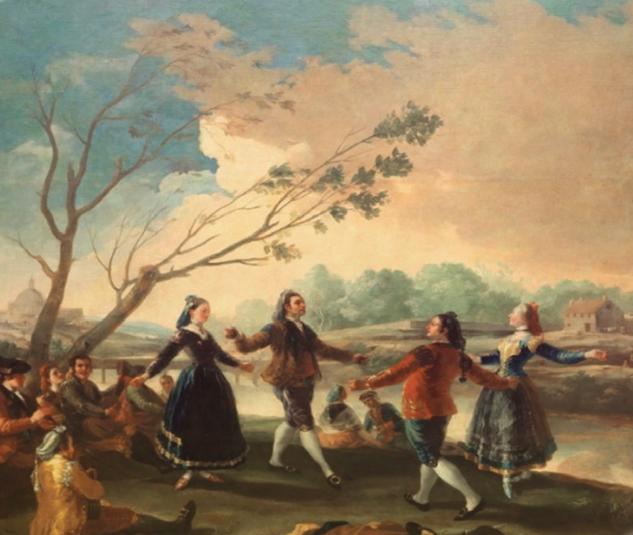
Granados (1867-1916) was obsessed with the painter Francisco Goya, and it shows in his most famous work, Goyescas, a piano suite that captures the elegance, love, and tragedy of 18th-century Spain.
• Top Track: ‘Quejas, o la Maja y el Ruiseñor’ (The Maiden and the Nightingale) from Goyescas – delicate and dreamlike.
• Why He Matters: he brought visual art, storytelling, and music together—long before music videos existed!
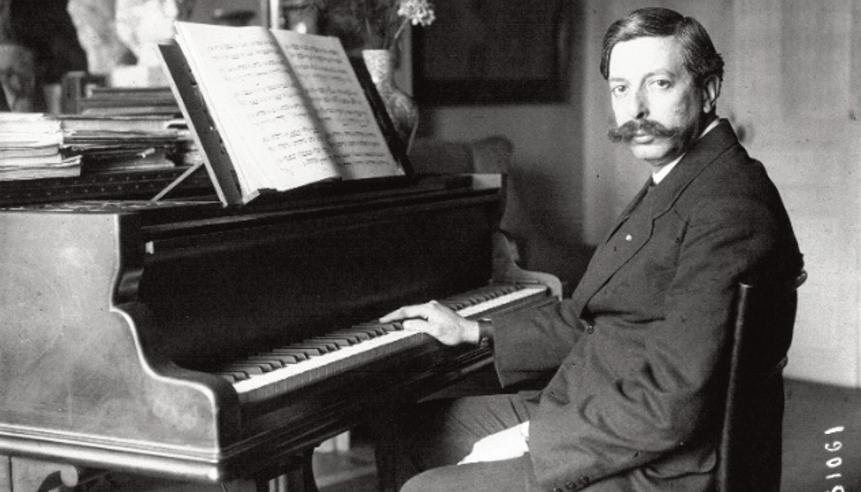
Enrique Granados (above) and one of Goya’s paintings –Dance of the Majos at the Banks of Manzanares (1777) (right)

MANUEL DE FALLA: THE HEARTBEAT OF SPAIN
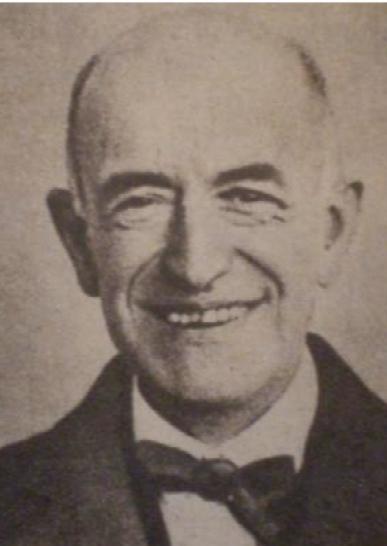
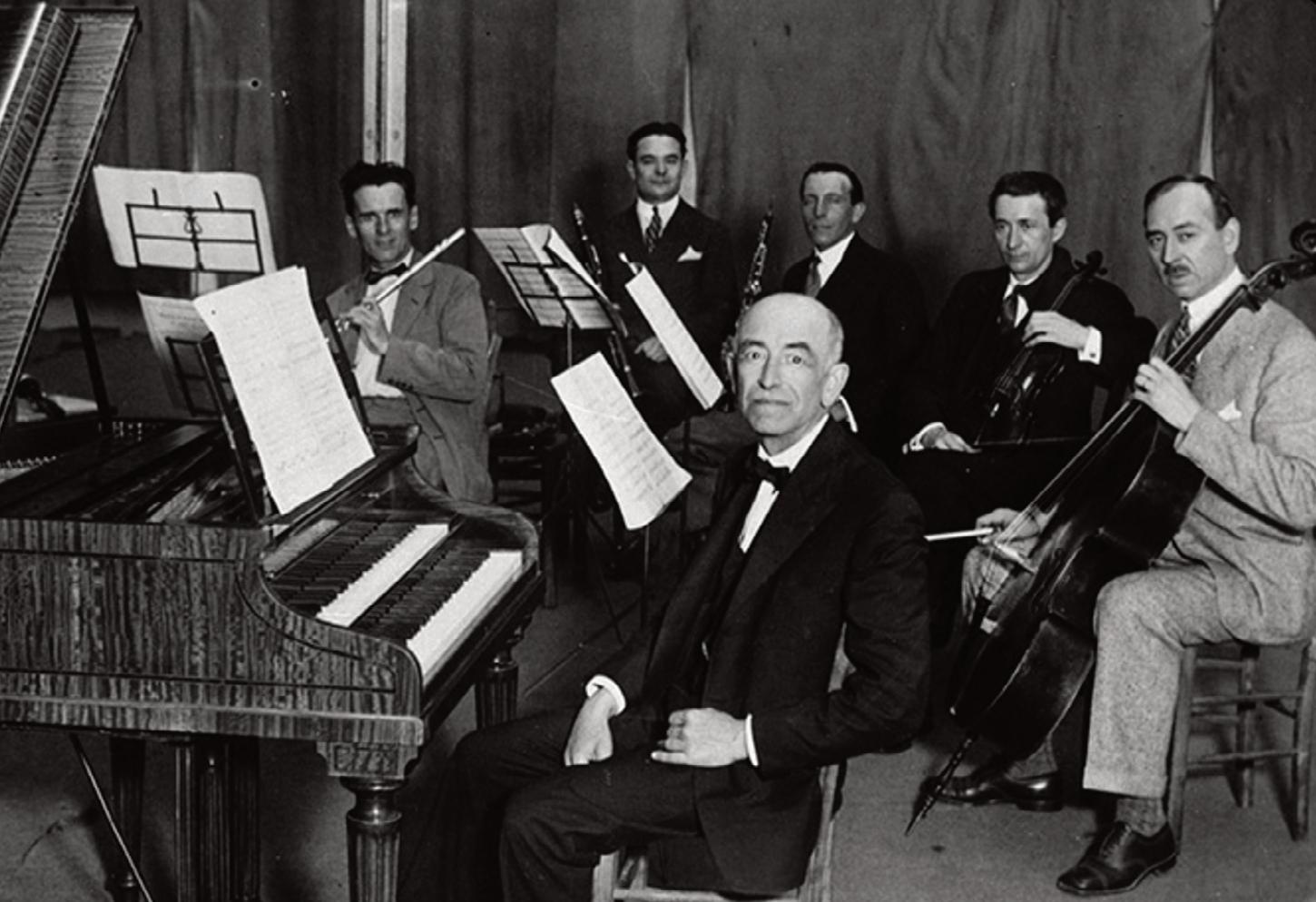
De Falla (1876-1946) brought flamenco rhythms, Andalusian melodies, and even gypsy folklore into orchestral music. He worked with top artists of his day, including Picasso and Diaghilev, and was a huge influence across Europe.
• Top Track: El amor brujo – (Love, the Magician) – a wild mix of music and theatre that includes the famous Danza ritual del fuego.
• Why He Matters: He blended tradition and modernism and made Spanish music world-famous.
Manuel de Falla (above)
ZARZUELA:
SPAIN’S MUSICAL THEATRE
Opera might have been the rage in Italy, but Spain had its own version: zarzuela. This exciting form of theatre mixed spoken drama, singing, dancing, and folk music.
Imagine a Netflix telenovela with live music and flamenco. That’s zarzuela.
FAMOUS ZARZUELA MOMENTS:
• La verbena de la Paloma by Tomás Bretón – a love story during a Madrid street festival
• El barberillo de Lavapiés by Francisco Barbieri – a witty comedy with political twists
• Luisa Fernanda by Federico Moreno Torroba – a romantic tale filled with patriotism
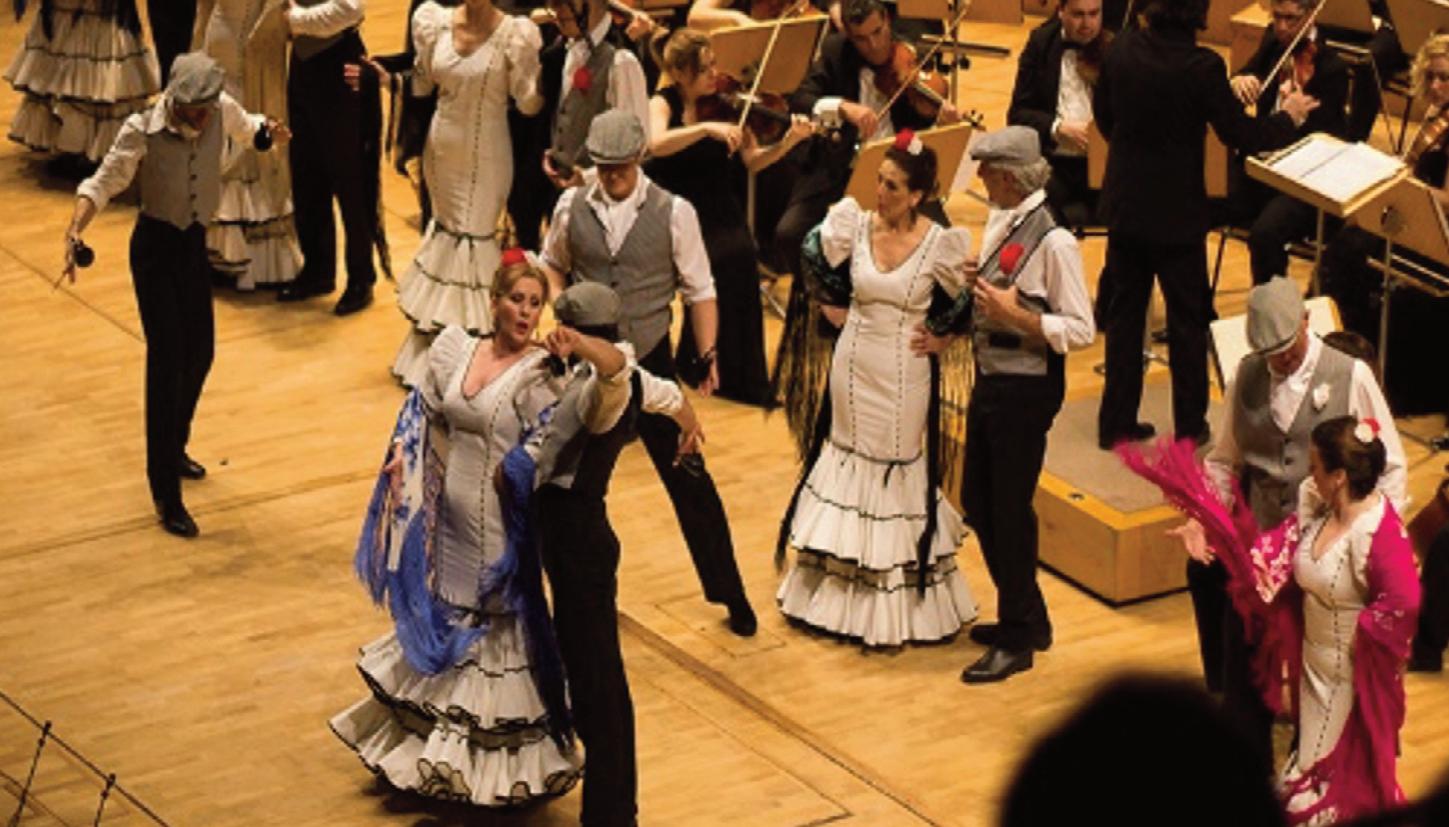
Zarzuela gave Spanish audiences stories they could relate to—featuring everyday characters, local humour, and unforgettable melodies.
A zarzuela performance (above)
THE GUITAR STEPS INTO THE SPOTLIGHT
For centuries, the guitar was seen as a ‘low’ instrument, used in taverns, street parties, and by travelling musicians. But Spanish composers flipped that idea completely.
JOAQUÍN RODRIGO’S BIG MOMENT
In 1939, blind composer Joaquín Rodrigo wrote the Concierto de Aranjuez, a piece for classical guitar and orchestra that blew people away.
The second movement, Adagio, is heartbreakingly beautiful and has been used in jazz, film, pop, and even video games. It has been sampled by Miles Davis, Led Zeppelin, Shakira, and more. It turned the guitar into a classical superstar. Suddenly, the world saw that the guitar could be just as powerful as the violin or piano.
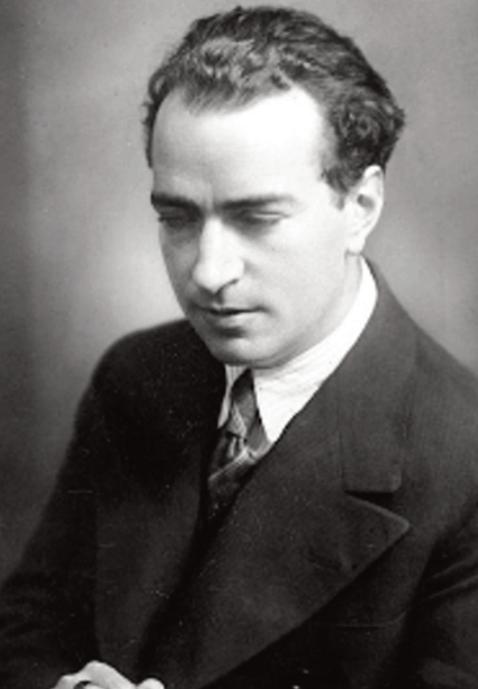
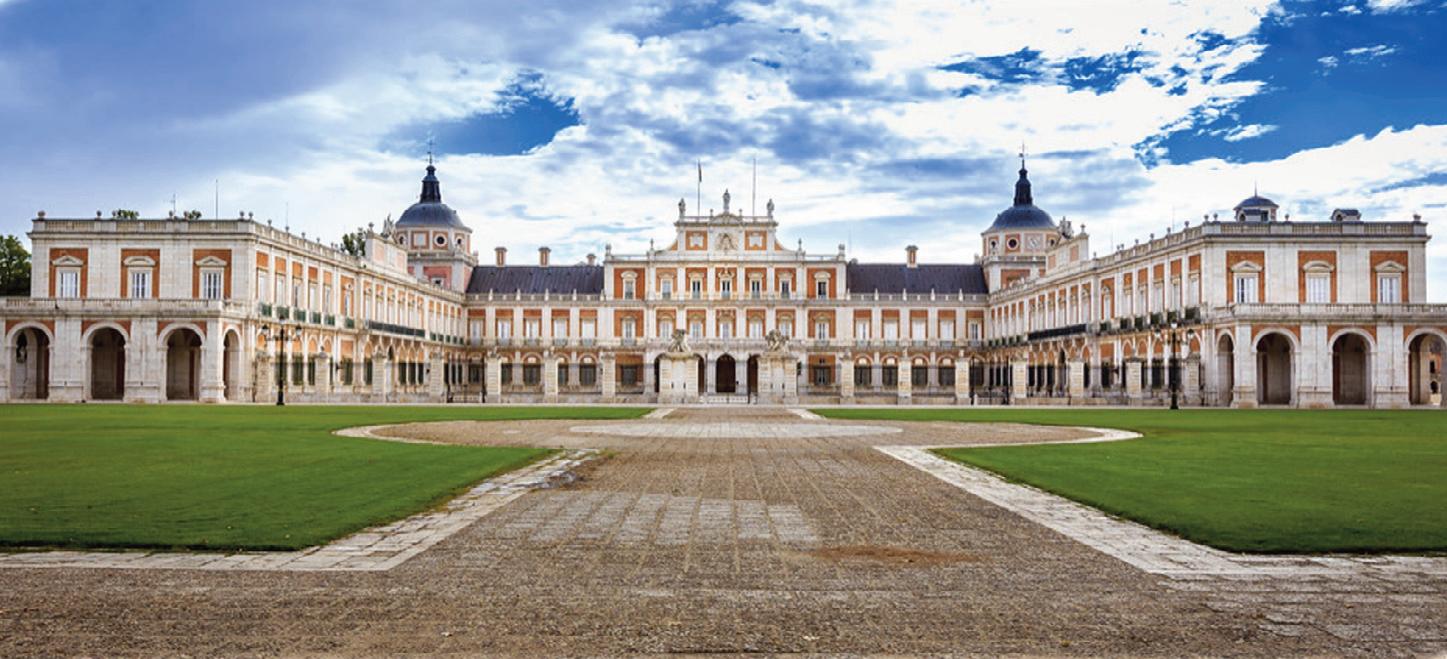
Joaquín Rodrigo (above) and the Royal Palace of Aranjuez (below)
GLOBAL IMPACT:
SPAIN’S SOUNDTRACK TRAVELS THE WORLD
Spanish classical music influenced not just composers, but entire genres.
• Jazz musicians adapted Spanish scales and rhythms (check out Miles Davis’s Sketches of Spain).
• Film composers borrowed flamenco flair for dramatic effect—like Zimmer in Pirates of the Caribbean
• Ballet and theatre choreographers. For example, Alberto Alonso’s choreography of Bizet’s Carmen built performances around Spanish music.
• Video games and anime soundtracks, such as The Last of Us and Cowboy Bebop often use Spanish guitar for mood or mystery.
Even French composers like Ravel (with Boléro) and Bizet (with Carmen) borrowed from Spanish tradition and helped it reach global fame.
THE MODERN LEGACY
Today, the spirit of Spanish classical music lives on. Modern composers and musicians continue to blend traditional sounds with new technologies and global styles.
• Flamenco guitarists like Paco de Lucía fused jazz and classical with flamenco.
• Electronic artists sample Spanish rhythms in new tracks.
• Film composers use Spanish instruments to add heat and drama.
• Young Spanish musicians are redefining what ‘classical’ even means.
Spanish music remains bold, emotional, and unapologetically real, just like the people who made it.
FINAL WORD: WHY IT STILL MATTERS
In a world full of auto-tune and algorithmic playlists, Spanish classical music reminds us of something timeless: music is emotion. It’s culture. It’s a story.
And Spain’s story is written in rhythms that dance, melodies that cry, and harmonies that burn like fire.
So next time you hear a dramatic piece with flair and rhythm—or a guitar that sounds like it’s telling a secret—you just might be listening to the legacy of Spanish classical music.
EXPLORE
MORE:
YOUR STARTER PLAYLIST
1. Asturias (Leyenda) by Isaac Albéniz
2. ‘Quejas, o la maja y el ruiseñor’ from Goyescas by Enrique Granados
3. Danza ritual del fuego by Manuel de Falla
4. ‘II: Adagio’ from Concierto de Aranjuez by Joaquín Rodrigo
5. Boléro by Maurice Ravel
6. ‘Habanera’ from Carmen by Georges Bizet
7. Entre dos aguas by Paco de Lucía
8. Sketches of Spain by Miles Davis
QUIZ
WHICH SPANISH COMPOSER ARE YOU?
1. Your dream instrument is…
A) Piano with flair
B) Spanish guitar
C) Full orchestra
D) Your voice
2. Choose a hobby:
A) Painting or poetry
B) Travel and performance
C) Reading about history
D) Dancing
3. You like music that is…
A) Visual and expressive
B) Folk-inspired and fun
C) Epic and theatrical
D) Intimate and emotional
Mostly As – You’re Granados
Mostly Bs – You’re Albéniz
Mostly Cs – You’re de Falla
Mostly Ds – You’re Rodrigo
AMOR V, U5

Music and Language
Amor is a keen cellist, pianist and singer. Here, she draws on her experience of studying Music as well as French and Latin at GCSE.
Learning music and foreign languages might seem like two very different skills, but they share many interesting connections, and learning one can enrich the other. As well as being connected in the way we learn them, the parts of our brain used to understand them are related, and brain imaging techniques such as PET scans have shown that they activate overlapping areas of the brain, especially in the left hemisphere.
As you can imagine, a good ear is essential for mastering both music and language. In music, you learn to distinguish between notes, rhythms, and tones, and similarly in language between sounds and accents. The auditory cortex is relied upon heavily as it processes sound. It is located in the temporal lobe on both sides of the brain and helps detect pitch in music and distinguish phonemes (the smallest units of sound) in speech. This is why musicians tend to have better-than-average language listening skills and a study published in 2014 reports that musicians were found to be 40% better at distinguishing subtle differences in speech.
Of course, both music and languages require pattern recognition and memorising, which in turn are important for problem-solving and multitasking. When musicians and language learners remember repertoire and words, it
strengthens their hippocampus, located in the temporal lobe of the brain, just above the brainstem. A vital part of the brain, the hippocampus forms memories and plays a key role in learning and emotional regulation. As well as being closely linked to one another, learning either music or a language can therefore support brain function and strengthen working memory.
Learning music can even help improve language pronunciation. The motor cortex and cerebellum are areas of the brain which engage when playing an instrument or speaking a foreign language, especially in terms of physical coordination. Whether you are pressing the keys of the piano or forming unfamiliar words with your mouth, these regions of the brain manage the fine motor skills. Playing music is known to help fine-tune auditory perception, which can make it easier for musicians to copy language sounds, leading to more natural-sounding and fluent speech.
Both music and foreign languages help train the brain in ways that are surprisingly similar. Whether you're learning music or trying to speak a new language, you're improving skills like memory, listening, and pattern recognition; and if you do one, it might be worth trying the other as your brain is already being trained.
SG and Beyond –Stories from Staff and Alumnae
AIMME CHEN WD’24
RAM Reflections
Aimme is a second-year composition student at the Royal Academy of Music and studied A Level Music at SG in the years 2022-2024.
During my first year at the Royal Academy of Music, I was fortunate to contribute to the Lights, Camera, Score project as a teaching assistant. Led by Little People Big Noise, this project engages primary school students in creative workshops where they compose music for a short film. This year, it received first place in the UNESCO Seeds of Hope Competition.
As a composer, I assisted Greg Boardman who is the leader of this project and worked with two classes at Lincewood Primary School. Each session involved students improvising to a few scenes from the short film. They often start with a simple idea, repeating it, and gradually adding layers to shape a short piece that corresponded to the mood of the
scenes. My role was to recognise materials and gestures with potential – sometimes emerging as a quiet phrase sung by someone at the back of the classroom – and to guide students in developing specific gestures further with their creativity. For me this was an active composing process, similar to establishing guidelines for an openscore work: while students were given a considerable degree of freedom, it was essential for us as teachers to ensure that their music remained coherent and appropriate to the scene.
Editing the music between sessions was also a challenging yet interesting process. The students’ improvisatory approaches made traditional notation nearly impossible, so I chose to handwrite all the musical events and
mark the entry points of different instruments. The result resembled a kind of graphic score – something I hadn’t expected, but which surprisingly resonated with both my course and my personal interests. Over the course of the lessons, I saw the students grow increasingly confident in their musical ideas. While they were initially shy about sharing melodies they had created, through ongoing improvisation and experimentation, they began to understand and embrace the musical instincts they had. In the summer of 2025, groups of students from different schools performed their own music alongside the English Chamber Orchestra, which was undoubtedly a memorable and meaningful musical experience for both the students and for me, as the score editor.
A boy who initially had little knowledge of playing chords on the piano made remarkable progress. By the time of the final concert with the English Chamber Orchestra, he was confidently accompanying a complete song. Before the performance, he told me he had been practising and had learnt all the chords. He played brilliantly during the concert, and even remembered all the rests between verses and choruses, which was something that confused him previously. I am still incredibly proud of his achievement.
As a first-year composer at the RAM, I have experienced many moments of self-doubt. Working with the students became a source of relief and inspiration. Their pure and instinctive approach to music reminded me of the simple reasons I first fell in love with it, and why I chose to study composition in the first place: the joy and excitement of imagining and creating music.
MISS MOORSOM

Girl Groups and Girliness:
A comparison of Motown and the Spice Girls
Miss Moorsom is Graduate Assistant (Music) at SG and wrote this article as an essay for her undergraduate degree.
Many people have noted girl groups’ popularity among pre-teen and teenage girls, and how other performers made use of their style to appeal to the same audiences. Bearing in mind the significant influence the genre had over young girls, it is interesting to consider how girl groups represented women, girlhood and femininity.
This representation occurred particularly through the lyrical content of songs, through their invocation of community, and through a focus on their bodies and how they moved. However, different groups, particularly groups of different decades, made use of different – or at least ambiguous – strategies, for example regarding female sexuality and feminist ideology.
The topics of girl group songs and the ways in which these are expressed form one way in which girl groups represented women, girlhood and femininity. Most of the songs, for example, are about heterosexual love from a female perspective, even if they offer a range of attitudes towards it. The most popular songs of the 1960s, indeed, were ones that could feed
teenage fantasies of romance, in line with the preoccupations of many girls at the time.
By contrast, the Shirelles’ ‘I Met Him on a Sunday’, with its casual dismissal of an ordinary love interest is somewhat of an outlier. In general, the boys in this repertoire were treated more as a symbol, part of the ‘dating rituals’ that were seen as a component of girlhood and femininity, than as people of individual romantic interest.
Thus, by fixating on the topic of heterosexual romance, the girl groups of the 1960s represented and perpetuated the idea that a successful heterosexual love life is key to being a girl or woman.
Of course, teenage girls were also interested in sex, but less able to express this because of societal pressures. Therefore, sex was mentioned, but in a ‘wholesome and respectable’ fashion – for example from the point of view of a virgin more concerned with the romantic implications of the act. White girl groups such as the Shangri-Las were able to take a more openly sexual approach in their lyrics, mirrored by their choice in clothing. The Spice
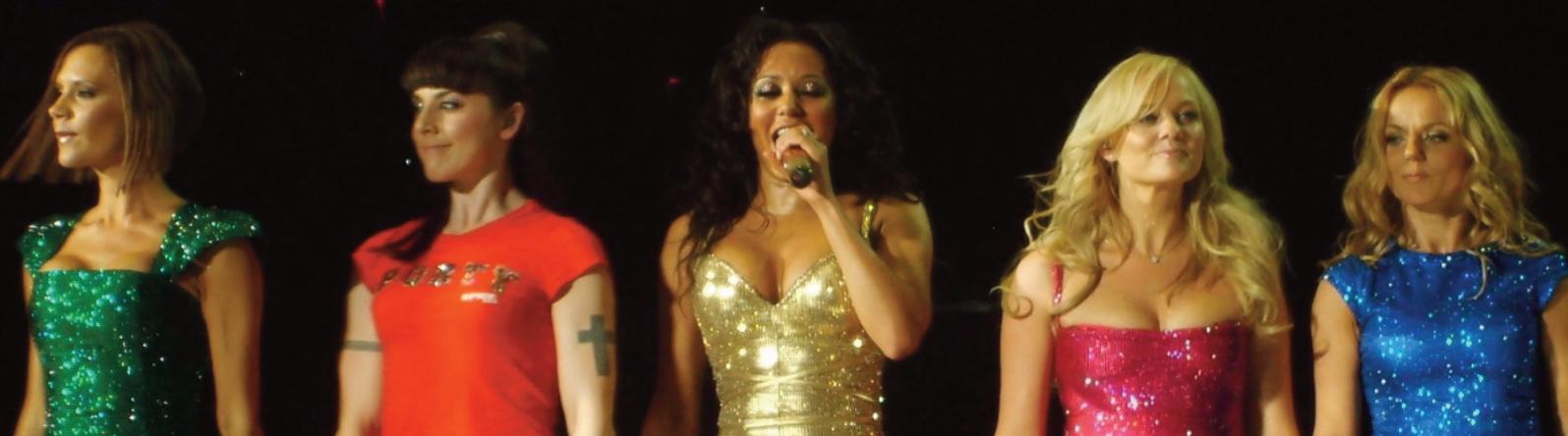
Girls, four white women and one woman of colour, were also more openly sexual, although it is worth noting that Mel B., the only non-white member of the group, was typecast as a rulebreaker who wore revealing clothing. This is a symptom of black hypersexuality that the girl groups of the 1960s were trying to avoid in their quest for respectability.
Since frank discussions of sexual acts were not seen as feminine and thus were not an option, girl groups often used a ‘secret language’ of doo wop syllables instead, as a sort of euphemism. An excellent example of this can be found in Betty Everett’s ‘It’s in His Kiss’, where the refrain ‘shoop’, sung by the backing singers, mimics the physicality of kissing someone. It is interesting to note that the Spice Girls’ first single ‘Wannabe’ makes use of a euphemism for the word ‘sex’, ‘zig-a-zig-ah’, in much the same fashion.
Since open discussions of sex were indeed out of bounds for girl groups and girls of the 1960s, this secrecy in addressing it was also a part of what it meant to be a girl at that time, and thus was another way in which girl groups represented girlhood.
The content of songs by the Spice Girls, who were singing over thirty years after the girl groups of the 1960s, was of course altered to reflect the change in the practices of girlhood and femininity.
The group emphasised ‘girl power’, which they defined as both ‘physical and mental strength’. Girl power is seemingly feminist in tone, encouraging teenage audiences to control their own lives. This contrasts with the protagonist of
many 1960s girl group songs, such as that of the Shirelles’ ‘Will You Still Love Me Tomorrow’, who is concerned with how the boy will treat her.
However, the Spice Girls’ message may have been less feminist than it first appeared, for a number of reasons. For example, the group supported patriarchal consumerism through advertising, which implied that in order to copy their version of femininity, girls would need to purchase various different products. Moreover, although they took a different attitude to the girl groups of the 1960s, the Spice Girls’ songs are mainly about heterosexual relationships (‘Mama’ being an exception). This restates the idea that such relationships are, to an extent, part of what being a woman is.
Nevertheless, it has been argued that to see the Spice Girls as token feminists ‘underestimates their own sense of purpose’. Although their feminist message may indeed lack nuance, this makes it more accessible, particularly to girls from the working classes. This was supported by the use of the ‘vernacular’ – casual English – in their lyrics. This use of popular feminism appealed to and shaped the views of girls who saw it as part of what it meant to be a girl at the end of the 1990s.
One of the most visible aspects of girl groups was of course the ‘group’, and so it is no surprise that this also was one of the main ways by which they represented different notions of women, girlhood and femininity.
Many of the ways in which girl groups created a sense of community were musical, particularly in the 1960s. For example, the individual
members of a girl group sang in a much more similar range to each other than members of allmale groups. Their music was also in an ‘aurally inviting sing-along format’, and evoked playground games through clapping, or by emphasising beats two and four. This tied in well with the ‘secret language’ of sexual euphemism mentioned above.
In addition, the call and response between the lead singers and backing vocals created a sense of conversation and community; the variety of different ‘characters’ in each group meant that girls could explore different modes of femininity, and choose one or more to identify with.
The personality stereotypes that each of the Spice Girls embodied took this to a new level. Each of the five singers was known for a single personality trait. This could be interpreted in two ways: either it portrayed women as ‘unidimensional’ and incapable of growth, or as capable of forming friendships and being independent and different at the same time. Depending on the listener, either or both interpretations may seem more convincing, and so this aspect of the Spice Girls’ routine imparts conflicting values of femininity to their audience.
By contrast, those responsible for managing and marketing the girl groups of the 1960s attempted to make them as uniform as possible, through clothing, hair and makeup, strategic arrangement in photos and so on. This gave the impression that the members of a group were friends, but also interchangeable, and so by extension any listener with the right clothing could be a friend and a member too. In addition, the general idea of a girl group can be read in
conflicting ways. The girl group could be a challenge to the patriarchy – girls spending time bonding with each other rather than with men (or fighting over men). On the other hand, it could reinforce the traditional view of femininity as something weaker than masculinity, by suggesting that women are only capable of equalling men in groups of three or more.
Therefore, the concept of girl groups and the ways in which they expressed community represented several, often conflicting, ideas of what it is to be feminine.
Finally, girl groups also represented women, girlhood and femininity using their bodies. Due to the gendered mind/body dichotomy, in which the mind is seen as greater, and masculine, by comparison to the lesser, female body, the female voice has traditionally been seen as worth less than a male voice, which is able to ‘transcend’ the body.
However, Cisoux’s theory of écriture feminine sees the connection to the body as something to be used and celebrated. By imitating the embodied singing style of the lead singer of a favourite girl group, a teenage girl is able to try on a new body and inhabit a new form of femininity, in a sense. This shows the importance of the body for representing femininity.
The girl groups of the 1960s, for the most part with very little artistic control, were used to put across male notions of how a female body should move, for example through the demure choreography given by Cholly Atkins to the girl groups at Motown Records. The girls at
Motown were also taught deportment and etiquette, to make them more appealing to middle class audiences and their ideas of femininity.
The Spice Girls appear to have made much more use of écriture feminine and their own bodies, although it is debatable how much this was of their own accord initially. Their first song ‘Wannabe’ made use of rhythms from ‘break beats and soul’ that made room for an energetic celebration of the body in the form of a ‘riveting dance routine’.
The question remains, however, whether this liveliness was due to their own ideas of femininity, or due to that of men once again –in this case the Herbert brothers, the managers who initially formed the group.
In any case, it can be argued that the Spice Girls took control of the ideas of femininity they represented in the end, since they eventually became their own managers. Therefore, it can be seen how changing perceptions of femininity were reflected in the different approach of girl groups to movement and their bodies. In conclusion, different girl groups have used a variety of methods to
BIBLIOGRAPHY
• Cyrus, Cynthia J, ‘Selling an image: girl groups of the 1960s’, Popular Music, 22/2 (2003)
• Lemish, Dafna, ‘Spice World: Constructing Femininity the Popular Way’, Popular Music and Society, 26/1 (2003)
• Warwick, Jacqueline, Girl Groups, Girl Culture: Popular Music and Identity in the 1960s (Routledge, 2007)
• Warwick, Jacqueline, ‘Girl Groups’, in David Horn (ed.), Bloomsbury Encyclopedia of Popular Music of the World: Genres: North America (The Continuum International, 2012)
• Whiteley, Sheila, Women and Popular Music: Sexuality, Identity and Subjectivity (Routledge, 2003)
represent women, girlhood and femininity, notably through the lyrics, music and choreography of their songs, and the values of community they invoke.
Many of the differences can be ascribed to changing views through time on femininity and feminism. However, not all of the differences can be ascribed to this model, and there are aspects of the Spice Girls’ representation, for example, that remain ambiguous.
Sherborne
United Kingdom
admissions@sherbornegirls.group +44 (0)1935 818224
sherbornegirls.group