Sherborne Boys’ Music Magazine
with the Choral Scholars 2025-2026
Island Discs with Mr Eadon
with the Choral Scholars 2025-2026
Island Discs with Mr Eadon
Welcome to the 7th Edition of The Blue Notes.
As usual, the Music School along with the rest of Sherborne seems to get busier by the week. The closer we get to the end of term, the more the place fills with rehearsals, last minute run throughs, and that familiar mix of nerves and excitement. It’s been another stretch of hard work from both the musicians and the staff, all pushing to deliver an excellent final few weeks of music.
Throughout this edition, you’ll find a round‑up of the final concerts and competitions of the year, as well as articles from members of staff who are moving on. Each piece has its own story, and I have very much enjoyed reading all of them.
I hope you enjoy reading this edition as much as we ’ ve enjoyed putting it together.
Interview by Sirtaaj G (4a)
Which piece of music will always remind you of your time at Sherborne, and why?
What’s one moment from your year in the Music School that you’ll still be talking about in ten years’ time?
How has working with the staff in the Music School changed the way you think about music-making or performance?
Interview by Sirtaaj G (4a)
If you could give next year’s scholars one piece of advice, what would it be?
How has this year shaped your plans for university, conservatoire, or your future musical path?
What skill musical or non-musical did you develop this year that you didn’t expect to?
Interview by Sirtaaj G (4a)
What skill musical or non-musical did you develop this year that you didn’t expect to? (cont.)
If you could relive one day from this year, which would it be and why?
What’s one thing you hope the boys remember about you?
What will you miss most about the Sherborne Music School community?
What’s a piece of advice you’d give to your past self on your first day here?
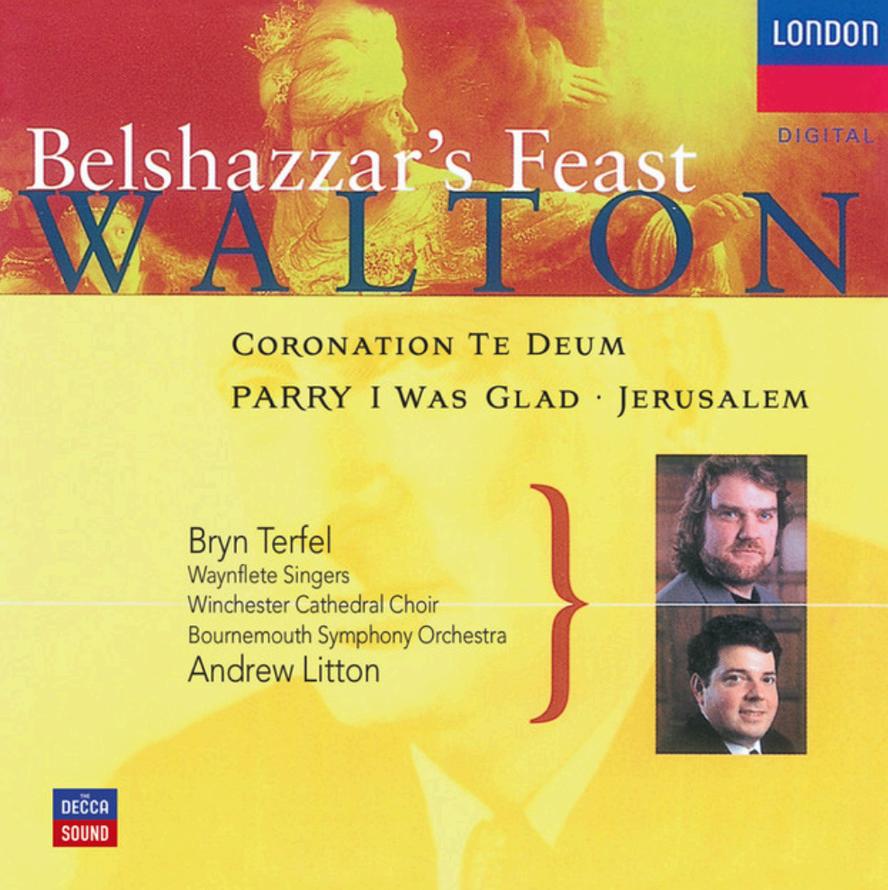
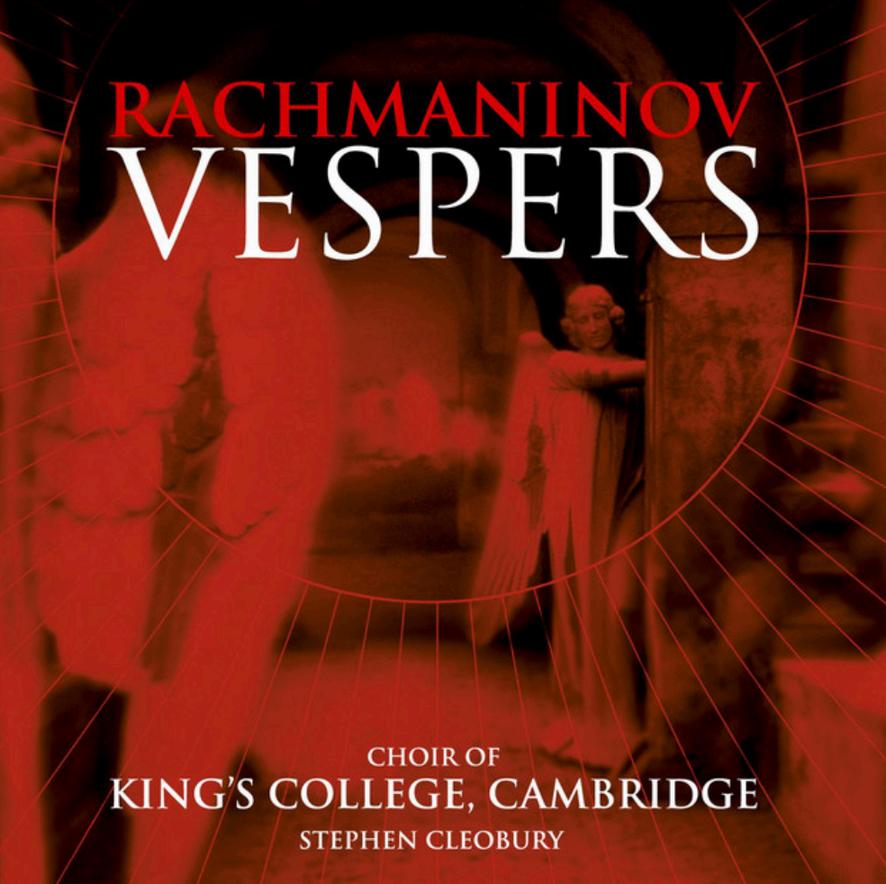
–
with the Director of Music, Mr Eadon
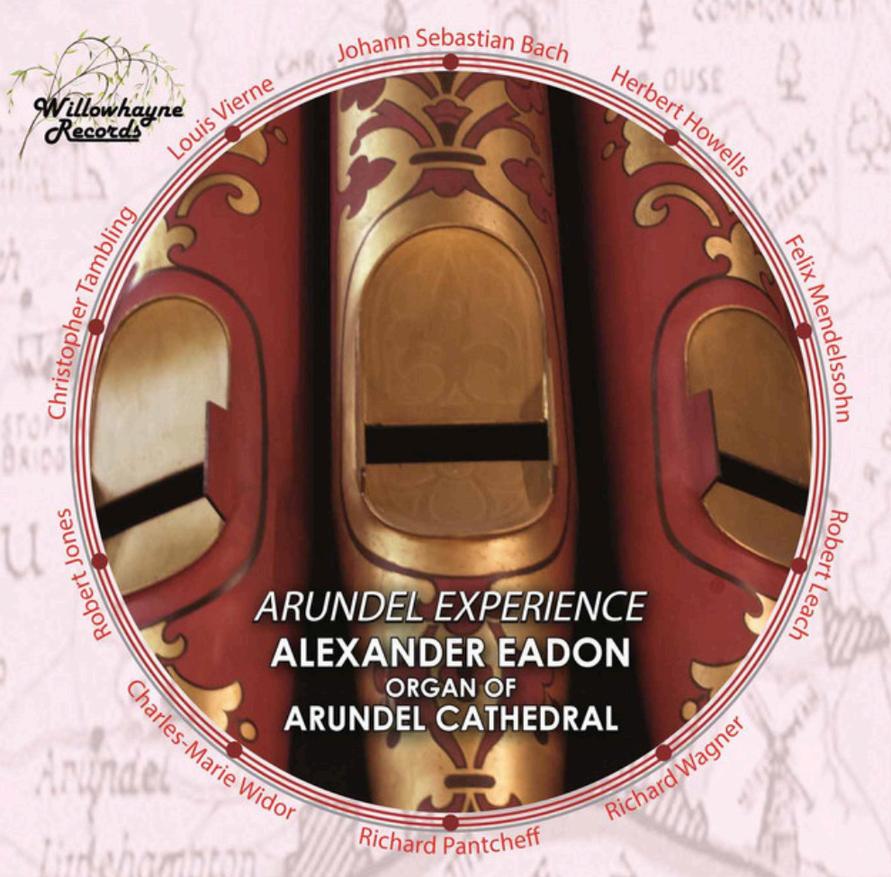
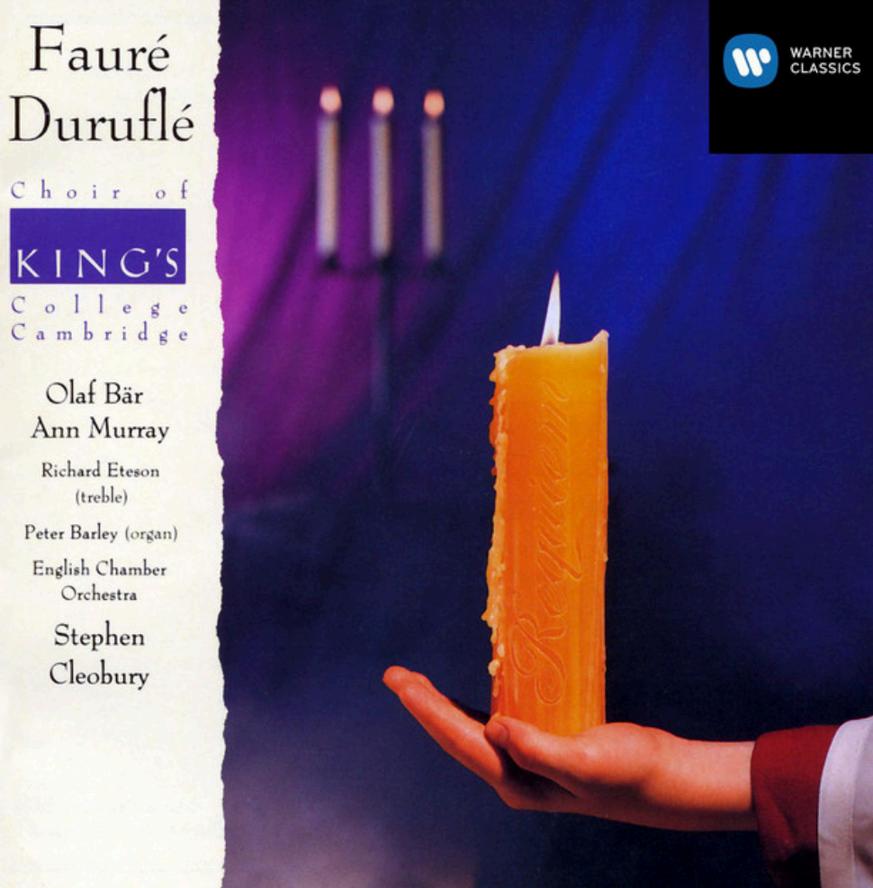
Disc No.5 cont.
-
-
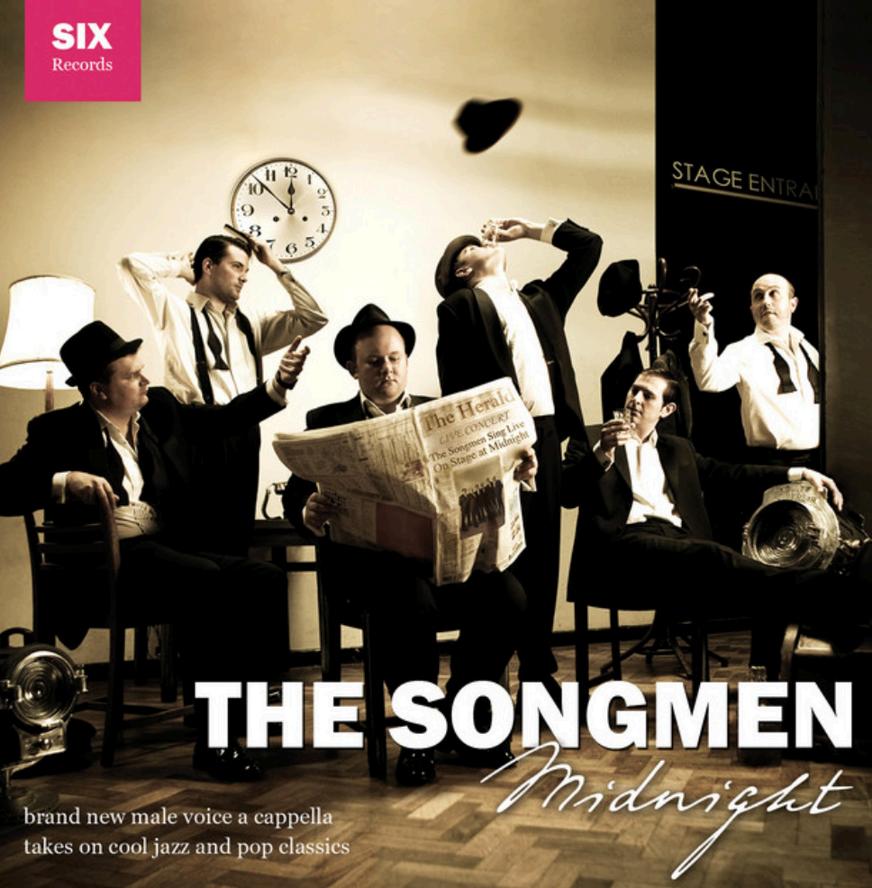

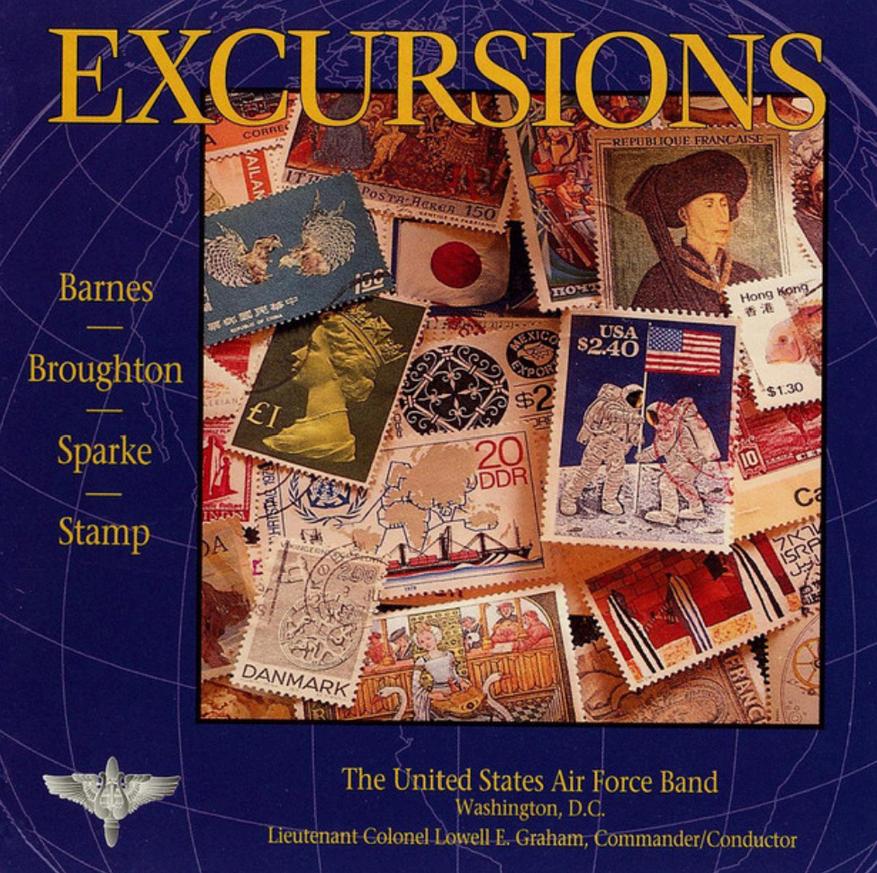
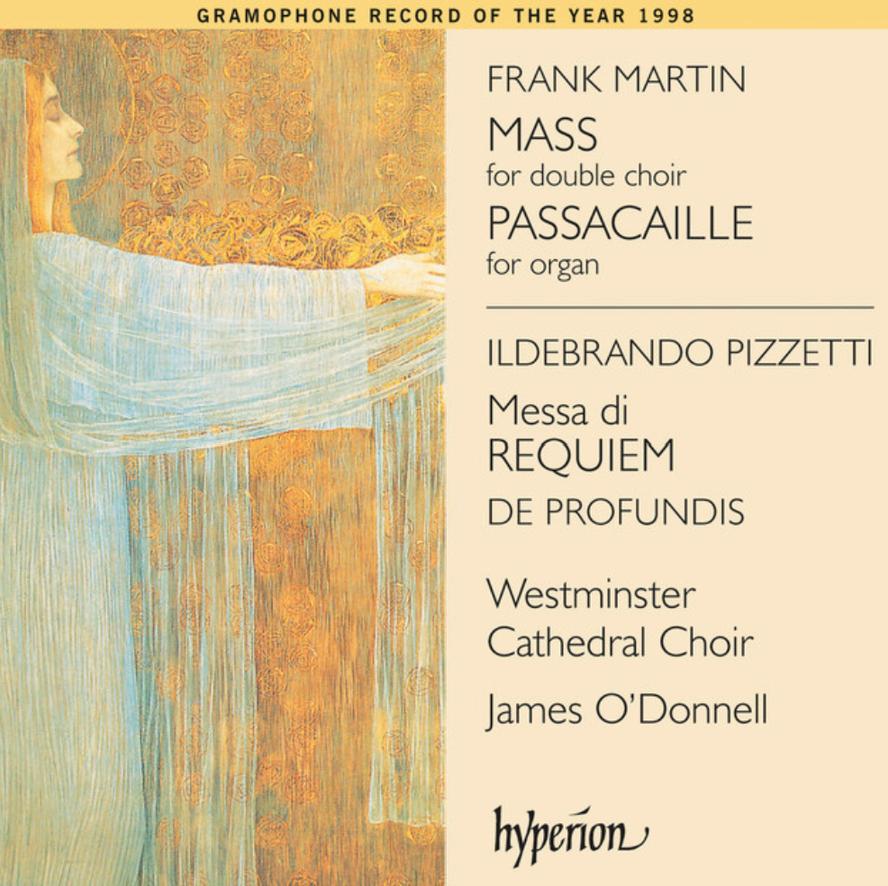
Disc No.7 cont.
with the Director of Music, Mr Eadon
Disc No.8 -
Cheap Street Church, 1.45pm
Pianists, Organists and Singer - 24 April
To begin the Friday Lunchtime Recitals of the Trinity Term, we were delighted to hear from a small but talented group of pianists, organists, and singers. Opening the concert was our first vocalist, Sebbie K (U6f) ARSM, with a poised and expressive performance of Mozart’s In diesen heil’gen Hallen Sebbie followed this with Purcell’s Evening Hymn, delivering a beautifully controlled and engaging performance, showing off great vocal control throughout.
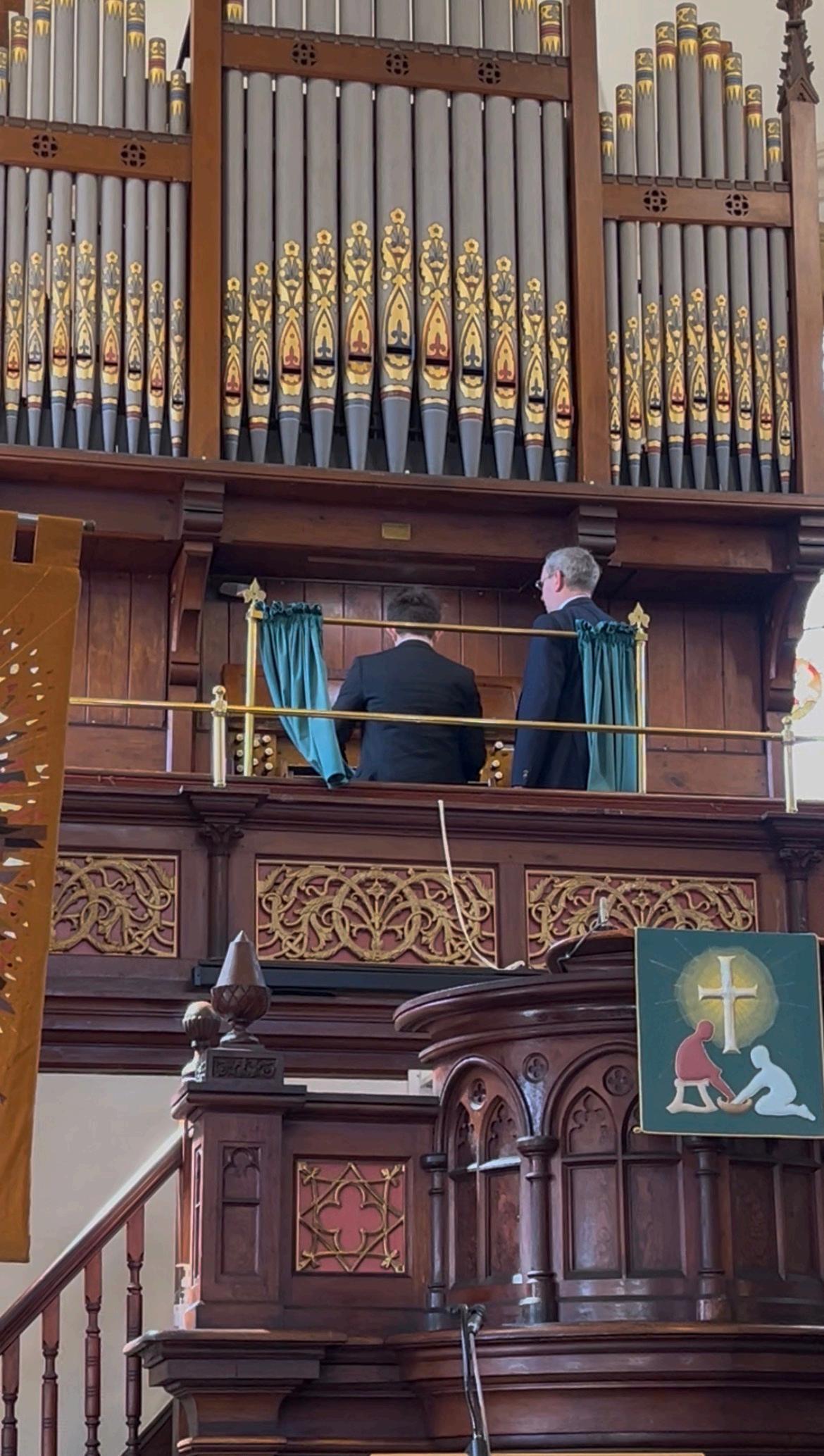
We then welcomed Frazer F (5f) to the organ, performing Herbert Howells’ Psalm Prelude No. 2, Set 1 Frazer offered a colourful and thoughtfully paced reading of this piece, before Sirtaaj G (4a) took to the piano with Terry Seabrook’s A Waltz for Autumn
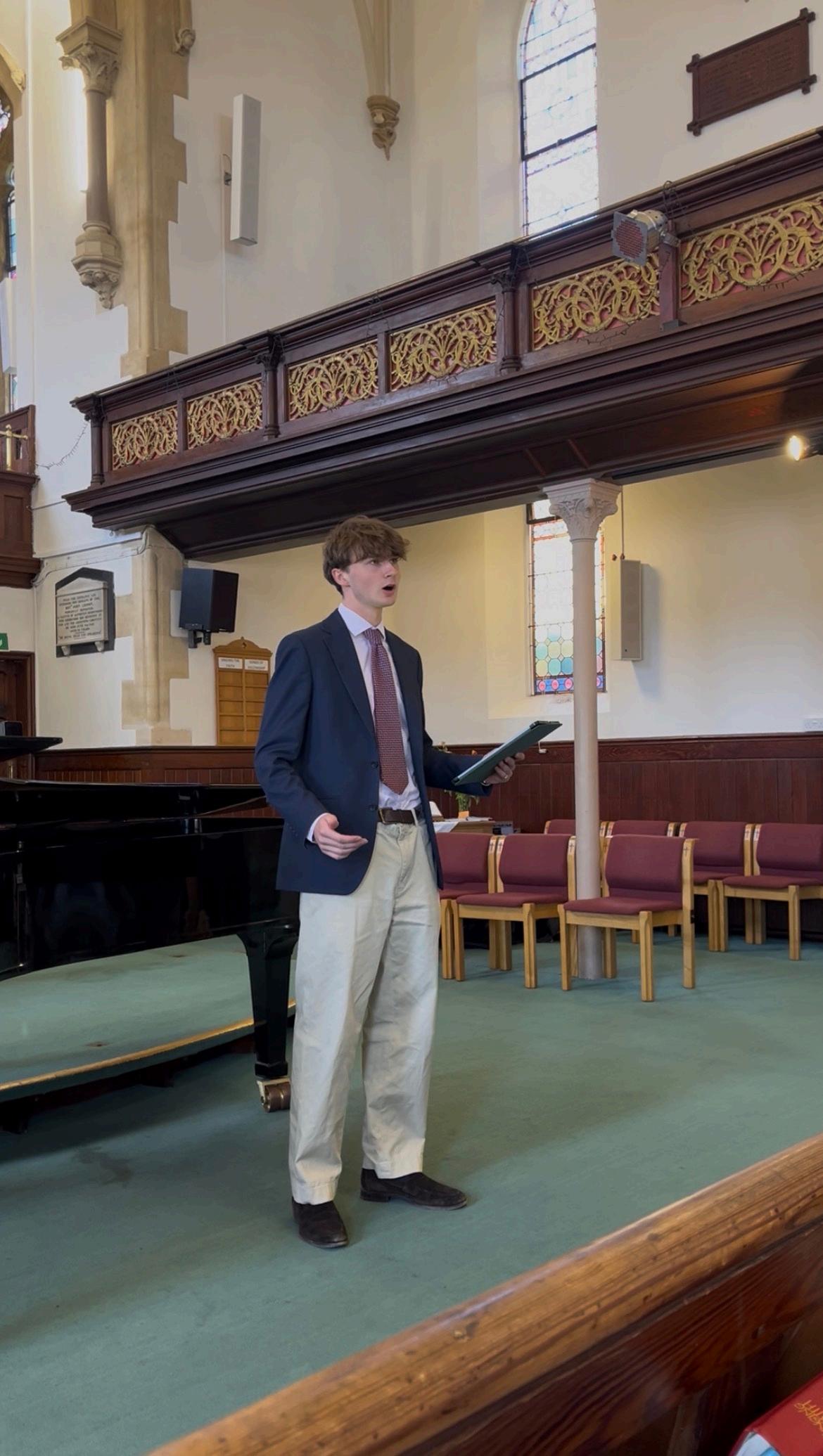
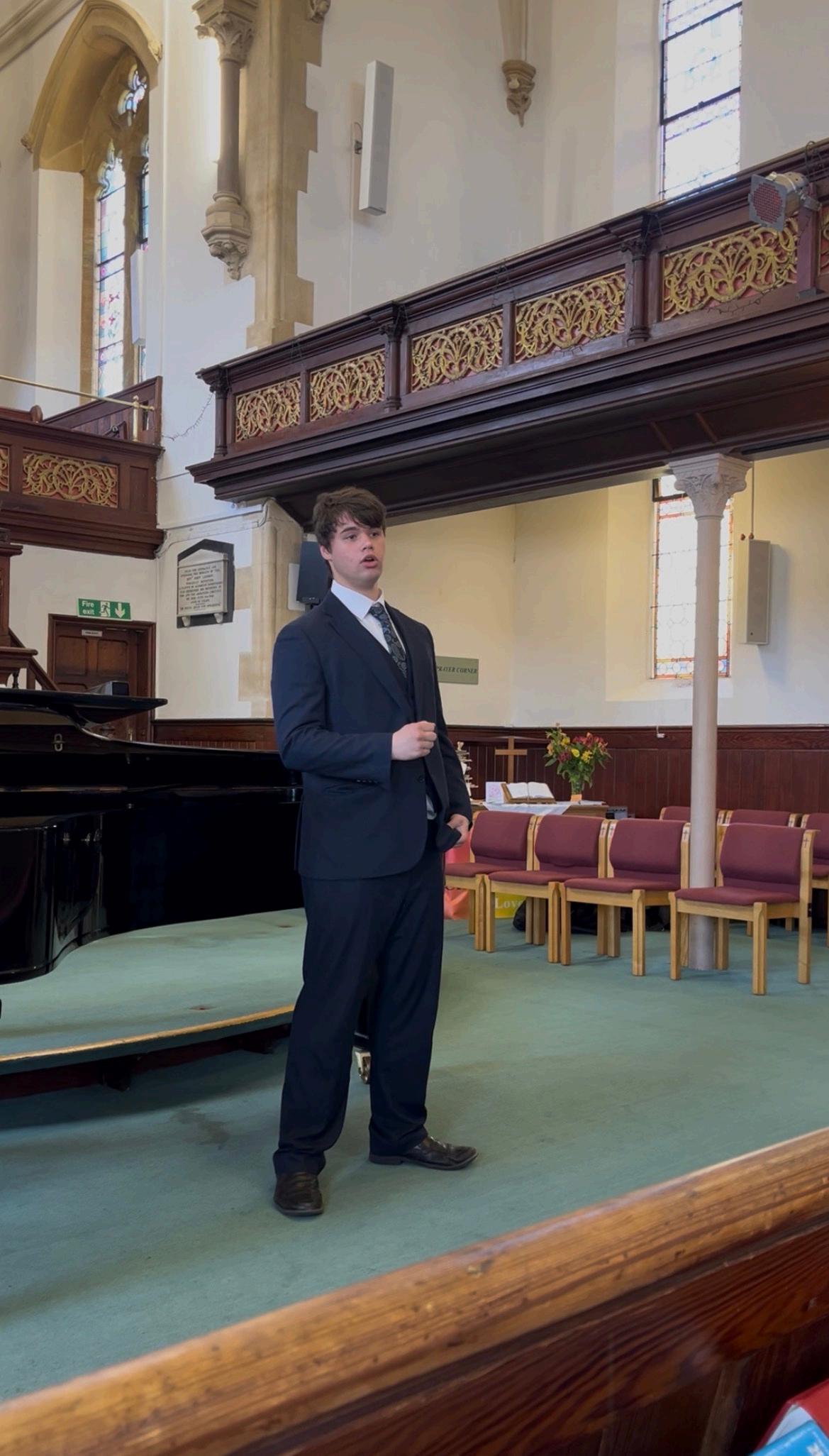
Our next vocalist, Sam B (U6f) ARSM, continued the afternoon’s high standard with Schubert’s Das fischermädchen, sung with a lovely sense of line and character. He was followed by Oliver B (L6e), who brought charm and personality to If I Were a Rich Man from Fiddler on the Roof, capturing the humour of the piece with confidence.
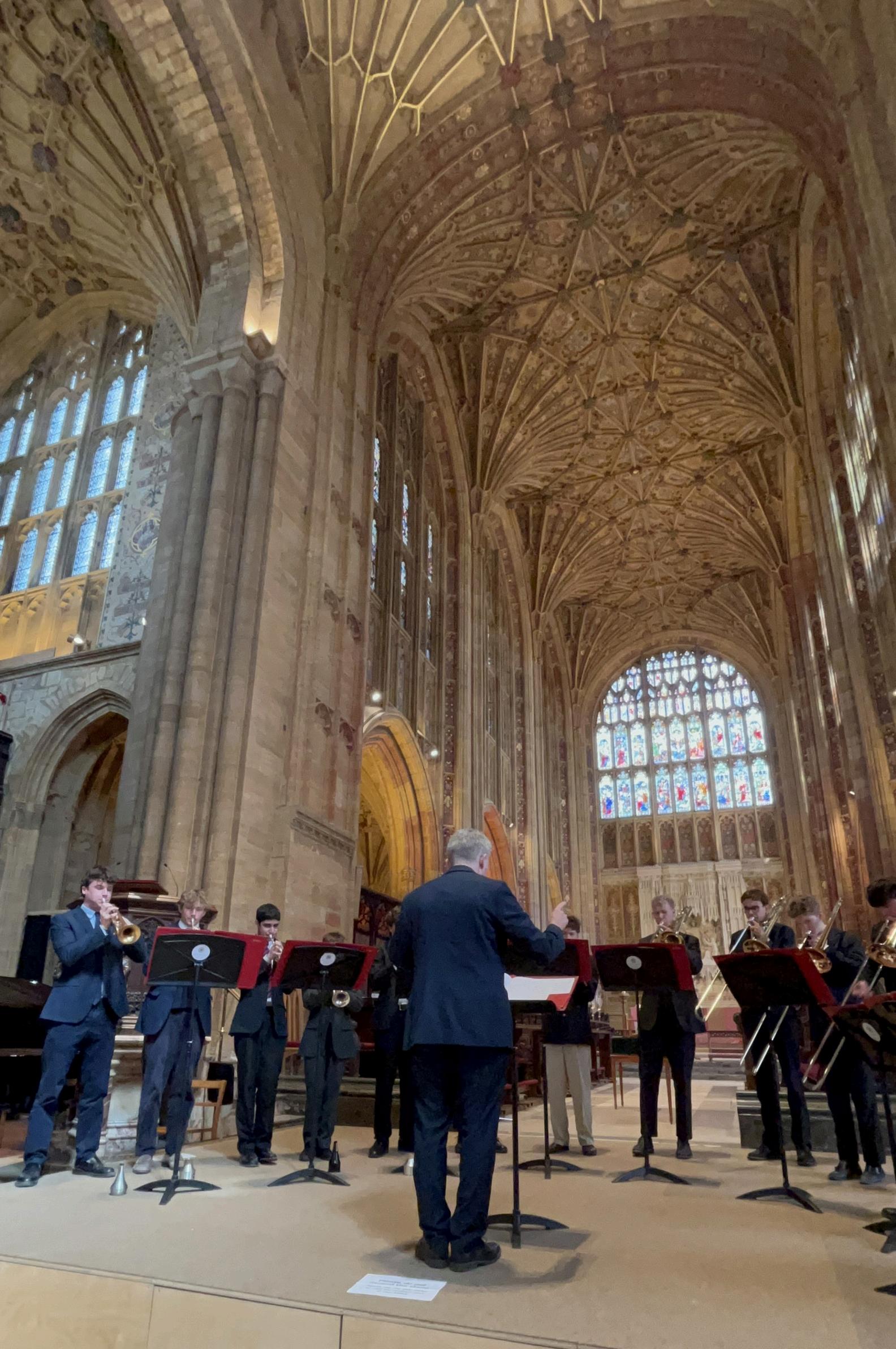
Friday 01 May, 1.30 pm
Sherborne Boys Chamber Music and Ensembles
The Blue Notes
Friday 01 May, 5.00 pm / Saturday 02 May, 11.00 am
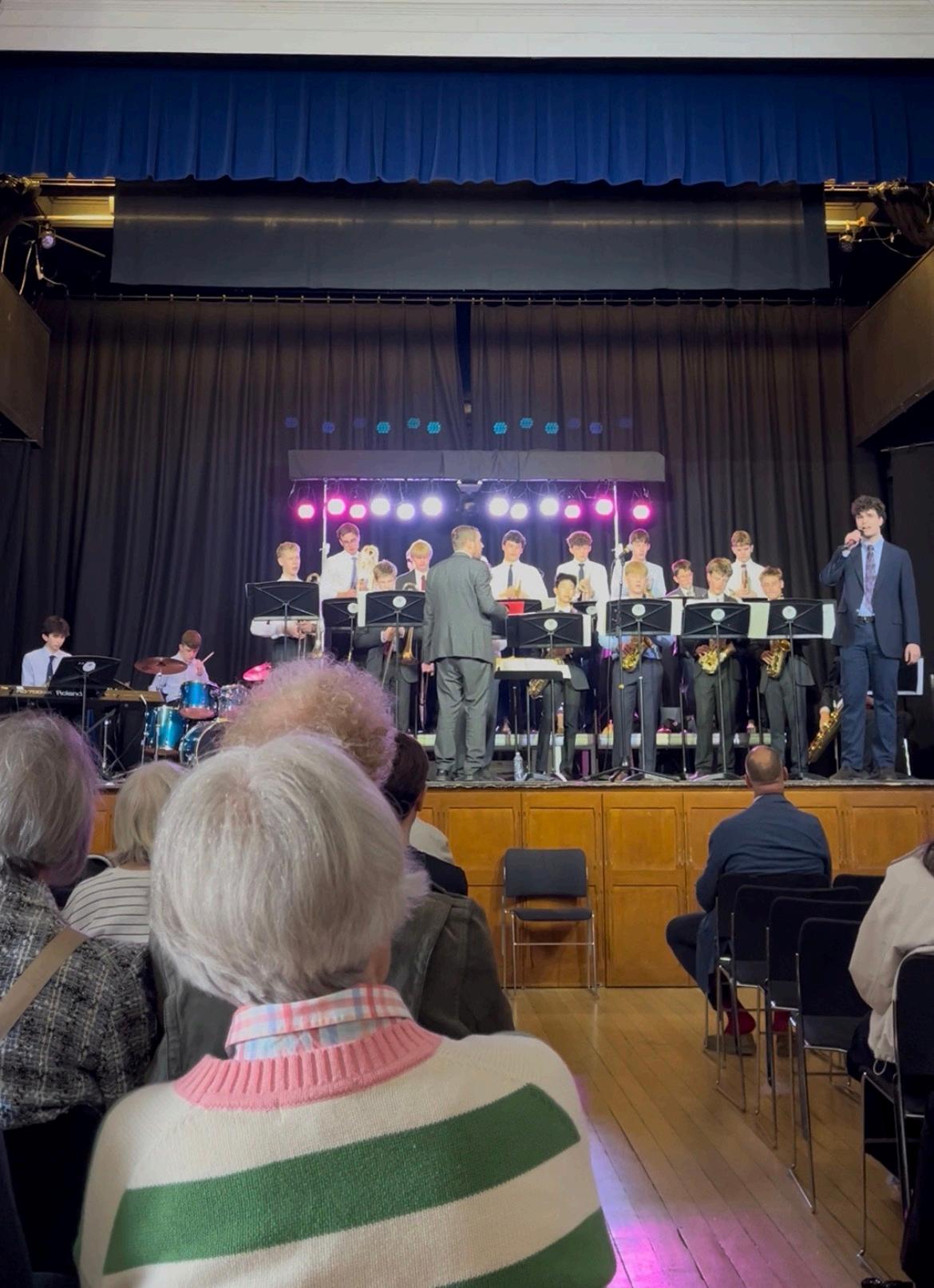
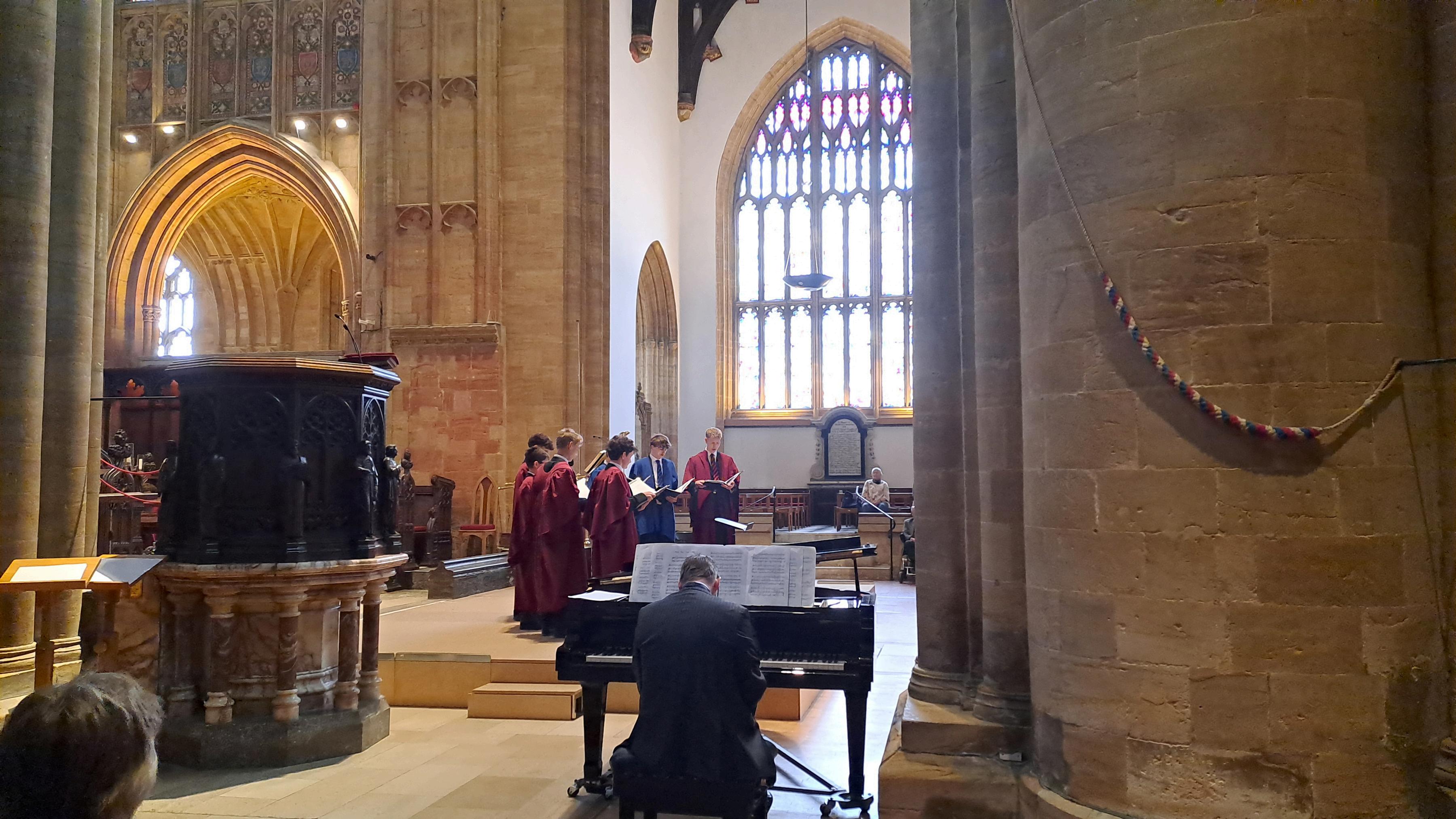
Sherborne Boys Swing Band, Chamber Choir and Barbershop
Cheap Street Church, 1.45pm
- 8 May
This week’s Lunchtime Recital was given by our fabulous string players, where we enjoyed a variety of ensembles and solo performances ranging from a double bass quartet to individual instrumentalists. To begin the concert, we heard from the Bass Quartet performing Henry Mancini’s Baby Elephant Walk. The group, Lucas (5b), Henry C (3b), Xander G (SPS), and Benedict H (3b) played with great ensemble awareness and musicianship throughout.
Following this, Nathaniel B (4e) took to the stage to perform the first two movements, Introduzione and Serenata, from Stravinsky’s Suite Italienne. Nathaniel showcased tidy ornamentation in the opening movement, followed by a second movement marked by excellent control and beautifully expressive passages.
We next heard from our first cellist of the afternoon, Zeeshan M (L6f), who performed the Prelude (1st movement) from Bach’s Suite for Solo Cello No 1 in G, BWV 1007. Zeeshan delivered a performance full of movement and warmth, producing a rich and resonant sound. He was followed by Eason T (4f), who gave a lovely rendition of Mozart’s Allegretto (4th movement), offering a polished and well‑executed performance.
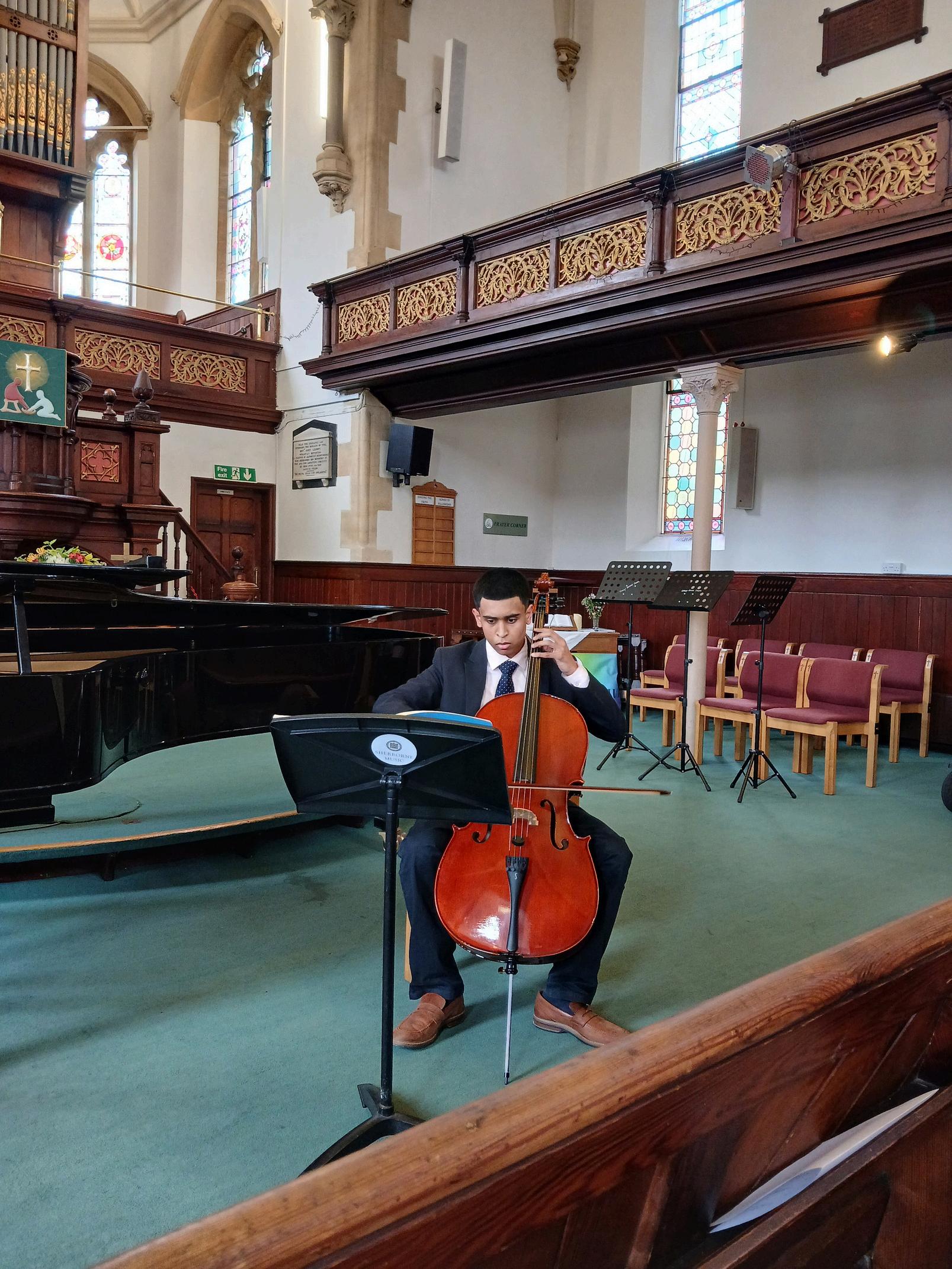
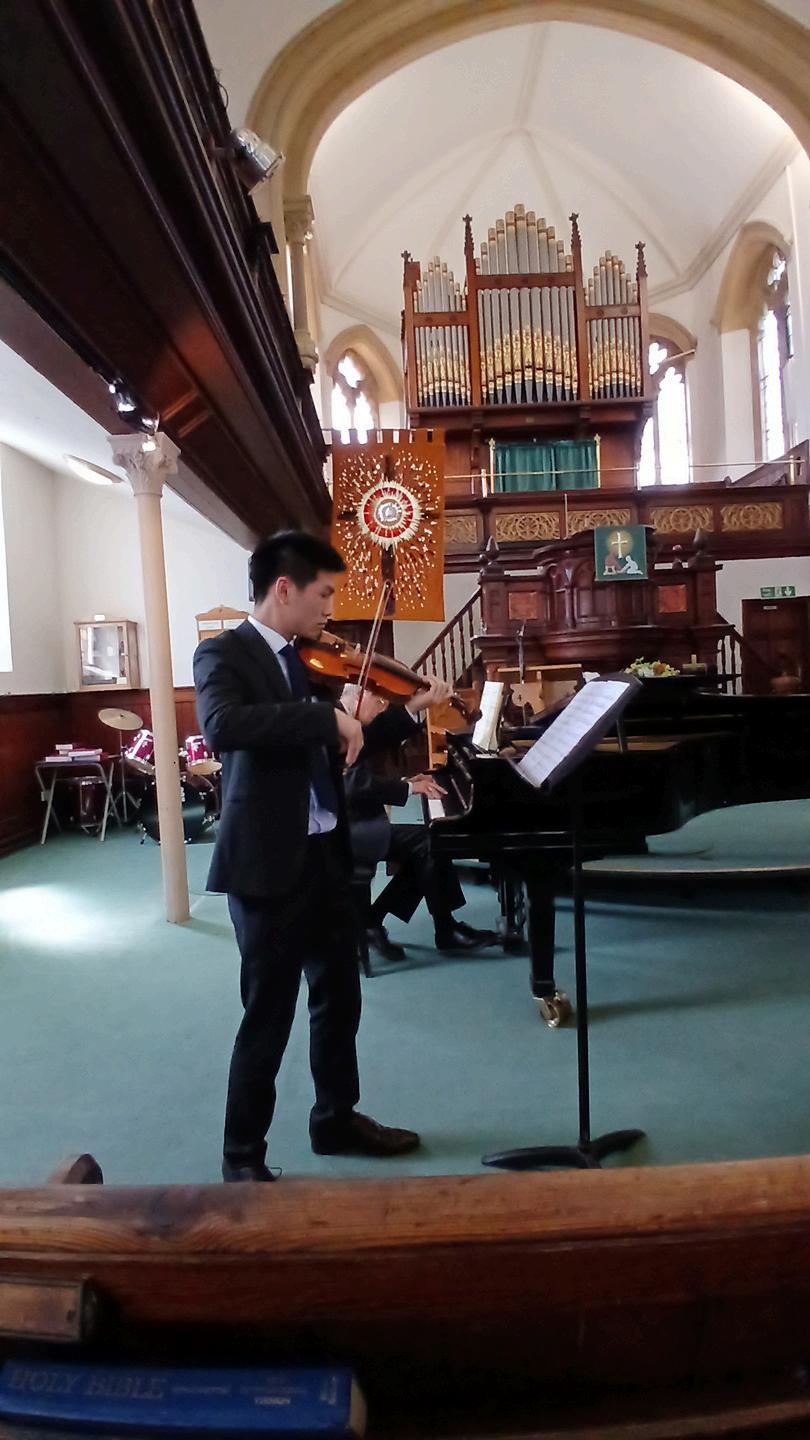
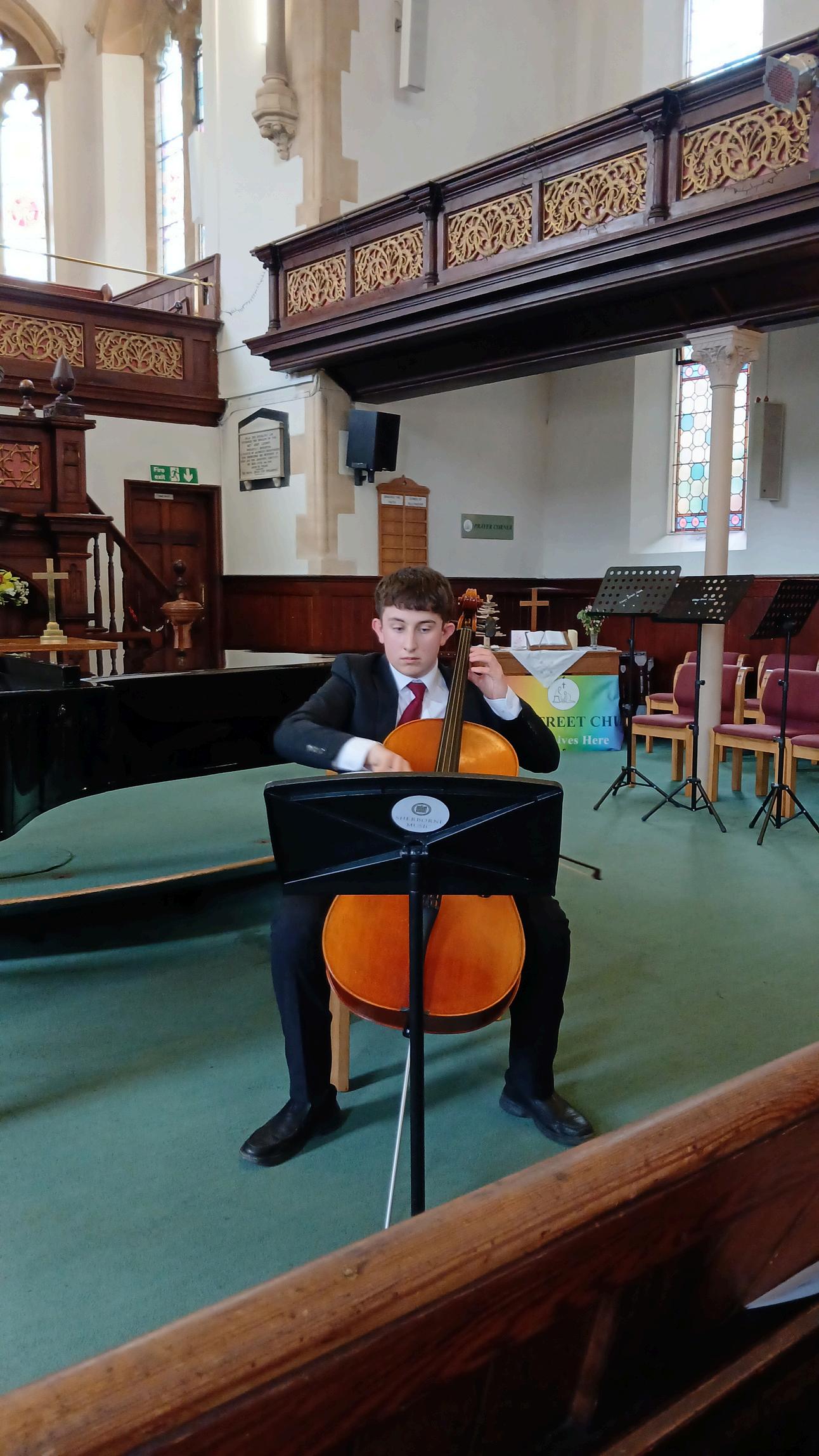
Sam O’B (3e) then performed Dvořák’s Allegro risoluto (from Sonatine in G, Op. 100). Sam opened with great confidence, which continued throughout his expressive and controlled playing, resulting in a highly polished performance. We then heard from Frazer F (5f) on the cello, performing Borowski’s Adoration. Frazer’s piece highlighted his rich tone and expressive playing, maintaining excellent control from start to finish.
Finally, we came to the last performance of the afternoon, given by Marc F (U6a), ARSM, as he performed Andante: 2nd Movement from Mozart’s Concerto in G, K. 216). Marc delivered a beautifully nuanced performance, demonstrating a wide range of dynamics and tidy ornamentation throughout.
Cheap Street Church, 1.45pm
Woodwind and Brass - 15 May
The Blue Notes
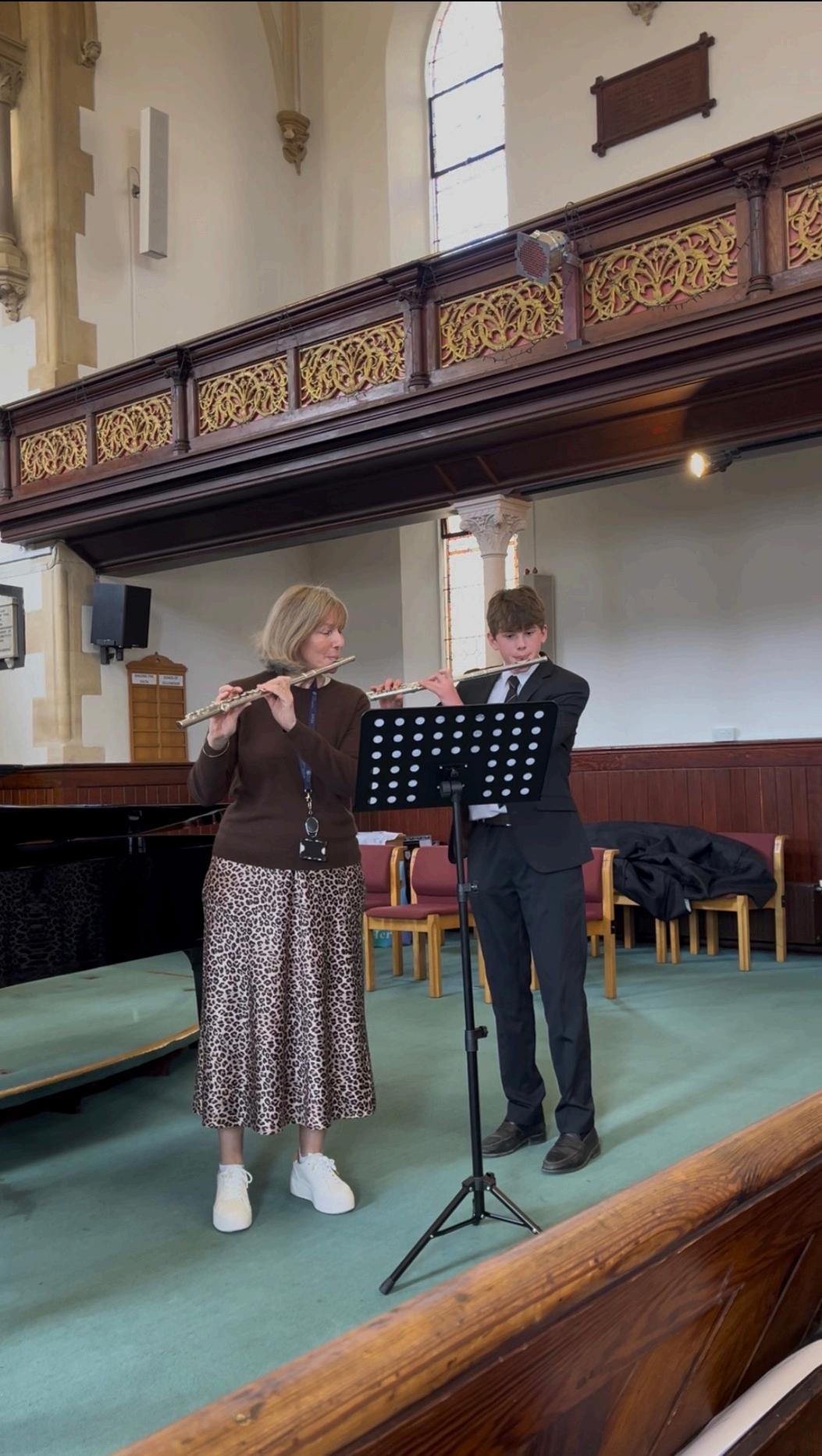
15 May saw a Brass and Woodwind Lunchtime Concert. Gabriel I (4g) started off with the slow movement from Haydn’s Trumpet Concerto. He played with a gorgeously smooth tone, with effortless-sounding high notes and really floaty legato lines. Harry S (4d) played a Flute Duet by Kummer alongside Mrs Jackson. The joy in their musical partnership was palpable and the music was elegance and grace personified. All listeners could feel the strongly-conveyed sense of the piece’s architecture. Patrick H (3f) was next – and making his FLR debut with his Bassoon! He played the famous Montagues and Capulets by Prokofiev with real rhythmic precision and a feel for the dance that this piece accompanies
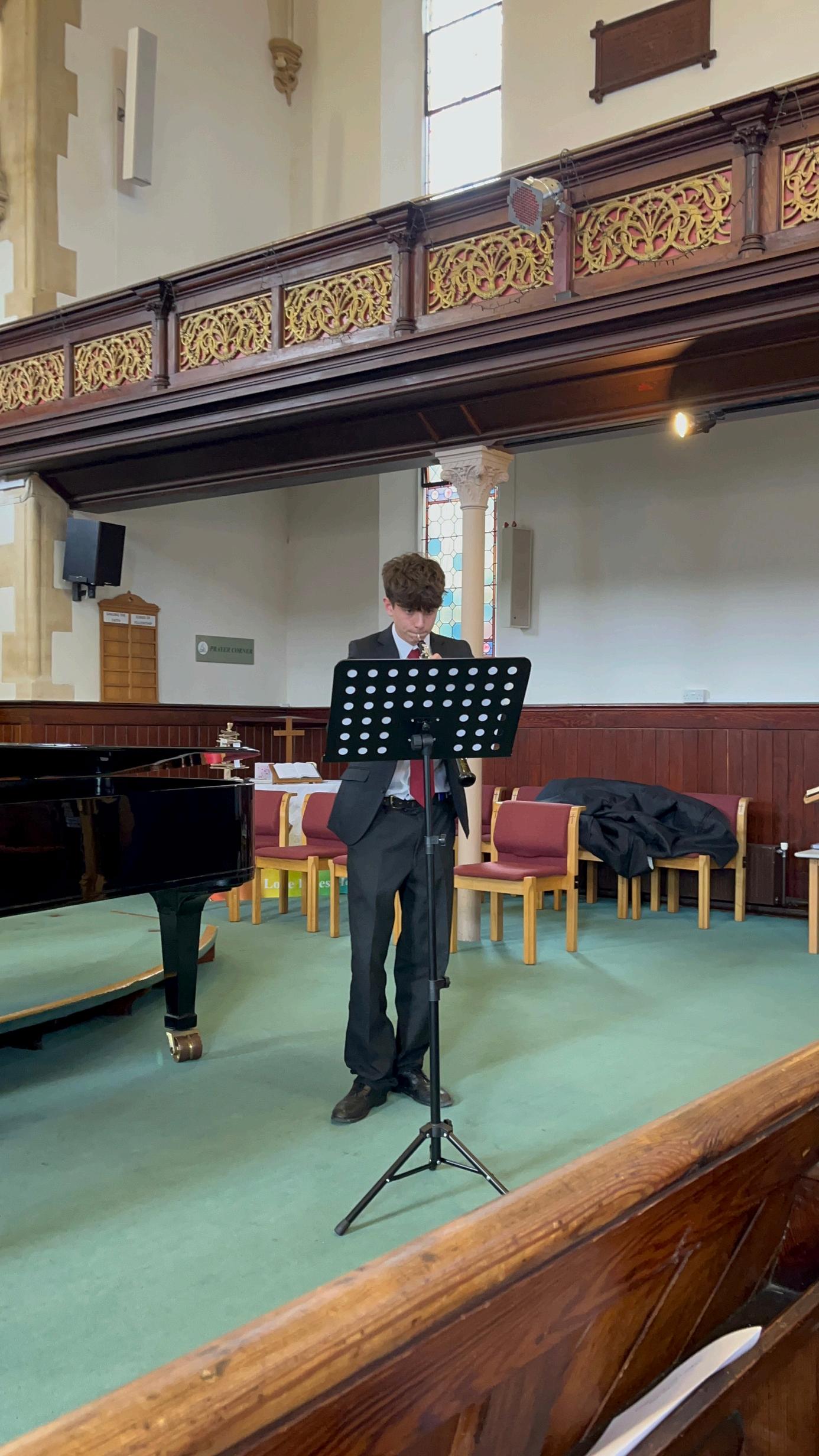
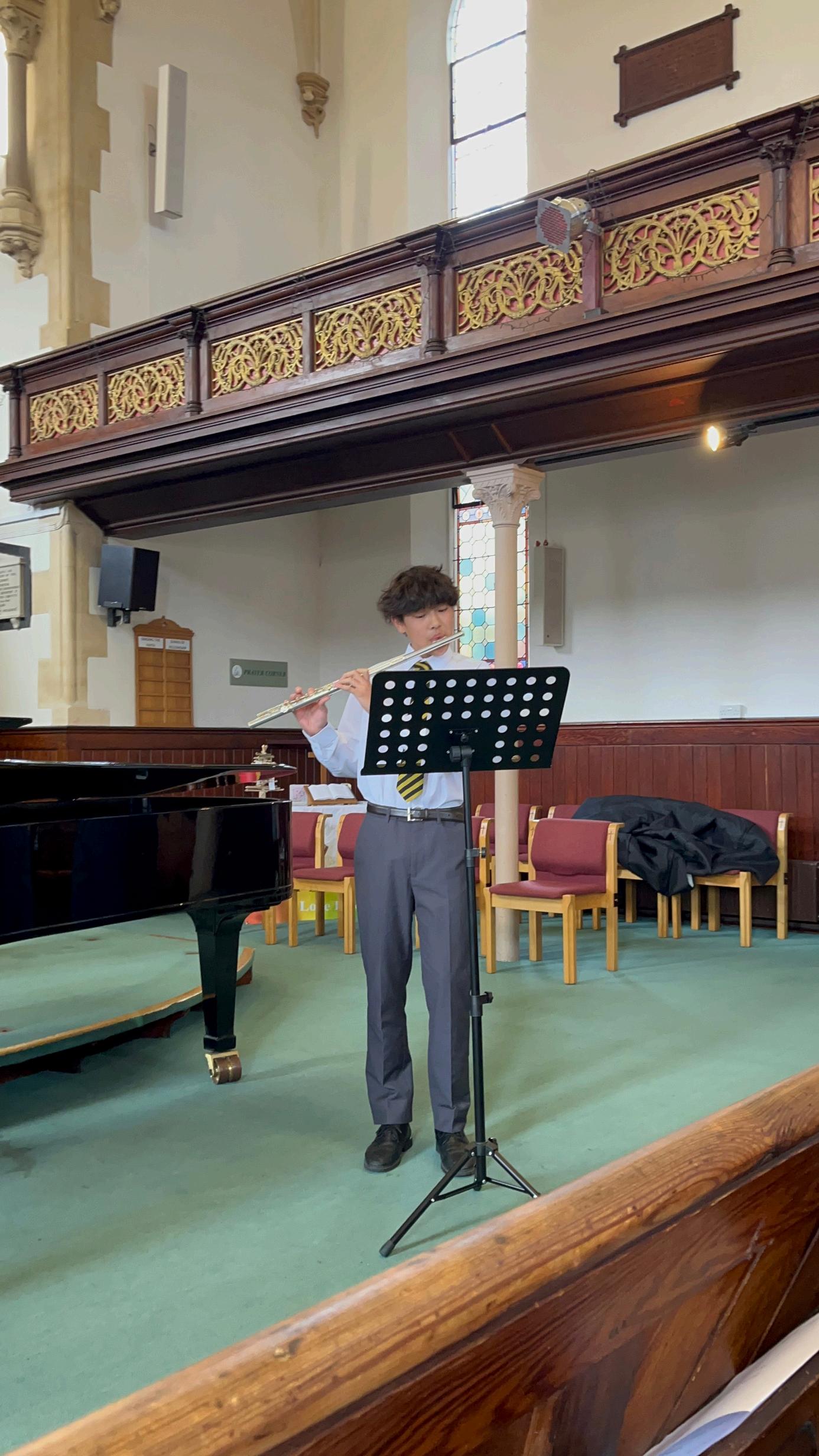
Sirtaaj G (4a Sch.Mus) played the Andante from Hummel’s Trumpet Concerto. There was a lovely sense of line and some very tidy ornamentation in this characterful performance. Perseus W (4c Sch.Mus) entertained the audience with a charming rendition of A Nightingale sang in Berkeley Square – he showed off his sweet Flute tone and tremendous breath control, all whilst making it sound effortless. After Perseus came Charlie S (L6f Sch.Mus) playing the Prelude by Anthony Donata, a mid-twentieth century French composer. Charlie’s trumpet playing smoothed out the piece’s angular phrases – the piece’s wide tessitura was made to feel very small in such expertise. Finally Manu M (4g Sch.Mus) played Piazzolla’s Oblivion on his Oboe. Manu projected a gloriously wistful quality through his silky tone and played the understated Jazz of the piece delightfully.
Instrumental and Vocal Soloists - 22 May
As the half-term came closer, a group of musicians stayed on to perform in one of our weekly Friday Lunchtime Recitals, this time being treated to a group of Instrumental and Vocal Soloists To begin the concert we first heard from our Brass Trio consisting of four form musicians, Sirtaaj G (4a), Luke A-D (4a) and Ianto D (4f), as they played James Bland’s Bring me back to the old Virginny Together the group showed a real sense of dynamic and understanding for the piece with some crisp articulation throughout. Next to the stage was Luke A-D (4b) this time on the Piano. Luke performed Mendelssohn's Music Sketch in B Flat, Luke showed great ownership and confidence around the keyboard as well as showing a great sense of understanding for the phrasing throughout. Now we heard from Cedric v-S (L6a) on the viola. Cedric played the first movement of Telemann's Viola Concerto in G, Cedric showed a great sense of understanding for this piece and worked well with his accompanist, Mr Davey, showing great musicianship. We then heard from Sirtaaj G (4a) on the piano as he played Leon Berry’s arrangement of Christopher Columbus
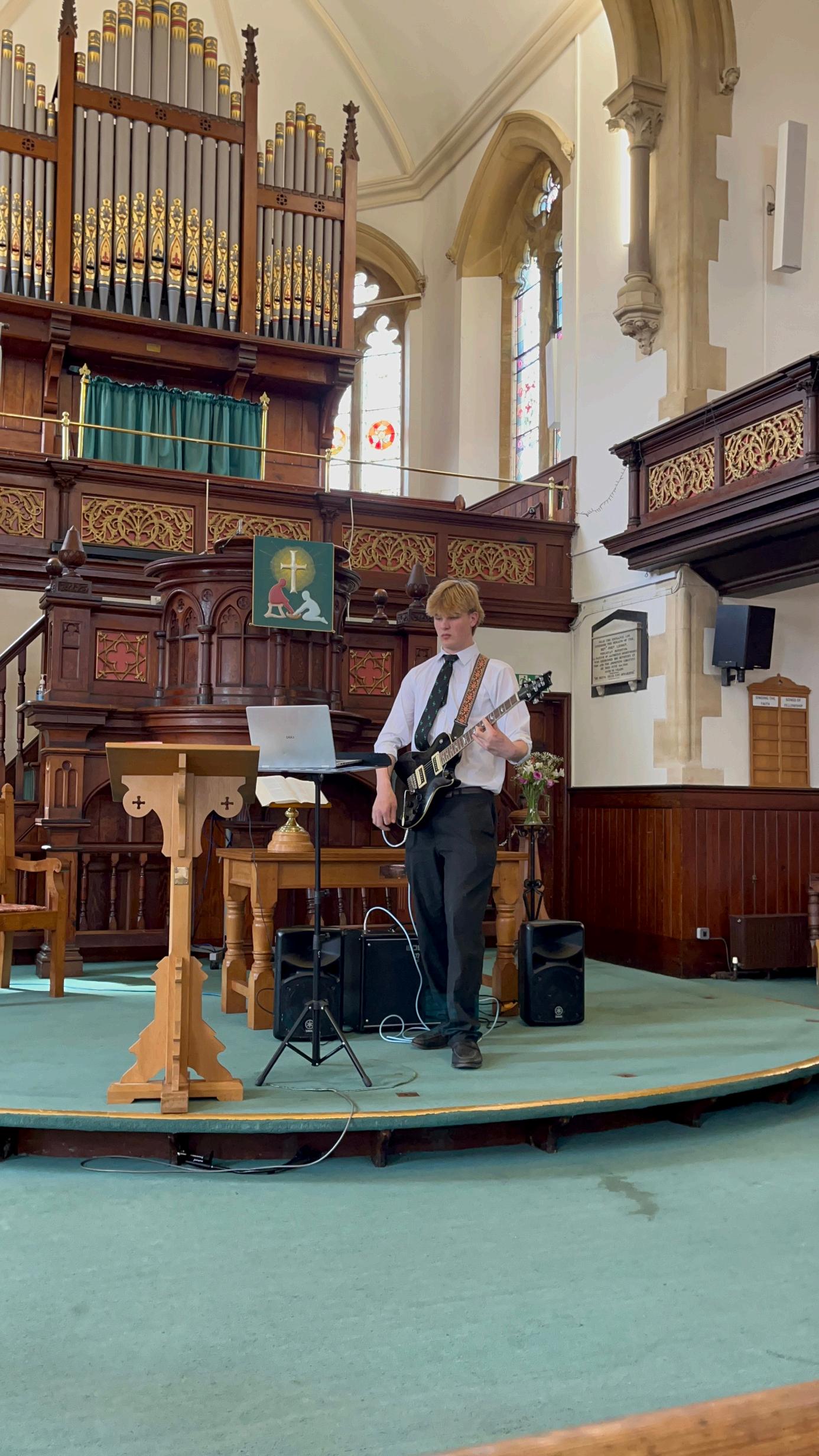
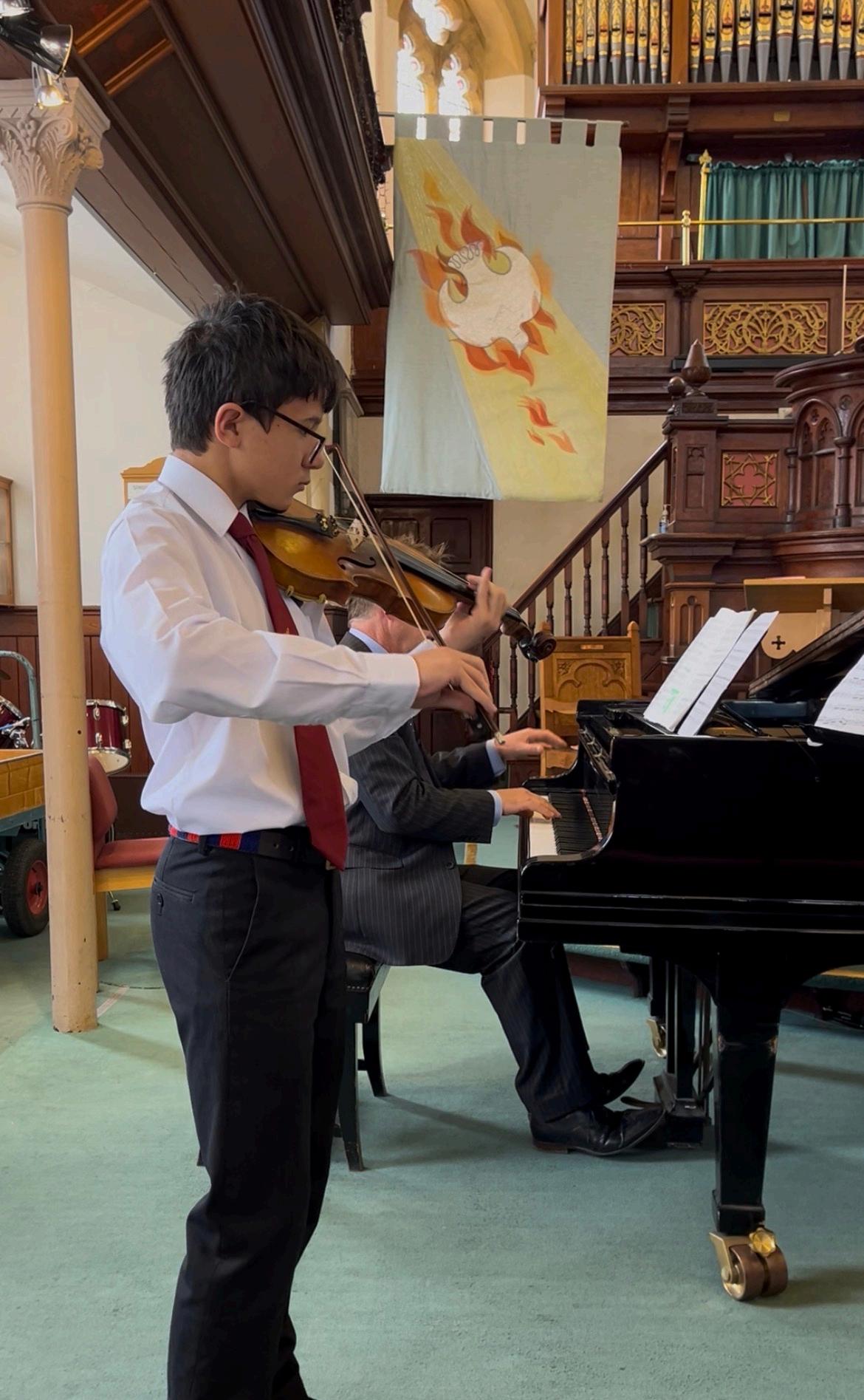
Ianto now took to the stage for his FLR singing debut. Ianto showed amazing control over his voice, showcasing his vocal range with real emotion throughout. Hector S (5m) came next, with a rendition of Pink Floyd’s ‘Shine on you Crazy Diamond’. Hector’s performance demonstrated great technical control over his guitar and the technology itself, as well as great sensitivity to effects such as reverb throughout. To close another successful and enjoyable concert, we now heard from Nathaniel B (4e). Nathaniel performed Monti’s Czardas. Throughout his performance, Nathaniel showed great control over his violin, ownership of faster passages, and great intonation throughout. This week’s concert was another successful and enjoyable one for all the musicians to show off their talents before a well-deserved half-term break.
As we came to our last Friday Lunchtime Recital delivered by pupils, we were treated to the talented musicians in the Third Form, who performed on saxophones, bassoons, double basses, and more To begin the concert, we first heard from Eason T (4f) as he delivered a wonderful performance of Piazzolla’s Café 1930 (from Historie du Tango) on the Tenor Saxophone. Eason showed a strong sense of panache and stylistic flair throughout. We then moved onto Henry C (3b) on the Double Bass. Henry performed Dmitri Kabalevsky’s Cavalryman and, throughout his performance, showed great control over his instrument and communicated well with his accompanist in ensuring a smooth and successful performance. Edward G (4d) then took to the stage on the Bassoon, making his Friday Lunchtime Recital debut, as he performed Cowell’s Ragoon. Edward maintained an assured tone throughout, with a real grasp of the music's demands. As we moved away from our instrumentalists, Jack H (3f) took to the stage as he made his FLR debut. Jack sung Bart Howard’s Fly Me to the Moon. Throughout his performance, Jack showed great confidence, a strong sense of feel, and matched the style of this piece flawlessly. Fred M (4a) then took to the stage on the Alto Saxophone as he played Andrew Wilson's Summer Samba. Fred delivered his piece with great style and an assured tone, demonstrating strong synergy with his accompanist.
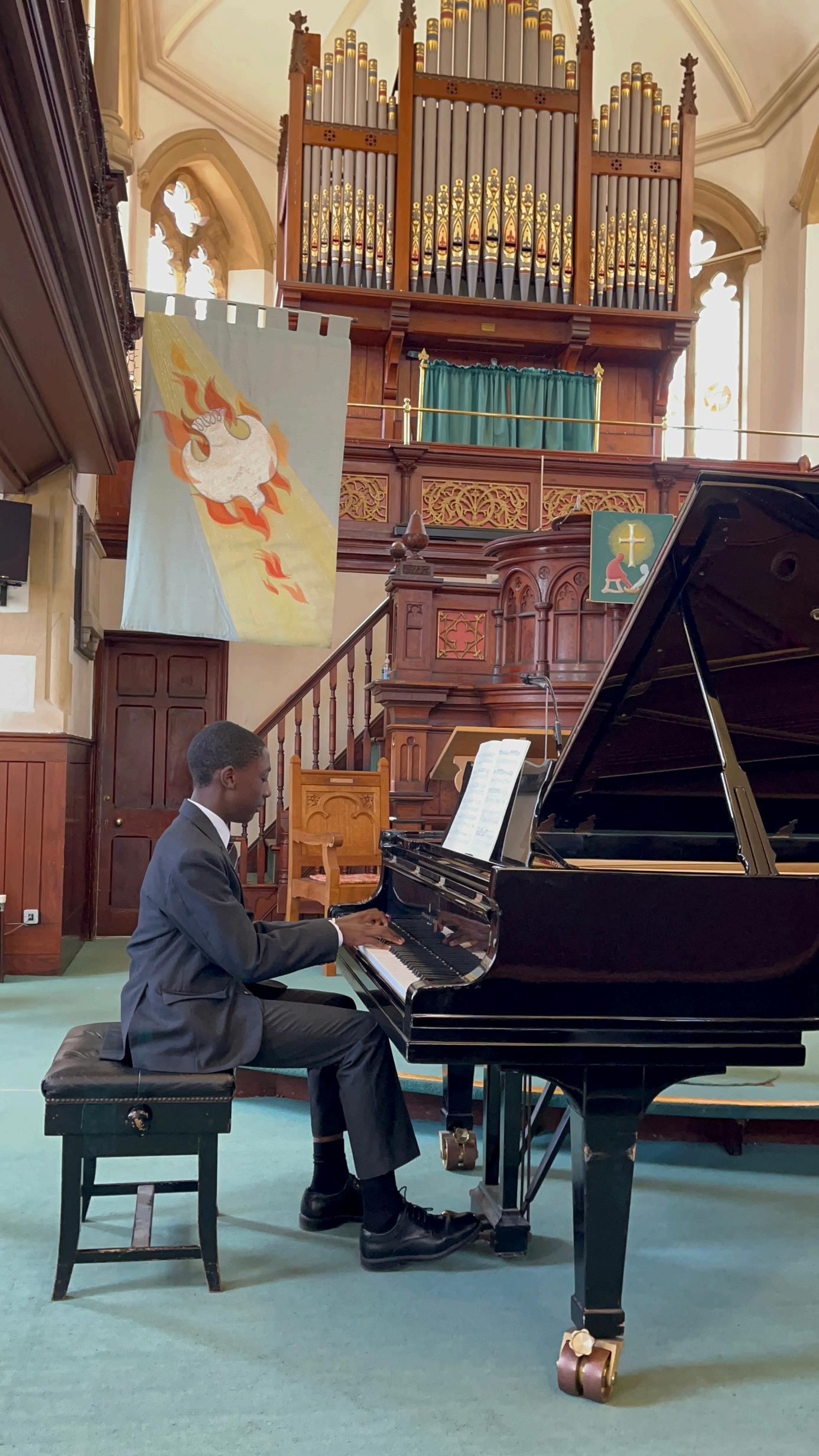
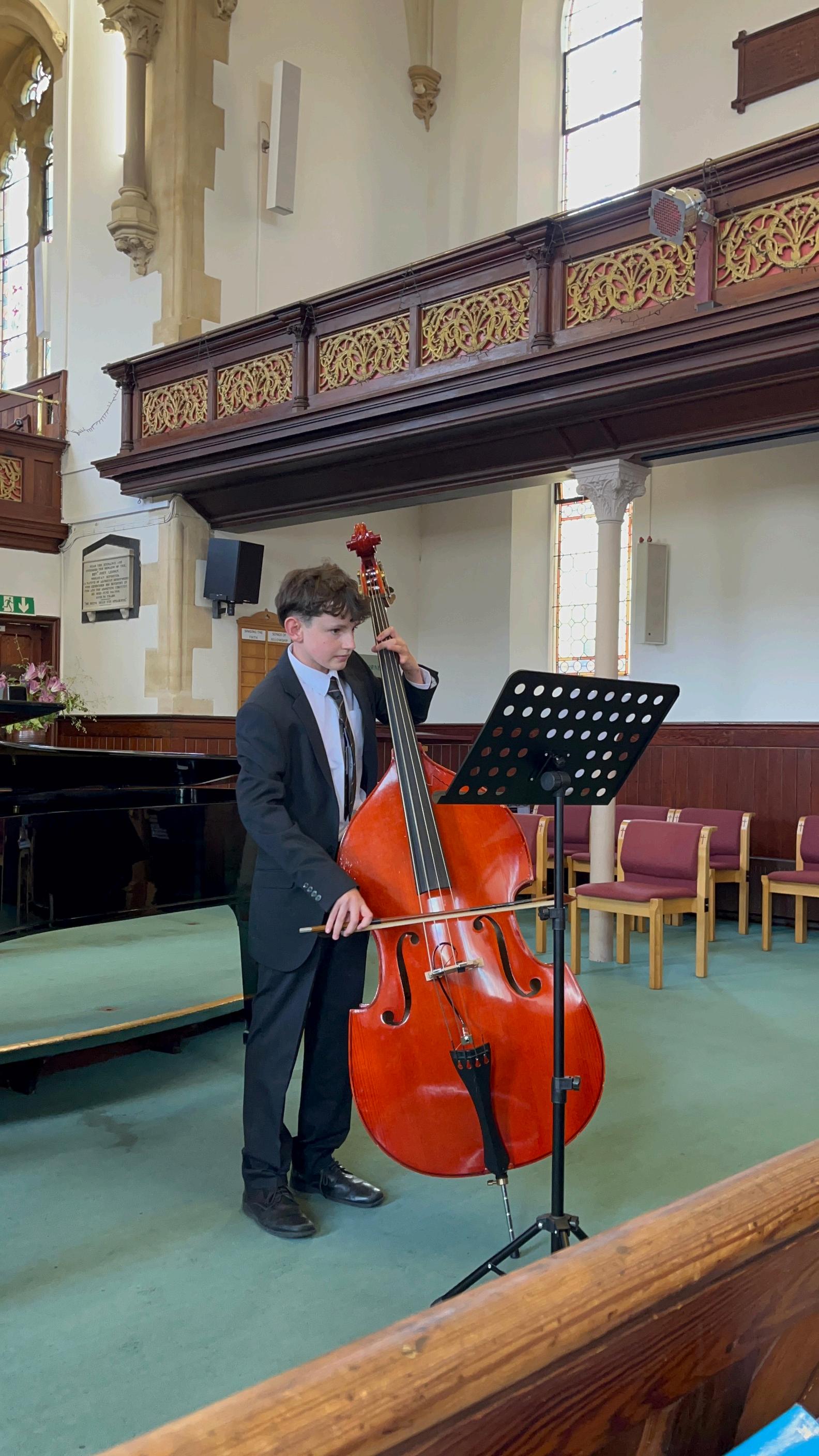
We then heard from Patrick H (3f), this time on the bassoon Patrick played Ceaser Cui’s Orientale and showed great control over his bassoon throughout, showing its many tonal colours. Next came James T (3e) performing MacGregor’s Lowside Blues. James showed a great understanding of this piece and showed classy stage presence throughout Sam O’B (3e) took to the stage to close the concert, this time on the violin. Sam played Igor Stravinsky’s Chanson Russe. Throughout his performance, Sam played confidently, showing great intonation and expression.
Cheap Street Church, 1.45pm
The Choral Scholars - 12 June
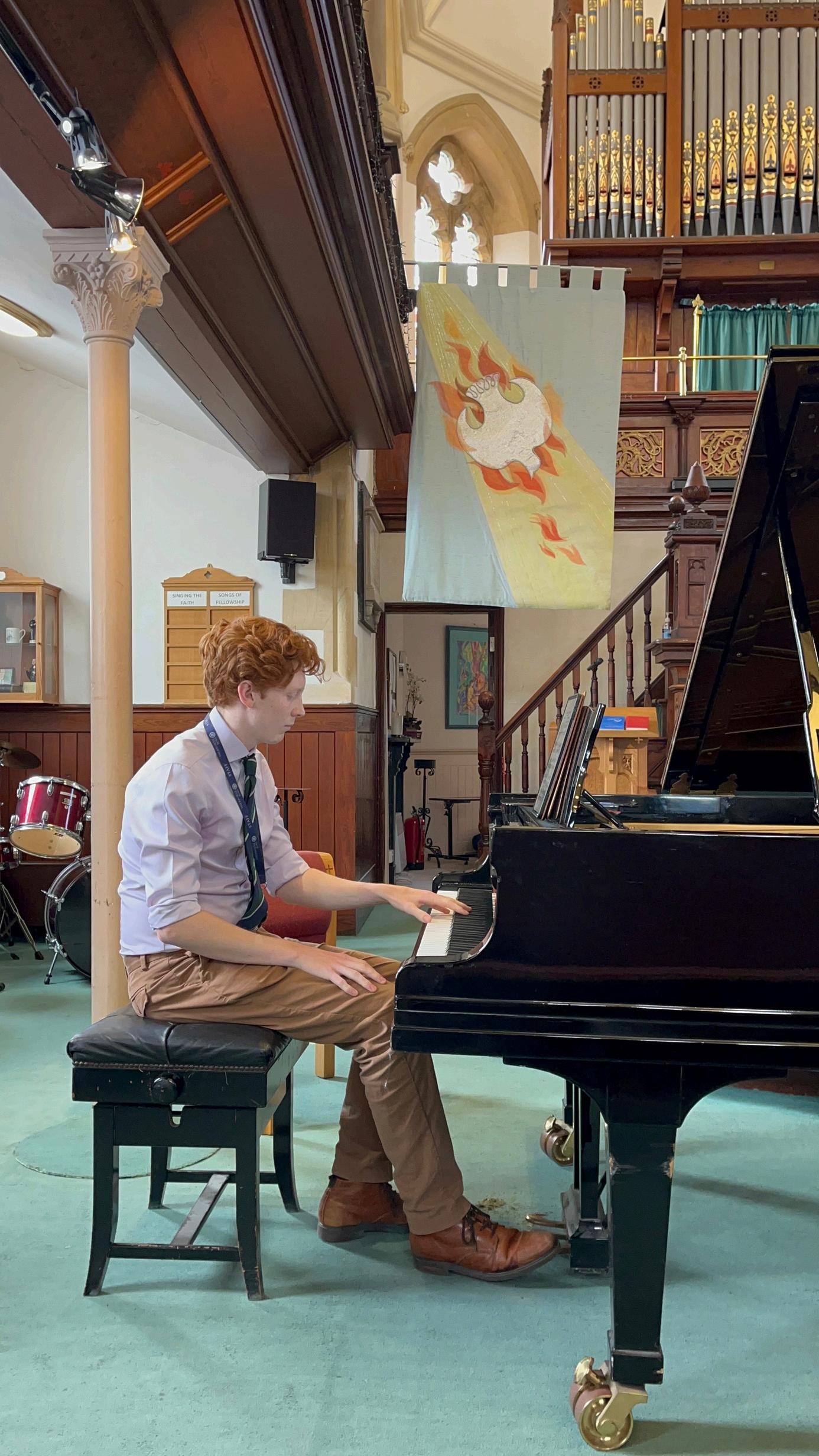
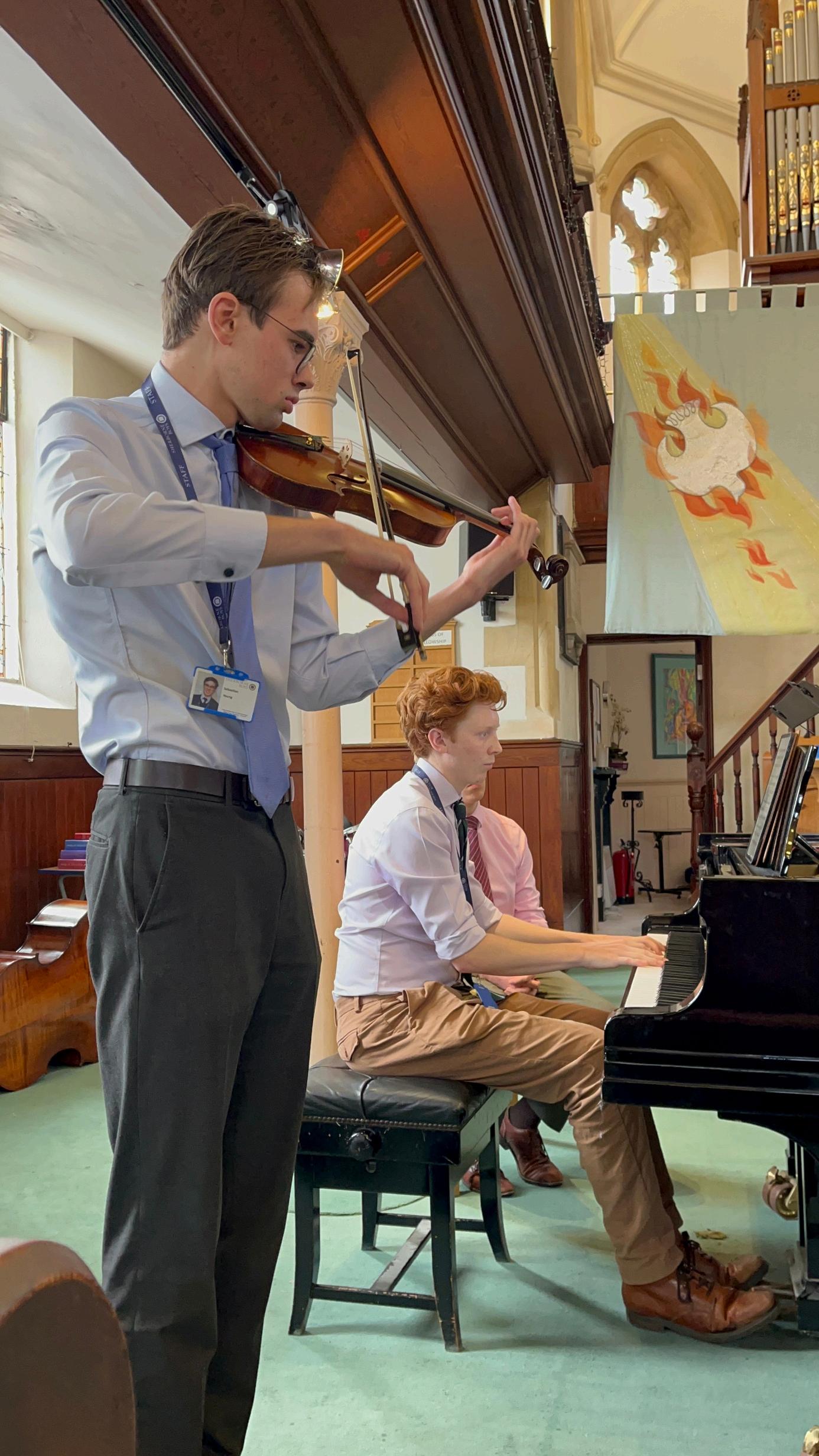
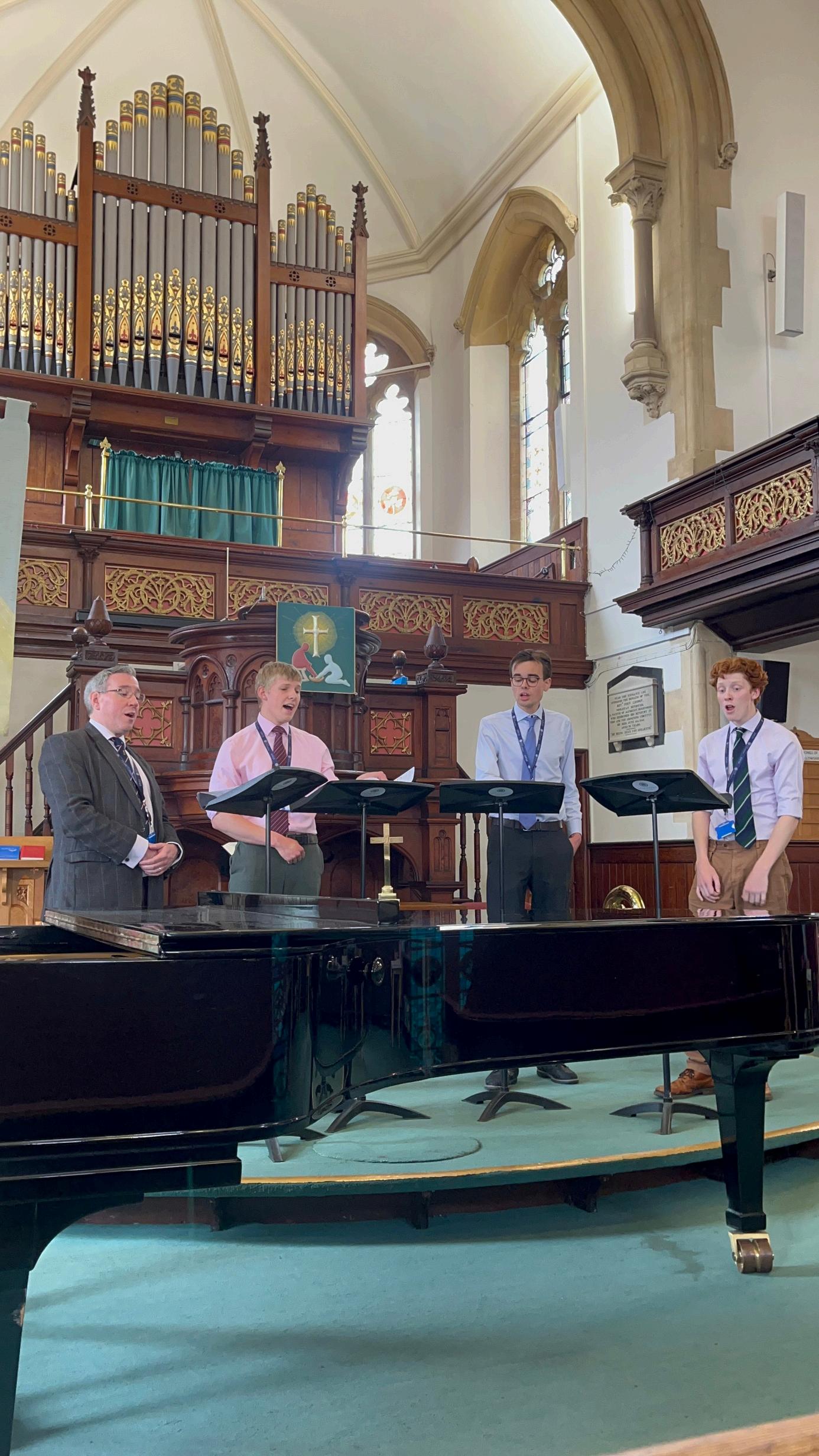
To close off the final FLR of the year, our team of Choral Scholars took to the stage along with Mr Eadon to deliver an afternoon full of wonderful music With all of the Choral Scholars helping within the Music Department throughout the year, this Lunchtime Recital was the perfect way to end their time at Sherborne by showcasing their musical talent.
To begin the concert, we first heard from Mr Sebastian Young, Mr Lucas Selby-Jerrold, and Mr Finaly Lyall, as they took to the stage singing Grassi’s Justorum animae and Beati mundo corde as well as Byrd’s Agnus Dei from his Mass for three voices. Together, the group gave each piece a beautiful shape, with flowing melodic lines and great vocal control, and their voices complemented one another throughout. We then heard from Mr Selby-Jerrold as he performed the 3rd movement of Bortkewicz’s Four pieces for Piano, Op. 3. Throughout his piece, Mr Selby-Jerrold showed great clarity as well as being sensitive to dynamic markings - and made light of the challenges posed by playing a piece for only the left hand. Next Mr Lyall played Piazzolla’s Ave Maria on the Double Bass. Mr Lyall showed great control throughout his piece, providing smooth melodic lines, and delivered a well-rounded performance. Mr Young then took to the stage on the violin as he played Jules Massenet’s Meditation from Thais. Mr Young showed great care and understanding for this piece, and he maintained excellent control over his instrument, capturing its pure beauty. We then heard our second singing number of the concert, with all three choral scholars this time joined by Mr Eadon. Together, the group sang Nicholas Hare’s arrangements of Sing Low, Sweet Chariot and Lennon and McCartney’s Yesterday. As a group, each performance featured smooth melodic lines that shone throughout, as well as immaculate phrasing that really stood out in each member's performance.
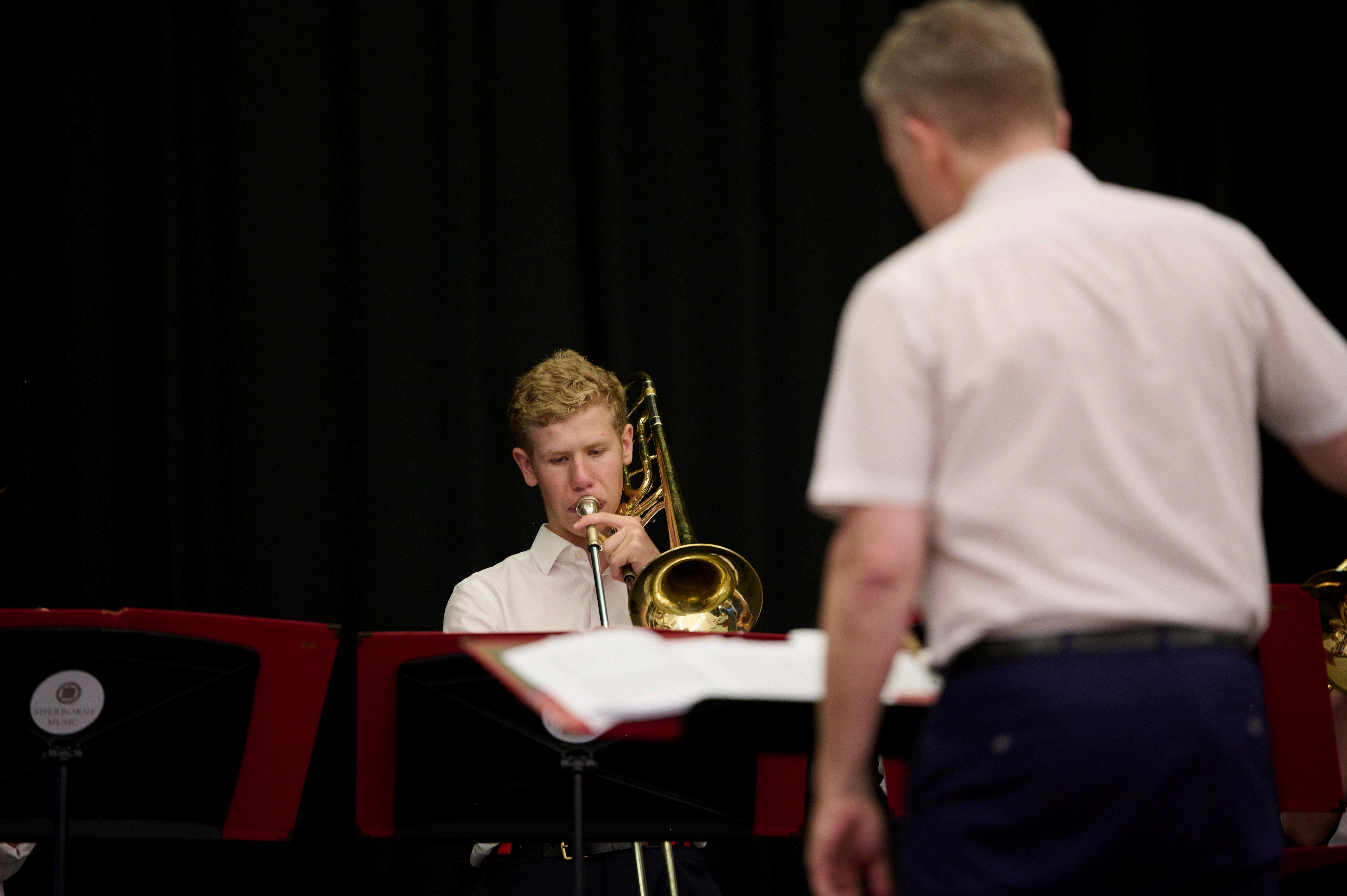
As the concert came to a close, we heard the final number from all four performers in a group they called Scholares Brassum. The group consisted of Mr Lyall on the tuba, both Mr Young and Mr Eadon on the trombone, and Mr Selby-Jerrold on the French Horn. The first piece performed was an arrangement of Randy Newman’s You’ve Got a Friend in Me. A sonorous introduction was followed by the tune, which was handled expertly in the trombone department. As a group, they showed great communication in supporting each other's parts, making the performance even more enjoyable. The group then finished on a high as they performed Anthony O’Toole’s Blowfest II. The piece included high-octane runs, which were handled flawlessly by Mr Lyall on the tuba, as well as fast melodic lines from both Mr Young and Mr Selby-Jerrold. This piece brought a wonderful end to a great concert given by this year's Choral Scholars, and we wish them the best of luck in their future studies at the Royal Academy of Music, and the universities of Durham, Exeter and Oxford.
Thursday 23 April, 5.00 pm
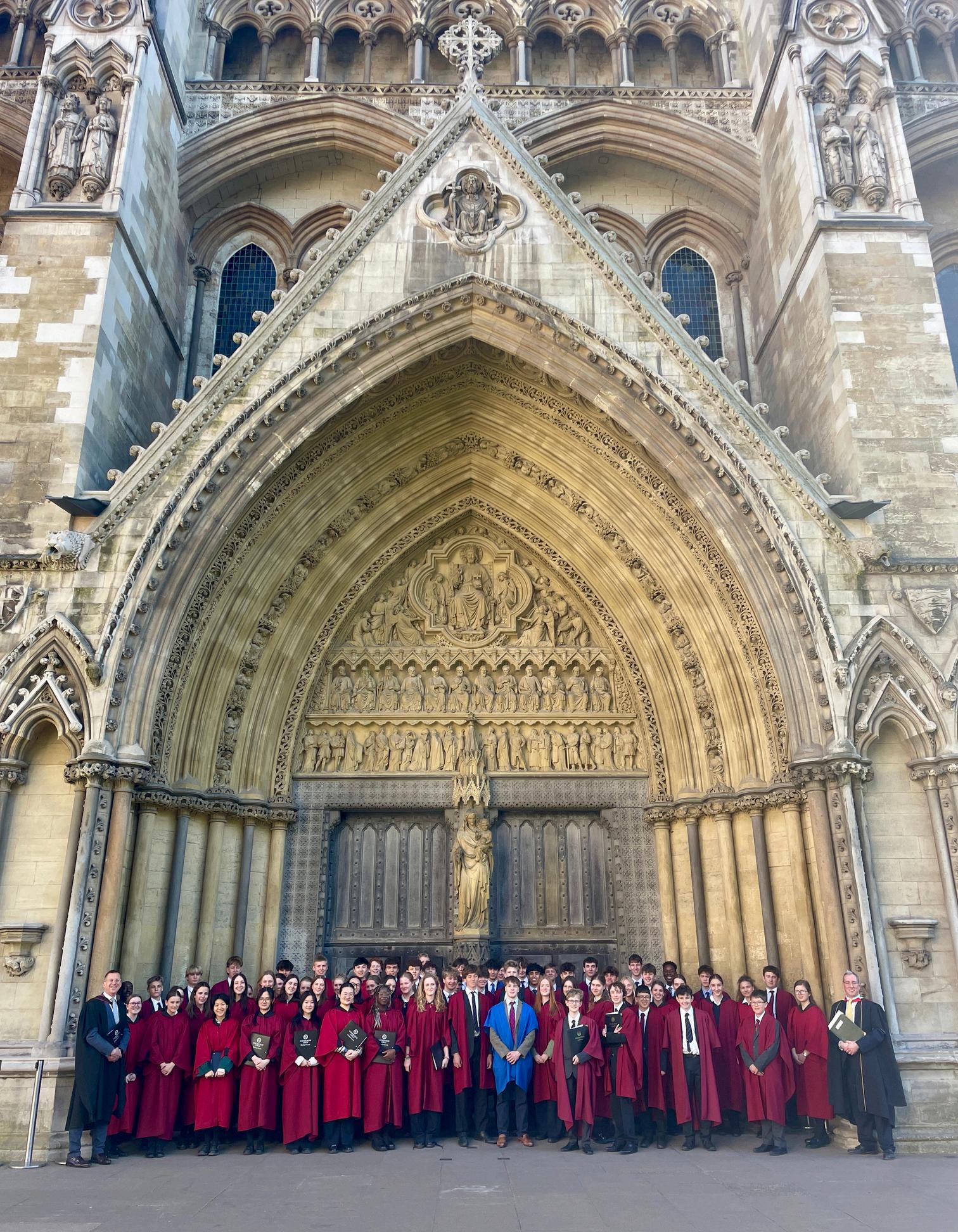
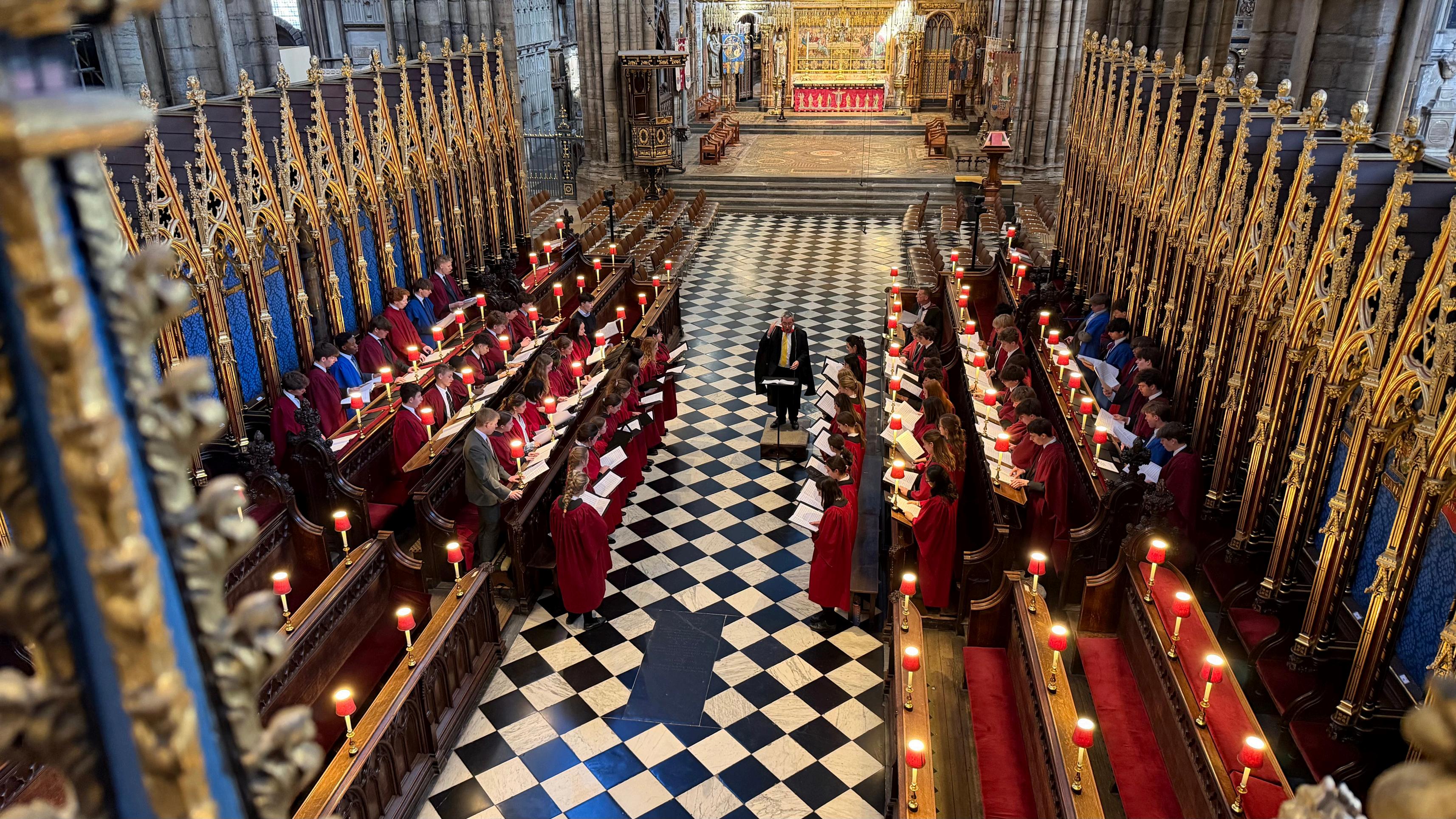
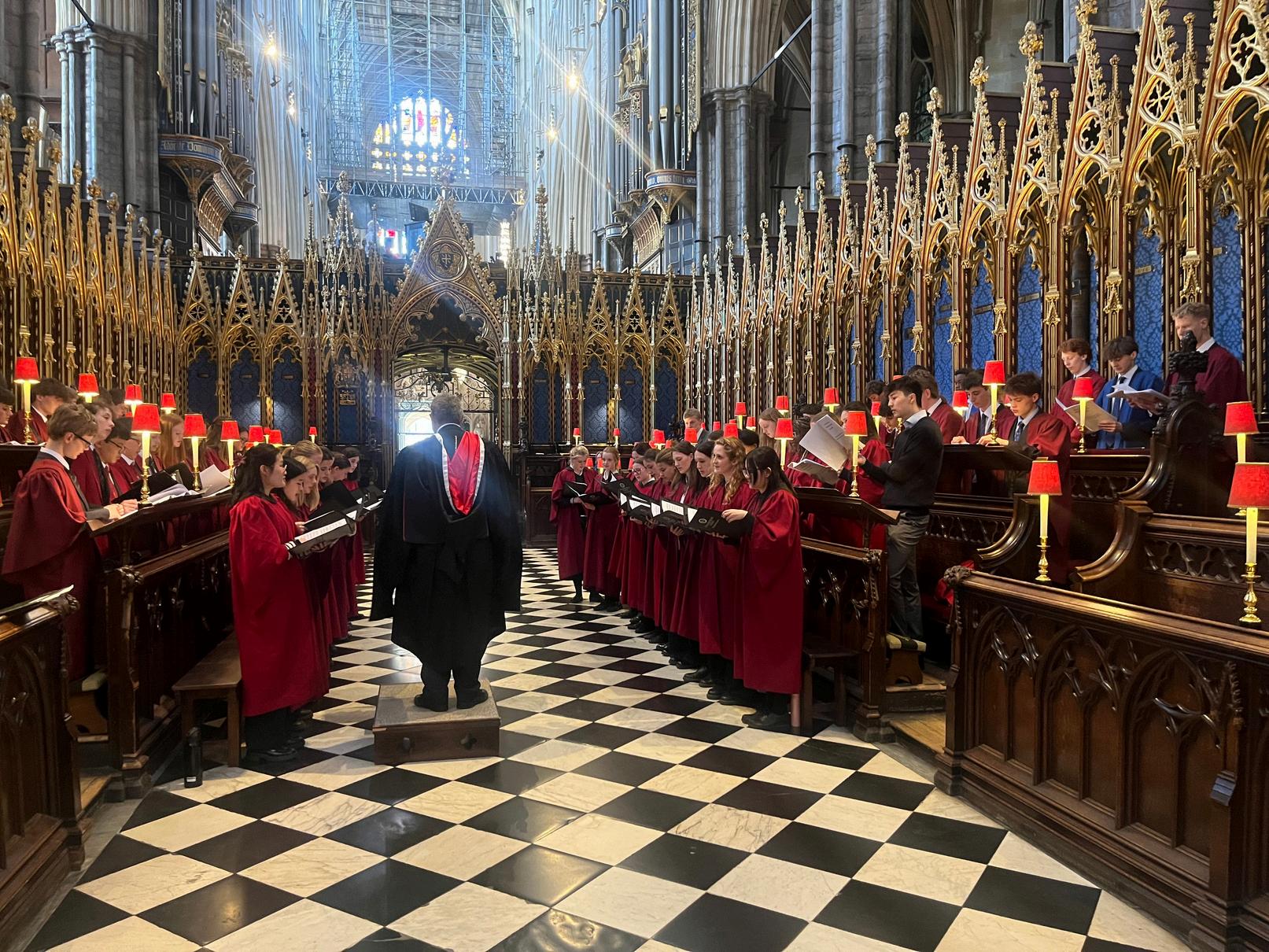
Saturday 25 April, 8.00 pm
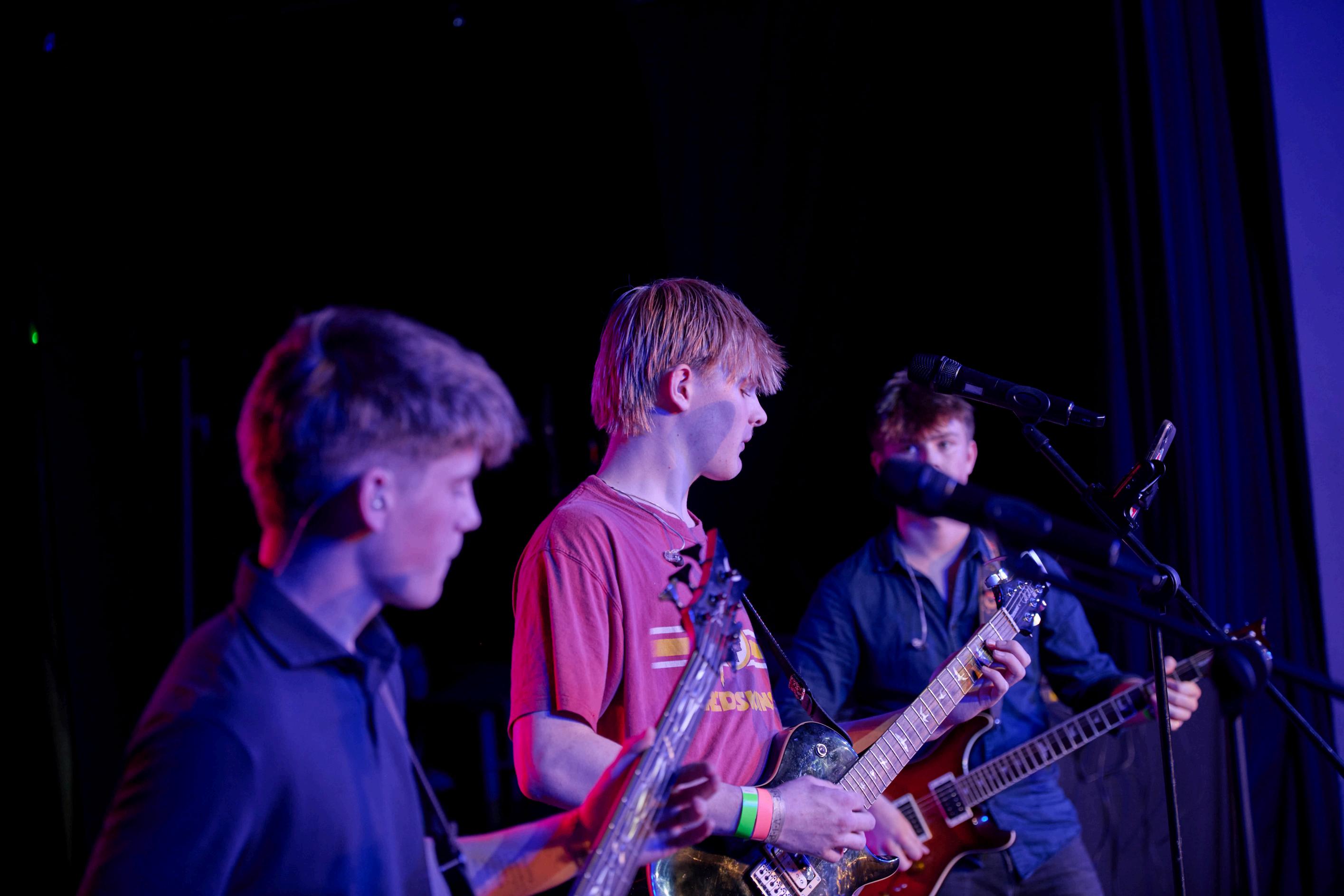
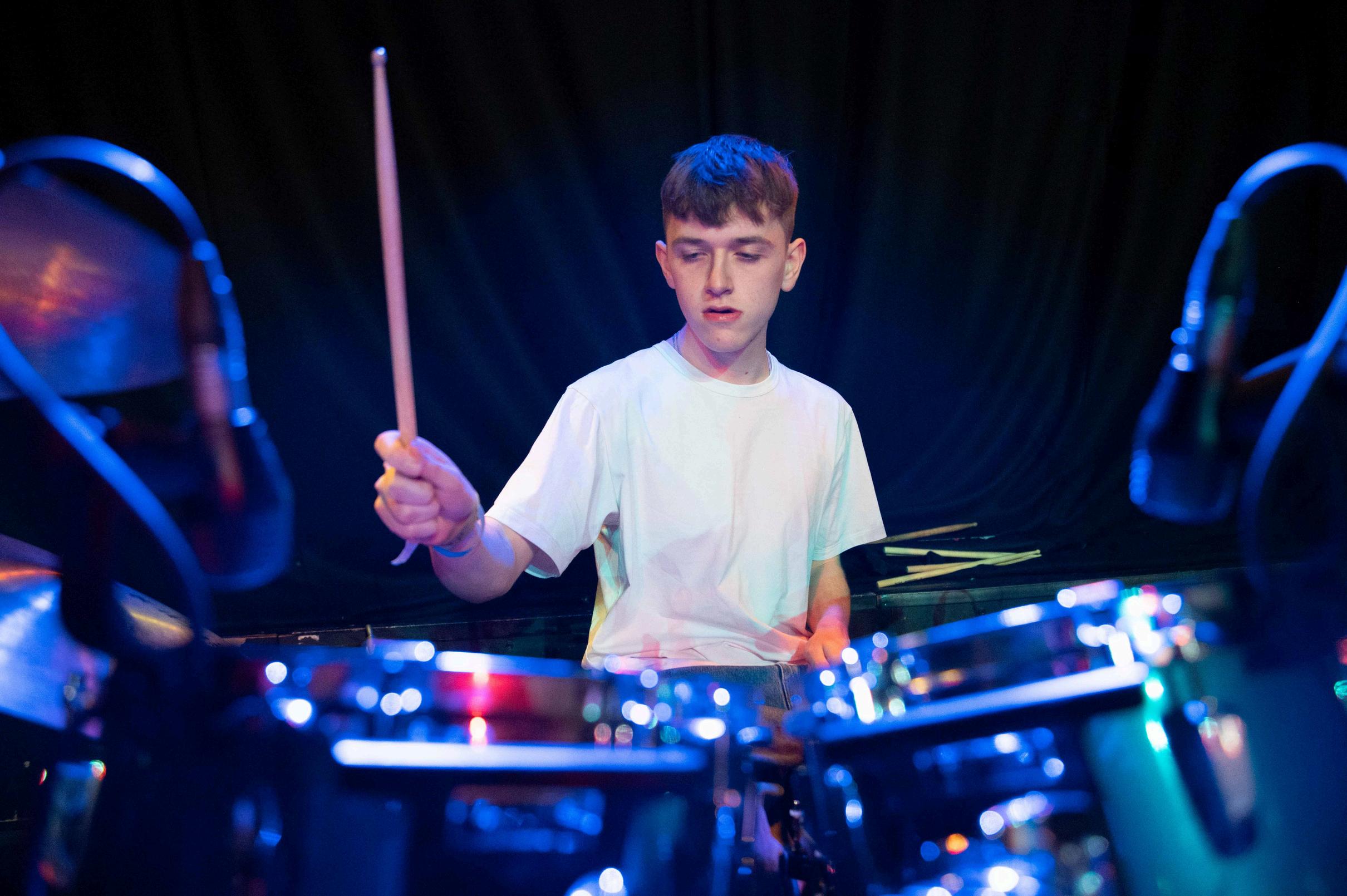
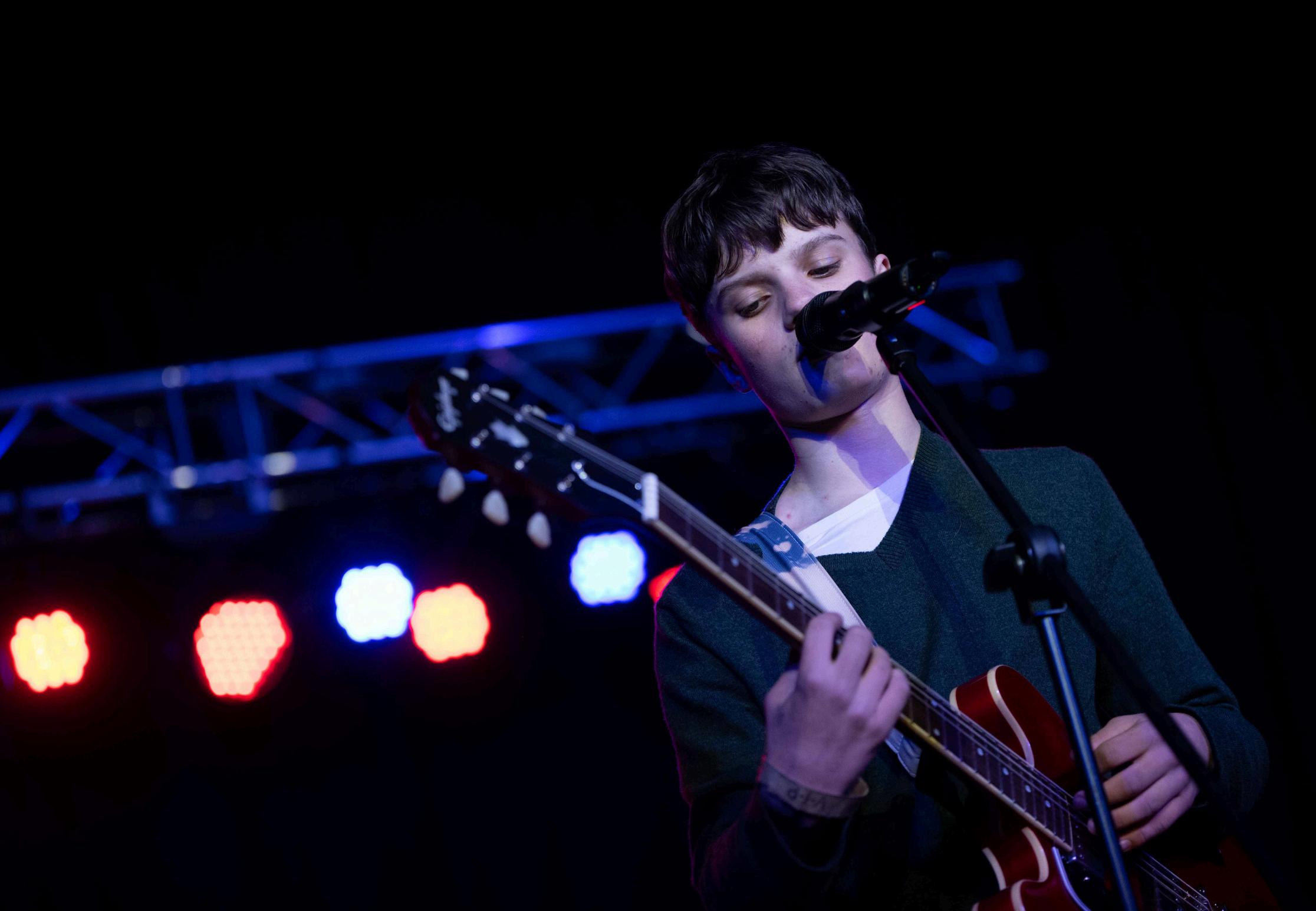
Article written by Nathaniel B (4e, Sch. Mus)
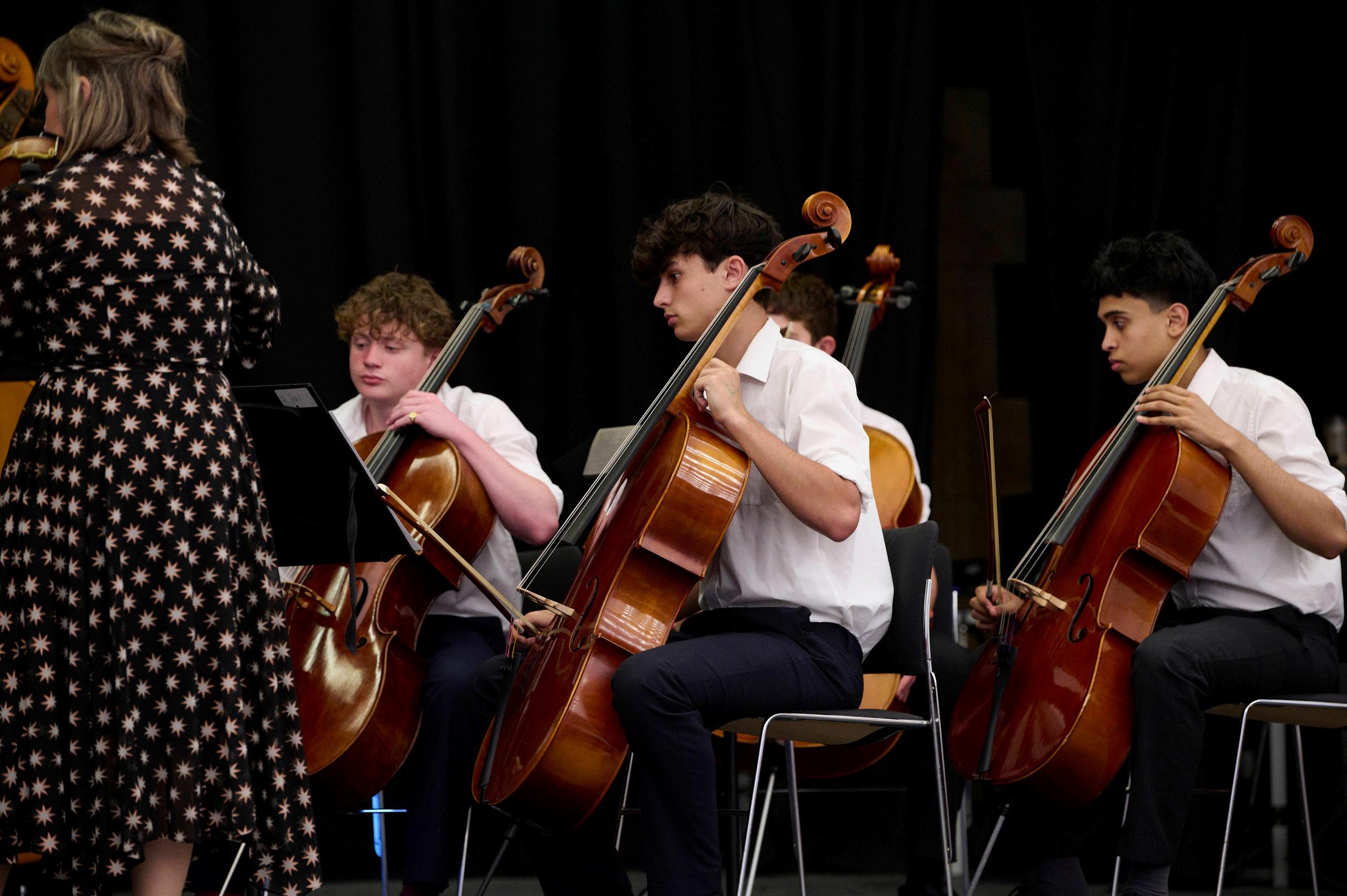
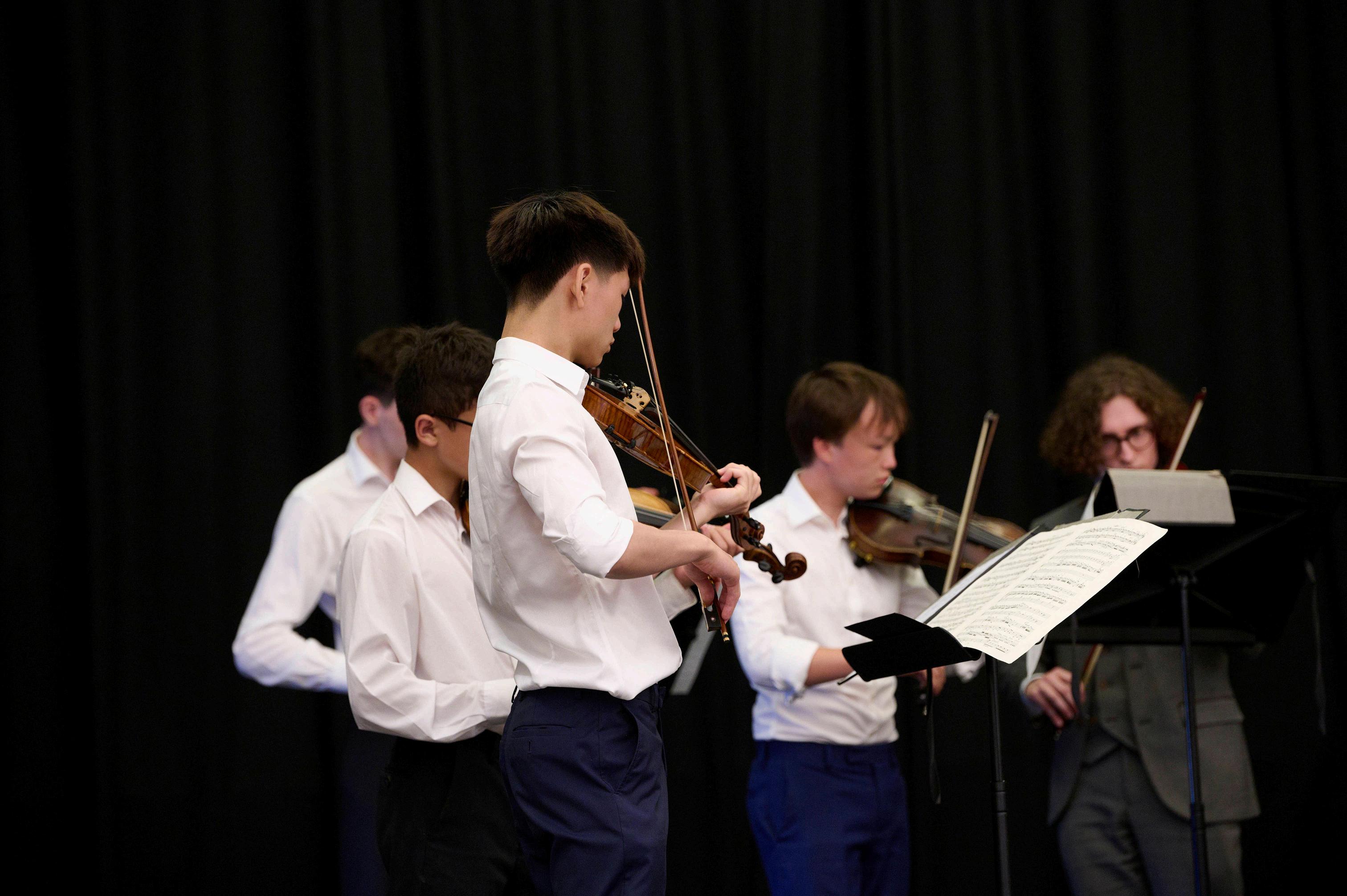
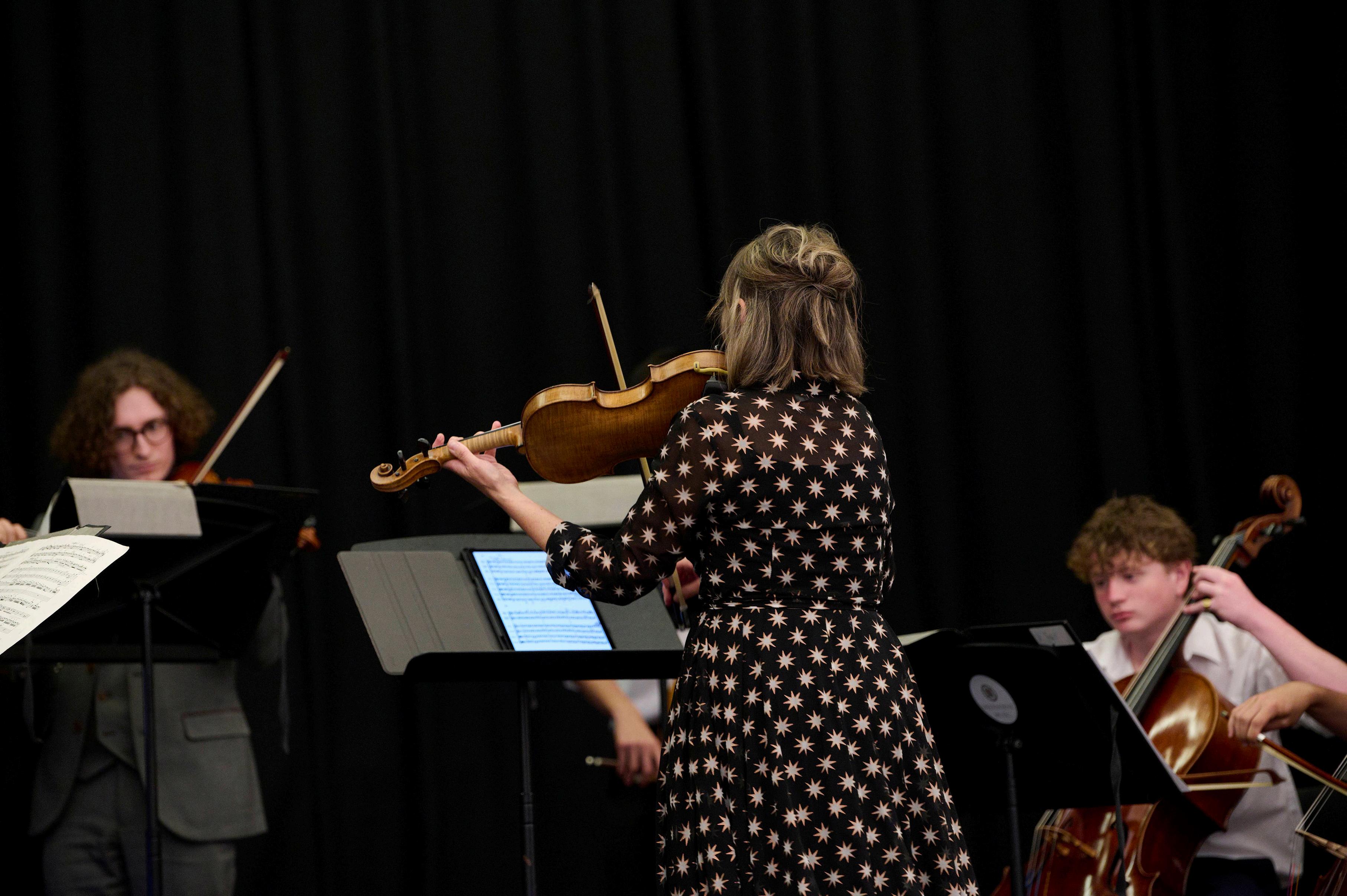
Article written by Nathaniel B (4e, Sch. Mus)
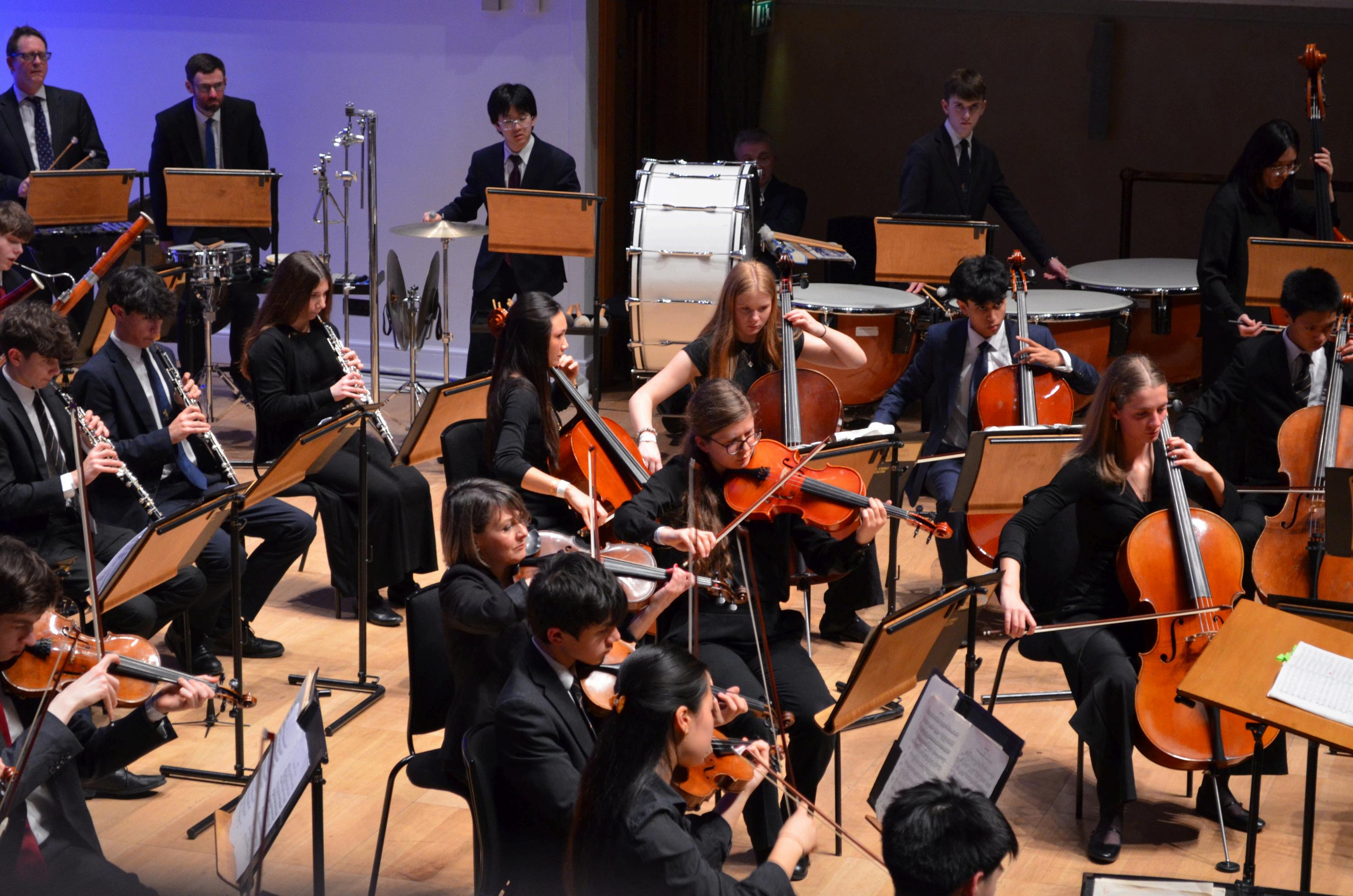
Our smaller ensembles have thrived as well; for example, our Scholars Trio - comprising Sam OB Sch. Mus, Frazer F Sch. Mus and Nathaniel B Sch. Musperformed in the Abbey Festival as well as at the weekly Lunchtime Recitals in the Cheap Street, on both occasions performing the first movement of Haydn’s London Trio. The Double Bass Quartet –Henry C Sch.Mus (3b), Lucas C, Benedict H (3b) and Xander G (SPS) - have also performed another lunchtime recital as they delivered a rendition of Mancini’s Baby Elephant Walk. We also heard a performance from the third form violinists, with members consisting of Sam OB Sch. Mus, Arthur G (3d) and Eason T Sch.Mus (3f) – as they performed Rossignol’s Les Cloches de Compostelle.
The regular Friday Lunchtime Recitals are a great way to get used to performing in front of an audience of 50 to 100! In these weekly concerts, a wide range of pieces have been played, from the 1700s to modern times, from Bach to Stravinsky.
This year’s Symphonic Strings consisted of Marc F ARSM, Freddie F Exh.Mus (U6a), Inigo R Exh.Mus (U6g), Cedric VS Exh. Mus, Zeeshan M Sch. Mus, Frazer F Sch. Mus, Lucas C, Nathaniel B Sch. Mus, Henry C Sch. Mus, Sam OB Sch. Mus, Mr Young Sch.Cho.
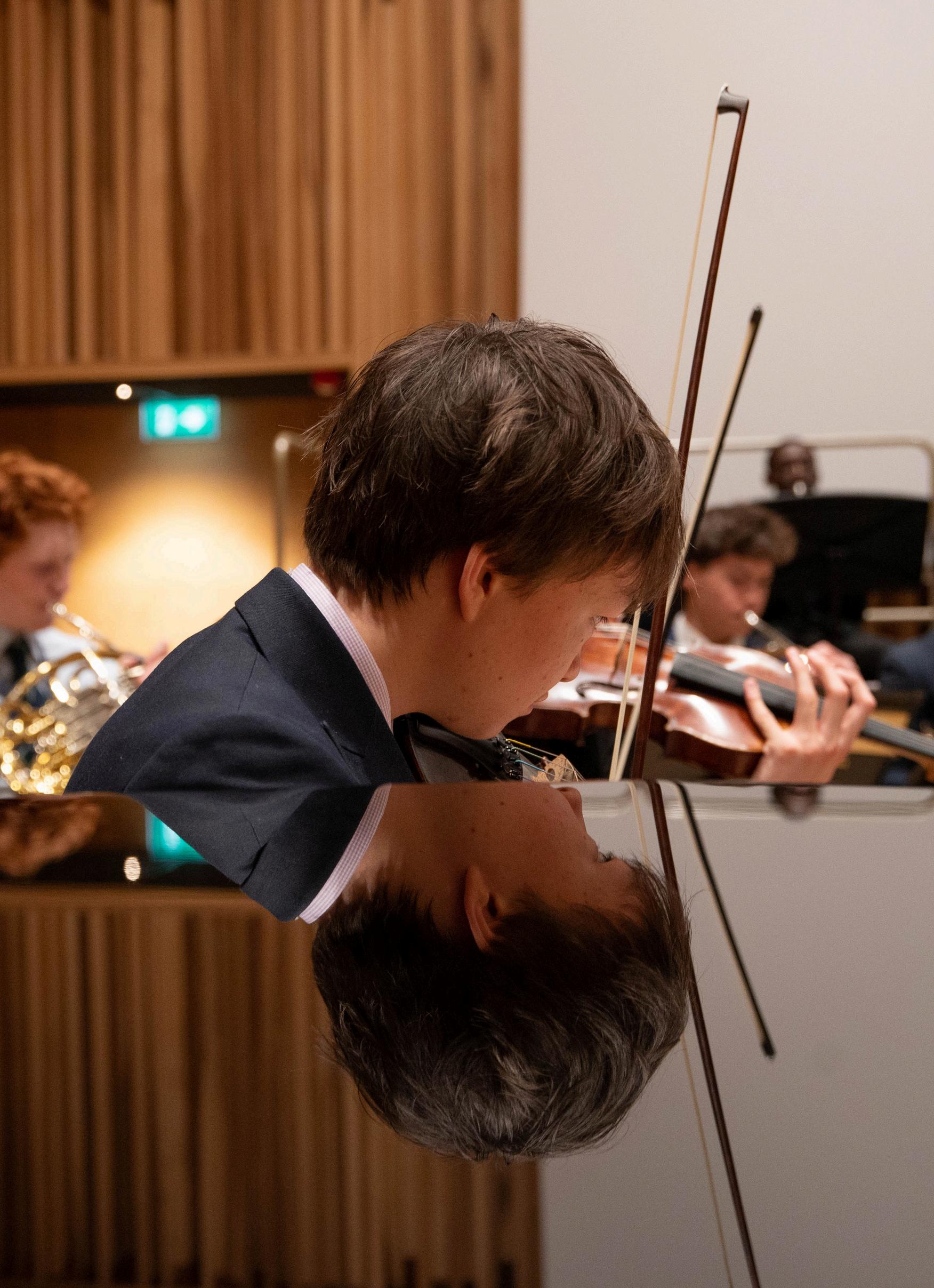
Article written by Mr Costin, Brass Co-ordinator
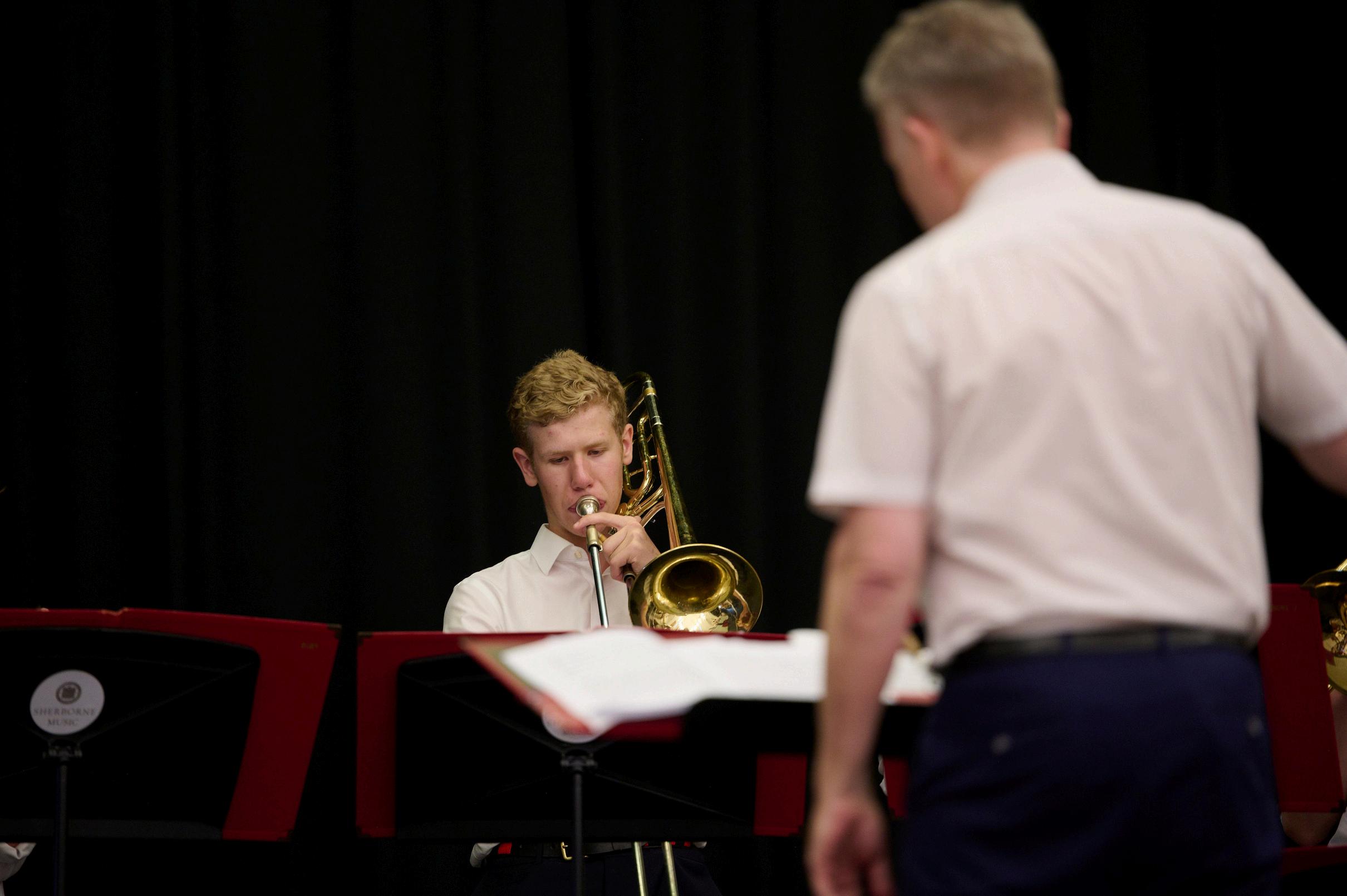
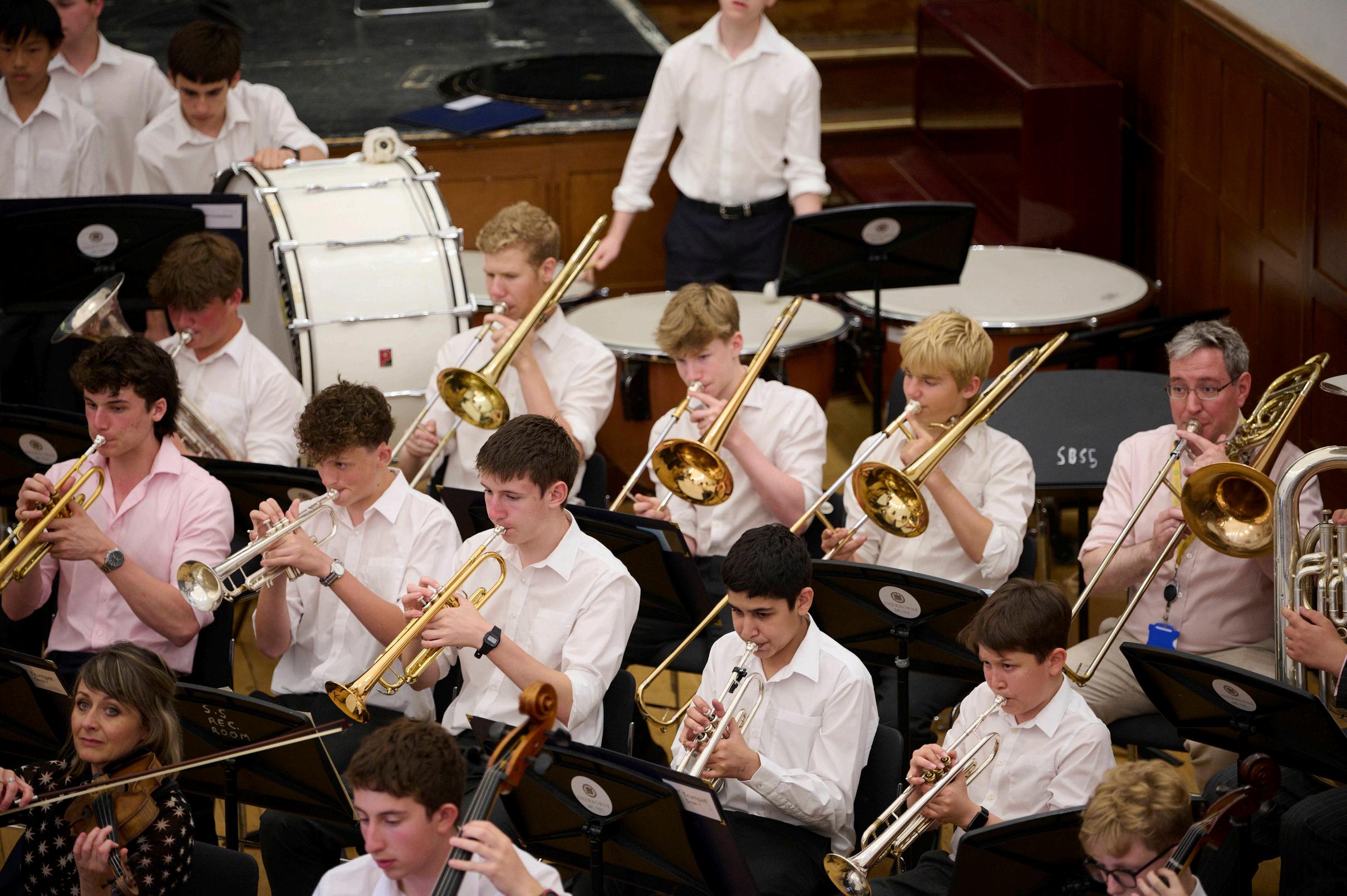
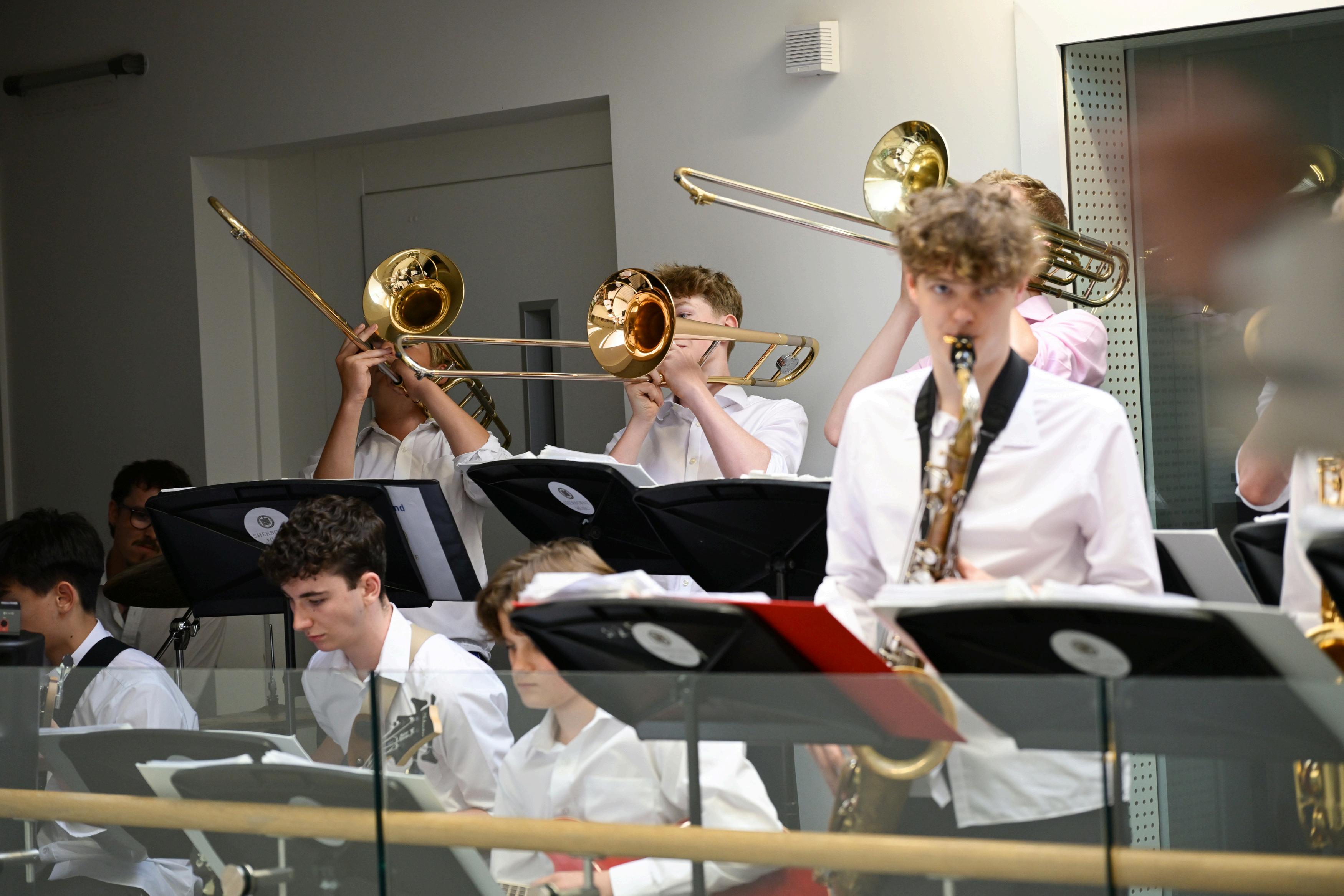
Article written by Mr Costin, Brass Co-ordinator
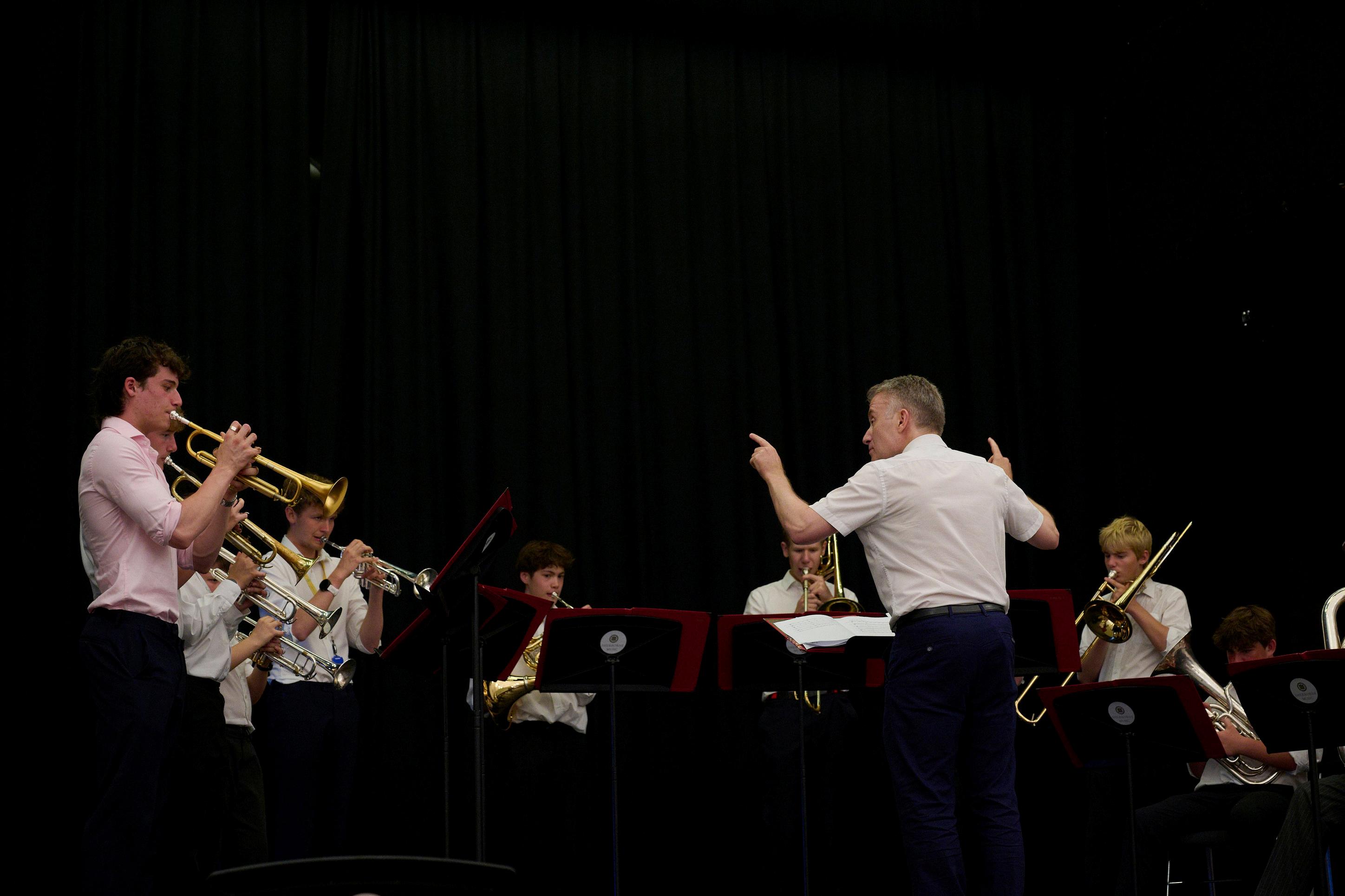
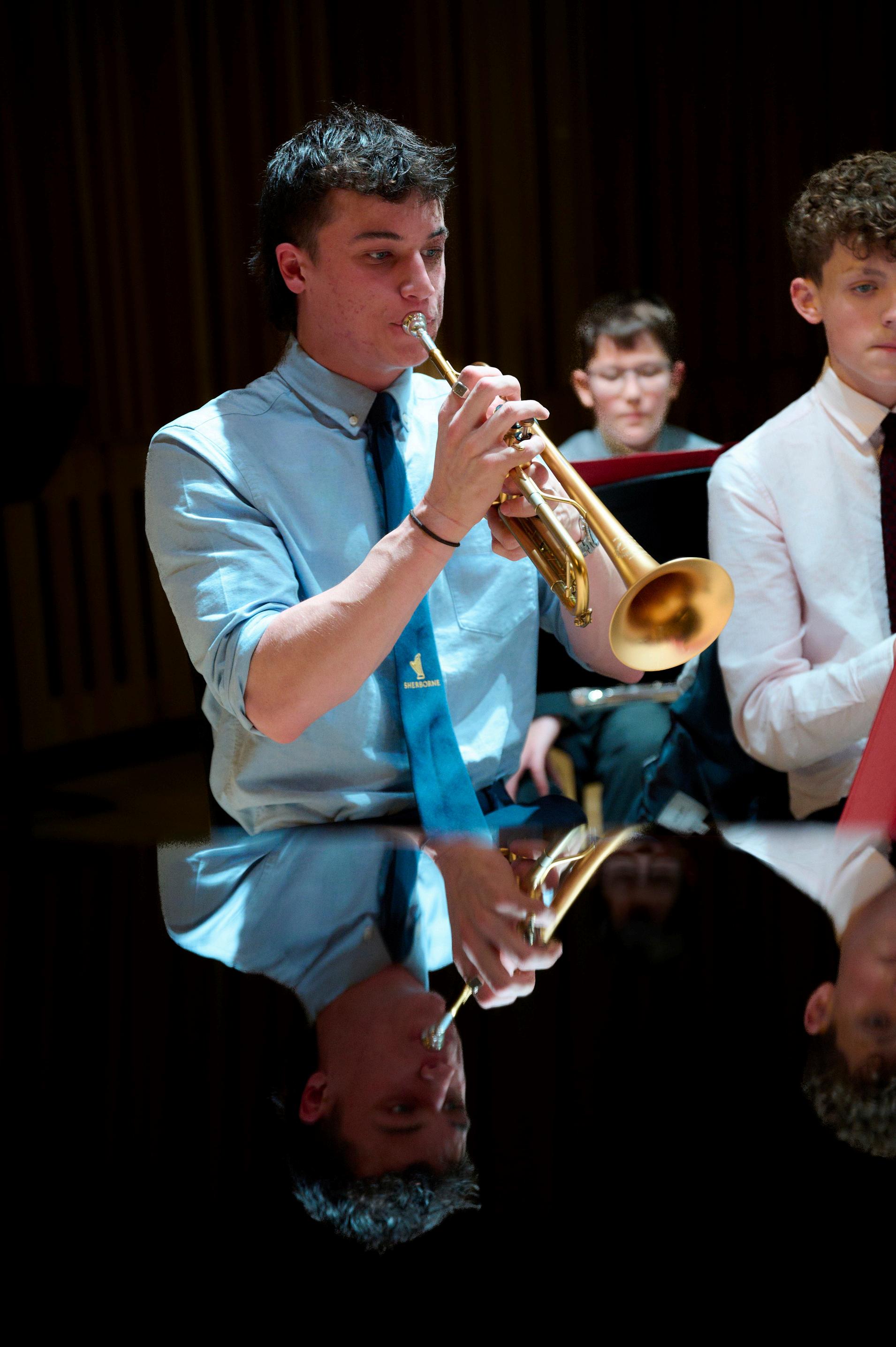

Article written by Dr Mertens
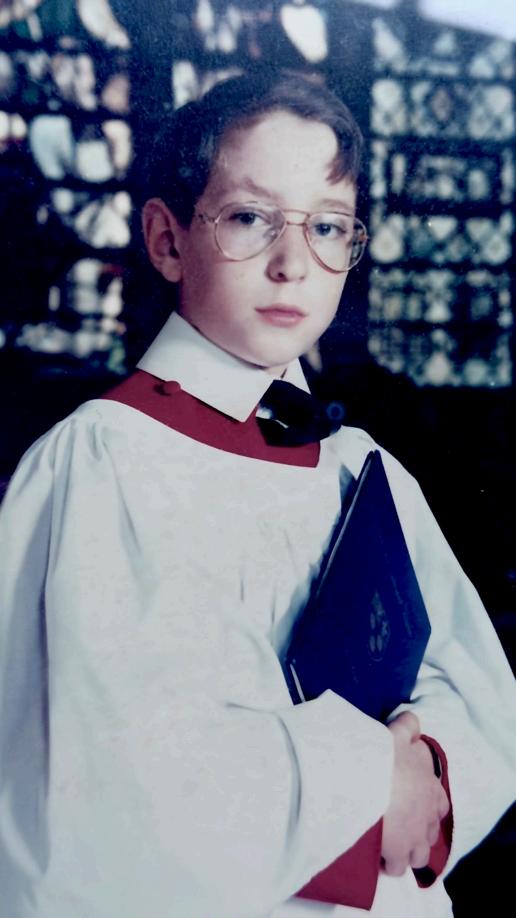
I first attended Sherborne School in 1981. It was Spring and I was a chorister on a residential RSCM course, staying in the open dorm at the top of Abbey House, being woken from sleep every 15 minutes by the abbey bell, singing in our abbey and in Bath Abbey.
Music was already a significant part of my life, playing various musical instruments and, as I grew older, one that I seriously considered continuing professionally.
In those days of schooling, education led one either down the path of science or the arts and there was little or no overlap. When it came to university, I had to make the choice of one or the other, though because I wanted to keep both doors open, I applied (naively) to Cambridge in the hope that I might be able to sneek into the choral world through the back door of a Biology degree into King’s or St John’s College.
A place at Cambridge was not meant to be but you might think my degree at Durham University might offer me chances to do the same. The reality was that evensong was not compatible with afternoon lectures and practicals. Arts subjects had four lectures per week. I, as a scientist, had 30 timetabled hours.
After finishing at Durham, I made enquiries into becoming a lay clerk but then, as chance would have it, a teaching job came up at Sherborne in the Biology Department.
Here, I was offered the perfect combination of music and science. Being a countertenor, a voice often in demand, I found myself in five choirs in my first five years.
It was a time when I decided to seize the opportunity to try and make my way in singing in a more professional capacity. Every few weeks, I would travel to London for training with a teacher of the Guildhall.
Article written by Mr Ridgway

A ti l itten by Mr Ridgway
Unfortunately, the physical demands on my voice were starting to tell. Perhaps dealing with 20 boys in the classroom didn’t help, either?
I was struggling with my vocal range and flexibility and I knew I needed intervention.
For a while I took lessons in, and practised the Alexander technique. This, I thought, would do the trick, but although I became adept in controlling and relaxing my body musculature, there seemed to be more of a deep-rooted block.
I then sought professional help from a Soprano in Southampton. She had been an up-and-coming star, but in her late teens and early 20s, she had had dental work to remove some teeth to make room for others. Within a few years, she had become a singer without a voice. She had been approached by an orthodontist, who immediately diagnosed her condition as a result of muscular tension and torsion, resulting from a cross-bite and TMD (temporo-mandibular disfunction).
As a boy, and a child of the 70s when dental ‘fill and drill’ was the norm, I too had had similar work done by my dentist to remove premolars to make space in my maxillae for my adult teeth. A clicking jaw and tinnitus were just some of the symptoms.
And so I began on a seminal programme of orthodontics and physiotherapy to widen my maxillae to what would have been their adult norm, together with osteopathy and muscle physiotherapy to address and correct muscle balance in my neck and chest.
Over the years, such knowledge and interventions have become more common and a more holistic treatment in performance art increasingly important.
Whilst I began to feel the benefits of my treatment, science took over my life once more, when I became Head of the Biology Department. Also, starting a family took priority over what might have been a more bohemian lifestyle as a singer.
Music of all kinds remains a constant companion and the artistic side in me is very much fulfilled with my move into portrait photography, over the last 15 years.
So, to you, I would say feed your artistic passions. Listen to your creative self and be open to new ideas. You never know where they may take you.
Article written by Mr Boyd-Williams
I grew up in South Wales, where, for many, singing is not a hobby but a condition of being. Rugby crowds sing. Congregations sing. School children sing.
I was a chorister who also loved rugby. While my peers were arguably doing more exciting, sun-filled activities in their summer holidays, I attended several Royal School of Church Music courses - week-long immersions in choral singing, culminating in services at great church buildings. Winchester. Salisbury. Bath Abbey.
When I was 13, my father changed his career and became a priest. This led to me moving from a high school in Cardiff to attend a comprehensive school in a former mining community, just outside the Rhondda Valley. At my former school, I don’t recall singing being part of the culture, therefore nothing prepared me for the wall of sound that exploded in my first assembly at Tonyrefail Comprehensive. This was a school at which it was cool to sing. It was inclusive. For everyone. Not just for an elite few. I remember the Deputy Head, Mr Griffiths, being extremely gifted at bringing the best voice out of everyone assembled.
After a couple of years there, I became a boarder at Christ College, Brecon, where I continued to sing in the chapel choir. I even reached the dizzying heights of Head Chorister. We sang regularly and to a high standard, covering a broad repertoire of English and European Church music. I also began to train as an opera singer for a period, and in my gap year performed a small number of concerts - each one paying me the princely sum of a hundred pounds, which at the time felt like a big deal. I sang once before Sir Geraint Evans, who said my voice was “quite good”.

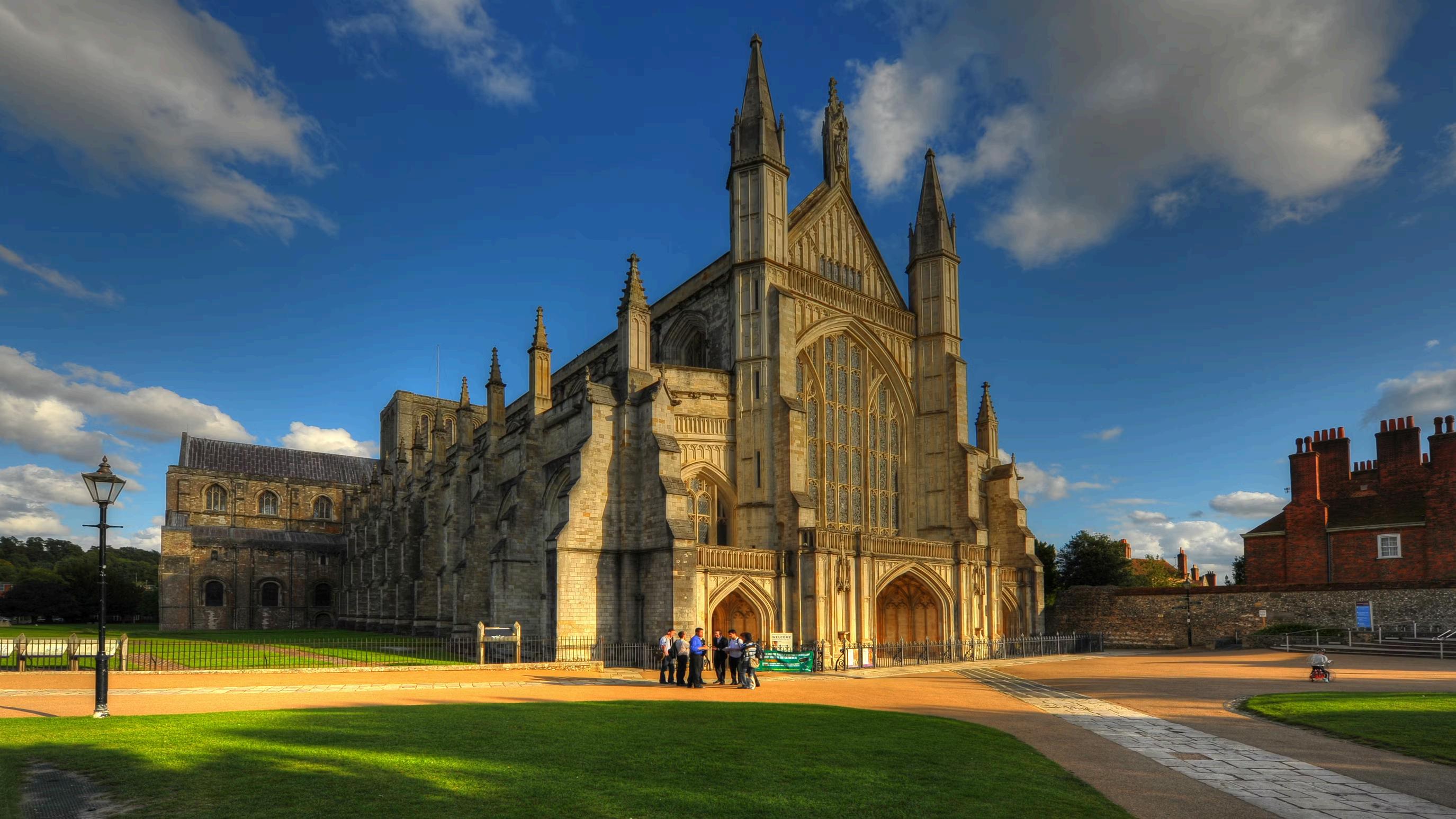
What choral singing gave me was not just an experience of music, but a discipline of attention. In a choir, you learn to listen as hard as you sing. You have to hear what is happening around you - the tuning, the balance, the breath, the phraseand adjust yourself accordingly. It is, in the most literal sense, a training in how to be part of something bigger than yourself. I did not realise at the time that this was one of the most useful things I would ever learn.
At university, the music changed focus. I learnt to play the guitar, and along with some friends, formed an indie band named The Jennies. We performed with a great deal of enthusiasm if not an equal quantity of technical precision. In recent years I’ve started to play the ukulele because it’s so portable. Recently, Mr Crawford and I performed a rendition of Ben E. King's Stand By Me in a Sixth Form assembly. I was on ukulele. He was on guitar. The response was, respectful.
Against Musical Snobbery
I have loved many kinds of music over my life, and I have come to feel strongly that ranking them is a fool’s game. Jools Holland once said that you cannot judge one piece of music to be better than another - what matters is the impact it has on someone's soul. I believe that. Whether it is Thomas Tallis writing for the Chapel Royal in the sixteenth century, or a rap artist in twenty-first century South-East London, the question is the same: does it move you? Does it reach something in you that words alone cannot?
I am also, with some pride, a late starter on the piano. I had lessons as a younger person, under a teacher who expressed his pedagogical disappointment in wrong notes by striking my fingers with a metal ruler. This, understandably, arrested my progress. Nonetheless, for decades afterwards, whenever I passed a piano, I felt the pull - I wanted to play. So at the age of forty-five, I sat my Grade One. Grade Two followed at forty-six. Both with Merit! A change of job intervened and disrupted the practice routine, but the intention is very much alive. One day soon I will return to it. I have a friend of ninety who plays the piano every day. That is my ambition.
A Lifelong Love, Not a Qualification
As a teacher and housemaster over many years, one of the things that has saddened me most is a particular phenomenon I have witnessed more than once: a student completes their Grade Eight examination, returns to the boarding house, chucks the flute in the corner and announces - with evident relief - that they never have to play that instrument again. Something has gone wrong when that is the outcome of a musical education.
We speak often in schools about developing lifelong habits in sport and physical well-being. We want young people to leave us not just capable of participating in certain sports, but genuinely in love with the idea of keeping active for the rest of their lives. Music deserves exactly the same ambition. The goal is not a certificate. The goal is that, at fifty, or seventy, or ninety, a person still reaches for an instrument because it brings them joy.

I have been fortunate at Sherborne to work somewhere that takes music seriously - the Friday lunchtime concerts, the extraordinary energy of Courtyard Fest, the diversity of what gets performed. I hope we continue to push music further into the everyday life of the school: into assemblies, into informal spaces, into moments where it is encountered rather than scheduled. Because one of music's great gifts is precisely that it does not require expertise to be meaningful. Sometimes the simplest piece, played with honesty and enjoyment, is as beautiful as anything.
In August my family and I move to Milan, a city that understands music as an institution and as a way of life. Verdi was from there. La Scala is there. There is a building - the Casa di Riposo per Musicisti, Verdi's own creation - that houses retired musicians in their old age, because he believed they deserved to be cared for. A city that provides a home for its musicians is a city that gives importance to the arts.
I intend to keep singing and hopefully find a choir. I intend to return to the piano. I intend to keep playing the guitar and ukulele. I intend, eventually, to sit in the red velvet of La Scala and let the sound - as it did in those English cathedrals, forty years ago - find me and change me a little.
Music is not a phase. It is not a qualification. It is not something you complete. It is something that accompanies you through your life, if you let it - changing its form as you change yours, meeting you wherever you are. I have been singing and enjoying music-making, in one form or another, since I was a boy standing in a cathedral listening to the sound of my own voice disappearing into the stone – and I do not intend to stop.

Written by Simon Eadon
Article written by Sirtaaj G (4a), Editor-in-Chief
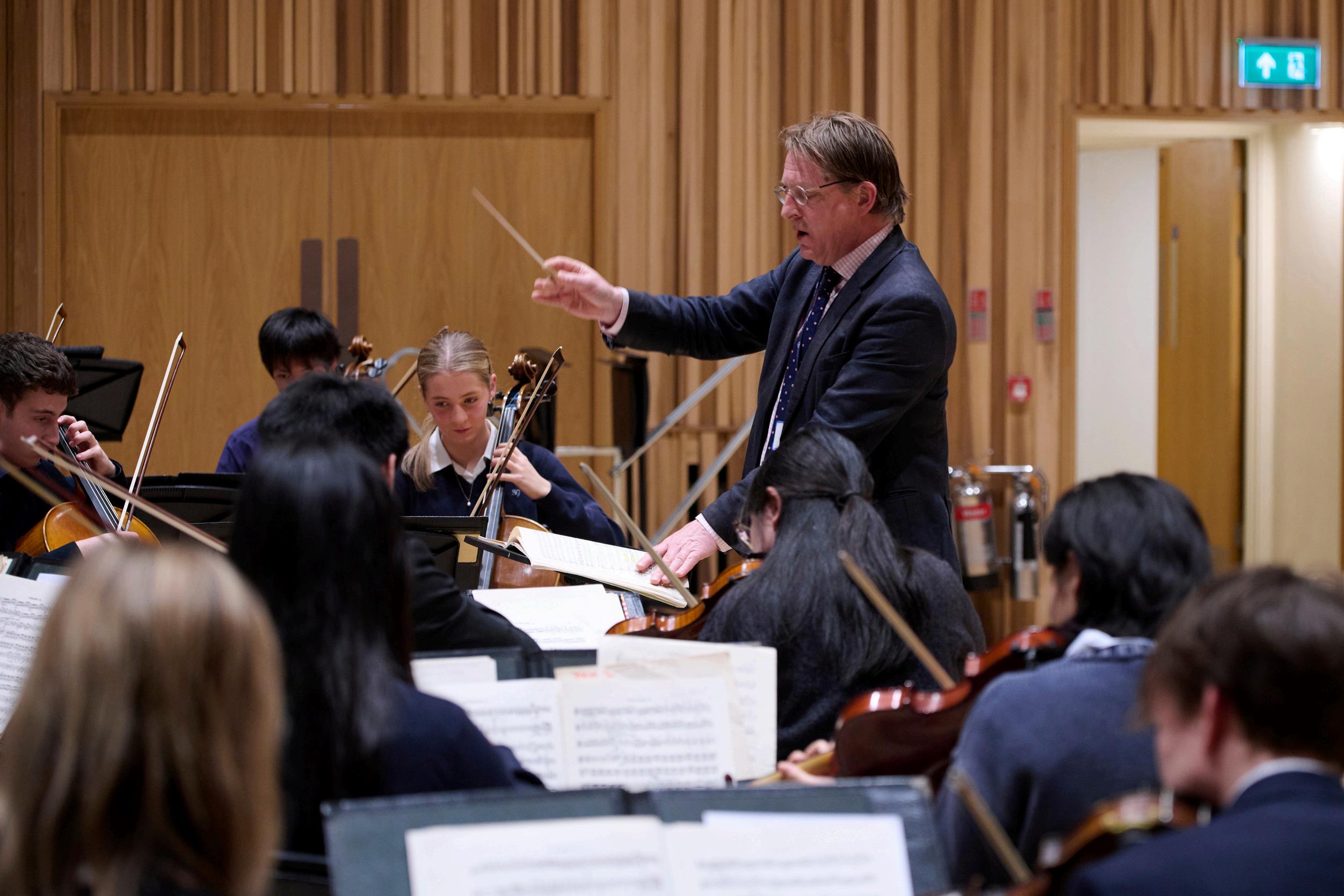
The Blue Notes
Article written by Sirtaaj G (4a), Editor-in-Chief
Come and enjoy:
Sunday 21 June 2026, 5.45 pm, The Music School
Join us for an evening of music from the Swing Band and Jazz Ensemble in an open-air concert outside the Music School.
Come and enjoy a:
Wednesday 24 June 2026, 7.30pm, The Chapel, Sherborne Boys
The Chamber Choir is joined by pupil organists in a ‘Battle of the Organs’ featuring the School’s two instruments.
Come and enjoy the:
Friday 26 June, 7.30pm , BSR, Sherborne Boys
Come and enjoy an evening of music from Concert Orchestra, Wind Band, Chamber Choir, Symphonic Strings, Close Harmony and Chamber Ensembles.
The
Come and hear:
Choral Evensong at Bath Abbey
Thursday 12 November 2026, 5.30pm, Bath Abbey
The Sherborne Boys Chamber Choir join forces with the Sherborne Girls Madrigal Society as they sing Choral Evensong in Bath Abbey.
Come and enjoy:
Come and enjoy A Night at the Musicals performed by a variety of ensembles from both Sherborne Boys and Sherborne Girls.
Come and enjoy:
Monday 07 December, 7.30pm , The Chapel, Sherborne Boys
A festive service of carols, hymns, and readings by pupils from Sherborne Boys. Featuring the Sherborne Boys Chamber Choir
Mr Eadon
Mr Marks
Miss McCormick
Miss Allen
Mr Costin
Miss Tucker
Ms McKay
Mrs Jarrett
Mr Young
Mr Selby-Jerrold
Mr Ridgway
Dr Mertens
Mr Boyd-Williams
Ian L (L6d)
James W (U6b)
Nathaniel B (4e)
Photograph Credit:
Miss McCormick, Katharine Davies, Len Copland and Josie Sturgess-Mills