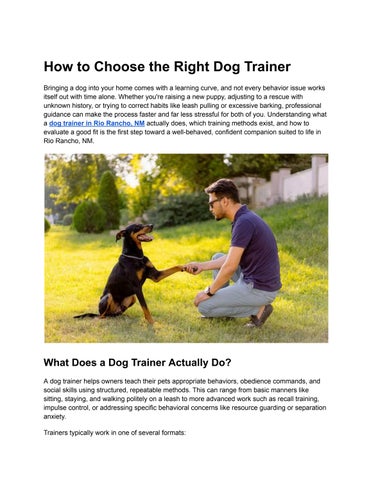
How to Choose the Right Dog Trainer Bringing a dog into your home comes with a learning curve, and not every behavior issue works itself out with time alone. Whether you're raising a new puppy, adjusting to a rescue with unknown history, or trying to correct habits like leash pulling or excessive barking, professional guidance can make the process faster and far less stressful for both of you. Understanding what a dog trainer in Rio Rancho, NM actually does, which training methods exist, and how to evaluate a good fit is the first step toward a well-behaved, confident companion suited to life in Rio Rancho, NM.
What Does a Dog Trainer Actually Do? A dog trainer helps owners teach their pets appropriate behaviors, obedience commands, and social skills using structured, repeatable methods. This can range from basic manners like sitting, staying, and walking politely on a leash to more advanced work such as recall training, impulse control, or addressing specific behavioral concerns like resource guarding or separation anxiety. Trainers typically work in one of several formats:
● ● ● ●
Private one-on-one sessions, tailored to a specific dog and household Group classes, which combine obedience work with socialization Board-and-train programs, where the dog stays with the trainer for an intensive period Virtual or remote coaching, useful for owners who want guidance on their own schedule
The right format depends on the dog's temperament, the owner's goals, and the amount of time available to practice consistently at home.
Common Reasons Owners Seek Professional Training Dogs end up in training programs for a wide variety of reasons, and recognizing which category applies can help narrow down the right approach.
Puppy Foundations New puppies benefit from early exposure to basic commands, house manners, and controlled socialization with people and other animals. Establishing these habits early tends to prevent larger behavioral issues later in life.
Behavior Correction Some dogs develop habits that are disruptive or even unsafe, such as jumping on guests, chewing furniture, excessive barking, or reacting aggressively to other animals. These situations usually call for a trainer experienced in behavior modification rather than basic obedience alone.
Adjusting to a New Environment Rescue dogs or dogs relocating to a new home, including many that end up in New Mexico from shelters and transport programs, sometimes need extra support adjusting to unfamiliar surroundings, routines, and family dynamics.
Specialized Goals Some owners pursue training for specific purposes, such as therapy dog certification, service dog tasks, or competitive obedience and agility work. These paths typically require more advanced, specialized instruction.
Training Methods to Understand Not all trainers use the same philosophy, and understanding the major approaches helps owners choose one that aligns with their values and their dog's personality.
Positive reinforcement relies on rewarding desired behaviors with treats, praise, or play, encouraging the dog to repeat those actions. It's widely used for its effectiveness with most dogs and its low risk of creating fear-based responses. Balanced training combines reward-based methods with corrective tools or techniques when needed, aiming to reinforce good behavior while also addressing unwanted actions directly. Clicker training is a form of positive reinforcement that uses a distinct sound to mark the exact moment a dog performs a desired behavior, helping build clear communication between dog and owner. Owners should feel comfortable asking a prospective trainer which method they use and why, since this shapes the entire training experience.
What to Look for When Choosing a Trainer Because dog training is not a licensed profession in most states, including New Mexico, the quality and approach can vary significantly between individuals. A few factors are worth evaluating before committing: ● Experience with your dog's specific needs. A trainer skilled in puppy classes may not be the best fit for serious aggression cases, and vice versa. ● Transparent methods. A reputable trainer should be willing to explain their techniques and allow you to observe or ask questions before starting. ● Certifications or continuing education. While not required by law, credentials from recognized training organizations often indicate a commitment to current, evidence-based methods. ● Communication style. Training works best when the trainer can clearly explain what to practice at home and why, rather than relying on jargon. ● Compatibility with your goals. Some trainers focus purely on obedience, while others specialize in behavioral rehabilitation or advanced skills. Meeting a trainer briefly, whether through a phone consultation or an introductory session, can reveal a lot about whether their approach fits your household.
What to Expect During the Training Process Most training programs follow a general arc, even if the specific curriculum varies. An initial assessment typically evaluates the dog's current behavior, temperament, and any specific concerns the owner wants addressed. From there, a trainer builds a plan involving structured sessions, either individually or in a group setting, along with homework for the owner to reinforce lessons between meetings.
Consistency is one of the most important factors in successful training. A dog that learns a command in a single session with a trainer still needs regular practice in everyday situations, at home, on walks, and around distractions, to fully internalize the behavior. Owners who actively participate in the process, rather than expecting the trainer alone to "fix" the dog, generally see faster and more lasting results.
Cost Considerations Training costs vary widely depending on the format, the trainer's experience level, and the complexity of the issue being addressed. Group classes tend to be more affordable since costs are shared among multiple participants, while private sessions and board-and-train programs typically involve a higher investment due to the individualized attention involved. When comparing options, it helps to ask what's included, such as the number of sessions, follow-up support, and any written materials or take-home guides, rather than comparing price alone.
Training Considerations Specific to Rio Rancho In Rio Rancho, NM, a mix of residential neighborhoods, open desert landscape, and warm, dry climate creates some unique considerations for dog owners. Outdoor training sessions may need to account for extreme summer heat, and owners walking dogs in areas near open space should be mindful of local wildlife, which can sometimes trigger prey drive or reactivity in untrained dogs. Socialization opportunities are also worth factoring in, since exposure to a variety of environments, people, and other animals plays an important role in a well-rounded dog's development. Local parks and pet-friendly public spaces can offer useful settings for practicing leash manners and recall once basic obedience has been established.
When to Seek Professional Help Versus DIY Training Many basic commands and everyday manners can be taught by owners using online resources, books, or simple repetition at home. However, certain situations call for professional involvement, particularly when a dog shows signs of aggression, extreme fear, or behaviors that pose a safety risk to people or other animals. Owners who feel overwhelmed, inconsistent, or unsure how to interpret their dog's behavior can also benefit from expert guidance, even for issues that aren't severe. A professional trainer can identify underlying causes of behavior that aren't always obvious to an untrained eye, which often shortens the path to resolution.
Frequently Asked Questions 1. How long does dog training typically take?
The timeline depends on the dog's age, temperament, and the specific goals involved. Basic obedience can often be established within a few weeks of consistent practice, while more complex behavioral issues may take several months of ongoing work.
2. Is group class or private training better for my dog? Group classes work well for general obedience and socialization, especially for puppies or dogs without significant behavioral concerns. Private training is usually more appropriate for dogs with specific issues, safety concerns, or owners who prefer individualized pacing.
3. Can older dogs still be trained effectively? Yes. While puppies often learn new behaviors quickly, adult and senior dogs are fully capable of learning new commands and correcting unwanted habits with consistent, patience-based training.
4. What should I bring to a first training session? Most trainers recommend bringing your dog's regular leash and collar or harness, a supply of small treats, and any specific questions or concerns you want to address during the session.
5. Do I need to continue practicing after formal sessions end? Ongoing reinforcement at home is essential for maintaining trained behaviors. Dogs, like people, can lose consistency in a skill without regular practice, so continuing short daily exercises helps lock in the training long-term.
6. How do I know if a training method is a good fit for my dog? Pay attention to how your dog responds during initial sessions. A good fit typically results in a dog that appears engaged and responsive rather than fearful, shut down, or overly stressed by the process. Call now to discuss your dog's training needs and take the first step toward better behavior.