Annual School Performance Report 2025
Love Laughter Learning
Love Laughter Learning
Sheldon College is an independent, co-educational, non-denominational College that was established in 1997. The College is organised into 4 Sub-Colleges:
Early Learning (Kindergarten - Ages 3 to 5)
Junior College (Preparatory to Year 4)
Middle College (Years 5 to 8)
Senior College (Years 9 to 12)
Principal: Ms Kate Mortimer
B. ED (Honours)
Master of Education (Educational Leadership)
School sector: Independent
Address: Taylor Road, Sheldon QLD 4157
Year levels offered: Kindergarten/Preparatory to Year 12
Co-educational or single sex: Co-educational
Total enrolments: 1481
Characteristics of the student body:

Our role is to provide a world-class educational experience in a safe and supportive environment which nurtures students’ resilience and a love for learning in readiness for an ever-changing world.
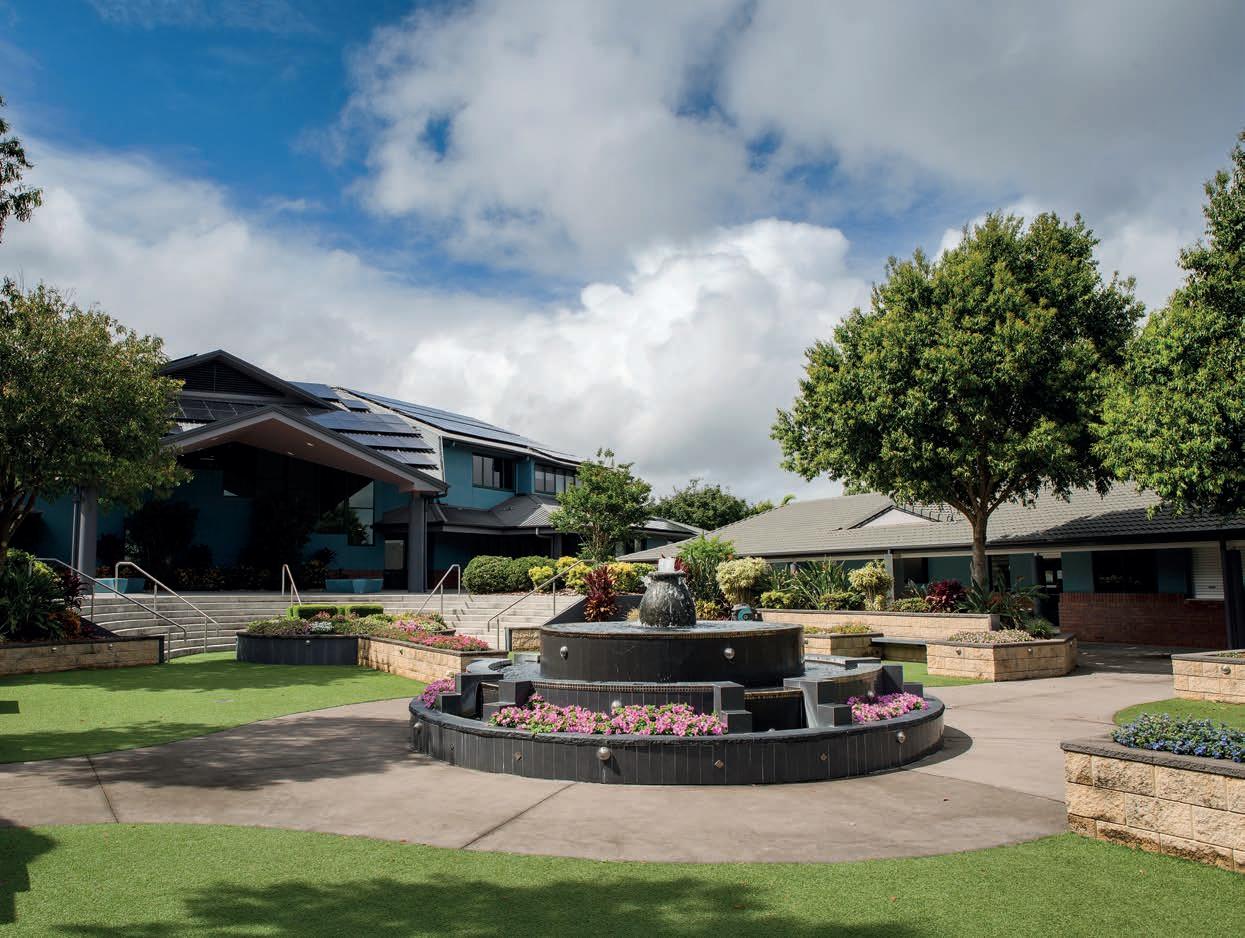
Sheldon College is an independent, co-educational, non-denominational College located in Redland City, offering a world-class education from 15 months of age through to Year 12. Guided by the philosophy of Love, Laughter and Learning, the College provides a nurturing, values-rich environment where students are supported to thrive academically, socially, and personally.
Situated on a spacious 60-acre semi-rural campus on Taylor Road, Sheldon, the College has been proudly serving the community for over 27 years. We are committed to delivering high-quality education in a secure and future-focused setting, with clear expectations for staff and students regarding academic performance, work practices, behaviour and presentation.
Sheldon College is a learning community where every student is encouraged to achieve the extraordinary. Here, aspiration meets innovation, and traditional values such as respect, service, and integrity shape our culture and outcomes. Our mission is “to provide a world-class educational experience in a supportive environment, which nurtures students’ resilience and love for learning in readiness for an ever-changing world.”
Our vision is aligned with The Alice Springs (Mparntwe) Education Declaration, which champions excellence and equity in education for all Australian students. Our Student Exit Outcomes reflect this commitment, ensuring graduates leave as confident, creative thinkers; effective communicators and collaborators; and responsible, capable global citizens.
At Sheldon College, empowering young people to reach their full potential is not just a goal—it’s at the heart of everything we do.
For further information go to: www.sheldoncollege.com.
Ms Kate Mortimer Principal
B. Ed (Honours) Master of Education (Educational Leadership)

As a College we are committed to the following Core Values:
• Excellence in teaching
• Excellence in learning
• A foundation of wellbeing
• An environment that is safe, organised, inclusive and supportive of learning
• Collaborative partnerships among the school, families, and the wider community
• Shared decision making
• Acknowledgment and appreciation
• A service-focused approach
• Continuous feedback and improvement
• High standards in dress and appearance, behaviour and individual scholarship and work habits
• Individualised support related to intellect, emotions, socialisation, wellbeing, and physical health.
The College’s Learning Framework continued to be an integral and integrated part of everyday school life. It shaped teaching practice, student learning, and ways of working as learners across the school community.
Throughout 2025, the framework continued to evolve with a strong focus on what mattered most: building robust academic and wellbeing foundations grounded in evidence-based practice, delivered through collaborative professional communities and a shared commitment to student wellbeing.
At the forefront of the Learning Framework were the learner characteristics and IMPACT goals that guided each student’s learning journey. The College intentionally nurtured attributes such as curiosity, creativity, engagement, and resilience, qualities recognised as essential for students, staff, and the community to flourish. The IMPACT goals (Innovate, Make a Difference, Promote Relationships, Achieve My Potential, Cultivate a Growth Mindset, and Transform) provided structure and purpose, enabling students to reflect on their progress, set meaningful goals, and understand how their learning contributed to both personal growth and broader community impact. This year also saw the introduction of the inaugural IMPACT Awards, where students who aspired to one or more IMPACT goals were then recognised and celebrated at both Celebration of Learning (CoL) and Celebration of Excellence (CoE) ceremonies.
In 2025, Sheldon College strengthened its focus on wraparound supports within the Learning Framework, underpinned by evidence-based practices delivered through collaborative learning communities and a strong wellbeing foundation. A priority was ensuring consistency, clarity, and

shared understanding across the College so that every learner was known, valued, and supported.
For academic staff, this focus on wraparound support was reflected in the continued development of a highly skilled and aligned teaching team. A key initiative implemented in 2025 was the Sheldon College Explicit Teaching Model, a clear and consistent lesson structure designed to maximise student engagement and achievement. Lessons followed a deliberate sequence that included an engaging introduction to activate thinking, explicit teaching of new concepts, guided and independent practice to consolidate understanding, and a structured closure to reflect and anchor learning. This shared approach supported consistency across year levels and provided students with clarity, routine, and high-quality instruction.
Ultimately, in 2025, learning at Sheldon College was lived, shared, and intentionally designed. It was through this collective commitment that the College continued to shape confident learners and capable young people prepared for their futures.
I am
So that I can Curious Creative
I nnovate
M ake a difference
P romote relationships
A chieve my potential
C ultivate a growth mindset
T ransform
At Sheldon College, learning is a continuous cycle. We understand that how we learn, unlearn and relearn empowers us all to reach our potential.
In 2025 Sheldon College reviewed our extensive co-curricular program and launched ATLAS (Advocacy, Technology, Learning Enrichment, Arts, Sport) to empower students to pursue their passions, extend their talents, and shape their journey beyond the classroom.
The program is designed around three strategic pillars. Participation and Wellbeing encourages students to participate in a balanced breadth of co-curricular experiences across all ATLAS domains. Identity and Skill Development provides opportunities for students to grow in competence and character so they may discover and develop their strengths. And Connection and Community fosters relationships both within and beyond the Sheldon College community so that students may achieve the extraordinary as citizens the world needs.
2025 data confirms a very high degree of student participation and engagement in the ATLAS program. A total of 288 co-curricular activities were offered to the almost 1500 Prep to Year 12 students at the school. In the primary years, 87% of students were involved, with such students averaging enrolment in more than four programs per year. In the secondary years, 85% of students were involved, averaging more than 5 programs per student.
Advocacy programs empower students to use their voices, values and actions to make a positive difference within our school and wider community with options including a Student Community Council, and various environmental, charity, and cultural awareness programs.
The College began a partnership with ‘Rosies Friends on the Street’, which will enable student outreach into our local community to commence in 2026 and our inaugural ATLAS tour saw 3 staff and 31 students travel to the USA in December.
Technology programs span STEM clubs, robotics programming, esports, game development and flight club.

Learning Enrichment programs are designed to provide opportunities that enhance students’ academic and social development beyond the classroom. Each week, students can participate in a variety of tutorials led by subject area professionals, offering consolidated learning opportunities across different subjects. There is also the Duke of Edinburgh Award, debating, chess, a science academy, maths x, a gifted and talented program.
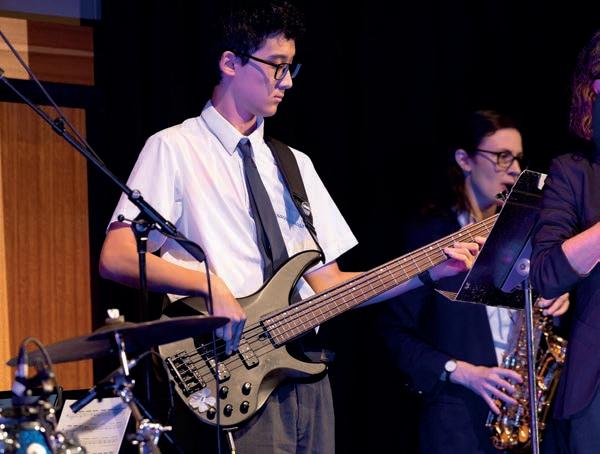
The Arts demonstrates exceptional breadth and depth, spanning Dance, Drama, Fashion, Fine Art, Film and Media. Students engage in large-scale annual productions; junior and senior musicals, Arts Festival, Dance concerts, Arts Academy Awards, alongside a suite of music ensembles, including; jazz, contemporary, percussion, strings, guitar, woodwind, concert bands and choirs. In 2025 College musicians collaborated with the British and Irish Lions Rugby Choir. This concert was opened to the public and attracted an audience of over 1000. In recognition of this sustained excellence and innovation, Sheldon College was named APATA Performing Arts School of the Year in 2025.
Within the Arts, two Year 12 students were selected as feature artists in the QUT Vermillion High Project, reflecting deep engagement and the development of advanced creative, collaborative and industry-ready skills, releasing their work on Spotify. Further, our winning band in Battle of the Rock Bands earned the opportunity to perform live at Brisbane venue The Triffid, demonstrating students’ performance capability in authentic, high-stakes industry contexts. A Year 9 musician won the under-18 Grommets Busking competition, earning a main stage performance at the Byron Bay Bluesfest, a significant achievement that reflects our program’s success in nurturing confidence, originality and high-level performance capability in emerging young artists.
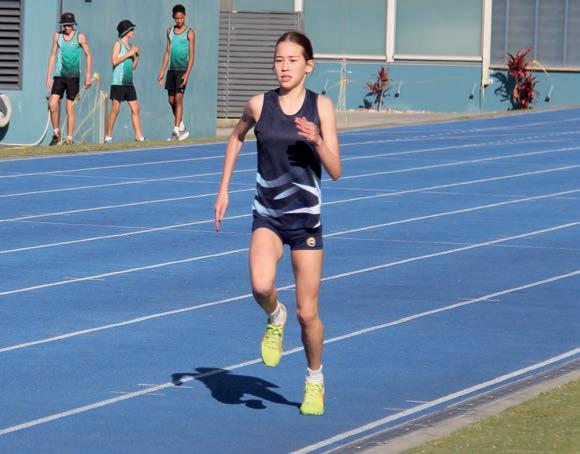
Our Sport program caters to young beginners and social athletes through to those representing Australia in international competition. Offerings include development programs,

a community-accessible learn to swim centre, weekly interschool sport and large Basketball and Touch Football Clubs. Sports on offer in such weekly interschool fixtures include Australian Rules Football, Basketball, Football (Soccer), Indoor Cricket, Netball, Touch Football and Volleyball, while interschool carnivals are run for Swimming, Cross Country and Track & Field.
The Sheldon Academy of Sport (SAS) offers year-round, professionally coached individual performance sports in Athletics, Swimming and Tennis, with Strength & Conditioning and rehabilitation support. Some students enrol in SAS programs as casual/social participants, while the more serious athletes commit significant time and effort to more advanced pathways in their goal of reaching their full sporting potential.
All three SAS programs are affiliated with their relevant sport governing body, opening direct competition pathways to state and national representation. The SAS+ program caters for the College’s highest performing athletes by offering mentorship with professional athletes and personalised support to manage sporting commitments and academic success.
In 2025 the College partnered with Netball Queensland to become the home of the Redlands Coast Eagles, providing an inspirational pathway towards premier leagues. We were selected by Tennis Australia as a National Talent Hub, attracting funding to support our players and coaches, and we began hosting Redlands Little Athletics.
Sheldon College teams were State Champions for Open Girls Tennis and Junior Primary Girls Touch Football, and Runners-Up for Junior Primary Boys Touch. Thirty of our students gained individual selection to compete at a national or international level, including three secondary tennis players now competing in Junior ITF (international) tournaments.



At Sheldon College, student wellbeing is not an add-on to learning; it is a core part of how we support students to grow, connect and thrive from Kindergarten to Year 12.
Through the College’s Luminare student wellbeing program, students engage in explicit, age-appropriate learning that supports their social, emotional, ethical and personal development. This learning is strengthened through positive relationships, regular reflection, student voice, targeted wellbeing experiences and a clear pastoral care approach.
Across the College, wellbeing is deliberately taught, modelled and reinforced. Students are supported to understand themselves, build healthy relationships, make positive decisions, develop resilience, contribute to their community, and use their voice in constructive and meaningful ways.
Student voice is central to our wellbeing culture. Students are not simply recipients of wellbeing education; they are active contributors to the culture, direction and ongoing refinement of wellbeing at Sheldon College. Through classroom discussion, reflection activities, surveys, feedback opportunities, student leadership, focus groups and informal conversations with staff, students are encouraged to share their perspectives and contribute to positive change.
Our aim is for every student to leave Sheldon College as a confident, capable and compassionate young person who is equipped to navigate the opportunities and challenges of life beyond school.
In 2025, the Primary Luminare program continued to be adapted in response to feedback from our annual student wellbeing survey, ensuring the needs of students within our context were addressed in a responsive and targeted way.
Students across Prep- Year 6 engaged in weekly wellbeing lessons delivered by their classroom teachers as part of the College’s Luminare student wellbeing program. As part of a proactive and positive approach, students participated in dedicated weekly wellbeing time, which included explicit teaching and structured wellbeing activities designed to support
the development of positive relationships, emotional regulation, and goal setting. These lessons built foundational skills across key areas, including Healthy Mind/Healthy Body, Active Citizenship, Values and Emotions, Digital Safety and Consent, and Friendship Dynamics and Conflict Resolution. Luminare Journals
In Prep to Year 4, students connected and responded to wellbeing topics through Luminare journals, while students in Years 5 and 6 accessed a guided and interactive online course. Across all year levels, students participated in regular gratitude practices, wellbeing check-ins, and reflective journaling, fostering mindfulness, appreciation, and self-awareness as part of their daily learning routines.
A key feature of the Primary Luminare program was the Wellness Wheel, where students engaged in guided circle discussions to reflect on emotions, celebrate successes, explore challenges, and identify strategies for problem-solving. These sessions promoted student voice, strengthened connections, and built a strong sense of belonging within each classroom.
Throughout the year, students participated in a range of targeted wellbeing incursions designed to extend and enrich the Luminare program, including:
• Brainstorm Education workshops focusing on cybersafety, friendships, and resilience
• The Wellbeing Show supporting identity, emotional regulation, and positive relationships
• Life Education programs promoting health, safety, and decision-making
• National awareness events such as Australia’s Biggest Safety Lesson and the Kids Helpline Anti-Bullying Lesson
• Guest speakers and leadership programs in Years 5–6, including Character Builders and digital safety education
In the Secondary Years, students from Years 7–12 engage in the College-developed Luminare student wellbeing program through regular, year-level specific lessons and experiences. The program is designed to meet students at their stage of development, providing practical support as they navigate
adolescence, increasing independence, academic demands, friendships, identity formation, leadership opportunities and future pathways.
The Secondary Luminare program follows a structured scope and sequence across the year, while also allowing Heads of Year, College leaders and key staff to respond to the emerging needs of each cohort. Lessons and experiences are intentionally designed to help students reflect, connect, build skills and take greater ownership of their wellbeing and personal growth.
A key strength of Secondary Luminare is that it is both structured and responsive. Students engage with planned wellbeing content across each term, while also having opportunities to raise issues, provide feedback and contribute to discussions that shape the culture of their cohort and the wider College community.

Secondary students participate in regular Luminare lessons that include explicit teaching, guided reflection, discussion, practical activities and opportunities for student voice. These lessons cover a range of age-appropriate wellbeing topics, including:
• Personal management, organisation and self-management
• Goal setting and 1:1 mentoring conversations
• Emotional regulation, resilience and mental fitness
• Time management, stress management and procrastination
• Study skills, exam preparation and academic habits
• Friendship dynamics, bullying prevention and respectful relationships

• Digital wellbeing, social media and online decision-making
• Consent, healthy relationships and personal safety
• Identity formation, leadership, service and contribution
• Careers, future planning, financial literacy and pathway preparation
Across the year, students revisit key themes so that wellbeing learning is not treated as a one-off lesson, but as an ongoing process of reflection, practice and growth.
A key feature of the Secondary Luminare program is the focus on goal setting, reflection and personal growth. Students begin the year by setting goals and engaging in 1:1 conversations with staff to support connection, accountability and direction. These goals are revisited throughout the year, particularly at the beginning of new terms, allowing students to reflect on

their progress, reset where needed, and identify practical next steps.
This process helps students build self-awareness, develop ownership of their learning and wellbeing, and understand that growth occurs through consistent reflection and action. It also gives staff valuable insight into the needs, aspirations and concerns of students, strengthening the relational foundation that supports effective pastoral care.
Student voice is embedded throughout the Secondary Luminare program. Students are regularly invited to reflect on their experiences, share feedback, identify areas of need and contribute ideas that help shape wellbeing learning and cohort culture.
This occurs through formal and informal opportunities, including:
• Student surveys and wellbeing feedback loops
• Goal-setting conversations and individual reflections
• Class discussions and guided Luminare activities
• Post-event and guest speaker reflections
• Student leadership initiatives and cohort-based projects
• Principal and Deputy Principal student focus groups
• Informal conversations with Heads of Year, Home Group teachers and College leaders
• Student involvement in awareness initiatives such as RUOK Day, Reconciliation Week, Harmony Week and mental health campaigns
These opportunities help ensure that student voice is not tokenistic. Students are encouraged to speak, be heard and make a difference in ways that are age-appropriate, respectful and connected to action.
Within Luminare, student voice supports students to develop agency, confidence and responsibility. It also provides the College with valuable insight into what students are experiencing, what support they need, and how wellbeing education can remain relevant and responsive.
The Secondary Luminare program is tailored to the developmental needs of each year level.
In Years 7 and 8, students focus on transition, organisation, friendships, resilience, bullying prevention, digital wellbeing, teamwork and belonging. These years support students as they adjust to Secondary schooling, build positive peer connections and develop the skills needed to manage increasing independence.
In Years 9 and 10, the program places greater emphasis on
identity, decision-making, study habits, social responsibility, respectful relationships, careers and preparation for senior pathways. Students are encouraged to think more deeply about who they are becoming, how they contribute to others, and how their choices shape their future.
In Years 11 and 12, students engage with content connected to leadership, academic preparation, future planning, road safety, financial literacy, wellbeing during assessment periods, QTAC processes, Schoolies safety and the transition beyond school. These experiences support students as they prepare for life beyond Sheldon College with greater independence, confidence and responsibility.
The Secondary Luminare program is strengthened by Heads of Year, College leaders, guest speakers and external providers who contribute targeted sessions across the year. These experiences extend classroom learning and provide students with practical, real-world perspectives on issues such as mental health, respectful relationships, road safety, digital citizenship, careers, leadership and personal safety.
Heads of Year also lead responsive sessions based on cohort needs, ensuring the program remains relevant, timely and connected to the lived experience of students. This allows Luminare to respond to emerging issues within year levels, while maintaining a consistent whole-school approach to wellbeing.
Luminare provides regular opportunities for students to connect with peers, contribute to their cohort culture and strengthen their sense of belonging. Through Home Group activities, team-building sessions, outdoor activities, awareness events, service opportunities, surveys, reflections and student feedback, students are encouraged to take an active role in building a positive and inclusive College community.
This connection between wellbeing, belonging and student voice is central to the Secondary Luminare program. Students are supported to understand that their actions, words and contributions matter. They are encouraged to use their voice respectfully, listen to the perspectives of others, and participate in shaping a culture where students feel known, supported, heard and valued.

Parental involvement at Sheldon College is seen as a key opportunity to enhance our students’ academic and personal development. The ultimate goal is for parents to feel personally fulfilled through their service to others. The various opportunities for parental involvement offered throughout the year not only provide practical experiences but also enable parents and family members to enjoy a more engaged and fulfilling College-based life.
During 2025, some of the opportunities for parental involvement included:
• Classroom volunteering
• Co-Curricular volunteering
• Special assemblies
• College sporting, cultural and music events
• Parent education sessions
• Community outreach
The Parent Representative Committee (PRC), established in 2023 continued, in 2025, to facilitate effective communication and collaboration between parents/guardians and the College leadership. The primary objective of the PRC is to provide a platform for parents to contribute to the development, improvement, and wellbeing of the College community.


TEACHER QUALIFICATIONS
Throughout 2025 Sheldon College employed 123 teachers in classrooms and as school leaders.
Based on unplanned absences for sick and emergency leave periods of up to five days, the average ‘teacher attendance rate’ is calculated at 95.4%.
Sheldon staff are committed professionals. Of the 115 equivalent full-time teachers employed at the close of the 2025 program year, 107.4 were retained in 2026, yielding a teacher retention rate of 93.3%.
Sheldon College supports its employees by building an inclusive, culturally capable and diverse workforce that reflects the College community and Values. We currently have 2 staff members who identify as Indigenous.
School income broken down by funding source is available via the My School website at http://www.myschool.edu.au/.

From the 1479 students (Years P-12 August 2025 Census) attending Sheldon College in 2025, the average student attendance rate for day absences (including part-day absences) registered as ‘Absent from School’, ‘Absent for Morning’, ‘Absent for Afternoon’ or ‘Extended Absence’ was 90.11%.
‘Student Absence’ information for 2025 is tabled as follows:
The break-up by Year Level for student attendance in 2025 is as follows:
In accordance with Australian Government regulations, the ‘Year 10 to 12 Apparent Retention Rate’ is defined as the number of fulltime students in Year 12 in any given program year expressed as the percentage of those students who started secondary school five years previously (this may be greater than 100%).
The ‘Year 10 to 12 Apparent Retention Rate’ data for 2023 to 2025 is tabled below:
Each day, the College produces a daily absence report and a 3-day absence report. At the end of each term, an excessive absence report is completed for each year level. The Student Services Office logs all absence details provided by parents. Parents are required to notify the College if their child is absent, and a medical certificate is mandatory for absences of 3 days or more.
In 2025, Sheldon College participated in the National Assessment Plan for Literacy and Numeracy (NAPLAN) at Years 3, 5, 7 and 9. The benchmark data for Sheldon College in 2025 is as follows:
The average NAPLAN score for all students at the school in each domain, compared to the average score of students in Australia for that domain.
In 2020 education ministers decided that NAPLAN testing would not proceed that year due to the COVID-19 pandemic. Therefore, there is no 2020-2023 student progress available.
Alternatively, data on these outcomes may be accessed via the My School website http://www.myschool.edu.au/
The information tabled below relating to Year 12 School Reporting 2025 for Sheldon College is provided by the Queensland Curriculum and Assessment Authority (QCAA).


Sheldon College offers a wide and varied curriculum. Programs on offer that valueadd to the curriculum include such things as:
Wonderland, our Long Day Care Facility, operates from 6.30a.m. to 6.00 p.m. for 50 weeks annually. This specially designed facility comprises four air-conditioned classrooms that accommodate children ranging from 15 months to school age. The children enjoy a daily immersion in the three essential elements of education: Love, Laughter, and Learning.
At Sheldon College Kindergarten, children are encouraged to inquire, investigate, achieve, and enjoy themselves. Our fully accredited Kindergarten Program is administered by highly qualified Early Childhood Educators who collaborate closely with our Preparatory Teachers to ensure a seamless progression into Prep. The exceptional level of care and service provided by our Kindergarten has received recognition for recognition for exceeding THE NATIONAL QUALITY STANDARDS of the NATIONAL QUALITY FRAMEWORK.
We offer a range of Out-of-School Hours Care options, including Before College Care, After College Care, and Vacation Care. These programs are situated in our modern and custom-designed facility known as “Our Place.” Our aim is to provide a well-rounded experience that complements the children’s active school day. The activities at “Our Place” are interactive and tailored to align with the students’ ideas, passions, and requirements.
Located within the Sheldon College campus, the Sheldon Event Centre has the capacity to host up to 2500 people and offers a dedicated hospitality and catering facility. In addition to its own multi-purpose courts, advanced gymnasium, and swimming pool, the event centre includes dance/aerobics rooms, flexible function spaces, and a large stadium arena that can accommodate events of any size.
Years 10 -12 at Sheldon College provides high-quality educational programs that foster collaborations between Sheldon College, tertiary and other training institutions, businesses, industries, and the broader community. These initiatives include:
• Individual Student Pathways to Success
• Leadership Coaching
• No-cost Tutorials
• School-Based Apprenticeships and Traineeships
• Senior subject selection guidance
• Weekly Focus lessons on developing wellbeing and 21st century learner skills
• Links with Business and Industry
• Information to assist students with tertiary entry or entry into the workforce
• Guest speakers from universities and TAFE
• Work Experience
• Provision of extension programs such as University courses
• TAFE at school partnership
• Diploma of Business
• Links with Universities



Satisfaction Surveys are conducted annually. In 2025, Sheldon College employed the services of an external agency ‘MMG Education’ to undertake our stakeholder surveys. Below is a cross-section of responses received from the 2025 survey conducted for Parents, Students and Staff.
487 responses were received with respect to the Parent Satisfaction.
The ‘MMG Wheel’ below reflects the average scores for parents across key areas. Parents noted ‘very high’ scores for 5 of the 9 areas and ‘high’ scores for the remaining 4 areas. The overall score is ‘very high’ (80%).
1. 86% of parents noted their expectations were met or exceeded in relation to the quality of teaching
2. 88% of parents noted their expectations were met or exceeded in relation to the focus on student wellbeing
3. 90% of parents noted their expectations were met or exceeded in relation to personal growth
4. 80% of parents noted their expectations were met or exceeded in relation to a quality education at reasonable expense
5. 88% of parents noted their expectations were met or exceeded in relation to the College’s values

5. Management and Leadership
Key Statements
• Students reported high overall satisfaction with their time at Sheldon College, with consistent satisfaction across all year levels and cohorts.
• Student expectations continue to be strongly met, with senior students indicating their experience met or exceeded expectations, reflecting a high level of confidence in the College experience.
• Results show consistently positive experiences across the academic program, with strong agreement that the College supports students to achieve their academic potential.
• Students recognise the College as a safe and supportive environment, with strong agreement that Sheldon provides a caring setting for their wellbeing.
• Engagement in broader school life remains a strength, with high satisfaction across co-curricular experiences, reinforcing the value of a well-rounded education.
“I am proud to say we are members of the Sheldon community. It is known for producing confident and respectful students”



Key Statements
• Staff reported very high overall satisfaction with their experience at Sheldon College, reflecting strong confidence in the College as a place to work.
• Staff expectations are consistently met or exceeded, indicating a positive alignment between staff experience and the College’s value proposition.
• Staff expressed strong satisfaction with the academic program, including confidence in the College’s ability to support students in achieving their academic potential.
• A positive culture and sense of community is evident, with staff reporting strong collegial relationships and satisfaction with life at the College.
• Staff recognise the College as providing a safe and supportive environment for students, reinforcing confidence in the school’s commitment to wellbeing.
The College provides a supportive and positive working environment where staff genuinely care about each other and their students.



At the time of publishing this School Annual Report, the results of the 2025 post-school destinations survey, Next Steps – Student Destination Report for the school was not available. Information about these post-school destinations of our students will be uploaded to the school’s website in September, after the release of the information.
Sheldon College PO Box 1188, Capalaba Qld 4157
Telephone: 07 3206 5555
Email: enquiries@sheldoncollege.com www.sheldoncollege.com