Find out a few fascinating facts about our hometowns
A Sterling bowler earns a place in her high school’s history
Business owner floors his customers with grit and talent
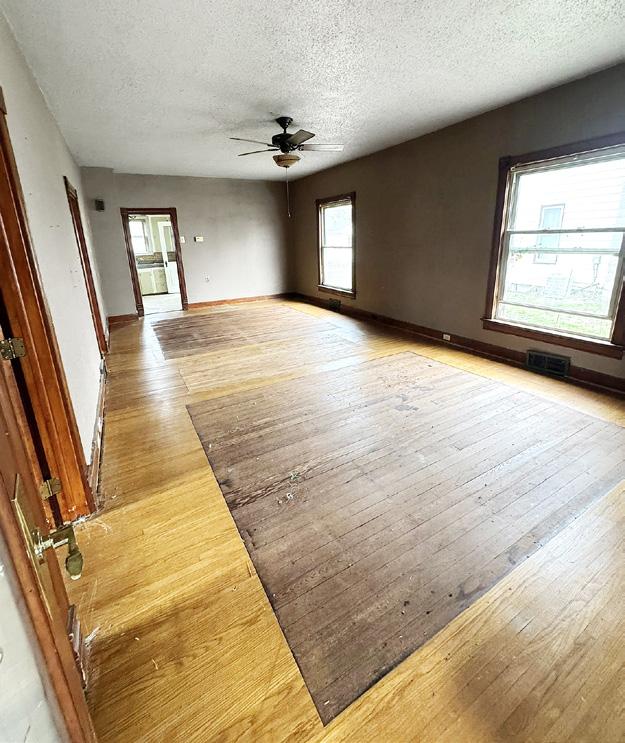
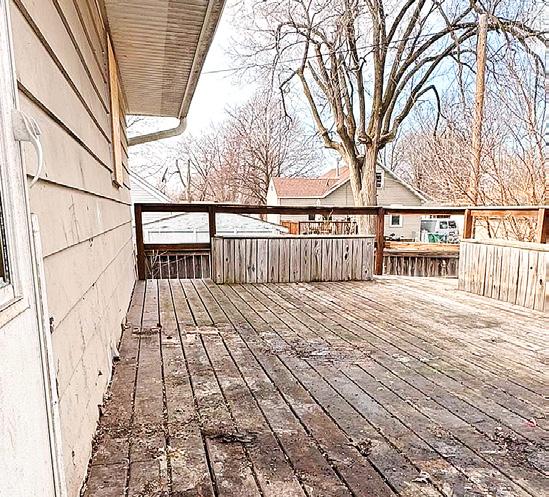
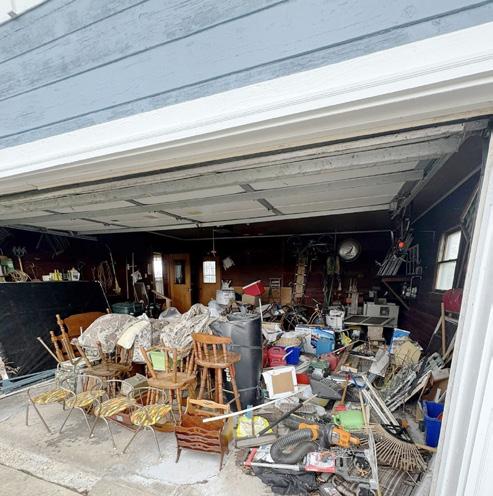
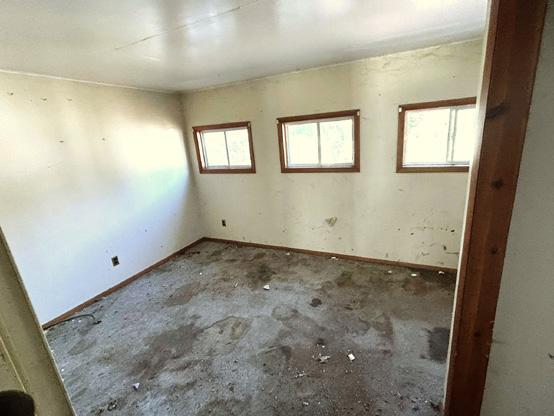
One man’s trash is another man’s trade for a local business owner
Publisher/Ad Director
Jennifer Heintzelman
Magazine editor & Page design
Rusty Schrader
For Advertising
Contact Jill Reyna at 815-631-8774 or jreyna@saukvalley.com
Published by Sauk Valley Media
113 S. Peoria Ave., Dixon, IL 61021 815-284-2222
Have a story idea for Sterling-Rock Falls Living?
E-mail rschrader@saukvalley.com
Articles and advertisements are the property of Sauk Valley Media. No portion of Sterling-Rock Falls Living may be reproduced without the written consent of the publisher. Ad content is not the responsibility of Sauk Valley Media. The information in this magazine is believed to be accurate; however, Sauk Valley Media cannot and does not guarantee its accuracy. Sauk Valley Media cannot and will not be held liable for the quality or performance of goods and services provided by advertisers listed in any portion of this magazine.
6
Singles flight
Looking for some rounds of disc golf that are more casual than competitive? A local league invites to join them for a game and some pleasant discourse with fellow golfers.
14
Tales of two cities
A pop star, a baseball barrier breaker and more: Find out some fascinating facts about the history of Rock Falls and Sterling.
22 Focused
A local bowler has built up an impressive record knocking down pins, earning her a place in her high school’s history.
30 Grit and talent
A local craftsman wants to do more than just keep his customers satisfied. He wants them to be floored.
36
Helping shoulder the loads
From eviction clean-outs to families dealing with what a loved one left behind, a Sterling business does more than just junk removal; it helps clients who feel overwhelmed.
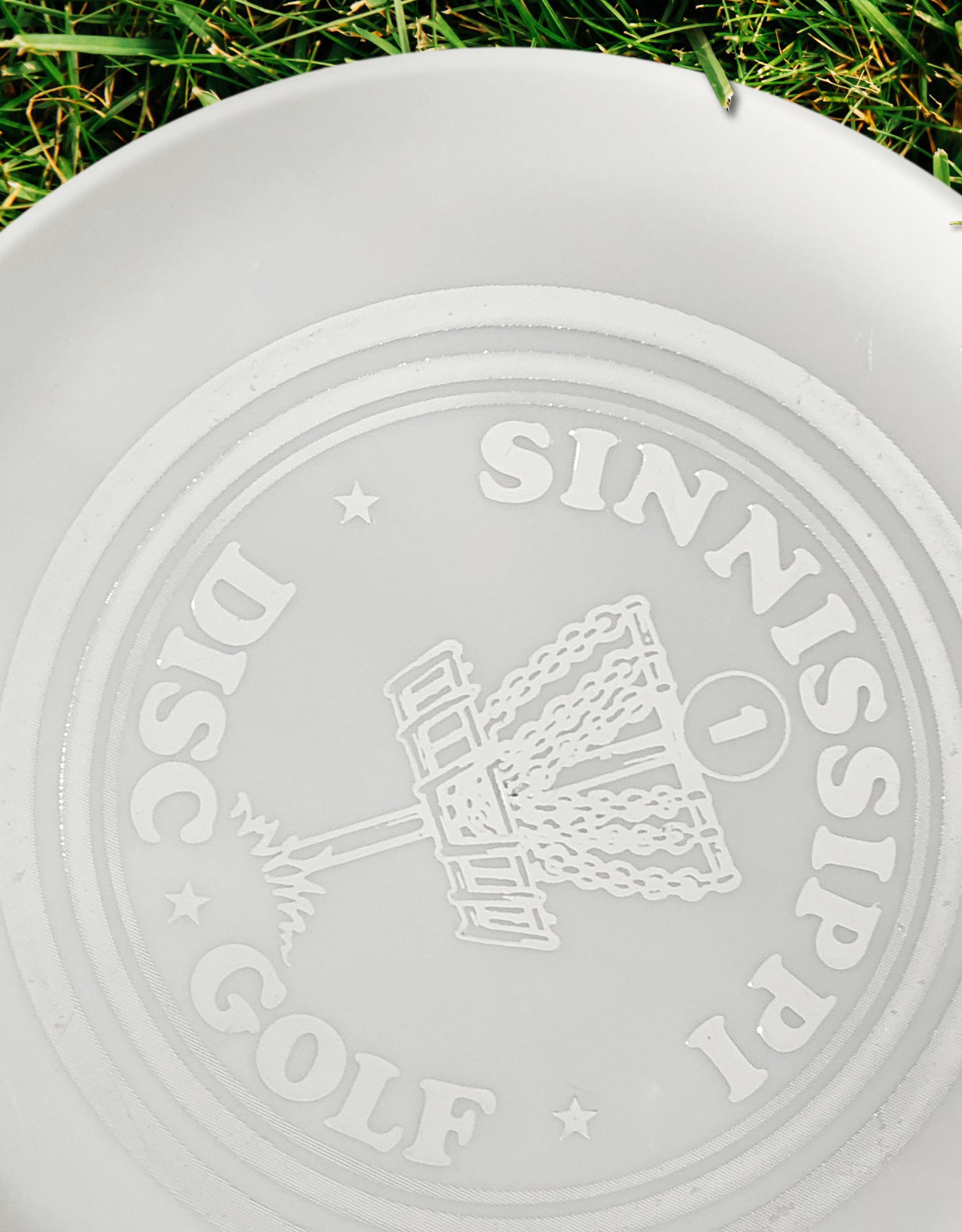
n Tuesday evenings, Sinnissippi Park’s disc golf course settles into a familiar rhythm.
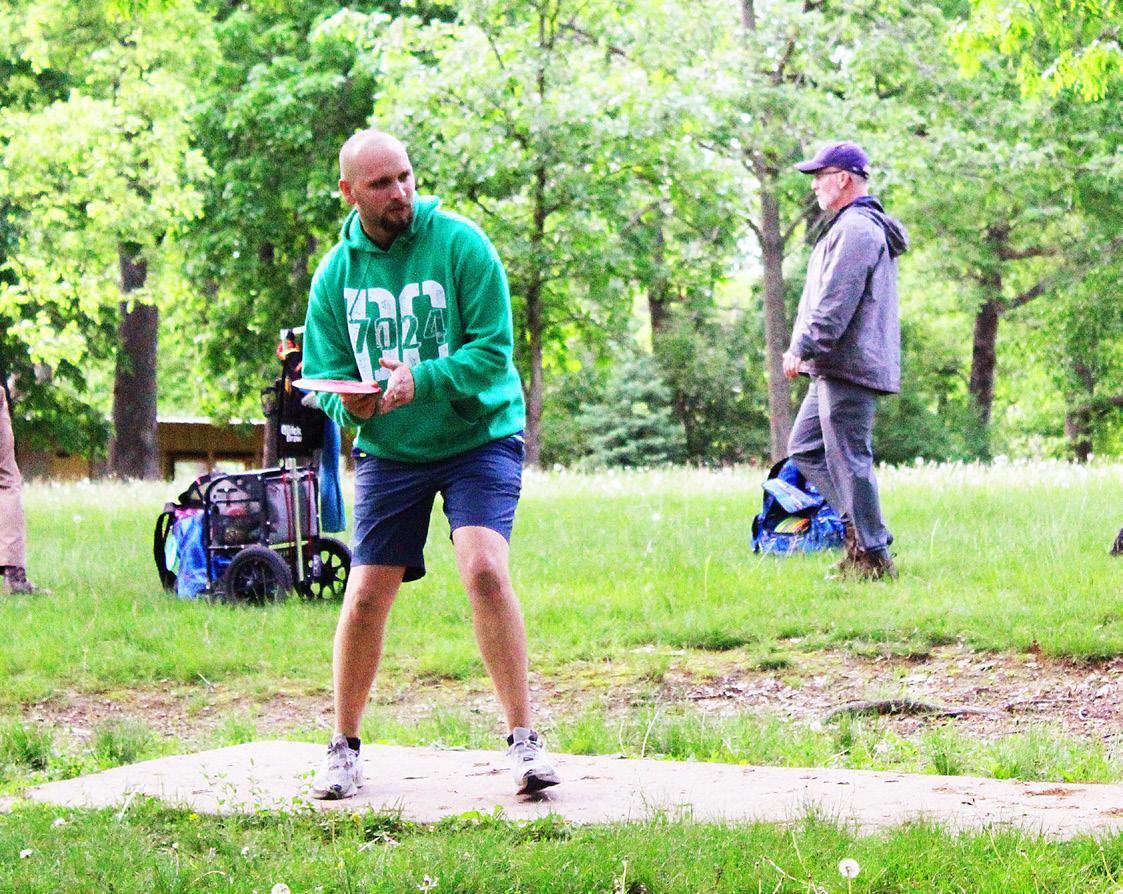
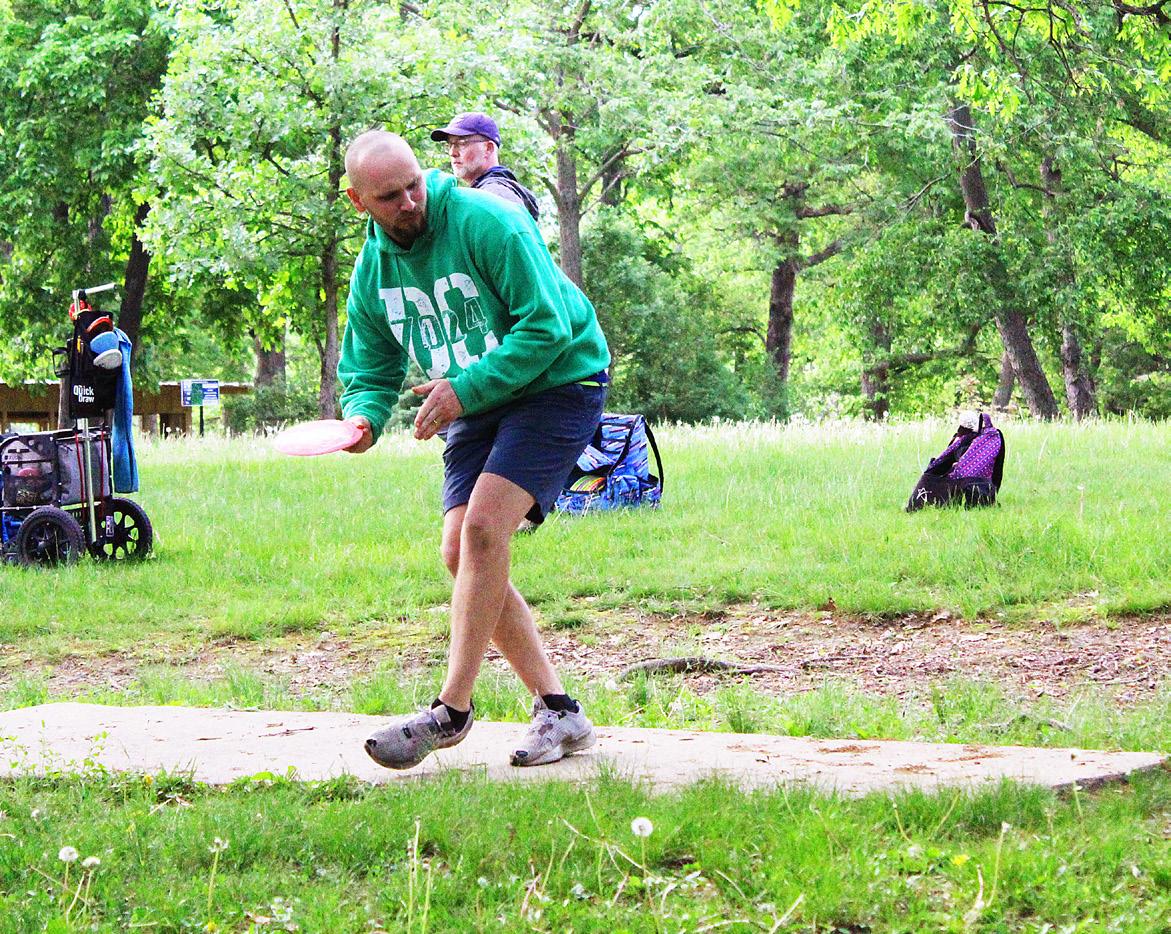
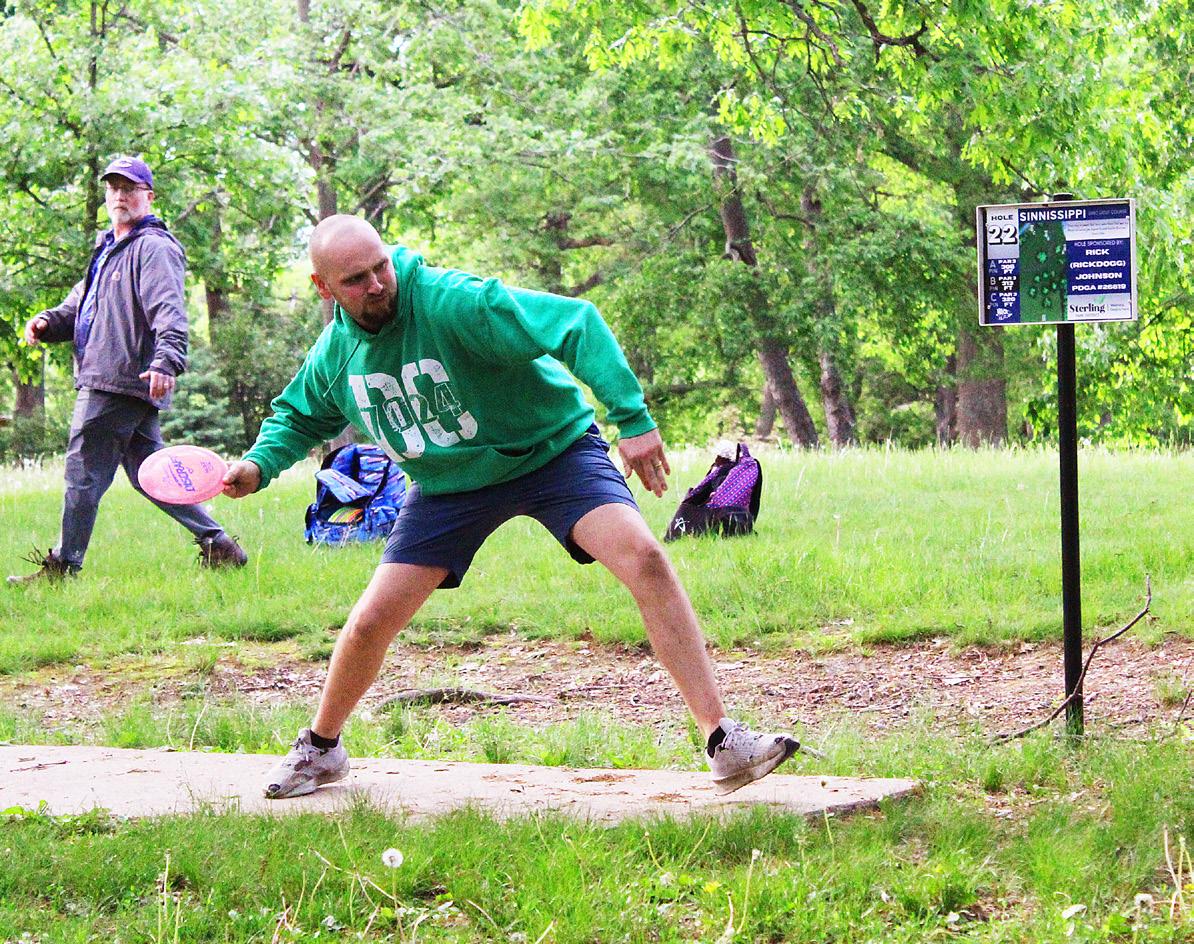
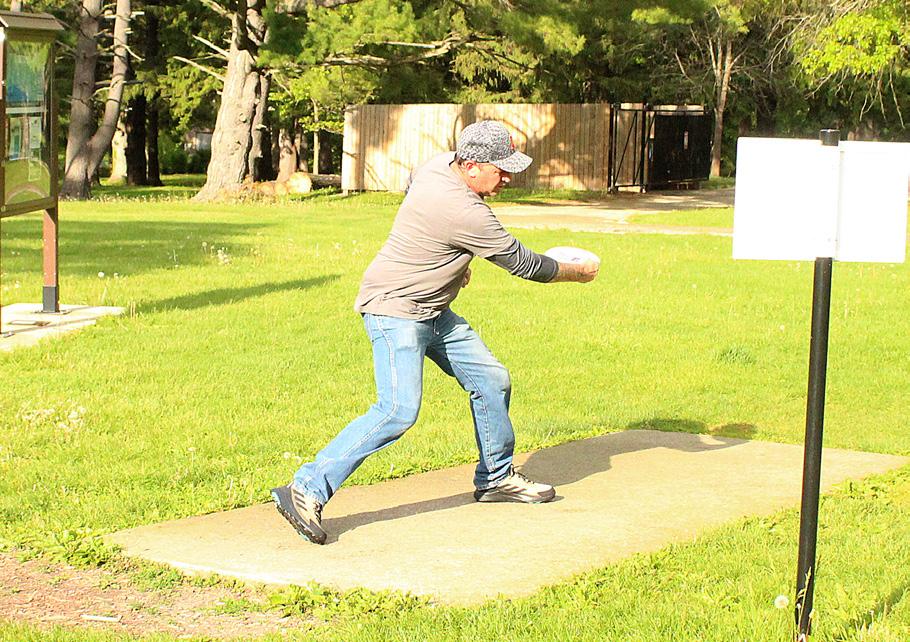
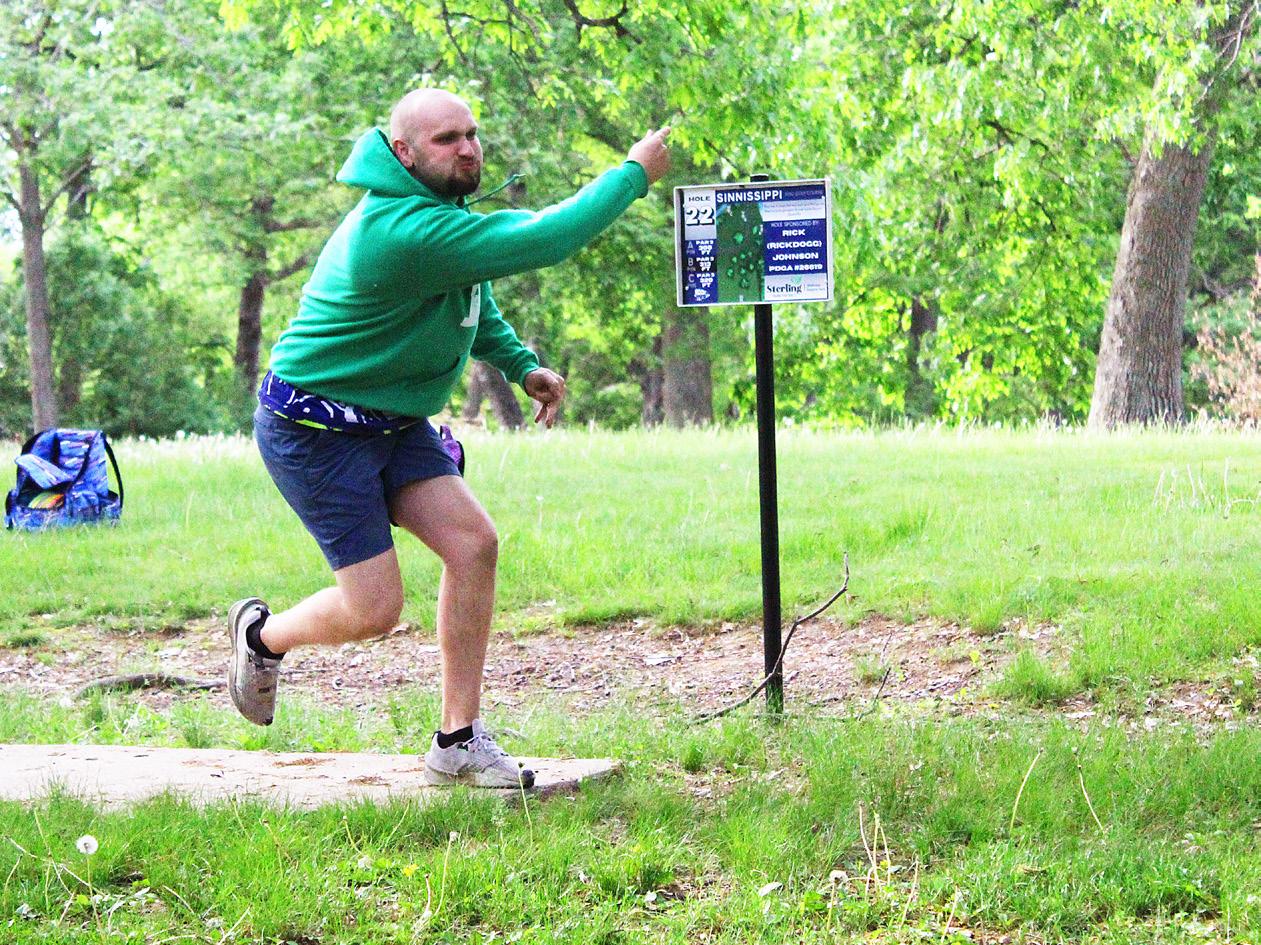
Players step onto the concrete tee pads with bags slung over their shoulders. They study tree lines and basket placements before they slice the air with the flick of a wrist and the toss of a disc. The metallic crash of chains signals a successful putt, and phones are pulled out between holes to log scores.
For a few hours each week from spring to fall, the park becomes home to the Sinnissippi Sanctioned Handicap League, a weekly competition that league director Aaron “Maverick” Scott says is designed to make organized disc golf approachable for players of all skill levels.
The league, which began last year, is a sanctioned event through the Professional Disc Golf Association, meaning rounds count toward player ratings and season points that can help qualify competitors for larger championship events.
Many PDGA leagues are built around doubles play, where two players partner together and often use the best throw between them. It’s different here, and in turn, more educational. Sinnissippi’s format puts the focus on individual growth.
“Most leagues that you find are going to be doubles, with a best shot partner,” Scott said. “This is a singles event. You can come out and play by yourself. When you’re playing singles, you’re only relying on yourself, so you’re working on your game a little bit more. That’s what this whole league is. With the handicap, it gives everyone a chance to come out and win every week. You don’t have to be the best player to win, you just have to be the best player that day compared to your averGOLF cont’d to page 8
Not familiar with disc golf? It’s kind of like traditional golf, following many of the same concepts, but replacing balls with specialized flying discs and holes with elevated chain baskets, also called pins. The chains on each basket both prevent discs from ricocheting off the pole and make noise so that players in the distance can hear when a disc make it in. Players begin each “hole” from a tee area and attempt to complete the hole in as few throws as possible. A score of one throw under par is called a birdie, while one over par is a bogey.
For Dixon’s Josh Howard, who’s participated in the league since its beginning, the goal is simple.
“It’s all about playing clean and smart,” Howard said. “It’s about consistency and not bogeying.”
Where the Sinnissippi league differs from casual rounds is its handicap system, which helps level the playing field.
New players spend their first couple of weeks establishing an average score. Once enough rounds are recorded, that average becomes their benchmark. A player who typically finishes a couple strokes above par, for example,
is measured against that personal average rather than against the league’s strongest competitors.
In practice, improvement is rewarded.
“It’s better for beginners because it’s rewarding your improvement,” Scott said. “One week they’re good, one week they’re bad, so if they come and shoot a good score that week, they’re going to be the one who takes the prizes.”
Scott said that the goal of welcoming beginners is intentional because they can immediately track progress from week to week.
“Beginners are definitely welcome because they can see their improvement, and are getting rewarded for their improvement,” Scott said. “Whereas, if you’re going to a doubles event, you’re leaning on that one player and you’re not having to correct your bad shots as much because you’re using their throws.”
The disc golf course at Sinnissippi opened in 1982 and was designed by Terry Batten of Sterling, who also was a professional in the sport. The course, dedicated in the memory of avid player Drew Lauts, has undergone many changes and expansions over the years to become one of the oldest and largest courses in Illinois. Since 2009, the course has been a stop on the Illinois Open Series circuit, with the Sinnissippi Open attracting professionals from throughout the nation.
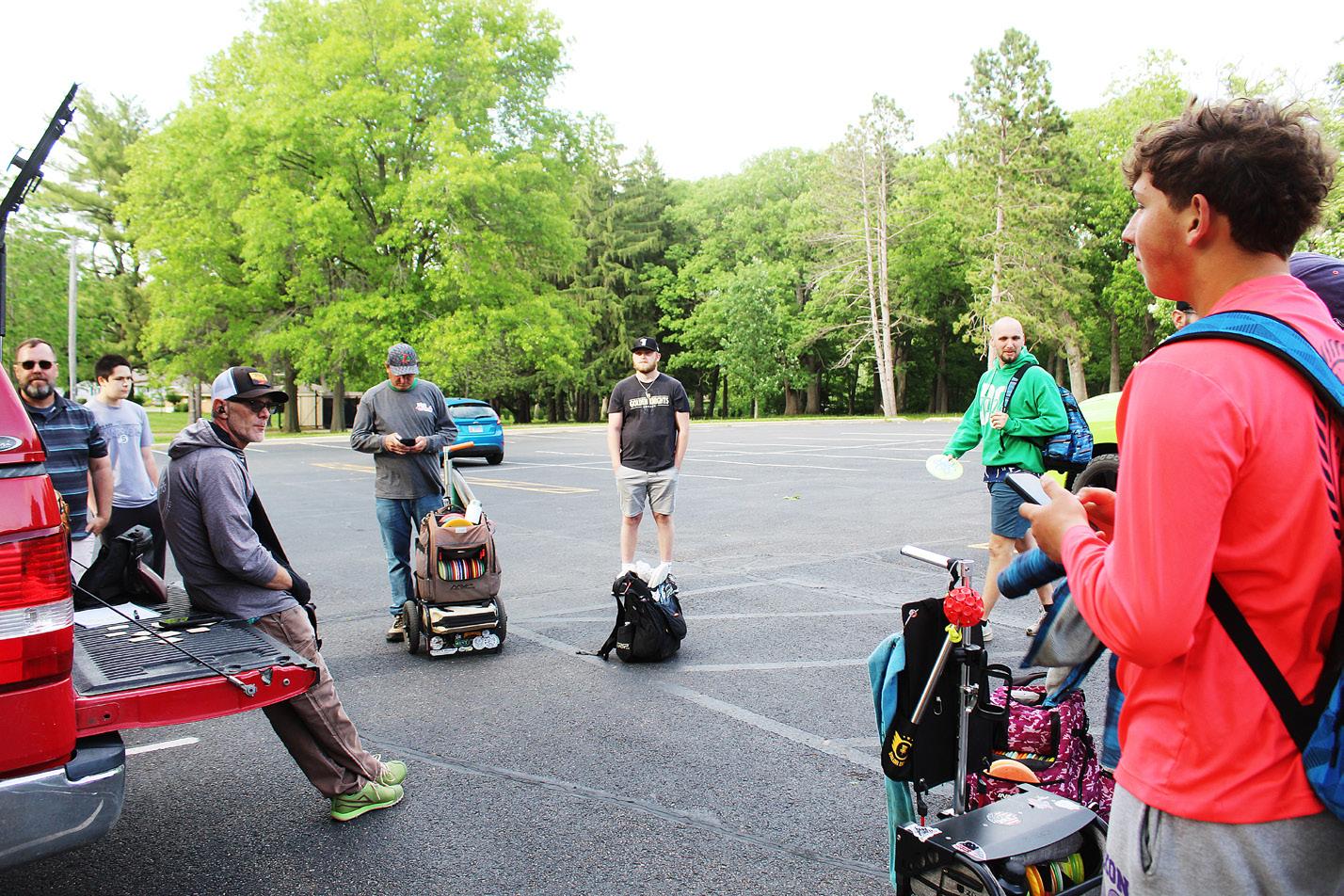
The league meets on Tuesdays at 5:30 p.m. from April through September and is divided into three eight-week sessions. Scott said that roughly six weeks into the first session this year, about 20 people had participated.
Weekly entry costs $6, or $3 for beginners who do not have an established handicap yet. Of that total, $1 goes toward PDGA sanctioning fees, and $1 funds a closest-to-the-pin weekly prize measuring how close one’s first throw is to the pin. Another $1 is directed into a course improvement fund, in which the league helps the Sterling Park District maintain the quality of the course. The remaining $3 goes toward prize payouts awarded to a fixed portion of top finishers each week, though new players do not become eligible for prize payouts until their handicap has been established.
The league currently rotates play across 19 holes at a time, despite Sinnissippi featuring a 27-hole layout. A different set of 19 holes is planned for the next eight-week session. When its players are on the course, scores are typically tracked live through the PDGA Live app on their phones, which allows players to keep score for themselves and playing partners while also viewing live leader board updates. If someone’s phone is unavailable, paper scorecards can be used.
For Howard, the league’s draw extends beyond competition.
“I like being with the group of people out here,” Howard said. “It’s a lot of fun. I like the way [Maverick] has it set up. It’s very fair for everyone. I like it when everything’s fair, it’s a big deal for me.”
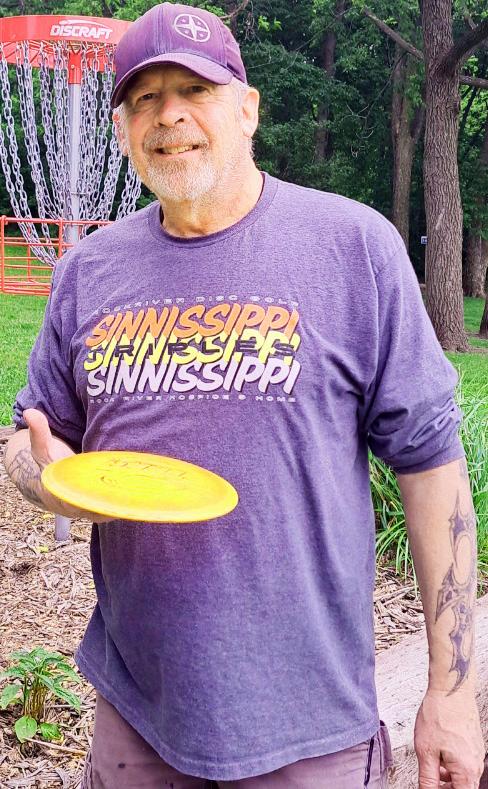
Sinnissippi boasts one of the most well-known disc golf courses in the nation, with lots of stories to tell. Through his time playing the sport at Sinnissippi, Scott has become friends with one of Sinnissippi’s most familiar disc golfers, Tom Kruse. Kruse, of Sterling, has hurled discs at the park since 1984 and has seen a lot at the course, and that includes the presence of world champions and sport legends. He has participated in five world championships himself and has run a Wednesday night random draw, best shot doubles league at the park for eight years.
Beyond the intricacies of technical skill, Kruse said the best part of the sport is being with like-minded people.
“To me, honestly, it’s really the people,” Kruse said. “I’ve met well over 100 people just through disc golf, and they’re all great people. Everybody gets along, everybody has a good time, and there’s no drama.”
GOLF cont’d to page 12
3D SCREENING MAMMOGRAMS
Available at NO-COST for ALL area women!
Regardless of insurance coverage, all out-of-pocket costs are covered by the CGH Health Foundation If other testing or treatments are needed, additional financial assistance may be available.
A throw of hands ...
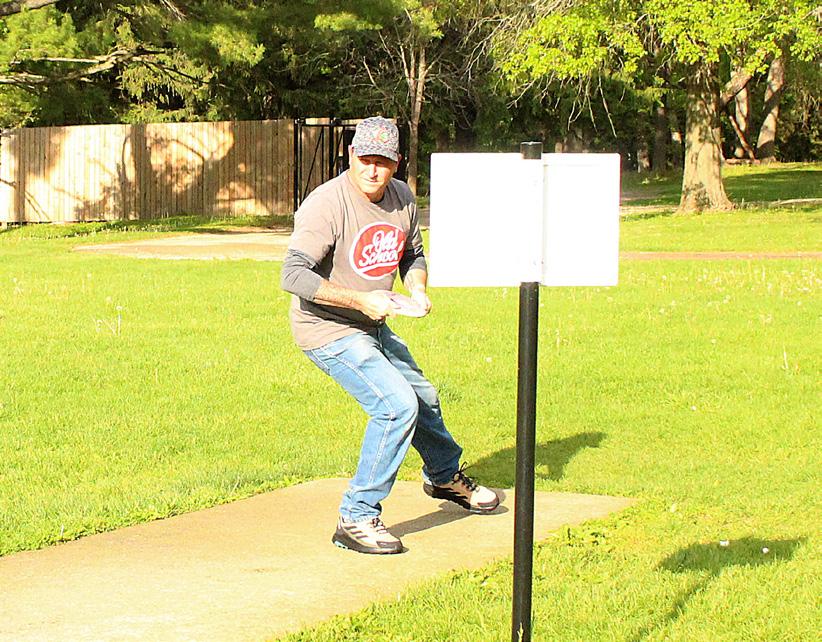
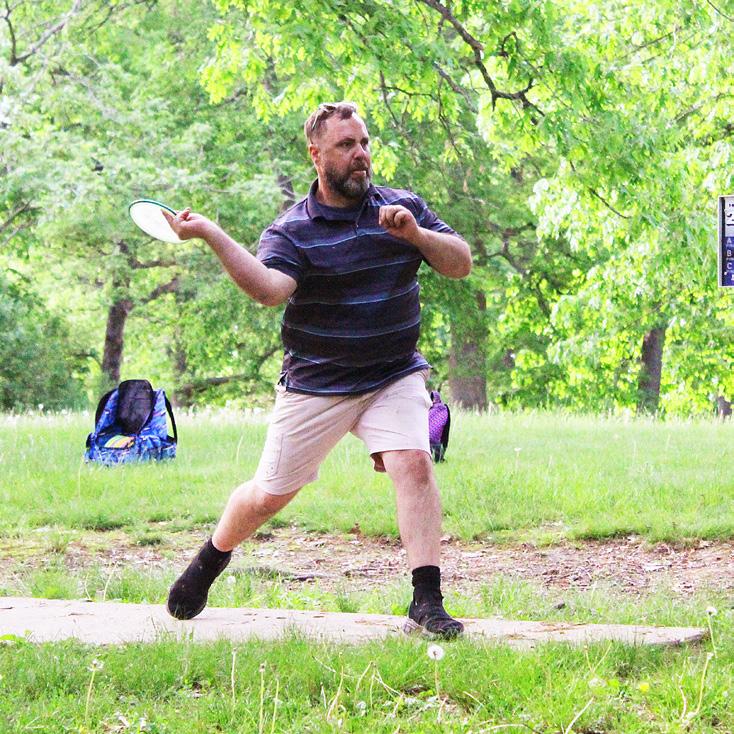
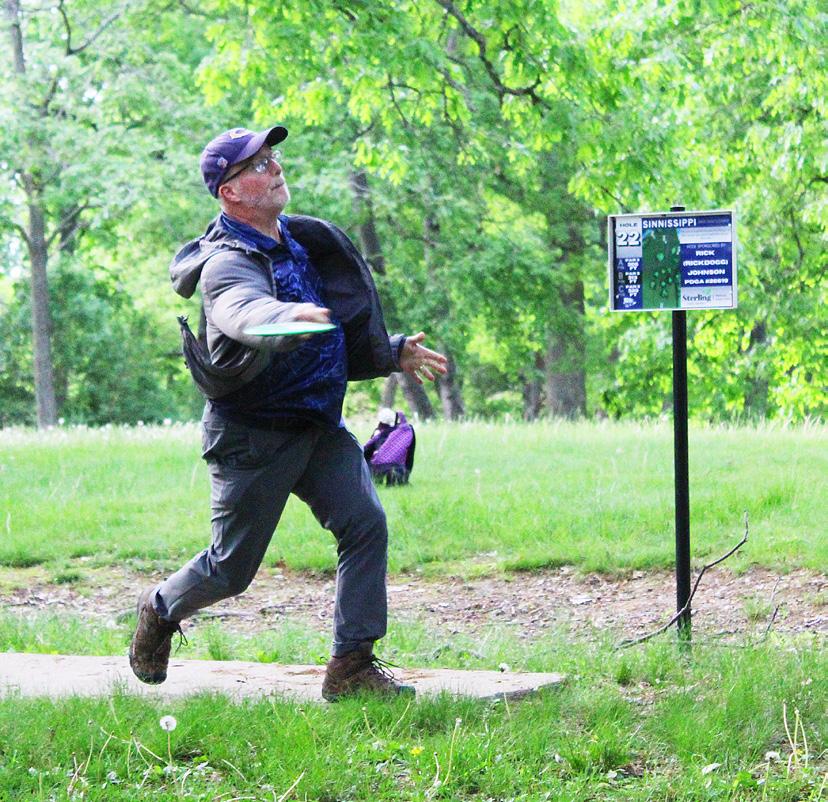
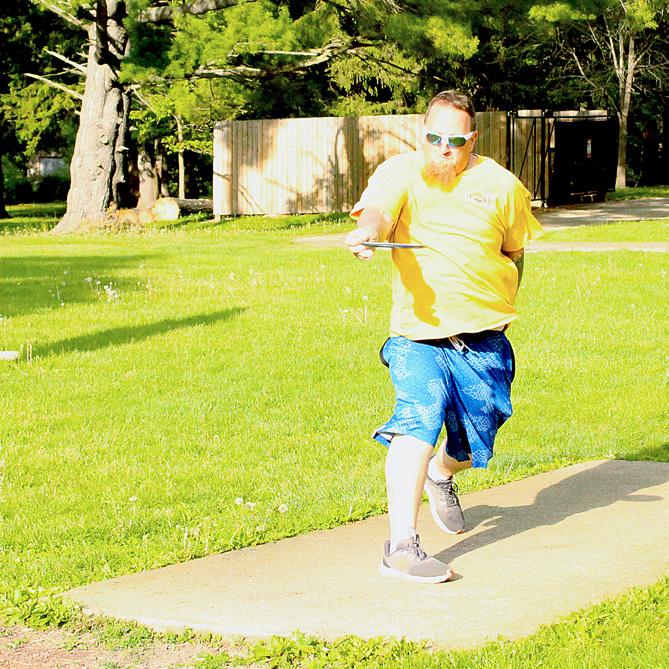
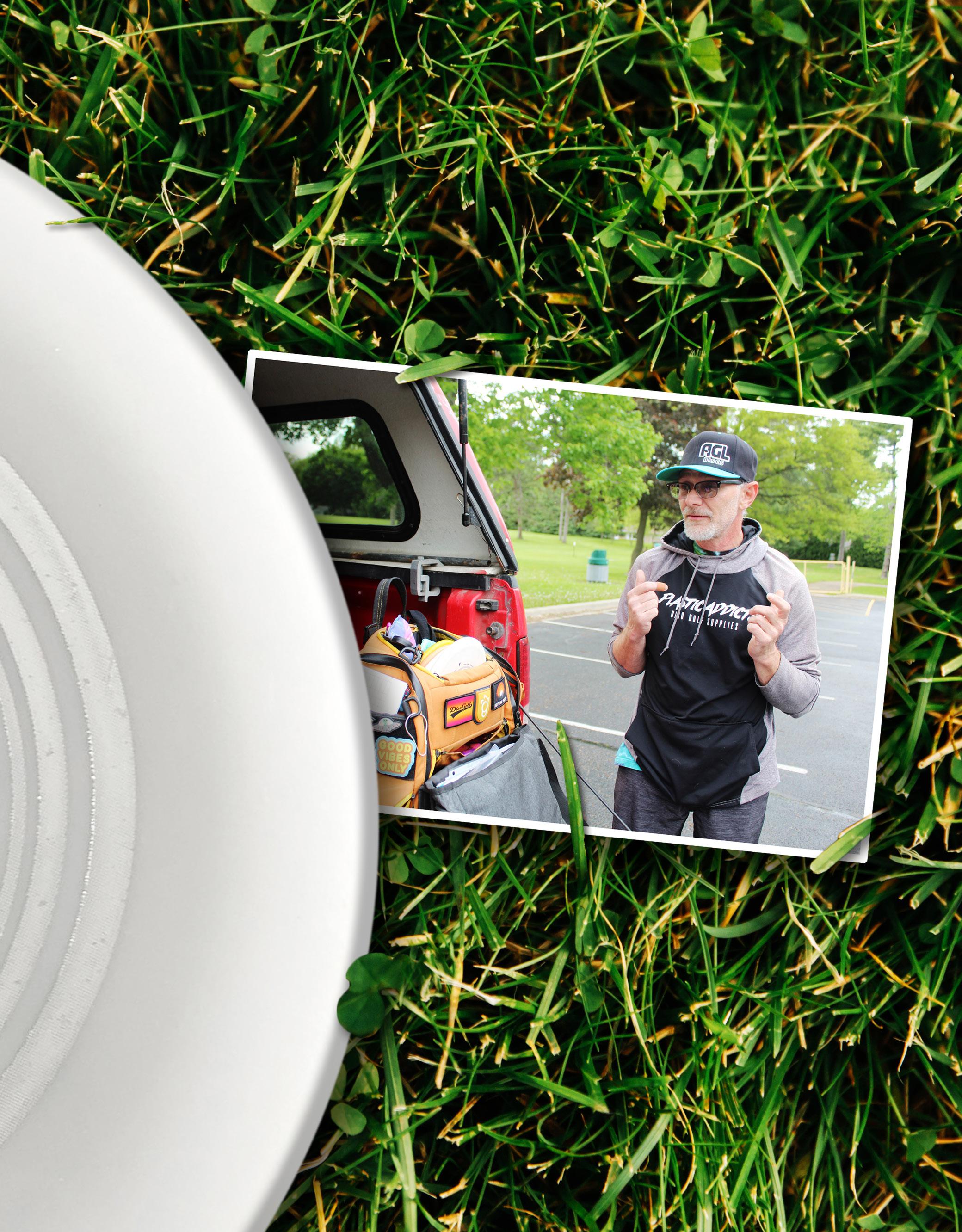
Members of the Sinnissippi Sanctioned Handicap League get some time in on the course at Sinnissippi Park in May. Left: Chase Fisher; Above:
Throwing a golf club may be a way to work out frustration on a traditional golf course, but in disc golf, throwing is all about enjoying one’s self. “Everybody gets along, everybody has a good time,” says long-time player Tom Kruse.
Josh Howard; Clockwise at right: Paul Wolf, Michael Miller and Jay Reter.
“Maverick” Scott (leaning on truck tailgate) leads a discussion May 19 of participants of the Sinnissippi Sanctioned Handicap League. Far left: Longtime golfer Tom Kruse of Sterling.
Kruse recalls one time a gathering of world-renowned professionals took to Sinnissippi en route to the 1989 PDGA World Championships in Waterloo and Cedar Falls, Iowa. The course impressed some of the pros, and even today, he said, it has held its own as a premier course.
“It’s really a legendary course in the sport,” Kruse said. “Some of the top players in the world have played at Sinnissippi. The 1989 World Championships were over in Iowa, so the week before that, Terry put on a tournament knowing he’d get the top players to come and play Sinnissippi. Many of them were like, ‘Man, I wish I had this course in my back yard.’ It’s very well-known, and it was one of the top courses in the country for a long time; now there’s so many [new ones] that are a lot tougher.”
GOLF cont’d to page 13
s l m
GOLF cont’d from page 9
Howard said the competitive but welcoming atmosphere has helped improve his own game, especially when he’s paired in a foursome with Scott.
“I get better every time,” Howard said. “It’s very competitive when I’m with Maverick. I play better when I’m with him. I definitely learn something every time from Maverick, he’s one of the best in this area.”
As far as Scott’s best advice to newcomers, he kept it simple: “Learn to throw your Frisbee flat,” he said.
Scott moved to the area six years ago from Aurora, where he started the Fox Valley Metro Disc Golf Club in 2006. He said one of the most rewarding parts of directing the Sanction Handicap League is watching players improve while building connections with others on the course.
“We have a great community in this area of disc golf players,” Scott said. “They come from all walks of life. We have a gentleman who is a doctor, I’m an electrician, one’s doing shipping and receiving, another’s working at a grocery store. That’s part of what I love, it’s such a wide [group of] ... everybody. I try to make this course welcoming to new players, and try to make sure everybody knows everybody pretty much on a first name basis.”
For its players, the weekly league offers more than just score keeping, payouts and competition. It also provides a reason to spend an evening outdoors, stay active, be with like-minded people on a course that brings the local disc golf community together.
“I like that it is a life sport,” Scott said. “It is something that keeps you a little more active than walking, but for the most part, it’s a low-impact sport on your body. It promotes flexibility, keeps you stretched out, and gives you the walking exercise you need.” n
Shaw Media reporter Cody Cutter can be reached at 815-632-2532 or ccutter@shawmedia.com.
The Sinnissippi Sanctioned Handicap disc golf League meets at 5:30 p.m. each Tuesday from April to September at Sinnissippi Park in Sterling. Find “Sinnissippi Disc Golf Society, Sauk Valley Area Disc Golf” on Facebook to learn more about the league.
On the calendar
The Illinois Open Series’ Sinnissippi Open is coming to Sterling on July 26-27, which will attract top players from throughout the nation. Founded in 2003, the Illinois Open Series is a series of disc golf tournaments in the region. It had more than 400 players participate in at least one event last year. Go to illinoisopenseries. com for more information.
}For most of us, there’s a comfort that comes with our community, like the familiarity of an old friend.
But how well do we know our friend?
Tucked away in the Twin Cities are countless pieces of the past that have shaped our communities, but many have quietly slipped into the background over time.
They’re the streets we drive, the buildings we walk through, and the creeks we cross. They’re the names we know but the stories behind them that we don’t.
Like a book, where you turn the page and learn something new, cities are a place where you turn the corner and learn something new. Some tales have been told and retold, while others have nearly been forgotten, but they all reveal things about our cities, some with deep local roots and others connected to the world around us.
“What-ifs,” vanished dreams, famous figures, hidden origins and unexpected cultural ties — they’re all here in our hometown, and in this issue of Sterling-Rock Falls Living, we’ll tell a few of those stories. So turn the page and join us for a trip down memory lane on the streets of your city. Who knows? You might even learn something new …
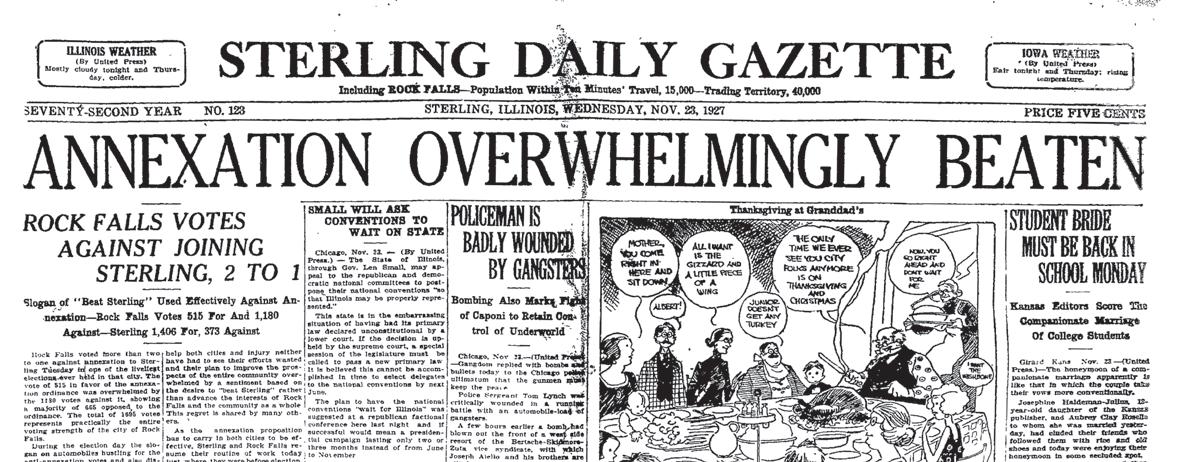
As late as 1927, the idea of Sterling annexing Rock Falls was a real possibility.
Rock Falls founder Augustus Smith once entertained the idea of having his new community, founded in 1867, becoming a part of Sterling. That didn’t happen, of course, but there were a few attempts to rope Rock Falls into Sterling.
The most recent vote on the matter, on Nov. 22, 1927, saw Rock Falls voters overwhelmingly against it, 1,180-515, a turnout that represented “practically the entire voting strength” of the city’s eligible voters. An advisory vote was also held in Sterling, where its voters supported annexation 1,406-373. If combined, the estimated population of the combined Sterling would have been 12,500.
The rallying cry in Rock Falls was “Beat Sterling,” a slogan that was found on signs on the windows of some of the city’s homes and businesses, with some signs decked out in the high school colors of green and black. n
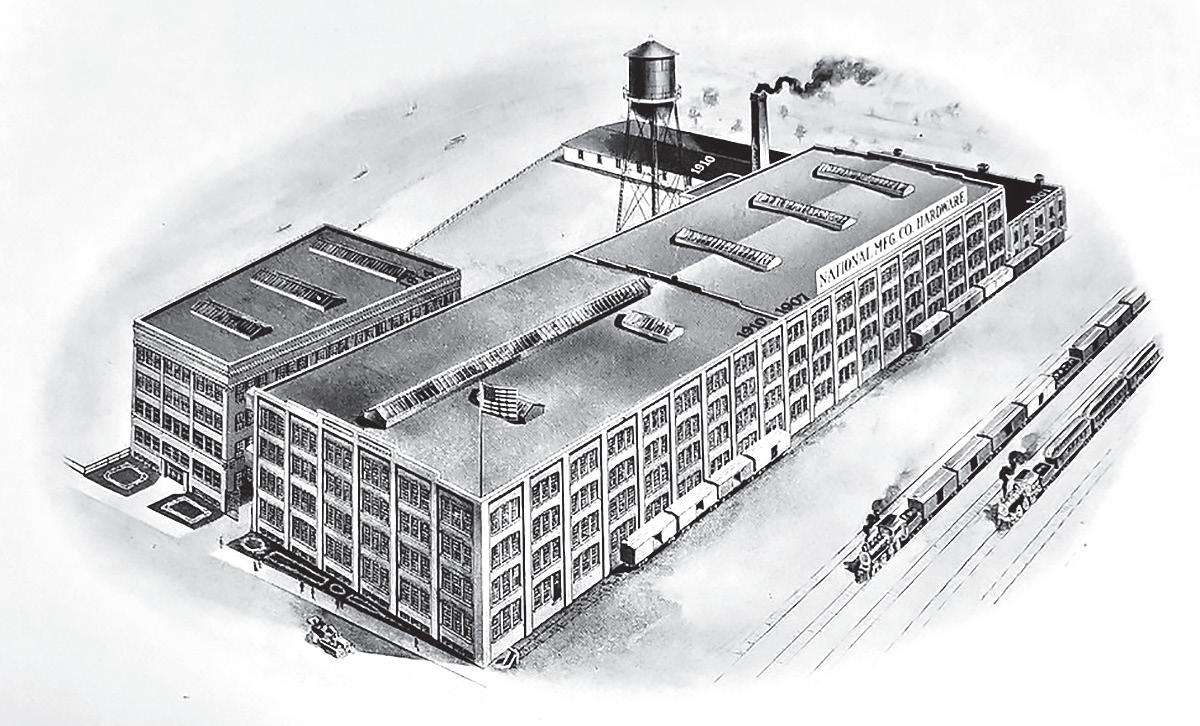
National Manufacturing is seen here around 1920, about a decade after
Benjamin F. Washburne left the company.
The names of Benson and Bittorf have long been associated with National Manufacturing in Sterling, but there could have been a third.
Generations of the Bensons and Bittorfs operated National Manufacturing for more than 100 years, beginning with its founding in 1901 as the National Wagon Company. The original founders were William P. Benson and Louis A. Bittorf, and they were joined by a third partner: Benjamin F. Washburne. Washburne patented a style of end gate for farm wagons with a shoveling board to be made at their factory. He also traveled as a salesperson for the company. In 1906, the company entered the latch business and developed the Big 4 Hanger, a nod to the four executives in charge of the business (which also included Herman V. Bittorf at the time). Washburne left the company in 1908 and moved to Michigan, where he died in 1950. n
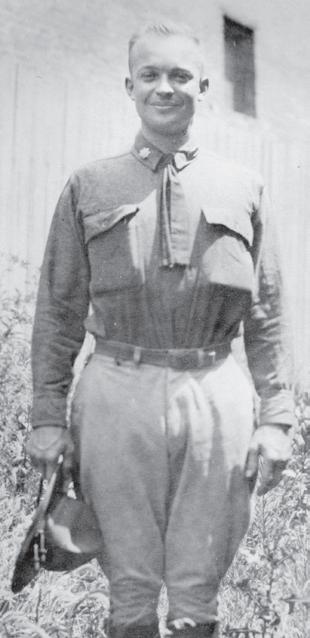
Dwight Eisenhower came to Sterling in 1919, long before becoming a famous general and president.
Muralist Don Gray’s “The Presidents Corner” at the corner of Locust and Third streets shows presidents who visited Sterling prior to the mural’s creation in 2005. Some came before they were in office, others during, and some after — but one face is missing, though it’s likely he never really stopped in Sterling.
Dwight Eisenhower is not pictured, but he did have a small part in the town’s history, on July 21, 1919, when he passed through. Eisenhower was an Army lieutenant colonel who was part of a transcontinental motor convoy traveling the entirety of the Lincoln Highway on a campaign to promote the byway as a national necessity. The convoy included 70 trucks and around 200 soldiers. In his 1967 memoir, “At Ease: Stories I Tell to Friends,” Eisenhower described the cross-country journey as going “through darkest America with truck and tank.”
Nearly 40 years after the journey, Eisenhower – as president – would spearhead the development of interstate travel in the United States. n
Lt. Col. Dwight Eisenhower, seen here in July 1919 during a brief stopover in Boone, Iowa, during his time as part of the U.S. Army’s transcontinental motor convoy.
PHOTO: EISENHOWER PRESIDENTIAL LIBRARY AND MUSEUM.
Rock Falls almost had streetcar service like Sterling once did.
The First Avenue Bridge, in its varying forms, has connected Sterling and Rock Falls since the 1870s — first by footsteps, horse trots and wagon wheels, and later by vehicles. For a brief period in the late 1880s and early 1890s, the idea of having a streetcar railway connecting the towns was something there was high hopes for, but ultimately the idea never picked up enough steam.
The Union Street Railway was established in 1889 by the Sterling Gas and Electric Company. The line would have run on First Avenue Bridge and extended from the existing Sterling, Dixon and Eastern interurban railway in downtown Sterling with the western extent of downtown along West Second Street. The rails were laid out, and an experimental steam engine manufactured by Sterling businessman John Charter was tested on it in 1890.
Planned to have nine cars made by the Pullman Company of Chicago, the company could not afford a means to physically transfer the cars to the new track, and the project was abandoned. The rails remained for another four years without use. n
The banner headline of the Nov. 23, 1927, Sterling Daily Gazette carried news of the annexation vote’s defeat.
In dustrious. Inspired. Inviting.
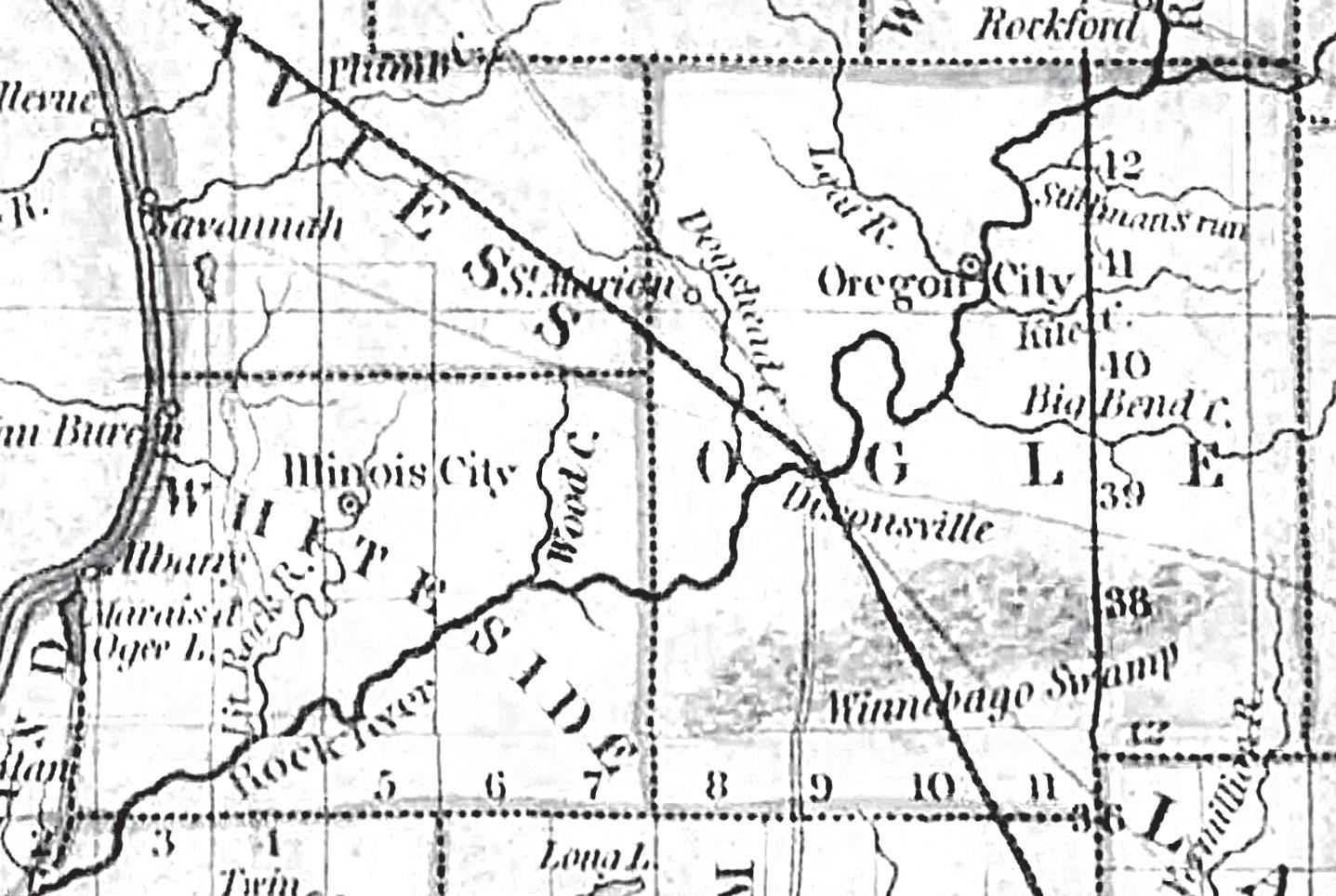
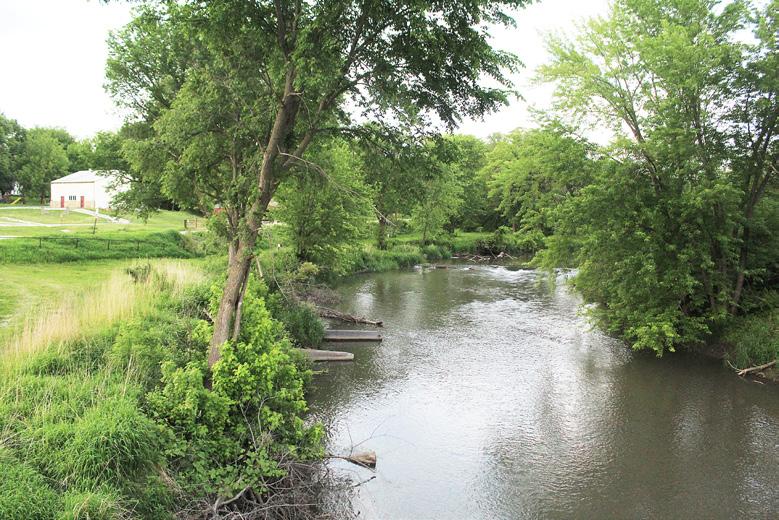
Elkhorn Creek’s original name was Wood Creek.
An Illinois map from 1837 by the S.A. Mitchell Map Company (seen above), drawn only 19 years after statehood, shows the current Elkhorn Creek being named Wood Creek. White residents had only lived in the area for a few years, and sourcing for map making at the time came directly from them. Among those was Sterling founder Hezekiah Brink, who constructed a saw mill that same year with a partner named Cushman in present-day Emerson.
The name change from Wood to Elkhorn stemmed from the name of the precinct it was in. Precincts were administrative areas for voting purposes which pre-dated the township system established in 1850. By the Civil War, the creek was well-known to locals as Elkhorn Creek. n
Elkhorn Creek, as it looks today. CODY CUTTER/ CCUTTER@ SHAWMEDIA. COM
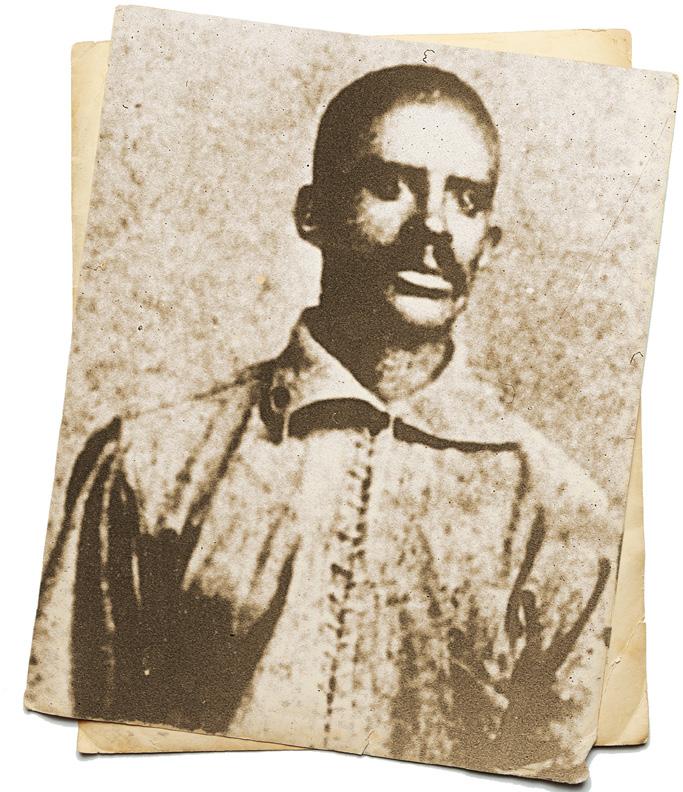
Sterling had a professional baseball team in 1890, and a future hall of famer played on it.
Bud Fowler (seen in the photo below), whose real name was John W. Jackson, was one of professional baseball’s early Black players, and is considered by baseball historians to be the first to have played on a professional baseball team, the Lynn (Mass.) Live Oaks, in 1878. This was before Moses Fleetwood Walker became the first Black player on a major league team, in 1884, and 69 years before Jackie Robinson became the first to appear in a Major League Baseball game.
Fowler’s career took him many places, including the Sterling Blue Coats minor league baseball team of the Illinois-Iowa League in 1890. Home games were played at the Sterling Fairgrounds, then located in an area south of present-day Kilgour Park. The team also included players who would eventually break into the major league ranks, including Varney Anderson, Fritz Clausen and Jack Scheible. The Blue Coats only played in Sterling for part of the season, before moving to Galesburg, and then Burlington, Iowa. The team finished 30-72.
Fowler’s stats for the season have not been researched in full. At the time of his stay in Sterling, according to an 1890 Galesburg Republican-Register article, he had been writing a play, “Colored Southern Aristocracy,” that he had hoped would be performed by The Hyers Sisters, prominent in Black musical theater. The play was never performed and became lost to history.
Fowler never did make the majors. However, he was recognized by the Baseball Hall of Fame in Cooperstown, New York in 2021 as an inductee. n
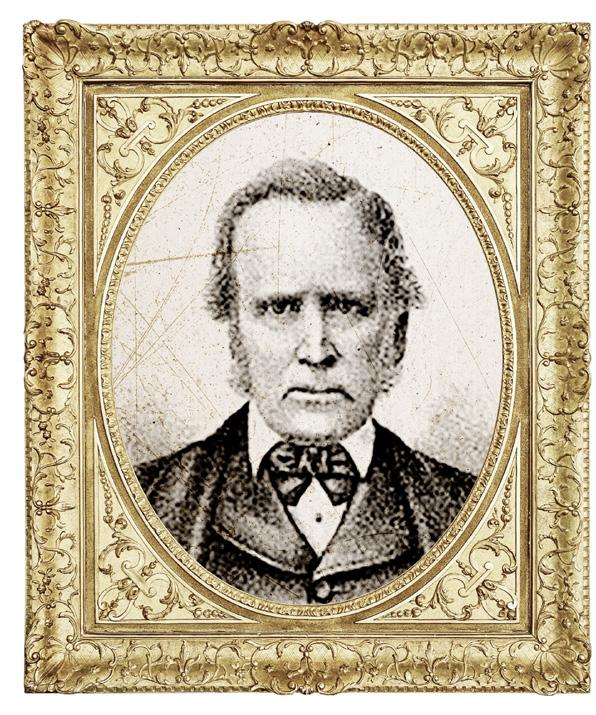
The name of the creek east of Rock Falls is Howland Creek.
When it comes to pronouncing the name of the creek that runs southeast from the Rock River, flowing east of Rock Falls and into Lee County, locals have decided to go Dutch and split the difference. Some people call it by its name, Howland Creek, while others pronounce it “Holland” Creek. It’s a creek quirk that’s even made its way into newspaper articles throughout history, adding to the confusion (the earliest reference to “Howland” in the Gazette appeared in 1888). Further muddying the waters is the existence of Holland Drive in the Breezy Acres subdivision near the creek.
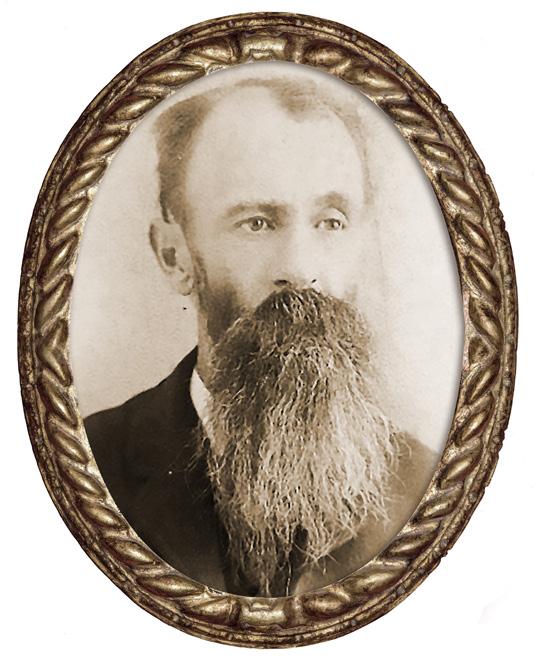
In the 1870s, James H. Howland (shown at left) and his family settled on land on both sides of the creek in the area near Melvin Road and what would later become the back nine holes of Rock River Country Club. Howland also owned a livery stable in Sterling. He died in 1918 and the land is no longer owned by the family, but his name lives on in the creek that flowed through his property. Howland Road in Harmon Township in Lee County also is named for the creek, which runs through its northwestern quarter. n
The founder of the Illinois State Grange, Alonzo Golder, farmed south of Rock Falls.
In the years following the Civil War, Rock Falls farmer Alonzo Golder (shown at right) helped organize Illinois’ state chapter of the Grange, a national agricultural organization founded to unite rural communities and advocate for farmers.
Golder, who farmed near the area where Whiteside County Airport is today, became the state Grange’s first master in 1872 and led efforts to combat rising railroad costs and strengthen agriculture through cooperation and education. The Grange grew rapidly, promoting equality among men, women and children while supporting local communities through service and advocacy. Though its membership has declined over the decades, the organization’s legacy of unity, grassroots action and support for farming communities continues more than 150 years later.
Golder died in 1875 and is buried in a cemetery which bears his name on state Route 40 south of Thome Road. The highway once was called Golder Road, after Alonzo, before it became a state highway in the 1930s. n
ROCK FALLS, IL STAY
AUGUST
- PLAY - EXPLORE
SEPTEMBER
8/1 | GEORGE FEST
8/8
8/15-16
8/22
8/29
9/12 |
OCTOBER
10/3 | LUMBERJACK SHOW 10/17 | SPOOKTACULAR HALLOWEEN LIGHTED GOLF CART & UTV PARADE
10/30 | BIZZ BOO TRICK-OR-TREAT
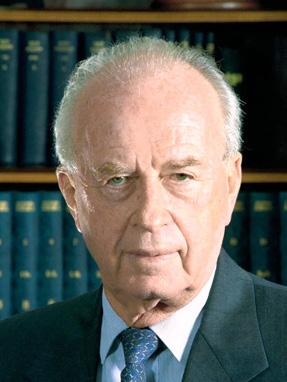
Yitzhak Rabin, future prime minister of Israel, visited Sterling in 1969.
Five years before he served his first stint as Israel’s prime minister, Yitzhak Rabin (seen in the photo below) was Israel’s ambassador to the United States, and spoke at the World Affairs Conference of Northwest Illinois at Emerald Hill Country Club, hosted by the University of Illinois Extension and Sauk Valley College. Nearly 400 people were on hand to hear Rabin’s speech, “Israel and the Middle East Crisis: Conditions for Peace.” At the time, Israel was actively fighting Egypt in the War of Attrition, and was engaged in ongoing border conflicts and skirmishes with Jordan, Syria, Iraq and Palestinian militant forces across its eastern front.
Rabin’s first term as prime minister was from 1974-77, and he served in the same role again from 1992 until his assassination in 1995. n
One
of Japan’s best selling musicians briefly attended school in Rock Falls.
Mariya Takeuchi is known as the “Queen of City Pop” in Japan, popularizing a style of music situated around an urban feel that took root in the post-war economic boom period of the 1970s and 1980s. Takeuchi’s songs, the best and most internationally known being 1985’s “Plastic Love,” led her to a music career that has seen her records earn platinum recognition 11 times over by the Recording Industry Association of Japan.
Takeuchi was an international exchange student through the AFS Intercultural Programs youth exchange organization. In 1972, she enrolled as a junior at Rock Falls High School (seen in her yearbook photo above), and was known by her nickname of “Mako.” She lived with Milton and Betty Ward for her one-year stay.
“My stay in the United States as a foreign exchange student gave me not only my personal gain in many ways but also the conclusion that people are basically the same, no matter what nationality they are,” Takeuchi wrote in the 1973 Rock Falls High School Cavalcade yearbook. “It was the best chance to find myself and look at myself. What I learned here through this year will make the rest of my life more meaningful, and all of the beautiful memories that we made together will keep my life happier.”
An extended version of “Plastic Love” would achieve renewed recognition through a popular YouTube video in 2017 that reached nearly 55 million views during its first year. n
Member-owned. Locally trusted. Here when it matters most.
Sarah Doughty has built up an impressive record knocking down pins, earning respect on the lanes and a place in her high school’s history, and now she’s pinning her hopes on becoming a state champ — again
By
| Cody Cutter | Sauk Valley Media
Sterling’s Sarah Doughty bowls in a match against Galesburg on Jan. 7, 2025, at Blackhawk Lanes in Sterling. ALEX T. PASCHAL/APASCHAL@SHAWMEDIA.COM
ong before she became one of the most accomplished youth bowlers to roll a ball at Blackhawk Lanes, Sarah Doughty was a 4-year-old with her eyes set on having as much fun at the alley as her parents did. Having fun and lacing up the bowling shoes to follow in her parents’ footsteps was the easy part. What she would do after that — turning a family tradition into school history — that took years of patience, playing and practice.
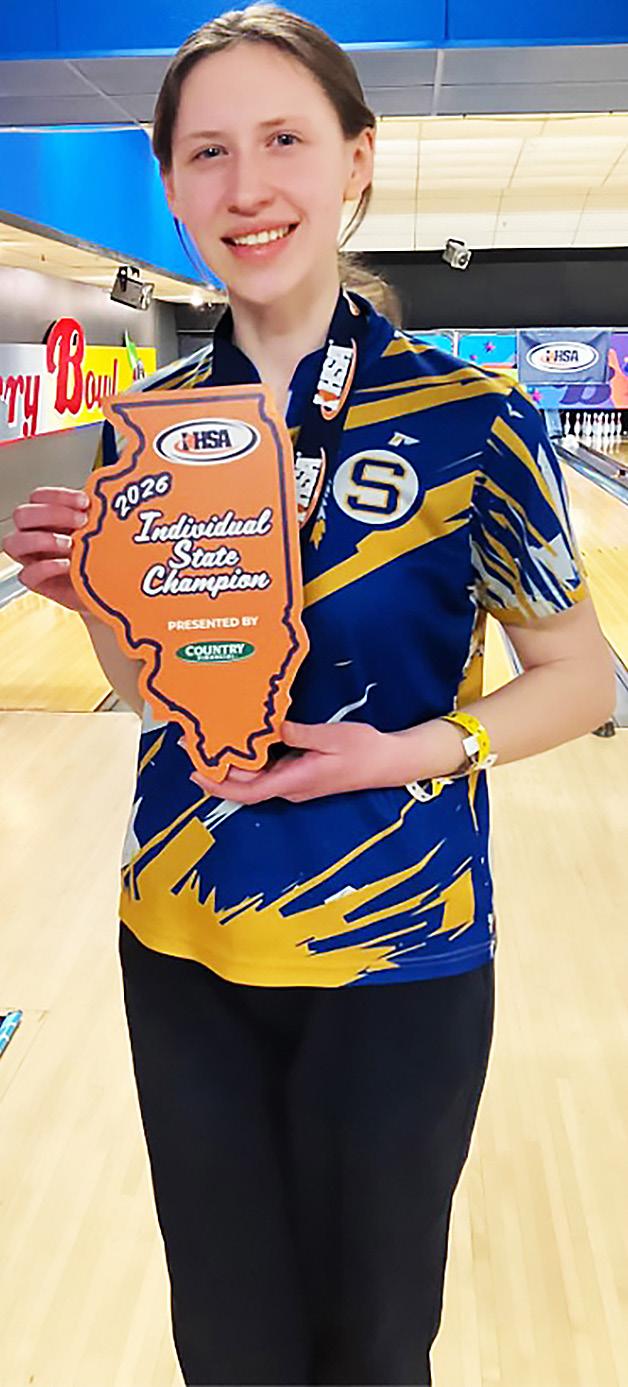
This winter, the junior capped a two-day run at the Illinois High School Association girls state finals on Feb. 20-21 at The Cherry Bowl in Rockford by claiming the individual title, surviving late nerves, and setting a state tournament scoring mark to add her name to the program’s lore.
Doughty finished first in the state tournament with a 12-game total of 2,770, becoming Sterling’s first individual state champion in the sport, and fourth state medalist in its history. Her performance included an 800 series on the tournament’s opening day — which is also her personal best — as she balanced the pressure of defending her place atop the leader board with lessons learned from her first state appearance a year earlier.
DOUGHTY cont’d to page 24
“It’s just really insane,” Doughty said. “I didn’t think I would even win this year because I know a lot of the girls who are seniors who are excellent bowlers. It’s an incredible honor, especially around here, because no one else from Sterling High School has won state for bowling.”
In bowling, a 300 game is considered perfect. Doughty has done that once: It happened during a practice session before this year’s regional tournament.
“It was just very, like, ‘Wow, I can actually do it,’” Doughty said. “It was a confidence boost for sure.”
In state competition, there are 18 regional and six sectional tournaments. Doughty wasn’t among this year’s regional or sectional champions — having placed second at the Illinois Valley Super Bowl Regional Feb. 6 in Peru, and third at the Forest Hills Lanes Sectional Feb. 13 in Machesney Park — but that didn’t
stop her from pursuing the goal to be first at state.
The day before state, Doughty and head coach Loren Wolf worked on some last-minute tuneups that not only helped her game, but gave her a boost in confidence going into the competition. She also had some help from her teammates, who had bowed out of team competition during the sectional level, but were still there to support her on her two-day quest for a title.
“We had a really good practice session the day before,” Doughty said. “We found the right ball and felt really good going in. I was very confident. I just knew what to do. The year before, I was so nervous with it being my first year at state. This year I knew what I was getting into. The energy was up from the team, too, which just made the atmosphere so much more exciting.”
The experience from her sophomore season helped calm her nerves entering this year’s tournament.
“It’s so nerve-wracking being in that atmosphere for the first time,” Doughty said. “I just knew what I was getting myself into. I just felt calm.”
The atmosphere itself felt different this year, too.
“Last year at state, I was not in the top 10 for individuals, and you get put at the lower end of the alley, and you could just feel the difference in energy with the people who wanted to win,” Doughty said. “I think it brought my energy up this year being with those who had that energy, and it gave me the extra push that made me feel that I belong there, and that I was winning.”
DOUGHTY cont’d to page 25
Doughty’s first game on day one was a 248, eight pins from the highest score of 256 at that point. She followed with a 254 in her second game, which put her in the lead. Even after dipping to 195 in game three, her 697 series led by five pins in the 124-person field. With the midday lead, she then bowled her best competition game yet: She rolled a 298 in game four to tie a Golden Warriors record for the highest game, and followed it with games of 268 and 234 to establish a new IHSA record with an 800 series, besting the previous record, set in 2011, by a single pin.
The realization of an 800 series — itself no small task for high school bowlers — also being a state tournament record was something Doughty didn’t even realize during the meet.
“I didn’t even know that until after state,” Doughty said. “One of my coaches told me that I had a record, and nobody else knew it. I won state in middle school as well, and I had two records there. Obviously I didn’t think it was a goal of mine to have another record, something higher than middle school, and I thought those scores were far-fetched. I think that’s more crazy to me than winning state, getting an 800.”
DOUGHTY cont’d to page 26
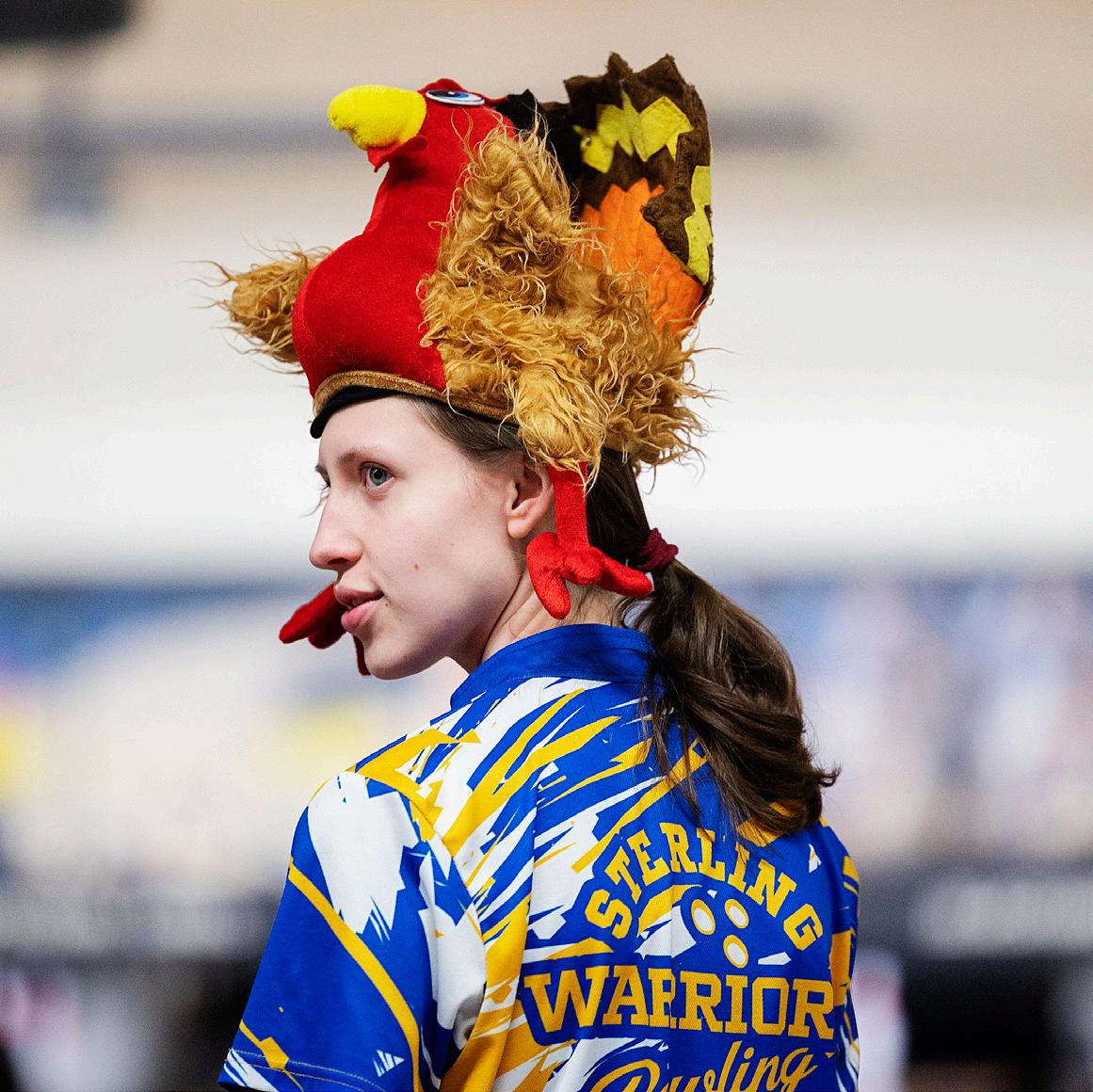
Sarah’s learned that focus is important during competition — but so is having fun. She’s seen here with a turkey hat during a match against Galesburg on Jan. 7, 2025, at Blackhawk Lanes.
“It’s just really insane,” Doughty said of her state championship.
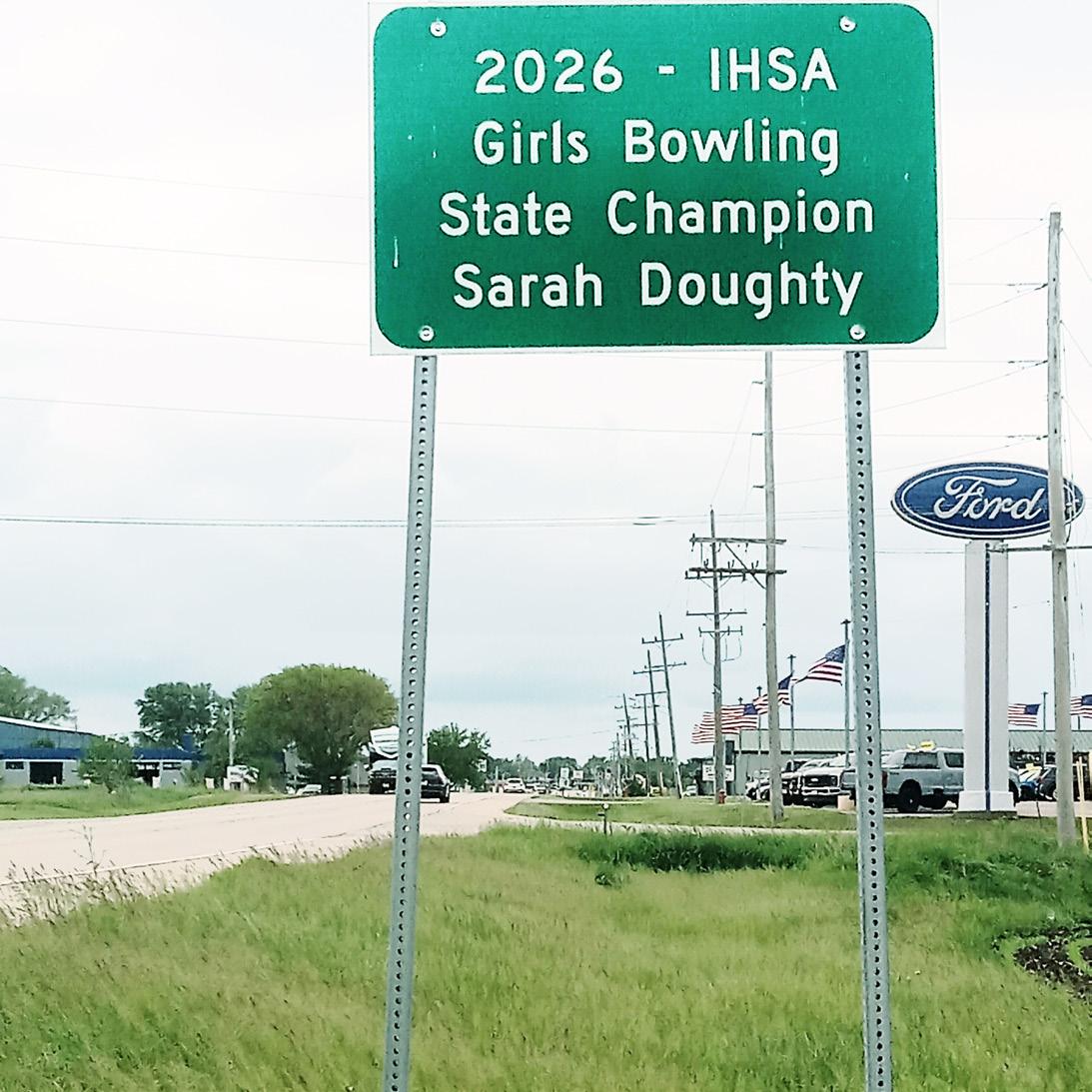
“I didn’t think I would even win this year ... It’s an incredible honor.” Another part of that honor: A sign celebrating her achievement, on North Locust Street in Sterling, across from Wahl Clipper Co.
DOUGHTY cont’d from page 25
The first-day total of 1,497 was 163 pins more than second place, but the start of her second day didn’t start off as well. Doughty rolled 172, 180 and 216 for a 568 series, but still hung on to first place with 2,065 at that point. The setback proved only temporary as Doughty rebounded with a 255 to open her fourth series, following with a 204 in her penultimate game, and closing her successful tournament run with a 246.
In all, Doughty averaged a 230.8 in her 12 games. The reality of earning the state championship for certain came when she was rolling her final game in the two-day event.
“That second day I did fall down a little bit,” Doughty said. “I had nerves, but it was just a matter of staying calm, just staying focused and saying ‘I can do this,’ and knowing what I’m doing and being confident.”
The title represented the culmination of a goal years in the making. She won the Illinois Elementary School Association state championship as an eighth-grader at Challand Middle School in 2023, while also setting tournament records for high game (279) and high four-game series (940). The victory gave her confidence that a high school state title could someday become reality.
Thurs - Fri 11:30 - 4:30, Sat 10:30 - 3:30 & during all downtown Dixon events
“After I won state there, I knew my goal was to win state in high school,” Doughty said. “It gave me the push I needed and gave me a confidence boost.”
Coach Wolf, who retired as Blackhawk’s general manager last year, said Doughty’s rise to becoming a state champion was years in the making.
“Sarah is very dedicated to her sport and has been for her whole life,” Wolf said. “I have been coaching her since middle school, where she won state there in 8th grade. She has continued to improve to this year’s championship. It is the highlight of my coaching career to this point.”
Doughty is also a nine-time champion on the statewide Elite Youth Tour circuit, where she once qualified for the Junior Gold national championships,
and she is the reigning Western Big 6 Conference champion. She also won conference as a freshman, though this season’s title carried added significance with Sterling also winning the conference championship as a team.
“Our team meshed real well,” Doughty said. “There was no drama. Everyone got along. Practices were so much fun. We had high levels of skill that we haven’t had in previous years.”
Doughty’s championship run has already helped shape the mindset of Sterling’s returning bowlers, Wolf said.
“Her championship has had a strong influence on her teammates, with a desire to take the whole team to state next year,” Wolf said. “They are working hard at improving, which makes a state trip likely.”
Part of Doughty’s love for bowling comes from the environment surrounding the sport itself. Some of her earliest memories came during Saturday morning leagues at Blackhawk Lanes, and the camaraderie within bowling remains one of the reasons she continues to enjoy competing.
“Obviously I like winning, but I like the people,” Doughty said. “They’re just so nice. Some sports you can tell when people are at each other’s throats and just want to win. I’ve heard a lot of stories about how people don’t like other teams. Bowling is not like that. Everybody cheers for everybody else. You’re not usually going to have people who are negative at you, or anything like that, in the entire sport. Everybody gets along.”
cont’d to page 29
DOUGHTY
DOUGHTY
Winning a high school state title carried added significance for Doughty: her mother, Tammy (Sivits) Doughty, was also part of Sterling High School’s girls bowling story as a member of the Golden Warriors’ 1987 IHSA runner-up team. Tammy and her husband, Michael, have been their daughter’s biggest supporters, and Tammy’s single word of advice was something that her daughter carries with her every time she approaches the lane.
“My mom likes to yell ‘Focus!’ during meets,” Doughty said. “The best advice is just to stay calm. When you let people, feelings and emotions get to you, it shoots you down. Getting angry doesn’t help any. You just have to stay calm during everything.”
Sometimes, though, even the best advice takes a back seat to curiosity. During the state tournament, when she wanted to know just where she stood, she would glance at the monitors, even though her parents and coach advised against it.
“I can’t not do it,” she said. “I just like to know where everybody’s at, and to know where I’m at so that I know how hard I have to push if I need to push,” shes said.
Doughty said becoming successful in bowling requires more than talent alone: “You have to have a passion,” she said. “If you have no drive to go out and practice, and to watch videos, and get outside help, you just can’t exceed. You have to have a driving factor that makes you want to be good.”
Looking ahead, Doughty’s got her eyes on more than just the head pin.
With her talents come opportunities to compete on Division I college bowling teams; she had yet to make her final decision by the end of April (as of this magazine’s press time), but plans to reveal it before the start of her senior year.
But in the meantime, with just one more year of high school left, she hopes to go out on a high note. While she’s already rolled one 300 game, she wants to do it again during competition. The 298 game at state this year is tied for the best in school history with Heather Wolf (coach Wolf’s daughter) and Olivia Zinanni. She’s also 19 pins from the school’s all-time series record of 819, set by Wolf in 2011.
Doughty would also like to log another spot in IHSA’s history book. Only four bowlers in IHSA history have won two state titles, and she hopes to be the fifth.
“I’m looking to do the same thing: I’m looking to win,” Doughty said. “I want to win state again.” n Shaw Media reporter Cody Cutter can be reached at 815-632-2532 or ccutter@shawmedia.com.
Jill Ramirez Lee Bardier
Bobbie Bardier
eople come by their careers in different ways. Some know what they want to do and set out to do it, and some discover their calling by chance. Others turn a passion into a profession, while there are those who master a trade by repetition.
A Sterling man found his by getting in on the ground floor of his own business.
Angel Olalde is the man with the machinery and the skill who’s made Angel’s Wood Floor Restoration a job that he loves to do, and that customers love to see him do.
You could call him a craftsman, a restoration specialist, or a business owner, and they’d all be correct — or you could just call him Angel in the flooring business, and he’s been uncovering hidden treasures beneath faded finishes and worn carpet for more than a decade.
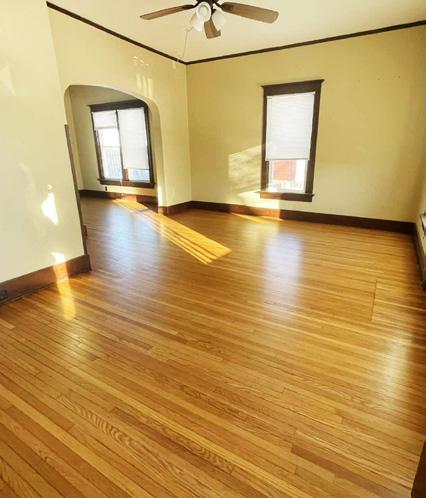
Hardwood flooring has shaped Olalde’s professional life through his business, which specializes in reviving worn and aging wood floors. In many homes, the work involves uncovering and preserving original hardwood floors that have survived but are worse for the wear, trapped beneath carpet or worn and faded through years of foot traffic.
From century-old homes to downtown buildings, Olalde has plied his skill on jobs big and small, but regardless of where he’s put down sandpaper and stain, he said the job is about more than just earning a living. To him, it’s about preserving history, something he felt the moment he was introduced to the trade.
ANGEL cont’d to page 32
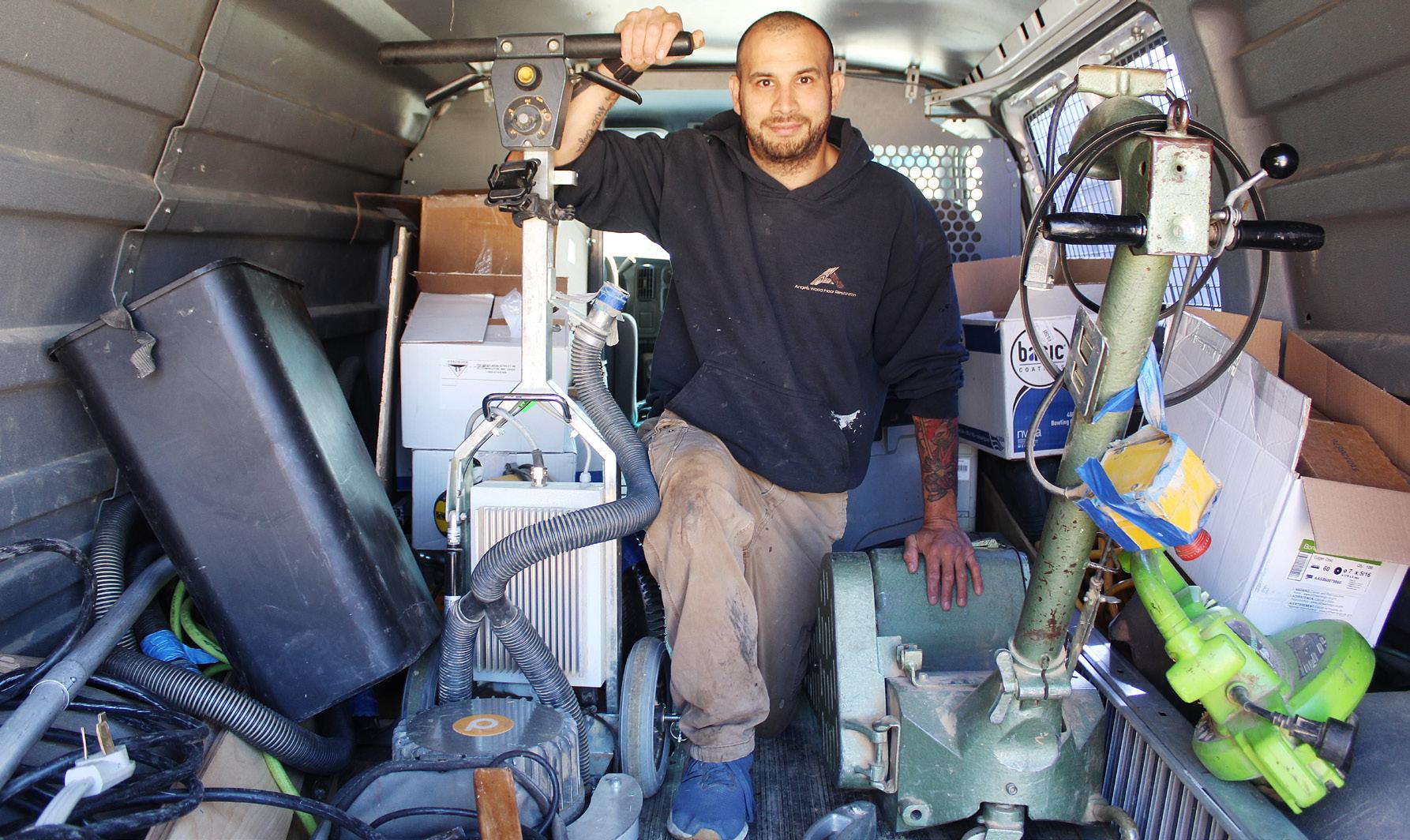
It takes talent and tools to make hardwood floors look as good as new, and Angel Olalde has plenty of both. The owner of Angel’s Wood Floor Restoration in Sterling has spent nearly 15 years working on wood flooring while preserving the history hidden beneath decades of wear.
“From the minute I picked up a machine, I said that I want to do this for the rest of my life,” Olalde said. “It was really cool. I was always told in the beginning that this was such a hard trade to learn, and a hard one to get into, but I felt like I just took to it naturally. It bit me. I went home and I stayed up half the night watching hardwood floor videos on YouTube. It just literally consumed me.”
Olalde entered the hardwood flooring trade after working a variety of jobs over the years, including restaurants, factories and time in the carpenters union. Before entering the trade, he was working long hours at Tyson Foods in Joslin when his brother-in-law reached out with an opportunity.
“I was working at the slaughterhouse in Joslin, 65-70 hour weeks, and I have a brother-in-law who lives in Minneapolis who’s in the trade who messaged me one day on Facebook and said I work so many hours and work hard, and he needed a guy like me on his team,” Olalde said. “We talked, I packed up the family, we moved there and I introduced myself to the trade.”
ANGEL cont’d to page 33
ANGEL cont’d from page 32
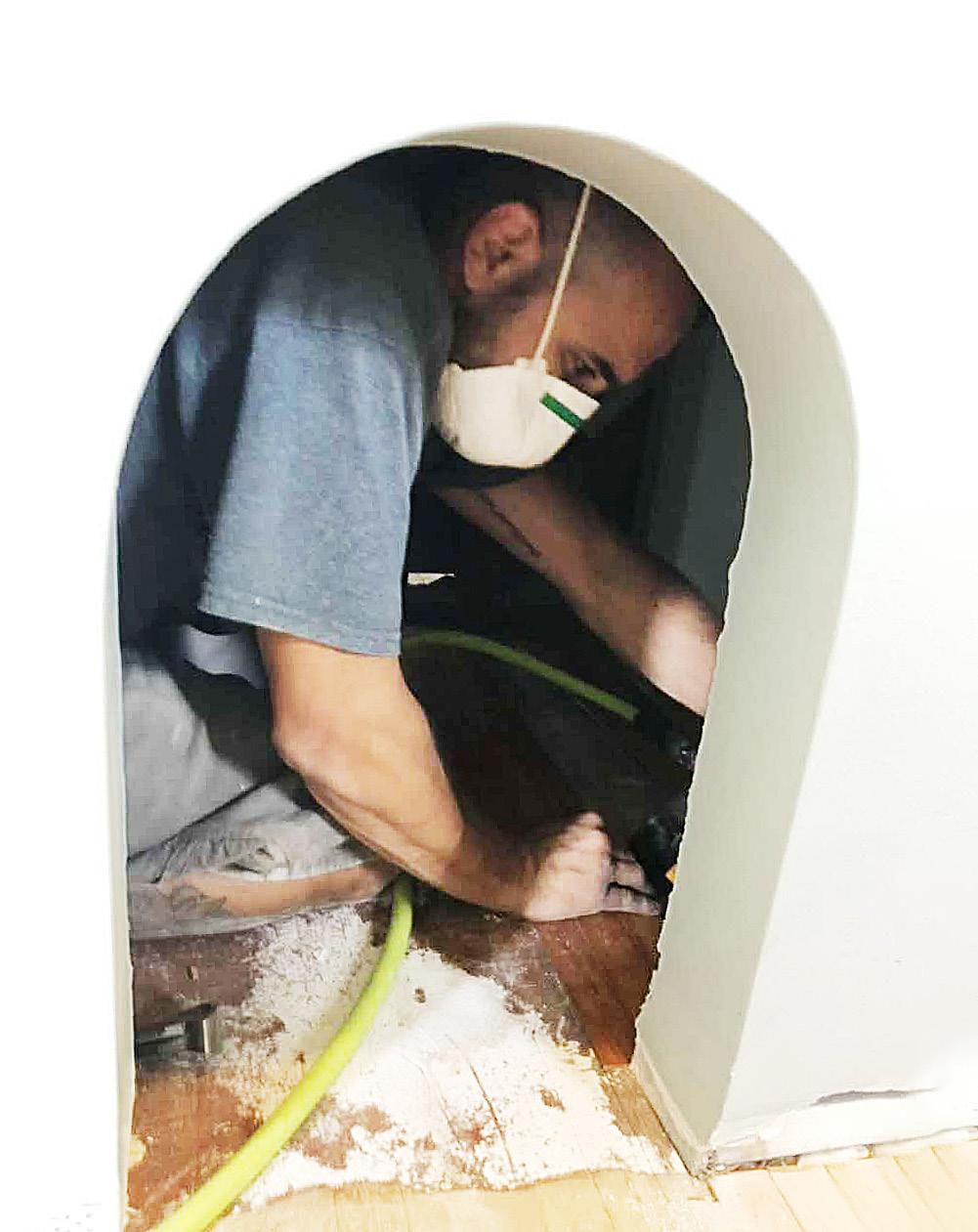
Sometimes, Olalde’s work takes him into tight spaces, like this alcove he squeezed himself into.
PHOTO PROVIDED BY ANGEL OLALDE
Olalde eventually returned to Sterling and launched his business 11 years ago after spending a couple of years working for someone else. His business serves customers both locally and into the Quad City and Rockford area, with occasional projects taking him as far as 200 miles away.
For Olalde, no two floors are ever the same. When arriving at a job, he first evaluates the condition of the floor before discussing the homeowner’s vision for the project. Different species of wood require different approaches, he said, and factors such as pets, wear patterns and age all influence how the restoration is handled.
The restoration process itself involves multiple stages. After clearing and sealing off the work area to contain dust, Olalde begins sanding with what he described as the flooring industry’s “big machine,” a green belt sander that strips away the old finish and smoothes out imperfections. Smaller sanders are then used along walls and edges before finer sanding smooths the floor further. One of the final preparation steps before staining involves spraying the floor with distilled water and allowing it to dry overnight; it opens up the pores of the wood and allows the stain to take evenly.
Olalde said homeowners are often stunned by how dramatically their floors can change throughout the process.
“I’ve had people just freak out,” Olalde said. “Even when I run the first pass with the big machine, they’ll be like, ‘Oh my gosh,’ because some of those floors just look horrible. I’ll go into houses, and they’ll be like, ‘Can we even do anything with this?’ I get excited and think it’s awesome, and I’ll tell them, ‘Just wait until I get in here.’ I’m letting them know when I go through there, they’re going to be so happy.”
Those reactions, he said, are what continue to drive him.
“I’ve done a lot of things over my life, but never have I gotten the type of gratitude and reaction that I get after giving somebody back a floor that they’re going to walk on,” Olalde said. “It’s a really cool feeling.”
ANGEL cont’d to page 34
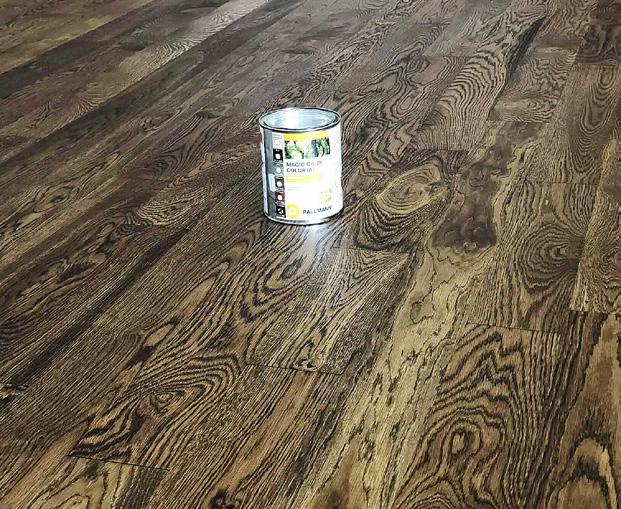
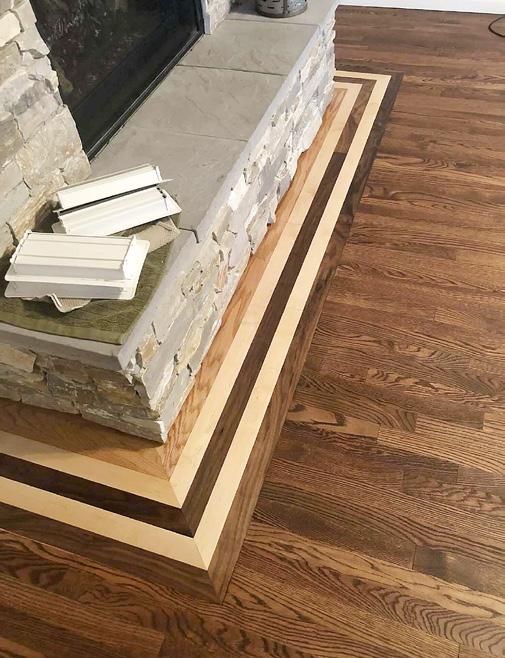
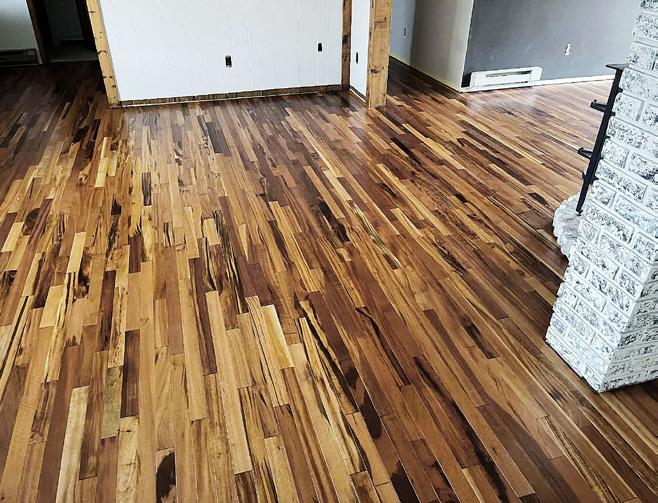
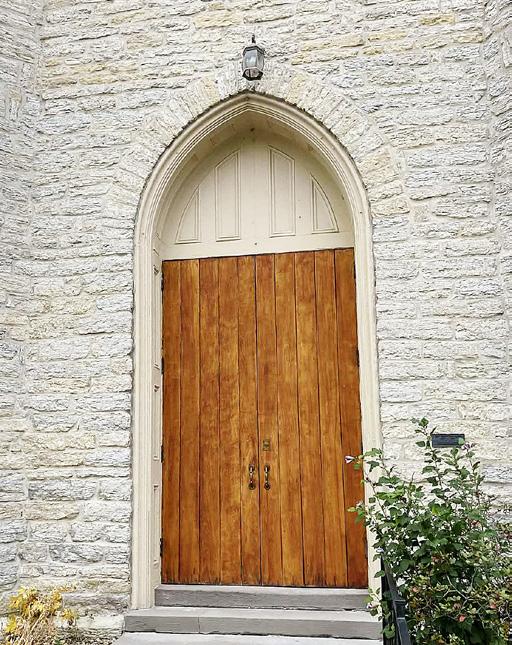
Check out the talent in this floor show … When the dust has settled and the stain has dried, Olalde loves to see his customers’ reaction. “I’ll go into houses, and they’ll be like, ‘Can we even do anything with this?’ I get excited and think it’s awesome, and I’ll tell them, ‘Just wait until I get in here.’ He’s even taken on other refinishing jobs, like the door at First Presbyterian Church in Dixon.
PROVIDED BY ANGEL OLALDE
Olalde said the hardwood floors started to become less common during the 1950s, when wall-to-wall carpeting became widely popular, hiding natural wood floors under synthetic fibers and foam passing for decades. But tastes and trends have changed through the years, and these days people are rediscovering their home’s history beneath their feet. That’s where Olalde comes in, and that process of uncovering a hidden treasure is one of the aspects of the work Olalde finds most rewarding.
“I love to focus on restoration because you’re preserving the history of these floors,” Olalde said. “I [recently] did a floor in Rock Falls, a hidden cabin, that was 95 years old. I did it, and he
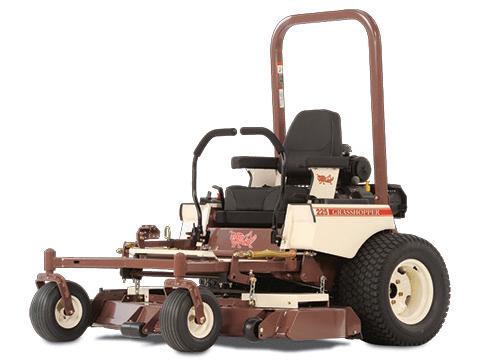
Grasshopper zero-turn mowers are built to last, but when service is needed, we can help. With a full line of repair and tune-up services, OEM parts and more, we’re standing by to help keep your mower in peak condition.
said, ‘This is the first time this wood has been seen in 95 years.’ Things like that are really cool.”
He said another memorable project involved a historic home in Ashton.
“In 2024, I did a house in Ashton that was designed by an architect out of Rockford, Jesse Barloga, and the homeowner gave me this big printout on the history of the house,” Olalde said. “It’s turn-of-the-century, and he’s known for spider web-designed windows and really cool things like that. I’ve done four downtown buildings that were all original flooring that I brought back. That kind of history and really preserving it is really cool to me.”
ANGEL cont’d to page 35
PEABUDY’S 2900 Polo Rd Sterling, IL 61081 www.peabudysinc.com 815-626-4600
PHOTOS
ANGEL cont’d from page 33
Some of his projects have also required unusual solutions to preserve original materials. While restoring one of the oldest homes on Sixth Avenue in Sterling, Olalde encountered original quarter-inch strip plank flooring that could no longer be purchased.
“I’ve been put into some pretty cool situations,” Olalde said. “The whole house was being refurbished. It was tons of tons of work, and we were able to keep all of the original quarter-inch strip plank in the floor, but it was missing quite a bit. I went to my house, ripped out some of it from my son’s bedroom, and donated it to the project to preserve this house. It ended up being a really super cool project.”
Under 40” honoree by Wood Floor Business magazine, where he has also contributed product review articles. He regularly attends training classes, expos and workshops around the country focused on hardwood flooring.
Today, his job has come full circle, with younger people entering the trade and Olalde only too happy to help mentor them, so that they can follow in his footsteps — on restored floors, of course.
Find Angel’s Wood Floor Restoration on Facebook or call 309-912-0602 to schedule a project or for more information.
Olalde’s work has earned him recognition within the hardwood flooring industry. In 2022, he was named a “40
While Olalde also installs and replaces hardwood flooring, restoration work remains his favorite part of the business because of the stories attached to older homes and buildings. In recent years, he also began offering hardwood floor cleaning services, which include stripping wax buildup, deep cleaning, buffing and re-coating floors with water-based polyurethane.
As the business continues growing, Olalde is searching for a new shop space after building issues forced him out of his previous location in Rock Falls. For now, he’s operating out of a storage unit in Sterling while continuing to serve homeowners throughout the region.
The most rewarding part of the work, Olalde said, remains knowing that he’s helping preserve something that will last long after his work is done.
“I tell homeowners that their floor has so much history, so much longer before me or you, and now it’s going to be around a lot longer after us,” Olalde said. “It’s cool knowing that the lifespan of this wood floor is going to be preserved and will outlive either one of us. The things that it’s probably heard or seen over the years is really cool to me.” n
Shaw Media reporter Cody Cutter can be reached at 815-632-2532 or ccutter@shawmedia.com.
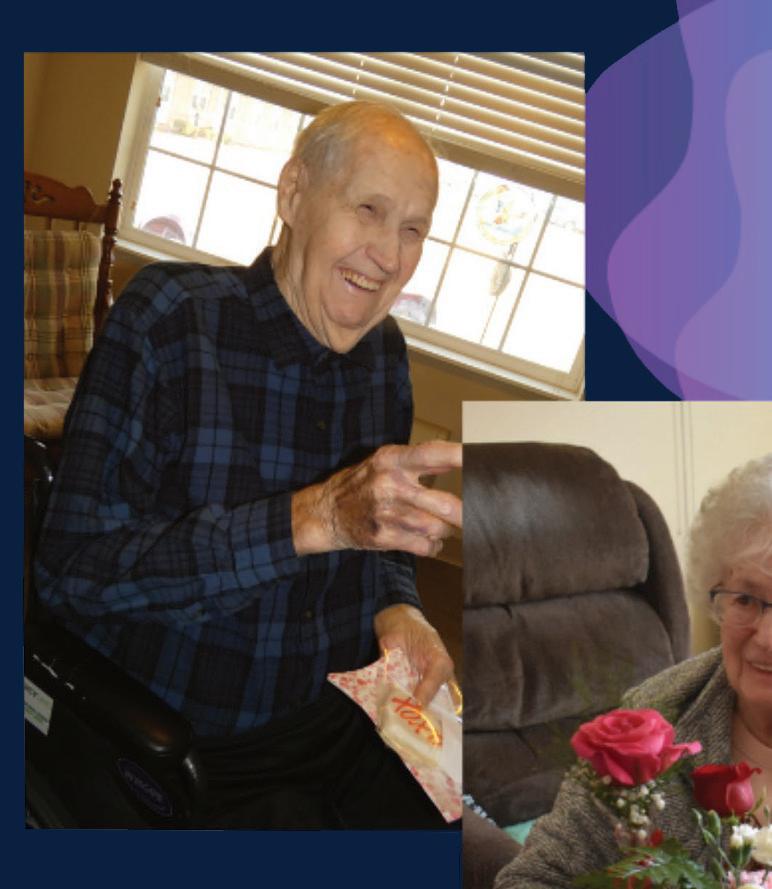
“Resthave Home and Staff are amazing! I love the fact that You treat the Residents with such Dignity and Respect in this phase of life. If I lived in the area, I would volunteer at Resthave. It would be an Honor and a Privilege to do so! Keep up the good work, as God will reward you one day!”
Marriean T.
HURRY! ONLY 2 ASSISTED LIVING APARTMENTS AVAILABLE!
Resthave is an equal opportunity employer and provider
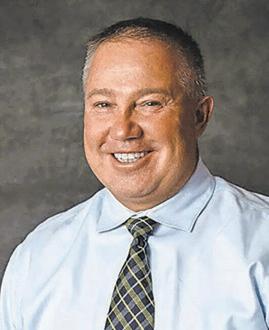
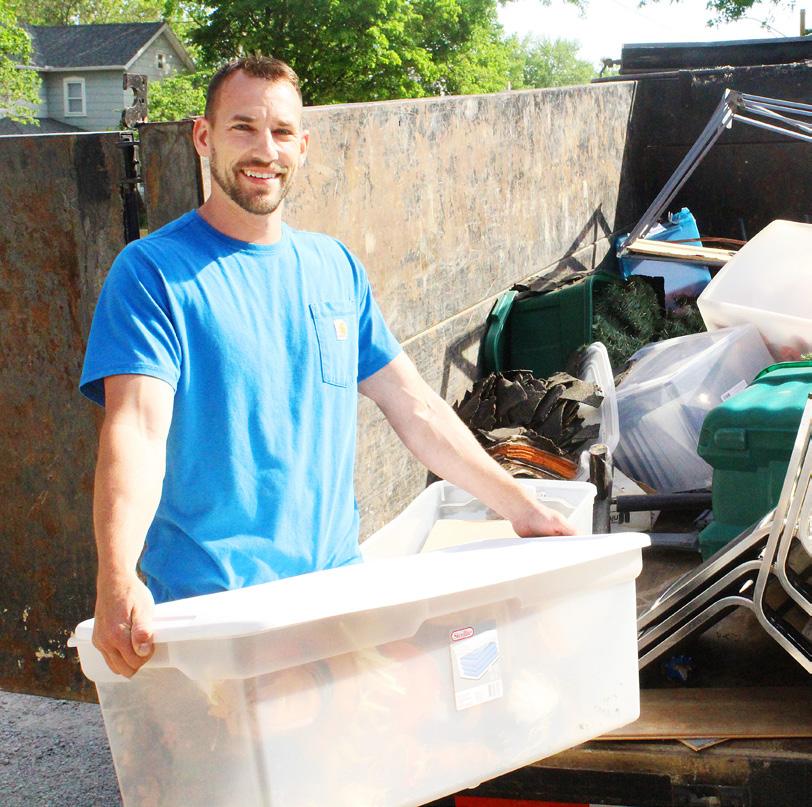
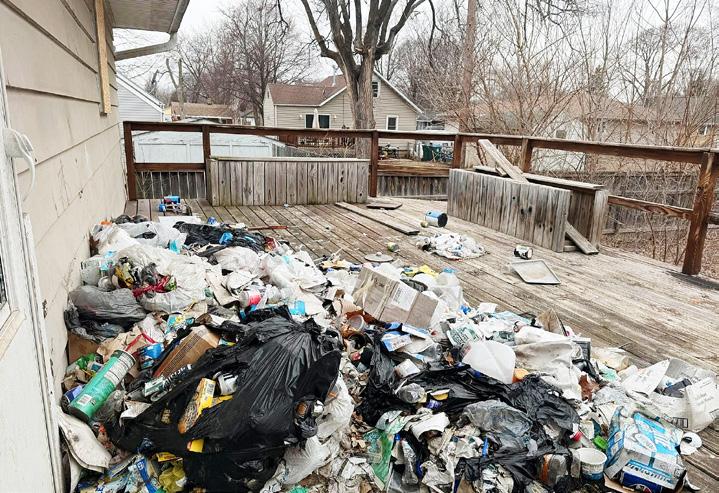
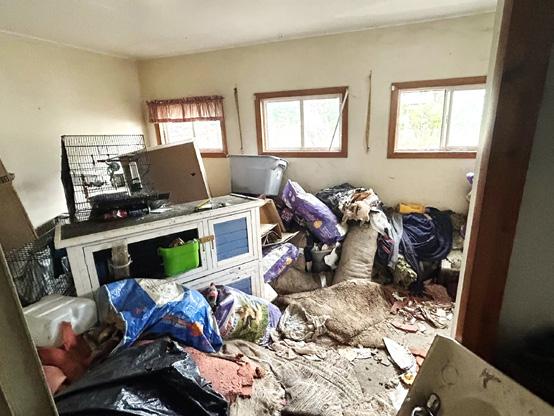
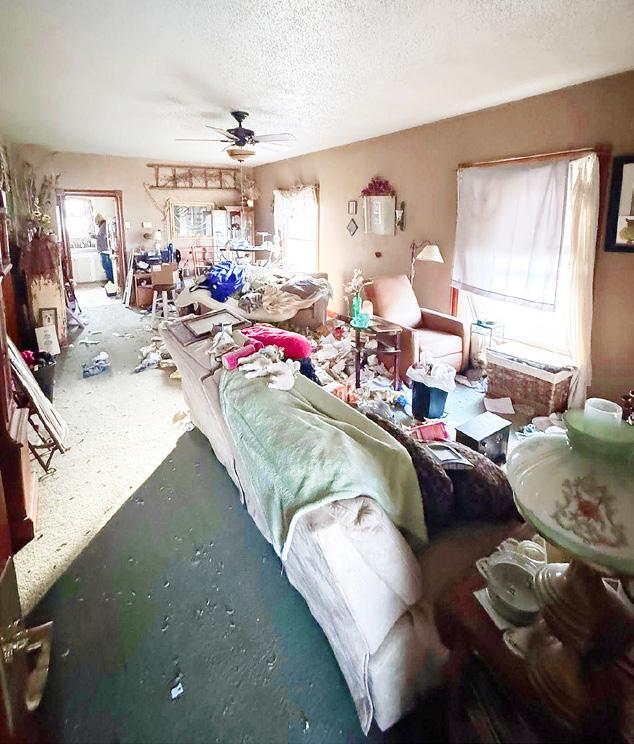
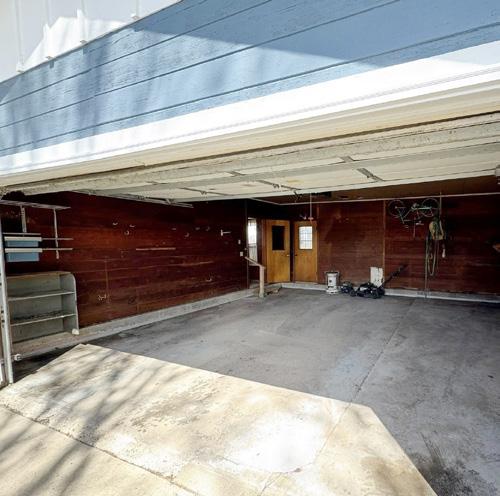
ld furniture, broken appliances and decades of clutter disappear quickly once Andrew Dieterle and his crew of cleaners arrive, hauling away the remnants and reminders of life’s transitions for his customers.
For many clients, the cleanup itself is only part of the story. The rest can be found buried beneath piles of possessions, forgotten memories waiting quietly inside someone’s home.
Dieterle owns Junk It Sauk Valley in Sterling, helping people get rid of unwanted items, and clearing out the clutter that can sometimes be too overwhelming of a task for his clients to tackle. Instead of someone renting a dumpster and filling it themselves, Dieterle and his crew bring the trailer, load it and haul everything away — often for a comparable cost.
“I like to make it a no-brainer,” Dieterle said. “Why rent a dumpster, pay that money and then have to do that work, hire someone to do it, or find friends and accommodate them with food, drinks, whatever, when for the same price, we bring the dumpster and do the work for you. Something that might take you a day, or days, to do, we’re usually done in an hour or less.”
The fully licensed and insured business handles everything from house and property cleanups to shed tear-downs, hot tub removals, construction debris and small demolition projects. Occasionally, it will even haul away vehicles.
Dieterle has spent seven years in the waste management industry. He began working for Junk It when the business opened in 2018 before taking ownership in October 2024. A 2006 graduate of Newman Central Catholic High School, he previously taught and coached basketball at Amboy Junior School and also worked alongside his wife, Jamie, at Revive Boutique in Dixon before transitioning full-time into waste management.
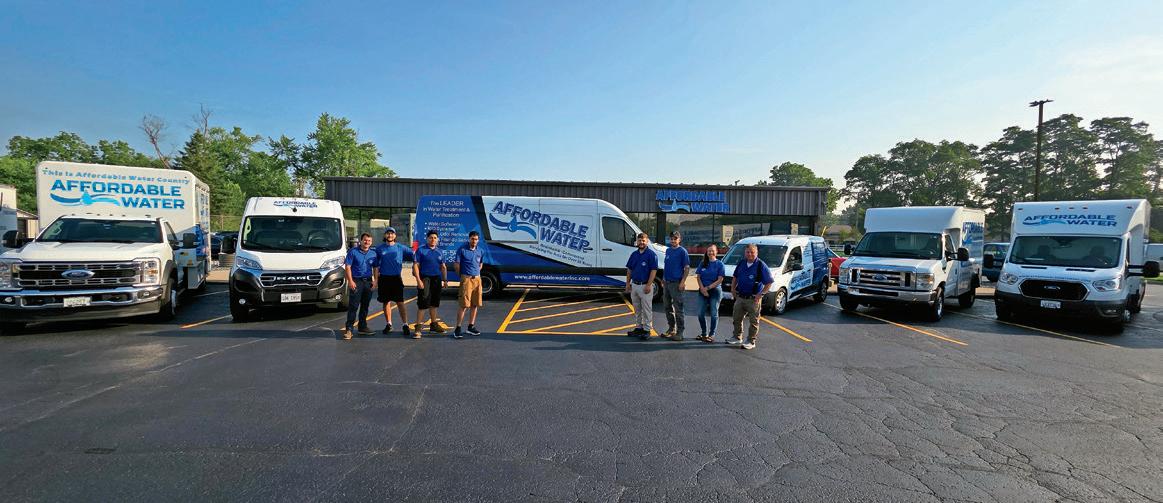
Dieterle leads a crew of five employees serving customers within roughly a 60-mile radius of Sterling. The business also works regularly with banks, landlords and Realtors who need properties cleared quickly.
“It’s just about people who want to get rid of an abundance of stuff that they don’t want anymore,” Dieterle said. “They’re miscellaneous items that they’ve accumulated over the years,.” He said his clients tend to be of an age that’s given them more time to collect more stuff — “40 or older for the most part,’” he said. “They have the most things that kind of accumulate, whether it’s just holding on to things over the years, or the kids are now out of the house and their stuff is just sitting there. We have a lot of that, and we have a lot of really good repeat clientele.”
The work involves far more than simply tossing things into a trailer.
Another aspect of the work he and his team do is something some people aren’t even aware of: proper, and legal, disposal of items.
Dieterle said customers often are unaware of disposal regulations surrounding certain items, especially large appliances and specialty waste. Unlike standard dumpster rentals that dump entire loads directly into landfills, his crew sorts materials on-site to ensure items end up where they belong.
“We’re not limited on what we can take,” Dieterle said. “When you rent a dumpster, there are a lot of rules because they just take it straight to the landfill and dump it. We can separate it right there on the spot. You can’t take large appliances to the landfill, and a homeowner might not know that and just throw them in there; if they don’t follow the rules, then those companies then have to charge them extra because they have to pull that stuff out of the landfill.”
Not everything is destined for the landfill, though. Some items can find a second life helping people in need.
The sorting process has also led to a growing focus on donations. The crew frequently finds wheelchairs, walkers and other physical assistance equipment still in usable condition and tries to donate them to senior centers whenever possible. Other items are routed to places like Self-Help Enterprises or Goodwill instead of being discarded. There have even been occasions when recovered furniture and household items helped furnish homes for people who otherwise could not afford them.
“If we can save something, we will,” Dieterle said.
The day-to-day work itself can be physically exhausting. Crews often fill up to three full trailer loads per day while balancing landfills’ hours, travel time or even unexpected complications at job sites. Junk-It has 10-yard and 15-yard dump trailers available, with each load carefully packed, strapped and tarped before transport.
JUNK IT cont’d to page 41
Andrew Dieterle’s Junk It Sauk Valley helps clients clear out the clutter, and clean up the messes that are left behind.
“It’s very labor intensive …,” he said, “and it’s non-stop.”