pride
Long before modern equipment replaced manual labor, farming was more about generations of families working side-by-side, neighbors helping neighbors, and crowded dinner tables after a day of toil and sweat in the fields.
David Lyon remembers those days better than most people. He lived and breathed them — living off the land, breathing the country air.
But these days, times are different. Farmers whose calloused and dusty hands once tilled ’til sundown have seen their way of life evolve — still rooted in their commitment to feed the world, but with new ways replacing old. Toil and sweat have made way for technology and air conditioned cabs. Computer calculations have replaced pen and paper. The land remains, but the landscape has changed.
The days of a small farms that produced just enough food for the table and provided a living for the family who sat around it are largely gone — but they’re not forgotten.
Ask Lyon. He’s living proof of his family farm’s legacy.
Lyon Legacy Acres has reached its sesquicentennial this year, marking 150 years of family ownership. These days, David and his wife Nadine find themselves reflecting less on the milestone itself and more on the people, traditions and memories that made it all possible on their farm east of Prophetstown.
And one of those traditions that stands out? Sitting down to a hearty meal during a break from the hard work.
LYON cont’d to page 6
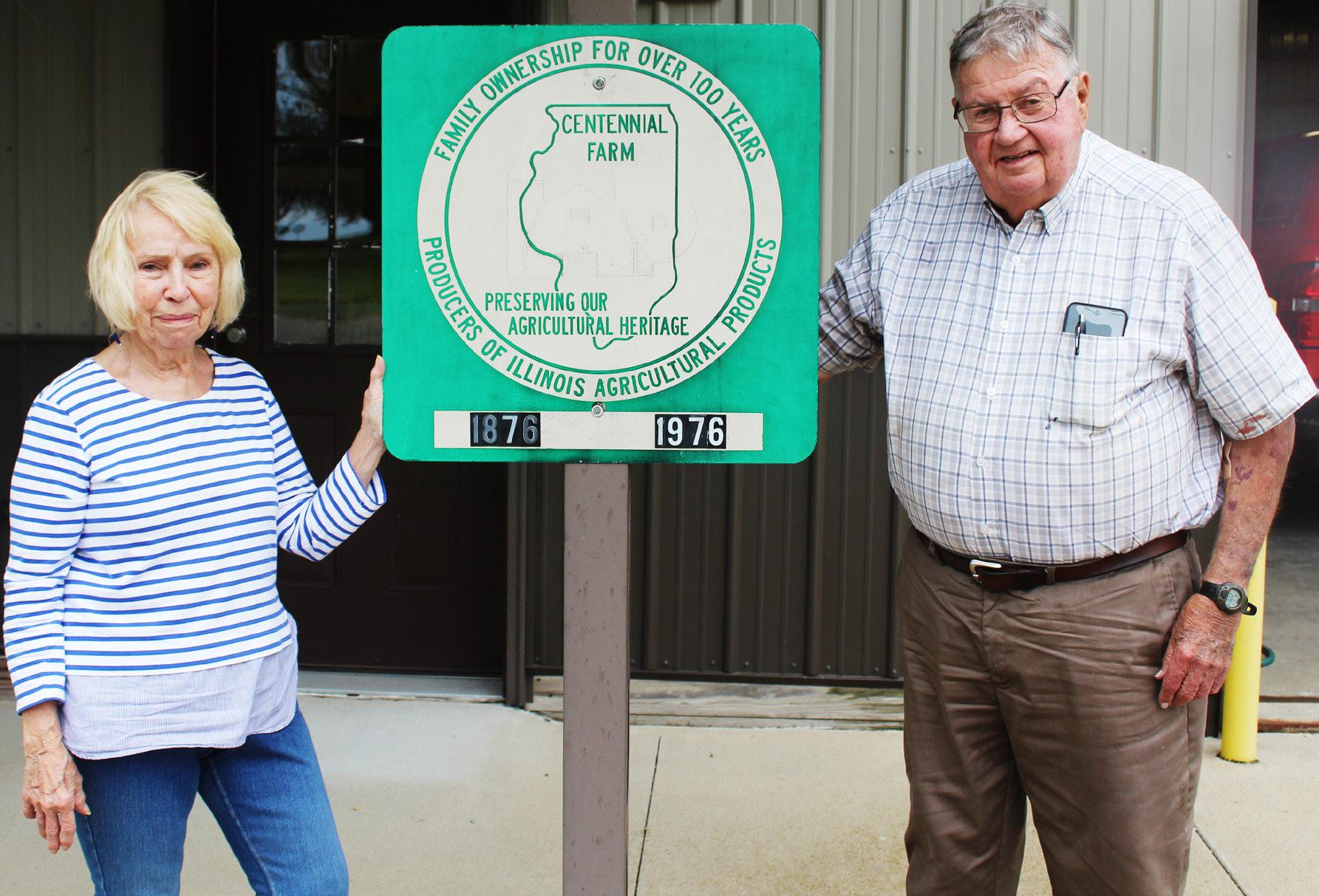
Below: Lyon Legacy Farms, owned by Nadine and David Lyon, turns 150 this year. They’re seen here with their family’s centennial farm sign from 1976. In the photo on the facing page, 5-year-old David (center) sits on his father Raymond’s lap in 1948. His grandfather Hubert is at right.
ONE THAT PROVIDES.
The couple still takes pride in seeing the fields cared for and the farm remain active. Even after stepping away from day-to-day operations, David admits there are times when he misses climbing into a tractor.
“We wish we were still farming, but there comes a time when you can’t get on that tractor or combine anymore,” Nadine said.
Though neither David’s nor Nadine’s children have expressed interest in taking over the operation, the couple is proud to see the farm reach its sesquicentennial year. For now, they remain focused on preserving the land and the memories tied to it while considering what its future may hold.
The farm’s beginning in 1876 goes back to David’s great-grandfather, Moses Harmon, a Civil War veteran, and his wife Harriet. Their daughter, Florence, married Hubert “Bert” Lyon in 1900, and they settled on the Harmons’ farm in 1902. Hubert, a charter member of the Whiteside County Farm Bureau, and Florence retired from farming
in 1942. Hubert and Florence’s son (David’s father), Raymond, was born in 1914, and he farmed — with help from his brother Wayne — until his death in 2000. Raymond married Ruth in 1941; she died in 2001. David’s only sibling, James, died at age 10 in 1948 of heart issues.
David gradually took over the farm’s ownership from his parents as they wound down their involvement. He eventually moved from the farm to Erie, where he managed a chemical and fertilizer company, and then to Davenport, where he started an environmental ag consultation business which took him to farms all over the Midwest.
Nadine’s son, Shawn Swanson, lives in the farmhouse, which recently was separated from the farm property. Although the farm has changed over the decades, many of David and Nadine’s favorite memories remain.
David was only 5 or 6 years old when some of his earliest farm memories took shape. Before the dairy herd was sold, he would accompany his father to the barn in the early morning.
“I can remember when Dad milked dairy cows, and I would go out early in the morning and watch him milk, and I’d lay down in the hay and take a nap while he was milking,” David said. “After the milking was done, we’d go in the house and have breakfast. That’s one of the first things I can remember. I could fall asleep laying in that hay.”
LYON cont’d to page 9
As he got older, there was less time for naps and more time for work. David recalled helping with chores around the farm, including shoveling manure from livestock pens. It wasn’t always enjoyable work, but like many farm kids, he learned the value of seeing a task through to completion.
One of his favorite memories involved a Holstein cow he named Queenie. The memory of her has stayed with him for more than seven decades, serving as a reminder of how closely farm families lived alongside their animals.
“She had a calf in a pasture of ours,” David said. “My mother came out of the house as I was walking back toward the cow, and she yelled at me, ‘Don’t you go!’ Cows can be very protective, but Queenie wanted to show me her calf — she was proud of that.”
Large family gatherings were just as common as neighborhood work days. David recalled Thanksgiving and Christmas celebrations that regularly brought together about 30 relatives.
Nadine grew up in town, and it didn’t take too long for her to adapt to the farm life. She enjoyed mowing and being on the machines, and she and David developed their own set of hand signals while working in the field. She also remembers Ruth’s work ethic, and being among the first women to sell chickens door-to-door for Hy-Line. Farm wives of that era often balanced countless responsibilities, working long hours while helping keep family operations running.

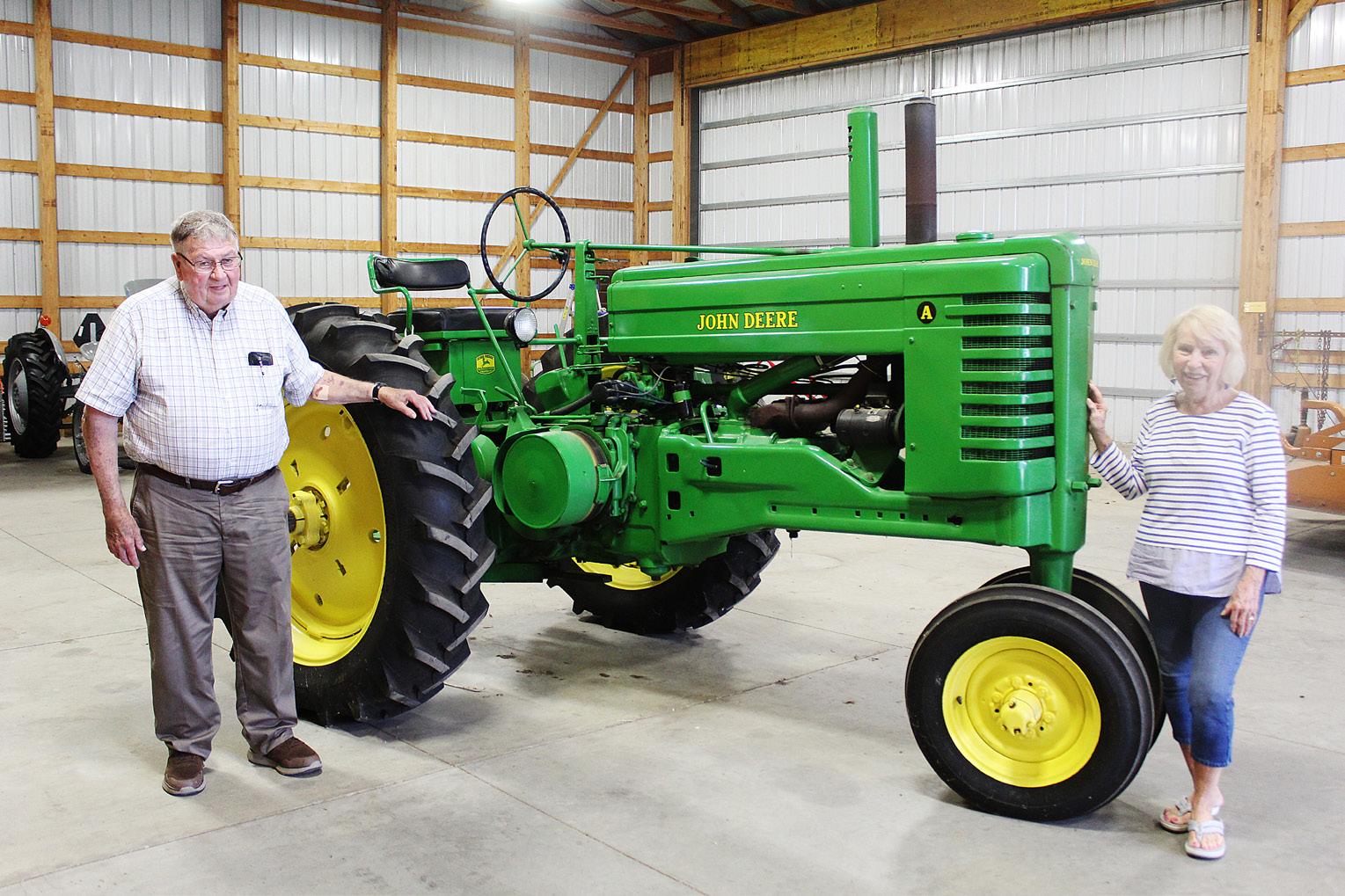
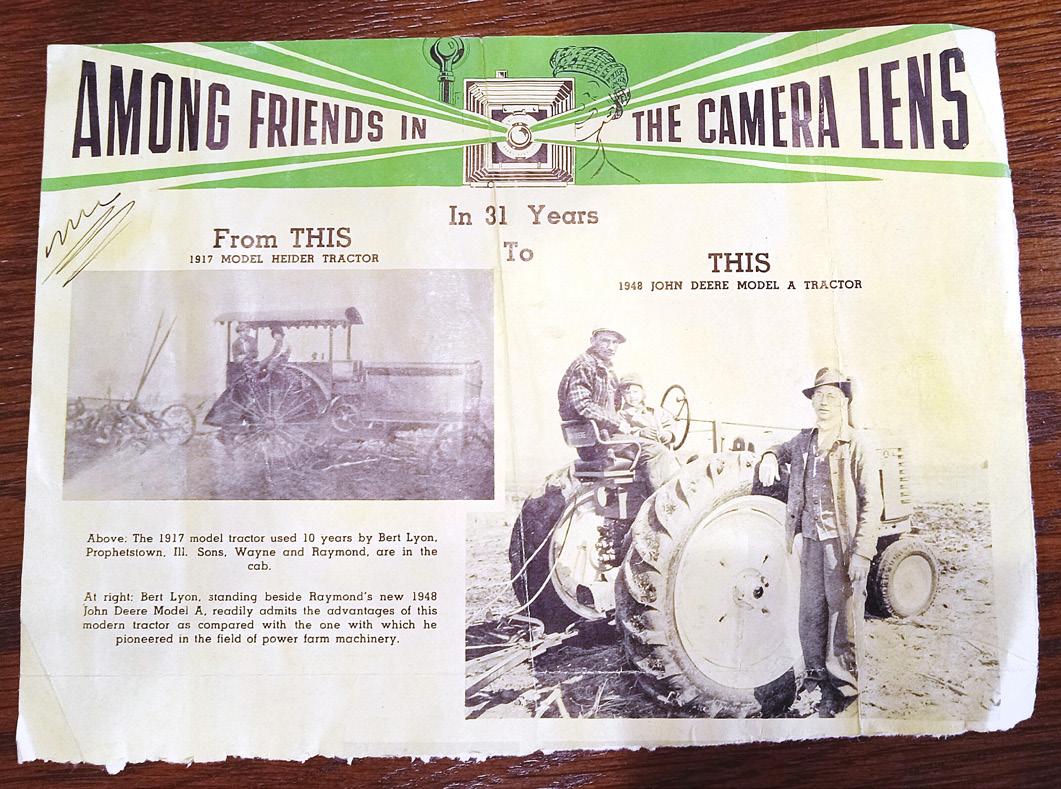
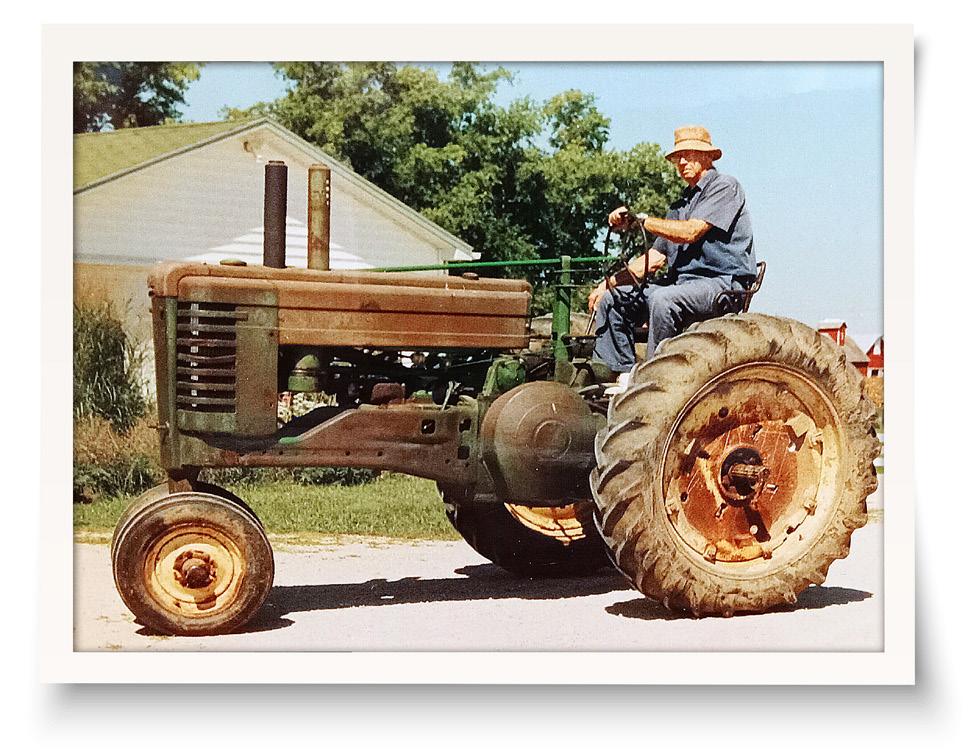





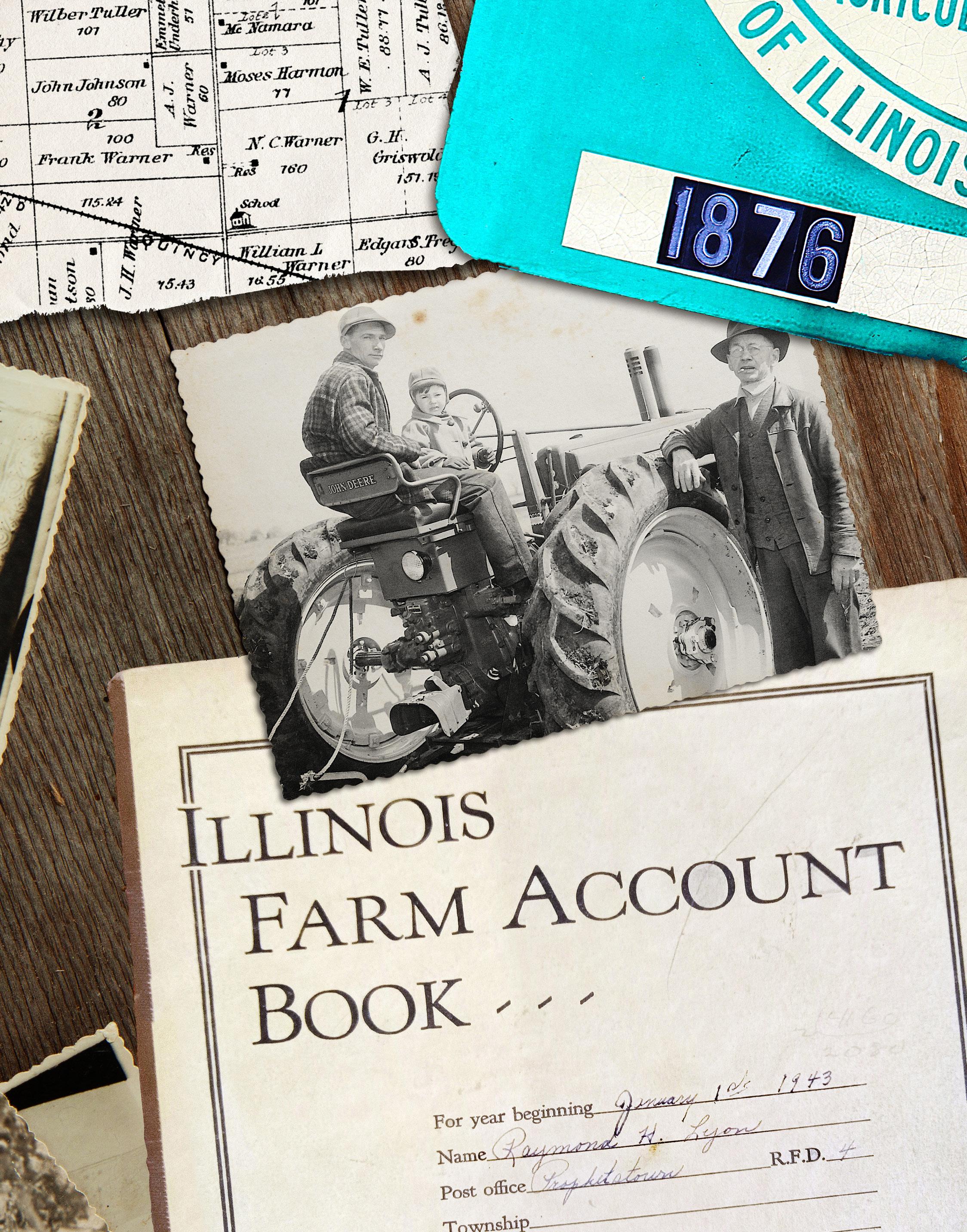
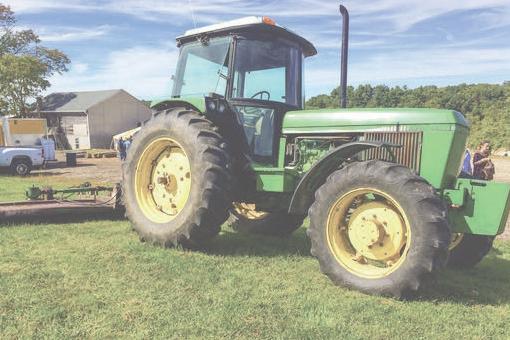
David and Nadine pose with a 1948 John Deere A like the one his dad, Raymond, bought new. David purchased the second Deere as a gift for his dad back in the ’90s; (Raymond is seen riding it, below left). The tractor was a little rough looking when he first bought it, but David later had it restored, after his father passed away in 2000. When Raymond bought the original tractor back in the ’40s, the family’s upgrade from a 1917 Heider tractor was newsworthy enough to end up in a John Deere newsletter (center left).



“Her and I had some good talks about farm life,” Nadine said. “She took care of the chickens, and she took care of the garden, fixed the meals and also had a job on the side. She worked hard. You talk about farm wives, I don’t know who could have kept up with her. I really don’t.”
Another reminder of days gone by: A farm accounting book dating to 1943, the year David was born. Ruth used it to record expenses, sales and other farm records by hand. The book offers a glimpse into the careful planning and management required to keep a family farm operating through changing times.
“Not all people kept track like this, but all of the better farmers did,” David said.
While Ruth tended to the bottom line, Raymond tended to the tractors, even after a disaster culled a large part of his herd of Deere: a fire that destroyed a machine shed and nearly everything stored inside it, including much of the John Deere equipment Raymond relied on to operate the farm.
Then a Case dealer stepped up and offered a solution.
“Dad was pretty much all John Deere,” David said. “The Case dealer from Erie, Charlie Brown, called Dad and said, ‘Pee Wee, what do you need?’ Dad said, ‘I don’t know, we don’t know all we lost, but I got to get a tractor with a manure loader because we have cattle and have to get manure out.’”
Brown offered to let him use some Case equipment for a while to see if liked it — and it turned out he did.
“He said he’d use it and see if he liked it. .. he ended up buying a
couple of Case tractors, and some other Case equipment. He was a pretty good salesman to do something like that.”
One of those John Deeres did end up making a comeback — of sorts.
When Raymond took over the farm, he bought a 1948 John Deere A. The tractor made it into a John Deere newsletter not long after its purchase, and featured a picture of Raymond, a young David, and Hubert. Shortly before Raymond’s death, David bought a similar tractor as a gift for his father. The serial number was even close to the original, though the tractor had lost much of its signature Deere green paint.
“They brought it that day after I bought it in Cambridge,” David said. “And he said, ‘You dumb ... kid. What are you doing?’ He said, ‘What a piece of junk!’”
But his reaction quickly changed once he got back in the driver’s seat, David recalled. “He got on that thing, and he was smiling earto-ear.” David would later restore the tractor.
LYON cont’d to page 11









Before Deeres and Cases rumbled over the fields, Hubert — who died when David was 20 — once owned a 1917 Heider tractor, one of the few of its kind in Whiteside County, and used it for about 30 years.
Things didn’t run as smoothly for Hubert, though, when it came to his car, David recalled.
“He had a Dodge with a push button on the dash instead of a gear shifter,” David said. “And a local mechanic found this thing, like a joystick, that would work the pedals for him because his legs weren’t good and he couldn’t work the brakes or the gas pedal. If you push it one way, it would speed up. If you did
ILLINOISDEPARTMENT OFAGRICULTURE
The Illinois Dept. of Agriculture’s Heritage Farm Program honors generations of farmers and agribusinesses who’ve worked to maintain family farms in Illinois. Go to agr.illinois.gov/ assistance/illinoisfarmprograms. html to learn more about the program.



something else, it’d do something else. The guy who worked on the car, his poor garage got hit five or six times. It wasn’t a good system.”
As for young farmers making a living, and their own memories, — today, Raymond has some advice: Keep the land and air clean. “During your tenure as a farmer or rancher, it is your responsibility to maintain or improve the air, soil, and water for future generations,” he said. “Remember, they are not making any more land.”
Reaching the farm’s 150th anniversary is a source of pride for the Lyons. It’s a milestone that’s increasingly rare in a countryside where family farms often change hands through the years.
“When you look up and down our road, this is the only farm left that’s still in the family,” David said. “You could take any other road and say the same thing.”
Though the future ownership of Lyon Legacy Acres has yet to be determined, David and Nadine have worked to ensure the property remains cared for long after their time on the farm comes to an end.
“David once said, ‘This won’t be the Lyon Farm anymore,’” Nadine said. “I said, ‘Yes it will. It always will be the Lyon Farm. It always will be.’ You ask around on some of these old farms, and they’ll say it isn’t who’s living there now, it’s who built the farm. We’ve done everything that we can do to make sure the farm is going to be taken care of the way we want it.” n Shaw Media reporter Cody Cutter can be reached at 815-632-2532 or ccutter@shawmedia.com.

With the powerful combination of RC3™ hardware and ReinCloud® software, you can conveniently manage your irrigation systems remotely, ensuring you have areal-time data and control at your fingertips.
www.alton-irrigation.com



www.alton-irrigation.com
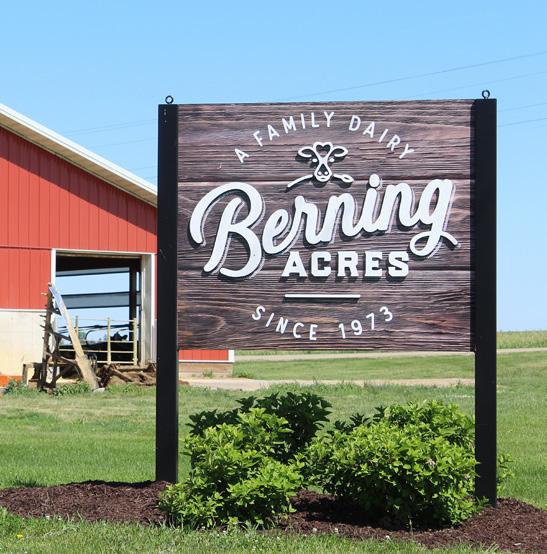
John Berning established Berning Acres in East Dubuque in 1973 with his wife Ellen. Their son Matt and daughter-in-law Natalie now owns the farm, but John and Ellen continue to help out.
At Berning Acres, families, school-age children and vacationers are discovering those experiences firsthand through farm tours, camps and hands-on activities designed to reconnect people with agriculture and the dairy farmers who produce their food.
CODY CUTTER/CCUTTER@SHAWMEDIA .COM
Matt and Natalie Berning are second-generation owners of the farm, having gradually taken over from Matt’s parents, John and Ellen, who started the farm in 1973. Their five young children — Aloysius, Louis, Rhett, Celia and Willa — help out, too. The nearly 500-head herd includes black-and-white Holsteins, red-and-white Holsteins, Brown Swiss, Jerseys and a handful of Ayrshires.
Though the idea had been taking shape for years, the farm didn’t launch public tours until 2021, and since then they’ve grown to attract a growing number of guests — last year, they welcomed around 1,000 to its tours, camps and special events.
Natalie, who handles the business side of the operation and leads tours, didn’t grow up on a farm; before joining it full time, she worked as a teacher.
“After our fourth baby was born, I decided to stop teaching and enjoy them while they were little and were around,” Natalie said. “I stayed home with them and then had another baby then when he went to preschool, I had thought about this idea to invite people out. We had always done it with family and friends, but this is a way to do it and open it to the public more. I joke that [Matt] never gave me a job at the farm, so I created one myself.”
The farm sits about 10 minutes either way from the tourist haven of Galena and the town of East Dubuque, placing it within reach of millions of annual visitors who travel to the area each year. The endeavor to welcome guests onto the farm has evolved into an opportunity to educate people who have become increasingly removed from agriculture, and to expose them to a real working farm, Natalie said.
BERNING cont’d to page 15
Farm faster with fiber.
Modern farming runs on data. Fiber internet delivers speed, stability and future-proof technology to keep you competitive and productive. Run ag tools without lag
during peak hours
field data & imagery instantly
jcecoop.com/fiber.
monitoring for farm processes
weather, markets and cloud platforms
“Some people are three generations removed from a farm, or don’t have any sort of farming in their recent background,” Berning said. “People often say, ‘Back in the day, my grandpa was a farmer,’ or ‘My uncle was a farmer,’” and with their farm, she said, they can let people “see what a real working farm looks like and learn about everything that goes into caring for cows that create this amazing powerhouse beverage every single day.”
Helping those dairy dynamos is Matt, who takes care of the cows.
During the farm’s tours and camps, visitors can milk a cow, feed calves, interact with animals and learn about the technologies used on a modern dairy farm. The experiences are intentionally handson, but they are also designed to answer questions many consumers have about food production.
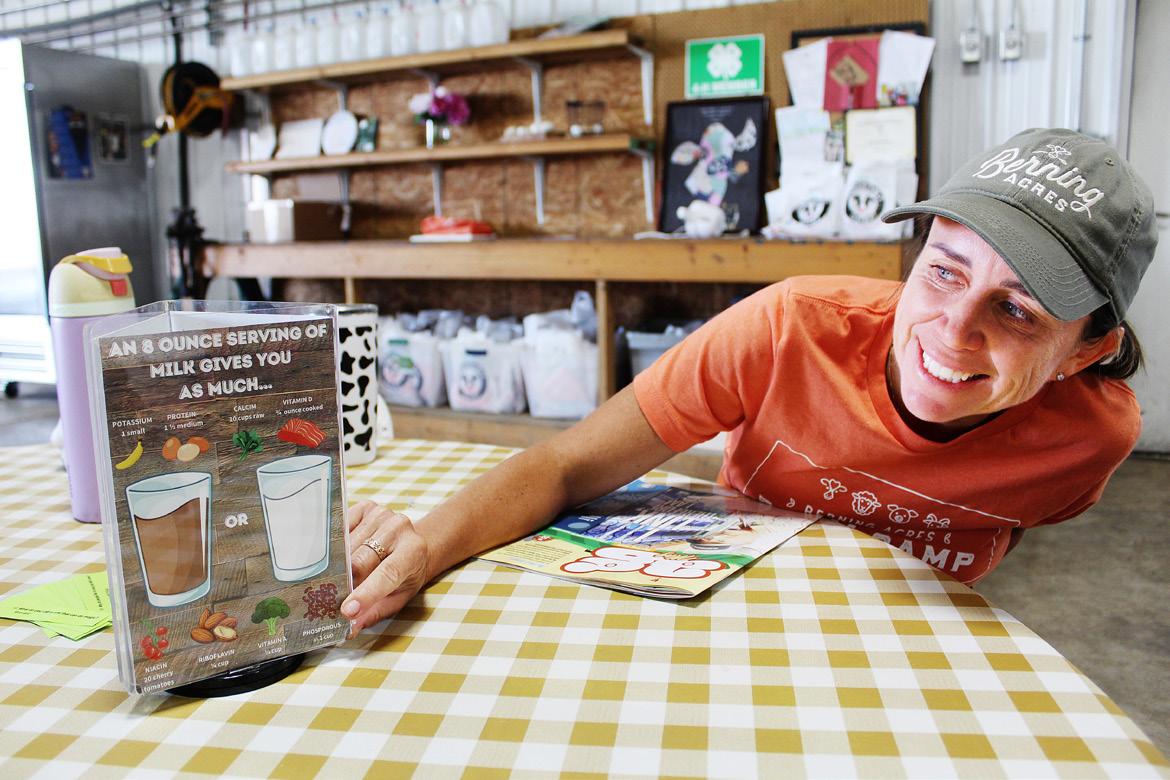
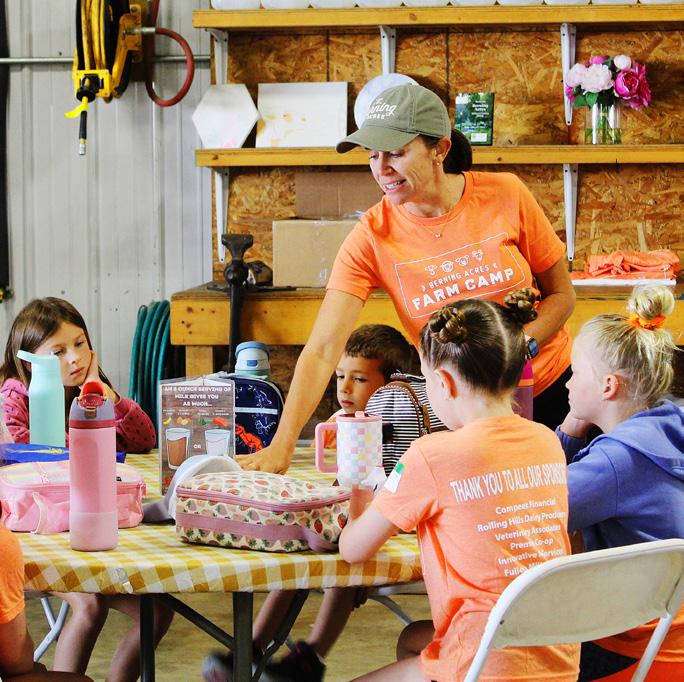
Displays at gathering tables compare the nutrients in an 8-ounce glass of milk to foods many people recognize. Guests learn about milk’s protein content, vitamins and affordability. Natalie said she’s noticed how a growing number of people care about how their food is produced these days and what’s in it.
Natalie and her family are big fans of the moo-juice, and they’re happy to share its benefits with visitors to the farm.
“They kind of give you an idea about how amazing milk is,” Berning said. “It’s a totally natural product with nothing added to it other than Vitamin D, and they can see the list of ingredients. It’s a neat visual to see what’s in a simple glass of milk. It’s really powerful. We tell them it’s the biggest bang for your buck at the grocery store. At 22 cents a glass, I don’t know where else you can find eight grams of protein.”
One of the biggest surprises for guests, Natalie said, is knowing the amount of technology involved in modern dairy farming. Cows wear monitoring devices that track health and activity, ultrasound technology does pregnancy checks, and an automated feeding system mixes and delivers milk to calves while tracking how much they drink and how often they visit the feeder. Elsewhere in the process, nutritionists help formulate feed programs, and veterinarians visit regularly. Every aspect of a cow’s health and productivity is monitored.
BERNING cont’d to page 16
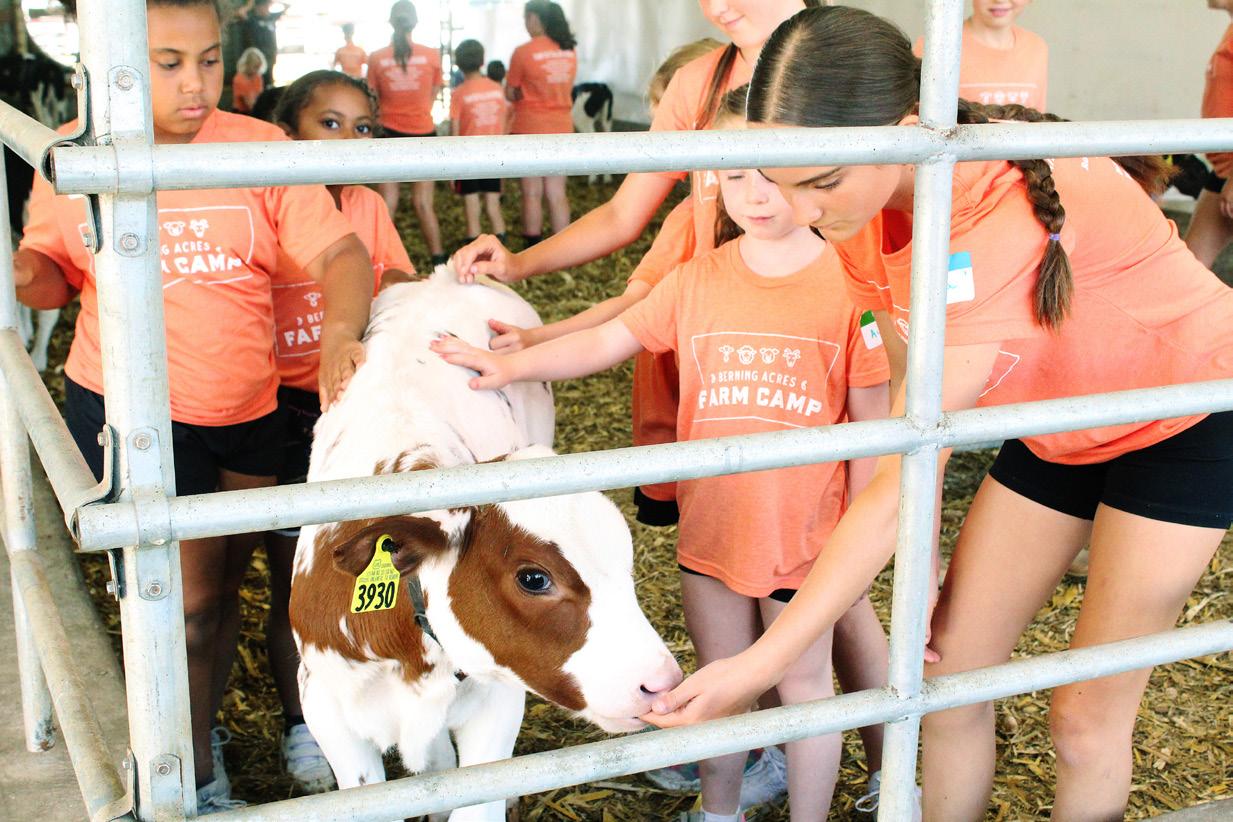
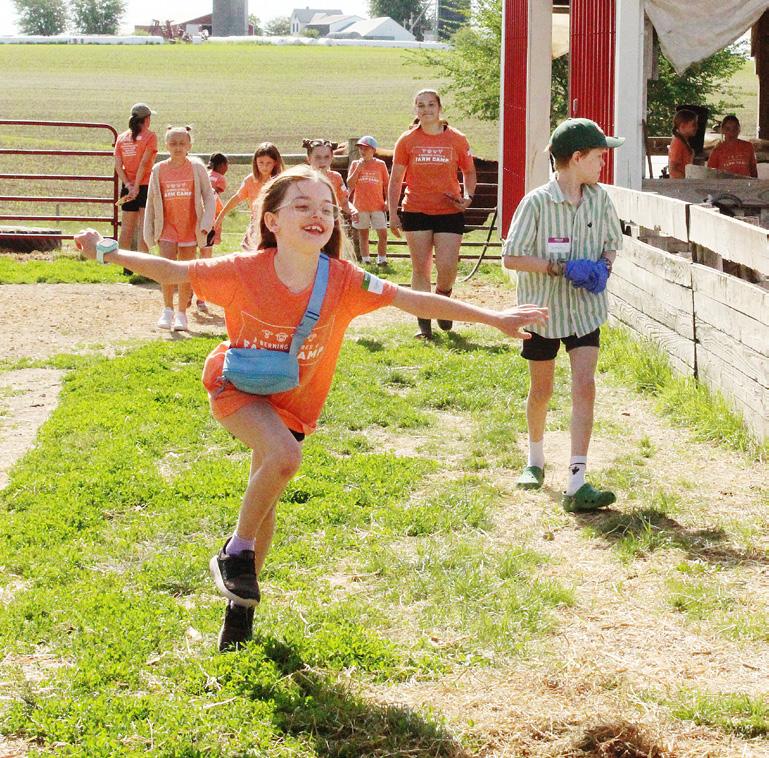
During Berning Acres’ farm camps, kids can unplug, learn about farms, and take part in fun activities.
UTTER/CCUTTER@SHAWMEDIA.COM
BERNING cont’d from page 15
Parents learn a lot, too, Natalie said, noting that she hasn’t heard of anyone who experienced it and didn’t learn anything new.
“We get some adults who learn more than the kids because they’ve become far removed from their food,” Natalie said. “We make it a lot of fun. It’s super interactive, but we also give you a ton of information. ... They’re genuinely intrigued and learning a ton ... It ends up being a really amazing experience for adults also.”
Summer farm camps have become one of Berning Acres’ most popular offerings. At the two-day camps held in June, kids complete farm chores, learn about cattle, spend time and care for farm animals, make dairy products and participate in outdoor activities such as hay rides and scavenger hunts.
“They get to do something different than a sporting activity,” Berning said. “Everyone can be successful at farm camp, and they get to do something that they don’t typically get to do. Kids love animals, and love being outside, and love moving their bodies. They’re not having a screen or something in front of them.”
The camps have developed a loyal following, with some families bringing all the kids, and some returning to camp year after year. Many campers come from towns and cities where they never get a chance to interact with farm animals.
The camps have become a family effort as well. They began with Natalie leading activities while her children were still young, and they’ve evolved into a role for the next generation of Bernings, who now help visitors learn about farm life from their own perspective.
Willa Berning, a high school senior and the Bernings’ oldest child, enjoys hearing how people unfamiliar with agriculture view the farm.
“I like learning everyone’s perspectives, especially if they aren’t farmers,” Willa said. “I like seeing their reactions when they think things are cool. They get to know how much hard work it is.”
For Wishy Berning, their oldest son, the experience is about helping visitors better understand agriculture while creating positive interactions with the animals.
“I like showing people what we do here and educating them,” Wishy said. “I like seeing people interact with the animals, and them having fun and seeing where their food comes from.”
What has surprised Natalie most since starting the camps is how deeply those experiences resonate, she said.
“It’s a little bit different for everyone,” Natalie said. “A lot of it is the core memory —t hey’re going to remember it. People talk about when they went to a farm as a child. It’s a childhood memory ... that kids are always going to remember.”
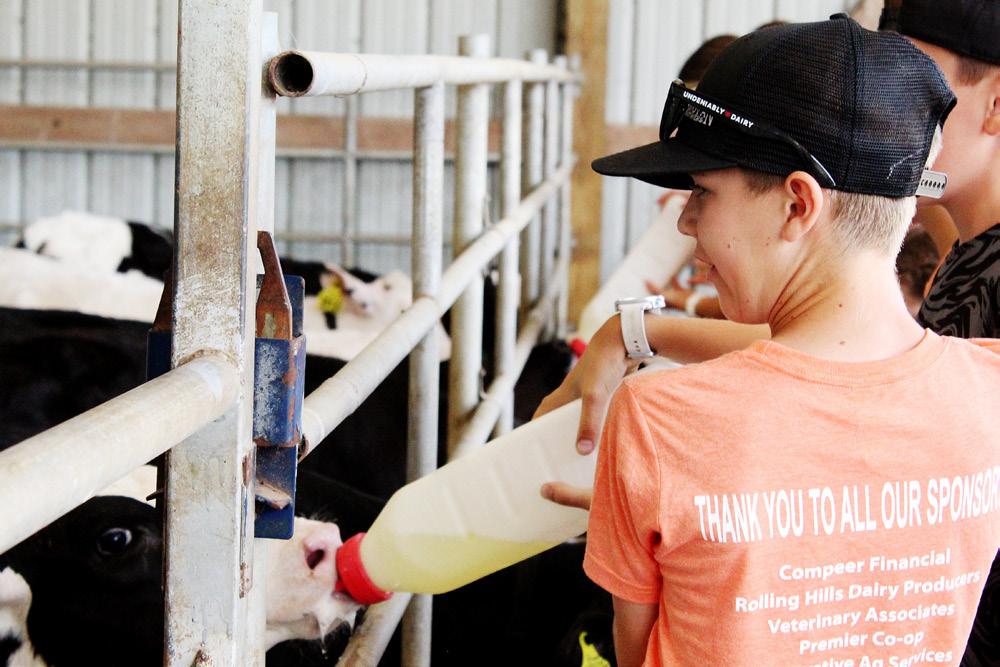
Adult-focused “Night at the Farm” events grew out of a question Natalie heard repeatedly after launching farm camps and tours: Could adults have a farm camp of their own? Natalie has responded by creating evening experiences that offer hands-on farm activities along with local food and beverages. Natalie describes it as “a fun, out-of-the-box date night.” Guests can milk cows, feed calves, interact with animals and learn about modern dairy farming before gathering to enjoy cheese curds or charcuterie while watching the sun set across the Driftless Area countryside.
Most visitors arrive from outside the farming community, many of them tourists exploring the Galena area. For the kid-geared events, the response from parents has been equally meaningful.
BERNING cont’d to page 17
“One of the things that surprised me that first year we did it was how appreciative the parents were,” Berning said. “They were so thankful that their kiddos were going to have this experience. Maybe they got to do it at their grandparents’ or uncles’ or something like that, but that farm maybe isn’t in existence anymore, and they were just so grateful that their kiddos got to do this.”
Matt, too, has seen the impression the family farm makes on guests.
More info
John and Ellen started the operation with 30 cows and 120 acres while raising two daughters, and even more than 50 years later still remain active contributors. Over the years, the family grew, eventually adding five more children, including Matt — who was the only one who chose to continue the dairy tradition.
“The coolest thing about dairy farmers is that they love what they do so much that retirement really is something they never even think about,” Natalie said. “Not very many people can say that in their professional lives. John is out every day doing something useful. Ellen can hop on a tractor when they’re short on the field, can whip up a farm meal, and used to take care of the calves, and she’s our bookkeeper.”
Farm tours at Berning Acres, 8850 N. Menominee Road in East Dubuque, are available from May to October, or by appointment on other months. Find it on Facebook, Instagram or YouTube, go to berningacres. com, email n.berning@icloud.com or call 563-543-8936 to arrange tours or for more information.
“My husband says, too, that he’ll chat with them when he’s walking by here and there, and they always have something so nice to say, and it fills his cup,” Natalie said. “That’s enough for him to keep going. It’s an unexpected bonus of having this whole thing, and getting a pat on the back from strangers who, if we weren’t doing this, that wouldn’t happen.”
Whether visitors arrive for a family tour, a summer camp or an evening outing, the Bernings want people to leave with a better understanding of farming, dairy production and the people behind it.
The experience lasts only a few hours, but stays with people far longer.
“We get to meet the coolest people here because they’re people who want to come and learn something new,” Natalie said.
“They’re on vacation, so they want to learn something new and come to a farm. They always have the nicest things to say.” n Shaw Media reporter Cody Cutter can be reached at 815-632-2532 or ccutter@shawmedia.com.



































































Farming memories don’t fade.
For some, it’s a tractor their father owned. For others, it’s the familiar pop of a hit-and-miss engine, the smell of freshly sawn lumber or the sight of grain being threshed the way it was generations ago.
They’re machines made of steel and iron — machines made to last, and it’s a good thing they have. Otherwise a local farm show wouldn’t have much to show.
As the calendar’s pages turn to August, exhibitors turn their trucks and trailers loaded with tractors and other equipment to a 25-acre spread in Franklin Grove where the Living History Antique Equipment Association hosts an annual show that celebrates the machines that reshaped the land and reshaped farming as we know it.

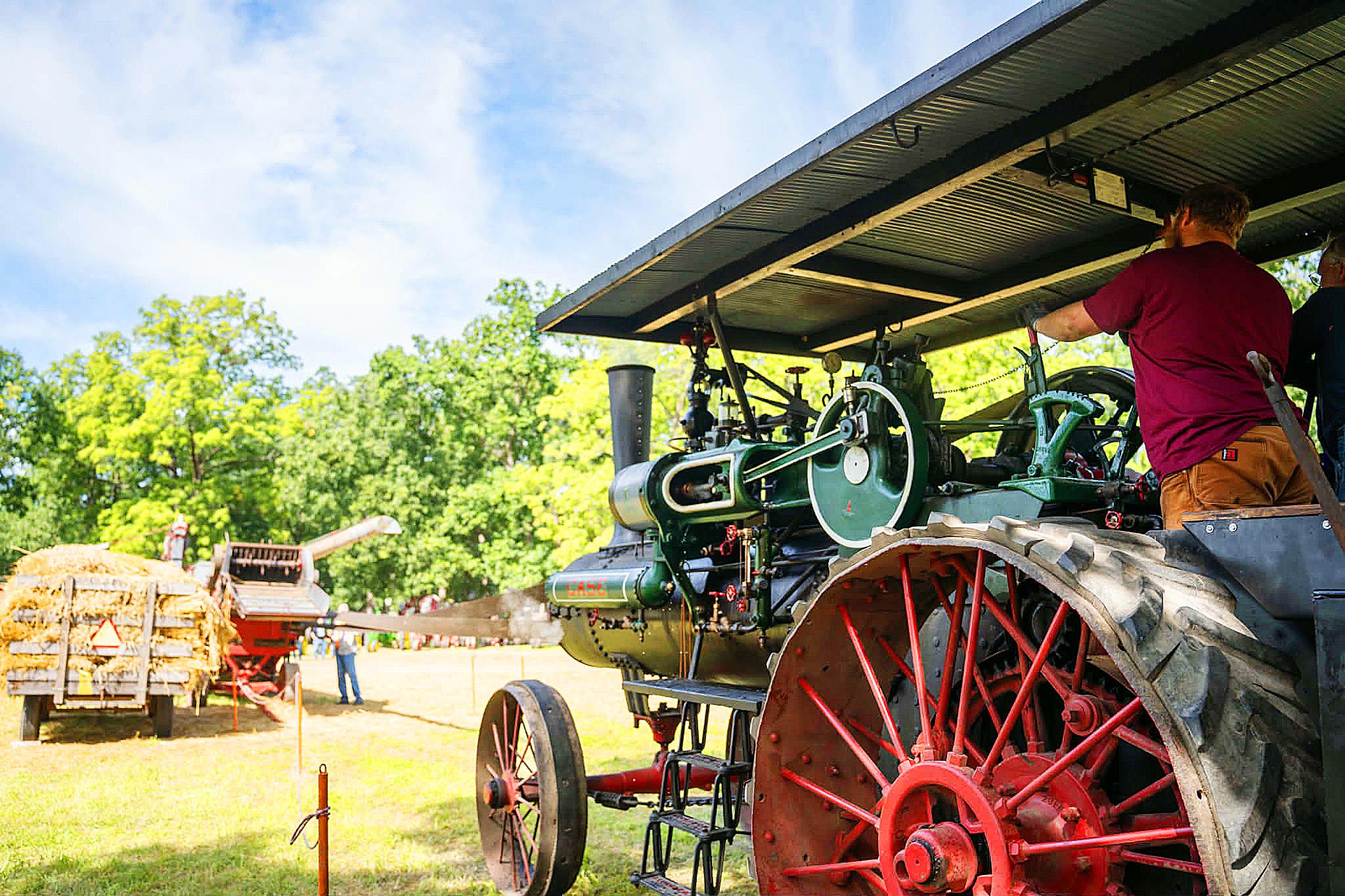
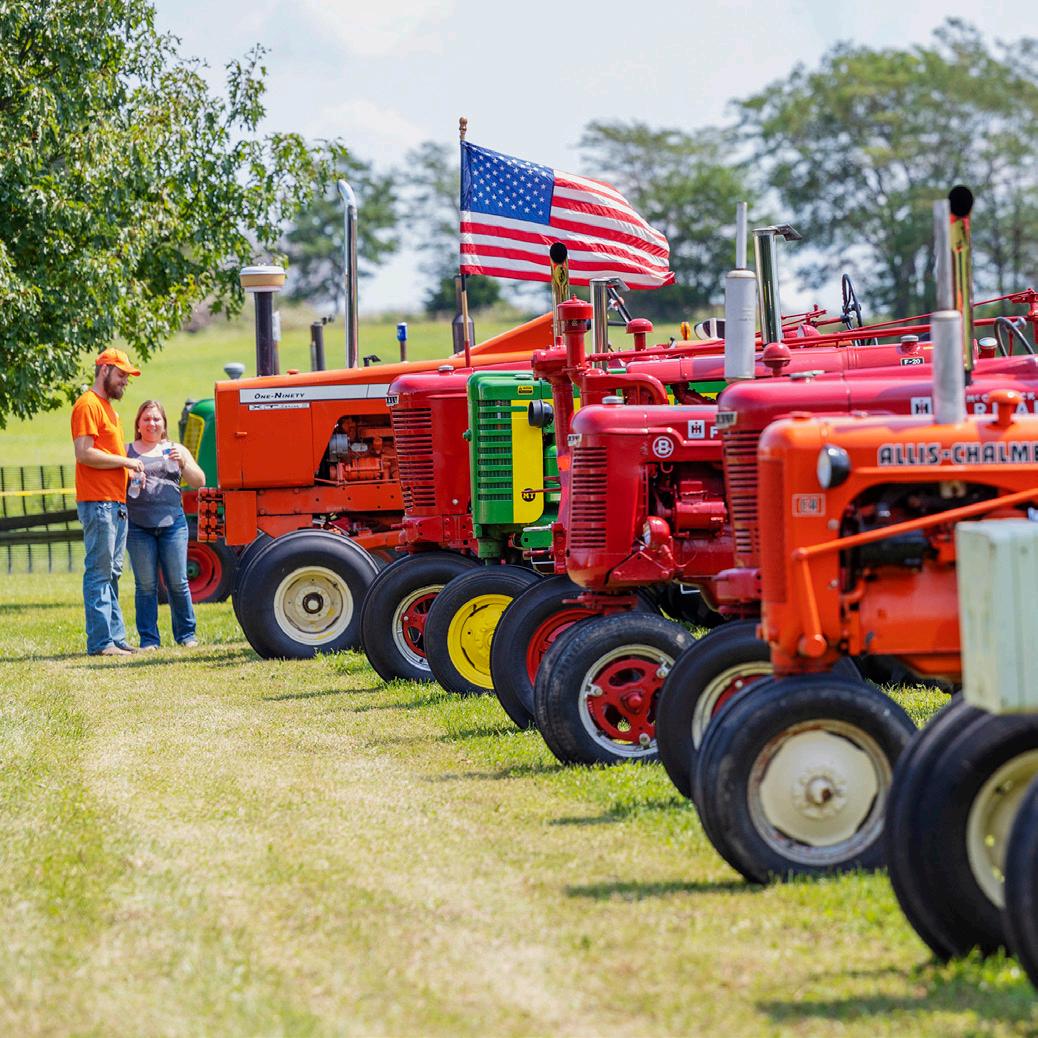
As powerful as those machines are, for many they represent something even more powerful: The history of modern farming and the memories that are part of it. Stories told through puffs of smoke and clouds of steam and heard above the roar and rumble of the engines. Those memories will take center stage Aug. 1-2 as the Association hosts its annual equipment show on the club’s 25-acre spread. This year’s event will feature Oliver equipment as the featured manufacturer and longtime member Michael Jahn of Lee Center as the featured exhibitor. It will also showcase working demonstrations, antique tractors, steam engines, family activities and other displays designed to bring agricultural history to life. Equipment comes from the collections of association members and like-minded enthusiasts.
Connections to the past and curiosity about it are what continues to draw exhibitors and visitors back to the grounds each year, Association president Brad Estock said. While the machinery itself is a major attraction, he said many attendees are really returning to reconnect with memories of family farms, relatives and ways of life that have largely disappeared from the countryside.
SHOW cont’d to page 20
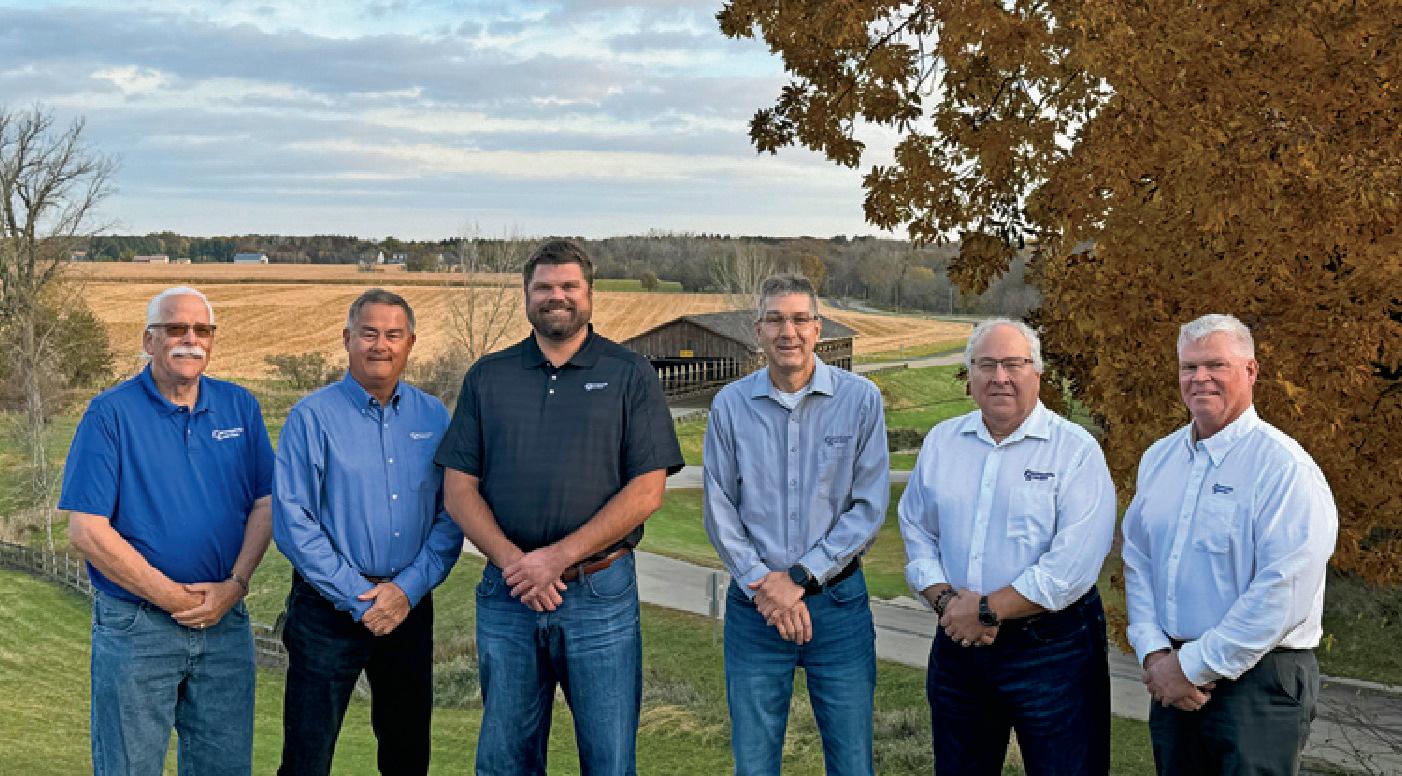
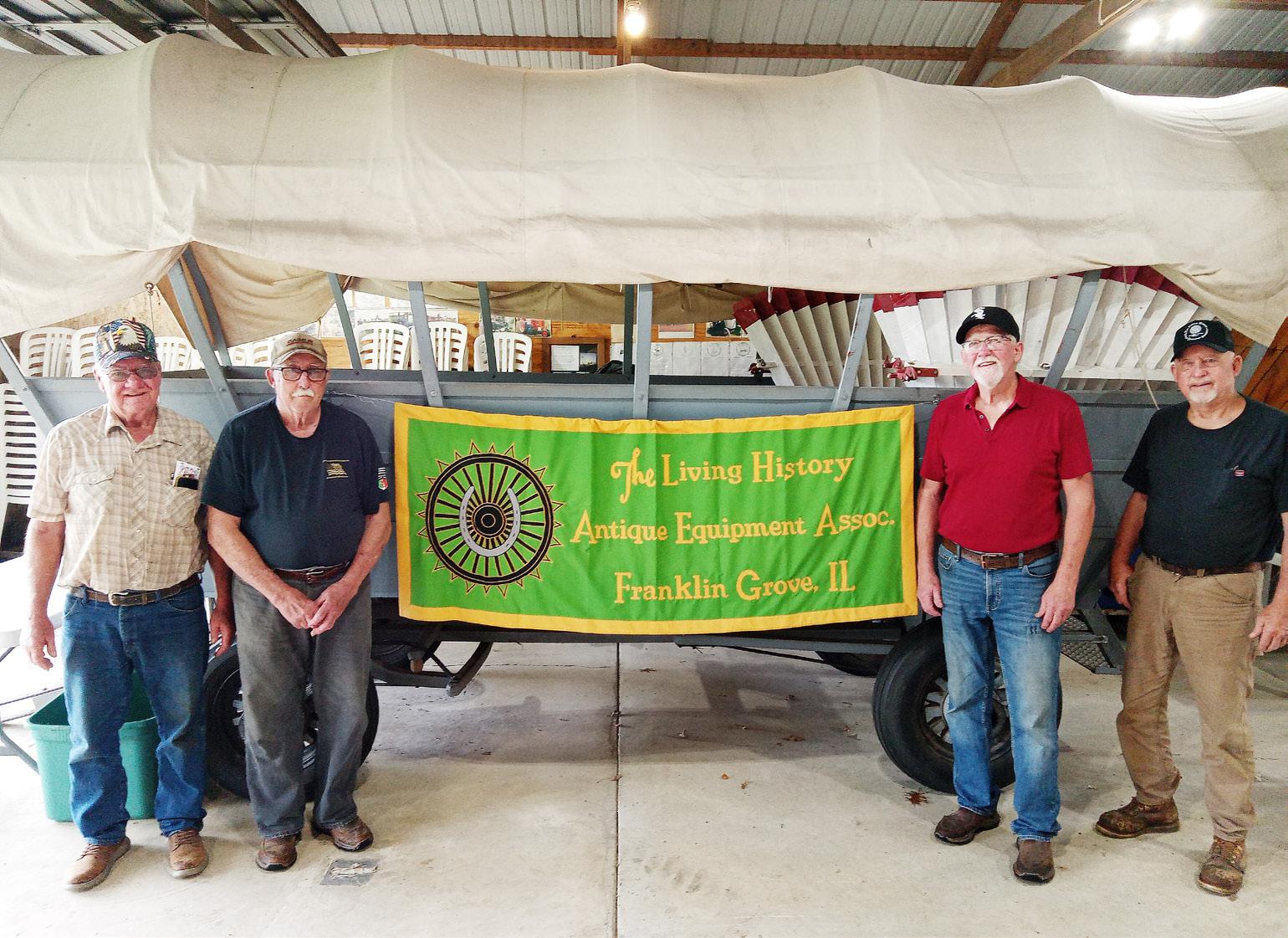
Members of the Living History
Antique Equipment
Association board, from left: Doug Kreiser, Jake Scott, Michael Jahn and Brad Estock.
“I look forward to it every year,” Estock said. “I grew up farming, and you don’t get that out of your blood. A lot of this is about memories growing up and the equipment we ran. That’s what’s the real attachment to this. It’s a lot of hard work, and that’s what it was growing up.”
This year’s show is from 8 a.m. to 4 p.m. both days. The cost is free, but donations are accepted. It’s where sounds of rural history will echo across the grounds as antique tractors roar to life, belts begin turning and a steady rhythm of machinery fills the air. Visitors can watch wheat separated during threshing demonstrations, corn put through a sheller, straw shaped into bales and logs fed into a sawmill — one of the show’s signature attractions. Elsewhere, vintage gas engines will sputter and hum, rocks will be crushed by antique equipment and a working binder will demonstrate how farmers once harvested grain. An operating flour mill, tractor dyno, antique garden tractors, agricultural memorabilia and flea market vendors will add to a weekend designed to showcase the ingenuity of farming’s past.
Sales • Farm Management • Market Evaluations










A 1914 Case 50-horsepower
“It’s great to go see [the equipment] work and see people have a lot of fun doing it.”
Doug Kreiser LHAEA board member
From pint-sized powerhouses to steam-powered giants to machines that aren’t afraid to pull their weight, if you’re into horsepower and history, the tractor show promises something for all ages and interests.
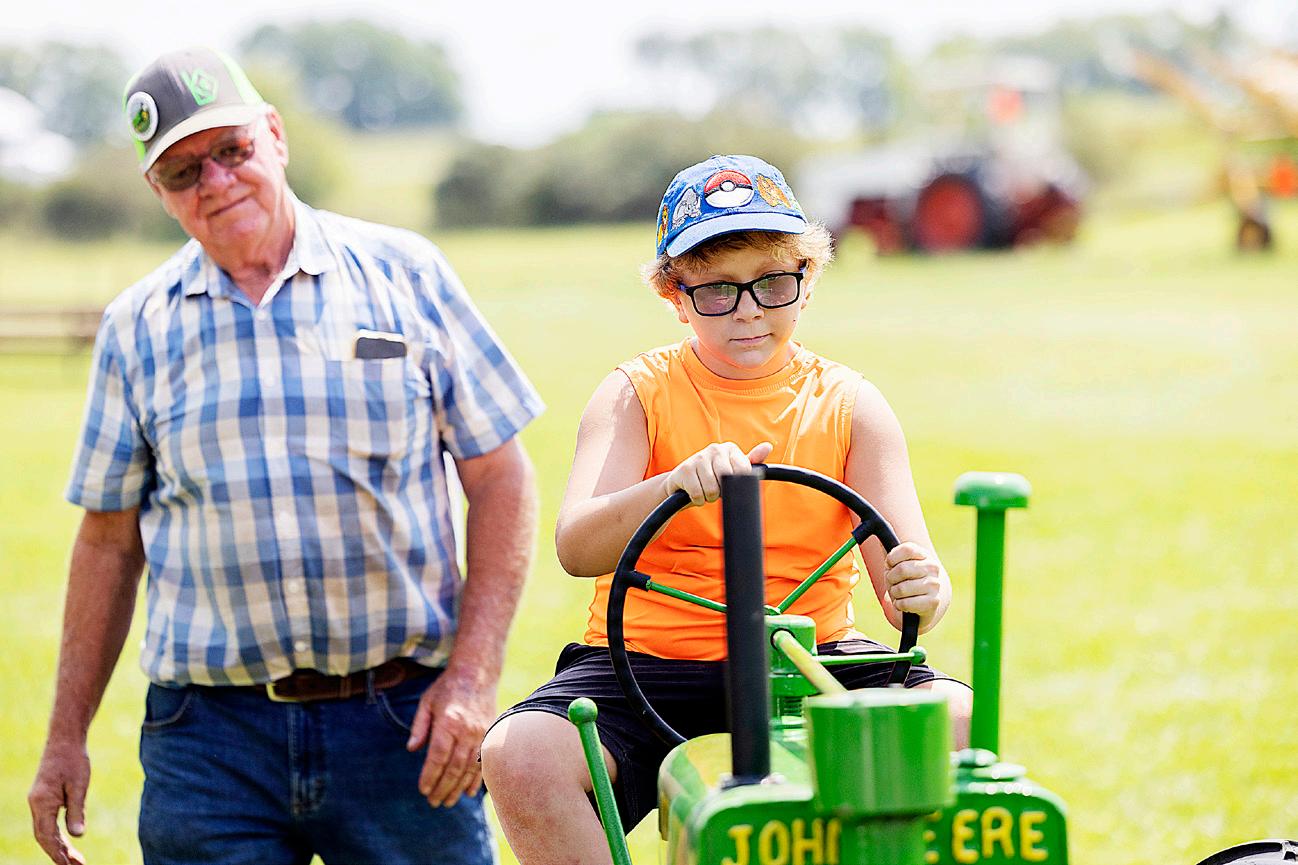
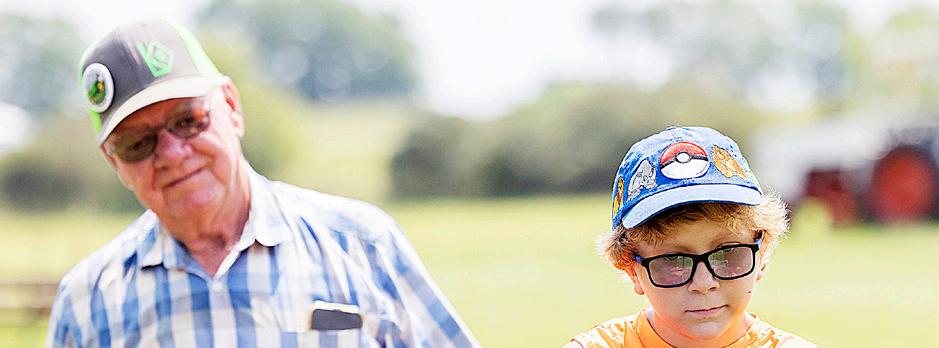
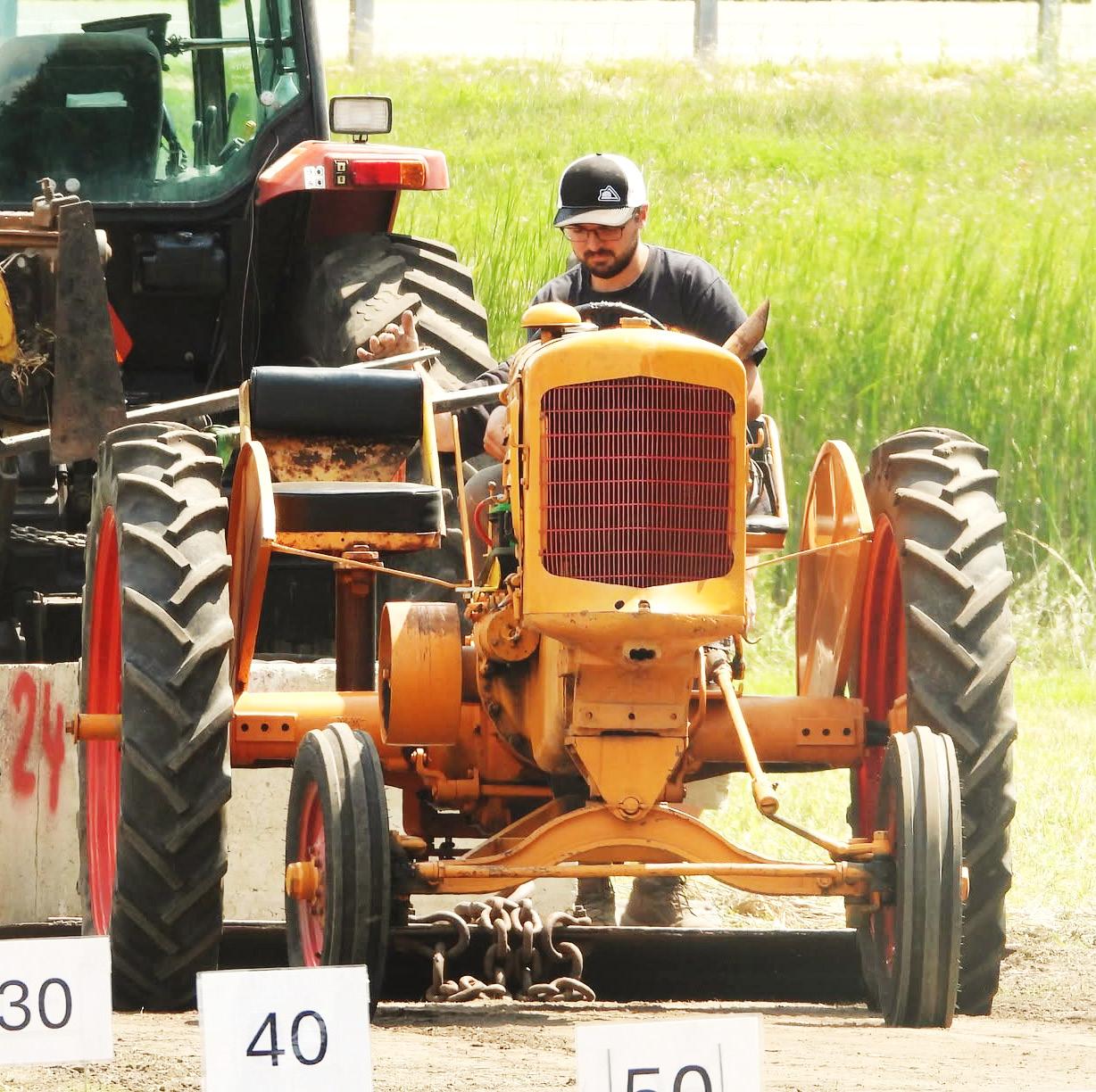
Above: The tractor pull is a crowd favorite at the show. Left: Archer Berg rides Doug Kreiser’s homemade
“Lil G John Deere” tractor in 2024
Jahn said families have embraced the hands-on opportunities.
“There are families with kids who’ve come here … who didn’t realize we were doing this, and they thoroughly enjoyed it for their children,” Jahn said. “They even wrote us and said they appreciated the chance to be able to come out to the show.”
Another crowd favorite returning this year is the Stone Boat Tractor Pull, which was introduced to the show in 2025. Unlike modern tractor pulls that use weight-transfer sleds, the competition recreates an older style of pulling in which tractors attempt to drag an increasingly heavy stoneboat as far as possible.
“In the old days, they just pulled a plate of steel with weight on it,” Kreiser said. “Every 10 feet on both sides of the track, the same people would step on that plate of steel and that would be harder on the tractor pulling. When they got down 100 feet, all of that weight added on would stop the tractor. That was back in the day, unlike the pull-sled things they have now. It’s the old-time pull, how they used to do it. We put it in first gear and go as far as you can.
“We did that out here and everybody just had a blast.”
cont’d from page 21 SHOW cont’d to page 23
Club vice president Jake Scott expects his sawmill demonstration to once again draw a crowd. He purchased a bandsaw mill three years ago, and his nephew operated it during last year’s event.
“It’s a huge part of the show,” Scott said. “People enjoy seeing that.”
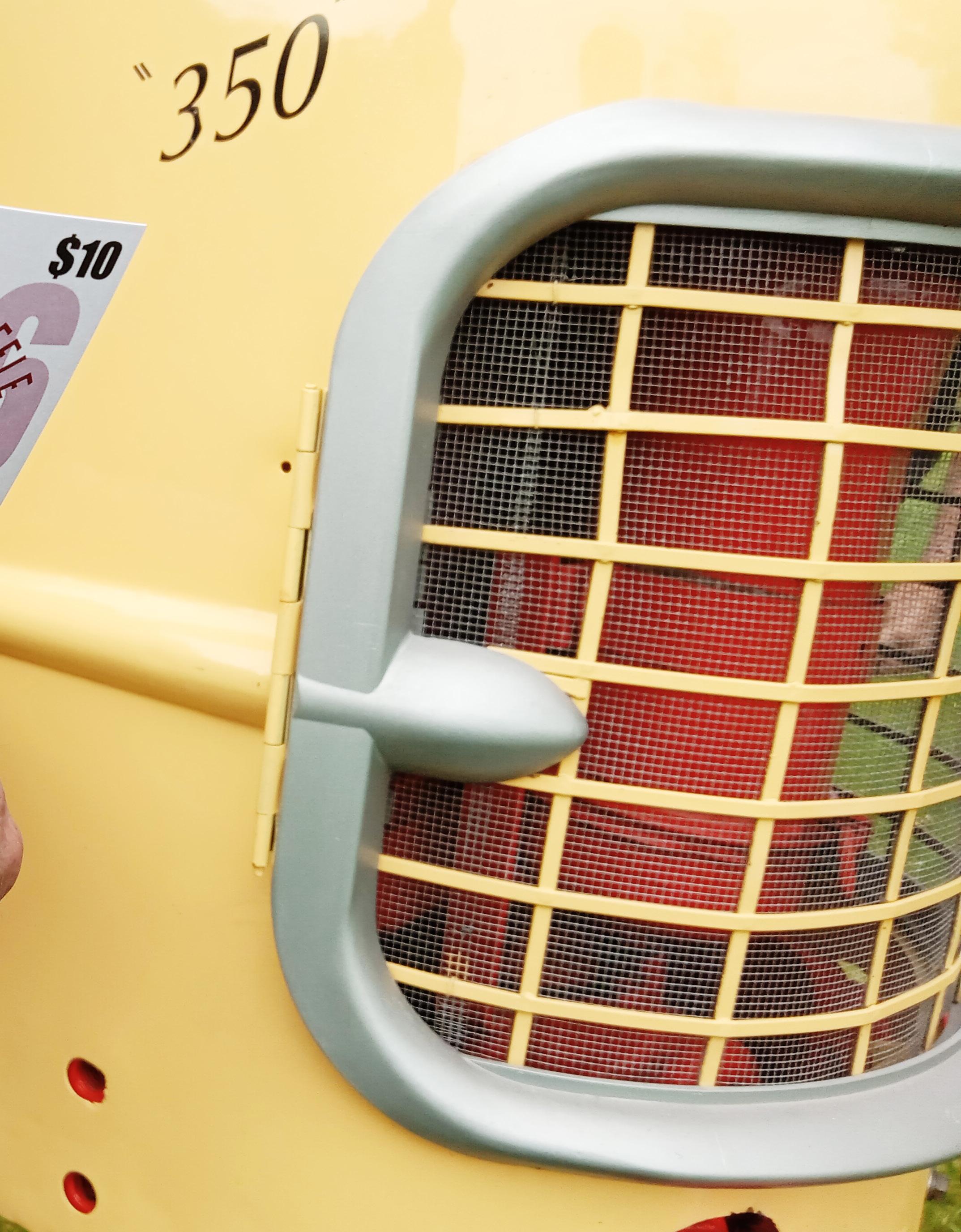
Scott is also preparing a restored 1957 Case 350 Round Nose tractor that will be raffled off during the show. Known for its streamlined rounded nose and limited production run, the tractor is a rare sight today. Records indicate fewer than 200 standard-model Case 350s were built, making it one of the more uncommon tractors to emerge from the company’s Rock Island factory during the 1950s.
“It was a lot of work,” Scott said. “It was only made one year. We pulled the dash out of it, which was bad, and we had it redone. That wasn’t cheap, $760 just to get the dash redone. It took me a couple of years to restore it. They’re a nice little tractor and you can get around with it. They just went on to something bigger.”
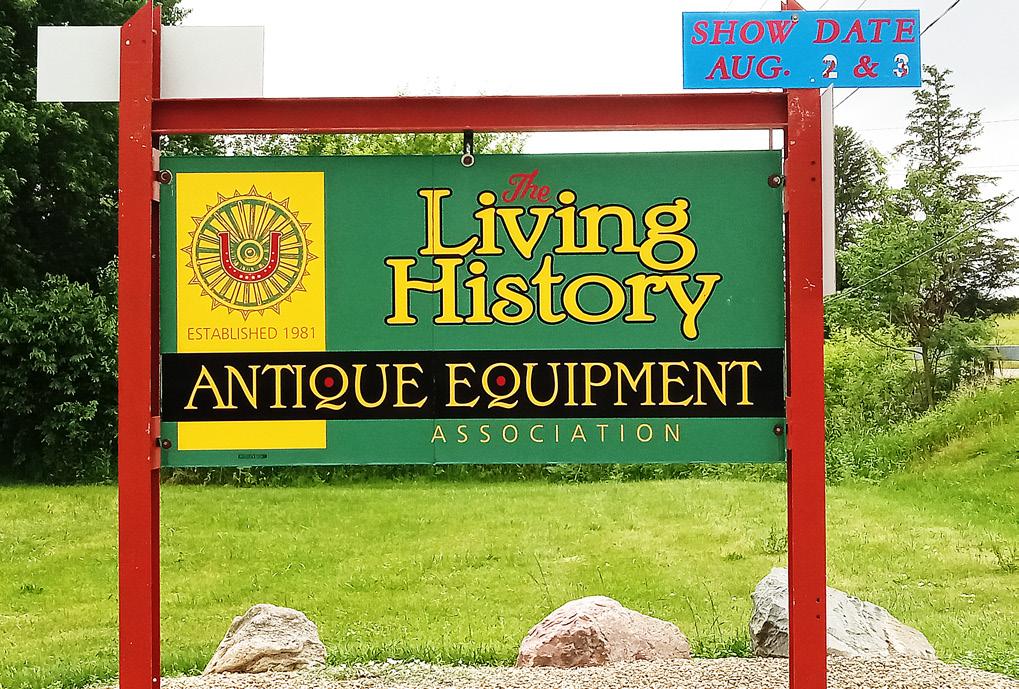
The Living History Antique Equipment Association was formed in 1981 to promote the educational and historical value of antique agricultural equipment and farming practices. The organization grows wheat and oats on seven acres of its grounds to provide grain for threshing demonstrations, with seed supplied by Cappel Seed in Rochelle.
Like many volunteer organizations, the club has seen membership change over the years.
“Most of the people who started this are gone except for a couple of charter member,” Estock said. “A lot of people who started this were farmers, and farm-related people. As things changed with farming families and industries, we’ve dwindled because there are bigger farms and fewer farmers. Our membership has changed, like any organization these days that are short of workers. We do the best we can with large grounds to maintain.”
Still, members continue investing in the club’s future, planning improvements to the grounds later this year, including re-roofing its gazebo and improving driveways. The property itself was purchased in 1998 using proceeds from food sales and donations from previous shows.
steam tractor owned by Austin Druien of Holcomb
SHOW
“We have beautiful grounds here that take a lot of work,” Estock said. “We have people who step up to do that. It makes you feel good when people come here who have never been here before and say, ‘What a beautiful ground, this is about the nicest place that we’ve seen.’ It makes it feel like a sense of accom plishment.”
Preserving the machinery is equally as important for club members as preserving the stories, skills and experiences attached to them — whether for longtime farmers who remember using the equipment or younger visitors seeing it operate for the first time.
“I just love having people come out and see it all and say they didn’t know of any of this, they love it, and they’ll be back next year,” Kreiser said. “That’s what it’s about. Ev erybody’s working together to get it done.”
Shaw Media reporter Cody Cutter can be reached at 815-632-2532 or ccutter@shawmedia.com. Mark your calendar
This year’s Living History Antique Equipment Association Show is from 8 a.m. to 4 p.m. Aug. 1-2 at the Association’s show grounds, 1674 Whitney Road in Franklin Grove. The cost is free, but donations are accepted. Find the Association on Facebook or go to lhaea.org for more information.
ALEX T
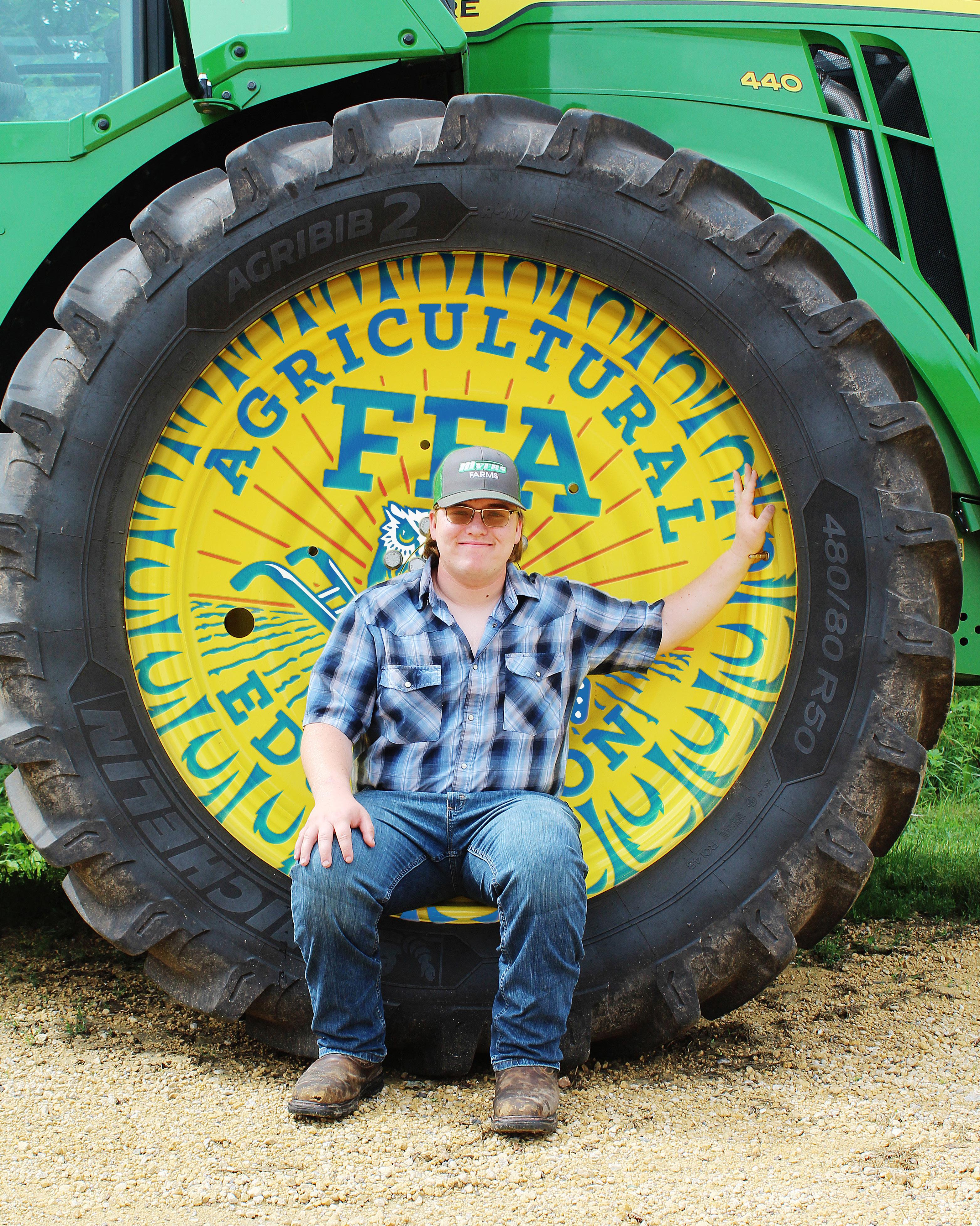
y the time most teenagers are deciding what they want to do after high school, Justin Myers already was helping manage farmland, keeping detailed business records and building experience on his family farm.
Whether he’s operating equipment, caring for livestock or tracking the financial side of the operation, farming had become both Myers’ livelihood and his future.
Those efforts have paid off in recent recognition.
Myers, 19, of Adeline, is one of four nominees for Illinois’ 2026 American Star honor — in the Star Farmer category — and he’s also set to receive his American
FFA Degree in October, two of FFA’s highest honors.
To reach the ranks of a Star nominee and earn an American FFA Degree, members are chosen based on their commitment to their local FFA chapter and state association, the work they’ve put into their supervised agricultural experiences (SAE), and the leadership and community service they’ve shown during their time with FFA. Myers and his fellow Star nominees were recognized in June at the Illinois FFA State Convention, and they’ll learn later this summer (after this magazine’s press time) whether they are among the 16 finalists chosen by the national FFA.
Myers’ recent honors are just the latest he’s earned, many through his work on the eight SAEs he’s completed — far more than the one or two many FFA members usually pursue. Honors include being a Section Winner (four times), a District Winner (two times), and Illinois State Winner in diversified crop entrepreneurship. He was also named District 1’s Star Farmer in 2025.

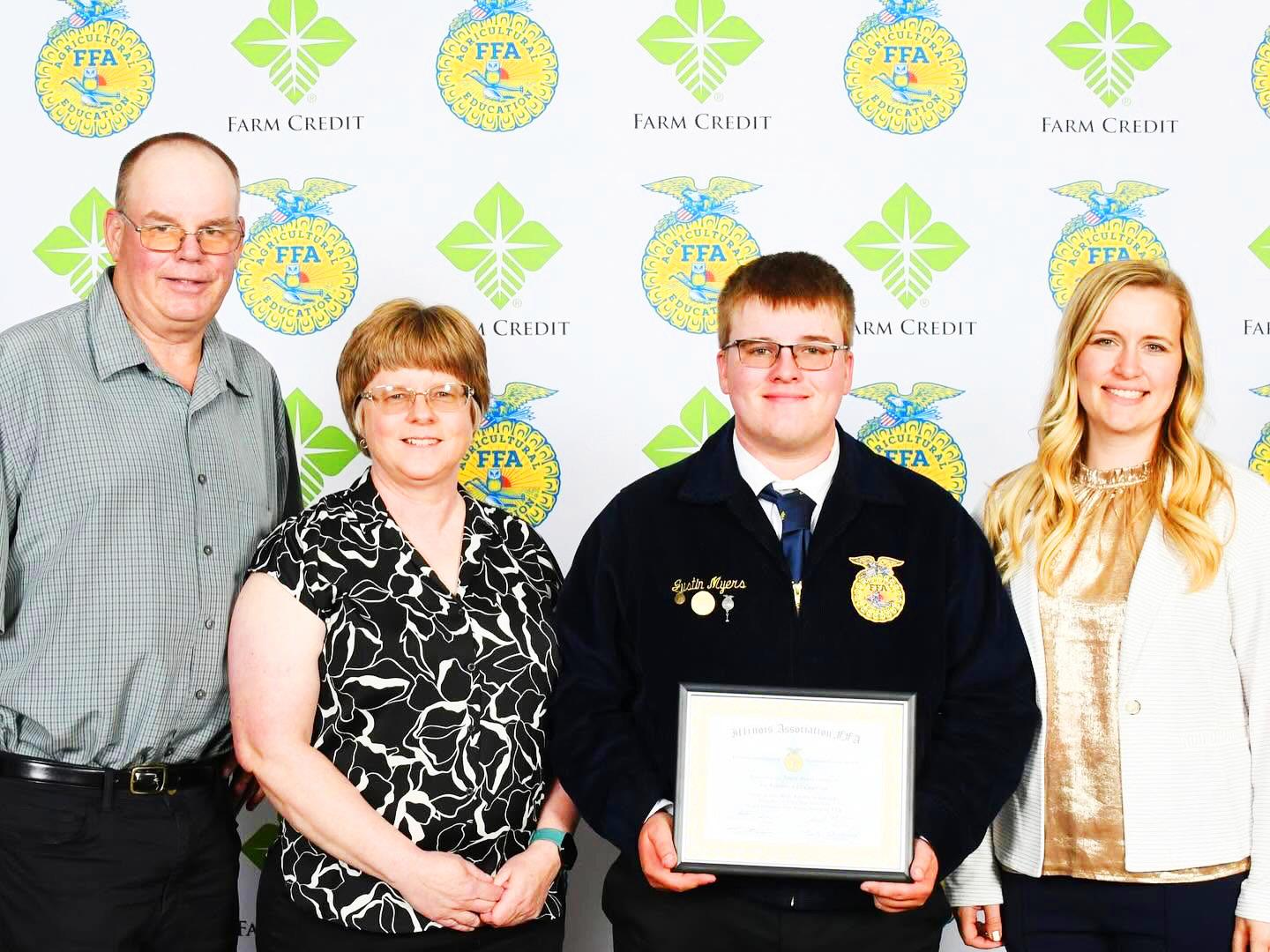
His father taught him many of the practical skills he still uses today, from driving tractors and semis to judging soybean moisture before harvest — an experience that led to a realization, at age 12, that he didn’t like their taste..
“I don’t know what it is with soybeans, but it was giving me the same reaction when I was chewing them, too,” Myers said. “I found that out for the first time. It was right across the road from my grandpa’s house. I wanted to learn how to do it — and yeah, I threw up.”
He adapted to the challenge.
“I can do it now. I grew out of it.”
Through FFA, Myers learned to document experiences on his farm through eight SAEs, covering diversified crop production, grain entrepreneurship, oil crop entrepreneurship, forage production entrepreneurship, ag service, beef entrepreneurship, sheep entrepreneurship, and ag business.
The record-keeping became quite the FFA exercise, with advisor Kelley Parks overseeing it all. Myers credits it with helping him stay organized and understand the business side of farming.
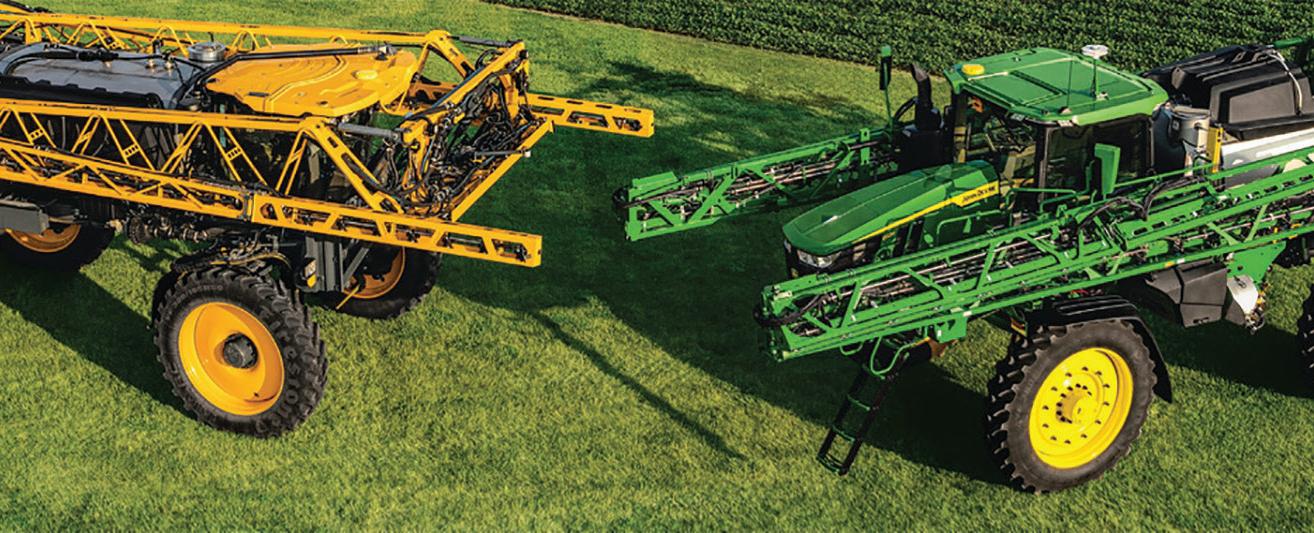









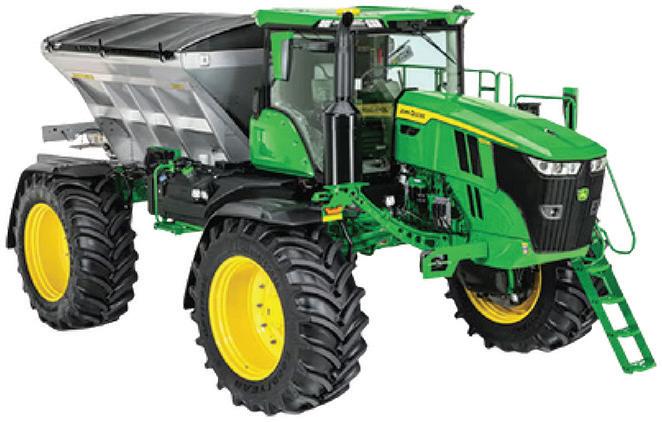
“My FFA advisor Mrs. Parks always thought that the more you had and the bigger the record book you have, the better it would look,” Myers said. “Even if it’s something small, you still try to keep track of it.”
Paying attention to detail has paid off. Myers gained ownership in 2019 of 33 acres of farmland near Cullom in Livingston County, property that came through his mother’s family and helped provide the foundation for future investments. He rents the work out to family close to that farm. The experience managing that land later helped him acquire another 70 acres closer to home near German Valley.
“It took a lot of help from my mom and dad,” Myers said. “It set me up for more financial success.

I have that about
off. It got me into learning how to pay taxes and put money into a 401k to build a retirement.”
While attending Highland and studying ag business and crop production, Myers continues to work toward his long-term goal of returning to the family farm full time.
For now, that means doing whatever needs to be done on a given day.
“I always like that I do something different every day,” Myers said. “Dad and I figure out what we’re doing every day. I’ll run my square baler, and if he doesn’t want to run the round baler, I’ll do it.”
As he looks ahead to a future in agriculture, Myers hopes other students won’t hesitate to explore opportunities in FFA and agricultural education, even if farming isn’t already part of their lives.
“Don’t be afraid to get into an ag class in high school,” Myers said. “Just because you don’t think it’s an easy class, you shouldn’t take it. You do learn a lot from them. Your intro to ag classes cover a lot about all different things. Don’t be afraid, take the leap. What have you got to lose?” n
Shaw Media reporter Cody Cutter can be reached at 815-632-2532 or ccutter@shawmedia.com.
Go to ffa.org/participate/ awards/american-starawards to learn more about the American Star Award system.
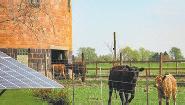
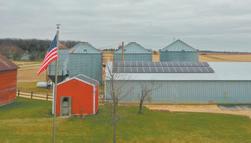
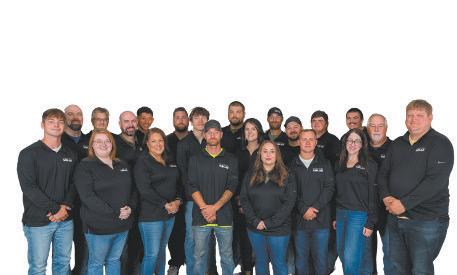
Since 2017, Stateline Solar has been the Stateline area's trusted choice for renewable energy solutions As a family-owned business with a dedicated local team, we work closely with every customer to design solar systems tailored to their unique energy needs Whether for your home, farm, or business, we are committed to being your total energy solution and helping you achieve your renewable energy goals.
Stateline Solar also provides solar maintenance, repair, and inspection services for all solar system owners Whether your system was installed by our team or another provider, our experienced solar professionals are here to help We are committed to ensuring your system operates safely, efficiently, and at peak performance for years to come
Ready to explore your solar options? Contact our team of local solar professionals to learn more about available incentives and receive a free solar quote today!






























CODY CUTTER/CCUTTER@SHAWMEDIA.COM
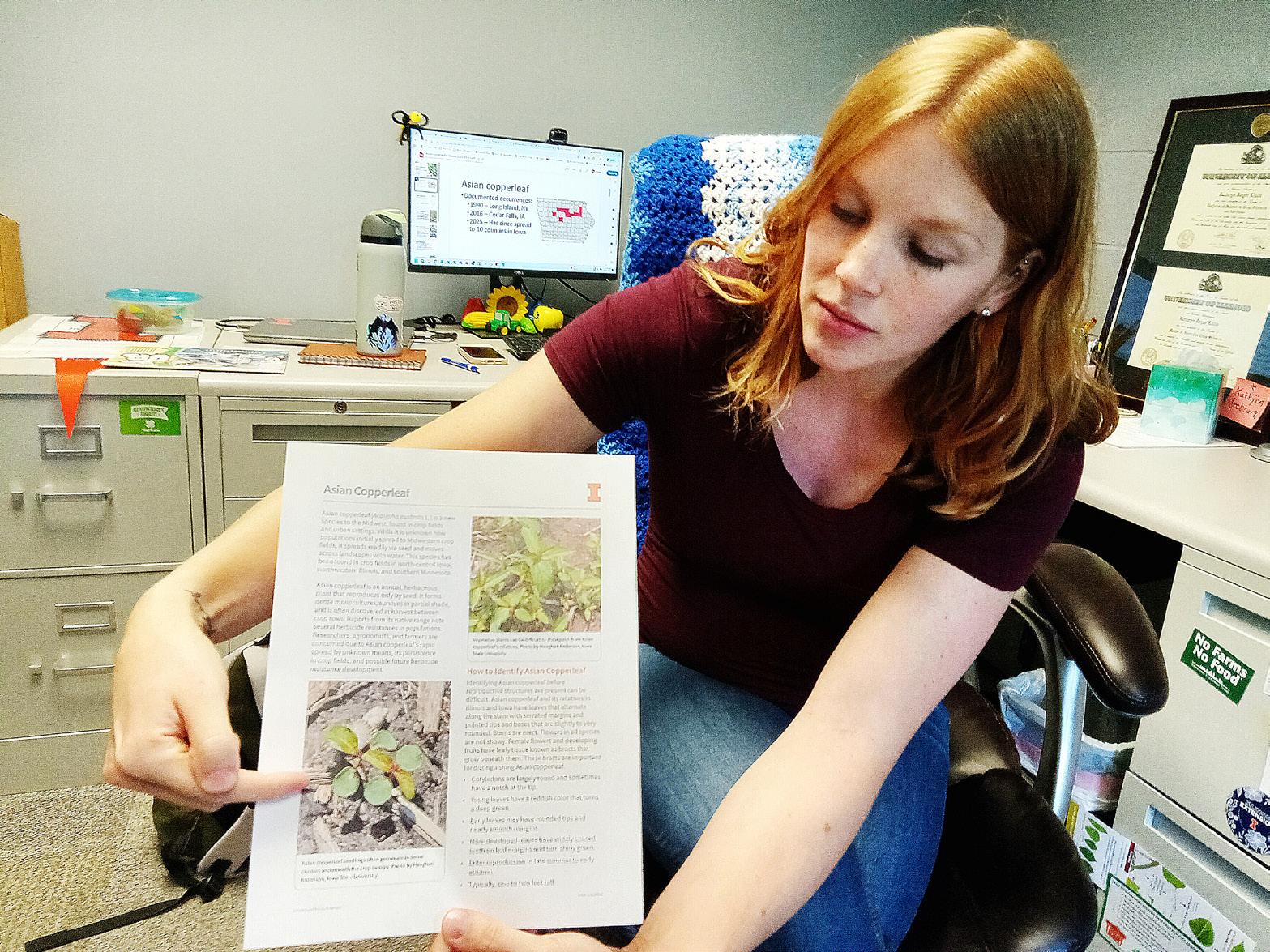
Kathryn Seebruck, University of Illinois Extension commercial agriculture educator, shows a brochure on Asian copperleaf.
The long gap, and the geographic leap from the East Coast to the Midwest, is one of the biggest mysteries surrounding the species.
“Why it started out there would make a lot of sense with shipping and the movement of cargo,” Seebruck said. “The bigger question is then, how did it jump from the East Coast all the way to the middle of the United States? That’s an interesting question that would be really fun to find out.”
Researchers are not yet calling Asian copperleaf invasive. Seebruck prefers the term “non-native” because scientists still do not know enough about its behavior in Midwestern cropping systems, she said. What little is known is that the weed reproduces only by seed, can form dense patches in fields, and that populations in its native range have developed resistance to some herbicides.
What researchers also know is enough to warrant caution. Problem weeds can compete with corn and soybeans for water, nutrients, sunlight and space. They can force farmers into more expensive herbicide programs and more aggressive management practices if they become difficult to control.



Treating the plant as a potential problem until more is known is “a really safe approach,” Seebruck said.
“You don’t want to tell a producer that it’s not going to be an issue when you don’t know that’s the case, and then it turns out to be a huge issue.”
The Stephenson County discovery was made by an agronomist visiting a farmer’s field and recognizing that the plants looked similar to reports coming from Iowa, Seebruck said. It set off a chain of verification involving University of Illinois weed science specialist Dr. Aaron Hager, Illinois Natural History Survey botanist Dr. David Zaya and copperleaf genus specialist Dr. Geoff Levin. Samples were collected, examined and confirmed as Asian copperleaf.
Part of the problem is that Asian copperleaf is easy to overlook.
“It’s a very inconspicuous plant,” Seebruck said. “Before it flowers, there’s no real defining characteristics to it that someone can see and say it’s Asian copperleaf.”
The species closely resembles the native relative hophornbeam copperleaf. The clearest differences appear only after reproductive structures develop later in the season. Early in crop growth, Seebruck said, farmers scouting fields should watch for very round cotyledons or seed leaves, true leaves with slight serration, and young leaves with a reddish tint to them, which helps explain the name “copperleaf.”
COPPERLEAF cont’d to page 34
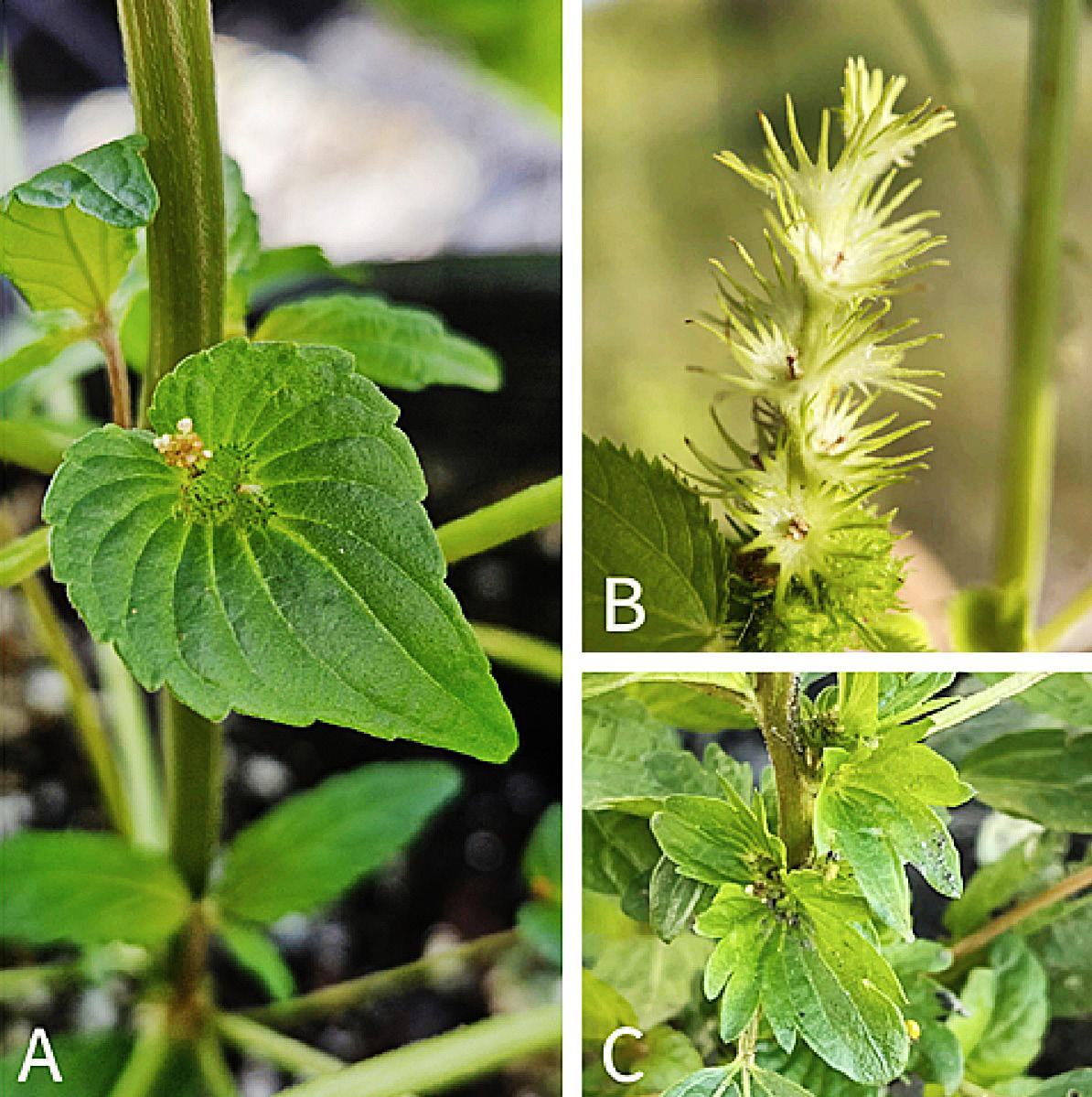
Comparison of bracts of Asian copperleaf, which are large and egg- or heart-shaped with shallow “teeth” (A); hophornbeam copperleaf, which have several narrow, finger-like extensions called lobes (B); and rhomboid mercury, which have five to nine lobes (C).
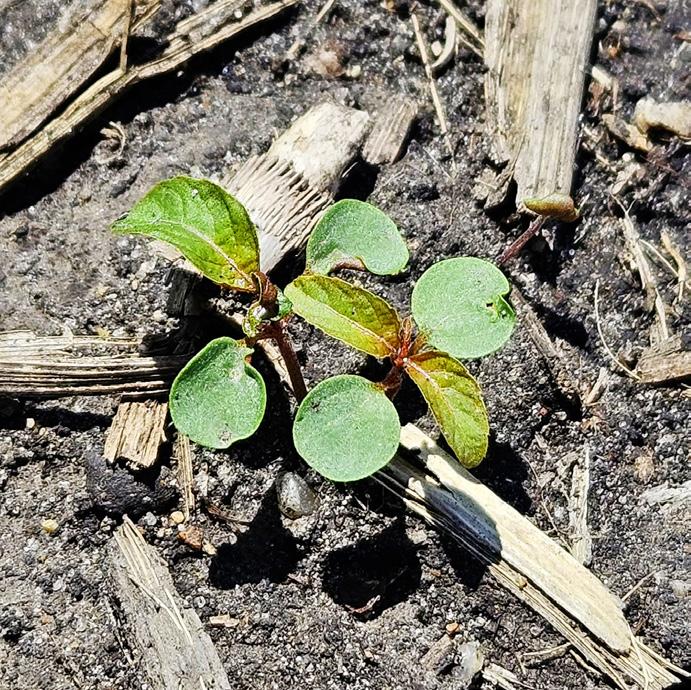
Asian copperleaf seedlings often germinate in dense clusters underneath the crop canopy.
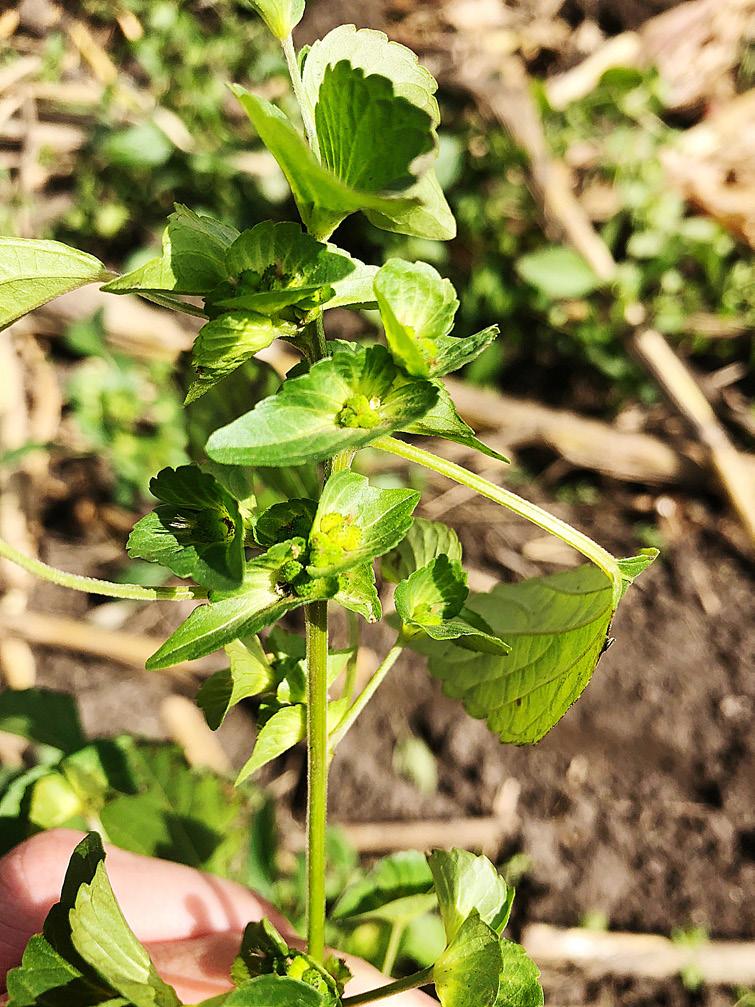
Compared to similar plants in the spurge family, Asian copperleaf, seen here in its reproductive stage, does not produce milk sap. Plants are upright and can reach 3 feet in height. Leaves are lanceolate, serrated, 2-3 inches long, and the bracts are located beneath the flower and range from circular to heart-shaped.
PHOTOS: IOWA STATE UNIVERSITY EXTENSION PHOTO / MEAGHAN ANDERSON