ROUTE 66
JULY 11, 2026

JULY 11, 2026
In 2026, Route 66 officially marks its Centennial, commemorating 100 years of the highway that became a symbol of American travel, freedom and adventure. Communities along The First Hundred Miles are preparing for a summer-long celebration with special events, exhibits, attractions and gatherings honoring the legacy of The Mother Road and its lasting impact on the communities it connects.
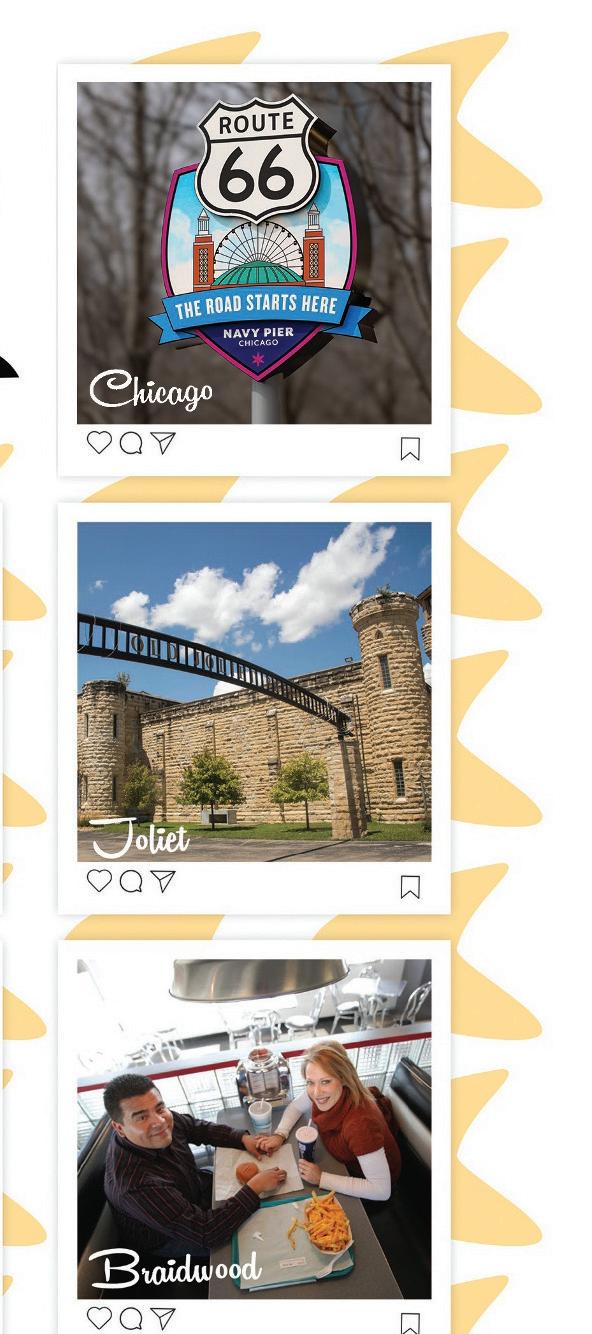
The First Hundred Miles follows Route 66 from Chicago to Pontiac, Illinois, connecting the communities that make up the beginning of America’s most famous highway. This historic stretch includes some of the route’s most iconic destinations, including
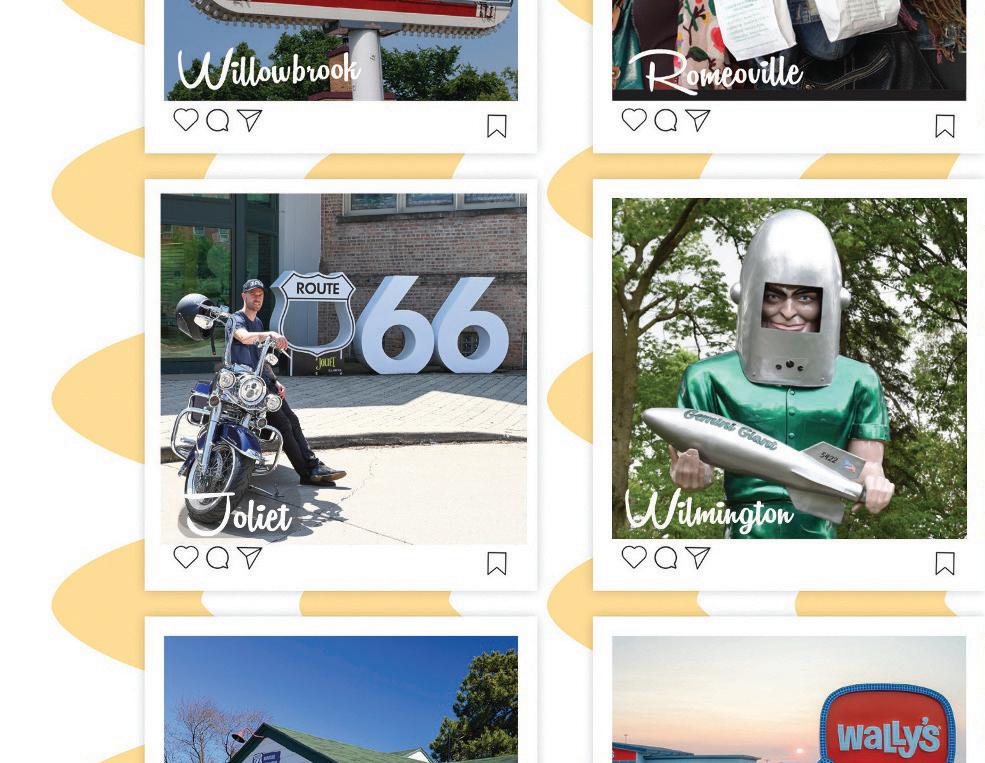
Joliet. Home to both 66 and the Lincoln Highway, Joliet has played a pivotal role in road trip history and continues to serve as one of the most recognizable stops – with new attractions like the Joliet City Square providing frequent entertainment for locals and travelers alike.
Today, visitors can explore the rich history, photo-ops, restaurants, museums and landmarks that continue to
make The First Hundred Miles a destination all its own. Whether you’re planning a cross-country journey to Santa Monica or simply looking for a weekend getaway, the Centennial offers a unique opportunity to rediscover the road that captured America’s imagination.
This special section celebrates the people, places, and stories that have made Route 66 an enduring cultural icon for the last century. Inside, you’ll find destinations, attractions and experiences that showcase why travelers from around the world continue to be drawn to The Mother Road.
Heritage Corridor Destinations, the destination management organization
for The First Hundred Miles, is proud to help promote the Centennial celebration and share the communities, locations, and experiences that define this historic corridor. Through TheFirstHundredMiles.com, visitors can discover trip ideas, itineraries, dining recommendations, maps and local stories that bring Route 66 to life. Whether you’re a lifelong Route 66 enthusiast or discovering the route for the first time, we invite you to join us in celebrating 100 years of adventure along America’s most famous highway.
Bob Navarro President & CEO
Heritage Corridor Destinations
By RYAN SEARL rsearl@shawmedia.com
Nestled along the legendary Route 66 in Atlanta, Illinois, about an hour southwest of Pontiac, the American Giants Museum stands as a true marvel – inviting Route 66 travelers on a journey through the history of some of America’s most eye-catching fiberglass advertising statues.
This hidden gem is a captivating tribute to the whimsical roadside attractions that once graced the Mother Road, offering travelers a unique and well-researched perspective on the impact of these statues. A dedicated team, led by expert Joel Baker, is helping preserve them for future generations.
As you step into the American Giants Museum, you’ll be transported back in time to the golden era of Route 66, where towering fiberglass statues were the undisputed stars of the roadside.
While much of that era’s zany novelty architecture has since been demolished, these colossal figures remain –often being found in barns and junkyards across the nation. The American Giants team has dedicated years to tracking down, preserving and finding a home for these rare statues.
These molded fiberglass advertising giants, colloquially referred to as “muffler men” after the mufflers the original statues held in their hands, have become a staple of Americana since their invention in the early 1960s by boat builder Steve Dashew and his International
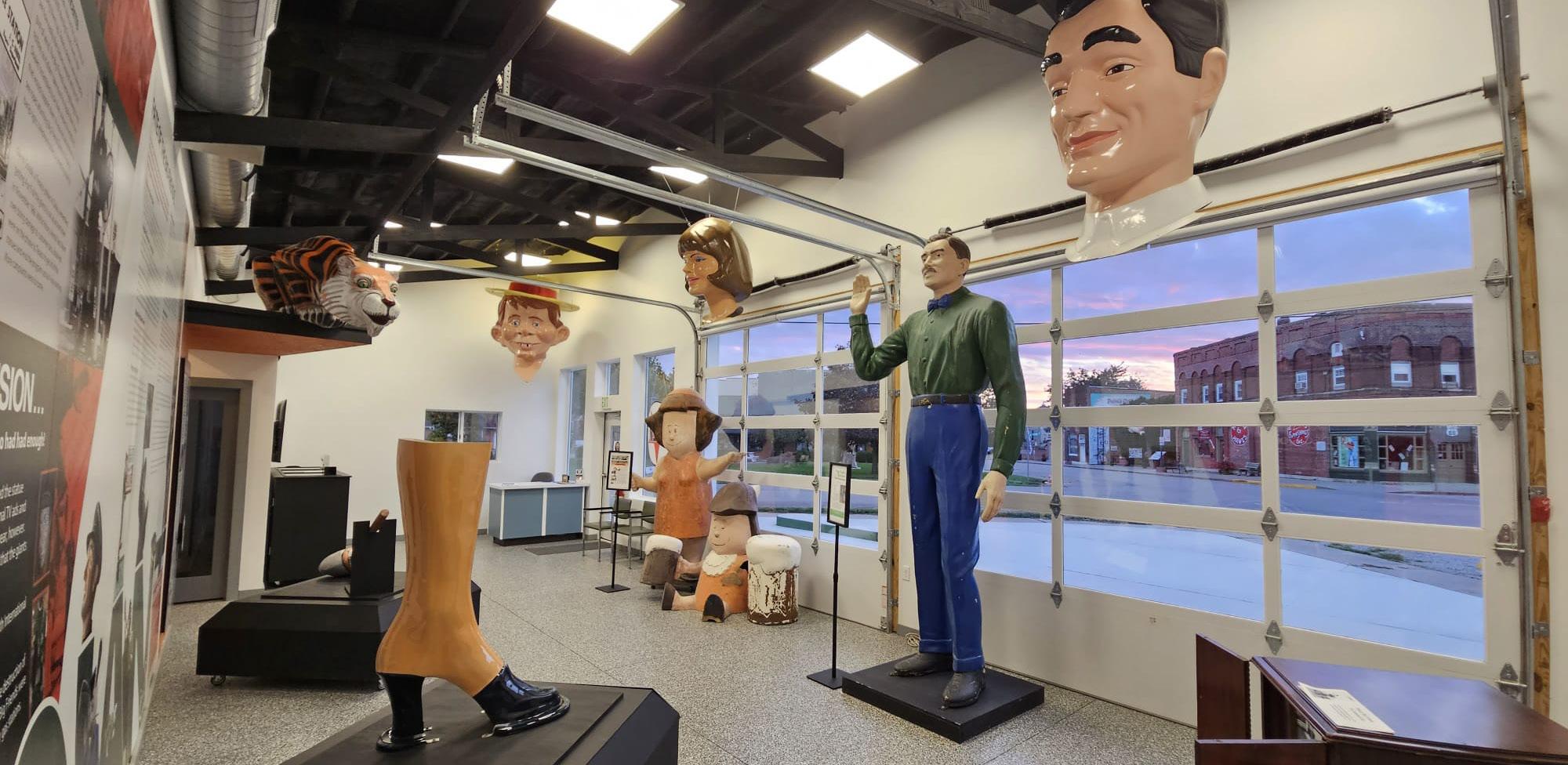
Once beacons for weary travelers, the giants invited motorists to pause, stretch their legs, and capture the perfect photo – and with any luck, would coax them to shop at the business that erected it.
The beautifully designed museum, now entering its fourth year in operation, hearkens back to the vintage service stations of the muffler men’s heyday. The museum’s interior is devoted to telling the story of how the giants went from unusual advertising to holding such a lasting place in our zeitgeist.
The museum’s growing collection accounts for the largest concentration of Muffler Man statues anywhere along
Route 66 from Chicago to Santa Monica, California.
The Land of the Giants Rest Stop is a unique area outside the American Giants Museum that offers picnic tables, a vintage bubbler water fountain, and a photo op amid a forest of giants.
A Texaco Big Friend is the featured attraction on the grounds, along with a rotating collection of International Fiberglass giants – including the newly restored Bemidji Nanabozho Brave, Astro Oil Spaceman replica, a fully restored “Snerd,” and a Phillips 66 Cowboy.
Inside the museum, you’ll find an exhibit dedicated to the mystery of Texaco’s Big Friend. In the early 1960s,
International Fiberglass Co. built 300 25-foot-tall statues for the Texaco Oil Co.’s new “Big Friend” national advertising campaign. Before a year had passed, Texaco ordered all 300 destroyed. Uncover why this happened and how six Big Friends managed to survive.
You’ll also find an extensive exhibit on the story of the International Fiberglass Co. and how it was able to make a name for itself in the crowded advertising space of the mid-20th century.
During that period, drivers were bombarded with signs, billboards and anything else businesses could employ to attract motorists’ attention and get them to stop. From fiberglass animals to giants and plenty of other kitschy objects – IFC was responsible for some of the most innovative and memorable immersive advertising of all time.
While you’re in town, be sure to see the original International Fiberglass Muffler Man head at the nearby Shell truck stop, Lumi the Uniroyal Gal located at Country Aire restaurant, and Atlanta’s famed Bunyon Giant – a muffler man holding an oversized hot dog. Don’t miss the opportunity to explore a one-of-a-kind museum and discover the extraordinary world of the fiberglass statues that once again live along Route 66. The museum is open daily from 10 a.m. to 4 p.m.
Be sure to follow American Giants Museum and American Giants on Facebook for more information and details on newly installed giants.
By DENISE M. BARAN-UNLAND dunland@shawmedia.com and RYAN SEARL rsearl@shawmedia.com
Many longtime restaurants on historic Route 66 serve up comfort food and nostalgia. Here is a sampling to try.
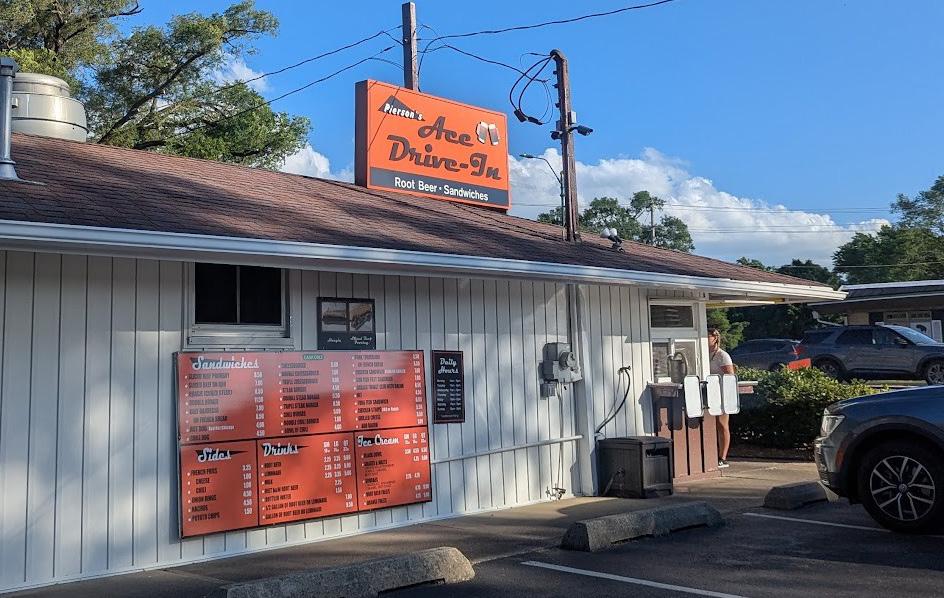
Ace Drive-In is known for its homemade root beer, sandwiches and carhop service.
A menu is posted on the Ace Drive-In building and on the drive-in’s website.
The pork tenderloin sandwich is an Ace Drive-In customer favorite, with the double steak burger and the double cheeseburger tying for second place, according to a recent Ace Drive-In poll.
Harold & Irene Voitek opened Joliet’s Ace Drive-In in 1949 and ran the business until 1963, when it was sold to Bill and Ardie Youngren – and then sold to brothers Rich and Tom Pierson – in 1983, according to the former Ace website.
Mitch Pierson assumed day-to-day operations in 2022, according to the
Although Henry’s Drive-In in Cicero has been “famous for our hot dogs since 1950,” according to its website, several signature items are popular, too.
These include a tamale on a bun with fries, a pepper and egg sandwich (scrambled eggs with sweet peppers on French bread) and gravy bread.
Henry’s Drive-In is located at 6031 Ogden Ave. in Cicero.
For more information, call 708-6569344 or visit henrys66.com.
Hey Hot Dog is a family-owned restaurant that dates back to the 1950s.
The restaurant is known for its chili dogs, hot dogs, Polish sausage, homemade root beer served in frosty mugs, and homemade chili and barbecue sauces.
Hey Hot Dog is located at 601 Ruby St., Joliet. Call 815-723-5487.
Cruise Night is held every Thursday from June to August at Ace Drive-In, located at 1207 Plainfield Road in Joliet.
Patrons also can enjoy their meal at picnic tables on-site.
For more information, call 815-7267741.
The Log Cabin Restaurant and Service Station was built in 1926 from cedar
See EATERIES on page 4

Continued from page 3
telephone poles and seats 45 people, according to The Route 66 Times.
Joe and Victor “Babe” Seloti built the lunchroom and gas station when Route 4 (later Route 66) was repositioned through Pontiac, according to the Digital Research Library of Illinois History Journal.
Joe Seloti was known for his “talking” pet crow and cooking beef and pork barbecue on a big spit while “Babe” filled gas tanks and fixed flats, according to the journal.
The restaurant held a 100th anniversary celebration on May 2.
Old Log Cabin Restaurant is located at 18700 Old Route 66, Pontiac.
Call 815-842-2908 or visit hcdestinations.com.
Old Route 66 Family Restaurant is a family-owned restaurant that began in 2001 in Dwight.
This restaurant specializes in “comfort food and classic American cuisine,” is open for breakfast, lunch and dinner seven days a week, and offers catering services for events.
Old Route 66 Family Restaurant is located at 105 S. Old Route 66 in Dwight.
Call 815-584-2920 or visit route66restaurant.com.
It often features specials, such as Milkshake Monday, Half-Price Hot Dog Tuesday and weekend specials, according to its Facebook page.
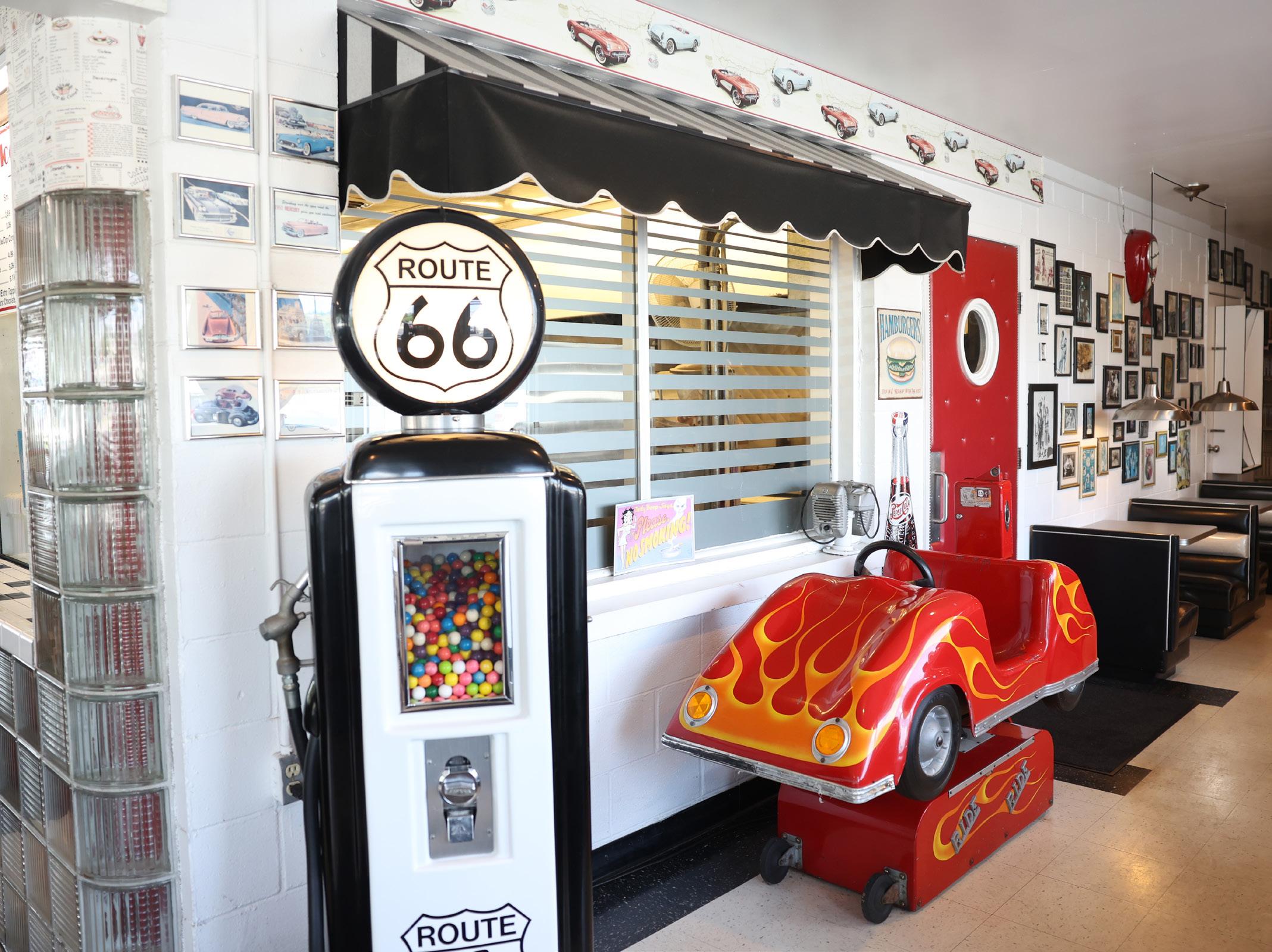
The Polka-A-Dot Drive-In also has memorabilia and nostalgic decor.
The restaurant is a family-owned, 1950s-style diner, according to the venue’s Facebook page.
Polka-A-Dot Drive-In is located at 222 N. Front St. in Braidwood.
For more information, call 815-4583377.
Rich & Creamy is a longtime ice cream shop in Joliet.
The shop began in the 1970s when it was known as Kreamy Delite and the destination for a turtle sundae.
The actual building was constructed in 1965 and formerly served as an office, according to the Route 66 Road Map website.
“The white shack with turquoise accents features Blues Brothers statues of Jake and Elwood on the roof that pay homage to the characters’ ties to the adjacent Joliet Prison, a big Route
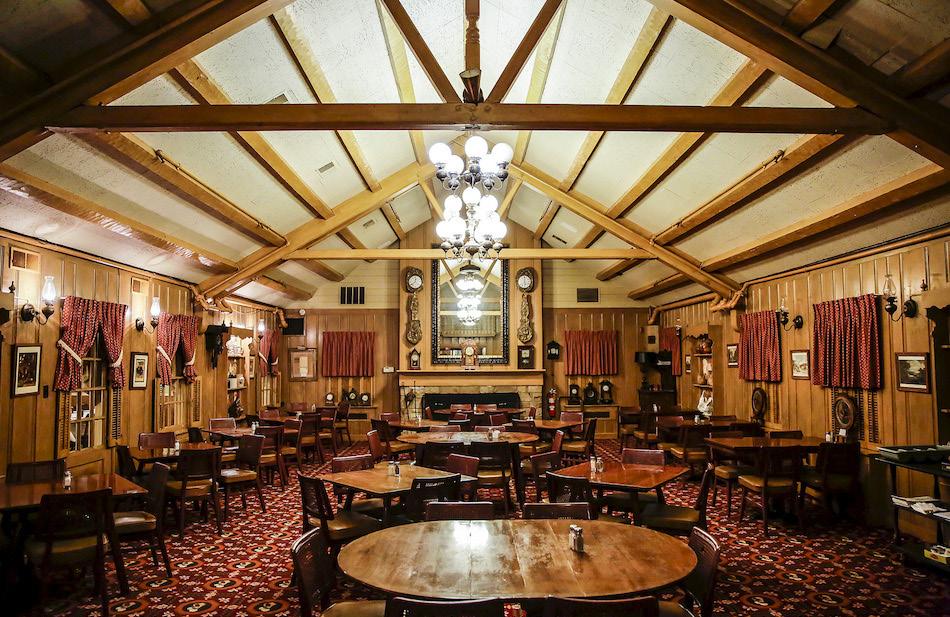
The original White Fence Farm is located at 1376 Joliet Road, Romeoville.
66 shield that says ‘Joliet Kicks on 66,’ and neon lights that adorn the building, lighting them at night,” according to the website.
Rich & Creamy is located at 920 N. Broadway St., Joliet. Call 815-740-2899 or visit Rich & Creamy on Broadway on Facebook.
White Fence Farm bills itself as serving the “World’s Greatest Chicken.”
Its 11 dining rooms at its original Romeoville location hold 1,000 people, and White Fence Farm sells an average of 8,000 chicken dinners each week, according to the restaurant’s website.
Robert and Doris Hastert started the family-owned restaurant in 1954, which their granddaughter Laura Hastert currently owns, according to the website.
When the Hasterts bought White Fence Farm, they brought their chicken and corn fritter recipes with them from their restaurant in Aurora. Although White Fence Farm has carryout locations in Romeoville, Joliet, Downers Grove and Riverside, the Romeoville location is the original and holds a federal trademark on its name.
The original White Fence Farm is located at 1376 Joliet Road, Romeoville. Call 630-739-1720 or visit whitefencefarm-il.com.
By JUDY HARVEY jharvey@shawmedia.com
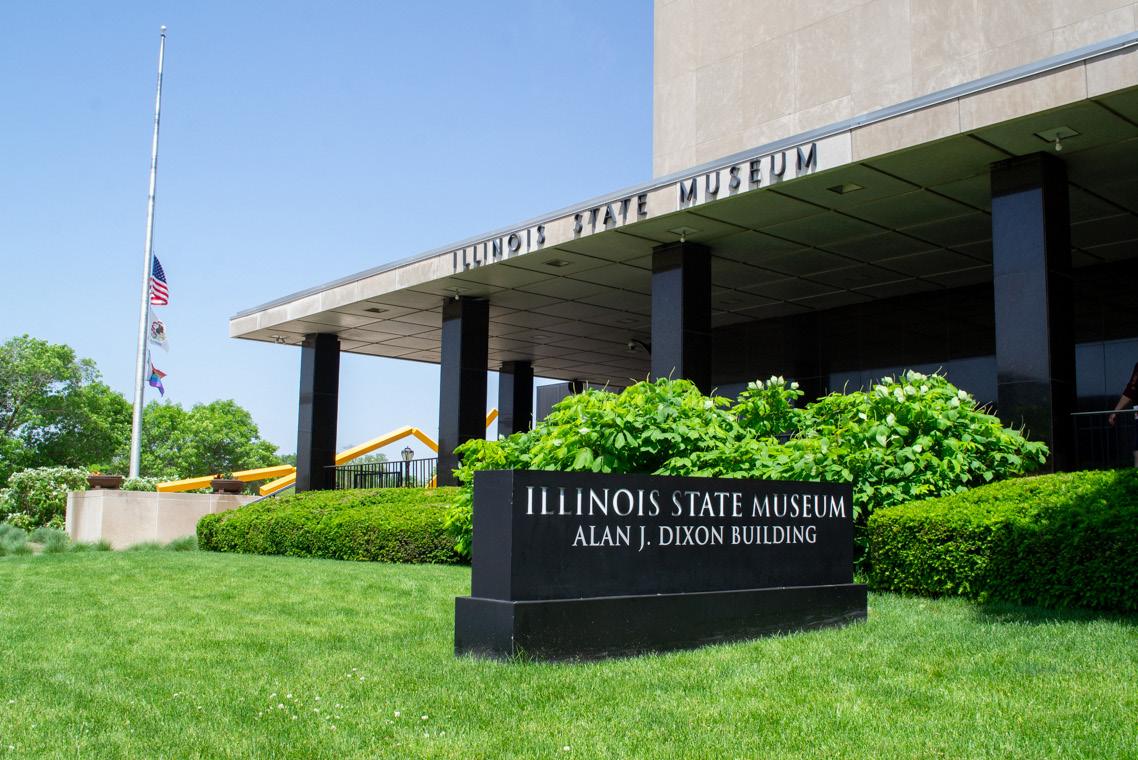
The Illinois State Museum is putting Route 66 in the spotlight with its “Miles of Memories: Stories of Route 66” exhibit.
The exhibition marks The Mother Road’s centennial year and brings to life the experience of living, working and traveling along U.S. Route 66 during its heyday, the museum said.
The exhibit incorporates the museum’s Route 66 Oral History Project, a collection of 100 interviews with people who experienced the road when it served as the primary route between Chicago and Los Angeles.
Visitors can listen to excerpts from these firsthand accounts throughout the exhibit.
On display will be a range of Route 66 memorabilia, including vintage souvenirs, neon signs, fiberglass advertising figures and Burma Shave signs.
“This exhibit is a must-see for any fan of Route 66,” ISM curator of history Erika Holst said. “What sets it apart is the opportunity to hear memories of the Mother Road in the voices of the people who lived it.”
Commissioned in 1926, Route 66 was promoted as the shortest, best and most scenic route between Chicago and Los Angeles. It served as a major corridor to the West Coast for decades until the development of the federal interstate system.
Renewed interest in the late 20th century transformed Route 66 into a popular road trip destination, now attracting millions of visitors from around the world each year.
“Some of the stories featured in the exhibit cover topics that even seasoned Route 66 travelers may not have heard before,” ISM registrar of history Amanda Bryden said. “There is something for everyone, regardless of familiarity with the road.”
The project was made possible through support from the Illinois State Museum Society, the Hanson family, Jane and Paul Ford and Loken Family funds at the Community Foundation for the Land of Lincoln, in partnership with the Lumpkin Foundation, Stifel and the Cozy Dog Drive In.
“Miles of Memories” will be on view through April 4, 2027. The Illinois State Museum offers free admission and is open daily.
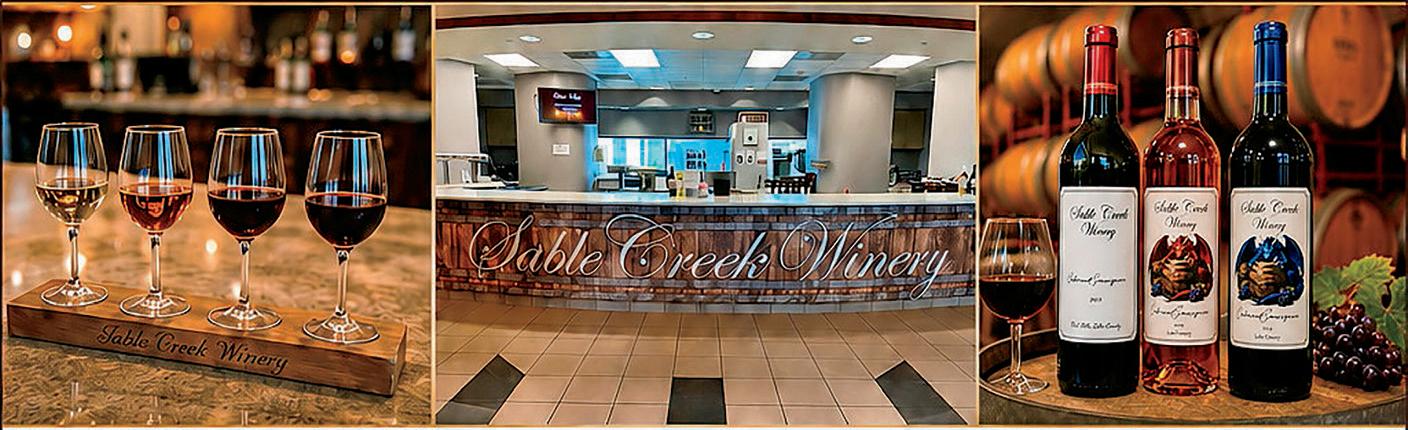
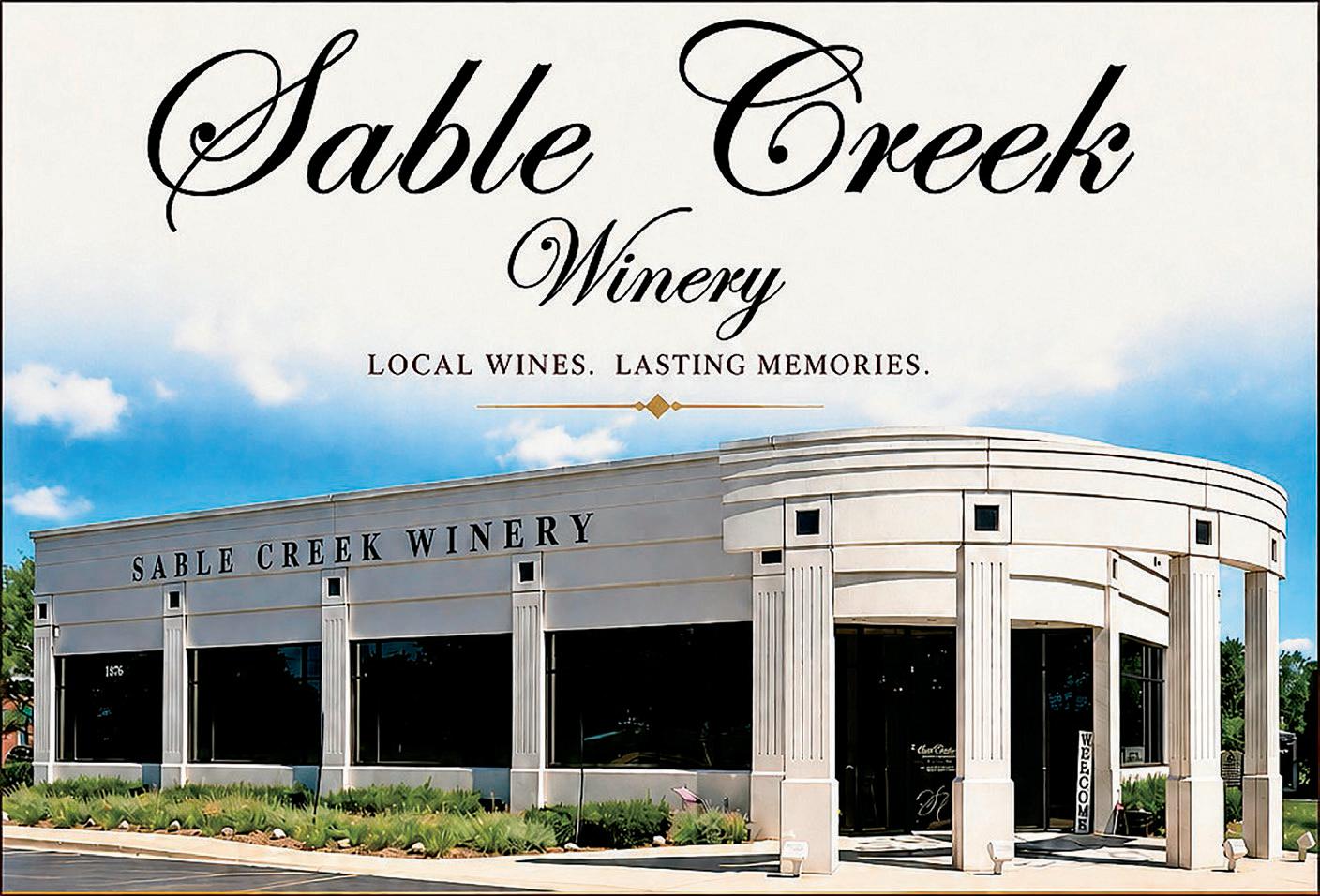
Escape the ordinary and enjoy a unique winery experience at Sable Creek Winery.
Whether you’re sampling handcrafted wines, gathering with friends, or celebrating a special occasion, we offer a warm and welcoming destination in the heart of Romeoville.
VISIT OUR TASTING ROOM AND DISCOVER YOUR NEW FAVORITE WINE.




Explore popular museums and historic sites just off America’s Mother Road
By RYAN SEARL rsearl@shawmedia.com
When you set out on the first hundred miles of Route 66 from Chicago into the heart of central Illinois, what begins as a road trip quickly becomes a journey through layers of American culture, art, industry and imagination.
This stretch of the Mother Road not only offers scenic drives and classic roadside attractions, but also invites you into places where Route 66’s stories are preserved, celebrated and brought vividly to life. From world-class museums in Chicago to hidden heritage gems in small towns, every stop introduces you to the legacy of a highway that has captured the hearts of travelers for generations. In 2026, travelers on this iconic stretch of highway have an extra reason to hit the road and explore these institutions: the Mother Road is celebrating its 100th anniversary, and many museums will offer special exhibits and programming highlighting this achievement.
The adventure begins in Chicago, where a rich cultural experience awaits even before your wheels leave the city streets. Close to the historic beginning of Route 66, the Art Institute of Chicago, 111 S. Michigan Ave., stands as one of the great art museums in the world. Its vast permanent collection includes iconic works that have shaped the visual landscape of America and beyond, with masterpieces such as “Nighthawks” by Edward Hopper, “American Gothic” by Grant Wood, and Georges Seurat’s “A Sunday Afternoon on the Island of La Grande Jatte” offering both familiar comfort and fresh inspiration. Special traveling exhibits and all - ages programming keep the experience lively and engaging.
Not far from there, on Chicago’s bustling Museum Campus along Lake Michigan, the Field Museum, 1400 S. Lake Shore Drive, offers something completely different yet equally compelling. Famous for housing “Sue,” the largest and most complete Tyrannosaurus rex ever discovered, this museum invites travelers to explore life on Earth from ancient deep seas to modern ecosystems. Gigantic skeletons, hands - on displays, and rotating special exhibits provide a thrill-
20th-century signal tower. And for a slice of immigrant history, the Martin & Emma Planinsek Grocery and Meat Market Museum, 1314 Elizabeth St., offers insight into the Slovenian community that helped build and shape the city.
ing crossover between science and storytelling that makes this stop appealing to families and lifelong learners alike.
Leaving the urban sprawl behind, the route meanders southwest into Joliet, a city that encapsulates both the historic grit and vibrant spirit of Route 66 culture. The Joliet Area Historical Museum and Official Route 66 Welcome Center, 204 N. Ottawa St., offers a multifaceted introduction to the region’s past. Housed in a striking Neoclassical Revival building that once served as a church, the museum celebrates not just Route 66 but also the Lincoln Highway and local history through immersive exhibits, interactive displays, and picture - perfect photo opportunities. Here you can step into the world of “The Blues Brothers,” which filmed key scenes in Joliet and has become part of the city’s pop culture identity. Exhibits reinterpret the role of the Illinois & Michigan Canal in shaping early Midwestern transportation and feature vintage artifacts and period scenes that bring history alive in vivid detail.
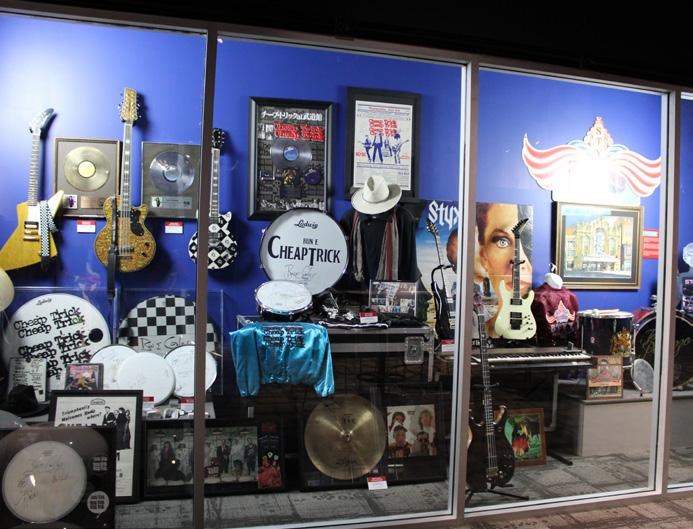
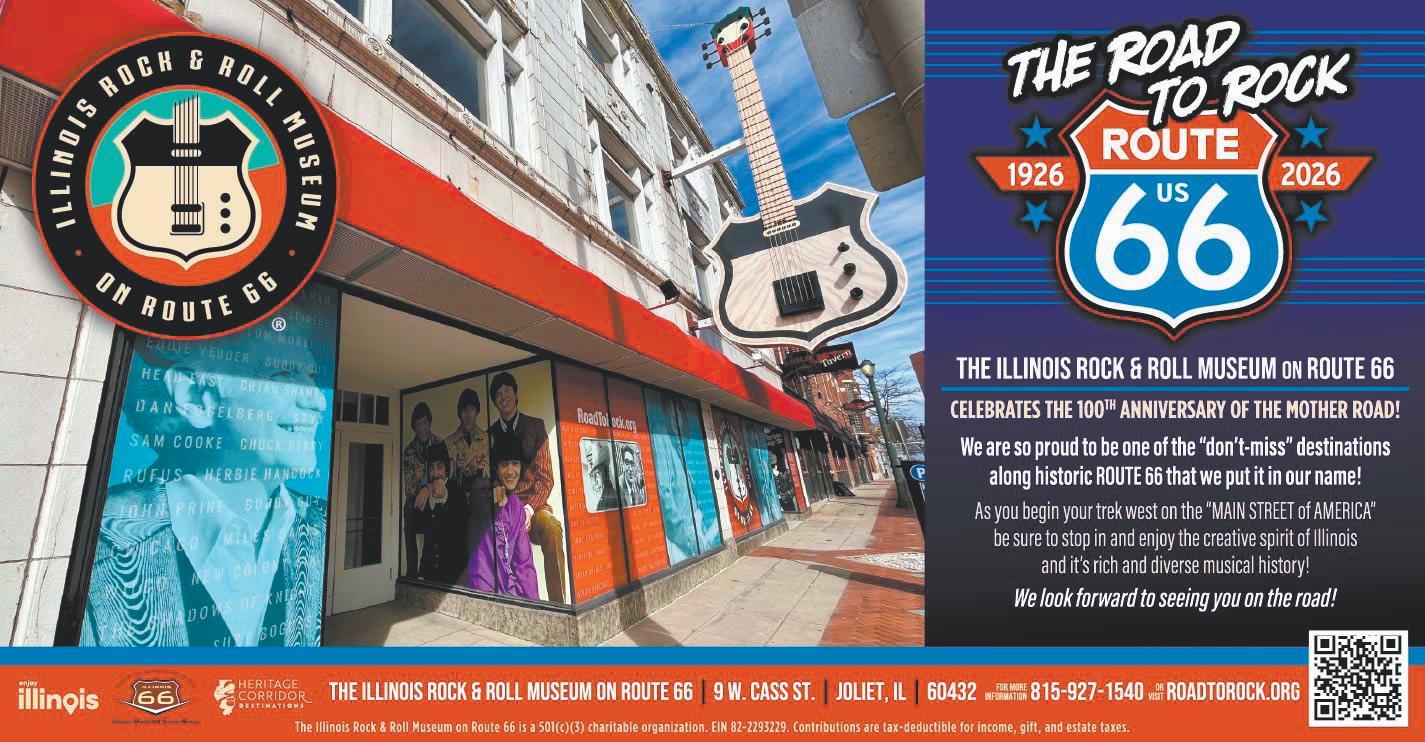
Joliet also offers an array of smaller cultural spots that expand your understanding of local life along the Mother Road. The Illinois Rock & Roll Museum on Route 66, 9 W. Cass St., preserves the history of seminal Illinois musicians and bands, from Cheap Trick and Styx to Chuck Berry and Buddy Guy. It is a lively celebration of the state’s influence on American music, with exhibits and memorabilia that emphasize the deep connection between musical heritage and local identity.
Not far away, the Joliet Railroad Museum, 90 E. Jefferson St., lets visitors explore the engineering and stories of railroads that helped define transportation in the region, housed in a preserved early

No visit to Joliet is complete without encountering the formidable Old Joliet Prison , 1125 Collins St. This limestone penitentiary, in operation from the mid-19th century until 2002, has become one of the most photographed structures along Route 66 and a cultural touchstone in its own right. Used as a filming location for “The Blues Brothers” and referenced in television dramas like “Prison Break,” the prison’s history spans regional crime, Civil War-era detainees, and decades of changing penal philosophies. Today, guided tours allow visitors to explore this dramatic site, learn about its inmates and folklore, and even join in special experiences like paranormal investigations that appeal to true crime fans and curious travelers alike. In honor of the centennial of Route 66 and
See MUSEUMS on page 7


v e M u s i c a n d M o r e ! H o m e D é c o r G i f t s f o r A G a r d e n D é c o r H u g e K i t c h e n D e p t G o u r m e t F o o d s W i t h D i p s C o f f e e s & T e a s W n e R o o m W t h L a r g e S e e c t o n S e a s o n a l D é c
the mother road’s longstanding connec tion to America’s pastime, a pair of regu lation baseball fields have been added back to the prison grounds.
Continuing southwest, the landscape opens into a quieter, rural rhythm in the village of Godley, where a hidden gem awaits. The Illinois Route 66 Mining Museum, 150 Kankakee Road, tells the story of the area’s coal mining past, including the coal rush sparked by the discovery of “black diamonds” in the 1860s and the tragic 1883 mining disaster that claimed 74 lives and helped shape labor history with the formation of the United Mine Workers Union. Though small, this museum’s focus on community history and industrial heritage offers an inti mate and poignant perspective on life along the early Mother Road.
Farther west, in the picturesque town of Pontiac, your journey culminates among some of the richest collections of Americana you will encounter. The Pontiac Oakland Auto Museum, 201 N. Mill St., continues a tradition of celebrating auto motive history with an extensive collec tion of vintage cars, memorabilia and an impressive research library. Enthusi
Art Museum, 217 N. Mill St., adds color and creativity to the experience, spotlighting the work of artists whose murals now animate Pontiac’s downtown. Following your museum visit with a walk through the town to discover these murals brings Route 66’s spirit into the open air in vivid hues and textures.
asts can take their time exploring the displays and even sign up for behind‑the‑scenes tours that uncover details about these classic vehicles and the stories they carry.
The nearby Museum of Gilding Arts, 217 N. Mill St., transports visitors to another era, showcasing the craft of silver and gold leafing once central to architectural ornamentation and design. With arti facts and demonstrations tracing this art from ancient traditions through Ameri ca’s Gilded Age, it is a unique stop that broadens understanding of how every day objects and décor reflected larger cultural trends.
The International Walldog Mural and Sign

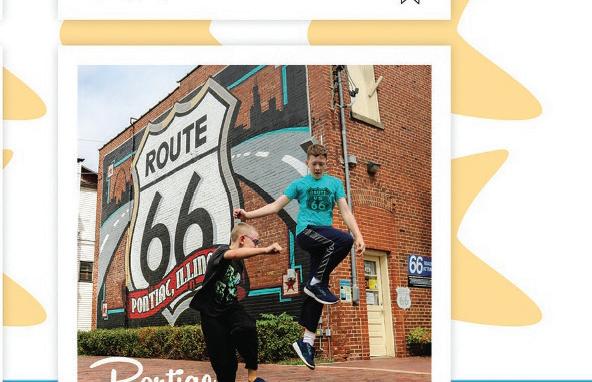
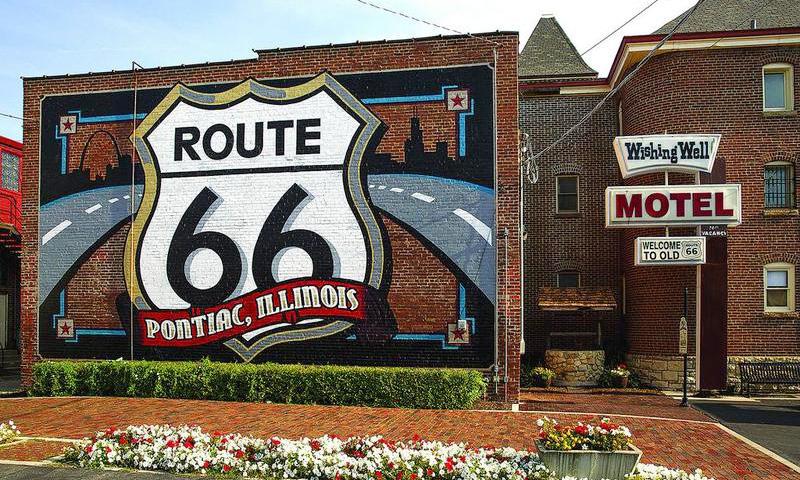
At the end of the first hundred miles, the Route 66 Association of Illinois Museum, 110 W. Howard St. in Pontiac, invites you to step deep into the Mother Road’s soul. With vintage license plates, historical photographs, a classic VW bus featured in Disney’s “Cars,” and a towering Route 66 shield mural perfect for photos, this museum is a celebration of nostalgia, community and the enduring allure of America’s most famous highway.
Whether you are a lifelong Route 66 enthusiast or traveling for the first time during the centennial, the museums along the first hundred miles teach you that this journey is about more than asphalt and signposts. It is about people, creativity, history and the many stories that have traveled alongside you from Chicago to Pontiac and beyond.
TFHM Merch Spotlight:
Celebrate your trip to these historical Route 66 institutions by picking up exclu sive souvenirs from The First Hundred Miles. This collection of merchandise






captures the spirit of the Mother Road with a variety of keepsakes and apparel designed for travelers. Socks featuring iconic Route 66 imagery, from vintage neon signs to classic diners, let visitors carry a playful piece of the journey. T shirts and sweatshirts showcase the First Hundred Miles logo along with the names of towns along the route, creating wearable maps of the historic corridor.
Smaller items like vinyl stickers, 3D magnets and pins provide easy ways to display memories at home, whether on refrigerators, laptops or journals. Coffee mugs and tumblers bring the roadside experience to daily life, often illustrated with classic landmarks and colorful designs. For collectors, patches, post cards and travel journals offer a tangible connection to the history, culture and quirky charm of the first hundred miles.
These items are available at muse ums, visitor centers, and specialty shops along the route. The Joliet Area Historical Museum, The Landing Pad in Wilmington, and the Starved Rock Country Welcome Center in Utica all carry official First Hundred Miles merchandise, allowing travelers to take home a piece of their journey. Whether functional or collectible, each piece tells a story of the road, keeping the adventure of Route 66 alive long after the drive ends.
By DENISE M. BARAN-UNLAND dunland@shawmedia.com
Hotels and motels popped up along Route 66 soon after it opened in 1926.
Many establishments were “unique mom-and-pop motels, constructed between the late 1920s and late 1950s and often clad in neon,” according to the National Trust for Historic Preservation.
Some are part of Route 66’s living history since they are still open for business. Others only live in memories and stories.
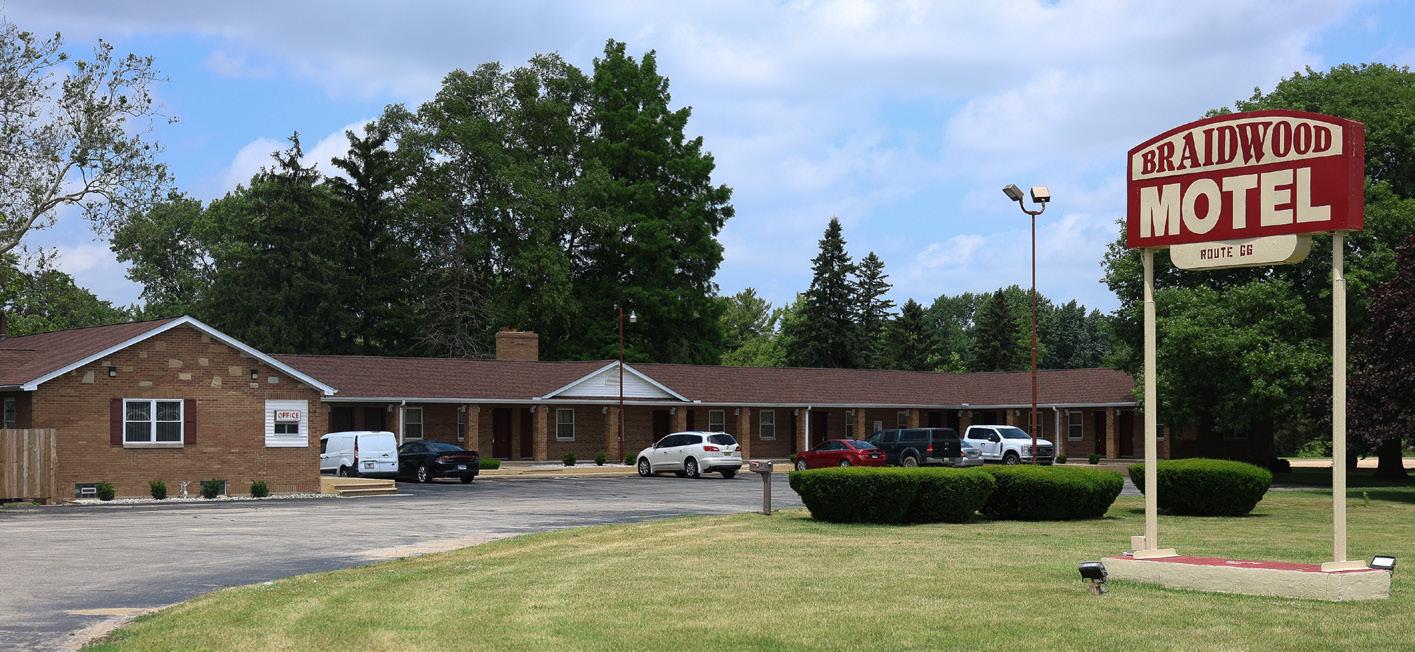
The Braidwood Motel is the “leading motel serving Grundy and Will counties and surrounding areas, according to the motel’s Yelp page.
The motel, located next to Casey’s gas station, offers Wi-Fi, cable, and a refrigerator and microwave in each room, along with daily and weekly rates.
The Braidwood Motel is located at 120 N. Washington St., Braidwood. Call 815458-2321.
The CarlinVilla Motel is a family-owned motel on Route 66 that offers “comfort and charm for its guests, according to its website.
“With our cozy rooms and warm hospitality, we aim to revive the nostalgic charm of the golden days of America’s Mother Road,” according to the CarlinVilla website.
The CarlinVilla Motel offers Wi-Fi, cable TV, heat and air conditioning, laundry facilities, a microwave and a refrigerator.
The motel offers on-site laundry – but irons, ironing boards and hair dryers must be requested at the front desk.
The CarlinVilla Motel is located at 18891 State Route 4, Carlinville. Visit thecarlinvillamotel.com.
The Cindy Lyn Motel, which opened in 1960, was built on Route 66 to attract people heading to Chicago, according to the motel’s website.
The motel – still owned and operated by the original family – was known as the last motel before Chicago, according to the website.
“The day the Cindy Lyn Motel opened, the cost of a room was $6.18,” according to the website. “And if a cab dropped off a customer, the cab driver would receive a free Cindy Lyn Motel Zippo lighter.”
Just one person operated the entire property in the early years.
“The same person who checked customers in at the front desk cleaned all 18 rooms,” according to the website. “Over the years the staff has grown as well as the motel itself.”
Today Cindy Lyn Motel features 25 “courteous” staff members, 65 rooms, several hot tub suites, a fireplace suite in the east wing and a Presidential Suite on the third floor.
See LODGING on page 9

































Celebrate the 100 Anniversa s ry of America’s Mother Road in the city where history meets new experiences. Explore downtown, discover Route 66 landmarks k , enjoy live entertainment, local dining, and unforgettable memories. h





















O N E L E G E D . h Jou e Con inues




The Cindy Lyn Motel is located at 5029 W. Ogden Ave., Cicero. Visit cindylynmotel.com.
Super Shine Motel
The Super Shine Motel is a family-owned motel established in 2023.
Each renovated room offers a refrigerator, a microwave and a kitchenette.
The Super Shine Motel is located at 104 Bridge St. in Wilmington. Visit supershinemotel.com.
Gone and closed
Arrow Motel
The Arrow Motel in Dwight – also known as the Paulsen-Strufe Motel – is a former motel at 320 S. Old Route 66 in Dwight.
In 2013, Fred Strufe discussed on an Illinois Route 66 Stories video how his parents bought the six-unit motel from Danish immigrants Marlin and Metha Paulson in 1954.
Strufe said his father entertained patrons and his mother ran the business and decorated each room uniquely, down to the towels.
ton.
Globe Motel / Wheel Inn
a car accident.
He said the Paulsens and Strufes named each room after female family members. Strufe added color television and air conditioning.
Strufe said anyone traveling down Route 66 stayed in places like this motel.
“It didn’t matter if you were a hobo or a millionaire,” Strufe said in the video.
1836, 90 years before Route 66, according to the city of Wilmington website.
“For those travelers who came to Wilmington by stagecoach or canalboat, and for local farmers, tradesmen, laborers and residents, the Eagle Hotel served as a community gathering place,” according to the hotel’s National Register of Historic Places registration form.
The former Globe Motel, later Wheel Inn, was located at 200 N. Franklin St. in Dwight, near the wood-framed Carpenter Gothic Church at 201 N. Franklin St.
The building was initially a boarding house, then the Globe Motel in the 1920s and finally the Wheel Inn in the 1970s before it burned down, according to TheRoute-66.com.
Joliet hotels
In its centennial exhibit for Route 66, the Joliet Area Historical Museum noted these hotels in the 1929 Polk’s Joliet City Directory, according to curator Steven Wright.
“These addresses reflect the contemporary addresses of Joliet, not the ones that were in use in 1929,” Wright said.
Apollo Hotel: 228 N. Chicago St. Hobbs Hotel : 26 W. Clinton St. (“This building sits on the corner of Clinton and Ottawa streets, with the entrance on Clinton Street,“ Wright said.)
Lavern Hotel: 231 N. Chicago St.
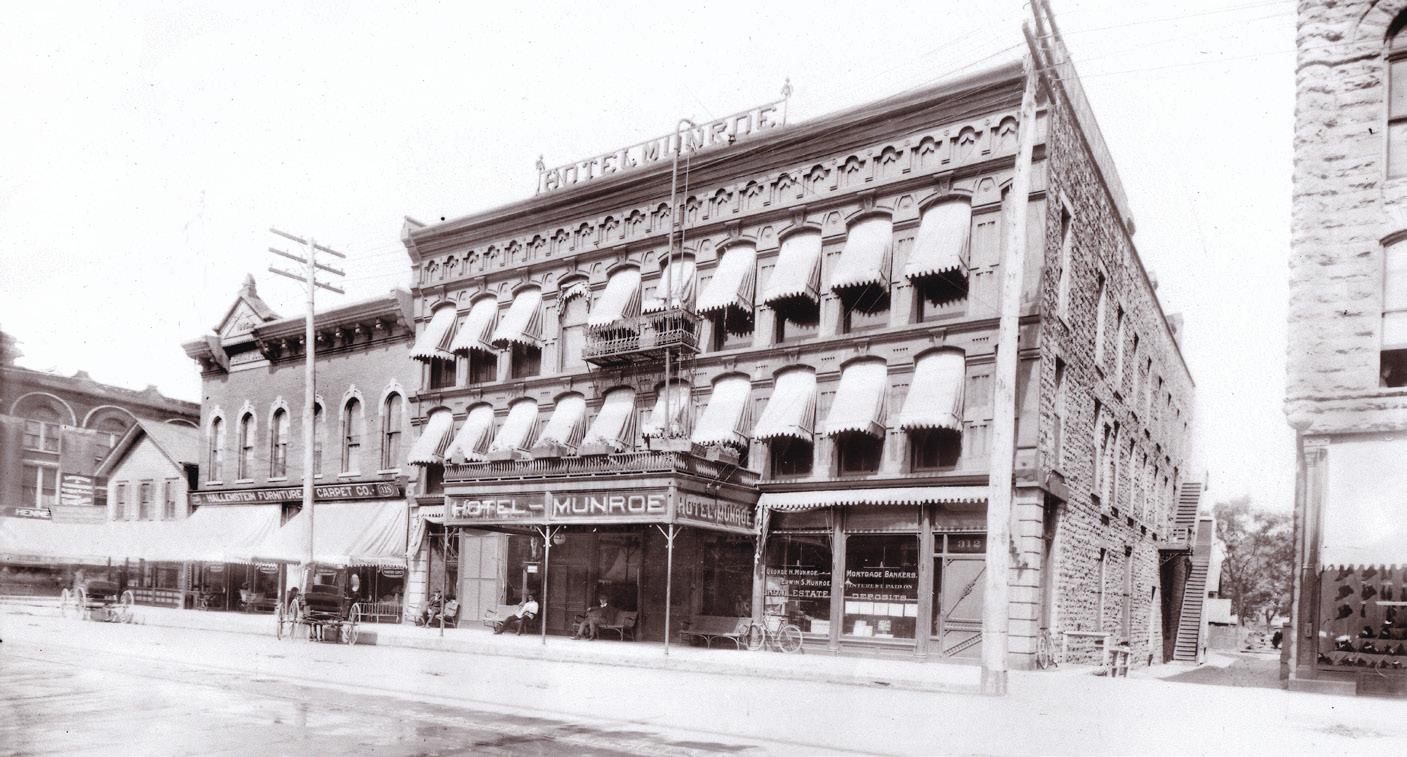
Loop Hotel: 57 N. Chicago St. Marquette Hotel: 114 N. Ottawa St. Munroe Hotel: 170 N. Chicago St. Continued from page 8
Strufe, an only child, became owner at age 19 when his parents were killed in
Eagle Hotel
The former Eagle Hotel was built in

The building, now privately owned, is located at 100 N. Water St. in Wilming-





By MICHAEL URBANEC murbanec@shawmedia.com
Much of what is marked as Route 66 in Illinois isn’t the original road, but cycling is a good way for those celebrating the Mother Road’s 100th birthday to experience the land the road ran through.
About 37 miles of old Route 66 has been repurposed through McLean County as the Constitution Trail and the Route 66 Trail, a well-paved and wellcared-for stretch of asphalted sidewalk that stretches from Chenoa to Atlanta, the home of the American Giants Museum.
The Constitution Trail began as a joint project between the city of Bloomington and the Town of Normal, following the old Illinois Central Gulf Railroad through both cities, and it consists of many different trails. Once it leaves municipal boundaries, the trail largely follows Route 66. To this day, the trail is still growing throughout the region and the more populated sections have drinking fountains, signage, benches, land -
with live traffic.
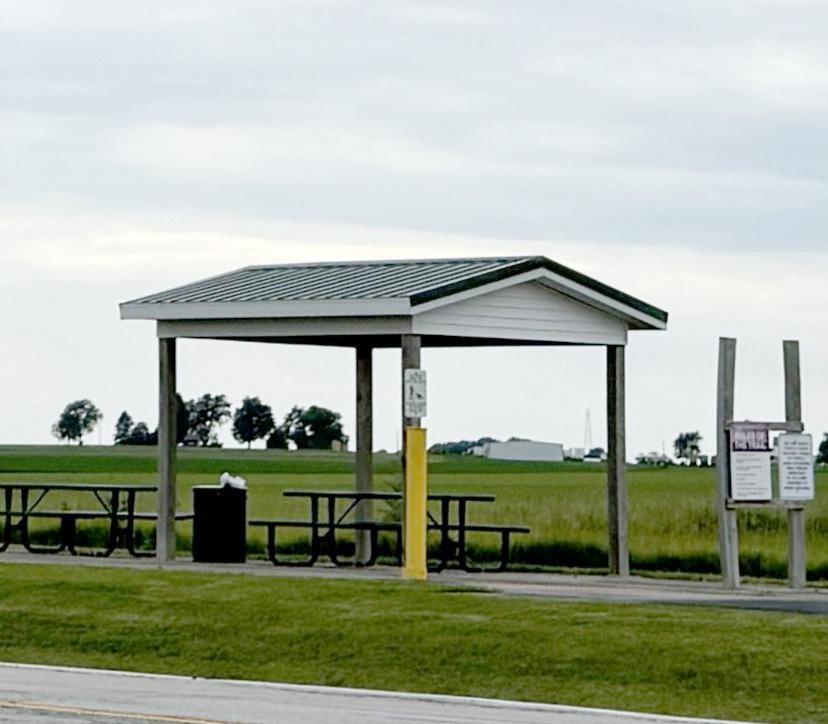
The bike lanes of northern Illinois near the suburbia surrounding Chicago give way to the highway shortly after Joliet, and it’s not until McLean County that there’s a consistent, asphalt trail. After Bloomington, the trail becomes more rural, with landscaping, picnic shelters and drinking fountains along the way.
However, there are no longer any nearby buildings to create shelter from the countryside winds. Casual cyclists should be aware and plan their trips for days with a gentle breeze.
As for recommendations for those looking to experience Route 66 by bicycle, Simmons has this advice: “Probably don’t go with super skinny road bike tires. You’ll want sturdier tires, since some of the pavements aren’t in great condition.”
He said cyclists shouldn’t approach it like a race. Instead, soak the ride in, and make plenty of stops for hydration.
Elsewhere, the Route 66 Trail is still a work in progress. Litchfield in southern Illinois has completed its portion of the trail as a hiking and biking path of about 6.6 miles.
scaping and shelters.
“McLean County, they’ve really invested in the trail,” said Dave Simmons, executive director of Ride Illinois. “The experience for someone who will be biking the route is going to differ.”
That doesn’t mean the ride is any less rewarding, but that does mean cyclists need to be aware. Some portions of the trail have cyclists traveling on roads
Simmons said the Route 66 trail is indicative of what happens on occasion when projects have multiple jurisdictions involved. McLean County has advocacy groups like the Friends of the Constitution Trail that push local government to create safe trails and fundraise. Livingston County and farther north into Grundy County have the same resources, or those resources are pushed elsewhere, like to the Illinois & Michigan Canal trail, another bike trail not too far from Route 66.
Of course, it’s difficult to follow Route 66 via bicycle farther north since so much of the old route is now Interstate 55.
“There is a Route 66 trail guide that was developed by Ride Illinois and the Illinois Department of Natural Resources, but it’s 20 years old,” Simmons said.
He said the trail guide, available at dnr.illinois.gov, is a bit outdated, but it is still the best way to plan a cycling trip down Route 66.
By MICHAEL URBANEC murbanec@shawmedia.com
Travelers have been up and down Route 66 all summer for the historic route’s 100th birthday, but what about the roads that lead to it?
These days, Route 66 may itself be considered off the beaten path, but the roads that lead to it, while more properly maintained thanks to counties, townships and municipalities, broaden the story of the communities that owe much of their growth to the Mother Road.
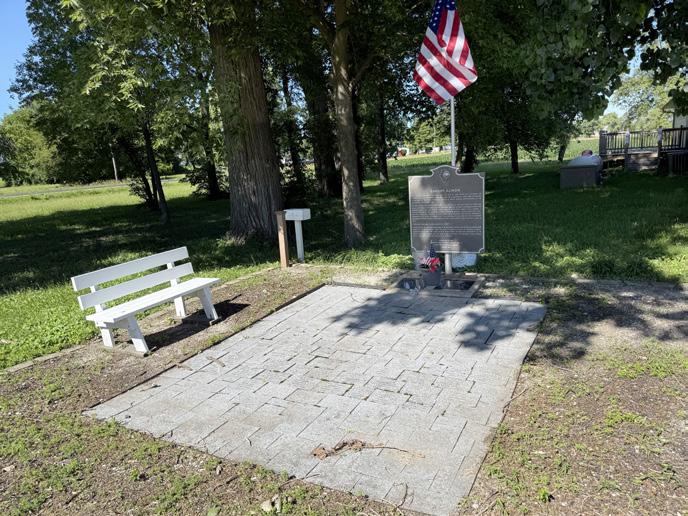
Though one community worth visiting is classified as a ghost town. About 6 miles east of Dwight and 4 miles south of Illinois Route 17 sits the village of Cardiff, a small town with a couple of homes, a grain bin, and a special marker memorializing its past.
Cardiff was founded in 1900 after the discovery of underground coal deposits. Industry sprang up, and a mining operation began.
Mining, historically, is extremely dangerous. Cardiff was no exception.
“A series of mine explosions from March 12-16, 1903, killed nine mine work-
and the Wabash Railroad refused to buy Cardiff Coal.
Two large hills of waste from the mine still exist, and what was once homes, stores, yards and streets is now farmland.
Shibuya, Japan.
ers,” reads the historical marker in the village. “Three men remain entombed in the mine.”
More than 2,000 people lived in Cardiff at its peak, and shortly after the explosion, a second mine was built to the west. The village at one point had a church, a school, two banks, two grain elevators, a semi-pro baseball team, a bottling plant, a railroad passenger service, a hotel, numerous saloons and other businesses.
Then the high-quality coal ran out,
The Grundy County Historical Museum in Morris is a good 30 minutes off Route 66, but visitors won’t regret the extra miles added to their drive. The museum, open from 10 a.m. to 4 p.m. Wednesday through Saturday, features artifacts and exhibits highlighting the history of Grundy County, including the county’s connections to historic Route 66 through communities such as Braidwood, Gardner and the northern portion of Dwight.
There are many exhibits to explore covering the Illinois & Michigan Canal, Hornsby’s Stores, the county’s history with coal mining, and the local geology. This includes fossils and an exhibit displaying the Illinois State Fossil, the Tully Monster.
The museum even features a bit of international flavor with its exhibit on Dora E. Schoonmaker, one of the founders of Aoyama Gakuin University in
The Mazonia-Braidwood State Fish and Wildlife Area is only off the beaten path in the literal sense – the entrance is less than a block away from Route 66. Those with an inclination toward fishing and hunting should make the stop. It features 2,640 acres of hunting and fishing land, with more than 200 water features.
Fish to be found include largemouth bass, smallmouth bass, bluegill, green sunfish, crappie, channel catfish and bullhead.
The Kankakee Sands Preserve is another chance for Route 66 travelers to interact with nature, with 1,099 acres of dunes, open savanna and wetland habitat. It features 2.53 miles of crushed limestone trail for biking, hiking, running, cross-country skiing and snowshoeing.
Heading farther north, Route 66 provides even more opportunities to get outdoors, most notably the Hitts Siding Prairie Nature Preserve, the Forked Creek Preserve, and the Midewin National Tallgrass Prairie. Midewin spans 20,283 acres of prairie and is home to a wide variety of wildlife, including reintroduced native Illinois species such as bison.