MADE IN ROCHELLE: BARMAN’S LAUNCHES AS LOCAL GRAIN-TO-GLASS SPIRITS BRAND .
GRANNY’S BERRIES .
. PAGES 4-7
PAGES 8-13
OCFB’S KERN: GROWING SEASON IN OGLE COUNTY AIDED BY RAIN AFTER DRY PLANTING SEASON
PAGE 14-16
THE FOUNDATIONS OF SUSTAINABLE FARMING
GREEN FARMING IS GROWING PAGES
. PAGE 17
18-19 FOR ADVERTISING
Chris McCarter Ackland cackland@shawmedia.com 815-632-2537
PUBLISHED BY
Sauk Valley Media 113 S. Peoria Ave. Dixon, IL 61021
PUBLISHER Jennifer Heintzelman
GRAPHIC DESIGNER Kris Sands
Articles and advertisements in this publication are the property of Sauk Valley Media. No portion of this magazine may be reproduced without the written consent of the publisher. Ad content is not the responsibility of Sauk Valley Media. The information in this magazine is believed to be accurate; however, Sauk Valley Media cannot and does not guarantee its accuracy. Sauk Valley Media cannot and will not be held liable for the quality or performance of goods and services provided by advertisers listed in any portion of this magazine.
Photo by Jeff Helfrich, jhelfrich@shawmedia.com
By Jeff Helfrich jhelfrich@shawmedia .com
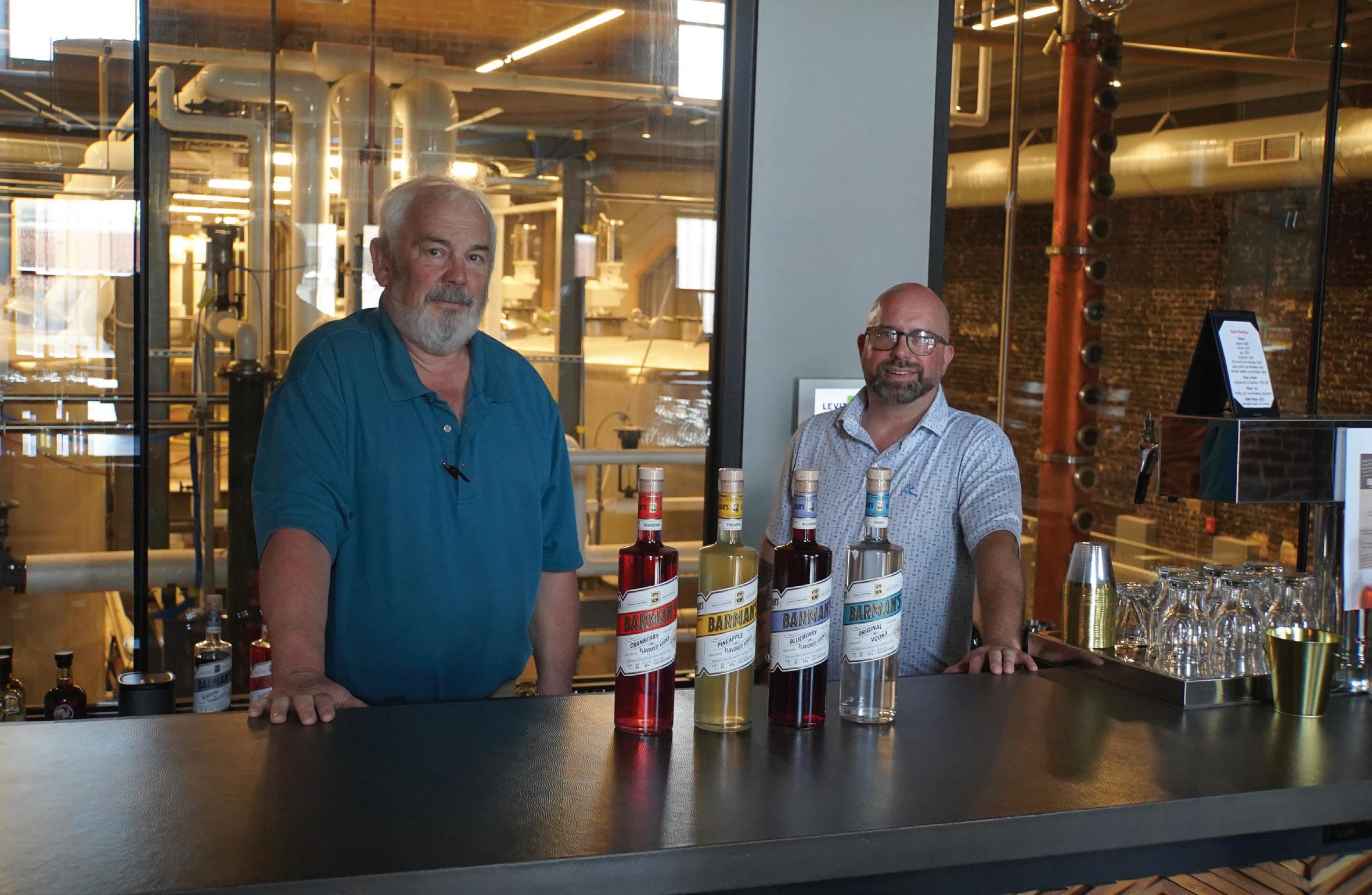
A new grain-to-glass spirits brand made in Rochelle is launching this month. Barman’s produces an original premium vodka alongside three naturally-infused vodka expressions crafted from locally-grown winter wheat at Kennay Farms Distilling in The Hub City.
Barman’s was created by Johnny Holder, who was later joined by investors Josh Becker and Bob Whitehead. Each member of the trio brings decades of restaurant industry experience. Barman’s focuses on products that perform behind the bar. Its vodkas are made from 100 percent wheat.
Barman’s Spirits are distilled by Kennay Farms Head Distiller Adam Kennay, and hand infused, bottled, labeled and packed by Barman’s owners. Kennay Farms Distilling has partnered with Barman’s for a distilling and production site. The distillery opened in 2019 at the transformed site of the former Hub Theater and is owned by the Kennays, a sixthgeneration farming family.
On July 6, Barman’s will ship out its first pallets of vodka to the sales market. The brand will be sold statewide.
Holder’s specialty is bar programs, cocktails and infusions.
“I’ve done all of it,” Holder said. “I decided to take what I know how to do and launch my own business so I can be responsible for my own success. I had the idea and spent six months doing prototypes and got two investors and partnered with this distillery.”
Holder originally looked at starting his own distillery before
opting to partner with an already-existing facility. After touring about 25 distilleries in the region, he got in touch with Kennay Farms Distilling and was drawn to the new facility and local farming family.
The Barman’s business model differs from most of what is seen on the current vodka market, Holder said.
“They have a state-of-the-art distillery and their attention to detail and professionalism are unmatched,” Holder said. “It made sense to do it here. Most premium vodkas you see in bars are from Europe from 30-40 years ago. That’s tired and old. There’s nothing that’s locally-made, old-school and premium the way I wanted to do it. I wanted to do it all from scratch and the right way and that’s how I got here. I live in Naperville and this isn’t too far of a drive for me.”
After getting in touch with Kennay Farms Distilling, the Barman’s ownership group worked to run a test batch at the facility with its 100 percent wheat recipe. The test batch was ready on New Year’s Eve 2025, and the results were “fantastic”, Holder said. The partnership then moved forward.
The infusion process of Barman’s three flavored vodkas is done with real, natural fruit, which is the hardest part of the production timeline, Holder said.
“We then hand bottle, label and package everything,” Holder said. “It was a lot of forklifts and long days. It took about three months to get our first production run completed and we hope to get that process down to about a week or two. It was a
learning curve.”
Barman’s Spirits are 100 percent natural with no added chemicals, Holder said. Large vodka brands often redistill leftover byproduct to save on costs. Barman’s does not, which makes the bottled end product less harsh, Holder said.
“If you taste our vodka next to any of the big brands, you won’t taste that harshness,” Holder said. “Ours is smooth and clean. It makes cocktails better. And the infused vodka is natural fruit, not chemicals. People want natural now, not chemicals or added sugars. That’s where we shine. It’s 100 percent natural, local and premium. No corners are cut. It’s the real deal.”
Holder said he wishes he could have bought vodka like Barman’s in his 30 years of running bars. He’s looking forward to seeing how the market takes to a vodka made for bartenders, by bartenders.
Each bottle of Barman’s features a picture and bio of a local Illinois bartender from Holder’s past and one features himself. He wanted the brand to reflect the industry it came from.
“We’re most excited for the industry to see something come out that’s dedicated to them,” Holder said. “Big, corporate brands put celebrities on their labels that regular people and bartenders don’t have any attachment to. Here’s a brand about us and for us. We’re excited to get it into bartenders’ hands so they can be creative with it. I can’t wait to see the recipes that come out of bars where people are using our brand.”
Photo by Jeff Helfrich, jhelfrich@shawmedia.com
Barman’s, a new spirits brand made in Rochelle, was created by Johnny Holder (right) and joined by early investors Josh Becker (not pictured) and Bob Whitehead (left).
MORE INFORMATION:
ONLINE
https://kennayfarmsdistilling .com/
ADDRESS
Tasting Room | 416 Lincoln Highway Rochelle, IL 61068 Rickhouse | 417 N . 6th Street Rochelle, IL 61068
CONTACT
kennayfarmsdistilling@gmail .com 815-751-4381
HOURS
TASTING ROOM HOURS: Mon-Thurs Special Events Fri 4-8pm | Sat 3-8pm | 2nd Thurs of Each Month 4-8pm
RICKHOUSE: Deliveries & Pickups Mon-Fri 8am-3pm
Custom Cabinet 2477 E IL Rt 64 Oregon, IL 61061
Owner: Eric Zimmerman
815.973.9951
eric@valleycraft.biz Kitchen, Bath, Laundry, Office, and More... From Design to Install We do it all!
GRANNY’S
By Jeff Helfrich jhelfrich@shawmedia .com
Open for season in rural Rochelle with new 3rd generation owner
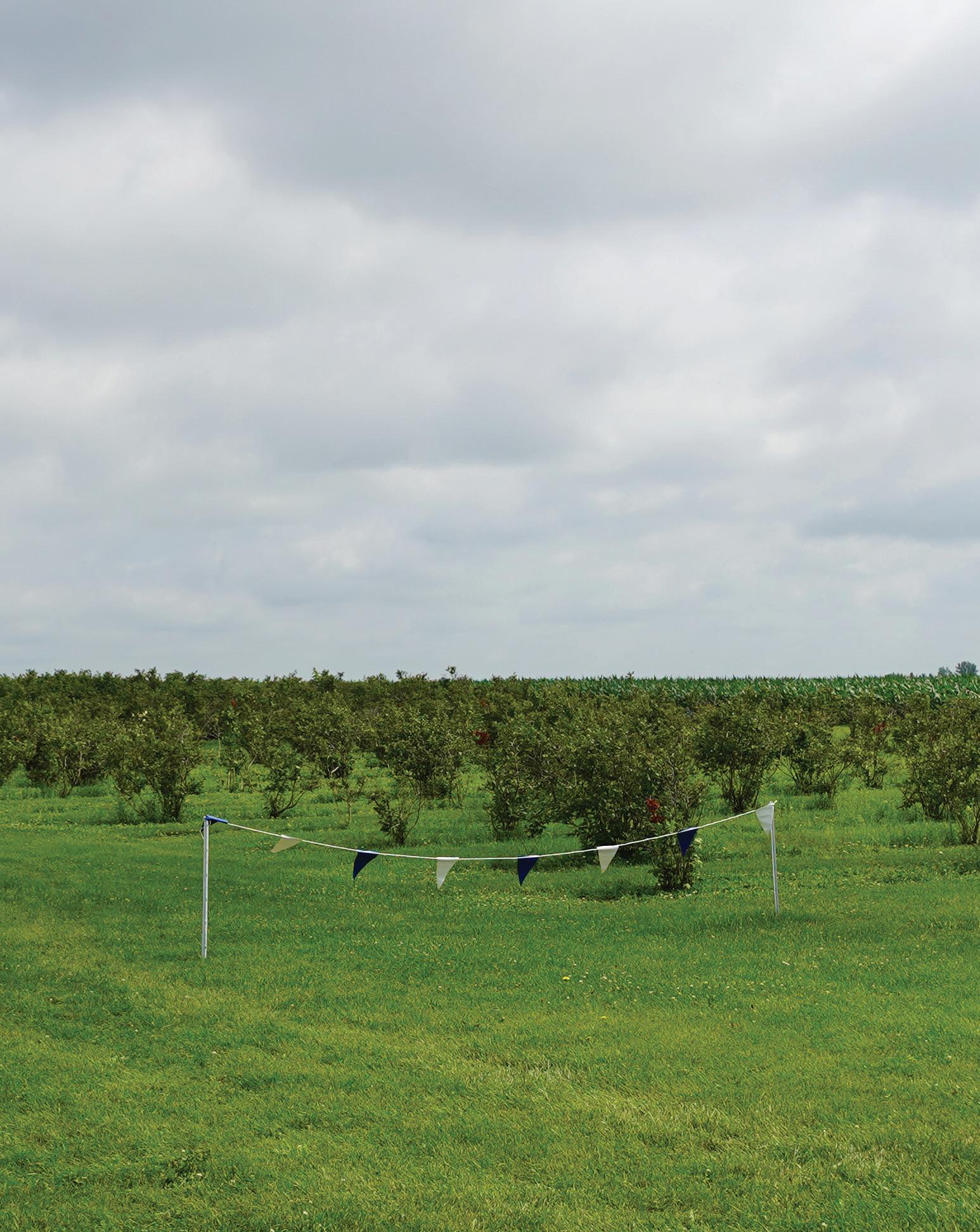
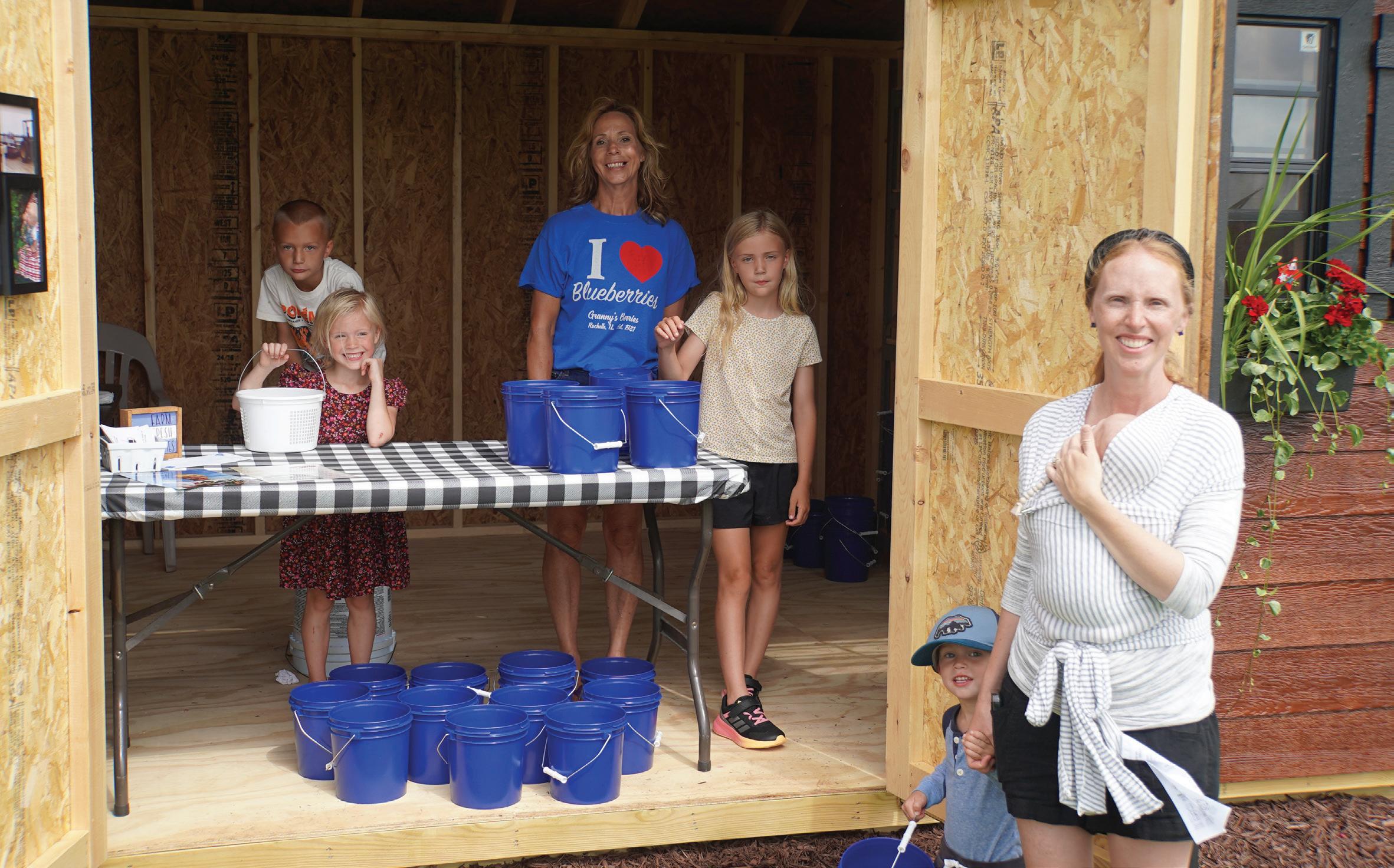
Granny’s Berries at 10864 E. Grist Mill Road northwest of Rochelle recently opened for the season on June 20. The family business is in its first year of operation under new ownership.
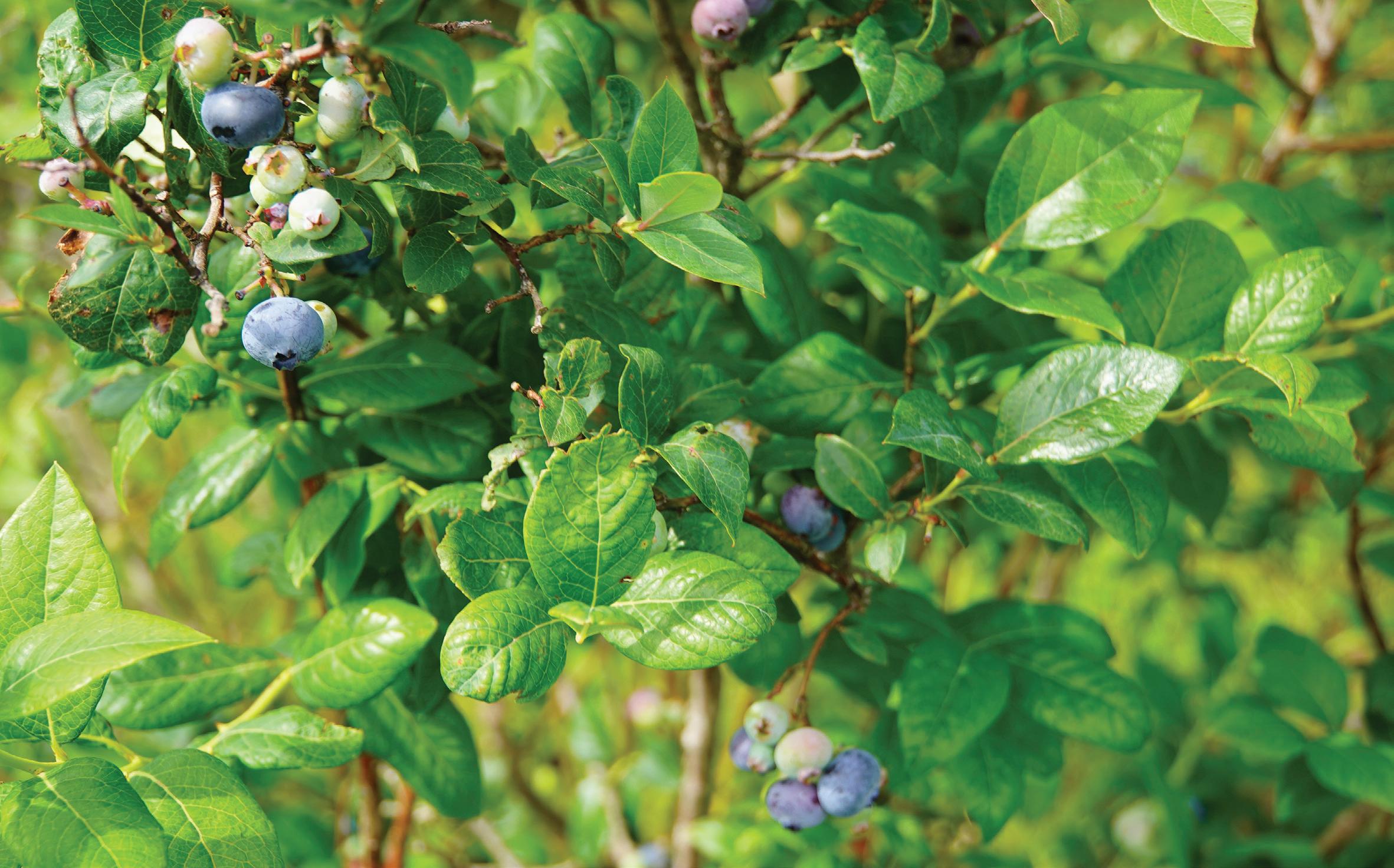
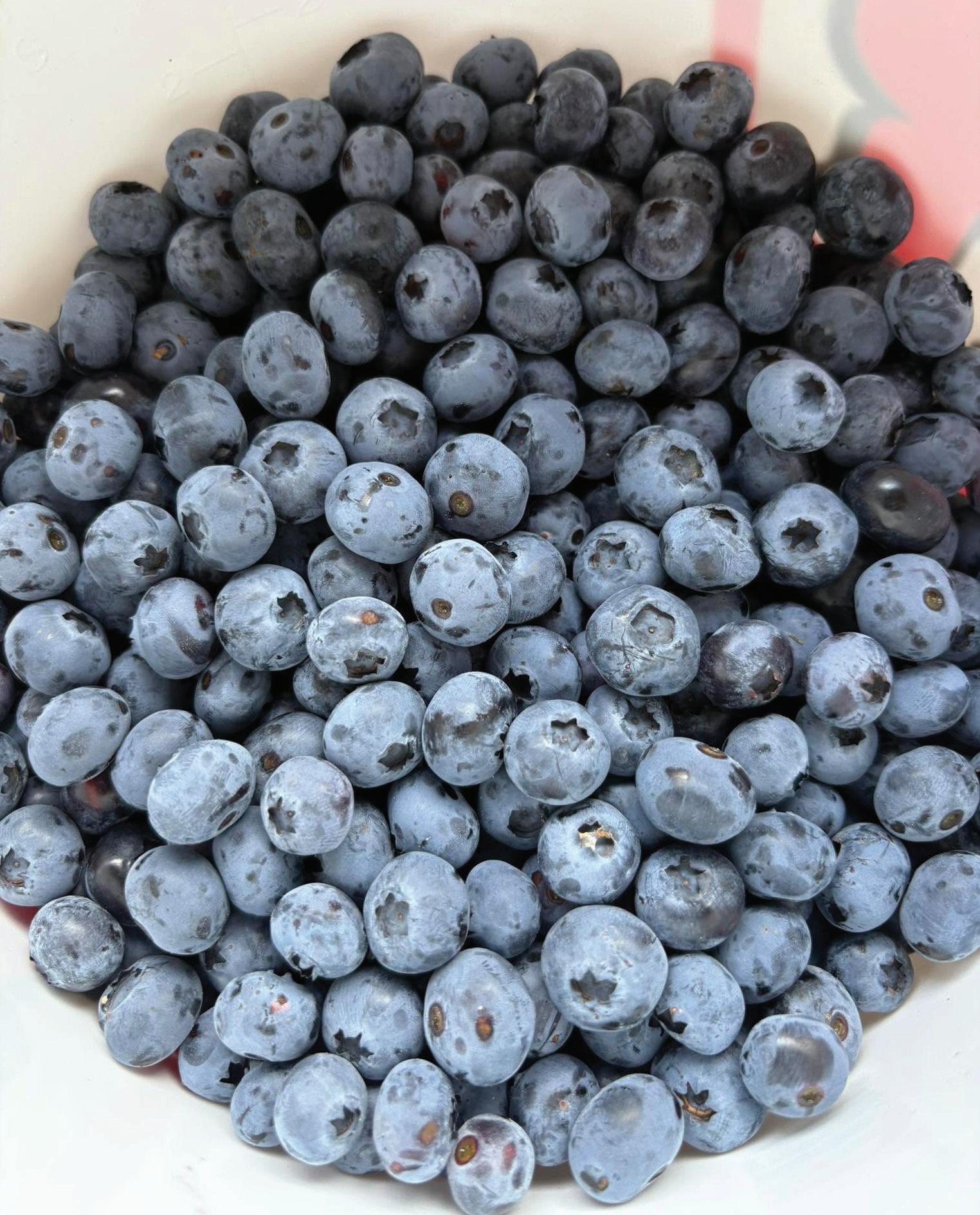
Granny’s Berries offers a field of fresh-grown blueberries where people and families can go to pick them. After the passing of Marian (Asselborn) Richman last year, who started the business in 1981 with her husband, Jim, Granny’s Berries has been taken over by family members Jane Cassidy and Courtney Arnquist. Richman was the second generation of “Granny” after the passing of her mother in law, Mildred (Briggs) Asselborn. The business is now in its third generation of “Granny”.
Mildred Asselborn, great grandmother of Arnquist and grandmother of Cassidy, had a dream of a blueberry farm after growing up in Montana picking wildberries. That was the catalyst behind Jim and Marian starting the farm in 1981.
The blueberry farm is one of only a handful in Illinois. Bushes were brought in from Michigan years ago.
‘It was very important to keep the tradition going’
by Jeff Helfrich, jhelfrich@shawmedia.com
THE PLACE WHERE AGRICULTURAL HISTORY WAS MADE:
“We wanted to keep it going,” Cassidy said. “It’s our family’s berry farm and it was very important to keep the tradition going.”
Arnquist said the season has been going well since opening, with good turnouts from the community. Customers now use an entrance on White Rock Road and the field and a new stand are now located west of where they previously were.
For the most up-to-date status on blueberry picking, customers can check the Granny’s Berries Facebook page, which is updated each evening prior to opening.
The growing season has been positive for Granny’s Berries, with plenty of rain and heat coming in late June and early July, Arnquist said.
Arnquist said she’s appreciated the support of customers this year and in previous years.
“We really rely on the community to come out and pick our berries,” Arnquist said. “It’s really great to see the same people come back every single year so excited to get out here. They’re usually lined up here before 8 a.m. ready to go. Seeing families come out here together is really exciting. People can know where their food comes
IS HERE:
Stand in the spot where John Deere created the first commercially successful steel plow and relive the experience of his original blacksmith shop. Discover where John Deere history began – and changed the world of agriculture forever.
Courtney Arnquist (far right) and Jane Cassidy (center) have taken the helm of longtime blueberry farm Granny’s Berries in rural Rochelle.
from and there’s the education piece for the kids. And families can build their own traditions and memories.”
The business model of Granny’s Berries has fit well into the recent locally-grown food movement and people wanting more control over their food and knowledge of where it comes from, Arnquist said.
The work on the berry farm is labor intensive, Arnquist said, but it’s a labor of love for her and her family members. She’s excited to carry on the legacy of earlier generations.
“It’s been really exciting to know that we were able to carry it on for my grandmother, my grandfather and my great grandmother,” Arnquist said. “I think being in business for 45 years goes to show the support for a farm like this and our customers’ desire to pick berries.”
GRANNY’S BERRIES
10864 E Grist Mill Rd Rochelle, IL 61068-9750 (815) 739-6466
OCFB’S KERN: Growing season in Ogle County aided by rain after dry planting season
‘We were so dry before this year. I don’t know if there’s such a thing as too much rain for us’
By Jeff Helfrich jhelfrich@shawmedia .com
The crop growing season in Ogle County has been aided by rain after a dry planting season, Ogle County Farm Bureau Manager Ron Kern said July 7.
Spring planting in Ogle County got started “a little late” before farmers got caught up due to dry temperatures in May, Kern said. However, that dryness affected some germination rates and stands, particularly in soybeans, he said. Rain came in June and has been steady since. Kern said meteorological data shows rain will continue locally as long as a current high pressure system remains.
“We were so dry before this year,” Kern said. “I don’t know if there’s such a thing as too much rain for us. Some of the rains we got were so quick and heavy that we got some ponding and flooding in fields. Some fields that were ponded and flooded from a couple of those rains bounced back from it. Other fields the ponding will probably affect the yield or there won’t be a yield where the flooding was.”
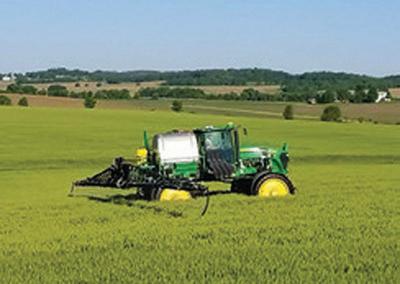
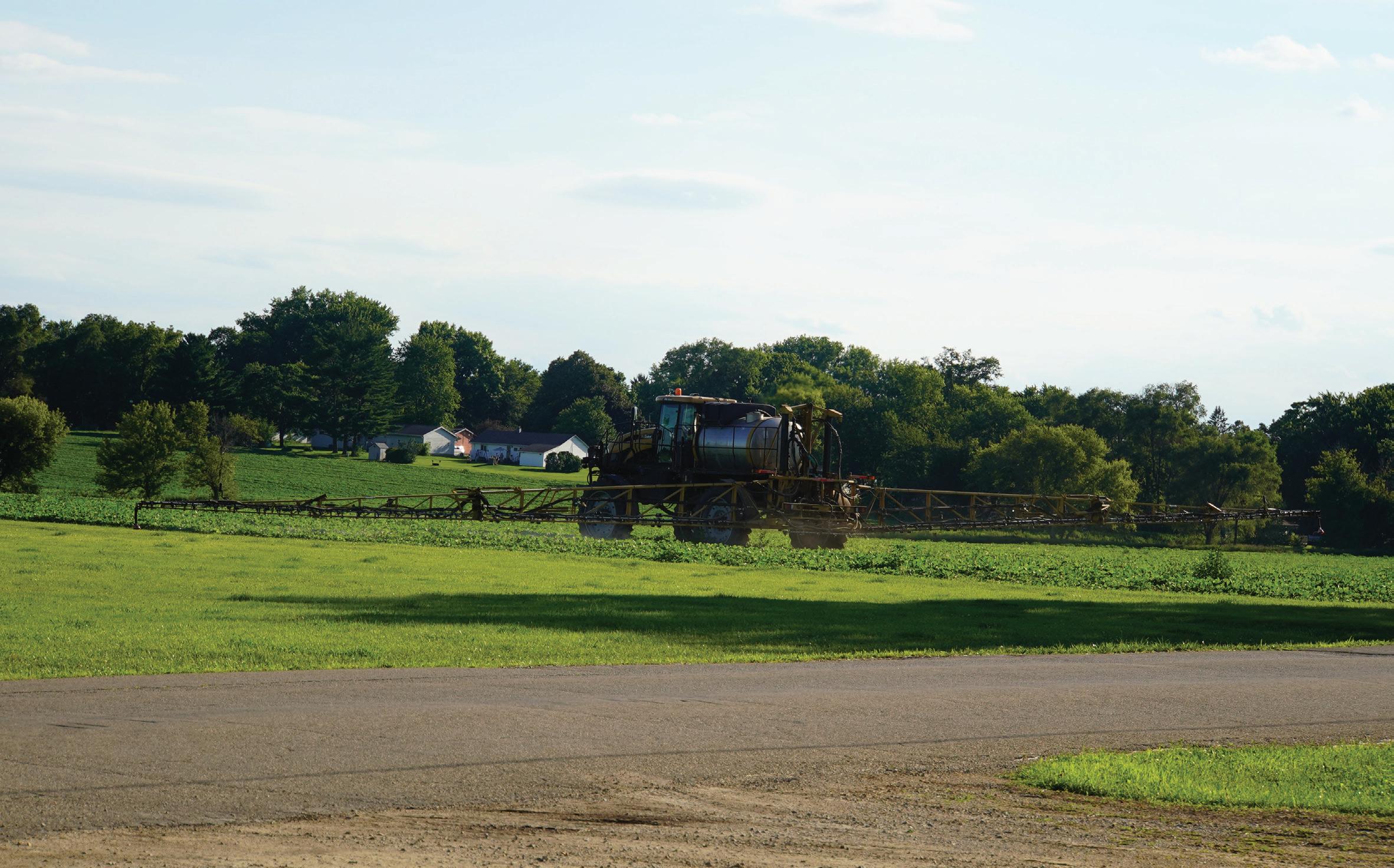
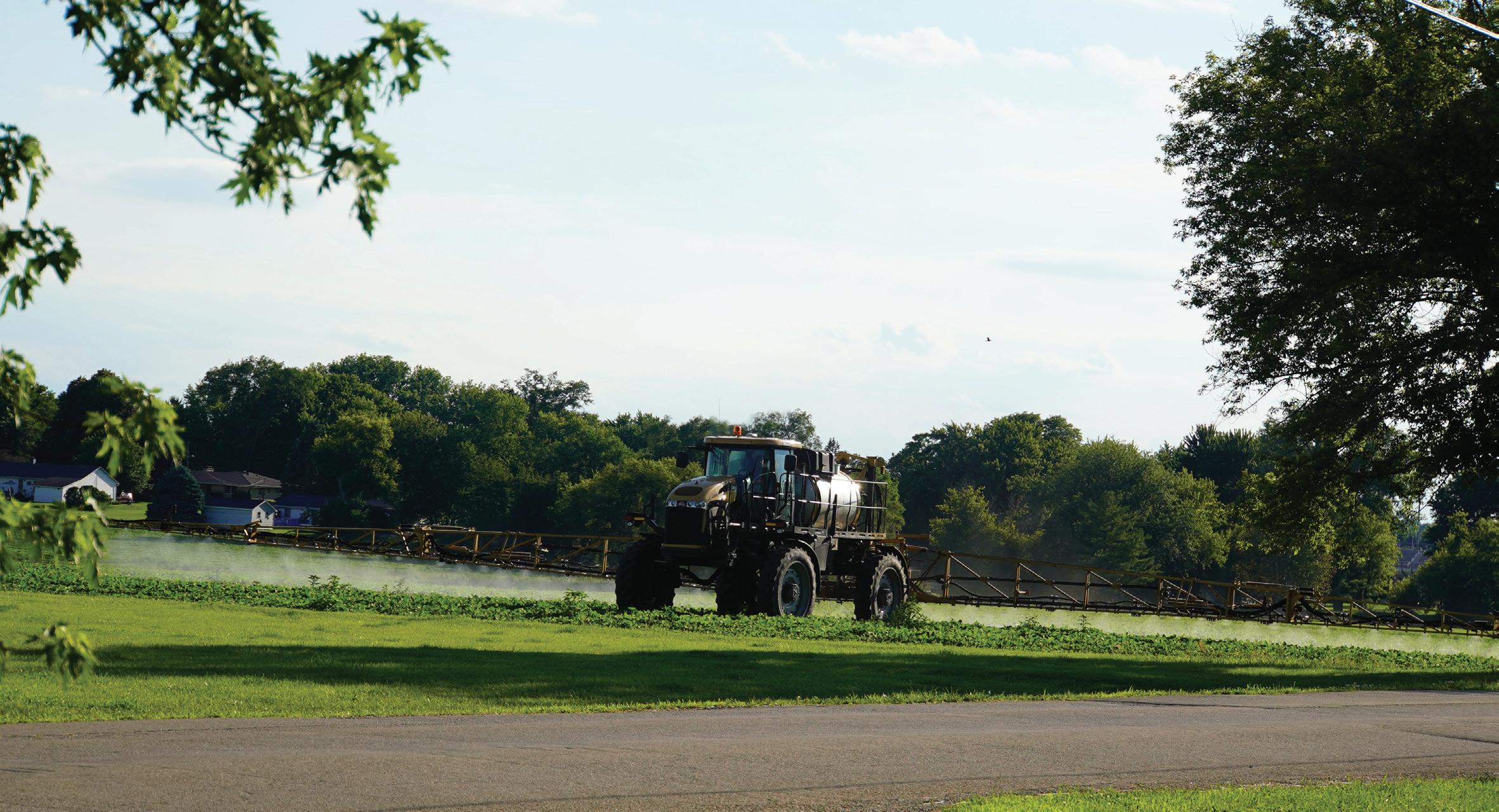
Ogle County farmers’ current work includes spraying crops, mostly soybeans. Aerial application of fungicide will be seen in coming weeks and farmers will be doing crop scouting for the presence of insect or disease pressure.
Kern said the current Ogle County corn crop looks “good” and is “moving right along”. Soybeans may have a different outlook due to the dry planting season affecting germination, Kern said.
“I don’t think the stand is there,” Kern said. “Some farmers did replanting and some didn’t. Some wish now that they
had. I think the beans that are out there that are growing look good. I just don’t think they have the population that they thought they would to start with. I think beans are going to be a mixed bag.”
In recent months, farmers nationwide have encountered rising input costs such as fuel and chemicals. Kern said those issues have started to “steady”, but have not decreased a lot. Kern said he hopes prices stay flat or go down, but said the situation with the war in Iran brings about uncertainty.
“Most farmers are constantly monitoring the market and talking to suppliers to see where things may go,” Kern said. “With harvest coming, they’re trying to lock in low fuel prices ahead of time for delivery. Fertilizer won’t be needed until next spring, but they’re trying to lock in future prices for that as well.”
Farmers are still awaiting more progress by Congress on a new federal Farm Bill, which it passes every five years to set comprehensive agricultural programs and policies. The current Farm Bill, passed in 2018, has been extended for a year twice, most recently in December. The federal Farm Bill allocates funding for crop insurance, disaster assistance and conservation programs for farmers.
Kern said a version of a new Farm Bill passed in the House of Representatives recently, but has not passed in the Senate. Export markets for crops have not changed much recently, Kern said. The OCFB manager said he doesn’t “expect too much upside” through the rest of the year. Beef prices were
A sprayer works in a field just north of Rochelle in Ogle County.
Photo by Jeff Helfrich, jhelfrich@shawmedia.com
CONTINUED FROM PAGE 10
down last month and pork exports did “quite good”, Kern said.
Farmers have faced difficulties with crop export markets, namely in soybeans, due to the White House’s tariffs. China, a large player in the market, turned to South America for its soybeans following the tariffs. The United States picked up secondary markets left by that change, but that hasn’t been enough to fill the void left by China, Kern said.
“The bottom line is that it just doesn’t replace that market the U.S. had,” Kern said. “The trouble with trade is when you become a non-reliable supplier in the global market, it becomes hard to get those markets back, particularly when those people you were supplying turn to a different direction. We have a lot of fence mending to do in the next few years.”
Uncontrollable factors of input prices, markets and weather have made for an interesting year for farmers in Ogle County
and nationwide.
“You go out and work hard and do it all right and plant a crop,” Kern said. “You sit and pray and put yourself in God’s hands. I’m sure farmers would tell you they’d rather have a little more rain than a drought. They like getting out in the fields at harvest time and seeing the monitor show a bunch of bushels.”
Kern expects harvest to start in Ogle County in late September at the earliest, which would be soybeans that were planted early. He has a wish list before that time.
“I would like to see an inch of rain per week all the way through August,” Kern said. “And then I’d like sunny, dry days in October and November and a place to put all these bushels of crops. I want to see the export market improve and drive the prices back up and drive the input costs back down and make everybody happy.”
Photo by Jeff Helfrich, jhelfrich@shawmedia.com
A farmer applies fertilizer to a field just north of Rochelle in Ogle County on Tuesday, June 23, 2026.
The foundations of SUSTAINABLE FARMING
The agricultural sector is built on plants and animal life, but the industry can still affect the environment in ways that contribute to the ill effects of climate change. According to data published in a 2022 report from McKinsey & Company, agriculture accounts for nearly one-quarter of global emissions, and was identified as the industry that contributes the most to exceeding planetary boundaries. Sustainable farming practices can help reduce that impact. Even though there is growing consumer demand for more environmentally friendly products, farmers in the United States are lagging behind when it comes to adopting sustainable practices, even though they are aware of them. McKinsey reports that 90 percent of U.S. farmers have an understanding of sustainable farming, but adoption of these practices remains low. Here’s a look at some of the sustainable farming practices and what the agricultural sector can do to foster a better planet.
REGENERATIVE TECHNIQUES
Healthy soil often equates to a healthy planet. The cornerstone of sustainability lies in the soil. The soil serves as a carbon sink and a water filtration system. By avoiding traditional “tilling” farming, farmers can maintain the soil structure. This will reduce erosion and keep carbon sequestered in the ground. Farmers can plant cover crops like rye or clover in the offseason to prevent soil erosion, suppress weeds and increase the organic matter of the soil. Diversifying species planted in fields will break pest cycles and naturally replenish soil nutrients over time. This can reduce the need for chemical fertilizers and pesticides.
EFFICIENT IRRIGATION
Global water scarcity continues to be a concern, and sustainable farms will prioritize water stewardship. In utilizing drip irrigation, which delivers water directly to a plant’s roots, farmers can reduce evaporation and runoff when compared to overhead sprinklers. Collecting and storing rainwater runoff for use during drought can minimize the strain on local aquifers.
BIOLOGICAL PEST CONTROLS
Farmers can rely on the use of integrated pest management strategies to offset chemical pesticide use. By introducing natural predators, farmers can control certain pest populations. For example, ladybugs can reduce aphids on plants. Relying on traps to collect pests also can slow pest outbreaks and reduce reliance on chemicals.
CREATING FERTILIZERS
Farmers can use the waste produced on their farms by turning it into valuable fertilizer. According to the USDA, biochar is a black carbon produced from biomass sources like wood chips, plant residues, manure, and other agricultural waste in a low-oxygen environment through a process known was pyrolysis. This material can be used as a soil amendment to improve water retention, nutrient uptake and fertility. Chicken litter, bone meal, blood meal, and compost tea are examples of farm waste-derived products that can be used as fertilizers.
Sustainable farming is a step toward the future that protects the land without compromising output.
GREEN FARMING IS GROWING
Investment
Trust Services
•
Farmers have been pressured to increase production to meet the demand of a growing population. This may require employing more efficient measures to ensure maximum output. Unfortunately, efficiency doesn’t always mesh with sustainability, so commercial operations have had to make some modifications to find a balance between serving the public and protecting the planet.
Green farming utilizes different technology and practices in order to decrease detrimental impact on the environment. According to the farming resource NuFarming, agricultural operations have a significant impact on climate change. Simply adopting some new practices can lessen that impact.
SOLAR POWER
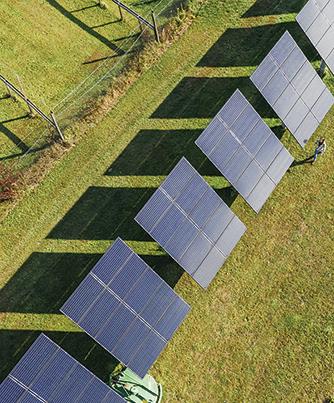
Growing plants are not the only thing on a farm that can benefit from the sun. Farmers can convert a portion or all of their power needs to solar. According to the U.S. Department of Energy, there are benefits when solar companies and farmers work together. Solar developers reduce installation costs and upfront risk by placing solar modules on previously tilled agricultural land. Vegetation under modules also can contribute to lower soil temperatures and increased solar performance. Agricultural land managers can reduce energy costs and diversify their
•
•
is not the only renewable energy
Farmers can incorporate wind and hydroelectric power as well.
CROP ROTATION
This farming technique has been used for thousands of years and involves growing different crops in different seasons over a period of time. Farmers reduce the chances for pests and diseases becoming problems in the soil because frequent crop changes prevent invaders from gaining a foothold. Farmers use fewer fertilizers and pesticides as a result.
HYDROPONIC AND AQUAPONIC STRATEGIES
Farmers can improve productivity while also reducing environmental impact with these two growing methods. NuEnergy states that hydroponic systems grow plants in mineral solutions or in materials like perlite or gravel. Aquaponics involves raising aquatic animals in addition to growing crops. The waste from the fish and other marine life is used to offer nutrients to the plants by growing them in this nutrient-rich water. Both methods remove the need for soil.
DRIP IRRIGATION
Drip irrigation methods deliver water to the roots of plants through a series of pipes or tubes. Because water is not being sprayed into the air through sprinklers and other methods, less is lost to evaporation, and less water overall may be needed to provide for crops.
PLASTICULTURE
Plastic seems like it may not have a purpose on the farm, but recycled plastic, which is used in plastic mulch, can help produce plentiful crops with less water. Plastic mulches raise soil temperatures and insulate against evaporation so plants can grow faster and mature sooner. Invasive weeds also may be less likely to take root in plastic mulch or when crops are grown on black plastic.
NATURAL PESTICIDES
Farmers can introduce plants that pests tend not to like to reduce reliance on chemical pesticides. For example, interspersing crops with natural bug repellants, such as basil, lavender and lemongrass, may keep insects at bay. Alliums, chrysanthemums, marigolds, and other flowers planted nearby also may deter bugs.