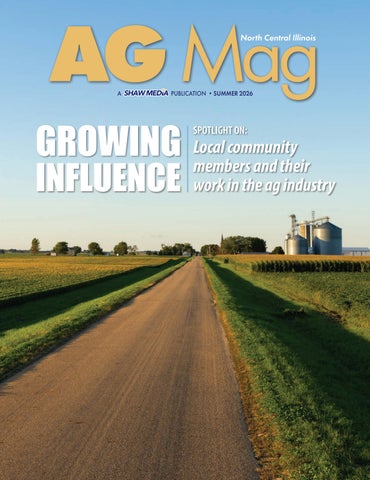
GROWING INFLUENCE
SPOTLIGHT
Local community members and their work in the ag industry
SPOTLIGHT
Local community members and their work in the ag industry
Your farm operation deserves more. That’s why we provide a variety of optional coverages to choose from so you have the protection you need. Here are some examples of what makes our crop insurance different.
• Our crop hail insurance, powered by GrainGuard®, helps protect against damage caused by hail, lightning, fire, vandalism, aircraft and vehicles.
• We offer flexible deductibles. Choose either zero, five or 10% disappearing deductibles.
• Enhance your hail protection with Wind and Green Snap coverage for additional losses that may come your way.
• Supplemental replant that protects a wider variety of crops with more choices of coverage levels, paying on the first replanted acre.
• Extra Harvest Expense can help with added costs when harvesting downed corn caused by wind.
your options.
location: Your deser ves more. a to choose so have need. Here are some makes our crop different
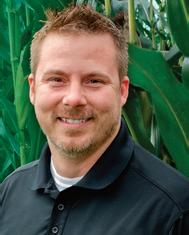
alan.davis@countr yfinancial.com
see us at our new
yfinancial.com

Articles are the property of AgriNews No portion of the North Central Illinois Ag Mag may be reproduced without the written consent of the publisher Ad content is not the responsibility of the Bureau County Republican The information in this magazine is believed to be accurate; however, the Bureau County Republican cannot and does not guarantee its accuracy The Bureau County Republican cannot and will not be held liable for the quality or performance of goods and services provided by advertisers listed in any portion of this magazine




Ag Mag
Bureau County Republican P O
Princeton, IL 61356-0340
815-220-6948
Regional Market Leader
Jeanette Smith
jmsmith@shawmedia com
Editor
Jim Henry
Writers
Martha Blum
Colleen Callahan
Tom C Doran
Cyndi Young-Puyear
Brad Zimmerman
Photographers
Martha Blum
Tom C Doran
Designer Liz Klein
By TOM C. DORAN tdoran@shawmedia com
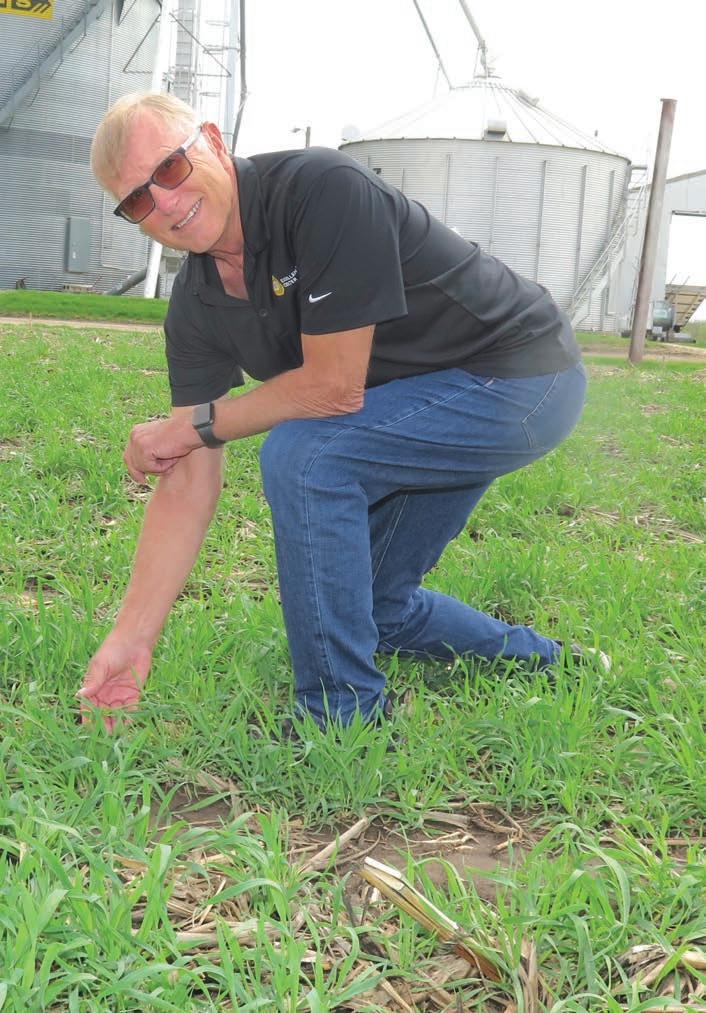
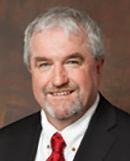
PUTNAM, Ill. — Mark Read has been involved in his community in a variety of roles over t he years, and after retiring from farming, he was able to expand his volunteer work to well beyond north-central Illinois.
R ead, a fourth-generation farmer, grew up on a farm that has been in his family for 150 years.
He served on the boards for the Marshall-Putnam Soil and Water Conservation District, Putnam County Board of Review and the Henry-Senachwine Unit 5 School District. He also served on the farm advisory committee for Congressman Darin LaHood.
He’s a member of the MarshallPutnam Farm Bureau, Illinois Soybean Association and Illinois Corn Growers Association.
He farmed with his brother, Charles, until 2020.
“I farmed about 2,500 acres with my brother for several years,” Read said.
“He had just retired and I retired. We raised corn and soybeans and we were mainly all s trip-till and no-till at the time. We’re still that now,” Read said.
After he and his brother retired, he was able to find someone to farm the ground with t he same approach to managing the soil.
“ I went a few miles to get the person who I wanted to farm it like we’ve been doing it and to improve it. We’re now growing cover crops. He signed up for an Illinois cover crop program and we’ll have cover crops on everything next year,” Read said.
After his retirement from farming, Read felt he “had time to give something back.”
“I was approached about running for the Illinois Soybean Association board and took a partial t erm first and then another six
years. I will go off the board this July,” he said.
Joining ISA as a board member representing Marshall, Putnam, Tazewell, Peoria and Knox counties opened up a whole new world for Read — literally.
He’s a representative for ISA’s
Soy Innovation Center, the U.S. Soybean Export Council and the World Initiative for Soy in Human Health.
Read was elected chair of USSEC’s Soy Excellence Center last year. The program is designed to meet local workforce development needs around the world.
It facilitates employee training and continuing education activities that build the knowledge and skills to help employees overcome key challenges and operations hurdles in food and business operations.
Regional hubs are located in Asia, India, Middle East, North Africa and sub-Saharan Africa.
“When the first tariffs were put on in 2019, we lost a lot of business with China, and so part of that there was a grant written by the USSEC to start some educational training in countries other than China,” Read said of the start of the Soy Excellence Center.
“We’ve educated over 25,000 people in the program. It’s started in 2019 in Egypt. So, I’ve been to Egypt like four times.”
His travels on behalf of soybean farmers have filled his passport.
“I’ve been to a lot of countries in South America and Latin America. We’ve got really good customers in Colombia and Venezuela,” he said.
“We actually increased our soybean sales about 30% last year with
the exception of China, but that didn’t make up a China. They take almost half the world’s soybeans.”
Promoting U.S. commodities to international markets has spanned two generations for the family.
“My dad was in an organization which he started with two or three people where they were selling hogs to countries in Africa and shipping them over there on an airplane. So, I’ve always had kind of that international exposure,” Read said.
His first experience with international agriculture was during a summer trip with the University of Illinois where he majored in ag economics.
“It was a Big Ten trip that Purdue sponsored. It was interesting. We flew to places like Costa Rica where they were raising cassava. We also went to Venezuela and Panama. So, I was kind of interested in international agriculture, how it all worked and how it benefited us,” he said.
“It’s interesting to see where our end products end up, what it’s doing, how you can improve it. The crude protein is one thing that sometimes we’re not quite as high on as Brazil, but there’s much more than crude protein. Hogs care about other things, not just crude protein. It’s kind of learning how to present that, how to sell it and to get in touch with the right people.”
Through his work and serving on the ISA board, Read has seen the value that ISA and ICGA provides for Illinois farmers.
“I’m a member of both. It’s remarkable how much they add to t he value of our crop. That little we pay goes a long way, and I was one that didn’t really know where my money was going before I got on. I didn’t appreciate all the work that was being done before that, especially on the export side. About 60% of our soybeans are exported from Illinois,” he said.
“Now, that might be a little bit less when Marquis and Incobrasa expand. Incobrasa at Gilman are really expanding and they’re going to take beans from about 80 miles away.”
Read is a strong believer in being involved in communities.
“It’s important to be involved in the community that you live in and make it better, especially because it’s harder now,” Read said.
“It seems like we’ve got more free and reduced lunch and all this. We have poor people right where we live. Why?
“Then a lot of the kids that go to college and the end up in other places. They don’t come back here unless they’re going to farm. We’ve got to have a lot of farm leaders in the community.”



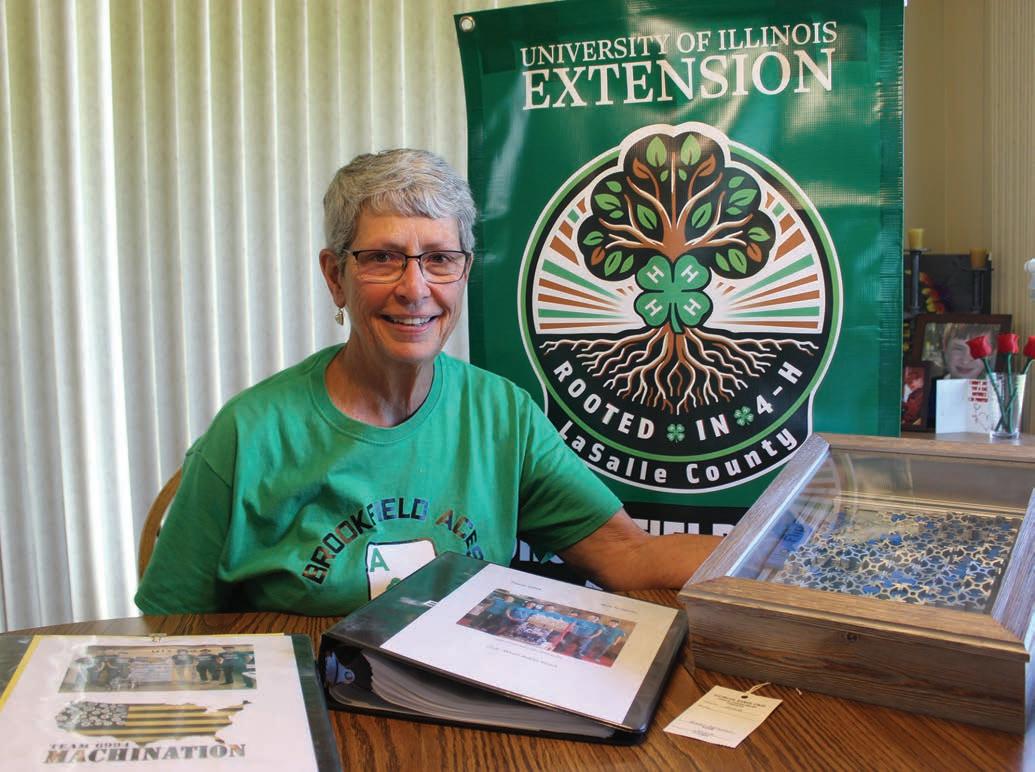
By MARTHA BLUM mblum@shawmedia com
MARSEILLES, Ill. — The Brookfield Aces 4-H club is like a large family where members are encouraged to help each other with their projects, community service activities and fundraisers.
“I view them as my 4-H grandkids,” said Terri Sancken, who has served as the club leader since 2017. “When we start the year, I tell the kids that if
they have questions, there are other kids who have done that project, so feel free to ask them.”
Sancken started working with the club in 2006, when her son, Brent, joined the group that was called the Brookfield Indians 4-H Club at that time.
“This is the oldest club in La Salle County — it was established in 1940,” she said.
When the group decided to change the name to Brookfield Aces, the club
president designed the new logo.
“It is an Ace card with the shape of La Salle County inside the card,” Sancken said.
About 75 kids are members of the Brookfield Aces.
“To see all the different projects they are involved in, it warms my heart every time,” Sancken said.
The club meets on the third Sunday night each month from September to May at the Brookfield Township Hall.
“About half of my club has animals
and half are projects,” the 4-H leader said. “Our club has a farm tour in June, our county fair is in July and the state fair is in August.”
Sancken continues some long-term 4-H traditions, including an annual awards program in the fall.
“All the members give one talk or demonstration during the year and it does not have to be on your 4-H project. It could be on something you did at school,” she said. “Or, something you want to learn more about. We just had a member give a talk on tuna fish.”
This year, Sancken organized a SPIN Club for building blocks.
“For six weeks, I had 16 kids meet every Tuesday night and each week the kids had a different challenge,” she said.
For example, the kids were asked to build a farmyard or a park that told a story. Another challenge for the kids was to build a bridge that was strong enough to hold bottles of water
without support in the middle of the bridge.
“They also had to build a golf course with three different holes,” Sancken said. “It is awesome to watch their minds grow.”
“The shiest kids blossomed because they got to know this little building block family and they felt comfortable,” she said. “I set aside 20 minutes at the end of each night so they could tell about their project and I ended up getting 11 new kids for 4-H because of this SPIN Club.”
The pancake breakfast is a longterm fundraiser for the Brookfield Aces that has been an annual event for the past 49 years.
“Our club does it with the Highland Ag 4-H Club, usually during the first part of March,” Sancken said. “We are so blessed that community and families support the clubs and kids. Both clubs usually walk away with $2,000.”
For service projects, the club members go to the Marseilles nursing home
a nd play games with the residents and serve them lemonade and snacks.
“The residents are thrilled and we also purchase word search books for the residents,” Sancken said.
Another service project involved making dog tugs for Pet Project, an animal shelter in Marseilles.
“We walk in the Seneca homecoming parade and hand out bags with c andy and information about 4-H,” the club leader said. “In the fall for National 4-H Week, we decorate the Seneca Area Heritage Museum.”
Sancken grew up on her family farm where her dad raised crops and pigs.
“I showed hogs and my mom was an art teacher, so I did visual arts and baking,” she said. “My husband, Tom, was also in 4-H, so we knew we wanted Brent to be in 4-H.”
Brent’s first 4-H projects were Tennessee fainting goats and pygmy goats.
See Sancken, Page 8
Get the financial solutions you need to achieve the success you deserve.

Kewanee • Annawan • Bradford • Dwight
Manlius • Reynolds • Seneca • Sheffield • Tampico

FROM PAGE 7
“Then he decided to raise pheasants,” his mom recalled. “He chose Melanistic Mutant pheasants that are dark in color, but in the sunlight they look more like a peacock.”
As her son entered junior high, Sancken said, he needed another challenge, so he started to work with robotics. This developed into a group of 12 kids that were divided into two teams.
“They practiced in our basement and met three times a week,” S ancken said. “It started September and the last competition was at the end of February.”
Each year the task that the robot must complete is different.
“One year they found out the wiring was bad on the robot the night b efore the competition, so the kids stayed up until 2 a.m. rewiring the
robot,” Sancken said. “But they got to the competition, and when I look at these memories, it was a whole bunch of fun.”
The robotic team qualified for state competition three or four times.
“The team members still get together 10 years later,” Sancken said. “My son is now an IT engineer at a TV station and other kids that were on the robotics team are now employed at places that include John Deere and U.S. Steel.”
In addition to serving as a 4-H leader, Sancken is also the visual arts superintendent at the La Salle County Fair and a member of the La Salle County Friends of Extension and 4-H.
“That group was formed eight years ago when the state was going to cut funding to the Extension office and we were going to lose the secretary,” she said. “The first year we raised enough money to pay her salary and we still do that every year and more.”
The Friends group does several fundraisers every year, including a drive-
t hru barbecue dinner and a couple of Culver’s nights.
“We partner with the La Salle County Fair Board and organize a seed corn auction in early fall at the fairgrounds,” Sancken said. “We split the money with the fair board.”
An auction of donated items is also held on the Saturday evening of the county fair.
“We get baked goods and it is amazing the businesses that will donate,” t he 4-H leader said.
Sancken bakes four dozen chocolate chip cookies each year to donate to the auction.
“What happens is someone will bid on them and then donate the cookies back to be sold again,” she said. “One year I had cookies sell for $3,000.”
The money raised by the Friends group stays in La Salle County to support the kids.
“ There are a few fees we have to pay, but 99.5% of the money stays in the county,” Sancken said.

Time-tested Agribusiness banking.
By MARTHA BLUM mblum@shawmedia�com
NEWARK, Ill. — Watching high school students become successful in their careers has been a h ighlight for Joe Steffen as the agriculture teacher and FFA adviser at Newark Community H igh School.
Students have chosen a spectrum of careers such as doctors, veterinarians, farmers and agricultural teachers.
“ I have eight former students that are ag teachers,” said Steffen, who will be retiring from his t eaching position at the end of this school year.
That includes his son, Ty, who is currently working on his agricultural education degree.
“ Ty has been going to FFA contests and fairs with me all his l ife,” said Steffen, who is married to Tracy and they are the parents of Ty and Toby.
Steffen is originally from Woodford County, where his family grew corn and soybeans and r aised cattle and sheep. He was a 4-H and FFA member and spent time showing cattle.
When he started at Illinois Central College, Steffen’s goal was to complete a degree in ag business. However, his plans
changed as a sophomore, when he learned that his ag teacher was diagnosed with a brain tumor and he decided to switch his major to agricultural education.
After graduating from Illinois State University, Steffen started teaching at Newark in the fall of 1993.
“When I first started, I wanted to make this chapter as success -
ful as it could be and put Newark on the map to make it state and nationally known,” he said.
Currently, the Newark FFA Chapter has 66 members.
Over the past 33 years, Steffen has helped his students earn many awards and degrees, including both his sons who were Illinois FFA Star award finalists and Ty also was selected as a finalist for




Technology has been some of the biggest changes for Steffen during his career.
“When I first started, I had an Apple IIe computer,” he recalled. “FFA record books used to be on paper and now everything is kept online so kids can do them anywhere they are.”
“My second year, I got a grant for a rolling desk and my computer, overhead projector and printer went on it,” he said. “It could go from classroom to classroom and they called it the Joe Station.”
“You are not going to find a film projector in a classroom today and VCRs are almost obsolete,” the ag teacher noted. “I have one here because I still have a couple of VCR tapes that I use.”
“We have gone from bag phones to using phones in the classroom to phones being banned in the classroom,” he said. “Now when the kids come into the classroom, they
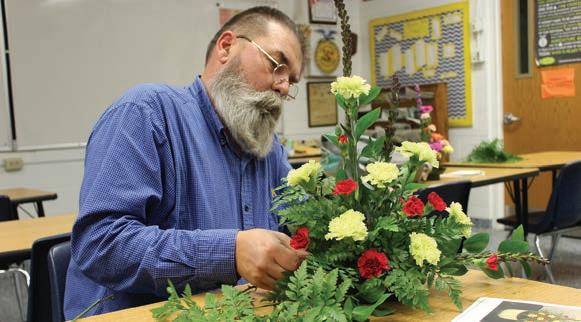
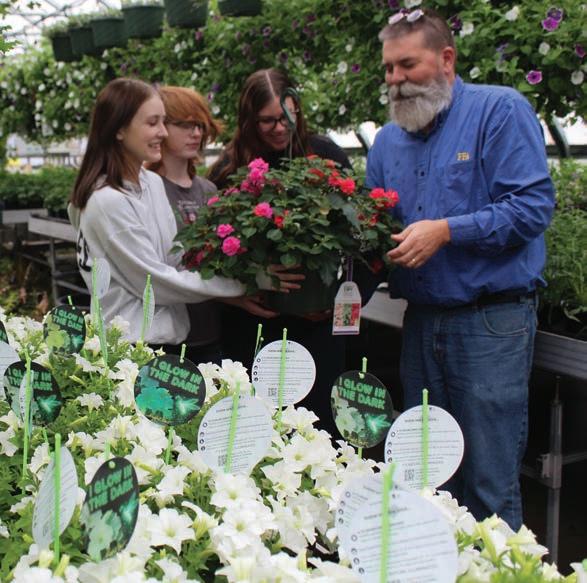
Joe Steffen demonstrates how to complete a flower arrangement for students in preparation for a FFA horticulture contest
put their phones in a pouch hanging on the wall and I also use that for attendance.”
Newark has been using the pouch system for three years.
“It has been a success and other schools are copying what we are doing,” the educator said.
Once he retires, Steffen said, he is going to miss working with students and interacting with other ag teachers.
“But I’ll be going to state and national FFA conventions for a
couple of years to support the kids and parents,” he said. “And I’m not going anywhere.”
Steffen is a member of the board of the Fern Dell Historic Association and he is the vice president of the Kendall County Fair Association and has been a member of the board for 32 years.
He will also have more time to grow and develop new gladiolus cultivars. Steffen started growing gladiolus with just 50 bulbs many years ago.
“I won the champion novice award at the Illinois State Fair and that started the bug for growing glads.”
Now, Steffen grows hundreds of varieties of gladiolus on about onequarter of an acre and competes in shows throughout the Midwest and internationally through events held on the internet.
“Growing glads is my relaxation,” he said. “Sometimes when I’m working with them, there will be 25 to 30 hummingbirds pollinating the flowers.”
T here are a couple aspects of teaching that Steffen won’t miss, including grading papers.
“And I won’t miss the stress of getting ready for events like the chapter banquet or FFA contests,” he said. “It’s stressful because you want to make sure that everything runs perfect.”
Steffen has been working with Megan Dinsmore, who is the new ag teacher for Newark. Dinsmore student taught at Rochelle H igh School and graduated this year from Southern Illinois University with a degree in agricultural education.




By TOM C. DORAN
tdoran@shawmedia�com
SPRINGFIELD, Ill. — Stark and Tazewell counties had the state’s top average corn and soybean yields, respectively, in 2025.
County yields and production estimates in Illinois were recently released by the U.S. Department of Agriculture National Agricultural Statistics Service.
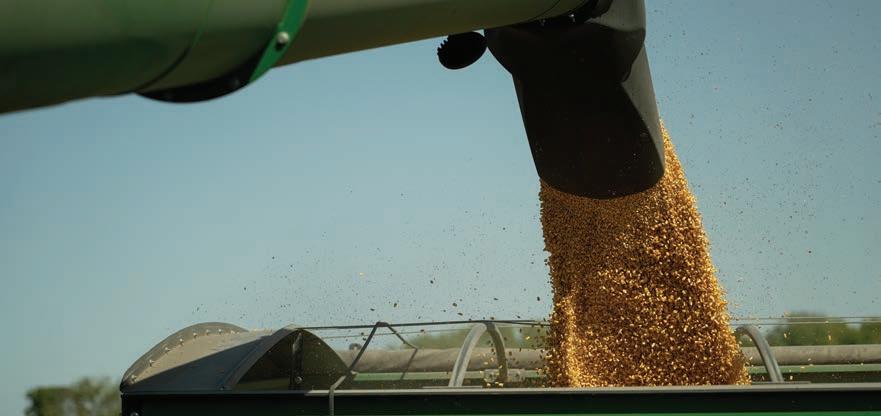
Harvested corn grain is dumped into a grain wagon at a farm near Allerton in Vermilion County in eastern Illinois
Stark County returned to the top with the state’s highest average corn yield, producing 253.6 bushels per acre in 2025 across 85,000 harvested acres.
The county held the distinction in 2022, with 240.6 bushels per acre, and in 2023, with 234.1 bushels per acre, before being edged out

by Sangamon, with 248.2 bushels per acre, in 2024. Sangamon averaged 224.3 last year.
DeKalb County hit an average of 244.4 bushels per acre, and McLean’s corn averaged 243.1.
Counties with yield averages in the 230s were: Marshall, 239.9; Carroll, 239.2; Tazewell, 239; Macon, 238.6; Peoria, 238.2;
Rock Island, 236.7; Knox, 236.4; Woodford, 235.1; Vermilion, 235; Piatt, 234.9; and Lee, 233.1.
Prairie State counties averaging in the 220s were: Whiteside, 229.8; Menard, 229.2; Douglas, 228.3; Stephenson, 227.9; Bureau, 225.9; Boone, 225.2; McHenry, 224.9; Sangamon 224.3; and Ogle, 221.8. McLean and Livingston coun-


ties continue to lead Illinois in corn production. McLean’s 243.1 yield average produced 77.31 million bushels from 318,000 harvested corn acres.
L ivingston County averaged 217.7 bushels per acre, producing 62.915 million bushels on 2 89,000 harvested acres.
La Salle County rounded out the top three with farmers hauling in 61.294 million bushels f rom 279,500 harvested acres averaging 219.2 bushels per acre.
Illinois harvested 11 million acres of grain and averaged 214 bushels per acre for a total production of 2.354 billion bushels.
For the second straight year, 16 Illinois counties hit the 70-plus bushel per acre plateau last year, topped by Tazewell’s 76.3 bushels per acre from 121,800 harvested acres.
Macon averaged 75.9 on 136,200 harvest acres after leading the field last year with a 77.8 average.
Other counties in the 70s range were: Stark, 74.7; McLean, 74; Marshall, 73.5; Piatt, 72.9; Woodford, 72.4; Bureau, 71.8; Whiteside, 71.7;
Stephenson, 71.7; Peoria, 71.6; Sangamon, 71.5; DeKalb, 71.2; Carroll, 71; La Salle, 71; and Rock Island, 70.4.
Eleven percent of survey respondents reported higher demand to purchase farmland and 2 2% reported lower demand. Also, the amount of farmland for sale was down during the winter and early spring of 2026 compared with a year earlier. Likewise, the number of farms and the amount of acreage sold were down in the winter and early spring of 2026 relative to a year ago.
Agricultural credit conditions in the Seventh District weakened during the first quarter of 2026. Repayment rates for non-real-estate farm loans were lower in the January through March period of 2026 compared with a year ago, and the renewals and extensions of these loans were higher.
In the first quarter of 2026, demand for non-real-estate farm loans relative to a year ago was up for the 10th consecutive quarter, while the availability of funds for

agricultural lending relative to a year earlier was down for the 12th consecutive quarter.
At 79.8%, the average loan-todeposit ratio in the first quarter of 2026 was up a bit from the previous quarter and was nearly 3% below the average level desired by responding lenders.
The amount of collateral required by agricultural lending institutions across the district was somewhat higher than a year earlier.
By the end of the first quarter of 2026, the district’s average interest rates on farm operating and feeder cattle loans had edged down from the prior quarter, while its average interest rate on farm real estate loans had risen slightly.
According to an Iowa lender, “cash flow projections for many operations are at or below breakeven for 2026 and many borrowers are using up working capital to f und those cash flow shortfalls.”
“Unsurprisingly, survey respondents forecasted that the overall volume of non-real-estate farm loans would rise in the Seventh District during the April
t hrough June period of 2026 relative to the same period of 2025 — 41% of the responding lenders expected a higher volume of such loans, while 8% expected a lower volume,” the AgLetter noted.
“In particular, operating loans, feeder cattle loans and loans guaranteed by the Farm Service Agency were anticipated to have higher volumes relative to a year earlier, while farm machinery, grain storage construction and dairy loans were anticipated to have lower volumes.”
Survey respondents narrowly forecasted a decline in the district’s farm real estate loan volume in the second quarter of 2026 from a year earlier.
In the first quarter of 2026, 56% of survey respondents considered farmland to be overvalued, while just 1% considered it u ndervalued.
Over 80% of the responding lenders expected farmland values to be unchanged in the second quarter of 2026, 9% of respondents forecasted agricultural land v alues to decrease and 8% forecasted them to increase.










By TOM C. DORAN tdoran@shawmedia com
CHICAGO — The Seventh Federal Reserve District’s “good” farmland values increased 3% year over year, but dipped 1% over the last two quarters on average.
T he information, published in the Federal Reserve Bank of Chicago’s AgLetter on May 14, is based on responses from commercial banks and Farm Credit System institutions located in the Seventh District.
All results prior to the first quarter of 2026 were based on survey responses from commercial banks only.
T he Seventh District includes the northern two-thirds of Illinois and Indiana, all of Iowa, the southern two-thirds of Wisconsin and Michigan’s Lower Peninsula.
“Good” farmland is defined as
agricultural land that is of high quality and productivity.
Indiana and Wisconsin continued to lead the way with yearo ver-year increases of 8% and 7%, respectively, while Iowa was up 2% and Illinois fell by 2% from April 1, 2025, to April 1, 2026.
Indiana farmland values from Jan. 1, 2026, to April 1 declined by 2%, Illinois dropped 1% and Iowa and Wisconsin had no change. There was no data from Michigan’s Lower Peninsula due to insufficient response.
That same farmland values trend for Indiana and Wisconsin was also reflected in the report for the last quarter of 2025 where both states saw a 9% year-overyear increase.
During the last quarter of 2025, Iowa’s “good” farmland

value increased 5%, Indiana was 3% higher, Wisconsin increased on average by 1% and Illinois had a 1% decline.
The quarterly report, authored by David Oppedahl, policy adviser, and Elizabeth Kepner, business economist, also summarized survey findings related to current credit conditions and future expectations.
Demand to purchase farmland was lower in the three- to s ix-month period ending with March 2026 than in the same period ending with March 2025.
Eleven percent of survey respondents reported higher demand to purchase farmland and 2 2% reported lower demand.
Also, the amount of farmland for sale was down during the winter and early spring of 2026 compared with a year earlier.
Likewise, the number of farms and the amount of acreage sold were down in the winter and early spring of 2026 relative to a year ago.
Agricultural credit conditions in the Seventh District weakened during the first quarter of 2026. Repayment rates for non-real-estate farm loans were lower in the January through March period of 2026 compared with a year ago, and the renewals and extensions of these loans were higher.
In the first quarter of 2026, demand for non-real-estate farm loans relative to a year ago was up for the 10th consecutive quarter, while the availability of funds for agricultural lending relative to a year earlier was down for the 12th consecutive quarter.
At 79.8%, the average loan-todeposit ratio in the first quarter








The amount of collateral required by agricultural lending i nstitutions across the district was somewhat higher than a year earlier.
By the end of the first quarter of 2026, the district’s average interest rates on farm operating and feeder cattle loans had edged down from the prior quarter, while its average interest rate on farm real estate loans had risen slightly.
According to an Iowa lender, “cash flow projections for many operations are at or below breakeven for 2026 and many borrowers are using up working capital t o fund those cash flow shortfalls.”
“ Unsurprisingly, survey respondents forecasted that the overall volume of non-real-estate farm loans would rise in the Seventh District during the April t hrough June period of 2026 relative to the same period of 2025
PHOTO
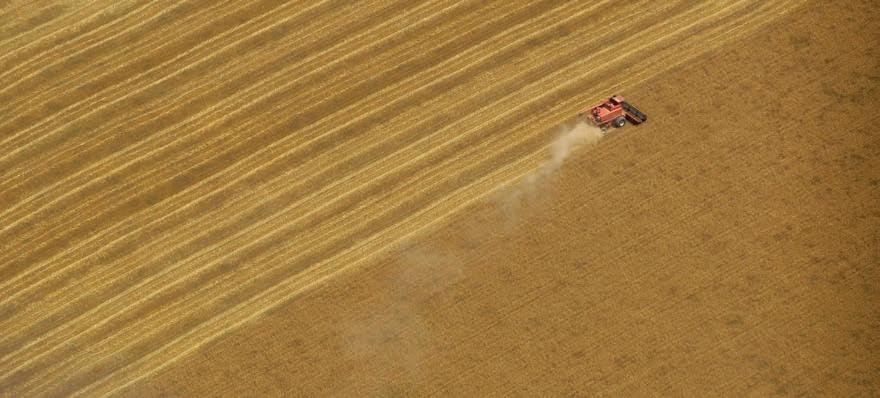
While agriculture land values grew by 3% in several Midwest states year over year, a new report from the Federal Reserve Bank of Chicago shows strain in agriculture with falling cash rents, rising loan rollovers, tightening credit and near-breakeven cash flows on farms
— 41% of the responding lenders expected a higher volume of such loans, while 8% expected a lower volume,” the AgLetter noted.
“In particular, operating loans, feeder cattle loans and loans guaranteed by the Farm Service Agency were anticipated to have higher volumes relative to a year earlier, while farm machinery,
grain storage construction and dairy loans were anticipated to have lower volumes.”
Survey respondents narrowly forecasted a decline in the district’s farm real estate loan volume in the second quarter of 2026 from a year earlier.
In the first quarter of 2026, 56% of survey respondents con -
sidered farmland to be overvalued, while just 1% considered it u ndervalued.
Over 80% of the responding lenders expected farmland values to be unchanged in the second quarter of 2026, 9% of respondents forecasted agricultural land v alues to decrease and 8% forecasted them to increase.




For my entire adult life, I’ve heard people talk about what’s closing, what’s changing and what’s next in their rural hometowns.
Maybe those small towns aren’t dying, but instead adapting. Kind of like the people who live in them — resourceful, a little stubborn and always figuring out how to make do with what they have.
Some doors have closed. That’s the reality. Banks consolidate, hardware stores get
absorbed into larger regional stops, grocery stores keep navigating an increasingly complicated world.
I’ll bet you nine ways to nothing there’s a Dollar General in your rural community or in the next one over. But in most small rural towns I’ve visited, there is something new taking shape.
The old dime store is now a coffee shop with good pie. A boutique opens that draws people from several counties away.
A small business sets up shop because they value space, familiarity and a handshake over traffic and congestion. It doesn’t look like it did 40 years ago, but it’s still active.
Just different.
Staying in rural America today comes with its own math problems. Wages don’t always align with housing, and housing isn’t always available.
Childcare is often pieced together from whatever options are available. Healthcare usually means distance and time. And even when the cost of living looks favorable on paper, the cost of staying rooted can still feel heavy for young families building their lives where they grew up.
You know the old saying, “Dance with who brung you”? That’s how a lot of people who grow up in rural communities and eventually find their way
back see it.
It isn’t just about geography. It’s about connection. It’s about remembering where you were raised, who invested in you and what shaped you along the way. It’s the place, but more than that — it’s the people.
Where there’s a will, there’s a way. They rely on grandparents and neighbors for childcare. They commute longer distances than they’d prefer.
They take on extra jobs, restore older homes and choose familiarity over convenience more often than anyone realizes. Not because it’s easy, but because it’s home.
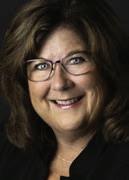
Cyndi Young-Puyear is farm director and operations manager for Brownfield Network.
We’ve got a couple hundred acres that we’re transitioning to organic this year. It’s a totally different scenario and methodology as to what I’m used to, and what’s kind of what kept me away from doing organic is the excessive amount of tillage that we have to do.
But I justify it by saying this gives me an opportunity to use manure, which I haven’t in the past, and get away from manmade fertilizers and things like that. I love manure. I’d use it on everything if I could afford to, but I can’t. But organic gives me that opportunity.
I farm with another family, the Wildermuths, and they have a company called Wild Organics. They do a really good job of weed control. They raised as good of corn as I did farming conventionally,
and they did it organically. I think one of the keys to it is still keeping living roots and a lot of the same principles involved. I love the idea of bringing wheat back into the rotation. We’re going to frost seed clover. So, we’re also going to have the nitrogen source, but it’s also a different type of root and putting carbon in the ground throughout the end of the summer. Then we’ll probably spread manure and till that clover underground. Then I’ll put like a late-season oats, radish, pea and diverse mix cover crop in there that’s going to winter kill and start rebuilding my soil that way.


We’re done with planting everything, but the organic as of May 18. Typically in organic production, you want the ground to be warmer. You want it up in five days. You want the weeds to get established so you can cultivate them out. We’re about to that point. Next week we’ll probably finish up organics. We planted little bit of organic corn last week and then it rained. That’ll get followed by the tined weeder about every four days to work on weed control.
We’re also post-spraying corn. Corn’s at V2 now and they want us to spray early. Otherwise, we try and be patient. I know some guys started planting soybeans around here in March. Some of them look really good and some of them got frosted off and that’s the chance take.
A lot of corn went into the ground the end of April, and then we got some pounding rains. So, there’s a decent amount of replant that has to be done. That happened basically last week. But guys are sitting in a really good position right now. I think most everybody’s is either done or close to being done.
Once we got going, spring went really quick. We had a window there from mid-April to the end of April where a lot of guys went and then the last 10 days has just been hammer down and get her done. We’ve got any anywhere from V3 corn to corn that’s just sat in the ground. We’ll be putting on fungicide and foliar feed on wheat with the drone.
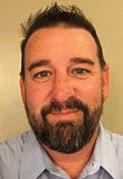
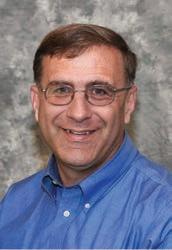
Brad Zimmerman GROVELAND, ILL





By COLLEEN CALLAHAN
“It’s not the strongest species that survives, it’s the one t hat adapts, adopts and accepts change.” Why do I begin with this quote? Because it applies to the consideration of “planting” solar panels on farm ground.
As we see more solar fields dotting our rural landscape, it’s understandable to question if this is t he best use of our productive Illinois land. Shouldn’t we focus on feeding a growing population?
I believe we can harvest both the sun and foodstuffs. Here’s why.
Illinois has more than 27 mil-
lion acres of farmland, about 19.7 m illion classified as prime. Backed by data, even if every solar panel in Illinois today was i nstalled on agricultural land, we’d only use 0.1% of that land.
And it’s projected that even five years from now, when thousands more megawatts of solar are added, we’d still use just 0.5% of our farmland.
That’s not a threat. It’s an opportunity.
Solar development doesn’t per-
manently pave over the land for a housing subdivision or a shopping mall. Rather, when decommissioned 30 or 35 years later, the panels are removed, and the land is restored, often in better condition than before.
With pollinator-friendly plantings under and around the panels — whose root systems are twice as deep as those of corn or soybeans — soil health, water infiltration and biodiversity are all improved. And I haven’t mentioned the financial stability of harvesting this new crop!
The benefit to both the landowner and the neighboring com-









Cook
815-853-4333 bradc@eurekasavings.com





munity is unmatched, particularly during this time of uncertainty.
When “planting” solar panels, you don’t choose between crops or renewable energy. You harvest both. As one farmer said, it’s like “farming the sun” when the corn market doesn’t cooperate.
As a former director of USDA Rural Development in Illinois, I am familiar with the challenges of securing funding for muchneeded improvements in our rural communities.
Solar infuses a dramatic increase in property tax revenue. Since 2003, Illinois has increased its renewable energy tax revenue from $235 to more than $64 million in 2022.
In Marshall County in 2023, a two-megawatt solar project gener -
ated more than $12,000 in property tax, compared to just over $1,000 in revenue from the neighboring farm.
T hat 12-times increase, paid by the solar developer, helped the schools, the fire protection district and social services.
Additionally, don’t overlook the fact that someone must build these community solar projects, which means creating jobs.
Long term, solar by itself won’t provide all the energy we need. But it is a crucial component of the clean energy matrix, the sun being an abundant resource we have taken for granted.
Now, Illinois has a chance to be a leader not only in agriculture, but also in renewable energy. Because the state of Illinois has set


a goal of achieving 100% clean energy by 2050 through the Climate and Equitable Jobs Act, we can reach it in a way that respects our roots, protects our natural resources and provides benefits to farmers and rural residents.
Let’s accept that the sun is one of our most powerful and consistent resources. Let’s adapt to farming it wisely.
Let’s adopt the view that the sun can shine even brighter for the generations to come, because solar is not a threat. It’s an opportunity.
Colleen Callahan spent 32 years as a farm broadcaster and served as Illinois director of U.S. Department of Agriculture’s Rural Development and director of the Illinois Department of Natural Resources.