Animals are seen and herd at a family’s farm sanctuary
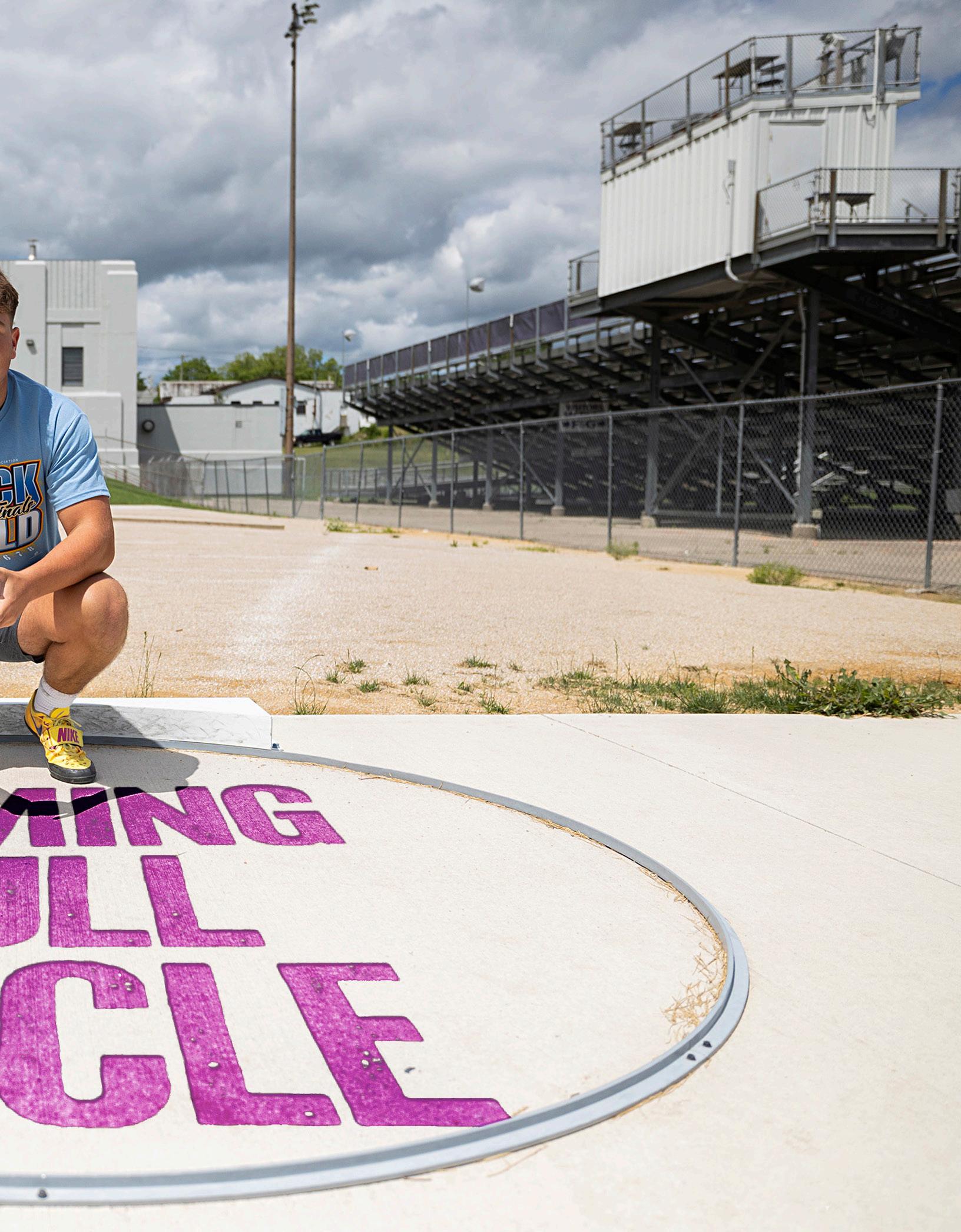
A Dixon high-schooler took his best shot at a state meet, and it paid off
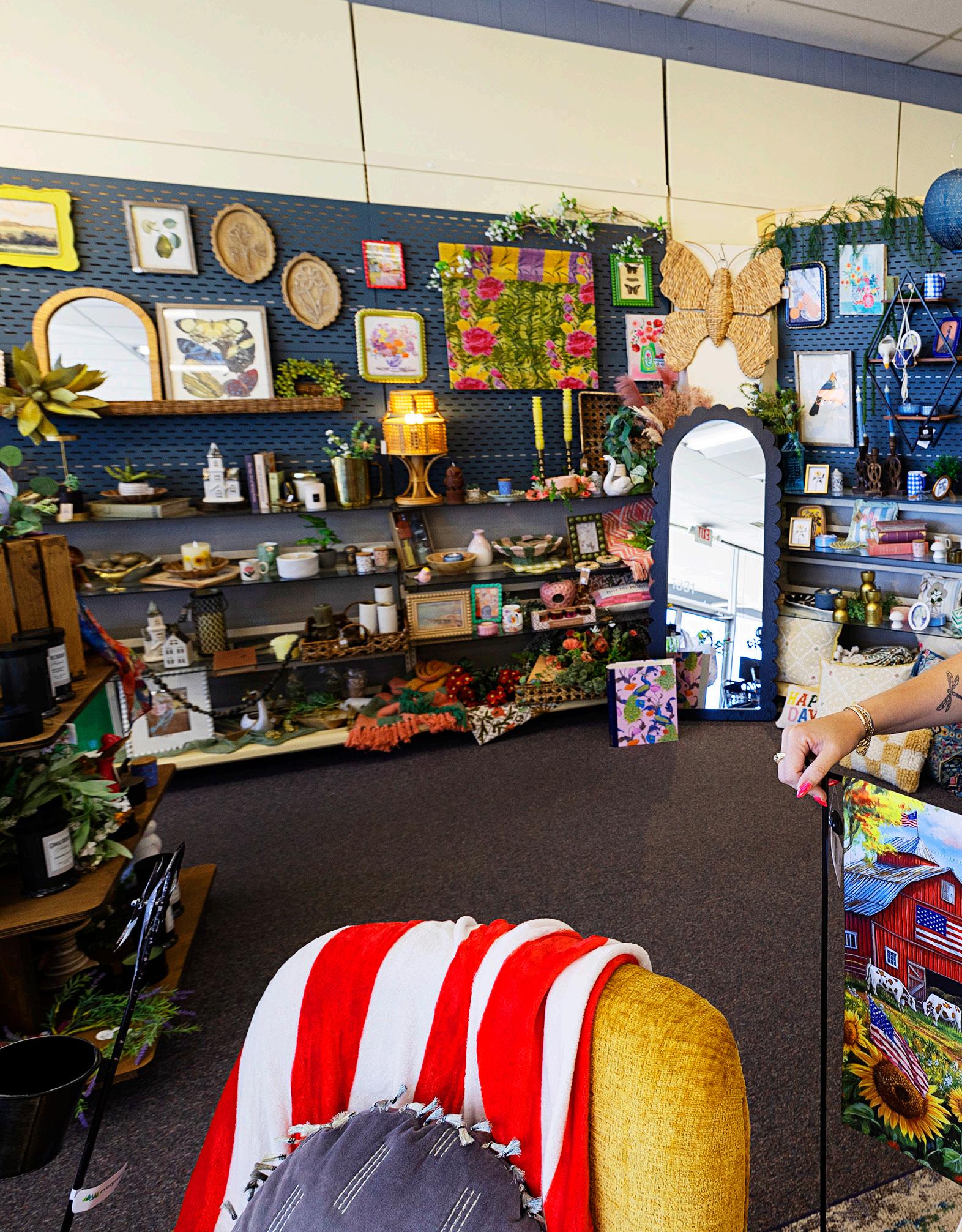
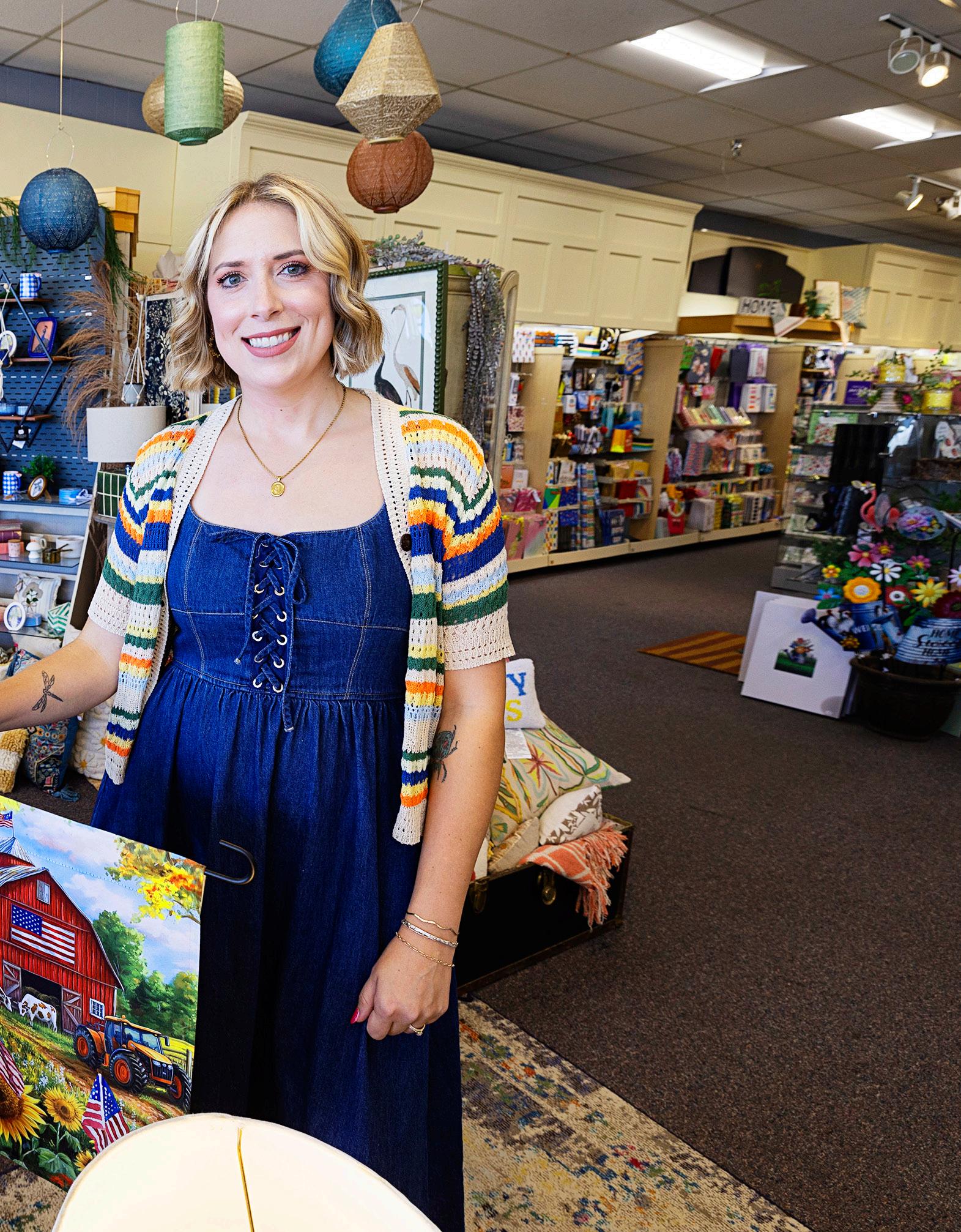
Shop owner prides herself on having a gift for gifts
What’s in a park’s name? Find out in our look at the people behind the parks
create
Nora Reuter and son Huey, at Brave Arts Studio in Dixon.
Publisher/Ad Director
Jennifer Heintzelman
Magazine editor & Page design
Rusty Schrader For Advertising
Contact Jill Reyna at 815-631-8774 or jreyna@saukvalley.com
Published by Sauk Valley Media
113 S. Peoria Ave., Dixon, IL 61021 815-284-2222
Have a story idea for Dixon Living?
E-mail rschrader@saukvalley.com
Articles and advertisements are the property of Sauk Valley Media. No portion of Dixon Living may be reproduced without the written consent of the publisher. Ad content is not the responsibility of Sauk Valley Media. The information in this magazine is believed to be accurate; however, Sauk Valley Media cannot and does not guarantee its accuracy. Sauk Valley Media cannot and will not be held liable for the quality or performance of goods and services provided by advertisers listed in any portion of this magazine.
26
Fear less, create more
People of all ages are coming up with creations that are meeting with brave reviews at a Dixon woman’s artwork in progress — a studio where she encourages them to ‘get messy and try new things’.
DOG TROT POTTERY
6 Where animals are seen and herd
Surrendering doesn’t have to mean defeat. At a local farm sanctuary, it’s a victory for the animals that are surrendered to the care of the people who welcome them into their family.
14
Coming full circle
A Dixon high-schooler took his shot at success at a state meet, and all the time he invested in angling for success finally paid off.
20 She has a gift for gifts
The owner of Dixon business and her staff are happy to bring a Fresh set of eyes to customers’ search for the perfect present.
32 Park places
Let’s take a trip around the Dixon Park Board and learn more about the people that Dixon’s parks are named after.
Thurs - Fri 11:30 - 4:30, Sat 10:30 - 3:30 & during all downtown Dixon events
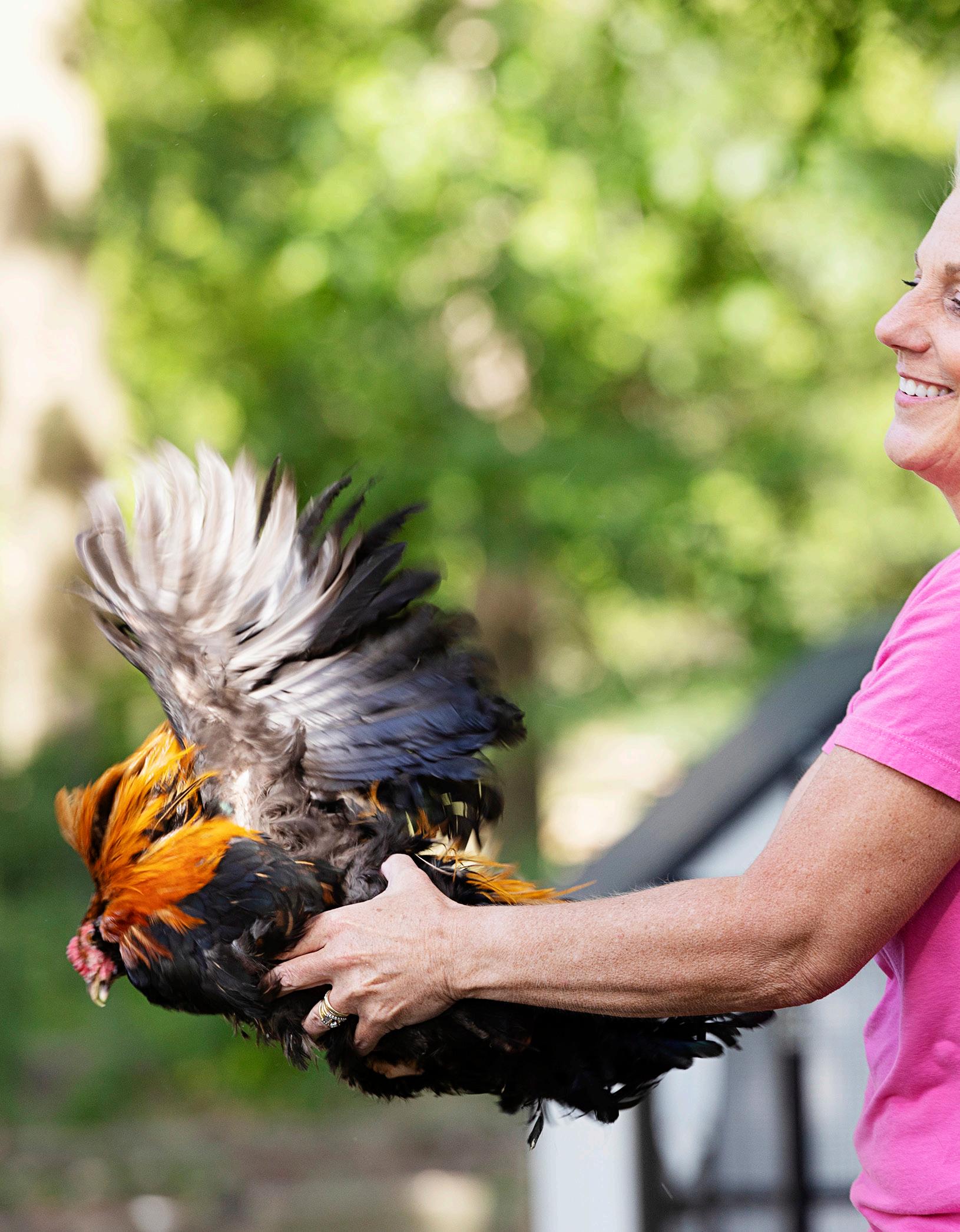
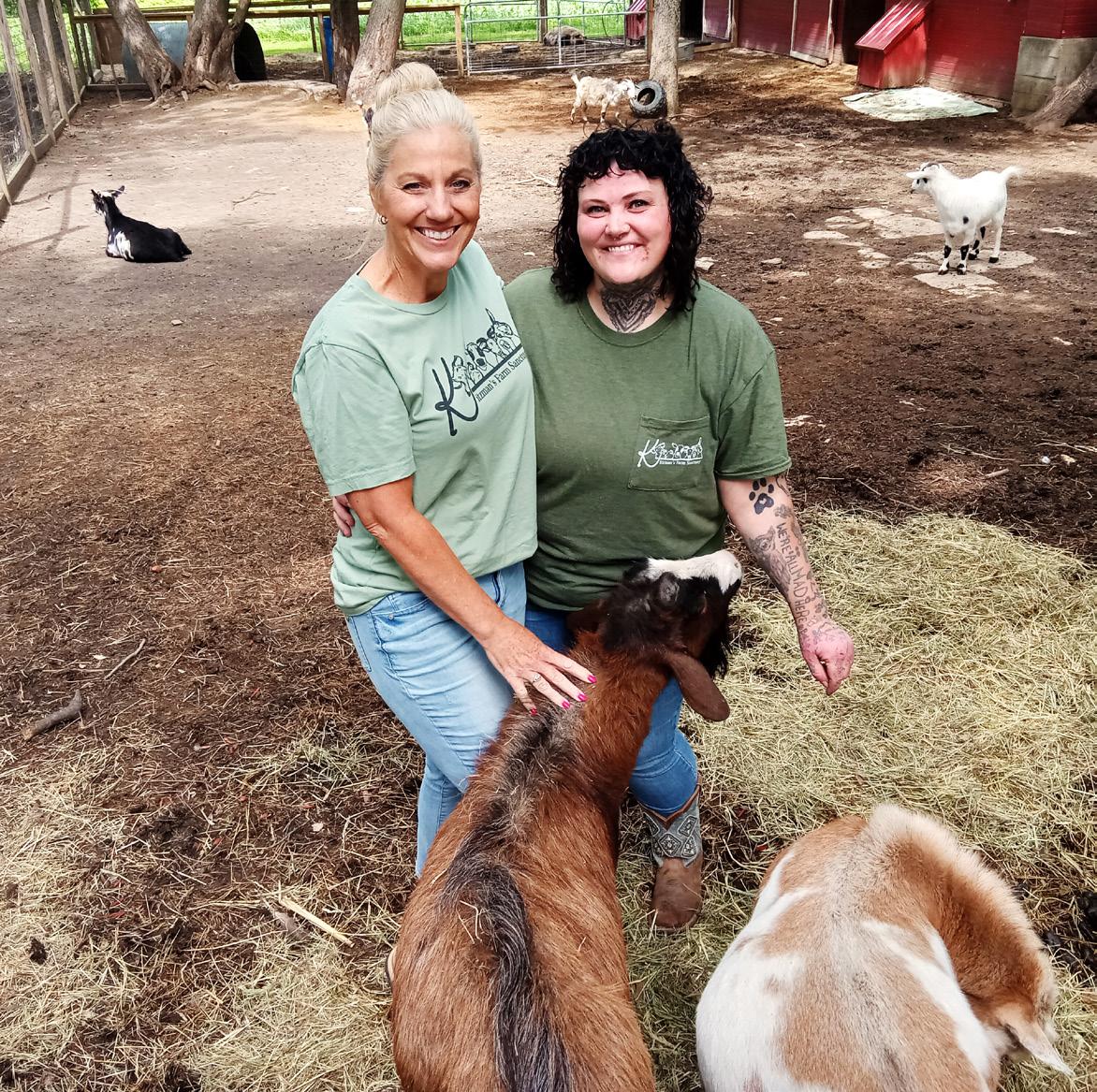
Tracy Kitzman picks up a rescued chicken June 2, at Kitzman’s Farm Sanctuary in Dixon. The flapping fowl is one of the family at the farm sanctuary that offers a safe haven for animals in need. ALEX T. PASCHAL/APASCHAL@SHAWMEDIA.COM
hen Tracy Kitzman spoke her first word as a child, it wasn’t “mom” or “dad.”
It was “kitty,” and it became a glimpse of a lifelong connection she would develop with animals.
Decades later, her affection has grown into having a refuge for animals needing second chances.
Tracy, her husband Steve and their five children have transformed a former dairy farm on the north side of Dixon into Kitzman’s Farm Sanctuary, which operates as a nonprofit organization dedicated to providing lifelong care for rescued farm animals, giving them a safe place to roam, recover and spend their remaining years surrounded by attention and affection.
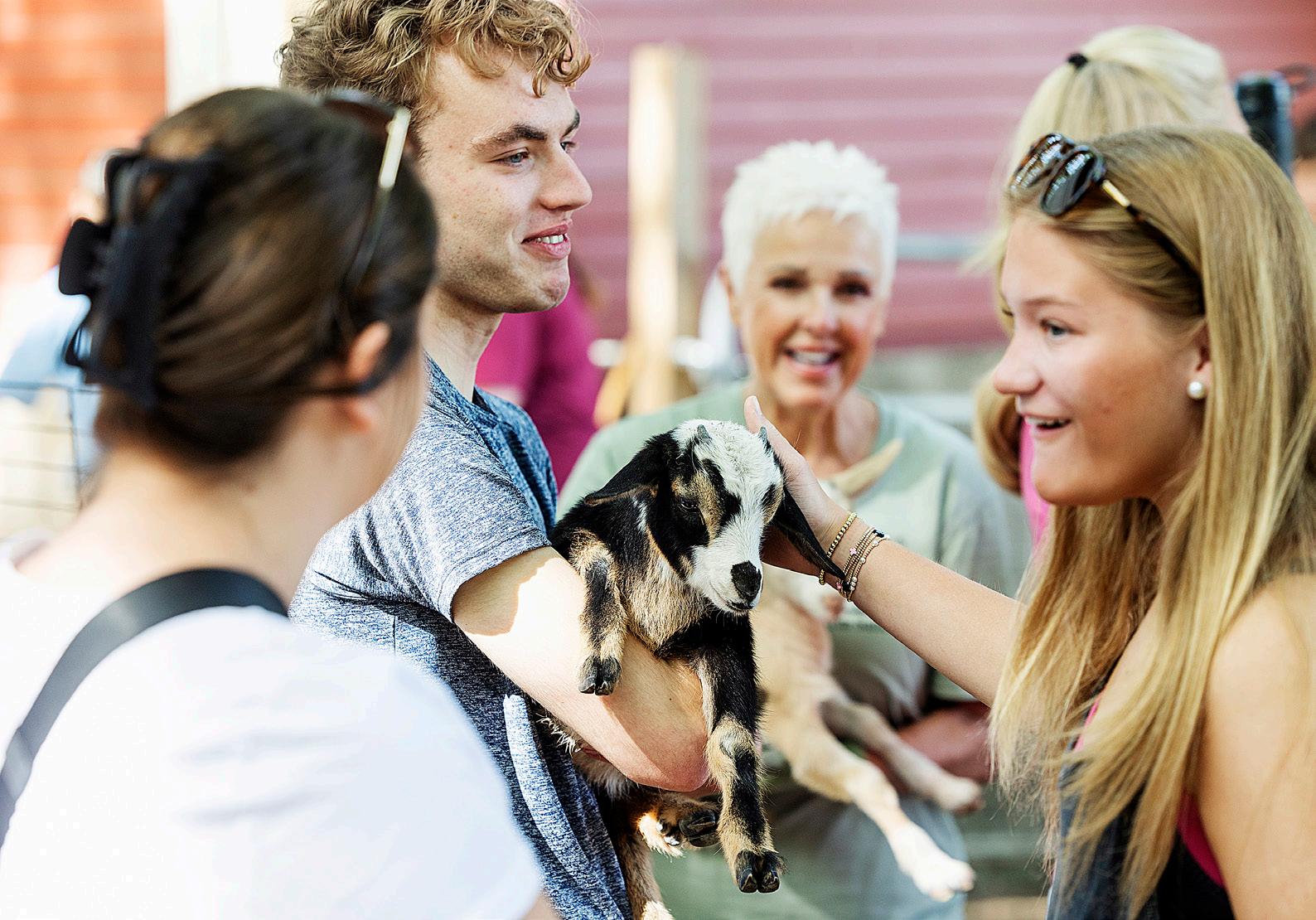
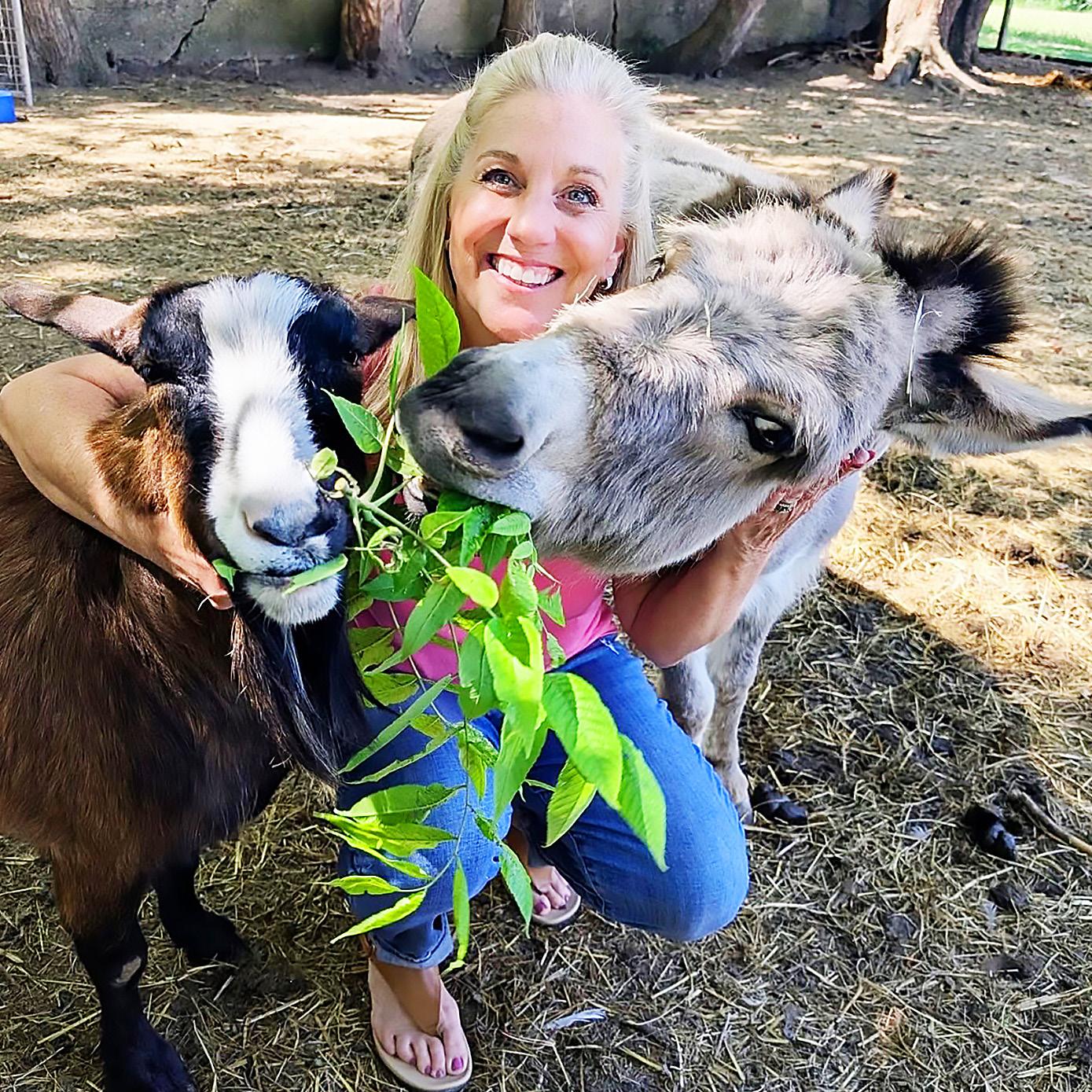
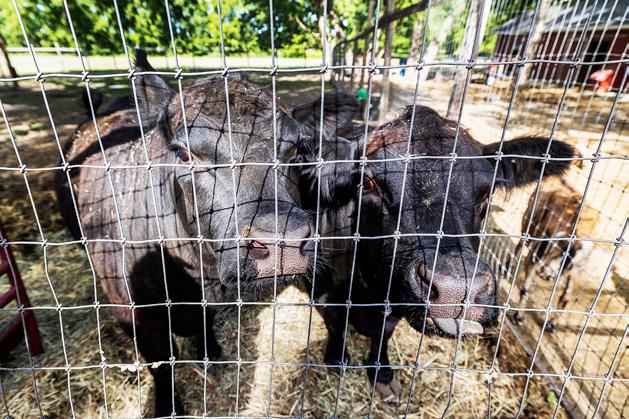
The nonprofit sanctuary’s mission can be seen across its grounds, where donkeys graze in pastures, ducks waddle between small ponds, goats seek attention from visitors and chickens roam freely. Some animals arrive healthy but unwanted. Others arrive neglected, from farm closures, or other situations where owners can no longer care for them.
But they all have something in common: They’ve nowhere else to go.
“There’s not a lot of people who will take in farm animals,” Kitzman said. “There are a lot of dog and cat rescues, but if you look around, there are not very many sanctuaries for farm animals. Basically, their ending is them being slaughtered if they can’t be placed.”
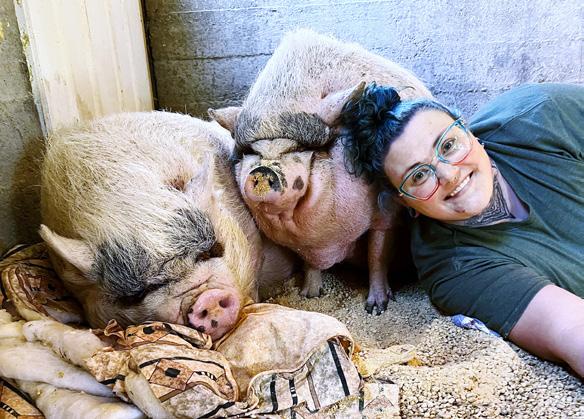
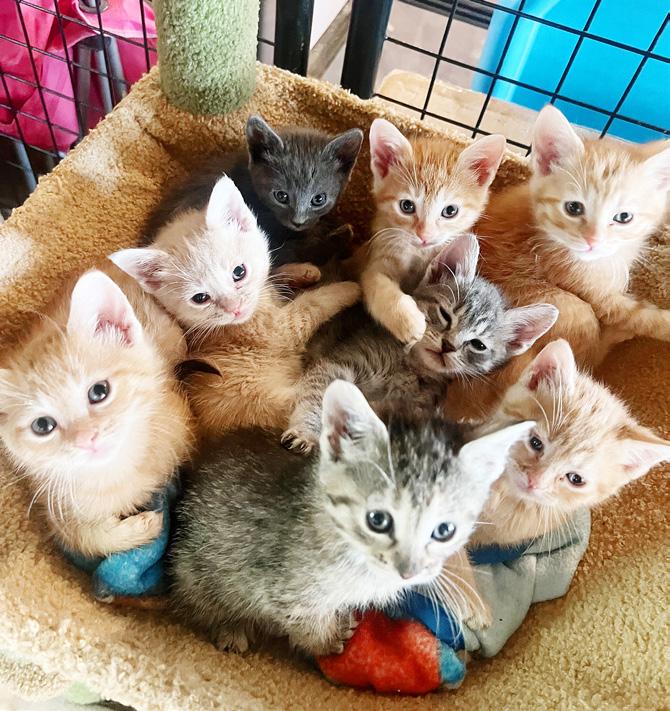
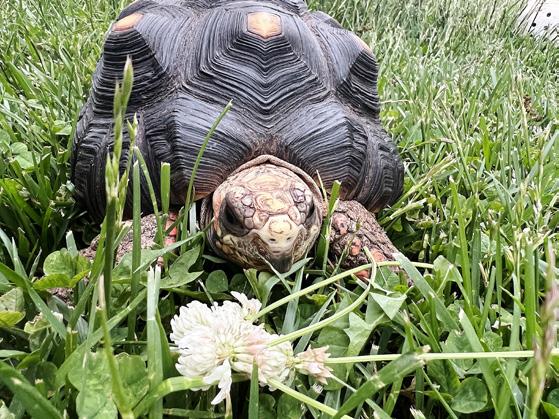
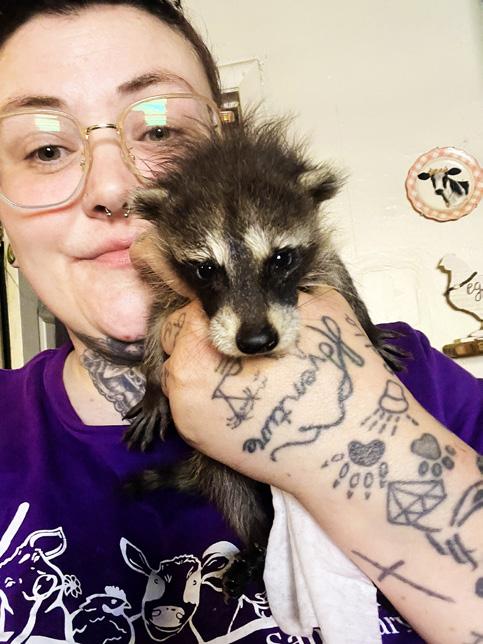
The Kitzmans started their sanctuary in 2015, and opened it up for public tours in 2025. It cares for roughly 150 animals at any given time, with the number fluctuating as animals arrive, leave and move through seasonal cycles. Residents include goats, pigs, cows, donkeys, chickens, ducks, geese, emus, rabbits, cats, dogs, squirrels, raccoons, opossums, honey bees and even a red-footed tortoise named Yoda.
KITZMAN’S cont’d to page 8
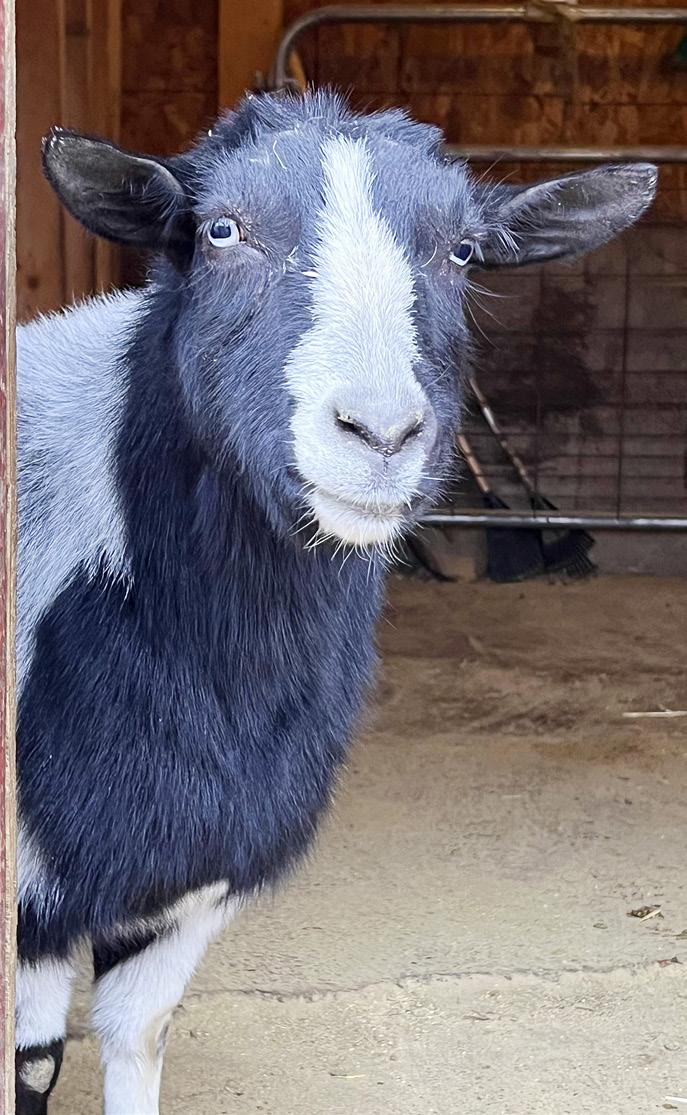
Though the Kitzmans started their sanctuary in 2015, it’s only been open for public tours since 2025 — but in the short time since starting the tours, they’ve become a popular draw for visitors, who get to learn more about the sanctuary and the animals there. Here, a goat gets some attention during a tour on June 2.
ALEXT. PASCHAL/APASCHAL@SHAWMEDIA.COM
KITZMAN’S cont’d from page 7
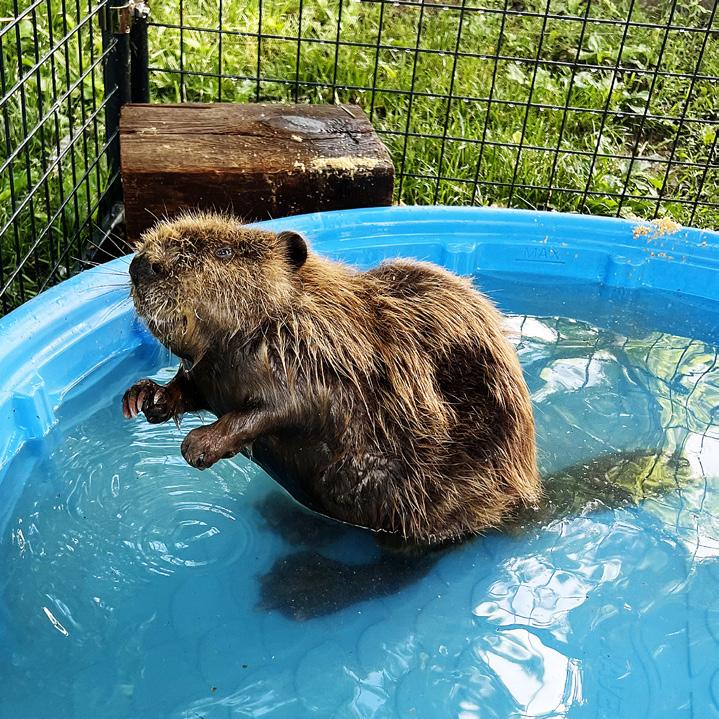
One of the newest arrivals came from an unusual rescue: a beaver now living at the sanctuary was found by the Dixon Police Department during Pride Fest along the Rock River in June. The sanctuary also took in several animals after Sink Hollow Farm east of Dixon closed
in 2025: a pair of donkeys, two pigs, two goats and several chickens.
When the Kitzmans purchased their farm a decade ago, complete with an 1854 brick house, surrounding subdivisions had already begun spreading to what was once farmland, and the family’s intent was to simply bring the farm back. But, Kitzman said, they started taking in so many animals “that we decided to turn it into a nonprofit. From there, it has just exploded. It’s been pretty overwhelming.”
Operating the sanctuary requires much more than just providing food and shelter. Every animal has different dietary needs, medical concerns and daily routines, and it takes a carefully orchestrated system of technology and hands-on help to make it all work. Cameras positioned throughout the property help monitor animals around the clock. Automatic systems provide water. Heat lamps help keep them warm during the winter. Fly prevention helps reduce infections and discomfort during warmer months — and behind the scenes, a 12-person board of directors helps assure Kitzman and her staff have what they need.
KITZMAN’S cont’d to page 9
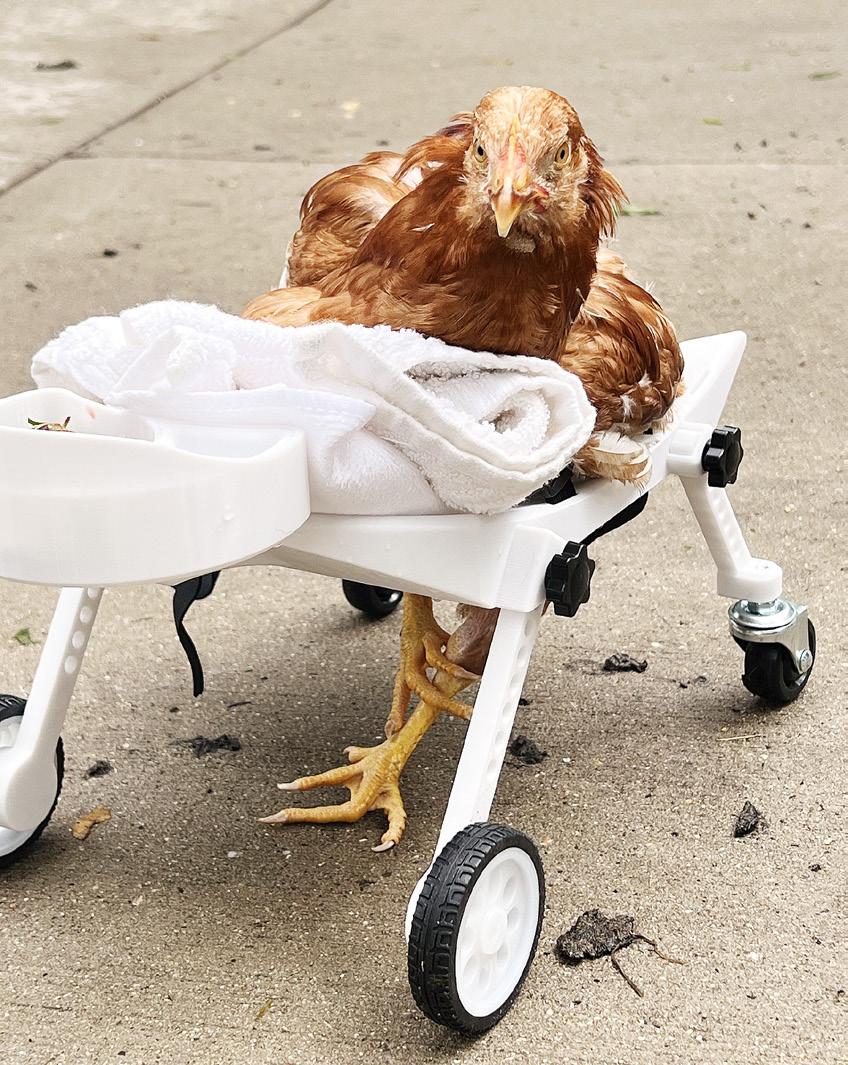
Care often becomes highly individualized. One chicken whose legs are severely crossed uses a wheelchair to move around.
For the family, the farm is as much about education as it is rehabilitation.
“I hope people learn that even if an animal might not be 100 percent okay, you can find a way to make it work for that animal,” Kitzman said. “That’s what we do here. We don’t put an animal down if they’re pigeon-toed or if their legs are crossed. We find a way to make it work for that animal.”
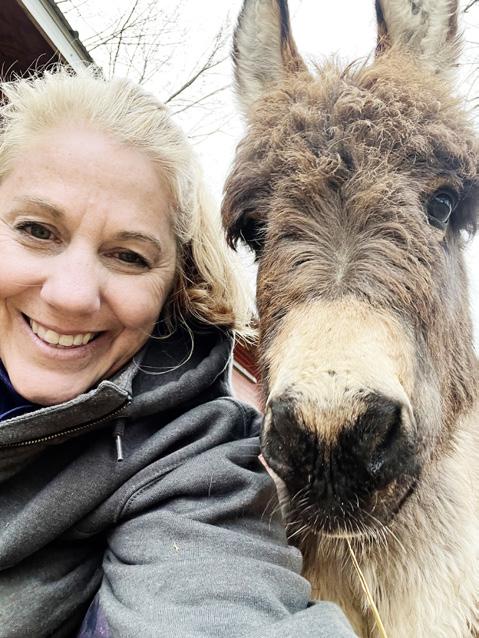
The sanctuary’s approach resonates with farm manager Cat Austin, a certified assistant veterinary technician and wildlife rehabilitator who joined the organization a year ago as more animals came to the farm.
“I’ve always loved animals,” she said — and they haven’t been the only ones who’ve benefited from her work. “I came here with a lot of experience, but I have
a lot of experience with mental illness. I’m bipolar, and this has helped me manage it very well.”
Her job grew out of a visit to the farm, where she and Terry just clicked. “We’re now like soul sisters,” Austin said. “We talk about strategies on how to relax a little bit. This is one of the families that everyone wishes they could have. Their arms are open all of the time, and they’re willing to help you out on anything. The compassion they show to everyone is amazing.”
Austin often fields calls from people desperate to find homes for animals they can no longer keep. The sanctuary receives five to six calls each day from people seeking help, she said. While space and resources limit how many residents the farm can accept, she said the staff works to save every animal it can.
A lot of calls come from people who didn’t quite think things all the way through before adding another member to their family, Austin said. “They get a pig
and think it’s going to stay little forever, but they don’t, and they can’t have them in town or can’t afford to feed them as they’ve gotten too big.”
Other cases, she said, are neglect cases, while “some are farms shutting down and they’re reaching out saying they can’t afford to take care of them anymore. Other than euthanasia, we want to help as many as we can.”
Helping animals sometimes means confronting grim odds. On one winter day not long ago, Austin spent more than an hour chasing two turkeys into a barn to protect them from bitter-cold temperatures, but when she had to step away for a brief errand, Turkey Tim had attacked Turkey Tom, and by the time Austin returned, there was blood on the barn floor and Tom had lost much of the skin on his head. Austin cleaned and medicated the wounds, administered pain medication and continued daily treatments. Turkey Tom survived.
KITZMAN’S cont’d to page 11
Cats and coons, goats and geese, and a whole lot more, Kitzman’s has welcomed all sorts of animals to its farm fold, and each member of the animal kingdom is given the royal treatment. “When [people] give them, I understand that they are surrendering what they love, and I’ll promise them that I can give them the best care that I can for the rest of their life.”
PHOTOS COURTESY OF TRACY KITZMAN
CODY CUTTER/CCUTTER@SHAWMEDIA.COM
Farm manager Cat Austin (right), joined Kitzman’s Farm Sanctuary a year ago, and it didn’t take long for her to connect with the animals at the farm — and its owner.
“We’re now like soul sisters,”
she says of the bond she’s formed with Tracy Kitzman.
KITZMAN’S cont’d from page 9
“We didn’t think he was going to make it a few hours,” Austin said. “He ended up popping up, looking at all of this food we put in front of him, and was just going to town like nothing had ever happened. It took probably a month and a half for his head to heal because his bones were showing — it was bad.”
Visitors who tour the property quickly discover many of the animals have their own histories, challenges and personalities.
“Just because you have a disability doesn’t mean you can’t have a good quality of life,” Austin said. “I tell kids when they come here that they have to respect the animals because this is their home. They learn that animals have feelings, too. They love, too. You show them that taking care of something makes you feel good, too.”
Education has become another important piece of the sanctuary’s mission. Kitzman, who has taught at Dixon Public Schools for 32 years, regularly hosts student groups, Scouts and participants from Sauk Valley Community College’s IMPACT program. Her daughter, Izabella Love, also helps coordinate visits from clients of Kreider Services, where she works. The sanctuary has become a family effort spanning three generations. Along with help from the Kitzmans’ children, Tracy’s mother, Sandy Schuler, serves on the board of directors and helps maintain the property’s gardens and greenhouse areas.
KITZMAN’S cont’d to page 12
Farm volunteer Hayden Fulton sought out the sanctuary after graduating from Dixon High School a couple of years ago and pursuing animal science studies in college. His experience has exposed him to animals and situations that aspiring veterinary professionals rarely encounter all in one place.
“There’s not many places that will have cows, too,” Fulton said. “You can sometimes see goats, but the fact that there’s not only a whole bunch of ducks and chickens, but there’s cows and donkeys and pigs — these are animals that you don’t usually see. It’s not like your average petting zoo.”
Kitzman said Fulton has become a trusted volunteer.
“He’s already learned so much,” she said. “When you’re at a vet, you’re mainly seeing dogs and cats, maybe bunnies once in a while, but here he’s been exposed to a lot — just about everything you can imagine.”
Animals aren’t the only attraction. The property also includes an orchard with
apple, peach and cherry trees, along with a vineyard containing four grape varieties. Much of the produce helps feed the animals. Some is sold, while grapes are turned into jams, jellies and juice. Visitors on tours can even pick apples when the season allows.
The sanctuary also strives to operate responsibly as it grows.
“We care about conservation,” said board member Anne Mills. “We have recycled water for the ducks and the geese. We’ll bale hay to help keep costs down, too. We try to be environmentally friendly.”
Rather than asking for luxuries, Kitzman’s Farm Sanctuary’s wish list, through Amazon, focuses on the basics: feed, bedding, cleaning supplies and other everyday necessities.
Another cost — and a big one: Veterinary bills, which can quickly climb into the five figures when emergencies arise. Because many animals require farm calls, veterinarians travel directly to the sanctuary to provide care.
Money to support the sanctuary’s animal care and daily operations comes from different sources. Donations are always welcome, and the farm also hosts fundraisers and other
PEST CONTROL CONSULTANTS
events to help cover expenses, including public tours — the next one is scheduled for Sept. 6, with guided experiences offered at 9 and 11 a.m. — and a Game Show Night fundraiser on Nov. 7 at Timber Creek.
“Not a lot of people have the opportunity to get this close to animals,” Kitzman said. “They’re allowed to pet them and feed them. It’s an experience for them.”
Another big part of the sanctuary’s success has been community support.
“The community has been unbelievably good to us,” she said. “They’re so supportive. They are constantly dropping off supplies, blankets and towels. People are always respectful. It’s been super nice.”
The money is one thing, but the emotional investment is another — and it can be even harder than keeping up with the financial commitments. Kitzman still remembers Millie, the first goat she owned. Complications during labor led to a uterine tear, forcing a heartbreaking decision to put her down.
KITZMAN’S cont’d to page 13
“She was my most loved goat, and I had her from the very beginning,” Kitzman said. “They aren’t just farm animals to me, they’re pets. We love them just like the way someone would love their dog or their cat.”
The burden of grief is part of life, but it’s one that Kitzman and her family willingly carries, knowing that the animals they care for, and the people who leave them in their care, are often carrying burdens of their own.
“I carry the responsibility with me,” Kitzman said. “When they give them, I understand that they are surrendering what they love, and I’ll promise them that I can give them the best care that I can for the rest of their life.”
Moments with visitors often remind her why the work matters. Mills recalled one tour involving a special-needs guest who became attached to a duck named Charlotte.
itzman’s Farm Sanctuar y
Kitzman’s Farm Sanctuary, 1025 N. Brinton Ave. in Dixon, is open for tours by appointment. A public tour is scheduled for 9 and 11 a.m. Sept. 6. A Game Show Night fundraiser for the sanctuary will be Nov. 7 at Timber Creek Golf Course. More details will be announced closer to the event. Find it on Facebook, Instagram or TikTok; go to kitzmansfarmsanctuary.com or email tracy@ kitzmansfarmsanctuary.com to schedule a tour, donate to its cause or for more information.
“He saw the duck on the tour and kept saying, ‘Charlotte! Charlotte! I’m here! I’m here!’” Mills said. “He was so happy that Charlotte was so happy.”
Caring for the animals requires constant work, but moments like these remind Kitzman that compassion can change lives — animal and human alike.
“His whole face lit up,” Kitzman said, “and it was realizing that this is why I do what I do.” n
Shaw Media reporter Cody Cutter can be reached at 815-632-2532 or ccutter@shawmedia.com.
The numbers add up
What’s it cost to run a farm sanctuary? According to Kitzman’s website ...
• It costs $3,000$5,000 a month to run the farm.
• The farm goes through at least 1,000 bales of hay per year.
• One farrier (horse hoof expert) visit costs $200. The farrier comes every 4-6 months.
• One bag of equine feed, which the farm goes through every week, costs $50.
• The farm goes through a pallet of wood pellets monthly for bedding.
• The farm spayed and neutered four kittens and one puppy this year, costing $1,000.
PHOTO: ALEX T. PASCHAL/APASCHAL@SHAWMEDIA.COM
you know Owen LeSage, it’s not hard to guess his favorite class.
It’s math — but what might be surprising is how the numbers add up for the Dixon High School student.
He’s applying his flair for figures to his endeavors outside the classroom
In particular, throwing a shot put or discus.
The Dixon Dukes thrower enjoys solving problems, finding patterns and working through equations. In many ways, the same approach has helped him become one of the best shot putters in Illinois.
On a warm Saturday afternoon during the Illinois High School Association Class 2A State Meet at Eastern Illinois University in Charleston, years of repetitions, adjustments and technical refinements finally added up for the rising senior.
LeSage launched the shot put 17.32 meters (56 feet, 10 inches) on May 30 to win the IHSA Class 2A state championship, becoming Dixon’s first state champion in the event and capping a journey that began with two middle school friends looking for something new to try.
While strength is often the first thing people notice about the throwing events, LeSage said his success comes from understanding the technical details behind every movement.
“It’s a lot more angles than people realize,” LeSage said. “You have to think a little bit, it’s not just big-guy-throws-ball. You have to be technical. The body mechanics of the sport are intricate, but at the end of the day, you spin around and throw a ball.”
Those angles mattered more than ever at state, where LeSage entered the championship rounds after leading the prior day’s preliminary competition. His position atop the standings earned him the final throwing spot in the championship flight, but it also meant watching competitor after competitor take aim at his mark in the preliminary — and in some cases, going past it.
LESAGE cont’d to page 16
Before he stepped into the ring for his first throw of the finals, he already knew what he had to do.
“I had to go far,” LeSage said.
That he did. LeSage uncorked his 17.32-meter heave on his first attempt of the championship round, a mark nobody else matched.
“I put everything I had in that first throw,” LeSage said. “It came out nice off the hand, and I let it ride through the whole thing.”
The waiting that followed, as eight other competitors sought to top his mark, was almost harder than the throwing, he said.
“Coming into that third round, everyone has one more chance,” LeSage said. “By the time I got to my last throw, I knew that I had won. It was a great feeling. I was going into the ring shaking a little with excitement. Until then, it was really nerve-wracking watching everyone go up. Everyone I knew, they’re a competitor and they could get there.”
When the competition finally ended, the moment felt bigger than just a state medal.
“It feels fantastic,” LeSage said. “It was a full-circle moment with my coach and my teammates to have everyone
there watching me, and having my family watching me. It was great, and I felt like a lot of hard work paid off.”
Throws coach Brandon Woodward said LeSage entered the state meet with two goals: improving his discus performance and winning the meet. After leading the preliminary round, LeSage repeatedly answered challenges from competitors during the finals while displaying confidence throughout the two-day competition.
“At the state meet, success is not always about producing the furthest throw of your career,” Woodward said. “More often, it is about competing at the highest level when the stakes are greatest. Owen demonstrated that ability on both days of competition.”
LeSage first picked up the shot put and discus in middle school alongside classmate and fellow Dixon thrower Max Kitzman. Success wasn’t immediate, however. He competed in the throws in sixth and seventh grade, and even tried his hand at the sprints as an eighth-grader. Then, in high school, LeSage faced a decision: For his spring sport, he could continue pursuing baseball or focus on throwing. Track won out, and it also helped him an another field, the football field, where he’s using the experience in the throws to help him be a better lineman on the Dukes’ team in the fall.
LESAGE cont’d to page 18
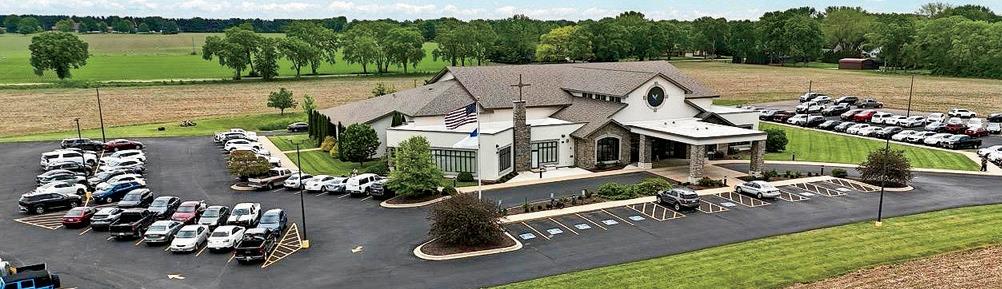
Voted The Top Church in The Sauk Valley Area!
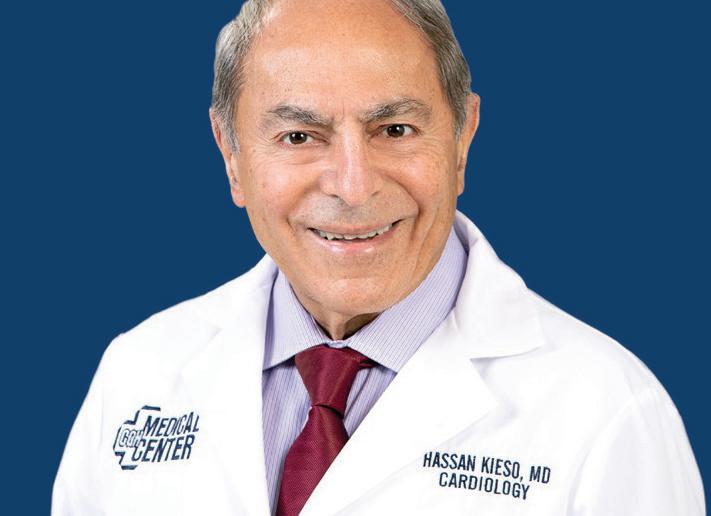
DIXON CARDIOLOGY SERVICES
Hassan Kieso, MD, FACC
• Board-certified in interventional cardiology
• 4.9 patient satisfaction rating
• Cardiac testing on-site, including echocardiograms and electrocardiograms (EKGs)
(Behind Culver’s; Inside CGH Dixon Medical Center)
15 W. 3rd Street, Sterling, IL (Lower Level of CGH Downtown Clinic)
Monday - Friday: 8 am to 8 pm; Saturday - Sunday: 8 am to 1:30 pm
“I had a lineman coach from football who I had a good relationship with, so I was excited to work more with him,” LeSage said. “It was a great team and we had a great group of seniors that year.”
Working with Woodward in track helped turn LeSage’s interest into a passion for the sport. Woodward previously coached Dixon discus standout Tayla Schwarz to three consecutive state championships from 2016-18.
“Freshman year, the combination of being on a good team and the little bit of success I had, it really just created a passion for the sport,” LeSage said. “I saw results just by spending more time in the rings and spending more time in the weight room. Just the feeling of seeing results over time, and knowing that I have three more years to build it, I wanted to do nothing more but get after it.”
The breakthrough came after his freshman year. LeSage spent the summer training and made a major technical adjustment, switching from the glide technique to the rotational spin technique in the shot put. Rather than moving linearly across the ring, the spin uses rotational momentum to generate greater force at release.
The change paid off. His throws improved by roughly 13 feet from freshman to sophomore year, and he qualified for the state meet for the first time, though the results weren’t as satisfying as his most recent trip to state. The experience was humbling — he finished ninth with a throw of 15.65 meters (51’4¼”). Nerves sort of got to him, he recalled, but that disappointment became fuel for improvement.
“I knew that I had the ability to keep putting in work and to keep working on my form and stay consistent,” LeSage said. “I felt like maybe through it all, succeeding would be possible. I was pretty disappointed with my performance, and I knew that I wanted to come back a little more comfortable and a little more well-versed in the competition, and it motivated me to get after it the next year.”
Working on his improvements to start the season that would ultimately result in state championship gold didn’t come easy though. LeSage entered the year hoping to compete for a state title, but progress was uneven. He hit plateaus, chased distances he had reached during indoor competition and struggled to find consistency.
“I had one really good indoor meet, and through the first half of outdoor I was just chasing that,” LeSage said. “Eventually it clicked, and I started being more and more consistent. I hit a couple of PRs and peaked at the right time at state.”
His personal-best throw of 17.43 meters (57’2¼”) came at the Sterling Night Relays on May 1. Yet even late in the season, LeSage felt he had more to give. Despite winning the Big Northern Conference title and finishing second at the Class 2A Rochelle Sectional, he left both meets believing he could throw farther.
May 20, during the Class 2A boys track sectional at Rochelle High School.
May 30, during the IHSA State Track and Field championship in Charleston.
May 14, at the Big Northern Conference Meet in Stillman Valley.
The answer was more work, and the effort ultimately produced a state championship and helped Dixon tie for eighth place as a team in Class 2A. Kitzman also competed at state, finishing 17th in the shot (15.43 meters; 50’7.5”).
“It took a lot of mental work, but I just kept coming once or twice a day to work with my coach, who’d meet me out there,” LeSage said. “Max Kitzman is an amazing throwing partner who was also willing to come out there whenever, just so we could put in the work.”
LeSage’s success wasn’t limited to the shot put ring. He also qualified for state in the discus this season after making a concerted effort to improve in the event. He also set a personal best at the Sterling Night Relays in the discus (46.41; 152’3”) before topping that mark at sectionals (47.07; 154’5”). He topped out at 44.17 (144’11”) at state.
“I always liked shot put more,” LeSage said. “Up until this year, I was dramatically better in shot put than discus. I took a couple of weeks to try and figure it out because I was tired of being a one-event type of guy.” LESAGE
As he enters his senior year, LeSage still has plenty left to chase, including Dixon’s school-record throw of 18.42 (60’5”), made by Nick Byrnes in 2000. Of the top 10 shot put throwers in 2A this past season, only two were seniors, giving LeSage plenty of familiar competition.
Woodward said LeSage remains motivated by the same goals that drive elite throwers everywhere: chasing records and finding a few more inches on the tape measure.
“Owen’s greatest improvement has been his ability to feel the movements and positions to a point of both reflection and correction,” Woodward said. “This has led to productive training and allowed for confidence in competition. Just like any thrower he strives for records and an extra stretch of the tape measure.”
College coaches have already begun reaching out, though academics remain at the forefront of his plans. “I’m really massive on academics,” LeSage said. “I want to go into the best college I can get into.”
For now, he’ll spend the summer balancing throwing workouts with football training while preparing for one final high school season — and if there’s a lesson he’s learned from his years inside the throwing ring, it is the same one that carried him from a nervous sophomore state qualifier to a state champion.
“To do well, I really think you have to know the sport, in the sense that you have to understand every little intricacy of the throw, the form and what to drill,” LeSage said. “Then being able to come in every day, focus on one thing, and focus on climbing one hurdle at a time, and it will eventually get put all together.” n
Shaw Media reporter Cody Cutter can be reached at 815-632-2532 or ccutter@shawmedia.com.
ALEX T.
Life is full of occasions that don’t come with instructions.
A grandchild has a birthday coming up. A friend needs encouragement after a difficult week. Someone is celebrating a new home, a dance recital or a promotion. Or maybe you just want to brighten someone’s day but don’t know where to begin.
Finding the right gift often means understanding the person receiving it. For Britni Dvorak, that’s become both a skill and a career.
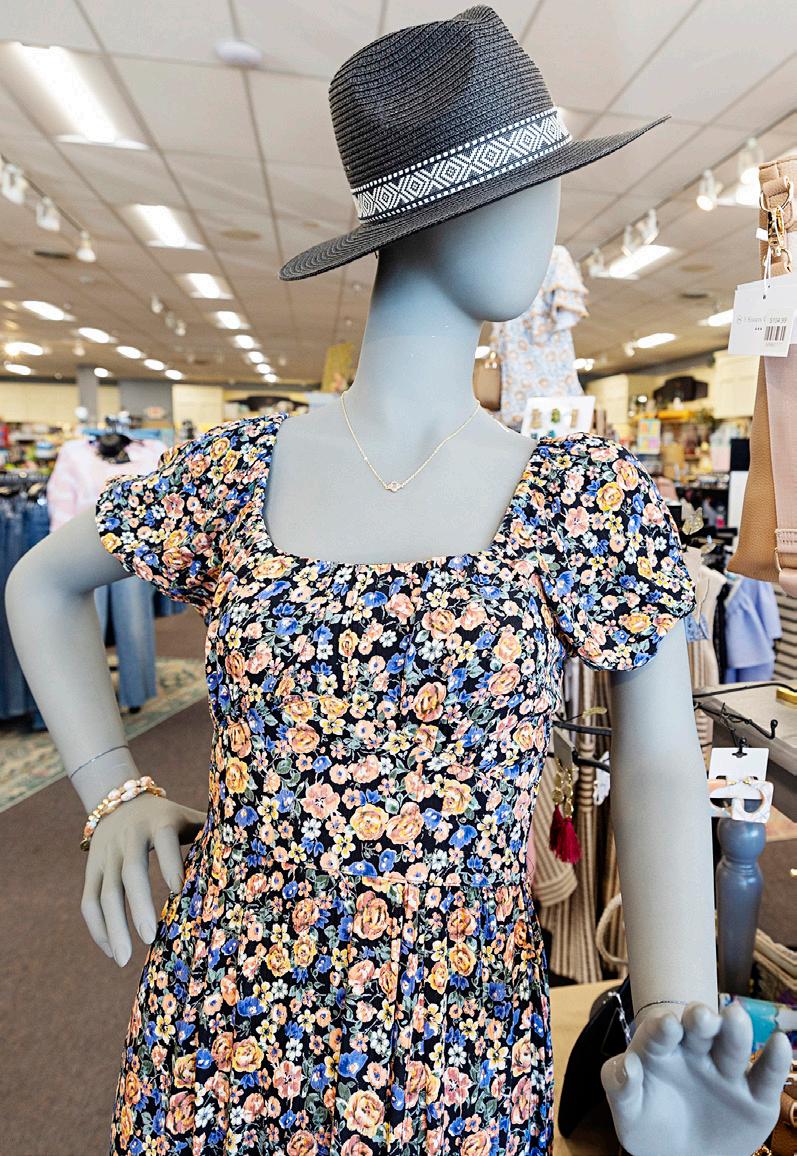
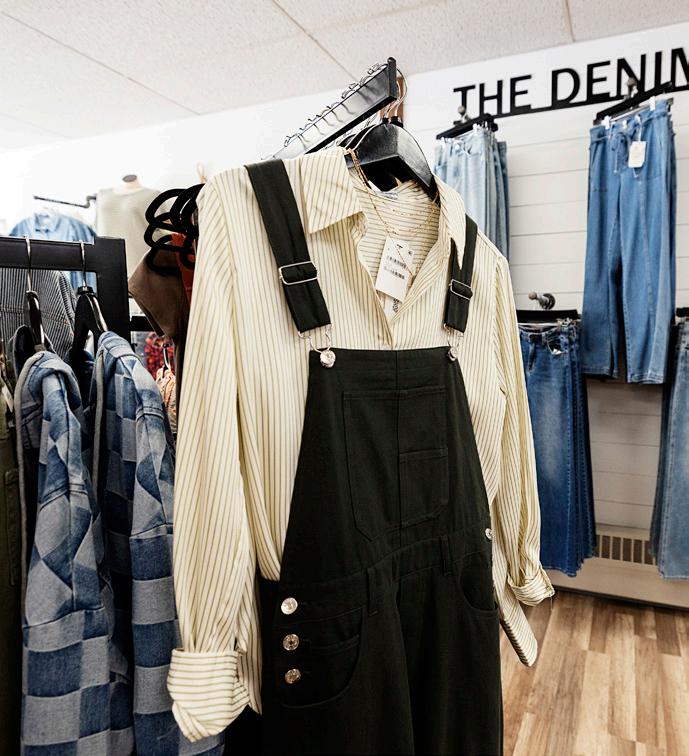
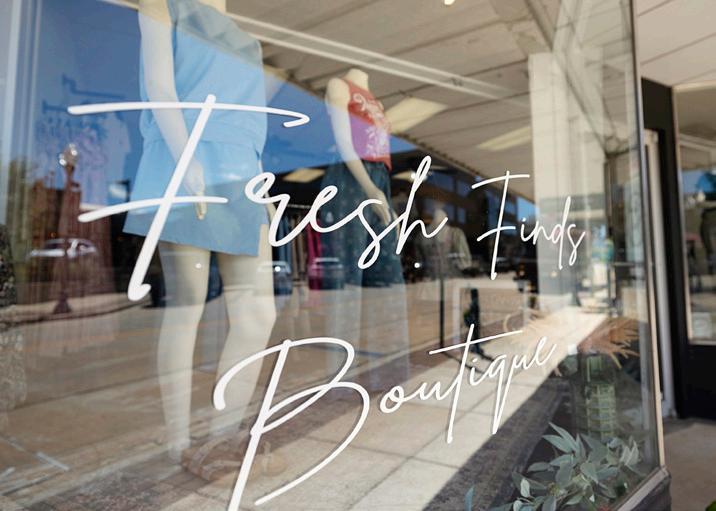
With more than 20 years of helping people find what they’re looking for, Dvorak has developed a sense of knowing the right thing for the right occasion, and she’s parlayed that penchant for picking presents into a livelihood. She owns Fresh Finds Gifts in Dixon and Princeton, and Fresh Finds Boutique in downtown Dixon, where she studies trends, watches what different generations gravitate toward and constantly searches for what might make someone smile, laugh, celebrate or feel understood.
A graduate of Northern Illinois University with a degree in fashion merchandising, Dvorak said she always envisioned a career that would allow her to blend creativity, fashion, home décor and customer interaction. Rather than pursue opportunities in a larger city, she decided to build that career close to home.
Helping customers find the right item remains her favorite part of the job.
“I love when people come in say, ‘My sister loved the gift I got for her here,’ or ‘My grandson loved his birthday gift,’ that kind of thing,” Dvorak said. “Even when they can’t find anything, tried to order something online and couldn’t find something, I’ve got something for everyone, for every occasion. Rarely do we send someone out without something. We try to find something for everyone, including men and children, and babies.”
The journey began in 2007 when Dvorak, then a 15-year-old from Sublette, took a job at Pam’s Hallmark in Dixon after hearing about an opening through someone she knew. She quickly discovered she enjoyed the creative side of retail — building displays, arranging merchandise and helping customers find something meaningful.
She became a manager at 19 and eventually purchased Pam’s Hallmark from owner Pam Daws in 2019. A year later, she bought a second Hallmark store in Princeton and renamed it Fresh Finds Gifts. In 2025, she moved away from the Hallmark affiliation and renamed the Dixon location to its current name. Fresh Finds Boutique came into the picture in 2023. Dvorak employs about 20 people across her three stores.
The gift stores carry a broad mix of merchandise ranging from greeting cards, home décor and seasonal items to clothing, jewelry, toys, games, baby gifts, kitchen accessories, spa products and occasion-specific keepsakes. Having such a wide variety of merchandise helps when people are trying to pick something out — and requests can be surprisingly specific. Sometimes a customer is shopping for a relative whose interests have changed since their last birthday. Other times it’s someone looking for a gift for a person they don’t know very well.
Dvorak said one of the things she sees a lot is grandparents trying to keep up with rapidly changing trends among younger generations.
The popularity of sensory toys known as “squishies” illustrates how quickly trends can emerge. Often made from soft foam or gel-like materials designed to be squeezed and manipulated, the toys have become a viral sensation among children and teenagers. Fresh Finds carried them years before they became a recent social media phenomenon, but demand exploded once videos featuring them began spreading online.
“All of a sudden they just got huge,” Dvorak said. “You never know. Some of them are real nice, and adults like them, too.”
Squishies are just one example of how quickly consumer interests can shift.
“A lot of times we’ll have a grandmother come in who has teenage grandchildren, and they’re like, ‘I don’t know what to buy for them,’” Dvorak said. “We have all kinds of different things: crafts, games, and of course the new ‘squishy’ trend — something for any age group. That’s my goal with this store.”
Keeping pace with changing tastes is one of the biggest challenges of Dvorak’s work. New products arrive almost daily, and she personally selects every brand carried in her stores. She attends buying markets, follows trends and tries to anticipate what customers will be looking for months before they start shopping for it. By late June, she had already purchased much of her Christmas inventory and was already making decisions about next spring’s merchandise.
Her process draws on lessons from a fashion forecasting course she took as a young student at NIU.
FRESH FINDS cont’d to page 23
in there,” Dvorak said. “I’m like, ‘Why don’t I do that?’ It’d be so easy to do. I could split my inventory, add a few things and do the displays. I opened that store three days after I got the keys. It has totally worked out well. I have different lines of clothes there and really don’t overlap on any of
Manager Kayli Wolber started working with Dvorak when she was 17 and has spent the past 11 years helping customers navigate everything from celebrations to difficult moments. Every day in the shop is different, she said, never really
“Sometimes you’ll have someone coming in with a really bad experience, and you’ll have to help them through it,” Wolber said. “Sometimes you’ll have someone coming in with something great to celebrate, and then you get to help them find something amazing for somebody. I’ve definitely gained a lot of experience. I’m definitely more of a people person than I was before I started working here. I’ve learned how to communicate with people better, and have a better understanding of their needs and how to help them.”
FINDS cont’d to page 25
Knowing when to help — and when to simply let someone browse — is part of the experience, Dvorak said. “Sometimes people come in and they’re on a mission or are headed somewhere, and other times I can tell when they’re kind of overwhelmed, and that’s when I try to help,” Dvorak said. “Sometimes they just want to wander and think to themselves.”
Those moments are why she still enjoys coming to work nearly two decades after first stepping through the doors as a teenager. “I hope that it brightens their day,” Dvorak said. “I think most of the time it does, especially when they spend a long time looking, and they just kind of see some different things. Once in a while we’ll have someone who comes in with tears in their eyes and something happened in their life, and just want to look around a feel happy for a little bit. It’s nice and bright, and there’s some good distractors.” n
Shaw Media reporter Cody Cutter can be reached at 815-632-2532 or ccutter@shawmedia.com.
Come see what you can find
Fresh Finds Gifts, 1331 N. Galena Ave. in Dixon, is open from 9 a.m. to 7 p.m. Monday through Friday, 9 a.m. to 6 p.m. Saturday, and 10 a.m. to 5 p.m. Sunday. Fresh Finds Boutique, 123 W. First St. in Dixon, is open from 10 a.m. to 6 p.m. Monday through Friday, and 10 a.m. to 4 p.m. Saturday.
Find both stores on Facebook or call 815-288-6600 for more information.
ROCK FALLS, IL STAY
8/1
- PLAY - EXPLORE
SEPTEMBER
OCTOBER
8/22
Nora Reuter and her son Huey, at Nora’s art studio in Dixon. “ ... What I’m trying to foster here and trying to curate,” says Nora, “[is] to have more kids have that confidence to make for the sake of making.”
less
less
ora Reuter has met plenty of children who hesitate to create, worried they won’t do it right.
The Dixon artist wants them to leave her art studio believing otherwise.
Whether it’s with paint, clay, or colorful experiments, Reuter encourages artists of all ages to trade perfection for curiosity and confidence.
Reuter’s philosophy is at the heart of Brave Arts Creative Studio, which she opened in January at Dixon Chamber of Commerce and Main Street’s incubator building on South Hennepin Avenue.
The studio was born from Reuter’s desire to continue her work as an artist, educator and mentor, creating a place where creativity is celebrated and everyone is encouraged to be fearless in the face of hesitation.
“It’s where people could come, get messy and try new things,” Reuter said. “They can be creative and not have to worry about the clean-up. They can be creative and original, and that’s what I’m trying to foster here and trying to curate, to have more kids have that confidence to make for the sake of making.”
ARTS cont’d to page 28
BRAVE
The studio grew out of a crossroads in Reuter’s career.
“I’ve been a mural artist for many years, and I love doing it,” Reuter said, but she found herself traveling a lot for projects, something she found herself wanting to do less of once she became a mother and got more involved in the Dixon community — so she began looking for a way to continue to create while staying closer to home.
Her answer became a business that combined several of her passions: art, education, coaching and camp counseling.
PHOTOS: ALEX T. PASCHAL/APASCHAL@SHAWMEDIA.COM
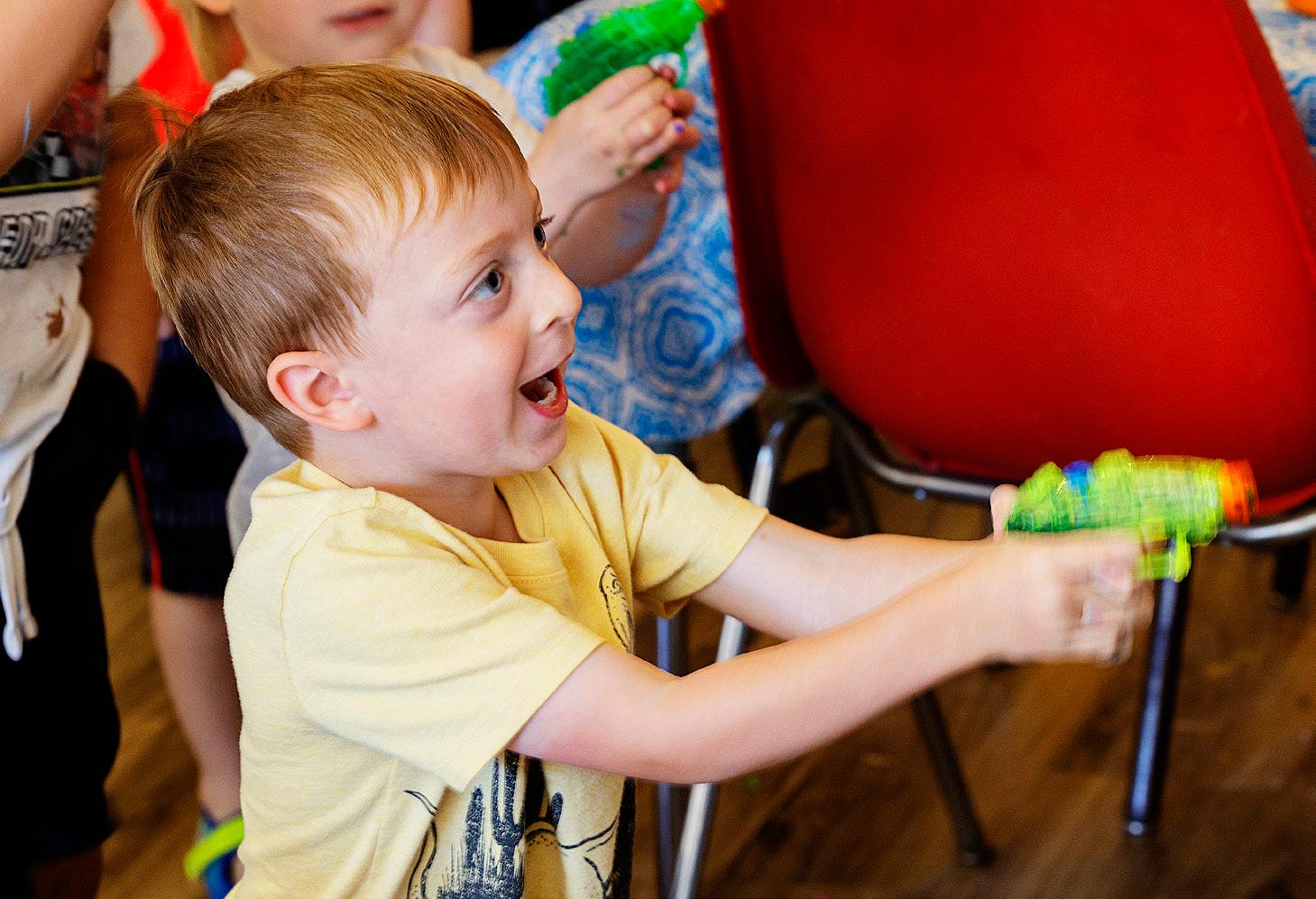
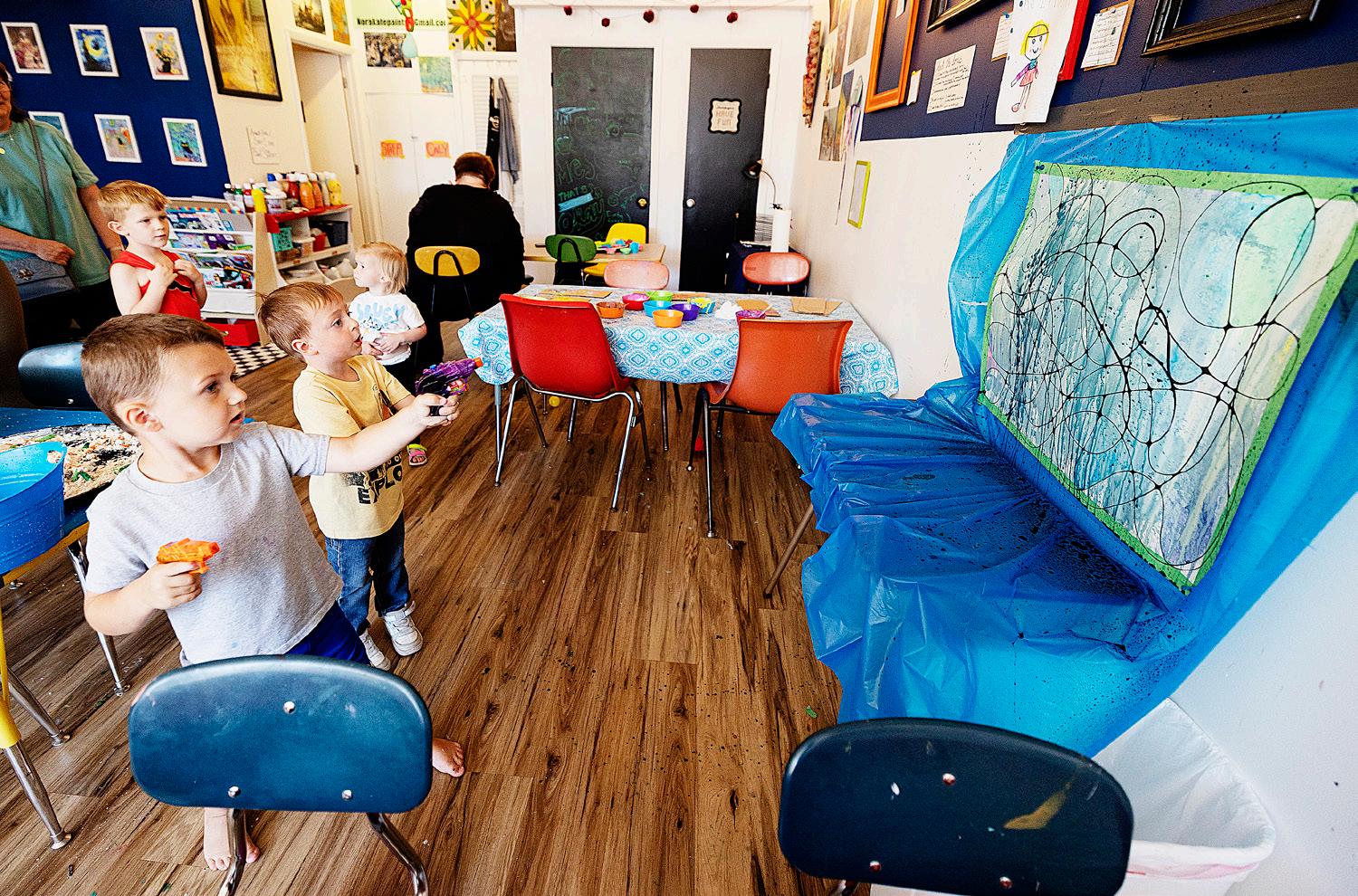
Who needs a paintbrush to create art when you’ve got a squirt gun? These youngsters were excited to fire off a few rounds of water color paint at a canvas at Brave Arts Creative Studio.
Reuter’s artwork through her mural business, Nora Kate Paints, is all over Dixon, from the selfie-inspired wings at her brother Colin Balayti’s body shop at 402 W. First St. to a new collection of works at the water plant on River Road. She has also taught art classes at local schools, worked as a camp counselor, and recently illustrated the children’s book “My First Trip to the Bleachers: Big Feelings at the Cubs Game,” by Michael Cerami.
The studio’s name reflects the mindset she hopes to inspire.
Brave Arts is a nod to the film “Braveheart,” Reuter said, but it also captures her belief that art should be approached without fear. She describes herself as a big-idea person who relies heavily on trial and error.
“I am someone who has always been a big idea person, and it takes a lot to get those ideas up and running,” Reuter said. “I’m very much trial-and-error. If it doesn’t work out, no big deal. I think art should be done fearlessly, hence Brave Arts.”
BRAVE ARTS cont’d to page 29
Reuter strives to create opportunities for people to connect with that childlike curiosity by hosting a variety of art camps and workshops, monthly Mini-Mondays sessions for children ages 5 and younger, and do-it-yourself classes for adults. She also offers pop-up art events, school field trip art classes, sessions for homeschooled children, senior-focused art lessons and private parties.
A schedule of upcoming programs and registration information is available at braveartscreativestudio.com/. Recent events include a teen sculpture workshop, a “mythical and magical” camp, family glow night, a tie-dye workshop, and a paint-and-
plant DIY workshop with Grungy Roots in Grand Detour.
Mini-Mondays, designed for children ages 18 months to 5 years, have become one of the ways young artists can explore different mediums and materials as they experiment and socialize in a welcoming environment. Children can explore making things out of sand and modeling clay, or even shoot a paint gun at a canvas on a wall.
Parents benefit as well, Reuter said, often using the sessions as an opportunity to connect with other adults while their children create, like Brooke Francque of Dixon. Her son, Theo, 3, has attended classes at Brave Arts and even celebrated a construction-themed birthday party there with his cousins.
“He’s a very hands-on boy, and has a lot of energy,” Francque said. “Him being able to do things and get his hands messy, and work with different materials, and to get his brain working on the creative side, that’s been huge for him. He has a huge imagination and is starting to use it a bit more. A place like this only curates that. He gets so excited every time I say, ‘We’re going to go to Nora’s today.’”
BRAVE ARTS cont’d to page 30
BRAVE ARTS cont’d from page 28
PHOTOS: ALEX T. PASCHAL/APASCHAL@SHAWMEDIA.COM
Francque said she appreciates the variety of activities available at the studio, where Theo can move between different stations, experiment with different materials and get his hands messy. Not only does Theo leave the session filled with pride in the art he creates there, the experience often gives his mom ideas for creative activities at home.
“Nora is amazing and always has different things each time we’re here,” Francque said. “She’s just great energy to be around, such a welcoming environment. We just love coming here.”
Reuter hopes creativity can help people build confidence, think differently and become more willing to take chances.
“I’ve been teaching classes for so long, and I’ve heard
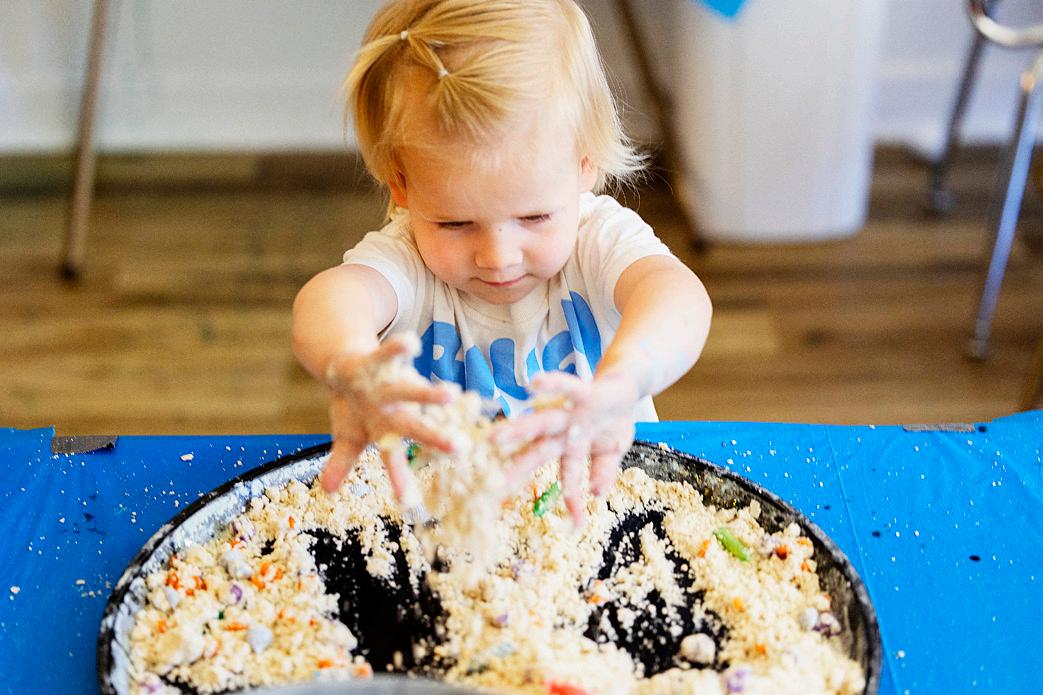
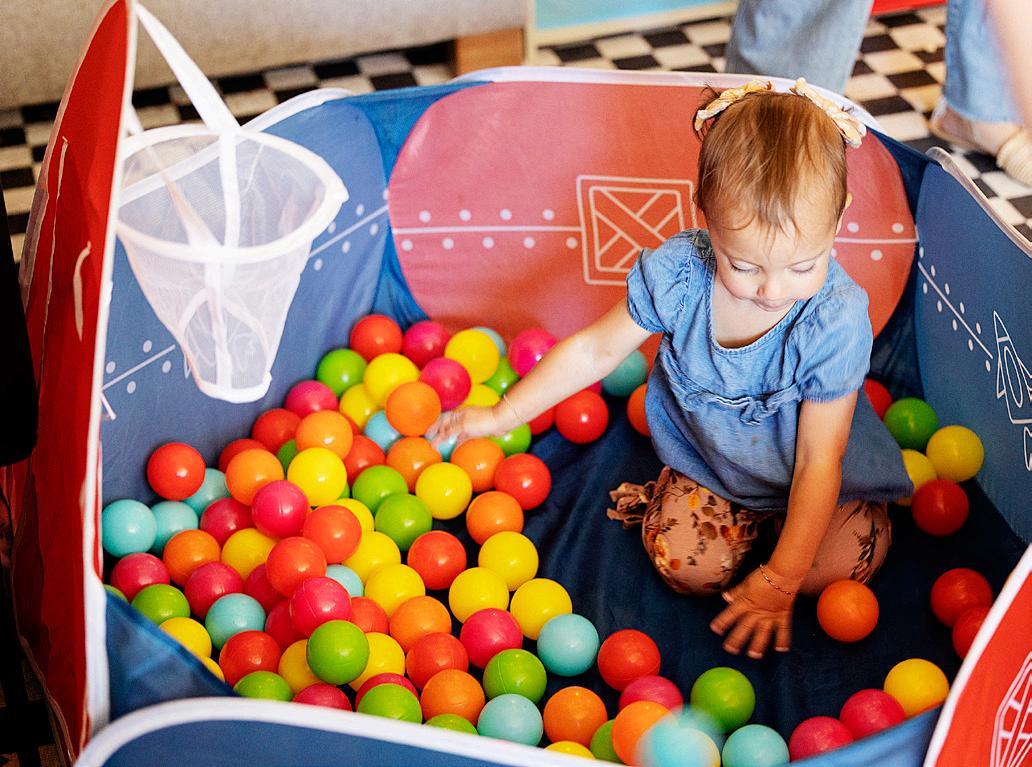
A fun and colorful vibe at Brave Art Creative Studio welcomes kids to have fun while tapping in to their creative side. Left: Macie White, 2, digs into some play sand. Right: Lenora Dvorak, 2, plays in a ball pit.
people say, ‘I’m not any good at this,’ or, ‘I can’t draw a stick figure,’ or draw a straight line — it’s so irrelevant to tell me that,” Reuter said. “This is a therapeutic thing for me, and for you. ... All ages, all demographics, it doesn’t matter where you come from, art and creativity in some way, shape or form benefits people.”
She’s seen those benefits firsthand.
“I see so many kids come here who are hiding behind their parents’ legs for the first 5 or 10 minutes, and then before you know it, they’re going, ‘Nora! Do you have this?’ ‘Nora! Do you have that?’ I see just by them being creative, they’re getting more confident.”
BRAVE ARTS cont’d to page 31
WELCOME
MADISON SUDAJ, Au.D.
Dr. Sudaj is proud to join Wallace Center for Hearing at their newly expanded office on Progress Blvd. in Peru. Their experienced team is committed to providing trusted hearing healthcare to help patients reconnect with the people and moments that matter most.
years of experience helping you hear better and live better.
A. Wallace, M.S.
BRAVE ARTS cont’d from page 29
As the business continues to evolve, Reuter said she hopes residents see the studio as more than just a place that offers classes, but also as a creative resource where they can bring their own ideas for classes, workshops and gatherings. In developing the studio, Reuter gathered ideas from customers, explored new program offerings and worked with the Sauk Small Business Development Center while learning what resonates most with the community. For now, she is focused on continuing to grow within the studio’s current incubator space before considering a larger location.
Reuter often describes the business itself as a work in progress.
“This place is an art project,” she said. “Every art project starts with some inspiration. It’s an art project that’s never going to change. Me finishing would be its closing. It’s always going to evolve, it’s always going to change because it’s an art project.”
The moments that stay with Reuter long after the kids have gone home and the parties are over are often the simple ones: a child becoming comfortable enough to explore, or an adult discovering a talent they never knew they had.
“There’s been so many, honestly,” Reuter said. “I like seeing the kids really enjoy themselves and be able to explore. It’s very rewarding to me to see someone who thought they were going to be really bad at it, find out that they’re actually really good at it. With a little confidence and a little persistence, they realize that they can do this pretty good.” n
Shaw Media reporter Cody Cutter can be reached at 815-632-2532 or ccutter@shawmedia.com.
Brave Arts Creative Studio is located at 115 S. Hennepin Ave. in Dixon. Find it on Facebook or go to braveartscreativestudio.com for an up-to-date schedule of events, to schedule a party or for more information.
rowing up in Dixon, a trip to the park was a chance to get out of the house, run wild in the wide open spaces and have fun.
By Cody Cutter Sauk Valley Media
There were playgrounds to play on and trails to explore. We monkeyed around on the monkey bars and the jungle gyms and found fun hanging in the balance on a see-saw. And who didn’t wobble back and forth on the menagerie of spring-mounted animals planted in parks? In the winter, there were hills to sled and snowmen to build.
are stories behind many of those names, each one saying something about those who contributed more than just their name to a park; they contributed something to their community or their country. Some helped build Dixon from a frontier river crossing, others turned hometown ambition into national and even global successes. One gave his life in the Civil War, and another fought in the Spanish-American War.
The Dixon Park District office, 1312 Washington Ave., is open from 8 a.m. to 6 p.m. Monday through Friday, 10 a.m. to 3 p.m. Saturday and Sunday. Parks are open from dawn to dusk. Find it on Facebook or Instagram, go to dixonparkdistrict.com or call 815-284-3306 for more information.
For parents, parks were a place to enjoy the fresh air, take a break, and unwind. We flipped burgers and caught up with cousins at family reunions. We wandered down to the river, dropped a line, and waited for the fish to bite. Or maybe we just relaxed and took the rough edges off the daily grind,. Whatever you did, you had fun — but did you ever wonder where the parks got their name?
To see the parks’ hours, go to dixonparkdistrict.com/parks
For some, a park’s name may be all that preserves its namesake’s memory in most people’s minds. But there
Another built an industrial empire — but all left legacies that still echo across the city through the parks that bear their names.
Not all parks are named after people, such as Meadows Park, Haymarket Square, and the Wooden and Water wonderlands on Washington Ave. Two more parks, owned by the City of Dixon, also are not named after people: Triangle Park and Presidents Park (although the latter is in honor of Abraham Lincoln, who was stationed in Dixon as a soldier in the Black Hawk War).
In this article, we’ll take a look at the parks named after people, and the stories behind those namesakes, and answer the question: What’s in a name?
Sedrick Oliver (left), and Max Rosquist have fun at Vaile Park on Oct. 5, 2023, during the official opening of the park’s new playground.
ALEX T. PASCHAL/APASCHAL@ SHAWMEDIA.COM
James (seen in photo below) and Florence Ballou of Dixon included the establishment of parks in their wills. Florence, who grew up in Rochelle, left money for the establishment of Cooper Park in her hometown, named for her parents, Peter and Mary. Money left over from its construction helped fulfill James’ wish for a hometown park. James Ballou served in the Spanish-American War in 1898 with Company G of the 6th Illinois Volunteers with around 120 others from Dixon. He hosted local reunions for his fellow troops for many years, and only received his war decorations more than a half-century later, in 1950. He later served as chief clerk and assistant postmaster with the Dixon Post Office. Florence was a noted local genealogist. Florence died in 1952, her husband followed in 1958. Ballou Park opened in 1962 at the east end of East Seventh Street next to Oakwood Cemetery.
Born in Tennessee, John Dement (seen in photo below) moved to Illinois as a boy, served as sheriff, state legislator and state treasurer, and commanded militia forces during the 1832 Black Hawk War at a battle at Kellogg’s Grove, north of Kent in present-day Stephenson County. Dixon served as a headquarters for the military in that affair. Dement moved to Dixon from Galena in 1840 to serve as the receiver of public moneys at the federal land office. He later served four terms as Dixon mayor and was recognized as the founder of Dement Town, near West Seventh Street and Depot Avenue. Dement Avenue also is named for him. Dement Park is on South Fifth Avenue near Oakwood Cemetery, where he’s buried.
Long before it was a West End park, E. C. Smith Park was the site of a school named after a leading local educator. Eli C. Smith, born in New York in 1829, served as the Superintendent of Schools and principal of the high school from 1862 to shortly before his death in 1898. The Red Brick School, which sat on land where the park named after him is now located, was built in 1869 and its name was changed to honor him in 1902.
The three-story building eventually closed in 1938 with the establishment of Lincoln School, and was later demolished. This park is bounded by Highland and Madison avenues and Sixth and Seventh streets.
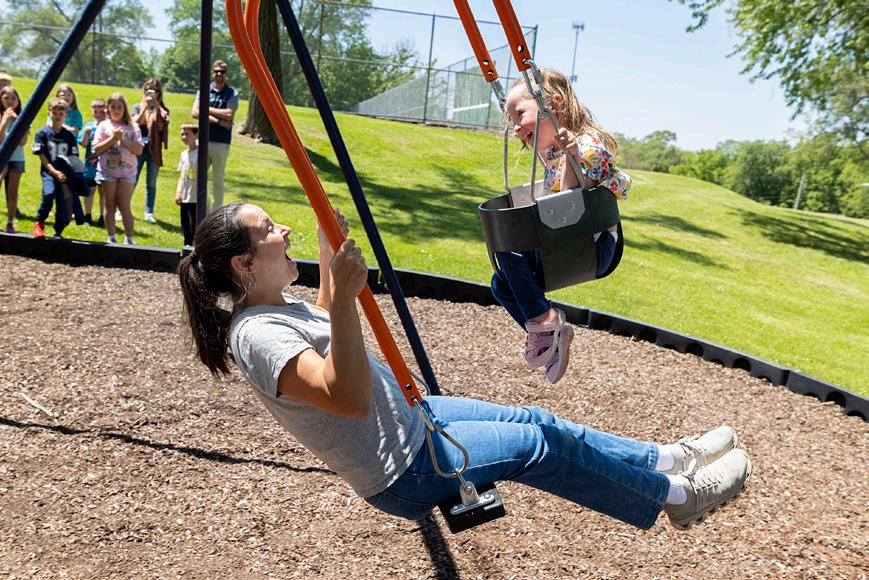
Nicole Theobald and her daughter Sophia take the first ride on the newly dedicated Sophia’s Swing on May 15 at E.C. Smith Park. The Expression Swing promotes intergenerational play and inclusion.
Grace Johnston (seen in photo at left) was a leader in the Dixon Woman’s Club and director of recreation for the Dixon Park District for 13 years during the 1950s and 1960s. She also was active in Boy Scouts and Girl Scouts, and organized the first Dixon High School
Honors Banquet. Johnston also supervised summer programs in the park district, and taught arts, crafts and nature classes. The park, at 11th Street and Highland Avenue, was dedicated in her honor in 1976, one year before her death. The Woman’s Club to which she dedicated her services to for many years helped create the park with planting and landscaping projects.
John Dixon (seen in the plaque below), the founder and namesake of Dixon —“Father Dixon,” as he was often known — purchased a ferry on the Rock River in 1830 from Joseph Ogee, who established it two years prior. Born in New York in 1784, Dixon moved west as the American frontier expanded, and had settled on a farm in Milo, 15 miles southwest of Princeton, before coming to his new home. Dixon developed the town and it became instrumental in the stationing of troops during the Black Hawk War, and grew into one of northwest Illinois’ largest settlements along with Galena and Rockford. Originally known as Oak Park, the name was changed to honor Dixon’s founder near the turn of the 20th century; it is bounded by Galena and Hennepin avenues and Chamberlin and Morgan streets.
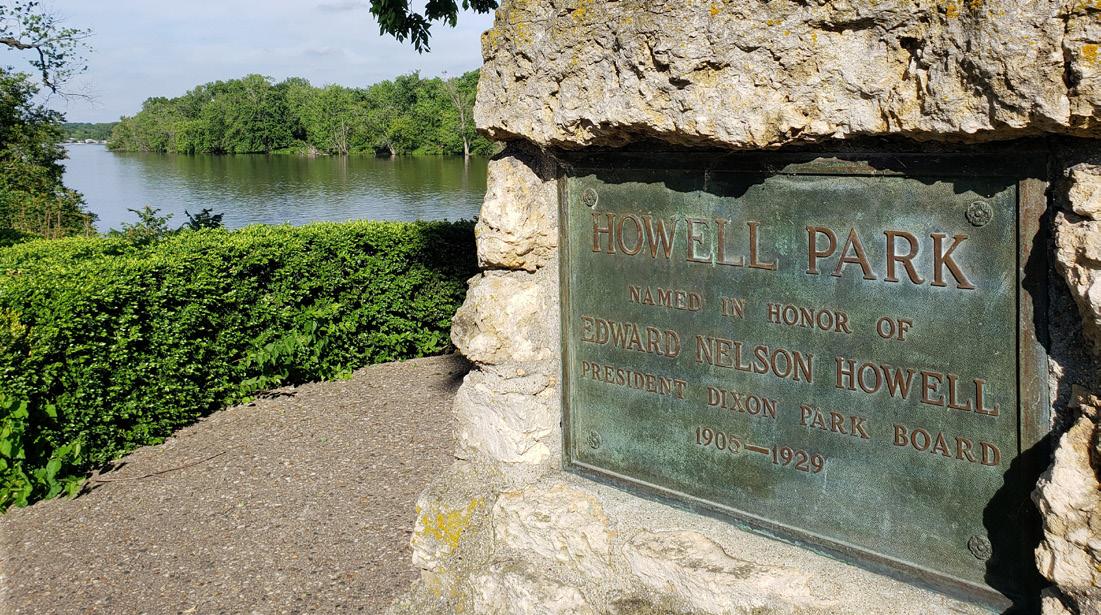
Edward N. Howell was a Dixon hardware businessman who grew up boating on the Rock River and had a great interest in landscape gardening. He purchased property on the north bank of the river in 1909 and set out to landscape it in a way that would be visually appealing. He hired noted landscaper O. C. Simonds, whose works included Graceland Cemetery in Chicago, to improve the bank from the dam on the river east to Jefferson Avenue. The work was completed in 1915. Howell, who later served as president of the city’s board, had a permanent memorial to him constructed in 1931, not long after his death, which included a concrete seat veneered with native stone, a concrete platform and rock garden
The largest in the Dixon Park District system, Lowell Park traces its origins to Charles Russell
Lowell III (seen in photo at right), a Harvard valedictorian and railroad executive who purchased 201 acres along the Rock River north of town in 1859. Inspired by the natural beauty of the wooded property, Lowell hoped to someday live there. His plans ended when he joined the Union Army during the Civil War; he was killed in 1864 at the Battle of Cedar Creek in the Shenandoah Valley of northern Virginia. Decades later, his widow, Josephine, arranged for the land to be donated to Dixon. Their daughter, Carlotta, completed the gift in 1906, and the city officially accepted Lowell Park in 1907. In addition to being one of the city’s premier parks today, Lowell Park is also known as the place where future President Ronald Reagan worked as a lifeguard as a teen, beginning in 1927. It is said he saved 77 lives during his time watching the waters of the Rock River.
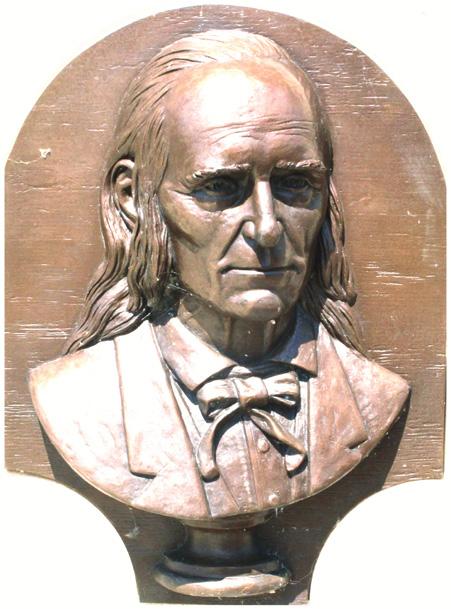
George Ham Page (seen in photo below) was a Dixon-area native who became one of the world’s most successful dairy entrepreneurs. Born near Palmyra west of town (where there is a historical marker noting his birth as the first white child in Palmyra Township), he attended college before working in Washington, D.C., during the Civil War. In 1866, he joined his brothers in Switzerland, where they founded the Anglo-Swiss Condensed Milk Company, Europe’s first condensed milk enterprise. As general manager, Page led its rapid international expansion, helping it supply much of the world’s condensed milk. He returned to Dixon in the late 1880s and opened his own milk plant in town; it continues today as Treehouse Foods. The area along the Rock River behind the plant, from the Veterans Memorial Bridge on Peoria Avenue to the mouth of Plum Creek was established as Page Park in 1933.
Horace G. Reynolds (seen in the photo below) was a New York entrepreneur who transformed Dixon after relocating there in 1894 to manufacture wire screen. His “Red Edge” wire cloth earned a national reputation, and his factories grew into one of Dixon’s largest employers. Reynolds also briefly owned a newspaper and championed civic pride. In 1933, Douglas Harvey and John Ralston, executives who worked for Reynolds at his screen factory, sought to honor their former boss’ memory while creating a park at the west end of West Second Street. Reynolds Field was constructed with the assistance of the Works Progress Administration, and consists of two softball diamonds — one of which is the home to Dixon High School’s softball team. Camp Reynoldswood also is named for him.
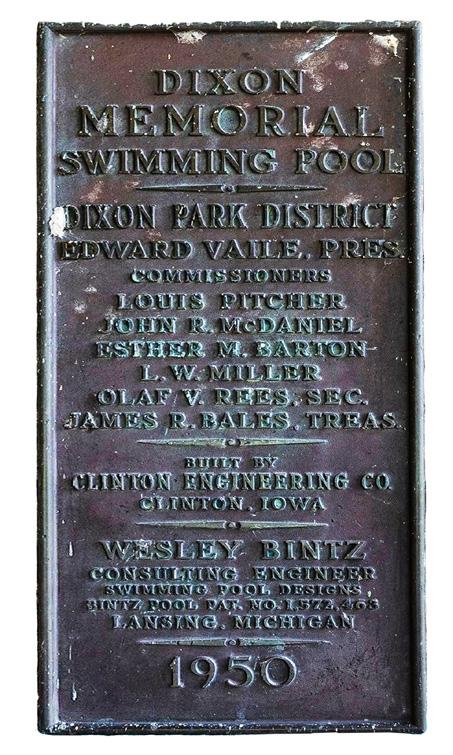
Ed Vaile owned a men’s clothing business and served on the Dixon Park Board for 46 years, including a stint as its president (as noted in the plaque at Dixon Memorial Pool, in the photo below). The Dixon Memorial Pool was a major project of his; the project was organized in 1947 and the pool opened June 27, 1950, when then-Hollywood star and former Dixon resident Ronald Rea-
gan emceed its dedication during Injun Summer Days that August (the pool closed in 2000, but remains at the park). Vaile’s clothing store, operated in a partnership with George F. O’Malley, was established in 1901 and he joined the park board in 1907, having served until two years prior to his death in December 1955.
Select information for this story came from the research of Dixon historian Tom Wadsworth, who also writes a weekly Dixon history column for Shaw Media.
Two months before Vaile’s death, the park in which the pool was located was named for him.
Surgeons at Morrison Hospital
Abdul Foad, MD Orthopaedic Surgeon 815-772-5505
Dr. Srinivasan Purighalla, MD Neurological Surgeon 815-772-5511