Head Office Turweston Aerodrome, Nr Brackley, Northants NN13 5YD
Telephone for engineering and commercial 01280 846786
LIGHT AVIATION MAGAZINE
Editor ED HICKS
Email ed.hicks@laa.uk.com
Design and Print SEAGER PUBLISHING
Production Editor LIZI BROWN
Art Editor LISA DAVIES
Opinions expressed by the authors and correspondents are not necessarily those of the Editor or the LAA. No part of this publication may be reproduced in any form without permission.
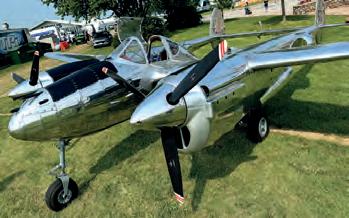
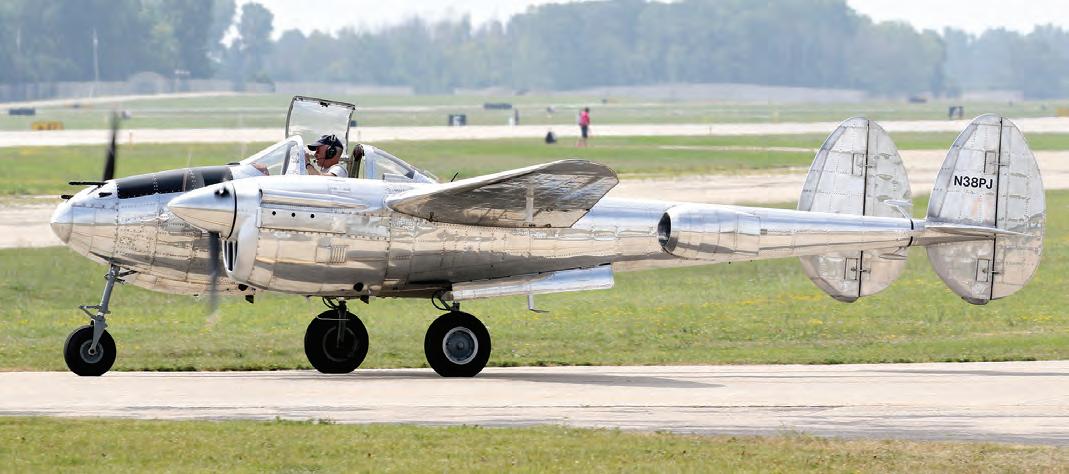
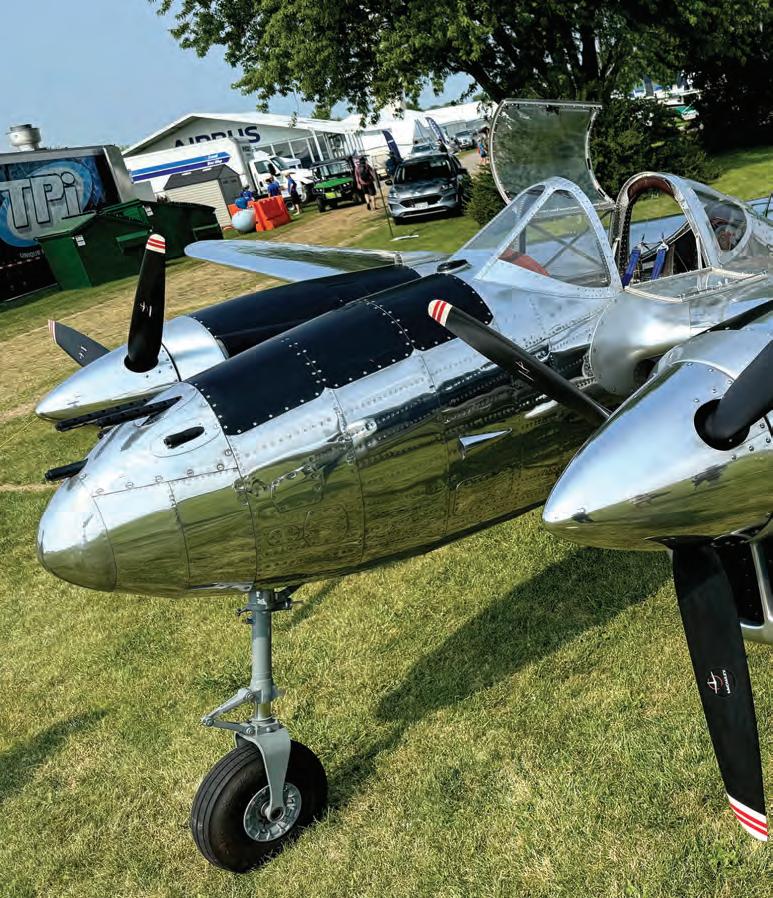
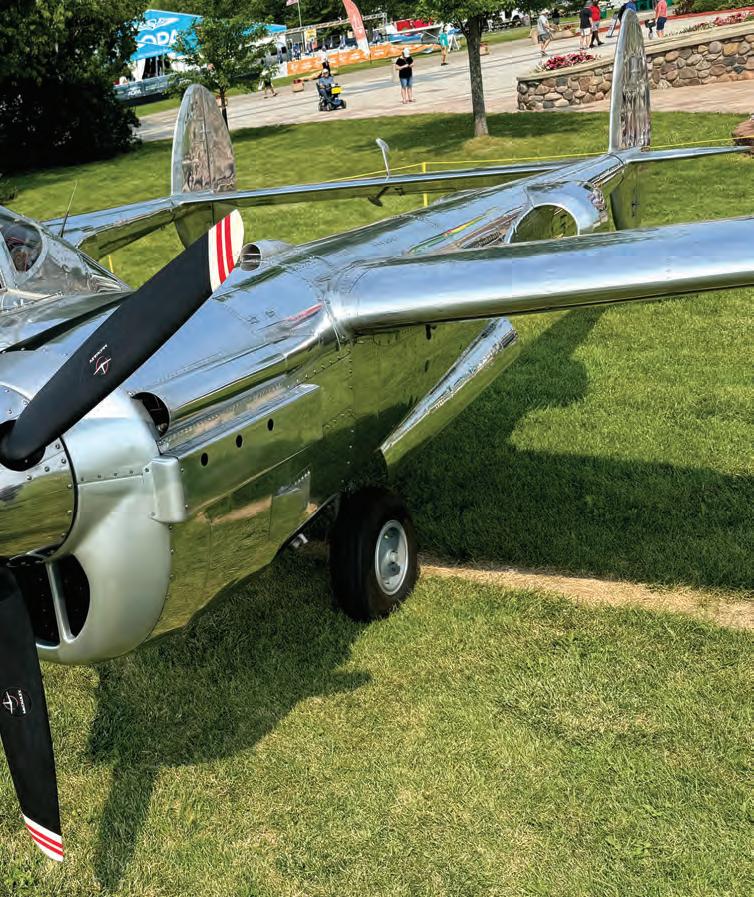
The utterly amazing two-thirds scale P-38 replica taxies at EAA AirVenture Oshkosh.
Dream big…
There’s always loads of reasons I’m excited about heading to EAA AirVenture Oshkosh – the huge array of fabulous aircraft on display, and seeing friends I only tend to see during that one week in July.
This year though, there was one aeroplane I knew would be there that I couldn’t wait to see. The two-thirds scale P-38 Lightning replica designed and built by Jim O’Hara.
This project might be one of the most complicated and intense aircraft homebuilding projects attempted by one person.
Having retired from a long tenure as Professor of Aeronautical Engineering at Tulane University in New Orleans, Jim O’Hara decided to learn to fly. Then, because he had loved the Lockheed P-38 Lightning when he was growing up, Jim decided he would build his own replica, and began working on the calculations.
Scaled to allow the fuselage to fit Jim and his wife Mitzi, Jim decided that if he ever came to a problem that he couldn’t figure it out, he would stop. Beyond that, he was in no hurry. His timetable was 10 years for the design and engineering, then 15 years for construction. He figured, if he was lucky, he’d get to fly it before he died.
Working in one half of his two-car garage, with a small metal lathe and some sheet metal brakes, his set-up was pretty similar to that of many homebuilders.
Jim built the P-38 one piece at a time. The left wing, the right wing, the fuselage, and he built the individual booms and tail section last.
Then he rented a hangar and assembled the pieces one by one.
The 20 year project took it’s first flight in 2008, just before Jim’s 80th birthday.
While Jim flew the aircraft for 100 hours, he never made it to Oshkosh, despite an invite from the EAA. That job was placed in the hands of his nephew, William Presler, who Jim left the P-38 to, in his will.
I met with William during the show, and it was evident that he and his team were utterly devoted to ensuring that Jim and Mitzi’s meticulously crafted aircraft could be enjoyed by fellow homebuilders.
In my visits to Oshkosh over the years, I’ve seen some incredible projects on display. Aeroplanes like the late Jim Wright’s Hughes H1 Racer replica, or the Boeing Stratoliner restoration – those machines had teams of people behind them, which made Jim’s P-38 all the more remarkable. Here’s to those who dream big, like Jim…
ed.hicks@laa.uk.com
FEATURES
12 PROJECT NEWS
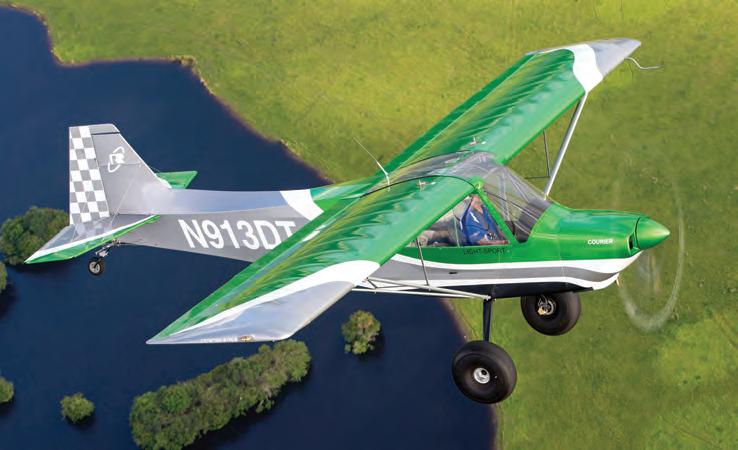
After expert consulation, prolific aircraft builder, Dudley Pattison, choose to build a RANS S-7 Courier!
14 SPECIAL FEATURE
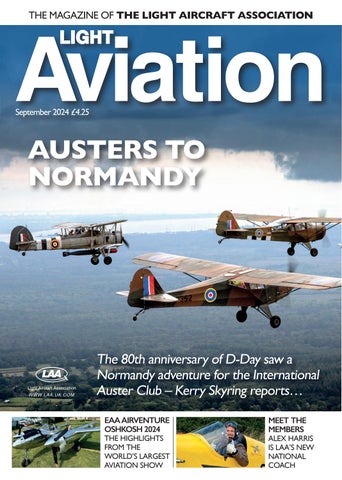
The 80th anniversary of D-Day launched a Normandy adventure for the International Auster Club – and Kerry Skyring joined them in a 1943 veteran…
24 SHOW REPORT
EAA AirVenture, Oshkosh 2024, welcomed all types of aircraft. Ed Hicks reports on world’s greatest GA event.
34 COACHING CORNER
Christine Carlin, Pilot Coaching Scheme Head of Training, looks at the role of TEM when it comes to navigating the skies safely.
36 ENGINEERING MATTERS
Mandatory Pietenpol strut inspection, Woodcomp Klassic blade failure, and is corrosion hiding under your fabric?
42 FLY-IN REPORT
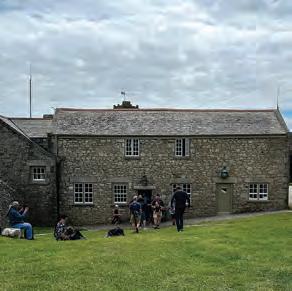
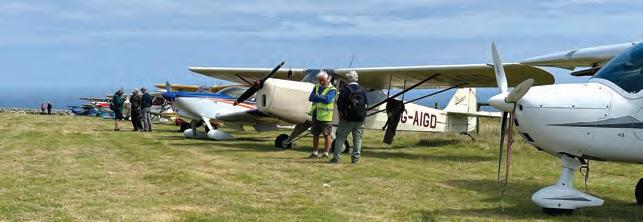
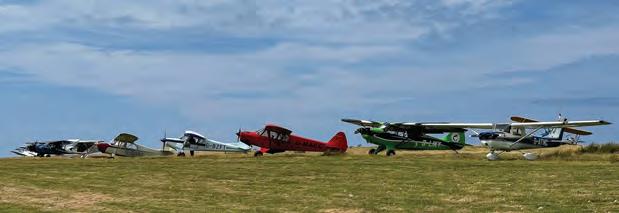
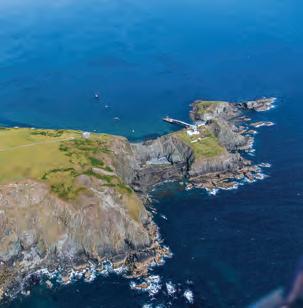
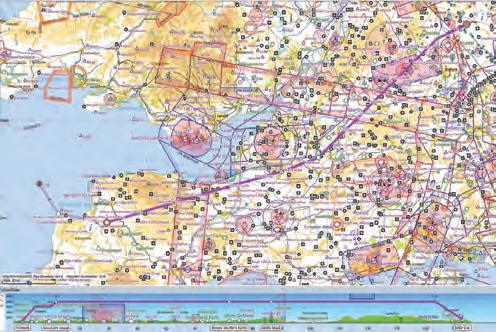
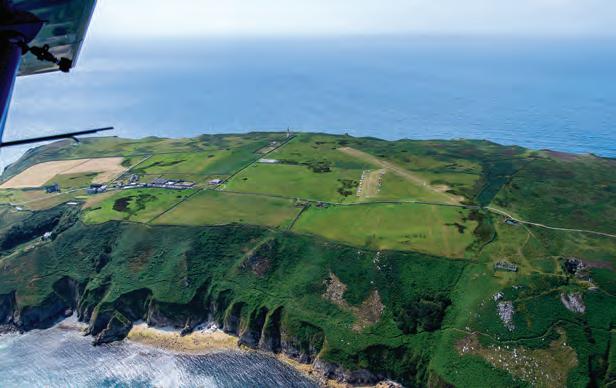
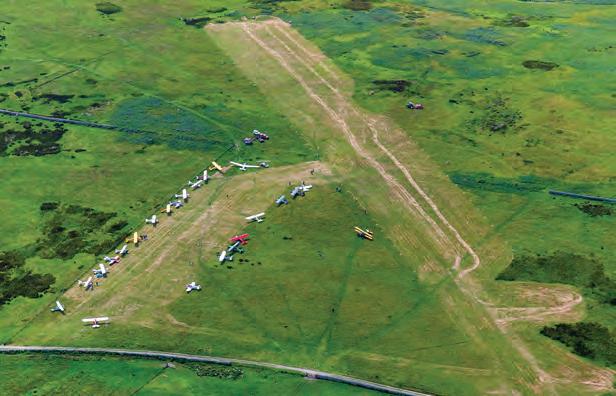
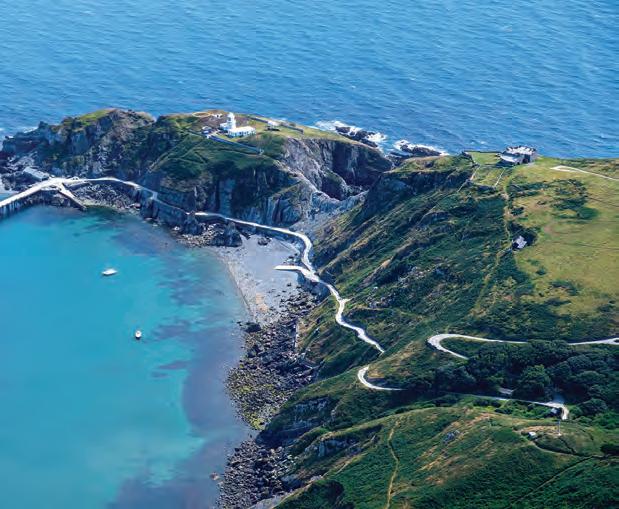
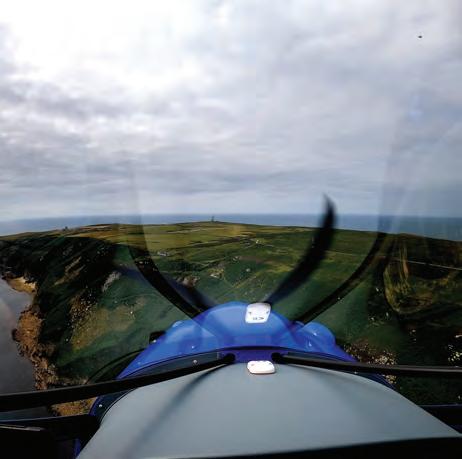
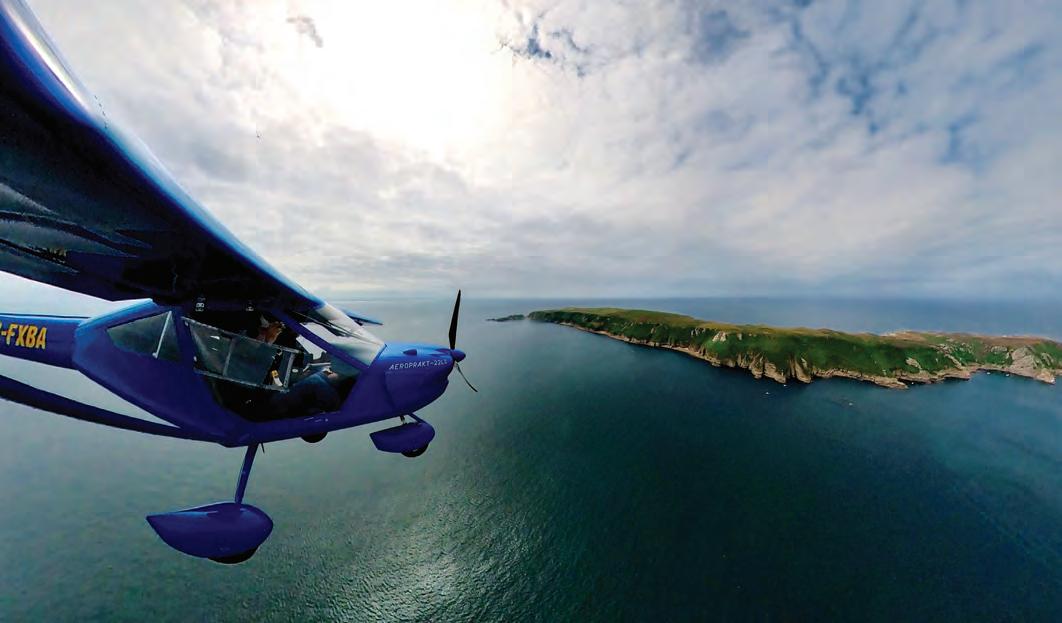
The annual Lundy fly-in has been on Russ Pinder’s ‘must do’ list of destinations– and this year he did it!
47 MEET THE MEMBERS
LAA’s new National Coach, Alex Harris, talks to Ed Hicks about his flying life…
53 LAA PHOTO COMPETITION
More superb photos to admire from LAA members.
New LAA National Coach
The LAA is delighted to announce that Alex Harris has been appointed as the new Pilot Coaching Scheme National Coach.
Alex started his flying career in gliders in 2008, and since then has accumulated 1,000 hours of silent flight. He has gone on to become a Chief Flying Instructor, Tug Pilot, Examiner, National Advanced Aerobatic Champion, and has represented Great Britain in international competitions and the World Aerobatic Championships.
LAA Service awards
Each year the LAA makes awards for direct or indirect service to the Association during the year. The awards available are listed below. If you know of a member whose work deserves recognition please send your nomination to the LAA Office in the form of a citation, stating what it is they have done to warrant consideration.
As the presentations are made at the Annual General Meeting, please submit your nomination(s) by 10 October, sending them to office@laa.uk.com
● The Lois Parker Trophy –for distinguished service in an administrative function
● The Frank Hounslow Trophy –for service to LAA in engineering
● The Chris Paul Trophy (President’s Joystick) – for services to the Rally
● The Pete Clarke Trophy –for an individual major contribution to flight safety
● The Faulkner Bryant Trophy –the most active strut or person within the strut system
● The Roderick Turner Trophy –the person who has contributed most to flying for fun
● The Coates Swalesong Trophy –for the best design feature
● The Bill Woodhams Trophy –for a feat of navigation.
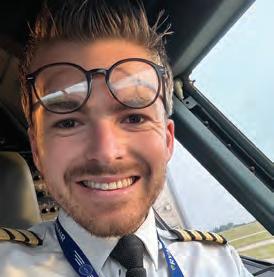
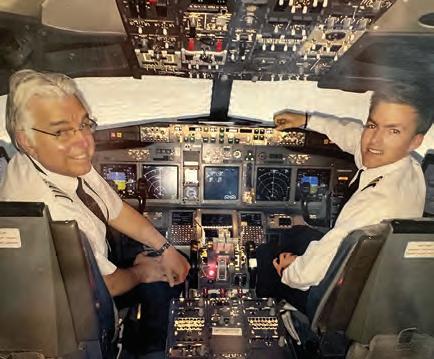
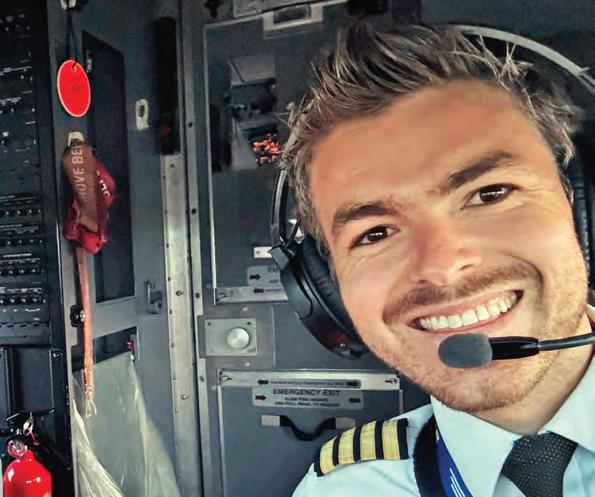
Moving into the power world, having come from a PFA/LAA family, Alex completed his ATPL at Stapleford Flight Centre and is currently operating as a Captain/ Type Rating Instructor on the 737 in the UK.
He has owned and flown a variety of LAA aeroplanes and obtained his Display Authorisation for advanced aerobatics and formation.
To read more on Alex and his life in flight so far, turn to p47 for his Meet the Members interview.
East Fortune fly-in success
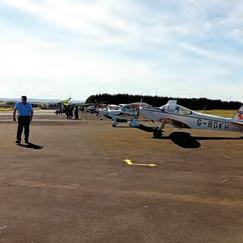
LAA member Keith Griggs writes: “With experience of weather in this area of Scotland, it was decided to have a three-day event, on the basis that at least one of them might be a good day! And so it came to pass, on Friday 9 August, strong winds meant no visitors – with the exception of the Heavy response fire and rescue unit from Sighthill in Edinburgh, 24 miles away. Tim Rayner, our local LAA Inspector, gave the units a first hand look at the different types of GA aircraft. They found it very interesting and educational… in return we got to see their rescue and lifting equipment. Saturday’s weather was much the same, but luckily Sunday saved our
bacon, and I woke up to light winds and clear blue sky.
Our first arrival was a flexwing, which pretty much hopped over the perimeter fence, then the first fixed-wing SEP was an early arrival from Sleap. Twenty-four visiting aircraft followed and, with a BBQ in full swing, it turned into a great day for all.
A few even ventured to the National Museum Scotlands Museum of Flight.
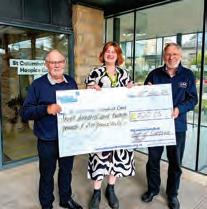
The event raised £720.05 for St Columba’s Hospice, the charity picked by landowner, David Pate.”
New Safety Sense Leaflet: Weight, Balance and Performance
The Civil Aviation Authority has released a new Safety Sense Leaflet addressing aircraft weight, balance and performance in General Aviation operations. This forms part of the popular Safety Sense series which make an excellent reference for all light aircraft pilots. www.caa.co.uk/general-aviation/safety-topics/ safety-sense-leaflets/
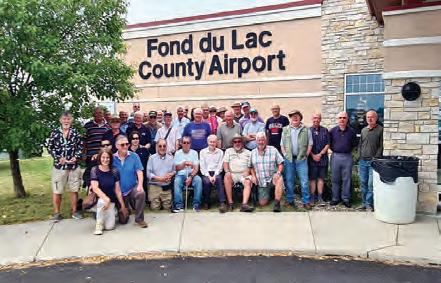
LAA Members at Osh 24
Neil Murgatroyd reports: “Almost 50 people joined the LAA group trip to Oshkosh 2024. BA to O’Hare, accommodation at University of Wisconsin, Oshkosh, then eight days at the biggest gathering of aeroplane nuts and enthusiasts in the world. Rather than tell you all the things you can do (Oshkosh feature on p24 – Ed), here’s a typical day. Up at 6:00, it’s easy, the jet lag is in your favour and the dining room opens at 5:30.
Eggs, pancake, maple syrup, then yoghurt, berries and fruit. Try the porridge, cereal, bagels, cake and doughnuts another day. Take a banana and an apple for the day – fill water bottle.
Catch the bus for the 15-minute trip to the show, watching the long queue of cars driving in, as you pass by. Enter the world of Oshkosh, execute your morning plan (EAA has a fantastic app), have lunch and
a beer, and chat to some folk on your table about your collective aeroplanes, how far they’ve come, how often they’ve visited the show. Discover you’ve made new friends!
Look up! Things get noisy, consider ear plugs and a folding chair, buy a ride in a Ford Trimotor or a Bell 47. Take plenty of breaks, enjoy the sun and weather, buy some stuff tax free.
Time for the bus back to the university –last bus at 23:00 (0400 zulu). Join the crowd at Kelly’s bar – converted car park into open air drinking with tables and cover. Buy beer by the pitcher, Spotted Cow, four pints for the price of three. Tell tall tales, make more friends.
Time for bed and do it all again. Interested in coming next year? Please email to express your interest to oshkosh@ laa.uk.com
Microair launches modular instrument set
Microair Avionics has launched a new line of instruments called the T3000 skySuite.
The modular system is designed to enhance safety, situational awareness and flying, and includes a T3000 skyNav navigation sensor and instruments, T3000 skyWave Nav Comms, and T3000 skyLink Mode S and ADS-B transponder.
Key features of T3000 skySuite
● Reduced weight and size
● VHF Nav Comms
● Navigation Sensors
● Mode S Transponder
● 3.1in Instrument Displays (2.1in active touch screen)
● 16 pilot-selectable instrument faces
● Digital Intercom for up to 10 people
● Pre-wired headphone plates
● USB-C 15W power outlet at each seat
D-Day 80 Dawn to Dusk challenge
6 June,
who flew during the invasion. The plan was
“We are excited to celebrate our 25th anniversary with the introduction of the T3000 skySuite,” said Microair’s CEO, David Withers.
Delivery of the first T3000 skyWave and skyNav units is scheduled for October 2024, with the skyLink module completing the full T3000 skySuite in the first quarter of 2025.
to land at airfields across southern England that were active on D-Day. The aim: to raise money for the Veterans Operating Base (vob.org.uk), a Kent veterans’ group; and to showcase the work of aviation museums.
Taking off at 0530 from Headcorn, the pair landed at 11 airfields out of 14 targeted, stopping at Manston, Harringe Court Farm, Woodchurch, High Halden, Deanland, Shoreham, Goodwood, Lee-on-Solent, Dunkeswell and Branscombe, and landing
YES 2,024 in 2024 update
A big jump for YES since last month’s update, with 487 young people now flown in 2024 so far, The push continues on into autumn, to help make its target of 2,024 for the year. yesflyers.org.uk
Aerobility’s G-ICAN makes debut!
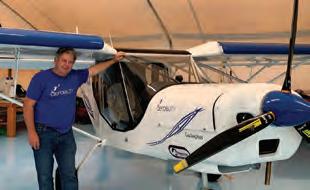
Aerobility, the UK-based aviation charity offering disabled people the opportunity to fly and participate in aviation-based activities, proudly exhibited its latest fleet addition, the homebuilt two-seat Zenair CH750 STOL aircraft, G-ICAN at the 2024 Farnborough International Airshow.
The event marked the flying debut of the aircraft, which was flown in from Aerobility’s home at Blackbushe Airport ahead of the show under a special permit from the Light Aircraft Association.
The ‘Building a Dream’ project was first announced at the Farnborough International Airshow in 2018. It was a pledge to build an aircraft ‘one rivet at a time’ with a team of disabled and able-bodied volunteers. In the process Aerobility gained stellar support from corporate and individual contributors.
wTheir JustGiving page remains open for donations. https://tinyurl.com/ ChrisRobDawntoDusk
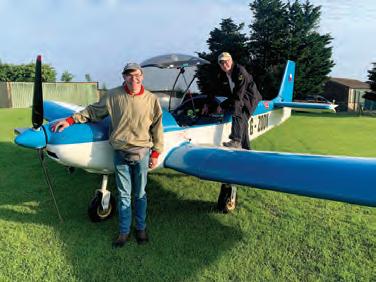
On
LAA members Chris Lent and Rob Stark took their two-seat microlight Zenair CH601 Zodiac G-ZODY into the skies to commemorate the Allied aircrews
Letters
We are always pleased to receive your letters, photos of your flying, and your feedback. Please email the editor at ed.hicks@laa.uk.com
Turbulent Hangar Queens
Dear Ed, Chris Lodge noted in the last edition that of all the Turbulents on the register, regrettably only 15 are flying.
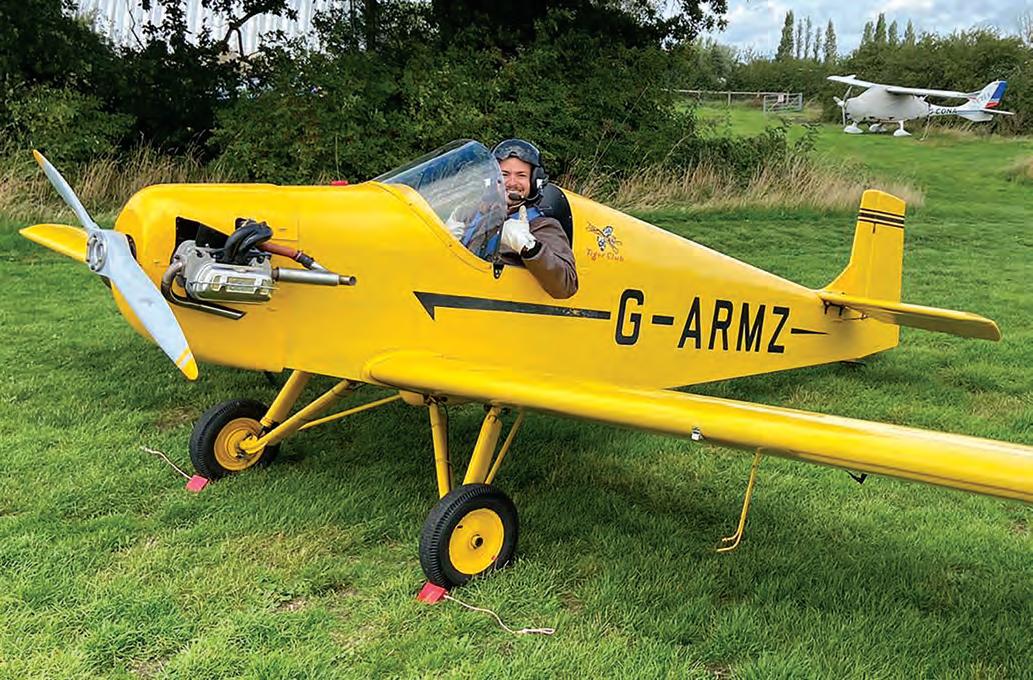
Seven of those are in the hands of the Tiger Club Turbulent Display Team and its members, and we hope to have an eighth flying by the year’s end. In terms of cycles (if not hours), these are probably some of the more heavily (ab)used aircraft in the LAA fleet. We have another three on the blocks for restoration over the coming winters. I think that reflects that the LAA is as much about building as flying.
That said, we are always on the lookout for under-utilised Turbulents, Turbulent parts or Turbulent pilots. So if you are aware of any of those that could be put to better use, do please let us know.
Richard Vary: The Tiger Club.
Landing Vouchers
I don’t mind chopping up photos to access them but I would like some indication as to where these airfields are. A county at least, if not a large town. Being ex RAF, I do know where Coningsby is, but Crosland Moor? I’d guess in Derbyshire – but could be Somerset… or Scotland. The other point is to print the four letter code for the airfield (if it has one), aids navigation.
Cheers, Derek Jordan.
Coaching Corner – Flying Tailwheel
Hi Ed,
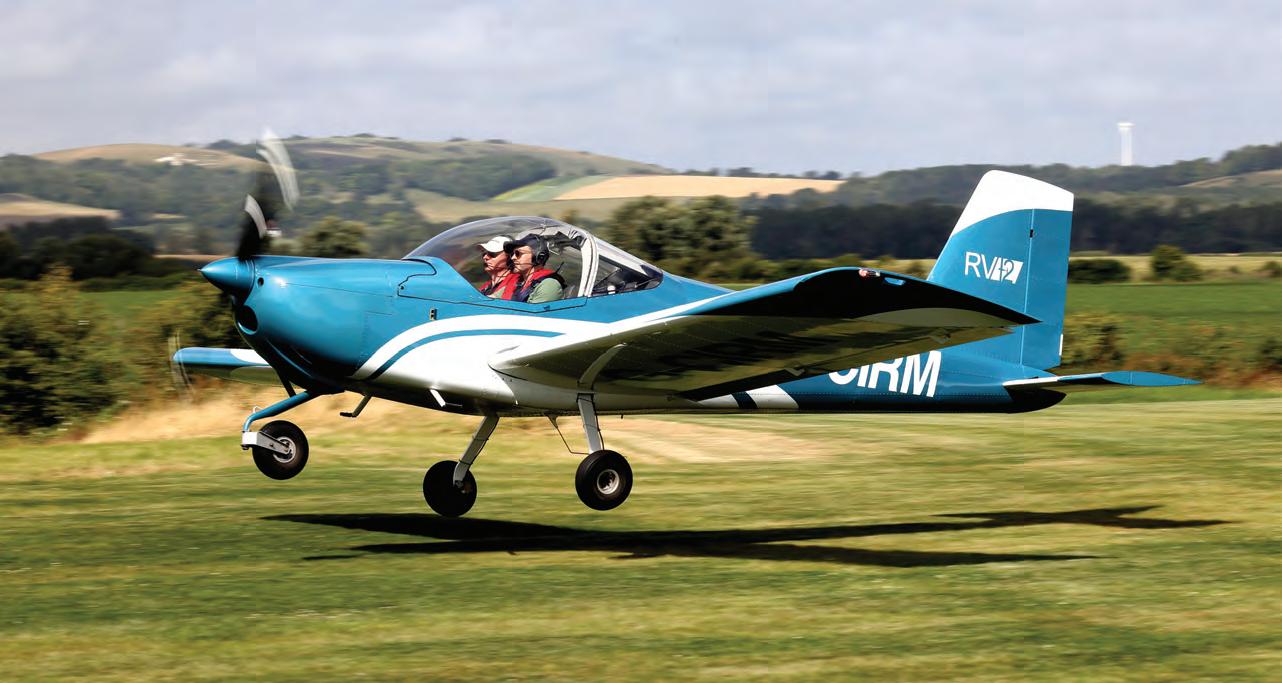
As a relative newcomer to TW, albeit with a lot of other hours, I read Christine’s piece, Landing: ‘execute with finesse’! That’s it? That’s the advice? Not, ‘don’t crash’? I comprehensively hate landing the RV,
especially at White Waltham. Even flew with our pet CRI a couple of weeks ago, which just made it worse.
Then at the bottom of p29 she writes, ‘Consider taking advanced taildragger training. Our coaches are always willing to help’.
Nevermind ‘advanced’, I just want to arrive elegantly, every time. So how do I access this ‘advanced training’?
Thanks, Andy.
Alex Harris, LAA’s new National Coach replies: Thanks for the email Andy, Christine asked me to drop you a line. We have a list of coaches available on the LAA website under the ‘find a Coach’ section, with a handy interactive map. www.lightaircraftassociation. co.uk/find-a-coach. Click on their profile and contact details will pop up. If you don’t have any joy please do contact me directly and I’d be happy to come and fly with you. nationalcoach@laa.uk.com
I’m always more than happy to help where I can
Struts4U - Strut Calendar
Please contact your local Strut to check the details before attending the calendar events.
Bristol Strut: Contact: chairman@ bristolstrut.uk www.bristolstrut.uk Cornwall Strut: The Clubhouse, Bodmin Airfield. Contact Pete White pete@aeronca. co.uk 01752 406660.
Devon Strut: The Exeter Court Hotel, Kennford, Exeter. Contact: david.millin@ sea-sea.com Evening Events at the Exeter Court Hotel, Kennford, Exeter, from 1930. East of Scotland Strut: Harrow Hotel, Dalkeith. 2000. Contact: Tim Raynor hipe@ btinternet.com
East Midlands Strut: Meeting on the first Tuesday of the month on Zoom until further notice due to venue availability. Contact: tonyrazzell2@gmail.com We also have a Facebook group and upload recordings of some meetings where we have speakers. Gloster Strut: Contact: Harry Hopkins phone 07902 650619 harry.hopkins@talktalk.net Highlands & Islands: Contact: b.w.spence@ btinternet.com 01381 620535.
Kent Strut: Contact: Steve Hoskins hoskinsltd@outlook.com 07768 984507. LiNSY Trent Valley Strut: Trent Valley Gliding Club, Kirton Lindsey. pilotbarry1951@ gmail. com http://linsystrut.wixsite.com/ website
North Western Strut: The Clubhouse, Boysnope. 1400. Third Thursday each month. Contact: cliffmort@btinternet.com 07813 497427.
North Wales Strut: Caernarfon Airport, Dinas Dinlle. First Sunday of the month – HEMS Bistro Café. 1300. Contact: Gareth Roberts gtrwales@gmail.com 07876 483414.
Oxford Group: Sturdy’s Castle Country Inn, Banbury Road, Kidlington, OX5 3EP. Second Wednesday each month. Contact: LAAOxford@gmail.com www.oxfordlaa.co.uk
Redhill Strut: The Castle, Millers Lane, Outwood, Redhill, Surrey, RH1 5QB. Pub contact 01342 844491. Third Tuesday of each month, meet at 1900-1930. Contact: david@ milstead.me.uk
Shobdon Strut: Hotspur Café, Shobdon Airfield, Hereford HR6 9NR. 1930. Second Thursday of the month. Contact: Keith Taylor bushebiggles@sky.com
Southern Strut: ‘Longshore’, Brighton Rd, Shoreham-by-Sea BN43 5LD. First Wednesday of the month 1930 for 2000. Contact: palmersfarm@sky.com
suffolkcoastalstrut.org.uk 07790 925142. The Joystick Club: Activities throughout the year. Pedal planes and simulators at Old Warden Air Shows. Contact: Mike Clews, m.clews@sky.com. 07775 847914. www.joystickclub.co.uk
Vale of York Strut: Meetings are held at 1900 on the third Thursday of October-May in the Clubhouse at York Gliding Centre, Rufforth Airfield, YO23 3NA. Contact: Chris Holliday 07860 787801, valeofyorkstrutlaa@ gmail.com, LAA Vale of York Strut on Facebook for meeting details. Wessex Strut: Monthly meetings at Henstridge Airfield Clubhouse. See www. wessexstrut.org.uk for details of upcoming events. Local fortnightly walks are also organised. Contact: Neil Wilson at chairman@wessexstrut.org.uk
West of Scotland Strut: Various locations in the Greater Glasgow area. Contact: Graeme Park graemepark01@gmail.com Youth & Education Support (YES) – Chairman, Mark Bowler. For any information about YES or Young Aviators 2024, please contact Youngaviators2024@ gmail.com
• Please contact your local Strut to check the details before attending the calendar events.
Straight and Level Updates from LAA HQ
Straight, from Simon Simon Tilling CEO
As the number of new projects being registered with us declines, as are the number of projects getting to the issue of the first Permit to Fly, the association is at risk of seeing a steady decline in the number of LAA aircraft available to fly. The current active fleet is 2,700 and this has been relatively static for the past three to four years.
However, we do have approximately 1,400 aircraft that once had, but no longer have, a valid Permit to Fly. Some of these aircraft are no longer extant, some are damaged beyond repair, but many of them could be brought back into service with the right combination of time, money, skills and support
This is where the LAA wants to help. Those of you who were at the Rally will have heard me talk about our new Back to the Sky project. In a nutshell, we want to find ways to help get as many of these 1,400 aircraft airworthy and flying again. Our first step has
been to send a survey to all of the owners of these grounded aircraft to understand why they have stopped flying, and what we could do to help. Once we have analysed this data we will be developing and offering solutions to those owners who want to get them back in the air.
It’s early days but I am already getting excited about the potential this has! More to follow… ■
Chairman’s chat Eryl Smith
As you read this piece we will have packed away the LAA Rally for 2024.
A BIG thank you to the LAA and Leicester teams, plus all the volunteers who will have helped to make the event a success, and get the Rally back on its feet. While the ingredients of the Rally are well practiced it is always daunting to roll out such an event at what is effectively a new venue – at least new to the current Leicester team and a challenge to the LAA team to adapt the Rally to a fresh site.
As I write this two weeks out, we have more than 500 aircraft booked in, the marquees and external plots almost fully booked and encouraging ticket sales, so I hope it will have lived up to the promise! Inevitably, there will be some loose ends and learning to take away to improve for 2025, as we look to build our relationship with Leicestershire Aero Club. As I have previously remarked, securing a venue and a willing partner has been a challenge and I hope that 2024 will allow us to re-establish the Rally, enable members to enjoy the opportunity to get together again and
encourage the wider aviation community to join in with us and add to our membership.
I know that for some the increase in charges will have been disappointing. It is, however, the harsh reality of staging a major outdoor event, which is so much more than a simple fly-in, whether it be paying for the use of an airfield, or the infrastructure and services necessary to support it. We will seek member views on this year’s event as part of the post-event survey, so please let us know what you enjoyed most and how we might develop the event for 2025. At the end of the day it is there for members – and to showcase to others the best of LAA.
Although the planning and staging of the Rally consumes a disproportionate amount of time for a few, the year continues to roll by and already the evenings are starting to draw in – summer hardly seems to have got going!
Hard on the heels of the Rally we are planning for the Association’s AGM at Old Warden in October. I hope that you will make the effort to attend or join in the proceedings virtually.
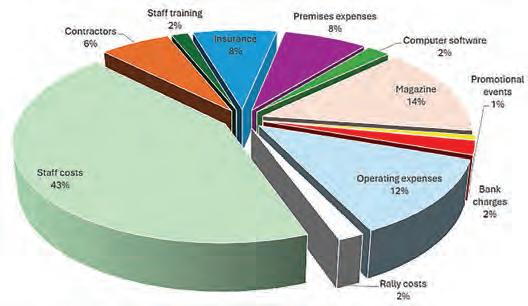
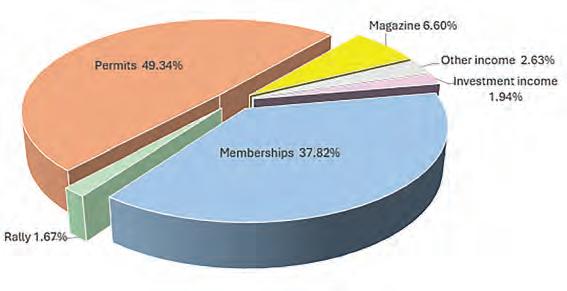
Elsewhere in the magazine there is a summary of the 2023 financial statement and the full accounts and AGM papers will be published online in advance of the meeting and full details of the event will appear in the October magazine. Motions and notices are required to be submitted to the Company Secretary c/o HQ at Turweston by Sunday 8 September. In the meantime, I hope those of you who were able to attend enjoyed the Rally and look forward to welcoming you to the AGM. ■
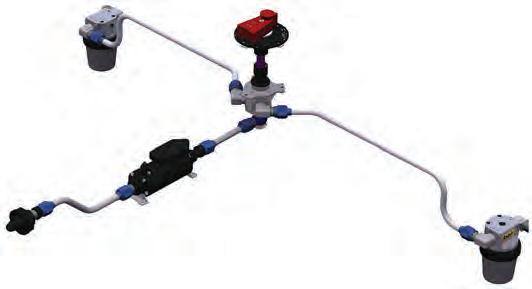
ANDAIR FUEL SYSTEM COMPONENTS COMBINE MODULAR DESIGN, SUPERB QUALITY AND THE FLEXIBILITY TO SUIT ANY AIRCRAFT BUILD PROJECT.
Having built a reputation for excellence in the design and manufacture of light aircraft fuel system components within the amateur-build aircraft sector, Andair has now established a significant presence in the commercial aviation market as well. www.andair.co.uk
Inspiring members to take on their own aircraft build or restoration project
Compiled by Mike Slaughter
Project News
I’m always glad to receive a project report for a part-built project, but Dudley Pattison has set a record that I doubt will ever be beaten – now there is a challenge for you!
Dudley’s update is for his latest project, a RANS S-7 Courier, an unusual aircraft for the RANS Aircraft line in the UK as the earlier and quite numerous RANS S-6 is a Dacron envelope-covered aircraft, being laced to draw the covering tight. So you might expect all RANS to be of a similar format. In fact, it is the S-6 that is unusual in the RANS lineup, as the rest of its models are either sheet metal or conventionally covered airframes. And so it is with the S-7, a classic steel tube fuse with a wood and aluminium wing that employs a very conventional PolyFibre finish. There are not that many S-7s in current permit in the UK, just six when I checked, so you may never have seen one, it is a high-wing tandem two-seater, entered from the left, a modern-day Cub-a-like I suppose.
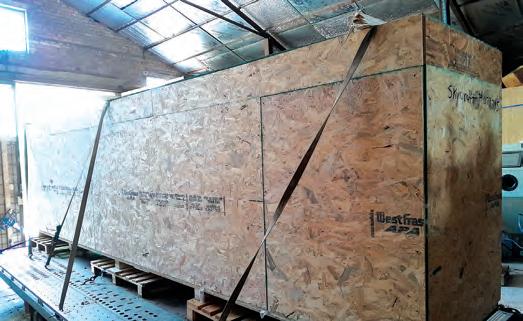
The record? Well, Dudley penned his update only 12 days after receiving his kit. As it took nearly 15 months to arrive he had plenty of time while kicking his heels to research and plan his tasks and was able to get underway the moment he’d unpacked the giant shipping crate.
Such a variety of aircraft have been cleared for their first flight this month, take a look at the panel at the end of this column. Always a factor in every builder’s plan is to get that project flying in the summer months, debugged and full Permit to Fly issued before the end of the good weather – I know, the last statement is a bit of a stretch this year isn’t it?
To get in touch with Project News, and tell your story, report a milestone or just to send a picture, email: projectnews@laa.uk.com Please share your story even if your pride and joy is some way from its first flight.
By Dudley Pattison
Some time ago, when wondering what to build next, I posed the question to Francis Donaldson and Ed Hicks, two gentlemen whose opinions I respect. They both came up with a short list, both of which included the RANS S-7S Courier. Looking into the design further I was rather taken with it and on 14 April 2023 I placed my order with the UK agent, Skycraft Ltd.
I was quoted between 10 and 12 months for delivery, but it actually took a bit longer, turning up at my house on 19 July this year. I know there was one delay due to problems at RANS in the weld shop. Whether problems at Van’s also caused an upsurge in orders at RANS I don’t know, but I wouldn’t be surprised if it had.
I was dealing with Sam Arnold at Skycraft, who was always helpful and efficient in responding to my queries. I ended up feeling sorry for Sam as I was continually bugging her with ‘how much longer’ type questions.
But, but, but, the wait was well worth it. The quality of the kit is stunning, and my first impression is that it is ahead of a Van’s kit in completeness, and anyone who has built a Van’s – I’ve built a four and a 7A myself –
knows that is some claim. I had used some of the waiting time to download the drawings and instructions from the RANS website, 750 A4 pages in all, and reading and studying them.
They are split into three sections: Parts, Figures and Text Manuals. They describe, or show, the build process in the same order making it a little easier to follow.
Above Weighing in around 300kg, the kit arrived in one box about 20ft long by 5ft high 4ft wide.
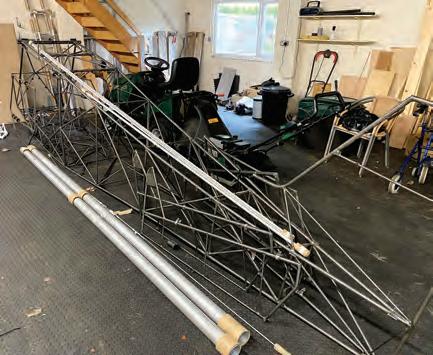
Right The fuselage safely in the garage on day two
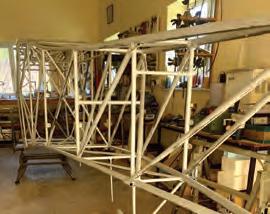
Far right The fuselage in the workshop after having been scotchbrited and painted
The kit arrived in one huge box and not having access to a forklift, myself and four friends set about dismantling the box on the trailer. It was all held together with nails, Torx screws and glue. We took one side off the box and extracted the contents. I had been told that if unloading took longer than one hour a charge would be made. I thought that was a bit rich after the kit was so long overdue its projected delivery date. As it was, the driver was away again after 50 minutes.
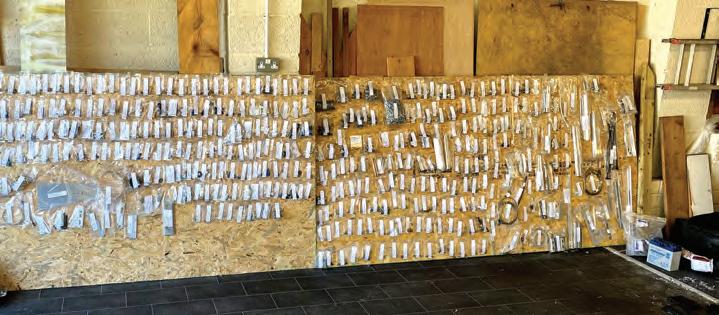
The first job is, of course, to check the inventory, in itself a major task due to the number of parts involved. There was only one shortage, a pair of Bowden cable metal ends that I could have got from Halfords, but evidently they are on their way to me. I was impressed that it was the only item missing out of thousands of parts.
There is a lot of work done by the factory that isn’t usually done by other kit manufacturers. The ailerons and flaps come ready assembled, the aluminium wing ribs are fluted to straighten them, the control cable finished to length with nico presses and thimbles fitted; the battery cables have the terminals fitted at both ends, the little plates welded to the fuselage structure to hold nut plates not only have the bolt hole drilled but the two rivet holes to fix the nutplate.
One thing RANS do not do is powder coat the metal parts, including the fuselage of course. On my previous two builds, a KFA Safari and a TLAC Sherwood Scout, this was done for you and although you have obviously paid more for the kit to have it done, it does save a small mountain of time. Myself and a friend have spent quite a few hours recently scotchbriting and painting the fuselage with a water-based epoxy paint. I had checked that the paint was unaffected by the solvents in the Polyfibre covering process. The covering material and tapes are included in the kit, leaving the builder free to choose the process he prefers. My preference is always Polyfibre as the treatments and paint are easily applied and the chances are that the fumes won’t kill you (well, probably not anyway). ■
New Projects
If your aircraft has been featured in the New Projects list, please let Project News know of your progress at: projectnews@laa.uk.com
Cleared To Fly
If your aircraft has featured recently in the magazine and has subsequently completed its maiden flight, Project News would like to hear from you at: projectnews@laa.uk.com
The 80th anniversary of D-Day launched a Normandy adventure for the International Auster Club. Kerry Skyring flew with them in a 1943 veteran…
Photography: Navy Wings - Lee Howard and Auster owners
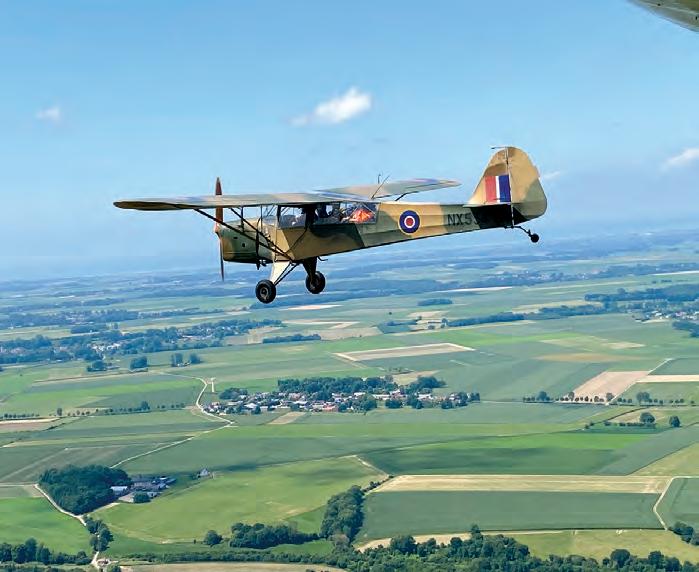
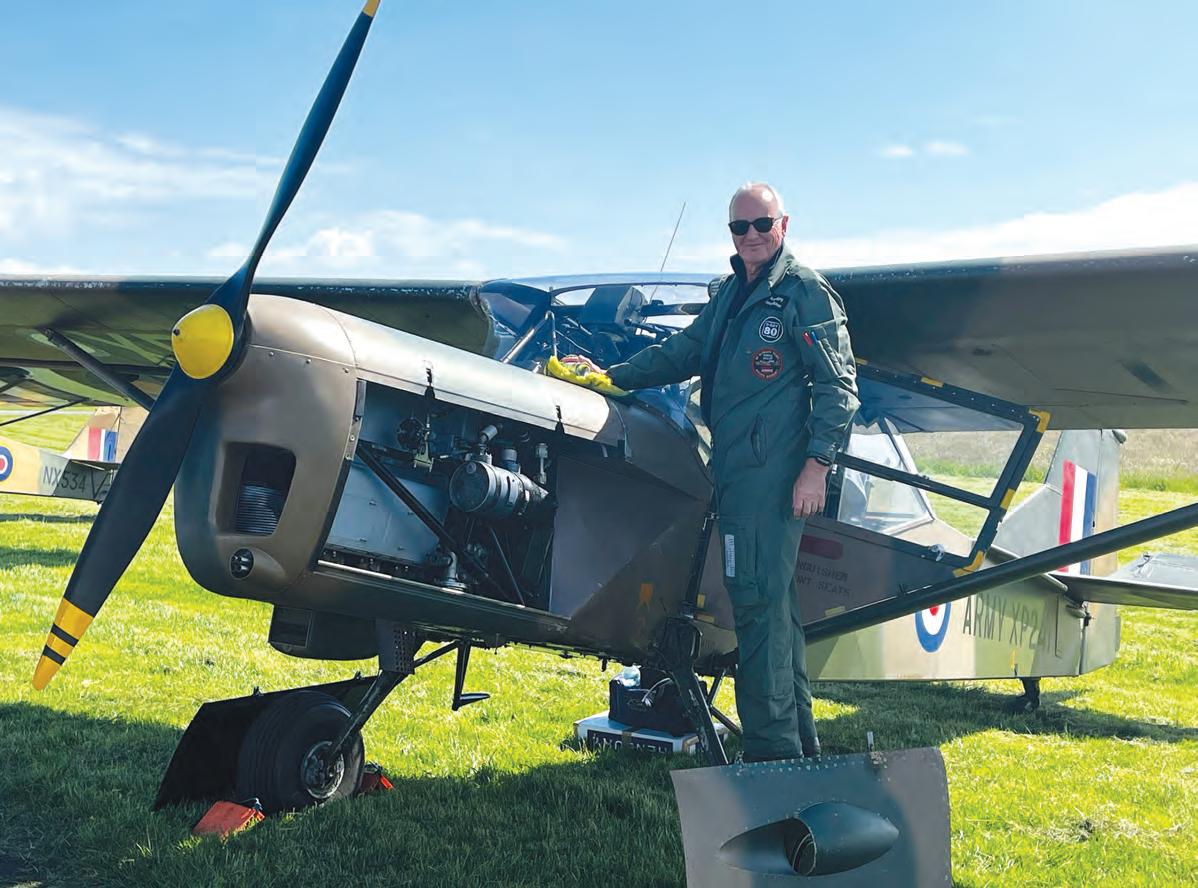
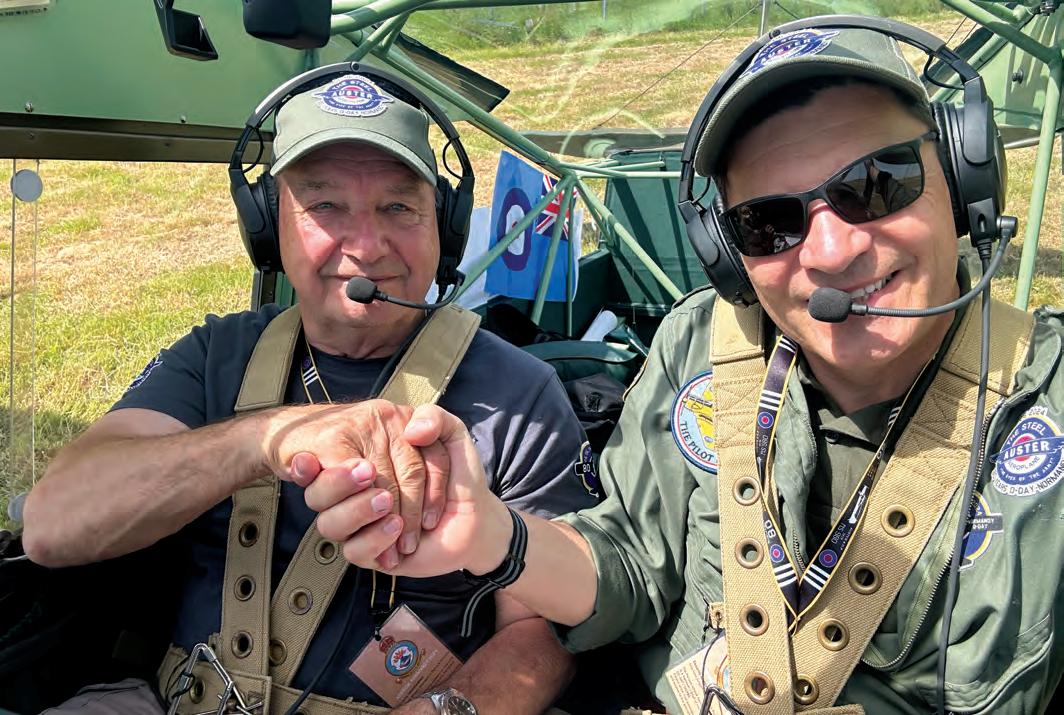
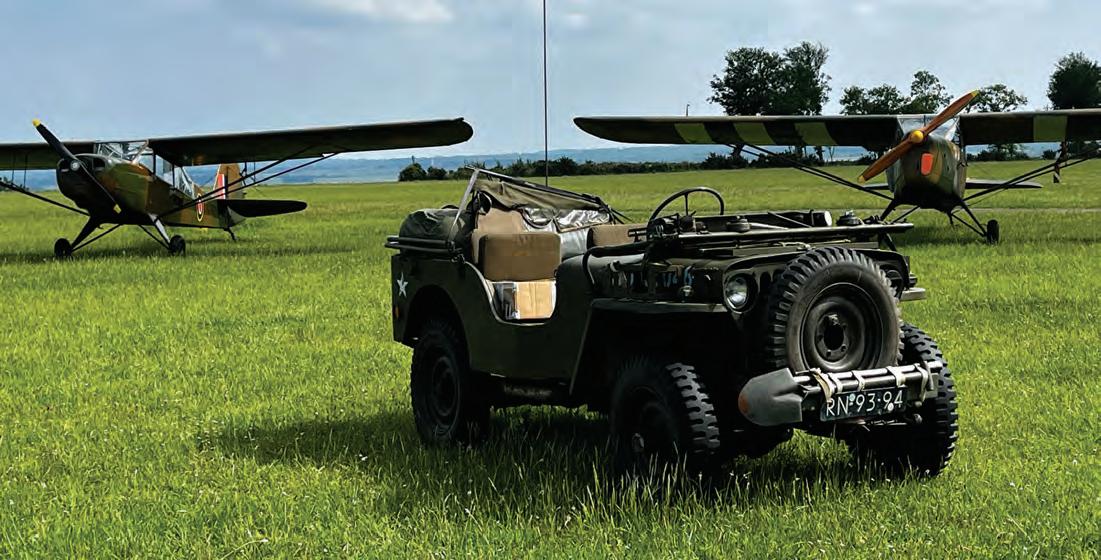
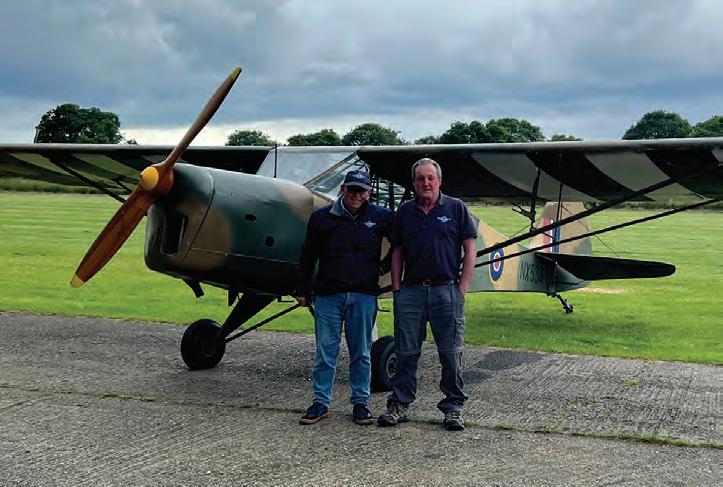
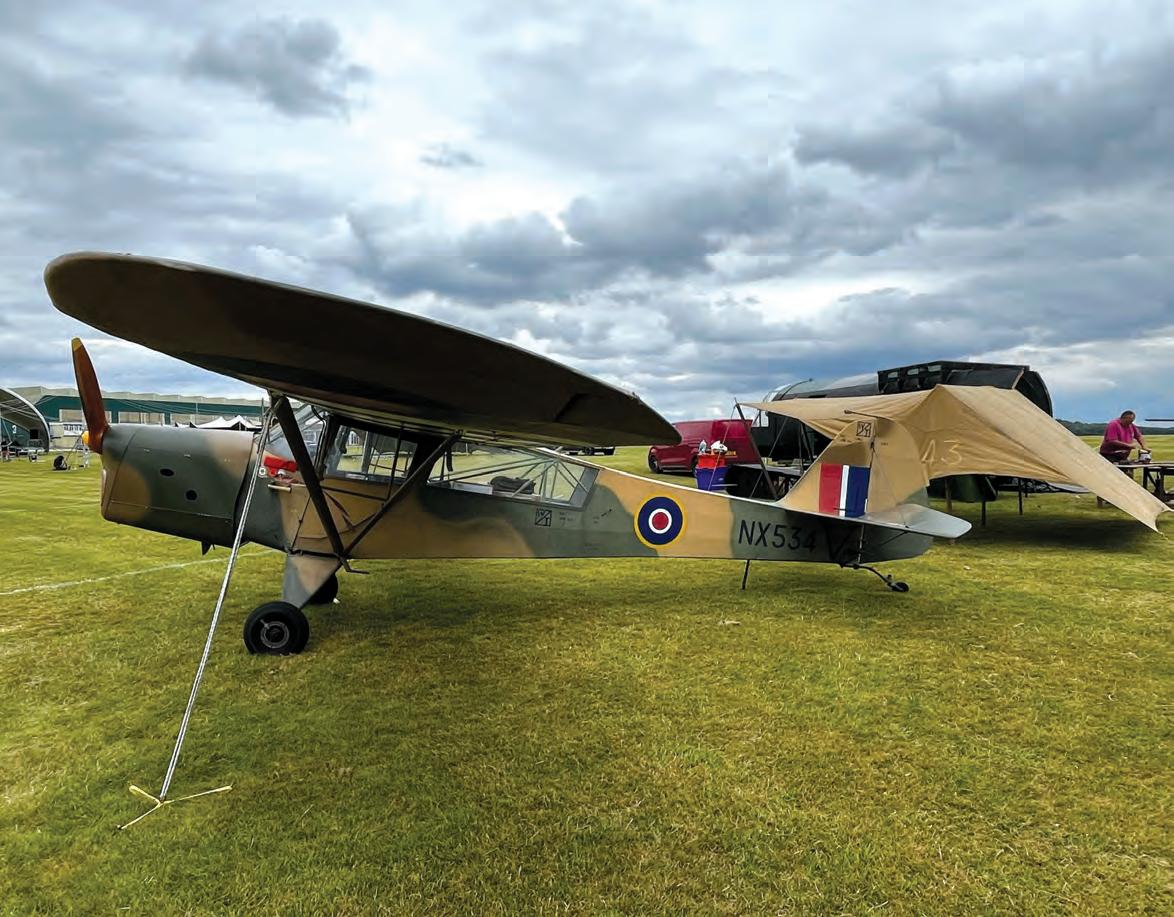
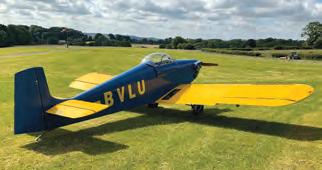
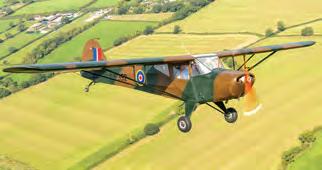
Spanhoe Aerodrome, Northamptonshire, the morning of June 4 2024. I’m in the left seat of Iestyn (Spike) Leek’s MkIII Auster
NX534 (G-BUDL) and Spike is beside me. We’re both a bit on edge. The planning and anticipation have been intense, the weather is marginal and we’re about to fly this 81-year-old aeroplane across a decent stretch of water to France – a flight it first made in 1944. Spike might also be on edge because I’m still not particularly at ease in his aeroplane. I have a couple of hours and half-a-dozen landings in it, not all of them accomplished.
An AOP9 flown by Club President Hamish Bichan is already lined up and he’s urging me to expedite. We’ve arranged a formation departure and our aim is to meet another Auster on the way to Dover for the Channel crossing. Right now I’d prefer to slow this down and consider where we are and who went before us, but Hamish is already rolling so we line up and follow.
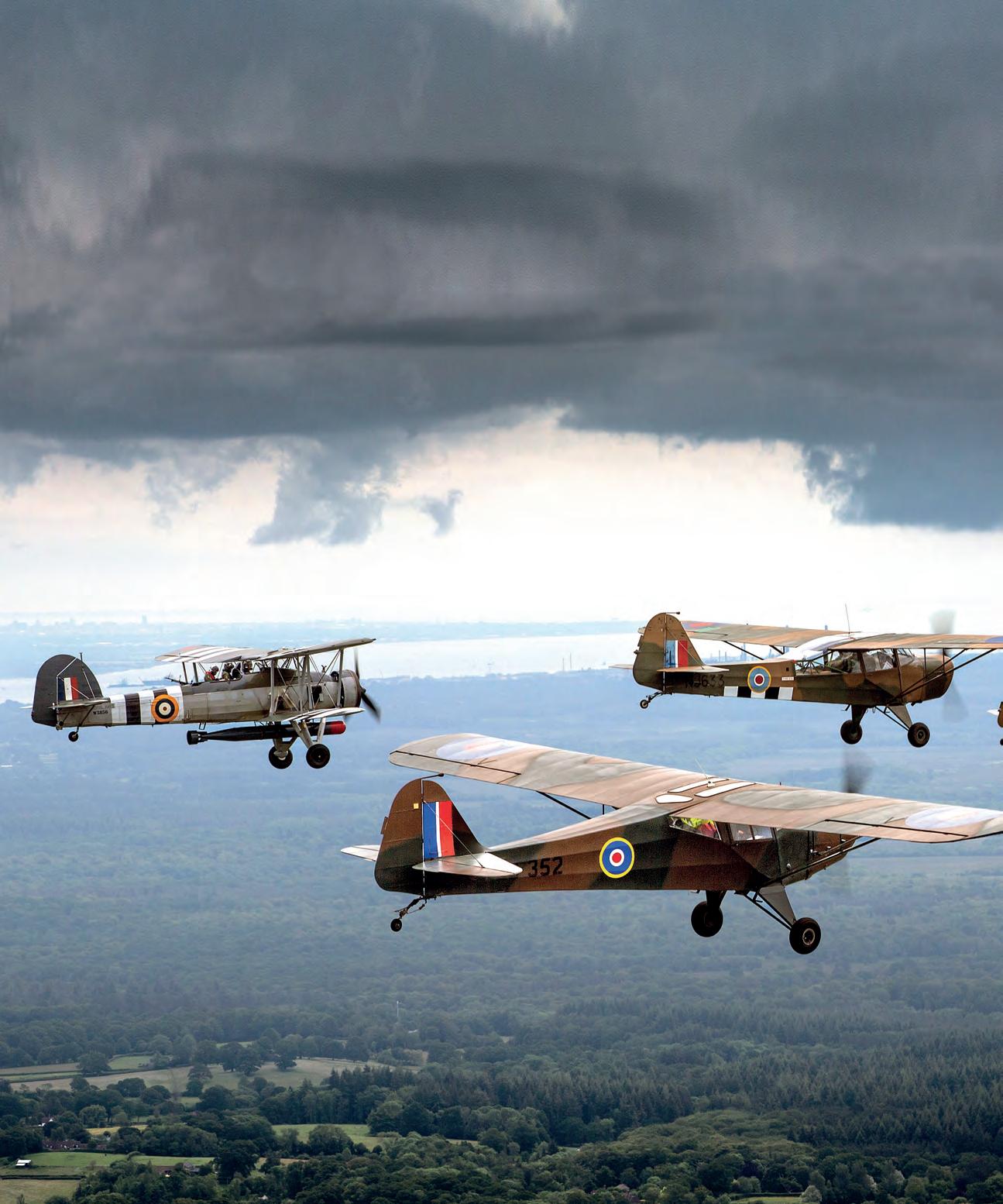
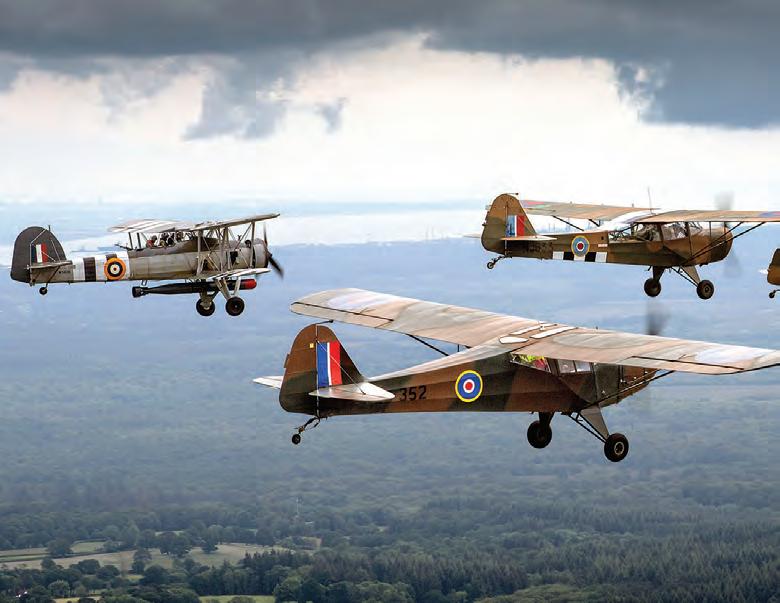
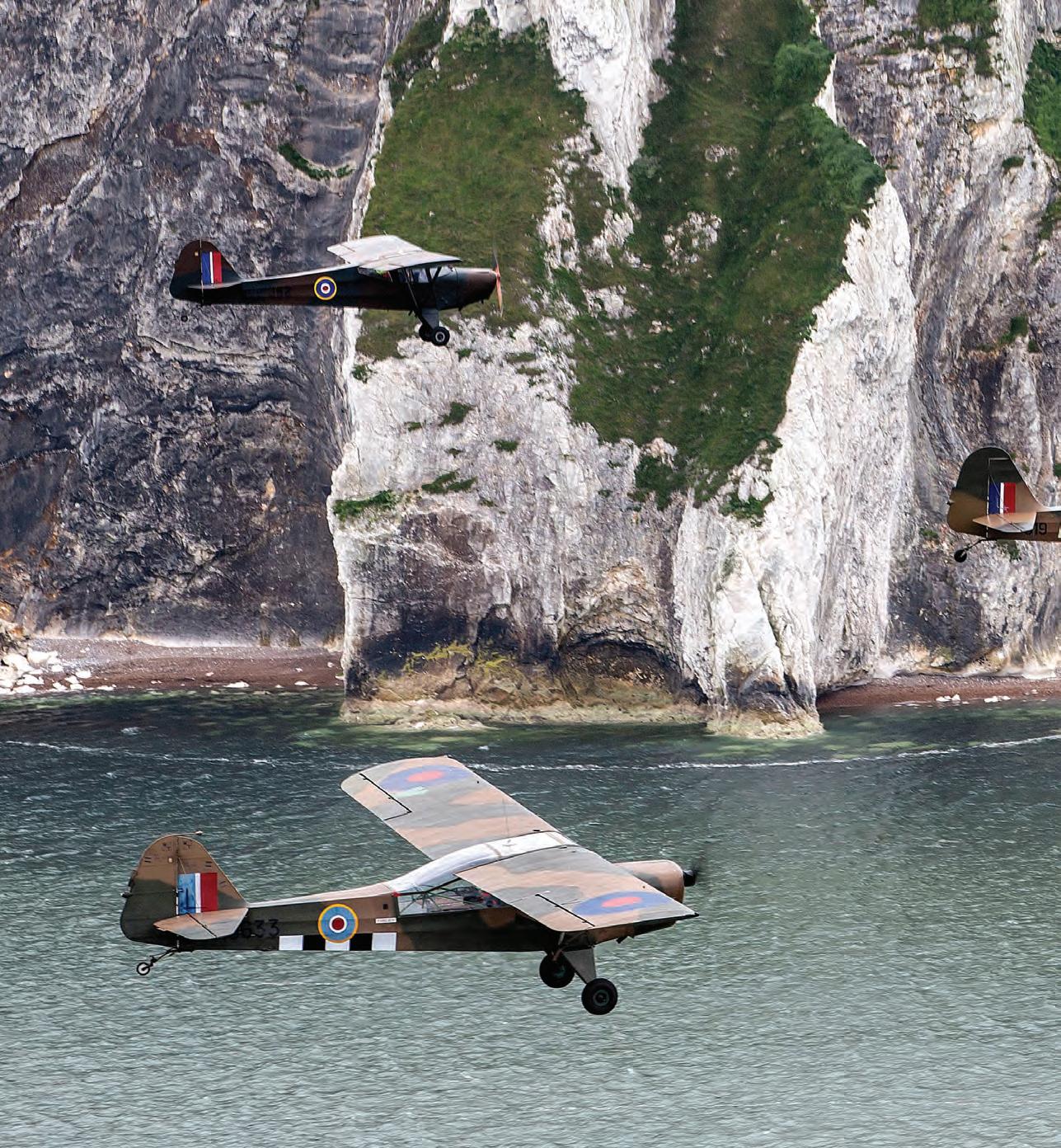
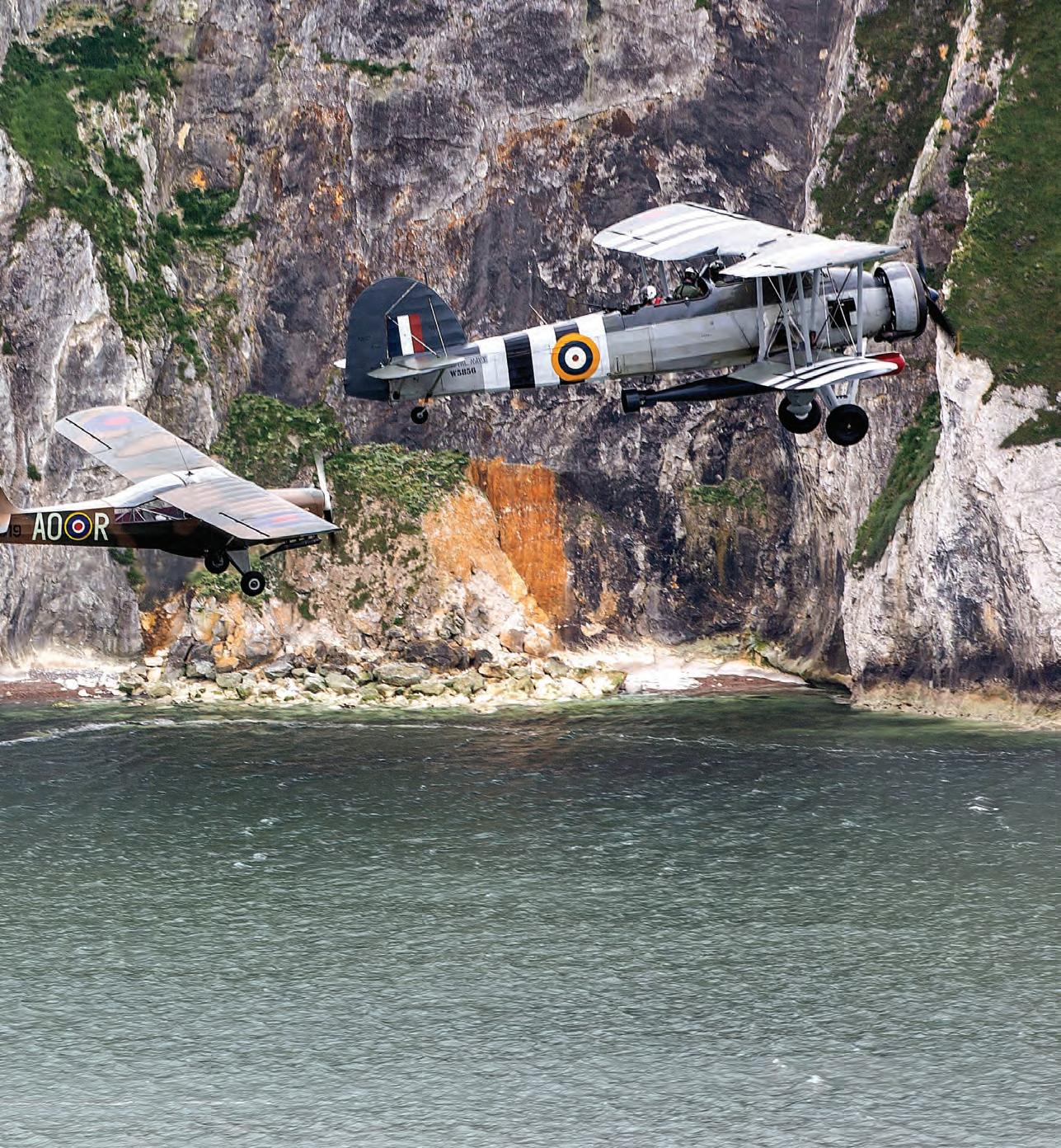
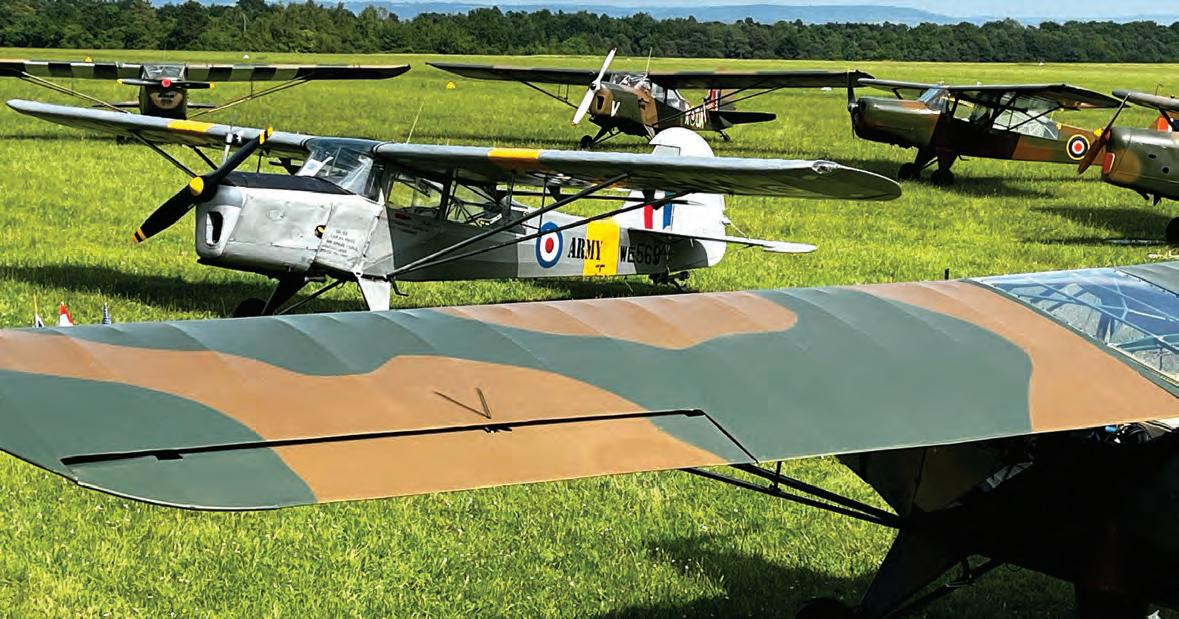
Top Wonderful coastal formation of Austers and the Navy Wings Swordfish.
Above Spike Leek's NX534 between Abbeville & Falaise.
Liberation of Europe
I’ll keep the story on hold while explaining my desire to pause the take-off. The aerodrome, Spanhoe, is part of D-Day history because 48 C-47 Dakotas of the US Army’s 315th Air Transport Group, overloaded with paratroopers and equipment, departed here in the early hours of June 6, 1944 to launch the liberation of Europe. In the days and months that followed many hundreds of flights from Spanhoe delivered many more soldiers and equipment to the battlefields. I want to take a moment to picture that because the WWII runways are long gone, and only a surviving section of the old perimeter track serves as our runway today.
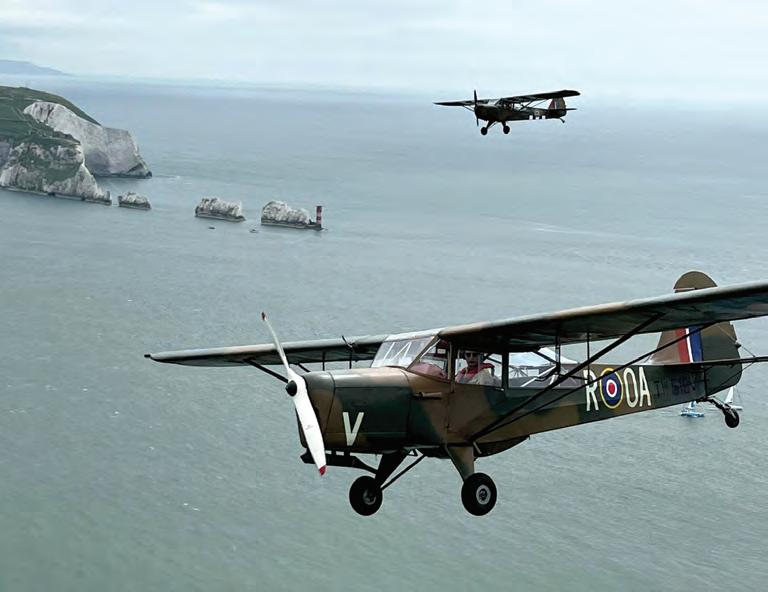
I’m also conscious of the other Austers, 12 in all, which are either on their way to Normandy or about to depart. A formation of three, all former AOP (Air Observation Post) Austers has just departed Middlezoy en route to a rendezvous with the Navy Wings Swordfish over The Needles. The significance of this links to the first flight of AOP Austers to reach Normandy on D-Day plus 2. Five Mk IVs departed Selsey linking up with a Fleet Air Arm Walrus over the Isle of Wight for the Channel crossing to France, where they landed on a hastily prepared field at Plumetot. The first operation sorties were flown that afternoon. Today the Navy has no Walrus, but Navy Wings
“Austers and crew were flying to Normandy from different directions and four countries: UK, France, Netherlands and Austria”
does have a Swordfish which played the role of Walrus for Tim’s re-creation. Video footage of the formation and the associated story made the BBC evening news.
Remarkable Austrian tales
Austers and crew were flying to Normandy from many different directions and four different countries: UK, France, Netherlands and Austria. The story of the Austrian crew is remarkable and begins in the immediate post-war years when Erich Lemmerer was a small boy. His path to school ran beside the military field of Aigen, a large grassed area where the RAF and the British Army were camped. He remembers their friendly greetings and the sweets offered by the airmen and soldiers.
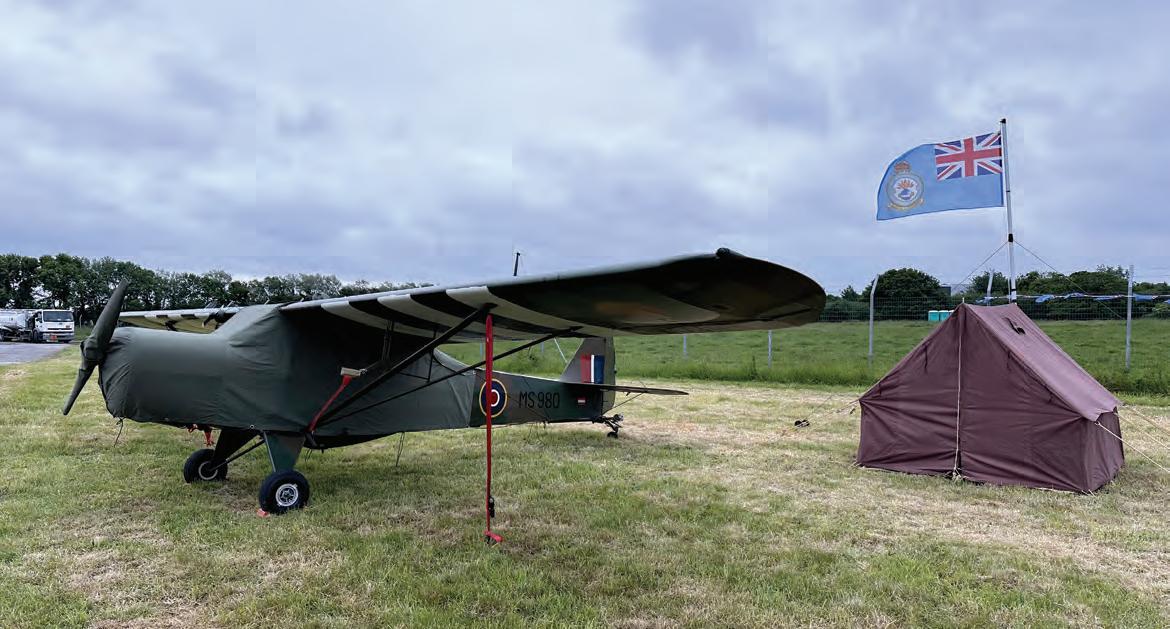
The British leave, Austria regains independence, Erich grows up, raises a family and flies both gliders and powered planes. His son Matthias becomes a professional pilot and in 2011 they discover an Auster Mk4 in pieces, languishing in a hangar. They buy it and after a six-year, father-and-son restoration, MS980 (OE-AAT) flies again. Not only is the restoration meticulous in its authenticity, but Matthias and Erich have immersed themselves in the wartime history of the aeroplane and the people who flew and maintained it.
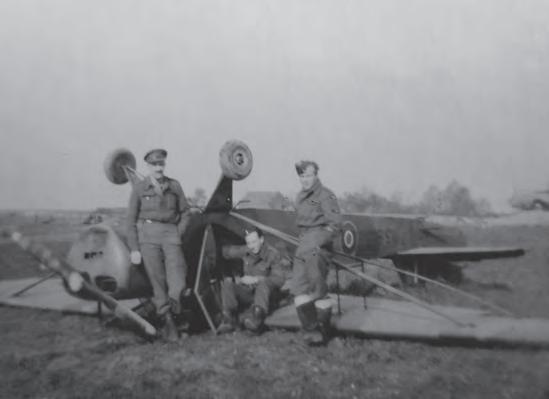
As the 80th anniversary of D-Day approached the two enthusiasts were determined to realise their dream of flying their Auster back to France where it had served following D-Day (with 661 Squadron) and, indeed, fallen. A surviving photo (opposite) shows MS980 upside down in a muddy Normandy field.
Unstable weather
Departing their home field in the Austrian Alps on 30 May, Matthias and Erich were the first of us to set off – thus minimising the risk of not completing their mission. The
Above Auster Club Chairman Hamish Bichan and his AOP9 led the formation from Spanhoe.
weather across Europe was unstable and the first day challenging with low cloud forcing diversions. They spent the first night at Koblenz, well short of the planned destination of North Weald. Their original plan had been to fly back across the Channel from North Weald to Cherbourg with the Aero Legends D-Day Squadron.
Next day, 1 June, still routing around low cloud and rain, they tracked via Aachen to Calais where the weather finally closed in forcing them to leave the Auster and two support aircraft – a Citabria and C172 – tied down while they crossed the Channel by ferry. Matthias and Erich had an important appointment to keep at North Weald.
While researching the wartime history of MS980 Matthias was able to trace the family of Capt Gerry Hawkins, who flew it during the Normandy invasion. He also contacted the family of the aircraft fitter who worked on the aeroplane – and is seen beside MS980 in the photo of the crash landing. Matthias describes the reunion with these 25 ‘family members’ as ‘emotional and exciting’.
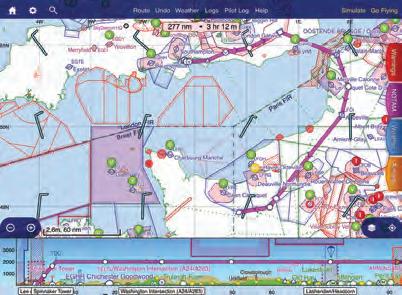
Monday 3 June saw the crew back at Calais with the weather finally permitting a cross-Channel flight. They took off and flew Calais to Dover, performing a few joyous orbits over the famous White Cliffs, then on to Lydd for customs and filing of another flight plan, which took them back across the Channel to Le Touquet, clearing customs into the EU before tracking along the coastline to Le Havre.
However, to arrive at Cherbourg the Austrians still had to fight their way through the maze of restricted and forbidden zones created as security around the heads-ofstate attending the D-Day ceremonies. I’ve named this bureaucracy Le Bocage, ‘the hedgerows’, after the landscape which so hampered the invasion, and especially the creation of landing fields for the AOP Squadrons operating just behind the front lines.
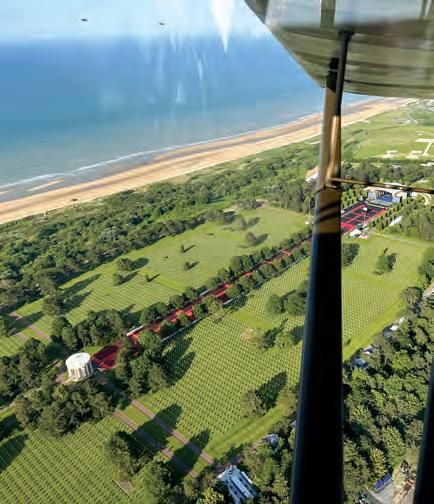
Matthias placed a call to the military controller in Cherbourg (he’d previously completed the paperwork) and received the OK to fly west along the beaches. Departing at 1100 they maintained 500ft over water as eight Alpha Jets of Patrouille de France thundered over them. Led by Matthias and Erich in MS980, the three aircraft flew low along all the famous beaches, over the war cemeteries and memorials. On reaching the western-most beaches, they were again diverted over water as eight US Air Force Hercules dropped parachutists.
Approaching Cherbourg, once more the formation was asked to hold while several Dakotas took off for a flight along the beaches. Finally, they landed and set up their D-Day display of Auster, officer’s tent and historic items
Above Mission accomplished – Matthias and Erich Lemmerer in MS980.
Below MS980 overturned in a Normandy field.
Above Matthias and Erich Lemmerer flew their Mk V MS980 from Austria to Cherbourg and took part in the official fly-pasts.
Below An L-Bird and lovely radial Fairchild wait for for fuel and customs at Calais.
associated with MS980 and her wartime crews. Matthias wrote: “For me this is the fulfilment of a life’s dream, with my father sitting beside me in the cockpit, to land our Auster here in Normandy 80 years after her first arrival.”
Theirs was the first ‘L-Bird’ and only Auster into Cherbourg for the anniversary.
A wind-lashed coast and a missing flight plan Spanhoe – Abbeville – Falaise
The 11 other Normandy-bound Austers were all aiming for Falaise, a small grass airfield on the edge of the restricted (Le Bocage) zones. But our destination on this morning of low cloud and poor visibility is firstly Calais, for customs and fuel, and then an overnight stay at Abbeville.
NX534 enjoys excellent performance so we quickly catch the Mk9 and take up a 4 o’clock position off their starboard side. We’d decided that Hamish and Charles Wheeldon would lead the formation as, surprisingly, the Mk9 with 180hp is slower than the Mk III with 130hp. XP241 is also equipped with a good radio and transponder so would handle comms and be formation leader. This plan worked but there was a problem.
On calling London Information to open our flight plans
Hamish was told ‘we have your flight plan but not one for G-BUDL’ i.e. no plan for Spike and me. I pressed transmit on our hand-held radio and told London Info ‘G-BUDL has
definitely filed a plan via SkyDemon’. No, we don’t have it, was the answer – would you like to file by radio?
And this we did, with compliments to London for their polite and efficient handling of us. Embarrassingly the fault was all mine. I’d filed using the Auster template on my SkyDemon account, but it was for the wrong Auster – a Mk V I’d ferried across Germany to Austria a week earlier – not the template for G-BUDL. Yes, in my haste and carelessness I’d filed a plan for a German-registered Auster to fly from Spanhoe to Calais for D-Day! Irony upon irony… and the embarrassment was all mine. However, there was a lighter moment when London Information asked for G-BUDL’s colour scheme; “Camouflage brown and green” I replied, pause, “with invasion stripes.” The Biggles reading boy still lurking in me took delight in that small exchange.
We headed for Dover at 1,500 ft, tracking between London and Southend zones, past North Weald, where Oliver Wheeldon and Carolyn Williamson were refuelling their J1, then circled over Maidstone while they tried to catch us. Although we never sighted each other we knew we were close by reporting the colour of the crossChannel ferries 2,000ft below us.
First contact with Calais Radio brought the bad news – the wind was at 20kt – then the better news, it was from 240°, exactly the runway heading. A Mk III Auster stalls at
28kt IAS so the touchdown was gentle and slow, but complications arose once we turned from the runway onto the taxiway. Hard left brake and full rudder simply could not overcome the weathervane effect of a 20kt wind. Like the Austers of 1944, we do not have a steerable tailwheel. After one neat but unintended 360° manoeuvre I advised the tower that a wing-walker (I could think of no other terminology at the time) would be necessary. Spike dismounted, grasped a wingtip and guided us to the fuel bowser.
Calais was busy with D-Day anniversary aircraft, Piper L-4s, a Fairchild Argus, a Stinson and the Austers all lining up at the bowser. With refuelling complete and aircraft secured against the wind it was off to clear customs and enjoy a good lunch.
The L-4s were attempting to depart for their own Normandy base, but with even less success at taxying than the Austers. Eventually one requested permission to depart from the taxiway. This could not be granted, but Tower Man said he would look out of another window for a minute. The Pipers applied power and were airborne in a few aeroplane lengths.
Spike and I chose the wing-walking method of reaching the runway. It was slow and hard work for Spike, but we made it and departed for an overnight stop with the other Falaise-bound Austers at Abbeville.
Abbeville to Falaise – formation flying lessons and hosting our hosts
Next day, 5 June we reformed our group of three for the 1.5-hour flight to Falaise. In retrospect this was not a ‘best airmanship’ decision, given strong thermals, a poor briefing and my lack of formation experience. Lessons were learned and improvements agreed. By evening most of the expected Austers had landed – although three important crews were still missing: Tim
Taylor and club President Jerome Mostyn in the MkVD TW519; Martin Baldock in MkV NJ363 and Michael Laundy with Dan Hedger in LB352 /G-AHCR. Hoping they would arrive later in the evening, the club settled in at a Falaise restaurant where the food and wine was excellent – and the company was ‘Michelin starred’. The Tim Taylor-led formation made it to Falaise just before sunset and then to the restaurant where they were called on to explain their lateness despite enjoying a Naval escort. Of course, they’d had trouble with ‘Le Bocage’.
Exploring Falaise… and hosting our hosts
On D-Day anniversary, 6 June, in various vehicles we drove into Falaise, exploring the castle of William the Conqueror – yes, this is where that other Normandy invasion was conceived – then visiting the Falaise museum, which pays tribute to the civilians who died in
Below Austers rounding the Needles.
Above J1, Mk9 and MkIII at Abbeville.
the battle for Normandy. As historian Antony Beevor wrote in his acclaimed D-Day, Normandy was to be ‘the sacrificial lamb for the liberation of France’. The museum visit left us humbled and sombre as we reflected on the heavy cost to our Norman hosts. Students of the Normandy campaign will surely know of the Falaise Pocket, one of the bloodiest battles of the war.
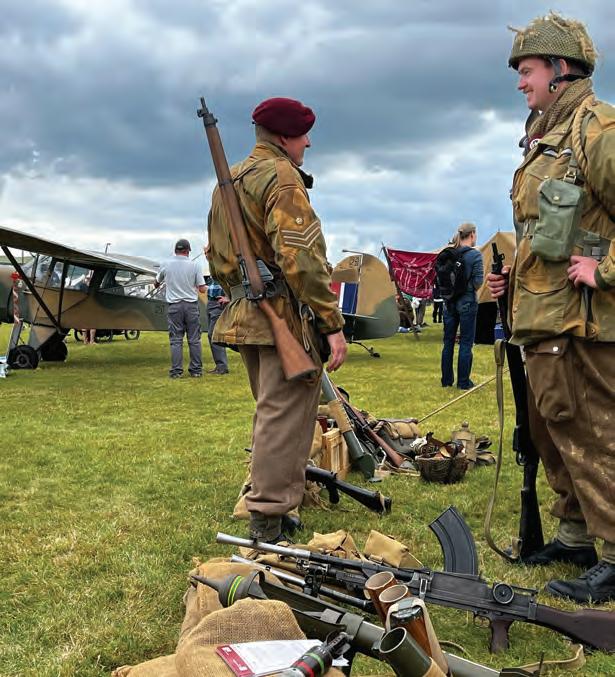
Below Local re-enactors joined the Austers
Food & drink for all…
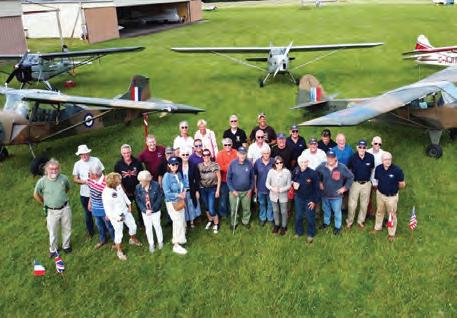
The afternoon saw everyone back at Falaise Aerodrome, pitching in to erect a marquee and set up tables, food and drinks for a barbecue. On this occasion our hosts became our guests as the Auster Club provided the food and wine and toasted Falaise Aero Club. This was the right moment for the family photograph.
A wreath-laying and the invasion beaches
By Friday some of the restrictions on movement – Le Bocage again – in place for the security of VIPs, had been lifted so we piled into cars. There were two important tasks to complete: laying wreaths and visiting the nearby
British 2nd Army landing beaches of Gold, Juno and Sword.
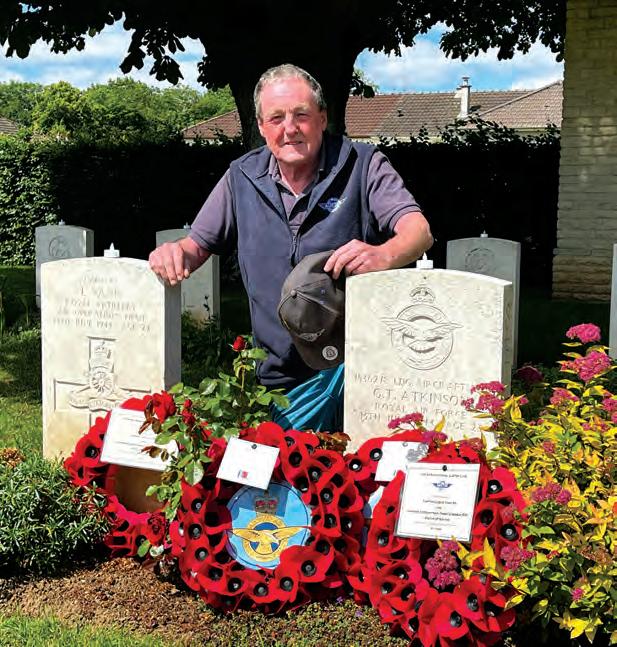
Our first rendezvous point was Ranville War Cemetery where many of the airmen, paratroopers and gliderregiment soldiers who died in the first days of battle are buried. Among the many gravestones are those of Capt
Above Re-enactors on Falaise town square.
Right Auster Club group photo Falaise.
at Falaise.
of 652 AOP Sqn RAF. Their Auster was shot down on 13 June 1944, seven days after D-Day.
President Jerome Mostyn laid three wreaths, including one from the club and one from Tommy Atkinson’s best friend, David Woodrow, a surviving 100-year-old D-Day veteran who was unable to join us for the ceremony. A week later David passed away.
The club has learned from David’s family and friends that he had seen the pictures of Jerome laying his wreath and was pleased to know of the club’s tribute to his old friend before he passed away.
Leaving Ranville we had hopes of visiting nearby Pegasus Bridge, but the traffic to this important memorial was gridlocked. Most of us chose to go directly to Arromanches but others abandoned their cars and walked to the bridge – certainly the best way to reach it.
Every one of the towns along the entire length of the Normandy beaches was packed with locals and tourists. Cars, buses and WWII vehicles jammed the streets and the atmosphere was near ‘festive’ – but at the same time, not really ‘festive’. I lack an adequate adjective to describe this event; in part it was a celebration of liberation, but in
greater part a commemoration of the sacrifice by soldiers on both sides and by the long-suffering civilian population.
8
June – homeward bound
The evening of 7 June and morning of 8 June were times for à la prochaine, as we took leave of our hosts, now friends, and prepared the aircraft for departure.
Some of us thought we might tackle Le Bocage and fly along the beaches as the main restricted area over Normandy had been lifted. But no, small forbidden zones remained in place and more parachute drops and air displays were planned from early morning. We reluctantly surrendered to the hedgerows.
We’d had enough of formation flying, so each planned their own return route. This was dictated by factors such as tolerance for time spent over water, presence (or lack of) a transponder and the availability of customs at departure aerodromes.
Spike and I decided to reverse the inbound journey with a fuel stop at Abbeville, a customs stop at Calais, a fuel stop at Headcorn – before a final leg to Lee-on-Solent where we were to be part of their D-Day tribute airshow on
Above (left) Spike with wreaths at the AOP graves.
Above Matthias banks MS980 over the US war cemetery at Colleville Sur Mer.
Below Austers gather at Falaise.
Below (top) Return route.
Below (bottom) Kerry and Spike back at Spanhoe after 10.5hrs.
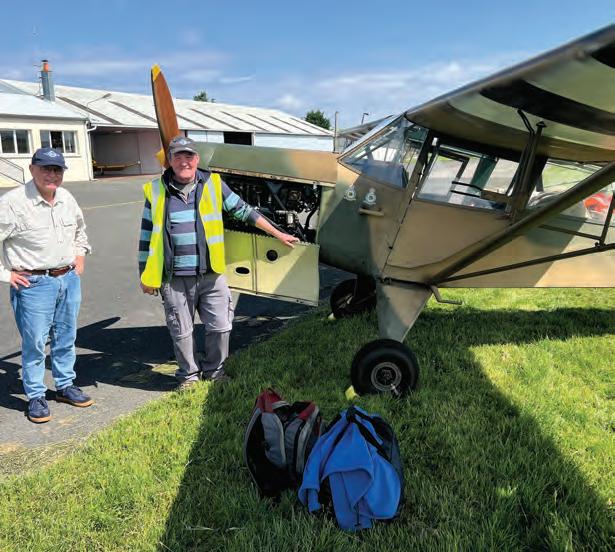
Sunday 9 June. It would be a long day. Taxying out at Falaise we began the checks and, as sometimes happens with the Gipsy Major, this one was running roughly on one magneto. Usually this will clear by running at high power for a short time. In this case the miss persisted so we taxied back and removed the side cowls.
Possibly the only modern components on the octogenarian NX534 are the spark plug caps and, of course, it was one of these that failed causing the left magneto to fire on only three cylinders.
Spike managed to reconnect it, but we knew it was weak. At Abbeville we checked again and decided to press on, but at Calais it was no longer firing and with the cowls lowered Spike set about finding a solution. At this point club stalwarts Adam and
Heather Wankowska landed in G-APRO (AOP6) and, wellequipped as always, Adam came to us ‘cap-in-hand’. Yes, he carried spares of exactly the part that had failed. This is just one example of the camaraderie and generosity pervading this very special event.
Landing fees? None needed…
There was another notable moment at Calais. We thought we were being admonished (loudly in French) for not paying our landing fee. But no, we were being admonished for trying to pay. No landing fees for D-Day aeroplanes, insisted our friend le Pompier.
Perhaps French customs was also being generous by not turning up to stamp our passports? With a happy set of spark-plug caps and renewed confidence we set off across the water for Headcorn to another warm welcome.
“You’re an Auster,” said the AFIS when I asked for instructions, “land as you please.” For the first time on the trip, NX534 gave me a nice smooth wheel-landing on Headcorn’s green grass.
After refuelling and a chat to the plane-spotters we departed and flew on to Lee-on-Solent, touching down at exactly our ETA of 1800. Mission complete. Well almost, we still had to make it back to Spanhoe, which was achieved after the airshow on Sunday afternoon in 1.5 hours flying time bringing our total for the trip to 10.5 hours.
As we taxied in at Spanhoe rain began falling and we gave thanks for our five days of fine flying weather.
How effective was the Auster in wartime?
Perhaps, in such an enormous and unprecedented military operation the Auster’s role was a minor one and those of us who attend the anniversaries should avoid the temptation to vaingloriously amplify it.
Modern historians of the Normandy campaign say little about the AOP but the commander of the German 10th SS Panzer Division in his Lessons from the Normandy Front wrote, “The greatest nuisance of all are the slow flying artillery spotters which work with utter calmness over our positions, just out of reach, and direct artillery fire on to our forward positions”.
The places an old LAA aeroplane will take you, for not much money
After the Lee-on-Solent airshow, Spike, NX543 and I still had a full schedule of airshows and events across the country as they marked the D-Day anniversary.
The next was at Middle Wallop, the home of Army Aviation since 1957, the year it became fully independent of the RAF. All around are airfields which date to the earliest days of army aviation in WWI and where most AOP Auster pilots were trained.
Army Flying Museum
We were invited by the Army Flying Museum and the Historic Army Aircraft Flight to place NX543 in their curated D-Day display on their biggest public day of the year, Wheels and Wings on 13 July.
With a light tailwind it was just one hour at Auster MkIII speed from Spanhoe to Middle Wallop… but this pilot
Above Spike checks the spark plug caps at Abbeville.
would happily have flown for days just for the privilege of landing on the hallowed, but surprisingly undulating, grass.
The aeroplane needed to be in on Thursday afternoon for the static display scene to be organised, so we landed right on our ETA of 1230 to be met by well-known airshow commentator and former army pilot, George Bacon, who quickly had us parked and then packed off to the officer’s mess. We would spend the evening there with army pilots of today talking Austers and aviation, surrounded by the art and memorabilia of nearly seven decades of military flying.
Next day more than 4,000 visitors came to the display and Spike was in his element – talking to people curious about his Auster. Many thought it had been rolled out of the museum for the display and were amazed that it was flown in and had only recently returned from a flight to Normandy.
As soon as the display ended we were off to friendly Popham for fuel and then back to Spanhoe before last light.
LAA Rally… here we come!
But the summer adventure is not over. NX534 and other Austers will be at the LAA Rally at Leicester – another spiritual home of the type as most were built in the nearby village of Rearsby. And we’ve been invited to be part of the D-Day tribute at Goodwood Revival a week later. Drop by and say hello, but remember the first rule when discussing Austers – never ask an Auster pilot which is the best aeroplane, Auster or Piper Cub? You really do not have enough hours left in your life to hear the full answer… Ed, you’ve been warned! ■
Above Re-enactors and NX543 at Middle Wallop.
Above Waiting for the crowds at Middle Wallop.
A irVenture 2024
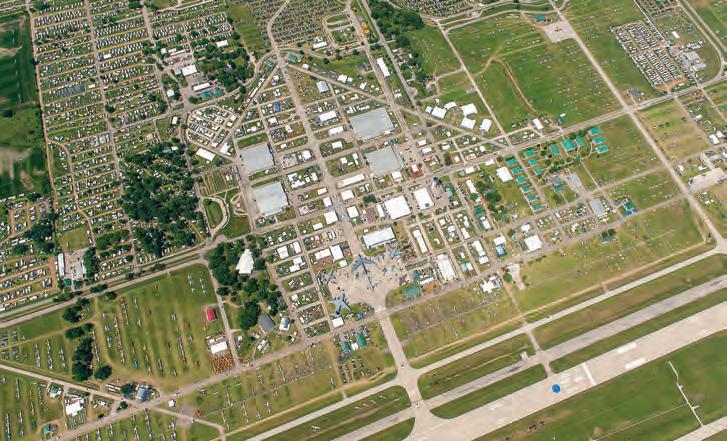
The seven-day long oasis of aviation saw a record 686,000 visitors, and claimed more than 10,000 aircraft attending – 2,846 of them showplanes…
Photos Ed Hicks, Nigel Hitchman and Paul Kiddell
01 Jim O’Hara’s amazing two-thirds scale P-38 Lightning replica homebuilt, took more than 20 years and 10,000 hours of design and construction to complete. Jim designed and built the entire aircraft, including all the tooling to build aircraft, with his wife Mizi. There’s a second seat in the rear of the cockpit – the aircraft was scaled around enough cockpit space for the two of them. Powered by two 220hp Continental IO-360s, the P-38 made its first flight in 2008, and would go on to fly about 120 hours, and while well-known locally in San Antonio, Texas, was never seen outside of very local fly-ins.
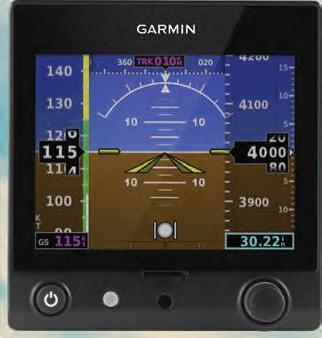
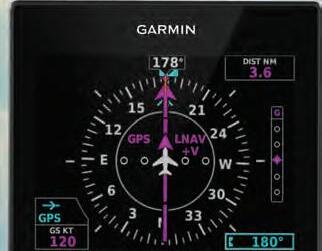
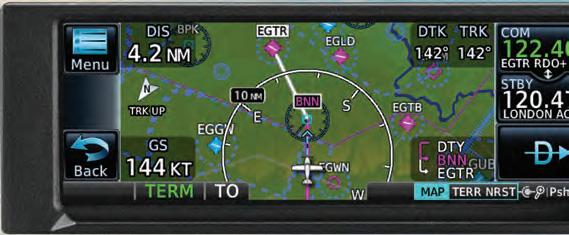
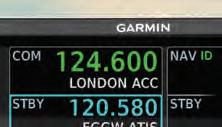
When Jim died aged 94 in December 2022, he left the aircraft to his great nephew William Presler, from Lebanon, Tennessee. William, who runs Volar Avionics and Restorations, spent over a year returning the aircraft to airworthiness, after it had stood inactive for a number of years, including modernising the cockpit with Garmin avionics. A truly breathtaking example of homebuilding, the aircraft was awarded a Plans Champion Bronze Lindy.
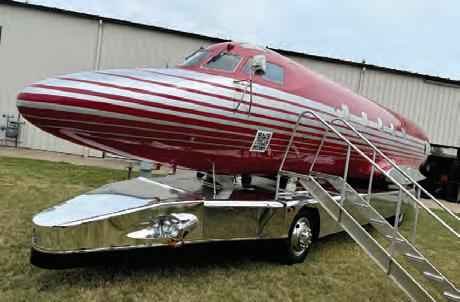
02 The famous Jimmy’s World Elvis jet made its public debut – it’s fully road legal, which I bet is something the King of Rock ‘n Roll never imagined would happen.
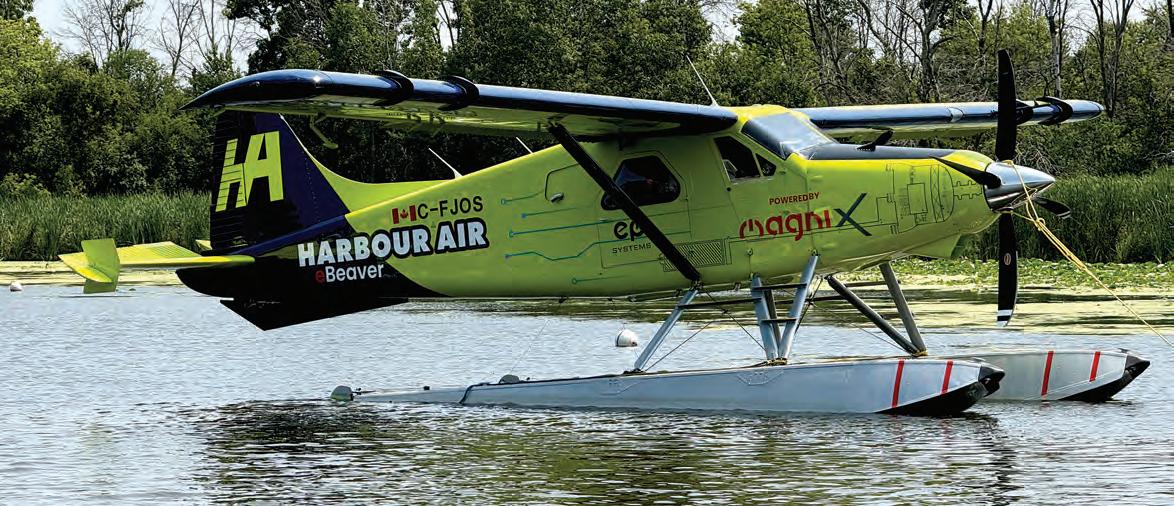
03 Harbour Air brought its electric e-Beaver to the show, where it could be found at the Seaplane Base. Sadly the aircraft did not fly in, nor was flown during the show.
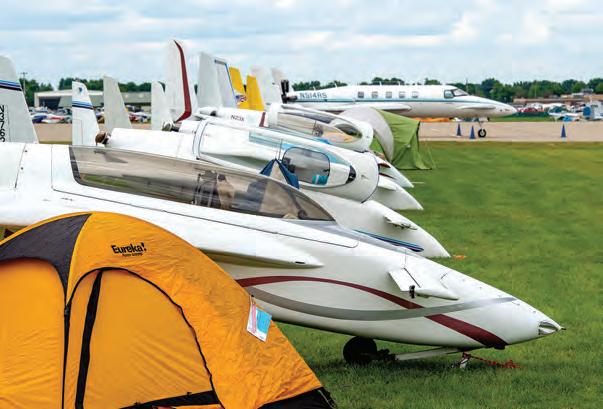
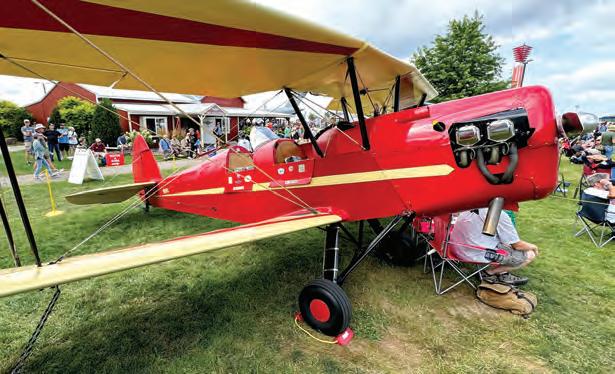
04 One of these canards is not like the other… but they are all Burt Rutan designs! Long Eze’s and Vari Eze’s grazed in homebuilt camping, and were joined by one of the last airworthy Beech Starships. The Starship was Burt Rutan’s ride to the show, where he gave a number of ‘standing room only’ presentations on designs from his career.
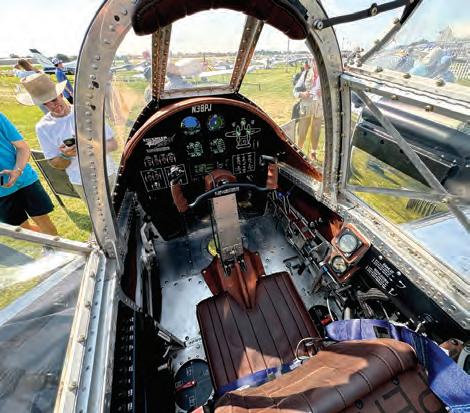
05 The cockpit of the two-thirds scale P-38 features a panel full of Garmin avionics.
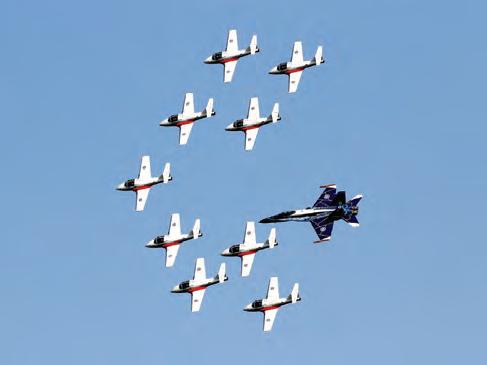
06 The Royal Canadian Air Force played a prominent role in the week’s air displays during AirVenture as the event celebrates the RCAF’s 100th anniversary. The aircraft headlining the commemoration include the Snowbirds and the CF-18 Hornet demonstration aircraft.
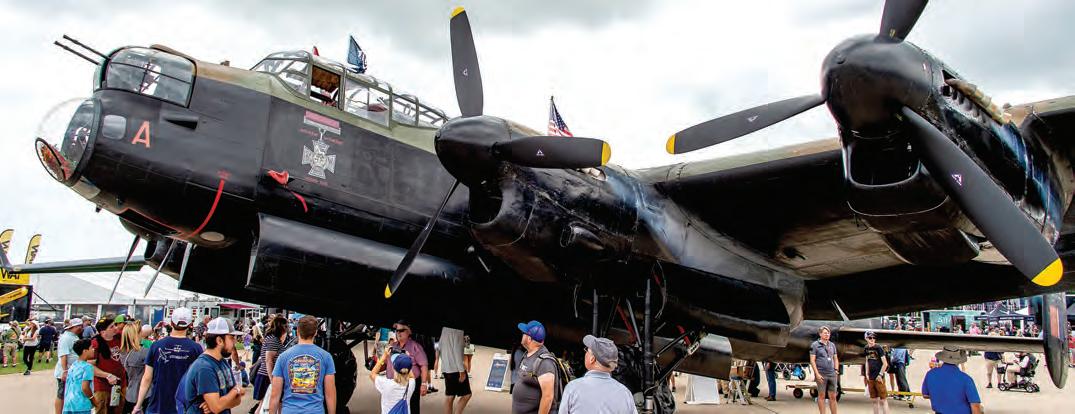
07 Wonderful Lancaster Mk.X, FM213, operated by Canadian Warplane Heritage, made the trip to Oshkosh and participated in a unique flypast over the show on Wednesday evening with B-29s Doc and Fifi, though sadly not close enough together for photographers, who had been keenly waiting for the moment to capture. If you search on Facebook for the Canadian Warplane Heritage page, you will, however, be rewarded with some fabulous aerial photos of this remarkable event that took place away from the show…
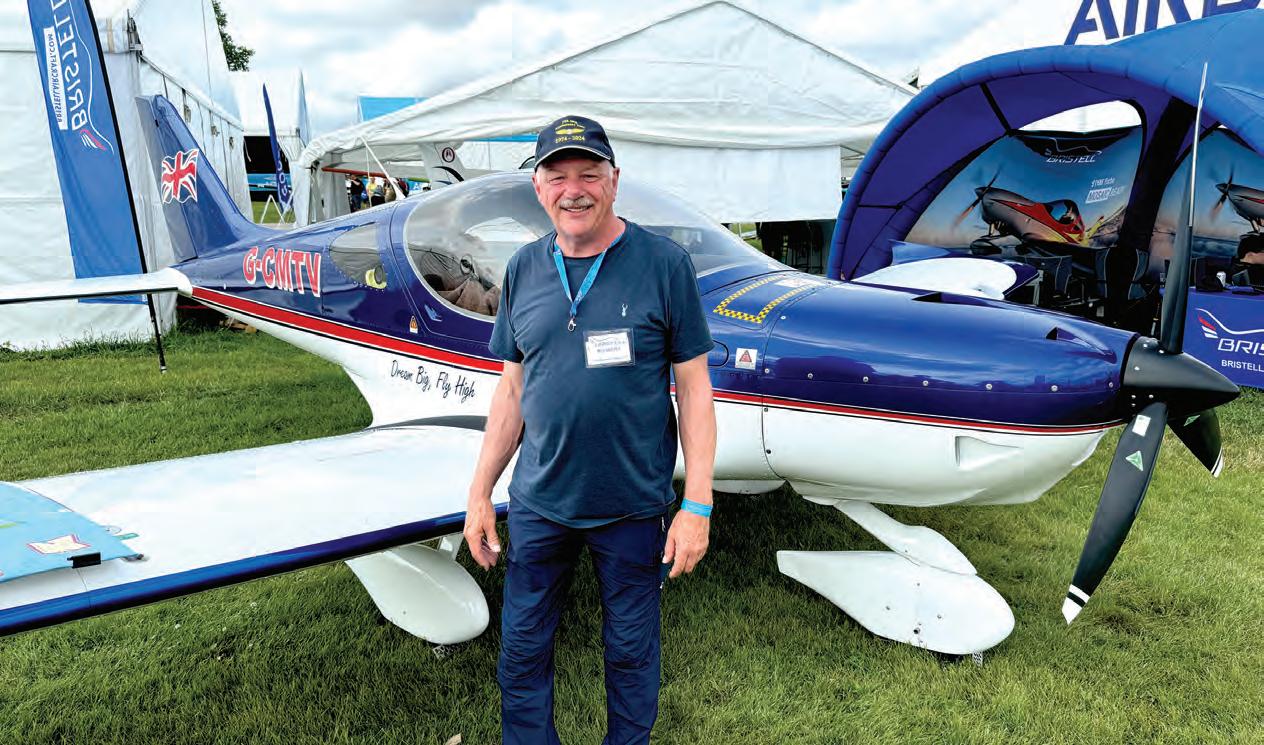
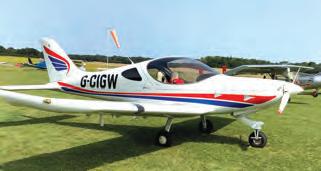
01 Bill Miazek from Aberdeen was flying the flag for LAA homebuilding at Oshkosh, having made the flight over to the show via a North Atlantic crossing. Bill’s Bristell is powered by a Rotax 915iS, a combination he has sought approval for on the LAA system. Bill’s trip to Oshkosh took a total of eight flights, covering a total of 4,812 miles, with a total flying time of 41 hours 14 minutes. Once the show ended, Bill flew home, for a trip total of 8,936 miles and 71 hours flying! Congratulations on an amazing achievement!
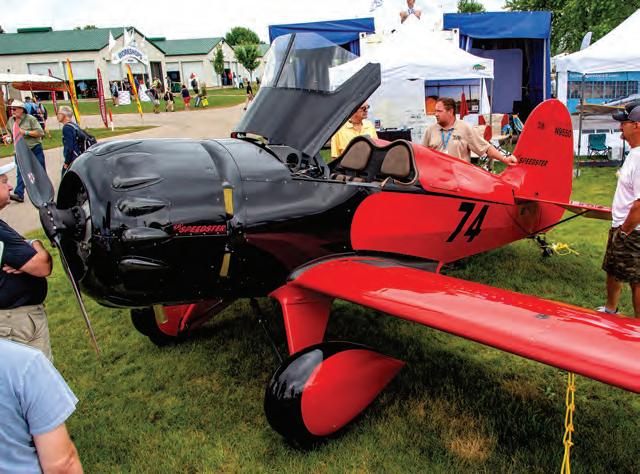
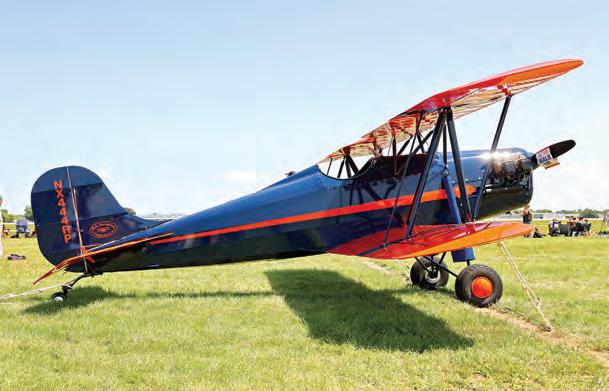
02 Timber Tiger Aircraft’s Kay’s Speedster is complete and about to start test flying. This retro-era styled beauty is powered by a 160hp Verner Scarlet 9S.
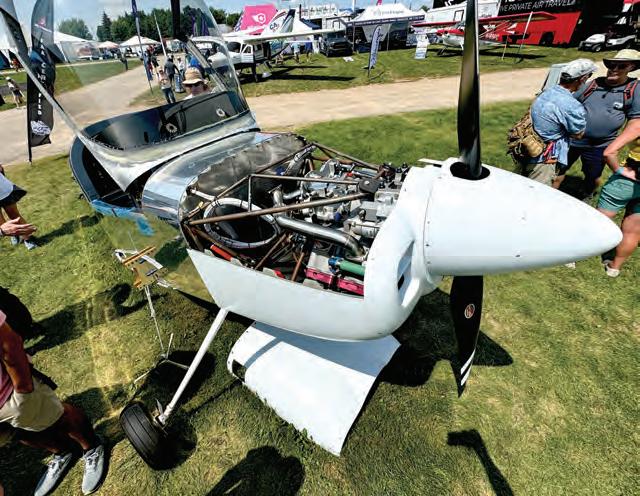
03 Deltahawk is developing a firewall-forward installation package for the Van’s RV-14 for its 200hp DHK200 inverted V-4 diesel aircraft engine. Price for the engine and install kit, including propeller is an estimated $120,000.
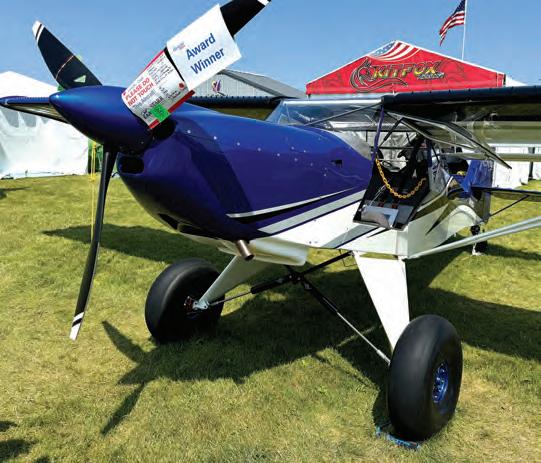
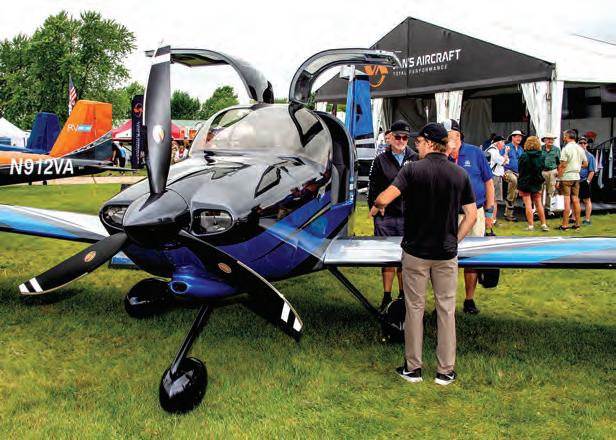
04 Kitfox Aircraft was celebrating 40 years of the design this year – this fabulous Rotax 916iS Series 7 Supersport was one of two Bronze Lindy Kitbuilt champion Kitfoxes.
A irVenture 2024
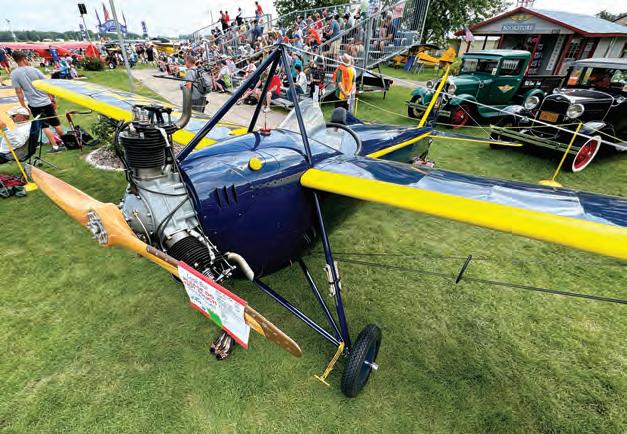
01 This Buhl Bull Pup was restored by Ron Johnson of Rockford, Illinois Powered by a wonderful 45hp threecylinder Szekely SR-3 radial, the aircraft was named Silver Age (1928-1936) Champion.
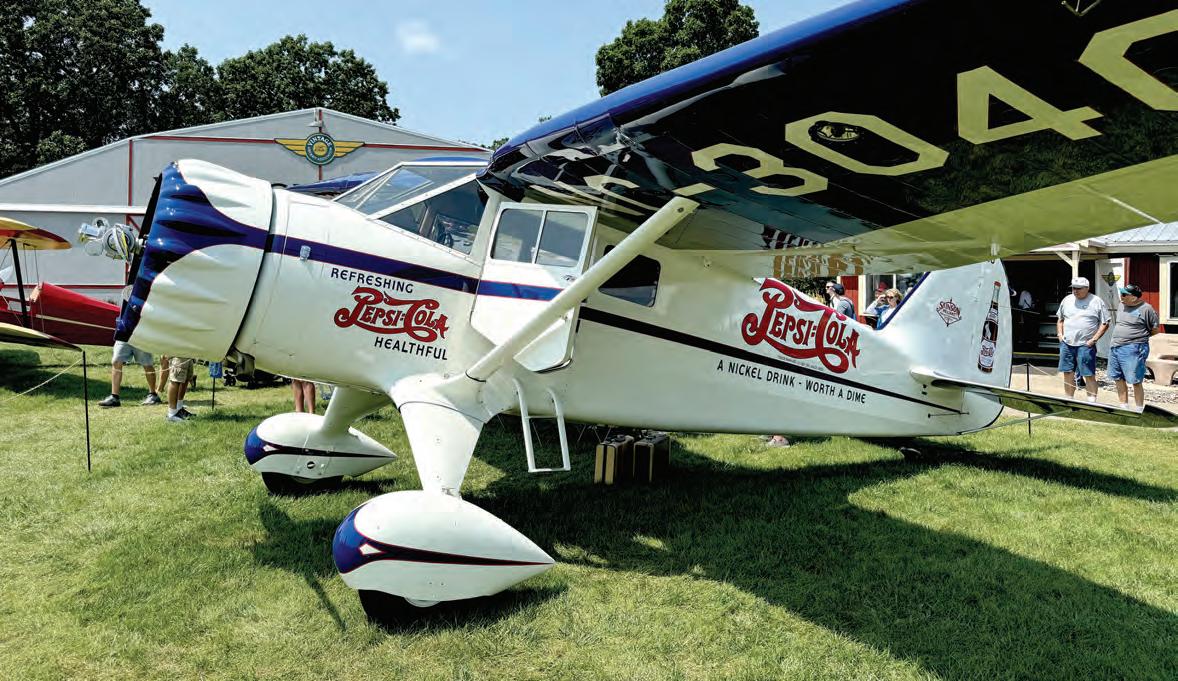
02 This Stinson SR-7B was originally owned by Pepsi Cola as a marketing aircraft. Garry and Janne Ackerman of McKinney, Texas trusted the aircraft to Rare Aircraft for a truly stunning 10,000 hour restoration, including all the original sign-written graphics. The Stinson was named Vintage Customized Aircraft Champion.
03 Devon Martin’s outstanding Piper PA17 restoration was named Classic-era Reserve Grand Champion.
04 Edwin Remsberg’s 1949 Stampe SV 4C was built under a licence in Algeria, North Africa. It flew across the Sahara, and used as a primary trainer by the French Navy in Morocco. After an overhaul In 1956 in Casablanca, the Stampe headed to France, then later to the USA in 1981, where it had a Lycoming 0-320 installed in 1989.
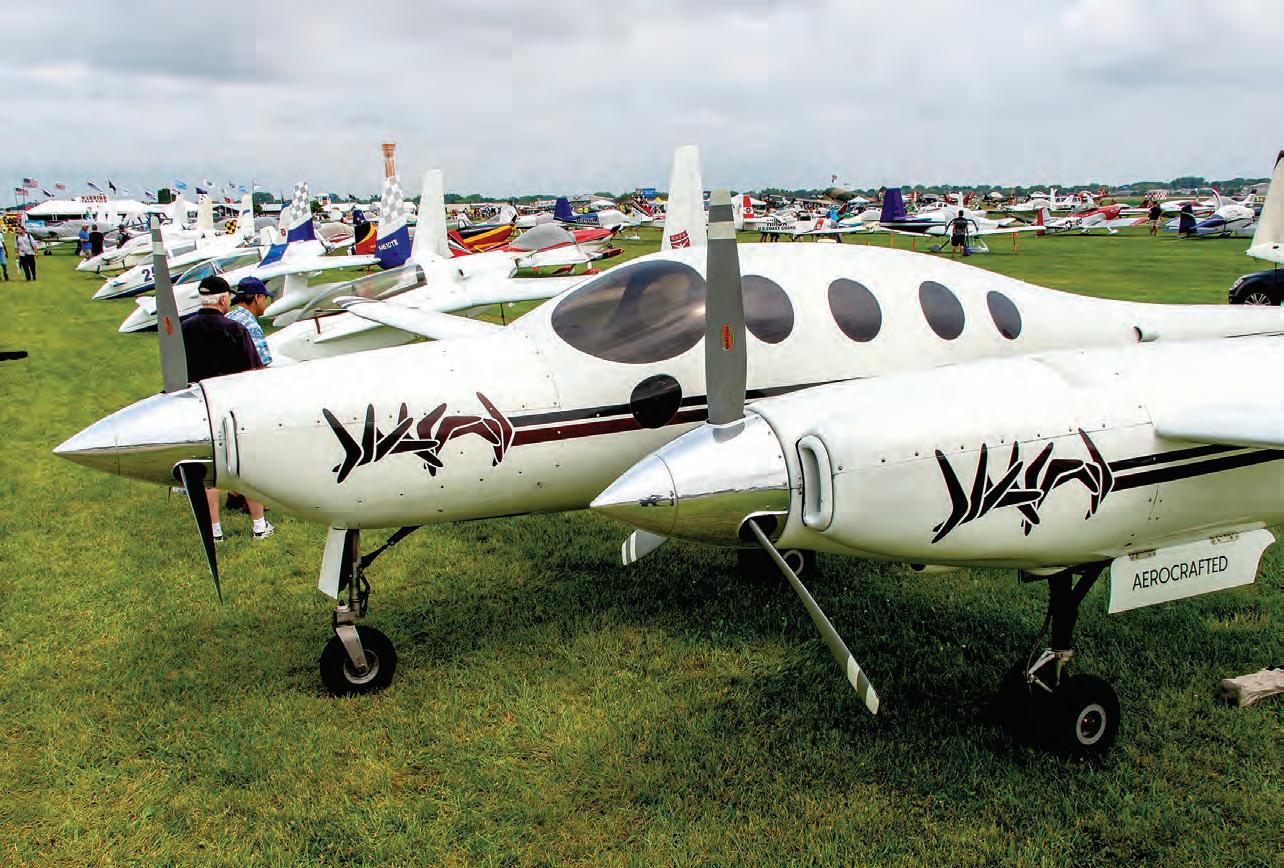
01 Acknowledged during one of Burt Rutan’s AirVenture forums as his favourite design, his 1996 Boomerang twin stopped many people in their tracks, as they realised just how asymmetric this wonderfully oddball machine really is. www.rutanboomerang.com
02 Van’s Aircraft made a strong and reinvigorated return to the show following its Chapter 11 struggles of late 2023. While the hotly anticipated RV-15 was not on show, the company confirmed that development of the aircraft is continuing, with a hope to start production of kits in late 2025.
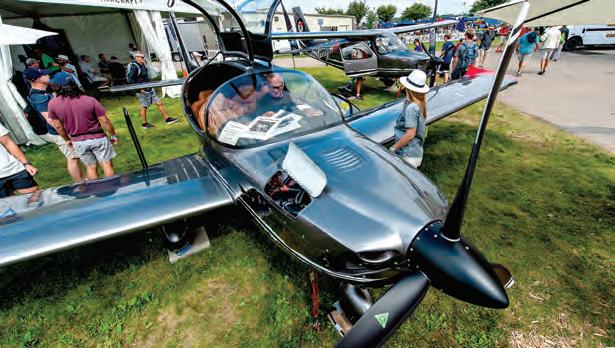
03 Sport Performance Aircraft displayed its two-place Cougar development of its popular Panther single-seater. The Cougar airframe displayed was destined for structural testing after the show. The Cougar will offer both taildragger and nosewheel option, be stressed to +6, -4g and powered by 160hp-200hp engines. Like the Panther, the Cougar will have a quick and easy wing fold. The prototype should fly by the end of 2024 and a complete aircraft will be shown at Oshkosh 2025.
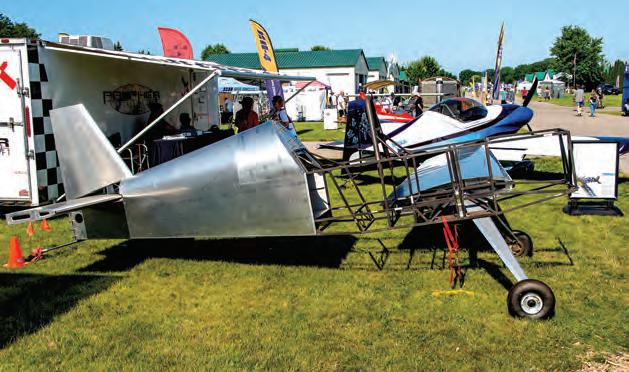
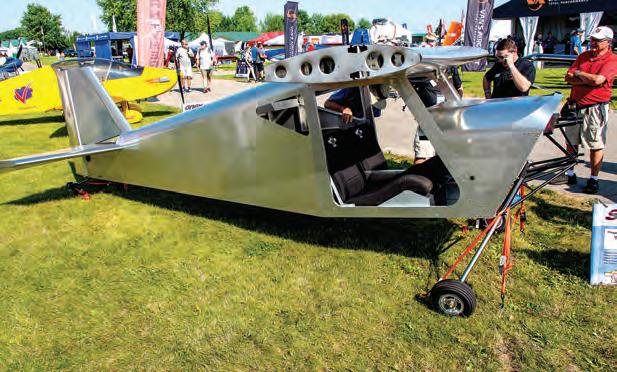
04 Looking a bit like a metal Wittman Tailwind, Sonex Aircraft had the fuselage of its new Highwing prototype on display for the first time.
A irVenture 2024
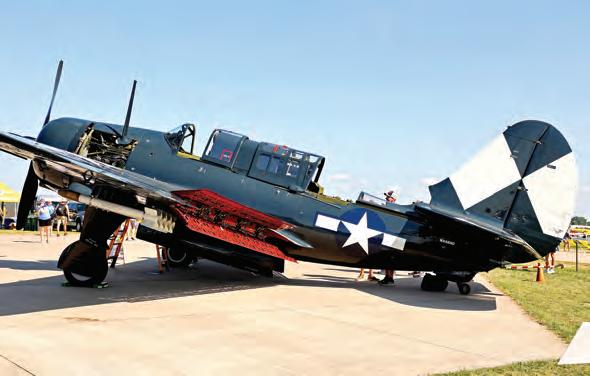
01 Surely the freshest restoration to appear at Oshkosh this year, the Fagen Fighters Curtiss SB2C-5 Helldiver had been completed and flown the week before the show. It won Best Warbird Bomber.
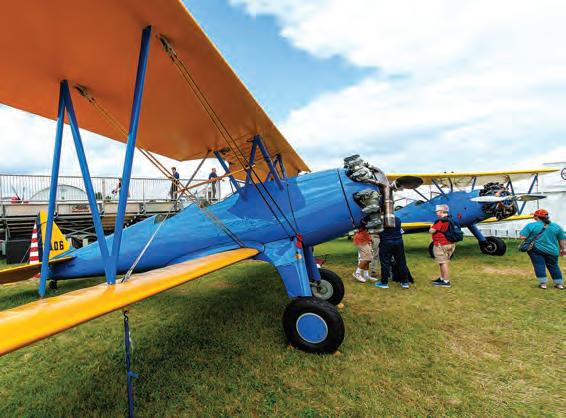
02 These aren’t what you might first think they are! That’s the one and only Stearman Model 70 (Prototype to the 75s) and the only remaining St Louis YPT-15, flown to the show from the Western Antique Aeroplane & Automobile Museum in Washington.
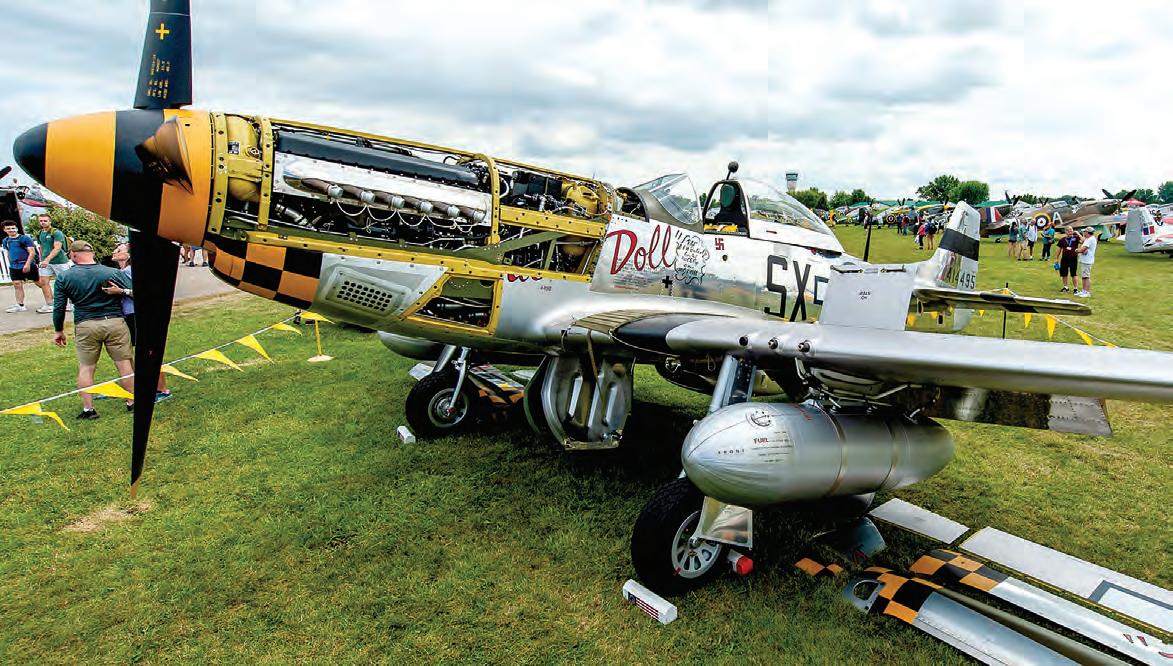
03 Exquisite P-51D restoration Dallas Doll, by Midwest Aero Restorations, was commissioned by British aircraft owner David Nock, who wanted a P-51D perfectly restored internally and externally to ‘factory specification’… the judges agreed, naming the aircraft, Grand Champion Warbird.
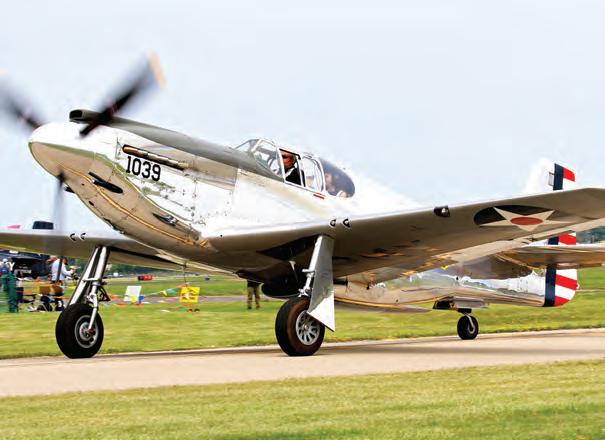
04 Walt Bowe’s perfectly polished and rare P-51A took the award for Best P-51.
01 Winner of the Grand Champion Plans built Gold Lindy award, was this Hatz Classic built by Rick and Kathy Schultz. Beautifully crafted touches could be found all-over this Verner Scarlett 9S radial powered machine, including a handmade Townend ring cowl. The aircraft took 10 years to build, with Rick noting when parts didn’t turn out to his satisfaction he built them again. “I made seven ailerons…”
02 Runner up to the Hatz Classic and recipient of the Reserve Grand Champion Plans Built award was this pretty Rose Parrakeet singleseater, built by Scot Cox, from Delphos, Ohio. First flown in 1931, only eight Parrakeets were built by Rose, but the design has been reproduced by homebuilders in the years that followed.
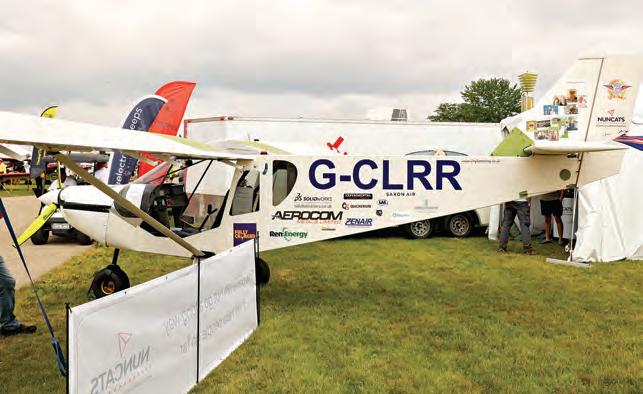
03 Flying the flag for UK light aircraft electric innovation, Tim Bridge and his no-frills Nuncats Electric Zenair drew lots of attention during the week of the show.
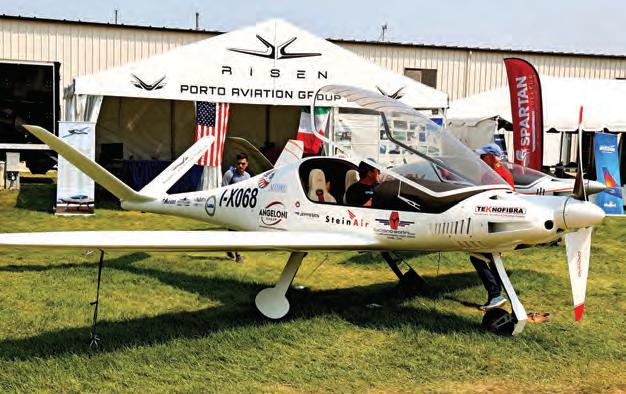
04 Risen Aircraft founder Alberto Porto made a remarkable non-stop Atlantic crossing, Hebrides to Canada, in the Risen SuperVeloce, 1,850 nautical miles, in 11.5 hours flying using only 43 gallons of fuel!
A irVenture 2024
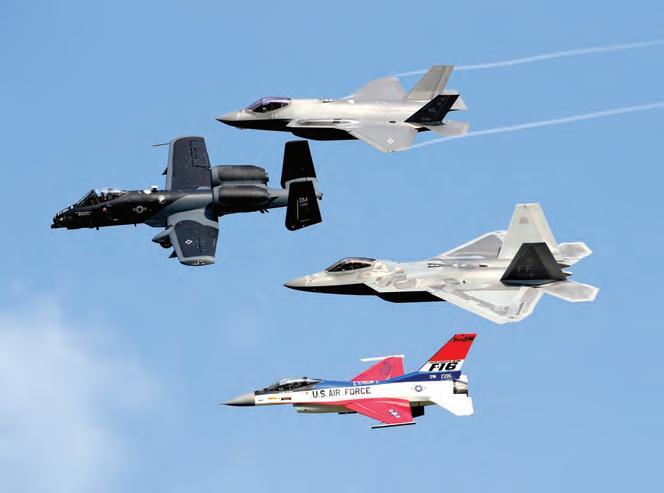
01 This US Air Force Heritage flight formation of A-10C Thunderbolt II and an F-16C in 50th anniversary YF-16 paint scheme, showcased more than 50 years heritage, with the A-10 having made its first flight in 1972 and the F-16 in 1974.
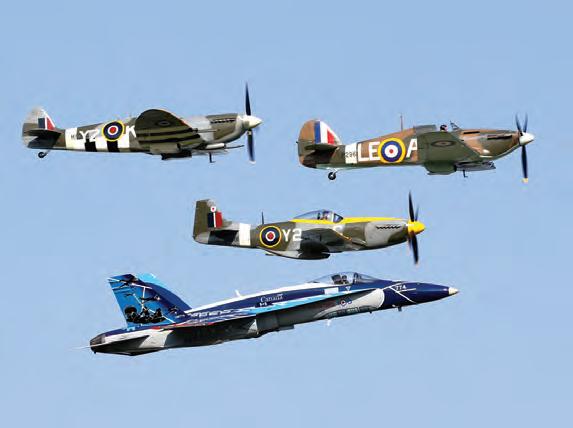
02 The Spitfire Mk IX, Hurricane Mk VII and P-51D Mustang from Mike Potter’s Vintage Wings of Canada Foundation flew with the Canadian Air Force Hornet during the show. The Hurricane has been restored in the very distinctive markings of a Hurricane I, P2961, flown by Willie McKnight, a Canadian pilot in the RAF, and flew again in 2022. The aircraft won Reserve Grand Champion Warbird.
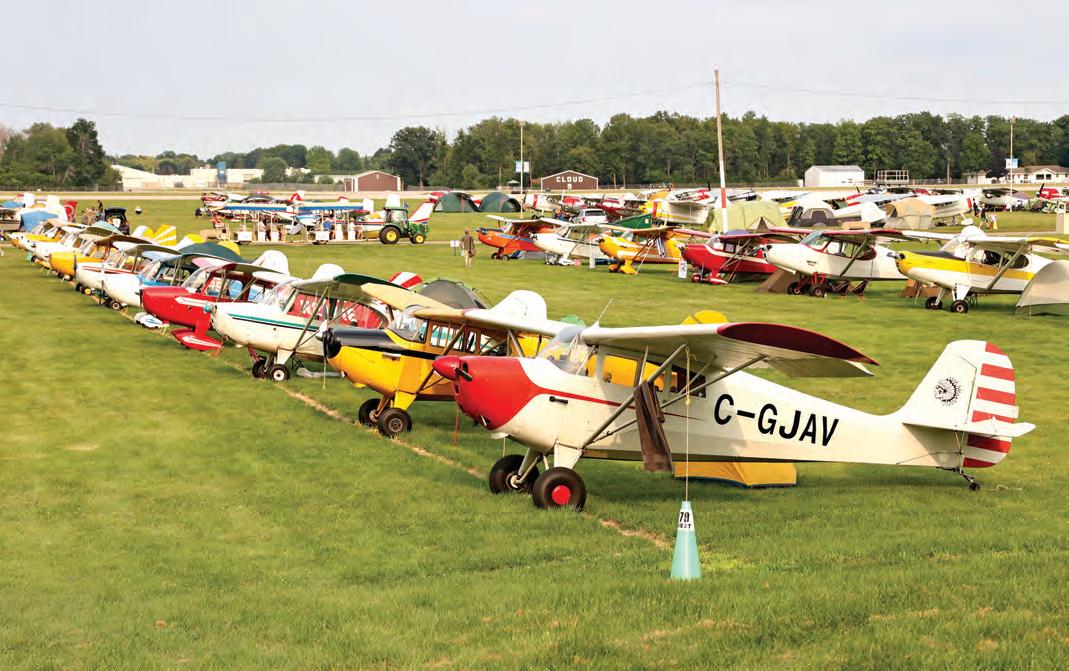
03 ‘Aeronca Nation’ at AirVenture saw a huge gathering of more than 100 different types of Aeroncas.
04 The Italian display team the Frecce Tricolori made a short visit to the show on Tuesday, while the team makes a tour of Canada and America.
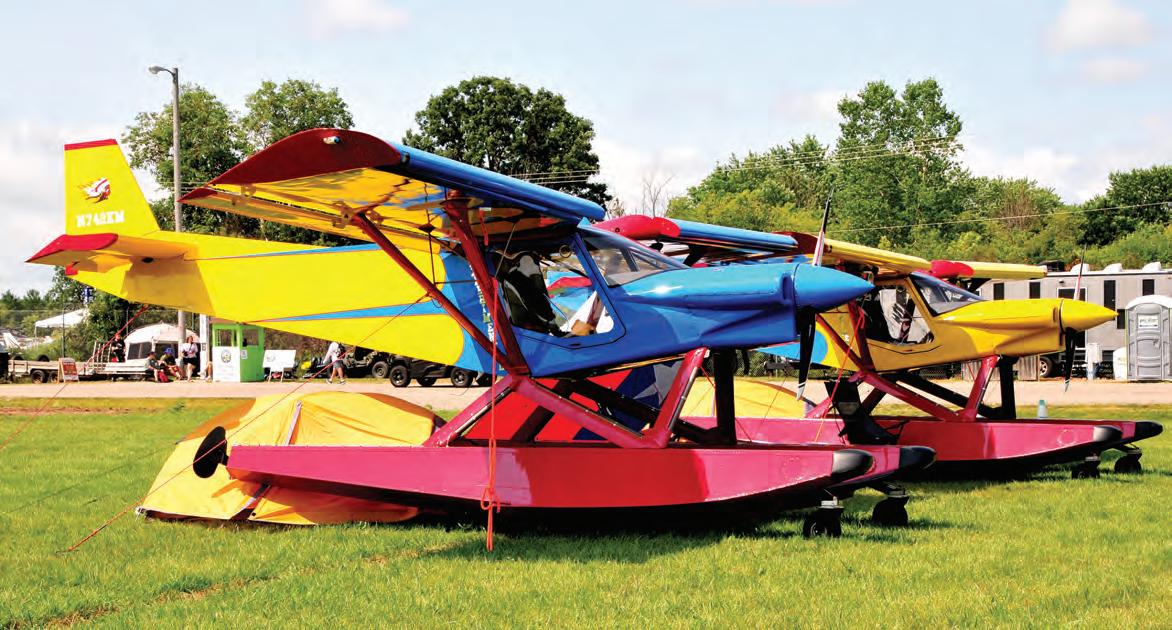
01 In the Seaplane category two friends took top honours, with virtually identical aeroplanes, minus a couple of flipped colours in their paint schemes. Scott Ehni of Trinity, Texas took Grand Champion with his Zenith 701, N742SE, while Reserve Grand Champion went to Kary McCord of Montgomery, Texas for CH701, N742KM.
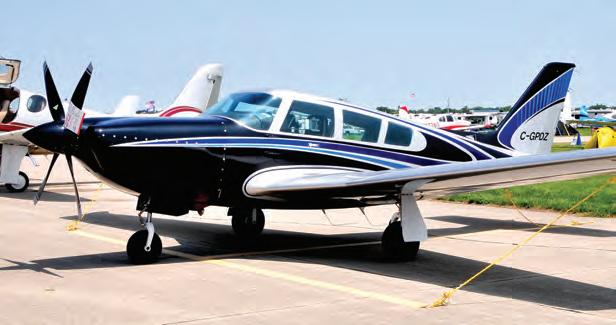
02 If you think this looks a little bit like a Piper Comanche, you’d be right… It’s the Ravin 500, a four-seat composite kitplane that’s seven per cent smaller than its inspiration, and is powered by a 260hp Lycoming IO-540 that offers 2,200nm range with a cruise speed of 175kt. It has been around since 2002, and 17 are reported to have been completed, but it remains a rare sight. www.ravininternational.com
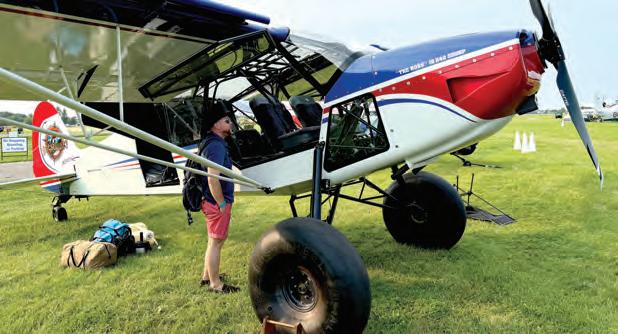
03 This huge machine is the four-place Backcountry Boss – think of it as a Superduper Cub! Powered by a 330hp Lycoming IO-540, it has an empty weight of 1,800lb and a max gross weight of 3,600lb. A plans-built Bronze Lindy winner, ‘The Boss’ was a regular participant in the evening STOL demonstrations. www.supercub.com
04 Sling Aircraft displayed Rotax 916iS powered versions of both the Sling TSi and the Sling Highwing. Certified in the Experimental-Exhibition category, they had completed their Phase 1 test periods just prior to flying to the show.
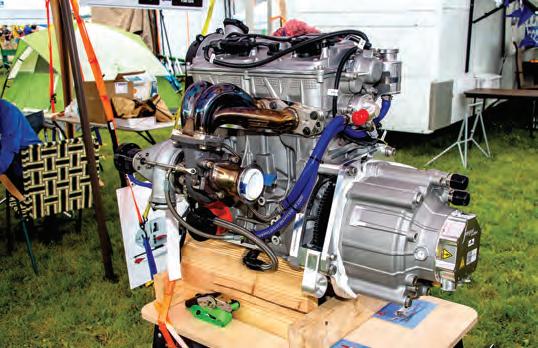
05 Skylab Engineering displayed its interesting hybrid powerplant – this 110kw, 400 volts genset weighed 251lb and was based on an AeroMomentum combustion engine – and is destined to power its, as yet unnamed, distributed electric thrust aircraft. www.skylabengineering.com
A irVenture 2024
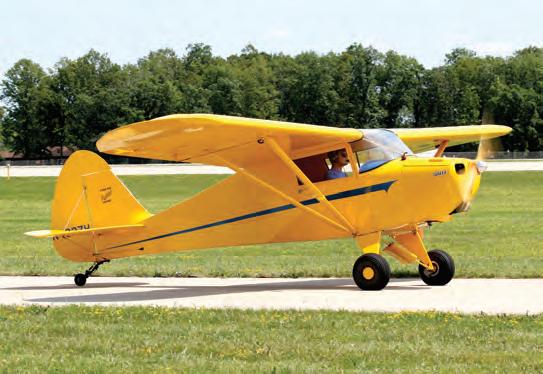
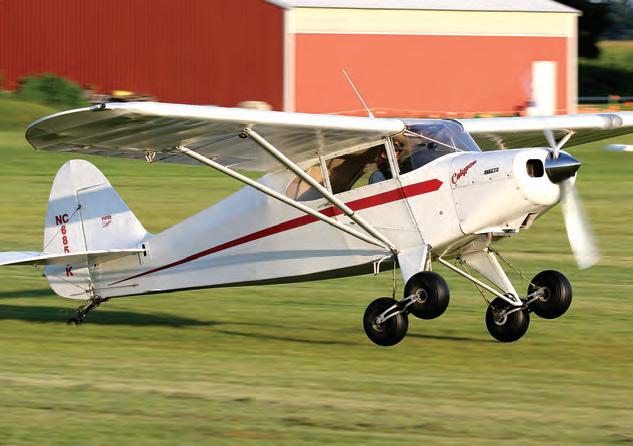
01 Seen here landing at the wonderful Brodhead fly-in, a few days before AirVenture, Ben Presten’s lovely Piper Clipper had people doing a double take thanks to the very unusual Whitaker Landing Gear that’s fitted to the aircraft.
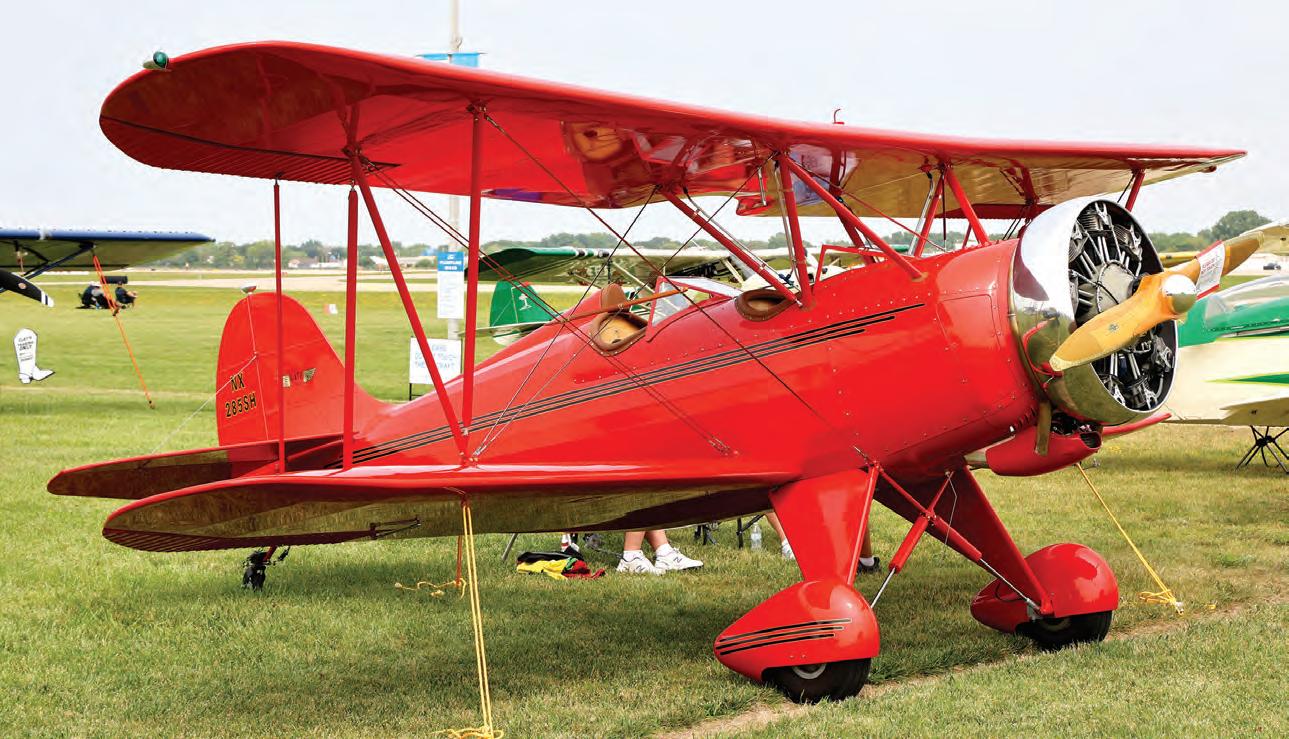
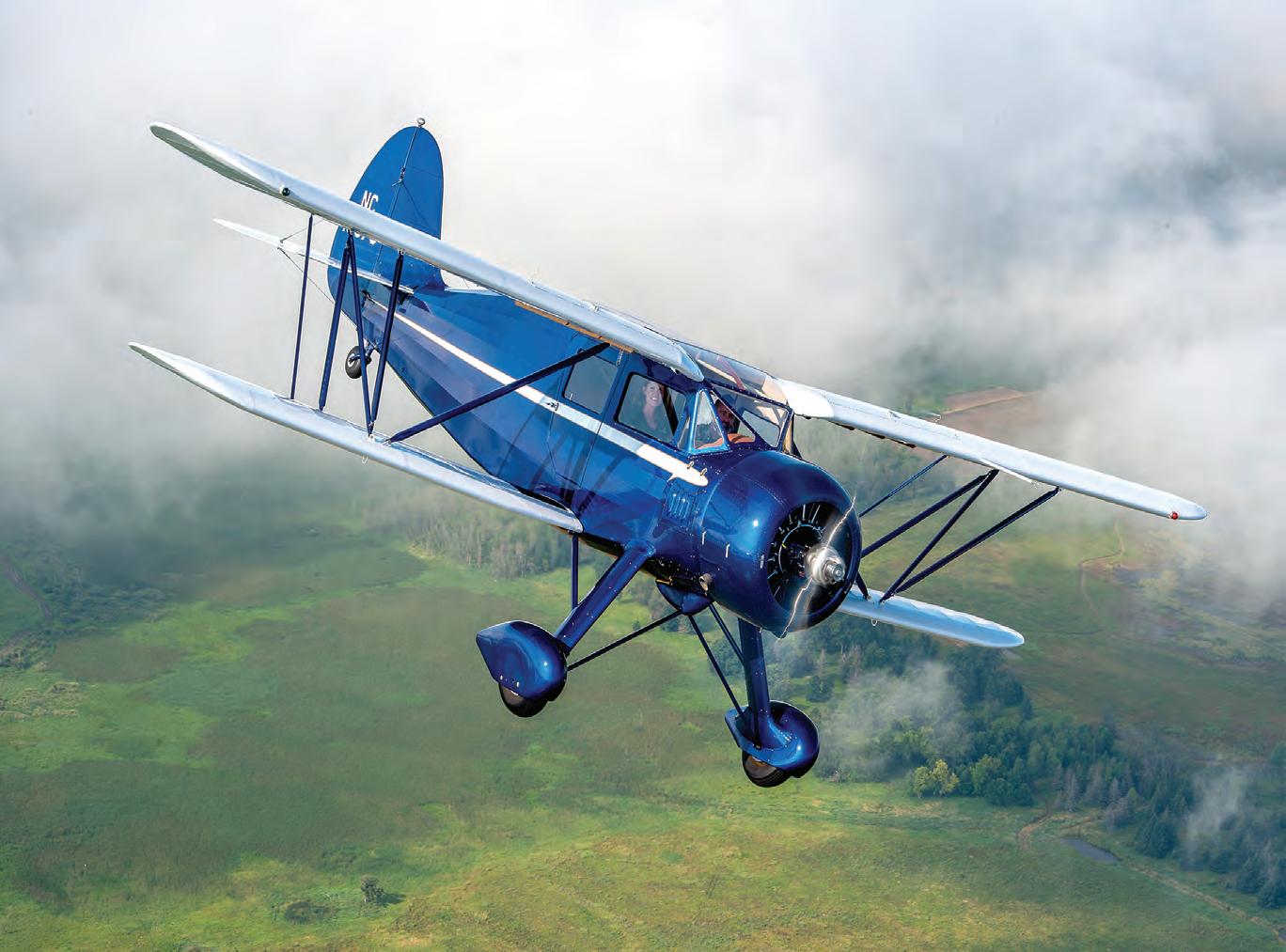
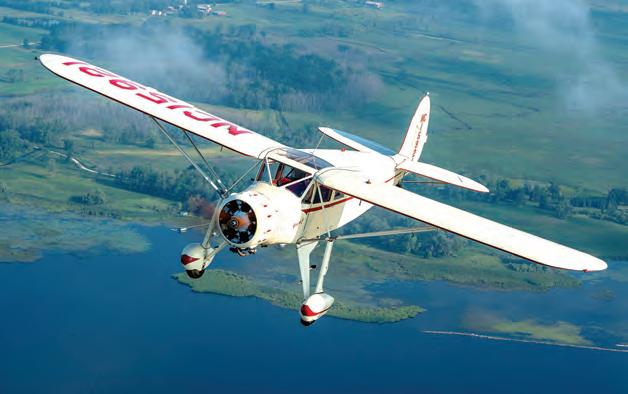
02 Trevor Niemyjski’s gorgeous Waco YKS7 was named Antique Reserve Grand Champion (Silver Lindy).
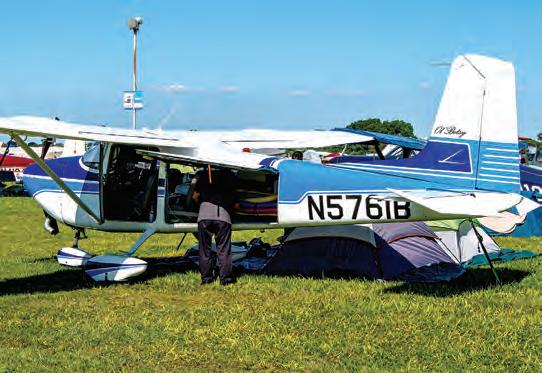
03 Perfect for an Oshkosh camping trip, that huge door on this Cessna 182 was originally fitted to allow the loading of coffins… Yes, this was a real STC!
04 Fairchild 24 C8C has an interesting history, originally given to newly-weds Jim Riklefs and his bride Nadine in May 1936 for their honeymoon by Nadine’s father. The ‘Honeymoon Fairchild’ was rediscovered in 1982 after 46 years of inactivity in a barn, and was restored, before being donated to the Hiller Aviation Museum in 1998.
Latest owner Jake Atteberry recently acquired the aircraft, and returned it to flight, heading home to the East Coast, and stopping off at AirVenture on the way.
Coaching Corner…
Navigating the skies safely: the role of TEM
By identify, assessing, and mitigate threats and errors, we can potentially avoid serious accidents, suggests Christine Carlin, LAA’s Pilot
Coaching Scheme Head of Training…
In the highly regulated and meticulously monitored world of aviation, safety remains a paramount concern. This article delves into the intricacies of TEM (Threat and Error Management), its implementation, and its significance in ensuring safe skies.
TEM emerged from the need to systematically address human errors and threats in aviation. Traditional safety approaches often focused on technical aspects, but it became clear that human factors played a substantial role in aviation incidents and accidents.
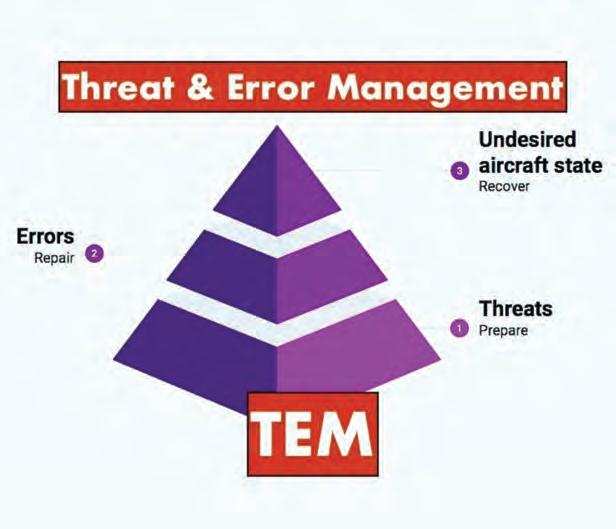
The TEM framework was developed to understand and manage these human propensities, providing a structured approach to identify, assess, and mitigate threats and errors. TEM is the process of detecting and responding to threats (such as bad weather or faulty equipment) and errors (such as selecting the wrong frequency, or missing a checklist item), to prevent safety being compromised.
Left unmanaged, these threats and errors can lead to an undesired aircraft state and ultimately a serious incident or accident.
In the context of aviation, threats are defined as internal or external events which increase operational complexity and can potentially impact safety.
Internal threats are related to the individual, for example:
● Fatigue
● Experience
● Attitude
● Lack of recency and proficiency
● Health and wellbeing.
External threats can be different depending on the situation, for example:
● Adverse weather
● High ground
● Obstacles
● Other traffic
● Technical malfunction
● Bird strike
● Air Traffic Control deviations
● Distraction caused by passengers
● Environment, heat, cold, bright sunlight etc.
● Errors, on the other hand, are actions or inactions by the pilot that lead to deviations from operational intentions or expectations.
Examples of typical errors may include:
● Incorrect fuel calculations
● Inaccurate planning
● Non-standard communications
● Forgetting a checklist item
● Selecting flap instead of landing gear
● Misinterpreting a weather forecast
● Misreading an instrument.
Certain threats, such as pilot fatigue, can affect an individual’s decision-making ability, increasing the likelihood of errors.
Threats and/or Errors not detected and/or managed incorrectly can lead to the aircraft ending up in an ‘undesired state’ – and if left unmanaged can lead to an accident or incident.
Examples of an aircraft undesired state:
● Aircraft enters an unusual attitude after a collision avoidance manoeuvre in flight
● Unstable approach
● Low fuel state due to diversion around bad weather not identified during preflight planning.
● Airspace infringement
● Aircraft entering a runway when it should not.
The TEM is a simple yet effective three-step process:
Identify, manage, and mitigate.
Identify: The first step involves recognising potential threats and errors. Much of this can be done pre-flight.
During flight maintain keen situational awareness and understanding of the operational environment. Constantly scan for any deviations or unusual occurrences that could pose a threat or lead to an error.
Manage: Once a threat or error is identified, the next step is to manage it effectively. This involves taking corrective actions to address the threat or rectify the error. For example, if a pilot identifies a technical issue with the aircraft the appropriate measures should be taken to troubleshoot and resolve the problem.
Mitigate: The final step focuses on mitigation, which involves minimising the impact of any risk that cannot be completely eliminated. This might include making adjustments to the flight plan to avoid adverse weather.
TEM should, perhaps, be the first item of your pre-flight planning. And there-in lies the rub!
How many of you (be honest with yourselves) do a
thorough, if any, pre-flight planning? Remember the good old days of navigation exercises with your instructor?
Calculating your expected heading to keep you on track and your ground speed and expected flight time to make sure you uplift sufficient fuel (not forgetting a contingency of at least 45 minutes reserve). Checking your route for any controlled airspace, obstacles or high ground; checking your en route weather forecast and Notams? In this day of moving map navigation, plus some very excellent software apps, a lot of the ‘grind’ has been removed – no need to dust off your old flight computer.
This software will instantly give you a Pilots Flight Log, it will even give you the necessary frequencies and Notams you might encounter. Absolutely fantastic!
So why bother?, I hear you cry. A cautionary tale…
On a return flight home after a very pleasant weekend on Mull, having stopped at Oban to refuel, we (three pilots and three non-flying friends) set off on our return flight home. The seating arrangement was first row: the pilot flying/friend; second row myself(pilot)/friend; third row pilot friend/friend.
About 10 minutes into the flight all electrics failed, including the inbuilt moving map (no apps in those days), comms and radio nav equipment. The pilot who was flying was a very experienced, commercial pilot who had marked our track (which included a couple of dog-legs, mostly to avoid controlled airspace) on the current charts and had checked for any relevant Notams and the en route weather forecast. I, as a commercial pilot and used to flying a non-radio aircraft with thousands of hours teaching dead reckoning navigation took over this task, calling out required headings to the pilot flying. The weather was good and forecast to remain so. We decided we could safely continue our flight and arrived without incident at our destination avoiding any infringements (our track took us close to Leeds and Manchester airspace).
If the pilot had done no pre-flight planning the night before and had decided to press on instead of turning back to Oban, the outcome could have been very different.
We were flying over some extremely high ground acutely close to controlled airspace. If the weather had deteriorated, we might have ended up flying IFR to avoid CFIT and then potentially causing mayhem in controlled airspace, as we had no means of navigating in cloud. We could have become lost very quickly with no idea of our position or any means of safely letting down out of cloud!
I’m sure you can all see the potential threats both ‘seen’ and ‘unseen’ in the above account and any possible errors the pilot could have made.
Self pre-flight briefings
Before every flight consider any potential threats and errors specific to the fight.
Consider: Are you fit to fly, weight and balance, aircraft performance both take-off and landing. For a navigational flight, if you use one of the exceptionally good moving map apps, why not print off the flight log before flight?
Check for expected weather, check Notams, draw the track on your charts and circle any airspace or obstacles. Include any planned diversion routes and airfields.
Below Threats and errors come in different guises… but being prepared for them can help you avoid an accident.
Real-time flight management
During flights, TEM principles should be actively applied to manage real-time threats and errors. For example, keep an eye on the weather, carry out regular engine, fuel, altitude and compass checks, maintain excellent lookout both for other aircraft and to ensure you are still on track, be ahead of the aeroplane in all respects especially when it comes to controlled airspace, weather and Notams.
Any deviations or anomalies should be promptly addressed to ensure the best possible outcome.
Self post-flight briefings
It is a really good exercise to review and analyse any threats or errors encountered during a flight. This reflective process helps identify areas for improvement. Never be wary of asking for the opinion of a more experienced pilot nor of seeking further training. Just because you got away with it this time doesn’t mean you will next time.
Threat and Error Management is more than just a technique; it’s a mindset that every pilot should cultivate.
By integrating TEM into every aspect of flight operations, from planning and execution to post-flight review, general aviation pilots can significantly enhance safety. In a domain where human factors often play a pivotal role in incidents and accidents, TEM offers a structured approach to mitigate risks and ensure that each flight ends with a safe landing.
For general aviation, where pilots often fly solo or with limited support, adopting TEM principles is not just advisable – it’s essential. By staying vigilant, disciplined, and prepared, pilots can navigate the skies with confidence, knowing they are equipped to handle whatever challenges come their way. This proactive approach ensures that you are aware of, and prepared for, any potential challenges. ■
The latest LAA Engineering topics and investigations. Compiled by Nick Stone
Engineering Matters
Including: Is corrosion hiding under your fabric, Woodcomp Klassic blade failure, and mandatory Pietenpol strut inspection.
Welcome to Engineering Matters – the section of Light Aviation that is dedicated to discussing all manner of topics concerning both technical and operational aspects of the LAA fleet. We all learn by sharing information, so if you
What’s hiding underneath that fabric?
Over many years we have always tended to judge LAA vintage aircraft on the state of the fabric and the general condition of that fabric, with some better than others. That said, we all know that there is a lot more to it when it comes to airworthiness.
As the LAA vintage fleet continues to get older it is important for us to look after it and carry out regular and more frequent condition inspections. One of the things that may have been neglected over the passing years is what is hidden beneath the fabric covering.
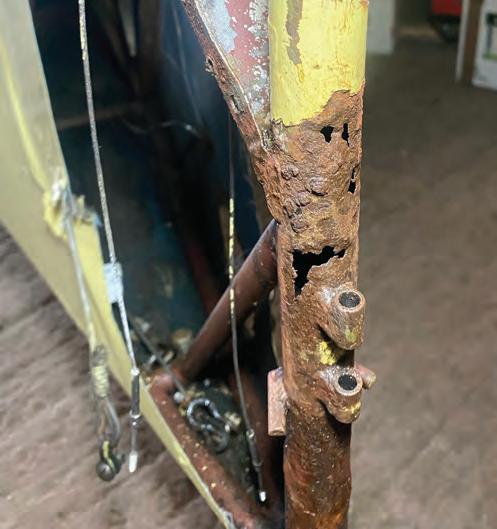
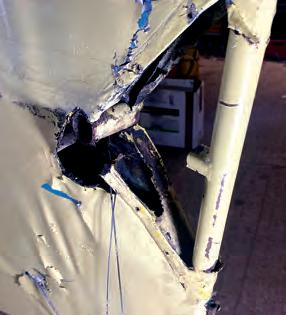
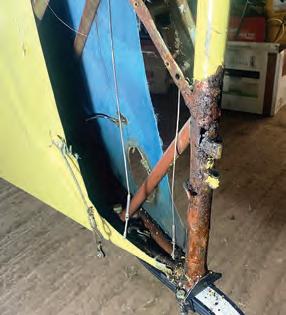
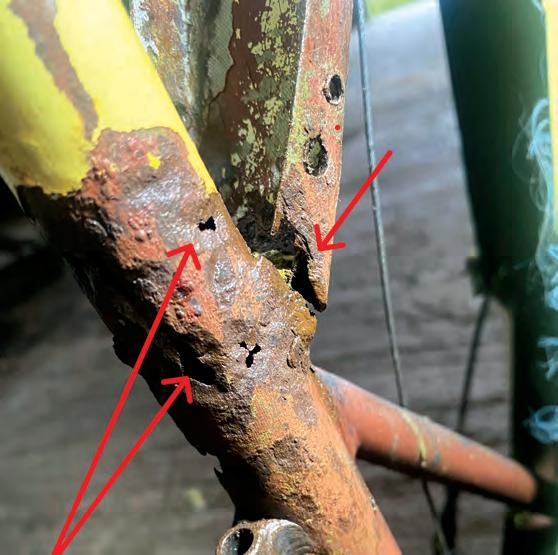
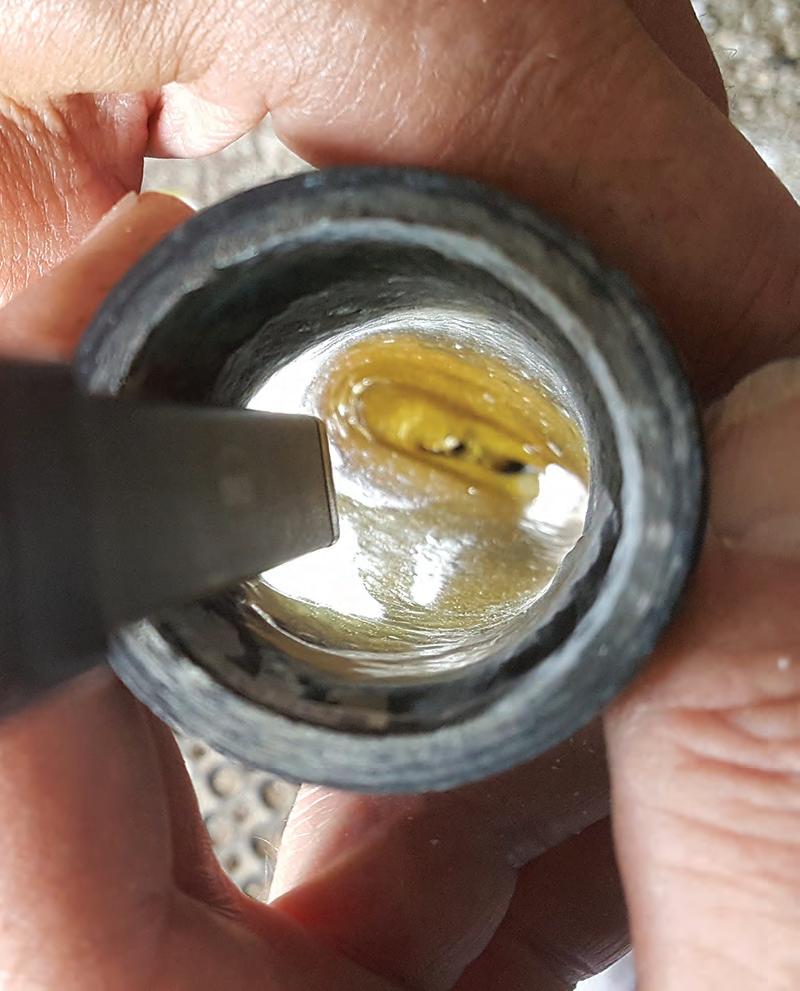
Extensive corrosion found on removal of fabric.
have anything to say that you think would benefit others, or have experienced an interesting technical issue or component failure, then please contact us with a description of what you encountered and include accompanying pictures. Send your submissions to LAA Engineering at engineering@laa.uk.com
With the advent of new polyester, fabric coverings have a much greater service lifespan than the original Irish linen, which was traditionally used in the covering of vintage aircraft – and in some cases still is. In general Irish linen had a 10-year lifespan at which point the aircraft would be entirely stripped, which presented a great opportunity to inspect and repair the internal structure of the entire airframe, including checking for corrosion in areas that are normally unseen. The most important areas being at the rear of the aircraft, particularly on taildragger aircraft, where the rear lower section of the aircraft has quite a hard life being down in the dirt and the damp.
Developments with the application of polyester fabrics, with lifespans that can exceed 25 years, and in some cases, dependent on the fabric condition, last longer.
This is a positive move forward to ensure your aircraft covering can be kept airworthy much longer than the days of organic fabrics and dope, however, we have inadvertently created another issue.
Above (left & right) The extent of the corrosion is unseen but there are clues… and the fabric removed.
The periods between a complete strip down of the aircraft have got considerably longer and the aircraft are getting older. It may well be that a diligent LAA Inspector may pick up some indications that there are corrosion issues with an aircraft, but the areas where potential corrosion is likely to be can be difficult to get to during an annual inspection without any intrusive work.
As the LAA fleet of vintage aircraft continues to grow with transfers from Certificates of Airworthiness vintage types to the Permit system, those aircraft still have to follow all the airworthiness directives as before to ensure that they continue to be maintained to a high standard. Even with regular maintenance and inspections the aircraft continue to age with the issues that come with that.
It’s important that we capture any unseen corrosion as much as possible and take preventative action. This can be done with more intense inspections of the rear quarters of the aircraft. In particular, aircraft with known issues which are constructed with steel tubing, often constructed without internal corrosion inhibitors – it was not thought that some of the aircraft would still be flying some 70 years, or more in some cases.
There are some notes in the LAA TADS for aircraft that have been found to have corrosion issues in the past, which can be used during inspections to help direct owners and Inspectors to problem areas.
Unfortunately, in the past, aircraft manufacturing companies used manufacturing processes below the aerospace quality expectations of today, due to shortages of material stocks in some cases.
Different specification and types of steel tubing being utilised in different areas of the aircraft (which is not found until much later in the aircraft’s life normally during a repair), has the potential to lead to more problematic corrosion issues.
The FAA is still discussing a proposed Airworthiness Directive (AD) on Piper Cubs and derivatives related to tubular airframe component construction, issued to address corrosion issues on the rear rudder attachments and tube stern post, after a number of failures in service.
However, the aircraft with rudders that did fail in service were found to have had a harsh life as floatplanes, plus had rotary anti-collision beacons fitted to the top of the rudder, adding additional load to the stern post.
fabric it was found that the tail section of the aircraft was in an advanced corroded state, had this continued to go unaddressed, it potentially could have led to an inflight structural failure.
The corrosion only came to light when the fabric in the rear quarters of the fuselage was removed for further inspection. It was quite clear that the corrosion had been there for some time and had been allowed to develop over many years, starting after its last pre-fabric airframe covering inspection.
On this aircraft, the particular area had given no indication that there was corrosion present underneath the polyester fabric, demonstrating that it’s important that during the annual Permit revalidation inspection, those areas that are known to corrode, be subject to increased scrutiny.
If there is any doubt, the fabric will need to be removed, to enable a more in-depth inspection. While I am sure owners of vintage aircraft will not be overjoyed at the prospect of stripping the rear end of their aircraft, it is important for us all to ensure that the LAA vintage fleet continues to retain our high standard of airworthiness, and if there is any doubt as to an aircraft condition, Inspectors must endeavour to ensure the aircraft stays free from corrosion.
Of particular note though, is that during the process of the FAA’s consultation on the AD, it was found that early Pipers had a different tube material used in the stern post. It must also be recognised that field repairs may also have been undertaken on some aircraft during its lifespan.
Using modern processes and techniques we can detect ongoing corrosion issues in tubing structures through various methods of NDT inspection. Ultrasonic, X-ray or mechanically with use of a Maule type mechanical tube testing device, or a simple dot punch to test for potential internal corrosion.
Following a recent landing accident of an Aeronca taildragger aircraft, it was found during a repair survey carried out on behalf of the insurance company, that the tail of this particular aircraft was found to be twisted. On further investigation and removal of the rear section
In the event that extensive corrosion is found in aircraft structures, these areas must be removed and replaced with tubes as per the original structure/ manufacturer’s drawings or homebuild
Following the submission of a repair scheme to LAA Engineering, it may be found that in some cases, older or indeed rarer aircraft original materials are no longer available.
If this is the case equivalent materials could potentially be used, but these equivalents must be included within the repair schedule to ensure LAA Engineering can check if equivalents are suitable for the individual aircraft type repair criteria. It is important to remember not to go ahead with any repairs to your aircraft before a repair schedule has been submitted and approved by LAA Engineering. The time for a repair to be suitably approved can be frustrating, but the prospect of taking apart a repair which was undertaken without approval can be potentially more frustrating.
Most, but not all, fuselage tube repairs are standard repairs that can be undertaken with reference to AC 43.13-1B – Acceptable Method Techniques and Practices-Aircraft Inspection and Repair, Section 5 Welding and Brazing, sub section 4-91-4.98. This Federal Aviation Administration document is a great source of information and ideas for repairs that can subsequently be submitted to the LAA Engineering for approval.
Tube repairs must be undertaken by suitably approved CAA welders. In some cases industry coded welders with individual approval by LAA Engineering could be used when CAA approved welders are not available. This would be at the discretion of the Chief Inspector and must be included in the repair submission.
Above Structure has corroded to a point which it has started to fail.
Woodcomp Klassic blade failure
Thank you to one of our diligent Inspectors for bringing this to LAA Engineering’s attention. There have been a few issues over the years with Woodcomp composite propellers which have been addressed. Unfortunately, this case seems to be a little bit more than surface gel coat cracking, which does seem to be an ongoing issue. This particular propeller is a Woodcomp Klassic 170/3/R, a ground adjustable unit, which was fitted to an LAA CZAW Sportcruiser.
The propeller has, what appears on inspection, to be ruptures on the front face at about one-third blade span on two blades, and incipient failure on the third blade. The ruptures are accompanied by a number of parallel chord-wise cracks and incipient cracks in
the gelcoat, again around about the one third span area. Two of the blades have trailing edge separation around the same station as the cracks. There is no evidence of any impact to any of the blades, and the owner had reported no accidents or strikes. The blade tips are in good condition which indicates no tip strikes or damage.
In this case the full history of the propeller is unclear, it was on the aircraft upon purchase, which could unfortunately indicate that there was potentially an unreported incident in the past.
The aircraft was the original UK prototype of the Sportcruiser and has 283 airframe hours. It is thought that the propeller is the same age as the aircraft and engine installation although the propeller is at 317 hours which would be down to engine ground runs during its development in earlier life.
The aircraft is generally ground-manoeuvred by an electric tug that attaches to the nosewheel, so there is no pulling or pushing on the propeller blades to manoeuvre it.
There are no low obstructions or other aircraft in the hangar where the aircraft is kept, that might have snagged the prop during ground handling.
Removal of the foam plugs inserted in the propeller roots has allowed inspection of much of the hollow insides, this shows that the ‘inflated’ glass fibre sock that forms a spar within the blade has potential manufacturing process flaws in the form of large separation bubbles at about one third span along the blade; these bubbles are the yellow areas in the root, this may well have initiated the start of the failure of the blades.
At least one of the blades has incomplete bonding of the trailing edge, including on one blade, a localised corrugated fillet of flox (mixture of cotton fibre and epoxy resin, used in structural joints) offering about 50% connectivity.
The propeller was deemed unairworthy and has been removed and scrapped to ensure it does not make its way back onto another aircraft in the future.
Pilots should pay particular attention to propellers before each and every flight, and if you are in any doubt as to the airworthiness of your propeller, do not fly and seek the advice of an LAA Inspector or suitably qualified engineer.
The UK Woodcomp agent has commented that this cracking is a common occurrence with older props, but usually just cracking rather than rupture.
Above Incipient failure on blade number three.
Above With the foam stopper removed an internal view of the failure.
Lucy Wootton:
Chief Inspector notes Updates from the LAA Chief Inspector.
August has been a busy month, with many Inspectors keen to expand the remit of their Inspector authorisation to cover more types over the summer months.
Inspector Training Seminars
The schedule for Inspector Training Seminars for this autumn and winter will be published soon. Every Inspector has to attend a recurrent training session once every four years (as taken on 31 March). Inspectors – keep a lookout in your emails over the next few weeks for an invite!
ACAMs
I have been out-and-about doing ACAMs (Aircraft Continuous Airworthiness Monitoring) i.e. audits of some aircraft on our fleet, most recently visiting Dorset.
Under the terms of the LAA’s CAA A8-26 organisation approval, LAA Engineering is required to carry out a number of physical inspections of LAA-administered aircraft and their associated documentation.
These inspections are known as ‘ACAM surveys’ – Aircraft Continuing Airworthiness Monitoring surveys. Normally, they are carried out by the LAA Chief Inspector, but may be by one of the other LAA Engineering staff members. The CAA is also required to carry out ACAM surveys and these may be done with LAA Engineering or by themselves.
Normal practice is to have the aircraft owner (or operator) present and also the LAA Inspector who oversees the maintenance of the aircraft.
What are we looking for in an ACAM?
Physical survey The physical survey is somewhere close to a ‘Check A’ inspection, but slightly more in depth. The engine compartment will need to be accessed, for instance, which may require the engine cowlings to be removed if they are not of the opening kind, which allow good visual access to the engine bay.
The airframe is inspected ‘externally’, which means, normally, without removing access panels or disturbing the airframe in any way. The cockpit/cabin is checked for having all mandatory placards and instrument markings present as required. The engine compartment is inspected to ensure that there are no major defects, oil or fuel leaks, and so on.
If any modifications or repairs have been carried out on the aircraft, these will be checked against the files held on record by LAA Engineering, to ensure that they have been embodied as agreed. We expect to see a list of these modifications in the ‘pink pages’ at the back of the airframe, engine, propeller (if applicable) logbooks on the pink ‘Modifications’ page
Documentation The aircraft records are checked to ensure compliance with the requirements. The records checked include the airframe and engine logbooks (and propeller logbooks where required), Airworthiness Directive/Service Bulletin compliance statements and associated workpacks. The aircraft document check also includes the Permit to Fly, Certificate of Validity,
Operating Limitations, weight and balance etc – all the documents that are normally kept in the aircraft for reference purposes.
We expect to see references in the ‘pink pages’ of the airframe, engine and propeller (if applicable) logbooks to any Mandatory Permit Directives (MPDs), Service Bulletins, ADs and modifications. These will be mentioned in the TADS, as well as non-type-specific MPDs in Technical Leaflet 2.22.
Furthermore, we expect to see a unique reference between any workpacks and corresponding logbook entries.
LAA Technical Leaflet TL 2.02: ‘Permit Aircraft Paperwork Checklist’ details what documentation is required to be kept for an LAA-administered Permit to Fly aircraft.
ACAM Report After the ACAM has been completed, a report is produced and this is sent to the aircraft owner and the Inspector who is normally associated with the aircraft.
The report will list any findings which detail areas that must be rectified (within a stated timescale) and specific observations. Observations are items that are considered advisory actions to be complied with.
Common errors One of the most common problem areas are missing mandatory placards. The mandatory placards are listed in the aircraft’s specific Operating Limitations document, with further information found in LAA Technical Leaflet TL 2.11: ‘Aircraft Placards, Labels and Registration Marks’
Logbooks are another area where owners and Inspectors tend to struggle to keep everything up to date. It is worthwhile spending an evening going through the logbooks to ensure all the relevant information is present, which includes the initial pages, the green pages (scheduled maintenance record) and pink pages (nonscheduled maintenance tasks, modifications and repairs).
New
Inspector
for homebuilt gyroplane build stages and first flights
Congratulations to LAA Inspector, Robin Braithwaite, who recently attended LAA HQ for an interview with Francis Donaldson and me, with a view to adding build stages and first flights of homebuilt gyroplanes to his LAA Inspector Authorisation.
Robin was successful, demonstrating his in-depth knowledge, and he has added ‘Build Stages’ and ‘First Flights’ for Gyroplanes to his inspector ticket.
Robin’s new qualification goes some way to helping to fill the gap left after the recent passing of Tony Melody, a very experienced homebuilt gyroplane Inspector for many years.
Left Congratulations to LAA Inspector Robin Braithwaite who is now authorised to sign off ‘Build Stages’ and ‘First Flights’ for Gyroplanes.
Recent Alerts, Technical Service Bulletins & Mandatory Technical Directives
MTD-06-2024
Date of Issue: 11/7/24
Manufacturer’s Name: Pietenpol – TADS
047 Issue 6 Rev E
Model/Designation(s): Air Camper
Applicability: All Aircraft
Wing Rear Strut Internal Corrosion
During an annual Permit revalidation inspection, it was noticed that liquid was seen to be dripping from the bottom of the rear strut on the starboard side at the bottom adjoining the fuselage. On further investigation and with some light prodding with a scriber, a hole appeared on the bottom outside of the strut. On removal of the profiled strut tube and turning it upside down, corrosion deposits fell from inside the tube, indicating the presence of internal corrosion.
LAA Engineering charges
LAA Project Registration
Kit Built Aircraft
Plans Built Aircraft
Initial Permit issue
Up to 450kg
451-999kg
1,000kg and above
Permit Revalidation
(can now be paid online via LAA Shop)
Up to 450kg
451-999kg
1,000kg and above
Factory-built gyroplanes* (all weights)
£350
£50
£700
£800
£900
£230
£280
£310
£310
Actions to be taken:
1. Inspection to be carried out of the rear wing struts, inspect for signs of corrosion.
2. Use a dot punch to test various areas or a calibrated Maule strut tester to ensure that the struct is in an airworthy condition, with no holes or weak spots appearing during test.
3. You must remove the strut attachment connection and look inside the strut to determine the level of corrosion.
4. As an alternative ultrasound/x-ray equipment may be used to establish the potential presence and level of corrosion, the Inspector signing the MTD must be able to interpret the results or have an NDT specialist carry out the task and issue a report.
5. Struts that are found to be corroded must be marked as unserviceable or destroyed to ensure that they are not returned to service.
6. Owners who have the ‘Jim Wills’ Struts fitted must drill a drain hole into the rear strut at the bottom at the lowest point to enable any liquid build up to drain away, to deter corrosion. To be clear the drain hole must be no more than a 2.5mm diameter and must only be drilled in the end cap.
7. On completion of the inspection, the aircraft struts that are to be found free from corrosion, can be returned to service. The struts should be treated with Ardrox V25 Corrosion preventative/water dispersant or other similar products to prevent corrosion.
Compliance Time(s): Due to the nature of the strut corrosion the aircraft should be inspected ‘Before next flight.’
For full details and compliance read: MTD-06-2024 Date of Issue:11/7/24
Top Drill drainage hole in the end cap no bigger than 2.5mm, not close to the edge.
Left Location of rusted hole on lower starboard rear wing strut.
*Gyros note: if the last Renewal wasn’t administered by the LAA, an extra fee of £125 applies
Modification application
Prototype modification minimum £100
Repeat modification minimum £50
Transfer (from C of A to Permit or CAA
Permit to LAA Permit)
Up to 450kg
£280 451 to 999kg
Change of G-Registration fee
Issue of Permit documents following G-Reg change
£60
Replacement Documents
Lost, stolen etc (fee is per document) £25
£360
£320 1,000kg and above
Four-seat aircraft
Manufacturer’s/agent’s
PLEASE NOTE: When you’re submitting documents using an A4-sized envelope, a first-class stamp is insufficient postage.
Financial report
LAA CEO Simon Tilling reviews the 2023 financial year
Each year, we share the Association's financial information with our members. This year’s summary from the auditor’s financial statements shows our income and expenditure for 2023. The full 2023 Annual Report and Accounts will be published ahead of the AGM in Ocober.
Our chartered accountants, Henson Rees Russell LLP, produced our annual report and financial statements. It advised ‘the financial statements to give a true and fair view of the state of the company’s financial affairs as on 31 December 2023’.
The accounts have been properly prepared in accordance with Generally Accepted Accounting Practice in the UK (UK GAAP) and in accordance with the requirements of the Companies Act 2006.
At the end of the first quarter of the financial year, LAA saw a change in leadership, which resulted in reviews and changes of many of the association’s practices, which contributed to some operational savings. The association continues to review its costs to meet the pressure of continuing price increases to ensure the best value for money, with a view to offering its members competitively priced and quality service.
Revenue
Total turnover for 2023 was £1.437m, which showed a reasonable 4.6% uplift to prior year.
Permit renewals increased significantly, performing well at £723k, which reflected the invariable size of the LAA fleet and the hard work of the engineering department.
Membership had shown a slight decline but was offset by the annual price increase, which totalled £554k.
For the first time in years investments and savings saw a good return due to significant bank interest rises. Income from other fixed asset investments, bank interest and similar income totalled £28.4k. This was a considerable improvement which also saw an increased investment valuation on the portfolio held by the LAA. Notional portfolio performance was 7.15% before costs.
The magazine income had dropped in 2023 slightly by just over 3% to the previous year totalling £96k.
Income from the Grass Roots Fly-In held at Popham in 2023 totalled £24.4k, which was a 20% increase on the 2022 Rally income.
Expenditure analysis for 2023
Expenses
2023 proved to be another challenging year for costs, which were reviewed throughout the year.
Staff costs fell due to temporary staff vacancies through the year which saw a £541.6k expenditure in 2023 compared to £572k in 2022.
Director remuneration has risen in 2023 due to the employment of a CEO who specialises in delivering operational performance, which should benefit the business in the long term.
Staff training costs in 2023 increased to £23k from £10k in 2022 where staff were given tailor-made training to encourage efficiency, upgrade skills and to re-energise performance.
Contractors expenses had risen to £65k in 2023 compared to £57k in 2022 mainly due to a higher permit turnover and a need to speed the permit process up for a quicker delivery to members.
Magazine costs increased in 2023 to £221k compared to £210k in 2022. The increase, due to rising print costs triggered a review, which should see savings going forward for 2024.
Computer software and maintenance costs were slightly up by £2k, with a provision being prepaid for a major computer upgrade for 2024.
It’s no surprise that bank charges had significantly increased in 2023 to £34k compared to £26k in 2022. This prompted a cost review where a new cheaper payment platform was introduced in November 2023 to save on bank charges going forward into 2024.
Overall, the cost of sales in 2023 was £326k compared to £311k in 2022, and total administrative expenses decreased in 2023 to £1,202,389 compared to £1,207,688 in 2022.
The resulting loss/deficit for 2023 was (£63,720) compared to the 2022 loss/deficit (164,097), which included the (£64k) fraud, which was a significant improvement for 2023. The loss in the year resulted in a further reduction of the reserves to £888,840 which is adequate to meet the operational requirement of the association.
Going forward a lot of work was put into a zero-based budget for 2024 to address the years of deficit, staff retention in a competitive market, and to balance the budget. ■
Income analysis for 2023
Lundy Sunday 2024
Russ Pinder had always wanted to visit the annual Lundy fly-in, and this year he finally made the trip…
I’m on late final to a tiny, rough strip on a tiny island in the middle of the Bristol Channel. There’s a 6ft stone wall with people watching – and I’ve been told the ‘best’ bit of the strip is the bit immediately after the wall. I’m still over the sea, there’s a 400ft cliff, then a small field, the wall and the strip. The warning about curl over and expected sink doesn’t seem to be apparent. There’s a good breeze right on the nose and I’m lined up well, so maybe I won’t need to do the go-around that I’d been expecting as the result of my first approach.
Over the wall, drop it in... Oh crikey! (that possibly wasn’t the word that sprang into my mind at this point), it was described as ‘an upslope’ but this is a hill!
Above Looking over to Devon.
Inset Russ Pinder and his Foxbat on Lundy.
Pull up... Bit of a bounce but nothing extreme. Pull back, settle down, and we’re landed and stopped, all in one piece on the most remote strip south of the Scottish border. We’re then directed to parking by the marshalls from the Devon Strut, who have organised the fly-in and been on the island since yesterday, having checked over the runway for rabbit holes and cleared off the livestock. Ever since hearing about the Lundy Sunday fly-in, soon after qualifying on a flexwing 12 years ago, it’s been on my ‘must do’ list of destinations. It has, however, a fearsome reputation of being a difficult strip and its remoteness means that resolving any issues with the aircraft on the island are orders of magnitude more difficult than on the mainland. There isn’t even a road serving the strip, just a very rough 4x4 track, which winds down steeply to the harbour with its single jetty for the infrequent (three times a week in the summer) visits of the island’s own ferry and supply ship dating from 1958. You can see the ship on the jetty – it has run a day trip for tourists to visit and view the aircraft attending the fly-in, hence the audience by the wall.
I’d picked up on social media a few weeks before that this year’s Lundy Sunday was to be today, 4 August, and the idea was firmly stuck in my brain. Are my piloting skills up to it? Is the strip really as bad as some people make out? Is it worth
Left The Marisco Tavern. Above Fly-in visitors.
Above Fly-in lineup. Right Lundy, South End.
the risk? I’m coming up with the answers: possibly, hopefully not, and maybe if I work to reduce them as much as possible. The one thing I didn’t need to consider was my aircraft. The Aeroprakt A22 Foxbat is a very capable STOL aircraft. Having chatted with friends at my home strip of Finmere, and another pilot, Neil, declared he was very keen to accompany me as he wasn’t prepared to take his RV-9 in, but really wanted to go. That must be some sort of confirmation that at least he thought my piloting skills were up to it! So I applied for PPR and we came up with a plan.
Friendly and encouraging…
First-time pilots onto the island are required to get a verbal brief, as well as the comprehensive seven-page written briefing. I was very grateful for this two days before departure. Pete, the organiser, was very friendly and encouraging without ever downplaying the challenges, and put my mind at rest about a number of things.
The procedures, warnings and the like were very clear. It’s the best part of a two-hour flight direct to Lundy in the Foxbat and arriving in a busy overhead for a challenging landing after two hours flying didn’t seem like the best idea, so a stop at Belle Vue, only 20 minutes away, was planned to give us a break and for me to get my head together with coffee and chocolate biscuits! I was also very clear with myself – and Neil – that if conditions weren’t favourable or I was in any way unsure, we’d do a few go-arounds and then simply divert back to Dunkeswell for lunch.
On the day, conditions looked to be ideal, so we set off before 9am in CAVOK and climbed to 4,000ft over Brize in superb calm air. After the Somerset levels we had to descend below cloud and diverted a little south of our planned route to avoid the highest ground of Exmoor.
Belle Vue was a lovely, quiet and picturesque stop and was very definitely a good plan, especially having seen (via pilot aware) and heard a constant stream of aircraft inbound for the island. From Belle Vue we kitted up with life-jackets and PLBs and flew out to Heartland Point for the 10-mile water crossing to Lundy. The aviation gods were clearly with me as the busy circuit cleared just as we were approaching. I was able to make a simple downwind join, still over the sea, turn towards the island on base and then that stunning, imposing final approach towards the rising land and the strip behind the wall.
There were 30 or so other aircraft here, a mix of all types from vintage Cubs to Stearmans to a RV-7 with
“Kitted up with life-jackets and PLBs we flew out to Heartland Point for the 10-mile water crossing to Lundy”
and the
Above SkyDemon route for Russ’ trip to Lundy.
Right Aerial view of Lundy Island.
Lundy Airfield.
Landing Bay
lighthouse on the island.
“As soon as you pass the end of the runway, you go past the lighthouse… and then the cliffs just drop away 400ft down to the sea”
wheel spats, and plenty of microlight types: Sky Rangers, Eurofoxes and the like. The landing strip is actually not that bad at all, especially the bit immediately after the wall. We later discover when departing that it really isn’t any bumpier than many of the small grass strips that I routinely fly into at other times.
The parking area and taxiway deserves respect and requires taxying at or below walking speed, but again, is no worse than some other fly-ins I’ve been to on small grass strips. Once deplaned, our exploration of this wonderful island is somewhat limited by the wheelchair but we manage to get down to the Marisco Tavern for coffee and pasties.
Intrepid
The views are excellent and we do get a feel for the place. The normal walk along the flightline and conversations with other flyers has a certain little bit extra as we (well I at least) feel like an exclusive intrepid clan.
On leaving there’s an even stiffer (20mph ish) breeze straight down the runway. Even so, given the slope we have to initially climb, it takes us a little longer than normal to get airborne. As soon as you pass the end of the runway, you go past the lighthouse… and then the cliffs just drop away 400ft down to the sea. Is there a more dramatically positioned strip in England and Wales? If
Below On approach for runway 24.
there is I’ve yet to visit it! There’s no evidence of the warning about curl over from the cliffs, possibly because it’s not there, or possibly because the climb performance of the little Foxbat had enabled us to quickly get above the worst of it. Making a circuit of the south of the island (avoiding flying over the bird sanctuary to the north, as requested) to gain a little height before setting out for the slightly longer 16-mile leg over water back to north devon, we were able to take in the views of the island without the impending stress of an unfamiliar landing and break out the camera for some photos.
Just more than 90 minutes back to Finmere with a stiff tailwind, and I’d achieved another flying goal. I’d been to Lundy!
My takeaways from the experience: the strip isn’t as bad as some would have you believe. If you do have an issue there it’s going to turn into a really big issue. Am I glad I did it? Absolutely, would I do it again? Definitely, given the same very favourable conditions. Would I go there outside of the organised fly-in?
I think that would be too far outside of my own personal comfort zone, but for anyone with a tyre big enough to roll over a rabbit hole and maybe with another aircraft for company / support there’s no real reason not to! ■
For more of Russ’ aerial content, check out:
YouTube That Wheely Plane Bloke
Flickr Russ Pinder
Below FXBA and Lundy Island.
Facebook Above Britain – Landscape and Historical Photography
Take part in webinars from experts like Patty Wagstaff, use our free landing vouchers to save hundreds of pounds, read and watch all our content and connect with new people!
High Achiever
LAA’s newly appointed National Coach, Alex Harris, talks to Ed Hicks about his flying life so far…
When were you first interested in aviation?
I come from a total aviation family. My father was a captain for Titan Airways and my mother held a PPL, so flying was always going to be in my blood.
My first flight was from a farm strip down the road from my family home in 1998, when I was two years old, which was amusingly known as ‘Great Yeldham International’. It was in our family aeroplane G-BADM, a Rollason Condor, built by my father. With my headset firmly around my chin I was instantly hooked. Flying was going to be what I would devote my life to, too.
When did you embark on your ‘learning to fly’ journey ?
I started learning to fly in gliders – I was 12 years old when I started my official journey in aviation. I used to work at the Essex GC in return for free flying. I washed gliders and helped around the airfield, I would occasionally wash members’ gliders and earn the occasional extra flying lesson. I was the first under-16 to fly solo in the UK, and eventually became an instructor and tug pilot flying
Below Alex with his brother in a Boeing 737 ‘classic’. Alex never dreamed he’d ever be sat in the left-hand seat for real!
the Piper Pawnee. I worked for a year as a full-time gliding instructor at the London Gliding Club. At the end of my gliding career I had become a gliding examiner, instructor coach and examiner, chief flying instructor, advanced aerobatic instructor, along with becoming twice UK National Glider Aerobatic champion – once at Advanced
Top left Alex, his dad and a 152 after one of his first (proper) flying lessons!
Top right Being sent solo as the first under 16 to do so in the UK under the new legislation.
Above Alex in the MDM Fox posttraining flight at the Polish National Advanced Aerobatic Championships.
Above right The British team at the World Aerobatic Championships.
Inset Winning the Advanced National Glider Aerobatic Championships.
level. I was lucky enough to represent GB in the World Aerobatic Championships in 2015, along with the Polish National Championships, both times flying the MDM Fox. I have made some lifelong friends along the way and I feel very privileged to have been given such wonderful opportunities in gliding. I was also very proud to have been able to give back to other pilots through their own aviation journeys.
My power career started at Stapleford flight centre, where I completed my ATPL training. I started my professional career at Titan Airways flying the classic B737. I flew both passengers and cargo, along with doing a round-the-world charter, flying the 737 into some amazing airports all around the globe. I then joined Ryanair as a first officer flying the 737-800 and 8200. I became a Captain and TRI (type rating instructor) on the 737 teaching pilots and completing the training elements of the routine pilot training and checking cycle. I fly the Line as a Captain and still hold my TRI rating for the 737.
What has the LAA let you do?
I feel I have been lucky enough to have so many wonderful opportunities in aviation and the LAA has enabled me (through being a Coach) to give some of these opportunities back to pilots wanting to progress in their own flying. I have also been able to own and fly some brilliant aeroplanes through being a member of the LAA.
Total number of aircraft you’ve flown?
I have flown about 22 different gliders ranging from vintage to racing to aerobatic. I have flown about 35 different types of power aeroplanes. Some notable types include Tiger Moths, Pitts S1-D, S1-S, S2-A, Cassutt racers, Skybolts, Pawnees, Cap 10 and Extra 200. I have also flown and instructed on five varieties of B737. I have around 4,400 hours total.
Any favourites/less favourite types?
How long have you been an LAA member?
Although I grew up around LAA aeroplanes and members I only became a member in 2018 having purchased a Jodel D112. I became a LAA Coach in 2022.
I absolutely love the Tiger Moth for its heritage and the stories it would have to tell, but it’s got to be one of my least favourite aeroplanes to fly. It’s all just a bit heavy. That being said it does give a rather flattering wheeler landing to the landings that might not sometimes deserve it! My favourite is the Pitts Special. I have owned and
flown two varieties of single-seater (S1-D and S1-S) along with flying the S2-A.
Your current and past (privately) owned aeroplanes?
I have owned a Jodel D112, Cassutt racer, Pitts S1-D and currently own a Pitts S1-S (G-BZSB). I am still very fortunate to have my chief engineer (dad, and the Pitts expert, Dave Eggleton, helping me with the engineering).
Tell us about the path to becoming UK champion and the World Championships
I obtained my glider pilot’s licence in 2013 having had nearly 300 hours already, and this was due the fact that back then the solo age was 16, and I started at 12, (300 hours to licence issue remains the hilarious joke among my friends). Soon after that I expressed an interest in aerobatics and very quickly was set up with the British Aerobatic Association’s Paul Conran. Having done my aerobatic rating with Paul, my flying from then on was three dimensional and has been my life passion since.
Paul took me right the way through to a sports level UK Nationals win, and then the next year becoming National Champion at advanced level. My World Championship debut was the same year competing at Advanced level. I
trained in some wonderful places, including Poland, Sweden and the Czech Republic, flying the MDM Fox on all occasions. I now enjoy teaching people to fly aerobatics in power aeroplanes and coaching pilots to a variety of aerobatic levels.
So, you’re a bit of a Pitts Special fan?
I have been very lucky to own at separate stages a Pitts S1-D and S1-S. I picked up my lovely S1-D from Wick (Scotland) in 2021, just after Covid. I flew it back to Duxford in one day – and I learned a valuable lesson that day. Never fly a Pitts over the Cairngorms in mid-winter
Left Learning from the master at work. Capt Harris senior (dad).
Below left Sending a young member solo. Alex’s first one as the CFI.
Below right A combined age of 34. Sending a 15 year old solo.
Bottom left Alex having just passed his 737 ‘classic’ type rating skills test.
Bottom right With the FIFA World Cup with ex Real Madrid football player Christian Karembeu having flown both on the World Cup trophy tour.
Inset: Alex taking off in Phuket (Thailand) on the World Cup trophy tour.
Top left Alex in his Cassutt racer having completed his first airshow at IWM Duxford.
Top right Alex in formation en route to a display in his Pitts S1-D.
Above “Because I was inverted…” :)
Above right Alex’s current aeroplane – Pitts S1-S.
Inset Providing some Aerobatic coaching to an LAA member in his Pitts S2-A.
Right Taking someone flying in a Tiger Moth.
with only a shirt and jeans.. I was a complete block of ice! I managed to obtain my Display authorisation with formation and advanced plus aerobatic endorsements in my S1-D. I have some exciting plans for my current aeroplane, the Pitts S1-S, including some aerobatic competitions. My most notable ferry flight was taking a SeaRey from Dublin to Damyns Hall. Flying at 60kt over the Irish Sea was certainly an experience. Some nice views of the Isle of Man TT along the way!
On becoming the new LAA national coach… I feel very privileged to have been
asked to become national coach. My particular goals, working closely with the head of training Christine Carlin, are to try and create training content that’s wanted by the members.
Recurrent training is always required no matter how experienced pilots are, but at the post-PPL stage it’s got to be something in which pilots want to participate. I shall be going round the country introducing myself to the LAA membership where I can, as well as working closely with the LAA PCS coaches to develop quality training that’s engaging and, most importantly, something the membership would like to participate in. My email is always open for questions at any time.
What are the benefits to flying with an LAA coach?
We have a huge asset in our Association with our coaches and their vast amount of experience within the pilot coaching scheme.
I find it’s the small things that can go a long way. Flying occasionally with one of our coaches will greatly enhance your skill level, increase your learning – and learning capacity – along with picking up some handy hints and tips along the way.
The courses we offer within the PCS are under review
and my plan is to create content that the membership wants, and that can be standardised by Christine and me.
What’s been your most memorable moment in aviation so far?
My best moment was winning the UK Nationals and sitting on the grid about to take-off on my World Championship year in 2015.
Plus, I think flying the 737 for the first time doing visual circuits in a big jet has also got to be up there!
I also remember most of the first solos I have sent. Having sent many people solo and seeing the joy and amazement on their faces is certainly an amazing feeling.
Do you have any aviation heroes?
I have always found WWII Battle of Britain pilot, Geoffrey Wellum, an amazing inspiration and should remind us all of a time we must never forget.
A couple of others would be Neil Armstrong and Jim Lovell. Being obsessed with the Apollo era of space flight, they are two notable pilots I find absolutely inspirational.
What have you learned from flying?
I remember vividly a certain long flight, and taking fuel calculated to be sufficient for the flight.
Having got into the cruise, facing a strong headwind, I was starting to have doubts about the actual fuel burn and my chosen uplift.
As It happens it was OK but certainly gave a mild level of discomfort.
Moral of the story. If you think your fuel level is ‘probably OK’, then definitely take more.
Do you have any non-aviation interests?
I used to spend many weeks a year Alpine ski racing in the Alps and subsequently in my late teens representing the country in ski cross racing (motocross on skis).
My most notable race was ranking the UK number four in ski cross racing and getting on the podium in some National UK races. I do also enjoy getting out on a motorbike and on the odd occasions a bike track day.
Any advice for fellow pilots and aircraft owners?
The only advice I can offer in regards to ownership, is to
the pilots who might not be very engineer-minded.
Within the LAA we are in the minority, but I have a total meltdown whenever my pride and joy goes wrong, mostly due to my inability to fix it.
If you enjoy engineering, but don’t feel you’ve mastered the skills to dive into your own maintenance, definitely humour that desire and get some experience with an engineer or Inspector.
If you don’t enjoy it, don’t panic…
In my experience, it’s never as bad as it looks, and our LAA Inspector network is just yet another fantastic LAA resource! ■
Above left Ski racing in France, Alex’s then quickest, and favourite, discipline Giant slalom.
Above right On a Honda 600RR on a Snetterton trackday.
Below Happy smiles pre-work!
Photo Competition
More superb shots entered by our members this month – thanks to all who took part. The competition runs all year and is all about the joy of flight with LAA aircraft…
Above Simon Ledingham – Flypast over remains of a Hudson bomber in the Solway.
Above Paul Bussey – Turbulent Sunset, Sywell, Northants.
Above Graham Wasey – Stolp Starlet.
Above Tony Sinclair – Van’s RV-12 getting airborne at Kittyhawk.
LANDING
VOUCHERS
No doubt there will be many of you wondering where did the summer go? But the autumn months can often bring warm winds and gin clear skies. Have a look at what we have on offer this issue for October.
Aviation
OCTOBER 2024
Perhaps you fancy combining the sea and the sky? If you do, then look no further than Land’s End airfield – and as an extra treat, there is discount on the café too! A firm favourite is Manchester Barton – always plenty to see and do in the surrounding area!
50% off landing and 10% off café: October 2024
Land’s End: 01736 788944
With both hard and grass runways, this LAA-friendly airfield is a great destination, as the flight down gets better the further you go as the two coasts merge. A great restaurant with good coffee is on site, which is also offering a discount too! Local attractions include the Land’s End Experience, great coastal walks and beaches. The Airport is a good place to stop before visiting the Isles of Scilly. Avgas and Jet A1 on site. Please PPR. Radio is 120.255. Open all day Saturday, closed on Sundays. Please wear a hi-vis jacket. www.landsendairport.co.uk
Aviation
FREE landing: October 2024
Manchester Barton: 0161 789 1362
A great airport for visiting Manchester and the North West region. The airfield has a café on site. Radio 120.255 – AFIS callsign ‘Barton Information’. The airport is open seven days a week 0900-1800 local, 0900-2000: Friday and Saturday (or sunset, whichever earlier). JetA1, avgas 100LL are available at all times during airport hours. Visit the Trafford Centre for shopping, or see an event at the many Manchester venues. Public transport at the main gates and taxis available. PPR and brief online www.egcbatis.co.uk
your
You can email your classified advertisement direct to the LAA at the following address: office@laa.uk.com
For all display or commercial advertising enquiries please contact Phil 07770 807035 advertising@laa.uk.com
Deadline for booking and copy:
19 September 2024
If you would like to place an aircraft for sale advert please see details below:
MEMBERS’ ADVERTISEMENTS
Up to 30 words: £6; 31-50 words: £12
Up to 50 words with a coloured photo: £45
NON-MEMBERS’ADVERTISEMENTS
Up to 30 words: £22; 31-50 words: £44
Up to 50 words with a coloured photo: £60 www.laa.uk.com
LAA Engineering advice to buyers:
AIRCRAFT APPROVED? Members and readers should note that the inclusion of all advertisements in the commercial or classified sections of this magazine does not necessarily mean that the product or service is approved by the LAA. In particular, aircraft types, or examples of types advertised, may not, for a variety of reasons, be of a type or standard that is eligible for the issue of a LAA Permit to Fly. You should not assume that an aircraft type not currently on the LAA accepted type list will eventually be accepted.
IMPORTED AIRCRAFT? Due to unfavourable experiences, the purchase and import of completed homebuilt aircraft from abroad is especially discouraged. TIME TO BUILD? When evaluating kits/designs, it should borne in mind that technical details, performance figures and handling characteristics are often quoted for a factory-produced aircraft flying under ideal conditions. It is wise, therefore, to seek the opinion of existing builders and owners of the type. You should also take your own skill and circumstances into consideration when calculating build times. The manufacturer’s build time should be taken as a guide only.
AMATEUR BUILDING All LAA aircraft builders and potential builders are reminded that in order to qualify for a LAA Permit to Fly, homebuilt aircraft must be genuinely amateur built. For these purposes the CAA provide a definition of amateur built in their publication CAP 659, available from LAA. An extract from CAP 659 reads “The building and operation of the aircraft will be solely for the education and recreation of the amateur builder. This means that he would not be permitted to commission someone else to build his aircraft”. An aircraft built outside the CAA’s definition could result in an expensive garden ornament.
SERVICES
ENGINE OVERHAUL. Zero time Major engine overhauls on all types, max 670 h.p., dyno run in and full power test. Bonner Engineering, Shoreham Airport. Contact Bill Bonner: 01 273 440250 aerobonner@aol.com
Aircraft Weighing Light Aircraft Weighing Service in Yorkshire, Lincolnshire and surrounding areas. For details contact Demraview Ltd. Email: Demraview@gmail.com Mob: 07984 810 761
Aircraft inspector available for permit inspections, pre-permit assistance. Aircraft servicing work. Fault rectification. East Anglia based. Willing to travel for expenses. Andy Hill. Inspector Number 973' Mob: 07799 415044. Email: andyhill296@hotmail.co.uk
Wanted - Fitter / mechanics required perm position (or project work) in an approved maintenance company - paid £15 per hour plus accommodation (looking for fitters/mechanics from England and Europe) . To start as soon as possible - preferably with experience working on PA28 Piper Warrior II. also looking to take on trainee fitters/ mechanics (from UK or Europe) for suitable candidates. Contact M. Faiz, CFS Hour-Building, residing Nottingham, England, phone +447572205634
D31 Turbulent for sale. 230hrs TT. Jabiru 1600cc engine, 9 litres/hr Avgas. Electric start. Permit renewed in May. Telephone 01584 881 525
1961 Auster D4 Special (Lycoming O-235-C1 - 108 hp). Total time 5510 hours. Engine; overhaul in 2018, 240 hours since. Sensenich propeller M67AM-A2 398 hrs since reconditioning in 2014. Trig 8.33 kHz radio. TY91 transponder. Permit until 22/07/25. £27K. Simon Bowers (07786 754870) or Alex Allan (07879 036386).
Bristell NG5 built 2016 G-CIGW. Good condition, perfect paintwork, always hangered, 182hrs, permit until May 2025, Glass cockpit, red and cream leather seats, all the manufacturers extras, Bose headsets, Based at Enstone, £69k ono. Phone 07805-675784 or contact johnfrohnsdorff@compuserve.com
2001 RANS S6 ES Coyote 11 450kg.Rotax 582, grey top. 250 hours approx. Teardown and inspection carried out at approx 230 hours. Always hangared. Permit until May 2025. Great aircraft to fly. £8,000.00 or near offer. Phone 07771 707 661
AUSTER Mk5D (mod). Built 1945 with interesting history. Airframe 1440hrs. Engine Gipsy Major 1C 1334hrs. Reconditioned mags. Hercules prop. Permit to July 2025. All TNS compliant. Belly tank. Possible spares package. £21,500. Contact Duncan 07973330393 email: dunchambers999@gmail.com
ZENAIR CH601 XL. PFA 162-14554 Permit to fly 11 March 2008. A/F hours 291.0. Eng. hours 342.0. Rotax 912 ULS. Trig T/R 91. 8.33. Trig transponder mode S. EMS-D10 Engine monitoring system. Standard Instrument panel. Rudder pedals and seat not adjustable, but will comfortably fit a 75Kg person up to 5ft 11 inches tall. Wing fuel tanks 45 Ltr each. Wing lockers, rear parcel shelf. Always hangared . Price £27,000K. peterchapman400@btinternet.com
Progressive Aerodyne Searey. UK registered on a LAA permit. G-CREY has less than 85 hours total time engine and airframe. Permit recently renewed. Rotax 912 ULS, Electric undercarriage, Manual Flaps, Analogue Instruments, Handheld ICOM Radio. Aircraft currently hangared in Essex. OIRO £65,000. Contact Alan 07854 092 176
SHARES FOR SALE
1/5 Share For Sale. Gould-Taylorcraft PLUS D SPECIAL. 1942. 2457hrs at 25-Jul-2024. Continental C90-14F engine. Friendly group, lots of availability, based at Middlezoy Aerodrome. £80 per month/£48 per hour wet. Resprayed to original military colours, re-upholstered. Share £4,400.00. Contact Stefan 07525822360, email: stefanpotepa@gmail.com
Fly your own Tiger Moth, G-ANFM. Share available £6,500 ONO. Long established group based White Waltham. Well maintained with good selection of spares. Contact 07860552709 or 07714199747
PROJECTS FOR SALE
COMPER SWIFT Original 1932 Swift that requires new home preferably to someone in the LAA system who will take it forward in a sensible way overcornwall@yahoo.co.uk
Jodel 120A Project with Materials, £10k ono. Needs wings re-covering; all materials supplied, wings primed and fabric ready to be applied. Has 0-200 engine ~700hrs. Undercarriage requires attention. Full description on AFORS. Includes excellent panel with Trig Mode S Txpdr and integrated PilotAware. Excellent example of a Jodel with lots of leg and head room, plus airbrakes and 250Kg useful load; the 120A is the best of the 2-seat Jodels. Call Will on 0789 132 1969. MC30 Luciole. Wings, tailplane, rudder, flaps, ailerons complete and signed. Fuselage needs completion. Engine conversion complete and signed. Most parts to finish including type specific Arplast propeller, instruments, radio. sarahleggo@hotmail.com
EQUIPMENT
Selling Bose headset with Bluetooth, three years old very little used, like new £750.00 Call 07815 093 931
ENGINES FOR SALE
Excellent condition Rotax 915iS engine, removed from a Cavalon Autogyro. The engine has been shockload tested and inspected by CFS Aeroproducts in line with Rotax requirements. - Engine type: 915iS3A, Serial number: 9.132.291, Engine hours: 240 (1200 TBO), New exhaust system, New exhaust mounting brackets and sundry parts, Franz engines coolant thermostat fitted, Comes with wiring harness, ECU’s, fuse box and fuel pumps, AutoGyro parts removed and standard parts fitted, AutoGyro oil pressure switch left fitted. The engine was originally released to AutoGyro by Franz engines on April 5th 2019, the original Rotax, Franz and UK engine logbooks are included.
Price: £26,500 ono. Contact: info@rotorsport.org
WHERE TO GO
Aselection of flying events you’ll definitely want to add to the calendar for 2024.
Don’t forget, GASCo is always running Safety Evenings up and down the country. We’ll list them here, plus it’s worth keeping an eye on its website, www.gasco.org.uk, for further updates. As always, check the Royal Aero Club Events website for the latest
September
1 Leicester LAA Rally (slots)
1 Foxlands Farm Victory Show (PPR)
6-8 Goodwood Revival (PPR)
6-8 Alderney Fly-in (PPR)
5-7 Sleap BAeA Sports and Intermediate nationals (PPR)
7 Westonzoyland Fly-in and BBQ (PPR)
7 St Athan Family fun day and fly-in (PPR)
7 Bodmin Cornwall Strut fly-in (PPR)
7 Barton Autumn fly-in (PPR)
7 Skegness International Auster Club fly-in (PPR)
7 Longside Buchan Aeroclub fly-in and BBQ (PPR)
7 Deenethorpe 18th Annual Young Aviators day (PPR)
7-8 Bern (Switzerland) Electrifly-in (PPR)
13-15 Blois (France) 2024 Microlight show
information and web links for many of the events: http://events.royalaeroclub.org/events.htm
Our thanks to the Royal Aero Club and to Dave Wise for the use of its excellent calendar of events. If you have an event you want to advertise on the list, please email the details to Dave at: dave.wise@btinternet.com
14 Caernarfon Fly-in (PPR)
14 Sutton Meadows BBQ fly-in (PPR)
14 Deanland Air Ambulance Charity fly-in (PPR)
15 Leicester VPAC fly-in (PPR)
15 Popham Auster Club fly-in (PPR)
21-22 Leicester BAeA Aerobatic competition (PPR)
21-22 Sandown Gyro fly-in
21 Abingdon Air and Country show (PPR)
20-22 Perth Scottish Aero Club annual fly-in (PPR)
26 Met Office Exeter GASCo/Met Office Weather Decision Making for GA Seminar
28 Barton Friends of Barton Airfield fly-in (PPR)
28-29 Kemble MacRobertson Race Anniversary Members Fly-in & Pilot Supper (PPR)
Planning ahead
5 Oct Duxford IWM Flying Finale Air Show (PPR)
6 Oct Old Warden Shuttleworth Race Day Air Show (PPR)
12 Oct Stow Maries Autumn Fly-in (PPR)
12-13 Oct Cardiff Charity fly-in (PPR)
16 Oct East Stonham GASCo / LAA Suffolk Coastal Strut Safety Evening
20 Oct Old Warden LAA AGM (PPR)
25-26 Oct Compton Abbas Autumn Vintage Fly-in (PPR)