M.I.S.S.
PROMOTING DIVERSITY & INCLUSIVITY IN SHARK SCIENCES
OCEANIC MANTA RAY UP CLOSE AND PERSONAL
M.I.S.S.
PROMOTING DIVERSITY & INCLUSIVITY IN SHARK SCIENCES
OCEANIC MANTA RAY UP CLOSE AND PERSONAL
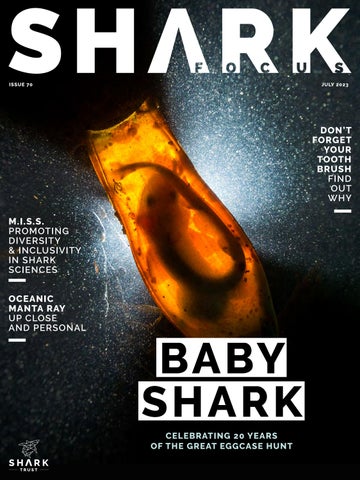
CELEBRATING 20 YEARS OF THE GREAT EGGCASE HUNT
DON’T FORGET YOUR TOOTH BRUSH FIND OUT WHY
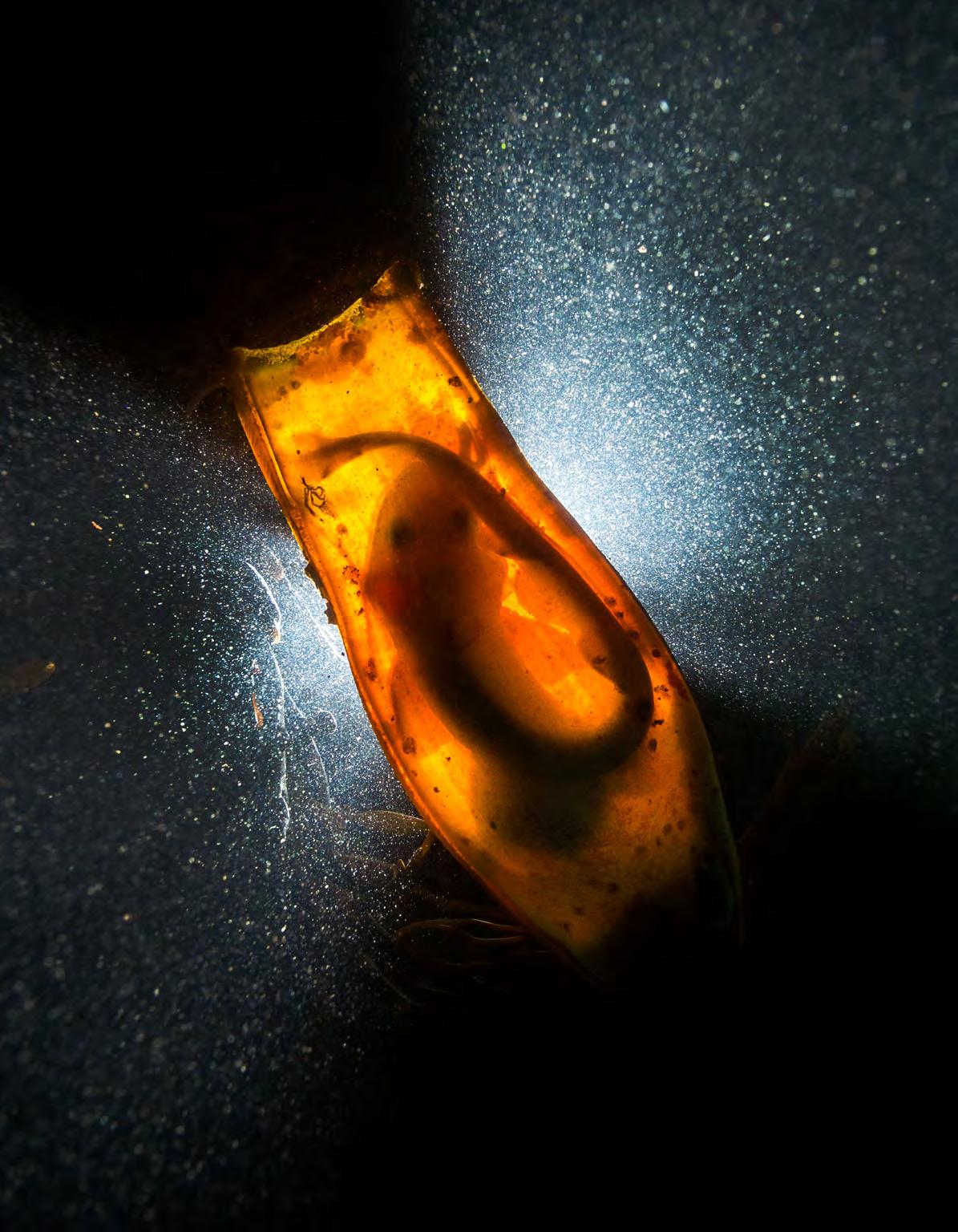
ISSUE 70
WELCOME to issue 70 of Shark Focus. It feels like we can’t stop celebrating in Shark Focus. After two back-to-back special edition issues, we keep up the pace with issue 70. This issue features a celebration of 20 years of the Great Eggcase Hunt (GEH). And take a look at the history project, as well as shining a spotlight on some of our eggcase champions - community scientists who have all contributed massively to the project!
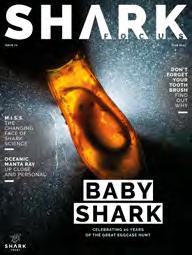
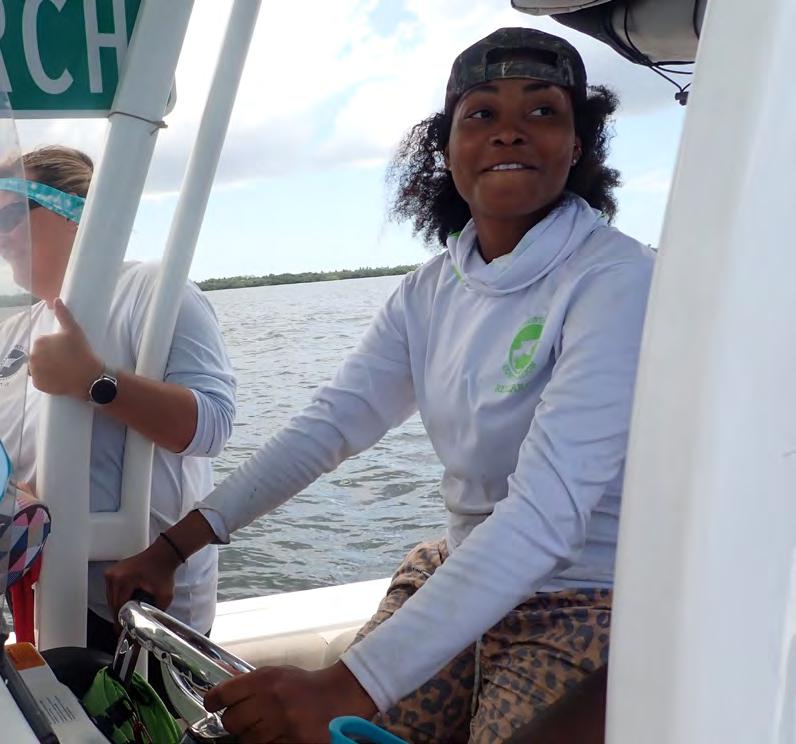
Scientists come from all walks of life. And whilst the Great Eggcase Hunt empowers people to become community scientists, we want Shark Focus to empower scientists too. So we’ve invited several guest writers to contribute to this issue. Offering insights into their research; from eDNA tests on Blue Sharks in West Wales, to the story of Minorities in Shark Science (MISS) and some of their members in the USA.
We’ve also kept the additional two pages, originally added for the special editions last year. Meaning you’ll get more content from us and guest writers with every issue!

I HOPE everyone is enjoying the spring sunshine (or winter for those of you in the southern hemisphere).
Most of you will have received e-mails or letters from us in the past few weeks. We have been updating our systems and therefore we requested those members who are eligible for Gift Aid
HEADQUARTERS:
4 Creykes Court, The Millfields, Plymouth, PL1 3JB, UK
EU OFFICE: The Shark Trust, Stephanie Square Centre, Avenue Louise 65, Brussels, 1050, Belgium
PHONE: +44 (0)1752 672008

EMAIL: focus@sharktrust.org
WEBSITE: www.sharktrust.org
TRUSTEES: Jayne Ensell-Bowen, Roger Covey, Dan Fairweather, Sarah Fowler OBE, Charles Hood, David Elliott and Richard Peirce.
PATRONS: Steve Backshall, Nick Baker, John Boyle, Leonard Compagno, Marc Dando, Bob Earll, Nigel Eaton, Ian Fergusson, Mariella Frostrup, Loyd Grossman, John Gummer MP, Monty Halls, Martha Holmes, Kate Humble, Sir David Jason OBE, Gordon Ramsay OBE, Simon Rogerson, Jeremy Stafford-Deitsch, Michaela Strachan, Valerie Taylor and Paul Rose.
to either renew their declarations or to set up a new form. Whilst we have had many responses, we would really like to capture all those members who are eligible.
If you do qualify for Gift Aid, we would be very grateful if you could complete the form using the link www. sharktrust.org/gift-aid.
We can then reclaim up to 25p for every £1!
It also came to my attention that many of you who pay by standing orders have outdated e-mails. If you could just simply drop me a line - glenys@sharktrust. org then I can enter your new details on the system. Or, call the office and we can send you a form to complete.
We are so very grateful for all your continued support especially at this financially testing time. All your amazing fundraising efforts and your subscriptions allows us to continue with our vital work into the protection of these enigmatic and beautiful species. Thank you all from the entire team.
© Shark Trust 2023 Shark Focus is copyrighted so those wishing to reproduce articles must first contact the Shark Trust. The views and opinions expressed by the authors are not necessarily those of the Shark Trust.
EDITOR: Conor John
DESIGN: Hazel Graham crossfireagency.com
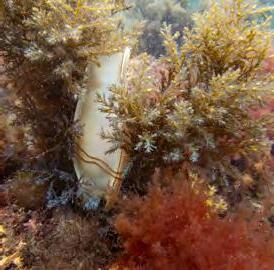
Send your questions, comments and photos to focus@sharktrust.org and you may appear in our next issue.
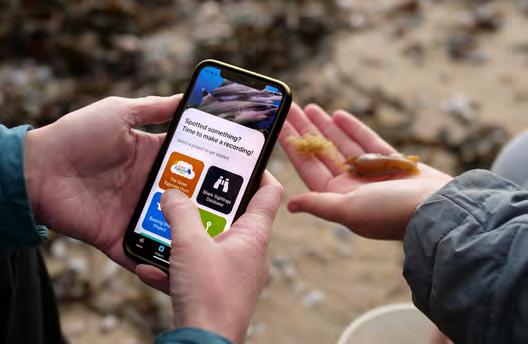
THE SHARK TRUST app is being used by loads of you. Which is awesome! We’re constantly reviewing the app. And appreciate all the feedback we’ve received which can help us make it better.

A reminder – the app can be used to submit records of eggcases, live shark sightings and entangled sharks. But it can also be used to record dead sharks, skates and rays too. So although it’s a little morbid, recording dead sharks, skates and rays adds to the sightings data. Helping us know what’s showing up where!
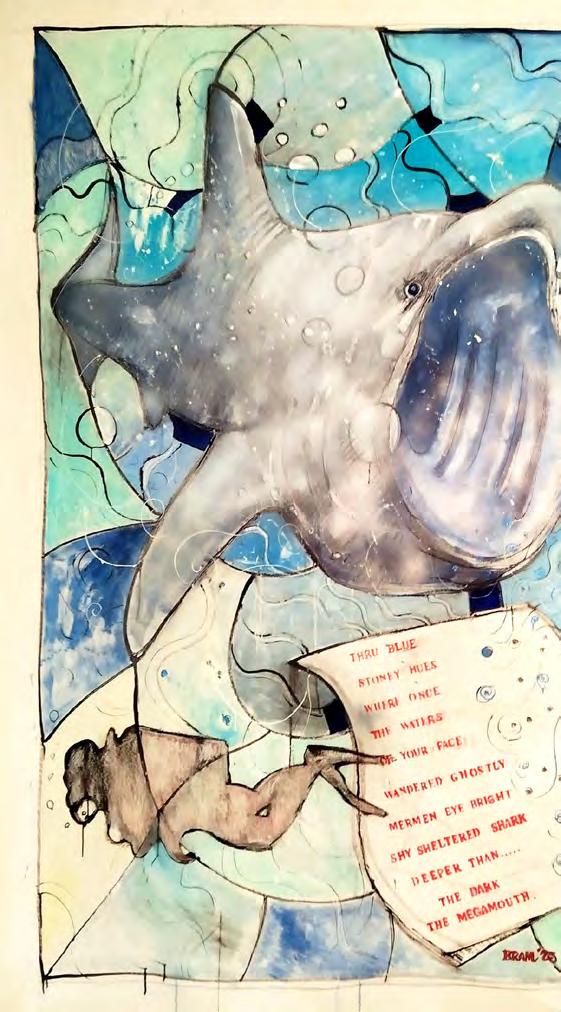
IT’S BACK and even better. The Great Shark Snapshot invites everyone to take part in a week-long sightings survey for sharks, skates and rays between 22nd - 30th July 2023. This year we have even more events, surveys and sessions taking place all over the world. You can join us for a collaborative day of activities with Celtic Deep in Pembrokeshire, Wales. This free event includes snorkelling in search of catsharks, a Great Eggcase Hunt and rockpooling. We’ve also got over 80 events registered for the week across the world! But the best part - you don’t have to take part in an organised event to join the Snapshot. Just log your sightings (via the app or website) of sharks, skates and rays between those dates and you’ll be taking part! Find out more at: sharktrust.org/snapshot
IT’S BEEN amazing to work on Oceanic 31 behind-the-scenes over the last 18 months. But, it’s even more amazing to finally showcase this project to everyone. We’ve got some exciting news about the exhibtion and more!
WE ARE incredibly excited to be taking the exhibition on tour. It has started in Trebah Garden, Falmouth, UK. The exhibition is free to visit and runs until 15th July 2023. There is no need to book to visit the exhibition and it’s free entry. But if you want to visit the wonderful gardens as well, you will need to pay
and ideally pre-book via their website: trebahgarden.co.uk.
For those of you unable to get to visit in person. We’ve launched a Virtual 360° Exhibition. The online exhibition means that wherever you are in the world, you can view the exhibition at Trebah, enjoy the artwork, find out more about the artists. Scan or click the QR code to the left to visit. Follow our socials to keep up to date as new locations and dates are announced for the Oceanic 31 UK tour for 2023 and 2024!
WE ARE happy to announce that we have launched limited-edition prints of a selection of the amazing pieces featured in Oceanic 31. We expect these limited-edition prints to sell out quickly. Head to our shop or scan the QR code to get yours.
We will also be selling raffle tickets, giving you the chance to win one from a selection of the originals. Whilst a selection of the original pieces will be auctioned off at a final event. And some of the pieces will be sold via a silent and sealed online auction.
All the profits raised will go towards our conservation work as part of our Big Shark Pledge campaign. Helping to turn the tide for oceanic sharks.
If you’re interested in purchasing raffle tickets, prints or registering your interest in the auction event then scan or click the QR code to find out more.


Duncan sadly passed away in December 2022. He loved sharks and was a long-term member who supported our work and projects. His family told the Trust his wish was for donations to be made to The Shark Trust in his name. As this was a cause he truly believed in.
Alan Wilkinson
was a long-standing member of the Shark Trust having joined the charity in 1999 sharing his love of sharks with us for 24 years. It is with sorrow we share the sad news that Alan passed away on the 6th of January 2023. He will be greatly missed by his family, friends and all who knew him.
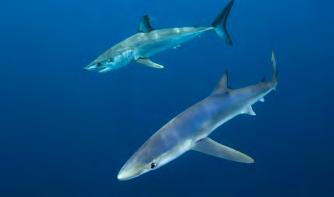
The International Commission for the Conservation of Atlantic Tunas (ICCAT) agreed the world’s first population-wide fishing quota for highly vulnerable Shortfin Mako Sharks. ICCAT set a South Atlantic catch limit (to cover landings as well as mortality from discarding) within the level recommended by scientists in 2019 and made allocations to individual fishing Parties that are calculated to cut their landings of the Endangered species by 40-60%. The agreement stems from a more precautionary proposal by the European Union and United Kingdom to extend a 2021 ban on particularly depleted North Atlantic Shortfin Makos to the South Atlantic. Pushback from Namibia and South Africa resulted in negotiations for short-term limits instead.

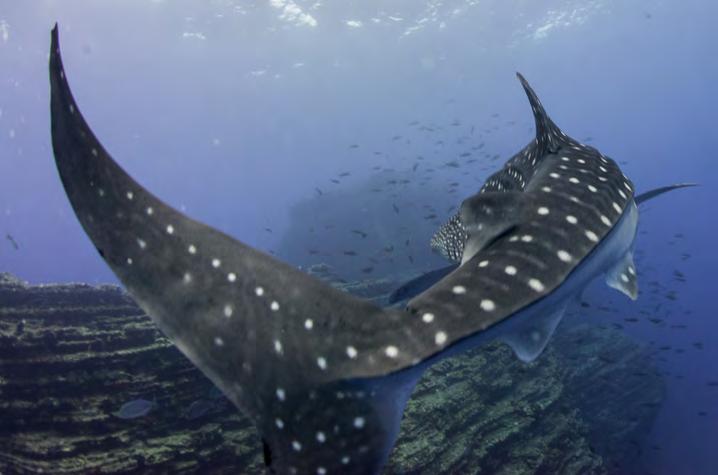
The world’s largest fish had never been reported as visiting the Mediterranean Sea, until December 2022 – when a Whale Shark caught in a tuna trap in the Strait of Gibraltar was released by scuba divers.
The UK’s Shark Fins Bill passed its 3rd reading in the House of Commons. Sponsored by Christina Rees MP, and receiving convincing cross party support, the Bill proposes to commit Fins Naturally Attached (FNA) into UK law.

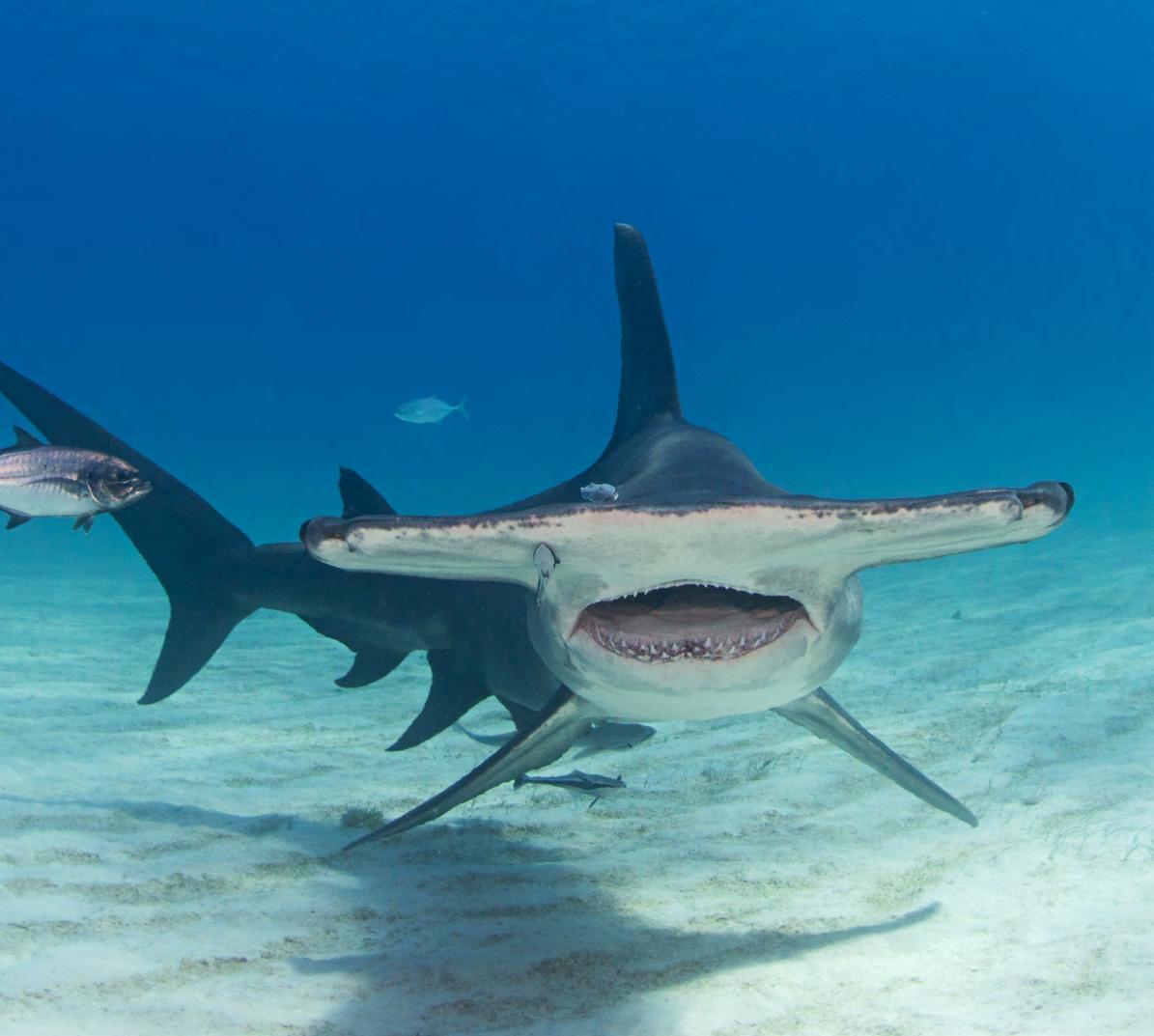
Fishing for Hammerhead Sharks is now illegal in Costa Rica, thanks to the signing of a new executive decree by President Rodrigo Chaves Robles.
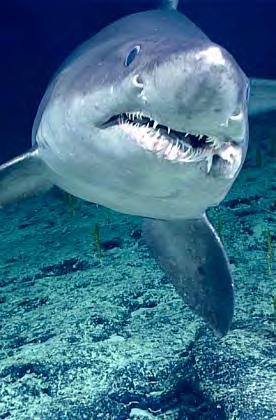
Sighted close to shore earlier in the day, The Shark Trust received reports of the shark washed-up on Lepe Beach, on the shores of the Solent, Hampshire, on Saturday 18th March. Although not able to examine the shark first-hand, several photographs have been circulated, and Shark Trust staff and colleagues identified the shark as a Smalltooth Sandtiger ( Odontaspis ferox ). Despite their circumglobal distribution, Smalltooth Sandtigers are seldom encountered and considered naturally rare. In the Northeast Atlantic their range reaches to the French coast at the top of the Bay of Biscay. Making this report an exceptional one.
A second Smalltooth Sandtiger ( Odontaspis ferox ) washed up off the coast of Co Wexford! This time scientists were able to reach the body and take samples, so hopefully we can learn a bit more about the history of this individual.
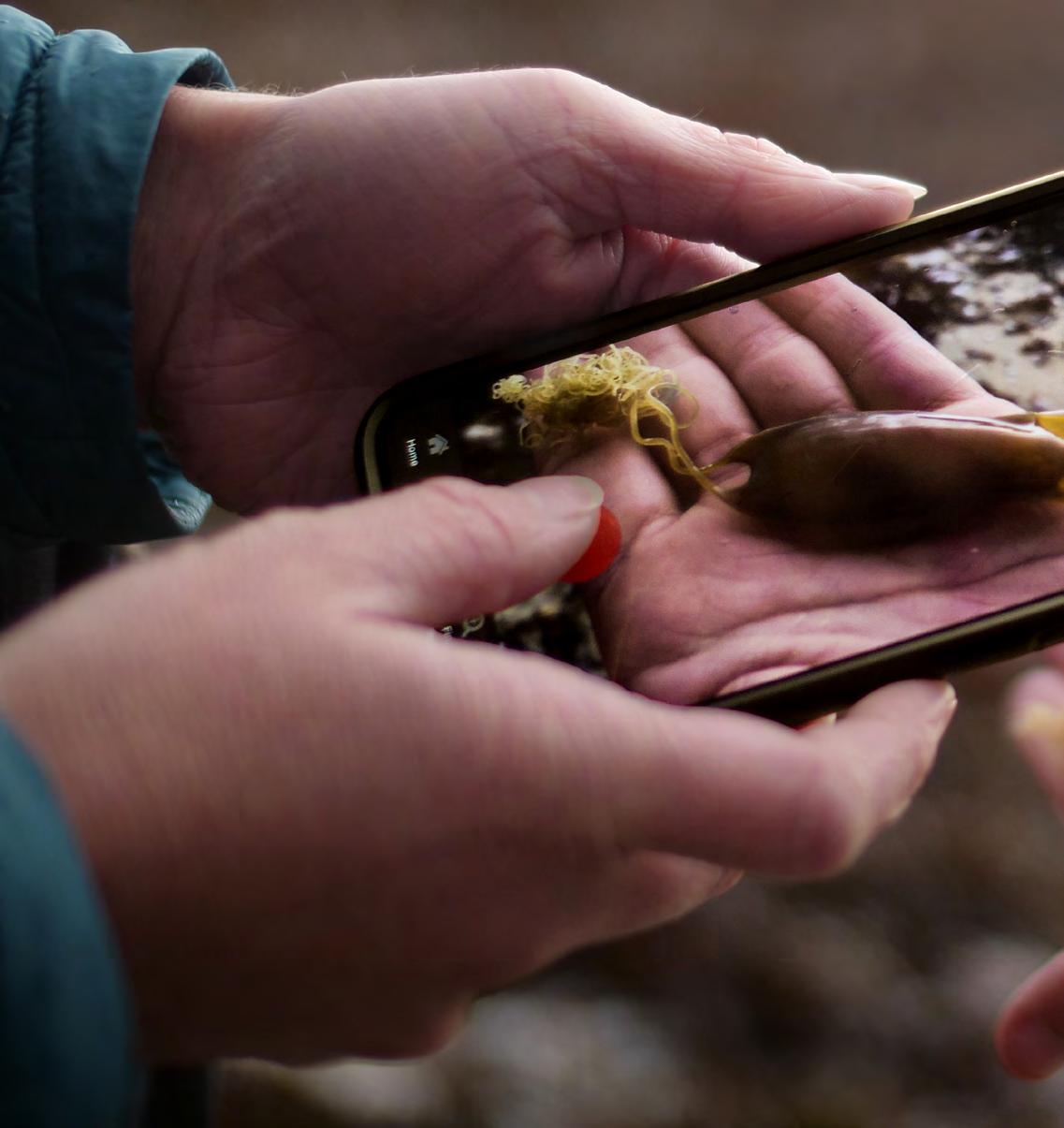
After celebrating 25 years of the Shark Trust last year, we find ourselves celebrating another milestone for one of our flagship projects - the Great Eggcase Hunt. It’s now been running an incredible 20 years! Over the next few pages, we’ll explore the Great Eggcase Hunt and how much it’s grown since its humble beginnings back in 2003.
We start off with an article from Cat Gordon, Senior Conservation Officer at the Shark Trust. Cat’s worked on the project since she started at the Trust over 12 years ago, and has led on the development of the project. Cat’s helped to spread the word with TV and radio appearances, many beach events, and sorting through piles of eggcases in our offices. In addition to creating eggcase ID guides in different regions, collaborating with project partners, and turning data into reports. Cat writes about her love for the project and what the future holds for the Great Eggcase Hunt (a.k.a. the GEH).
We then draw attention to some of our Eggcase Champions. Individuals who have worked tirelessly as citizen scientists to contribute towards our growing eggcase database. The Great Eggcase Hunt is a wonderful way to connect with the great outdoors, and each of our Champions explains what the project means to them.
Finally, we’ve got some of the latest data to showcase, which has been compiled by Harriet Allen, our Citizen Science Data Officer. As we move towards half a million eggcases reported, we take a look at the global reach of the project, and show-off some of the coolest finds.
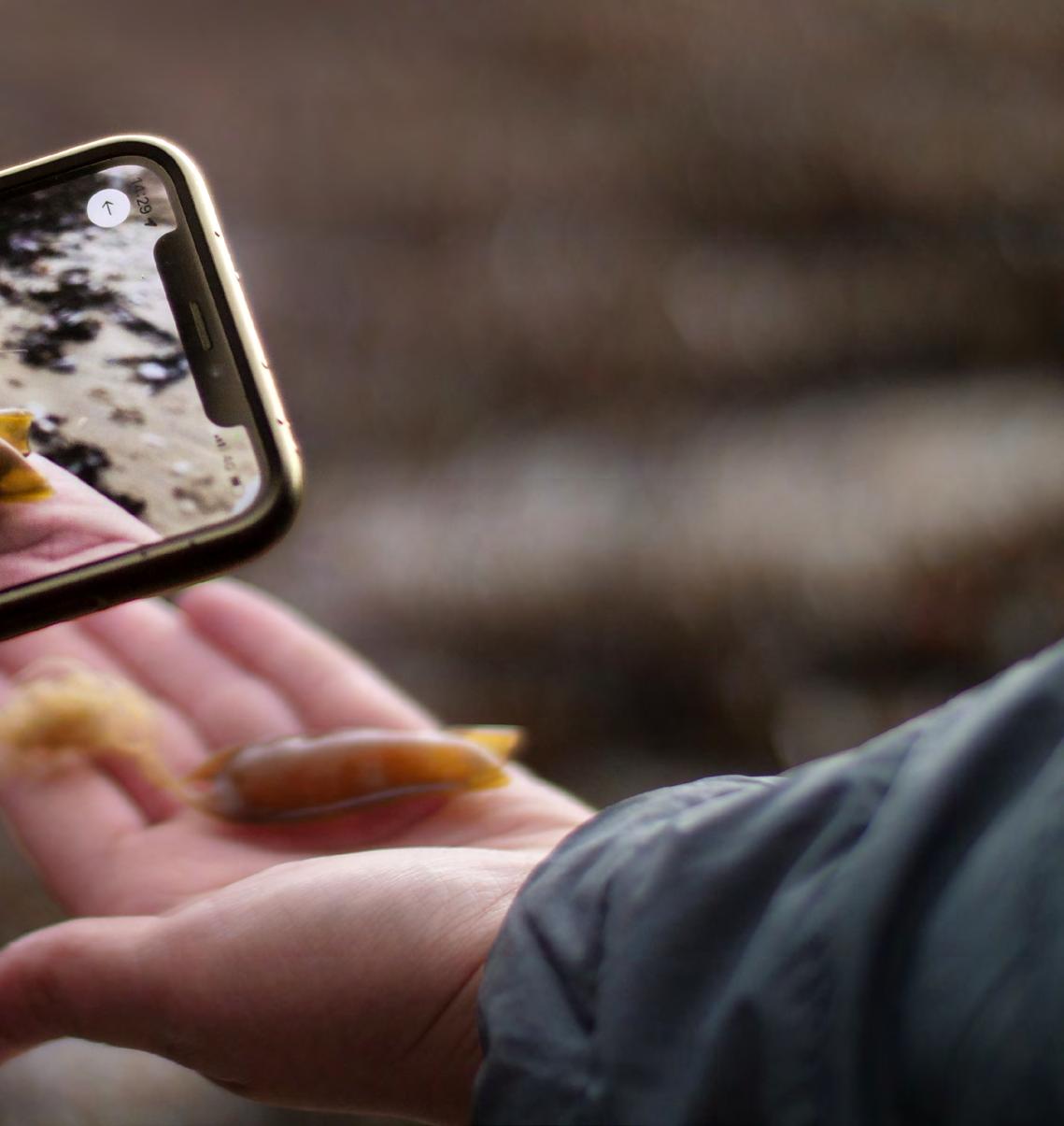
hat began with a chance find on a windy beach in Devon, has now evolved to become the Shark Trust’s flagship citizen science project. At a time when sharks received very little attention in the UK, and many people weren’t even aware that many species frequented British waters (maybe with the exception of the charismatic Basking Shark), they were in much need of a PR uplift. All it took was an eggcase becoming entangled in a kite line. And a project based entirely on finding evidence of shark and skate presence was borne.
While acting as a great way for the wider public to understand more about shark diversity and better connect with the Ocean’s inhabitants without necessarily getting wet –assuming you’ve read the tide tables correctly – it quickly became apparent that it could also contribute towards shark conservation efforts
Now, citizen science comes with a cautionary warning. It is entirely effort based. Some regions may have stretches of coastline where no eggcases have been reported and so appear as blank spaces on the results map. This doesn’t necessarily mean that eggcases aren’t present there… simply that no one has found them, or that no one has reported them to us. However, the benefits of citizen science far outweigh the downfalls – it provides greater manpower than would ever be available through maintaining set surveys, and enables a far greater collection of information over a longer time series. We would never have been able to cover as much of the coastline as has been populated on our Great Eggcase Hunt results maps without the army of eggcase champions tirelessly searching the strandline of their local beach. To date, the project has now received over 440,000 individual eggcases from over 11,500 recorders. And actually there are a far greater number of
participants, as submissions are often on behalf of larger groups.
Some general trends are apparent based on known species distribution. Such as the south coast being more fruitful for Undulate Ray eggcases than the remainder of the UK, which is to be expected as this represents the most northerly extent of the species’ range. Or that you’re far more likely to find a Flapper Skate if you’re stood on a beach in Orkney, where the population has a regional hotspot, than you are anywhere else in the world. That on North Sea coasts, although you may not find eggcases in great numbers, you may be lucky enough to find a Starry Skate eggcase which is rarely reported in other parts of the UK.
WHAT BEGAN WITH A CHANCE FIND ON A WINDY BEACH IN DEVON...
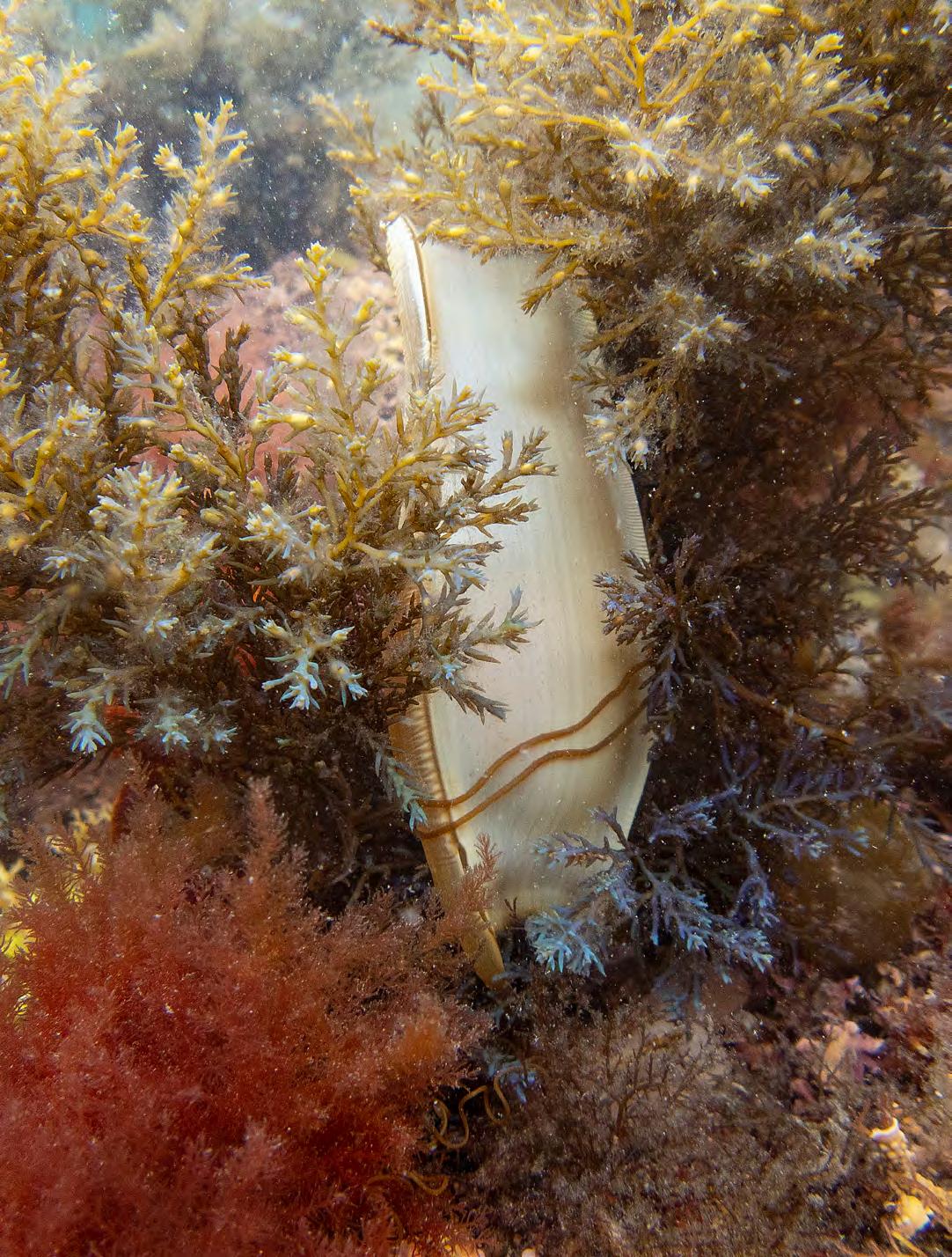
Over the years, there have been some interesting anomalies that have popped up in different regions. Such as what appeared to be a larger than usual Starry Skate reported from Borth, mid Wales. Not only was the size unusual, but it was also outside of the normal expected range for this species. Interestingly, this species also inhabits the Northwest Atlantic where they produce larger eggcases than we see in the Northeast Atlantic. So did it wash over from there? Is there a female producing larger eggcases? Is it actually a different species we haven’t recorded from UK shores before? Or is it even a hybrid? Following this interesting report, we later received another similar eggcase from Shetland – this time within the range of the Starry Skate, but still perplexing, nonetheless. White Skate eggcase are not often reported to the project from outside of Ireland or South Africa, however we’ve had reports from North Devon, North Wales, Argyll and Bute, and even Fair Isle – demonstrating that there’s a chance of having a lucky or rare find anywhere you go!
In the early days of the project, it was a game of matching eggcases to adults as identification materials for the eggcases simply didn’t exist – this was done largely working with aquariums who keep a close eye on their egg-laying residents. Even as recently as 2010 we’ve had to fill some gaps in the Northeast Atlantic. What was previously known as the Common Skate, was only then recognised as being two distinct species – the Flapper Skate and Blue Skate. Long confused under the same moniker, this species had been
managed in fisheries under one name. Steep population declines were a consequence of intensive unmanaged fisheries. Leading to the species being classified as Critically Endangered on the IUCN Red List. Up until the recognition of two separate species, we only knew of the huge Flapper Skate eggcases that were reported from Scotland and the Northern Isles. So what did the eggcase of the smaller Blue Skate look like? With help from Cefas, we were able to locate some eggcases obtained from captured females (giving known provenance), take measurements and photographs, and add it to our eggcase identification guide. At the time, we thought that the chance of finding this species washed ashore would be low, but after all, if you don’t know what you’re looking at, how can you accurately record it? The first beach find from Cornwall was immensely exciting when we realised what it was! Since then, we’ve received verified reports from Cornwall, South Wales, Mid Wales, a flurry from Orkney, and even one from the Nouvelle-Aquitaine region of France.
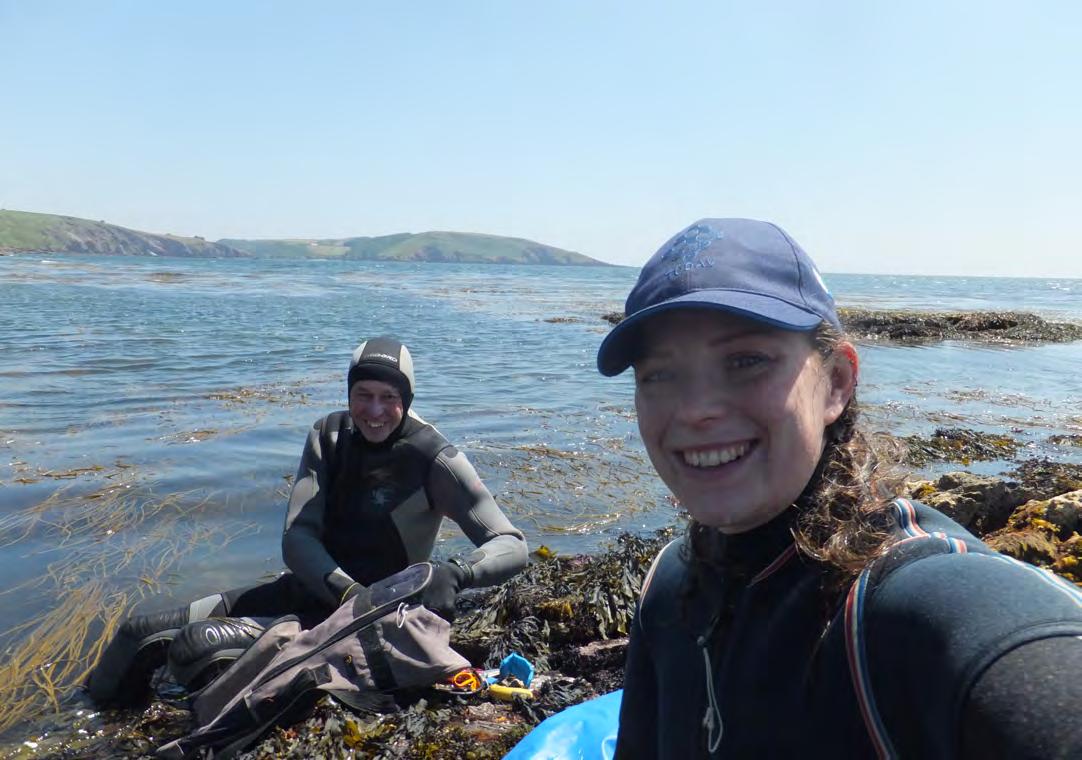
WIN THE EARLY DAYS OF THE PROJECT, IT WAS A GAME OF MATCHING EGGCASES TO ADULTS AS IDENTIFICATION MATERIALS... JUST SIMPLY DIDN’T EXIST


Though the Great Eggcase Hunt was established in the UK, we have always welcomed submissions from further afield, and enjoy expanding our eggcase knowledge by adding newly recorded species or ticking off another country. To date, over 50 species have been reported, from 29 countries. There’s a lot more still to go though! There are over 1200 species of Chondrichthyans (sharks, skates, rays, chimaeras) worldwide.



Approximately 44% of which are oviparous (egg-laying). This includes five orders within 13 families – namely the skate, catsharks, carpetsharks, horn sharks, and chimaeras.


The project has expanded, starting with partnerships in Portugal and the Netherlands that enabled the identification materials to be translated into additional languages. We’ve since created versions for Türkiye, Spain (covering the Atlantic and Mediterranean coasts) and Wales (in Welsh, as delivery partners of Project SIARC). Most recently, and excitingly, we created a series of seven posters for Australia for a new partnership for 2023.
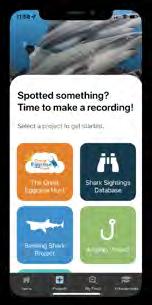
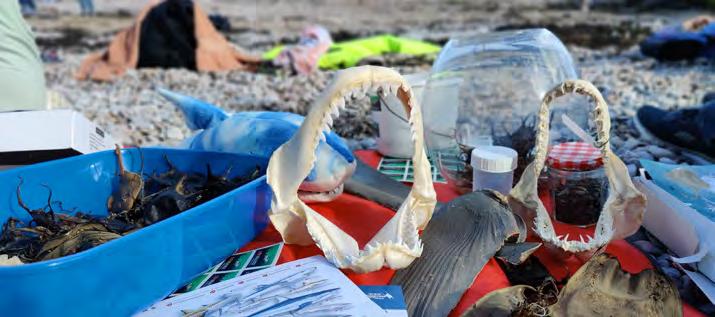
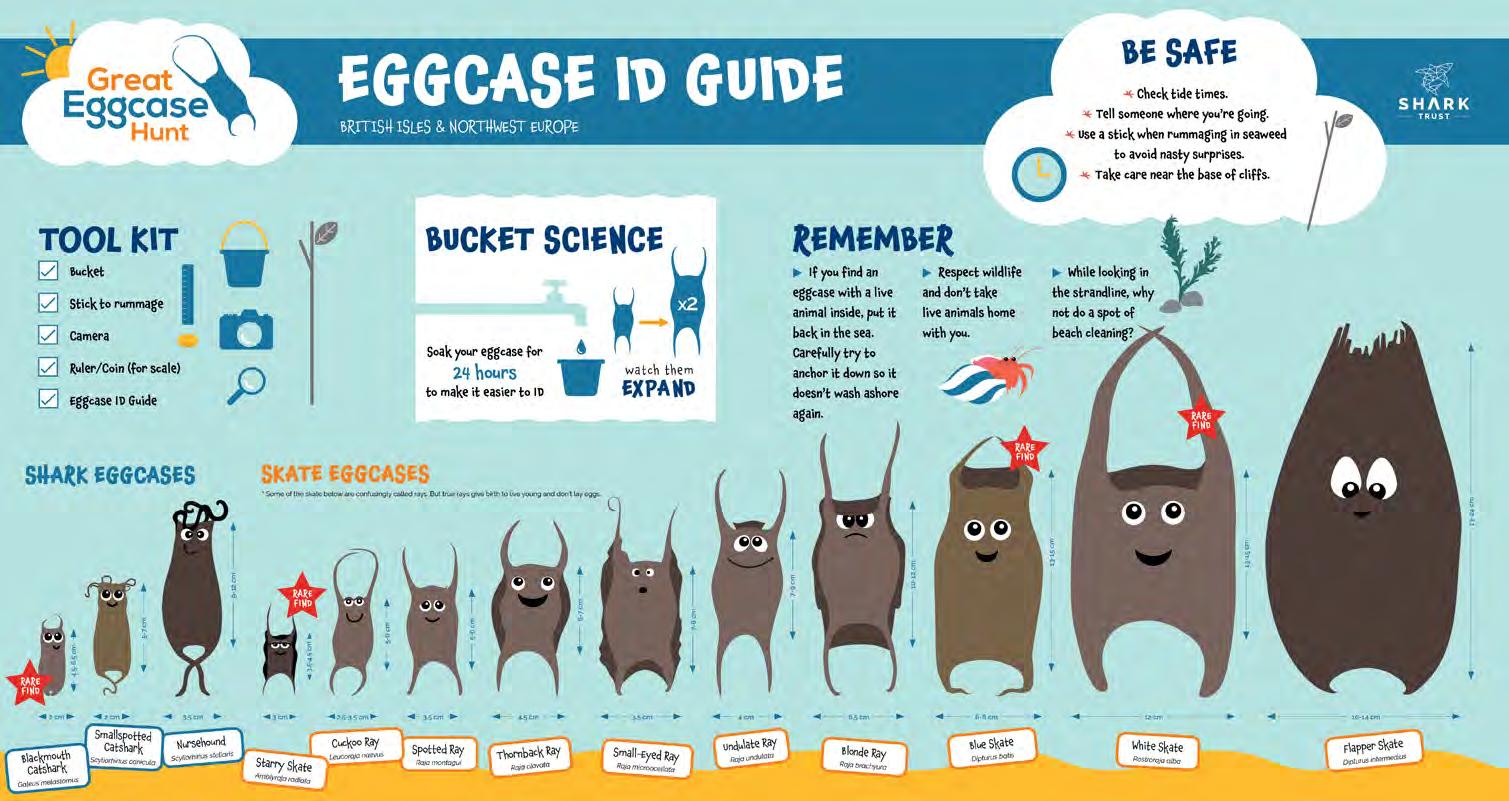
GETTING INVOLVED in the Great Eggcase Hunt can be as simple or as methodical as you want it to be. It may be that you make a chance find while out walking the dog or taking a stroll on the beach. You could walk along the upper strandline and return along the lower. You may plan a set distance you intend to cover or specify a set time searching. The important thing is to keep your eyes peeled and look out for those tell-tale horns or tendrils poking out from their hiding place. They may be camouflaged amongst the seaweed in the strandline with all the shells, cuttlefish bones, and crab moults, they may have blown into sand dunes at the back of the beach, they may even have blown onto the coast path or into the car park. Once you’ve made a find (or many!) then it’s time to move on to the ‘identify’ phase. For this, you need the Great Eggcase Hunt identification guide and step-by-step ID key, or the Shark Trust app. If you’ve taken the eggcase home to identify, soak it in water for a few hours so it expands to its true form. This will help you see the features more clearly and get a better indication of size. Once you’ve worked out what you’ve found, it’s time to submit it to the Great Eggcase Hunt either via the online recording form or through the app (where you can collect digital reward cards for your effort!).
An individual eggcase may not seem like it indicates much beyond species presence, however through collective action, this information builds to become a powerful database that can help demonstrate seasonal trends and potentially indicate important areas such as egglaying grounds.
We want to thank all of the wonderful citizen scientists who have contributed to the Great Eggcase Hunt over the past 20 years –whether you’ve submitted one eggcase,
hundreds, or even thousands. The project wouldn’t be possible without your tireless efforts whatever the weather so THANK YOU and HAPPY EGGCASE HUNTING! This issue is dedicated to all of you.
Dorset Wildlife Trust
s a project that started in the UK, over 90% of our data so far has come from the here. But the GEH is spreading - with more and more records coming in from around the world!
Total number of
2003-2023
We have been very fortunate to have some dedicated Eggcase Champions and Partner Organisations that have spent years submitting eggcases to the project. We cannot wait to see the records grow around the world.
~450000
450,000
Please note that these numbers contain data reported to the Great Eggcase Hunt from: beach finds, surveys, specimens and data shared with the Great Eggcase Hunt from other eggcase collecting organisations,. Numbers correct as of 01/04/2023.
Please note that these numbers contain data reported to the Great Eggcase Hunt from beach finds, surveys, specimens and data shared with the Great Eggcase Hunt from other eggcase collecting organisations. Numbers correct as of 01/04/2023
*Other includes; Blackmouth Catshark, Blue Skate, Cuckoo Ray, Small-eyed Ray, Starry Skate, White Skate & Other species
TOTAL NUMBER
OF EGGCASE HUNTS
EGGCASES FOUND ACROSS THE UK
Diane Westwood
Project SIARC & Penparcau Community Forum
Rustington
Jersiaise Dorset Wildlife Trust
2003-2023
EGGCASE HUNTS
Total number of
Total number of 25000+ RECORDERS
~450000 EGGCASES RECORDED:
Please
Total number of verified
50+ SPECIES
8500+ Verified: 77% Unverified: 23%
Thornback Ray 26% Flapper
Skate
*Other includes; Blackmouth Catshark, Blue Skate, Cuckoo Ray, Small-eyed Ray, Starry Skate, White Skate & Other species
*The number of eggcases is linked drectly to the nuber of recorders / records. As some countries have far more recorders than others, the UK for example, comparisons between countries is not possible.
*The number of eggcases is linked directly to the number of recorders / records. As some countries have far more recorders than others, the UK for example, comparisons between countries is not possible.
The GEH is driven by volunteer citizen scientists all over the world. Not only does the project offer the chance to contribute to data. But it also offers the chance to get outside and connect with nature. Something which these GEH Champions all enjoy doing.
How long have you been eggcase hunting? I started in August 2015.
Why did you start eggcase hunting?
I saw Cat Gordon being interviewed on a BBC programme called The Big Blue. I visited the beach regularly and the idea of being involved in a Shark conservation citizen science project really appealed.
What drew you to the GEH project? I was at my local beach collecting rubbish every day so decided I could do that and eggcases as well.
How often do you look for eggcases?
Work and weather permitting as much as possible, often daily.
How long have you been eggcase hunting?
We’ve been eggcase hunting around Fleetwood on the Lancashire coast for several years.
What drew you to the GEH project? We were fascinated by our eggcase finds and the idea of citizen science and drawn into the GEH. Great to follow new records on the map. Events and enthusiasm to keep recording come from Jane Godfrey LWT, super keen on citizen science recording.
What species/eggcases have you found? Here on our bit of Lancashire coast we’ve found Thornback Ray, Smallspotted Castshark, Spotted Ray, Cuckoo Ray, Blonde Ray and Nursehound eggcases.
How long have you been eggcase hunting?
I’d say around four years. How long have you been eggcase hunting?
Since 2015.
What drew you to the GEH project? When you visit a rocky British Isles shoreline for the first time in your life, there is so much to discover and the ability to find and learn more about a specific Order of animal was appealing. The GEH allows me to learn and get out and hunt for eggcases.
How often do you look for eggcases?
Everytime I’m at any beach! Whilst everyone else walks along the shoreline, I’ll be at the back of the beach with my head down scanning for washed up treasures!
Which is your most common eggcase find?
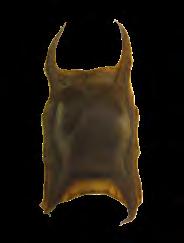
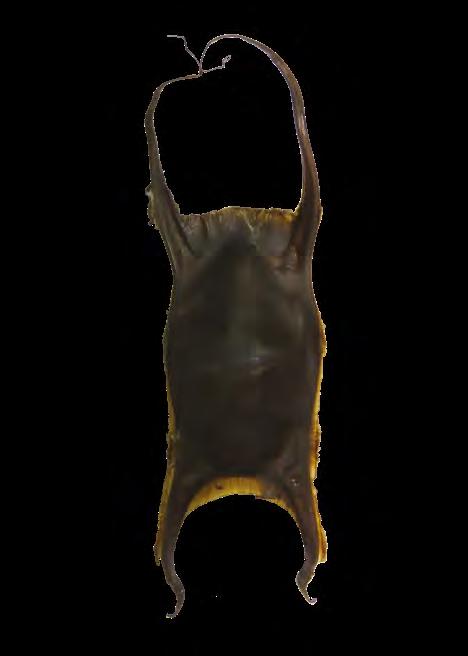
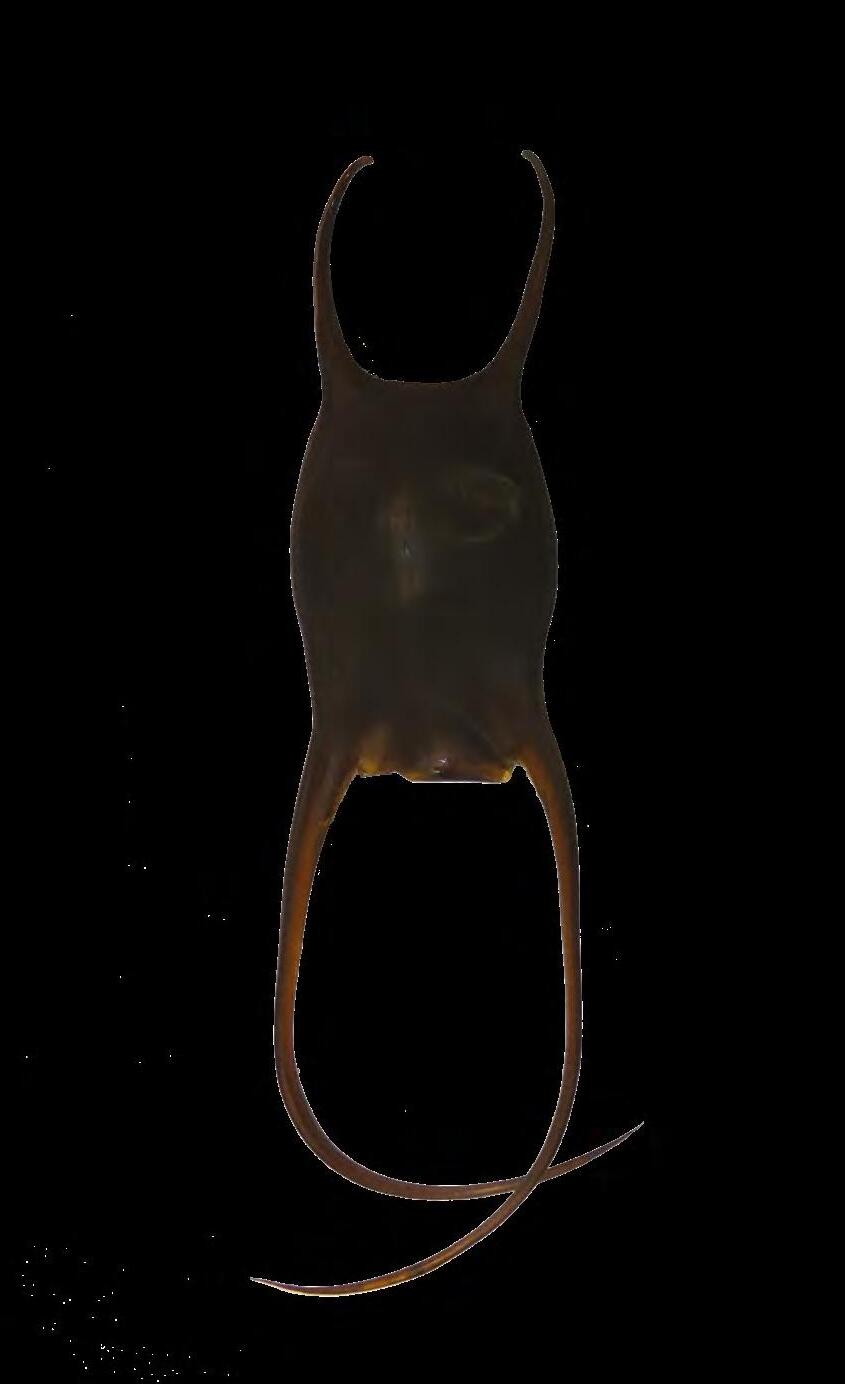
Smallspotted Catshark by a ratio of about 10:1.
Why did you start eggcase hunting?
I found that our local Wildlife Trust used to do it, and it had lapsed, so I thought I could pick it up.
What drew you to the GEH project?
Making my data useful to the wider scientific community and potentially informing climate change data.
How often do you look for eggcases?
Every time I’m on a beach! At least once a week in the winter season.
What species/eggcases have you found?
4 most common for us are Nursehound, Spotted Ray, Small-eyed Ray, Smallspotted Catshark.
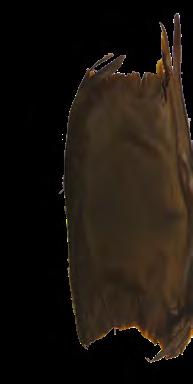
Dream eggcase find? (Can be global, not just UK) I’d love to find a flapper skate.
Fave skate?
Thornback (I found a dead one on the beach and the thorns were amazing!).
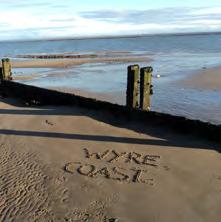
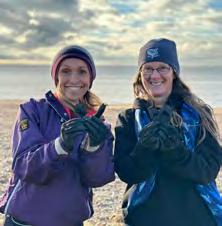
Favourite Chondrichthyan

Basking sharks have to be our favourite at the moment - huge, enigmatic and in the Irish Sea! Brilliant to think they could be out there whilst we are on the beach.
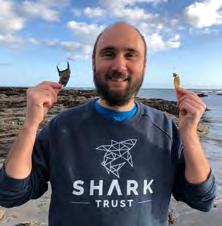
NUMBER OF EGGCASES
22,095
NUMBER OF EGGCASES
77,320
NUMBER OF EGGCASES
2,926
Which is your most common eggcase find?
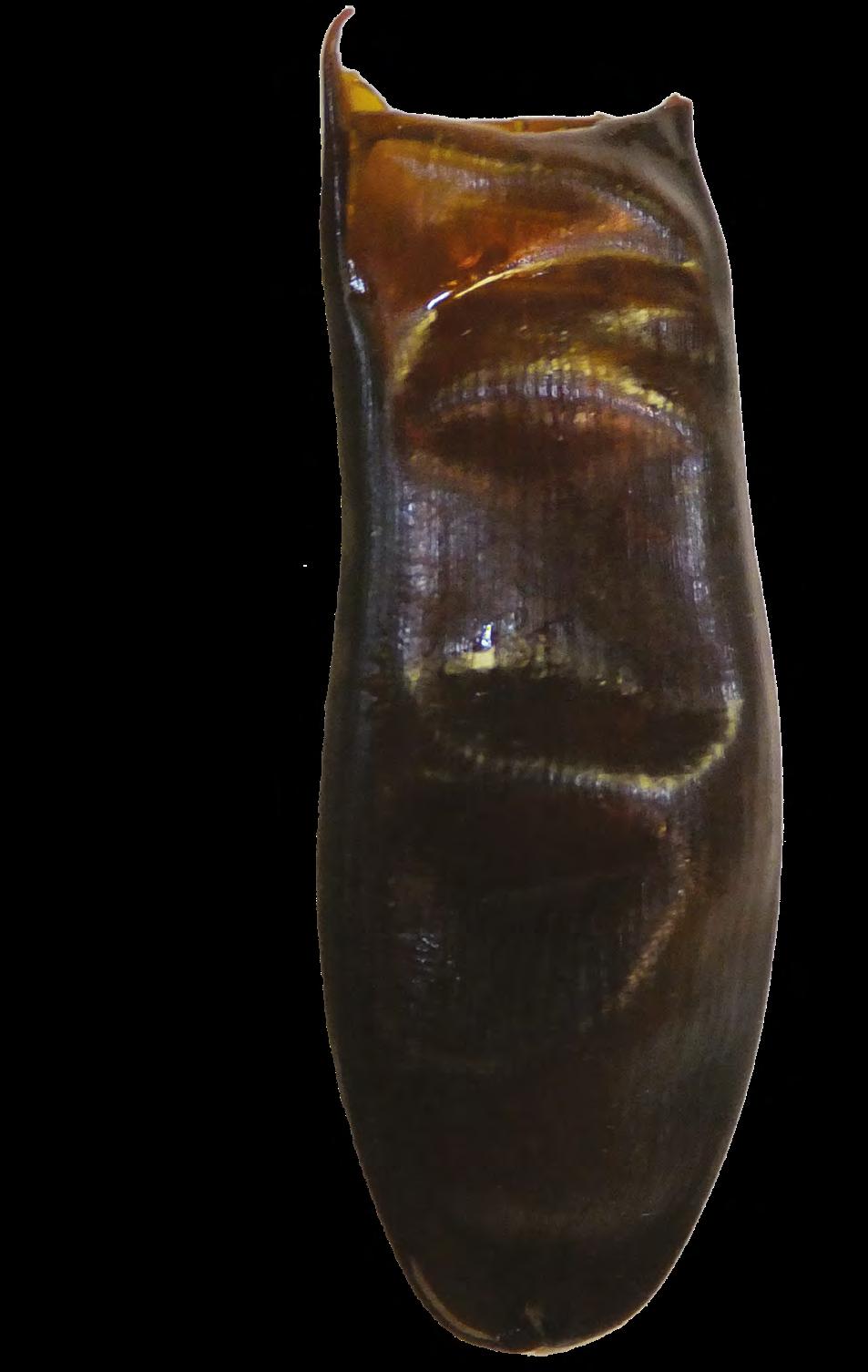
Nursehound, by a very long chalk, we find thousands!
NUMBER OF EGGCASES
10,189

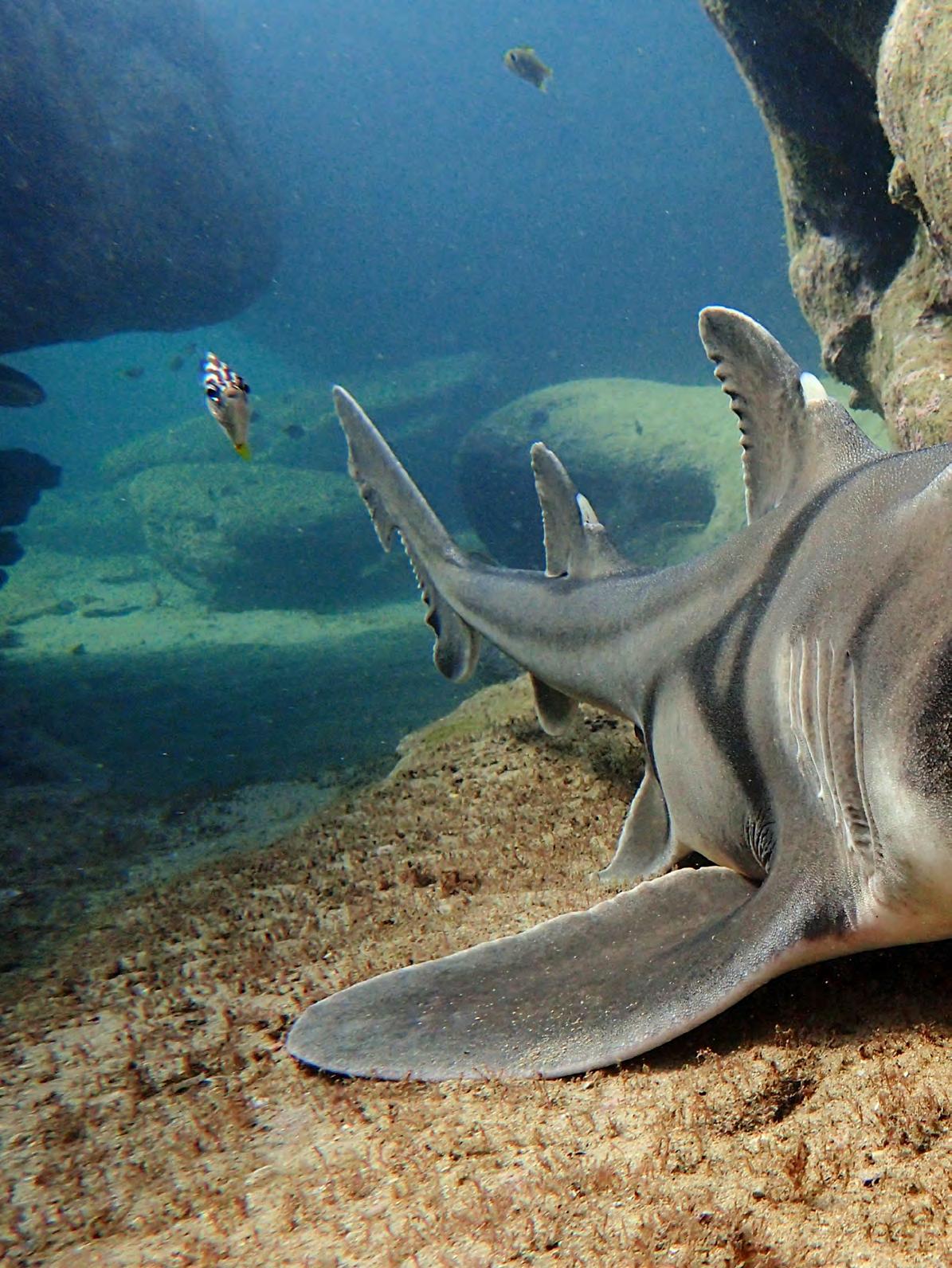
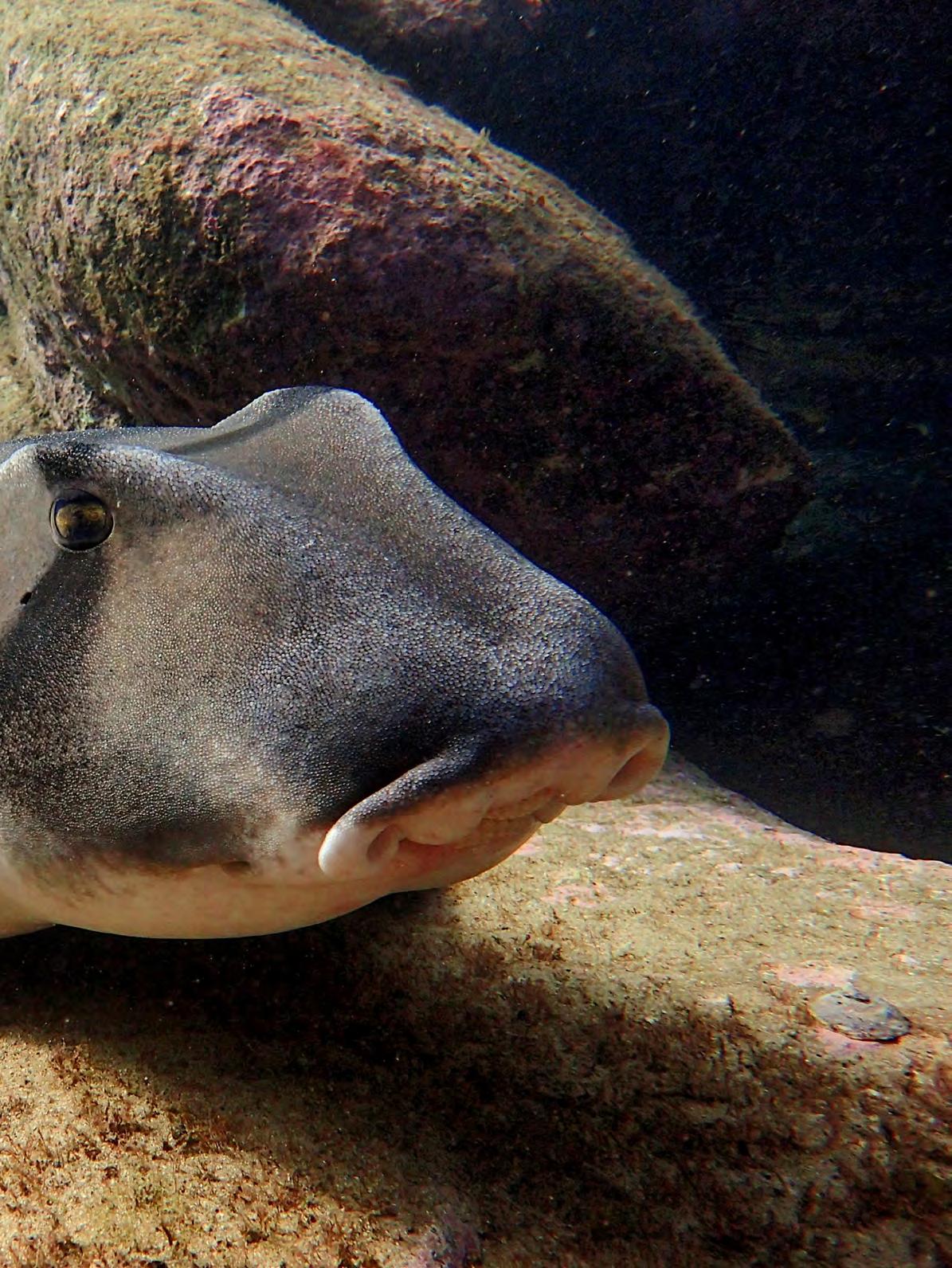
SCIENTIFIC NAME:
Heterodontus portusjacksoni
MAXIMUM SIZE: 1.5m
DIET: Gastropods, cephalopods,
crustaceans, worms and small fish
DISTRIBUTION: Coastal waters around southern Australia and New Zealand, including Lord Howe Island
HABITAT: Rocky reefs, seagrass beds, kelp forests sandy and muddy bottoms. Shallow waters up to 100m
STATUS: Least Concern

LAST WEEK* was the London Marathon. Over 48,000 runners determined to reach the finish line. Each with their personal motivations and many supporting myriad charitable causes – including the Shark Trust (special thanks due!).
Personally, even watching the marathon on TV is a visceral experience. So many people brought together for one goal: to make the distance, often at great personal cost. It is an especially tangible demonstration of collective action.
But not all collective action is so obvious - nor is it televised – but for me it’s just as visceral. Recently I had reason to revisit stats on a set of petitions from a decade-old campaign. One hundred and sixty thousand people had taken time to personally sign (with a pen!) a petition calling on the EU to tighten shark finning regulation. A petition which at the time opened doors of European power and led to a seismic shift in shark finning regulation, with global ramifications still felt to this day. In 2022 over a million European citizens called for even tighter regulation – evidence of the growing constituency of shark conservation minded citizens. Again, the powers that be needed to sit up and listen, a response due later this year.
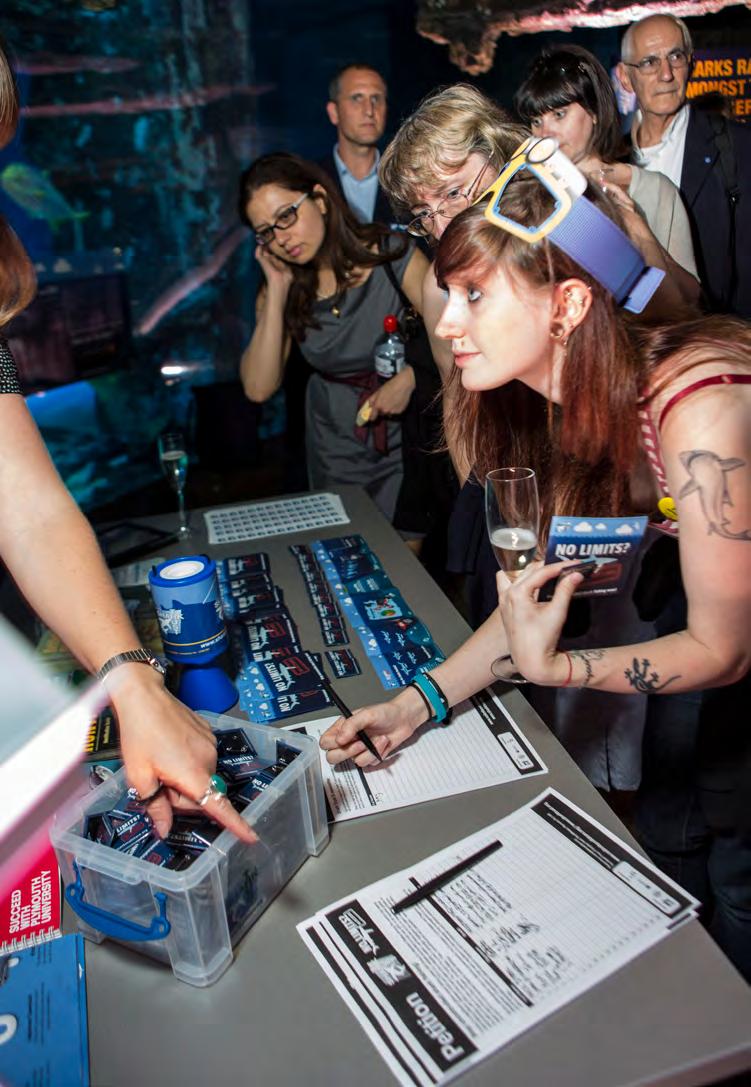
So collective action has long been central to our actions here at the Trust. To put it simply: we need and value your help – your eyes, ears and resolve! Evidence of this is liberally littered through this edition of Shark Focus. Twenty years of the Great Eggcase Hunt, sees over 8500 recorders, likely representing many more individual eggcase hunters, reporting over 450,000 eggcases! And excitingly, new communities, in fact the entire continent of Australia has just been invited to join the hunt!
So, whether you’re addig your name to
WE NEED AND VALUE YOUR HELP - YOUR EYES, EARS AND RESOLVE
The Big Shark Pledge, retweeting campaign messaging, supporting a fundraiser, recording eggcases as part of the Great Eggcase Hunt, taking part in the Great Shark Snapshot or reporting your sightings – it is the collective action of us all that generates positive change, and we very much appreciate the support.
* at time of writing
Did you know that approximately 31 million adults in the UK don’t have a will?. Perhaps you’re one of them. Having a will allows you to leave your estate to your loved ones, ensure that your loved ones aren’t left with the complexities of not having a will and if you choose, can do some good for sharks.

We’ve teamed up again this year, with award winning will writer Farewill to offer a limited number of Free wills. Our vision is a future where sharks, skates and rays thrive within a globally healthy marine ecosystem. You can help us realise this vision. And this could be your lasting gift.
Having a will can give you peace of mind and make things easier on your loved ones when the time comes. So, although we don’t like to think about the inevitable if you’ve been thinking about writing a will and aren’t sure where to start. Farewill can make the process easier. We have a limited number of free will packages available. These allow you to write a legally-binding will from home, in
sharktrust.org
as little as 30 minutes, at a time that suits you. This service includes expert checking to make sure your wishes are clear. After considering your family and loved ones, if you want to, you’ll have the opportunity to leave a gift to the Shark Trust. Your legacy is their future and makes a lasting impact. We’ll ensure your legacy is used to safeguard a future for sharks, skates and rays.
Visit Online ( farewill.com) and click Will Writing Service > Legal Will In 15 Minutes and use the code SHARKFOCUS-2.
And if you choose to remember the Shark Trust, thank you.
Huge well done and congratulations to our recent sharky fundraisers, thank you for being part of the team and raising vital funds to support shark conservation. It’s brilliant to know there are so many shark fans out there!
Here are a few of our recent wonderful fundraisers…
Trudy and Courtney raised a combined £508.75 diving with sharks at Blue Planet Aquarium
Will (left) raised £185 running the Cardiff Half Marathon
And for those fundraisers who have events coming up, we wish you all the best and can’t wait to hear how your events go. If you’d like to be part of the shark trust family and have a go at fundraising to support shark conservation, then head over to our website to discover how you can get involved sharktrust.org/fundraise

OUR VISION IS A FUTURE WHERE SHARKS, SKATES AND RAYS THRIVE
Master’s student at Arizona State University
Marine heatwaves (MHWs) are defined as a period of unusually high ocean temperatures regarding their duration and intensity. The warming periods are becoming more severe and frequent. Marine heatwaves increase surface temperature and decrease the pH, meaning that this is an additional challenge presented with climate change. Sarika’s project is looking at Chain Catshark ( Scyliorhinus retifer) embryos — an egg-laying species that are unable to escape from unfavorable conditions such as MHWs. The goal of this study is to quantify the impacts on heart and brain development and overall anatomy of embryos who have been exposed to simulated MHWs during the stages of development. In addition, she will also be researching differences in predator avoidance caused by marine heatwaves.
MISS was founded by four Black female shark researchers. We strive to be seen and take up space in a discipline which has been largely inaccessible for scientists like us. We strive to be positive role models for the next generation. We seek to promote diversity and inclusion in shark science and encourage gender minorities of color to push through barriers and contribute knowledge in marine science. We hope to topple the system that has historically excluded people like us and create an equitable path to shark science. We believe diversity in scientists
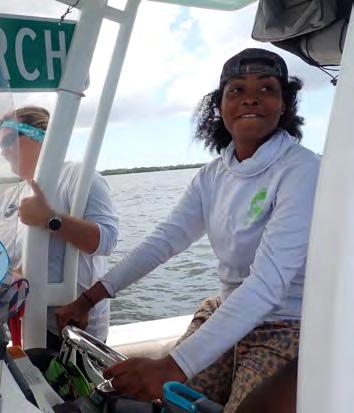
Master’s student at the University of the Pacific
creates diversity in thought, which leads to innovation. We facilitate opportunities for kids and adults from historically excluded groups to get hands-on marine science experiences and training while eliminating the financial burden typically associated with these experiences. Our members support eachother. One of the three pillars of our MISSion is inclusive research which supports research and facilitates collaborations across institutions, cultures, disciplines and countries that emphasizes local knowledge and access. Here is just some of the work of our members from around the world.
Karson’s research focuses primarily on how stressors affect the physiology of several species of North Atlantic sharks, including Blacknose ( Carcharhinus acronotus ), Sharpnose ( Rhizoprionodon terraenovae ), and Bonnethead ( Sphyrna tiburo ) Sharks. She is profiling the proteomes (all of the proteins that are produced by cells at a specific timepoint) of different tissues in these shark species, and correlate them with other biomarkers and contaminants in order to determine the effects of anthropogenic stressors on shark health.
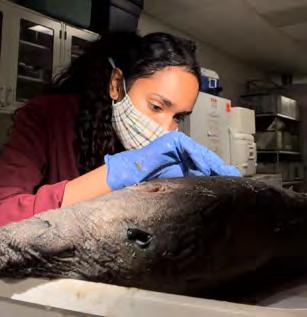
Founder of Projeto Tubarão (@projetotubarao) and Master’s student at the Federal University of São Paulo (UNIFESP)
Ingrid studies the reproduction and feeding habits of Data Deficient species of deepsea and coastal sharks and rays. She developed a monitoring project in southern Brazil in partnership with artisanal fishers to study the elasmobranch species incidentally caught by beach seine during the COVID-19 pandemic. Together they released more than 750 Cownose Rays in last than two years and now fishers continue releasing the animals by themselves. Currently her focus is on the age and growth of rays and stock assessments of these species based on data from discards by commercial fisheries.
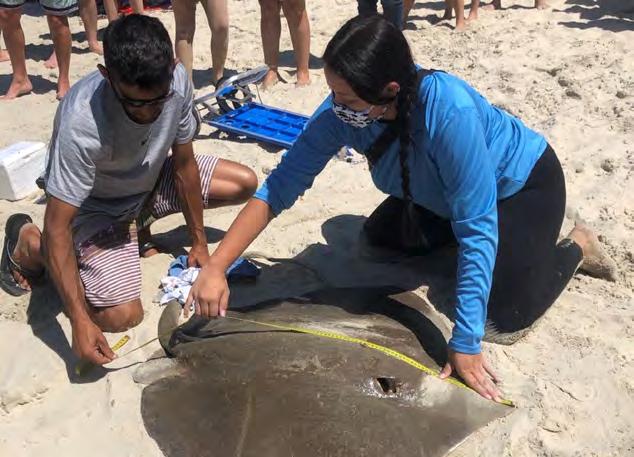
Sara works as a marine ecologist in southern Iran in the Persian Gulf. She has been using Baited Remote Underwater Video (BRUV) systems for more than five years in this area to identify the shark and ray species present. At the start of the project she was focusing on the shallow water of Kish Island to evaluate the need for a protected area. She has since expanded this research to two other islands and is now using stable isotope analysis and telemetry to better understand how sharks are behaving around these islands, their trophic level and diet. In an effort to build a comprehensive conservation plan.
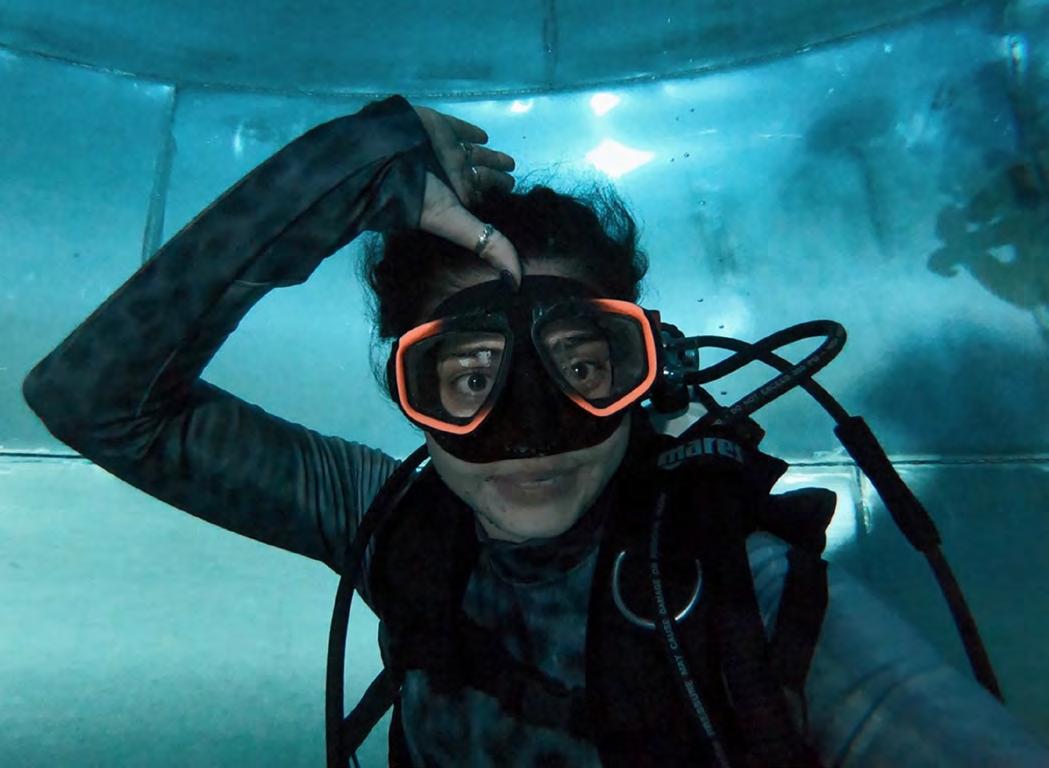
Through our fundraising and partnering efforts, MISS gives gender minority individuals of color the opportunity to access essential experiences regardless of whether they have the financial resources to pay for them. Racial and gender minorities are unlikely to stay in the field if they do not feel supported or if they do not have personal connections that give them access to opportunities and jobs, which is why the networking and support system that MISS is building is so important. As such, MISS will continue trying to ensure that our members have increased access to opportunities in shark science and marine science. We hope to continue and expand upon all of our existing programs in the coming year. To learn more about our organization or how to get involved in our work, please visit misselasmo.org
Rewind back to the beginning of 2021, when we were still deep in the throes of COVID. I was part way through my Masters. With my primary interest being shark conservation I had always envisaged carrying out my research in some far-flung tropical paradise. As I bounced around from one idea to the next it dawned on me that the only way I was going to get close to these animals I had come to admire so much was with those who had tragically ended up in the market, or deep in the university freezer.
After a year of being couped up I was desperate to get out and explore somewhere new, and the university freezer wasn’t quite going to
cut it. Just as I was going to give up pursuing a fieldwork element a friend, and experienced shark researcher, Dr. Gonzalo Araujo shared an idea he had with me. And a few short months later I landed in a beautiful place, where I could get into the water with sharks. But it wasn’t far-flung or tropical. It was right here in the UK. More specifically it was Pembrokeshire, in Wales. Through a shared history of whale shark research, Gonzo introduced me to Richard Rees one of the founders of Celtic Deep. Celtic Deep is a conservation and research-based tourism operator that provides low impact wildlife experiences around and off the Pembrokeshire coast. Including its original and flagship trip
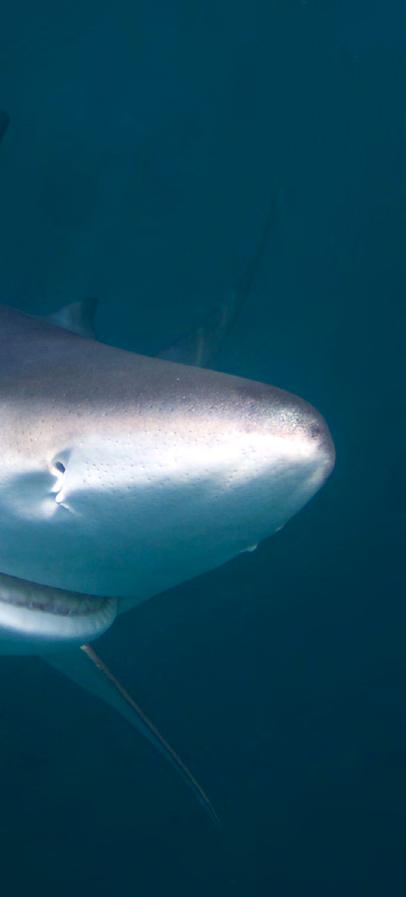
taking people offshore to an area known as the Celtic Deep in search of the iconic Blue Shark. The wonderful Celtic Deep team took me under their wing and aboard their boats and the adventures to the look for Blue Sharks begun. The plan. Collect genetic samples from freeswimming Blue Sharks. The purpose. Determine whether good quality samples could be collected using a low cost, non-capture method. Why is this important? Blue Sharks are the most exploited species of shark in the world, and the North Atlantic population is now reported to be Endangered by the IUCN. Although capturing animals is sometimes necessary, we wanted to build support for collecting genetic samples
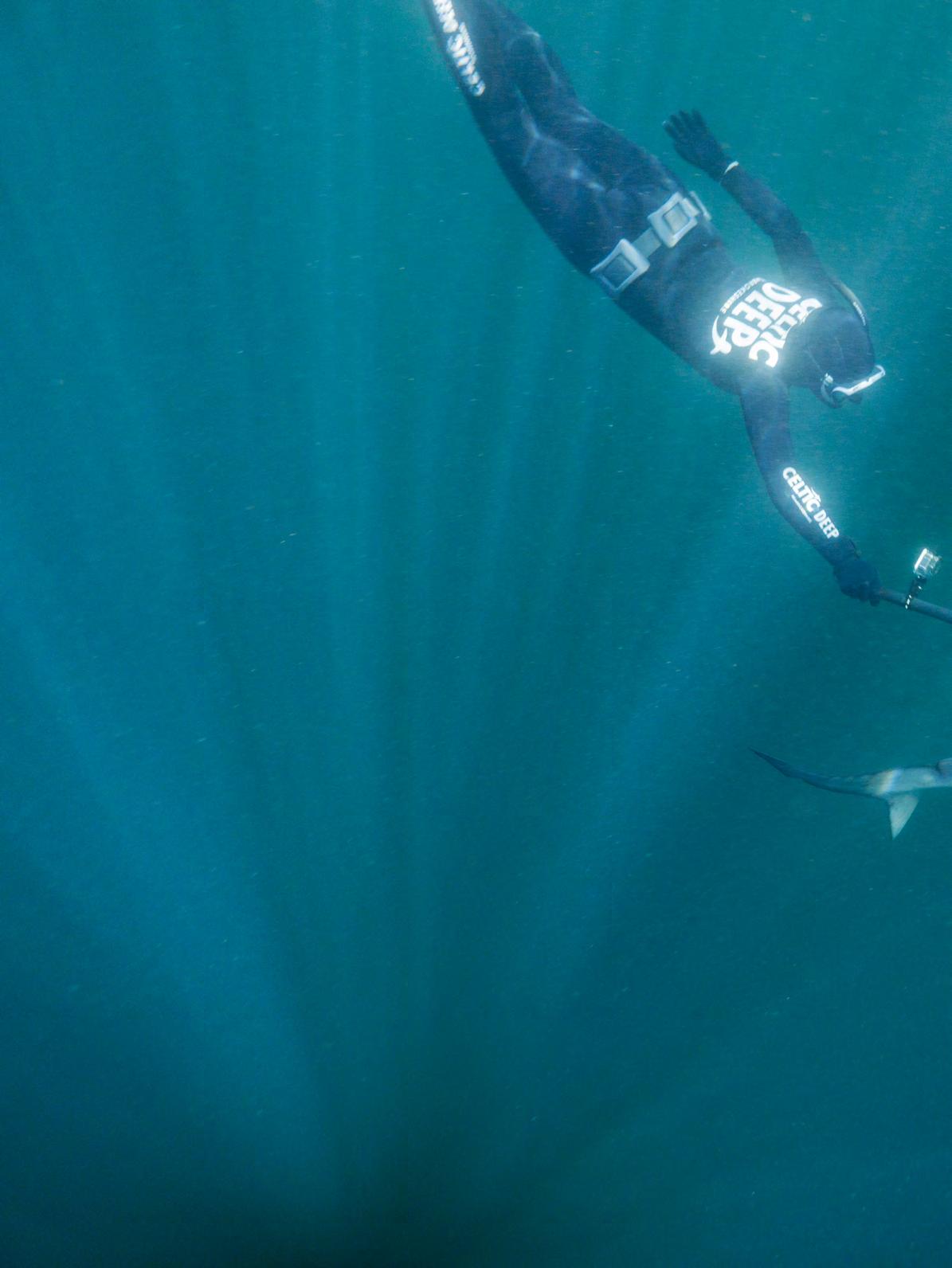
from free-swimming sharks, therefore, reducing the physiological damage and the risk of post capture mortality. The aim. To extract two types of DNA from the samples. Mitochondrial DNA (mtDNA), which is inherited from the mother only. It can provide important information about the animals, but you cannot distinguish individuals as mothers and pups share the same mtDNA. Secondly, nuclear DNA which can give detailed insight into individuals as it is a unique combination inherited from both parents. If we could do this it would support the use of noncapture methods.
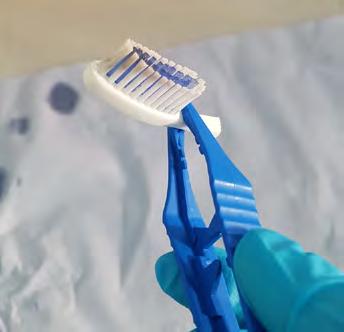
The method. Toothbrushes. Yes toothbrushes. But we hadn’t gone completely mad due to all the
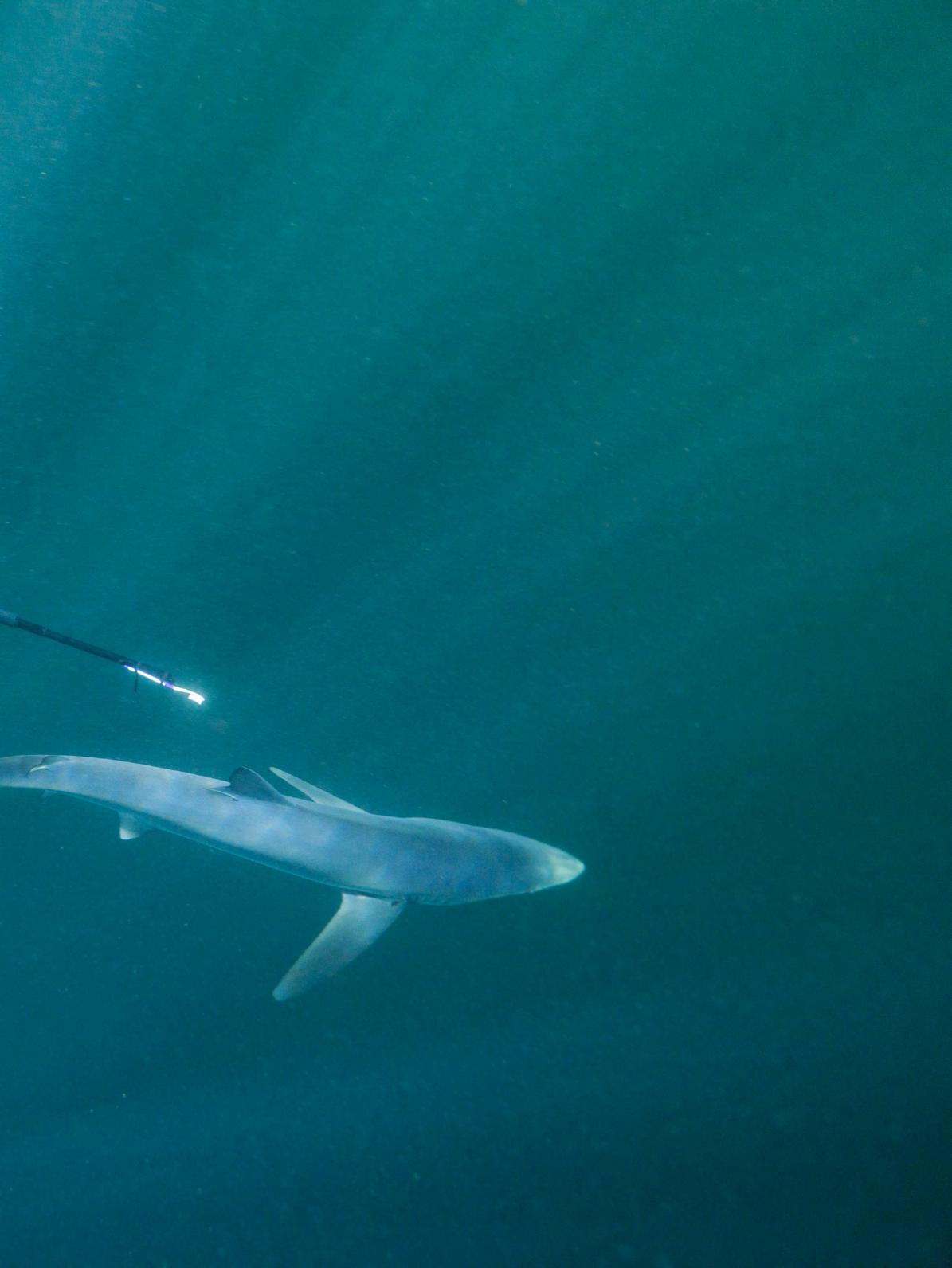
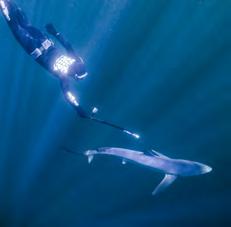
restrictions of the previous year. It was based on the successful results of two other studies, one with Basking Sharks (Leiber et al., 2013) and the other Manta Rays (Kashiwagi et al., 2015). The idea was to attach a toothbrush to a GoPro pole, get close to the sharks using freediving and simply stroke the toothbrush along the sharks’ skin. Then return to the boat where the skipper cut the toothbrush head off into a plastic vial containing RNAlater to preserve the sample. Reload and repeat.
Collecting the samples was the easy part, in theory at least. In reality we spent many days offshore searching for the iconic Blue Shark; unfortunately, as luck would have it the summer of 2021 required more perseverance than usual. A delay in the arrival of the sharks, patchy
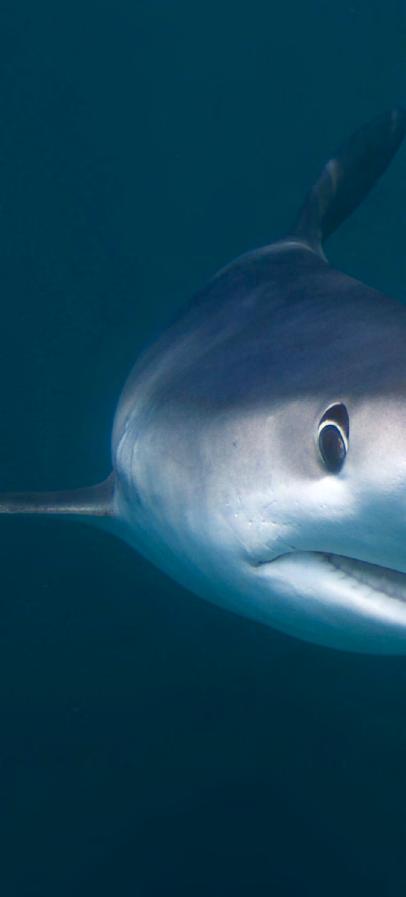
sightings, and weather cancellations meant collecting the samples was challenging. There’s only so much you can do when the sharks aren’t around. But the Blues didn’t disappoint and by the end of the season I had collected 39 samples from what I believed to be 12 different sharks.
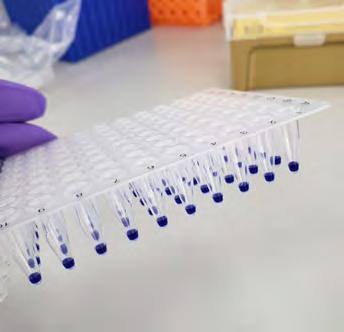
As the winter months drew in, I was all too happy to retreat to the warm lab. I should probably say here that I had no experience with genetics or lab work, so I knew the next part was going to be tricky. Thanks to the patient guidance from my supervisors, a fair bit of trial and error and a whole lot of pipetting we were able to successfully extract DNA from the toothbrushes. Hurdle one complete. The next step was amplifying targeted DNA using PCR machines. This part involved further trials, adjusting the temperature and cycle times to optimise the process. After the PCRs were finished, and of course more pipetting was done to clean the samples, they were sent to be sequenced.
The results. After months of anticipation going back to the first chat with Gonzo about the project, wondering whether it would work, we received the sequenced data. After cleaning it up, I was delighted and relieved to find we had managed to successfully sequence not only
mtDNA but also nuclear DNA. In fact, we had decided to sequence two regions of the mtDNA, the control region and CO1 gene, and the nuclear ribosomal internal transcribed spacer two (ITS2) region. Looking at different regions can elucidate similarities and differences between individuals.
The CO1 gene is often used to determine the species. We knew we had swabbed Blue Sharks but there are complex communities living on shark skin as well as the surrounding sea water being a genetic soup through which the toothbrush had to travel. So, contamination was a risk and by looking at the CO1 gene we could quickly say which species DNA the PCR amplified. We managed to successfully amplify Blue Shark DNA in most cases, but contaminants did win a few times. These included tunicates, ctenophores, algae, zooplankton, and bacteria. One sample even came back as the parasitic fly, Carcella iliaca
After all the analysis was done, we found a match between two of our samples, which were
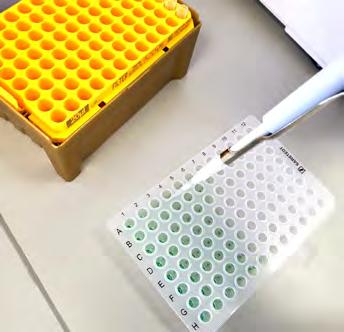
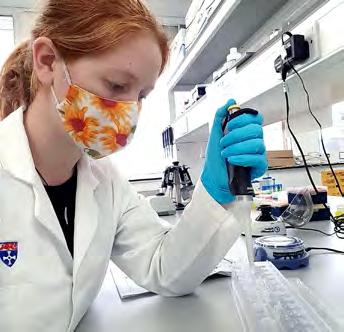
WE HAD MANAGED TO SUCCESSFULLY SEQUENCE DNAExtracting DNA in the lab
collected 10 days apart. Either we resampled an individual, capture-mark-recapture style, or we sampled two closely related individuals, such as mother and daughter or sisters (we know they were both female). We can’t be sure with the information we had as only the mtDNA amplified successfully, and they didn’t have any external markings to distinguish them, but this exciting finding gave us yet another small glimpse into the mysterious lives of the Blue Sharks of the Celtic Deep.
In conclusion. This method certainly isn’t without its limitations and further work is needed to make it suitable and applicable to future research, but with no sharks leaving after being sampled and successfully attaining DNA, the findings from this study demonstrate the potential for non-capture research methods that prioritise animal welfare. We are in the long process of publishing the paper where you will be able to see all the results from this study in detail.
Big thank you to all those that helped along the way.

WITHOUT WISHING to overegg(case) it, this Shark Focus has talked a lot about the Great Eggcase Hunt. We’re allowed, it’s the anniversary. But, apart from a hard drive full of data, what has the Eggcase Hunt given us over its 20 years?
For me, a massive part of the benefit is what it gives to you, the eggcase hunters. Whenever we talk about shark conservation, people ask what THEY can do to help sharks. Sharks aren’t plastic bags or electricity. There’s not always a simple everyday action that we can all do that makes a difference.
The world of conservation is in continual debate about the merits of individual actions. Some say that the collective impact of individual actions is what can generate real change. Others argue that only systemic change – driven by governments and large corporations – can really make a difference. Of course, the truth is, we need both. And that’s at the heart of everything we do at the Trust. We campaign for change through policy and fisheries management. And we also find ways to give everyone who cares about sharks something meaningful to do. The Big Shark Pledge is the latest example of our efforts to give you a voice at policy level. And the
Great Eggcase Hunt is where you can make a contribution to science. It all counts. And, ideally, it can be a bit of fun at the same time.
Last week, Harriet and I spent a day with pupils from a school in North Devon. The event was organised by SHARK SUPs, one of our Corporate Patrons. We walked up a mile stretch of beach, picking up eggcases, crab moults, shells – and a car tyre. For hours we talked about all sorts, including sharks of course. It was fun, it was easy, and it was a great way to highlight all the sharks and rays that live in the seas near their homes. Oh, they recorded 488 eggcases from seven species.
We dream of this happening on beaches all around the world. People exploring and learning about their seas. And making positive connections with sharks and rays. The start of a lifelong journey. So, more power to the Great Eggcase Hunt as it gets bigger and spreads further in the next 20 years. It’s a little thing, but it could mean the world to sharks.
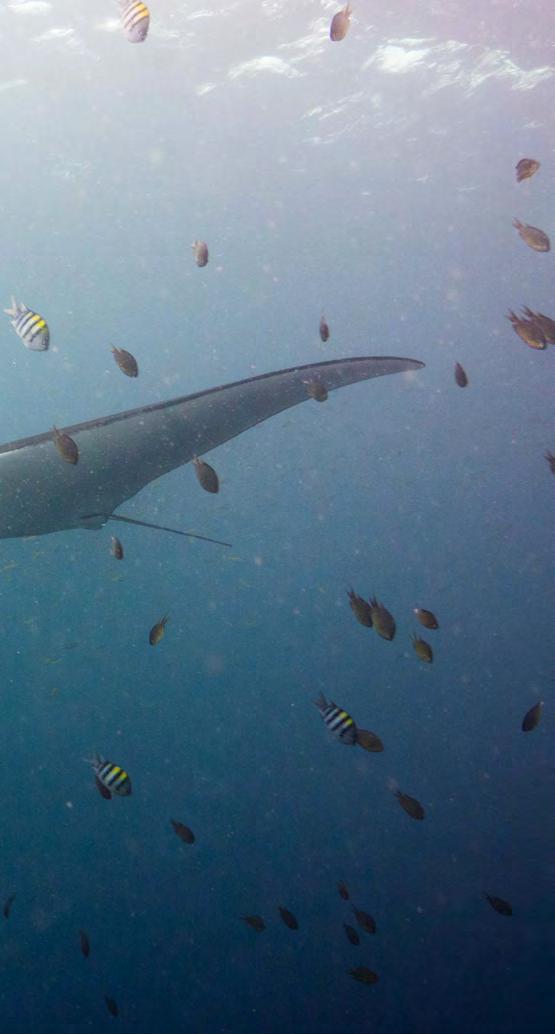
The graceful Oceanic Manta Ray dances their way through the blue waters with a wingspan of 7 metres which can reach a maximum of 9 metres, making them the biggest ray in the world. These manta’s have a circumglobal distribution and are found in temperate, tropical, and subtropical. They have a deep black dorsal side with a white T marking on their back and the ventral side is white with black freckles. However, they can be easily confused with Reef Manta’s. The two main differentiating features (despite their size) is that the white markings on the Reef Manta make a Y shape. Additionally, there are no freckles on their underside.
Recognisable by the two mouth parts known
Guest writer Yolanda Evans has been writing creature features for our website for a few months now. Here she gives us the low down on the Oceanic Manta Ray.
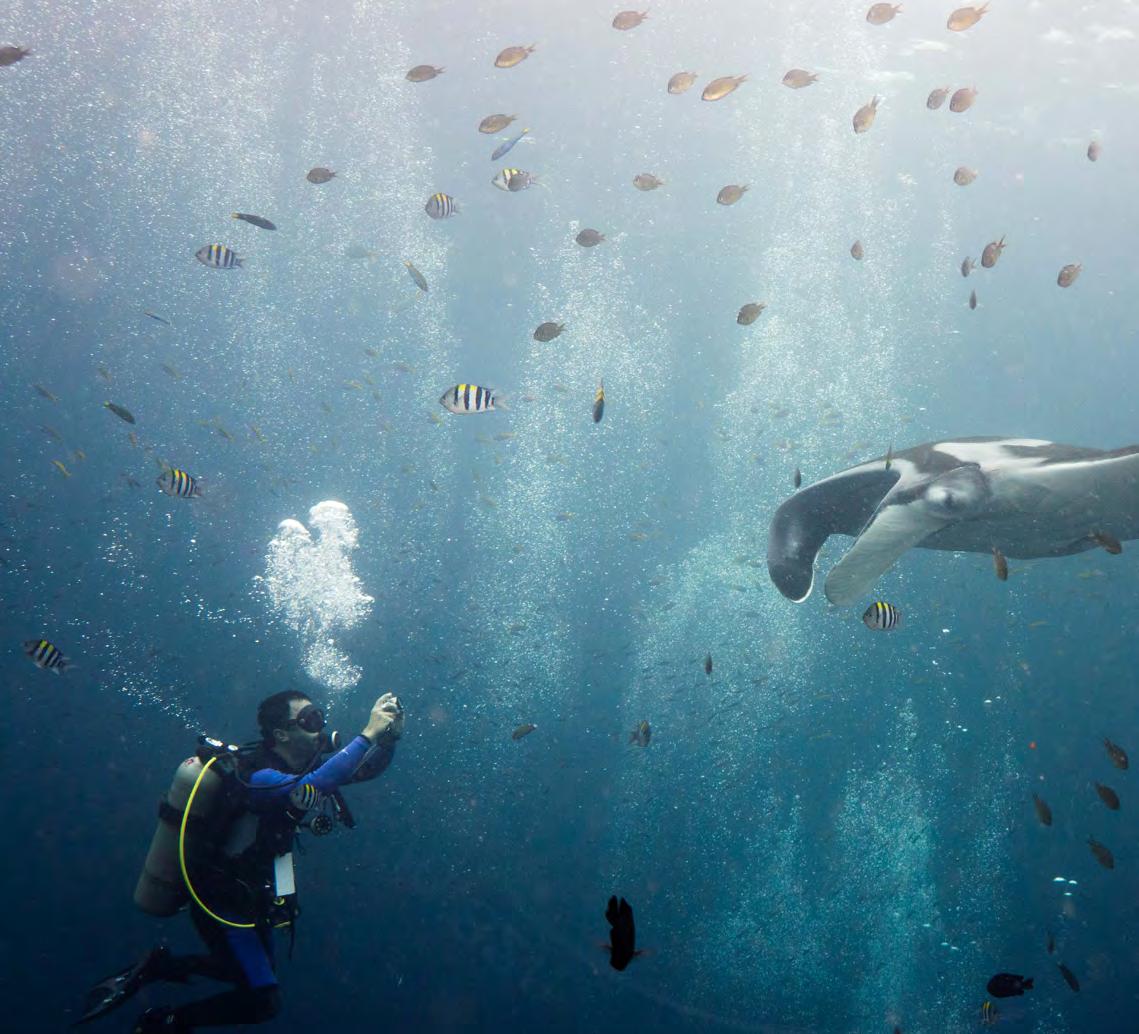
as the cephalic lobes: extensions of their massive pectoral fins that are used for feeding, helping the ray scoop mouthfuls of plankton. They must eat 20-30 kg of plankton a day, which is only about 2% of their total body weight.
Oceanic Manta’s can have up to 4000 tiny teeth but they don’t use these for feeding, they use them for when they are mating as the males have to hold themselves onto the females! The cephalic lobes can either be flexed out-seen when they are feeding, or curled up for spiral swimming and doing underwater flips!
Having the largest brain to body ratio of any cold-blooded fish, it is thought that they are able to pass the mirror test, showing that they
have self-awareness! They are also capable of creating mental maps using smells and environmental bearings, helping on their migrations.
Gatherings of these manta’s are rare, but when they come together it is an elegant marine ballet! A group of manta’s, known as a
squadron, typically gather for two main reasons: mating and feeding. Manta’s will do somersaults in areas rich in prey to maximise their intake of prey. They will also participate in chain-feeding, this is when each manta follows the other in a circle to create a whirlpool which traps their prey inside!
Cleaning and maintenance is very important to these fish as they will undergo special migrations to coral reefs where Cleaner fish come and groom off parasites and dead skin. These cleaning stations are so important to these rays that they will go back to the same spot for many years!
Out of all elasmobranchs the Giant Manta
SCIENTIFIC NAME: Mobula birostris
MAXIMUM WINGSPAN: 9m
DIET: Planktonic organismscopepods, decapod larvae, shrimp etc.
RANGE: Worldwide in tropical, subtropical & temperate waters

HABITAT: Mainly open ocean but also in bays and coastal waters
STATUS: Endangered
PAUL COXOVER THE last 18 months we’ve been working with Ralph Underhill at Framing Matters, to review the way that shark conservation has been presenting itself. And Ralph, an expert in the subtle ways that communication can be made more effective, has produced a set of recommendations for shark and ocean advocates.
The result of this work, published in March this year, is a toolkit for educators, communicators and partners in marine and shark conservation. The advice is straightforward. We need to be clear about the problems but give people hope that change is possible. The toolkit focusses on how we do that.
The guide looks at why we’re communicating, the common traps we fall into and, more importantly, how to avoid the traps to communicate more clearly. It also looks at the importance of metaphor and celebrating the things we care about.
has one of the slowest reproduction rates, only producing one pup every two to three years and can be pregnant for 12-13 months! However, due to commercial fishing and bycatch, they cannot keep up with the extortionate rate that their populations are decreasing by. This has led to the Oceanic Manta Ray to be listed as endangered by the IUCN, with populations decreasing globally. Manta’s are targeted for their gill rakers for traditional medicines that can reach up to $400 USD per kg.
Not only are Oceanic Manta’s threatened by fishing, but also by pollution in the oceans. Microplastics and heavy metals accumulate in their tissues. This can unfortunately lead to serious illnesses like cancers.
Over the coming months and years, we’ll be sharing the toolkit with our colleagues across the sector. We’re already working closely on messaging with a network of partners in the US through the AZA SAFE Sharks and Rays program. This collaborative venture brings together over 50 aquarium and zoo partners who collectively communicate to millions of visitors each year. As this work continues, we intend to open-up more debate about the best ways to communicate the challenges of shark conservation. Scan the QR code or visit sharktrust.org/toolkit for more.
It’s not really a day, but with low water springs - the only time it’s possible to snorkel on the laying site - always being around the middle of the day, the survey does tend to dominate the day. About two hours before low water, which needs to be below 0.9 meters, I get all the gear together (cameras and a chest harness for the video, torch, tags, scissors and dive slate) and struggle into several layers of wetsuit. In the depths of winter that has been a 3mm shorty, a 7mm semi dry, and 5mm hooded shorty. And there are knee pads because at really low water it’s a bit of a crawl.
The survey site is a gulley about 30 metres long. At one time we’d find eggcases anywhere
along the gulley, and up to 45 of them; currently there are less than 10, clustered at the south west entrance to gulley where we get in the water.
If there are two of us, my buddy takes the tags, cable ties and slate, and I take the camera, torch and scissors. Just me, and I’m a one-armed paper hanger. Thanks to Harriet, the Shark Trust’s data wrangler, the dive slate is pre-loaded with the numbers of the eggcases we expect to find. In eight years I’d not thought of that. Doh!
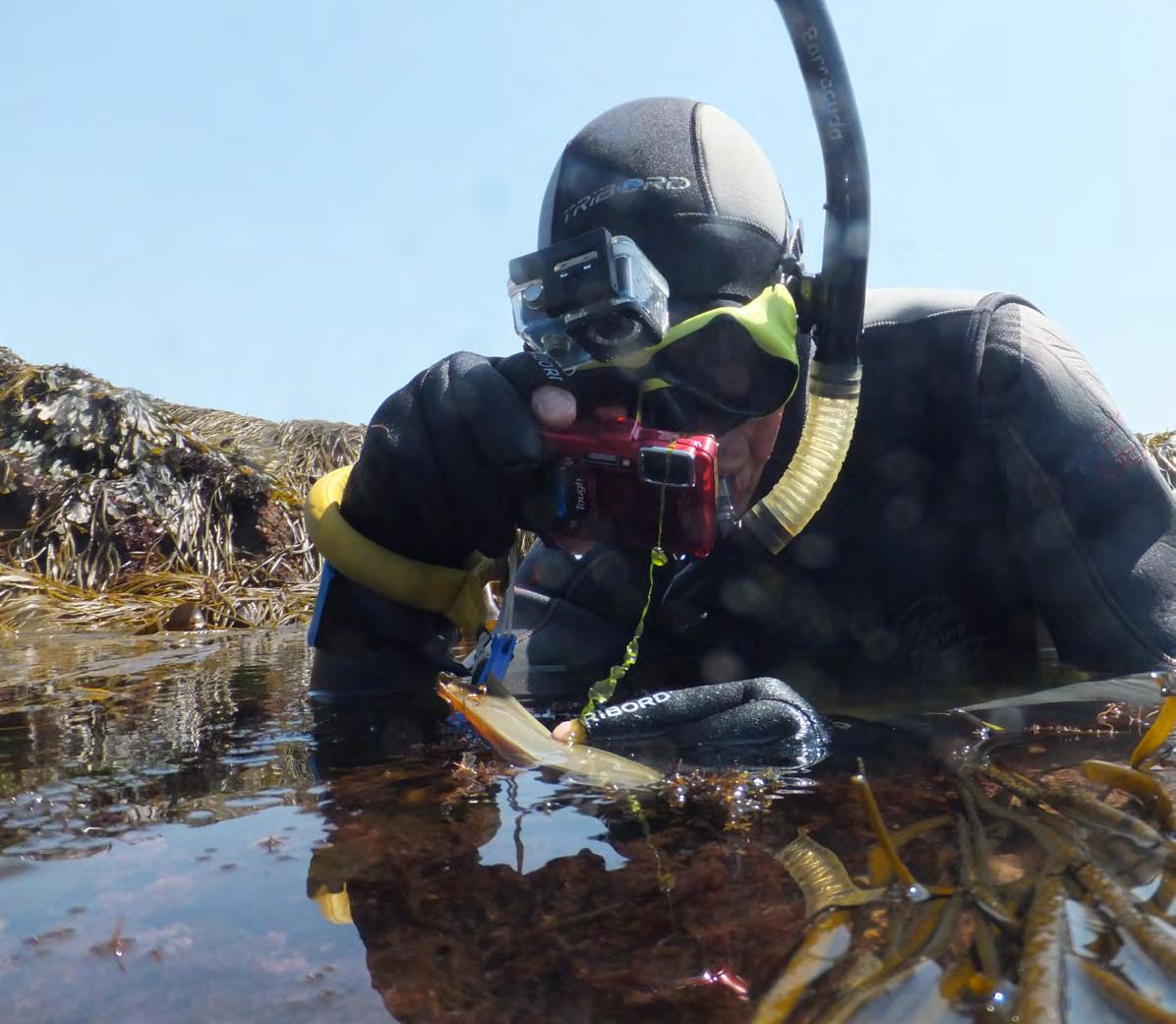
If we find a new laid egg, my buddy gives me the next tag in the series and a cable tie so I can attach it to the bottom of the eggcase. Each eggcase is assessed for biofouling and state of development and it’s all recorded
on the slate. There might be distractions: blue-rayed limpets, sea slugs, spider crabs, lobster, 15 spine stickleback nesting, starfish, topknots, anemones and most exciting – a real live adult Nursehound. Two Nursehounds have hatched while we were surveying!
All the eggcase pictures need to be labelled and the data for each input to a big spreadsheet. New laid eggs are summarised on a separate sheet. For those that have
TWO NURSEHOUNDS HAVE HATCHED WHILE WE WERE SURVEYING
NAME: John Hepburn
ROLE: Eggcase Surveyor
THE EGGCASE
SURVEY: John has been surveying eggcases at a site in South Devon, UK, for 9 years. He visits regularly to conduct snorkel surveys of Nursehound
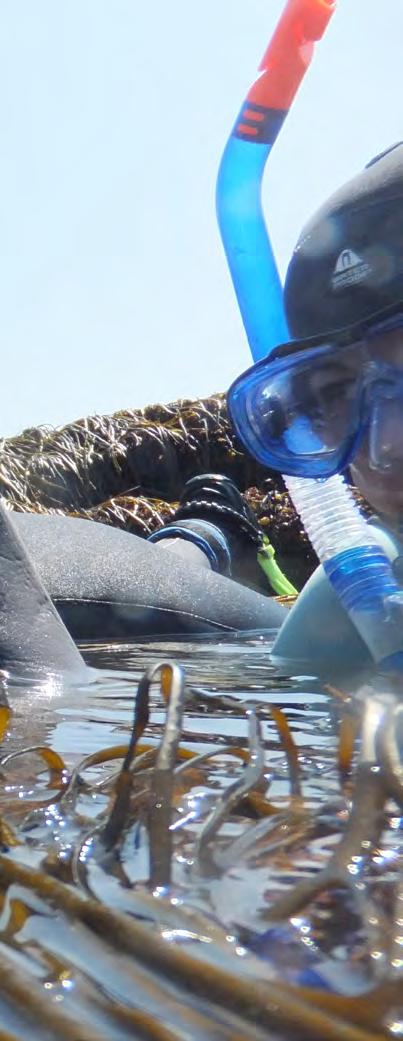
(Sc yliorhinus stellaris) eggcases. John’s a citizen scientist, volunteering all his time to collect the data. Which is added to the Great Eggcase Hunt database.
hatched I calculate and record the hatching interval, ignoring those where the laying or hatching dates are too uncertain. Then I send everything (except the video) to Harriet for storage and analysis.
Spending an hour and a half in murky visibility, only just shallow enough to reach the bottom at full arm stretch when the temperature is below 10°c on my own is not a lot of fun, but if I get results it’s worth it. Only once have I gone in and come back with no sightings.
WHAT
I’d been snorkelling the area for a while and finding occasional eggcases, but one day I found some that had been very recently laid. I wondered when they’d hatch, and it seemed no one really knew. So I asked the Shark Trust if it would be useful, practical and ethical to survey them. They said yes and in April 2014 I started.
1
SEARCH You can usually find eggcases amongst the seaweed that makes up the strandline. They blend in really well which means they can be difficult to spot at first, so keep your eyes peeled.
2
IDENTIFY We recommend preparing your eggcase(s) by doing a bit of bucket science. Rehydrating eggcases makes them much easier to identify. You’ll also see how much they expand to their true size, and how tough they are to protect the developing embryo!
3
RECORD Found no eggcases?
We’d still like to know! The Shark Trust app also accepts records for sharks, skates and rays - both dead and alive. So if you find a carcass or washed up body, this can also be recorded!
HIGHS
I’m not a scientist – English, History and Latin at A Level, Law degree then 30 years in the navy – but I do get a kick out doing some science, which real scientists regard as worth doing. It contributes something useful to the sum of human knowledge. and has helped two young scientists who helped collect the data and used it for their degree projects in their early careers.
WHAT’S ONE THING YOU WISH YOU’D KNOWN STARTING OUT?
Numbers written in permanent marker on tags cut from an old plastic milk bottle are not permanent. The data from the first few dives were lost, driving me to invent the binary tags system. Even so, after a long cold dive, my brain finds calculating the value of the holes punched in the tags difficult, hence taking pictures and the video.
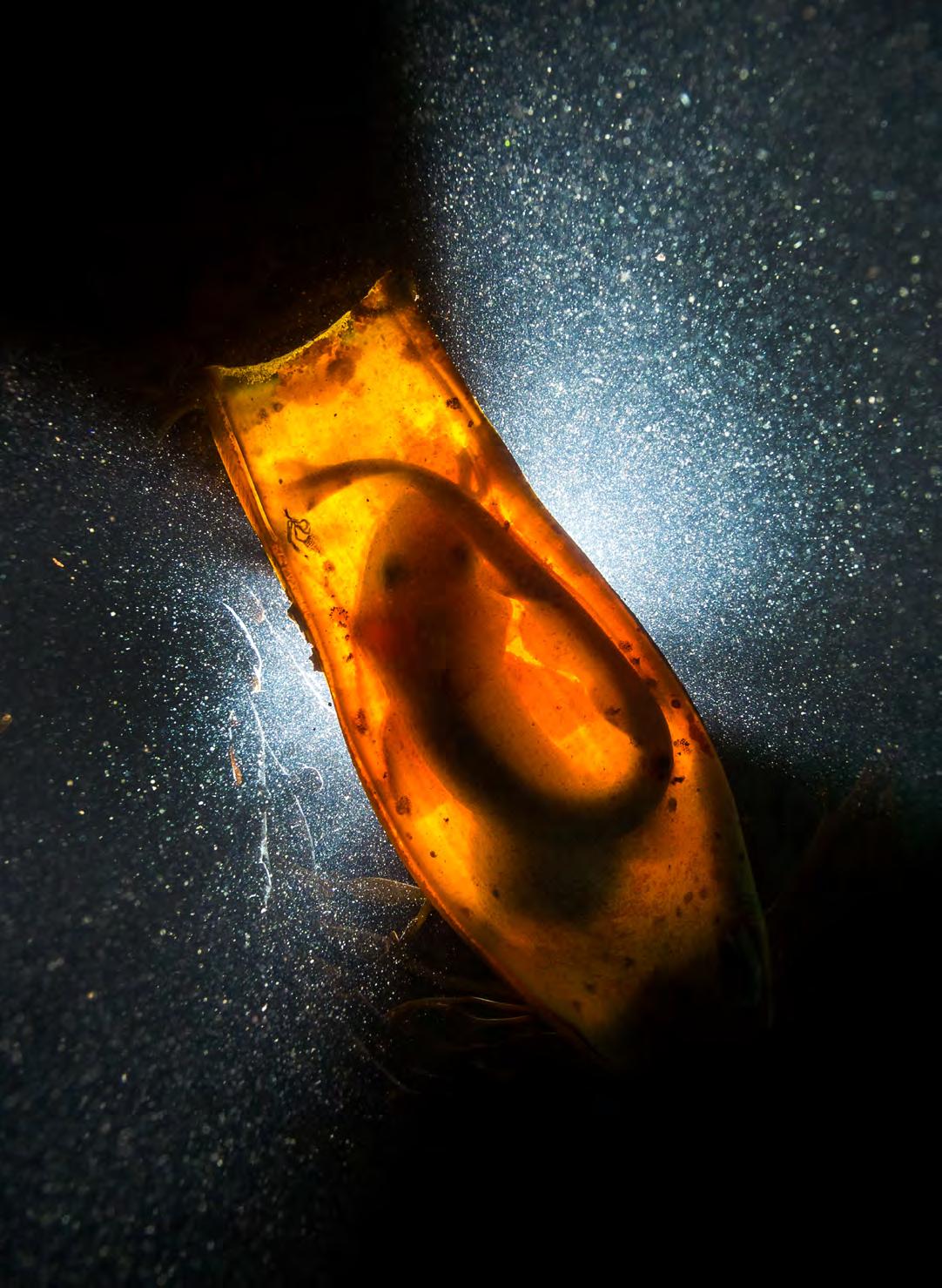
FROM EGG TO ADULT. EGGCASES ARE A REMINDER THAT SHARKS AND SKATES ARE IN ALL OF OUR SEAS!
7.
1
2
3
4
5
6
7
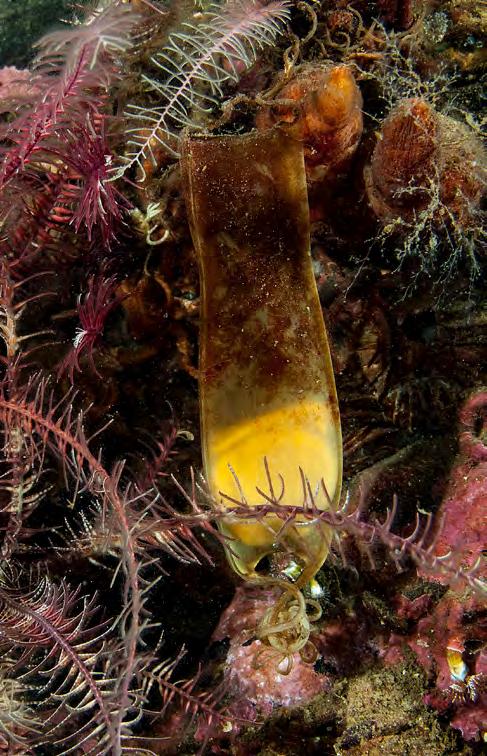
EGG-LAYING: A female catshark puts her eggs in a safe place, like a rocky crevice or seaweed. She can lay several eggs at once.
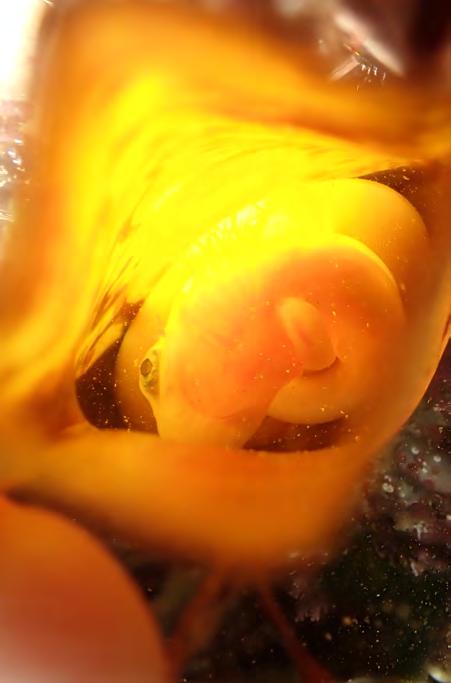
EGG DEVELOPMENT: Inside each egg, an embryo develops. The eggcase has a tough, leathery shell that protects the growing shark.
DEVELOPMENT: Depending on the species, they may take 5 - 12 months to hatch. Sometimes longer!
EMBRYO DEVELOPS: The embryo pumps oxygenated water into the eggcase by beating its tail. This helps with development and ensures they can still ‘breath’.
STAYING ALIVE: If predators are close by, the developing embryo will remain very still to avoid being detected.
MATURITY: Once the embryo has absorbed the yolk, it’ll wriggle free and swim out of a tiny opening at the top of the eggcase. The empty eggcase may end up being washed away, and can end up on beach near you!
LIFE CYCLE REPEATS: The pup continues to grow. When females are old enough, they will lay their own eggs, and the process repeats itself.
ISSUE IS ALL ABOUT THE GREAT EGGCASE HUNT! BUT HAVE YOU EVER THOUGHT ABOUT WHERE EMPTY EGGCASES COME FROM?!
We really love sharing everything our pup’s club members have been up to! From fundraising, to creating sharky books and posters! If you want to feature in our next issue then speak to a parent or guardian and get them to drop us an email at focus@sharktrust.org
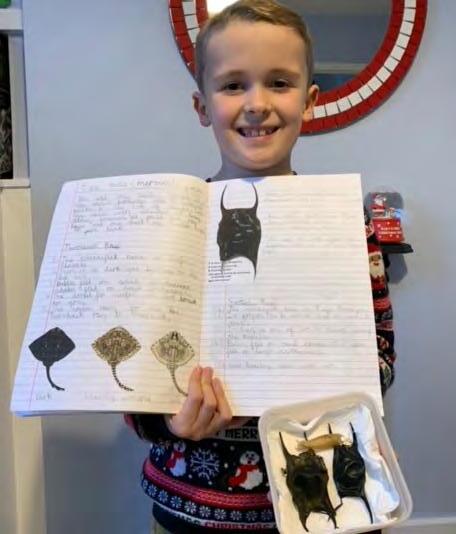
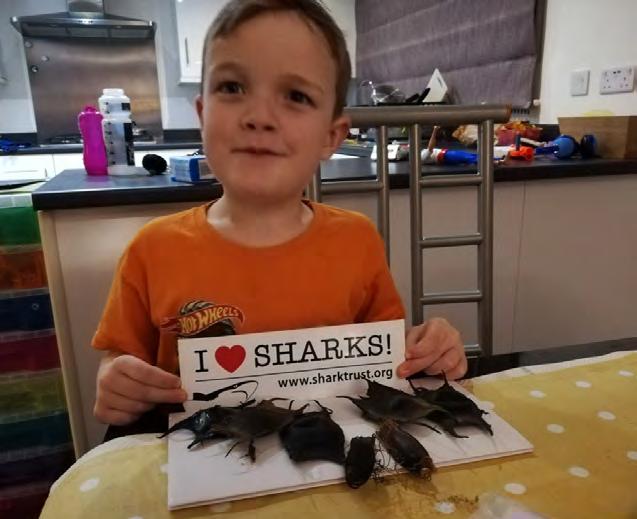
SEB and his sister found around 12 egg cases at Hest Bank (Morcombe Bay) and he’s taken them into school to tell his class about them, and how it’s important to look after sharks. After watching Winterwatch, he rehydrated them to identify them (catsharks & blonde rays) and has logged them on the Shark Trust app.
LAURENCE has been very busy in his spare time throughout the various lockdowns by writing his own Sharks fact book. He has recently completed a 55 page book documenting many facts he has learnt and even documented some shark and ray egg cases he found washed up on a beach on the Isle of Wight in October 2020.
POPPY raised £330.50 by swimming 100 lengths in a swimming pool.

SAM raised £249 by walking an incredible 800km over a year!

SAM and GABBY raised a whopping £1,343.75 by swimming 400 lengths in a swimming pool, 1 length for each shark species!
sharktrust.org
BEA raised £364.44 on a 12-mile Shark Walk and doing a bake sale!Can you match the eggcase to the correct shark, skate or chimaera? Draw a line to join them up!

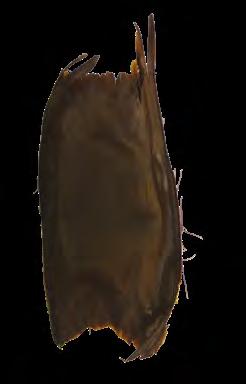
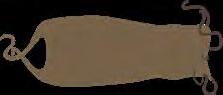
▲ Catshark eggcases are usually shaped like a bottle or a bowling pin and often have curled tendrils on each corner.
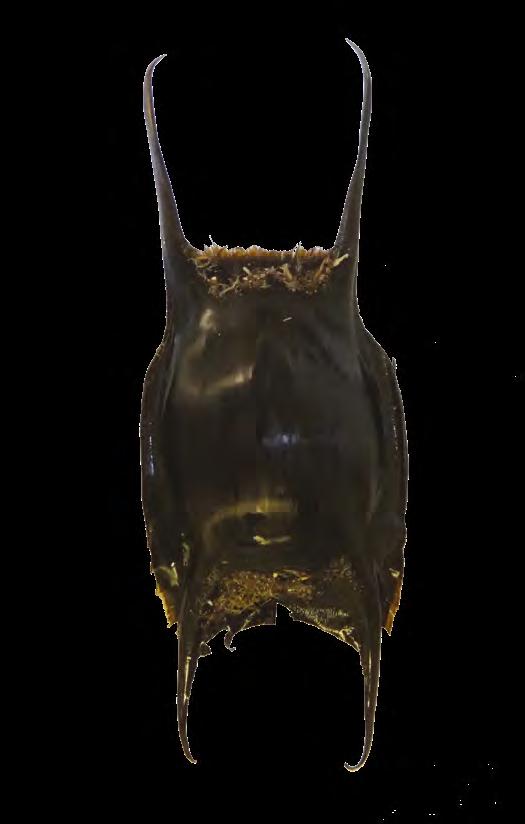
▲ Skate eggcases are square/ rectangular in shape and can have a pointed horn on each corner.
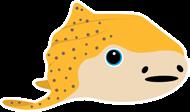
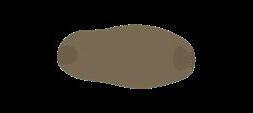
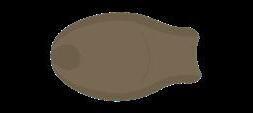
▲ Eggcases from carpet sharks (like the Zebra Shark) are round/oval in shape.

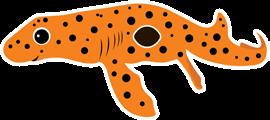
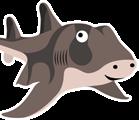
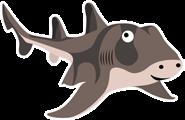
▲ Horn sharks (like the Port Jackson) have spiral shaped eggcases.
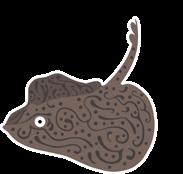
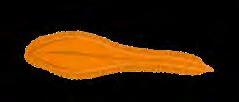
▲ Chimaera (like the Rabbitfish) have longer eggcases that can be leaf shaped.
CHIMAERA
Zebra Shark
Port Jackson Shark
Undulate Ray

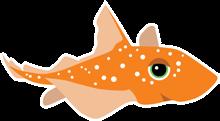
Epaullete Shark
Smallspotted Catshark