BASKING SHARK PROJECT
ABOUT THE PROJECT
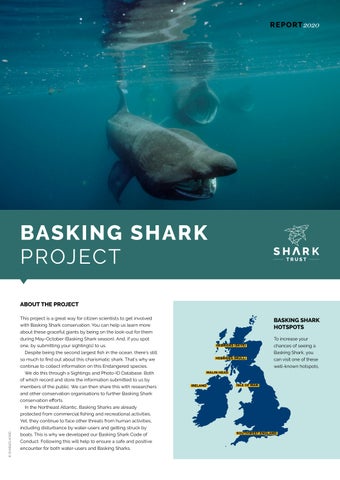
This project is a great way for citizen scientists to get involved with Basking Shark conservation. You can help us learn more about these graceful giants by being on the look-out for them during May-October (Basking Shark season). And, if you spot one, by submitting your sighting(s) to us.
Despite being the second largest fish in the ocean, there’s still so much to find out about this charismatic shark. That’s why we continue to collect information on this Endangered species.
We do this through a Sightings and Photo-ID Database. Both of which record and store the information submitted to us by members of the public. We can then share this with researchers and other conservation organisations to further Basking Shark conservation efforts.
In the Northeast Atlantic, Basking Sharks are already protected from commercial fishing and recreational activities. Yet, they continue to face other threats from human activities, including disturbance by water-users and getting struck by boats. This is why we developed our Basking Shark Code of Conduct. Following this will help to ensure a safe and positive encounter for both water-users and Basking Sharks.
BASKING SHARK HOTSPOTS
To increase your chances of seeing a Basking Shark, you can visit one of these well-known hotspots.
© CHARLES HOOD
REPORT 2020
IRELAND
SOUTHWEST ENGLAND
HEBRIDES (MULL)
HEBRIDES (SKYE)
MALIN HEAD ISLE OF MAN
BASKING SHARKS
SHARK SIGHTINGS DATABASE
If you spot a Basking Shark submit your sighting to us, with as much information as possible. If you have a photo please submit this too so we can verify your record.
PHOTO-ID DATABASE
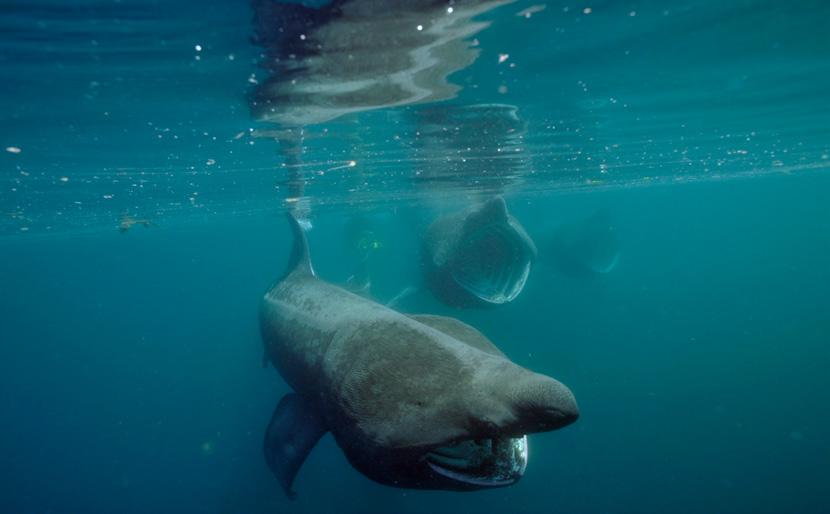
Photo-ID is a powerful and non-invasive field technique, used to study animals in their natural environment. We can identify many individual Basking Sharks by their unique fin markings. These can be natural (e.g. pigmentation marks), or acquired (e.g. injuries from boats or fishing nets). With good quality photographs, we can recognise some individual sharks on re-sighting and match them on the photo-ID database. This enables us to discover more about Basking Shark movements, which is especially important for a vulnerable and highly migratory species like the Basking Shark.
THANK YOU!
Thank you for supporting our Basking Shark Project.
By adopting a Basking Shark, becoming a Shark Trust member, or submitting your sightings, you’re helping Basking Sharks in the Northeast Atlantic.
SIGHTINGS DATA 2020
In 2020, 59 reports (accounting for 112 sharks) were submitted to us from around the UK. But, as is always the case, some of these may have been repeat sightings of the same shark.
Thanks to everyone who submitted their sightings.
We look forward to seeing, and hearing, about your shark encounters in 2021!
RECORD your sighting and find out more about the project at www.baskingsharks.org
59 REPORTS
5 0 0 0 IRELAND SOUTHWEST ENGLAND 0 HEBRIDES (MULL) HEBRIDES (SKYE) MALIN HEAD ISLE OF MAN BASKING SHARK HOTSPOTS PLUS NUMBER OF BASKING SHARKS REPORTED 87 reported elsewhere around the UK & Ireland
112 SHARKS
COLLECTING VITAL DATA 20 282 2020 2019 2018 2017 2016 51 78 65 134 112
FINDINGS & SUMMARY
REBECCA GILLHAM - CONSERVATION OFFICER
SINCE 1997 , we’ve been collecting sightings from anyone lucky enough to encounter a Basking Shark. In total our citizen scientists have recorded 3495 individuals.
2020 saw a total of 59 Basking Shark reports from around the UK. These accounted for 112 individuals. But we know some of these may have been repeat sightings of the same shark.
2020 was a strange and challenging year for all, with many people spending a
lot more time at home and in their local area. We did however see an increase in the number of sightings reported to the project. Exactly how sightings were affected by the COVID-19 pandemic is unknown. But a few suggestions were put forward. One possibility is that a decrease in disturbance caused by boat traffic and water-users could have led to more Basking Sharks coming closer to shore to feed. Where they are more easily spotted. Alternatively, lock down measures resulted in more people taking their daily exercise in their local area, instead of heading
further afield or attending a gym. Resulting in more pairs of eyes to spot these magnificent creatures. We saw an increase in reports outside of the known Basking Shark Hotspots, with multiple records coming in from Northeast Scotland. We’re finding out more about Basking Sharks every year, but aspects of their life continue to remain a mystery!
Every sighting reported to the Shark Trust allows us more insight into their behaviour. We look forward to developments in the database this year, so keep your eyes peeled for project updates and Baskers!
“ ” EVERY SIGHTING REPORTED TO THE SHARK TRUST ALLOWS US MORE INSIGHT INTO BASKING SHARK BEHAVIOUR.
© RORY GODALL
INFORMATION & CONTACTS
BOAT TOURS
Thinking of going on a boat tour to see Basking Sharks? We recommend seeking out a WiSe accredited tour operator. The Wildlife Safe (WiSe) scheme provides training and accreditation for tour operators. Advising them on how to best view and interact with large marine wildlife, while minimising disturbance. To find a WiSe accredited tour operator visit www.wisescheme.org
BASKING SHARKS IN DISTRESS
If you witness disturbance or harassment of a Basking Shark, please report it to the National Wildlife Crime Unit immediately. For more information visit the UK National Wildlife Crime Unit website www.nwcu.police.uk
STRANDED SHARKS
If you find a live stranded shark contact:
England or Wales - the British Divers Marine Life Rescue: 01825 765546 (Monday to Friday 9-5pm) or 07787433412
Scotland - the Scottish Society for the Prevention of Cruelty to Animals (SSPCA): 03000 999 999
For dead stranded sharks contact the Cetacean Stranding’s Investigation Programme (CSIP): 0800 6520333.
CODE OF CONDUCT
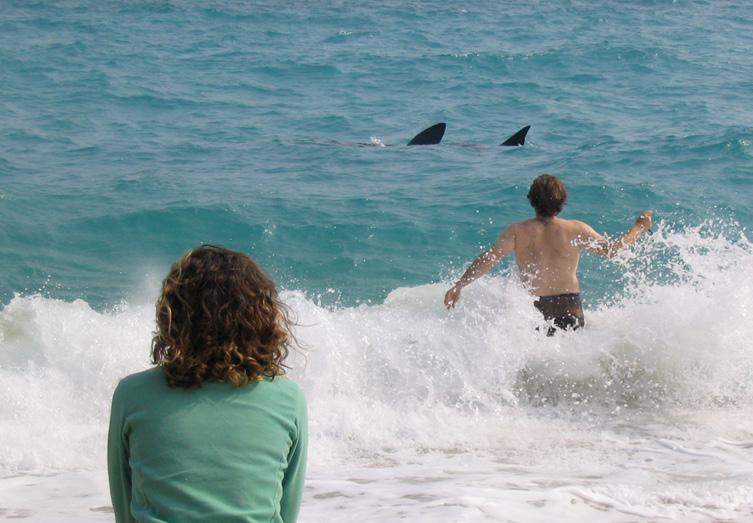
Basking Sharks are very sensitive to disturbance and harassment by people. In all the excitement of seeing Basking Sharks, it can be tempting to get a closer look. But, tour operator boats, small motor boats or jet-skis can all end up striking them if they get too close. As well as causing physical harm, water-users can also disrupt their natural behaviour. Such as feeding, courting and mating.
Follow the Code of Conduct so you can enjoy watching Basking Sharks safely and ensure a positive experience for both you and the shark.
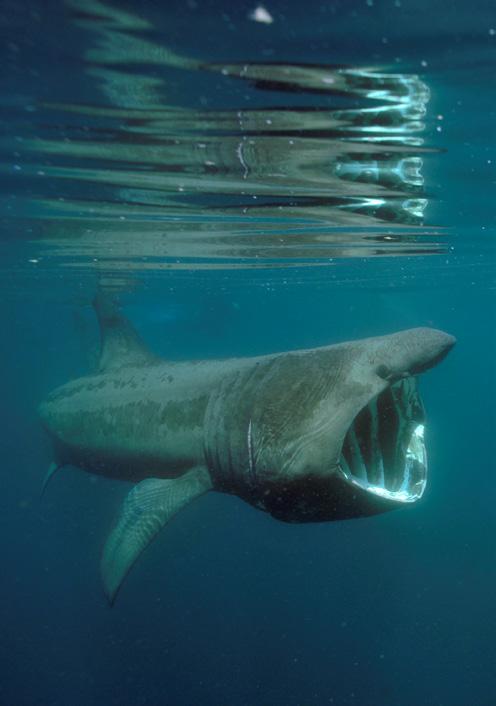
Despite often being called ‘gentle giants’, Basking Sharks can be the size and weight of a bus, have strong powerful tails, and can breach out of the water. They warrant respect. It’s illegal to intentionally disturb or harass Basking Sharks in UK waters. Anyone doing so could face up to 6 months in prison and a large fine.
 © CHARLES HOOD