
:
MArch Architecture 2022 - 2025
Newcastle University
BA Architecture 2017-2020
Manchester School of Architecture
Atelier : Continuity in Architecture
Edexcel A Levels (GCEs) 2015-2017
Elizabeth Moir International School, Sri Lanka Economics
English Literature
Cambridge International Pre-U Level 3 Certificate 2015-2017
Elizabeth Moir International School, Sri Lanka History
Merit TWO (M2)
Edexcel International GCSE’s 2014-2015
Elizabeth Moir International School, Sri Lanka
Mathematics
English Literature Biology History
SKILLS :
SketchUp
AutoCAD
Revit
Freehand sketching
Photography Adobe Photoshop Adobe
Illustrator Adobe
InDesign Adobe
Lightroom Adobe
Premier Pro Adobe
After Effects Microsoft Office Model making
Competent in quickly learning new softwares
LANGUAGES :
English (first language)
Sinhalese (native/ bilingual proficiency)
:
Language
I am a MArch graduate from Newcastle University. Studying architecture has equipped me with a diverse skill set that extends beyond design, including proficiency in various software tools and strong communication abilities developed through networking and collaborative work.
I thrive both as a team player and a leader—skills I consistently applied during my BA and MArch studies. I am highly goal-oriented and committed to giving my best in everything I undertake, especially when pursuing my passions. I manage my workload efficiently, often balancing multiple responsibilities and meeting tight deadlines. My architectural training has sharpened my attention to detail and my ability to see projects through from concept to completion, always with care and precision.
I am currently seeking a position as a Part II Architectural Assistant, having completed my Part I work experience in Sri Lanka. I hold a Graduate visa, giving me the eligibility to work full time in the UK.
English is my first language, and I am fluent in both written and spoken communication.
Volunteer at RIBA International Conference, Sri Lanka August 2023
Assisted with conference setup, registration, sponsor liaison, quality control, and promotional coordination.
Part 1 Architectural Assistant at CDA Associates (PVT) Ltd, Sri Lanka September 2020 - September 2022
At CDA, my responsibilities included master planning, producing CAD drawings and layout plans, and rendering these plans in Photoshop, including interior views. I was also involved in curating interior concepts and developing mood boards to establish the overall look and feel of projects. Additionally, I created Excel spreadsheets for specifications and cost estimations, assembled the company portfolio, and designed presentation layouts. My role also involved client-facing tasks such as briefing clients during meetings and presenting project proposals.
Social manager for Sonali Dharmawardena (designer) September 2018 - July 2022
As Social Media Manager, I curated content, directed shoots, developed promotional strategies, and adapted trends for various markets. I also worked as a Retail Assistant, gaining customer service experience and helping with visual merchandising.
RIBA Mentoring Scheme with BDP, Manchester November 2018 - April 2019
Joined site visits, gaining insight into project lifecycles, industry processes, collaboration, and networking in architecture.
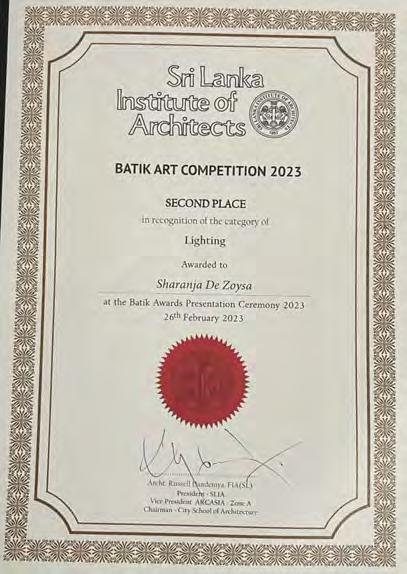
Second place - Sri Lanka Institute of Architects - Batik Lighting Design Competition 2023
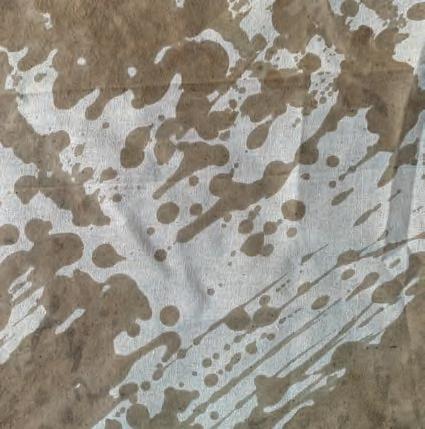
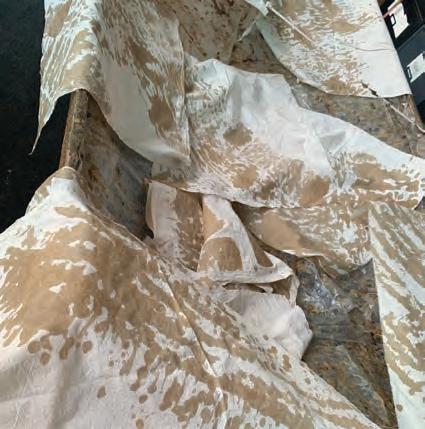
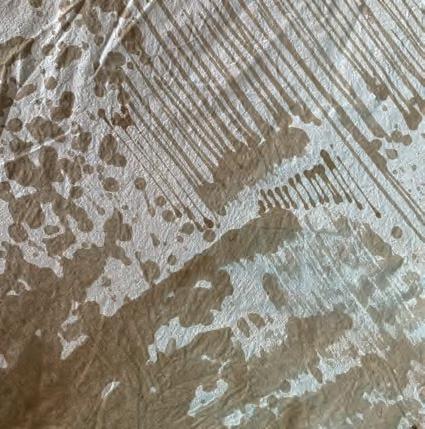
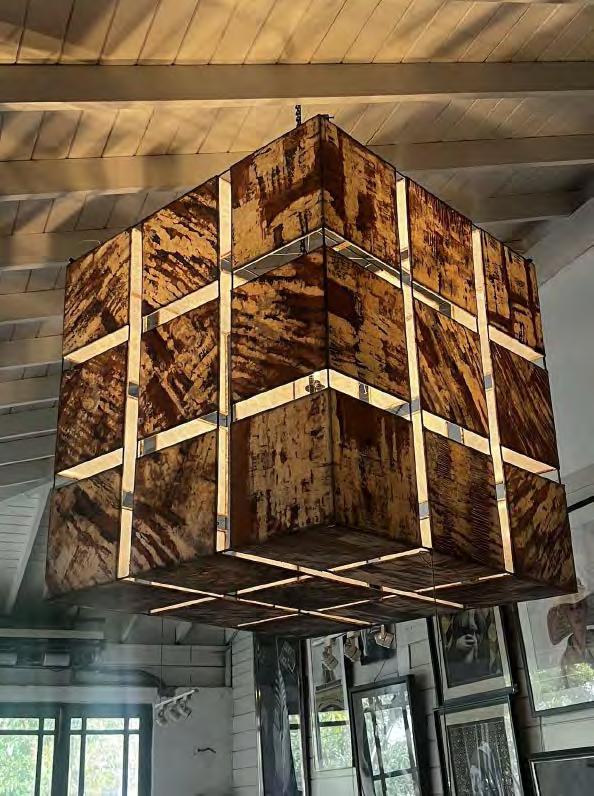
I designed and produced a pendant light fitting, along with hand painting the fabric that covered it.
(using the heritage art of batik as a medium of expression)
https://issuu.com/sharanja/docs/portfolio_sharanja_de_zoysa
Internship under Architect Murad Ismail at MICD Associates, Sri Lanka June 2016 - August 2016
Internship under Interior designer/ space specialist Annika Fernando, Sri Lanka June 2016 - August 2016
During overlapping internships at two collaborating firms, I gained insight into both structural and interior design processes. This experience highlighted the importance of cross-disciplinary teamwork, aligning separate design elements, and balancing my input with others’ ideas. Managing both roles sharpened my time management and reinforced the importance of meeting deadlines. ONLINE PORTFOLIO:
REFERENCES CAN BE PROVIDED UPON REQUEST
ACADEMICWORK-BA(UniversityofManchester)
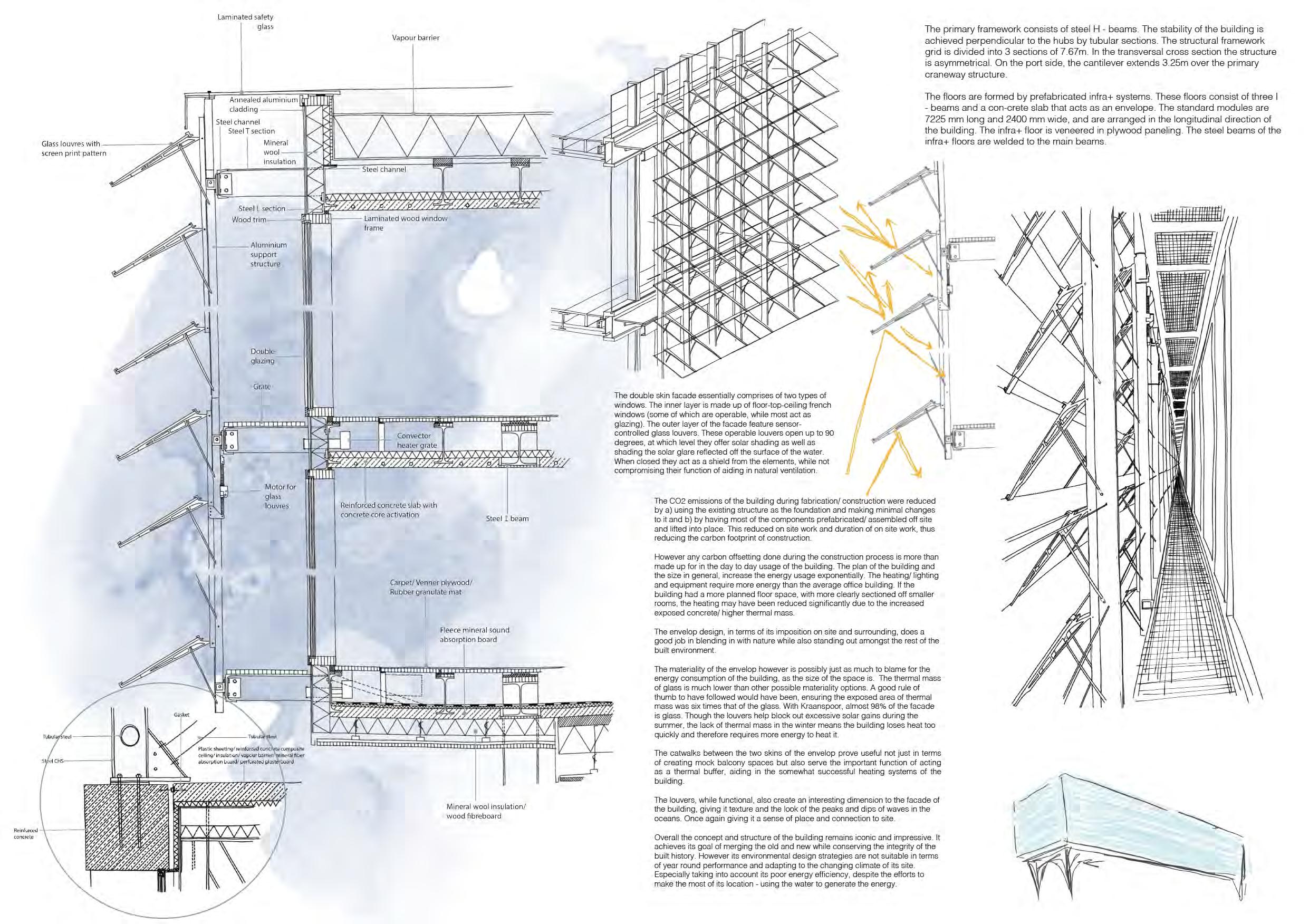
BA - TECHNOLOGIES PROJECT
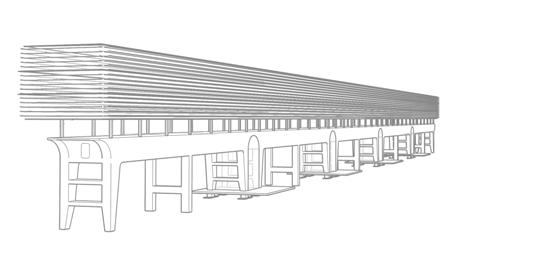
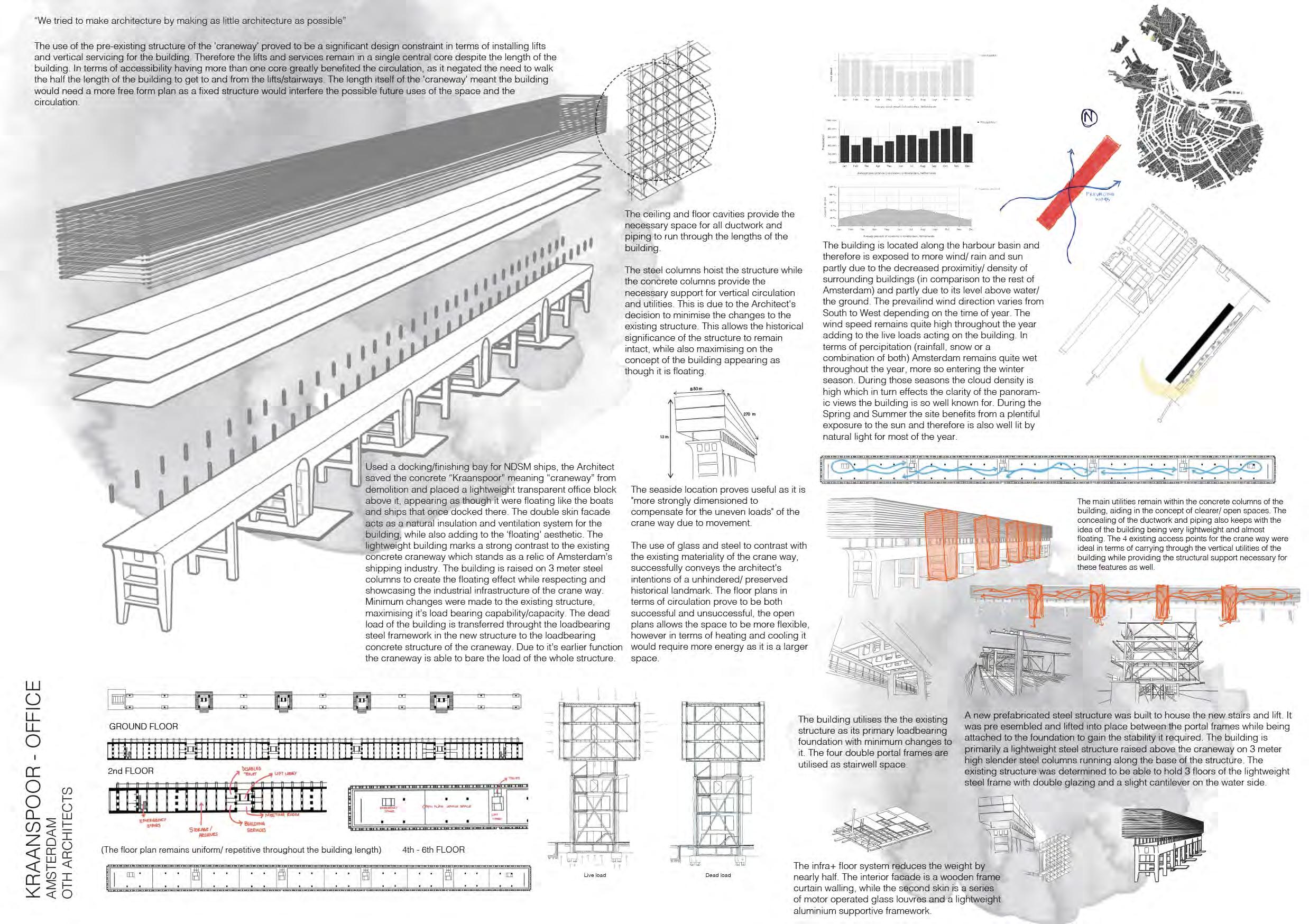
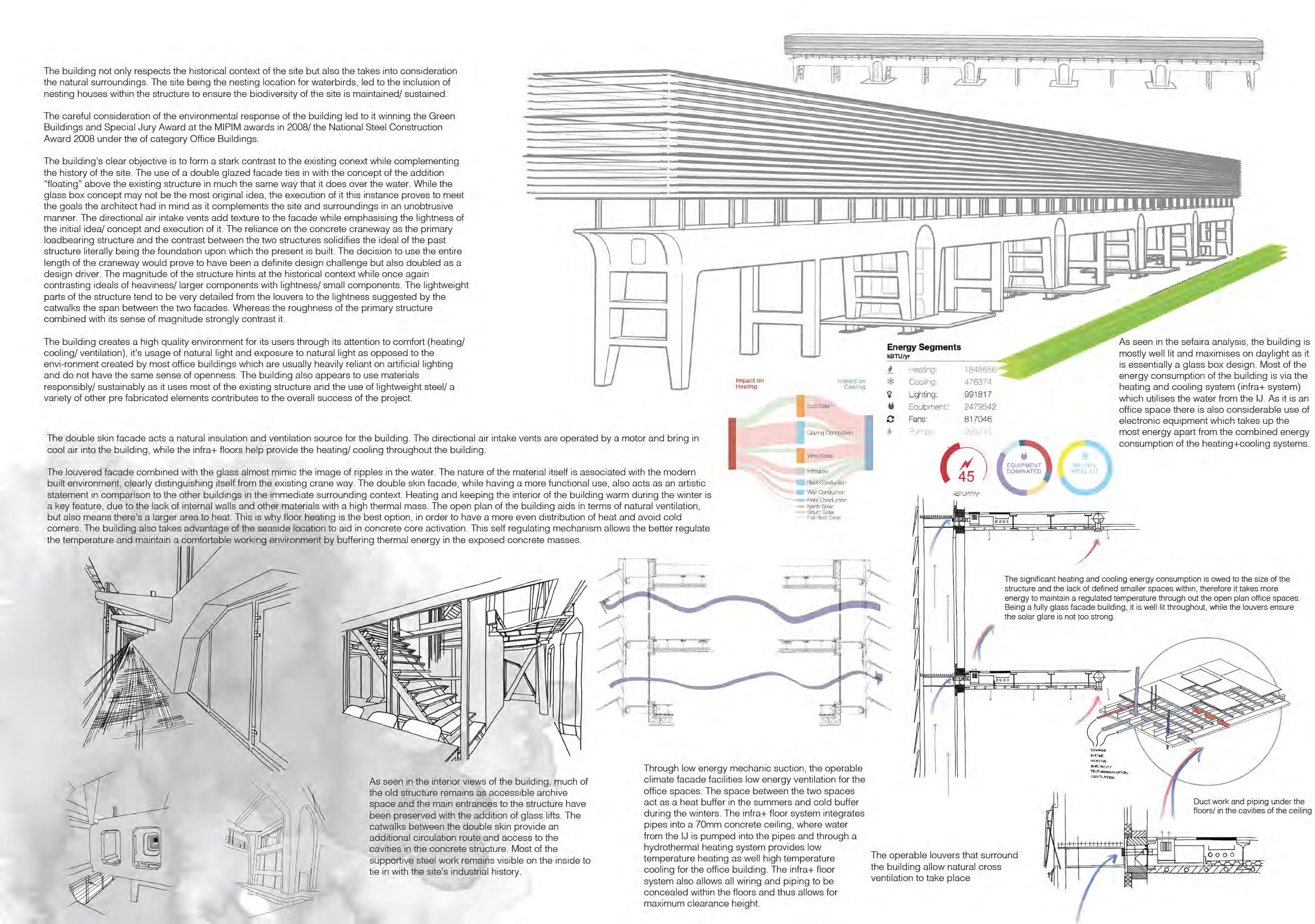
BUILDING STUDY OF KRAANSPOOR, AMSTERDAM
COMPETITIONENTERIES
LIGHTING DESIGN
SRI LANKA INSTITUTE OF ARCHITECTS
PROFESSIONALWORK WINE CELLAR
WINE CELLAR DESIGN PROPOSAL
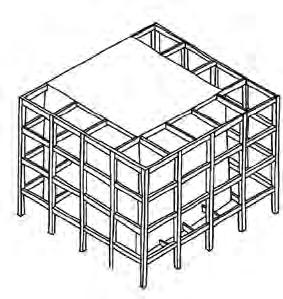
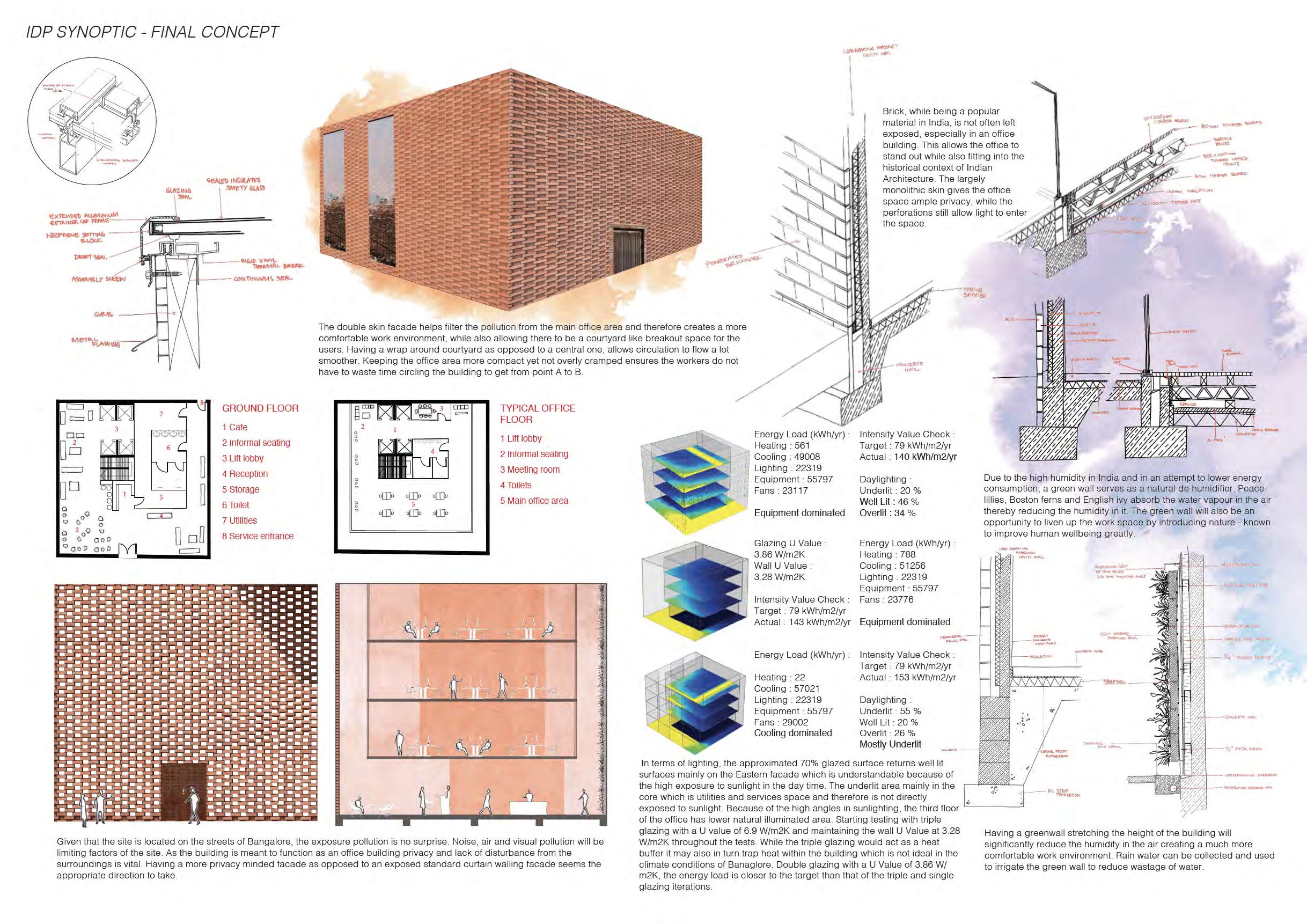
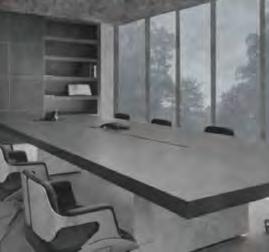
- TECH DESIGN PROJECT OFFICE BUILDING IN BANGALORE

3rd Year Project
3rd Year Project
3rd Year Project
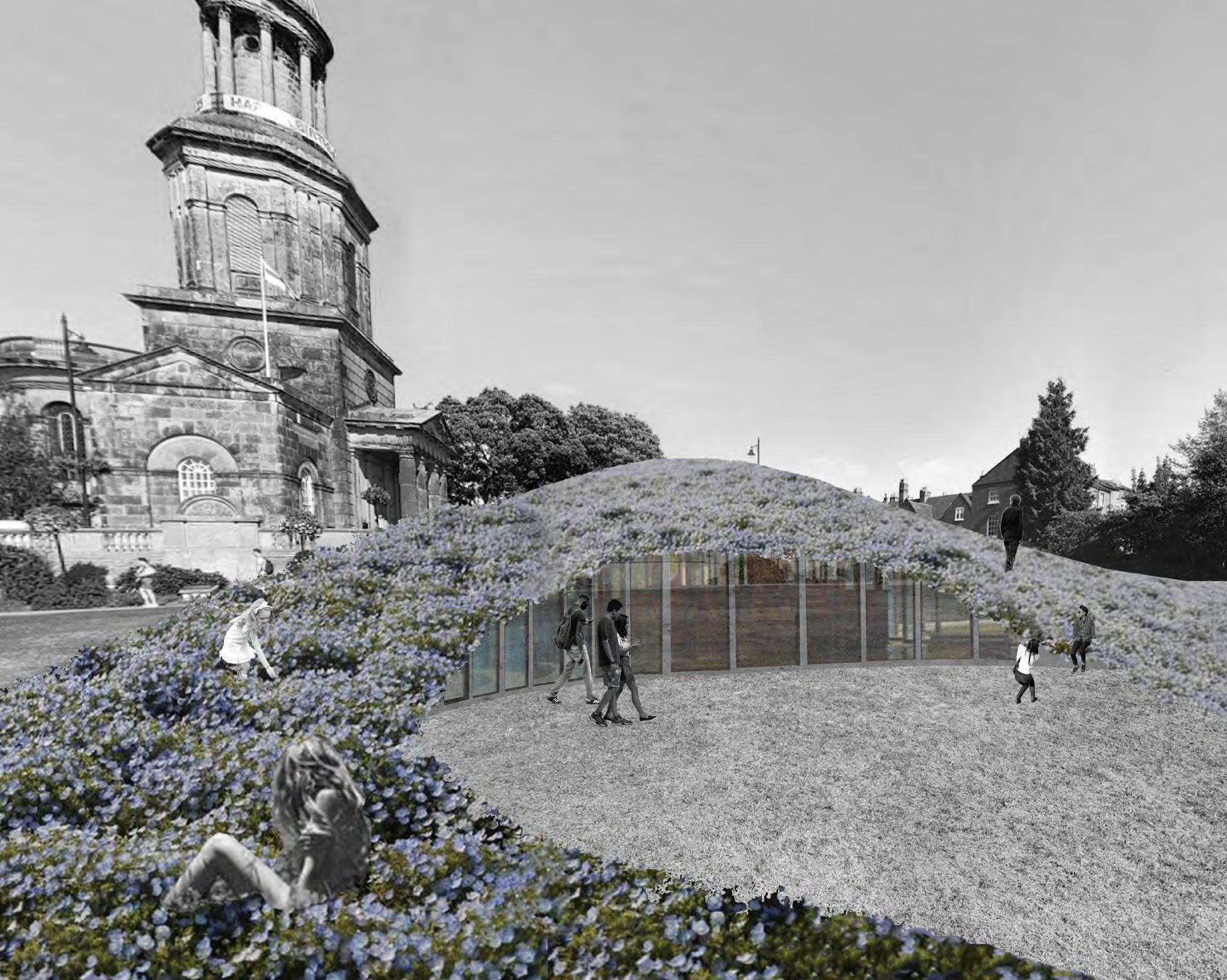
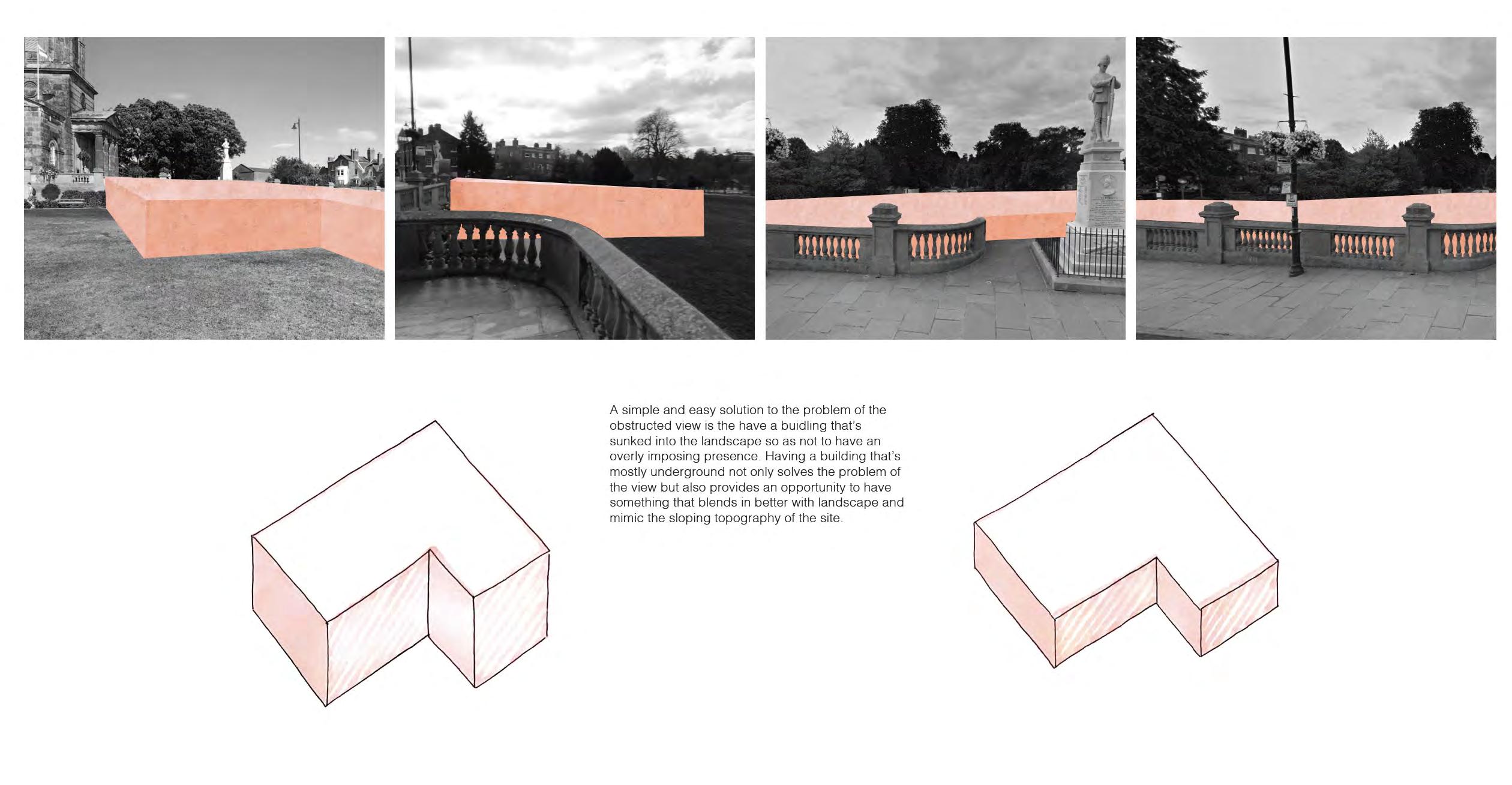

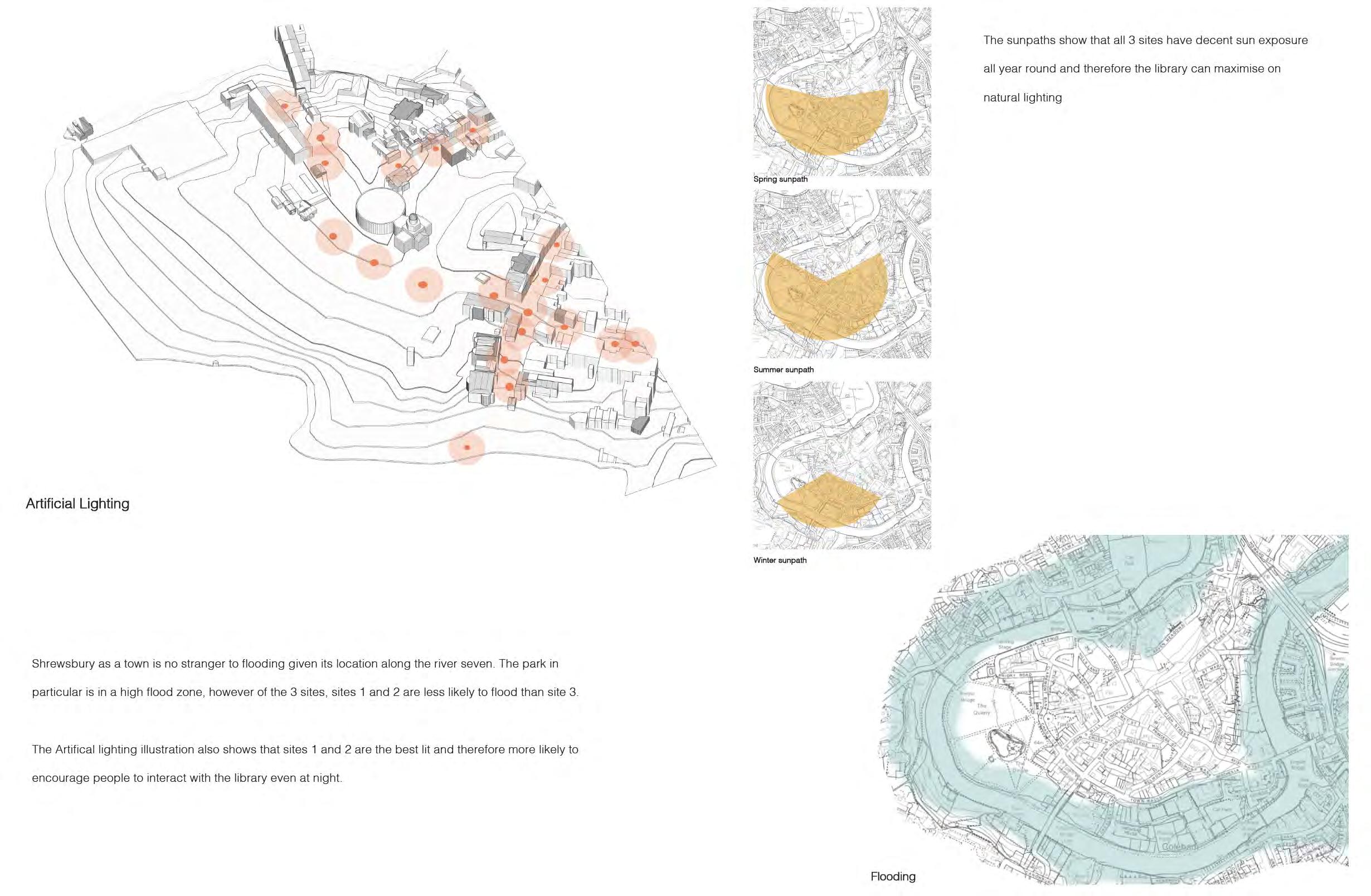
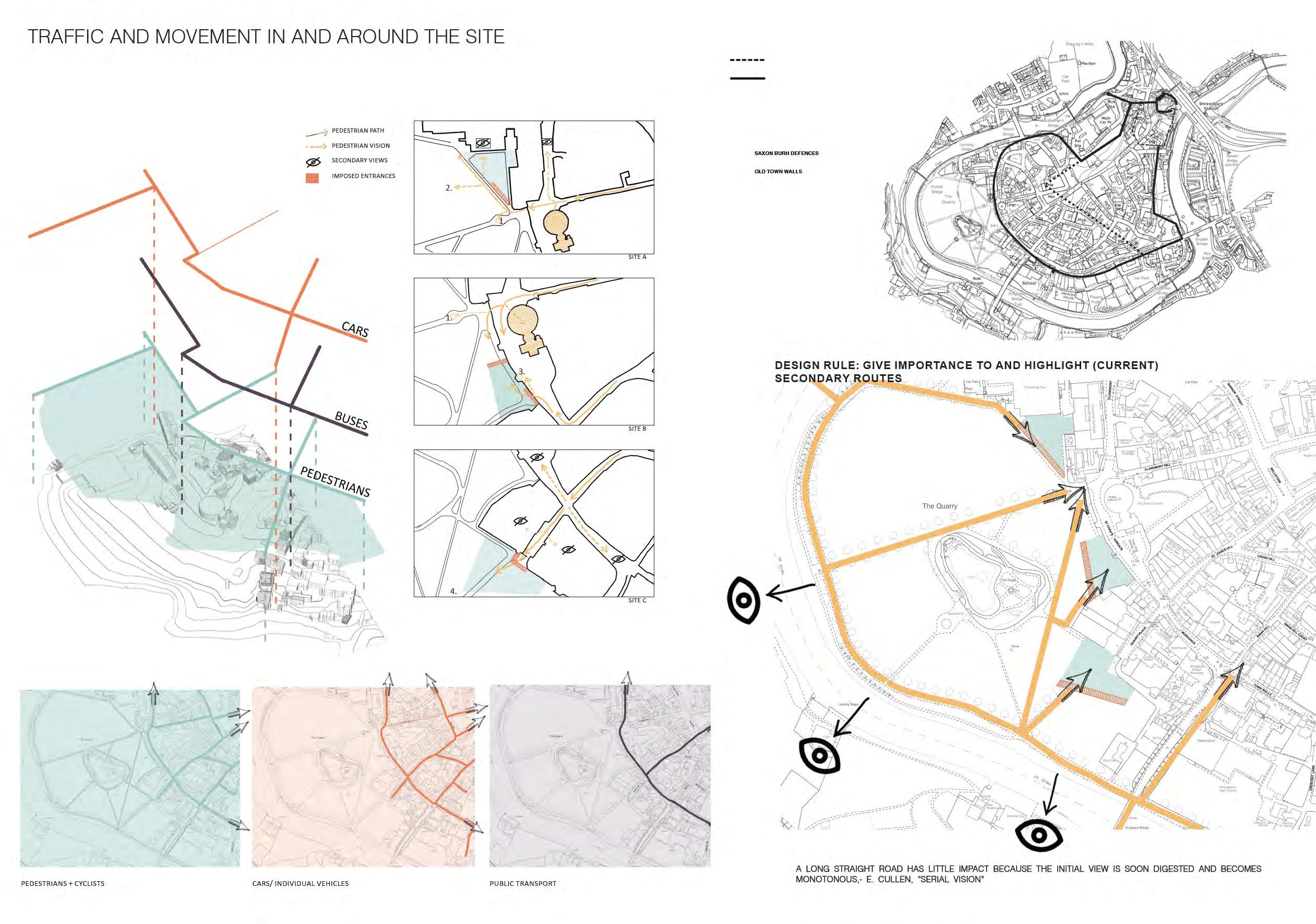
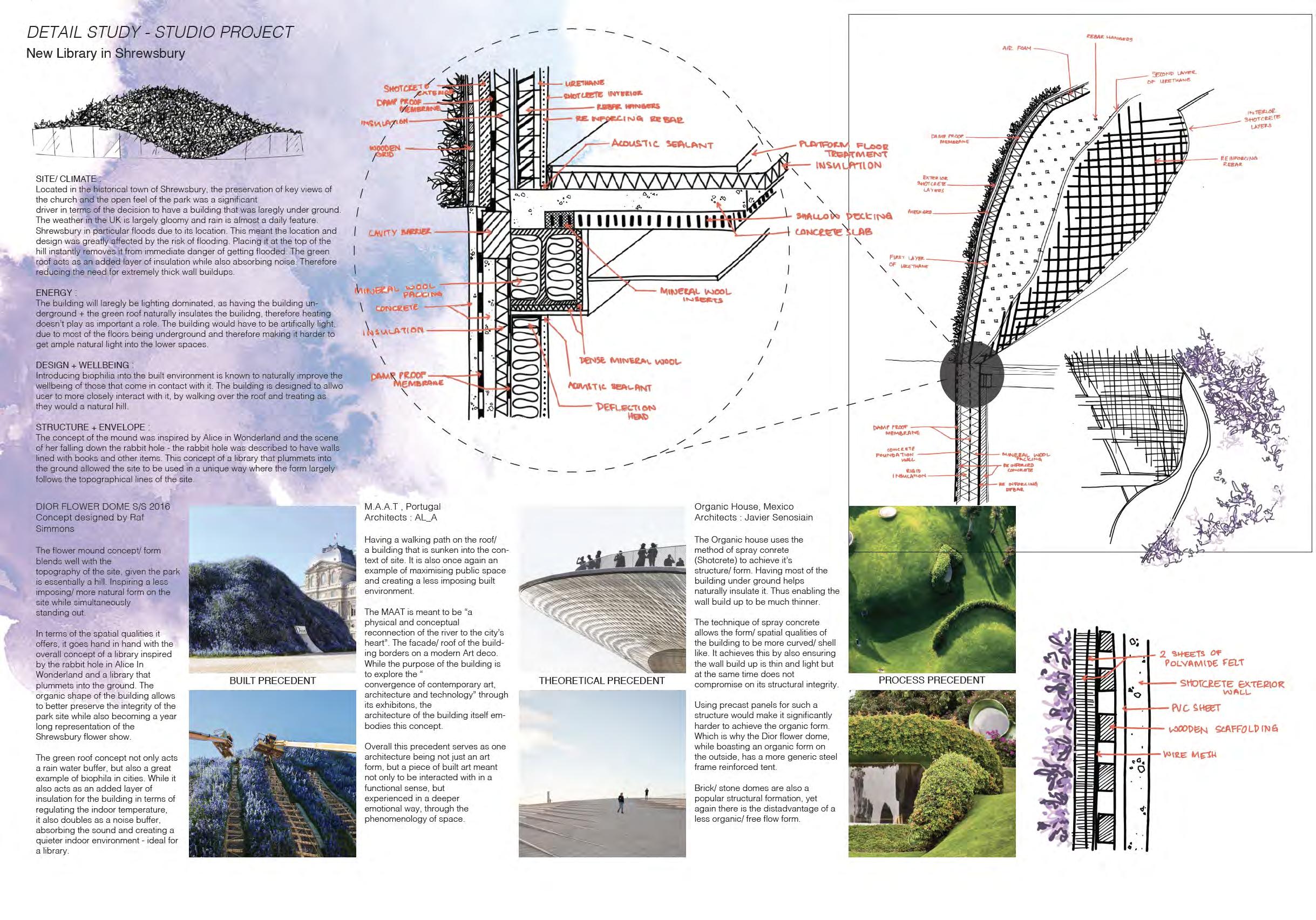
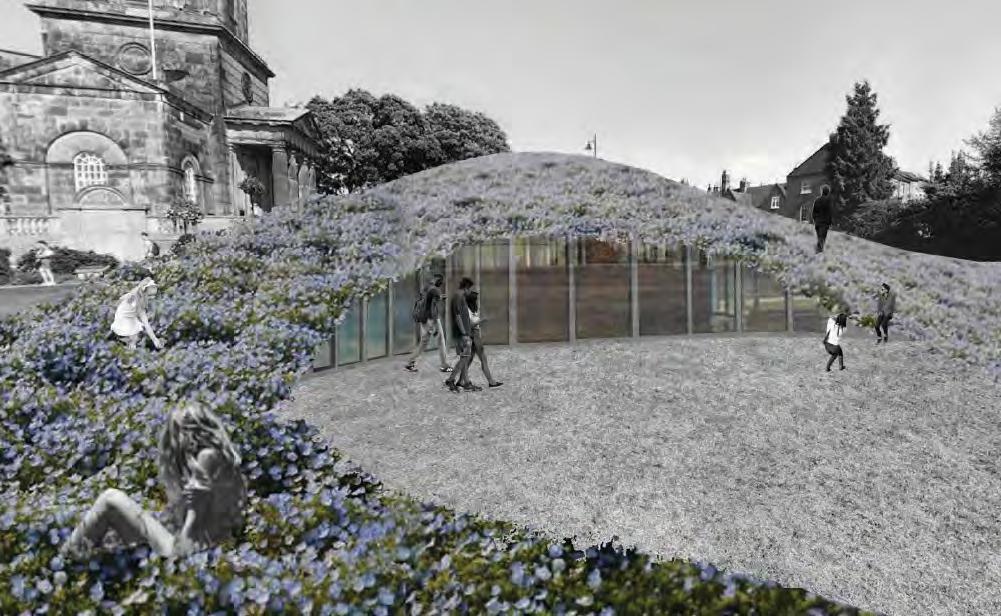
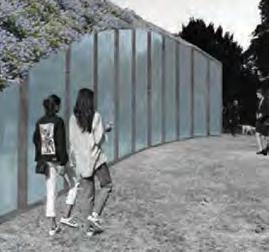
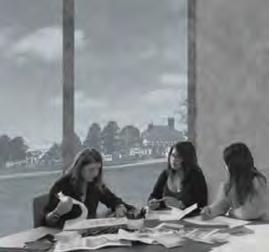
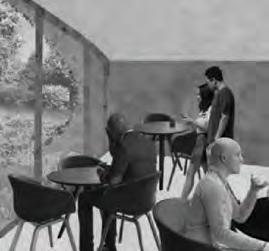
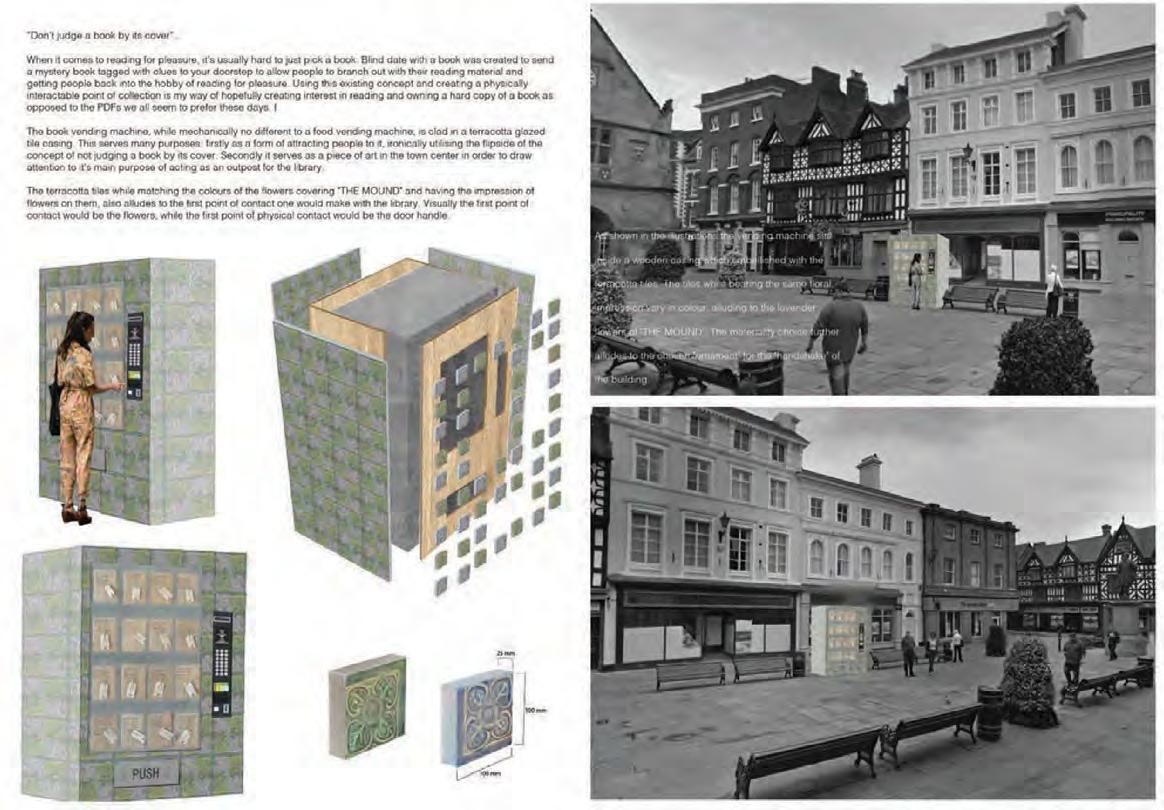
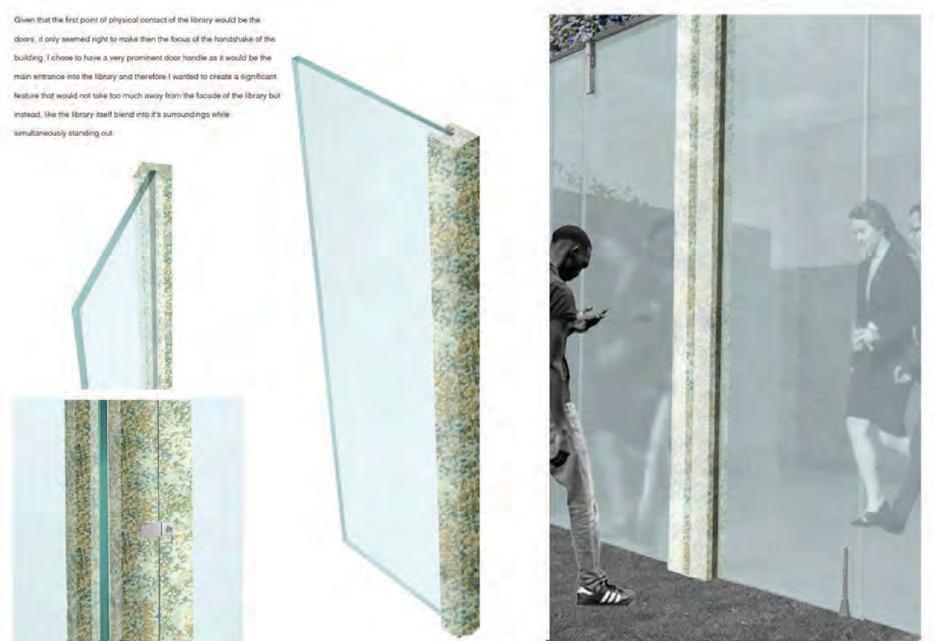
The concept respects/ mimics the topography of the site by presenting itself as a mound covered in greenery. The site while being of historical importance is also the location of the annual S hrewsbury flower show, therefore a building that lends itself to the surroundings seemed the most appropriate use of the site.
The design is rooted in the theory of phenomenology and the idea of individual experiences of space and its ability to evoke a range of different feelings.
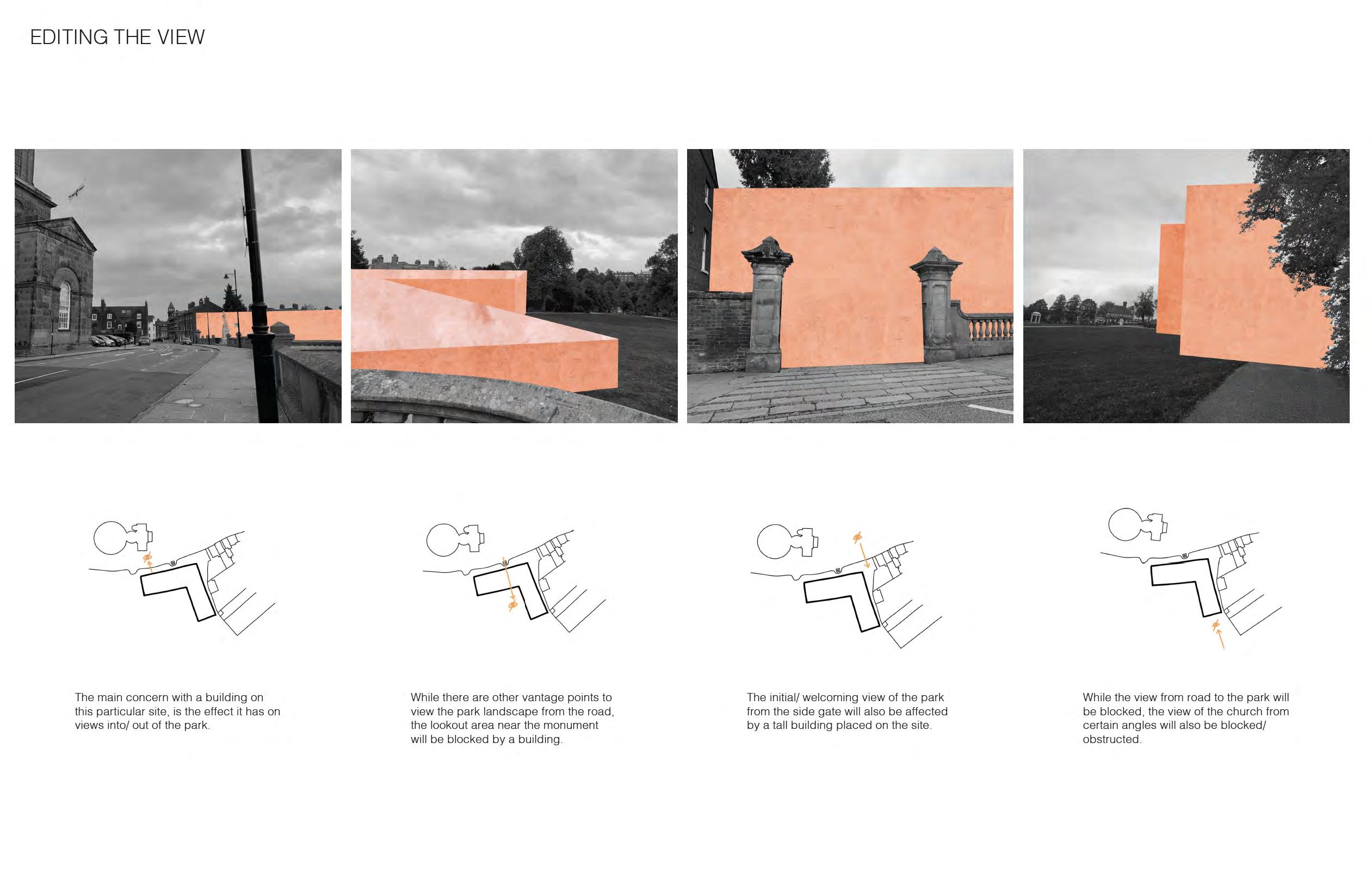
Preserving the views of the historical buildings surrounding the site was a key design driver due to the philosophy of the Continuity in Architecture atelier. Which is to be conscious of history and preserve it, while also adding value to its surroundings.


Sri Lanka Institute of Architecture
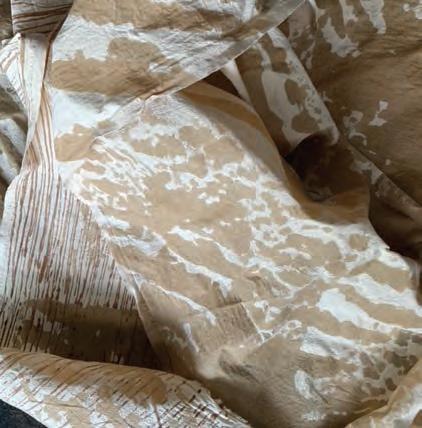
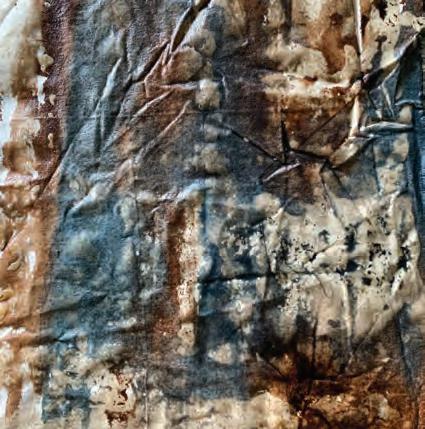
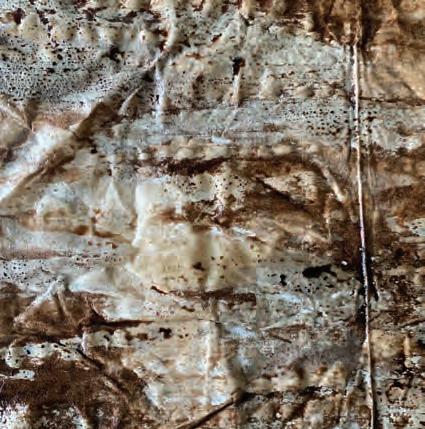
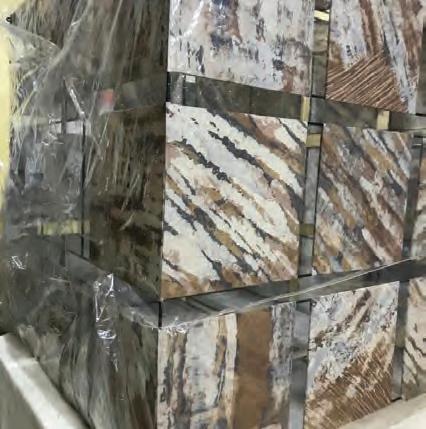
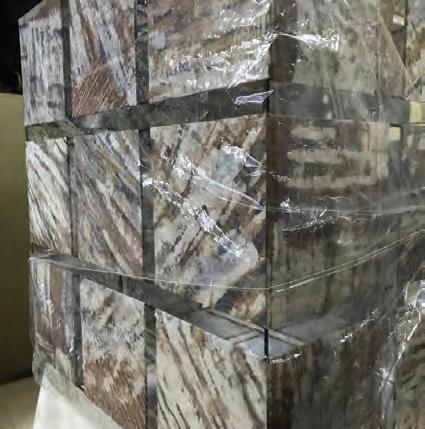
The objective of the competition was to create a light fixture that incorporated the heritage art of batik. The batik process invovles using wax as a resist on 100% natural fabric to paint with. The wax is used to cover the area one wants to preserve the underlying colour when dipping the fabric into another. I used both methods of dip dying fabric as well as painting with the dye in order to achieve my desired look. The process invovled having to boil the fabric to remove the wax and once again add more wax where necessary to cover the colour to add another layer of dimension to the design. The project is still ongoing, however I have included the progress thus far.
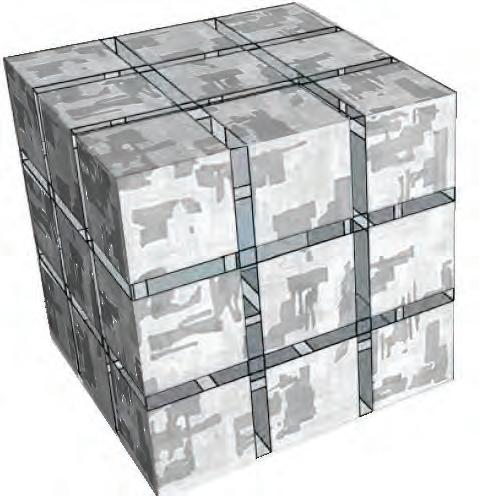
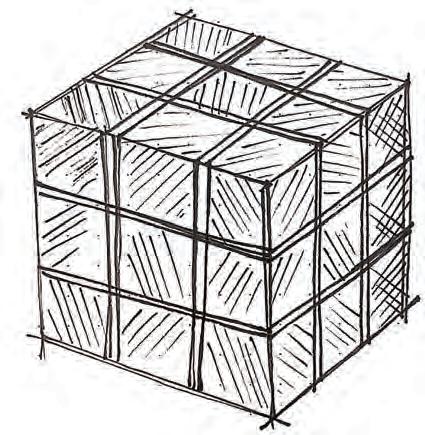
My concept for the light fixture was based off the design of a rubix cube, using the gaps to create interesting shadows and play with the concept of using light to enhance the fabric.
Part 1 Architectural assistant
While I cannot display every project in detail, I hope these images convey a general sense of the variety of work I did and a rough idea of the quality of my work. However if you wish to see more images of the finished projects I would be happy to provide them on request.
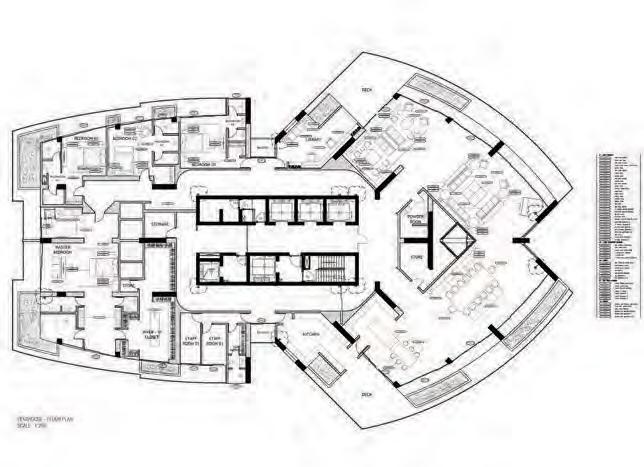
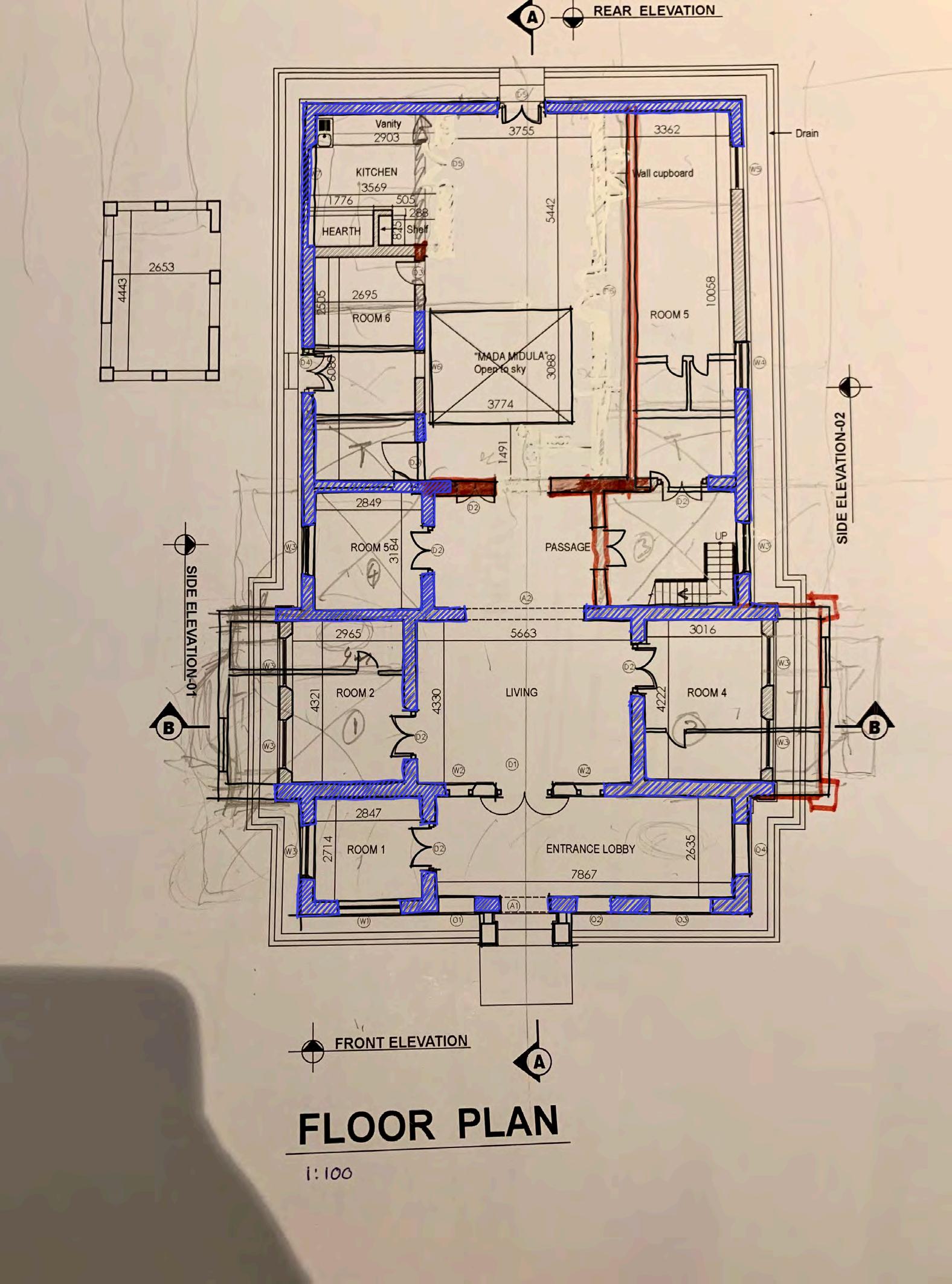
Measured drawings - plans/ elevations/ sections
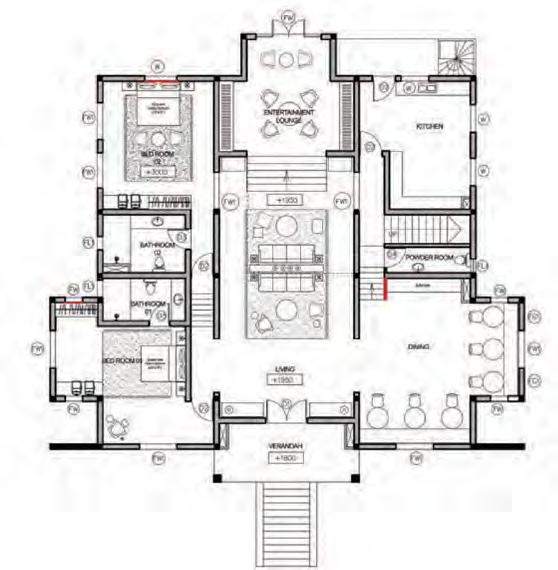
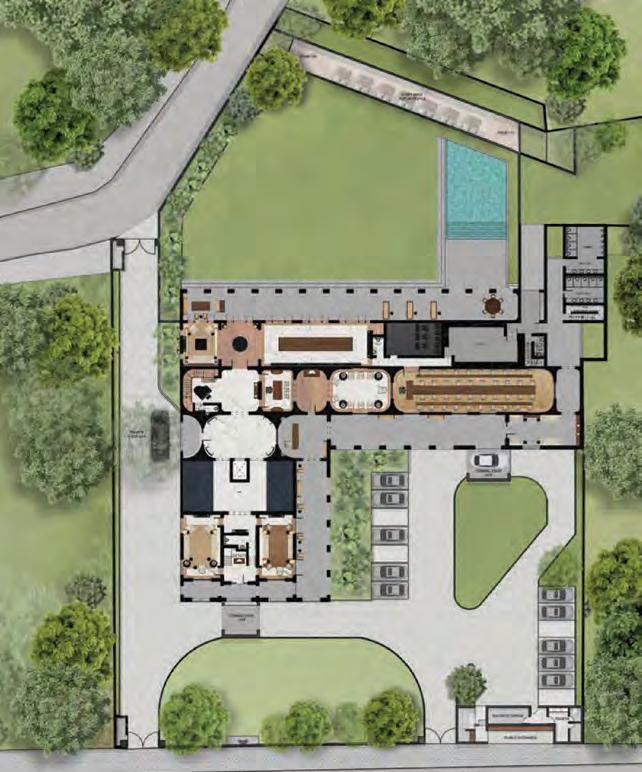
Designing and curating interior look and feels/ rendering those spaces
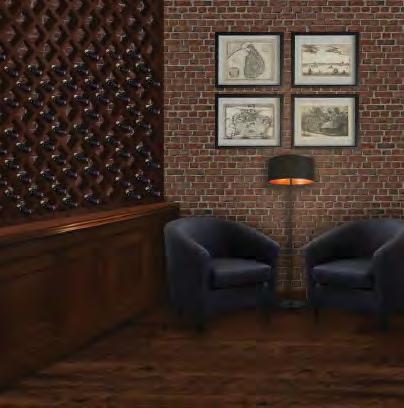
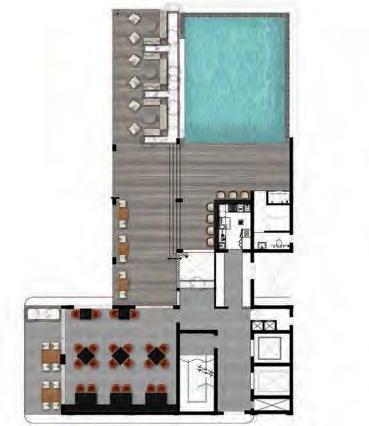
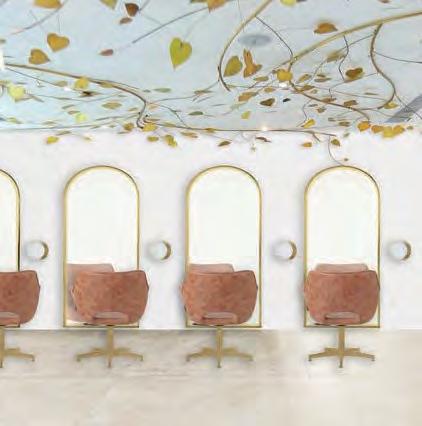
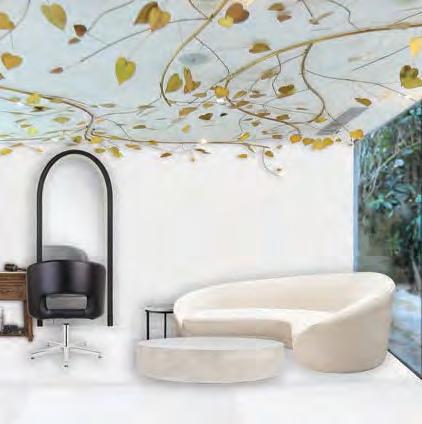
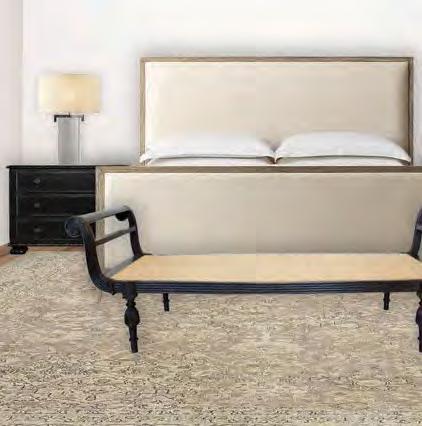
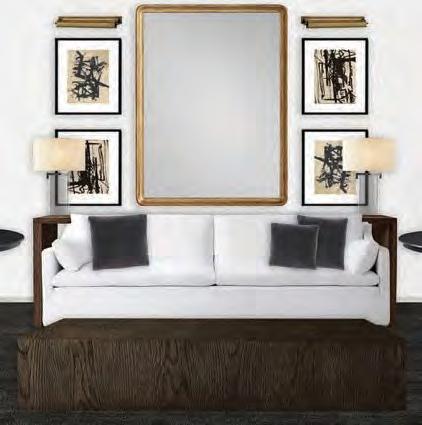
Initial concept proposal for project. The client requested to repurpose the existing basement space into a wine cellar and lounge. I presented two options, given the limited space and the budget.
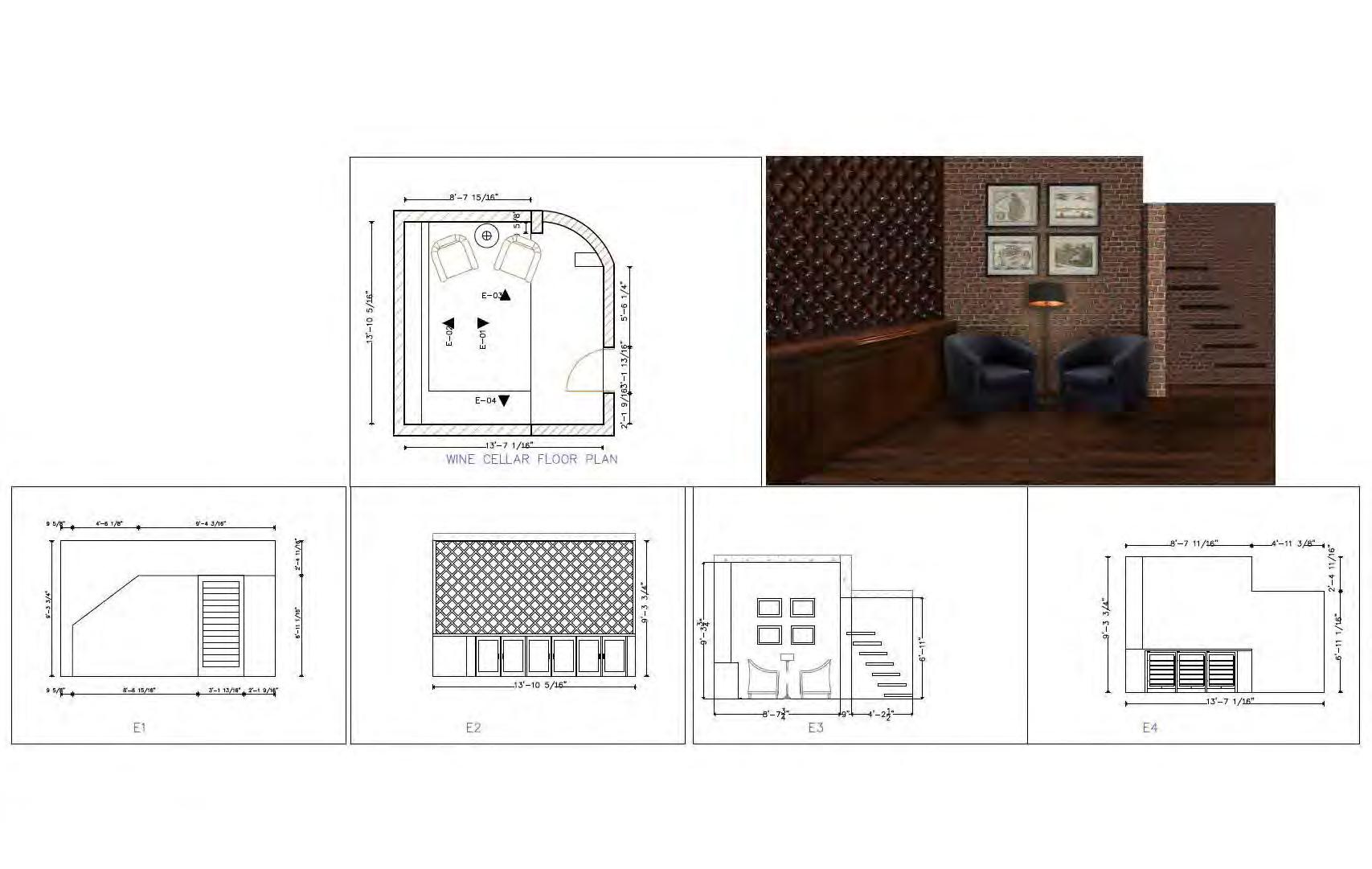
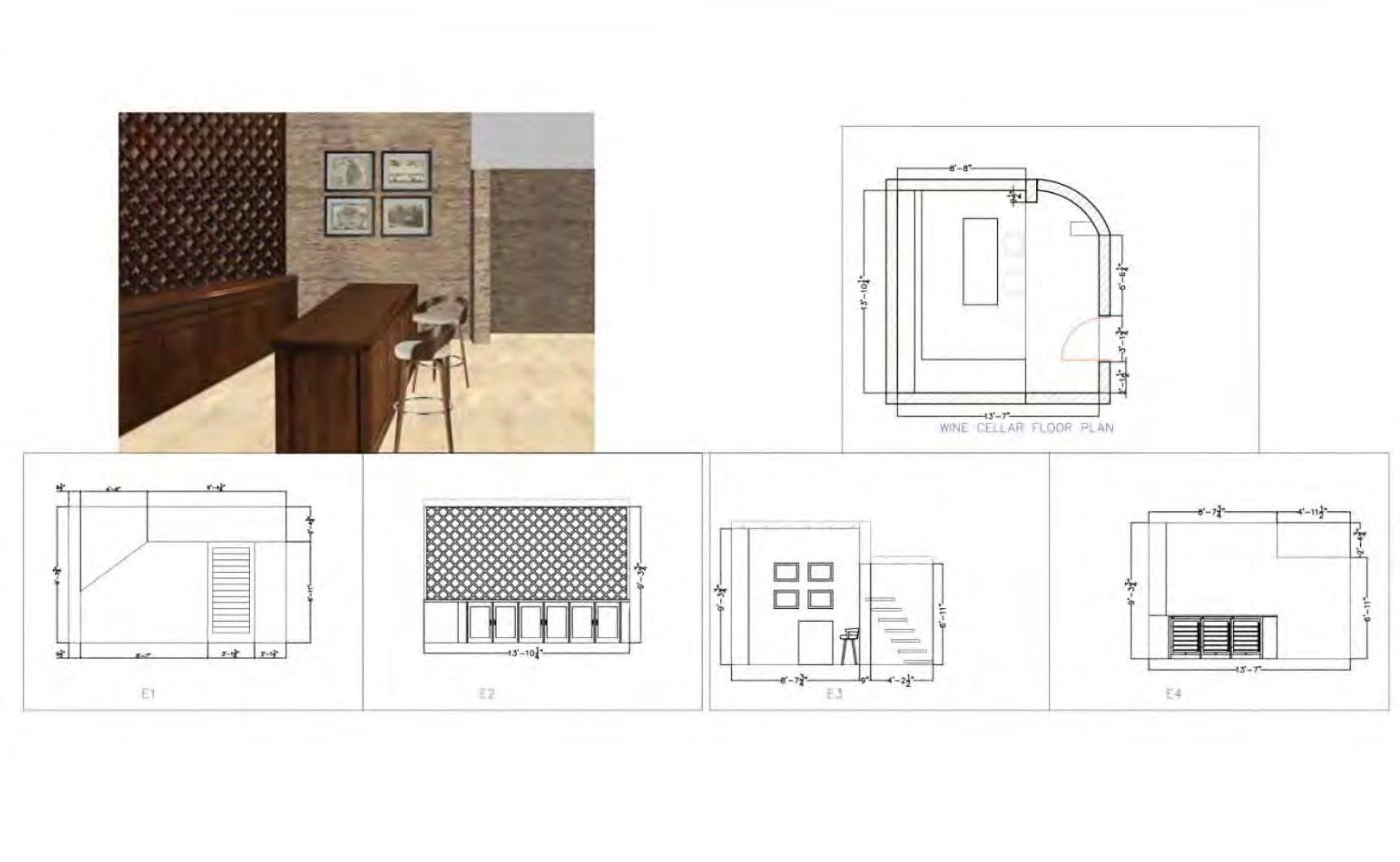
My scope for this project focused on interior design, furniture layouts and electrical plans
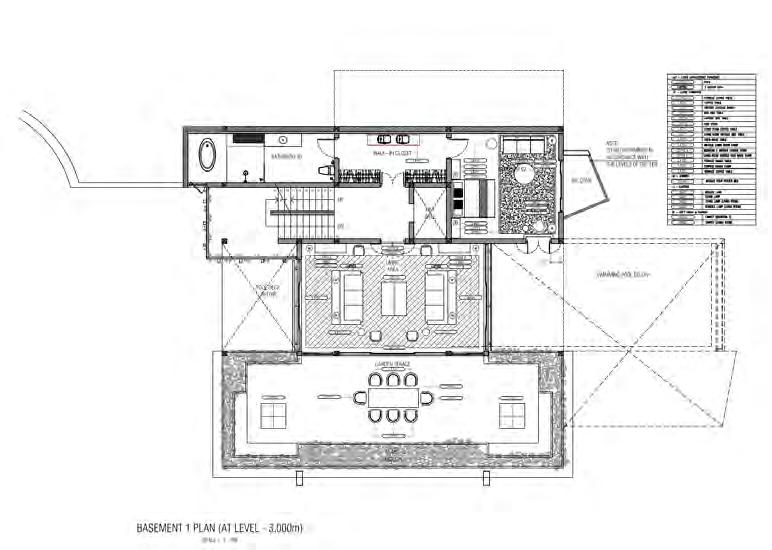
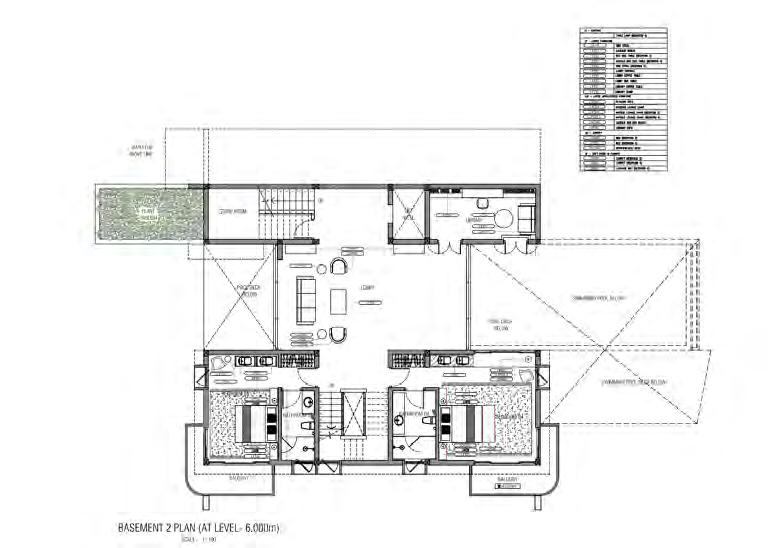
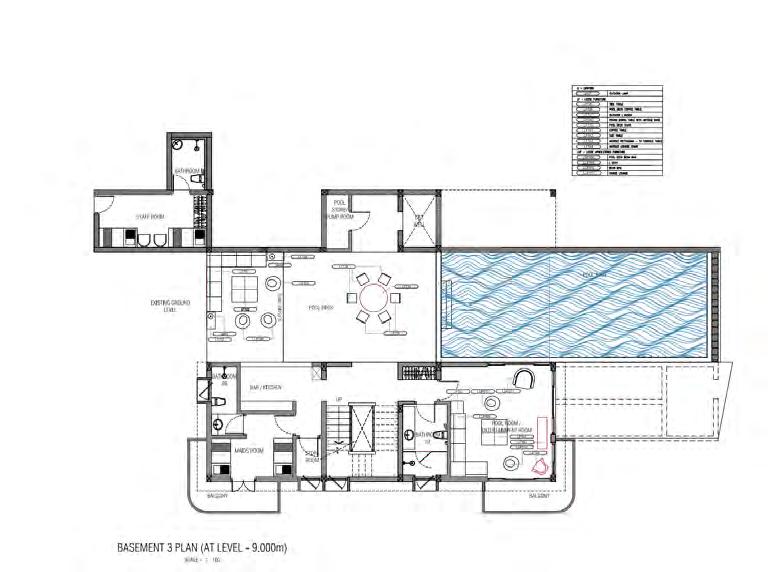
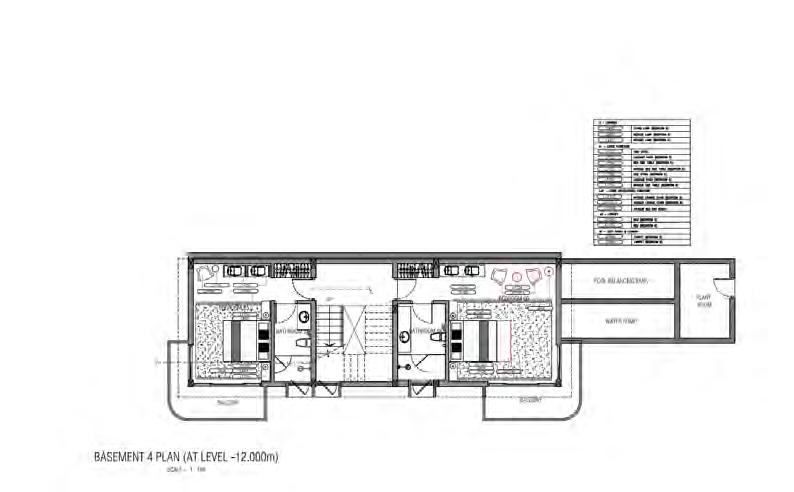
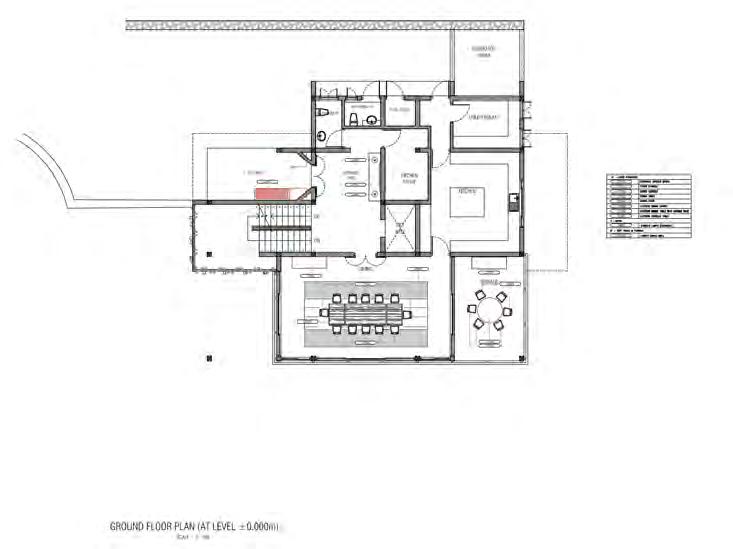
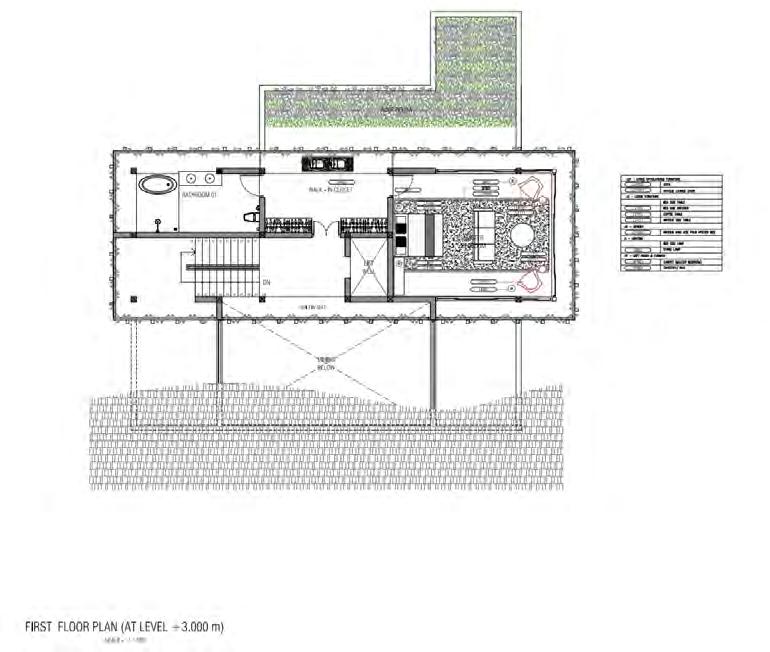
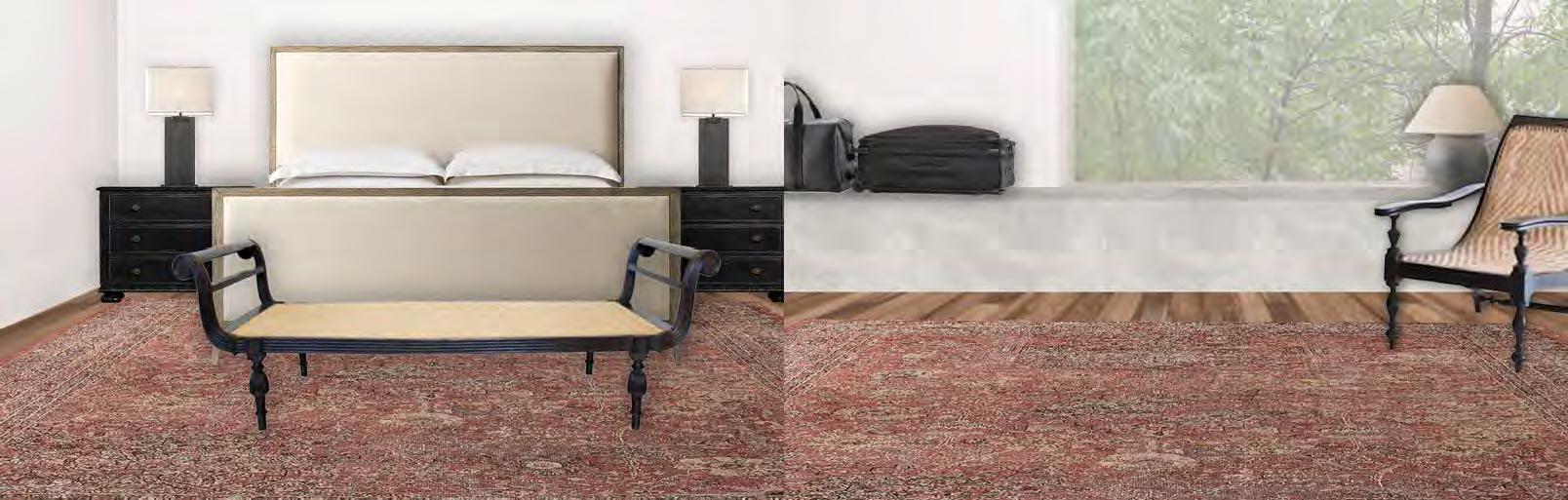
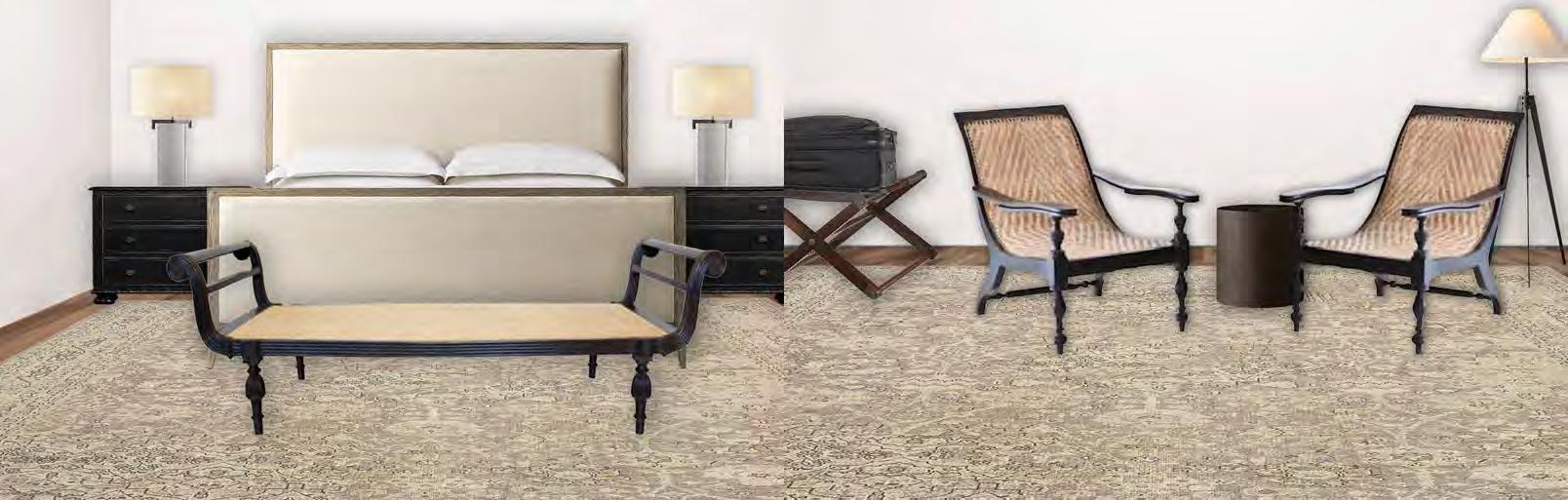
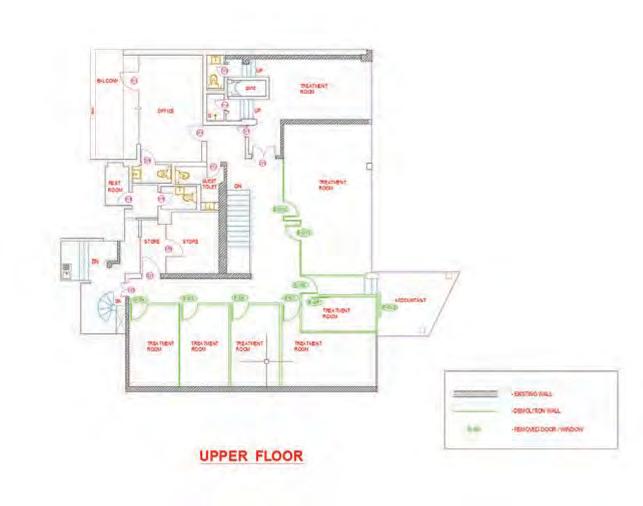
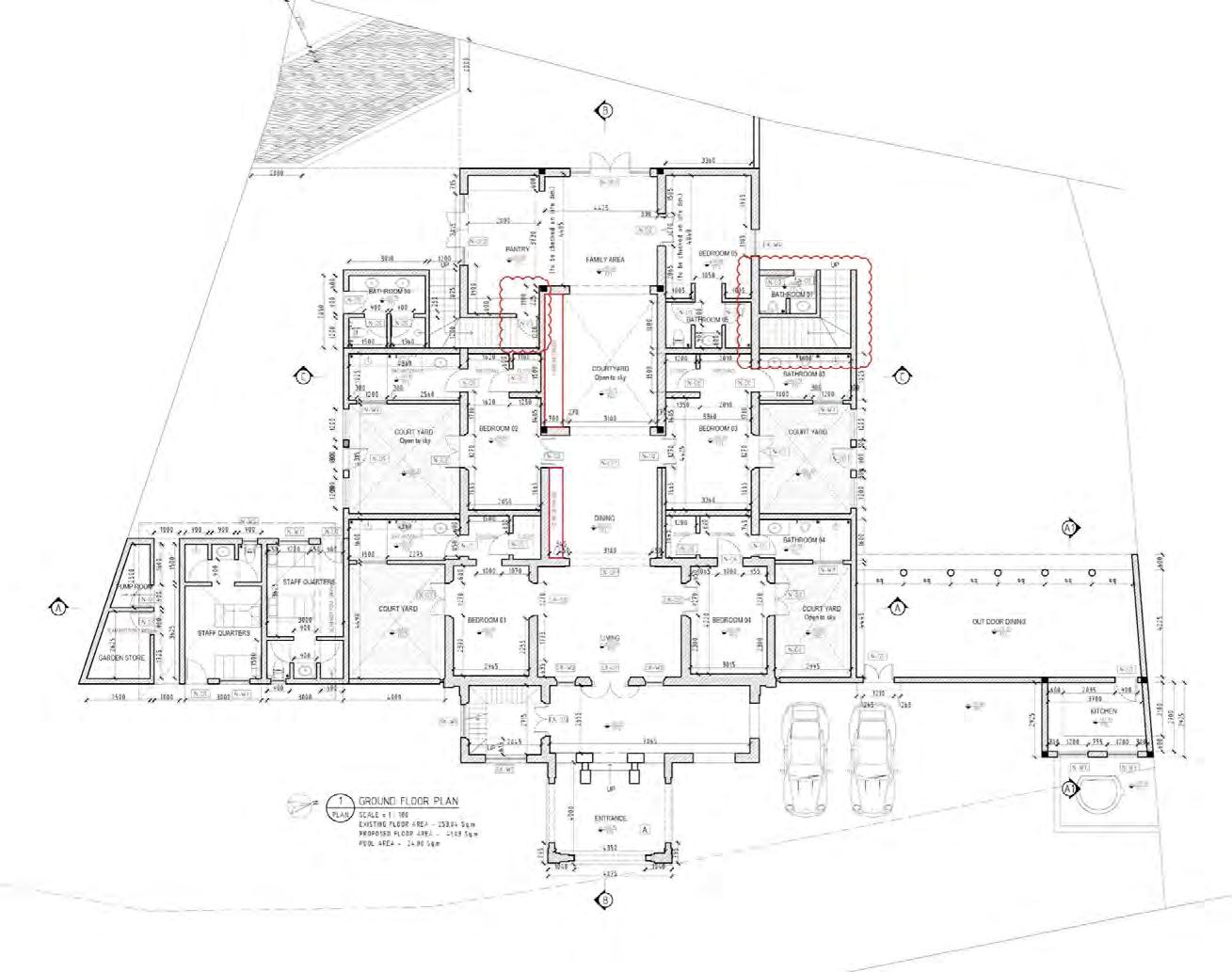
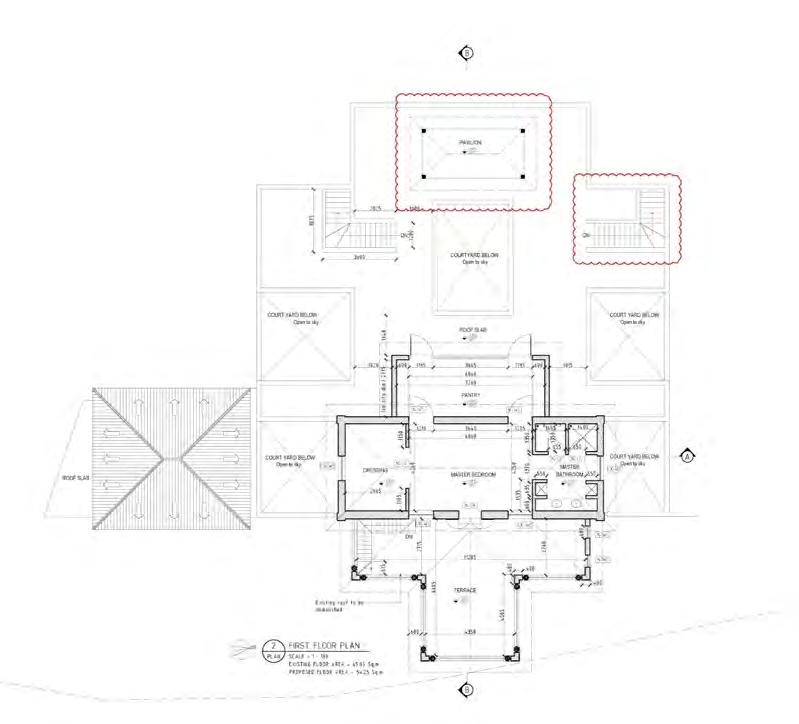
Overall look for the remodel, demolition plans, proposed plans
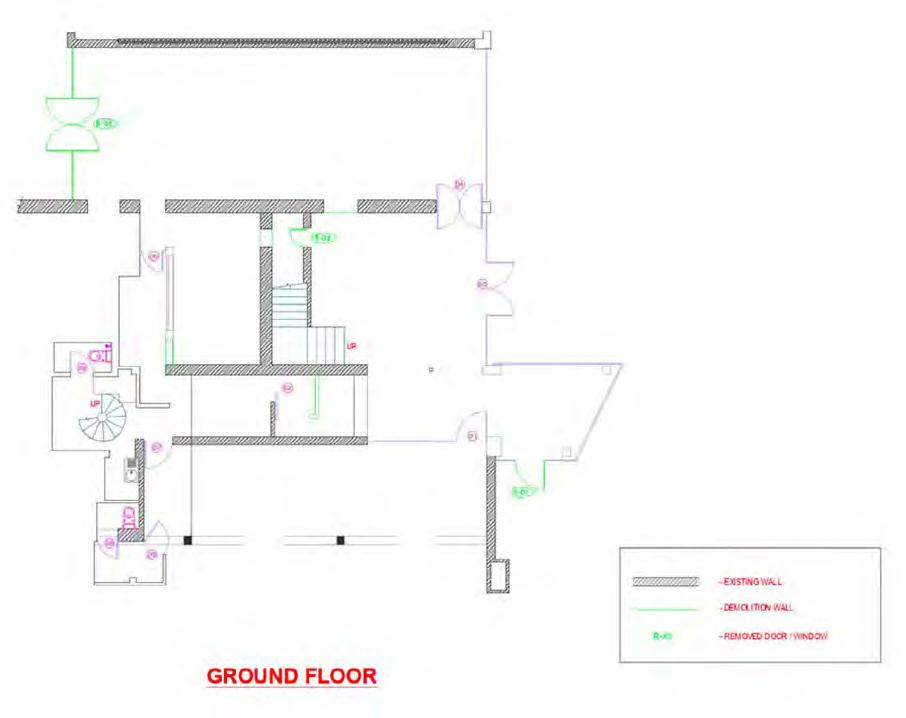
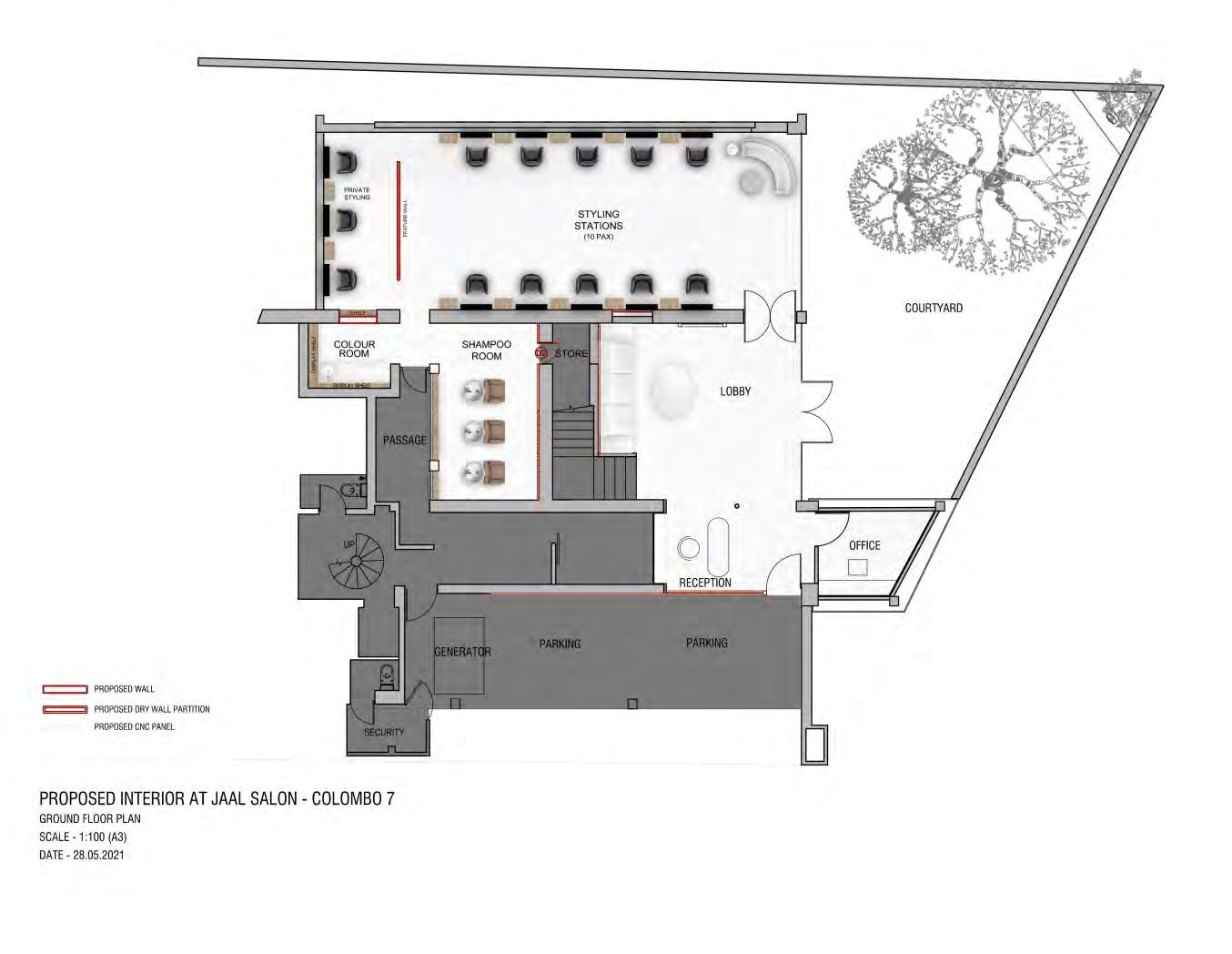
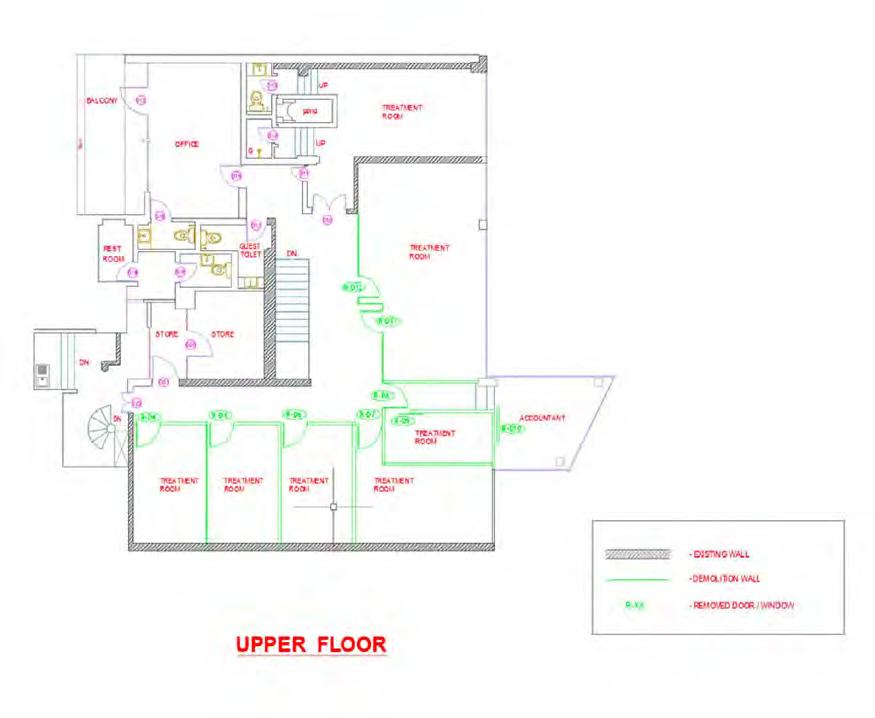
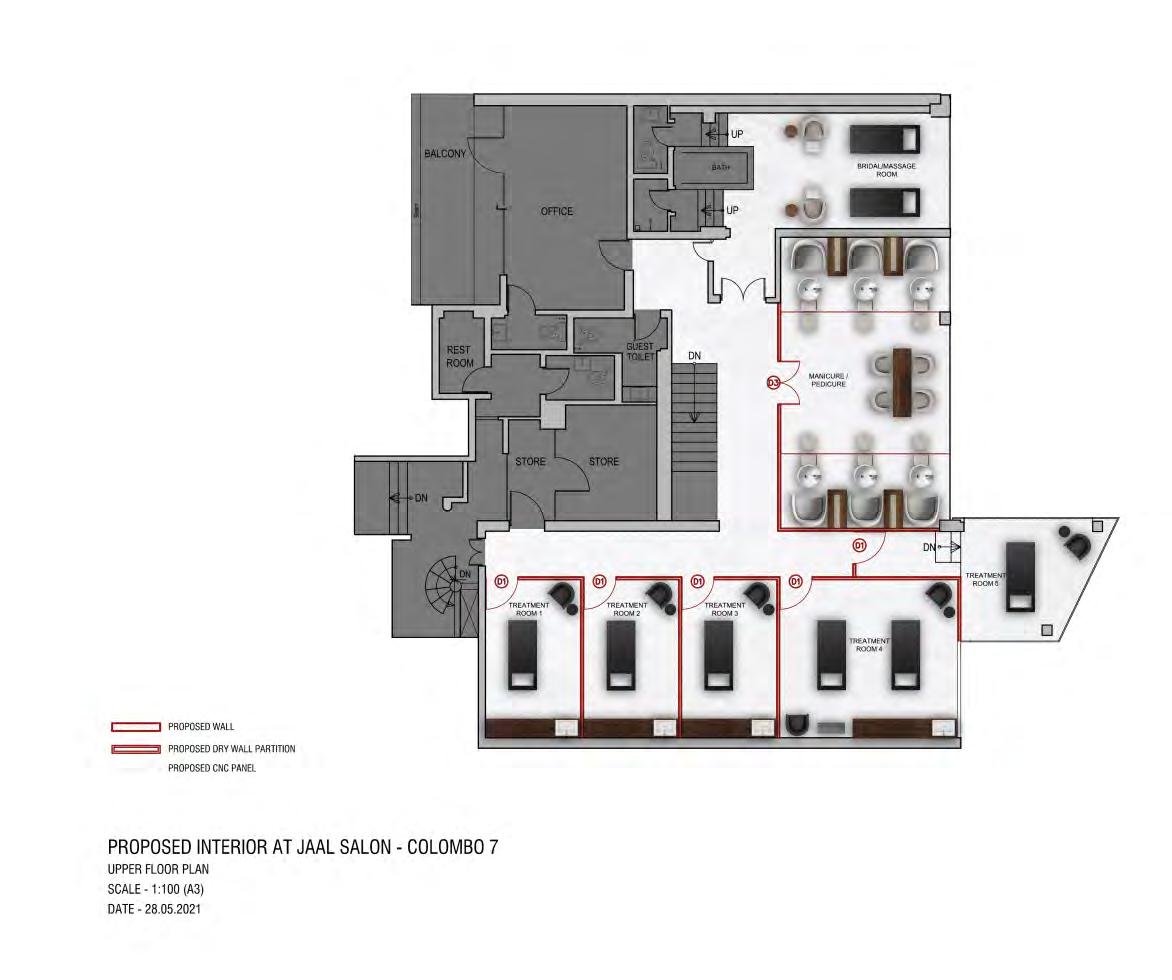
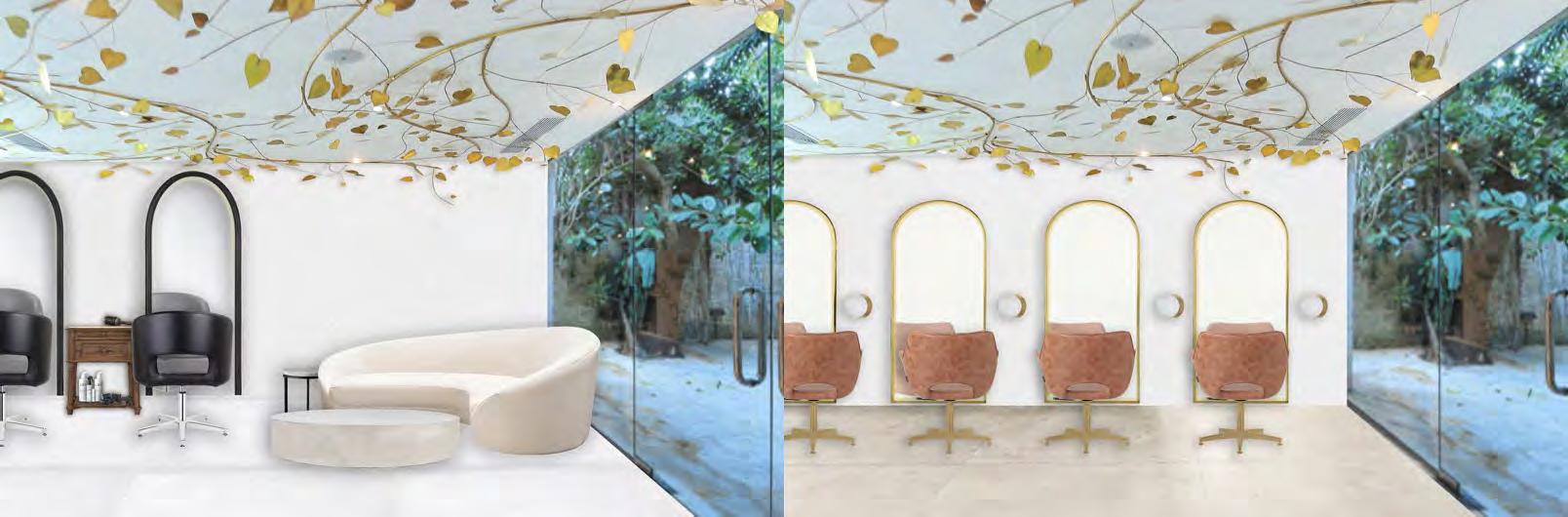
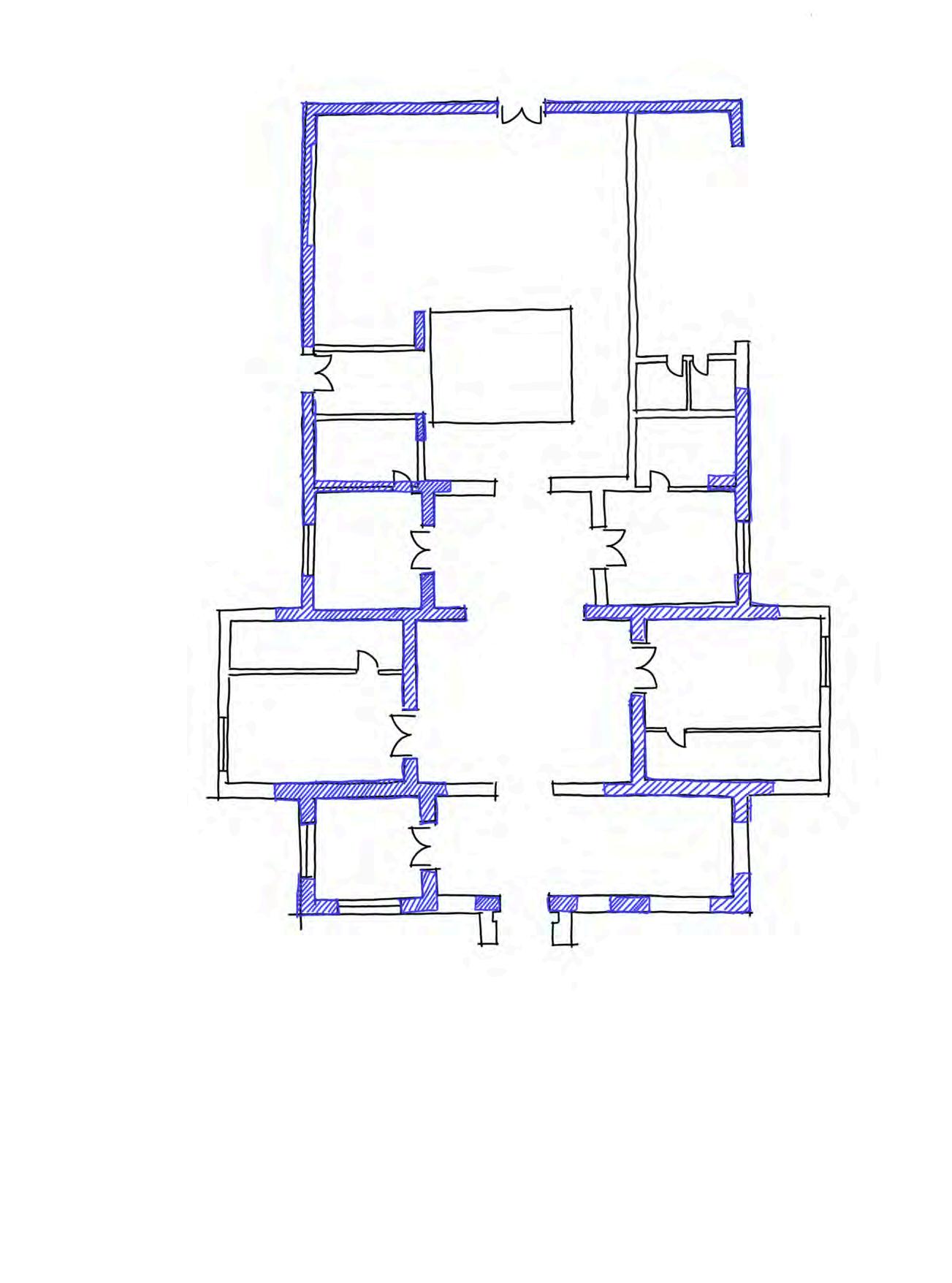
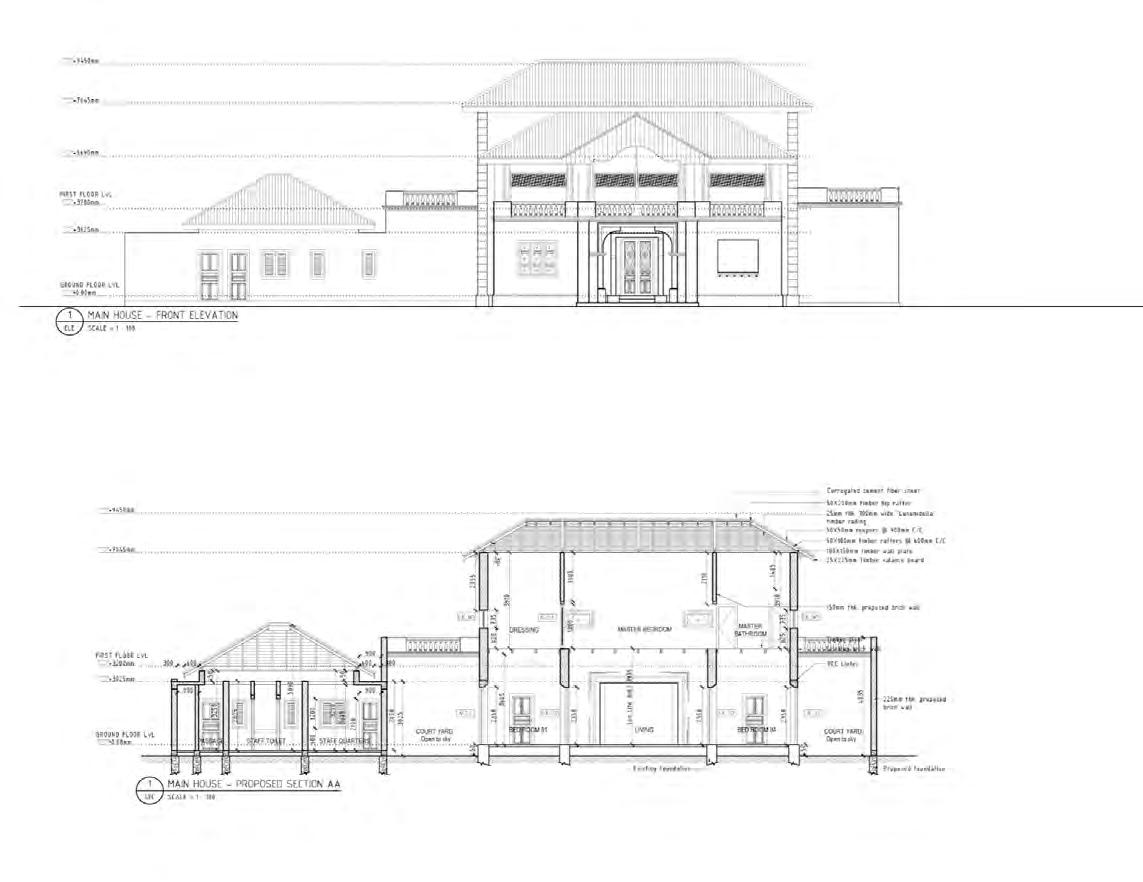
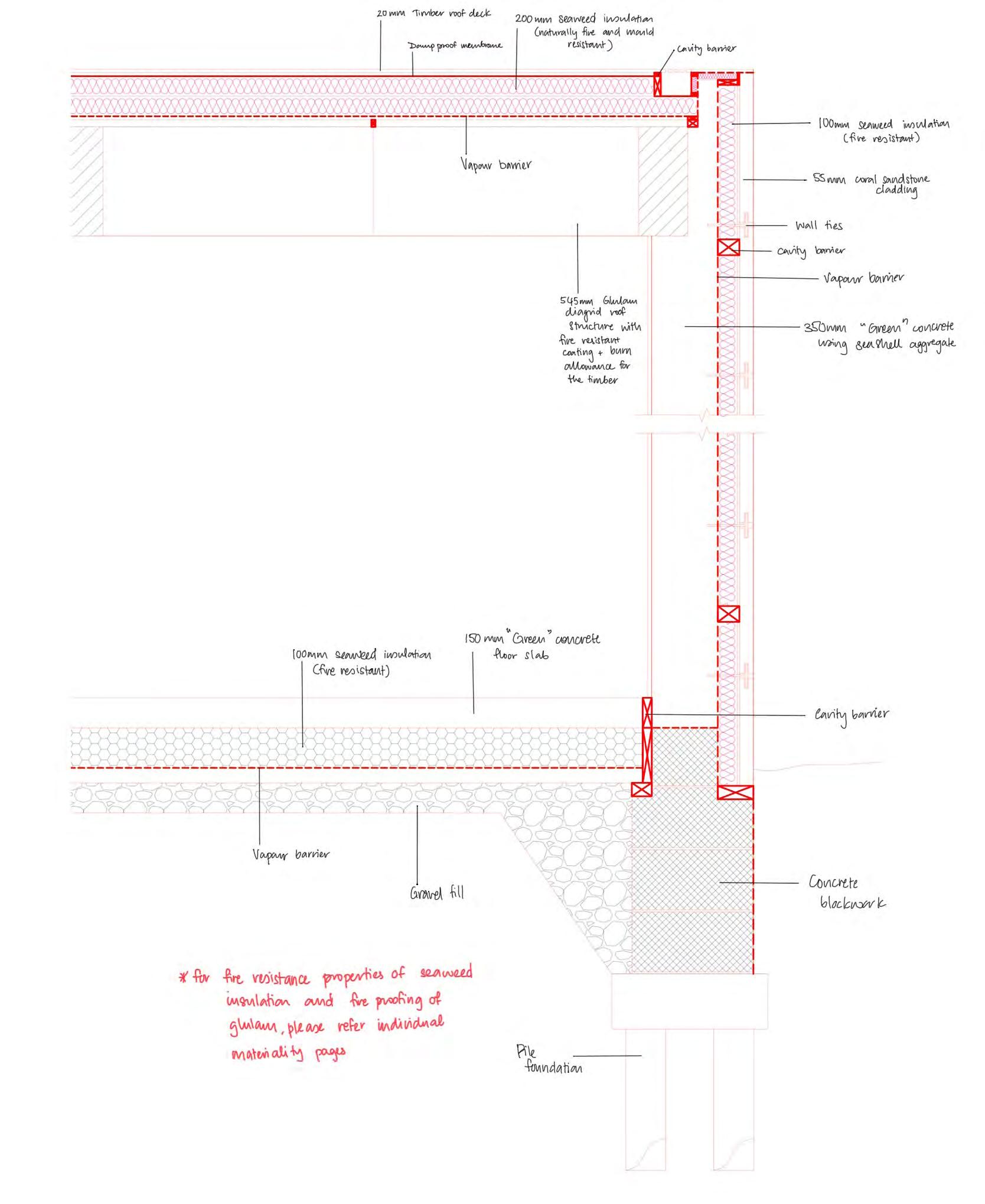
Restoration and reuse project. Using the existing shell of an old ‘Walauwa’ style Sri Lankan home, the new beach side villa has been design and is still an on going project. It is currently at the construction stage. And I will be handling the interior design aspect.
by grace, through faith

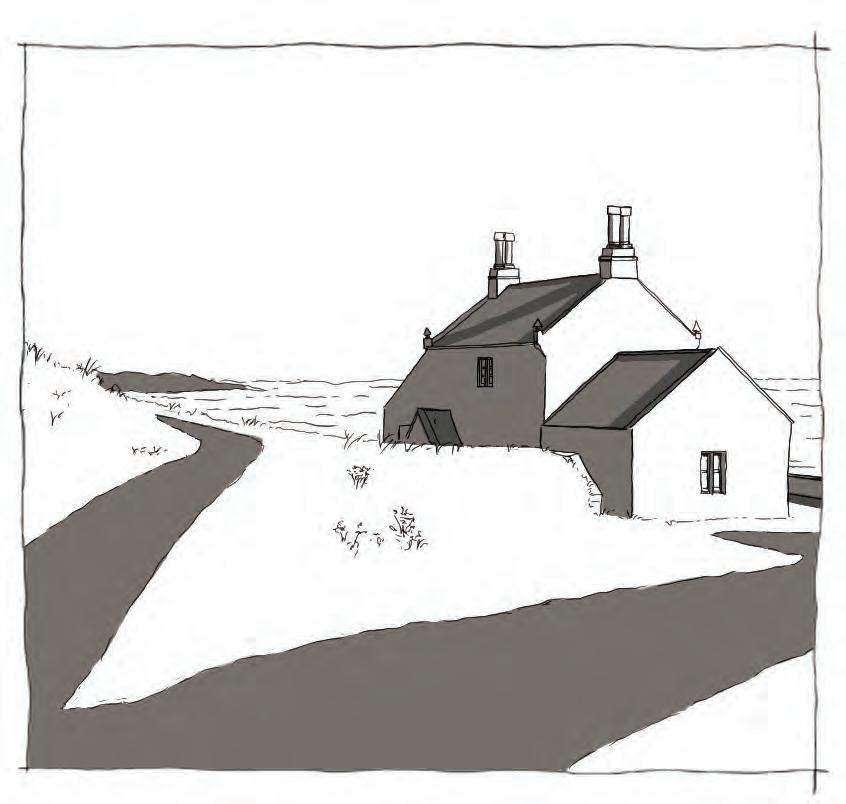
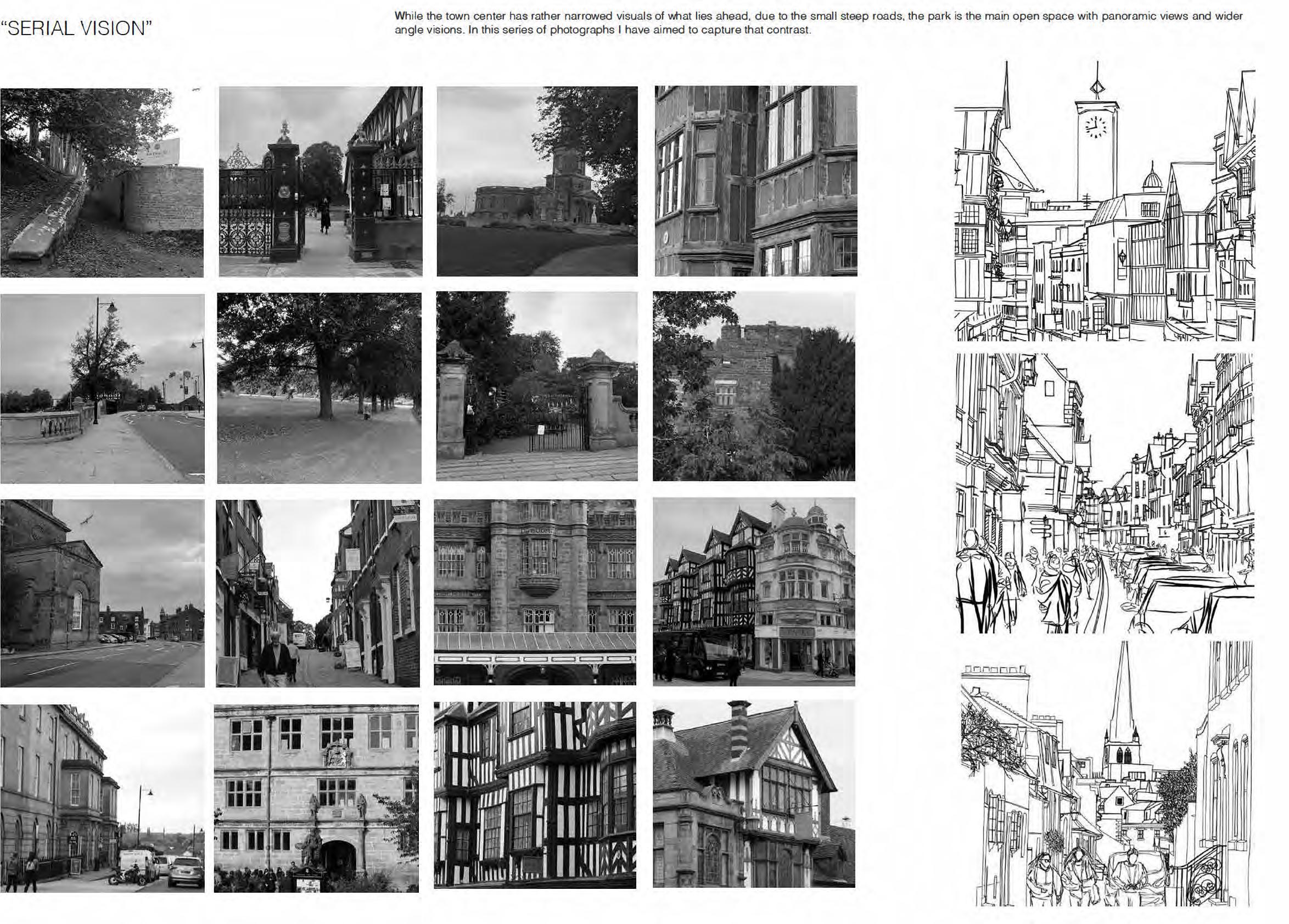
“ it is an instinctive and continuous habit of the body to relate itself to the environment, this sense of position cannot be ignored; it becomes a factor in the design of the environment… it is easy to see how the whole city becomes a plastic experience, a journey through pressures and vacuums, a sequence of exposures and enclosures, of constraint and relief. ” - Gordon Cullen1
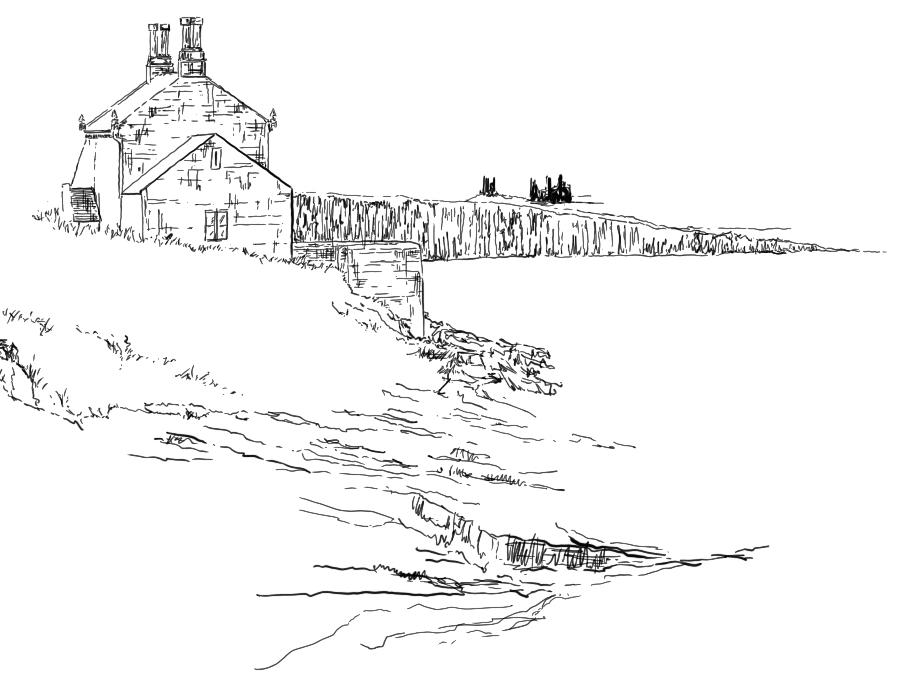
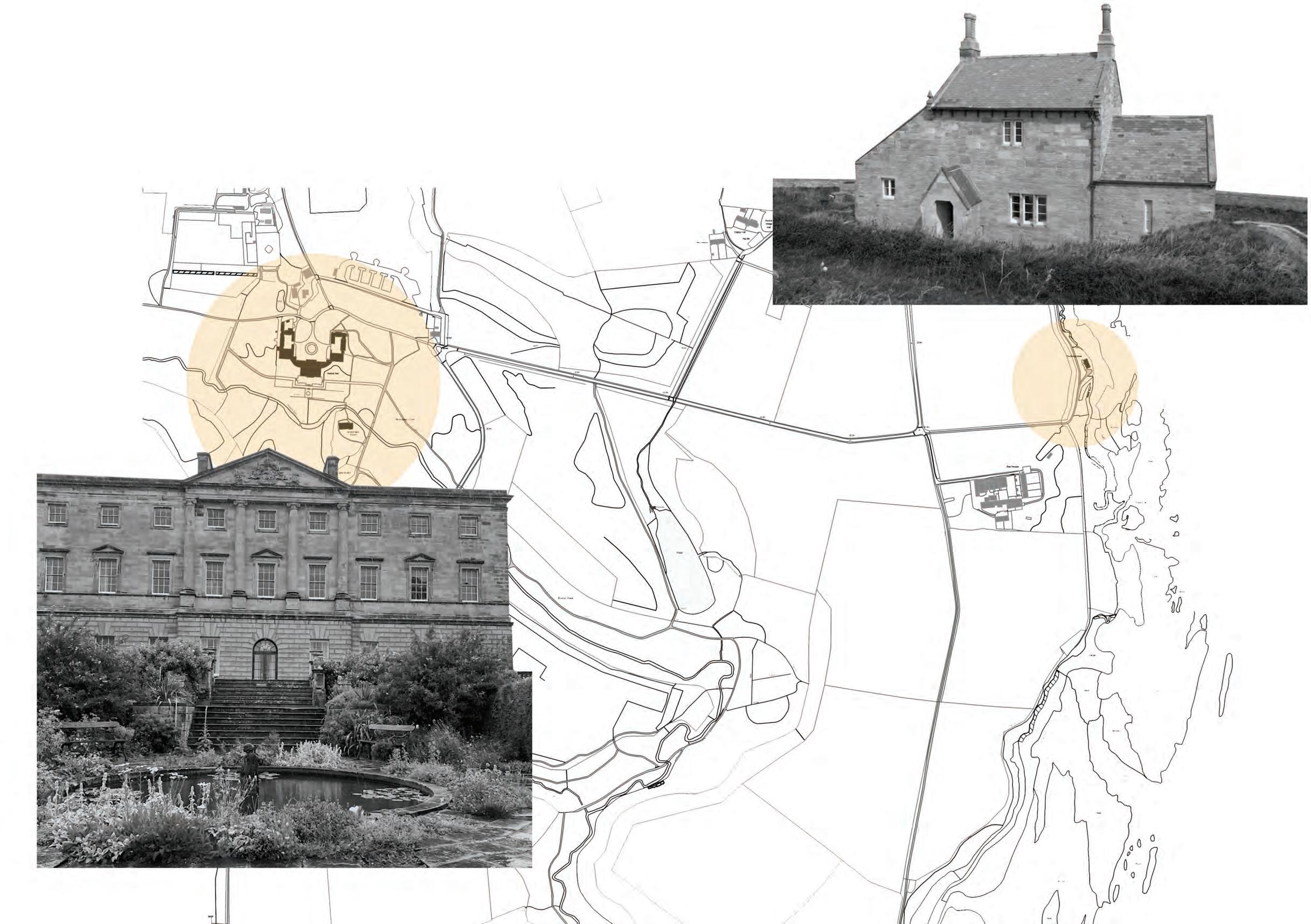
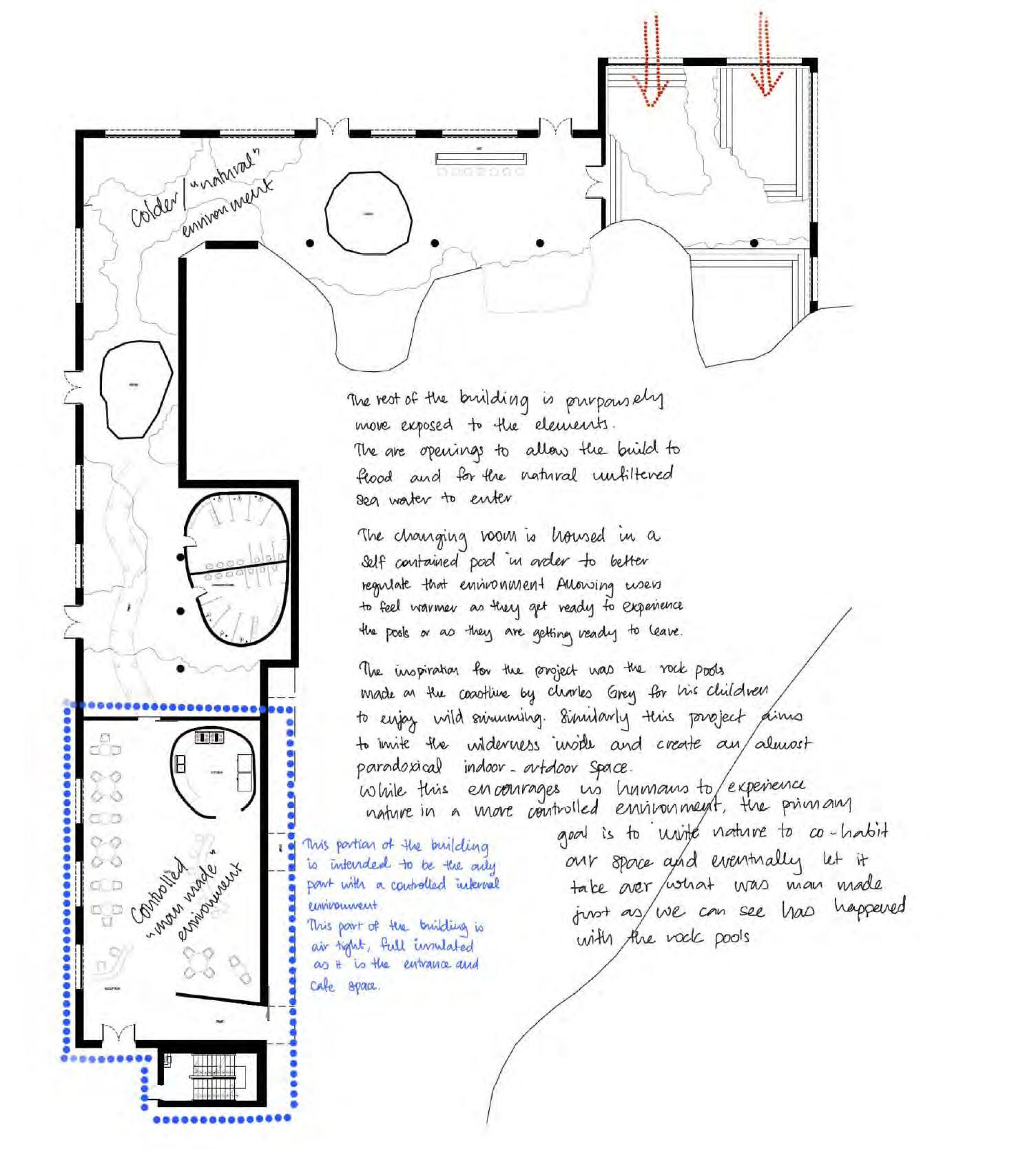
Built in the 19th century to assist in the outdoor education aspect of his 15 children’s
home schooling.
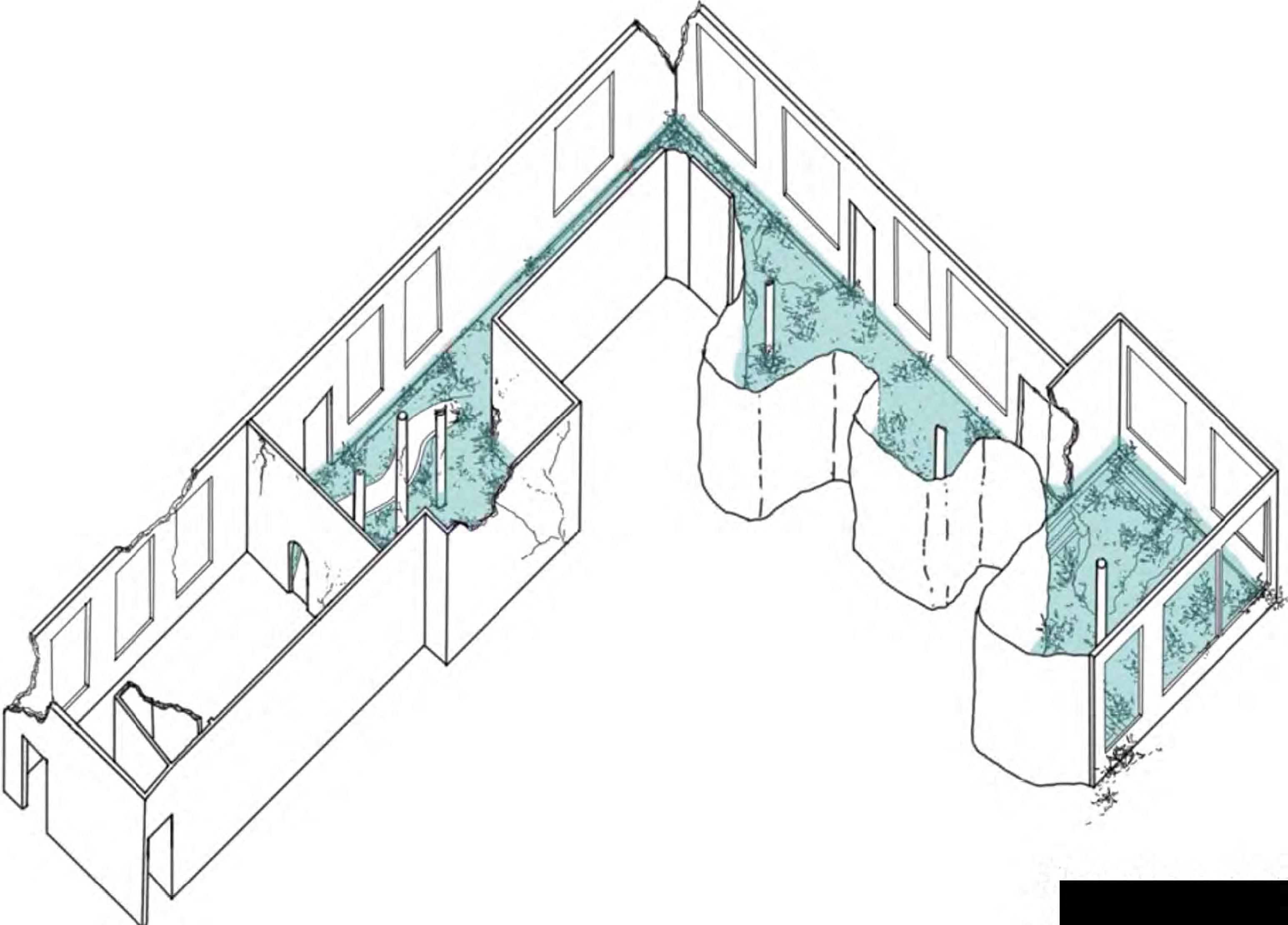
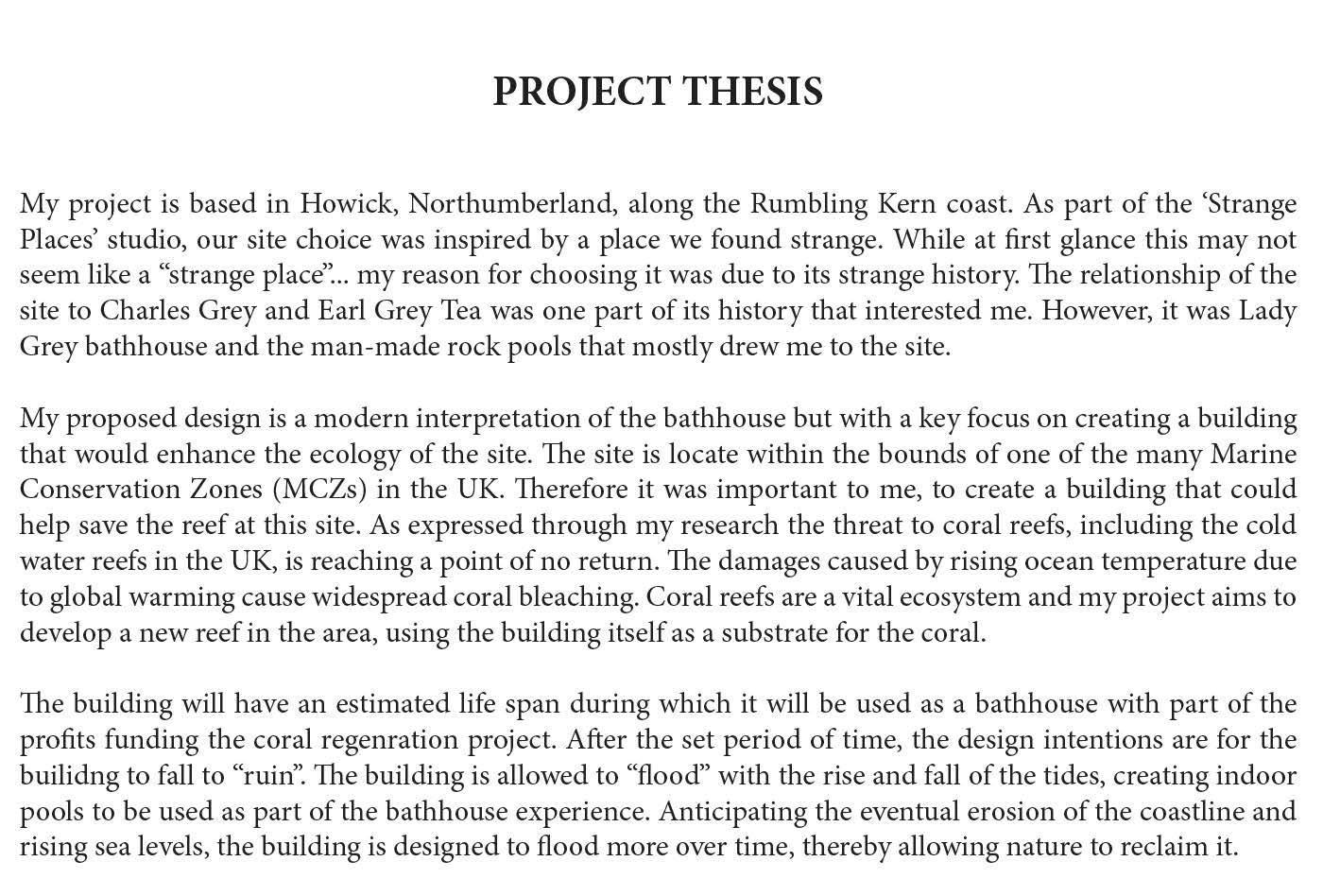
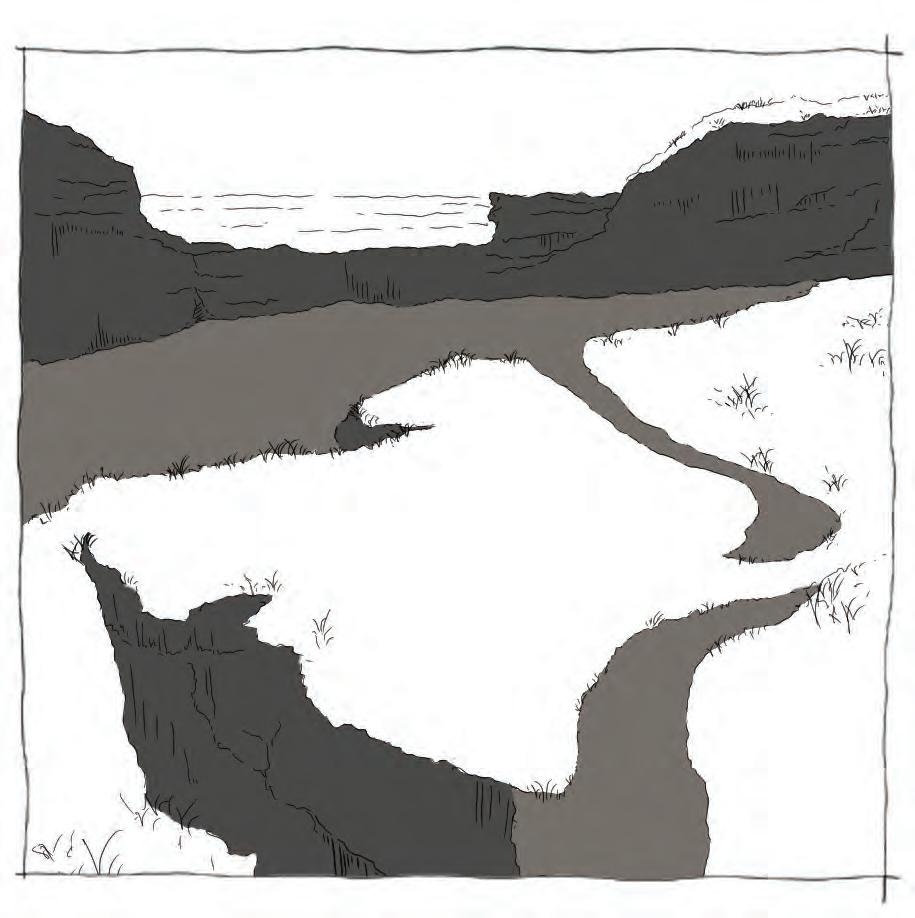
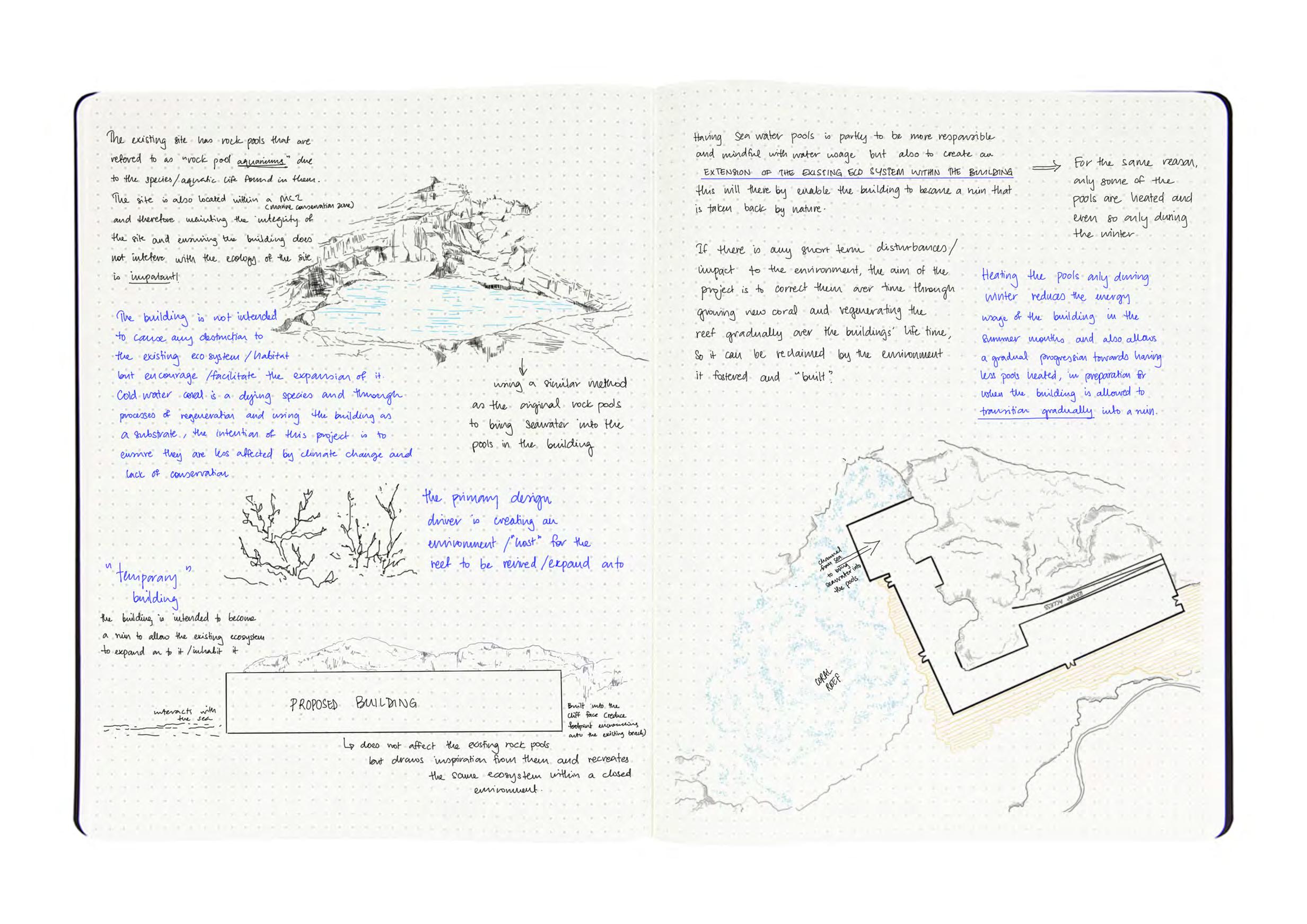
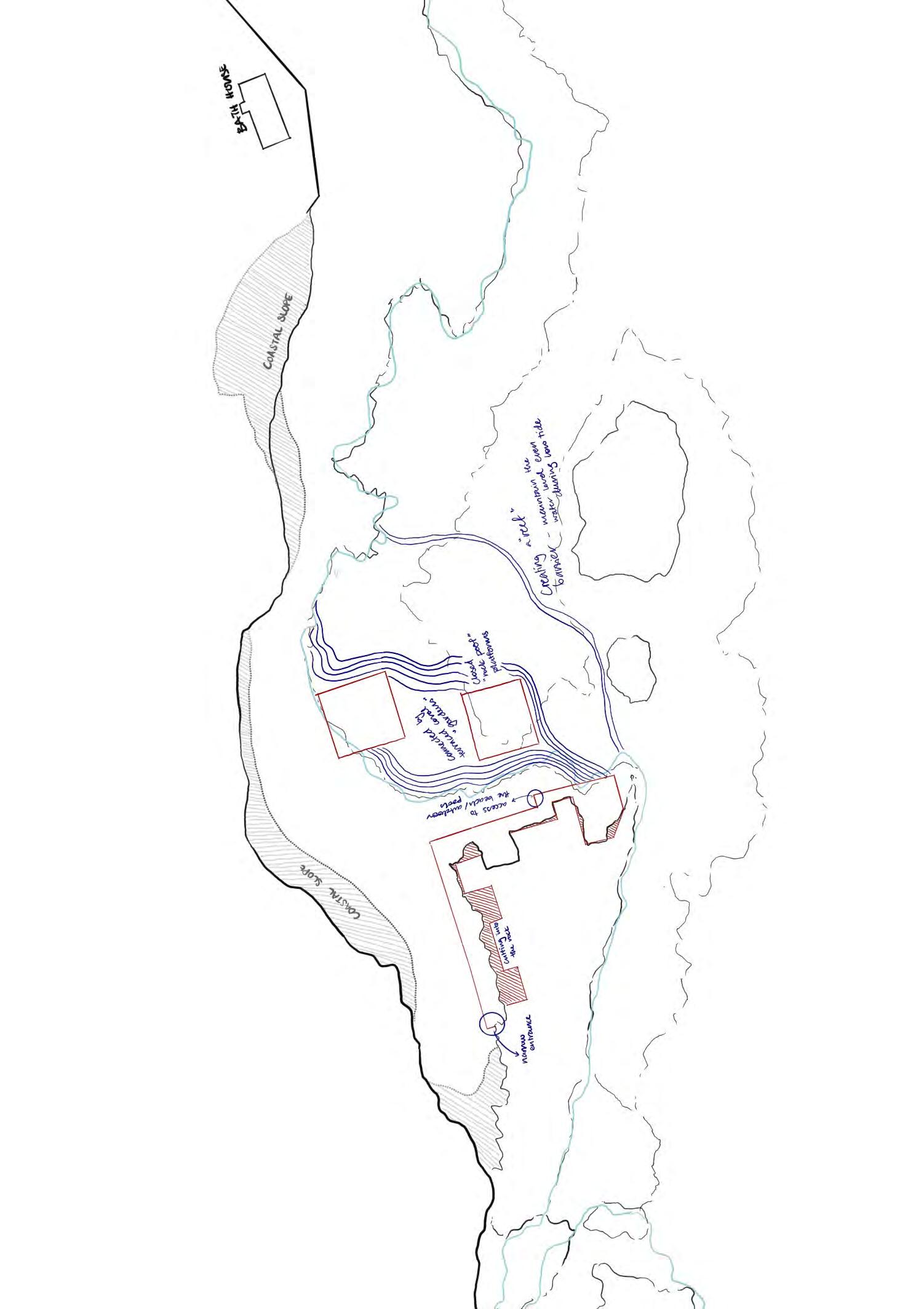
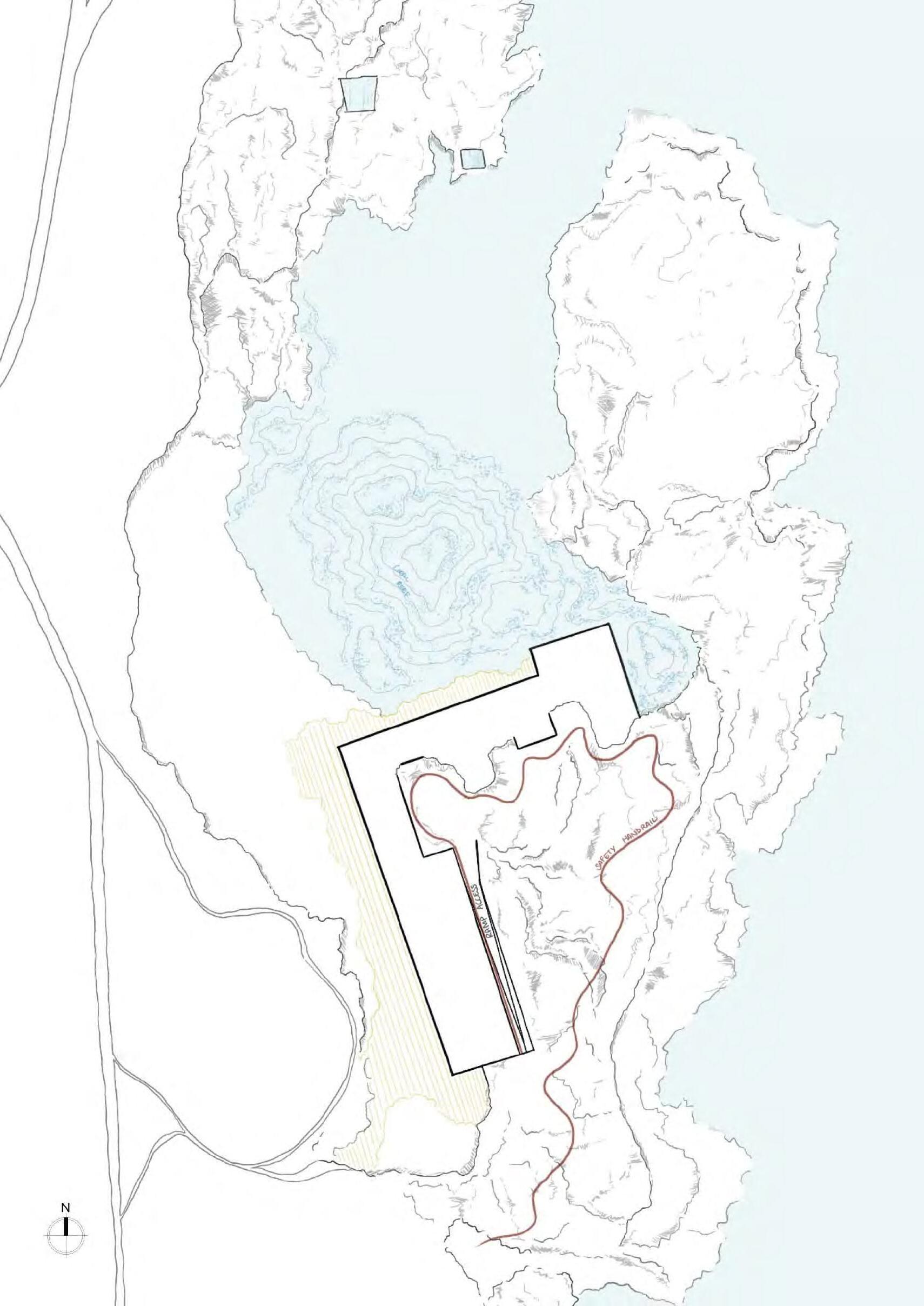
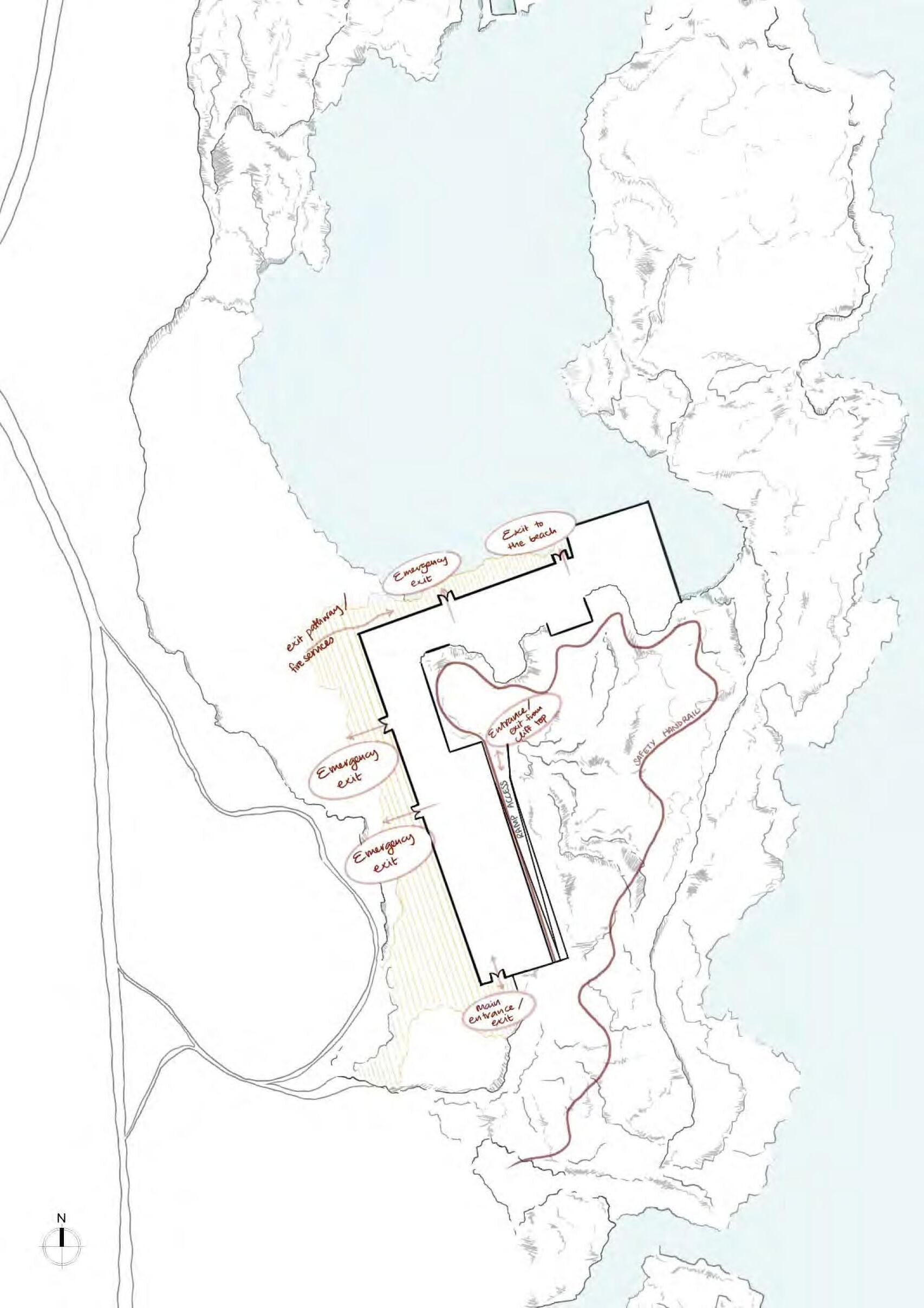
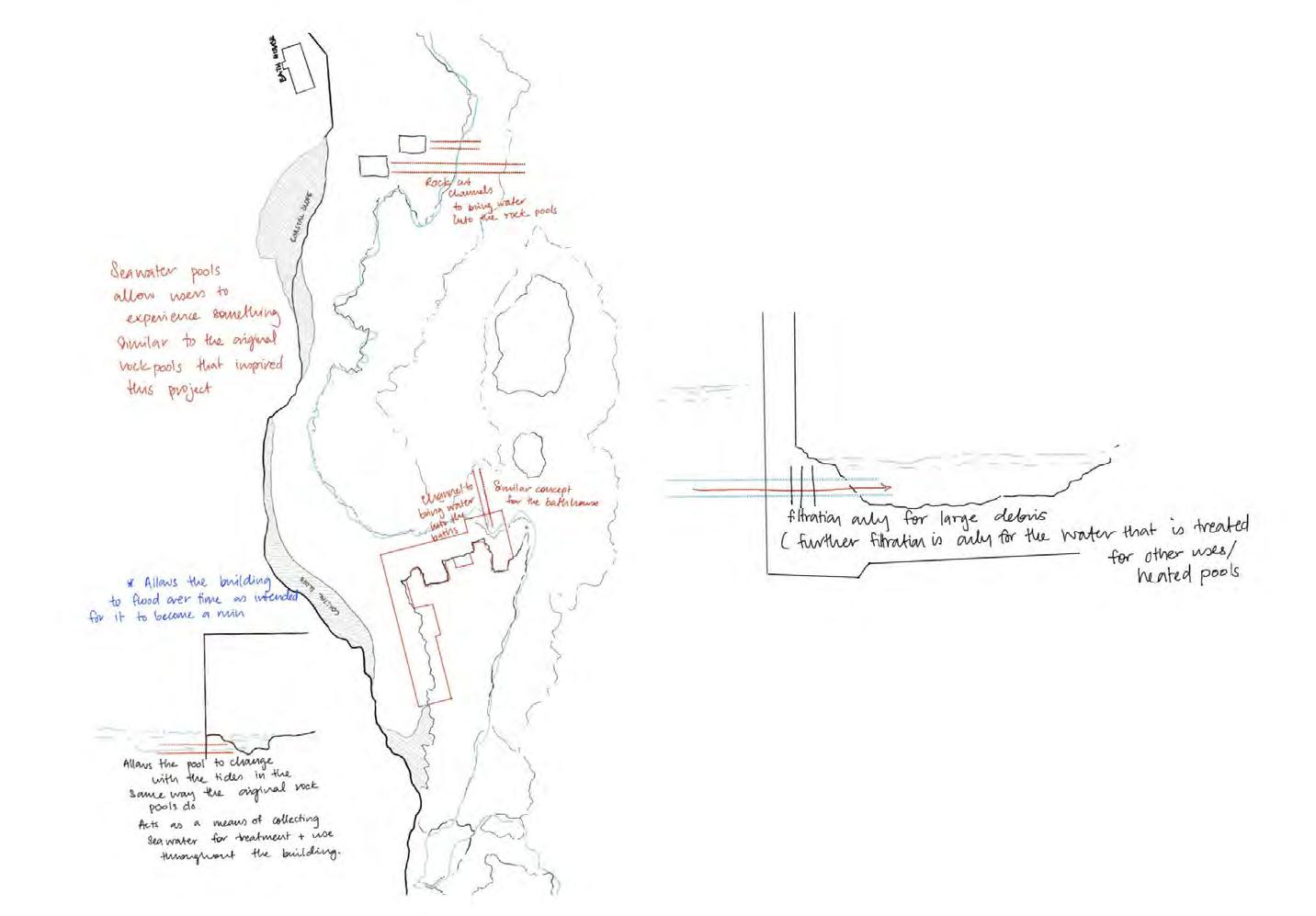
2 rock cut pools were constructed on the beach below the bath house. There are rock cutsteps leading down to the pools. The pools are connected to the sea through a channel which feeds the pool with fresh sea water.The rock cut seating in the pools and postholes which were used to erect canopies when the pools where in use, can still be seen today.
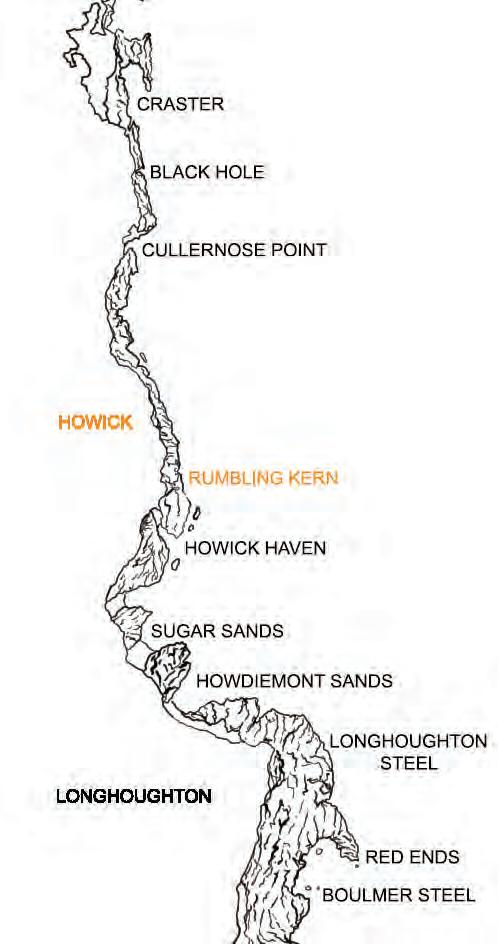
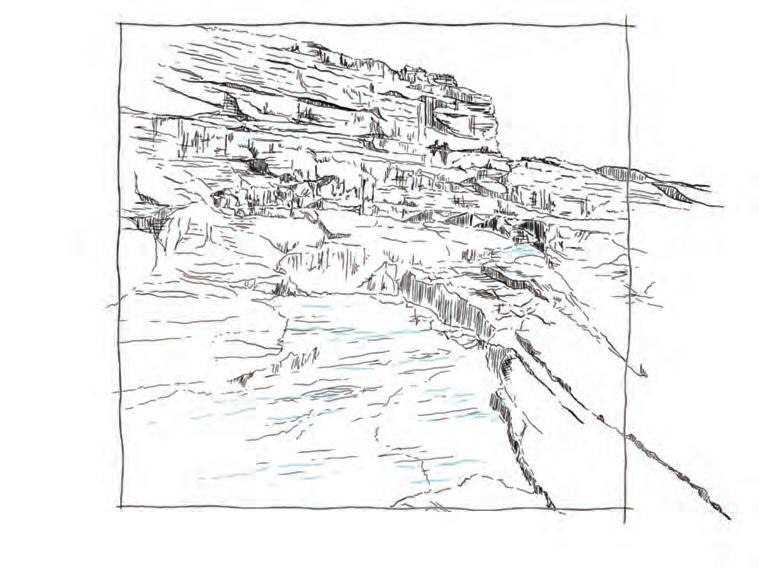
The cliffs are coarse sandstone - the area used to be a quarry. Sea ripples are preserved in many of the rocks in layers showing the successive drops in sea levels. There are also wave cut platforms/ exposed old sea beds. All of these factors combined give the coast its unique and strange characteristics.
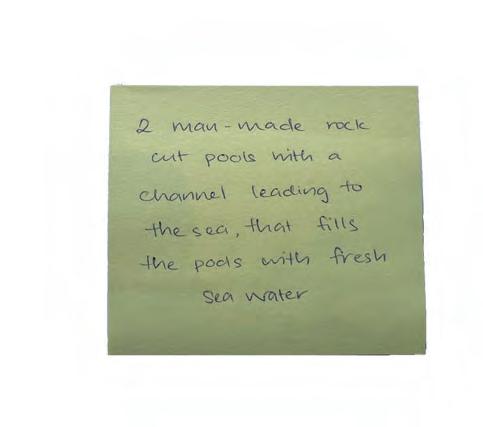
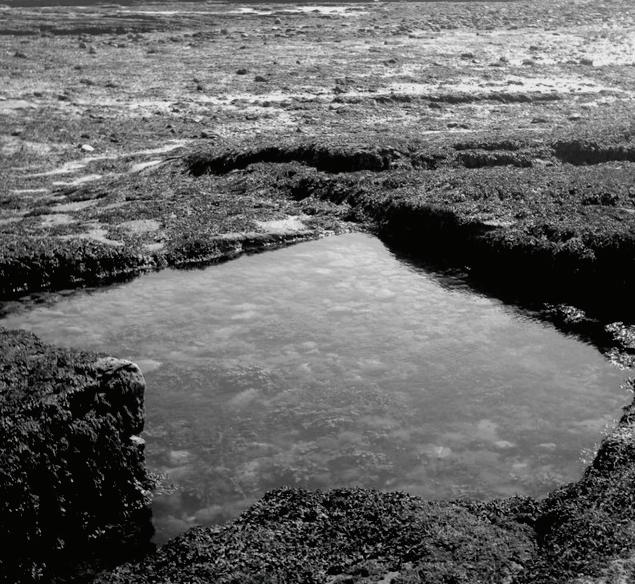

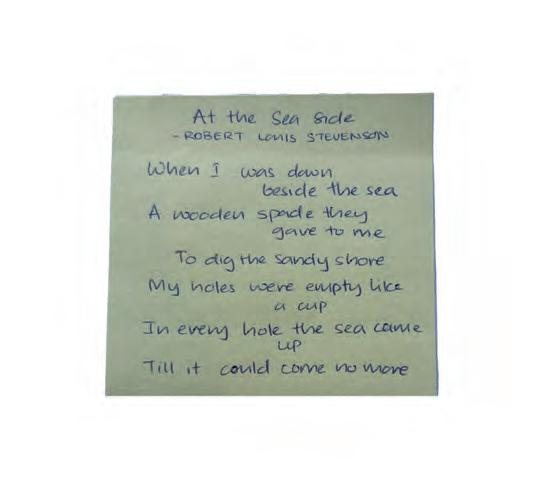
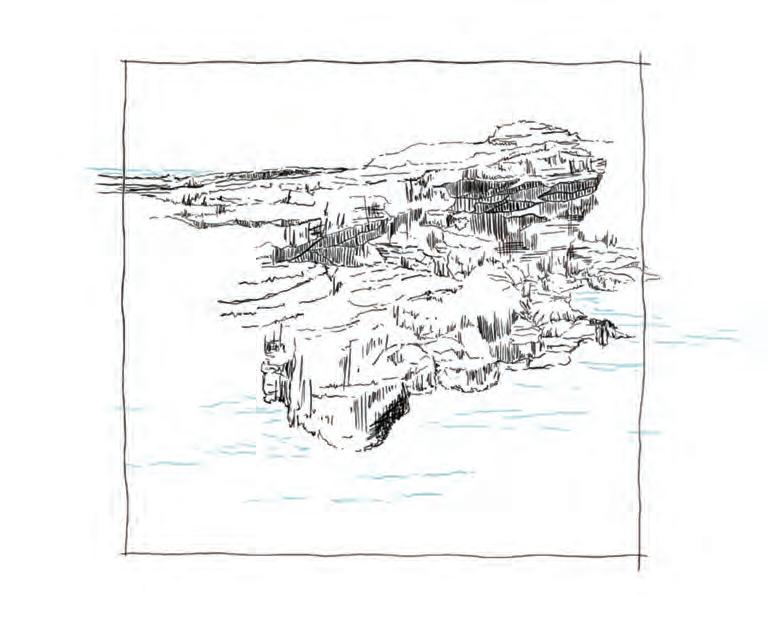
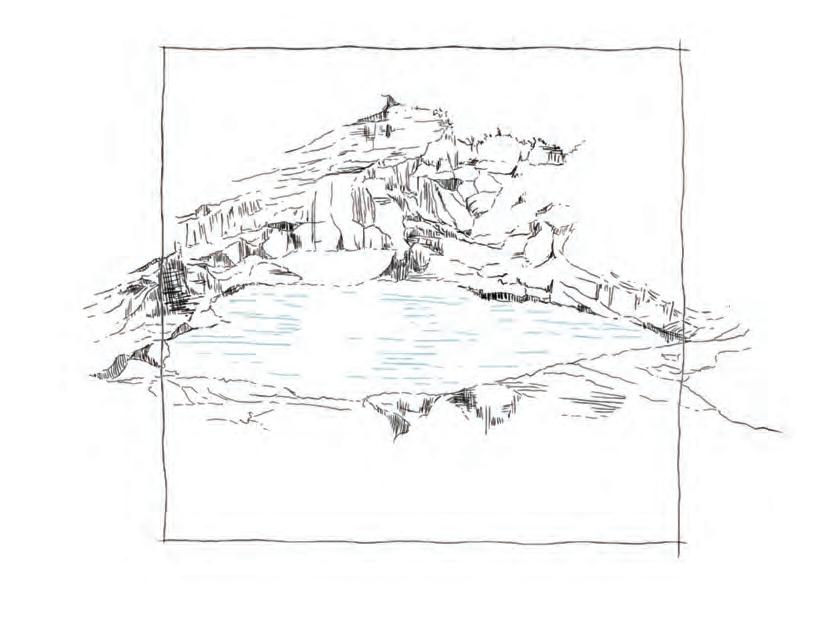
The way the tide fills the rock pools reminded me of this poem :
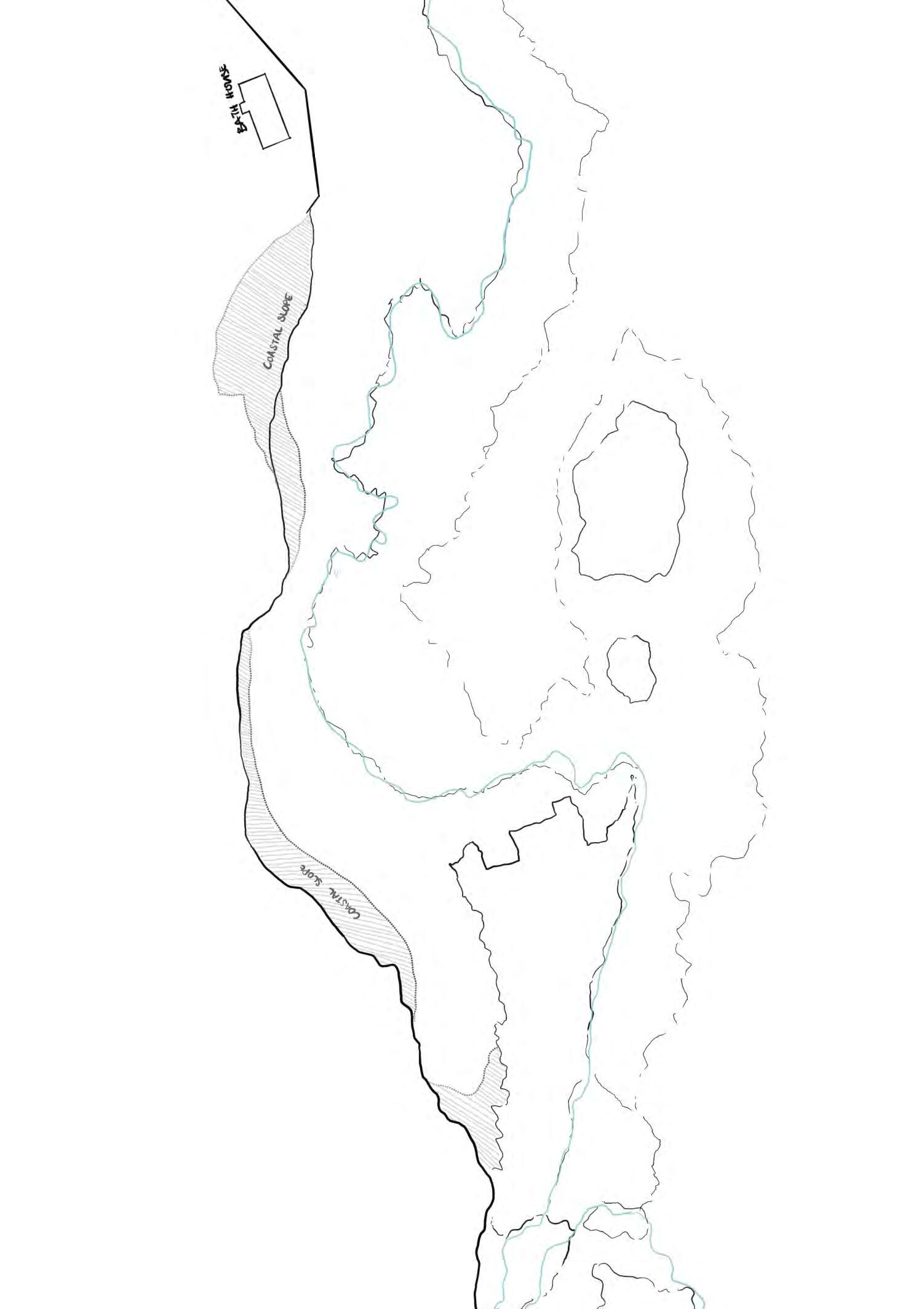

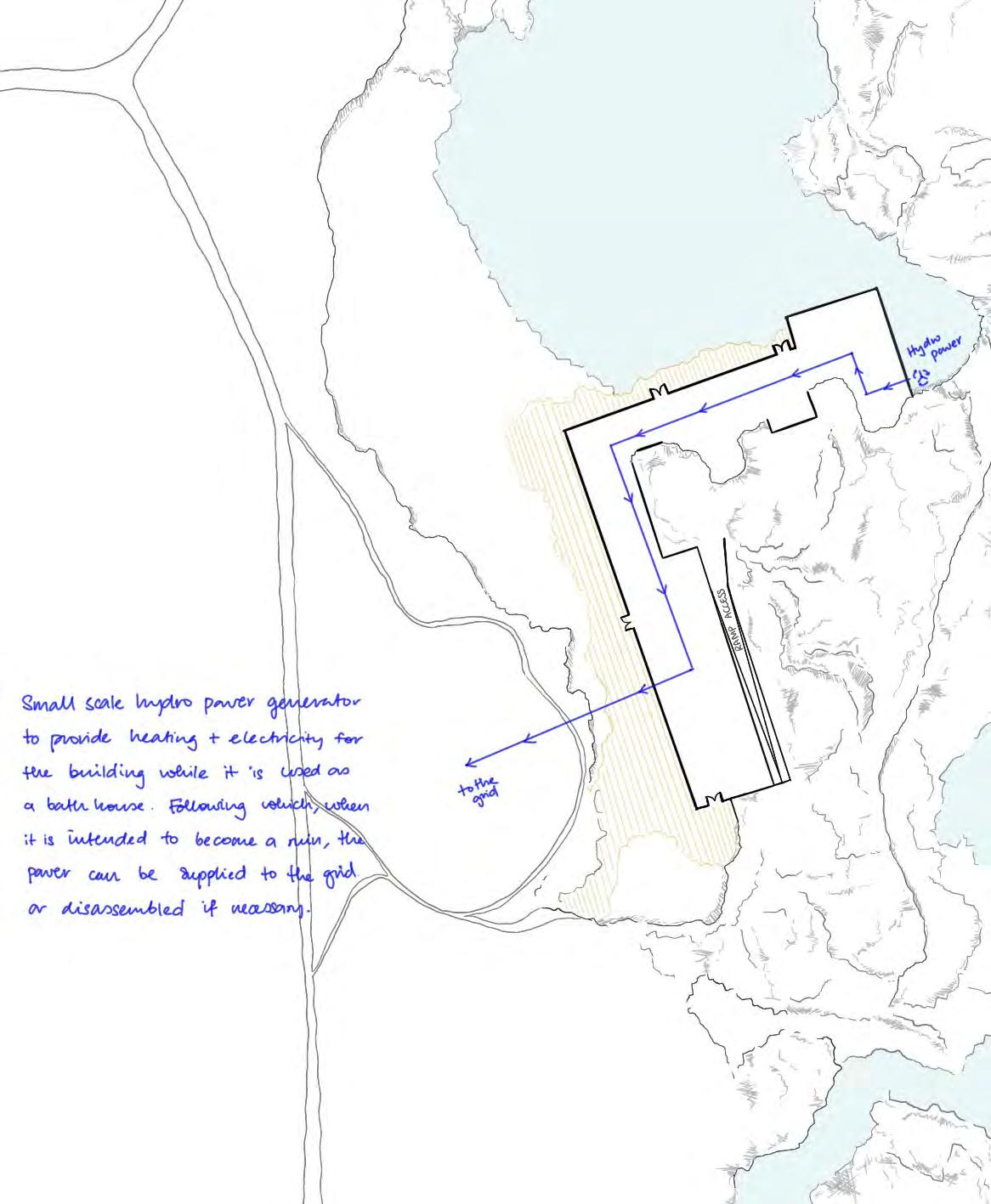
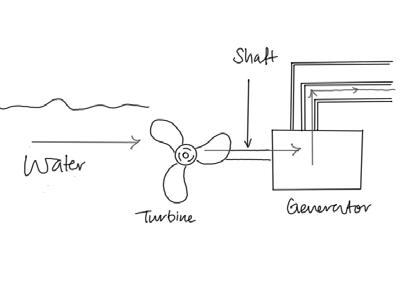
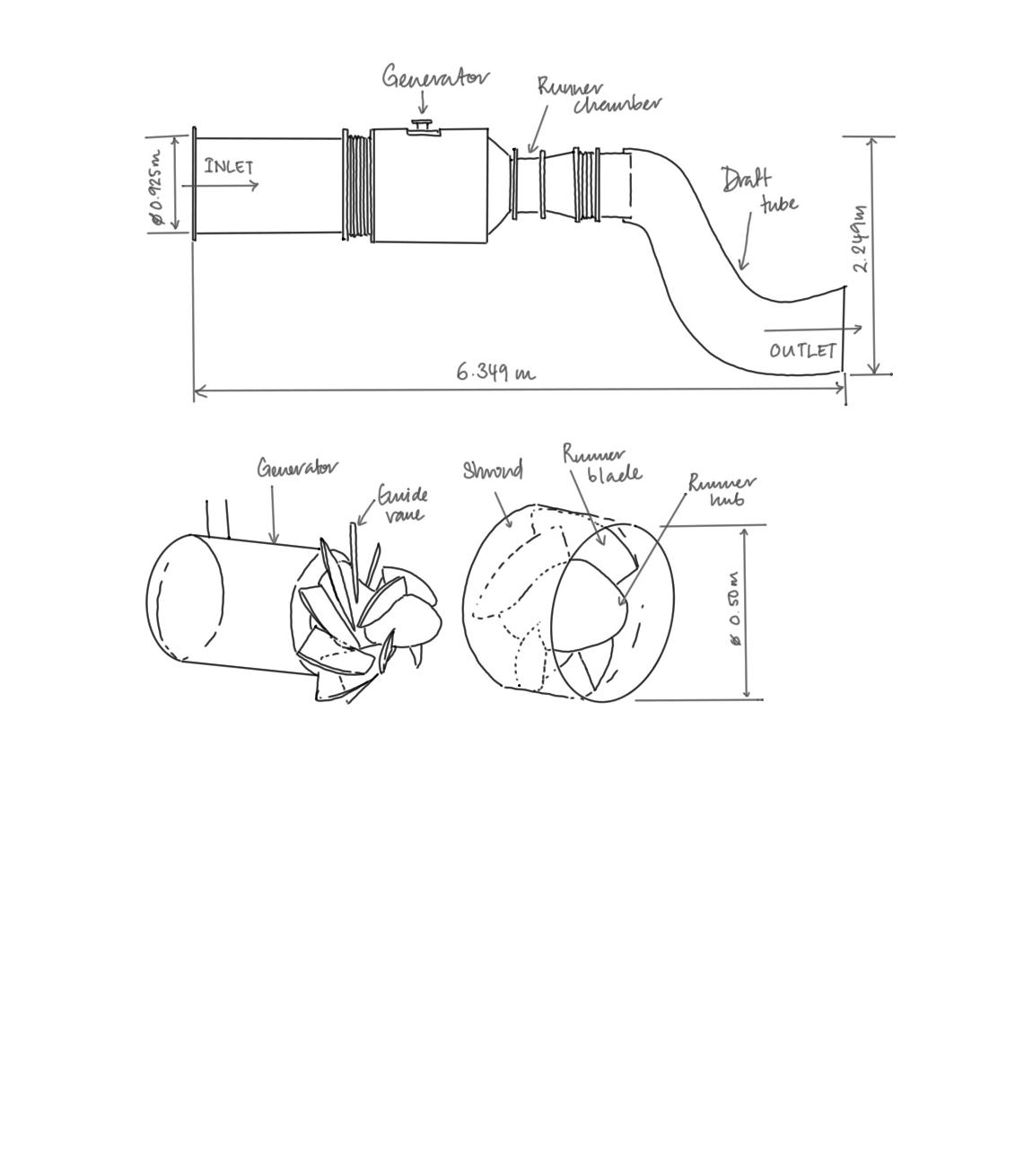
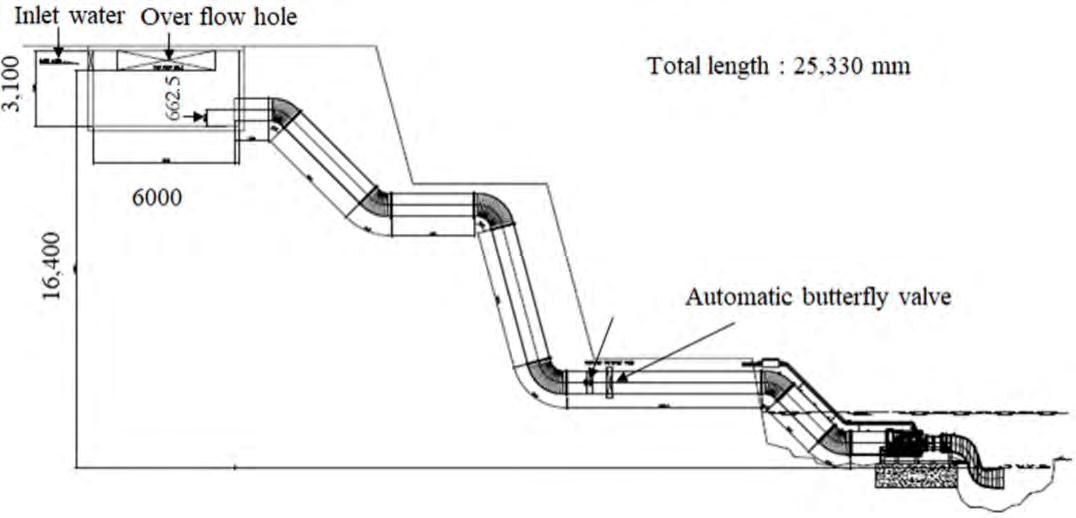
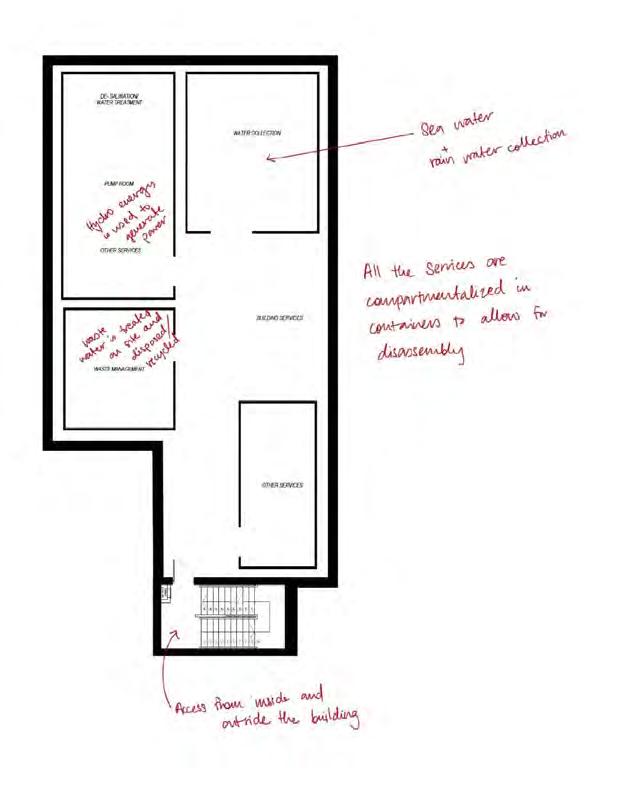
Hydro power at a smaller scale of approx. 100kW1 using the existing seawater is yet another way this project aims to be more environmentally concious. Initially this can be used to power the building/ for the heat pump for the pool etc., it can continue supplying power to the grid even after the building becomes a ruin.
In the initial stages if there is a requirement for more energy, additional portable turbines2 can be used in the short run to boost the power supply.
1 https://www.mdpi.com/2227-9717/9/2/266
2 https://www.trendhunter.com/trends/cappa-hydroelectric-generator https://www.japanfs.org/en/news/archives/news_id034740.html
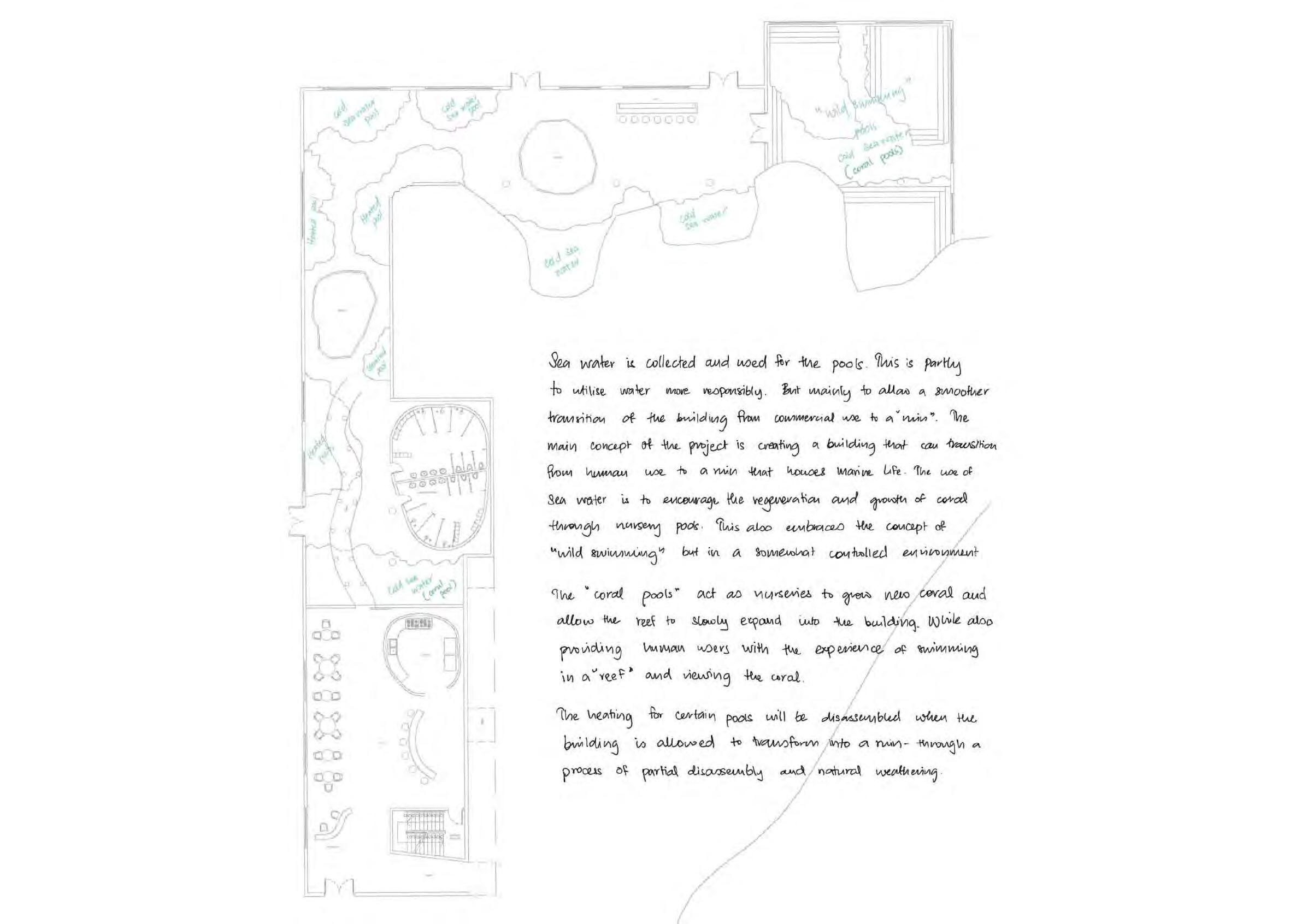
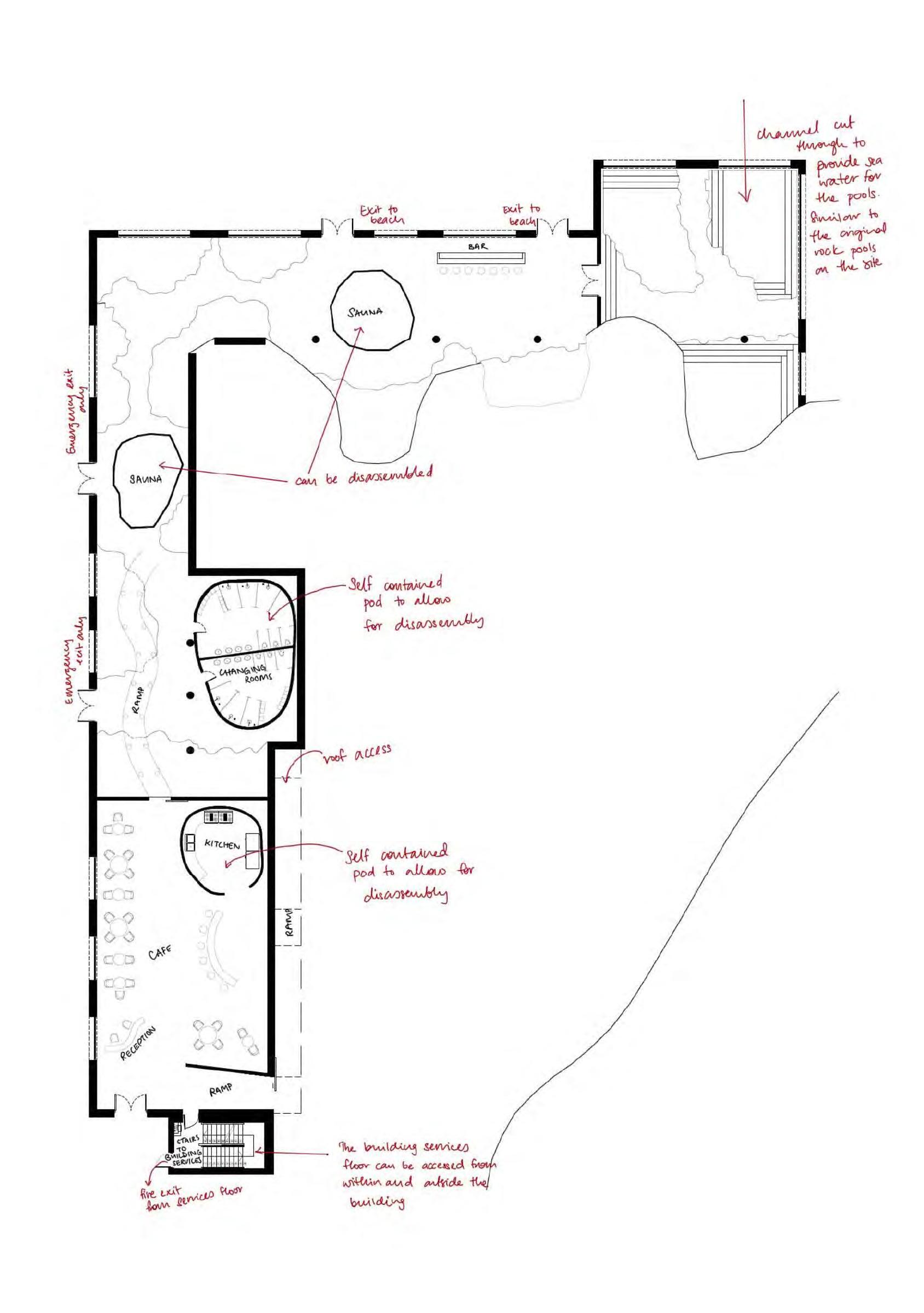
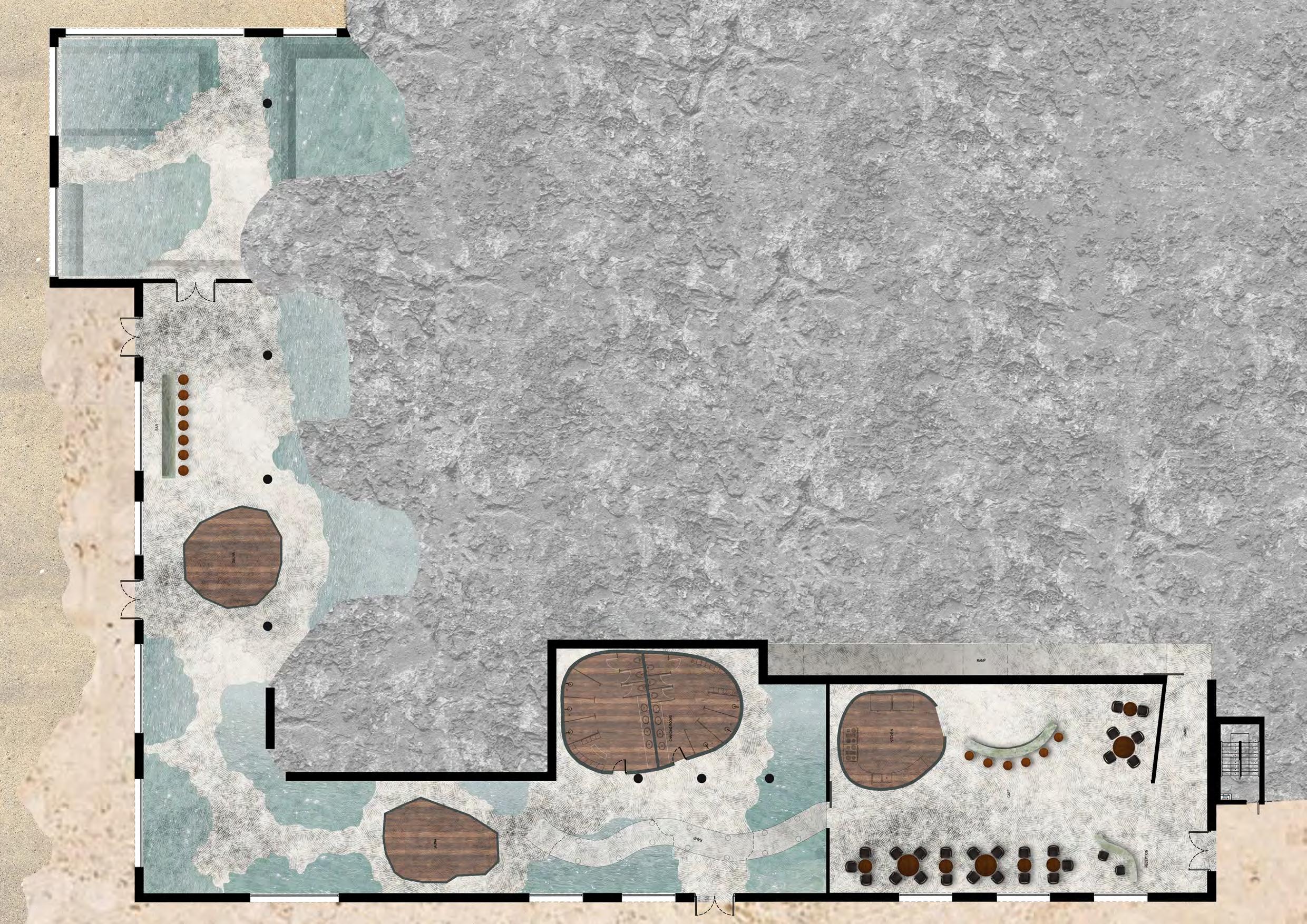
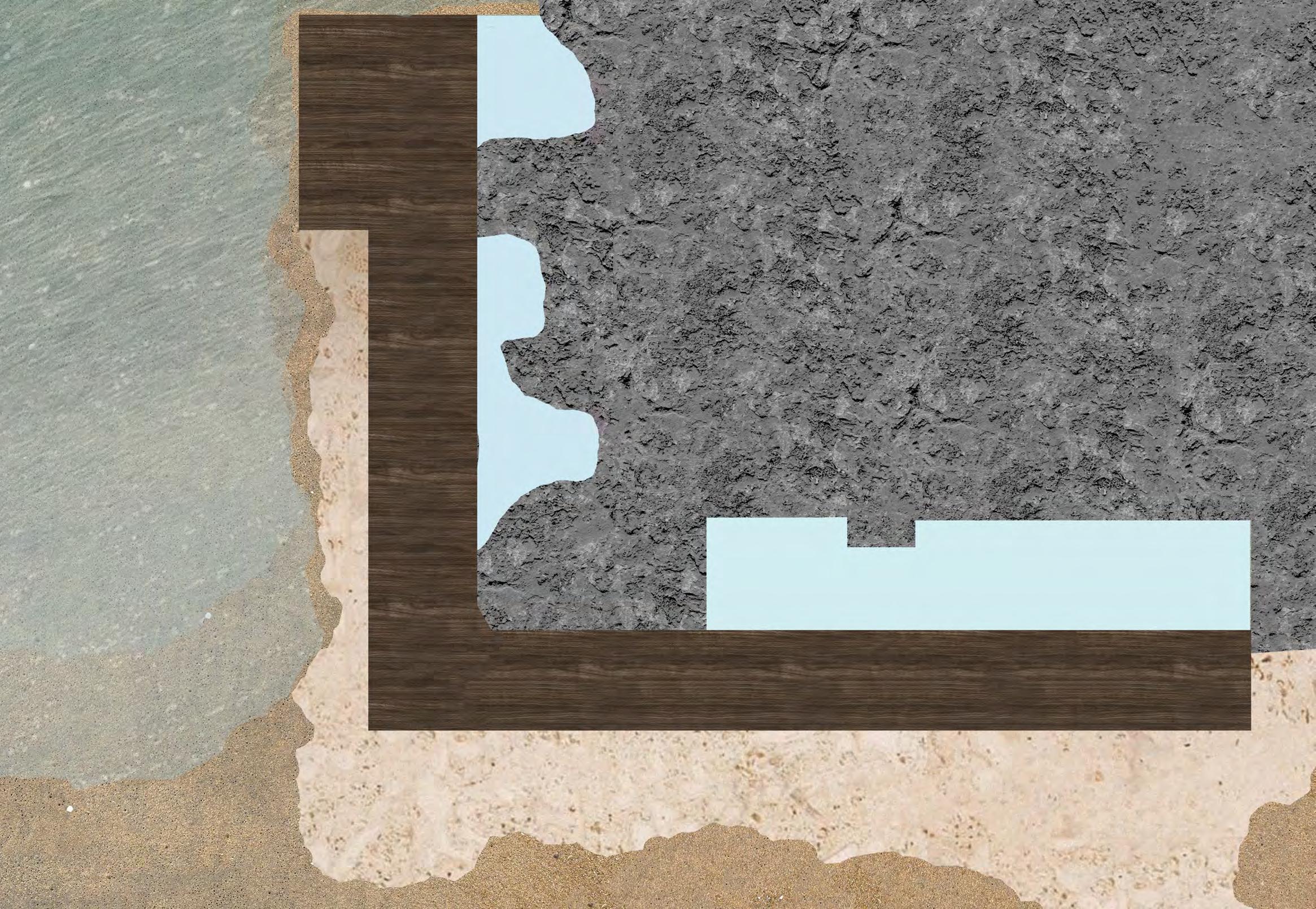
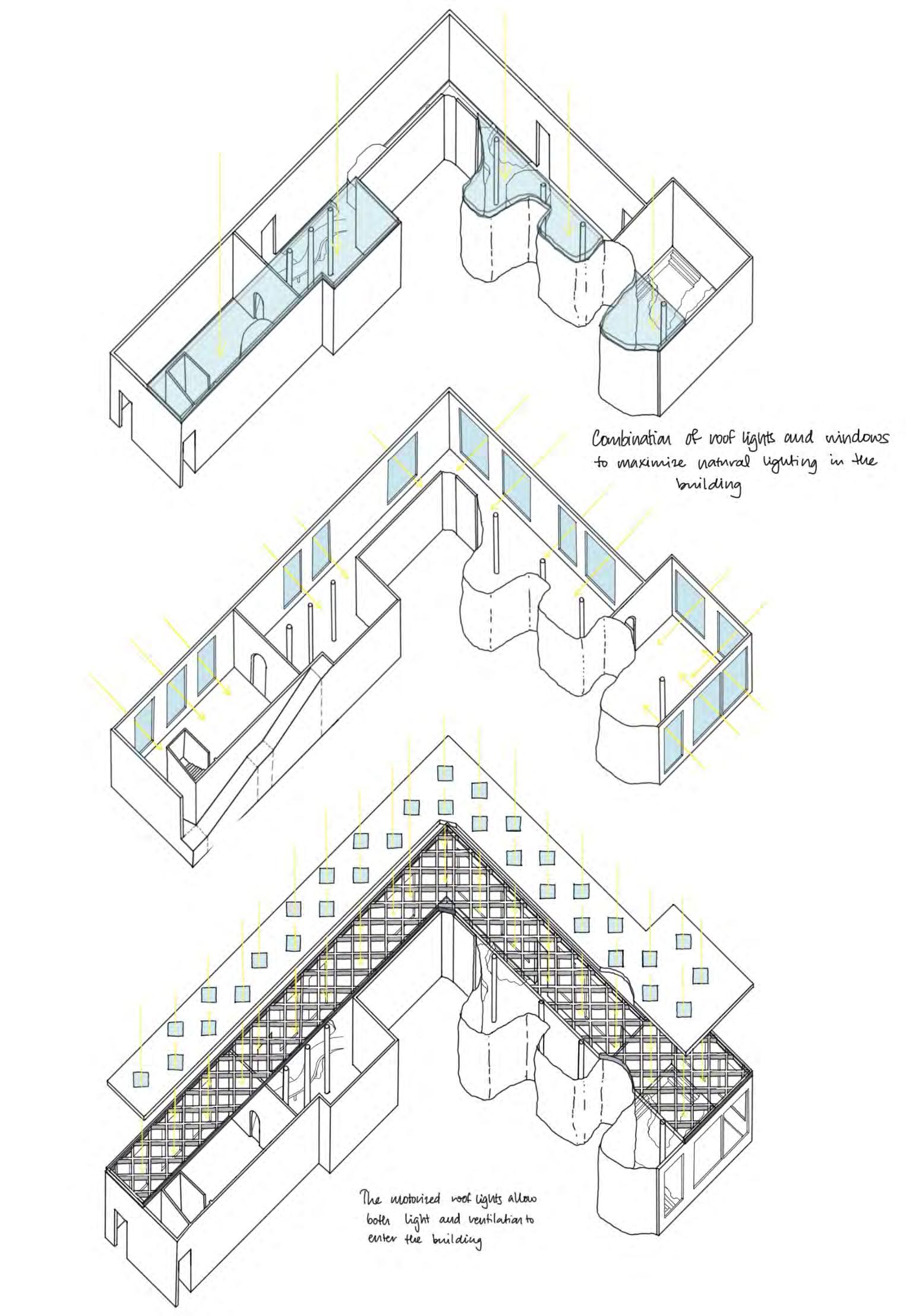
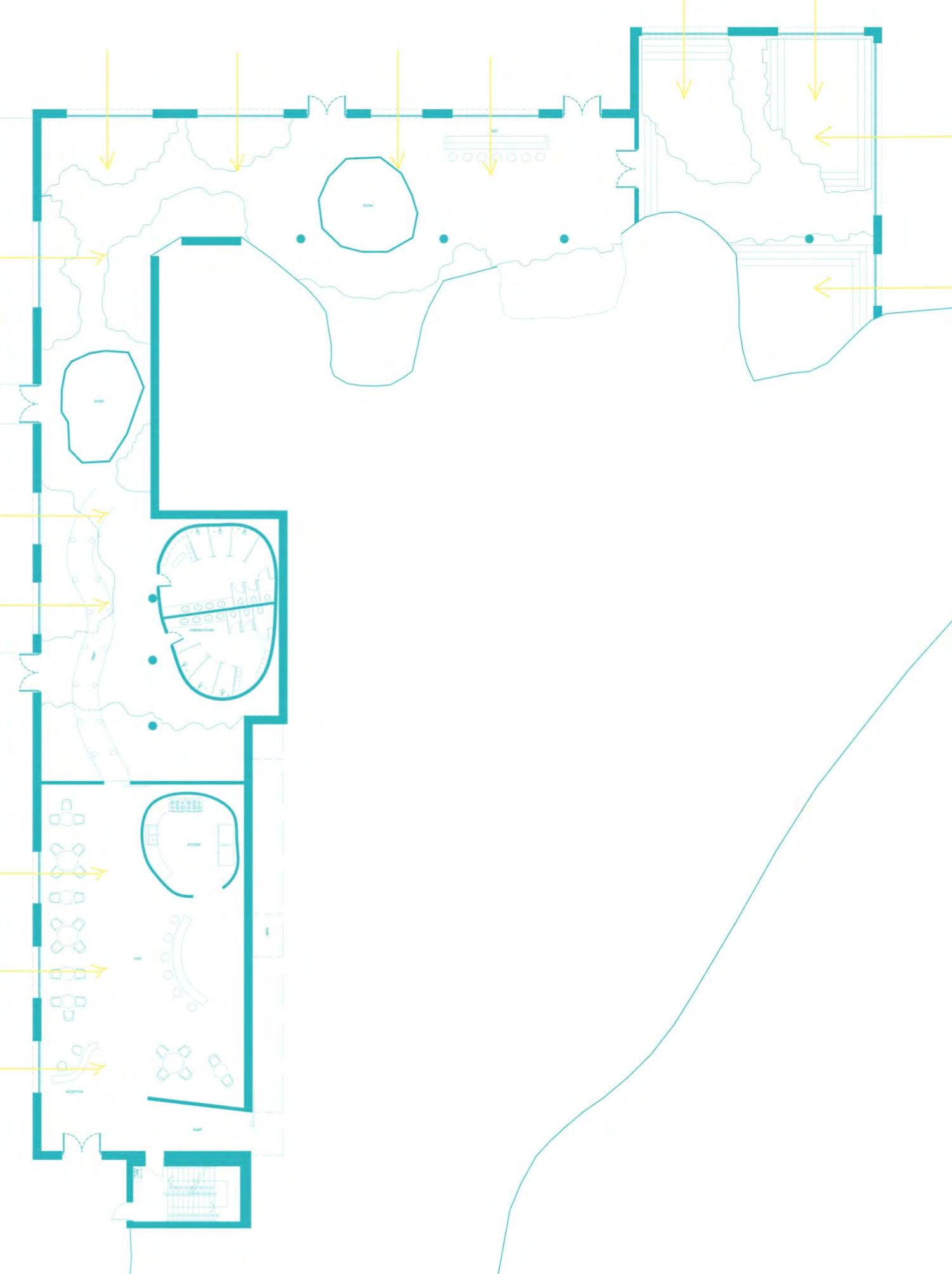
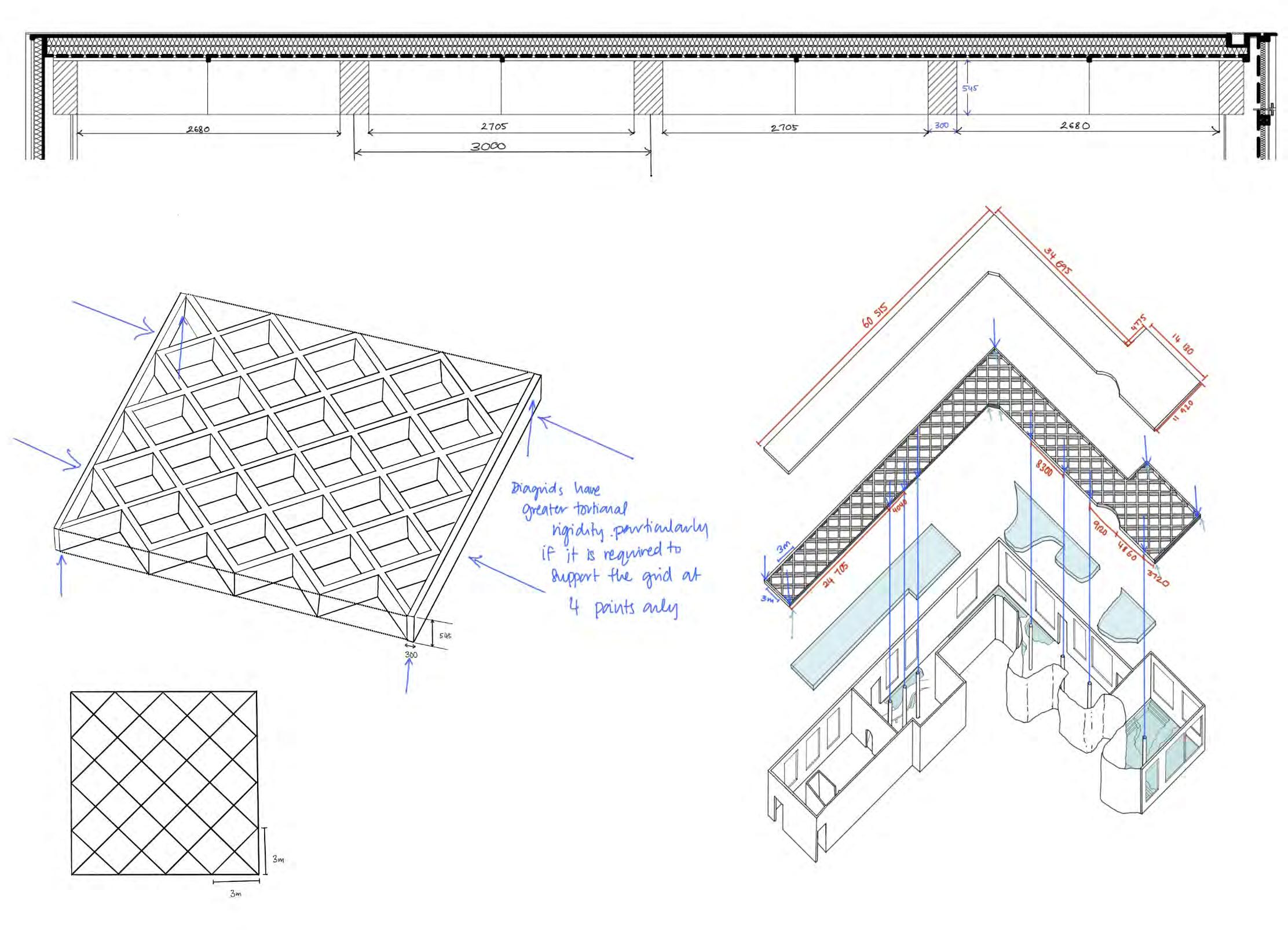
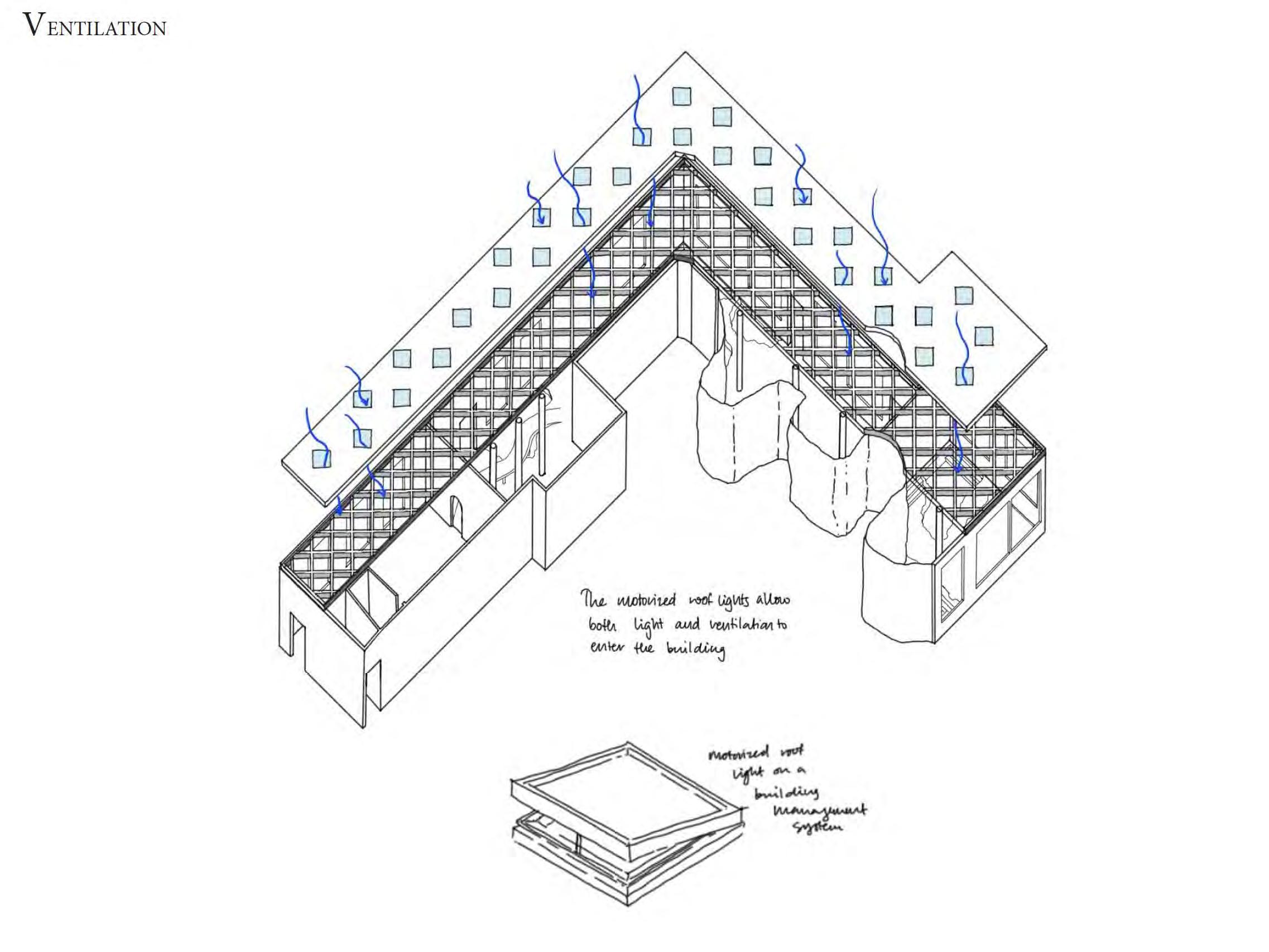
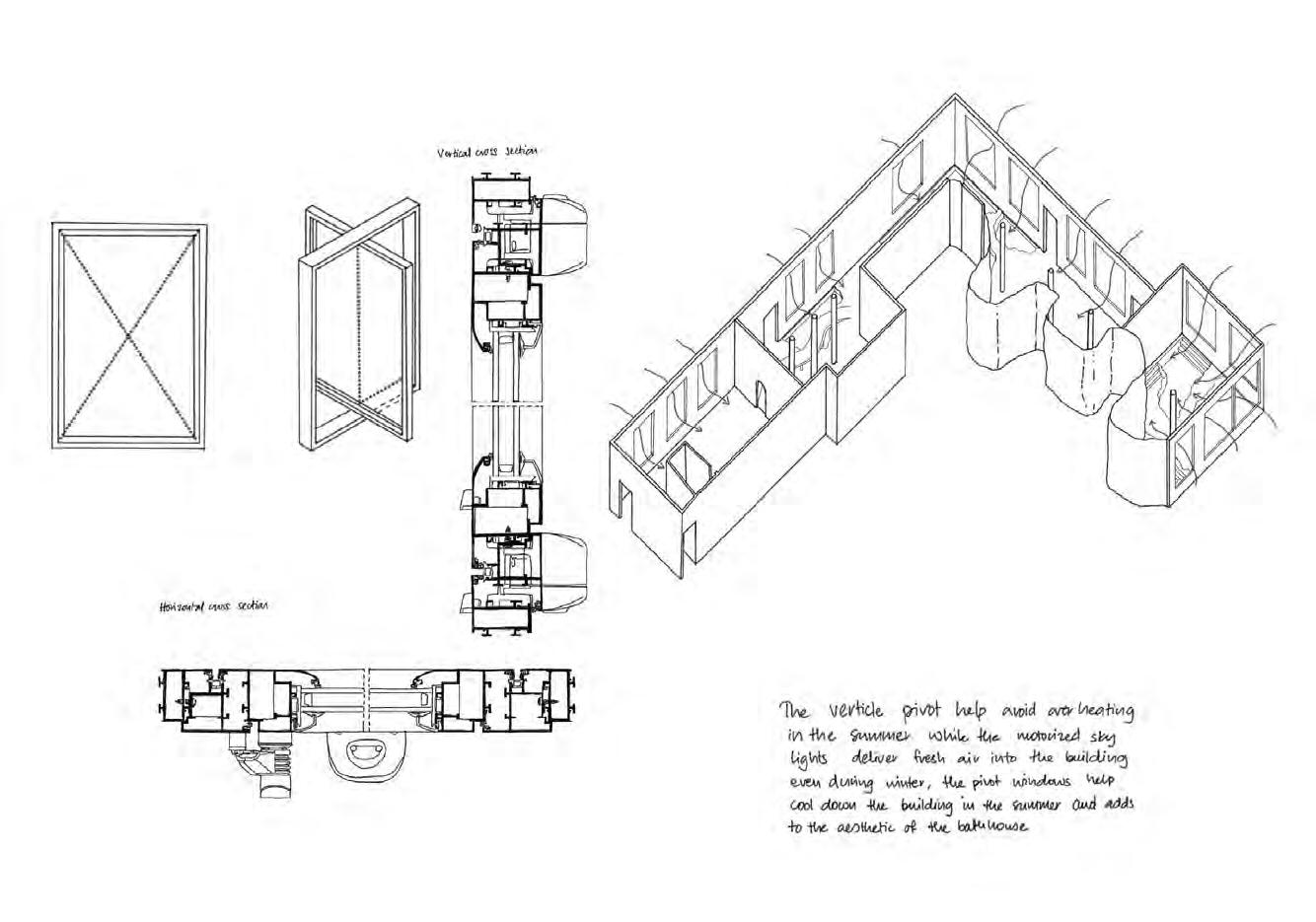
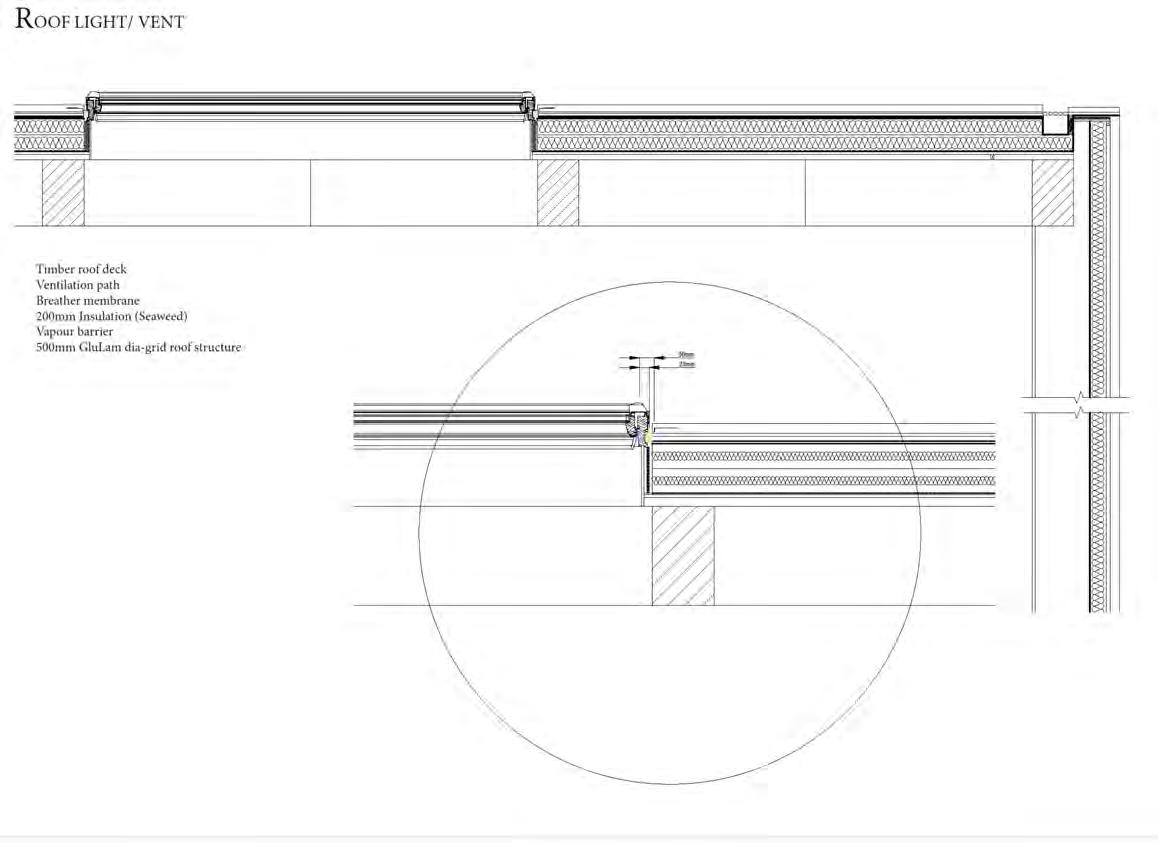
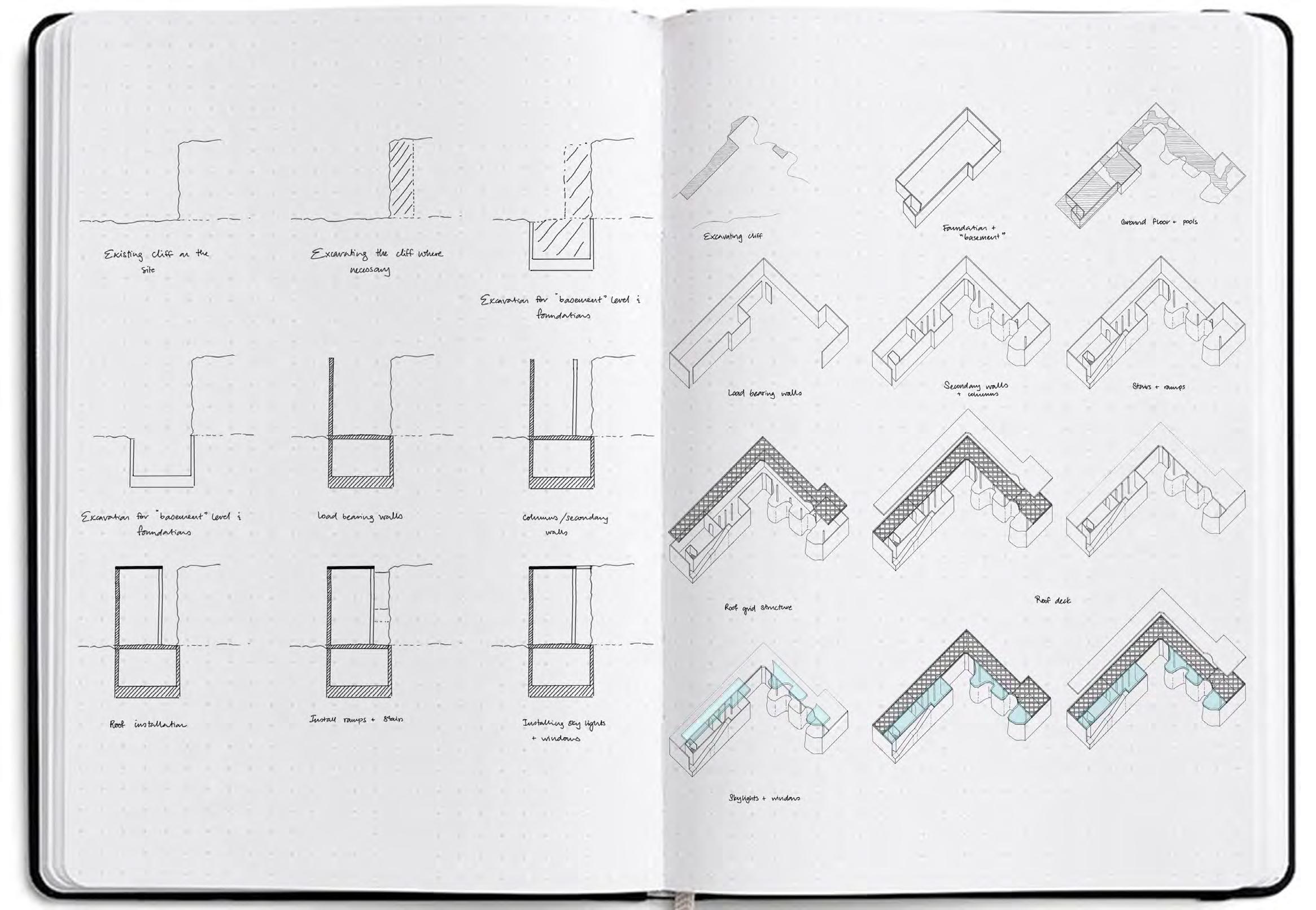
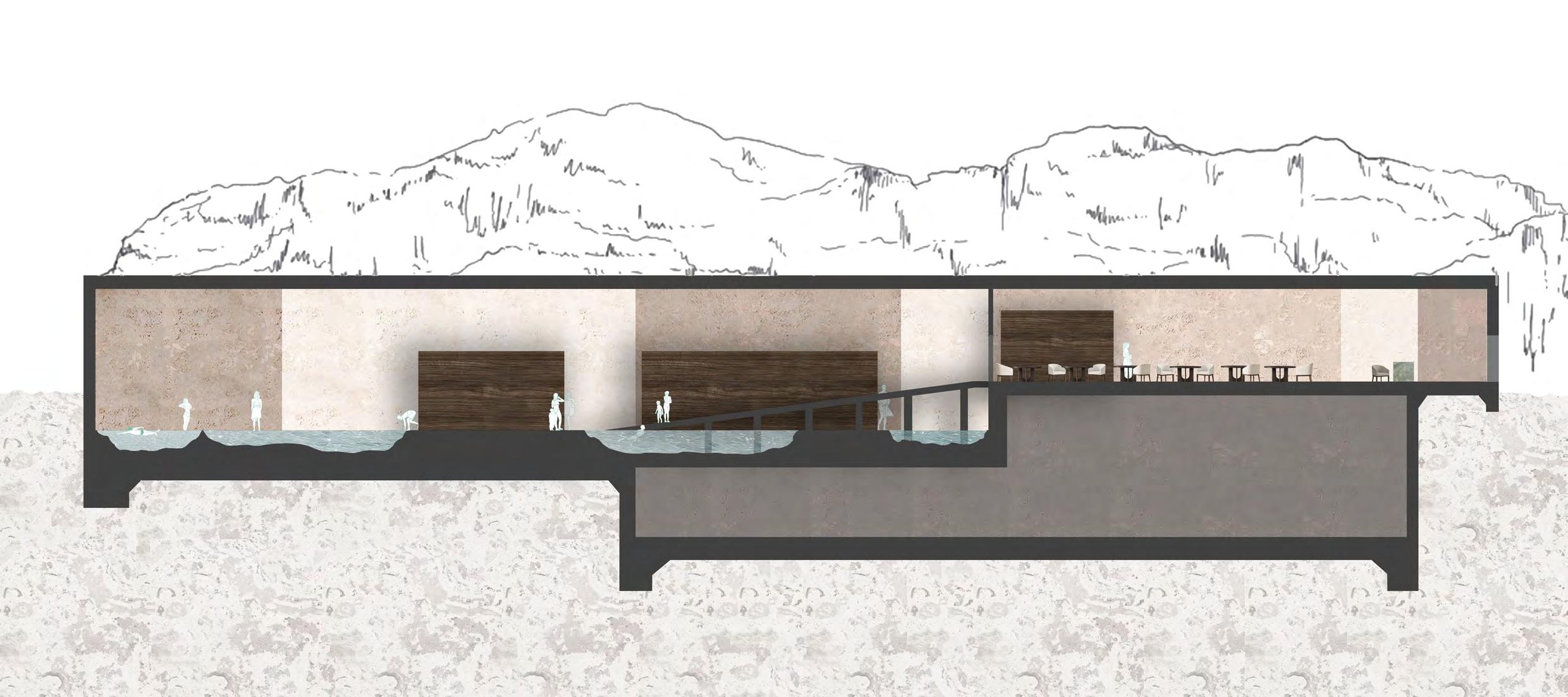
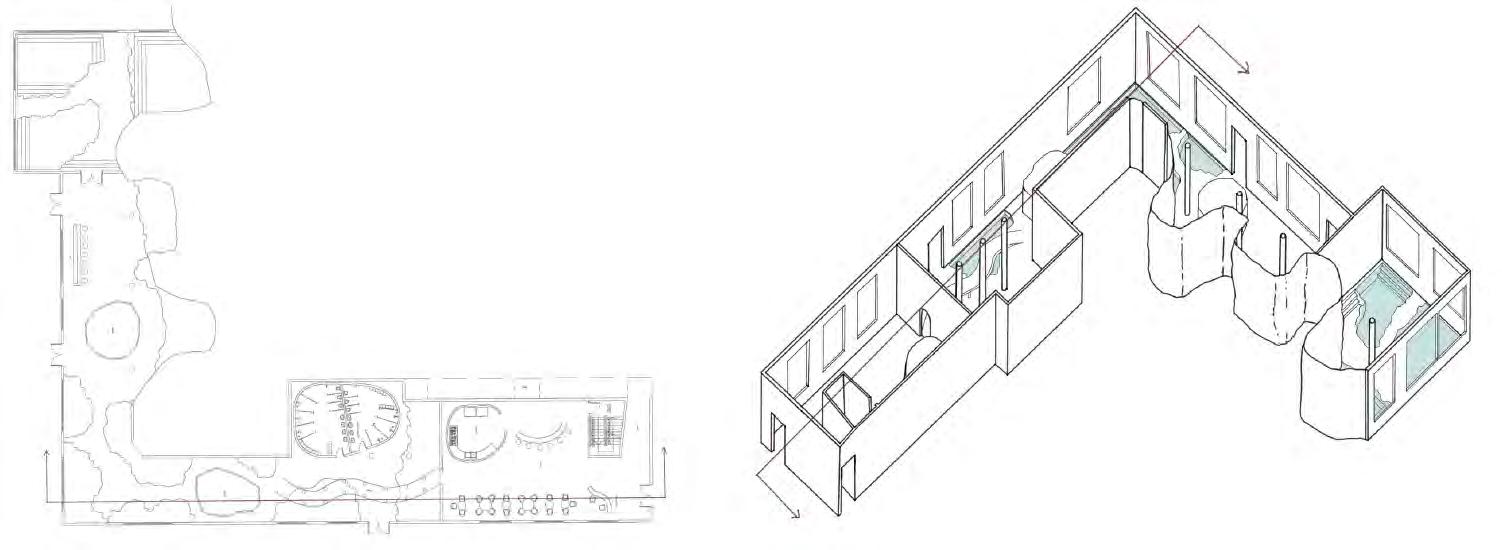
* the section has been cut to fit the page, therefore the height of the space is not accurately displayed (it is a 4m high space)
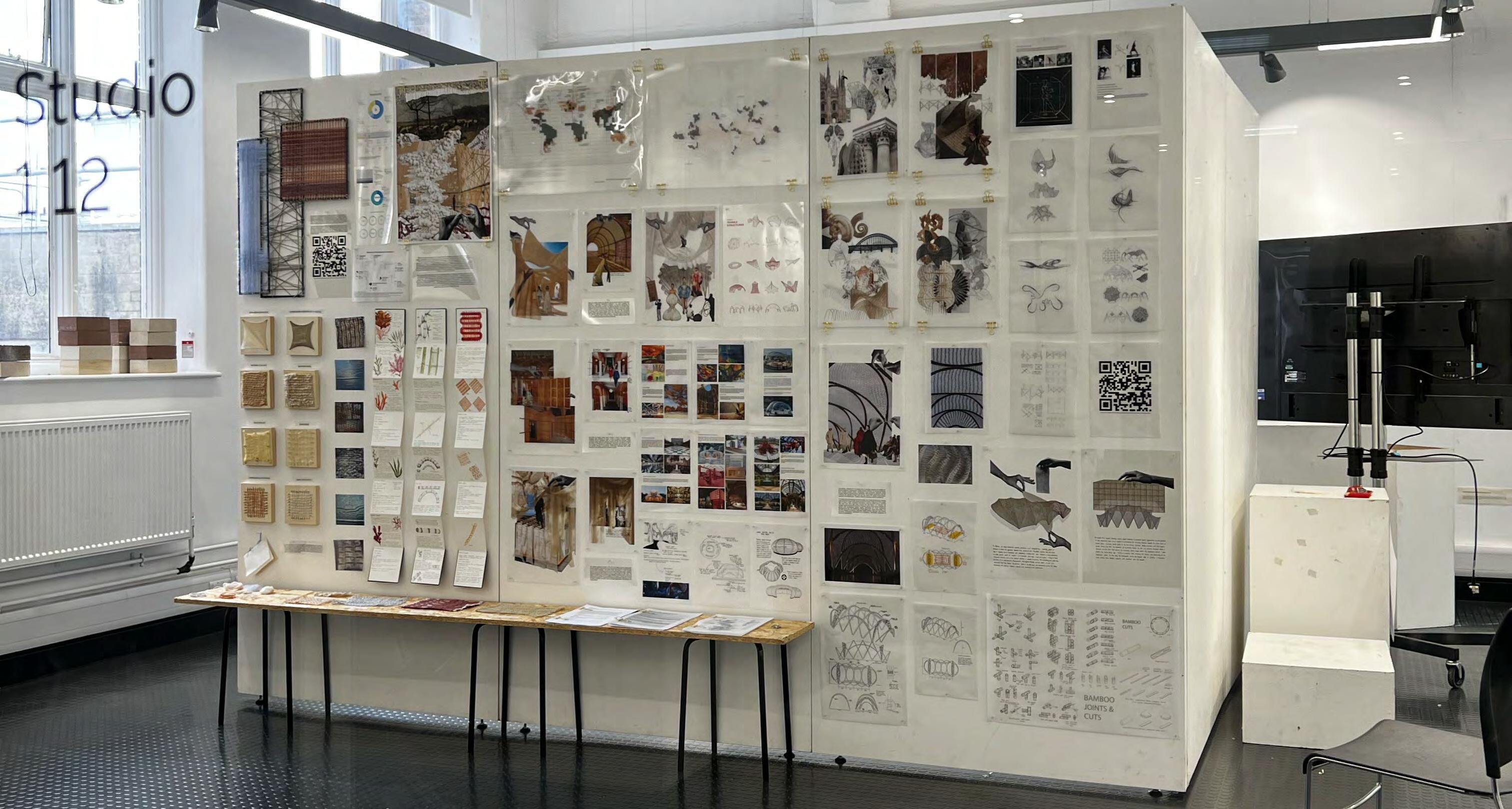
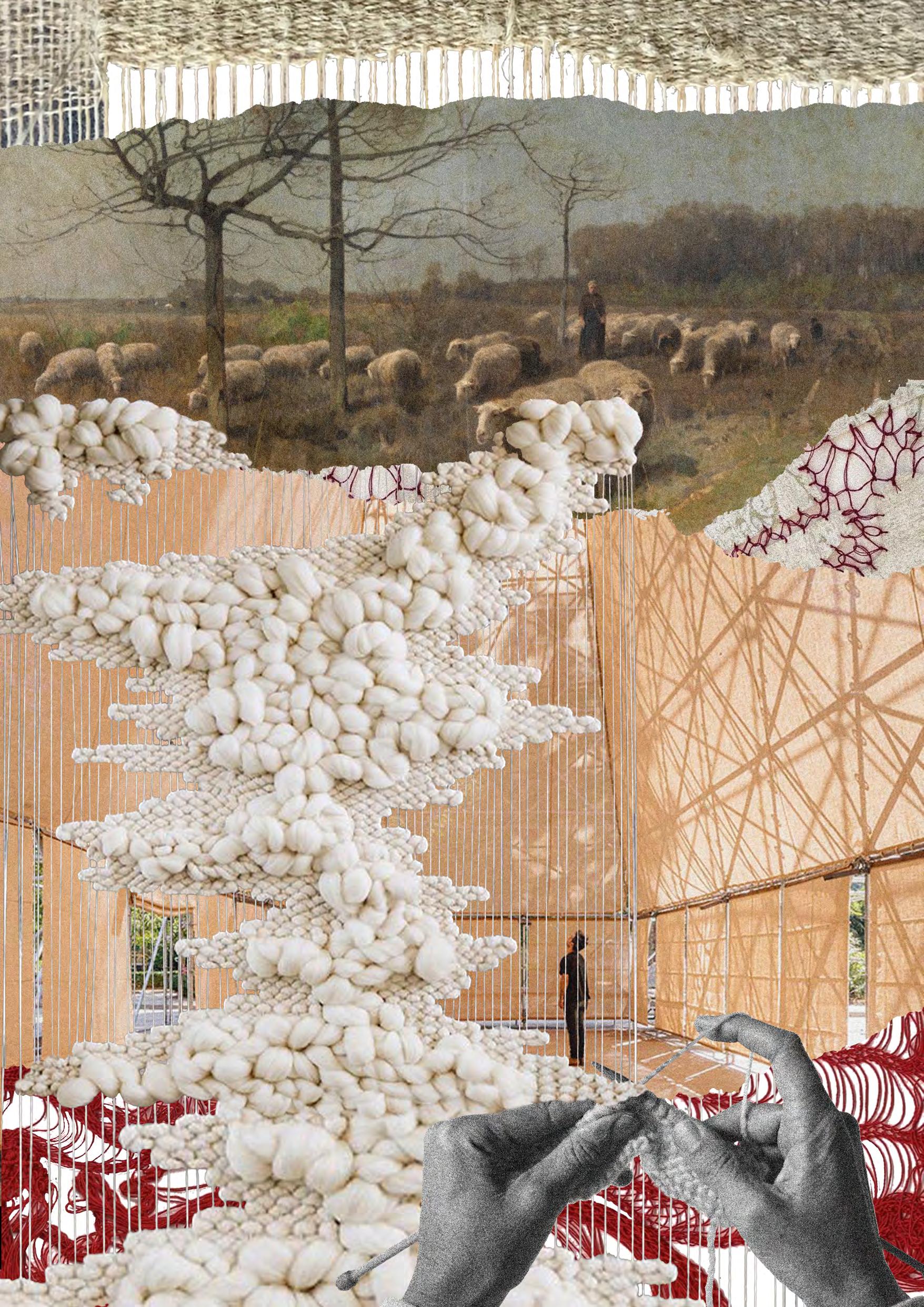
What if architecture could wear its materials like clothing— flexible, expressive, and responsive to both the body and the environment? The Fabric of Space explores this idea by reimagining temporary tensile structures through the lens of fashion, using regenerative materials such as waste wool to create sustainable, sensory-rich architectural installations.
At the intersection of fashion, sustainability, and architecture ; this thesis focuses on the overlooked potential of deadstock textiles—specifically wool yarns discarded by the fashion industry—to be incorporated into temporary pavilions for brand promotional events such as pop-ups, runway shows, and installations. It investigates not only how materials can be reused, but how they can communicate identity, movement, and narrative—transforming ephemeral architecture into an immersive expression of both space and sustainability
Drawing inspiration from garment construction, the project treats the architectural framework as a body, and its textile cladding as a kind of second skin. Through a series of material experiments combining wool with bio-based innovations such as seaweed bioplastics and bacterial cellulose, the thesis proposes a design approach that is both materially regenerative and experientially rich.
This thesis reframes architecture not as a static spatial boundary, but as an interactive, expressive framework informed by materiality, movement, and sustainability. By drawing conceptual and material parallels between garment construction and architectural form, The Fabric of Space proposes a regenerative approach to temporary architecture using waste from the fashion industry
Through research into seaweed bioplastics, bacterial cellulose, this project demonstrates how sustainable materials can enhance both performance and sensory experience in built environments.
Amidst increasing sustainability regulation—such as the EU’s Digital Product Passport—these pavilions offer fashion brands an innovative platform for immersive storytelling, transparency, and environmental accountability. Woven from the threads of past collections, these structures narrate a brand’s material journey while reimagining architectural form.
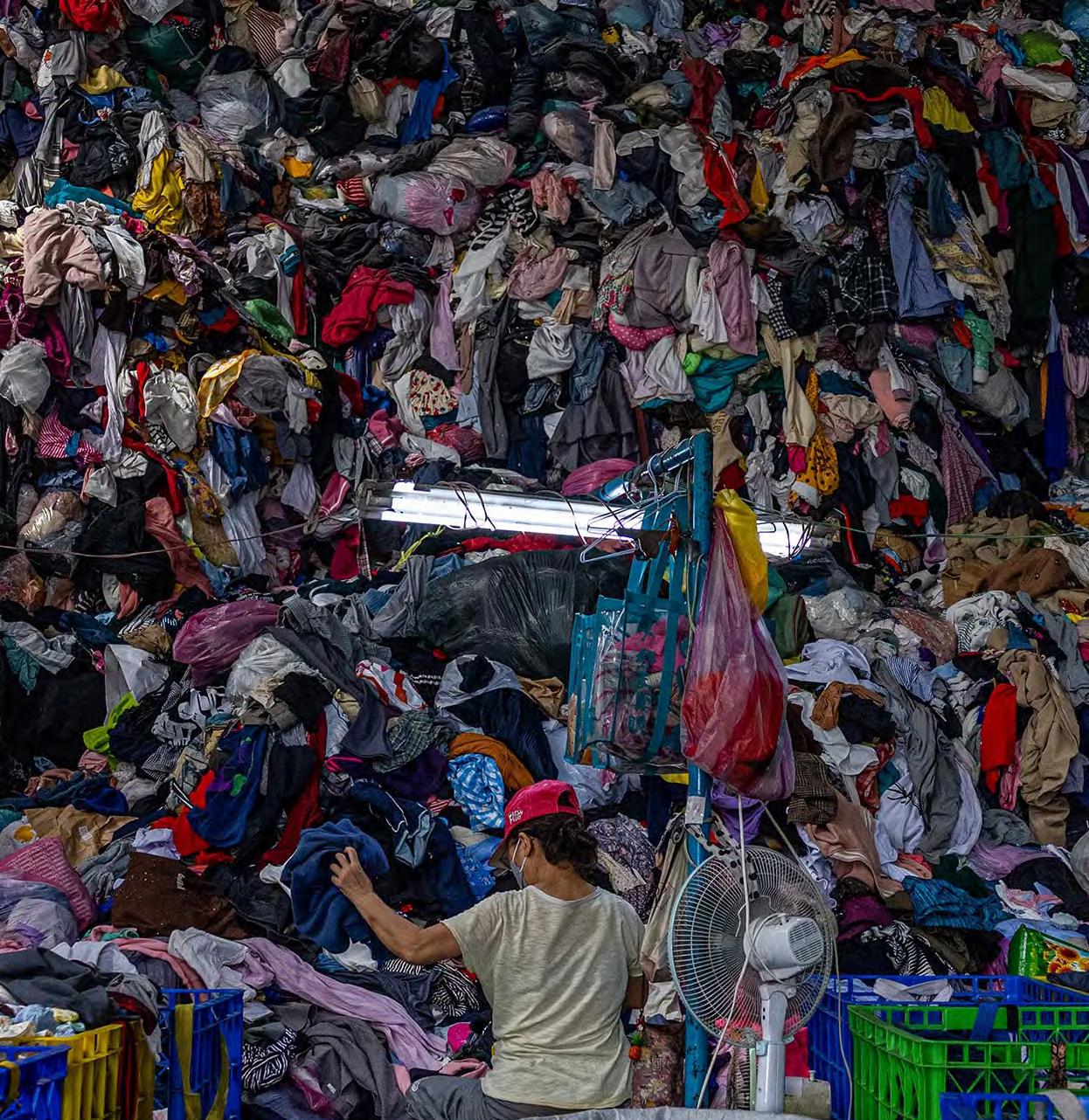
Textile waste has become one of the fastest-growing environmental challenges of our time, driven by the relentless pace of overproduction and overconsumption in the global fashion industry. Fast fashion’s model of rapid turnover and low-cost garments fuels a cycle where clothing is often worn only a handful of times before being discarded.
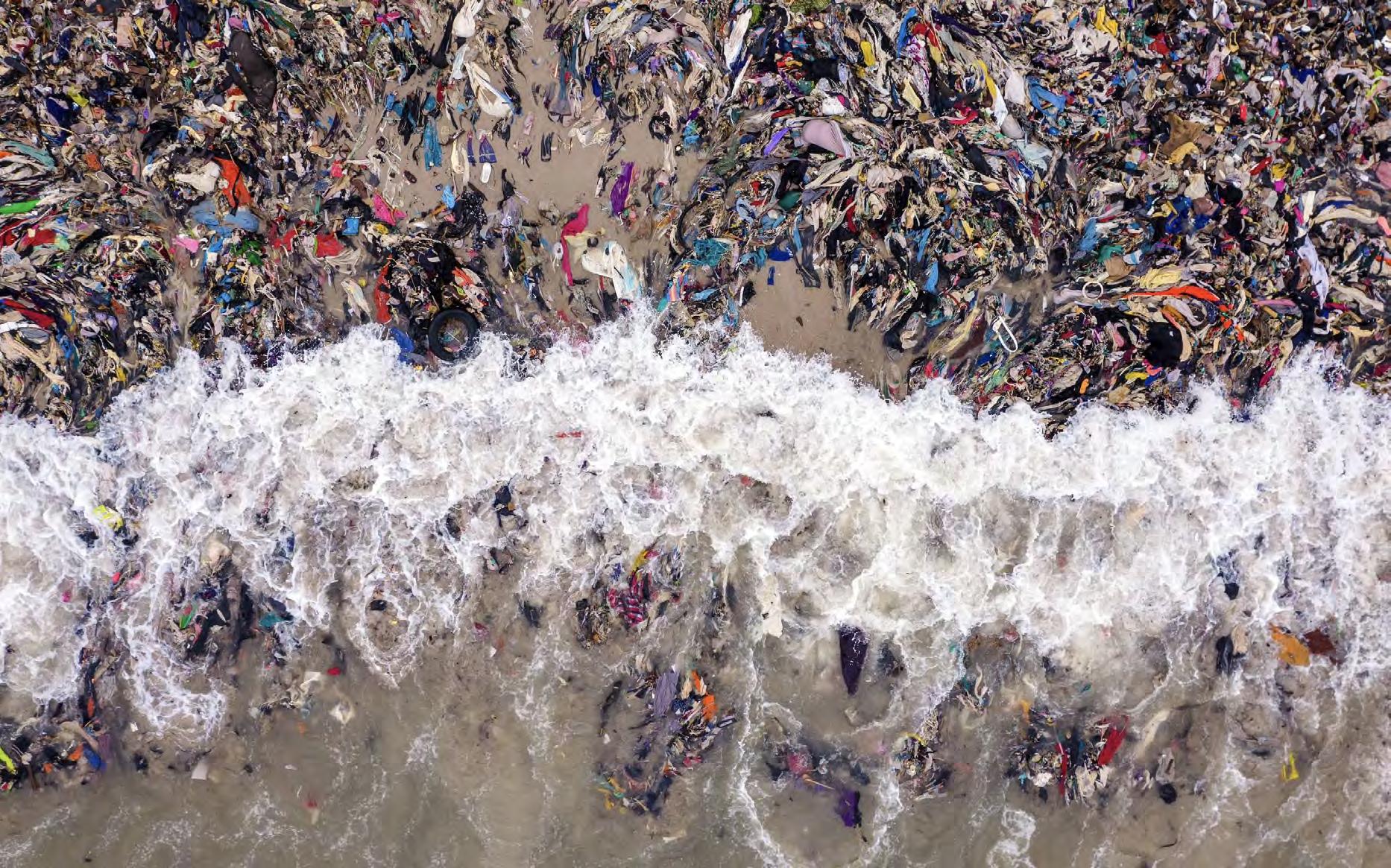
Each year, millions of tonnes of unwanted textiles end up in landfills, incinerators, or worse—dumped in fragile ecosystems. Vast “mountains” of clothing waste now accumulate in places like the Atacama Desert in Chile1, while oceans and rivers are polluted by fibres and dyes leaching from discarded garments.
This ever-expanding tide of waste not only depletes natural resources in its creation but also leaves a long-lasting environmental footprint, underscoring the urgent need to rethink how we produce, consume, and value textiles.
While fast fashion is often the most visible culprit, major luxury brands also contribute significantly to the textile waste crisis. Driven by exclusivity and brand protection, many high-end fashion houses overproduce to meet seasonal demand, then destroy unsold stock—sometimes burning or shredding garments—to prevent them from being discounted or resold.
This practice, combined with the rapid turnover of seasonal collections, generates vast amounts of perfectly good textiles that never reach consumers. Even the most exquisite fabrics, crafted with rare fibres and skilled labour, are often discarded simply because they belong to a past season.
These actions not only waste valuable resources but also perpetuate a culture where materials are treated as disposable, regardless of their quality or environmental impact—making it clear that waste is not just a fast fashion problem, but a systemic issue across the entire fashion industry.
1 Chile’s desert dumping ground for fast fashion leftovers (2021) www.aljazeera.com. Available at: https://www.aljazeera.com/gallery/2021/11/8/chiles-desert-dumpingground-for-fast-fashion-leftovers.
“Sustainability is not an end goal, it’s a journey.”
–Eileen Fisher
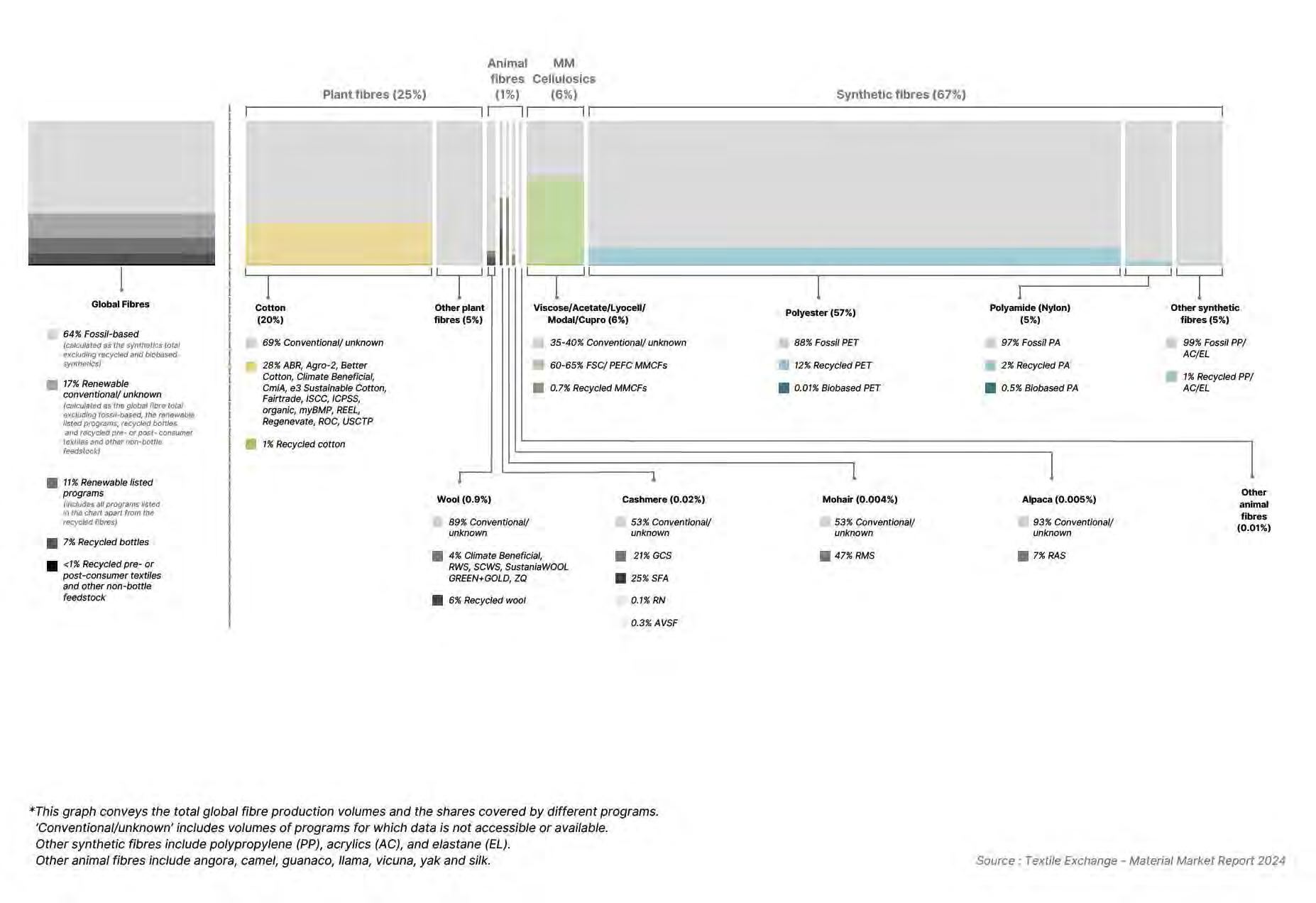
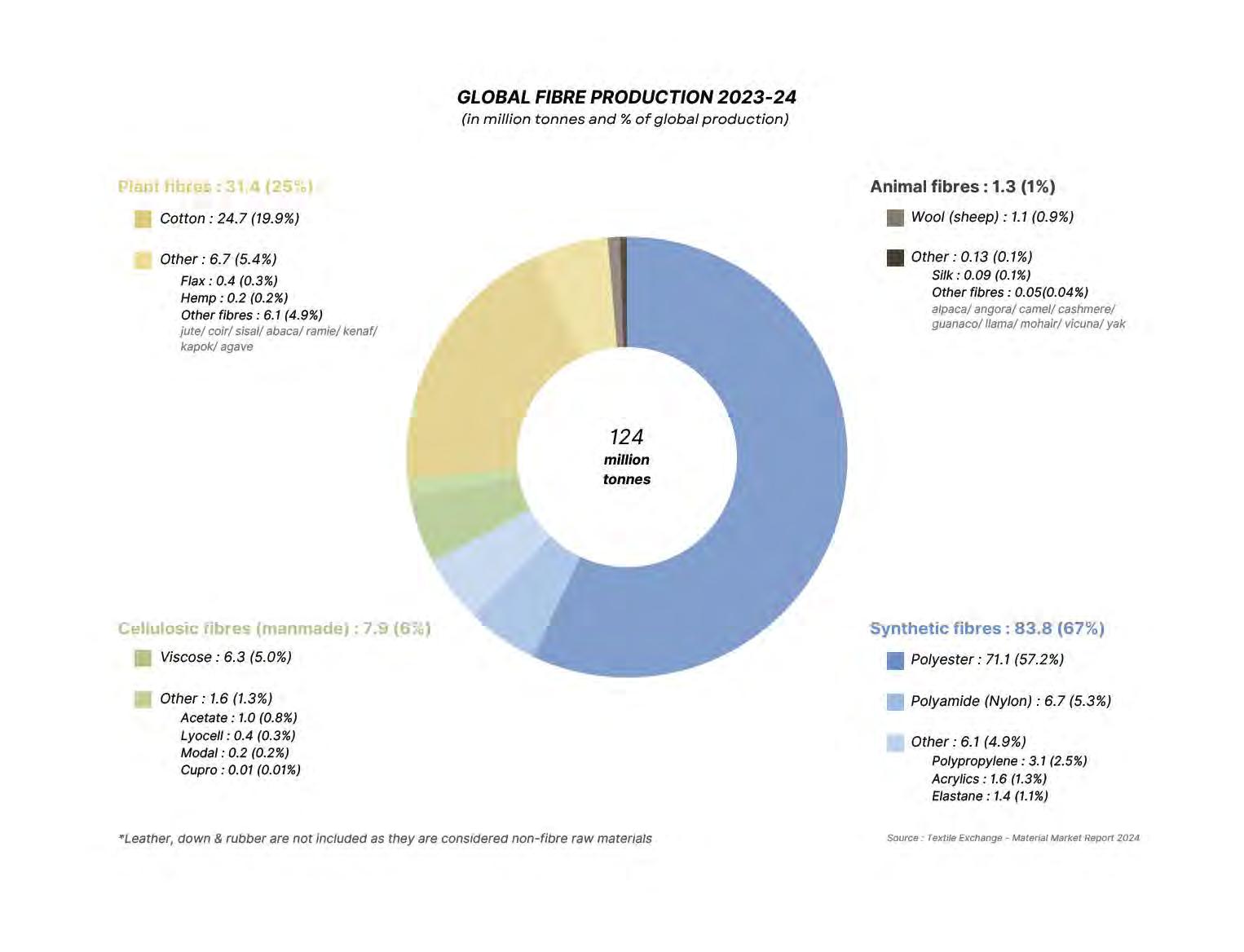
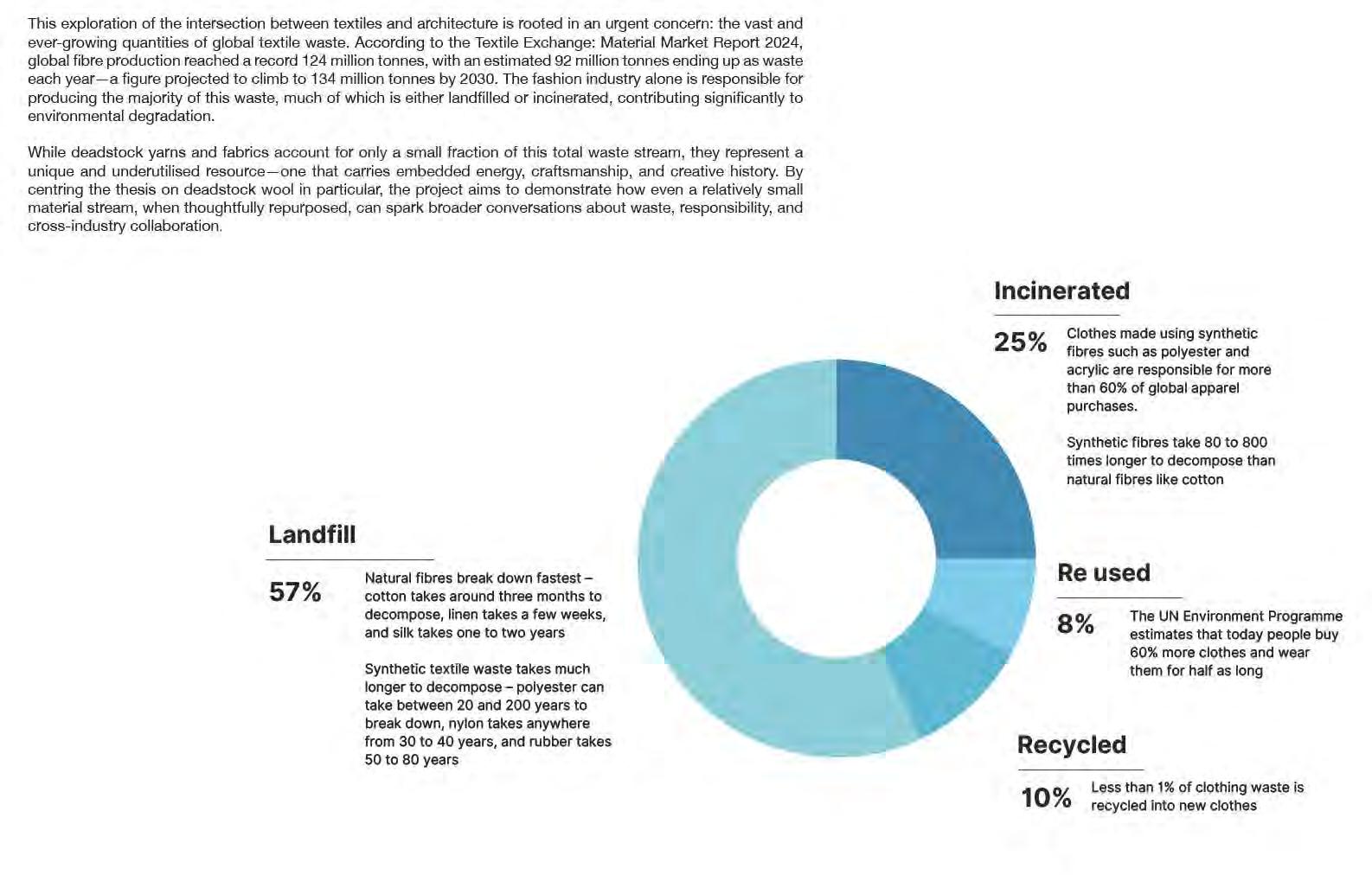
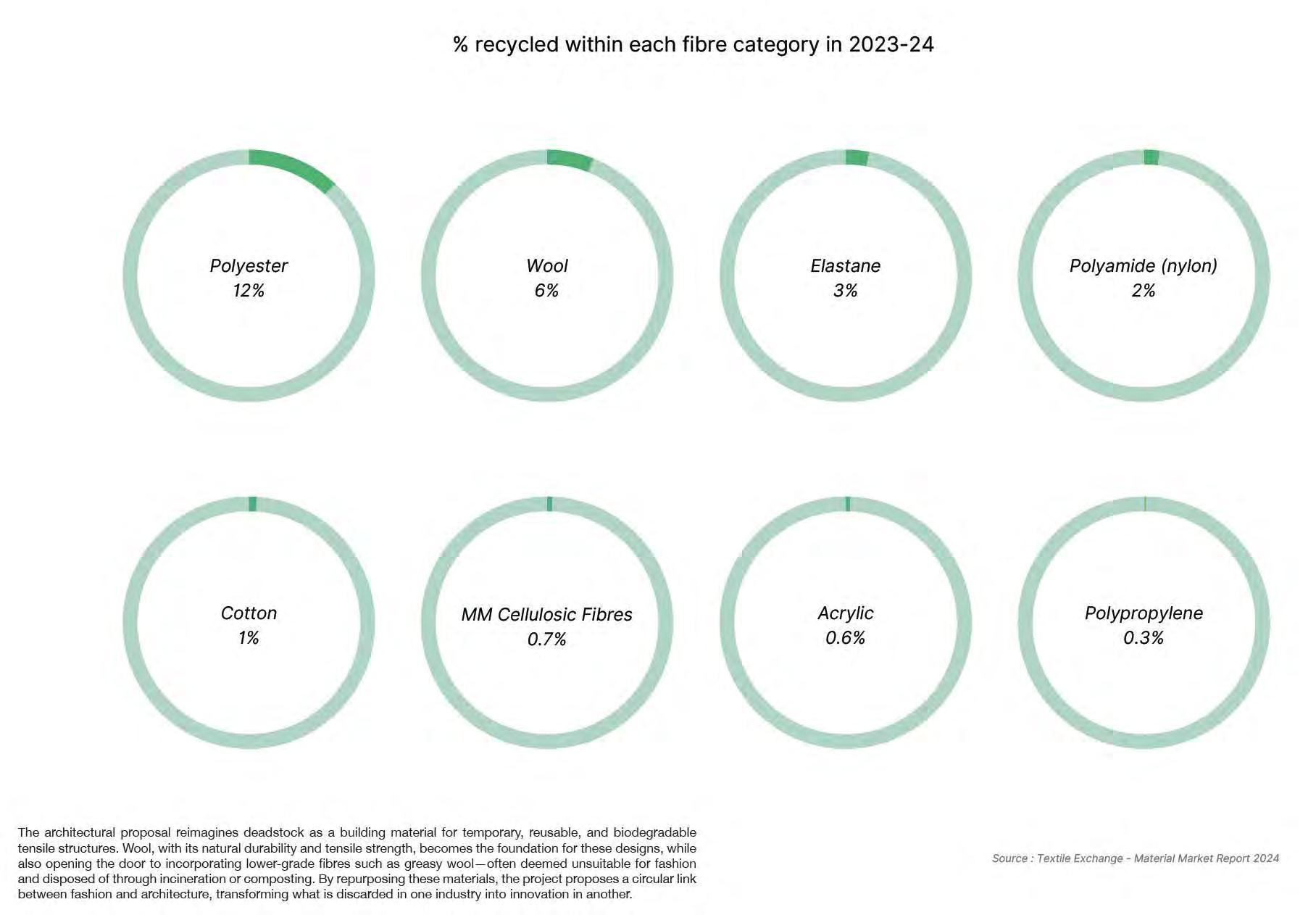
Textile recycling — especially the transformation of waste fabrics and garments into recycled yarns—is a key strategy in reducing the enormous environmental footprint of the fashion industry. Studies indicate that recycling textiles can cut greenhouse gas emissions by approximately 5.6 tonnes of CO₂ (per tonne of textile) and save about 116 GJ of energy, compared to conventional production methods, while reuse offers even greater benefits at 8 tonnes CO₂ and 164 GJ of energy savings.1 Furthermore, while producing one kilogram of finished textiles on average consumes between 200 to 400 litres of water, recycling processes can drastically reduce this demand.2
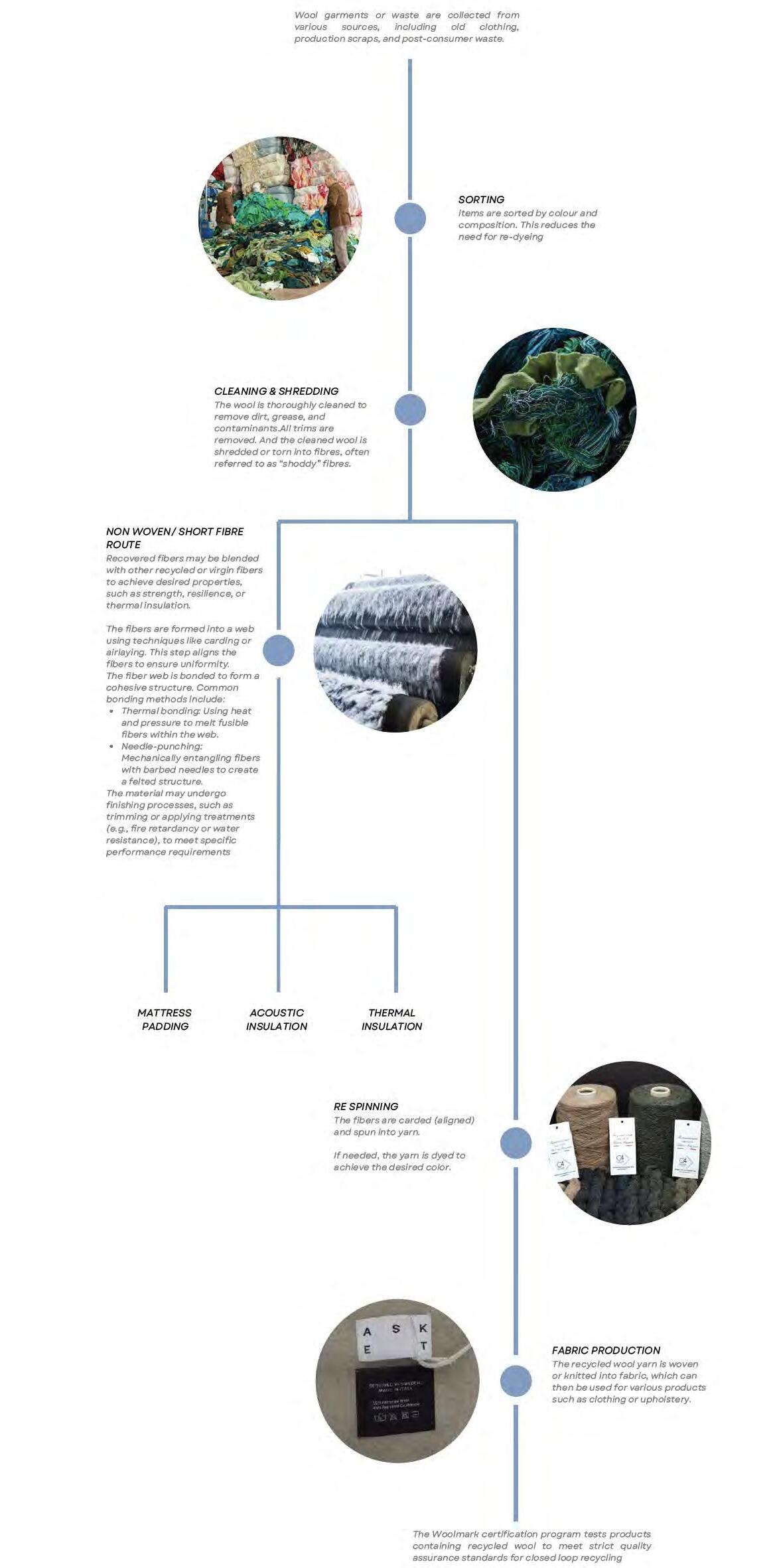
In Tuscany’s Prato district—a global leader in textile regeneration—centuries-old practices in wool recycling have evolved into one of the most advanced circular textile systems in Europe. Here, discarded garments and fabric scraps are sorted, cleaned, mechanically processed into high-quality “mechanical wool,” washed using a closed-loop water system, and spun into new yarns and fabrics. The district handles over 100 million kilograms of pre- and post-consumer textile materials annually, with only a minimal percentage ending up either exported or landfilled.3
A standout example of contemporary recycled-yarn innovation in Prato is Rifò, a B Corp certified brand founded in 2017. Rifò collects surplus textiles—wool, cashmere, denim—from local sources, sorts and shreds them, and transforms the result into new yarns and garments, all produced within a 30 km radius of its headquarters.4
Collectively, these efforts illustrate how textile recycling not only conserves energy and water but also revitalises traditional expertise—transforming waste into high-quality, regionally rooted materials for sustainable design and architecture.
1 Wikipedia Contributors (2025) Textile recycling, Wikipedia. Wikimedia Foundation.
2 Mazzoni, F. (2020) ‘Circular economy and eco-innovation in Italian industrial clusters. Best practices from Prato textile cluster’, Insights into Regional Development, 2(3), pp. 661–676. Available at: https://doi.org/10.9770/ird.2020.2.3(4).
3 Circular Innovation in the Prato Textile District EU Textiles Ecosystem Platform (2025) Europa.eu. Available at: https://transition-pathways.europa.eu/best-practices/ circular-innovation-prato-textile-district.
4 Rifò: Recycled and Recyclable Textile Materials (2024) Rifò Lab. Available at: https://rifo-lab.com/en/pages/recycled-and-recyclable-materials
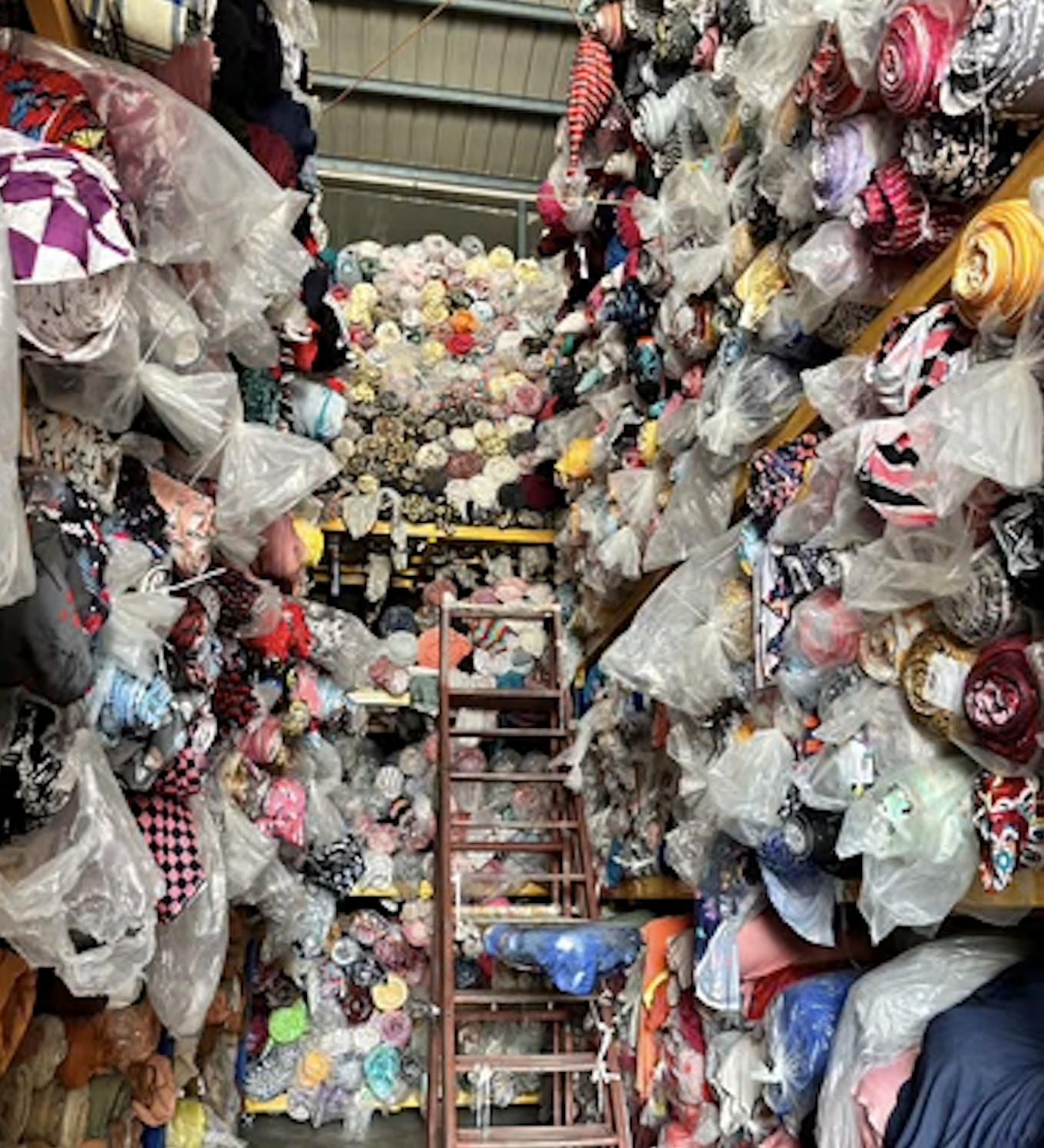
Dead Stock Yarn - “due to the common practice of ordering extra yarn to allow for inefficiencies during the manufacturing process. As a result, each of their clients produce an average of 15kg of waste yarn or deadstock per year. The problem is that this deadstock yarn is often made up of small quantities of many different fibres, qualities, colours and thicknesses, which makes it difficult to reuse commercially.” 1
Dead Stock Fabric - “a result of overproduction, misjudged consumer trends, or inaccurate demand forecasting.” 1
1 Case study - Knitster LDN: Repurposing deadstock yarn leads to a new micro-factory in London (2023) ReLondon. Available at: https://relondon.gov.uk/resources/case-study-knitster-ldn-repurposing-deadstock-yarn-leads-to-a-new-micro-factory-in-london.
1 Sison, A. (2023) What Does Deadstock Mean? An In-Depth Exploration, CONRADO®. Available at: https://shopconrado.com/blogs/news/ what-does-deadstock-mean?srsltid=AfmBOor-uoW2YqEwJagovX2UiNVxm2-JLrHieFx3FPAmXqm7FGnYZ2dD.
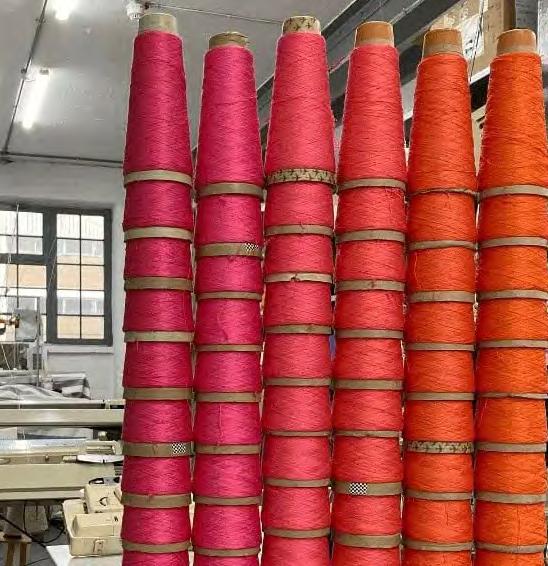
•“In house” re-use
Brands re using/ utilising their exiting dead stock yar ns
•Secondary suppliers
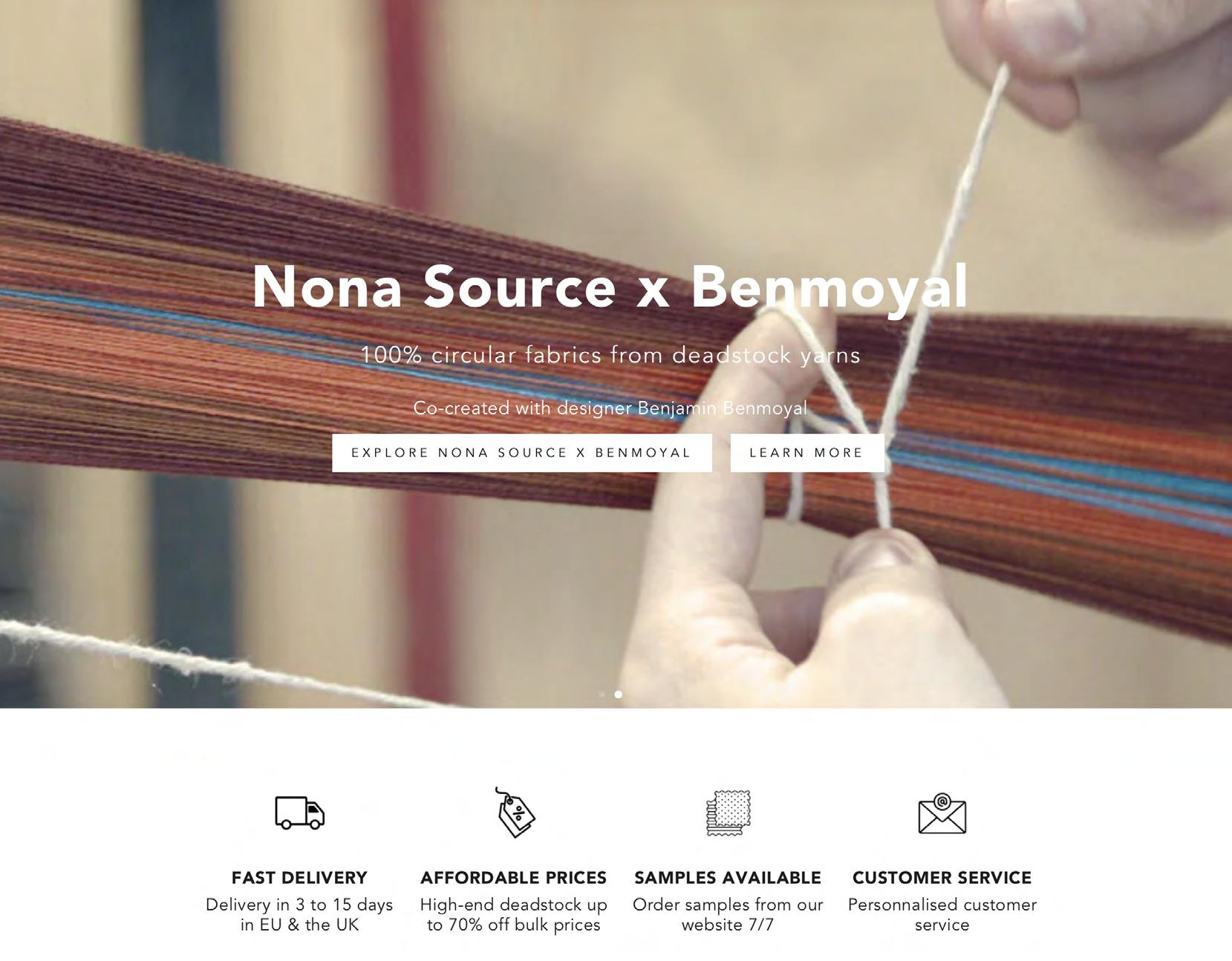
•NONA Source - LMVH (Louis Vuitton Moët Hennessy) brands deadstock retailer
https://www.nona-source.com/collections/yarns?srsltid=AfmBOooCFRU1rphfksfgN5aoaA B9o4OZ8TAT5vbi4RYFFywZ0Aox8Stn
LMVH brands : Louis Vuitton, Christian Dior, Celine, Loewe, Kenzo, Givenchy, Fendi, Emilio Pucci, Marc Jacobs, Berluti, Loro Piana, RIMOWA and Patou
•Independent retailers - eg: Fairfield yarns
https://www.fairfieldyar ns.co.uk/page4.html
https://colourmart.com/yarns/view/in_stock.*.rank.*.show_all
https://www.shivtextiles.co.uk/yar n-bundles
https://lastyarn.com
•Limited availability : Deadstock is often produced in small, inconsistent quantities, making it difficult to source in large volumes.
•Restricted colour options : Colours can’t always be chosen; however, lighter deadstock yarns can be naturally dyed to suit desired palettes.
•Lack of uniformity : Materials may vary in weight, texture, or finish, which can complicate fabrication.
•Limited overall impact (at scale) : Deadstock use addresses only a small percentage of the industry’s total waste—but small interventions are still valuable starting points.
•Design flexibility required : Working with what’s available demands an adaptive and resourceful design approach.
Opportunities and Benefits
•Creative storytelling : The pavilion becomes a woven tapestry of the brand’s past collections—turning material waste into a visual archive of creative evolution.
•Brand authenticity : Enables brands to reuse their own materials rather than discarding them or passing them to resellers.
•Supports transparency : Offers the chance to integrate Digital Product Passports (DPPs), letting users trace the story behind the materials.
• Strengthens sustainability claims : Demonstrates a brand’s tangible commitment to circular design and responsible material use.
•Cost savings : Reduces material costs associated with temporary installations or event pavilions.
•Reduces waste : Even though it addresses a small portion of waste, it sets a precedent for larger-scale reuse initiatives.
•Sparks broader dialogue : Opens up conversations about recycling, circularity, and the creative potential of textile waste.
•Custom, site-specific aesthetic : Creates opportunities for unique, one-of-a-kind structures aligned with the brand’s identity and sustainability goals.
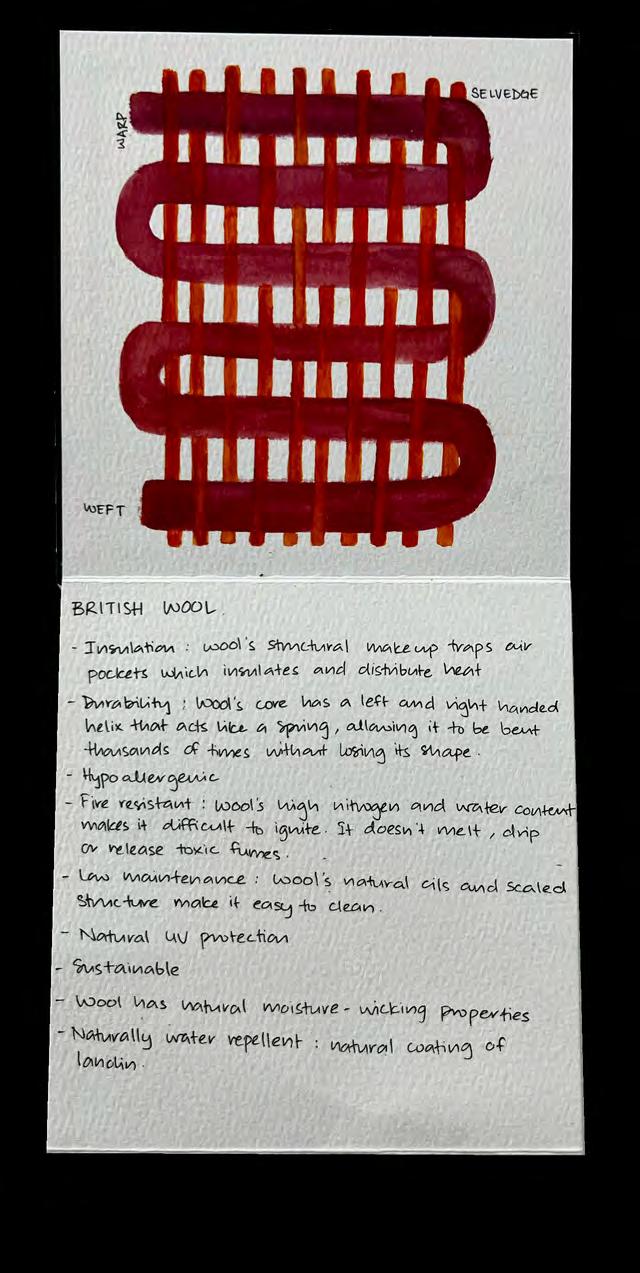
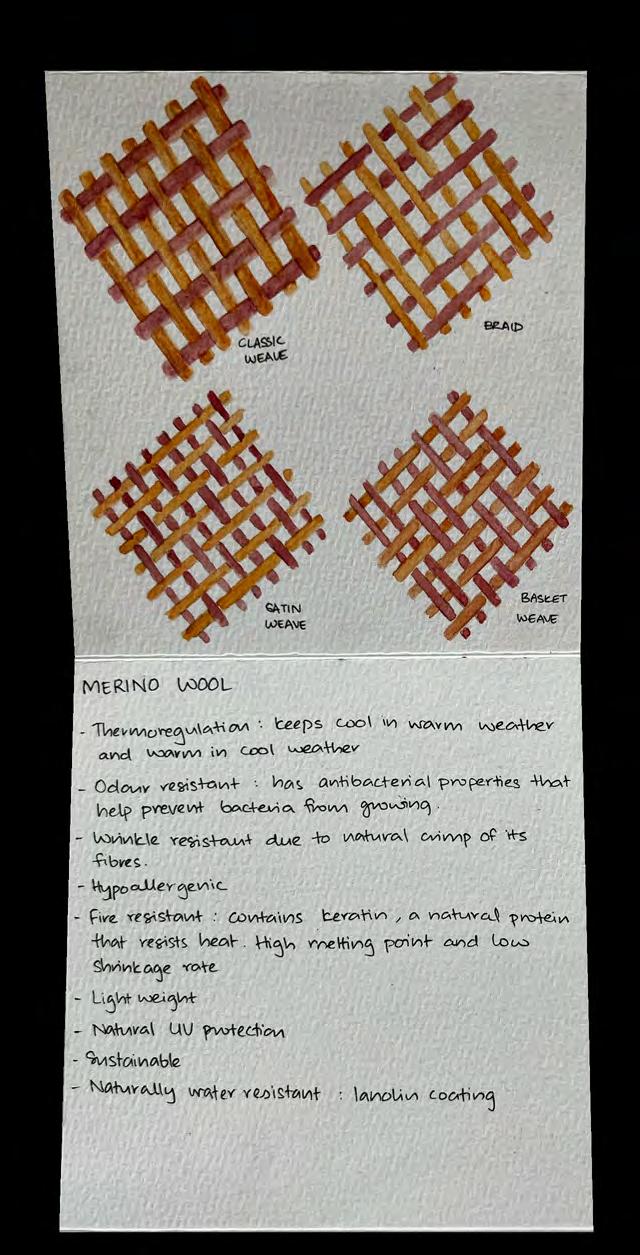
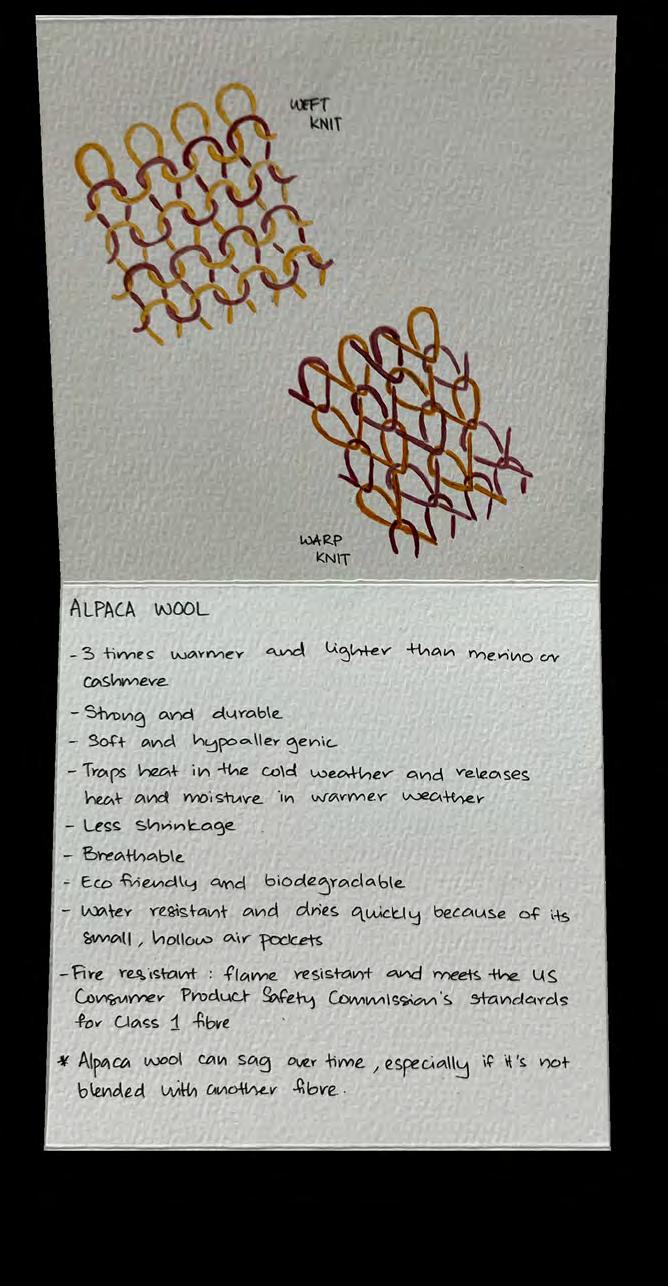
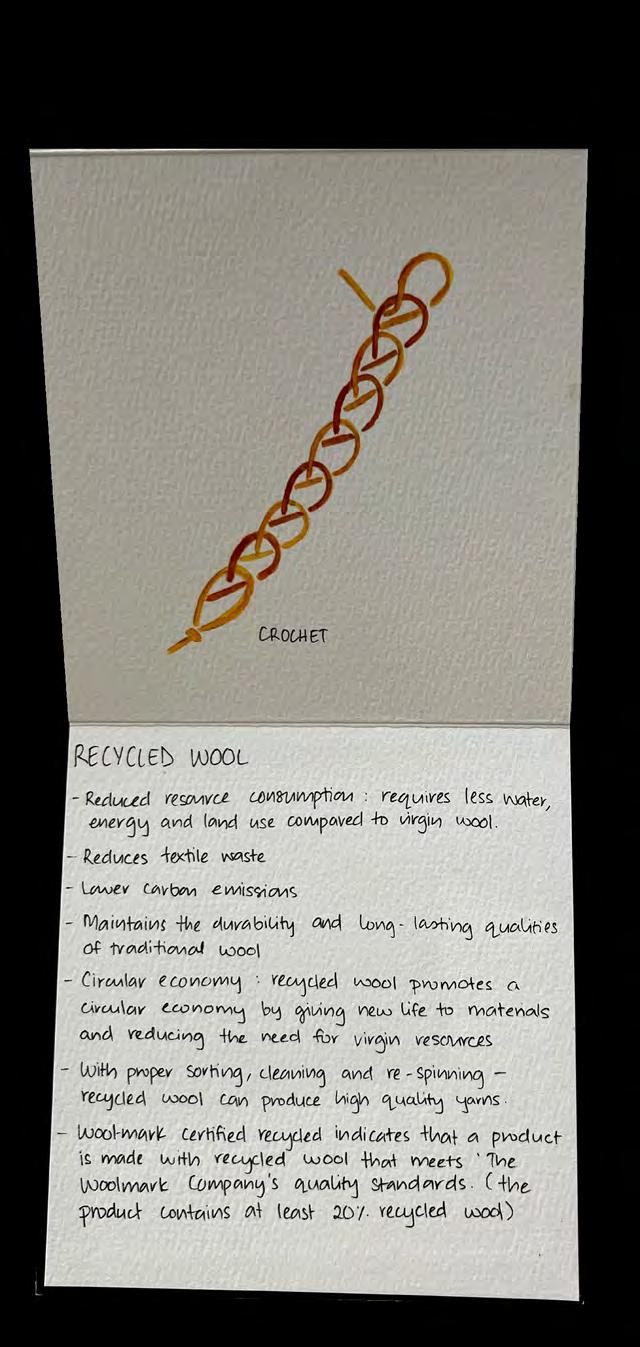
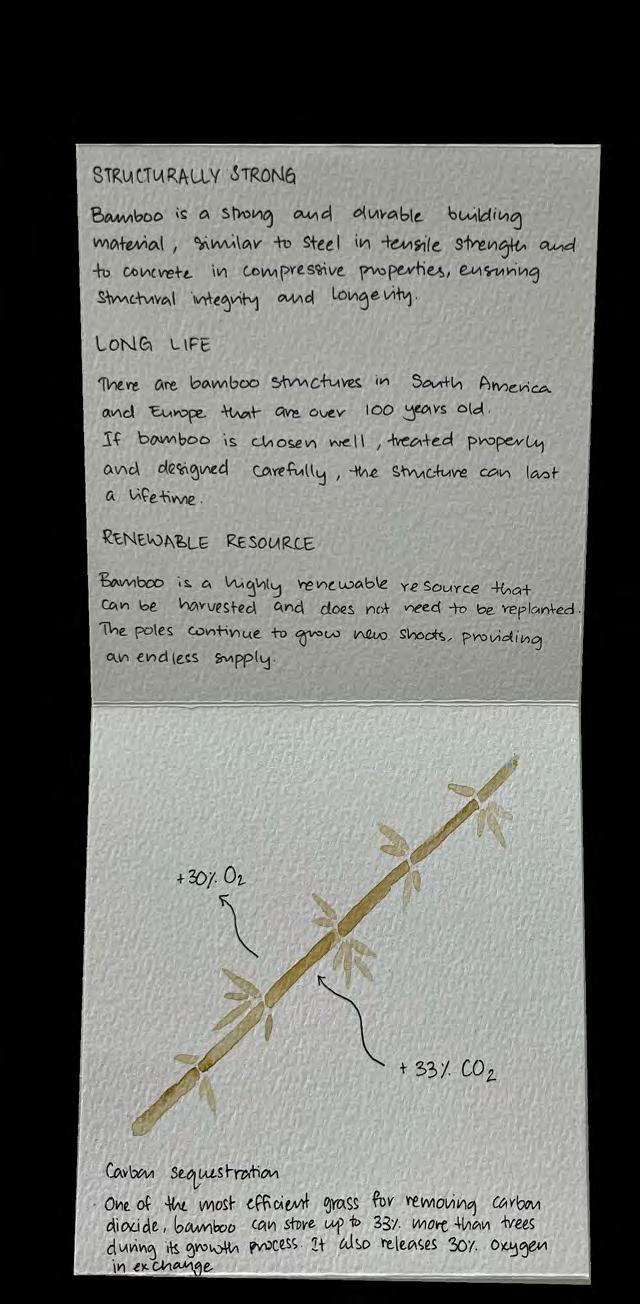
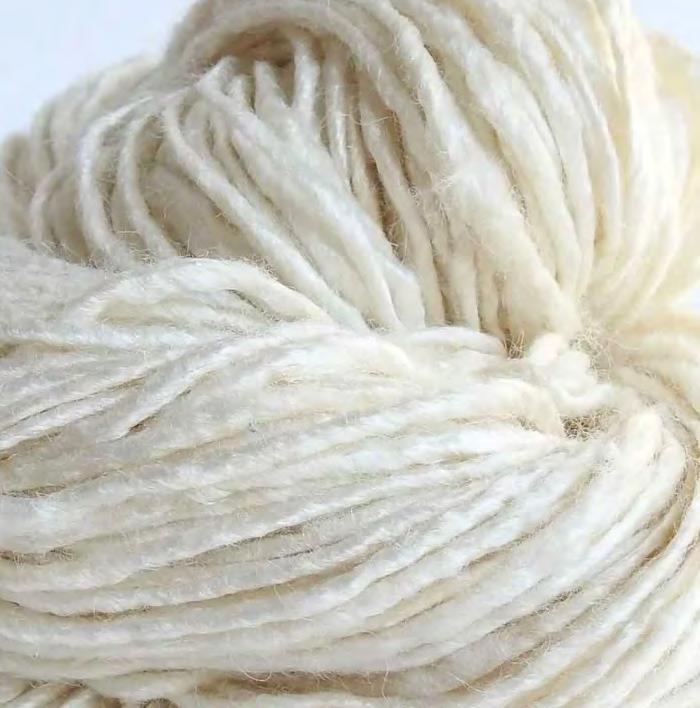
Bamboo yarn is prized for its softness, often compared to cashmere, and has a naturally smooth, silky texture that feels gentle against the skin. It is highly breathable and offers excellent moisture-wicking abilities, keeping the wearer cool and dry. Naturally antibacterial and hypoallergenic, bamboo yarn resists odour-causing bacteria without chemical treatments. It is also durable yet lightweight, with a natural sheen and excellent drape, making it ideal for both apparel and interior textiles. Additionally, bamboo yarn is biodegradable and derived from a rapidly renewable resource, supporting sustainable material use.
Yarn Production 1
1.Species Selection
Most often Moso bamboo (Phyllostachys edulis) is used for its long, strong fibers and widespread availability
2.Harvesting
Cut at maturity (3–5 years old) for optimal cellulose content and fiber strength. Harvested during the dry season to reduce moisture and prevent mold.
3.Initial Preparation
Cleaning : Remove dirt/debris from stalks by rinsing and brushing.
Segmenting : Cut into manageable lengths for processing equipment.
Drying : Sun- or air-dry for days to weeks to lower moisture content.
Crushing : Break down tough outer layers.
Decortication : Remove outer shell to expose inner fibers.
Combing : Align fibers and remove impurities before pulping.
4.Breaking Down Fibers
Manual method : Split stalks, scrape skin, water/enzymatic retting to loosen fibers, wash, dry, comb, and hand-spin.
Mechanical method : Machines crush, card, and spin fibers at industrial scale.
5.Bamboo Pulp Creation
Mechanical Pulping : Grind/refine stalks into pulp, high lignin content remains.
Enzymatic Retting : Use enzymes to break lignin/hemicellulose, producing cleaner fibers.
Steam Explosion : High-pressure steam followed by rapid depressurisation to separate fibers.
Chemical Pulping : Soda pulping - Sodium hydroxide dissolves lignin.
Kraft pulping - Sodium hydroxide + sodium sulphide for stronger pulp.
Viscose process : Chemically transform cellulose into a viscous solution, then regenerate into fibers.
6.Fiber Extrusion & Formation
Refined pulp is extruded through spinnerets to create filaments. Filaments are solidified in a coagulation bath.
7.Washing & Drying
Remove residual chemicals/impurities and dry to optimal moisture levels.
8.Fiber Finishing
Cutting/stretching : Prepare fibers as staple (short) or filament (continuous) length.
Spinning : Draw, twist, and wind onto bobbins to create bamboo yarn with desired softness, strength, and sheen.


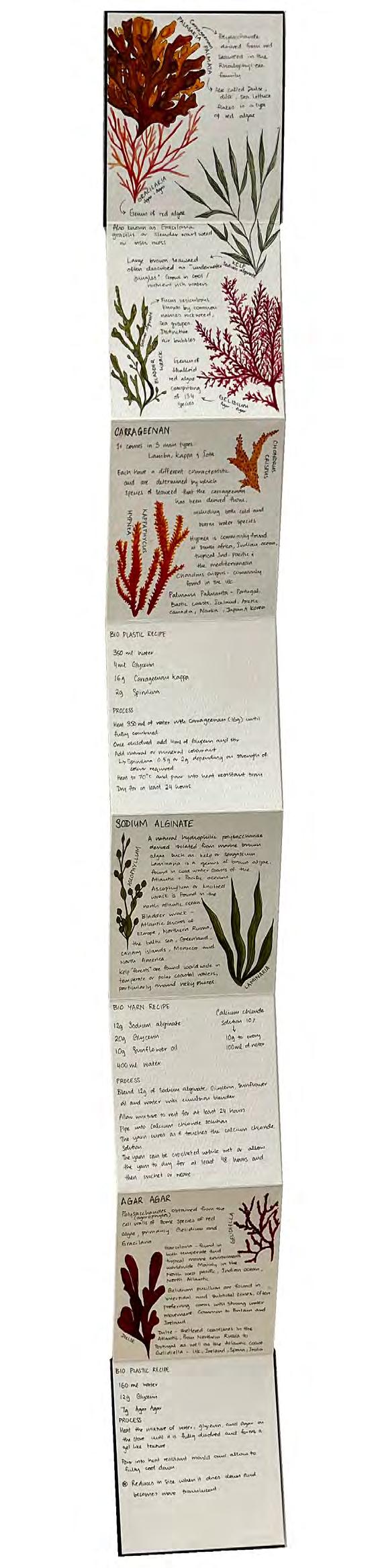
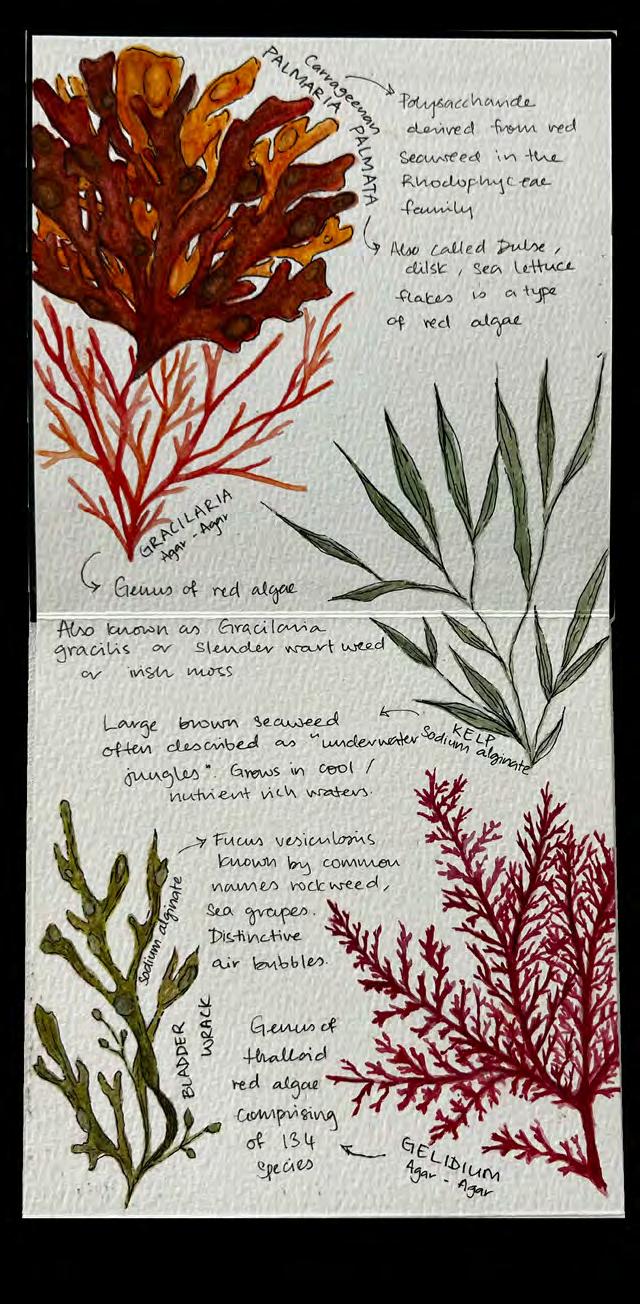
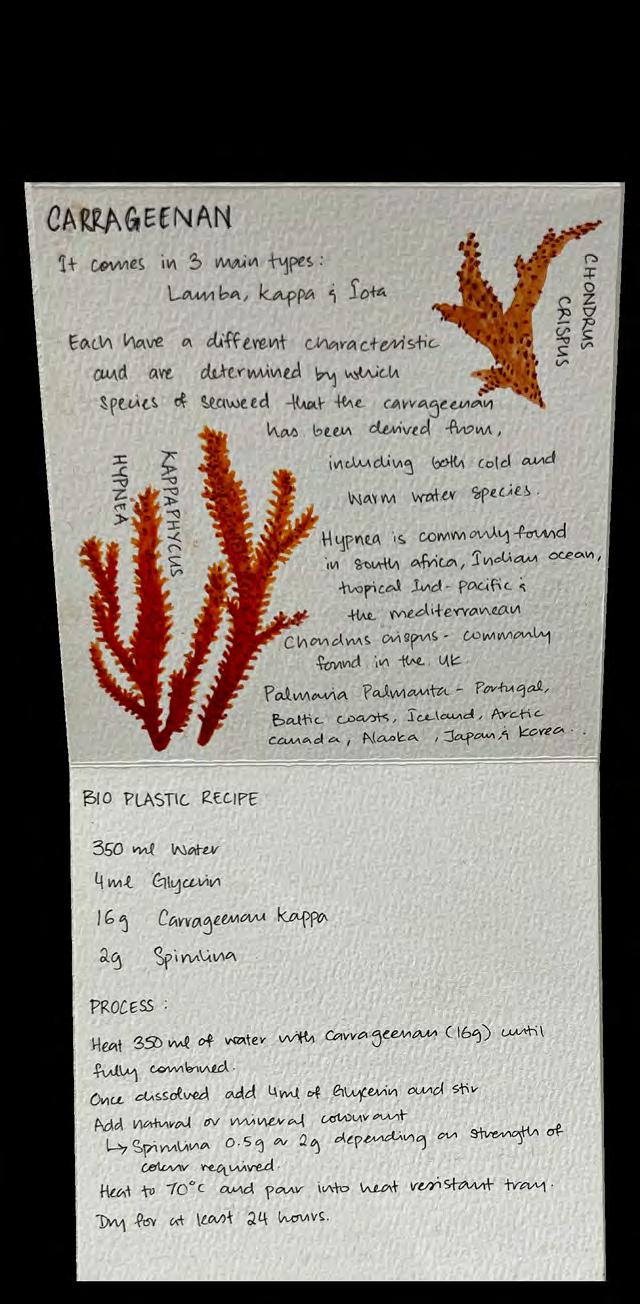
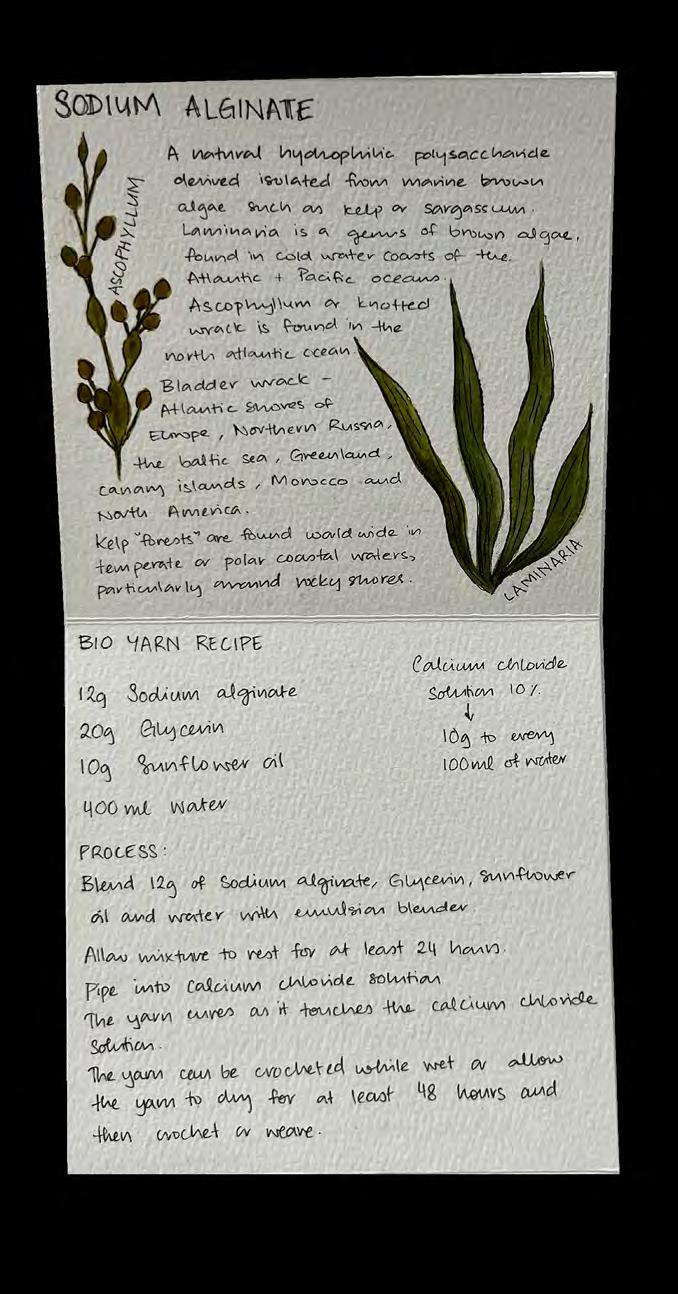

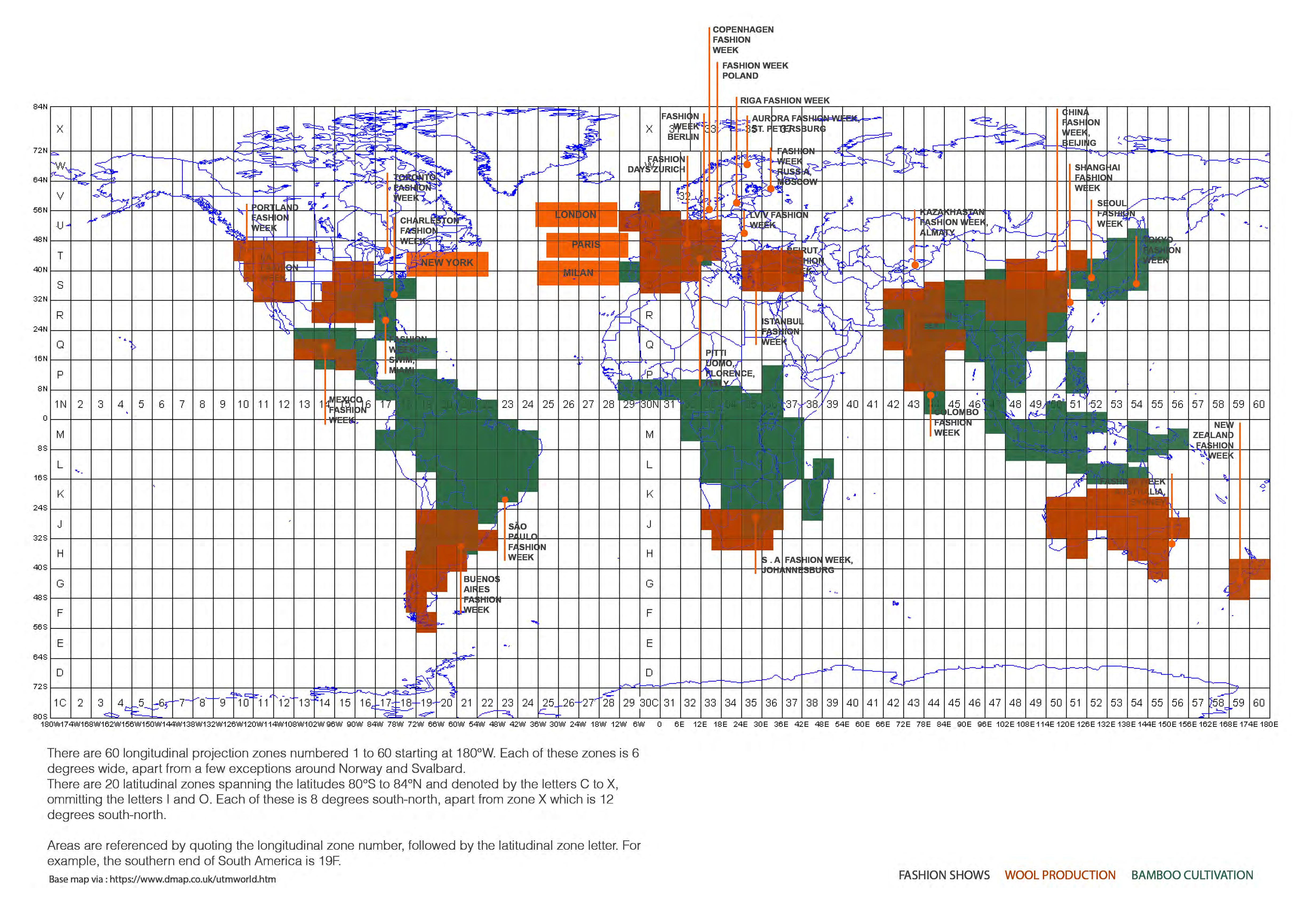
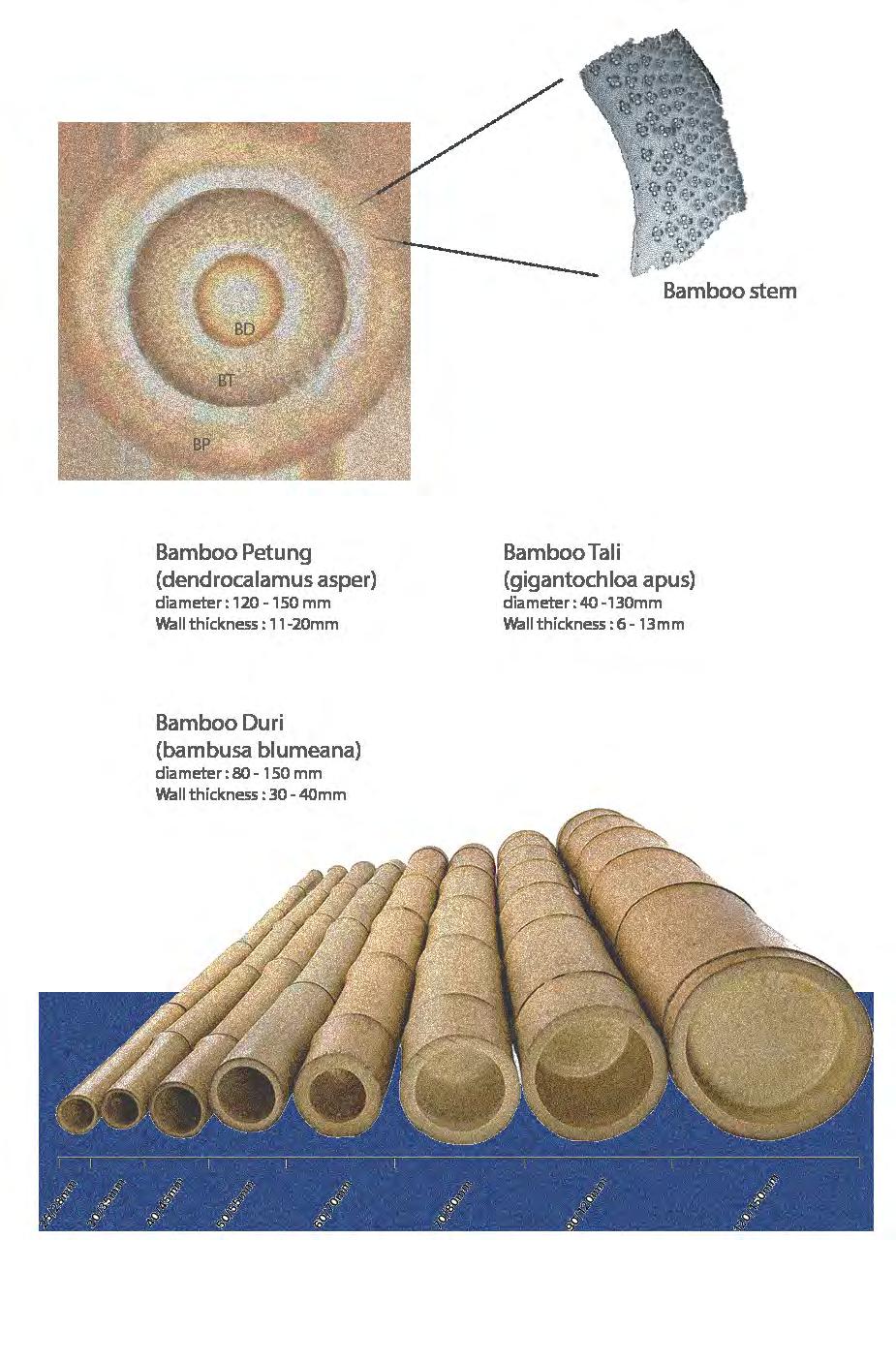
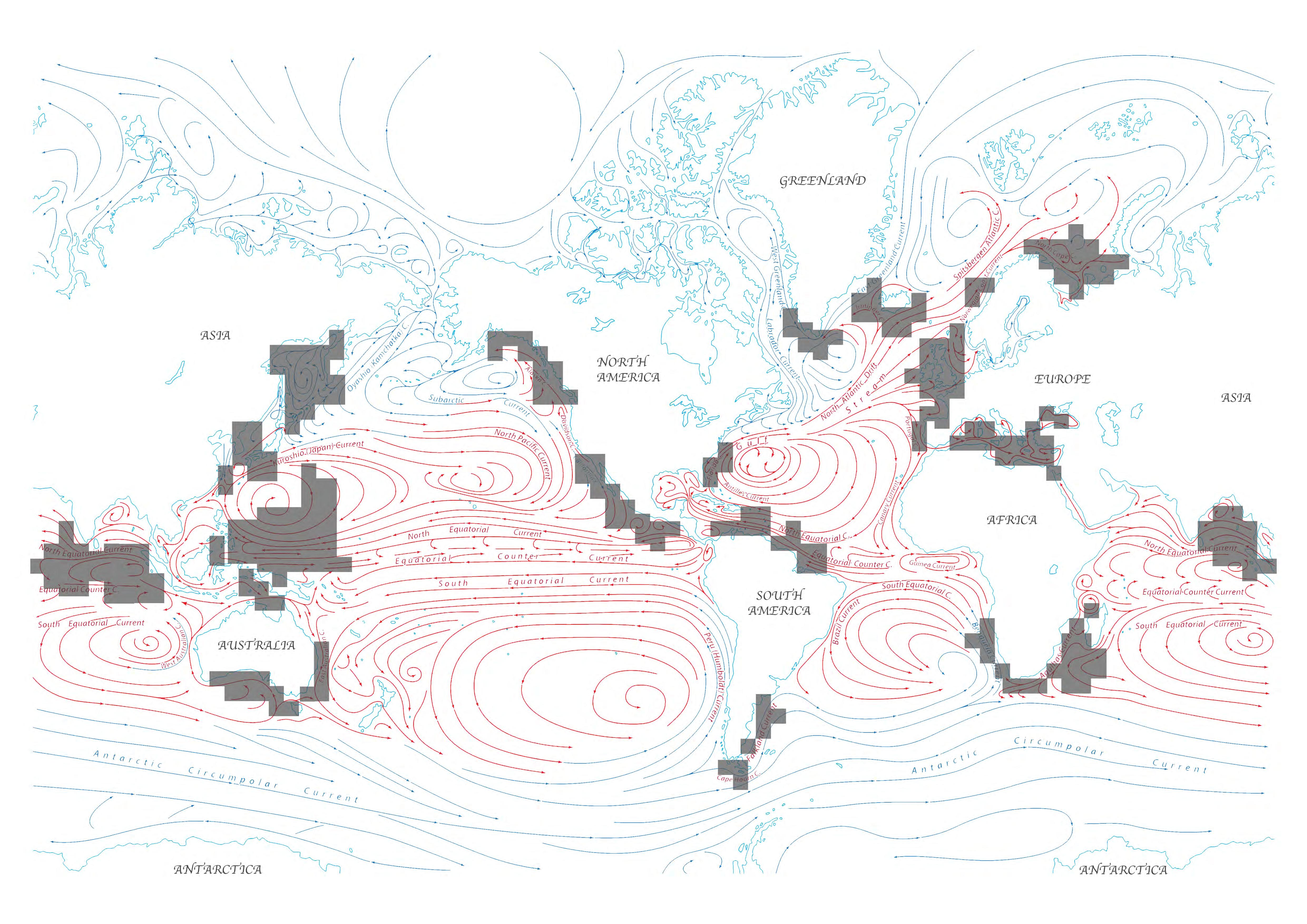
The maps illustrate the global dispersion of seaweed, bamboo, and wool, highlighting how each material can be locally sourced depending on the pavilion’s location. Coastal regions rich in seaweed enable the production of bioplastics and algae-based yarns, while bamboo thrives in tropical and subtropical zones, offering a fast-growing, renewable structural material. Wool, abundant in pastoral regions such as the UK and New Zealand, provides a tactile, regenerative textile. By aligning material choice with local availability, the design minimises transportation impact while embedding each pavilion within its regional ecological and cultural context.
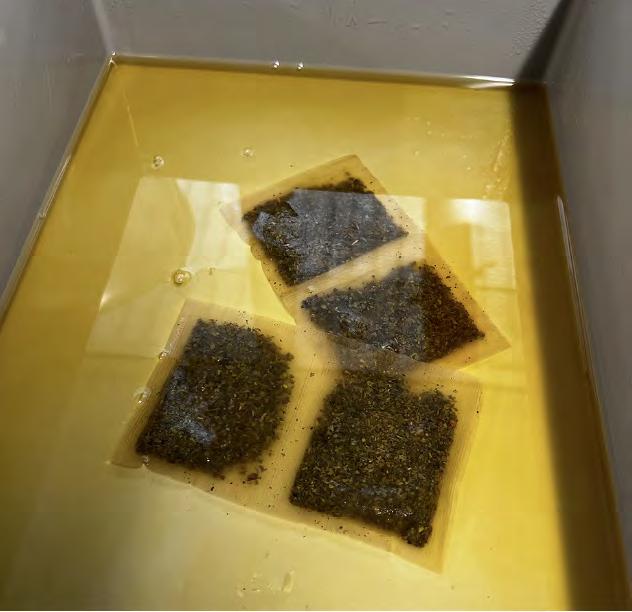
Brew 3 - 4 tea bags in 930 ml of boiled water and allow it to cool down
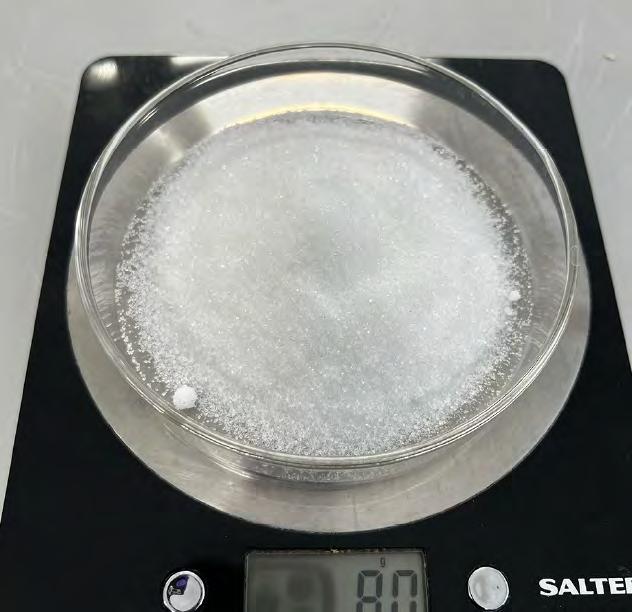
While the tea is cooling, add 80g of sugar and fully dissolve it
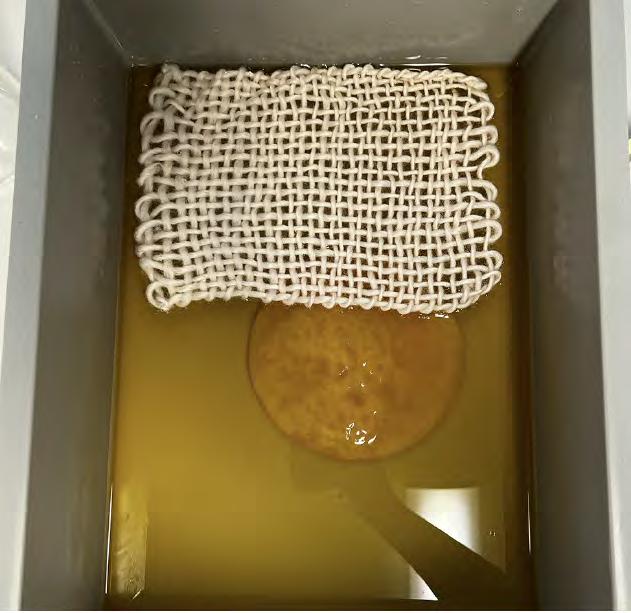
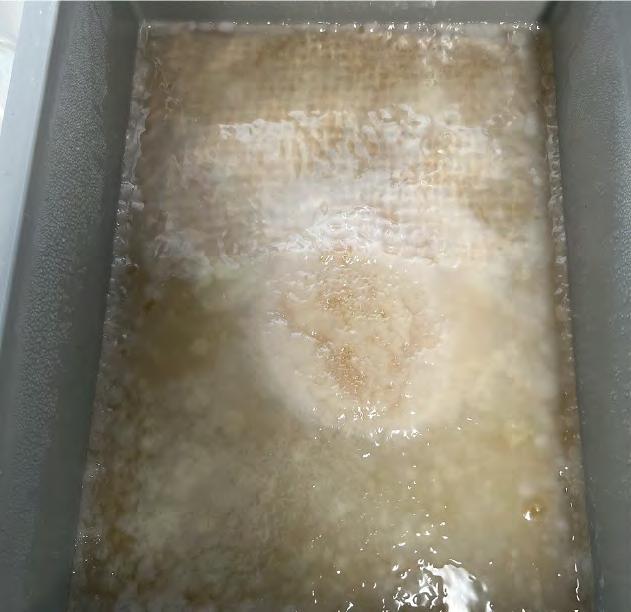
(Optional) Place the wool weave in the mixture Leave the material to grow for 1 - 2 weeks, depending on the desired thickness of the sample
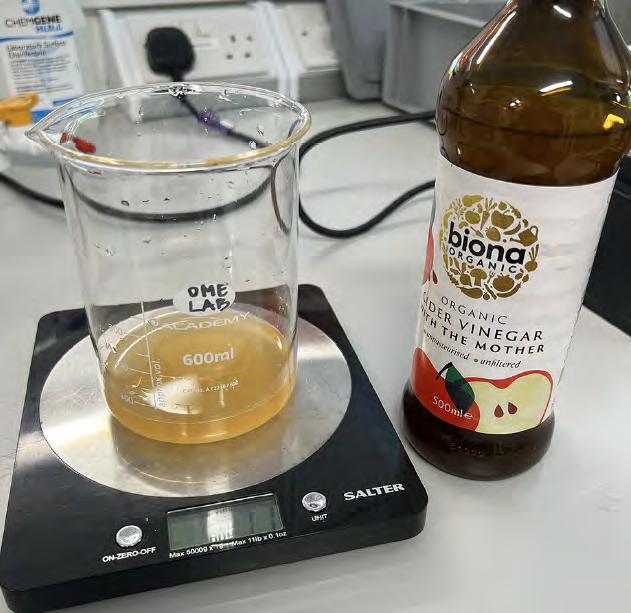
Once the tea has fully cooled/ reached room temperature, add 70 ml of apple cider vinegar
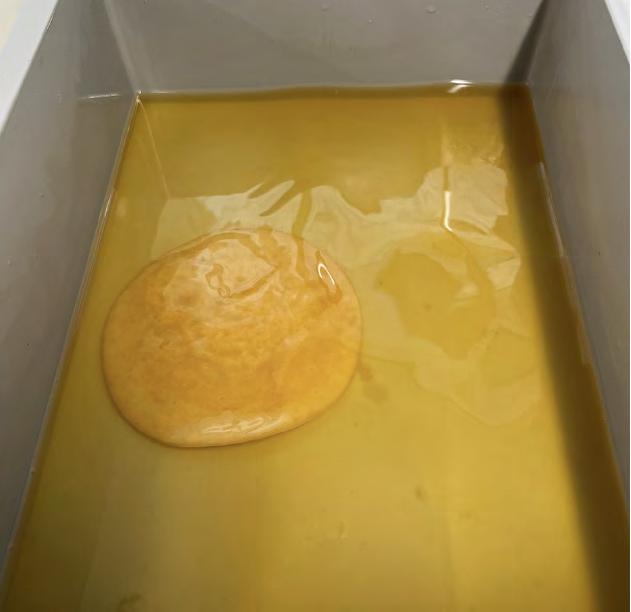
the
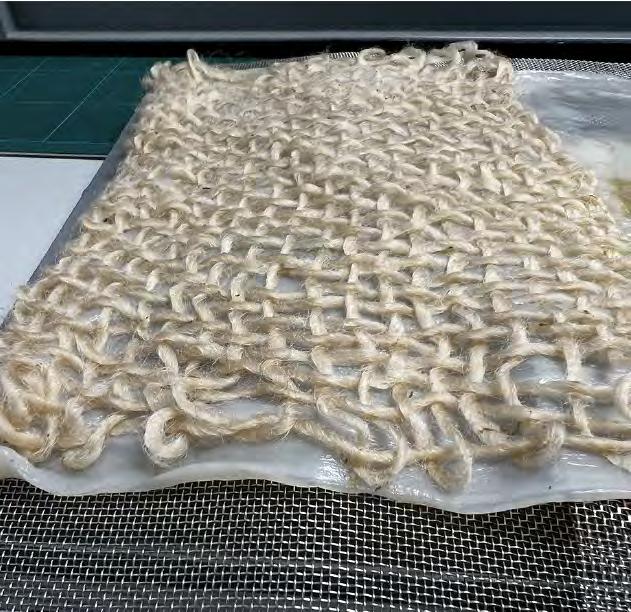
Once the bacterial cellulose has grown to your desired thickness, rinse it thoroughly and lay flat on a wire mesh to fully dry
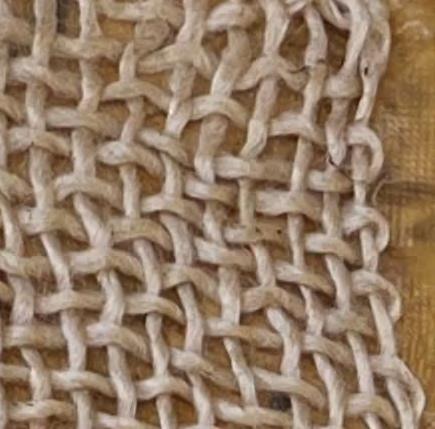
It typically loses most of its water within the first 24 hours and the sample changes colour and takes on a yellowish brown translucent hue
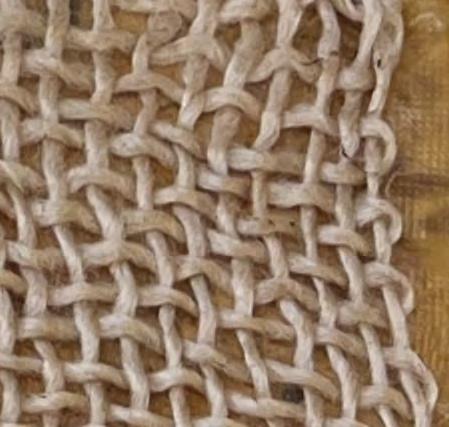
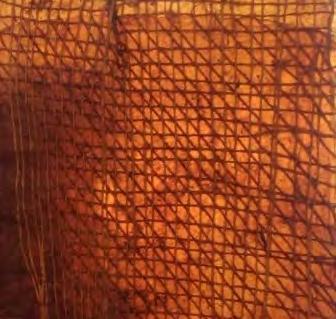
The dense interwoven nanofiber network gives it remarkable tensile strength despite being lightweight. When treated or combined with natural oils or waxes1, bacterial cellulose can become water-resistant, while still allowing a degree of breathability. It is biodegradable, non-toxic, and highly flexible, making it suitable for a range of architectural installations. Its translucency and smooth surface lend it strong aesthetic potential, while its ability to retain shape and resist tearing makes it both functional and visually striking.
The combination of the BC (bacterial cellulose) and wool weave also create an interesting opportunity to play with light and shadow as the translucency of the BC allows light to filter through. The BC notably “grew” on one side of the woven surface, thereby exposing the wool texture on the other side. This textural variation would also provide interesting design opportunities for the pavilion, with the BC surface being treated and exposed to the exterior, creating a waterproof film that encases the tactile wool weave.
If used without additional waterproof coatings, the BC would be well-suited for an indoor pavilion setting. When illuminated from behind, the material would evoke the warm, diffused glow of a lampshade, enveloping the space in a soft, atmospheric light.
1 da Silva Junior, C.J.G. et al. (2022) ‘Design of a Naturally Dyed and Waterproof Biotechnological Leather from Reconstituted Cellulose’, Journal of Functional Biomaterials, 13(2), p. 49. Available at: https://doi.org/10.3390/jfb13020049.
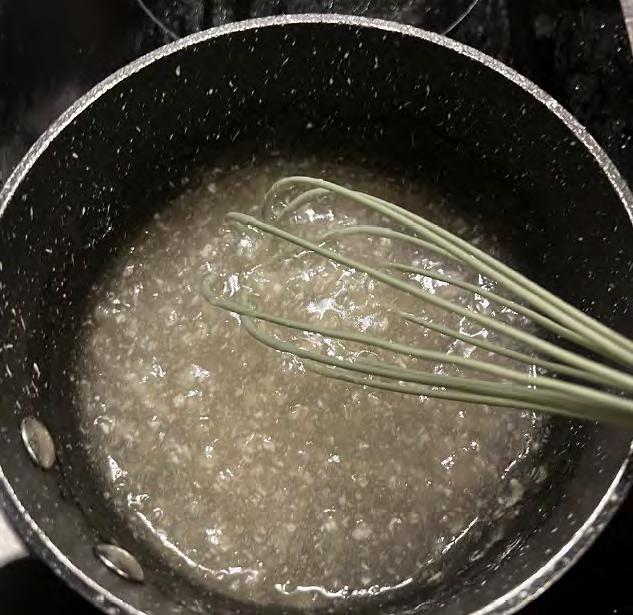
Mix together 350 ml water, 4 ml glycerin and 16g of Carrageenan Kappa powder and heat on the stove
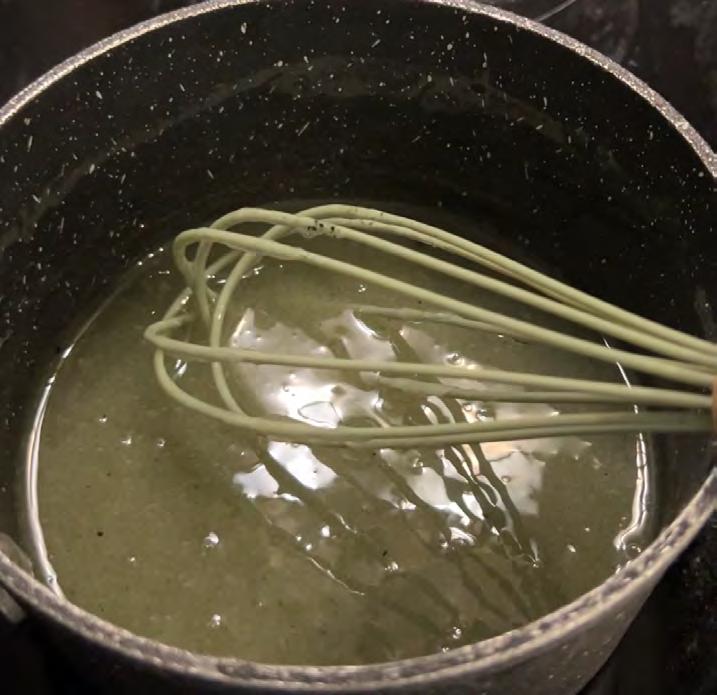
Mix together 350 ml water, 4 ml glycerin, 16g of Carrageenan powder and 2 g of spirulina to colour the bio plastic and heat on the stove
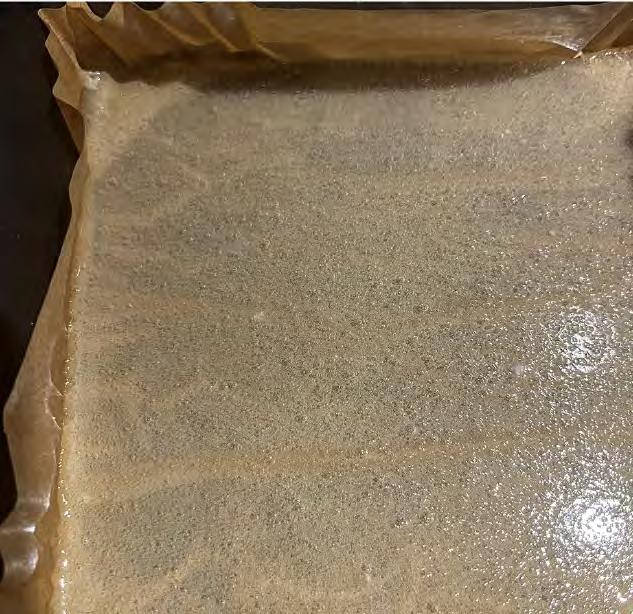
Once it reaches a gel like texture, pour into desired mould and allow to set for at least 24 hours before removing it from the mould
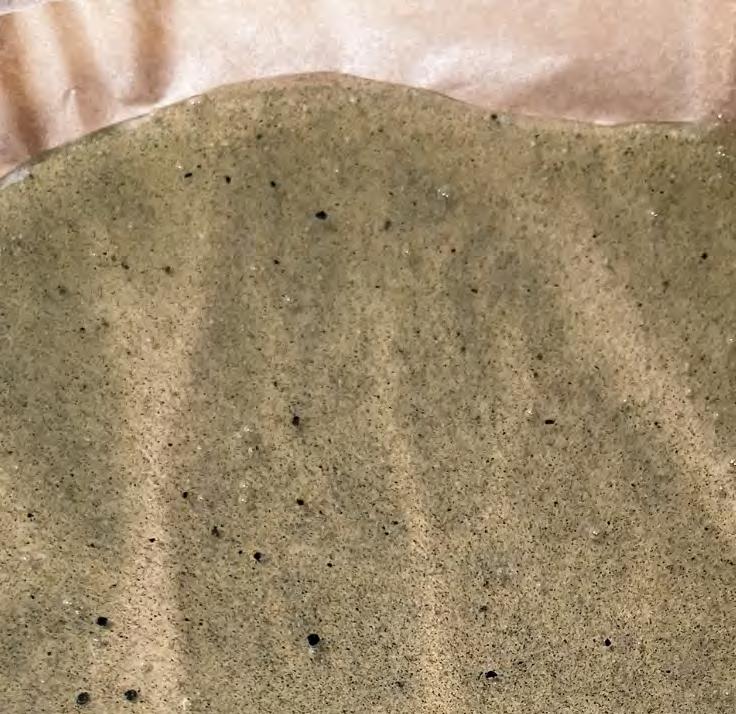
Once it reaches a gel like texture, pour into desired mould and allow to set for at least 24 hours before removing it from the mould
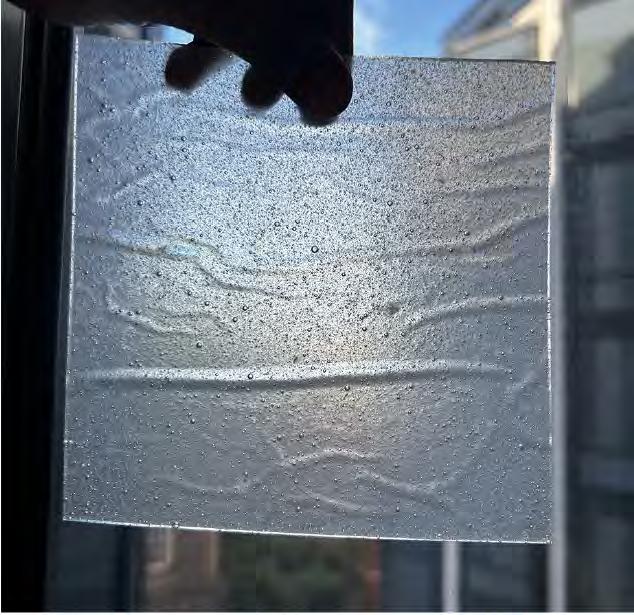
The bio plastic has an almost translucent quality. Do not let the mixture come to a boil to achieve a more clear material, as the bubbles affect the transparency of the bio plastic
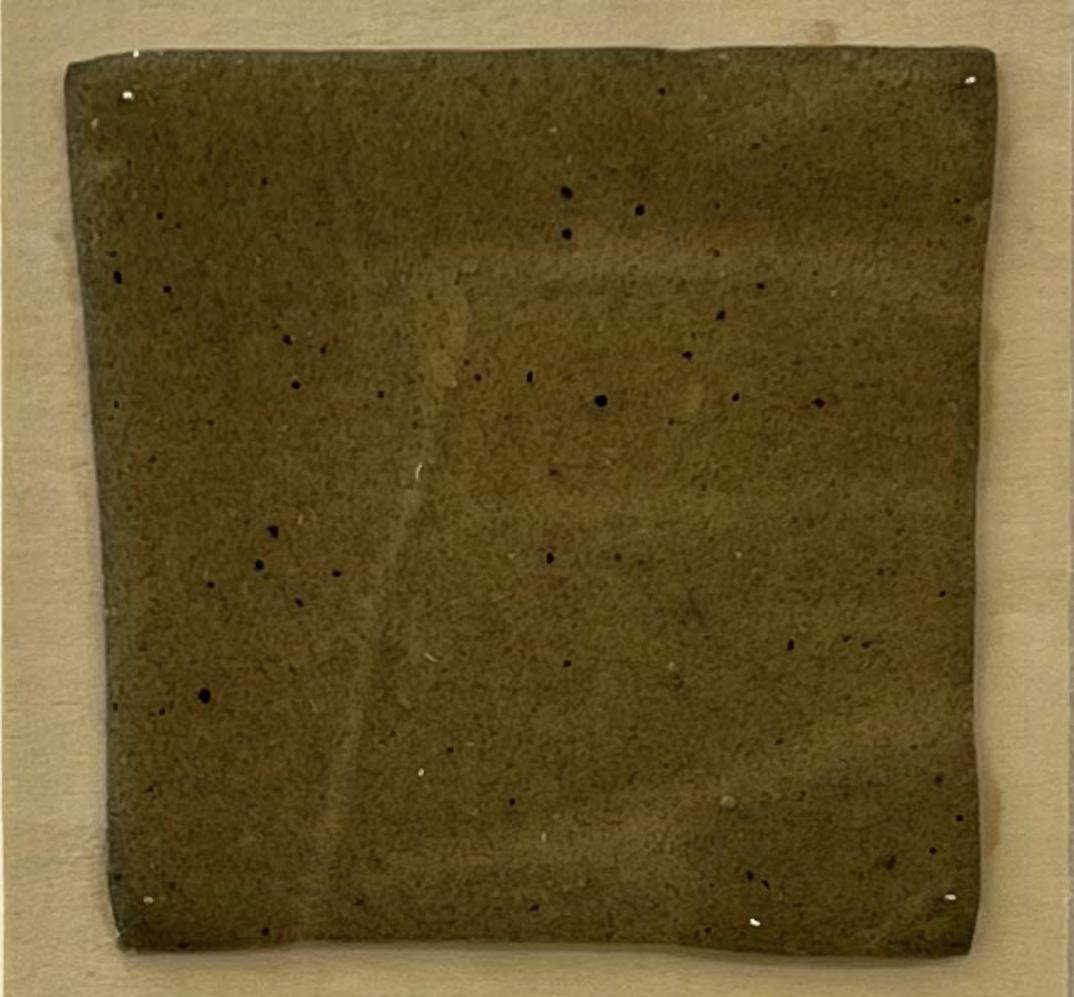
The intensity of the colour depends on the amount of spirulina added. Ensure the spirulina is fully dissolved as specs of concentrated colour can appear if not
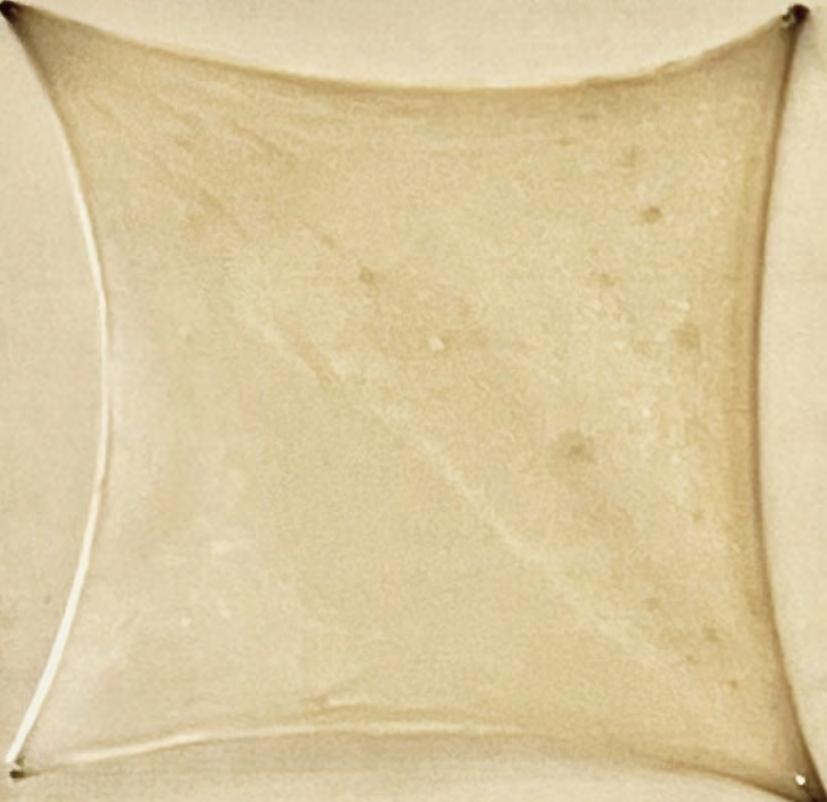
Allow another week for the bio plastic to fully dry. The material will shrink and lose some of its transparency during this process as it becomes a much thinner membrane
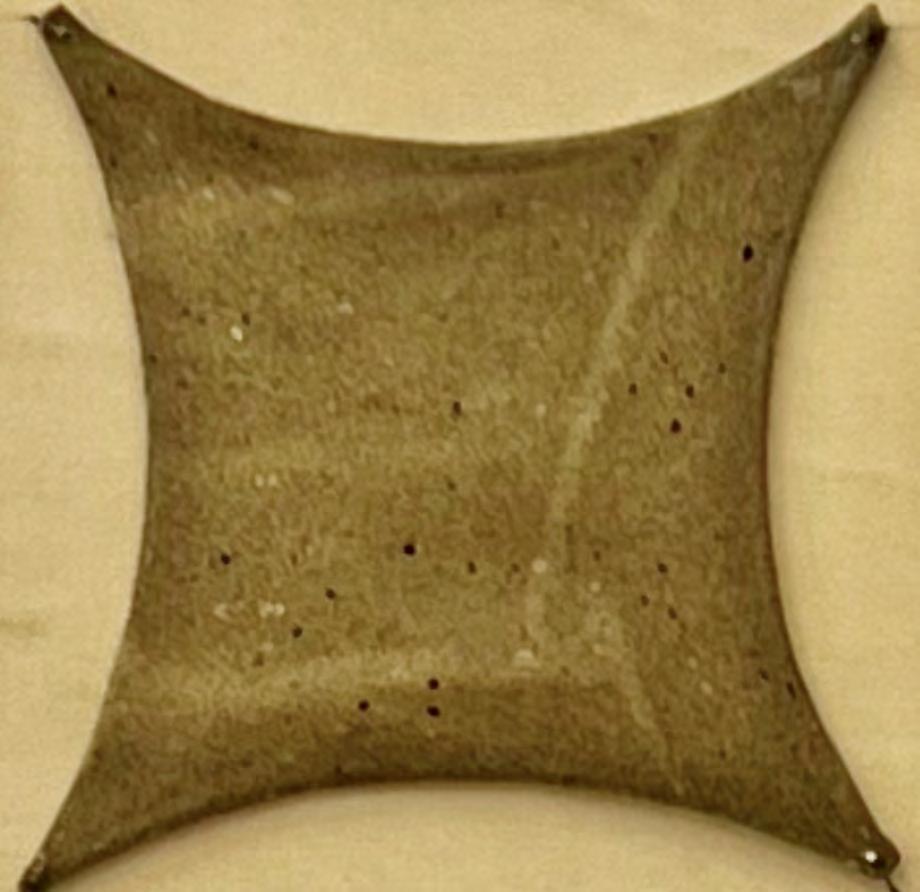
Allow one week for the bio plastic to fully dry. The material will shrink and lose some of its transparency during this period
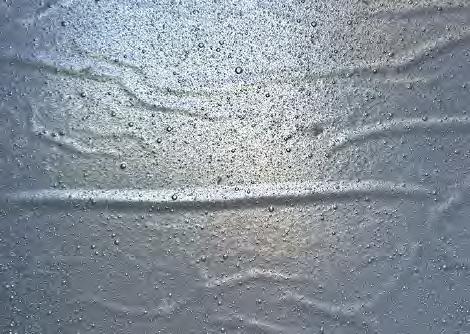
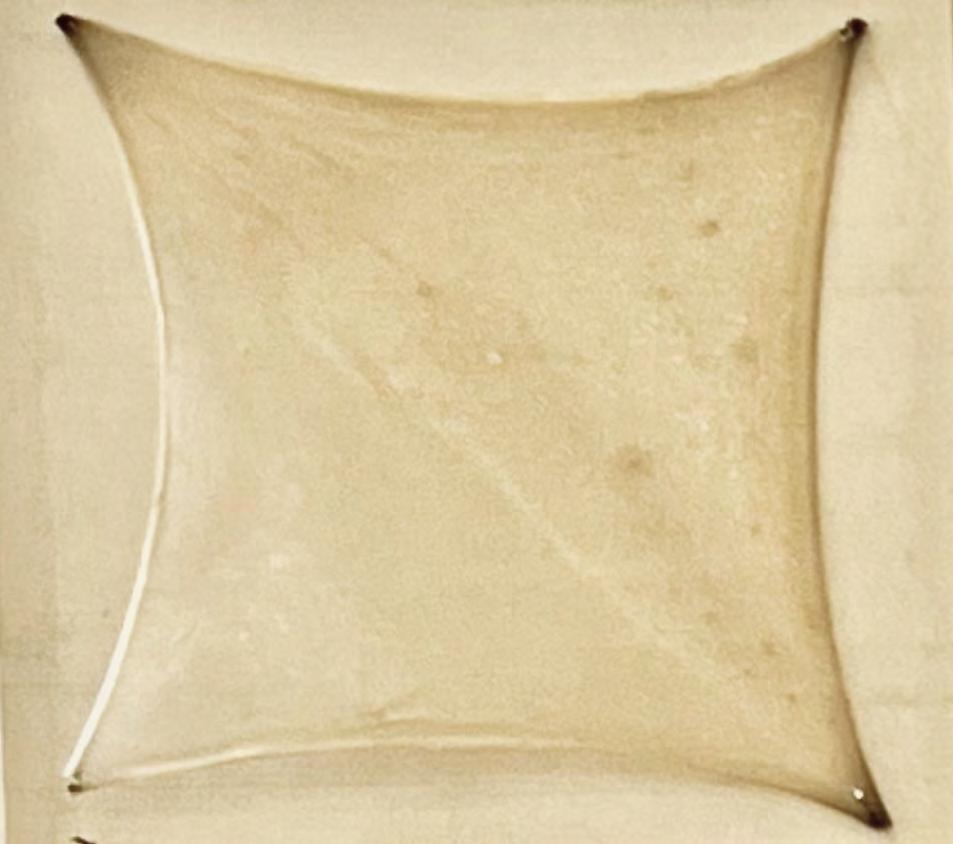
The carrageenan bioplastic is water-resistant due to the addition of glycerol in the fabrication process1, making it suitable for applications where moisture exposure is a concern. It offers a smooth, slightly flexible texture and can be cast into translucent sheets that allow light to filter through, creating soft, diffused illumination. In addition to its waterproof qualities, carrageenan is biodegradable and non-toxic, making it an environmentally responsible alternative to petroleum-based plastics.
With its water-resistant properties, carrageenan bioplastic offers an ideal solution as an exterior coating or protective shell for the textile pavilion, enabling it to function outdoors. Its inherent translucency preserves the immersive experience of the pavilion, allowing light to gently filter into the space. Furthermore, the incorporation of natural pigments such as spirulina introduces the possibility of creating a stained-glass effect, enriching the pavilion’s visual appeal and deepening its narrative through colour, texture, and light.
Environmental Science, 679(1), p. 012005. Available at: https://doi.org/10.1088/17551315/679/1/012005.
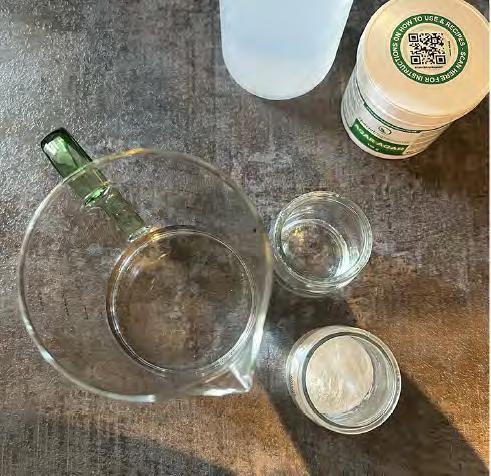
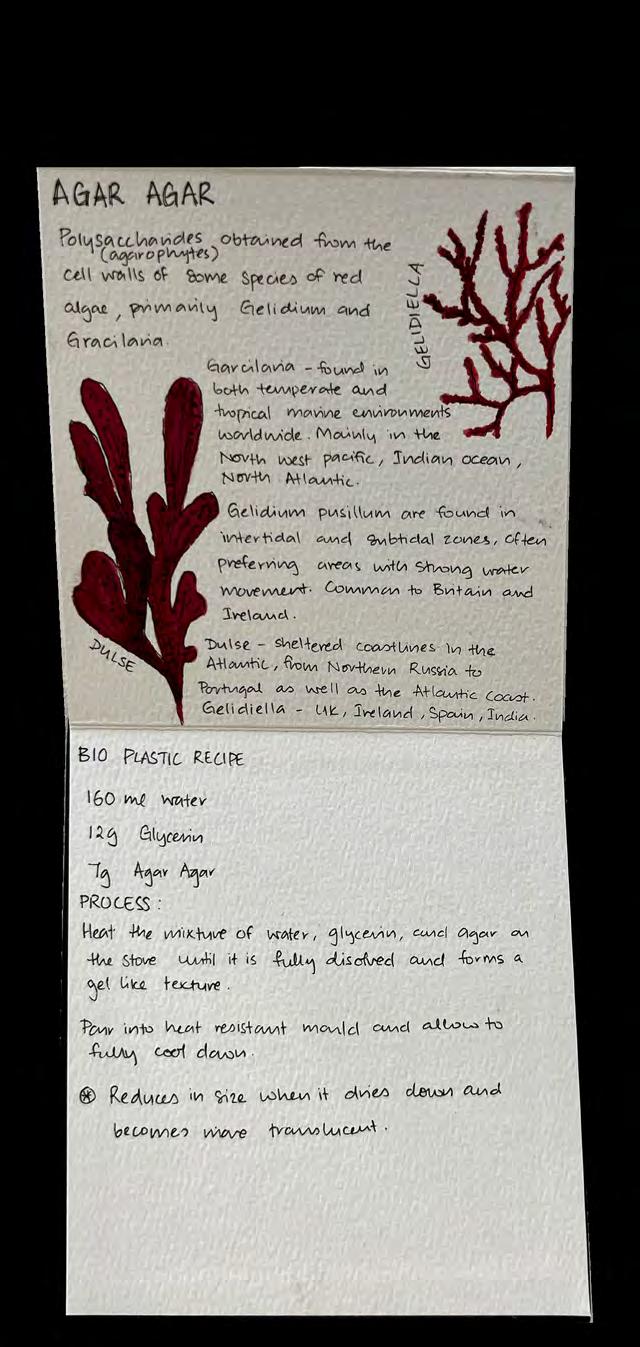
Mix together 160 ml water, 12g of glycerin, 7g of Agar powder
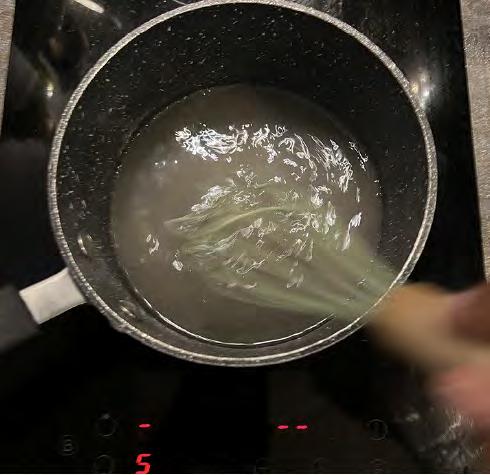
Heat on the stove until it forms a gel like texture. Pour into mould. Work fast as the solution solidifies quickly
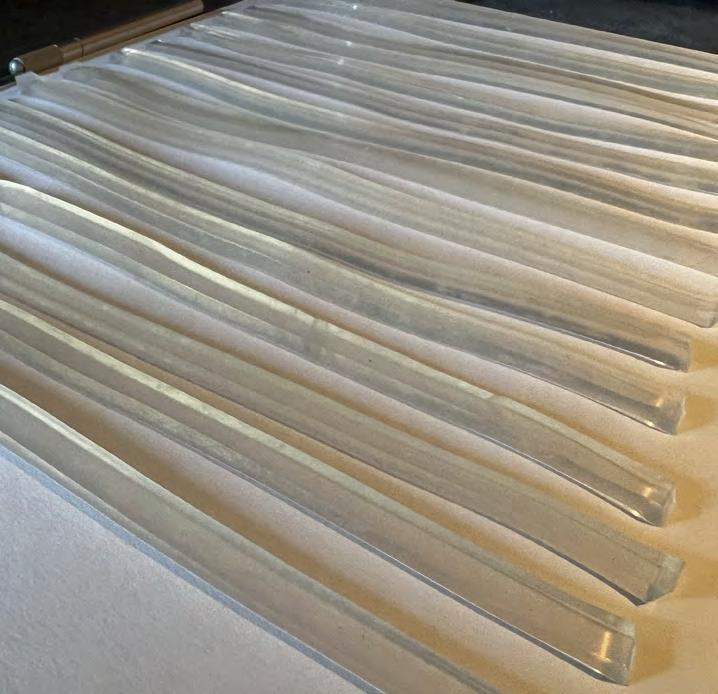
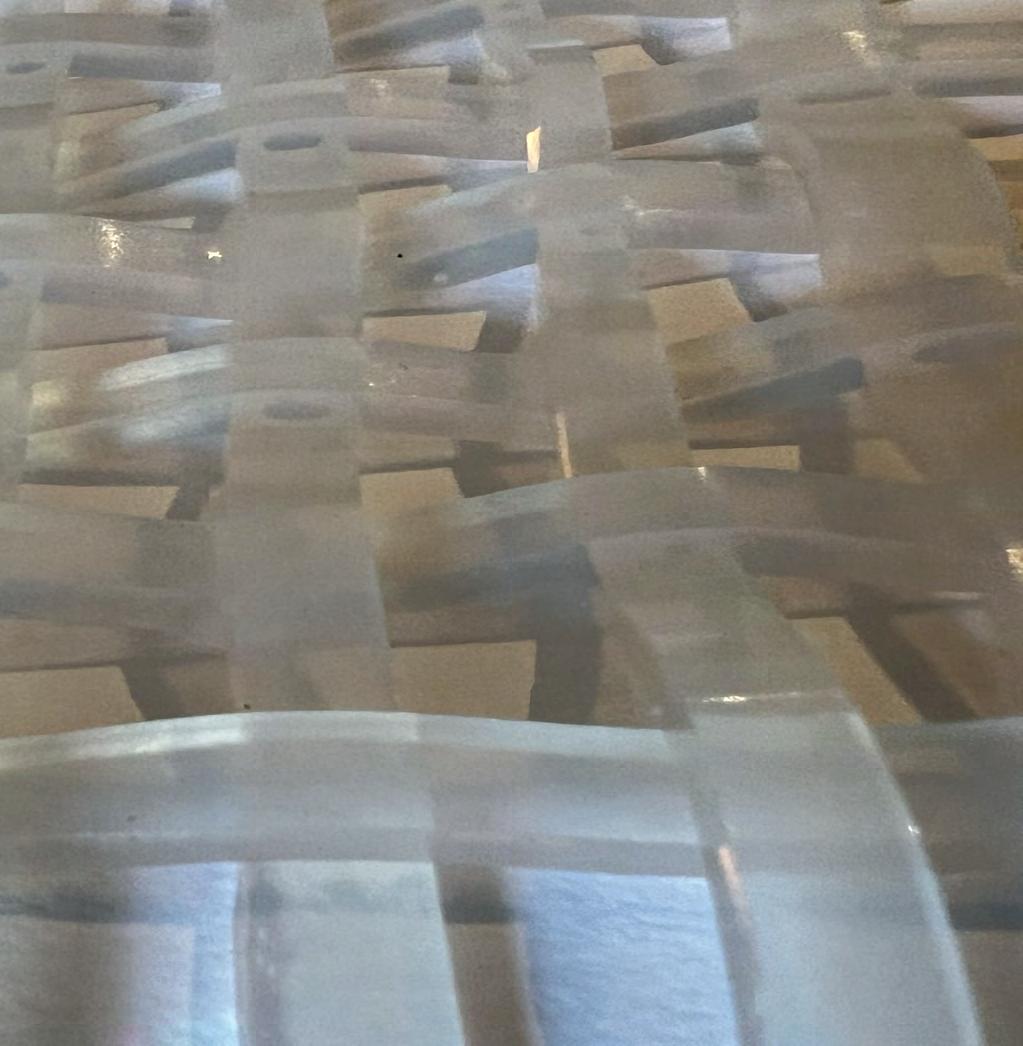
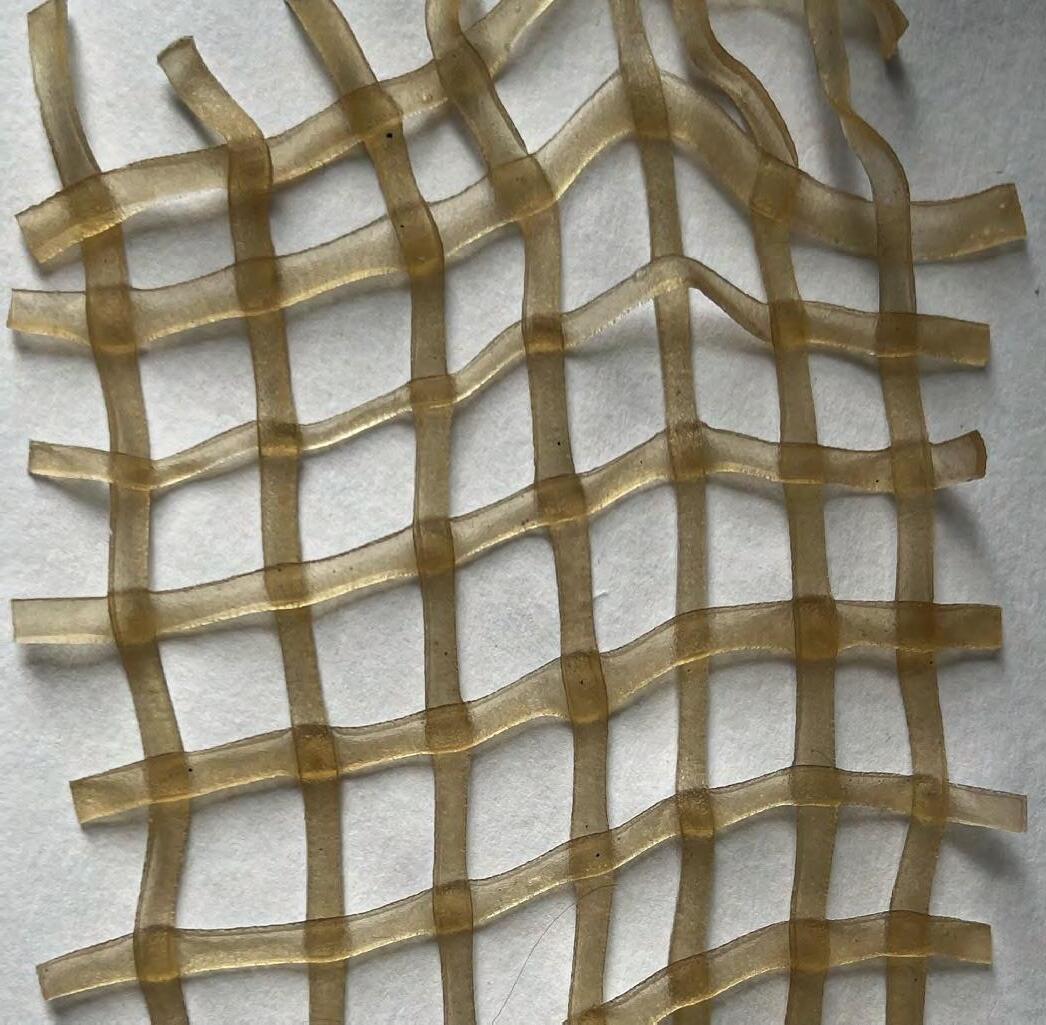
To create bio plastic strips for weaving : pour the seaweed solution into a shallow mould and leave for 6 hours to set. Cut into strips
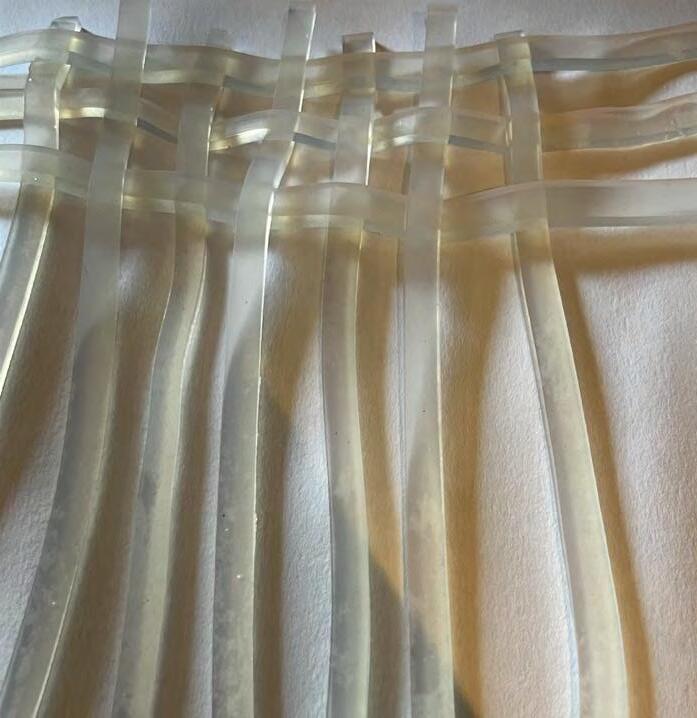
Weave the strips and leave to dry for 1 - 2 weeks, depending on the thickness of the strips
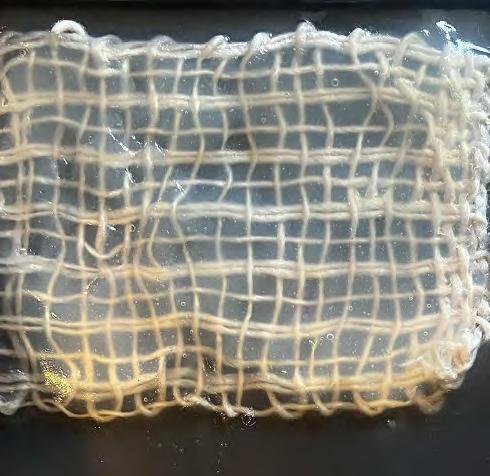
Pour over wool weave and spread evenly to create an immersed weave bio plastic
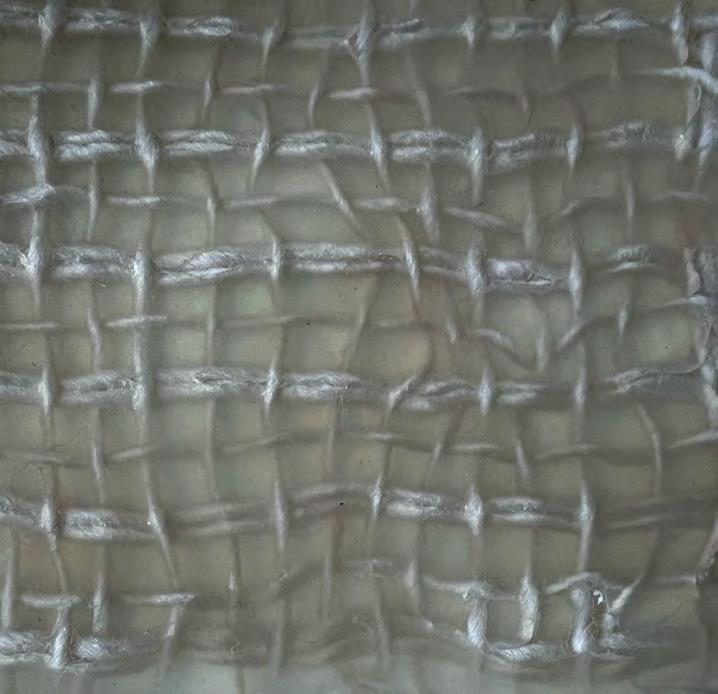
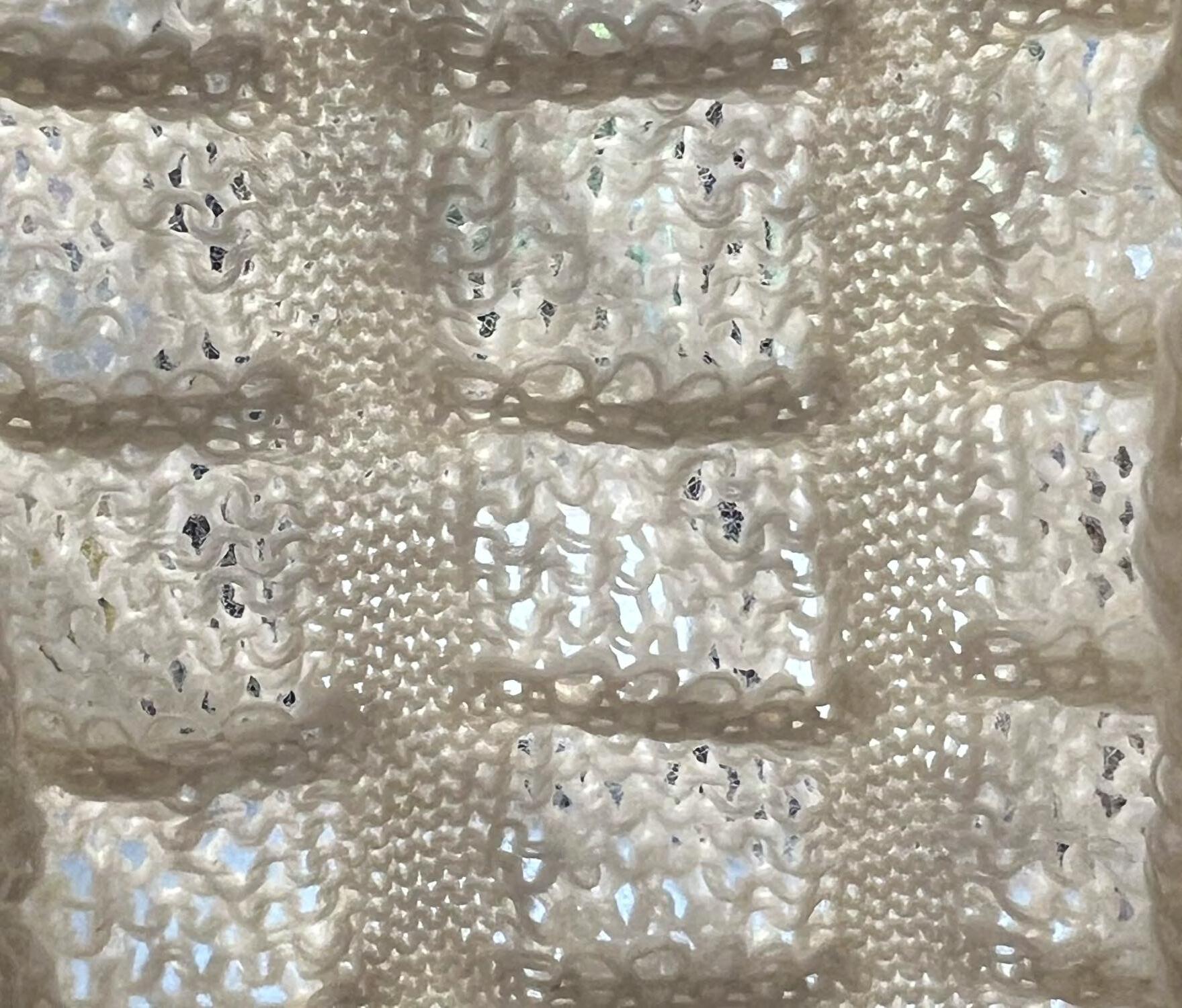
Remove from mould after 24 hours and leave for 1 - 2 weeks to fully dry out, depending on the thickness of the sample. As it dries the sample shrinks and exposes more of the wool
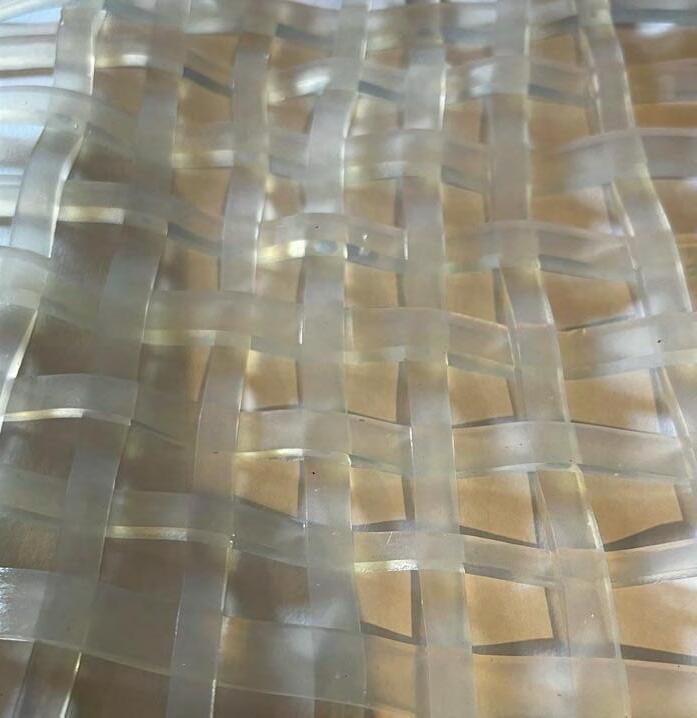
The bio plastic strips fuse onto each other at the points of connection as it dries down
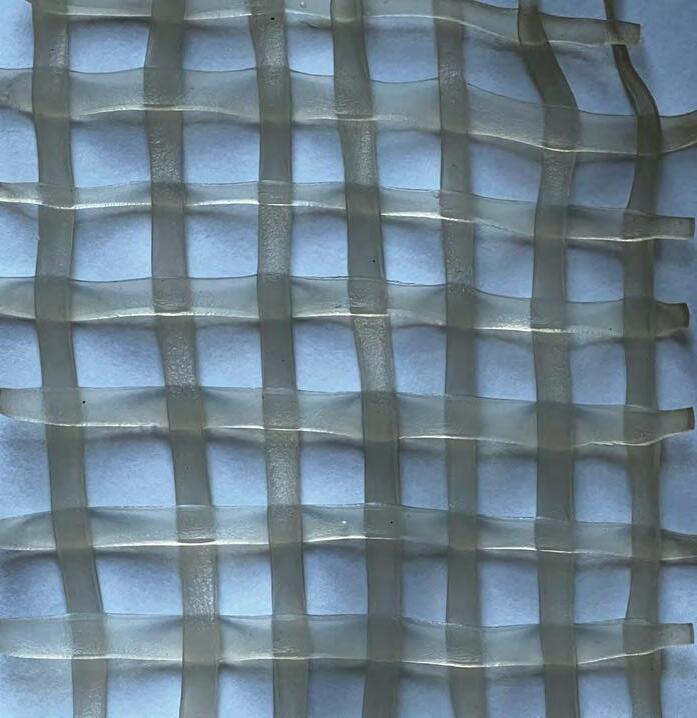
As the strips were cut before the bio plastic sheet dried fully, there is shrinkage and a warping of the weave as a result. However as mentioned the points of cross over fuse together without need for adhesive as the sample was woven within the first 6 hours.
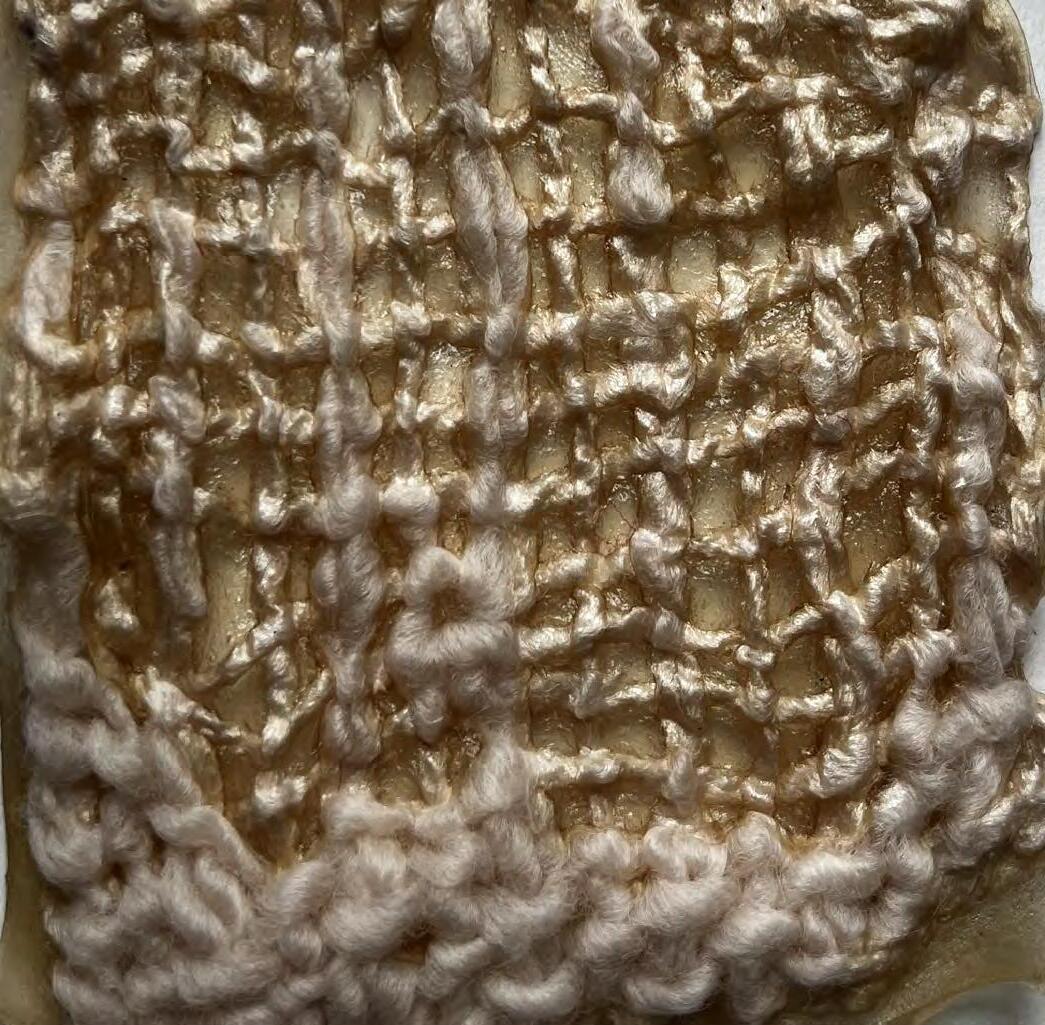
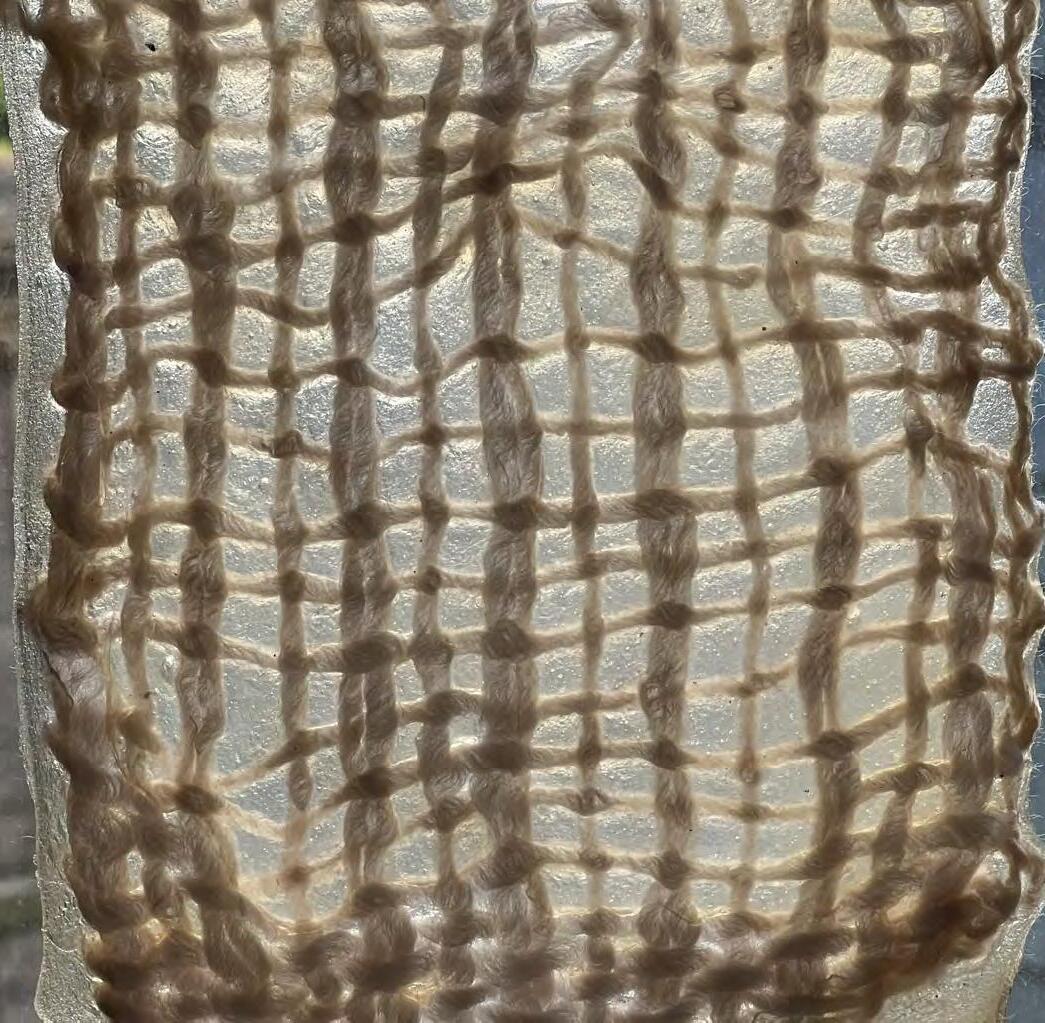
The images of the wool weave immersed in agar bioplastic reveal a striking interplay between material behavior and aesthetic outcome. The wool reacted to the solution’s water content, and as the bioplastic dried, this reaction produced pronounced surface textures—exaggerated undulations paired with areas of densely fluffed fibers. Interestingly, this effect only occurred on the surface exposed to air, while the reverse side retained a smoother finish beneath the bioplastic layer. Although the resulting texture was unplanned, it offers a distinctive tactile quality that could lend a richly sensory dimension to the interior of the pavilion. However, its unpredictable nature means that intentionally replicating the effect could prove technically challenging.
The woven strips also exhibited notable warping during drying, as they were assembled before the bioplastic had fully set. This early weaving created a natural adhesive at points of overlap but contributed to the distortion of the overall form. A more controlled approach—cutting strips from a fully dried bioplastic sheet before weaving—would mitigate this warping while still allowing for structural cohesion. Upon drying, the strips shifted from their initial glossy transparency to a softer, matte translucence with a subtle yellow-brown tint. While this transformation alters the visual clarity of the material, it offers compelling opportunities for filtering light, casting warm-hued shadows, and enhancing the atmospheric qualities of enclosed spaces.
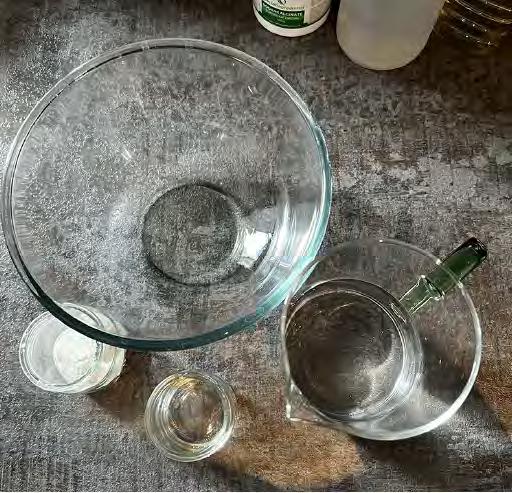
Measure 12g sodium alginate, 20g glycerin, 10g sunflower oil and 400 ml water
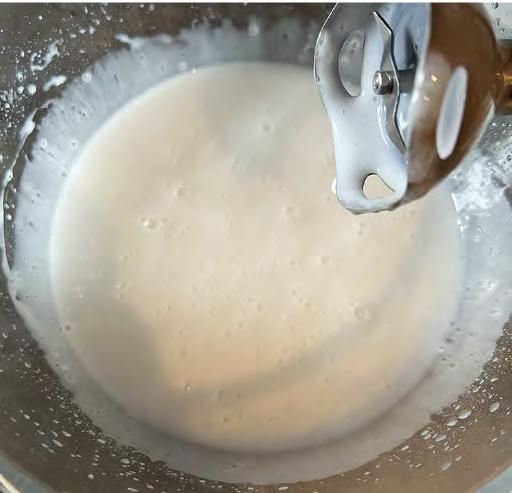
Blend all of the ingredients together with an immersion blender until fully combined. Rest the mixture in the fridge for at least 24 hours to allow all air bubbles to settle
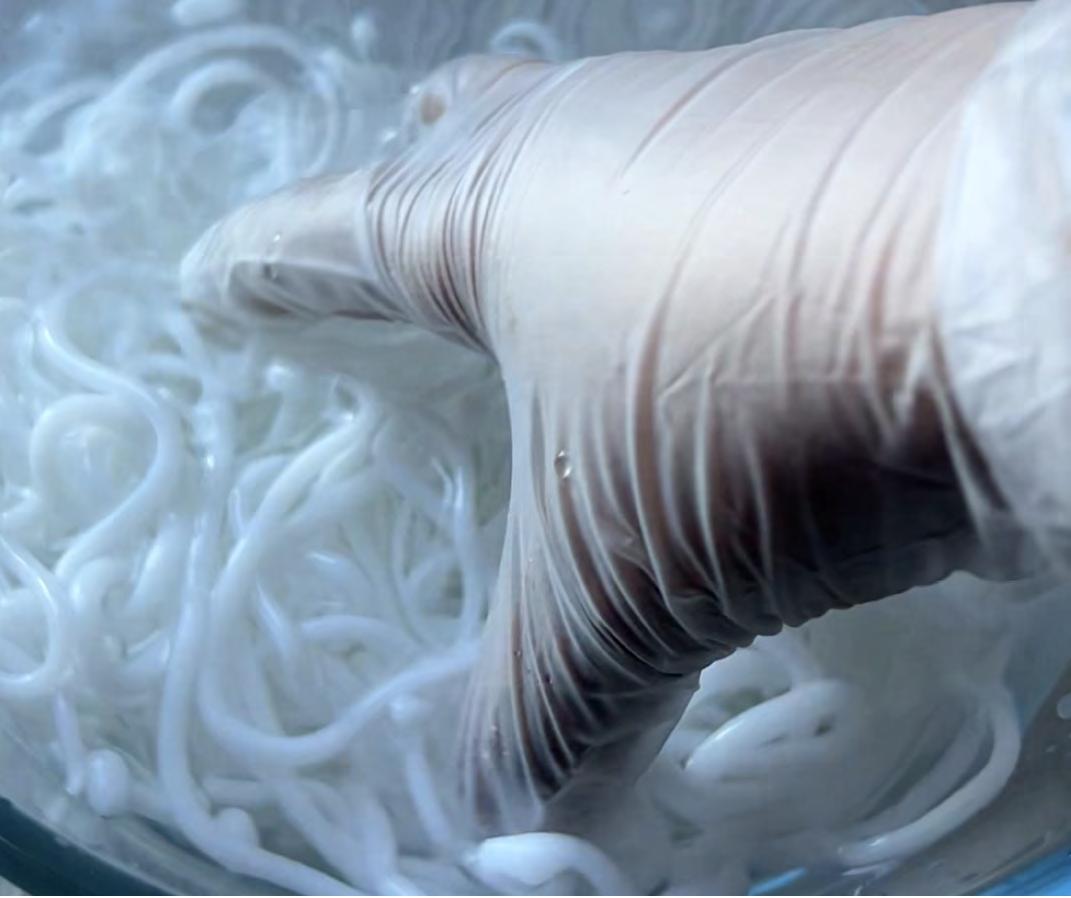
Once the yarns have been piped, seperate them to ensure they have not fused together while piping
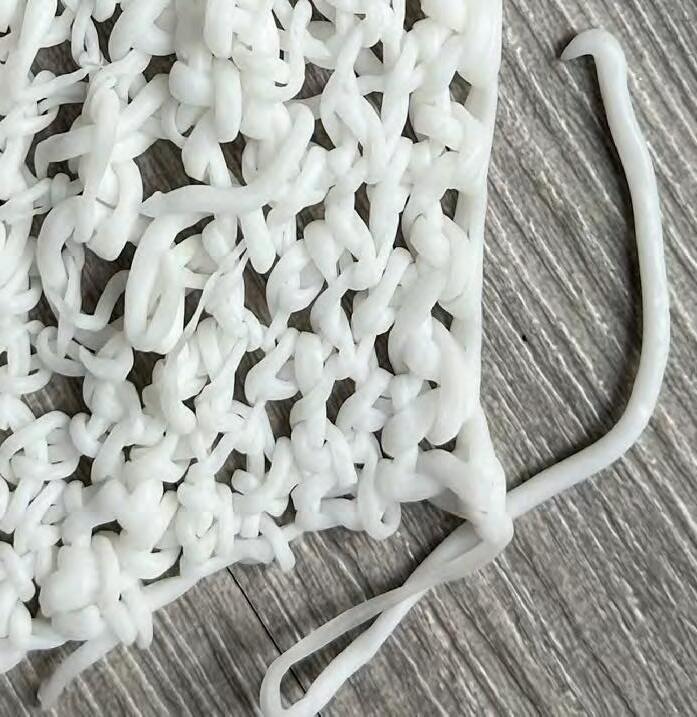
The yarns can be crocheted while “fresh” as they are more flexible or after fully dried as well
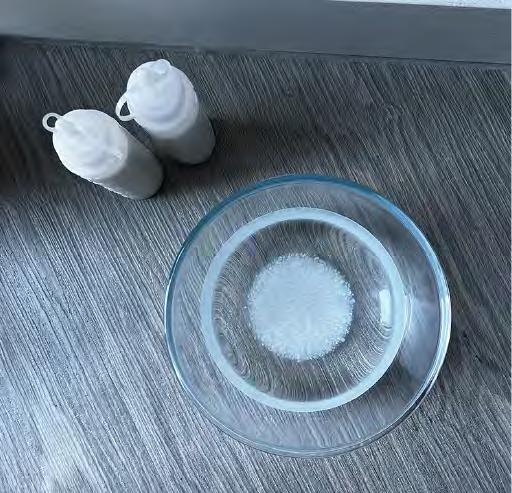
Make a 10% calcium chloride solution (mix 10g of calcium chloride to every 100 ml of water)
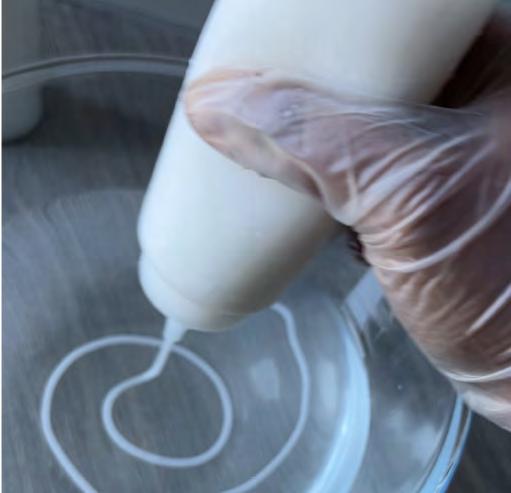
Pipe the sodium alginate mixture into the calcium chloride solution. The yarns cure instantly when they make contact with the water. Pipe in a spiral motion to make longer yarns
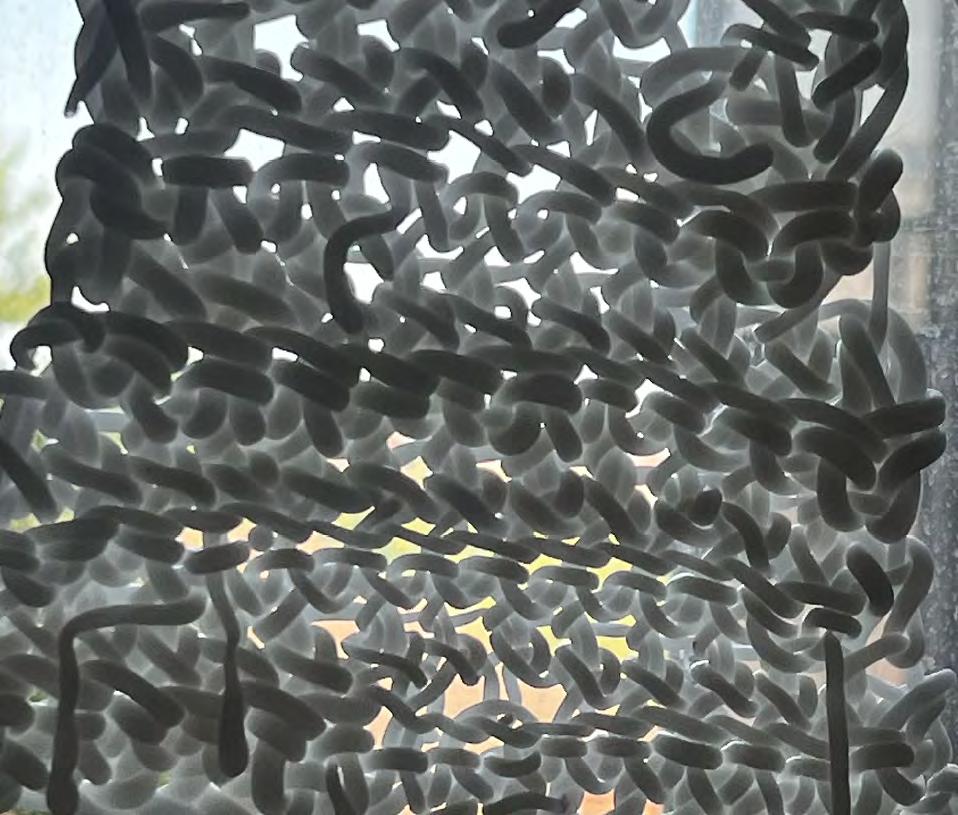
Once crocheted leave the sample to dry for 2 weeks
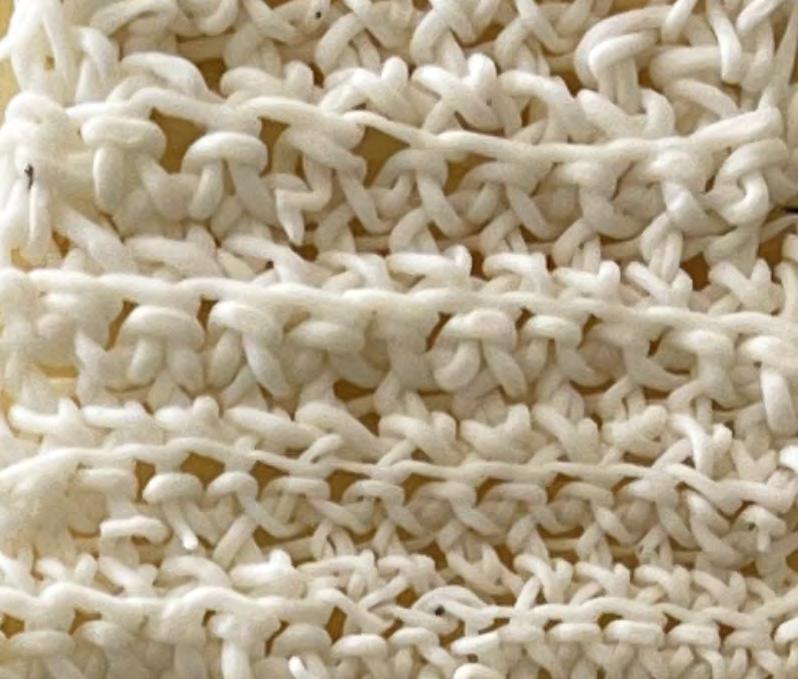
Crocheting while the yarns are “fresh” creates larger openings when the sample is fully dried due to the shrinkage of the yarns
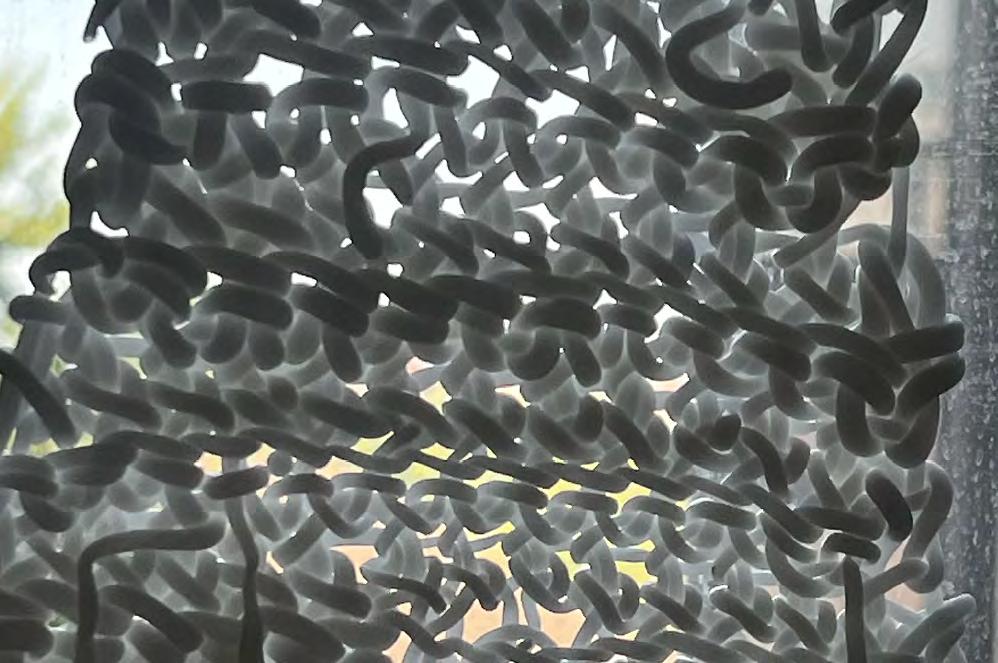
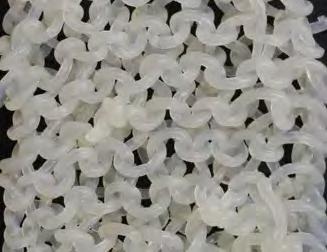
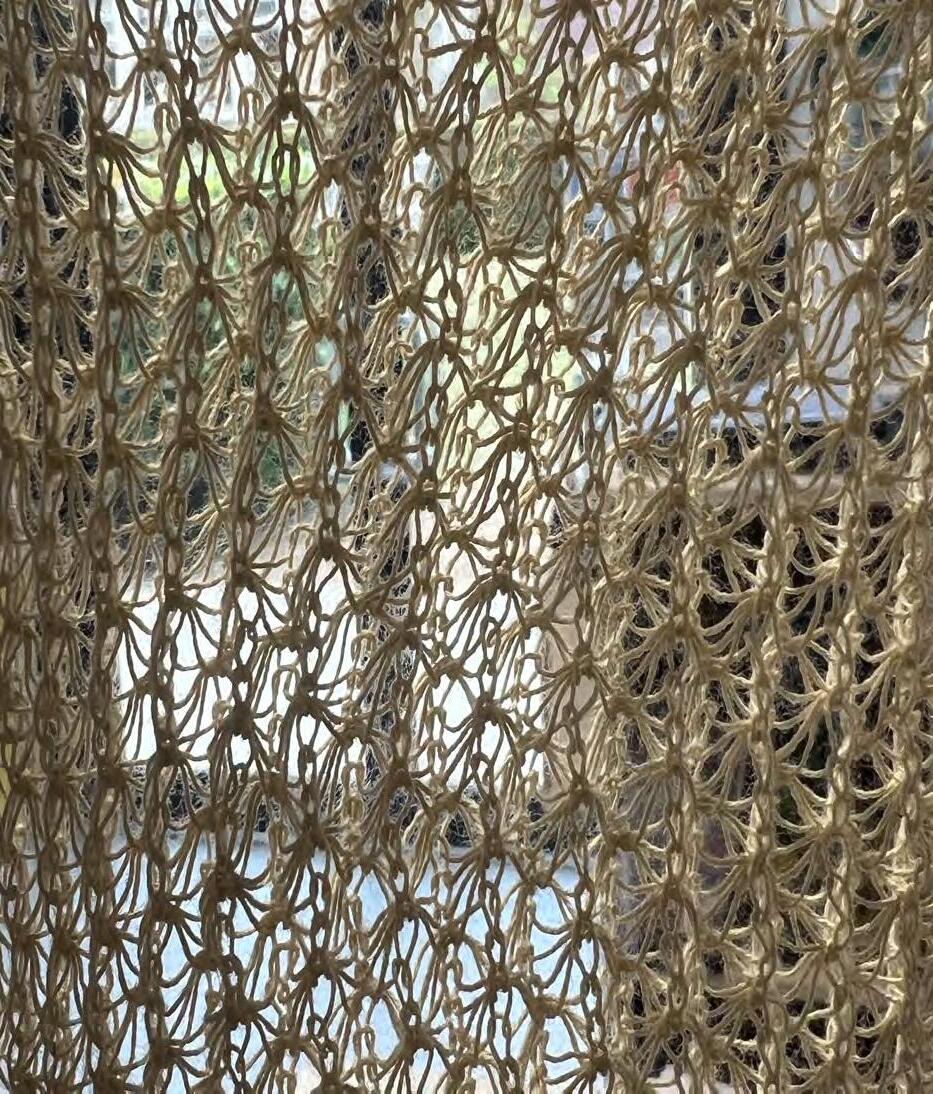
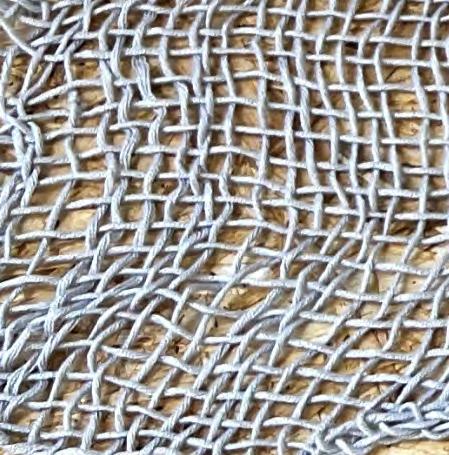
Algae bio yarn, initially thick and opaque when freshly piped, dries to a more refined translucency, accompanied by a notable reduction in girth. Adjusting the glycerin content during production enabled the creation of varying degrees of flexibility1, with lower glycerin levels producing more brittle strands and higher levels yielding a softer, more pliable yarn. While the material demonstrates short-term water resistance2, its handling characteristics change significantly depending on its state: crocheting the yarn while still fresh results in a looser, more open weave after drying due to shrinkage, whereas working with it fully dried—particularly in more flexible formulations—offers greater precision and control. The final samples achieved a balance between strength and pliability, allowing for effective crochet work while retaining the material’s unique tactile and visual qualities.
The combination of algae bio yarn with wool yarn offers a dynamic interplay of light and shadow within the textile design. The algae yarn’s translucency and fine, delicate gauge create areas of near-transparent crochet, allowing light to filter through with subtle softness. In contrast, the wool yarn—used to knit together the crochet algae panels—forms more defined seams, casting stronger, more pronounced shadows. This juxtaposition of airy transparency and bold shadow lines not only enhances the visual depth of the textile but also introduces a rich textural dialogue, elevating the pavilion’s experiential quality through both light play and tactile variation.
1 Bogers, L. (2020) ALGINATE STRINGS - Loes Bogers, class.textile-academy.org. Available at: https://class.textile-academy.org/2020/loes.bogers/files/recipes/alginatestring/.
2 Sustainable Spotlight: Algae Yarn (2024) Surface Design Show 2025. Available at: https://www.surfacedesignshow.com/show-news/sustainable-spotlight-algae-yarn.
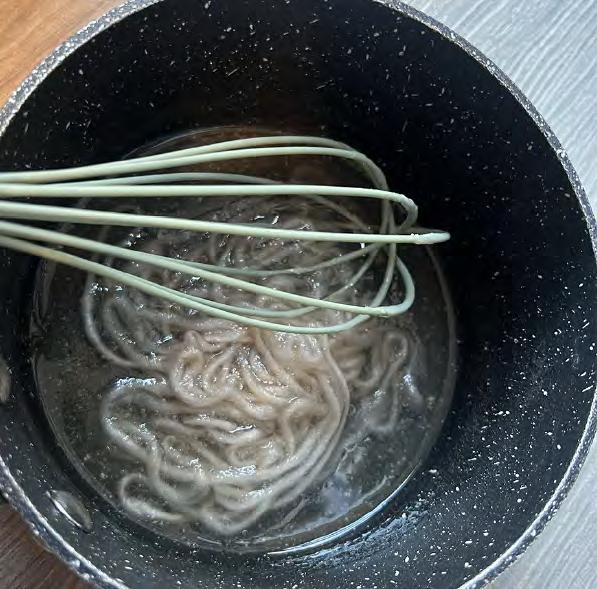
Carrageenan coating : Mix together 350 ml water, 4 ml glycerin and 16g of Carrageenan Kappa powder and heat on the stove
Agar coating : Mix together 160 ml water, 12g of glycerin, 7g of Agar powder and heat on stove
Dip yarn into seaweed mixture and drain access solution. Allow yarn to dry for 1 - 2 days
Once fully dried the yarns can be woven to create the desired textile
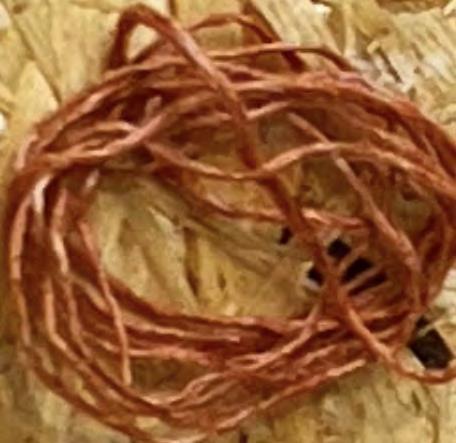
coated yarn : created a much smoother and more even coating on the yarn
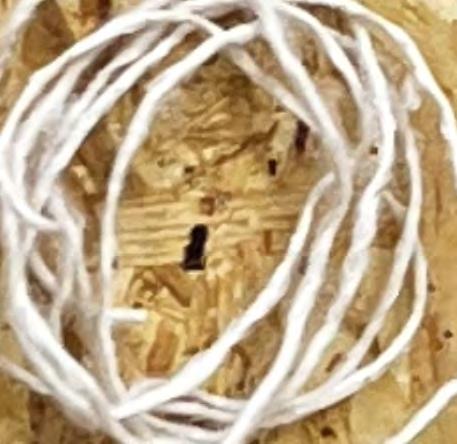
Agar coated yarn : the coating was less even and not as smooth as the agar solution cools and solidifies faster than the carrageenan
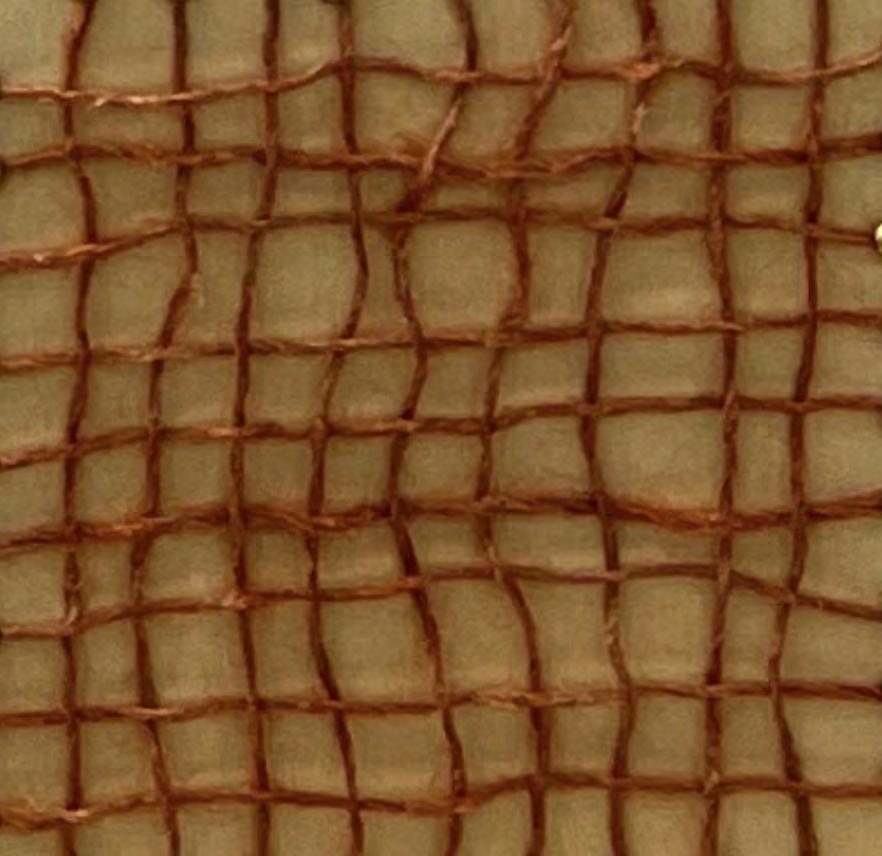
The yarn was stiffer than standard wool yarn, however it was flexible enough for weaving
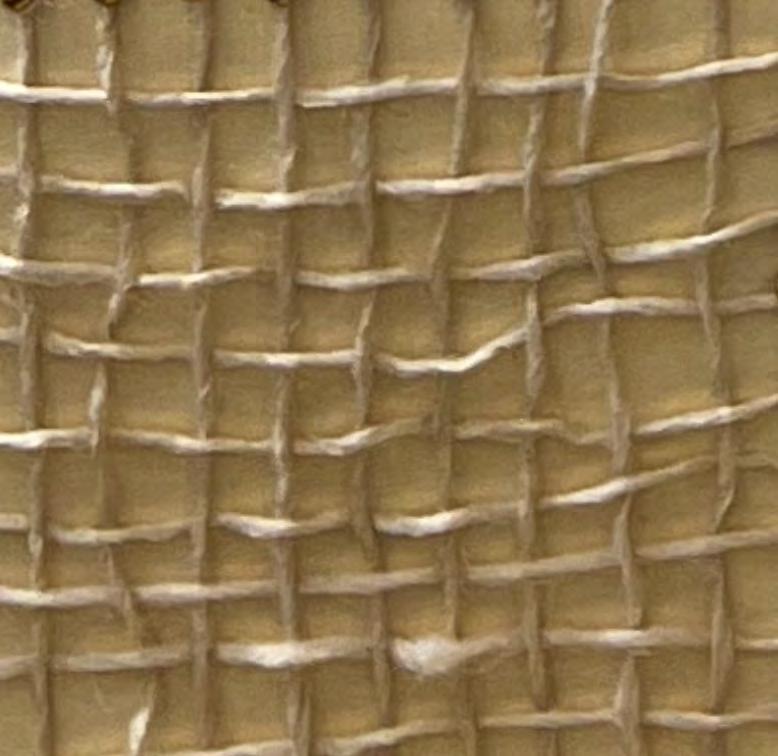
Due to the uneven coating, the texture of the yarn was also uneven. The yarn was still flexible enough to weave
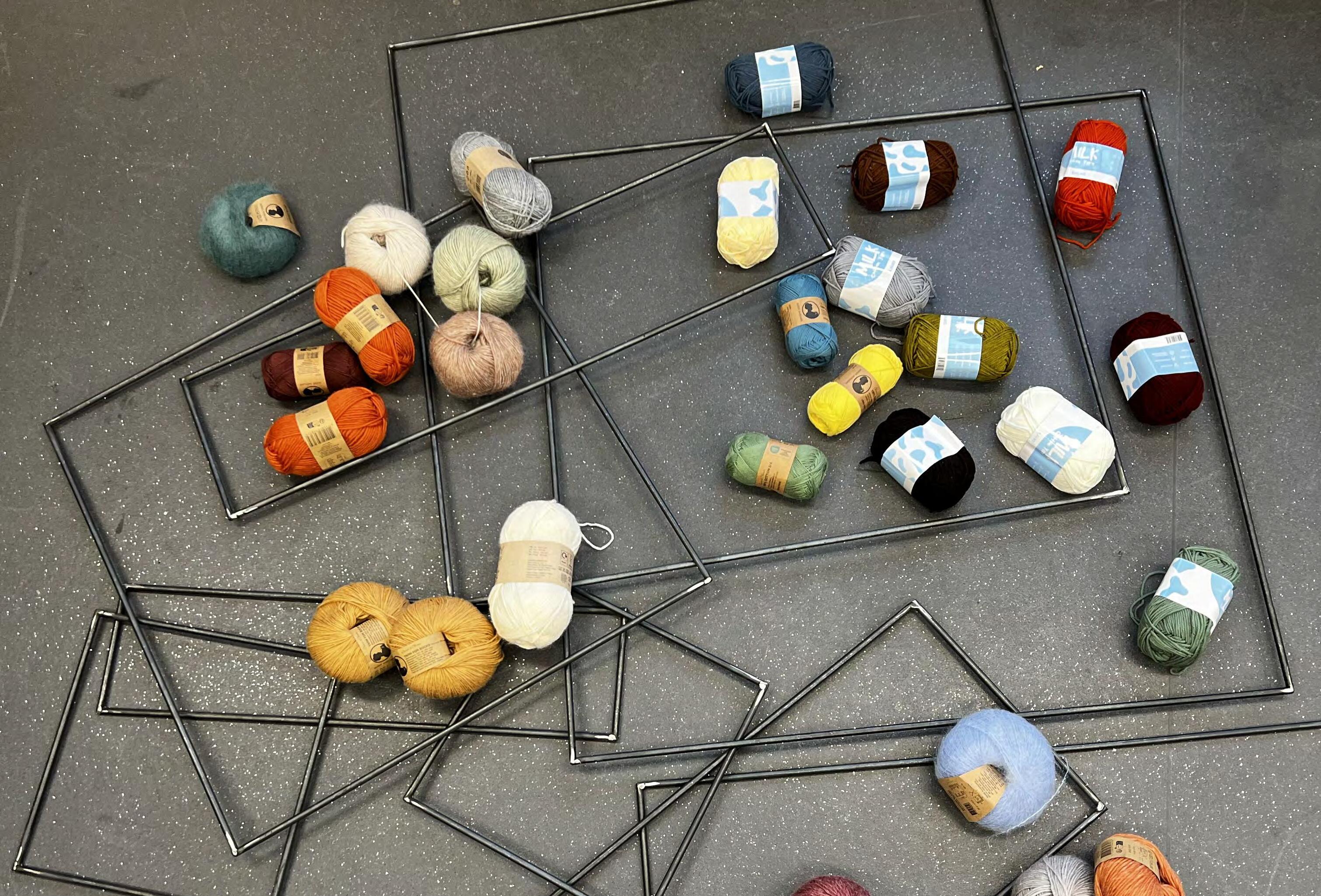
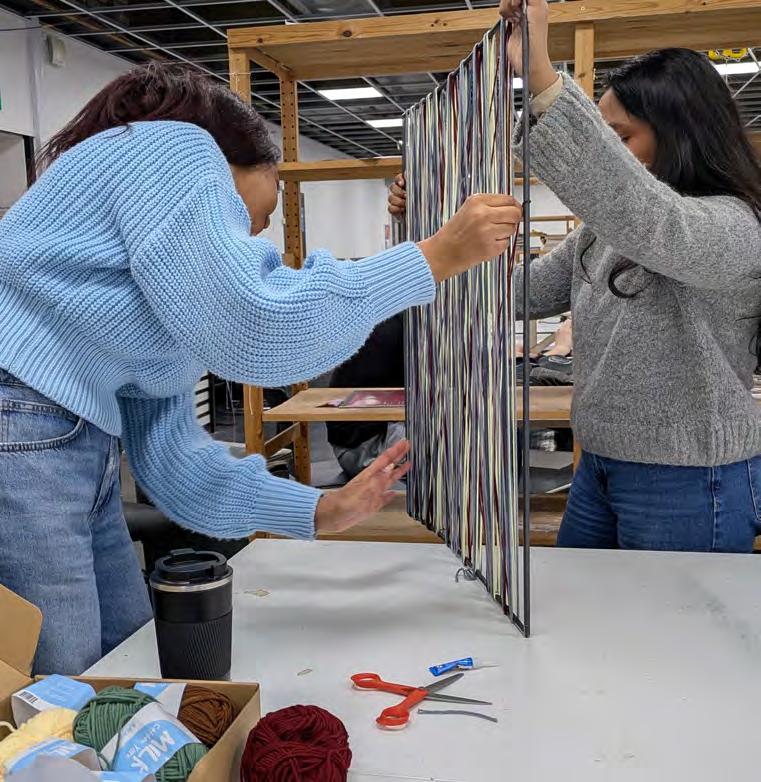
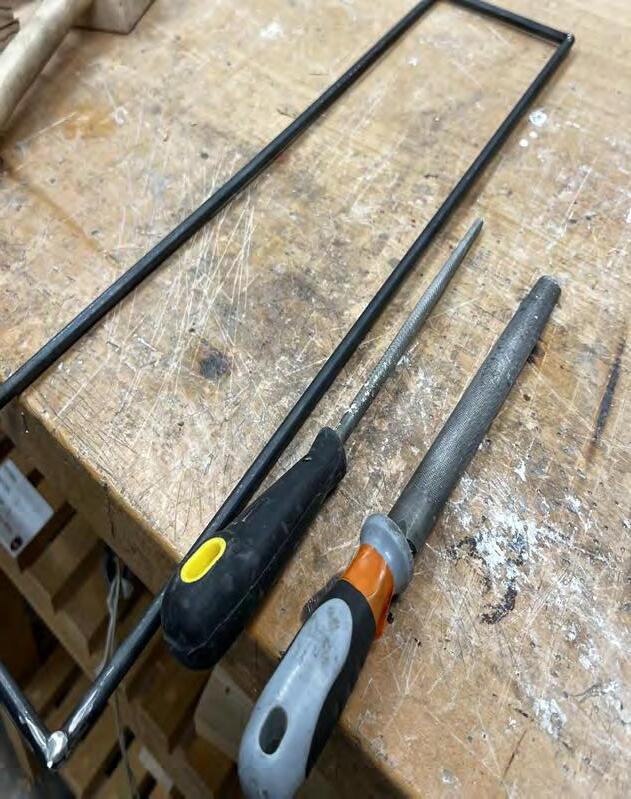
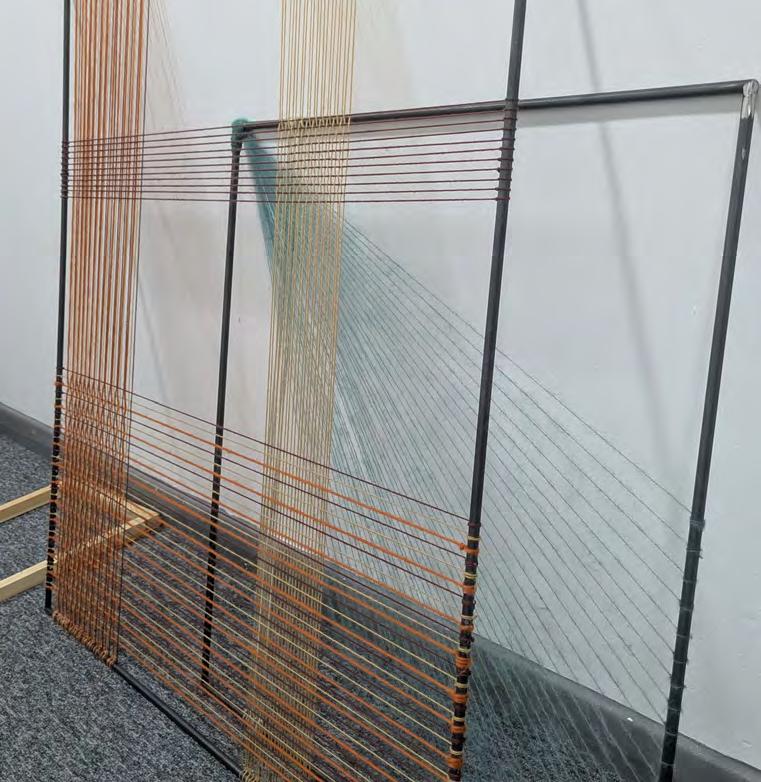
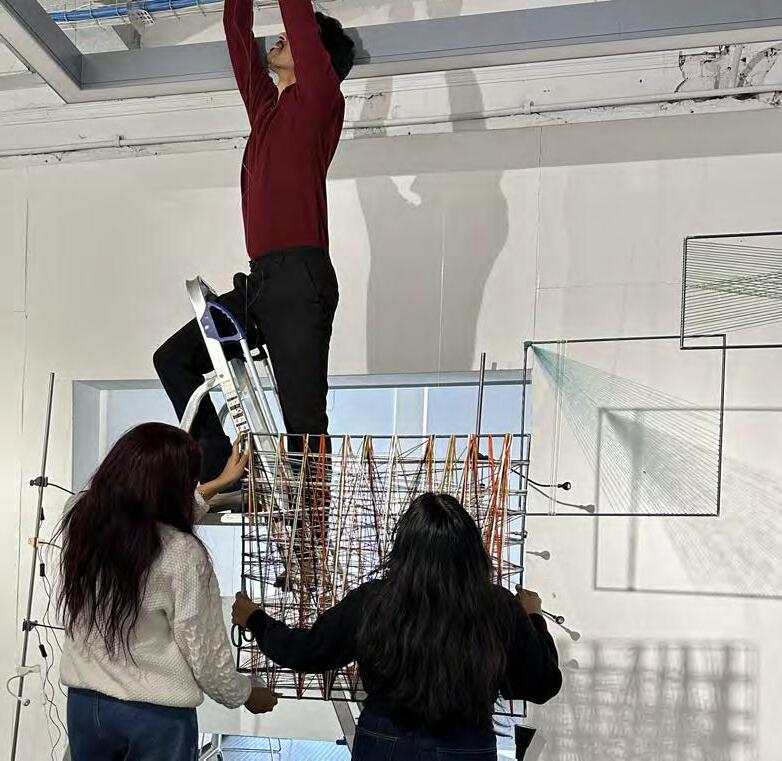
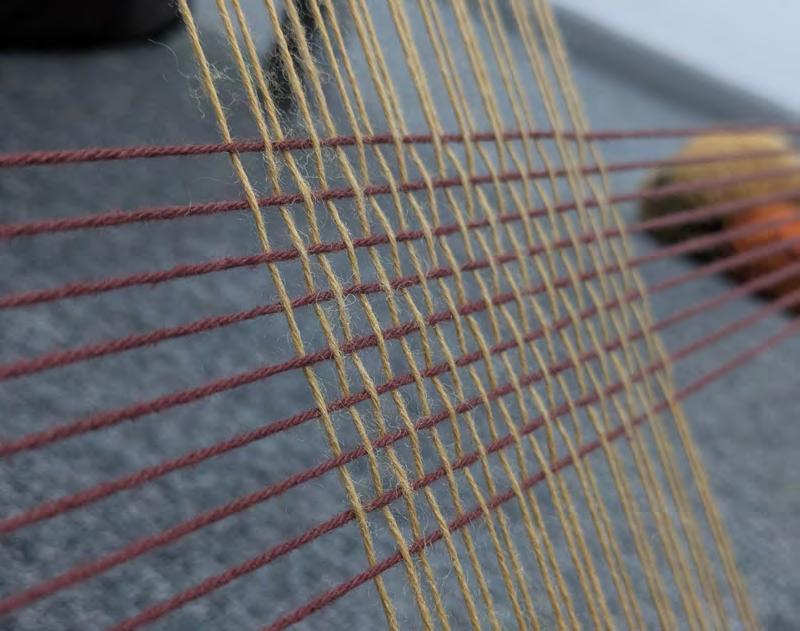
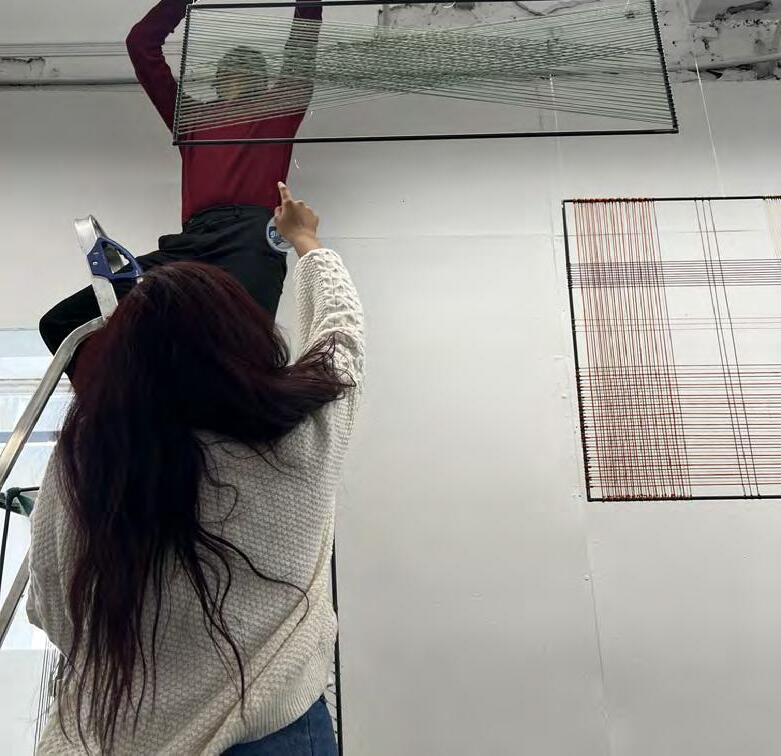
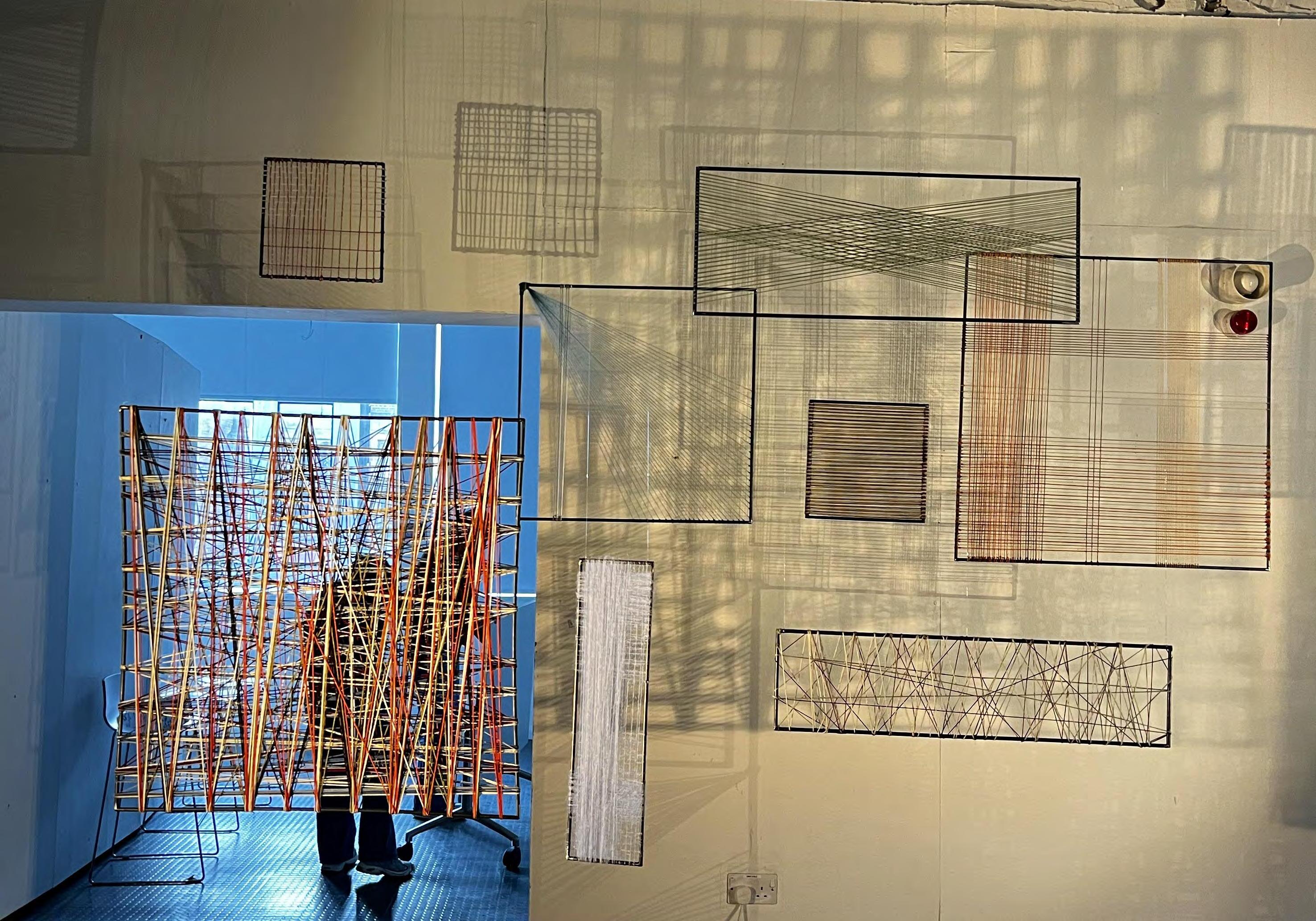
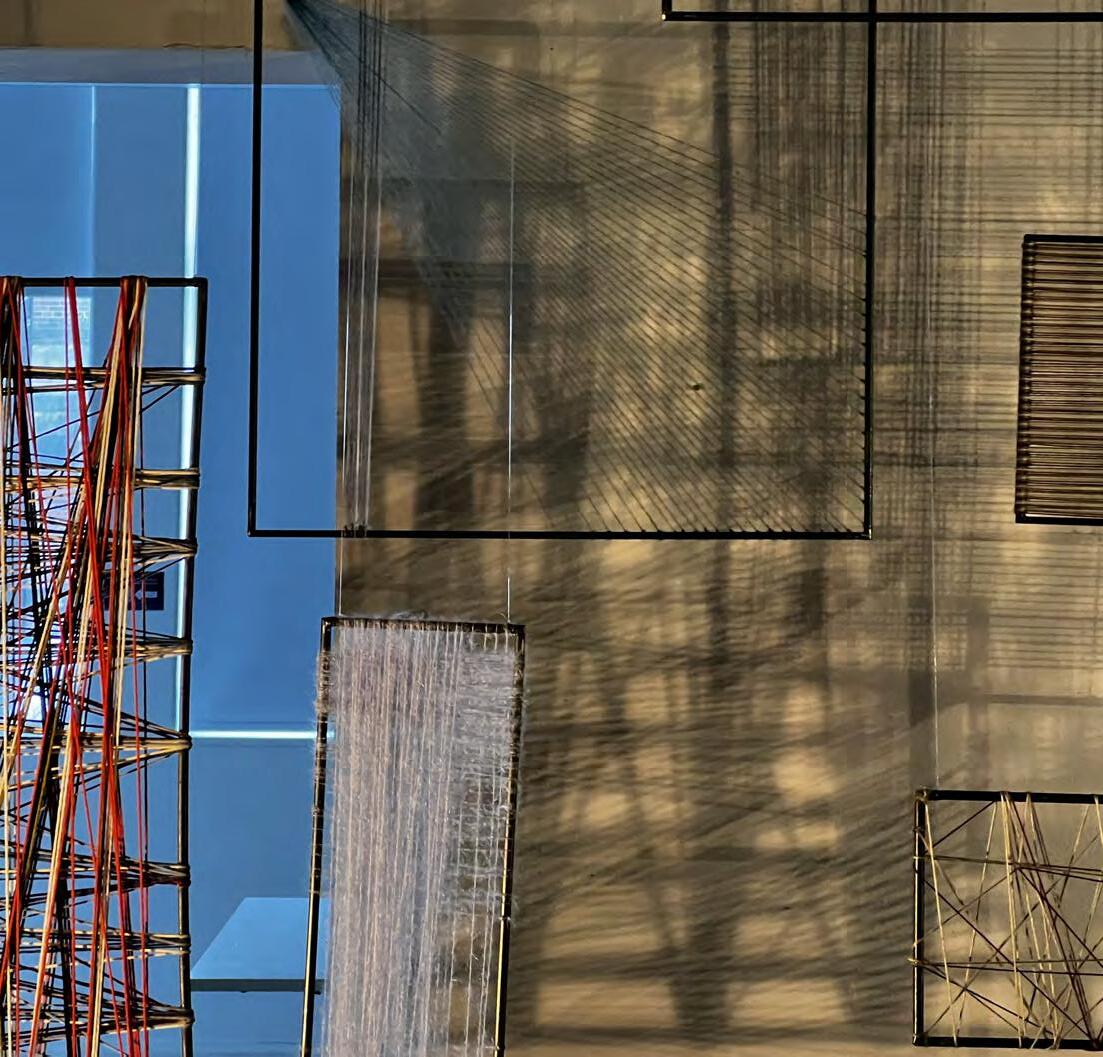
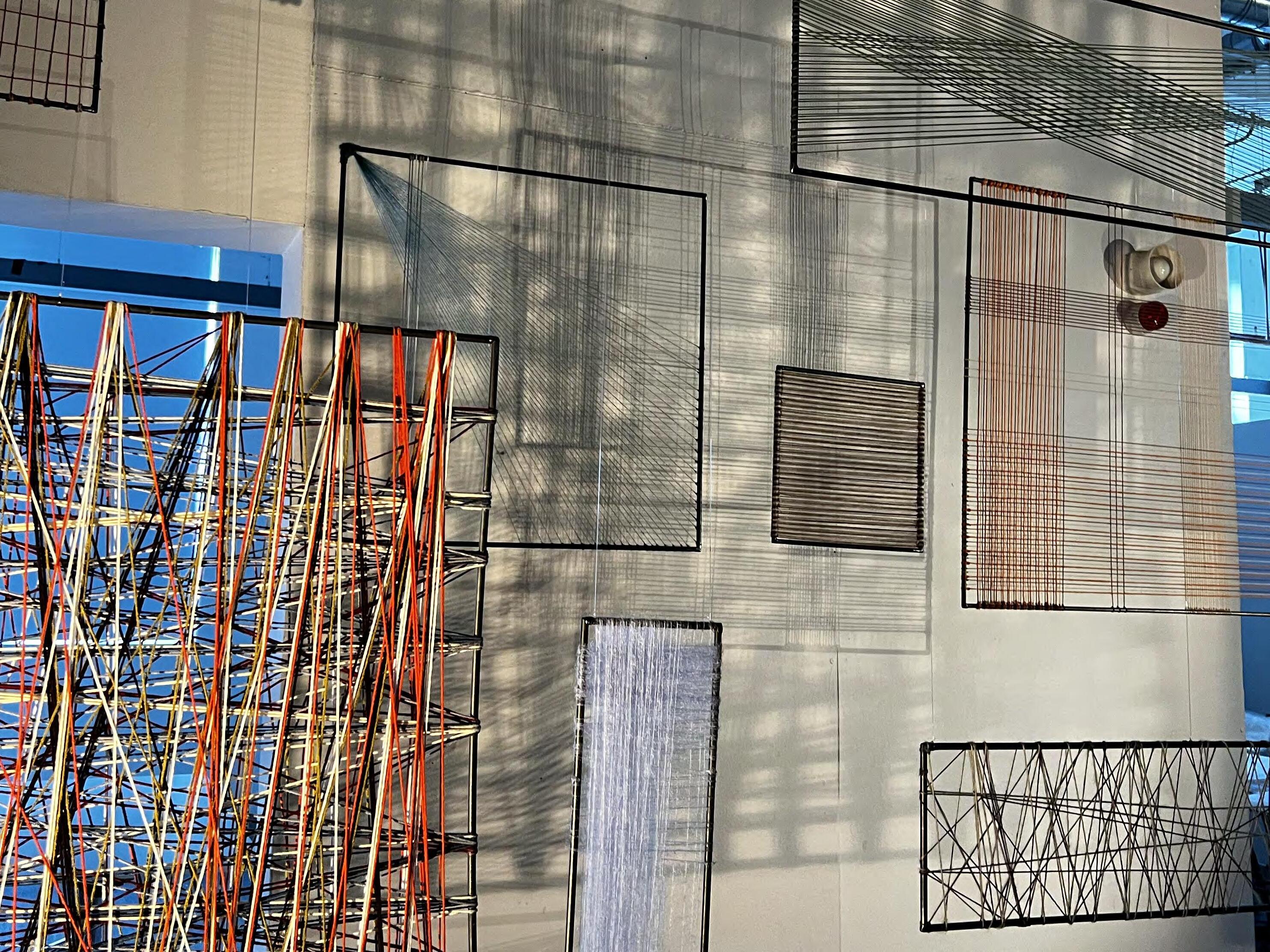
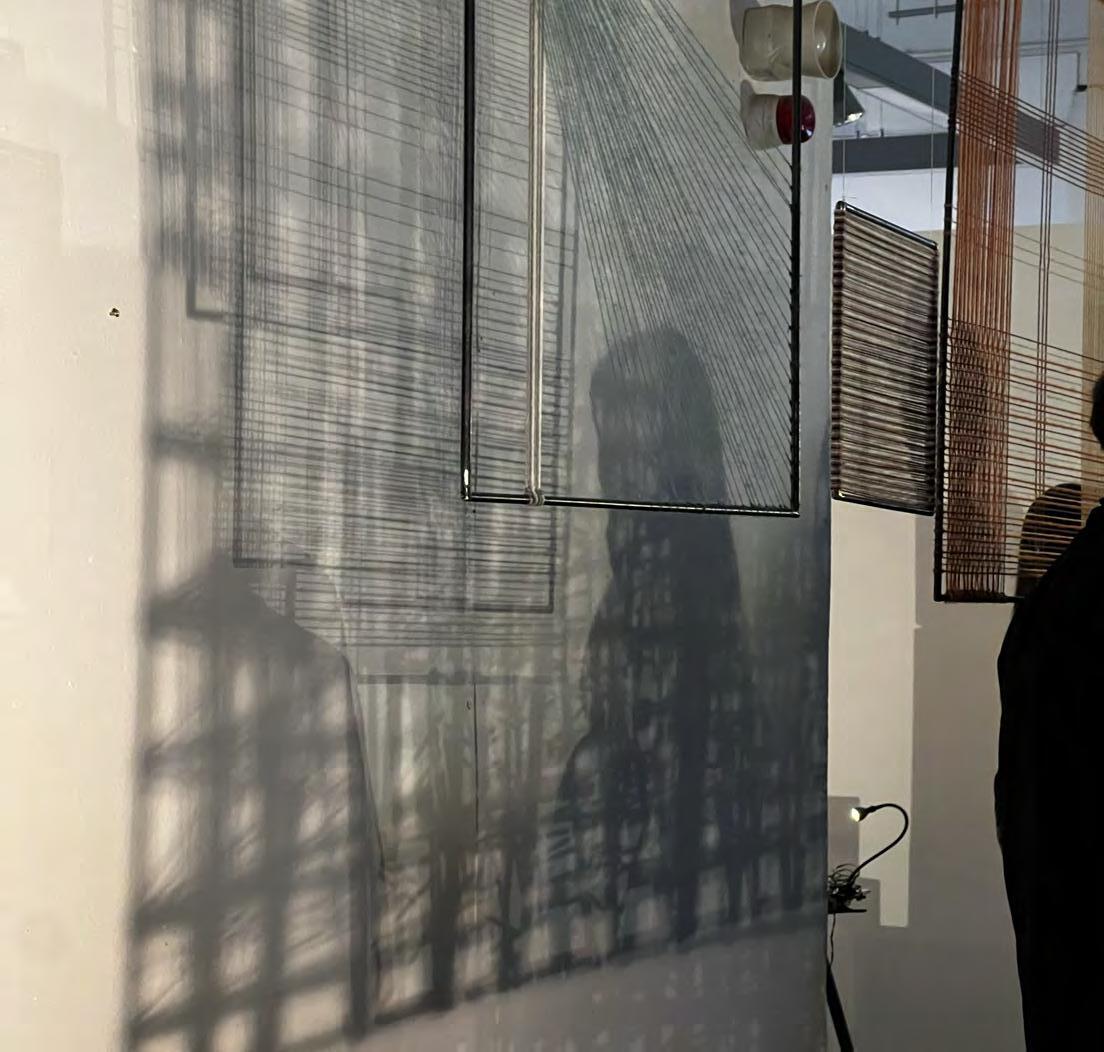
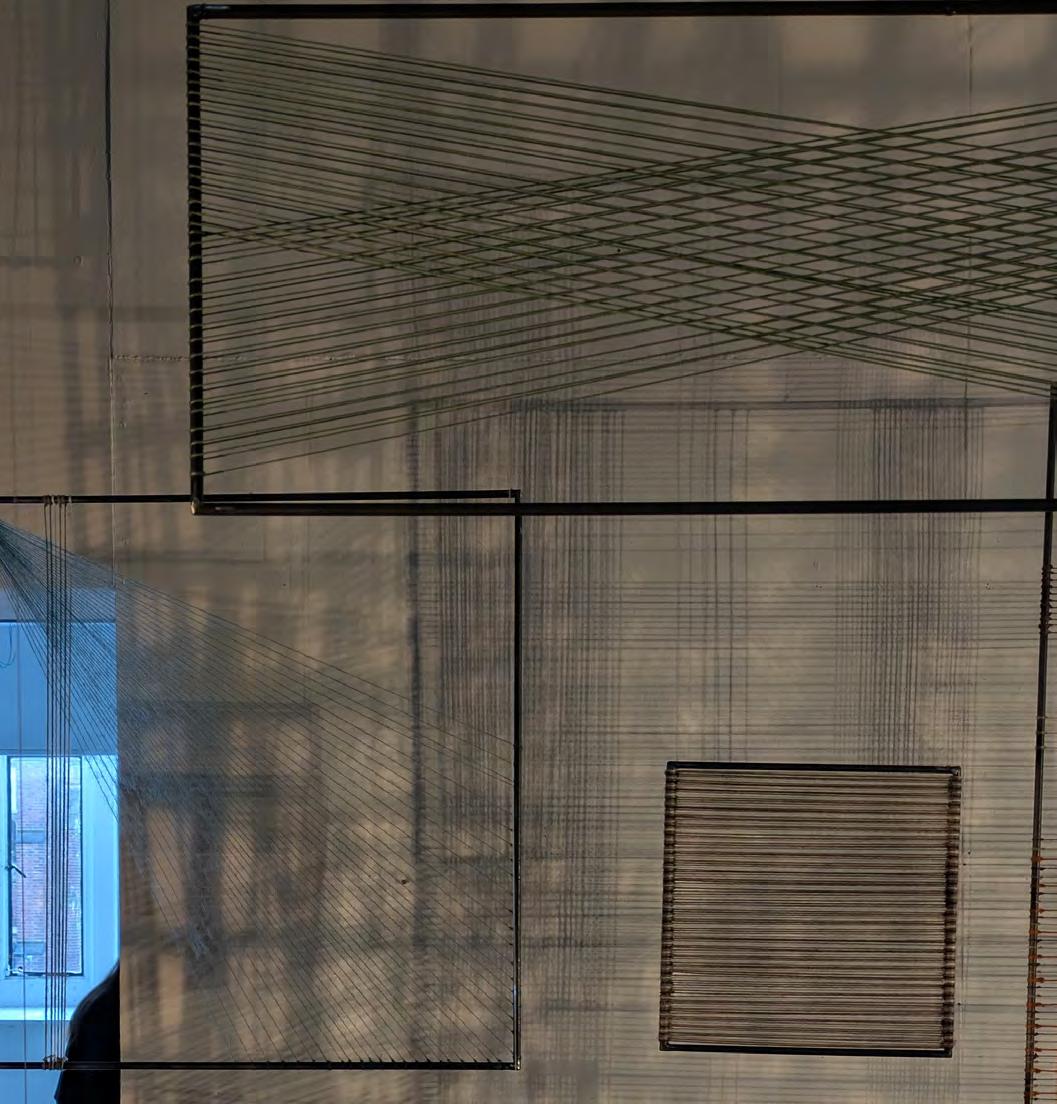
As part of a collaborative exploration, we created a spatial installation that celebrated the inherent beauty and versatility of wool. Working with a diverse range of yarns—including soft, lustrous mohair, pure virgin wool, and sustainable recycled wool—we experimented with different weaving techniques to reveal a spectrum of textures, colours, and degrees of translucency. Layered compositions of woven panels were thoughtfully framed to engage with natural and artificial light, casting shifting, ephemeral shadow patterns that transformed throughout the day. The installation invited visitors to move through and around these suspended textiles, immersing themselves in wool’s rich tactility, visual warmth, and atmospheric presence, transforming the material from a familiar fabric into an experiential, architectural element. The use of simple steel frames allowed the wool woven art to be the focal point of the display.



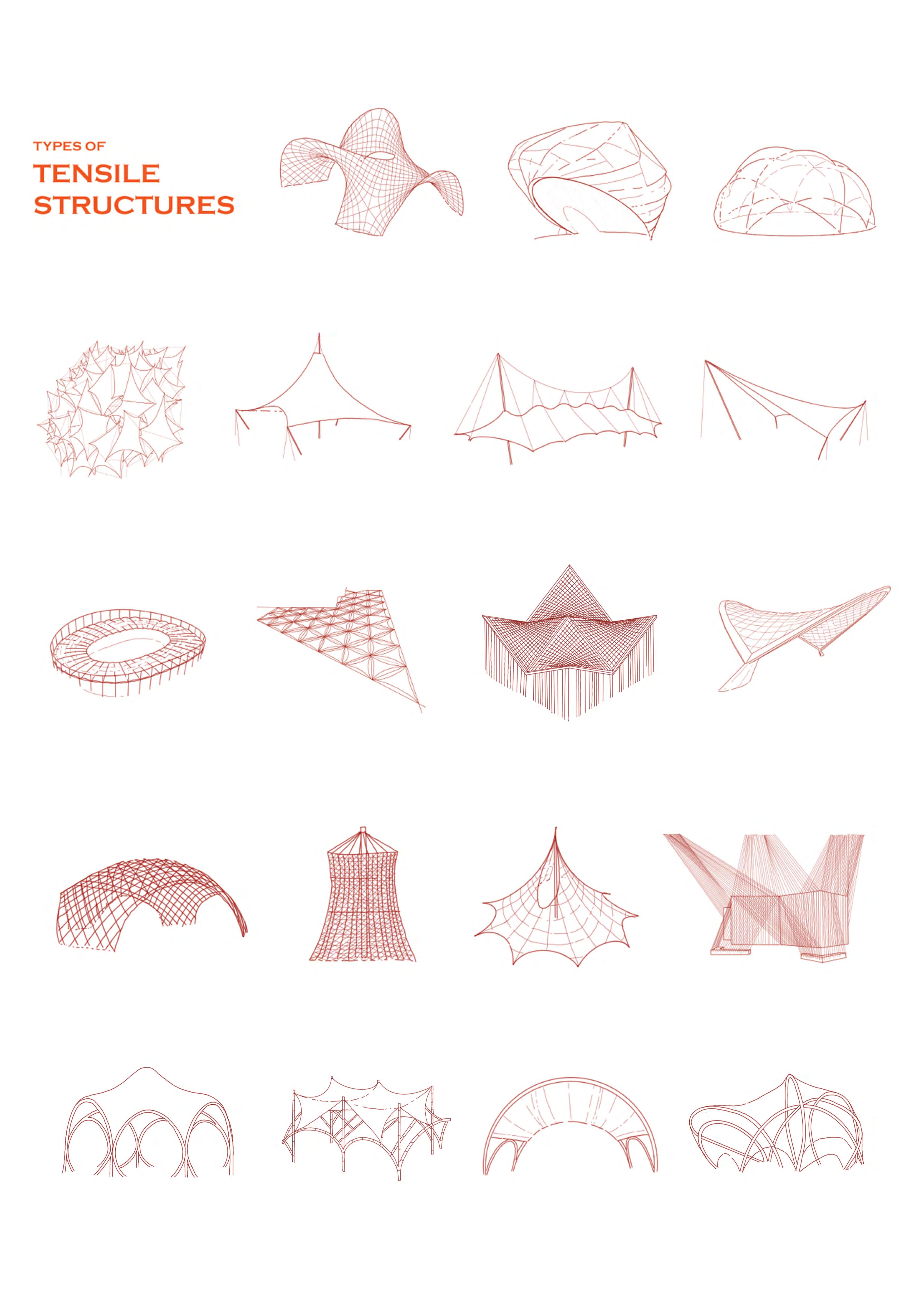
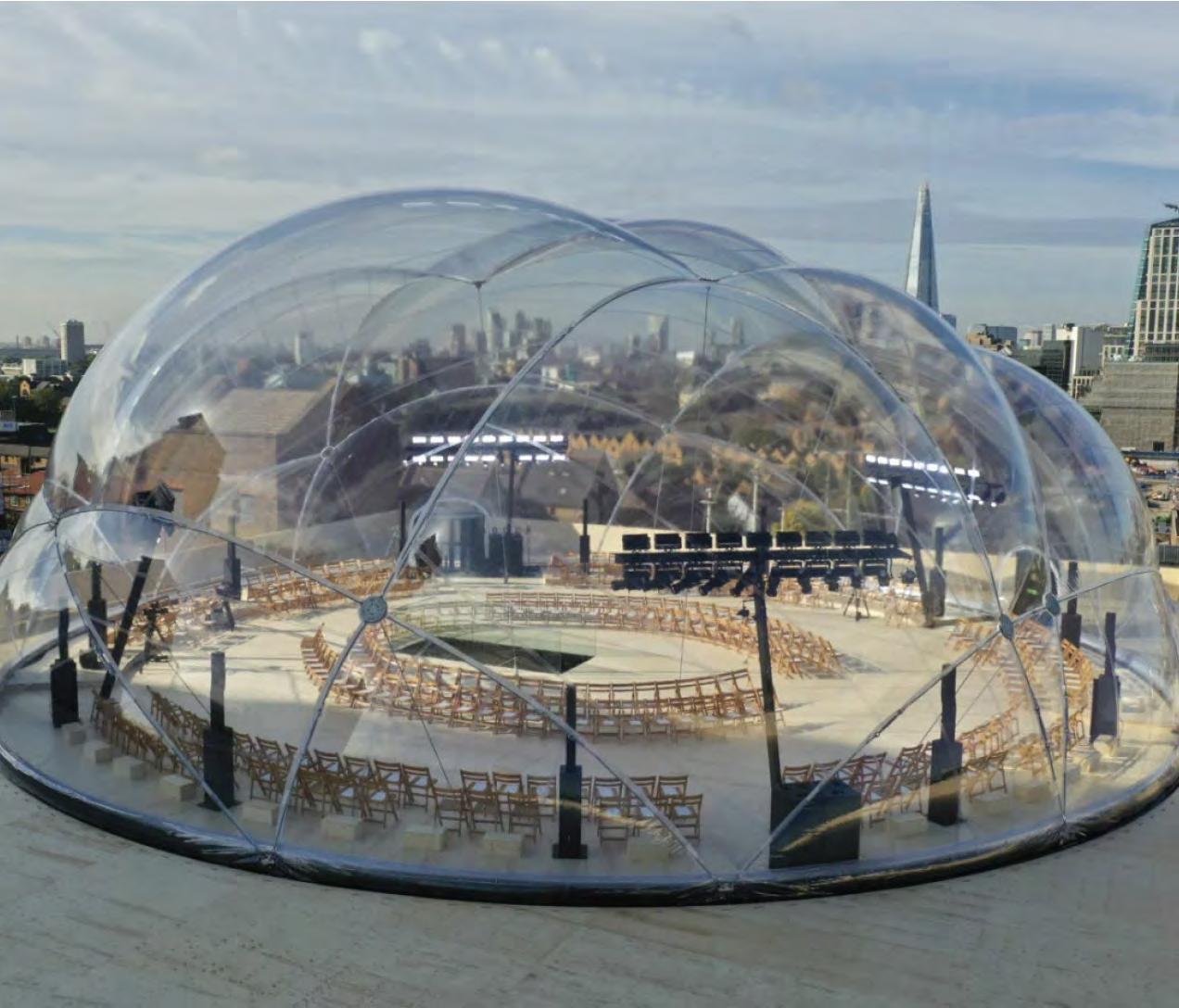
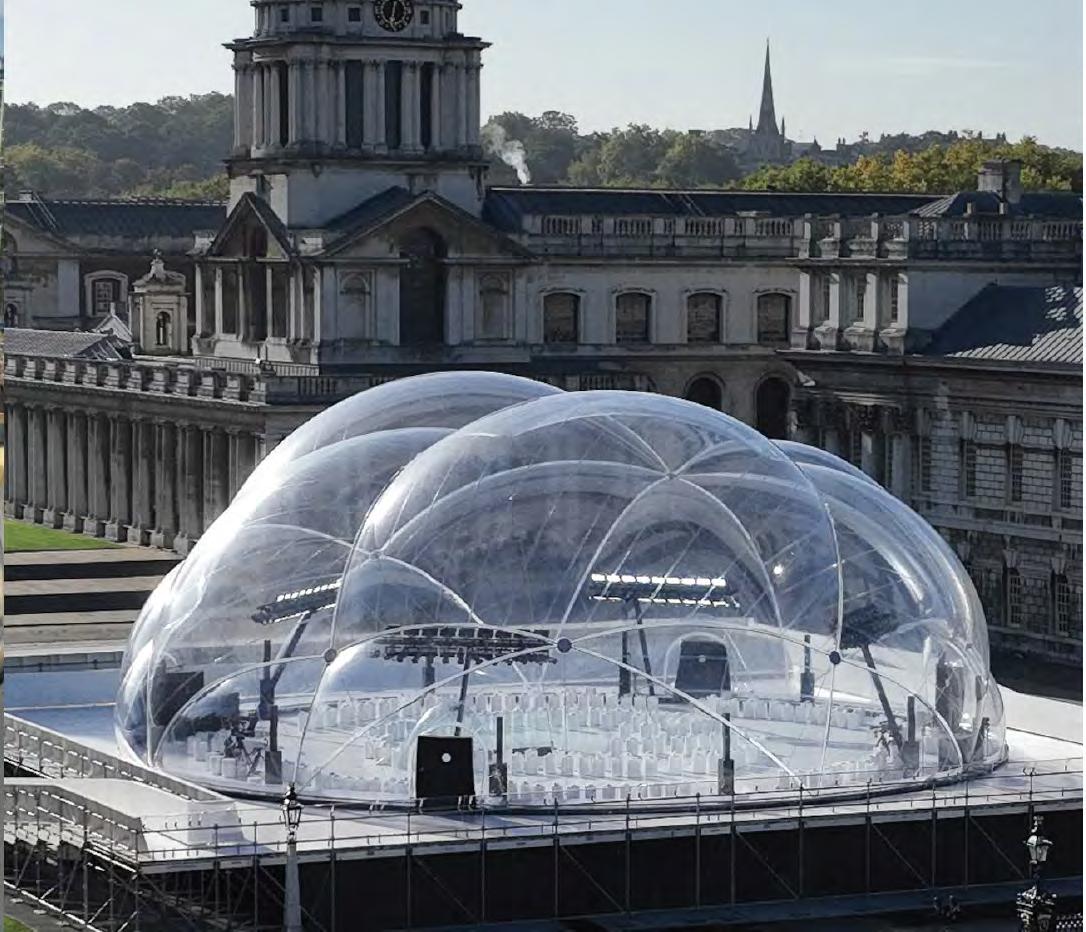
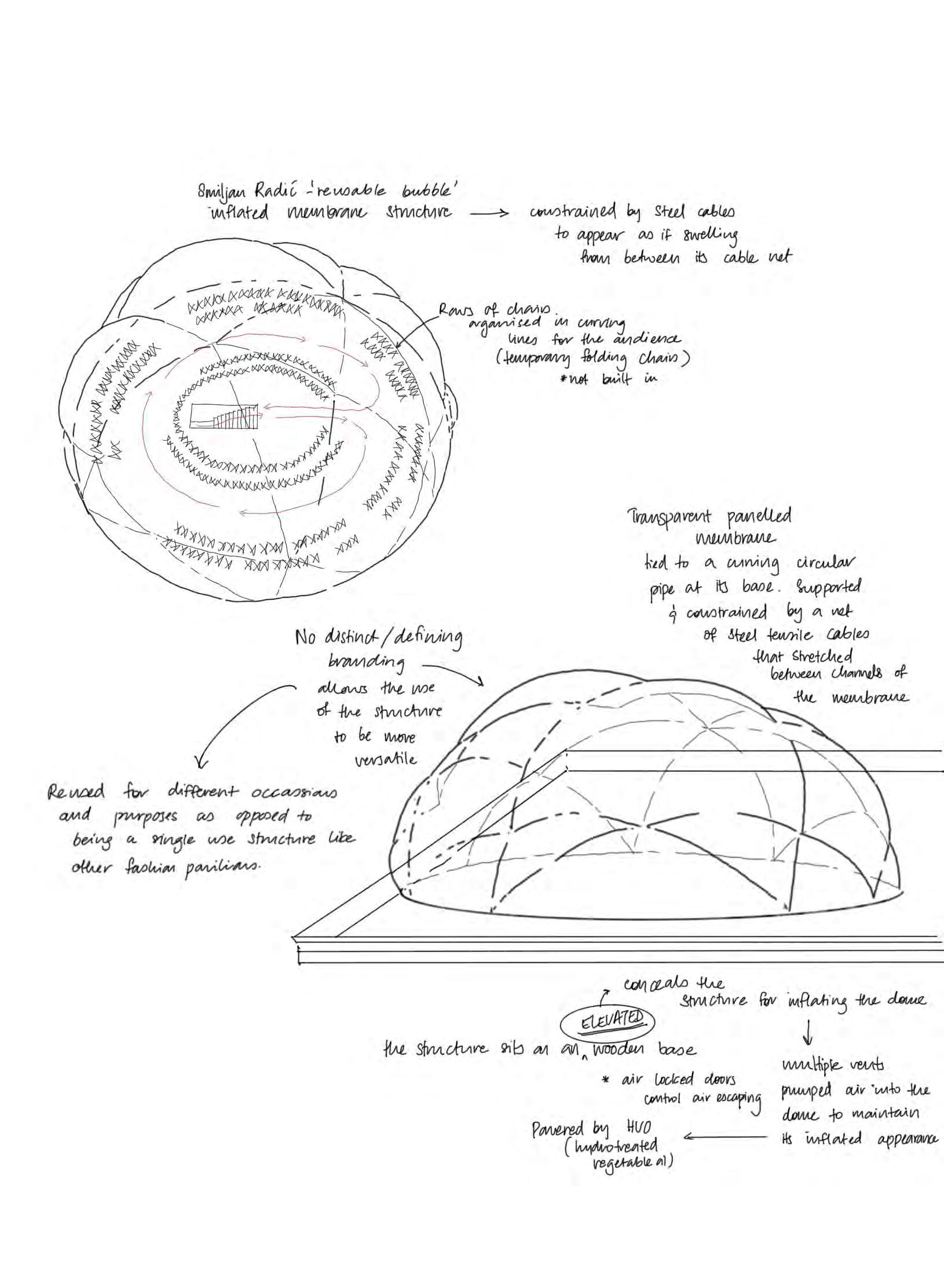
Alexander McQueen used a cloud like temporary structure designed by Chilean architect Smiljan Radic, taking over the rooftop of a 10-storey parking garage in East London’s Tobacco Docklands. Buoyed by a net of steel tensile cables, the transparent membrane was installed on top of a raised structure that levelled the sloping roof, making space for the backstage area and the all-important air vents that kept the bubble afloat. Hydrotreated vegetable oil, a renewable diesel alternative made from grease, food waste, and agricultural residues, powered the generator supplying energy for the event.
Alexander McQueen reinstalled its inflatable show space almost a year after its first use, at the Old Royal Nacy College in London for its Spring Summer 2023 show
During its first outing, the brand explained that the dome was designed to be reused for a number of educational and cultural events.
Greeted by a squared structure having a pattern consisting of alternating black and mirrored squares, the Dior pavilion designed by Bureau Betak already depicted a strong aesthetic. Following the same design, the floor flowed into the walls of the pavilion, guiding the visitors into the interiors. once inside, a dramatic black and white space opened, surrounded by white draped-textiles. Hanging from the ceiling, different body parts like eyes, ears and torsos, accompanied by bird cages, brought the attendees back to surrealist paris.
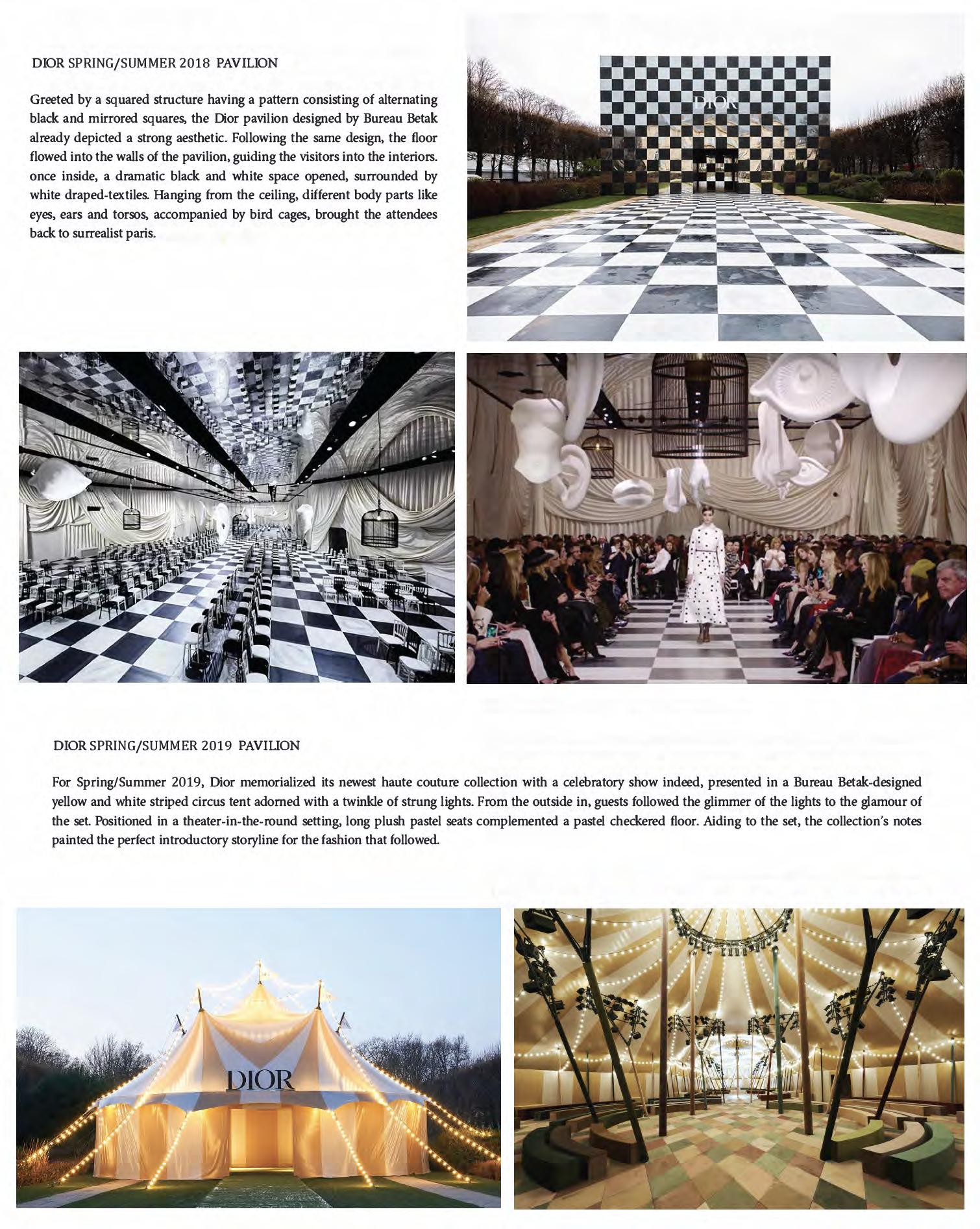
For Spring/Summer 2019, Dior memorialized its newest haute couture collection with a celebratory show indeed, presented in a Bureau Betak-designed yellow and white striped circus tent adorned with a twinkle of strung lights. From the outside in, guests followed the glimmer of the lights to the glamour of the set. Positioned in a theater-in-the-round setting, long plush pastel seats complemented a pastel checkered floor. Aiding to the set, the collection’s notes painted the perfect introductory storyline for the fashion that followed.
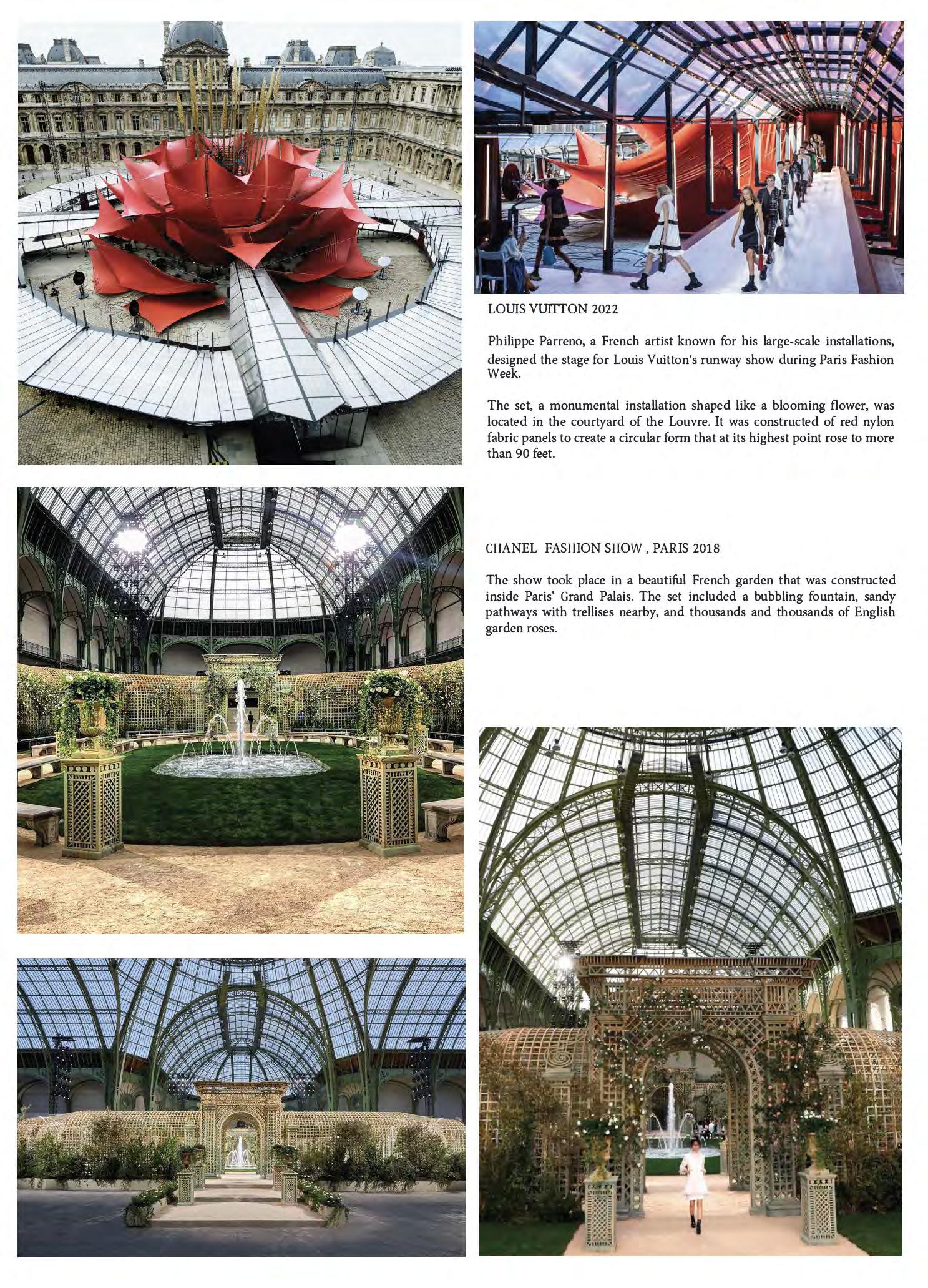
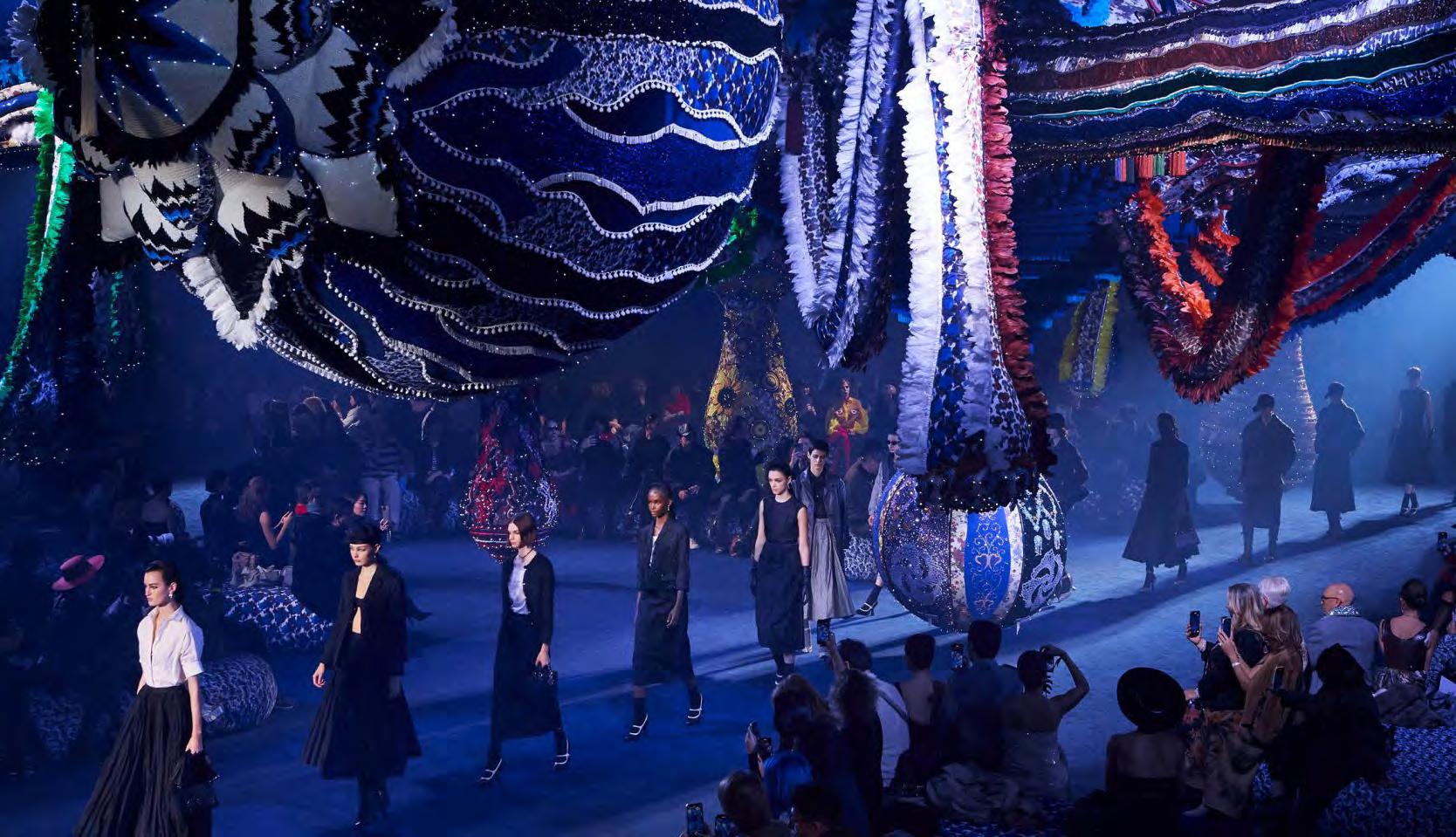
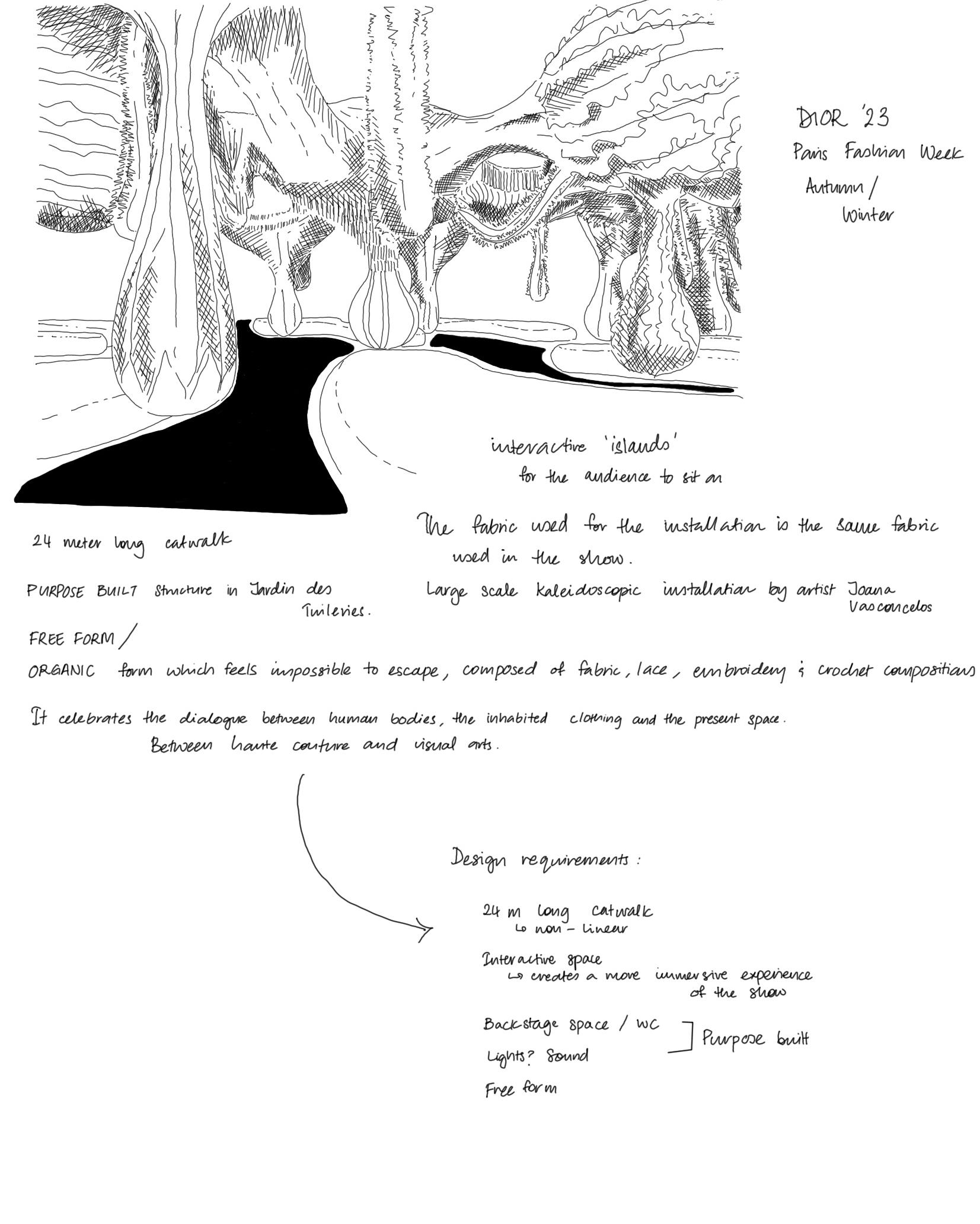
Philippe Parreno, a French artist known for his large-scale installations, designed the stage for Louis Vuitton’s runway show during Paris Fashion Week.
The set, a monumental installation shaped like a blooming flower, was located in the courtyard of the Louvre. It was constructed of red nylon fabric panels to create a circular form that at its highest point rose to more than 90 feet.
The show took place in a beautiful French garden that was constructed inside Paris’ Grand Palais. The set included a bubbling fountain, sandy pathways with trellises nearby, and thousands and thousands of English garden roses.
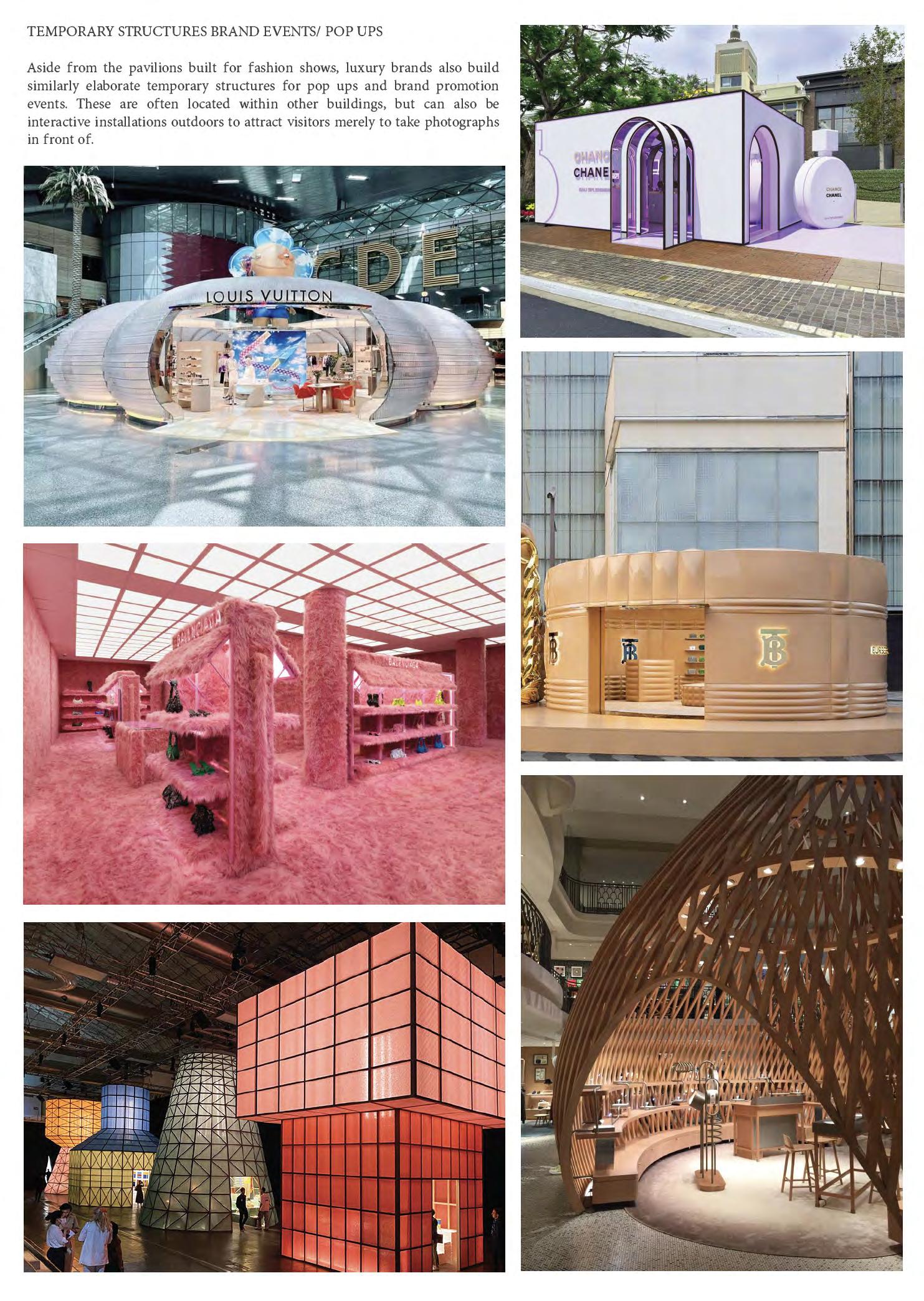
Aside from the pavilions built for fashion shows, luxury brands also build similarly elaborate temporary structures for pop ups and brand promotion events. These are often located within other buildings, but can also be interactive installations outdoors to attract visitors merely to take photographs in front of.


A pavilion can be a temporary structure, built for leisure or shelter.
From a simple shelter in a park to a statement of innovation to the world
It can also be an annex, or add-on to a larger building, or it can be one of a group of buildings all standing together1
usually open sometimes ornamental structure in a garden, park, or place of recreation that is used for entertainment2
1 Royal Institute of British Architects (no date) Pavilions, Google Arts & Culture. Available at: https://artsandculture.google.com/story/pavilions-royal-institute-of-british-architects/vgURL0wVrrRPJw?hl=en.
2 Definition of PAVILION (no date) www.merriam-webster.com. Available at: https://www.merriam-webster.com/dictionary/pavilion.
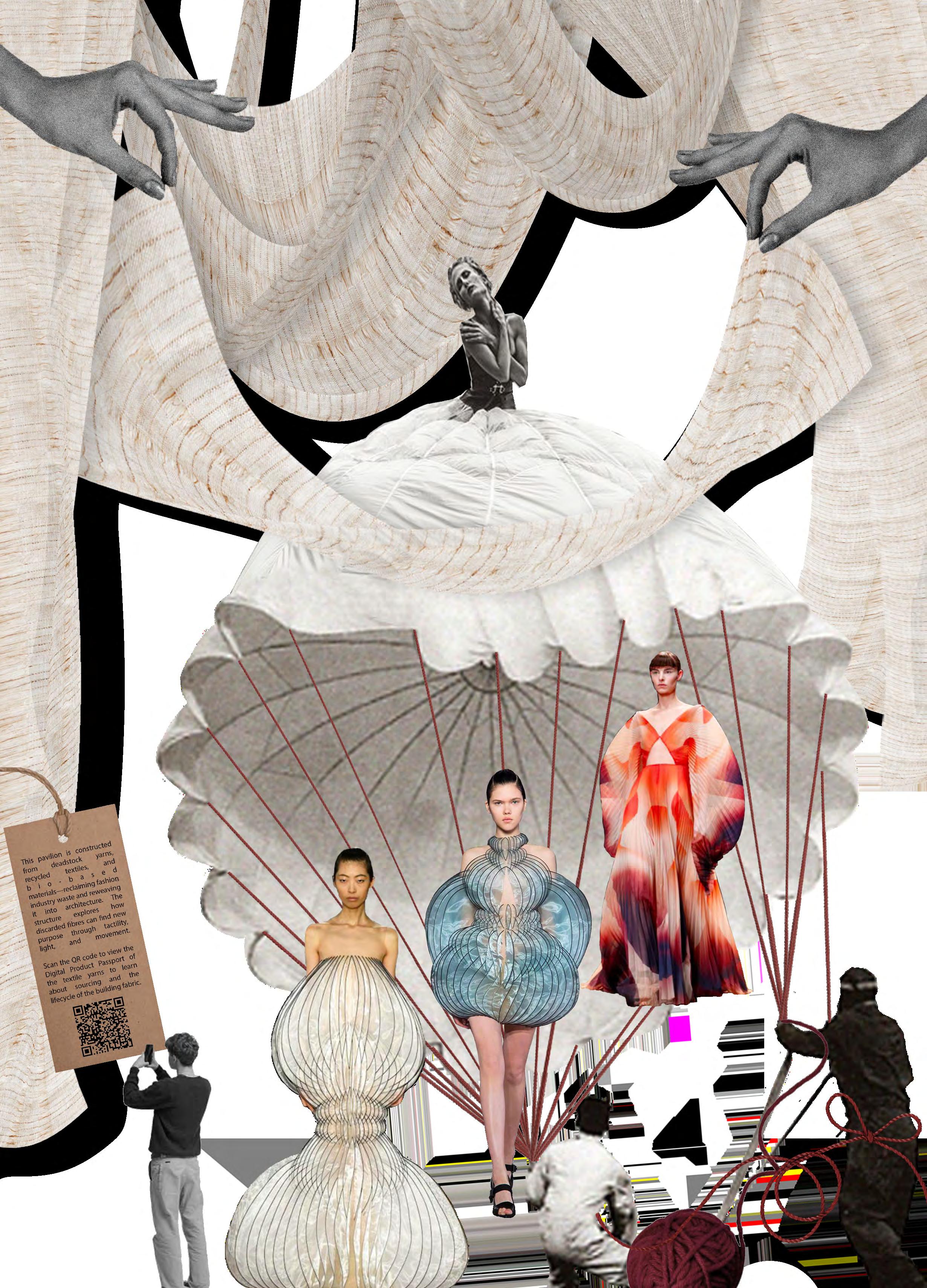
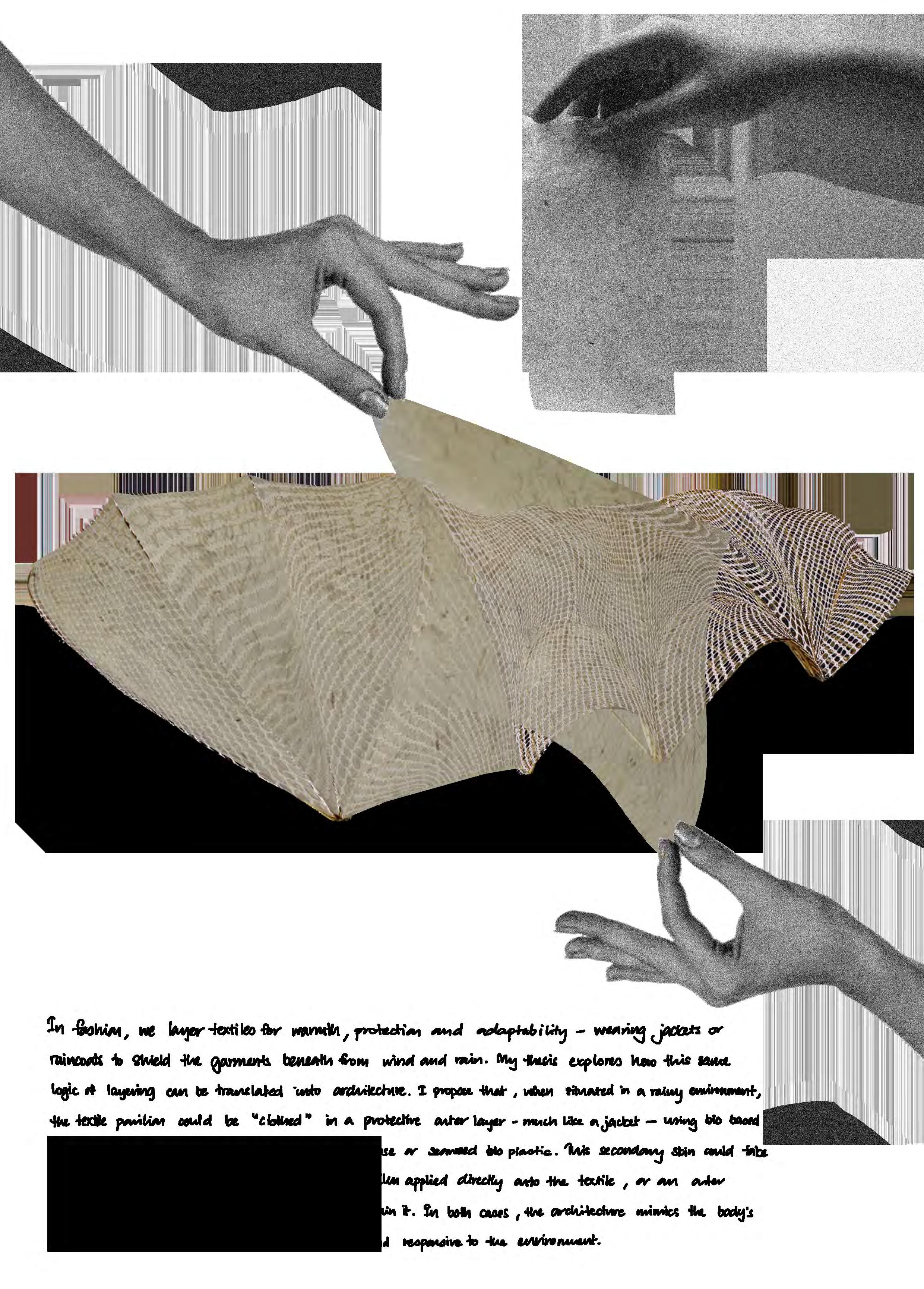
My thesis reimagines the way we perceive the “fabric” of buildings by drawing a direct parallel to the world of fashion—where fabric is not merely a covering but an essential, dynamic element that defines form, movement, and identity. Just as the human body interacts with clothing, shaping and being shaped by it, architecture can be understood in a similar way, where the material envelope of a building is more than just a façade—it is an integral part of its expression, function, and relationship with its surroundings. While architectural discourse has long explored the relationship between the body and built space, my thesis takes a distinct approach: rather than treating the body as a separate entity that inhabits architecture, I propose that architecture itself becomes the body. This shift in perspective opens up new possibilities for how we conceive of structure, materiality, and the dynamic interplay between form and function in the built environment.
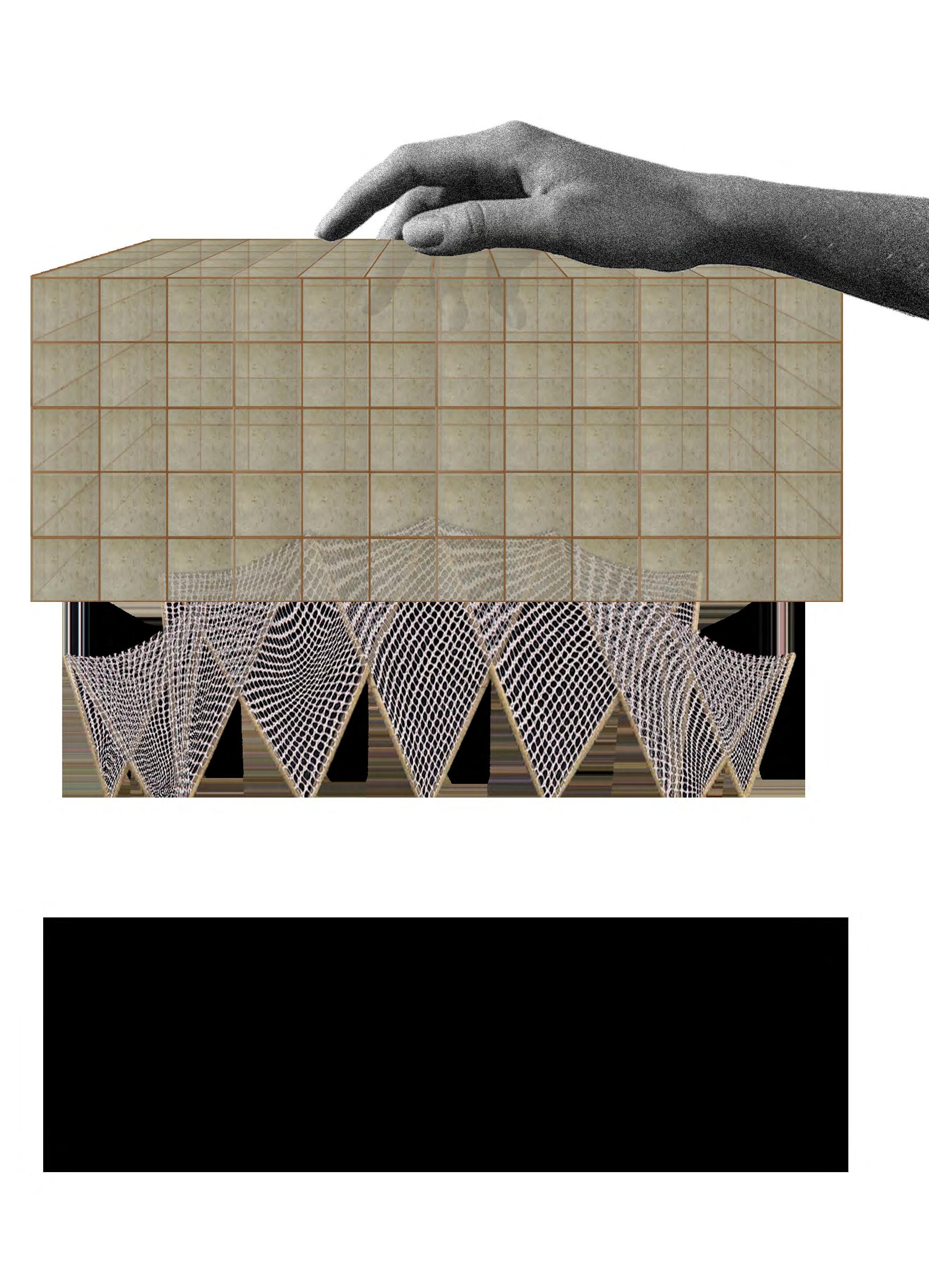
The form and spatial logic of the pavilion are also drawn from fashion. In garment design, we layer fabrics for warmth and protection; here, the same principle applies. The textile pavilion can be “layered” with a waterproof outer shell, much like a raincoat, or supported by an exterior frame housing backstage spaces for fashion shows. This creates a separation between the functional outer layer and the theatrical, sensory-rich interior—mirroring how couture garments often hide intricate details beneath a simple exterior.
This layering also supports storytelling: the pavilion becomes a woven archive of the brand’s past collections, integrating deadstock into an immersive, tactile narrative. Combined with tools like the EU’s Digital Product Passport, each material in the pavilion can be traced—its origins, past uses, and environmental footprint—making transparency and sustainability part of the spatial experience.
SCAN QR CODE ON IMAGE FOR MORE INFORMATION ON DIGITAL PRODUCT PASSPORTS

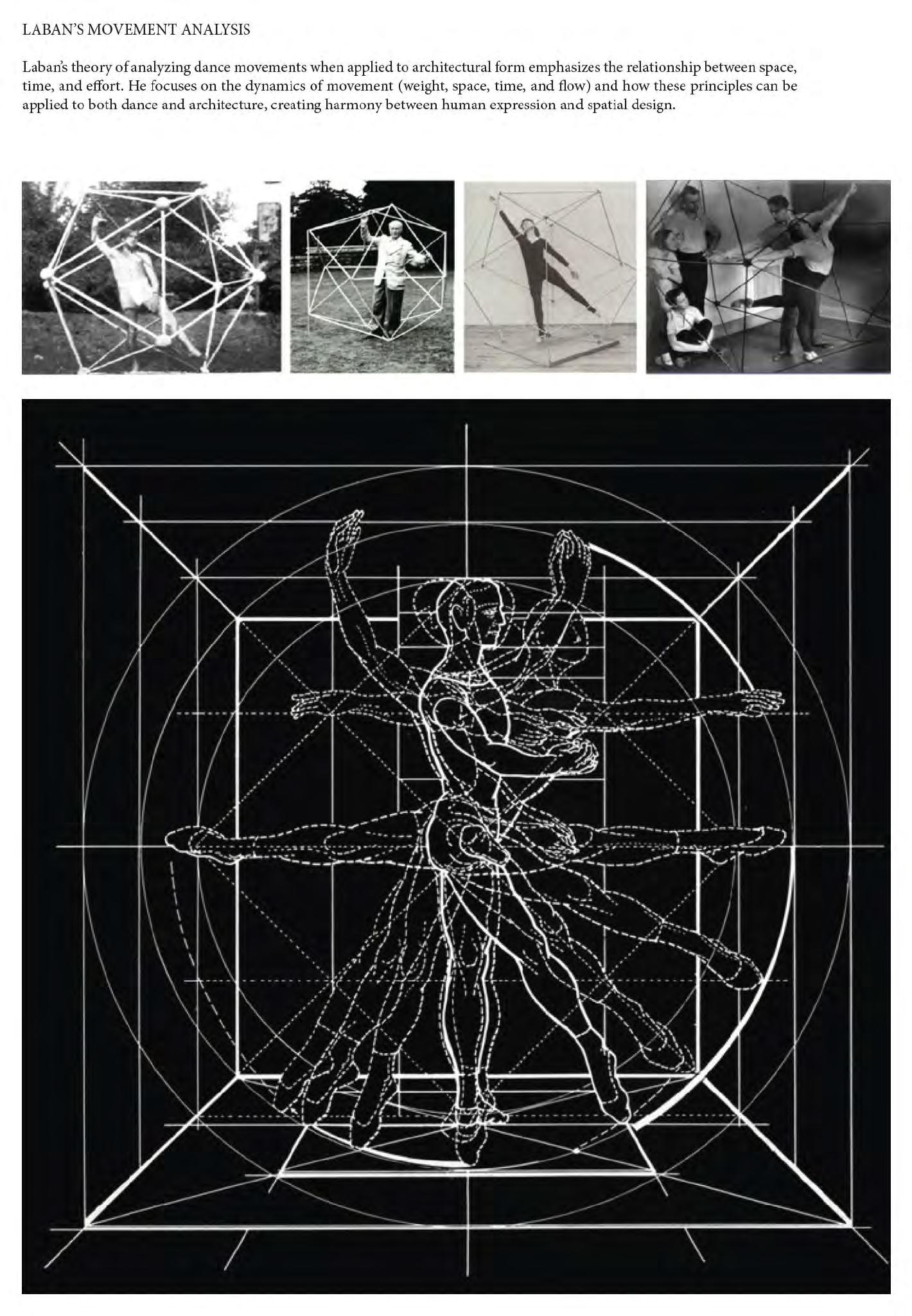
Laban’s theory of analyzing dance movements when applied to architectural form emphasizes the relationship between space, time, and effort. He focuses on the dynamics of movement (weight, space, time, and flow) and how these principles can be applied to both dance and architecture, creating harmony between human expression and spatial design. 1
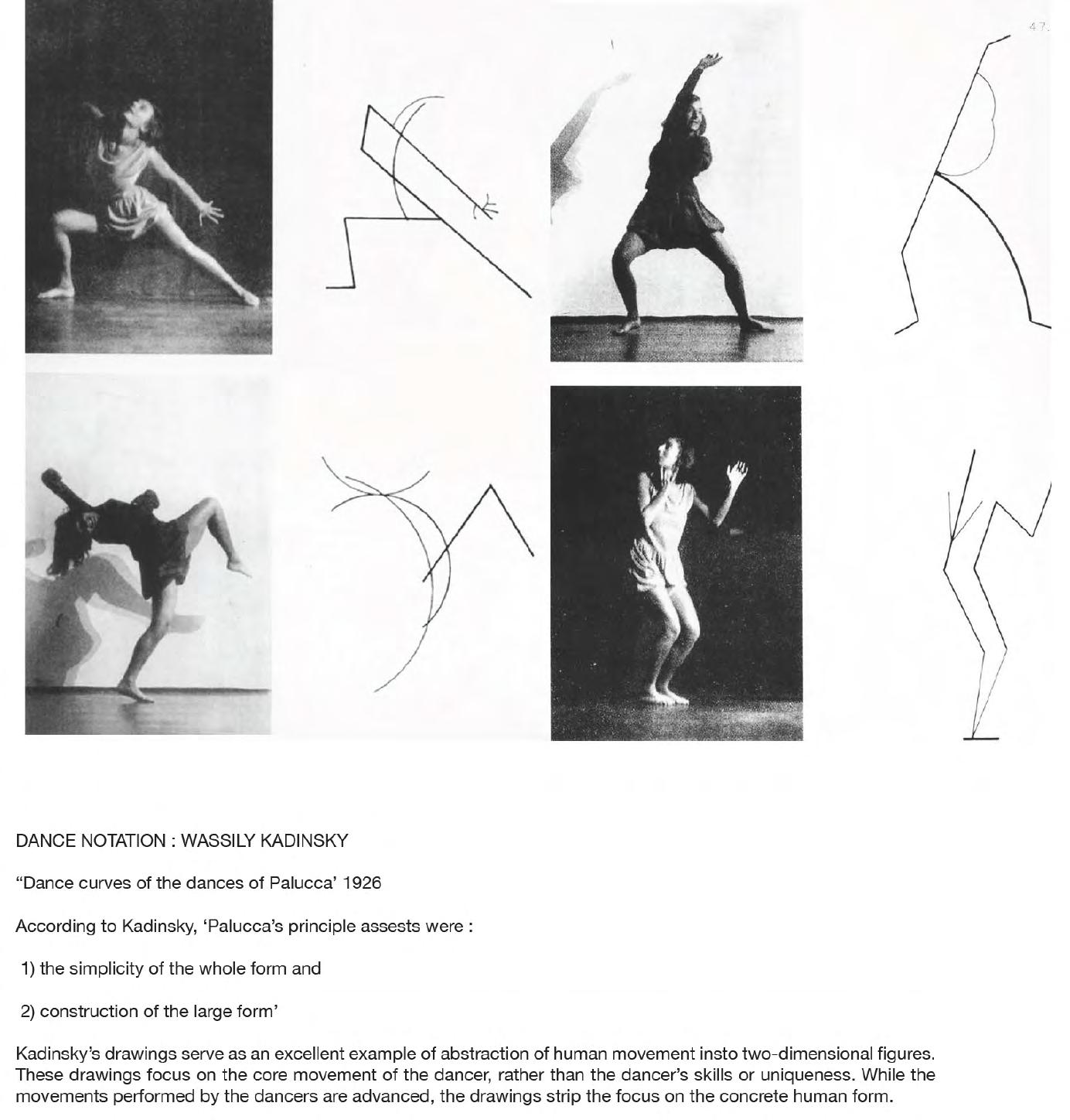
DANCE NOTATION : WASSILY KADINSKY
“Dance curves of the dances of Palucca’ 1926
According to Kadinsky, ‘Palucca’s principle assests were :
1) the simplicity of the whole form and
2) construction of the large form’
Kadinsky’s drawings serve as an excellent example of abstraction of human movement into two-dimensional figures. These drawings focus on the core movement of the dancer, rather than the dancer’s skills or uniqueness. While the movements performed by the dancers are advanced, the drawings strip the focus on the concrete human form.1
1 STUDY:, D. (2016) Bagtazo, Bagtazo. Available at: https://www.bagtazocollection.com/blog/2016/1/25/design-design-designstudy-wassily-kandinsky?srsltid=AfmBOoqbQKu4jcnWzcF6jrrHx204ok4GoPLoKVWT4_SqJJulBrWNs48R
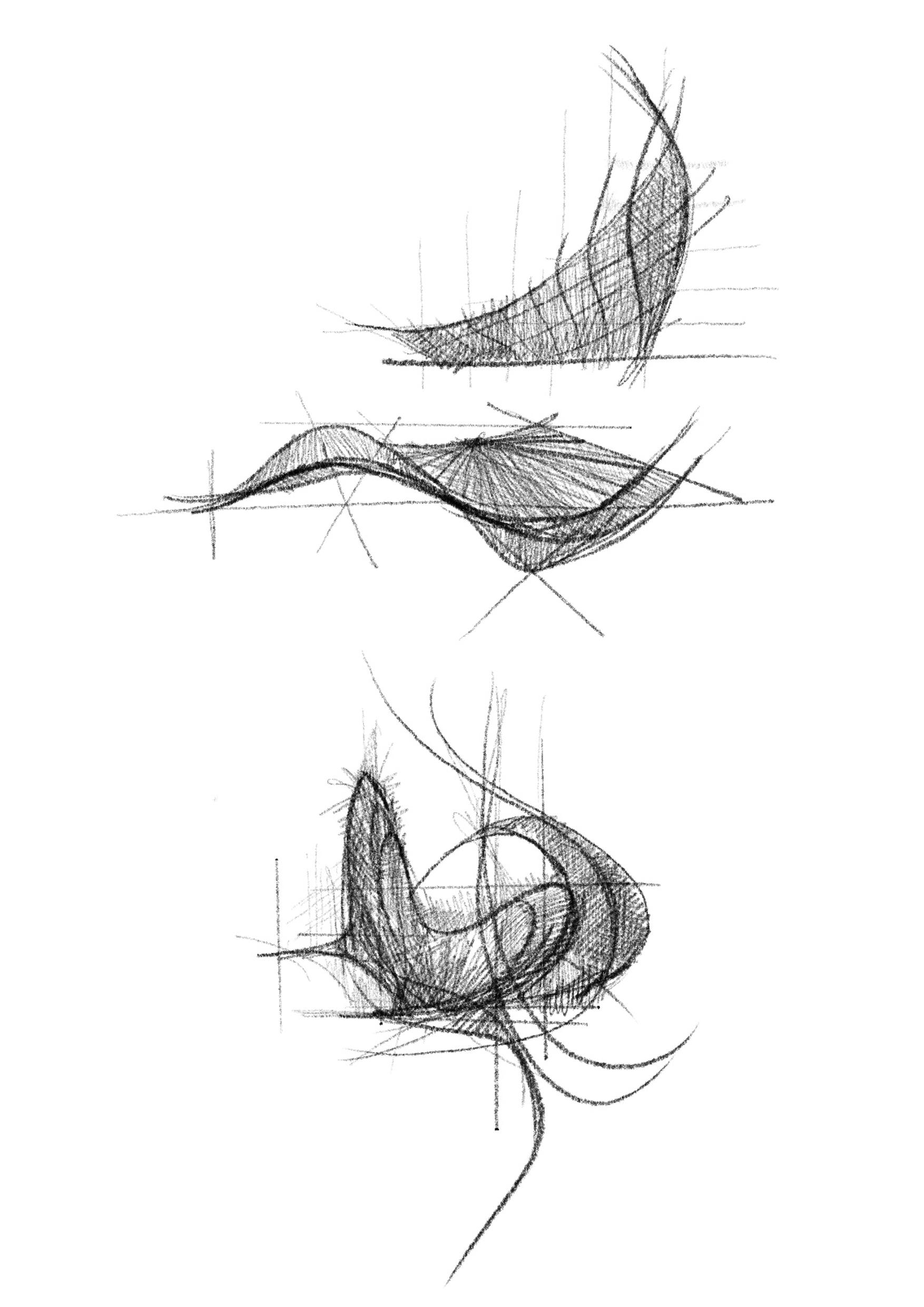
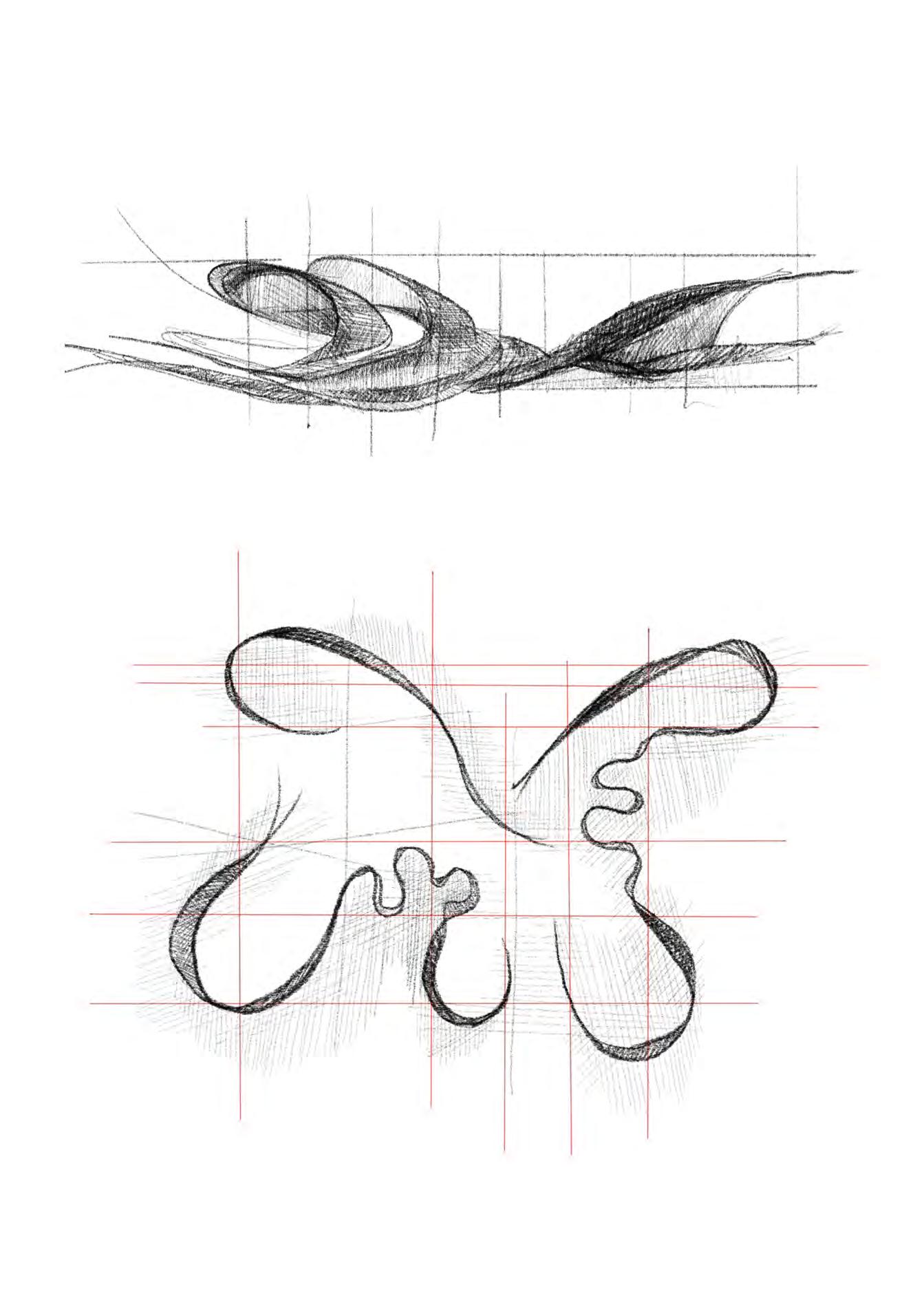
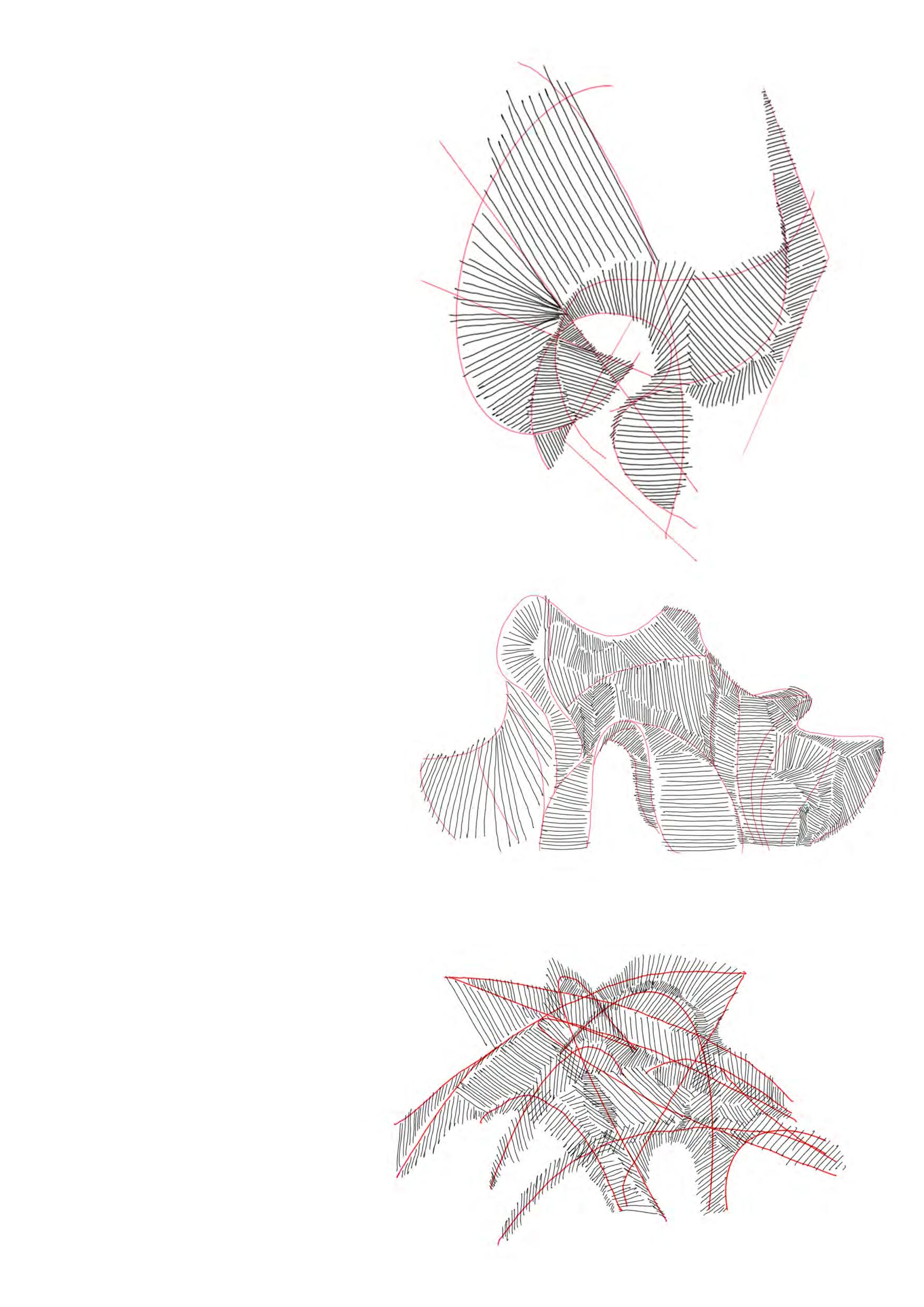
Drawing on the principles of Laban movement analysis and dance notation, alongside the abstract visual language of Wassily Kandinsky, I sought to translate the fluidity, rhythm, and drape of fabric into expressive sketches. These drawings became the conceptual foundation for developing the pa vilion’s form, capturing not only the physical flow of the textile but also its dynamic, almost choreographic relationship to space.
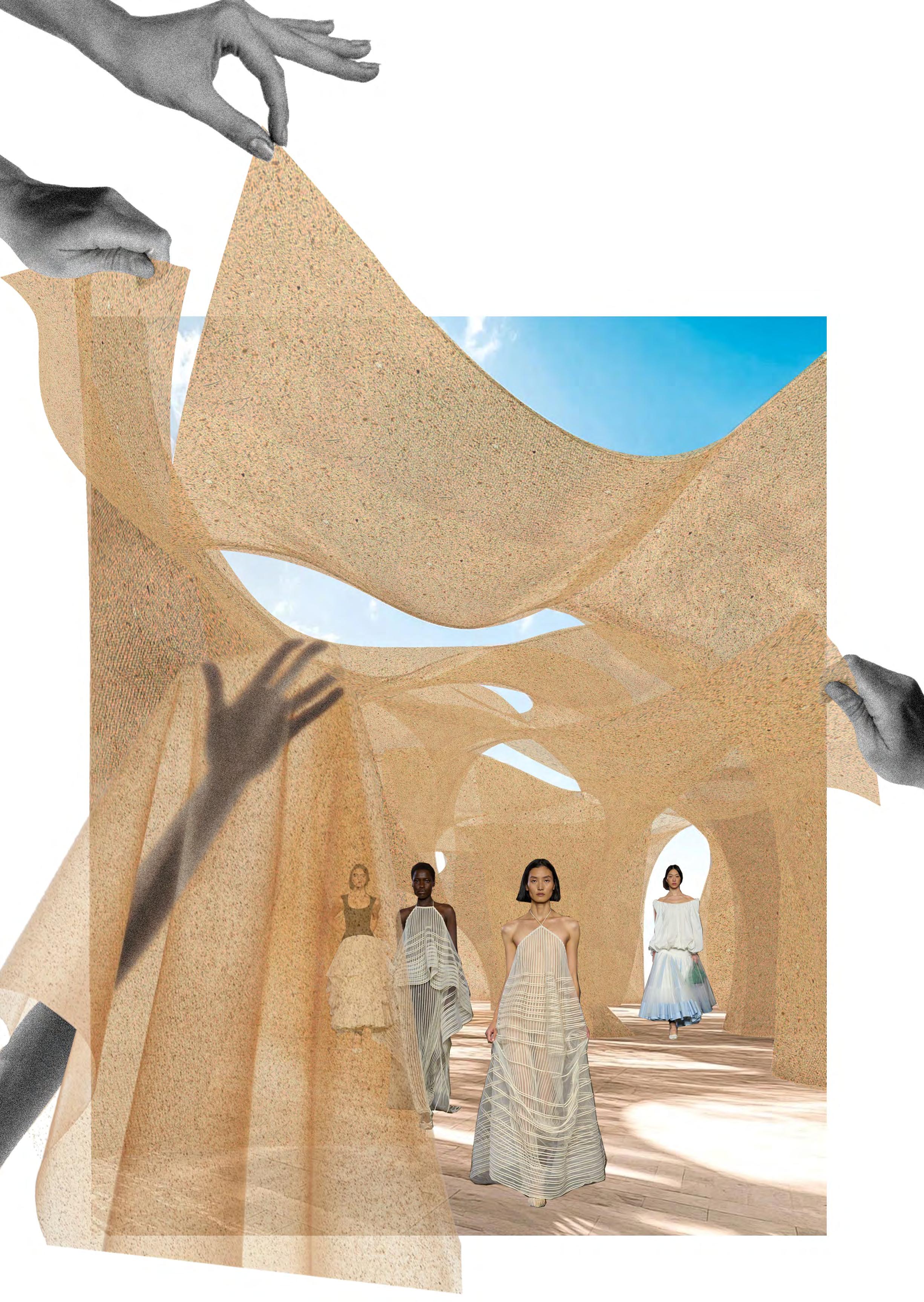
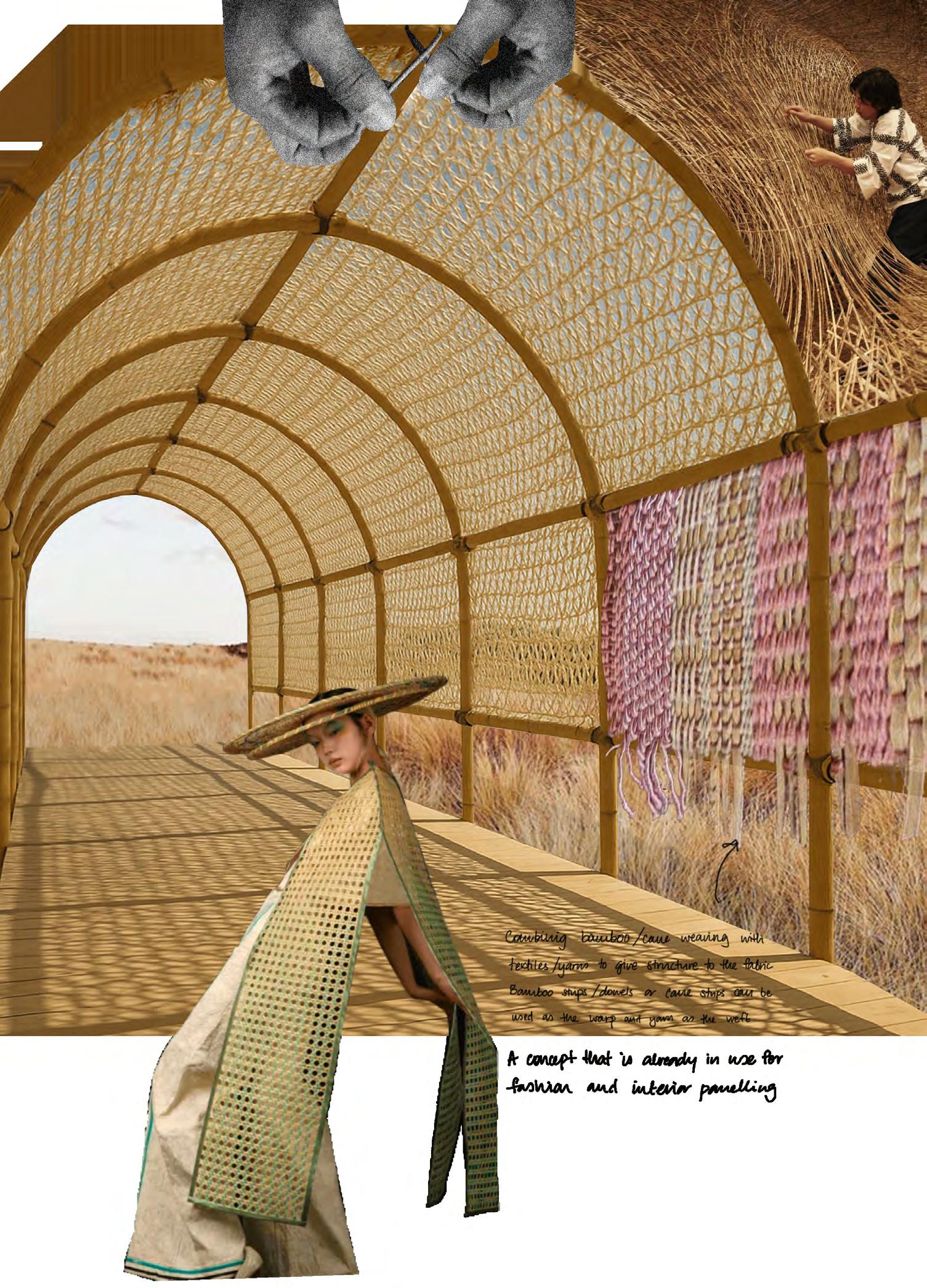
These two renders explore the aesthetic and experiential potential of bio-based materials in temporary architectural installations. One render highlights the translucent, tactile quality of seaweed bioplastic—its sheerness filtering light to create a soft, atmospheric enclosure. The material’s flexibility and versatility make it ideal for use across multiple locations, offering a lightweight, sensory-rich design solution. In contrast, the second render presents a more struc-tured textile formed by weaving locally sourced bamboo strips with wool yarn. This composition creates a firmer, more defined spatial rhythm while celebrating the raw textures of both materials. With bamboo readily available in many Asian regions, this pavilion proposal is especially suited to those contexts, blending material locality with crafted precision to evoke both place and sustainability.
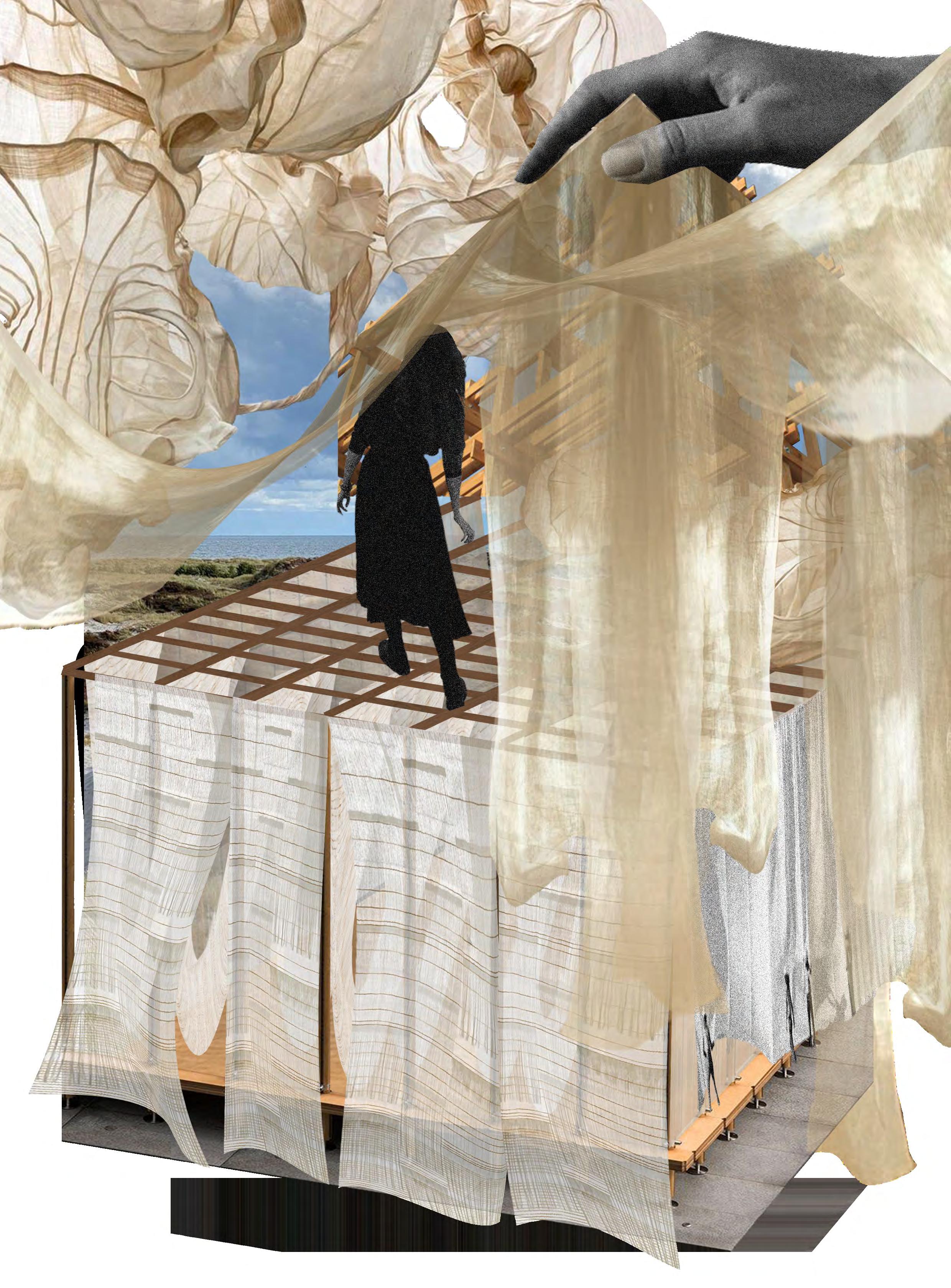
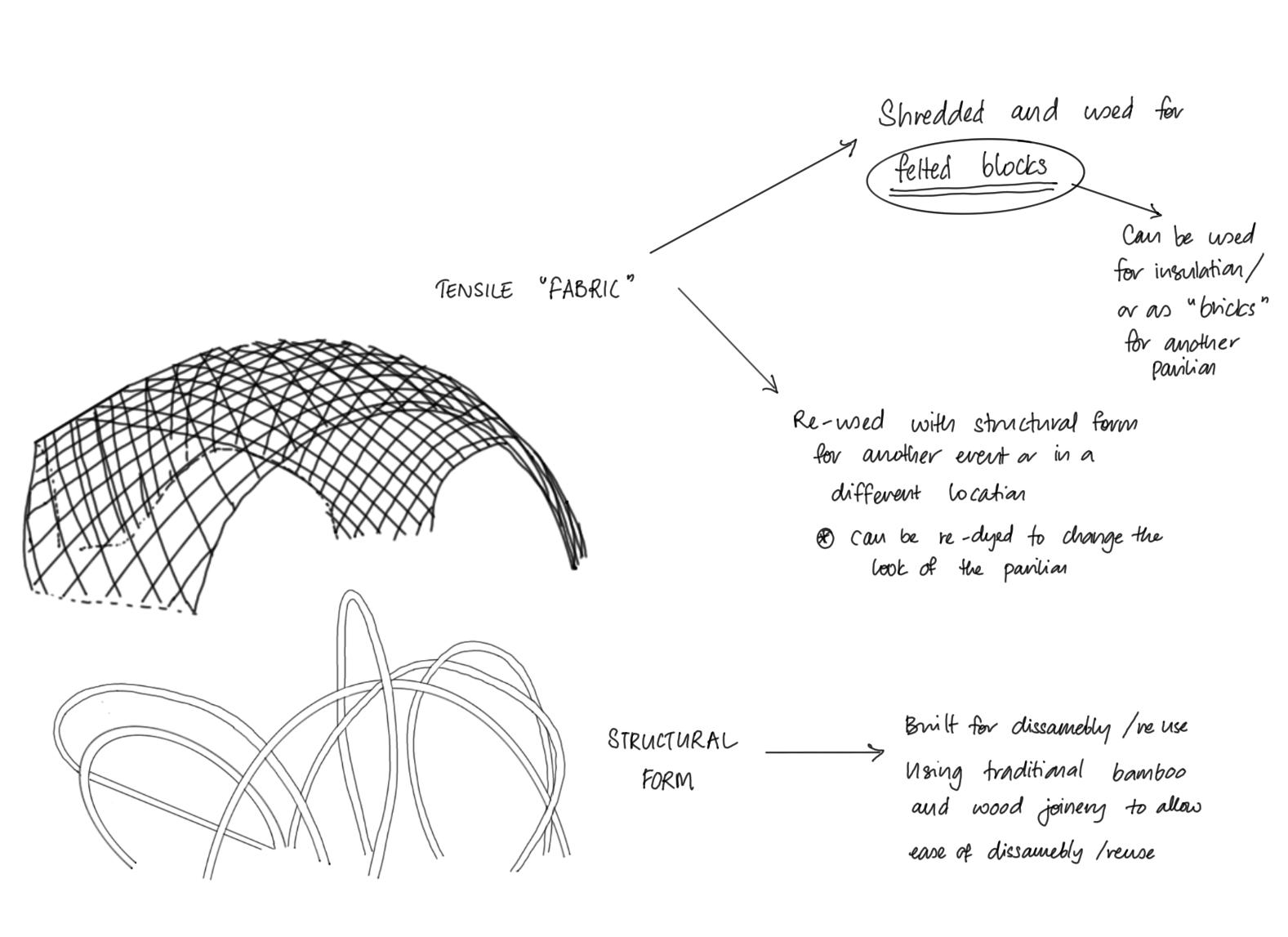
This pavilion proposal is rooted in the UK’s rich history of wool, using locally sourced deadstock wool as the primary material and sustainably harvested timber for the skeletal framework. The minimal timber grid serves as a quiet structural armature, allowing the draped and tensioned wool to take centre stage—creating a sensory experience that evokes the feeling of being inside the fabric itself. The structure is designed to be modular and adaptable, functioning either outdoors or within an interior setting, such as a gallery or event space. Through this restrained yet expressive approach, the pavilion transforms surplus textile waste into a tactile, immersive installation that tells a story of material regeneration, local heritage, and circular design.

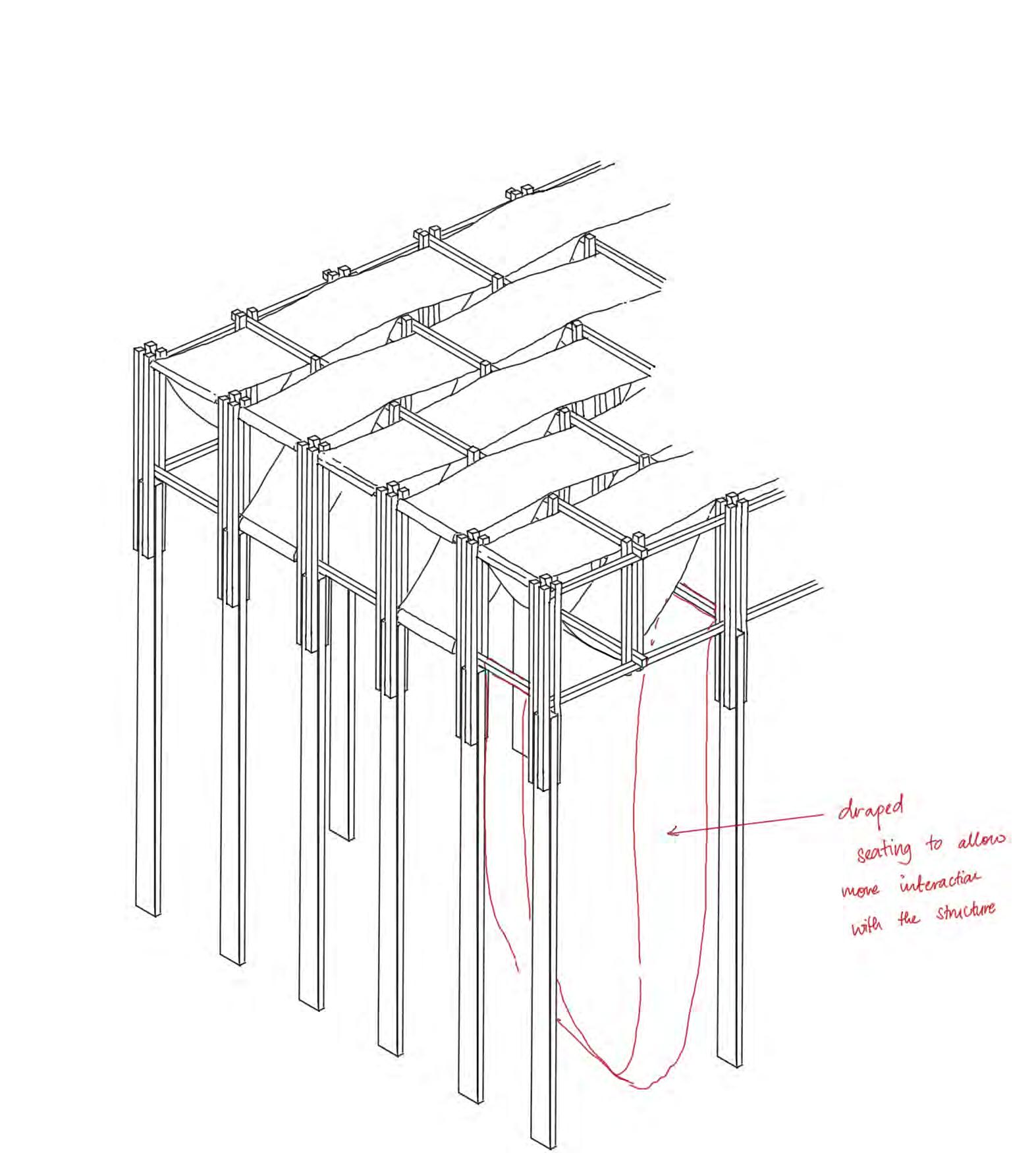


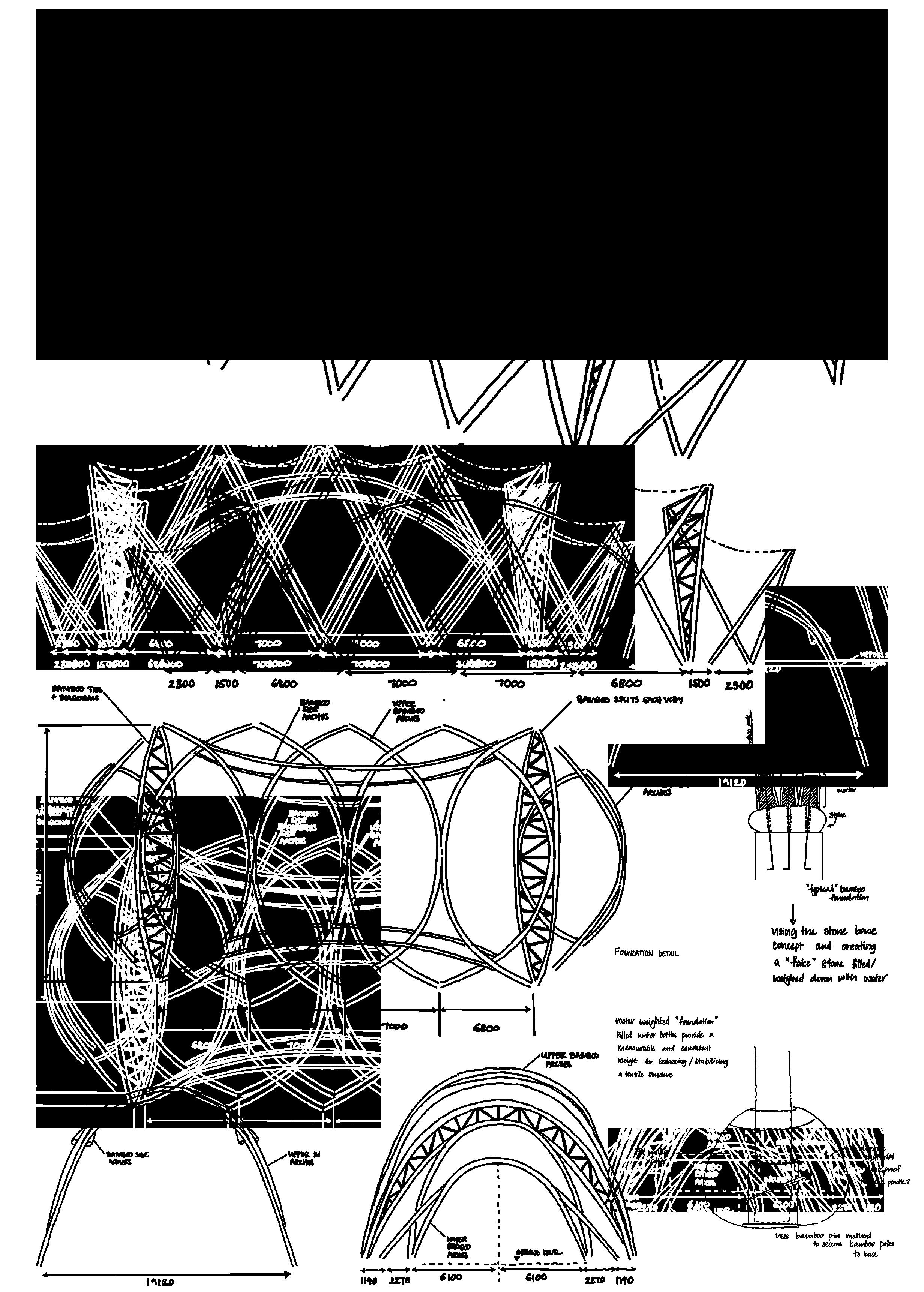
The pavilion is designed for complete disassembly, ensuring that every component can be reused or repurposed at the end of its life. Its frame is constructed using traditional wooden joinery, secured with timber pins and interlocking connections that eliminate the need for nails or adhesives. The only metal fixings are screws used to attach the timber to steel brackets, which anchor the structure to its temporary cement block foundations— allowing the entire system to be dismantled with minimal waste and no loss of material integrity.
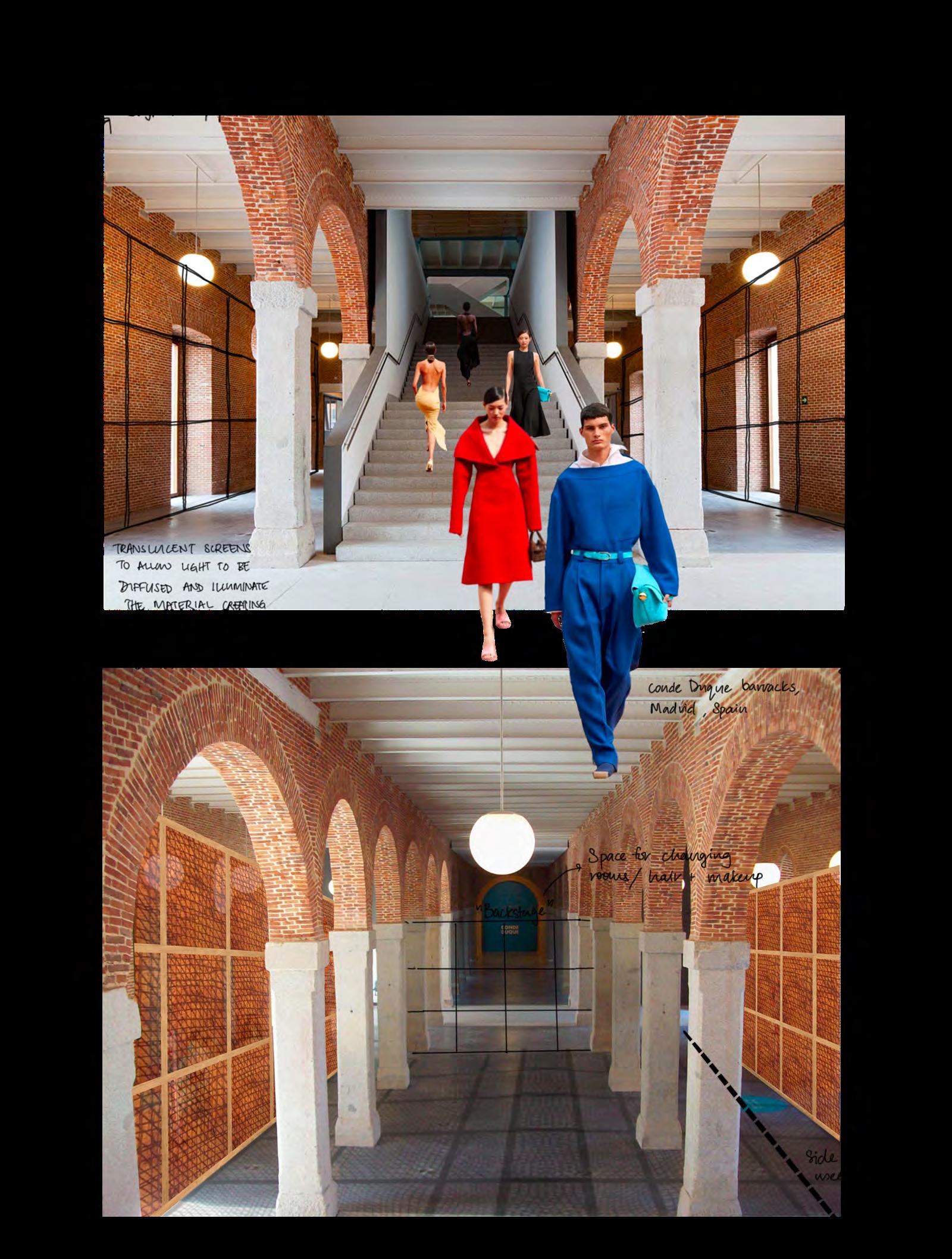
PAVILION IN MADRID
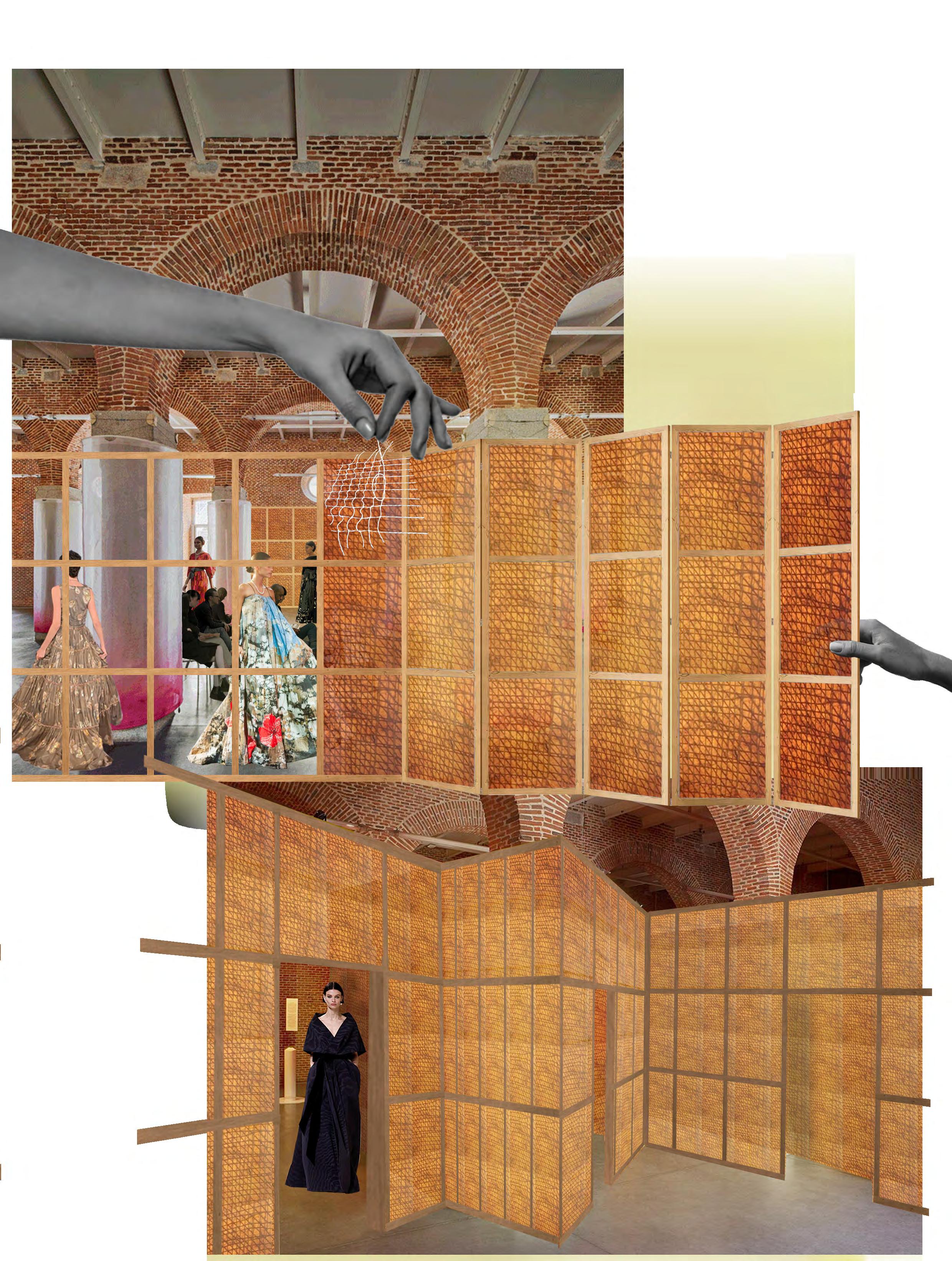
Set within the historic Conde Duque barracks in Madrid, this pavilion draws inspiration from traditional rice paper screens to create a flexible, modular installation that fits seamlessly within the site’s existing brick archways. Using translucent panels made from bacterial cellulose and yarn, the pavilion contrasts the solidity of the red brick with lightweight, clean-lined cubes that glow with a warm orange tint. The result is a spatial dialogue between past and present—rigid and delicate—offering a contemporary architectural intervention that is both responsive to its context and rich in material innovation.
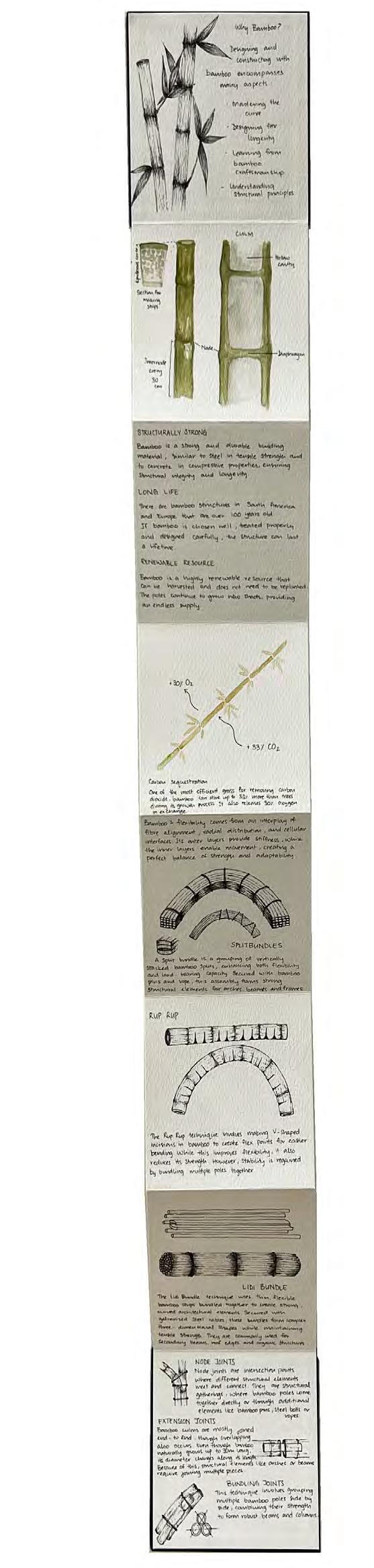
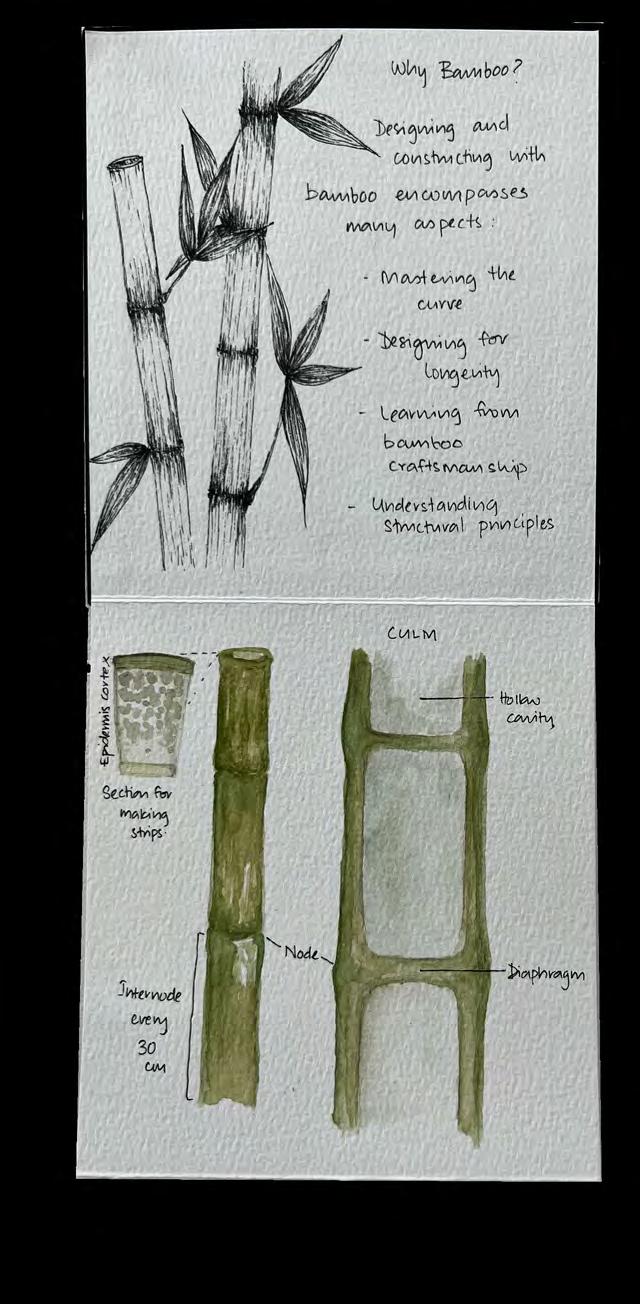
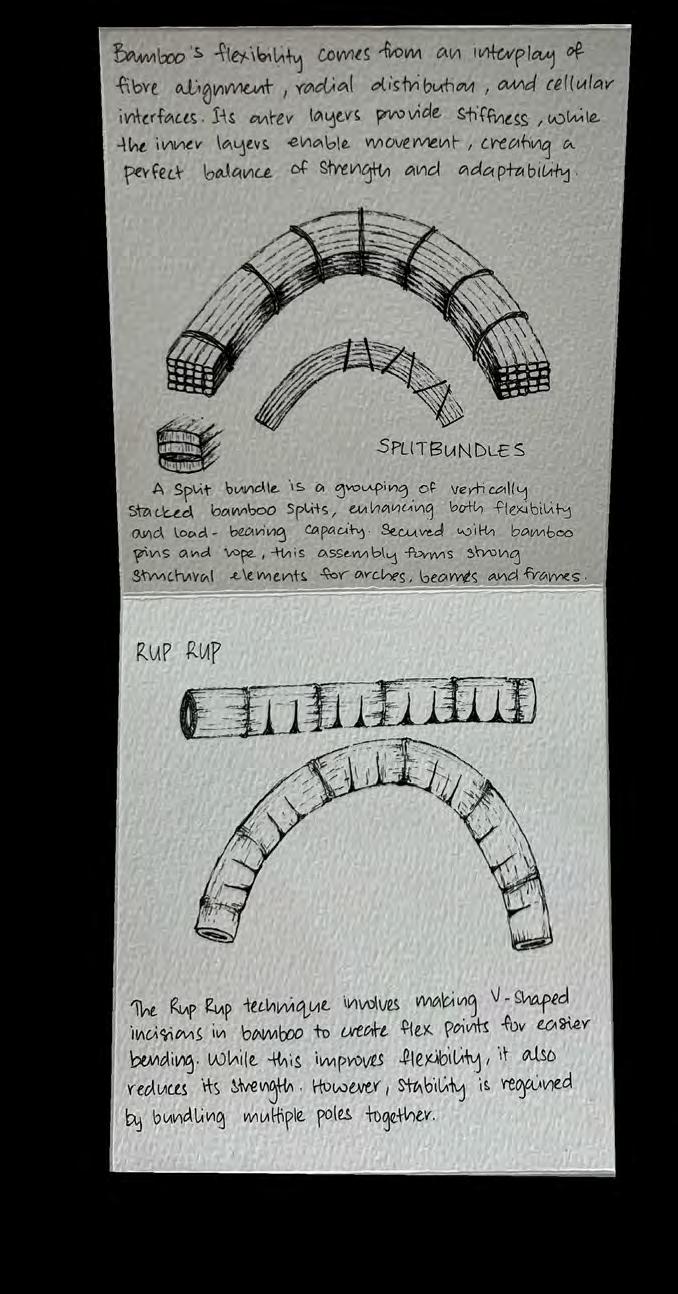
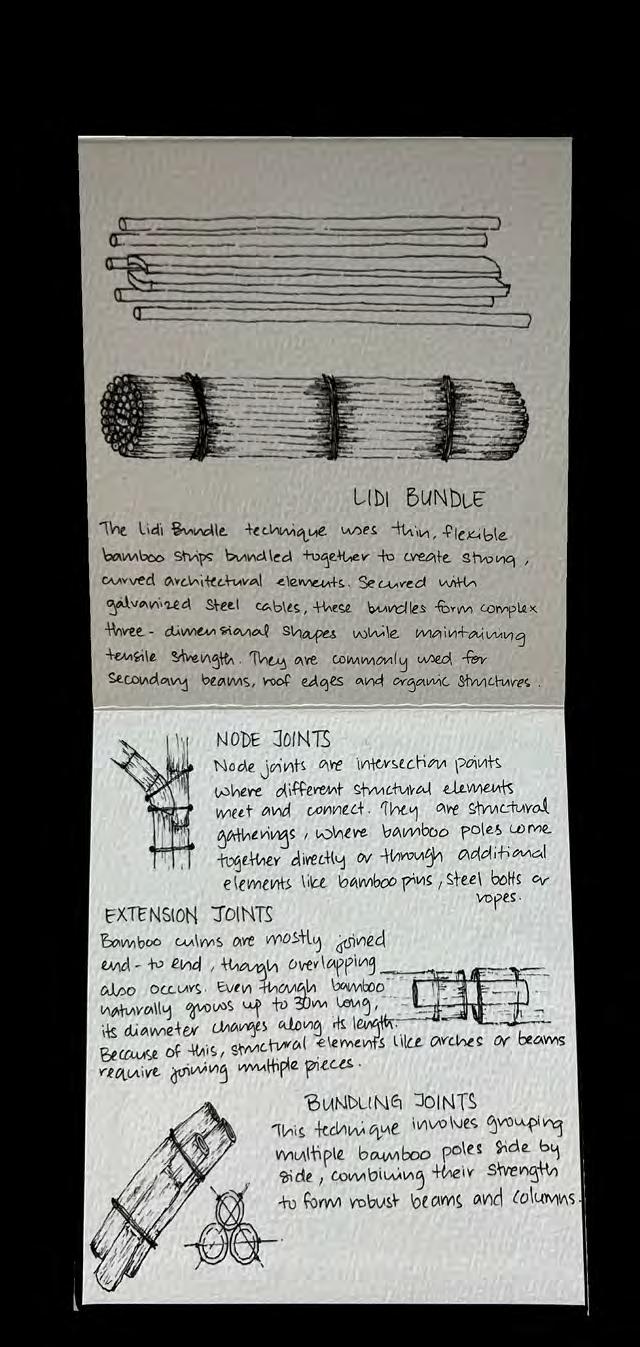
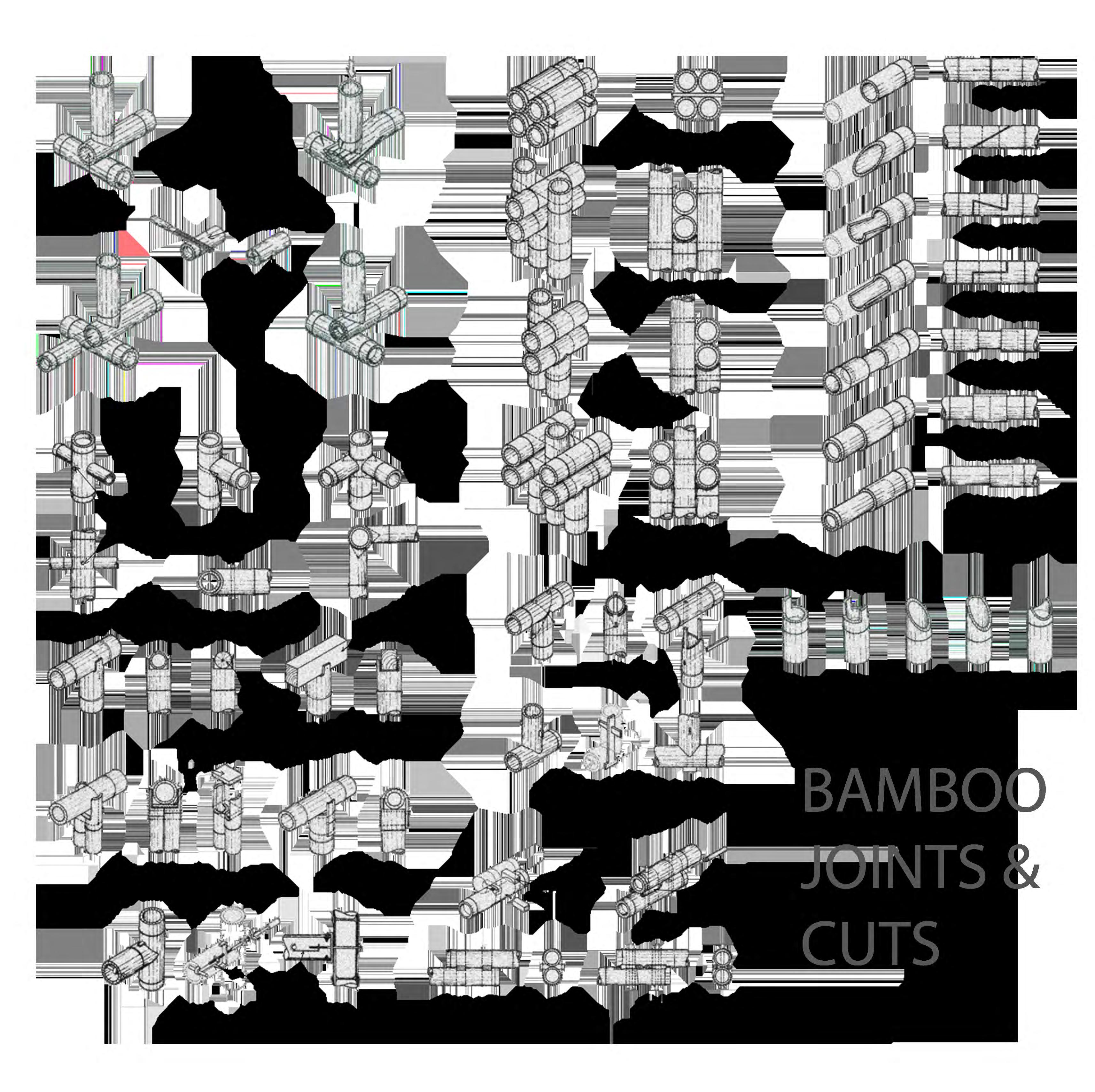
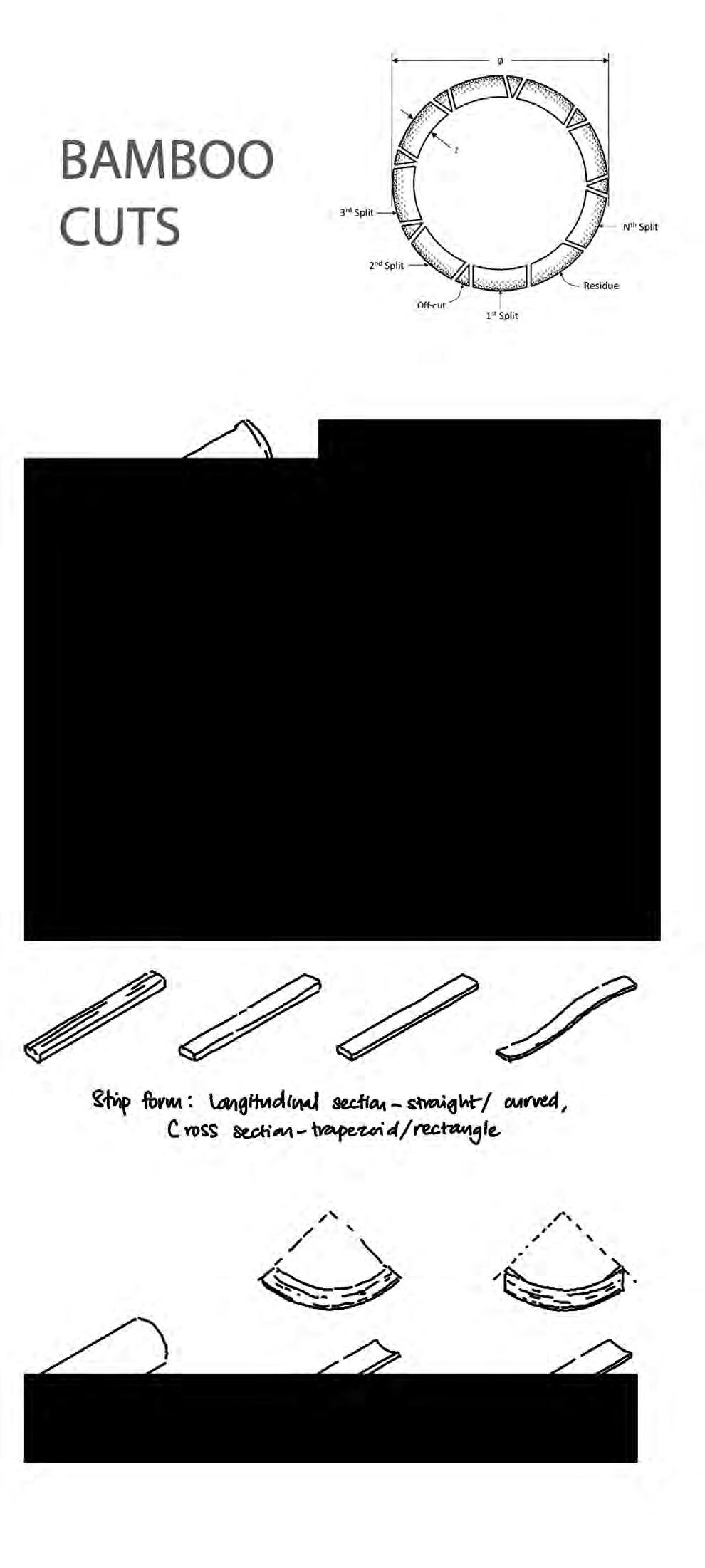
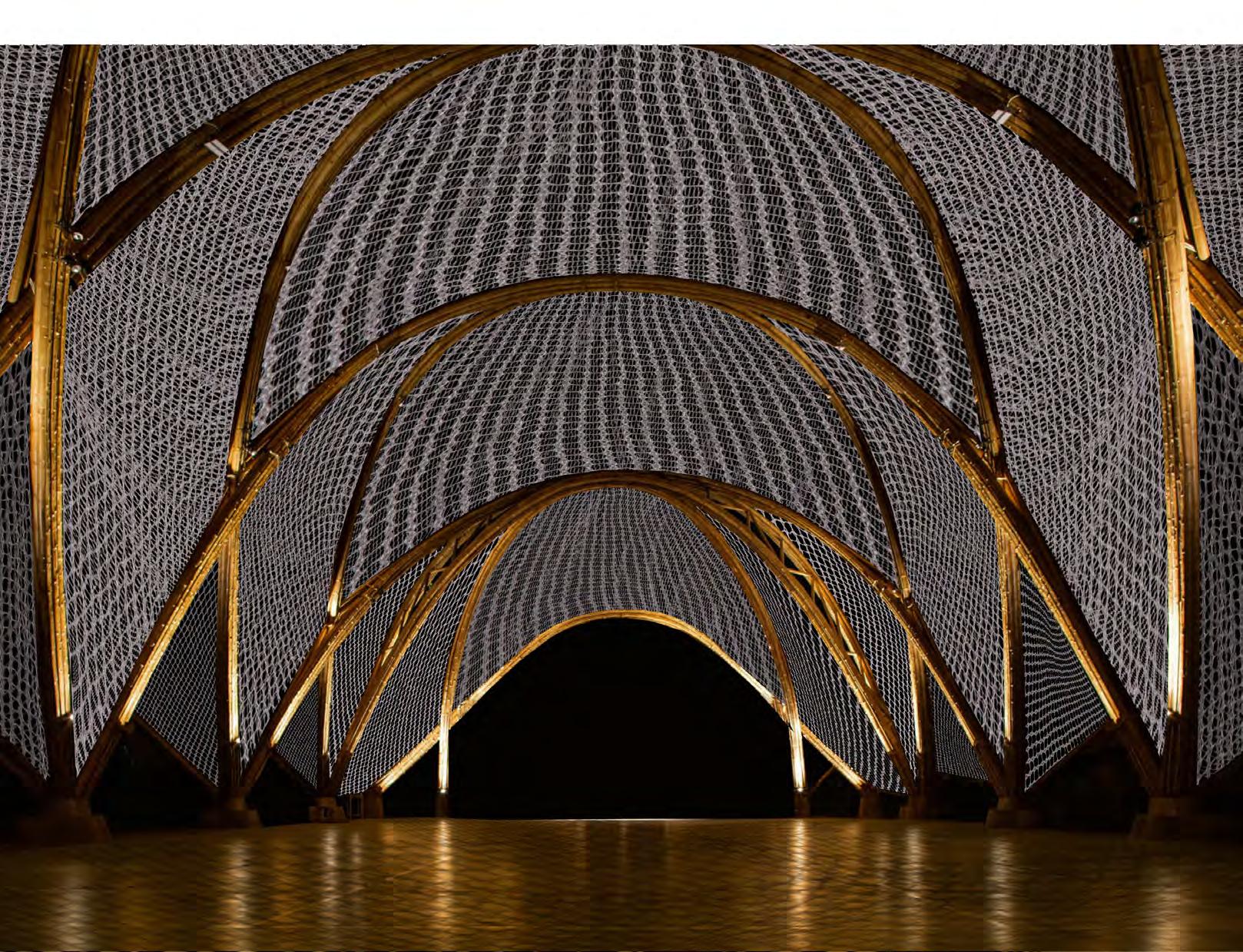
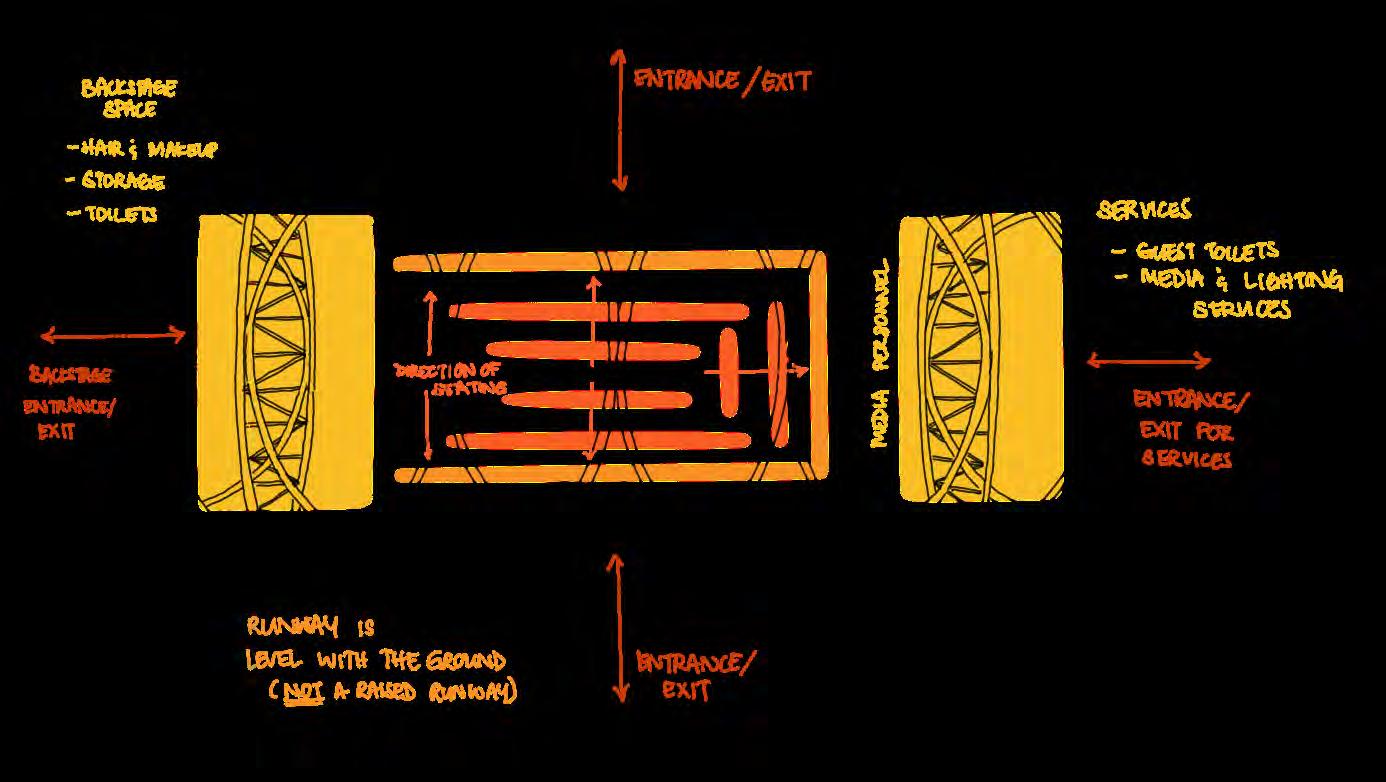
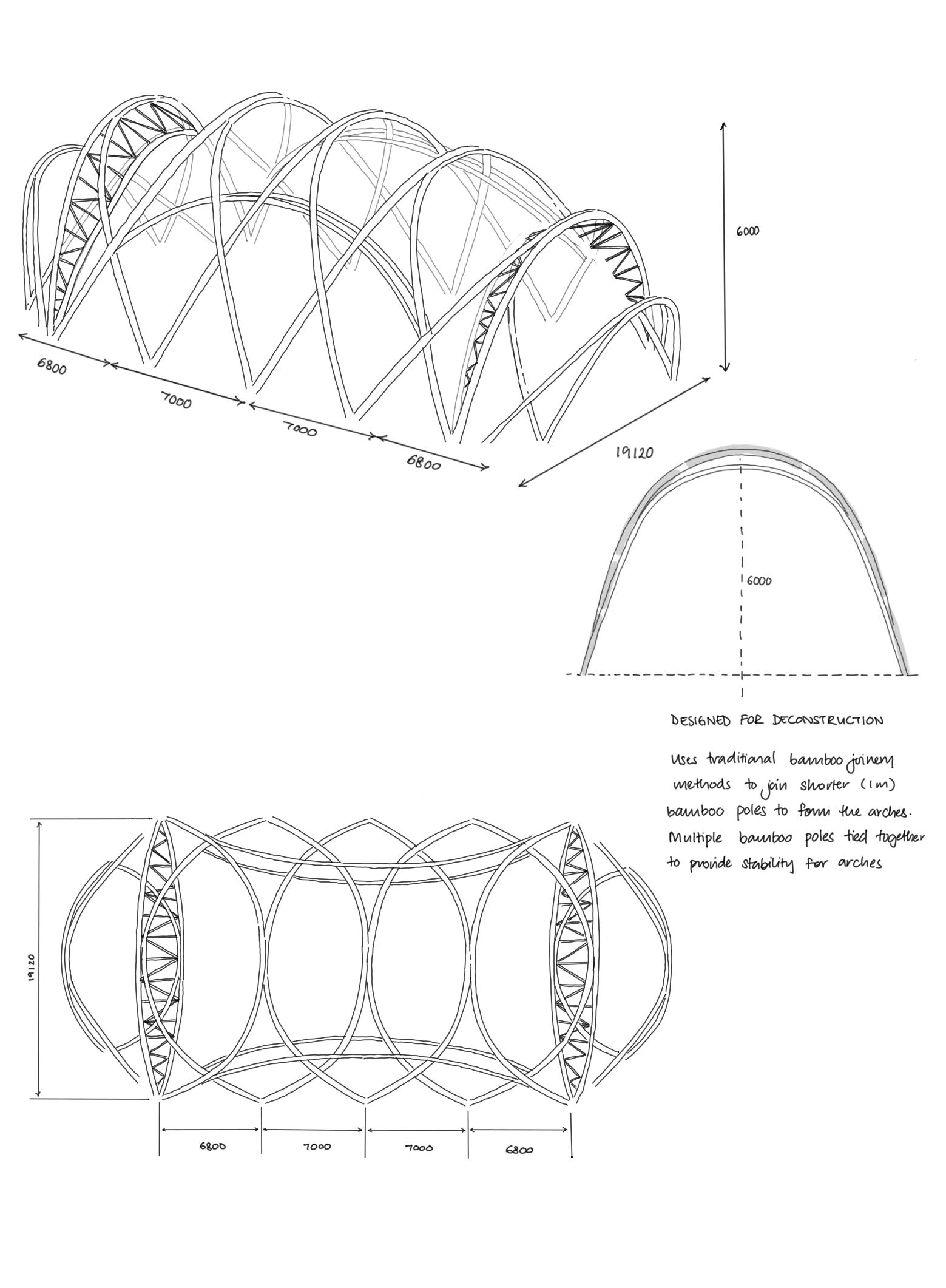
This pavilion, designed for an outdoor site in Shanghai, explores the spatial and sensory potential of regenerative, locally sourced materials. Its structure is formed from bundled bamboo arches, constructed using one-metre segments joined through traditional bamboo joinery techniques. This modular construction not only reinforces the strength of each arch but also allows for simple transportation, assembly, and disassembly—making it ideal for temporary outdoor installations.
The textile enclosure features translucent algae yarn, hand-crocheted into delicate mesh panels that drape softly across the bamboo frame. These panels filter natural light to create a calm, immersive atmosphere, while the visible seams—stitched with thick wool—form bold linear accents that add texture and definition. As sunlight passes through the structure, shadows cast by these seams animate the ground and surrounding garden space, enhancing the visual experience throughout the day. The combination of soft algae yarn, robust wool joinery, and the raw elegance of bamboo celebrates tactile contrast, lightness, and material circularity—reimagining architecture as a responsive, craft-driven expression of place and sustainability.
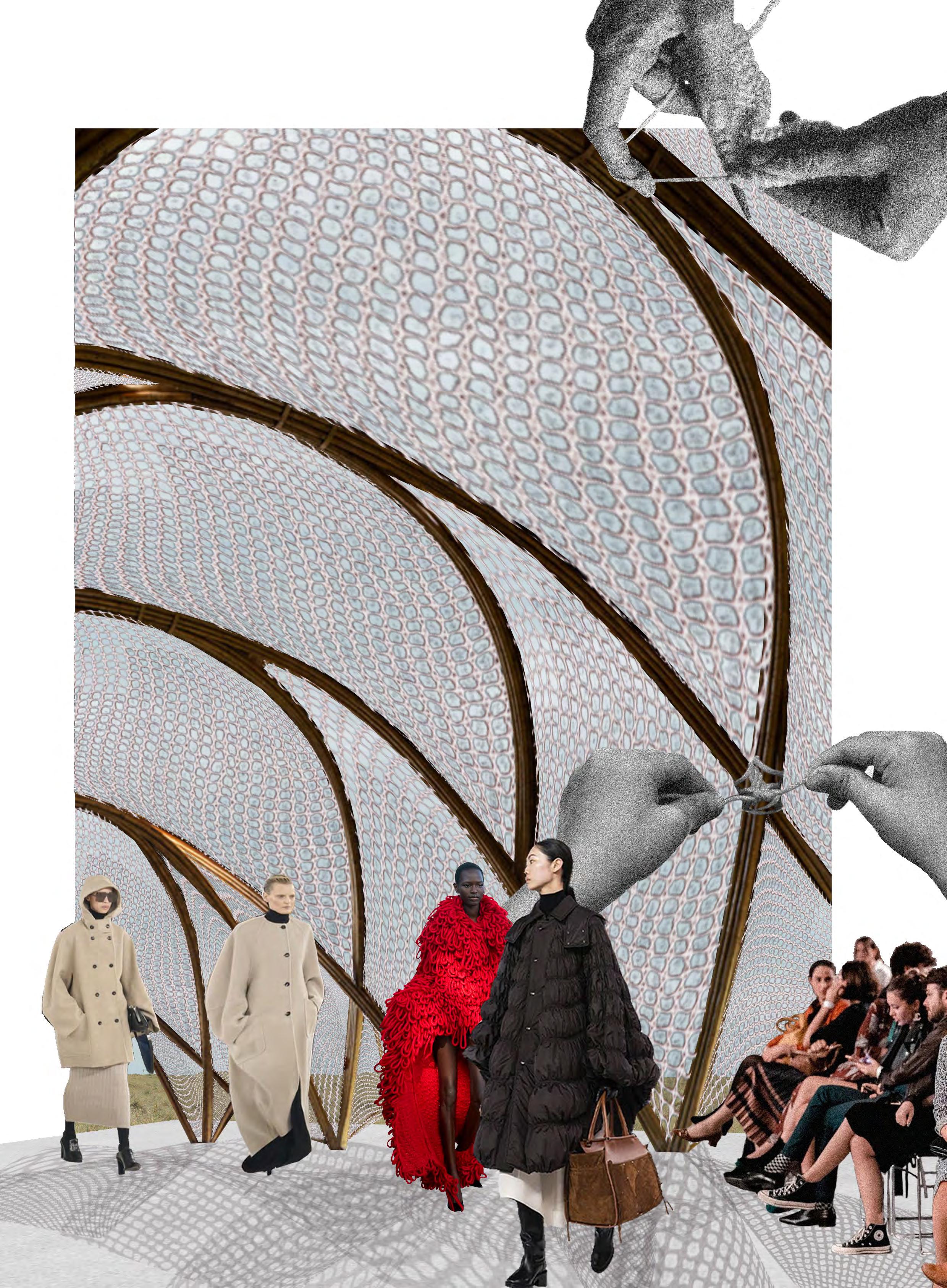
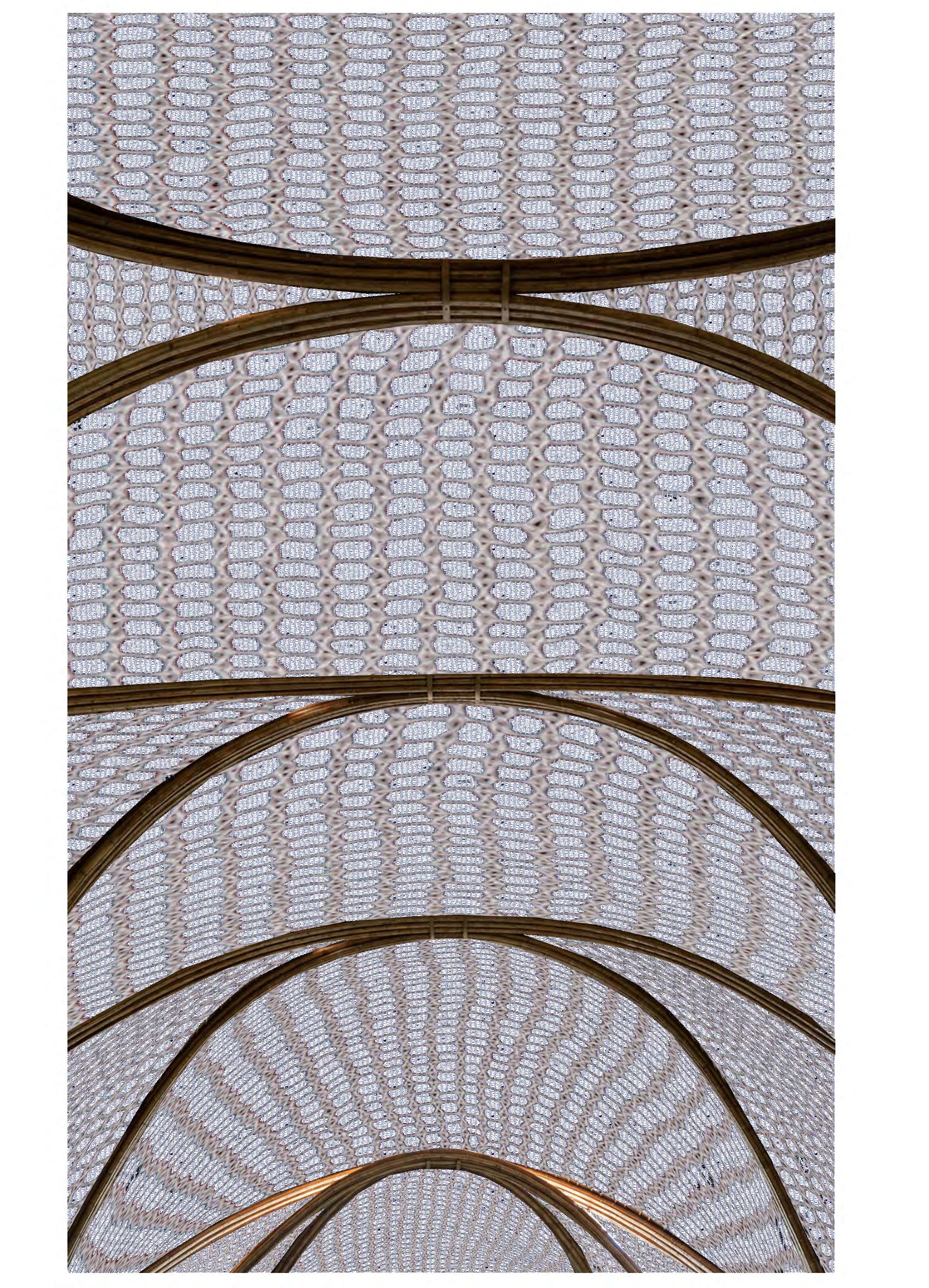
The tensile fabric is composed of a finely crafted algae-based crochet, its near-transparency allowing light to filter gently through the structure. Tactile knitted wool seams trace across the surface, casting the primary shadows that animate the interior. The open, lace-like quality of the algae crochet evokes the scale of an oversized knit, its larger apertures welcoming daylight, while the interplay between densely knitted sections and airy, open crochet creates a nuanced rhythm of light and shadow—shaping the pavilion’s atmosphere through texture and translucency.
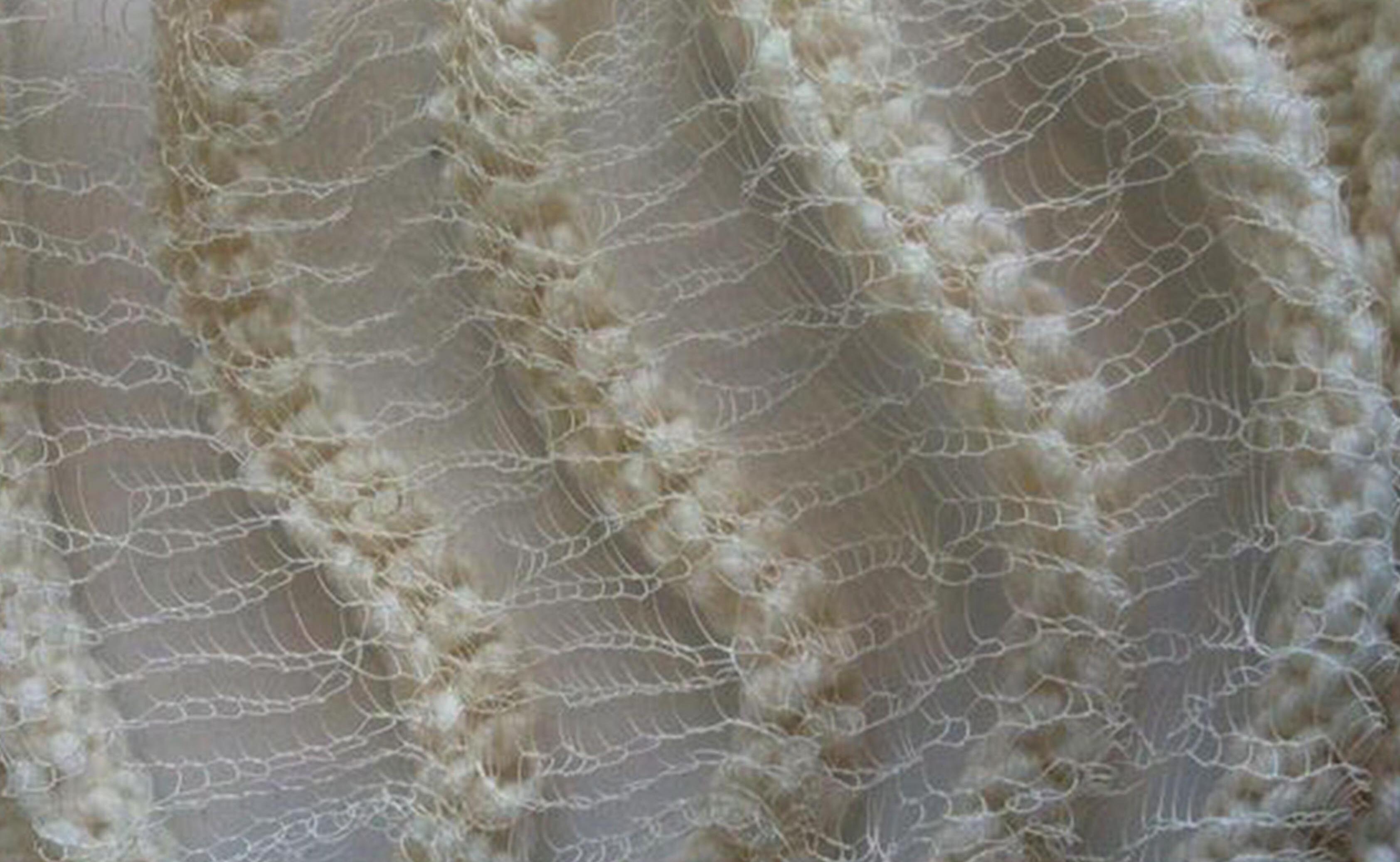

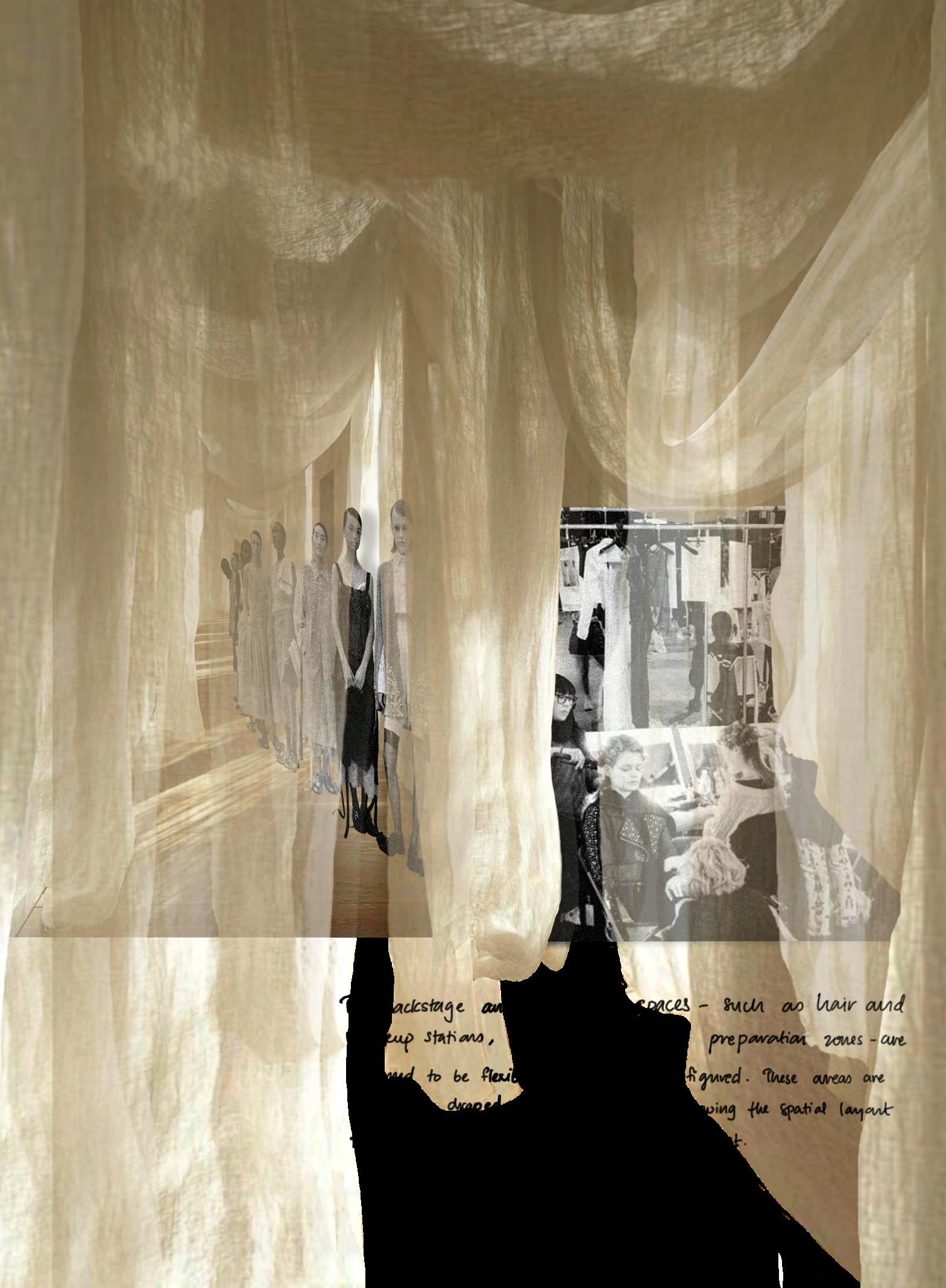
Operable fabric “curtain” dividers create a fluid and adaptable interior, allowing the pavilion’s spatial layout to shift in response to changing needs. These textile partitions can be drawn, layered, or reconfigured to define private areas, open up expansive gathering spaces, or create intimate enclaves. This approach ensures that the pavilion can accommodate a variety of functions—whether it is serving as a runway, a backstage preparation area, or an exhibition hall—while maintaining a light, tactile, and ever-transformable atmosphere.
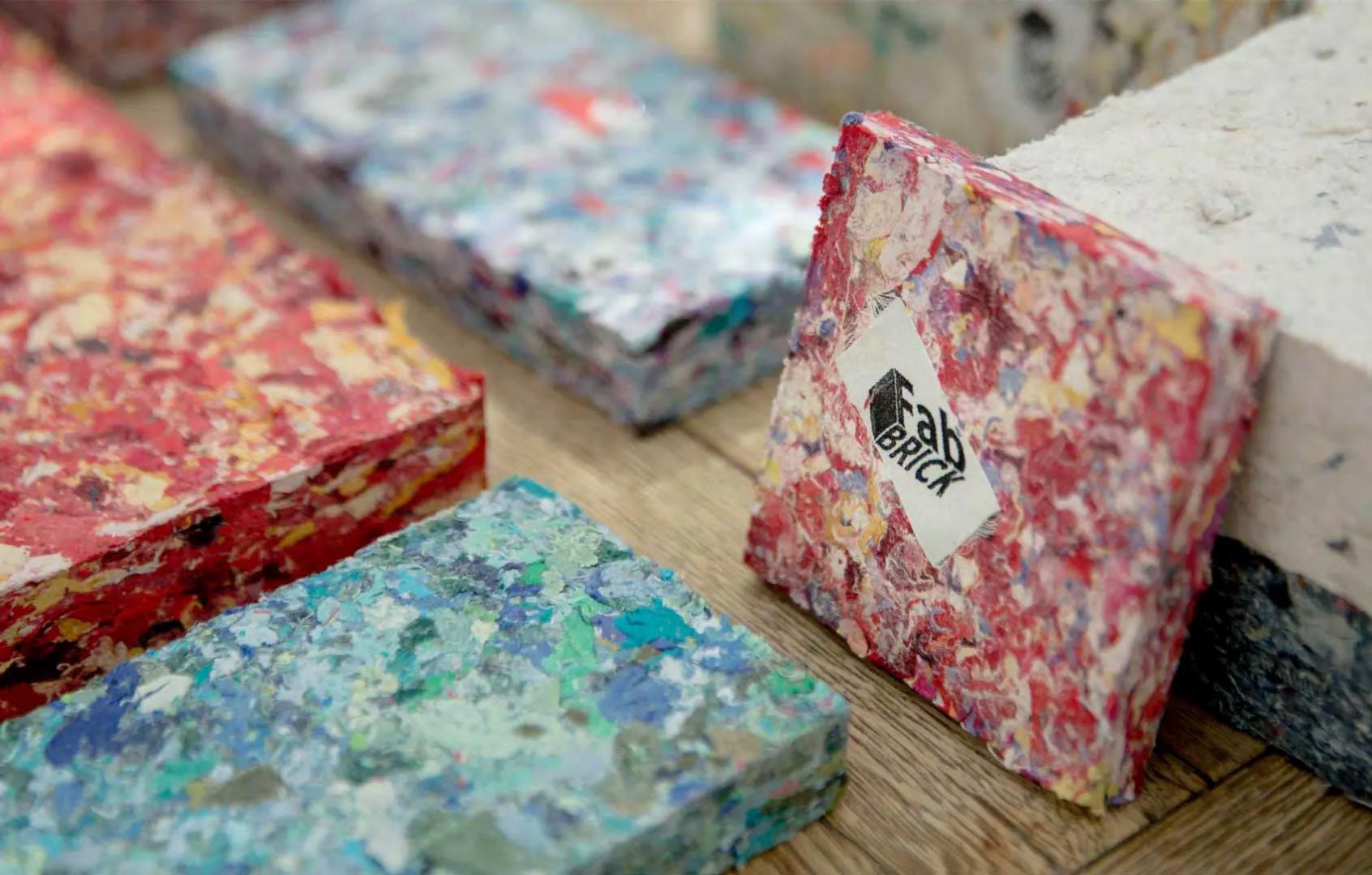
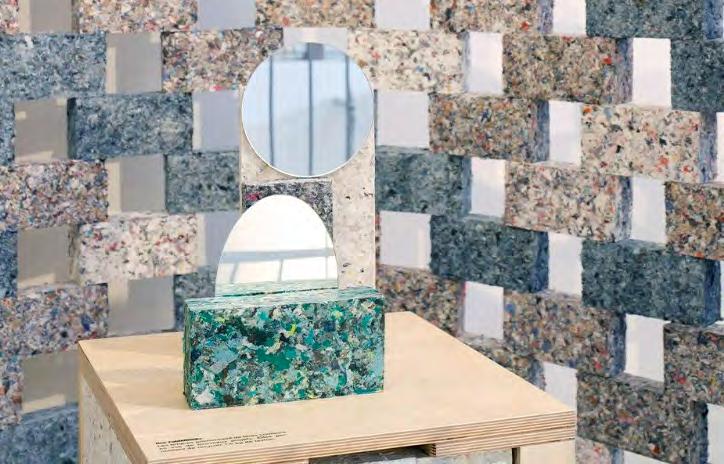
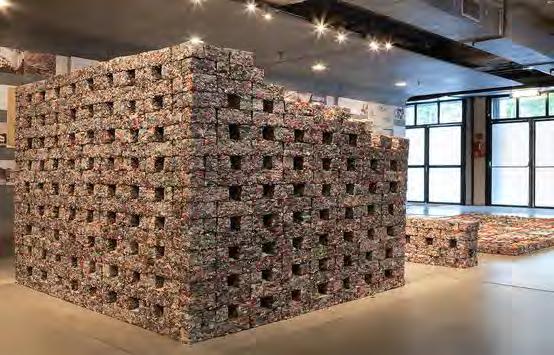
Felted “FabBricks”
Source : FabBRICK | FAIRE 2017 Projets (2017) Faireparis.com. Available at: https://www.faireparis.com/fr/projets/faire-2017/fabbrick-au-pavillon-de-larsenal-1280.html