
FREE November 2022 | Charlotte Edition | AwakeningCharlotte.com HEALTHY LIVING HEALTHY PLANET GUT FEELIN GS HOW FOOD AFFECTS YOUR MOOD ARTFUL HEALING KIDS THRIVE IN ART THERAPY ‘ FOREVER CHEMICALS ’ FACE RISING OPPOSITION STAYING CALM DURING TURBULENT TIMES


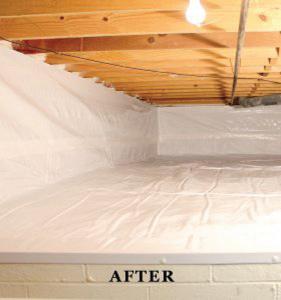








2 Charlotte Edition AwakeningCharlotte.com SedonaWaterProofing.com FREE INSPECTIONS FREE QUOTES Call Today: 704.960.7906 Is The Mold In Your Home Making Your Family Sick? We Keep Charlotte Basements and Crawlspaces Dry as a Desert! Our mold remediation and waterproofing services can keep your family breathing easy Basement Repair - Crawlspace Repair Crawlspace Care - Crawlspace Encapsulation Downspout/French Drains - Mold Remediation Moisture Prevention - Annual Maintenance Emergency Services Turn a Moldy Crawlspace into Clean Living Damp Basement or Crawlspace? Toxic mold floating around in our air is actually invisible to the eye, but still may be seriously affecting your health. $250 Discount with code NACLT (980) 294-4937 | www.WellcomeMD.com 150 Fairview Road, Suite 325 Mooresville, NC 28117 Call to schedule a complimentary consultation today! Personalized, resultsdriven approach Functional and integrative health care 24/7 physician access and same or next-day appointments Let us be yourhealth advocate
Rajal
Patel, MD Discover the power of concierge medicinea personal relationship with your physician 1012 S. New Hope Rd. Gastonia, NC 28054 704.864.0605 www.organicmarketplacenc.com ORGANIC FOODS, PRODUCTS AND SUPPLEMENTS H EAST GARRISON ARMSTRONG PARK DR HWY 74 I-85 ROBINWOOD S NEW HOPE ORGANIC MARKETPLACE I-85 20% OFF One offer per family with Ad. Valid Through Nov. 30, 2022. In-store only. Excludes clearance, wine, or sale items. ANY ONE ITEM





3November 2022

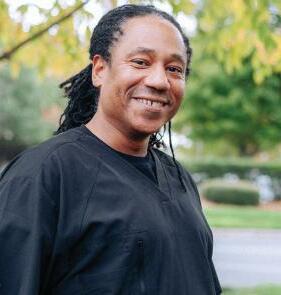






















4 Charlotte Edition AwakeningCharlotte.com Specializing in: Digestive issues • Emotional Wellness • Weight Loss • Chronic Pain Non-invasive Therapies: Laser Therapy, Electric Stimulation, Non Needle Auriculotherapy (to treat pain, addictions and internal disorders), Acugraph Scan to measure meridian imbalances and correct them Now Accepting NEW Patients Call today for a FREE consultation! To book your appointment, 704-837-2420 Your Body Can HEAL Itself If Given the Proper Tools! Darryl Roberts N.D. Board Certified Naturopathic Doctor Offering Virtual and IN Office Consultations 3315 Springbank Lane, Ste 102 • Charlotte, NC 28226 • DoctorDarrylND@gmail.com • DoctorDarrylWellness.com “When our bodies are out of balance they give us loud signals in the form of symptoms. In my practice we do not focus on symptoms. We focus on the root cause so the symptom no longer exists.If you listen to your body when it whispers, you will never have to feel it scream!” Better Healthcare Now Available Without A Prescription! Have you tried EVERYTHING and STILL have unexplained health issues? Dr. Haas has been in practice for 33 years. He has helped over 15,000 patients return to their highest health potential. Specializing in Alternative Therapies: Applied Kinesiology • Detoxification Allergy Elimination • Hormone Balancing Nutritional Testing • Healthy Weight Massage • Energy Foot Baths Laser Therapy 3315 Springbank Ln, Suite 102 • Charlotte, North Carolina HaasWellnessCenters.com We Help You Reach Your Health Goals • 2 Hour New Patient Appointments • Personal Health Care Plans • Doctor’s Cell Phone Number Call To Schedule A FREE 15 Minute Consultation (704) 837-2420 Does Your Doctor O er This? Naturally
























5November 2022 Don’t JUST Recycle, ONLY RECYCLE THESE SIX ITEMS Recycle right! No Plastic Bags SMALL & CLEAN CARDBOARD PLASTIC BOTTLES & JUGS GLASS BOTTLESPAPER CARTONS METAL CANS WipeOutWaste.com



6 Charlotte Edition AwakeningCharlotte.com Contents DEPARTMENTS 9 news briefs 12 health briefs 13 global briefs 18 green living 20 conscious eating 24 healthy kids 28 resource guide 31 gaston county natural guide 31 classifieds 20 18 24 Register For Our Upcoming Seminar 704-486-2448 Take Your Next Step To Better Health Dr. Michael Smith and Team Naturopathic Physician STOP Placing Band-Aids On Symptoms START Treating The Underlying Cause Virtual Appointments Available Digestion Disorders Autoimmune Diseases • Diabetes Anxiety/Depression • Women’s Health Wellness and Prevention 6404 Bannington Road, Suite A Charlotte, NC 28226 CarolinasNaturalHealth.com Empowering People to Better Health Since 2005 14 STAYING SERENE IN TURBULENT TIMES How to Turn Anxiety into Positive Action 17 GASTONIA'S CARENDA DEONNE On How Stress and Depression Are Intertwined 18 MAKING FOREVER CHEMICALS GO AWAY Manmade Compounds Pose Lasting Threat to Our Health 20 THE GUT-BRAIN CONNECTION How Food Affects Our Mood 24 THE COLORS OF HEALING Art Therapy for Kids
“Never again.” — Sandy Hook Elementary School, December 14, 2012. Hazard Community College, January 15, 2013. Chicago State University, January 16, 2013. University of Central Florida, March 18, 2013. Santa Monica College, June 7, 2013. North Panola High School, August 23, 2013. Sparks Middle School, October 21, 2013. Arapahoe High School, December 13, 2013. Purdue University, January 21, 2014. South Carolina State University, January 24, 2014. Los Angeles Valley College, January 25, 2014. Reynolds High School, June 10, 2014. Marysville Pilchuck High School, October 24, 2014. Umpqua Community College, October 1, 2015. Independence High School, February 12, 2016. UCLA Los Angeles, June 1, 2016. Townville Elementary School, September 28, 2016. Scullen Middle School, January 27, 2017. North Park Elementary School, April 10, 2017. North Lake College, May 4, 2017. Rancho Tehama Elementary School, November 14, 2017. Aztec High School, December 7, 2017. Marshall County High School, January 23, 2018. Marjory Stoneman Douglas High School, February 14, 2018. Central Michigan University, March 2, 2018. Great Mills High School, March 20, 2018. Santa Fe High School, May 18, 2018. University of North Carolina at Charlotte, April 30, 2019. STEM School Highlands Ranch, May 7, 2019. Saugus High School, November 14, 2019. Pleasantville High School, November 15, 2019. Searles Elementary School, November 23, 2019. Sarah J. Anderson Elementary, November 26, 2019. Bellaire High School, January 14, 2020. Texas A&M University, February 3, 2020. Oxford High School, November 30, 2021. Bridgewater College, February 1, 2022. Robb Elementary School, May 24, 2022.
Natural
the area.
month from one of the racks.
consider supporting these major distributors by
you!

the generosity of
Natural Awakenings appreciates the generosity of its distributors













the area.
consider supporting
major distributors by
and picking
the magazine each month
one of the racks.
the area. Pick up magazines monthly at:
there and picking up the magazine each month from one of the racks. Thank you!
7November 2022 17 20 14 Natural Awakenings is a network of holistic lifestyle magazines providing the communities we serve with the tools and resources to lead healthier lives on a healthy planet. HOW TO ADVERTISE To advertise with Natural Awakenings or request a media kit, please contact us at 704-499-3327 or email Ads@AwakeningCharlotte.com Deadline for ads: the 9th of the month. EDITORIAL SUBMISSIONS Email articles, news items and ideas to: Publisher@ AwakeningCharlotte.com Deadline for editorial: the 9th of the month. CALENDAR SUBMISSIONS Submit Calendar Events on AwakeningCharlotte.com. REGIONAL MARKETS Advertise your products or services in multiple markets! Natural Awakenings Publishing Corp. is a growing franchised family of locally owned magazines serving communities since 1994. To place your ad in other markets call 239-434-9392. For franchising opportuni ties call 239-530-1377 or visit NaturalAwakenings.com. ADVERTISING & SUBMISSIONS Fonts: Gotham Book Basic Sans Bold, Regular TT Slug OTF Bold Proof #: 2 Path: Macintosh HD:Users:jhowell2:Documents:WIP:_BBDO:BBDO_Internal:738022-1-to-11 Sandy Hook Promise:738022-5 Sandy Hook Promise_People_7_875x10.5:738022-5_Mechanicals:738022-5 Sandy Hook Promise_People_7_875x10.5_V2.indd Operators: Jason Howell Maria Barrios Ink Names: Cyan Magenta Yellow Black OOH Scaling Info: Build Scale: 100% Final Safety 10" H 7.125" W Final Viewing Area 10.5" H x 7.875" W Final Trim 10.5" H 7.875" W Final Bleed 10.75" H x 8.125" W Filename: 738022-5 Sandy Hook Promise_People_7_875x10.5_V2.indd Ink Density: 4C IMAGES: 738022-1_Chalkboard_V2_CMYK_HR.tif CMYK 558 ppi 13-BKR-006 BB_SHLogo.ai Agency Job Number: BDNY-P000XXXXX : 738022-5 Page: 1 of 1 Created: 5-26-2022 1:32 PM Saved: 5-26-2022 6:12 PM Printed: 5-26-2022 6:12 PM Print Scale: None X1A 85.10.100.10 S:10" T:7.875" T:10.5" B:8.125" B:10.75" CLIENT: BBDO Internal Fonts: Gotham Book Basic Sans Bold, Regular TT Slug OTF Bold Proof #: 2 Path: Macintosh HD:Users:jhowell2:Documents:WIP:_BBDO:BBDO_Internal:738022-1-to-11 Sandy Hook Promise:738022-5 Sandy Hook Promise_People_7_875x10.5:738022-5_Mechanicals:738022-5 Sandy Hook Promise_People_7_875x10.5_V2.indd Operators: Jason Howell Maria Barrios Ink Names: Cyan Magenta Yellow Black OOH Scaling Info: Build Scale: 100% Final Safety 10" H 7.125" W Final Viewing Area 10.5" H x 7.875" W Final Trim 10.5" H 7.875" W Final Bleed 10.75" H x 8.125" W Filename: 738022-5 Sandy Hook Promise_People_7_875x10.5_V2.indd Ink Density: 4C IMAGES: 738022-1_Chalkboard_V2_CMYK_HR.tif CMYK 558 ppi 13-BKR-006 BB_SHLogo.ai Agency Job Number: BDNY-P000XXXXX : 738022-5 Page: 1 of 1 Created: 5-26-2022 1:32 PM Saved: 5-26-2022 6:12 PM Printed: 5-26-2022 6:12 PM Print Scale: None Advertisement Don’t wait for the next “Never again.” Learn the signs at SandyHookPromise.org
PROMISE S a nd y Hook X1A 85.10.100.10 50.0.100.0 S:7.125" S:10" T:7.875" T:10.5" B:8.125" B:10.75" Or Call: 980-899-4468 | info@fierceandfitforlife.com Fuel Your Fierce & Fit Lifestyle • Woman Owned • Charlotte based • Vegan Protein shakes satisfy hunger • 25 grams of organic plant-based protein ***** I love both flavors (chocolate & vanilla)! Way better than Orgain. Very smooth & high quality (not chalky, too sweet or fake tasting... which is my complaint about other brands) - Jen G. Revolutionary Protein Powder with a Remarkable Taste 20% off Limited Time Offer: use code Bewell20 ORDER ONLINE: www.FierceAndFitForLife.com Natural Awakenings appreciates the generosity of its distributors throughout the area. Please consider supporting these major distributors by shopping there and picking up the magazine each month from one of the racks. Thank you! Natural Awakenings appreciates the generosity of its distributors throughout the area. Please consider supporting these major distributors by shopping there and picking up the magazine each
Thank
Natural Awakenings appreciates
its distributors throughout
Please
these
shopping there
up
from
Thank you!
Awakenings appreciates the generosity of its distributors throughout
Please
shopping
throughout
PUBLISHER Shannon McKenzie
DESIGN & PRODUCTION Patrick Floresca
AD DESIGN Helene Leininger
EDITORIAL Jane Aylward Allison Gorman Randy Kambic Martin Miron
CONTACT US
P.O. Box 456
Cornelius, NC 28031
Ph: 704-499-3327 • Fax: 866-632-9118

AwakeningCharlotte.com
Publisher@AwakeningCharlotte.com
Ads@AwakeningCharlotte.com
SUBSCRIPTIONS
Free subscriptions are available for our digital issue by emailing
Publisher@AwakeningCharlotte.com
NATIONAL TEAM
CEO/Founder Sharon Bruckman
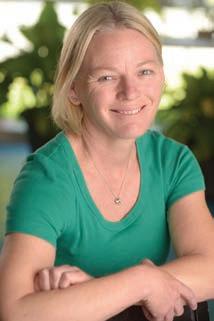
COO/Franchise Sales Joe Dunne

Layout & Design Gabrielle W-Perillo Financial Manager Yolanda Shebert Asst. Director of Ops Heather Gibbs

Digital Content Director Rachael Oppy National Advertising Doyle-Mitchell Administrative Assistant Anne-Marie Ryan
Natural Awakenings Publishing Corporation 4851 Tamiami Trail N., Ste. 200 Naples, FL 34103
NaturalAwakenings.com
© 2022 by Natural Awakenings. All rights reserved. Although some parts of this publication may be reproduced and reprinted, we require that prior permission be obtained in writing.

Natural Awakenings is a free publication distributed locally and is supported by our advertisers. Please call to find a location near you or if you would like copies placed at your business.
We do not necessarily endorse the views expressed in the articles and advertisements, nor are we responsible for the products and services advertised. Check with a healthcare professional regarding the appropriate use of any treatment.
letter from publisher

Action > Anxiety
AsI write this publisher’s letter, I’m painfully aware that this is the Mental Health issue and that anxiety is a recurring theme in several articles. I am stressed and anxious. I’m late this month getting the magazine put together; the deadline is in two days. There are other issues I’ve been avoiding and allowing to compound that need to be resolved. Then there are the issues that are out of my control, yet I’ve been ruminating on them in the back of my mind for some time.
Mass shootings, particularly school shootings, have always concerned me. I remember being shocked when Columbine happened in 1999—and I’ve continued being shocked, and perhaps feeling a bit more powerless, with each shooting that has occurred since. Recently my daughter came home from school with the rumor that a classmate had threatened to bring a gun to school the next day. She wanted to stay home. (One of her friends actually did.) I called and learned that the threat had been handled by the principal and the police; I was assured that school would be safe to attend. So I told my daughter she had to go. Later that week, she reported to me that she’d had a nightmare: The two of us were on a small plane with her friend who stayed home and the friend’s mom. Something happened and the friend’s mom jumped up and announced they were getting off the plane. They both ran for the door and got off right before the door closed. Nobody else could get off the plane. That’s where the dream ended. Even though my daughter didn’t tie it to what happened earlier that week, I did. And I felt guilty.
The mass shooting in Raleigh by a 15-year-old happened less than a week ago, and while I’ve intentionally avoided news coverage because I find it particularly stressful at this time, I know I need to take action against gun violence to address my feelings of hopelessness and guilt. Writing this letter, supporting Sandy Hook Promise, learning the signs (https://tinyurl.com/gunviolencesigns) and voting for common sense gun laws are all ways for me.
Wishing you action to progress a cause important in your life this November,
Natural
8 Charlotte Edition AwakeningCharlotte.com
Awakenings is printed with soy-based ink. HEALTHY LIVING HEALTHY PLANET CHARLOTTE EDITION Natural Awakenings Magazine is ranked 5th Nationally in CISION’S 2016 Top 10 Health & Fitness Magazines
Shannon
Unity of Charlotte Welcomes New Co-Ministers
Marking the third time they have brought a married couple to the pulpit, the 48-year-old congregation of Unity of Charlotte recently selected Rev. Lisa Herklotz and Rev. Jim Ernstsen as new co-ministers with their first service set for 9:30 a.m. on November 20. Both have completed their Master of Divinity degrees through Unity Worldwide Spiritual Institute and are ordained through Unity Worldwide Ministries.
Rev. Jim served as senior minister for Unity of Central Minnesota, in St. Cloud, for the last two years; Rev. Lisa was most recently a ministerial consultant at several Unity centers in Minneapolis and Eau Claire, Wisconsin.
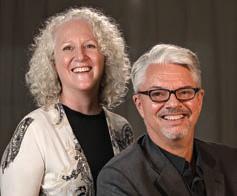
The passions of Rev. Jim—involved in the Unity Movement for 25-plus years including as a guest speaker throughout the eastern U.S. and Canada—are facilitating Pub Theology and teaching Insight Meditation and universal spiritual concepts through both Unity and contemporary authors like Eckhart Tolle, Michael Singer and Thich Nhat Hanh. Rev. Lisa, with the movement for 15-plus years, spent as many years living and working in a spiritual community as she has in large corporations after completing her bachelor’s degree in psychology and experienced spiritual practices from several faith traditions before Unity. Her strongest interests include interfaith connections, spiritual social action and contemplative practices. She currently teaches two contemplative practice courses in a Spiritual Direction certification program.
Location: 401 E. Arrowood Rd., Charlotte. For more information, visit www.UnityOfCharlotte.org. See CRG, page 30.

Natural Awakenings Charlotte Hosts Social Event




Natural Awakenings Charlotte will host a natural health and green-living social event from 3 to 6 pm. on Novem ber 8 at BraveWorks, in Charlotte.

“This is a great opportunity for like-minded people and business owners to get together, reconnect with old friends and meet new associates prior to the busy holiday season,” emphasizes Shannon McKenzie, publisher of Natural Awaken ings Charlotte. “This event is also intended to welcome newcomers to Charlotte and the natural health/green-living community as well as help businesses gain insights and marketing strategies to help kick off the new year with fresh ideas and reinvigorated alliances.”
Event location, BraveWorks, provides artisan programs for women seeking to overcome situations such as human trafficking, abuse, addiction, incarceration, generational poverty and ethnic persecution both locally in Charlotte as well as internationally. Participants may enjoy the social and do some holiday shopping as well. BraveWorks has a large selection of hand-made jewelry, bags and accessories, home décor and clothing made by program participants. Artisans are paid upfront for their creations and 100% of purchases go to the organization to help the women and families being served.
Natural Awakenings is a free natural health and green-living magazine that has been in the Charlotte region for 18 years. It’s part of a national franchise network with editions in 45-plus markets in the U.S. that connects businesses, with both print and digital offerings, to a highly motivated niche audience of readers interested in alternative approaches to health, wellness, sustainability, spirituality and self-improvement.
BraveWorks location: 1717 Cleveland Ave. RSVP by Nov. 6 at https://tinyurl.com/NACLT2022Social. For more information, call 704-499-3327, email Shannon@AwakeningCharlotte.com or visit www.AwakeningCharlotte.com. See ad, page 8.
9November 2022 news briefs
Call to Schedule your FREE 30 minute Discovery Call 704-281-2183 Your Body Is Talking To You… Let Me Help You Listen! Together let’s discover the root cause of what’s holding you back from achieving your health goals - Balance hormones naturally - Infertility - Burned out on counting calories and dieting - Individualized nutrition versus diet mentality - Not sleeping well, high stress - Mid-life crisis - Unclear about your path in life Helping Women With Common Health & Life Transition Issues: Achieve Your Health Goals Faster with Health Coach Sara Cain-da Costa sara@risingstrongher.com www.tinyurl.com/SaraHealthCoach Wed @ 10AM: Mid week Inspiration Sun @ 11:15AM: Celebration Service Live Stream: HeartLightCharlotte.org 7300 Mallard Creek Rd Charlotte NC 28262 704 599 1180 info@heartlightcharlotte.org www heartlightcharlotte org We invite you to join a Spirit-Guided, Heart-Centered, Christ-Conscious, Loving Community, and be a part of transforming the world by allowing the Heart-light Presence of God to Shine Through US as US! David Hulse, Spiritual Leader Wedding & Event Space Available in Newly Remodeled Center! The NextStep in SpiritualCommunities!
ONLINE










10 Charlotte Edition AwakeningCharlotte.com
EXCLUSIVES www.AwakeningCharlotte.comVISIT US ONLINE @ Find additional articles online at AwakeningCharlotte.com. Go to the homepage and explore local businesses, recipes, and articles exclusively from Natural Awakenings. Stay informed with our up-to-date articles, local event listings, videos, special offers, insights and more! JOIN US ON FACEBOOK TO SHARE YOUR COMMENTS SIGN UP FOR OUR eNEWSLETTER! FREE November 2022 Charlotte Edition AwakeningCharlotte.com HEALTHY LIVING HEALTHY PLANET GUT FEELINGS HOW FOOD AFFECTS YOUR MOOD ARTFUL HEALING KIDS THRIVE IN ART THERAPY FOREVER CHEMICALS’ FACE RISING OPPOSITION STAYING CALMDURING TURBULENT TIMES Thank you Community Sponsor accredited protective protocols. All of our crowns, bridges, and veneers are made in-house with CAD/CAM computer milled technology. Kempter combine modern technology & safe protection protocols with advanced knowledge of biological dentistry. Kempter Holistic Dentistry Accepting New Patients! 704-782-0797 1000 Copperfield Blvd, Ste 160, Concord 3111 Springbank Ln, Ste F1, Charlotte KempterDentistry.com Check out the latest events at www.AwakeningCharlotte.com/calendar CALENDAR 12 QUICK FIXES FOR ANXIETY Simple Strategies for Mental Well-Being SKIING FOR FITNESS AND PURE FUN Tips for Enjoying Alpine and Nordic Styles ECO-SKIING Planet-Friendly Ways to Hit the Slopes GRATITUDE IS GOOD MEDICINE R ACHEL JONES on Grief in the Healthcare Front Lines CAREGIVING COMPANIONS The Many Benefits of Service, Therapy and Emotional Support Animals
Taking Emotional Wellness Quiz Leads to Special Offer
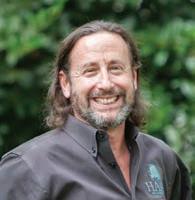
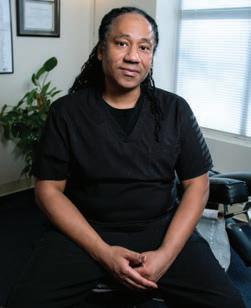
Doctor Darryl Roberts, a naturopathic doctor with Haas Wellness Center who specializes in emotional wellness, has created an Emotional Wellness Quiz to assess our current emotional state. All those that take the quiz at www.DoctorDarrylWellness.com or schedule a free 15-minute consultation this month will get access to his Sound Therapy for Emotional Wellness program through December 31 at no charge.
“Our emotional health has a direct impact on our physical health,” says the board-certified Naturopathic Doctor and Flower Essence Therapist. “The past two years have caused devastation on our emotional health, and we are seeing it manifest as disease. There are natural ways to help.”
After completing his studies at the Trinity School of Natural Health, he became a Certified Health Specialist, Certified Flower Essence Practitioner, Certified Natural Health Professional and Doctor of Naturopathy.
Doctor Darryl is also a plant-based chef who studied at the Rouxbe Cooking School.
For more information or to arrange for a free consultation, call 704-837-2420, email DoctorDarrylND@gmail.com or visit www.DoctorDarrylWellness.com. See ad, page 4.
IVY Integrative Offers Free Webinar and Meet-and-Greet Sessions

Naturopathic Doctor Chelsea Leander Birch, owner of IVY Integrative in Charlotte, will host a special, one-time, free, webinar on Aging Gracefully with Holistic Medicine from 5 to 6 p.m. on November 30. For those who cannot attend or who want more information on the practice as soon as possible, free, 15-minute meet-and-greet sessions can be scheduled via her practice’s website. Both are great ways to get more information about IVY Integrative in time to plan holistic health options for 2023.

From herbal medicine and supplements to acupuncture and beyond, this webinar will include a Q&A plus discounts on packages and memberships at its conclusion. It will also include research-based evidence to help attendees age as gracefully as possible. Optional online meet-and-greets connect participants with naturopathic doctors on IVY’s team to review their health and formulate a tailored holistic plan which may include seeing a single practitioner with an a la carte service plan or multiple experts and enrolling in an affordable package (examples: five acupuncture, counseling and massage sessions spread over time; or acupuncture month one, massage month two and chiropractic adjustment month three).
“In a world aimed at extending quantity of life, we want to focus on quality of life,” says Dr. Birch. As a registered herbalist, a certified Bowen Therapist and CEDH homeopathy trained physician, Dr. Birch aims to bridge the gap between natural and conventional medicine. Her practice of 15 plus holistic clinicians uses non-invasive medicine to avoid harmful side effects and support long-term healing. “Let’s get back to our roots.”
For more information or to register for webinar, visit www.Tinyurl.com/AgingGracefullyHolisticMed To schedule a meet-and-greet, visit www.IvyIntegrative.com or call 704-569-5489. Location: 1520 South Blvd, Ste. 228. See ad, page 15.
Make a Difference on Giving Tuesday
As we enter the special season of giving this month, Giving Tuesday is a specific day to generously support people and organizations that help transform our communities and the world. Giving increases feelings of gratitude, self-esteem and self-worth while inspiring others to also give. Habitual Roots Inc., a leading Charlotte-based nonprofit that has provided mental and emotional health events, programs, resources, services, scholarships and more for 10,000-plus people since its founding in 2019, will welcome contributions from the public now through Tuesday, November 29 toward reaching their goal of $10,000. Their focus is on preventative programming such as yoga, meditation, workshops, support groups, and one-on-one wellness coaching. A gift of $33 provides one month of programming for someone in need.
The importance of the organization’s efforts is shown by the fact that nearly half of all Americans will experience a mental illness during their lifetime, one in four report they had to choose between getting treatment and paying for daily necessities and 74 percent of us don’t believe that mental health services are available for everyone.
For more information, visit www.HabitualRoots.com. Contribute directly to Giving Tuesday campaign by visiting https://givebutter.com/qTzGyg.

11November 2022 news briefs
health briefs

Mislabeling Found in Some Immunity Supplements
Immunity supplements may not be all they claim to be, according to a new study in the Journal of the Ameri can Medical Association. Researchers conducted liquid chromatography and mass spectrometry tests on 30 of the bestselling, four-star-and-up immunity products on Amazon and found that only 13 contained the exact ingredients listed on their labels. Thirteen were missing some of the listed ingredients and nine contained ingredients not listed on the labels. Missing ingredients were mainly plant extracts such as aloe vera, astraga lus, eleuthero, ginger root and slip pery elm. Added ingredients included black rice seed in elderberry extracts and pantothenic acid.
Fruit and Vitamin B6 May Relieve Anxiety and Depression
The best strategy to stay upbeat may be to reach for the fruit bowl, suggests a new study comparing the habits and mental states of 428 people published in the British Journal of Nutrition. Researchers at the UK’s Aston University found that the more often people ate fruit, the lower they scored for depres sion and the higher for mental well-being. The frequency of fruit consumption seemed to be more important to psychological health than the total amount consumed. People that ate savory snacks such as potato chips, which are low in nutrients, were more likely to report more frequent memory lapses and greater levels of anxiety and depression. The researchers found no connection between eating vegetables and psychological health. Nutrients can be lost during cooking. “As we are more likely to eat fruit raw, this could potentially explain its stronger influence on our psychological health,” says lead author Nicola-Jayne Tuck.

In another study, researchers from the UK’s University of Reading gave 478 young adults either high doses of vitamins B6 or B12 or a placebo. After one month, they found that 100 milligrams of the B6 (about 50 times the recom mended daily allowance) significantly boosted gamma aminobutyric acid, which inhibits excitatory impulses in the brain, and reduced self-reported anxiety and depression levels. B12 had no such effects.
Stretching and Balance Exercises Can Avert Mental Decline


To protect against memory loss, simple stretching and balance exercises work as well as hard-driving aerobics, concludes a new study from Wake Forest University. The study enrolled 296 sedentary older adults with mild cognitive decline such as forgetting dates, keys and names. Those that performed simple stretching routines for 120 to 150 minutes per week experienced no memory decline in a year’s time, as measured by cognitive tests and brain scans that showed no shrinkage. These results matched the outcome of people that did moderate-intensity aero bic training on treadmills or stationary bikes four times a week, striving for about 30 to 40 minutes of a height ened heart rate. A control group of equally matched people that did not exercise did decline cognitively. The people that exercised were supervised by trainers at local YMCAs, which may have helped them stay motivated, say the researchers.

12 Charlotte Edition AwakeningCharlotte.com
Jo Sonn/Unsplash.com
MIA Studio/AdobeStock.com
Spiritual, Religious, Metaphysical, New Age Supplies, Gifts & Books, Candles, Incense, Smudge Sticks & Accessories, Gemstones & Crystals, Tarot & Oracle Cards, Pendulums, Herbs, Gemstone Jewelry, Talismans, Egyptian, Hindu, Catholic Statuary 3010 Monroe Road • Suite 104 Charlotte 704-632-9911 MamaBessiesPlace.net HOURS OF OPERATION: Wednesday-Friday noon-6pm Saturday noon-4pm Sunday-Tuesday closed Face Coverings and Social Distancing required
Google Downplays Flight Emissions

Cool Pavement Program
U.S. Environmental Protection Agency data shows the difference in nighttime temperatures in heat island areas can be as much as 22 degrees warmer than temperatures measured outside such locations. This leads to more energy consumption, greenhouse gas emissions, air pollution and other harmful effects.
Cool pavement is a road treatment made with no harmful chemi cals—just asphalt, water, an emulsifying soap, mineral fillers, polymers and recycled materials—applied on top of existing asphalt pavement. Because the surface reflects, rather than retains heat, it has the potential to offset rising nighttime temperatures.
Ben Klewais/Unsplash.com
The world’s biggest search engine has taken a key driver of global warming out of the carbon calculator embedded in the company’s Google Flights search tool, making journeys appear to have much less impact on the environment than before. Dr. Doug Parr, chief scientist of Greenpeace, says, “Google has airbrushed a huge chunk of the aviation industry’s climate impacts from its pages.”
With Google hosting nine out of every 10 online searches, this could have wide repercussions for people’s travel decisions. In July, the search engine decided to exclude all the global warming impacts of flying ex cept CO2 following consultations with its industry partners.
Kit Brennan, a founder of Thrust Car bon, a UK company that helps businesses reduce the effect their travel has on the climate, fears consumers could come to believe that non-CO2 impacts on the climate are not relevant in the longer term, despite the science that contradicts this view. That would mean up to 1.5 percent of the warming caused by human activity would be ignored, and the pressure on airlines to reduce their emissions would be cut accordingly. Some experts say Google’s calculations now represent just over half of the real impact of flights on the climate.
In 2020, portions of eight neighborhoods in Phoenix received cool pavement asphalt coating treatment in areas already in need of pave ment preservation. The city partnered with Arizona State University researchers to conduct scientific tests using thermal imaging by helicopter flyovers and temperature sensors embedded in the pavement surface, studying how it could mitigate the urban heat island effect. In October 2021, the pilot program ended and cool pavement has become a regular program for the city’s Street Transportation Department.
Similarly, 1 million square feet of roads in Los Angeles have been covered with solar-reflective paint in the GAF Cool Community Project, which includes colorful murals by a local artist on a basketball court, a school playground and a parking lot.
Find Inspiration, Comfort and Closure with Kelle

Reading

13November 2022 global briefs
• International Psychic Medium with 18 years experience • Award Winning Author • Psychic Investigator on missing persons cases Contact Kelle Sutliff: 978-420-8213 | PsychicMedium@verizon.net
Book A
Today
STAYING SERENE IN TURBULENT TIMES
HOW TO TURN ANXIETY INTO POSITIVE ACTION
by Ronica O’Hara
In this day and age, we have good reason to toss and turn in our beds at night. As our nation faces climate catastrophes, acrid politics, stubborn inflation, unpredictable virus variants and hot-button issues like abortion and guns, there’s good reason our collective anxiety levels are at a high pitch. A recent Yale survey found that 70 percent of Americans report being anxious or depressed about global warming, and a Penn State survey this year found that 84 percent of us say we are “extremely worried” or

“very worried” about where the country is headed. Researchers are coining new terms: “polycrisis”, for complex, cascading crises in interacting systems, and “pre-traumatic stress disorder”, when fear of an outcome makes it as good as real to our psyches.
“It’s easy for people to feel overwhelmed now, feeling there are breakdowns and threats on many fronts. People can wonder ‘Where do I even start?’ and feel powerless and hope less and numb,” says psychiatrist Janet Lewis, M.D., a founder of the nationwide Climate Psychiatry Alliance and a University of Rochester clinical assistant professor of psychiatry. “We are part of a complex system that is moving into new ways of functioning, but there’s no way of predicting ahead of time exactly what all the features of the new ways of operating will be. That makes it impossible for us to wrap our minds around everything that is happening.”
Still, she adds, “We are also by definition part of the system, and therefore have a re sponsibility to do what we can. We can’t sit on the sidelines and merely hope that things
14 Charlotte Edition AwakeningCharlotte.com
miniartkur/AdobeStock.com
transform in good directions. The situation being so serious also means that what we do now is really important.”
To move from anxiety into effective action, mental health experts advise several strategies: taking a wider perspective, building resilience through self-care and taking individual steps to make a collective difference. As the Dalai Lama encourages, “If you think you are too small to make a difference, try sleeping with a mosquito!”
Taking a Wider Perspective
News reports almost always sound dire—just like the amygdala of our brains, journalists often see their function as focusing on threats to alert us to dangers. “Still, if you take the long view of history, we are much better off than we were 200 years ago or 1,000 years ago, but it took many years to make those changes,” counsels Robert L. Leahy, Ph.D., director of the American Institute for Cognitive Therapy and author of the bestselling The Worry Cure and the upcoming If Only
“We never know if something is hopeless until we have all the data, and we seldom have all the data,” he says. “And when it comes to political emotions, many of the predictions that are made by the ‘talking heads’ in media never come true.”
Leahy counsels patience: “Social change does not come about by one person doing something. That usually comes about by a long process of millions of people changing their attitudes and changing their behavior. Small efforts can be made on a daily basis that move this slow process forward. We need to take a longer view, rather than expect immediate change.”
In this ongoing process, anxiety has its rightful place. “Anxiety makes us look around, figure out solutions and act. This can abso lutely be turned into something positive,” says neuropsychologist Barbara Easterlin, of Jackson, Wyoming, an expert on eco-anxiety who is on the steering committee of the Climate Psychology Al liance of North America. “Doing just one thing to help the planet consistently helps defeat anxiety.”
Taking action moves us into our power—as 15-year-old Greta Thunberg demonstrated by holding a sign outside the Swedish parliament. Personal actions matter because numbers add up. Only 25 percent of individuals in a social group need to make a shift before significant social change follows, conclude researchers at

the University of Pennsylvania School of Engineering and Applied Science that analyzed a decade of societal changes in voting, health, technology and finance. Once a group reaches that tipping point, it can trigger a change in the rest of society, says study author Damon Centola, Ph.D., author of Change: How to Make Big Things Happen.
Building Resilience with Self-Care

about the shape of the planet and nation are often piled on top of our everyday living anxieties about family and finances, which can in duce emotional overload. “We all have a ‘zone of resilience’ or ‘window of tolerance’, outside of which we become more reactive, less able to function effectively. But it is not fixed. We can learn tools to expand it and cultivate the capacity to be with more,” says Easterlin.
Therapy can be a part of that process by challenging us to exam ine “the mental narratives that can exacerbate distress,” says Leslie Davenport, a climate psychology consultant and author of Emo tional Resiliency in the Era of Climate Change. It’s important to find a therapist, she says, that “validates that your feelings are a normal response to an existential crisis.” She has helped develop new pro grams at the American Psychology Association and the California Institute of Integral Studies to train therapists in treating eco-anx iety. For low-cost online support, the Good Grief Network offers a 10-step, 10-week program to help process personal anxiety and grief about climate change. People are also sitting down to share their distress at climate cafes, small local gatherings springing up across the country and globe, including some online. Getting enough sleep, eating healthy and exercising are also key self-care strategies. When anxiety strikes, psychologists advise



15November 2022
andrea/AdobeStock.com Acupuncture | Art Therapy | Bowen Chiropractic | Counseling | Endocrinology Esthetics | Herbal Medicine | Massage Naturopathic Medicine | Nutrition Perinatal Care | Physical Therapy | Reiki 704.569.5489 | www.IVYIntegrative.comFREE CONSULTATIONS CHARLOTTE'S ONLY ONE STOP SHOP!
Fears
Awakening From the Stone Age of Thinking in Greater Charlotte
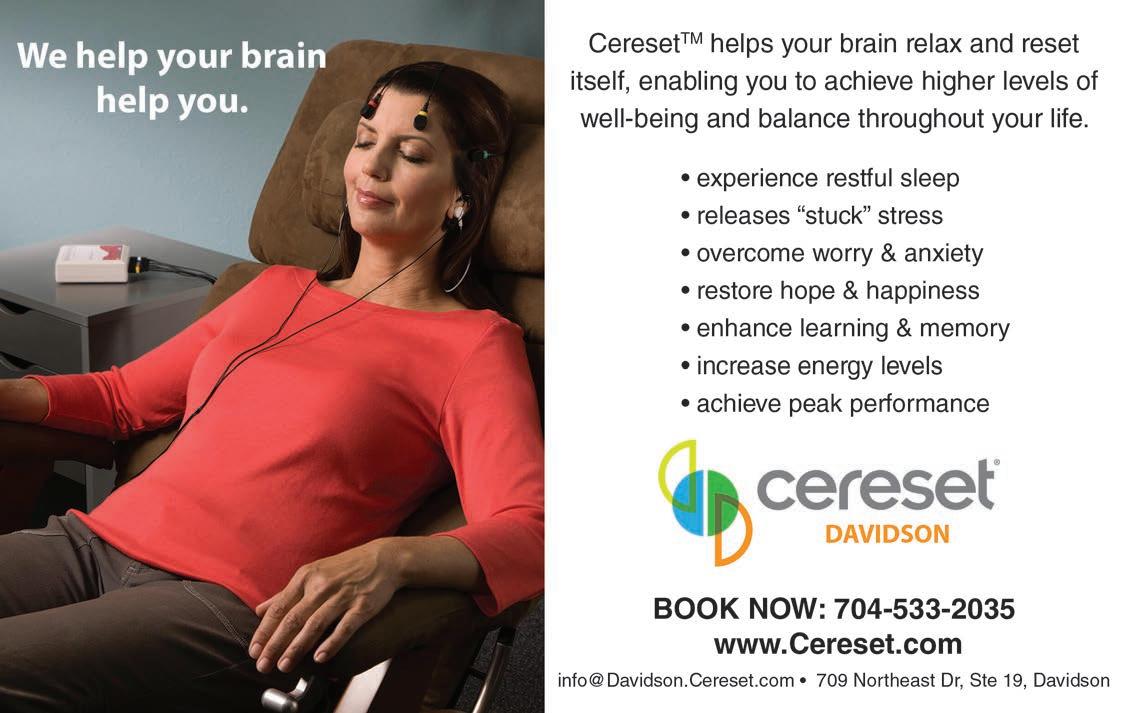
We have evolved to respond to lifethreatening situations. Our brains propel our bodies into action to either fight the predator, flee from it or freeze. But in the modern world, the predators aren’t as obvious. We are not running from a tiger through the jungle, but dealing with the same kind of anxiety, and sometimes cannot even identify why. Thus, many people are crippled by anxiety that is dis rupting their sleep, affecting their mood, and reducing their energy.
Cereset, founded on the principle that the brain can correct itself when it can “see” that it is stuck or unbalanced, is not a medical device to heal, treat, diag nose, or cure. It non-invasively supports the brain to relax to rebalance and reset itself for optimal regulation. Patented “brain echo” technology allows the brain to recognize via sound whether it is stuck in fight, flight, or freeze, and selfcorrect where necessary.
Cereset sessions allow the brain to function at its optimal level because a balanced brain is a better brain and sustains a healthy person in every way.
Julie Martin, MA, LCMHC, CSAT, is coowner of Cereset Davidson and a mental health counselor specializing in anxiety and depression. Cereset Davidson, located at 709 Northeast Dr., unit 19, is the only Cereset location in NC. For more information, call 704-533-2035, email Info@Davidson.Cereset.com or visit www.Cereset.com.
shifting attention from the head to the body, using such approaches as mindful breathing, dancing and grounding. Medita tion, easily accessed these days through apps like Calm and Headspace, helps us to enter into what religious and spiritual teachings call “the still point within.”
Rather than “doomscrolling” when anxi ety mounts, cutting back our media use can significantly lower stress levels, studies show. Wise media strategies include choos ing well-established, credible news sources; reading rather than watching the news to lower its emotional impact; limiting news intake to 10 minutes once or twice a day; taking a “news fast” on occasion; and pass ing up sources that incessantly feed fury.
On the other hand, it’s essential to find sources for hope, an emotion important in recovery from anxiety disorders, according to a study in Behavior Therapy. Googling “good news on climate change” will bring up articles about alternative energy growth, new super-enzymes that eat plastic rubbish and black rhinos coming back from the brink of extinction. Although dystopic books abound, others offer hope, such as Drawdown, with its sensible, scaled-down strategies to stop global warming by 2050.
Moving into Action
Virtually no one can take on all the prob lems of the nation and globe at once—and the good news is that unless we hold high public office, we don’t have to. Instead, “In taking action, focus on what you are good at, what your sphere of influence might be,” advises Lewis. “What are you most heart broken over? Get involved in that and al low yourself to feel really good about what you’re doing and other people are doing.”
By narrowing our focus, we can hone in on an issue and figure out our part in its so lution. “We need a broad range of collective action for transformation,” says Davenport. “For climate change, a teacher could bring social-emotional learning to climate educa tion into the classroom or start an after school ‘green club’; an artist could use their creative medium to communicate about climate in a moving way that could engage others; a nurse could create a waste-re duction initiative within a medical setting.
These efforts all have ripple effects and help to elevate each other.”
In one recent study, people were found to consume less energy if they believed their neighbors did so and personally cared about conservation. Our neighborhoods are the place to take the small, meaningful steps that address the “crisis of connection” underlying rancorous national crises, says New York Times columnist David Brooks. He advocates “radical mutuality,” saying, “Nothing we do, however virtuous, can be accomplished alone.” Through simple actions like having casual conversations around town, pitching in to help a fam ily in crisis, bringing a salad to a block party, tutoring a child or holding a civic post, we build the warm relational bonds that strengthen communities. As we meet others that feel as strongly as we do about our issues, our numbers start building and collective action can unfold.
“Independent of political beliefs, many people can find common values such as wanting safety for their families, a clean environment with clean waterways and recreation in natural environments,” says Easterlin.
That, in turn, helps lower our distress. A recent Yale study found that eco-anxiety was linked to depression only among students not involved in group activities; those engaged in collective action such as being part of an environmental group, working in a letter-writing campaign or going to events or protests did not spiral downward emotionally. “Personal transfor mation and social transformation happen simultaneously. When you reach out and build community, you nourish yourself,” Brooks says.
As Thunberg has put it: “When I’m taking action, I don’t feel like I am helpless and that things are hopeless, because then I feel like I’m doing everything I can. And that gives me very much hope, especially to see all the other people all around the world, the activists, who are taking action and who are fighting for their present and for their future.”
Health writer Ronica O’Hara can be reached at OHaraRonica@gmail.com.
16 Charlotte Edition AwakeningCharlotte.com
Stress and Depression are Intertwined
by Carenda Deonne
When thinking about mental health and how to stay serene in turbulent times, we cannot forget about how stress affects us mentally, physically and emotionally.

According to a study at www.MentalHealth.org, 51 percent of adults that felt stressed reported feeling depressed, and 61 percent reported feeling anxious. Of the people that said they had felt stress at some point in their lives, 16 percent had harmed them selves and 32 percent said they had had suicidal thoughts and feelings. Just because a person is dealing with stress doesn't mean something is wrong with them. What is important is how we handle stress and replace bad habits with better ones.
One simple way to relieve stress is get sun before 11 a.m. This is important because it will increase levels of serotonin, a neurotransmitter that affects our mood, cognition and memory. When serotonin is increased, we are more focused, creative and a joy to be around.
A second way to relieve stress is give and receive hugs, because they are so powerful and are an immune booster. They also help to reduce stress and decrease depression, so start hugging.
A third way to relieve stress is by speaking affirmations that shift our

energy and mindset to see the bigger picture instead of focusing all our time and energy on the situation we are going through. It helps to see the rainbow through the rain.
When thinking of stressing less, try increasing endurance. When we have bad habits, it weakens our endurance and our ability to be effective. It is dangerous to bottle up stress because it is layered. What people may not understand is that we can look good on the outside, but we also feel things happening inwardly. When we know that something isn’t right, our heart is having palpitations, and we have shortness of breath and are not sleeping well—that is a layered effect.
If we don’t deal with stress, one thing leads to another; they trigger each other and may cause significant effects physically, mentally and emotionally—even death. We must take our mental health seriously. Stressing less, starting now, is something we all must consider a priority.
Speaker, author and Certified Stress Man agement Life Coach, Gastonia’s Carenda Deonne holds an MA in law. Contact her at 888-473-2221, Admin@CarendaDeonne.com, www.CarendaDeonne.com or @carendadeonne on IG and FB. See CRG, page 30.

17November 2022
Adrienne Craighead, co-owner of Torchbearer Tachyon, with Tools for Alleviating Anxiety
Click on "Guest Blog" at www.AwakeningCharlotte.com NOVEMBER GUEST BLOG LOOKING FOR Elevating – CONVERSATIONS & –SOLUTIONS TO ISSUES?
MAKING FOREVER CHEMICALS GO AWAY
M ANMADE COMPOUNDS POSE LASTING THREAT TO OUR HEALTH
by Sheryl DeVore
Decades ago, environmental groups urged the banning of what are known as forever chemicals, which have been linked to cancer, compromised immune systems and hormonal imbalances, among other health issues. Today, although some of these man-made perand polyfluoro alkyl substances (PFAS) are being phased out, there’s still much to worry about.
“These chemicals are everywhere—in products, in our homes, in our drink ing water. They’re even coming down in rain,” says Mike Schade, director of the Mind the Store program of ToxicFree Future (ToxicFreeFuture.org national nonprofit based in Seattle. “This is a growing public health crisis.”
A recent Environmental Working Group (ewg.org) report says that 200 mil lion Americans are likely drinking water contaminated with PFAS, and that these chemicals are even more toxic than once thought. In June, the U.S. Environmen tal Protection Agency (EPA) established new health advisories for these chemicals, warning about the toxicity of even lower amounts in water. The EPA is offering $1
billion in grants initially and $5 billion over time to help remove them from drinking water. Recent research has also shown PFAS detected in sludge used as fertilizer in home gardens. “We need action at all levels of government,” Schade says. “We need states to step up. We need Congress to step up. We need big companies to step up and consum ers to take action.”
Origin of PFAS
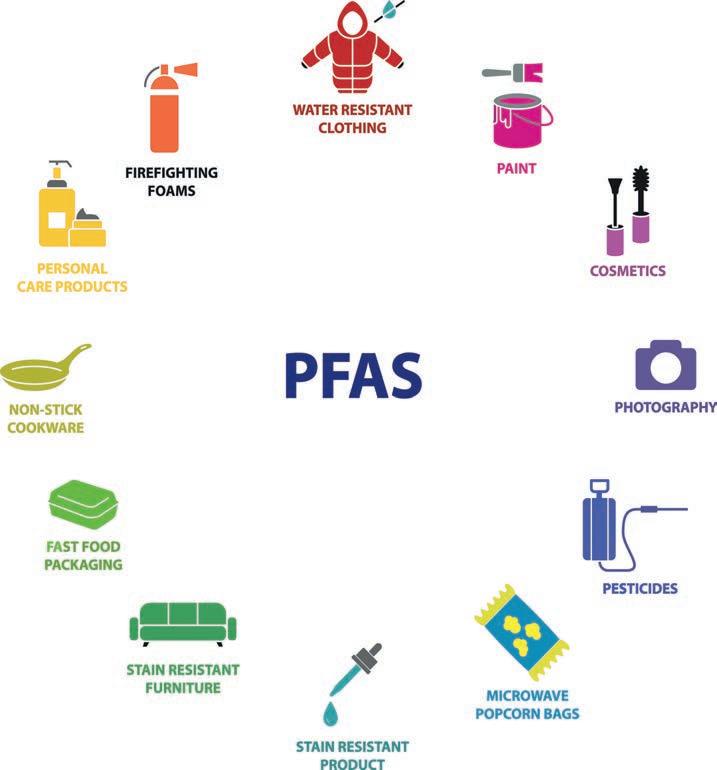
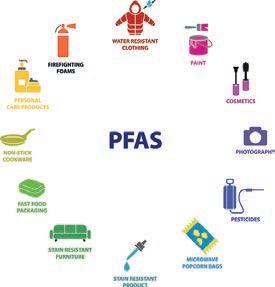
Since the late 1940s, forever chemi cals have been manufactured for use in products such as nonstick cookware; water proof, water-resistant and stain-resistant textiles; dental floss; and food packaging, such as microwave popcorn bags and fast-food contain ers. Firefighters also use foam that contains the chemicals.
“Production and disposal of these chemicals is leading to the contamina tion of drinking water supplies and surface water bodies all across the country,” Schade says. “It’s a huge issue, especially in the Great Lakes.”
“We’re talking about more than 9,000 chemicals,” says Susie Dai, Ph.D., a leading PFAS researcher and an associate professor of plant pathology and microbi ology at Texas A&M University. “Because they contain one of the strongest chemical bonds, the carbon-fluorine bond, they are very stable. That makes it difficult for the chemicals to break down and easy for them to accumulate in the environment.”
Several years ago, chemical companies began manufacturing what they deem are less-toxic PFAS. They’re known as either
18 Charlotte Edition AwakeningCharlotte.com
green living
NorGal/AdobeStock.com
short-chain or alternative PFAS, and include chemicals named GenX and PFBS. “The more that scientists study this very large class of chemicals, the more that scientists find the replacement chemicals are likely just as toxic,” Schade says. The EPA June health advisories include these two new PFAS.
Meanwhile, as public concern grows, 11 states have banned PFAS in food packaging, and Congress is considering a similar ban, says Schade. Whole Foods Market has stopped using the chemicals in food packaging, and Keen, an outdoor shoe brand, has phased out use of PFAS in their products.
In February, Toxic-Free Future sent rain jackets, hiking pants, cloth napkins, bedding and other products marked as stain- or water-resistant to independent labs for analysis. “Seventy-two percent of them contained forever chemicals,” Schade says. Some of these products are manufactured by recreational equipment company REI, which Toxic-Free is urging consumers to write to, asking it to end the practice.
In July, Columbia Sportswear received petitions with 48,000 sig natures from the Natural Resources Defense Council and other en vironmental organizations urging the company to eliminate PFAS from its products. Although it has begun taking steps, Columbia has yet to set a timeline or define PFAS sustainability standards.
“We can minimize the threat of PFAS contamination by turning off the tap on their use,” says Paloma Paez-Coombe, an associate of Environment Illinois, which participated in the petition drive. “One of the best ways we can do that is by getting a major brand like Columbia Sportswear to publicly lead the way.”
WAYS TO AVOID EXPOSURE TO FOREVER CHEMICALS
n Choose textiles and carpeting without water- and stain-repellency.
n Avoid food with greaseproof packaging, such as microwave popcorn.
n Stay away from personal care products with perfluor, polyfluor or PTFE on the label.
n Choose PFAS-free products, some of which are listed at pfasCentral.org
n Contact businesses to ask them to stop selling prod ucts that contain PFAS.
n Reach out to legislators to urge the passage of laws to ban PFAS unless their use is essential.
Sources: Toxic-Free Future, Green Science Policy Institute and Environment Illinois.
These actions, however, won’t fix the problem of PFAS already in drinking water. Dai and other researchers have created a new bioremediation technology using plant-based material and fungi that could clean places where forever chemicals have been disposed. She hopes a similar concept can be applied to PFAScontaminated drinking water.

Northwestern University researchers published a paper in Au gust in Science showing PFAS can be destroyed using somewhat harmless chemicals called sodium hydroxide, which is the lye used to make soap, and dimethyl sulfoxide, a medicine for bladder issues. Dai says that before these new approaches, the only way to break down PFAS was to expose them to high temperatures in an incinerator, but that is costly and still introduces harmful chemi cals into the environment.
Meanwhile, the Delaware-based chemical company Chemours, a spinoff of Dupont that manufactures PFAS, has filed a lawsuit against the EPA saying the agency’s most recent health advisory regarding PFAS is based on flawed science. Chemours is the same company that has been ordered to pay a $12 million fine to the state of North Carolina after contaminating waterways with PFAS. Schade surmises, “This is an issue that should be of concern to every American, especially when these chemicals are linked to health problems that are on the rise in our communities.”
Sheryl DeVore has written six books on science, health and na ture, as well as health and environmental stories for national and regional publications. Read more at SherylDeVore.wordpress.com.
19November 2022
GROW Your Business Contact us for special ad rates. 704-499-3327
The Gut-Brain Connection
HOW FOOD AFFECTS OUR MOOD
by Kimberly B. Whittle
Michael Gershon, M.D., a Columbia University professor of pathology and cell biology, and author of The Second Brain, has explained to psychologists that “scientists were shocked to learn” that about 90 percent of serotonin is not created in the brain, but is actu ally produced in the gut and carried from there to the brain, not the other way around. This relationship is called the gut-brain axis.
A recent literature review of 26 studies suggests that imbalances in gut bacteria can disrupt the two-way communication along the gutbrain axis, leading to depression and other psychiatric issues.
Gut Health Equals Mental Health
“Gut health is extremely important for mental health,” says Bhavna Barmi, Ph.D., a senior clinical psychologist, relationship therapist and founder of the New Delhi-based Happiness Studio. “The tradi tional belief that only psychiatry and talk therapy can treat mental health has widened to include lifestyle and food, too.”
“The truth is that our food is the primary contributor of the quality and diversity of bacteria in the microbiome,” says Ishi Khosla, a clinical nutritionist and president of the Celiac Society of India. “There is an intricate relationship between the gut and the brain.” Food sensitivities, alcohol and highly processed, refined and sugary foods can lead to a lower diversity of good bacteria and increases in bad bacteria in the gut, which can trigger gut inflam mation and unfavorable health conditions.
We’ve all heard the phrase, “You are what you eat,” but the connection is more than just physical because food impacts our mood, too. During the last decade, there have been an increasing number of studies exploring what’s called the gut-brain axis and the role that microorganisms in the gut play in mental health conditions like anxiety, stress, depression and other disorders.
Depression is a leading cause of disability in the U.S. and worldwi de. There are long-held views in medicine that depression is caused by imbalances in brain levels of serotonin—the neurotransmitter that plays a key role in regulating mood and other functions like digestion and sleep. These beliefs resulted in decades of extensive use of antide pressants, most of which boost serotonin in the brain.
However, research by University College London, published in July in the journal Molecular Psychology, found “no consistent evidence of there being an association between serotonin and depression, and no support for the hypothesis that depression is caused by lowered serotonin activity or concentrations.”
Most mood-related disorders start with inflammation of the brain as a response to inflammation in the gut. “Certain foods, like gluten, can cause an inflammatory response in the gut. Over time, sensitivities to gluten and other foods can lead to a ‘leaky gut’, an impairment of the gut lining that lets toxins into the bloodstream. Often, if it remains unresolved, it leads to mood-related disorders and other chronic health conditions,” says Khosla.
Clinical nutritionists and other practitioners use biochemical markers and food sensitivity tests to help identify food ingredients that trigger inflammation in patients. However, if a leaky gut is present, a food sensitivity test may not be very accurate. As Tom O’Bryan, DC, chief health officer of KnoWEwell, explains in his bestselling book The Autoimmune Fix, “When you have a leaky gut, a practitioner may do a 90-food testing panel that comes back sensitive to 20 or 25 different foods. And then the patient exclaims, ‘Oh my God, that’s everything I eat.’ Well, of course it is, because your immune system is doing what it is supposed to do—protect ing you from toxins. Once the inflammation in the gut is reduced through the elimination of wheat and other offensive foods, and

20 Charlotte Edition AwakeningCharlotte.com conscious eating
Photo
Sukjai/AdobeStock.com
the implementation of a personalized diet and protocol to heal the gut [takes place], the same food testing panel will correctly identify those few ingredients to perma nently avoid.”

Mood-Lifting Foods
Kelly Brogan, M.D., a holistic psychiatrist and author of The New York Times best sellers A Mind of Your Own and Own Your Self, as well as co-editor of the landmark textbook Integrative Therapies for Depres sion, recommends making three dietary changes to lift mood:


n Eliminate processed foods and food toxins


n Add whole foods, good fats and thera peutic foods
n Add fermented foods
Eating foods that are fresh, whole, simple and organic when available fuels good gut bacteria and eliminates the toxins found in packaged foods such as hydrogenated vegetable oils, preservatives, dyes, emulsi fiers, taste enhancers and sugars that can upset the proper balance in the gut. A
powerful mood regulator is the omega-3 fatty acid found in such cold-water fish as salmon and trout or taken as a dietary supplement. These fatty acids regulate neurotransmission and gene expression, act as antioxidants and have potent antiinflammatory properties. Good fats from pasture-raised meats, wild fish, eggs, nuts, seeds, olive oil, coconut oil and grass-fed ghee also contribute to mood regulation.
“Resetting the gut through good bacteria in probiotics and feeding the good bacteria with prebiotics is a powerful tool to fight mood disorders,” says Khosla. Fermented foods such as sauerkraut, pickles (truly fer mented, not just cured in vinegar), kimchi and coconut kefir are natural sources of probiotics. They are delicious and easy to make at home.
A 2018 University of Toronto study in the World Journal of Psychiatry identified 12 nutrients to prevent and treat depressive disorders and found that the following foods had the highest levels of those beneficial nutrients: bivalves such as oysters and mus sels; various sea foods such as octopus, crab and tuna; organ meats; leafy greens; lettuces;

fresh herbs; peppers; and cruciferous vegetables such as cauliflower and broccoli.
Choosing what to eat is complex and affected by culture, cost, environment and taste preferences. Dietary changes can be difficult and take time, and those suffering from mood swings, depression or anxi ety have additional challenges in making changes. Nutritionists advise starting small by incorporating one or two foods rich in beneficial nutrients and eliminating a highly processed or packaged food or two. Focus on incorporating a rainbow of red, yellow, orange and green foods into meals. “Food therapy to improve mood is inex pensive, free of side effects and can begin to show results within days,” says Khosla.
In view of the gut-brain axis, says Barmi, “It is imperative that from this point on, nutritionists, psychiatrists and psychother apists work together for holistic care of the client to lead to maximum benefit.”
Kimberly B. Whittle is the CEO of KnoWEwell, the Regenerative Whole Health Hub online solution for health and well-being. Visit KnoWEwell.com.
21November 2022
Are You Looking For A HEALTHY NATURAL Smile? • 3D Digital Dentistry • Biocompatible Implants • Healthy Start • Mercury Safe Removal • Myofunctional Therapy • Ozone Therapy • PRF - (Platelet Rich Fibrin) • Preventative Dentistry • Tongue & Lip Tie Release We Care for More than Just Your Teeth…. IAOMT Accredited Mercury Safe Removal Biological/Holistic Family Dentistry in a Caring Relaxed EnvironmentFailing Amalgams (silver fillings) are removed using safe accredited protective protocols. All of our crowns, bridges, and veneers are made in-house with CAD/CAM computer milled technology. Kempter Holistic Dentistry Accepting New Patients! 704-782-0797 As true Biological/Holistic Dentists, we combine modern technology & safe protection protocols with advanced knowledge of biological dentistry Dr. John Kempter Dr. Eric Kempter Dr. Erin Wilbanks Dr. Amy MyersKempterDentistry.com • 1000 Copperfield Blvd, Ste 160, Concord • 3111 Springbank Ln, Ste F1, Charlotte
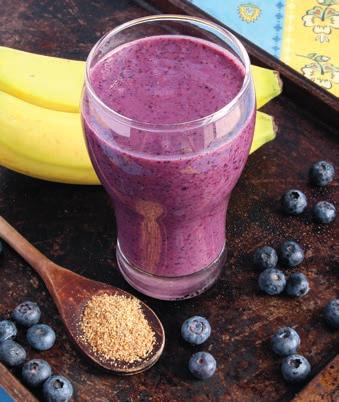
GUT-HEALING SMOOTHIE
Blueberries contain compounds that increase beneficial bacteria in the gut, as well as antioxi dant properties that are remarkable at protecting our brain. In fact, consuming 1 cup of blueberries per day for three years gets our brain working as well as it did 11 years earlier. Bananas are high in pectin, which helps to normalize movements of the large intestine. Look for gelatin powders from pastured animals.
YIELD: 2 SERVINGS
1-1½ cups water
½ cup coconut milk
1-2 frozen bananas
1 cup frozen blueberries
2 Tbsp ground flaxseed
1 Tbsp unflavored gelatin powder
1 Tbsp high-quality fish oil
1 tsp ground cinnamon
1-3 scoops L-glutamine powder (optional)
In a blender, combine the water, coconut milk, bananas, blueberries, flaxseeds, gelatin powder, fish oil, cinnamon and L-glutamine powder (if using). Blend until smooth. Add more water for a thinner smoothie, if desired. Serve immediately or pour into ice-pop molds and freeze for a sweet treat later on.
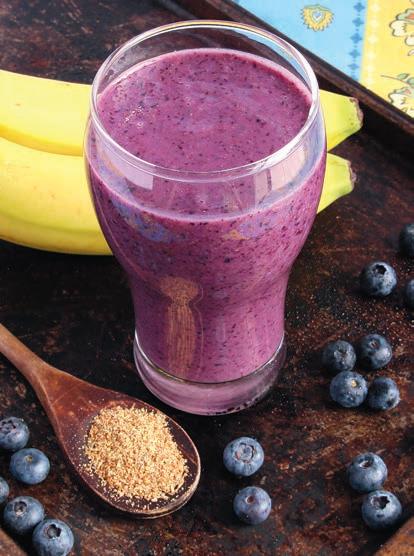
Recipe courtesy of Tom O’Bryan, DC, CCN, DACBN, from his book The Autoimmune Fix
QUINOA AND BEETROOT SALAD
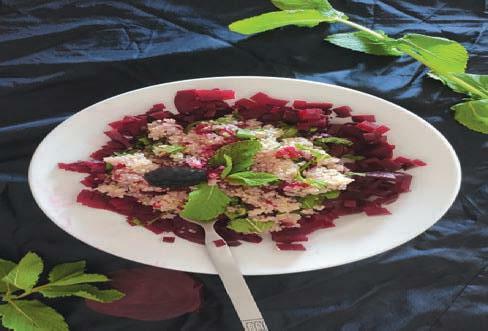
A HINT OF MINT
YIELD: 2 SERVINGS
SALAD:
cup quinoa
1 medium beetroot, grated
fresh mint leaves, roughly chopped
cup fresh cilantro
2 Tbsp shelled pistachios, roasted
2 Tbsp golden raisins
cup water
DRESSING:
2 Tbsp extra-virgin olive oil
3 Tbsp lemon juice, adjust to taste
2 cloves garlic, adjust to taste
½ tsp roasted cumin powder
Salt and ground black pepper to taste
to taste
Rinse quinoa and add to a pot. Add water and cook uncovered for around 15 minutes or until all the water is evaporated. Cover the pan and switch off the stove. Keep covered for 5 minutes, remove lid and fluff cooked quinoa with a fork. Set aside to cool.
In a bowl, mix all dressing ingredients and set aside. Place cooled quinoa, grated beets, pistachios, raisins and chopped herbs in a large bowl. Pour the dressing, toss well. Serve cold.
Recipe courtesy of Ishi Khosla.
ALMOND FLOUR BLUEBERRY MUFFINS

YIELD: 12 TO 24 SERVINGS
3 cups almond flour
6 eggs
½ cup honey
½ cup avocado oil
1 tsp baking soda
1 tsp salt
1 cup blueberries
Preheat the oven to 350° F. In a large bowl, combine all the dry ingredients—almond flour, baking soda and salt—and whisk well. In a separate smaller bowl, combine the wet ingredients—eggs, honey and avocado oil—and blend until smooth.
Then pour the wet ingredients into the dry ingredients and mix until thoroughly combined. Fold in blueberries. Line cup muffin tin with paper liners and pour in batter. Bake for 15 to 20 minutes.
Recipe courtesy of Madiha Saeed, M.D., ABIHM.
22 Charlotte Edition AwakeningCharlotte.com
mariemilyphotos/AdobeStock.com
WITH
½
10-12
¼
1
Honey
Pixel-Shot/AdobeStock.com Saretta_followyourdr/AdobeStock.com

23November 2022 Get Started Today! Call to speak with our neurologist (704) 471-4100 Nirvana Hyperbaric Institute • 146 Medical Park Rd, Suite 110 Mooresville, NC 28117• NirvanaHbo.com During your session you can: watch a movie, listen to music, sleep, meditate, or just plain relax • Traumatic Brain Injury (TBI) • Multiple Sclerosis (MS) • Lyme Disease • Post Traumatic Stress Disorder (PTSD) • Autism • Fibromyalgia • Ulcerative Colitis • Diabetic wounds • Inflammatory Bowel Disease • Radiation injury • Anti-Aging • Concussion • Stroke • Chrohn’s Disease • Sports Injury • Long COVID Effective Treatment for Both Insurance & Noninsurance Covered Conditions: The Healing Power of Oxygen Hyperbaric Oxygen Therapy (HBOT) is a safe and non-invasive therapy that enhances the body’s natural healing process, stimulates stem cell production and strengthens the immune system
The Colors of Healing
ART THERAPY FOR KIDS
by Marlaina Donato
Opening a brand-new box of crayons or making a happy mess with homemade salt dough can provide hours of fun for most kids, but art therapy—based in a clinical setting—can help children achieve emotional equilibrium, cultivate social skills and increase their capacity for learning. Dipping a brush into bright colors or creating a collage under the guidance of a qualified therapist can help a child express what is beyond spoken language: unprocessed trauma, emotional and physical pain or the multilevel challenges of autism spectrum disorder.
“Art therapy is completely different from arts and crafts, or even teaching a child how to do art. The idea behind art therapy is that not everyone attending therapy is able to talk about what is going on inside of them,” says Robyn Spodek-Schindler, owner of Paint the Stars Art Therapy, in Manalapan, New Jersey.
Art and the Nervous System
According to 2018 research published in the Journal of Applied Psychology & Behav ioral Science, painting-based art therapy has been effective in reducing symptoms of depression and anxiety in preschool-aged children. Dipping into the unconscious wellspring of creative impulse through doodling and drawing, finger painting or taking a photograph can help kids bounce

24 Charlotte Edition AwakeningCharlotte.com healthy kids
Sukjai
Photo/AdobeStock.com
back more easily from bullying or fam ily conflicts, including divorce. Splashing color on a canvas or throwing pottery has been shown to enhance fine motor skills, increase attention spans and instill a sense of accomplishment. For those that are not neurotypical, engaging in guided artistic expression can foster sensory integration and promote positive social interaction.
“I have worked with children who have lost a parent, experienced abuse, abandon ment, consequences of addiction in the family, COVID [-19] anxiety and autism spectrum disorders,” says Andrea Davis, founder and CEO of Dallas Art Therapy, in Richardson, Texas. “Many times, the body is expressing the trauma in the form of sleep disturbance, eating changes, anxiety, depression and panic attacks, to name a few. Art-making bypasses the brain’s trau ma response. The art therapist is trained to support the person in the process of cre ation and allows the person to utilize their other senses to express themselves.”

Celeste Wade, an art psychotherapist at the Child and Family Art Therapy Center, in Haverford, Pennsylvania, emphasizes that emotional processing cannot occur when an individual is on the alert for potential danger, a physiological response from an overstimulated amygdala. “Trau ma needs to be processed for the client to gain mastery and function in a calm state versus fight, flight or freeze. Art making can also activate this area of the brain and have calming effects to counteract trauma responses,” she says.

Willingness, Not Talent
The art therapist provides a nourishing presence without art instruction or critiqu ing, and sessions can be private, in a group
setting or include family members. Con versation, combined with art making, is typical in any art therapy session. Schind ler stresses that creating pretty images is not the goal of an art therapy session and dispels the common assumption that “the person attending art therapy needs to have either a talent in art or an interest in art. They just need the willingness to participate in a session.” Some children see immediate benefits, while others realize emotional progress after several sessions
Art therapy, sometimes in conjunction with other modalities, not only gives children a voice, but provides them with an opportunity to stretch their wings. Group therapy, says Davis, “can look like working together to create a collaborative mural. In the process, taking turns, hearing one an other’s ideas, sharing materials, respecting boundaries and each other’s art becomes an important part of meeting goals.”
During an initial art therapy assessment, Wade might ask a client to draw a family of animals, which creates an opportunity “for the client to share about their own family dynam ics in a safe way. If the client has experienced any type of familial trauma and I were to present the same directive as, ‘draw you and your family doing something,’ the child may be more hesitant or may shut down.”
In a world that can be overwhelming, self-expression through art can give a young person a safe harbor. Schindler accentuates human rapport in the clinical setting, saying, “Art, much like play, is a universal communication tool for children. Sometimes you just feel better when creat ing and sharing with a trusted person.”

Marlaina Donato is an author, painter and composer. Connect at WildflowerLady.com.

25November 2022
Sukjai Photo/AdobeStock.com MONTHLY PLANNER learn about marketing opportunities at: december uplifting humanity 704-499-3327 january health & wellness february heart

26 Charlotte Edition AwakeningCharlotte.com
27November 2022
community resource guide
Connecting you to the leaders in natural healthcare and green living in our community. To find out how you can be included in the Community Resource Guide email Ads@AwakeningCharlotte.com to request our media kit.
ACUPUNCTURE
EMPOWER LIFE CENTER
Camilo Sanchez, L.Ac, MAOM 704-542-8088
www.EmpowerLifeCenter.com
35 years of experience in acupuncture, Chinese medicine, and integrated health. Specialize in correcting the root cause of your health concerns. Pain conditions, digestive disorders, stress, women's health, chronic disorders. Authentic Qigong, Tai Chi, and Taoist Yoga classes.

BODY CONTOURING
A PLACE FOR HEALTH
6487 Morehead Rd
Harrisburg/N Charlotte 704-909-0355
Info@TrueCareHealth.com
www.APlaceForHealth.com
Non-surgical body contouring safely eliminating excessive fat and tightening skin with laser, lipo, fat-freezing and other technolo gies. Functional medicine ap proach to weight loss and optimal health. Schedule consult today.
BRAIN BALANCING
CERESET DAVIDSON

709 Northeast Dr, Ste 19 Davidson • 704-533-2035 www.Cereset.com

Next generation brain wellness. Helping re lax your brain to man age restful sleep, in creased energy and focus, positive mood and better stress management. The brain resets by “hearing” and “seeing” its reflec tion. Schedule appointment today. See ad, page 26.
COMPOUNDING PHARMACY
STANLEY SPECIALTY PHARMACY
3120 Latrobe Dr, Ste 200 704-370-6612
StanleyRx.com
Charlotte’s most experienced and trusted compounding pharmacy. Skilled pharmacist can prepare custom medications to meet needs of the individual patient. Specializing in women’s and men’s health as well as veterinary medications.
CONCIERGE MEDICINE


WELLCOMEMD
8035 Providence Rd, Ste 315, Charlotte 152 Fairview Rd, Ste 325, Mooresville 980-294-4937 www.WellcomeMD.com

CBD
STANLEY SPECIALTY PHARMACY

3120 Latrobe Dr, Ste 200 704-370-6612
StanleyRx.com/CBD
Charlotte’s CBD experts. CBD consultations available with a licensed Pharmacist ($50 per ½ hour). Consultation fee applied to any CBD purchase. Professional grade CBD products available in store and online.
CHRONIC & DIFFICULT CASES
HAAS WELLNESS CENTER
Experience concierge medicine that is more per sonal and effective. Comprehensive and proactive approach, limited number of patients, unhurried 30-minute consultations for a personal relationship with your physician. Schedule free tour today. See ad, page 2.
DENTISTRY
KEMPTER HOLISTIC DENTISTRY 3111 Springbank Ln, Ste F1 1000 Copperfield Blvd, Ste 160, Concord 704-782-0797
KempterDentistry.com
MARIE’S TOTAL BODY STUDIO
9711 David Taylor Dr, Ste 108 704-631-3002 • www.MariesTotalBody.com mariestotalbody@gmail.com
Non-Invasive Body Enhancement Spa Therapy & Weight Loss Services: Sauna Wraps, Cellulite Treatments, Butt Enhancements, Wood Therapy, Foot Detox, Teeth Whitening, RF Skin Tightening, Mesotherapy, Fat Reduction, Lipo Cavitation. Call for free consultation.
BODYWORK
BRITISH MASSAGE
8501 Tower Point Drive, Unit D2 704-572-1310
www.BritishMassage.com
Originally from London, Jessica is highly intuitive, has a natural healing touch and loves to help people feel better physically and emotionally. Medical Reiki Master and offers Reiki classes. Book massage/reiki today. See ad, back cover.
3315 Springbank Ln, Ste 102 704-837-2420
HaasWellnessCenters.com
Specializing in chronic and difficult cases and holistic and wellness care. We identify and treat the root cause of your health issues. Call today for a free 15-minute consultation. See ad, page 4.
COLONICS
HC WELLNESS CENTER & SPA 1308 E Garrison Blvd, Gastonia 704-823-1577
HCWellnessCenterAndSpa.com
Our principle service is Colon Hydrotherapy, but we also offer a wide variety of other services. We offer both traditional and alternative therapies to assist clients in achieving optimal health, wellness and balance.
Biologically minded family dental office offering 3D digital dentistry, preventative dentistry, safe mercury removal and sleep ap nea screenings. In a relaxed and caring environ ment, all patients are given devoted time. Call the office today to request a new patient consultation. See ad, page 21.
DIRECT PRIMARY CARE
BENTON INTEGRATIVE MEDICINE & THE SKIN CENTER 16415 Northcross Dr, Ste B, Huntersville 421-B S. Sharon Amity Rd, Charlotte 704-775-6029

• BentonIntegrative.com
Affordable convenient Direct Primary Care from a personalized holistic perspective. Thorough and efficient care with nutrition as the foundation. We want to get and keep you healthy. Schedule a new patient consult today. See ad, page 31.
28 Charlotte Edition AwakeningCharlotte.com
MOLD REMEDIATION, HOME WATER CONTROL
Sedona Waterproofing Solutions 704-960-7906 •

www.SedonaWaterproofing.com

Address moisture issues in your home resulting in health ier indoor air and increased energy efficiency. Basements, crawlspace, drainage and foundation issues. Call today for a free inspection and quotation. $250 discount with code NACLT. See ad, page 2.
RECYCLED COMPOST & MULCH
140 Valleydale Rd • 980-314-3880 17131 Lancaster Hwy • 980-314-3845
MeckMulchMadness.com
Supports a 360˚ from your yard to our facility and back again. Mecklenburg County upcycles your yard waste to create highquality STA approved compost and beautiful mulch at a very affordable price. See ad, page 5.
SUSTAINABLE INTERIOR DESIGN
Claudia Josephine Design 860-796-3415
www.ClaudiaJosephineDesign.com
Proving that sustainable, ecofriendly design can still be stylish, Claudia creates classic, functional, and beautiful interiors. Certified Green Accredited Professional. Specializing in new residential construction and full-service inte rior design.
FOOTCARE
A HUNTERS’ ADVENTURE
Marian Sanders, CNA, MA 360-908-8536
Healing4MerryHearts@gmail.com
www.Healing4MerryHearts.org
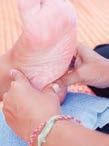
Providing in-home foot soak, mas sage, and nail clipping with all natural products for elderly, dis abled and homebound. Raising spirits, providing comfort, and giving peace of mind. Schedule today, receive 20% new client discount.
FUNCTIONAL MEDICINE
BENTON INTEGRATIVE MEDICINE & THE SKIN CENTER 16415 Northcross Dr, Ste B, Huntersville 421-B S. Sharon Amity Rd, Charlotte 704-775-6029 • BentonIntegrative.com
The Carolina's only Integrative practice offering membership based Direct Primary Care and Functional Medicine wellness programs. Wellness programs are individualized to the patient and address the root cause of illness. See ad, page 31.
GARDENING
THE PATIO FARMER Charlotte, NC • ThePatioFarmer.com ThePatioFarmer@gmail.com @thepatiofarmer on IG and FB
Confidently grow food at home with Consultations, Installation and Maintenance Plans. Also, check out Plant Club for in-depth gardening know-how. Contact us today and start enjoying food from your own plants.
HOLISTIC CLINIC
IVY INTEGRATIVE 1520 South Blvd, Ste 228 704-569-5489 info@IVYIntegrative.com www.IVYIntegrative.com
The only Charlotte area one-stop for holistic mind, body, spirit health services with packages, memberships, a la carte and fi nance options available. Book free meet & greet today. See ad, page 15.
HOMEOPATHY
CAROLINAS NATURAL HEALTH CENTER
Dr Michael Smith 6404 Bannington Rd, Ste A 704-486-2448
CarolinasNaturalHealth.com
Charlotte’s only doctor specializing in homeopathy—a power system of natural medicine that stimulates your body’s natural ability to heal, without side effects. Anxiety, depression, ADHD, behavioral issues, eczema, auto-immune disease, hormonal imbalance, and much more. See ad, page 6.
HYPERBARIC THERAPY
NIRVANA HYPERBARIC INSTITUTE

146 Medical Park Rd, Ste 110 Mooresville • 704-471-4100 NirvanaHBO.com
Dedicated to healing, forwarding the science of hyperbaric oxygen therapy and providing patients a tranquil place to heal. Highly effective in treating many conditions, some covered by insurance. See ad, page 23.
INTEGRATIVE HEALER

KATIE SUTTON
Intuitive Channel, Guided Meditation Coach 828-246-3335
ZenWithinAcademy.com
Katie synthesizes a unique blend of healing modalities with selfactivation techniques–from sound and vibrational therapy, to intuitive channeling, to guided meditation–in order to deliver healings tailored to each person's needs.




INTEGRATIVE HEALTH COACH


ASHLEY LOGAN WELLNESS LLC Charlotte www.AshleyLoganWellness.com ashley@ashleyloganwellness.com @ashleyloganwellness on IG and FB
Duke Integrative Medicine Certified Health and Well-being Coach who works in partnership to empower and support you in achieving your physical, mental, emotional and spiritual wellness goals. Book a free discovery call today.
SARA DA COSTA WELLNESS
704-281-2183 Sara@RisingStrongHer.com www.tinyurl.com/SaraHealthCoach
Achieve health goals faster. Sara helps clients get to the root source of what’s holding them back and through a collaborative process, creates an individualized plan. Schedule free 30-minute discovery call today. See ad, page 9.
29November 2022
ECO-FRIENDLY LIVING
Find local businesses with ease at www.AwakeningCharlotte.com/businesses DIRECTORY
INTEGRATIVE PEDIATRICIAN
INFINITE HEALTH, PLLC
Sheila Kilbane, MD
2201 Park Rd, Ste B 704-626-6771 • SheilaKilbane.com
Dr. Kilbane is a board-certified integrative pediatrician who spe cializes in finding the root cause of illness including reflux, ecze ma, allergies, recurrent ear and sinus infections, asthma, constipa tion, abdominal pain and more.
NATUROPATHIC PHYSICIAN
CAROLINAS NATURAL HEALTH CENTER
Dr Michael Smith
6404 Bannington Rd, Ste A 704-486-2448
CarolinasNaturalHealth.com
Diabetes, Depression, Digestive Disorders, Aller gies, Autoimmune disease, Anxiety, ADHD. Charlotte’s only doctor specializing in homeopathy. We focus on treating YOU to uncover the cause of your health condition and empower you to better health!
See ad, page 6.
ORGANIC SALON
ORGANIC SALON LKN
427 E Mills Ave, Mooresville 704-883-6564
www.OrganicSalonLKN.com

Harnessing nature's beauty with professional organic products while creatively designing the ideal hair routine and style to fit your life. Call today for a free consultation. See ad, page 13.
PSYCHIC
PSYCHIC MEDIUM KELLE

978-420-8213
PsychicMedium@verizon.net
www.PsychicMediumKelle.com
Psychic medium +18 years, author and radio show host. Private readings, psychic investigator on missing person cases. Helps those at a crossroads, experiencing unresolved issues or dealing with loss. Call for appointment today. See ad, page 13.
SCALAR ENERGY

SCALAR FREQUENCY HEALING
704-920-0963
CS@ScalarFrequencyHealing.com www.ScalarFrequencyHealing.com
Scalar energy wellness and spiritual awareness aids. Sim ple, practical, inexpensive, and imprinted with targeted scalar frequencies to help the body repair itself or work with your consciousness. Free shipping. 15% discount with NAM522. See ad, page 23.

SCALAR HEALTH ENHANCEMENT CENTER

704-920-0963
Members@ScalarHealthEnhancement.com www.ScalarHealthEnhancement.com

When you enter the Scalar Health Enhance ment Center, you enter a healing zone where the 5th Dimension isn't just a theory, it is a functioning reality! Call for ap pointment today. See ad, page 23.
SOUND & VIBRATIONAL THERAPY
SPIRIT AND SOUND
Barbara Griggs, LSH, CVSP, CVSC barb.griggs04@gmail.com 248-321-6098 www.SpiritandSound.net


Call today for free consulta tion. Discover avenues to over come uncertainty and fear. As a licensed spiritual healer, intuitive, and Certified Vibrational Sound Practitioner/Coach, let's awaken the strength and commitment necessary to honor your journey.
SPIRITUAL CENTERS
HEARTLIGHT SPIRITUAL CENTER

Rev. David Hulse, Spiritual Leader 7300 Mallard Creek Rd 704-599-1180
HeartLightCharlotte.org
We are a Spirit-Guided, HeartCentered, Christ-Conscious, Loving Family providing an empowering, universal, Christ-centered message grounded in the teachings of metaphysics. Sunday Service 11:15 am. Email Shine@HeartLightCharlotte.org. See ad, page 9.
LIGHT HOUSE SPIRITUAL CENTER Rev Kendall Heath, Interfaith Minister 704-658-1442

info@LightHouseSpiritualCenter.com www.LightHouseSpiritualCenter.com
2nd & 4th Sundays, Interfaith/ Interspiritual Fellowship Services 10am-11:30am at Soul Wellness, Mooresville. Heart-centered exploration of esoteric, mystical, wisdom teachings of many faiths/ spiritual philosophies. Services include teachings, dialogue, experiential group learning, and music.
UNITY OF CHARLOTTE

401 E Arrowood Rd Sundays at 9:30am UnityofCharlotte.org
Unity features a vibrant Sunday Celebration Service at 9:30 AM, with inspiring messages from a rotating slate of guest speakers. Unity supports your well-being, prosperity and spiritual journey.
STRESS MANAGEMENT COACH
CARENDA DEONNE LLC 888-473-2221 Admin@CarendaDeonne.com www.CarendaDeonne.com @carendadeonne on IG and FB
Experience less stress with Car enda Deonne, certified stress management life coach. Carenda helps women and corporations manage and decrease stress. Indi vidual and group coaching on reframing reactions to stress. Schedule free consultation today.
SUSTAINABILITY
SUSTAIN CHARLOTTE
SustainCharlotte.org

A nonprofit organiza tion working to inspire choices that lead to healthy, equitable and vibrant communities across the Charlotte metro region for generations to come. Become a member today.
TACHYON
TORCHBEARER TACHYON
20200 Zion Ave, Ste 11
Cornelius • 980-689-1803
www.TorchBearerTachyon.com
“Connect to Source” through a 45-minute meditation experience with tachyons. Experience spiri tual alignment, clarity, and down loads that improve your mental and physical health. Read our reviews and book your experi ence today. See ad, page 5.
30 Charlotte Edition AwakeningCharlotte.com
VETERINARIAN
ATRIUM ANIMAL HOSPITAL
Kim Hombs, DVM, CVA, CVCH, CTui-Na 6520 McMahon Dr 704-542-2000
AtriumAnimalHospital.com
Comprehensive holistic/ integrative animal medicine practice in the Charlotte region. Alternative vaccine approaches, double certified acupuncturist and herbalist, cold and class 4 laser, TCM food therapy, Tuina, animal rehabilitation with underwater treadmill.

WEIGHT LOSS
CAROLINAS WEIGHT LOSS INSTITUTE
Gastonia • 704-271-9757
Matthews/Ballantyne • 704-243-8560 CWLI.net
Developer of the "40 Day Transformation" system, a physician designed and administered functional approach with programming tailored to the unique metabolism needs of each individual, to provide safe and sustained weight loss. Call for a free consultation.
classifieds
Fee for classifieds is a minimum charge of $25 for up to the first 20 words and $1 per word there after. To place a classified, email Ads@AwakeningCharlotte.com Deadline is the 9th of the month.
FOR SALE
5 ACRES IN MARION NC – Heavily wooded, lightly developed subdivision. 30 minutes to Linville Falls, 40 minutes to Asheville. 704-778-6863.
JOBS
MUSIC DIRECTOR & KEYBOARD
PLAYER. Unity of Charlotte seeking keyboard artist and music director. Interested parties to contact 704-999-7915 or email admin@unityofcharlotte.org. Compensation is negotiable.
PART TIME MAGAZINE Delivery – needed primarily for Mecklenburg County delivering Natural Awakenings magazine. Fuel-efficient/ Hybrid/EV vehicle preferred. Work 1-2 days per month, paid per stop. Must be available during business hours. Info: 704-499-3327.
gaston county natural guide

Connecting Gaston County to leaders in natural health, wellness and green living. To find out how you can be included in the Gaston County Natural Guide, email Ads@AwakeningCharlotte.com.
ORGANIC MARKET & SUPPLEMENTS
ORGANIC MARKETPLACE
1012 S New Hope Rd, Gastonia 704-864-0605
OrganicMarketplaceNC.com
9am -7pm M/F, 9am-6pm Sat. Reliable community partner, local source for education, organic foods, personal care, products,

supplements, aromatherapy, organic wine/beer and pet products. See ad, page 2.

To place a listing call 704-499-3327 or email Ads@AwakeningCharlotte.com
SPA
HC WELLNESS CENTER & SPA 1308 E. Garrison Blvd, Gastonia 704-823-1577
HCWellnessCenterAndSpa.com
Offering traditional and alternative therapies seven days a week to help you achieve optimal health, wellness and balance. Colon hydrotherapy, massage, far-infrared sauna therapy, energizing foot spa and yoni or v-steam.
WEIGHT LOSS
CAROLINAS WEIGHT LOSS INSTITUTE
Lidia Adkins, CFMP, DC, PKT 216 S. New Hope Rd, Gastonia 704-271-9757
• CWLI.net

Developer of the “40 Day Transformation” system, a physician designed and administered functional approach with programming tailored to the unique metabolism needs of each individual, to provide safe and sustained weight loss. Call for a free consultation.


31November 2022







































• Nutritional therapy Preventive annual physicals Treatment of chronic disease • Non-narcotic treatment of chronic pain Healthy lifestyle changes NorthEast Internal & Integrative Medicine combines traditional primary care with evidence-based, alternative medicine therapies to promote wellness. Healthcare with a holistic approach Schedule an appointment today at 704-403-7050 Our services are covered by most insurance plans. 704-403-7050. NorthEast Internal & Integrative Medicine 707 Memorial Blvd., Concord, NC 28025 AtriumHealth.org/NorthEastInternal Publication: Natural Awakenings Specs:7.5” x 4.75” Client: Atrium Health NE Internal & Integrative Med Job#: ATRP-06847 8501 Tower Point Dr., Suite D2 | Charlotte, NC 28227 Call,Text Or Email Us: (704) 572-1310 | info@britishmassage.com Experience The Difference Massage Can Make Relaxation • Stress Relief Pain Relief • Calming Reduced Anxiety • Lifted Spirits $70 90 MINUTE MASSAGE 60 MINUTE MASSAGE$50 Jessica Peach LMBT, Medical Reiki Master and Healer Originally from London, England, Jessica is highly intuitive and has a natural healing touch and loves to help people feel better both physically and emotionally Interested in taking cost-effective reiki classes? Visit our website! BritishMassage.com
