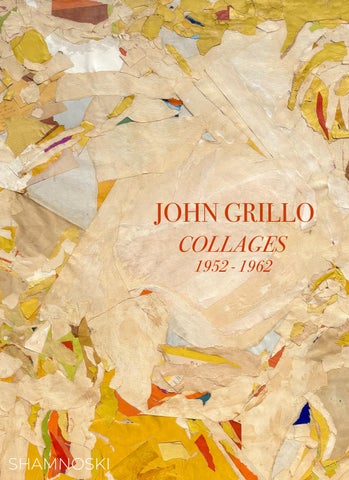
JOHN GRILLO COLLAGES
1952 - 1962
“Violence has its counterpart in painting... the drip, the violent sweep.
I believe violence in painting was a part of the late forties and early fifties—a decade of post-war reactions. The other arts, I feel, have experienced similar reaction, from a violent movement to a creative one.
Now in our late fifties, the feeling for construction—a peaceful and lyrical sense—is coming about, not only in the arts, but perhaps, slowly in the whole world structure.
There exists a confusion in the use of material as opposed to the vision sought. Although today style is much varied, the validity of it depends on the devotion and concept of the artist.
I propose no set style except that the integrity of the artist be evolved from earth, water, and air. The image must fit the material, and the material must be the image.
Q. Are we searching for beauty and what is the beautiful?
A. Search, man, search.”
- JOHN GRILLO, It Is Magazine, Issue #3, 1959
The Cut Edge of Abstraction
In the two decades following the Second World War, the language of abstraction in American art underwent a profound transformation. Painting, long considered the privileged site of avant-garde experimentation, was joined — and in some cases challenged — by a reappraisal of collage, assemblage, and material construction. It is within this fertile moment that John Grillo’s collages of the 1950s must be understood: not as peripheral exercises to his painterly practice, but as vital, self-sufficient statements that reveal the full scope of his ambitions as an abstract artist.
Grillo, who studied with Hans Hofmann, was among the most chromatically inventive members of the second generation of Abstract Expressionists. His canvases of the late 1940s and early 1950s bristle with energy — built from rapid, improvisatory brushwork and luminous, saturated color. Yet for Grillo, the turn to collage was not a retreat from this sensibility; it was an extension of it into a different register. Paper and fragment offered new possibilities: they allowed him to think in terms of placement and tension, to orchestrate visual relationships with a heightened sense of structure.
The modernist tradition of collage reaches back to Picasso and Braque’s papiers collés of 1912, where the insertion of printed ephemera into Cubist compositions redefined the nature of pictorial space. But by mid-century, collage had become more than a formal device — it had become a critical arena for rethinking abstraction itself. Kurt Schwitters’ Merz constructions of the 1920s, Kazimir Malevich’s and El Lissitzky’s Suprematist collages, and the photomontages of Hannah Höch and the Dadaists had all demonstrated that cutting, tearing, and layering could be as radical as brush and pigment.
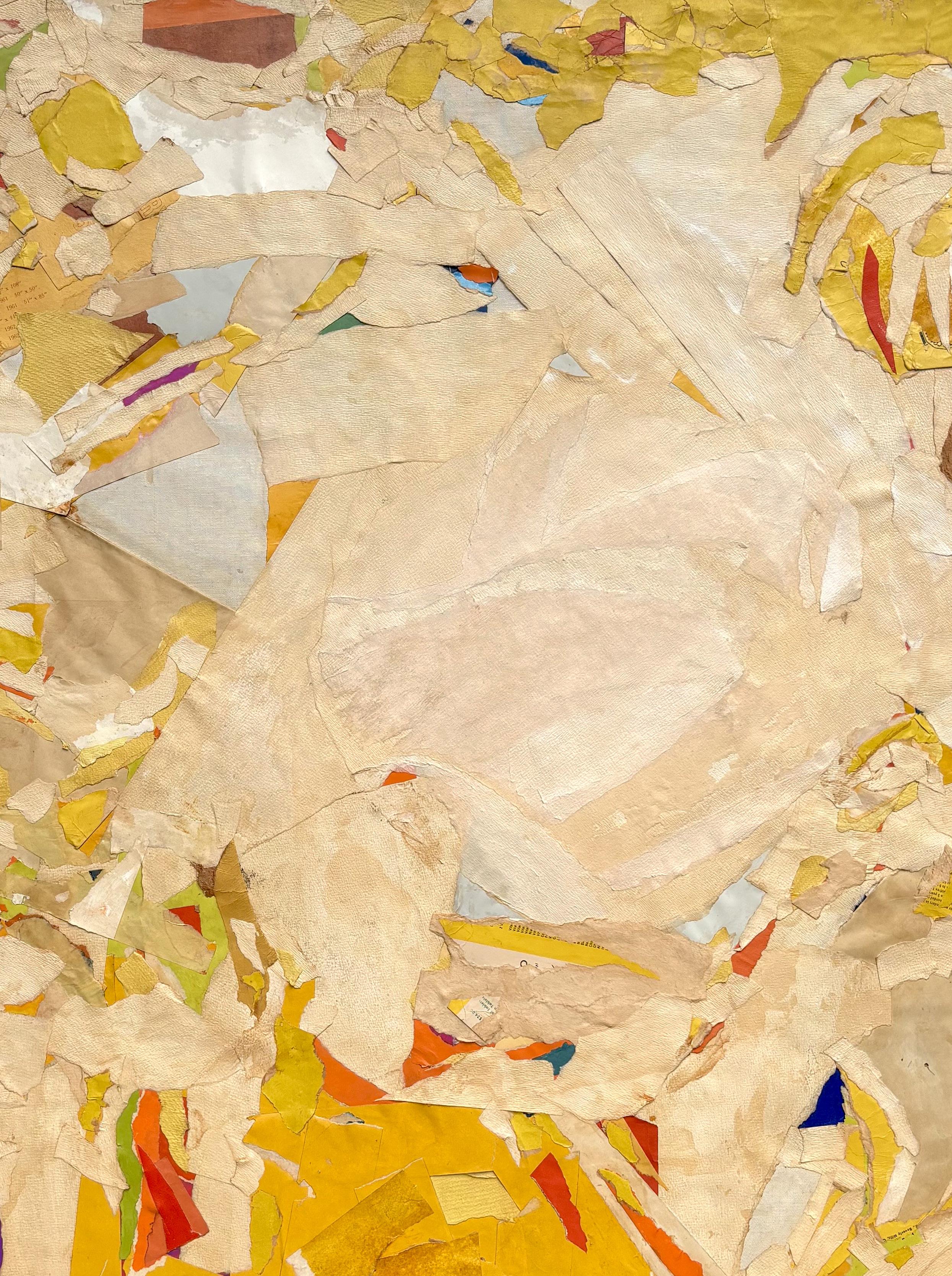
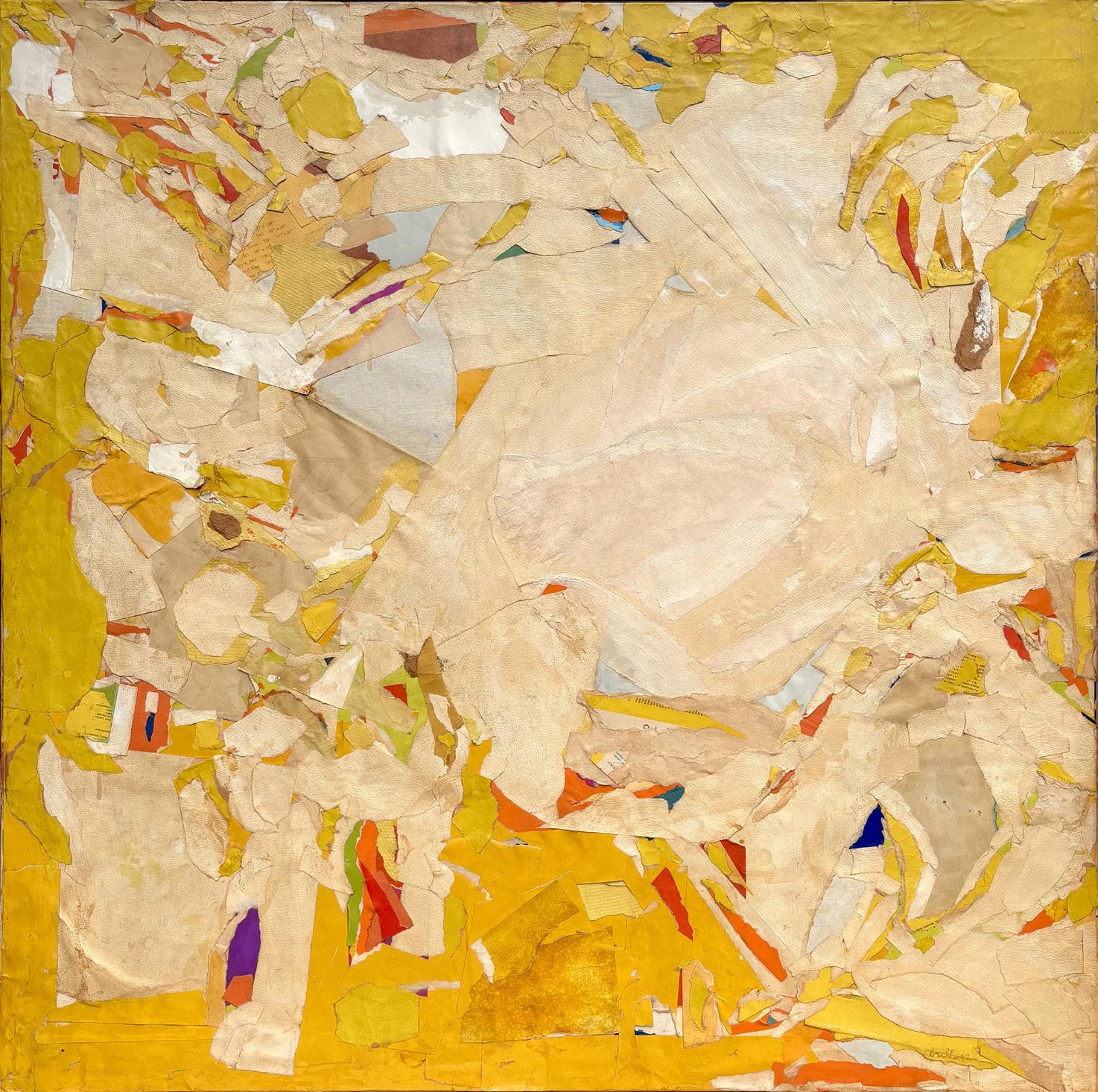
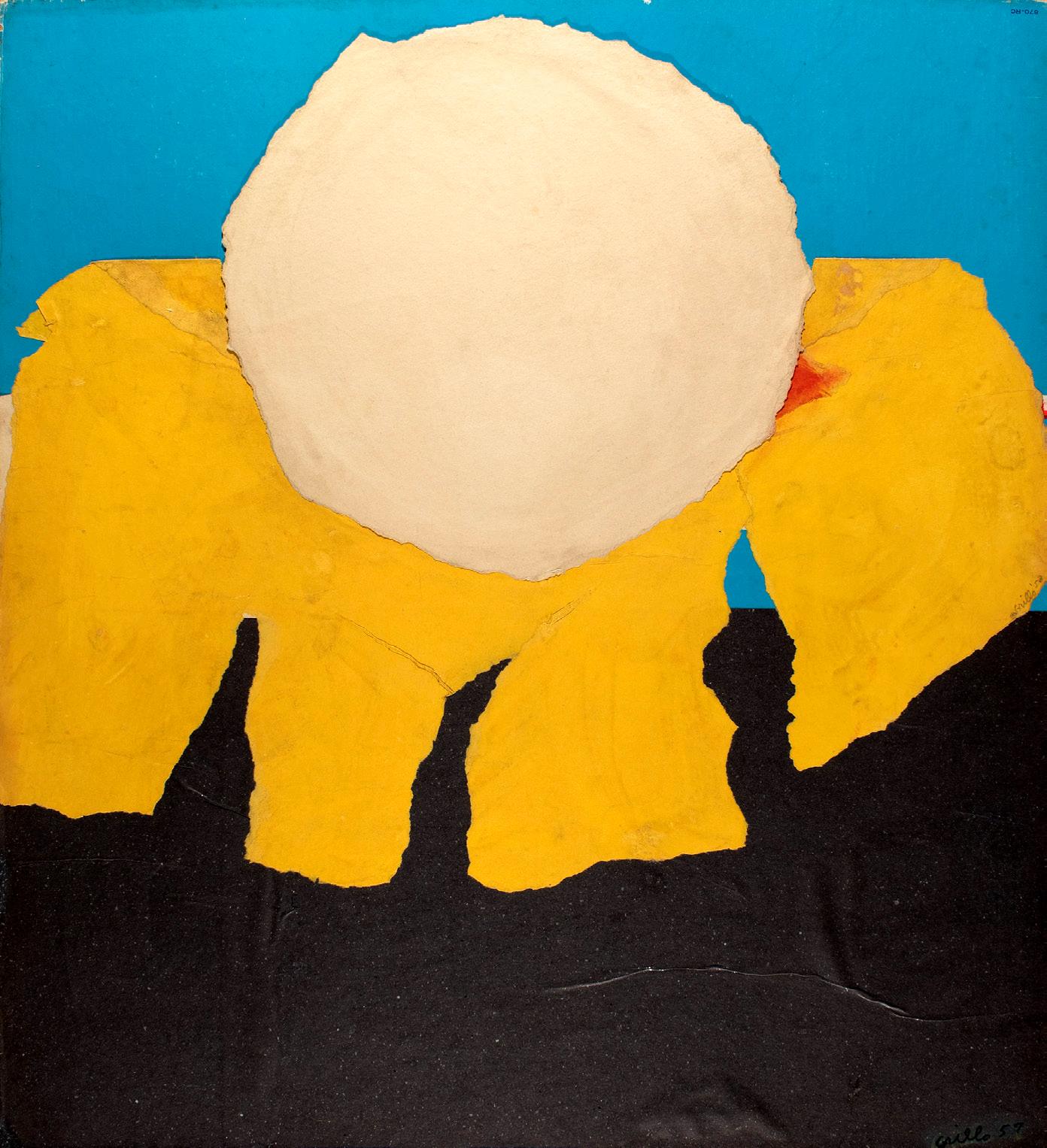
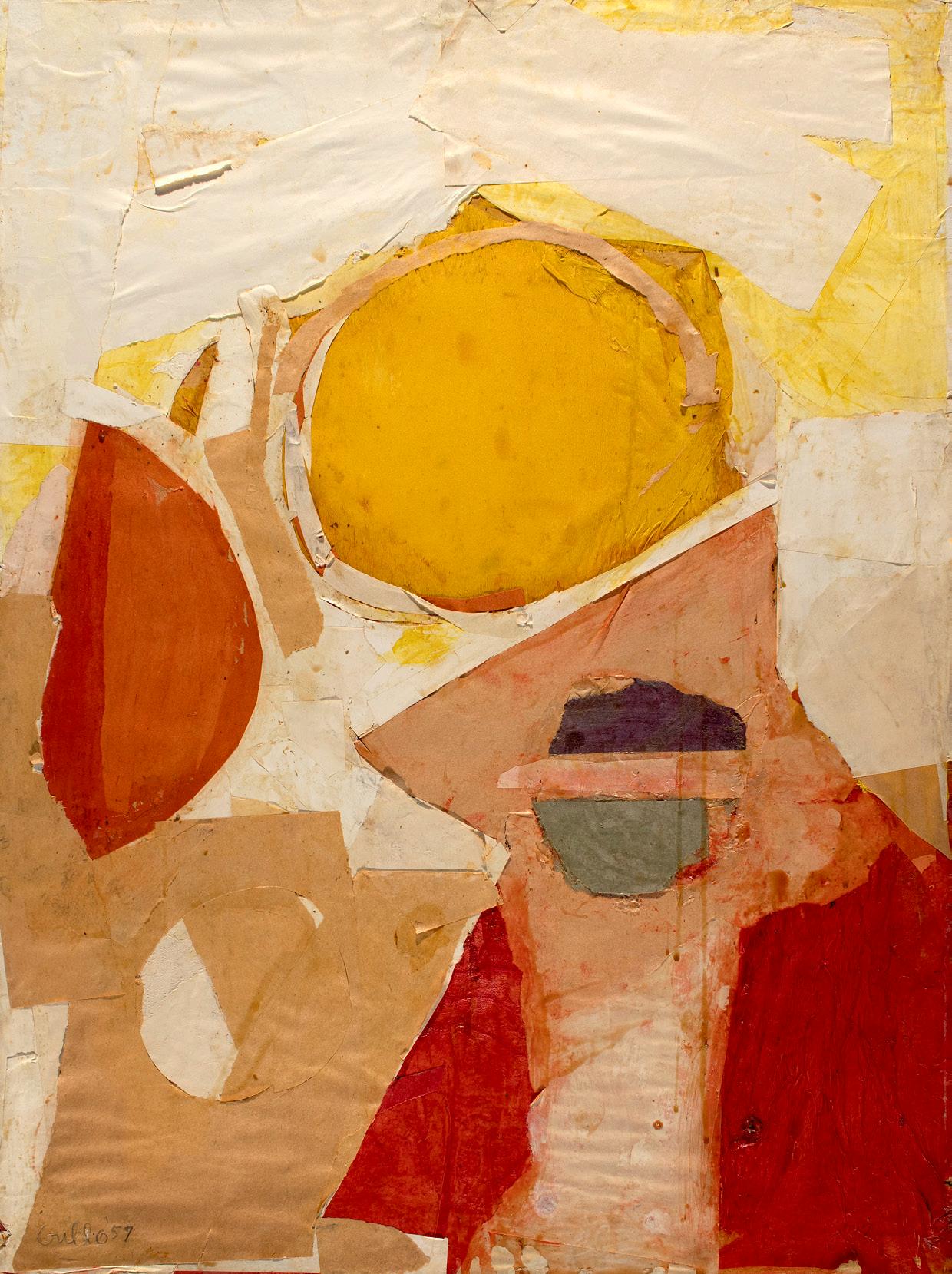
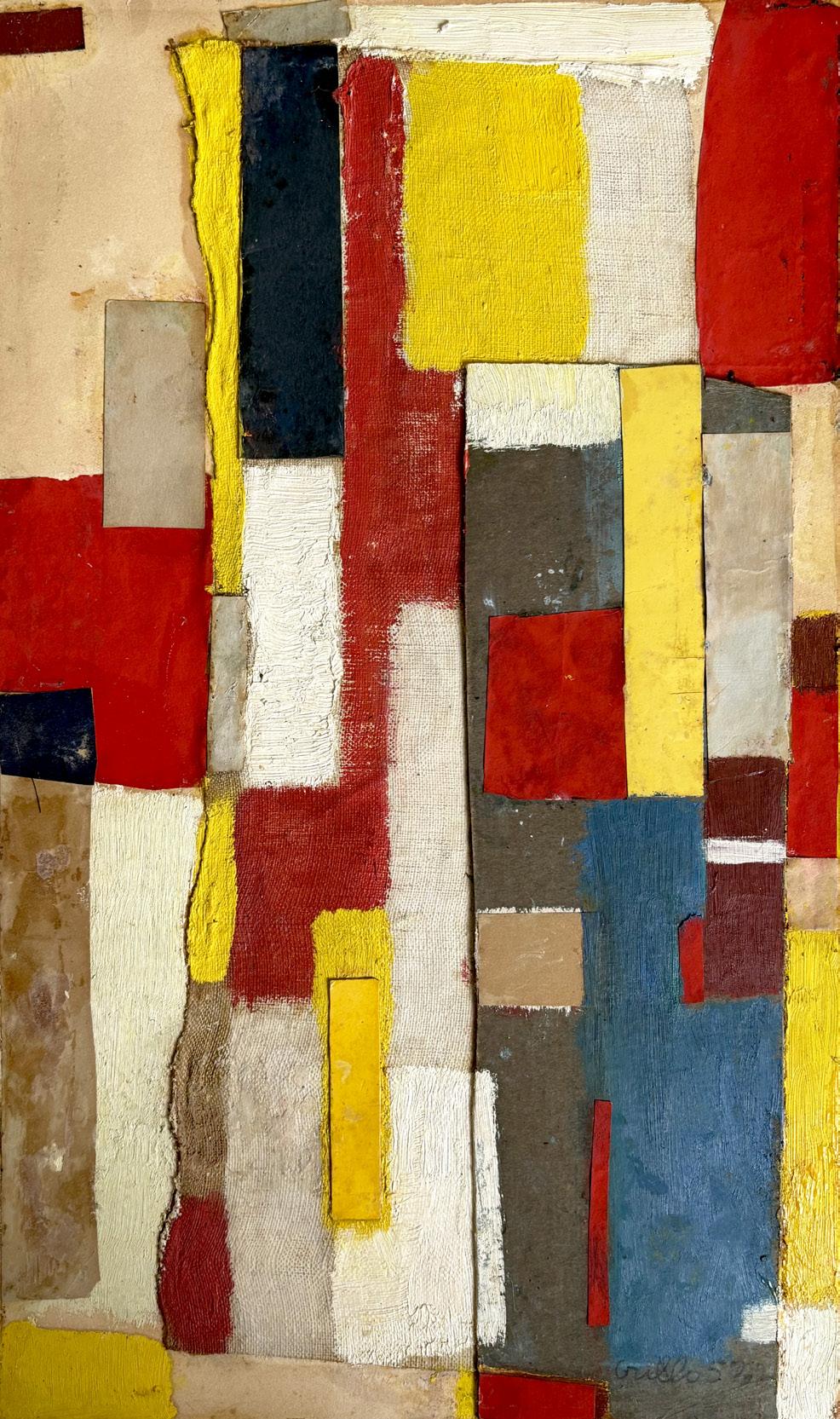
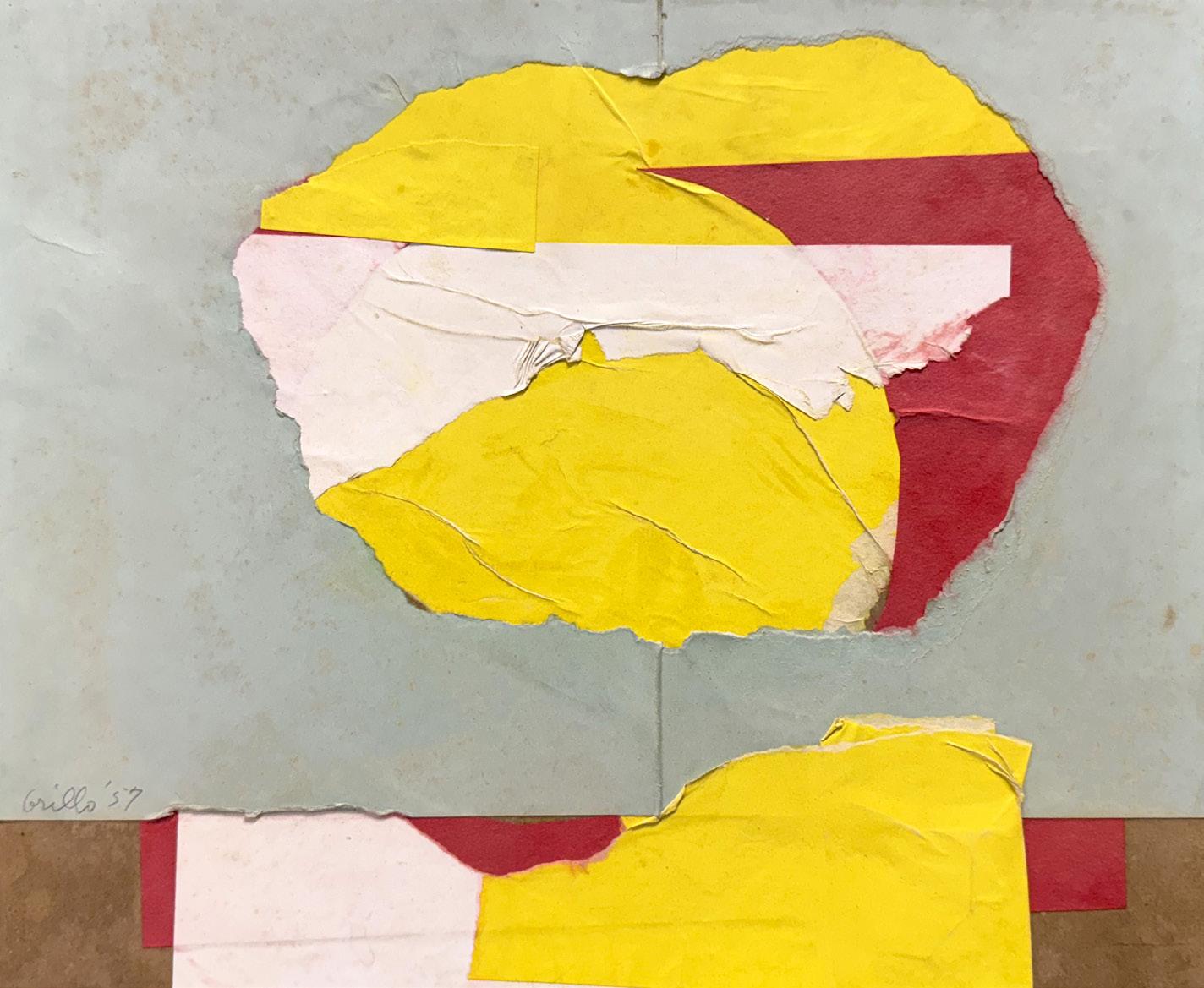
In his collages, torn edges function like brushstrokes, and compositional rhythms unfold with the spontaneity of improvisational painting. These works, often built from saturated planes of color cut or torn into irregular shapes, are at once rigorously composed and joyfully unpredictable. They reveal an artist grappling with the balance between control and chance — a balance central to the ethos of Abstract Expressionism itself.
John Grillo (1917 - 2014)
Untitled, 1962
Collage on canvas
34 x 34 in
Collage
25 5/8 x 22 7/8 in
John Grillo (1917 - 2014)
Untitled, 1957
Dialogues
Grillo’s exploration of collage unfolded alongside a broader resurgence of the medium among his peers. Conrad MarcaRelli, for example, assembled fragments of canvas into austere, architectonic compositions that spoke to the monumental and the structural. Lee Krasner, in a radical act of reinvention, tore apart earlier works to create new collages — acts of destruction and renewal that mirrored the existential tenor of the age. Anne Ryan, whose small-scale collages from the early 1950s were hailed by Clement Greenberg as “miniature masterpieces,” treated paper as a painter might treat pigment, layering textures and tones into poetic compositions.
Grillo’s work shares affinities with these artists but is distinguished by its chromatic exuberance and improvisatory logic. Where Marca-Relli’s collages often evoke architectural solidity, Grillo’s seem to levitate; where Krasner’s speak in a language of rupture, Grillo’s hum with syncopated rhythm. His use of color — perhaps his most defining trait as a painter — finds fresh expression in these works. The collages are less about the tactility of paper than about what happens when color is liberated from the brush, allowed to exist as cut shape, as autonomous form.
The broader European context offers further illuminating parallels. Henri Matisse’s late cut-outs, completed in the final decade of his life, transformed the very idea of collage into a painterly medium. Matisse called this “drawing with scissors,” and Grillo’s practice resonates with that notion: his compositions achieve a lyrical clarity that belies their construction from discrete fragments. At the same time, Alberto Burri’s combustioni and collaged sackcloth works in Italy — or Antoni Tàpies’s mixed-media assemblages in Spain — testify to a postwar preoccupation with materiality and transformation, concerns that Grillo shares but translates into a distinctly American idiom.
A Legacy Reconsidered
It is important to understand these collages not as ancillary to Grillo’s painting practice but as parallel investigations. The 1950s were a period of relentless experimentation and collage, like the canvas, became a laboratory for visual thought. Some of the compositional ideas that animate his later paintings are first articulated here in paper form.
Moreover, collage allowed Grillo to engage directly with questions of construction and deconstruction — to build compositions not through gesture alone but through the physical assembly of parts. In this sense, his practice aligns with a broader shift toward what art historian William Seitz described as “the new constructivism”: a turn toward process, structure, and material presence that defined much of the art of the 1950s and 60s.
In recent years, scholars and curators have begun to reassess the role of collage within Abstract Expressionism, recognizing it not as a peripheral curiosity but as a key site of innovation. Grillo’s contributions to this discourse are overdue for recognition. These works not only demonstrate his versatility and ambition as an artist but also illuminate a crucial moment when American abstraction was expanding its vocabulary.
They also reveal the breadth of Grillo’s sensibility: a painter of dazzling chromatic invention, but also a constructor, a composer, a maker of images from fragments. In an era defined by its insistence on the authenticity of gesture and the immediacy of paint, Grillo’s collages remind us that the cut edge, too, can be a site of profound invention — that to tear, to layer, to assemble is also to create.
In the end, these works stand as eloquent statements of their time and as timeless testaments to the possibilities of abstraction. They ask us to look closely — not only at the surface and pigment, but at the very processes by which rhythm and beauty are constructed from the raw material of the world.
Collage on board
26 x 19 1/4 in
John Grillo (1917 - 2014)
Untitled, 1957
John Grillo (1917 - 2014)
Untitled, 1952
Collage, oil, canvas, on board 14 1/2 x 8 1/2 in
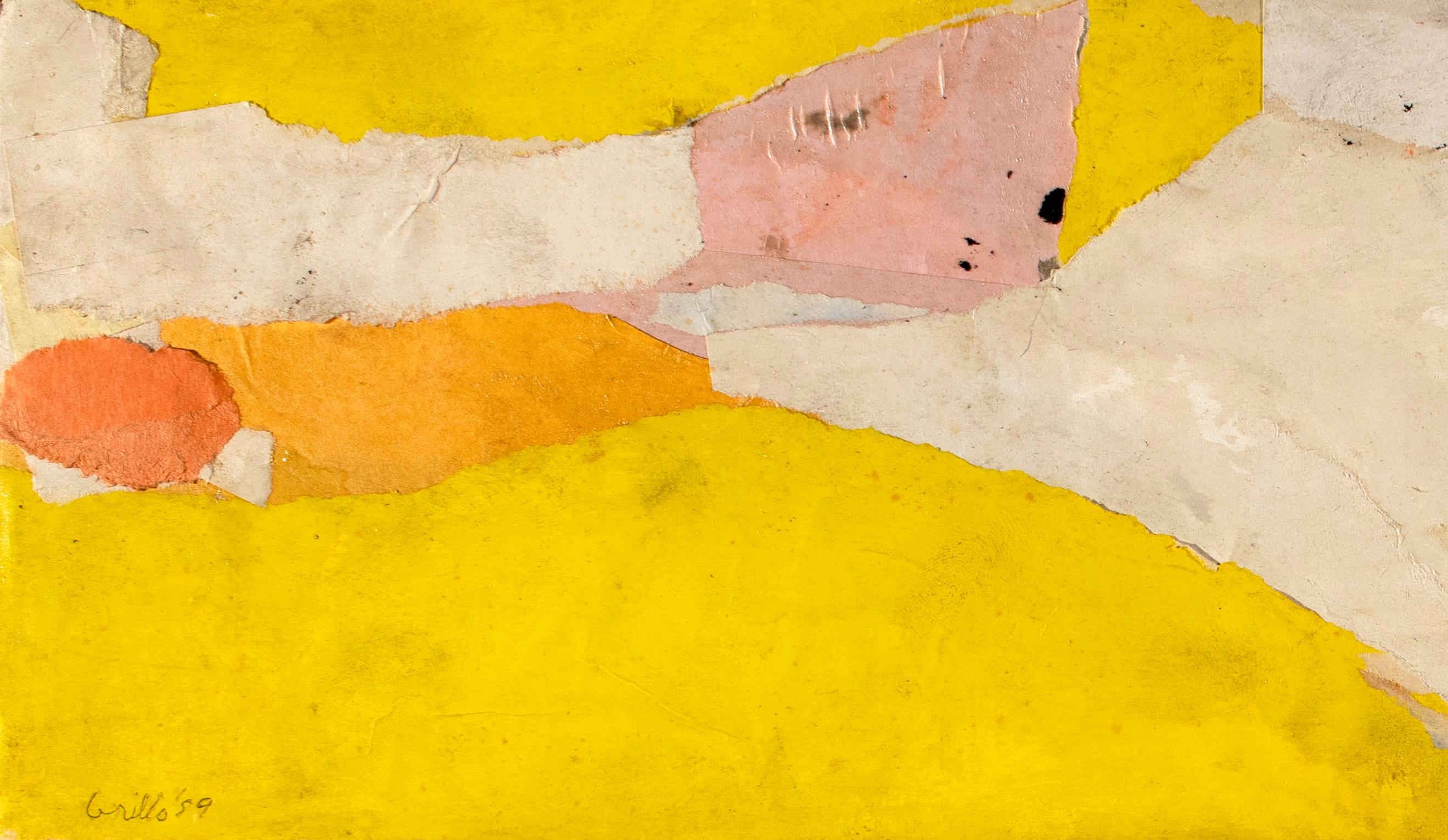
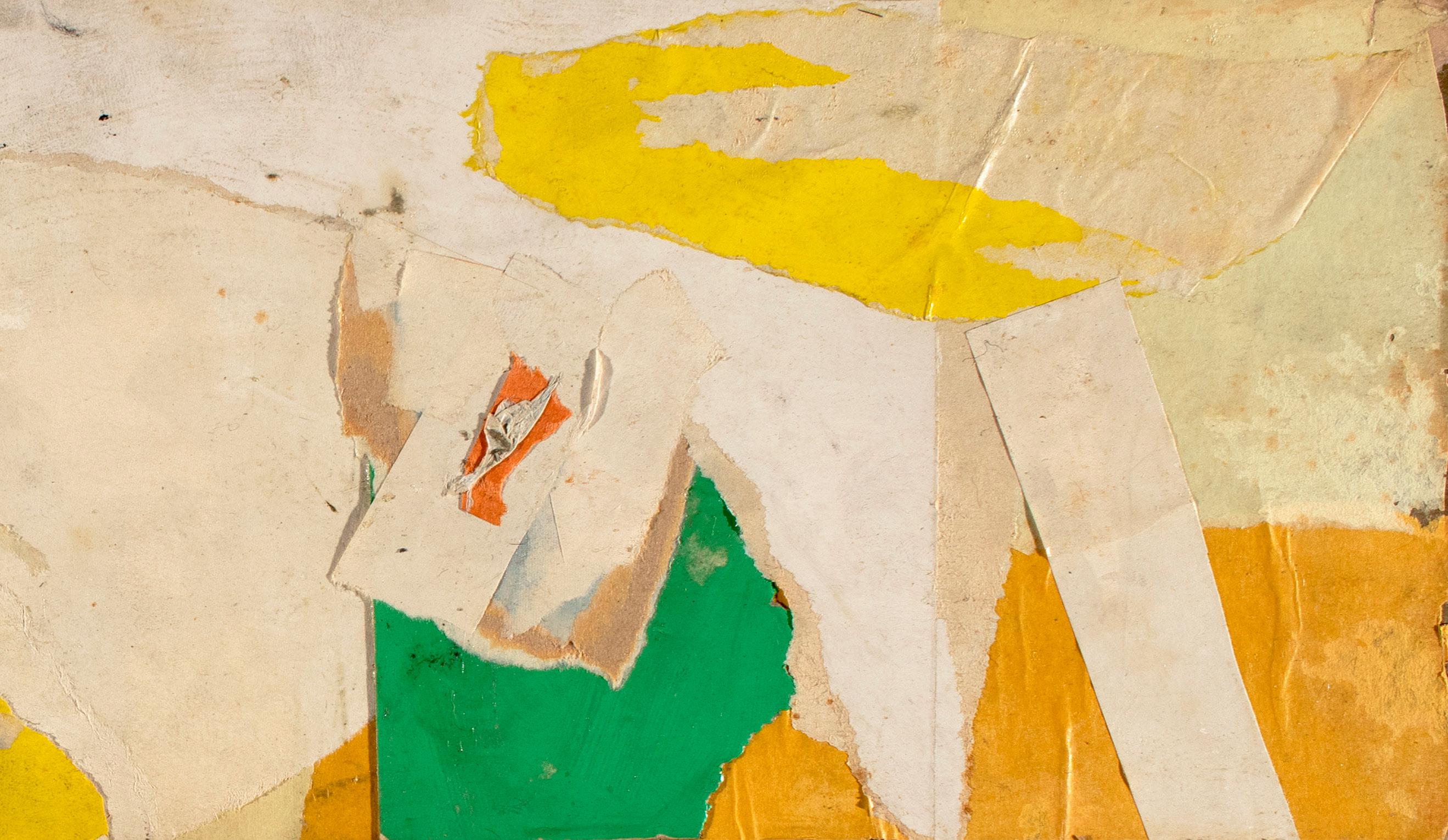
6 x 20 in
John Grillo (1917 - 2014)
Untitled #7, 1959
Collage
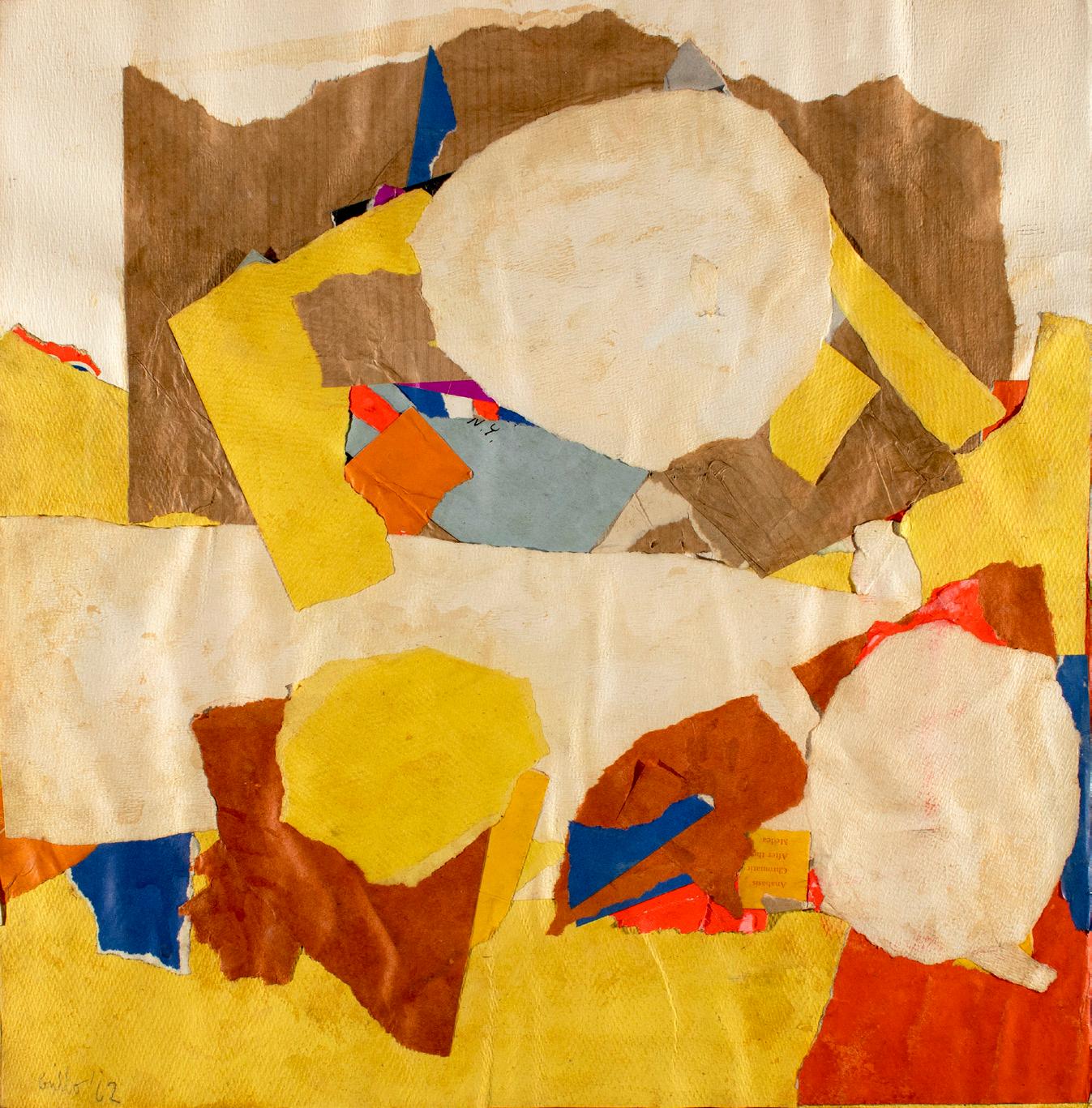
John Grillo (1917 - 2014)
Untitled, 1962
Collage 17 x 17 in
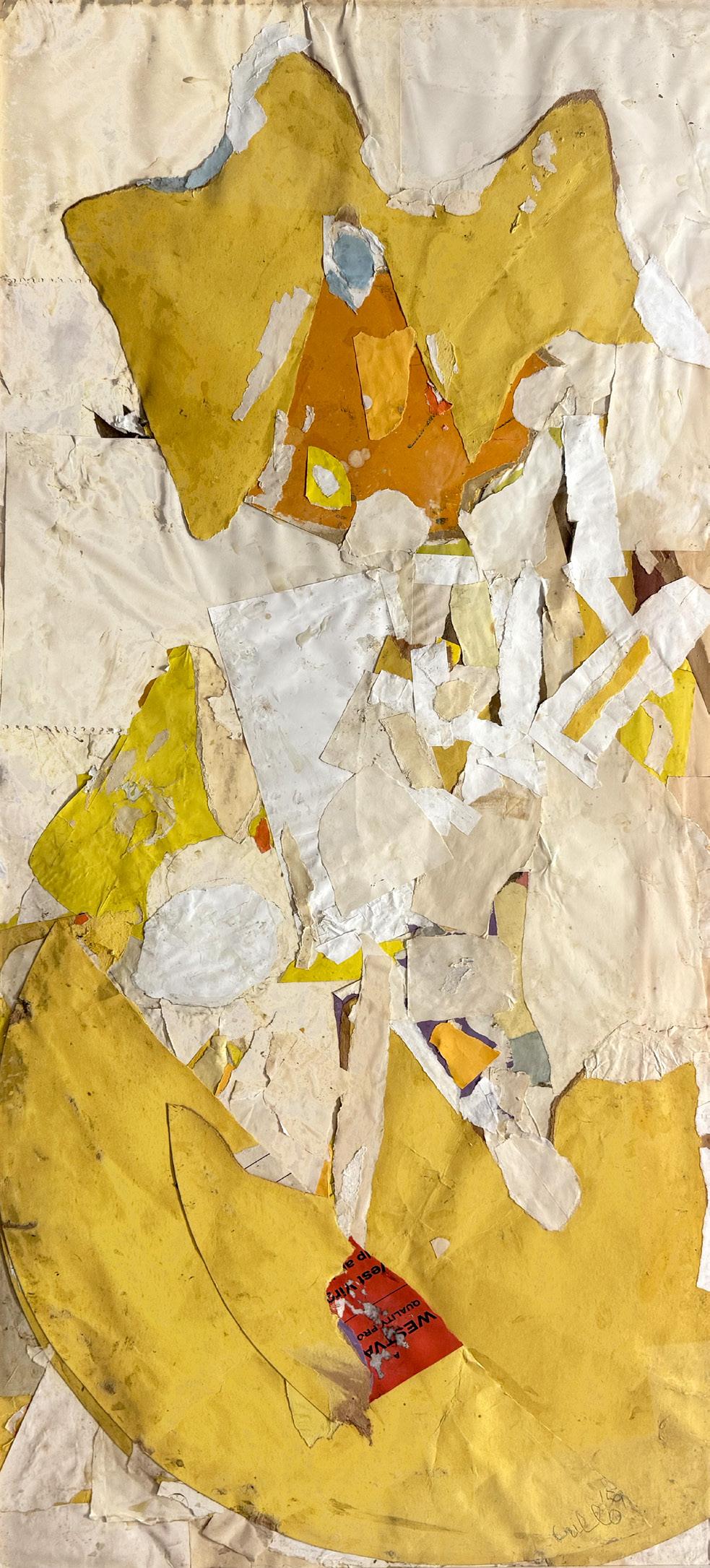
John Grillo (1917 - 2014)
Untitled, 1959
Collage 57 x 24 1/2 in
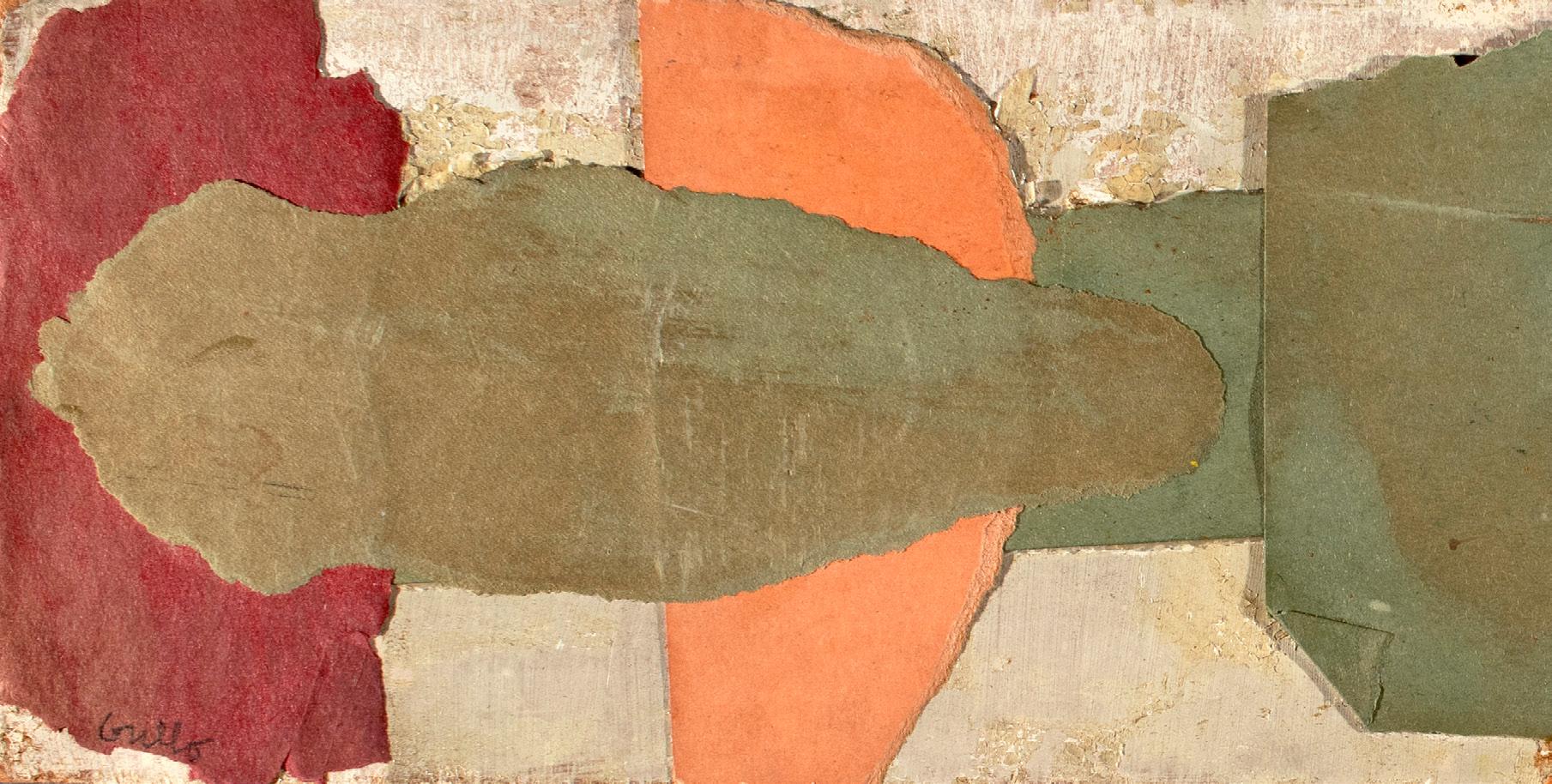
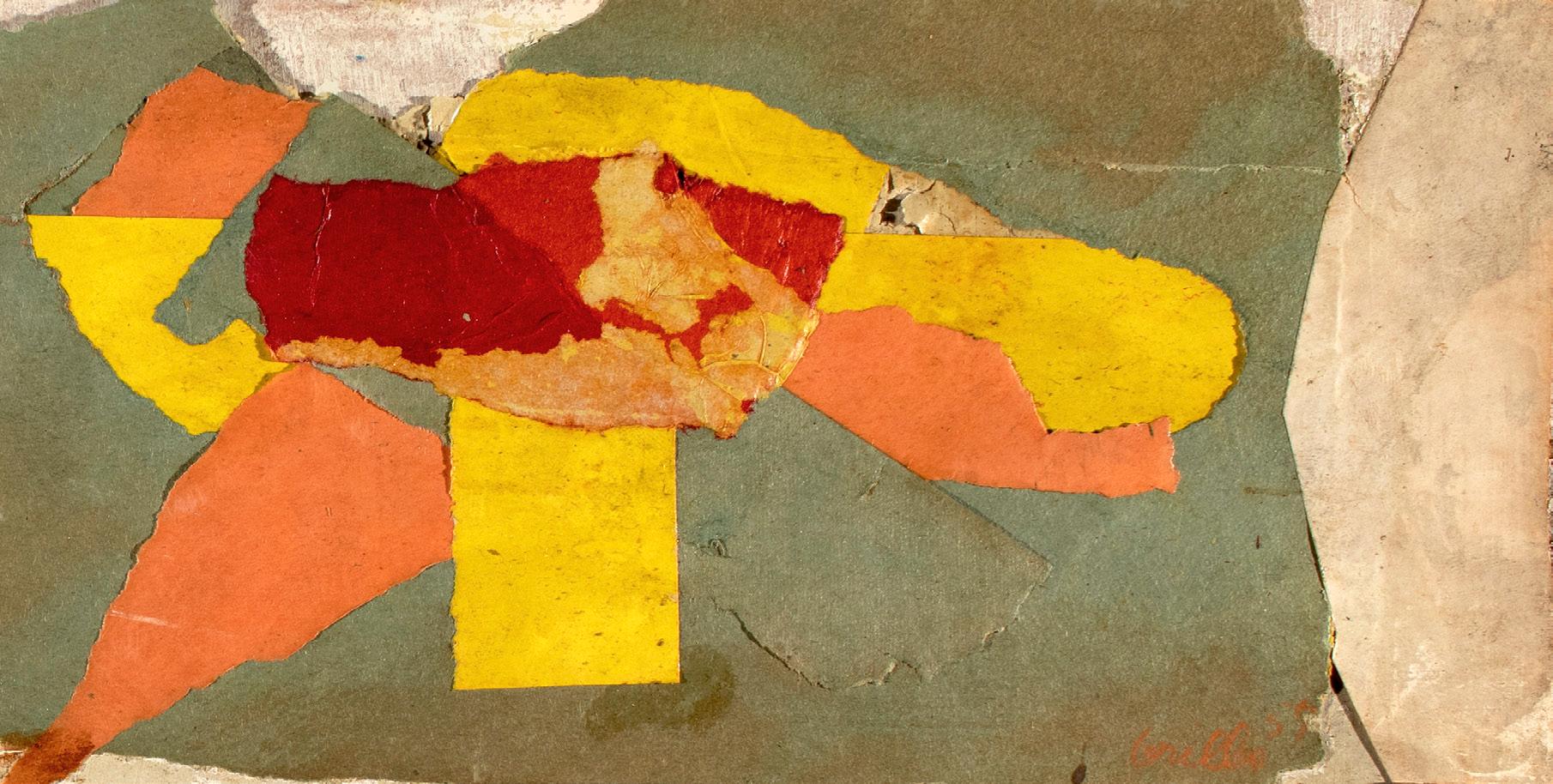
John Grillo (1917 - 2014) Untitled, 1957/58
Collage
5.5 x 20.75 in
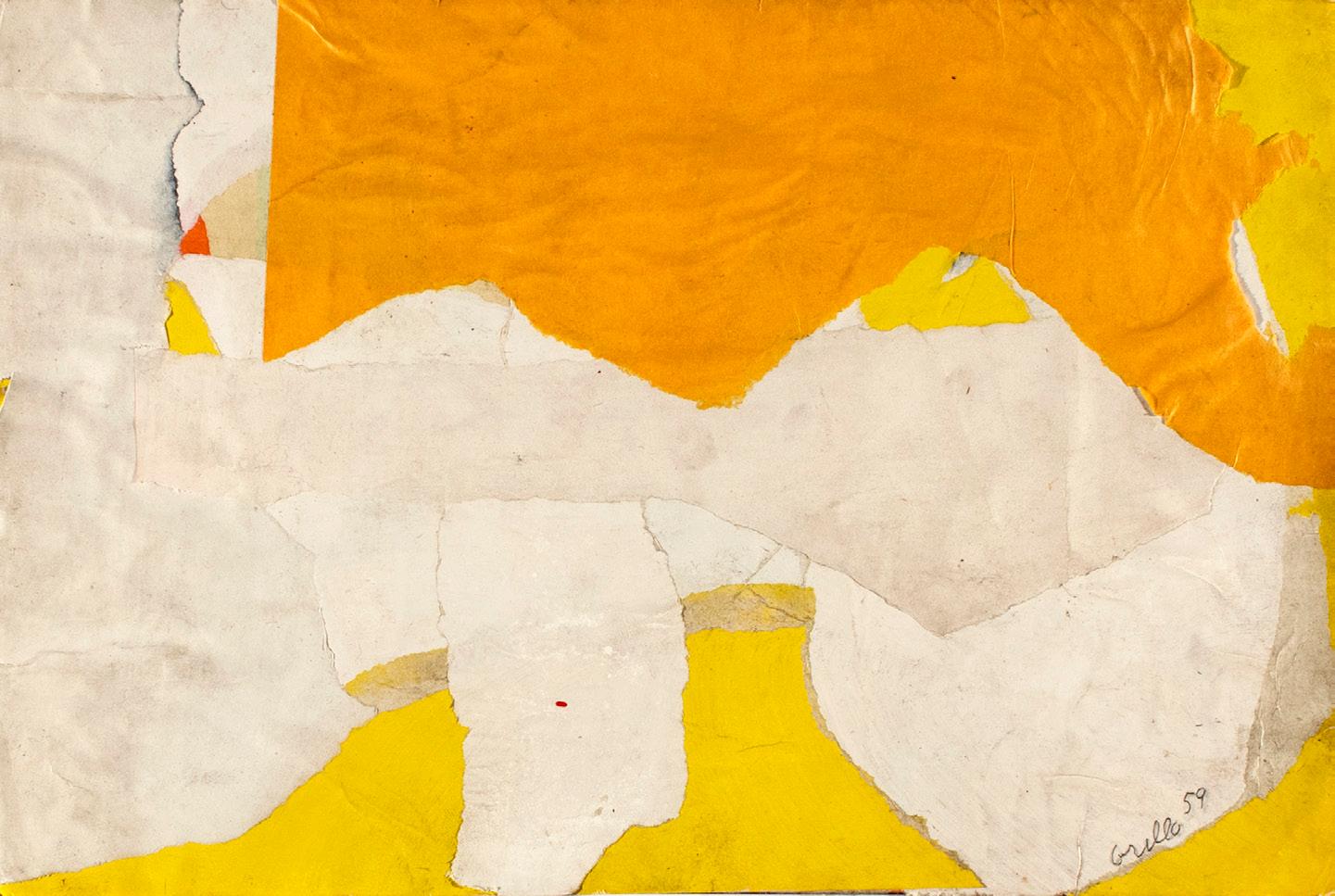
8 1/8 x 12 1/8 in
John Grillo (1917 - 2014)
Untitled, 1959
Collage
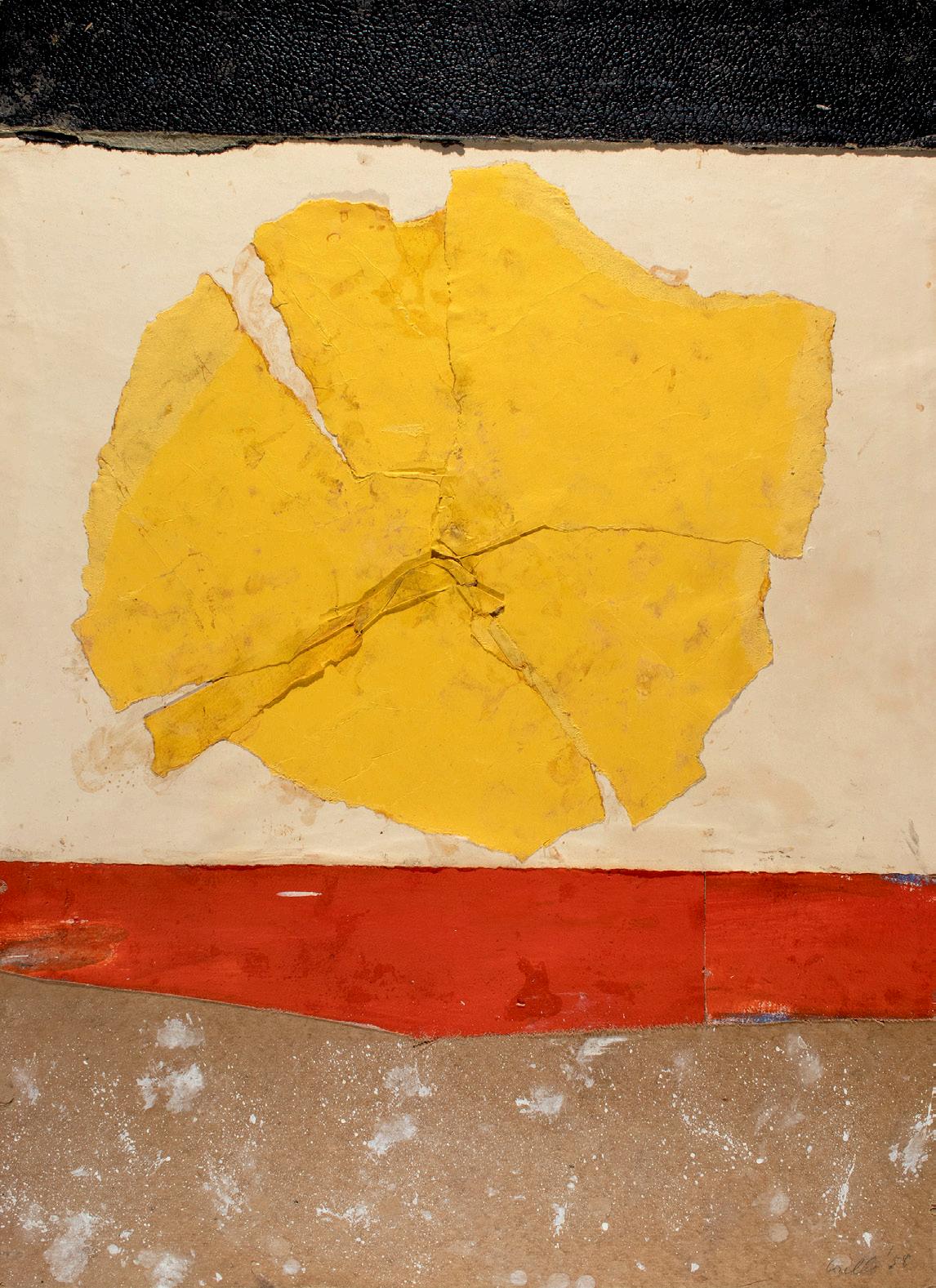
23 5/8 x 17 in
John Grillo (1917 - 2014)
Untitled, 1958 Collage
“Grillo was remarkably ahead of his time. He astounded everybody... he had a marvelous, sensous feeling for pigment... he impressed everybody so much. He has all of this just coming out of his fingertips.”
- Douglas MacAgy
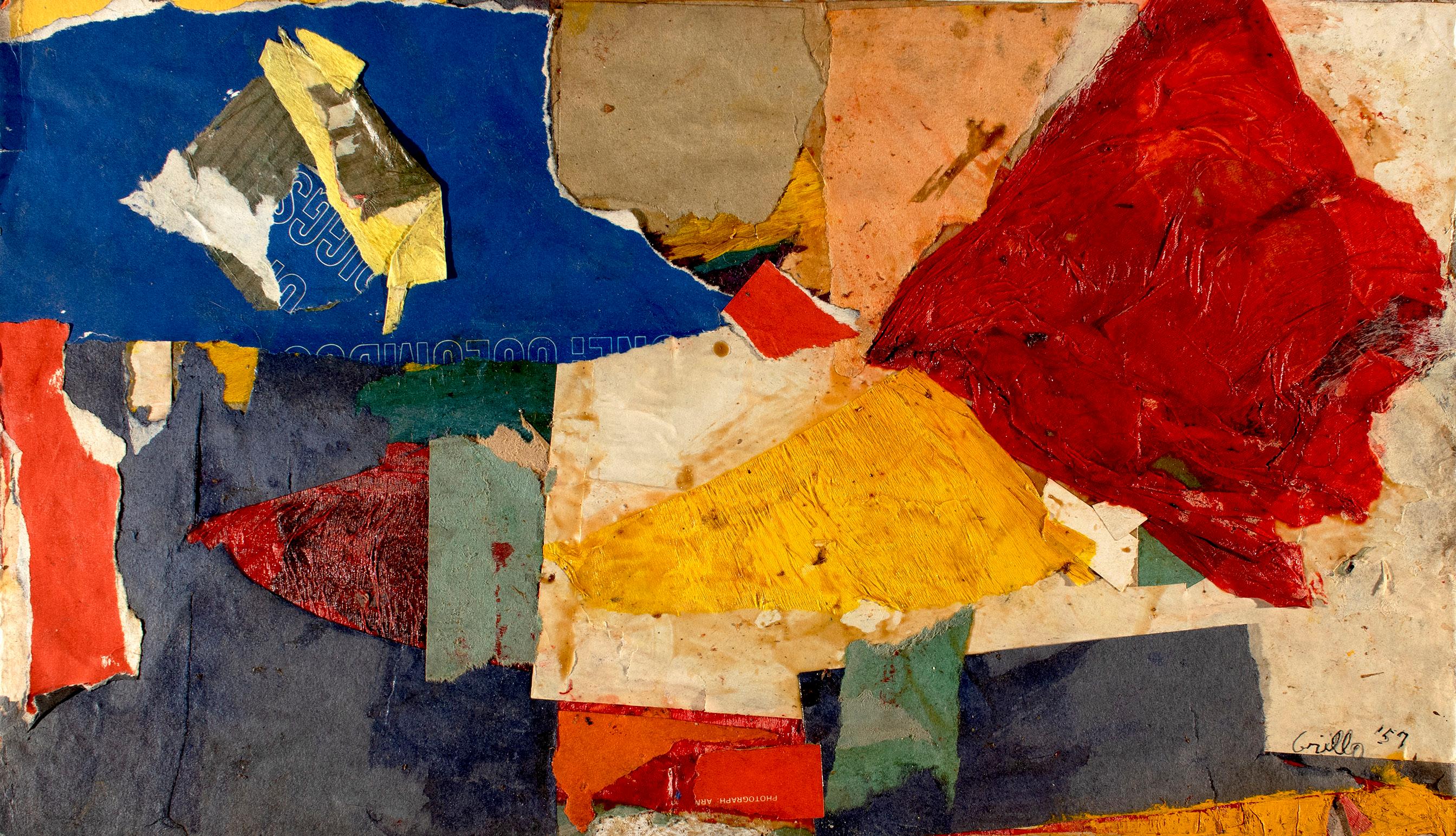
9 7/8 x 17 in
John Grillo (1917 - 2014)
Untitled, 1957
Collage
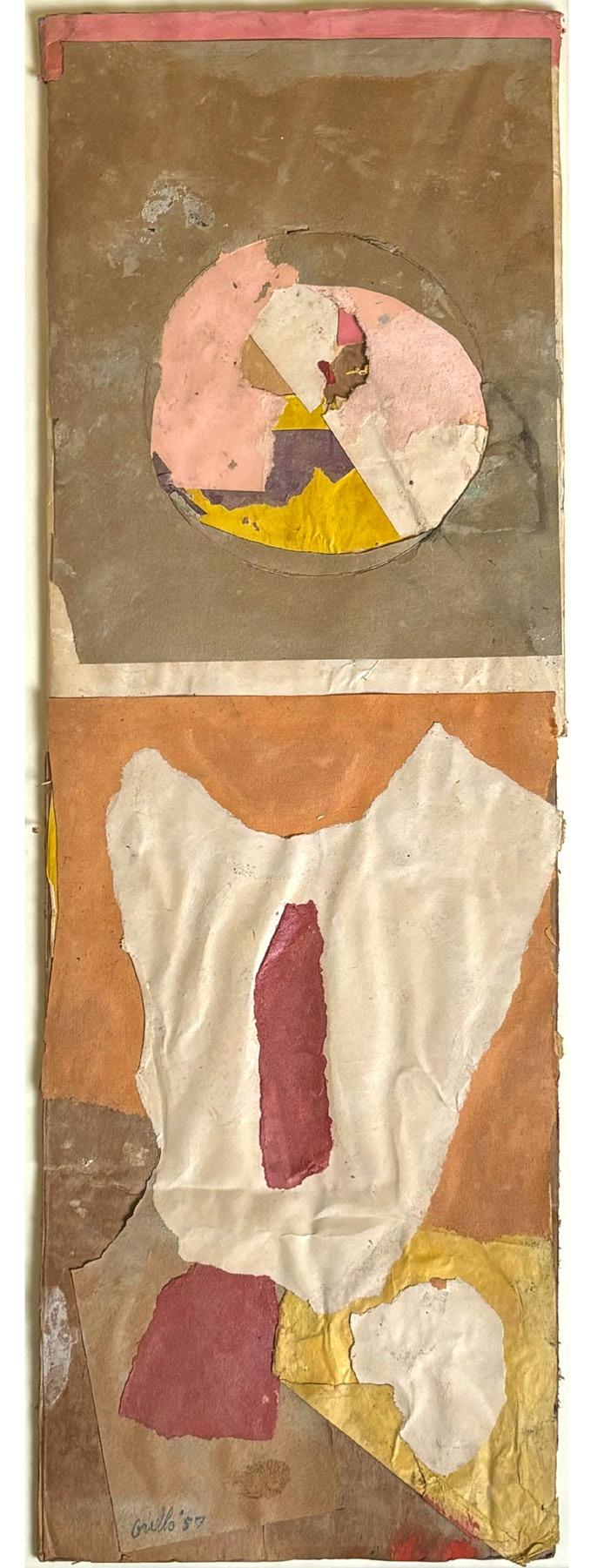
Collage 22 x 7 inches
John Grillo (1917 - 2014)
Collage No. 11, 1957
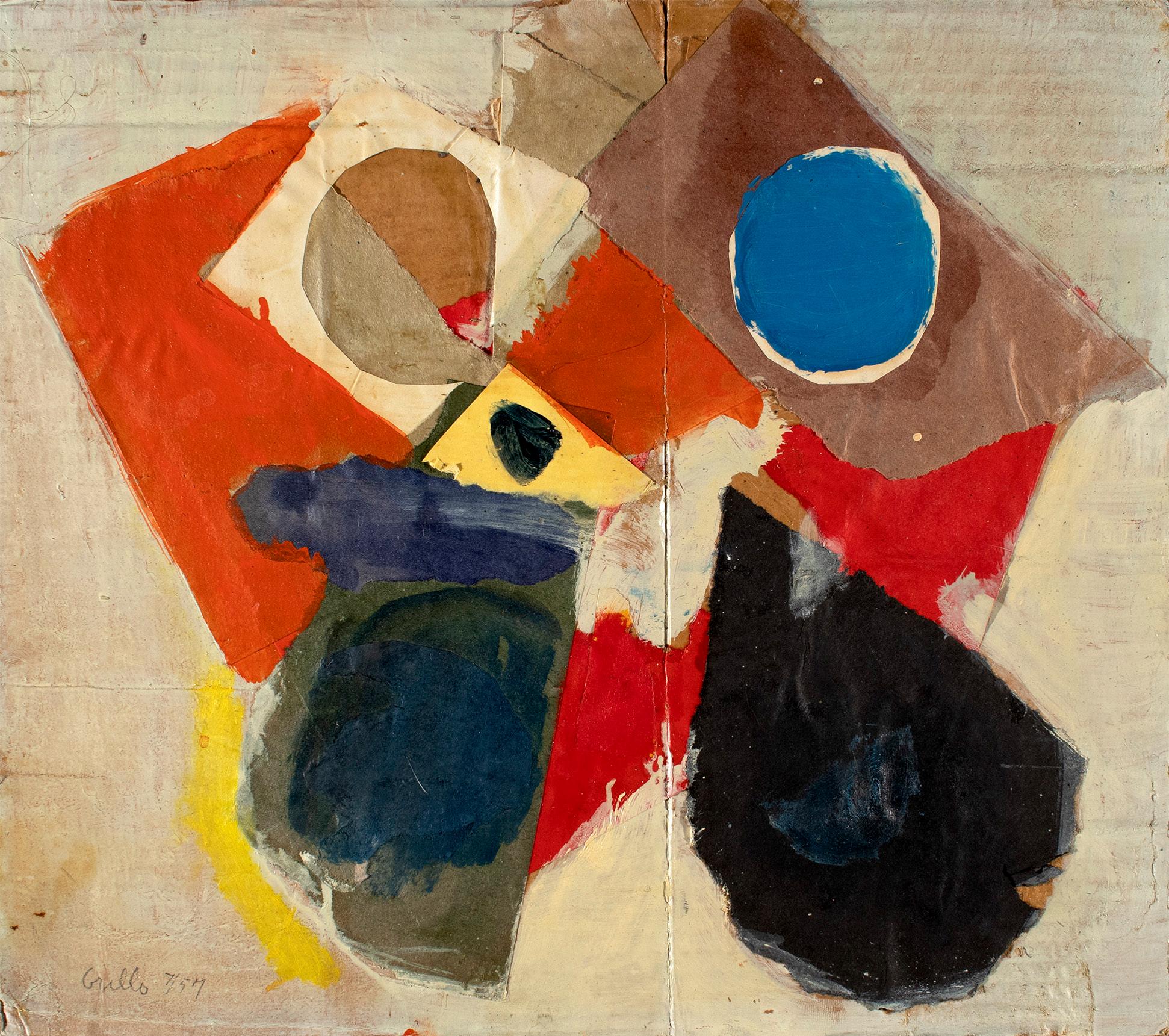
Collage on cardboard
14 1/2 x 16 1/4 in
John Grillo (1917 - 2014)
Untitled #18, 1957
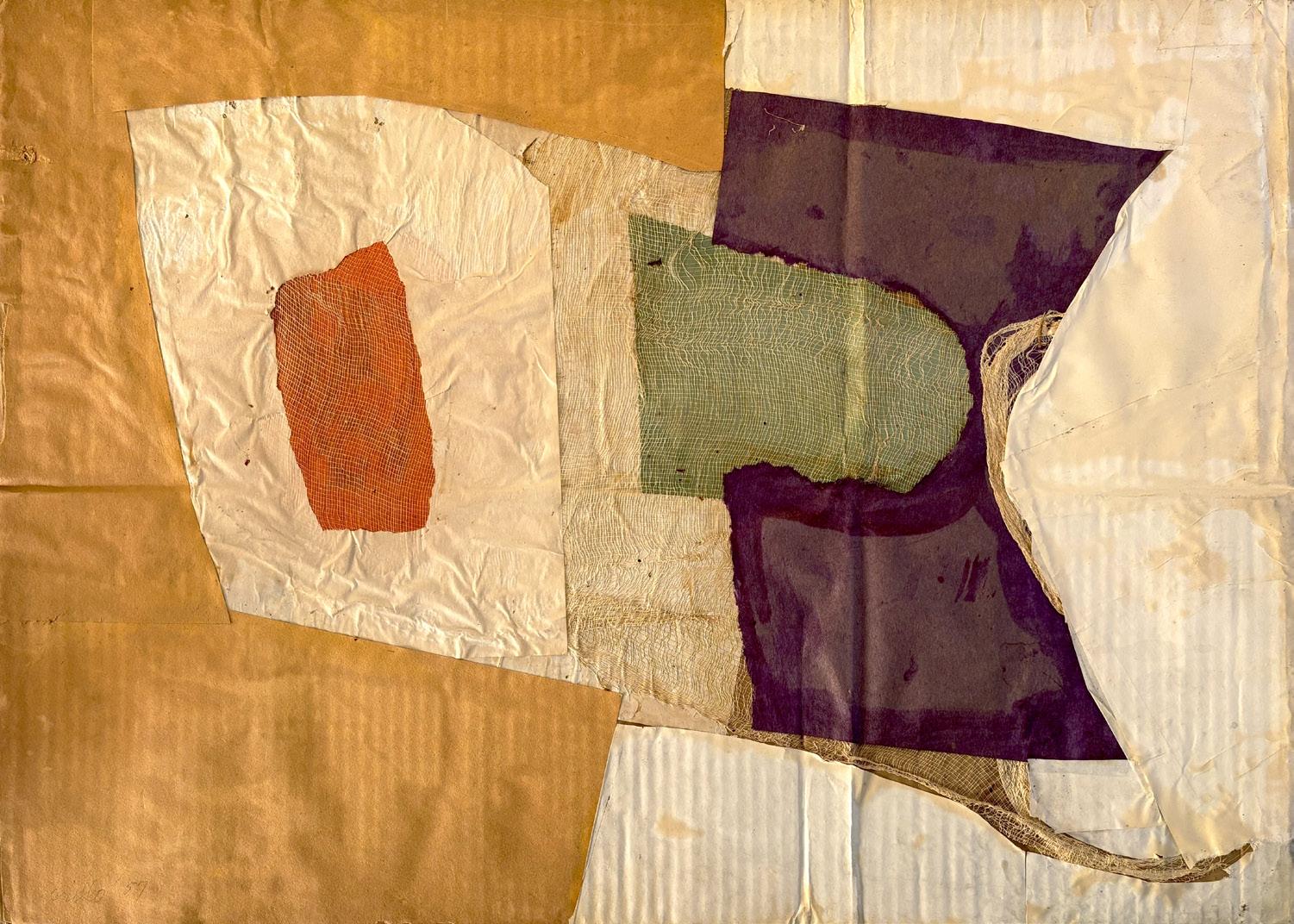
Collage on cardboard
17 1/2 x 24 3/4 in
John Grillo (1917 - 2014)
Untitled, 1957
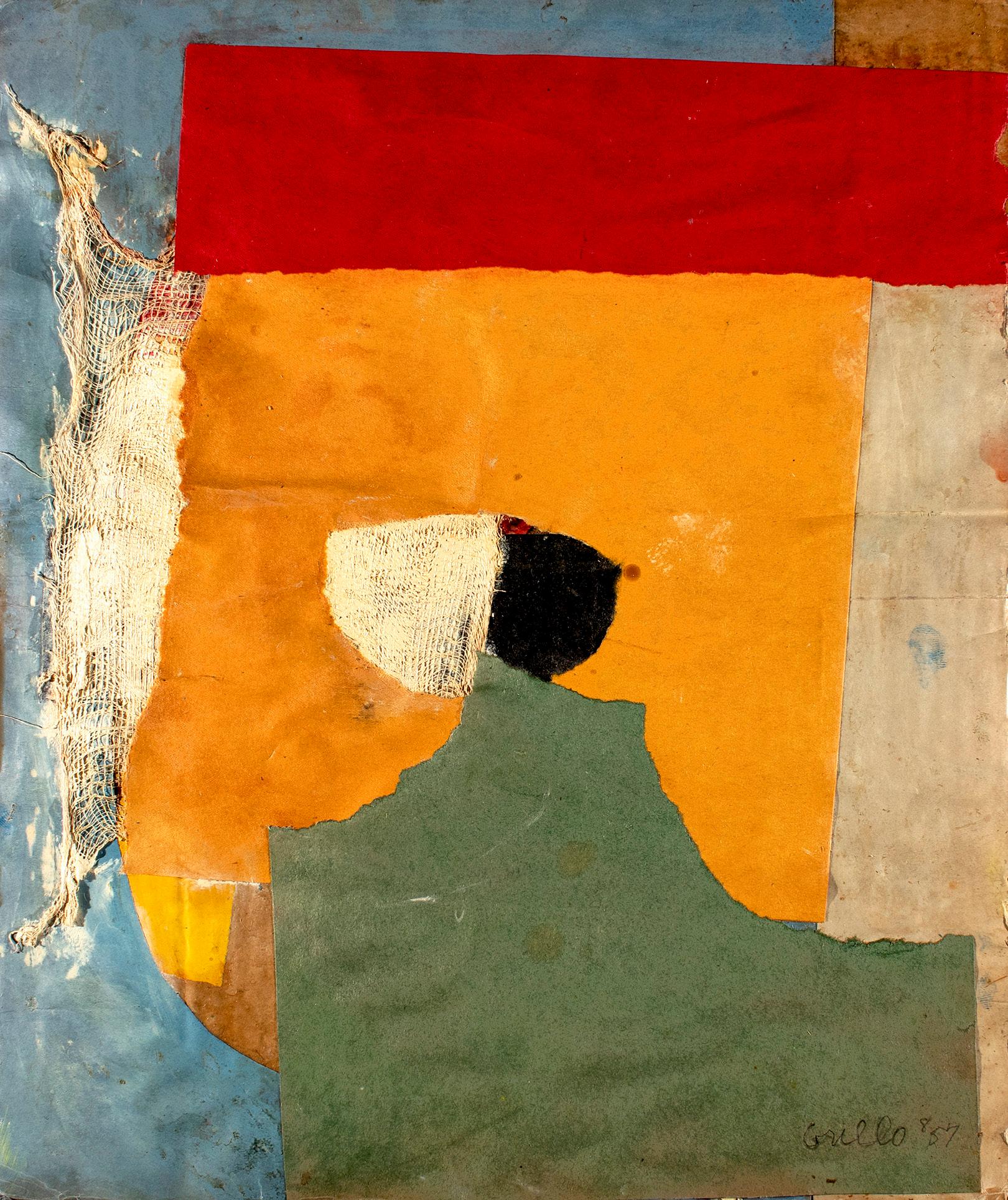
Collage on cardboard
16 1/4 x 13 1/4 in
John Grillo (1917 - 2014)
Untitled #15, 1957
John Grillo (1917 - 2014)
Untitled, 1957
Collage 11 1/4 x 14 1/4 in
Museums and Public Collections
Brooklyn Museum
Butler Institute of American Art
Los Angeles County Museum of Art
Metropolitan Museum of Art, New York
Whitney Museum of American Art, New York
Bennington College
The British Museum
Bundy Art Gallery Museum, VT
Crocker Art Museum, Sacramento, CA
Dartmouth College, Hanover, NH
Foro de Arte Contimporaneo, Mexico City
Museu de Antioquia, Medellin, Colombia
Museo de Arte Moderno La Tertulia, Cali, Colombia
Museo ItaloAmericano, San Francisco
Museo Rayo, Roldanillo Valle, Colombia
Newark Museum
Norfolk Museum, VA
Portland Museum, ME
Provincetown Art Association and Museum, MA
San Jose Museum of Art, CA
Smith College Museum, Northampton, MA
Solomon R. Guggenheim Museum
Springfield Art Museum, MO
Stamford Museum of Art, CT
University of California Museum of Art, Berkeley
University of Massachusetts, Amherst
University of New Hampshire
Walker Art Center, MN
Exhibitions (selection)
Dalielo Gallery, Berkeley CA, 1947 (solo)
Artist’s Gallery, NYC, 1948 (solo)
Fifteen Unknowns, Kootz Gallery, NYC, 1950
Tanager Gallery, NYC, 1952, 1960 (solo)
Tibor de Nagy Gallery, 1953 (solo), 1970 (solo)
Whitney Museum of American Art Annual and Biennial, 1953, 1959
Stable Gallery Annuals, 1954, 1955, 1956, 1957
Vanguard, Walker Art Center, Minneapolis, MN, 1955
Bertha Schaefer Gallery, 1955, 1957, 1959 (solo)
60 American Painters, Walker Art Center, Minneapolis, MN, 1960
Contemporary Painting, Yale University, CT, 1961
Howard Wise Gallery, 1961, 1962, 1963 (solo)
Abstract Expressionists and Imagists, Guggenheim Museum, 1961
Dallas Museum of Fine Arts, TX, 1961, 1962
Ankrum Gallery, University California, Berkeley 1962 (solo)
HCE Gallery, Provincetown, MA, 1962 (solo)
Seattle World’s Fair, 1962
East End Gallery, Provincetown, MA, 1963 (solo)
Directions- Painting USA, San Francisco Museum Modern Art, 1963
Hans Hofmann and Students, Museum of Modern Art, NYC, 1963-4
Butler Institute of American Art, Youngstown, OH, 1964 (solo)
Albright Knox Gallery, Buffalo, NY, 1964
Waitsfield Bundy, 1966 (solo)
New School for Social Research, NYC, 1967 (solo)
Iowa State University, Ames, IA, 1967 (solo)
Simmons College, Boston, MA, 1968 (solo)
Benedict Art Center, St. Joseph, MN, 1969 (solo)
Horizon Gallery, NYC, 1969 (solo)
Robert Dain Gallery, NYC, 1970 (solo)
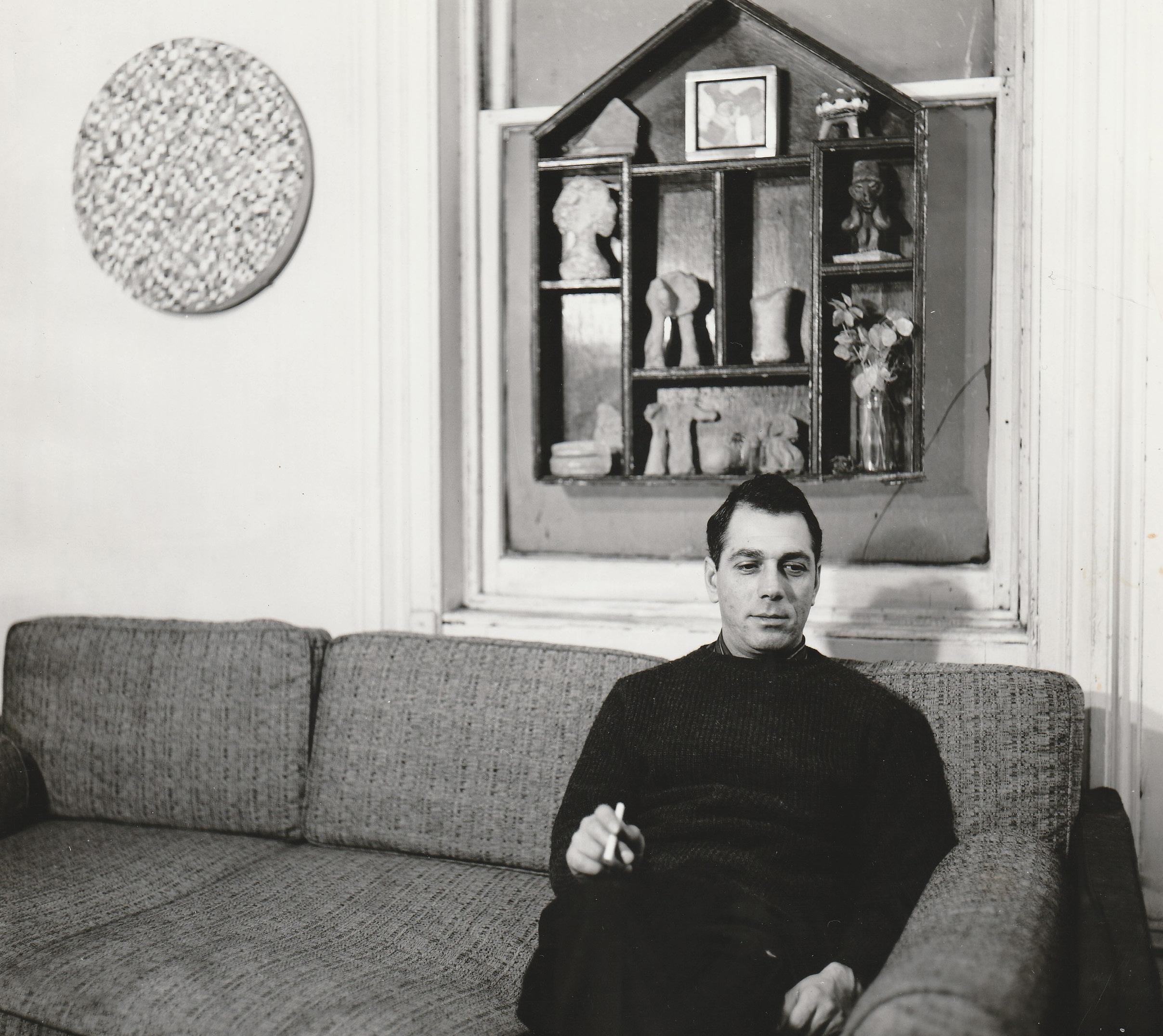
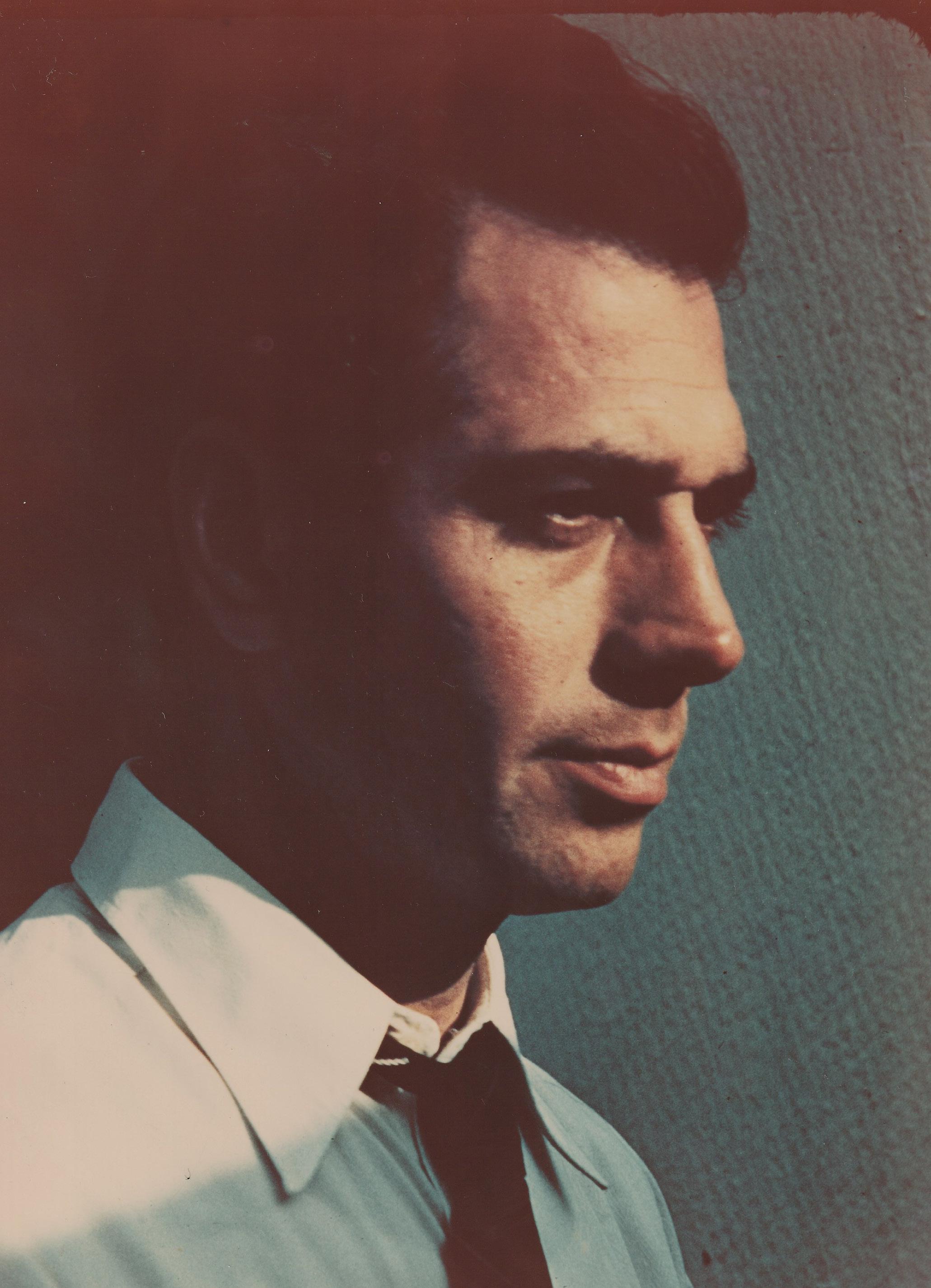
Above: John Grillo, c. 1950s. Photograph: Edward Meneely. Page 2: John Grillo, c. 1960. Photograph: Fred Olsen. Photographs Courtesy of The Estate of John Grillo.
This catalogue has been produced on the occasion of the exhibition “John Grillo: Collages 1952-1962”, Nov 13th, 2025 to Jan 6th, 2026.
All images copyright © The Estate of John Grillo. Essay by Matthew Shamnoski.
Publication © Shamnoski Gallery. All rights reserved. Reproduction of contents prohibited.
Shamnoski Gallery 115 E 72nd St, #1B, New York, NY 10021 570.362.4207 www.shamnoski.com
“The expressive substance of these collages is a universe filled with moving particles which cannot collide... His color scheme is dominated by yellow and white whose brightness he exploits to play man-made sunspots upon the viewer’s retina. And they do leave vivid after-images... Each collage is a new distribution of forms equally capable of continuous and silent floating through light. Despite the fact that the papers are fastened down, Grillo is able to evoke a spirit of absolute freedom for each moving particle.”
- R. G. Wholden, Review for Ankrum Gallery, Los Angeles, ArtForum, March 1963