Sundays 2pm-3pm The Answer 930AM San Antonio / New Braunfels / San Marcos / Austin
Sundays 8pm-9pm KTRH 740AM / Simulcast on the iHeartRadio app Houston / Worldwide
Saturdays 6am-7am, 11am-12 noon
Sundays 6am-7am, 5pm-6pm AM 1440
To listen to the show: Visit shalemag.com or download iHeart mobile app to listen live!
FACILITATING TRADE ACROSS THE GLOBAL MARKETPLACE
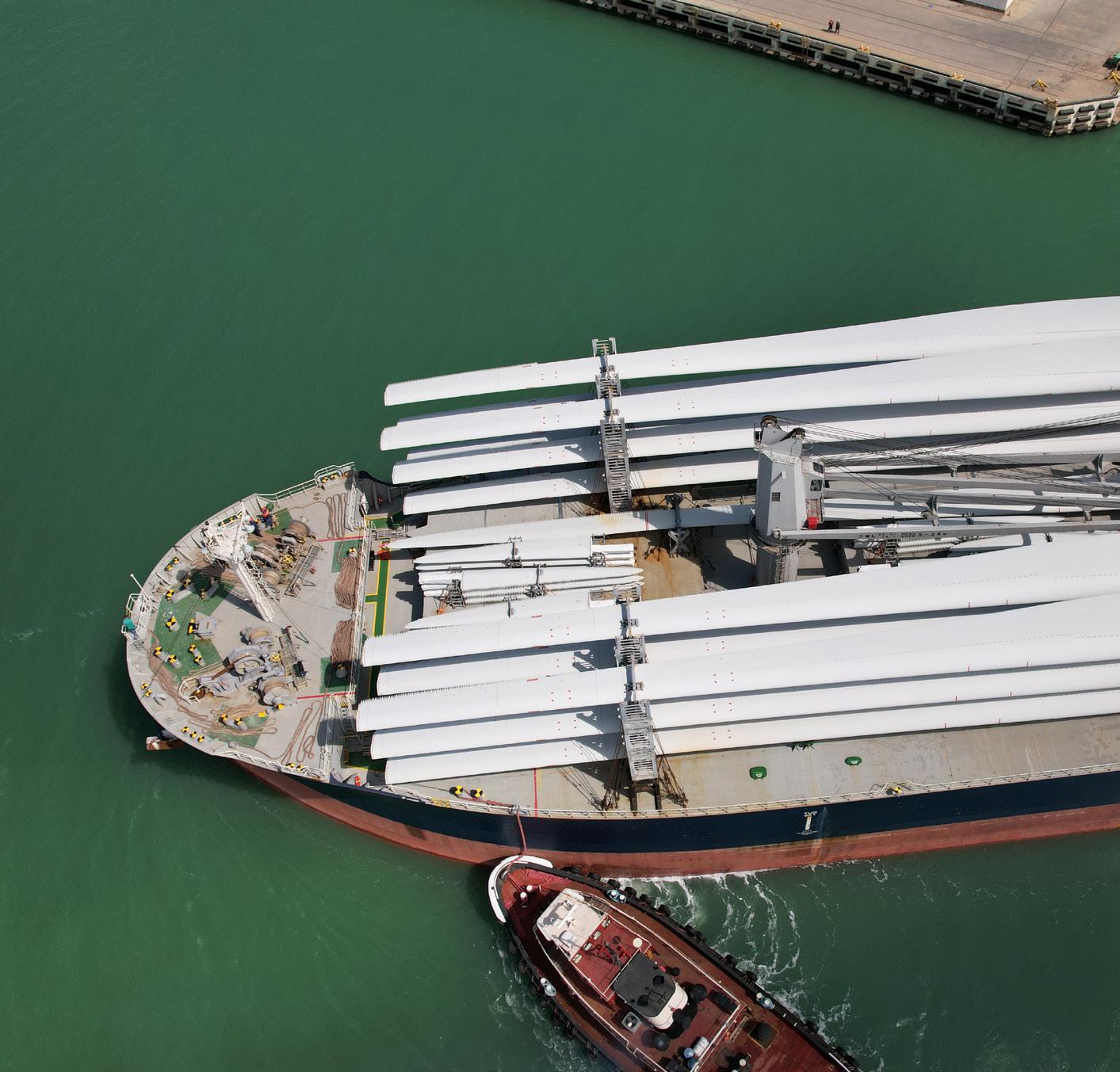
The Port of Corpus Christi’s Foreign Trade Zone 122 program helps increase global competitiveness of U.S.-based companies. Foreign Trade Zone 122 can defer or reduce duty payments, streamline supply chain costs and help companies thrive in competitive domestic and foreign markets.
LEARN MORE
while
Finding and producing the oil and natural gas the world needs is what we do. And our commitment to our SPIRIT Values—Safety, People, Integrity, Responsibility, Innovation and Teamwork— is how we do it. That includes caring about the environment and the communities where we live and work – now and into the future.
EDITOR-IN-CHIEF
Robert Rapier
CHIEF FINANCIAL OFFICER Suzel Diego
CHIEF REVENUE & DIGITAL STRATEGY OFFICER Fernando Guerra
John Collins, Ashley Grimes, Doug Humphreys, Matt Reed
CONTRIBUTING WRITERS
Felicity Bradstock, Amanda Jenkins, Robert Rapier
STAFF PHOTOGRAPHER
Malcolm Perez
EDITORIAL INTERN
LeAnna Castro
This quarter’s issue of Shale Magazine arrives at a moment when the energy world feels both remarkably resilient and increasingly strained.
Markets are adapting in real time to geopolitical shocks, infrastructure bottlenecks, policy reversals, and technological disruption. Yet beneath all the headlines lies a more fundamental story: energy remains the foundation upon which modern economies, national security, and industrial competitiveness are built.
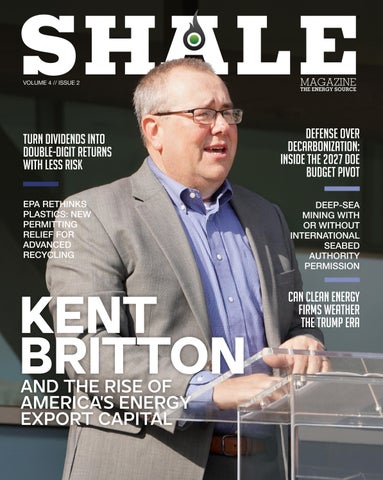
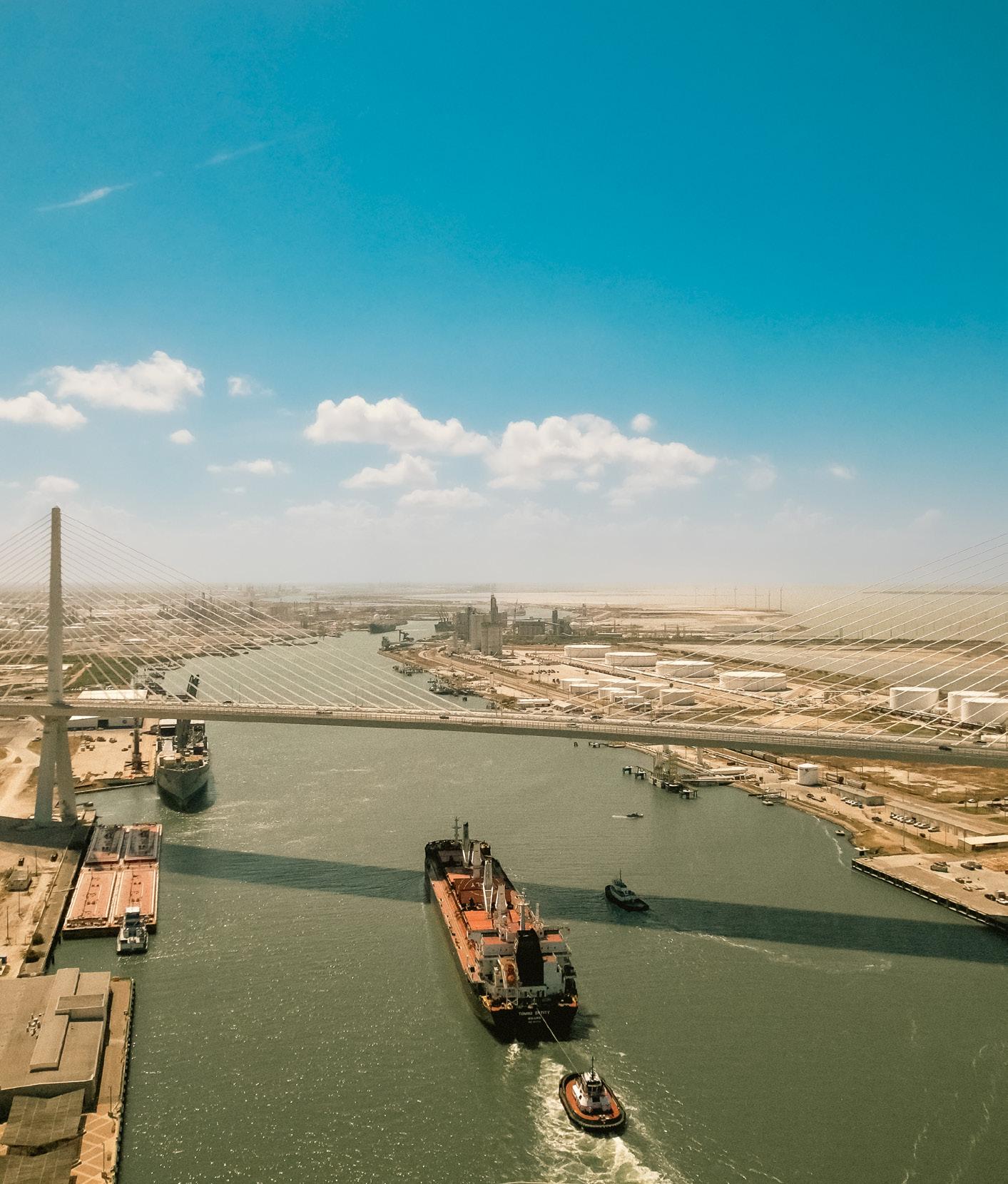
Few places illustrate that reality more clearly today than the Port of Corpus Christi, which is why we chose CEO Kent Britton as the focus of this quarter’s cover story. The transformation Kent has overseen over the past decade is extraordinary. The Port has evolved from a regional energy hub into one of the most strategically important export gateways in the world, supported by major investments in channel expansion, LNG infrastructure, and export capacity. Recent records in crude oil and LNG shipments underscore just how central Corpus Christi has become to global energy markets.
But this issue is not simply about growth. It is about the difficult balance between ambition and practicality that increasingly defines the modern energy landscape.
We see that tension in California’s ongoing debate over Diablo Canyon Power Plant, where the realities of grid reliability are colliding with decades of political assumptions about nuclear power. We see it in discussions surrounding advanced recycling and plastics regulation, where environmental priorities must be weighed against industrial realities and the growing need for domestic manufacturing resilience. We see it in permitting reform efforts, where policymakers are grappling with a difficult truth: large-scale infrastructure ambitions mean little if projects cannot actually be built.
At the federal level, the policy environment continues to evolve rapidly. The Department of Energy’s shifting priorities toward grid security, resilience, and domestic supply chains reflect a broader recognition that energy policy is inseparable from national security policy.
Meanwhile, states across the country are revisiting long-standing assumptions about nuclear energy, transmission infrastructure, and dispatchable power as electricity demand surges from electrification, reshoring, and artificial intelligence-driven data center growth.
The global backdrop only adds to the complexity. Ongoing instability in the Middle East continues to reshape energy flows and expose vulnerabilities in global supply chains. Questions surrounding LNG exports, strategic mineral access, and deep-sea mining are no longer niche industry discussions; they are increasingly central to economic and geopolitical strategy. Even the technology sector is confronting energy realities, as power-hungry AI infrastructure forces companies to reconsider assumptions about reliability, affordability, and fuel diversity.
And ultimately, these issues do not stay confined to boardrooms or policy papers. They affect consumers directly. Higher fuel prices ripple through transportation, manufacturing, and household budgets. Grid instability affects economic competitiveness. Infrastructure constraints shape everything from trade flows to inflation.
Taken together, the stories in this issue reflect an energy sector that is adapting under pressure. It is innovative, dynamic, and occasionally contradictory. But throughout all the uncertainty, one principle remains constant: the countries and institutions that succeed will be the ones capable of building durable systems in an increasingly volatile world.
Thank you for reading Shale Magazine. We hope this issue provides not only insight into where the industry stands today, but also perspective on where it may be heading next.
ROBERT RAPIER Editor-in-Chief SHALE Magazine
KENT BRITTON
AND THE RISE OF AMERICA’S ENERGY EXPORT CAPITAL
By: Robert Rapier
Photography by: Pablo Schmitt
FROM ENERGY IMPORTER TO ENERGY SUPERPOWER
In 1995, I moved to Corpus Christi for my first job out of Texas A&M. I was a newly graduated chemical engineer headed to work at the Celanese Technical Center, and every morning I drove down Interstate 37 past refineries, tank farms, and flare stacks that signaled the industrial backbone of the region.
Corpus Christi was already an energy town then. Heavy industry shaped the local economy, and the port was an important regional asset. But nobody viewed it as the center of America’s energy export system. In fact, at the time, the entire idea would have sounded absurd.
The United States was widely viewed as a country in long-term energy decline. Domestic oil production had been falling for years, policymakers were still operating under the mindset created by the oil shocks of the 1970s, and exporting crude oil from the United States was largely prohibited. The assumption across much of the industry was that America would become increasingly dependent on foreign energy supplies over time, not emerge as one of the world’s dominant exporters. Nobody was talking about Corpus Christi as a geopolitical asset. Today, that reality has completely changed.
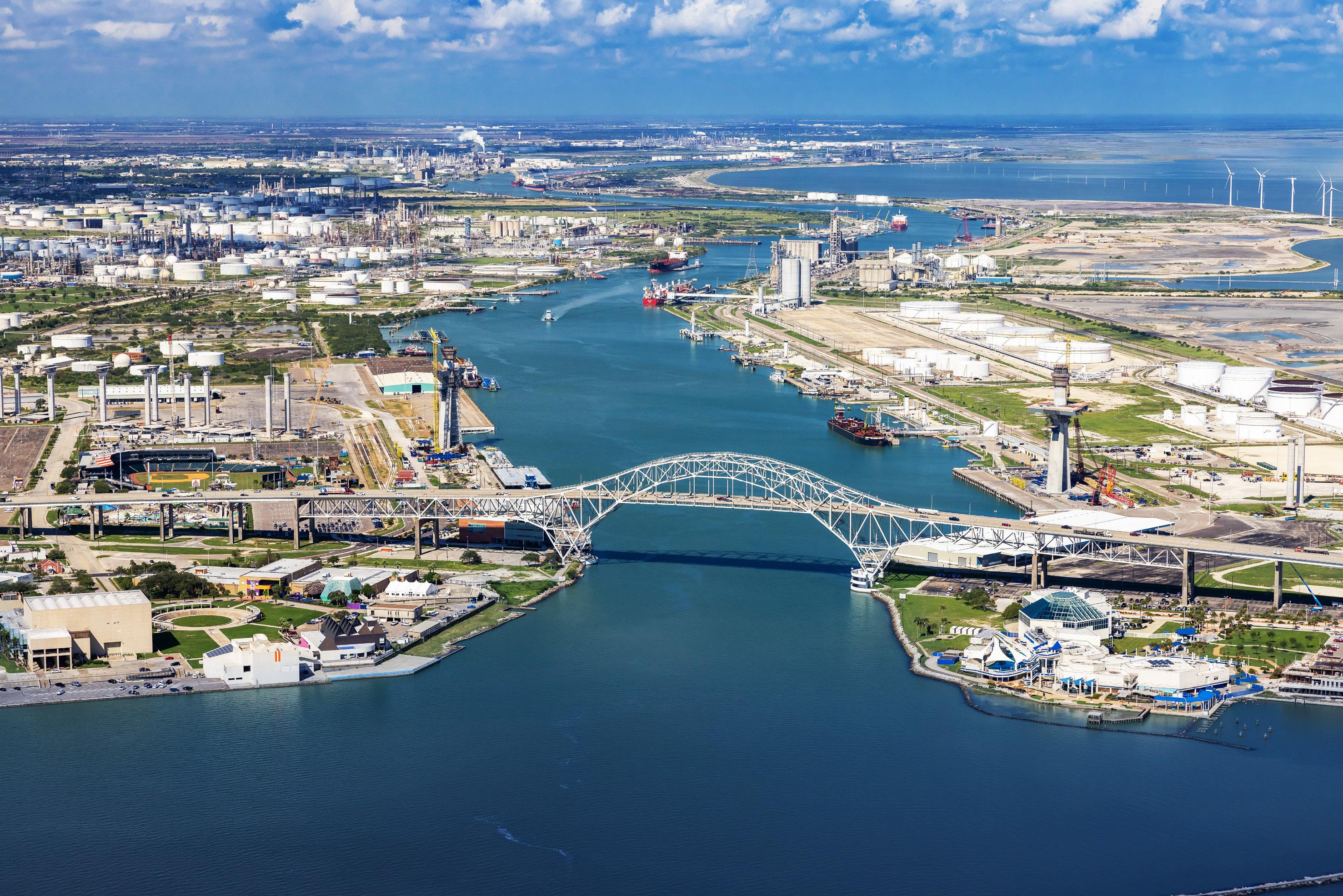
The Port of Corpus Christi now sits at the center of global energy flows. Roughly half of all U.S. crude oil exports move through the port. LNG infrastructure continues expanding along the Gulf Coast. Tankers leaving South Texas now help supply allies in Europe, customers in Asia, and global markets increasingly dependent on American energy production.
At the center of that transformation is Kent Britton, CEO of the Port of Corpus Christi.
After speaking with Britton, what struck me most was not some larger-than-life executive persona. He is not flashy, theatrical, or overly promotional. He comes across as deeply operationally focused, which makes sense given the scale and complexity of what the Port of Corpus Christi has become. Colleagues also describe him as someone who keeps a strong balance with family life, something that seems to shape his steady, measured approach.
Throughout our discussion, he repeatedly returned to the same themes: efficiency, maneuverability, coordination, infrastructure planning, and long-term logistics. Whether discussing crude exports, LNG traffic, dredging projects, water constraints, or security concerns, his focus consistently came back to reducing friction in the system.
“Our responsibility is to make our customers more efficient,” Britton told me.
That may sound simple, but when your customers collectively move millions of barrels of oil and enormous volumes of liquefied natural gas into global markets, small improvements in efficiency translate into massive economic consequences.
BUILDING THE INFRASTRUCTURE BEHIND THE BOOM
To understand the significance of Britton’s role, it helps to understand how dramatically the industry changed around Corpus Christi over the past fifteen years.
The shale revolution fundamentally rewrote America’s energy future. Horizontal drilling and hydraulic fracturing unlocked enormous oil production from formations like the Eagle Ford and Permian Basin. Production surged far faster than most analysts predicted. By the early 2010s, the United States was producing so much light sweet crude that parts of the domestic refining system struggled to absorb it efficiently.
Then came the defining policy shift. In 2015, Congress repealed the decades-old crude oil export ban. That single decision transformed the trajectory of the American energy industry almost overnight.
Suddenly, U.S. producers could compete directly in global markets. But exporting millions of barrels of crude oil per day required far more than increasing production. It required pipelines, storage systems, marine terminals, dredging projects, vessel coordination, and large-scale logistical integration.
Corpus Christi was uniquely positioned to capitalize because of its proximity to both the Permian Basin and the Eagle Ford Shale, but geography alone does not create a worldclass export hub. Plenty of ports sit near producing regions. What separates Corpus Christi is the scale of infrastructure investment that followed the shale boom, combined with the operational focus required to move those barrels efficiently into global markets.
“There was way more oil coming out of the ground than anybody expected,” Britton said. “Once exports were allowed, the market needed a place to move those barrels efficiently to international customers.”
One thing that became very clear during our discussion is that Britton views the port as a fully integrated logistics system, not simply a collection of docks and ship traffic. Everything affects everything else. Pipeline constraints affect storage capacity. Storage limitations affect vessel scheduling. Marine congestion affects loading efficiency. Delays in one part of the system ripple throughout the chain.
“One delay can affect the entire chain,” Britton said. “Everything is connected.”
That systems-level perspective runs throughout the port’s development strategy. Over the past several years, the Port of Corpus Christi has undertaken one of the largest infrastructure expansions in its
history. The ship channel has been widened and deepened to improve traffic flow, accommodate larger vessels, and increase operational efficiency.
“We widened the channel, deepened the channel, and improved maneuverability throughout the system,” Britton explained.
To people outside the industry, dredging projects and turning basins may sound mundane. Inside global energy markets, they are transformational. Every hour saved loading a tanker lowers transportation costs. Every improvement in vessel movement increases throughput. Every reduction in congestion improves competitiveness.
MANAGING A COMPLEX ENERGY ECOSYSTEM
Unlike Houston, which manages a highly diversified mix of container traffic, petrochemicals, manufacturing cargo, and energy shipments, Corpus Christi evolved into a highly specialized energy export platform centered heavily around crude oil and LNG.
That specialization created advantages,
but it also introduced operational complexity that requires constant coordination between pipelines, terminals, storage operators, marine traffic controllers, tug services, and port authorities.
“Building docks is one thing,” Britton told me. “Building an integrated logistics system is something very different.”
The scale of Corpus Christi’s growth is difficult to overstate. In 2016, the port exported roughly 70,000 barrels of crude oil per day. Today, exports exceed 2 million barrels per day. That type of growth would strain almost any infrastructure system in the world.
One of the more enlightening moments in our discussion came when Britton clarified a common misconception about Very Large Crude Carriers, or VLCCs.
Many people assume the giant tankers navigate deep into the Inner Harbor beneath the new Harbor Bridge. In reality, most VLCC loading occurs closer to Ingleside near the mouth of the ship channel, where navigation is more manageable.
“The VLCCs are loading outside the Inner Harbor,” Britton explained. “People sometimes misunderstand how that process works.”
That may sound like a technical detail, but it highlights the level of operational precision
required to manage one of the largest energy shipping corridors in the world.
And Britton’s responsibilities now extend far beyond traditional port management. The Port of Corpus Christi sits at the intersection of global energy markets, environmental policy, marine logistics, federal regulation, international trade, and national security.
LNG AND THE NEXT GROWTH PHASE
At the same time, the port is preparing for what Britton believes will become its next major growth phase: LNG.
“The true growth story over the next five years is LNG,” he told me.
That reflects broader changes taking place across global energy markets. Russia’s invasion of Ukraine dramatically reshaped global natural gas trade flows. Europe suddenly needed alternatives to Russian pipeline gas, and the United States emerged as one of the world’s most important LNG suppliers. Meanwhile, Asia continues transitioning from coal to cleaner fuels, and developing nations still struggle to achieve reliable electricity access.
Britton also pointed to another rapidly emerging driver of future natural gas demand: artificial intelligence.
“AI is going to require enormous amounts of electricity,” he said. “When you start talking about gigawatt-scale power demand, it becomes very difficult to build enough wind and solar quickly enough to satisfy all of it.”
That comment reflects an issue increasingly being discussed throughout the energy industry. Massive data centers require around-the-clock power reliability. While renewable energy will continue growing rapidly, the scale and speed of projected electricity demand growth has pushed utilities and grid operators back toward natural gas as the most practical near-term solution for reliable baseload generation.
Importantly, Britton does not frame the future energy system as a simplistic competition between hydrocarbons and renewables. Texas already leads the nation in both wind and solar generation. But from his perspective, future energy growth is likely to be additive rather than replacement-based.
“New energy sources are additive,” he said. “The world’s energy demand continues growing.”
That broader perspective is one reason Corpus Christi has increasingly positioned itself not just as an oil export hub, but as a long-term energy platform capable of supporting multiple energy pathways
simultaneously. In addition to crude and LNG expansion, the port has also explored carbon capture opportunities and future hydrogen infrastructure.
“Companies are increasingly looking for lower-carbon solutions,” Britton said. “We want to make sure the infrastructure exists to support those opportunities as well.”
WATER, SECURITY, AND LONG-TERM PLANNING
One of the more revealing parts of our conversation involved issues most people outside the industry rarely think about. For example: water.
South Texas has long managed its water resources in a region defined by variable rainfall, and recent industrial growth has brought greater attention to how those resources are planned and sustained over time. Petrochemical plants, refineries, and emerging hydrogen projects all have
significant water needs, prompting continued focus on strategies such as groundwater development, desalination, wastewater reuse, and comprehensive regional water planning to support future economic expansion.
Britton clearly recognizes that energy infrastructure and water infrastructure are becoming increasingly interconnected. Longterm growth along the Gulf Coast will depend not only on pipelines and marine terminals, but also on securing reliable water supplies capable of supporting industrial expansion.
Security has also become a dramatically larger concern than it was twenty years ago. Critical energy infrastructure is now viewed through the lens of cybersecurity threats, geopolitical tensions, terrorism concerns, and global instability.
While Britton noted that some operational details can’t be disclosed for security reasons, he emphasized the extensive coordination between the port and state and federal agencies.
“It’s a major area of focus,” he said. “We’re constantly evaluating risks and working with our partners to improve security.”
Again, what stood out to me was Britton’s systems-oriented approach to these challenges. He does not speak like someone chasing headlines or trying to score political points. He speaks like someone responsible for managing an enormously complicated infrastructure network whose strategic importance continues increasing every year.
One thing I came away appreciating after our discussion is that Britton’s leadership role is probably more difficult than many people realize. It is easy to celebrate growth after the fact. It is much harder to manage explosive growth while balancing industry demands, environmental concerns, marine logistics, federal oversight, infrastructure constraints, and long-term planning simultaneously.
Port infrastructure operates on timelines very different from most corporate planning cycles. These are multidecade investments involving dredging, channel expansion, terminal construction, traffic management systems, environmental permitting, and coordination across numerous public and private stakeholders. Decisions made today may not fully play out for ten or twenty years.
Britton consistently focused on positioning Corpus Christi not simply for current demand, but for whatever the next generation of energy markets may require. That adaptability may ultimately become one of the port’s greatest competitive strengths.
A TRANSFORMATION FEW COULD HAVE PREDICTED
As I drove through Corpus Christi in the 1990s as a young engineer, I never imagined the city would one day sit at the center of global energy trade.
At the time, America was still viewed as a nation facing long-term energy decline. The prevailing assumption was increasing dependence on foreign imports, not emergence as an energy export superpower.
Yet over the following decades, the shale revolution reshaped global energy markets. Congress lifted the crude export ban. Pipeline companies expanded transportation networks. Marine terminals scaled aggressively. Global markets responded. And leaders like Kent Britton helped build the infrastructure necessary to move American energy onto the world stage.
Today, tankers departing Corpus Christi help supply allies in Europe, customers in Asia, and economies increasingly dependent on reliable energy access. What was once viewed primarily as a regional industrial port has become one of the most strategically important energy gateways in the world.
And after speaking with Britton, one thing became especially clear to me: the growth story surrounding Corpus Christi is far from over. If anything, the next chapter may prove even larger than the last.
About the author: Robert Rapier is a chemical engineer in the energy industry and Editor-in-Chief of Shale Magazine. Robert has over 30 years of international engineering experience in the chemicals, oil and gas, and renewable energy industries and holds several patents related to his work. He has worked in the areas of oil refining, oil production, synthetic fuels, biomass to energy, and alcohol production. He is author of multiple newsletters for Investing Daily and of the book Power Plays. Robert has appeared on 60 Minutes, The History Channel, CNBC, Business News Network, CBC, and PBS. His energy-themed articles have appeared in numerous media outlets, including the Wall Street Journal, Washington Post, Christian Science Monitor, and The Economist.
U.S. Battery Storage Boom
By: Felicity Bradstock
THE UNITED STATES BATTERY STORAGE market is expected to continue growing at an unprecedented rate, as energy operators aim to ensure a more stable flow of electricity from renewable energy projects. This will support a decrease in reliance on some fossil fuels, particularly coal.
After a record-breaking 2025, several states are expected to continue investing heavily in utilityscale battery storage to boost their energy security and diversify the energy mix, following on from Biden-era plans for the future of U.S. energy.
Rapid Growth
The rapid rollout of battery storage is set to continue for at least the next two years in the United States, as the share of renewable energy continues to grow and coal production shrinks. The Energy Information Administration’s (EIA) latest short-term outlook estimates that U.S. electricity production will grow by 170 million megawatt-hours (MWh), or around 4%, by the end of 2027.
The rise in electricity generation is expected to be driven largely by renewable energy sources, such as solar power. The EIA predicts that utility-scale wind, solar, and hydropower will grow by 201 million MWh through 2027, increasing their market share to 27%. And, to ensure the new power supply is reliable, operators are investing heavily in battery storage.
The ACP Senior Vice President of Markets and Policy Analysis, John Hensley, stated, “Strong growth in the U.S. energy storage market reflects a simple reality: meeting rising demand and keeping the grid reliable increasingly requires storage.” Hensley added, “These installations deliver the flexible, reliable grid support America needs today, boosting reliability and keeping power bills in check.”
Texas and California Dominate
Texas and California are expected to continue dominating in terms of solar energy production, as well as in the deployment of utility-scale battery storage. In these two states, the batteries already installed are mainly charged during the day by solar resources, to store and provide energy in peak hours when the sun
is no longer shining. Using batteries makes renewable energy sources more stable, helping to reduce reliance on fossil fuels and drive down energy prices.
At present, Texas and California contribute over two-thirds of the total installed battery storage across the country, although this figure is expected to shift as other states invest more heavily in batteries. There are currently only five states that have over 1 GW of installed battery storage capacity, with Arizona, Nevada, and New Mexico making up the remaining three. However, the EIA expects the number of states with more than 1 GW of storage to rise to 12 by 2030.
By 2024, the growth in California’s battery storage had helped to displace some natural gas use during peak evening hours. Meanwhile, in Texas, batteries have helped mitigate summertime grid emergencies over the last two years.
Record-Breaking Year for Battery Storage
The U.S. installed more battery storage in 2025 than in any year previously, despite a push from the Trump administration to ditch renewable energy plans to focus, instead, on boosting fossil fuel output.
U.S. battery storage additions in 2025 reached 57.6 GWh of new capacity, marking a 30% increase over 2024. The utility-scale segment dominated this growth, contributing almost 50 GWh of the total. Residential storage also increased by 51% year over year. Over the next five years, the U.S. is expected to install almost 67 GW of new utility-scale battery capacity, or over 600 GWh, increasing its battery capacity by around threefold from now.
In 2025, Nevada deployed around 1.4 GW of new battery storage capacity, with the completion of Primergy’s Gemini Solar project increasing the state’s total battery storage capacity to over 5.3 GWh. It is estimated that 1 GWh can provide enough energy to power between 250,000 and 600,000 homes, based on typical energy consumption.
While the Trump administration cut huge quantities of solar and wind energy funding, President Trump’s One Big Beautiful Bill Act left incentives for battery storage largely untouched, which means several plans
for boosting battery storage remain in place.
Small-Scale Solar Growth
The U.S. small-scale solar market has grown rapidly over the last decade, with output doubling since 2020, to contribute around 2% of total U.S. electricity generation. Some states have experienced more rapid deployment of small-scale solar than others. Small-scale solar power now contributes over 10% of power generation in four states – Massachusetts (16%), Hawaii (15.1%), California (14.5%), and Vermont (10.3%).
Battery storage in U.S. homes rose by 64% in 2024, compared to 2023, outpacing increases in commercial and utility installations, according to data from Wood. By March 2025,
battery storage units were in use at roughly half a million U.S. homes. The residential storage market expanded for its sixth consecutive quarter in Q3 2025, with California, Arizona, and Illinois dominating deployment.
As several states look to diversify their energy mix, battery storage is expected to play a major role in strengthening U.S. energy security in the coming years. Despite attacks on solar and wind power by the Trump administration, battery energy storage has become key to making renewable energy projects more reliable and reducing reliance on fossil fuels. Therefore, several state governments are expected to continue investing heavily in the sector.
author:
a
specializing in Energy and Industry. She has a Master’s in International Development from the University of Birmingham, UK, and is now based in Mexico City.
About the
Felicity Bradstock is
freelance writer
Deep-Sea Mining with or without International Seabed Authority Permission
By: Felicity Bradstock
Governments worldwide have long been exploring the potential of deepsea mining, an activity that could help secure the supply of several critical minerals. However, the International Seabed Authority (ISA) has been skeptical about conducting mining activities in such a sensitive environment, as it is difficult to know what the full implications of disrupting life on the seabed might be.
As the global demand for critical minerals continues to grow, several governments, including that of the United States, hope to pursue deep-sea mining to secure their energy security, putting increasing pressure on the ISA to publish clear international regulations for mining.
The Role of the International Seabed Authority
The ISA is an autonomous international organization, established under the 1982 United Nations Convention on the Law of the Sea (UNCLOS) and operational since 1996, whose role is to organize and control all mineral-resources-related activities in the convention’s area for the benefit of humankind. The “Area” covers around 54% of the total area of the world’s oceans.
The ISA’s mandate is to ensure the effective protection of the marine environment from harmful effects that may arise from deep-seabed-related activities. The organization has 172 Members, including 171 member states and the European Union. The United States has not ratified the UNCLOS, but has observer status at the ISA’s deliberations and, until recently, followed its standards.
What is Deep-Sea Mining?
The seabed contains vast quantities of large mineral nodules, including manganese, nickel, copper, cobalt, and trace amounts of rare minerals. Deepsea mining is the practice of exploiting mineral deposits from the deep seabed by using large, robotic machinery on the seafloor to collect mineral deposits, which are then pumped to a support vessel on the surface for processing.
However, a growing body of scientific evidence suggests that deep-sea mining poses significant direct and indirect risks to fragile submarine ecosystems, with potential impacts on biodiversity, fisheries, water quality, and other connected ecological systems, according to the ISA.
ISA Regulations on Deep-Sea Mining
In recent years, pressure has increased for the ISA to establish international regulations on seabed mining, also known as deep-sea mining, as more governments explore the possibility of launching mining operations. Establishing regulations is key to ensuring the greatest possible protection of the seabed, based on expert advice, in the event of mining.
However, several global powers, particularly the governments of island nations that are vulnerable to climate change, continue to call for a total ban on seabed mining due to the fear of irreparable damage to marine ecosystems.
“The deep seabed needs rules and regulations – it also needs leadership, solidarity and science,” ISA SecretaryGeneral Leticia Carvalho said in response to states showing greater interest in launching mining operations.
After around a decade of debate,
the ISA is expected to publish a rule book on deep-sea mining by the end of the year, according to Carvalho. The accelerated pace of regulation development comes in response to threats by the U.S. Trump administration, which has said it may start unilaterally issuing permits for seabed mining in international waters, which are not in the domain of any single country.
“The world agreed 30 years ago that this is an area that belongs to all of us, and we should go there collectively,” Carvalho said. However, in the most recent meeting of the ISA, the group failed to come to a consensus on deep-sea mining once again.
The Trump Administration’s Deep-Sea Mining Push
Since coming into office in January 2025, President Trump has been fighting to begin mining operations under the sea, to secure the United States’ supply of critical minerals, despite no clear international guidance available on the practice. Regulators in the United States are currently considering applications from mining firms, such as The Metals Company, which are interested in commencing operations.
The Metals Company has invested $250 million in environmental studies to better understand the impact of seabed mining. In December, the firm published a study based on its findings from a deep-sea mining pilot project.
Researchers from London’s Natural History Museum analyzed samples from the seafloor, at 4,000 meters under the sea in the Clarion-Clipperton Zone, before and after conducting a mining test. They found that the number of animals in the path of the mining vehicle decreased by 37%, while the
variety of creatures fell by 32%.
Despite the ongoing uncertainties surrounding deep-sea mining, Trump announced in January that he would be accelerating permitting for companies looking to conduct seabed mining activities.
Then, in March, the Japanese government announced that it would be supporting the United States in its plan to carry out deepsea mining – without international support – following the signing of a memorandum of cooperation between the two countries. Japan and the United States have agreed to establish a working group to share research and insights on seabed mining.
With no consensus on international deep-sea sea mining, an increasing number of governments are threatening to take the decision into their own hands, by conducting research at the national level and potentially commencing mining operations without ISA permission.
About the author: Felicity Bradstock is a freelance writer specializing in Energy and Industry. She has a Master’s in International Development from the University of Birmingham, UK, and is now based in Mexico City.
Google to Use Gas to Power Data Center
By: Felicity Bradstock
As tech companies race to develop data centers in the United States, firms are seeking a wide range of energy sources to power their new developments, using both fossil fuels and clean alternatives. Companies such as Google, Amazon, and Microsoft have all announced major new data centers supported by agreements with energy companies over the past year.
Since entering office, President Donald Trump has been enthusiastic about the development of new data centers across the country, which he believes will support the deployment of “technologies that are essential to national security, economic prosperity, and scientific leadership.”
Government support has made it easier for tech companies to accelerate the construction of their data centers, which will require the development of large-scale energy projects to provide the power needed to run them.
Google Opts for Gas
Google confirmed in April that it plans to use power from a soon-to-bedeveloped natural gas power plant in rural Texas to run its new data center
campus, known as Goodnight. The gas project in Armstrong County will be operated by Crusoe Energy.
Crusoe has already filed for a permit to develop the 933-MW plant on the site of the Goodnight campus, which will allow the facility to operate off-grid and is expected to provide energy for at least two buildings.
The agreement between Google and Crusoe came as somewhat of a shock considering that the tech firm had previously pledged to be carbon neutral by 2030 and has long been a supporter of clean energy use.
Michael Thomas, the founder of the clean energy and data center monitoring company Cleanview, explained, “Google has spent decades crafting an image as a clean energy leader… I’ve always considered them to be the most committed to their climate goals. But these projects suggest a major strategic pivot at the company could be under way.”
The gas facility is expected to emit up to 4.5 million tons of carbon dioxide a year, according to Crusoe’s permit application, which is equivalent to more than the annual emissions of San Francisco.
Crusoe’s planned Texas power plant is the third known gas facility that Google has entered talks with in recent months. In October, Google announced it had completed a deal to purchase power from a gas plant in Illinois and, in March, Flatwater Free Press reported
that Google is exploring another huge gas project in Nebraska.
Google has stated that while it still intends to use clean energy sources it does not expect the use of natural gas to negatively affect its climate goals.
Other Tech Firms’ Energy Plans
Several other tech firms announced major partnerships with energy companies in 2025, with many turning to offgrid power solutions by developing their own energy projects, from wind and solar to gas and nuclear power.
Pressure has been mounting from consumers to regulate data centers, as tech companies’ energy demand from the grid rapidly increases at the same time as consumers battle with rising electricity bills. Many environmentalists have also blamed tech companies to shifting reliance back on to fossil fuels by rapidly driving up electricity demand, following several years of green transition. This makes new, off-grid energy developments increasingly attractive to tech firms.
According to a study from the non-profit energy tracking organization Global Energy Monitor, approximately 39% of the gas power capacity being developed in the United States at the end of 2025 was designed to power data centers onsite. The marks a 5% increase from the end of 2024.
In addition to gas plants, some tech firms are turning to renewable energy and nuclear power to secure their future power supply. According to a Cleanview report assessing the power sources of publicly disclosed equipment, natural gas will provide around 22.8 GW of on-site power for U.S. data centers, while nuclear reactors will supply 6.4 GW, fuel cells 1.3 GW, and battery storage 355 MW.
In 2025, the nuclear power startup Helion commenced construction on a site for a planned nuclear fusion power plant. The firm has signed an agreement with tech major Microsoft to begin providing its data centers with nuclear fusion power starting in 2028 – even though there is currently no proven method of producing commercial fusion power.
Meanwhile, Google signed a power purchase agreement with small modular reactor (SMR) company Kairos Power, which expects its first project to be operational by 2030, as it also looks to nuclear energy to power its future data centers.
Google also plans to run some of its data centers using solar power. In 2024, the Department of Energy announced the opening of three solar projects -- Orion I, Orion II, and Orion III, with a total output of 875 MW, similar to that of an average-sized natural gas plant. The clean power being supplied from the project to the Texas grid helps power Google’s data centers in Ellis County.
As pressure mounts on tech companies to divulge their energy plans for powering major new data center developments, a clearer picture of the data center power landscape is expected to emerge, compared to the limited information that is currently available. However, it appears that several major tech firms have big plans for on-site energy projects, as well as grid agreements with energy companies across the country to procure power from a variety of energy sources.
About the author: Felicity Bradstock is a freelance writer specializing in Energy and Industry. She has a Master’s in International Development from the University of Birmingham, UK, and is now based in Mexico City.
Venezuela Oil Could Fill Gap from Attacks on Iran
By: Felicity Bradstock
As the world fears rising energy prices due to the ongoing U.S.-Israeli strikes on Iran, and the shutdown of a key Middle Eastern oil trade corridor, an unexpected supplier is helping to provide alternative crude supplies – Venezuela.
Since the United States intervention in Venezuela on January 3, President Trump has moved quickly to take control of the South American country’s oil industry. Now, it appears that these Venezuelan oil supplies may be vital for counteracting the global shortages caused by the U.S.-Israeli attacks on Iran and the subsequent closure of the Strait of Hormuz.
U.S. Involvement in Venezuela’s Oil Industry
In late February, President Trump said that the United States had received “more than 80 million barrels of oil” from Venezuela, referring to the South American country as “our new friend and partner”. This followed news from the Pentagon that U.S. forces had captured a third sanctioned oil tanker, known as Bertha, in the Indian Ocean.
Bertha was one of 16 oil tankers that fled from Venezuela after the U.S intervention, according to news reports. U.S. forces had tracked the ship, which was carrying 1.9 million barrels of Merey 16 crude, from the Caribbean to the Indian Ocean.
Following the U.S. operation in Venezuela in January, the Trump administration pledged to open Venezuela’s oil industry to U.S. oil firms, including Chevron, Exxon Mobil, and ConocoPhillips.
U.S. imports of Venezuelan crude have increased to their highest level in over a year since the intervention. Over 24 tankers have been tracked carrying Venezuelan oil to the U.S. Gulf Coast since early January, which are thought to have transported over 280,000 barrels per day (bpd) of crude. Trump plans to increase imports of Venezuelan crude even further, as he encourages U.S. oil firms to invest $100 billion in Venezuela to support the development of its oil industry.
Venezuela Boosts Oil Exports to the United States
Greater oil production in Venezuela could help to counterbalance the restrictions on crude moving through the Middle East, caused by the total shutdown of the Strait of Hormuz oil trade corridor. During the ongoing attacks on Iran, Israel has targeted Iran’s oil facilities, which could also affect regional oil supplies. The extra-heavy crude produced in Venezuela is typically cheaper than the light, sweet oil produced in the United States, making it highly attractive. Now that the Trump administration has eased sanctions on Venezuelan energy, more U.S. refiners are
looking to import crude from the country.
In addition to helping fill the gap that was created from the Strait of Hormuz closure, Venezuelan crude may even displace some U.S. production, as well as that from Canada and Mexico, due to its competitive pricing. This will likely drive domestic producers to seek new foreign markets to which they can offload their supplies.
Francisco Monaldi, the director of the Latin America Energy Program at Rice University’s Baker Institute for Public Policy, explained, “The refineries had changed over the years their diet to a much lighter-oil diet because of the lack of Venezuelan heavy oil… If you have tons of availability for heavy, as is currently the case, you could move back into a more heavy diet.”
The U.S. oil refiner Valero has used around 240,000 bpd of Venezuelan crude in the past and could begin to process higher quantities again moving forward. Marathon Petroleum also has the capacity to pivot from Canadian heavy oil supplies to Venezuelan crude if it deems it more profitable. The refinery and pipeline operator Phillips 66 has also stated its interest in processing more Venezuelan cargoes at two of its refineries.
Venezuela’s Oil Exports Shifting Paths
As the U.S. takes greater control of Venezuela’s oil industry, it has also cut off supplies to China, which had risen significantly in recent years. Venezuela was thought to be shipping an average of around 620,000 bpd to China in 2025. Vital supplies of crude from Venezuela to Cuba have also been cut off since January. China’s oil supplies are expected to be hit even harder in the coming months, following the blow to Iran’s oil industry. China has increased its import of discount Iranian crude and LNG in recent years, while largely ignoring the U.S. sanctions on Iranian energy. It also relies heavily on imports transported via the Strait of Hormuz.
Meanwhile, supplies of Venezuelan crude to Europe have increased since January. In February, Spain was receiving an average of 106,000 bpd of Venezuelan oil, marking the highest level in a year and a half. The South American country also shipped 18,000 barrels a day to Italy, a significant increase from almost none in 2025.
With Venezuela expected to ramp up its oil and gas output, with greater participation from U.S. and other foreign fossil fuel companies, it could help to reduce the gap created following the U.S. and Israeli attack on Iran, and the subsequent closure of the Strait of Hormuz. However, due to the ongoing instability in the Middle East and the years of underinvestment in Venezuela’s oil industry, global oil and gas prices are likely to go up before they come down.
Greater oil production in Venezuela could help to counterbalance the restrictions on crude moving through the Middle East, caused by the total shutdown of the Strait of Hormuz oil trade corridor.
About the author: Felicity Bradstock is a freelance writer specializing in Energy and Industry. She has a Master’s in International Development from the University of Birmingham, UK, and is now based in Mexico City.
EPA Rethinks Plastics: New Permitting Relief for Advanced Recycling
By: Amanda Jenkins
The Environmental Protection Agency is currently making moves that could fundamentally reshape the future of the petrochemical industry and the way we handle plastic waste in the United States. In a significant shift from previous policy directions, the EPA announced a formal solicitation for comments regarding the regulatory classification of pyrolysis technologies. Specifically, the agency is looking at whether these advanced recycling methods should be officially excluded from the stringent incineration standards under the Clean Air Act.
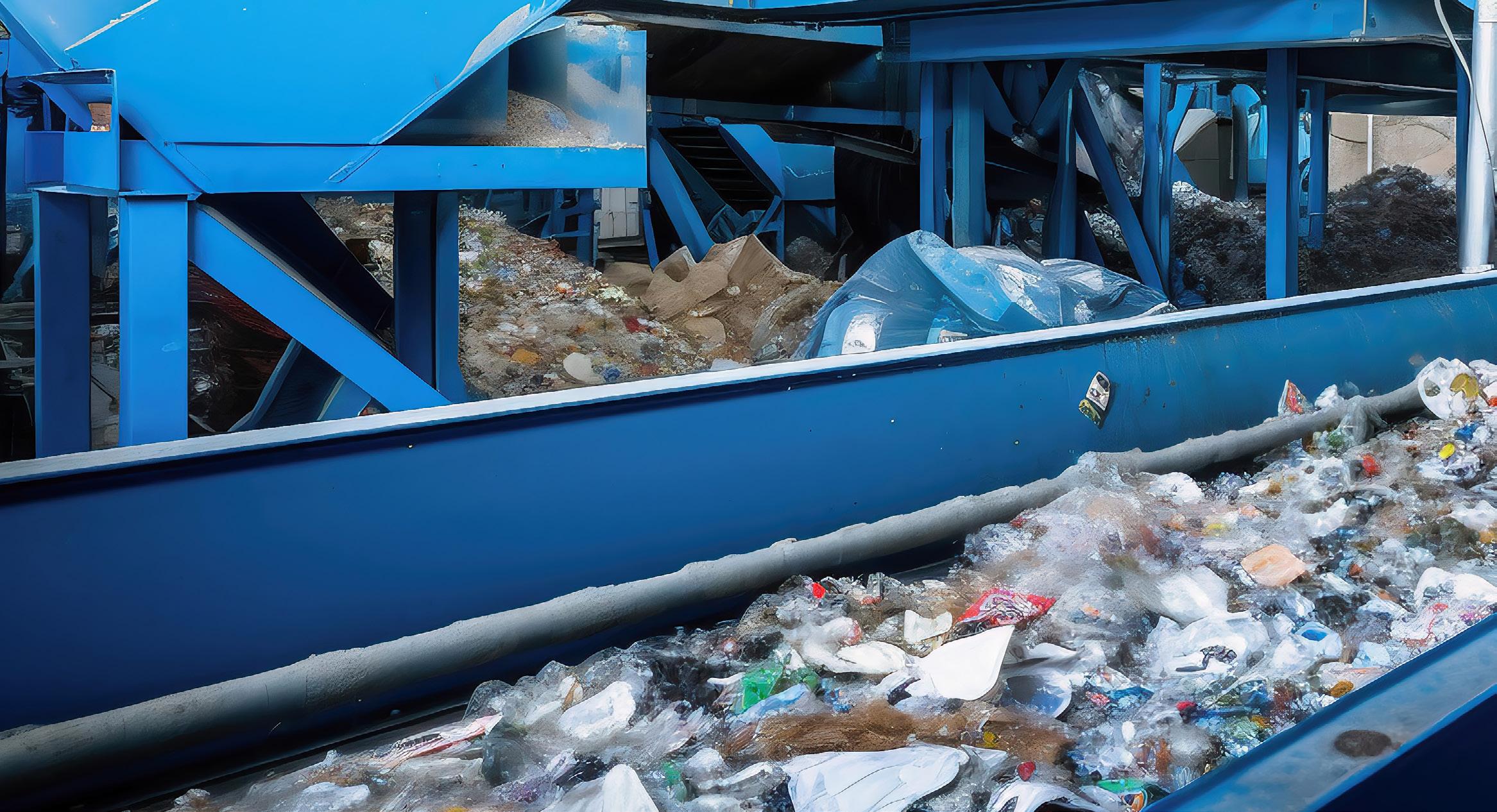
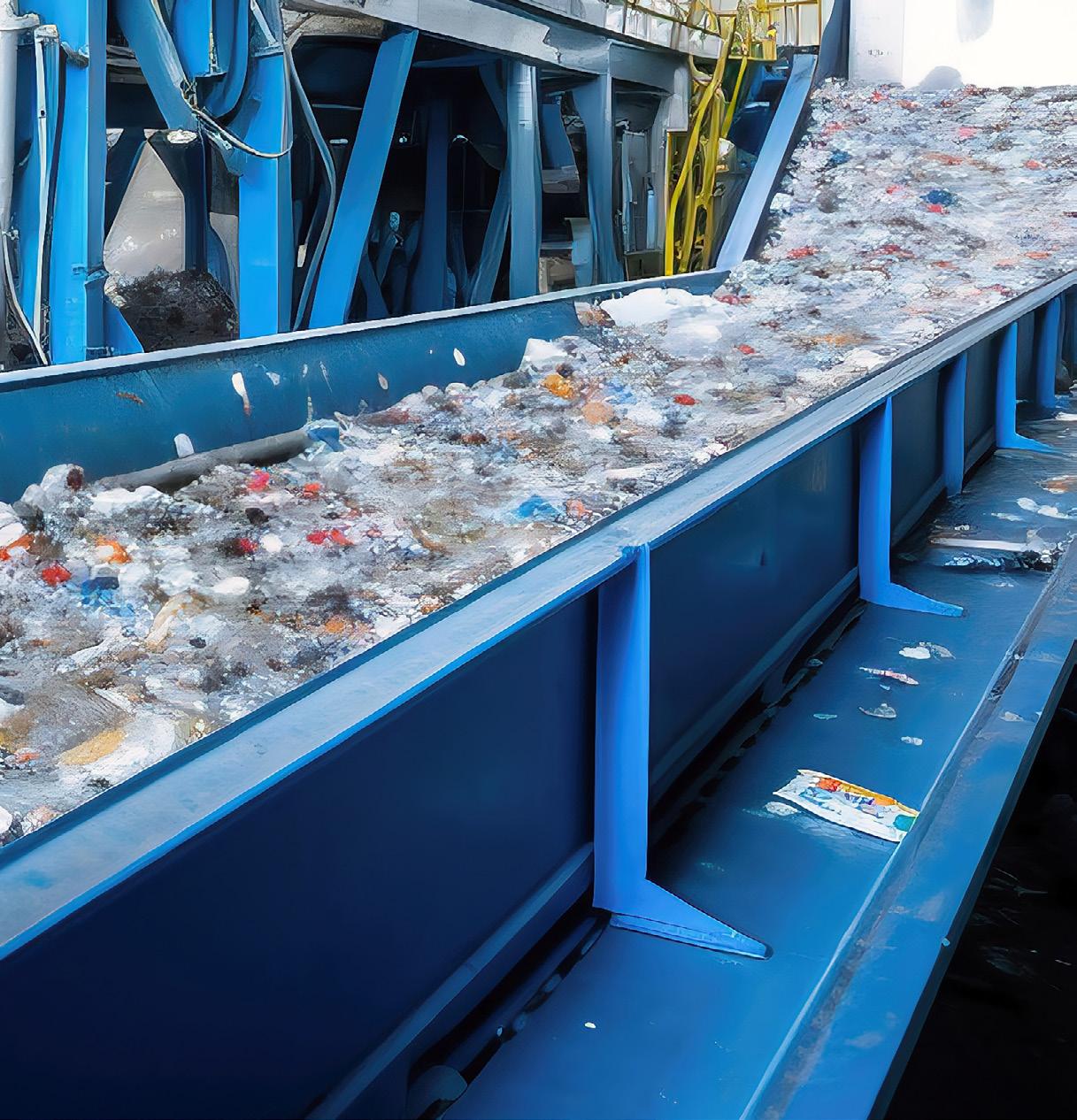
For those tracking the intersection of environmental policy and industrial investment, this is more than just a dry regulatory update. It represents a potential pivot toward a more circular economy that treats plastic waste as a valuable feedstock rather than a disposal problem. By reconsidering how these facilities are permitted, the EPA is opening the door for billions of dollars in domestic investment into advanced recycling infrastructure.
Reclassifying Pyrolysis and the Petrochemical Industry
At the heart of this regulatory shift is the technical distinction between burning waste and chemically recycling it. For years, the debate has centered on whether pyrolysis: a process that uses heat in an oxygen-free environment to break down plastics into their molecular building blocks: should be regulated the same way as a municipal waste incinerator.
Under Section 129 of the Clean Air Act, incinerators are subject to heavy oversight and strict emission limits for nine specific pollutants, including heavy metals and dioxins. While these
protections are vital for traditional combustion, industry leaders argue that applying them to pyrolysis is like trying to fit a square peg in a round hole. Because pyrolysis does not involve the actual combustion of the material, but rather a thermal decomposition, proponents argue it should be classified as manufacturing.
If the EPA moves forward with this reclassification, pyrolysis facilities would likely fall under Section 111 of the Clean Air Act. This shift would provide significant permitting relief for the petrochemical industry, as Section 111 is generally viewed as more tailored to industrial manufacturing processes rather than waste disposal operations. This change could reduce the time and cost associated with bringing new advanced recycling plants online, particularly in heavy industrial corridors like the Gulf Coast.
Economic Drivers and the Clean Energy Transition
The push for this regulatory relief is not happening in a vacuum. It is being driven by massive projected growth in the global pyrolysis oil market. Recent market analysis suggests that the market for pyrolysis oil: the primary output of advanced recycling that can be used to create new, virgin-quality plastics: is set to reach approximately $1.2 billion by 2034.
This growth is a critical component of the broader clean energy transition. As global brands commit to using more recycled content in their packaging, the demand for high-quality recycled resins is skyrocketing. Traditional mechanical recycling, while useful, often degrades the quality of the plastic over time, making it unsuitable for food-grade packaging or high-performance industrial applications.
Advanced recycling solves this by returning the plastic to its original liquid or gaseous state, allowing it to be used as a direct substitute for fossil-fuel-based feedstocks.
According to data from the American Chemistry Council (ACC), 27 states have already passed laws recognizing advanced recycling as a manufacturing process rather than waste disposal. The federal government’s alignment with this state-level trend would provide the regulatory certainty needed for large-scale capital deployment. Investors are looking for a clear runway, and a unified federal stance on permitting would likely trigger a surge in domestic projects.
Addressing Environmental Concerns and Emissions Controls
While the industry sees this as a common-sense update to
outdated rules, the proposal has met with pushback from various environmental advocacy groups.
The core of the opposition centers on the fear that reclassifying these facilities will lead to a “dark spot” in emissions monitoring.
Critics argue that even if oxygen isn’t used in the primary chamber, the overall process still produces emissions that require rigorous federal oversight to protect local air quality.
Some environmental groups have pointed out that the EPA is seeking these comments through a somewhat indirect route, embedding the discussion within a rulemaking focused on wood incineration. They contend that this approach lacks the transparency required for a policy shift that could impact dozens of new industrial sites across the country.
However, the EPA’s current solicitation is designed to gather
the technical data necessary to bridge this gap. The agency is looking for evidence on exactly what is being emitted from modern pyrolysis units and whether the existing Section 111 standards are sufficient to protect public health while still allowing the industry to grow. This balance is critical for the future of plastic waste management in the U.S., as the country looks for alternatives to landfilling and traditional incineration.
Strategic Implications for the U.S. Energy Landscape
The reclassification of advanced recycling is also a matter of national energy security and resource management. By extracting value from plastic waste, the U.S. can reduce its reliance on primary raw materials for chemical production. This aligns with broader goals of the Department of Energy and the White House to modernize industrial processes and reduce the carbon footprint of the manufacturing sector.
For the petrochemical industry, this is an opportunity to lead the way in a new sector of the energy economy. Facilities that can process mixed plastic waste: the stuff that typically ends up in landfills because mechanical recyclers can’t handle it: are becoming a vital part of the value chain. This shift also has significant implications for states with high concentrations of chemical manufacturing, such as Texas and Louisiana.
Horizontal lines of communication between the EPA and industry stakeholders like America’s Plastic Makers suggest that the coming months will be a period of intense data sharing. The EPA’s final decision will likely hinge on whether the industry can demonstrate that pyrolysis is fundamentally a manufacturing process that can operate cleanly under the proposed new guidelines.
The outcome of this EPA review will set the stage for the next
decade of American recycling policy. If the agency provides the requested permitting relief, we can expect a rapid expansion of facilities that turn waste into wealth. If the status quo remains, the U.S. may struggle to meet the ambitious recycledcontent goals set by both the public and private sectors.
As we move toward the 2026 methane regulatory deadlines and other federal shifts, the plastics reclassification stands out as a key indicator of how the current administration balances industrial growth with environmental standards. The petrochemical industry is at a crossroads, and the decisions coming out of D.C. this spring will determine which path it takes.
Amanda Jenkins is Vice President & Washington Bureau Chief at Energy Network
Media Group, where she leads digital publishing operations and website management across the company’s media platforms. She oversees content workflows, platform optimization, SEO performance, and multimedia execution, ensuring content is produced efficiently and presented with accuracy and credibility. With a background in journalism and digital communications, Amanda brings a practical, systems-driven approach to managing media operations across digital and broadcast channels. While her role is focused on operational leadership, she remains closely connected to the editorial process and continues to contribute written and video-based explainers, reflecting her ongoing passion for writing, education, and clear reporting.
About the author:
Cutting Through the FENCES: House Votes to Ease Air Compliance Hurdles
By: Amanda Jenkins
Air compliance regulatory shifts are currently at the forefront of the legislative agenda in Washington, D.C. as the U.S. House of Representatives moves to address longstanding friction between industrial growth and environmental permitting. At the center of this movement are two key pieces of legislation: the Foreign Emissions and Nonattainment Clarification for Economic Stability (FENCES) Act and the Reducing Excessive Deadline (RED) Tape Act. These bills represent a significant push to modernize the Clean Air Act, a framework that many in the energy and manufacturing sectors argue has become a bottleneck for domestic production. The timing of these votes is critical. As global energy markets remain volatile, the pressure on domestic infrastructure to perform has never been higher. Policymakers are looking for ways to ensure that American industry remains competitive without being unfairly penalized
for factors beyond its control, such as pollution migrating from other countries.
Understanding the FENCES Act mechanisms
The FENCES Act, officially introduced as H.R. 6409 by Representative August Pfluger of Texas, addresses a specific technical challenge in air quality management known as nonattainment. Under current Environmental Protection Agency (EPA) rules, if an area exceeds the National Ambient Air Quality Standards (NAAQS), it is designated as being in nonattainment. This designation triggers a cascade of restrictive regulations, higher costs for businesses, and hurdles for new infrastructure projects.
However, many regions, particularly those near international borders or along the coast, often see their air quality impacted by emissions originating in foreign countries. Under the current system, these local jurisdictions can be held accountable for
pollution they did not produce. The FENCES Act seeks to change this by allowing states and localities to exclude foreignorigin emissions when calculating their compliance with U.S. air-quality standards. From an analytical standpoint, this is a data-driven adjustment to how we measure environmental success. If a Texas border town or a California coastal city is in nonattainment solely because of industrial activity in a neighboring country or transPacific drift, the domestic regulatory response often fails to fix the root cause while simultaneously stifling local economic development. By providing a pathway for “international contribution” demonstrations, the bill aims to ensure that EPA enforcement remains focused on domestic sources that can actually be managed by U.S. policy.
Streamlining through the RED Tape Act
Parallel to the FENCES Act is the RED Tape Act, which targets the procedural
redundancies that often stall energy projects for years. In the world of oil and gas news, permitting reform is frequently cited as the single greatest barrier to maintaining a reliable energy grid. The RED Tape Act is designed to strip away overlapping environmental rules that provide marginal environmental benefit while adding significant administrative overhead.
The House Committee on Energy and Commerce reported a package of bills in early 2026 that includes these measures, marking what some analysts call the most substantial potential update to the Clean Air Act since the 1990 amendments. A major component of this package involves narrowing the triggers for New Source Review (NSR). Historically, the NSR process has been a point of contention because even minor efficiency or safety upgrades at a plant could trigger a full-scale environmental review, often discouraging operators from making improvements that would actually lower their overall emissions profile.
According to data from the National Association of Manufacturers (NAM), the annual permitting burden on U.S. manufacturers has reached approximately $7.9 billion. The RED Tape Act attempts to mitigate this by clarifying that a project only qualifies as a modification requiring a new permit if it increases the maximum achievable hourly emission rate, rather than a cumulative annual total that might fluctuate based on market demand.
Industrial implications of air compliance regulatory shifts
The broader legislative package approved by the House committee introduces several other shifts that are vital for energy policy analysts to track. One of the most impactful changes is the proposed extension of the NAAQS review cycle. Currently, the EPA is required to review these standards every five years. The new legislation proposes extending this to 10 years.
The logic behind this shift is grounded in regulatory stability. A five-year cycle often means that by the time a state implements a plan to meet a new standard, the EPA is already beginning the process of changing it again. This creates a state of perpetual planning and litigation. A 10-year cycle would allow for more thorough data collection on the effectiveness of current standards before moving the goalposts.
Furthermore, the legislation seeks to increase flexibility for emissions offset compliance. In many nonattainment areas, new businesses cannot start unless they find
an existing business to “offset” their emissions by shutting down or installing new technology. In many parts of the country, these offsets have become rare and prohibitively expensive. The new proposals would allow states to offer alternative compliance mechanisms or fees when traditional offsets are unavailable, particularly for facilities deemed essential for national security or advanced manufacturing.
These changes are often framed through the lens of unleashing American energy. From a midstream and upstream perspective, easing these air compliance hurdles is seen as a way to facilitate the construction of pipelines, refineries, and processing plants that are necessary to balance the global market. While some environmental advocates argue that these changes constitute a weakening of public health protections, supporters argue that the current system is broken and that modernizing it will lead to cleaner, more efficient operations.
Economic and geopolitical considerations
The intersection of energy policy and domestic law cannot be viewed in a vacuum. As we have seen with recent shifts in federal GHG deregulation, the ability of the U.S. to produce and export energy is a primary pillar of its geopolitical influence.
When air compliance rules become too rigid, the economic cost is not just felt by the corporations but by the end consumer. If a refinery cannot upgrade its equipment due to New Source Review fears, the resulting inefficiency can lead to higher fuel prices and decreased reliability in the supply chain. The FENCES Act and the RED Tape Act are, in many ways, an attempt to bring economic reality into the regulatory conversation.
Critics of the bills, such as Representative Kathy Castor, have voiced concerns that these measures provide a polluter fast pass. However, the legislative debate has shifted from whether to regulate to how to regulate efficiently. The goal of the FENCES Act is not to permit more pollution, but to ensure that domestic entities are not penalized for the environmental shortcomings of foreign nations. This distinction is vital for maintaining public trust in environmental institutions while supporting a robust energy economy.
As these bills move toward the Senate, the focus will likely shift to how these changes interact with the National Environmental Policy Act (NEPA). The proposed amendments include narrowing the EPA’s authority to comment on federal agency actions that are already undergoing NEPA review, which is a clear attempt to reduce
the “ping-pong” effect of inter-agency disagreements that often delay projects.
The path forward for Clean Air Act modernization
The recent House votes signal a significant shift in how Washington views the balance between environmental stewardship and industrial pragmatism. By addressing the specific technicalities of foreign emissions and procedural red tape, lawmakers are attempting to create a more predictable and fair environment for energy production.
Whether these bills pass the Senate in their current form remains to be seen, but the discussion itself marks a turning point. The industry is moving toward a model where efficiency, reliability, and security are treated with the same analytical weight as environmental compliance. For the oil and gas sector, these air compliance regulatory shifts offer a potential pathway toward faster project timelines and a more logical application of federal law.
The focus now turns to the implementation phase. If the FENCES Act becomes law, the EPA will need to develop rigorous methodologies for quantifying international emissions. This will require a high degree of transparency and data sharing between nations: a difficult task, but one that is necessary for a truly global approach to air quality.
About the author: Amanda Jenkins is Vice President & Washington Bureau Chief at Energy Network Media Group, where she leads digital publishing operations and website management across the company’s media platforms. She oversees content workflows, platform optimization, SEO performance, and multimedia execution, ensuring content is produced efficiently and presented with accuracy and credibility. With a background in journalism and digital communications, Amanda brings a practical, systems-driven approach to managing media operations across digital and broadcast channels. While her role is focused on operational leadership, she remains closely connected to the editorial process and continues to contribute written and video-based explainers, reflecting her ongoing passion for writing, education, and clear reporting.
POLICY
What Energy Policy Can We Expect if Democrats Take Power Again?
By: Felicity Bradstock
Since becoming President in January 2025, Donald Trump has completely transformed the United States energy policy to focus on fossil fuels and nuclear power, while reducing emphasis on renewable energy. The Trump administration is well on its way to undoing much of the progress made towards a green transition seen under the former Biden administration.
As the mid-term elections approach, the Democratic Party has stated some of its plans for the energy sector, should it gain power again. While the Democratic and Republican Parties seem to disagree on issues of fossil fuel expansion and green energy, the two align more closely when it comes to nuclear power.
Senator Chuck Schumer Announces Energy Plans
In late March, the minority leader of Congress, Senator Chuck Schumer, addressed the environmental group the League of Conservation Voters.
If the Democrats win control of Congress in the mid-term elections this November, they plan to try to restore and expand tax credits for wind and solar power and other renewable
energy that have been cut or reduced by the Trump administration over the last year. Meanwhile, Schumer said the party aims to cut $18 billion in new tax incentives for oil, gas, and coal companies.
To give the Democrats enough power to achieve these changes, the party would have to win vetoproof majorities in both chambers of Congress, which it could only achieve by winning a landslide victory in the elections.
Schumer said the move would be part of a larger plan to cut consumer costs, which have risen significantly in recent months. Energy prices have been driven up further since the U.S.-Israeli attack on Iran due to the almost complete closure of the Strait of Hormuz, which has restricted energy trade between Europe and Asia.
Countering Rising Consumer Prices
Oil prices rose by 6% on April 20th due to uncertainty over peace talks between the U.S. and Iran. This was after a 9% decrease on April 18th, following a statement by Iran saying that passage for all commercial vessels through the Strait of Hormuz would be permitted for the remainder of the indefinite ceasefire
between the powers. The threat of ongoing conflict has led to greater price volatility across several fossil fuel products.
To counter rising consumer prices, “We have to just build more clean energy,” said Schumer. The senator said he planned to prioritize a bipartisan effort to make it easier to construct new infrastructure, expand the amount of energy available on the grid, upgrade transmission lines across the country, and ensure data centers “pay their fair share” of taxes and
energy infrastructure costs.
“Trump’s attacks on clean energy, and the price spikes it has caused for American families, is a unique opportunity to expand our movement,” said Schumer.
“We can bring new voters and allies into the fight for a cleaner environment by showing how clean energy is affordable energy,” he added.
Republican Response
The White House spokeswoman Taylor Rogers criticized Schumer’s plan, suggesting that
returning to Biden-era energy policy would be a step backwards.
“It is idiotic of Democrat leaders to double down on Joe Biden’s unpopular, costly, and failed Green New Scam,” Rogers said in a statement, in reference to the 2022 Inflation Reduction Act, the most far-reaching U.S. climate policy to date. “These are the exact same policies that created an energy crisis which skyrocketed gas and electricity prices,” he added.
Democratic States Feel Consumer Pressure
While Schumer suggested that the Democrats would support a return to Bidenera energy policies at the federal level
– with a focus on renewable energy expansion – several Democrat-majority states have been forced to backtrack on their green energy policies.
With greater pressure from the Trump administration to halt renewable energy expansion and instead focus on fossil fuels and nuclear energy development, several Democratic states have not been able to progress with their clean energy ambitions. In addition, greater pressure from consumers to reduce energy bills has meant that several states cannot justify the cost of developing new renewable energy projects – even if they could cut bills in the long-term.
Developing new nuclear power plants is expected to help boost energy security through diversification, without a reliance on renewable energy.
The Nuclear Question
One thing that both the Democratic and Republican Parties seem to agree on is nuclear power. Democrats and Republicans in Congress support expanding nuclear power, a sentiment that has been echoed in recent public opinion polls.
Developing new nuclear power plants is expected to help boost energy security through diversification, without a reliance on renewable energy. With greater public support for nuclear power and significant sectoral innovation, many politicians see it as the most reliable way to deliver abundant, clean power.
The results of the mid-term elections could determine the direction in which U.S. energy policy is taken in the coming years. While a Republican win will support the continuance of Trump’s fossil fuel-driven energy policy, a Democratic Party landslide could lead to greater diversification efforts.
About the author: Felicity Bradstock is a freelance writer specializing in Energy and Industry. She has a Master’s in International Development from the University of Birmingham, UK, and is now based in Mexico City.
Defense Over Decarbonization: Inside the 2027 DOE Budget Pivot
By: Amanda Jenkins
Department of Energy budget cycles usually involve incremental shifts in funding, but the fiscal year 2027 proposal represents a wholesale reordering of American energy priorities. The White House has requested a total of $53.9 billion, a 10% increase over previous levels, yet the internal distribution of those funds tells a story of a department moving away from its role as a climate agency and back toward its origins in national security and baseload power reliability.
This pivot is characterized by a stark divide: a 21% surge in defense-related spending and a corresponding 16% cut to non-defense programs. For those watching the global energy market, this budget signals a move away from the “energy transition” narrative that has dominated Washington for years, replacing it with a doctrine of “energy dominance” that prioritizes hydrocarbons, nuclear modernization, and the massive power requirements of the burgeoning AI sector.
Department of Energy budget priorities and the defense surge
The most significant takeaway from the FY 2027 proposal is the historic investment in the National Nuclear Security Administration (NNSA). At $32.80 billion, the NNSA now accounts for the lion’s share of the DOE’s total footprint. This isn’t just a minor bump; it is a 21% increase designed to modernize the U.S. nuclear stockpile and its supporting infrastructure. Within this envelope, $27.44 billion is earmarked specifically for warhead modernization and production facility upgrades.
From an industrial standpoint, the budget includes a 69% increase for tritium and defense fuels, hitting $880.7 million. This
is a critical move for domestic uranium enrichment capacity, which has long been a bottleneck in both the defense and civilian nuclear sectors. By focusing on domestic enrichment, the DOE is attempting to decouple the U.S. nuclear supply chain from foreign dependencies, a move that has significant implications for the global energy market and long-term fuel security. This shift toward defense isn’t happening in a vacuum. It is being funded, in part, by the aggressive dismantling of programs previously grouped under the umbrella of decarbonization. The budget proposal explicitly moves to terminate what the administration describes as “Green New Scam” initiatives. This includes a near-total withdrawal from electric vehicle (EV) subsidies and hydrogen development programs, which are slated for 90% to 100% funding reductions.
Impact on oil and gas investments
While the headline-grabbing numbers are in the defense sector, the 2027 budget pivot creates a much more favorable environment for oil and gas investments. By slashing 16% from non-defense energy programs, the DOE is effectively ending the era of federal market-tilting that favored renewables over traditional fuels. Wind and solar programs are largely being zeroed out, and weatherization assistance programs are slated for termination. In their place, the DOE is introducing a new Baseload Power account, funded at $1.94 billion. This program is specifically designed to preserve existing coal and natural gas infrastructure. According to the proposal, this funding aims to prevent the retirement of 4 GW of coal power and 5 GW of natural gas capacity that would otherwise have been shuttered due to previous regulatory
pressures. Furthermore, it seeks to add 3 GW of new gas-fired power to the grid. For the private sector, this provides a clearer roadmap for long-term capital allocation. The regulatory uncertainty that has plagued the upstream and midstream sectors is being replaced by a budget that views coal and gas as “cornerstones” of the energy mix. This is a logical extension of the data provided in recent federal GHG deregulation analysis, which suggests that maintaining a diverse fuel mix is essential for price stability.
Reshaping the global energy market through nuclear and baseload
The global energy market is currently caught between the desire for lower emissions and the urgent need for reliable, 24/7 power. The FY 2027 DOE budget leans heavily into the latter. By focusing on “firm” baseload power, the administration is requesting $3.5 billion to preserve or add a total of 18–22 GW of dispatchable capacity. This includes a heavy emphasis on advanced nuclear technology, such as microreactors and molten salt reactors. Unlike the broad-brush renewable subsidies of the past, these nuclear investments are viewed through a national security lens. The goal is to
maintain U.S. technological leadership in nuclear physics while providing a carbonfree alternative that actually meets the reliability standards of a modern industrial economy. This is particularly relevant given the increased pressure on the grid from manufacturing reshoring and the energyintensive nature of new technologies.
The budget also addresses the critical minerals supply chain, which is often the silent partner in energy production. By reallocating funds toward domestic mining and processing, the DOE is attempting to ensure that the materials required for everything from gas turbines to nuclear components are sourced within the U.S. or from allied nations. This is a strategic move to insulate the domestic market from the volatility of global supply chains dominated by adversarial actors.
Infrastructure for AI and transmission
One of the more innovative aspects of the 2027 pivot is the repurposing of $4.7 billion from the Infrastructure Investment and Jobs Act. Originally intended for various green energy projects, these funds are now being directed toward two specific areas: grid transmission and AI supercomputers.
The rationale is straightforward. The rapid growth of artificial intelligence is
creating a demand for electricity that the current grid is not equipped to handle. AI data centers require massive amounts of reliable, high-density power. By shifting funds toward transmission and AI-specific supercomputing infrastructure, the DOE is acknowledging that the future of American economic competitiveness depends on digital and electrical throughput.
This reallocation also reflects a shift in how the government views “efficiency.” Instead of consumer-facing weatherization programs, the focus is now on the efficiency of the grid itself: minimizing line losses and optimizing the flow of power from baseload plants to high-demand centers. This approach favors large-scale infrastructure projects that provide tangible benefits to industrial users and the tech sector, rather than fragmented residential programs.
Strategic implications for the energy workforce
A budget of this magnitude also reshapes the labor market. The pivot toward defense and baseload power means a renewed demand for specialized engineering and technical skills in the nuclear and hydrocarbon sectors.
The termination of many green energy programs will likely result in a migration
of talent. As federal funding for wind and solar dries up, the expertise developed in those fields will need to find a home in the burgeoning baseload and transmission sectors. This is not necessarily a loss of talent, but rather a redirection of it toward projects that the current administration deems more critical to national security and economic stability.
Final thoughts on the fiscal pivot
The FY 2027 DOE budget is a clear signal that the federal government is prioritizing “energy dominance” over “energy transition.” By doubling down on the NNSA, preserving coal and gas assets, and repurposing infrastructure funds for AI and transmission, the DOE is positioning itself as an agency of national strength rather than environmental advocacy.
For investors and industry leaders, this budget offers a more predictable, if more traditional, landscape. It suggests that the “all-of-the-above” strategy has been refined into a “security-first” strategy. As these proposals move through the legislative process, the focus will remain on how these shifts affect the bottom line for oil and gas investments and the stability of the global energy market.
Bureau Chief at Energy Network Media Group, where she leads digital publishing operations and website management across the company’s media platforms. She oversees content workflows, platform optimization, SEO performance, and multimedia execution, ensuring content is produced efficiently and presented with accuracy and credibility. With a background in journalism and digital communications, Amanda brings a practical, systems-driven approach to managing media operations across digital and broadcast channels. While her role is focused on operational leadership, she remains closely connected to the editorial process and continues to contribute written and video-based explainers, reflecting her ongoing passion for writing, education, and clear reporting.
About the author: Amanda Jenkins is Vice President & Washington
Can Cuba Make a Deal with the U.S. to Alleviate Energy Crisis?
By: Felicity Bradstock
Cuba’s energy crisis has been worsening without access to Venezuelan oil, as the island has faced regular power cuts. Since the U.S. intervention in Venezuela in January, President Trump has largely taken control of the South American country’s oil industry, restricting vital supplies of crude to Cuba, which the Caribbean country relied heavily on for its power.
As Cuba faces severe energy shortages, leading to country-wide blackouts, the Trump administration is working with authorities to come to an agreement to let some Venezuelan fuel back in.
Cuba’s Energy Crisis
Cuba’s energy crisis has been worsening over the last decade, leading the country to become heavily dependent on oil imports from Venezuela for its electricity. Due to years of underinvestment in the country’s transmission network, much of the island has come to experience regular power outages, leading residents to rely heavily on charcoal stoves and rechargeable batteries, which many can scarcely afford.
Widespread power cuts started in Cuba in 2019, when the first Trump administration introduced “maximum-pressure sanctions” on the country, thereby putting greater strain on its economy. The government was forced to reduce spending on energy imports and, instead, ration fuel.
In March 2025, Cuba’s national electrical grid collapsed, leaving most of the country without power. While some tourist hotels relied on generators, many had no access to power. This led to mass protests and calls for the government to address the crisis.
In recent years, Venezuela has become one of Cuba’s main oil suppliers, despite its dwindling oil production. Venezuela shipped around 26,500 barrels per day of crude to Cuba in 2025, enough to cover roughly half of the country’s oil deficit, according to ship tracking data and internal documents of state-run PDVSA.
However, since the U.S. intervention in Venezuela, there have been no Venezuelan shipments of crude to Cuba, as President Trump implemented a U.S. energy blockade on Cuba, threatening tariffs on any country that sells or provides oil to Cuba. Trump has since warned Cuba that it should sign an agreement with Washington to ensure it continues to receive much-needed oil from Venezuela.
Total Blackouts
On March 16, officials in Cuba reported an islandwide blackout, as around 11 million people were plunged into darkness. The Ministry of Energy and Mines shared news on the X social media site of a “complete disconnection” of the country’s electrical system.
Meanwhile, the ministry’s electricity director, Lázaro Guerra, said that crews were working to bring several thermoelectric plants back online. “It must be done gradually to avoid setbacks,” he said. “Because systems, when very weak, are more susceptible to failure.”
By March 18, the power had returned to most parts of Havana, while other areas of the island continued to wait for electricity to return. Meanwhile, the widespread blackout made the country’s severe energy vulnerabilities clear.
Making a Deal
In late February, after almost two months of energy blockade, the Trump administration began to let U.S. companies send fuel to private businesses in Cuba. In addition, businesses were permitted to apply for licenses to sell Venezuelan oil to nongovernment entities in Cuba, such as humanitarian organizations and small businesses. The move appears to be aimed at supporting Cuba’s private sector while circumventing the country’s Communist government.
Trump has put increasing pressure on the Cuban government to come to an agreement with the U.S. to alleviate the country’s economic and energy crises. The president has even raised the possibility of a “friendly takeover of Cuba”, before adding that “it may not be a friendly takeover”. In March, Trump stated, “I do believe I’ll be... having the honor of taking Cuba. That’s a big honor. Taking Cuba in some form.” Trump said, “I mean, whether I free it, take it. I think I could do anything I want with it,” adding that Cuba is a “very weakened nation.”
Talks between Cuba and the U.S. commenced in mid-March, with the aim of easing the energy crisis and beginning on the road to economic recovery. Several media reports suggest that President Trump aims to remove Cuban President Miguel Diaz-Canel from office as part of any agreement between the U.S. and Cuba. Meanwhile, resident Diaz-Canel stated in a video aired on state television, “These talks have been aimed at finding solutions through dialogue to the bilateral differences we have between the two nations.”
Diaz-Canel also said that Cuba’s participation in the talks was “on the basis of equality and respect for the political systems of both states, and for the sovereignty and self-determination of our governments.”
In response to the regular blackouts, Cubans have taken to the streets of Havana to protest the ongoing energy crisis and to call for an agreement with the U.S. to alleviate the ongoing crisis. However, achieving a favorable agreement between the two countries will be no easy feat.
About the author: Felicity Bradstock is a freelance writer specializing in Energy and Industry. She has a Master’s in International Development from the University of Birmingham, UK, and is now based in Mexico City.
BUSINESS
Airline Price Hikes Due to Soaring Energy Prices
By: Felicity Bradstock
An increasing number of airlines are being forced to hike up their prices due to the rising fuel costs associated with the ongoing Middle East conflict. This is being seen through increases in the price of addons, such as luggage, as well as directly in airfares.
Several airlines in the United States, including United Airlines, Delta, Southwest, and JetBlue, have increased luggage prices, while others may be forced to do so in the coming months if the global fuel market does not soon stabilize.
Global Energy Shortages and Higher Fuel Prices
The U.S.-Israeli attack on Iran and the ongoing conflict in the Middle East have spurred the biggest oil disruption in history, according to Rapidan Energy. Global oil and liquified natural gas (LNG) trade has been severely disrupted, with the oil supply being reduced by around 20%, due to the almost complete closure of the Strait of Hormuz – a key trade corridor connecting the Persian Gulf with the Gulf of Oman and the Arabian Sea.
This has resulted in oil prices rising again and again since the start of the conflict. Oil prices rose by around 50% between late February and early April, as several countries faced severe energy shortages. While the agreement to a two-week temporary ceasefire on April 7 led to an initial drop in oil prices, there is still great uncertainty over what the coming months hold.
The Rising Price of Jet Fuel
This has also led to a rise in the price of oil-related products, such as fertilizer and jet fuel. On average, jet fuel contributes around 20% to 40% of most airlines’ operating costs. In the first week of April, the benchmark European jet fuel price hit an all-time high of $1,838 per metric ton, compared to $831 before the war began. Between January and March, fuel prices rose by 14%, compared to the same period last year, hitting $2.7 billion, Delta told investors on April 8.
The rising price of jet fuel has led several airlines to increase the price of tickets and add-ons, with analysts warning consumers that the worst may be yet to come. The Gulf region supplies around 50% of Europe’s jet fuel imports, although much of the jet fuel supply in the United States is domestically produced or comes from Canada. Nevertheless, due to global shortages, U.S. jet fuel prices have also increased, with fuel prices in Chicago, Houston, Los Angeles, and New York averaging $4.88 a gallon on April 2, which is almost double the price of the day before the start of the war.
Airlines Increase Fare and Luggage Prices
On April 3, United Airlines put its checked bag fee up by $10, in a bid to contend with the rising fuel costs, increasing its fee to $45 to check a first bag on most domestic routes, as well as to Canada and Latin America, if the traveler pays in advance, and $50 if they pay within 24 hours of the flight. This is the first time since February 2024 that United has increased its checked bag fees. JetBlue Airways increased its checked bag fees by between $4 and $9 per bag that same week. “As we experience rising operating costs, we regularly evaluate how to manage those costs while keeping base fares competitive and continuing to invest in the experience our customers value,” JetBlue said in a statement. Several other airlines initially held off on price increases but have since followed suit. Delta and Southwest have both announced that fees for first and second checked bags, for domestic and some short-haul international routes, will rise by $10 on new bookings, increasing the cost to $45 for the first bag and $55 for the second. The price for taking a third bag with Delta will also increase from $50 to a huge $200. Some customers are finding ways to avoid the extra charges by using credit cards that offer a free checked bag when they book a flight or by booking first- or businessclass seats, which come with a larger baggage allowance. Increasing the price of add-ons, such as choosing to take a checked bag, has allowed airlines to avoid increasing overall fare prices so far, helping to keep flights accessible. JetBlue explained, “Adjusting fees for optional services used by select customers, such as checked baggage, allows us to continue offering more competitive fares while delivering the onboard experience our customers love, including complimentary snacks and drinks, unlimited, highspeed Wi-Fi, and seatback entertainment screens.” While airlines in the United States have so far followed this pricing model, airlines in other parts of the world, such as Europe and Asia, have been forced to increase their overall fares for flights to tackle severe oil shortages and rising jet fuel prices. Depending on how long the conflict continues, the same may eventually be true for U.S. airlines.
About the author: Felicity Bradstock is a freelance writer specializing in Energy and Industry. She has a Master’s in International Development from the University of Birmingham, UK, and is now based in Mexico City.
Can Clean Energy Firms Weather the Trump Era
By: Felicity Bradstock
Renewable energy and cleantech companies that were flourishing under the Biden administration are finding it increasingly difficult to survive under President Trump. While many attempt to weather the storm, some are now taking attack at the biggest opponents of green energy by funding advertising campaigns aimed at limiting their power.
Major Federal Funding Cuts
The passing of the Inflation Reduction Act (IRA) in 2022, the most far-reaching United States climate policy to date, spurred huge quantities of investment in renewable energy and cleantech throughout the remainder of President Biden’s time in office. However, when President Trump came into power last year, he called the IRA the “green new scam” and vowed to undo many of Biden’s energy policies.
The Trump administration has made sweeping cuts to renewable energy, cleantech, and climate investment over the last year. In fact, Trump has attempted to slash funding in almost every federal climate change program, although Congress has prevented some of these cuts from going through.
However, it is becoming increasingly difficult to access federal funding for climate-related issues and could become even harder moving forward, if Trump’s proposed budget is anything to go by.
While renewable energy companies are finding it increasingly difficult to survive, with many simply aiming to stay afloat until the next elections, some are now taking attack at green energy’s biggest opponents.
Wealthy Investors Take Attack
Several wealthy investors in the United States are taking aim at those who staunchly oppose green energy, and not just by funding new renewable energy projects. A group of wealthy individuals, such as Chris Larsen, the billionaire co-founder of the cryptocurrency platform Ripple, are investing in preventing green energy opponents from gaining power.
Chip Roy, a Republican representative from Texas, was the main voice encouraging the government to put an end to cleantech subsidies in the One Big
The global pricing of oil and gas is extremely volatile, and the price has been driven up by ongoing geopolitical issues.
Beautiful Bill Act. As a result, Larsen and others pumped funds into defeating Roy’s campaign for attorney general in Texas.
Larson has taken a leaf out of the oil industry’s book, which the renewable energy sector has so far been too afraid to do, he said. “Look at what the oil and gas industry does, brilliantly by the way. I mean, give credit to how effective they are on lobbying and policy and supporting their allies and punishing their opponents,” Larson stated.
Renewable energy supporters targeted Roy with $650,000 in television advertisements, dedicating an additional $500,000 to the cause. Even though Roy’s opponent, Mayes Middleton, also opposed renewable energy, the group focused its resources on Roy, effectively turning the race into a referendum on his specific actions.
Michael Brune, the CEO of the Clean Break Fund and a former head of the Sierra Club, explained: “You’ve got to have some fear that if you vote against the clean energy industry, you may pay a political price.”
Despite feeling the pressure in the primary, Roy did not back down. “You want to come after me? Then I’m taking two of your guys,” Roy said. “We got a good chunk of your subsidies removed last year. Just wait until the next go-round.”
Understanding Voter Opinions
The move may seem petty, but several renewable energy companies are strongly dissatisfied with the Trump administration’s attack on energy and cleantech, which they believe goes against the wishes of most voters across the political spectrum. Several
have acted by conducting research to gauge voter opinions.
In February, the photovoltaic solar and manufacturing company First Solar Inc. hired Trump’s campaign pollster, Fabrizio, Lee & Associates, to better understand Republican voters’ stance on solar energy. The poll revealed that the majority of Republican voters supported solar power, especially in projects that use U.S.-manufactured panels.
Another poll, conducted by the coalition American Energy First, found that 75% of voters supported the expansion of U.S. solar energy.
With greater proof of voter support, solar companies are fighting back by informing consumers that limits to energy diversification will make electricity less affordable, as the U.S. is forced to continue relying on fossil fuels for its power.
The global pricing of oil and gas is extremely volatile, and the price has been driven up by ongoing geopolitical issues. However, shifting reliance to a diverse mix of energy sources could help reduce reliance on any one source, thereby helping to reduce consumer energy bills.
However, winning the support of the voters does not mean that vital federal funding will be reinstated, as President Trump doubles down on his funding cuts in his latest budget proposal.
As consumers struggle with the rising costs of energy, there is little hope for significant green energy expansion under the Trump administration, with many renewable energy and cleantech firms simply hoping to weather the storm until the overwhelming voter support for a diverse energy mix is heard.
About the author: Felicity Bradstock is a freelance writer specializing in Energy and Industry. She has a Master’s in International Development from the University of Birmingham, UK, and is now based in Mexico City.
U.S. Decreased Reliance on Middle Eastern Oil – but Some States Still Rely on the Persian Gulf
By: Felicity Bradstock
Following the United States and Israeli-led attack on Iran, and ongoing turbulence in the Middle East and beyond, the global energy market is feeling the strain. The Middle East is responsible for a significant proportion of global oil and gas production, viewed as a vital link between the East and the West.
In the United States, some states have come to rely more on Persian Gulf energy than others, meaning that certain regions are expected to be disproportionately affected by the unrest.
The Strait of Hormuz
The Strait of Hormuz is located between Oman and Iran, connecting the Persian Gulf with the Gulf of Oman and the Arabian Sea. The strait has become one of the world’s main oil and gas corridors, with an average of 20 million barrels per day (bpd) of crude, or around 20% of the global petroleum liquids consumption, passing through the waters in 2024.
Flows through the Strait of Hormuz in 2024 and the first quarter of 2025 consisted of over one-quarter of global seaborne oil trade and roughly one-fifth of global oil and petroleum product consumption. Approximately one-fifth of global liquefied natural gas trade also traversed the strait in 2024, mainly from Qatar, according to the United States Energy Information Agency (EIA).
It is considered a chokepoint, as there are very few alternative options to the corridor for energy transportation. Most oil and gas products that transit the strait have no alternative methods of exiting the region, apart from some limited pipeline networks.
Strait of Hormuz Closure
The outbreak of conflict in the Middle East has resulted in the almost complete closure of the Strait of Hormuz, which drove the price of
a barrel of Brent crude oil over $100 as the conflict escalated.
On Monday March 3rd, an Iranian Revolutionary Guards senior official announced that the Strait of Hormuz was closed and that Iran would fire on any ship trying to pass, according to Iranian media reports. The move follows several years of threats by Iran to block the narrow waterway in retaliation for any attack on the country.
U.S. Reliance on the Persian Gulf
The Persian Gulf consists of Iran, Iraq, Kuwait, Saudi Arabia, Bahrain, Qatar, Oman, and the United Arab Emirates (UAE).
In 2024, an estimated 84% of the crude oil and condensate and 83% of the liquefied natural gas that transited the Strait of Hormuz went to Asian markets, primarily to China, India, Japan, and South Korea.
Meanwhile, the United States imported around 0.5 million bpd of crude and condensate from Persian Gulf countries, through the strait that same year, accounting for around 7% of total U.S. crude oil and condensate imports and 2% of U.S. petroleum liquids consumption.
U.S. energy imports from the region have been far lower in recent years owing to the surge in domestic production and an increase in energy imports from Canada. By contrast, in 2018, the U.S. imported approximately 1.5 million bpd of crude and condensate from
the Persian Gulf, and in 2008, this figure was significantly higher, at 2.34 million bpd.
While this demonstrates that the United States has reduced its reliance on the Middle East region for its oil, this is not the case for every U.S. state.
The California Case
In 2019, Robert Rapier wrote that “California’s Oil Hypocrisy Presents a National Security Risk.” In his article, Rapier highlights California’s hypocrisy as the state condemned the use of fossil fuels and cut production while increasingly relying on oil and gas imports. He emphasized that California’s foreign oil imports had tripled in the 20 years up to 2019, in contrast to most U.S. states, which reduced their crude imports.
In 2024, of the foreign crude California imported, 21.26% came from Iraq, 5.31% came from Saudi Arabia, and 4.42% from the UAE, demonstrating the state’s ongoing reliance on Persian Gulf energy.
While the U.S. Gulf Coast is connected to the Permian Basin and Canada via a complex network of crude pipelines, California does not have the same connectivity. In fact, there are no crude oil pipelines linking the Permian or midcontinent to the West Coast.
This means that California depends on either local production, crude shipped from Alaska, or oil that is transported internationally by tanker. This dependency
The outbreak of conflict in the Middle East has resulted in the almost complete closure of the Strait of Hormuz, which has driven the price of a barrel of Brent crude oil by as much as $10, as prices rose to $82.37 as the conflict escalated.
on imports makes California’s energy sector disproportionately vulnerable to geopolitical instability.
In addition, California’s refining system is equipped to deal with the characteristics of the crude delivered by its largest oil importers, meaning crude coming from the Middle East and Latin America. This means that West Coast refiners are not well-prepared to manage light, sweet shale oil from the Permian Basin.
Meanwhile, Texas and Midwest refiners that import energy from the Persian Gulf can turn to alternative suppliers as necessary, whose crude flows they are equipped to process.
So, while many other countries are likely to feel the strain from the Strait of Hormuz closure than the United States – in terms of crude supplies – California may be hit hard.
About the author: Felicity Bradstock is a freelance writer specializing in Energy and Industry. She has a Master’s in International Development from the University of Birmingham, UK, and is now based in Mexico City.
Vision for the Future
5 Dividend Stocks Built to Weather the $90 Oil Shock
By: Robert Rapier
Oil prices are notoriously difficult to forecast. But they are very good at signaling anxiety.
Right now, that signal is flashing.
West Texas Intermediate crude surged past $100 per barrel following disruptions around the Strait of Hormuz—one of the most important energy chokepoints in the world. Roughly 20% of global oil supply normally moves through that narrow shipping lane, which means even the possibility of disruption can rattle markets quickly.
Spikes like this create a familiar problem for investors. Higher energy costs ripple through the entire economy, squeezing corporate margins, raising transportation costs, and eroding consumer purchasing power. When that happens, the market narrative can change quickly—from confidence about a “soft landing” to concerns about a broader slowdown.
Periods like this are when defensive income investments tend to shine.
In my portfolios at Utility Forecaster, we focus heavily on essential infrastructure— utilities and midstream energy companies that own the pipes and wires that keep the modern economy running. But investors don’t need to limit themselves to those sectors to build resilience.
Across the broader market, there are companies with similar characteristics: essential services, durable demand, strong pricing power, and long histories of paying reliable dividends.
These are companies whose businesses continue operating smoothly even when oil prices spike, markets wobble, and economic headlines turn negative.
Here are five that stand out in today’s uncertain environment.
Hormel Foods: The Low-Volatility Anchor
When markets become volatile, one of the first metrics I look at is beta—a measure of
how much a stock tends to move relative to the broader market.
Hormel Foods (NYSE: HRL) has historically carried a beta far below the S&P 500, often around 0.30. In practical terms, that means when markets swing sharply on geopolitical headlines, Hormel’s stock tends to move far less dramatically.
The reason is straightforward. Hormel sells products that consumers buy regardless of the economic cycle. Its portfolio includes widely recognized brands such as SPAM, Jennie-O, and Skippy.
Protein remains a staple of the global diet, and Hormel’s shelf-stable and branded products often become even more attractive when fresh meat prices turn volatile.
For income investors, Hormel also offers an exceptional dividend track record. The company has increased its dividend for 58 consecutive years, making it one of the market’s rare Dividend Kings.
Waste Management: A Utility in Disguise I often describe Waste Management (NYSE: WM) as the best utility that isn’t technically a utility.
Its business shares many of the characteristics that make traditional utilities attractive investments: limited competition, high barriers to entry, and highly predictable cash flows.
Trash collection is one of the most inelastic services in the economy. Households and businesses generate waste regardless of whether economic growth is strong or weak.
Meanwhile, the barriers to entry are enormous. Permitting a new landfill in today’s regulatory environment is extraordinarily difficult.
Those structural advantages give Waste Management strong pricing power and stable long-term revenue streams.
The company is also expanding its renewable natural gas operations, capturing
methane from landfills and converting it into usable energy. That provides both an environmental benefit and a hedge against volatile diesel prices.
Procter & Gamble: The Pricing Power Champion
When inflation becomes a concern, investors naturally gravitate toward companies with strong pricing power. Few companies demonstrate that better than Procter & Gamble (NYSE: PG).
The company owns many of the most recognizable consumer brands in the world, including Tide, Gillette, Crest, Pampers, and Bounty. These products occupy a unique position in consumers’ lives—they are everyday necessities rather than discretionary purchases.
That brand strength allows Procter & Gamble to raise prices gradually without experiencing meaningful declines in demand.
The company has paid a dividend for more than a century and has increased that payout for over 60 consecutive years.
In uncertain economic environments, that kind of consistency becomes particularly valuable.
PepsiCo: Defensive Strength Through Snacks
Many investors still think of PepsiCo (NSDQ: PEP) primarily as a beverage company, but its snack business has become an equally powerful driver of profitability.
The company’s Frito-Lay division produces some of the most widely recognized snack brands in the world and generates strong margins thanks to its dominant distribution network.
Snacking also tends to hold up well during economic slowdowns. Consumers often cut back on larger discretionary purchases, but smaller indulgences—like a bag of chips or a soft drink—remain part of everyday spending.
That dynamic makes PepsiCo surprisingly resilient during periods of economic uncertainty.
Combined with more than five decades of consecutive dividend increases, PepsiCo remains one of the most dependable income producers in the consumer staples sector.
Realty Income: Monthly Income for Volatile Markets
For investors who value consistent cash flow, Realty Income (NYSE: O) occupies a unique niche.
Often referred to as “The Monthly Dividend Company,” Realty Income pays shareholders every month rather than quarterly.
The REIT owns more than 15,000 commercial properties, most of which operate under triple-net leases. That structure means tenants—not the landlord— are responsible for property taxes, insurance, and maintenance expenses.
Equally important is the company’s tenant base. Realty Income focuses on businesses that serve everyday consumer needs— grocery stores, pharmacies, convenience stores, and other essential retailers.
That focus has helped Realty Income maintain strong occupancy rates through multiple economic cycles.
For income investors, the result is a steady
stream of dividend payments that has historically remained resilient even during turbulent markets.
The Bottom Line: Resilience Over Prediction
Trying to predict the exact path of oil prices—or the precise outcome of geopolitical conflicts—is rarely a productive strategy.
Markets will continue reacting to developments around the Strait of Hormuz and other global flashpoints. Oil prices may move higher, or they may retreat as conditions stabilize.
Rather than attempting to forecast every headline, many successful investors focus on building portfolios designed to perform
across a wide range of economic scenarios.
The five stocks discussed above share several key characteristics: essential products and services, strong competitive advantages, durable demand, and reliable dividend income.
In uncertain markets, those traits matter more than ever.
Oil shocks, geopolitical tensions, and market volatility will come and go. But companies that sell everyday necessities— and reward shareholders with dependable income—tend to remain standing long after the headlines fade.
For investors navigating the uncertainty of 2026, that kind of resilience may prove to be the most valuable asset of all.
About the author: Robert Rapier is a chemical engineer in the energy industry and Editor-in-Chief of Shale Magazine. Robert has over 30 years of international engineering experience in the chemicals, oil and gas, and renewable energy industries and holds several patents related to his work. He has worked in the areas of oil refining, oil production, synthetic fuels, biomass to energy, and alcohol production. He is author of multiple newsletters for Investing Daily and of the book Power Plays. Robert has appeared on 60 Minutes, The History Channel, CNBC, Business News Network, CBC, and PBS. His energy-themed articles have appeared in numerous media outlets, including the Wall Street Journal, Washington Post, Christian Science Monitor, and The Economist.
Turn Dividends Into DoubleDigit Returns With Less Risk
By: Robert Rapier
My primary strategy for enhancing portfolio yields is by identifying trades with the best risk-adjusted option premiums. But many investors never take advantage of these opportunities because they assume options are inherently risky.
In this case, the truth is the opposite.
When used correctly, a simple options overlay can actually reduce risk while dramatically increasing the income your portfolio generates.
Today I want to give you the basics for how two conservative strategies—covered calls and cash-secured puts—can turn an ordinary dividend portfolio into a double-digit income engine, even when the market goes nowhere.
Why Options Can Reduce Risk Instead of Increase It
Most investors encounter options only in the context of speculation—leveraged bets, complex spreads, or rapid-fire trading.
That’s not what we do.
Our approach uses options the way a landlord uses a lease: you get paid for agreeing to something you’re comfortable doing anyway.
If you already own shares you’re happy to hold, you can get paid to sell them at a higher price. If you want to buy shares at a discount, you can get paid to wait for that price.
There’s nothing exotic about it. It’s simply a way to monetize patience.
Covered Calls: Boosting Yield on Stocks You Already Own
A covered call is one of the most conservative income strategies available. You own the shares. You sell a call option against those shares. In return, you collect a premium—cash deposited in your account immediately.
That premium is income. If the stock stays flat or drifts lower, you keep both the shares and the premium.
If the stock rises above your strike price, your shares are sold at the strike price you agreed to—and you still keep the premium. Either way, the strategy generates income.
Covered calls are particularly powerful in flat or choppy markets. When price appreciation is scarce, income becomes the primary driver of returns. Covered calls turn dormant holdings into a steady stream of cash flow. Over time, they can greatly boost the returns of your holdings.
Cash-Secured Puts: Getting Paid to Buy at a Discount
Cash-secured puts are the mirror image of covered calls.
Instead of getting paid to sell shares you already own, you get paid to agree to buy shares you’d like to own—at a lower price. If the stock never drops to your strike price, you simply keep the premium.
If it does fall to that level, you purchase the shares at the agreed price and immediately own them at a lower effective cost basis thanks to the premium you collected.
This is one of the most misunderstood strategies in the market. Many investors hear the word “put” and assume danger. In reality, a cash-secured put is essentially a limit order that pays you while you wait.
Why These Strategies Shine in Sideways Markets
Most investors depend on price appreciation to generate returns. But markets often spend long periods moving sideways. Income investors can’t afford to sit idle during those stretches.
Covered calls and cash-secured puts thrive in exactly these conditions because:
• Volatility increases option premiums
• Stocks tend to move within trading ranges
• Income becomes a larger portion of total return
• You get paid whether the stock moves or not
When markets are calm, you collect steady income. When markets are volatile, option premiums rise—so your income increases. It’s one of the rare strategies where uncertainty can actually work in your favor.
Turning Ordinary Yields Into Double-Digit Returns
A stock yielding 4% may not seem especially exciting.
But add a disciplined options overlay, and that same position can potentially generate 10%, 15%, or even 20% in annualized income—without taking on additional portfolio risk.
That’s the core idea behind what I call the Income Accelerator approach:
• Start with quality stocks you’re comfortable owning.
• Layer on conservative option trades.
• Then allow the premiums to compound over time.
This is how we routinely generate double-digit returns in Rapier’s Income Accelerator—not by swinging for the fences, but by collecting smaller, consistent paychecks that add up month after month.
Final Thoughts
Options aren’t just tools for traders. They can be powerful income tools for long-term investors as well. When used conservatively, they can:
• Increase your portfolio’s yield
• Lower your effective cost basis
• Reduce volatility
• Generate income even when the market goes nowhere
If you’ve avoided options because they seemed risky or complicated, it may be time to take another look. This strategy is simple, repeatable, and designed for investors who prioritize cash flow and risk management.
And each week, I highlight option trades with the most attractive riskadjusted premiums—so readers can put this strategy to work immediately.
About the author: Robert Rapier is a chemical engineer in the energy industry and Editor-inChief of Shale
Magazine. Robert has over 30 years of international engineering experience in the chemicals, oil and gas, and renewable energy industries and holds several patents related to his work. He has worked in the areas of oil refining, oil production, synthetic fuels, biomass to energy, and alcohol production.
He is author of multiple newsletters for Investing Daily and of the book Power Plays. Robert has appeared on 60 Minutes, The History Channel, CNBC, Business News Network, CBC, and PBS. His energy-themed articles have appeared in numerous media outlets, including the Wall Street Journal, Washington Post, Christian Science Monitor, and The Economist.
5 Reliable Dividend Stocks to Buy for Safety in a Volatile Market
By: Robert Rapier
Markets have a way of periodically reminding investors of a simple truth: not everything that trades is truly investable. Over the past few months, sharp swings in highly speculative assets have reignited debates about valuation and momentum.
I’m frequently asked why I don’t recommend cryptocurrencies despite their popularity. My answer has remained consistent: I don’t know how to determine their intrinsic value. As a result, when that value is falling, it’s impossible for me to ascertain whether that represents a buying opportunity, or a time to head for the exits.
That isn’t a criticism of those who choose to speculate. Many people have made money doing so. But my approach has always been rooted in fundamentals — measurable cash flow, balance sheet strength, and assets that produce reliable income. Without those anchors, price becomes largely a function of sentiment, and sentiment can reverse quickly and without warning.
Utilities sit at the opposite end of that spectrum.
They operate essential infrastructure, earn regulated returns on billions of dollars of invested capital, and generate cash flows that can be analyzed with a reasonable degree of confidence. They aren’t designed to produce overnight riches — but for income investors, predictability and durability matter far more than excitement.
The Role of Dividends in Long-Term Returns
One of the most overlooked realities in investing is how much of long-term total return has historically come from dividends and reinvested income. While price appreciation gets most of the attention, steady cash distributions provide the compounding engine that drives wealth over time — particularly during volatile or sideways markets.
That’s why utilities have long been a core allocation for income-focused portfolios such as in my Utility Forecaster newsletter. Their regulated business models tend to produce stable earnings, which support dividends investors can analyze, evaluate, and reasonably expect to continue.
When I screen for new opportunities for Utility Forecaster, I’m not looking for the highest yield or the fastest growth. Instead, I focus on durability: companies with predictable cash flow, constructive
regulatory environments, manageable balance sheets, and dividend policies built to survive changing market conditions.
Using that framework, several names currently stand out as compelling long-term income candidates. It’s the same screen that beat the S&P 500 again in 2025, and produced last year’s big winners in the Utility Forecaster portfolios like:
• NRG Energy (NYSE: NRG), up 79%
• UGI Corporation (NYSE: UGI), up 38%
• American Electric Power (NSDQ: AEP), up 29%
• Entergy (NYSE: ETR), up 25%
• CenterPoint Energy (NYSE: CNP), up 24%
The following companies scored well in my most recent dividend durability and cash-flow screening process. While they operate in different regions and face different regulatory dynamics, they share one important characteristic: their income streams are supported by measurable fundamentals rather than market narratives.
Five Great Long-Term Income Picks
NextEra Energy (NYSE: NEE)
NextEra remains one of the strongest examples of combining regulated stability with long-term growth. Florida Power & Light provides predictable earnings through regulated operations, while the company’s renewable energy platform continues to expand under long-term contracts.
Why it works for income investors:
• Consistent dividend growth supported by earnings expansion
• Strong rate-base growth trajectory
• High-quality balance sheet relative to peers
Duke Energy (NYSE: DUK)
Duke’s diversified service territory includes several high-growth regions in the Southeast and Midwest. Its long-term capital plan supports steady earnings growth tied primarily to regulated investments rather than commodity exposure.
Why it works for income investors:
• Attractive yield supported by stable earnings
• Constructive regulatory environments
• Predictable capital investment pipeline
Southern Company (NYSE: SO)
After navigating significant construction challenges tied to new nuclear capacity, Southern is entering a period of improved earnings visibility. With major projects now operational, the company’s focus shifts toward more stable cash flow generation.
Why it works for income investors:
• Longstanding dividend track record
• Reduced execution risk following major project completion
• Strong population and load growth across core territories
American Electric Power (NSDQ: AEP)
One of our big portfolio winners in 2025, AEP’s expansive transmission network positions it well for grid modernization and rising electricity demand. Transmission investments often generate attractive regulated returns, supporting steady earnings growth and dividend sustainability.
Why it works for income investors:
• Transmission-driven earnings visibility
• Large and diversified footprint
• Consistent dividend policy aligned with long-term capital planning
Consolidated Edison (NYSE: ED)
ConEd rarely attracts headlines, but its conservative approach has produced one of the most dependable dividend records in the sector. Serving a dense urban market provides stable demand and predictable cash flow. Why it works for income investors:
• Long history of dividend increases
• Low-risk regulated business model
• Conservative financial management
The Bottom Line
Speculation can produce large gains, but speculation is not the same as investing. Investing is about allocating capital to assets with measurable value — businesses whose cash flows you can analyze and whose income streams you can reasonably expect to continue.
No one knows where the price of speculative assets will be years from now. Utilities, however, will still be delivering electricity, maintaining infrastructure, and generating regulated earnings backed by essential services.
For investors focused on long-term income and durable compounding, that distinction is important.
And power companies are more vital than ever as the AI boom runs on electricity. My Utility Forecaster portfolios own the companies that provide that electricity along with other companies that provide services people can’t live without like natural gas, water, and telecommunications. And I buy those stocks at reasonable prices and hold on while they pay me dividends.
It’s worked for 36 years. And in 2025, it worked again. In fact, both of my Utility Forecaster portfolios beat the market on a riskadjusted basis last year.
About the author: Robert Rapier is a chemical engineer in the energy industry and Editor-in-Chief of Shale Magazine. Robert has over 30 years of international engineering experience in the chemicals, oil and gas, and renewable energy industries and holds several patents related to his work. He has worked in the areas of oil refining, oil production, synthetic fuels, biomass to energy, and alcohol production. He is author of multiple newsletters for Investing Daily and of the book Power Plays. Robert has appeared on 60 Minutes, The History Channel, CNBC, Business News Network, CBC, and PBS. His energy-themed articles have appeared in numerous media outlets, including the Wall Street Journal, Washington Post, Christian Science Monitor, and The Economist.
A PRIVATE OASIS IN THE TEXAS HILL COUNTRY
Our expanded Ranch Club complex is the perfect paradise for rest, relaxing and recreation. Just steps from Clubhouse Village, it now offers many additional resort-style amenities including four separate swimming pools, Jacuzzi, Ranch Club Grill featuring a wood burning pizza oven, a luxurious open-air pavilion for lounging and seating for up to 300, lighted hard-surface tennis and sport courts, and much more.
To learn more please contact Sean Gioffre at 830-990-7693 / sgioffre@bootranch.com or Andrew Ball at 830-997-6200 / aball@bootranch.com. bootranch.com