
High-Performance Stainless Steel & Copper Nickel Alloys for Extreme Environments: A Complete Buyer’s Guide for Industrial Applications
In industries where failure is not an option oil & gas, marine, power plants, and chemical processing material selection becomes a critical business decision. Choosing the wrong alloy can lead to corrosion, downtime, safety risks, and massive financial losses.
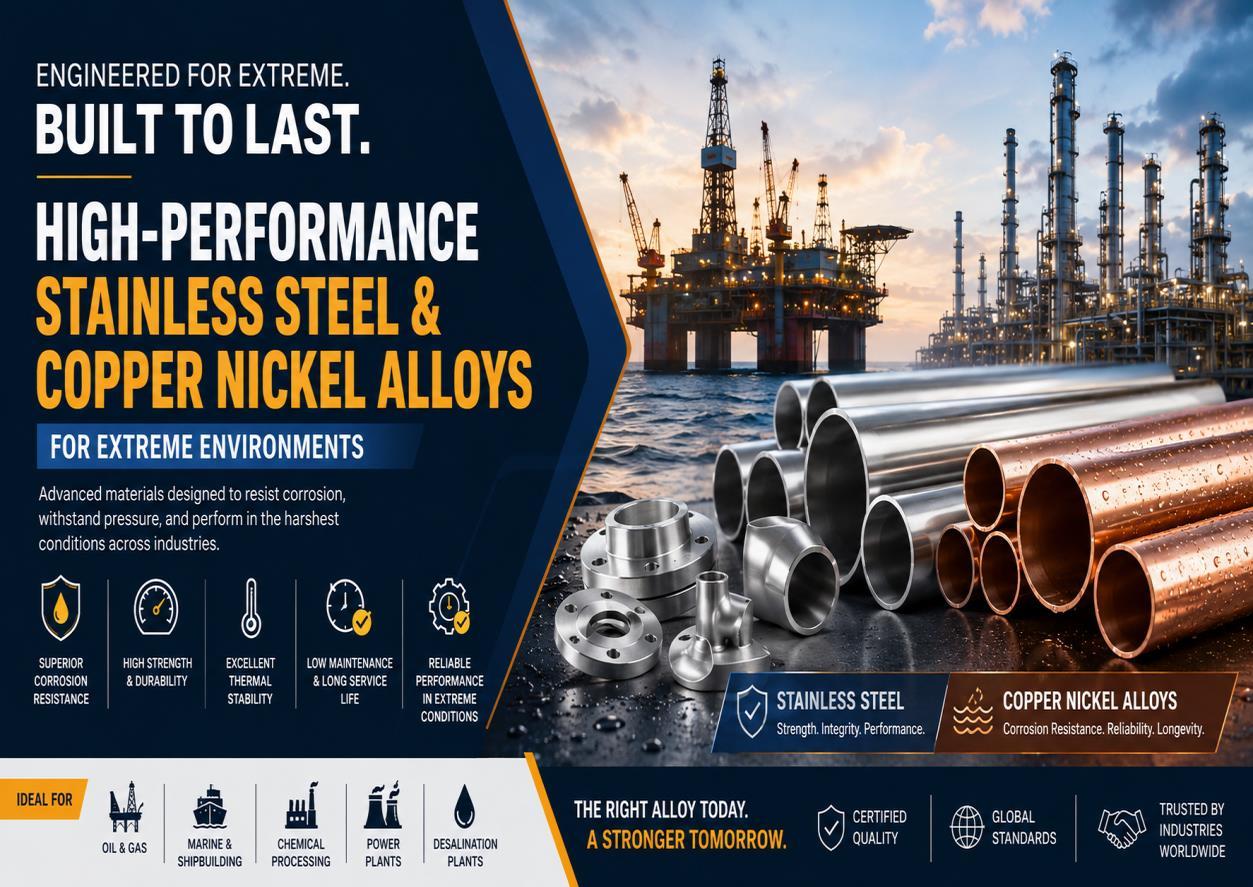
This is where high-performance stainless steel and copper nickel alloys for extreme environments play a vital role. These materials are engineered to withstand harsh conditions such as high pressure, extreme temperatures, corrosive chemicals, and seawater exposure. This guide is designed to help buyers, engineers, and procurement teams understand which alloy fits their exact needs and how to make the right investment.
Why Standard Materials Fail in Extreme Environments
Before selecting advanced alloys, it’s important to understand the problem. Traditional materials like carbon steel often fail due to:
Rapid corrosion in marine or chemical environments
Loss of strength at high temperatures
Stress cracking under pressure
Frequent maintenance and replacement costs
These failures not only increase operational costs but also risk plant shutdowns.
What Makes Stainless Steel “High-Performance”?
Not all stainless steel is the same. High-performance variants are specifically designed with enhanced properties.
Key Features:
Superior corrosion resistance (especially in acidic and saline conditions)
High tensile strength for heavy-duty applications
Thermal stability in extreme heat
Long lifecycle with minimal maintenance
Popular Grades for Extreme Use:
Duplex Stainless Steel (e.g., 2205)
Super Duplex (e.g., 2507)
Austenitic Grades (e.g., 316L, 904L)
Where It’s Used:
Offshore drilling platforms
Chemical processing plants
Heat exchangers
Pressure vessels
Copper Nickel Alloys: Built for Marine & Corrosive Systems
When it comes to seawater and marine environments, copper nickel alloys outperform most metals.
Key Advantages:
Exceptional resistance to seawater corrosion
Anti-fouling properties (resists algae and bio-growth)
Excellent thermal conductivity
High resistance to stress corrosion cracking
Common Grades:
Cu-Ni 90/10 (90% copper, 10% nickel)
Cu-Ni 70/30 (higher corrosion resistance and strength)
Ideal Applications:
Shipbuilding and naval components
Desalination plants
Offshore pipelines
Condensers and heat exchangers
Stainless Steel vs Copper Nickel: Which One Should You Choose?
The right choice depends on your application, environment, and budget.
Quick Decision Guide:
Choose stainless steel for chemical, high-pressure, and structural applications
Choose copper nickel alloys for seawater, marine, and cooling systems
Industries That Depend on These Alloys
1. Oil & Gas Industry
Extreme pressure and corrosive fluids demand materials like super duplex stainless steel.
2. Marine & Shipbuilding
Copper nickel is widely used for piping, hulls, and seawater systems.
3. Power Plants
Heat exchangers and condensers require both stainless steel and copper nickel.
4. Chemical Processing
Highly corrosive chemicals require advanced stainless steel grades.
5. Desalination Plants
Copper nickel alloys are preferred due to their resistance to saltwater corrosion.
Key Factors to Consider Before Buying
If you are sourcing high-performance alloys, focus on these critical points:
1. Environment Compatibility
Understand whether your system deals with:
Saltwater
Chemicals
High temperatures
2. Certification & Standards
Ensure compliance with:
ASTM
ASME
ISO standards
3. Supplier Reliability
Choose manufacturers with:
Proven industry experience
Quality certifications
Consistent supply chain
4. Lifecycle Cost (Not Just Price)
A cheaper material may cost more in maintenance and replacement.
Benefits of Investing in High-Performance Alloys
Choosing the right material offers long-term advantages:
Reduced downtime and maintenance
Increased equipment lifespan
Better safety and compliance
Higher ROI over time
This makes them a strategic investment rather than just a purchase.
Common Mistakes Buyers Should Avoid
Selecting materials based only on price
Ignoring environmental conditions
Not verifying certifications
Choosing the wrong grade for the application
Avoiding these mistakes can save lakhs (or even crores) in operational losses.
Future Trends in Alloy Engineering
The demand for high-performance alloys is growing due to:
Expansion of offshore drilling
Growth in renewable energy (especially offshore wind)
Increasing desalination projects
Advanced chemical processing technologies
New alloy compositions are being developed to offer:
Even higher corrosion resistance
Better strength-to-weight ratios
Improved sustainability
Conclusion
In extreme environments, material performance directly impacts business performance. Whether you're dealing with corrosive chemicals, high-pressure systems, or marine conditions, selecting the right alloy is non-negotiable. High-performance stainless steel and copper nickel alloys for extreme environments provide the durability, efficiency, and reliability that modern industries demand. If your goal is long-term savings, operational efficiency, and safety, investing in the right alloy today will pay off for years to come.