MAGAZINE OF THE SHAKOPEE MDEWAKANTON SIOUX COMMUNITY
GROWING WITH PURPOSE
Owned and Operated by the Shakopee Mdewakanton Sioux Community
As we welcome the first issue of 2026, we also celebrate the fifth edition of Wiċoskaŋ, the magazine of the Shakopee Mdewakanton Sioux Community (SMSC). Launched in 2025, Wiċoskaŋ was created as a way to share more about the SMSC and our cultural traditions and lifeways, featuring stories from the past, present, and future. Each issue is a reflection of who we are—grounded in our Dakota culture, guided by our sovereignty, and committed to caring for our people, our lands, and the next seven generations.
At the heart of this publication are the people who make our community thrive. You’ll meet tribal members and team members whose talents, leadership, and service help shape our collective future. Their stories remind us that our greatest strength has always been our people—and that each individual contribution matters.
Culture and connection remain central themes throughout this issue. From our culture camp to the enduring presence of the tipi, these features reflect how we continue to pass on the knowledge, language, and traditions of our Dakota ancestors in meaningful, living ways—ensuring they remain strong for generations to come.
That same sense of responsibility extends beyond our homelands. In this issue, you’ll also learn more about the SMSC’s participation in national conversations through the National Congress of American Indians and our continued engagement in government-to-government leadership. This work reflects our commitment to advocacy and collaboration, and to advancing the interests of not only the SMSC, but Indian Country as a whole.
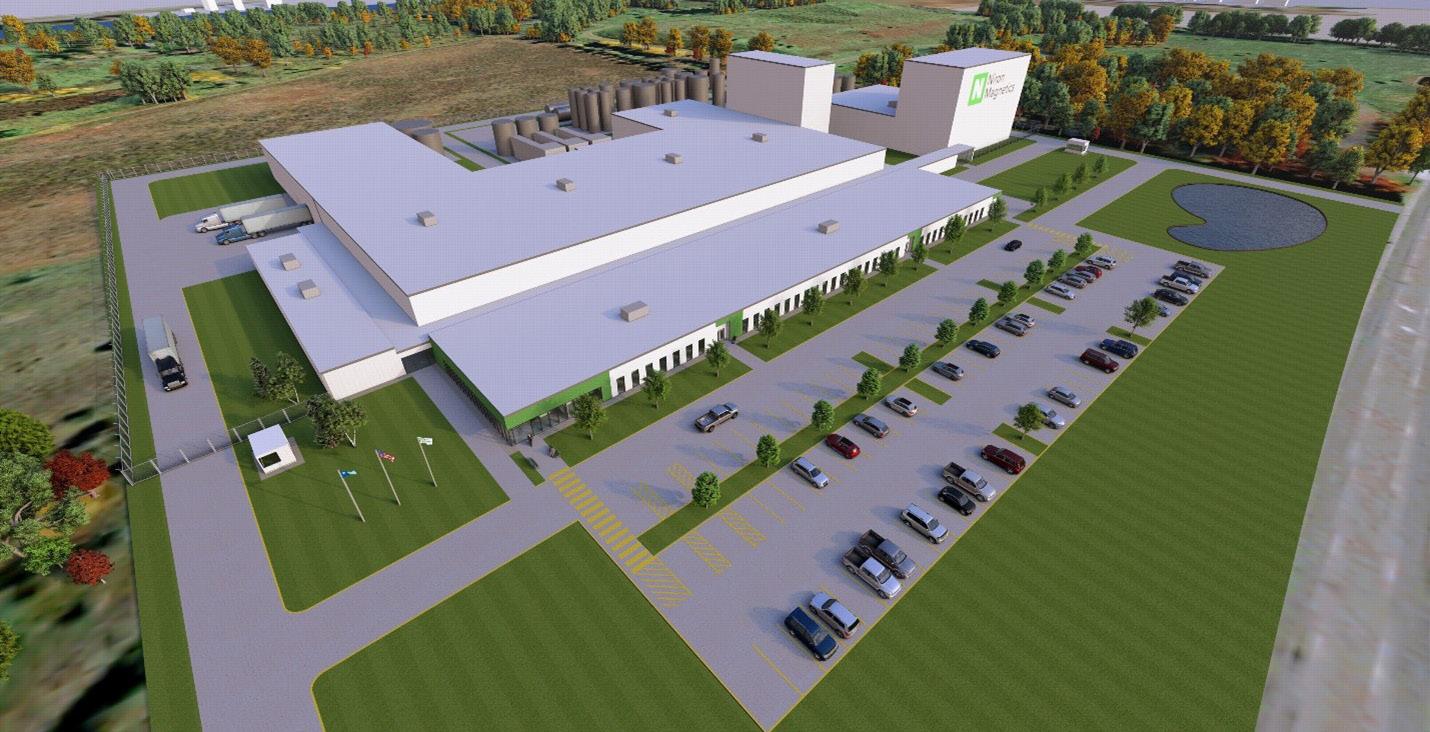
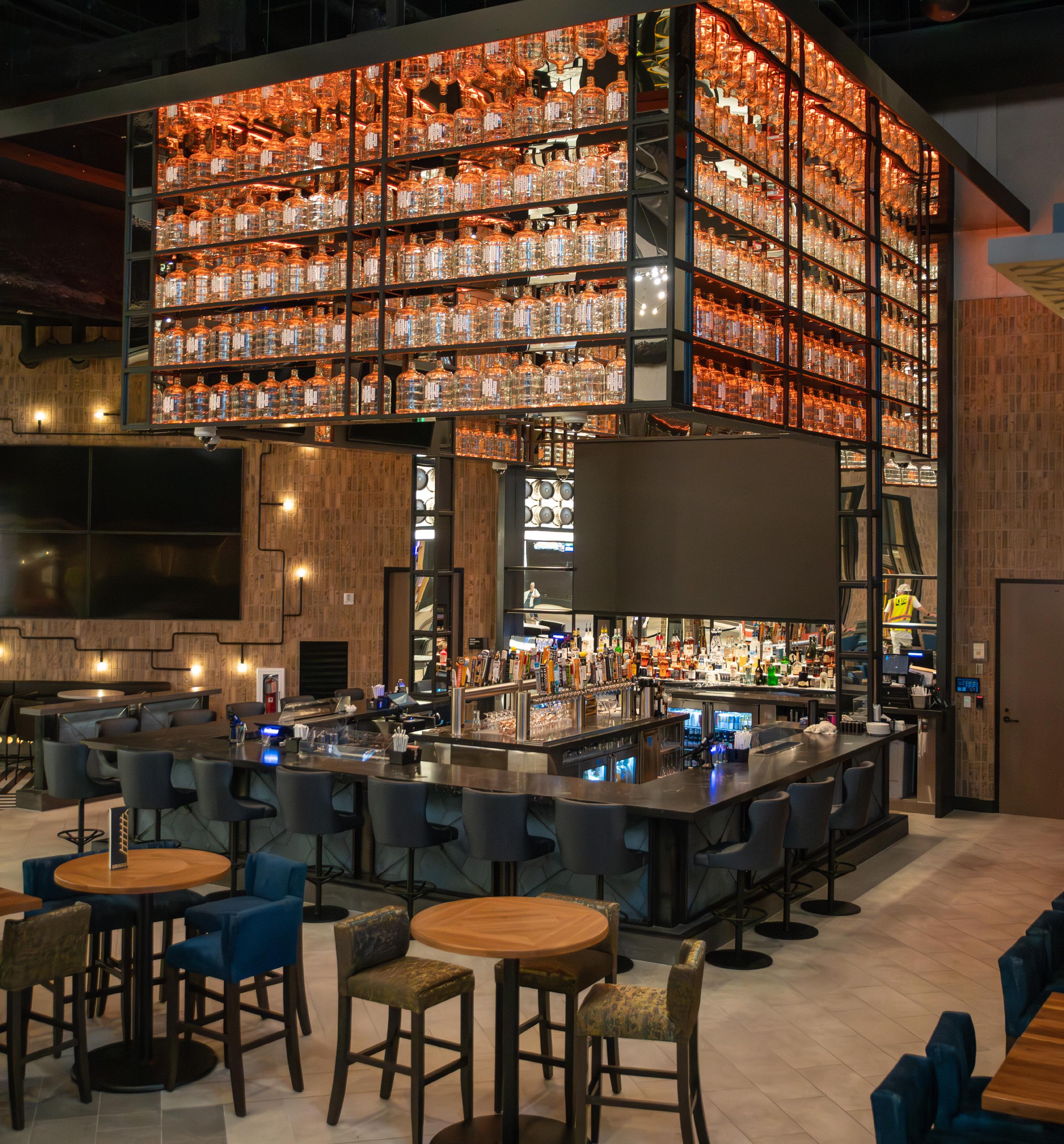
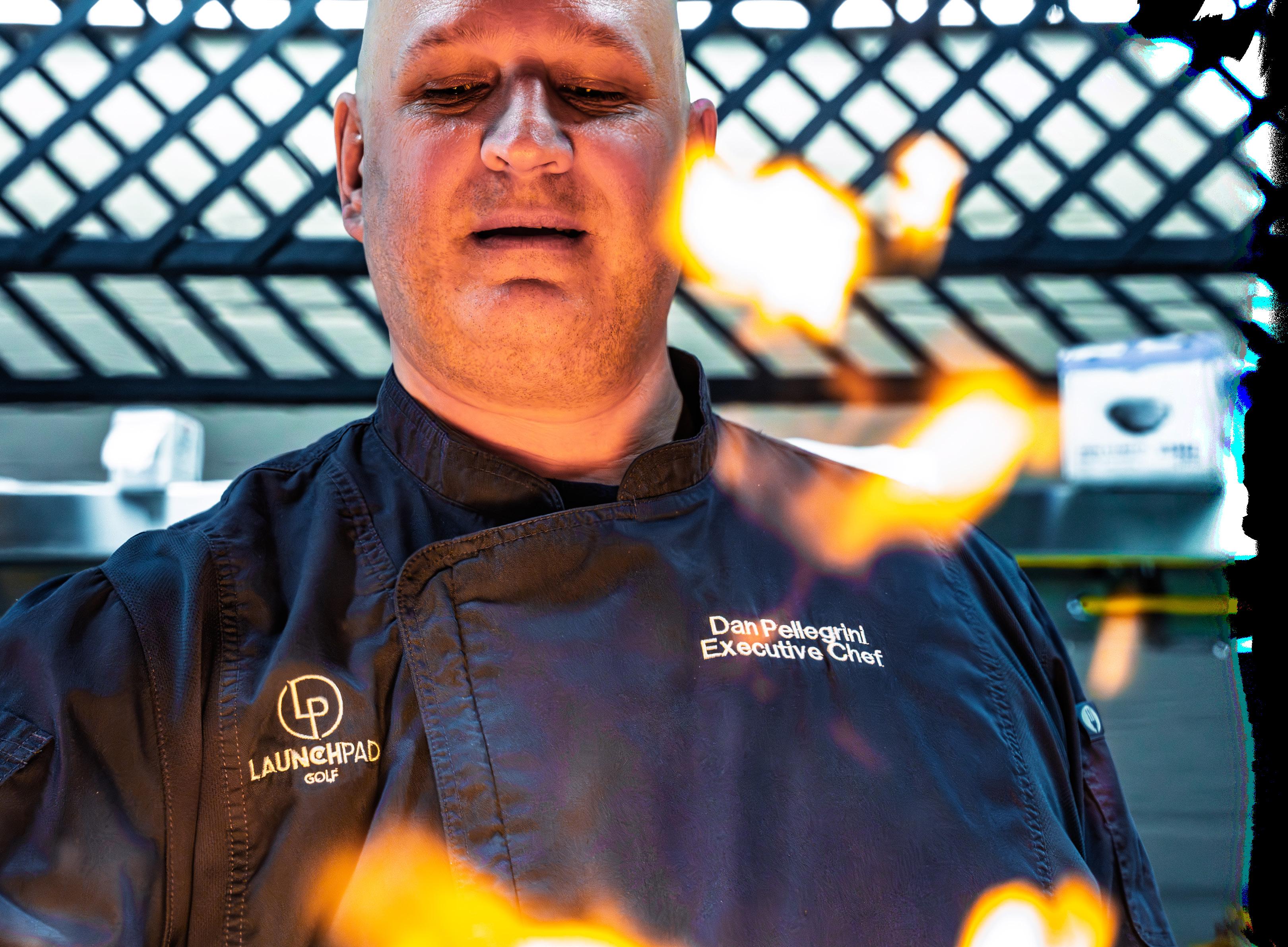
Stewardship—of both opportunity and responsibility—is another thread woven throughout this issue. We highlight innovative work such as Niron Magnetics and LaunchPad Golf, showcasing how forward-thinking initiatives can create economic strength while honoring our values. You’ll also read about our tribal gardens, restored forest, yard waste drop-off program, and other environmental efforts that reflect our long-term commitment to caring for Mother Earth.
We are honored to serve our community and to help steward the work you’ll see reflected throughout this magazine. We invite you to read, reflect, and celebrate the many ways the SMSC continues to grow—rooted in culture, strengthened by innovation, and united by shared purpose.
Thank you for being part of our story.
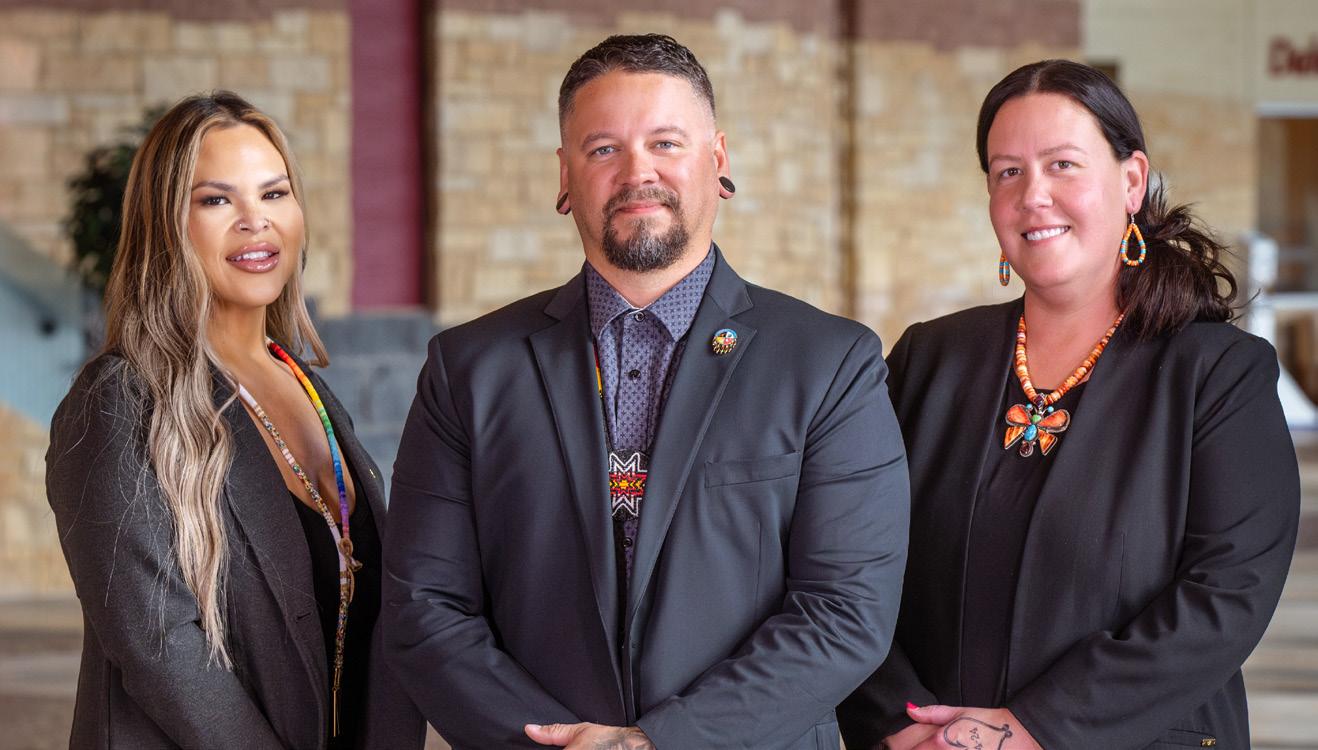
CHAIRMAN
COLE W. MILLER VICE-CHAIRWOMAN
NATASHA K. HACKER SECRETARY/TREASURER ASHLEY J. CORNFORTH
SMSC BUSINESS
COUNCIL
WELCOME TO WIĊOṠKAŊ
This quarterly magazine shares the collaborative efforts, collective achievements, and captivating stories of the Shakopee Mdewakanton Sioux Community. The Dakota word Wiċoṡkaŋ carries multiple meanings, but in the context of this publication it refers to the actions and efforts of a group of people. Each edition of this magazine highlights the contributions of those who come together in our shared purpose— to be a good neighbor, good employer, and good steward of the earth. We are grateful for the opportunity to share these stories, which reflect our enduring strength, resilience, and commitment to building a brighter future.
8 Building Stronger Nations Together
How the Shakopee Mdewakanton Sioux Community strengthens sovereignty through partnership with local jurisdictions.
20 Nurturing Roots
How the tribe’s youth culture camps help the younger generations connect with tradition.
42
Growing With Purpose
How Wozupi Tribal Gardens nourishes culture and community through organic farming.
COMMUNITY
8 Building Stronger Nations Together
How the SMSC strengthens sovereignty through partnership with local jurisdictions. 12 Tribal Member Spotlight
SMSC member John King and his wife, Winona Wabasha, discuss their passion for martial arts. 20 Nurturing Roots
How the SMSC’s youth culture camps help the younger generations connect with tradition.
Elder Spotlight
Reflections and advice from SMSC elder Gail Campbell.
36 History of the Tipi
Exploring the tipi as a living symbol of Dakota identity, past and present. 42 Rooted in Tradition
Wozupi Tribal Gardens nourishes culture and community through organic farming.
48 A Timeline of the SMSC
Tracing the history of the Mdewakanton Dakota people in the Minnesota River Valley.
VALUES
54 Restoring Forests
An inside look at the SMSC’s first large-scale forest restoration.
60 Three Decades at the SMSC
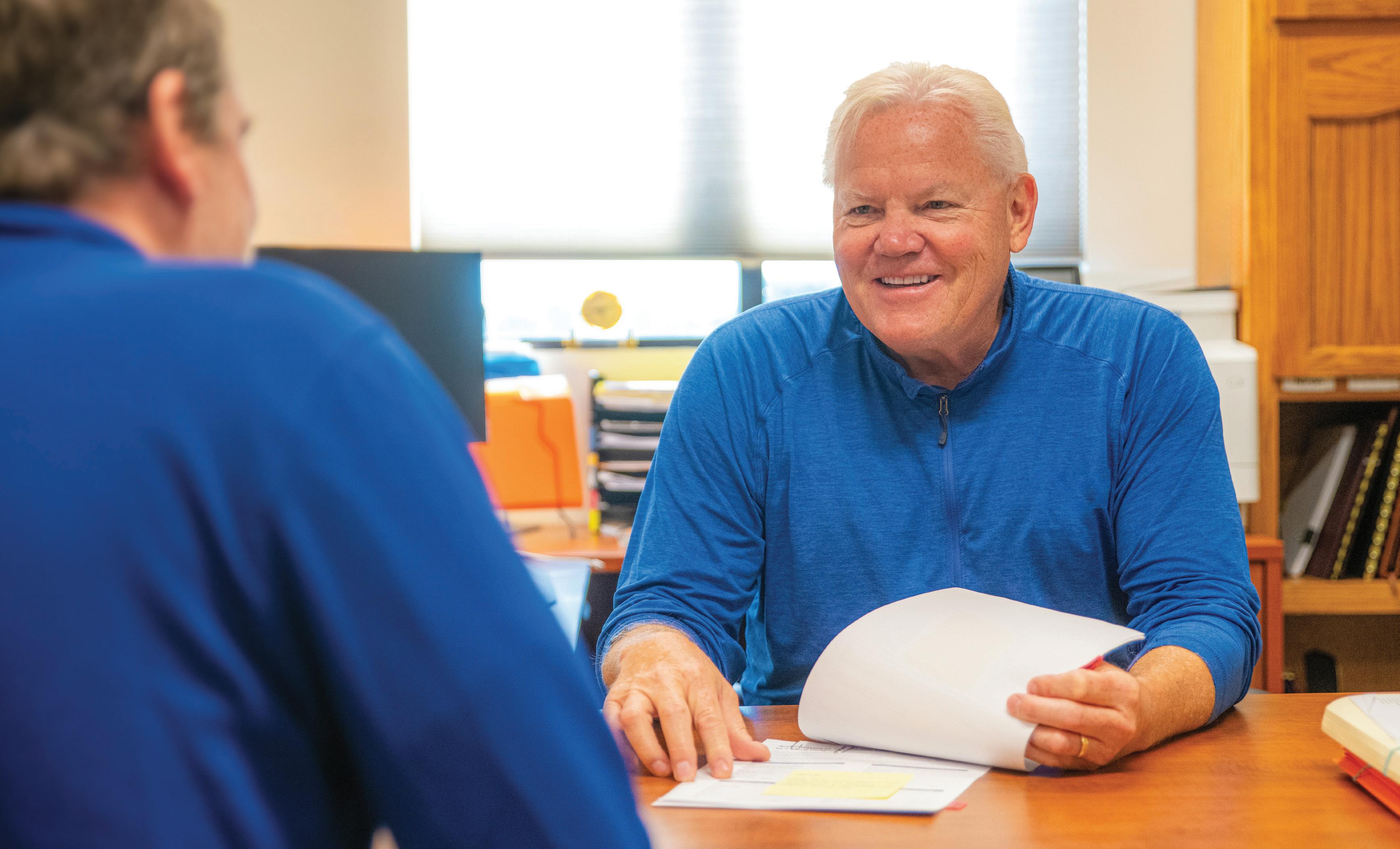
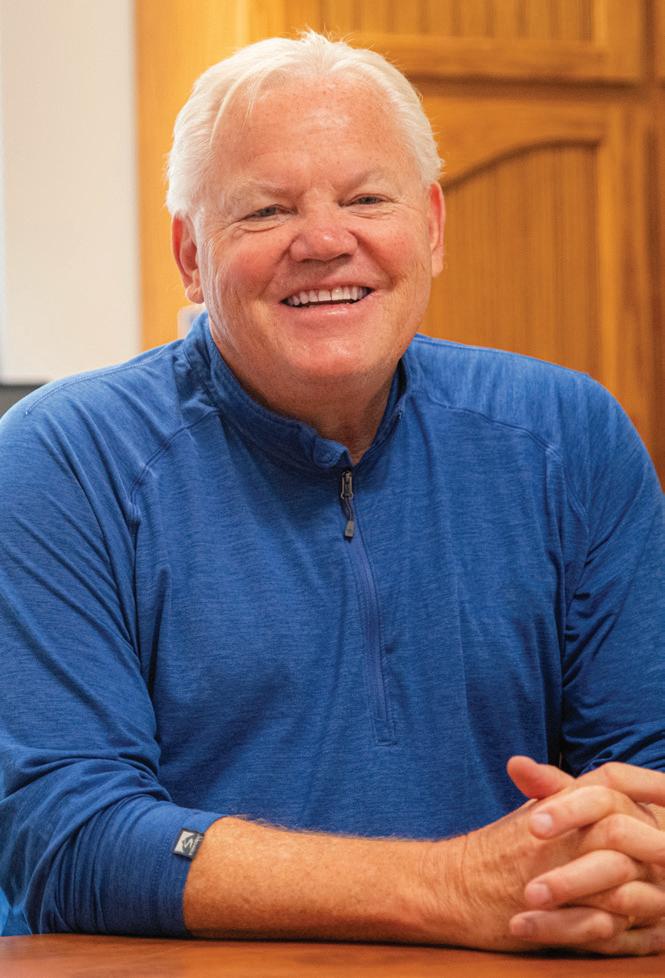
Longtime chief financial officer Joe Dean looks back on his illustrious career with the tribe.
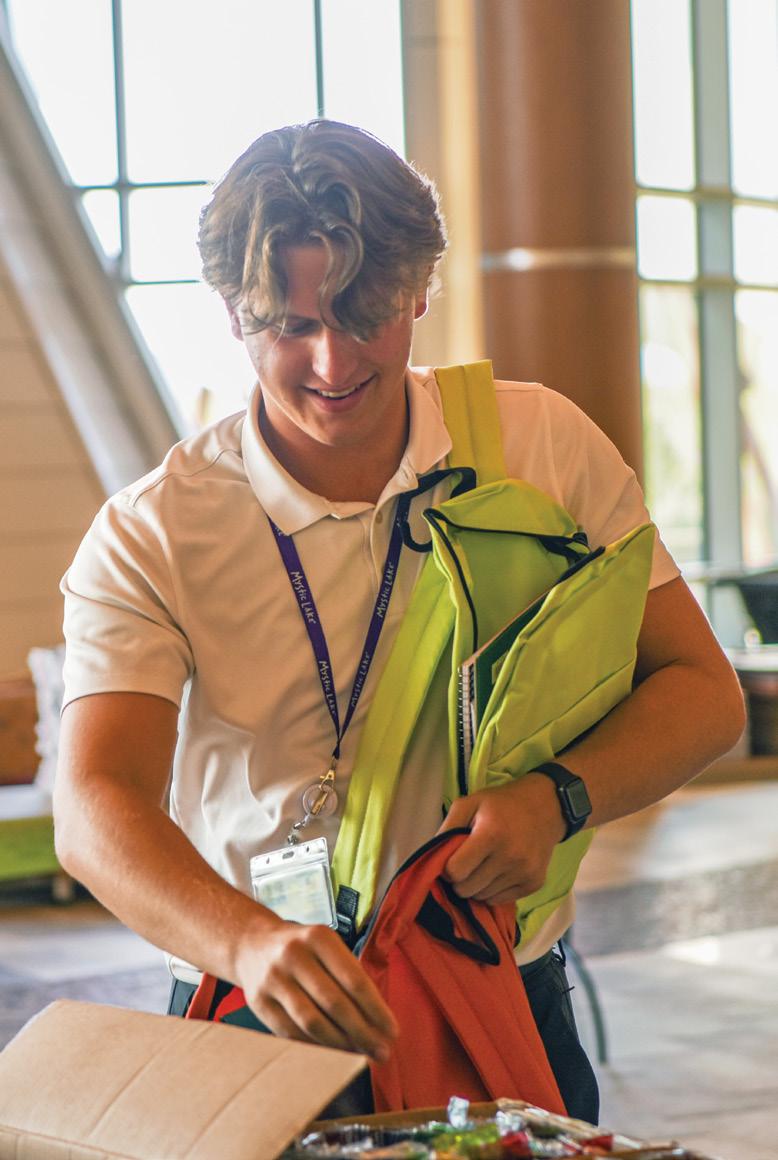
62 #SMSCgives Backpacks for Youth
How the tribe helps equip students with the supplies they need for a successful year.
68 Team Member Q&A
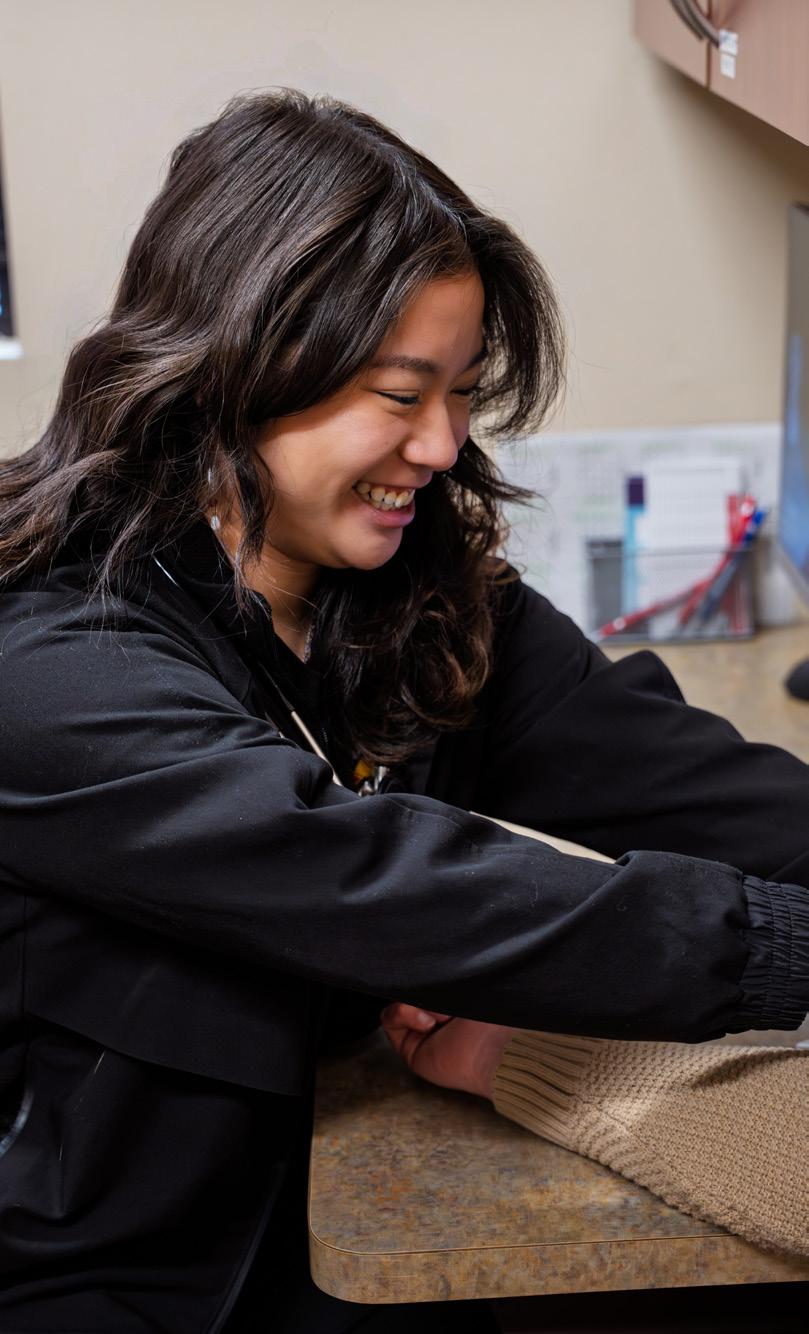
A conversation with Kristina Nghe, a nurse with the Shakopee Mdewakanton Sioux Community.
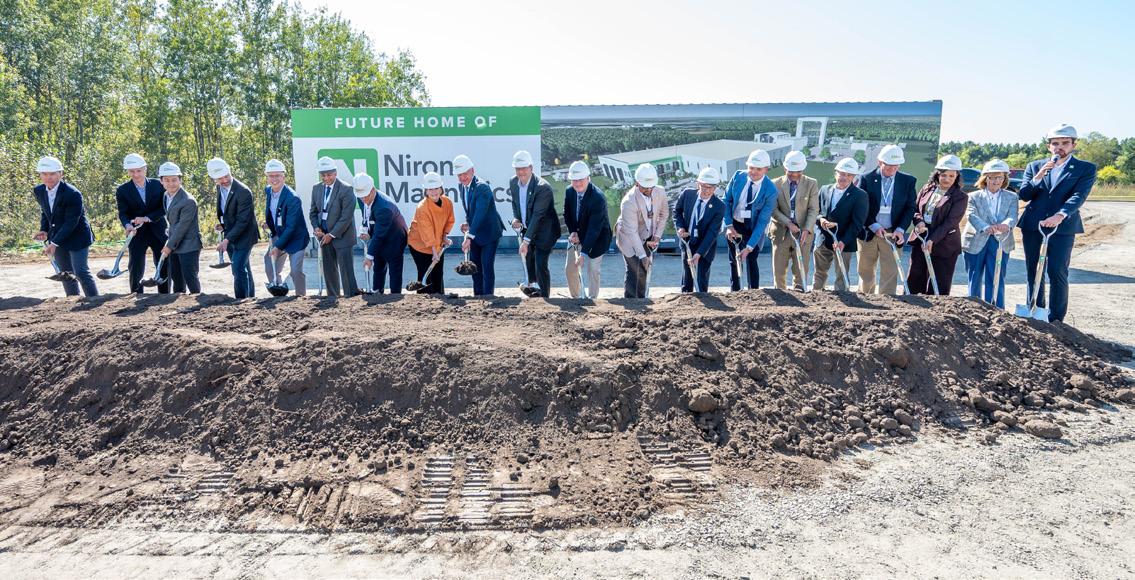
72 Niron Magnetics Partnership
Investing in a cleaner future with revolutionary magnet technology.
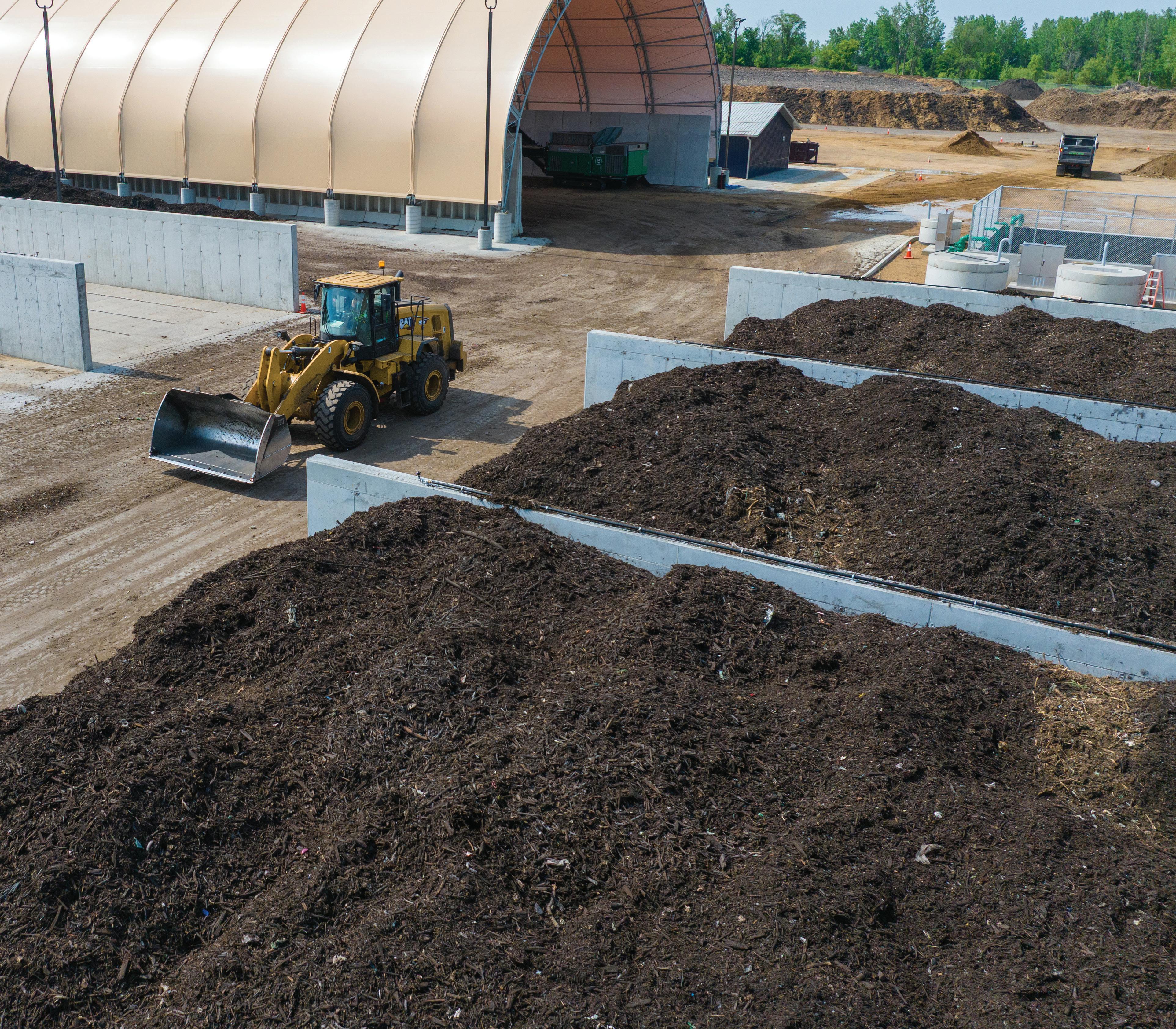
78 Turning Waste into Something Wonderful
How Dakota Prairie Composting helps our community and the Earth.
LIFESTYLE
84 Where Entertainment Meets Elegance
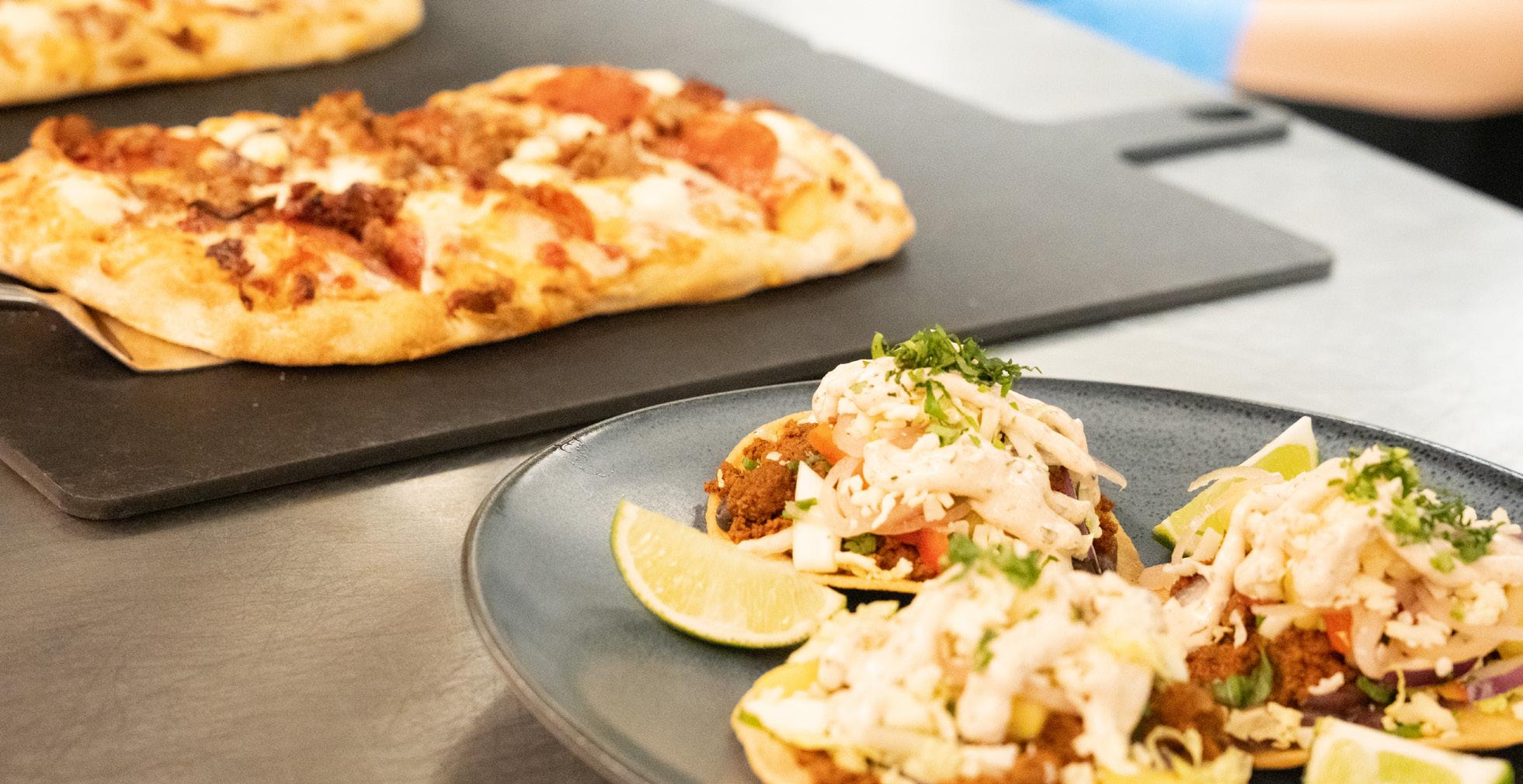
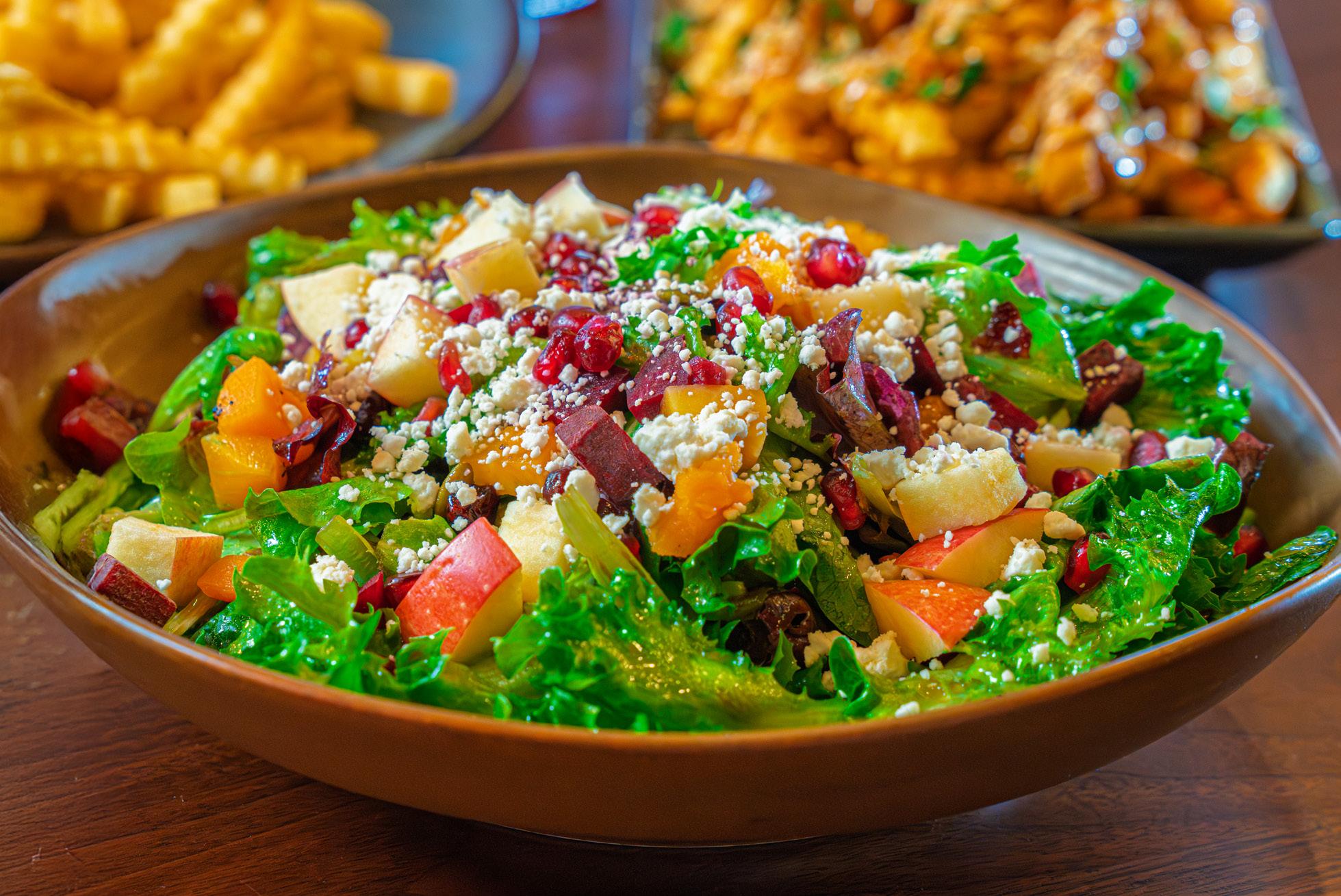
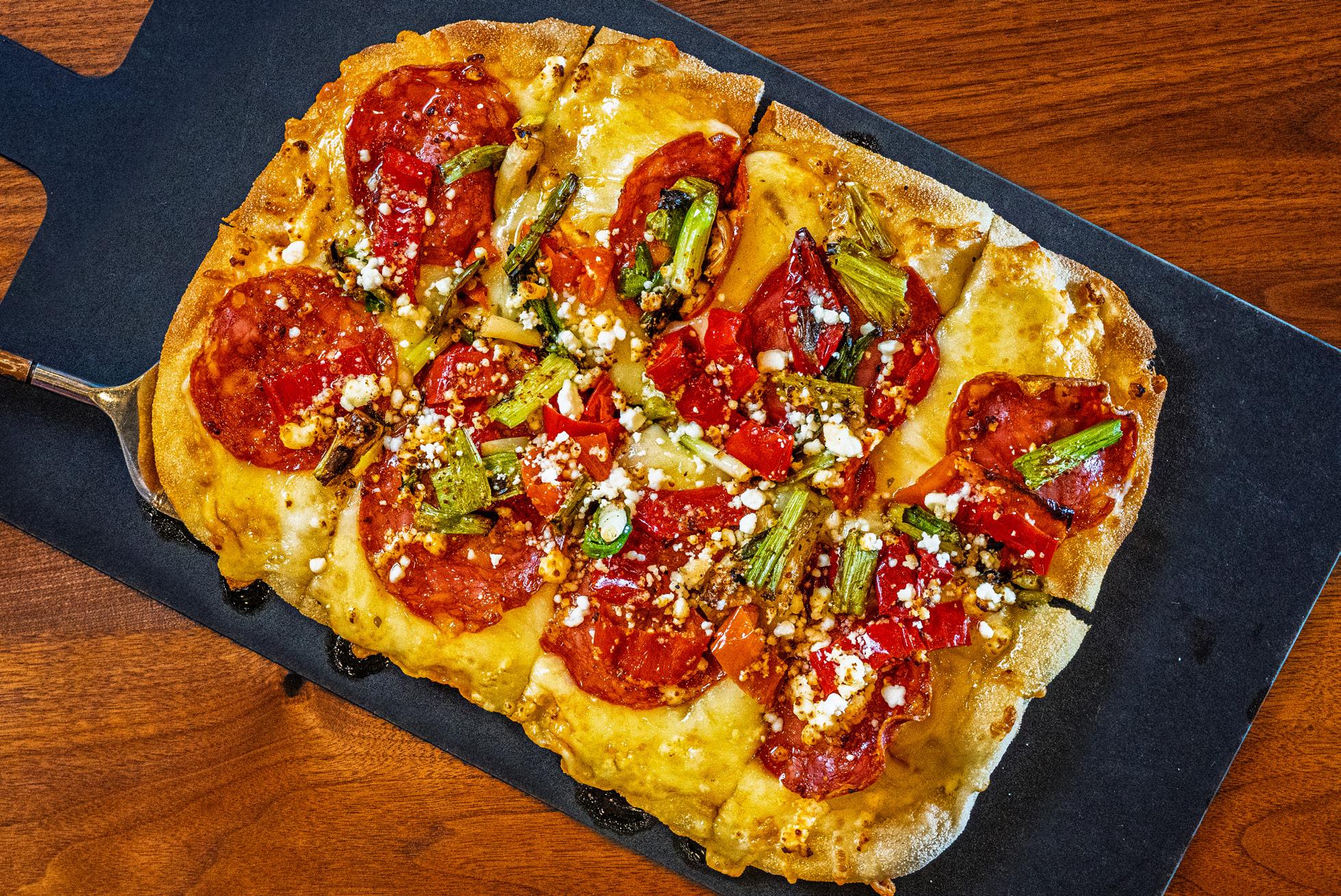
Exploring menu highlights from LaunchPad Golf The Meadows.
90 A New Era of Stay
More comfort, more style, more reasons to stay at Mystic Lake Casino Hotel.
96 Perfect Your Swing Year-Round
The SMSC’s golf operations offers opportunities for training in all seasons.
100 The Perfect Gift Starts Here
Unexpected finds from The Gift Shop at Mystic Lake Casino Hotel.
ISSUE 5
BUSINESS
COUNCIL
CHAIRMAN
Cole W. Miller
VICE-CHAIRWOMAN
Natasha K. Hacker
SECRETARY/TREASURER
Ashley J. Cornforth
CONTRIBUTORS
Steve Albrecht
Ferin Davis Anderson
Kirt Briggs
Cassy Bryant
Joe Dean
Dustin Montey
Kristina Nghe
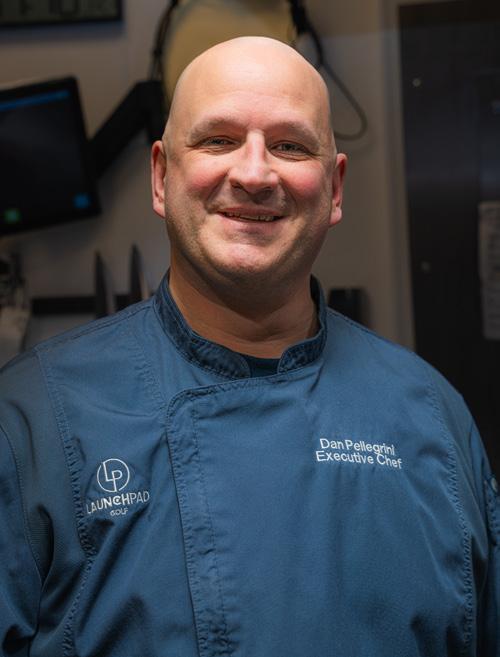
Dan Pellegrini
Victoria Ranua
Bill Rudnicki
Kelsey Scares The Hawk
Erin Skelly
Matt Smaus
Barb Weckman Brekke
Winona Wabasha
Jason Wedel
Caitlin Welch
Tricia Velure
Lezlie Vermillion
Andy Vig
Kristina Zander
Gaming Enterprise
Niron Magnetics
MARKETING AND COMMUNICATIONS
LEADERSHIP
Danny Olsen
Amber Chesney
Mike Christenson
Kelsey Hagen
Aleks Katane
COMMUNICATIONS
Erin E. Belanger
Brian Deutsch
Joni Komperda
Jesse Menden
Chaundra Rich
Chantre Smith
DESIGN
Jaclyn Ficek
Randy Palmer
Elle Campion
Allison Snider
Lydia Velishek
MULTIMEDIA
Jake Miller
Blake Ziemer
THANK YOU TO THE FOLLOWING SMSC MEMBERS FOR SHARING THEIR STORIES
Gail Campbell
John King
Lori Watso
Building Stronger Nations Together A Model Rooted in Partnership
Every fall, tribal leaders, allies, and partners from across the nation gather for the National Congress of American Indians (NCAI) annual convention to reaffirm a shared responsibility to one another and the communities they serve.
BY CHANTRE SMITH AND ERIN E. BELANGER
As the oldest and largest national organization representing American Indian and Alaska Native tribal governments, NCAI has long served as a forum for advancing tribal sovereignty, strengthening intertribal relationships, and elevating Native voices on issues of national importance. The annual convention provides a critical space not only for policy discussions, but also for sharing practical models that tribal nations and their partners can learn from and adapt.
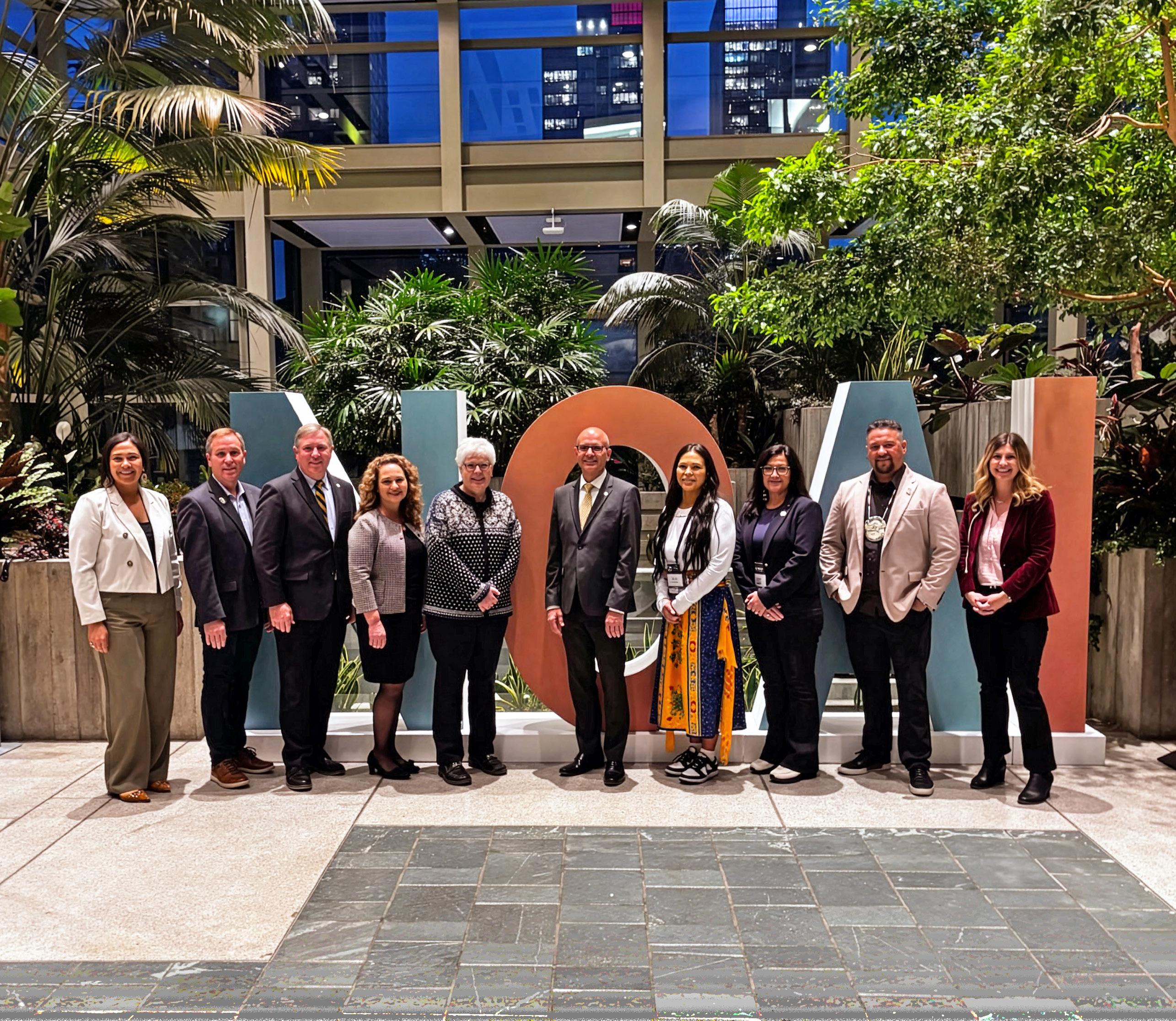
For tribal nations, collaboration is about protecting sovereignty while forging partnerships that lead to stronger systems, better services, and a lasting impact across jurisdictions. This sentiment was on full display in November 2025, when leaders and advocates from across Indian Country gathered in Seattle, Washington, for the 82nd Annual NCAI Convention & Marketplace. The theme—“Strength of Sovereignty, Solidarity, and Unity Amongst All Tribes”—invited participants to reflect not only on the power of tribal nations individually, but also on the strength that emerges when governments work together across federal, state, and jurisdictions.
Strengthening Sovereignty Through Partnership
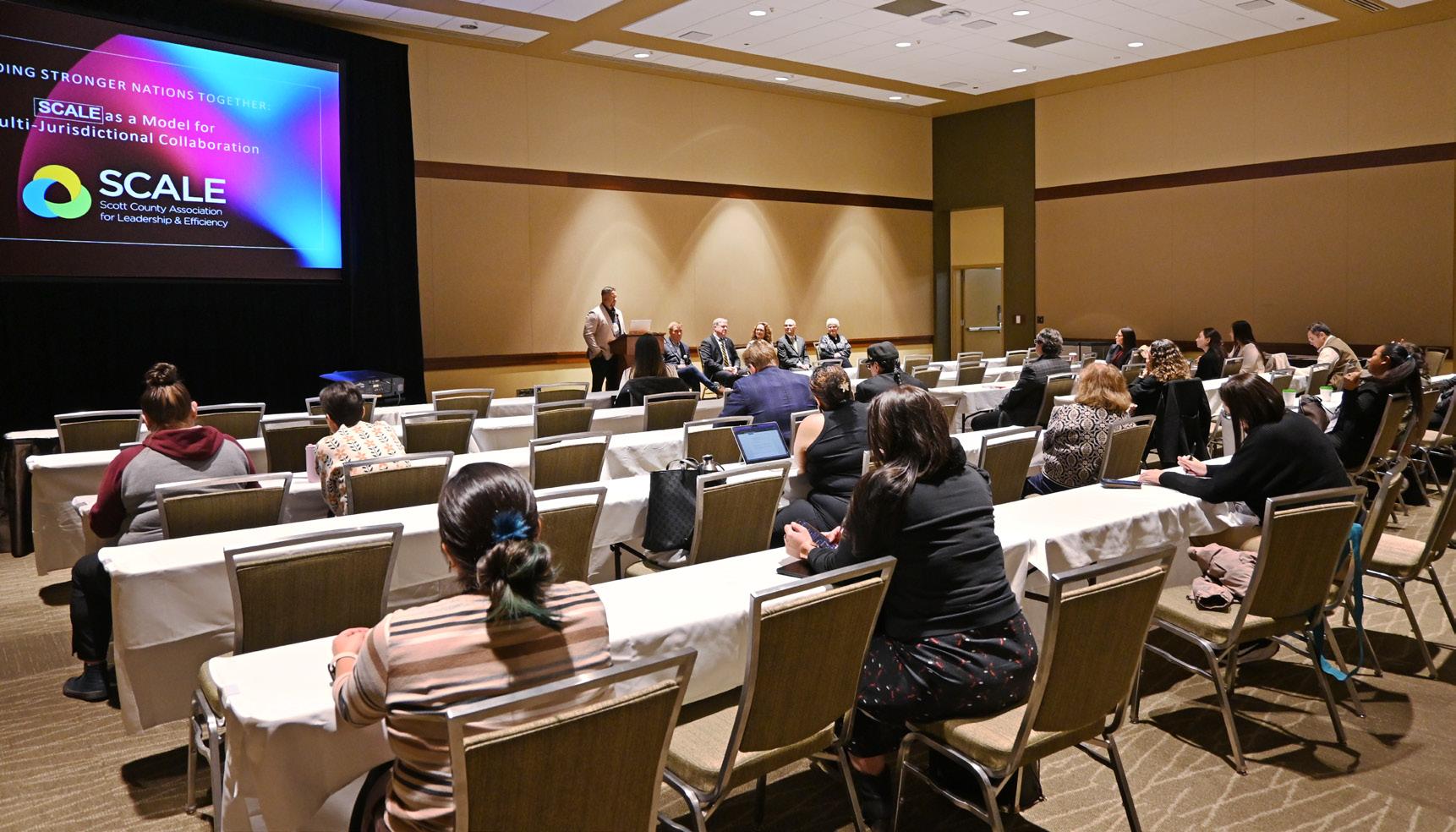
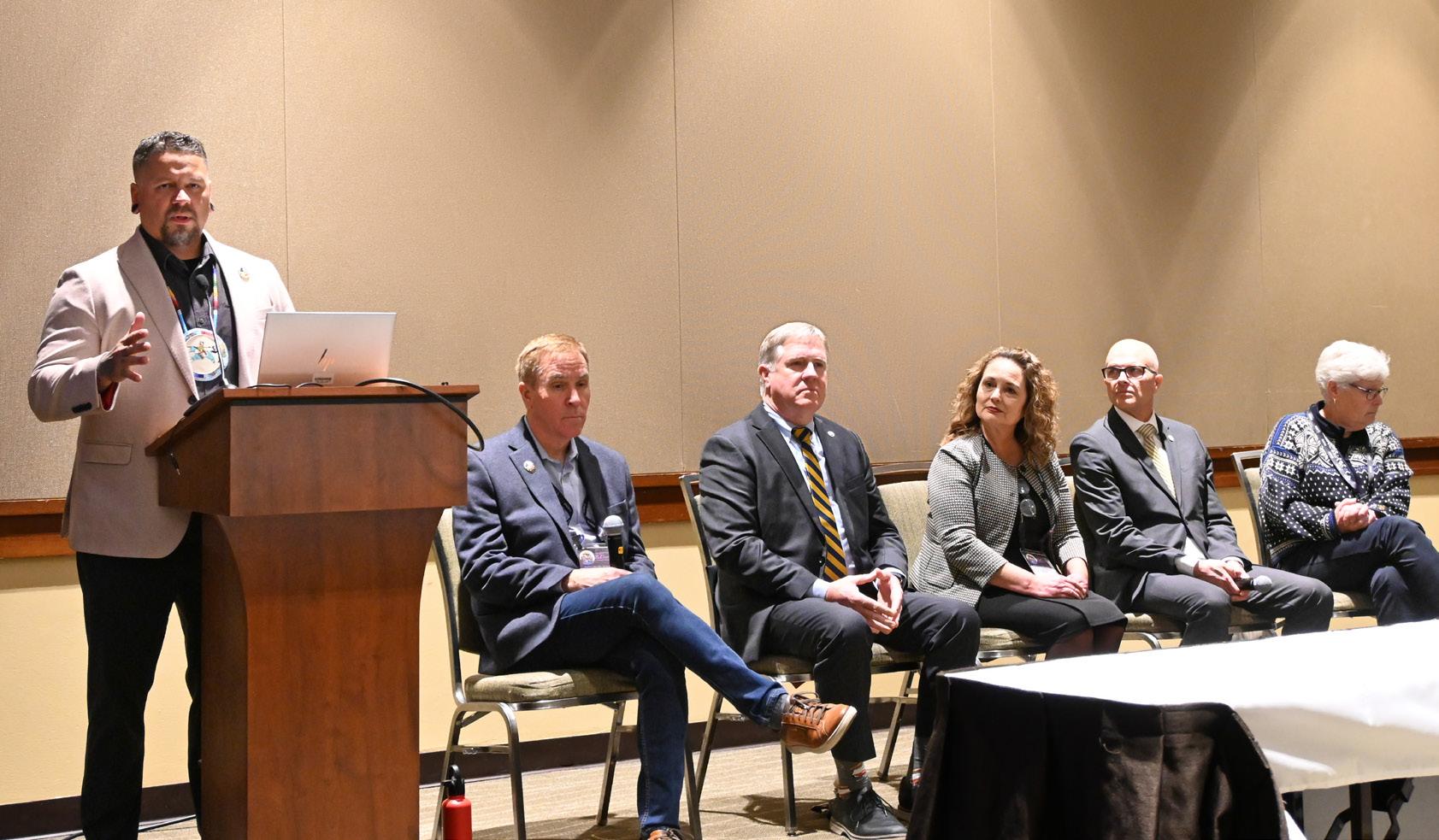
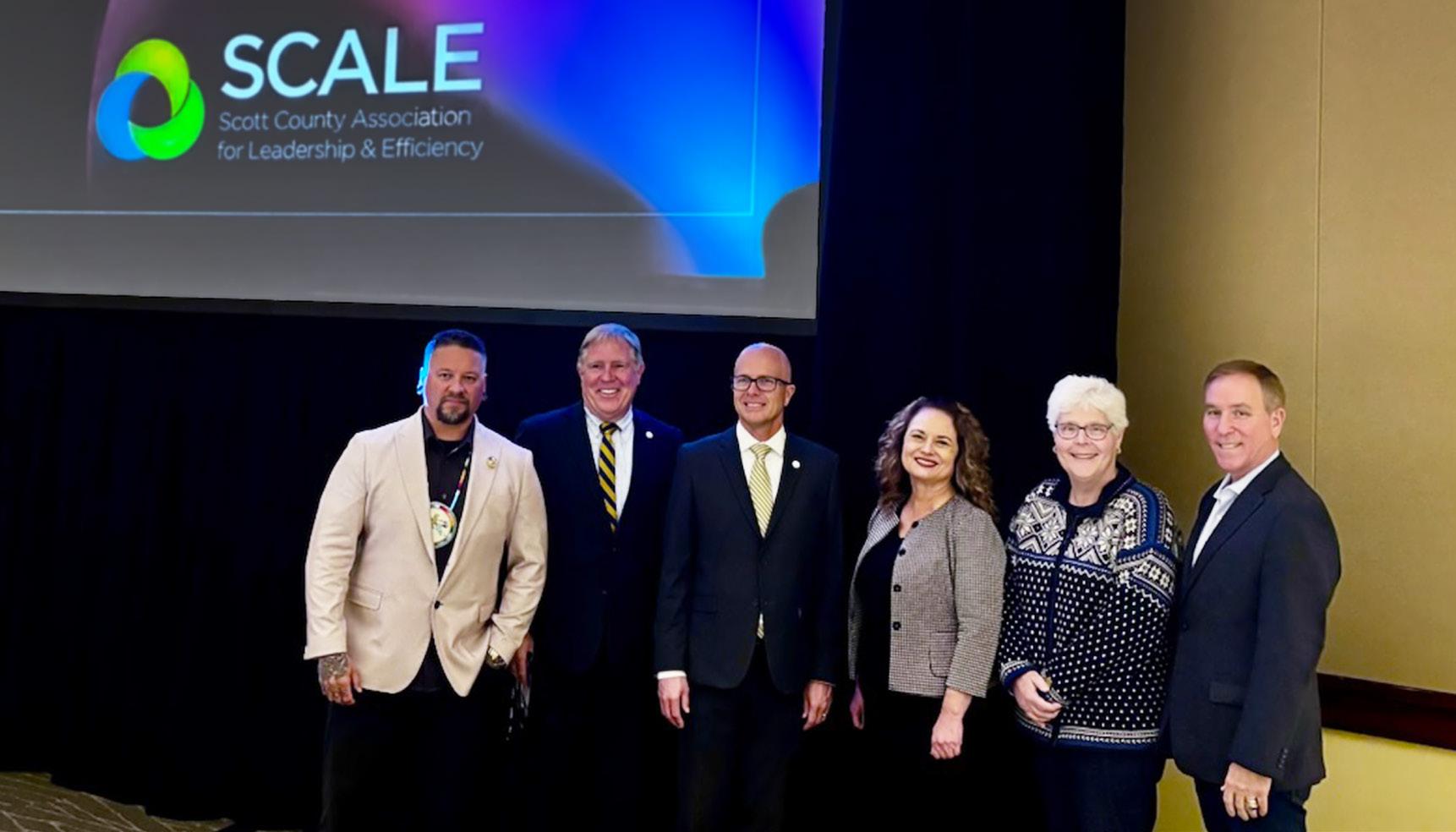
The 2025 NCAI conference theme served as a call to action for many, including the Shakopee Mdewakanton Sioux Community (SMSC). Seizing the opportunity to elevate its own proven approach to collaboration, the SMSC hosted a breakout session highlighting its longstanding partnership with local governmental entities in Minnesota through the Scott County Association for Leadership and Efficiency (SCALE).
Formed in 2003, SCALE was created to encourage greater efficiency and leadership in public service by strengthening communication, sharing resources, and identifying opportunities for collaboration across jurisdictions. The model brings elected and appointed leaders from Scott County’s cities, schools, townships, and the SMSC to the same table. Since its inception, SCALE has been recognized as a governmental best practice on both the state and national levels by the Minnesota State Auditor and Harvard University’s John F. Kennedy School of Government.
“SCALE started as a way to find that common ground for our residents and how to best serve our constituents,” shared Scott County Administrator Lezlie Vermillion.
“SCALE isn’t a formal organization. It’s not a legal entity, or a joint powers agreement,” added Scott County Commissioner Barb Weckman Brekke. “It’s really just a group of entities that decided that they are going to get together, work together, and meet every month to address shared challenges, fill gaps, and create change and efficiency.”
This commitment to consistent engagement has been key to SCALE’s success. Members meet regularly to create a reliable space for dialogue around shared priorities and regional challenges—from public safety and transportation to parks and recreation, community development, and general government services.
“SCALE was a vision of collaboration and shared understanding. It is truly the backbone that binds all of our entities together,” shared Prior Lake Mayor Kirt Briggs. “We were developing bonds over sidewalks and trails and the understanding of the value of the connectivity of our communities through shared infrastructure.”
The collaboration extends beyond the formal SCALE setting. “The meetings outside of the monthly SCALE meetings is where true relationships are built,” SMSC Chairman Cole W. Miller said. “We get together and share what is going on in our respective communities, which helps our neighbors understand our issues as a tribal government.”
Over time, these consistent conversations have allowed partners to move beyond transactional cooperation toward deeper alignment, where trust supports coordinated action and long-term problem-solving.
Collaboration in Action
One of the most tangible examples discussed during the NCAI breakout session was public safety. Panelists described how joint emergency response planning, shared training opportunities, and cross-agency coordination have strengthened readiness across jurisdictions.
“I regularly meet with the city of Prior Lake police chief so there is a better understanding of our mutual aid, our enterprises, and how we operate as a sovereign tribal nation,” Miller shared.
By viewing public safety as a collective responsibility, partners are better equipped to respond quickly and effectively—regardless of jurisdictional boundaries.
“The color of the snowplow doesn’t matter,” said Vermillion. “We just need to get people safely on the highway.”
These efforts have improved operational efficiency while reinforcing a culture of cooperation that prioritizes community well-being over organizational lines.
Panelists also highlighted how coordinated planning has strengthened infrastructure and community development outcomes. Through shared conversations around roads, utilities, and capital projects, partners have aligned investments to support long-term mobility, growth, and quality of life for both tribal and neighboring communities.
“Scott County is growing, the SMSC’s trust land is growing, and the city of Prior Lake is growing, so working together on our infrastructure—water services, sanitary sewer, roads—is key to our success,” explained Prior Lake City Manager Jason Wedel. “We must be thoughtful in our planning and consider how we all grow together without causing issues to one another.”
This long-range, collaborative approach has allowed governments to maximize resources while ensuring projects reflect regional needs rather than isolated priorities.
“We were able to save millions of dollars for both of our communities by partnering with the SMSC to create a joint water treatment facility,” shared Wedel. “The city of Prior Lake—and the SMSC—felt protected in this long-term investment, and we were able to utilize our city taxpayer dollars to support infrastructure on SMSC trust land. That couldn’t happen if we didn’t have a good relationship.”
SCALE members emphasized that collaboration does not diminish sovereignty—it reinforces it. For non-tribal governments, this often means understanding a seven generations philosophy.
“As a city we do comprehensive planning that looks out about 10 years,” shared Wedel. “Learning how the SMSC thinks about things and plans for seven generations ahead, that’s a completely different perspective than we had, so it was important to understand their philosophy.”
By approaching partnerships from a sovereign-tosovereign perspective and honoring each government’s role, the SMSC and its partners have demonstrated that respectful governance leads to more efficient services and stronger outcomes for all.
Lessons for Tribal Nations
Bringing SCALE to the national stage wasn’t simply a reflection on local success—it offered a replicable model and was an invitation to other tribal nations to envision what sustained, sovereign-to-sovereign collaboration can look like in their own regions.
Panelists emphasized that successful collaboration is not driven by structure alone, but by intention. Consistent engagement, a willingness to listen, and transparent
decision-making were identified as foundational practices—principles that have guided the SMSC’s work with SCALE and allowed partnerships to grow even amid complexity.
The session also acknowledged that collaboration is rarely without challenges. Differences in governmental structures and legal frameworks, historical tensions, and resource disparities can complicate even the most well-intentioned efforts. While the SMSC benefits from having its trust land located within a single county, many tribal nations navigate far more complex jurisdictional boundaries with reservation boundaries covering several counties.
For tribal leaders and partners from across Indian Country, the takeaway was clear: models like SCALE are adaptable, not prescriptive. Through platforms like NCAI, the SMSC’s example offers encouragement for tribes to lead regional collaborations that reflect their sovereignty, values, and vision for future generations. W
Strength of Sovereignty, Solidarity, and Unity Amongst All Tribes
Role Models of Perseverance and Strength
SMSC Member John King and Winona Wabasha Demonstrate How Empowerment is the Ultimate Self-Defense
BY ERIN E. BELANGER PHOTOS BY BLAKE ZIEMER
Jiu-jitsu is a daily practice for the body and the mind. It demands patience when progress feels slow, dedication when motivation dips, and focus when frustration inevitably creeps in. Growth doesn’t arrive all at once—it reveals itself in small, hard-earned moments after countless repetitions and humbling lessons on the mat. In jiu-jitsu, strength isn’t measured by force, but by the ability to stay calm under pressure, and to breathe through discomfort when everything feels stacked against you. Over time, the artform reshapes how you face challenges and teaches you to accept struggle as part of growth, transforming patience into confidence and effort into quiet, lasting strength.
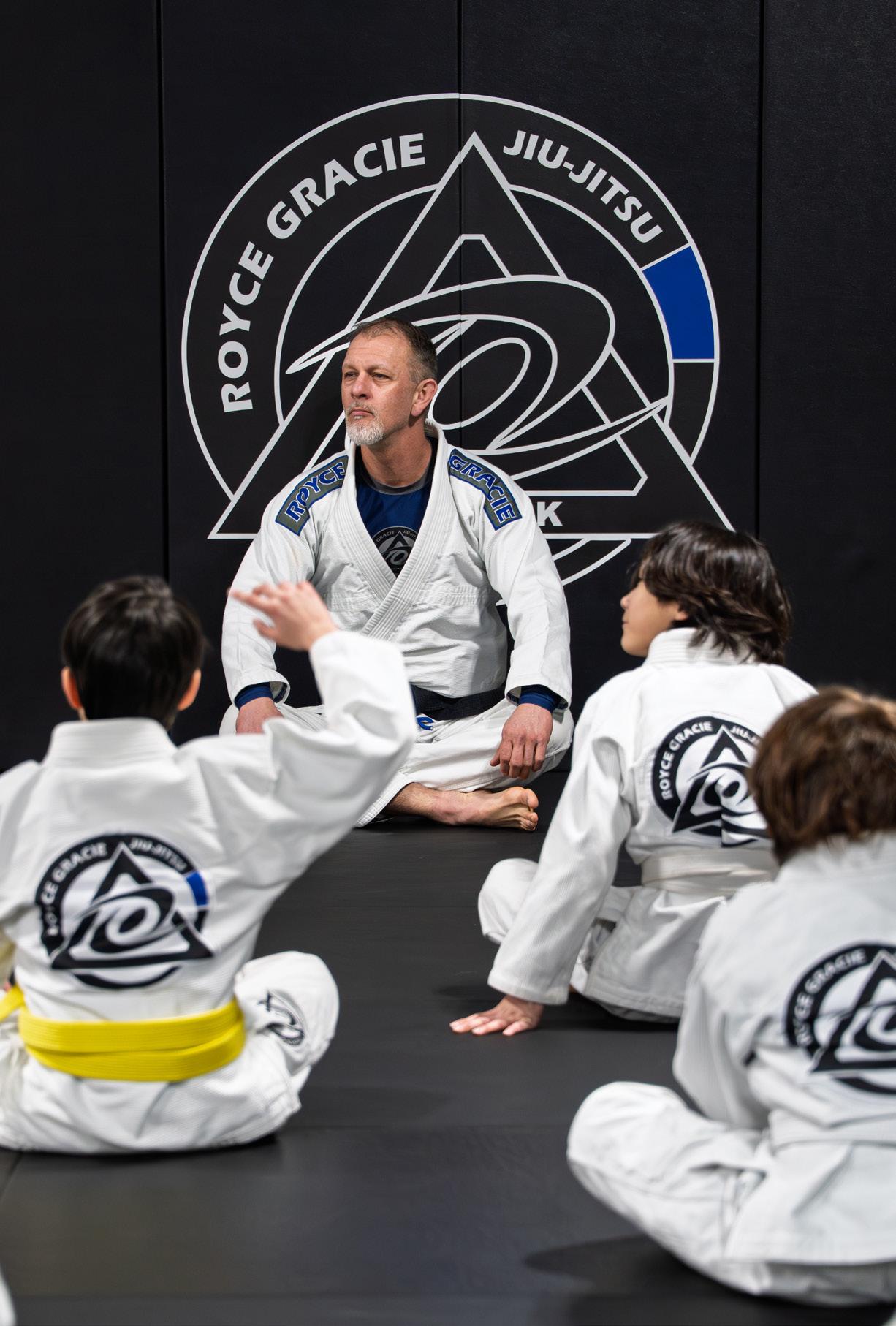
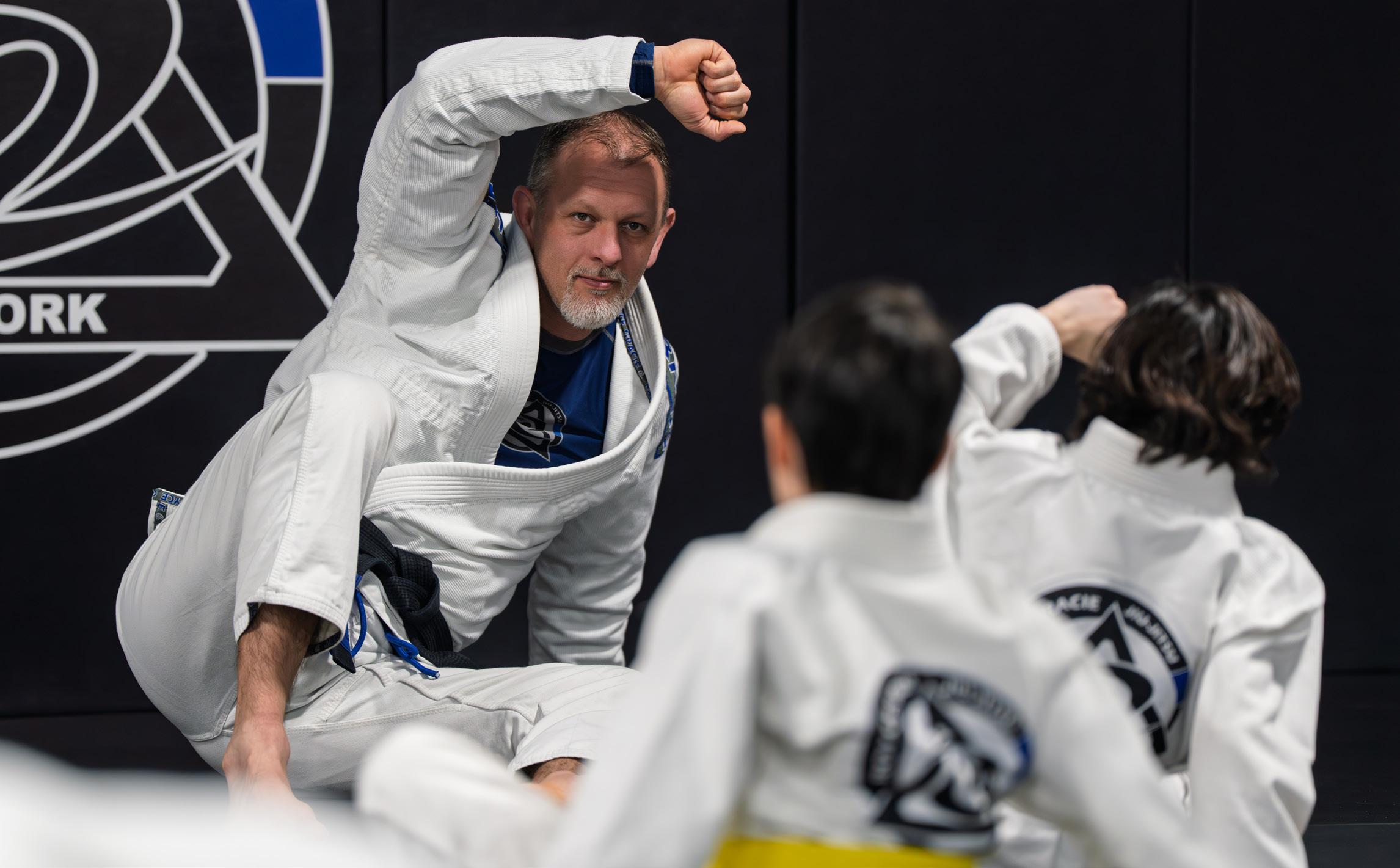
This philosophy lives at Royce Gracie Jiu-Jitsu Academy in downtown Shakopee, Minnesota, owned and operated by Shakopee Mdewakanton Sioux Community (SMSC) member John King and his wife, Winona Wabasha. More than a training facility, the academy is a 5,500-squarefoot, state-of-the-art space with 1,800 square feet of mat—designed to foster empowerment, build confidence, and create a lasting legacy rooted in selfdefense and personal growth.
Located on First Avenue just south of the Minnesota River, Royce Gracie Jiu-Jitsu Academy (formerly Underground Jiu-Jitsu Academy) is the only certified Royce Gracie Jiu-Jitsu school in Minnesota. Royce Gracie is a Brazilian former professional mixed martial artist best known for his success in the Ultimate Fighting Championship (UFC) and for playing a pivotal role in popularizing Brazilian Jiu-Jitsu. He is widely regarded as one of the most influential figures
in the history of mixed martial arts. “We are honored to be one of just 16 schools in the nation with exclusive rights to teach Royce Gracie’s 360 selfdefense curriculum,” said King. “But more than that, we’re dedicated to community development and helping people become the best versions of themselves through jiu-jitsu. We want our community to feel, ‘This is where I belong.’”
Building a Legacy
Jiu-jitsu remains one of the fastestgrowing mixed martial arts in the United States. Its core principle is simple yet powerful: a smaller, weaker individual can successfully defend against a larger, stronger opponent through leveraging, positioning, and technique. With proper training, practitioners learn to subdue and control opponents both standing and on the ground. It’s about skills embedded in strategy rather than physical strength.
Before 2020, King taught part time at another martial arts school and had loosely envisioned opening his own facility someday. “John received his brown belt, and we started to form a five-year plan for what could be our own facility once he earned his black belt… but little did we think that ‘one day’ would come so soon,” said Wabasha.
Q & A with Royce Gracie Black Belt John King (JK) and Royce Gracie Purple Belt Winona Wabasha (WW), owners of Royce Gracie Jiu-Jitsu Academy
What are you most proud of?
WW: The growth of our business over time. It’s all about community development and investing in the people who come to our gym. Giving people the tools and a physical outlet to handle everyday life.
What do you want people to know about Royce Gracie Jiu-Jitsu Academy that they might not realize just by walking past the studio?
JK: I teach people the art of jiu-jitsu, but you also get selfdefense with me.
WW: John is the only Royce Gracie black belt in Minnesota, and he is certified to teach the RGJJ 360 curriculum as well as G.R.A.C.I.E. tactics for law enforcement officers.
Many people may feel nervous walking into a jiu-jitsu gym for the first time. What would you say to someone who’s considering trying a class but feels intimidated?
WW: As a coach, you’re developing people at different stages of life. It’s a personal journey. You just need to keep showing up—be consistent.
What does empowerment through selfdefense mean to you personally, and how do you help students experience that shift from nerves to confidence?
JK: Jiu-jitsu is dynamic—continuously moving and focused training. It’s a marathon putting those pieces together. I tell this time quote from Tom Hiddleston: “You keep putting one foot in front of the other, and then one day you look back, and you’ve climbed a mountain.”
What are the principles your gym lives by?
JK: We go by the seven rules of Bushido, which mirror the seven Dakota values:
Righteousness: The ability to make the right decision.
Loyalty: Faithfulness to one’s lord and comrades.
Honor: Maintaining one’s reputation and dignity.
Respect: Showing consideration for others.
Honesty: Being truthful and sincere.
Courage: The strength to face fear and adversity.
Consistency: Adhering to one’s principles and values.
In a real-life confrontation, what do you actually need most when you’re in a fight?
JK: There are three states of mind: To be alert/aware, have emotional balance, and a clear mind.
“Training jiu-jitsu has given me confidence and taught me how to be better prepared should an altercation ever arise—and I want to share these techniques to empower others.”
— ROYCE GRACIE PURPLE BELT WINONA WABASHA
When the COVID-19 pandemic hit, that distant dream suddenly became a necessary pivot. With shutdowns sweeping the state, King and Wabasha transformed their basement into a training space and launched Underground Jiu-Jitsu Academy— earning the “Underground” name in the most literal sense. “The pandemic was sort of a catalyst for our entire lives,” said Wabasha. “We had a baby on the way and realized we wanted to leave a legacy for our family.”
King reached out to longtime friend Royce Gracie, who immediately offered guidance and support. “Royce welcomed us with open arms from the start and told us it was the perfect time to join the network as they were beginning to implement his new 360 curriculum, which would also be part of my black belt testing preparation,” said King.
Opening the Doors
In April 2021, Underground Jiu-Jitsu Academy officially opened its public location in downtown Shakopee. For both King and Wabasha—active, health-focused, and committed to sober living—the move was a natural extension of the positive impact jiujitsu had already made in their lives.
“We realized how much jiu-jitsu helped us both mentally and physically,” King shared. “We wanted to build a business of our own and leave a positive legacy for our children and for future generations of our community.”
King has now practiced jiu-jitsu for more than 13 years. In May 2023, after intense dedication and rigorous testing, he earned the rare and highly respected Royce Gracie black belt— presented to him by Gracie himself, a UFC Hall of Famer and one of the most influential figures in martial arts history.
“For me, this is an honor. I am thrilled to be on a journey that allows me to train, instruct, and inspire others,” King said. “And it’s about being a good example. A major driver for me
“For me, this is an honor. I am thrilled to be on a journey that allows me to train, instruct, and inspire others.”
SMSC MEMBER AND ROYCE GRACIE BLACK BELT JOHN KING
is to help the kids in my community, Native American kids, find ways to deal with trauma and violence that is controllable and manageable. It’s not about beating the guy. It’s about them not beating you. Self-defense is selfpreservation. In real-life situations, this means conserving energy with someone bigger than you.”
With fewer than 200 black belts under Royce Gracie worldwide, King’s achievement marks an extraordinary milestone. “Becoming a black belt is about time, lifestyle, and dedication. We are always students. My time came, and now I continue the journey,” explained King.
Empowering Women
Wabasha, a Royce Gracie purple belt with more than seven years of training, is also an instructor at the academy. She specializes in private sessions for women, driven by a deep commitment to empowering Indigenous women.
Wabasha wanted to learn self-defense but describes herself as quite shy and self-preserved. “I have always been somebody who challenged myself,” Wabasha said. “So, I challenged myself, and John encouraged me.
We need more women in the gym. It teaches humility. I am inspired by the need for self-defense in the Indigenous community,” Wabasha shared. “MMIW [Missing and Murdered Indigenous Women] has been a driving factor for me as an Indigenous woman. We are a marginalized group, and I want all women to know they are worth it. Training jiu-jitsu has given me confidence and taught me how to be better prepared should an altercation ever arise—and I want to share these techniques to empower others.”
Today, Royce Gracie Jiu-Jitsu Academy offers group classes, seminars, private lessons, and youth programs, creating approachable entry points for all ages and experience levels. The couple also has Underground Fitness, a fitness brand that offers kickboxing and group fitness courses. Whether seeking practical self-defense, improved fitness, or a supportive community, students leave with more than skills— they leave with confidence. “When you come into our gym, you will leave with more confidence—learning how to be comfortable in uncomfortable situations,” said King with a smile. “Come in and try us out!” W
Underground Fitness Classes:
• Kickboxing & Striking
• UFit
• Fam Fit
• Fight Fit
• Personal Training
• Trainers are NASM and CPR BLS certified
Visit undergroundjj.com to learn more or to sign up for a class!
In the heart of Scott County, Minnesota, the Shakopee Mdewakanton Sioux Community (SMSC) is working to preserve and share its cultural legacy and Dakota heritage with the next generation.
THE SMSC’S YOUTH CULTURE CAMPS
A key to this mission is the SMSC’s culture camp program for youth—an immersive and engaging platform for SMSC youth to connect with their ancestry, learn traditional lifeways, and deepen their understanding of Dakota values and language. The Waniyetu (Winter) and Mdoketu (Summer) Culture Camp offer activities to support cultural strength, community bonds, and a sense of self
PHOTOS
For the SMSC, culture camps are key to teaching children about the tribe’s lifeways. For millennia, the tribe’s Dakota ancestors lived in harmony with the land, guided by seasonal migrations supporting the well-being of their families and communities. This connection to their homeland, traditions, and each other has always been shaped by a set of core values defining their way of life within family, community, and the world. These values—wóċekiya (prayer), wóohoda (respect), wówauŋṡidaŋ
(caring and compassion), wówaḣbadaŋ (humility), wóksape (wisdom), wóokiya (generosity and helping), and wówicaka (honesty and truth)—deepen and change as individuals age, and also guide the tribal government in protecting its sovereignty and providing for its members’ welfare. The culture camps are a fun and engaging way for young SMSC members to learn and practice these values, providing a hands-on experience of Dakota heritage for children.
We try our best to bring us all together and pass the language on to our youth.
DIRECTOR OF HOĊOKATA ṪI AND SMSC MEMBER ANDY VIG
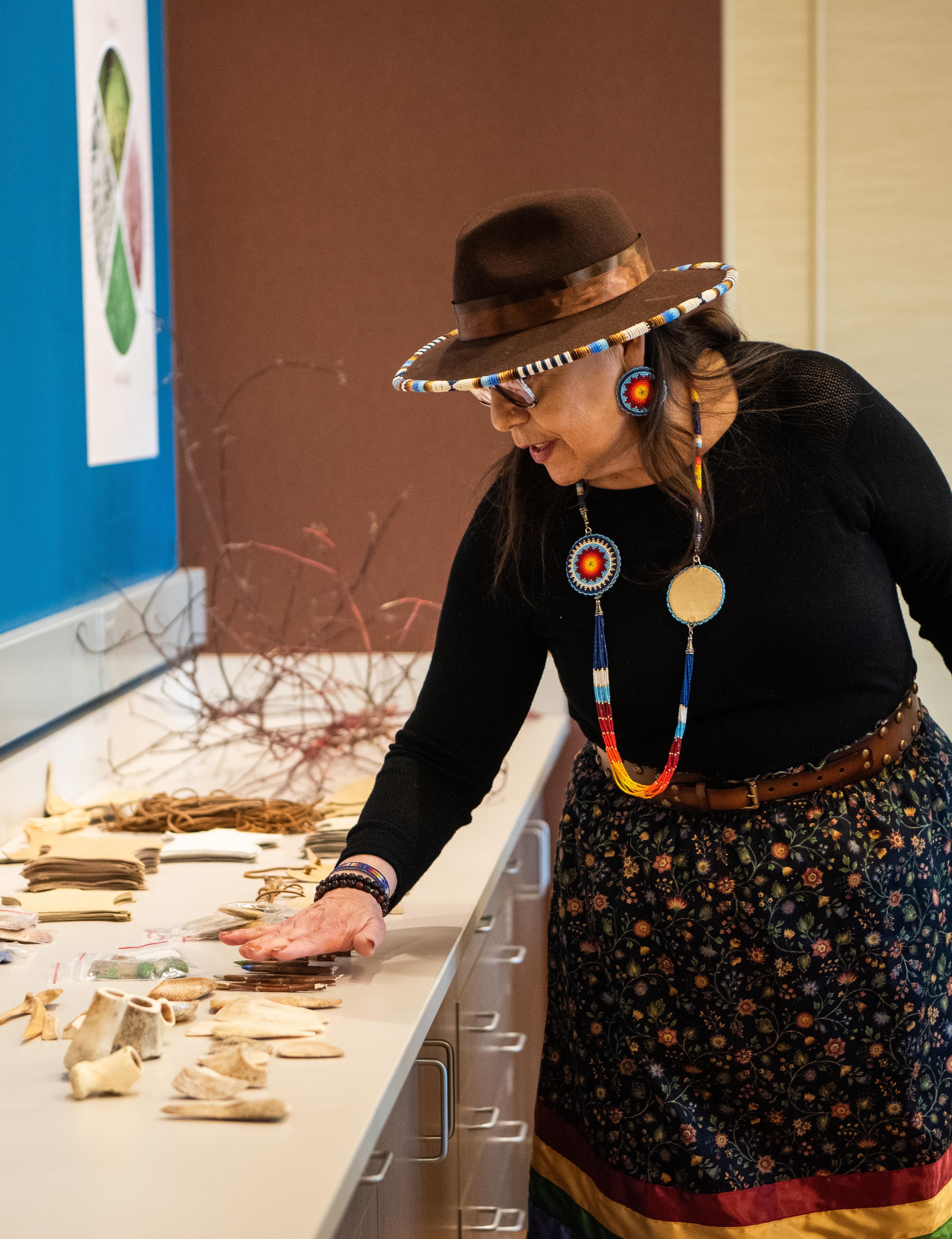
Collaborative by design, the culture camp experience draws on the strengths of multiple SMSC departments: Cultural Resources, Natural Resources, and Education, with the Cultural Resources team typically hosting the programming at the tribe’s cultural center, Hoċokata Ṫi. This interdepartmental support provides a well-rounded approach to cultural education.
The Cultural Resources Department creates cultural education programming for tribal members, schools, and the public. It also manages the care and exhibition of historical items and houses the Dakota Iapi Ṫípi, a team dedicated
These camps provide an opportunity for the community’s youngest members to connect with each other on a deeper level while learning about their cultural heritage and history.
to growing the Dakota language. Director of Hoċokata Ṫi and SMSC member Andy Vig said sharing the “learnings from our community members and family members—that’s really powerful, and we’re seeing that here in this building.”
The Natural Resources Department oversees the SMSC’s environmental stewardship, regulating and protecting the SMSC lands and waterways, and conducting educational outreach on ecological practices. The Education Department supports academic success and overall well-being, offering tribal services from pre-kindergarten through postsecondary pursuits, including after-school programming and handson learning. This combined expertise makes the culture camps a rich,
multi-faceted experience, blending traditional teachings with practical, outdoor activities.
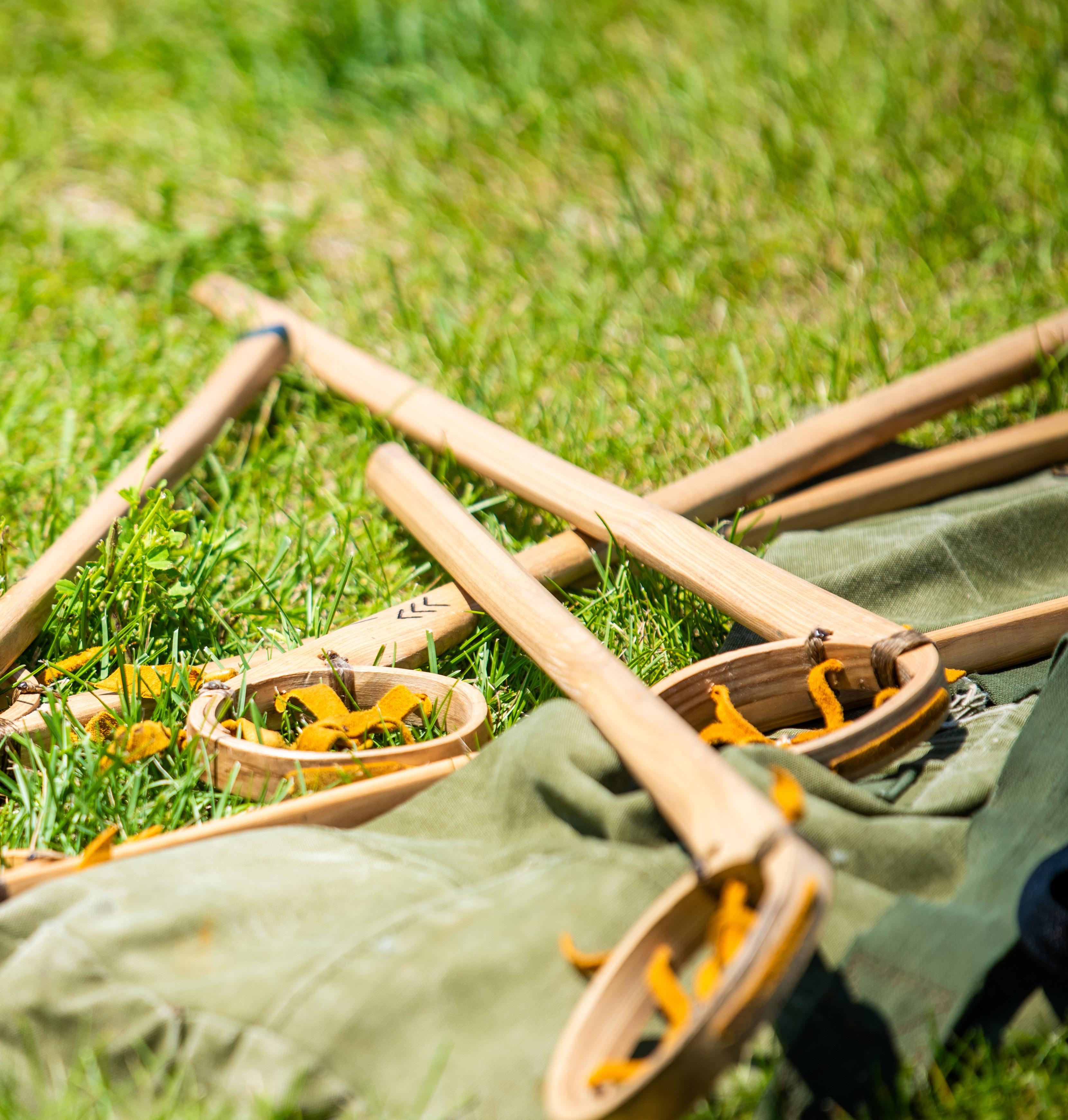
This program offers exciting activities to engage youth and their families. Waniyetu Culture Camp, a winter event, invites SMSC youth and their families to a day of indoor and outdoor activities, including practicing traditional Dakota lifeways, learning through cultural teachings, and playing games. Among many other activities, SMSC youth have participated in a recycled bottle cap earth collage art project led by the SMSC Collections team, a storm drain design project focused on water flow and environmental awareness, making maple candies in the kitchen, outdoor traditional games including sliding stick games, and learning to identify
animal tracks in the snow. Participants also receive themed apparel like sweatshirts, winter hats, and gloves, underlining the shared connection of the experience.
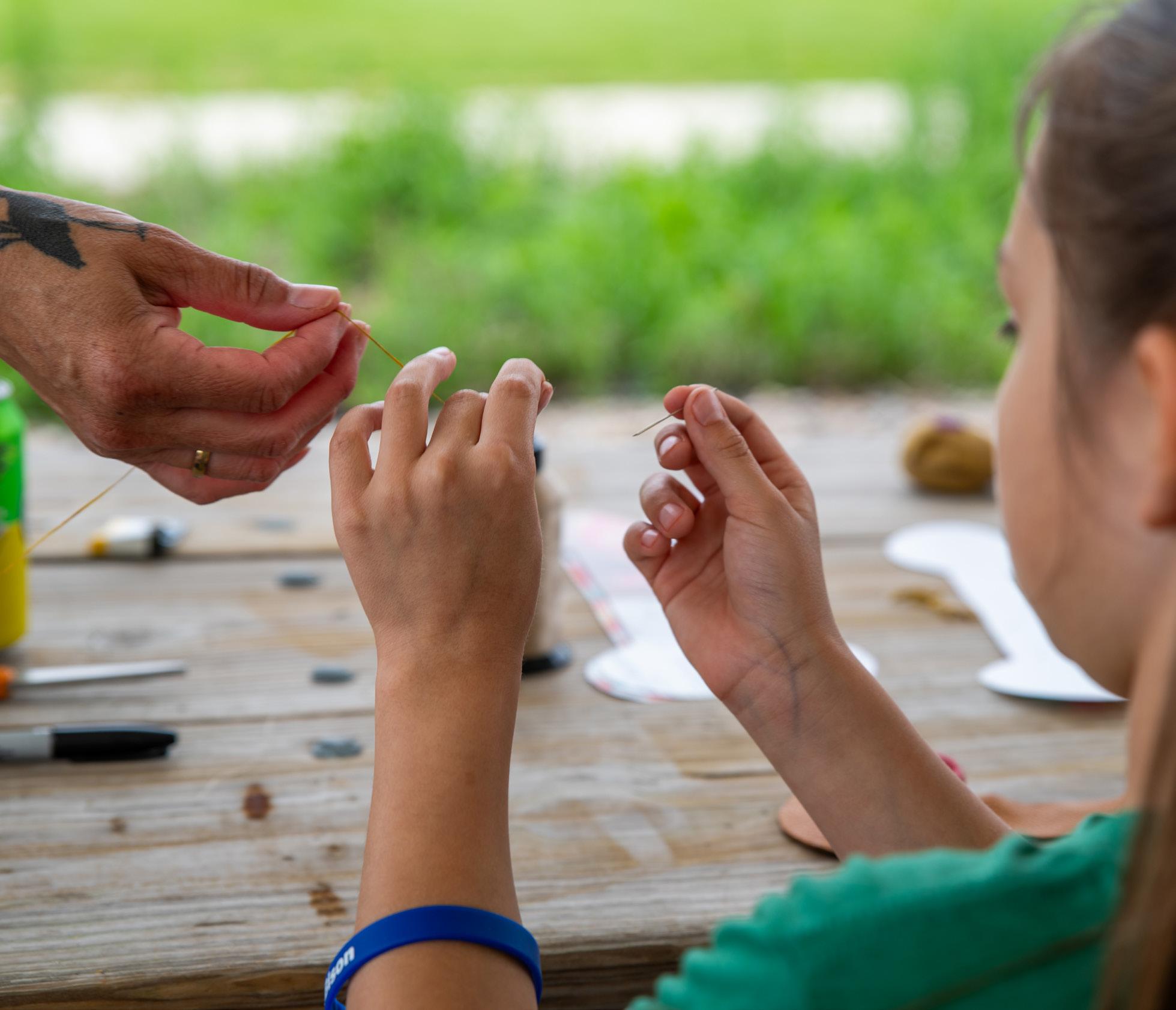
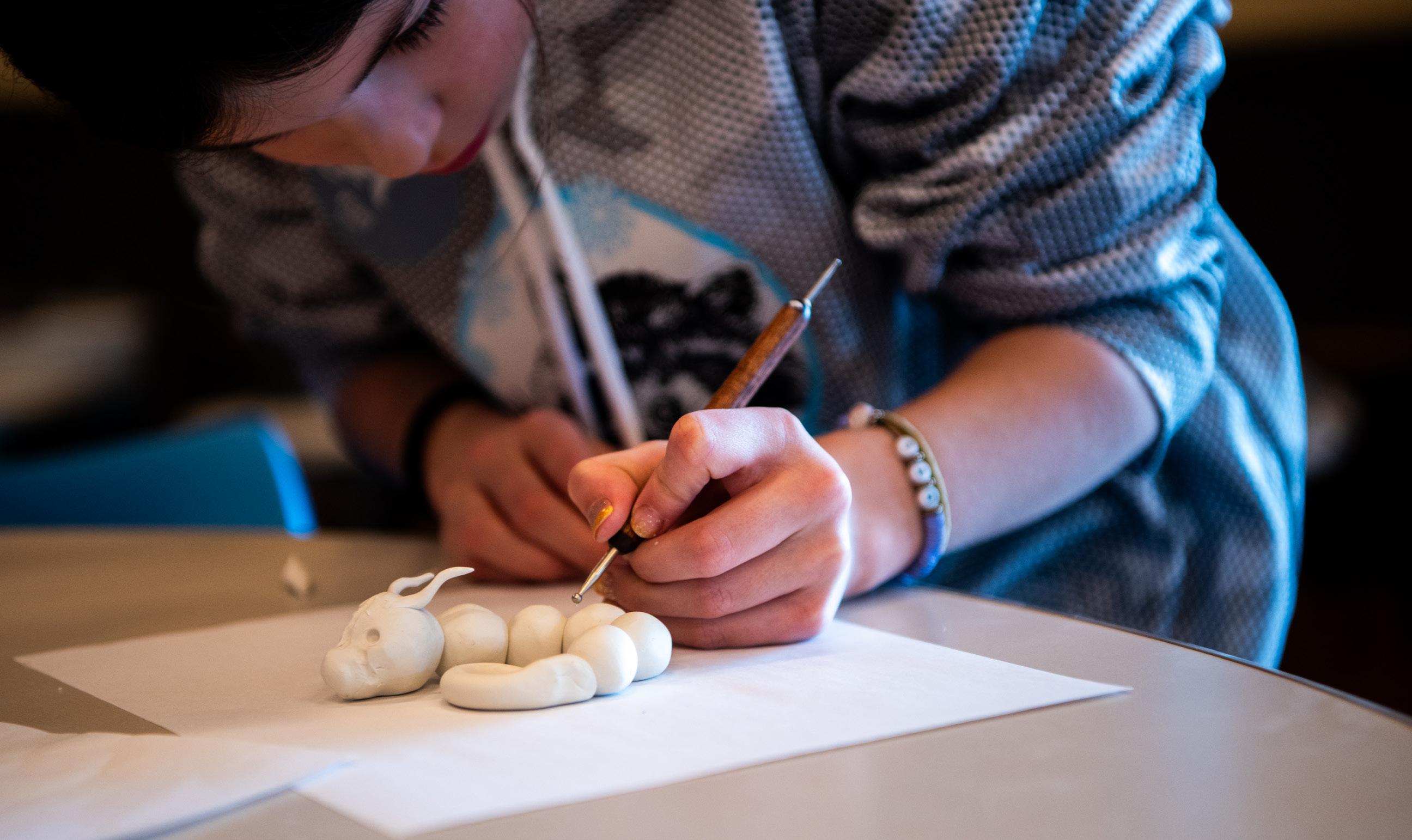
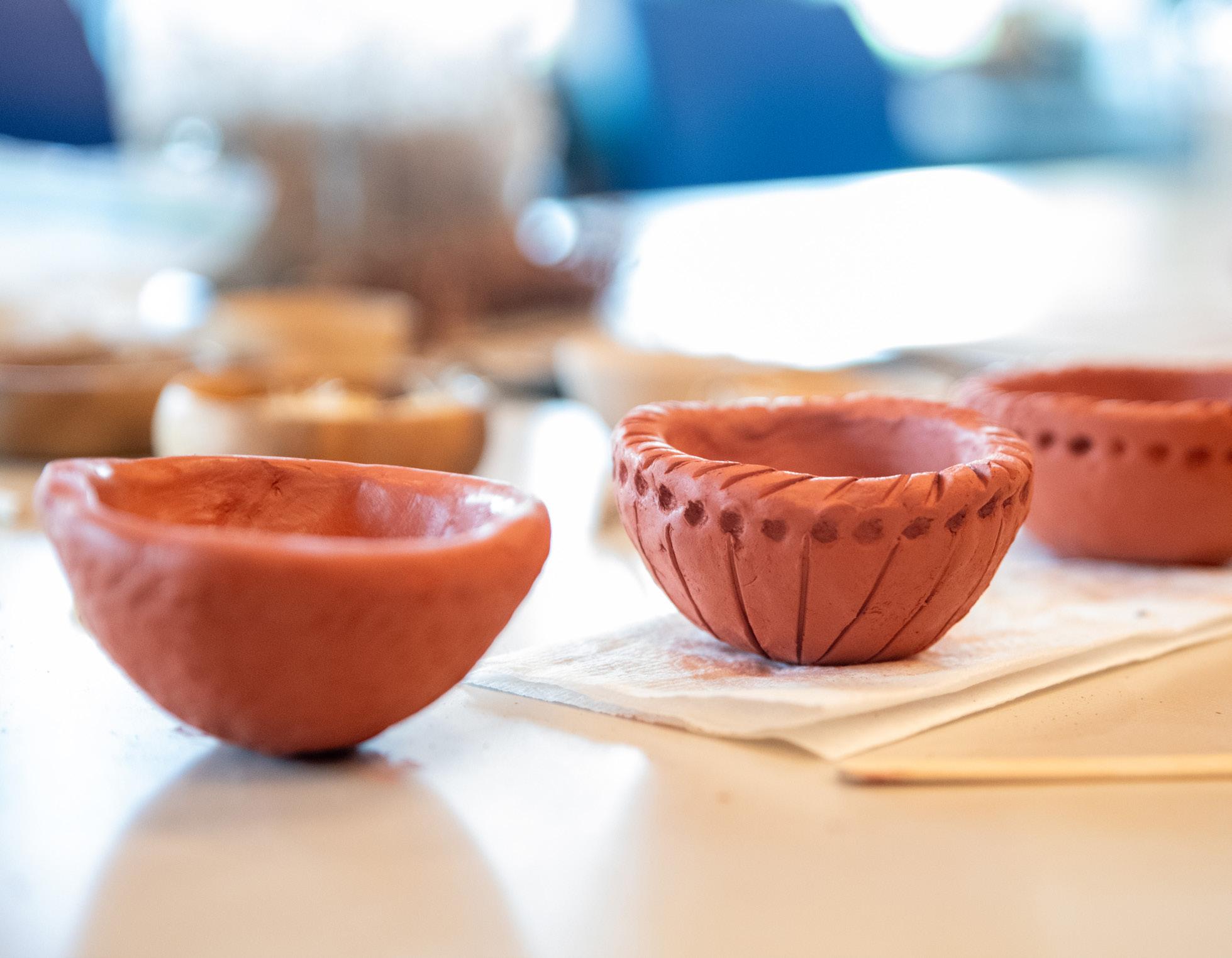
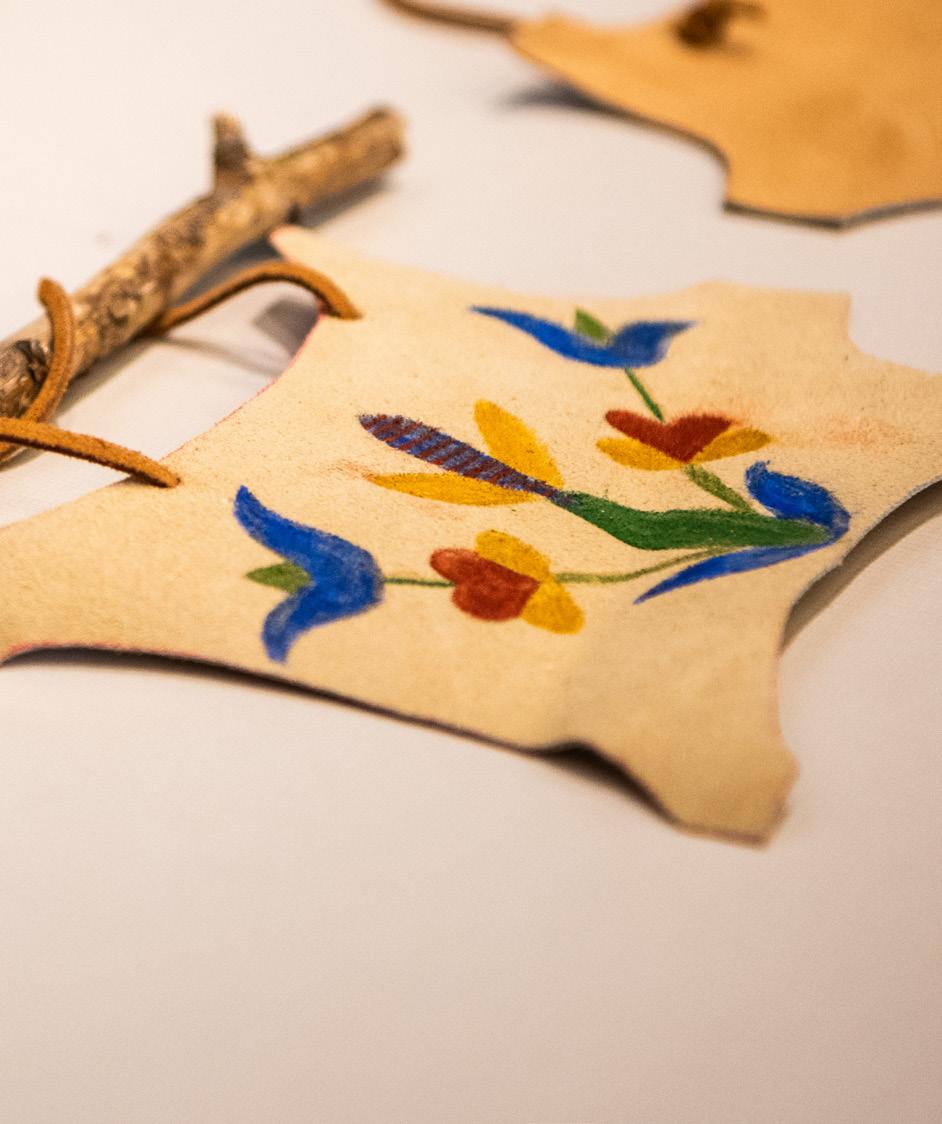
Similarly, the Mdoketu Culture Camp is an annual summer tradition at Hoċokata Ṫi. It typically consists of culture-based activities, food, games, and outdoor summer fun—like traditional Dakota art projects and cooking classes, visits to Wozupi Tribal Gardens (the SMSC’s own organic farm), Dakota language learning in the on-site bark lodge, lacrosse, archery, and canoeing, among other things. By taking part in these hands-on activities and hearing from elders, participants get to see how these traditions were part of everyday life for their ancestors—and why they still matter today.
These camps provide an opportunity for the community’s youngest members to connect with each other on a deeper level while learning about their cultural heritage and history. The experiences are carefully structured with daily check-in and breakfast, followed by activities throughout the day. For younger participants, particularly those six years old and younger, adult accompaniment is required, encouraging family involvement in the cultural learning process.
One focus of the culture camps is the revitalization of the Dakota language. The Dakota Iapi Ṫípi team at Hoċokata Ṫi is dedicated to growing the Dakota language at the SMSC and beyond—a critical effort given the historical attempts to suppress Indigenous languages. According to Dakhóta Iápi Okhódakičhiye (DIO), a nonprofit organization of dedicated Dakota community members, language learners, and speakers: “There is not an accurate census of fluent speakers available for all Dakota communities, but the majority of fluent speakers are elderly, and there are few if any young fluent speakers today. Research shows that every decade the fluent speaking elder population is cut in half.” The SMSC hosted the Voices of Our Ancestors program in 2017, which immersed students from various tribes in the Dakota language for two years, bringing much-needed knowledge back to the Dakota community.
Today, the Dakota Iapi Ṫípi team offers weekly language classes for all levels and seasonal family nights for beginners. Vig said, “We took a look at how many of our members have high-level language skills, and there are a lot! We try our best to bring us all together and pass the language on to our youth.” The group prepares teams for competitions and provides translation services. It also integrates language learning into the youth culture camps as well as within SMSC’s educational and child care programs, with signs bearing Dakota
words throughout its classrooms. The culture camps provide another setting where youth can actively engage with the Dakota language through practice, songs, and culture-based activities like building drums and playing traditional games.
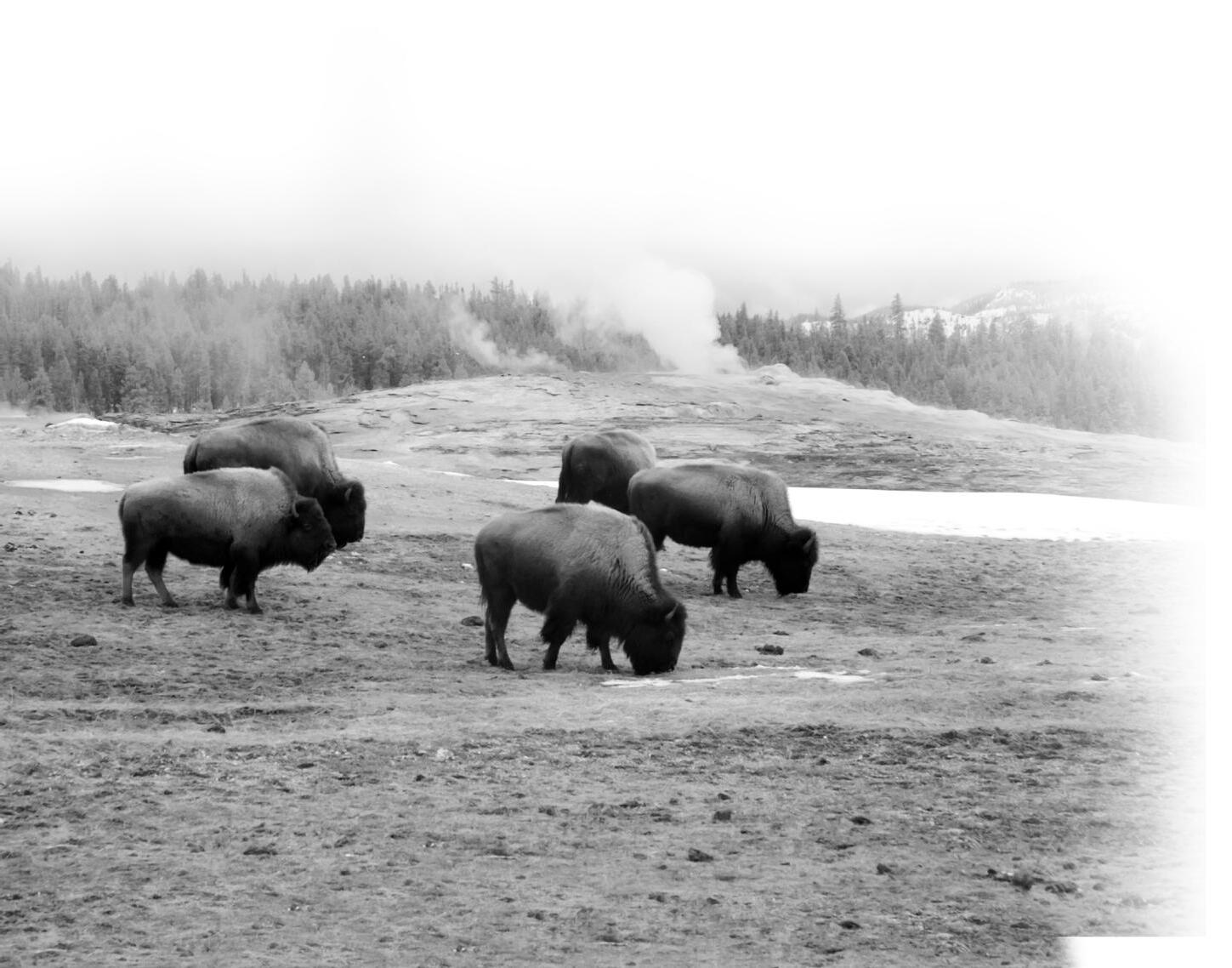
In addition to language and traditional skills, the culture camps strengthen the youth’s understanding of their spiritual and historical connections. An important relationship exists between the Dakota people and bison, a connection rooted in the Dakota creation story. The reintroduction of bison (an important species for healthy prairies) to the SMSC’s land improves the environment while revitalizing the culture, with opportunities for the community to learn about bison teachings, elder wisdom, and the traditional uses of the animal. This initiative helps restore the knowledge lost due to historical injustices like forced assimilation and land dispossession. The culture camps, by connecting youth to the land and its history, help to reclaim and reinforce their cultural ties.
The SMSC’s culture camp programming helps maintain and teach the community’s heritage to prevent any further loss for future generations. They provide a nurturing environment where young people can explore their identity, learn traditional skills, embrace their language, and connect with the values that have guided the Dakota people for thousands of years. Through these immersive youth experiences, the SMSC is teaching history and shaping the future, so Dakota culture continues to exist and grow for the next seven generations and beyond. The consistent participation and success of these camps strengthens the cultural fabric of the Shakopee Mdewakanton Sioux Community. W
The reintroduction of bison (an important species for healthy prairies) to the SMSC’s land improves the environment while revitalizing the culture, with opportunities for the community to learn about bison teachings, elder wisdom, and the traditional uses of the animal.
An Old Kid at Heart
Stories from Elder Gail Campbell
INTERVIEW BY TRICIA VELURE
PHOTOS BY JAKE MILLER
Elder Gail Campbell grew up on the Lower Sioux Indian Reservation during the Great Depression and World War II, watching and learning from her Dakota grandparents. From a young age, she knew prejudice and adversity, but she also developed a keen sense of strength and curiosity that have carried through her entire life. Campbell’s happy, insightful, and exuberant nature is contagious!
always humorous and laughing. Grandma was very strict, teaching me lessons on what to do and what not to do. She read her Bible every day.
Where did you attend school?
The other kids I knew from Lower Sioux went to boarding school, but Grandma didn’t want me going to Pipestone or Flandreau Indian School. Only one other boy and I went to public school in Morton. There was a lot of name-calling and prejudice, but I never told Grandma about it. Over time, I started making friends with some of the girls, and I didn’t let the intimidation bother me too much. There were also teachers who were very helpful to me, especially the home economics teacher. She always pointed out what I was doing to the other students, like I was the example to follow. That’s when I started to think, whatever I do in life, I want to be good at it. I won’t be mediocre or do things halfway. With that attitude, I became an acrobat, and I traveled with the basketball team and performed at halftime. I started to be accepted. Grandma was right to send me out into the world, do things that everyone else did, and be strong about it.
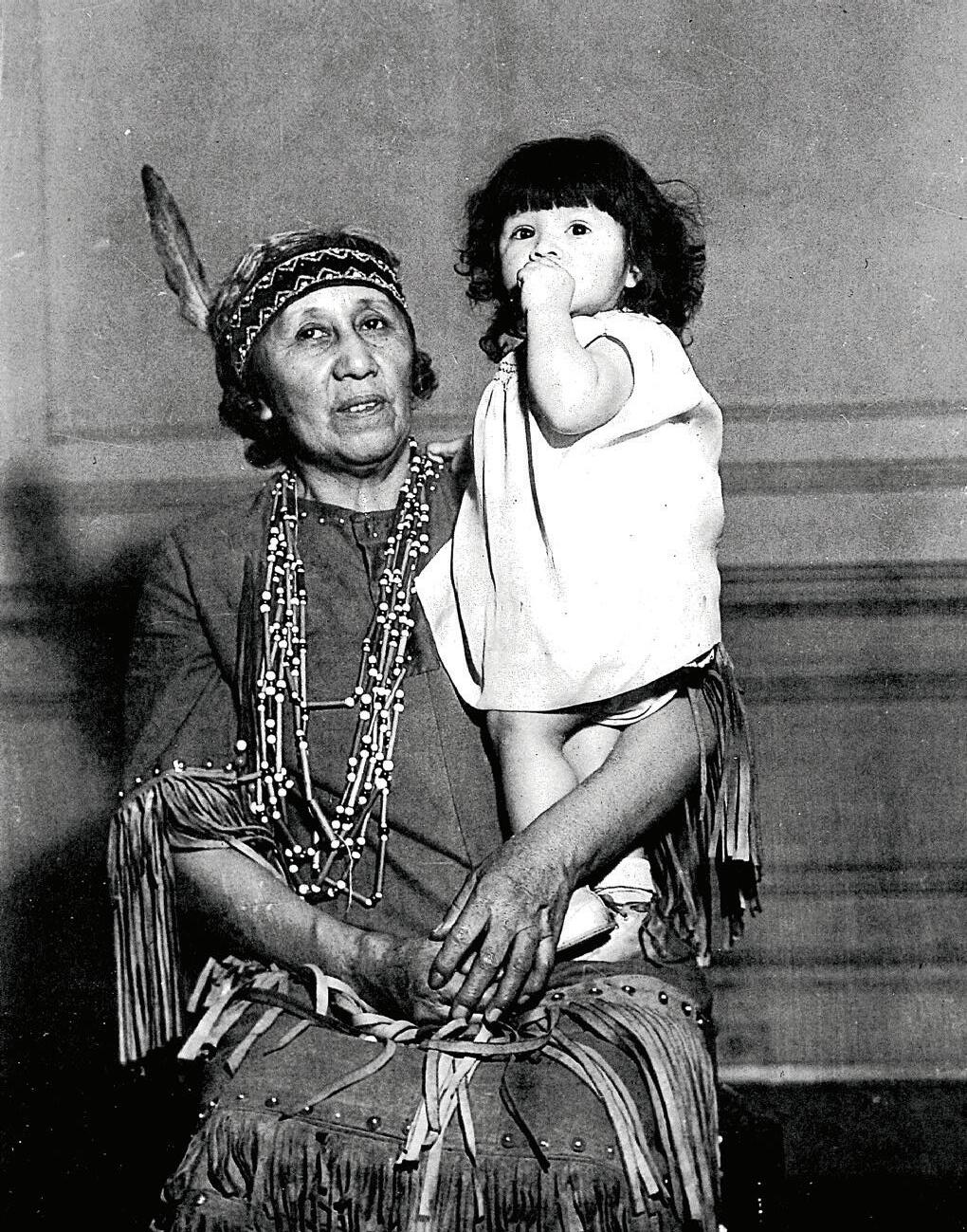
Young Gail Campbell with her grandmother, Elizabeth
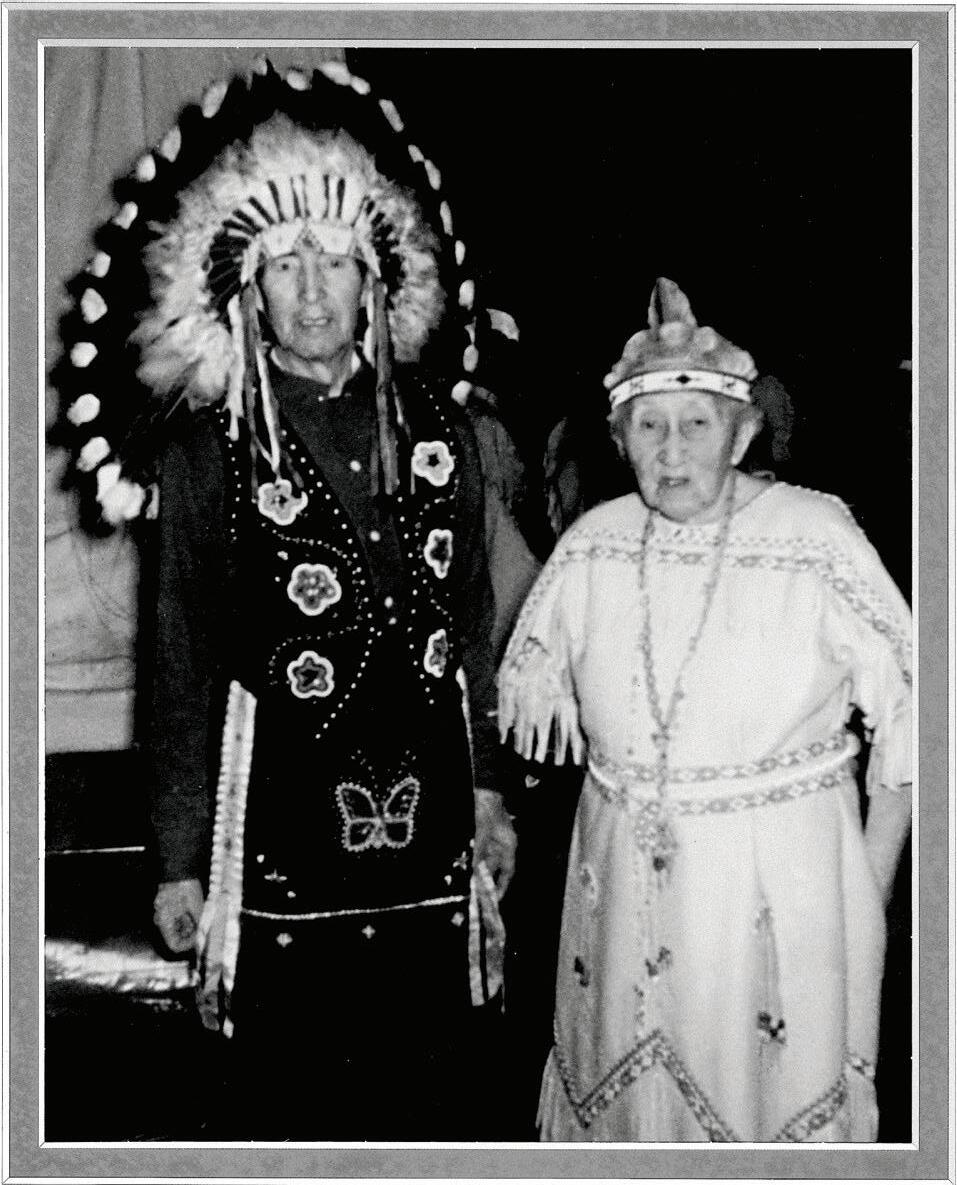
Elizabeth and Harry Lawrence –Gail Campbell’s maternal grandparents
Was college an option for you after high school?
I wanted to become a medical technician, but I didn’t have the grades or resources to go to college. Not very many women went to college in those days, so it wasn’t unusual that I got married and started my family instead which took me in a different direction. I eventually became a working mom.
What values of your grandparents did you carry with you into adulthood?
My grandparents were very influential in my life. Grandpa taught me to be resourceful. He was always improvising. During World War II, we couldn’t get tires for cars, so he cut a big tire and made it into a smaller one. The guys at the service station were amazed at what he’d done. In those days, we made do and found a way to deal with whatever challenge was put in front of us.
Grandma wanted me to be curious and confident, but a little bit cautious. She raised me to be aware of consequences. She knew I would make mistakes, but she had faith that I’d eventually get back on track and I did. She also inspired me to be strong and never give up. Don’t wither just because something bad happens or someone upsets you. To this day, that’s how I try to live. I can empathize and talk with someone who is having a bad day, but it doesn’t need to ruin mine.
“Don’t wither just because something bad happens.”
GAIL CAMPBELL
Tell me about your career.
I worked at several different jobs, probably because I was always curious to learn new things and get good at them. Average wasn’t good enough. After I was married, I worked as a proofreader for the Farwell, Ozmun, Kirk & Company hardware catalog in Saint Paul. Because I loved the medical field, I also worked at nursing homes throughout my life.
When I moved to California in the mid-1960s, Grainger hired me to input orders at an IBM computer, which only the older people reading this will remember. I was promoted to the credit department and also took calls from salespeople, which required me to learn about everything from plumbing supplies to fan components, because Grainger was an industrial supply company. I even went to school to learn how to put a motor together. Another job I tried might sound silly: I worked as a Hollywood extra. You wouldn’t recognize me from anything, but I would stand in a crowd or sit in a jury box. It was fun, and I met many interesting people.
Five Favorite Facts about Gail
1
An avid golfer, Campbell has golfed with LPGA greats including Juli Inkster and Nancy Lopez as recently as 2023.
“
A perfect day for me would be a round of golf followed by a luau in Hawaii.”
2
She loves to dance and sing karaoke. I have a low voice, so I usually sing a song by Vince Gill, George Strait, or Merle Haggard.”
“ “
3
Her highest bowling score is 298. I was one strike away from a perfect game. I missed two pins on the final ball.”
Gail Campbell with pro golfer Nancy Lopez
4
Her favorite wintertime activity is snowmobiling.
“
I’m still a kid at heart. People can snowmobile at any age!”
5
“ Before bedtime, Campbell swears by playing at least three games of solitaire to relax.
This is solitaire with cards, not with my phone!”
If
you want to learn something, try it!
that you set your mind to doing, you can do it.
GAIL CAMPBELL D o n ’ t g i v e u p
When did you move to the Shakopee Mdewakanton Sioux Community?
I moved from California to the Community in 1990. My good friend since childhood, Sally Milroy, encouraged me that it was time to come home. Her mom and my grandmother had been good friends down at Lower Sioux. When I went to play with Sally, I just had to be home by sundown. All these years later, Sally and I could be neighbors and friends again here at Shakopee.
You seem to be a very happy person. What brings you happiness?
Something that has always made me happy is animals. My grandfather was very caring toward animals, and he taught me how to be gentle with them. We had a lot of cats when I was a girl; they were the closest thing I had to dolls. I played with them and dressed them up in doll dresses. To this day, I still love cats. I’ve probably had 40 or 50 cats in my lifetime, and right now, I have two rescues: Benny and Marie. My cats are well taken care of, maybe even better than I am.
I also like being active. When I was younger, I got to be a pretty good bowler, but I broke my kneecap and never went back to it. I didn’t want to be mediocre. After I returned to Minnesota, I decided to try golfing. At first, I was terrible. I thought, “Nope, I can’t do it.” But then I set my mind to getting good at it, and I did! I still love to golf.
In general, I just like to have fun. I throw a summer barbecue and a Halloween party. I have bunny ears for everyone who joins me on Easter. I love to decorate my house for the holidays. I always want to be a fun person.
What is best about being 94 years old?
I’m still healthy, living on my own, and going places. I’m not on any medication. I’m not losing my mind. I know I can look up any information I want on my phone, but I don’t want to rely on Google for everything. I want to keep my brain healthy and remember the details on my own. About 20 minutes later, I usually recall whatever name or place I’ve been trying to remember.
What is most difficult about being 94 years old?
I don’t feel that old, except for my aching knees! One challenge that people my age have is meeting all the 2026 requirements for identification. Do you know how difficult it is to get an ID if you were born at home in 1931? Birth certificates weren’t standard like they are now, especially for Native Americans. People try to be helpful, but there are a lot of hoops to jump through.
What is your advice to younger people?
If you want to learn something, try it! Anything that you set your mind to doing, you can do it. Don’t give up.
Also, listen to your elders, not your phones and the media. Communicate through conversations, not just through texts. When you’re having dinner with someone, talk with them. We need more real communication these days. Everything changes over time, but I remember years ago when people would just stop at your house and come in for coffee or tea. They didn’t have to call first. I liked that way, and sometimes I want today to be a little bit more like my day. But things are so different now, and I realize that it’s hard to be a young person today. W
T
IYATA: AT HOME IN THE TIPI
The Traditional Dwelling Remains a Living Symbol of Dakota Strength and Resilience
BY JESSE MENDEN
During exhibit tours at the Shakopee Mdewakanton Sioux Community’s cultural center, Hoċokata T ˙ i, one of the most common questions cultural interpreters receive is, “Do Dakota people still live in tipis?”
PHOTOS BY BLAKE ZIEMER
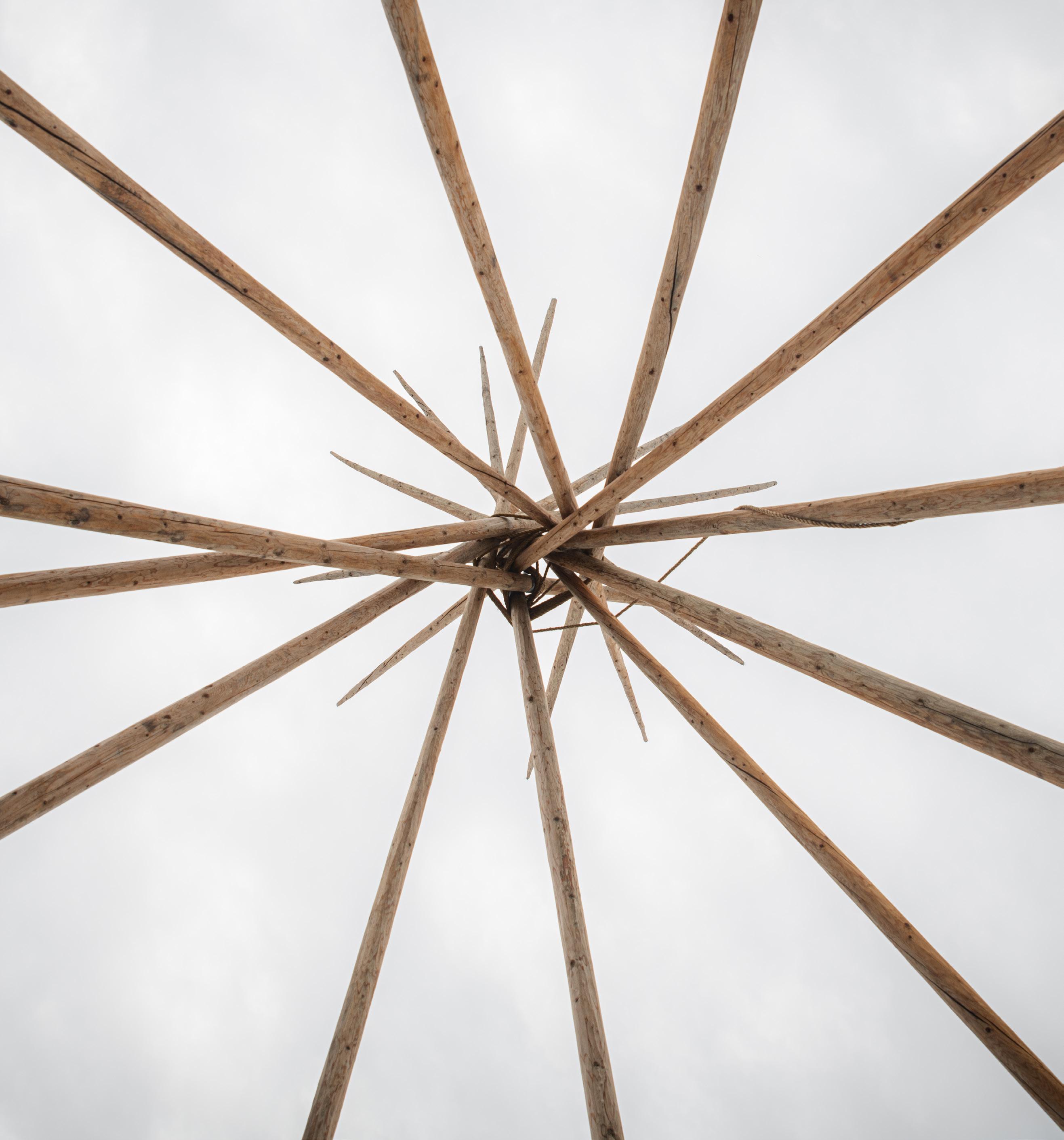
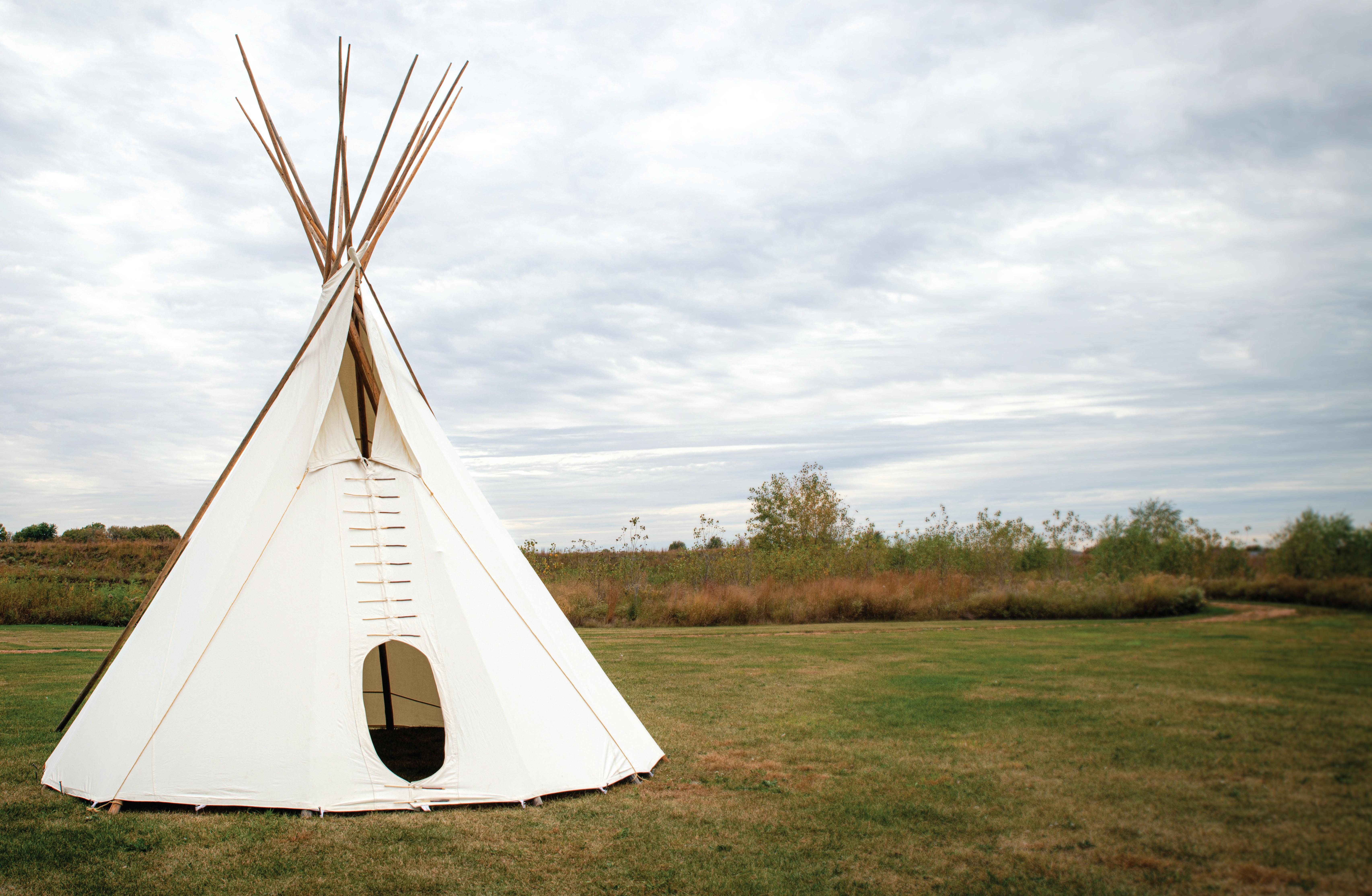
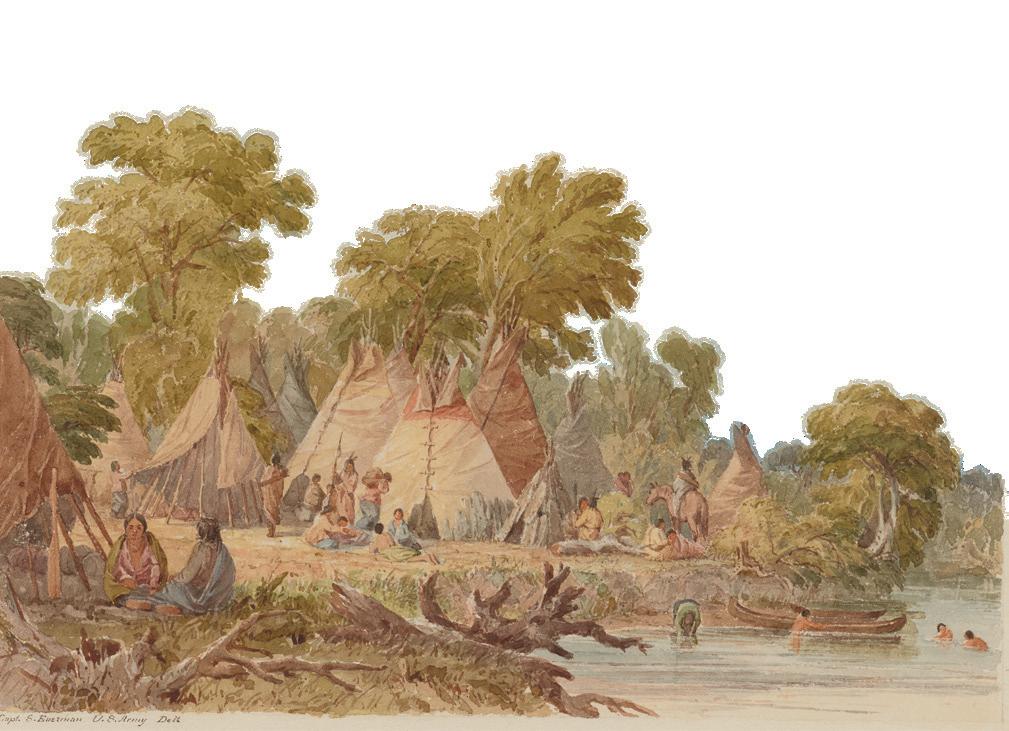
Translated to English, tipi means “dwelling,” so in a sense the answer is yes—Dakota people still live in dwellings of course, though they look quite different from those of the past. While Dakota people no longer live in the traditional tipi—tall wood poles covered in bison hides—the iconic cone-shaped structure has not been forgotten. In fact, it remains a key cultural symbol and an important part of Dakota identity today.
Materials
One of the most comprehensive books about the tipi is The Buffalo Hide Tipi of the Sioux by Larry Belitz. In it, Belitz describes tipi construction, materials, and traditions of the Northern Plains tribes, and explains how this vital part of Dakota, Lakota, and Nakota lifeways varies among the tribes of the Seven Council Fires.
The traditional mobile dwellings were designed to be easily set up and taken down, enabling groups to follow the seasonal migrations of the bison and other game, which provided the food, medicine, and materials needed to survive the harsh winters. These homes were also easier to heat compared to bark lodges, which were larger permanent dwellings the Dakota people lived in during the summer. While men focused on hunting, women held the knowledge and responsibility for the tipi—an essential role passed down through generations.
As Belitz describes, making a new tipi was far from simple; it required up to two years of advance planning so that enough materials could be collected and prepared throughout the seasons. Although canvas is used today as a covering because it is widely available, covers were historically made from bison hides.
Each tipi covering required 8–14 hides, with larger homes needing more as they expanded in size after the introduction of horses, which could pull significantly more weight than dogs. Each hide was prepared during an extensive process that included skinning the bison, stretching the hide, scraping off the wool, drying, and then rewetting so the hide was pliable and supple. The hides were sewn together by poking holes with a bone awl and stitching them with sinew from bison, deer, or elk.
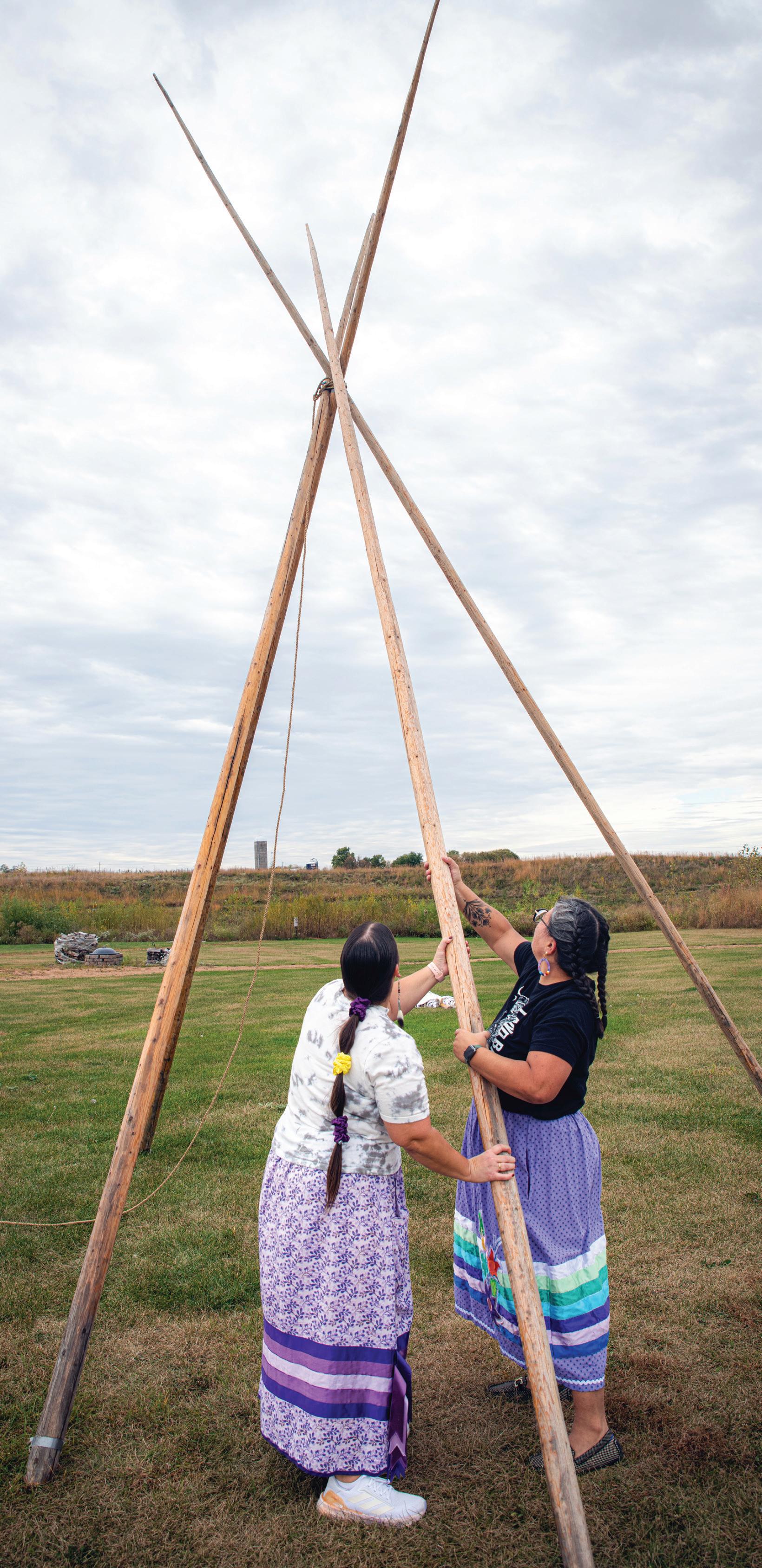
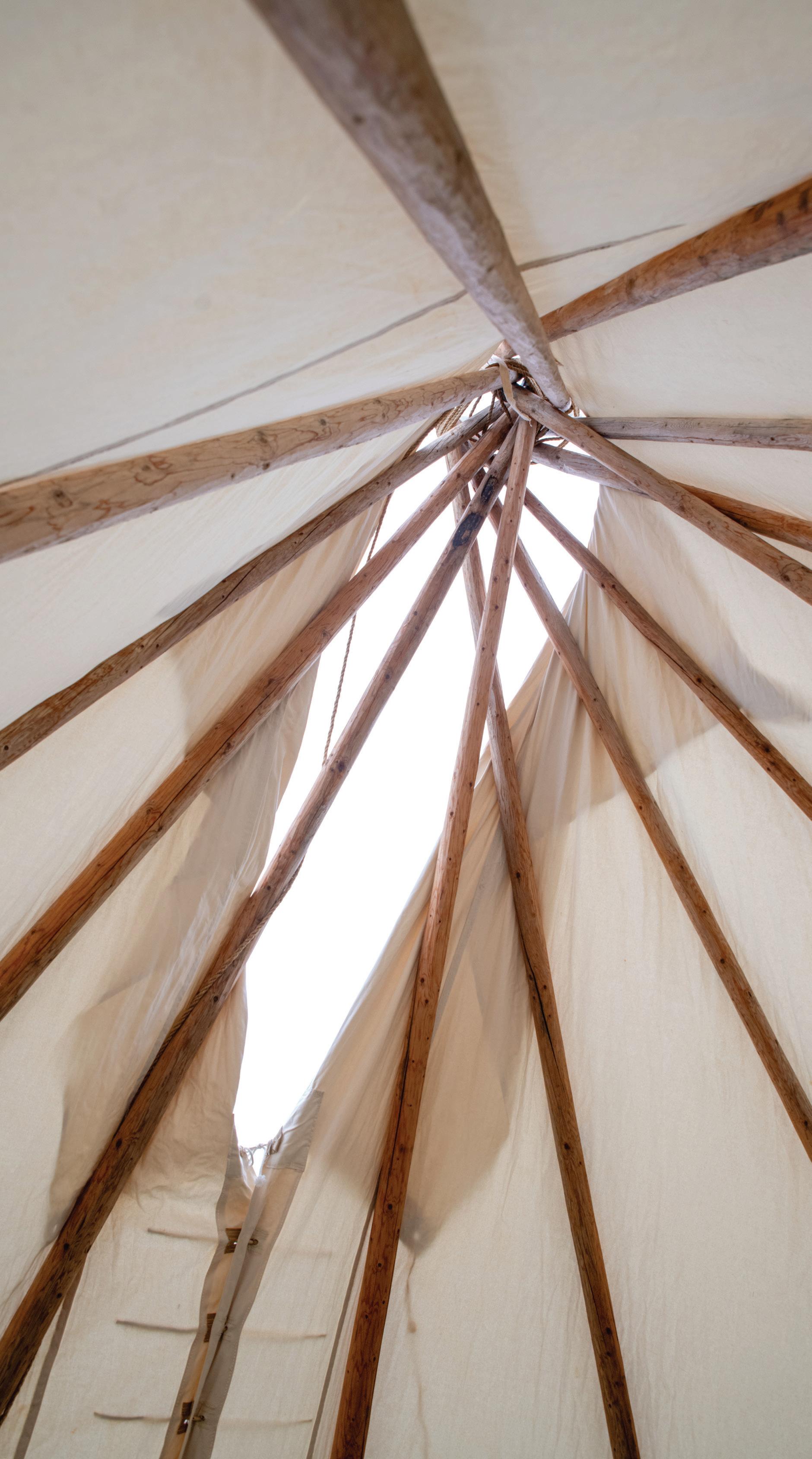
The towering poles of the tipi came from several types of pine, most commonly tamarack, lodgepole, or eastern red cedar. These trees were favored because they are thin, straight, and have few limbs to remove. Today, the lodgepole pine—often harvested from Montana and Wyoming—is the most used. A Dakota tipi typically uses 13 poles, with the length ranging between 12 to 27 feet tall, depending on the size of the tipi. Two additional poles are used to control the adjustable smoke flaps.
Survival
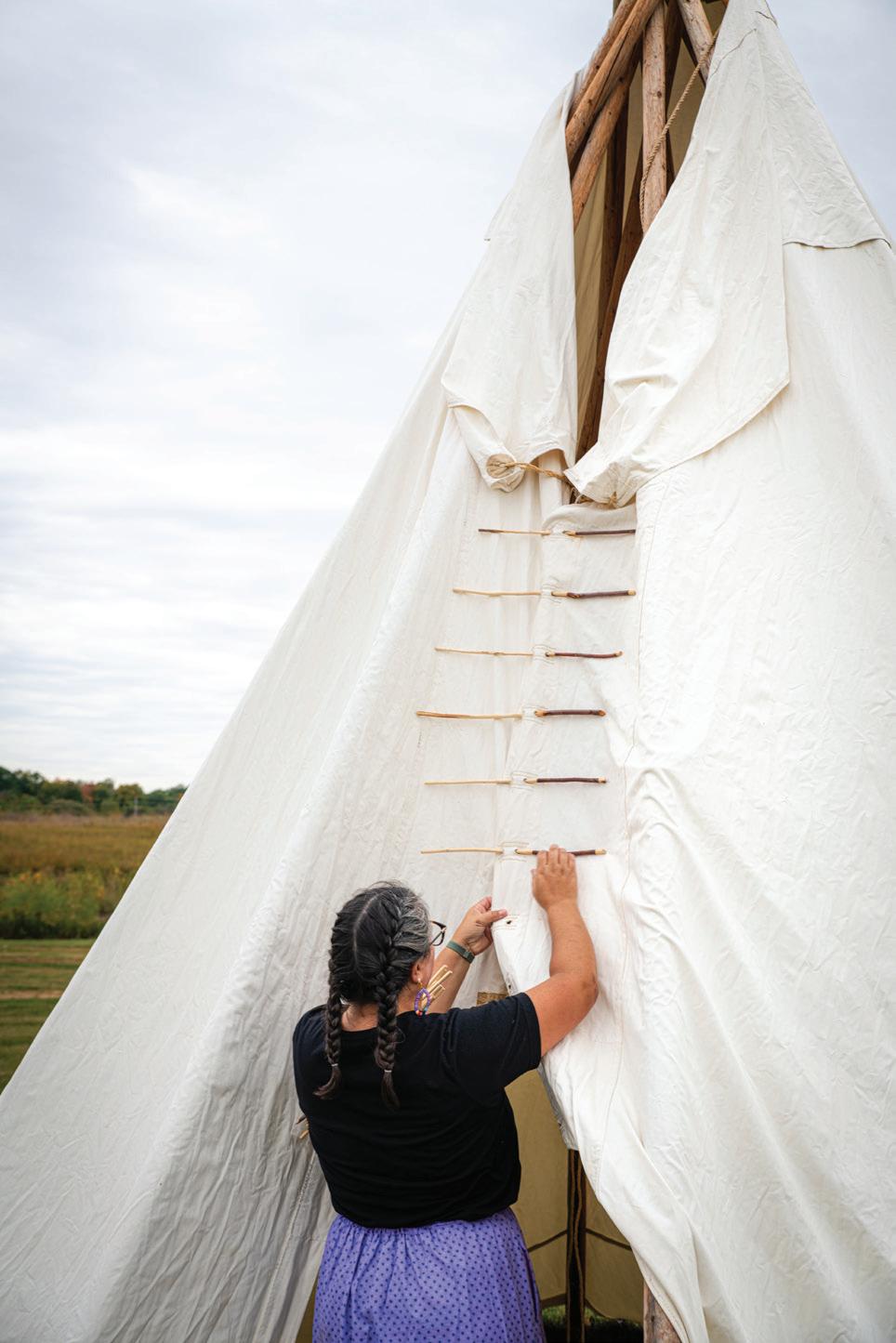
For some, it may seem almost unthinkable to survive in a tipi during the winter, but several methods were used— and still can be—to stay comfortable, beginning with the use of a fire to heat the space. Rocks placed around the pit absorb and radiate the heat for hours, extending the warmth long after the flames die down. But to allow for fire in the first place, the structure has a very important feature: adjustable smoke flaps at the top. This design allows the flaps to control the upward flow of the fire’s smoke. Poles on the outside of the tipi are used to open and adjust the flaps as needed.
Traditionally, bison hides were hung on the inside of the tipi, serving as a liner. These liners created an air channel that draws the fire’s smoke upward and out through the top of the tipi, functioning much like a soffit that guides airflow in the attic of modern homes.
Of course, the summer’s warmth can also present challenges. The same liners were used to block out the sun, as a tanned buffalo hide tipi cover can be translucent. Additionally, a gap was left between the ground and the tipi’s cover to allow a flow of air inside.
Etiquette
Dakota values of generosity, respect, and social order are reflected in the etiquette surrounding the tipi.
Historically, specific customs governed how people approached and entered a tipi. As a display of generosity, it was said that the door of a tribe’s leader should always remain open. In most other cases, however, guests had to be invited in. If a tipi’s door flap was closed, the smoke flap offered an indication of whether someone was home. When the smoke flap was open, it signaled that the tipi was occupied. When the occupants left, the flap was usually closed to protect the interior from weather.
When invited inside, guests entered and walked to the left—a custom that is still practiced today within the tipi structures at Hoċokata Ṫi. The interior of the tipi was also carefully organized. The father and his guests sat at the back of the dwelling. To his right was the women’s side, where the mother and daughters sat. To his left were the sons and grandparents. Beside the mother was the wood and water, which she used to manage the fire.
While this was the typical organization of the tipi for the Mdewakanton Dakota, it did vary by tribe and household, and was ultimately determined by the woman. Regardless of the specific arrangement, the structured space taught children their place within the family and the broader community.
A Symbol of Strength
For the Dakota people, the tipi remains a powerful symbol of strength and resilience—a connection to the past that is still prevalent today around the SMSC.
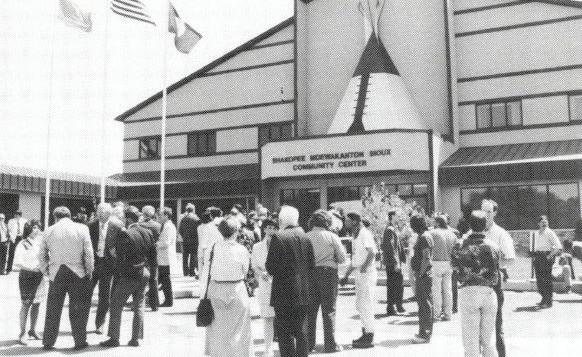
In June 1984, the SMSC opened its original cultural center, which featured a striking framework of eight concrete beams arranged in the shape of a tipi. Rising 90 feet into the air, it was dubbed “the world’s largest tipi” by then-SMSC Chairman Norman M. Crooks. While the building has since been remodeled and expanded, the iconic tipi structure remains.
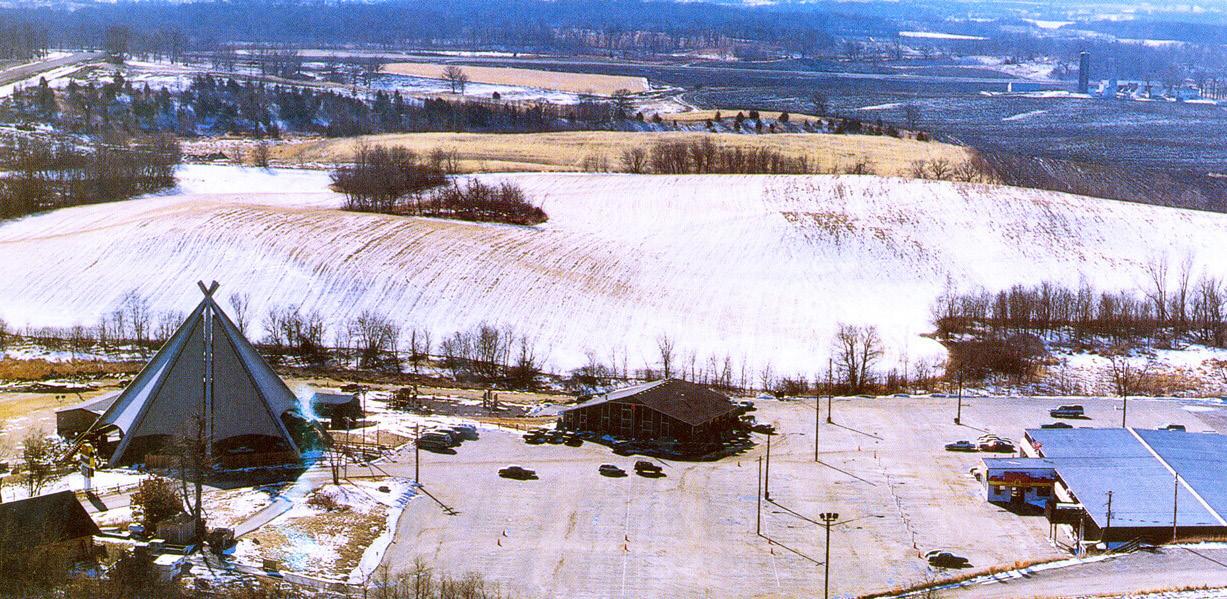
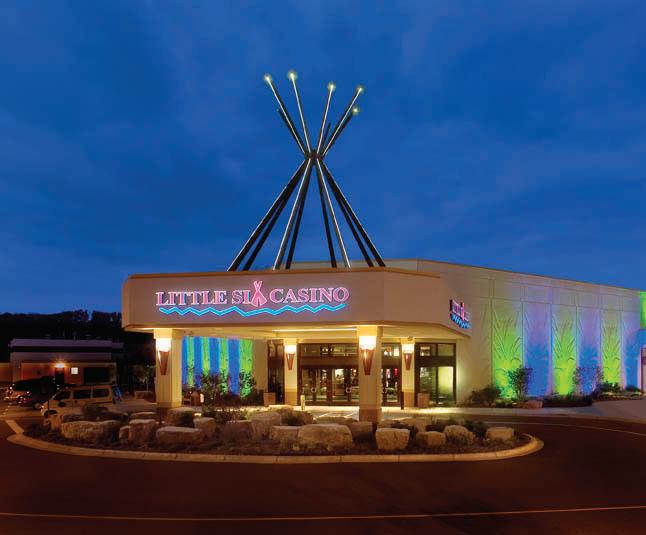
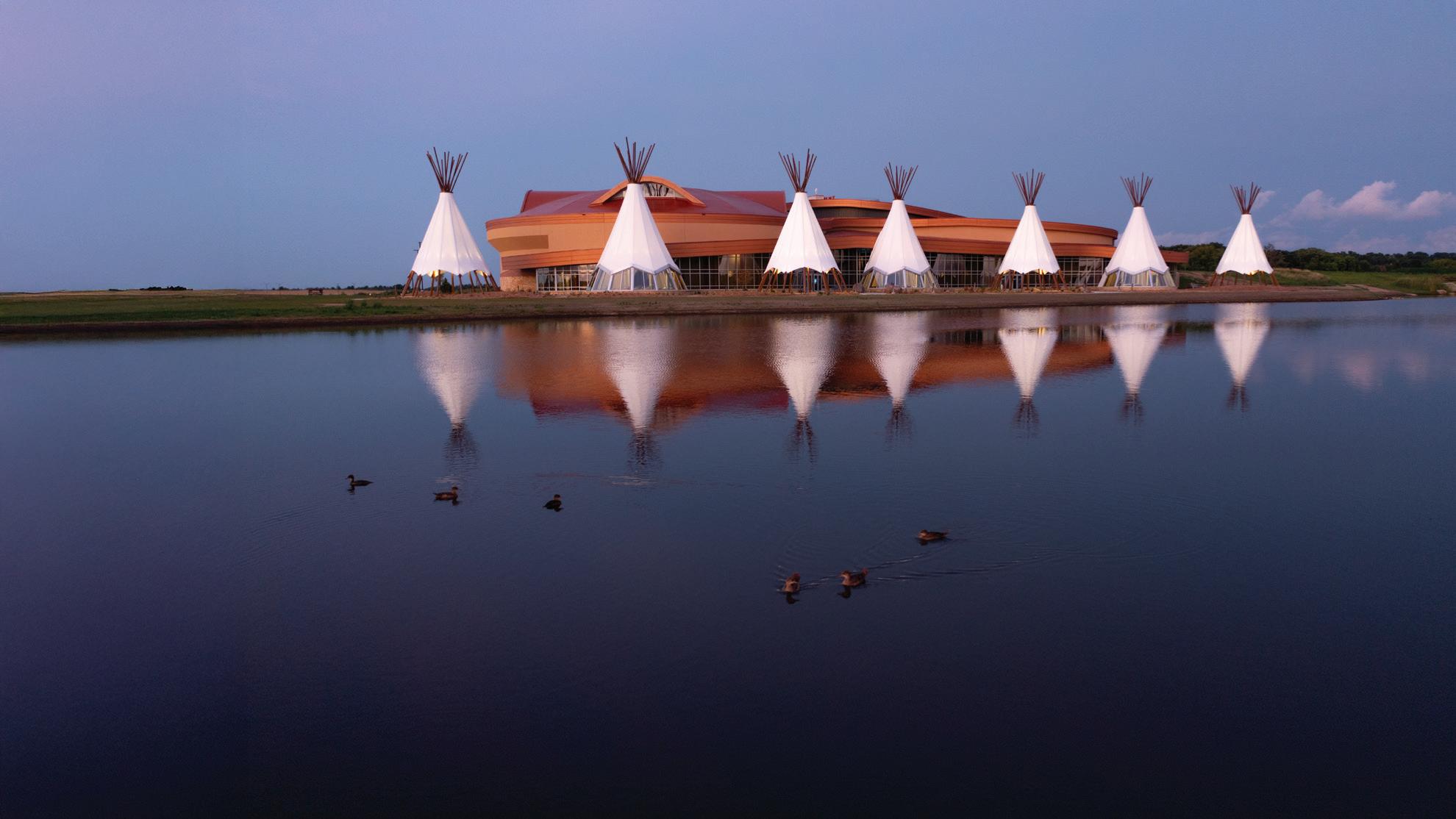
Several other buildings around the SMSC incorporate tipi-inspired designs, including beaming tipi-shaped lights at Mystic Lake Casino Hotel, above the Little Six Casino entrance, and the seven towering 40-foot tipis connected to Hoċokata Ṫi. A replica tipi also stands near the seventhhole green of The Meadows of Mystic Lake golf course.
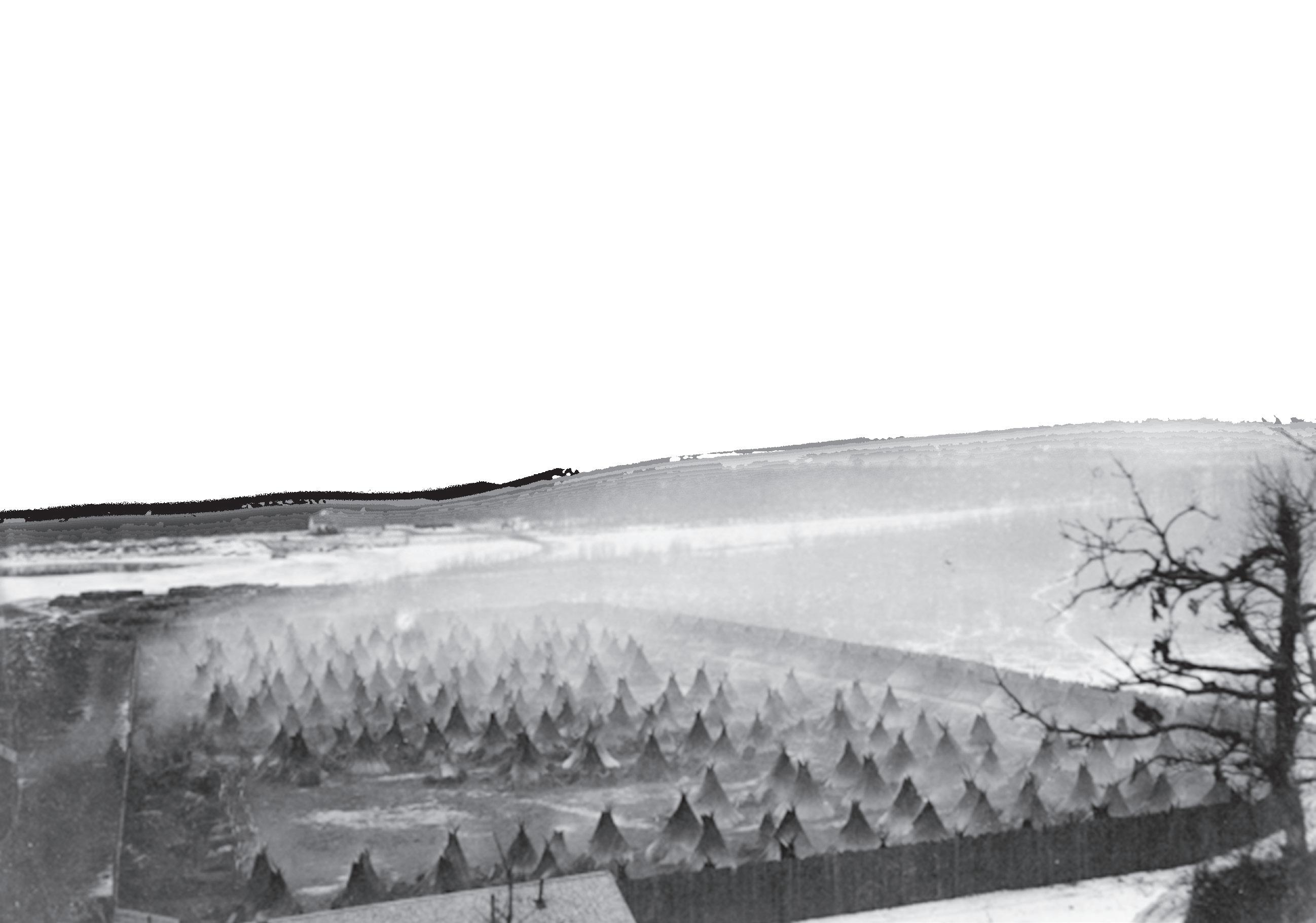
The tipi is proudly celebrated beyond the SMSC as well. Each August, the hills along the Little Big Horn River become the “teepee capital of the world” as nearly 1,500 of the dwellings are raised for the Crow Fair and Rodeo in Montana. Held for more than a century, the gathering is one of the largest Native American events in the United States, bringing together families, dancers, and riders from the Apsaalooke Nation and tribes across the country in a display of celebration and cultural pride.
Still Standing
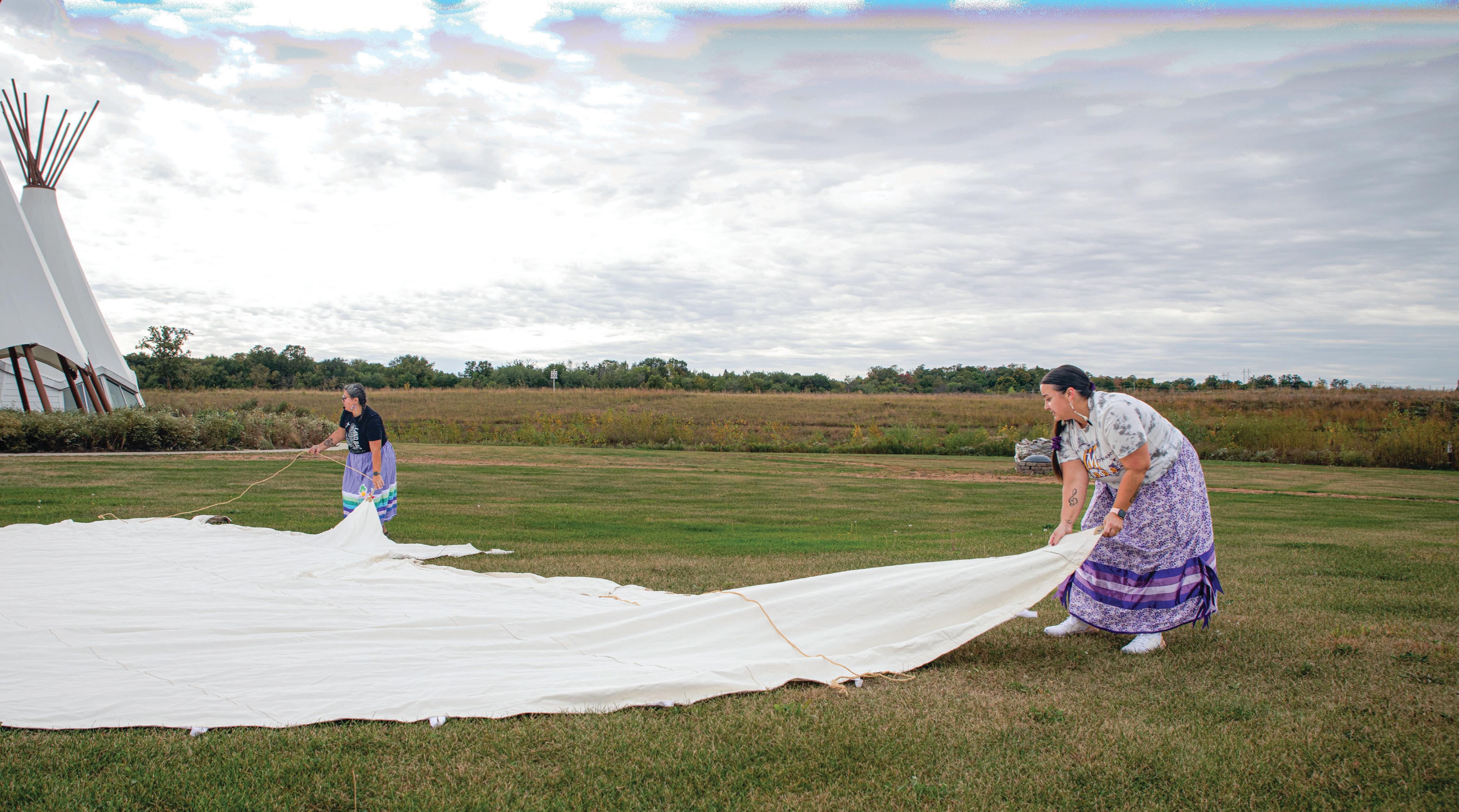
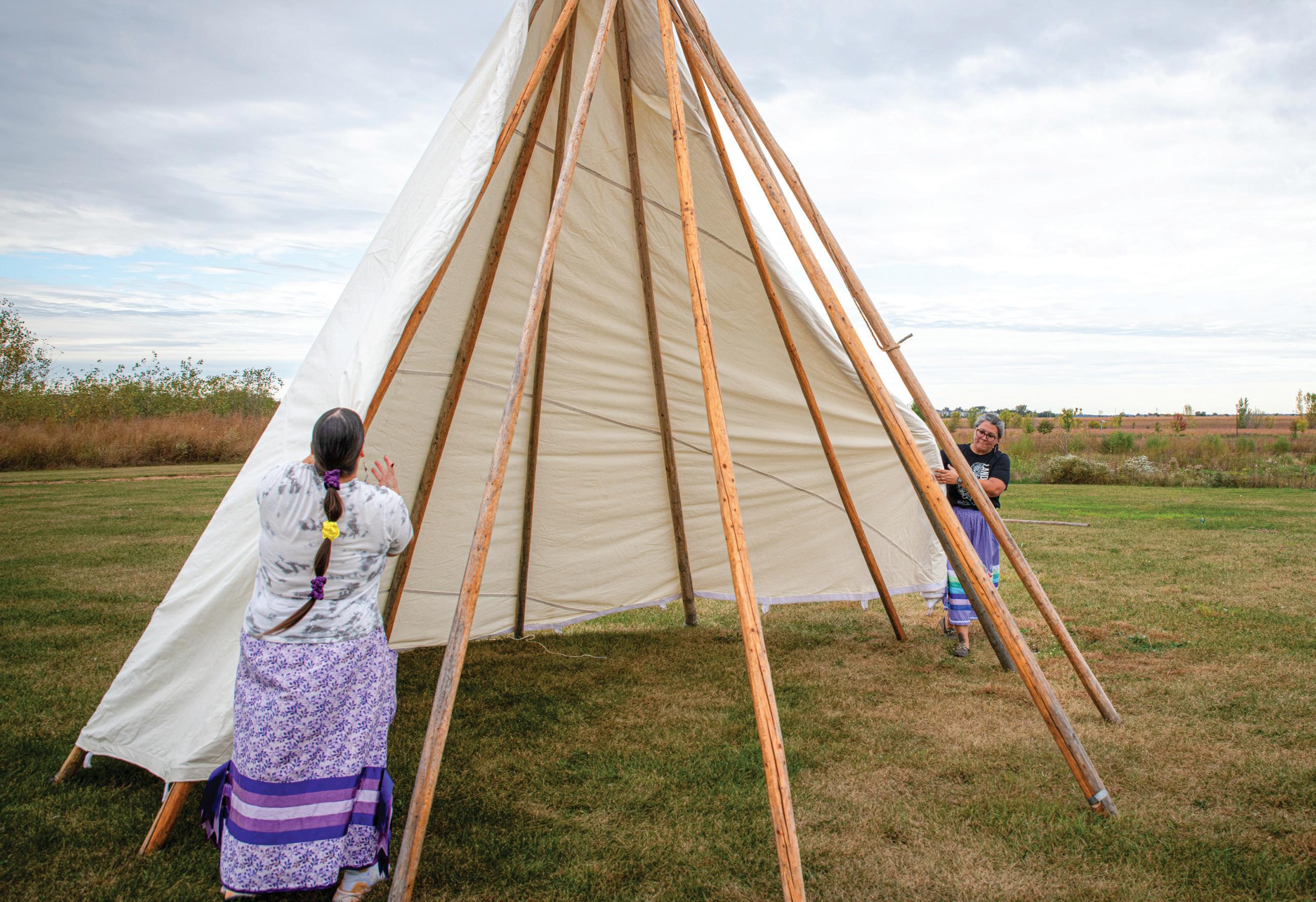
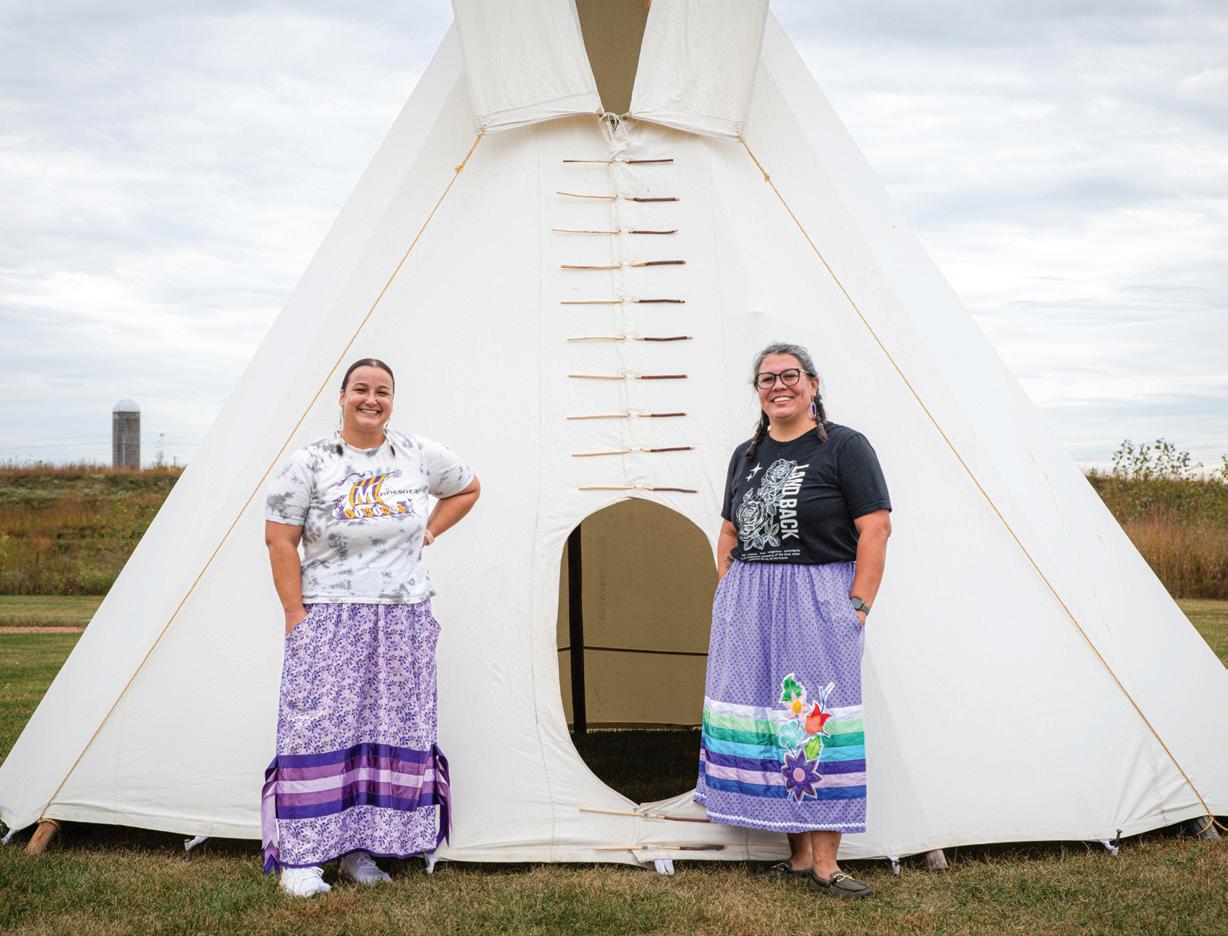
On a cool, cloudy day in late September, a tipi was being set up on the grounds of Hoċokata Ṫi, as is often done at the SMSC for special events such as the annual wacipi, youth camps, and celebrations. To a casual observer, the process may seem routine—but as a gift from the earth, each step carries centuries of intention and meaning, as was on display as two tribal members set up the structure over the course of an hour and a half.
Once completed, the tipi stood quietly against the gray sky, its rising poles and smooth canvas giving it a calm but striking presence. While the materials and setting may have changed over time, the significance of the tipi has endured.
American anthropologist Stanley Campbell published a scientific paper about the tipi in 1915. Reflecting on his research, Campbell wrote, “It would be a thousand pities if this staunchest, handsomest, and most comfortable of tents should be lost to American civilization.”
Campbell would be comforted to know that the tipi—and the Dakota people—are still here. W
Watch the construction of a traditional tipi.
ROOTED tradition IN
Wozupi Tribal Gardens Nourishes Culture and Community
BY ERIN E. BELANGER
PHOTOS BY BLAKE ZIEMER
As the day breaks and the farm awakens, the air is filled with the earthy scent of damp soil and sun-warmed plants. There’s a familiar rhythm. The land hums—steady and filled with purpose.
Wozupi Tribal Gardens is where community comes together in service of culture and fortitude, serving Mother Earth (Ina Mak a) and members of the Shakopee Mdewakanton Sioux Community (SMSC).
Wozupi—meaning garden in the Dakota language, or a place where we go to plant—began in 2010 as a small, native orchard of edible plants. Seeds had been given to the community from Dream of Wild Health, a local nonprofit with a mission to restore health and well-being by recovering knowledge and access to healthy Indigenous foods, medicines, and lifeways. In the beginning, the orchard included juneberries, elderberries, wild plums, and hazelnuts. It quickly expanded to include apples and pears. And shortly after, there was a two-acre vegetable garden.
By the second year, the garden had expanded to five acres. Victoria Ranua, former SMSC land manager explained, “The beginning of Wozupi was a whirl of positive energy. Everyone was able to throw in their ideas and there was this excited urgency of ‘let’s get started now!’”
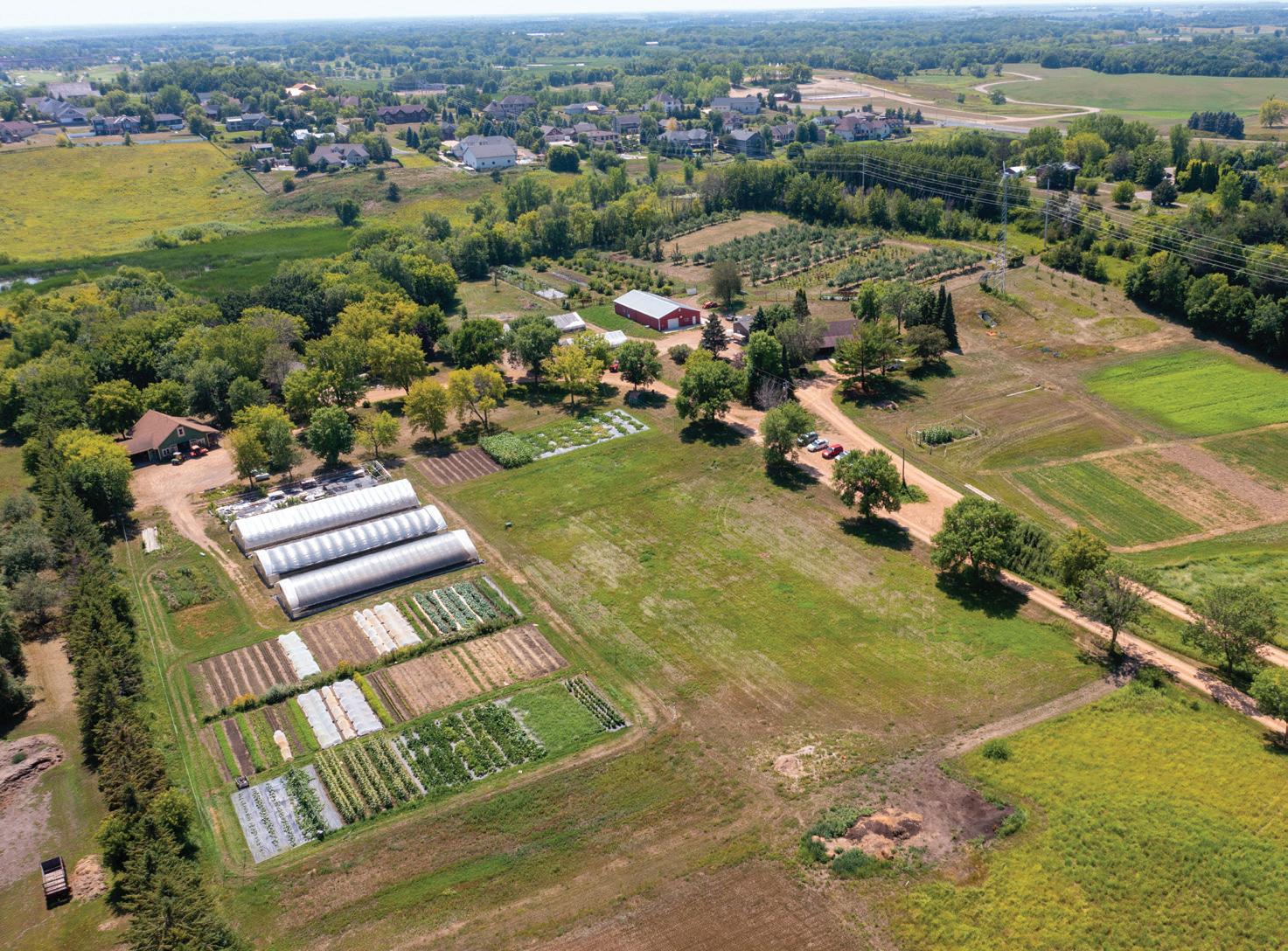
Over the years, the farm has had many transformations, but today, it’s a thoughtful, thriving, 10-acre USDA-certified organic farm with a mission to nourish and educate.
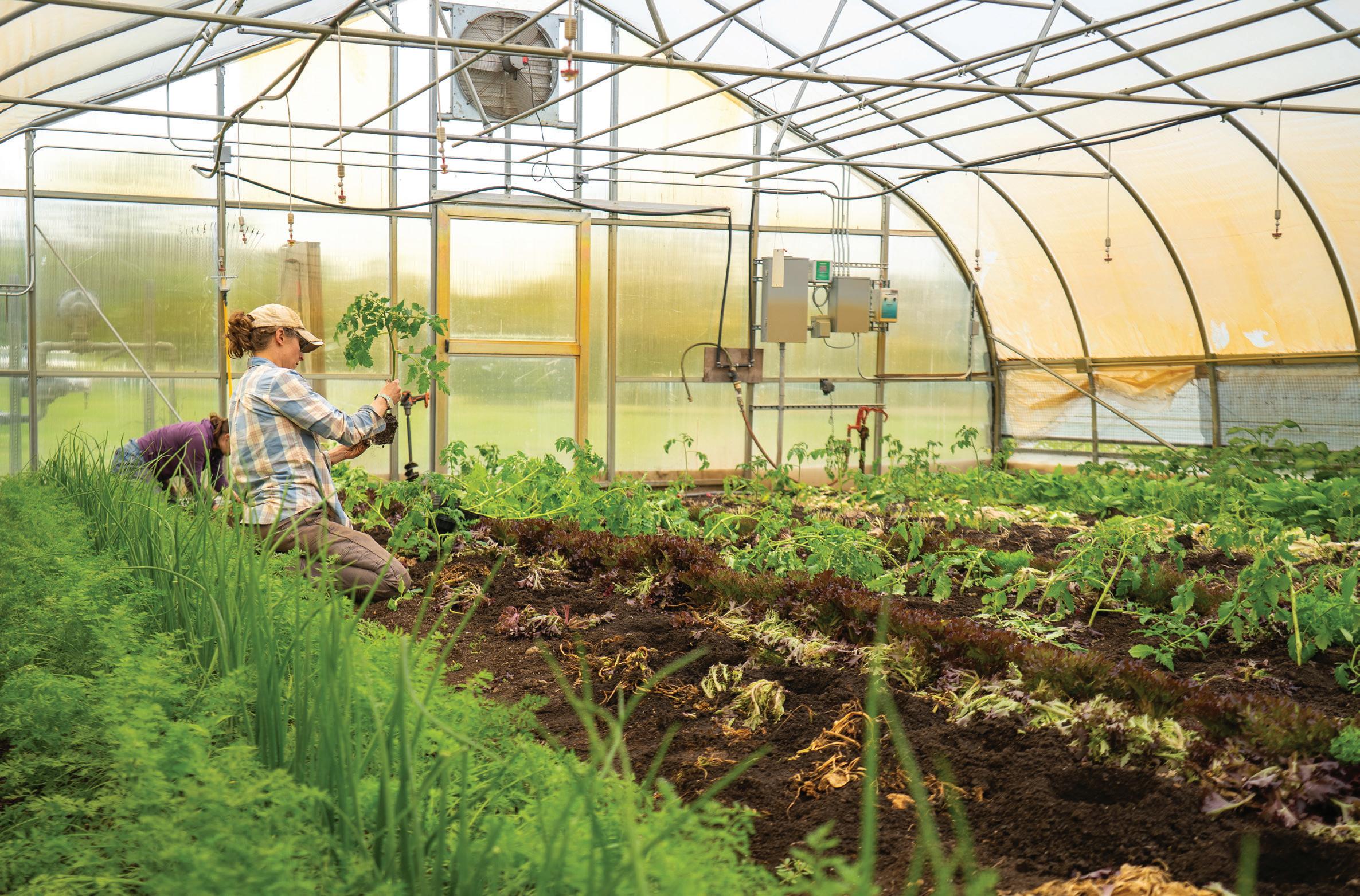
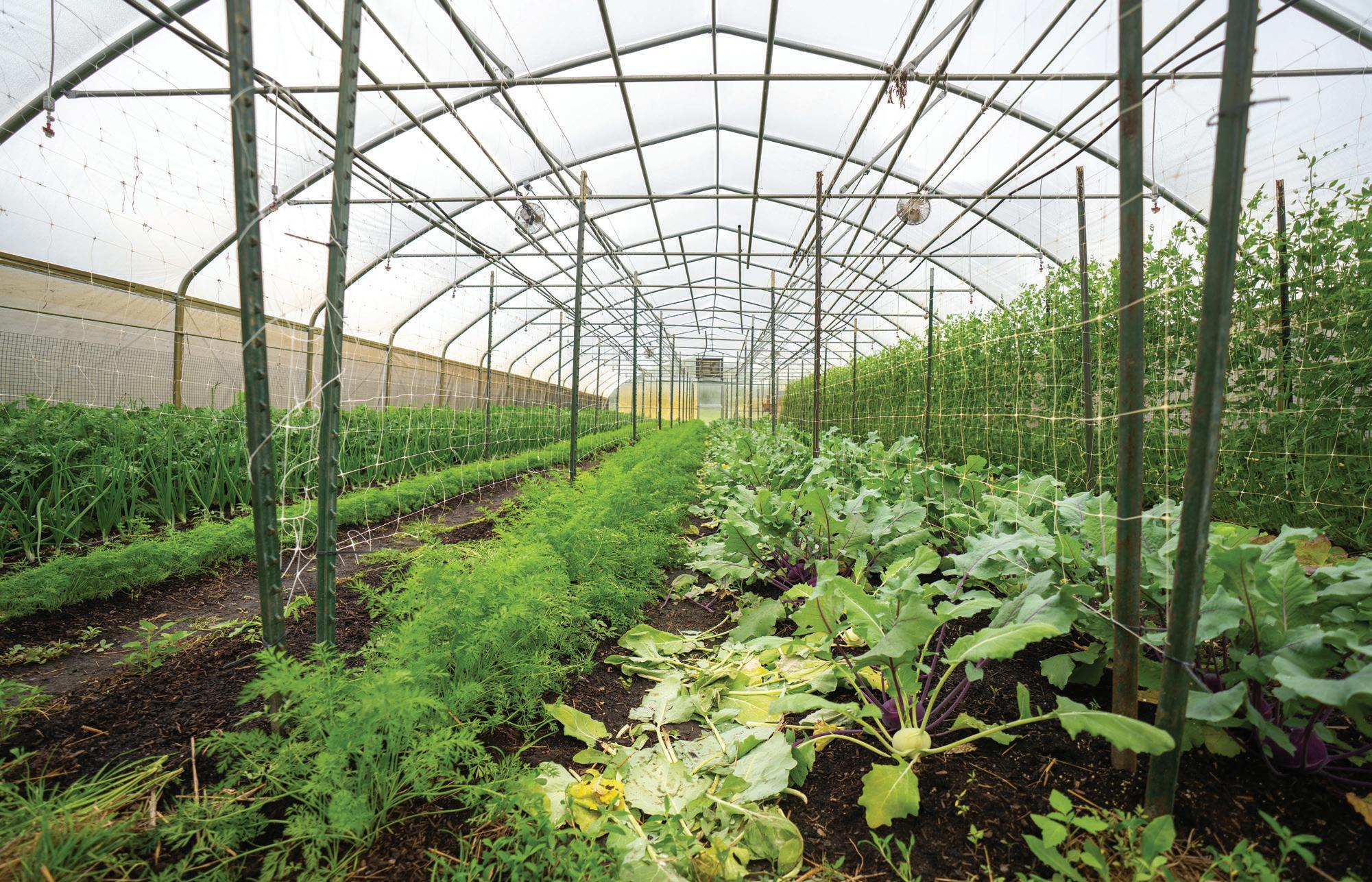
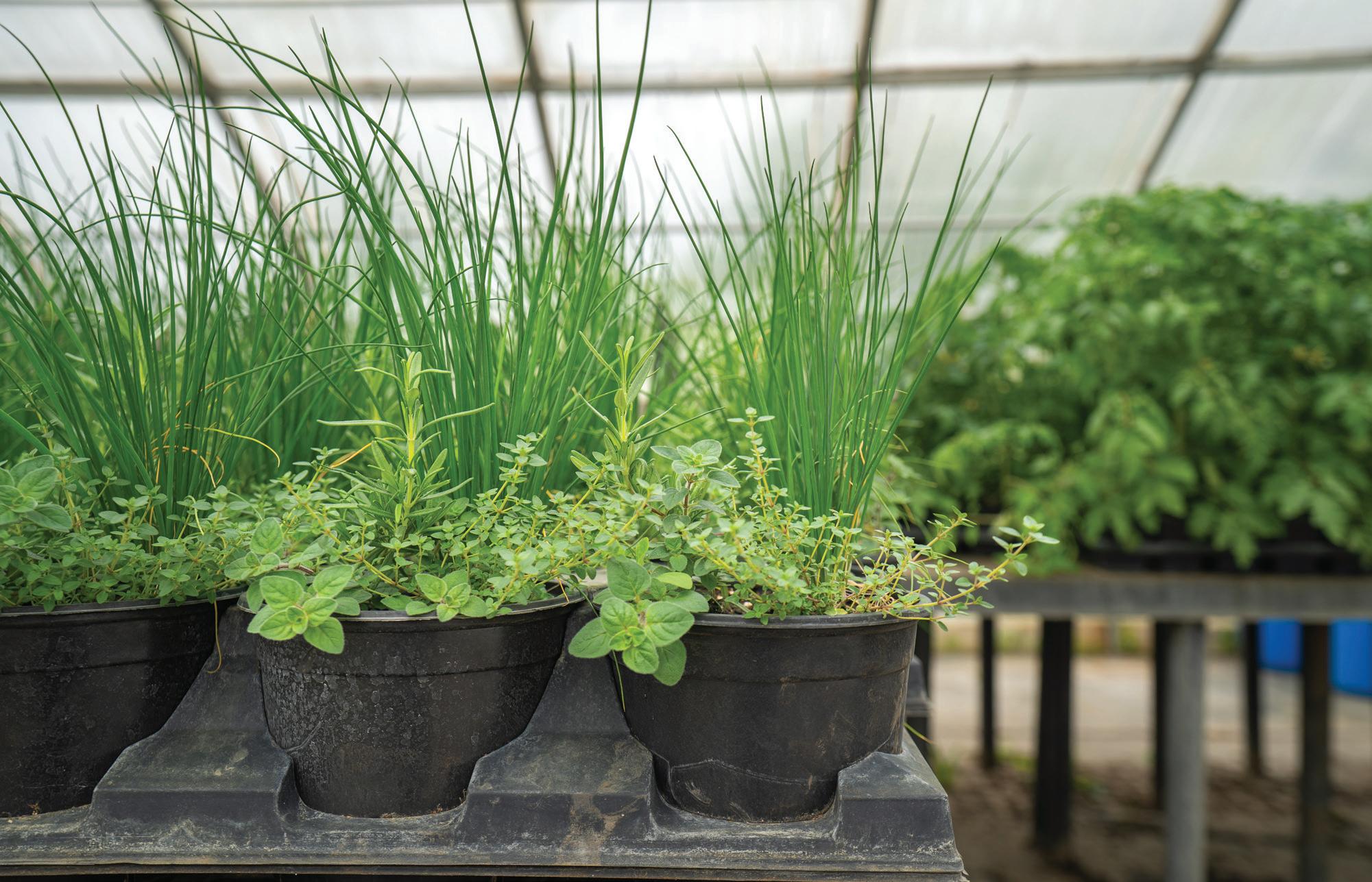
The modest yet highly diversified farm is run with the help of three full-time, year-round staff as well as seasonal workers during the growing season. Wozupi also hosts a community youth program for summer interns to lend a hand and learn more about the farm. Together, the farm grows an extensive and diverse mix of crops—everything from leafy greens and fragrant herbs to heirloom tomatoes, sweet red peppers, napa cabbage, carrots, zucchini, and more. “We have nearly a quarter of an acre in our high tunnels,” explains Wozupi Farm Manager Matt Smaus. “They allow us to extend the growing season and get an early start on cold-hardy crops like kale. It means we can provide fresh, organic produce to the community sooner and for a longer part of the year.”
At Wozupi, the high tunnels—which are unheated, plastic-covered structures that provide an intermediate level of environmental protection for crops—play a vital role in supporting sustainable and resilient farming. While these structures allow for earlier planting in spring and later harvesting in fall, they also create a protective environment that helps to shield the crops from environmental stressors like wind, heavy rain, extreme temperatures, and pests.
By offering a more controlled growing space, high tunnels help the farm extend its growing season and improve overall resilience to climate fluctuations. The result is not only healthier, more consistent crops, but also better soil quality and reduced reliance on chemicals. With less need for pesticides and fertilizers, Wozupi can uphold its commitment to organic, earthfriendly practices. This method of farming enhances productivity and sustainability, helping to ensure a steady supply of fresh produce for the community—year after year.
Other vegetables and small fruits are grown using permanent, no-till beds on deeply composted soil. Beneficial insects are encouraged, not eliminated, and cover crops are rotated with care. Everything Wozupi does is focused on regenerating the land, honoring its history, and feeding people in a good way.
“Growing our own food is a path to food sovereignty—and food sovereignty supports our work to reclaim and strengthening our relations with the land, our traditions, and our health,” said SMSC member Lori Watso, the original visionary behind Wozupi Tribal Gardens during her time as Secretary/ Treasurer. “Wozupi is integral to restoring cultural connection, honoring our ancestors, and ensuring our community will thrive.”
crops (beans, corn, and squash) alongside sunflowers—another plant of great cultural significance. “These are the foods that sustain us,” said Watso. “They are ties to ancestry, medicine for the body and spirit, and symbols of resilience and relationship with the land.”
Understanding the role of plants as relatives is part of the Dakota way of life. This philosophy helps the staff at Wozupi care for and manage one of the oldest maple forests in the area. The ancient sugarbush is similar to those that have served Native populations for generations. “Collecting sap from these trees is more than a seasonal task. It is a continuation of tradition,” explained SMSC Supervisor of Programs and Interpretation Michael Kurtz. “Historically, Dakota families would move from their winter camps to maple forests in early spring when the tree sap begins to thaw.”
-SMSC member Lori Watso “ “
These are the foods that sustain us. They are ties to ancestry, medicine for the body and spirit, and symbols of resilience and relationship with the land.
Watso a registered nurse with a keen interest in healthy eating explained, “I wanted to provide a food source that would help nurture our community—food that would help with chronic health conditions.”
Caring for the land and preserving Dakota culture is deeply rooted in the traditional plants and foods that Wozupi cultivates. The farm is enriched with Dakota foods that have been growing in this region for many generations. Among the native crops are chokecherries (ċaŋṗa), juneberries (wípazuka), elderberries (ċaputa), wild plums (káŋta), and prairie turnips (ṫípsiŋna). Wozupi also grows the “three sisters”
Traditionally, the Dakota people would set up a temporary sugar camp to harvest and process the sap. The process of tapping the maple trees allows the clear, slightly sweet liquid to flow and be collected. That sap is then carefully boiled down.
“It takes nearly 40 gallons of sap to make just one gallon of syrup,” explained Smaus. “Today, we use modern technology to help collect the sap more efficiently. Once gathered, it’s brought to the Wozupi maple shed, where it’s carefully processed, boiled down, and eventually bottled.”
One of the most impactful ways Wozupi shares its harvest of plants, fruits, vegetables, and maple syrup is through the Tribally Supported Agriculture (TSA) program. Running for 29 weeks, this annual program provides weekly shares of fresh, organic produce to SMSC members. It functions much like a traditional CSA (community supported agriculture) but is deeply rooted in the values of tribal selfsufficiency and stewardship. TSA program participants also have the opportunity to add farm-fresh eggs provided by Wozupi’s flock of laying hens. These happy chickens play
an essential role in the farm’s ecosystem. They’re fed organic grains, vegetable scraps, and food waste—helping reduce waste and enrich the soil. In winter, they stay warm in a sunny greenhouse, and in summer, they are out on pasture, contributing to Wozupi’s closed-loop system of sustainability. But the TSA is only one of Wozupi’s many programs.
“Community members engage with the farm in a lot of different ways, and we’ve tried to create programs that meet people where they’re at and have the greatest impact,” said Smaus. “The TSA program might not work for someone, but that person may come often for U-Pick, maybe they’re big on jam, or pickling. Some will come harvest the native fruits with their families. Others enjoy grabbing just a few things here and there when we set up outside at various community meetings. Some people get really involved and end up volunteering.”
What we can rely on is Mother Earth— as long as we take care of her—she will take care of us.
-SMSC member Lori Watso “ “
The farm also hosts an annual harvest party. It’s a perfect reason for the community to come together and celebrate abundance.
“Everyone loves the harvest party, especially the kids,” explained Smaus. “The farm is really a place for people to share and connect around good food, whether that means healthy food, delicious food, or food of cultural importance.”
Smaus emphasizes the many ways community members connect with the farm through food, gatherings, and shared experiences. But for others, like Watso, Wozupi holds an even deeper meaning— one rooted in culture, identity, and tradition.
“Wozupi is a living part of who we are,” said Watso. “When we bring our kids here, they’re not just learning where food comes from—they’re learning our stories, our language, and our way of life. It’s a place that keeps our culture strong and our community connected.”
At the end of the day, the sun hangs low, casting a warm, golden light across the field. A deep sense of purpose settles over the land—not just about planting and harvesting—but in carrying forward an intention of legacy, healing the land, and feeding the people. “What we can rely on is Mother Earth—as long as we take care of her—she will take care of us,” said Watso. W
1805
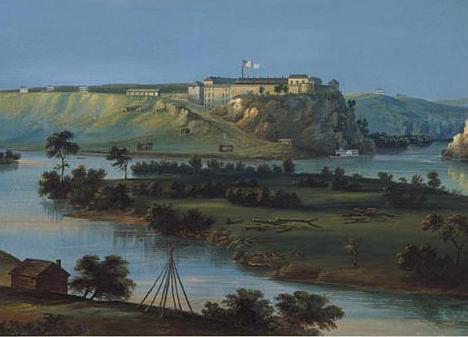
U.S. Army Lt. Zebulon Pike negotiated a treaty with the Mdewakanton, ceding land at the confluence of the Mississippi and Minnesota rivers for the construction of a military fort.
PRE-1640S-EARLY 1800S
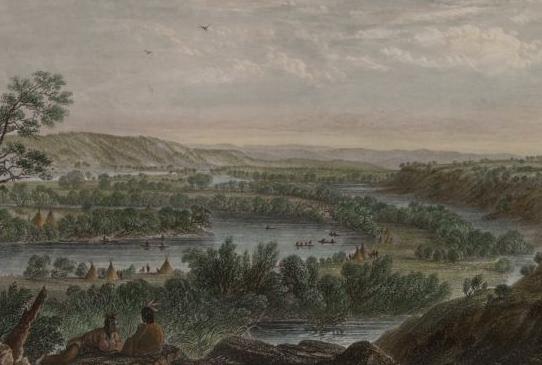
Before contact with EuropeanAmericans, Dakota people lived in the Minnesota River Valley for hundreds of years, fishing from rivers and hunting game on the prairies and in the river valley woodlands.
1837
In the Treaty of 1837, Mdewakanton leaders sold approximately 5 million acres of land east of the Mississippi River to the U.S. government for the promise of annuity payments and other services.
1825
The U.S. government arranged the Prairie du Chien Treaty, setting boundaries of tribal land between many tribes. As a result of the boundaries, the Dakota people were forced to become more permanently settled in the Minnesota River Valley.
1858
The Mdewakanton and Wahpekute ceded their land on the north side of the Minnesota River in
1862
1886-1891
The U.S. government purchased land for the Mdewakanton, including parcels in the Prior Lake area.
1851
Two treaties—Traverse des Sioux and Mendota—resulted in several Dakota bands ceding their rights to all their lands, over 30 million acres, in the Minnesota Territory and Iowa in exchange for money and a permanent reservation on the Minnesota River.
Several Dakota warriors attempted to restore tribal unity by requesting tribes to join them in an uprising against the United States, beginning the U.S.-Dakota War of 1862. Thirty-eight Dakota are hanged for their participation in the war. Almost three years later, Dakota leaders Ṡákpedaŋ and Medicine Bottle were hung at Fort Snelling for their involvement.
1880S
A small number of Mdewakanton were allowed to stay in Minnesota, and the U.S. Congress appropriated money throughout the 1880s to provide them with land.
1863
After the U.S.-Dakota War of 1862, almost all of the Mdewakanton were forcibly removed from Minnesota. Congress abrogated all treaties with the Dakota.
1969
The Shakopee Mdewakanton Sioux Community formally became a federally recognized Indian tribe, pursuant to the Indian Reorganization Act.
MID 1990S
The SMSC opened several new enterprises, including an RV park, fitness center, convenience store, and day care facility.
1991
A tribal-state compact was signed between the SMSC and the state of Minnesota, authorizing Class III gaming.
1992
1989
A gaming compact between the SMSC and the state of Minnesota was approved by the Secretary of the Interior.
1982
Little Six Bingo Palace opened, creating a new source of economic opportunity for the tribe.
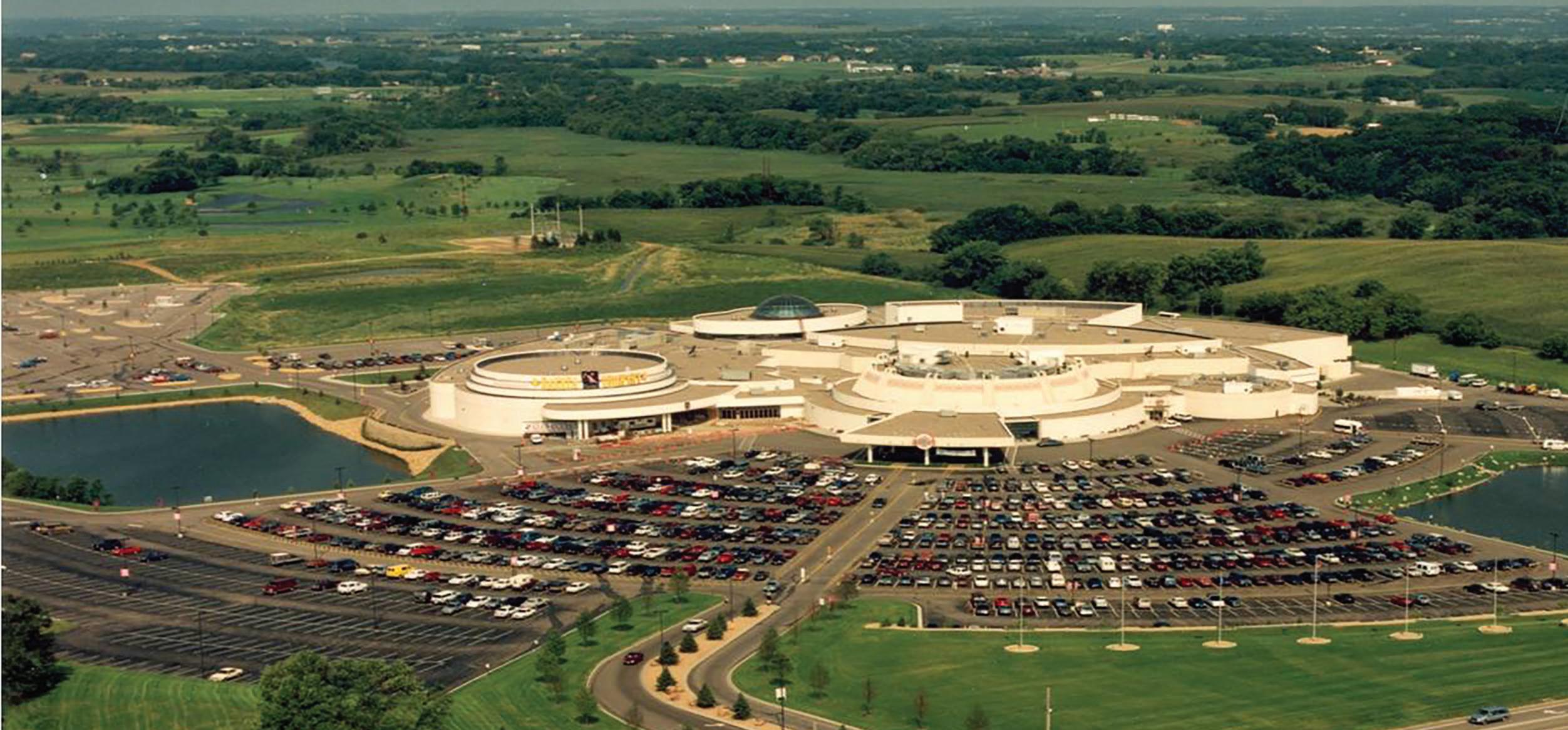
Mystic Lake Casino opened, marking a significant turning point on the tribe’s path toward stability and self-sufficiency. The new economic opportunity allowed for investment in essential services such as infrastructure, health care, and education.
1996
Mystic Lake Casino Hotel opened its first hotel tower.
2008 After years of operating in its original structure, Little Six Casino opened the doors of a brand-new building on the original location of Little Six Bingo.
2002
Mdewakanton Public Safety was created to provide fire/rescue and medical services for the Community.
2011
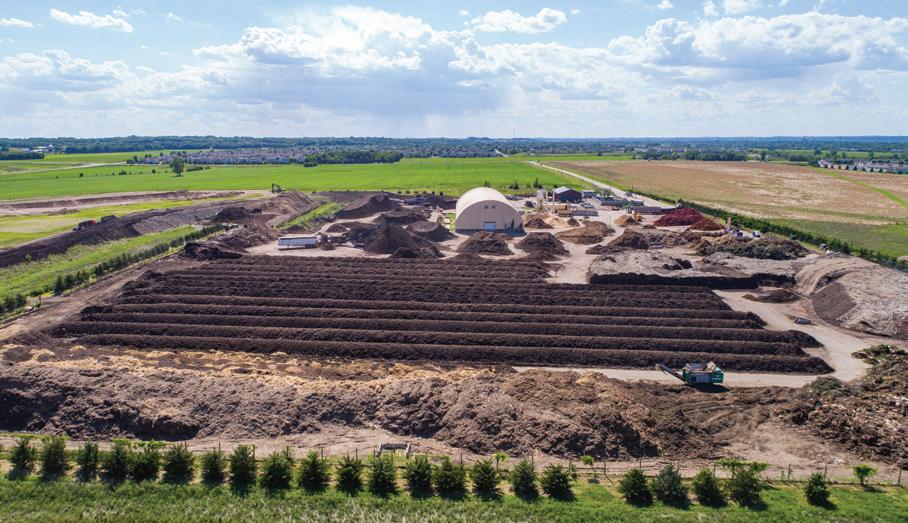
The SMSC built an organics composting facility, further supporting the Dakota tradition of caring for the earth.
2019
Hoċokata Ṫi, the SMSC’s cultural center, celebrated its grand opening.
The SMSC launched Understand Native Minnesota, a philanthropic campaign to improve the Native American narrative in Minnesota schools.
2025
The SMSC launched IndigeFit Kids, a philanthropic campaign to improve the physical fitness and mental wellness of Native youth in Minnesota.
The SMSC relocated its organics recycling operation and opened Dakota Prairie Composting, an expanded, state-of-the-art facility advancing sustainable waste management in the Midwest.
Learn more about the SMSC's history.
2018
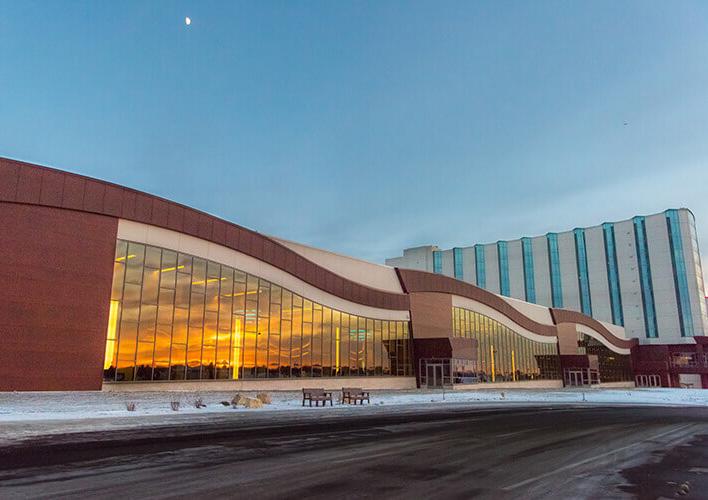
Mystic Lake Center opened, featuring a new nine-story hotel tower and a 70,000-square-foot meeting and event center.
The Native Farm Bill Coalition—a joint project of the SMSC’s Seeds of Native Health campaign—worked diligently to advocate for the 2018 Farm Bill and advance Indian Country’s interests to improve Native American nutrition.
2023
The SMSC reintroduced a pteoptaye (bison herd) on tribal lands, a gift from the Sisseton Wahpeton Oyate.
Make a living and a difference at the SMSC
Preserving and protecting the environment is at the forefront of what we do. Whether you’re looking to make a direct impact through a role in land and habitat management or just want to work for an institution that actively works to better local ecosystems, visit shakopeedakota.org/careers to find a position where you can grow.
FORESTS RESTORING
BY ERIN E. BELANGER
PHOTOS BY JAKE MILLER
AN ARBORED VISION FOR A RESILIENT FUTURE
Walking through the forest feels timeless—the hush of footsteps softened by fallen leaves, sunlight filtering through layered canopies of green, and the rich, earthy scent of soil and bark. The trees stand as both teachers and timekeepers, quiet reminders of patience, balance, and strength—grounding and restorative to the soul.
It is this deep connection to the land—to Grandmother Earth and her natural rhythms—that inspired a major restoration effort for the Shakopee Mdewakanton Sioux Community (SMSC). On tribally owned land located just south of the Minnesota River, the SMSC’s Natural Resources Department has completed the tribe’s first large-scale forest restoration—a project grounded in both science and stewardship.
“Returning the land to a more natural state helps us plan for the future,” SMSC Manager of Natural Resources Ferin Davis Anderson said. “It’s been a true labor of love, and it’s been successful so far.”
Forest restoration focuses on reestablishing natural ecological processes—helping forests recover their structure, function, and biodiversity so they can once again grow and thrive as healthy, mature ecosystems.
Since 2021, the Natural Resources Department has been working carefully and intentionally to reintroduce native trees and plants to the area—planting by hand, one acre at a time with help from Conservation Corps participants and hired contractors. Last summer, the effort reached a major milestone.
“Over the last five years, we’ve planted more than 23,500 trees, along with 45 different species of native plants,” Anderson shared. “That includes maples, oaks, fruit-bearing shrubs, and other seedlings, spaced strategically about 10 to 11 feet apart.”
The spacing of the seedlings was intentionally tailored to the site, based on recommendations from the U.S. Forest Service and the Minnesota Department of Natural Resources. “Because we planted such small trees, some loss is expected,” Anderson explained. “This spacing allows the forest to develop without becoming too dense, supporting healthier growth over time.” This laborious project has a long-term goal to create a healthy, diverse forest that future generations can enjoy.
“This area used to be farmland,” said Anderson. “Before that, it was part of the Big Woods Subsection—a vast expanse of deciduous forest.” Historically, the Big Woods Subsection covered nearly 12 million acres across Minnesota and was known for its temperate
Returning the land to a more natural state helps us plan for the future. It’s been a true labor of love, and it’s been successful so far.
Ferin Davis Anderson, SMSC Manager of Natural Resources
hardwood forests and rich wildlife habitat. Northern red oak, sugar maple, basswood, and American elm were among the most common tree species in this predominantly forested region.
Today, much of that landscape has been converted to agricultural use. “We asked ourselves, ‘How can we bring back a thriving forest here?’” Anderson said. “There are only so many acres that SMSC tribal members and future generations will be able to learn from and harvest from, so it’s important to restore what we can.”
Anderson explained that the project has been carefully phased in stages to ensure forest resiliency. By staggering plantings over multiple years, the department can promote a mix of canopy layers and growth stages that support both biodiversity and climate adaptation.
“We fenced the entire area to protect the young trees,” Anderson said. “It takes a lot of resources, but it’s important to the community. And hopefully we can apply this to other areas and create more natural spaces for members to experience.”
In total, 63 acres have now been planted as part of this forest restoration effort—marking a major step in reconnecting the land with its natural roots and cultural purpose.
“The trees are small now, but someday we will have forests back where there were farmlands previously,” SMSC Operations Administrator Steve Albrecht said. “What we’re planting today is an investment in the future. It takes patience and long-term planning, but this work restores balance to the land and creates a place where tribal members can learn, forage, and hunt as the forest matures—serving generations to come.”
In 30 years, the forest will be a living canopy of shade and sound—rooted, resilient, and alive with birds, pollinators, and understory growth, offering both habitat and healing.
Just as walking through a forest restores our own sense of peace, restoring a forest restores the land’s balance. Each young tree planted carries a quiet promise—to grow, to shelter, to endure. And one day, as these acres mature into a living canopy, future generations will walk beneath their branches, breathing in that same deep calm. The work being done today ensures that tomorrow’s footsteps will still find shade, song, and renewal in the heart of the forest. W
In total, 63 acres have now been planted as part of this forest restoration effort—marking a major step in reconnecting the land with its natural roots and cultural purpose.
JOE’S JOURNEY
Reflecting on Three Decades at the SMSC
INTERVIEW BY TRICIA VELURE
PHOTOS BY JAKE MILLER
When Joe Dean came to work for the Shakopee Mdewakanton Sioux Community (SMSC) in 1995, he may not have anticipated a 30-year career here, but he saw a tribal nation on the rise that had captivated him and his family since he was a child. His finance experience and long-term vision were precisely the right fit for an organization focused on making decisions today that benefit the next seven generations. Thirty years and many lasting friendships later, he closes this chapter of life with gratitude.
What brought you to the SMSC in 1995?
I’d been working in finance jobs for 10 years when the tribe posted an opening for assistant controller. I’d been driving past the SMSC to the core Twin Cities all that time, occasionally stopping to golf at Lone Pine Country Club (now The Meadows at Mystic Lake) or play bingo with my mother at Little Six. Given that I was starting a family, I thought, “Why just drive by? The SMSC is growing, and maybe I’d like to be a part of that.” Culturally, I felt that it was a good fit from the start.
Did you already have some familiarity with the tribe?
This was the first time I’d worked for a Native American tribe. However, my first memories of the tribe were when my father brought me along to
SMSC powwows by the Minnesota River in Shakopee, in the area called Murphy’s Landing. I was age 10 or so, and I remember a massive bonfire and tribal members dancing in their regalia. I’m so fortunate that my father was interested in learning about Native cultures, because that helped get me interested.
How many different roles did you have with the tribe?
I was hired as assistant controller, promoted to controller about two years later following my predecessor’s retirement, and slowly evolved over a few years to chief financial officer (CFO). The SMSC was such a young organization when I arrived that it did not yet have a chief financial officer. Collectively, we saw the need for a CFO to focus on long-term financial planning.
Were you surprised by any aspect of working for the SMSC?
On day one, I came to work in a suit and tie. I occasionally still need a suit and tie! On an everyday basis, though, I could dress more casually, and I was probably more approachable because of that. A CFO should be professional, but still approachable.
One of the biggest perks of working for the SMSC as my wife and I were raising three young children was the day care offerings. The tribe’s first day care program was located in the same building as my office. My children were enrolled from the time they were
infants, so I visited them during my lunch break and watched them play outside with the other kids. Plus, because I was working closer to home, I spent less time in a car and more time with my family.
What do you know about the tribe now that you didn’t in 1995?
The concept of tribal sovereignty was foreign to most people at that time. Now I’ve spent 30 years trying to educate people about the SMSC and the meaning of tribal sovereignty. Tribal governments are alongside, not beneath, the federal, state, and local governments.
What kept you at the SMSC for 30 years?
The people here are incredible. I made many great friendships with coworkers and tribal members because of my work. I enjoyed the work so much that I never watched the clock. That’s a good way to pass 30 years.
What’s next for you?
I’m a numbers guy, and I probably always will be. In retirement, though, I also plan to solve a lot more crossword puzzles and read more books. W
MAKING AN #SMSCGIVES DIFFERENCE
Being a Good Neighbor, One Backpack at a Time
BY ERIN E. BELANGER
PHOTOS BY BLAKE ZIEMER
The start of the school year brings a sense of excitement, possibility, and fresh beginnings. For students, a new backpack filled with notebooks, folders, pens, and pencils represents more than just preparedness— it symbolizes confidence, readiness, and the reassurance that they are supported as they step into a new classroom with a new teacher and new peers. Through the #SMSCgives Backpacks for Youth program, that feeling of excitement is shared with thousands of students every year, helping ensure they begin the school year equipped for success.
At the heart of the #SMSCgives backpack program is the Dakota value of wóokiya—generosity and helping. Guided by this value, the Shakopee Mdewakanton Sioux Community (SMSC) has built a tradition of giving that emphasizes caring for others and strengthening the community. Wóokiya has defined the Dakota people for generations and continues to lead the philanthropic efforts of the SMSC today. By providing free backpacks filled with essential school supplies, the SMSC supports Native youth and neighboring communities, helping students start each school year with confidence and pride.
IN THE GREATER TWIN CITIES AREA, 1IN10
STUDENTS RETURN TO SCHOOL EVERY YEAR WITHOUT A BACKPACK OR SCHOOL SUPPLIES.
MORE THAN
100,000 STUDENTS BEGIN THE SCHOOL YEAR WITHOUT ESSENTIAL ITEMS SUCH AS NOTEBOOKS, PENCILS, PENS, AND CALCULATORS.
What began as a commitment to uplift and empower Native youth by providing the tools they need to achieve their academic goals has grown into a meaningful annual tradition that strengthens partnerships, honors cultural values, and makes a lasting impact across Indian Country and the Twin Cities metro area.
The backpack initiative started as a straightforward way to ensure students had access to the supplies they need to succeed in school. Since 2019, the program has grown into a cornerstone of the broader #SMSCgives initiative, reflecting the SMSC’s commitment to being a good neighbor and supporting education for Native youth and local families alike. Strategic partnerships—such as the collaboration with Greater Twin Cities United Way—have helped expand the reach and impact of the program, while the continued involvement of SMSC members, team members, and volunteers fuels its success year after year.
Every year, the enthusiasm and dedication of those who participate in backpack packing and distribution events demonstrate how generosity
and community service shape the SMSC’s approach to giving. Through Action Day—an annual event hosted by Greater Twin Cities United Way— volunteers pack backpacks filled with school supplies, on this day and through other events, demonstrating community support for education and helping students thrive academically, socially, and emotionally.
Charitable Giving Specialist
Kelsey Scares The Hawk—who helps run the SMSC’s backpack program— shared, “I used to get free backpacks as a kid from the Boys & Girls Club. Now I can help other kids receive backpacks, and I can see it from a young Native child’s perspective. It’s exciting to get a new backpack full of supplies—it’s something that is their own.”
Greater Twin Cities United Way brings communities together to address their most pressing challenges, from helping families achieve stability to empowering young people and responding to crises. By uniting community partners around education, housing, food, and economic opportunity, Greater Twin Cities United Way and the SMSC work together to mobilize communities to action—ensuring students have the tools they need to thrive in school and beyond.
According to Greater Twin Cities United Way, 1 in 10 students return to school every year without a backpack or school supplies—more than 100,000 students in the greater Twin Cities area begin the school year without essential items such as notebooks, pencils, pens, and calculators. Over the last decade, Action Day has grown from distributing 6,000 backpacks in its inaugural year to more than 60,000 in 2025, reflecting a community that consistently steps up when there is a need.
“The partnership between Greater Twin Cities United Way and the Shakopee Mdewakanton Sioux Community has been about more than providing backpacks and school supplies,” explained Melissa Wilson, senior director of engagement at Greater Twin Cities United Way.
“It’s about showing our youngest community members that they can depend on us to meet their needs and help them access the future they dream of. Together, we’re also able to reach communities across the state that we wouldn’t have connections to on our own.”
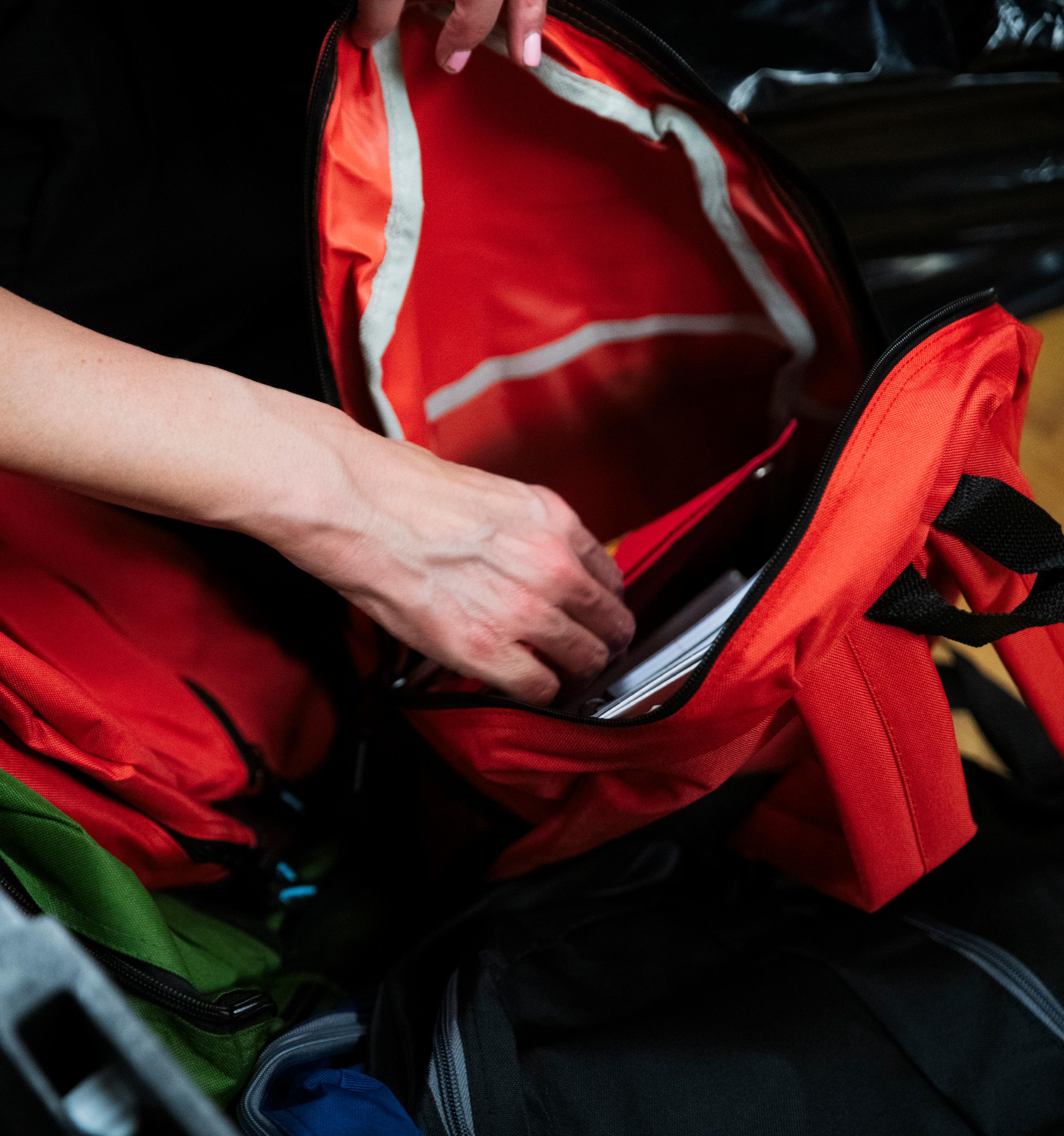
Every summer, #SMSCgives backpack events bring people together for hands-on service. Volunteers work side by side in assembly-line fashion, packing thousands of backpacks with notebooks, pencils, crayons, and other school essentials. Coworkers, departments, and SMSC members share in the experience, turning the packing events into a powerful display of teamwork and unity.
“It’s rewarding—seeing the joy on kids’ and families’ faces when they are able to pick up backpacks at our
annual SMSC Wacipi,” said SMSC member and #SMSCgives event captain Kristina Zander. “It’s about being generous. It’s always better to give than to receive.”
Organizing and assembling thousands of backpacks requires careful planning and collaboration, but the shared purpose makes the effort meaningful. Participation continues to grow each year, mirroring the expanding reach of the program. “We’re excited to continue growing the program,” said Scares The Hawk. “Each year, we’re able to increase our support through our monetary donation to Greater Twin Cities United Way and work toward packing even more backpacks with the help of our dedicated #SMSCgives volunteers.”
The program’s impact extends well beyond the packing events. Backpacks are distributed to Twin Cities Indian Education programs and families who attend the annual SMSC Wacipi. In addition, 1,750 backpacks and school supplies were sent to surrounding tribes, expanding the program’s reach across the region. These partnerships
provide culturally supportive resources that help Native students feel prepared, supported, and valued as they head back to school.
During several #SMSCgives backpacking events, volunteers come together to pack thousands of backpacks—continuing a tradition guided by wóokiya. With 4,750 backpacks prepared for the 2025-2026 school year and more than 20,600 backpacks distributed since 2020, the SMSC remains committed to uplifting Native youth and supporting neighboring communities.
Access to basic school supplies can make a meaningful difference for students and families, helping bridge educational resource gaps and setting students up for success beginning on the first day of school. Through generosity, collaboration, and cultural values, the #SMSCgives Backpacks for Youth program continues to strengthen students, families, and communities—making an #SMSCgives difference one backpack at a time. W
#SMSCGIVES IMPACT
Backpacks Packed and Given Away
2020: 2,744
2021: 2,605
2022: 2,337
2023: 4,110
2024: 4,027
2025: 4,792
20,615
In 2026, the SMSC is committed to packing 8,000 backpacks filled with essential school supplies for local students.
Coming together to set students up for success. Watch the #SMSCgives team in action by scanning the QR code.
“I’ve always liked helping people. Nursing lets me combine health care with interpersonal connection.”
SMSC NURSE KRISTINA NGHE
Nursing is more than a profession—it’s a commitment to connection, compassion, and improving lives. Kristina Nghe embodies these values every day in her role as a nurse with the Shakopee Mdewakanton Sioux Community (SMSC). Her dedication to patient care reflects a broader philosophy of growth and exploration a mindset she also embraces through her passion for travel. From discovering new cultures to navigating unfamiliar landscapes, travel has strengthened her perspective, curiosity, and resilience, each quality enhancing the patient care she provides.
This balance of professional dedication and personal exploration shows how a career in health care at the SMSC can be both deeply impactful and personally fulfilling. By bringing empathy to every interaction, Kristina demonstrates the meaningful difference one nurse can make, offering her expertise and helping hand to the SMSC clinics, where team members find that their wellness needs are prioritized.
Check out the Q&A to learn more about Kristina’s journey to becoming a nurse, traveling the world, and providing expert care to tribal members and team members.
“I love building connections with coworkers and patients in a smaller, patient-focused environment.”
SMSC
WHAT INSPIRED YOU TO BECOME A NURSE?
I’ve always liked helping people. I initially considered medical school but realized I wanted more patient interaction than what is typically seen from doctors or physicians. Nursing lets me combine health care with interpersonal connection.
TELL US ABOUT A TYPICAL DAY IN YOUR ROLE.
I assist with the first patient interaction: rooming patients, checking vital signs, reviewing medications and allergies, and providing updates to the provider. I also help with procedures like EKGs, spirometry, or nebulizer treatments, if needed. I typically see around 10-15 patients in primary care on the average day.
DO YOU HAVE A SPECIFIC CLINICAL FIELD YOU PREFER?
I like family practice, or primary care. It is a specialty that allows me to see a variety of different patients, from annual physicals, immunizations, and well-child exams, to helping manage chronic conditions like high blood pressure or diabetes. It also includes ensuring patients are keeping up with their health screenings on time such as mammograms, colonoscopies, or low-dose chest CTs.
WHEN DID YOU BEGIN WORKING AT THE SMSC, AND WHAT DEGREES DO YOU HOLD?
I came to the SMSC in 2023. I have two degrees: a degree in biology with genetics focus and a psychology minor from the University of Minnesota Duluth. Then I went to Rasmussen University and completed their accelerated bachelor’s of nursing program.
WHAT INITIALLY DREW YOU TO THE SMSC, AND WHAT HAS KEPT YOU HERE?
Before coming to the SMSC, I worked at Regions Hospital on a progressive unit with a focus on cardiac care. I grew up around the area, and my older sister used to work at Mystic Lake Casino Hotel. Finding out that the SMSC had clinics was a pleasant surprise. I love that it’s smaller, patient-focused, and allows me to build relationships with patients rather than rushing through visits. I love building connections with coworkers and patients in a smaller, patient-focused environment.
WHAT MAKES YOUR TEAM OR CLINIC SPECIAL?
Everyone is willing to help each other here. We support one another during busy times, whether it’s charting, giving vaccines, or covering patient care. Collaboration is key.
WHAT ADVICE WOULD YOU GIVE TO SOMEONE STARTING OUT AS A NURSE?
Take the time to learn as much as possible, especially in the first few months. Nursing school teaches concepts but not practical nursing, so developing your own style is crucial. Always remember patients are human—take time to explain things clearly and build relationships.
WHAT IS THE MOST REWARDING PART OF YOUR JOB?
Making an impact on patients’ lives. Seeing the positive changes in their health is incredibly rewarding.
WHAT ADVICE WOULD YOU GIVE TO SOMEONE STARTING A POSITION AT THE SMSC?
Take advantage of all that the SMSC has to offer its team members! There are so many valuable resources beyond medical care, like low-cost medications at the pharmacy, gym membership discounts, child care, wellness programs, and more.
NURSE KRISTINA NGHE
CAN YOU SHARE A STORY WHERE YOU CONNECTED WITH SOMEONE?
When I was working at the hospital and mentoring nursing students, there was one student who was helping me treat an older patient who frequently became confused at night. The patient was a fall risk and kept getting out of bed. The student and I sat in the room with the patient, just talking, de-escalating the situation. I think this helped the student see the importance of just sitting and being there for patients. I told him that it’s important to slow down sometimes and just get to know each person we treat, because at the end of the day everyone’s human. The situation helped remind me exactly why I became a nurse—to help people.
CAN YOU TELL US MORE ABOUT YOURSELF?
I grew up in Chaska and moved to Shakopee in my junior year of high school but attended Chaska High School for all my high school years. My parents emigrated from Vietnam around the ‘80s. I have an older sister who’s also a nurse now living in Florida. In the winter, I enjoy skiing, snowboarding, and ice skating. In the summer, I play tennis while also just trying to spend as much time outside enjoying art fairs or any event outside that I can. I enjoy crafting on occasion, and when I was younger, I was involved in theater and speech. Recently though, I have been trying to travel as much as I can and make many memories on these travels.
WHAT ARE SOME HIGHLIGHTS OF YOUR TRAVELS?
I have extended family in Ho Chi Minh City, Da Lat, and Phu Quoc in Vietnam, where my parents are from. It’s always amazing to visit there and see how they grew up. It helps me to appreciate the sacrifices they have made to get our family to where we are today.
I’ve gone to Singapore twice now. The first time I went with my parents, boyfriend, and two aunts from Vietnam, and a friend from Singapore. It was special to be able to experience this country for the first time together. I’ve also been to Tokyo, Kyoto, and Osaka in Japan. We visited shrines, temples, and even Tokyo DisneySea!
WHAT IS YOUR FAVORITE THING ABOUT TRAVELING?
I love seeing the mix of modern society while still being able to see pockets of tradition that these places still value. W
For those seeking a career where purpose meets opportunity, the SMSC Health and Wellness team offers a rewarding path. Visit shakopeedakota.org/careers to learn more.
MAGNETS, MINNESOTA,
AND A BOLD BET ON
MAGNETS ARE EVERYWHERE
—from electric vehicles (EVs) and wind turbines to smartphones and medical devices. But most of the powerful magnets we rely on are made from rare earth elements, which are expensive, environmentally damaging to mine, and mostly sourced from overseas. That’s where Niron Magnetics, a Minnesotabased startup, comes in.
Niron has developed the world’s first high-performance permanent magnet made without rare earths, using iron and nitrogen, which are two of the most abundant and available materials on Earth. Its Iron Nitride magnet technology is sustainable, scalable, and made from everyday industrial materials rather than scarce resources. It’s a huge advancement for clean energy, manufacturing, and national security.
And the Shakopee Mdewakanton Sioux Community (SMSC) saw the potential early.
A CLEANER FUTURE
BY JONI KOMPERDA PHOTOS BY NIRON MAGNETICS
THE SMSC: AN EARLY, VALUES-DRIVEN INVESTOR
Back in 2016, the SMSC became one of Niron’s first investors. Since then, the SMSC has made additional investments, including a contribution in 2023 as part of Niron’s $33 million funding round alongside GM Ventures, Stellantis Ventures, and the University of Minnesota. That round helped Niron expand its Minneapolis pilot production facility and move from research toward commercialization—key steps in turning a promising technology into real-world products.
“We liked that the company’s mission aligned with our tribe’s values to be good stewards of the environment and to be a good neighbor by
supporting Minnesota innovation and economic growth,” said former SMSC Chairman Keith B. Anderson.
The technology’s potential has also attracted support from the public and private sectors. The U.S. Department of Energy’s Advanced Research Projects Agency–Energy (ARPA-E) awarded Niron $17.5 million to scale its rare-earth-free magnets, citing the need to secure domestic supply for everything from EV motors to wind turbines. ARPA-E is a program within the U.S. Department of Energy (DOE) that funds high-risk, high-reward research aimed at developing breakthrough energy technologies—especially ones that could transform how the U.S. produces, uses, and stores
energy but are too early-stage for private investment.
The state of Minnesota also awarded Niron a $10 million Minnesota Forward Fund in October 2025 to help advance Niron’s facility in Sartell, Minnesota. It’s a strong sign that Minnesota intends to lead in clean manufacturing and resilient supply chains. While the SMSC doesn’t own or operate this venture, it represents a strategic investment in technology that could reshape industries and reduce environmental harm on a grand scale. It also illustrates the tribe’s forward-thinking leadership in supporting clean technologies that benefit both people and planet.
MADE IN MINNESOTA, SCALING FOR THE WORLD
As demand for electrification grows, so does the need for magnets. But the current supply chain is fragile—over 90% of rare earth magnets are made in China; mining them creates toxic waste and environmental damage. The SMSC recognizes Niron’s magnets offer a cleaner, safer, and more secure alternative made in Minnesota, from materials that don’t require strip mining or complex permitting.
Niron’s journey began at the University of Minnesota, where Professor Jian-Ping Wang and his team developed the Iron Nitride technology. Today, Niron operates a 70,000-square-foot pilot plant in Minneapolis, and in September 2025, broke ground on a 190,000-squarefoot manufacturing facility in Sartell. That plant will likely:
• Produce 1,500 tons of magnets annually.
• Create more than 175 full-time jobs.
• Supply magnets for EVs, robotics, data centers, and more.
• Redevelop a former coal community site into a hub for clean manufacturing.
CLEANER TECH, STRONGER SUPPLY CHAINS
Permanent magnets are tiny powerhouses that turn electricity into motion and make modern life hum. But the challenge with most is their reliance on rare earth elements that are costly, largely mined and processed overseas, and often tied to significant negative environmental impacts. That’s why a Minnesotagrown alternative from Niron is such a big deal, and why the SMSC has backed it from the start.
NIRON’S IRON NITRIDE MAGNETS ARE:
• Sustainably manufactured: 80% of water and 97% of hydrogen used in production is recycled.
• Recyclable: At end-of-life, magnets can be recycled with scrap iron.
• Cost-stable: Made from globally available materials, reducing price volatility.
• High-performing: Excellent temperature stability and magnetization for demanding applications.
Planning is already underway for an approximate 10,000-ton facility, with future expansion to Europe and Asia.
“We’re proud to scale this homegrown technology in the heart of the industrial Midwest,” said Jonathan Rowntree, CEO at Niron.
WHY MAGNETS MATTER MORE THAN YOU THINK
If you could peek inside today’s most exciting technologies, you’d find a quiet hero: the permanent magnet. Permanent magnets are the invisible force behind:
EV MOTORS
Tesla Model 3, Ford Mustang Mach-E, Chevy Bolt, and Rivian R1T
WIND TURBINE GENERATORS
GE Renewable Energy turbines and Siemens Gamesa offshore wind farms
DATA CENTER COOLING SYSTEMS
Google Cloud, Microsoft Azure, and Amazon Web Services—cooling pumps and fans in server farms
INDUSTRIAL PUMPS AND COMPRESSORS
HVAC systems in commercial buildings, manufacturing plant machinery, and water treatment facilities
CONSUMER ELECTRONICS
Smartphones, Bluetooth speakers, laptops, smartwatches, and gaming consoles such as Xbox and PlayStation
DEFENSE AND AEROSPACE EQUIPMENT
These magnets are already being tested in a variety of products, with major automakers like GM and Stellantis partnering to bring them to market.
Radar systems, missile guidance, satellite propulsion, and aircraft actuators in F-35 fighter jets or NASA spacecraft
WHAT’S NEXT, AND WHY THERE’S HOPE
The SMSC’s involvement backs innovation that aligns with the tribe’s long-standing commitment to environmental stewardship, community partnership, economic development, and sustainable technologies.
“Having the support and backing of the SMSC from the beginning has been so important to Niron Magnetics and the development of this new technology,” said Rowntree. “We are grateful for the tribe’s ongoing support of what we believe will be transformational to clean energy and manufacturing.”
The SMSC is committed to longterm solutions, not short-term trends,
With its Minneapolis pilot facility already producing and customer programs underway, Niron is moving from grams to tons—then to thousands of tons as the Sartell plant comes online. Minnesota partners are stepping up with financing and infrastructure support, and global manufacturers are lining up to integrate cleaner magnets into next generation products. It’s an exciting arc: university research to Minnesota startup, to American manufacturing, to world-class cleantech leader all propelled by early believers like the SMSC.
Global demand for permanent magnets is expected to reach $150 billion annually, and Niron’s Iron Nitride magnet technology is poised to make a major impact. Thanks to the SMSC’s early and ongoing support, this innovation is rooted in Minnesota values, tribal leadership, and a shared vision for a cleaner, more resilient future. The SMSC’s investment in Niron is a story of hope, ingenuity, and communitydriven progress. W
SMSC Chairman Cole W. Miller addressing the audience about Dakota values, environmental stewardship, and the SMSC’s early investment in Niron Magnetics at the Sartell, MN facility groundbreaking ceremony.
The SMSC makes its first investment in Niron, supporting early-stage research from the University of Minnesota.
Niron is named one of America’s Top GreenTech Companies of 2024 by Time and Statista.
MARCH & NOVEMBER
The SMSC contributes additional funding, including an investment as part of Niron’s $33 million funding round.
OCTOBER
Niron snags a spot on Time’s Best Inventions of 2023 for its Iron Nitride magnet, celebrated for cutting environmental impact and enabling an American-made supply chain.
Sartell plant begins full-scale production, creating more than 175 jobs and supplying magnets for critical industries.
Niron is selected as a winner of Fast Company’s 2025 World Changing Ideas.
Niron wins the Minnesota Manufacturing Sustainability Award.
Groundbreaking of Niron’s 190,000-square-foot manufacturing facility in Sartell, Minnesota.
SOMETHING
TURNING WASTE INTO SOMETHING WONDERFUL
HOW DAKOTA PRAIRIE COMPOSTING HELPS OUR COMMUNITY AND THE EARTH
BY JONI KOMPERDA
PHOTOS BY JAKE MILLER
Have you ever wondered what happens to your old pumpkins, Christmas trees, or food scraps after you throw them away? At Dakota Prairie Composting, organic material doesn’t go to waste. Instead, it gets turned into what those in the composting industry call “black gold.”
Located in Shakopee, Minnesota, Dakota Prairie Composting opened its brand-new facility in June 2025. It’s owned and operated by the Shakopee Mdewakanton Sioux Community (SMSC), and it’s already making a big difference. The facility takes in organic waste—things like food scraps, yard clippings, and holiday greenery— and turns it into compost, a nutrient-rich material that helps plants grow and keeps soil healthy.
Dakota Prairie Composting strongly advocates for organics recycling (another way to say composting!), and they’re also passionate about being a good neighbor, a good employer, and a good steward of the earth—a direct result of being part of the broader SMSC. One of the best ways Dakota Prairie Composting helps the community is through its drop-off programs. These programs make it easy for everyone to do their part for the planet.
In addition to its substantial size, the new Dakota Prairie Composting facility is also highly advanced. It uses cutting-edge technology to compost materials efficiently while keeping odors and emissions low. It even reuses water and is built to be energy-efficient, with plans for solar panels and electric vehicle chargers. This means the facility can handle waste ranging from food scraps to storm debris, all while protecting the environment.
COMPOST AND MULCH ANYONE CAN USE
All the organic material dropped off at the facility gets turned into compost and mulch, which are closely monitored by the Dakota Prairie Composting team. Dakota Prairie Composting’s director, Dustin Montey, said, “We complete monthly testing by a STA-certified thirdparty lab specializing in compost testing to make sure we are following the highest standards for our compost.”
USCC Seal of Testing Assurance (STA) certified compost means the compost has been independently and regularly tested through the U.S. Composting Council’s Seal of Testing Assurance program to verify quality, consistency, and safety. Certification ensures users know key details like nutrient content, pH, organic matter, and moisture levels, and confirms the compost meets standards for stability, maturity, and contaminant limits such as heavy metals and pathogens. In short, STA certification provides transparency and confidence that the compost is reliable, safe, and performs as expected for landscaping, agriculture, and public use projects.
FOUR EASY WAYS TO DROP OFF AND HELP OUT
In fall, winter, or really any time of year, Dakota Prairie Composting has a drop-off program to match the season. All you have to do is bring your organics to Dakota Prairie Composting during regular business hours, check in with the scale attendant, and drop your scraps in the designated location. Here’s a look at the four main programs, open to the public:
FREE PUMPKIN DROP-OFF
After Halloween, don’t toss your pumpkins in the trash! Bring them to Dakota Prairie Composting for free. Just make sure they’re free of candles, paint, or decorations. Every pumpkin dropped off gets composted and turned into the “black gold” that helps gardens and farms thrive.
FREE CHRISTMAS TREE DROP-OFF
Once the holidays are over, you can drop off your Christmas tree, garlands, and spruce tops at no cost. Just remove any tinsel, lights, or ornaments. Instead of ending up in a landfill, your tree will be recycled into compost or mulch that helps the land as opposed to hurting it.
FREE HOUSEHOLD ORGANICS RECYCLING PROGRAM
This year-round program is perfect for anyone who wants to compost food scraps from home. You collect things like fruit peels, coffee grounds, and leftovers in a container, then bring them to the facility when it’s convenient. It’s free for residents who register on dakotaprairiecomposting.com, easy, and a great way to reduce waste every day.
FREE SEASONAL YARD WASTE DROP-OFF
Historically, in spring and fall, residents from Shakopee, Prior Lake, Savage, Chaska, Louisville Township, and SMSC team members could drop off yard waste—like leaves, branches, and grass clippings—for free. The Dakota Prairie Composting team is always looking to improve their programs and processes, so check in at dakotaprairiecomposting.com/ our-programs to see if this program is currently active. Regardless, the public can always drop off yard waste for a small fee during regular business hours.
These rigorously tested, high-quality products are great for gardens, lawns, and landscaping projects. Customers can buy them in bags or by truckload, and they’re used all over the SMSC lands, including Wozupi Tribal Gardens and The Meadows at Mystic Lake golf course.
Buying compost from Dakota Prairie Composting means supporting a sustainable local system that gives back to the earth.
POWERED BY PEOPLE WHO CARE
The team at Dakota Prairie Composting is made up of hardworking people who care deeply about the environment and the community. The organics recycling facility composts more than 300 Christmas trees each year through the Free Christmas Tree Drop-Off Program alone. And that’s not all—Compost Operations Manager Erin Skelly shared, “We compost hundreds of thousands of trees outside of that program through our commercial customers as well!”
The Dakota Prairie Composting team is here to help folks understand how composting works, answer questions, and make sure the drop-off experience is smooth and easy. Everyone will always be welcomed with friendly service and expert guidance, regardless of whether they’re a firsttime visitor or a regular drop-off pro.
GUIDED BY TRADITION
Owned and operated by the SMSC, Dakota Prairie Composting is part of the SMSC’s long-term vision to care for the land and plan for future generations. Organic waste from SMSC enterprises like LaunchPad Golf The Meadows, Dakotah! Sport and Fitness, Mystic Lake Casino Hotel, and Little Six Casino is composted and returned to the land, creating a full-circle system that benefits the whole community and beyond.
As a part of the SMSC, the Dakota Prairie Composting team is passionate about advocating for respecting the earth and the people who live in it, in addition to reducing waste going to landfills.
START TODAY
If you’re considering dropping off organic materials, signing up for the Household Organics Recycling Program, picking up compost or mulch for a home garden, or taking advantage of any other offered services, Dakota Prairie Composting makes it easy to be part of something bigger. These programs are designed to help people help the planet, and they’re open to everyone!
Visit dakotaprairiecomposting.com or stop by the facility in Shakopee, Minnesota. The team is ready to work with customers to keep the community clean, green, and growing strong. W
Dakota Prairie Composting highlights the SMSC’s mission of being a good steward of the earth!
96,620 pounds of pumpkins collected during the Free Pumpkin Drop-Offs since 2019
20,000+ Christmas trees collected (commercial and residential) during the Free Christmas Tree Drop-Offs since 2013
1,103 sign-ups through the Free Household Organics Recycling Program since 2021
86 tons of organic waste collected through the Free Household Organics Recycling Program since 2021
50,000+ participants during the Free Seasonal Yard Waste Drop-Offs since 2013 (2025 had the highest participation since 2019!)
Lifestyle
WHERE ENTERTAINMENT Meets Elegance
The SMSC’s Newest Enterprise Perfectly Pairs Fine Dining with a Fun Atmosphere
BY BRIAN DEUTSCH
| PHOTOS BY JAKE MILLER
Scan the QR code to step inside the kitchen at LaunchPad Golf The Meadows as Executive Chef Dan Pellegrini prepares the Truffle Bison Burger.
Executive Chef Dan Pellegrini saw an opportunity and a challenge when he took over the kitchen at LaunchPad Golf The Meadows in the months leading up to the venue’s grand opening:
Create an inspiring menu that makes food as much of a highlight for guests as the entertainment— not exactly a simple task considering the entertainment is an innovative golf experience, open year-round and hosted outdoors. But that was exactly what drew Pellegrini to the opportunity.
“We wanted to take a chef-driven approach to the menu as far as giving guests something they’ve never seen at an entertainment venue such as this, but making it fun and approachable too,” Pellegrini said. “One of our objectives was to create dishes that can translate from the golf suites to the dining room. You can enjoy a few bites while you’re in between swings out in the suites, and at the same time you can sit down inside and enjoy an elevated meal.”
Built on a career of achieving the unorthodox from the kitchen, Pellegrini set out to do just that once again with LaunchPad Golf The Meadows, where the seasonal menu simultaneously reflects both Native influences and a flair for the same elevation and innovation that has made the enterprise a resounding success so far for the Shakopee Mdewakanton Sioux Community (SMSC).
“Our menu concept highlights seasonal and sustainable ingredients as much as possible, and we take great pride in respecting the traditional Native culture in that regard,” Pellegrini said. “We’ve partnered with local vendors as much as possible, including the SMSC’s Wozupi Tribal Gardens, and the end result of those partnerships is an ability to craft a seasonal menu using fresh ingredients that arrive in our kitchen every single day.”
With an impetus on using fresh and seasonal ingredients, Pellegrini predicts even better things to come from the kitchen at LaunchPad Golf The Meadows as the menu continues to evolve and refine itself.
“It’s been a really fun ride so far, from creating the menu off a clean slate to opening our doors in October and now being in operation for a few months,” said Pellegrini. “We’ve had great feedback from guests, and that’s made us really excited about where we are looking to take things from a culinary perspective in the future.” W
RECOMMENDATIONS
FROM THE KITCHEN
LaunchPad Golf The Meadows’ newest menu feature might be its most popular yet as Chef Favorites present a direct look at recommendations from the kitchen. Take a look at some of Pellegrini’s favorite items off the menu.
MNI SOTA HARVEST SALAD
“The Mni Sota Harvest Salad came about based on our desire to have a seasonal menu. This salad incorporates everything fall—you’ve got winter squash, dried cranberries, local apples. Then we took it to another level with the maple-mustard vinaigrette, which just screams fall. And of course, you have to have some good stuff in there too, so we added bacon, beets, and some goat cheese to pull it all together. It’s really the autumn season in a bowl.”
TRUFFLE BISON BURGER
“We have three great burgers on the menu, but we definitely wanted one that celebrated Native culture, and that’s where we came up with the Truffle Bison Burger. Bison were and still are sacred to Native culture, and we wanted to recognize their importance with one of our featured dishes. We also wanted to elevate the burger, and that’s where the truffles came in. It’s definitely become one of our more popular dishes, and one we recommend trying.”
SPICY ARTISAN CHORIZO FLATBREAD
“This is our play on the pepperoni and hot honey trend that’s incredibly popular right now. We’ve got Spanish spicy chorizo sliced thin with a nice blend of cheese and then topped off with some local wildflower honey. If you are a fan of the trend, I think you’re going to love our version of it. And if you haven’t tried it yet, there’s definitely a reason it’s so popular right now.”
MNI SOTA HARVEST SALAD
TRUFFLE BISON BURGER
SPICY ARTISAN CHORIZO FLATBREAD
More Comfort, More Style, More Reasons to Book a Stay
Mystic Lake Casino Hotel is moving into a new chapter shaped by thoughtful design and guest-focused improvements. Since opening in May 1992, Mystic Lake has grown into one of the Midwest’s premier entertainment destinations, building a legacy rooted in world-class amenities, gaming, and hospitality. Following the success of Little Six Casino, which opened a decade earlier, Mystic Lake expanded that vision into a fullscale resort destination. The most recent renovation reflects a continued commitment to enhancing the guest experience, blending modern updates with the comfort and convenience guests expect when they stay on property. That commitment has guided decades of investment in the property with top-tier amenities as one of the region’s leading destinations.
Working alongside design partner Cuningham, Mystic Lake Casino Hotel undertook a comprehensive renovation aimed at improving functionality, comfort, and overall flow throughout the hotel. Known for its human-centered design approach, Cuningham collaborated closely with the hotel team to reimagine guest spaces in a way that feels modern, welcoming, and intentionally designed to support how guests use and enjoy the hotel today. That collaborative approach shaped every phase of the renovation, from planning and design through execution and completion.
The most recent renovation marks a major milestone in that journey. A total of 586 hotel rooms were renovated, including 53 suites and 533 standard rooms, with the project completed ahead of schedule in July 2025 after beginning a year earlier. Every update was intentional, with a clear focus on comfort, functionality, and how guests experience the space. The result is a stay that feels polished, welcoming, and refreshingly calm. It’s a retreat designed to help guests unwind between all the excitement.
From the moment guests step inside, the updates are evident. Standard room bathtubs have been replaced with modern walk-in showers, creating a cleaner, more streamlined look. Lighting was thoughtfully reimagined throughout, with wall sconces and recessed lighting replacing traditional lamps to open the room and create a brighter, more relaxed atmosphere.
Furniture and finishes were refreshed with comfort and style in mind. New lounge chairs, desks, wardrobes, luggage benches, headboards, and nightstands bring a polished look.
Throughout the rooms, Native American–inspired artwork adds meaningful character, reflecting the cultural heritage and storytelling that are integral to Mystic Lake. The result is a space that feels current, inviting, and effortless to settle in.
The renovation also introduced a new room category: the Mystic Lake Reserve. Created by expanding an existing suite with additional square footage from an adjoining standard room, these suites deliver an elevated experience for guests who want more room to relax, entertain, or simply stretch out and stay awhile.
The Mystic Lake Reserve is designed to impress without feeling overdone. The suite features a bar, butler’s pantry, and expanded seating area, along with views overlooking The Meadows at Mystic Lake golf course. Thoughtfully laid out for both hosting and unwinding, the space feels elevated yet inviting—the kind of suite you settle into and never want to leave.
Behind the scenes, major upgrades quietly enhance every stay. Improvements to heating, cooling, and hot water systems help ensure consistent comfort throughout the hotel, while updated Wi-Fi, safety systems, and infrastructure enhancements work seamlessly in the background. The result is an experience that feels effortless, allowing guests to focus on relaxing, exploring, and enjoying everything Mystic Lake has to offer.
Beyond the rooms, Mystic Lake Casino Hotel delivers amenities that round out a guest’s stay and keep the
experience balanced. Guests have access to a full-service spa, an indoor pool, and a variety of dining options throughout the resort, with room service available for those nights when staying in sounds just right.
One of the hotel’s key advantages is how easily guests can access entertainment throughout the resort. From Mystic Lake Casino Hotel, guests can move seamlessly between gaming, dining, and entertainment, with Little Six Casino also nearby for a more intimate gaming experience. Live performances take place in the Mystic Showroom and at Hop House, the resort’s sports bar and live music venue. For guests looking to get the most out of their stay, LaunchPad Golf The Meadows offers a yearround social entertainment option centered on interactive golf play, along with a chef-driven menu and a full bar in a group-friendly setting. W
For more information on new suites, scan the QR below or visit mysticlake.com/hotel
for All Seasons A SWING
The SMSC’s Golf Operations Expansion has Created a Year-Round Opportunity for Training
BY BRIAN DEUTSCH
PHOTOS BY JAKE MILLER
Spring is always an auspicious time of year for golf lovers in Minnesota. Fans look forward to professional golf’s major championships. Players yearn for the opportunity to pull their clubs out of storage for the first round of the season. A blissful blend of optimism and excitement arrives with the changing of the seasons.
That same sentiment is felt around The Meadows at Mystic Lake as team members prepare for the upcoming golf season, although this year has provided a unique twist with the recent opening of LaunchPad Golf The Meadows—the region’s newest golf entertainment venue.
“It really is an exciting time for our team here at the Shakopee Mdewakanton Sioux Community (SMSC). Since opening LaunchPad Golf The Meadows, the SMSC has been able to expand our golf offerings to provide year-round opportunities for golfers,” said Mike Luckraft, director of golf and LaunchPad entertainment. “One of the biggest areas of growth has been our ability to expand our training offerings, and we’re really looking forward to working with our guests to improve their golf game all year long.”
With 40 climate-controlled suites, LaunchPad Golf The Meadows is the latest addition to the SMSC’s already heralded golf training facilities, joining the immaculate practice areas at The Meadows at Mystic Lake, including the new Mesa short-game range. Training at The Meadows at Mystic Lake and LaunchPad Golf The Meadows includes Trackman Pro—the world’s most accurate swing and ball flight analysis. As one of the few venues in Minnesota that offers the revolutionary service for indoor and outdoor use, golfers can train using the same technology used by tour professionals and industry experts.
“Between The Meadows at Mystic Lake and LaunchPad Golf The Meadows, the SMSC has created a golfer’s haven for training with cutting edge facilities and technology,” said Luckraft. “It doesn’t matter if you’ve never swung a club before or you’re looking for a leg up on your weekly golf league competition our team has the tools and the training to help you achieve your goals.” W
BEGINNING GOLF CLINICS
Are you ready to learn the basics and have some fun? Golf is the sport of a lifetime, so any time is right to pick up a club and start playing! The beginning golf clinics offer a great opportunity to learn new skills or can be used as a refresher if you have spent time away from the game.
THE MEADOWS JUNIOR GOLF CAMPS
Looking to introduce your child to the game of golf? The SMSC offers an outstanding junior program experience available to children ages 7-14. Five-day camps will focus on golf etiquette, putting, chipping, full-swing shots, and fun!
MEADOWS ADVANCED JUNIOR GOLF INSTRUCTION
Designed for the serious junior golfer playing high school or tournament-level golf. This program will include individual instruction, playing lessons on the golf course, and development instruction for competition.
The Perfect Gift Starts Here
PHOTOS BY BLAKE ZIEMER
Unexpected Finds, Thoughtful Details, and Gifts That Feel Just Right.
Located just steps from the casino floor and hotel lobby at Mystic Lake Casino Hotel, The Gift Shop is more than a convenient stop for snacks and vacation essentials—it is a destination all its own.
Thoughtfully curated and filled with unique finds, the shop offers guests a refreshed approach to gifting, whether you’re shopping for someone special or treating yourself. Tucked among the thoughtfully selected merchandise are high-end designer favorites like Gucci and Dior, adding an unexpected element of luxury. From stylish accessories and apparel to eye-catching home accents and drinkware, every item is selected with intention. The result is a space that feels inviting, elevated, and full of discovery. The Gift Shop is designed to feel personal, polished, and enjoyable to explore.
The Gift Shop brings together a mix of local favorites and well-loved brands, making it easy to discover something unexpected for everyone. Complementing these finds, the shop also proudly features a curated selection of Native American retail items. Whether you are shopping with a plan or browsing until something catches your eye, this is a place where inspiration often leads the way. Here are a few brands worth seeking out the next time you are on the hunt for something special.
SWEETGRASS TRADING COMPANY
brings a different kind of tradition to the mix, with handcrafted Native American goods and foods sourced from tribes across the United States. Guests will find items such as sage, leather dream catchers, artisan candles, honey, maple syrup, and Indian fry bread kits, each rooted in cultural heritage and made with care. SweetGrass highlights Native artists and makers while offering gifts that share both story and substance.
KATIE LOXTON knows how to strike the perfect balance between style and sentiment. From thoughtfully designed accessories to giftable pieces that feel personal from the start, these are the kinds of unique finds that say, “this is so you.” They are perfect for celebrating milestones like graduations and birthdays, marking special moments and achievements, or simply making someone’s day a little brighter.
COCO + CARMEN delivers effortless style with a modern edge. From statement accessories to stylish apparel and handbags, the brand offers pieces that feel current without trying too hard. It is a perfect pick for the fashionista who loves casual style that looks chic, polished, and easy to wear.
WAGGLE brings bold personality to the mix with playful apparel and home items designed to stand out. Known for eye-catching patterns and confident style, Waggle makes memorable gifts that feel fun, fresh, and anything but ordinary. It is an ideal pick for the golf enthusiast who appreciates performance on the course and a look that stands out on the green.
PRO TIP : consider picking up a new polo before heading to LaunchPad Golf The Meadows or The Meadows at Mystic Lake golf course.
Still Deciding?
A Mystic Lake gift card offers an easy, flexible gifting option while keeping all the fun right where it belongs! Gift cards can be used at all your favorite spots, from Mystic Lake Casino Hotel and Little Six Casino to the Mystic Showroom and beyond, unlocking
dining, entertainment, relaxation, and more. It is a thoughtful option that feels easy without feeling impersonal, and a smart choice for anyone who enjoys having the freedom to choose how they live it up.
For guests feeling lucky, The Gift Shop also offers a chance to indulge in something extra special. If a big jackpot hits, it might be the perfect moment to treat yourself to a stunning pair of Burberry sunglasses or finally pick up the Tory Burch bag you’ve been eyeing. The selection of high-end designer accessories is thoughtfully curated and ever-changing, featuring brands such as Tom Ford, Gucci, Dior, Coach, Kate Space, and more. These soughtafter accessories have a way of disappearing fast, so check out what luxury finds are available right now!
Make The Gift Shop part of your next visit! Learn more at mysticlake.com
Whether guests are browsing in between enjoying all the other experiences Mystic Lake has to offer or looking for a gift that truly stands out, The Gift Shop is a place where unexpected finds are part of
the experience. With unique brands, gift-ready pieces, and a constantly refreshed selection, “just looking” has a way of turning into something worth bringing home. W