I often say that the Judy and Bobby Shackouls Honors College is the place where the whole outpaces the sum of its parts. This may sound like an overused paradox, but the point is clear—when you bring together extraordinary students, committed faculty and staff, innovative courses and a community alive with curiosity, the result is always something more. That surplus, that “something more,” is where I believe a truly transformational education resides.
Our Honors students arrive at Mississippi State with many different interests, a deep curiosity and the courage to pursue ideas that matter. If you look across campus, you will find Honors students who are artists and writers, scientists and engineers, leaders and activists, musicians, poets, actors and risk-takers of every kind. Together these Honors students shape a vibrant community that resists easy definition and celebrates the fullness of every student’s potential. In this issue of Aletheia, we will introduce you to a few of these exceptional students, faculty and staff.
The Shackouls Honors College provides a space for students to discover who they are or who they want to be. It is where they encounter new texts and ideas, where they test their voices in conversation with each other and with professors who guide them and where they learn to ask questions that push beyond the surface of things. It is also where they develop expertise, nurture passions and build the tools necessary to transform those passions into a life of meaning and impact.
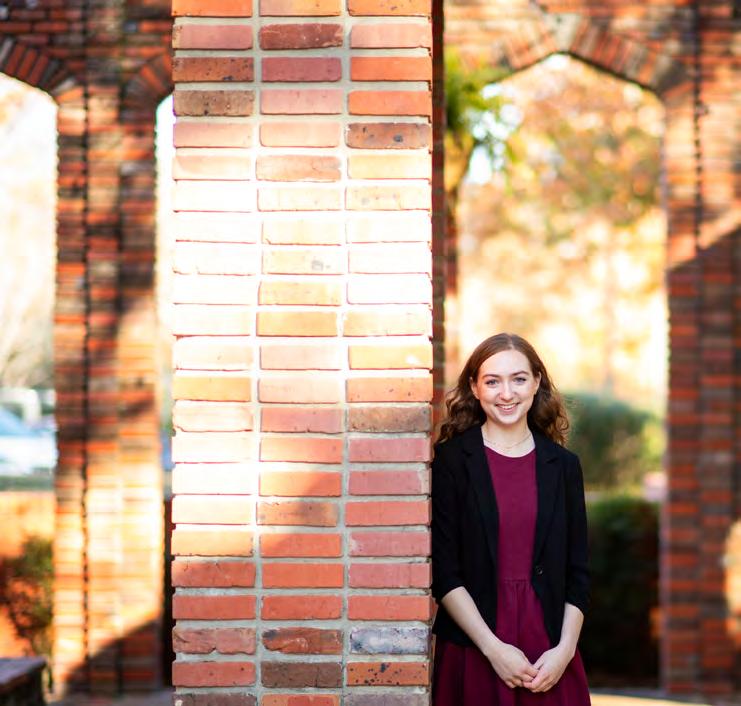
This issue of Aletheia tells the story that Honors at Mississippi State is greater than any list of programs or opportunities. The whole really does outpace the sum of its parts— and it is in that surplus where students begin to see themselves making a difference in the world. I’ll close with the comments from senior English major Rowan Feasel, who spent a summer as a Delta Scholar developing an educational campaign in collaboration with her hometown public school district on the challenges and possibilities of new technology in the classroom.
“I’ve had so many opportunities to take fun classes on authors like Tolkien, meet cool people, present research papers at conferences and study abroad in Oxford, England. For all these opportunities, I had to take risks; and I’m so grateful that the Honors College has taught me the importance of taking such risks and embracing those opportunities.” Rowan understands the power of that “something more” that defines the Shackouls Honors College at Mississippi State. I hope you enjoy reading about Rowan and other members of our honors community in this special issue.
Respectfully,
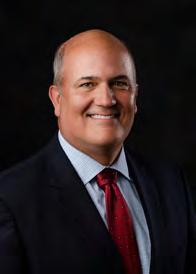
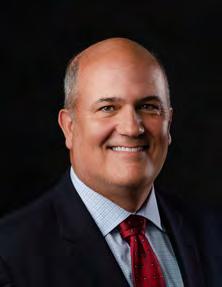
Dr. Tommy Anderson Dean, Shackouls Honors College

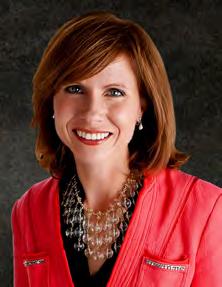
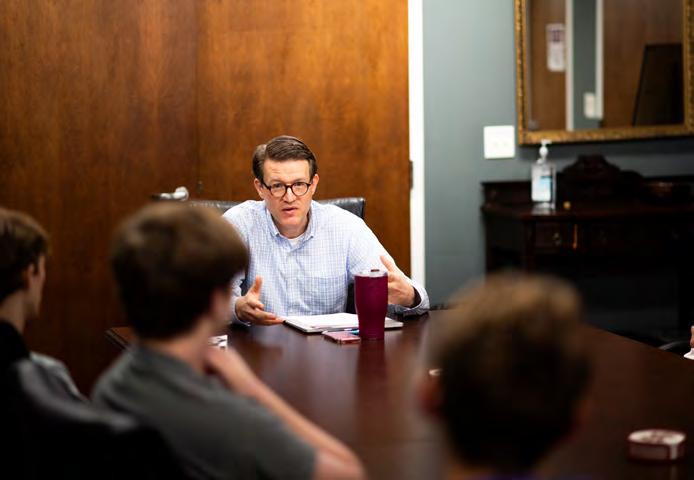
DR. TOMMY ANDERSON
DEAN AND PROFESSOR OF ENGLISH
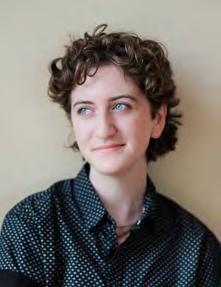
DR. ANASTASIA ELDER
ASSOCIATE DEAN, DIRECTOR OF UNDERGRADUATE RESEARCH AND PROFESSOR OF EDUCATIONAL PSYCHOLOGY
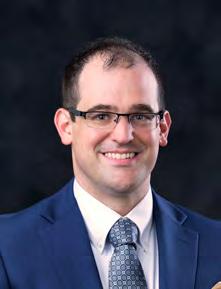
GEORGE K. DUNN
ASSISTANT DEAN
DR. DAVID HOFFMAN
DIRECTOR, OFFICE OF PRESTIGIOUS EXTERNAL SCHOLARSHIPS, MENTOR, PRESIDENTIAL SCHOLARS AND FULL PROFESSOR OF ANTHROPOLOGY
DR. JONATHAN BARLOW
DIRECTOR, EARLY HONORS ACADEMY, HONORS INSTRUCTOR, ASSOCIATE DIRECTOR, DATA SCIENCE, DATA SCIENCE ASSISTANT TEACHING PROFESSOR
ELEANOR M. GREEN
CO DIRECTOR OF DELTA SCHOLARS
DR. KECIA JOHNSON
CO DIRECTOR OF DELTA SCHOLARS, ASSISTANT PROFESSOR OF SOCIOLOGY
DR. MATTHEW PEAPLE
ASSISTANT PROFESSOR
DR. BRIAN PUGH
LECTURER AND PUBLIC SERVICE MENTORS
DR. HOLLI SEITZ
MENTOR TO PRESIDENTIAL SCHOLARS AND ASSOCIATE PROFESSOR OF COMMUNICATION
SHACKOULS HONORS COLLEGE NEWSLETTER ISSUE 8, FALL 2025
Direct comments or questions to: SAM KEALHOFER | 662.325.2522 shackoulshc@honors.msstate.edu
P.O. Box EH | Mississippi State, MS 39762

DR. DON SHAFFER
MENTOR TO PRESIDENTIAL SCHOLARS AND PROFESSOR OF ENGLISH
DR. CHRISTOPHER SNYDER
PROFESSOR OF HISTORY AND DIRECTOR OF BRITISH STUDIES
DR. DONNA L. CLEVINGER
SENIOR FACULTY FELLOW AND PROFESSOR OF COMMUNICATION/THEATRE
DR. CHRISTIAN FLOW
FACULTY FELLOW AND ASSISTANT PROFESSOR OF HISTORY
DR. ANTHONY NEAL
FACULTY FELLOW AND PROFESSOR OF PHILOSOPHY
DR. ERIC VIVIER
FACULTY FELLOW AND ASSOCIATE PROFESSOR OF ENGLISH
DR. DANIELLE WYLIE
FACULTY FELLOW AND ASSISTANT TEACHING PROFESSOR OF PHILOSOPHY
CAMERON EVERSON
PROJECT COORDINATOR
NOAH HOLBROOK
OUTREACH AND RECRUITMENT COORDINATOR
MORGAN HUNT
COORDINATOR FOR FELLOWSHIPS AND SCHOLARSHIPS
KIERSTYNN HUNTER
ADMINISTRATIVE ASSISTANT II
JANNA LAWYER
DIRECTOR OF DEVELOPMENT FOR SPECIAL PROJECTS
CORRINE RODRIGUEZ
FISCAL OPERATIONS BUSINESS MANAGER I
TAMMY SMITH
ADMINISTRATIVE ASSISTANT II
WRITERS FOR ALETHEIA
SAM KEALHOFER
EMMA JARAMILLO
EDITOR FOR ALETHEIA
SAM KEALHOFER
PHOTOGRAPHERS FOR ALETHEIA
GRACE COCKRELL
SAM KEALHOFER
JAY SNODGRASS
BETH WYNN
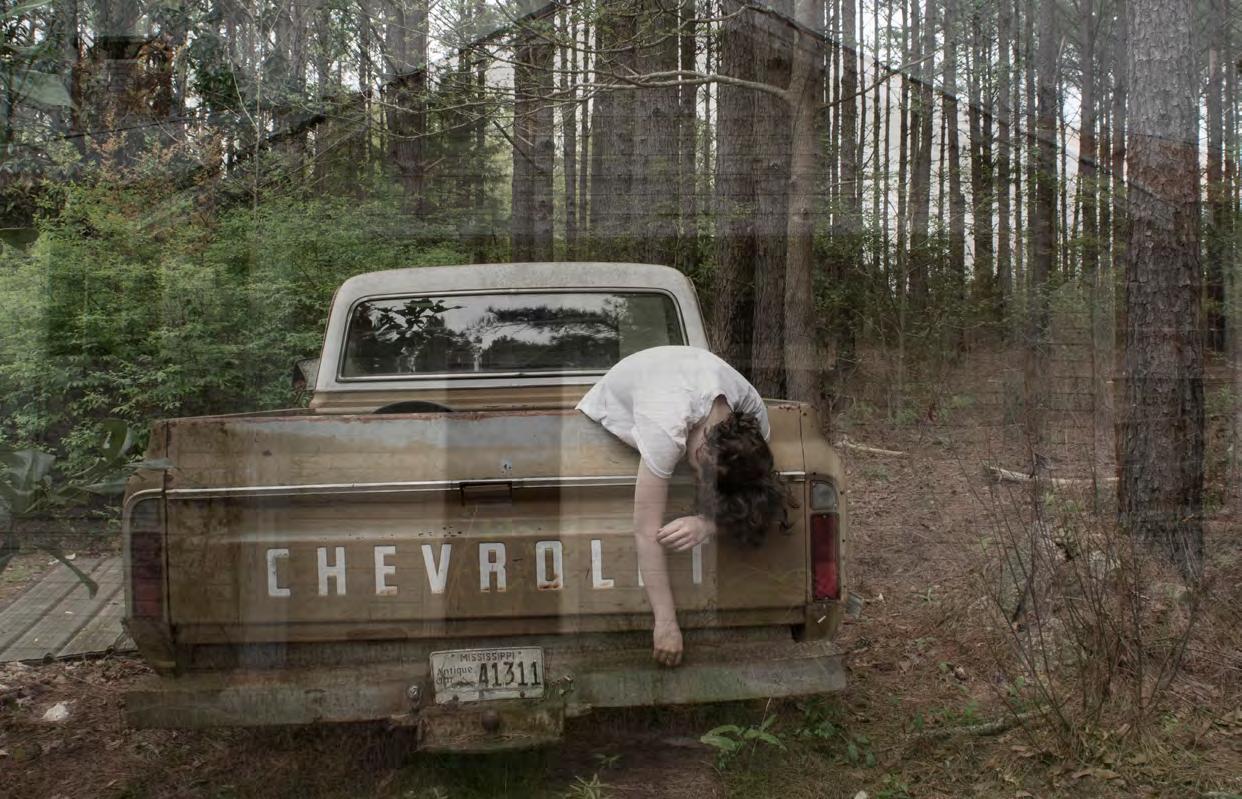
At Mississippi State University’s Shackouls Honors College, students are encouraged not only to excel academically but to explore the full range of their interests. For Jay Snodgrass, an architecture student from Meridian, this encouragement opened the door to a creative journey that transcends their major.
Entering the fourth year in a demanding five-year architecture program, Snodgrass has discovered that their true artistic voice emerges most powerfully through photography.
“I work primarily in the photographic medium, though I occasionally branch out into graphite, charcoal and some painting,” Snodgrass said.
The work draws heavily on themes of memory and nostalgia, capturing the simultaneous grime and beauty of the Deep South.
“It has traces of surrealism and a certain level of unease and discomfort that I’ve always found alluring in artistic works,” Snodgrass said.

What makes their art especially compelling is the way it communicates what words often cannot. Snodgrass lives with partial aphantasia, which means the brain thinks less in images and more in abstract concepts.
“I have a very limited internal monologue and partial aphantasia, so I think primarily in abstract concepts. This can make communicating my ideas frustrating at times,” Snodgrass said. “My art is a method of communication that remains true to my intentions and is less likely to be misconstrued; it also gives life to the half-images that form in my imagination. Oftentimes, there are no words to express my thoughts, but images are a touch easier,”
This makes their art not just a hobby or academic exercise, but a vital mode of communication that works as a bridge between their inner experience and the outside world.
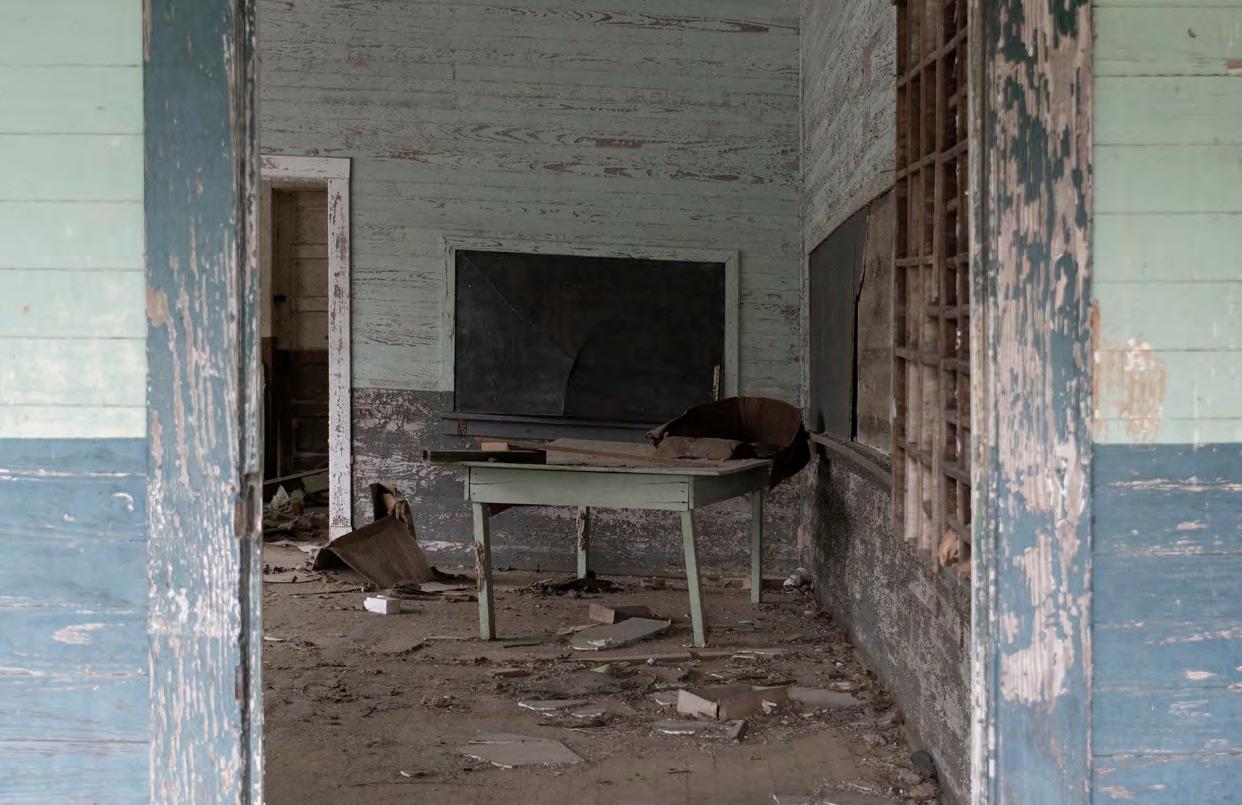
Snodgrass’ artistic awakening began at MSU, and they credit their involvement with "The Streetcar," the Honors College’s student-run literary and arts publication, as a turning point.
“I don’t know if I would be a photographer at all if not for my journey at MSU. I became involved with 'The Streetcar' in my first year and was quite enamored with the film photography submissions we received that year,” Snodgrass said. “My second year, I purchased a film camera and later registered for an introductory photography course in the art department, where I quickly learned that I knew nothing about the craft of photography—which explained the poor results I had seen when I got my first few rolls of film developed the semester prior. Thankfully, I’ve learned a lot. I’m looking forward to a second, more advanced photo course and continuing to delve into this medium I’ve come to love so much.”
What Snodgrass finds most rewarding is when the work reaches others on a deep level.
“I love when I can reach another person with my work; when someone else feels a deep connection or draw,” Snodgrass said. “My creative process is very individual and often solitary, and I primarily focus on my own vision. When someone sees

themselves in my work, it’s like a meeting and recognition between souls. We are seeing a bit of ourselves in each other.”
Snodgrass’ dual passions for art and architecture enrich one another. Snodgrass sees the motifs and themes that appear in their photography weaving into their architectural designs.
“Architecture in the real world is often much more practical and logistically focused than it is presented in school, in a way that I think is detrimental to the profession and the built environment. Having an understanding of artistic principles makes a person a better architect,” Snodgrass said.
Snodgrass hopes to create an inhabitable art through their future work, building spaces that reflect the complexity and texture they explore through photography.
“I hope that by creating inhabitable art, I will be able to make the world a little less one-dimensional,” Snodgrass said. For Snodgrass, art is not just an add-on to academic life; it is a vital means of expression and connection, shaped by their unique way of seeing the world. Their journey reflects the importance of giving students a space where they are encouraged through opportunities like "The Streetcar" and a culture that values exploration beyond one’s major. Students in MSU’s Shackouls Honors College find an environment where discovery and growth happen every day. l
Since joining Mississippi State University’s Department of History and Shackouls Honors College, Christian Flow has worked to support a classroom culture of dialogue, curiosity and the shared pursuit of meaning.
“Finding yourself in a room with 15 other people who have all just read the same text and are there to talk about it is actually a rare privilege,” Flow said. “A lot of very expensive material, social, historical infrastructure had to be erected to get you into that classroom. It’s precisely not a humdrum thing.”
That belief in the classroom as a unique and valuable ecosystem has guided his career since his first full-time role as a visiting assistant professor in the Shackouls Honors College in 2019. He then spent two years teaching classics at the University of Southern California as a postdoctoral fellow before returning to Starkville in 2022 as an assistant professor of history and faculty fellow in honors.
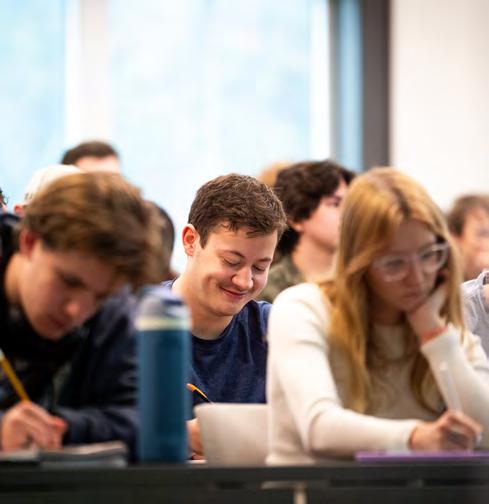
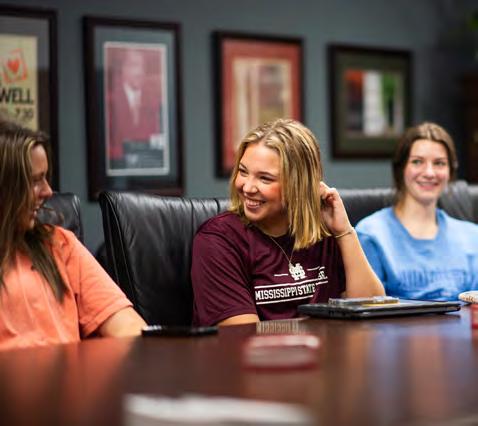
At MSU, Flow primarily teaches the honors college’s signature, two-semester Quest sequence. This pair of seminar-style courses introduces a cohort of about 15 students to foundational texts from ancient history to the present. The format is intentionally unscripted.
“These sessions are a dialogical give-and-take between all participants,” he said. “They’re not lectures. They’re conversations built from close reading and shared inquiry.”
B eyond Quest, he teaches both undergraduate and graduate courses that span his range of academic interests. Whether his subject is the historiography of science, the history of information or theories of time itself, Flow always emphasizes a balance in course design between technical demands and simple curiosity.
“I like the idea of tr ying to be rigorous and trying to be interesting and making clear that the two are synergistic,” he said. “If I’ve sacrificed one for the other, I feel like something’s not right.”
The same balance between structure and wonder describes his approach to each of the primary texts—several of them from centuries or even millennia ago—on which sessions of his honors seminars are centered.
“ With texts like these, we want to work on reading both rigorously and meaningfully,” he said. “By rigorously, I mean using an analytical, evidence-based lens that would be recognizable to a professional scholar. By meaningfully, I mean in a way that reveals the texts to be handling issues— everything from what it means to count in a society, to how to conduct a meaningful conversation, to our responsibilities as citizens—that continue to concern people of the 21st century.”
Still, he admits teaching comes with challenges. Surprisingly, they are the same challenges students often face and ones he admits plagued him when he was a student himself.
“Routine, fatigue and mechanization; not wanting to be there, or only wanting to check a box,” he said. “You push back on it with the reminder that the intellect, reading and conversation process is not some kind of abracadabra exercise—it is an evolving commitment with its highs and its lows. The balance of it can’t be measured after a single session—often not even after a semester.”
That commitment to the entire process of learning gives his classes a distinctive tone: serious about ideas but alive with humanity. Some of his favorite memories come from those moments of unexpected humor—a student linking the “Bhagavad Gita” to heavy metal, or another reimagining parts of St. Augustine’s “Confessions” as a tumultuous relationship saga.
“Those whimsical moments tend to stick with me,” he said. “In part because they’re funny, in part because earnest humor—not ridicule—can be a sign that we’re getting it: We have a high enough familiarity with the text and with each other to joke about it, and we’ve realized it has enough to do with us to support these witty connections.”
For Flow, it is precisely connection that is at the heart of teaching.
“Communication—the less humdrum the better—is an existentially comforting activity,” he said. “The classroom is a retreat—there aren’t so many of them—where that kind of communication can happen, where everyone’s attention is in one place, on one text, at one time. That doesn’t get old.”
In a world increasingly mediated by screens and shortcuts, Flow sees the classroom as one of the last places that insists on slowing down and thinking deeply. Its challenges aren’t obstacles but invitations to rethink what we know and reconsider what we overlook. As he put it, remembering an adage his own teachers used with him: “It’s about making the familiar strange and the strange familiar.” l
"I like the idea of trying to be rigorous and trying to be interesting and making clear that the two are synergistic. If I’ve sacrificed one for the other, I feel like something’s not right."
~ Christian Flow
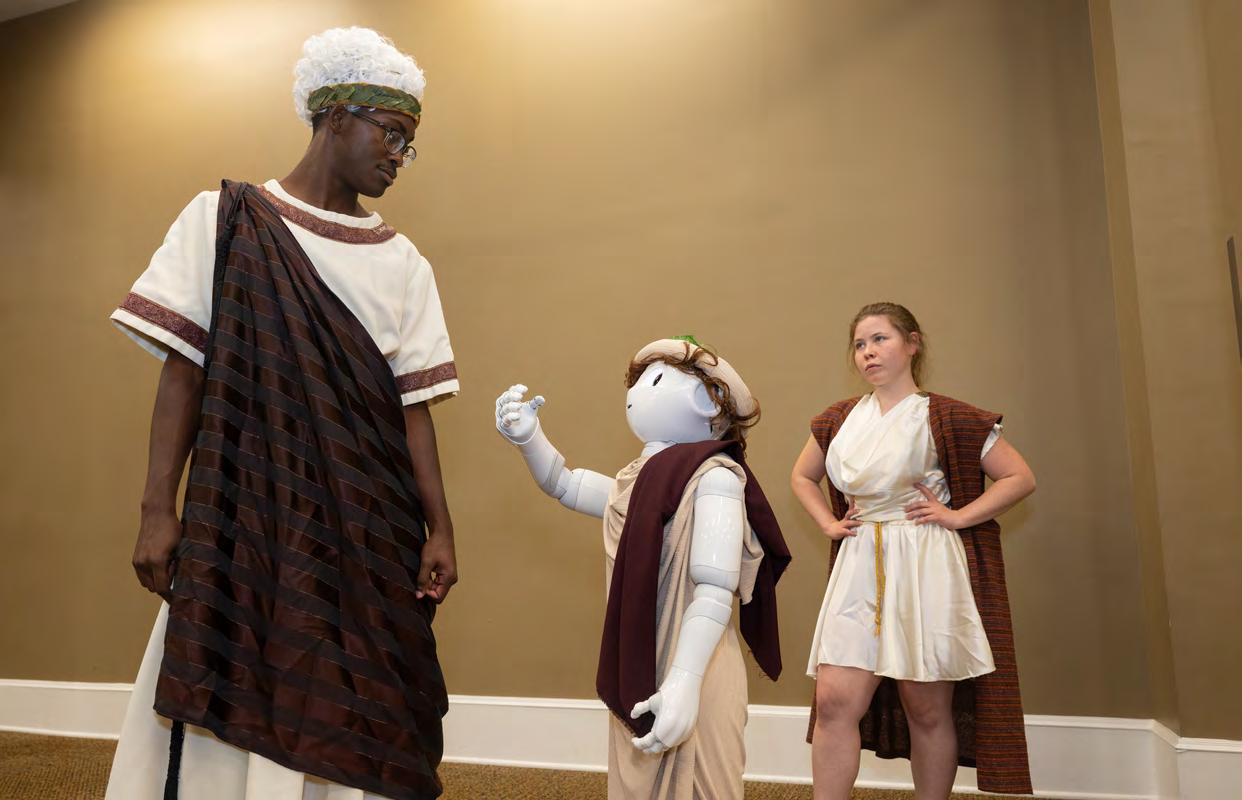
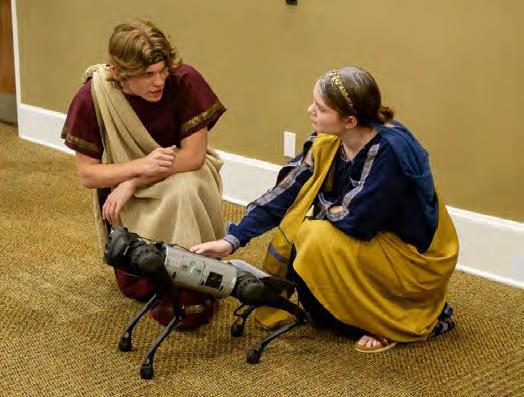
In September 2024, the Shackouls Honors College staged a production that was both ancient and cuttingedge. As part of its annual Classical Week, the college brought the 2,000-yearold Roman comedy Trinummus, or Three-Dollar Day, to Bettersworth Auditorium. But in this production, the actors performed alongside robots. These humanoid robots were programmed by Mississippi State engineering students, who designed gestures and responsive movements, so the machines could perform alongside the human actors.
What made the play remarkable was not just its concept but the dedication
behind it. The students who performed, managed costumes and animated background setting gave up evenings, weekends and free time to make it possible.
“These students have worked very hard and made personal sacrifices to bring this timely story to the stage,” said director Donna Clevinger, senior faculty fellow in the Shackouls Honors College and professor of communication/ theatre. “They all took their roles seriously and had some fun along the way.”
The cast included Richard Jones as the Town Merchant; Amelia McCall as

the Dancer and Sycophant’s Attendant; Maggie McCord as Megaronides; Hays Romano as Callicles; Richard Sullivan as Lysiteles; Noah Atkins as Philto; Brayden Alford as Lesbonicus; Kore Pool as Stasimus; and Stephen Weathersby as Charmides.
For the students, performing with robots brought a once-in-a-lifetime element to their acting experience.
“You don’t get to see this kind of play very often,” said Sullivan, a freshman communication, media and theater major from Flowood. “I enjoyed being a part of this unique experience and getting to share that with people.”
McCall, a sophomore majoring in biology and psychology from Picayune, said, “It has been interesting to work on Trinummus. I have done a lot of productions in the past, but never one like this.”
Behind the scenes, a team of Shackouls Honors College students worked tirelessly to ensure every cue, scene change and costume adjustment happened on time. Stage manager Maddy Green kept the production on track while Emily Ainsworth and Alicia Young managed costumes and props, helping give the show its distinctive visual style.
“This is my first time managing a production. It has been interesting challenging myself and learning new things about performances,” said Green, a junior majoring in anthropology and religion from Clinton.
There was a true collaborative spirit in the project, which drew not just on acting skills but on design, engineering and creative problem-solving.
The engineering side of the production involved graduate students and researchers in robotics, extended reality and humancentered computing, who worked closely with the cast.
The per formances also included a post-show discussion each night, part of the Orators Lecture Series, now in its seventh year. Students from the play joined faculty from the Shackouls Honors College and the Department of Computer Science and Engineering to talk with audiences about the theme “The Intersection of Creative Expression Through Transformational Technologies.”
The conversations and performances left a lasting mark. What began as a bold experiment in blending ancient theater with modern robotics sparked an even bigger idea. This year, MSU introduced a special topics class built around the concept of theater with AI robots. The course allowed students to write and develop productions that integrated robotic performers, continuing the work that began with last year’s Trinummus.


"It has been interesting to work on Trinummus. I have done a lot of productions in the past, but never one like this.”
- Amelia McCall
The course gave students the opportunity to explore questions they first encountered during the production: How do you rehearse with a robot? How do you choreograph timing between human speech and machine movement? And how can technology help tell a story in ways that were never possible before?
Projects like this do not happen by accident. They happen because the Shackouls Honors College fosters an environment where bold ideas are encouraged and supported. Under Clevinger’s guidance, the students were free to experiment, merge disciplines, and learn in ways that blur the boundaries between art and science. Their hard work paved the way for brand-new academic opportunities. They came into the project as students working on a unique stage production and left as pioneers in a new kind of theater. l
by Emma Jaramillo
George Dunn wears many hats. He advises, recruits and even teaches. But it’s not often we get to hear from him directly about what drives his work with students.
Dunn began his journey at Mississippi State in 2007, working a joint role between the Office of Admissions and Scholarships and the MSU Alumni Association. In 2011, Dunn started as the coordinator of student services and outreach for the Shackouls Honors College. From 20162019, he worked for the MSU Graduate School. In 2019, he returned to the Honors College, where he still serves.
“I was a bit of a paper-pusher at the Graduate School,” he said. “I wanted to be in a more student-facing role; I wanted to work with students in that way, which I hadn’t gotten to yet.”
Dunn did not take the opportunity lightly. When faced with obstacles, he’s learned to overcome them. Where others might see inconvenience, Dunn sees opportunity.
“COVID-19 hit. I say that as if it were a hurricane,” he said. “I started in July 2019, and by March of 2020, there were no students on our campus. And I felt like I had an opportunity to reinvent that relationship. We didn’t have any students on campus, but we were still advising them.”
During the pandemic, he focused on building individual relationships with students.
“It meant I had to be more flexible with my time. All of a sudden, I was taking calls from students at night because they had my cellphone number. So, I became approachable from the angle that students could text or call me,” Dunn said.
Dunn’s focus on interpersonal relationships with students and approachability outlasted the pandemic and brought him an unexpected joy.
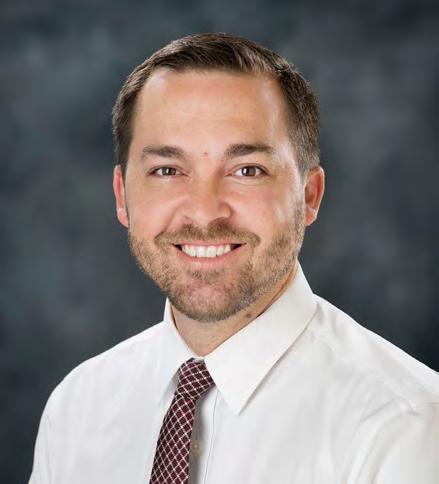

“The highest honor—I have two great honors in this role—is when a student asks me to write a letter of recommendation for them. That’s a great honor. The second is being invited to their wedding because I think both of those show that honors has been able to build a relationship with that student. That is something that lasts. It is at the core of the college— that students build a relationship with honors.”
Dunn said.
“I believe in honors. I really do. I believe in the mission of honors as something that can both elevate the status of Mississippi State and the status of the individual students,” Dunn continued.
He believes in honors because, as he puts it, honors is a place where “the sum is greater than the parts.”
“I’m glad Dr. Christopher Snyder, in 2011, was willing to take a chance on me. I’m glad Dr. Tommy Anderson was willing to take a chance on me as an assistant dean,” Dunn said.
At the end of the day, Dunn’s work comes down to caring about people. Whether he’s helping a student figure out their next step, writing a recommendation letter or celebrating their successes years later, his approach stays the same—be genuine, be available and believe in them. It’s that steady mix of guidance and encouragement that’s made him more than just an advisor. For many students, Dunn has become the kind of mentor who makes MSU feel like home. l
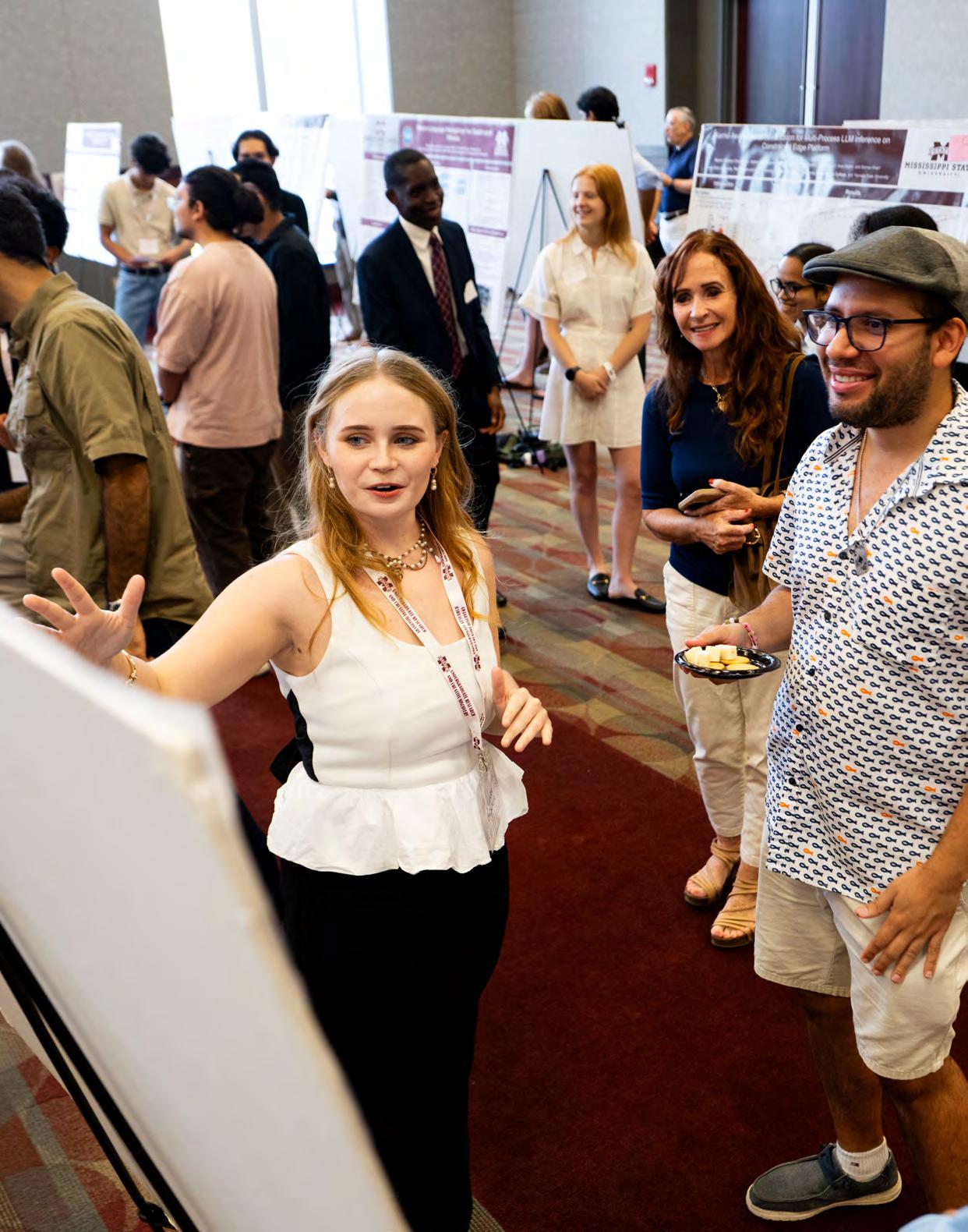
SHACKOULS HONORS
COLLEGE STUDENTS
PRESENT AT THE SUMMER 2025 UNDERGRADUATE RESEARCH SYMPOSIUM
In the midst of a busy fall semester at a large Southeastern Conference school, one student’s college experience is being scored by more than assignments and tests. It’s a life marked by music.
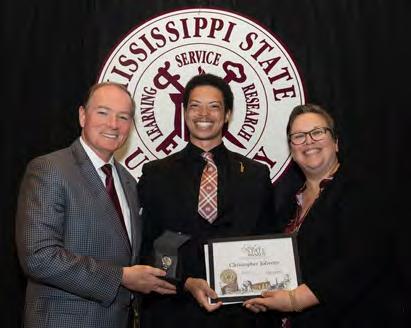
Christopher Jolivette, Shackouls Honors College junior from McCalla, Alabama, double majoring in psychology and English, has deep musical roots: a great-uncle who was a prominent drummer in Louisiana, a father who played trombone and a mother who loves her clarinet.
For Jolivette, music feels less like a passion and more like a calling.
“Music runs in my blood,” he said. “It’s a part of my existence. I can’t walk anywhere on campus without having jazz in my ear.”
From the moment Jolivette began playing piano at age 7, he heard a universal language of self-expression in music. Though he admits his current piano skills are lackluster, those early lessons grounded Jolivette in the fundamentals of music theory, setting the stage for what would become a lifelong journey. What captivated him most, however, was not just the music itself, but the one making it happen: the conductor.
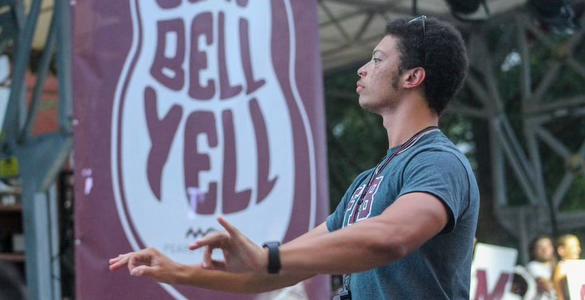
“I grew up watching orchestras perform, and I was always enamored by the person on the stand,” Jolivette said. “It was the purest expression of the music I was hearing.”
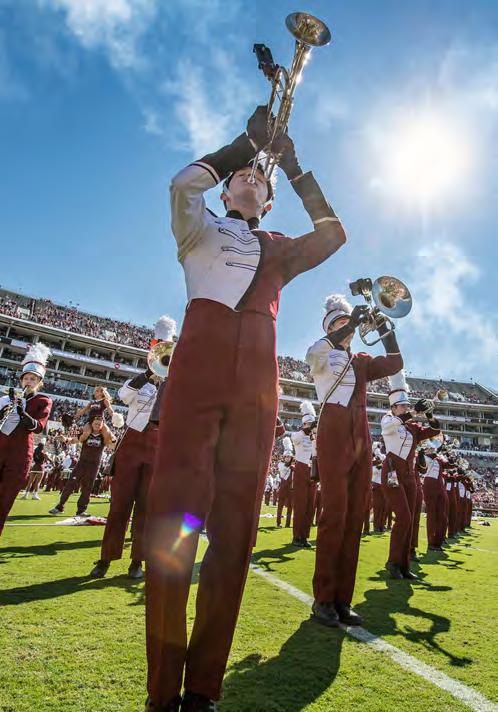
That fascination led him to audition for the drum major in high school. When Jolivette came to Mississippi State, he continued that mission and earned the coveted role of drum major in the Famous Maroon Band. Through it, he has conducted performances at football and basketball games and other events, becoming a defining presence in the university’s musical life.
It’s a role Jolivette views not as one of authority, but of stewardship.
“Leadership is often misconstrued as something tied to power or recognition,” he said. “To me, it’s about service. I lead by earning trust, and my greatest goal is to leave the position better than I found it.”
Whether guiding a halftime show or offering encouragement to first-year band members, Jolivette emphasizes the communal spirit of music-making.
“There’s a sort of performer’s high I get from conducting,” he said. “I get to express myself through the music and be a part of a larger community of musicians all at once. What more could a musician want?”
“Leadership is often misconstrued as something tied to power or recognition. To me, it’s about service. I lead by earning trust, and my greatest goal is to leave the position better than I found it.”
- Christopher Jolivette
That same energy informs Jolivette’s work as president of Honors OnStage, a student organization that gives members of the honors college a creative platform. It’s one of many ways he bridges artistry and leadership across campus.
“Helping other students share their talents has been one of the best ways to give back,” he said.
Lately, Jolivette’s favorite playlist includes eclectic selections like “Ain’t No Half Steppin’” by Heatwave, “Alone” by the Don Ellis Orchestra, “Bibo No Aozora” by Ryuichi Sakamoto, “Domino Line” by Casiopea, “Shooting Star of Love” by Minako Yoshida and “The First Circle” by Pat Metheny.
But Jolivette doesn’t want to just listen to his favorite songs; he wants to play them. Like so many before him, he loves to perform, imbuing each song with his own personal flair.
“Every Jazz Ensemble concert holds a special place in my heart,” he said. “Being able to express myself on the saxophone with a jazz band is one of the best feelings in the whole world. I remember specifically playing Buddy Rich’s ‘Channel One Suite,’ one of the coolest, smoothest and hardest songs that I have ever played. There was something so amazing about bringing everything together on the night of the concert for this song that we had spent months rehearsing.”
An accomplished multi-instrumentalist, Jolivette plays the alto and soprano saxophones, piano, flute and clarinet. He also enjoys arranging music in his spare time, often publishing his work using online platforms. As a part-time music instructor at his former high school, he continues to give back, arranging and coaching ensembles at both the high school and university levels.
“No matter what happens on the field, the band plays on,” he said. “There’s a sort of undying positivity in that which pushes me, even in my daily life. No matter what’s happening outside of myself, I will play on.”
In the Shackouls Honors College, where leadership, creativity and curiosity converge, Jolivette has found the perfect home for his talents. His story is a reminder that music doesn’t just fill the air—it can fill a life with a mission to lead. l
PAYTON DAVIS
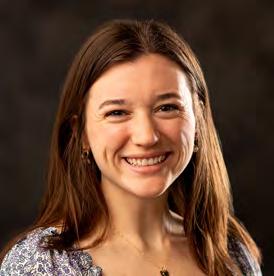
Agricultural Economics Major from Ocala, Florida
My research focuses on agricultural expansion and urban sprawl and their effect on water quality in the United States. My goal is to learn more about how the practices in our everyday lives affect water quality. I also have had personal goals such as learning how to improve my writing and speaking skills. After graduating, I plan to enroll in law school and become an agricultural or environmental lawyer.
SURABHI GUPTA
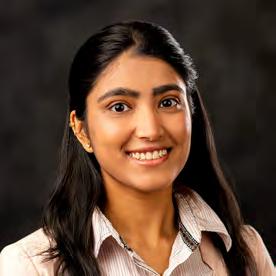
Sustainable Bioproducts Major from Jaipur, India
I have always been interested in working with marine organisms, and during my undergraduate classes, I developed a keen interest in applying data science to better understand ecology. This project was the perfect intersection of computational science application in marine ecology, as it was designed around my research interests. I leveraged geophysical data to map ecological benthic mussels and corals at a methane seep site in the north Atlantic Ocean. My research offers an unconventional alternative to traditional ecological methods, which aren't feasible for mapping sessile organisms in the deep sea.
ANNIE KIRKPATRICK
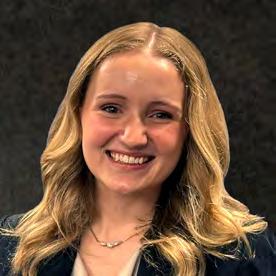
English Major from Birmingham, Alabama
My thesis explores how the “belle gone bad,” a literary trope first created by antebellum Southern women writers, appears in film. By considering the bad belles of two films, David Selznick's “Gone With the Wind” (1939) and Sofia Coppola's “The Beguiled” (2017), I discuss how the cultural conversation around southern women's sexuality and ambition has evolved over nearly 80 years. This project combined my three academic loves— literary analysis, film criticism and feminist theory—making it the perfect end to my time at Mississippi State. Through it, I hoped to spotlight women's experiences that are often overlooked or underappreciated in scholarly conversation. I believe that my thesis takes a step toward remedying this gap in a way that honors women of the past and advocates for women of the future. Though the road to defense was challenging, laden with late nights, long days and short breaks, the joy of passing the defense and contributing meaningful research to my field was well worth the journey.
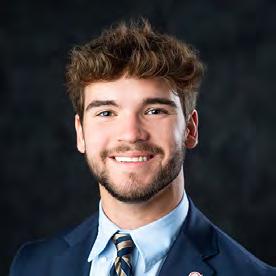
JOSHUA PHILLIPS
Political Science and Public Administration Major from Birmingham, Alabama
My thesis examines why the United States overwhelmingly prioritizes short-term refugee aid—even though millions of displaced people remain in long-term limbo for years. I used both quantitative data analysis and interviews with experts across government and humanitarian organizations to figure out what’s driving this mismatch. My goal was to bring more attention to how strategic and political decisions shape humanitarian outcomes, and show how U.S. policymakers could better align their aid with longterm solutions that equip refugees to rebuild their lives. I’m now working with my thesis director to adapt the research into an op-ed as well as two academic publications. Looking ahead, I hope to expand on this work through future research in partnership with the University of Jordan, evaluating technical and vocational education and training (TVET) programs for Syrian refugees as a case study for improving long-term refugee assistance systems.
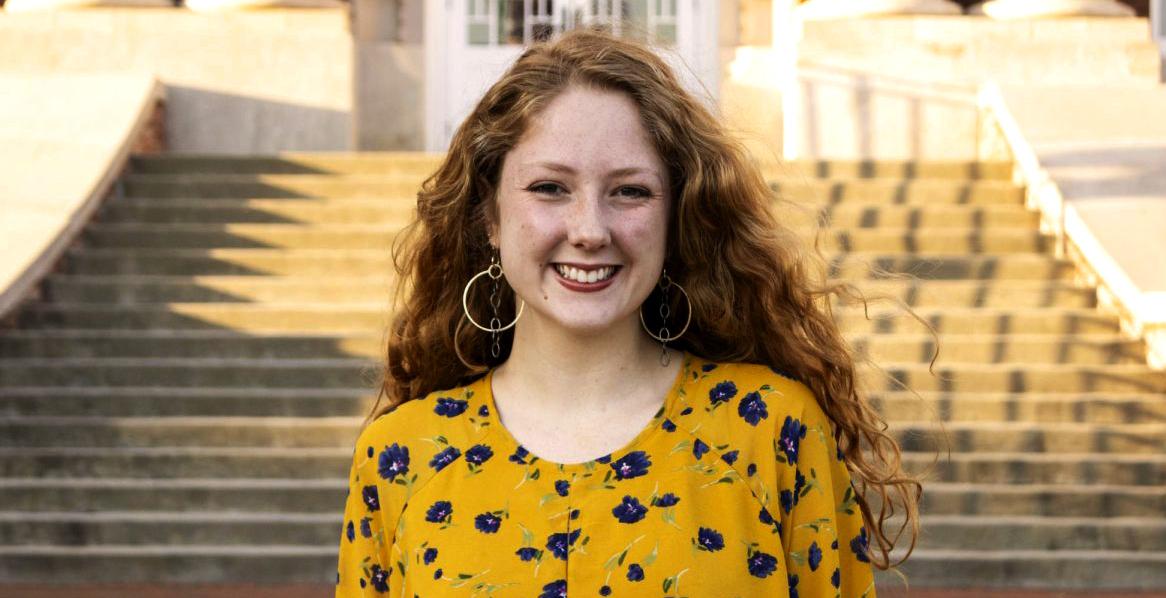
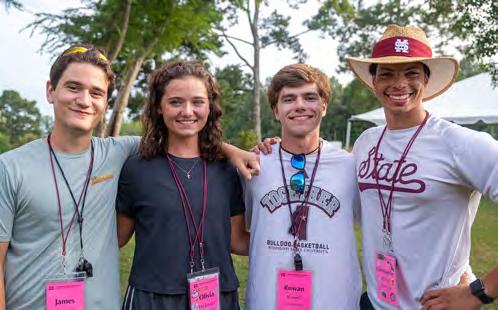
When most people hear the word risk, they think of danger. For Rowan Feasel, risk has come to mean something different: growth.
A senior English major from Union, she’s taken on all types of risks at college—researching across disciplines, traveling the Mississippi Delta and developing resources for teachers in her hometown. Her story shows the boldest risks often come from choosing to care deeply and act on it.
“I guess no one is shocked that I love to read,” she said, “but I particularly love Southern literature and feminist retellings of mythology.”
Those passions shape her honors thesis, which explores how Sylvia Plath tied classical myth to her poetry—a project blending her English and classics backgrounds. But that’s just one side of her curiosity.
“I’ve done undergraduate research in the psychology department before,” she said. “I mainly analyzed student surveys about books used in first-year experience courses across the nation.”

That willingness to cr oss disciplines—asking questions that span from English to psychology, taking minors in classics as well as pre-law—is a hallmark of the Shackouls Honors College. Students are encouraged to take intellectual risks, and Feasel has embraced that fully.
This past summer, she took one of her biggest leaps yet by enrolling in the Delta Scholars program.
“I rode through the flat, green fields of the Mississippi Delta, tapped my shoe in blues clubs and toured museums, farms and hospitals,” she said. “I learned about the rich history in places like Clarksdale, but I also attended workshops about community development before actively thinking about ways to contribute to my own communities with a capstone project.”
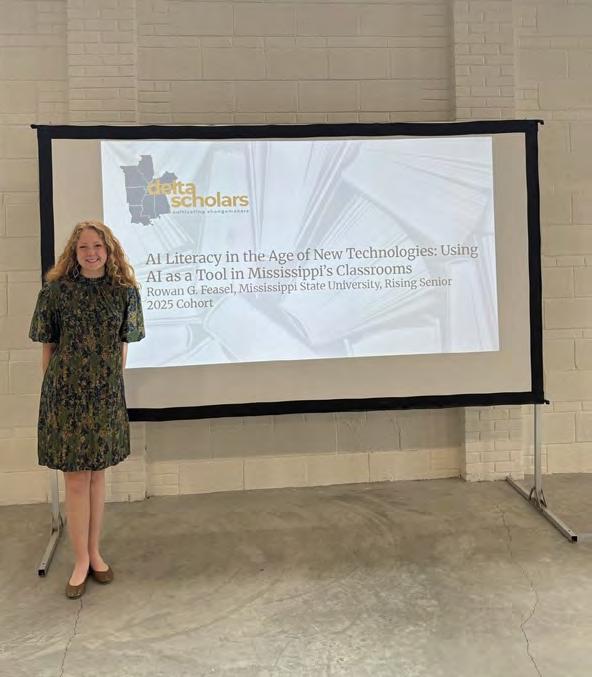
H er capstone became a collaboration with her hometown’s Union Public School District. She’s developing a handout for teachers about artificial intelligence tools— helping them navigate the challenges and possibilities of new technology in the classroom.

“I know many teachers are overwhelmed with having to reshape classrooms in response to the rise of these tools,” she said. “I just hope to provide a resource for them to use as they seek to have conversations about ethical and unethical uses of such technology in middle school and high school classrooms.”
The experience changed her perspectiv e in unexpected ways.
“This summer I had to confront how little time I spent actively helping people outside academic communities,” she said. “The program showed me how people took convictions similar to those I felt in my English classes on topics like inequality, poverty, class, race and civic duty—and then worked to make change.”
That realization led her to a bold decision: She’s applying to law school.
“I want to go to law school so I can seek opportunities to help and advocate for people,” she said. “I’m tired of developing the ability to empathize and building my own sense of integrity in English classrooms without using those skills in communities outside my college campus.”
For Feasel, that decision wasn’t easy. It meant taking on more than most seniors would dare.
“This decision was certainly a risk,” she said. “I was one of the only seniors in the program, and I had plenty of other obligations this summer that would have kept me busy. I’m now balancing writing a thesis and working on a separate capstone project, but the extra work is worth the stress because I feel like I’m pursuing two passions that are important to me. I didn’t have to sacrifice one for the other.”
Feasel is the first to say she didn’t take those risks alone.
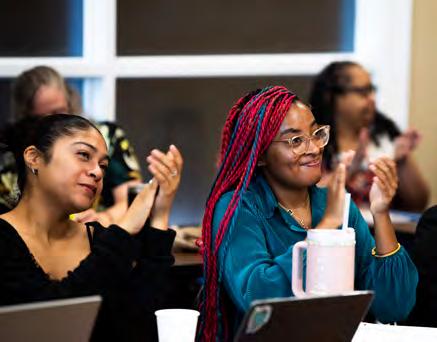
“I had never really thought of the program as a risk because the mentors—Dr. Eleanor Green and Dr. Kecia Johnson—supported me every step of the way,” Feasel said. “The Shackouls Honors College gives you so many opportunities to push yourself and take risks, but then Honors often mitigates the risks, too, by surrounding you with a support system that cheers you on."
“I’ve met wonderful networks of people, learned more about my home state, and prepared myself better for my plans after graduation,” she continued. “I learned that risk-taking can lead to some incredible opportunities when you take risks alongside other motivated peers and with the support of incredible faculty.”
Looking back, Feasel said she’s amazed by how much she’s grown.
“I’m a better reader, thinker and person because of the Shackouls Honors College,” she said. “I’ve had so many opportunities to take fun classes on authors like Tolkien, meet cool people, present research papers at conferences and study abroad in Oxford, England. For all these opportunities, I had to take risks, and I’m so grateful the Honors College has taught me the importance of taking such risks and embracing those opportunities.”
That’s what the Shackouls Honors College represents: a place where risk is never reckless; where ambition is always encouraged; where students are taught the boldest steps often begin with a simple decision: to say yes to new ideas, challenges and new horizons.
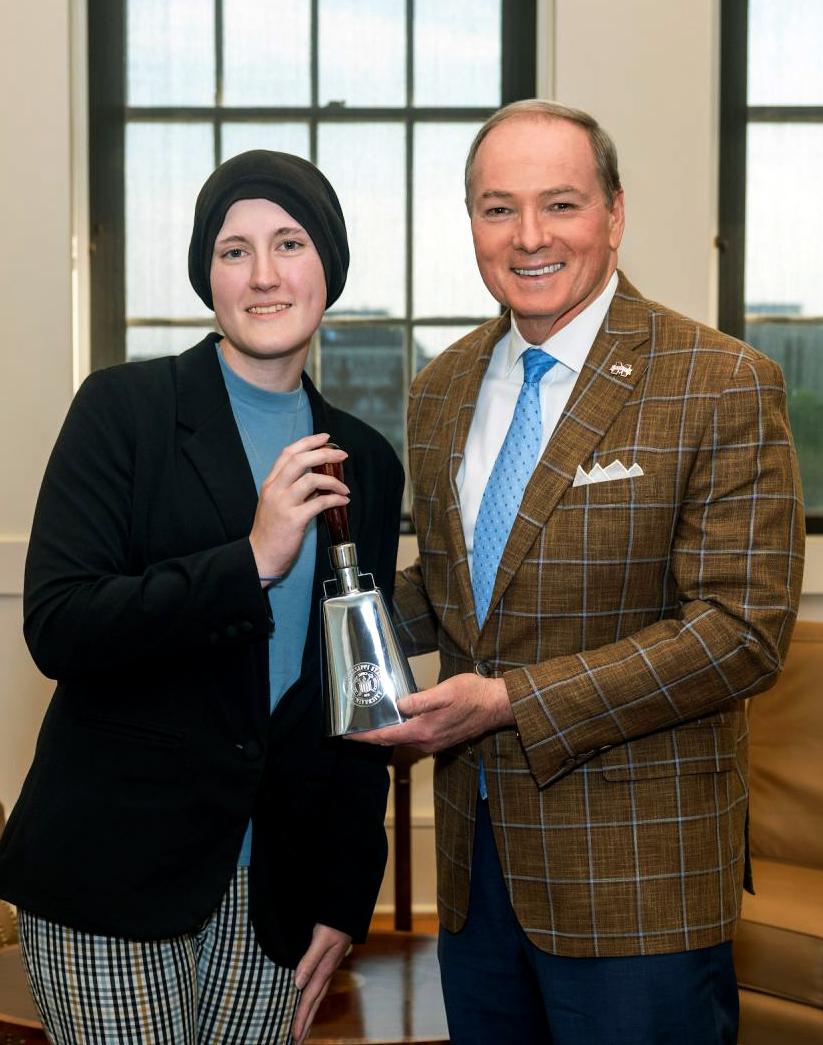
IN APRIL 2025, HONORS SCHOLAR CLAIRE GREEN RECEIVED THE TRUMAN SCHOLARSHIP. SHE IS ALSO MSU'S LATEST UDALL SCHOLAR.



JENNY BALDWIN
FULBRIGHT (2024-25)
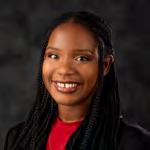
VALENCIA EPPS FULBRIGHT (2024-25)
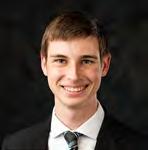
JAKE KASITZ
NOAA ERNEST F. HOLLINGS SCHOLAR (2025)

HANNA CLARK FULBRIGHT (2024-25)
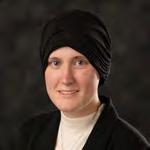
CLAIRE GREEN
TRUMAN SCHOLAR, UDALL UNDERGRADUATE SCHOLAR (2025)
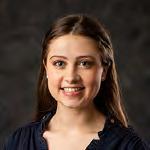
LILY LANGSTAFF
FULBRIGHT FINALIST (2025)
JULIAN DEDEAUX
FULBRIGHT (2025-26)

MADELYNN GREEN CRITICAL LANGUAGE SCHOLAR (2025)
SPENCER LILE
GOLDWATER SCHOLAR, ASTRONAUT SCHOLAR (2025)
SYDNEY DENTON
RHODES FINALIST (2024)
SURABHI GUPTA
DAAD MASTERS STUDY SCHOLARSHIP (2025)
BRITTIN PERDUE
GOLDWATER SCHOLAR, ASTRONAUT SCHOLAR (2025)
DEVIN HUTCHINS
RHODES FINALIST (2024)
ALIJAH JONES FULBRIGHT (2025-26)

HAYS ROMANO
FULBRIGHT UK SUMMER INSTITUTE (2025)
ALEXIS ELLISON
CRITICAL LANGUAGE SCHOLAR (2025)

NYLA JONES
PPIA JUNIOR SUMMER INSTITUTE FELLOW (2025)

ALLY WILLIAMS FULBRIGHT FINALIST (2025)
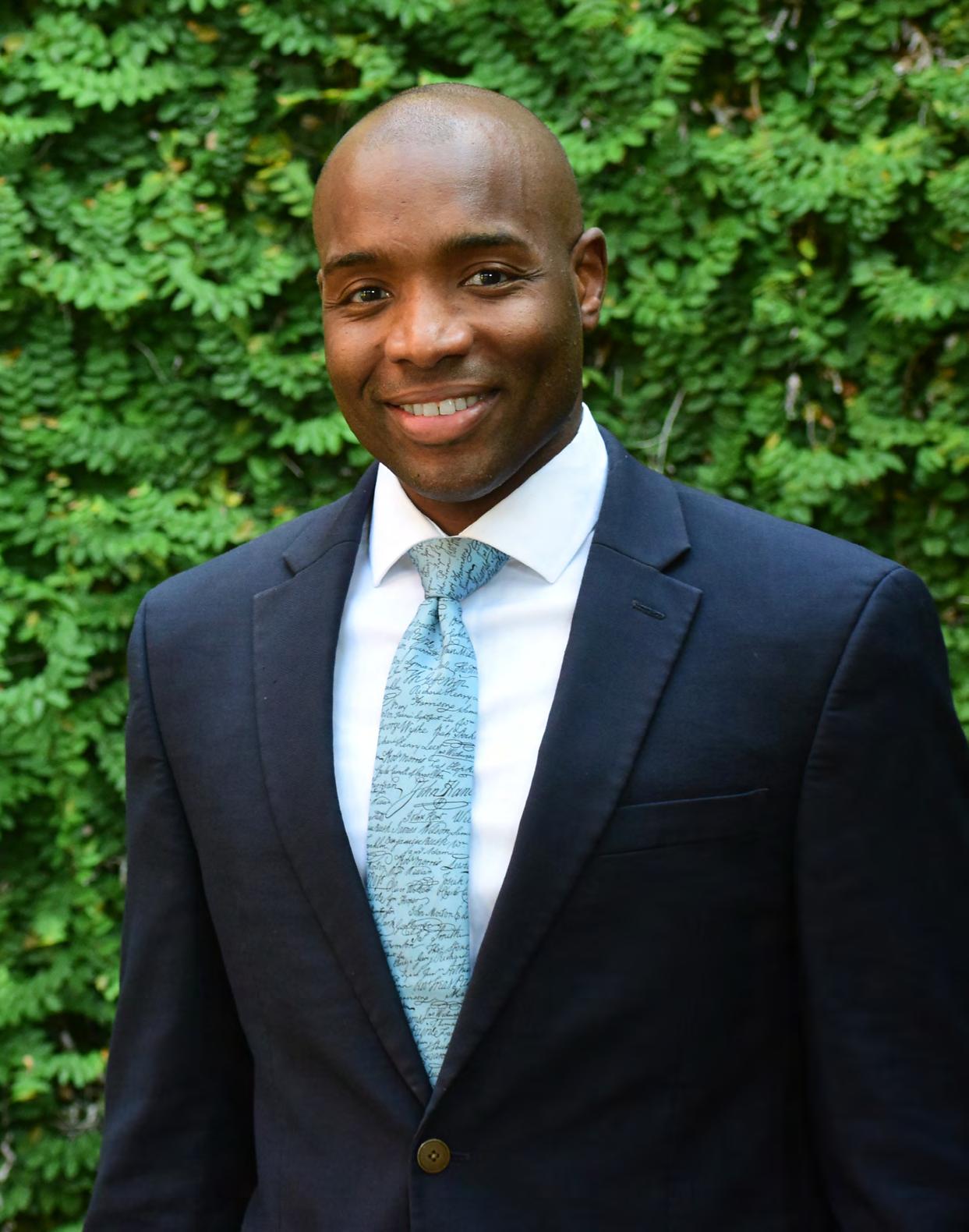
More than 20 years ago, Brian Pugh was a Mississippi State political science student. One day, he walked into a professor’s office looking for a way to get more involved in public service. That conversation led him to the doors of the Stennis Center for Public Service—and changed the course of his life.
Today, Pugh serves as executive director of the very institution that first gave him a glimpse into the power and potential of public leadership.
“My goal now is to do for students what my professor, Steve Shaffer, did for me,” Pugh said. “I never would have imagined that I would one day succeed Rex Buffington as executive director of the Stennis Center.”
Now leading both the Starkville and Washington, D.C. offices of the Stennis Center for Public Service, a bipartisan legislative branch agency created by Congress in 1988, Pugh works each day to carry out a mission that is as vital as ever: to strengthen the ideals of public service in America. From recruiting young people to consider careers in public service to developing leadership programs for congressional staffers, his role is all about planting seeds for the future.
Unlike plotters focused on short-term wins, Pugh sees himself as a strategist— someone invested in long-term change.
“Even if I can’t convince a student to pursue public service as a career, I count it as a success if they come away with a more favorable view of public servants,” he said. “I trust that the work we’re doing now will have a lasting impact.”
That belief drives Pugh to create meaningful programs and relationships that cross partisan lines and focus on solutions,
but he’s quick to admit the biggest challenge is overcoming cynicism.
“Convincing students that public ser vice is more than politics and that our democracy is stronger than they sometimes think is tough,” he said, “but optimism and civic engagement—especially voting—are how we push through.”
In addition to his executive role, Pugh brings passion for service into the classroom, teaching courses on public and community service, U.S. Congress and state legislatures. His mentorship style is simple and sincere: “Lead by example.” He doesn’t just encourage students to work hard—he shows them what that looks like every day.
When it comes to public ser vice, Pugh’s also working to expand the definition.
“I tell students that public ser vice isn’t limited to government jobs or nonprofit work,” he said. “You can serve the public by volunteering, mentoring or giving back to your community in countless ways. You don’t need a title to make a difference.”
In the end, it’s the students that keep Pugh going—those just beginning their journey, just like he once did.
“The most rewarding part of this job,” he said, “is seeing students light up with the realization that they can be part of something bigger than themselves—that there is space for them in public service, no matter what path they choose.”
From Capitol Hill to MSU’s classrooms, Pugh is shaping the next generation of civic leadership—one built not on flashy rhetoric, but on steady mentorship, meaningful engagement and the firm belief that the future leaders are already here; they just need someone to believe in them. l
“The most rewarding part of this job is seeing students light up with the realization that they can be part of something bigger than themselves—that there is space for them in public service, no matter what path they choose.”
- Brian Pugh
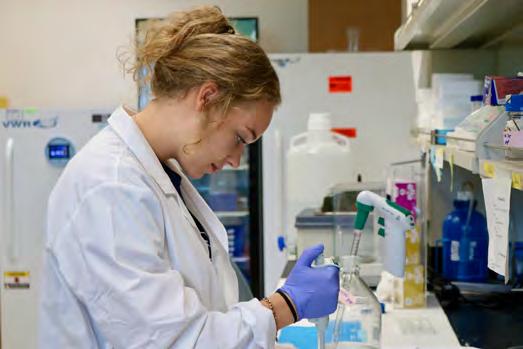
The thought of groundbreaking research often brings to mind Ph.D. scholars, seasoned academics or industry professionals. Yet undergraduates are also making remarkable contributions. In Mississippi State’s Shackouls Honors College, a team of visionary students demonstrates research is not limited to faculty and graduate scholars—it is open to anyone ready to dive in and push the boundaries of knowledge.
Enter "Endeavors," an open-access journal launched in 2024 that publishes the diverse talents of students campuswide.
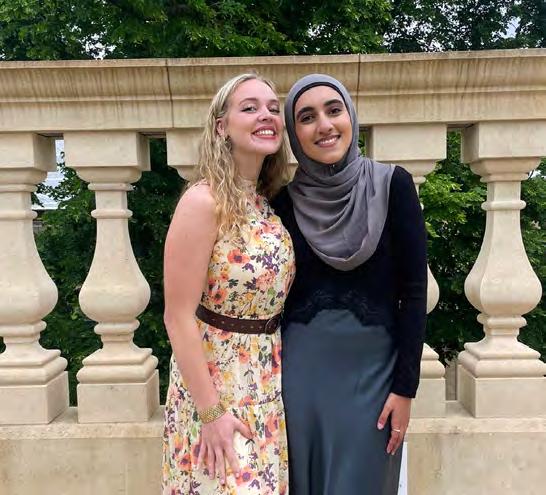
The journal was created by Muneebah Umar, a senior biological sciences major from Starkville, and Alyssa Williams, a senior biochemistry and psychology major from Franklin, Tennessee, who met during their time in the honors college.
What started as an idea between these students turned into a game-changer for undergraduates looking to publish their work and join a community of like-minded researchers.
“ We have both been involved with undergraduate research since our first semester at MSU,” Williams said.
“Research is something necessary to achieve our goals in pursuing a Ph.D. and M.D., respectively.”
Despite the many opportunities available, publishing seemed like an exclusive club for faculty and graduate students. Yet, they met countless undergrads doing phenomenal research with nowhere to showcase it. That’s when the idea clicked: Why not create a platform where undergraduates could not only publish but also get recognized for their hard work? "Endeavors" was born from this realization, designed to empower undergraduate researchers at MSU and beyond.
“The mission of the journal is to provide a supportive and collaborative environment for undergraduate students embarking on their first research endeavors,” Williams said.
“Undergraduate students play vital roles in conducting research,” Umar added, “but those contributions do not always receive recognition because of the competitive nature of peerreview journals and many conferences. Because there were no undergraduate-run student organizations or initiatives catered around research, we sought out many opportunities ourselves.”

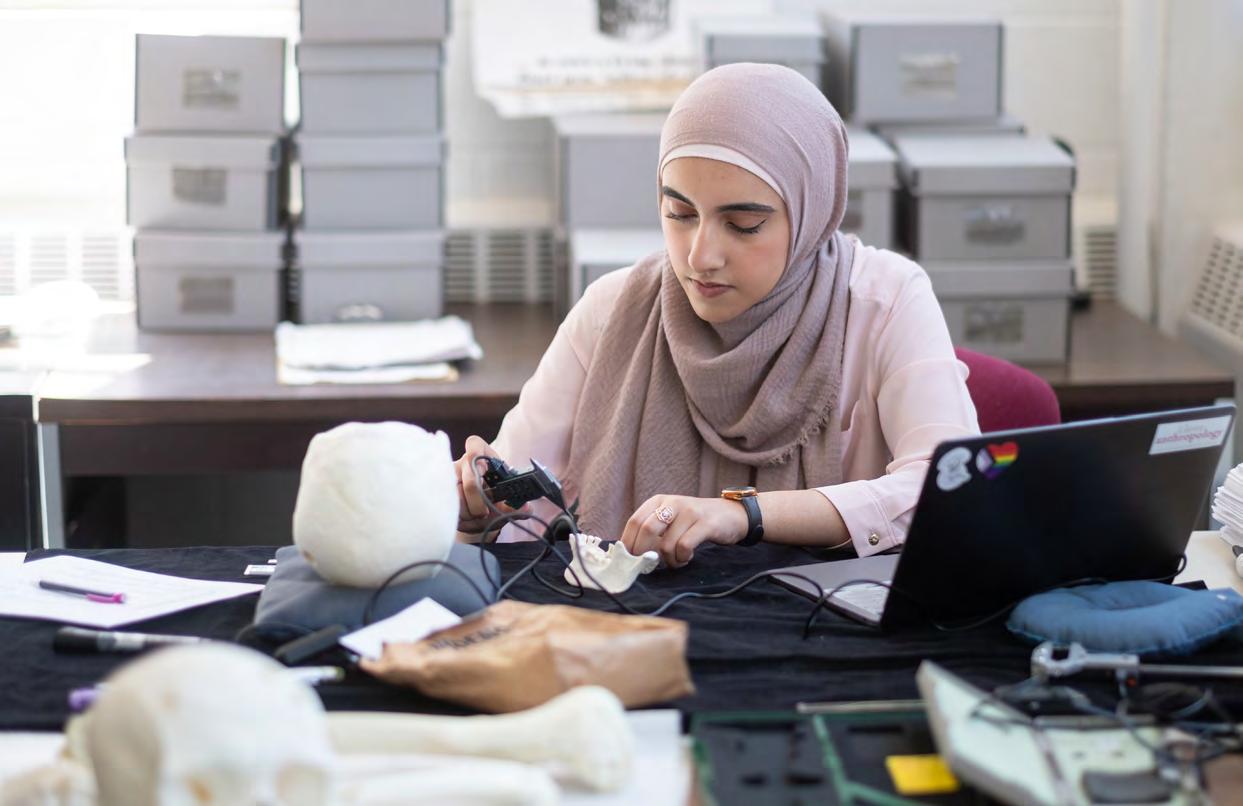

“Undergraduate research is the starting point for many future researchers, scientists and academics. Providing a path for students to showcase their work builds professionalism and serves as an introduction to scientific publishing.”
- Alyssa Williams
The journal is supported by the Office of Undergraduate Research and Creative Discovery. Its editorial board includes current graduate students and MSU alumni from each of the university’s colleges. It also has more than 60 undergraduate and graduate student reviewers representing nearly every MSU department. Published research in "Endeavors" is available online and indexed in search engines for maximum visibility.
“Graduate students are conducting research full-time, and many intend to pursue careers in academia,” Umar said. “We wanted to provide an outlet for these students to learn about and review work in their area of interest as well as participate in mentorship experiences for undergraduate students.”
“Undergraduate research is the starting point for many future researchers, scientists and academics,” Williams added. “Providing a path for students to showcase their work builds professionalism and serves as an introduction to scientific publishing.”
Even for students who don’t see research as their long-term career path, publishing in "Endeavors" is a major achievement. It provides tangible proof of their hard work and showcases their ability to take a project from idea to execution.
Starting a research journal from scratch isn’t exactly easy. The "Endeavors" team faced plenty of hurdles along the way, from navigating the logistics of becoming an official student organization to building a virtual submission platform.
The process involved defining the journal’s scope, developing submission guidelines and ensuring the peer-review process met high academic standards. It was a time-consuming, detailoriented process, but thanks to support from Digital Commons BePress advisors, MSU’s Mitchell Memorial Library and Office of Undergraduate Research and Creative Discovery, they worked to make their vision a reality.
“ We hope to create a legacy of Mississippi State students who carry out rigorous, scientific work that we hope lives on for years to come,” Umar said.
For students looking to get involved in research or even start their own big initiative, the founders of "Endeavors" advise: embrace uncertainty.
“The most important realization about conducting research, for us, was that uncertainty is part of the process,” Williams said. “There will always be moments where it feels like the project has hit a dead end or there is no clear answer. The important thing is to constantly seek answers both independently and with others.”
The same applies to launching a major project like "Endeavors."
While the journal’s founders spearheaded the initiative, they said its success is due to a community of dedicated students, faculty and mentors.
Their experience shows passion and persistence can make all the difference. By believing in their vision and seeking out the right support, Umar and Williams created something that will benefit MSU students for years to come.
For MSU honors students interested in research, reach out to "Endeavors." It’s more than just a publication; it’s proof that undergraduate research matters. l
Dear Shackouls Honors College community,
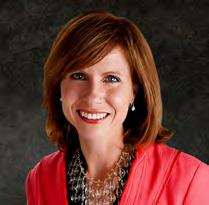
As I conclude my tenure as president of the Judy and Bobby Shackouls Honors College Alumni and Friends Advisory Board, I wish to use this final “Message from the President” to shine a glowing spotlight on my fellow board members who continue to give of their time and their resources in service of our beloved Shackouls Honors College and the students we support. What an honor it has been to work alongside these true servant leaders:
PRESIDENT-ELECT
STANLEY BLACKMON Birmingham, AL
SECRETARY
SMITH LILLEY Tupelo, MS
TREASURER
SIDNEY DILGREN Sugar Land, TX
IMMEDIATE PAST
PRESIDENT
W. BRAD JONES Atlanta, GA
WILL BUNKER Little Rock, AR
CHRIS CLIFFORD Olean, NY
LAMAR CONERLY Destin, FL
LESLEY DAVIS Flowood, MS
RANDALL DONG Columbia, SC
Together, we’ve moved the needle on several initiatives important to our Shackouls Honors College community. Under my predecessor Brad Jones’ leadership, the board established the Dr. Christopher A. Snyder Study Abroad Fund for Excellence to promote and support study abroad opportunities for Honors students from traditionally underrepresented groups. Since then, our board members and friends have contributed to the fund, which is now fully endowed, and two students have been named Christopher Snyder Scholars. Our board continues to advocate for the Delta Scholars Program. We have established three standing committees—Communication, Fundraising and Outreach—to support Dean Tommy Anderson in spreading the good word about “Why Honors Matters” as we continue to attract the top student leaders in the great state of Mississippi as well as nationwide and globally. We have even expanded our board’s footprint geographically; our board members serve as recruiters within our spheres of influence and can be found ringing our cowbells on behalf of Shackouls Honors College wherever we call home.
CHRISTOPHER JOLIVETTE McCalla, AL
BRADY KRUSE Durham, NC
JEANNE MARSZALEK Starkville, MS
JUDY MARTIN Raleigh, MS
ERIC SHOWS Ellisville, MS
WADE SHRADER Wilmington, DE
JOE M. TURNER Memphis, TN
DON WHITMIRE Franklin, TN
CAMILLE SCALES YOUNG Madison, MS
FEIFEI ZENG Rome, Italy
We make time for student voices during our regular board meetings and cheer wildly alongside Dr. David Hoffman and the Office of Prestigious External Scholarships as we recognize and celebrate the many Honors students who are named finalists and recipients for such notable awards as the Rhodes, Fulbright, Marshall, Truman, Goldwater and Astronaut Scholarships. Our Communication and Outreach committees recently have launched plans for establishing a young alumni network for recent Honors graduates to stay connected and engaged.
As I pass the gavel to President-Elect Stanley Blackmon, I eagerly anticipate continuing to serve not only as a board leader but also as the mom of an Honors student. My son is a freshman, and I’ve encouraged him to fully embrace the Shackouls Honors College motto to “Do all the things.” He is enrolled in three Honors courses this fall semester and is most excited about study abroad opportunities. It is for him and his fellow Honors students that our board continues to serve as advisors and friends.
Mandi Marett Stanley, Advisory Board President 2024-2026 Hail State,

Since 2012, The Streetcar has been connecting Mississippi State students by providing them a place to share their written and visual art and connect with a larger and like-minded community.
As an extension of the Shackouls Honors College, the College of Arts & Sciences, and Mississippi State University, we are proud to be the first and only studentrun and student-produced creative arts journal on campus.


Honors OnStage provides Honors students, especially those in STEM, with a place to express themselves and explore the performing arts and like activities. We hope to foster creativity in our membership and provide ample opportunities for engagement throughout the academic year.

IGNITE YOUR PASSION FOR THE ARTS!
P.O.