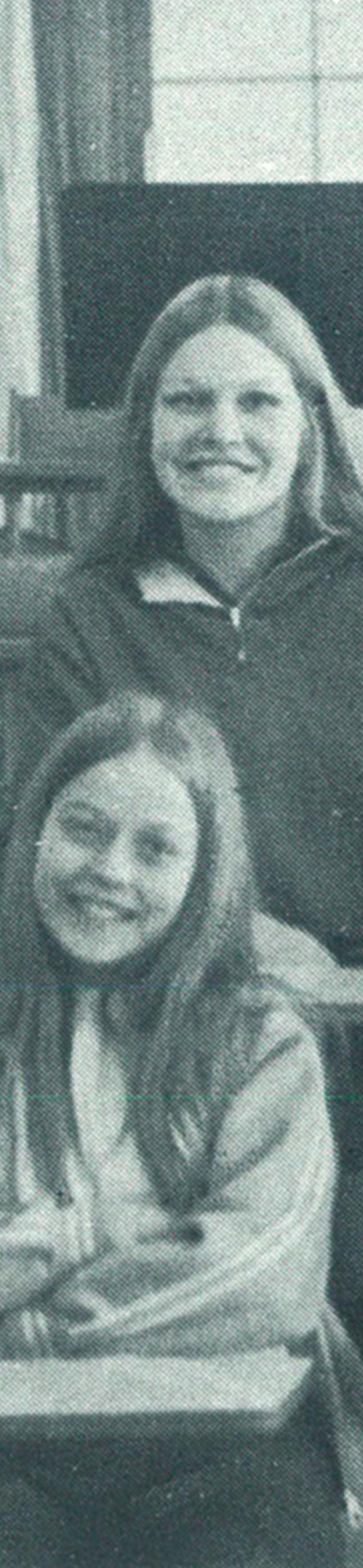
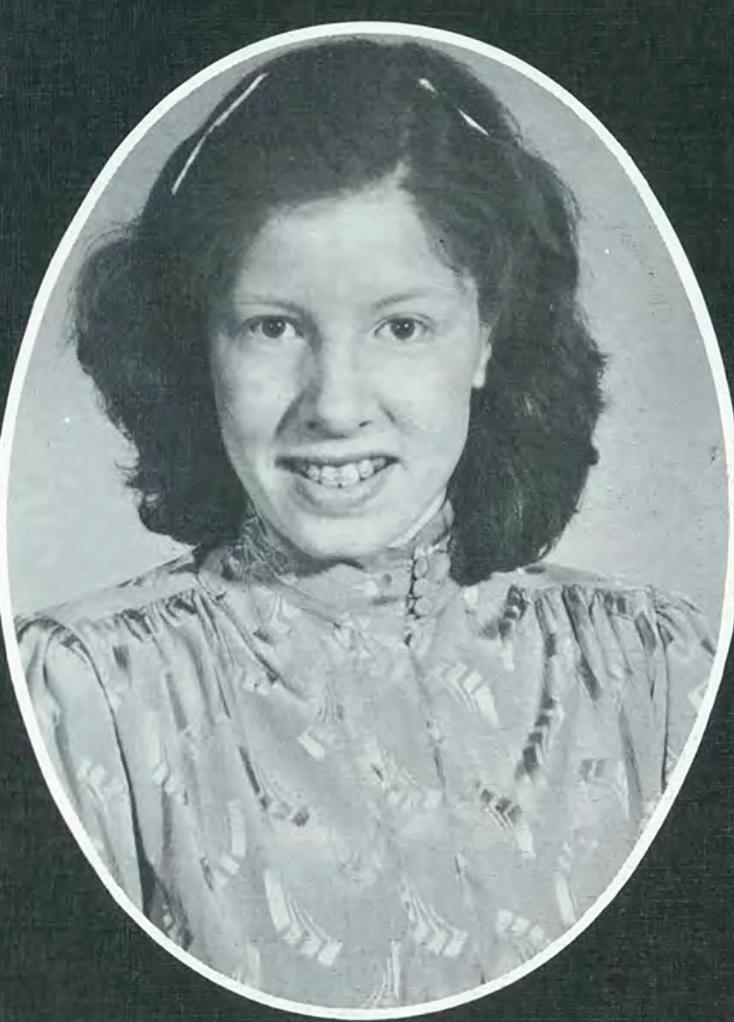
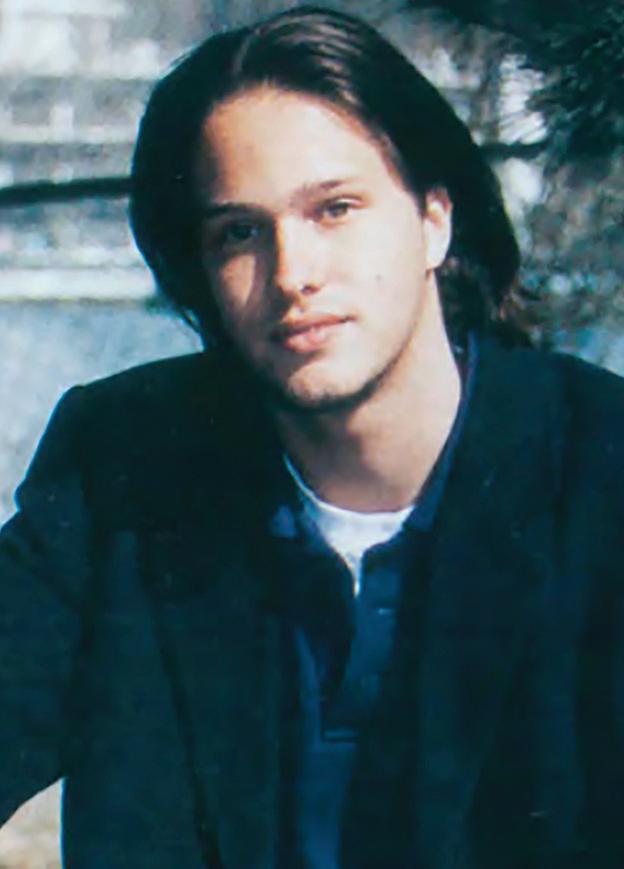
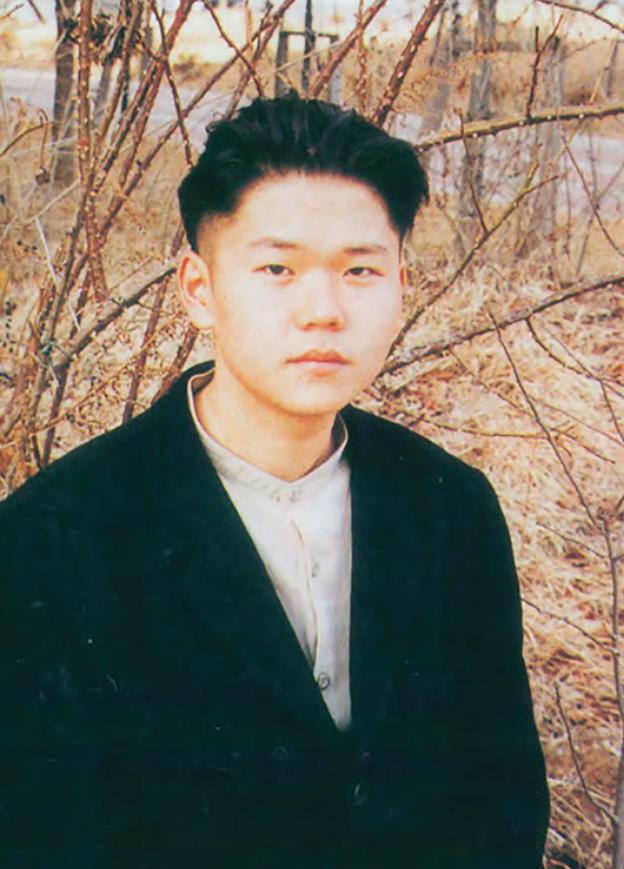
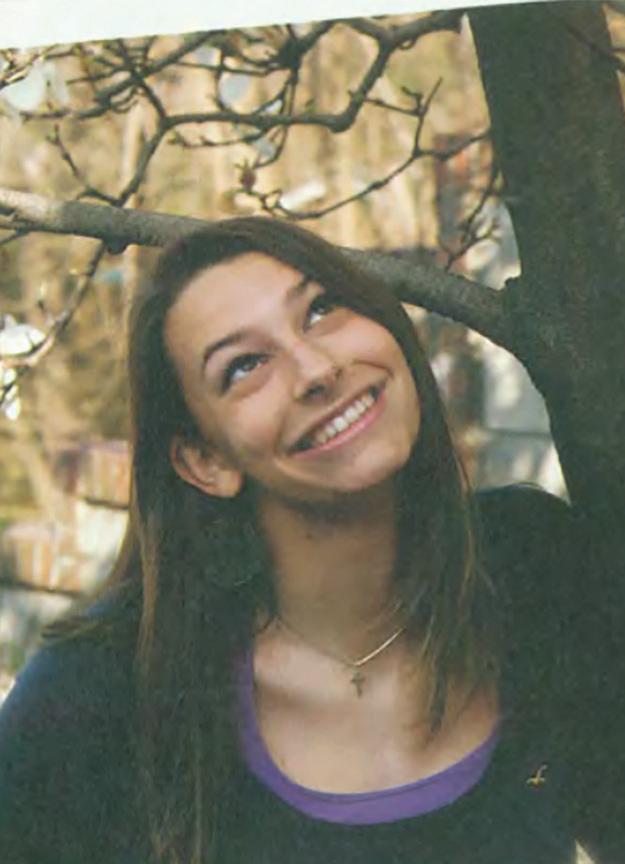
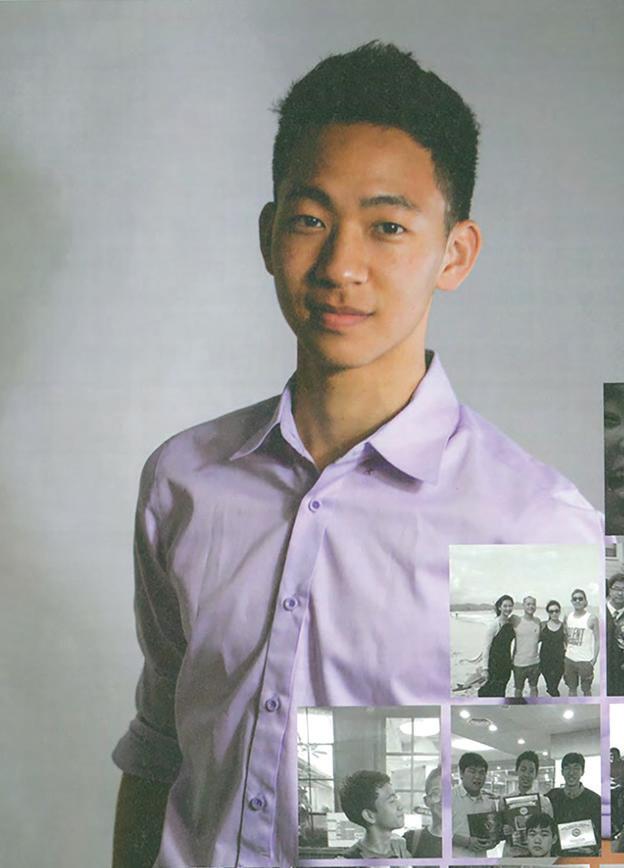
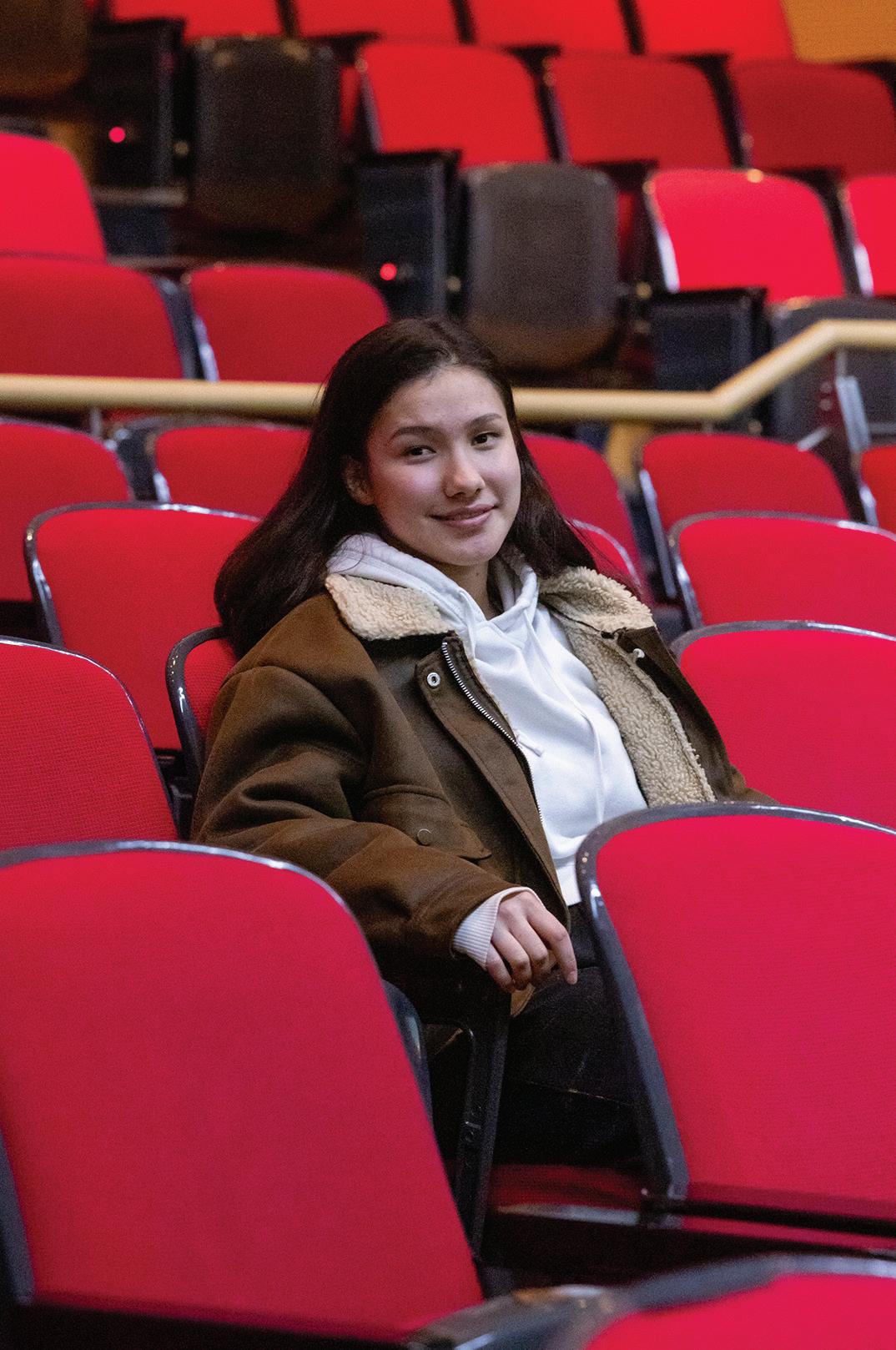
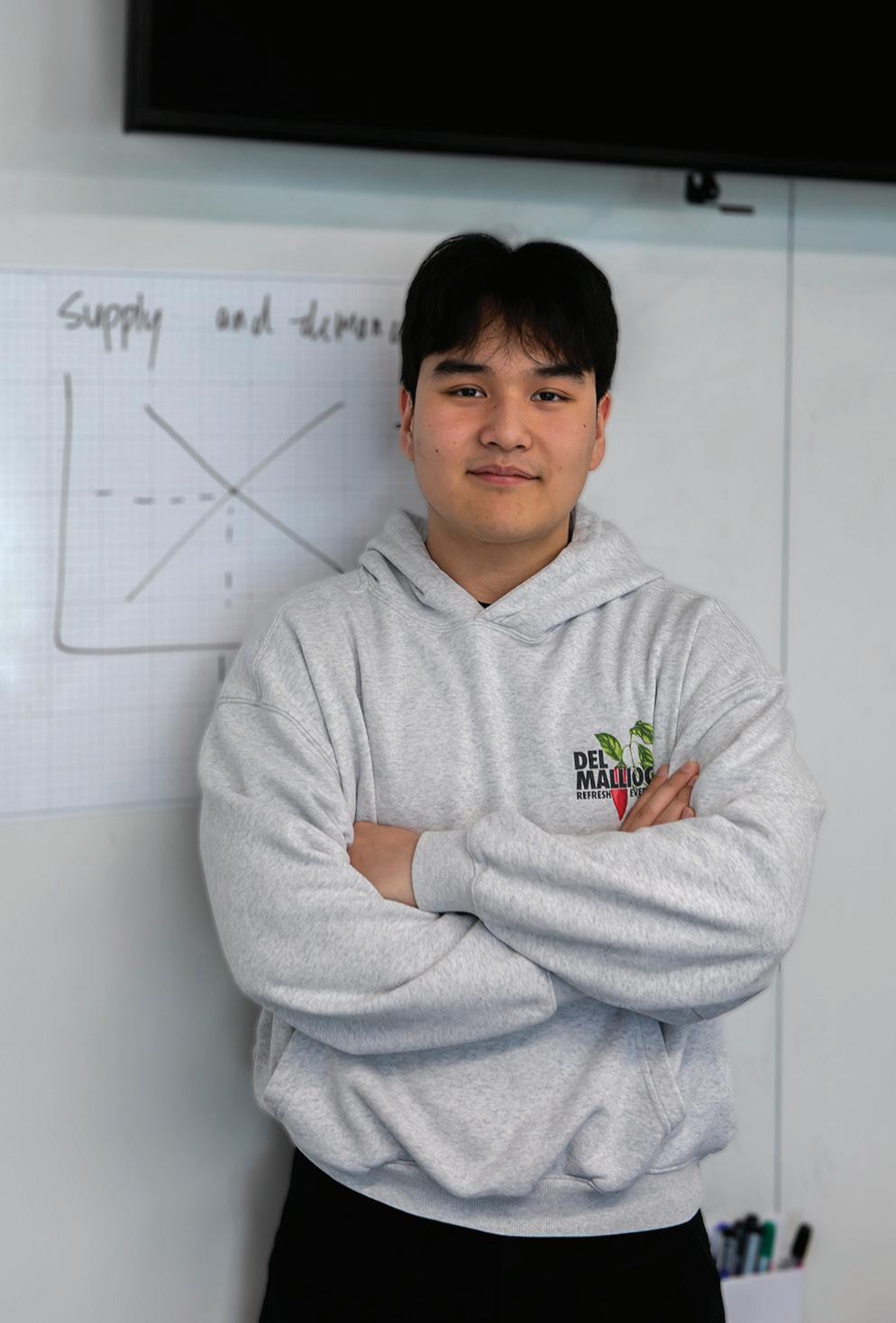
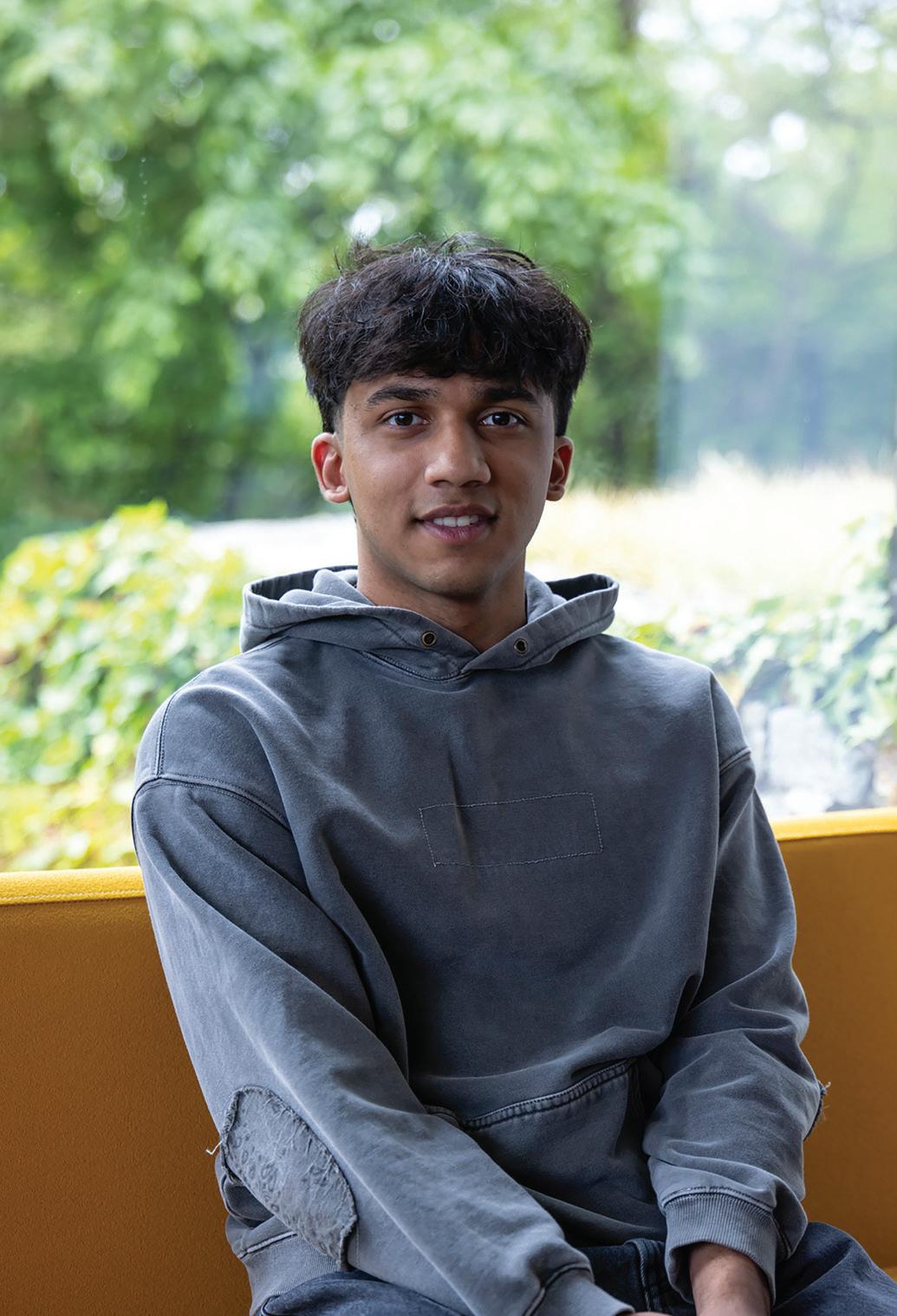
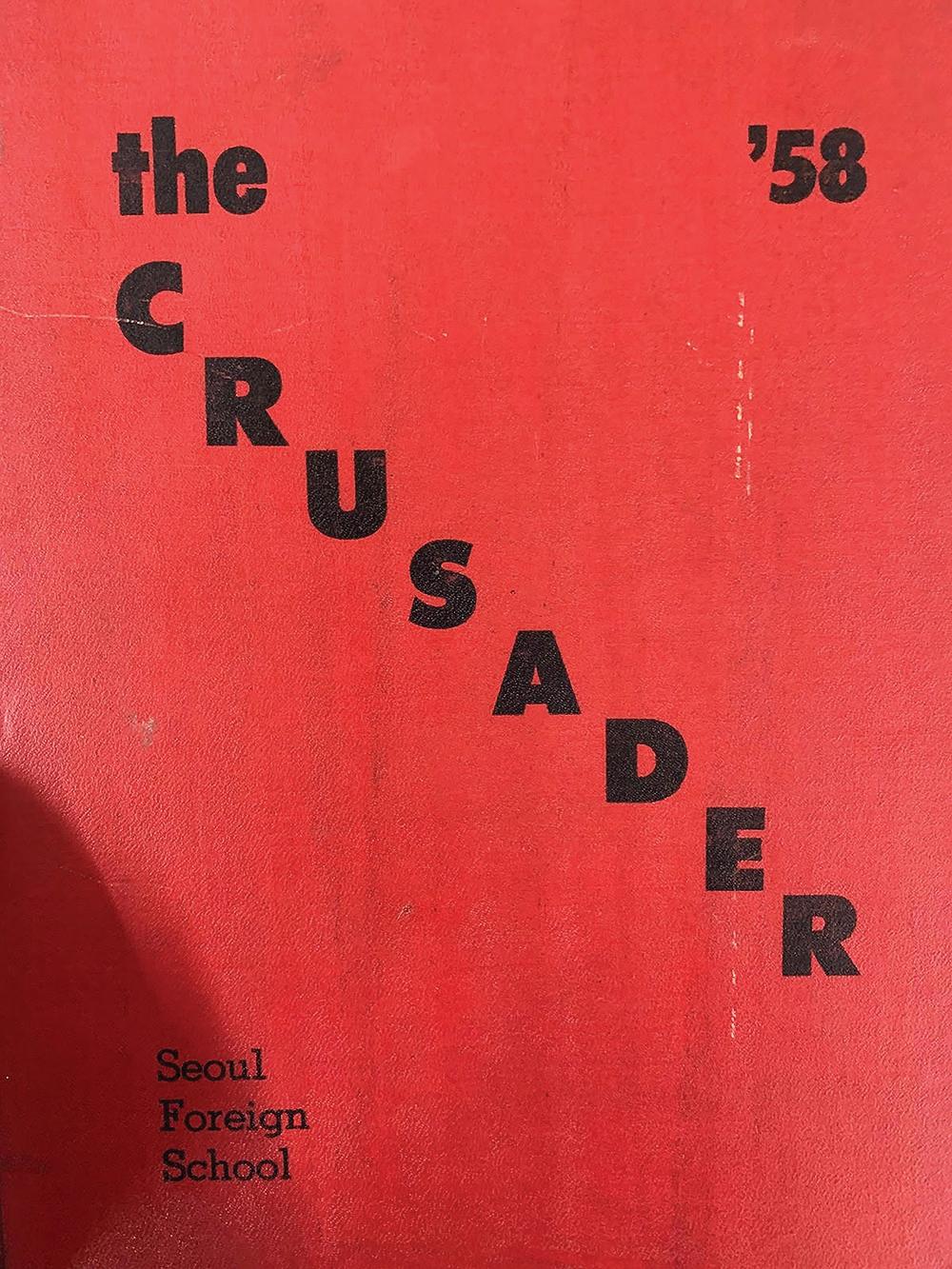
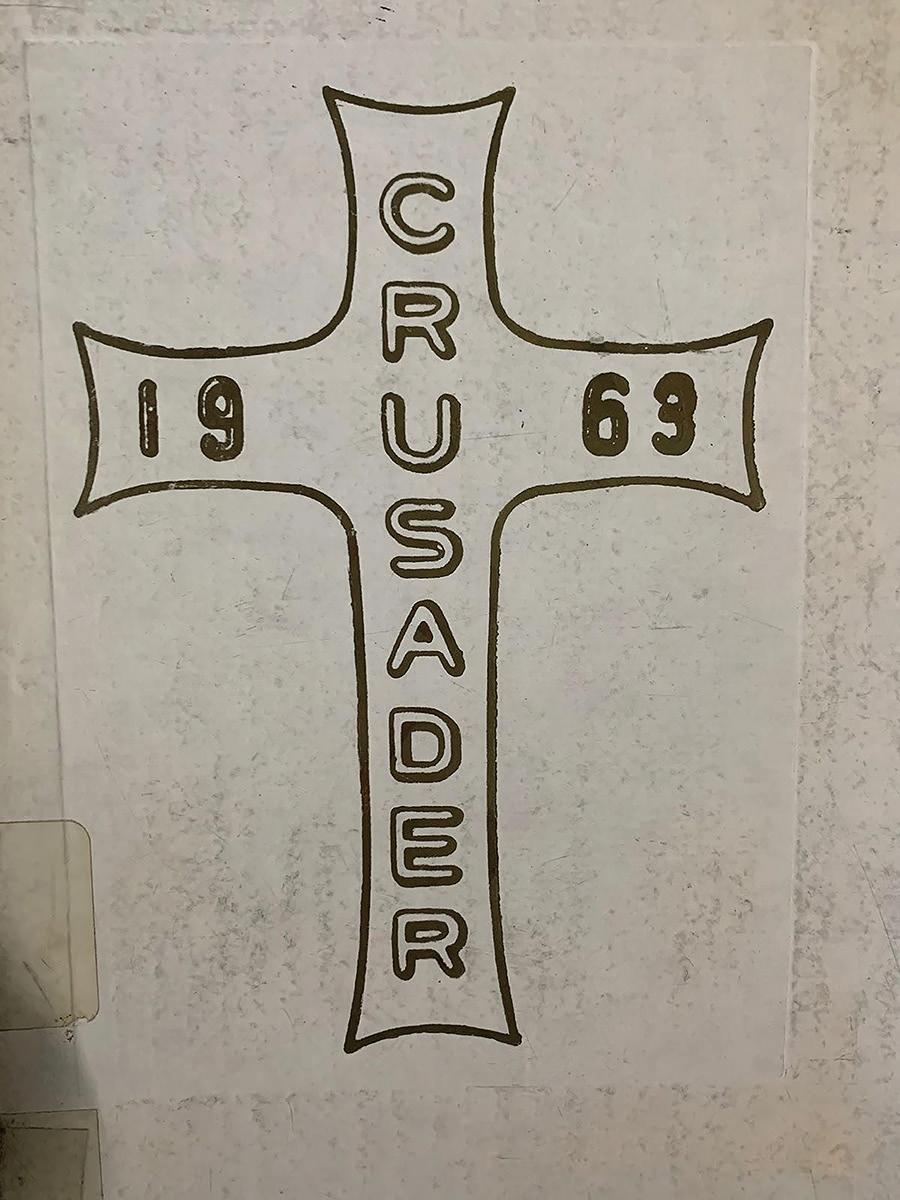
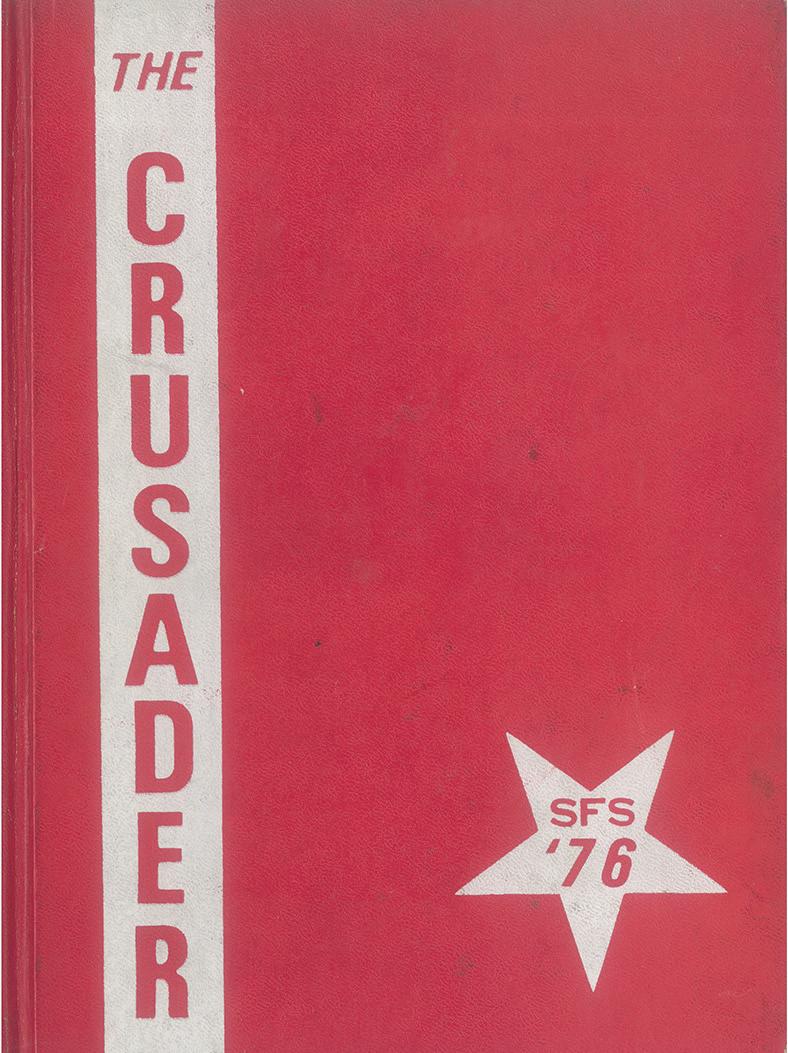
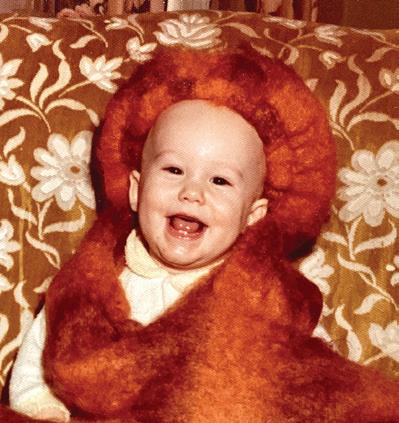
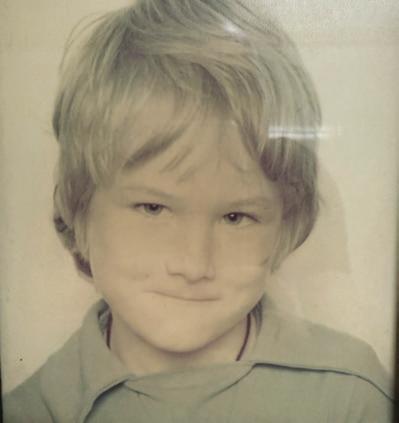
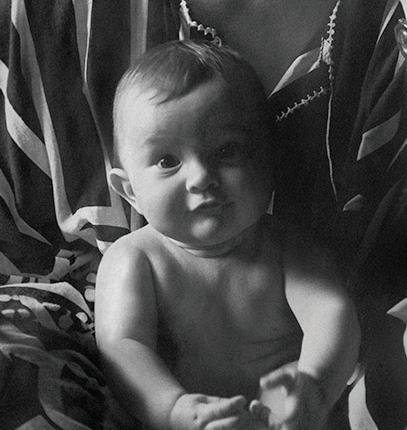
1 School, 7 Generations Seven generations of students have called SFS home. What were they like? Let's find out!
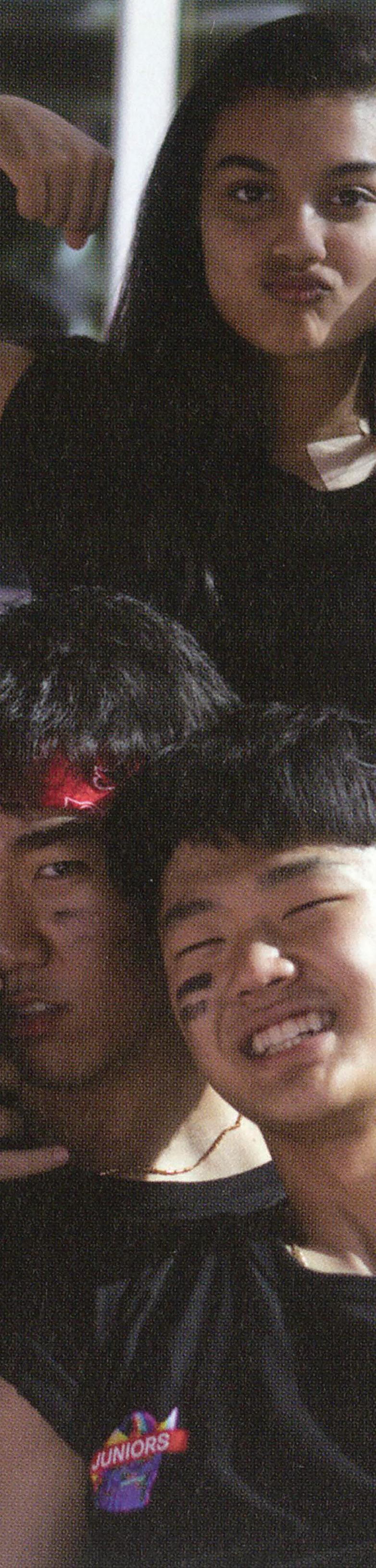
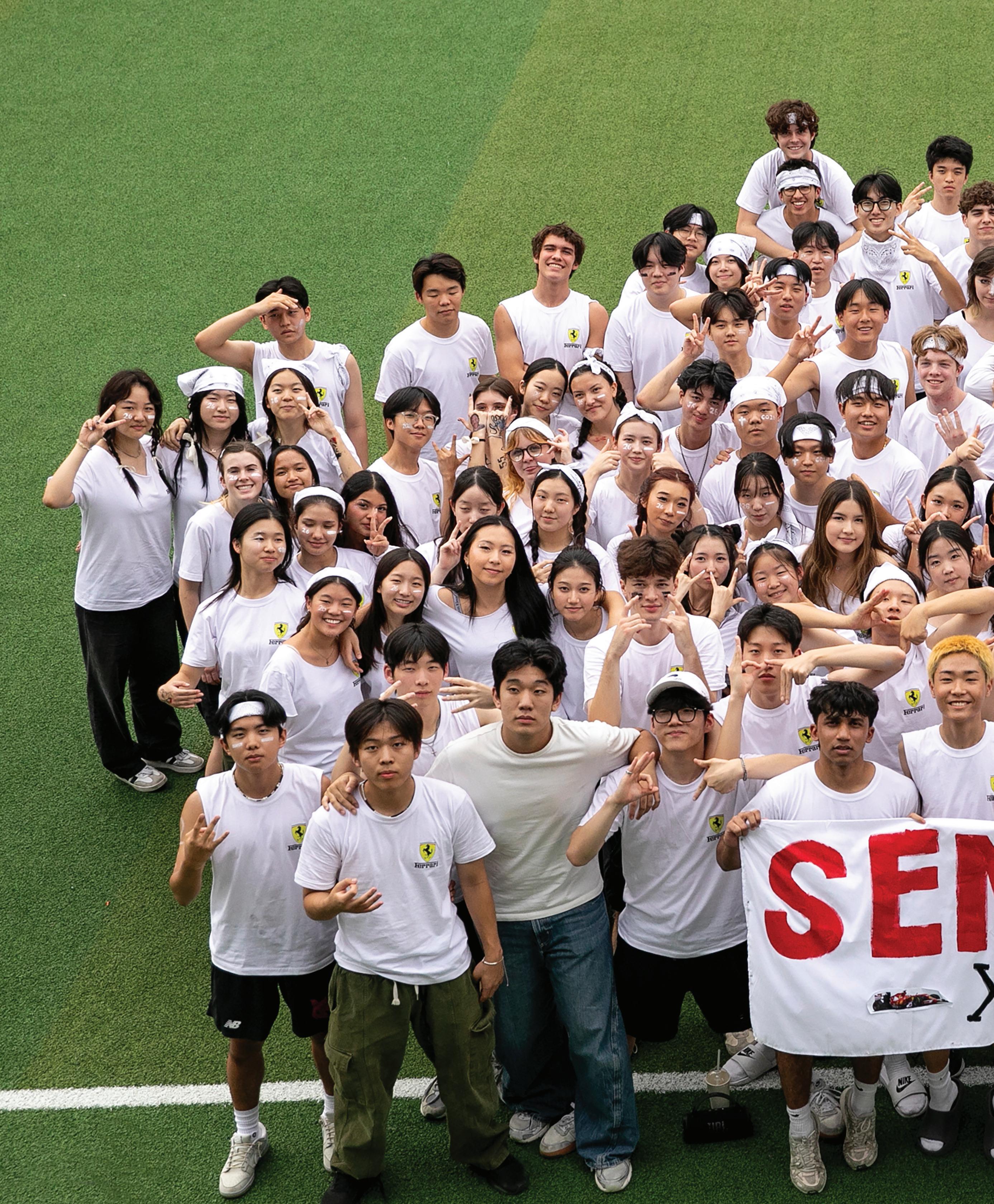
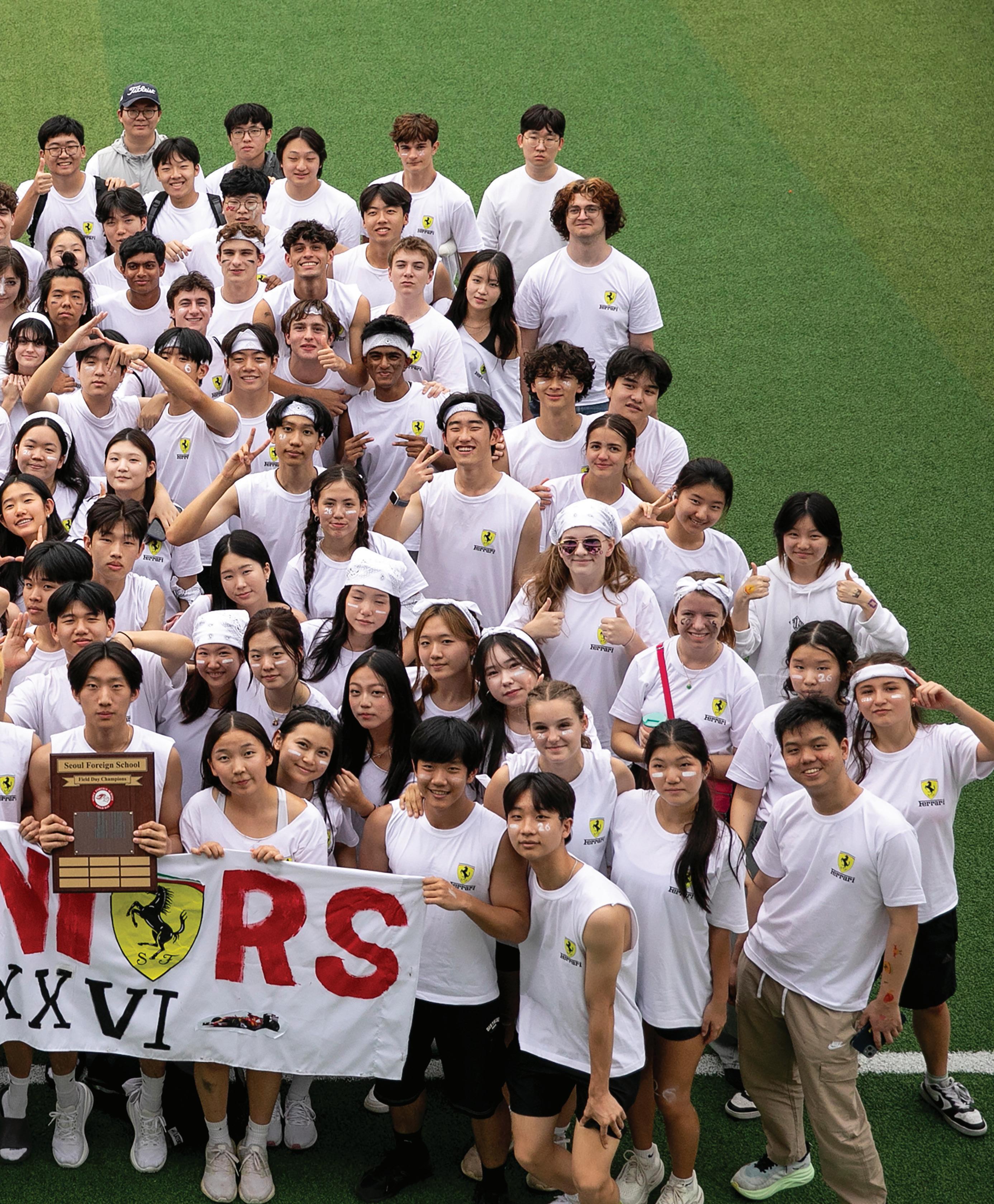
The Next Big Thing: Class of 2026 We are saying goodbye and see you soon to our 130 seniors. Thank you for the memories!
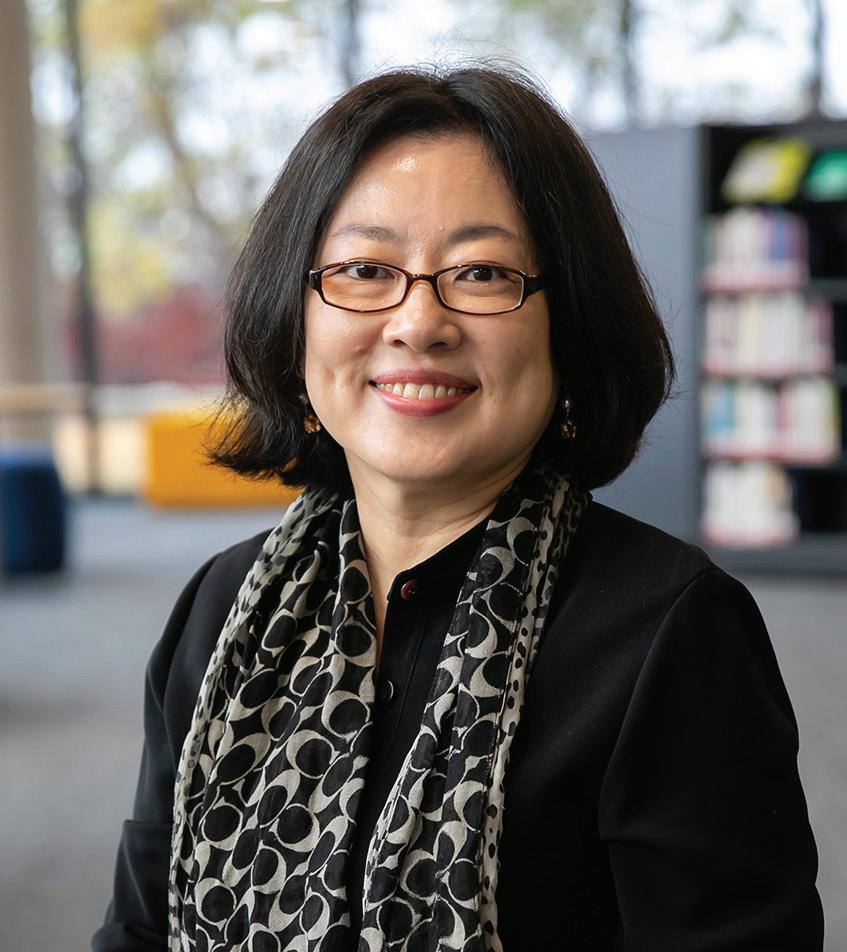
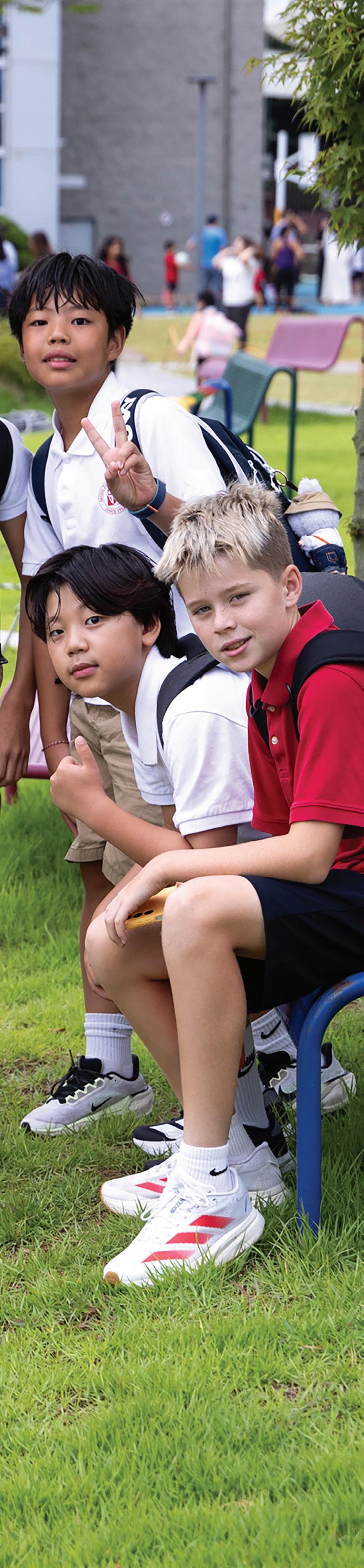
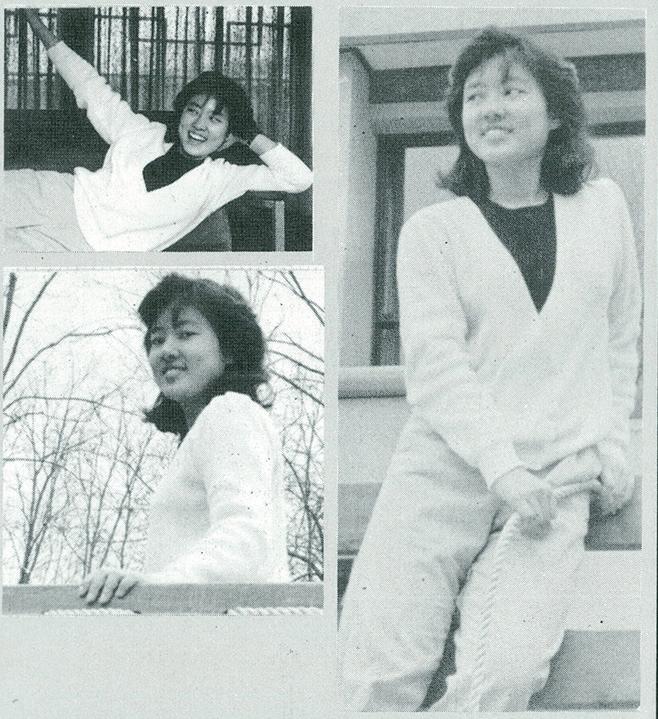
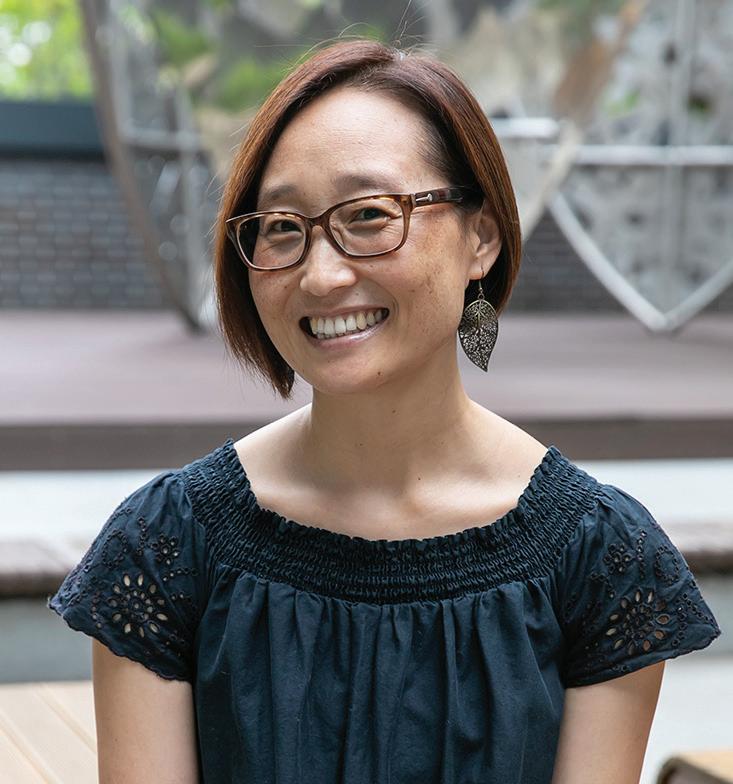
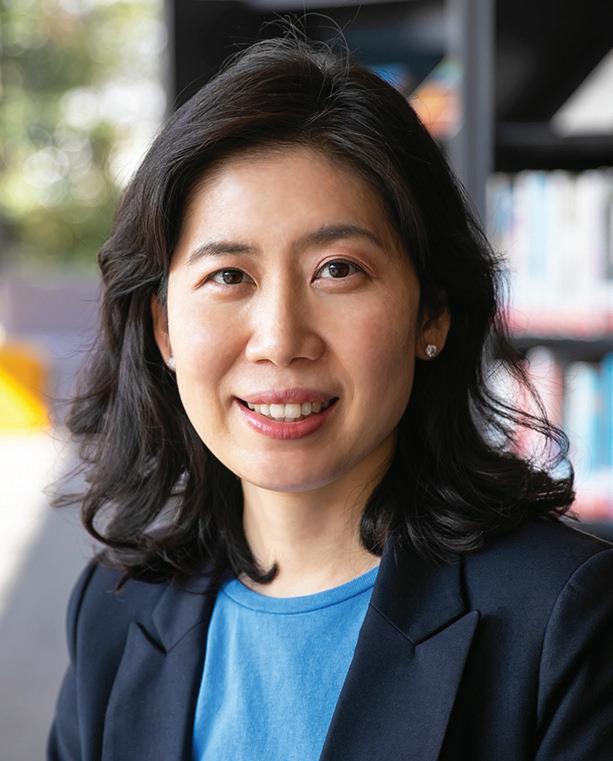
Hyungji Park ’85: The Alumna Who Never Really Left Announcing the SFS Alumna of the year 2026 and celebrating her 50th SFS anniversary.
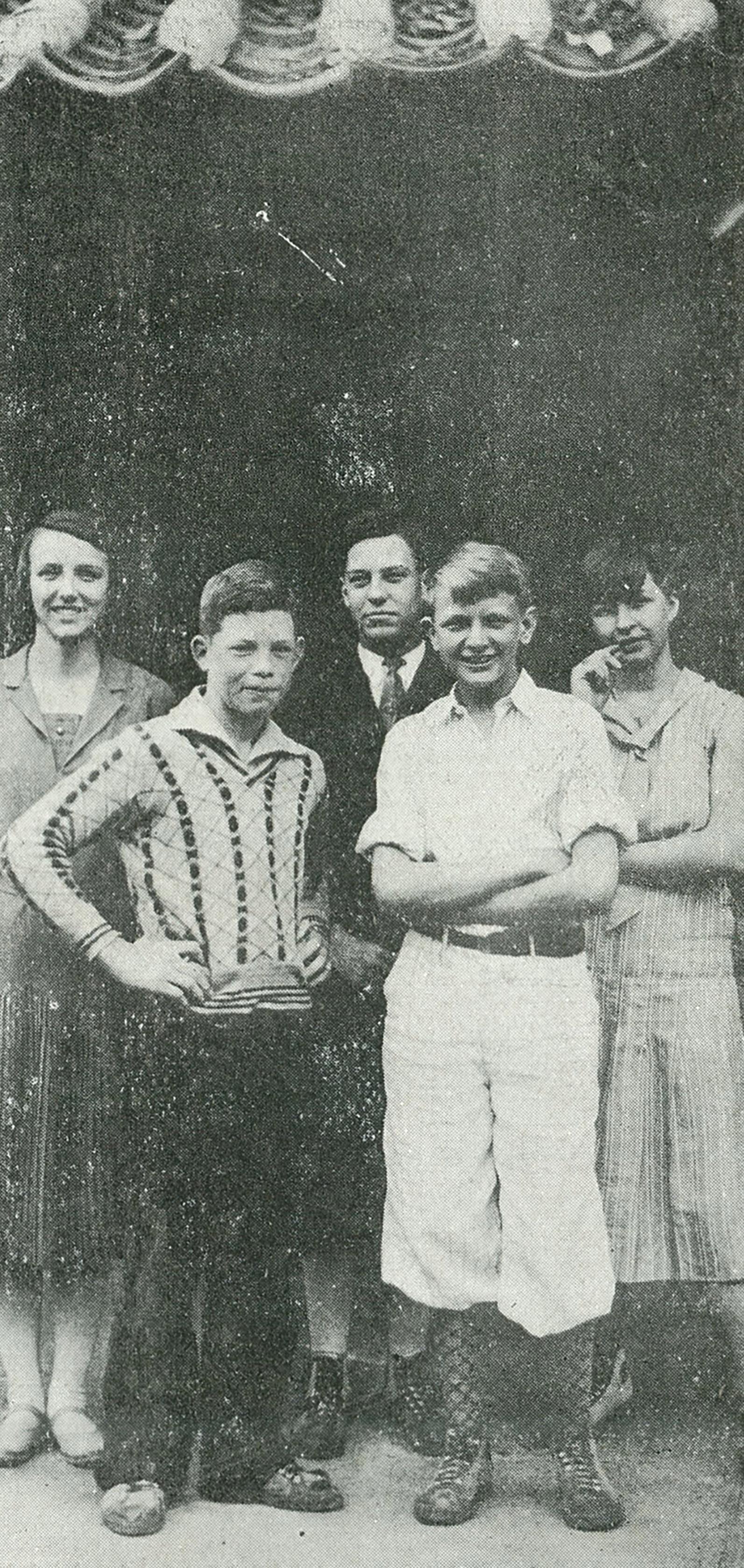
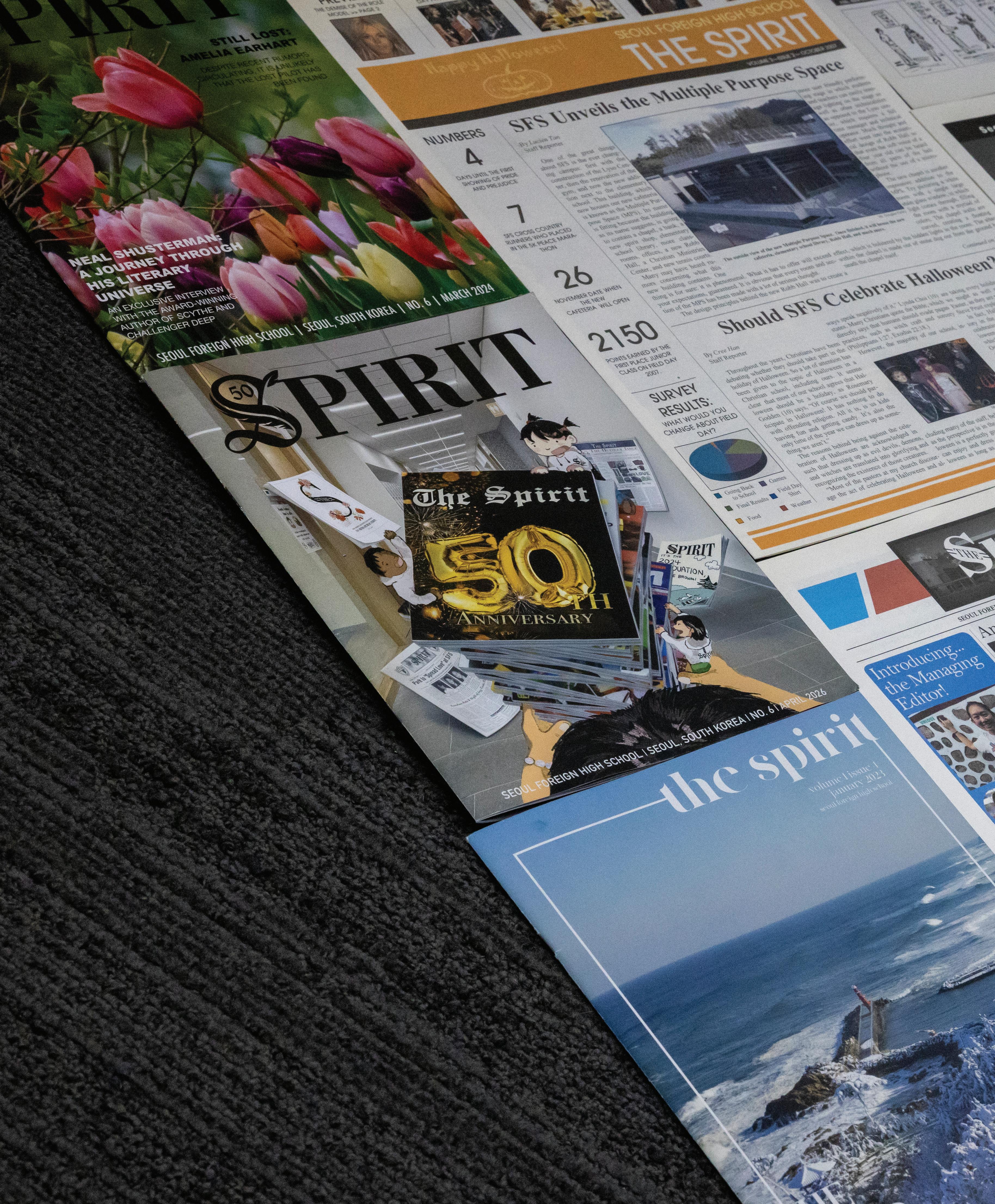
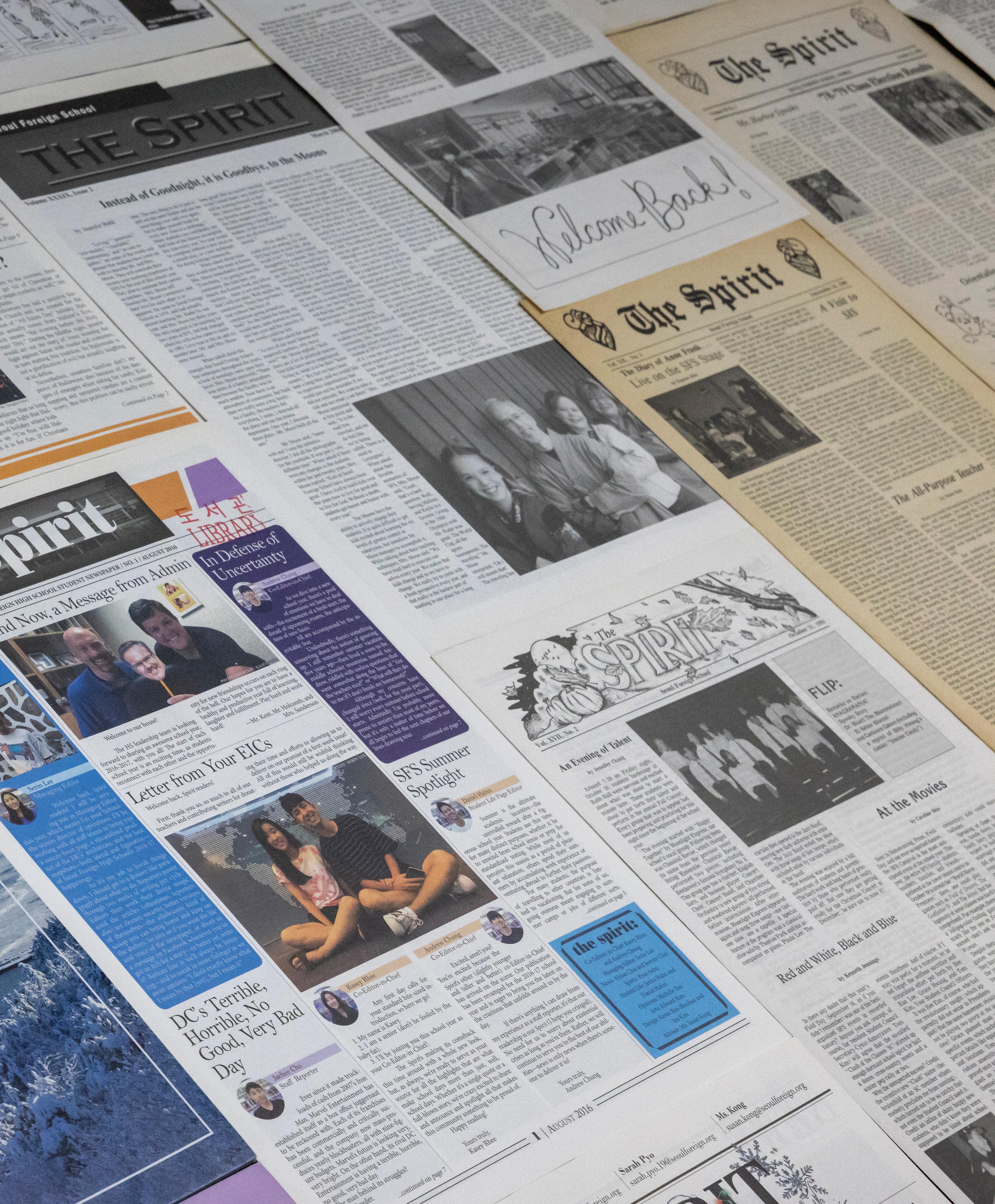
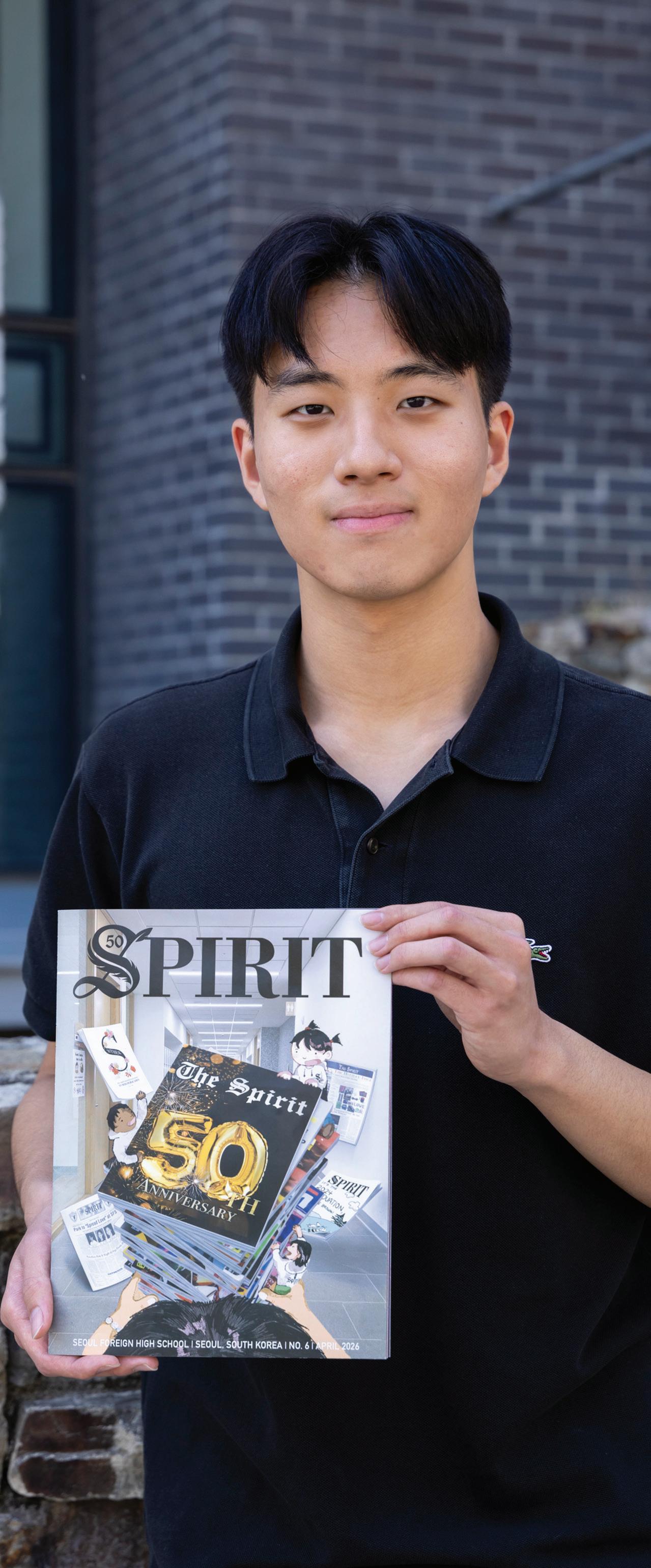
Half a Century of Headlines: Fifty Years of the Spirit Another 50-year celebration, this time of the beloved high school publication.
Dear SFS Community,
From the Head of School
At Seoul Foreign School, time has a particular way of folding in on itself. Since 1912, this school has welcomed generations of students, from those who came of age in the shadow of the First World War to the digitally native generation of today. Each cohort has arrived shaped by its moment in history and each has left its mark in ways both visible and quietly enduring. Mary Oliver asked what it is we plan to do with our ‘one wild and precious life’, and a school like ours exists, in part, to help each generation find their answer.
The world these students will inherit is still taking shape. The rapid rise of artificial intelligence is reshaping the landscape in ways we are only beginning to understand. There is much we do not yet know about how they will live, learn and work. Yet there is something we do know with clarity. Schools like ours will continue to matter, not because we can predict the future but because we can prepare students to meet it with discernment, adaptability and care.
In a world increasingly shaped by machines, it is our humanity that will remain constant. It is not an outdated idea. If anything, it is becoming more central. The ability to think deeply, to connect meaningfully, to understand others, these are skills that will never fall out of fashion. They call to mind the parable of the talents, in which each person is entrusted with something of value and asked not to bury it, but to put it to work in the world. Our task is guided by an understanding that each child comes to us as unique and our responsibility is to ensure that every student leaves not only with knowledge but with the courage and wisdom to use it in service of others.
This has always been at the heart of an SFS education. Across generations, our role has been to nurture not only capable students but thoughtful and grounded individuals who carry their values with them into the world. That continuity matters. It is the thread that connects past, present and future.
It is also a pleasure to recognise one of our own. I would like to congratulate Dr. Hyungji Park ’85 on being named SFS Alumna of the Year. This honor is richly deserved. It has been a privilege to work alongside Hyungji throughout my time at SFS, first through her involvement with the Alumni Committee and in recent years on the Board of Governors. Her commitment to the school and its community reflects the very best of what SFS stands for.
As we look ahead, we do so with a strong sense of who we are and what matters most. The future will bring change, as it always has. Our responsibility is to meet it with clarity, with purpose and above all, with humanity.
God bless,
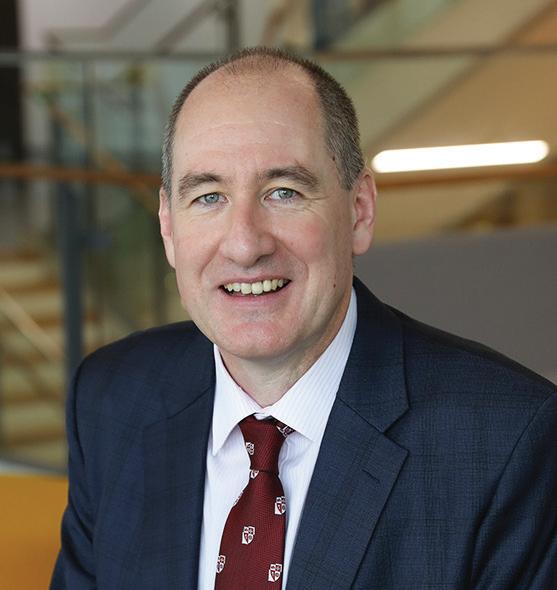
Colm Flanagan Head of School
THE BANNER
Seoul Foreign School Magazine, Spring 2026
Team
Published by:
Seoul Foreign School
External Relations Department
Editor-in-chief: Cyrielle Bazin
Design and Photography: Juhie Suh
Editors: AhYoung Chi, Sumin Park
A special thank you to everyone who contributed to this issue.
Address
Seoul Foreign School
39 Yeonhui-ro 22-gil Yeonhui-dong Seodaemun-gu Seoul, South Korea, 03723 www.seoulforeign.org
Unless otherwise noted, articles may be reprinted without permission — as long as they are not edited or revised — with appropriate credit given to “The Banner, the magazine for Seoul Foreign School.”
*All efforts have been made to check details and consistency. Please contact communications@ seoulforeign.org with any questions.
**All content in this publication is original, unless otherwise stated. Artificial intelligence tools may have been used solely to enhance readability or clarity. The Banner magazine upholds the same standards of integrity we expect from our students, ensuring authenticity, responsibility, and transparency in every piece of published work.
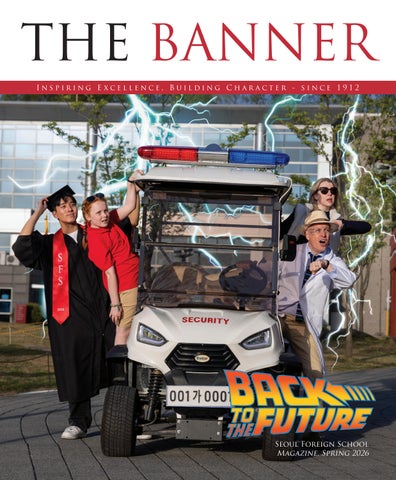
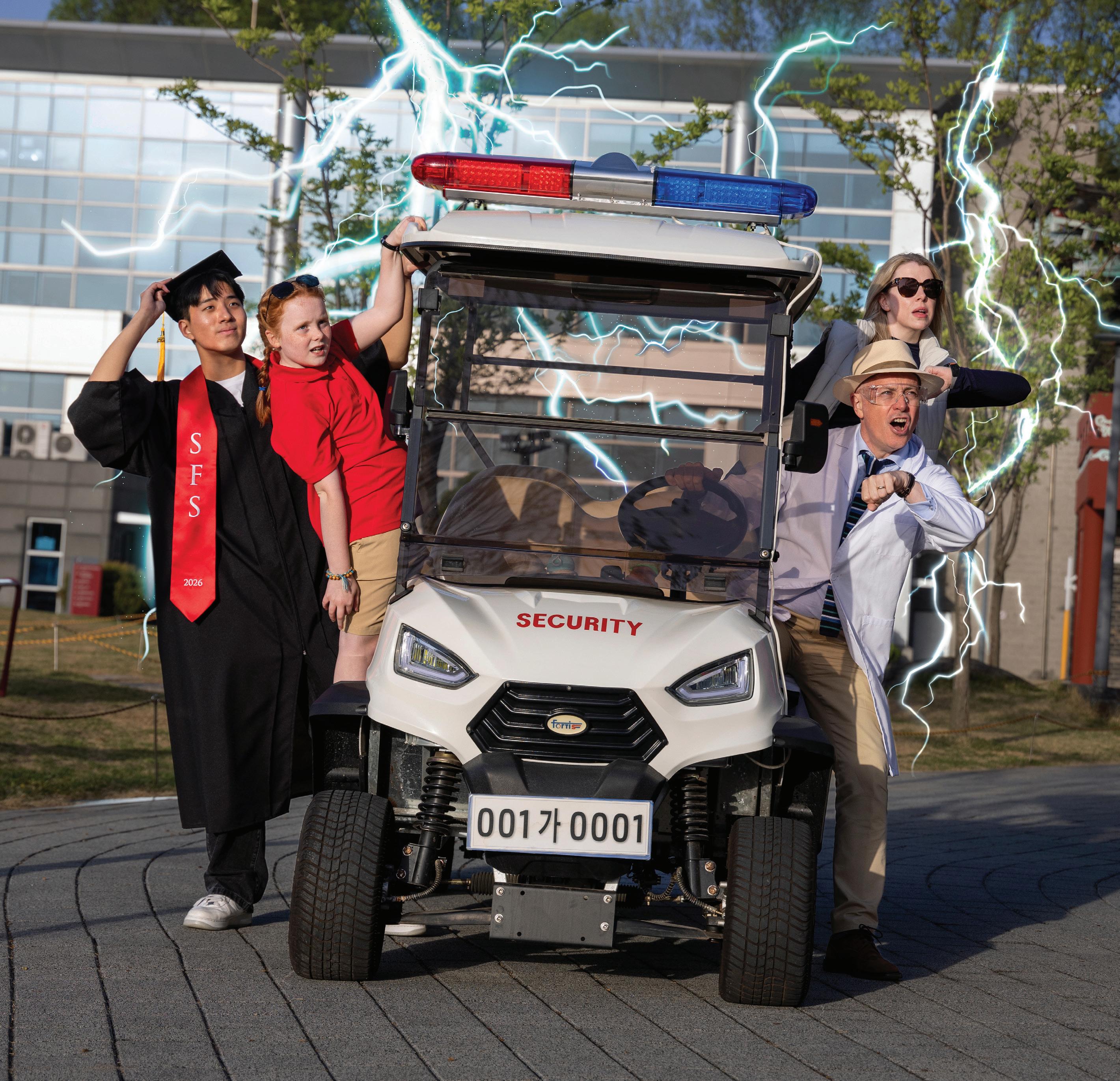
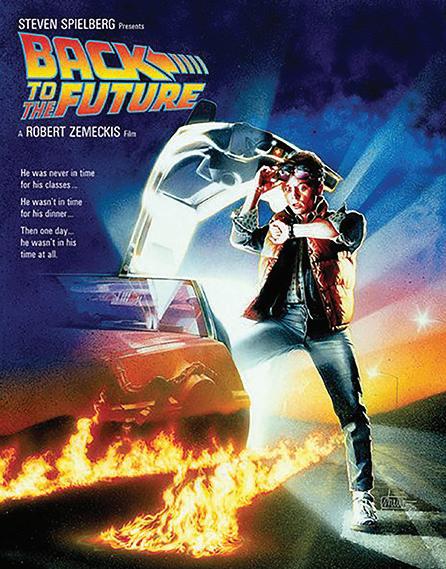
Cover: “Roads? Where we're going, we don't need roads.”
From the Board Chair
Dear SFS Community,
In the original Back to the Future movie, the main character finds himself transported back into the past for 30 years. After some complications (such as almost erasing his own birth by interfering with his parents getting together), he is able to improve his present life through his actions in the past. Is the SFS Board able to do that? While I can’t speak for what the Board looked like 30 years ago, I can hope that the future SFS Board will thank us for what we’re doing now.
One example of what the SFS Board is doing right now that will impact our school 30 years into the future is our campus master plan. The last time we made such a plan was in 2013, in preparation for the new high school building. We are now updating that plan to accommodate changes in our demographics, our programs, and our needs over the last decade and a half. We expect that this new campus master plan will contain our view of what we would like our physical campus to look like over the decades to come. We all have dreams of what we would like to see at our school—an indoor gym? more parking? a technology/design incubator?—and we had a team of architects visit us in April to collect our ideas. This is the best kind of Board thinking and planning, which is to imagine a school not for the current generation of students, but for the next.
Do you have ideas for what our school should look like 30 years in the future? Join us in dreaming of our campus, circa 2056. We hope to be able to share our new campus plan with you sometime next year.
Hyungji Park ’85 Chair of the Board of Governors
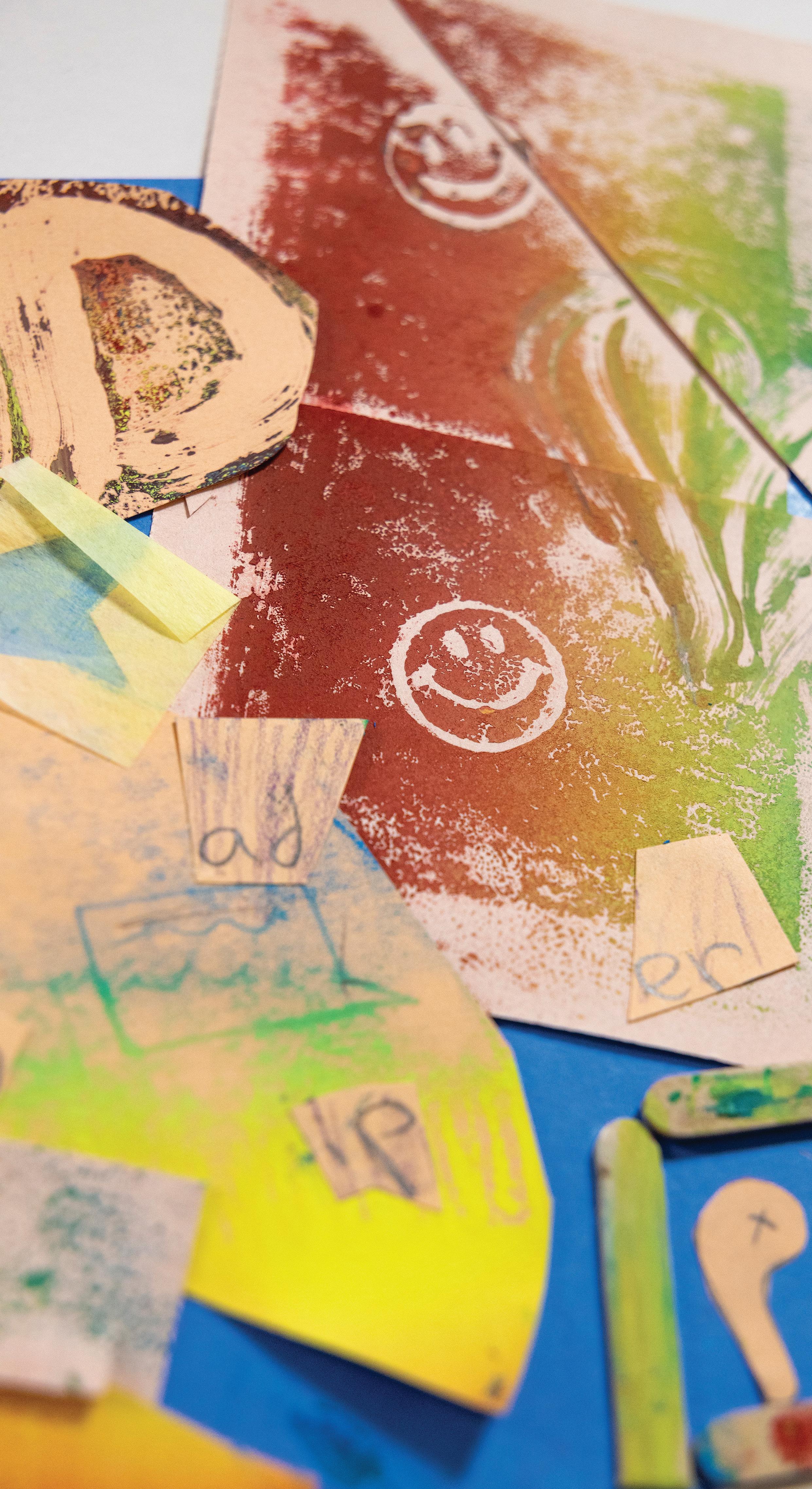
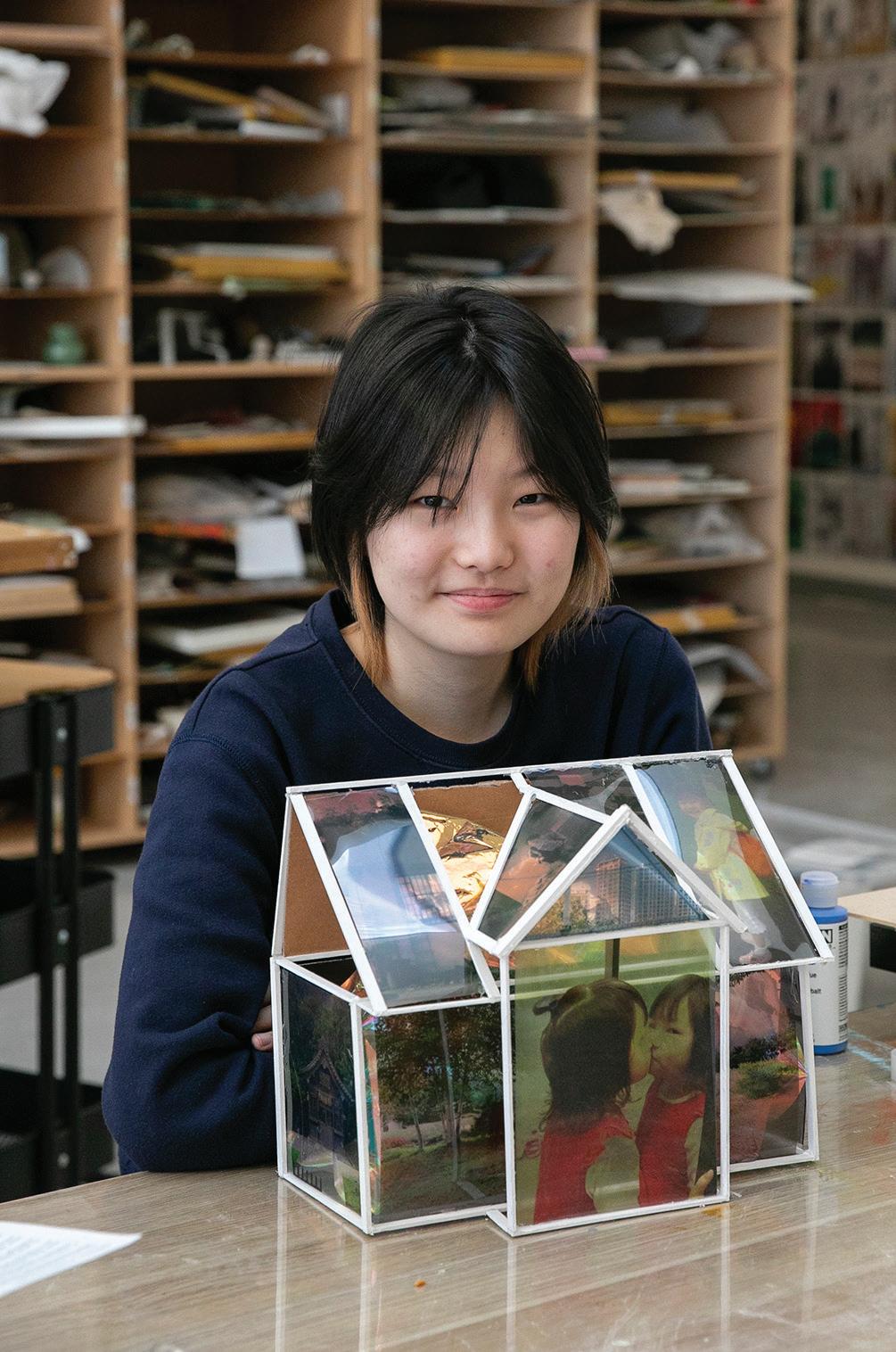
Our Grade 5 students investigated various forms of printmaking and experimented with combinations of these through open inquiry. Their artworks expressed concepts and themes related to their unique PYP Exhibition journeys.
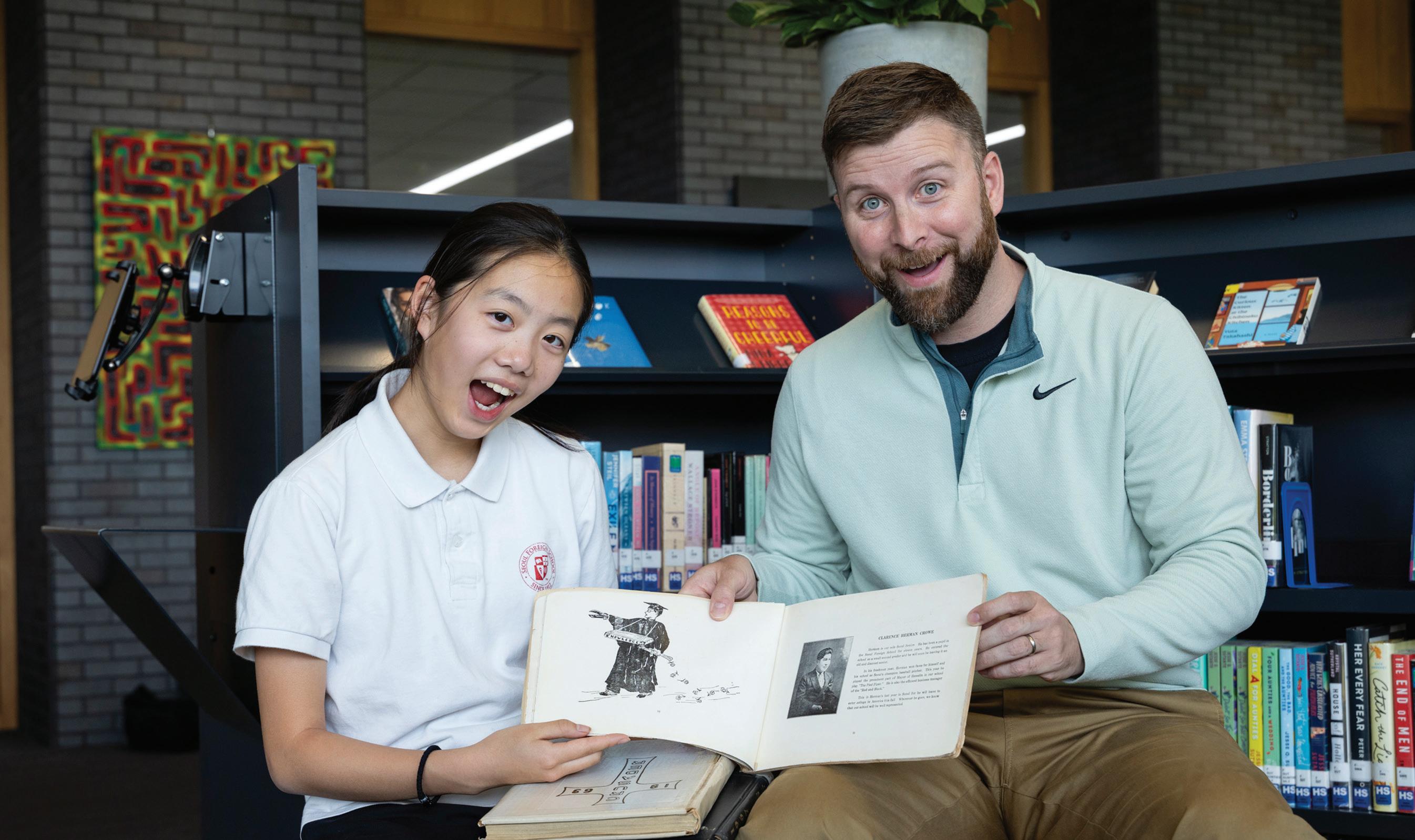
One school. Seven generations. Over a century of students walking through the same gates, sitting in very different classrooms, and growing up in worlds that could not be more unlike each other. From chalkboards and recitation to laptops and artificial intelligence, from a single-room school to a campus that spans continents in its outlook, Seoul Foreign School has carried each generation forward. This feature traces those lives across time, what shaped them, what they listened to, how they learned, and who they became. Because while the world kept changing, one thing did not: the experience of becoming at SFS.
1 SCHOOL,
7 GENERATIONS
By Cyrielle Bazin Senior Director of External Relations
The Greatest Generation
(Born 1901–1927)
Dubbed the Greatest Generation (or sometimes the GI Generation), they were raised in the shadow of one World War and launched into adulthood by another, with a Great Depression sandwiched in between for good measure. They were dutiful, devout, and quietly formidable; the kind of people who fixed things rather than replaced them, finished what they started, and never expected a trophy for showing up.
THE WORLD THEY LIVED IN
Born in the aftermath of the Industrial Revolution, this generation sat through the sinking of the Titanic (1912), the bloodbath of World War I (1914–18), the Spanish Flu pandemic (1918), and the first tremors of the Great Depression. And yet: radios crackled to life in living rooms, women won the vote, silent films made strangers into stars, and jazz crawled out of New Orleans and rewired the entire Western nervous system.
THEIR SOUNDTRACK
"St. Louis Blues" — W.C. Handy (1914)
"Maple Leaf Rag" — Scott Joplin (1899)
"Ain't Misbehavin" — Fats Waller (1929)
"Yes! We Have No Bananas" — Billy Jones (1923)
WHAT THE COOL KIDS SAID
"The bee's knees" — The absolute best; the greatest thing going (i.e., an A+ on your Latin exam).
"Applesauce!" — Nonsense! Rubbish! The 1920s equivalent of "That's cap."
“Let’s Scram!” — Let’s go, obviously.
“Hot diggity dog!” — Wow!
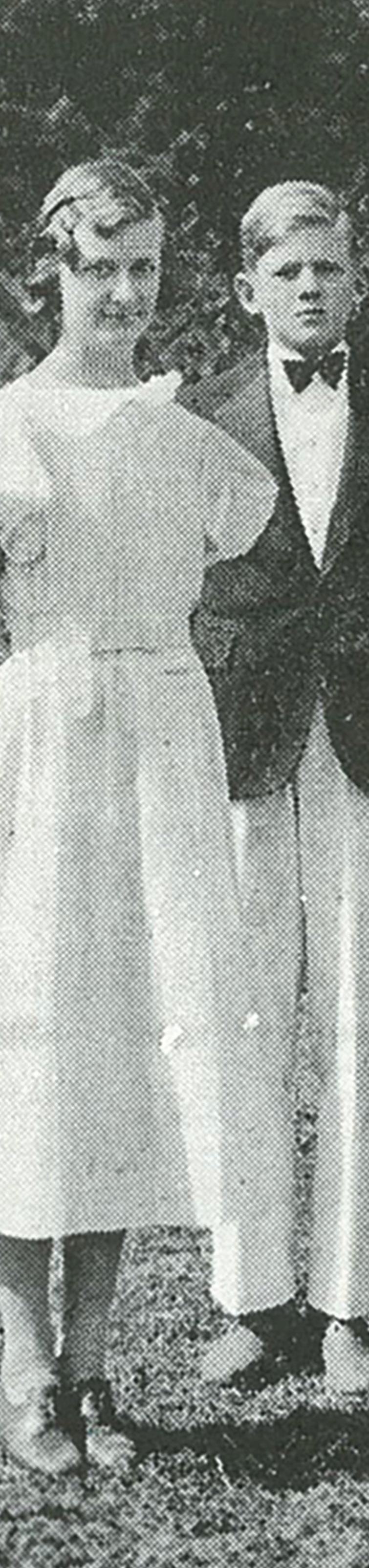
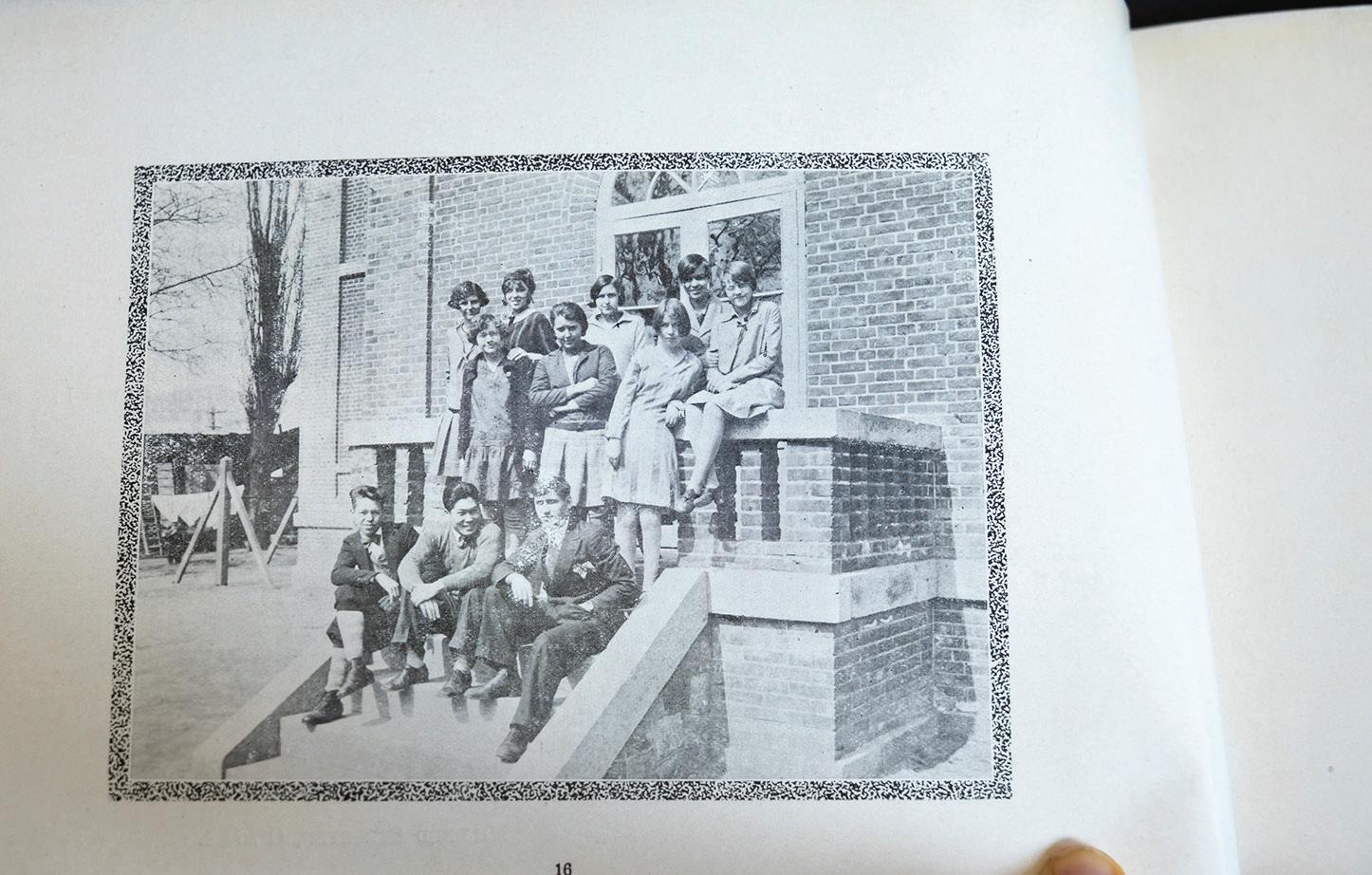
Sophomores from the 1932 SFS Yearbook: Paul Anderson, Mary Billings, Donaldson Koons, Margaret Koons, and George Winn.
CLASSROOM LIFE
KOREA AT THE TIME
Forget AI. Forget calculators. Forget sitting comfortably. The classroom of an SFS Greatest Generation student ran on chalk dust, recitation, and the quiet terror of being called upon unprepared. You stood when a teacher entered the room. You called them "Sir" or "Miss" with no exceptions. Because there was only one classroom, your classmates were from seven different grades, and you were called to the front of the class to recite in turn. Official SFS records show that the Class of 1927 produced a Phi Beta Kappa and Who’s Who of American Women lister, a Rhodes scholar and lawyer, two PhDs, a physician, and a Master’s degree. Not bad for a single-room school.
ALUMNI SPOTLIGHT
The very first SFS graduation happened in 1919 with a sole graduate, Minnie Haiselden French. Born in 1901 in San Francisco to a Salvation Army family, she was the youngest of four siblings. During her senior year, Minnie helped teach the younger children, and later returned to the US and joined the Salvation Army. Minnie passed away in 1997.
The year SFS opened its doors, Korea had just entered its second year under Japanese colonial rule, following annexation in 1910. The name "Korea" had officially been replaced with "Chōsen." The yen replaced the Korean Empire won. The Korean language was being steadily pushed out of formal education, replaced by Japanese. And yet, quietly and powerfully, what historians call kyoyungyŏl (education fever) was burning through Korean society. For Koreans, education was an act of national identity and quiet resistance. By the early 1920s, Koreanlanguage newspapers were permitted again, and a fragile cultural flowering began. SFS students, many of them children of missionaries, were studying in a country that was quietly writing its own story of survival.
KIDS WILL BE KIDS
Anecdote taken from Seoul Foreign School 100 Years of Excellence, 1912-2012:
“A pupil from one of those 4-6 grade rooms remembers teasing Miss Bertha Slye with the predictable nickname of Sly Fox. Evidently she could be harassed to the point of using physical punishment on her tormentors. One boy was the regular recipient of disciplinary hair pulling administered by the foxy Miss Slye. But the boy had the enterprising idea of getting a very short haircut preparatory to his next punishment. When Bertha Slye reached for the culprit’s head, not noticing it was smoothly cropped, her hand slid off ineffectually and all three grades exploded into laughter at her expense.”
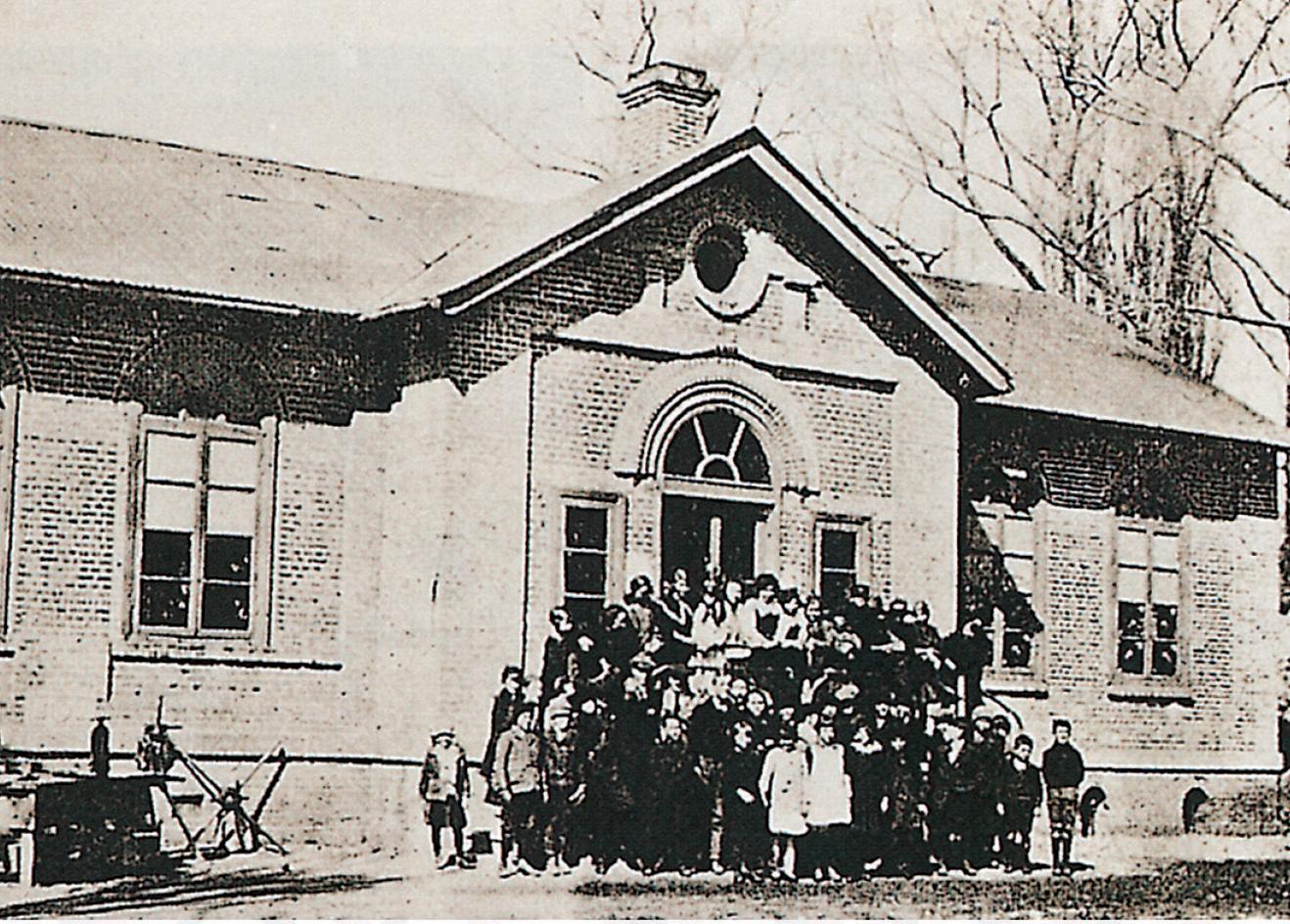
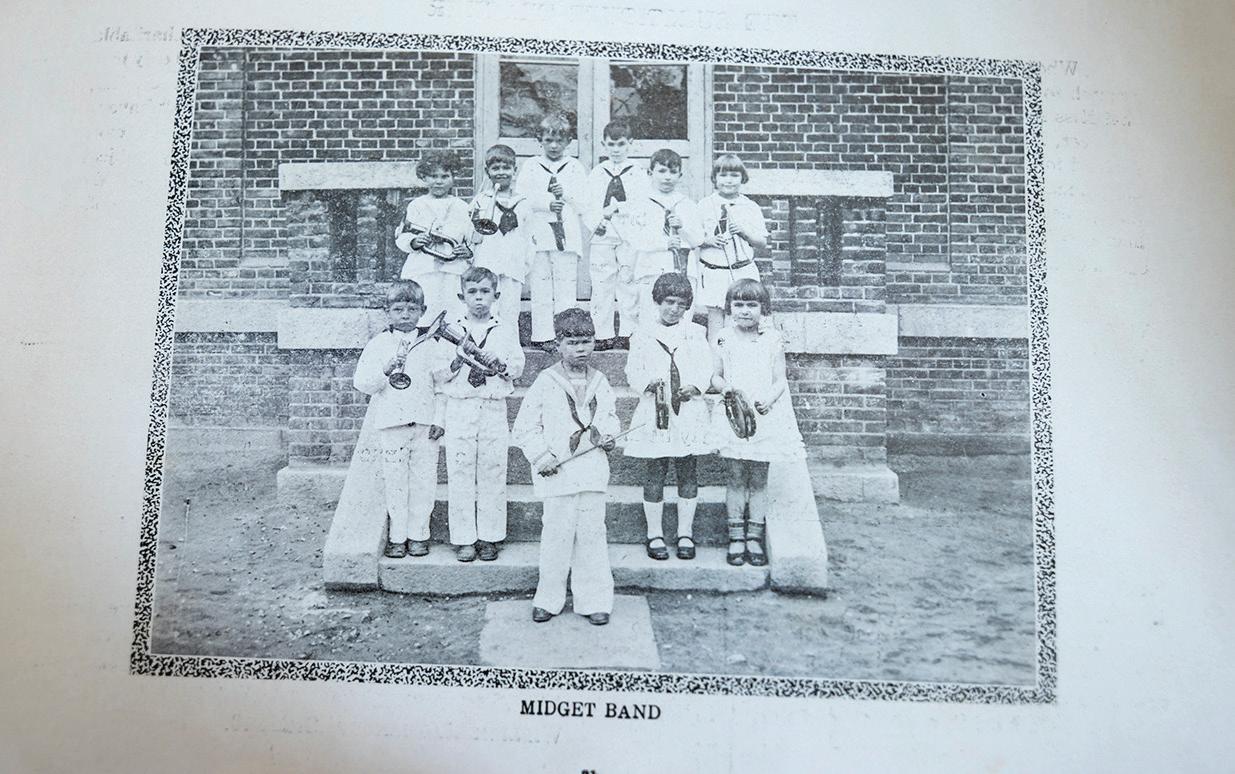
The SFS student body, Plaisant House, 1923.
The Atwater Kent radio was one of the most popular and widely used radios of the 1920s.
The Ford Model T revolutionized transportation and became one of the most influential automobiles of the 1920s.
An iconic piece of 1920s technology, the rotary telephone represented a new era of communication and modern living.
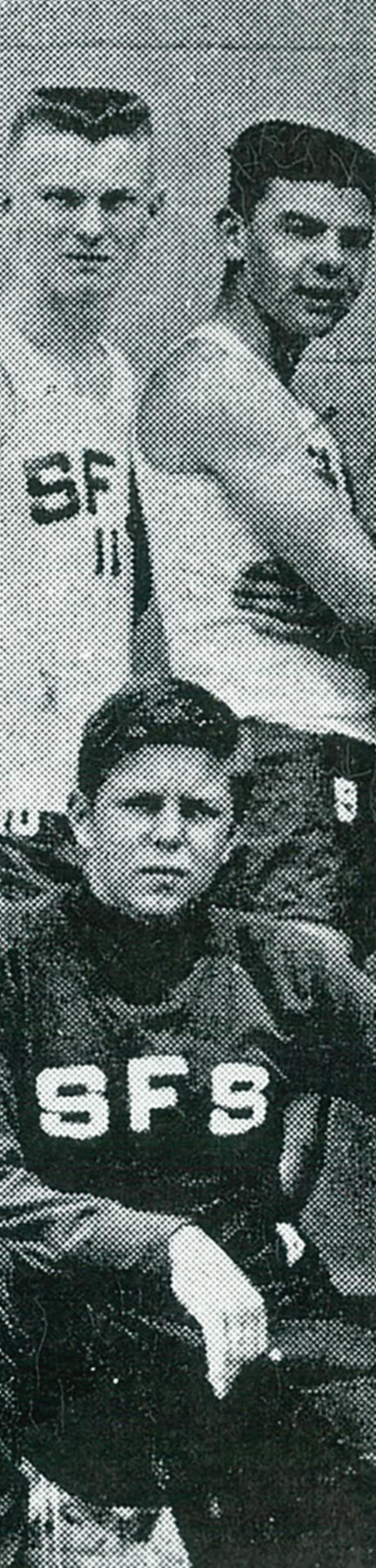
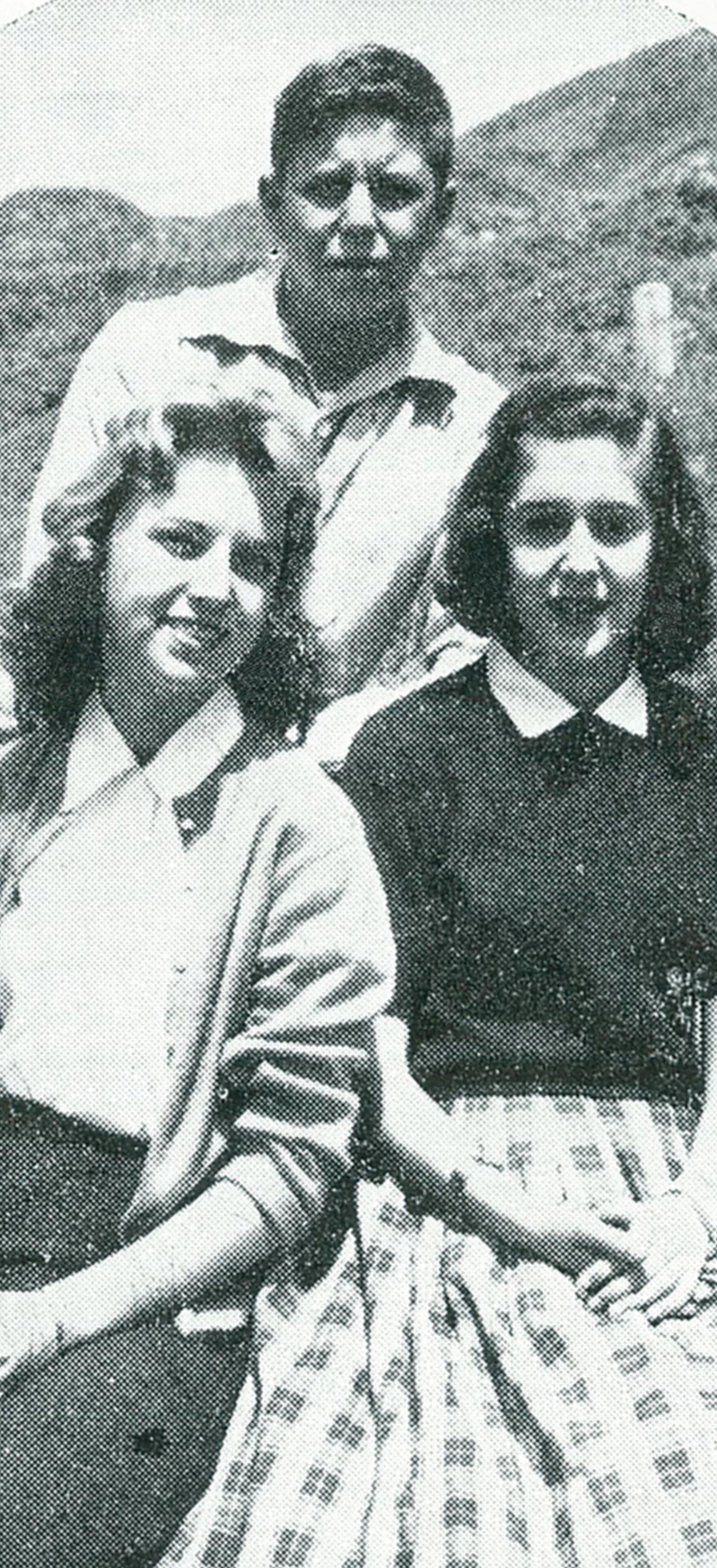
Junior Class representatives from the 1959 SFS Yearbook:
Horace Underwood (President), Nancy Blanchette (Vice-President), and Betty DeCamp (Secretary).
WHAT THE COOL KIDS SAID
"That's a gas!" — That's hilarious; a great time.
"Dig it" — To truly understand or appreciate something. As in: "You dig what I'm saying?"
"Blow your wig" — To be overwhelmed with excitement. The 1930s version of losing your mind — in a good way.
"Swell" — Excellent, wonderful. Used sincerely and constantly, with zero irony.
The Silent Generation
(Born 1928–1945)
A1951 essay in Time magazine dubbed the people in this age group the “Silent Generation” because they were more cautious than their parents. “By comparison with the ‘Flaming Youth’ of their fathers & mothers, today’s younger generation is a still, small flame.” The Silent Generation helped shape 20th century pop culture, with pioneering rock musicians, iconic filmmakers, television legends, beat poets, gonzo journalists, and groundbreaking political satirists. Cautious? Yes. Conformist? Often. But also tenacious. The ones who built stable lives with extraordinary competence and very little fanfare, who valued duty over drama, and who never once complained about any of it.
THE WORLD THEY LIVED IN
This generation's childhood was essentially a masterclass in catastrophe management. They were born into the global economic collapse of the Great Depression, and before they were teenagers, World War II had consumed virtually every corner of the globe: Europe in ruins, the Pacific ablaze, and an atomic bomb ending it all in a flash that also ended any remaining illusions about the limits of human destructiveness. And yet, the radio crackled with Glenn Miller, Hollywood produced its Golden Age, and teenagers in sweater sets were doing the Lindy Hop in dance halls as if joy were an act of defiance. Because, in a way, it was.
THEIR SOUNDTRACK
"Sing, Sing, Sing" — Benny Goodman (1936) "In the Mood" — Glenn Miller Orchestra (1939) "Boogie Woogie Bugle Boy" — The Andrews Sisters (1941) "Summertime" — from Gershwin's Porgy and Bess (1935) "(I've Got a Gal in) Kalamazoo" — Glenn Miller (1942)
CLASSROOM LIFE
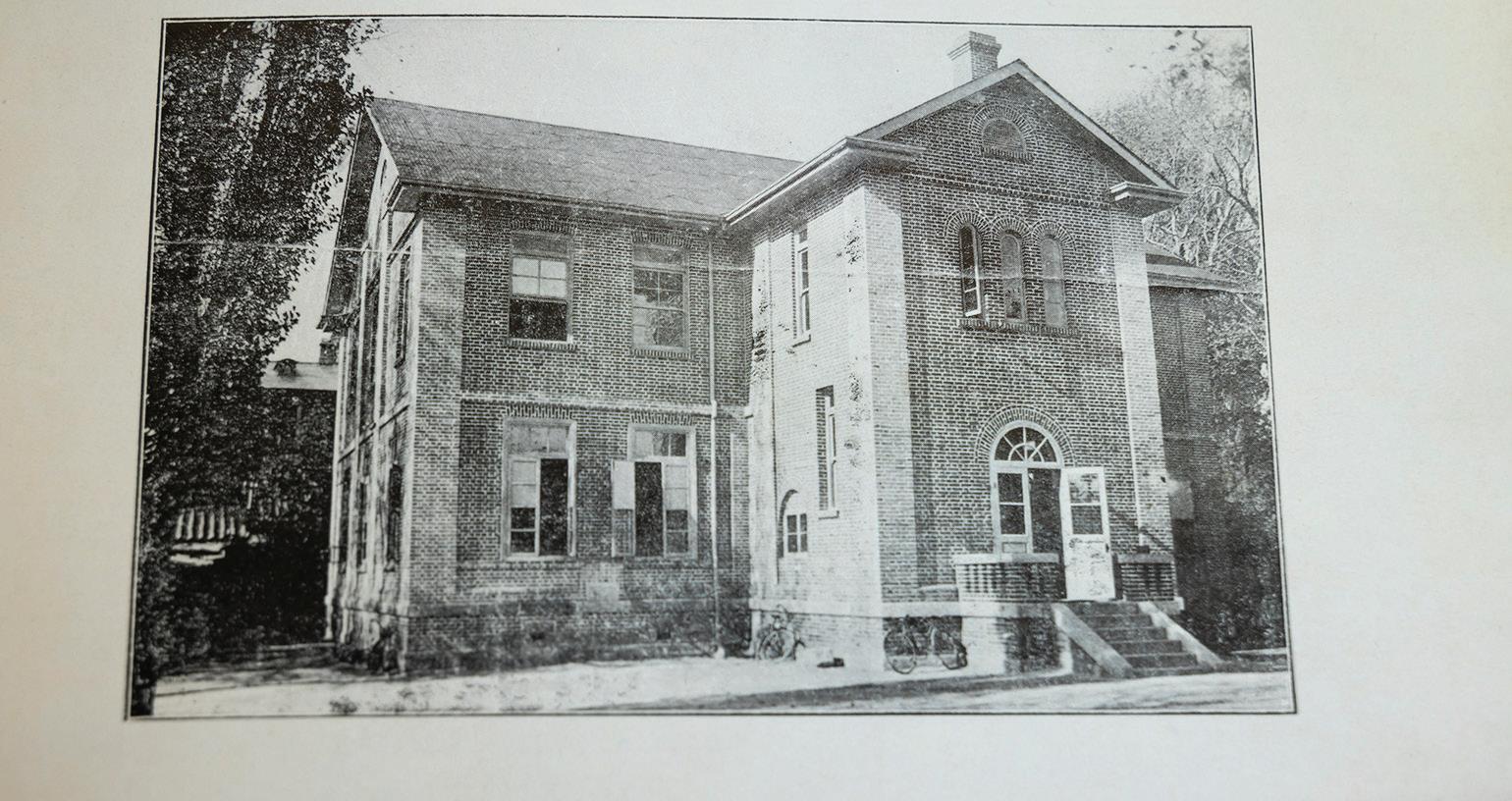
Inside the classroom, order prevailed. The Silent Generation student sat up straight, answered when called upon, and never, under any circumstances, questioned the teacher. The SFS curriculum was based on that of New York State, with a strong college preparatory emphasis. English, Social Studies, Mathematics, and Science were taught throughout high school, as well as the now extinct Typing and Shorthand classes. Although SFS called Morris Hall in Jeongdong home from 1924 to 1957, the school had to close its doors on December 8, 1941, after which the buildings were seized, sold, and greatly altered. SFS moved back in 1949, only to close down again when North Koreans invaded the South on June 25, 1950.
Widely used in offices, schools, and homes throughout the 1940s and 1950s, the typewriter became an essential tool for communication, storytelling, and everyday work.
KOREA AT THE TIME
ALUMNI SPOTLIGHT
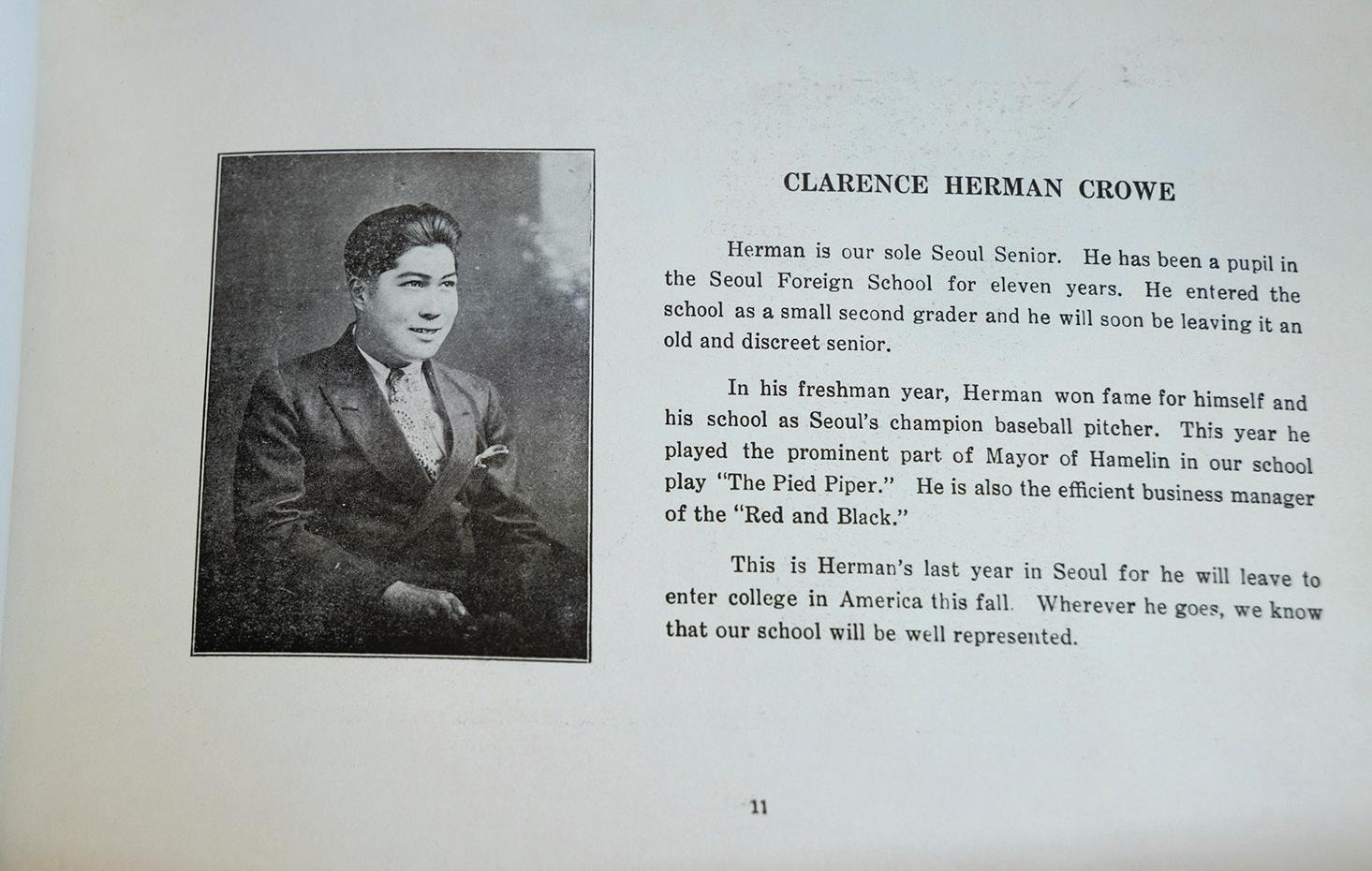
Future Head of School Richard Underwood was a 9th grader in 1941, one of the remaining seven students at SFS after the massive evacuation of American citizens from Korea and Japan in 1940. On December 8, 1941 (the 7th in Hawaii), the school was closed and the children sent home at 11:00 AM. He remembers that day clearly: “We were in school when we heard the news that Pearl Harbor had been bombed. We were told that the Crowes and the Underwoods should return home immediately for house arrest. The others were not American citizens but the school was closed that day and didn’t open again until after World War II.”
From 1938 onwards, young Korean men were conscripted into the Japanese army. By 1943, speaking Korean was forbidden outright. And yet underground, Korean identity smoldered, kept alive in whispered conversations, hidden texts, and the stubbornness of people who refused to forget who they were. When Japan surrendered in August 1945, liberation came at last. But it arrived with a catch: the peninsula was divided along the 38th parallel almost overnight, the Soviet Union to the north, the United States to the south. Freedom came, and immediately became something else entirely.
KIDS WILL BE KIDS
“When I was asked to record recollections from my days at Seoul Foreign School, I discovered that I must be more a romantic than a scholar as the first image that appeared in my mind’s eye was my first kiss. It was in the basement of Morris hall, the multi-purpose building that was school, church, and community building… and secret rendez-vous. It is true that one never forgets that first one. There is an old adage, 'tell tales but not names or names without tales.' She shall remain nameless.” - Dr. Gerdine Park, Class of 1940.
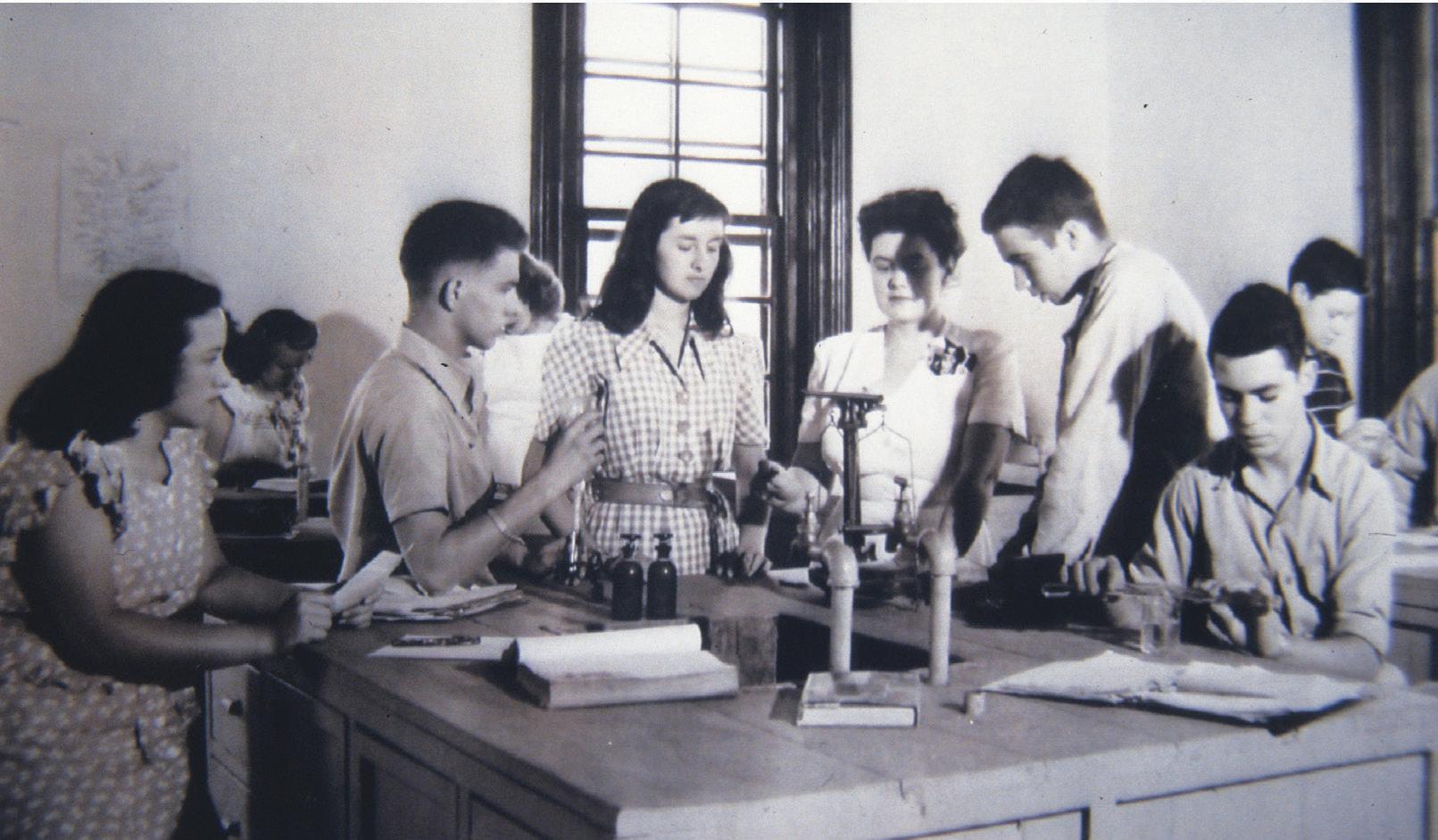
Science Lab, circa 1950.
Film cameras became increasingly popular in the 1940s and 1950s, allowing people to capture everyday life, family memories, and historic moments in ways never before possible.
The Baby Boomers
(Born 1946–1964)
Gen Z may think of Baby Boomers as their outof-touch grandparents (as in "OK, Boomer"), but this generation actually had a wild youth we often don't hear about. Boomers are named for the population "boom" that occurred after World War II when a baby was being born every eight seconds. Many young people of this generation defied their parents, protested the Vietnam War, and created the "Summer of Love." Boomer parents notably redefined parenting by being the first generation to look at their kids' perspective of growing up, and starting the concept of having family meetings.
THE WORLD THEY LIVED IN
After the devastation of WWII, the world exhaled. From Tokyo to London, from Seoul to São Paulo, factories retooled, families rebuilt, and a generation of children grew up in the unfamiliar comfort of enough: enough food, enough work, enough hope to make plans again. A new global order was taking shape, with the United Nations founded in 1945, decolonization movements sweeping Asia and Africa, and science racing forward at a pace that felt almost reckless. Then, just as the first Boomers hit their teens, the mood shifted: the Cold War divided the world into two nervous camps, Sputnik shook Western confidence, and from Birmingham to Paris to Seoul, young people began asking uncomfortable questions about the world their parents had built.
THEIR SOUNDTRACK
"Heartbreak Hotel" — Elvis Presley (1956)
"Johnny B. Goode" — Chuck Berry (1958)
"Blowin' in the Wind" — Bob Dylan (1963)
“Little Wing” — Jimi Hendrix (1967)
"(Sittin' On) The Dock of the Bay" — Otis Redding (1968)
WHAT THE COOL KIDS SAID
"Daddy-O" — A friendly address, borrowed from jazz musicians.
“Dig” — To understand or appreciate something. I dig it.
"Squaresville" — The world of the uncool, the conventional, the hopelessly boring.
"Let’s split!" — Let’s go!
CLASSROOM LIFE
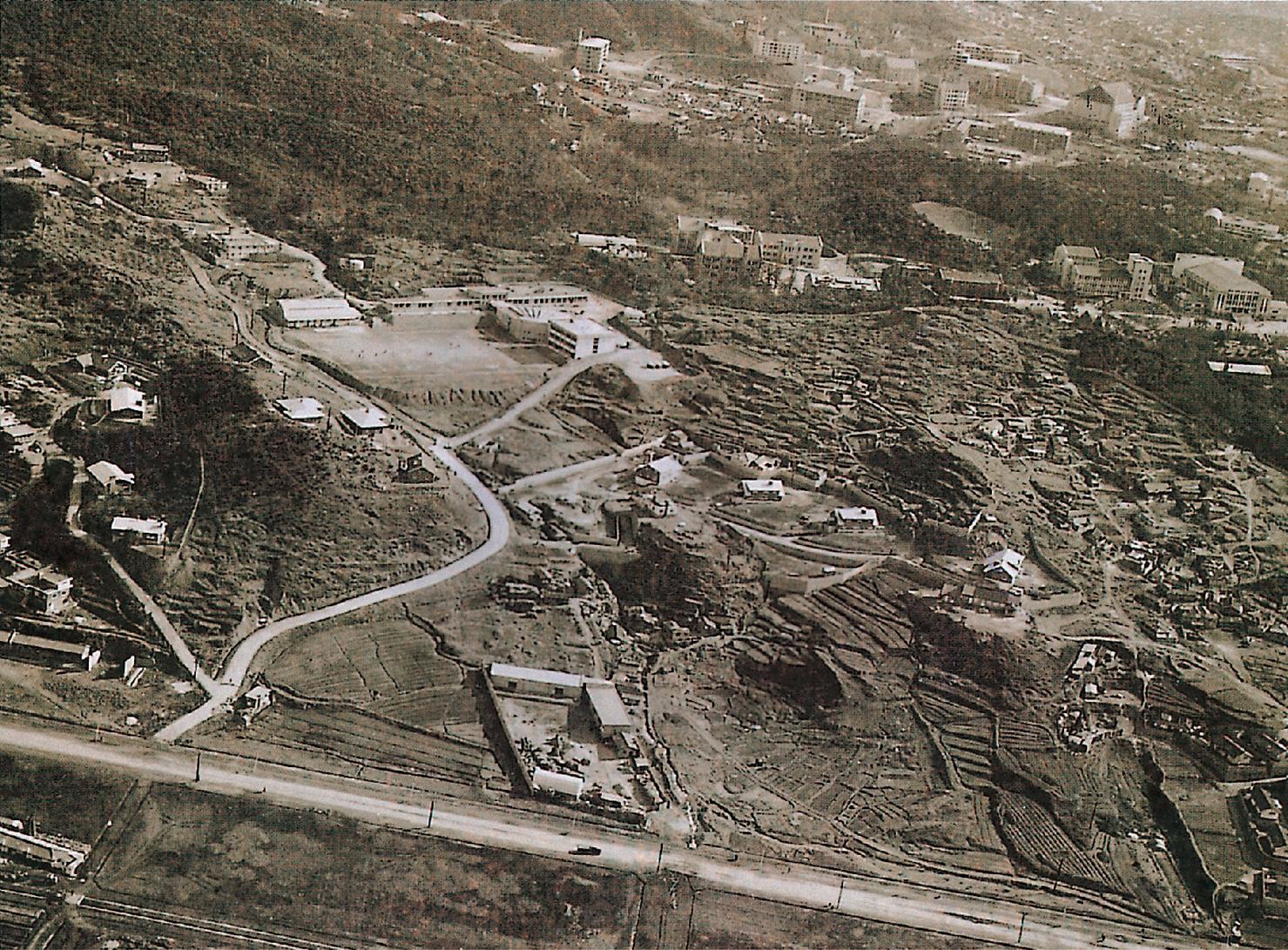
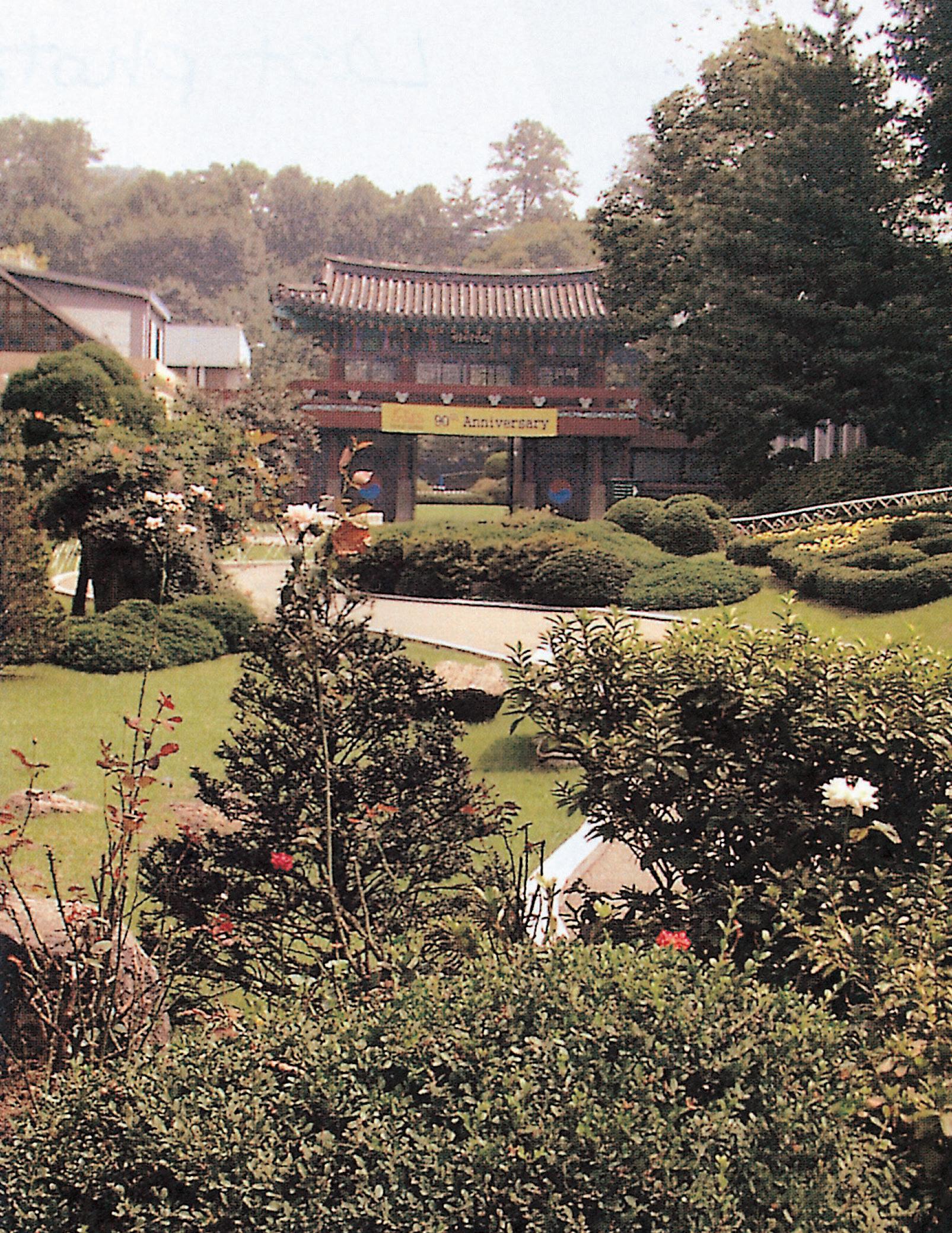
Classrooms still looked orderly, rows of desks, chalkboards at the front, but something was shifting. With growing resources and a more connected world, learning started to feel broader, less about memorizing, more about understanding. 1957 was the year when everything changed for SFS. An eight-acre plot of land was purchased for $8,000 in an underdeveloped area in Yeonhui-dong, just north of Yonsei. One single long building with eight classrooms was erected to welcome the 134 students that made up the school. By 1975, a gym, Elementary as well as High School buildings, a library, an auditorium, teacher housing, and the beloved Korean Gate completed the campus. SFS was on its way to becoming a major educational hub.
Cubes became a popular puzzle and cultural icon in the late 1970s.
ALUMNI SPOTLIGHT
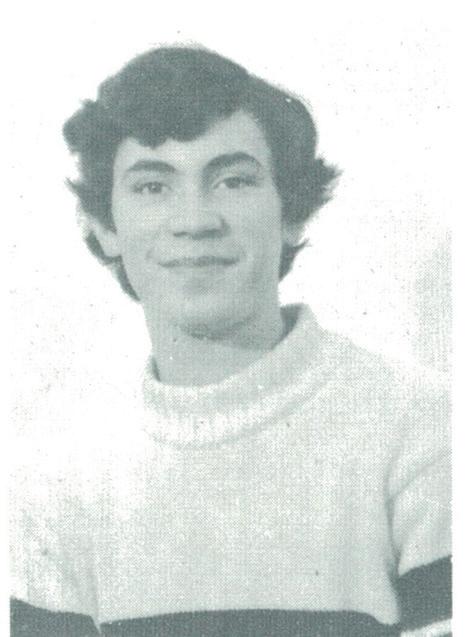
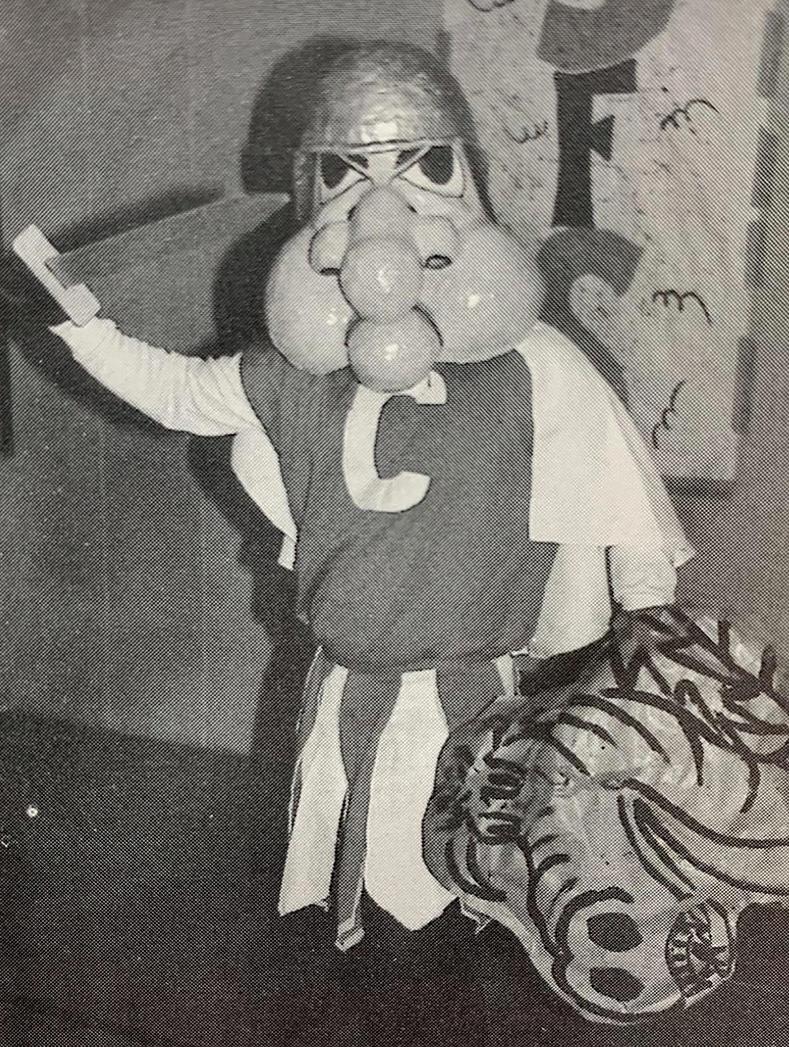
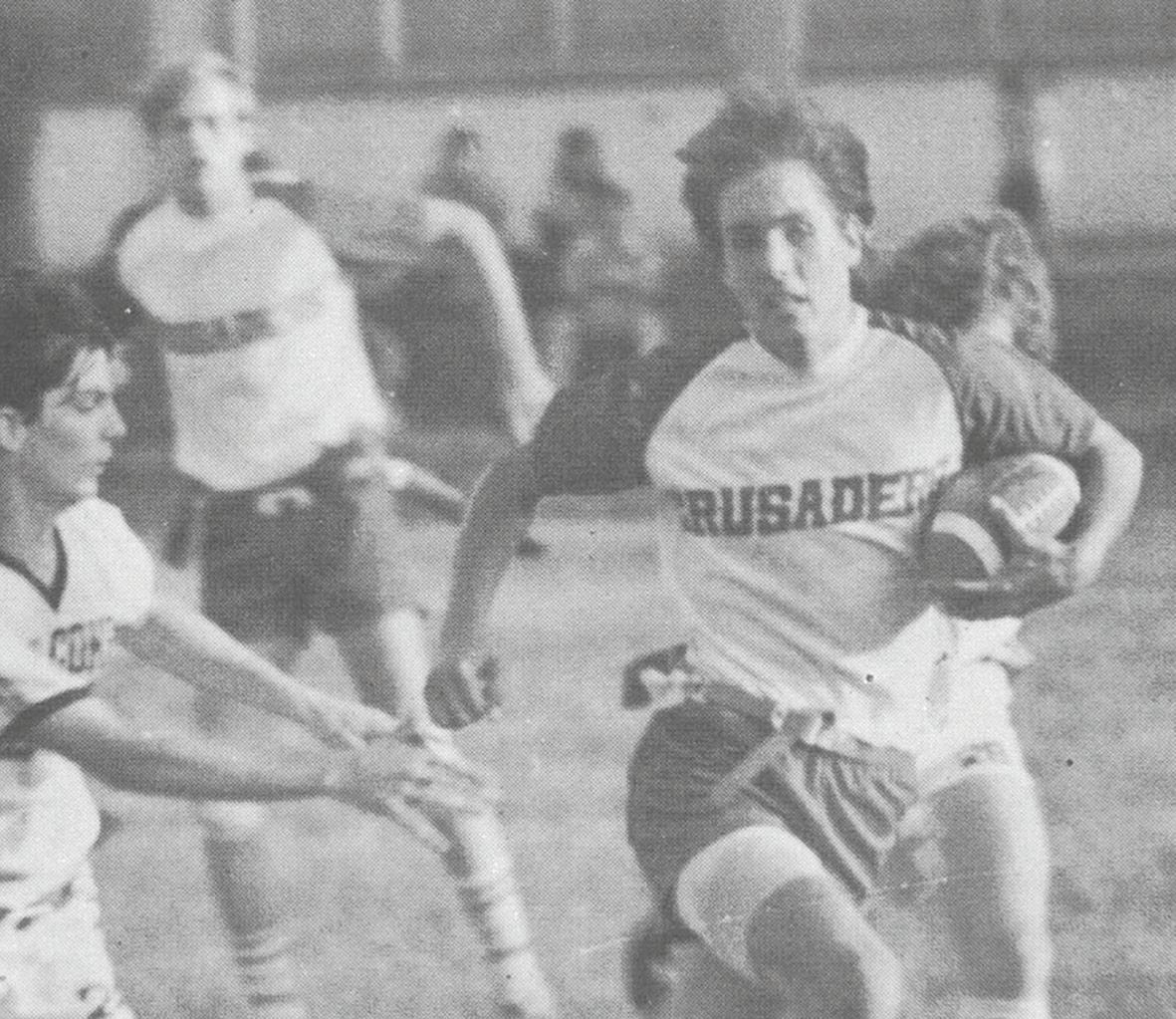
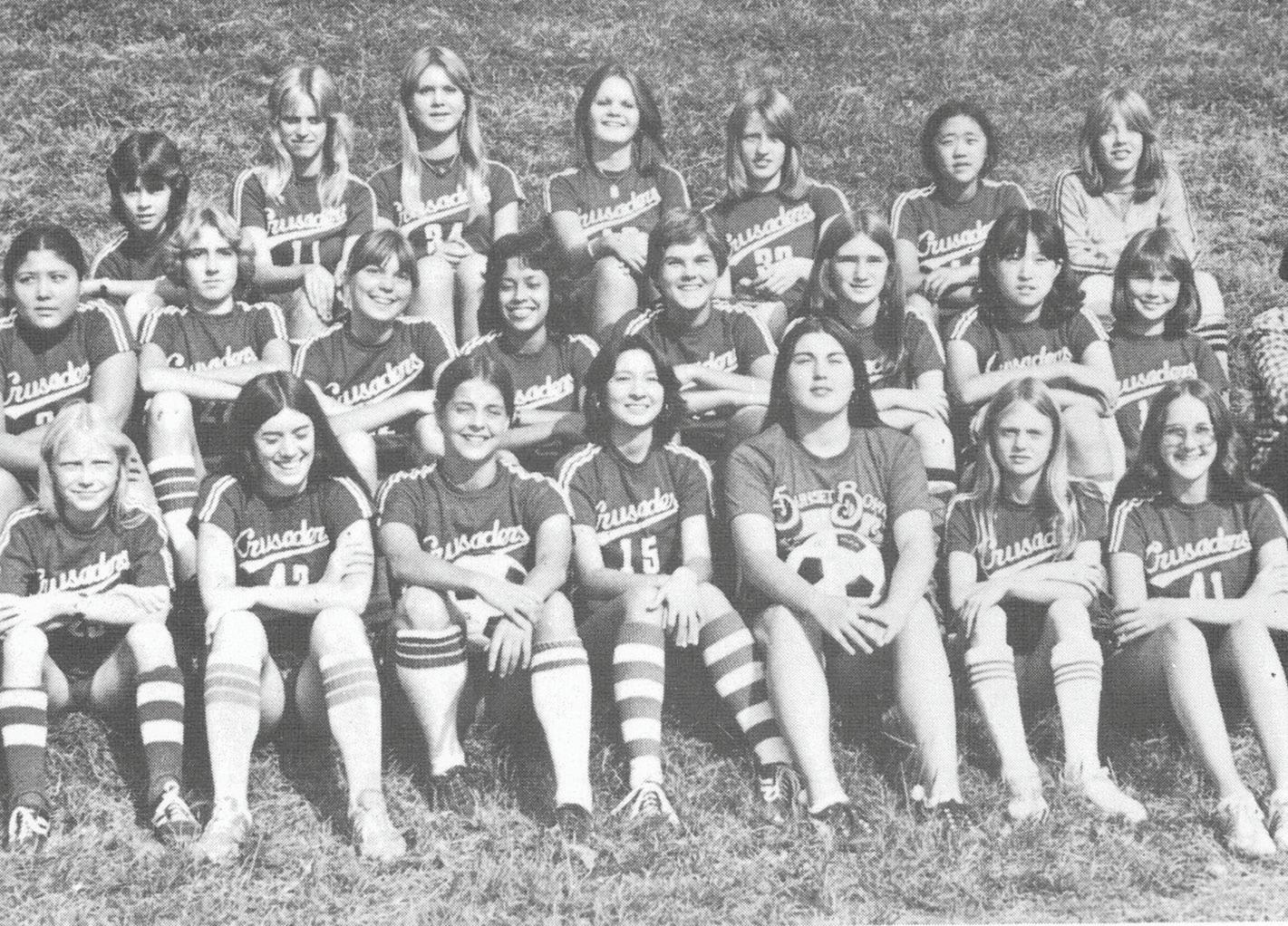
Nicknamed “beautiful blue eyes” in his senior profile, Peter Dorow ‘79 attended SFS from Kindergarten to G12, and was part of the SFS Boys Basketball team that famously brought home the Far East Championship trophy. He stayed deeply connected to SFS throughout his adult life and currently serves as the President of the Friends of Seoul Foreign School.
Electric guitars and record players became defining symbols of music and youth culture in the 1960s and 1970s, shaping the sound and atmosphere of everyday life through the growing popularity of vinyl records.
KOREA AT THE TIME
When the Korean War ended in 1953, Seoul was a shattered city: over 10,000 buildings damaged, infrastructure destroyed, and a population trying to return to streets that no longer existed. Reconstruction was slow, dependent on massive US aid, and overshadowed by the ever-present reality of the DMZ just 50 kilometers to the north. And yet, something extraordinary was beginning. The chaebols that would one day power one of the world's great economies were taking root: Lee Byung-chull was building Samsung, Chung Ju-yung was laying the foundations of Hyundai, Koo In-hwoi's Lucky Chemical would become LG. Seoul was being rebuilt from scratch, literally, and it had plans. Entire neighborhoods rose almost overnight, fuelled by the belief that hard work could rebuild an entire nation.
Early electronic calculators became increasingly common in the 1970s, transforming mathematics, business, and everyday problem-solving with portable digital technology.
KIDS WILL BE KIDS
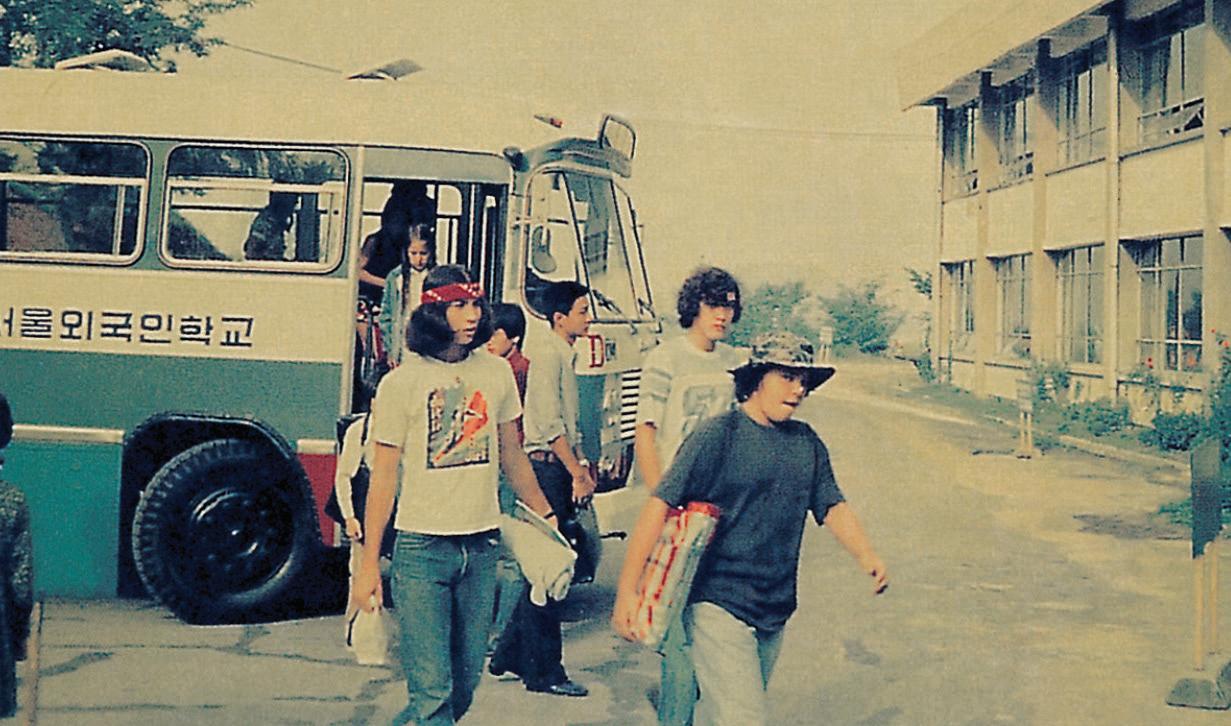
1970s fashion traveled all the way to Korea (1976).
Aerial view of SFS and Yeonhui-dong, 1967.
Rubik’s
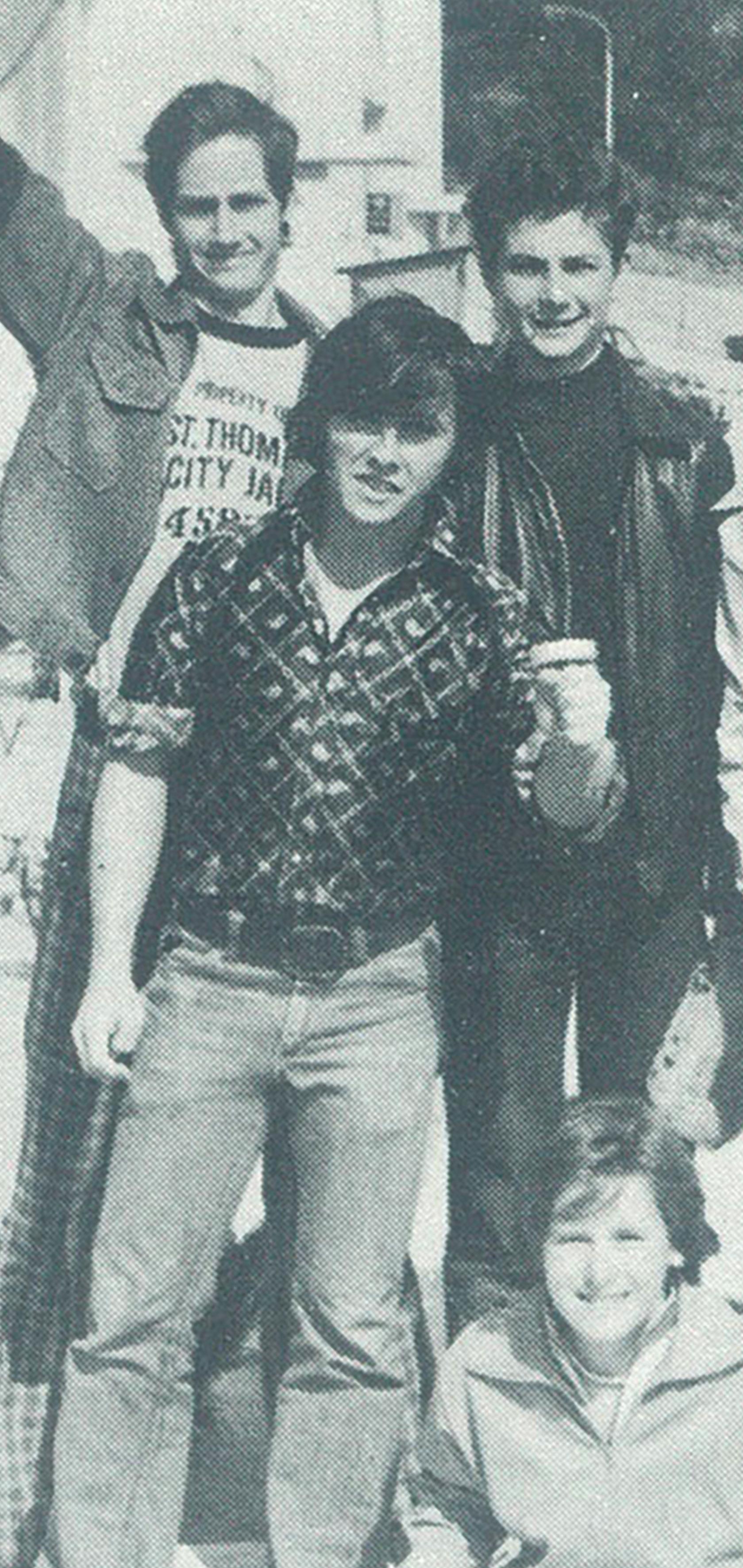
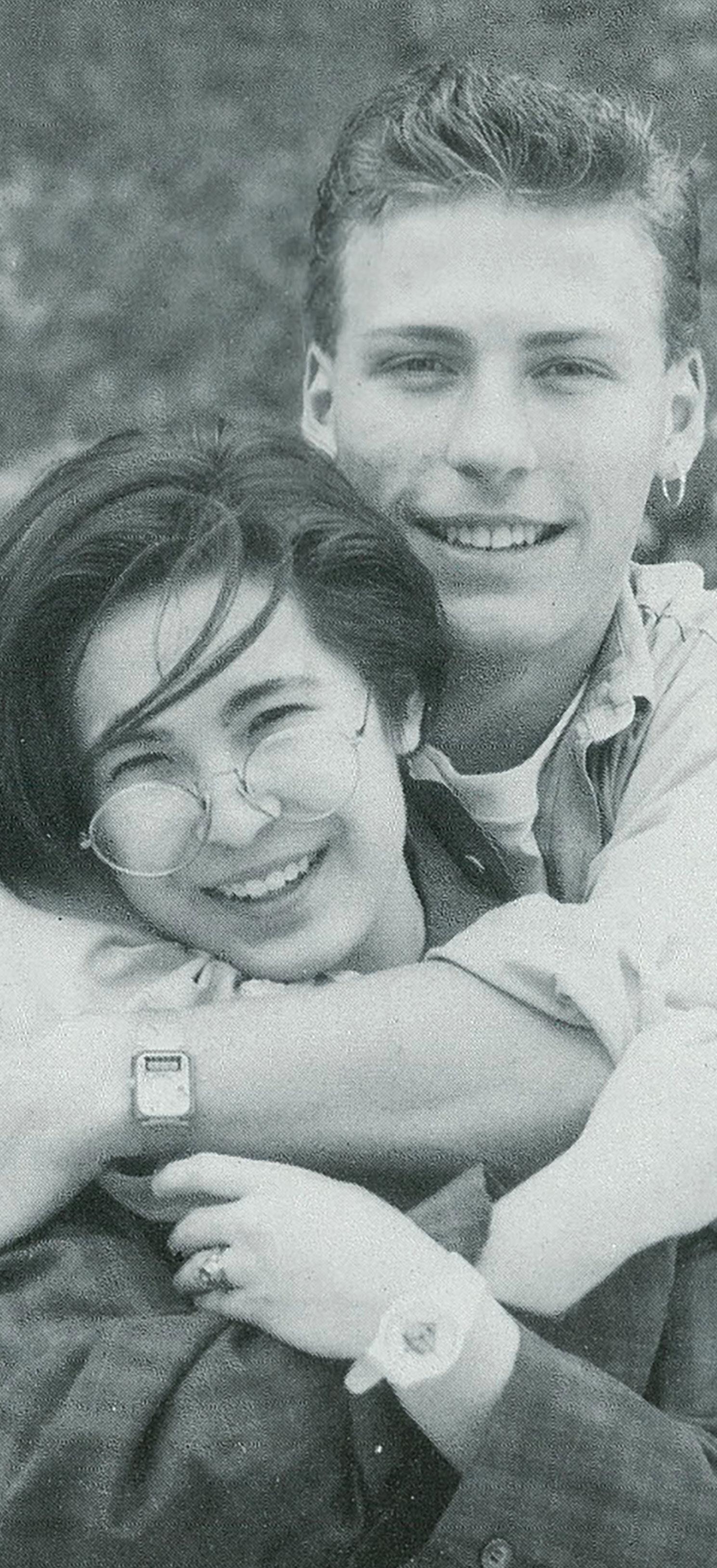
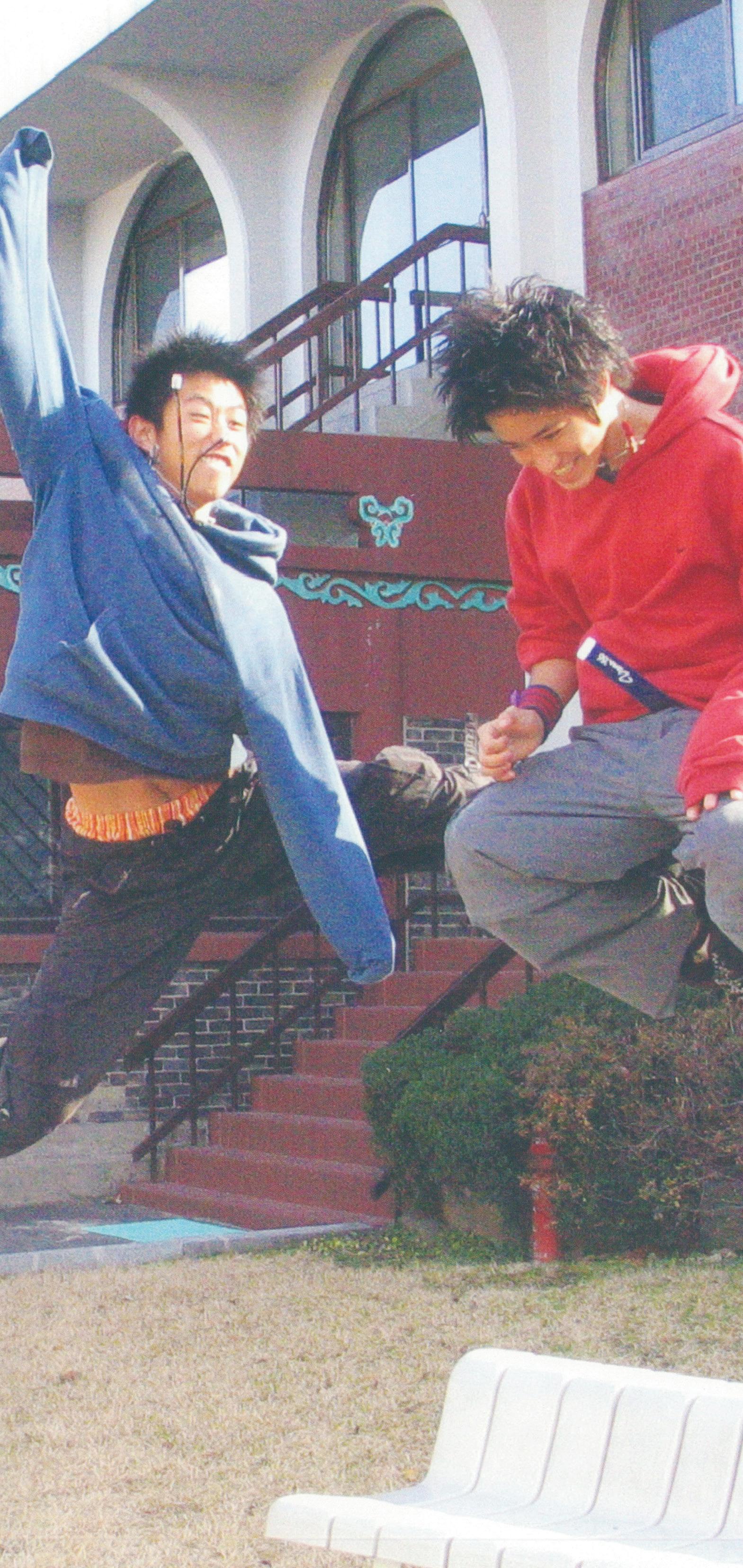
Junior Superlatives from the 1991 SFS Yearbook: Ralf & Sonya for 'Should Have Been a Couple'.
WHAT THE COOL KIDS SAID
"Rad" — Excellent, impressive, worthy of genuine respect.
"Gnarly" — Extreme, intense, or deeply impressive. Could also mean deeply disgusting.
"No duh" — Obviously. Used to shut down anyone who had just stated the painfully obvious.
“Take a chill pill” — Calm down.
D Generation X (Born
1965–1980)
ubbed Generation X because no one could quite pin them down, they are sandwiched between the world-changing Boomers and the internet-native Millennials. Often dubbed the “Latchkey Generation,” Gen X grew up largely unsupervised, in a world marred by the Cold War and skyrocketing divorce rates. They watched Michael Jackson revolutionize the music world on MTV and read American Psycho under the covers at night. Pragmatic, adaptable, and constitutionally allergic to self-importance, they were the first generation with absolutely no one telling them what to do.
THE WORLD THEY LIVED IN
The world Gen X grew up in felt simultaneously exciting and unstable. The Cold War cast a long shadow, with nuclear anxiety a quiet presence in the background of everyday life. Across the globe, governments lurched between authoritarianism and reform: coups, revolutions, and independence movements reshaped borders from Latin America to Southeast Asia to Africa. And yet, popular culture had never been more alive. The personal computer arrived. Video games went from arcades to living rooms. Cinema became an art form teenagers actually cared about. By the time the Berlin Wall fell in 1989, Gen X had grown up watching the world change in real time, without the benefit of social media to explain what any of it meant.
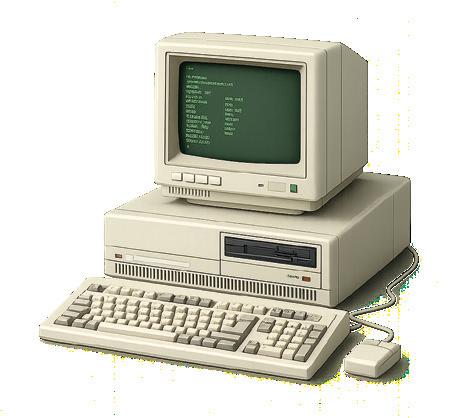
Personal computers became increasingly common in the 1980s, transforming the way people worked, learned, and interacted with digital technology at home and in schools.
THEIR SOUNDTRACK
"London Calling" — The Clash (1979)
"Billie Jean" — Michael Jackson (1983)
"Sweet Child O' Mine" — Guns N' Roses (1987)
"Nothing Compares 2 U" — Sinéad O'Connor (1990)
"Smells Like Teen Spirit" — Nirvana (1991)
CLASSROOM LIFE
For most of the 1970s and early 1980s, school still meant textbooks, handwriting, and memorizing things you could, theoretically, look up. Then the Apple II appeared, and everything changed. At the same time, rote learning gave way to critical thinking, and for the first time, students were actively encouraged to form and defend their own opinions. The IB Diploma Programme emerged in the mid ’70s and SFS was one of the first adopters in 1982. The early ’80s also marked a turning point in the SFS student population. Many missionaries who had come to do relief work after the war were nearing retirement age or had completed their mission. Children of foreign businesspeople and diplomats were now replacing missionary children and the population became more transient.
KOREA AT THE TIME
ALUMNI SPOTLIGHT
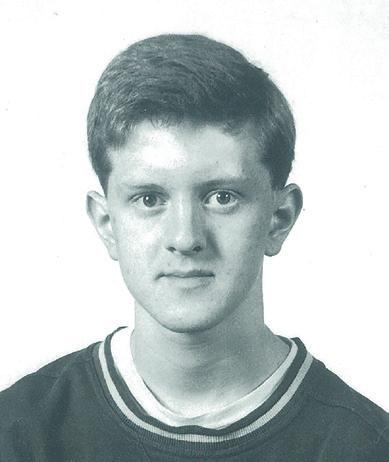
Ken Jennings '92 spent 11 formative years at SFS, from Grade 2 through to graduation, reading encyclopedias at recess, competing in Brain Bowl, and quietly becoming the most knowledgeable person in any room. The world caught on in 2004, when he won 74 consecutive episodes of Jeopardy!, a record that still stands. He has since won the Jeopardy! Greatest of All Time tournament, become the show's permanent host, and authored 13 books. "It's hard to overstate how my years at SFS shaped me as a person," he says. The encyclopedia was just the beginning.
The Korea that Gen X grew up watching was undergoing one of the most dramatic economic transformations in modern history. Under President Park Chung-hee, South Korea's GDP per capita rose to figures that placed it among Asia's four economic tigers within a single generation. Hyundai was building ships and cars. Samsung was becoming a household name. Seoul was expanding at a pace that outran its own infrastructure. It was a period of extraordinary national drive, and carried both remarkable achievements and painful contradictions — including the suppression of political dissent and a turbulent democratic transition following Park's death in 1979. Then Seoul hosted the 1988 Olympic Games, and for the first time the world looked at Korea not as a warscarred peninsula on a Cold War fault line, but as a modern nation announcing itself on the global stage.
KIDS WILL BE KIDS
One of SFS Gen X’s favorite memories is probably linked to the 1988 Summer Olympics. Indeed, most of the country shut down during that time to fully enjoy the once-ina-lifetime event that is hosting the Games. SFS was no exception, and the school closed for two weeks as well, giving all students a well-appreciated but hardly needed vacation just a few weeks after school opened!
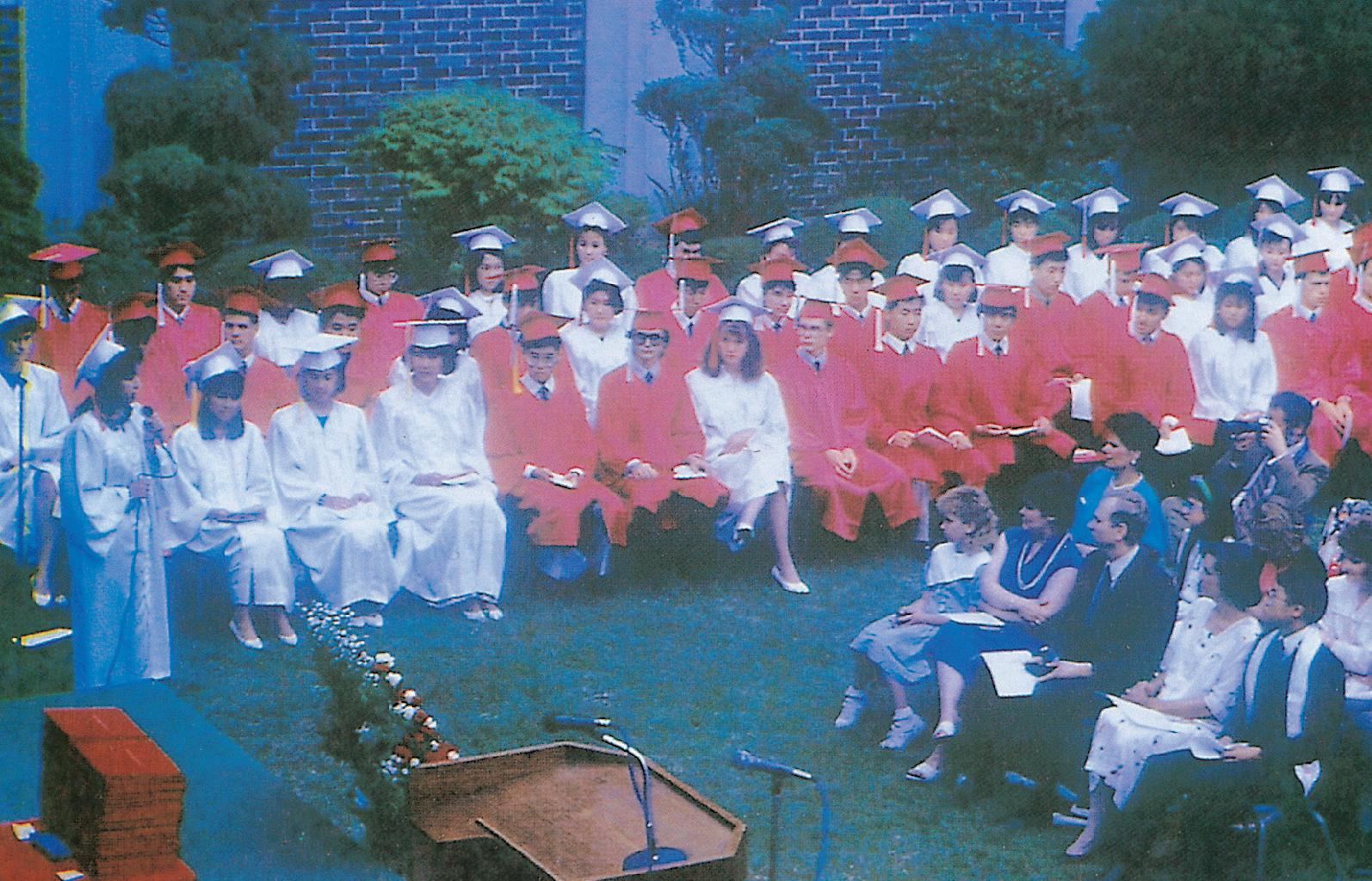
Graduation - Class of 1987
Roller skates became a popular symbol of youth culture and recreation in the 1980s and 1990s, bringing music, fashion, and social gatherings together at skating rinks around the world.
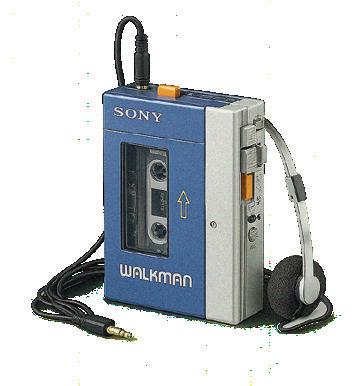
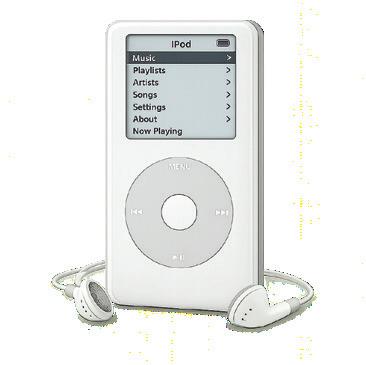
Walkmans became a defining symbol of music and youth culture in the 1980s and 1990s.
The Millennials
(Born 1981–1996)
Born between two centuries and two millennia, they expected the Y2K Bug to end the world. It didn’t, yet they had to watch it catch fire, repeatedly, in high definition. Millennials grew up as the internet rewired daily life, came of age on 9/11, graduated into a global financial crisis, and somehow still found time to be accused of ruining everything from avocados to the property market. The first truly globalized generation, they were connected to peers across the world before they even had a driver's licence.
THE WORLD THEY LIVED IN
The 1990s opened with a jolt of optimism: the Cold War was over, economies were booming, and the internet was turning from a curiosity into a revolution, proving Cliff Stoll wrong. Then the new millennium arrived with the Y2K scare, followed swiftly by the September 11 attacks in 2001, which reshaped global politics, airport security, and the way an entire generation understood safety. Wars followed in Afghanistan and Iraq. The 2004 Indian Ocean tsunami killed over 200,000 people across 14 countries. The 2008 global financial crisis wiped out savings, jobs, and the assumption that the future would always be more prosperous than the past. Millennials processed all of it in real time, first on dial-up, then broadband, then in the palms of their hands.
THEIR SOUNDTRACK
"Wonderwall" — Oasis (1995)
"Killing Me Softly" — The Fugees (1996)
"Mr. Brightside" — The Killers (2003)
"...Baby One More Time" — Britney Spears (1998)
"Hips Don’t Lie" — Shakira (feat. Wyclef Jean) (2006)
WHAT THE COOL KIDS SAID
"That's so fetch" — Destined to never happen, according to Regina George.
"Talk to the hand" — I am not listening to you. Accompanied by a raised palm.
"Whatever" — Dismissal, disappointment, and mild contempt, all in three syllables.
"LOL" — Said out loud, in actual conversation, without irony (at the time anyway).
"Wassup!" — This one needs no translation, hopefully.
High School students from the 2005 SFS Yearbook.
CLASSROOM LIFE
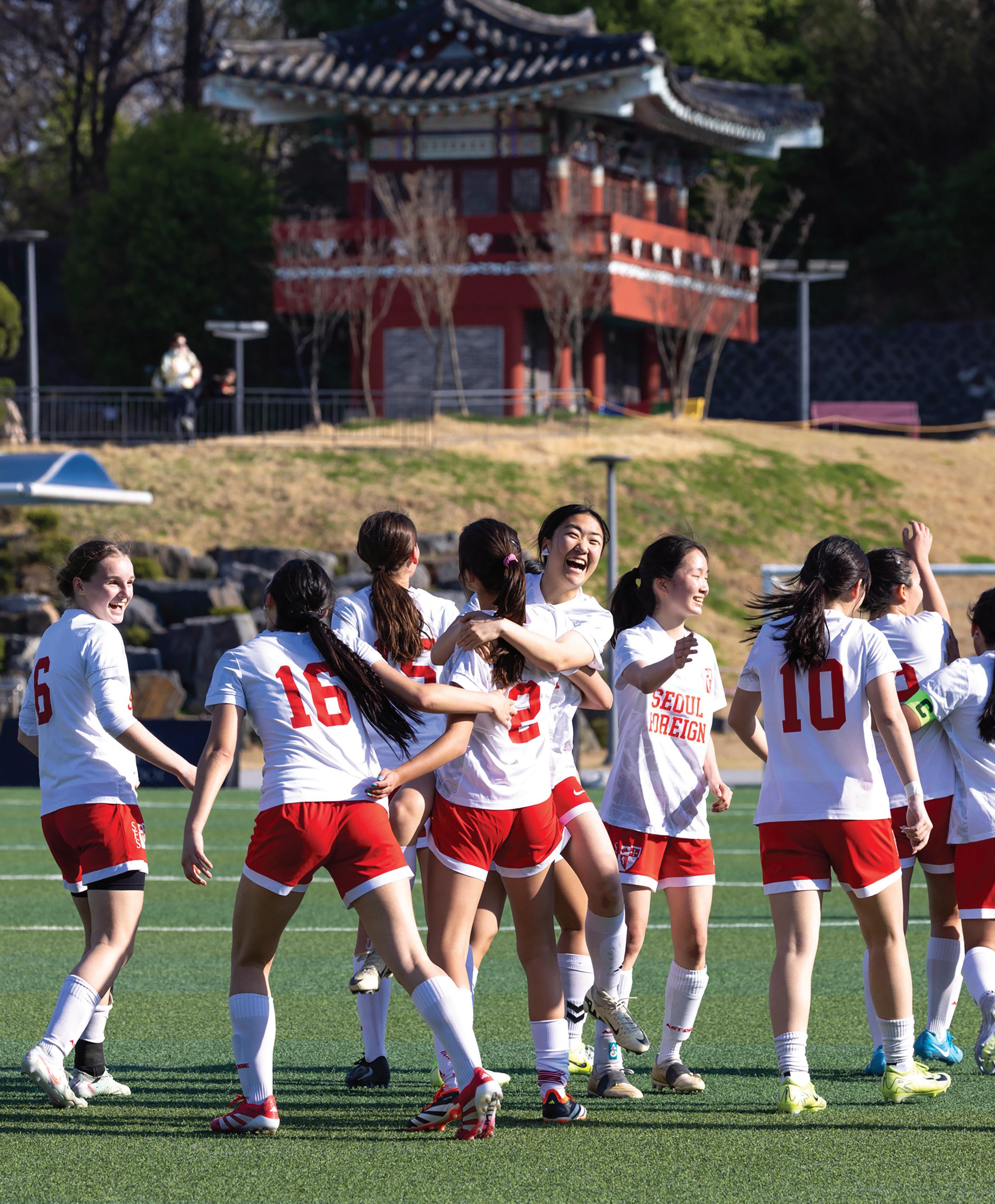
Overhead projectors gave way to PowerPoint. Library encyclopedias gave way to the internet, which gave way to Wikipedia, which teachers banned and students used anyway. The first classroom computers arrived like exotic furniture, one per room, usually broken. By the early 2000s, laptops were appearing in bags, and mobile phones were being confiscated at the door. For the first time, a student could theoretically access the sum of human knowledge mid-lesson. Whether they were doing that or playing Snake was another matter entirely. 1995 marked the year SFS entered the Internet world, and the very first domain (URL) was registered as www.crusader-h.ac.kr. Knees also finally healed when the soccer pitch was covered in turf in 2003, replacing the iconic, albeit painful “gravel pit.”
KOREA AT THE TIME
In 1997, the Asian financial crisis hit South Korea like a ton of bricks. The won collapsed, major chaebols went bankrupt, and unemployment tripled almost overnight. In a remarkable act of collective solidarity, roughly a quarter of the Korean population donated personal gold (wedding rings, sports medals, family heirlooms) to help pay off the national debt. The country recovered with extraordinary speed, and what emerged from the crisis was a more culturally confident nation. The 2002 FIFA World Cup, co-hosted with Japan, saw South Korea reach the semi-finals and the streets of Seoul flood with four million red-clad supporters in one of the great spontaneous celebrations in modern sporting history. Around the same time, another revolution was beginning: Korean dramas, films, and music were finding audiences across Asia and beyond. The Korean Wave had begun.
KIDS WILL BE KIDS
ALUMNI SPOTLIGHT
We couldn’t possibly discuss Millennial Alumni without mentioning the many alumni who decided to come back to the scene of the crime years after graduation to work as faculty: Kristina Rader Erny ’02, John Black ’04, Paul Rader ’04, Jordan Williams ’04, Stephanie Small Black ’05, Harrison Creech ’05, Susan Kong ’05 and Kristen Barennes Creech ’06. Who said Millennials had no loyalty?
Many Millennial SFS students remember their Service Trips as work-hard-play-hard types of trips. One remembers: “We were working in the city of Mendion and had to work digging septic tanks all week long; four feet wide, six feet deep. That year, the kids got the coveted name of the ‘septic tankers.’ All great bonding experiences!”
Electric vehicles became increasingly popular in the 2000s and 2010s, representing a major shift toward sustainable transportation and the future of smart automotive technology.
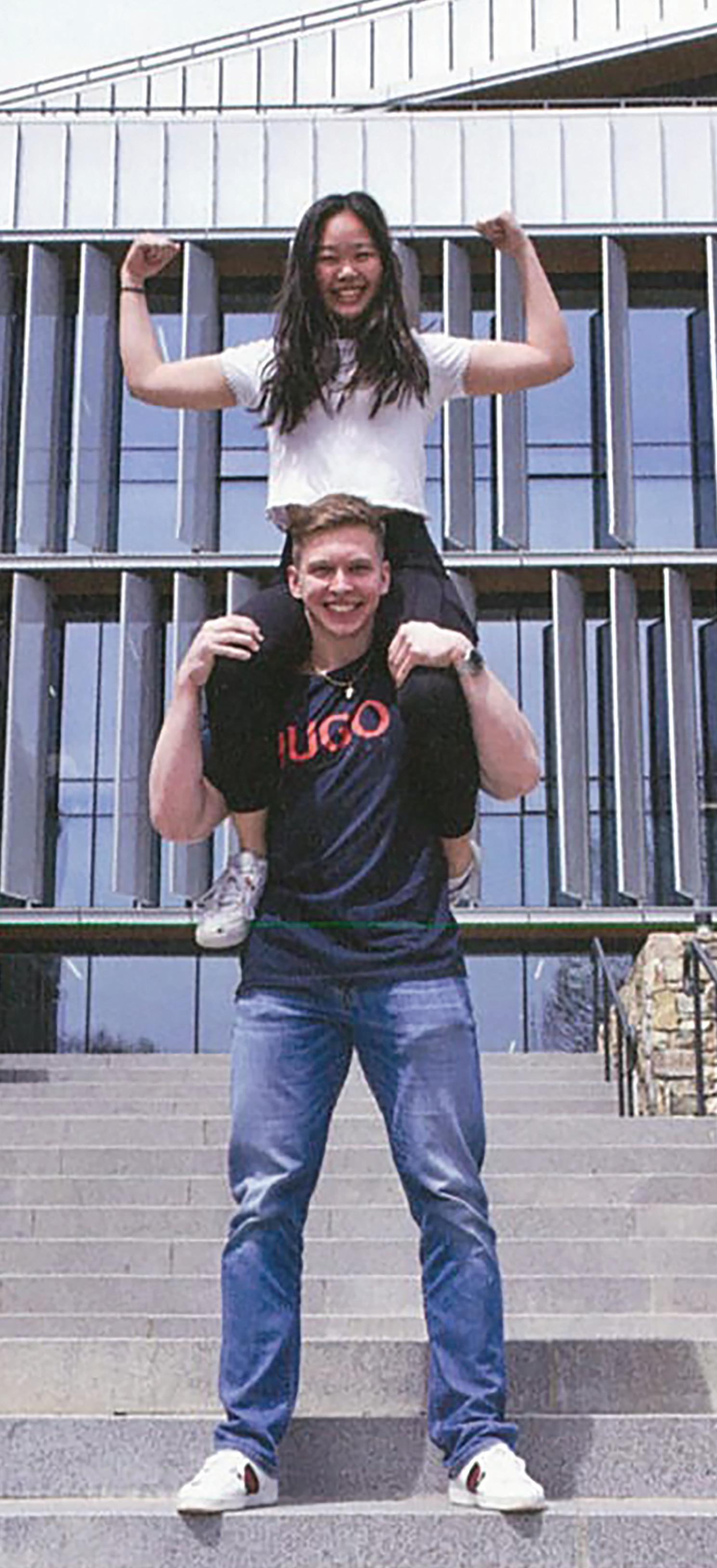
Senior Superlatives from the 2019 SFS Yearbook: Emily and Nikita, Best Person to be Deserted
THEIR SOUNDTRACK
"Shake It Off" — Taylor Swift (2014)
"Stressed Out" — Twenty One Pilots (2015)
"Bad Guy" — Billie Eilish (2019)
"Dynamite" — BTS (2020)
"Flowers" — Miley Cyrus (2023)
Generation Z
(Born 1997–2012)
They have never known a world without the internet, a life without a smartphone, or a news cycle that paused long enough to catch its breath. Generation Z, the Zoomers, are the first true digital natives: born into connectivity, raised on streaming, and educated partly by an algorithm. They are also the generation that lost months, sometimes years, of adolescence to a global pandemic, graduated into economic uncertainty, and inherited a climate crisis they did not create. In response, they became the most outspoken, most globally aware, and most unashamedly themselves generation in history. They have receipts.
THE WORLD THEY LIVED IN
Gen Z grew up in the long shadow of the 2008 global financial crisis, came of age during rising political polarization across every continent, and then watched the COVID-19 pandemic close their schools, cancel their milestones, and move their social lives entirely online for the better part of two years. The climate emergency went from background anxiety to front-page urgency. Greta Thunberg was their age when she started a global school strike. Social movements erupted across dozens of countries simultaneously, organized in large part by teenagers on their phones.
WHAT THE COOL KIDS SAID
"No cap" — No lie, I'm being completely serious.
"It's giving..." — It has the energy of, it reminds me of. As in: "This classroom is giving 1987."
"Slay" — To perform brilliantly, to look incredible, to simply exist in an impressive way.
"Understood the assignment" — To have done exactly what was needed.
"Rent free" — Living rent free in someone's head means they cannot stop thinking about you.
on an Island.
CLASSROOM LIFE
There are two distinct eras for the Gen Z classroom: before the pandemic, and after. Before: laptops were standard, group projects happened in person, and the debate about phones in class was already raging. After: Zoom fatigue became a medical term, teachers learned to teach to a grid of black rectangles, and an entire cohort sat their most important exams in their bedrooms. At SFS, Gen Z is also split in two: those who studied in the old high school, and those who walked into the brand new building that opened in 2018. Either way, school meant masks, social distancing, and hybrid learning for the better part of two years.
Social media platforms became a defining part of everyday life in the 2010s and 2020s, transforming the way people communicate, share information, and connect across the world.
KOREA AT THE TIME
By the time Gen Z came of age, South Korea had completed one of the most remarkable cultural transformations in modern history. The country that hosted a warbattered Olympics in 1988 was now the country whose music topped global charts, whose films won Academy Awards (Bong Joonho's Parasite took Best Picture in 2020) and whose skincare routines were being followed by teenagers from Buenos Aires to Berlin. BTS alone contributed billions to the Korean economy and filled stadiums on every continent. For Gen Z students at SFS, K-pop wasn’t a fad but the soundtrack playing outside the window.
ALUMNI SPOTLIGHT
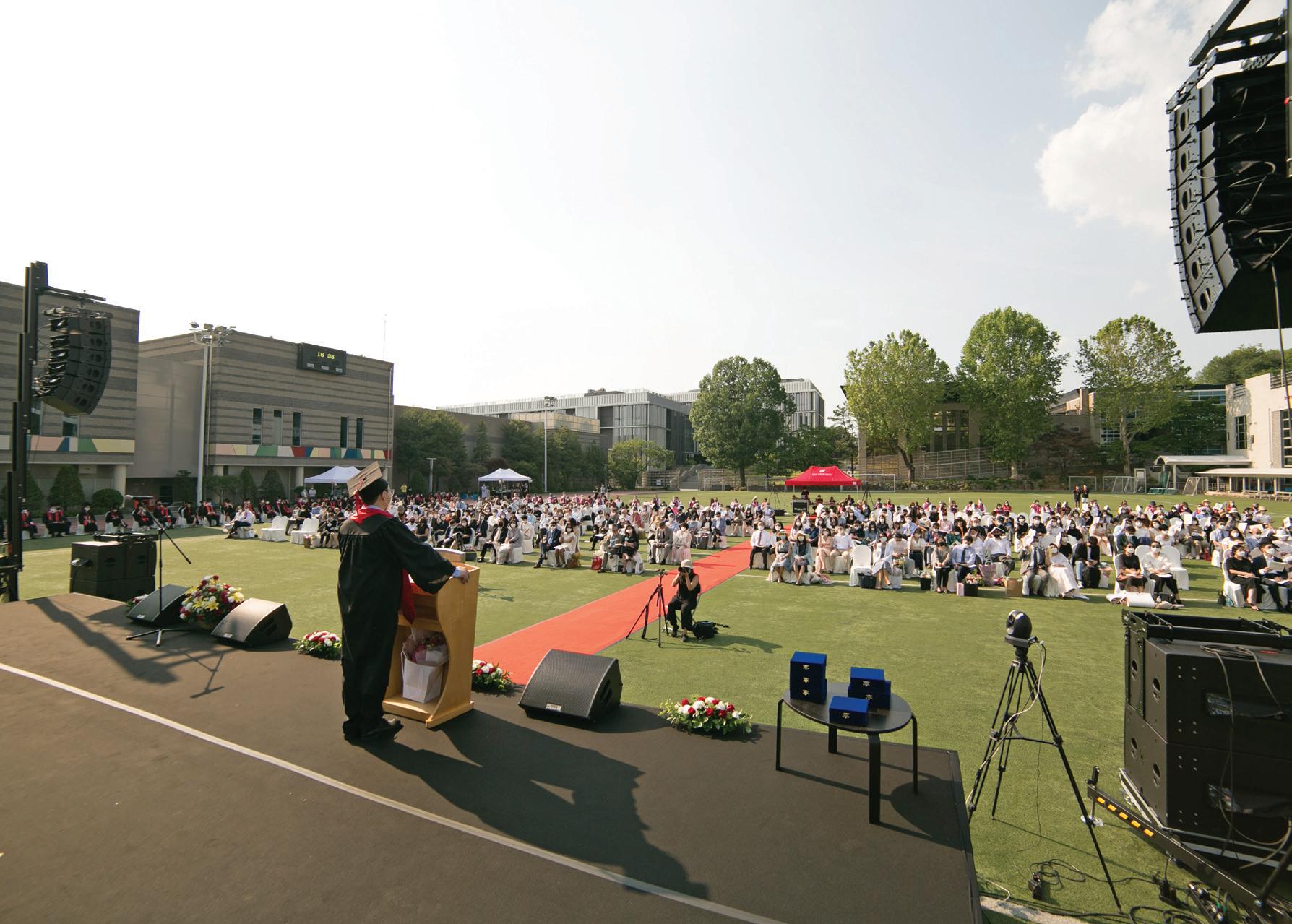
We want to dedicate this spotlight to the Class of 2020. Their final year of high school looked nothing like what they had envisioned. No senior prank, no senioritis, no IB exams to prove two years of hard work. A stripped-down graduation outside, half the usual crowd, everyone in masks. And yet, six years later, they continue to impress us with their resilience and their ability to deal with whatever life throws at them. They didn't get the ending they deserved. They got something better: the proof that they could handle anything. Well done, Class of 2020.
Video conferencing technology became an essential part of everyday life in the 2020s, transforming the way people worked, learned, and stayed connected across distances.
KIDS WILL BE KIDS
“I found that listening to Mr. Wilson while still in my pajamas, wearing my bucket hat, and holding my dog was an excellent way to better understand the mathematics.” Josiah Calhoun, Class of 2020.
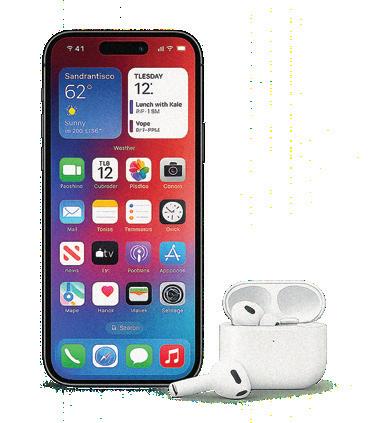
The rise of smartphones in the 2010s transformed everyday life by connecting communication, entertainment, information, and social interaction into a single device carried almost everywhere people went.
Graduation - Class of 2020
(Born 2013–present)
M Generation Alpha
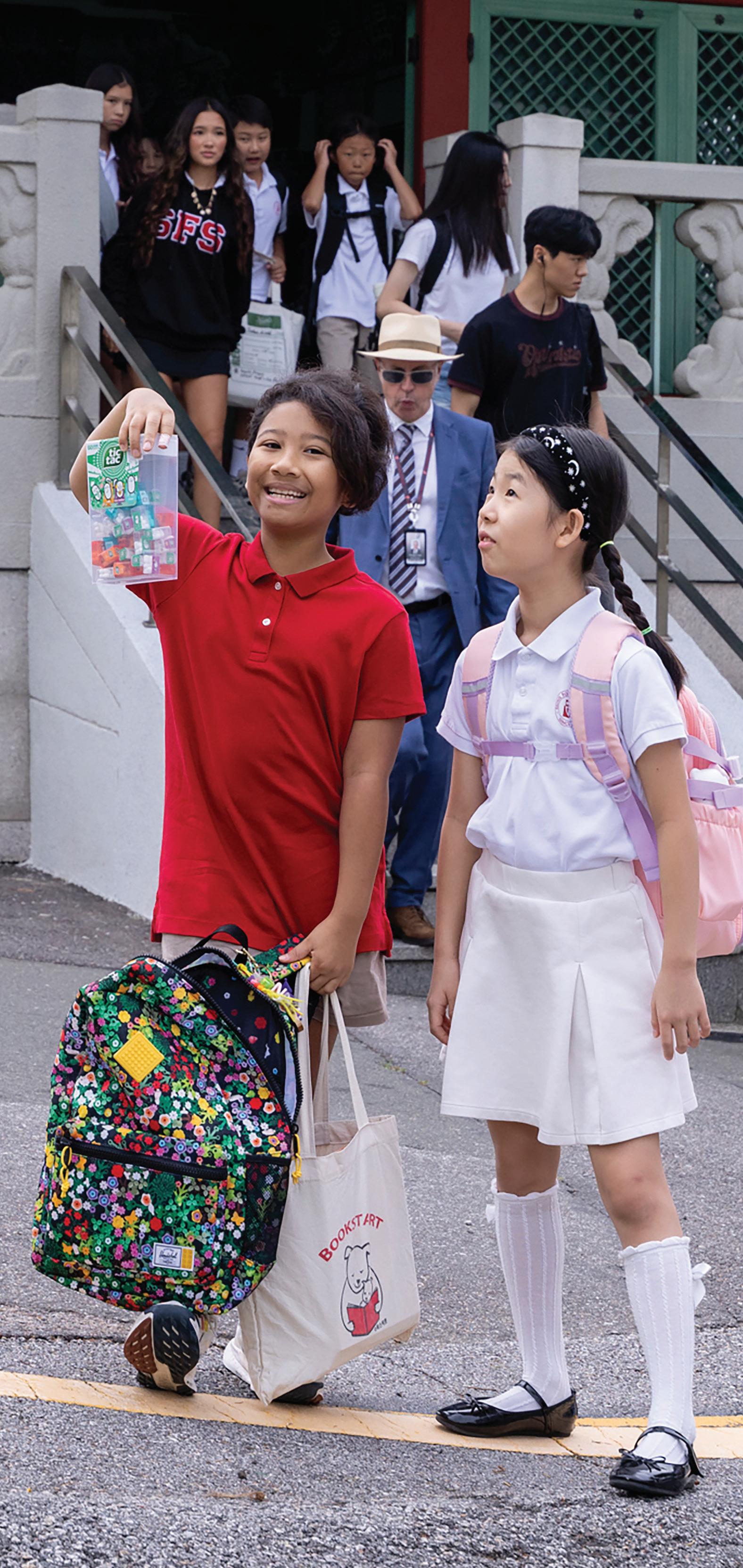
eet the students currently sitting in SFS ES and BS classrooms. Generation Alpha is the first generation born entirely in the 21st century, the first to grow up with AI as a fact of daily life, and the first for whom a smartphone is an extension of self. They have never waited at a video store, never used a paper map, and never experienced a world that wasn't connected. They are being shaped in real time by forces that didn't exist a decade ago: artificial intelligence, the climate crisis, a post-pandemic world, and a digital universe that moves faster than any adult can fully track. They are still becoming. And from where we stand at SFS, it is genuinely thrilling to watch.
THE WORLD THEY LIVE IN
Generation Alpha is growing up in a world that feels simultaneously more connected and more uncertain than any before it. The COVID-19 pandemic marks their earliest memories; many began school on a screen, in a bedroom, without classmates. Climate change is not a future threat to them; it is a present weather event. Wars in Ukraine and the Middle East have played out on their feeds since preschool. And yet: artificial intelligence is rewriting what it means to learn, create, and work, in ways that even their teachers are still figuring out. From Chile to Seoul, the questions shaping this generation are the same: what does the future look like, who gets to build it, and how do we take care of each other while we do?
THEIR SOUNDTRACK
"Believer" — Imagine Dragons (2017)
"Blinding Lights" — The Weeknd (2019)
"Vampire" — Olivia Rodrigo (2023)
"Golden" — HUNTR/X, EJAE (2024)
“Heat Waves” — Glass Animals (2019)
WHAT THE COOL KIDS SAID
"Skibidi (toilet)" — Means approximately whatever the context needs it to mean.
"Sigma" — Someone cool. No parent would ever be called “sigma’—sorry.
"Rizz" — Charisma.
“Sus” — Suspicious, like what an adult does at any given time.
“6-7” — We’re still not sure about what this one means, to be honest.
CLASSROOM LIFE
The Gen Alpha classroom is the most technologically complex learning environment in SFS history—and also the most debated. Laptops and tablets are standard. AI tools are arriving faster than school policies can address them. The question of what a student should memorize when everything is searchable, and what counts as their own work when AI can draft it is being negotiated in staffrooms and living rooms simultaneously. And yet, some things remain unchanged: the best teachers are still the ones who make you care, the most important conversations still happen between people, and the classroom is still, at its best, the place where you first discover what you are capable of.
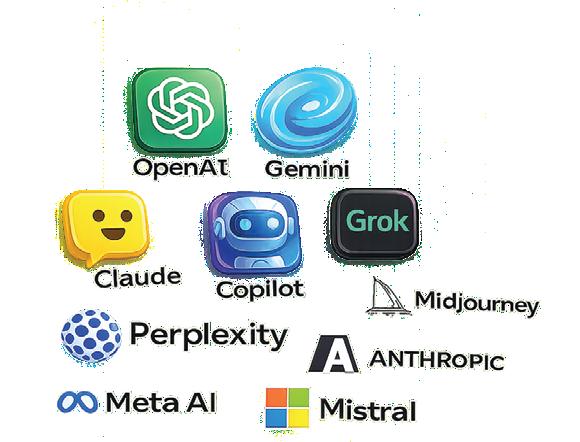
Artificial intelligence emerged as one of the defining technologies of the 2020s, transforming the way people create, learn, and interact with information in everyday life.
KOREA AT THE TIME
The Korea that Gen Alpha students experience daily is a global cultural superpower. K-pop is the world's leading genre in unit sales, with BLACKPINK headlining Coachella, BTS filling stadiums on every continent, and a new generation of groups (NewJeans, aespa, SEVENTEEN) redefining what popular music looks and sounds like. Korean food is everywhere. XO, Kitty makes teenagers all around the world reach out to SFS daily on Instagram for a chance to live what they think is a stereotypical Korean school life? And EJAE ‘10 just won an Oscar.
ALUMNI SPOTLIGHT
The Class of 2031 will be the first Gen Alpha grads. We can’t wait to see what’s in store for them. For now, they just entered middle school and are currently writing their story. Stay tuned.
KIDS WILL BE KIDS
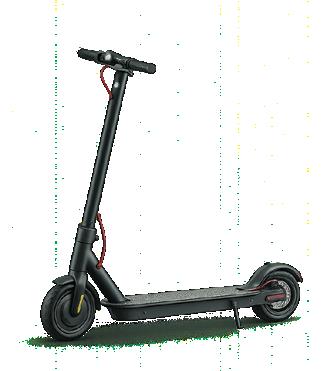
As sustainability efforts grew in the 2010s and 2020s, solar panels became a powerful symbol of the global shift toward renewable energy and environmentally conscious technology. Electric scooters became increasingly popular in the 2010s and 2020s as a convenient, eco-friendly, and affordable form of transportation for short-distance travel in busy urban environments.
THE NEXT BIG THING: CLASS OF 2026
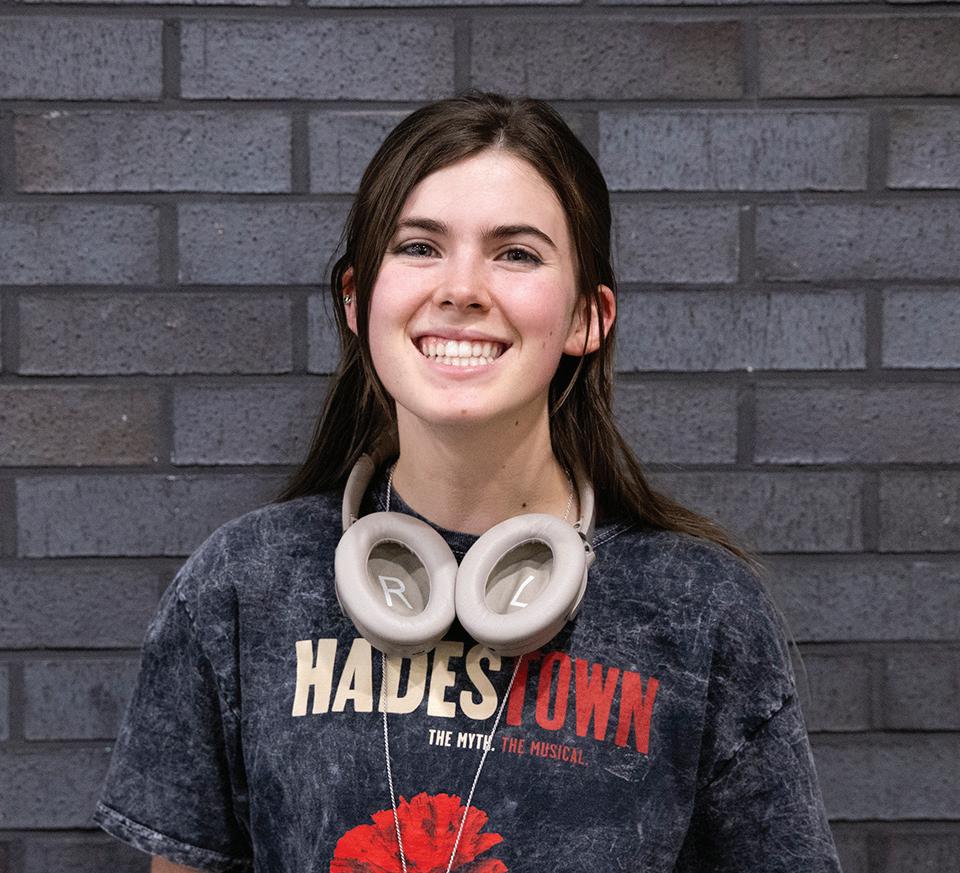
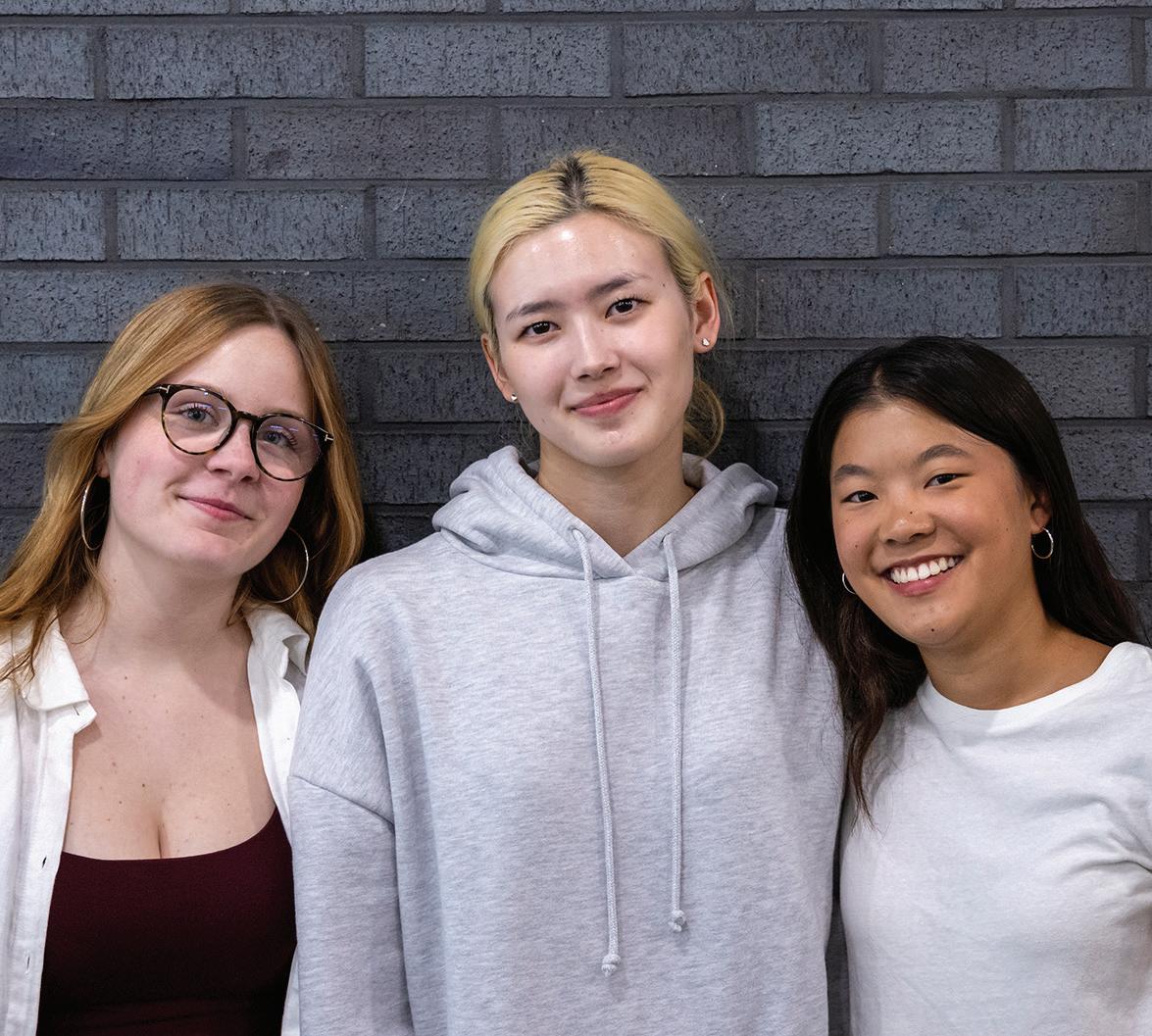
Photo by Amy Yena Lee (G10).
Congratulatory Messages from Alumni
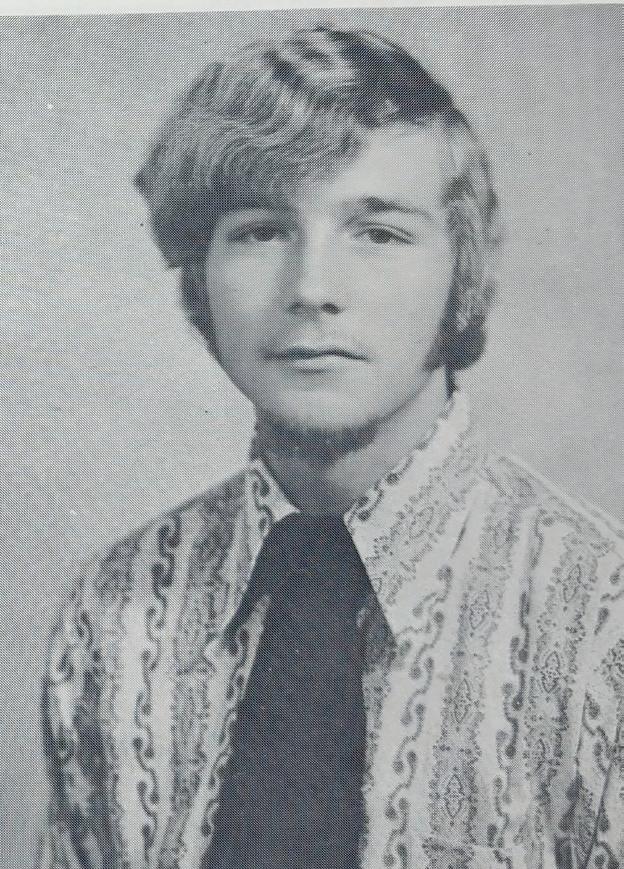
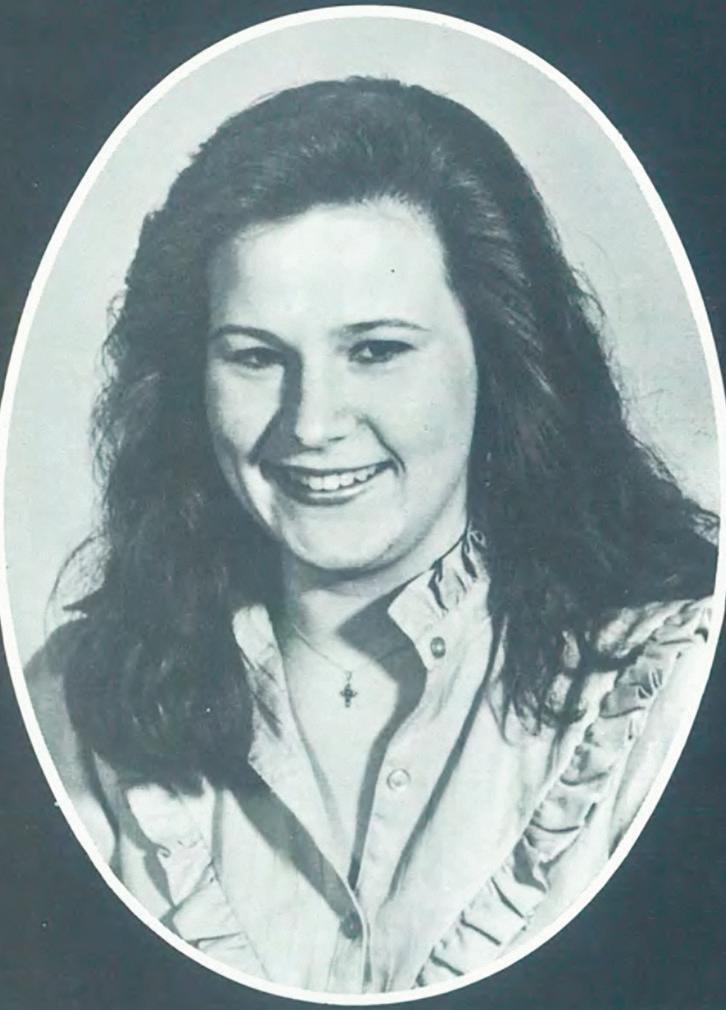
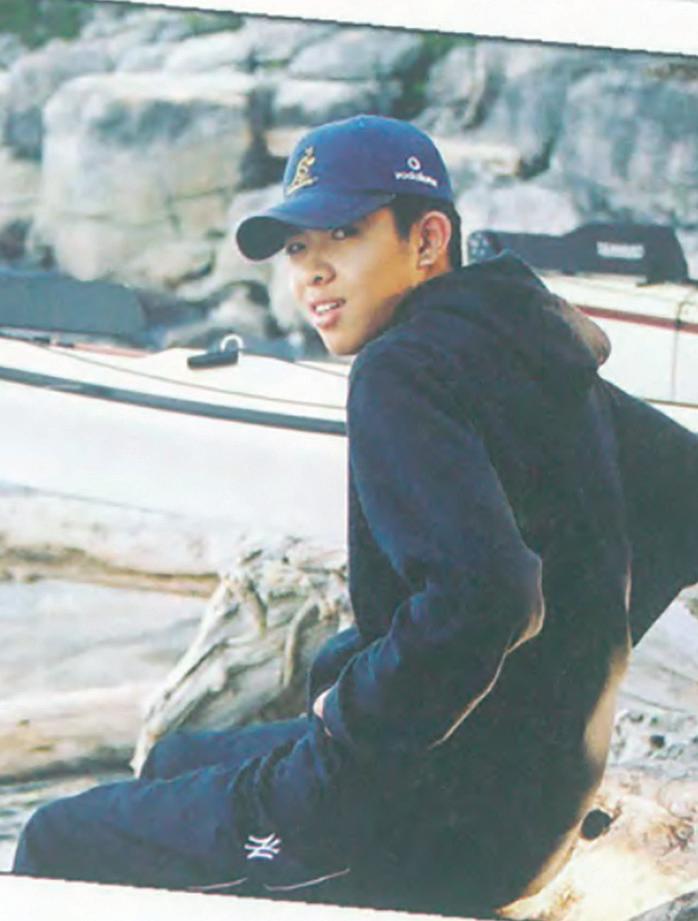
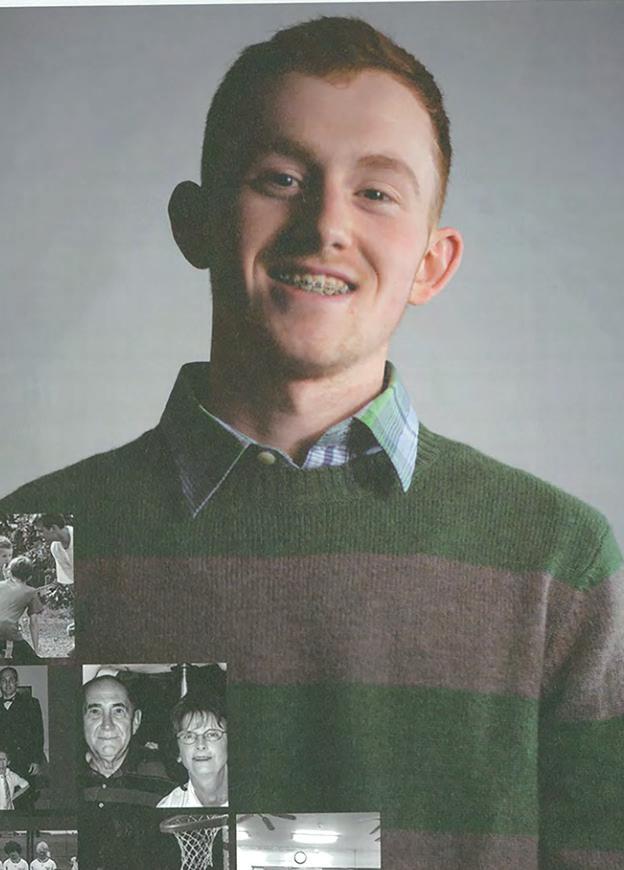
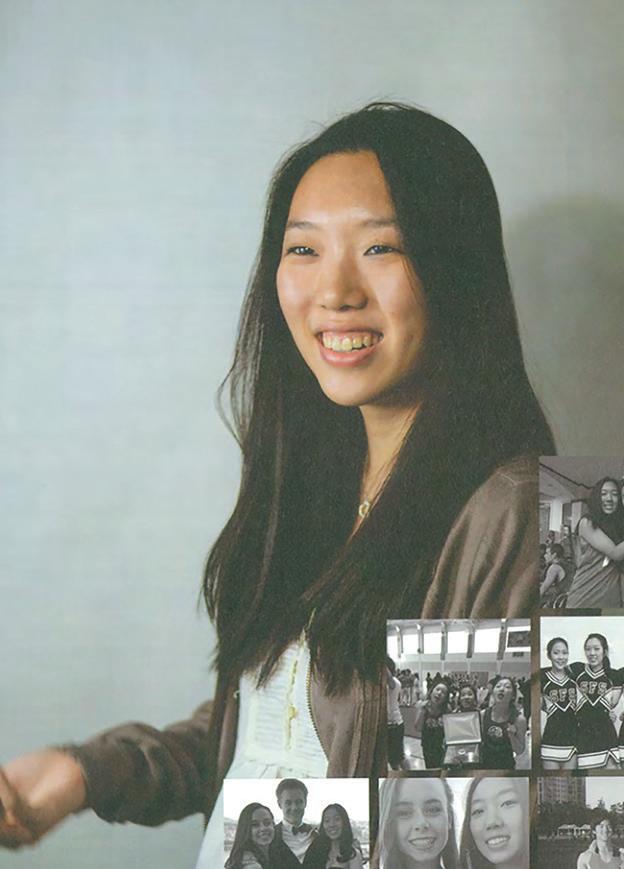
As the Class of 2026 prepares to turn the page and begin a new chapter, members of our alumni community are looking back on the journeys that began on the same hill years—and decades—ago. This year, we are honored to include congratulatory messages from alumni celebrating milestone reunions from the Classes of 1976, 1986, 1996, 2006, and 2016.
Spanning five decades of SFS history, their words are filled with wisdom, gratitude, encouragement, and memories of the friendships, teachers, and moments that shaped them at SFS. Paired with photos from their own senior yearbooks, these messages offer a heartfelt reminder that while every class steps into a different future, they remain connected by a shared home, a lasting community, and the many paths that begin here.
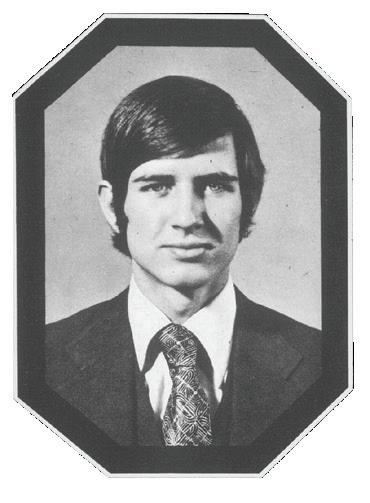
Glenn McGhee ’76
To the SFS Class of 2026:
Greetings from the class of 1976—the time of pheasants flying up from the hill beside the soccer field, kimchi jars being buried in the ground, and the sound of the rice cannon (ppeong twigi) going off in the neighborhood. A lot of things have changed at SFS since the days of bell bottom jeans and long hair, but a few things haven’t changed. SFS was mine and now your gateway to unlimited opportunities that have been made possible by a group of people that love you and love God. Congratulations on completing this phase of life and entering into the next adventure!
To the Class of 2026:
Congratulations! Stepping into today's world takes courage, but you are ready. Your SFS experience has given you something rare—the ability to see across cultures, build bridges, and lead with empathy. This fractured world needs exactly that. You are the generation that can help heal it.
Go change the world!
Deborah Theis ’86
Lee-Ellen Strawn ’86
Dear SFS Class of 2026,
As a member of the SFS Class of 1986 and also as a member of the SFS faculty from the early 2000s, I am very happy to send you a congratulatory message as you graduate from Seoul Foreign School! Although you will be venturing forth from the SFS hill to many places in the world, you will always have a home at SFS: this is the truth I have learned and the grace I have experienced in my life. May SFS always hold a foundational place in your heart, from which you find the courage to go forward to share your passion for learning in service of others. And as I pray for my students now, may you always be propelled by hope, a hope that opens you to the humanity of your neighbor and stirs you to live out yours. Congratulations SFS Class of 2026!
As a new chapter unfolds with exciting opportunities and challenges, always reach for the stars and strive to make a difference. Congratulations on this important milestone, embrace the journey ahead, and make every moment worth it.
One of my most cherished memories from SFS began when a few friends and I developed a sudden fascination with philosophy. By a stroke of luck, our volleyball coach—a University of Chicago philosophy graduate—agreed to mentor us. We began meeting at a local coffee shop before school for early-morning seminars. This small, intellectual escape felt straight out of Dead Poets Society. It perfectly illustrates how SFS nurtures well-rounded students, encouraging us to look beyond the syllabus and truly make the most of our time.
Congratulations, Class of 2026!
Juan Miguel Duran ’96
Joseph Kim ’96
Kristen Creech ’06
Congratulations to the Class of 2026! Growing up at SFS in a truly multicultural community with classmates representing every continent shaped my worldview. I am proud to have lived in Korea and to watch it thrive globally through its cultural influence. Wishing you all the very best as you step confidently into your next chapter.
I joined SFS as a transfer student from Canadian Academy in Kobe and was assigned a buddy named John. He encouraged me to join the Cross Country team. I wasn’t the fastest runner, but I had always been a skinny kid, so I thought, why not? So I joined—and it turned out to be one of the best decisions I ever made. I met so many incredible people, including the running coaches, support staff, and most of all my teammates.
Though we don't know what tomorrow brings, every morning, you can choose what you believe in and who you surround yourself with. I hope you make good choices. If not, I pray that you learn from your mistakes with humility, grace, and courage.
I’ll always remember our coach, Mr. Lyso, telling us: “In order to fight a cramp, you just have to keep on running.” It’s a lesson I’ve carried with me ever since. No matter what life throws at you after graduation, Class of 2026, the most important thing is to just keep running.
Have an amazing time in college, make great memories, and always remember to be grateful to the people who sacrificed to make these opportunities possible for you.
Tsuyoshi Domoto ’06
Congratulations Class of 2026, you made it! As your high school chapter comes to a close, take time to cherish the memories made, the friendships you've built, and the support system that has poured into your growth all these years. The road ahead is full of possibility—step into it with curiosity and courage!
Over the past ten years, it has become increasingly clear to me how formative & important my time at SFS truly was. Being surrounded by people from all over the world, receiving a world class education, & having both the autonomy & safety to grow up & figure out who I was, all within the unique environment of Korea, was an experience unlike any other.
As I’ve met more people & learned about different upbringings, I’ve come to appreciate the many intangibles of the SFS experience that simply cannot be replicated. We develop a confidence in navigating uncertainty, & an ability to connect with people from all kinds of backgrounds with ease.
I’m deeply grateful for the teachers, mentors, & friends I met at SFS. To the Class of 2026, remember that SFS will always be a home for you.
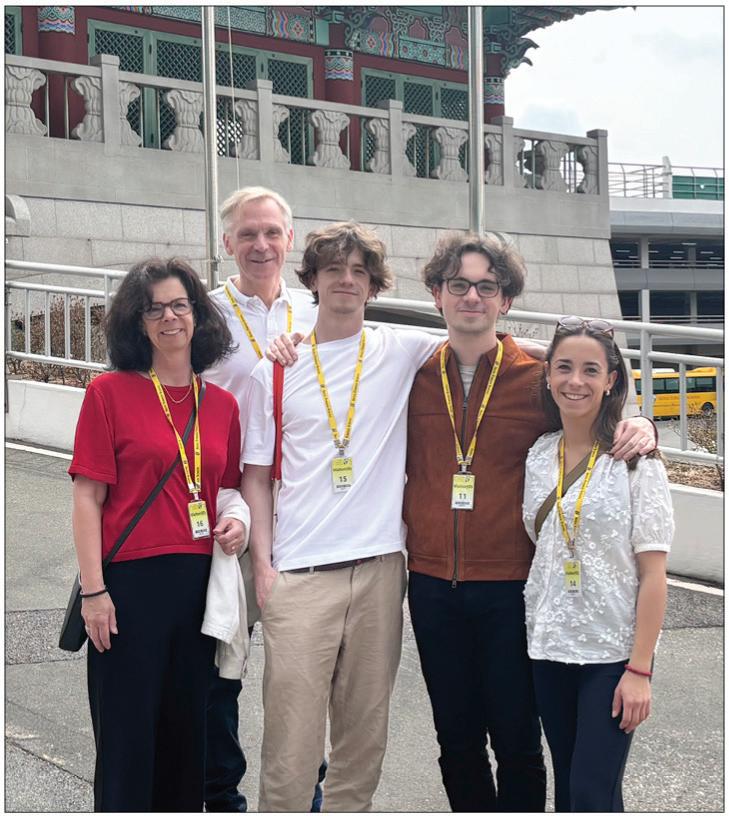
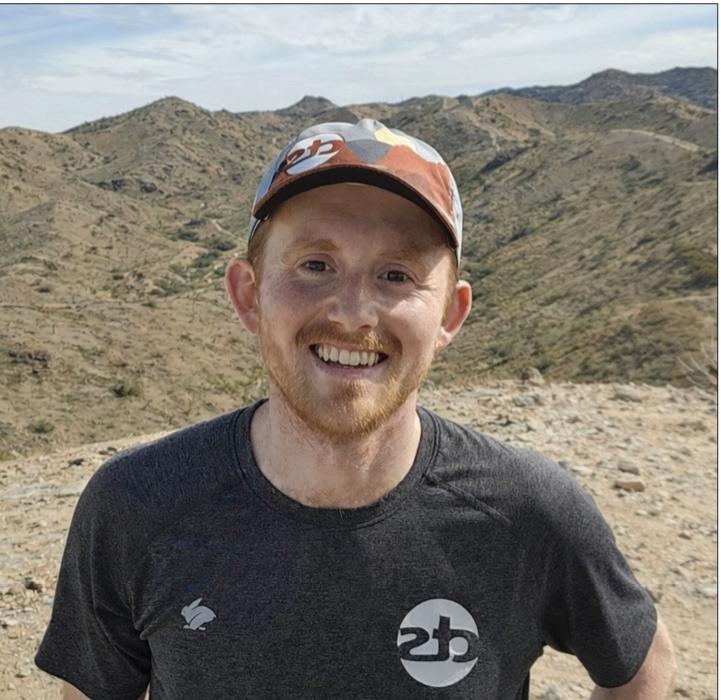
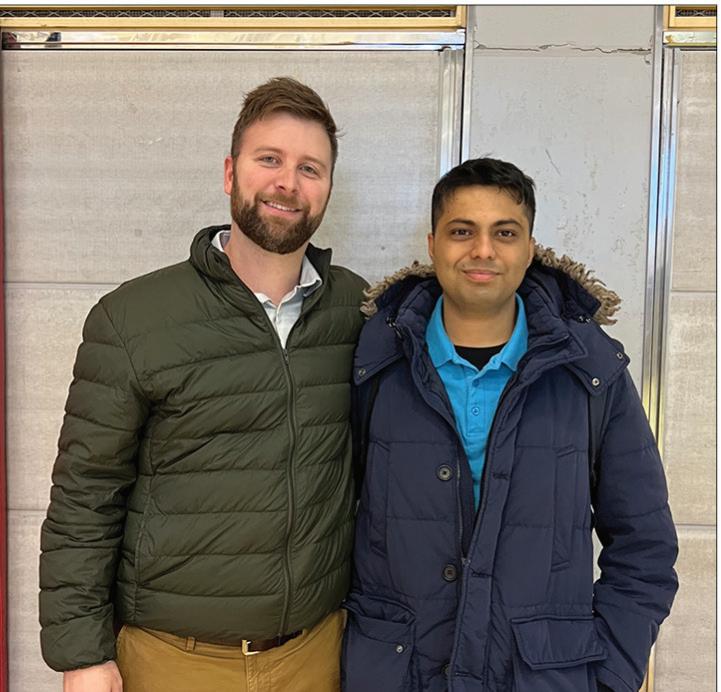
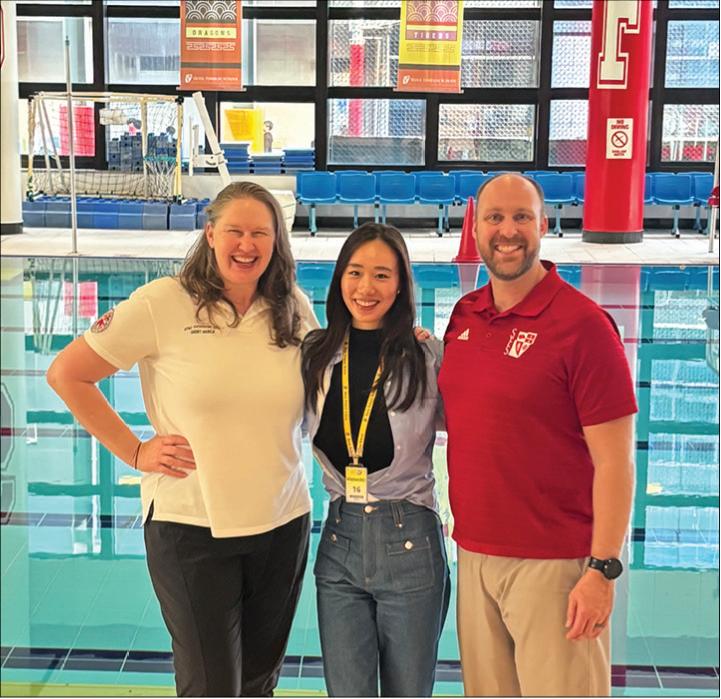
Class of 2026! Hang in there! Don't only study hard but take advantage of your time building memories you can make with your friends, teachers, and family. I promise you won't regret it after you graduate! Andrew Ha
Addison Smith ’16
’16
Olivia Han ’16
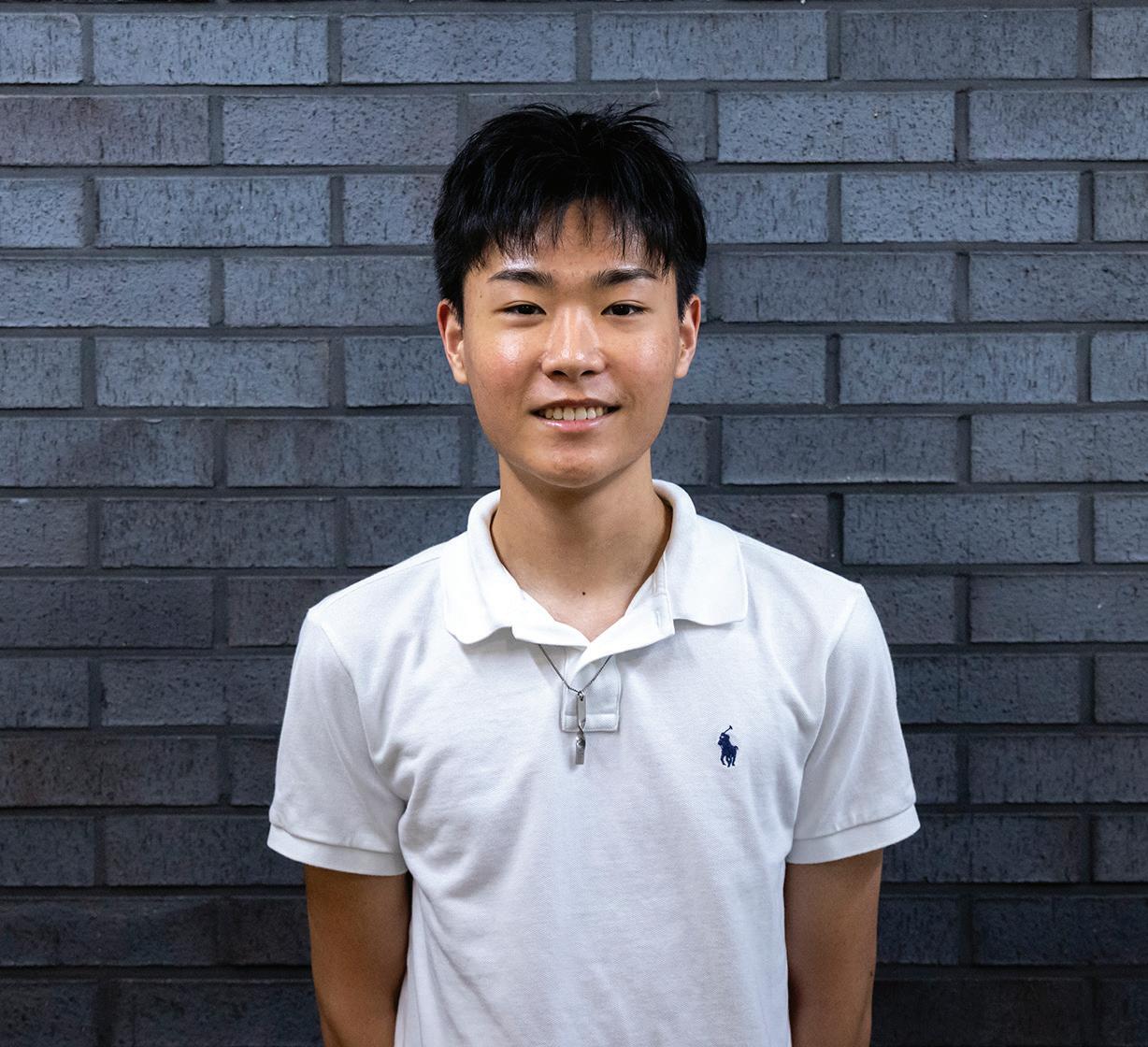
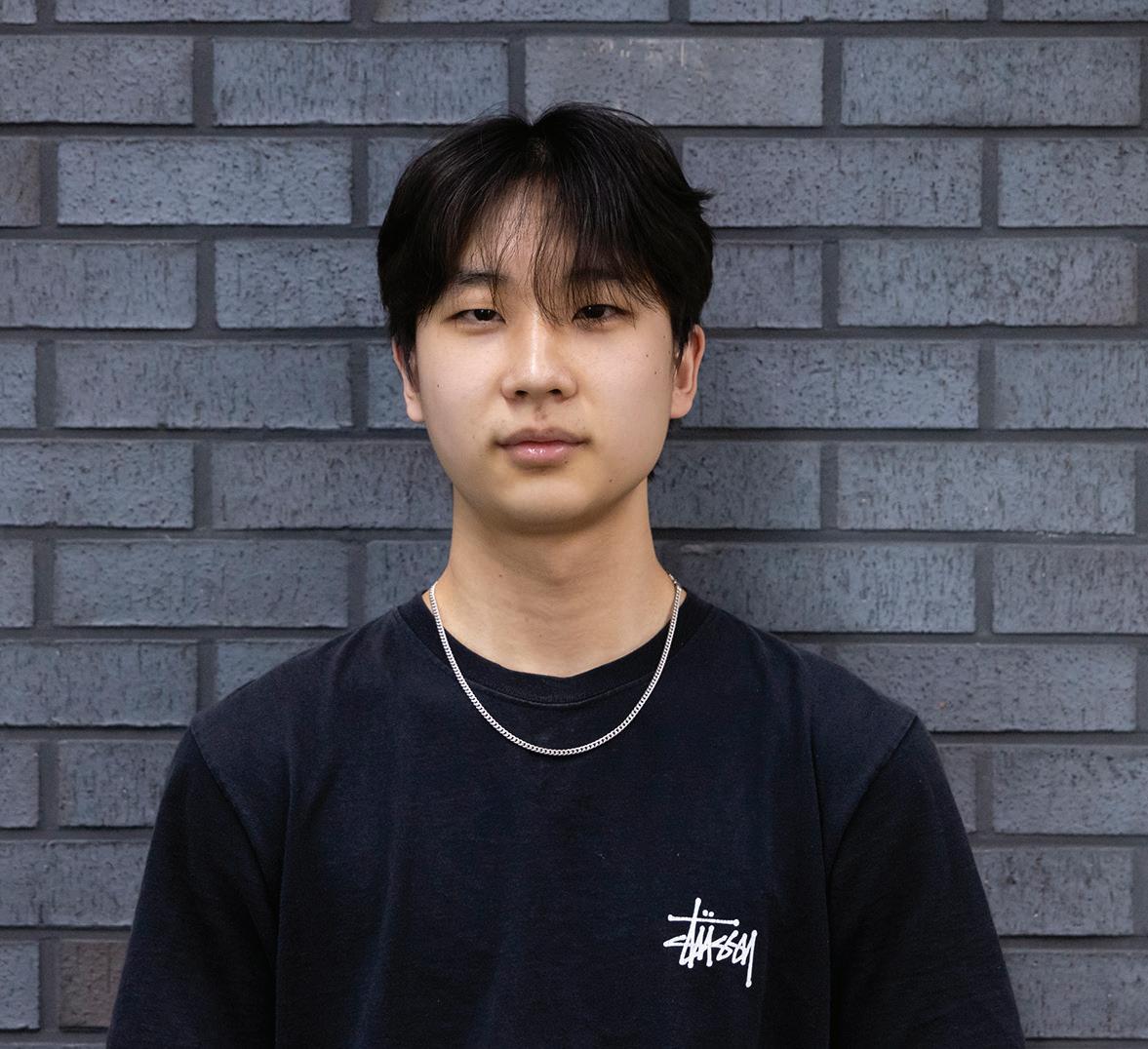
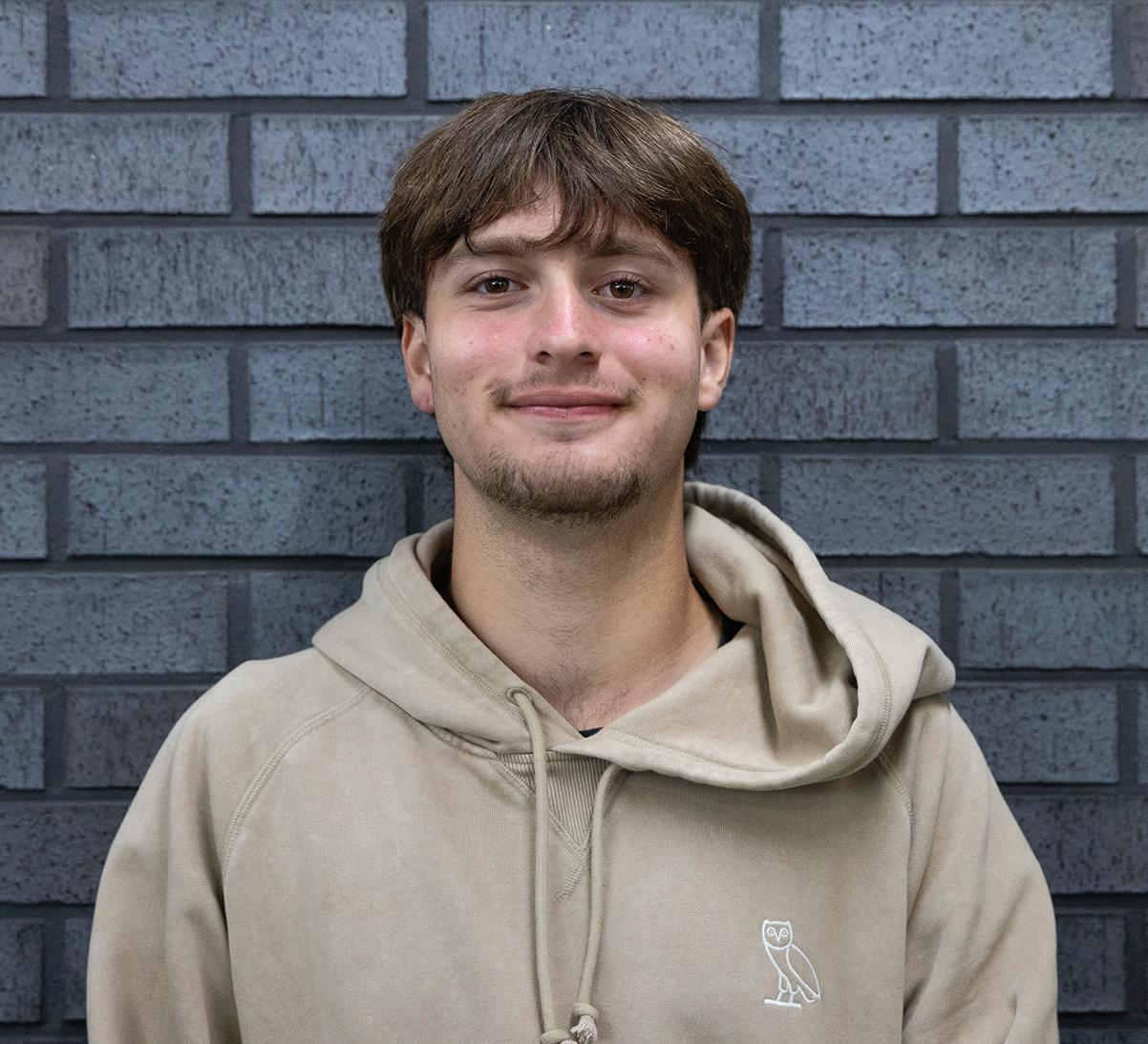
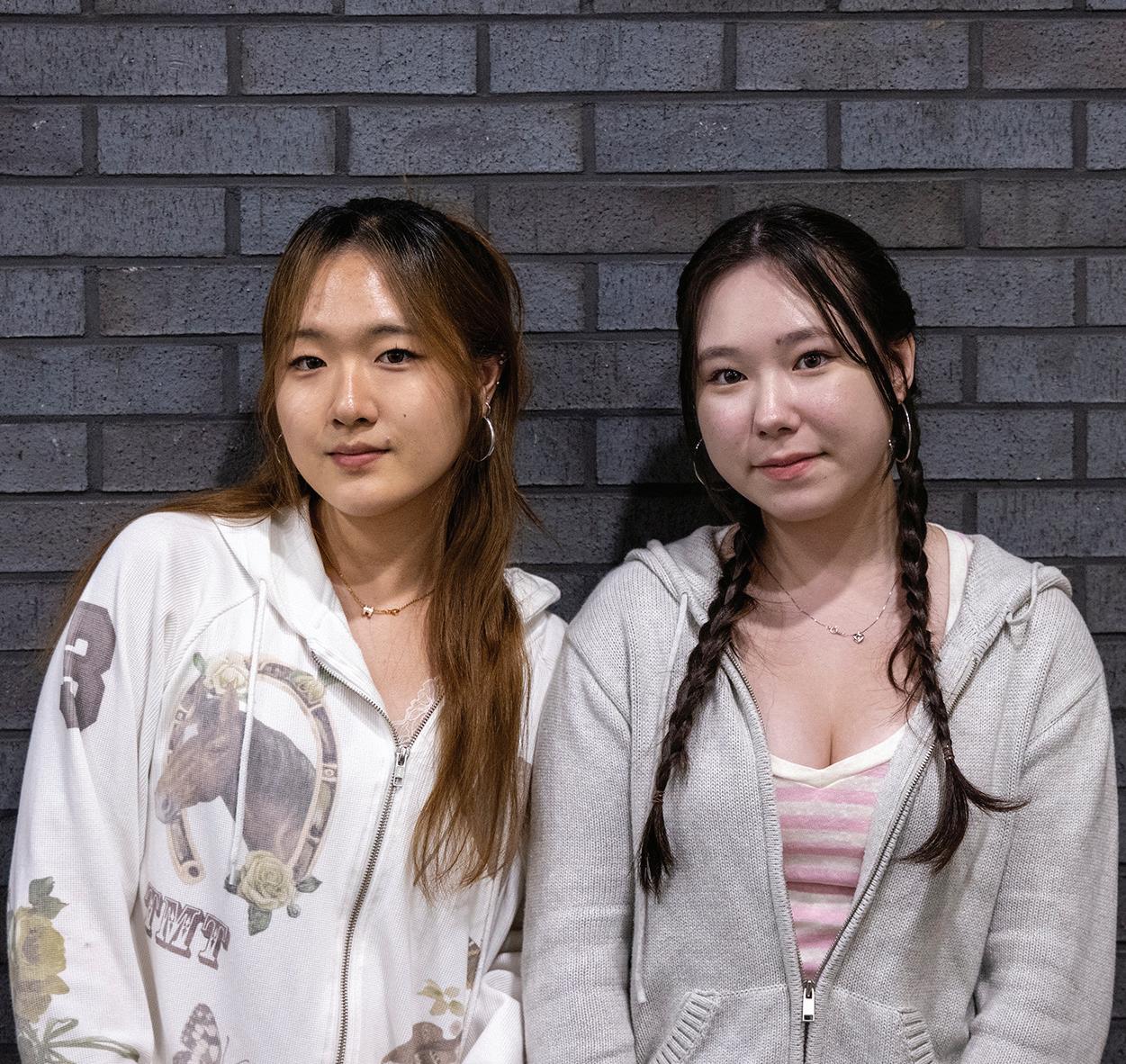
& Profile Senior Portraits
Paulina Minori Taylor
After
nearly 15 years as an SFS student, Minori looks back on her involvement in the community and the memories she made at the International Fair, from working the country booths to walking in the flag parade. She also reflects on the collaborative experiences she had in the Lyso Center’s EJM Theatre, including the production Graffiti following COVID-19. Going onto the next stage of her life, Minori hopes to major in anthropology at the University of Toronto, travel the world to see new faces, and reconnect with old friends. Her advice for underclassmen? “Remain optimistic and look for the brighter spots. Things always get better, even if it doesn't feel like it.”
Remain optimistic and look for the brighter spots. Things always get better, even if it doesn't feel like it.
& Photos by
Justin
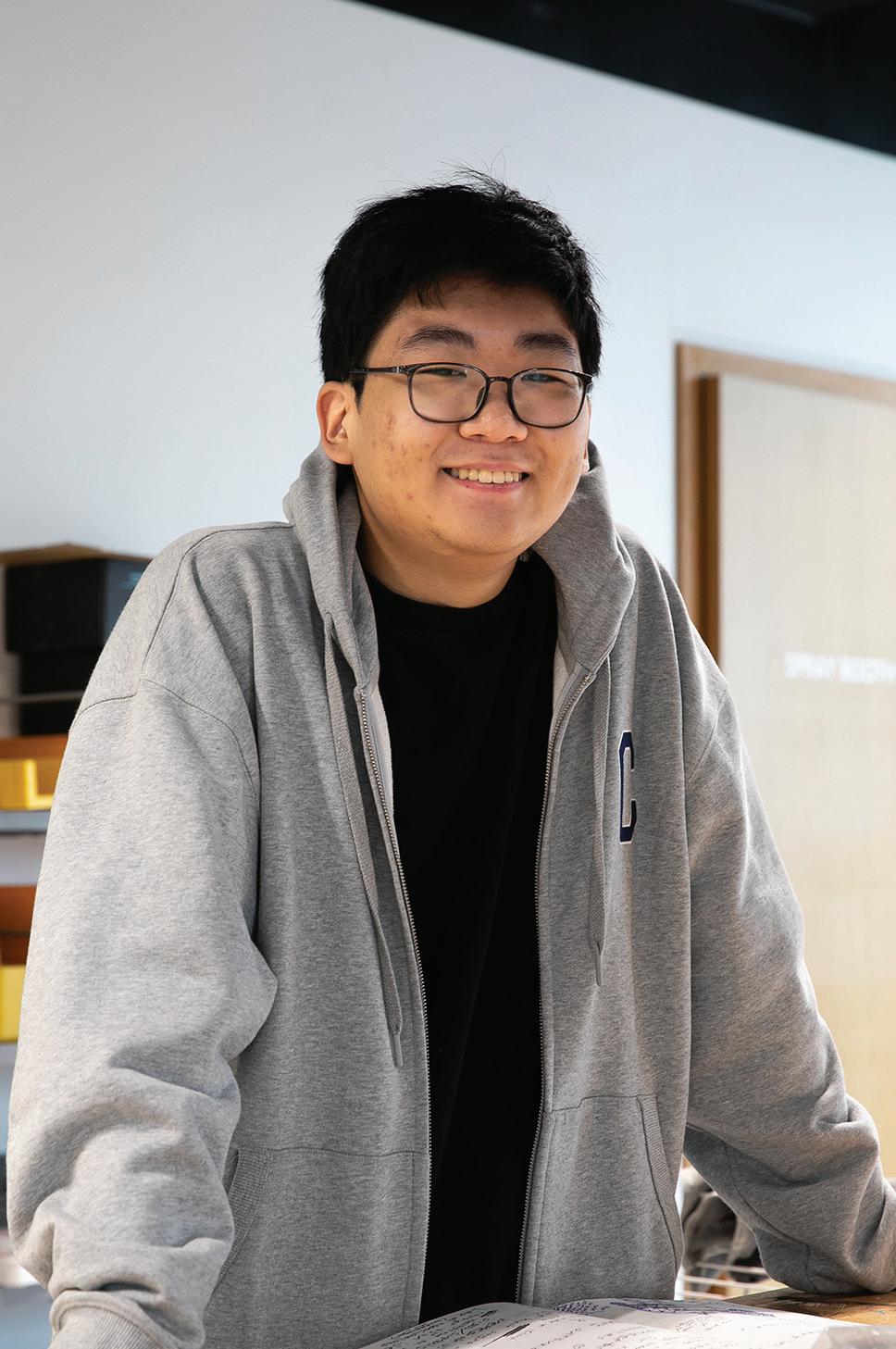
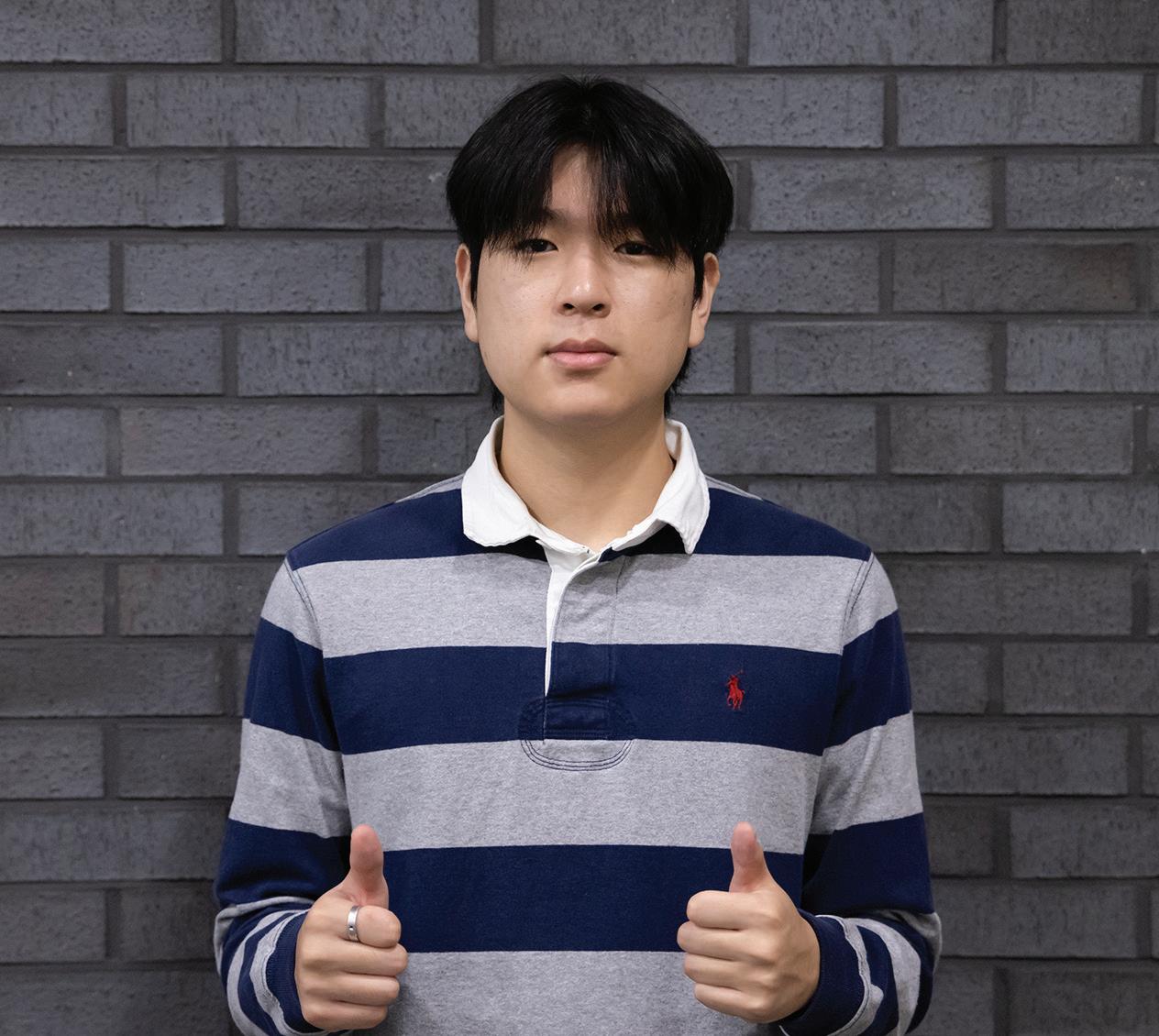
Kang has been part of the SFS community since Grade 2, making this his 10th year at the school. Some of his favorite memories include international trips and time spent at Vida. After graduation, he will attend Yale University to study economics, and he is excited about the many opportunities ahead, whether in banking, tech, or even diplomacy. His advice to underclassmen is to enjoy their time at SFS. While studying is important, he believes the moments people remember most are the fun ones like watching basketball, laughing with friends, and making memories together.
Enjoy your time at SFS. While studying is important, the moments people remember most are the fun ones... “ ”
Photo & Interview by Amy Lee (G10).
Justin Kang
Photo & Interview by Aiden
Koo & Nate Choi (G10).
Interviews
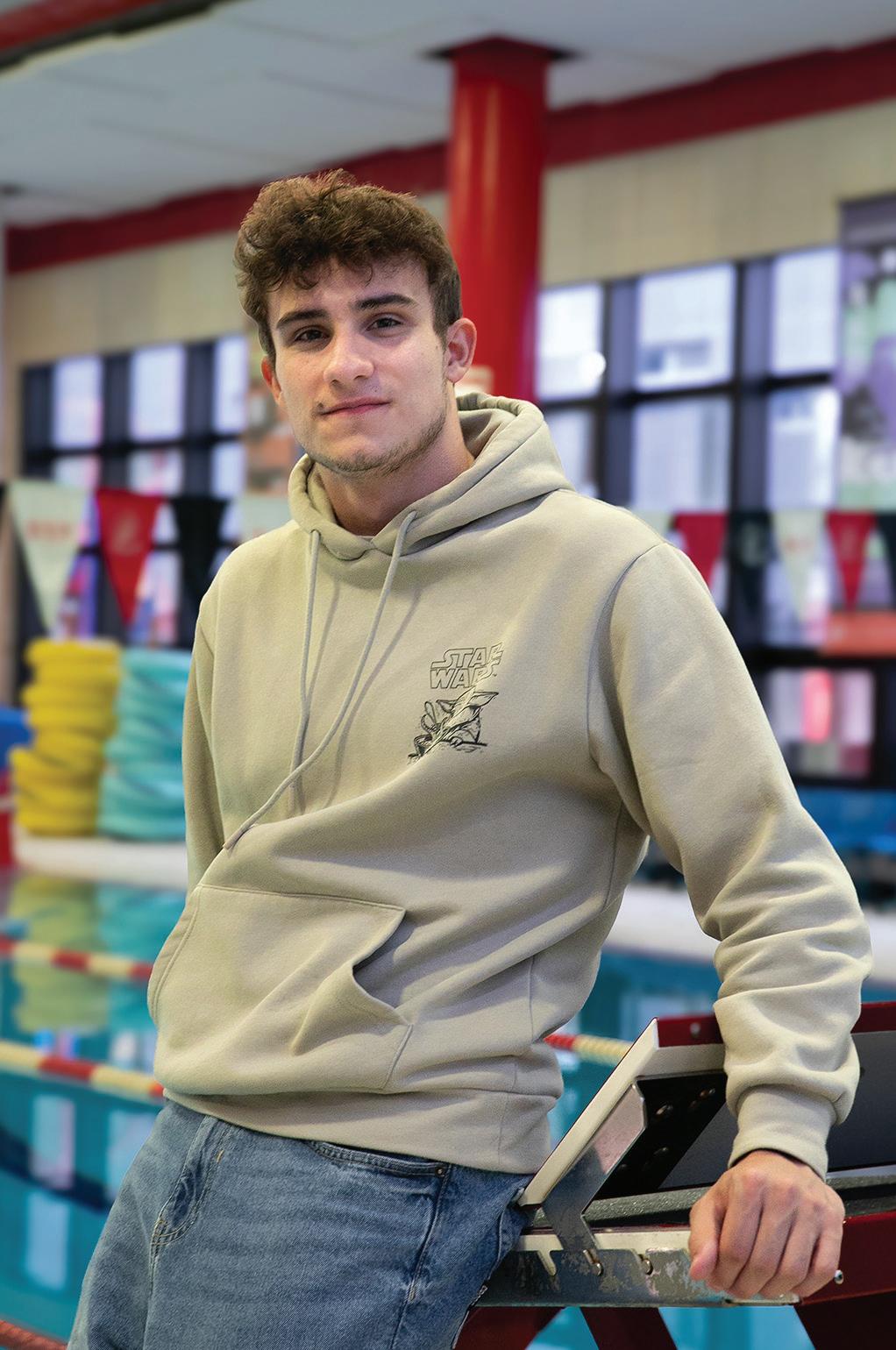
PoV (High School Photography Club)
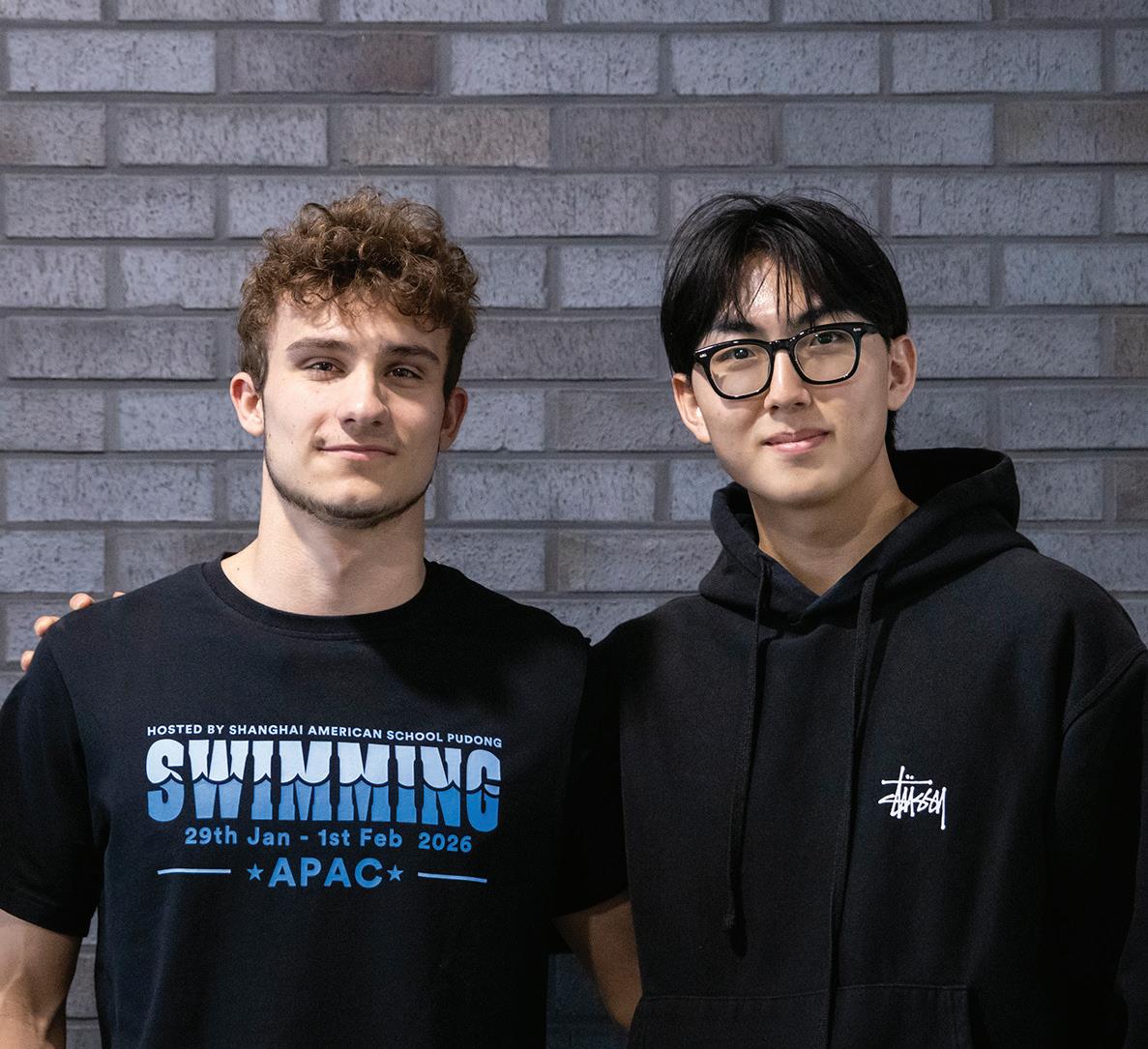
Dev Shah
Joining
the SFS community in his junior year, Dev made an instant impact on the varsity basketball team. His favorite memories of school include traveling overseas and representing Seoul Foreign School, while having a blast with his teammates during the APAC tournament in his junior and senior years. Dev plans to attend the University of North Carolina at Chapel Hill majoring in finance. He advises others to make memories while they last — something evident in his performances and friendships throughout the two years. On the horizon, Dev mentioned that his immediate next step is studying for IB exams, but looking beyond that, he notes the bittersweet excitement of spending his final summer before college with his friends.
Make memories while they last...
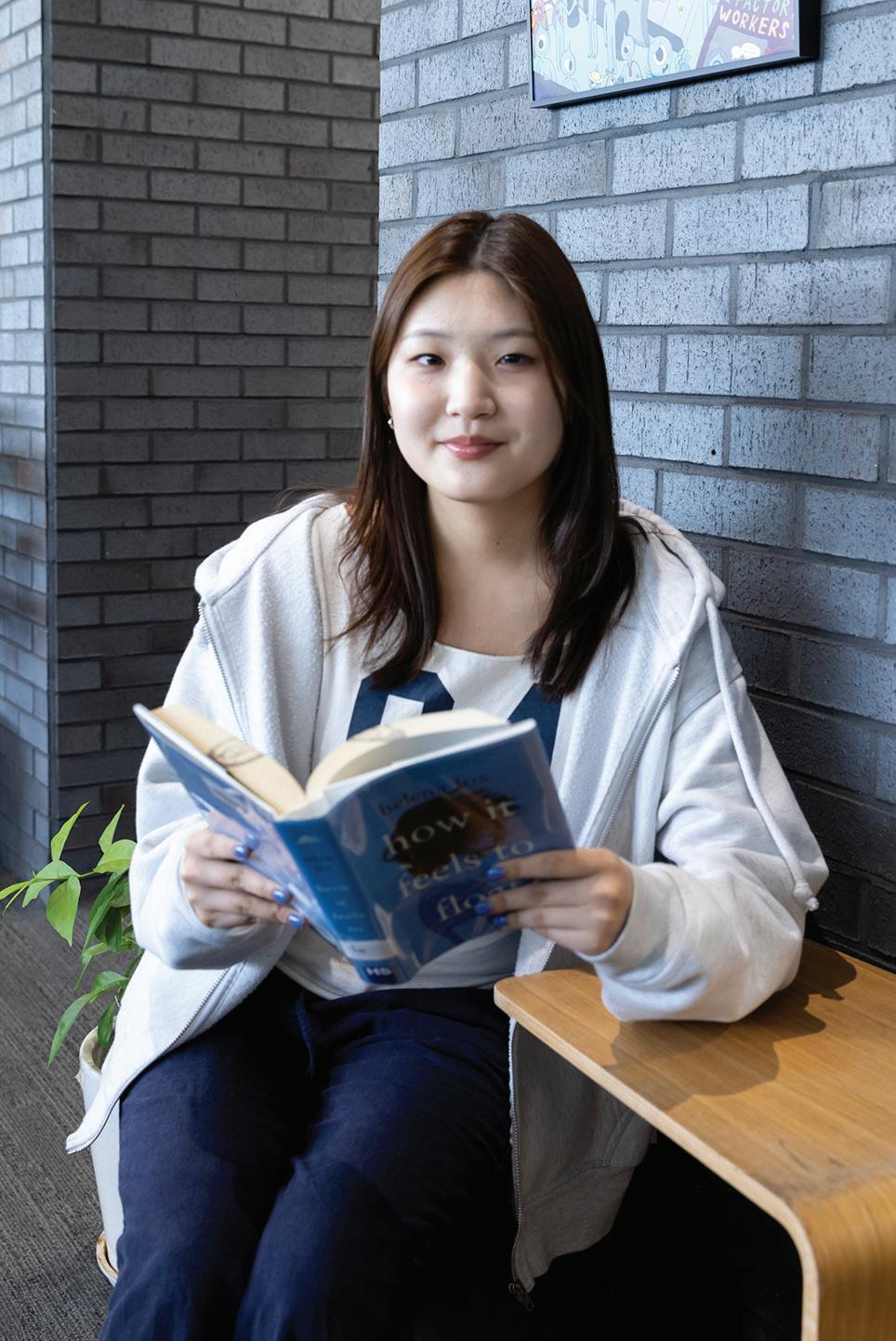
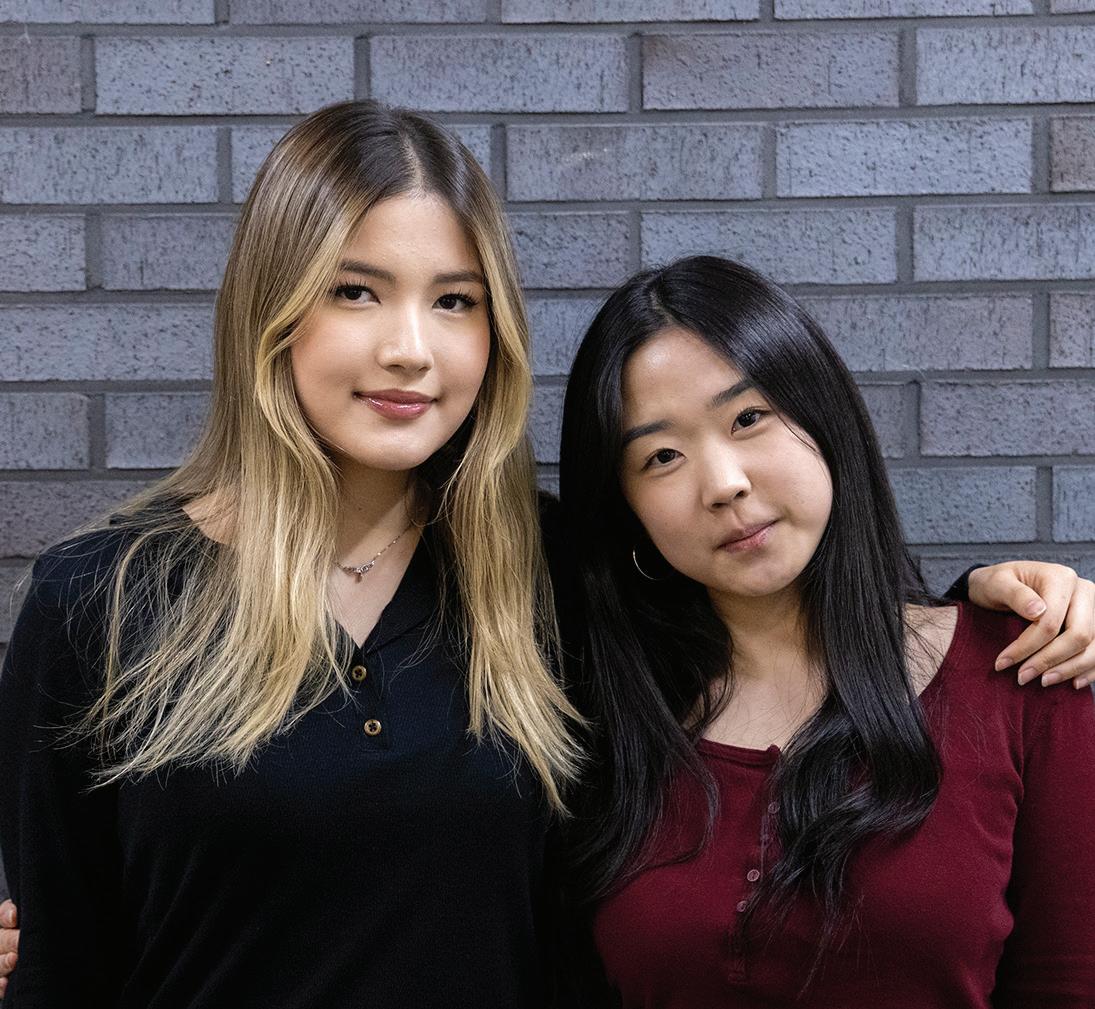
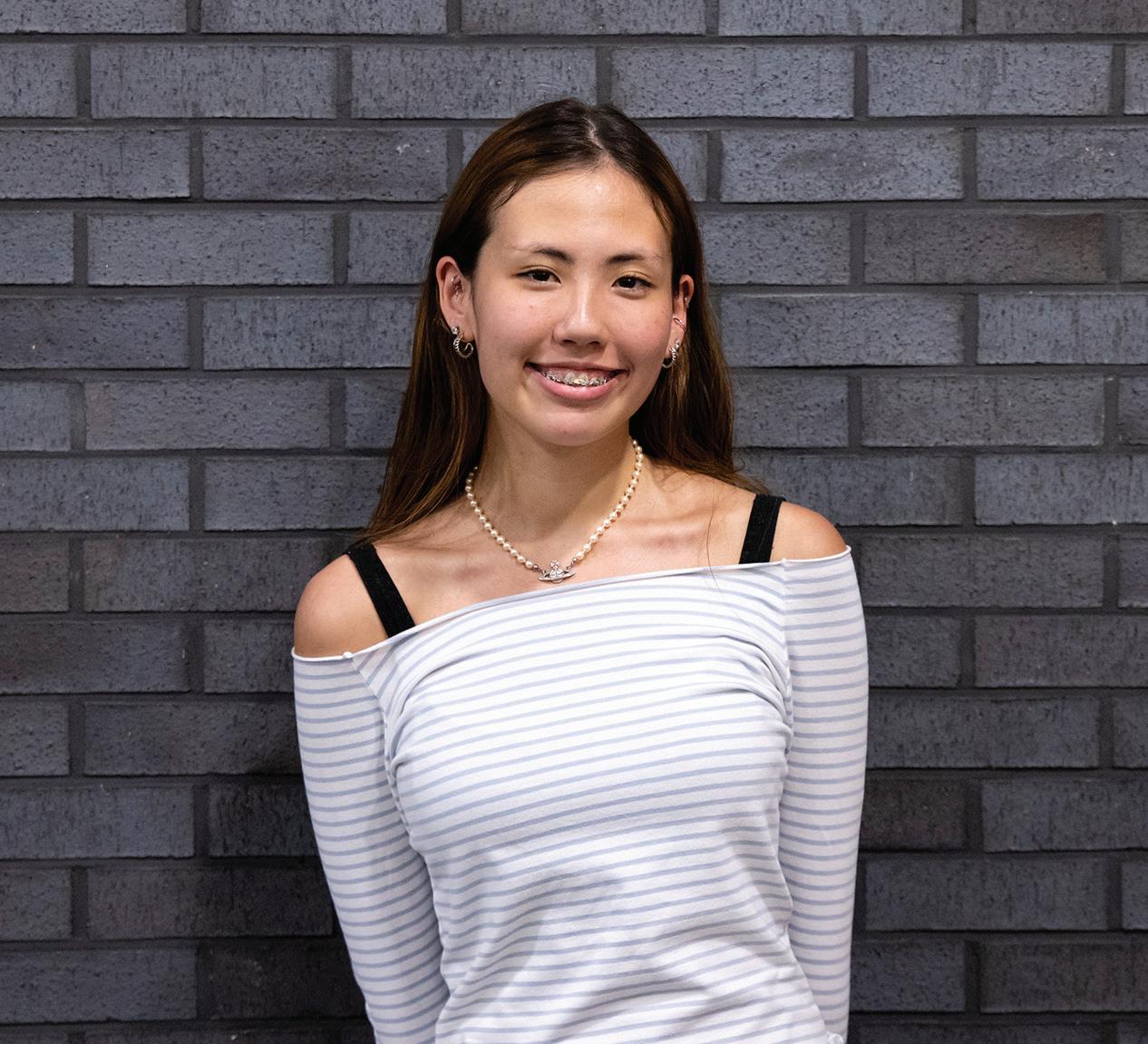
Followingher seven years at SFS, Yeseong plans to study psychology at Cornell University and looks forward to more opportunities to conduct personal research. She looks back on her Discovery Week trips in High School with appreciation for the privileges that the school has offered. She encourages students to take advantage of the opportunities that SFS provides and to try new things, highlighting the advanced arts program. However, she notes that “if you don’t want to try something new, look forward to graduating.”
“ ”
Take advantage of the opportunities that SFS provides and try new things.
Yeseong Park
Interview by Aiden Koo & Nate Choi (G10).
Photo & Interview by Amy Lee (G10).
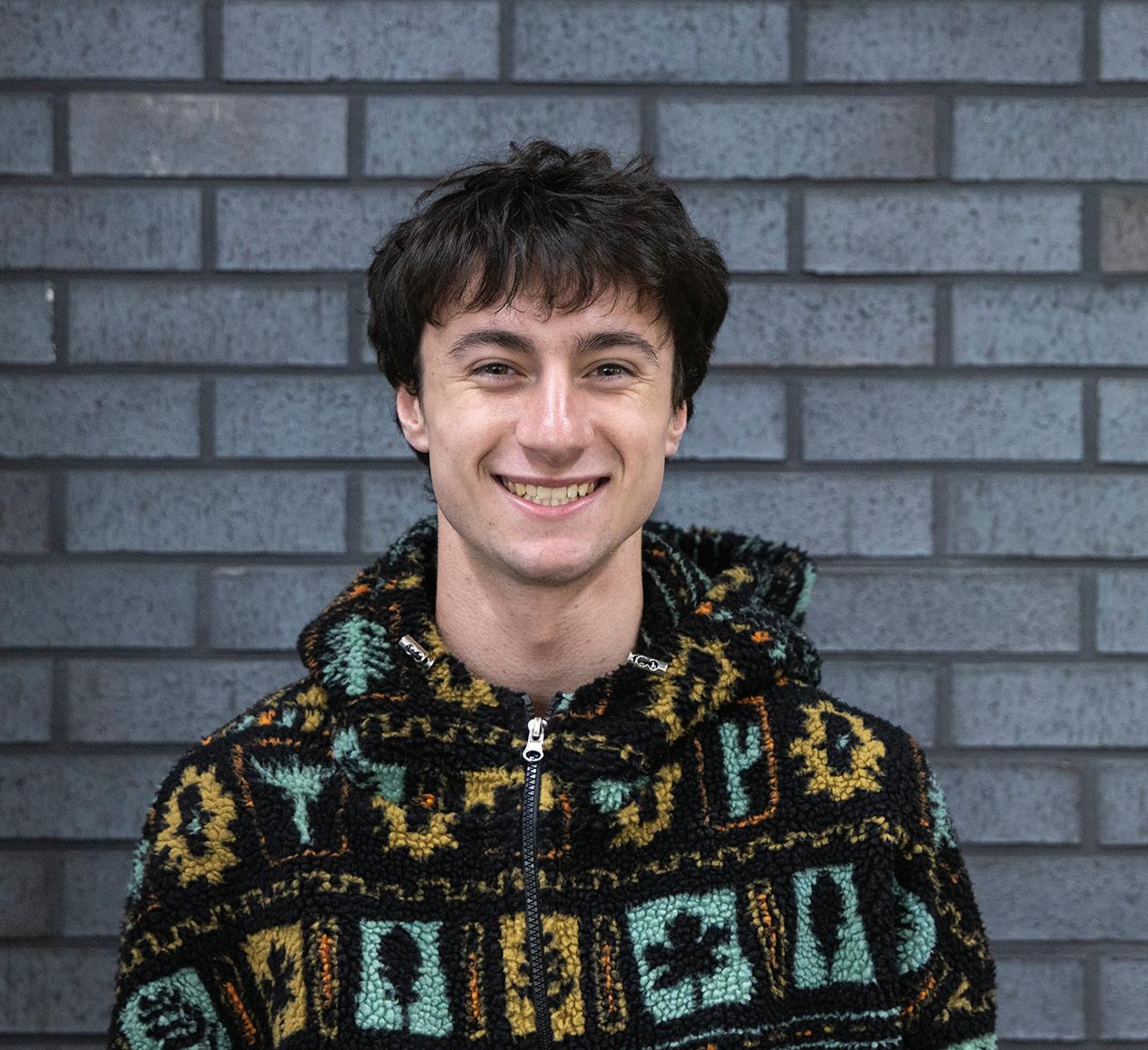
Joshua Jeon
Moving on from his four years at SFS, Joshua plans to pursue a degree in linguistics at the University of Illinois UrbanaChampaign, looking forward to meeting new people and making new connections. As he looks back at his time with us, Joshua recounts his favorite memories of going on Discovery Week trips and hanging out with his friends (and doing some fun things with them as well). Leaving his wisdom from many years at this school, Joshua tells underclassmen that “the worst thing [they] can do is hesitate,” as then important opportunities will pass them by.
“ ”
The worst thing [you] can do is hesitate, as then important opportunities will pass you by.
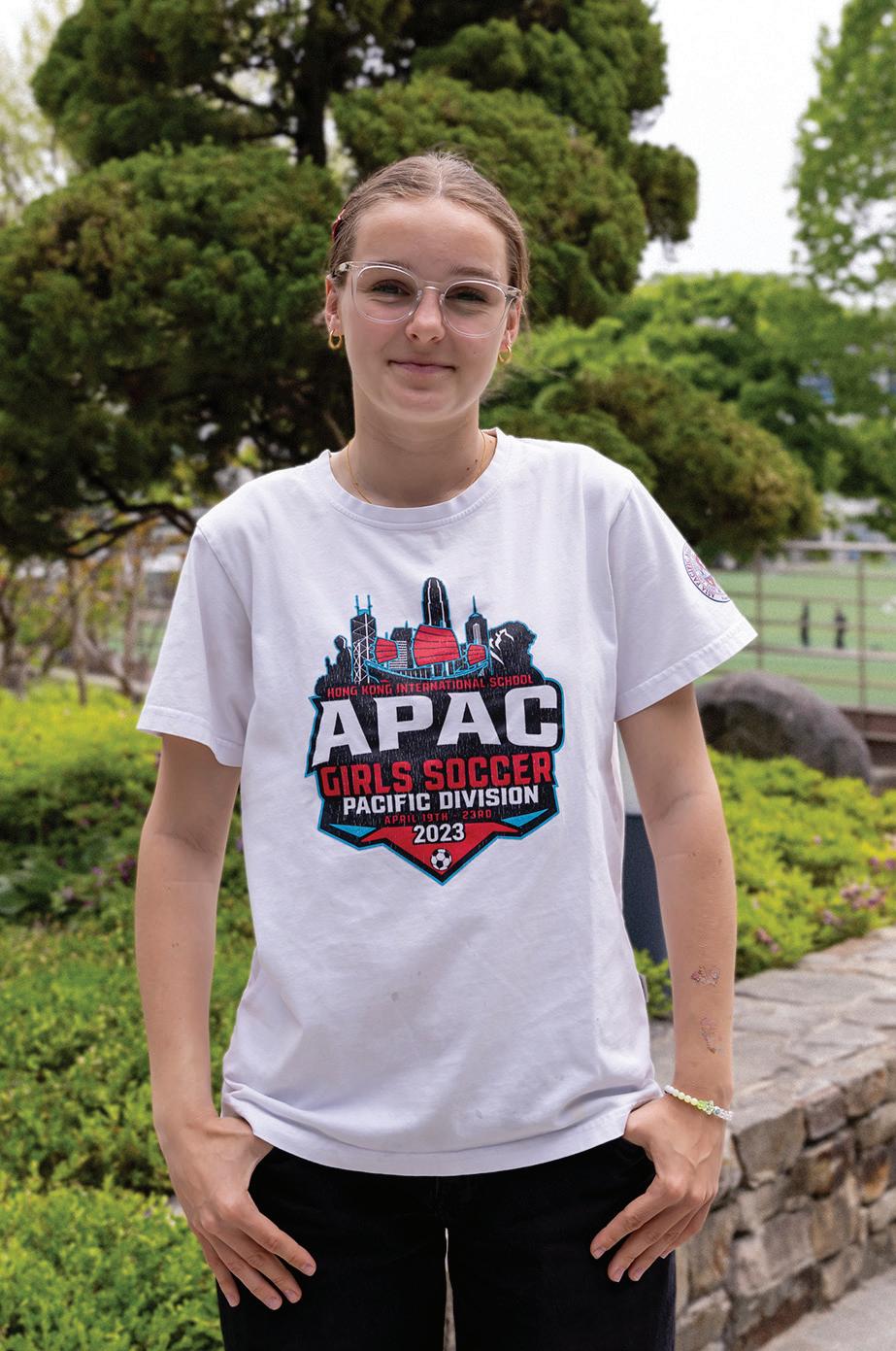
Lily Freeman is a senior who has attended SFS for eight years. One of her favorite memories was hosting APAC students at home and meeting people from different schools around the world. After graduation, she plans to study veterinary medicine at the Royal Veterinary College in London. Her advice to underclassmen is to continue playing sports even after high school because they are valuable not only for physical health but for mental health as well.
“ ”
Continue playing sports even after high school because they are valuable not only for physical health but for mental health as well.
Lily Freeman
Photo & Interview by Nicholas Ha (G9).
Interview by Aiden Koo & Nate Choi (G10) / Photo by Amy Lee (G10).
Kate Han
Kate Han has been at SFS for five years. Some of her favorite memories come from school trips like MUN, Choir, and Discovery Week, where she had the chance to connect with people in ways that do not usually happen during regular school days. After high school, she plans to attend the University of California, Los Angeles, majoring in engineering and mathematics and minoring in music. She is looking forward to growing as a person, building her career, and meeting people from around the world. Her biggest advice to underclassmen is to have fun. Even with academic pressure and extracurricular commitments, she believes the good memories are what stay with you in the end.
Have fun. Even with academic pressure and extracurricular commitments, the good memories are what stay with you in the end. “ ”
Having moved back and forth between Korea and Slovakia, Marek’s time with us has been relatively short, but he still built incredible memories to share. His favorite memories of SFS has been of swimming (especially the two APACs he’s been to), which have been a huge part of his life, and spending time with his friends from the most mundane hangouts to exhilarating Discovery Weeks. Looking ahead, Marek hopes to study in Europe, though he is still deciding on his next step. To underclassmen, he advises them to “try as many things as [they] can do while [they’re] still in high school, [without forgetting] to enjoy the process.”
Try as many things as [you] can do while [you’re] still in high school, [without forgetting] to enjoy the process.
”
Marek
Photo & Interview by Nicholas Ha (G9).
Interview by Aiden Koo & Nate Choi (G10) / Photo by Amy Lee (G10).
CAS reflections entered into Managebac 2,000 grades received in their last school report 780 Approximately
Seniors 130 Extended Essay words written 500,000
seniors listed in the SFS Sports Record Book 20 College applications submitted 1600+
17
hours spent on average taking DP external exams
seniors participated in 4 different performing arts programs
6 acceptances across 500+
195 institutions
23
nationalities amongst our seniors
seniors who have attended SFS over 12 years 24
Photos by Rohwi Ahn (G10).
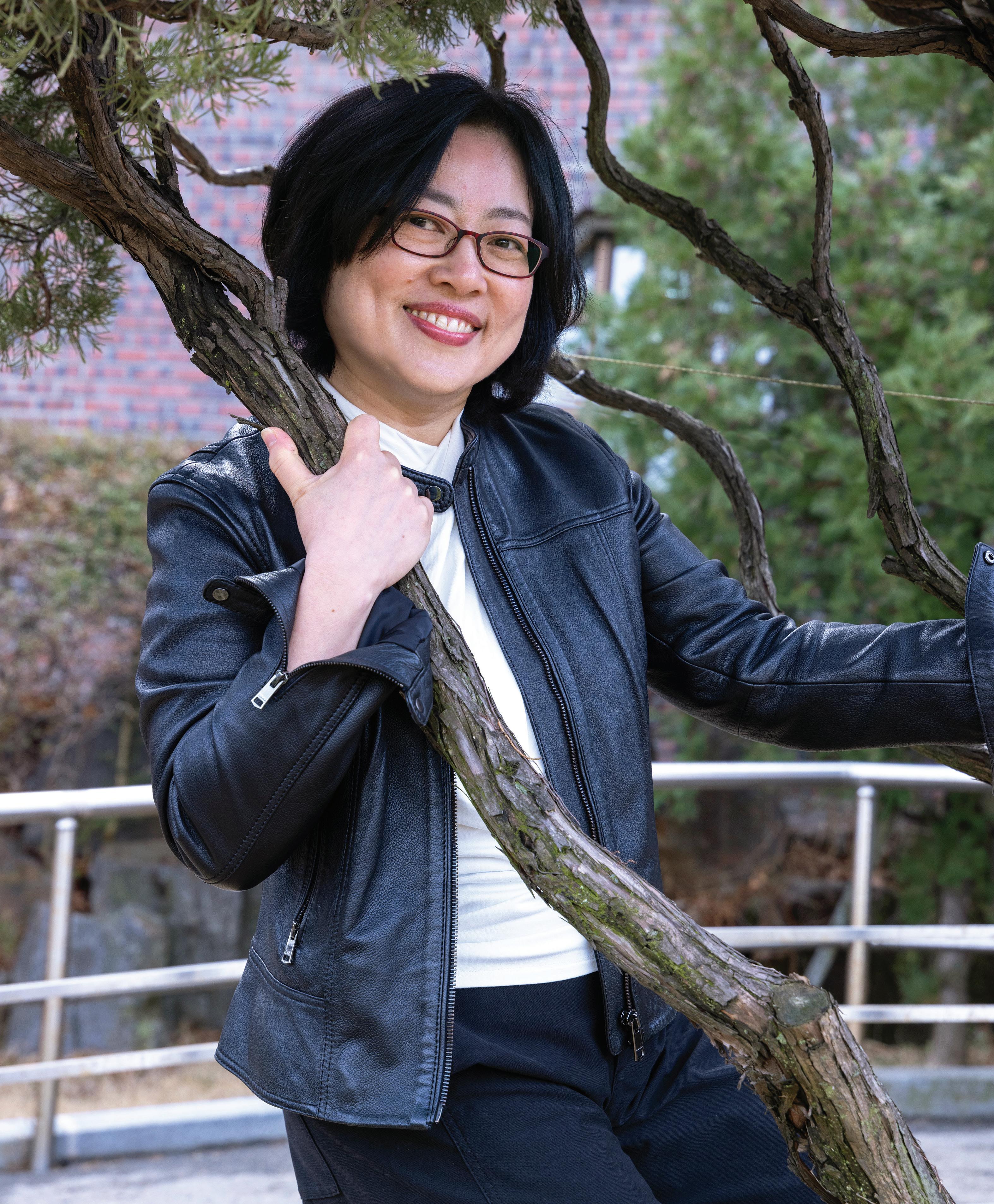
HYUNGJI PARK ’85
THE ALUMNA WHO NEVER REALLY LEFT
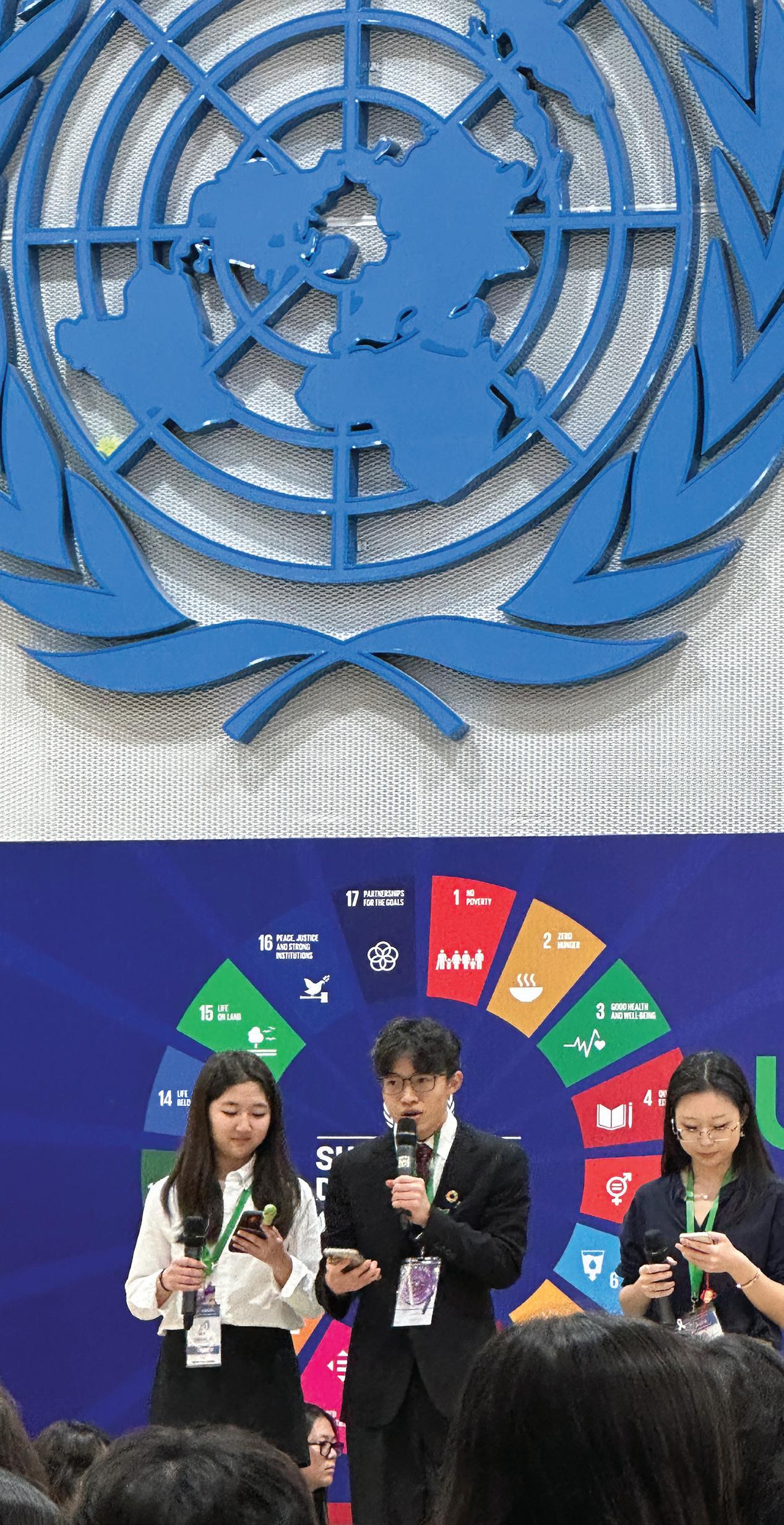
From second grader to Board Chair, Hyungji Park ’85 has spent half a century connected to Seoul Foreign School. Named Alumna of the Year 2026, she has known SFS from nearly every angle: student, parent, alumna, volunteer, committee member, and now Board Chair. But beyond the titles is a scholar, teacher, and thoughtful observer of what makes communities thrive. In this conversation with The Banner, Hyungji reflects on leadership, literature, and the school that has shaped so much of her life.
The Banner: You’ve been connected to SFS for nearly five decades. How did that journey begin?
I first came to SFS in 1975 as a second grader, and I ended up being here for 10 years. I was an almost lifer. Then I came back as a parent many years later, and then got involved in governance in various ways. So it’s been an exciting halfcentury journey.
The Banner: What kind of student were you?
I was really shy and really bookish in some ways, not too different from what I am now. One difficult thing was that I was always the one who stayed. I would make friends, get really close, and then they would leave. I was always the one left behind, and that was hard.
absolutely hated it. I thought it was strange and complicated. And I remember wondering, why is this such a classic? Now, when I teach Dickens, I tell my students to slow down until he gets funny. Read too quickly, and you miss that he’s meant to be ironic, sharp, and very funny.
The Banner: What kind of professor are you?
You should ask my students. That would be more honest. [Laughs.]
The Banner: A big part of your life has been dedicated to literature and academia. Was there an early moment that pointed you in that direction?
I feel really, really lucky because I feel like I have the best job in the world. I read books I like, I write about books I like, and I talk to young people about books I like. Sometimes I’m amazed I get paid to do that.
One funny irony is that one of my favorite authors to teach now is Charles Dickens, but the very first Dickens novel I read was Great Expectations in John Byrd’s IB English, and I
I think of myself as someone who helps students on their journey to figure themselves out, to understand their own identities, and their identities as readers and lovers of literature. I’m definitely not there simply to convey facts or information. What I love most about my job is that I’m always interacting with young people. They never age; they’re always college age, and I’m not. Because my classes are discussion-based, we get to connect literature to current issues and the way students see the world. When we read Jane Austen, for example, I ask them, “Do you feel this now?” I often joke that Jane Austen is very much a Korean mom: all she wants is for her daughters to marry and marry well. Yeah, she translates really well to a Korean context. What continues to amaze me is that young people are still, at heart, idealistic and hopeful. That keeps you humble.
The Banner: You’ve described SFS as both challenging and formative. What stayed with you most?
I think the greatest quality SFS gave me was an understanding of global citizenship. When you’re here, you naturally encounter people from so many different backgrounds. That lived experience of learning to understand and respect differences is incredibly powerful.
Sometimes I think that if everybody in the world had the chance
to go to SFS, the world would be a much better place, because it would teach empathy, understanding, tolerance, and respect for differences. That is the quality I most value, that I learned from SFS, and the value I most seek to preserve and grow as Board Chair.
The Banner: You’ve recently attended alumni reunions in the US. What stood out to you?
I was absolutely blown away by the depth of connection. There are alumni who are still in regular contact, who choose to spend time together, who feel that SFS is central to who they are. It was incredibly heartwarming.
The Banner: There’s also a strong sense of giving back among alumni. How do you see that?
I think our alumni are a tremendous resource. Not just for mentoring or careers, but for showing current students the range of what SFS graduates go on to do. There’s so much potential in those connections.
The Banner: You’ve seen SFS as a student, a parent, an alumna, and now as Board Chair. Which role has meant the most?
That’s a really hard question. I feel really privileged to have seen the school from all these different dimensions. Each role reveals something you can’t see from the others. Becoming a parent showed me things I never saw as a student. Serving on the Board showed me things I never saw as a parent.
But in some ways, of course, the best role is being a student. The whole school is geared toward you, and you just get to focus on your life.
The Banner: Let’s talk about your role now. What is the responsibility of the Board, and of the Chair?
The Board’s role is to think about the long-term health and direction of the school. We’re trying to build something that goes beyond the people who are here now. The school will continue with new students, new teachers, new leadership. Our job is to think about what that future should look like.
The Banner: What motivated you to take on such a demanding role?
I’ve always wanted to give back to SFS. When my children were here, I felt there was no better use of my time than to contribute to a school that had shaped my life and theirs. It’s a lot of work, but it’s also been incredibly rewarding.
The Banner: How is the Board thinking about the future, especially with changes like AI?
We’re trying to stay focused on the long view. We don’t have all the answers, but we’re thinking about how to keep our mission intact while preparing students for a very different future. It’s a time of
uncertainty, but also opportunity.
The Banner: You also co-founded Women in Governance. What has that experience meant to you?
It began as a practical idea. A group of women board chairs from major international schools in the Asia-Pacific region realized there were many networks for educators and administrators, but very little for board leadership.
We’ve shared ideas, written for The EARCOS Journal, led conference sessions, and supported one another through real challenges. What started as a professional network has become an amazing sisterhood.
It has also helped me appreciate how well we’re doing at SFS. Sometimes other board chairs describe their problems and ask how things are at SFS, and I have to give the very uninteresting answer of, “Oh, we’re doing great, thank you.” So I’m pleased to learn that. But I think this kind of awareness of what other schools are doing, and of the larger network we belong to, is really important in figuring out who we are and where we stand in that larger framework.
The Banner: You’ve also been deeply involved in service beyond SFS. How has that shaped your perspective?
I realised at some point that I wanted to give back more intentionally. Through experiences like teaching in Bangladesh and working with UNICEF, I came to understand both the depth of need in the world and the impact organizations can have. It strengthened my belief that service is central to who we are.
The Banner: After 50 years of connection, is there something that still surprises you about SFS today?
The more I learn about SFS, I’m surprised at how dynamic it is. The school has changed tremendously, but what amazes me is that it’s constantly trying to improve itself. It could rest on its laurels, but it doesn’t. It keeps evolving, and I think that’s what makes this place special.
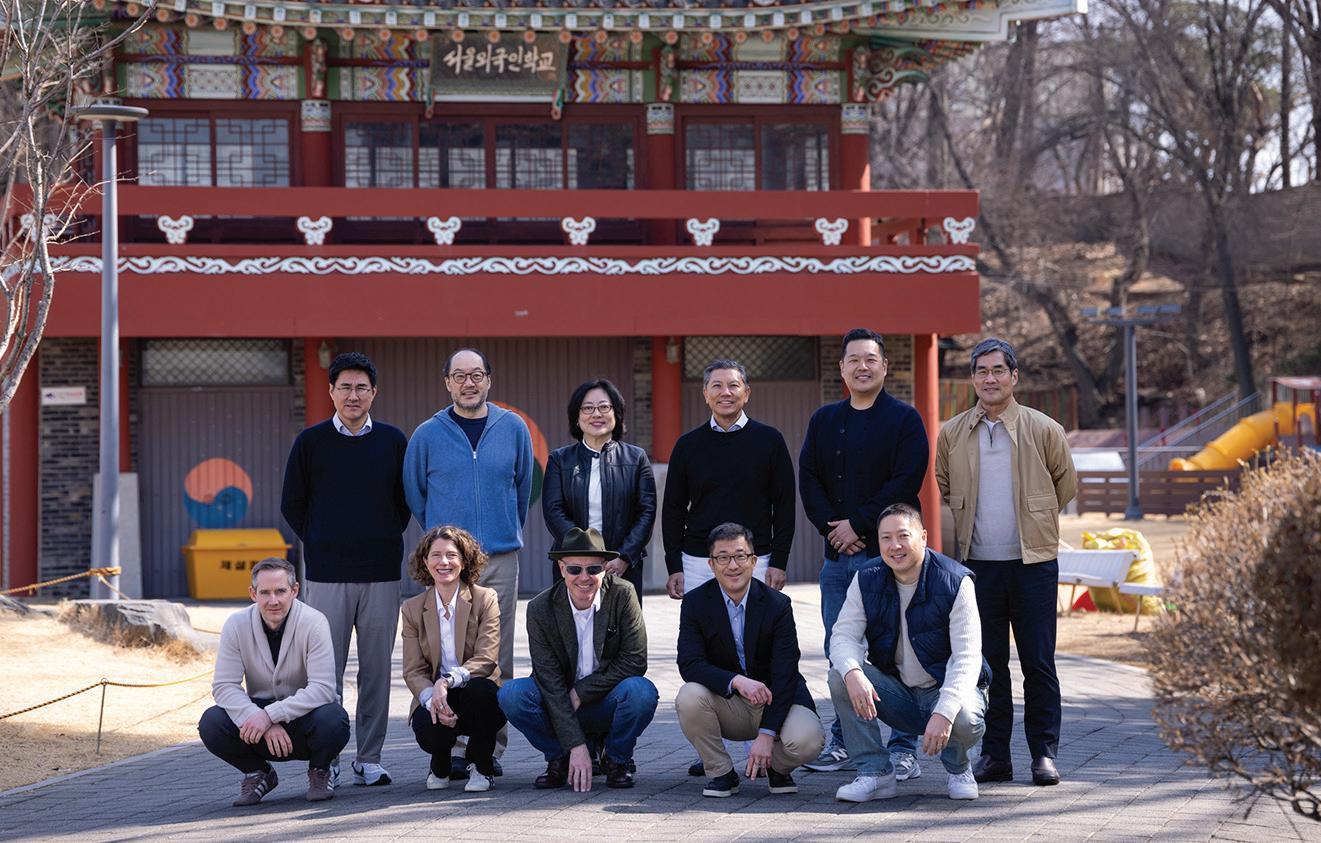
SFS Board of Governors, 2025-2026.
HALF A CENTURY OF HEADLINES: FIFTY YEARS OF THE SPIRIT
By Royce In Grade 12 Student, Editor-in-Chief of The Spirit
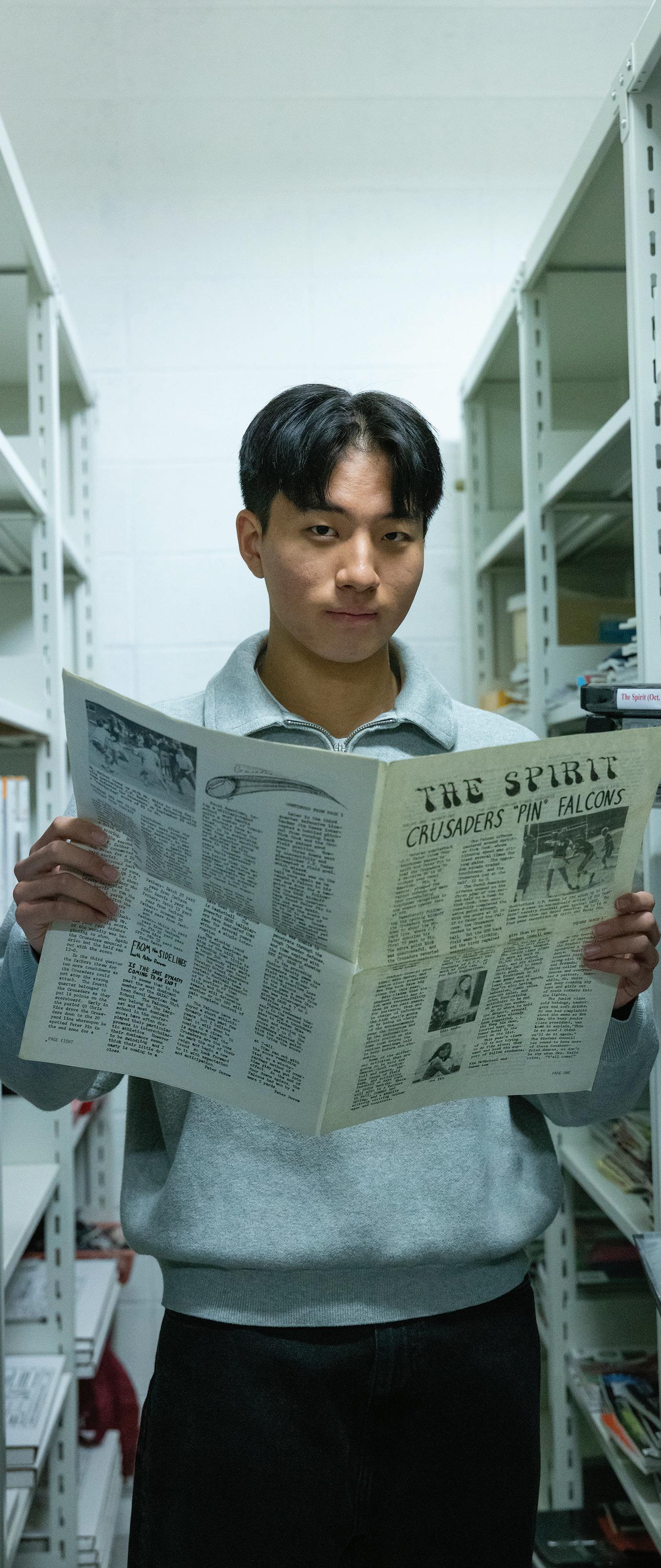
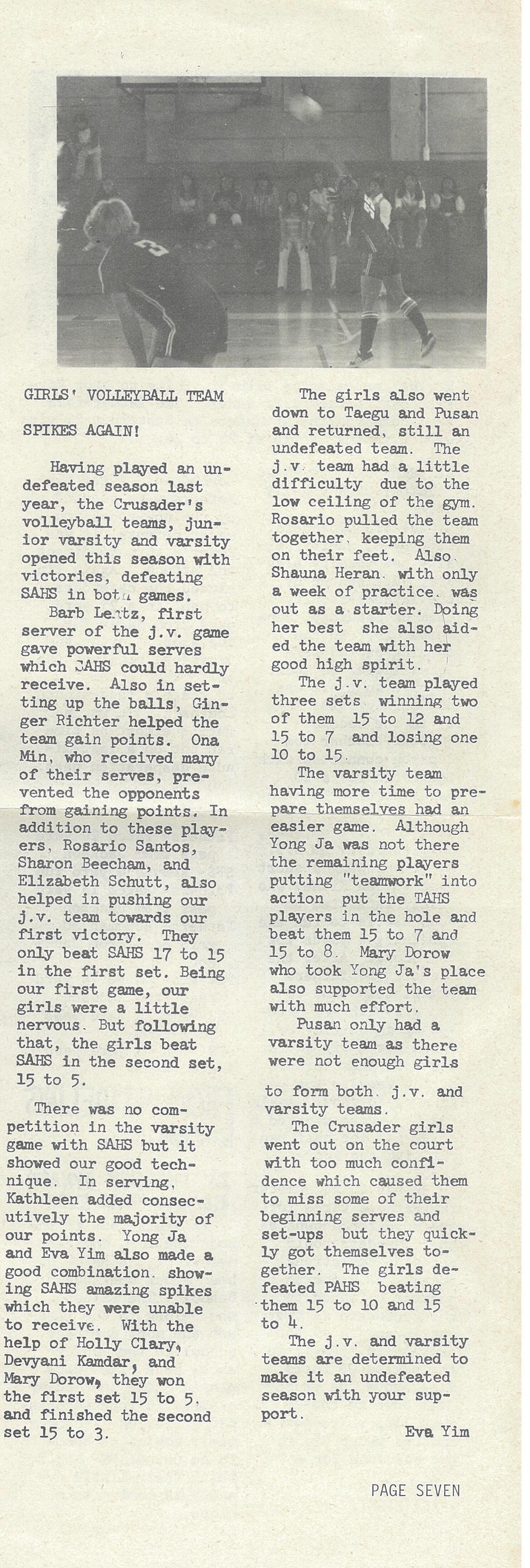
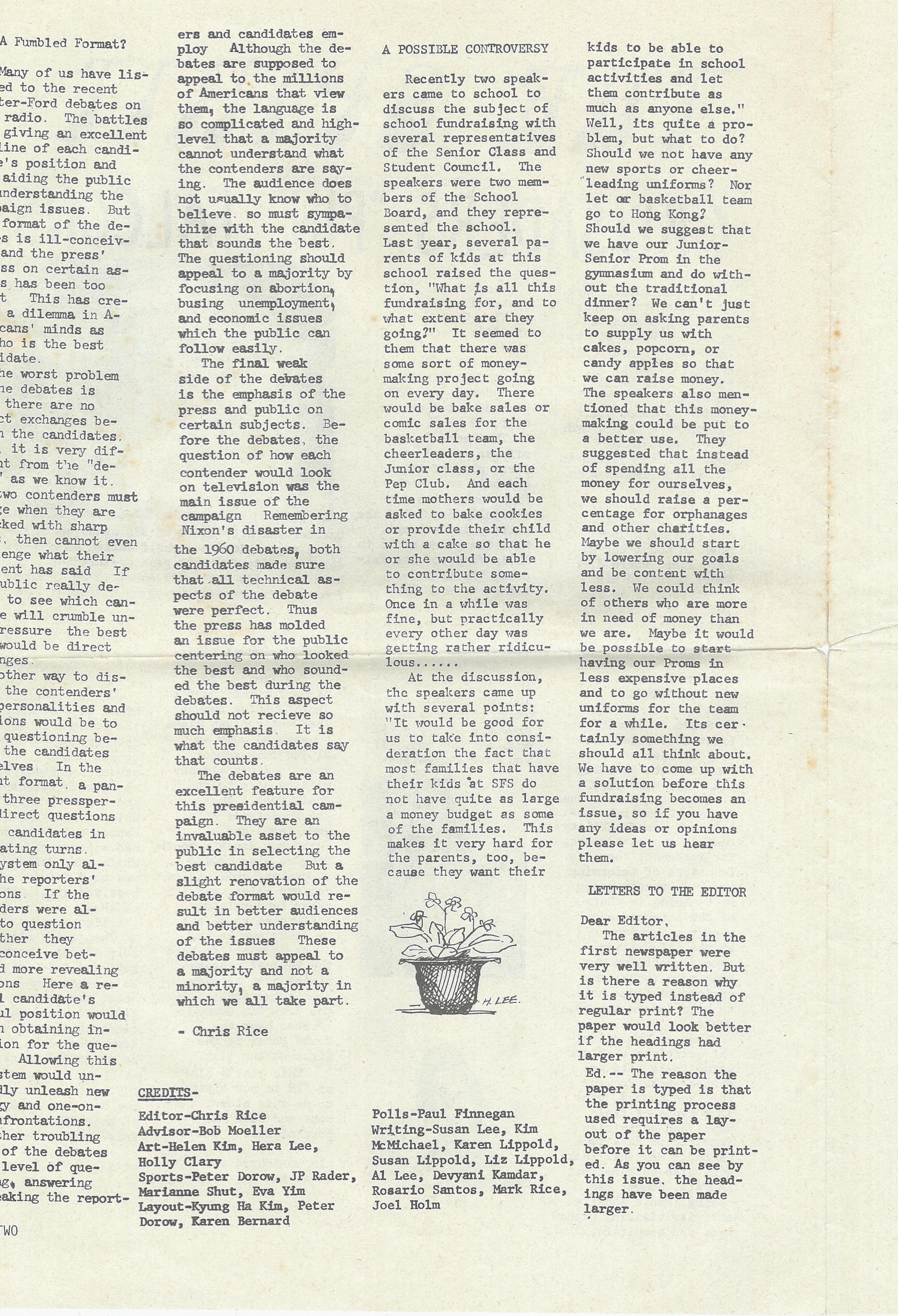
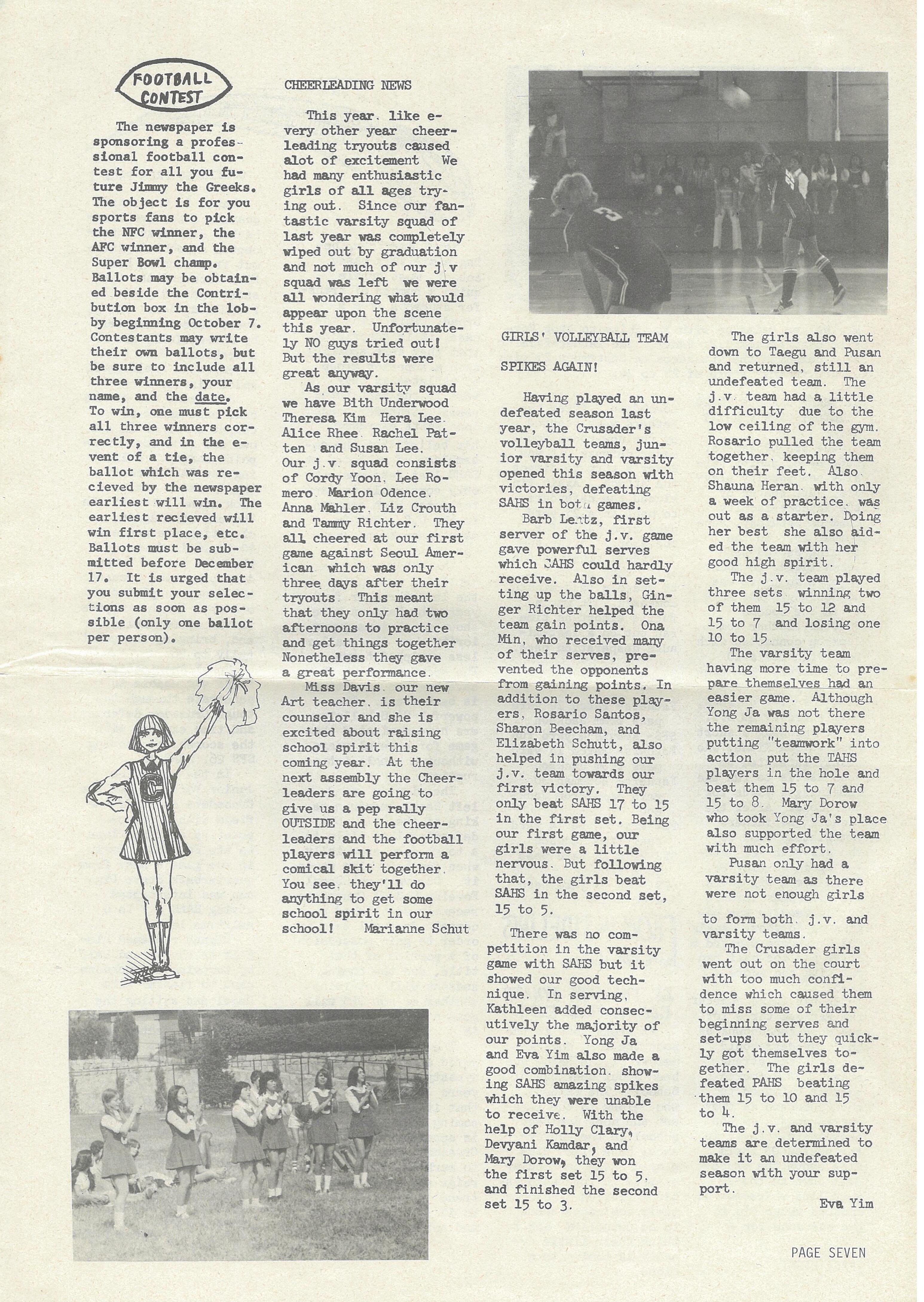
Few students know that the HS library has a back storage room—and fewer have ever stepped foot inside it. Tucked within the rollable, archive-esque shelves are boxes and binders filled with old issues of The Spirit, largely untouched and collecting dust.
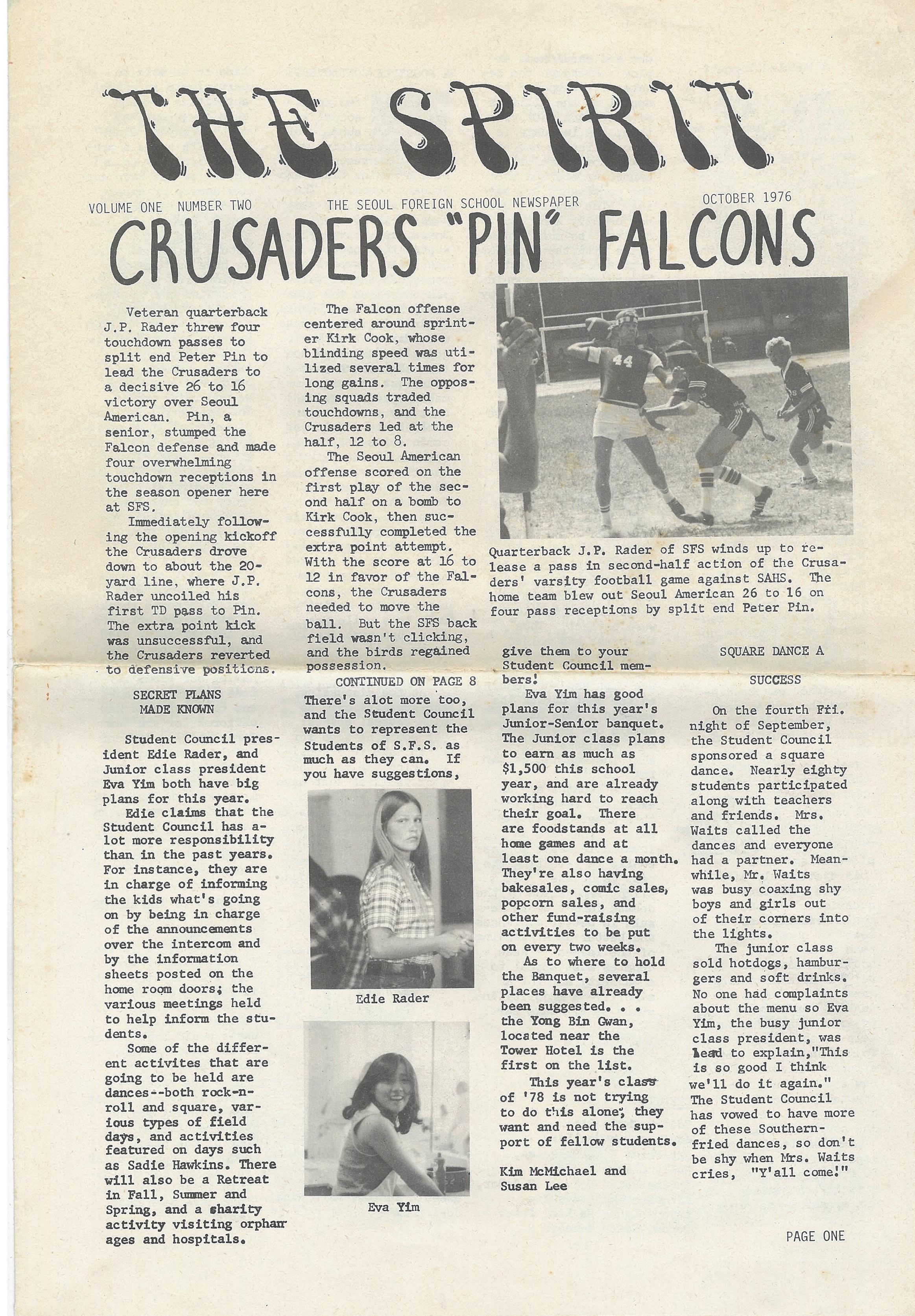
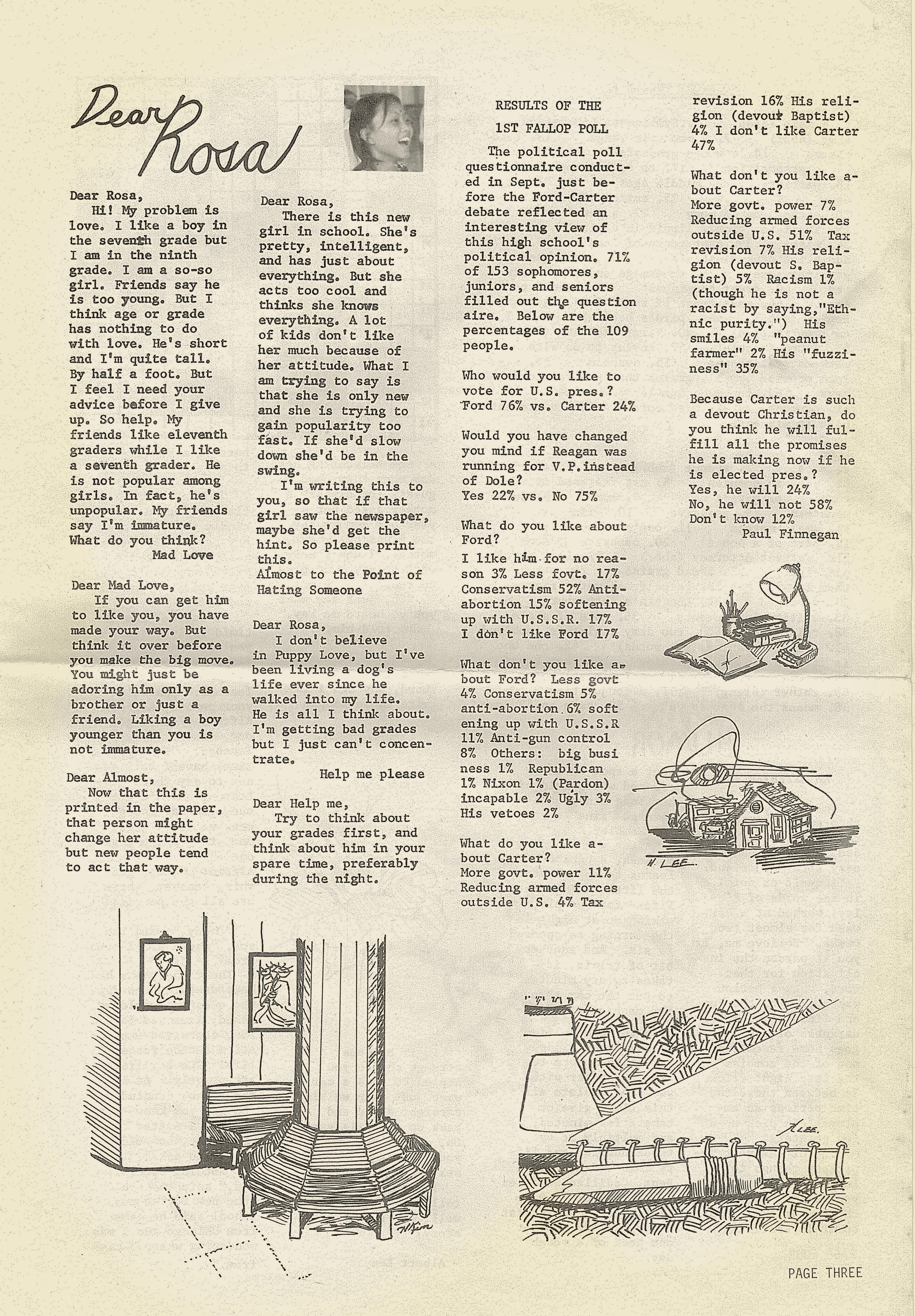
Every so often, being Editor-in-Chief of The Spirit means finding yourself knee-deep in old issues, desperately hunting for inspiration. Out of curiosity, I began looking for the oldest issue we had, which turned out to be a worn 1978 copy of Volume III, Issue 1. If this were Volume III, Volume I had to exist somewhere, meaning The Spirit had to have started two years earlier, in 1976. This year, that would make it 50.
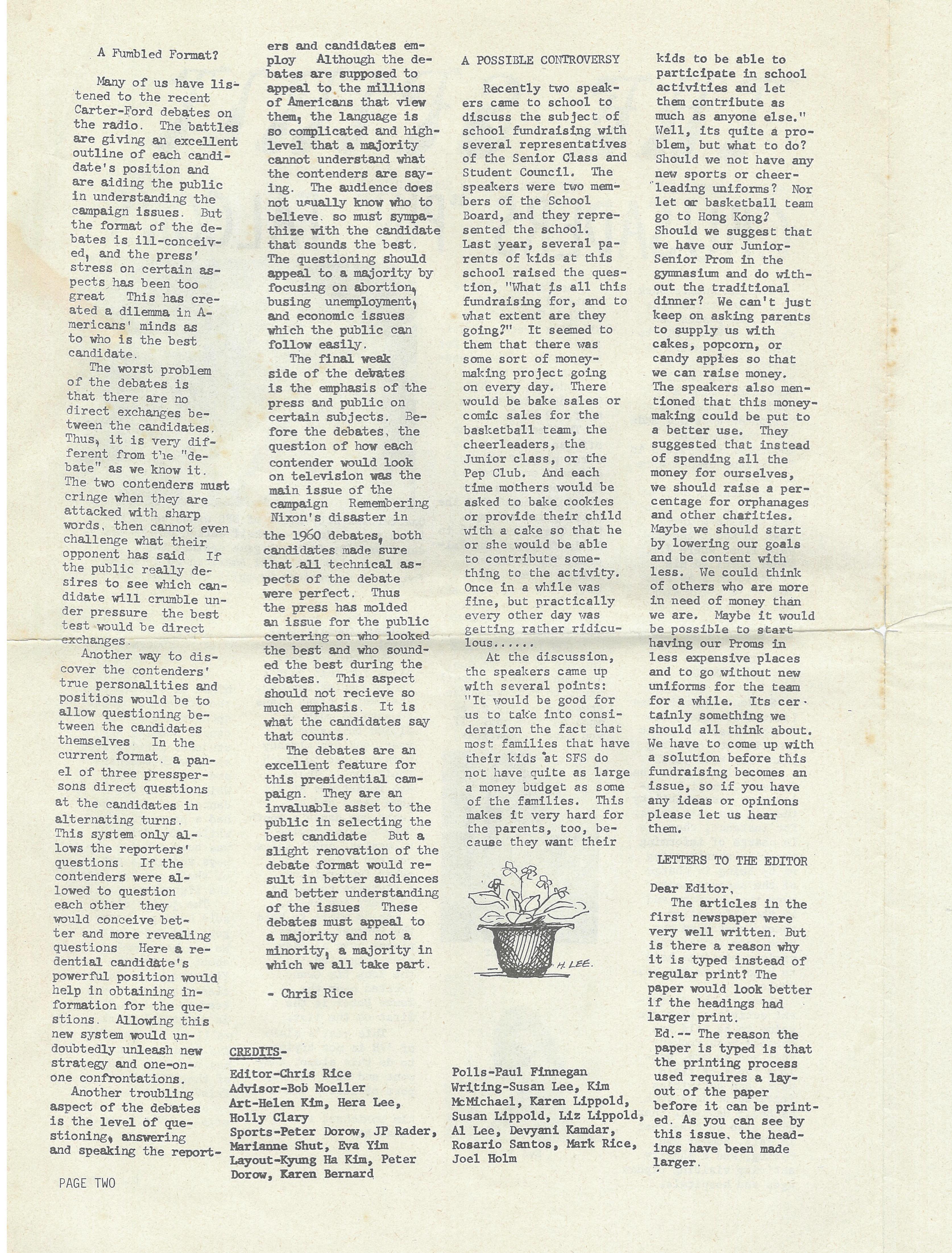
But without records to confirm it, the only way to know was to reach out to the people who were there. They wrote back with memories so vivid it felt less like reading emails and more like sitting across from someone who had just stepped out of the late 1970s. What they described was a publication built from almost nothing, by students with no software, no digital tools, and no roadmap; just a school that needed a voice, and students willing to give it one.
THE SCHOOL IT WAS BORN INTO
To understand the early days of The Spirit, it helps to imagine what SFS looked like 50 years ago. The entire school—from
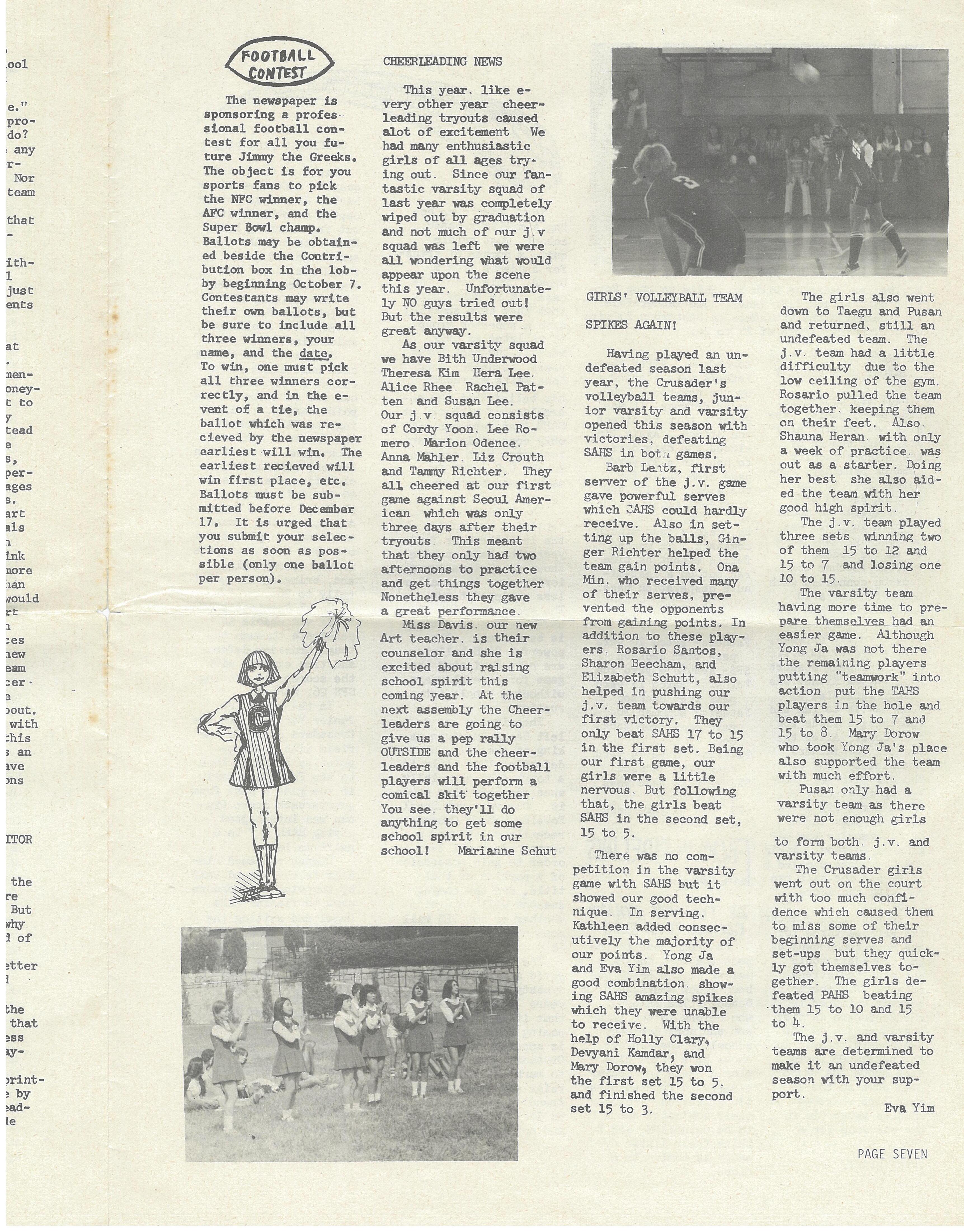
The Spirit is Seoul Foreign School’s high school student-run newspaper, written and produced by students.
Royce holding The Spirit, 1976 issue, in the back storage room in the High School library.
Campus life was busy and close-knit... there was always something going on.
It was into this community that The Spirit arrived, and for students without cell phones, social media, or the internet, Chris says simply: “The paper was a big deal.”
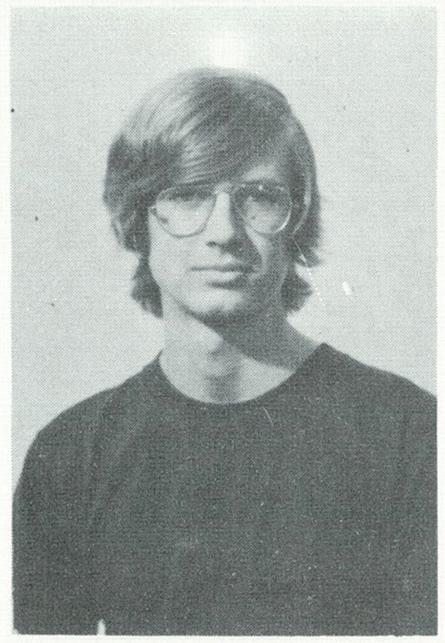
kindergarten through 12th grade— had around 600 students. It was a tight-knit "mini United Nations,” as Chris Rice ’78 puts it, of students from missionary, business, and diplomatic families. “There was great pride in SFS,” Chris recalls. “Students were largely united in spirit, friendship, and fun.”
Campus life was busy and close-knit. Basketball rivalries against Seoul American High School drew enormous energy. Dances filled the strobe-lit basement cafeteria, sometimes with Headmaster Mr. Underwood appearing at the door with a decibel meter. Whether it be the annual carnival, Sadie Hawkins Day, or a Turkey Trot cross-country race, there was always something going on.
It was into this community that The Spirit arrived, and for students without cell phones, social media, or the internet, Chris says simply: “The paper was a big deal.”
BUILDING THE SPIRIT BY HAND
Producing The Spirit in the late 1970s looked nothing like the process students use today. There were no laptops, word processors, or layout software. Every step had to be done manually.
Articles were written on typewriters, so editors had to plan column widths and article lengths ahead of time. Once the writing was finished, the text was physically cut into columns and pasted onto layout boards. Headlines, photographs, and graphics were then arranged to form each page. Chris remembers the process as intensely collaborative. Students spent long afternoons on campus after school, planning stories and assembling the paper together. “Collaboration required lots of face-to-face time on SFS grounds after school hours,” he recalls, “coming up with ideas, working together on layout, and spending time in the darkrooms.”
Photography was equally hands-on. Peter Dorow ’79 handled photography for two years, developing film in the school darkroom himself. Each photograph had to be exposed, developed, and printed individually. Peter remembers listening to cassette tapes while he worked in the darkroom, developing photos to the sounds of the Bee Gees, Earth, Wind & Fire, and The Commodores. “Those were fun times,” he wrote.
When finished, the paper looked very different from the glossy publication students read today. Early issues were printed as blackand-white newspapers, folded and delivered in bundles tied with string. Peter remembers writing an article
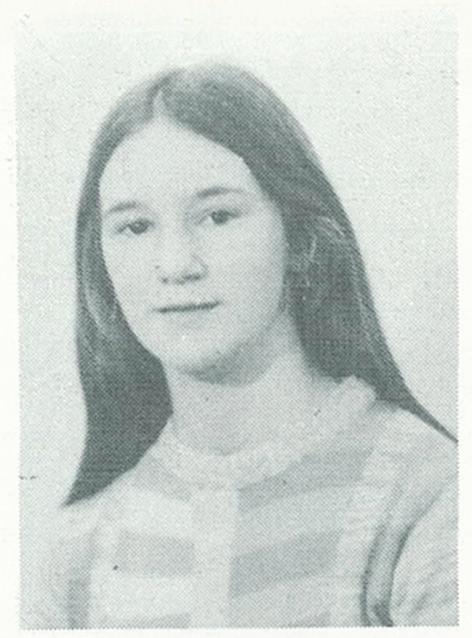
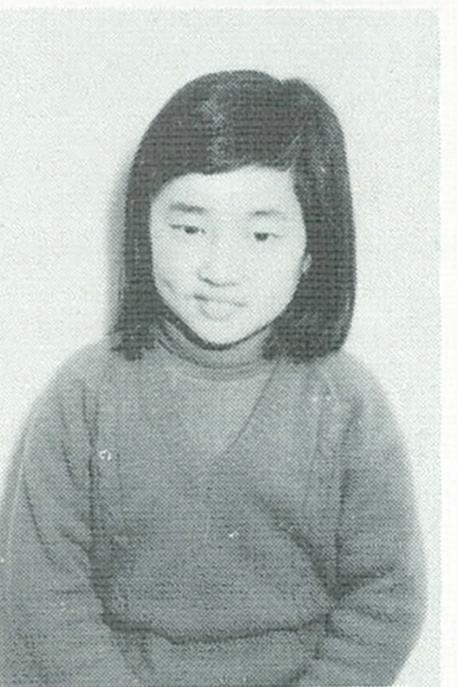
Chris Rice ’78, 1976.
Peter Dorow ’79, 1976.
“My mind was so fried from the job of putting the paper to bed that I just started laughing,” she remembers. “I was amazed that I could actually have a full conversation in Korean with a stranger.” Even decades later, she still remembers that night clearly. “It’s a job I’ll never regret taking on.”
titled “Is the SAHS Dynasty Coming to an End?” after Seoul American High School had dominated league sports for years. Soon afterward, SFS teams went on to post undefeated seasons and win Far East championships in basketball in both 1979 and 1980. “Perhaps we were prescient,” he says drily. Chris also remembers a controversial article about the administration that landed him in Headmaster Mr. Underwood’s office. “Perhaps the beginning,” he reflects, “of what turned out to be a career in conflict resolution!”
LEARNING LEADERSHIP THE HARD WAY
Patricia Ryan ’81 joined as a section editor in 10th grade and was asked to take over as Editor-in-Chief the following year. She was stunned. “It was a bit overwhelming to be offered such an important role, and I did not feel worthy,” she wrote. “But I said yes anyway.”
One of her most memorable experiences came during a late production night in downtown Seoul. Working with an editor from the Korea Herald, she spent hours assembling the layout, cutting columns of printed text with an exacto knife and pasting them into place. By the time the issue was finished, it was nearly 11 PM. She took a taxi home, exhausted. During the ride, the driver began chatting with her in
Korean. Although she didn’t technically speak the language, she somehow understood enough to respond.
“My mind was so fried from the job of putting the paper to bed that I just started laughing,” she remembers. “I was amazed that I could actually have a full conversation in Korean with a stranger.” Even decades later, she still remembers that night clearly. “It’s a job I’ll never regret taking on.”
Of course, editing also came with unexpected challenges. While she loved the creative side of assembling the paper, she did not enjoy chasing down friends on the writing staff to turn in their articles on time. “It stressed me out to be the unpopular ‘nag’,” she admits.
Some aspects of student journalism, it seems, have not changed much in 50 years.
A TRADITION THAT CONTINUES
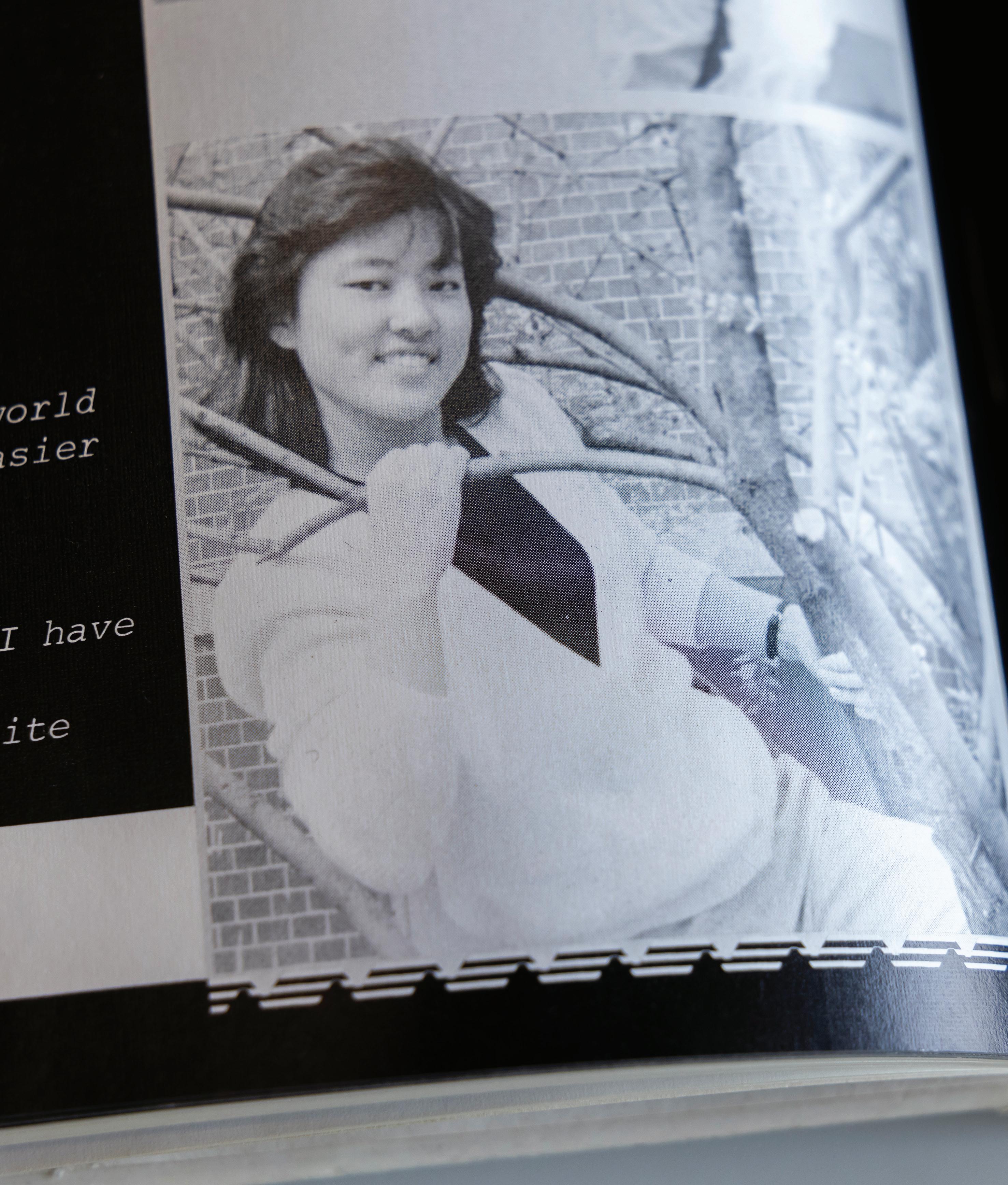
Nearly a decade later, Hyungji Park ’85 attended a Spirit information session as a freshman and immediately wanted to join. “The editor looked so cool,” she remembers. “Handling news of all kinds showed authority and knowledge of the world.”
Hyungji later became Editor-inChief herself, serving from 1983–85. Like the students before her, she
Patricia Ryan ’81, 1976.
Hyungji Park ’85, 1976.
And somewhere down the line, another student will probably stand in that same archive room, flipping through the issues being published today, wondering where it all began.
assembled layouts by hand and occasionally delivered layout boards to a printer in Yeonnam-dong when deadlines ran late.
Recently, she picked up a modern issue of The Spirit and noticed the obvious differences—color photographs, glossy pages, and polished design. But beneath those changes, she saw something familiar. “The Spirit reflects the strength and range of the SFS community,” she says. “In that we share a common goal, from 1985 to today.”
FIFTY YEARS LATER
Much has changed since the first issue of The Spirit was published in 1976. Articles are now written on laptops instead of typewriters, layouts are assembled digitally instead of with scissors and glue, and photographs are taken instantly instead of slowly developing in a darkroom.
Sometimes, though, the experience of working on the paper still feels surprisingly familiar. Students still stay after school debating article ideas. Editors still chase writers who miss deadlines. And there is still a particular satisfaction that comes from finally holding a finished issue after weeks of work.
Fifty years after its founding, The Spirit continues to tell the story of the SFS community—one issue at a time. And somewhere down the line, another student will probably stand in that same archive room, flipping through the issues being published today, wondering where it all began.
A special thank you to Chris Rice ’78, Peter Dorow ’79, Patricia Ryan ’81, Hyungji Park ’85, and the SFS Alumni Office for making this article possible.
CELEBRATING NEURODIVERSITY
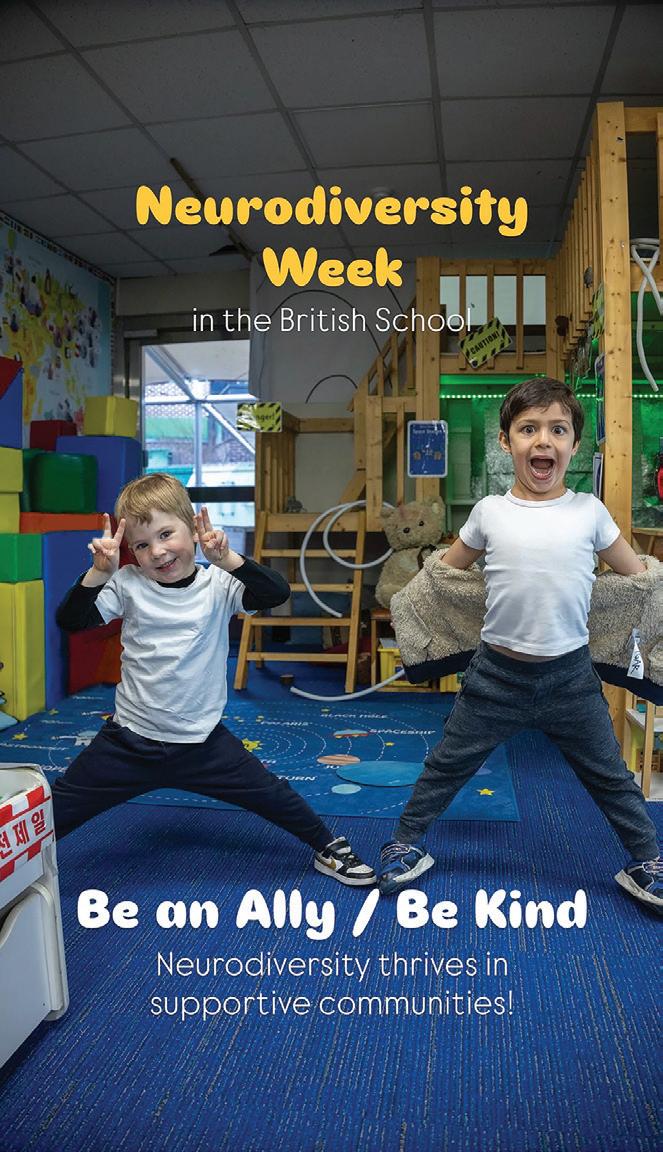
As part of this year’s Back to the Future theme, we are reminded that meaningful progress begins with reflection on where we have been, and how that shapes where we are going. Our understanding of neurodiversity has evolved over time, moving beyond past assumptions toward more inclusive and informed perspectives.
In this feature, three voices—a learning support specialist, a principal, and a librarian—reflect on Neurodiversity Week at the British School and what it means to truly celebrate neurodiversity. Together, they highlight how this continued learning is helping to build a school community where every learner is seen, valued, and supported.
Beyond Awareness: Understanding Neurodiversity and Celebrating Differences
From the Learning Support Specialist
By Sarah Kneeshaw British School Learning Support Teacher
“Is my child the only one?”
As a Learning Support Specialist, I get asked this question a lot, and my response is always the same: “The fact that I have a full-time job shows that they are not.”
In the past, being neurodivergent has often been perceived as a deficit. “Not being good” at things; struggling to fit into specific, narrow expectations. Those with a neuro difference may have been teased, or - even with the best intentionstreated with a condescending “kindness” or pity. Fortunately, as neuroscientists develop our understanding of the brain, the tide is finally beginning to change. Neurodiversity is the future. It is innovation. Deep interests and focus. Creativity. Attention to detail. Thinking “outside the box.”
Neurodiversity Week at the British School has been about more than just promoting awareness and acceptance. Truly celebrating neurodiversity goes beyond simply telling children nice, broad-stroke messages of love and kindness. While these are an essential part of the message, genuine exploration of
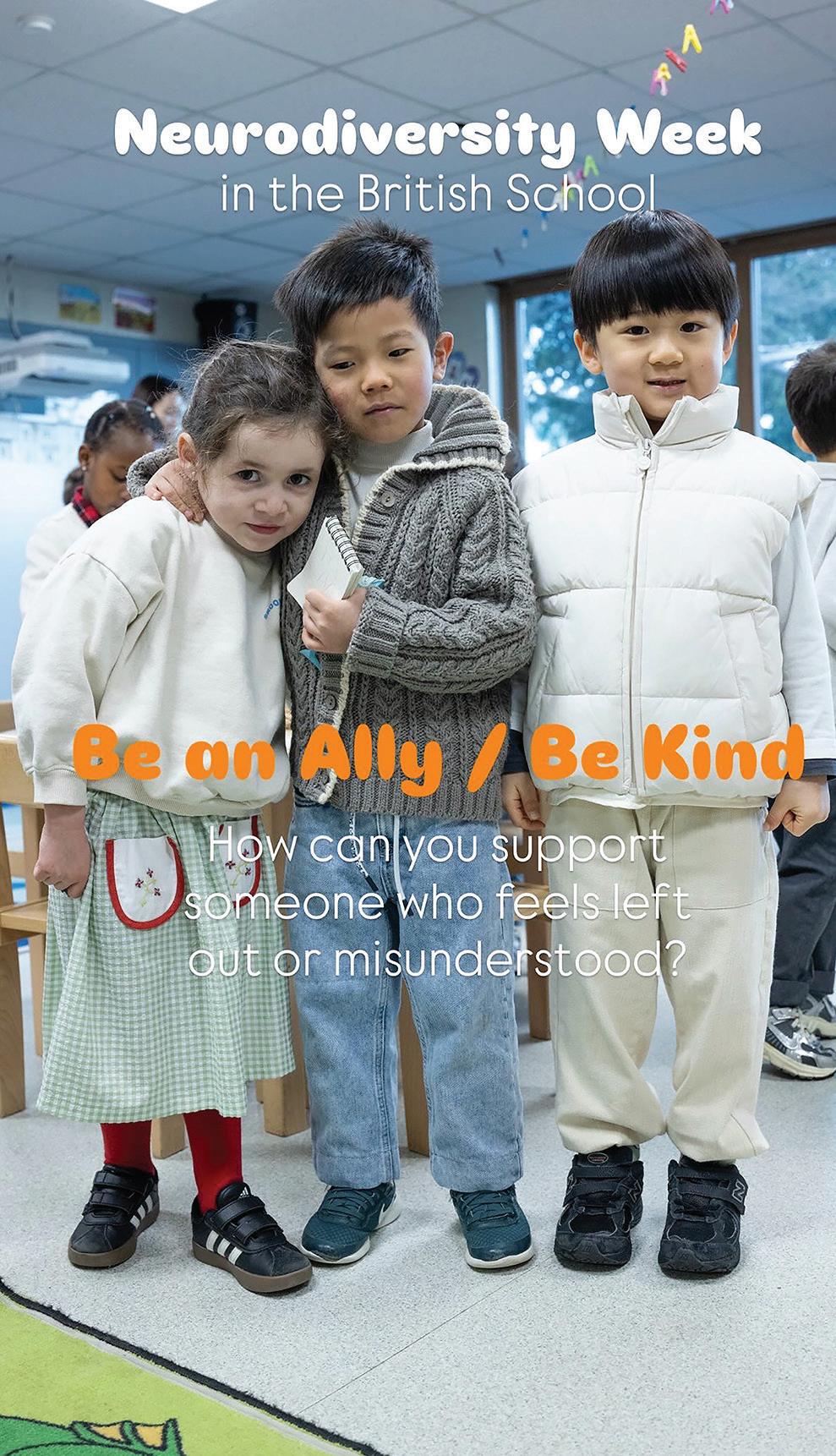
neurodiversity means deeper learning about different brains, and emphasising the importance and advantages of these variations. We don’t minimise the struggles some individuals face, but we also do not fixate on them, or make them the defining qualities of someone with a neuro difference. The message is not that we love and welcome everyone despite their differences, but because of them. We see the beauty and value in diversity, and we recognise and reflect on our own beliefs, which have been based on underlying assumptions in a world designed specifically for one “typical” kind of brain.
At the end of our assembly, we posed a question: “What is the British School?”
I’d like to extend that question more broadly: “What is Seoul Foreign School?”
The answer, relatively, is the same. It’s you. The students, the teachers, the families. And each one belongs, just as they are. With joy and wonder and celebration of the differences that each of us brings.
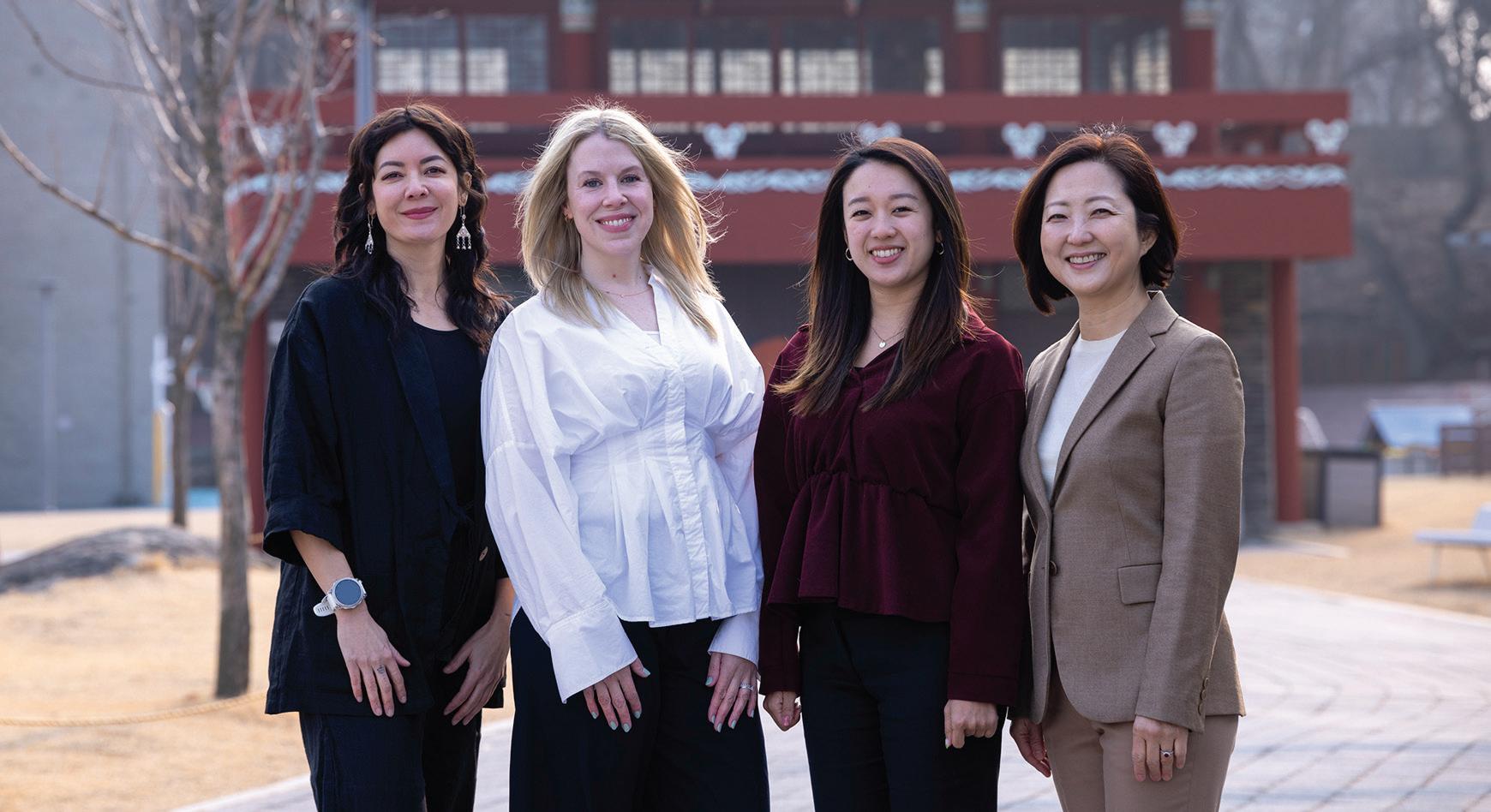
(From left to right)
Cristina Cockrum, Speech/Language Pathologist; Sarah Kneeshaw, British School Learning Support Teacher; Haruka Hattori, British School Counselor; and Soo Jin Cho, School Psychologist.
Was It Worth It? A Resounding Yes.
From the School Leader
By Sarah Patterson British School Principal
Ihavebeen asked about holding special days or special weeks many times in my career: World Book Day, National Poetry Month, Anti-Bullying Week, Mental Health Awareness Week, Red Nose Day, Children in Need Day, and Safer Internet Day to name just a few. When Sarah Kneeshaw asked me to consider celebrating Neurodiversity Week at the British School, I was very keen for her to explore it. I can honestly say from 33 years of teaching in schools around the globe, that it was one of the loveliest events that I have experienced.
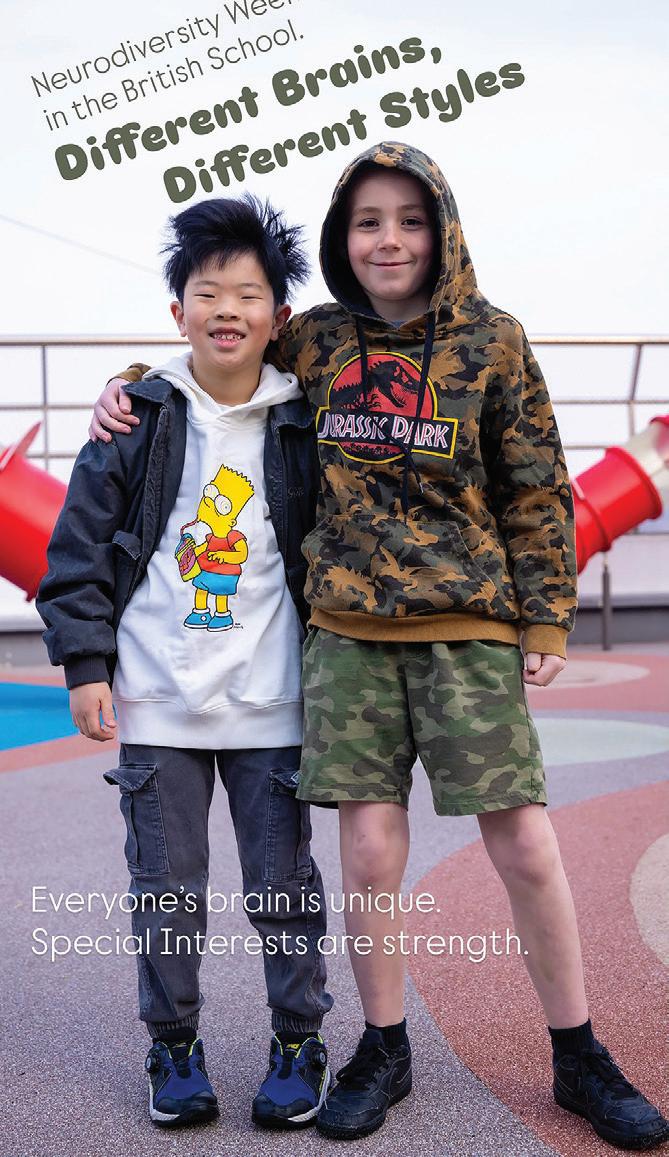
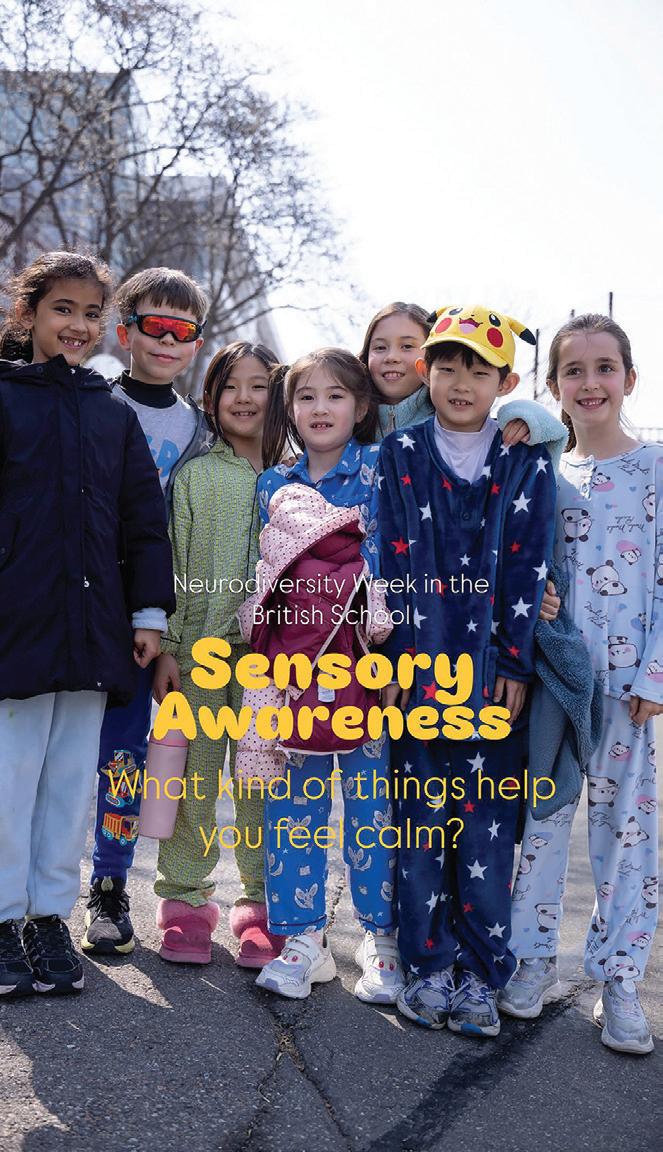
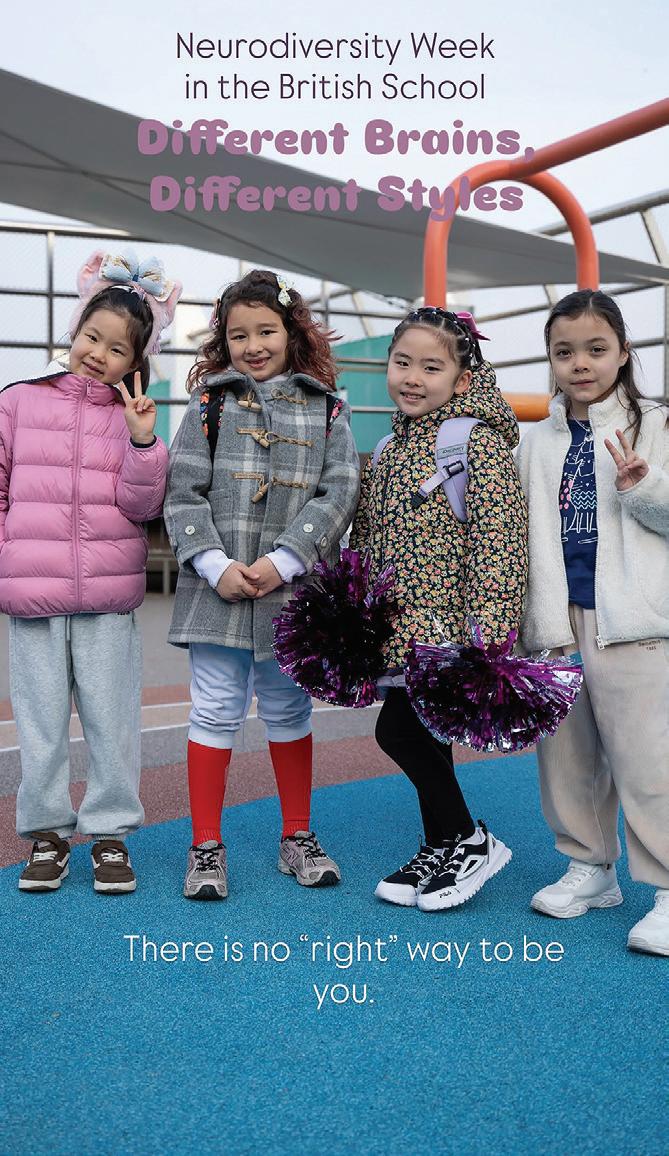
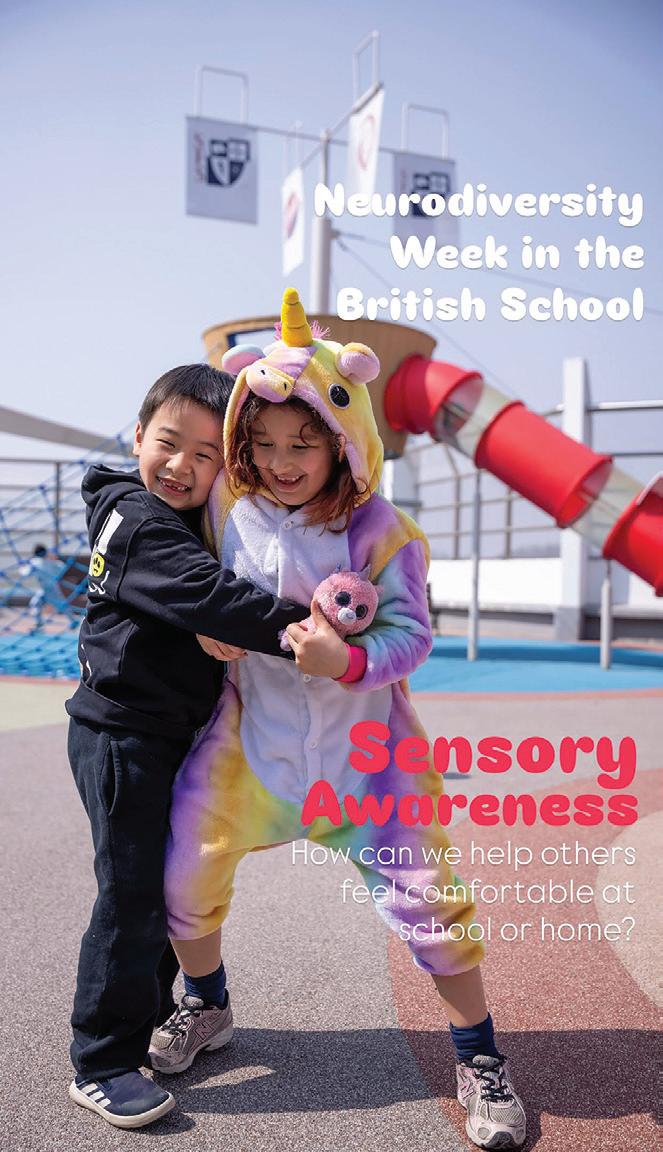
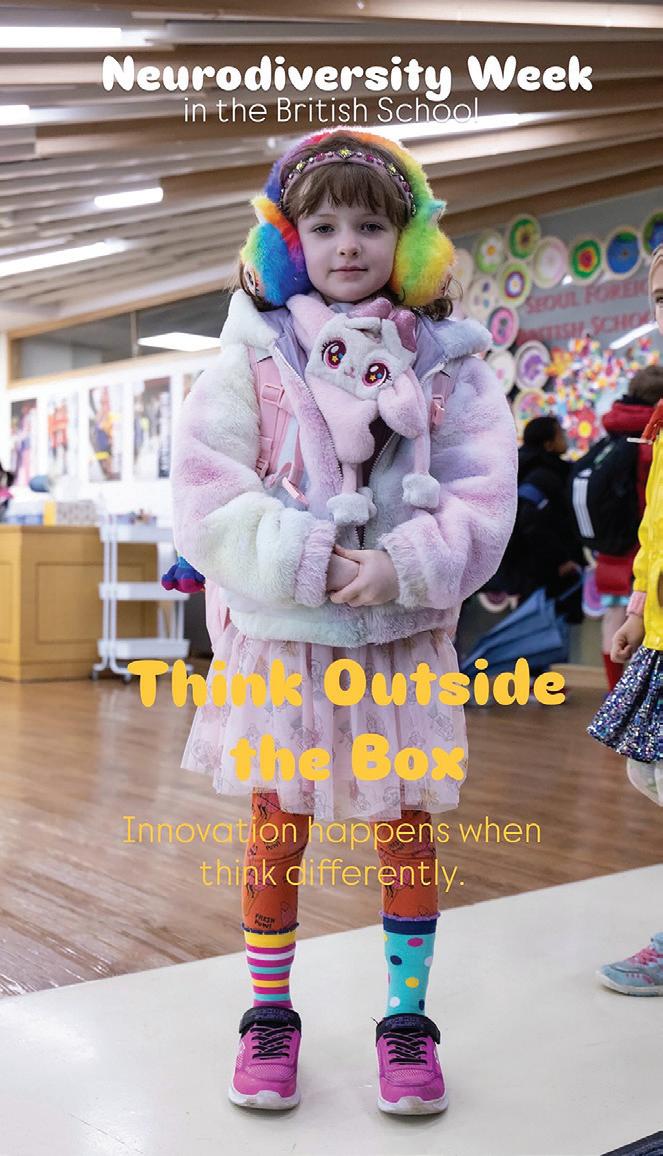
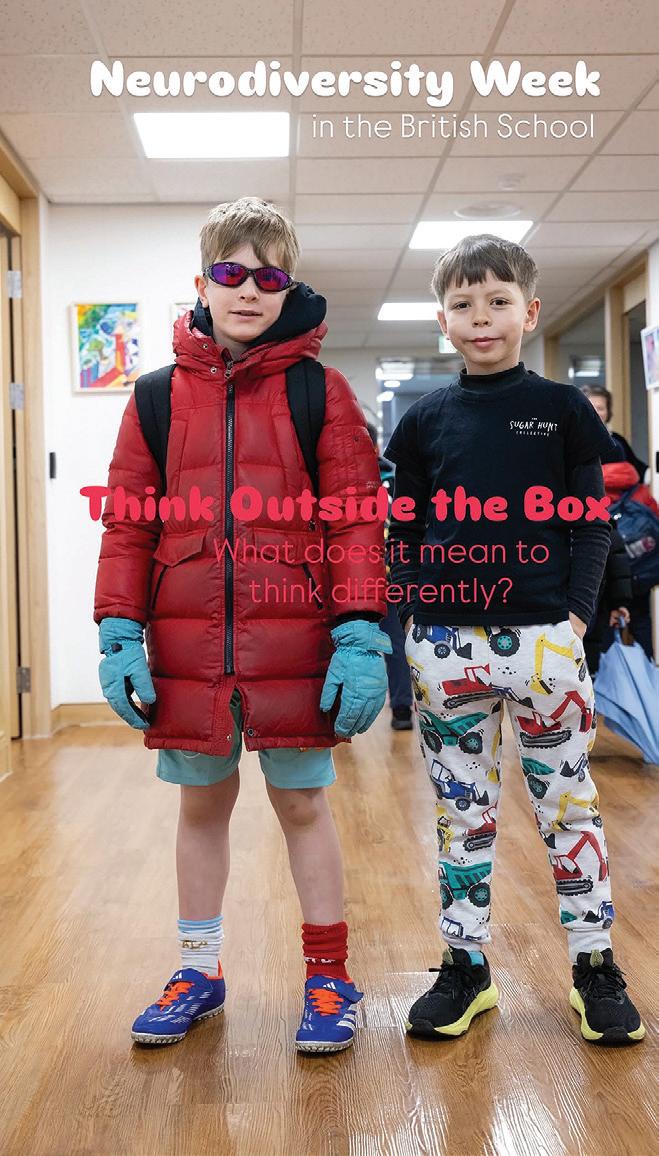
The first and most obvious impact was the fun that was generated by the dress up themes that honoured different aspects of neurodiversity:
1. Wear an outfit that shows your personal style (theme: there’s no right way to be you)
3. Bright colours/unexpected combinations (theme: innovation happens when we think differently)
4. Wear a white t-shirt and write messages of love and support on them (theme: neurodiversity thrives in supportive communities)
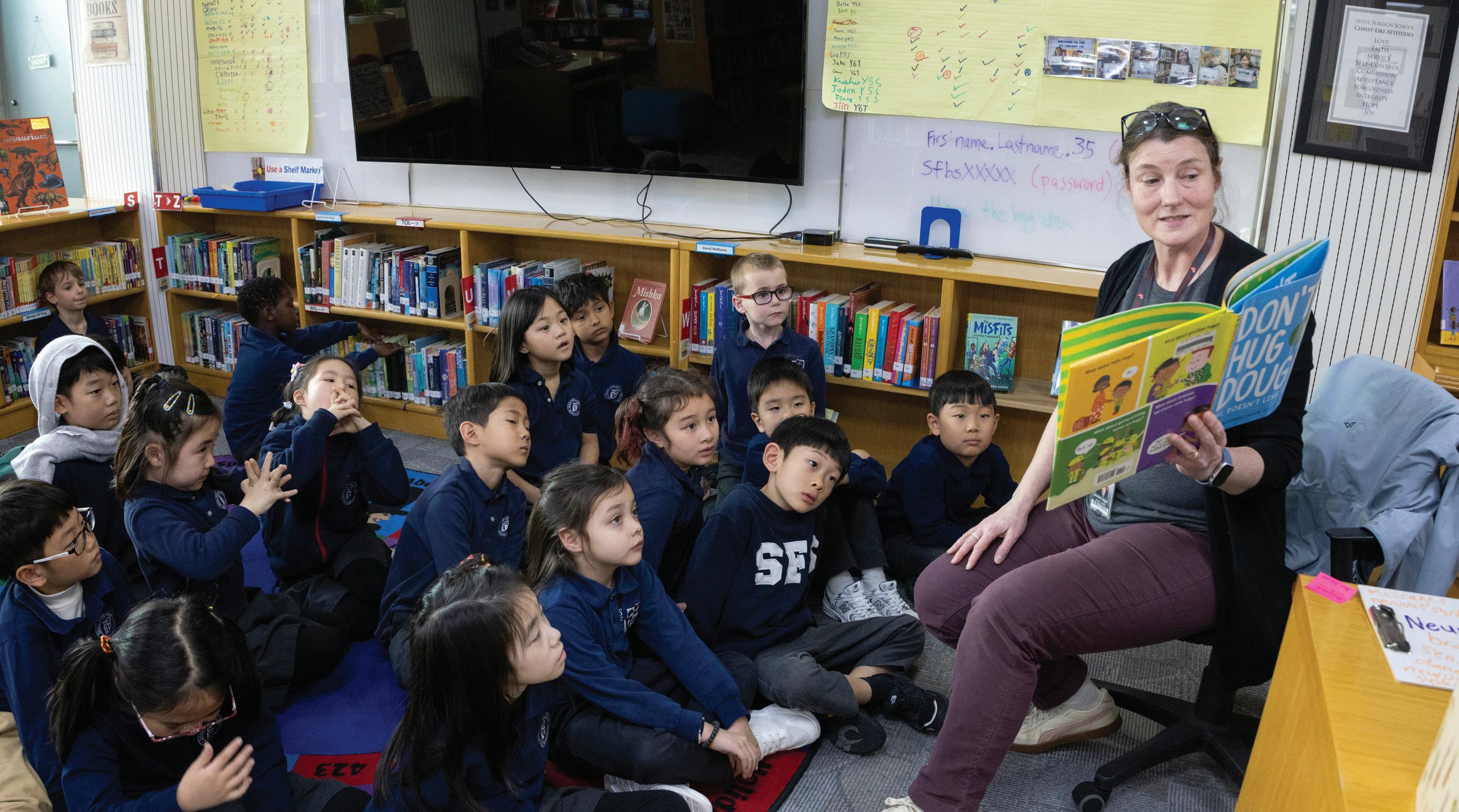
Teachers shared different books with their classes each day, highlighting a different aspect of neurodiversity; from these sessions came thoughtful and meaningful discussion. We also welcomed parents to a workshop where Sarah Kneeshaw
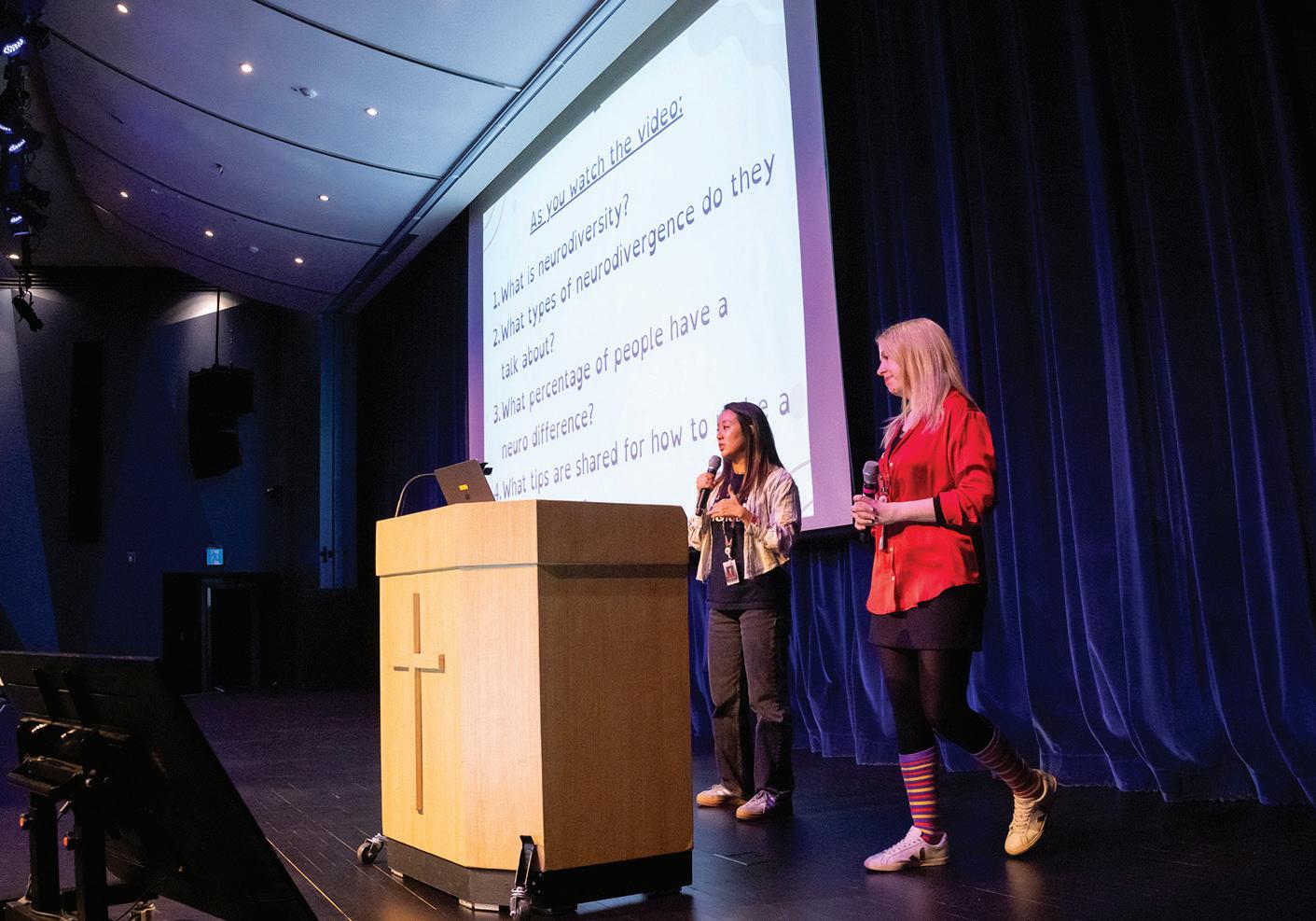
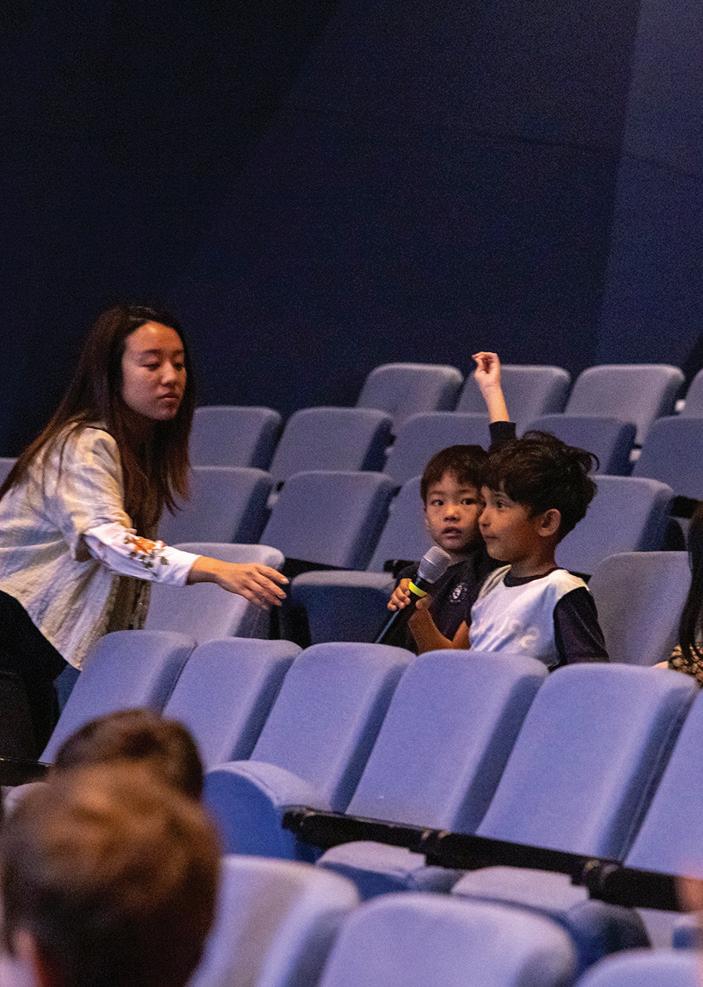
and Haruka Hattori, British School Counsellor, shared our school approach to neurodiversity. There was also a wonderful assembly that celebrated and highlighted the positive impact that neurodiversity can have on schools and communities. It was during this assembly where I was genuinely moved by one of the children who sat behind me and called out “That’s me!” when he heard ADHD mentioned: no shame, no stigma, but acknowledgement and a sense of pride that being neurodiverse is something to be celebrated, not politely ignored.
As a Principal, the key metric for these events is always: is there a positive impact? Or, put more bluntly, was it worth it? Events can often be “a flash in the pan” if we don’t take something lasting from them. The following statements were taken from children in different year groups around the school when asked what they had learned during Neurodiversity Week:
• Don’t mask how you feel. Just be yourself.
• Don’t tease people because they are different from you.
• Listen and understand.
• Make it fair for everybody.
• You can show respect by treating neurodiverse people just like a neurotypical person and not calling them out for anything.
These are just five of many reflections from our students. It was definitely worth it.
It is so important that students "see themselves on the shelves." Books that reflect student identity and experiences give validation and grounding to their readers. Students feel seen and that they matter. Over the years we have built up a diverse collection of books in the British School library that represent the different shapes, sizes, colors, families, languages, and ethnicities of our student cohort.
Capturing what is on the "inside" has been more challenging. In the past, books have featured few neurodiverse characters. At best there has been tokenistic acknowledgment, at worst, characters with neurodiversities have been portrayed as “less than.” Fortunately, this is changing. Neurodiverse characters are now “front and centre” of both picture and chapter books, with their unique ways of seeing, thinking, feeling, and interacting with the world around them celebrated, often in their own voices.
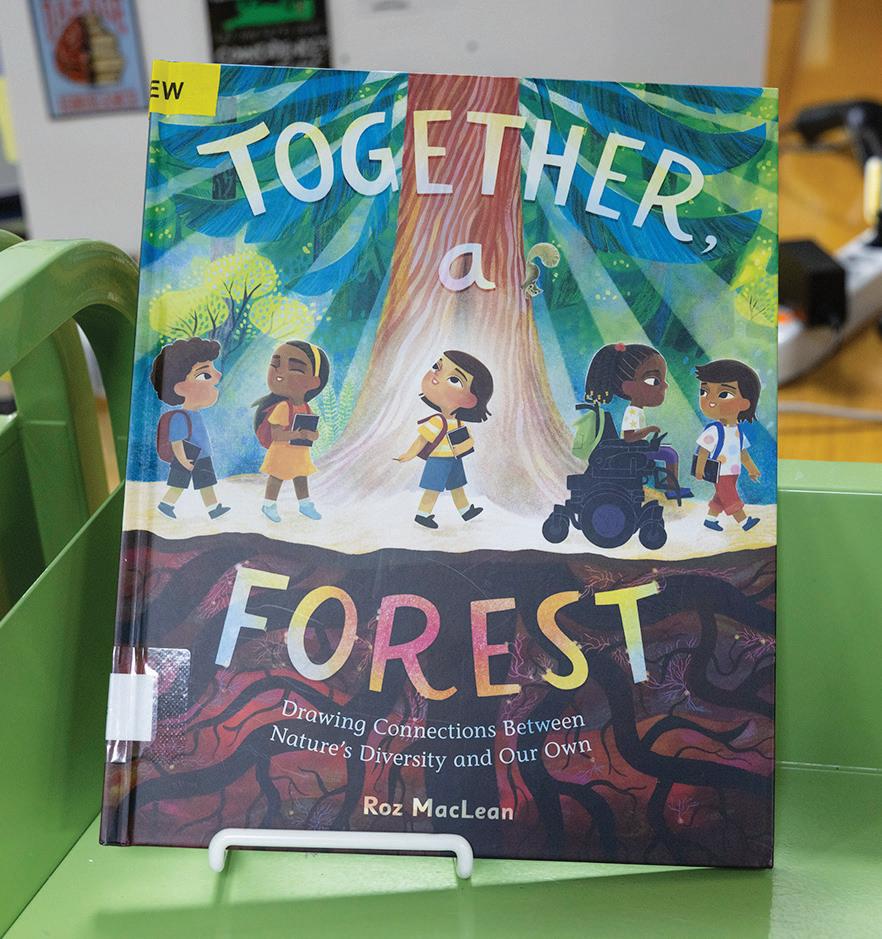
We have just observed Neurodiversity Week in the British School (March 16–19). Our central message for the week has been based on the wonderful picture book Together a Forest which acknowledges a place for every person in a group. Like a forest ecosystem, in which each plant needs different conditions and has different ways of growing, each of us has special interests, talents, and needs. We can all contribute to the health and creativity of our community, learning from each other. Great minds don't think alike!
SeeingonThemselves the Shelves
From the Librarian
By Angela Seewald British School & Middle School Teacher Librarian
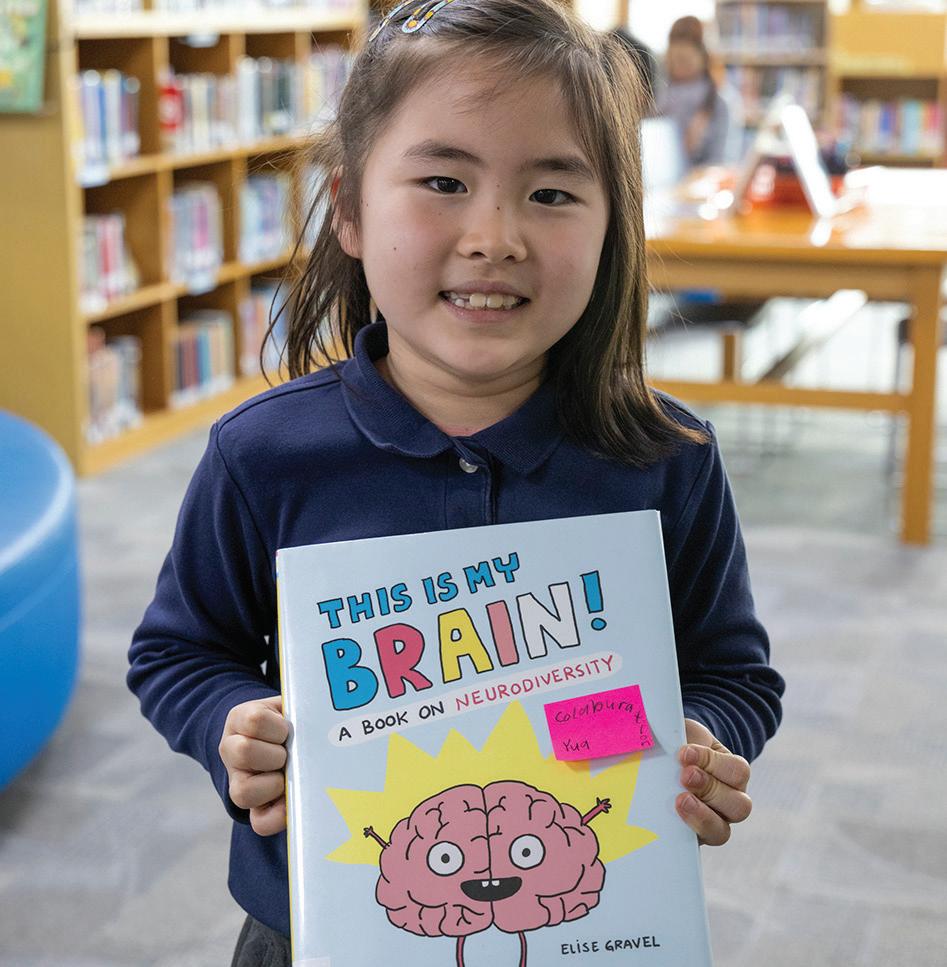
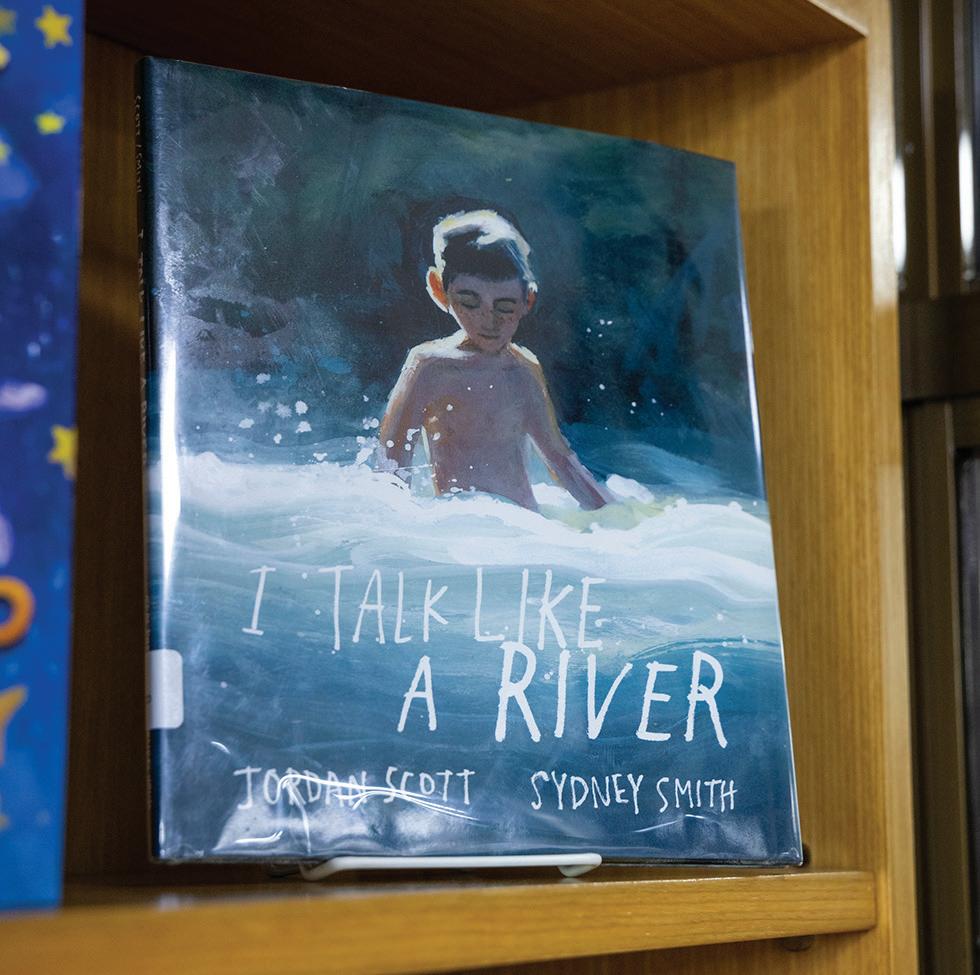
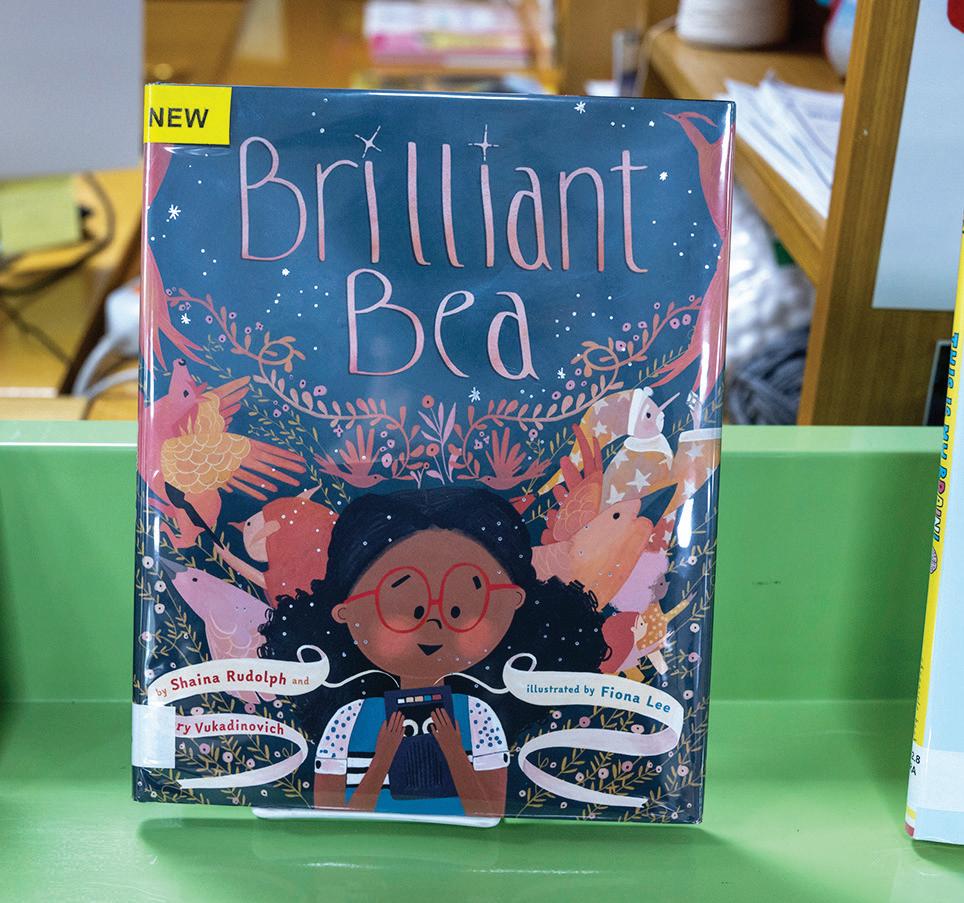
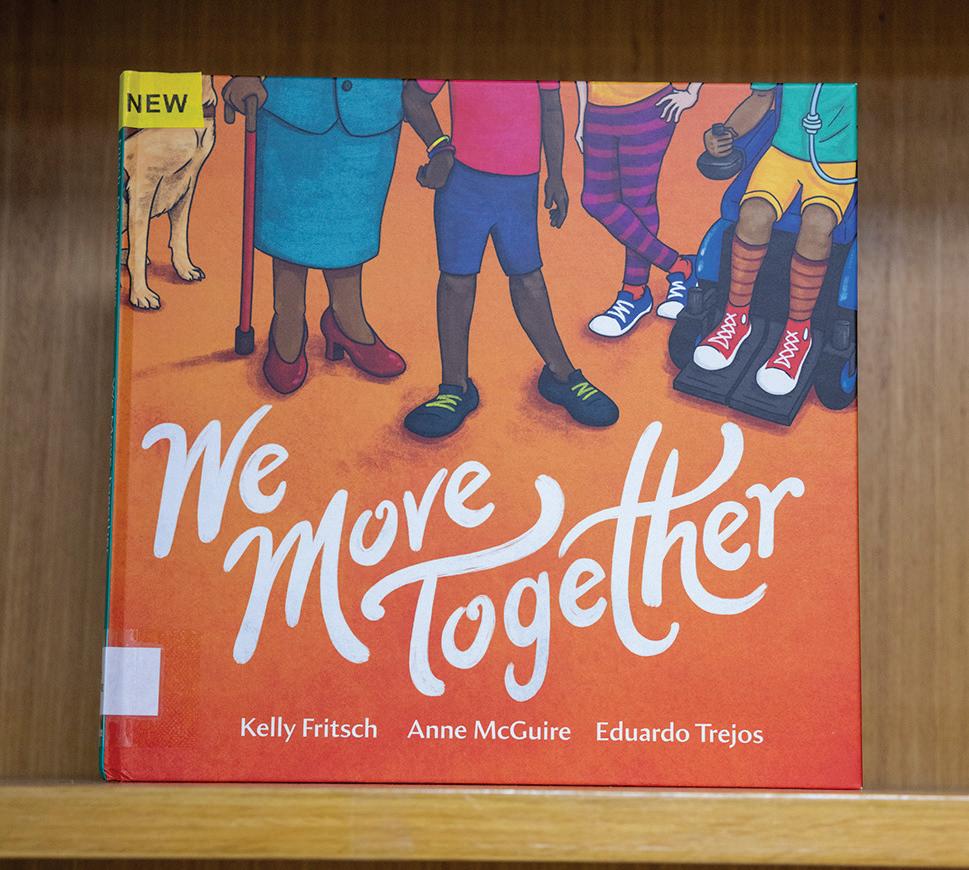
If you would like to explore neurodiversity representation in books further, I can recommend the following picture books. There are many more, but here are some of my favourites, all available in the library:
Picture books (fiction)
Together a Forest (Roz Maclean)
Brilliant Bea (Shaina Rudolph)
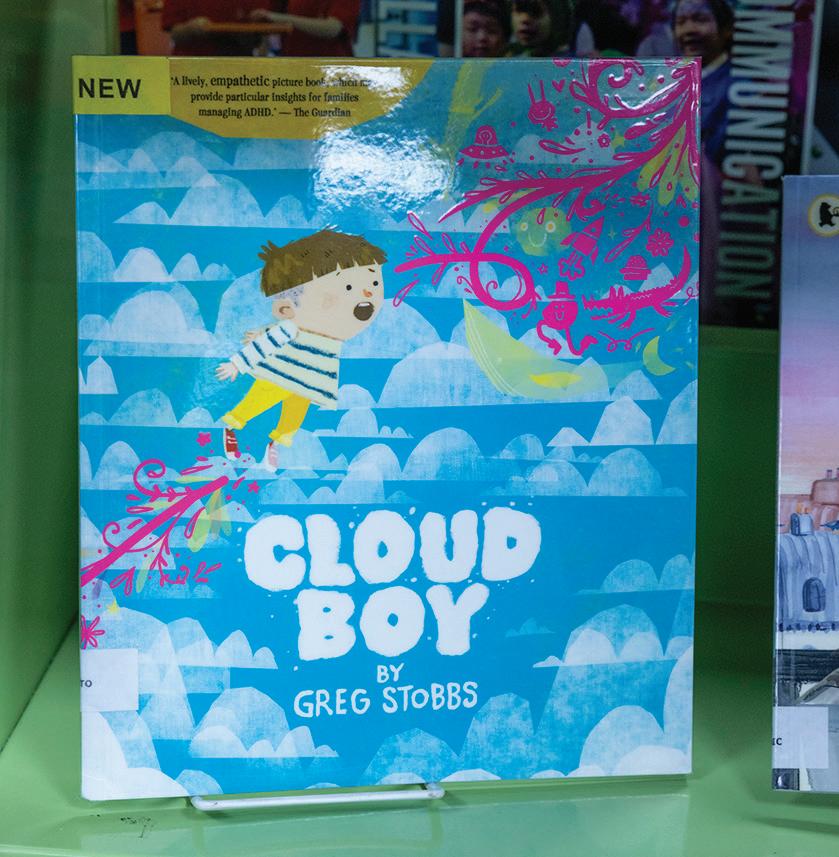
Cloud Boy (Gregg Stobbs)
Don't Hug Doug! (Carrie Finison)
Picture books (non-fiction)
Jack Horner, Dinosaur Hunter! (Sophia Golz)
The Girl Who Thought in Pictures: The Story of Scientist
Temple Grandin (Julia Finley Mosca)
I Talk Like a River (Jordan Scott)
A Walk in the Words (Hudson Talbott)
This is My Brain! (Elise Gravel)
Note of Gratitude
We extend our deepest gratitude to Jian Lee ‘34’s family for their generous support of Neurodiversity Week and our students. Their contribution has provided valuable resources to celebrate neurodiversity at the British School and helped fund some equipment for the Sensory and Movement space designed to support our neurodiverse children.
Becoming, Remembering: Lessons from Pre-K2
By Julia Church
Elementary School Pre-K2 Teacher
Sometimes the clearest evidence of change reveals itself in the most ordinary moments. One example unfolds each day at Seoul Foreign School as a Pre-K2 class of two- and three-year-olds makes its way across the atrium to lunch.
Imagine this typical scene from August… When I open the door to leave the safety of the classroom, a child or two starts crying for their mom, which will inevitably spread to the whole class like wildfire. A round of “The Wheels on the Bus” is of course needed to calm and re-center us. When we are ready, we resume our walk. Two children hold my hands, another is carried on my hip, and yet others cling to my pant legs. A child suddenly sits down, while another convinces a friend to break out into a run in entirely opposite directions. Then of course someone loses a shoe. At the same time, others discover the wonderful echo in the atrium and delight in hearing the sound of their voices bounce off the walls. Inevitably, a telltale smell indicates that a diaper change is needed, and one TA needs to escort a student back to the classroom, which leaves one less adult to support the group for the remaining five minutes of the ten-minute journey across the atrium.
Fast forward to now: everyone carries their own snack and water bottle. They know the routines. They navigate around the “big kids” with confidence and barely a glance. We arrive at our table in minutes, with only the occasional bump along the way. This is just one of the many examples of change that I could share with you.
My initial idea for this article was to write a celebratory piece that highlighted some of the incredible growth and changes I get to observe with my two- and three-year-olds over the course
of our year together. Fun fact: by age three, a child’s brain has already reached nearly 90% of its adult size, forming more than one million new neural connections per second. This is a pace of learning and development that we will never again experience in quite the same way. Watching this unfold over the school year in a room full of two- and three-year-olds is nothing short of astonishing.
But as I started to write, another truth came to mind: as we grow, there are things we must be careful not to leave behind.
Young children seem to innately understand and value the feelings and needs of others. They want to make people happy and find joy in giving and taking care of others. At the end of my day, for example, it is not uncommon for me to find three or four tiny cups of “coffee,” cups filled with pompoms or acorns, left as gifts on my desk, or to pull out a handful of stones from my jacket pocket when I sort the laundry. These are children’s expressions of love. As life becomes busy and complicated, it can be easy to lose sight of the importance of simple gestures of care.
Also, over time, many of us learn to put up a front, masking or pushing down our true feelings. But there is nothing artificial about a young child. My students feel and express all of the feelings. They get angry when someone takes their toy. They cry when they get bumped. They express joy without hesitation. Their belly laughs are glorious. They are real. They are honest.
Young children know how to forgive and move on. When they are sad or hurt by their friends, they indeed feel the hurt deeply, but when they are ready, apologies and hugs are accepted, and all is forgotten. The slate is clean once more. As we grow older, it can take more effort to release others from the memories
of pain, frustration, or embarrassment they have caused.
They are also filled with wonder and curiosity about the world right in front of them. Life is endlessly fascinating. It is not uncommon to see a young child sit and study a ladybug with the same intense focus as a researcher in a lab. Pine needles become treasures. The wind is worth pausing to feel, and birdsong is something to point out to a friend. They are rarely in a rush, looking ahead and trying to accomplish things. Nor are they consumed by the past with nostalgia or regret.
So yes, change is important. We are constantly evolving.
I would be a terrible teacher if I did not believe in and value growth and development. But as we grow into and through adulthood, it is important to reflect and remember the Godgiven spark that once made, and can still make, our lives rich, vibrant, and beautiful. Let us not forget who we are: Children of God, created with a natural and remarkable capacity for care, authenticity, joy, forgiveness, and wonder. I get to witness this potential in its truest, rawest form every day in the actions and behaviors of our youngest learners at Seoul Foreign School.
They are my teachers. In guiding them, I am continually guided back to what matters most.
The Future Will Always Need Storytellers
By Colm Flanagan Head of School
Storytelling is one of the oldest human practices. Long before formal schooling, before printed books, and before digital tools, stories helped us make sense of the world and of one another. They carried memory across generations, shaped moral understanding, and allowed people to imagine lives beyond their own experience. That work has never stopped. It has simply taken new forms.
One of the enduring gifts of literature is its ability to move us across time. Carl Sagan once observed that writing allows us to hear the voice of someone who lived thousands of years ago, to enter the mind of another human being across centuries. A book makes this possible, with nothing more than attention and patience. When we read, we enter another consciousness. We step briefly into a life not our own.
The poet Walt Whitman understood this instinctively. In Leaves of Grass, he writes directly to readers he knows he will never meet, addressing future generations with confidence and warmth. “I stop somewhere waiting for you,” he says. Literature, in this sense, is not static or archival. It is offered forward in time. It reaches out.
There are signs that this reaching out is becoming harder to receive. Universities increasingly report that some students arrive without the ability to read whole works of literature. Chapters are skimmed, extracts prioritised, summaries substituted for sustained engagement. This is not a criticism of students. It reflects the world they inhabit—a world shaped by speed, efficiency, and compression. Yet it raises an important question for schools like ours: what happens when students reach higher education without the capacity, or confidence, to stay with complex texts?
This matters because university study, particularly in the humanities and social sciences but increasingly across disciplines, still depends on sustained reading. Seminars assume that students have read deeply, noticed nuance, tracked argument, and formed tentative interpretations. The students who flourish are rarely those who have mastered shortcuts. They are those who can read attentively, think patiently, and speak thoughtfully in response to others. These habits are not acquired quickly. They are cultivated over time.
Reading fiction asks something of us. A novel requires patience, memory, and a willingness to live with ambiguity. It asks us to follow characters whose motives are unclear, whose choices are sometimes troubling, and whose lives do not resolve neatly. These are intellectual skills, but they are also deeply human ones. They prepare students not only for academic rigour, but for the kind of thinking demanded by the wider world beyond school and university—thinking that is measured rather than reactive, curious rather than certain.
At its heart, fiction is a quiet education in empathy. When students read deeply, they practise understanding lives other than their own. Artificial intelligence can model behaviour and synthesise patterns, but it cannot feel. Stories slow us down long enough for understanding to take hold. In an increasingly complex and interconnected world, this capacity to imagine other perspectives is not an optional extra. It is essential.
As a teacher of younger children, I used to love reading to and with my class. Stories such as The Gruffalo introduced fear, imagination, and agency in playful ways. Willy the Wimp by Anthony Browne offered a gentle re-imagining of courage, rooted in dignity rather than bravado. Alistair and the Alien Invasion by Marilyn Sadler used humour to explore difference
and belonging. These books quietly established the foundations of attentive reading and moral imagination.
As a student myself in the mid 1970s, I still recall my class at grammar school reading The Otterbury Incident by C. DayLewis, a book alive with rebellion and humour, but also with responsibility and consequence. I also remember The Wind in the Willows, a story that feels gentle on the surface, yet explores freedom, recklessness, loyalty, and belonging with remarkable depth. These books did not rush me. They invited me to linger.
This remains true in adulthood. In my own reading, I am reminded again of fiction’s power to transport. In the work of E. Annie Proulx, landscape becomes a moral force, shaping human lives as powerfully as any choice. Michael Ondaatje shows how memory and history fracture and echo, resisting tidy narratives. And at the time of writing, I am half way through Independent People by Halldor Laxness. This is a book I casually bought on a family trip to Iceland four Christmases ago. In it I find myself immersed in early twentieth-century Iceland, where pride, independence, and hardship collide in ways that feel both distant and unsettlingly familiar. None of these works offers efficiency. All of them offer depth.
Perhaps I should admit at this point that I am not a careful reader in the physical sense. I mistreat my books. I scribble in the margins, underline freely, and always remove the dust jackets from hardbacks. Coffee and tea find their way onto the pages. My books travel with me and show it. But these marks are signs of a relationship over time. They are evidence of thinking, questioning, returning.
Reading, however, is largely a solitary act. Much of it happens quietly and alone. Yet my own experience has taught me that
understanding often deepens in conversation. It is frequently only when I arrive at book club that my sense of a novel’s themes begins to clarify. I hear how others have read the same pages differently. I notice ideas I had missed. What felt settled becomes more complex. Reading may begin alone, but meaning often emerges together.
This is why book clubs matter. They bring people and ideas into conversation. They remind us that literature is not something to be completed, but something to be lived with. In a book club, we learn to articulate our thinking, listen carefully, and revise our views in light of new perspectives.
At Seoul Foreign School, our mission speaks of inspiring a passion for learning and pursuing academic and creative excellence. Passion is rarely ignited by efficiency alone. Excellence is not sustained by shortcuts. The students who thrive at prestigious universities and in demanding intellectual environments are those who have learned how to read deeply, think carefully, and engage generously with others.
My hope for our students is a simple one: that each carries with them a novel, or a book of poems, not as an academic requirement but as a companion. In doing so, they prepare themselves not only for university, but for a life of deeper engagement with the world.
Artificial intelligence will continue to reshape the future our students inherit. The future will bring new tools and new challenges, but it will still depend on people who can read deeply, listen well, and tell stories that help us understand one another.
Elementary and British School students, teachers, and staff celebrate book character days annually to share their favorite stories and characters.
Kindergarten students proudly present their writing boards after phonics exercise.
Facing Assessment Change With an Innovator's Mindset
By Rebecca Murray, Elementary School Literacy Coach & Jami Yeo, Elementary School Learning Support Teacher
Rebecca Murray, Elementary School Literacy Coach, accompanied by Jami Yeo, Learning Support Teacher, represented Seoul Foreign School at a regional education conference in Bangkok, where they presented a session titled “Disrupting the Default: Facing Assessment Change with an Innovator’s Mindset.” Their presentation highlighted the initiative and thoughtful work underway in our elementary school to rethink literacy assessment so that it is more equitable, researchaligned, and instructionally meaningful for every student.
The presentation began with a fundamental question: How do we approach change? Rather than viewing change as something to resist or fear, they challenged educators to adopt an Innovator’s Mindset, one rooted in curiosity, courage, reflection, and a willingness to disrupt systems that no longer serve students well. Drawing on real examples from the SFS community, they explored the emotional landscape that often accompanies change, which can be excitement, caution, confusion, even resistance, and how strong leadership and shared purpose can transform those feelings into hope and forward momentum.
At the heart of the presentation was the story of how the elementary school reimagined its literacy assessments from the ground up. As traditional reading assessments have come under increasing scrutiny for favoring prior knowledge and fluent testtakers over genuine literacy development, our team deliberately decided to “disrupt the default.” Instead of relying solely on leveled passages that may not reflect what students have been taught, assessments were designed that aligned directly with classroom learning and the Science of Reading.
This shift ensured that students are assessed on the phonics patterns, vocabulary, and background knowledge they have
explicitly been taught. By grounding assessments in cognitive science and inquiry-driven learning, teachers now gain clearer, more actionable insights into where each learner is in their reading progression. Rather than generating isolated scores, these tools provide easily identifiable next steps that inform daily instruction and intervention.
One of the most innovative components of this work has been the development of a Kindergarten through Grade 3 encoding (spelling) assessment aligned with our phonics program. Because encoding is a powerful indicator of phonics mastery, this assessment requires students to apply their soundsymbol knowledge in authentic ways. It allows teachers to see precisely which phonics skills are secure and which require further instruction, strengthening the connection between assessment and teaching.
They shared the near-completed work of a new writing rubric aligned with the Science of Writing. This rubric clearly distinguishes between transcription skills, such as handwriting, spelling, and sentence construction, and composition skills, including idea development, organization, and craft. By making these components transparent, both students and teachers can identify specific goals and next steps, fostering growth-oriented learning rather than generalized feedback.
These pioneering assessments are not simply replacements for old tools; they represent a shift in mindset. They move us from compliance to insight, from measurement to meaning, and from static benchmarks to dynamic instructional guidance. Their presentation in Bangkok showcased how thoughtful innovation, grounded in research and driven by a shared commitment to students, is transforming literacy teaching and learning in our elementary school.
88 MPH: Is the “Learning Commons” a Thing of the Past?
By Mara Hakim Elementary School Teacher Librarian
Ever since I worked in IB (International Baccalaureate) schools, the library was always known as the heart of the school. However, if a graduate from when I started my career in the 1980s stepped into the library today, they might first be struck by the noise. What used to be rows of silent desk corners and dividers has been replaced by modular partitions, glassed rooms, and students debating issues over open spaces and iPads. Yet, once the initial culture shock of the layout and technology fades, that graduate would recognize a familiar spirit.
Not too long ago, the library was a storage space. Its primary function was to house books, magazines, and even microfiche, and success was measured by the size of the collection and how silent the room was. Today, the library is a collaborative “Learning Commons.” Its modern design is more flexible, with cozier learning spaces, areas dedicated to problem solving and discussions, scattered seating areas for students to choose from, and access points to databases that provide instant information.
Even the content on the shelves has evolved. While historical fiction, westerns, mysteries, and classics dominated 30 years ago, today’s shelves are bustling with fantasy, science fiction, graphic novels, and manga. The non-fiction section has also shifted from its traditional focus on cookbooks and self-help books toward more contemporary biographies and social issues. Furthermore, while encyclopedias, dictionaries, and thesauruses were once library staples, they have largely faded with the rise of the internet.
The role of the teacher-librarian has probably seen the most extreme transformation. Even back 30 years ago, the librarian’s
role was more of a bookkeeper and the person who knew exactly which shelf held the answer and how to locate it using index cards. In the age of Artificial Intelligence and information abundance, the challenge is not finding information, but how to filter it and ensure it is reliable and authentic. Today’s librarian job is multifaceted: teacher, facilitator, curator, storyteller and co-teacher. The job description has evolved so much, and it is not only to show the student how to find a source but more importantly to teach them how to search for information safely and check the source for reliability and intent.
Teaching the student how to cite a source is about more than just using Noodletools and formatting a bibliography; it’s about academic integrity. The library has always been the frontline on how to respect the "commons of ideas," be it knowledge, information, or culture. The transition from avoiding simple plagiarism to having to navigate the ethics of AI-generated content is the latest added chapter to “How To Reference Ethically."
The library has evolved from a quiet place to a dynamic one, and the card index has been traded for an online search. However, the student who enters the library with a curious, investigative mind and a ton of intriguing questions, and leaves with refined, evidence-based arguments, is the same person. I wonder, if my current students were to enter a library 20 years from now, what changes would they encounter. Would they find books on the shelves? Would there be a teacher-librarian to help guide them? Would the library even exist? These are all questions to ponder as we wait for time to unravel and answer them.
No Filter, No Second Take: Learning to Be Seen
By Louise Fernandez-Hargrave Schoolwide Drama Director
Mostof us can remember a moment when we were afraid but did it anyway.
For me, it was my first time on a big stage in Grade 3. I stood in front of what felt like hundreds of people, trying to look braver than I felt. I planted my feet at center stage and followed my teacher’s instructions: look left, look right, take a deep breath, speak to the back wall.
I was shaking. My first words came out hoarse. For a moment, I wanted to rush through it. Instead, I kept going.
By the end, the nerves settled into something steadier. Not perfection, not even full confidence, just the realization that I could stand in discomfort and not disappear. I did not have the language for it then, but I was learning how to be seen.
Now, decades later, I stand just offstage watching our students step into that same light. The world they are growing up in looks very different from the one I knew. Artificial intelligence shapes how they work. Notifications compete for their attention. Much of their communication happens through screens.
And yet, under stage lights, something profoundly human happens. A student takes a breath and speaks.
No filter. No delete button. No second take.
Theatre builds courage, empathy, collaboration, and confidence not as abstract ideas but as lived practice. In a world that rewards speed and polish, theatre demands presence.
Courage in theatre is rarely loud. It is often trembling.
I have had students whisper, “Miss, I can’t,” minutes before stepping on stage. I tell them, “You can.” What I mean is that they are more capable than they think. Confidence grows through missed cues, forgotten lines, feedback, and trying again. Students learn that courage is not the absence of fear but the decision to
move forward anyway.
Theatre stretches empathy as well. Students step into lives that are not their own and ask what shaped a difficult choice. In How to Know a Person, David Brooks writes that drama expands our ability to understand other perspectives. I see that expansion every season.
Over time, I have learned to see my students not simply as student actors, but as the characters they are inhabiting. During rehearsals, I often call them by their character names. When I speak to them as the character, I invite them to step fully into that role and discover something about themselves. The character becomes more than memorized dialogue. It becomes a mirror.
Empathy is practiced every day in rehearsal. Students step into perspectives different from their own, learning to understand a character without immediately judging them as right or wrong. Along the way, they begin caring for their fellow actors as collaborators. They learn to listen, not just wait for their cue. They also see quickly that their choices matter. When someone arrives unprepared or does not take a role seriously, the whole scene feels it. Theatre makes visible how each person’s effort shapes the collective work.
Sometimes the growth shows up in unexpected ways. One of my Grade 8 students, Roy Feather, recently gave a research presentation on how theatre shaped him. He began simply: “Everyone wants better grades and more confidence. If you want to turn a six into a seven or a seven into an eight, join the next theatre production.”
He described entering theatre in Grade 5 with little confidence and a habit of rushing his words. Over time, he learned to project, enunciate clearly, and control his pace. He practiced memorization and presence. The result was not just a stronger performer but a more confident student.
By Grade 8, he noticed participation declining as academic pressure increased. Many assume theatre competes with achievement. Roy’s experience suggests the opposite. Performing strengthened his focus and sharpened his memory. It built confidence that carried into classroom presentations.
We often label these as “soft skills.” But for students like Roy, the results are visible in grades, presentations, and the way they carry themselves in the hallway.
My old professor urged us to be thinking actors, and I have always made room for that in my rehearsal room. Questions are welcome. When a student asks, “Why would my character do this?” ownership begins.
Over time, I have become more intentional about listening, collaborating, and creating space for student agency. Structure still matters. Discipline still matters. But thoughtful performers are shaped through dialogue.
That same evolution extends to consent. In scenes involving physical or emotional intensity, students are invited to voice discomfort and suggest adjustments. They learn that collaboration and advocacy can coexist, and that using their voice is part of the work.
We cannot predict exactly what our students’ futures will demand. Technology will change. Industries will shift. But some things endure.
They will need courage. They will need empathy. They will need the ability to collaborate, adapt, and communicate clearly.
Because when a student steps into the light, takes a breath, and speaks, they are not just performing.
They are practicing how to show up in the world.
And I love that I get to be part of that.
Editor’s Note
Originally published in The Spirit, the SFS high school student newspaper, as part of its 50th Anniversary Edition, this piece reflects the thoughtful work of our current students. We are grateful to Jina Song (Grade 11) for allowing us to share it with The Banner and the broader SFS community. Minor edits have been made to align with The Banner’s style and readership.
Redefining What We Crusade For
By Jina Song Grade 11 Student, World Page Editor for The Spirit
Youshout it across the bleachers during a buzzer-beater.
You’ve proudly worn that “C” without thinking twice— because it’s who we are. Crusaders. But in reality, your mascot represents something more complicated than pep rally logistics.
The Weight of the Armor
In medieval times, the Crusaders were knights in a series of religiously framed conflicts between Christian and Muslim powers: European leaders aimed to reclaim Jerusalem and other sacred sites, and Muslim rulers fought to reclaim territories under their authority. In this bitter religious and political rivalry, many acts of violence and brutality were committed. The Crusades continued across the 11th and 13th centuries in the Eastern Mediterranean region. While the Crusades ended almost a millennium ago, more recent history and modern geopolitics tell us that there are still tensions that exist between East and West.
A Mascot Born of Necessity
According to research by Mr. Paul Rader ‘04, an SFS alumnus, former student-athlete, and current Director of Activities, SFS had no mascot before the Korean War. This was partly because we had only one sports rival: Pyongyang Foreign School, which was larger than SFS at the time and also lacked a mascot. After the Korean War, the "new" SFS campus in Yeonhui-Dong opened in December 1957. That year, the high school students voted for the school to have a mascot for its sports teams. The students chose "Crusaders.” As a predominant mascot for many Christian schools of the era, the “warrior-like” grit and Christian roots of the Crusader defined our community, standing largely unquestioned for many years.
The Mascot Limbo
“9/11 was when everything changed,” says Mr. Rader, who
No Mascot Era
SFS operates without a mascot before the Korean War.
was a student at SFS in 2001. The tension between the West and the Middle East intensified after the terrorist attack in New York. This was when religious symbolism of the Crusaders moved from the back of a jersey to hallway discussions and even into the boardroom, when Dr. Harlan Lyso, then Head of School, led a school-wide review to consider changing the mascot. “Everyone was throwing out a million other mascot ideas,” Mr. Rader recalled. From retaining only the “C,” the Christian value, to the phonetics, our identity itself was caught in flux.
In the end, the Crusader mascot stayed, albeit disarmed and muted. After this decision, the Crusaders lost their weapons. SFS gradually phased out swords and other knight imagery from the gym floors, yearbooks, jerseys, and pep rallies. Our mascot is “less of a forepiece now. It’s been in limbo since 2001,” says Mr. Rader. We are left with a shadow defined by controversies we are not proud to carry, yet find even harder to replace. Discussions
1957 Adoption
Re-opening the campus after the Korean War, students vote to adopt "Crusaders."
about the Crusader do get raised “from time to time,” Mr. Rader says. "But as the previous experience from 2001 demonstrates, it's not a simple or easy process to change a mascot that has been a significant part of the identity of the school for over 70 years, even when there might be general agreement that something should be done."
Crusader in the Hallways
The “C” on a letter might look identical, but how it is internalized varies widely. Lily Freeman (Grade 12) highlights its complexity. While she is proud of the mascot’s “positive attributes,” especially in sportsmanship, she remains critical. “I believe it is important to acknowledge how our mascot may at times unintentionally undermine [our] values,” Lily explained, noting that the Crusaders risk being misinterpreted due to the violence and religious tensions.”
1957–2001
Just Our Mascot
The mascot, including warrior imagery, remains largely unquestioned.
Conversely, for varsity cheerleader Gabby Osei (Grade 11), the identity is rooted in the present. “Chanting ‘Crusaders’ during our games… represents encouragement and togetherness rather than the original meaning of the word.” This perspective is shared by many. Whether one views the name as controversial or not, the reality remains that our mascot embodies our school pride.
A Redefinition
As a Christian school for everyone, the Crusaders’ history presents an undeniable paradox. Yet, unlike medieval history, words continue to evolve. As noted in the Cambridge Dictionary, a Crusader is also someone “who makes a determined effort to achieve, change, or stop something because of their strong beliefs.” A campaigner, a fighter, a battler, and an advocate— ironically, these synonyms are what we hope to stand for as a school and what we hope for all of our students. While these
2001
Post-9/11 Review
A formal school-wide review considers change; the name stays, but weapons and violent symbols are removed.
words may be easier to cope with, each lacks the substantive imagery or faith-driven connections of the Crusader, and ultimately, one cannot control others' perceptions or the connotations that come to mind when they hear the word “Crusader.”
“We want students who are engaged, with strong beliefs and core values, who are willing to stand up for and defend them,” Mr. Rader says. “The word Crusader still holds these connotations, but with the historical and current geopolitical realities, the mascot is a source of tension within our community.” The first Crusaders rode ten centuries ago. Our version has been building SFS for nearly 70 years. They built teams, memories, and identities. As long as SFS holds this name, we will be faced with the controversy surrounding the mascot. Even if we choose not to define it as a Crusading knight, we cannot control the mascot’s perception by others. The question is, should the school consider laying this mascot's armour down?
2001–Present Disarmed Identity
The mascot remains, periodically debated and reexamined.
SFS Athelets continue to thrive under the identity 'Crusaders'.
Author Steve Sheinkin interacting with students through presentation, workshops and book signing events during his visit to SFS.
From Lauren Elliott High School Teacher Librarian
The Seoul Foreign School Library team is committed to our author visit program, hosting authors and illustrators across the school each year. This initiative is funded in part by our SFS Annual Fund, which recognizes the impact these visits have on our students. We know a visiting author or illustrator contributes to an increase in library circulation and strengthens a love of reading. Our visiting authors and illustrators visit classrooms, and connect their workshops and presentations to curricular learning. Our most recent visitor to the Middle School and High School was Mr. Steve Sheinkin, an author, who decided the best way to bring history to life was through exciting historical fiction and nonfiction. Grade 9 student Nicholas Ha was able to interview Mr. Sheinkin to hear more about his career.
How Do You Make History Fun? Meet Author Steve Sheinkin!
By Nicholas Ha Grade 9 Student
Amidthe chaos of war, a hidden race begins: spies, scientists, and soldiers scramble to complete the ultimate weapon. This is the premise of the historical novel Bomb by Steve Sheinkin, an author known for infusing history with a thrillerlike suspense in novels such as The Bletchley Riddle, The Impossible Escape, and Fallout. This combination makes each of his novels a unique page-turner, making his books engaging even for readers who aren’t drawn to history. This year, he visited our school and gave important insights on his works and methods.
Sheinkin originally began as a history textbook writer in the U.S. Wanting to write in an opposite style compared to most boring textbooks, he “takes the information [he wants] people to know and turns them into stories” that everyone can enjoy. He wants to make reading history fun for readers rather than the memorization commonly associated with the subject.
Sheinkin writes these dynamic novels by imagining the book in scenes rather than blocks of information. He visualizes the story as an image sequence or a movie as he writes, making the narrative feel alive and immersive for the reader. “It’s almost like watching parts of the story in your head … maybe that helps make it visual for the reader too,” Sheinkin mentions.
How does Sheinkin write these books? Each project takes roughly two years, with six to ten months dedicated purely to research. Not only that, but Sheinkin’s research process is incredibly detailed. This not only includes computer research on primary and secondary sources, but even ones like visiting the site of the story’s setting. After his research, Sheinkin begins drafting his story, which, once ready, he sends to his editor. “It’s just like handing in a paper to a teacher and they make notes on
it,” he shares. This process repeats until the story feels smooth.
The writing process isn’t just smooth sailing, however. There could be in-depth scenes where Sheinkin imagines it could just be a movie by itself, but then his editor might decide to delete it entirely. “You sometimes even get offended,” he admits, but he’s learned to trust the process. “In the end, I’m always really happy that I made those changes.”
In the end, being an author is both rewarding and challenging. “It isn’t a job for everyone,” Sheinkin says, because to him, it sometimes feels more like doing schoolwork for a living. He still recommends writing to anyone in any field, telling them that it really is everywhere and available to all.
But do author visits like Sheinkin's actually impact our school? According to Mrs. Elliott, who arranges these author visits (a year in advance too!), they do. “It has a huge impact on our library circulation. When we have a visiting author, their books remain popular years later,” she discloses. Last year’s guest, Neal Shusterman, author of the Scythe trilogy, still dominates the school’s most-borrowed list.
The author visits also help students by “strengthening the learning they’ve done in class,” Mrs. Elliott says. Authors will come into classrooms and lectures to tell them about how they write and research, which helps students learn directly from professionals.
“Next year, we might get a realistic fiction author or even a graphic novel artist,” Mrs. Elliott reveals, as she wants to expose students to a variety of authors and genres. It’s always worth looking forward to these author visits that happen yearly, and the next one will be the same.
From Paper to the Health Module: A Collaborative Journey of Change
By Ji Yeon Kim
SFS Health Office Assistant
Oneof the primary responsibilities of the Health Office is to guide students through their medical requirements each school year and review all documents before the new school year begins. This isn't just a simple administrative task; it is the most fundamental and vital process for protecting the health and safety of our school community.
But this journey was never easy.
THE ERA OF PAPER AND MANUAL LABOR
Preparing the "Students Medical Requirements Packet" for returning students used to be a monumental task. We had to manually review the records of over 1,500 students, identifying specific needs for each individual—vaccinations by age, TB tests based on admission dates, sports physicals by grade level, and specific medication needs.
Every step of the process relied on manual work. Forms had to be prepared one by one. Student names and ID numbers were handwritten. Documents were stapled together with instructions, placed into envelopes, labeled with name stickers, and sorted carefully by section. Each packet had to be checked repeatedly to make sure nothing was missing.
This grueling process stretched from early March to late May—coincidentally, the busiest time of year for the Health Office due to students suffering from seasonal pollen allergies. Overtime became routine, and the workload often felt overwhelming.
THE POST-SUMMER HURDLE
The challenge continued even after school opened in August.
We had to review every single paper document submitted by both new and returning students over the summer and manually enter the information into the health section of PowerSchool. Simultaneously, we had to track down missing submissions and constantly follow up with parents. Since the process applied to all students—both new and returning—it took more than three months to complete the task each year. Despite careful work and multiple rounds of review, human error was always a possibility.
Until the 2020-2021 school year, this was simply the way things were done.
THE SPARK OF CHANGE
Then, a vital question echoed within the walls of the Health Office: “Can’t we move this entire process online?”
Dr. Jae Eun Lah, Ms. Ji Yae Yoon, and Ms. Sung Eun Kye proposed a change. Starting in September 2020, the IT team— Manager ChungPyo Hong, Ms. Nami Kwon, and Mr. DongWook Ko—joined us for months of intensive meetings. Ms. Yoon and Ms. Kye poured their passion into brainstorming, debating so fiercely at times that it might have looked like a confrontation to an outsider. As someone without deep technical expertise, I found it difficult at first to imagine what this idea would actually look like in practice.
A NEW CHAPTER: THE HEALTH MODULE
In June 2021, the Health Module was finally born. Medical requirements that had once been distributed and collected through stacks of paper were now moved to an online platform. Being able to send and receive the "Students Medical
Requirements Packet" and "New Student Health Forms" digitally was a massive turning point in how the Health Office worked.
This platform was more than just a new system. It allowed us to review uploaded documents from parents in real-time and send instant approval notifications. Once approved, the data was securely saved to the school system, minimizing human error and allowing us to quickly identify students who hadn't submitted their forms. The stored records can then be safely delivered to parents online when a student graduates or leaves the school. Our paper-heavy world finally became a paperless environment.
EVOLUTION THROUGH COLLABORATION
This transformation didn't happen overnight. The initial system wasn't as perfect as it is today. However, through the constant stream of ideas from the Health Office staff and close collaboration with the IT team, we continuously refined and improved the module.
As a result, the Health Module evolved from a simple submission tool into an integrated health management platform: Through the Health Module, health screening results, which were previously distributed on paper, can now be sent directly to parents in batch emails, creating a fully paperless and more efficient process. The process of securely sending a departing student’s medical file to their family online has now become a standard practice. Most importantly, essential health information can now be shared effectively with counselors and homeroom teachers, allowing them to better understand and support students’ health needs.
Our efforts to improve our systems did not stop there. We continued to expand digitalization in other areas as well. Medication authorization forms for short-term medication were moved to Google Forms, and an online request link was created so that teachers can easily request first aid kits needed for offcampus school activities.
REFLECTIONS ON GROWTH
Looking back, this journey was not simply about replacing paper with technology. It was a story of growth—of questioning familiar routines, navigating uncertainty, and learning through collaboration.
What began as a small question gradually grew into a meaningful transformation for our entire team. In many ways, the Health Module was created from the ground up—something we built together from what was once nothing but an idea. Through countless discussions, challenges, and shared efforts, we discovered that even a modest idea can lead to lasting change when people work together with dedication.
In the end, the most important lesson became clear: when individuals commit to growth, their efforts can extend far beyond themselves and inspire progress throughout an entire team and community.
The Health Module is not just a piece of software. It represents the care, ideas, perseverance, and courage of the Health Office staff who believed that our work could always be better.
And perhaps the most exciting part is this—our journey of learning and improvement is still continuing.
TheNurturing the Future of SFS: The Innovation Enabling Student Care
By Tabitha Kho Grade 10 Student
Seoul Foreign School Health Office is highly regarded by students and teachers alike. Holding the remedy for whatever may ail us, their efficiency and effectiveness seem almost magical. Prior to reading Ms. Kim’s article, I never imagined the amount of effort the Health Office dedicates, not only to direct care, but also to the continuous improvement of their own systems. I had the opportunity to speak with three representatives of the Health Office, including Dr. Jae Eun Lah, an original proponent of the Health Module, Ms. Ji Yae Yoon, one of the school’s EMTs, and Ms. Ji Yeon Kim. Through our conversation, I realized that the Health Office staff are more than caregivers; they are a hidden force driving SFS into the future.
The Health Module was inspired by the SFS administration’s call to create a schoolwide paperless environment. Not only has this technology improved the efficiency and accuracy of the Health Office’s administrative responsibilities, its impact has resonated throughout SFS, shaping the convenience enjoyed by every member of the SFS community today.
Three years ago, when I arrived at SFS as a new student, I remember how frenetic registration day felt. New faces, school tours, purchasing my uniform at the Spirit Shop—as tasks piled on one after another, the hectic day passed in a blur. Had I joined SFS only a few years prior, the process would have included another long step. My family and I would have been greeted by a long waiting line, at the end of which the Health Office staff
would read and approve medical documents brought by the parents. “Now that we have the Health Module, we no longer need that arduous process,” the staff explained. Instead, parents update medical information online, where it is automatically entered into the system and communicated to the Health Office and the student’s homeroom or advisory teacher.
Dr. Lah showed me a “Student Medical Requirements Packet” from the 2019–20 school year. It featured ten pages of handwritten annotations, carefully filled out in a neat script, which guided parents on how to complete the form. These packets, customized by hand for every student’s unique medical details, took three months for the whole team to compile. “The papers would be spread all over the desks. Now that we have gone paperless, the Health Office can better serve its original purpose,” as a comforting area to care for sick students, not a warehouse of paperwork. By streamlining administrative processes, the Health Module enables Health Office staff to access vital medical information more efficiently, thereby providing more timely care for students.
Ms. Yoon noted that reducing human error is one of the key benefits brought on by the Health Module. Although the staff carefully referenced students’ medical records when filling out these packets, human errors would persist. To eliminate these errors, the Health Office had to painstakingly triple-check each packet after it was completed. Now, as the number of SFS
students only continues to climb, they can focus their efforts properly on attending to the needs of a growing student body.
“With less time spent on administrative tasks, we are able to spend more time interacting directly with students. As a result, we can monitor each student’s condition more closely and respond more promptly when needed,” noted Dr. Lah. In this way, the Health Module not only saves time, but also provides tools for more focused care. For example, it “allows us to easily track and monitor changes and trends over time in key health indicators such as students’ height, weight, vision, hearing, heart rate, and blood pressure,” to identify abnormal trends and intervene in a more timely manner.
The Health Office staff point to an empty storage room as a quiet example of the Health Module’s success. In the past, boxes of papers would cover the walls and bury the room up to the ceiling. The Health Module enabled the digitization of previously analog processes, and removed the need for these papers altogether. One by one, those boxes disappeared.
By any measure, the Health Module has been a success: accurate, cost-effective, and environmentally friendly, it sits behind the scenes, enabling the human care and peace of mind that the Health Office brings to students, teachers, and parents alike.
UNISMUN 2026
By Lauren Elliott High School Teacher Librarian
Asour world feels increasingly divided, Model United Nations provides our students the opportunity to develop global understanding and to appreciate varied perspectives. Where else can you witness classrooms filled with students in dark suits, engaging in lobbying and debate, referring to one another as “Honourable delegate,” giving speeches at a podium, heads bent in discussion, and student leaders taking control in committees?
This year’s annual United Nations International School Hanoi Model UN conference asked the question: “Is our rules-based international system able to adapt to contemporary challenges to security and sovereignty?” Twelve amazing SFS High School Model UN club students and two advisors traveled to Hanoi, Vietnam to roleplay and represent UN member countries in a real life simulation of global understanding and cooperation. Our students participated alongside students from around the world, including: Korea, Vietnam, Fiji, China, South Africa, Cambodia, and Japan.
With an eye to the future, it is clear how Model UN might prepare our students. Through weekly meetings, our students develop skills of negotiation, debate, public speaking, country perspectives, and a better understanding of current and past global issues.
It is inspiring to see our students debate real life issues relating to diplomacy, energy, peace and warfare, exploitation of resources, human rights, global health, and more. In many situations, students represent perspectives different from their own opinion, and learn to appreciate and respect varied viewpoints.
Our students left UNISMUN 2026 with a better understanding of global issues, more resilient and confident, ready to take on the world.
From Roxanne Wong Middle School MYP Teacher
As part of the Sources of Change unit in Grade 6 Individuals & Societies, students researched a historical figure, event, or invention, and had to explain how their chosen topic has changed the world. Two of my students, Esme Weir and Rebecca Zhao, came up with the unique idea of researching SFS. They showed an incredible amount of initiative and organization. They set up interviews with school leaders (including Mr. Flanagan and Mr. Smith) as well as teachers who have experienced and witnessed SFS through various decades, and conducted those interviews in their own time. What better way to showcase our theme of Back to the Future than with these Grade 6 MYP students exploring the long history of the school and reflecting on the impact of their research? They’re halfway through their K-12 journey and are part of the present and future of SFS, continuing the legacy they have both investigated and experienced firsthand.
Roots and Branches: Grade 6 Students Explore the History of SFS
By Esme Weir & Rebecca Zhao
Grade
6 Students
Didyou know that one of the oldest international schools in Korea began with only 18 students? Can you believe that this school is the same place we walk into every day?
Hello! We are Esme and Rebecca from Grade 6, and this article is about Seoul Foreign School (SFS). We chose SFS for our Individuals & Society project because we wanted to learn more about the place where we spend so much of our time learning, exploring, and growing.
Seoul Foreign School was established in 1912, mainly by foreign Christian missionaries, notably Ethel Van Wagoner Underwood. Believe it or not, SFS moved five times between 1912 and 1923! It is also one of the oldest international schools in Korea.
Because there was very little written information online, we decided to interview teachers who have experienced SFS’s history firsthand. We interviewed Mr. Flanagan, Mr. Smith, Ms. Bigwood, Mrs. Walker, and Mr. and Mrs. Rader. From these interviews, we learned how SFS developed over time, where it all started, and its journey to where it is now.
We also heard some unforgettable and surprising stories! These included a wild boar wandering onto campus, a false missile alert, and teachers chasing a ground squirrel out of Middle School. These moments showed us that SFS is not just a school but a place full of
unique memories and experiences.
Over the years, SFS has gone through many important changes. It began as a missionary school, but during the 1980s and 1990s, it became more international as more foreigners moved to Seoul. In 2015, it adopted the IB program, bringing in more IB-trained teachers. In 2018, a new high school building was opened to support a growing student population. During COVID-19 in 2020, learning moved online, challenging teachers and students to adapt in new ways. In 2023, SFS celebrated its 110th anniversary, marking over a century of education.
SFS has a strong impact on students. It helps students understand different cultures, think globally, and develop important life skills such as communication, collaboration, and flexibility. These skills prepare students not only for school, but for the future.
After researching, we believe SFS is much more than just a place to learn. It has changed over time to meet the needs of students and the world around it. From a small missionary school to a large international community, SFS continues to shape students into responsible adults that respect their ways of life and carry on sharing their stories.
So next time you walk through campus, remember: SFS isn’t just a school. It’s a place full of history, growth, and amazing stories.
Rebecca’s View:
Being in this school with such a long and meaningful history makes me feel that the school is truly ancient and full of tradition. When I first came to SFS, I was surprised to learn that the school is over 100 years old, yet it still continues to grow and improve its environment and community for everyone here. Seeing how the school keeps changing and getting better even after so many years shows its effort to create a strong community for students today.
As a student like me, knowing this history helps us understand that we are part of something bigger than ourselves. It makes me feel proud to study in a place where many students before us have learned and grown. Being part of the community helps me build important skills like communication, teamwork, responsibility, and respecting others. In the future, these skills will help us work well with different people, overcome challenges, and become better students and people wherever we go.
Rebecca looking through the 1930 SFS yearbook, our oldest physical copy, with Mr. Rader.
Esme’s View:
Through the process of working on this project, I found information about how SFS has developed over time. I also found several interesting facts from the staff I interviewed recently. Some of the research that I have collected changed my point of view of the school I briefly knew the history about. I realized that the campuses across the school changed five times over the history of the building. I always thought SFS has been in the same grounds since it was founded, and this made me think more deeply about the changes and developments that the school went through as well as the experiences the students had in its various locations.
If I was an alumna of SFS, it would be amazing to watch the school expand from a small missionary campus into the amazing school that it is today, and the school I currently attend. The fact that past alumni are still coming back to the school today means that the people and communities of SFS are feeling more connected to the school. When I first arrived at SFS I was surprised that it had been thriving and flourishing for 100 years, building up the
community and environment into the outstanding school it is today.
One thing I like to imagine is that SFS is like an oak tree. It has strong roots which represent the core values of the school and create a base that allows the students to grow and learn. The roots help the tree expand its great potential and help it reach beyond the horizon. SFS has grown many branches that represent all of the students and people that have passed through the school, the heritage, and memories left by others. These branches also show the students learning and exploring, becoming who they are today. Just like an oak tree, SFS drops its own acorns representing the students who graduate or leave. From the information, love, friendships, and SFS core values, they are able to grow their own trees all around the world, with strong roots and many branches. I hope that SFS continues to grow, blossoming with leaves and creating a forest of interconnected trees.
The
Cinematheque
Back to the Future
1985. Science Fiction / Adventure / Comedy
Teenager Marty McFly unexpectedly becomes involved in an experiment that sends him on an unforgettable journey through time. Faced with unfamiliar surroundings and increasingly complicated situations, he must rely on quick thinking and courage to find his way back home.
Directed by Robert Zemeckis, the film is celebrated for its inventive storytelling, energetic performances, and timeless sense of adventure, making it one of the most iconic science-fiction comedies ever created.
Groundhog Day
1993. Comedy / Fantasy / Romance
While covering a yearly festival in a small town, a cynical television weatherman finds himself caught in an impossible situation that forces him to confront both the people around him and himself. What begins as a clever comedic premise gradually transforms into a surprisingly thoughtful story about personal growth, kindness, and meaning.
Directed by Harold Ramis and starring Bill Murray, the film remains one of cinema’s most beloved and influential fantasy comedies.
Love Letter
1995. Romance / Drama / Mystery
A woman unexpectedly begins exchanging letters connected to her past, leading her into a quiet journey through memory, youth, and unresolved emotions. Set against snowy landscapes and filled with delicate human moments, the film reflects on how love can linger through time in subtle and unexpected ways. Directed by Shunji Iwai, Love Letter is widely admired for its poetic atmosphere, emotional restraint, and deeply nostalgic tone.
Secret
2007. Romance / Fantasy / Music / Drama
At a prestigious arts school, a talented piano student encounters a mysterious girl whose music leaves a lasting impression on him. As their relationship grows closer, he becomes increasingly drawn into the secrets surrounding her and the old piano room where they first met.
Directed by and starring Jay Chou, the film combines romance, music, and fantasy with emotional sincerity, becoming a beloved favorite among fans of Asian cinema.
The following collection brings together films that explore the profound and often magical ways we interact with time, memory, and the "what-ifs" of life. Enjoy!
Your Name
2016. Animated / Fantasy / Romance / Drama
Two teenagers living completely different lives suddenly begin experiencing an inexplicable connection that slowly changes both of them. As they try to understand the mystery surrounding their experiences, the film unfolds into an emotional story about distance, longing, and fate. Directed by Makoto Shinkai, the film combines breathtaking animation, memorable music, and heartfelt storytelling, becoming one of the most celebrated animated films of modern Japanese cinema.
Primer
2004. Science Fiction / Thriller / Drama
Two ambitious engineers working on experimental technology unexpectedly stumble upon a discovery far more powerful than they intended. As they begin exploring its possibilities, their lives become increasingly complicated by secrecy, ambition, and uncertainty. Written and directed by Shane Carruth, Primer is known for its realistic approach to science fiction, dense dialogue, and intricate storytelling. Despite its extremely small budget, it became one of the most respected independent sci-fi films of its era.
About Time
2013. Romantic Comedy / Drama / Fantasy
A young man discovers he possesses an unusual ability that allows him to revisit moments from his own life. Hoping to improve his future, he begins navigating relationships, family, and adulthood with a new perspective on time itself. Directed by Richard Curtis, the film blends romance and humor with a warm reflection on appreciating ordinary moments. Beneath its charming fantasy premise lies a touching story about love, family, and living fully in the present.
Somewhere in Time
1980. Romance / Fantasy / Drama
A playwright becomes captivated by the portrait of a beautiful actress from another era and begins pursuing the mystery surrounding her life. His fascination gradually develops into a deeply emotional journey shaped by longing, imagination, and the possibility that love might transcend time itself. Directed by Jeannot Szwarc and starring Christopher Reeve and Jane Seymour, the film remains cherished for its romantic atmosphere and timeless emotional sincerity.
Aswe reflect on this year’s theme, Back to the Future, I’m reminded of the important role our alumni play in carrying the SFS story forward. You are the living connection between where we’ve been and where we are going— preserving the legacy of this community while continuing to shape its future in meaningful ways.
Over the past months, it has been a joy to see these relationships come to life in so many ways. Whether you joined us on campus, gathered at reunions around the world, or simply stayed in touch online, your stories and spirit have continued to inspire us. From Seoul, London, and Hong Kong to Los Angeles, San Diego, Vancouver, Seattle, Portland, and San Francisco, each moment of reconnection has been a powerful reminder that while time and distance may separate us, the spirit of SFS endures.
Thank you for sharing your stories, your milestones, and your time with us. In doing so, you help ensure that the heart of SFS remains strong across generations, rooted in its history, yet always moving forward.
AhYoung Chi Associate Director of Communications and Alumni Engagement
Class Notes
The Banner always welcomes your Class Notes and submissions. To submit, please reply to emails or send notes to alumni@seoulforeign.org.
70
Michael O’Donnell ’70 was ranked #1 scholar in the United States and #3 in the world in his specialty of “health promotion” under the category of “lifetime” of work by ScholarGPS ® for the 2024 and 2025 calendar years. Health promotion is the science of health-related lifestyle change. Highly Ranked Scholars™ are the most productive authors (by number of publications) whose works demonstrate exceptional impact (citations) and outstanding quality (h-index). These scholars hold a ScholarGPS ® Rank within the top 0.05% in any given Field, Discipline, or Specialty. Identified through the creation of over 30 million detailed scholar profiles, ScholarGPS™ uniquely classifies more than 200 million scholarly publications of record into over 350,000 distinct Specialties, 177 Disciplines, and 14 Fields. For the first time, Highly Ranked Scholars™ are recognized within each Specialty, Discipline, Field, and across all Fields. The identification of ScholarGPS ® Highly Ranked Scholars™ is based on lifetime or prior five-year activity, with each publication and citation weighted by the number of authors and selfcitations excluded. All scholars—including inactive, deceased, and retired—are included in the analysis.
77/80Around
30 SFS alumni from the Classes of 1977 to 1980 gathered in Washington, D.C. for a special mini reunion in February 2026. A highlight of the celebration was the presence of beloved former biology teacher Anne Lippold, whose
visit brought back many fond memories for those who knew her during their years at SFS. It was a joyful time of laughter, stories, and reconnecting across the class years—and it was there that the idea was born to celebrate the Class of 1978’s 50th reunion together in Seoul. We look forward to welcoming you back to Seoul!
80/83/19A group of SFS alumni gathered for a golf outing at Taekwang Country Club on March 28, bringing together Sam Kim ’80, Jimmy Rhee ’80, Sam Lim ’83, and Alec Lim ’19 for a day of connection and friendly competition on the course.
85
David Son ’85 writes from Pottstown, Pennsylvania, where life has taken a few unexpected turns in recent years. After visiting campus in 2018—his first time back since the late ’90s—David was amazed to see how much SFS had grown and changed. He caught part of a varsity basketball game, met briefly with Mr. Jack Moon, and left feeling grateful for the school’s ongoing spirit of improvement. Not long after returning home, he experienced what he calls a “change of life moment,” leading him to a new career in the insurance industry. These days, he’s working from home and exploring a creative side through writing and publishing.
Michael O'Donnell ‘70.
Alec Lim ‘19, Sam Lim ‘83, Jimmy Rhee ‘80, and Sam Kim ‘80.
David Son ‘85.
Zane Till ’85 returned to SFS for the first time since attending from 1974–1977, making his visit a meaningful trip down memory lane nearly 50 years later. Growing up in Hawaii and now based in Utah—where he has lived since 1990 with his wife of 32 years, raising two sons and a daughter—Zane has built a career in dental sales and enjoys an active lifestyle that includes surfing, snowboarding, and mountain biking. During his visit, he shared how proud he has always been to call SFS part of his story and was deeply impressed by how much the school has grown while maintaining its strong balance of academics, arts, and athletics.
88
Oliver Cooke ’88 came back to SFS for the first time since finishing grade 8 and leaving in 1984, rekindling memories from his middle school years. Having grown up across several countries and attended international schools around the world, Oliver recalls learning taekwondo at SFS (something he later passed on to his children) and making the long daily commute from Seongbuk-dong. After SFS, he attended HKIS, where he played basketball and has fond memories of traveling to SFS for tournaments, reconnecting with friends from his time here. In Hong Kong, he
often greeted visiting teams at the airport—a job he loved because it meant running into familiar faces from schools across the region. Back on campus, the Middle School atrium sparked memories of school dances and the carefree fun of being a middle school teen.
94Jennifer Chang ’94 was on campus for the first time since graduating, bringing back memories from her years at SFS, where she attended from Grade 3 onward.
As a student, Jennifer was deeply involved in campus life, participating in Moonlight
Express, cheer, volleyball, and orchestra. She also holds a special place in SFS history as part of the very first class to move into the Middle School building—a space that, remarkably, remains unchanged today. While much of the campus has evolved, walking through the Middle School felt like stepping straight back into her student days.
Loretta Chon ’94 visited campus over spring break with her daughter, a high school senior, during their first trip back to Seoul in three years. Having attended SFS from Grade 4 through graduation, she found the campus both familiar and strikingly different—the old high school building gone and many new features throughout. Now based in New York, the visit offered Loretta a chance to revisit familiar places and reflect on how much campus has changed.
96
Juan Miguel Duran ’96 made his first trip back to SFS since graduation, reminiscing about his days as captain of the volleyball and soccer teams and watching the campus pool being built (though he graduated before ever swimming in it!). Living in Colombia, Juan is a lawyer and professor who has served in several high-profile leadership roles in both the public and private sectors, including Colombian Superintendent of Ports and Transportation, Secretary of Government
Zane Till ‘85.
Oliver Cooke ‘88.
Jennifer Chang ‘94 with her husband.
Loretta Chon ‘94 with her daughter.
Juan Miguel Duran ‘96 with Ms. Jennie Purvis ‘83.
Alumni from the Classes of 1977 to 1980.
of Bogotá, President of the National Mining Agency, and head of the National Transport and Transit Guilds. He currently runs his own consulting firm. Born in Colombia but raised abroad, Juan returned at 18 for university and military service—without yet knowing Spanish!—and quickly adapted to life back home. Almost 30 years after graduation, he remains close with many of his SFS classmates. Married to his wife, Carolina Zapata, and father to a three-year-old son, he hopes to give his child the same international school experience he so fondly remembers. During their visit to campus, Juan reunited with his former English teacher, Jennie Purvis ’83 (now a High School Counselor) and shared that his love of writing has led him to publish two books.
Five months later, we heard back from Juan Miguel Duran ’96. Here’s Juan and his son showing off their SFS sweatshirts. Looking good, father and son!
97
Kate Fennessy Dryden ’97 returned to campus with her husband and two sons during a family visit to Korea, nearly 30 years after graduating from SFS. A high school alum who fully embraced student life, Kate fondly recalled balancing the rigor of the IB Diploma with basketball coached by JP Rader ’79, theater productions with Edie Moon ’77,
and biology class with Jack Moon. She even laughed remembering her class’s snowy senior prank, when desks placed on the soccer field were blanketed overnight by snow. Now based in Sydney, Australia, Kate has built a career in environmental infrastructure advisory and is a co-founder of Sphere Infrastructure Partners.
01
Stanislav Sousek ’01 returned to SFS for the first time since leaving Korea in 1991, having attended from 1988–1991. He moved to Europe then to South America and eventually completed his IB Diploma in the USA and went on to Suffolk University on a full scholarship. Now based in Jakarta, Indonesia, Stan serves as the Middle and High School Principal at Sinarmas World Academy. His path in education began at Suffolk, where he worked as an admissions tour guide and later joined the admissions team after graduation. He went on to roles in undergraduate admissions and taught International Relations at the university level before transitioning to secondary education, first in college counseling and now in school leadership. His work has taken him around the world, including a homecoming to Bolivia as an adult—reflecting the globally mobile life of a true third culture kid. During his visit, Stan noted how much of the campus had changed, including the turf soccer field, which was a dirt field during his time as a student. He fondly recalled learning to play soccer at SFS and could point to the exact spot near what is now the Health Office where he and his friends used to play.
came back to her. After leaving Seoul, Claire and her family moved to Budapest and later to the Netherlands. She now lives in Denmark with her own family.
06Amy Yu Ting Kao ’06 visited campus with her family—her husband, two young daughters, and her mother, who fondly remembered her years volunteering at SFS. Amy attended SFS through Grade 10 before heading to UWC in Singapore, where she later met her husband. As a student, she stayed busy with basketball, often spending long days on campus for intense practices, band (flute), and service activities with elementary students. She absolutely loved her experience at SFS. And though swimming wasn’t her favorite, her memories of SFS—and the friendships she built—remain deeply cherished. Amy and her family now call Vancouver home.
04
Claire van den Ham ’04 was excited to bring her family to SFS to show them where she attended school from Grade 3 until midway through Grade 7. At first, the campus felt almost unrecognizable, but as she walked around, memories of familiar places gradually
08
Ellen Hahm ’08 returned to campus this winter with her three-year-old son and her mother, Mrs. Hahm, who retired from the British School Library three years ago. The day carried a special kind of nostalgia—Ellen herself started at SFS at age three, in the very first preschool class. Her son was wide-eyed throughout the visit, from watching the ES K–1
Kate Fennessy Dryden ‘97 with her family.
Stanislav Sousek ‘01.
Amy Yu Ting Kao ‘06 with her family.
Juan Miguel Duran ‘96 with his son.
Claire van den Ham ’04 with her family.
concert to kicking a soccer ball around on the field and meeting several of his grandmother’s longtime colleagues. Ellen has fond memories of running cross country, accompanying the Wizard of Oz, and performing a piano concerto with the SFHS orchestra. After graduating, she studied at UPenn, later returning to Wharton for an MBA/MA. She currently works at Microsoft Gaming as Director of Business Operations. Ellen lives in Seattle with her husband and their son.
12
Alex Horvath ’12 made a long-awaited return to campus this fall, his first since graduating early in December 2011 when his family relocated to Brazil. Though leaving mid-year meant giving up his IB Diploma and saying an early farewell to his Senior year, Alex says it all worked out in the end. He spent time with family before moving on to George Washington University, where he studied Biomedical Engineering, later completing a master’s in Bioengineering at Rice University. Now based in Charlotte, North Carolina, Alex works for Medtronic as a Technical Field Engineer, training physicians and supporting cardiac device procedures in operating rooms across the state. He and his wife, Laine, whom
he met at church after moving to Charlotte, were married in 2023. During his visit, Alex shared how much he values the global perspective and critical thinking skills he gained at SFS, qualities he now appreciates more than ever. Teachers remembered him fondly for his kindness and curiosity, and his Korean proficiency remains legendary—he arrived in 6th grade with no Korean and went on to take IB SL Korean! Standing by his family’s Centennial Stone, Alex expressed deep gratitude for the school that helped shape who he is today.
13
Christopher Garcia ’13 came back to campus with his wife during her first visit to South Korea—and his own first time back since 2016. A student at SFS from 2010 to 2013, Chris revisited familiar places while also taking in the resource-filled new high school building. During his visit, he enjoyed lunch with Ms. Rebecca Emrich, with whom he worked closely through Shalom Vida Nueva. Chris currently lives in the metro Detroit area, where he has worked in the automotive industry since 2018 and with General Motors since 2021. His wife is a high school theology teacher, and together they have a one-year-old daughter. While at SFS, Chris played volleyball, saxophone, and was involved in Crusader Live with Mr. John Black ’04. His two younger siblings also attended SFS, and his sister, Class of 2016, is getting married this spring, with Chris officiating!
14
Matthew Holding ’14 revisited SFS for the first time since a brief visit in 2017. Though he attended the British School only from Years 2–4, walking through the hallways— especially in BS—felt both nostalgic and surprisingly familiar. He also enjoyed exploring the high school building to better understand the learning environment our current students experience. Matthew now lives in the Middle East, where he serves as Chief Investment Officer for a single-family office in Saudi Arabia
and co-founded Ula Capital, a VC firm based in Abu Dhabi with growing footprints in the U.S. and Korea. Focused on tech and AI, he’s working to build stronger connections between South Korea and the Gulf. Outside of work, animal welfare is close to his heart, and he’s helping his mother care for stray cats in Korea.
Although Sartaj Singh ’14 attended SFS for only 2nd and 3rd grades, memories quickly resurfaced during his visit to campus nearly 20 years later. He recalled playing on the field— then dirt and gravel—and spending time on the playground between the Elementary School and swimming pool, both of which brought back waves of nostalgia. A true third culture kid, Sartaj attended nearly ten schools over the course of his education, graduating from high school in Singapore before continuing to the University of British Columbia, drawn by its global diversity. He is currently based in Singapore, though he spends much of his time traveling rather than staying in one place.
15Benjamin Kim ’15 returned to Seoul after several years in Boston, where he earned a B.A. in Child Studies and Human Development from Tufts University and a master’s degree in Early Childhood
Ellen Hahm ‘08 with her son.
Alex Horvath ‘12.
Chris Garcia ‘13 and his wife.
Matthew Holding ‘14 with his parents.
Sartaj Singh ‘14.
Education from Boston University, along with a Massachusetts teaching license. Back home, Ben has embraced a new season of rest and reflection, tutoring students, working part-time at a cakery, and staying involved in his church community. Surrounded by more creative spaces than he found in Boston, he’s also begun writing a young adult novel—set in a high school world inspired in part by SFS. Ben fondly remembers Vida as an important community during his time here, and it was through Vida that he eventually met Edie Moon. He still laughs about a freshman-year audition for the school musical Back to the 80s: after a misunderstanding about callbacks, he never returned, only to hear years later from Edie, “Ben, your audition was great… but we never saw you again!”
The Jonsson family, who lived in Seoul from 2005 to 2007, visited campus this spring during a family trip. During their time in Korea, twins Ella Jonsson ’15 and Emil Jonsson ’15, along with their younger sibling Ivar Jonsson ’20, attended SFS. Although they were quite young at the time, their visit brought back
many memories—helped in part by the photos they’ve kept from their years at both the Elementary School and British School. Walking the campus again was especially meaningful for the family, as they retraced familiar paths and revisited places from their childhood. Now based in Stockholm, Sweden, all three siblings have since completed university degrees in engineering-related fields and are working full time.
16
Addison Smith ’16 is now a professional running coach, working with athletes around the world across endurance events ranging from track 5Ks to 100+ mile ultramarathons. He earned a Bachelor of Arts in Kinesiology – Exercise Science from Calvin University in 2020, followed by a Master of Science in Movement Science from the University of Michigan. He now works with Carmichael Training Systems, where he is in his fifth year coaching. Based in Grand Rapids, Michigan, Addison travels frequently to support athletes at major races, including the Ultra Trail du Mont Blanc in Chamonix, France, and the Western States 100 in Auburn, California. His work has also included collaborating with elite athletes and coaches, assisting with Olympic training camps, and contributing to sports performance research and podcasts. Addison is passionate about helping athletes at every level build the habits and mindset to achieve their goals.
17
Amaan Shaikh ’17 stopped by campus earlier this winter for a surprise visit, catching up with Paul Rader ’04. A former varsity soccer goalkeeper coached by Paul Rader and Mr. Joon Myong, Amaan shared updates from his post-SFS journey, which has taken him from working in Singapore to his current role in Mumbai. Though his visit was brief, it was a welcome reminder of the global paths our alumni continue to take—and the strong ties that bring them back to SFS whenever they’re nearby.
18Joyce “Astrid” Wang ’18 has been loving life in Switzerland, where she works at the World Economic Forum as a Specialist in Intelligence and Foresight. After graduating from Princeton University in the School of Public and International Relations, Astrid spent some time in finance before finding her way to Geneva. She reflects fondly on her SFS years, where she joined in Grade 4 and made swimming a big part of her identity (many of her records still stand!). Princeton, she says, taught her how much more can be achieved through collaboration rather than competition, an insight that continues to guide her today.
20
Cara Chang ’20 reunited with former Grade 6 teacher Mr. Knox, who was delighted to see her. He even had a class photo from Cara’s year ready to look through together as they reminisced about her time at SFS, where she attended from Grade 3 through Grade 8. After graduating from Harvard College, Cara went on to work in the Biden White House and later in the House of Representatives. She is now returning to Cambridge, Massachusetts, to begin law school.
22Yuna Han ’22 was all smiles during her recent campus visit, happily reconnecting with former teachers and
Addison Smith ‘16.
Amaan Shaikh ‘17 with Paul Rader ‘04.
Joyce Astrid Wang ‘18 with Ms. Kirsten Gray and Mr. Sean Cary.
Jonsson Family: Marianne (mom), Lars (dad), Emil ‘15, Ivar ‘20, and Ella ‘15.
Benjamin Kim ‘15 with Paul Kim.
reflecting on her journey since graduation. Currently taking a break from UCL, Yuna is dedicating time to pursue her passions for dance and singing, with plans to return in the fall to complete her degree. Inspired by the healing power of movement, she hopes to pursue performing arts therapy, using dance as a medium to support others. As Yuna shared, “Where words fail, dance speaks”—a philosophy guiding both her art and her future goals.
23Meena Relyea-Strawn ’23, now a thirdyear student at Mount Holyoke College studying dance and anthropology, is spending the semester in Seoul through an exchange program with Ewha Womans University—just steps away from where she grew up attending SFS. As she takes courses in both Korean and English, she shared that her Korean is quickly coming back while she explores the city. During her visit to campus, Meena found the transformation almost unreal, so much so that even the Korean Gate felt like a new addition. She revisited her 2nd and 3rd grade classrooms and laughed at how familiar places like the gym and Robb Hall still had the same smell! She also received a warm welcome from Director
of Advancement Yoojin Um, a longtime family friend. Meena is currently working on her senior thesis in dance, exploring the use of spoken word in performance, and is considering a future in dance education.
Alicia Carr ’23 recently visited SFS, describing her return as a “blast from the past.” Alicia attended SFS from Grades 8–10 before returning to New Zealand, where she completed high school and earned a degree in journalism from the University of Canterbury. After receiving a grant from the Asia New Zealand Foundation, she moved back to Seoul earlier this year to intern as a reporter at the JoongAng Daily. During her visit, she walked through the gym and revisited her volleyball and basketball team photos, including those from the uniquely masked 2020–21 sports season (thanks, COVID-19!).
We were delighted to welcome the Carr family back to SFS. Taryn and Phil Carr were faculty members from 2018 to 2021, during which time their children—Alicia Carr ’23, Nathan Carr ’25, and Hamish Carr ’27—were all students at SFS. Their recent trip marked their first return to Seoul, in part to visit Alicia, who had spent the past three months interning with the JoongAng Daily, and to reconnect
with friends and a community that was home for three years. Now based in New Zealand, both Phil and Taryn continue their work in education. Alicia has just completed her internship in Korea, Nathan is working in the electricity industry, and Hamish is preparing to graduate from high school.
24
Kevin Chung ’24 returned to campus in January to revisit familiar high school hallways and reconnect with former teachers. During his visit, he spoke with Mrs. Baci-Song’s sophomore class, sharing reflections on his time at SFS and his first year at UC Berkeley. Now double-majoring in mathematics and data science, Kevin hopes to become a teacher and has already begun gaining classroom experience in local schools. His visit sparked thoughtful conversations about authenticity, future planning, and the role of AI in education. When asked about AI use in college, Kevin offered simple advice: “I implore you—please, please stay human.” His words left a lasting impression on students, who appreciated hearing from a recent alum navigating the path just ahead of them.
Yuna Han ‘22.
Alicia Carr ‘23.
Nathan Carr ‘25, Alicia Carr ‘23, Phil Carr, Hamish Carr ‘27, and Taryn Carr.
Meena Relyea-Strawn ‘23 with Yoojin Um.
Kevin Chung ‘24 with Mrs. Jamie Bacigalupo Song.
Cara Chang ‘20 with Mr. Knox.
Letter from Advancement
Dear SFS Community,
As we enter the spring season and approach the final stretch of another successful school year—while already preparing for the next—we would like to take a moment to reflect on the meaningful progress we have made together. We are deeply grateful for the strength, generosity, and continued commitment of our community.
Thank you for your ongoing support of this year’s Annual Fund. As of April 30, we are proud to share that KRW 663,271,322 has been raised, directly benefiting every student, every day, and every aspect of the SFS experience. In total, KRW 804,352,915 has been contributed across all designated areas of need through 617 gifts—a strong testament to the collective dedication of our families, faculty and staff, alumni, and friends.
These contributions have supported a wide range of academic programs, including the Arts, Literacy, Service Learning, AI initiatives, and Forest School. They have also enabled important investments in curriculum resources and professional growth opportunities for our faculty and staff, further strengthening the quality of teaching and learning. In addition, enhancements to our learning spaces have enriched the overall student experience. Please see page 87 for an overview of the Annual Fund’s impact.
We are also especially grateful for the support directed toward the Building for the Future Fund, scholarships, and other temporarily restricted funds. These contributions help ensure the long-term sustainability of an SFS education while continuing to strengthen our community.
In line with our mission to serve others, we are deeply appreciative of community members who have led fundraising efforts in support of the broader community throughout the year. Through meaningful community engagement, they have advanced our service initiatives with our students and, as of April, contributed over KRW 66,300,000 in in-kind goods and funds. It has been especially rewarding to see these efforts become an integral part of how service is developed and experienced at the school.
None of this would be possible without your support. Your generosity provides vital resources, creates new opportunities, and enriches the experiences of all our students, strengthening our school’s mission and daily learning environment.
If you have not yet had the opportunity to participate in the Annual Fund, we warmly invite you to join us by June 30, 2026. Every gift, no matter the size, makes a meaningful impact.
Thank you once again for being such an integral part of our community.
With much appreciation,
Yoojin Um, Director of Advancement
Annual Fund Impact at a Glance
The SFS Annual Fund represents the collective generosity of our entire community, strengthening the programs and resources that make the SFS experience truly exceptional. In addition to supporting the rich teaching and learning that take place every day, this year’s Annual Fund contributed to several key areas across the school.
Thank you for your continued generosity and for making a meaningful difference in the life of our students!
ACADEMIC PROGRAMS
• Prestigious author visits and workshops
• Global citizenship and service learning initiatives
• Curricular resources for AI and computing literacy
• Forest School
FACILITY UPGRADES
• Soccer field improvements
• Improvements to the sound system in the Theatre
• Installation of an LED screen in the High School Multi-Purpose Room
• Middle School laser cutter room installation
• British School safety upgrades to the staircase
PROFESSIONAL DEVELOPMENT
• Universal Design for Learning
• KORCOS Conference
• Training in IB, coaching, inclusion, music, math, world languages, puppetry, library science, and student well-being
“Grateful for the opportunities that SFS has prepared me for, through its education, focus on good citizenship, and most importantly through its emphasis on Christian values.”
SFS ALUMNUS
“We are impressed by the faculty and quality of the educational programming. We'd like to see this school to be the best scholastically in Seoul.”
M. James and Sarah (Hubbard) ’71 Gunberg Family (A)
Junghan Kim and Kyungmi Lee
Jacob Sihyun Kim ’37
Yihan Kim ’32
The Kwon Family - Bryan ’22 and Grace ’30
Elliott ’36 and Ethan ’38 Park
Seo Eun (Claire) ’35 and Seo Woong (Andrew) ’38 Park
Robert J. Pyun ’28
RED AND BLACK CLUB
Anonymous (1)
The Choi-Walsh Family - Quinton ’38
Ashley Chung ’38 and Family
Colm and Sinead Flanagan (F/S)
Goldman Sachs Matching Gift
Jun Family - Christian ’37 and Sarah ’38
Sieun (Ashley) Kay ’31
Maryclaire Seo Yeon Kelly ’35
Doyi (Elsa) Kim ’32
Josephine ’22 and Jeneve ’27 Lee
Yule ’31 and Jeanne ’33 Lee
Jennifer Oh and Yon Sog Choi
Jimin (Madison) Paik ’32 Family
Davin ’29 and Leia ’35 Park
Family of Hanna ’36 and Theo ’39 Schoenherr Lee
Taedu Son ’32
THE CRUSADER CLUB
Hugo ’26, Mathilde ’21, Marieke and Jeff Doherty (F/S)
Noah Heo ’35
Roel Kim ’34
The Kho Family
Family of Jacob Park ’33, ’01 (A)
THE CREST CLUB
Anonymous (1)
Isaiah ’38, Abe ’35, Tim and Cyrielle Bazin (F/S)
Sean, Stephanie, Spencer ’37 and Sullivan
Cary ’39 Family (F/S)
Minjoon ’32 and Guipeum ’32 Chang
Philip Cho ’98 (A)
Eric Choi
Siwoo ’24 and Hyunwoo ’28 Chung
Claire Francis (F/S)
Eason Ha ’26
Michael and Danielle Jarvis Lucchesi (F/S)
Agnes Ji (F/S)
Joon Woo Jeong ’29
Gahyun (Ellis) Kim ’33
Hamin (Olivia) Kim ’29
Joanne Kim ’28
Joohun ’22 and Jueun ’25 Kim
Family of Hana ’24 and Aidan ’28 Kopp
Nancy Le Nezet and Adam Bernard (F/S)
Chloe Lee ’31 and Yoojin Um (F/S)
Edward Kyun Lee and Family
Seojin Lee ’27
Piotr, Marta, Jonasz ’27 and Aurelia ’31 Mazowiecki-Kocyk (F/S)
Charlotte McMurray ’32
James, Haegeun, Emily ’33 and Olivia ’33 No
Susan Park and Minhoo Bae (F/S)
The Prest Family (F/S)
Hoon Sagong
Seodaemun Volleyball Association
Shannon and Justin Smith (F/S)
Ruby (Yewon) Song ’33
Joanna and James Yoo (F/S)
Ian Yoon ’37
CENTENNIAL CLUB
Anonymous (12)
Jihoon Ahn ’28
Dong-Joon (Andrew) An ’24 and MinSung Kim (F/S)
Kurt, Andreea, and Zoey ’38 Amundson (F/S)
Jason Arnot (F/S)
Jamie Bacigalupo Song (F/S)
Lisa and Arnaud Boulestreau (F/S)
Melissa Brabon (F/S)
Lexis Fridden Calimlim ’30 (F/S)
SooJin Cho (F/S)
Hana Choi (F/S)
Makayla Choi (F/S)
Moses Choi, Dahee Kim, Adeline Lia Choi ’34
Reina Choi (F/S)
Andrew Chung ’97, Soo Youn Nam, Farrah ’29 and Micah ’34 Chung (A)
Chan Kun Chung (F/S)
Gwilym and Jyll Cox (F/S)
Peter Dorow ’79 and Cerise Kogl (A)
The Elliott Family (F/S)
The Feitosa Family (F/S)
Ann Fuell
Neal and Tamara Garbett
Kelly and Tu Anh Gilmore (F/S)
Kirsten Gray (F/S)
Heejin ’03 and Matthew Gregory (A)
Fuheng (Theo) Guan ’37
Jee Hye Ha (F/S)
Ellen Hahm ’08 (A)
Dongho Han (F/S)
Anett and Till Herrmann
Kristin Hexter (F/S)
The Holbrook Family (F/S)
Choongpyo Hong (F/S)
David and Judy Hwang
Won Joo Hwang (F/S)
Izzy ’28 and Dolly ’30 Innes
Eugene ’28 and Ah In ’32 Jeong
Bryan and Rebecca Johnson (F/S)
John Johnson ’69 (A)
Samuel Joo ’13 (A)
Jiyoung Jung (F/S)
Jungkyo Jung (F/S)
Suho Jung ’35
Seung Min Kang (F/S)
Sophia Kang (F/S)
Yoon Kang (F/S)
Catherine Keep (F/S)
Anna Kim (F/S)
Crystal Kim (F/S)
Esther H. Kim (F/S)
Hannah Kim (F/S)
Jean Kim (F/S)
Marie Kim (F/S)
Minseok Kim, Safe One
Nikki Kim (F/S)
Paul, SueKyung, Hazel and Othniel Kim (F/S)
Michael and Ketklao Knox (F/S)
Eunha Ko (F/S)
Sarah Ko (F/S)
Dongwook Koh (F/S)
Soora Koh (F/S)
Jachun (Samuel) Ku (F/S)
Jae Eun Lah (F/S)
Annie Lee ’02 (A)
Eunjoo Lee (F/S)
Helen Lee (F/S)
Hugh Heungsang Lee (F/S)
Jayden Wonwoo Lee ’27
Jenn Lee (F/S)
Jinseop Lee (F/S)
Joshua Jihan Lee ’32
Kyoungjae Lee (F/S)
Seunghee Lee (F/S)
Seungjae Lee (F/S)
Arabella Lespine (F/S)
Marcus Li ’27 and Leo Malik ’31 (F/S)
Sooyeon Lim (F/S)
Yanghee Lim (F/S)
Vasile Lozneanu (F/S)
Zuzana Matusova (F/S)
Nat McClintick (F/S)
Elizabeth McGarroch-Slack (F/S)
Donghoon Moon (F/S)
Rebecca Murray (F/S)
In Memory of Hugh O’Donnell (A)
Dooyoung Park (F/S)
Sarah Park (F/S)
Solnae Park (F/S)
Susan Pope Chandler ’90 (A)
Maria Puy Lopez and Benjamin Welter (F/S)
Paul ’04 and Hannah Rader (F/S)
Jacqueline Sadohara
Safe One Staff
Jany Shim (F/S)
Angela and Shin Son (F/S)
Hyesoon Shin (F/S)
Grace Song (F/S)
Chris Sykes and Family (F/S)
The Teather Family (F/S)
Kelly Yuan Tian (F/S)
Diego ’23 and Felipe ’26 Torrealba
Peter ’73 and Diana Underwood (A)
Nico and Carolyn Visahan (F/S)
The Walker Family (F/S)
Geoff and Marlene Ward (F/S)
Matt, Dee Dee, Lily ’24 and Olivia ’26
Wasmund
Mia and Joshua Yaniw (F/S)
Jeonghee Yoon (F/S)
Hanwen ’30 and Xianwen ’37 Zhang
THE LEGACY CLUB
Anonymous (11)
Mira Ahn (F/S)
Younjin Ahn (F/S)
Man Ok Baik, Safe One
Joanna Brown (F/S)
Sam Brunner (F/S)
Lychelle Bruski (F/S)
Timothy Cho ’11 (A)
Ja Yong Choi (F/S)
Hannah Chung (F/S)
Cristina Cockrum (F/S)
Ben Damaso (F/S)
Kang Hoe Do (F/S)
Yves Donval (F/S)
Ling Guo (F/S)
Haruka Hattori (F/S)
Seong Hoon Hong (F/S)
Michelle Hwang (F/S)
Rafael Jimenez and Ana Mazul (F/S)
HoSe Jeong (F/S)
Wootak Jeun (F/S)
Jin Hyuck Joo (F/S)
Dongsuk Kang (F/S)
Sang Oh Kang (F/S)
Borah Kim (F/S)
Chul Hoi Kim (F/S)
Daisy Kim (F/S)
Hyung Gil Kim (F/S)
Jihwan Kim (F/S)
Jinny Kim (F/S)
Jiyeon Kim (F/S)
Nampil Kim (F/S)
Sung Duck Kim (F/S)
Hong Seo Koo (F/S)
Seongeun Kye (F/S)
Christine Lee (F/S)
Jaehun Lee (F/S)
Jiwon Lee (F/S)
Jeong Seob Lee (F/S)
Jungmeen Lee (F/S)
Jung Young Lee (F/S)
Seogyeong Lee (F/S)
Seungwoo Lee (F/S)
Sua Lee (F/S)
Cathy Lorenz (F/S)
Christina Yuan Sheng Luo (F/S)
Andrew Palmer (F/S)
Indira Pappaterra (F/S)
Jay Park (F/S)
Justin Park (F/S)
The Pollock Family (F/S)
Alena Pyne (F/S)
Woochul Seol (F/S)
Dong Jin Shin (F/S)
Hamin Song (F/S)
Kee Ryeung Song (F/S)
Stephenson (F/S)
Gracie Suk (F/S)
Aaron Thompson and Candace TaylorWeber (F/S)
Lily and Simon Trevor (F/S)
Elizabeth Watson (F/S)
Angie Won (F/S)
Emma Woo (F/S)
Jeannie Wyse (F/S)
Chang Kun Yang (F/S)
Changsun Yoo (F/S)
Jiyae Yoon (F/S)
Dwayne Zamora (F/S)
Peize Zhao ’33 (F/S)
Xin Zhao (F/S)
Building for the Future Fund
THE MILLENNIUM CLUB
The Bang Family – Samuel J. ’01, Najin (Seung), Timothy ’38 and Daniel ’38 (A)
Adithya ’30 and Sahana ’30 Iyer
RED AND BLACK CLUB
Family of Dong-Yeob Daniel Hyon ’27
The Min Family – John ’95, Hyeseung, Halyn ’27 and Seojoon ’30 (A)
THE CREST CLUB
Jinsung Bang ’29
Dae Woon Kim (F/S)
Hyungji Park ’85, Dongkyun Nicholas ’22 and Seoyun Natalie ’24 Kim (A)
Jessica ’15, Michael ’18 and Stephanie ’25 Woo (F/S)
CENTENNIAL CLUB
Youngwoo Cho (F/S)
Lilly and Scott Day (F/S)
Emily ’31, Jake ’33, Julie and Nate Doelling (F/S)
Catie Han (F/S)
Emma Han ’27 and Erin Han ’30 (F/S)
Yerin (Amy) Kim ’32 and Yhu-Bin Lee (F/S)
Jina Lee (F/S)
Moonjin Lee (F/S)
Juyeon You (F/S)
THE LEGACY CLUB
Sumin Park (F/S)
Jack R. Moon Biology Scholarship
THE CREST CLUB
John ’04 and Stephanie ’05 Black (F/S) (A)
Jerome and Silvia Kim (F/S)
Jack and Edie ’77 Moon (A)
Jennie Rader Purvis ’83 (F/S) (A)
CENTENNIAL CLUB
Anonymous (1)
AhYoung Chi and David Han (F/S)
Minho Cho (F/S)
Katy Freeman (F/S)
Brian Hall (A)
Annique Jugant McGregor ’87 (A)
Chris Een-soo Kim (F/S)
Ki-Teh Kim ’99 (A)
Gene ’93 and Theresa Moon (A)
Neal Murphy and Trisha Hornickel (F/S)
David Tarlow ’92 (A)
THE LEGACY CLUB
Anno Chang ’15 (A)
Jong Chul Choi (F/S)
Endowment
CENTENNIAL CLUB
Anonymous (2)
Louise Fernandez-Hergrave (F/S)
THE LEGACY CLUB
Ikhwan Kwon (F/S)
Temporarily Restricted Funds
THE MILLENNIUM CLUB
International Fair Committee
Ian ’37 and Sean ’40 Kim
RED AND BLACK CLUB
Eaton Corporation
Younghan, Grace and Isaac ’34 Hahm (F/S)
Royce ’26 and Lucas ’29 In
The Striffler Family (A)
THE CRUSADER CLUB
Edward ’38 and Philip ’39 Choi Family
Jian Lee ’34
Yule ’31 and Jeanne ’33 Lee
SFS Catholic Mass (F/S)
THE CREST CLUB
Celine Jin (F/S)
In Honor of Kevin and Ellen O’Donnell (A)
Gifts in Kind
Devin Allen (F/S)
Harrison Creech (F/S)
Mark Edwards (F/S)
Frieze Seoul
Michelle Hwang (F/S)
Paul Kim
JaeHo Shim
1 School, 7 Generations
Match the Baby! Who Da Baby?
Yes! Our Head of School and Principals once were adorable babies like you and me! Imagine and match the baby to the adult!
Graph Puzzle Let's Coordinate!
Summer Coloring Color the Sea!
I Spy Insects I Spy
Find and count!
Puzzle Fashion Puzzle for Kids!
What images are missing in each line?
Crossword
Summer Time
Now recognised as South Korea’s first Forest School Development Centre, SFS British School is redefining how children learn. This world-renowned approach transforms SFS’s 26-acre green campus into a living classroom, building confidence, resilience, and a lifelong love of learning.
Seoul Foreign School
39 Yeonhui-ro 22-gil Yeonhui-dong, Seodaemun-gu Seoul, South Korea 03723 www.seoulforeign.org
For the digital version of this issue, scan the QR code or visit https://bit.ly/banner2026spring