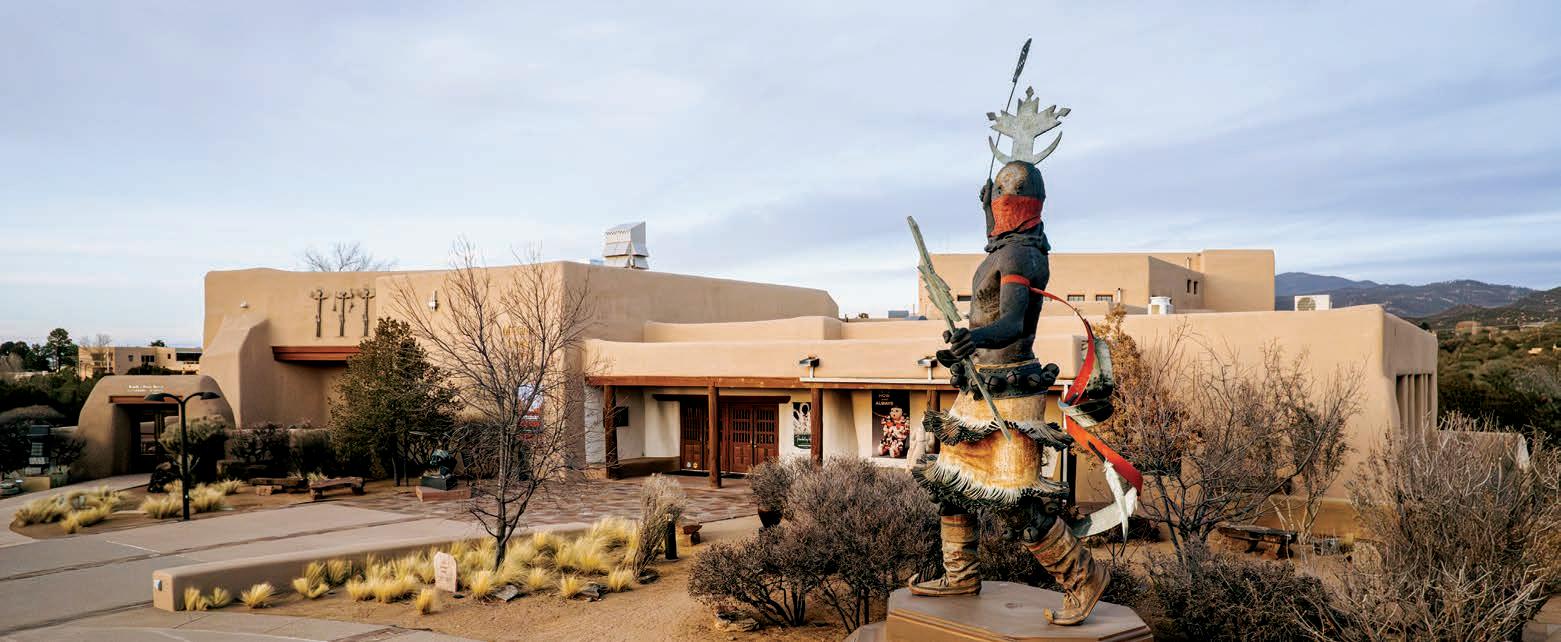
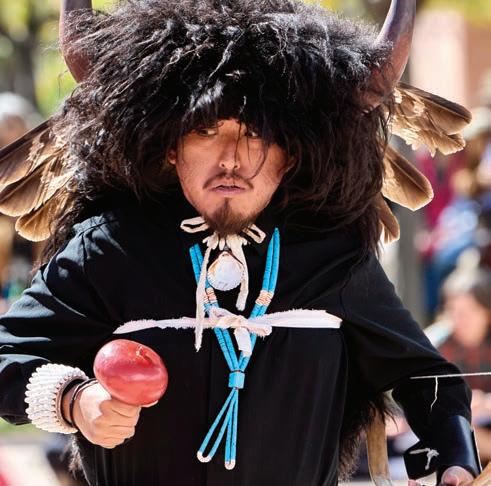
Northern New Mexico Guide to Native American Arts & Culture
Uncoiling Inspiration
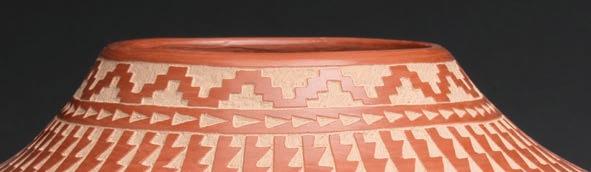
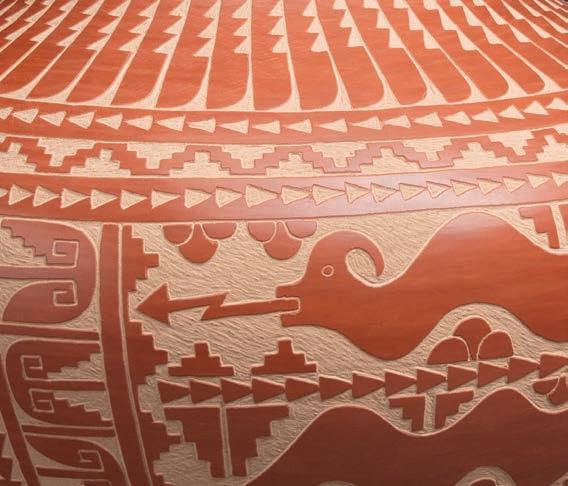
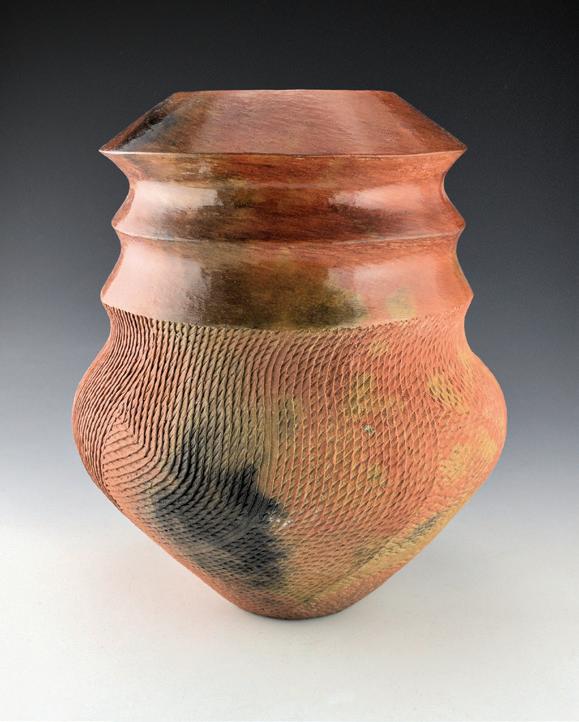
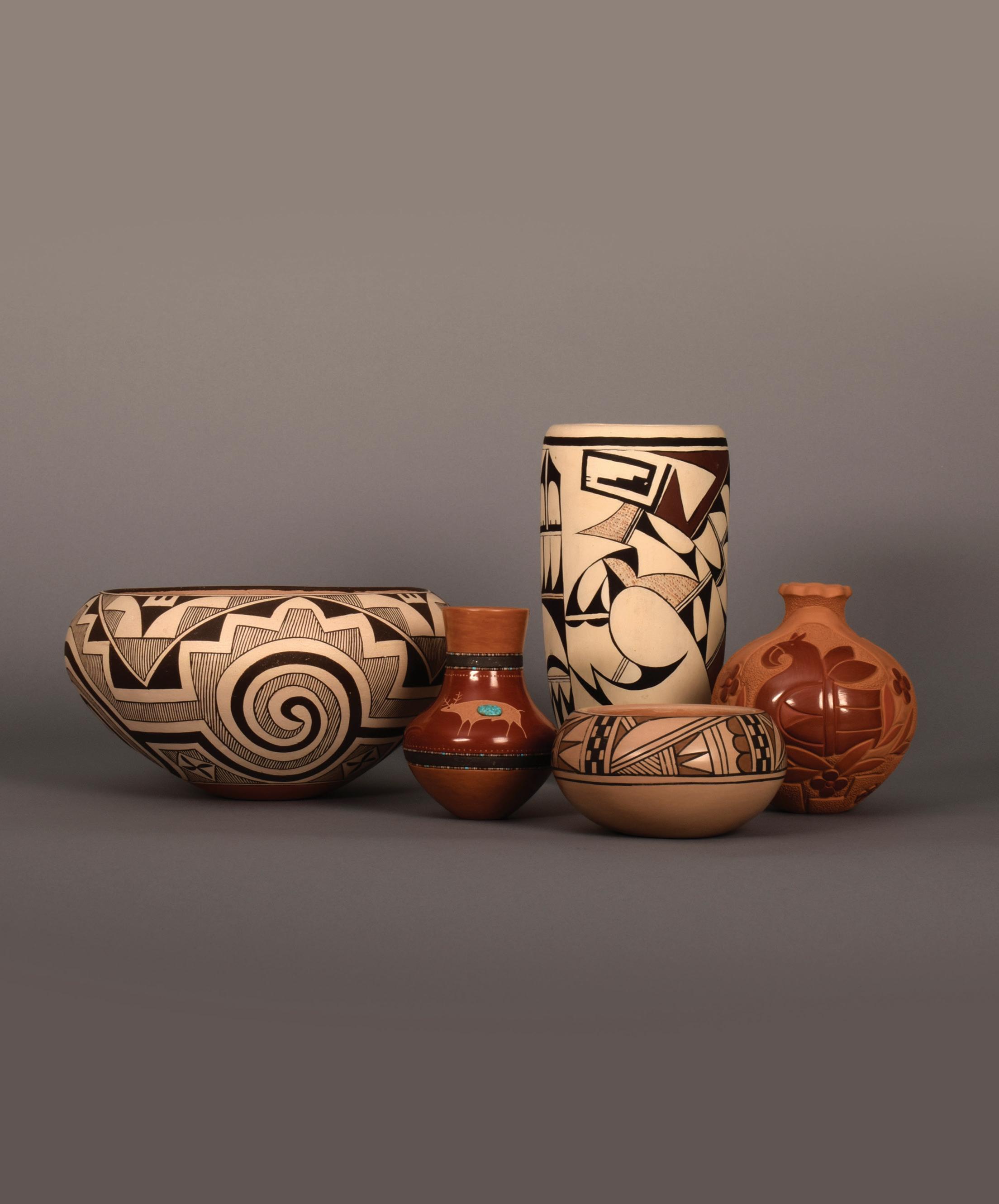
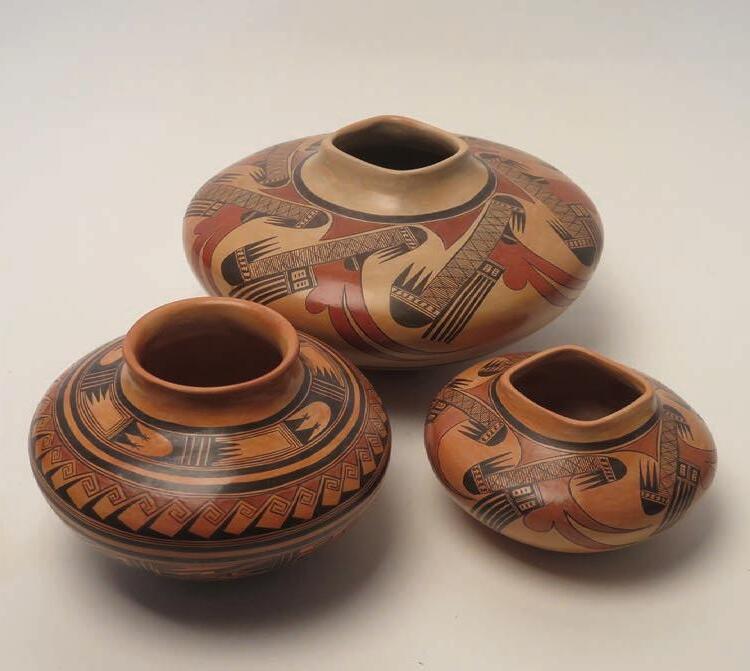
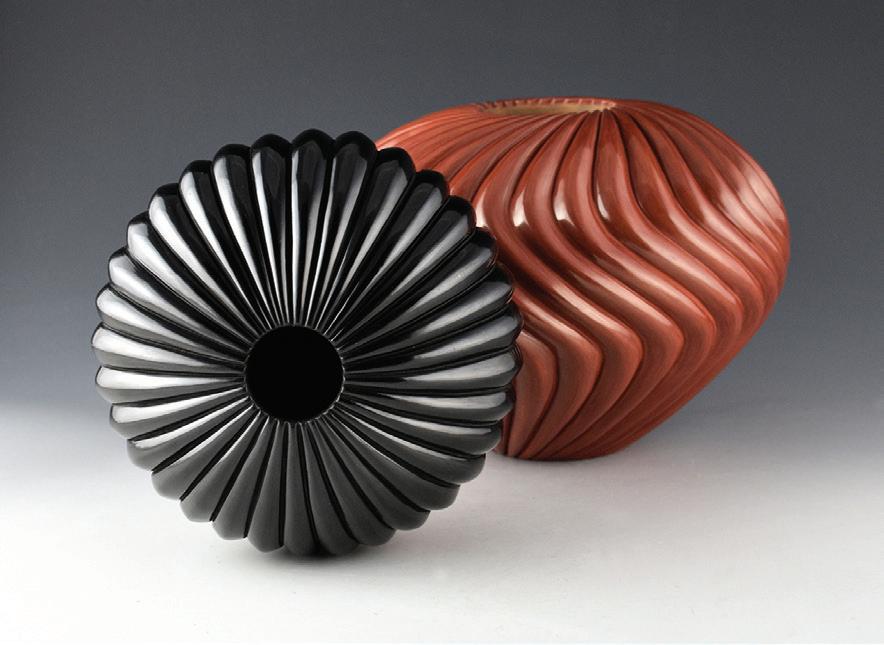
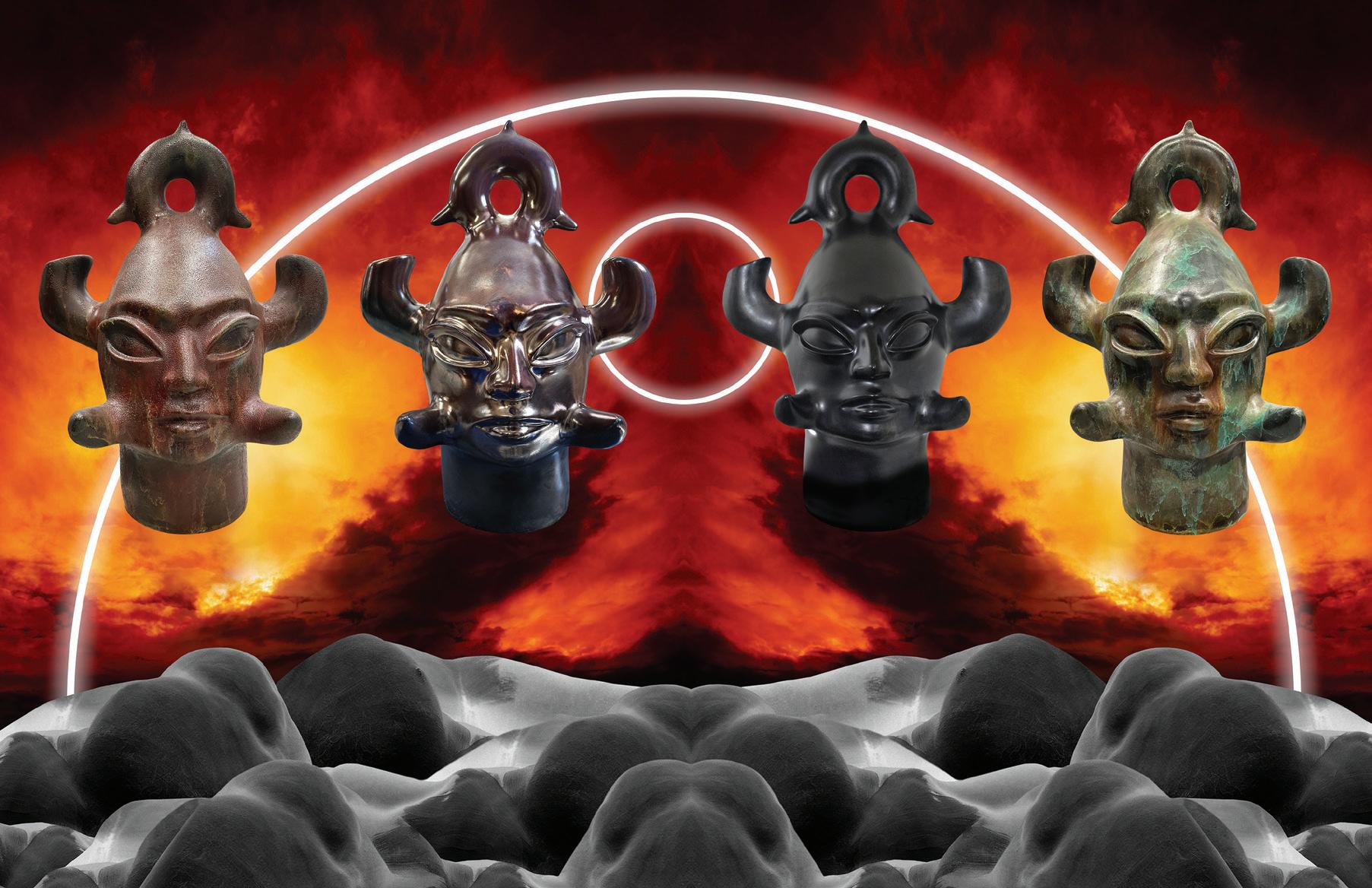
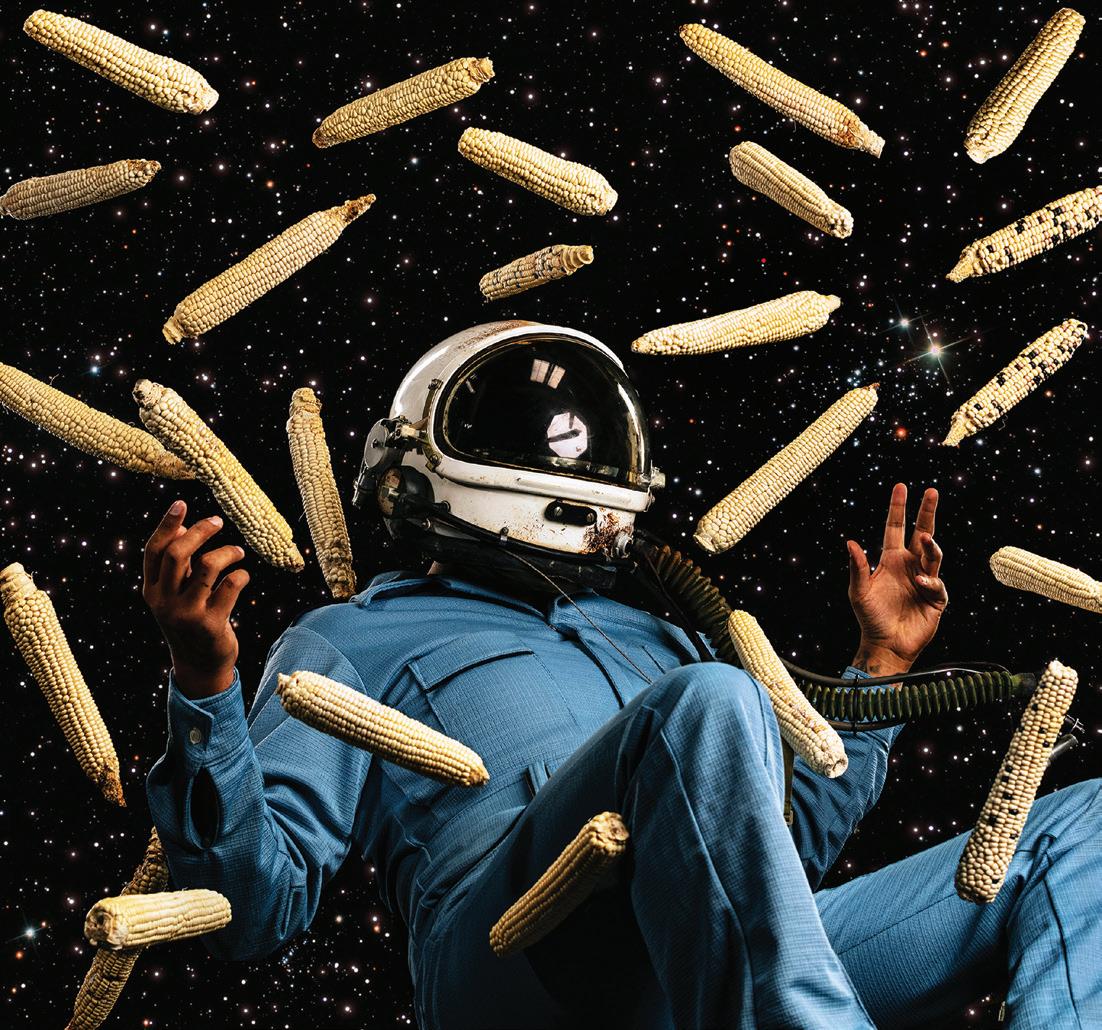
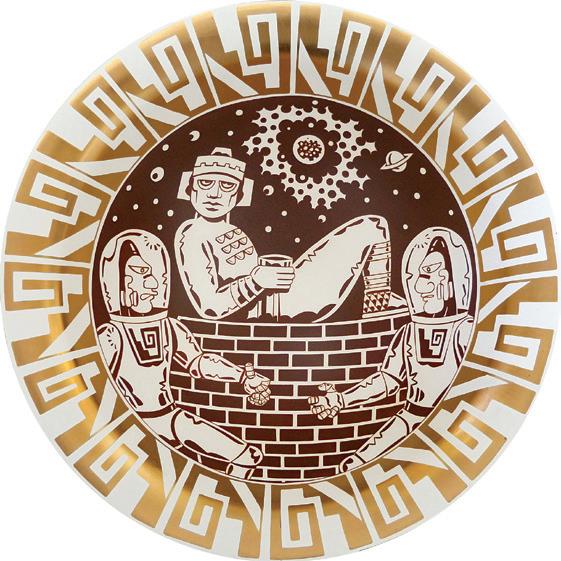
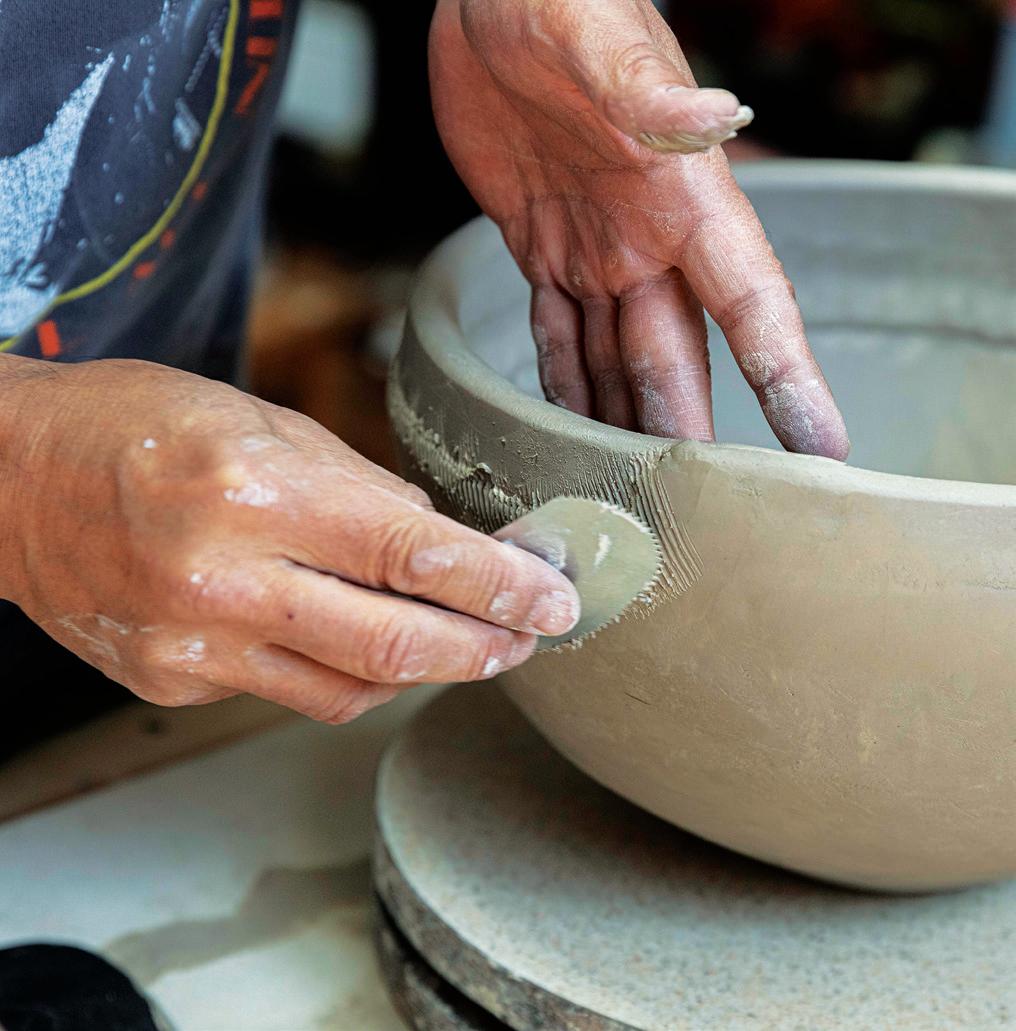
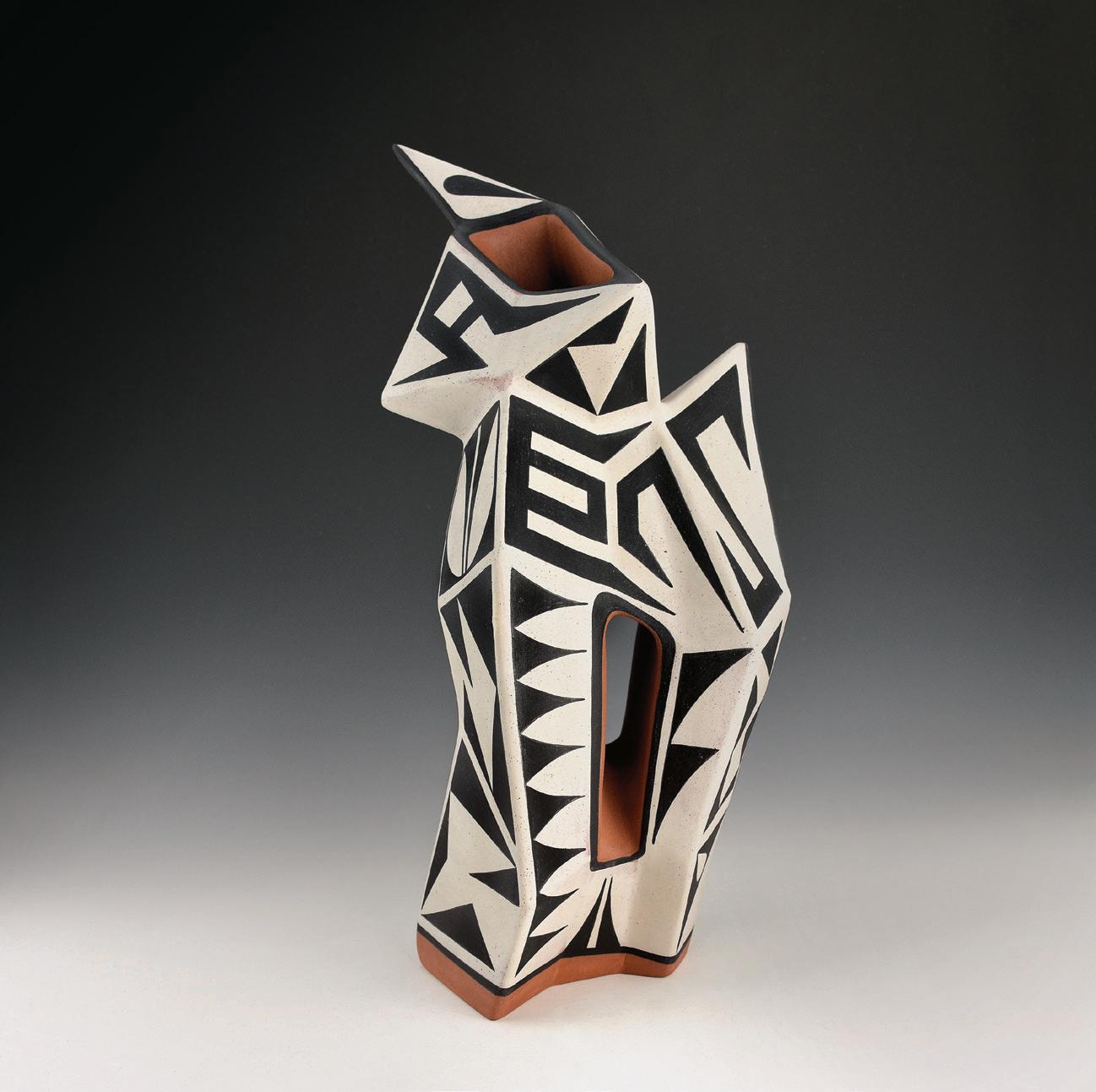
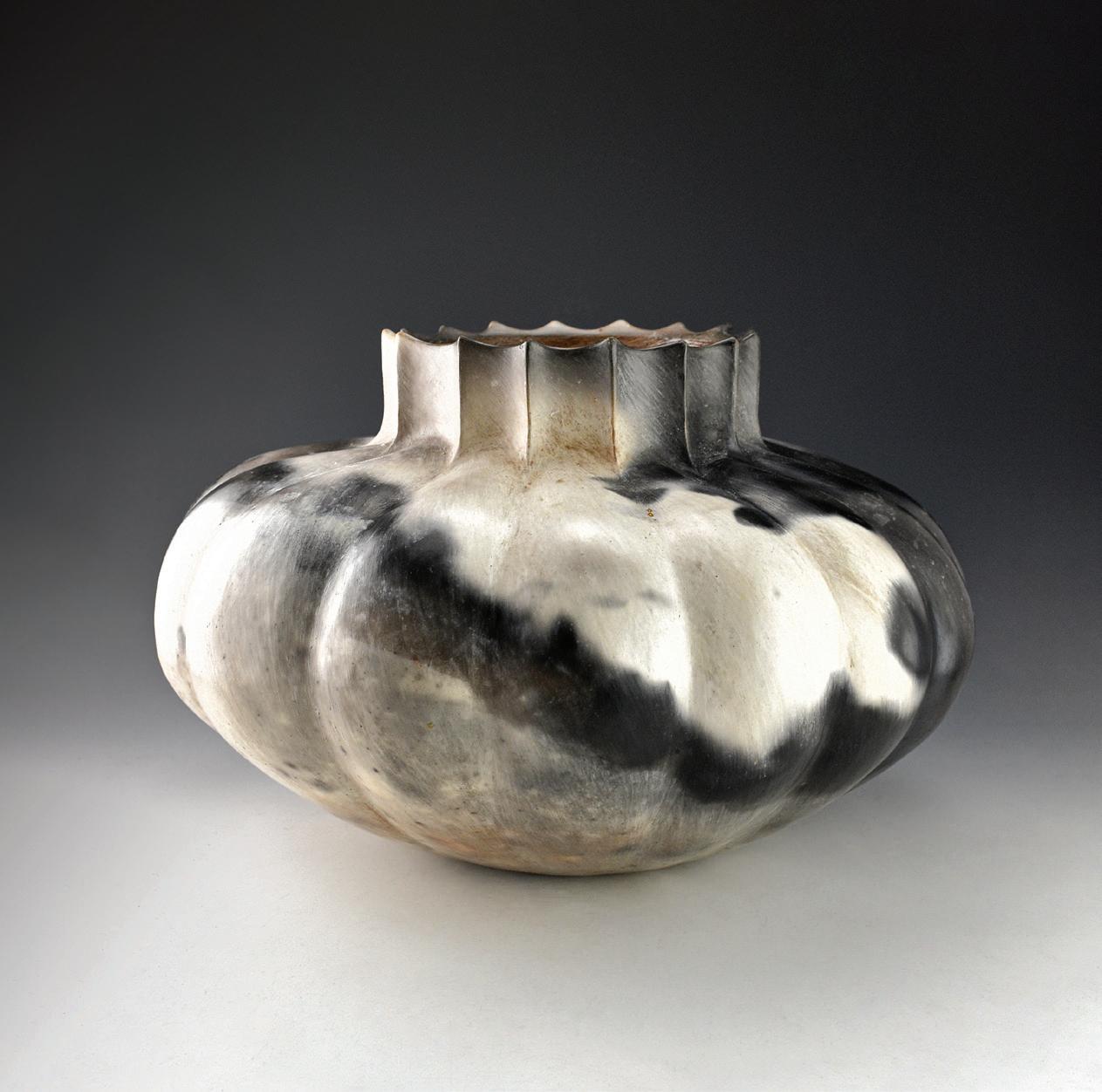
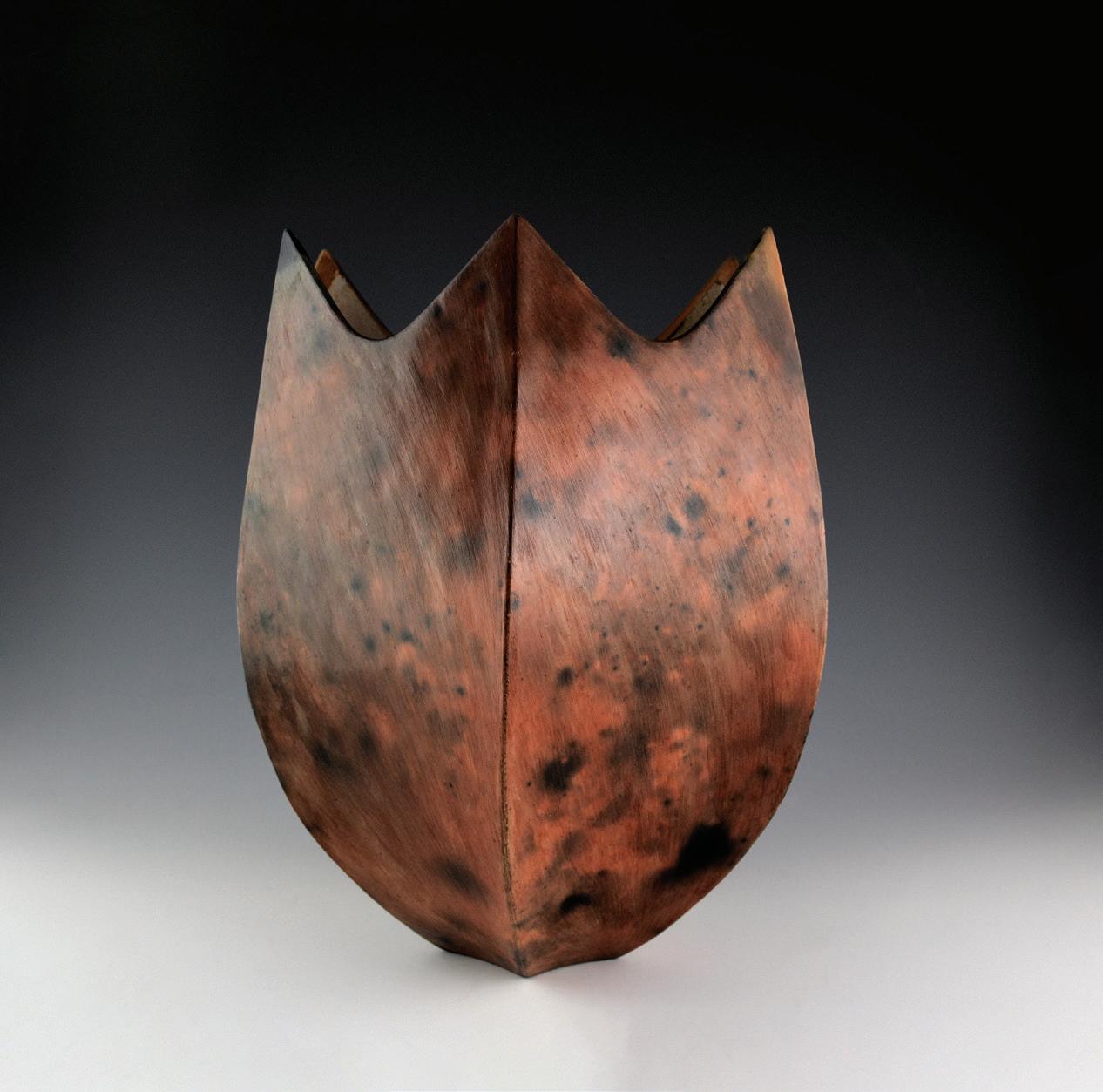
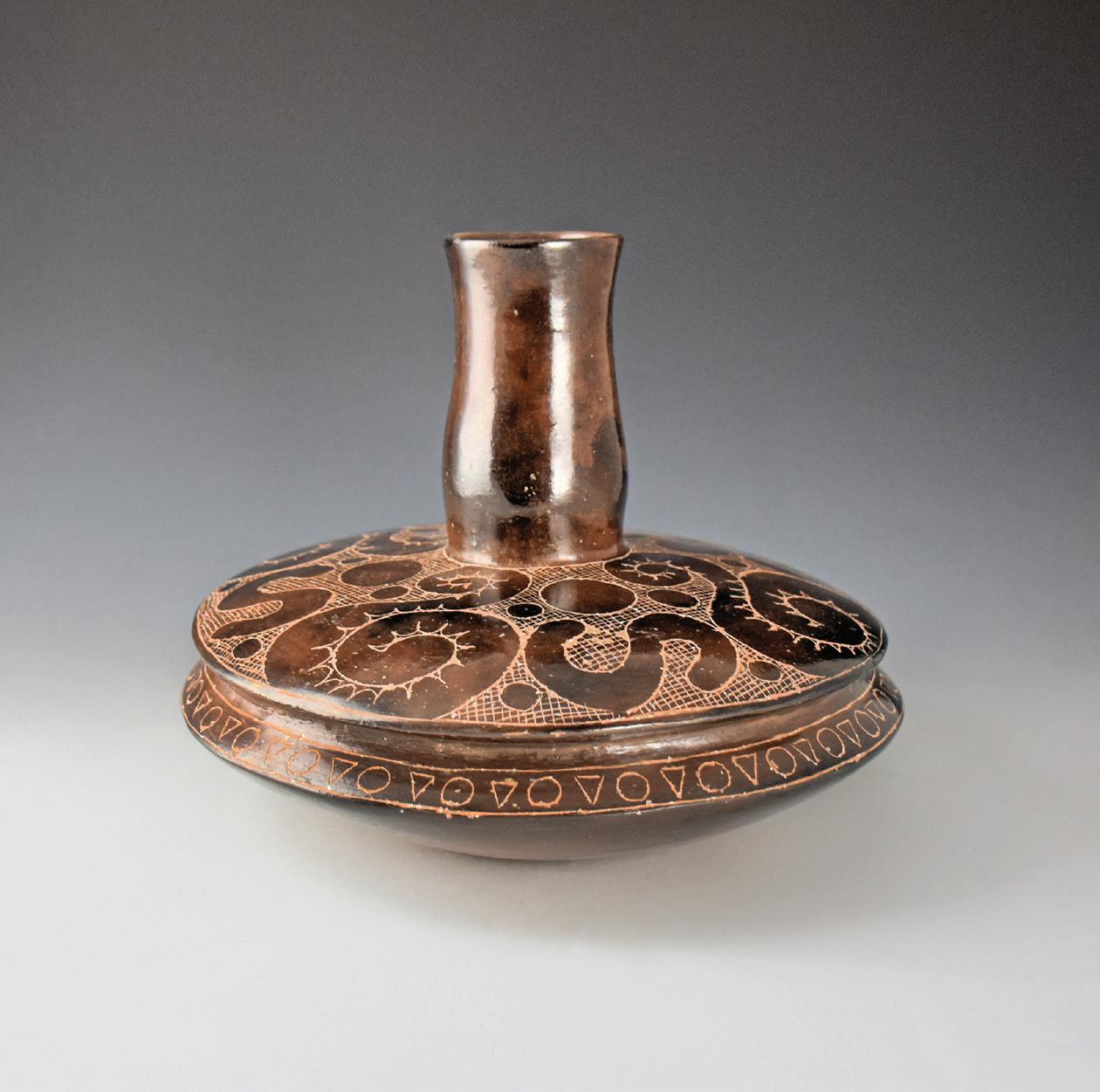
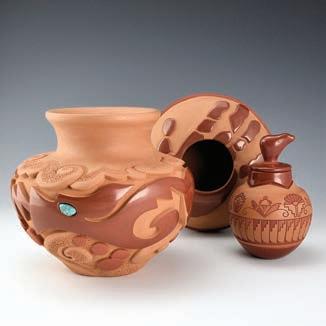
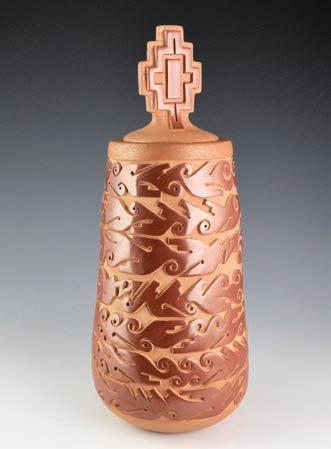
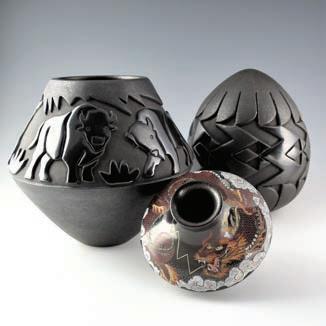
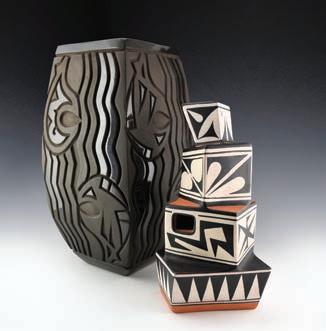
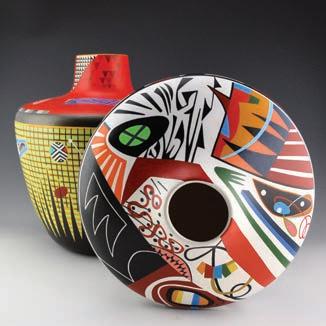
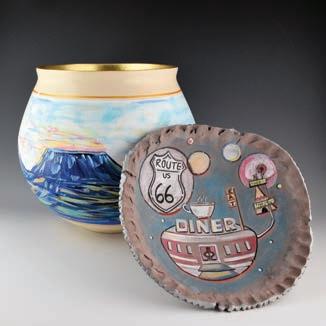
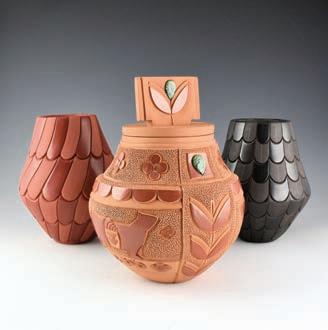
Contemporary potters working today
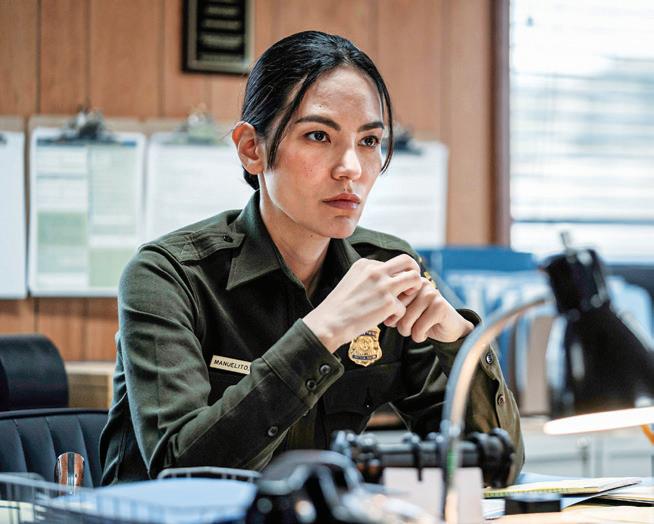
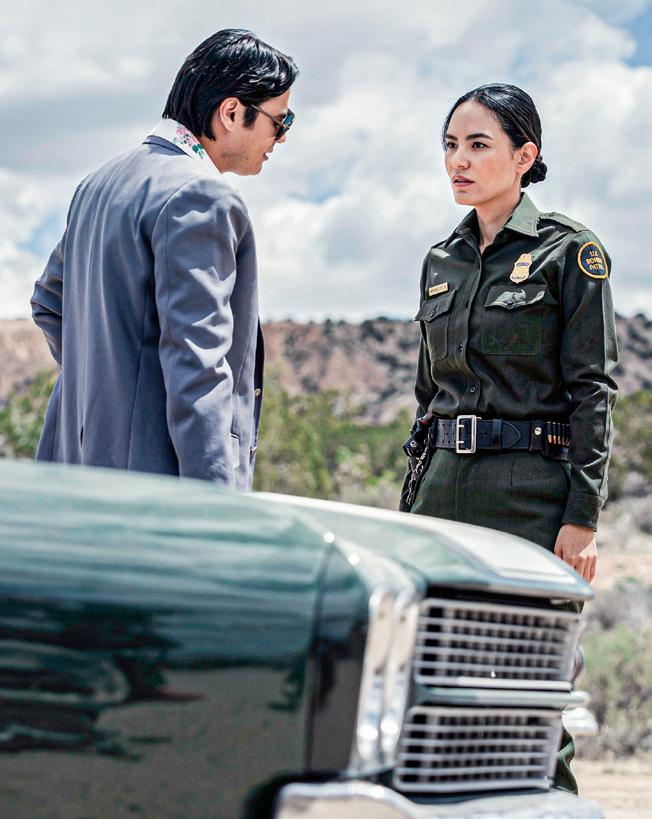
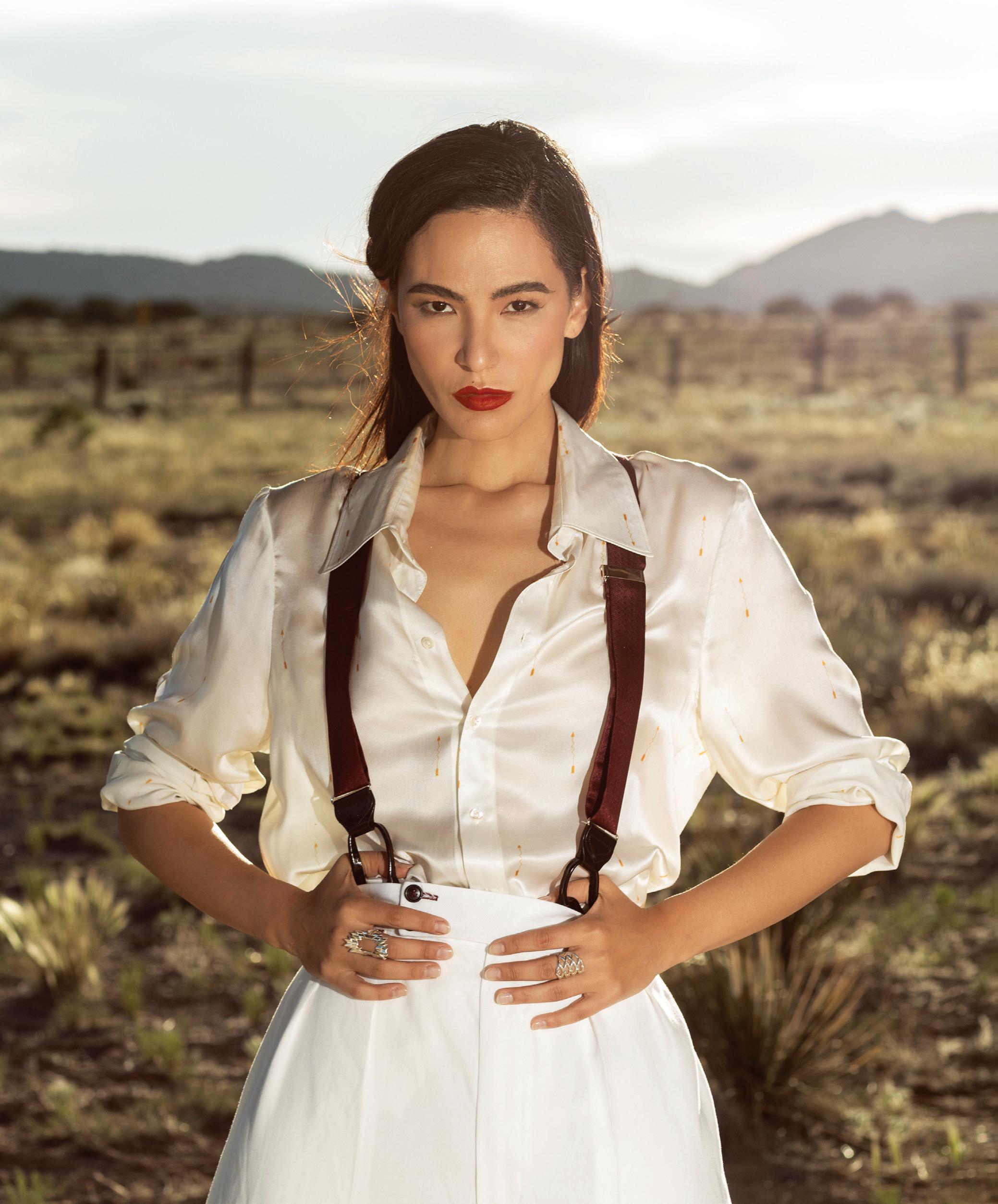
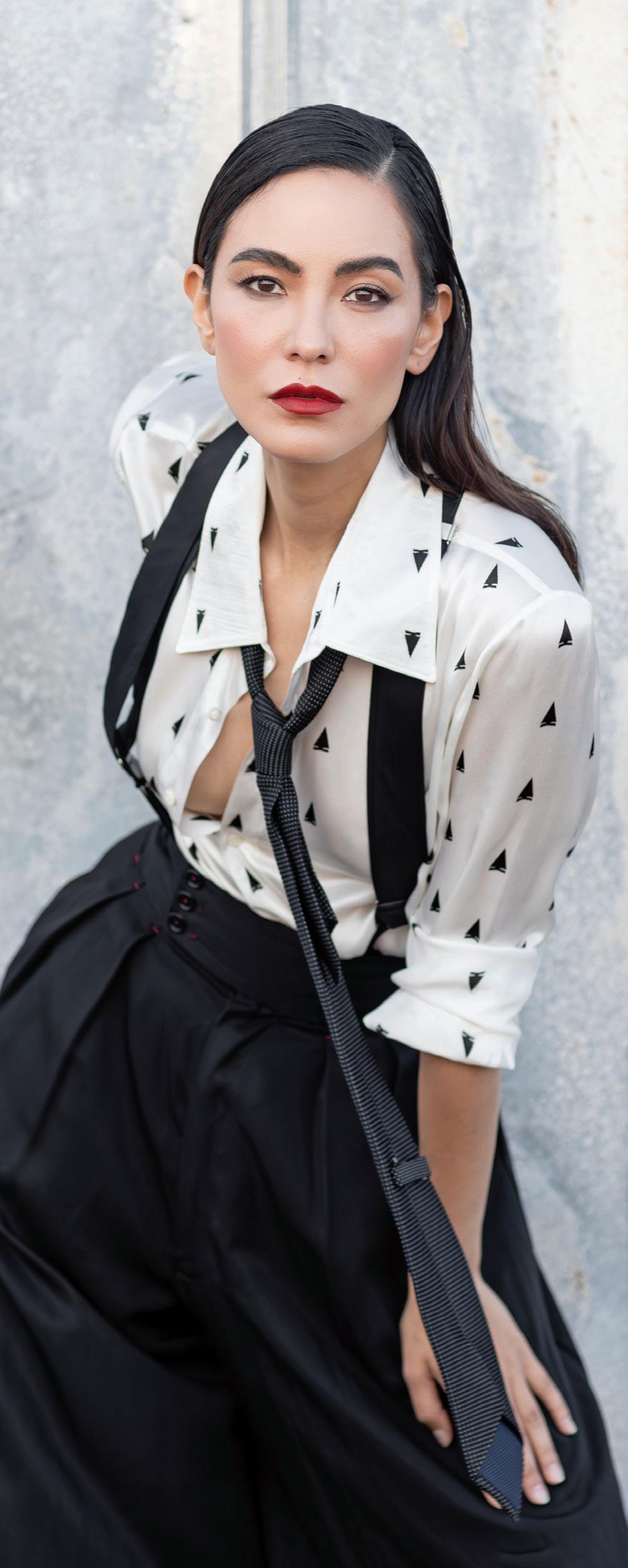
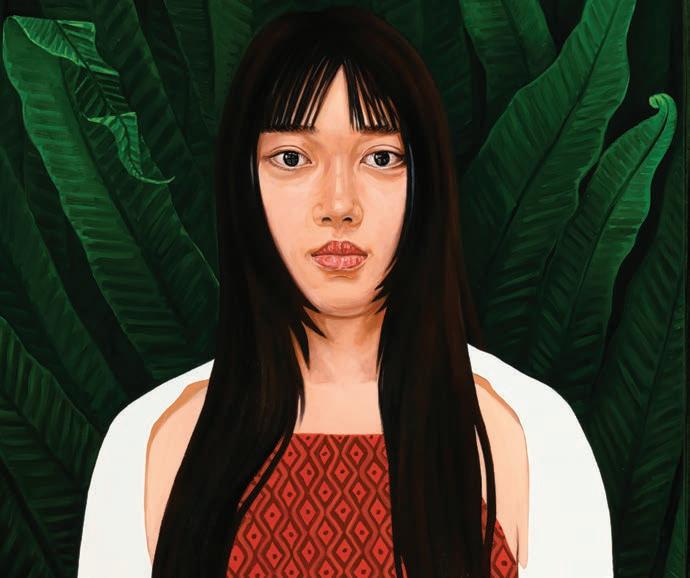
Jessica Matten of Dark Winds
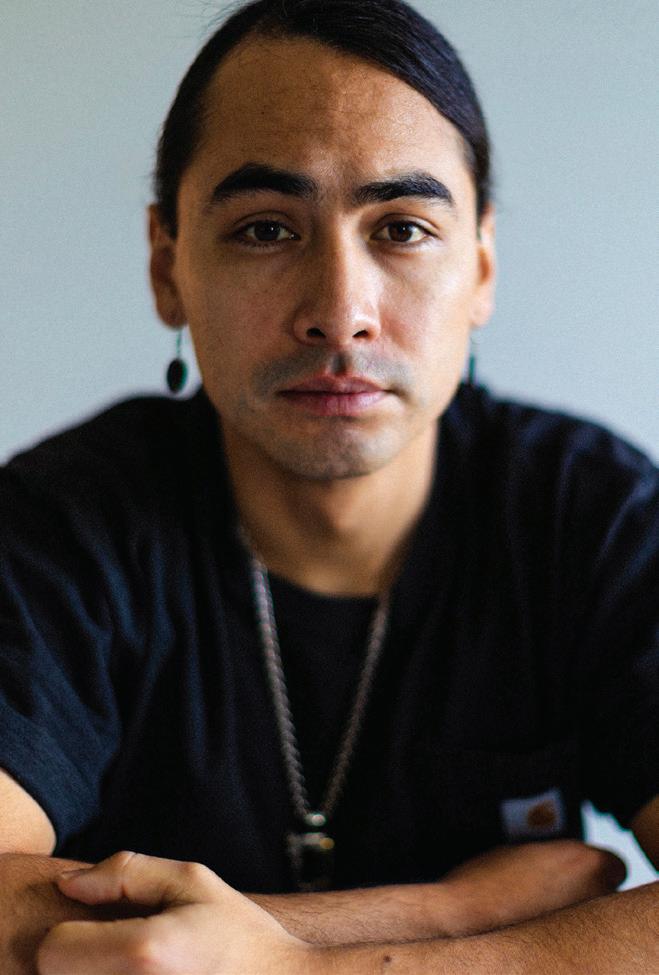
Sugarcane’s Julian Brave NoiseCat
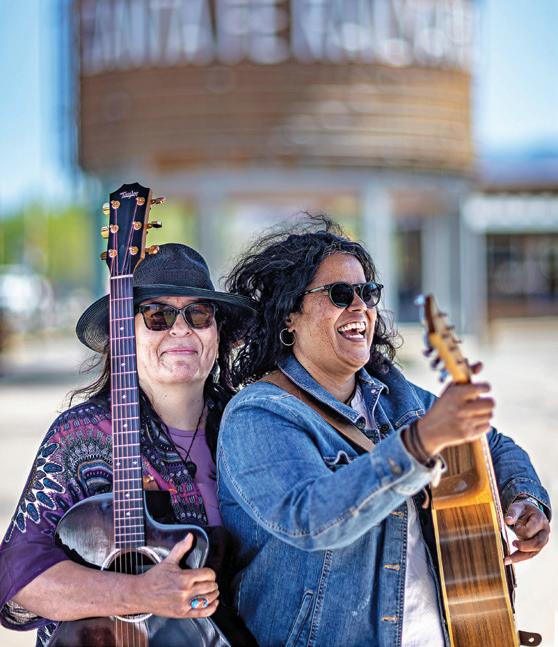
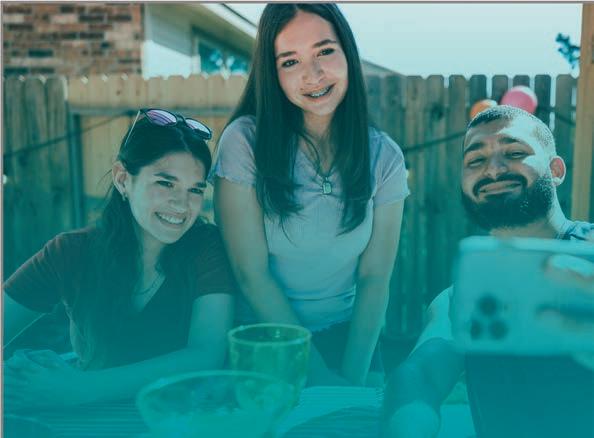
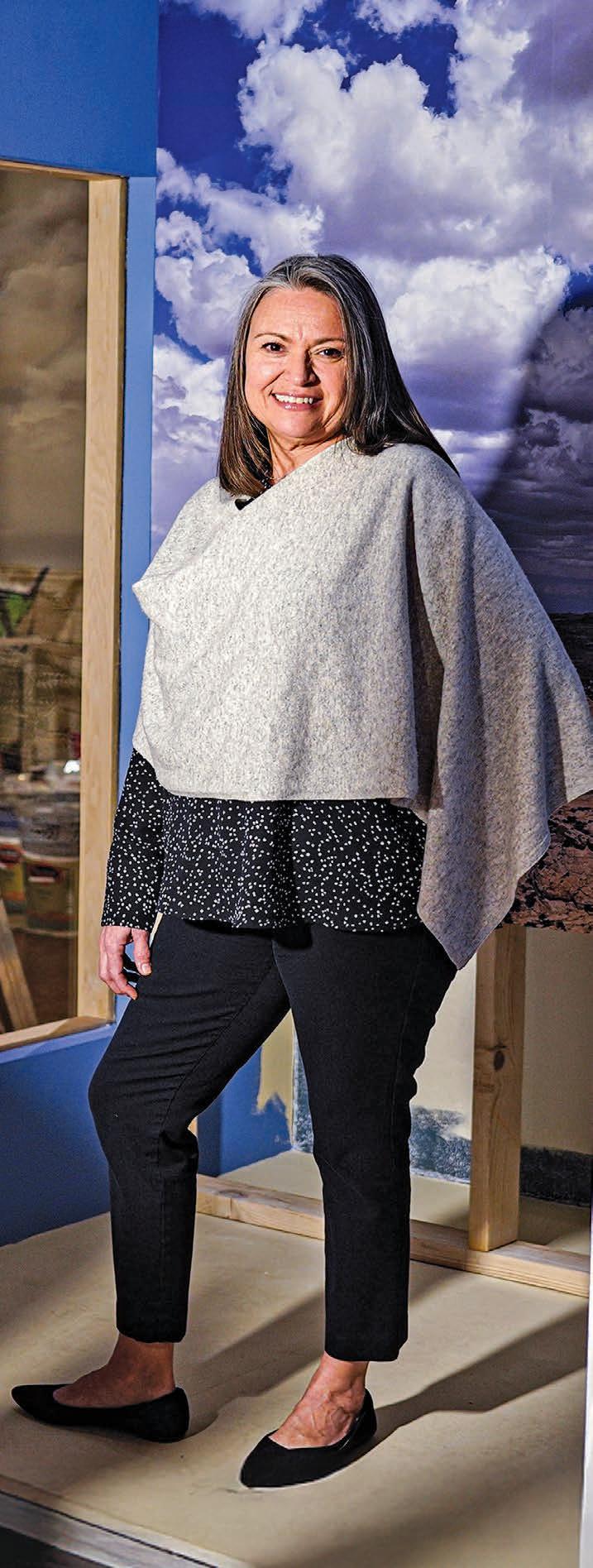
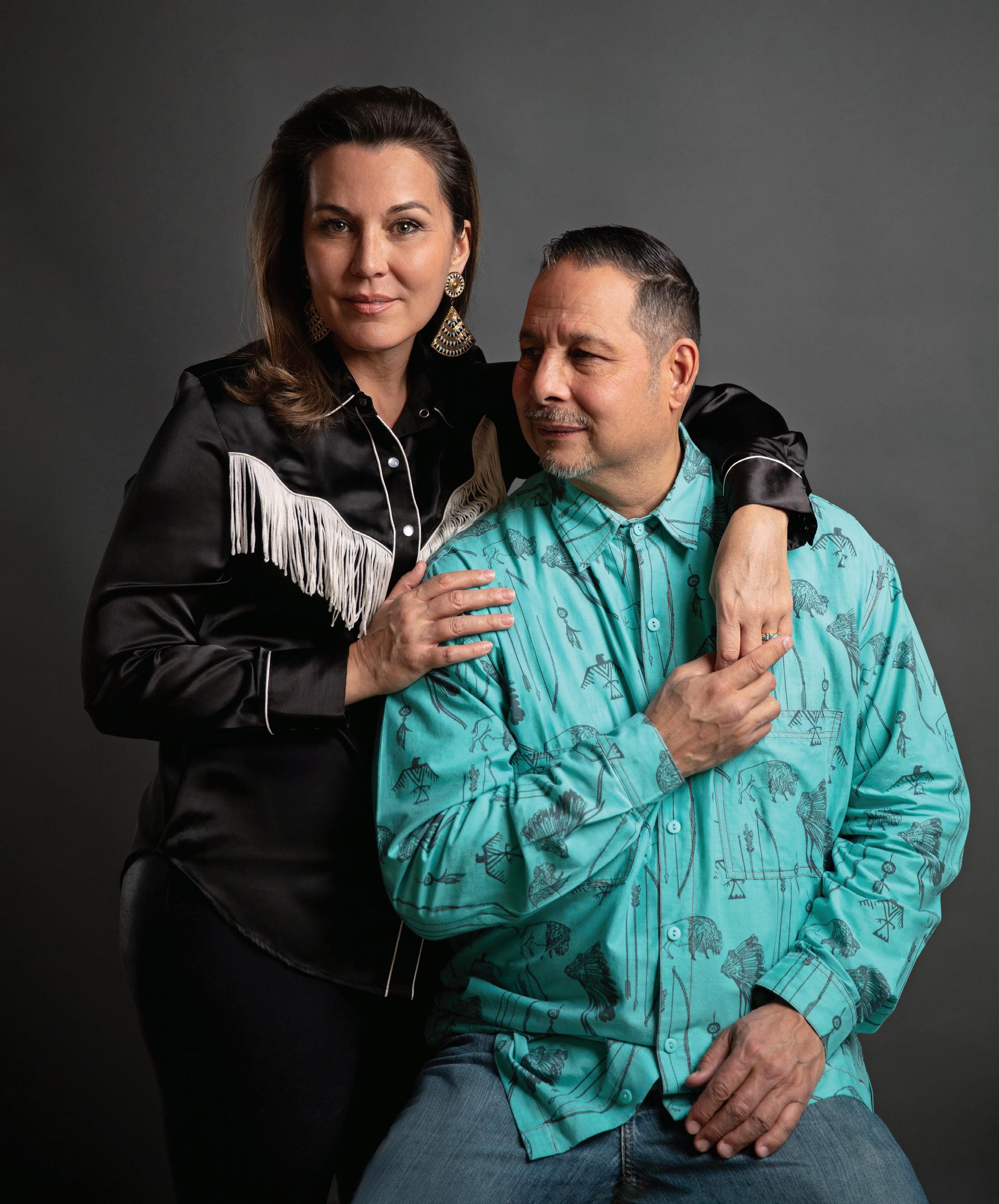
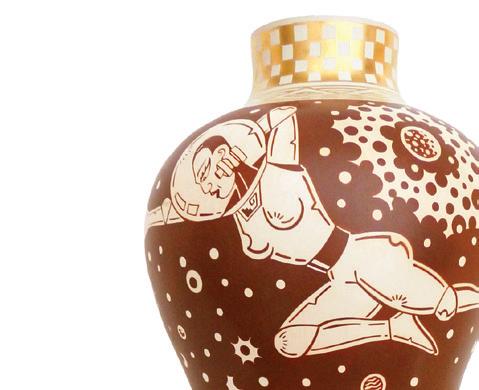
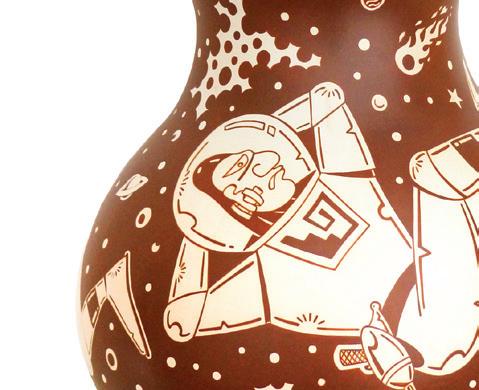
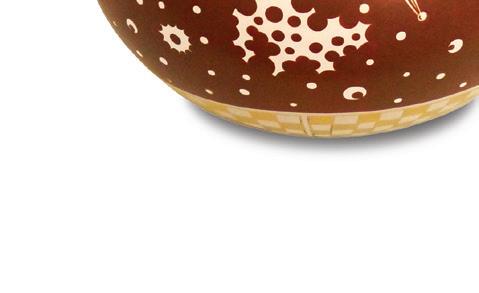
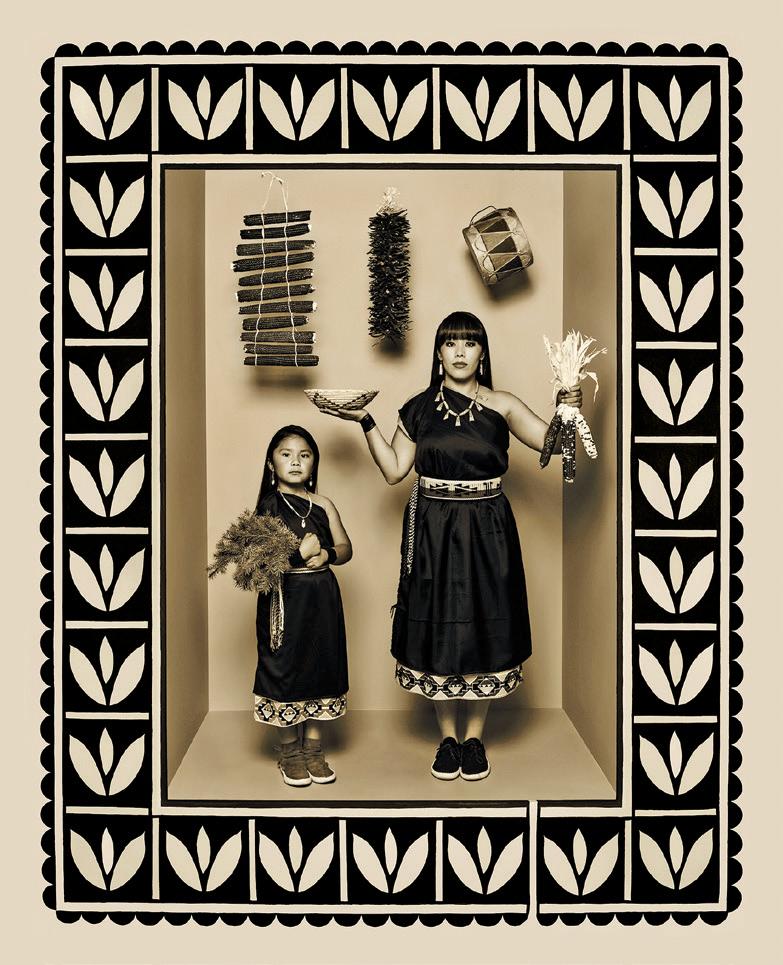
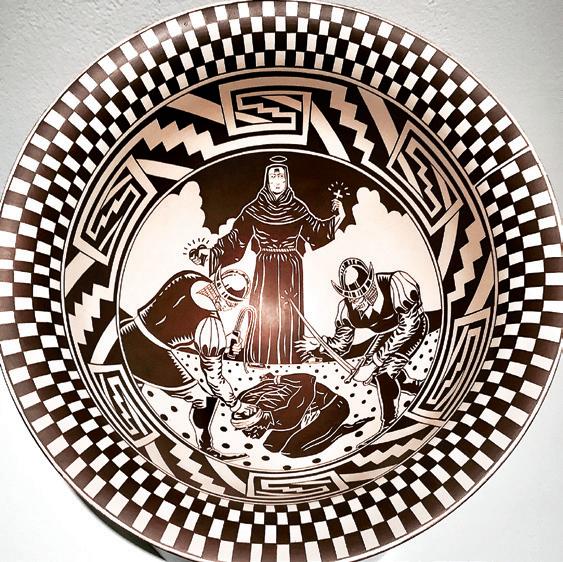
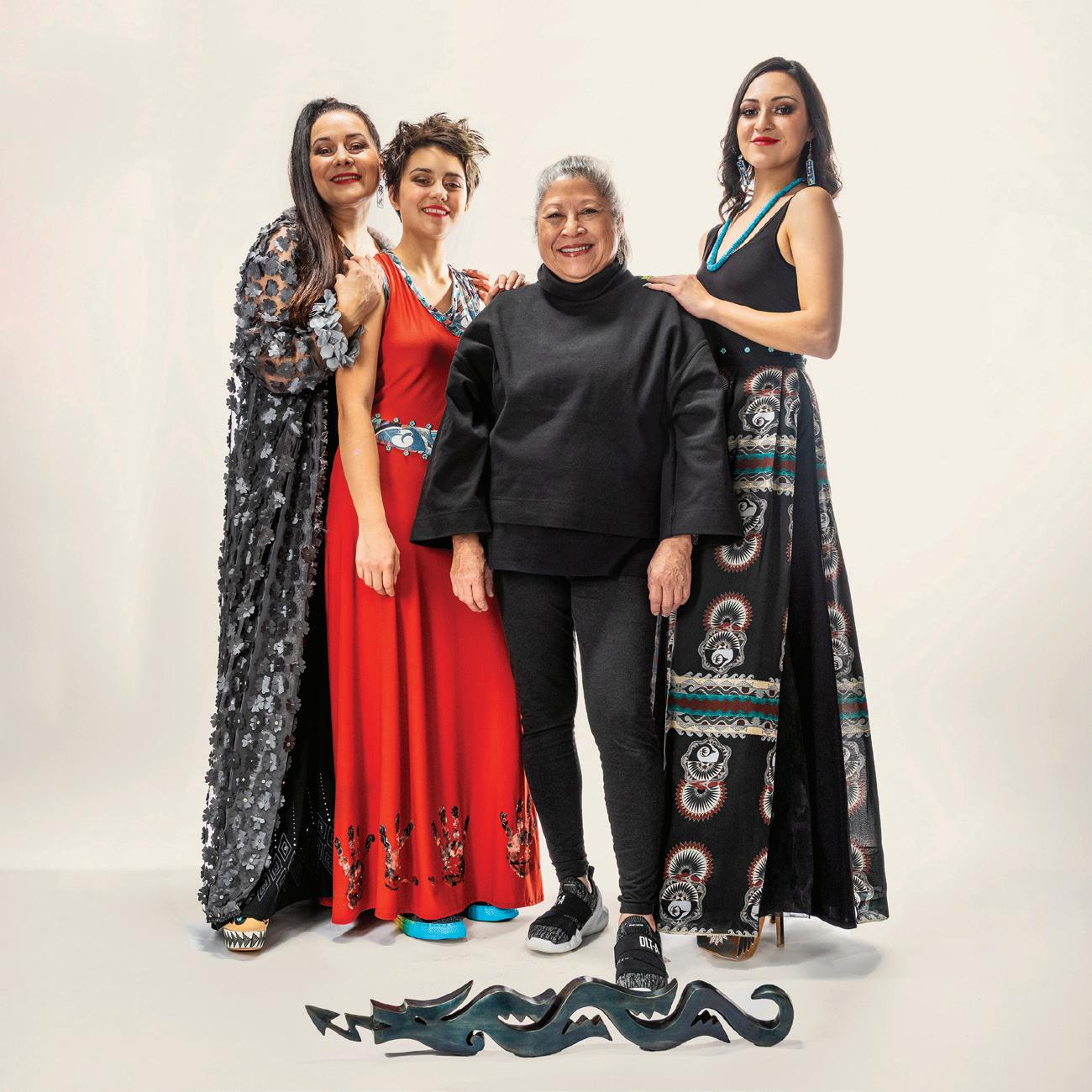
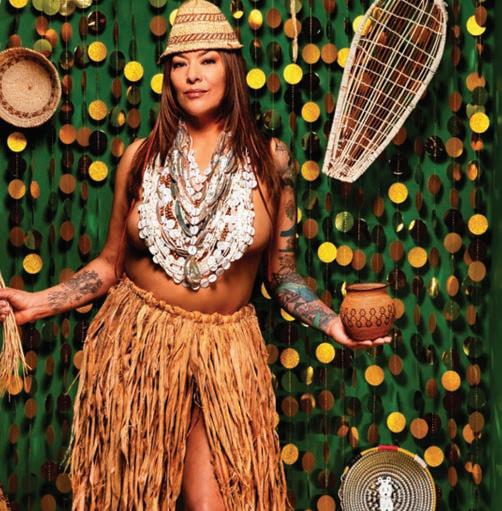
Cara and Diego Romero’s Creative Partnership
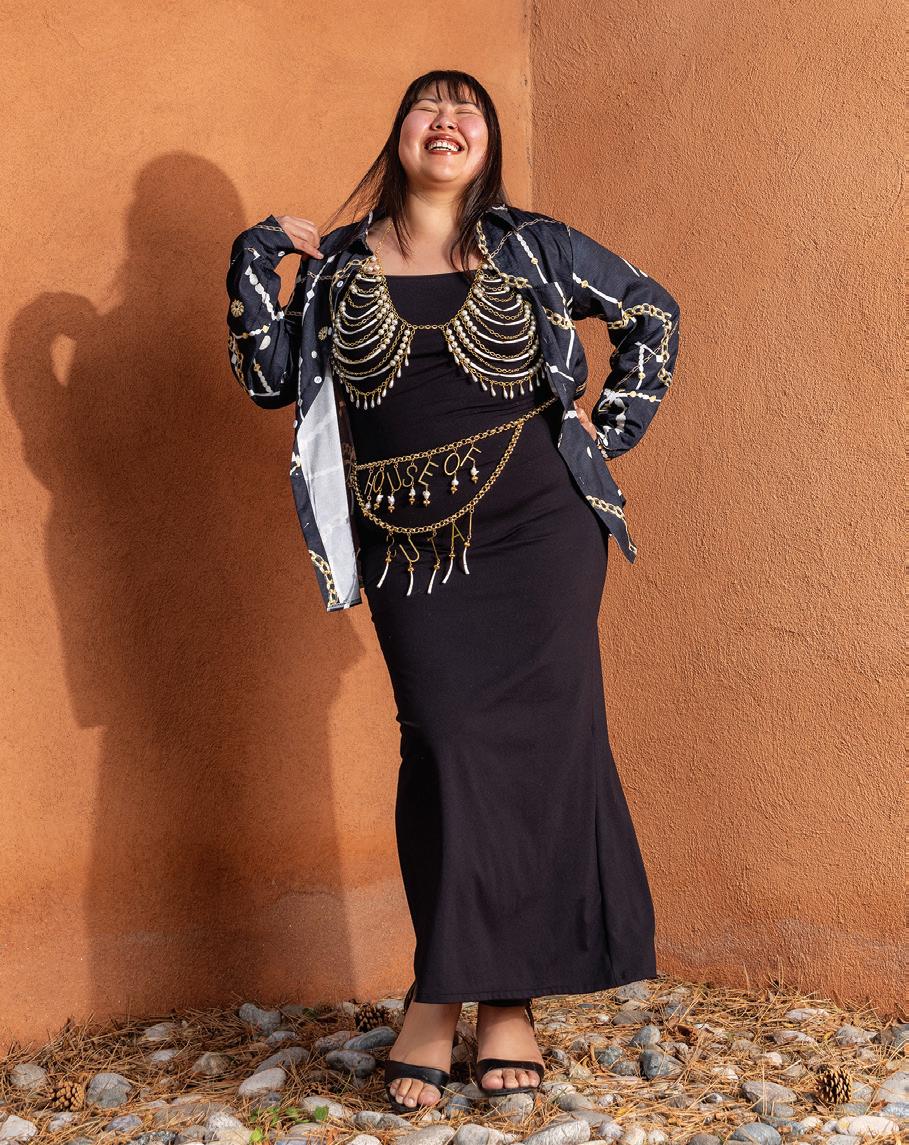
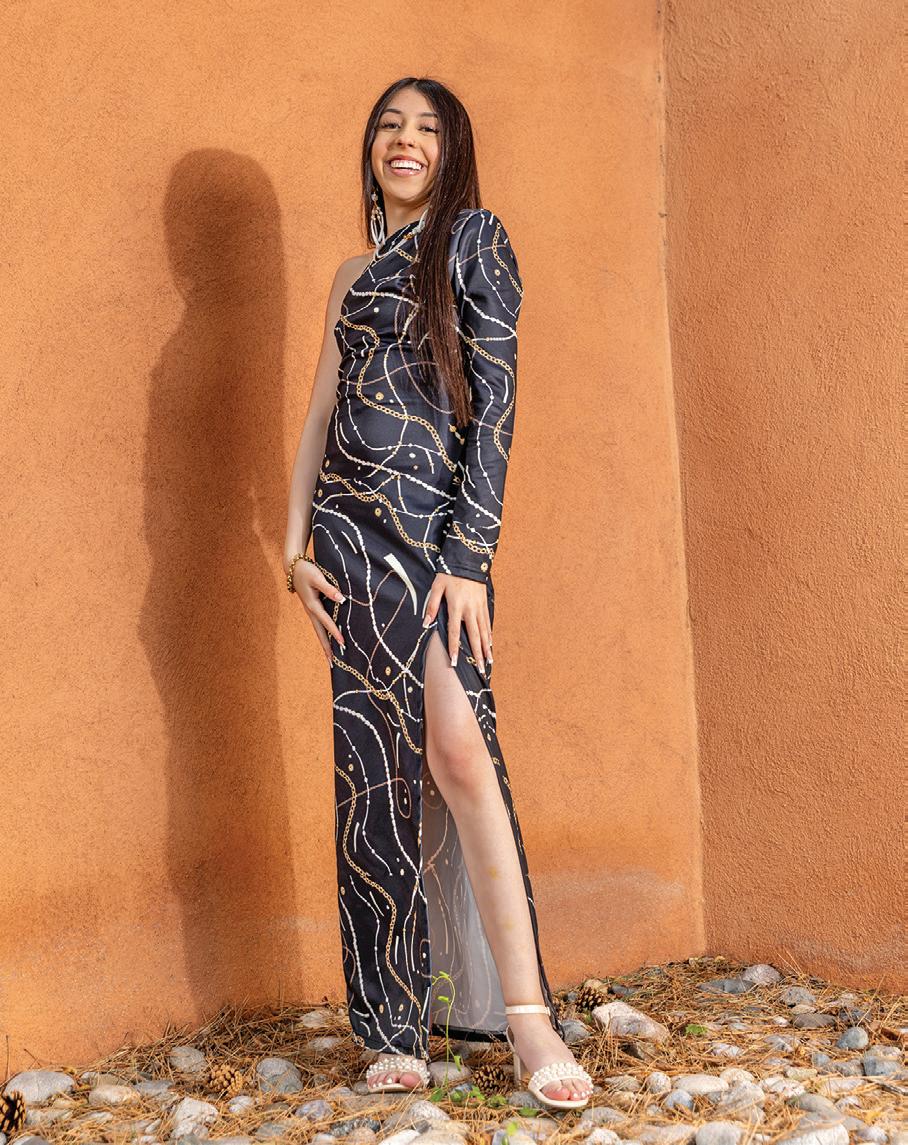
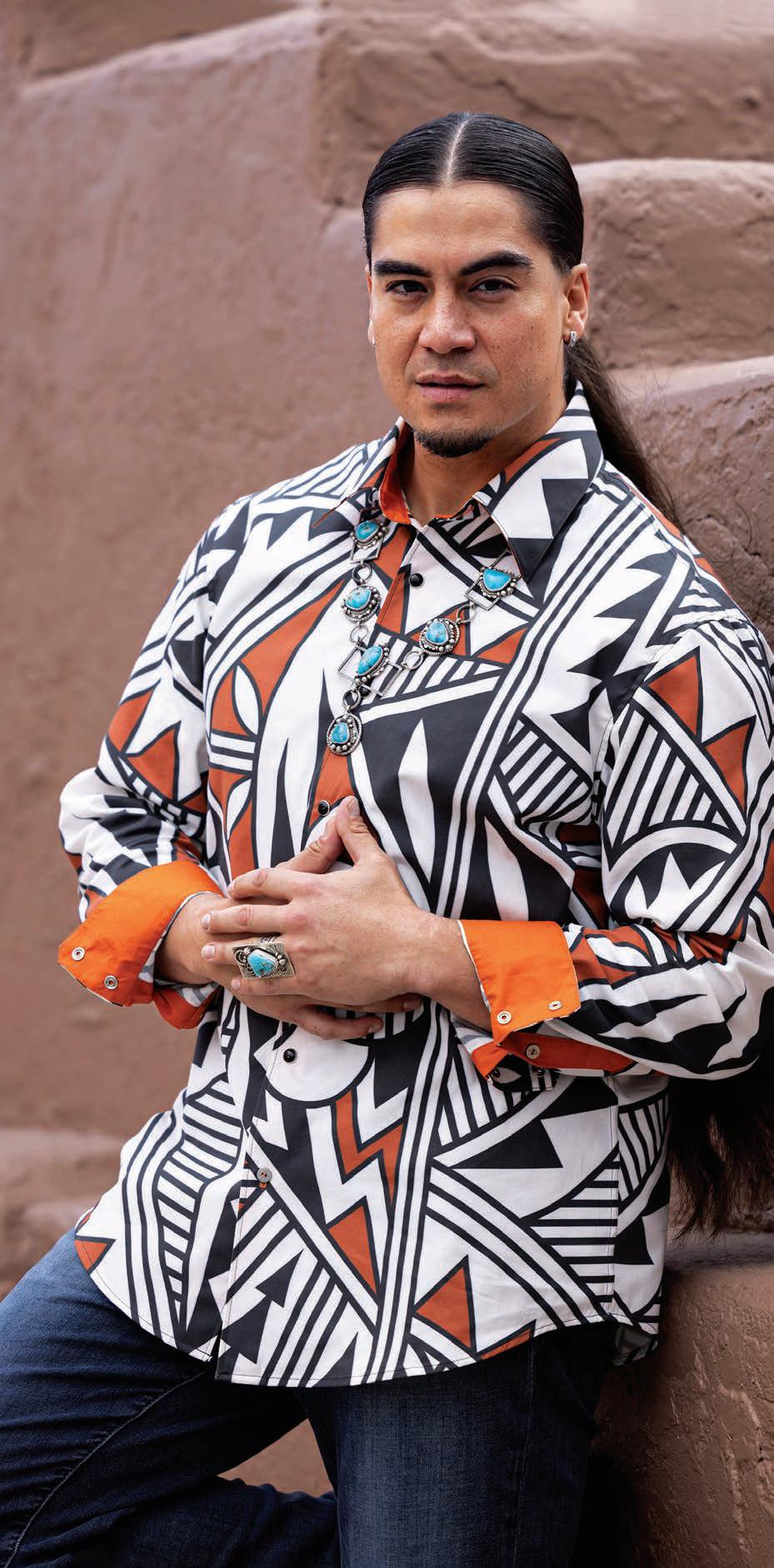
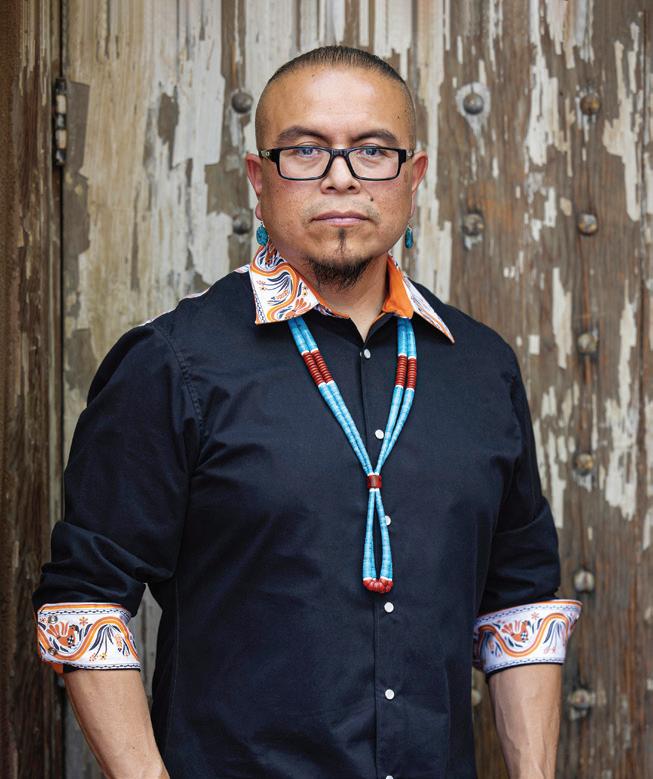
IN STYLE
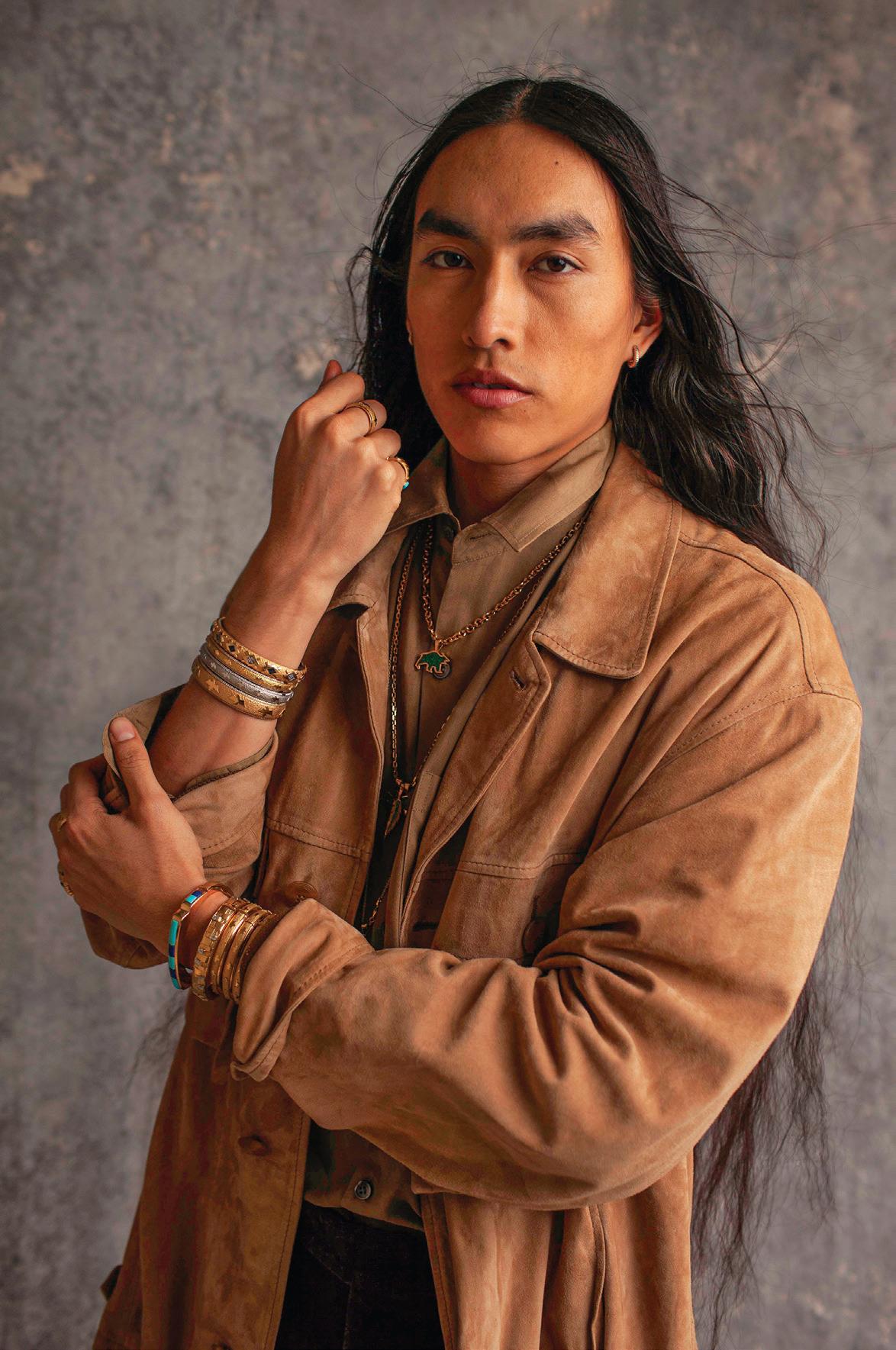
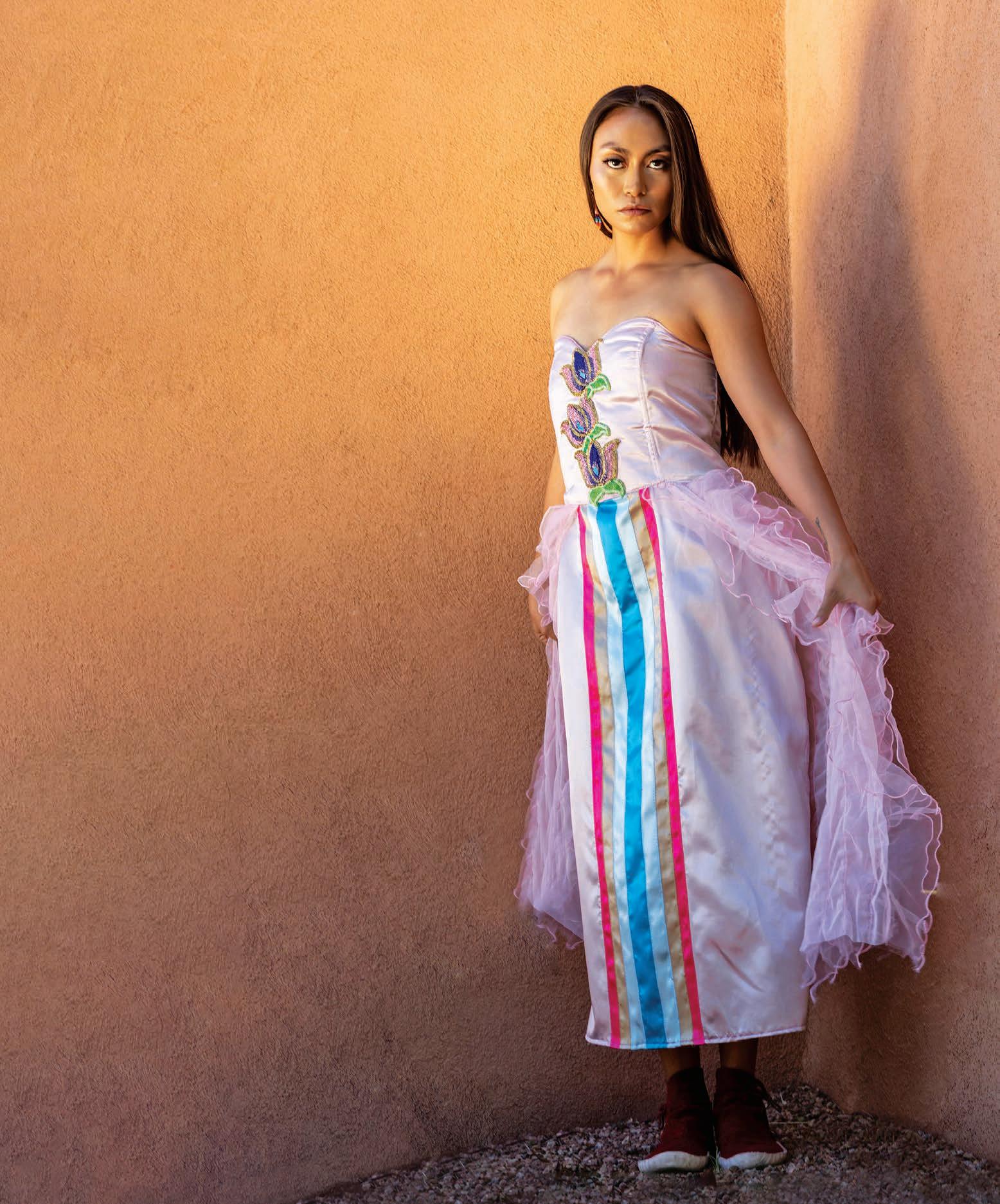
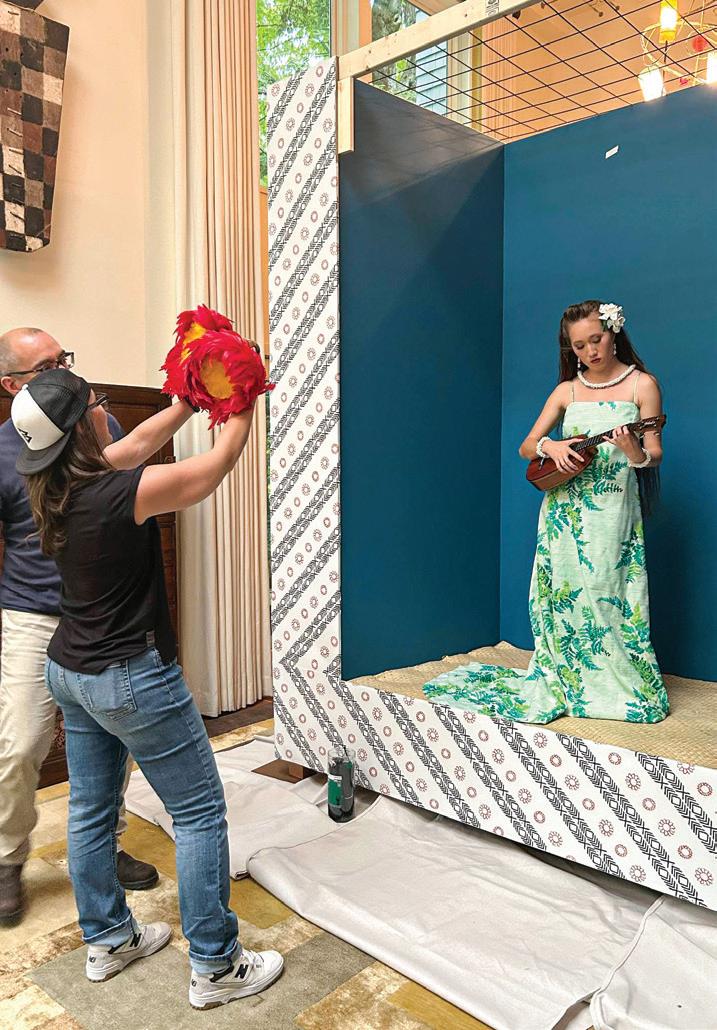
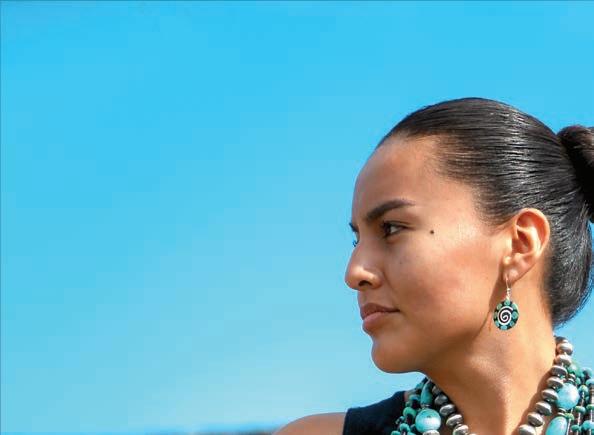
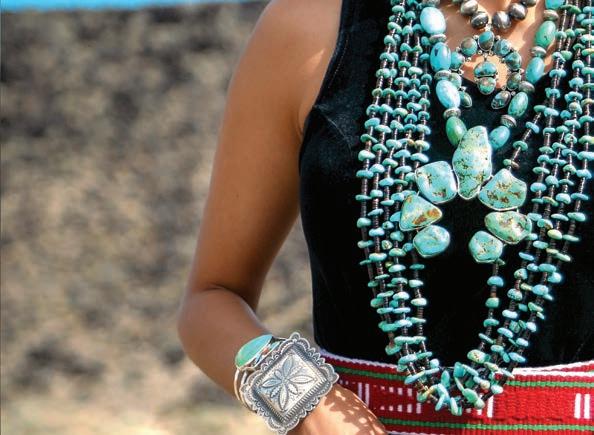
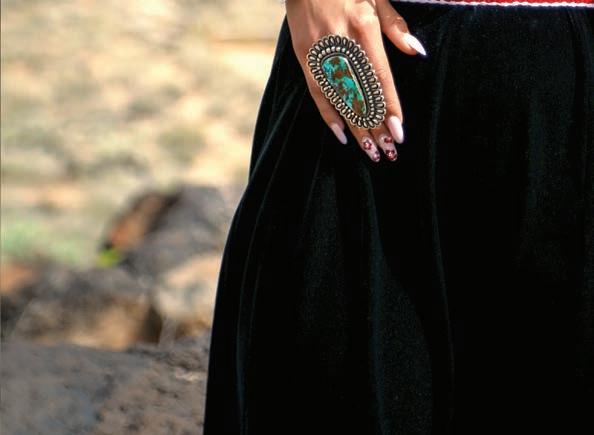
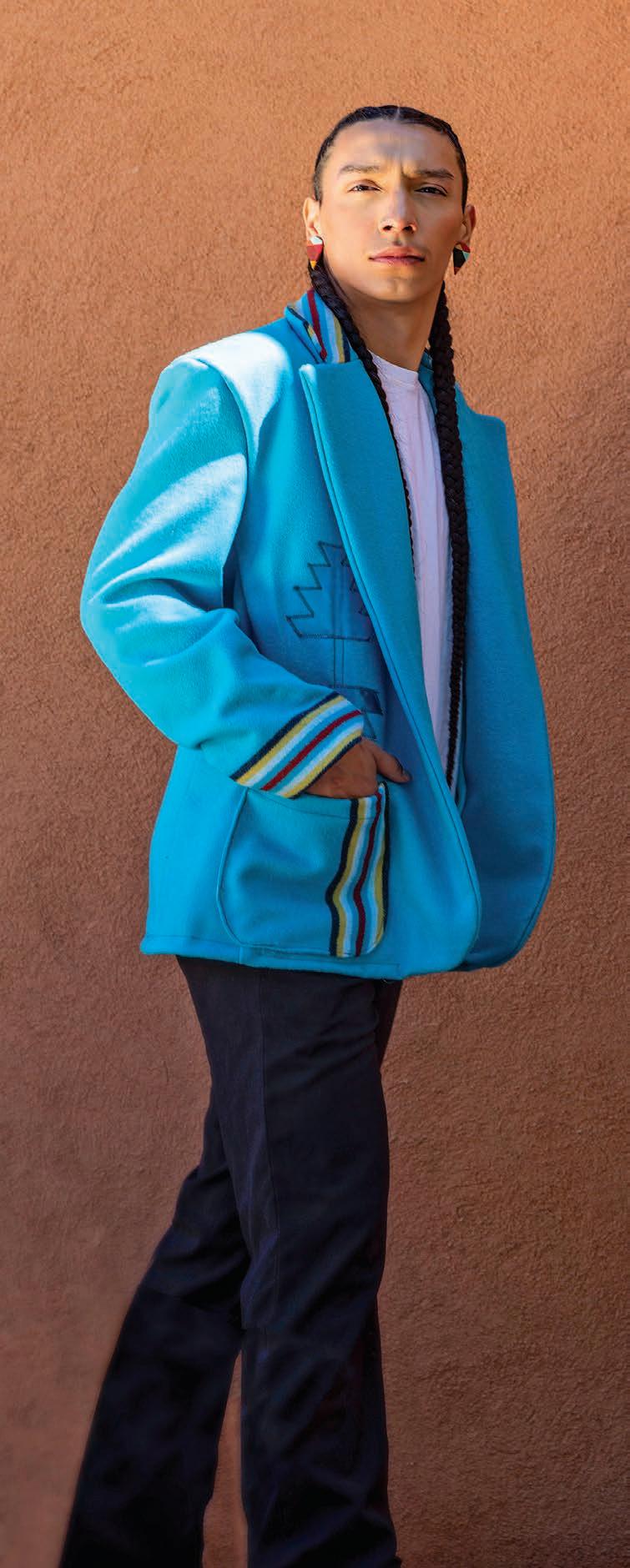
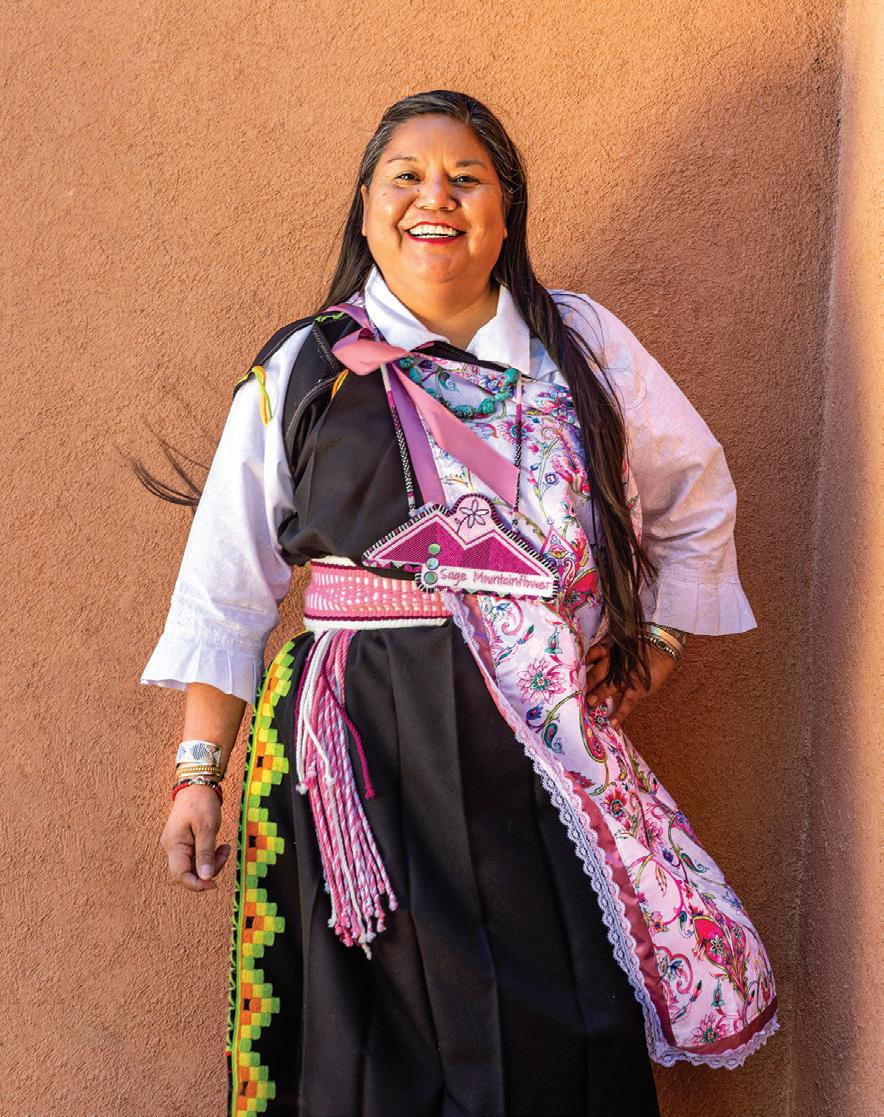
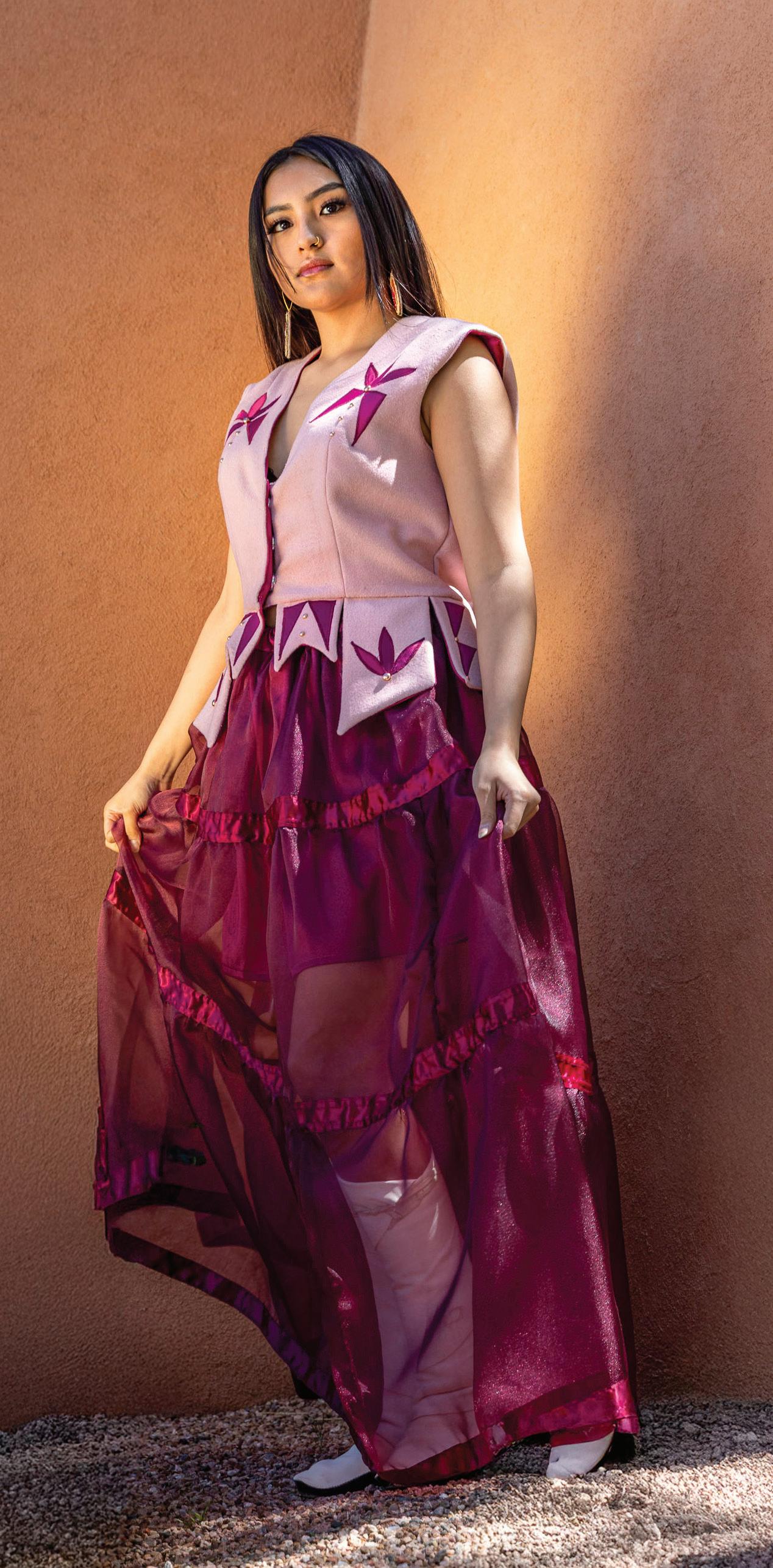
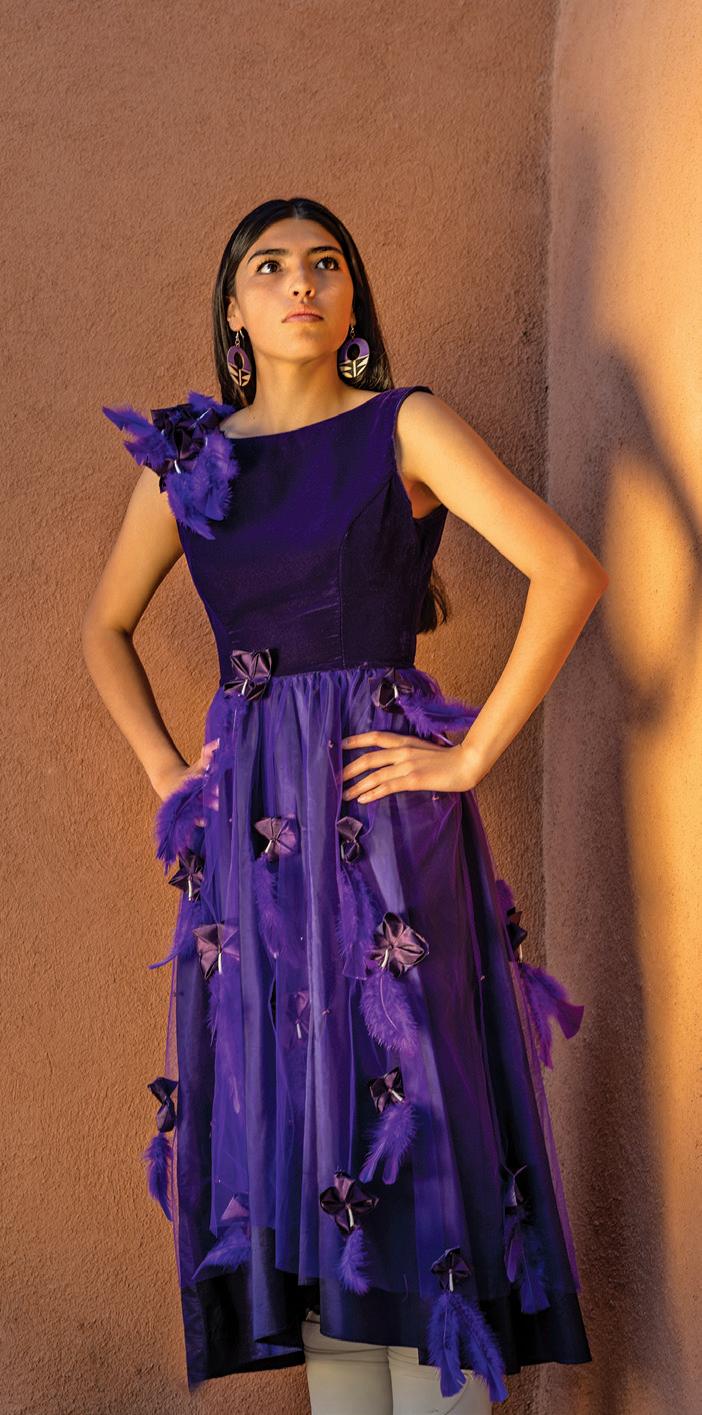
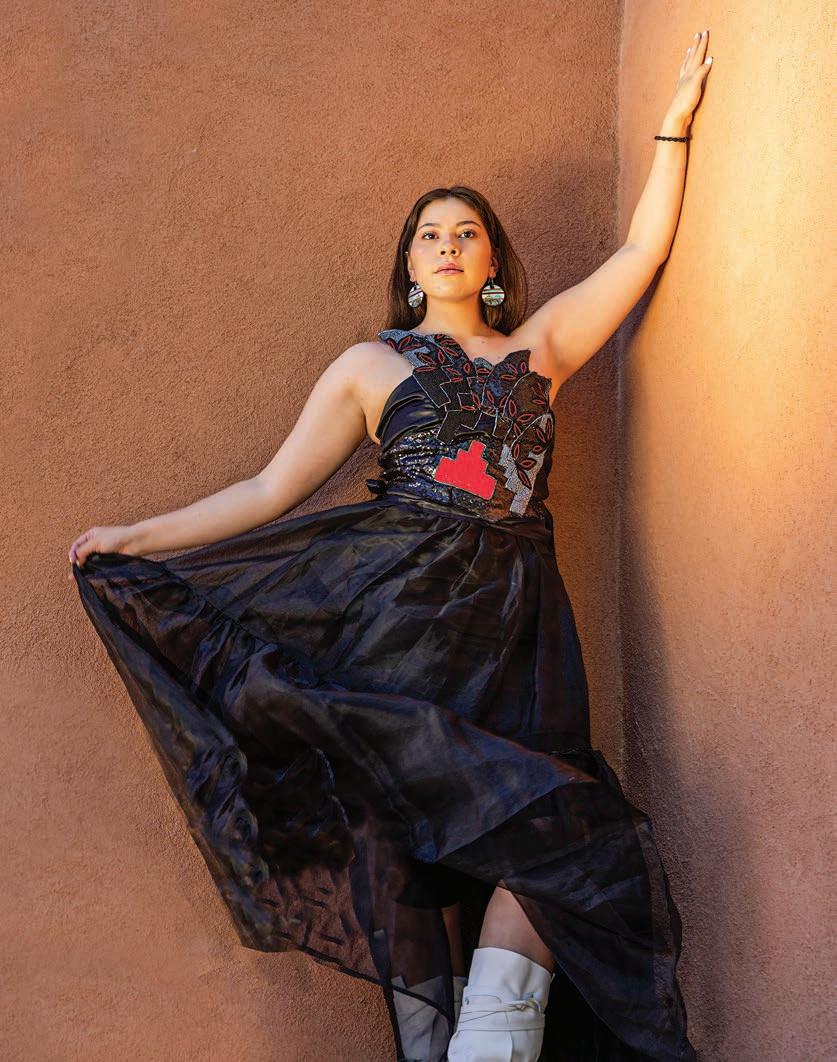
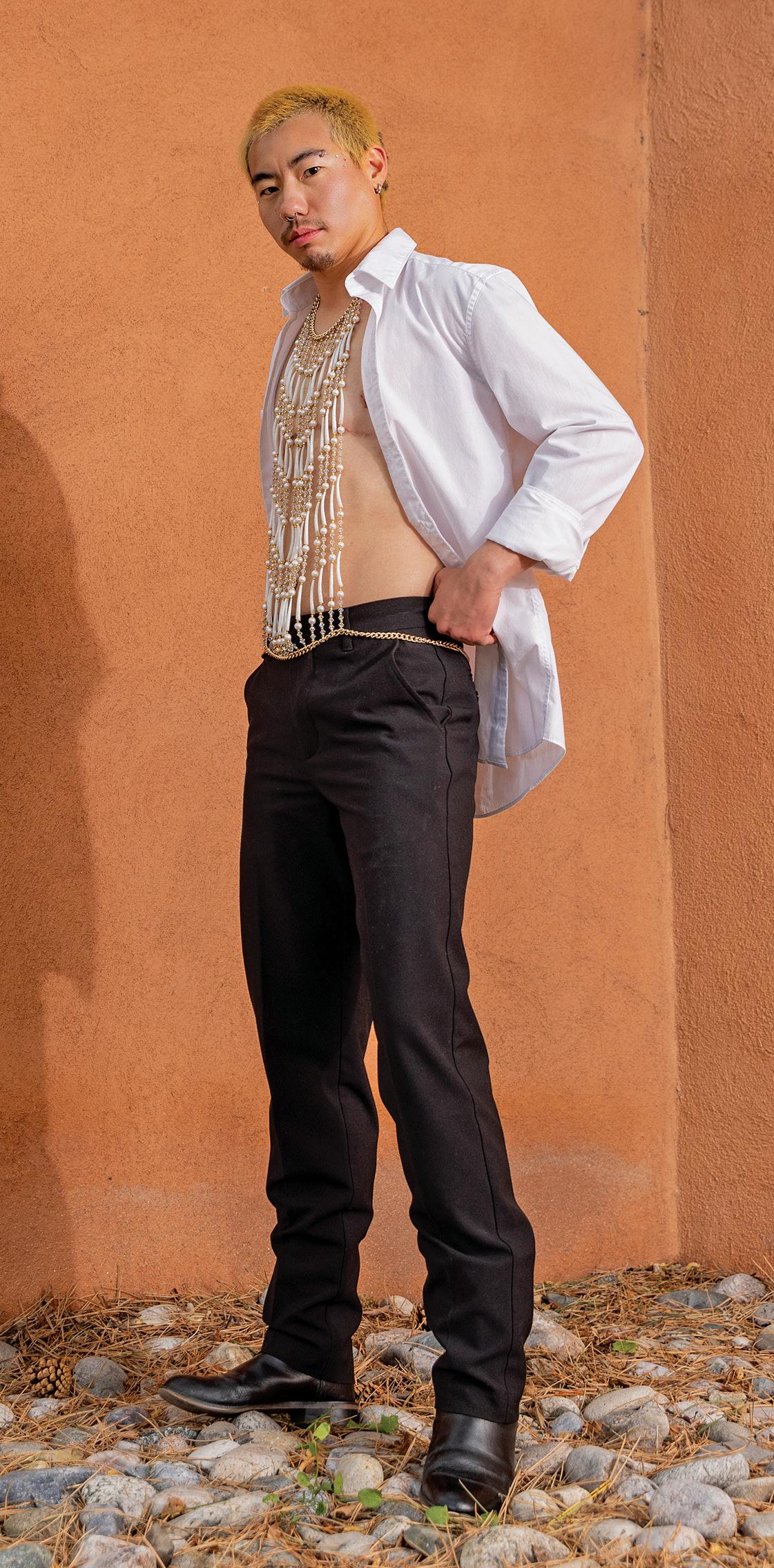
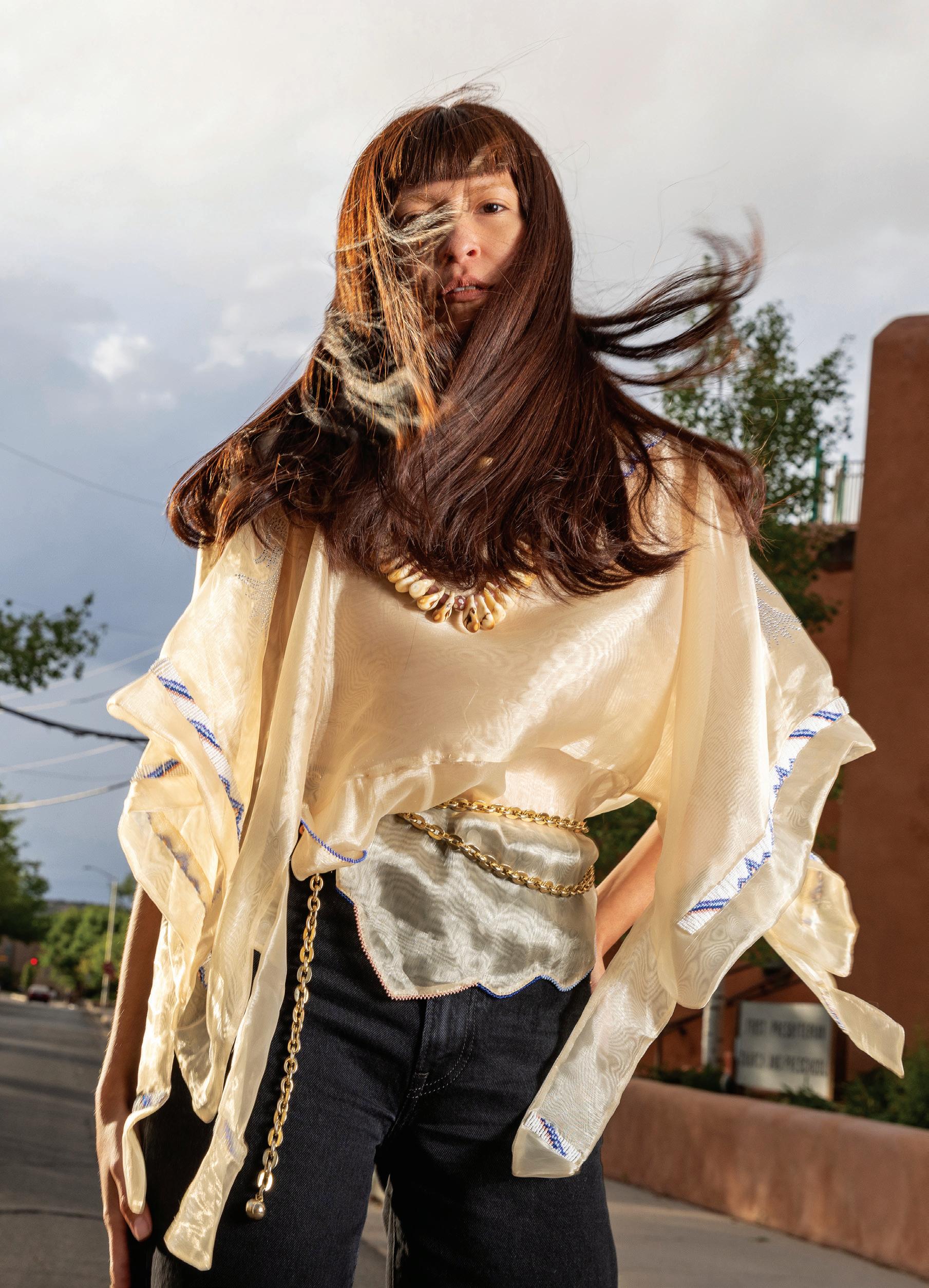
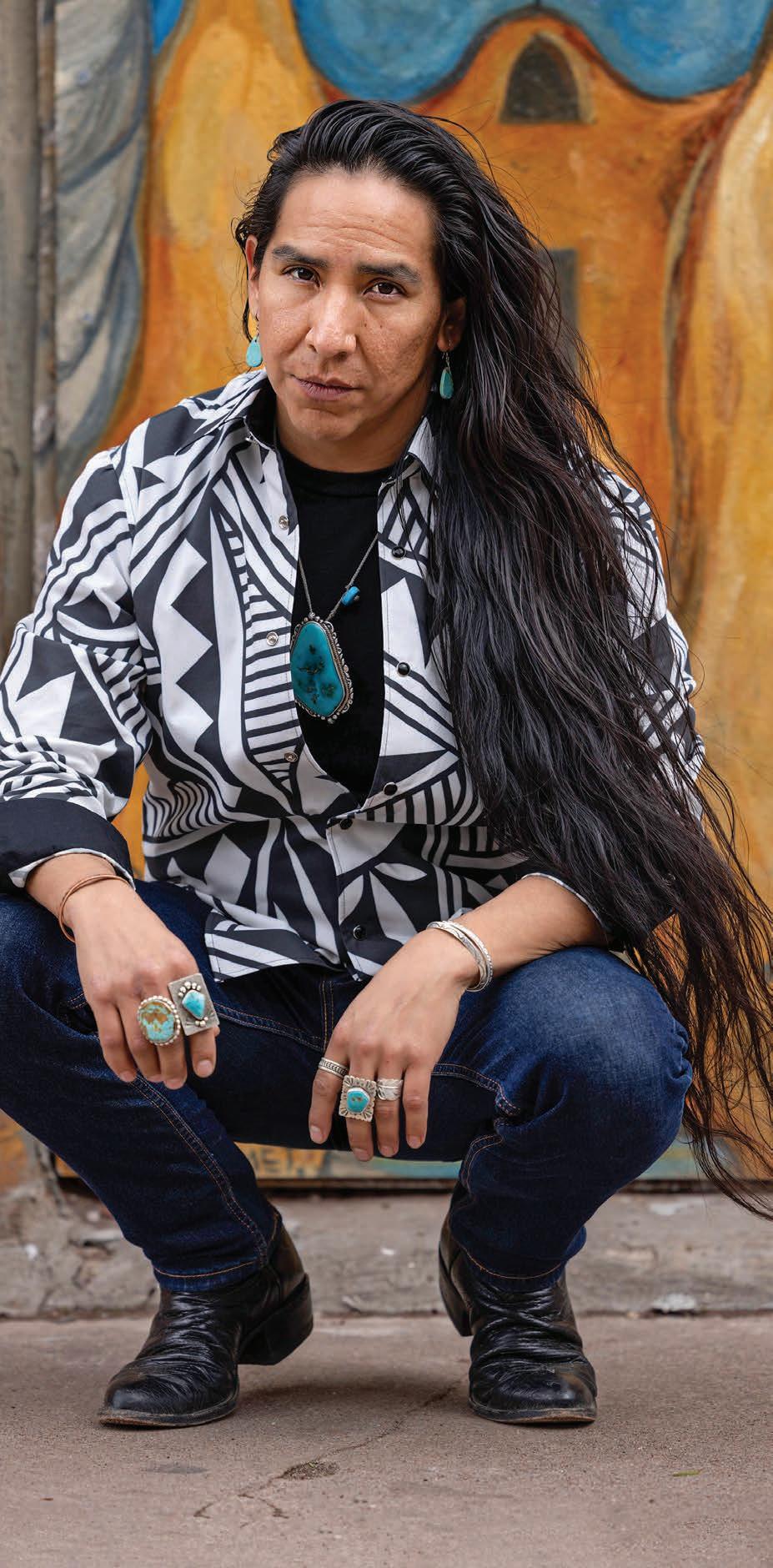
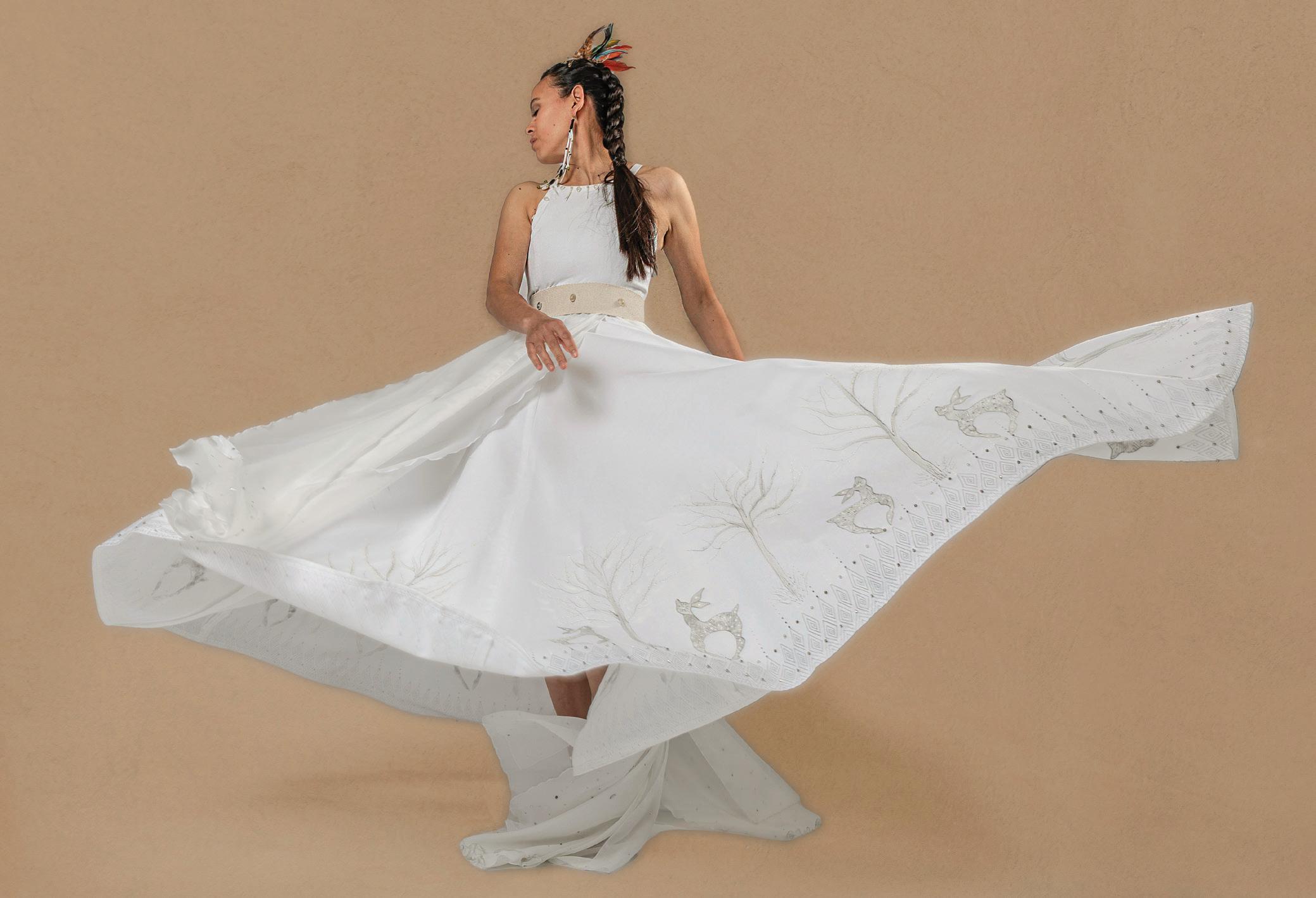
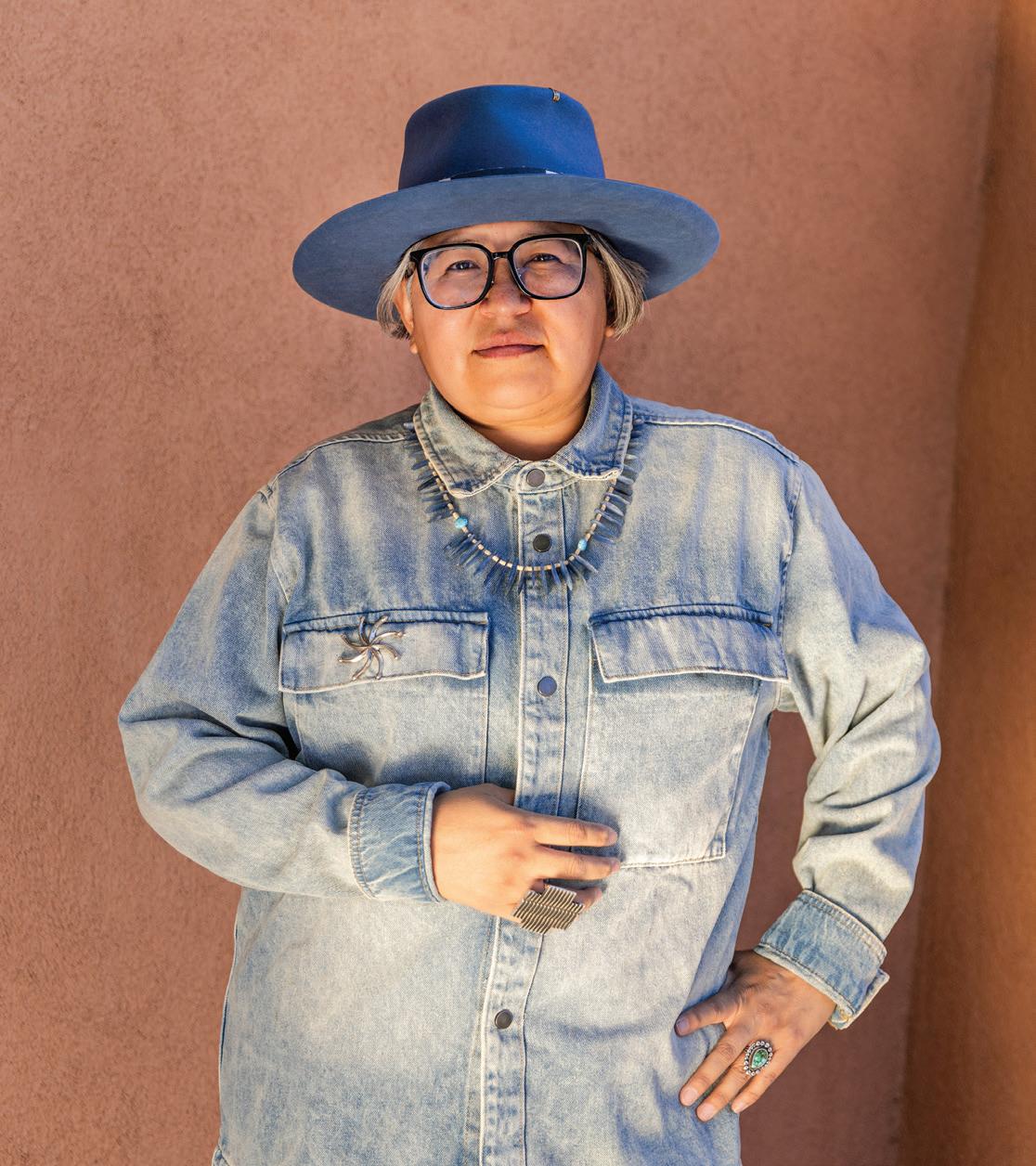
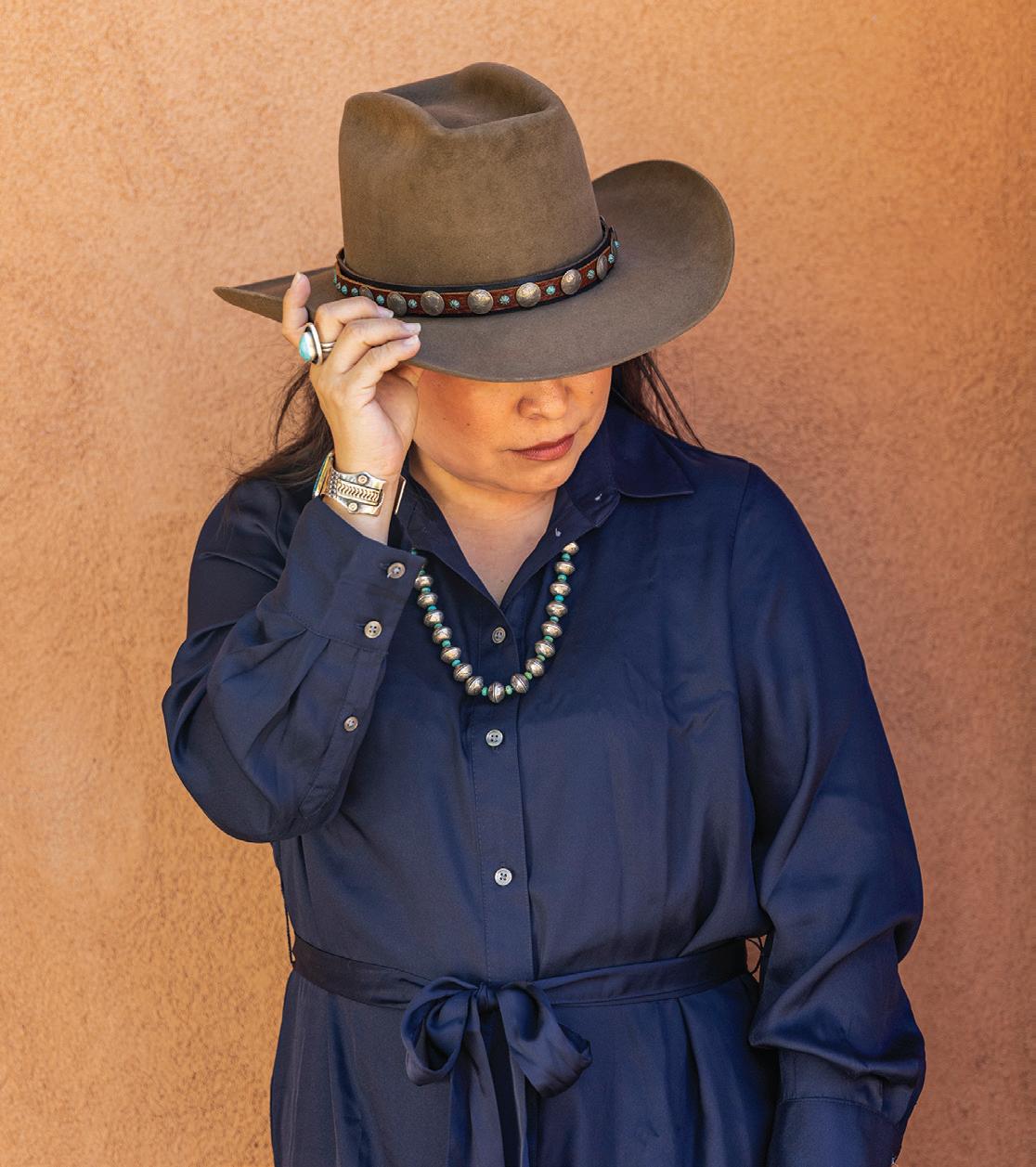
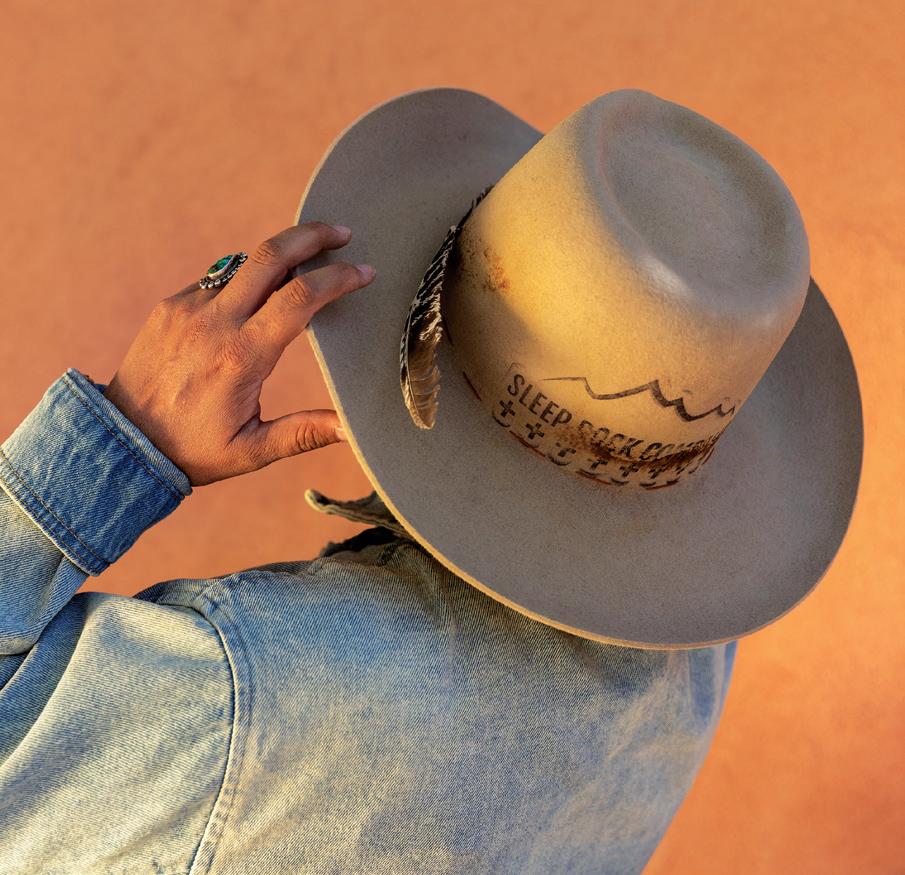
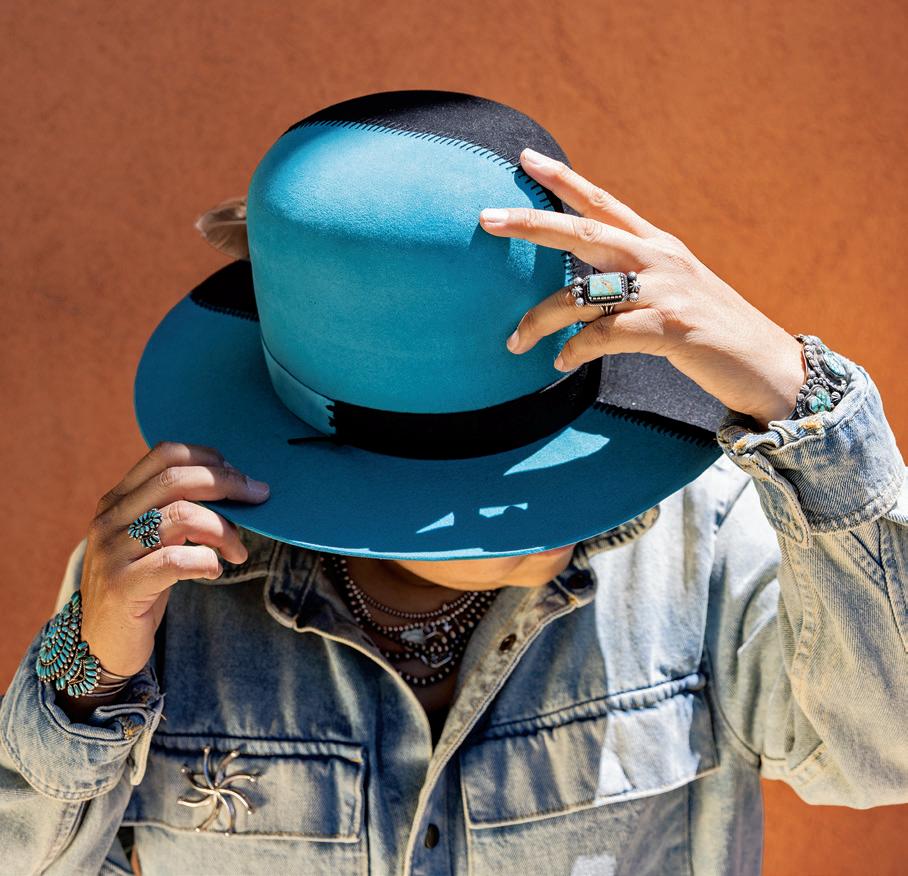
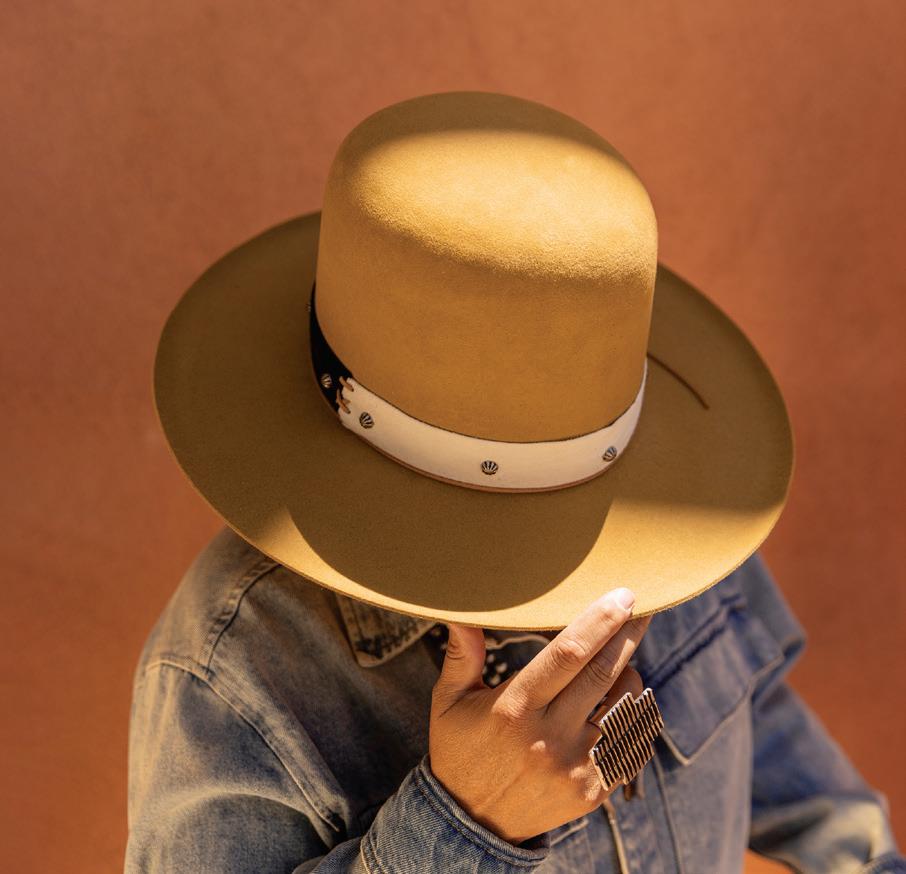
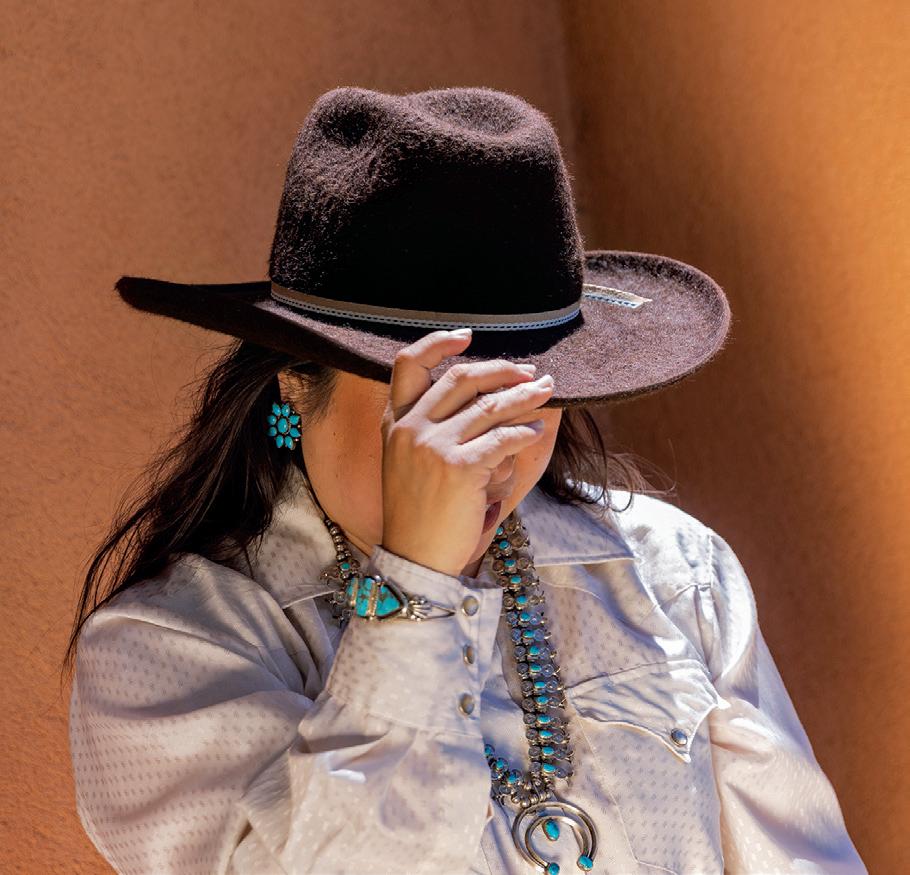
Indigenous-designed haute couture, ready to wear, and accessories
CHRISTUS ST. VINCENT AND MAYO CLINIC
Expert Care Right Here at Home
At CHRISTUS St. Vincent, the providers you know and trust have direct access to Mayo Clinic’s medical knowledge and expertise. This means, as a CHRISTUS St. Vincent patient, your expert providers can request a second opinion from Mayo Clinic specialists on your behalf and access Mayo Clinic’s research, diagnostics and treatment resources to address your unique medical needs.
This clinical collaboration allows you and your loved ones to get the comprehensive and compassionate care you need close to home, at no additional cost.
CHRISTUS St. Vincent and Mayo Clinic Working Together. Working for you.
(505) 913-3361•www.stvin.org
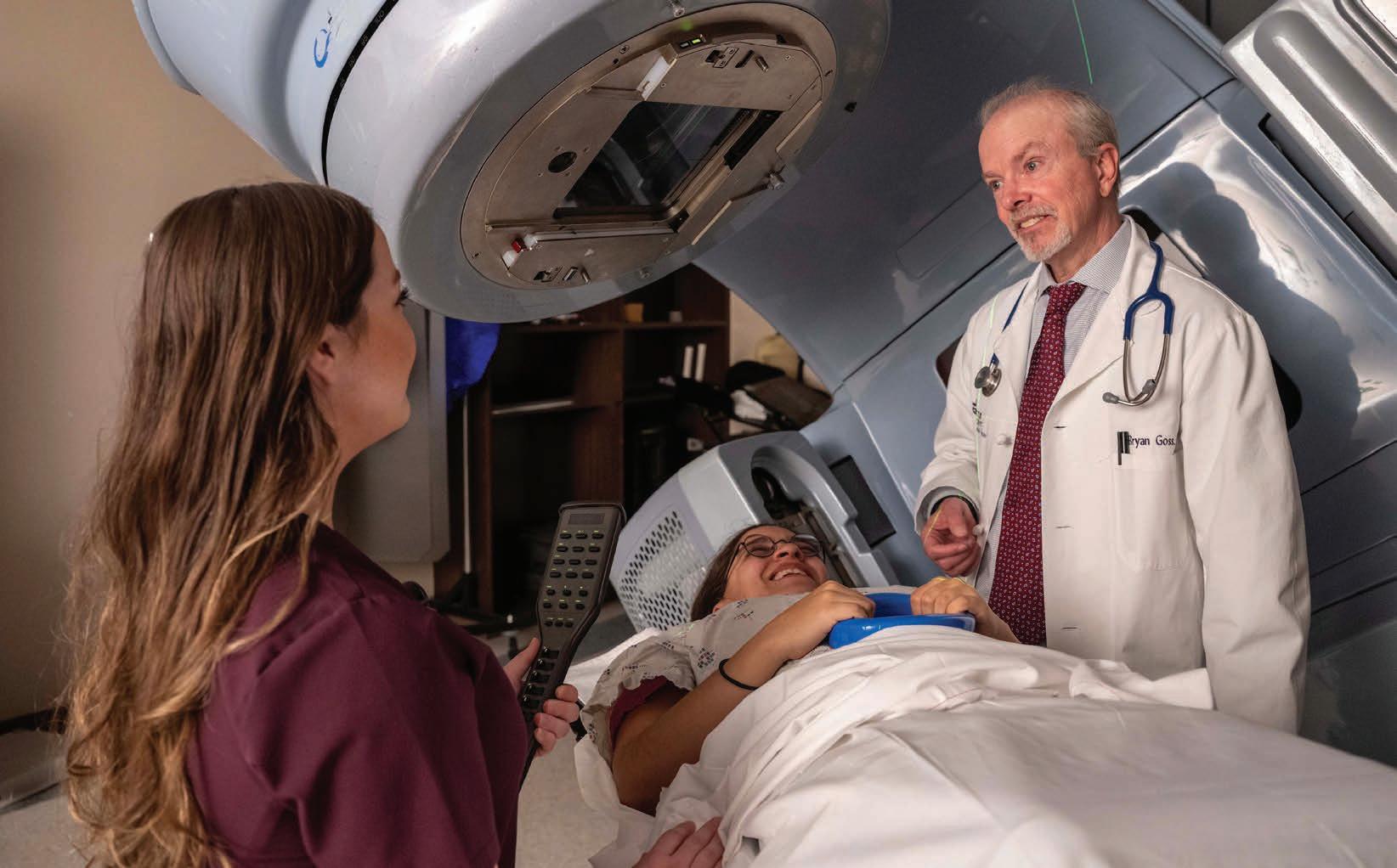
Now Open: Expanded Cancer Care, Close to Home
CHRISTUS St. Vincent Regional Cancer Center is proud to welcome you to our new, state-of-the-art facility at 445 St. Michael’s Drive.
We’ve brought expanded care and services under one roof, making it easier than ever for our community to access the expert care they deserve. With our new PET/CT machine, we’re enhancing diagnostic precision and treatment planning.
Need to be seen quickly? Our specialists are available within 48 hours, because when it comes to cancer care, every moment matters.
Come see how we’re redefining compassionate comprehensive cancer care right here in Santa Fe.
CHRISTUS St. Vincent
Regional Cancer Center
445 St. Michael’s Drive, Santa Fe, NM 87505 (505) 913-8900
8-5, SATURDAY-SUNDAY, AUGUST 16-17 FEDERAL PARK, Santa Fe (2 blocks from Plaza)
6-9 pm, FRIDAY, AUGUST 15 HOTEL SANTA FE
Free Indian Market • PO Box 2626, Santa Fe, NM 87504-2626 505-473-5375 • 505-670-5918 • gregoryschaaf1@icloud.com www.FreeIndianMarket.org
&
Order Tickets for Feast:
Clockwise: Robert Dale Tsosie, photo by Carl J. Sutter; Cavan Gonzales; Shonto Begay, photo by Tom Alexander; Photo by Arland Ben; Redwing Nez; Maria
Julian Martinez; and Mike Bird-Romero.
LLERY GA Sorr
photo: Eric Swanson
David Rosales
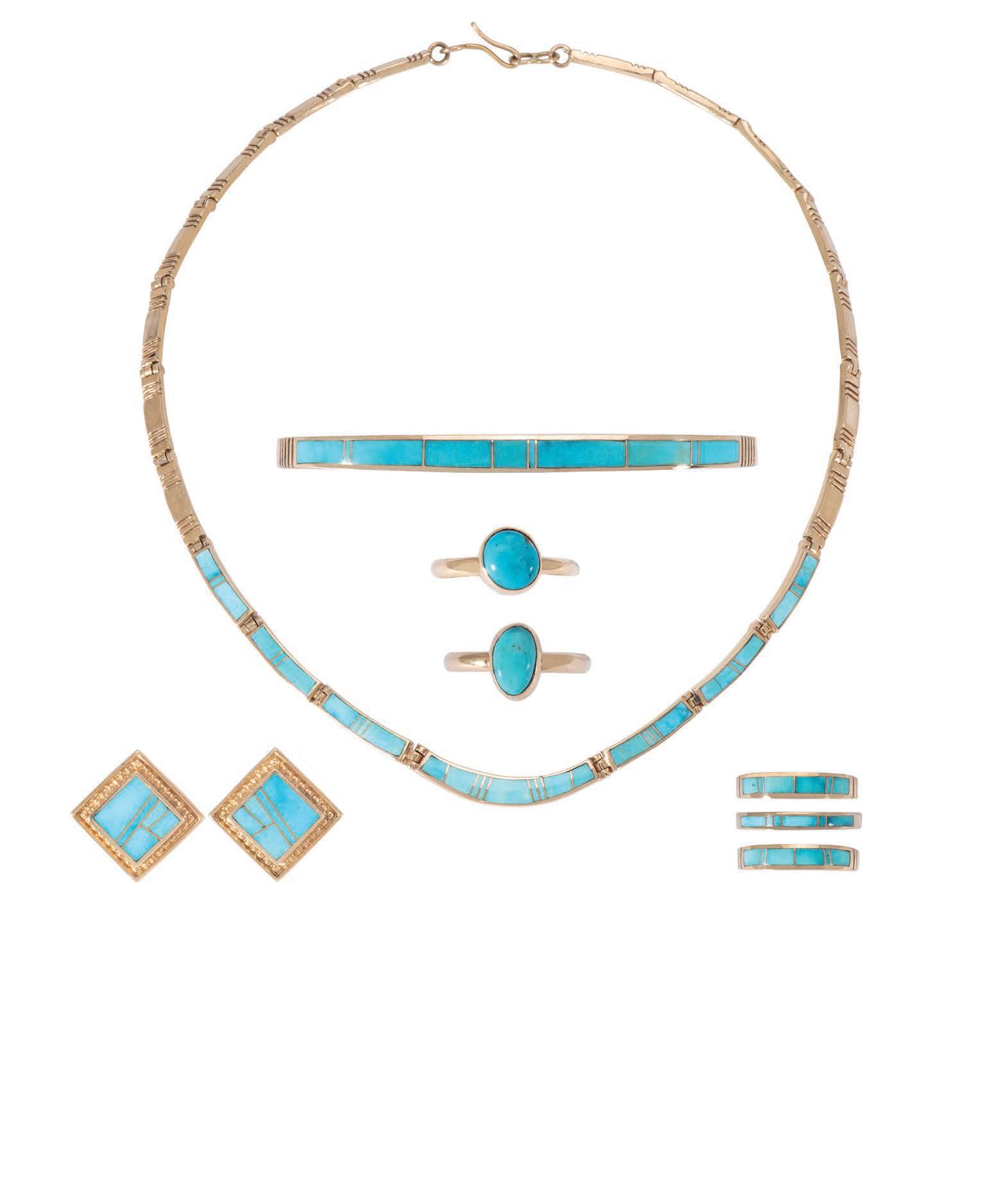
14k Gold & Turquoise Inlay
Arizona Blue & Kingman Turquoise
Supersmith
Miles Standish
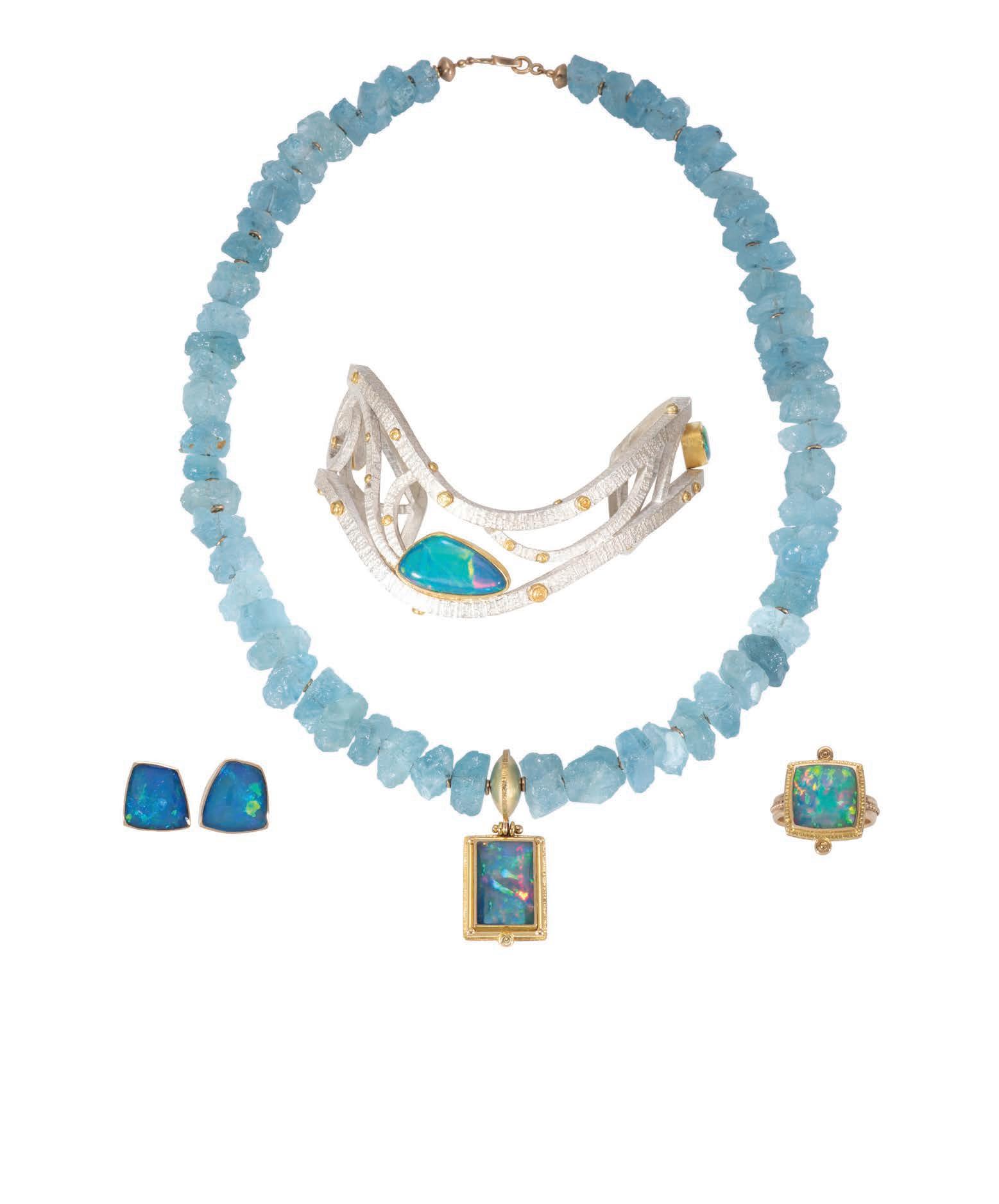
22k & 18k Gold and Sterling Silver
Aquamarine Nugget Necklace
Ethiopian Opal Earrings, Ring & Pendant ON THE PLAZA
TAKE HOME A TREASURE FROM
The Indian Arts and Crafts Board o ers a Source Directory of American Indian and Alaska Native Businesses that sell authentic Indian art and craftwork, available at www.doi.gov/iacb.
Under the Indian Arts and Crafts Act, it is unlawful to o er or display for sale, or sell, any art or craftwork in a manner that falsely suggests it is Indian made. For a free brochure on the Indian Arts and Crafts Act, including how to file a complaint, please contact:
U.S. Department of the Interior | Indian Arts and Crafts Board Toll Free: 1-888-278-3253 | Email: iacb@ios.doi.gov
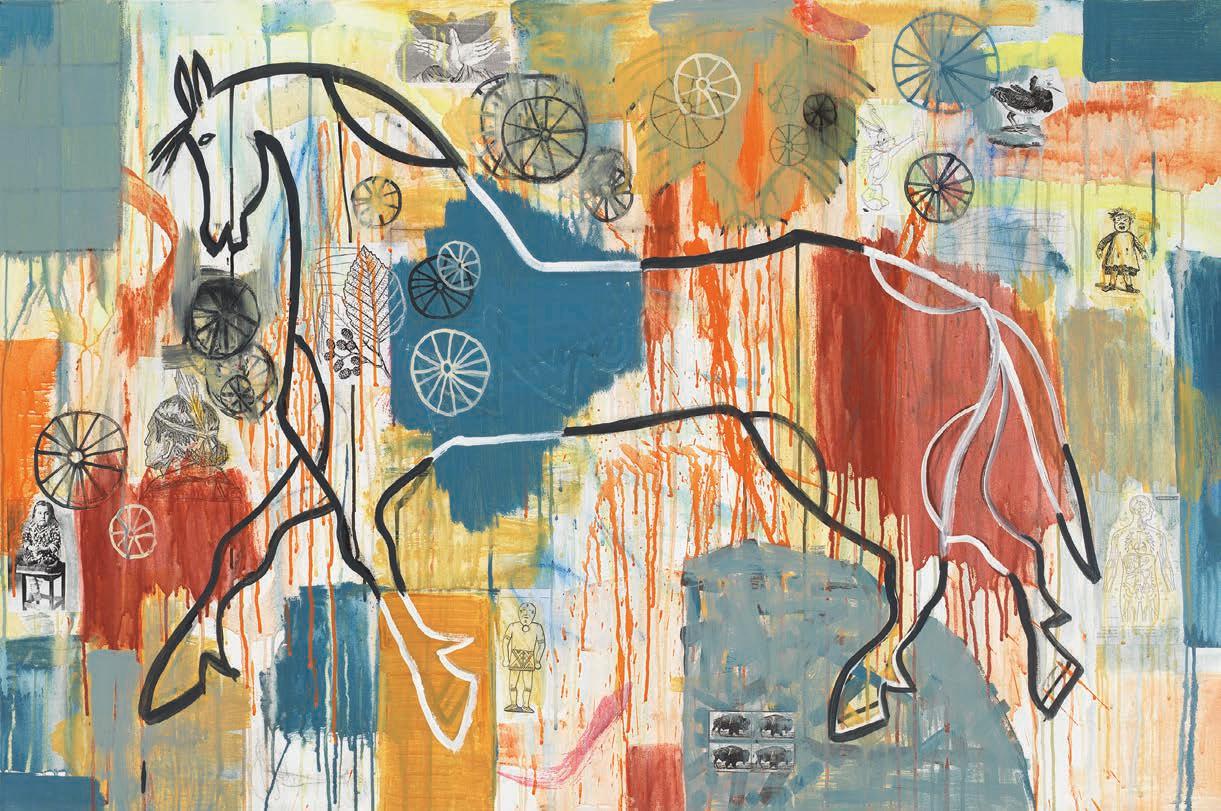
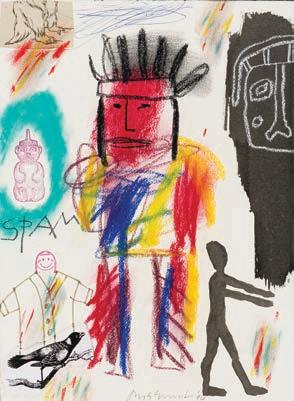
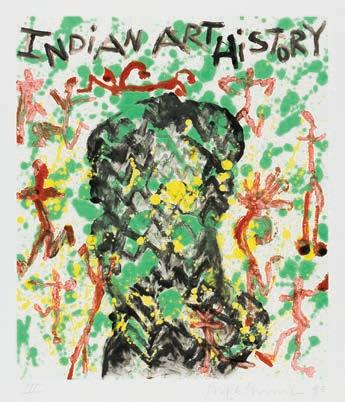
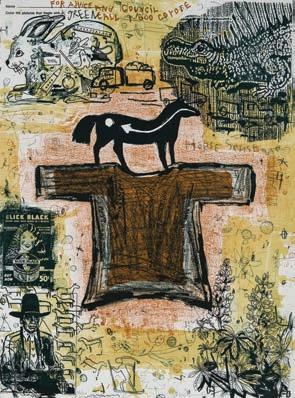
Above: Arlee Ledger Pony, 2015, mixed media on canvas, 40" x 60"; Below from left: Spam, 1994, mixed media and collage on paper, 15" x 11"; Indian Art History, 1993, monotype, 21" x 18"; Horse Sense (Ed. 13/30), 1994, original lithograph on paper, 30" x 22"
Here in New Mexico, Native American arts and culture are an integral part of our state’s tapestry. That is why AARP
New Mexico is a proud sponsor of this year’s Santa Fe Indian Market. We live here too and understand how our diverse culture makes this a great place to call home.
At AARP, we offer resources for family caregivers, ways to prevent identity theft and fraud, opportunities to give back to our community, and ght to protect Social Security, all to help you achieve your goals and stay connected.
OWNER
Robin Martin
PUBLISHER
Patrick Dorsey
EXECUTIVE EDITOR
Bill Church
EDITORIAL
Magazine Editor, Ashley M. Biggers abiggers@sfnewmexican.com
Contributing Editor, Ungelbah Dávila
Designer, Linda M. Peters linda@swelldesign.net
Copy Editor, Peg Goldstein
CONTRIBUTORS
Gabriela Campos, Tira Howard, Devon Jackson, Jennifer Levin, Gabriella Marks, Elizabeth Miller, Adele Oliveira, Michael G. Seamans, Jim Weber, and Emily Withnall
ADVERTISING
Chief Advertising and Marketing Director Wendy Ortega
Classified Advertising Manager
Laura Harding
ADVERTISING SALES
Mayra Aldaz
Maria Lopez Garcia
Deb Meyers
Veronica Rigales
Vanessa Ruedeman
Trina Thomas
ADVERTISING ART DEPARTMENT
Designers, Elspeth Hilbert, Rick Artiaga, Justin Bixler
PRODUCTION
Operations Director, Tim Cramer
2025 Northern New Mexico Guide to Native American Arts & Culture
ON THE COVER
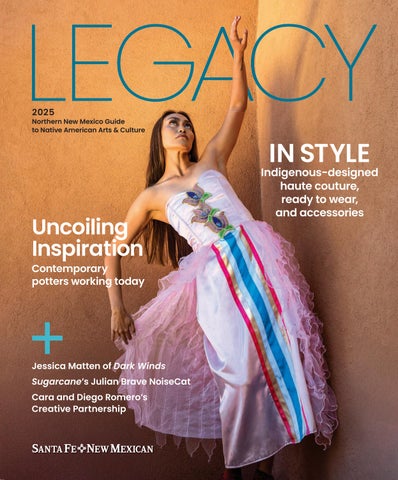
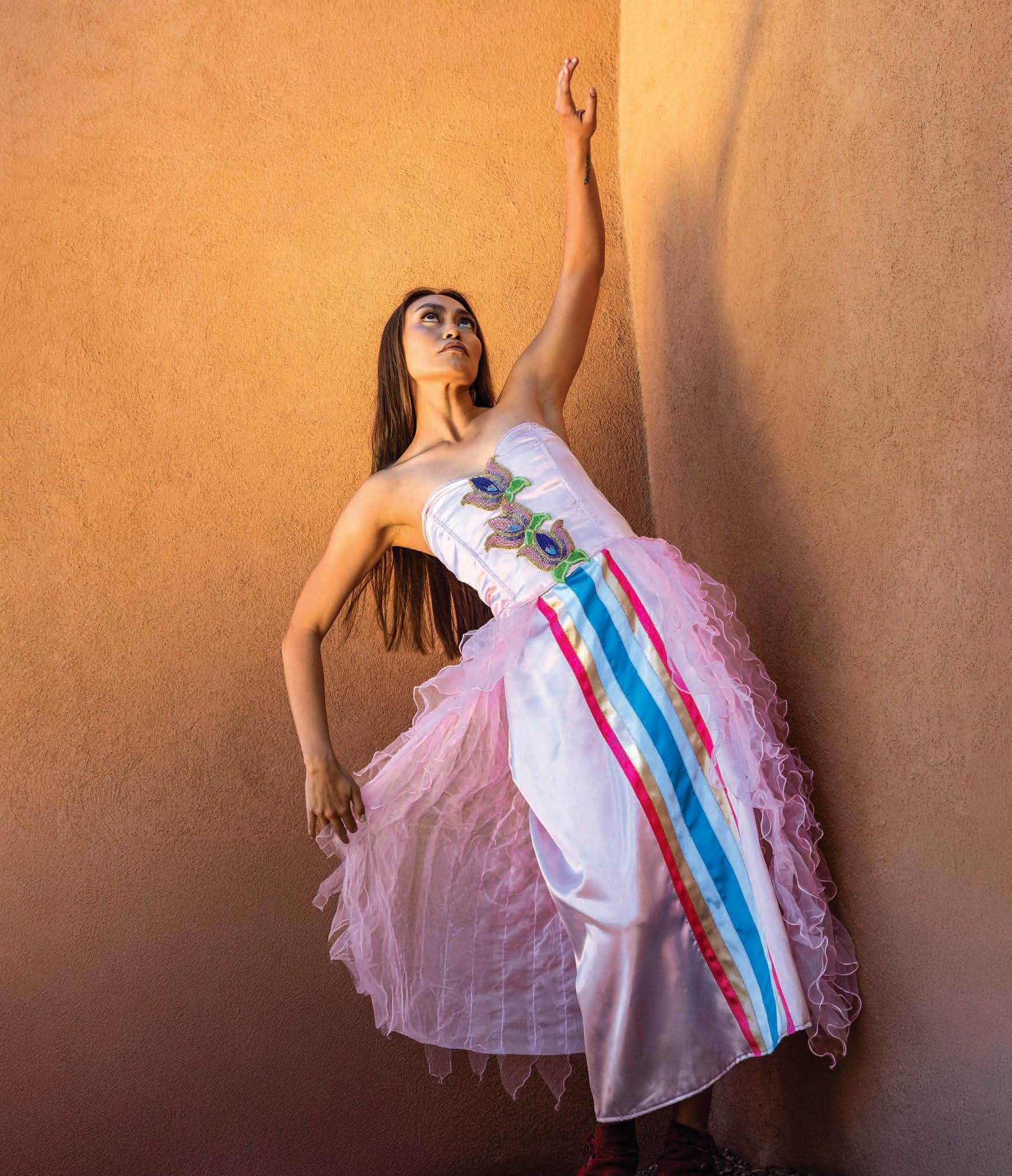
Than Povi Martinez reaches new heights in a garment by Sage Mountainflower. Read more about Martinez on page 26 and Mountainflower on page 92.
Prepress Manager, Anthony Welch
Assistant Production Director, Brenda Shaffer
Packaging Manager, Josh Harris
DISTRIBUTION
Circulation Director, Michael Reichard
TECHNOLOGY
Technology Director, Michael Campbell
WEB
santafenewmexican.com
Office: 150 Washington Ave. #105
Hours: 8 a.m.–5 p.m. Monday–Friday
Advertising Information: 505-995-3852
Delivery: 505-986-3010, 800-873-3372
For copies of this magazine, call 505-986-3010 or email circulation@sfnewmexican.com.
COVER PHOTO By Gabriella Marks
Indigenous arts, cultures, and traditions
Tribal collaborations
Culturally-based education programs
Library, archives, and research collections
Archaeological research
INSIDE THIS ISSUE
123
With Indigenous owners, these new shops in Santa Fe and Albuquerque are helping change the gallery scene.
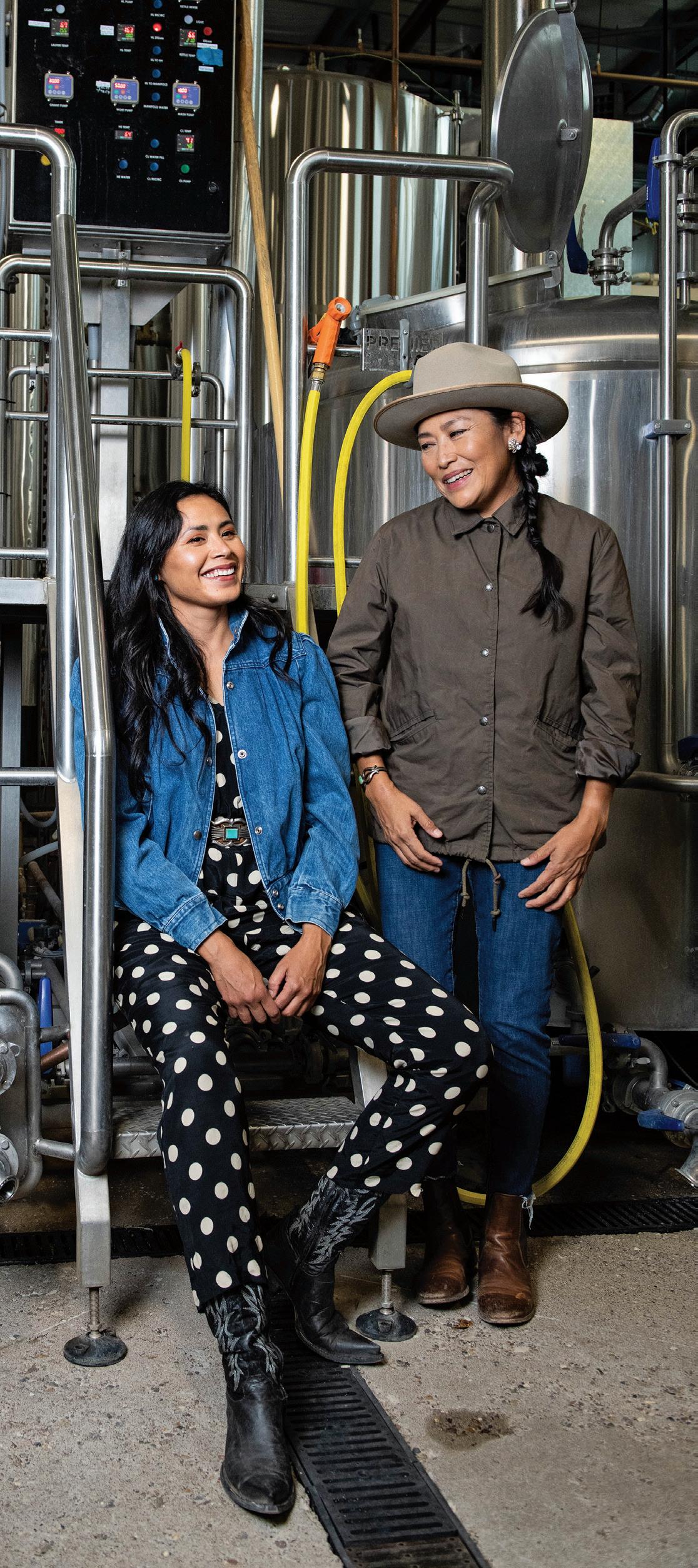
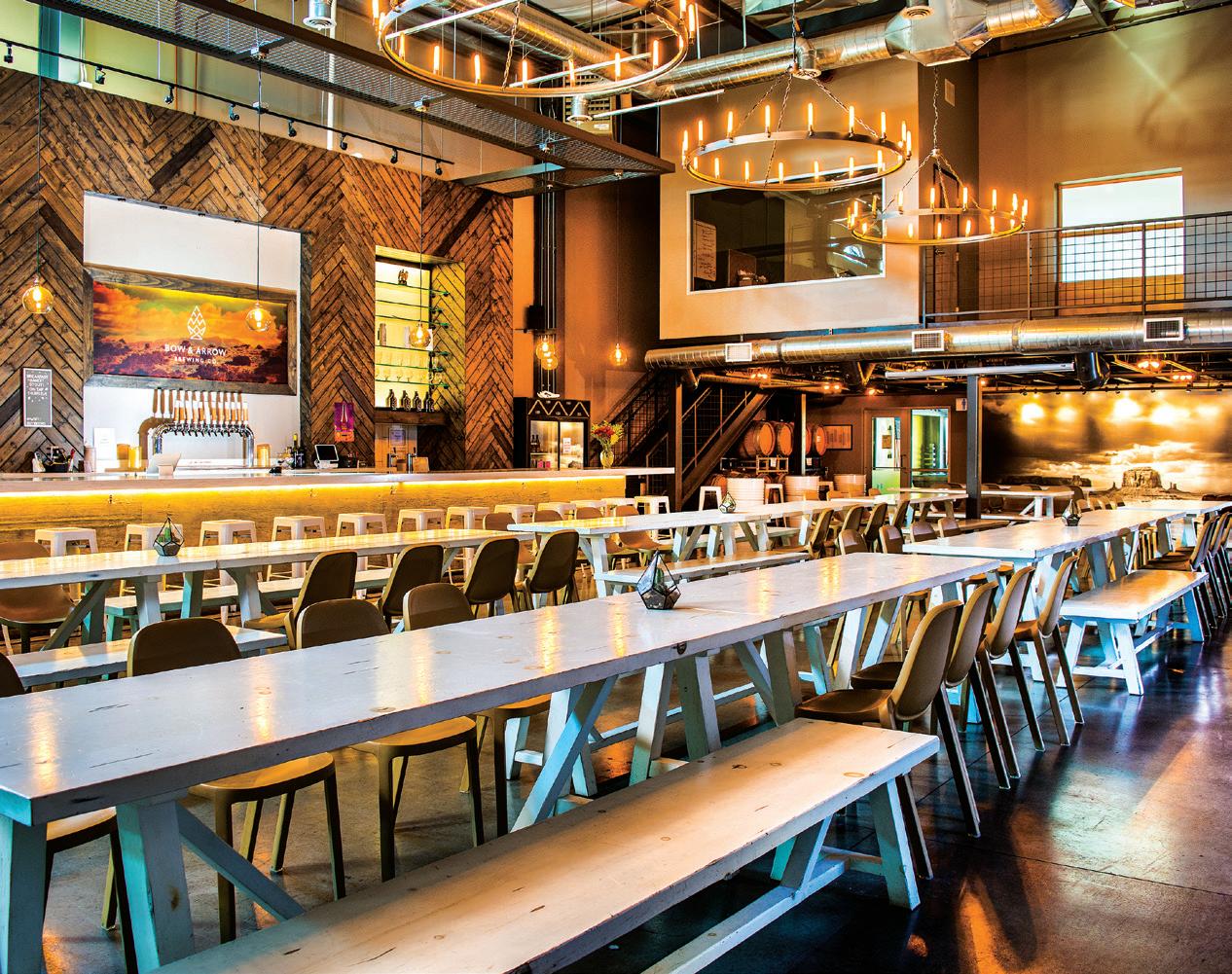
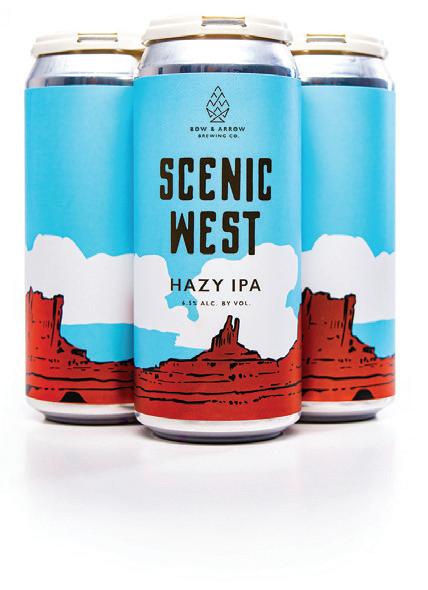
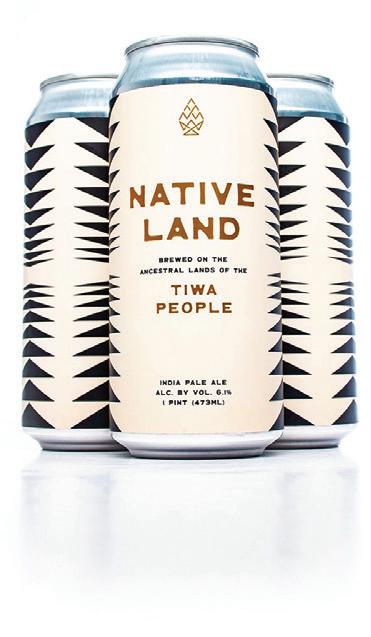
Bow & Arrow Brewing Co. pays homage to the region and its first people.
127
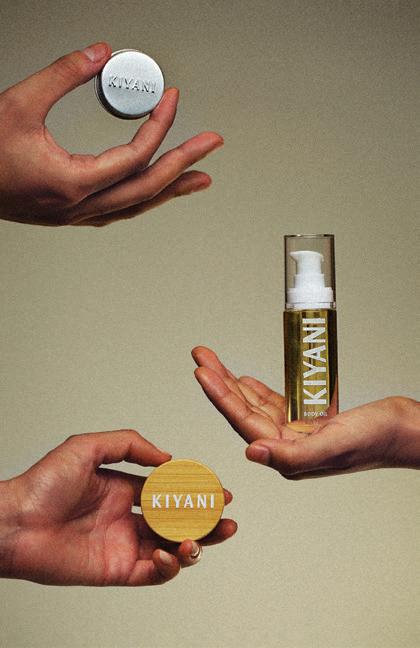
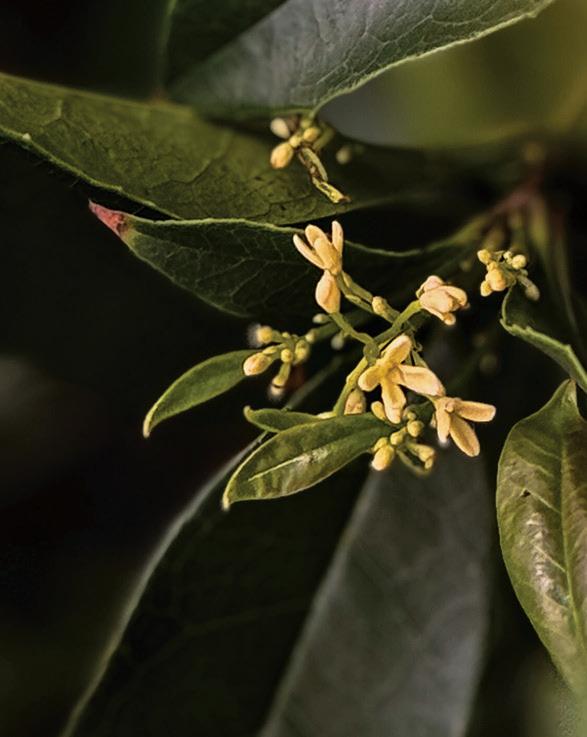
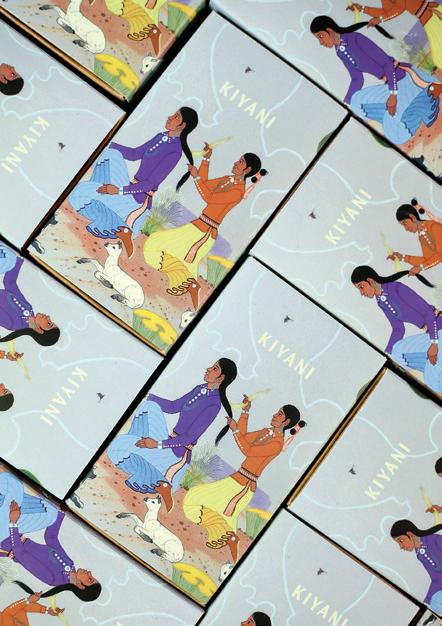
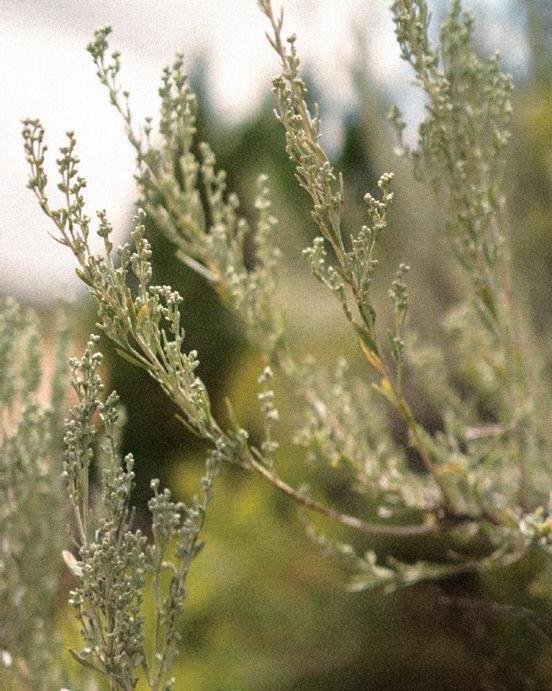
Kiyani Botanics uses plant medicine in body products that are healing for people and gentle on the earth.
Ten galleries showcasing Native and non-Native artists this month
Meet the presenting artists at Santa Fe Indian Market, Free Indian Market, and Pathways Indigenous Arts Festival
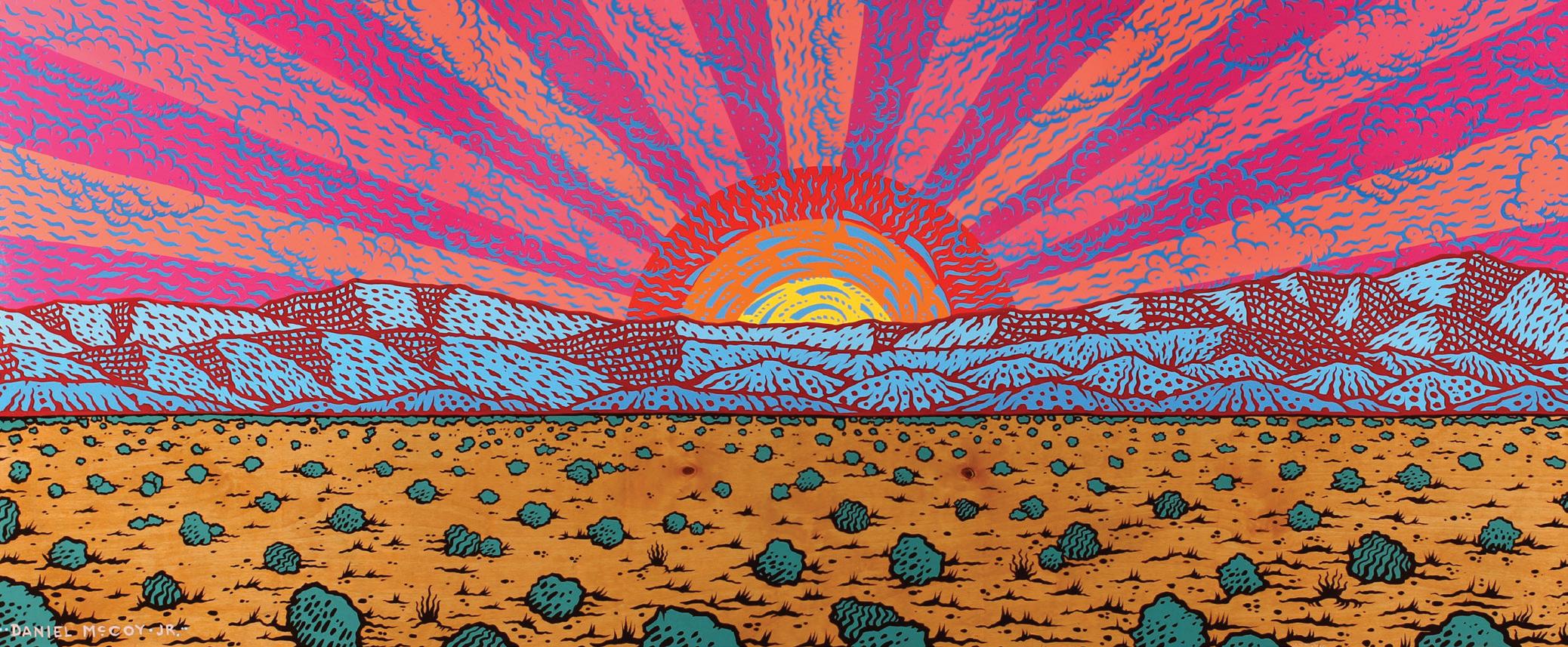
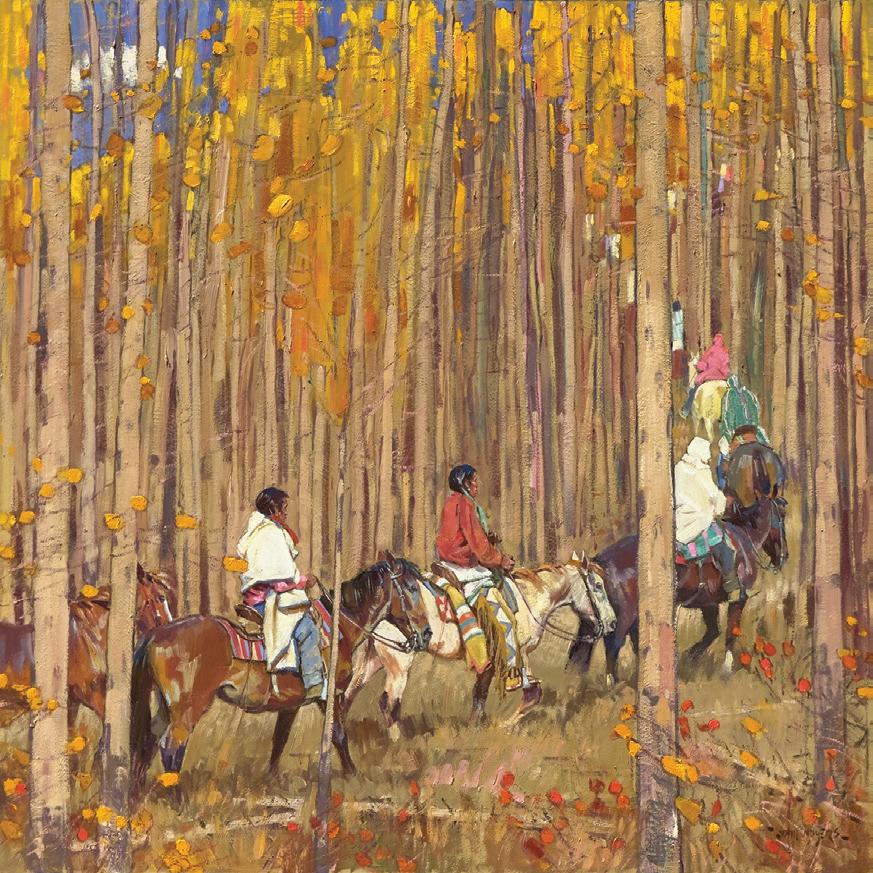
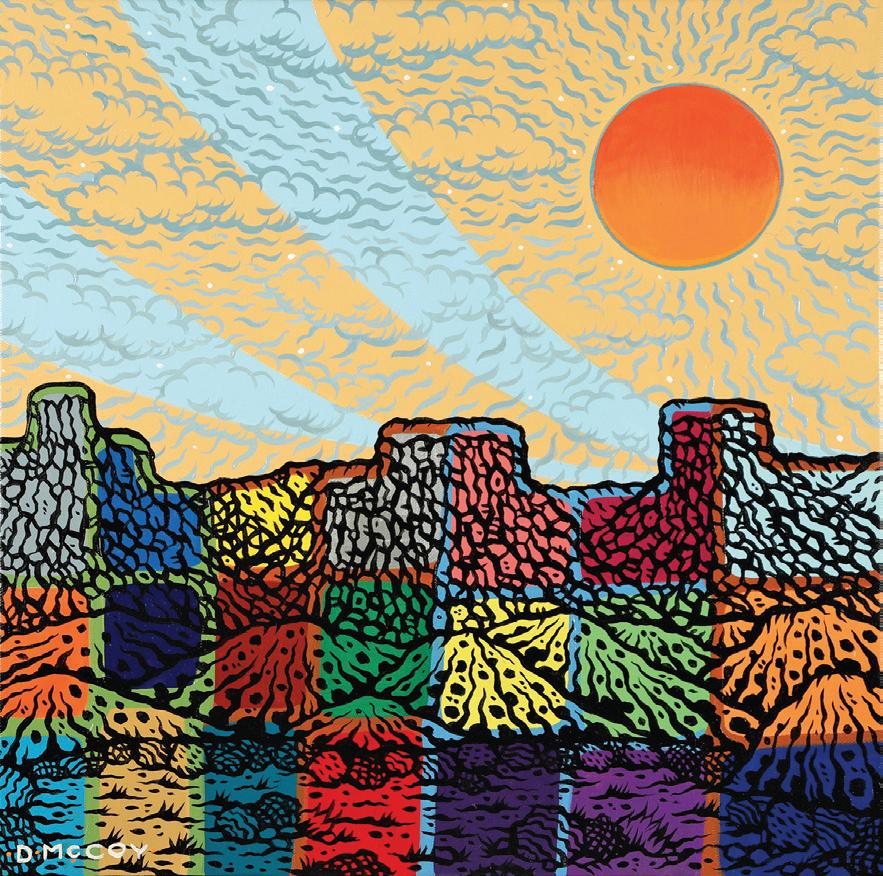
Daniel McCoy: Falltime Rays
INSIDE THIS ISSUE
Features
62 On Point
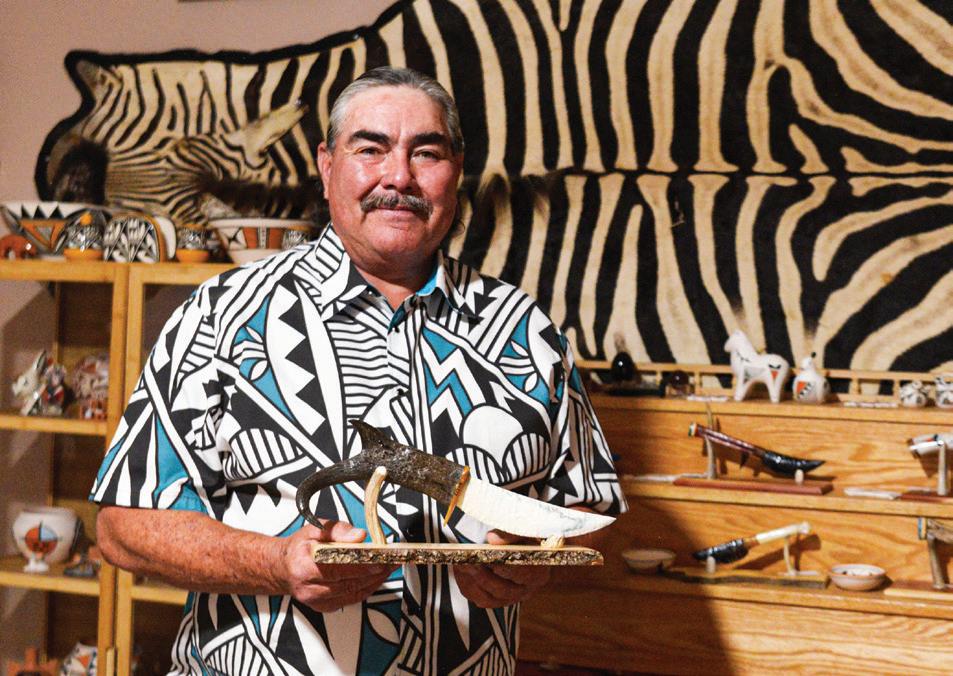
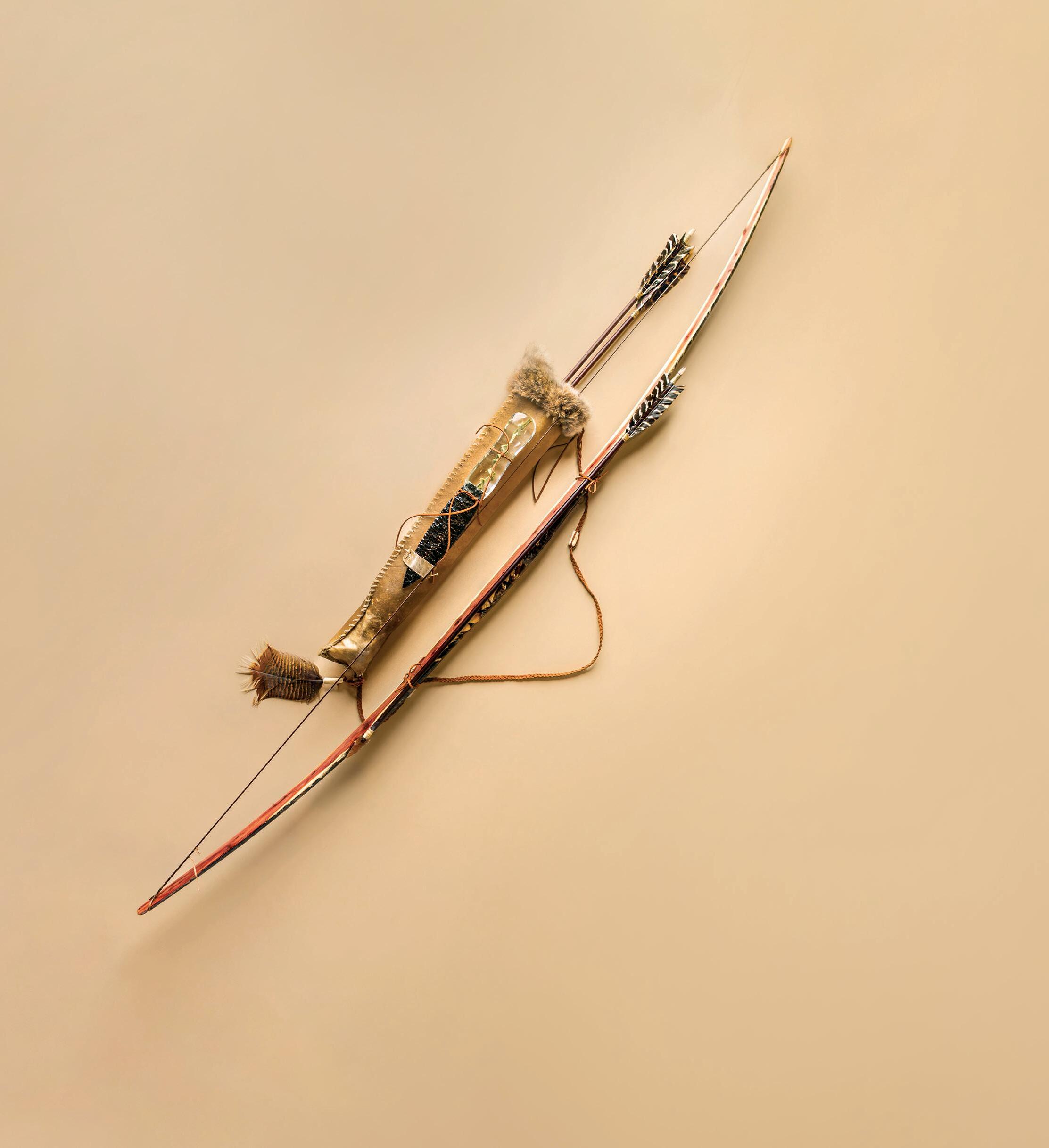
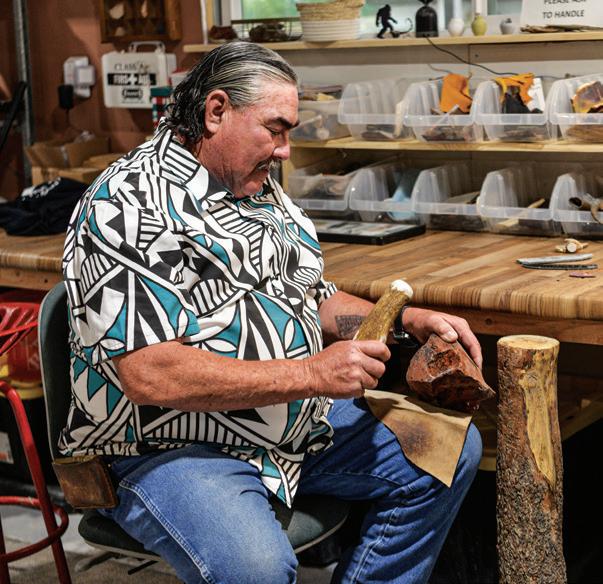
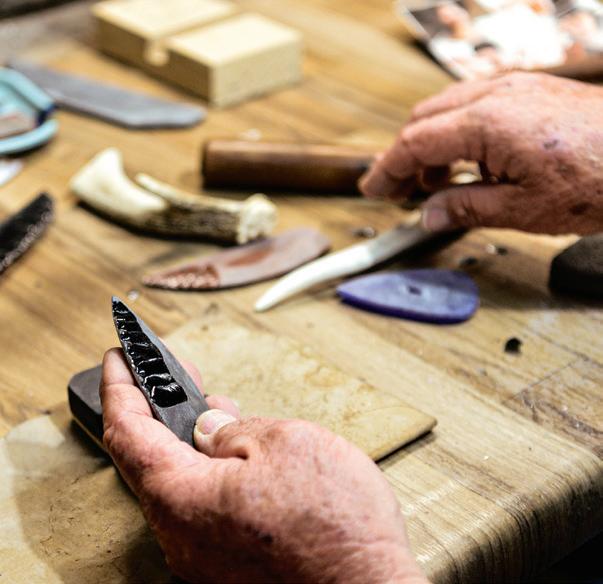
2024 Santa Fe Indian Market Best of Show winner Dan Vallo’s creation showcases artistry — and the legacy of revolution. Story and photography by Ungelbah Dávila
65 The Uprising Today
Indigenous artists respond to and reimagine the Pueblo Revolt.
By Ungelbah Dávila
68 Just the Messenger
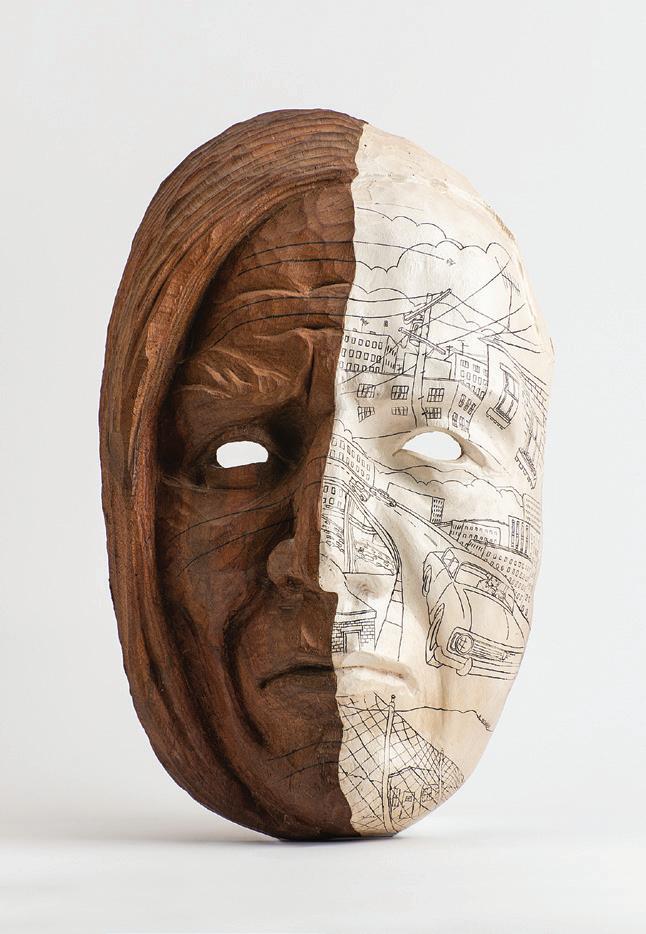
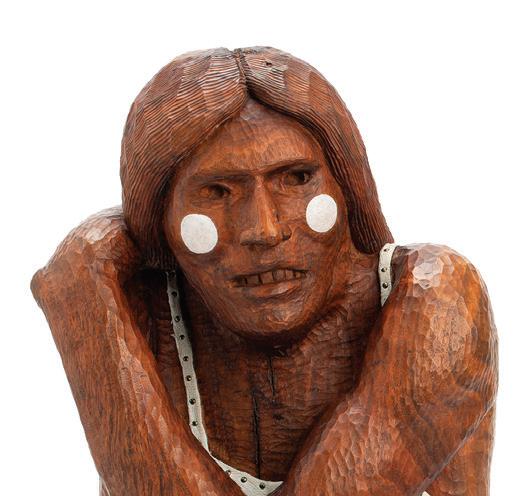
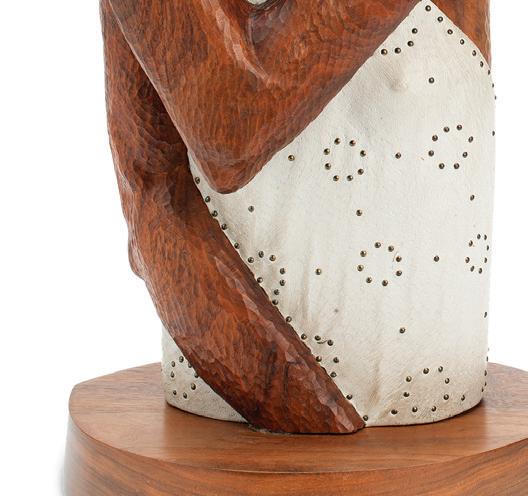
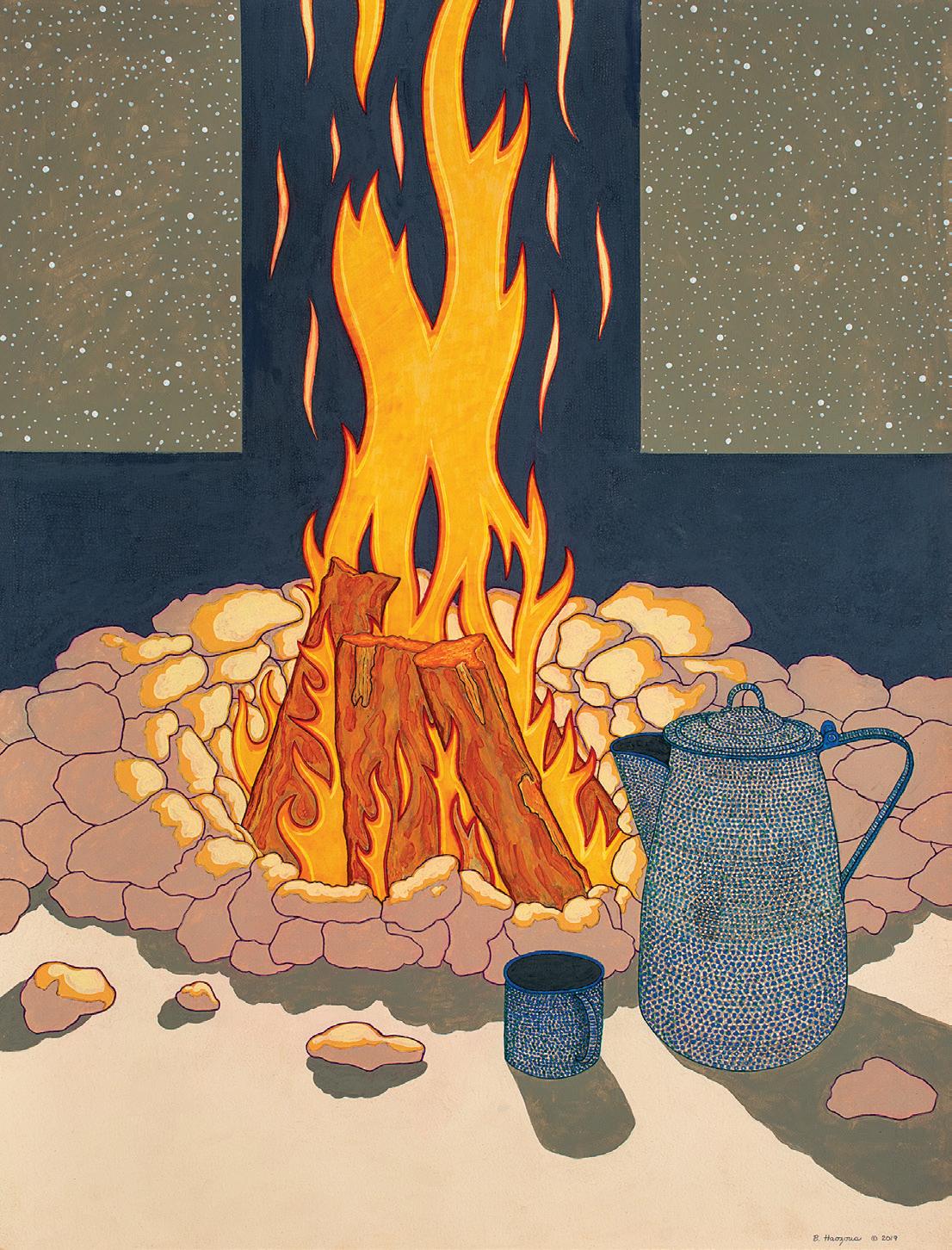
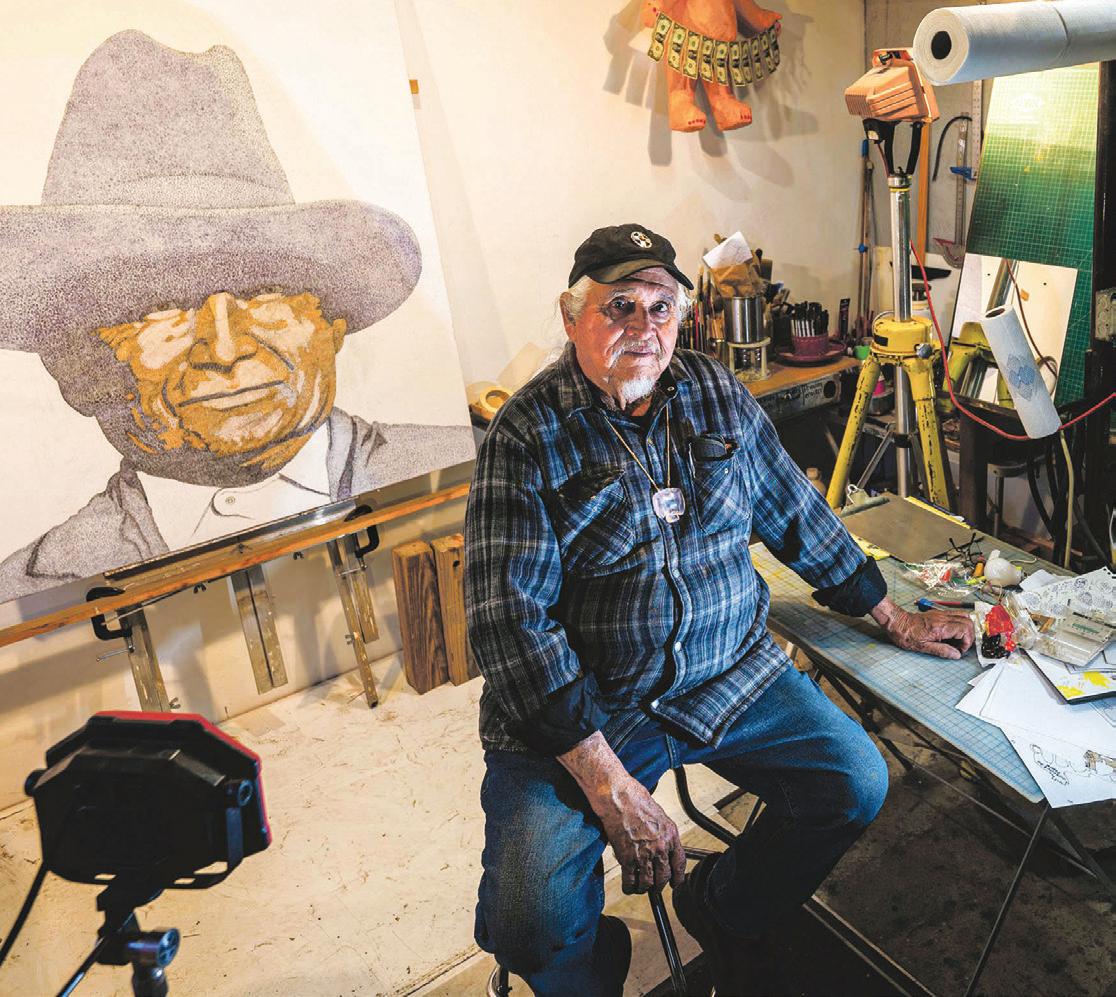
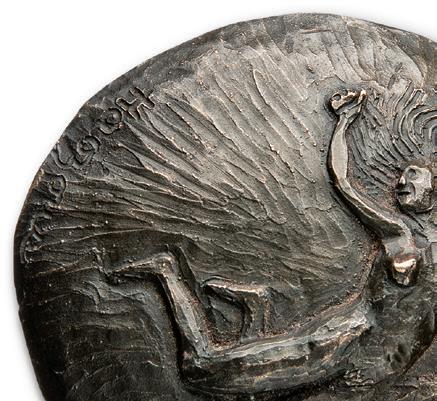
As two museums showcase Bob Haozous’s sculptures, paintings, and metalworking, the artist hopes people look past the materials to their meanings.
By
Elizabeth Miller
Portraits by Michael G. Seamans
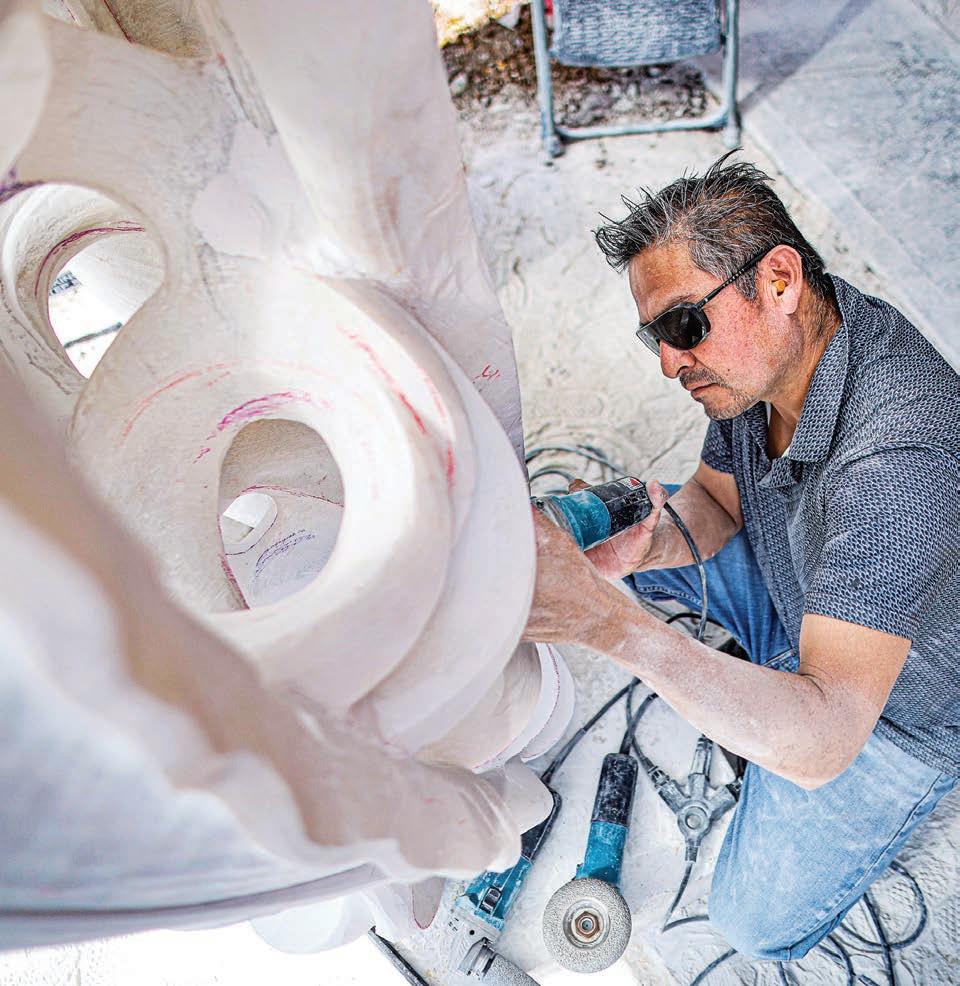
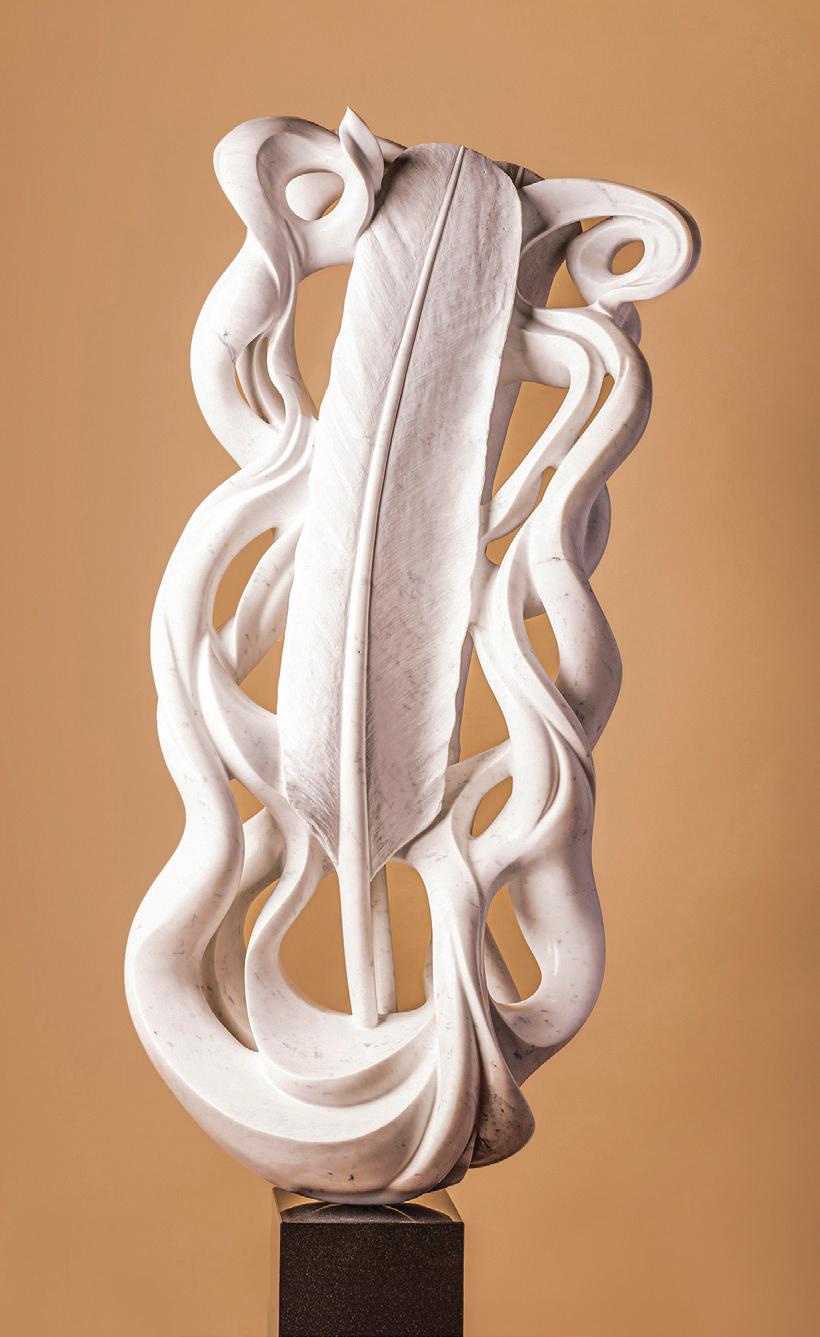
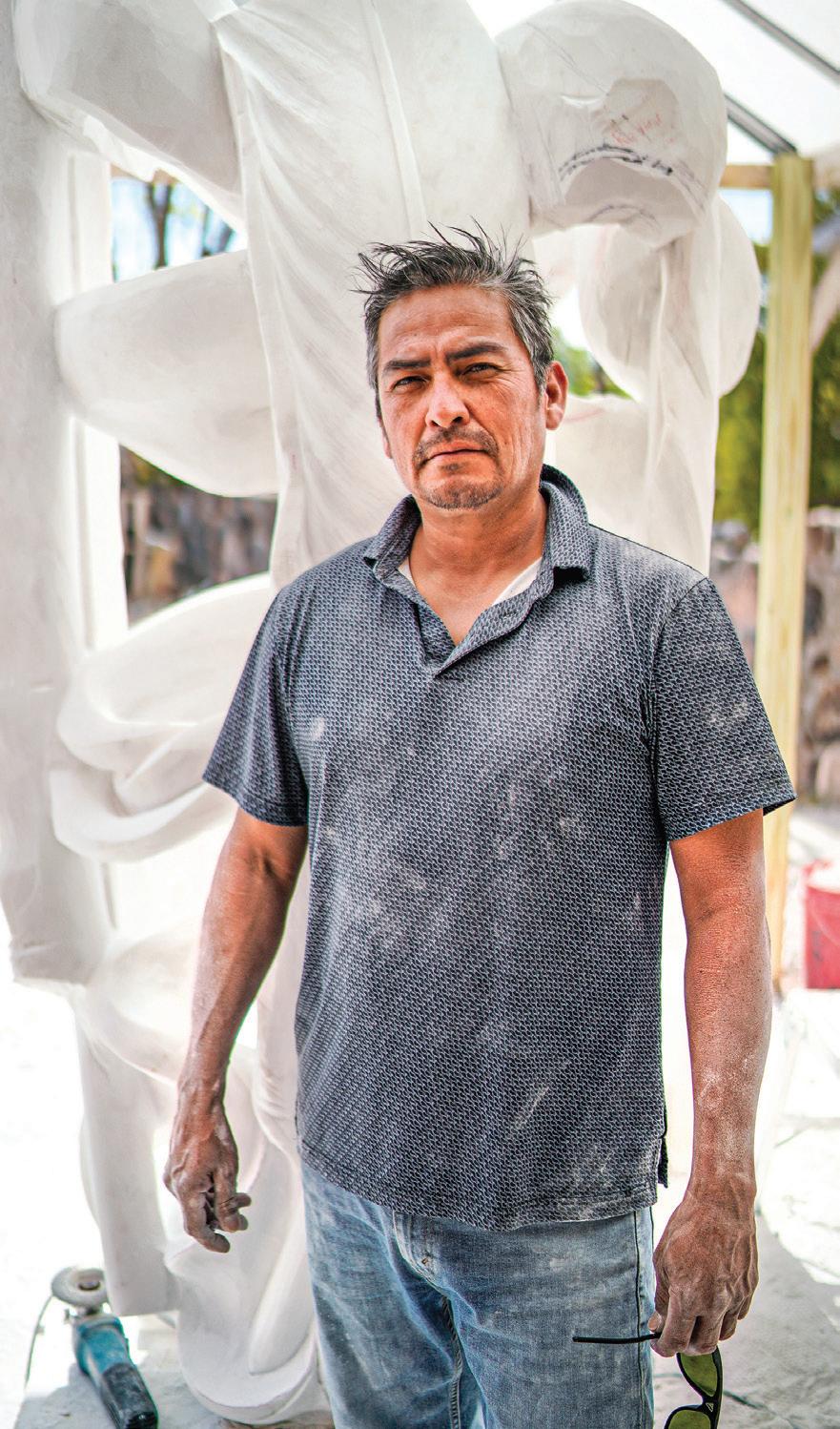
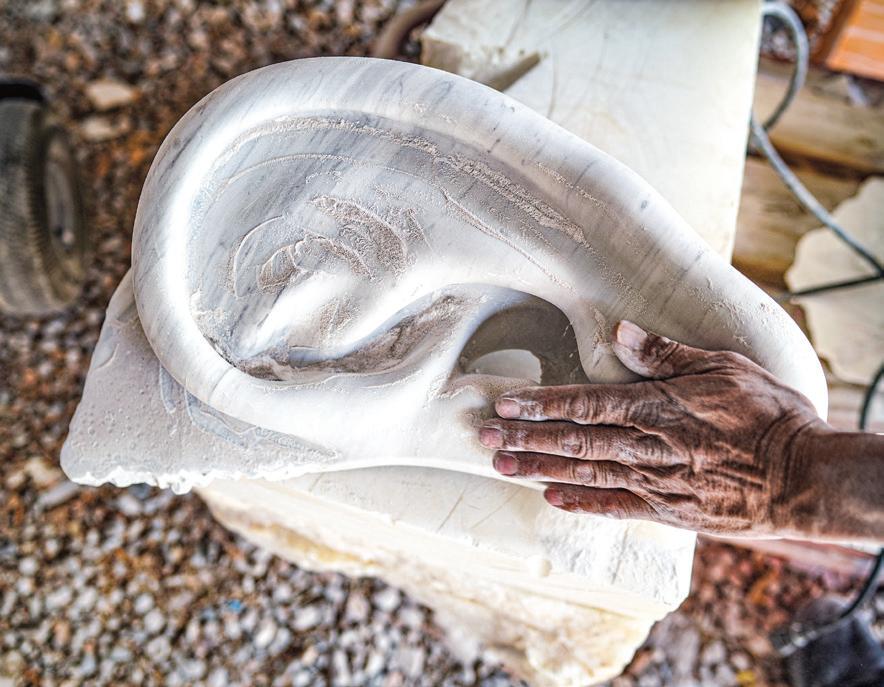
73 Stone Giants
The only competition that motivates sculptor Ryan Benally is outdoing himself.
By Elizabeth Miller
Portraits by Gabriela Campos
76 Romero & Romero
Cara and Diego Romero hit the high points — together.
By Devon Jackson
82 In the Now
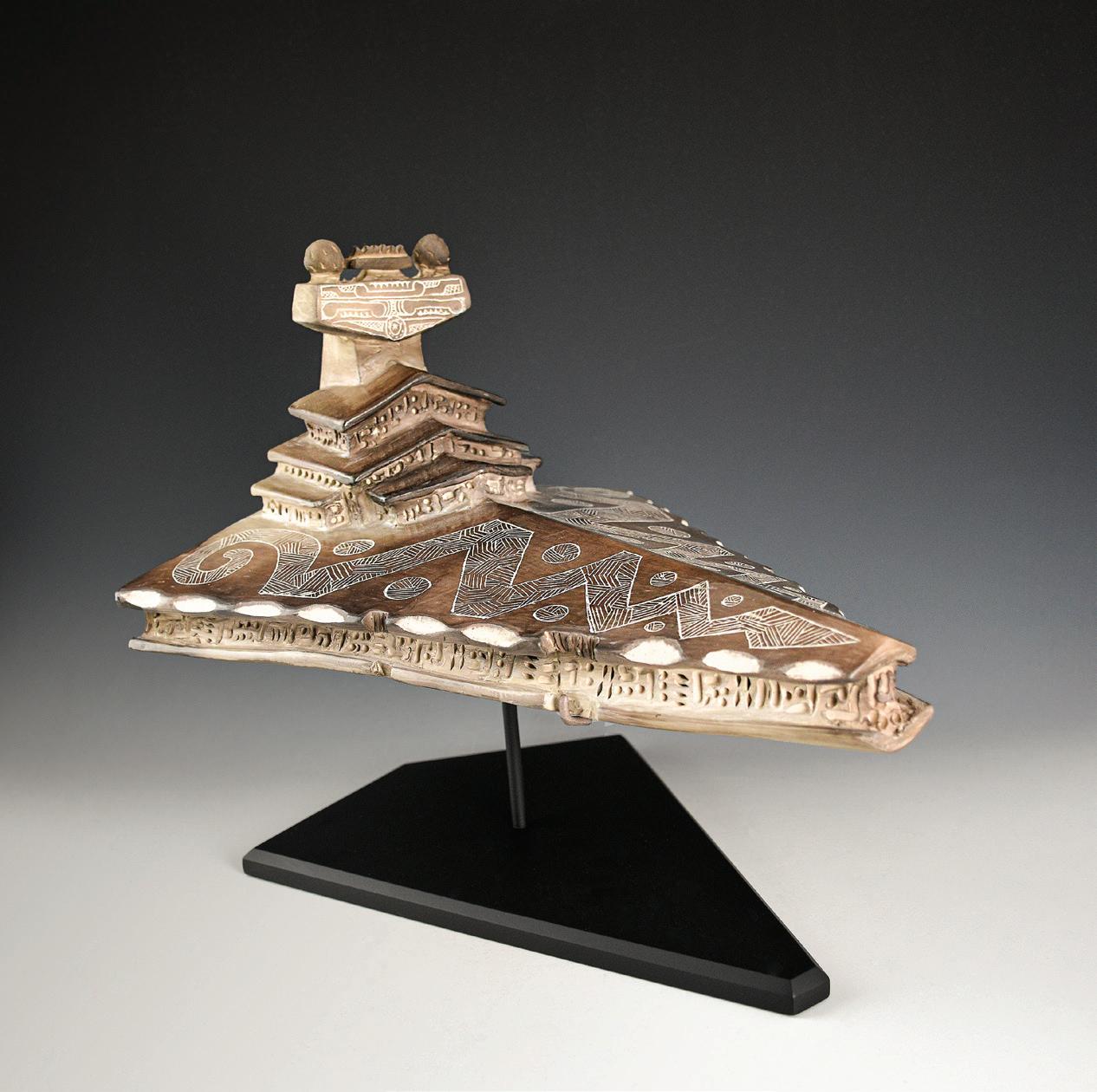
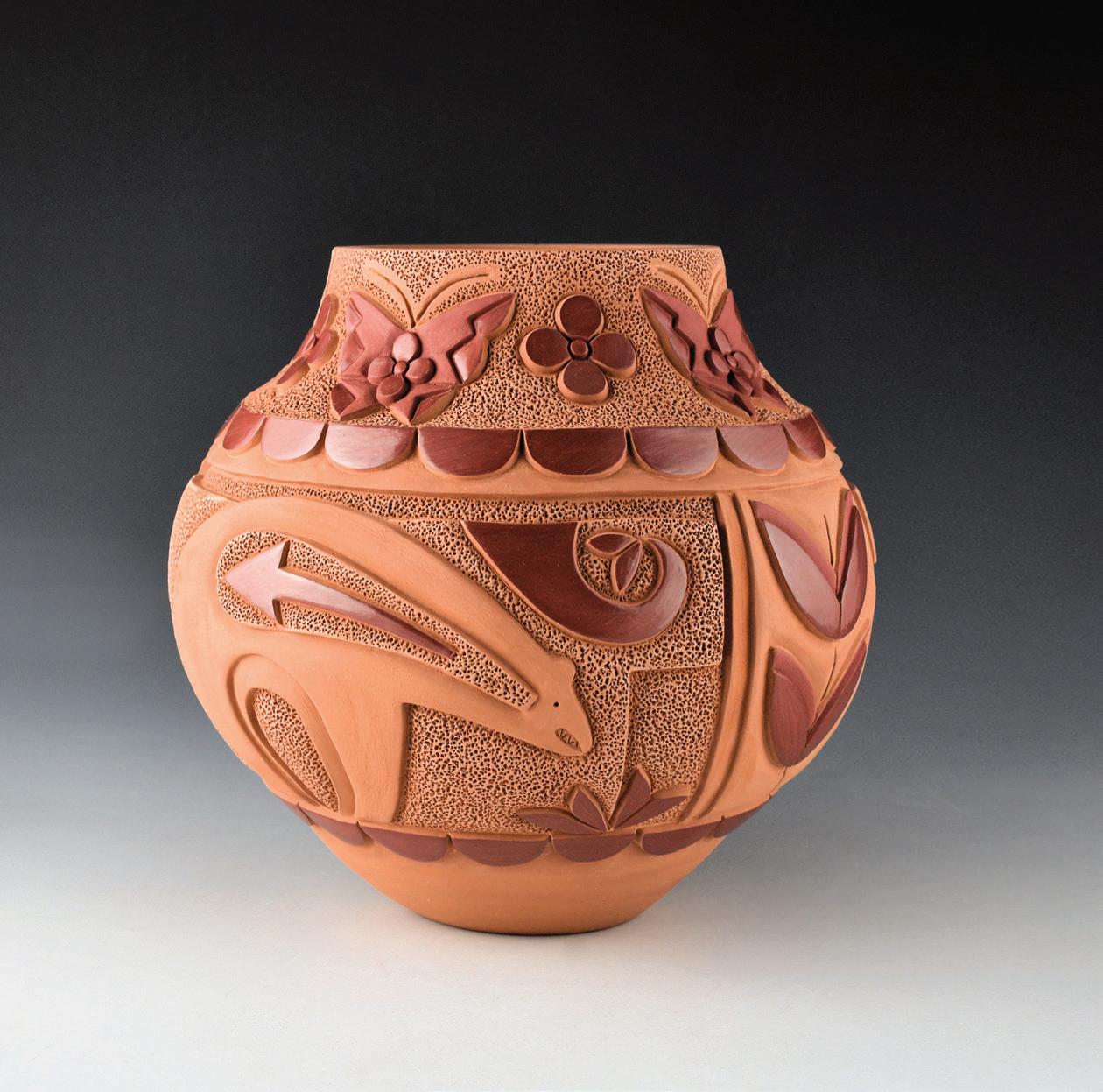
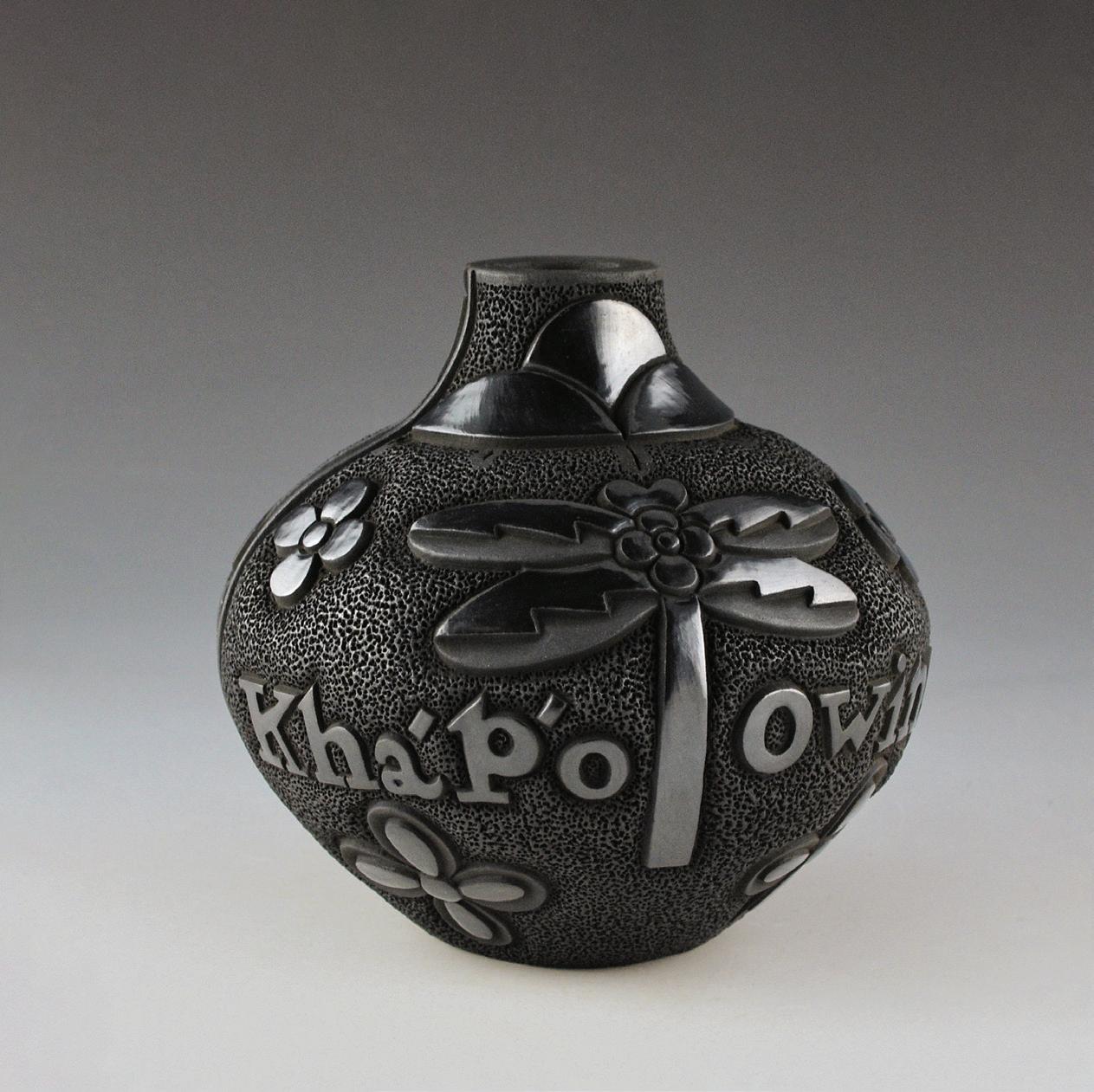
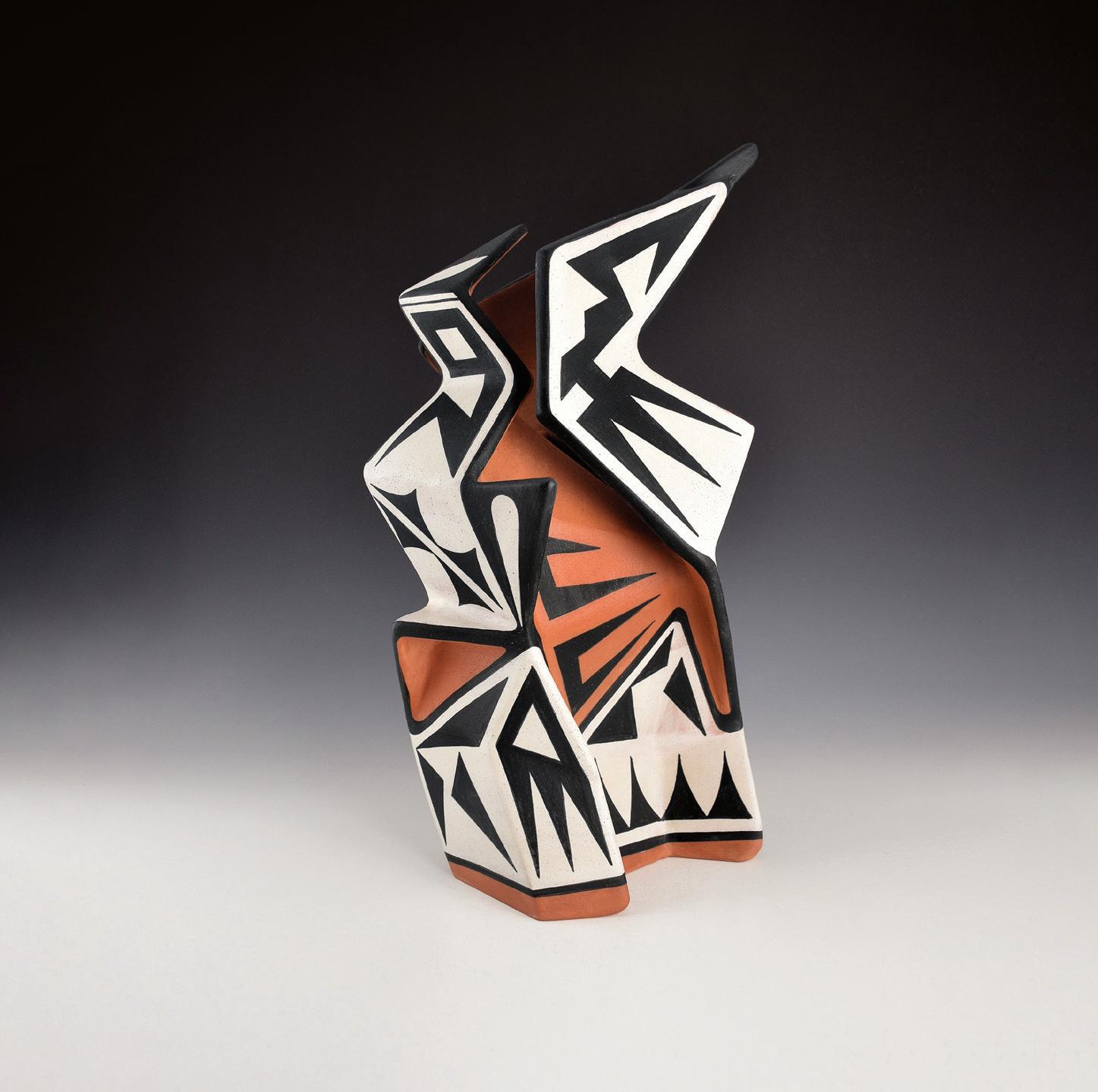
Four contemporary potters define their styles.
By Jennifer Levin
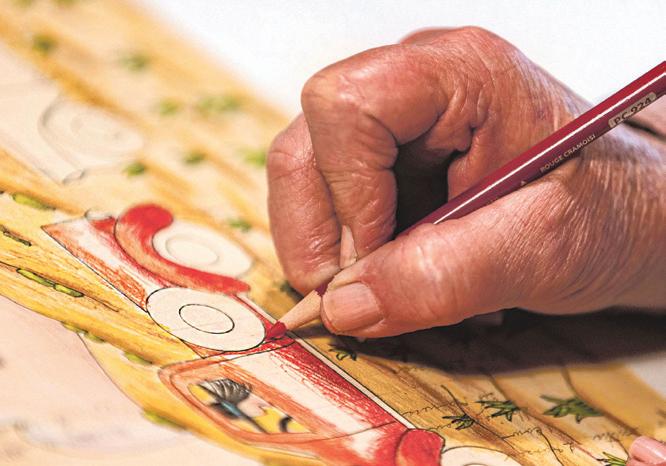
87 Coloring Outside the Lines
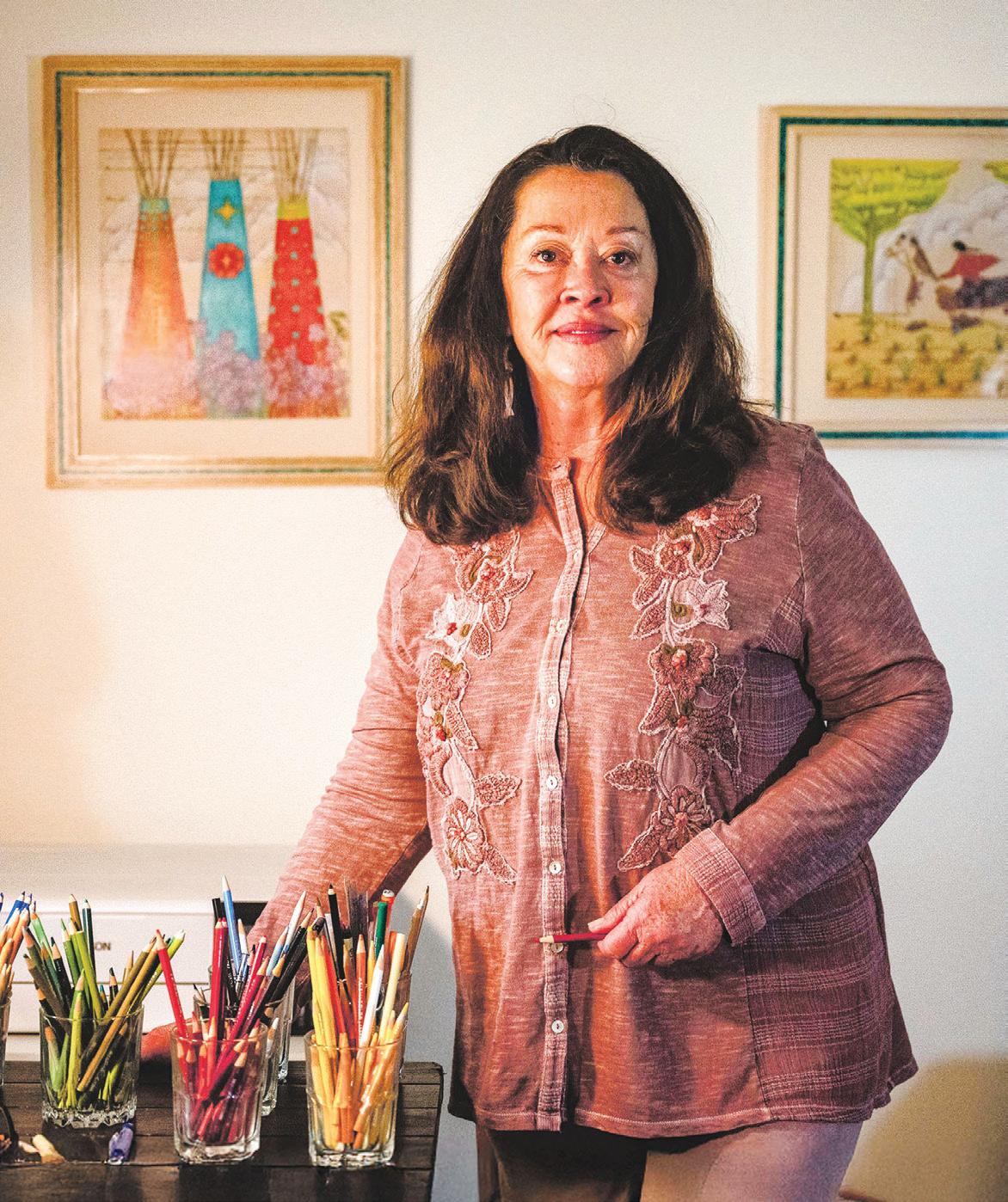
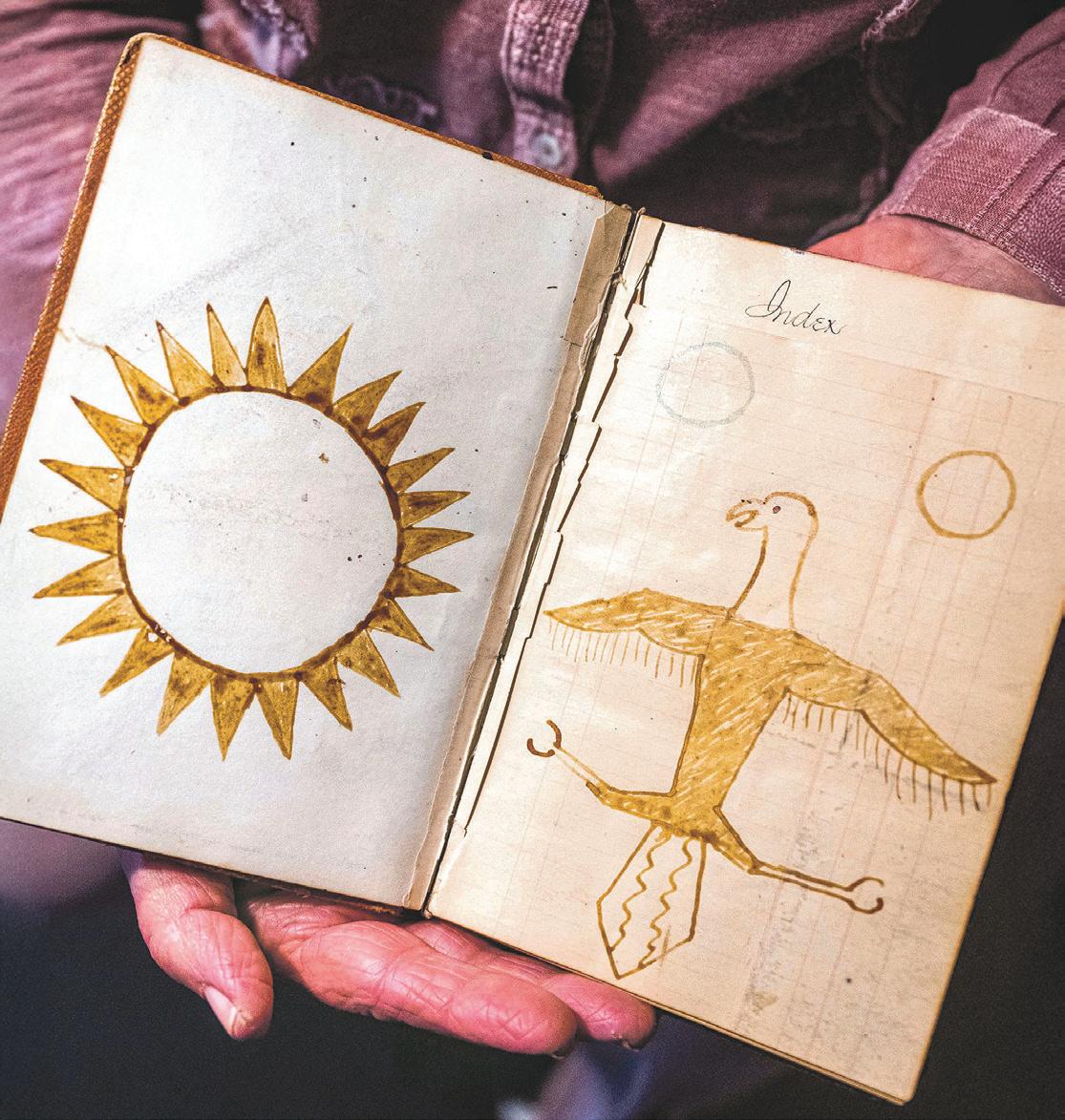
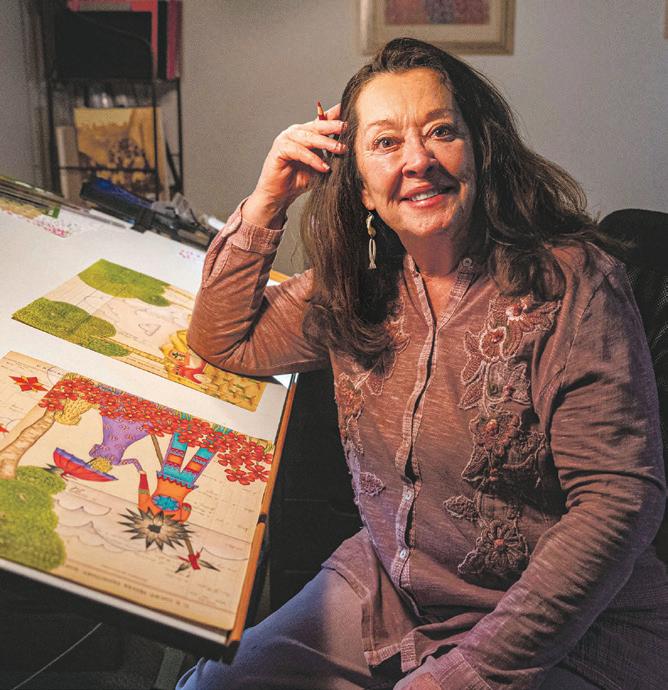
Dolores Purdy makes ledger art her own. By Ashley M. Biggers
Photography by Michael G. Seamans
92 In Fine Style
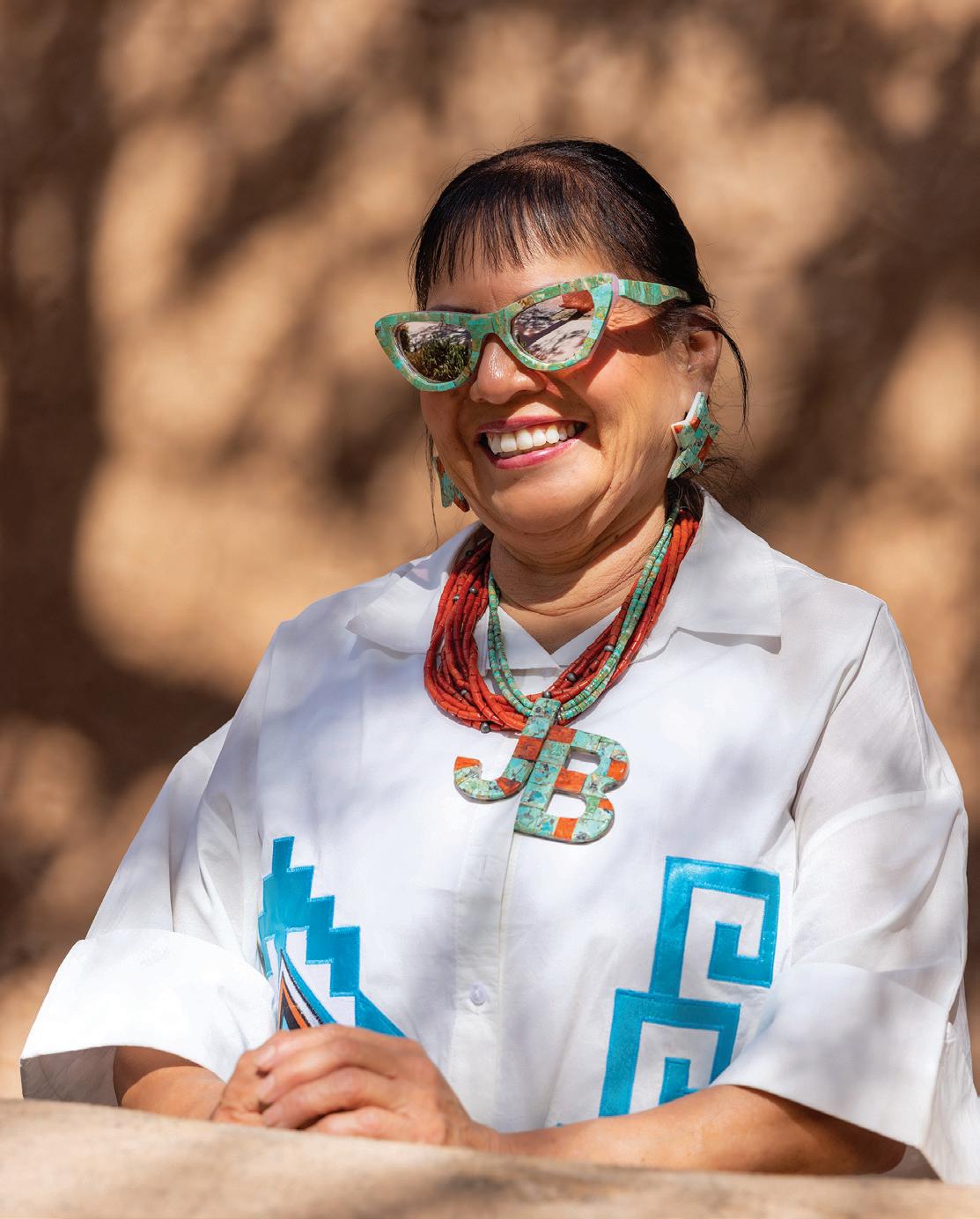
Native regalia stands as the country’s first haute couture. Today, Native designers draw inspiration from varied sources — everything from ceremonial and traditional wear to the latest episode of Bridgerton — to create clothing and accessories both regal and ready to wear. Go behind the designs with Sage Morningflower, House of Sutai, Towering Stone, Michelle Tsosie Sisneros, Sleep Rock Company, Zefren-M, and Jolene Bird. By Ashley M. Biggers
Photography by Gabriella Marks
110 Silver & Gold
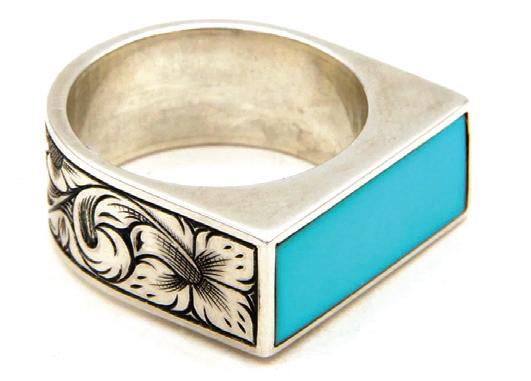
Four jewelers create glittering, wearable art. By Emily Withnall
REACHING HIGH
Than Povi Martinez blends dance and modeling.
From the time she could walk, Than Povi Martinez was stepping traditional dances at San Ildefonso Pueblo beneath Black Mesa along the waters of the Rio Grande. Soon she was moving to di erent beats at Moving Arts Española, a nonprofit that fosters youth empowerment via arts education, where she learned gymnastics, circus arts, and hip-hop. Under the mentorship of founders Roger Montoya and Salvador Ruiz, she spun into ballet, and as her career has grown, she’s added modeling to her movement repertoire.
A video for the Moving Arts Española’s CNN Heroes nomination chronicles Martinez’s ballet journey, which began with classes with the organization at age 5 and then grew into studies at Dance Arts Los Alamos and the New Mexico School for the Arts. After high school graduation and a nine-month stint at a preprofessional program at Ballet Chicago, she entered college at Loyola Marymount University — always with her toe shoes in tow. Beyond her girlhood dreams of becoming the Sugar Plum Fairy, she says ballet gave her stability. Her childhood “wasn’t necessarily the most organized at some times. . . . I could depend on [ballet] giving me structure. I could work in between the rules to find the freedom.”
Her identity often contrasted with that of the stereotypical ballerina. “Within the set of limitations and rules that are presented within ballet, I feel I was able to really fi nd my voice and my groove. I found what it means to be in a brown, Native body within a very Westernized, Eurocentric art form.” She found reassurance in the career of Osage ballerina Maria Tallchief, the country’s first major prima ballerina and the first Native American to achieve that acclaim.
For Martinez, her Pueblo and ballerina identities have intersected “in the way I view my body as a vessel, in a traditional sense and a choreographic sense. . . . When I’m in my traditional dances, I’m a voice. I’m a vessel for the prayers we’re putting out into the dances we’re doing. We’re calling our spirits to come down to us, to watch over us. When I’m in the studio, I’m a vessel for the choreographer’s dream, their idea, their voice. I’m their paintbrush and their canvas.”
She worried that a pop in her right knee during an audition in her senior year in college would spell the end of her career. Instead, the meniscus tear gave her time to strengthen her body and her mind. “I found power in the way that my bone structure is. It may not be the same as a lot of ballerina friends that I looked up to, but it has a beautiful power in its own way, and it’s taken me a really long time to get to this point,” Martinez says. She’s also turned her attention to moving her body in a new way. She first modeled for friend Nathaniel Fuentes, CEO of He Kha Productions at Santa Clara Pueblo, in his Indigenous Sisterhood Series, donning a garment by Taos Pueblo designer Patricia Michaels. She’s since modeled for Sage Mountainflower and for Amy Denet Deal’s 4KINSHIP. During the May 2025 SWAIA Native Fashion Week, she walked the runway for multiple designers, including Sage Mountainflower, Peshawn Bread’s House of Sutai, Patricia Michaels, Jeremy Arviso, and Yolonda Skelton. Martinez says this new creative pursuit echoes ballet. Here too she’s found her voice and her own ways of expression within the standard runway gait and traditional static poses. She now considers herself a multi-hyphenate, with aims to pursue both careers but with a new grounded perspective.
Two years after her injury, her knee is mostly healed. “I’m being very careful about how I place my weight now. I have an intention of movement and an intention of my spirit too,” she says. “When it comes to modeling and dancing, I’m being very intentional with coming with a good heart and mind.” She says the messages of friends, family, and fellow dancers, who have long told her that she’s not only enough but an inspiration, are finally starting to sink in. — AMB
experience blending song,
and
takes place November 15 at 7:30 p.m. at the Lensic Performing Arts Center. For tickets and information, visit lensic.org.
Than Povi Martinez performs at Circles: Honoring Indigenous Santa Fe. The multimedia
dance,
spoken word
Photo: By Gabriella Marks
Than Povi Martinez in a garment by Sage Mountainflower
February
March
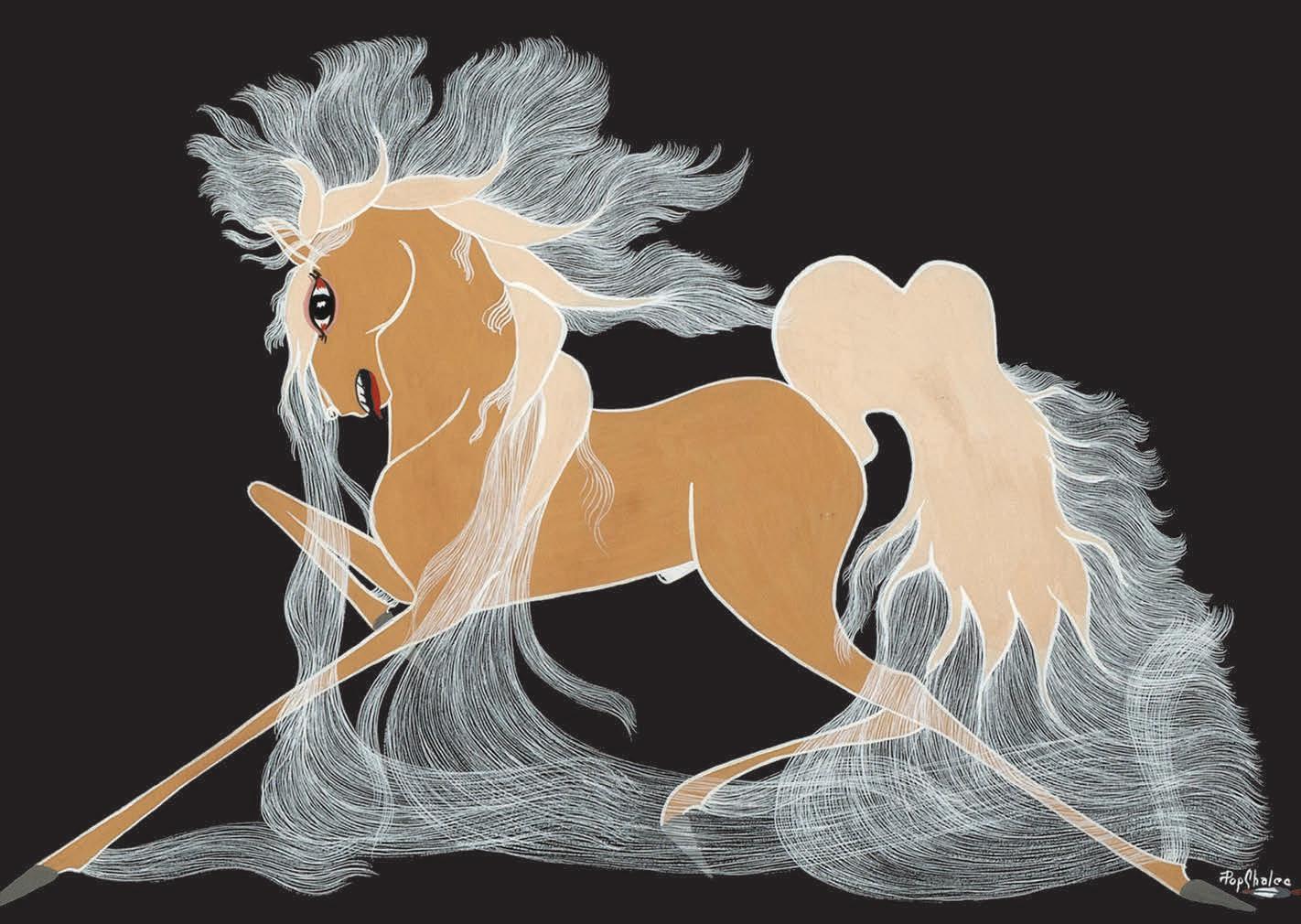
MERINA [POP CHALEE] LUJAN (Taos, 1906 - 1993), Yellow Horse, gouache on paper, 13 1⁄8 x 18 1⁄8 in.
By
HAPPENINGS
Your guide to art markets, museum exhibitions, concerts, and more — during Indian Market weekend and beyond.
Always & Forever: Douglas Miles & Apache Skateboards at the Museum of Contemporary Native Arts showcases works by the San Carlos Apache artist, including Wrapped in Love
Photo:
SA NTA FE INDIAN MARKET
Friday, August 15
11:30 a.m.–2 p.m.
Best of Show Ceremony and Luncheon
The top artists of the year are celebrated at this exclusive event and awards ceremony, with a luncheon afterward for Best of Show and best of classification winners, their guests, and ticket-holders. Tickets: $258.70.
Santa Fe Community Convention Center Ballroom
201 W. Marcy St., swaia.org
2–4 p.m.
Members-Only Sneak Peek of Award-Winning Art
Advance preview of artwork from the 102nd Santa Fe Indian Market, including Best of Show and best of classification winners. Tickets: $104.20.
Santa Fe Community Convention Center Ballroom
201 W. Marcy St., swaia.org
4:30–6 p.m.
General Preview of Award-Winning Art
Public preview of Indian Market artwork, including Best of Show and best of classification winners, before the weekend market opens. Tickets: $52.70.
Santa Fe Community Convention Center Ballroom
201 W. Marcy St., swaia.org
Saturday, August 16–
Sunday, August 17
8 a.m.–5 p.m.
Santa Fe Indian Market
Santa Fe Indian Market features more than 1,000 artists from 200-plus tribes showcasing a vast array of traditional and contemporary Native American artwork, including jewelry, pottery, textiles, paintings, beadwork, and sculptures. Plus: Indigenous
performers take the Plaza stage and the stage at Cathedral Park throughout the day. Free.
Santa Fe Plaza and downtown
Saturday, August 16
5–9 p.m.
SWAIA Gala
Benefiting the education and advocacy work of the Southwestern Association for Indian Arts, this event celebrates Native American art and culture with a lavish cocktail reception and includes a live art auction. Tickets: $361.70.
Vladem Contemporary 404 Montezuma Ave., swaia.org
Sunday, August 17
9–11 a.m.
Native American Regalia Showcase
Participants of all ages share beautiful and culturally significant traditional clothing, dance regalia, and family heirlooms. Free.
Santa Fe Plaza Stage
3–4 p.m.
Native Fashion Show
New work from premier Indigenous designers is on display at SWAIA’s 2025 runway show of cutting-edge fashion. VIP guests are treated to a fashion show pre-party in the SFCCC lobby. Tickets: from $26.95.
Santa Fe Community Convention Center Ballroom 201 W. Marcy St., swaia.org
OTHER MARKETS AND FESTIVALS
Friday, August 8–Monday, August 11
Whitehawk Antique Indian and Ethnographic Art Show
For more than 45 years, this event has brought together experts showcasing
thousands of historic and contemporary art objects from Native American and Canadian First Nations cultures, as well as ethnographic pieces from around the world. Displays highlight textiles, pottery, jewelry, basketry, and beadwork revealing the artistry and tribal traditions of little-known artisans. The textiles include Germantown and chief’s blankets, Two Grey Hills rugs, and other select regional weavings. This year’s show includes two special exhibitions. Spirit Beings in Wood: The Vibrant Tradition of Hopi Katsina Carvings, 1880 to Present focuses on a range of subjects, from late 19th-centur y putsqatihu (cradle katsinas) to the first masters of the form (such as Wilson Tawaquaptewa, Otto Pentewa, and Jimmy Kewanwytewa) to contemporary examples. The Living Tradition of Chimayo Weaving pulls from the Nuevo Mexicano Heritage Arts Museum vault to represent the region’s long and fascinating weaving history. Preview ticket: $125; day show ticket: $18; run of show: $20.
Santa Fe Community Convention Center 201 W. Marcy St., whitehawkshows.com
Tuesday, August 12–Wednesday, August 13
Santa Fe Art Auction Native Market Presented by a leading Southwest art auction house, the sale features Native American works in a variety of mediums, from paintings and textiles to works on paper and baskets. The auction includes pieces by Native artists practicing today and historic Pueblo objects.
Santa Fe Art Auction 932 Railfan Road santafeartauction.com
Friday, August 15–Saturday, August 16 8 a.m.–4 p.m. Friday, 10 a.m.–6 p.m. Saturday Artists’ Market
The Wheelwright Museum hosts its fifth annual outdoor Artists’ Market, featuring select artists in a variety of mediums. Confirmed participants include Janice Black Elk Jim(Rosebud Lakota), Deanna Tenorio (Santo Domingo/Pomo), Robert Tenorio (Santo Domingo), Yazzie Johnson (Navajo), and Gail Bird (Santo Domingo/ Laguna).
Wheelwright Museum of the American Indian 704 Camino Lejo, wheelwright.org
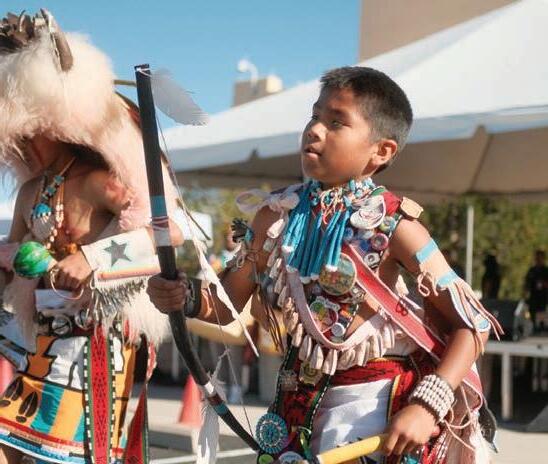
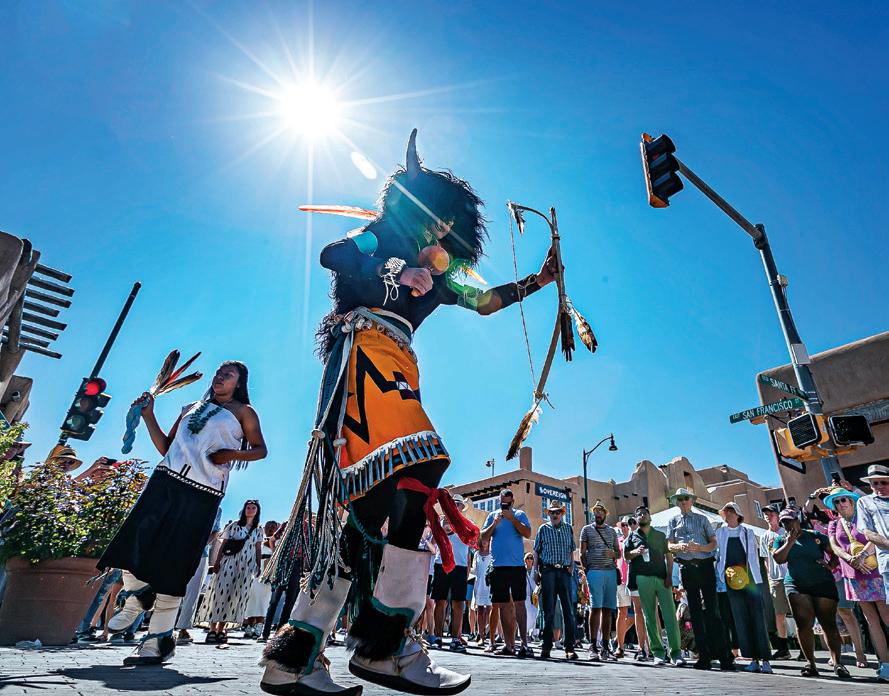
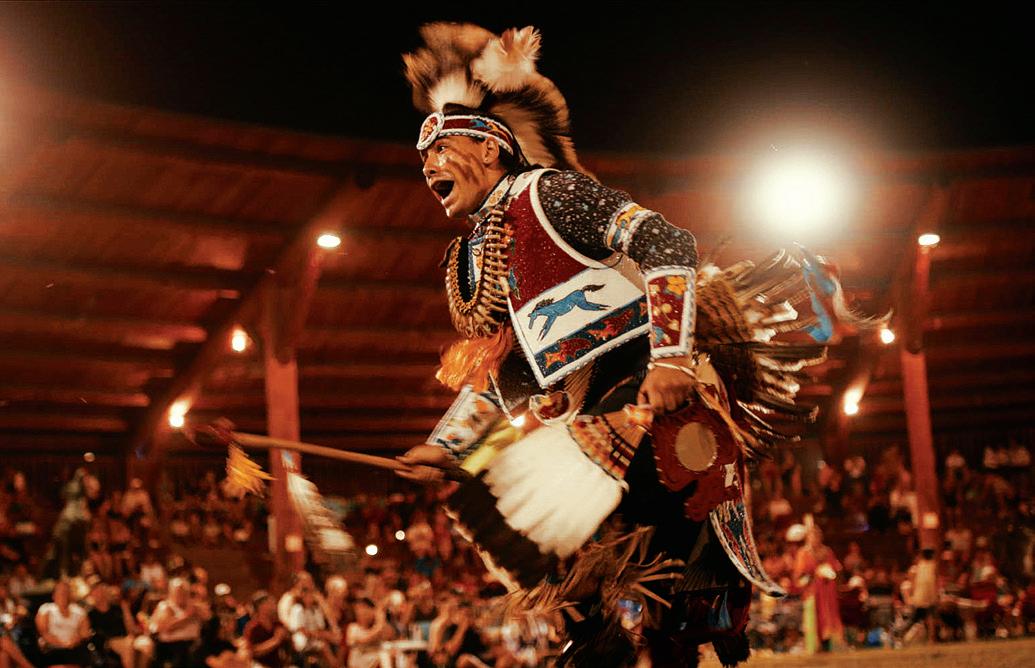
Jeremiah Ringleb (right) and Amber Fragua with the Oak Canyon Dancers perform on San Francisco Street during the 2024 Santa Fe Indian Market.
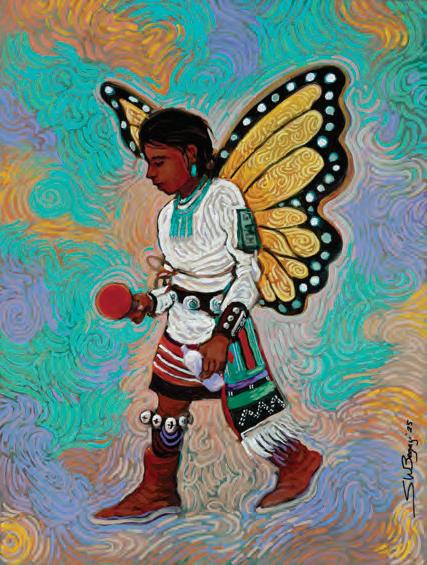
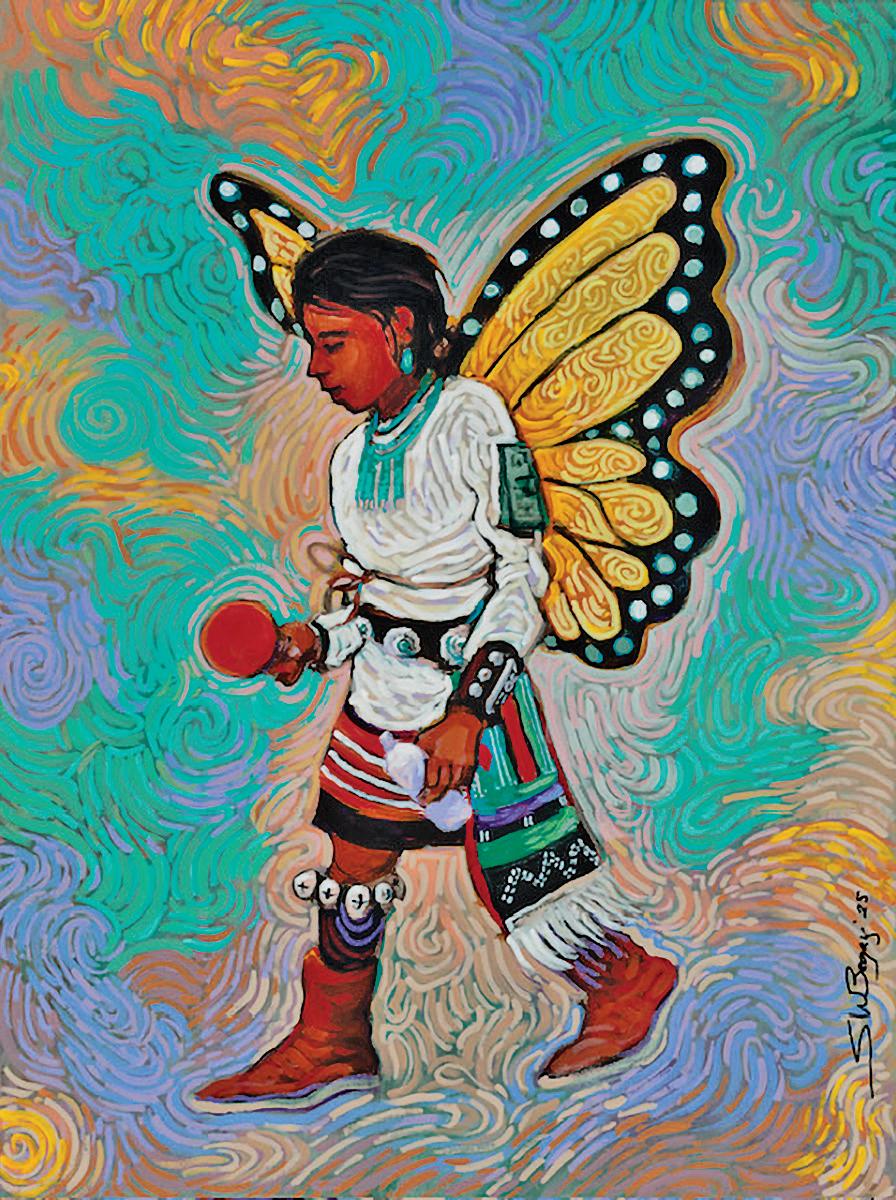
The Free Indian Market displays works such as Free Market Monarch by Shonto Begay
Friday, August 15–Sunday, August 17
9 a.m.–4 p.m.
Pathways Indigenous Arts Festival
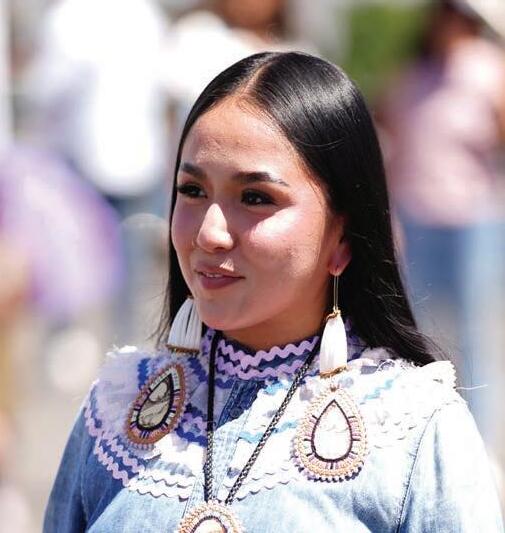
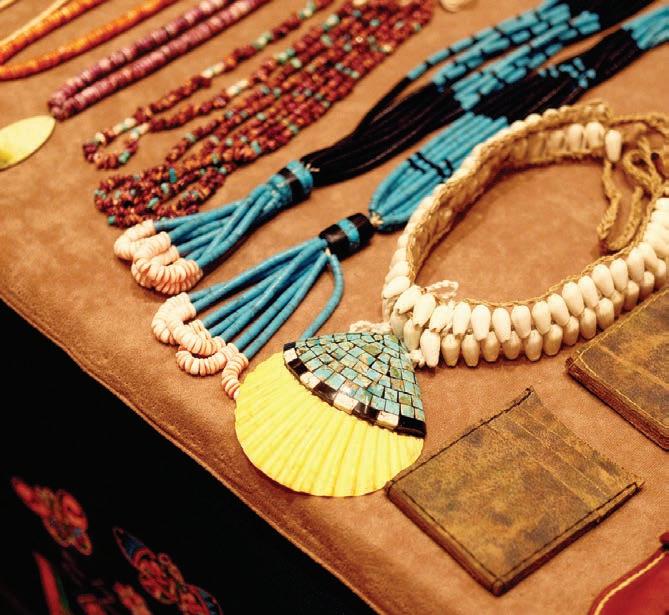
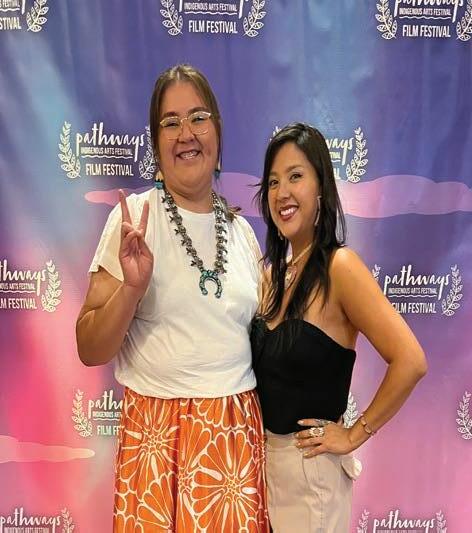
Organized by the Poeh Cultural Center and operated on tribal land, this annual festival features more than 400 Indigenous artists showcasing a range of mediums, from traditional Pueblo pottery to contemporary works. The festival includes youth activities, live music, art demonstrations, film screenings, artist panels, food trucks, and a fashion showcase. Free.
Buffalo Thunder Resort and Casino 30 Buffalo Thunder Trail poehcenter.org/pathways
Friday, August 15, and Saturday, August 16
7–9 p.m.
Uplift: The Indigenous Fashion Renaissance Sky-Eagle Collection hosts a two-day fashion event honoring Indigenous creativity, particularly designers, models, and crew members who have not previously had a platform in Santa Fe during the Indian Market season. The first night features rrr.raid, SACRD THNDR, Breezy Designs, ALTRN8V, and House of Sutai. The second night features Inspired by LCR, RedWing Collection, Auntie Creations, Bonnie Woodie, She Holds the Sky Designs, Oh Kiyo, Rebekah Jarvey, and Sage Mountainflower. Conceived by Dante Biss-Grayson, an Osage artist, U.S. military veteran, and founder of Sky-Eagle Collection, the event gives a portion of its proceeds to the Wounded Warrior Project.
Organized by FaraHNHeight Fine Art, Sovereign Santa Fe is a free contemporary Native American arts event showcasing cutting-edge Indigenous creativity. The marketplace highlights
“new school” Indigenous art and artists. Exhibiting artists include Jesse Raine Littlebird (Laguna/Kewa Pueblos), Nicholas Galanin (Sitka Tlingit), Piersten Doctor (Diné), Kristin Gentry (Choctaw Nation of Oklahoma), and Craig George (Diné). The market also includes Keepers of the Land,a free multimedia exhibit organized and curated by Tvlse Studios and fine artist Carly Treece (Mvskoke/Cherokee).
In this show, contemporary Native American artists from Oklahoma explore the deep-rooted connection between Indigenous peoples and the land. Sovereign Santa Fe also includes Sovereignly Fit, a ticketed two-night contemporary Native fashion event produced and organized by Towering Stone, a luxury men’s fashion and lifestyle brand founded by Loren Aragon (Acoma Pueblo). Doors open at 6:30 p.m.; runway show begins at 8:30. Marketplace: free; Sovereignly Fit tickets: TBA.
La Fonda on the Plaza (Lumpkins Ballroom and second-floor mezzanine)
100 E. San Francisco St. lafondasantafe.com
Friday, August 15
Saturday, August 16–Sunday, August 17
6–9 p.m. (Friday feast)
8 a.m.–5 p.m. (weekend market)
Free Indian Market
The annual Free Indian Market showcases Native art and culture via free booth spaces for elders and their families. It hosts more than 500 Native artists representing some 50 Native American nations and Indigenous communities from around the world. Artists work in a variety of mediums, including pottery, jewelry, painting, sculpture, textiles, basketry, beadwork, carving, fashion, photography, and graphic arts. The event opens for the first time this year with the Free Indian Market Feast, honoring the Maria and Julian Martinez family, at Hotel Santa Fe. Feast tickets: $100 (order at 505-473-5375). Market: Free. Federal Park
106 S. Federal Place freeindianmarket.org
Market Events 2025
Friday, August 15, 3–5pm
Sandra Quandelacy
Kateri Quandelacy
Sanchez
Jewelry & Zuni Fetish Carvings
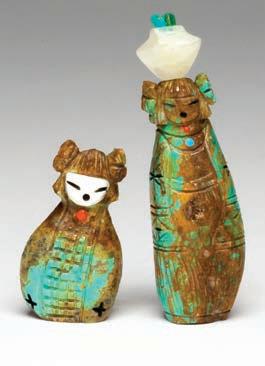
Corn Maidens by Sandra Quandelacy and Kateri Quandelacy Sanchez
Saturday & Sunday, August 16 & 17, 10am–5pm
Ray Tsalate Zuni Fetish Carvings
ZYEP Artists Apprenticeship Participants The Nahohai Family Pottery
Since 1981
Jewelry Carvings Po ery
227 Don Gaspar, Santa Fe Keshi.com 505.989.8728
All proceeds go to the artist.
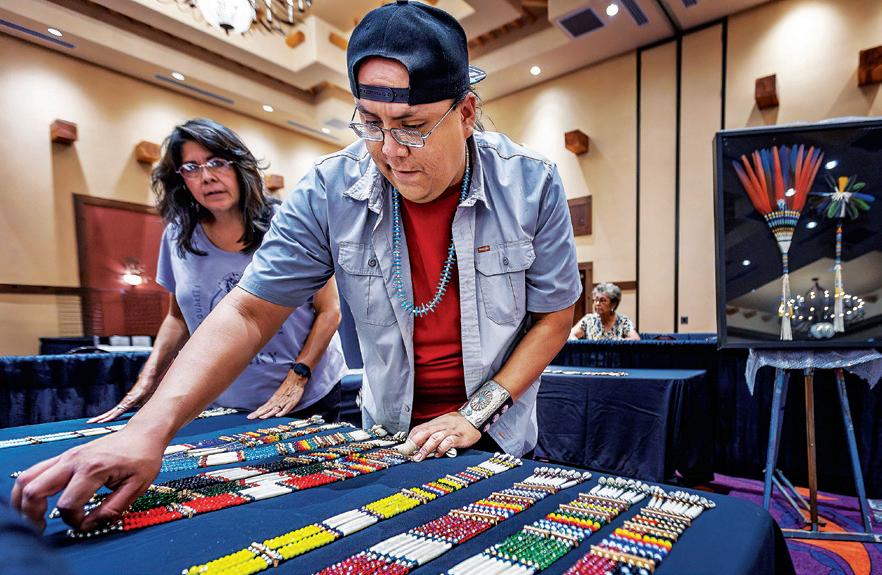
Kiowa Taryole from Mountain View, Oklahoma, arranges his beaded necklaces while setting up for the 2024 Pathways Indigenous Arts Festival at Bu alo Thunder Resort and Casino.
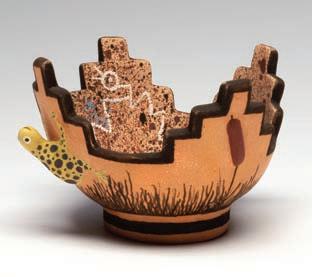
Prayer Bowl by Milford Nahohai
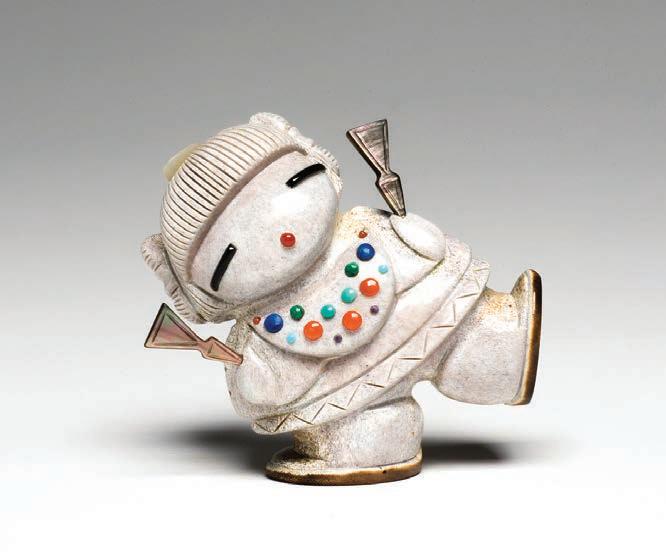
Dancing Maiden by Ray Tsalate
Dillon Christopher Chitto’s
Pueblo Revolt
Directed by Tara Moses
Aug 14 - 31, 2025
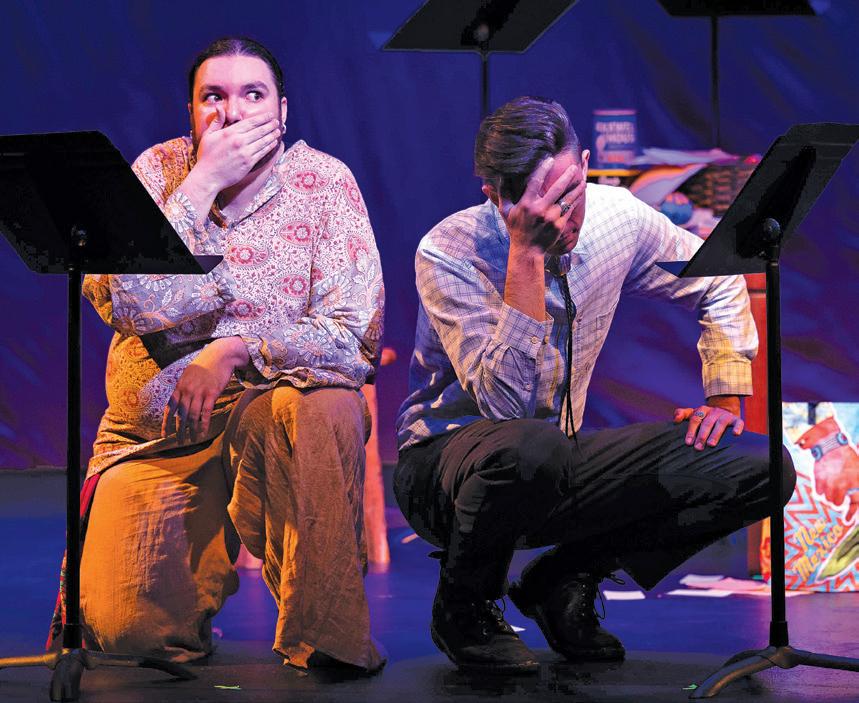
An Indigifuturist comedy about two Indigenous brothers living under Colonial Spanish rule in New Mexico.
CALENDAR
MUSEUM EVENTS
Wednesday, August 13–
Friday, August 15
Friday, August 15, and Friday, August 22 5–7 p.m.
Late Night Friday
505-988-4262 santafeplayhouse.org 142 East De Vargas St., Santa Fe, NM 87501
SANTA FEPLAYHOUSE
3–6 p.m. Wednesday, 8 a.m.–4 p.m. Thursday and Friday Wheelwright Museum’s Annual Benefit Sale
This year’s edition of the museum’s largest fundraising event features hundreds of one-of-a-kind works for purchase, including Native American jewelry, pottery, textiles, baskets, paintings, and folk art. Tickets for the early bird event on Wednesday: $35–$50.
Wheelwright Museum of the American Indian 704 Camino Lejo, wheelwright.org
Thursday, August 14 10–11 a.m.
Judging Native Art: Challenges and Rewards
How do you evaluate Native art? How can the judging process be improved? Join us in a lively discussion with gallerist Mark Bahti, appraiser Scott C. Hale, and Native artists Linda Lomahaftewa (Hopi/Choctaw), Karita Coffey (Comanche), and America Meredith (Cherokee Nation). Moderated by Rachel Wixom; hosted by the Coe Center and First American Art magazine.
Ralph T. Coe Center for the Arts 1590-B Pacheco St. firstamericanartmagazine.com/judging
The New Mexico History Museum extends its Friday hours so visitors can peruse exhibits later in the evening. Free to New Mexico residents.
New Mexico History Museum 113 Lincoln Ave., nmhistorymuseum.org
Saturday, August 16–
Sunday, August 17
9 a.m.–4 p.m.
Native American Artisans Portal Program — Sales in the Courtyard Native American portal artisans from 23 federally recognized tribes, pueblos, and nations in New Mexico offer music, handcrafted art, and traditional Native dances in the New Mexico History Museum courtyard. Free admission to the museum and courtyard sale.
Palace of the Governors
New Mexico History Museum 113 Lincoln Ave., nmhistorymuseum.org
MUSEUM EXHIBITIONS
Through August 17, 2025
Printing the Pueblo World: Juan Pino of Tay Tsu’geh Oweenge Juan Pino depicted intimate moments of Pueblo life and culture in the 1920s, including agricultural work and ceremonial dances. The exhibition highlights
Makowa: The Worlds Above Us at the Museum of Indian Arts and Culture exhibits works such as Evening Star by Kathleen Wall (Jemez Pueblo).
his unfiltered, respectful portrayals. Museum of Indian Arts and Culture 710 Camino Lejo indianartsandculture.org
Through September 1, 2025
Engaging the Future: The Goodman Fellowship Artists
This exhibition highlights 2025 Goodman Fellow Auri Poseyesva (Hopi), alongside past recipients such as Rapheal Begay (Diné), Carly Feddersen (Colville Confederated Tribes), and Cree LaRance (Ohkay Owingeh/Hopi/Navajo).
Museum of Indian Arts and Culture 710 Camino Lejo, indianartsandculture.org
Through January 10, 2026
Memo to the Mother: Bob Haozous’s Messages to Mother Earth
This exhibition brings together sculptures, monoprints, and wearable sculpture representing Bob Haozous’s decades-long thinking about the environment. Wheelwright Museum of the American Indian 704 Camino Lejo, wheelwright.org
January 11, 2026
Once Within a Time: SITE Santa Fe 12th International
SITE Santa Fe extends its biennial programming to institutions across
Santa Fe. The Wheelwright Museum features the work of Raven Halfmoon (Caddo Nation), Sky Hopinka (Ho-Chunk Nation/Pechanga Band of Luiseño Indians), Cristina Flores Pescorán (from Peru), and Emmi Whitehorse (Diné) and a central installation by Nora Naranjo Morse (Santa Clara Pueblo). Wheelwright Museum of the American Indian 704 Camino Lejo, wheelwright.org
Through January 13, 2026
Once Within a Time: SITE Santa Fe 12th International
Drawing on the film Once Within a Time by Santa Fe filmmaker Godfrey Reggio for inspiration, SITE Santa Fe’s 12th International brings figures both historical and current, real and imagined, into dialogue with works of contemporary art.
SITE Santa Fe 1606 Paseo de Peralta, sitesantafe.org
Through February 8, 2026
Douglas Miles & Apache Skateboards
Douglas Miles (White Mountain Apache/ San Carlos Apache/Akimel O’odham), a painter, printmaker, and photographer from Arizona, founded Apache Skateboards and the Apache Skate Team. Miles sees skateboards as moving canvases, reasserting the sovereignty of motion and showing
Diné artist Marwin Begaye’s Sky is seen in Visualizing K’é: New Works by Marwin Begaye at the Wheelwright Museum of the American Indian.
Sahmie Nampeyo
CALENDAR
Native American cultures as dynamic and contemporary. The exhibition features Miles’s installation You’re Skating on Native Land (2022) and his skateboard designs.
IAIA Museum of Contemporary Native Arts 108 Cathedral Place, iaia.edu/mocna
Through February 8, 2026
Maggie Thompson: Interactions
Textile artist and designer Maggie Thompson (Fond du Lac Ojibwe) derives inspiration from her Ojibwe heritage, family history, and the contemporary Native American experience. In this exhibition and her works in general, Thompson pushes the viewer’s understanding of textile art by combining photographs, found objects, stockings, beadwork, and more. Through largescale work and installations, she brings form to emotional experiences and creates a visual way to process complex topics.
IAIA Museum of Contemporary Native Arts 108 Cathedral Place, iaia.edu/mocna
Through March 28, 2026
Visualizing K’é: New Works by Marwin Begaye
This exhibition features 15 drawings and prints by master printmaker Marwin Begaye (Diné). Inspired by historic voice recordings from the Wheelwright Museum’s permanent collection, in 2024–2025 Begaye created a series of abstract works that visualize the Diné philosophy and practice of maintaining kinship (k’é). These images, and Begaye’s work in general, reflect on questions of identity, storytelling, and language. The exhibition features tours and artist talks; check the museum’s website for details.
Wheelwright Museum of the American Indian Museum Hill, 704 Camino Lejo wheelwright.org
Through September 2026
Makowa: The Worlds Above Us
Exploring Indigenous relationships with the sky, this exhibition connects the ancient and modern. It presents artistic renderings of celestial events alongside cutting-edge telescopic imaging. The show features night photography, pottery, textiles, and more. Interviews highlight Indigenous astrophysicists, skywatchers, and artists.
Wheelwright Museum of the American Indian 704 Camino Lejo, wheelwright.org
Through July 2, 2028
Here, Now and Always
This groundbreaking exhibition centers the voices and perspectives of the Indigenous people of the American Southwest and features more than 600 objects from the museum’s collection of ceramics, jewelry, and other creations.
Museum of Indian Arts and Culture Museum Hill, 710 Camino Lejo indianartsandculture.org
August 10–January 11, 2026
Gestural in Form
Marking the anniversary of the 1680 Pueblo Revolt, Gestural in Form showcases Virgil Ortiz’s sculptural works dating from the 1980s to the early 2000s, along with works from others in his family. The pieces are part of the museum’s Charlotte Mittler Collection.
Wheelwright Museum of the American Indian 704 Camino Lejo, wheelwright.org
August 15–January 4, 2026
Breaking Ground: Art & Activism in Indigenous Taiwan
Bringing together works of contemporary Indigenous artists from Taiwan, this exhibition speaks to the environmental and cultural consequences
King Galleries highlights works by Nancy Youngblood (Santa Clara Pueblo) in Pueblo Prime
of colonization. Through themes of identity, self-representation, and resistance, the artists confront the impact of assimilationist policies, including the loss of Indigenous rights, homelands, language, and cultural knowledge — concerns echoed by Native communities in the United States.
IAIA Museum of Contemporary Native Arts 108 Cathedral Place, iaia.edu/mocna
GALLERIES
Ongoing
Thursdays and Saturdays
Sculpture Garden Guided Tours
The Allan Houser Sculpture Garden features 70 monumental outdoor works plus a dozen steel sculptures in the Bob Haozous Walkabout. The indoor gallery exhibits small and medium-size sculptures and charcoal drawings by the prestigious Chiricahua Apache sculptor and painter. By appointment only; call to reserve 14 days in advance.
Tickets: $35.
Allan Houser Sculpture Gardens and Gallery at Haozous Place 26 Haozous Road, allanhouser.com
Friday, August 8
5–7 p.m.
Artist Reception for Forever West Legacy Galleries brings together 10 talented artists, each with a unique style and approach to western art. Through their paintings, they capture the spirit and essence of the American West, showcasing its natural beauty, rich history, and diverse cultures. Artists include John Moyers, Terri Kelly Moyers, Bill Anton, and Rachel Brownlee.
Legacy Gallery Santa Fe 225 Canyon Road, Suite 11 legacygallery.com
Wednesday, August 13
11 a.m.
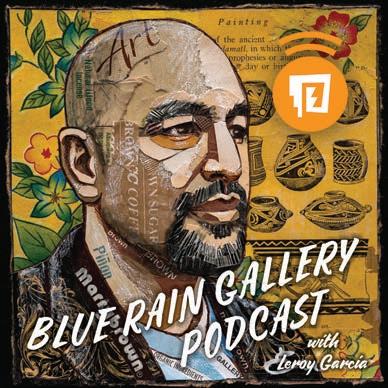
Podcast Panel Discussion
Jesse Littlebird, Thomas Breeze Marcus, and Chris Pappan gather for a recorded discussion of their work, hosted by Leroy Garcia. Blue Rain Gallery
544 S. Guadalupe St. blueraingallery.com
Thursday, August 14
Sunday, August 17
3–4 p.m. Thursday 1–2 p.m. Sunday
Navajo Weaving Talks with Jackson Clark II
Drawing from more than four decades of expertise, Navajo weaving authority Jackson Clark shares his knowledge of Native artisans and their distinctive designs, illuminating the beauty and cultural significance of traditional weaving. Thursday’s talk is titled “A Weave Through Time: The History of Navajo Weaving and the Navajo People.” Sunday brings “Early Navajo Traders and Their Influence on Navajo Weaving.”
Sorrel Sky Gallery
125 W. Palace Ave., sorrelsky.com
Thursday, August 14
5–7 p.m.
Artist Reception for Places of Power
Experience an evening inspired by Mateo Romero’s dynamic paintings, which blend traditional Pueblo culture with contemporary abstraction. Manitou Galleries
123 W. Palace Ave. legacygallery.com/location/ manitou-galleries
Thursday, August 14
5–7:30 p.m.
Artist Reception for Native American Group Show
Meet gallery artists as they showcase new works. Artists include Ben Nighthorse, Victoria Adams, Darryl Dean Begay, and Rebecca Begay. Sorrel Sky Gallery
125 W. Palace Ave. sorrelsky.com
Thursday, August 14
5–8 p.m.
Artist Reception for Group Show
Meet artists from Blue Rain Gallery as they present new works. Artists include Dan Friday, Ryan Singer, Jody Naranjo, Chris Pappan, Helen K. Tindel, Raven Skyriver, Hyrum Joe, Karen Clarkson, Spooner Marcus, Starr Hardridge, Ugly Pie, Thomas Breeze Marcus, Jesse Littlebird, Lisa Holt, Harlan Reano, and Leah Garcia.
Blue Rain Gallery
544 S. Guadalupe St. blueraingallery.com
Sorrel Sky displays works by jeweler Shane Hendren and others in its Santa Fe Indian Market weekend events.
CALENDAR
Friday, August 15
11 a.m.–3 p.m.
Painting Demonstrations
Thomas Breeze Marcus and Hyrum Joe showcase their art and creative processes.
Blue Rain Gallery
544 S. Guadalupe St., blueraingallery.com
Friday, August 15–Saturday, August 16
11 a.m.–3 p.m.
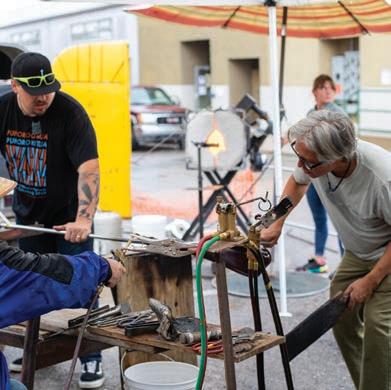
Glassblowing Demonstrations
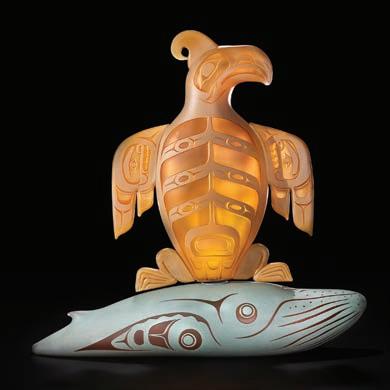
Watch glass artists create their works. Artists include Preston Singletary, Dan Friday, Raven Skyriver, and Spooner Marcus.
Blue Rain Gallery
544 S. Guadalupe St., blueraingallery.com
Friday, August 15
2–3 p.m.
Artist Reception for Pueblo Prime Meet the gallery artists as they present new works. Artists include Nancy Youngblood (Santa Clara), Chris Youngblood (Santa Clara), Jennifer Tafoya (Santa Clara), Sergio Lugo (Santa Clara), and Joseph Youngblood Lugo (Santa Clara).
King Galleries
130 Lincoln Ave., Suite D, kinggalleries.com
Friday, August 15
3–5 p.m.
Artist Reception for Santa Fe Indian Market 2025
Meet gallery artists as they present new work. Artists include Tammy Garcia
(Santa Clara), Les Namingha (HopiTewa/Zuni), Autumn Borts-Medlock (Santa Clara), Stephanie Tafoya (Santa Clara), Jeff Suina (Cochiti), Jared Tso (Diné), Daniel Begay (Diné/ Santa Clara), Robert Patricio (Acoma), and Dolores Curran (Santa Clara).
King Galleries
130 Lincoln Ave., Suite D kinggalleries.com
Friday, August 15
5–7:30 p.m.
Artist Reception for All Artist Group Show
Experience the full spectrum of art and meet members of Sorrel Sky’s
stable of artists, including bronze sculptor Star Liana York, jeweler Nayla Shami, gourd artist Robert Rivera, and others.
Sorrel Sky Gallery
125 W. Palace Ave., sorrelsky.com
PERFORMING ARTS
Wednesday, August 13
IndigenousWays Wisdom Circle
The nonprofit hosts an evening featuring musicians and special guests.
Vital Spaces Theater
1600 St. Michaels Dr. indigenousways.org
August 14–31
Pueblo Revolt
7:30 p.m. Thursday–Saturday, 2 p.m. Sunday
Santa Fe Playhouse presents a historic/Indigifuturist play by Indigenous playwright Dillon Chitto. The script-in-hand staged workshop is a comedy about two Indigenous brothers living under Spanish colonial rule in New Mexico. One is an inexperienced revolutionary. The other is a gay idealist. Tickets: from $15.
Santa Fe Playhouse 142 E. De Vargas St. santafeplayhouse.org
Friday, August 15
5–10 p.m.
IndigenousWays Festival
Nonprofit IndigenousWays promotes music, arts, outreach, and events to enhance survival and sustainability among Indigenous communities. In collaboration with Lensic360, the festival presents an evening of stage and cultural celebrations.
Railyard Water Tower
332 Read St., indigenousways.org
Saturday, September 27
10 a.m.–9 p.m.
IndigenousWays Festival
Nonprofit IndigenousWays promotes music, arts, outreach, and events to enhance survival and sustainability among Indigenous communities. It presents food, artist vendors, and engaging workshops.
Railyard Park Performance Green
740 Cerrillos Road indigenousways.org
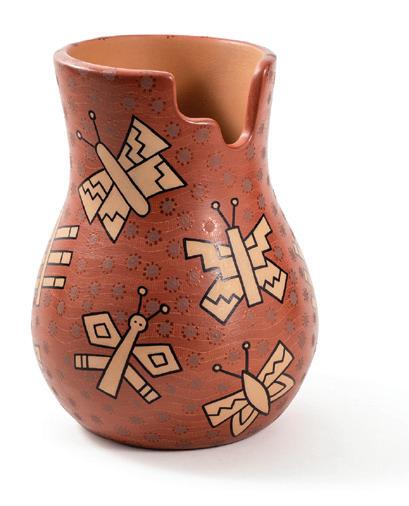
Blue Rain Gallery showcases works by Jody Naranjo, such as Dancing Butterflies, this month.
Photo: Courtesy Blue Rain Gallery
MONONGYE FAMILY INLIAD BRACELET
DANYELLE MEANS
The executive director of the Museum of Indian Arts and Culture reflects on Indigenous leadership in museums.
AS TOLD TO ADELE OLIVEIRA PHOTOGRAPHY BY GABRIELA CAMPOS
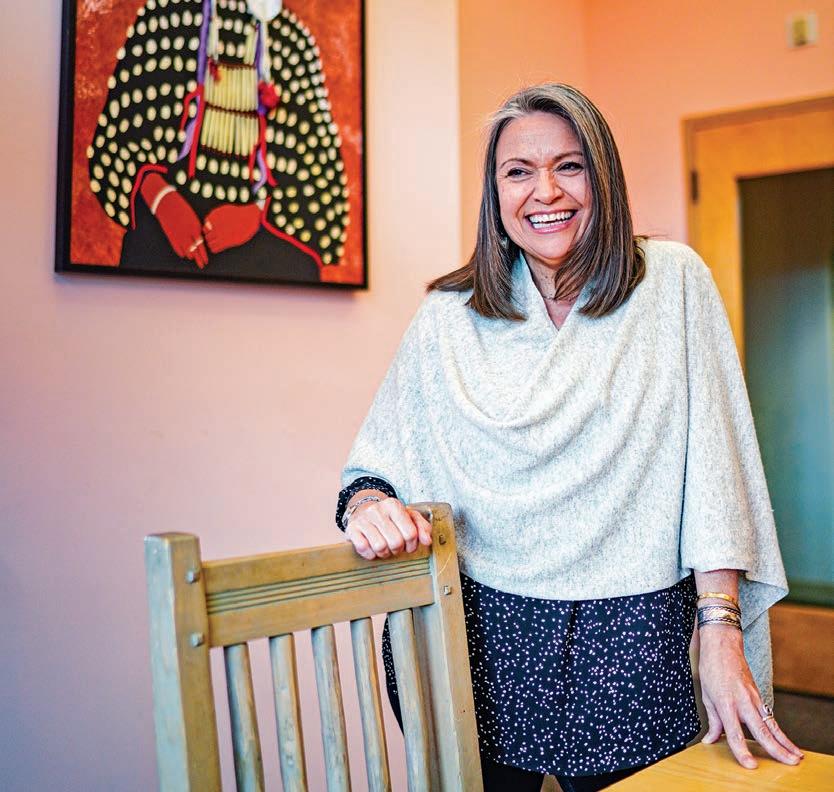
The new director of the Museum of Indian Arts and Culture, Danyelle Means (Oglala Lakota), hopes to elevate contemporary Indigenous culture while reconciling the institution’s sometimes extractive anthropological past. This will happen, in part, via her efforts alongside tribal historic preservation officers to repatriate the remains of Indigenous ancestors to their rightful resting places around the New Mexico. Means arrived at MIAC as interim director in January 2024 before formally accepting the position in September of last year. She brings decades of experience in museums, academia, and nonprofits, including the Southwestern Association for Indian Arts, the Institute of American Indian Arts, and the Smithsonian’s National Museum of the American Indian. She completed her museum studies master’s coursework in a partnership program between Marist University in Poughkeepsie, New York, and Istituto Lorenzo de’ Medici in Florence, Italy. She was also the first person of Indigenous heritage to lead Santa Fe’s Center for Contemporary Arts. Means describes the post-COVID museum landscape as less competitive than in the past, even in the face of strained financial resources, and more cooperative in terms of sharing ideas and collaborating on projects. She looks forward to forging relationships with people and institutions across New Mexico. The museum mounted Makowa: The Worlds Above Us (through August 17), exploring astronomy and celestial observation through an Indigenous lens. That exhibition brought programming, such as star parties, across other state museums and historic sites, including the New Mexico Museum of Space History in Alamogordo. “You may not equate that [museum] with having Native American programming,” she says. “Museums should know who their Native community members are, and there should be a relationship.”
Here, Means considers how museums are changing and why she’s remained an optimist.
Danyelle Means poses for a portrait in an exhibit under construction at the Museum of Indian Arts and Culture.
Q & A
Did you always want to work in museums?
No. I thought I wanted to be a surgeon, but then I did a gap year at an English boarding school. On Tuesdays, all of the London museums were free for students, so I’d take the train down and just completely immerse myself. I came back to the University of South Dakota, took an anthropology course, and completely shifted my focus. In the anthropology I’d grown up with, anthropologists stole our stories, wrote them down; other people were talking about us. I never wanted my anthropology to do that. I began my museum career in 1992 at the National Museum of the American Indian, which employed only Native sta . I cut my teeth on the idea that Native people can tell their stories; Native museum employees can make sure the stories are told from our perspectives. This is in no way implying that non-Native curators can’t curate Native art; there have been fantastic exhibitions that include Native voices through advisory groups. . . . But I wanted to be a part of the change to highlight Native voices. I was so bolstered by the update to the Native American Graves Protection and Repatriation Act (NAGPRA) in January 2024, which focused on involving Native people in the interpretation of their material culture — that’s a new part of the law and a necessary step in making sure that museums [receive] input from Native community members.
What’s new at MIAC since you arrived?
A lot! We opened the JoAnn and Bob Balzer Native Market and Contemporary Art Gallery, which was in progress when I got here. We have our second exhibition in that gallery, Engaging the Future: The Goodman Fellowship Artists [on view through September 1]. [The program] awards one or two fellowships per year for emerging artists [and pays for] supplies or rent for studio space or just a boost, up to about $5,000. This exhibition is the first time since 2016, when we started the fellowship, that we’ve exhibited all 19 artist fellows. Auri Poseyesva is our 2025 awardee. Auri is a Hopi Yungyapu basketmaker whose tradition almost stopped with her grandmother’s visual impairment. Auri took it upon herself to learn the basketmaking process. The fellowship [will] help her create a studio space at her home. In the gallery, you get to see everything from jewelry to paper making to painting to fashion to film. It’s a real variety showing the breadth and depth of contemporary Native art. What’s your curatorial vision/philosophy?
My vision is shared with our longtime curator of ethnology, Antonio Chavarria. Tony has been at the museum for 28 years and for the past 17 has worked with our Indian advisory panel, made up of members of Native communities from around New Mexico. Tony and our head of curatorial a airs,
Elisa Phelps, bring [topics] to the advisory group and ask for their thoughts: Does this represent your communities in a way you feel good about? I myself being Oglala Lakota, I don’t have particular knowledge, and I want to make sure we are working with communities to really represent them, not only in a historical sense but also a contemporary one.
How are you feeling about the state of the art world, locally and nationally?
In New Mexico, we’re lucky to have a state government on both sides that has been supportive of the arts, the state museums, and other cultural institutions. As for the current state of a airs, I have to see it as a challenge. Foundations and donor support have to step up. We’ve seen these cycles before throughout global history, and we know that arts are targeted, so we have to be prepared to support one another and figure out ways to make that support real. There are going to be tough times in terms of funding. Museum directors have to get out there and fi nd our donors, both individual and corporate. We have to be on our toes explaining why what we do is so important.
I’ve seen much more collaboration post-pandemic. Seeing relationships blossom is a part of that. [In the future] it would be interesting to be able to do something on petroglyphs or with the New Mexico Farm and Ranch Heritage Museum around any of our historic sites, like Forts Seldon and Stanton — there’s some hard things to talk about. How do we display the archaeology that we can talk about? How can we continue to learn from what we have that isn’t covered by NAGPRA? How can we continue to educate the public on Native American archaeology and NAGPRA as a process? Having Native partners talk about those stories as part of the programming and exhibition is the opportunity we have to move the needle forward.
Oliveira grew up in Santa Fe and lives here with her family.
Adele
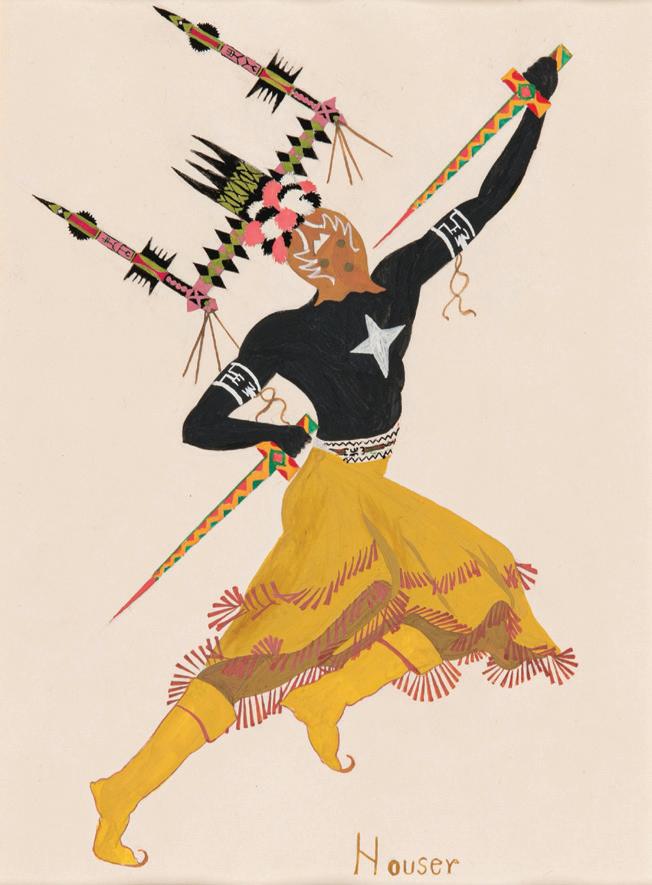
Allan Houser’s painting Apache Devil Dancer, 1934, appears in Makowa: The Worlds Above Us, on view through August 17.
Director Danyelle Means at the Museum of Indian Arts and Culture
Courtesy of the Museum of Indian Arts and Culture, 51375, Dorothy Dunn Collection
Photo
FROM TWO TO MANY IndigenousWays
community music festival hits a note beyond the stage.
PHOTOGRAPHY BY JIM
WEBER
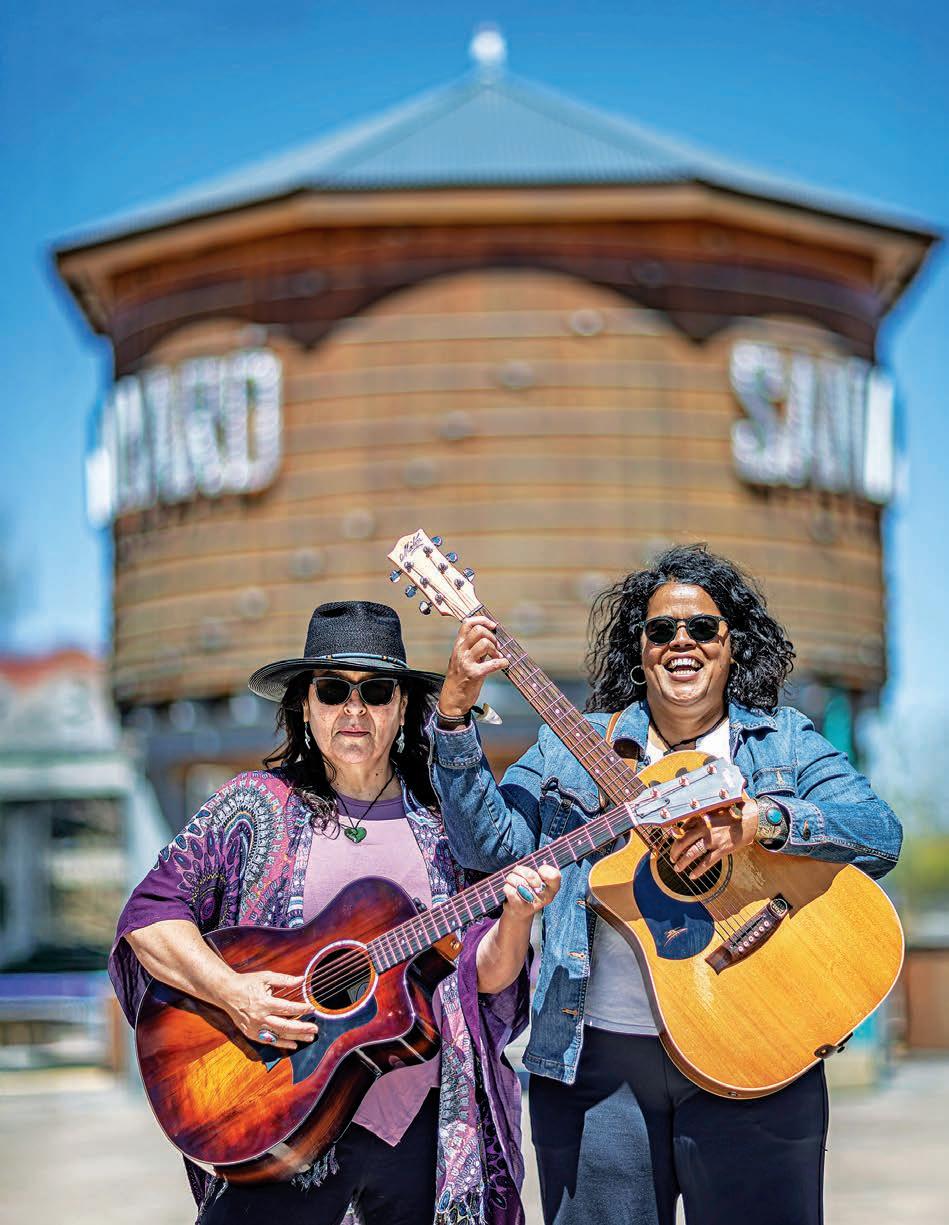
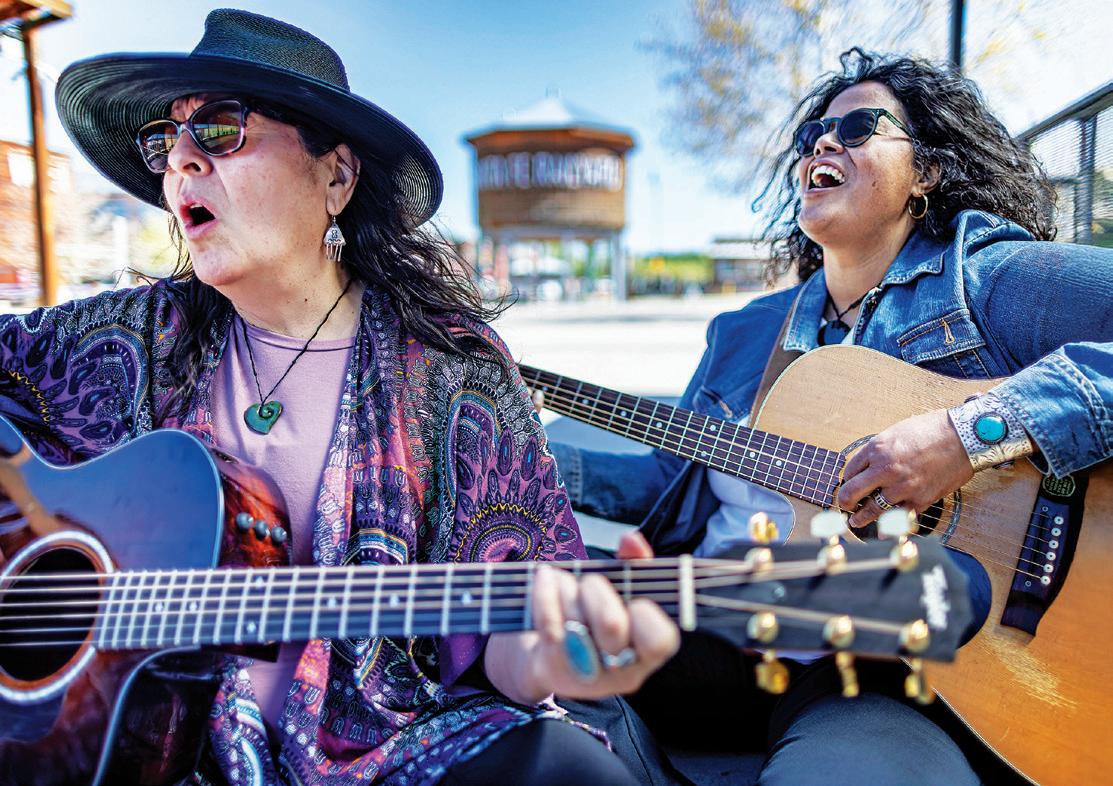
Elena Higgins (Maori/Samoan) and Tash Terry (Navajo/ French/Irish) may be only two people, but they represent diverse ethnic traditions. They hail from New Zealand and the Navajo Nation, respectively, and have unified their voices successfully for nearly 20 years as the instrumental duo Indigie Femme. This collaboration inspired them to unify even more voices via the IndigenousWays festival.
Born in the pandemic and now in its fourth year, IndigenousWays’ festival occurs on two weekends in August and September this year and celebrates Indigenous, LGBTQIA2S+, and deaf and hard-of-hearing people — and welcomes everyone in the process.
Higgins and Terry began playing together in 2006 mostly through happenstance. But something quickly clicked between Higgins’s Southern Hemisphere sounds and Terry’s Northern ones. Though their homes were geographically distant, they shared a connection to Mother Earth via their Indigenous backgrounds, as songs such as “Grandmother Earth, Grandfather Sky” and “Blessid Rain” attest. The sound defies easy description. “As Indigie Femme, we’re in the music genres of folk, world, Americana, but we’re our own. We’re our own sound so to speak,” Higgins says. They found that their communityoriented songs and messages were healing for all Indigenous people, many of whom, regardless of the continent, have shared generational experiences such as relocation and disrupted families.
Although they discussed and even formed a nonprofit in the duo’s early years, “We focused on the music, and we did our music. And we won our awards,” Terry says. And they won many. Most recently, Indigie Femme earned Best Vocal Performance at the 2024 New Mexico Music Awards for the album Just to Be — the fourth time it’s taken home honors from the state’s top music competition. The two have recorded nine albums and toured widely. Eventually, the drive to create space for musicians in Santa Fe grew, and the nonprofit’s purpose became clear. It began hosting house concerts in the mid-2010s, with community members arriving with shared potluck dishes in hand. Eventually the events grew, and the duo took the concerts on the road to Navajo Nation, where plucky pro bono crews organized the shows. When the pandemic descended in April 2020, they gathered online for wisdom circles and entertainment to continue the musical connections.
Tash Terry (above left) and Elena Higgins tune up in the Railyard before this month’s IndigenousWays festival.
The monthly wisdom circles, which have included recent guests such as hoop dancer ShanDien Sonwaii LaRance and jazz vocalist Julia Keefe, have remained online.
However, in 2021 they took their music performances outside once again, to Railyard Park and a 33-foot stage with an ADA-compliant ramp thanks to the Christopher & Dana Reeve Foundation. Since then, the festivals have featured performers such as Grammy-winning Native American flutist and Taos resident Robert Mirabal; Joy Harjo, the fi rst Indigenous U.S. poet laureate; Arizona reggae-rock band Tha ’Yoties; country family band WesternBoy; and Sierra Woosley, an activist who is blind and deaf. Terry, an ASL interpreter, ensures that interpretation is available at each festival. The events also include resources like domestic violence prevention.
The 2025 festivals are organized around the theme of family. “For some people, family is not so good a word,” Higgins says. “But family for us is everyone really seeing and valuing everyone.”
“I would hope what anyone gets out of any of the events . . . is just that [the music] makes the place better, because we all live on one planet, you know?” Higgins continues. And how do we contribute to that? All of the work we do is out of aroha , meaning love. It’s just out of pure love.” — AMB
IndigenousWays holds its 2025 festivals August 15 and September 27. On August 15, from 5 to 10 p.m. at the Santa Fe Railyard, it hosts Robert Mirabal (Taos Pueblo), reggae-rock fusion band Innastate, hip-hop artist meets activist G Precious (Ohkay Owingeh), rapper Def-I (Diné), and former Miss Navajo Nation Radmilla Cody. The events are free and include ASL interpreters. For more information, visit indigenousways.org.
Terry (left) and Higgins join voices as Indigie Femme.
ON SCREEN AND ON THE RUNWAY
Actress Jessica Matten builds her multimedia New Mexico life.
AS TOLD TO ASHLEY M. BIGGERS
As season three of the AMC thriller Dark Winds opens, Bernadette Manuelito is striking out on her own far from her homeland. The narrative echoes the life of lead actress Jessica Matten. Edmonton, Alberta–born Matten (Métis-Cree/Chinese/British) has now spent years of her career in New Mexico, portraying the hard-charging tribal police sergeant first made famous in Tony Hillerman novels. Matten has also twice narrated audiobooks by Anne Hillerman as she has continued her father’s series. Matten also returned to the state to play high school basketball coach Heather Hobbs, who leads a Navajo basketball team after a player’s suicide in the 2024 film Rez Ball, available on Netflix.
Matten says she has connected to the Land of Enchantment, in part through modeling for local Indigenous designers, on the catwalk of SWAIA’s Native fashion show during Santa Fe Indian Market, and now via a role on the board of Native Fashion Week Santa Fe. In May she walked for Korina Emmerich and Himikalas Pamela Baker during the latter event.
Off set, she helms the 7Forward Entertainment production company and the Counting Coup Indigenous Film Academy, which provides First Nations, Métis, and Inuit artists film training, particularly in stunt combat. As season four of Dark Winds was filming this spring, she reflected on why Manuelito’s story is more relevant than ever and her growing connection to New Mexico.
How did you first begin modeling?
My mother, Theresa Ducharme, opened one of the first, if not the first, Native modeling agencies in Canada, back in the late ’80s, early ’90s. Back then, it was designed to help Native women coming o di erent reserves for the first time who were looking to get introduced into the fashion business. Unbeknownst to all of us, it became this community within itself —a place that created a sense of belonging for women not only just coming o Native reserves but Native women who were born in cities as well. . . . It was really designed to help boost women’s confidence and self-esteem, because in our Native communities to this day, that’s still an issue. I actually don’t know any di erent. I was raised around Native fashion my whole life in Canada. I started modeling when I was 11 years old.
How did you get involved in modeling in New Mexico?
Amber-Dawn [Bear Robe, founder of Native Fashion Week Santa Fe and former producer of SWAIA’s Native fashion show] got me involved. She’s friends with one of our executive producers on Dark Winds, Chris Eyre. It became an ongoing friendship. She introduced me to so many Indigenous designers, jewelers, and artists. I felt like I got introduced to what this town is known for. Never in my wildest dreams did I ever think I would ever spend so much time here.
Tell me about getting to know New Mexico and how it’s affected you.
I’ve been living out of my suitcase as an actor for 10 years now straight. I’ve been very fortunate that I’ve gone from series regular to series regular on di erent shows. Because of all the work in New Mexico, it’s been my most stable home. To be here four or five months out of the year, that’s the longest period of time I’m in any state or city or country out of the entire year. I really feel like this is my second home. I find the land, in particular around Santa Fe, very healing. Just driving to the studios, or driving to the Netflix Albuquerque studio as well, I’ve found very healing. I kind of do my prayers every morning on the way to the studio. I’m just really grateful for the mountains and the sky.
Why has Dark Winds resonated with today’s TV audience?
I think it’s a combination of factors, but I really believe in the right timing of things. I think we really hit the mark with the timing of this show. This version that Robert Redford, George R.R. Martin, and Chris Eyre have wanted to get o the ground for over 20 years — I think it was the time for it. There’s an interest for Indigenous shows. But also, if you move the Indigenous part aside, I just think, point blank, it’s a great show. It’s shot well, the writers know how to write, and they write very interesting storylines that the audience gravitates towards. And of course our incredible cast — we lucked out with a group of people that really can act. I think it’s just the combination — like a soup — that works this time around.
From top: Jessica Matten as Bernadette Manuelito in Dark Winds season three. Matten with fellow actor Kiowa Gordon as Jim Chee.
Photos (left to right): Courtesy AMC, by Tira Howard
Jessica Matten modeling garments by Santa Fe–based designer Orlando Dugi (Diné) at Double DD Ranch. Jewelry by Adrian Standing Elk Pinecoose. makeup by April Kateri Chavez and hair by Krista Perry.
How is having Indigenous talent at every level of the production shaping the show?
I personally feel very empowered by it. It shows that Indigenous people are just human beings, and they’re highly skilled and they know how to do their job. I work cross-country between Canada and the States. It’s very fascinating how a lot of the crews across Canada are still very Caucasian. It’s very cool to see how AMC is inviting Indigenous members [to the set]. We had IAIA students on board last year, and we have some this year, not to be mentored by but to work with us.
Where do you get inspiration while you’re filming?
I like watching certain shows; they motivate me while I’m fi lming. I look at other actors’ performances who I think are brilliant, and they remind me, subconsciously, to up my game and not get lazy at any second. I’m a big fan of AMC’s Interview with the Vampire. I started rewatching The Handmaid’s Tale And of course Elizabeth Moss came from AMC’s Mad Men . Brilliant actors come from AMC.
What resonates with you about Bernadette Manuelito’s character?
I’m defi nitely a blend of that traditional and modern. You know, being mixed Native too, I’ve lived between two worlds my whole life. My mother’s Native. My father’s Chinese and white. I was raised quite traditional by my mom. My dad has always been supportive of that, but I also have that Asian side, and so I’ve been able to live between two very abundant, strong, di erent cultures my whole life. That’s something that I have applied to all my characters. I think it gives me deeper insight into what it feels like to have one foot in, one foot out or to have both feet in and both out at the same time.
Just being a woman of color and living this life, it’s so easy to draw upon that and apply it to Bernadette’s character. It’s still very much a man’s world.
Let’s be real. Women, we’re still fighting for equal rights. We’re even fighting for our rights just to be women in general. A lot of Bernadette lives on the surface of my personal life.
Through Bernadette, who is Diné, you’ve spent a lot of time living in a culture outside your own. How has that felt?
It’s been one of the coolest discoveries of my life. There’s a lot of commonalities between Native tribes. I think sometimes we forget that as similar as we are, we are very, very di erent. I’ve learned five other di erent Native languages for di erent TV shows. Even traditionally, the simplest thing of how you smudge with sage is di erent. . . . I came into this with the knowledge that the Navajo culture was going to be significantly di erent. I’ve got to say, it’s by far the most di erent [culture] that I’ve experienced but in the most beautiful way. Every season we get to delve deeper into Bernadette’s character and her spirituality. I’ve learned through our Navajo consultants on set, Jennifer and Manny Wheeler, just how intrinsically beautiful and complex the Navajo traditions are. While doing some fi lming yesterday, I had this moment between cuts of doing my own personal prayer to Creator, thanking Creator that I have this opportunity to learn so much about this beautiful culture.
Tell me about your work with the Counting Coup Indigenous Film Academy.
I started a Native wellness company with my family over 15 years ago. We historically are known in Canada to go to the most isolated Native reserves there to work on getting people’s fitness, health, and mental wellness back on track. We help with suicide prevention, addictions counseling, and just overall mental wholeness. We train them, and they get certified as trainers so some of them can carry it on for their community and become leaders themselves. The academy is another version of that.
I like to do the groundwork and be there myself. I turn down TV jobs to be and work with the youth, eight hours a day, five days a week, three months straight, to get them to a place where I feel like, when I leave them, they have a new appreciation for their own lives and see themselves in a di erent way. I like to take advantage of being in Hollywood and letting them know that someone who made it in Hollywood sees them. They’ve worked for WestJet commercials, web series. I’ve got some of their short fi lms privately funded. I’m looking to expand the academy into the States, just to be able to give people opportunities.
Ashley M. Biggers serves as magazine editor for “The New Mexican.”
By
Matten for Orlando Dugi
Photo:
Tira Howard
REAL-LIFE STAKES
Julian Brave NoiseCat’s genre-crossing nonfiction
BY JENNIFER LEVIN
Julian Brave NoiseCat would rather be writing. “That’s what I’d be doing if I wasn’t doing this interview, and it’s what I’ll be doing later, after I take care of a few more things,” he says.
“Writing is the thing I like best.”
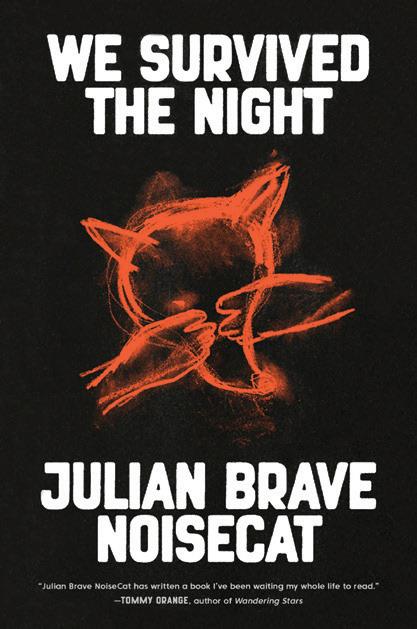
Though he doesn’t disclose what he’s working on now, NoiseCat’s first book, a memoir called We Survived the Night, publishes October 14. But if his name is familiar, it’s because he co-directed the Academy Award–nominated documentary Sugarcane, about the abuse of generations of First Nations children at a residential school in British Columbia.
“My medium is nonfiction,” he says. “In nonfiction, you don’t get to write a happy ending for your characters, even if they’re your relatives. There are consequences to nonfiction that fiction doesn’t have. Real-life stakes.”
NoiseCat started his writing career as a freelance journalist, penning pieces for Indian Country Today, The Guardian, the Canadian Broadcasting Corporation, and The Paris Review after earning a master’s degree in global and imperial history from Oxford University. As his star rose with Sugarcane, press coverage often referred to him as an activist because he helped start a think tank, Data for Progress, where he was the first to suggest Deb Haaland for secretary of the interior under President Joe Biden.
“But I wouldn’t really call myself an activist,” he says. “At least not until the documentary came out. What I wanted was to be a writer.”
Sugarcane came out in 2024, just as the international community was reckoning with residential school abuses in the United States and Canada. But NoiseCat (Secwépemc/St’at’imc/Ashkenazi) never dreamed the film’s resonance would land him at the White House when Biden issued a long-overdue apology to survivors or that he’d walk the red carpet at the 2025 Oscars with his estranged father by his side.
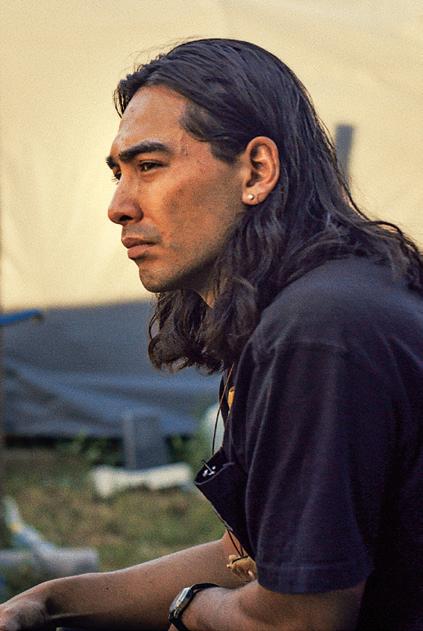
Journalist, activist, documentarian, and writer Julian Brave NoiseCat. Above: St. Joseph’s Mission Indian Residential School in summer, as featured in Sugarcane
THE TRICKSTER
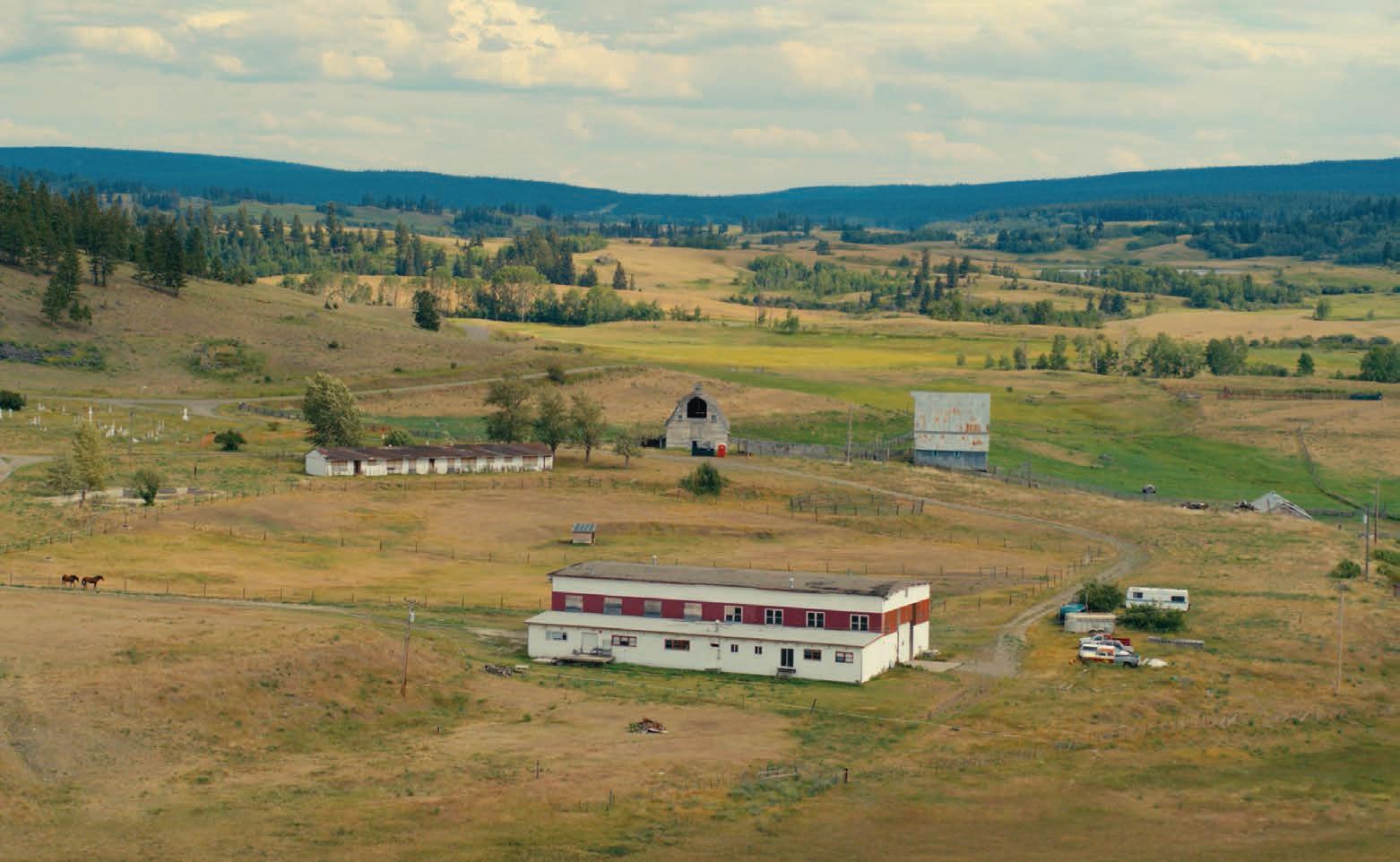
NoiseCat and his co-director, Emily Kassie, met a decade ago as Hu ngton Post reporters. When she first asked him to collaborate on a documentary about abuse at residential schools, NoiseCat wasn’t sure he was ready for such a project. But a few weeks later, Kassie mentioned she’d found her focus: a Secwépemc community near Williams Lake, also known as the Sugarcane Reserve, that had discovered numerous unmarked graves.
“Part of the reason I was hesitant to tell a story like this is because I was genuinely concerned that it would harm my father, harm my grandmother,” NoiseCat says. “But out of all the Indian residential schools across Canada, Em happened to choose the school my family was taken away to and where my father’s life began — and she didn’t even know. So this was not something that I chose to do but something that chose me.”
To make the fi lm, NoiseCat moved to Washington state for two years to live with his father, artist Ed Archie NoiseCat. “At the same time, I was also working on my memoir, which is a father–son narrative told in the form of a Coyote story. Coyote is a trickster,” he says. “Not everybody who is abandoned by their dad would choose to move in with him at age 28. But this is what I had to do to make the art I wanted to make. The time we spent together made us a lot closer and made [the art] a lot more possible.”
NoiseCat grew up in Oakland, California, with his mother, a New Yorker of Jewish and Irish Catholic stock, the daughter of a writer. Both struggled in the newspaper business, and his grandfather left a legacy of unfulfi lled book contracts. Although he had the same natural a nity for writing that they did, NoiseCat says his mother, who regularly edits his work, didn’t have much faith in his career until he got the advance for his memoir.
His mother also kept him connected to Indigenous culture during his childhood. She provided him with Sherman Alexie books and took him to weekly powwow drum and dance classes. “Powwow dancing was my first art form,” he says.
She also took him to visit family in Canim Lake and Mount Currie, two remote First Nations reserves in British Columbia, where his dad once lived. Ed left the family
when his son was 7 years old and moved to Santa Fe, where he gained acclaim as a sculptor.
“He left to go be part of the whole Indian Market scene. Indian art shows are so associated for me with ‘Did my dad make enough sales?’” NoiseCat says. “Santa Fe is complicated for me in general, but my dad was with me last year when we brought Sugarcane to [Indian] Market as part of the growing mecca of Native art in North America.”
AN INDIAN LIFE
NoiseCat doesn’t know if he’ll make another documentary. After plunging headfi rst into the Hollywood machine with the release of Sugarcane, he found he prefers the solitude that writing a ords. Documentary fi lm, however, has an immediacy and a reach that books can’t match. In the film, interviews with his father and grandmother contain long silences that at fi rst seem like an unwillingness to talk. As the story unspools, it’s clear that words aren’t enough. The truth, when it comes out, is earth shattering, and listeners must endure the uncomfortable quiet to get there.
“Our people were deprived of the right to raise our kids for several generations. And when those kids were taken away, they were not just physically abused; they were raped. Some of them died,” he says. “And when they came back, there was violence, addiction. Parents didn’t know how to raise their kids, so they abandoned them. Children who were sexually abused became abusers themselves. This is stu no one wants to talk about. Those silences say more about the emotional truth of what we endured than any sort of reportage could ever convey.”
Although NoiseCat isn’t sure what’s ahead, he’s giving it thought.
“In nonfiction, the process of writing a book or making a film is essentially about what you choose to observe, who you choose to be with, and who you choose to be,” he says.
“When you’re telling a story like Sugarcane, or like my memoir, it’s about what we endured and how we might come back from it. From an Indigenous perspective, our entire way of life was nearly annihilated. Choosing to live an Indian life is in and of itself a very powerful thing.”
Jennifer Levin is a freelance communications professional and an arts and culture writer in Santa Fe.
Above: In a scene from Sugarcane, NoiseCat visits with family on the Mount Currie Reserve during a road trip with his father, Ed Archie NoiseCat. The cover of NoiseCat’s forthcoming book.
Photos: By Emily Kassie, courtesy Sugarcane Film, LLC
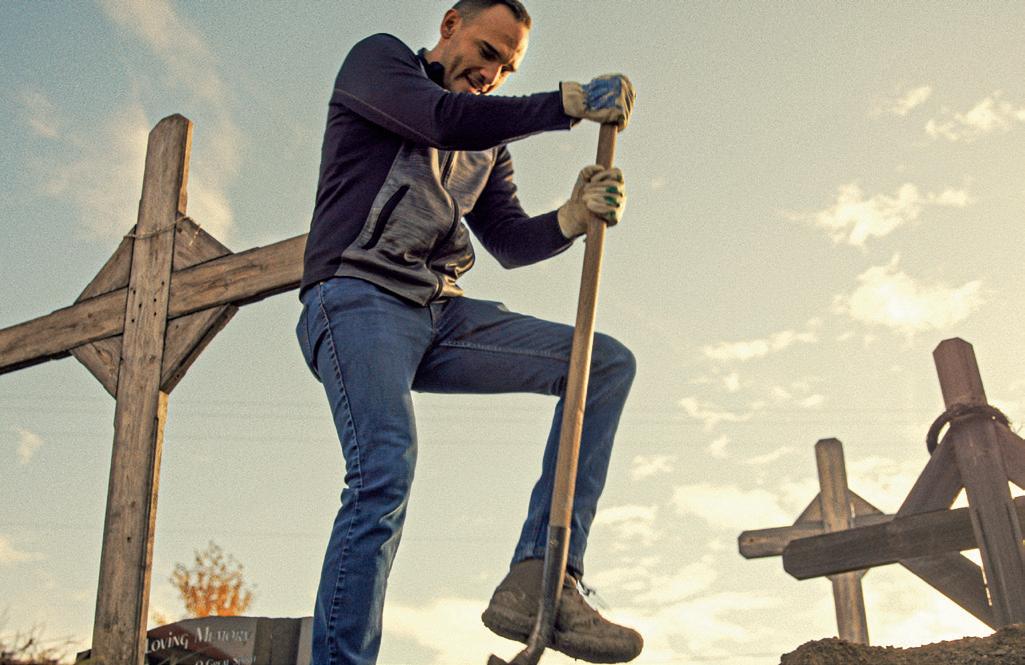
Left to right: Scenes from Sugarcane: Chief Willie Sellars digs a grave for community member Stan Wycotte, who took his life on the first National Day for Truth and Reconciliation in Canada. NoiseCat competes at the Kamloopa Powwow, held on the campus of the former Indian residential school where the first suspected graves of students were discovered in Canada.
Blue Rain
Podcast Panel Discussion
August 13, 2025 — 11 am
Featuring Jesse Littlebird, Thomas Breeze Marcus, and Chris Pappan. Hosted by Leroy Garcia.
PRESTON SINGLETARY
Banana Republic of Raven, August 15 – 30, 2025
Artist Reception: Friday, August 15th from 5 –8 pm
PRESTON SINGLETARY
Artist Lecture
August 13, 2025 — 3 pm
GROUP EXHIBITION
Artist Reception: Thursday, August 14th from 5 –8 pm
Glass Blowing Demonstration
August 15 – 16, 2025 from 11 am –3 pm
Live demos by Preston Singletary, Dan Friday, Raven Skyriver, Spooner Marcus, and Ira Lujan
HYRUM JOE and THOMAS BREEZE MARCUS
Painting Demonstration
August 15, 2025 from 11 am –3 pm
THE ART OF SLOWING DOWN
Caldecott Medal winner Rebecca Lee Kunz brings Cherokee heritage and a handmade feel to her work.
BY EMILY WITHNALL PHOTOGRAPHY BY GABRIELA CAMPOS
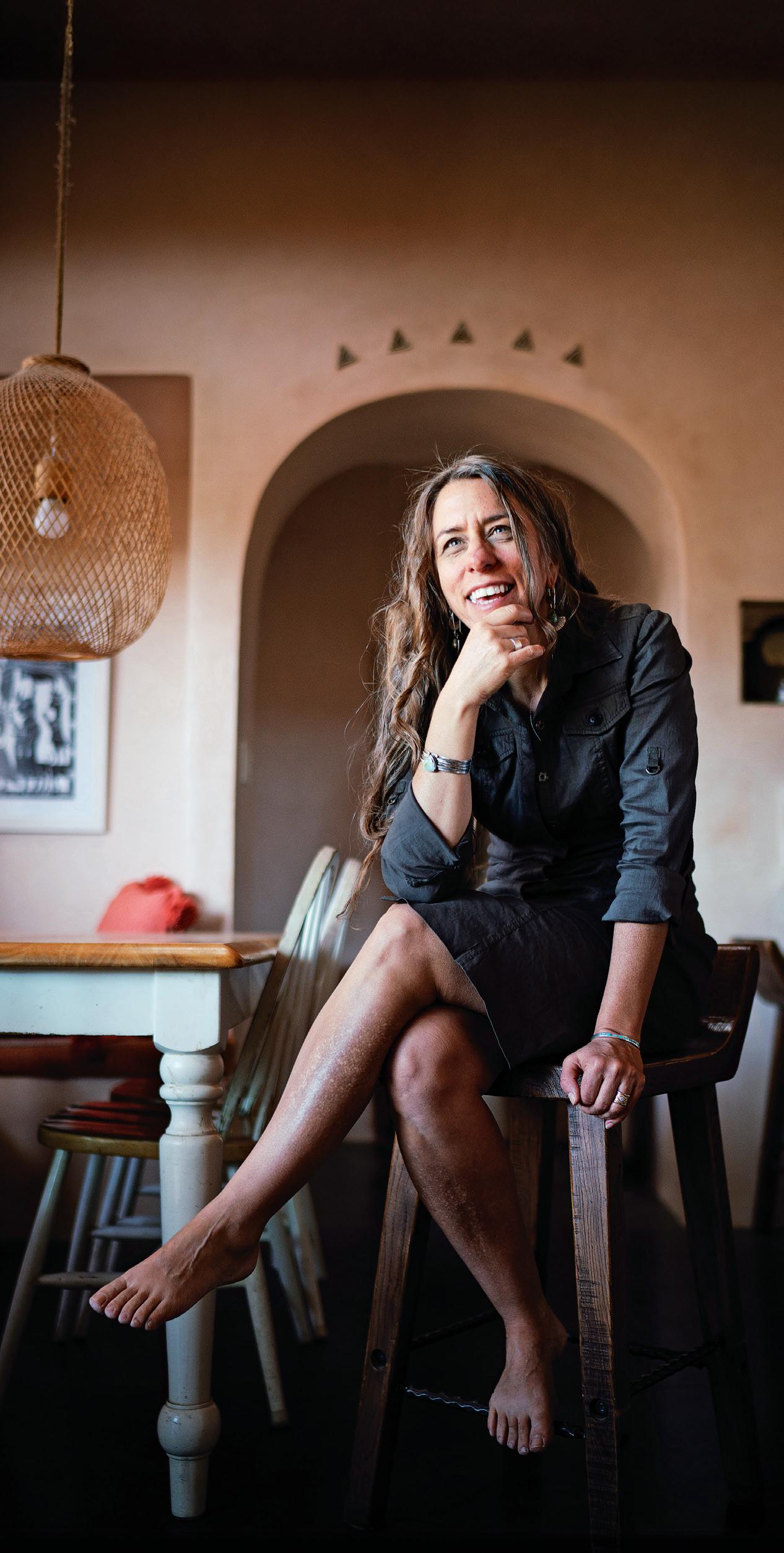
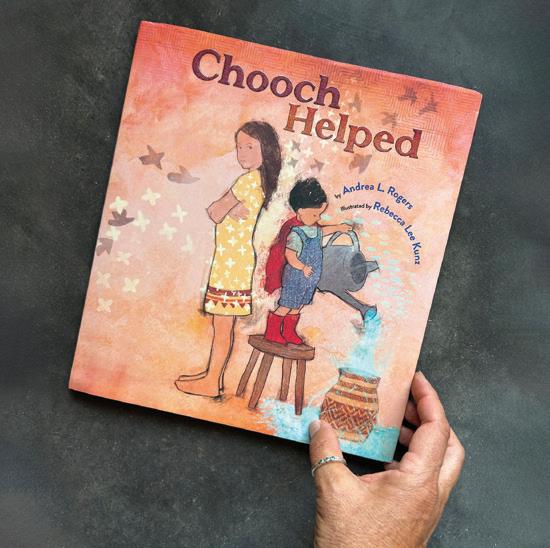
The sky is a soft blue streaked with orange. The setting sun turns the river into a glowing golden expanse. Fireflies lend their light to the evening and two figures — one very small and one much bigger — stand in the water with long, pronged spears in their hands. The dreamy scene with soft, luminous colors captures the magic of crawdad hunting in Oklahoma. Santa Fe artist Rebecca Lee Kunz earned a 2024 Caldecott Medal for this illustration and the others that appear in the children’s book Chooch Helped, written by Andrea L. Rogers (Cherokee). The book gracefully describes a toddler trying to “help” and an older sibling making space for a him. The Caldecott honors the most distinguished children’s picture book of the year.
Collaborating with Rogers on Chooch Helped was the first time Kunz illustrated a book, but she’s been making art for decades. She graduated from the College of Santa Fe in 1998 and spent 10 years creating large abstract and figurative paintings. A smaller, more recent painting from 2018 demonstrates the continuity of her subject matter and aesthetic throughout her career even as the medium has evolved: A grass nest holding three blue eggs take up most of the canvas. A flock of birds flies above the nest in a red sky dappled by long leaf prints that stretch from the bottom of the painting to the top. As in the children’s book illustrations, the colors are warm and inviting.
Native to Oklahoma and an enrolled citizen of the Cherokee Nation, Kunz was interested in art from an early age. Her parents supported her by enrolling her in art classes. Kunz describes her parents as deeply creative too; her father was a musician and her mother made beautiful floral arrangements. Though she was not raised in a Cherokee community, Kunz’s grandparents were Cherokee and encouraged her to be proud of her ancestry.
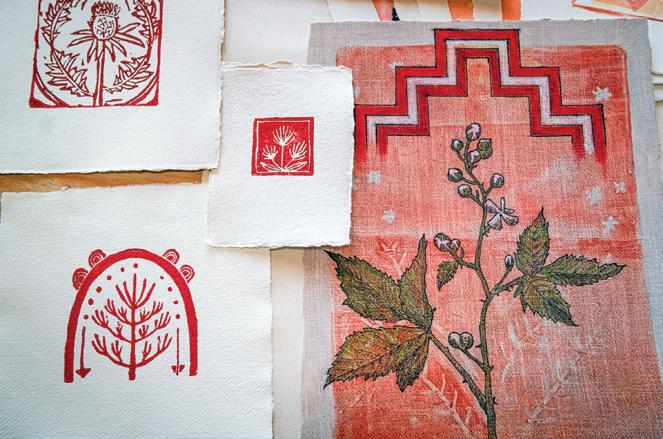
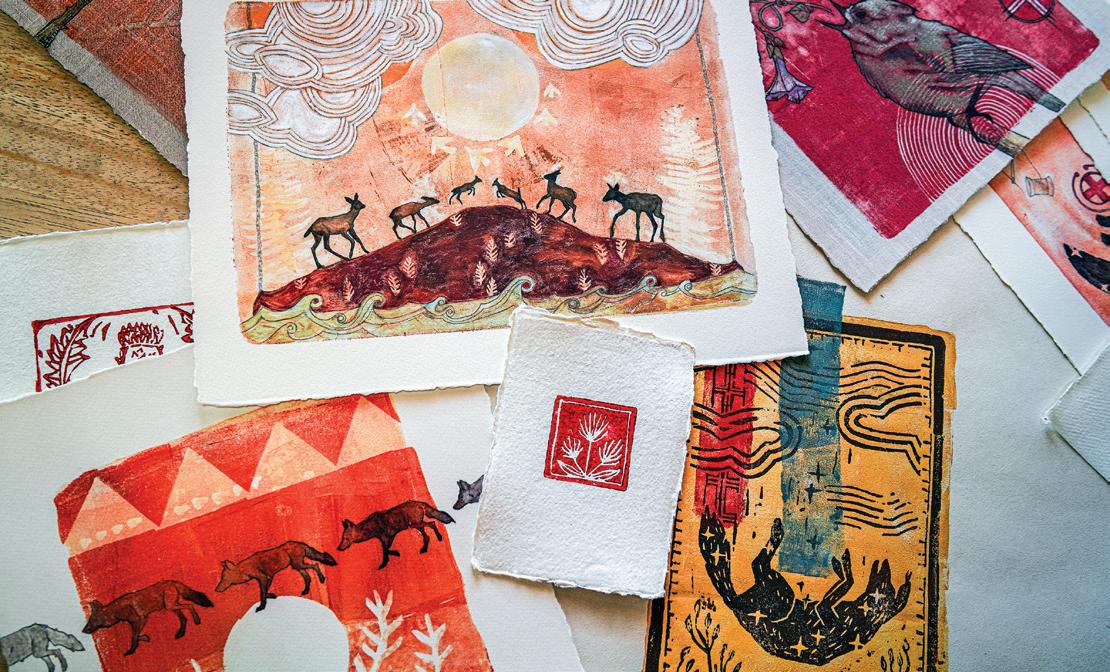
Left: Rebecca Lee Kunz, artist and recent Caldecott winner, poses for a portrait in her home in Santa Fe. Above: Art pieces by Kunz.
DRAW
“My grandmother’s home is a living museum of the Cherokee people, and she was a very hearty pioneer woman who housed many people in her home during the Dust Bowl times in Oklahoma during the Great Depression,” says Kunz. “She just was that kind of stock, and she was the great influence on me.”
The natural world and Cherokee cultural references and mythology are frequent themes in Kunz’s work. When the first of her three daughters was born, she transitioned from painting to printmaking and started her business, Tree of Life Studio. Making and selling notecards and prints allowed her to continue making art while meeting the demands of parenting.
“Becoming a mother transformed me more than anything. It has informed my work and made me into the artist that I am today. Becoming a mother just has this of way of stripping you down,” Kunz says. “It’s di cult to hold [my daughters] through what they’re living through right now with climate change and with technology moving so fast — I think these challenges truly shaped my work, though it wasn’t always easy or fun.”
Now that her daughters are 12, 14, and 17, Kunz has been reaching for her paintbrush again, but she’s always been partial to mixing media. Her technique often involves applying watercolor, pen and ink, and graphite to a monoprint. Kunz also does block printing and gouache and hopes to incorporate more lithography and etching into her work in the future.
Parenting and raising daughters are frequent themes in Kunz’s work, as are prints and paintings that reflect her personal relationship with the Cherokee creation myth. She’s also passionate about depicting endangered plant species. A body of work focused on the Santa Fe cholla is featured in an exhibition at Santa Fe’s El Zaguán this fall, opening on September 5. Her work can also be found at Cielo Handcrafted on Canyon Road, at the shop at IAIA’s Museum of Contemporary Native Art, and on her website.
Kunz uses her website blog as a space for advocacy, drawing attention to endangered plants and providing resources and action items for readers.
“My mission is to carry my activism into my work and give people resources and action items so that they might be inspired to make their own change,” says Kunz. “This way, my work can live beyond a moment in a gallery.”
Kunz incorporated Cherokee culture on each page of Chooch Helped . “Every symbol has a relationship with what’s happening in the story, and I used a lot of traditional symbols that were found in Moundville, which is one of our Cherokee historical burial sites,” Kunz says. “I reuse those motifs found on pottery and basketry in a contemporary way.”
A happenstance meeting with Rogers, who had previously seen and admired her work, led to the partnership on Chooch Helped. The illustrations presented new challenges for Kunz. She taught herself to create digital paintings — a format publishers increasingly require to ease rounds of revisions — and combines these with hand-drawn illustrations. From the outset, however, Kunz was determined to ensure that her work retained the look and feel of being handmade.
“Over 30 years I developed a dry brush kind of painterly style. I try to stay loose,” Kunz says. “When I made this book, that was my challenge: to create this work digitally but keep my hand in it.”
Between the warm, inviting colors of her illustrations, the softness of the paper selected for the book’s pages, the contemporary cultural references, and the Cherokee words, Kunz hopes the book o ers Native kids a chance to slow down, experience awe, and see themselves in the story.
“I hope to move people. I hope for children to walk away feeling like they’ve related to the emotions one of the characters felt. I hope children feel validated when they read the story,” Kunz says. “And I hope they also walk away with a sense of the artistry that goes into this very slow craft of making a book.”
Kunz is now working on another book with her sister, writer Jennifer Loren. The book, Ruth Muskrat and the Indian Problem, tells the story of the sisters’ great-greataunt, who was a Cherokee activist and poet. The biography is for children ages 8 to 12, so it will have more text than Chooch Helped, but each page will also be illustrated. The book is slated for publication in fall 2026 by Levine Querido, which also published Chooch Helped.
“It’s a very personal book, a passion project,” Kunz says.
Emily Withnall is from Las Vegas, New Mexico, and now works as a writer and editor in Santa Fe. Her work can be read at emilywithnall.com.
See more of Kunz’s work online at treeoflifestudio.net and follow her on Instagram @treeoflife.studio.
book
Kunz with her artwork and award-winning children’s
Book
image: Courtesy Rebecca Lee Kunz
AT THE SOURCE
Taos Pueblo offers a (nearly) year-round destination to shop for Native arts and meet the creatives behind jewelry, pottery, and more.
STORY AND PHOTOGRAPHY BY UNGELBAH DÁVILA
If you’ve ever felt connected to a stone, whether in a piece of jewelry or lying on the ground, then you’ve felt how much energy the earth can hold. I feel it at Taos Pueblo. The walls, the roofs, the floors, the entire community is made of Mother Earth. Only the darkest days require propane lanterns to illuminate the rooms of the stacked adobe residences outside the town of Taos, 70 miles north of Santa Fe. Otherwise they are lit with only sunlight. When it rains at the pueblo, everything smells of life, and even the river that flows from Blue Lake through the pueblo is pure enough to drink from. It is a place where things are made by hand, slowly, and in rhythm with the landscape. Visitors will find many businesses at the pueblo — a center of trading for eons — but very few websites and even fewer phones, because electricity stops at the entrance. There are no addresses — likely because none are needed in a place where the same families have lived for more than 1,000 years.
For these reasons and more, Taos Pueblo is one of the most historically and culturally significant places in the United States. It is both a UNESCO World Heritage Site and a National Historic Landmark. While the pueblo brings in little from the outside world, it welcomes visitors.
Inside the pueblo, dozens of families have transformed parts of their homes into shops and galleries. Guests can step inside the enduring dwellings and shop for art that can be purchased only in this sacred location. The pueblo is known for handmade drums, flutes, and micaceous pottery.
The sales spaces range from small one-room shops to expansive multiroom galleries, and part of the adventure is not knowing what awaits you
once you walk in the door. Each space o ers something unique, but from the outside, you can’t tell what you might find inside or know how far back the store reaches.
Most businesses inside the pueblo rely on the thousands of tourists who visit each year. Only a few shops line the plaza, but hand-painted signs direct you down alleyways to more. Unless a sign says “Restricted Area,” you may venture anywhere o the plaza. A business will always make itself known, so there’s no risk of accidentally entering a residence. As a rule, photography is not allowed unless permission is given by the business owner. Below are a handful of the galleries and shops found within the ancient pueblo’s adobe walls.
MORNING TALK INDIAN SHOP
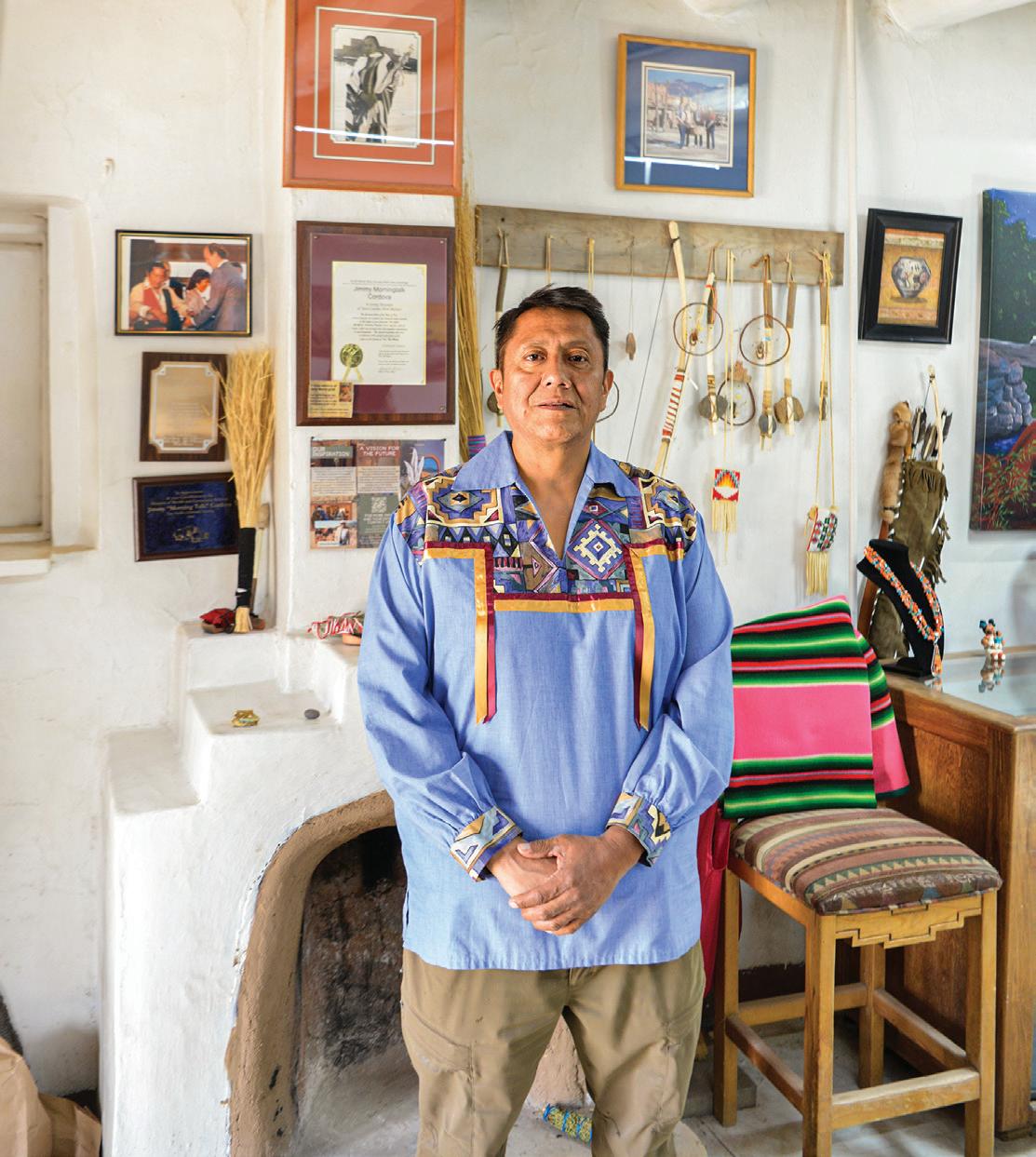
Kevin Cordova (Taos Pueblo) operates Morning Talk Indian Shop (whitefeathertours.com/morningtalkshop) out of his family’s home, where he also runs White Feather Native Cultural Tours. His is the only Native-owned and -operated tour business in Taos and provides an immersive experience that highlights the pueblo’s historic trade routes, artistic traditions, and his own family’s thriving bu alo herd. The shop is named for Cordova’s father, Jimmy Morningtalk, who opened it in the 1970s.
“For centuries, Taos Pueblo has been a hub of trade for Native communities long before European arrival,” Cordova says, emphasizing the significance of artistry in Indigenous livelihood. “From way back, my father did a lot of trade with people from all over, so we have a lot of di erent styles [in the shop].”
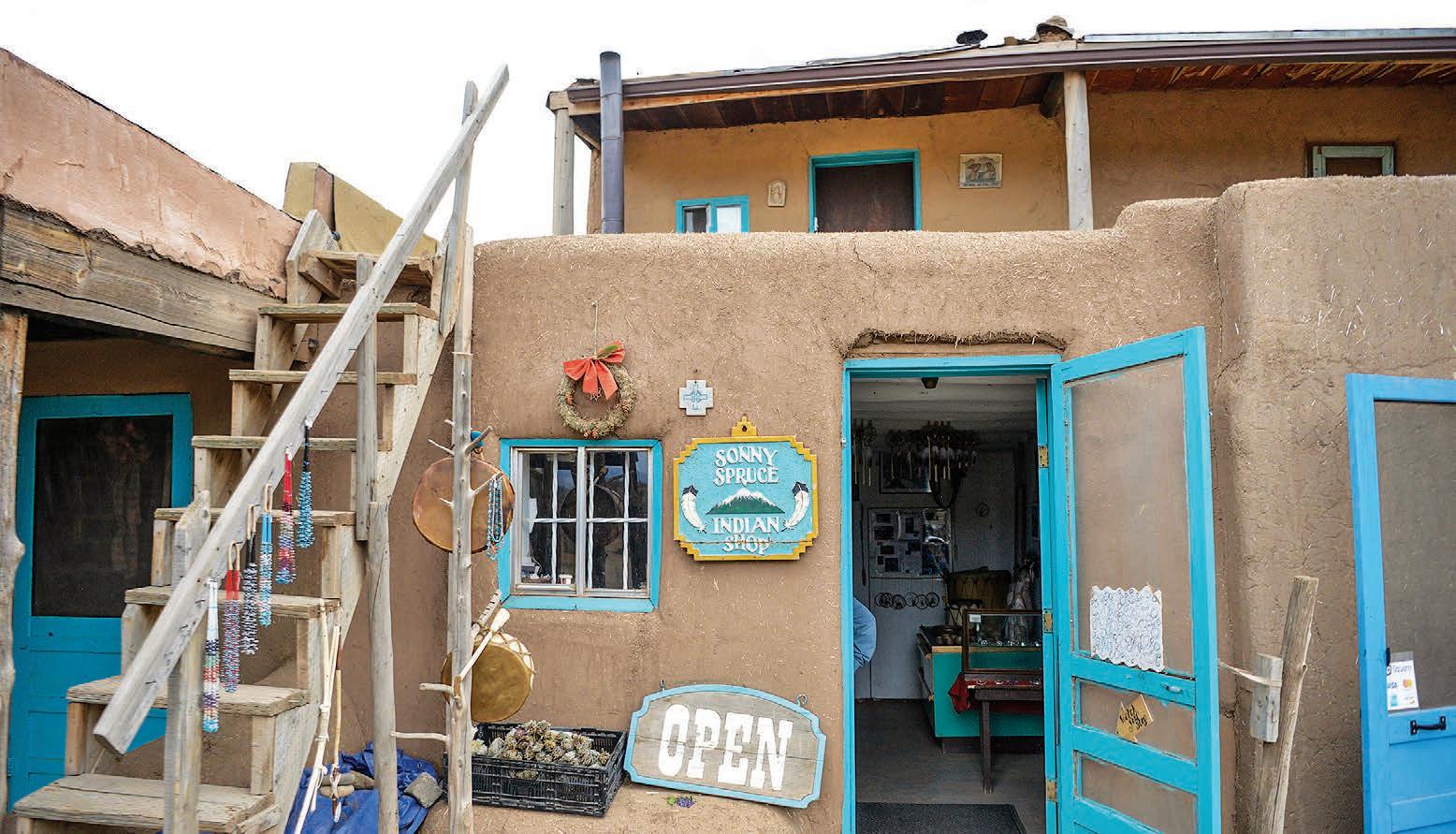
Sonny Spruce Indian Shop
The two-room gallery opens to a view of Taos Mountain to the east of the plaza and proudly displays works from a variety of artists, including Taos painter Jonathan Warm Day Coming, Santo Domingo inlay jeweler Daniel Coriz, Navajo silversmith Charlie John, and renowned Taos potter Angie Yazzi.
A narrative thread runs through their works, and Cordova believes storytelling plays a part in maintaining cultural identity. “I believe everyone has a story to tell, and it’s vital to share them,” he says.
Close to Morning Talk Indian Shop are other doorways inviting folks in. Signs beckon visitors to explore The Pueblo Runner, Dancing Hummingbird, Real Indian Stu , Wahleah’s Gallery, Gathering Flower’s Sage Brush Deer Gallery, Aspen Mist Native Crafts, and other shops.
MORNINGSTAR FLOWER NATIVE ARTS
Just to the south of Morning Talk sits a gallery owned by Kyle-Lynn Martinez (Taos) and her fiancé, Travis Snyder (Zuni/Wind River Shoshone). After their child was born, Martinez suggested they start selling her shell earrings and beaded fedora hats, and Snyder’s jewelry. So in 2018 the couple opened Morningstar Flower Native Arts (morning starflowernativearts.com) out of Martinez’s family home.
Snyder traces his artistic journey back to his childhood, watching his mother — an accomplished Zuni fetish carver — bring stone to life. “She’d say, ‘You want 20 bucks? Sand this for me,’” Snyder recalls.
Inspired by her work, Snyder began carving his own creations — rhinos, elephants, even aliens — exploring motifs rarely seen in Zuni fetish carvings. Soon Snyder was taking classes and challenging himself to make silver jewelry in his own style. It includes abstract shapes alongside lightning bolts in striking designs made with sterling silver, shell, mother-of-pearl, coral, and turquoise. A pair of his earrings, featuring mother-of-pearl inlaid with a sterling lightning bolt, made it to the runway during Native Fashion Week Santa Fe this spring. James Jones, aka Notorious Cree, wore them while walking for designer Lauren Good Day.
Visitors to his shop can find an impressive selection of handcrafted jewelry, predominantly his signature bracelets and rings. “I started working with jewelry in 1974, just a few years after I opened the shop,” he says. “I like to support local artists, so about half of what I sell is made right here in Taos.”
“Sometimes less is more,” Ma rtinez says. “ We don’t mass-produce. These are one-of-a-kind pieces — each one with a story, each one holding its own spirit. . . . The house itself has its own characteristics, and it just amplifies the jewelry work that we have in there.”
But the heart of the pair’s work remains firmly grounded in their home and culture. Like many of the businesses in the pueblo, their shop is more than just a storefront.
“A lot of these businesses are multigenerational,” Martinez says. “Our shop is still a traditional family home. We clear it out for ceremonies, for family gatherings. It’s alive; it’s sacred.”
Visitors often find themselves deeply moved in the shop, with its warm natural light and earthen walls and floor rich in memory. “People sometimes cry when they walk in,” Martinez says. “I think it’s the warmth, the ancestral energy. It holds something they didn’t even know they were missing.”
Martinez says a unique part of shopping inside the pueblo is the opportunity hear the artists’ stories.
SONNY SPRUCE INDIAN SHOP
One storyteller can be found across the footbridge on the south side of Red Willow Creek — just follow the sound of drumming to Sonny Spruce Indian Shop. Next door to The Corner Shop, where you can get fresh frybread and lemonade, Sonny Spruce gladly demonstrates his handmade drums. Their frames are made of native wood, such as cottonwood and aspen, and the skin comes from locally harvested animals, including deer.
A self-taught silversmith, Spruce proudly acknowledges the global visitors to his home. He showcases these visits on a wall of international currencies he’s been accu mulating since he established his business in 1972.
Taos Pueblo pottery occupies a prominent place in his inventory, with work from Martin Romero, who specializes in micaceous clay, and Jessie Marcus, known for her intricate figural pottery. “It’s important to me that I showcase the talents of our local artists and keep our traditions alive,” Spruce says. Handmade dreamcatchers hang from the ceiling. “The web is designed to catch good dreams and ward o bad ones. They originated with the Winnebago people, but they’re welcomed by everyone,” he says, adding that you don’t need to be Native American to use one, stressing the shared human experience that transcends cultural boundaries. “Everyone dreams; we’re all dreamers.”
Spruce reinforces Cordova’s message that Taos Pueblo was historically a major trading center, dating back to before European contact and after, citing relationships with French fur traders.
No matter which businesses entrance guests at the pueblo, visitors will engage with the stories and traditions of a vibrant community that has flourished for centuries. As Spruce wraps up a conversation with a visitor, he smiles and adds, “We want everyone who comes here to take away a good feeling and a deeper understanding of our culture.”
IF YOU GO
Taos Pueblo is generally open to visitors 8 a.m. to 4:30 p.m. daily. Tours are offered daily at 9 a.m. The pueblo may close — sometimes without much warning to visitors — for cultural observances and rituals. Late winter to early spring, the pueblo closes for about 10 weeks. Call 575-758-1028 or visit taospueblo.com to verify that the pueblo is open prior to visiting. The pueblo also welcomes visitors for its annual San Geronimo Feast Day on September 30. Follow good visitor etiquette during your attendance.
Kevin Cordova operates Morning Talk Indian Shop and White Feather Native Cultural Tours in Taos Pueblo.
ON POINT
2024 Santa Fe Indian Market Best of Show winner
Dan Vallo’s creation showcases artistry — and the legacy of revolution.
STORY AND PORTRAITS
BY UNGELBAH DÁVILA
an Vallo makes weapons by hand. As a self-taught flintknapper, he has created arrowheads that he’s used to harvest animals in places as far away as Africa. Yet Vallo’s personality is far from deadly. Warm and inviting, he’s eager to share the ancient skills that earned him the 2024 Best of Show award from Santa Fe Indian Market.
Combining ancestral knowledge with modern materials, Vallo (Acoma Pueblo) embodies the same spirit of perseverance that led the first Indigenous person to form an arrowhead from a piece of stone. And while the art he makes is functional, it is also visual — as his Santa Fe Indian Market awards attest. Vallo began entering his work into the market awards competition in 2019, when he won first place for a flintknapped knife. In 2022 he took home second place in the diverse arts category. In 2023 a bow and quiver made of raccoon skin brought home a blue ribbon in the diverse arts category. In 2024 he won both the best in division honors for diverse arts and the coveted Best of Show for Pueblo Revolt Ensemble
“Winning the best [of] classification was amazing. Then, as they announced the Best of Show award, I was speechless,” he says. “It was like reaching the pinnacle of the Native American art world.”
Vallo found inspiration for Pueblo Revolt Ensemble, which was purchased by a private collector from Houston who has several of Vallo’s works, in a sketch Jason Garcia drew before embarking on his Tewa Tales of Suspense. (Read “The Uprising Today” on page 65 for more information on Garcia’s work.) The black-and-white drawing hangs in Vallo’s home gallery in Belen, New Mexico, and depicts Po’pay, the holy man and war captain of Ohkay Owingeh who led the 1680 Pueblo Revolt, with a knotted yucca cord used to orchestrate the uprising against the Spanish. Each knot represented a day. Each pueblo untied one knot per day, and when there were none left, they rose up in unison.
“It was amazing, the type of communication they used,” Vallo says. “No cell phones, no radios — just a piece of cord passed from village to village down the Rio Grande Valley. And it worked.”
By
Dan Vallo in his Belen, New Mexico, studio. Right: Vallo’s 2024 Santa Fe Indian Market Best in Show winning piece Pueblo Revolt Ensemble.
Artwork
photo:
Tira Howard, courtesy SWAIA
Find Vallo’s work in person at Acoma Pueblo’s Sky City Cultural Center & Haak’u Museum and this year at Santa Fe Indian Market, Booth PAL 261. His works are also available online at danthebugleman.com.
Vallo at work, flintknapping arrows and sharpening knives
My
On
The Uprising Today
Indigenous artists respond to and reimagine the Pueblo Revolt.
BY UNGELBAH DÁVILA
ome say the Pueblo Revolt never ended. The coordinated 1680 uprising by Pueblo people against Spanish colonial rule, on land that later became New Mexico, remains one of the most significant and successful acts of Indigenous resistance in North American history. Led by a holy man from Ohkay Owingeh named Po’pay, the revolt was fueled by years of religious persecution, forced labor, and cultural suppression under the Spanish. On August 10, 1680, the Pueblos attacked Spanish settlements, killing around 400 colonists and driving the remaining Spanish out of the region. The revolt successfully freed the Pueblos from Spanish control for 12 years, allowing them to restore their traditional religious practices and way of life. Those acts of resistance and perseverance continue today through environmental justice e orts, the protection of sacred sites, community activism, and sustaining Pueblo ways of life.
The Pueblo Revolt has proven a rich source of inspiration for artists too. Through pottery, murals, installations, and plays, artists like Dillon Christopher Chitto, NSRGNTS Collective, Jason Garcia (aka Okuu Pín), and Virgil
Ortiz use their chosen mediums to recount the story of the Pueblo Revolt in their own Indigenous voices and creative imaginations.
Whether the narrative is painted on a 30-foot wall or filling a theater, whether it’s meant to make you laugh and smile or sit and ponder, for these Pueblo creatives, Po’pay is as relevant today as he was the moment he passed a knotted yucca rope to runners — the method the Pueblos used to coordinate their 17th-century uprising. In one way or another, the legacy of this event continues to find voice in contemporary art and conversations.
For contemporary Pueblo artists, the Pueblo Revolt is inseparable from their existence. It’s more than a tale they grew up hearing; it’s an event to which they can trace their ancestors. By keeping the spirit of this uprising relevant in their work, they honor the brave grandmothers and grandfathers who fought for their survival.
Virgil Ortiz’s raku clay works appeared in Daybreak of the Resistance at Container in 2024 and depict watchmen (left to right) Kuh Kahn, Kuu’ame (South), Bu’name (West), and Shuha
Dillon Christopher Chitto
In a dominant culture steeped in the “stoic Indian” stereotype, one creative outlook is seldom associated with Indian Country: comedy. But playwright Dillon Christopher Chitto uses humor to explore the Pueblo Revolt and show that Indigenous people are more than their trauma stories.
In 2023, when Chitto (Mississippi Choctaw/Laguna/Isleta Pueblo) was an artist in residence at UC Berkeley, he premiered Pueblo Revolt with the Alternative Theater Ensemble. The play has since had staged readings at the American Stage Theatre and the Goodman Theatre, and been produced at the No Peeking Theatre. It received the Rella Lossy Award for Best Play in 2022. It came to Santa Fe in 2024 and returns to the Santa Fe Playhouse this year.
The play is set before, during, and after the uprising and focuses on two brothers from Isleta Pueblo — Ba’homa, an experienced revolutionary, and Feem Whim, a gay idealist. It follows the brothers as they question their beliefs and what’s necessary to ensure survival amid the uprising. The play warms audiences to this heavy topic by opening with Freem practicing his flirtation techniques on a chair.
“As Native people, we use humor a lot. It’s very much a survival skill and a key part of our resilience,” the Chicago-based playwright says. “Whenever Native people are together, we’re always ri ng and laughing. As people, we’re stronger than our trauma stories, which a lot of early Native theater was based on. It was a lot of sadness, a lot of things about removal and boarding school stories. I never wanted to show only that side of Native life because theater is open to anyone, and it’s important for me that people know that we’re more than just our sadness.”
Chitto grew up in Santa Fe surrounded by big auntie laughs, joking, and good humor — a common experience for Native kids but one not often associated with Indigenous arts. He brings humor to his storytelling as his characters present a sideline perspective of the Pueblo Revolt not often told. He says Isleta Pueblo did not partake in the revolt in the same way pueblos to the north did because it was under such strict Spanish control.
“So the brothers are just responding a few words to each other but also saying things to themselves. And so it goes through what they’re thinking about, the doubt that this historical thing can happen, and the fear: ‘What if it doesn’t work?’” Chitto says. “At the end is the hope: ‘Oh my gosh. They did this. It actually happened.’ That’s that scene. That makes me so happy to watch people react to it, because I think that’s when the comedy is able to get pulled back and people are living in this fear with these boys.”
Chitto’s script-in-hand play Pueblo Revolt, directed by Tara Moses, runs August 14 through August 31 (7:30 p.m. Thursday to Saturday; 2 p.m. weekends) at Santa Fe Playhouse (142 E. De Vargas St., 505-988-4262, santafeplayhouse.org). Tickets: August 14 and 15, pay-what-you-will previews; other nights from $15.
NSRGNTS Collective
Headed by Leah Povi Marie Lewis (Laguna, Taos, and Zuni Pueblos/Hopi/ Diné) and Votan Henriquez (Maya/Nahua), Albuquerque-based NSRGNTS Collective uses the kawaii art style to showcase the violent 1680 Pueblo Revolt in an unexpected, even cute way. Developed in Japan, the kawaii aesthetic uses characters with rounded forms, bright hues, and oversized eyes reminiscent of manga and street art to connect younger generations to a greater ancestral memory.
“It’s geared toward the youth,” Henriquez says. “We were very militant, but this style is more tender, more loving — in a way more warm. But how do you tell a story of revolution through a style like this? So we came up with the term ‘cute but deadly.’ They’re cute, but they’re revolutionary.”
Henriquez deploys his background as a gra ti writer influenced by radical politics, while Lewis draws upon Pueblo pottery training from her mother, master potter Lorraine Gala Lewis. Their murals, while visually disarming, grapple with rebellion, colonization, and identity. Their collaboration with the Indian Pueblo Cultural Center (IPCC) for an exhibit in its Art Through Struggle Gallery gave them space to merge these tensions.
In June 2024 they completed a seven-panel painting at the IPCC called Poeh Ak Ka Wohatsey: The Emergence Teachings of Resilience. It’s focused on Pueblo empowerment of the past, present, and future, with Po’pay as a central figure. The characters sport round faces and big smiles in a cartoony style as a gentle gateway to interest younger Indigenous people in learning more about their history.
“Nothing looked like this before we started,” Henriquez said. “Now we’re seeing more kawaii, more manga, more Indigenous kids making art that feels like theirs. That’s the revolution.”
The IPCC exhibition closed in June; however, the collective has printed aspects of its mural, such as the Po’pay character, on stickers, wallets, and other merchandise. These items are available through Instagram @nsrgnts. View a video of the mural and interviews with the artists at indianpueblo.org/current_ exhibitions/nsrgnts. From August 15 to 17, NSRGNTS exhibits at the Poeh Cultural Center’s Pathways Indigenous Arts Festival at Buffalo Thunder Resort and Casino (poehcenter.org/pathways).
Pueblo Revolt at Santa Fe Playhouse
NSRGNTS created Poeh Ak Ka Wohatsey: The Emergence Teachings of Resilience for the Indian Pueblo Cultural Center
Photos
(left to right): Courtesy Santa Fe Playhouse, courtesy Indian Pueblo Cultural Center, courtesy King Galleries, courtesy Virgil Ortiz
For Jason Garcia (aka Okuu Pín), storytelling is embedded in both form and material. The Santa Clara Pueblo artist’s long-running series Tewa Tales of Suspense channels comic book aesthetics to retell the story of the Pueblo Revolt through pottery tiles and prints.
He began his series in 2007, portraying Po’pay as a superhero. The depiction helped correct an omission in comic books, which had no representation of or by Pueblo people. His body of work comes from a Tewa perspective and brings the narrative into the present through a pop art style.
He’s completed more than 150 iterations of Tewa Tales of Suspense. Aside from pottery tiles, he’s also worked with prints, serigraphs, silkscreens, etchings, drawings, and illustrated cartoons.
He tells “stories of Tewa resistance . . . asserting our ancestral boundaries, our lands, our histories; the assertion of our languages — that we’re still in a place that we’ve existed on and maintained. We have lived on that [land] since time immemorial,” Garcia says. “Using traditional materials like clay and mineral pigments connects us to our ancestors while allowing contemporary interpretations.”
Garcia roots his work in oral histories, visits to historical sites, and Tewa cosmology, which makes each piece a layered document of both past and present.
His work also confronts more modern events. Recent pieces address the environmental fallout of the Manhattan Project on Tewa lands, underscoring how colonization continues in less visible but equally damaging forms. “I believe the earth can carry trauma,” he says. “But through storytelling, we can begin to heal both the land and ourselves.”
View Jason Garcia’s work year-round at King Galleries (130 Lincoln Ave., Suite D; 844-481-0187; kinggalleries.com), at Hecho a Mano (129 W. Palace Ave., 505-916-1341, hechoamano.org), on Instagram @okuu.pin.studio, and during Santa Fe Indian Market at Booth PAL 123.
The Pueblo Revolt has been Virgil Ortiz’s focus for more than two decades. Through fashion, film, augmented reality, and especially clay, the internationally renowned Cochiti Pueblo artist reanimates and reimagines the revolt for global audiences.
“Clay is the heart and soul of everything I do — reviving the voices of pieces once destroyed by invaders to declare that we are still here: living, creating, and thriving. For the past 23 years, my mission has been to educate globally about the 1680 Pueblo Revolt — a pivotal event often left out of history books and classrooms due to the genocide and violence inflicted on our people. Across every medium I work in — clay, fashion, film, music, AR, and AI — I weave our history into my installations, lectures, and exhibitions to ensure it is seen, heard, and remembered,” he says.
His work doesn’t just honor the past; it advances the story via Indigenous futurism, a movement that explores the connection between Indigenous culture, technology, sci-fi, and the future. Sci-fi characters, sleek costumes, and high-tech storytelling coalesce around traditional Pueblo symbols, showing the world that the revolt isn’t over — it’s still evolving. His ReVOlt 1680/2180: Sirens & Sikas runs through October 2026 at Los Angeles’s Autry Museum of the American West. The exhibit uses digital animation to imagine a future in which the 1680 rebels have more resources and are able to secure their territories forever. At North Carolina’s Hickory Museum of Art, his Indigenous Ancestral Memory uses projection, sound, monumental ceramics, and augmented reality to immerse visitors in a retelling of the Pueblo Revolt story.
“For over two decades, I’ve been using art to teach about the first American revolution wherever I can,” Ortiz says. “My deepest hope and prayer has always been that the next generation of Pueblo artists would join me in educating others — sharing our history, in our voices, for our people and the world.”
In October 2022, Meow Wolf’s House of Eternal Return unveiled a permanent Virgil Ortiz installation. Sirens: Secret Passkeys & Portals, which continues Ortiz’s ReVOlt 1680/2180 saga, features time travelers helping their ancestors and protecting elements of culture from extinction.
This month, find Ortiz’s new clay works, home décor, apparel, accessories, and an all-new jewelry collection at the VO Showroom at J Justice Necessities (73 W. Marcy St., 505-500-5879, jjusticenecessities.com) August 12 to 17. He’ll be at Santa Fe Indian Market Booth LIN W 745. Wheelwright Museum of the American Indian (704 Camino Lejo, 505-982-4636, wheelwright.org) features his works in the exhibit Gestural in Form, running August 10, 2025, through January 1 1, 2026. Ortiz is also a participating artist in Scholarships Shape Futures — the 2025 IAIA Benefit and Auction, August 13, at 5 p.m., at La Fonda on the Plaza. See his work online at virgilortiz.com.
Jason Garcia
Virgil Ortiz
Ortiz working on Po’pay
Tewa Tales of Suspense 105 by Jason Garcia (Okuu Pín)
Messenger JUST THE
As two museums showcase Bob Haozous’s sculptures, paintings, and metalworking, the artist hopes people look past the materials to their meanings.
BY ELIZABETH MILLER PORTRAITS BY MICHAEL G. SEAMANS
he motif might be confused for a common one — a Native American astride a horse — but in its delivery, there is no mistaking a very di erent meaning. In 1200 Miles from Fort Sill, the rider slumps over his horse, his knife dropped and one moccasin lost, as the horse sinks into the sand. The bronze statue’s details catch the creases around the man’s belly and a hoof of the horse still kicking for solid ground. It’s a symbol of lost manhood, says the artist and longtime Santa Fean Bob Haozous (Warms Springs Chiricahua Apache). It’s also a comment on the tropes and trends in Native American art and the commercialization of romanticized images, all of which he’s spent his life rebelling against and encouraging other artists to question.
“My idea is to challenge people to start talking to each other,” he says. “That’s what art should be. It should be creating the question.”
The Wheelwright Museum of the American Indian selected 1200 Miles from Fort Sill for the exhibition Echoes, which celebrated the museum’s 50th anniversary of pivoting to focus on contemporary Native artists. Haozous’s work was also part of the 1976 show representing the museum’s shifting focus — illustrating the long relevancy of his work. (Echoes closed June 2025.)
His six decades of creative work are also recognized in Bob Haozous: A Retrospective View, a survey of sculpture, painting, prints, and jewelry at the Heard Museum in Phoenix. In honor of that exhibition — as well as his contributions to Native art and to Santa Fe, which has displayed some of his sculptures in city parks — the Wheelwright again filled galleries with his work this year for Memo to the Mother: Bob Haozous’s Messages to Mother Earth (on view through January 10, 2026), which looks at the environmentalism embedded in many of his images of the female form.
Bob Haozous in his Santa Fe–area studio in spring 2025
Artwork: Courtesy of Heard Museum
Haozous has “shaped current dialogues about the complicated reality of American Indian expression as art, commodity, and cultural practice,” the Heard catalog foreword reads. His pieces range from expressing humor and empathy to often unconventional work that “fiercely challenges (mis)conceptions about indigenous people.”
“It was just time to give him the much deserved recognition,” says Diana Pardue, chief curator of the Heard Museum. His visually appealing and aesthetically beautiful sculptures are also enhanced with deeper meaning, she adds.
Take his early sculpture, up now at the Wheelwright, titled Mother Earth in Bondage to Human Greed. Haozous has carved mahogany into elegantly shaped but painfully contorted female shoulders. Rawhide and nails seem to pin back her writhing limbs in ways that are “uncomfortably alive,” as the caption declares.
To Haozous, the message is most important. Environmental catastrophes have been perpetrated in the name of consumerism and colonialism, and through massively violent weapons. Native Americans have been erased or allowed to assert themselves only while hemmed into idealized boxes. To transmit these ideas, he draws in pen, paints in acrylics, and sculpts wood, steel, and stone, shifting among them with incredible fluency.
“It’s kind of a furious ability to create,” says Henrietta Lidchi, executive director of the Wheelwright. “I think it’s because he has the need to say something, so it comes out through whichever medium he most wishes to express it. . . . It’s just one continuous gesture.”
As the son of famed sculptor Allan Houser (1914–1994), Haozous had art-making tools in hand early, learning how to chisel stone and how to paint on a scale so large that it required rolling the brush with a full-body swing like a dance move. He joined the U.S. Navy to escape northern Utah and what felt, he says, like a questionable future fraught with “alcoholism and stupidity.” After his service, the GI Bill helped pay for him to attend the California College of Arts and Crafts and complete a bachelor of fi ne arts degree in sculpture.
Experiences there seeded the artist he’d become, both in aesthetics and in counterpoint. One professor declared that a badly drawn line felt like jamming a pin to the eye, so Haozous crafted elegant curves. In his grand-scale steel structures, that ethos translated to welding seams into smooth, solid lines, even when that took more time and skill. Another professorial critique overlaid symbolism he hadn’t expected and prompted a lifelong focus on being precise in his expressions. The formal education embedded in him an understanding of Greek sculpture, Renaissance greats, and the likes of Manet and Picasso.
That knowledge materialized in works such as a pointillist portrait of his grandfather. He tried it, and it worked. Then he moved on to another technique that worked for the next piece.
“I try not to repeat myself,” Haozous says. “I want to fi nd something I can do and learn how to do it, and then when I need it, I can do it later. But I always have to keep changing.”
When a professor at college declared that if he moved to Santa Fe and kept making work like a Native American portrait he’d just showed, he’d be famous in a year, his response was a resounding no. He didn’t want to make the work that was most palatable and likely to gain acclaim or amass a fortune.
Clockwise from left: Works from the Heard Museum’s retrospective of Haozous’s art — an untitled mask (1984), Memories of Campfire (2019), and White Dress (1973).
As the son of famed sculptor Allan Houser (1914–1994), Haozous had art-making tools in hand early, learning how to chisel stone and how to paint on a scale so large that it required rolling the brush with a full-body swing like a dance move.
During college, he married and had a son (he later also had a daughter). But he felt called to New Mexico, where his father had moved to join the faculty at the Institute of American Indian Arts. Houser sold Haozous 5 acres of land and he built a house on it, where he continues to live and work today. For a time, the two worked in the same studio.
“My family always gravitated back to being together,” he says. He and his four brothers all live in Santa Fe and were all present when their parents died. He recognized, fi rst, the tribal view of care for multiple generations. “Later on I learned that responsibility wasn’t just to people; it was to all things. That’s kind of the driving force in most of my art.”
He showed work at the 1971 Indian Market, but he worried about the influence and power of the art market in Santa Fe — how it dictated who was good and who was not. He’s also wrestled with the commodification of Native art, with its emphasis on economic return, and how it plays into e orts to “kill the Indian, save the man” — a concept that has purged Native American cultures of everything but “the decorative stu .” He contends that Native cultures at times packaged themselves in prettiness and turned art into a vocation as a way for Indigenous peoples to make a living. In so doing, He believes essential culture has been lost this way.
Despite Houser’s accolades, such as being the first Native American awarded the National Medal of Arts and a robust career as an artist who, as Haozous says, “saw the beauty of Native people and . . . put it in front of us,” Haozous still encounters Native Americans who don’t know his father’s name or work. Perhaps if people thought of Houser as a storyteller, Haozous says, he’d be more revered.
Haozous once ran to his studio every day. Now, at age 82, he’s not feeling as rushed, but the work feels ever more
important. He’s been looking back on drawings he began 20 years ago and seeing, fi nally, what he wants to say through the pieces and starting on them again. This spring, he worked on two 5 x 6 foot drawings, which are now at the Heard Museum.
“They’re huge to me,” he says. “But I did them because it was a challenge. The most important thing is that it’s a challenge, and the change. Once you get caught in the factory assembly line of your talent, that’s the death of your talent.”
“He’s also a relentless producer, even now,” says Lidchi, who’s been interviewing Haozous since the 1990s.
When a Wheelwright exhibition of Marcus Amerman’s work was up last year, she spoke with Amerman and a few other Native artists born a couple of decades after Haozous. One of them said their work wouldn’t exist in the same shape or form if it hadn’t been for Haozous.
“He was a framing artist for them,” she says. “He had that impact on that generation of artists . . . as someone who had a capacity to think di erently about what art meant and what the forms of reference were and what kind of critique could be built into it.”
Those critiques are, at times, sharp. Echoes also included the pen and ink drawing R.S.V.P., which caricatures a gallery opening. Art patrons wear moccasins, fringed clothing, and concha belts — not one of them looking at the art — while a silhouetted figure in a headdress enters the room, representing their collective fantasy of a Native artist. A series of paintings, including Thank You Dear Mother, shows female figures amid handwritten letters to Mother Earth, missives in which Haozous tries to apologize, atone, and reconnect to a planet deeply damaged by human choices. The text on one painting, Boom, recounts him witnessing a hospital bombing during his Navy service in Vietnam. The work hews to his belief that art (or “stu ,” as he sometimes insists on calling what he makes) is a place to communicate personal experiences, what’s shaped a modern life, and what has survived of Indigenous perspectives, all part of an ongoing dialogue.
“Our personal lives made us who we are,” he says. “Should we be talking about that through this communication tool or should we be talking about bu aloes and eagles?”
That matters now because what he’s found among Indigenous peoples globally is a tie to the care of all living things — Indigenous thought for and about the environment that could save all of us.
“Who are these Indigenous people?” he says. “Well, it’s the potential of all people.”
If only the message can get out.
Elizabeth Miller is an award-winning freelance journalist based in Santa Fe.
Haozous reaches for the medium in which he can best express his intended message. Right: A bronze belt buckle of a woman falling featured in the Wheelwright exhibition Memo to the Mother: Bob Haozous’s messages to Mother Earth
Artwork: Courtesy of Bob Haozous and Wheelwright Museum of the American Indian
Stone Giants
The only competition that motivates sculptor Ryan Benally is outdoing himself.
BY ELIZABETH MILLER PHOTOGRAPHY BY GABRIELA CAMPOS
hen the 8,000-pound block of Turkish marble arrived, Ryan Benally (Navajo) set it up in his open-air studio near Española. The space is shaded but breezy to let the dust move through. He had to reach up over his head to touch the top of the stone. His work often starts with sketching crayon on stone as he tests the forms he imagines for fit. Then he applies hammer and chisel. Soon, power tools like his 9-inch diamond blade come out.
“It’s very, very unforgiving. Once you make that cut, you can’t get that back,” he says. “For me, the challenge is that.”
Those first strokes come startlingly violent and fierce, breaking away chunks of stone, freeing the shapes he’s imagined. In the case of this block of white marble, he hewed it into four feathers, each 5 or 6 feet tall, threaded together by a swirling abstract form. His work is so finely polished that by the time it’s finished, he’ll ask that people take o their jewelry before touching the surface. That wearable metal could scratch the polished marble.
The violence gives way to an object cradled almost like a baby, he says, wrapped in pillows and blankets, on its way to an installation or presented in a gallery on a pedestal. It’s only then that he can step back and know that everything worked.
When he posted images of his latest sculpture in process online, people asked if he’d be entering into the Santa Fe Indian Market juried competition this year. Benally replied yes in jest, but the response earned him a phone call from market
sta to break the bad news he already knew: This sculpture far outweighs the 200-pound weight limit for the competition.
But Benally now thinks beyond the competition. He’s won best in division for sculpture three years in a row, most recently for Feathered Prayers, a 39-inch-tall sculpture in Italian marble and black granite of two feathers curved together around an abstract form.
Maybe he’ll enter a piece this year, and maybe he won’t, he says. At this point in his career, he’s less concerned with accolades than he is with charting his own progress.
“I just look at myself and what I do, and I want to outdo it,” Benally says. Benally became interested in three-dimensional stone carving around age 12, in the summer of 1989. He knew intuitively, even before high school, that this was his path. At age 14, in 1991, he sold his first piece to a collector and secured gallery representation. He first juried into Indian Market in 1996.
“It was just what was meant to be,” he says, “and I’ve been having fun ever since.”
Left to right: Ryan Benally works on a large-scale sculpture in his Española studio in spring 2025. Benally’s 2024 Santa Fe Indian Market best in division–winning sculpture Feathered Prayers.
Early on, he was introduced to Navajo sculptor Tim Washburn, who also works mostly in stone, creating realistic, figurative pieces. Beyond that, Benally says he’s mostly learned by trial and error. He’s broken stone and even entire pieces, including one while installing it in a gallery. Sometimes he chooses the wrong tool for the outcome he is trying to achieve. But he loves that, when he o ers advice to others, like in the years he taught at the Poeh Cultural Center, he’s earned every inch of what he knows.
Sculpting stone is a lot of hard work, he admits. It’s physically demanding and dirty labor. He wears eye and ear protection and a respirator to avoid breathing in dust that spins o the stone as he grinds into it. Much of the time, he works solo. He says the work can get lonely.
“Sculpture is a passion, a labor of love,” he says. “I can’t imagine doing anything else.”
For a decade, he crafted traditional, realistic forms, often inspired by his Diné heritage and Native American culture. Many of those sculptures were sharply detailed portraits in stone, people captured down to strands of hair, creases in garments, and beads on a necklace, or a fist so finely rendered that the fingers look ready to open.
Around 1999 he started to break away from those themes and that imagery to blend realistic detail and abstraction, like the curves and whorls carved in white Italian marble and granite for his 2022 Indian Market best of class winner Bold as Love and the 2023 winner Dreamscapes of Love, carved from calcite onyx and black Indian granite. He wanted to be known not by a genre but simply as a sculptor, whose work could hold its own in sculpture capitals such as Paris or Florence.
He also wanted to open his work to new and di erent collectors, perhaps even from a younger generation. That required faith that buyers would appreciate the new forms and envision them as a permanent part of their spaces. He’s most grateful to see his pieces find new homes. While accolades and awards are nice, and he’s thankful for the recognition, he and his kids, as he likes to say, “can’t eat that ribbon.”
Pushing his own boundaries and venturing into new forms wasn’t always easy for the young and hungry artist. The experimentation and exploration required being willing to sink thousands of dollars in materials alone into sculptures that might generate no monetary return. He’s seen sculptors take their work to shows and make just enough money for the trip home.
Once the new course was set, he had to hold firm to it, he felt, or the stone and tools would know. “If you’re in a place that’s not creative, it’ll show in sculpture, it’ll show in the work, because sometimes you’re just looking at the stone and thinking that this stone is going to get the best of you,” he says. “So it’s always [important] to get into the studio in a good mindset, especially if you’re operating electric tools. . . . If your mind is not there, if you’re thinking about something or preoccupied in your mind, you can, you know, get bit.”
He’s been “bitten” before and left bloody by tools that knocked o the rock. But decades in, he remains eager to get to his studio. He’s also busy — busy thinking about the projects he’s working on and what projects are coming next, networking, looking at new technology and how it a ects the process, and considering what remains untouched even as the tools change.
He moonlights in making jewelry and thinks about it as wearable sculpture. Already, he’s begun blending metal into his stonework, and after seeing Dale Chihuly’s blown-glass spirals in the Museum of Glass in Tacoma, Washington, he’s thinking about how to incorporate glass next.
He dreams of having his work shown in the center of the stone-sculpting world, Italy, where much of his marble comes from, and seeing works by Renaissance stone masters in person. He envisions sending his three artist sons there and bringing them back in time for Indian Market to share the work they’ve created. He hopes that when he gets to Italy, he can stand in the marble quarries and say a prayer of thanks for how his work has grown and where it has taken him — and for all the sculptures yet to come.
See Benally’s work in-person during Santa Fe Indian Market at PLZ 97, on Instagram @nearwaterstudio1, and on Facebook.
From top: Benally’s works tower over him. He often uses hyper-realistic detail.
Romero Romero
Cara and Diego Romero hit the high points — together.
BY DEVON JACKSON
heirs is a love story.Cara Romero and Diego Romero will tell you as much. As will most people who know them. It’s a love that comes through as palpably in their art — in her photography, in his pottery — as it flows between the two of them: as a couple, as individuals. They had noteworthy careers before they met and married. Together they’re achieving a unique form of collaboration as they advance their art. Bruce Bernstein, former executive director of Santa Fe Indian Market and currently tribal historic preservation o cer at the Pueblo de San Ildefonso, has known them and their work for years. He observes, “They both have very strong intellects and deep historical knowledge. They’re both very courageous, very precise, experimental, and they’re militant in the nicest way about their voices being heard: that Indians are everywhere and you can’t remove them. Their creativity is separate, and they express it in a separate way, but they’re looking at some of the same issues. These ideas flow back and forth between them all the time, with some of their work answering the other’s work — as in their upcoming show.”
Cara and Diego Romero: Tales of Futures Past runs from November 1, 2025, to February 8, 2026, at the Albuquerque Museum. Organized by the Figge Art Museum in Davenport, Iowa, where it showed from March to early June, the nationally traveling exhibition features 18 of Diego’s pottery pieces and lithographs and 20 of Cara’s photographs. The exhibition explores the complexities and evolving nature of Indigenous identity, inviting the viewer to witness the artistic dialogue between the two leading artists.
In some cosmic way, they have long seemed on a collision course to joining other great artist duos of history — Georgia O’Kee e and Alfred Stieglitz, Frida Kahlo and Diego Rivera, Christo and Jean-Claude, Ed and Nancy Kienholz. Both were born in California — Diego in Berkeley in 1964 (he was a kindergarten classmate of Kamala Harris) and Cara in Inglewood in 1977. Both had a non-Native mother and a Native father. Cara’s dad is Chemehuevi, while Diego’s is from Cochiti Pueblo. They both spent formative periods at Santa Fe’s Institute of American Indian Arts but also carry degrees from other schools. Diego earned his BFA at Los Angeles’s Otis College of Art and Design and an MFA from UCLA. Cara majored in cultural anthropology at the University of Houston and then studied photography technology at Oklahoma State University.
They’d both been married before they met, and they each have children from their previous marriages. (They’ve had one more as a couple.) They were divorcees. They’d each had their struggles with alcohol. And as Diego explains, “We’re both mixed-race artists. We were both single parents. We’d both lived in Oklahoma. We’d both been married to Creek Indians. And our kids were
both distantly related on our ex-partners’ side. It was enough synchronicity that you almost had to surrender to the universe.”
Surrender they did. Though it took a while.
Cara first “met” Diego via a slide show on contemporary Native art given by IAIA instructor Stephen Fadden. “I just remember never having seen anything like it,” she recalls.
“It was like he’d won one for the team. I’d never seen such a beautiful illustration from an Indigenous perspective — like colonial history from an Indigenous perspective.”
Later on, while she was taking an IAIA class with Diego’s brother Mateo (an accomplished painter himself), Mateo set the two up on a blind date. The setup came with a big brotherly warning to Diego. Mateo told him, “If you’re not serious, don’t date this woman. She’s been through a lot, an she’s the most talented student of her generation. Don’t throw her o course.”
“We met for co ee at Flying Star, and we’ve never left each other’s side since,” Diego remembers.
At the time, Diego had already fi rmly established himself in the art world. His breakthrough came with his 1990s polychromed earthenware series featuring the Chongo Brothers, characters based on himself and Mateo and also heroic Pueblo twins who protect their people. By the time he met Cara, he’d also perfected his signature style: a blend of his Cochiti ancestors’ coil methods with elements of Mimbres ceramics and Greek-tinged vessels featuring easily recognizable pop culture and comic book references. His work has been shown at the Metropolitan Museum of Art, the Fondation Cartier pour l’Art Contemporain in Paris, the Denver Art Museum, and the Heard Museum in Phoenix.
Cara’s career surged in 2015 with her Water Memory series, extra-large archival pigment prints depicting two people in Indigenous cultural dress floating underwater. The photographs were a not-so-subtle commentary on the 1934 construction of Parker Dam, which submerged her ancestral Chemehuevi homelands under Lake Havasu. That breakthrough came four years after Diego had outfitted her with upgraded photo gear as a wedding gift. A couple years later, in 2017, a grant from the Native Arts + Cultures Foundation in Portland, Oregon, became another key turning point in her career. She’s won several honors at Santa Fe Indian Market, including a 2023 best of class award for 2D work, and at the Heard Museum Guild Indian Fair & Market, including a best of class award in 2024. She experienced another high point this year via her fi rst major solo museum exhibition. Closing August 10, Cara Romero: Panûpünüwügai (Living Light) at the Hood Museum of Art in New Hampshire explores a decade of her work and thematically examines the multiple layers, beauty, and resilience of Indigenous identities and experiences.
Cara
Mateo each Pueblo
Above: Diego Romero’s ceramic vessel Mayanauts. Opposite page: Cara and Diego Romero. Photos: Courtesy of the artists
The Romeros also credit IAIA as seminal to what they do and how. “I don’t think I’d know what I know or be the artist that I am without first having gotten a tribal college education, where I learned about our own art movements, our own art history; who our peers, our contemporaries were; and where the critical dialogues are very di erent than other MFA programs,” Diego says. He says Hopi potter Otellie Loloma was the first adult who believed in him and gave him direction.
Likewise, Houston instructor Bill Thomas encouraged Cara to shift from photojournalism to narrative photography. “His whole emphasis was elevating content and narrative over technical ability,” she says, “and after that I just knew I wanted to tell a modern story of Native peoples.” Her time at IAIA also exposed her to Native fine art photographers such as Zig Jackson (Mandan/ Hidatsa/Arikara), Leland Marmon (Laguna Pueblo), and Shelley Niro (Mohawk). “I don’t know if I ever would’ve learned about their work if I wasn’t at IAIA. They just made my heart sing, as far as Native people taking photographs of themselves and their community. They were my biggest first inspirations,” she says.
Because both artists are so technically precise, so exact ing, so thoughtful, most people respond to their work on a gut level and find it elicits emotions from a deeper place. They prove T.S. Eliot’s point: “Genuine poetry can communicate before it is understood.” People feel the Romeros’ work immediately. What registers first is that it’s funny, or sad, or biting, or critical. But that’s just the outer layer. Beneath all those visceral responses is a response to narrative — what Cara calls the “one story” narrative, which revolves around Native people having a singular, stereotypical identity.
of the “victors,” the dominant ethnic group. And as John Berger added in a brief essay, “Uses of Photography,” critiquing Sontag’s book, “Memory implies a certain act of redemption.” And “what is remembered has been saved from nothingness.”
Diego says at first the narrative he portrayed was specific to him and his brother in the Southwest. Decades later, he’s broadened his view. “It’s much more all-encompassing of the human condition. As I grew, my narrative grew. Now it’s much more about where we are as a society, what we’re facing. I see some people, Germans or Japanese who come to my booth, and these people don’t speak a lick of English and I don’t speak their language at all, but through the language of narrative art, they get the humor because it’s human, it speaks to a human condition. It transcends race, gender — through a Native perspective.”
He continues, “It’s the same with Cara’s work. She uses Native models, her friends and family, to talk about issues in our world — environmental issues, racism, issues that make us human. So it makes a good story.”
“We have similar politics,” says Cara, who for years was director of the indigeneity program at Bioneers, a Santa Fe–based nonprofit dedicated to finding solutions to environmental and social problems. “We have similar but di erent identity stories. So there’s just a lot of honesty that goes on, and it’s also really fun to have somebody to talk to about everything that you’re inspired by. There’s a lot of problem solving.”
“We’re not creating in a vacuum, and I think that makes it better,” Diego adds. “And even though we’re in di erent media, we’re both narrative artists. We’re in the same genre. We’re plugged into the consciousness of our people.”
As Susan Sontag put it in On Photography, “Only that which narrates can make us understand,” and storytelling is central to both Romeros’ work. That involves reclaiming and rewriting stories that were too long in the hands
“Diego’s sense of humor and use of pop culture has definitely influenced my voice,” Cara says. “And my environmental activism and political way of being has influenced his. Plus, he’s a feminist. He’s been the most supportive person too. Like, ‘You go, girl!’”
Left to right: Cara Romeo at work. Cara Romero’s The Zenith won best in class at the 100th Santa Fe Indian Market in 2023.
Below: Diego Romero’s ceramic vessel Chac Mool (In Memory of Jack Kirby)
“And I would never be where I am without you,” Diego says to Cara, who now manages his career and represents his work at her gallery, Cara Romero Photography.
As they’ve influenced each other, they’ve shaped their genres and other artists. “Among Native potters, and Native artists in general, Diego in particular has really transformed things that go on now,” Bernstein says. “His work opened up a whole array of things and really took the monotony out of contemporary Pueblo pottery.”
Cara’s impact has been no less significant. “Serious scholarship about Indigenous photography began with the Gorman Museum’s work in 2006,” observes America Meredith, founder and editor of First American Art magazine. “Since then, Indigenous photography has finally garnered attention through publications and exhibitions, and Cara has led that wave.”
“She takes the real people and puts them outside of the box, so to speak,” says Bernstein. “Whereas Diego, Diego’s people are always peering into the box. It’s just a really di erent way that they think about one another, and they have a large, large presence and influence on everyone. They’ve both made a point of saying, ‘Don’t tell us who we are. Let us tell you who we are.’”
“I get excited when I think back to myself as a young person and not having so much access to contemporary Native people being part of the fabric of American art,” says Diego. “That’s something I’ve really seen change in my lifetime, and it’s very exciting.”
Which goes back to the one-story narrative. “Some people might say ‘stereotype,’ but I say ‘one-story narrative,’” she says. “But then I’ll remind myself,” interjects Diego, “that some of our people are very traditional, on horseback, in full regalia, full-blooded herding sheep on Navajo Nation. And then there are people like me who have urban/rez experience mixtures — and they’re both equally valid.”
“I’m making art for young Native people to be able to see themselves — that’s really important,” adds Cara. “We’re beholden to our community, to a nuanced sense of humor, to a very strict cultural protocol of what we can share cross-culturally, to figuring out what’s beneficial to the non-Native community. What are they missing? What are they hungry for? What are the stories that we’ve grown up with that are okay to share, that bring humanity to our own struggles?”
“The more stories that people have where we’re breaking stereotypes by just being who we are,” Cara says, picking up on Diego’s point, “then the more we have visibility in these spaces. You don’t have to hit people over the head.”
“We have 574 federally recognized tribes, and everybody’s di erent, everybody’s regalia is di erent,” Diego says. “And when I look at my non-Native or Anglo peers, they have all these stories. It’s much more interesting to look at a contemporary photograph that might give you a new story or a new perspective. But if the rest of the world wants to put that in that fine art category, so be it, or if they want to put it under Native art, so be it.”
As for the two of them, “There’s no competition going on between us,” Cara says. “I want him to be successful. And he wants the same for me.”
Diego reaches over to take Cara’s hand. “It’s extra special,” he says, smiling brightly. “Extra special.”
Devon Jackson is a freelance writer and editor. He’s written for “The New York Times,” “People,” “Sports Illustrated,” and “Discover,” among other publications. He edits the “Home” magazine for the “The New Mexican.”
Cara Romero Photography (333 Montezuma Ave. Suite 5, 505-218-6588, cararomero.com) hosts a group show that includes both Romeros’ work. It opens August 14.
Left to right: Diego Romero at work. Cara Romero’s archival pigment print Julia & Joslynn. Below: Saints and Sinners by Diego Romero.
Courtesy of the artists
In the Now
Four contemporary potters define their styles.
BY JENNIFER LEVIN
t Santa Clara Pueblo, Tammy Garcia grew up among women whose ancestors had been shaping clay, generation after generation, for thousands of years. Her mother, Linda Cain, and her grandmother Mary Cain made pots in their studio each day while Garcia formed small figures of her own to pass the time. On Sundays she and her sister rode their bikes to her great-grandmother Christina Naranjo’s house, attracted by woodsmoke from the fi ring pit.
More than just a childhood memory, clay was a physical experience for her. “When we were little girls, my sister and I were the ones stepping on the clay,” Garcia says. “My grandma and mom would soak a galvanized tub full of clay and volcanic ash, and we would mix the two ingredients with our feet.”
Chase Kahwinhut Earles (Caddo) admired pottery from Santa Clara and other New Mexico pueblos on annual family road trips to the Southwest. He felt called to the clay and to what he saw as the strong cultural identity of Pueblo peoples. Where he’s from, in Oklahoma, “the elders don’t always teach what it means to be your specific tribal identity. You know you’re Native American, but you don’t necessarily know what that means.”
Today, Garcia, 55, and Earles, 49, are award-winning sculptors working at the top of their profession. They are regularly included in gallery exhibitions and museum collections around the country. Meanwhile, two relative newcomers, Je Suina (Cochiti) and Jared Tso (Diné), are gaining acclaim for integrating heritage materials and techniques with design elements influenced by technology. All four are lauded for defi ning their own styles within pottery — for being “contemporary artists” while working with traditional materials and methods. Such distinctions are often made by art market jurors, curators, and collectors, but for the artists themselves, boundaries between traditional and contemporary are arbitrary at best, limiting at worst.
“I think, as artists, we can embrace change, because one idea can lead to the next,” says Garcia, who has expanded her clay pottery designs into materials such as bronze, glass, and gold.
“As a living, breathing human being making art right now — by defi nition I’m a contemporary artist,” says Tso, 30. “The ‘two worlds theory’— like I’m a Native person with one foot in the traditional world and one in the modern one — that’s all [BS]. I’m one person living in the same world as you.”
Clockwise: The Arrowhead by Chase Kahwinhut Earles, Window Through Time by Je Suina, A Distant Storm by Jared Tso, and Uplifted by Tammy Garcia
Photos: Courtesy King Galleries
NEW INTRICACY
At Santa Fe Indian Market, Suina, 53, won first place in the traditional pottery category in 2023 and first place in the contemporary pottery category in 2024 for his architecturally inspired geometric pots after leaving a 20-year career in engineering visualization to pursue art full-time.
He’d worked with clay as a kid, and in the 2010s, “I just started to feel more and more like the clay was calling to me — not so much a thought as a knowing.”
He taught himself to make traditional pot shapes, and by the end of the decade he was experimenting with some of the geometry he’d worked with as an engineer. A 2023 residency at the Hand and Machine Lab at the University of New Mexico pushed him to his current body of work. The research group, part of the Department of Computer Science, explores relationships between technology, materials, and culture, including 3D clay printing.
“Putting my own designs into the software helped me understand the physics of creating certain pieces the way I wanted to. The 3D clay printing was a teacher for me,” Suina says. “It helped me come up with new shapes and geometries that I would have never thought of. If you look at my latest pieces, they’ve taken on new intricacy and size.”
Though Suina continues to hand-build his pots, he believes any technology that assists artists in their selfexpression is valid and that traditional methods are also a form of technology. “An artist should be able to use any tool that’s available in whatever time period they’re living in.”
Using a combination of slab and coil construction, Suina creates vessels in the shape of tetrahedrons, octahedrons, dodecahedrons, triangles, quadrangles, and pentagons, which he paints in a style that resembles traditional Cochiti design but is inspired by the hard sciences that have always piqued his interest.
“Traditional Cochiti designs honor the sky, plants, and animals. Lots of clouds and feathers. From time to time, I do use those, but I’m a nerd at heart. I’ve always been into quantum mechanics and string theory,” he says.
FUTURE TENSE
The technology that so inspired Suina was banned by Santa Fe Indian Market in 2024 for juried competition, and potters cannot sell 3D-printed ceramics at their booths. Tso, who completed a Hand and Machine Lab residency in 2022, questions the long-term wisdom of this decision.
The winner of Indian Market’s 2022 Tony Da Innovation Award describes himself as “traditional in technique and material, and present for everything else.” His vessels are stone-polished, coated with piñon pitch, and pit-fired. Works by his father, painter Darrell Tso, and his potter grandmother Faye Tso inspire his use of minimal decoration at the necks of his vessels. He’s endlessly influenced by Diné tradition, but it’s not his only inspiration.
All four are lauded for defining their own styles within pottery — for being “contemporary artists” while working with traditional materials and methods.
“It’s like we’re not allowed to be complex people. Where does innovation exist if you’re binding the wrists of the artist?” he asks. “There’s this time element of preserving the past and defi ning tradition, and then we celebrate Indigenous futurism,” a genre that explores Native perspectives on the past, present, and future. “But if you ban the tools of the present, then the futurism is a lie. There’s a discontinuity about how we talk about art for Native America that ignores our present-day as people.”
Earles, whose museum-collected work includes Yoda, AT-ATs, and BB-8 among its subjects, also has strong opinions about Native futurism, which he says cannot exist without knowledge of one’s own cultural stories and traditions.
“You can’t just make a Star Wars figure, put a feather on it, and call it Native futurism. Star Wars is Native culture because we grew up [with] Star Wars, but it’s more than that,” he says. “Like, R2-D2’s role was to keep information in his head and help people with it, and he’s shaped exactly like a Caddo seed pot. Seeds are organic biological knowledge to help us get to the future, so R2 is the carrier of the seeds of knowledge.”
CULTURAL REVIVAL
Earles won fi rst place in traditional pottery from Indian Market in 2024 and Best of Show in traditional pottery at the 2024 Cherokee Art Market. Like Suina, Earles left a lucrative career to pursue the life of an artist. “I was in web design, but I always felt like there was something missing,” he says. In 2009 he began studying the Pueblo pottery he collected. He soon realized that if he wanted to sell his own work, he had to learn his own tribe’s tradition. “There’s no such thing as pan-Indian in the Native art world,” he says.
Once a prolific tradition, Caddo pottery all but disappeared when the tribe was decimated by disease and displacement in the 1800s. “A lot of cultural knowledge got lost,” Earles says. He’s among a handful of Caddo artists reviving the tradition, re-creating ancestral pottery methods and shapes using archaeological records. Earles taught himself to build the Caddos’ signature thin-walled pots, which are fi red to a chocolate brown and then engraved with abstract curving and spiral designs. He uses the same etching technique on more experimental, futuristic, and paranormal-inspired work.
“Over thousands of years, we lost a lot of what the symbols mean,” he says. “But we continue them anyway, just like we continue our songs, even though we don’t remember what all the words mean.”
Photos: Courtesy King Galleries
FREEDOM
“When you ask what’s a traditional method, you really have to ask the time,” says Garcia. “It changes every day with the tools we have access to, the materials.”
And tradition is only part of the story; each artist pursues their individual inspirations. Garcia’s mother watched soap operas while she worked, and from an early age Garcia found herself looking at the lamps and vases in the background of soap opera sets, expanding her ideas of what was possible to create in pottery.
Garcia received the New Mexico Governor’s Award for Excellence in the Arts in 2008 and the Native Treasures Living Treasure Award in 2013. She makes about 10 pieces a year, spending the bulk of her time carving. She tends to include more design elements on her pots than what might be considered strictly traditional. Inspired by forays into gardening, she’s currently using a lot of plant and flower motifs and finds herself gravitating to traditional forms. A work in progress features the echinacea flower, which she chose for its medicinal qualities.
“When you think back to historic painted pottery, it was painted with plants and insects that were around [the artists], like the dragonfly. Certain plants were important, and pottery told a story. I like to keep that in mind when I’m designing,” she says.
“I get caught sometimes, like I’m obsessed with a certain form, but I’ll do it in di erent sizes and put on di erent designs. So we’re continually changing. The traditions keep us grounded, and that kind of allows us to explore other avenues. Clay is about risk. It can break your heart. You can spend a lot of time on something and it can break into pieces when you fire it.”
It was her intimate knowledge of clay and coil construction that first led her to experiment with asymmetry in her pots, then to pots made in other materials, and then to sculpture. Propelled by an understanding of construction and symmetry, she began experimenting with where she put coils, building pots that extended in di erent directions. When she moved into bronze, she learned to build molds with oil-based clay, which doesn’t dry like traditional clay. Its malleability opened the door to further artistic experimentation with shape and form, constants to which she always returns even as new materials allow her to find new space within them. Glass presents still other options, as does crystal, as does gold. At this point in her career, she says, “I like having choices. We have as much freedom as we allow ourselves.”
Garcia, Suina, Earles, and Tso are represented by King Galleries (130 Lincoln Ave., Suite D; 844-481-0187; kinggalleries.com). All also show their work at this year’s Santa Fe Indian Market.
Jennifer Levin is a freelance communications professional and an arts and culture writer in Santa Fe.
Clockwise: Clay in Motion by Jared Tso, Wild Roses and Dragonflies by Tammy Garcia, Lightning by Je Suina, and Traditional Caddo Jar by Chase Kahwinhut Earles
Coloring Outside the Lines
Dolores Purdy makes ledger art her own.
BY ASHLEY M. BIGGERS PHOTOGRAPHY BY MICHAEL G. SEAMANS
olores Purdy is a feminist — though she surprises herself saying so. “Gosh, I sound like a feminist,” she laughs as she talks about centering women in her ledger art. “Caddo women are well-known to be very much the leaders of the tribe; they were the ones who actually did a lot of the decision making. These days it doesn’t matter of we have a female or male chairperson. I see this in the Caddo Tribe — the equalization — but I’d like to see that everywhere, for all women. I think we all need a little help and understanding that we too can do whatever a man does.”
In the 1990s, Purdy was researching her Caddo people when she happened upon the story of a tribal member imprisoned at Fort Marion, Florida, from 1875 to 1878. He was among 72 Cheyenne, Kiowa, and Commanche leaders who were rounded up after the 1874 Bu alo War, in which they fought to protect a free bu alo herd — a key to their people’s survival. At Fort Marion, the prisoners were given basic art supplies. More than two dozen of them, including some of the biggest names in historic ledger art, such as Bear’s Heart (Cheyenne), began translating their Plains hide paintings onto available paper.
“I fell in love with . . . the simplicity of straight lines, how they’re telling a story, and [how] you could have an entire story on one page. Some of these were just amazing pieces of work,” Purdy says. “Well, I couldn’t help it. I had to try my hand at it.”
Purdy has since become a notable ledger artist, sharing her art and knowledge with institutions such as Brown University and the National Museum of the American Indian, where her work is in the permanent collection. Her art is also in the collections of the Hood Museum of Art in New Hampshire, National Museum of American History, Museum of Indian Arts and Culture, University of California, San Diego, and others. She’s one of four women who appear in Richard Pearce’s book Women and Ledger Art. She exhibits only at invitational shows, the Heard Museum Guild Indian Fair & Market, and Santa Fe Indian Market. She landed in Santa Fe in 2009 when her remote job gave her the opportunity to volunteer with SWAIA’s standards committee. This year marks her 25th year showing at Indian Market.
Trained in watercolor, a medium she still occasionally reaches for, Purdy taught herself the intricacies of ledger art by speaking to fellow artists and via books such as Karen Daniels Petersen’s Plains Indian Art from Fort Marion. Beyond these initial inspirations, Purdy resists looking at other artists’ ledger art, “because I’m afraid I’m going to accidentally take someone’s idea,” she says. However, her inspirations are vast; the psychedelic pop art movement, art deco, and Asian textiles all influence her work.
Dolores Purdy in her home studio, spring 2025
When she finds texts relating to Native American issues from the late 1800s, a period that threatened extinction for Indigenous people, she finds that applying her art offers a powerful sense of reclamation.
She also plies artistic techniques she learned from working in watercolor, such as layering, glazing, and shadowing, which depart from her ancestors’ flat work. Her identity as a woman and her desire to incorporate the female perspective also mark a shift.
Ledger art was initially a warrior art — a place to chronicle battles and buffalo hunts. While Plains women painted geometric shapes (like those found on parfleches) on hide and ledger, only men painted or drew representational figures. She explains, “Nowadays, we have male beadworkers, male weavers, which is great because they bring a whole di erent perspective to their work. It’s cool to see [an art form cross] genders from what’s specific to tradition.”
She continues, “I tried to make mine as unique as possible, as a bright and colorful, with a lot of whimsy.”
She occasionally draws bu alo hunts or western scenes and infuses them with her signature bright, cheerful colors and humor, as in Freddy Fell O Again , where a horse gallops along with a herd of hunters on horseback without its rider, reins fl ying in the air as though Freddy has just fallen. Now considering herself an elder, she fi nds inspiration in observing the bustling lives of her daughter and granddaughter. Women usually center in her pieces, as in Best Friends , which explores a girl’s partnership with her horse. Her subject matter is sometimes contemporary, as in Radio Up Windows Down , in which a woman cruises in her blue pickup. A recent series, which she showcased in the spring 2025 exhibition Cowgirl Up! at the Desert Caballeros Western Museum in Wickenburg, Arizona, features a trio of aunties doing things together, from going to the spa to shopping.
“It’s so funny to even actually consider who an auntie would be, which is any older woman that tries to help a younger woman. It’s just another way of showing strong women,” she says. “We are in a new era. Art evolves.”
Her fi nished ledger art pieces blend contemporary drawings and old paper, in terms of both context and visual elements. She sources paper anywhere she can, including trips to the Plains states, where she might unearth sheets at antiques stores. She prefers paper made prior to 1900 because it’s often linen. During World War II, paper manufacturers began incorporating wood pulp into paper because cotton and linen were needed for the war e ort. But wood pulp makes her Prismacolor pencils skip across the paper rather than glide.
She often plays upon the paper’s subject in her drawings. We Took a Wrong Turn Somewhere shows two Native Americans from Oklahoma in Arizona — a place they apparently shouldn’t be at the time — over a parole ledger. Her compositions also feature interesting graphic elements, such as headers, which she composes her drawings around. When she fi nds texts relating to Native American issues from the late 1800s, a period that threatened extinction for Indigenous people, she fi nds that applying her art o ers a powerful sense of reclamation.
“It’s kind of fun to be able to take something and twist it and bring it forward,” Purdy says.
Find Purdy’s work at Santa Fe Indian Market Booth FRN 319 and online at dolorespurdy.com.
Purdy
may find inspiration in historical ledger art, such as this pre-1860s drawing, but she makes the art form her own with humor, whimsy, and color.
Gathering for Native American Cancer Care
Native Oncology Education Seminar
Join us this fall for the 3rd Annual Gathering for Native American Cancer Care. This pivotal event is dedicated to enhancing healthcare for Native American communities in northern New Mexico, focusing on education and cancer care.
Date: Saturday, October 11, 2025
Time: 10:00 AM – 2:00 PM
Cost: Free
Online Registration: Required
Location: Buffalo Thunder Resort
What to Expect
Blessing & Welcome Coffee: Begin the day with a blessing and hot coffee.
After a Cancer Diagnosis: resources, information, and testimonials: Gain valuable insights from experts and hear inspiring testimonials from those who have faced cancer.
Lunch: Savor a delicious lunch and connect with fellow attendees
Educational Materials: Explore a wealth of information and resources designed to empower you with knowledge about cancer prevention, treatment, and support services.
Self-Care Gift Bag: As a token of our appreciation, all attendees will receive a self-care gift bag.
Drawings: A chance to win exciting prizes. You must be present to win.
Our Mission
We help the people of northern New Mexico navigate their cancer journey with hope, dignity, and needed support.
Support Services for Cancer Patients
At the Cancer Foundation for New Mexico, we remove barriers to care by providing essential, compassionate support:
• Travel to treatment
• Overnight lodging
• Food assistance
• Emergency assistance
• Professionally-led support groups
• Clinically trained volunteer support during treatment
• Licensed Social Worker support and navigation
For more information, registration or sponsorship opportunities: CFFNM.ORG/NativeHealth (505)522-2376
CFFNM.ORG
Joseph Brophy Toledo Cross-Cultural Medicine Jemez Pueblo (2024)
PRESENTING SPONSOR SKY CINEMAS
OCTOBER 15 – 20
PHOTO CREDIT: GETTY IMAGES/SAM WASSON
STYLE IN FINE
BY ASHLEY M. BIGGERS
PHOTOGRAPHY BY
GABRIELLA MARKS
Native regalia stands as the country’s first haute couture. Today, Native designers draw inspiration from varied sources — everything from ceremonial and traditional wear to the latest episode of Bridgerton — to create clothing and accessories both regal and ready to wear. Meet seven clothing and accessory designers creating outfits from head to toe.
Left and right: Sage Mountainflower designs from the spring 2025 SWAIA Native Fashion Week runway. Center: Designer Sage Mountainflower.
Sage Mountainflower
beaded blossom on a pale pink dress with a ru ed chi on overlay skirt. A red embroidered stepped motif along the bottom of a black skirt. A glittering beaded corset paired with a floor-length tiered skirt. All are designs from the mind and hands of Sage Mountainflower (Ohkay Owingeh/Taos Pueblo/Diné), whose clear-eyed connection to her Pueblo culture manifests in contemporary apparel.
Models walked the runway in these pieces from Mountainflower’s spring collection during SWAIA’s Native Fashion Week in May. Her designs have also traveled far beyond her Northern New Mexico home to appear at Paris, Milan, and New York Fashion Weeks.
Her turn into fashion design was a somewhat expected one. Although she dabbled in beadwork — like a proper 1990s kid, she made medallions of Teenage Mutant Ninja Turtles and Chicago Bulls logos — she didn’t begin sewing clothing until her children needed regalia for rituals.
“When I became a mother, I had to share our traditions, our culture with them,” she says. “We were living in California, and I was trying to keep them connected even though we were living away from our tribal communities.”
Her diverse heritage meant her children needed appropriate outfits for several tribes’ traditions. Adding in their father’s Lakota rites, the family tradition of powwow competition meant she was busy with needle and thread. As her children grew, so did the complexity of her creations. A gifted sewing machine from a fellow casino employee promised to expand her designs, but she had to teach herself how to use the machine first. “Over the years, I’ve made a lot of mistakes because nobody taught me. I never went to fashion school,” she says.
Requests from her children pushed her creativity.
“My daughter was a young woman, and she wanted things that had an Indigenous flair when she was going to school — things she could wear every day instead of just when we were doing ceremonies or cultural activities. We’re always trying to incorporate it into our everyday wear,” Mountainflower says. “I always want to show my kids who they are and to be proud of themselves and where they came from.”
In 2014 she happened upon Denver’s Native Fashion in the City event and felt a spark to show her designs beyond the family. She did so later that year during Santa Fe Indian Market’s Contemporary Clothing Contest. Until then, she’d been a reluctant artist. She’d grown up with her artist parents riding the work and monetary waves of markets. “I always felt like the art world was hard and challenging. . . . I didn’t want that lifestyle. I wanted something else for myself,” she says. The environmental scientist, who still works in the sciences as a day job, felt if others could show their fashions, so could she. She applied to and showed her work in Native Fashion in the City in 2018. It was a banner year; she was juried into Santa Fe Indian Market for beadwork for the first time the same year.
Even as her designs have progressed, they remain rooted in regalia. “I think our traditional clothing is beautiful. It holds a lot of who we are,” she says. “Back in the day, it was shameful to be Native American. We’re always trying to carry on and show we’re still here.”
Her Phendi Collection ( phendi means “black” in Tewa) embodies her design approach. Inspired by the black-onblack pottery designs made famous by Maria and Julian Martinez, the collection incorporates appliqué and beaded symbols found on pottery and traditional Pueblo attire, such as steeped terraces and the symbol of the avanyu, the serpent water guardian. Touches of gold thread and beading on the black fabric represent Ohkay Owingeh’s Summer Clan colors. The clothing’s structure further nods to traditional origins. With her “It’s Phendi” evening dress, Mountainflower contemporizes the practice of wearing a shirt under a one-shoulder manta with an asymmetrical pu ed sleeve. A peek-a-boo slit in the skirt with a handkerchief fluttering through reflects the tradition of women carrying handkerchiefs during Pueblo dances. The dress earned top honors in the fashion category at the 2022 Heard Museum Guild Indian Fair & Market and is now in the collection of the Peabody Essex Museum
in Massachusetts. Creations like these also appeared in the Sage Mountainflower: House of Fashion exhibition at the Indian Pueblo Cultural Center earlier this summer. (The exhibition closed with a fashion show on July 11.) Mountainflower envisions people of all races and backgrounds wearing her designs. “But I like for everybody to learn who I am, where the design comes from, and what they’re wearing,” she says. “It’s an Indigenous design, which should be celebrated. If people are going to wear my stu , they should be able to tell the story because it all has a message.”
She sews her designs at her Ohkay Owingeh Pueblo House of Fashion, where she operates a studio and store, which is available to visit by appointment and opens for pop-ups before traditional pueblo events. Mountainflower also teaches classes for pueblo members, so they can learn to sew their traditional clothing and she can foster a new generation of regalia and contemporary clothing makers. “I don’t want people to be scared or to struggle the way I did. I graduated from Trial-and-Error University, you know? . . . If you have a sewing machine, I’ll show you how to set up and we’ll work on showing you to make a ribbon shirt or a manta. I just want to share my knowledge.”
Browse Sage Mountainflower’s designs at Santa Fe Indian Market at Booth WA W 418 and online at sagemountainflower.com. Her fashions are also on the runway during the Uplift fashion show, August 16 at the New Mexico Museum of Art, Vladem Contemporary. She also helps organize the fashion showcase for the Poeh Cultural Center’s Pathways Indigenous Arts Festival, August 15–17 at Buffalo Thunder Casino (poehcenter.org/pathways).
Left to right: Sage Mountainflower’s spring 2025 collection featured bright hues and signature colors (black and red).
House of Sutai
always loved reading Vogue and copying the poses. I would pick out a certain spread and copy that pose and see if I could nail it or not,” says Peshawn Bread (Comanche). The multifaceted Bread, who uses they pronouns, came into the fashion world modeling — donning looks for everyone from Orlando Dugi to Sky-Eagle Collection and Dineh & Company — and is now at the helm of House of Sutai. Fashion is one of Bread’s many creative outlets: They’re also a screenwriter, producer, and creative director who sees any occasion as one for Indigenous elegance and, yes, a bit of theatrics.
When Bread was 12 or 13, their sister began modeling for Santa Fe’s Dugi (Navajo), and Bread quickly fell into modeling too. As their modeling career grew, Bread encountered dissonance between the personal and the professional. At school, other children made fun of Bread, calling them “ugly.” Yet outside of school, designers saw Bread’s look as high fashion. Bread identified strongly with their Native American heritage, but casting agents said they didn’t look Native American enough.
“Modeling is a really tough job. You have to grow thick skin and take rejections not as a personal rejection. I had to understand it was just a look they’re going for, and it has nothing to do with who I am. I’m a strong, capable person. I come from a beautiful heritage and a good, strong line of family. . . . [But that] was really hard to learn,” they say.
Bread also cultivated a passion for film and television, working as a production coordinator and assistant to the director on Outer Range and as a cultural coordinator on Marvel’s Echo TV miniseries. They’re also a graduate of the Sundance Film Institute. In Sundance’s 2019 Native Filmmakers Lab, Bread developed and shot their script The Daily Life of Mistress Red, a mockumentary about a Native dominatrix for hire who whips apologies out of white supremacists. “I love Indigenous joy and just having fun. . . . I try not to take myself too seriously — just seriously enough to get a point across,” they say.
The world opened wider when Bread considered the boundary-crossing career of fellow Santa Fe native Tom Ford, who has found success in both fashion and film. Bread realized they could do both — and that both creative fields share an ability to deeply a ect audiences. However, with “tangible media, such as clothing and textiles, it creates a personal memory of where you wore that object, how you styled that object. . . . With one piece, you could tell a million di erent stories.”
On a slow night on the Marvel Echo set in 2022, Bread sketched the logo for House of Sutai. House reflects a vision for an all-encompassing brand, similar to Ralph Lauren, that includes accessories, clothing, and eventually home decor. The name also references ballroom/voguing culture, where queer people represent a chosen family in competitions. Sutai is the Comanche word for “bless.”
Right: A model in the Sweat Reveal body piece from House of Sutai’s spring 2025 collection for SWAIA Native Fashion Week.
With this brand, Bread aims to create two-spirit, LGBTQ+, and queer visibility — a mission that’s close to them as a queer, nonbinary person. “I feel like it’s really central to my identity, and I talk about it because I’m always gonna be proud of it. I’m always gonna be proud of the people that I’ve seen around me, all my friends, all my family. I do it for them. And so when someone feels helpless, they’re like, ‘Oh my God. You’re doing it.’ It’s like, ‘Yeah, so can you. Come on, let’s go.’”
When the 2023 Writers Guild of America strike halted film and TV production, Bread dived into design at their partner’s suggestion. “I was kind of slipping into a depression, honestly, and going into existential crisis mode, thinking about [not] filming within the next few months. And I was like, ‘You know what? . . . Let’s try it.” House of Sutai launched in September 2023 with Instagram drops. Period dramas such as Bridgerton, rococo fashion, and vintage designs from the 1920s to the 1970s all inspire Bread’s jewelry. “I love making a lot of regal and royal-looking jewelry and promoting elegance through jewelry,” they say. “I always feel that as Indigenous people, liking the crown or royalty is just hilarious. It’s kind of backward. But if we can steal their jewels and make it look Indigenous, that’s something I’d like to do. If I can make someone feel like a queen or a king wearing something Indigenousinspired, that’s what I would love to do.” Bread’s inspirations often meet in the pairing of dentalium (mollusk shells that are both status symbols and sacred objects for Native people) with freshwater pearls, gold-plated beads, and gold chains in necklaces, cascading tops, belts, and “mermaid sets” (which have a bra-like top and a skirt bottom).
When Amber-Dawn Bear Robe, then producer of SWAIA’s Native Fashion Show, asked Bread to participate in the much-anticipated Santa Fe Indian Market show in 2024, they initially thought the invitation was to model. When Bread discovered the invitation was to show as a designer, they were surprised — and a bit terrified.
“My plan was originally to do two years of accessories and building the brand, then go to clothing. This happened like nine months in,” Bread says.
For last year’s runway debut, Bread found inspiration in disco, paying homage to the many Native and LGBTQ+ people from that world whose cultural influence has gone unacknowledged. After a model on roller skates opened that show, House of Sutai was featured in ELLE , The New York Times, and Vogue — the pages of which first inspired Bread’s fashion journey.
House of Sutai’s 2025 SWAIA Native Fashion Week runway collection featured glittering nude dresses and other apparel bearing linked chain designs, all of which made the models look bejeweled from head to toe. Dark Winds cast members, including Jessica Matten and Kiowa Gordon, later wore the designs on the red carpet for an Emmy Awards voter event.
Although the designs drip with Indigenous elegance, Bread imagines people wearing them every day and styled with simple clothing, like a little black dress. “I’m a dramatic bitch. I love when people walk in and turn their heads. I love that dramatic reaction. I see it like a film, where you cut to the reaction on their faces. I love seeing pieces that will stand out in a crowd.” Just like Bread does.
See House of Sutai on the runway during the Uplift fashion show, August 15 at the New Mexico Museum of Art, Vladem Contemporary. See Happenings on page 30 for details. And find the designs online at houseofsutai.com and on Instagram @houseofsutai. Peshawn Bread also co-produces the Santa Fe Indian Market Native Fashion Show with Dallin Maybee (Seneca and Northern Arapaho), August 16 at 3 p.m. at the Santa Fe Community Convention Center.
Left to right: Designer Peshawn Bread is a force of nature. Selections from the House of Sutai spring 2025 runway show: a freshwater pearl and crystal top with a House of Sutai belt, and the Goddess dress.
Towering Stone
-shirts and button-down shirts are standard menswear, but in the hands of designer Loren Aragon (Acoma Pueblo), these staples are anything but standard. Aragon launched Towering Stone in 2023 to develop his own style and reflect his cultural pride.
He’s no stranger to design. Aragon left an engineering career to pursue clothing design in 2016. His first brand, ACONAV, reflected his tribe’s matrilineal heritage, celebrating the strength and empowerment of women via designs inspired by the tribe’s signature black-and-white pottery. He hand-painted fabric with pottery motifs such as parrots and dragonflies and then printed his own textiles.
He appeared at Phoenix Fashion Week on several occasions, including in 2017, when he won that show’s Couture Designer of the Year Award. He’s shown on the runways of Denver’s Native Fashion in the City and New York City Fashion Week. He’s also a regular at Santa Fe Indian Market.
Towering Stone was percolating in the background even as he was showing ACONAV designs. “On a few of my early runway shows, I introduced both men’s and women’s wear. At the time I felt more creativity in women’s wear, so that’s why that journey happened,” Aragon says.
He began hearing from men that they wanted to look as good as their partners. The few men’s accessories he created, such as bowties, sold out quickly and illustrated that there was a market for those items. “In addition to all the comments and requests, there was just the need to start having some kind of menswear. I think that’s pretty lacking in Native fashion at the moment,” Aragon says.
During the pandemic, life changes inspired him to push his ideas from sketchbook to fabric. His creations incorporate pottery-inspired details — on the interior of a folded cu , along a collar or yoke, for instance. Strength and resilience remain constants of his vision. “I looked at our structures, our cultural dwellings, our pueblo homes that are a testament to our endurance. You can go around the Southwest and come across dwellings in Mesa Verde and Chaco Canyon. Those structures were made to last,”
he says. Those structures led to his choice of the name Towering Stone. “Di erent parties tried to disassemble us and end our existence. The fight that we put up to continue to be here today — I wanted that to be embodied into wearable art,” he says.
He’s also found inspiration in an unexpected source: his father’s old sketchbooks, where the elder artist drew pottery and leatherwork designs. “Before he left, he told me that was my inheritance,” he says.
His Signature Series features black shirts with pops of pottery-print details. The Bold Resilience Collection places patterns at the forefront, with full-coverage designs in various colorways: black and white; black, white, and turquoise or orange; and black and gray. Designs are purposefully asymmetrical, just like those in his father’s sketchbook, with one idea juxtaposing the next. “It’s a zoom in on the pattern work in pottery art. The whole garment itself is kind of a vessel. Our pottery carries water, seeds, things that generate life. And that’s how I look at my work. . . . You’re a vessel yourself, your body. You carry life and all those good things. The shirt or the garment is a shroud to showcase that,” he says.
His designs appeared on the runway at SWAIA’s Native Fashion Week in 2024 and 2025. Last year he returned to Phoenix Fashion Week, where he’d previously appeared with ACONAV. “Being back on that huge runway here in the Southwest to showcase under a new brand was a highlight of the year,” he says.
These days his ideal customers are people like himself — a single dad in his 40s who is a leader. Aragon was appointed first lieutenant governor for Acoma Pueblo for 2025. The responsibilities have pulled him away from his brand and often back to the pueblo, so he’s left many of the daily operations in the hands of teammates Lena Torivio and Donna Hauman. However, along with creative director Windsong Tapia, he continues to create and is pushing the brand into streetwear, with hats and other accessories on the horizon.
Via his lieutenant governor appointment, he’s also deepened his cultural connections. “It’s an emotional journey too. You see the struggle of the community, just things we can do better. What we really hope is to do good for our people and help them get to where they need to be,” Aragon says. “It was my hope breaking away from engineering and moving into fashion that I would inspire future generations that they can do anything. . . . Our creativity is immense. There’s so much creativity in everybody in our community, and it just doesn’t get highlighted. So it’s my hope that I would inspire future artists or designers or whoever wants to put their work out there to be seen and heard.”
Browse Towering Stone in person at its Santa Fe atelier by appointment (102 E. Water Street, 480-329-2112), during Santa Fe Indian Market at Booth LIN W 781, and online at toweringstone.com. Aragon also organizes the second annual Sovereignly Fit Runway Showcase, highlighting a vibrant spectrum of Native fashion, featuring both established and emerging designers who are redefining the industry — with everything from custom streetwear to high-end couture. The event takes place during the evenings of August 15–16 at La Fonda on the Plaza. For information and tickets, visit farahnheight.com/sovereign.
Left and right: Models in button-down shirts from Towering Stone’s Bold Resilience Collection. Center: Designer Loren Aragon.
Michelle Tsosie Sisneros
ichelle Tsosie Sisneros proves the adage that necessity is the mother of invention. Tsosie Sisneros (Santa Clara/Navajo/Laguna/Luiseno Mission) has been a painter, shoe designer, tribal police o cer, Puye Cli Dwellings tour guide, and clothing designer. As her life has evolved, so too have her artistic mediums as she explores the ever-shifting balance between her traditional Pueblo life and the outside world.
That Tsosie Sisneros became an artist seems almost an inevitability given her lineage. She’s related to Pablita Velarde, perhaps the most famous female Pueblo painter, and Helen Hardin, who continued her mother’s formidable legacy with her own approach to representing cultural imagery. To Sisneros, these lauded figures are simply her great-aunt and cousin. When Tsosie Sisneros’s parents lived in Albuquerque and later when she attended high school in the Duke City, she’d spend time at Hardin’s house and studio. “I was just always with her. She was always there,” Sisneros recalls. “It never really struck me that she was this famous artist.” But now, as Sisneros looks back, she can see that Hardin influenced her painting style and approach to art.
“I had the ability to [re-]create an Indian school painting style of the 1940s. That’s where my hand and my mind would always go. And [Hardin] was fine with that. She was very open and honest in saying it was fine to stay in the style but to make it my own. She would say, ‘Don’t copy my work,’” Tsosie Sisneros recalls. She quickly learned that the act of creation required individuality. Portrayals of strong women, with their backs turned and placed in cultural settings, and depictions of traditional stories of spirit animals, such as deer, bu alo, and birds, became constants in her paintings.
Tsosie Sisneros first juried into Santa Fe Indian Market in 1977. She’s been a regular participant since, though her presence fell o in the 1990s when substance abuse derailed her. “When you don’t live life in a way that’s right with the Creator, you don’t have the ability to create beautiful things,” she says.
She recalibrated her life, receiving addiction treatment and becoming a tribal police o cer for her home Santa Clara Pueblo. “I had a lot of emotional troubles in my younger years. In my 30s, I decided I needed to get really serious about life in general,” she says. Although law enforcement gave her the structure she craved, seeing people’s worst moments emotionally drained her.
She eased out of that career and into one guiding tours at her pueblo’s Puye Cli Dwellings. “I think that is really
where my inspiration started coming back to life. I loved it. I was outdoors, and I connected with my ancestry and the people from the pueblo,” she says. She dabbled in silversmithing and pottery via classes but fell back into painting, this time on Converse shoes with Pueblo motifs. The shoes caught on, and she expanded to leather ankle boots, sandals, high heels, and children’s shoes.
Just as her shoes gained a foothold, COVID-19 descended. She began partnering with museum and national park shops, whose online sales continued despite the pandemic, and found new ways to display her paintings, including as prints and on cards.
The shop sales keep her earning — a value her cousin had impressed on her. “Her message to me was always, ‘You better always make potboilers.’ That’s what she called little cards and prints, because you never know how good or bad you’re going to do [at a market]. ‘You gotta get home and you gotta feed your family and kids, put food on the table.’ That was always a big message, and I always kept that,” Tsosie Sisneros says.
These outlets also cultivated her long-held dream to design clothes. “[The shops] allowed me to play around with fabric design from my artwork. It’s unique because
you’re not using commercial fabric — it’s something that you have created, and nobody else can find it,” she says. She now sells kimono jackets, dresses, and other apparel at stores at Grand Canyon National Park and Rocky Mountain National Park.
Outside of these stores, Tsosie Sisneros creates urban wear (bomber jackets and leggings), ready-to-wear dresses, and couture. The height of her haute couture design, she says, is her Pueblo wedding dress — a swirling white dress with a hand-painted skirt cinched with a strong woven belt, covered with a leather shawl, and topped with a coral-colored headdress featuring turquoise hummingbirds.
“We get caught up in this Western world, and we’re Indigenous. When I married my husband 35 years ago, I wanted the big white confection. I wanted all of that, but I also wanted tradition. I couldn’t have both. So I created this so that it could bring two worlds together,” she says. The crossover between Native and non-Native worlds is a constant in her designs. And although she has moved beyond painting shoes, she still completes many outfits with the necessary, and beautiful, accessory.
See Tsosie Sisneros’s designs in person during Santa Fe Indian Market at Booth FRN 301 and on her website at
michelletsosiesisneros.artspan.com.
Left to right: Designer Michelle Tsosie Sisneros (second from right) with models in her designs. A model twirls in Tsosie Sisneros’s Pueblo wedding dress.
Sleep Rock Company
named the company Sleep Rock because that’s who I am,” says Diné hatter Geri James, who hails from the Tsénahabiłnii Clan (the Sleep Rock People).
The energy of generations of stylish and creative ancestors flows into James’s fedoras and open crown hats bedecked with details from her heritage and homeland.
“I get this creativity, this fashion sense, this wanting to stand out — and all of that encompasses hat making — from my mom and grandma, who got it from their mom and theirs. The Diné are a matrilineal society. I thought it was only right to honor them by naming the company after them.”
Hats were once ubiquitous fashion accessories. Today, beyond donning a ball cap for a game, many people no longer wear hats. Not so in the Southwest, where ranching culture and blocking the blazing sun still make hats both practical and fashionable. “There were always hats in our family, whether straw or felt, but mostly cowboy,” James says. Her mother, Norma James, constantly searched for hats to match her unique style, and when the search kept coming up short, James volunteered to make her one. She then taught herself millinery to fulfill the promise. She relied on YouTube and connections to hat makers through friends of friends to learn millinery and where to source materials. Once she got her hands on professional tools, “it was a lot easier to put my spin on things and learn how to do things by trial and error,” she says.
James embraced the physicality of stretching and shaping felt, especially during the pandemic. “You weren’t able to go anywhere or do anything. You were very limited on what kind of physical activity you got to do. Once I started getting the right tools and learning the right processes, it’s quite a workout. It’s a stress reliever,” she says.
Working in the Gilbert, Arizona, construction industry by day, James also found millinery a welcome creative outlet. She relishes customizing designs for buyers. “I love being able to listen to somebody explain what they like, what looks good on them, what their interests are, and creating something that makes their personality come out or makes them feel a bit more confident,” she says. For a hat for Albuquerque news anchor Royale Da, for example, she painted on the top of the crown a traditional symbol found on pottery from Da’s pueblo, San Ildefonso.
When creating her own designs, James takes inspiration from the landscape and cultural symbols of the Navajo Nation. “My home is in New Mexico, but I live out here in the Phoenix area. There’s a lot of driving back and forth. Landscapes are huge for me, whether it’s the night sky or the desert,” the Prewitt, New Mexico, native says. The miles of watching endless blue skies and red rock mesas roll by become hats in the denim blue of the sky or the russet of the land cast in alpenglow.
She further outfits the hats with painted or burned images, beaded symbols, and bands, whether a stretch of leather or ribbon. Often she tucks feathers into the band. She adds flourishes to the edges and undersides of the brims too. One of her most eye-catching designs uses a Blue
Bird Flour bag — a sight so common on the Navajo Nation that it’s become a symbol of Diné culture.
Founded in 2018, Sleep Rock Company mostly sold hats to James’s friends and families in its early years. In the last two years, her frequent presence at markets across the Navajo Nation, Albuquerque, and Santa Fe has earned the company a following — one only heightened by her eye-catching social media videos showing her light hats on fire. (Known as singeing, the technique helps burn o loose fibers that may be left during the shaping and sanding process. It also helps lock in the hat’s shape.) Designers Jeremy Arviso and Penny Singer also styled their apparel with her hats during SWAIA’s Native Fashion Week.
She credits her family, particularly her sisters Robyn Tsosie and Dona Livingston, for supporting her passion. They often help sell at markets and model for fashion shoots. Megan Wilson also assists her at markets and with photography.
James carries symbols of her roots with her when wearing her signature hat, a dusty blue fedora that she says coordinates well with her preferred black and denim outfits. It’s trimmed with a ribbon with white crosses, a symbol used frequently on Navajo basketry and weaving, and finished with feathers found on a hike during the family’s annual camping trip tucked in the band. For James, family is never far.
See James’s hats at the Pathways Indigenous Arts Festival, August 15–17 at Buffalo Thunder Resort & Casino (poehcenter.org/ pathways), online at sleeprock company.com, and on Instagram @sleeprockcompany.
Left to right (from top): Geri James, Sleep Rock Company founder and milliner, and James’s sister Robyn Tsosie. Sleep Rock Company originals.
Zefren-M
or Zefren Anderson (Diné), who is known professionally as Zefren-M and uses they pronouns, design starts well before their fabric is made. It begins with their family’s legacy of raising Rambouillet sheep for fiber, which they spin, dye, and weave. Zefren-M’s designs have earned judges’ nods at the Heard Museum Guild Indian Fair & Market and the attention of one of the biggest American fashion brands.
With their single father often pulled away for his job, as a child, Zefren-M often spent time on their grandparents’ farm and sheep camp. Their grandmother was a classic homemaker who was knowledgeable in pattern making and sewing. She nurtured those skills in her grandchild, who was eventually tasked with seaming her quilts on an old Singer sewing machine. “She would defend what I was doing from my grandpa, who didn’t see it as something I should be doing,” Zefren-M recalls.
Zefren-M’s maternal grandmother was also skilled in weaving. “She was very hesitant to teach a male the things she knew,” they recall. “Eventually, through our experience, she did bring weavings and tools. Then if she saw something I was working on, she would correct it.” As life trended in di erent directions, Zefren-M’s maternal family packed both heritage looms and weavings into underground storage on their family lands. The family showed Zefren-M where the tools were, should they every want them.
While attending the University of New Mexico and living in Albuquerque, away from the reservation for the first time, Zefren-M began working in HIV prevention. “I began identifying with the broader LGBTQ community as a found family,” they say. Zefren-M supported these chosen family members by sewing buttons on their shirts, repairing their clothing, and teaching them how to cook. Eventually, Zefren-M also began making drag costumes — applying pattern-making knowledge to create gender-fluid designs and blending men’s and women’s clothing for beauty, comfort, and utility.
When Zefren-M’s father experienced a stroke, they returned to the reservation to become his primary caregiver and unearthed the family’s weaving legacy — literally and figuratively. They removed family looms from storage and began learning more about weaving from tribal elders.
Zefen-M first entered Santa Fe Indian Market and Phoenix’s Heard Museum Guild Indian Fair & Market in 2017, showing old-style shawls, ponchos, and historical-style dresses. In 2019 Zefren-M received the Heard’s Best of Show honor. They earned a certificate in weaving from the Navajo Cultural Arts Program at Diné College the same year.
Zefren-M’s scholarly approach to weaving helped them follow the thread of historical weaving techniques to Chaco Canyon in the 1800s. “There’s a particular style of twill that was created there that has almost unbroken lineage all the way to Navajo twill. That’s what I started focusing on,” they say. They re-created pre-contact designs that had gone out of favor but had been carried forward in unsung ways — in the cinch that secures a saddle to a horse and through the records and research of female anthropologists. By resurrecting traditional techniques, they made the old ways new again.
This innovation drew the attention of the Ralph Lauren Corporation, which selected the multidisciplinary artist, who works in silver as well as textiles, as its second artist in residence. Fellow Diné weaver Naiomi Glasses was the brand’s inaugural artist in residence, in a program intended to help the company shift from drawing inspiration from Native American design to partnering with artists who actually create it. Zefren-M’s collaboration launched with the Double RL label, which is grounded in vintage Americana, for the fall/winter 2024 season.
Zefren-M incorporates Navajo weaving motifs in items such as a wrap shawl cardigan with an eye dazzler pattern, a hooded shawl wrap with a cross, and a sweater jacket based on a supernova blanket design. The colors reflect the Navajo Nation’s landscape, and both color palette and design draw from their great-grandmother’s weavings and their present-day creations. As a silversmith, Zefren-M also designed stamped conchos for the collection. These conchos adorn the Double RL x Zefren-M shawl cardigan and Murphy tote, the latter of which blends textiles with a geometric pattern and leather details.
Zefren-M didn’t directly translate cultural weaving techniques into the Ralph Lauren collaboration. They explain, “I have no agency to give that [knowledge] out to anyone. It’s ancestral. It belongs to the tribes, so I can’t say you have the right to use it. I made it a part of my collab-
oration with Ralph Lauren that we would have to create new material together.” For example, Zefren-M’s reinterpretation of the historical broken diamond twill appears on a corduroy work shirt with diamonds and zigzags.
The collection’s poncho wrap has a unisex style, a design that’s valuable to Zefren-M personally and is culturally relevant. They say a lot of Navajo design is gender fluid. For example, early Navajo skirts were female attire but had pockets for functionality.
The Ralph Lauren collaboration also has a philanthropic side. The partnership chose to donate a portion of the proceeds to the Lyndon Foundation. Established by ZefrenM’s former teacher and accomplished silversmith Lyndon Tsosie (Diné), the foundation teaches up-and-coming silversmiths the art form and outfits them with tools to get started in a medium that has an expensive barrier to entry.
“The ideal that everyone is welcome here and everyone is welcome to thrive is one of the principal cores that I wanted to talk to Lyndon about. Being one of the very few openly gay Native American artists out there, it’s hard to find welcoming spaces still in this age,” Zefren-M says. They see the foundation as a way to unleash the potential of Native artists hindered by a lack of resources. “[The participants] are going to be on the global stage and being successful. Because with most societies, art is the first step toward social change.”
See Zefren-M’s weavings in person during Santa Fe Indian Market at Booth LIN E 737, online at zefren-m.com, and on Instagram @zefren_m.
Left to right: Designer Zefren-M in their studio. Images from their Double RL label campaign featuring a shawl cardigan, sweater jacket, and Murphy tote.
Jolene Bird
urquoise earrings, necklaces, bracelets, rings, and belts are ubiquitous in the Southwest. But is every accessory better in turquoise? If Jolene Bird’s dazzling inlay sunglasses are any indication, the answer is a resounding yes!
Bird (Santo Domingo) is relatively new to creating fashion accessories, but she’s a longtime jeweler. She fi rst learned the art of inlay — in which small pieces of cut gems are placed onto a base in a mosaic — in high school from her grandparents Anita and Frank Coriz. “I learned to slice at an early age. After that it was just practice, practice,” she says. At fi rst she drafted o her grandparents’ designs. Soon she was creating originals.
Around 15 years ago she began leaning into contemporary designs. “I needed a change, to do something di erent. I would see other artists doing di erent things. I knew I also had to do something di erent to compete with them,” she says.
At fi rst Bird created reversable necklaces, with the mosaic of turquoise, lapis, and coral equally intricate on each side. Then she started inlaying unusual objects, like a set of mugs and a guitar. “I wanted to be di erent. I wanted to do something that nobody’s ever done. I was challenging myself,” she recalls.
For the 2024 SWAIA auction, she donated an inlay serving platter, six cups, and a bottle. Last year, a 3D wooden sculpture of a woman inlaid with turquoise and other stones earned a blue ribbon in her division from the Indian Market judges. Such monumental inlay projects require hundreds of hours in her studio. She worked on the sculpture of the woman eight hours a day, seven days a week for around eight months. The piece went to a collector in Oklahoma
City after last year’s Indian Market. She says she derives a great deal of pride in finishing complex pieces.
When her son left a pair of sunglasses sitting on a table, she spied her next challenge. It took a year and ruining 10 to 20 pairs of sunglasses for her to master the technique of perfectly fitting turquoise pieces to the frames without interfering with the lenses.
Although she’s been making the sunglasses for around four years, the sunglasses didn’t take o until weaver and influencer Naiomi Glasses bought a pair last year. Bird says actress Jennifer Tilly also purchased a pair at the 2024 market. The sunglasses come in a variety of styles, from cat’s-eye to Elton John round.
Bird also continues her jewelry designs, creating statement hand-cut and inlay turquoise collar necklaces, multi-stone inlay dangle earrings, and multi-strand heshi necklaces, which are a signature of her pueblo. Tomasita Peña helps her create the latter. For this year’s Indian Market, she plans to inlay a wooden cowboy hat and coordinating tie; the latter is introducing yet a new test for the challenge-seeking artist.
Find Jolene Bird’s designs year-round at Buckin’ Flamingo (buckinflamingo.com) and during Santa Fe Indian Market at Booth PLZ 93.
Lapidary artist Jolene Bird designs turquoise inlay sunglasses.
Rancho de Chimayó Restaurante
Celebrating 60 Years of New Mexican Recipes, Tradition & Culture
For six decades, Rancho de Chimayó Restaurante has stood as a treasured gathering place—serving up more than just meals, but memories.
Founded in 1965, Florence Jaramillo (Mrs. J) and her restaurant are proud to honor the spirit of New Mexico through the recipes, stories, and traditions that have been passed down through generations.
Join Mrs. J throughout the year for monthly specials that pay tribute to Rancho’s rich history—and don’t miss the month of October, featuring anniversary specials to commemorate 60 unforgettable years.
Stop by and say hello to Mrs. J at Rancho de Chimayó a treasured part of New Mexico’s heritage and history, and forever... a timeless tradition. God blessed me with
one child, but over the years, I've raised thousands.
— Florence Jaramillo, Founder
Rancho de Chimayó Restaurante
300 Juan Medina Road, Chimayó • 505-351-4444 ranchodechimayo.com
With 30+ years of combined experience, Avril and Michaelann (Mike) are a trusted Santa Fe real estate team known for expert guidance, integrity, and personalized service. Avril brings a sharp eye for detail, strong organizational skills, and a practical, no-nonsense (Irish) approach shaped by her background in real estate, business administration, and professional organizing. Mike draws on her extensive experience in sales, advertising, and mortgage lending to help clients navigate the market with confidence and clarity. Both Santa Fe residents, they offer deep local knowledge and a shared passion for helping people feel at home—delivering a smooth, supportive, and even fun real estate experience.
Avril Ekstrand ASSOCIATE BROKER
505.490.8164
Avril.Ekstrand@sfprops.com
Michaelann Huitfeldt ASSOCIATE BROKER
505.670.9486
michaelann.huitfeldt@sfprops.com
505.982.4466 | santafeproperties.com
Silver&Gold
Four jewelers create glittering, wearable art.
BY EMILY WITHNALL
For some, the creation of jewelry might simply be an artistic outlet. But for the four jewelers included here, metalsmithing is more than a practice or vocation — it is a devotion to cultural legacy. Each artists brings innovative, contemporary designs to their work, while respect for tradition and tribal and family heritage infuses their jewelry with an understanding that they are part of something larger that will continue for generations to come. This respect for legacy is a part of each bracelet, bolo tie, or pendant — all connecting us to a story bigger than ourselves.
Model Sarah Jane Nader wears a stack of Nighthorse jewelry available at Sorrel Sky Gallery: Rock Art Bolo Tie; Feather Earrings; Oval with Side Inlay and Center Stone Hatband; Desperado Bracelets, one emerald and one diamond; Running Horse Bracelet with Diamonds; Running Horse Mini Pave Bracelet; Eagle Mini Pave Bracelet; Rainbow Diamond Ring; Feather Ring; Eagle Ring and Step Up Ring with V Bracelet; Basketweave Bracelets in diamond and pink sapphire; Morning Drop Bracelet in diamond and Slim Line Bracelet in Turquoise.
LUKE LONGFELLOW
uke Longfellow grew up apprenticing in his grandfather’s metalsmithing shop. He is the youngest in a long line of jewelry makers, stretching back through generations of Northern Cheyenne artists. Longfellow’s grandfather Ben Nighthorse Campbell learned to make jewelry at age 12 from his own father. Before that, Campbell’s father learned the craft from his father and other elders in the tribe.
Longfellow’s mother, Shanan Campbell, works in fine art and owns galleries in Santa Fe; Durango; East Hampton, New York; and New York City. She’s been exclusively representing her father since 2002. Longfellow describes her as the “driving force” behind the family’s legacy of craft and the ongoing creation of new jewelry collections.
While the now 93-year-old Nighthorse Campbell works primarily in silver, Longfellow has turned toward working in 18-karat gold and platinum along with precious natural gemstones such as rubies, diamonds, emeralds, and sapphires. He learned the essential elements of metalsmithing from family members before college and then spent time in New York and working at his mother’s Santa Fe gallery before going to the Gemological Institute of America to earn his gemology degree. The degree enabled him to work for a fi ne jewelry company in New York, where he sourced gemstones. This experience led him back to his family’s craft with new skills and fresh insights.
“All of the designs we are making are new, but they’re all heavily referenced to something [Nighthorse Campbell] made in the past,” says Longfellow. “It’s really fun because we’re honoring the tradition of the jewelry and the craft but bringing it into this new era of a fine jewelry approach.”
“My grandfather has been a huge part of my life, and I always looked up to him so much,” Longfellow says. “When I was younger, I never really thought that I was going to be the one to carry it on. . . . It just seems like it’s kind of clicked all of a sudden, because it just feels so meant to be and I feel so passionate about it. It’s kind of funny that it was right in front of me the whole time.”
Meet Longfellow and the whole family at Sorrel Sky Gallery (195 W. Palace Ave., 505-501-6555, sorrelsky.com) during Santa Fe Indian Market. Find their work online at sorrelsky.com and nighthorse.com.
From top: Luke Longfellow creations for the Nighthorse line, including his large galaxy pendant, rock art bolo tie, rainbow bracelet, and rainbow necklace.
NICK NEZ
or Nick Nez (Diné), silversmithing is a creative outlet that provides relief from his work as a paramedic, which he’s been doing for 15 years. The father of four describes his 24-hour shifts in Farmington, New Mexico, as “brutal,” but despite his many commitments, he prioritizes his art.
Nez grew up in Chinle, Arizona, and became interested in jewelry making after high school. But soon his career and fatherhood required him to set his tools aside. That changed during a 2017 visit to Santa Fe Indian Market.
“I was just so amazed by seeing so many di erent variations of art expression from all over North America,” Nez says. “I looked around and I’m like, ‘I could actually do jewelry.’ At that point, I hadn’t cut silver. I hadn’t cut solder in seven years.”
When he returned home, Nez bought more tools and taught himself to cut and bend silver. The fi rst piece he created was a bolo tie that he wears to this day. His dedication to teaching himself the craft of silversmithing paid o when he juried into Indian Market in 2019. He’s participated since and says his regular customers appreciate his attention to detail down to the fi ling, cutting, and high-polish fi nishes that give his pieces an almost machine-fi nished shine.
“I do modern, contemporary, and traditional all blended together,” Nez says of his style. For Nez, the label “traditional” is a nod to the Diné silversmithing legacy he is continuing rather than a strict emulation of traditional techniques. He sees the design of his jewelry as contemporary because it blends traditional and modern techniques to “create a piece that flows together.” He continues, “To me, [the silver] is kind of like a canvas, a painting, where I just put it all together and everything has to flow. And then the stone brings out the design.”
Nez is dedicated to using the highest-quality turquoise in his work. He has extensive knowledge of what makes for the best turquoise, which mines are still operational, and who has access to the mines. His connections with miners help him secure high-grade turquoise stones.
Nez is passing his love for silversmithing down to his kids, who range in age from 4 to 14, and he credits his daughters for their help with setting stones in some of his work. “I’ve had artists ask me how I set stones because of how thick the bezels I use are,” says Nez. “My kids — they’re very observant and they’re learning. I just need to get two more benches and they can one day pick it up and make it a family business.”
Find Nez’s work at Santa Fe Indian Market, Booth FRN 323, or on his website at nicknez.com.
From top: Nick Nez creations, including his 0L’ Morenci bolo tie with with 48-carat spiderweb morenci turquoise set in sterling silver, his Generations pendant, and his Cradle Blanket bolo tie.
Photos: Courtesy of Nick Nez
JT WILLIE
T Willie inherited his tools and torch from his maternal grandfather. As a third-generation Diné jeweler, Willie was raised to learn the silversmithing techniques and styles his grandparents favored. In his hometown of Twin Lakes, New Mexico, on the Navajo Nation, jewelry making surrounded him, and he says families have been passing their skills down to younger generations. Although his mom favors beadwork and sewing, she participates in Willie’s creative process and often picks out stones for him to use.
“My grandparents used to do very old-style jewelry with the larger stones,” says Willie. “It was always about the beauty of the stone itself, and then the simple silver work around that. So handmade twist wire, heavy gauges for bracelets, heavy gauges for rings, and squash blossoms.”
Willie has built upon his grandparents’ style and added his own flair, including a “bump out” technique and halfmoon and star designs. He’s known for his oversized rings, bracelet sets, earrings, and squash blossoms. He also makes versatile pieces that can be worn as pendants or pins. Willie credits his grandparents, mom, and community members such as fellow silversmith Julian Chavez as his creative influences, with whom he can discuss craft and technique.
“My late grandmother passed in 2016, and I still have my grandfather to this day, but he’s 88 years old now, so he basically has passed on everything to me,” says Willie. “My mother is pretty much just like how my grandma used to be. And she gets her fi rst pick [of my work] before Indian Market.”
Willie followed in his mom’s footsteps for a time, trying out sewing alongside his silversmithing. Although he no longer sews, he’s always thinking about how his jewelry complements fashion overall. To that end, Willie aims to add new design elements to his work each year.
“This year I’m adding on what looks like little concho buttons,” Willie says. “I’m putting them into the jewelry itself, so it’s part of the whole design now; it circles the stones. [They are] embellishments on the ends of bracelets as part of blossom earrings. So I’m going with that look this year. It looks very simple and clean, but it really has a unique style too.”
In addition to making jewelry, Willie is in the process of fi nishing his PhD in business administration, so with a lot on his plate, he’s keeping things easy for this market.
Find Willie at Santa Fe Indian Market, Booth PLZ 62. His work can also be found on his website at jtwillie.com and on Instagram @jay87305.
From top: JT Willie creations including a seven-stone chandelier necklace with Kingman turquoise; a beaded horse pendant; and a charm bracelet with Sleeping Beauty turquoise, Sonoran gold turquoise, druzy, coral, Liberty dimes, and a beaded tulip set in silver.
RIC CHARLIE
hen renowned Hopi jeweler Charles Loloma (1921–1991) rolled up to Tuba City High School in a Jaguar convertible in 1973, teenage Ric Charlie (Diné) was impressed. He wondered who this glamorous person wearing a velvet smoking jacket, gold sunglasses, and diamond and gold jewelry could be. As it turned out, Loloma was a guest in Charlie’s high school jewelry class.
“I was really fortunate to be able to meet Charles Loloma,” Charlie says. “The gentleman had an art all to himself. He changed Native American jewelry to where it’s more contemporary. One of the lessons he said to me was, ‘Express you — your personality. You are different in every way. If you learn how to express it, you’ll be di erent.’ And so I took that, and I never copied anybody.”
Many decades later, Charlie has become one of the most preeminent jewelers in tufa casting — a technique where molten silver or gold is poured into a mold made from porous tufa stone. The volcanic stone is abundant across the Navajo Nation, and its softness allows Charlie to create intricate details in his designs. He works in platinum, 14- to 22-karat gold, precious and semiprecious stones, and the highest-grade turquoise.
“When I create my artwork, I can get really fi ne detail work and fi ne lines in it and straight cuts,” Charlie says. “It all has a meaning, and it all fits together like customized storytelling. It’s taking our traditional ways and telling the story in a new way. The history of what we do is still there — the ceremonies, the tradition, the beliefs are still there.”
His rings, belt buckles, bolo ties, bracelets, and more often feature Diné stories — some of which come to him in visions or dreams. One belt buckle features a vision he had of Yei Bi Chei (the Holy People) on a Monument Valley butte. In another belt buckle, the Hero Twins (powerful Diné deities) appear. His works have earned Best of Show and best of class awards at Santa Fe Indian Market, where he regularly participates, and at the Heard Museum Guild Indian Fair & Market, among other awards.
Often the creations emerge as collaborations with people who commission custom work. “During the time that I have with [the customer], I get to know them a little bit,” says Charlie. “For some reason I have that gift of taking emotional feelings and who they are and expressing it in art, in my design, and I create it for them.”
Emily Withnall is from Las Vegas, New Mexico, and now works as a writer and editor in Santa Fe. Her work can be read at emilywithnall.com.
Find Charlie’s work at Santa Fe Indian Market, Booth PLZ 47. You can also see it on his website at riccharlie.com, at Faust Gallery (150 W. Marcy St., Suite 103; 480-200-4290; faustgallery.com), and at the Heard Museum Shop (heardmuseumshop.com).
From top: Ric Charlie creations including 18-carat gold Navajo Yei earrings, a
Courtesy of the artist and Jack Shainman Gallery, New York.
Photo: Jack Hems.
NATIVE
OWNED
The owners recognize that their Native-owned shop and gallery is a rarity in the City Di erent. “That’s what we’re trying to change there, having our storefront on the Plaza with our candid relevance. We’re trying to change the narrative,” Calamity says.
FWith Indigenous owners, these new shops in Santa Fe and Albuquerque are helping change the gallery scene.
rom pottery to jewelry, and from rugs to paintings, Native-made art abounds around the Santa Fe Plaza, along Canyon Road, and across Albuquerque. Rarer, however, are places where Native artists are at the helm — not only creating the artwork but also owning the store it’s sold in.
When Dineh & Company debuted on the Plaza in May 2024, it became one of just a handful of Nativeowned and -operated galleries in New Mexico disrupting long-standing artist–gallery relationships that have, in the worst cases, seen Native artists underpaid, misrepresented, and creatively stifled.
Four Diné artists — painter, sculptor, and jeweler Marco Arviso, mixed-media artist Michael Billie, metalsmith Milford Calamity, and fourth-generation silversmith Nicholas Jackson — co-own the store that’s chockablock with T-shirts, purses, jewelry, and other items. Arviso and Jackson are serial entrepreneurs: Arviso opened an eponymous gallery on the Navajo Nation during the pandemic and Jackson owns The Silver Artichoke gallery in Albuquerque.
“We have a strong and deep connection with all our artists,” Arviso says of the 30 artists on the Plaza store’s roster. “We can speak of their authenticity as Native people and their voices because we relate, being artists ourselves.”
This, Arviso says, allows the gallery to better tell the stories of the Diné and non-Diné artists it represents, including the owners themselves, as well as the likes of Jared Kee Yazzie (Diné), a selftaught graphic designer and printmaker based in Tempe, Arizona, maker of irreverent OXDX T-shirts; and Meka, a Seattle-based slow fashion designer.
“We wanted to give voice to Native, authentic artists who are creating what’s now, what’s happening, what’s contemporary in their daily lives — whether it be the T-shirts they’re wearing on their backs or the jewelry that’s in their ears. [The selection] gives a really good glimpse of what Native people are doing now,” Arviso says. And from the artist’s perspective, Dineh & Company “gives Native artists an opportunity to access the Santa Fe market.” This access also comes with more favorable artist–gallery financial splits than those o ered by other galleries.
“We’re treating our artists fairly,” Jackson says. “We’re not taking advantage of them. Growing up, my mom used to work for a sweatshop, and she would just get paid pennies on the dollar for her work, whereas now she’s getting paid what she’s actually worth.”
Arviso shies away from the notion that they’re “disrupting” the dynamics on the Plaza, but he does see change happening. “We’re just putting our foot in the door. Maybe you can call it disruption. Maybe some people will see that, but you know what? We’re coming in and breaking down those doors and letting people know [Dineh & Company] is a Native-owned place and they can be part of that experience.”
In April 2025, before Dineh & Company was two years old, the store opened a Canyon Road location that features the work of around 10 artists, including Billie and celebrated sculptor Joe Cajero Jr. (Jemez Pueblo). Arviso says that for the Canyon Road location, the foursome is less concerned about appealing to a broad tourist base — a focus of the Plaza store — and more interested in cultivating collectors by showcasing artists with strong messages, such as photographer Zoe Urness. “She has a really strong voice. She’s really changing the face of Native art photography,” Arviso says.
In this age of Google searches and Instagram reels, where artists can reach their customers directly, the Dineh & Company owners still see the value of doubling down on brick-and-mortar spaces. “Honestly, we really don’t need galleries anymore,” Calamity says. “It’s meant to inspire young artists, to say, ‘You can do whatever you want. If you want to be an artist, you can do that. If you want to own a gallery, let’s do it.’”
“There’s also a di erent experience just looking at it on the screen versus being able to feel it and touch it in person,” Jackson adds. “The energy is di erent.”
The brick-and-mortar locations also present opportunities to grow collaborations. During SWAIA Native Fashion Week in May, the Plaza location hosted Wabanoonkwe and Jennifer Younger for events with fashion and jewelry right o the runway and into the Native-owned storefront.
Left to right: Michael Billie and Marco Arviso are two of the four Diné owners of Dineh & Company, which has locations o the Plaza and on Canyon Road.
KUKANI GALLERY
In Albuquerque, artist Jesse Littlebird is also reconsidering the artist–gallery relationship and creating a community launch pad at Kukani Gallery, which he co-owns with business partners and fellow artists Max Baptiste and Huitzil Bennett Perez. At 32, the Laguna Pueblo/ Kewa Pueblo painter is hitting his career stride. His work can be found at Kukani, in Santa Fe’s Blue Rain Gallery and FaraHNHeight Fine Art, in the Tia Collection, and at this month’s Sovereign Santa Fe show (see Happenings on page 30 for details).
“My career is taking a trajectory where it’s more profitable, and I want to foster community around me,” he says. The self-described gambler — though only with art-related decisions — decided to leap into gallery ownership, mounting fi ne art paintings next to racks of T-shirts and hoodies from the gallery’s stable of around 15 artists.
Since Kukani’s March 2025 opening, he’s had a di erent vision in mind for the space. First, Littlebird sees the gallery as a way to support other artists. “It’s a platform for them to have their work shown and for them to be commercially successful — or to help artists fi nd out what their idea of success is.” Like Dineh & Company, Kukani has a more favorable artist–gallery sales split than other galleries. “We’re taking a lot less on that end, showing that things don’t have to be exploitive,” Littlebird says. “Equitable exchange [is] at the heart of everything we do.”
The gallery shows Indigenous and non-Indigenous artists, and emerging and mid-career artists looking to explore a different medium or a body of work. Kukani also prioritizes genuine lived experience among the artists it shows — though Littlebird is hesitant to describe the artists as “authentic.”
“I think especially here in New Mexico, authenticity has become so convoluted,” he says. “I think it starts with sincerity. I’ve been labeled a lot of di erent things within the New Mexico art world, but my sincerity lies in my childhood.” His mixed-blood ancestry inspires his view on the region, which he sees not as a melting pot but as a caldo. “It’s a broth, a soup. And to make soup happen, you have to have a lot of flame. It’s a lot of fi re, a drive to get people thinking a di erent way.”
His parents — Larry Littlebird, a famed artist and fi lmmaker who also starred in the 1972 fi lm House Made of Dawn (based on the N. Scott Momaday novel), and graphic designer Deborah Littlebird — modeled the value of building artistic community in his youth. That’s driven his vision of Kukani as a community space rather than purely a commercial gallery. The slate of events continues to grow; gatherings include artist talks, movie nights, and conversation nights, where collectors share favorite pieces. Although the gallery is exclusive in the sense that its artists are carefully chosen, its doors swing wide for community members with a genuine desire to learn, discuss, and interrogate their perspectives.
Littlebird hopes to reintroduce nuance to a scene in which artists are often strictly categorized by identity or genre and where artists, galleries, and collectors are siloed. He’s as curious as everyone to see what the gallery will become and how it may change the New Mexico art market. “I’m very open to seeing what it turns into. I think I’m very fortunate with the people around me. They’re trusting me to lead by my intuition and gut,” he says. — AMB
DINEH & COMPANY: 66 E. San Francisco St., Suite 4, and 621 Canyon Road I 505-810-7848 I dinehco.com
KUKANI GALLERY: 117 Seventh St. N.W., Albuquerque 505-738-1908 I kukanigallery.com
Jesse Littlebird co-founded Kukani Gallery in Albuquerque to showcase his increasingly popular body of work and other artists in a community-minded space.
Photos: By Jim Weber/ The New Mexican
Berenice Abbott
Ansel Adams
Manuel Álvarez Bravo
Henri Cartier-Bresson
HarryCallahan
Paul Caponigro
Manuel Carillo
Walter Chappell
Lynn Geesaman
Laura Gilpin
Luis González Palma
Kenro Izu
André Kertész
Sebastião Salgado
Aaron Siskind
RalphSteiner
Alfred Stieglitz
George Tice
Willard Van Dyke
Todd Webb
Edward Weston
Minor White
and others
Representing the Estates of
Beaumont & Nancy Newhall
& Eliot Porter
SCHEINBAUM RUSSEK LTD
SCHEINBAUM RUSSEK LTD
Select Contemporary and Vintage Photography Celebrating our 45th Anniversary
Select Contemporary and VintagePhotography Celebrating our 45th Anniversary
Laura Gilpin, The Gate, Laguna, New Mexico, 1924 Vintage Platinum Print
Skilled
Family
Hourly
Help
Assistance
LANDING TRUE
Bow & Arrow Brewing Co. pays homage to the region and its first people.
BY UNGELBAH DÁVILA
In an outsider’s view, the New Mexico desert might seem without sustenance, but for those who maintain a closeness to nature, there is bounty all around. As one of the only Native American–owned breweries in the United States, Albuquerque-based Bow & Arrow Brewing Co. fills pint glasses with Indigenous ingredients that tell as much about the land as they do about its first inhabitants.
In making their beer, brewery founders Shyla Sheppard (Mandan/Hidatsa/Arikara Nation) and Missy Begay (Diné) take pride in using ingredients that sustained the region’s Native people for eons. The couple may have started their brewery out of a shared love of craft beer, but in using ingredients such as blue corn, sumac, Navajo tea, and Kernza (a grain), the business has become a rich piece of a larger story about place — both about inhabiting Indigenous spaces and creating safe spaces for all people.
Sheppard describes her journey as an incredible fusion of personal history and passion. Originally from North Dakota, she moved to New Mexico two decades ago, finding a new home in the Land of Enchantment. “Living here has opened up my perspective on everything, especially regarding community and culture,” she reflects.
The seeds of her entrepreneurship were planted during her undergraduate studies, when she focused on venture capital and finance. “Access to capital is a real barrier to business development, especially for people from Indigenous communities. I wanted to learn about the startup world, and being in Silicon Valley o ered a unique opportunity,” she says. She funneled her eight years of venture capital experience into the complexities of owning a business.
Begay, originally from Black Rock, Arizona, also brings a remarkable background to the brewery. A medical doctor, she says being the creative director for Bow & Arrow gives her an outlet to share her love of the Southwest. “I see my role here as not just about the beer; it’s about community and health,” Begay says, highlighting her commitment to fostering well-being in the neighborhoods they serve.
The duo started home brewing with friends during their college years. “That experience illuminated the science, geography, and history behind beer,” Begay says. The intricate dance of flavors and ingredients that characterize craft brewing captivated them, and soon their hobby turned into a business idea.
Left to right: Bow & Arrow Brewing Co. founders Shyla Sheppard and Missy Begay
EAT & DRINK
After successful careers in fi nance and medicine, the pair decided to combine their skills and heritage into something new: a brewery that would showcase Indigenous resilience, local storytelling, and a deep respect for land and place. In creating their brand they asked themselves: What does a craft brewery look like through Indigenous eyes? Today the answer to that question is in the glass. Local Indigenous ingredients — blue corn roasted and milled at Santa Ana Pueblo in the Denim Tux and wild cota tea and wild neomexicanus hops in the Funksloth farmhouse ale — literally bring the landscape to the tap. A new addition, a hard seltzer called Bisti, in honor of the Bisti Badlands on and near the Navajo Nation, incorporates prickly pear and juniper berries.
“I think certain beverage drinkers really want to know where their ingredients come from. They want to know what’s the story, what’s the value behind why you’re in business. I think that’s now what we’re known for, being a brewery that uses a lot of local ingredients that people maybe had never imagined were to be in craft beer, like blue corn,” Sheppard says.
“I saw how local farms and tribal enterprises could partner with breweries to create something truly special,” Sheppard continues. “It’s all about the story behind the beer.”
The duo was intentional about their branding for beer labels and beyond and collaborated with local artists. “We wanted Bow & Arrow to embody what it means to be from New Mexico. It’s not just a place; it’s a collection of stories,” says Begay.
As the brewery prepared to open its doors in February 2016, Sheppard and Begay recognized they were not just starting a business; they were creating a community hub. They envisioned Bow & Arrow as a space where people could come together, share stories, and celebrate their diverse cultures. “We wanted our brewery to be a gathering place. We incorporate events and activities that reflect our heritage,” Sheppard says.
Today, Bow & Arrow’s 10,000-square-foot Duke City brewery includes a taproom fi lled with the nostalgia of an old school honkytonk and a modern Southwest aesthetic. To the right of the bar, a Pendleton Brave Star blanket catches the eye, its design a stylized version of an American flag and a nod to the historic patriotism of Native Americans. The beers on tap reflect both place and people, with names such as Scenic West Hazy IPA, Easy Cactus Mexican-style dark lager, and Savage Times Sour IPA.
Bow & Arrow now has a second taproom in Farmington and distributes canned beer throughout New Mexico at places such as Total Wine, Whole Foods Market, and Kelly’s; the beer is also distributed in Arizona, Colorado, and Washington state. As the brewery continued to grow, Sheppard and Begay
expanded their outreach to local farmers and tribal enterprises, integrating ever more regional ingredients into their o erings. “Every batch of beer tells a story, whether it’s the hops from a local farm or the water sourced from our surroundings,” Sheppard says. Their dedication to supporting local enterprises and sustainability reflects a wider mission to empower their community and foster economic growth while honoring their ancestral connection to the land. Sheppard and Begay say one of the most fulfi lling aspects of Bow & Arrow has been the brewery’s ability to be a gathering place. They host events that showcase local artists and musicians, and they provide space for local food trucks. “It’s about more than just brewing great beer; it’s about fostering relationships and uplifting voices in our community,” Sheppard says.
As champions of sustainability, they have embraced practices that reduce their environmental impact, such as utilizing clean water technology and promoting recycling. “We believe in being stewards of the land and the resources we use,” Begay says.
The pair has also promoted cultural awareness through their signature community initiative, the Native Land Project. The collaborative project with breweries around the world is aimed at raising awareness about Indigenous communities and issues. Bow & Arrow provides a recipe for an annual Native Land beer — in 2025 it’s a hazy IPA — and interested breweries apply, make a donation to the selected nonprofit benefiting Indigenous communities or causes, brew the beer, and spread awareness about their local tribes and land stewardship. Bow & Arrow provides a label reading “All beer is brewed on Native Land,” to which the breweries add their logo and a list of tribes on whose ancestral land they are brewing.
Bow & Arrow Brewing Co.’s story is far from over. With their feet firmly planted in the community and eyes set on the future, Sheppard and Begay embody a balance of rootedness and innovation. As they pour each pint, they pour a part of their heritage and their aspirations into every glass. In doing so, they invite everyone to be a part of their journey — one sip at a time.
BREWERY AND BEERHALL: 608 McKnight Ave. N.W., Albuquerque 505-247-9800
4 CORNERS TAPROOM: 5100 E. Main St., Suite 109, Farmington 505-592-7082 I bowandarrowbrewing.com
Cans of Scenic West Hazy IPA from Bow & Arrow Brewing Co.’s taps and its Native Land Project IPA. Above right: The Albuquerque taproom.
Photos: Courtesy Bow & Arrow Brewing Co.
Beautiful,
Residential & Commercial Solutions
Awnings
Shade Sails
Patio Wind & Solar Screens
Patio Covers
Window Coverings
WITH EASE
Kiyani Botanics’s ingredients — juniper, broomweed, sagebrush — come straight from the high desert landscape of the Navajo Nation. But the seed for Miranda Mullett’s body product company first took root in China. Prior to the pandemic, Mullett (Diné), whose family hails from Wide Ruins, Arizona, worked in international education, helping build programs for American universities. When COVID-19 suddenly closed borders, her business closed down overnight. She was stuck in China — though she says the country quickly acclimated to the pandemic and she was able to live a relatively normal day-to-day life.
She found herself living on the edge of a wetland park, where essentially anything flushed down the drain at her accommodations went into the water. “I began formulating
Kiyani Botanics uses plant medicine in body products that are healing for people and gentle on the earth.
ecological products for personal use, biodegradable soaps and whatnot,” she says. “Growing up Native American, we always turn to plants first . . . before looking at pharmaceuticals.” This outlook jibed with the philosophies of traditional Chinese medicine, which also taps natural remedies before human-made ones. She applied her college background in chemistry to researching soapberries, which create a natural lather, and added plant-based surfactants, key ingredients in soaps for cleaning, wetting, and emulsifying. Suddenly she had a product worth sharing.
Above: Kiyani Botanics’s founder Miranda Mullett harvesting juniper in Wide Ruins, Arizona. Right: The company uses luxurious, sustainable packaging, including aluminum, glass, and bamboo vessels for its salves, body oils, and soaps.
MAKER
Many of the ingredients are foraged near her family’s home in Wide Ruins, Arizona. Summer is high season, when Mullett dances delicately around the different plants’ blooming periods, from July through mid-August, as she collects each at the right time.
She also had a venue in which to do so. Mullett had already turned a fashion design side gig into a pandemic revenue stream by selling back stock of her creations in a group chat. She o ered the soap to the same group, and it quickly sold out.
When the tides of the pandemic shifted and she felt called back to the United States to care for her aging relatives in 2023, Mullett returned to the reservation. Raised with a traditional Navajo upbringing, she relished being back on her family’s lands and being immersed in her culture. “It’s a hard life because there’s no running water. You have to haul water. You have to go get firewood prepared. The roads are not paved,” she says. However, she says life there is a welcome departure from the consumerism of Western society and a place where there’s appreciation for familiar faces in the chapter house, the rain, and waking before the sun to pray. The time on the reservation also reminded her of the natural plant remedies her relatives have used for millennia.
She turned to them to make a product to help her partner’s dermatitis and created a calming salve. The salve’s juniper, sagebrush, and broomweed serve as a trifecta with powerful anti-inflammatory, antioxidant, antibacterial, antiviral, and antifungal benefits. The salve also contains mango seed butter and beeswax, natural emollients that feel luxurious on the skin. When a TikTok video about the salve went viral, Kiyani blossomed.
The product line now features three body and face items — soap, oil, and salve — made with biodegradable, plant-based, and nontoxic ingredients. Packaged in reusable bamboo vessels and recyclable aluminum containers, the line is nearly free of single-use plastics. Some packaging features artwork; a painting by her grandpa Jerry Lee was used on a calming salve gift set. While some companies must stretch to be sustainable, Mullett says that as a Diné woman, she was raised to know her responsibility to the earth.
Many of the ingredients are foraged near her family’s home in Wide Ruins, Arizona. Summer is high season, when Mullett dances delicately around the di erent plants’ blooming periods, from July through midAugust, as she collects each at the right time.
Before she began foraging, she visited her community’s medicine man. He said a prayer to introduce her to the individual plants and to explain to the Holy People and the plants what she hoped to do and how she hoped to help people. Before each harvest, she shares a similar prayer. “Plants are their own entity. They’re living, so there has to be a respect between them and the person who’s creating something from them,” she says.
Mullett also aims to create employment opportunities on the Navajo Nation, which faces a nearly 50 percent unemployment rate. She hires around 15 people for foraging, washing, and processing herbs. Ingredients are collected in summer, and when products are sold out, Mullett must wait until the following year to restock. But her e orts to support the community are year-round: Website customers can add a donation to the Wide Ruins Wood, Water & Food fund to their purchases.
For nearly two years, Mullett has been developing an ethical perfume line to add to Kiyani’s o erings. (A natural perfume oil is currently available.) She hopes to use mostly plant-based essential oils from near and far, and she’s traveled to Nepal, Malaysia, Taiwan, and back to China to search for pesticide-free farms that produce essential oils for perfumery with respectful conditions for workers. “Because essential oils do require a large amount of human labor, there can be potential for child labor or people just not being treated fairly. So we have to be really careful with who we work with,” she says. She hopes to launch the perfume line by the Christmas shopping season. Living on the reservation and remembering the benefits of plant medicine has impressed upon Mullett the importance of continuity. “I’m the auntie now, but I’m going to be a grandma. So I should probably learn these stories and remember them, because eventually, with our culture, everything is storytelling. It’s being there to be a memory, to preserve our culture,” she says. — AMB
Find Kiyani Botanics in person at 4Kinship (1300-B1 Rufina Circle, Santa Fe) and online at kiyanibotanics.com.
Left to right: Kiyani Botanics uses ingredients such as osmanthus flowers, broomweed, and sagebrush. Below: The calming salve gift set features art by Jerry Lee.
Olivia Whetung, Strata, 2018. Installed at 516 Arts.
ARTABOUNDS
Ten galleries showcasing Native and non-Native artists this month
Although Santa Fe Indian Market serves as the epicenter of Santa Fe’s August creative happenings, galleries across the City Different ride the artistic wave with numerous exhibitions, artist receptions, and demonstrations. Here are 10 galleries mounting fascinating exhibitions at Canyon Road, the Plaza, and the Railyard.
MANITOU GALLERIES and LEGACY GALLERY
123 W. PALACE AVE. I 505-986-0440 I 225 CANYON ROAD 505-986-9833 I LEGACYGALLERY.COM
Sister sites Manitou Galleries and Legacy Gallery showcase noteworthy southwestern art off the Plaza and on Canyon Road, respectively. This month at Manitou, see the Pueblo landscapes of Mateo Romero in Places of Power. The artist is known for blending traditional Pueblo culture with contemporary abstraction. Legacy Gallery mounts a group show of painting that captures the spirit and essence of the American West via its natural beauty, rich history, and diverse cultures. Depicting landscapes, portraits, and more, participating artists include John Moyers, Terri Kelly Moyers, Bill Anton, and Rachel Brownlee.
EVOKE CONTEMPORARY
550 S. GUADALUPE ST. I 505-995-9902 I EVOKECONTEMPORARY.COM
Founded in 2009, Evoke Contemporary is dedicated to exploring bold and thought-provoking contemporary art at its Railyard gallery. This month it spotlights outsider artist Nicholas Herrera in Junkyard Diaries. For this exhibition, the artist, whose work is both folk and fine, utilized recycled metal found in his personal junk pile to invite the viewer to witness the transformative power of discarded materials. “Nicholas’s work is a reflection of resilience, innovation, and the artist’s ability to find beauty where others see nothing,” says Kathrine Erickson, curator of the exhibition. “Through Junkyard Diaries, he challenges conventional ideas of what art can be. It’s raw, it’s real, and it’s a powerful reminder that everything has the potential for reinvention.” The exhibition runs through August 23. Evoke also mounts its Summer Salon 2025, which continues the long tradition of salons as catalysts for artistic dialogue and intellectual exchange. Through a diverse group of artists, the exhibition explores themes of identity, history, and transformation. Artists include Thomas Vigil, Kristine Poole, Francis DiFronzo, Jeremy Mann, Michael Scott, and Nathan Budoff.The group exhibition is on view through September 20.
John Moyers: Only the Sound of Horses, oil, 40 x 40 inches
Nicholas Herrera: Familia Acampando, 2024, mixed media and acrylic on hand-carved wood, 24 x 31.75 inches
Arch h hival l Custom Fr
Arch h hival l Custom FramingSince 1996
Serving
Serving
Serving
Nor thernNew Mexico’ Museums,Galleries, Ar tists &Locals
1415 W. Alameda St.|San 505.982.4397 |info@ near Arch h hival l Custom Fram
Nor thernNew Me Museums,Galler Ar tists &Local
Arch h hival l Custom Serving Nor thernNew Mexico’s Museums,Galleries, Ar tists &Locals
Nor thernNew Mexico’s Museums,Galleries, Ar tists &Locals
1415 W. Alameda St.|Santa Fe 505.982.4397 |info@ near tfra
1415 W. Alameda St.|Santa Fe NM 505.982.4397 |info@ near tframers.com
TURNER CARROLL GALLERY
725 CANYON ROAD I 505-986-9800 I TURNERCARROLLGALLERY.COM
From its Canyon Road location, Turner Carroll represents major established artists and select emerging artists, many of whom now have their works among museum collections. This month, the exhibition Breaking Boundaries Within Native Art disrupts stereotypical views of Indigenous art. Artists include the late painter and collage artist Jaune Quick-toSee Smith; American Mississippi Choctaw/Cherokee painter and sculptor Jeffrey Gibson, who represented the United States at the 60th Venice Biennale (the first time a solo U.S. artist did so at the event); and multimedia artist Douglas Miles, founder of Apache Skateboards. Miles also debuts a solo exhibition at the Museum of Contemporary Native Arts this month (see Happenings on page 30 for details).
1415 W. Alameda St.|Santa Fe NM 505.982.4397 |info@ near tframers.com 58 Federal Place Two blocks from the
INDIAN
MARKET
SPECIALS
11:30am- 2:00pm Saturday and Sunday
4:00pm - close Patio & Bar 4:00pm-6:00pm
Zucchini Squash Blossom
New Menu by Chef Ismael Walk-ins Welcome
BLUE RAIN GALLERY
544 S. GUADALUPE ST. I 505-954-9902 I BLUERAINGALLERY.COM
Set in the Railyard, Blue Rain Gallery has represented contemporary southwestern, Native American, western heritage, and studio glass art for more than 30 years. Its annual celebration of Native American art includes not only exhibitions and artist receptions but also demonstrations and other events (see calendar for details). During Santa Fe Indian Market weekend, the gallery mounts a group show featuring the work of glass artists Dan Friday, Raven Skyriver, and Spooner Marcus; painters Ryan Singer,
Photos: Courtesy of the galleries
Je rey Gibson: Round Dancing, 2021, elk hide handmade drum with screenprint
Hyrum Joe, Starr Hardridge, Thomas Breeze Marcus, Karen Clarkson, Chris Pappan, Helen K. Tindel, and Gabriel Abeyta (Ugly Pie); and potters Jody Naranjo, Lisa Holt and Harlan Reano, and Leah Garcia. Blue Rain’s emphasis on Native American art and glass collides with the work of a handful of Indigenous artists, including Preston Singletary, to whom it devotes a solo show of new works this month. A globally renowned artist and driving force behind the contemporary Native glass movement, Singletary draws from Tlingit myths and spiritual iconography, combining line work with blown glass. He’s also fostered talents such as Dan Friday (Lummi Nation), Raven Skyriver (Tlingit), Spooner Marcus (Ohkay Owingeh), and Ira Lujan (Taos Pueblo), whose work is also on display at Blue Rain.
SORREL SKY GALLERY
125 W. PALACE AVE. I 505-501-6555 I SORRELSKY.COM
Set just off the Santa Fe Plaza, Sorrel Sky has been hosting events coinciding with Santa Fe Indian Market for a dozen years. This year it pays special attention to Native American creatives on its roster with a group show. Highlights include the dazzling jewelry of Ben Nighthorse, powerful portraits that explore cultural narratives by Jeremy Salazar, often nature-inspired 18-karat gold and gemstone jewelry by Victoria Adams, and sterling silver, tufa-cast jewelry by Darryl Dean Begay and Rebecca Begay. A group show features more gallery artists, including gourd artist Robert Rivera and bronze sculptor Star Liana York, whose monumental works are held in collections from the Smithsonian Institution in Washington, D.C., to the Millicent Rogers Museum in Taos. All special exhibitions continue through August.
Jeremy Salazar: Holy Fire
GERALD PETERS CONTEMPORARY
Just off Canyon Road, Gerald Peters Contemporary showcases a trio of August shows. In And Still, We Persevere, Patrick Dean Hubbell (Diné) presents new paintings that extend the artist’s experimentation with suspended canvases. Using materials such as natural earth pigments collected from the Diné Nation, Hubbell summons webs of colors interrupted by stylized geometric patterns more typical of Navajo textiles. With What the River
Remembers, Steven J. Yazzie (Diné/Laguna Pueblo) reflects on the artist’s shifting perception and relationship with the landscape through recent painting, drawing, sculpture, and video works. In The End of Nature, guest curated by Erin Joyce and Ninabah Winton, artists such as Sama Alshaibi, Janna Avner, and Yaritza Flores Bustos explore three themes: destruction, the body and space, and a renaissance. All exhibitions are on view through October 4.
ADOBE GALLERY
221 CANYON ROAD I 505-955-0550 I ADOBEGALLERY.COM
Specializing in contemporary and historic Pueblo pottery and Native American paintings, Adobe Gallery, on Canyon Road, offers Contemporary Hopi Katsina Dolls: Tradition, Evolution, and Enduring Artistry, running through the end of the year. Katsinas are deeply rooted expressions of Hopi culture, spirituality, and storytelling. Originally created as teaching tools to help children recognize and understand spirit beings, and often given to girls during ceremonies, they have become a widely admired and collected form of Native American art. This exhibition explores the work of contemporary carvers, many of whom honor traditional color palettes and symbolic motifs passed down through generations. The show evolves as the gallery receives new katsinas.
KING GALLERIES
130 LINCOLN AVE., SUITE D I 844-481-0187 I KINGGALLERIES.COM
Just off the Santa Fe Plaza, King Galleries represents the work of many of today’s leading Pueblo potters and focuses on those who use traditional techniques. In August the gallery offers a handful of shows. First it spotlights historic vessels in Back in Time: San Ildefonso Polychrome Pottery 1890–1920, opening August 9. On August 11, the gallery debuts paintings from Kwani Povi Winder (Santa Clara Pueblo) in She Remembers. A family of Santa Clara Pueblo potters, including matriarch Nancy Youn blood and her sons Chris, Sergio, and Joseph, along with Jennifer Tafoya (Santa Clara), is featured in Pueblo Prime, opening August 15. The same day, the gallery welcomes new creations from 10 additional premier Native American potters, includingTammy Garcia (Santa Clara), Les Namingha (HopiTewa/Zuni), Autumn Borts-Medlock (Santa Clara), Stephanie Tafoya (Santa Clara), Jeff Suina (Cochiti), Jared Tso (Diné), Daniel Begay (Diné Santa Clara), Robert Patricio (Acoma), and Dolores Curran (Santa Clara).
ZANE BENNETT CONTEMPORARY ART
435 S. GUADALUPE ST. I 505-982-8111 I ZANEBENNETTGALLERY.COM
In the Railyard, Zane Bennett Contemporary Art exhibits editioned works on paper, paintings, and sculpture by working artists. In The Language of Place, it showcases four Indigenous artists whose practices are intricately embedded in their relationships with land and the environment. The diverse perspectives of Heidi K. Brandow (mixed-media painting), Shaarbek Amankul (photography, embroidery, mixed media) , Tom Jones (photography), and Clementine Bordeaux (mixed-media sculpture) examine how land, history, and cultural knowledge inform and shape creative processes. The show runs through October 18.
Photos: Courtesy of the galleries
Selections from Contemporary Hopi Katsina Dolls
Steven J. Yazzie: 41 Mile, San Juan River, Utah, 23, 2025, watercolor on paper
Shaabek Amankul: Nooruz, 2011–2025, photograph with collaged elements, dimensions variable
Vessel by Daniel Begay
HECHO A MANO
129 W. PALACE AVE. I 505-916-1341 I HECHOAMANO.ORG
Just off the Santa Fe Plaza, Hecho a Mano works primarily with artists based in New Mexico and Mexico who sit at the intersection of innovation and tradition. This month it showcases the work of Daniel McCoy (Muscogee Creek/Potawatomi), whose distinctive style draws upon pop art, cartoons, sign painting, and murals. The Tulsa native now resides in La Mesilla. “It’s kind of endless where I live right now as far as inspiration goes,” he says. “All you have to do is visit the same landscape throughout the day and the sun changes, the values change.” The gallery also spotlights new works from Margarita Paz-Pedro (Laguna and Santa Clara Pueblos/ Mexican), who offers a site-specific installation with adobe, natural clay, and porcelain to interrogate the history of the materials and create new connections with them. Both shows continue through September 1. — AMB
Photos:
Daniel McCoy: Three Little Mesas, 2025, acrylic on canvas, 18 x 18 inches
Southwest Association for Indian Arts
Santa Fe Indian Market
Accepted Artists (Current as of June 25, 2025)
August 16–17, 2025
For more information, visit swaia.org
AKaren Abeita
Analiese Abeyta
Benina Abeyta
Harvey Abeyta
Lester Abeyta
Richard Abeyta
Sabrina Abeyta
Sharon Abeyta
Temuujin Abeyta
Jeremy Adams
Victoria Adams
Avery Aguilar
Bea Aguilar
Jayleena Aguilar
Joseph Aguilar
Martin Aguilar
Mary Aguilar
Richard Aguilar
Karen Aguino
Lea Aguino
Mary Aitson
Robert Albert
George Alexander
April Allen
Renee Allen
Justus Allen-Holy Bear
Marla Allison
Calvin Analla Jr.
Ephraim Anderson
Frederica Antonio
Melissa Antonio
Allen Aragon
Irveta Aragon
Joan Aragon
Lance Aragon
Loren Aragon
Nellie Aragon
Ralph Aragon
Sarah Aragon
Venancio Aragon
Cody Artis
Steven Arviso
Kevin Aspaas
Keri Ataumbi
Kristina Atkisson
B
Matthew Bahe
Virginia Ballenger
John Balloue
Le’Ana Banks
Carlin Bear Don’t Walk
Alexander Becenti
Nanibaa Beck
Abraham Begay
Anthony Begay
Azalia Begay
Cordelia Begay
Corey Begay
Daniel Begay
Darryl Begay
Dorothy Begay
Eddie Begay
Erick Begay
Gerard Begay
Gloria Begay
Jalen Begay
Joseph Begay
Kenneth Begay
Leander Begay
Leroy Begay
Luther Begay
Mary Begay
Michael Begay
Narbona Begay
Nathan Begay
Nellie Begay
Philbert Begay
Rebecca Begay
Rena Begay
Robert Begay
Sarah Begay
Taina Begay
Tedra Begay
Fred Begay Jr.
Harrison Begay Jr.
Daryl Begaye
Marwin Begaye
Melanie Begaye
Sylvia Begaye
Patricia Belgarde-Cornelius
Kiana Bell
Tamara Bell
Apaolo Benally
Ernest Benally
Giovanni Benally
Jefferson Benally
Jennifer Benally
Ryan Benally
Veronica Benally
Donna Bennett
George Bennett
Berdine Berdine Y. Begay
Raymond Betsoi
Randall Beyale
Leona Bia
Norman Bia
Colleen Bigman
Christian Bigwater
Jolene Bird
Leslie Bitsie Jr.
James Black
Sally Black
Catherine Black Horse
Beverly Blacksheep
Wendy Boivin
Peter Boome
Autumn Borts-Medlock
Albert Bowie
Debra Box
Karen Box Anderson
Kiani Brahmer
Heidi Brandow
Jackie Bread
Jade Bread
Wakeah Bread
Aaron Brokeshoulder
Devin Brokeshoulder
Natasha Brokeshoulder
Randall Brokeshoulder
Bobby Brower
Derek No-Sun Brown
Nocona Burgess
Quanah Burgess
Beth Bush
CAaron Cajero
Althea Cajero
Dana Cajero
Darius Cajero
Esther Cajero
Joe Jr. Cajero
Jose Sr. Cajero
“Ca’Win” Jimmy Calabaza
Estefanita Calabaza
Gerard Calabaza
Joseph Calabaza
Mary Calabaza
Valerie Calabaza
Valerie Jade Calabaza
Jordan Calladitto
Mark Calladitto
Cecil Calnimptewa
Poeceillmana Calnimptewa
Cynthia Canada
Hubert Candelario
Caroline Carpio
Franklin Carrillo
Fritz Casuse
Mosgaadace Casuse
Clayton Caté
Lorraine Caté
Jeremy Cavin
Avis Charley
Berdina Charley
Darius Charley
Karen Charley
Richard Charlie
Manuel Chavarria
Christopher Chavez
Dana Chavez
Dorothy Chavez
Franklin Chavez Jr.
Jared Chavez
Joseph Chavez
Julian Chavez
LeJeune Chavez
Richard Chavez
Margaret Chavez-Thomas
Carlis Chee
Frank Chee
Norris Chee
Ryan Chee
Duwayne Chee Chee Sr.
Raymond Chee Sr.
Raymond Chee Jr.
Darance Chimerica
Shaylene Chino
Hollis Chitto
Randall Chitto
Serena Christie Mankiller
Erik Christophersen
Kelly Church
Ahnesah Clark
Carl Clark
Irene Clark
Karen Clarkson
Monty Claw
Alice Cling
Lola Cody
Titus Cody
Carolyn Concho
George Concho
Marcus Coochwikvia
Calandra Cook
Phyllis Coonsis
Dolores Corcoran
Joseph Coriz
Rodney Coriz
Rudy Coriz
Melvin Cornshucker
Prudence Correa
Vivian Cottrell
Mark Crawford
Michael Crawford
Taina Crawford
Edison Cummings
Del Curfman
Marie Curran
Ursula Curran
Cheyenne Custer
Gary Custer
Christopher Cutler
DRamon Dalangyawma
David Jr. Dalasohya
Steven Darden
Tehya Davis
Alexa Day
Aydrian Day
James Day
Jared DeCelles
Jon DeCelles
Aspen Decker
Shawn Deel
Shandiin DeGroat
LeRoy DeJolie
Shirley Dejolie
Yasmine Del Rosario
Myron Denetclaw
Marian Denipah-LaRance
Vivian Descheny
Roland Dixson
Carlos Dougi
Ishkoten Dougi
Carol Douglas
Devon Drapeau
Kateri Dubois
Causandra Dukepoo
Dawn Dunkelberger
Mikenzi Dupree
Quinton Duran
Debra Duwyenie
Preston Duwyenie E
Chase Earles
Max Early
James Ebelacker
Jason Ebelacker
Dee Edaakie
Raylan Edaakie
Sheryl Edaakie
Anthony Emerson
Terrance Emery Jr.
Elaine Emmons
Oliver Enjady
Lakin Epaloose
Esther Escarcega
Dennis Esquivel
Upton Ethelbah Jr.
Doreen Etsitty
Garrett Etsitty
FGloria Fain
Karlene Familo
Thomas Farris
James Fendenheim
Erik Fender
Martha Fender
Anita Ferguson
Mark Fischer
Sean Flanagan
Joyce Fogarty
Juanita Fogarty
Gordon Foley
Cynthia Fowler
Frank Fowler
Melissa Fowler
Myron Fowler
Randi Fox
Clifford Fragua
Glendora Fragua
Linda Fragua
Florence Francis
Regina Free
Melissa Freeman
Gabriel Frey G
Laura Gachupin
Ethan Gadd
Silver Galleto
Aaron Garcia
Gloria Garcia
Jason Garcia
Jonathan Garcia
Kevin Garcia
Mary Garcia
Michael Na Na Ping Garcia
Nelson Garcia
Nicole Garcia
Ray Garcia
Sharon Garcia
Tammy Garcia
Ryan Gashweseoma
Duran Gasper
Anthony Gatewood
Leonard Gene
Isaiah George
Monica Glasses
Naiomi Glasses
Tyler Glasses Jr.
Jeff Gloyd
Hunter Goan
Ronni-Leigh Goeman
Stonehorse Goeman
Larson Goldtooth
Reiny-Pearl Goldtooth
Sage Goldtooth
Gabriel Gonzales
Isabel Gonzales
Lauren Good Day
Arnold Goodluck
Karlene Goodluck
Raymond Goodluck
M. Goodman
Derrick Gordon
Terrill Goseyun
Cheyenne Grabiec
Shayna Grandbois
Kehala Greene Smith
Regnar Greenstone Jr.
Robert Greenwood
Teri Greeves
Camryn Growing Thunder
Darryl Growing Thunder
Ramey Growing Thunder
Marritta Growing Thunder
Fogarty
Terrance Guardipee
Wayne Gunville
Melony Gutierrez
H
Clarissa Hale
Vernon Hale Jr.
Crystal Hanna
Jessica Harjo
Cheyenne Harris
Larsen Harris Jr.
Jimmie Harrison
Rowan Harrison
Sheldon Harvey
Vernon Haskie
Carol Hatathlie
Yonavea Hawkins
Hayden Haynes
Will Hedgepeth
Alberta Henderson
Wade Henderson
Shane Hendren
Fiona Henry
Karma Henry
Ronnie Henry
Emil Her Many Horses
Anthony Hernandez
Gilbert Herrera
Thomas Herrera
Tim Herrera
Suzanne Herrera Naranjo
Jennifer Hicks
Jonah Hill
KarenLyne Hill
Caleb Hoffman
Arthur Holmes Jr.
Charlene Holy Bear
Ernest Honanie
Jerolyn Honwytewa
Richard Honyouti
Aaron Honyumptewa
Akema Honyumptewa
Hoh Mana Honyumptewa
Ronald Honyumptewa
Stetson Honyumptewa
Lily Hope
Kathryn Hopkins
Kevin Horace
Ivan Howard
Lisa Hudson
Suzanne Hudson
Tyson Hudson
Donna Humetewa Kaye
Zoe Hundley
Cody Hunter
Wilma Hunter-Pine
Dina Huntinghorse
I
Lynnae Ironhawk
SunRose IronShell
J
Aiyana Jack
Nicholas Jackson
Mary Jacobs
Samantha Jacobs
Darlene James
Peter James
Damien Jim
Stevevost Jim
Thomas Jim
Harrison Jim Sr.
Alfred Joe
Bruce Joe
Bryan Joe
Ethan Joe
Rylan Joe
Alvin John
Daniel John
David John
Hadiibah John
Myleka John
Terion John
Kenneth Johnson
Norvin Johnson
Robertson Johnson
Donald Johnston
Heather Johnston
Kilie Johnston
Deborah Jojola
Grant Jonathan
Burrell Jones
Faith Jones
Seth Jones
Delores Juanico
Marietta Juanico
Melvin Juanico
Lorne Julien
K
Wilfred Kaye
Wilmer Kaye
Eric Kayquaptewa
Brendan Kayquoptewa
Horace Kayquoptewa
Wilmetta Kayquoptewa
Debra Keazer
Hillary Kempenich
Cristoff Keyonnie
Julius Keyonnie
Carina King
James King
Elizabeth Kirk
Michael Kirk
Lucion Koinva
Kathryn Kooyahoena
Renferd Koruh
Derrick Kosea
Dawn Kulberg
L Saige LaFountain
Samuel LaFountain
Raynard Lalo
Bruce Lane
Audianna Lansing
Bob Lansing
Cree LaRance
Steve LaRance
Tara Largo
Terran Last Gun
Kendra Lastiyano
Joseph Latoma
Christie Latone
Charlene Laughing
Mona Laughing
Brent Learned
Alfred Lee
Derrick Lee
Russell Lee
Kyle Lee-Anderson
Trent Lee-Anderson
Wyatt Lee-Anderson
Mya Lee-Victorino
Crystal Lepscier
George Levi
Halcyon Levi
Talisha Lewallen
Jordynn Lewis
Lorraine Lewis
Sharon Lewis
Melissa Lewis-Barnes
Alice Lister
David Lister
Davida Lister
Monty Little
Kydd Little Sky
Jocy Little Sky
Merlin Little Thunder
Irene Livingston
Jake Livingston
Jay Livingston
Jaysen Livingston
Josephine Lomahaptewa
Jessica Lomatewama
Justin Lomatewama
Ramson Lomatewama
Nate Lomatuwayma
Gerald Lomaventema
Reba Lomayestewa
Estella Loretto
Glenda Loretto
Laverne Loretto-Tosa
Corina Louis
Andrew Lovato
Calvin Lovato
Martine Lovato
Monica Lovato
Pilar Lovato
Ray Lovato
Jaylee Lowe
Mary Angelea Lucero
Joseph Lugo
Sergio Lugo
Carol Lujan
Deborah Lujan
Tanya Lujan
Rita Lush
MAntonio Mace
Tanya Mace
Sean Macias
Sheridan MacKnight
Daniel Madalena
Leith Mahkewa
Garrett Maho
Suyma Maho
Benson Manygoats
Keileb Manygoats
Samuel Manymules
Eric Marcus
Anderson Marion
Arla Marquez
Annie Martin
Bobby Martin
Darylene Martin
David Martin
Leon Martinez
Manuel Martinez
Marvin Martinez
Marvin Martinez
Dallin Maybee
Stephen McCullough
Glenda McKay
Jennifer Medina
Dorothy Medina-Emery
William Mendoza
Patricia Michaels
Sam Minkler Minkler
Ann Mitchell
Reginald Mitchell
Toney Mitchell
Katrina Mitten
Shannon Monk
Noella Moore
Reginald Moore II
Mark Moquino
Beverly Moran
Jacob Morgan
Grant Morris
Rachel Morrow
Ramona Morrow
Sage Mountainflower
John Murie
William Murphy
Morris Muskett
Aliyah Myers
N
TahNibaa Naataanii
Wayland Namingha
Valerie Namoki-James
Angela Naranjo
Bernice Naranjo
Dusty Naranjo
Frances Naranjo
Jody Naranjo
Johnathan Naranjo
Joseph Naranjo
Kevin Naranjo
Madeline Naranjo
Mary Naranjo
Monica Naranjo
Sammy Naranjo
Adrian Nasafotie
Cordell Naseyoma
Elroy Natachu Jr.
Gabriel Natan
Naomi Natan
Thomas Natseway
Emmett Navakuku
Fawn Navasie
Albert Nells
Benjamin Nelson
Bennie Nelson
Peter Nelson
Virginia Nelson
Alicia Nequatewa
Verma Nequatewa
Timothy Nevaquaya
Harriet Newman
Joseph Newman
DeAnna Nez
Leonard Nez
Marian Nez
Natalya Nez
Nicholas Nez
Raymond Nordwall
Elias Not Afraid
Jazmin Novak
Shelden Nunez-Velarde
Nancy Oakley
Jamie Okuma
Sandra Okuma
Lyle Omeasoo
Chambreigh Onesalt
Barbara Ornelas
Michael Ornelas
Mary Ortiz
Ricardo Ortiz
Virgil Ortiz
Golga Oscar
Joseph Otero
Angie Owen
Cornelio Owen
Rena Owen
Bazille Owen-Reese
P
Farrell Pacheco
Reyes Pacheco
Anthony Padilla
Betty Padilla
Pahponee Pahponee
Michelle Paisano
Gabriel Paloma
Rufina Panana
Ryan Panana
Sallyann Paschall
Lisa Passinault
Robert Patricio
Earl Patterson Jr.
Alisa Peacock
Shaax’ Saani Pealatere
Rose Pecos-SunRhodes
Shane Perley-Dutcher
Norbert Peshlakai
Franklin Peters
Summer Peters
Waabigwan Peters
Anderson Peynetsa
Anderson Peynetsa
Loren Phillips
Jennifer Pictou
Adrian Pinnecoose
Enoch Platero
Matthew Platero
Melvin Platero
Earl Plummer
Jovanna Poblano
Veronica Poblano
Kevin Pochoema
Melissa Pochoema
Delmar Polacca
Tayron Polequaptewa
Curtis Poseyesva
Adriana Poulette
Kevin Pourier
Christopher Pruitt
Pat Pruitt
Kiera Pyke
Michelle Pyke
Q
Alfred Qoyawayma
Jayne Quam
Kandis Quam
Lynn Quam
Talia Quandelacy
R
Traci Rabbit
Tonya Rafael
Timothy Ramel
Heidi Rankin
Monica Raphael
Christal Ratt
Debbie Rattling Leaf
Darby Raymond-Overstreet
Arnold Reano
Charlene Reano
Debra Reano
Janie Reano
Joe Reano
Rox Red Corn Mudge
Osceola Red Shirt
Clarence Redcorn
Kendra Redhouse
Jordan Redman
Lauren Reed
Jonessa Reid
Nora Richard
Rueben Richards
Tokeya Waci U Richardson
Sandra Rideout
Kendra Roan
Osamuskwasis Roan
Jesse Robbins
Melinda Robertson
Tessa Robledo
Shaun Rogers
William Rogers
Mateo Romero
Gary Roybal
Christy Ruby
Loa Ryan
Teresa Ryan
S
Jeremy Salazar
Jerry Salazar
Maria Salvador
Alma Johnston
Linley Logan
Jerome Nakagawa
Maya Pena
Maria Samora
Stuart Sampson
Alex Sanchez
Alisha Sanchez
Linda Sanchez
Russell Sanchez
Leonard Sanders
Cody Sanderson
Caroline Sando
Nelda Schrupp
Marilou Schultz
Joseph Schwebach
Gilmore Scott
Rainard Scott
Raynard Scott
Eli Secody
Theresa Secord
Edward Seechoma
Carmen Selam
Raymond Sequaptewa Sr.
Dee Setalla
Mikaela Shafer
Lindsey Shakespeare
Rosabelle Shepherd
Eddy Shorty
Ireland Shorty
Perry Shorty
Troy Sice
Benjamin Sickles
Tolpiyine Simbola
Monty Singer
Penelope Singer
Ryan Singer
Michelle Sisneros
Karen Sixkiller
Marcus Slim
Marvin Slim
Glendebah Smith
Herman Smith
Patrick Smith
Keith Smith Jr.
Sean Snyder
Donald Sockyma
Matagi Sorensen
Randee Spruce
Wanesia Spry
Corey Stein
Adrian Stevens
Ian Stevens
Mark Stevens
Shannon Stevens
Harold Stevens Jr.
Alexandra Stock
David Suazo
Rose Suazo
Xavian Suazo
Jeff Suina
TPriscilla Tacheney
Jennifer Tafoya
Lorenzo Tafoya
Mary Tafoya
Stephanie Tafoya
Jalen Taho
Mark Taho
Jason Takala
Roy Talahaftewa
Eugene Tapahe
Terry Tapia
Thomas Tapia
Rosie Taylor
Leander Tenakhongva
Feliciano Tenorio
Leslie Tenorio
Free Indian Market
Accepted Artists (Current as of June 30, 2025) August 16–17, 2025
For more information, visit freeindianmarket.org
AFrances Abeita
Mary Abeita
Adam Aguilar
Clifford Aguilar
Elizabeth Aguilar
John Aguilar
Mary Aguilar
Wayne Aguilar
Cory Ahownewa
Riley Ahownewa
Yessamyne Al-Asadi
Amber Alcott
Albert Alvidrez
Chanté American Horse
Dorothy Ami
Emerson Ami
Priscilla Apache
Dona Lewis Aragon
Lottie Archuleta
Martha Arquero
Lenora Arrietta
Cheryl Arviso
Geraldine Arviso
Samson Arviso
Ambroise Atencio
B
Angela Baca
Annie Baca
James F. Baca
Jaylene Baca
Joe Baca
Angel & Ralph Bailon
April Bailon
Dominic Bailon
Eleanor Bailon
Florence Bailon
Ryland Bailon
Timothy Bailon
Jessica Bearskin
Ben Begay
Gerald Begay
Larry Begay
Shonto Begay
Racquel Toni Begaye
Vernon Begaye
Arland Ben
Joe Stephen Ben
Fernando Benally
Jose & Mary Benavidez
Cheryl Beyuka
Gene Billie
Charles Bird
Mike Bird-Romero
Season Black
Travis Blackbird
Leland & Daphne Boone
Issac Bowannie
Jolene Bowannie
Thomas Tenorio
Joan Teters
Brosnan Thompson
Daman Thompson
Langston Thompson
Mikailah Thompson
Ria Thundercloud
Andrea Tidwell
Aiden Tippeconnie
Naats Tla’a
Alvin Todacheene
Rosemary Toehe
Joseph Toledo
Bryan Tom
Jack Tom
Mary Tom
Numunaina Tootoosis
Ukunaapitu Tootoosis
Amirah Tosa
Wilma Tosa
Ellouise Toya
George Toya
Mariam Toya
Maxine Toya
Michael Toya
Nicole Travers
Lynn Traylor
Beau Tsa-toke
Loren Tsalabutie
Olin Tsingine
Leonard Tsiosdia
Jared Tso
Lenaya Tso
James Tsoodle
Darrick Tsosie
Everton Tsosie
Hiro Tsosie
Melissa Bowannie
Harrison Boyd
Yolanda Bydonie
CDe Alva Calabaza
Doris Calabaza
Eva M Calabaza
Jillian Calabaza
Joseph R Calabaza
Olivia Calabaza
Ramona Calabaza
Tiffany Calabaza
Terrence Campbell
Garreth Casuse
Avery Cate
Bernice Cate
Jasmine Cate
Barbara Caté
Mary Carleen Caté
Ricardo Caté
Dave Chavarria
Kevin Chavez
Mary Chavez
Melva Chavez
(Beatrice) Toby Chavez
James
Dee (Delaine) Tootsie Chee
Evelyn Chee
Frank Chee
Ronald Chee
Thompson Arviso Chicharello
Lorraine Chinana
Gloria Chino
Aiden Chopito
Andrew Chopito
Michele Ondelacy Chopito
Radmilla Cody
Leonard Tsosie
Lyndon Tsosie
Nelson Tsosie
Pauline Tsosie
Richard Tsosie
Wilbert Tuni
U
Jane Umsted
Zoe Urness
V
Janalee Valencia
Jason Valencia
Daniel Vallo
Lillie Vann
Carson Vicenti
LaDonna Victoriano
Cletus Victorino
Sandra Victorino
John Victors
Felix Vigil
Lonnie Vigil
Virgil Vigil
W
Piki Wadsworth
Karin Walkingstick
Adrian Wall
Kathleen Wall
David Wallace
Denise Wallace
Elizabeth Wallace
Daniel Walters
Gertrude Walters
Shondinii Walters
Deana Ward
Gary Concho
Tukva Coochyamptewa
Davis Coonsis
Ray Corbine
Amaya Coriz
Andres Coriz
Angelita R. Coriz
Ariana Coriz
Bill Coriz
Brihilda Coriz
Connie Coriz
Corine Coriz
Dina Coriz
Dorothy A. Coriz
Dylan Coriz
Erlina Coriz
Ione Coriz
Javin Coriz
Joseph D. Coriz
Joseph F. Coriz
Kayla Coriz
Lila & Douglas J. Coriz
Natalie Coriz
Olivia Coriz
Paul Coriz
Tonita Coriz
Angelita Crespin
Chaslyn Crespin
Chery Crespin
Delbert Crespin
Greg Crespin
Joann Crespin
Nancy Crespin
Orlando Crespin
Reina Crespin
Terecita Crespin
Torevia Crespin
Regina Crispin
Tim Washburn
Robin Waynee
Bryan Waytula
Daniel Weahkee
Manuel Weahkee
Robert Weahkee
Sharon Weahkee
Tillier Wesley
Gaylan Westika
Diamond Williams
Sayokla Williams
JT Willie
Holly Wilson
Rhiannon Wilson
Jessica Winters
Laura Wong-Whitebear
Bonita Woodie
David Worcester Y
Ednei Yabeny
Angie Yazzie
Christopher Yazzie
Cody Yazzie
Donovan Yazzie
Johnson Yazzie
Lance Yazzie
Larry Yazzie
Peterson Yazzie
Timmy Yazzie
Monte Yellow Bird Sr.
Alvin Yellowhorse
Bryon Yellowhorse
Alvina Yepa
Marcella Yepa
Stephen Young Jr.
Nancy Youngblood
Cameron Curley
Leon Curley Jr.
Jennifer Curtis
D
Waldo Davis
Marvene Dawahoya
Nuvadi Dawahoya
Richard Dawavendewa
Sikuyva Dawavendewa
Darlene Deale
Jeff DeMent
Don Dewa
Angela Diahkah
Teddy Draper Jr.
Bea Duran
E
Dominic East
Ola Eriacho
Denise Eustace
Jolene Eustace
Mary Jane Eustace
F
Peggy Fontenot
Alfreda Fragua
Maple Fragua
Norma J. Fragua
Aaron Freeland
G
Clara Gachupin
Delia Gachupin
Adam Garcia
Avonne Garcia
Dennis Garcia
Emily B. Garcia
Gilbert Dino Garcia
Inez M. Garcia
Jewel Garcia
Joshua Garcia
Mary Jane Garcia
Maynard Garcia
Micah Garcia
Michael NaNa Ping Garcia
Ophelia Garcia
Randy Garcia
Ray D. Garcia
Rose Mary Garcia
Stephanie Garcia
Tiffany Garcia
Connie Tsosie Gaussoin
Jerry E. Gaussoin Jr.
Amber Gunn Gauthier
Mikah Gibson
Michael Gleason
Ronald Gleason
Glenn Gomez
Barbara & Robert Gonzales
Cavan Gonzales
Jeanne Gonzales
John Gonzales
Leyland Gonzales
Melanie Gonzales
Myron Gonzales
Betty Goodluck
Nanabah Goodluck
Di’orr Greenwood
Claudia Grover
Wally Grover
H
Lester Harragarra
Jason Harvey
Brion Hattie Jr.
Creighton Hawk
Jolene Henderson
Arnold Herrera
Kara Honanie
Sara Honanie
Iva Honyestewa
Ron Honyouti
Ryan Honyumptewa
Arlene Howesa
Elena Higgins and Tash Terry of Indigie Femme
J
Aydon James
Celeste James
Darlene James
Evanna James
Jefferson James
Michael Dean Jenkins
Vanessa Paukeigope
Jennings
Betty John
Milton John
Darrell Jumbo
K
Ed Kabotie
Gloria Kahe
Hale Kahe
Valerie Kahe
Kelsey Kayquoptewa
Lewis Kayquoptewa
RaeAnn Kayquoptewa
Stephanie Kayquoptewa
Aiden Keevama
Shaun Ketchum Jr.
Elroy Kewanyama
Leyton Klee
Theresa Klee
Michael Koiyaquaptewa
Kyle Kootswatewa
Carlos Laate
Lawrence Laate
Yolanda Laate
David Lalo Sr.
Pamela Lasiloo
Freddie Leekya
Ebin Leslie
Christopher Lewis
Edward Lewis
Ethan Lewis
Judy Lewis
Lynn Lewis
Michael Lewis
Diane Lewis-Garcia
Dolores Lewis-Garcia
Lisa Little-Concho
Nichole Loma
Cheryl Lomakema
Caryl Lomatewama
VJ Loretto
Nanette T. Loretto-Sando
Reycita Louis
Gilbert Louis Jr.
Anthony Lovato
Lupe Lovato
Matthew Lovato
Amanda Lucario
Rebecca Lucario
Carol Lucero-Gachupin
Denise Lule M
Gloria Mahle
Sinomqa Maho
Suyma Maho
Andy Marion
Homer Marks Jr.
Adam Martinez
Pauline Martinez
R. Diane Martinez
Darin Masawytewa
Samuel Masyumptewa
James McCabe
Ramona Medicine Crow
Elizabeth Medina
Marcellus Medina
Melchor Family
Janathan Mike
Douglas Miles
Kateri Miller
Claudia Mitchell
Toney Mitchell
Mary Mitchell-Trejo
Paul T. Montoya
Alban Mooya
Aldrick Mooya
Sarah Mooya
Bernice Moquino
Gary Moquino
Jen Moquino
Marcus C. Moquino
Nat Moquino
Pamela Moquino
Randy Moquino
Sheldon Moquino
Zaiera Moquino
Barbara Goodluck Morgan
Summer Rae Morgan N
Adelle T. Nampeyo
Melda Navasie Nampeyo
Vernida Polacca Nampeyo
Charles D. Naranjo
Margaret Naranjo
Kaitlyn Navakuku
Grace Navasie
White Swann Navasie
Christine Nelson
L. Eugene Nelson
Calvert Tate Nevaquaya
Edmond Tate Nevaquaya
Ned Nez
Redwing T. Nez
Sidney & Arlene Nez
Christopher Nieto
OBreydon Othole
Leander Othole
PDeeDee Pacheco
Rose Pacheco
Ricky Padilla
Cordell Pajarito
Joel Pajarito
Marla Pajarito
Noah Pajarito
Yesenia Pajarito
Clayton Panteah Family
Allen Bruce Paquin
Chase Paquin
Skylar Patterson
Claudia Peina
Amado M. Peña Jr.
Roger Perkins
Agnes Peynetsa
Priscilla Peynetsa
David Pino
Delphine Pino
Latana Pino
Orin & Barbara Poley
Frank Poolheco
Theresa Poolheco
Auri Poseyesva
Devon Poseyesva
QMarchelle Qualo
Andrew Quam
Daphne Quam
Quintin Quam
Abby Quam-Panteah
Gloria Quanimptewa
RElizabeth Ramirez
Dennis Ramone
Marilyn Ray
Autum Reano
Fredrick Reano
Ross Reano
Daniel Reeves
Delayne Reeves
Laine Rinehart
Barbara Robidoux
Shaun Rogers
Jeff Roller
Ryan Roller
Toni Roller
Anita “Pauline” Romero
Ken Romero
Eileen Rosetta
Joe V. & Matilda Rosetta
S
Nyla Sahmie
N. Frank Salcido
Gilbert Abel Sanchez
Kathleen “Kathy” Sanchez
Sadrick F. Sanchez
Wayland P. Sanchez
Geraldine Sandia
Adele Sandoval
Bethany Sandoval
Lester Sandoval
Pearl Sandoval
Virgil J. Sandoval
Raphael “Ralph” Sarracino
Dylan Satala
Elmer Satala Jr.
Jordan Saufkie
Ruben Saufkie
Louzetta Scott
Chelsea Sekakuku
Kevin Sekakuku
Renee Sekakuku
Bretta Sekayumptewa
Alberta Selina
Weaver Selina
Eldrick Seoutewa
Mary Seymour
Geneva Scott Shabi
Isabella Shelendewa
Paige Shelendewa
Lorenzo Shirley
Jacqueline Shutiva-Montano
Gabe Sice
Bobby Silas
Tuvumsie Silas
Noreen Simplicio
Richelle Skeet-Sandoval
Ray Skeets
Bertha Smith
Clara Smith
Jennifer Jesse Smith
Alicia Star
Shundine Danielle Suazo
Sandra Suhu
Dena M Suina
Lloyd Suina
Mary Vangie Suina
Odetta Suina
Randi Suina
Mia Sutanto
John Swazo
Antoine Swimmer
T
Eric Tafoya
Gwen Tafoya
Harriet Tafoya
Judy Tafoya
Kevin Tafoya
Wenona Tapia
Eli Taylor
Ambrose Teasyatwho
Elnora Teasyatwho
Clark Tenakhonva
Leander Tenakhonva
Carmella Tenorio
Mary J. & Elaine Tenorio
Michael D. Tenorio
Nellie & Robert L. Tenorio
Robert Tenorio
Roy Tenorio
Sedelio & Matilda Tenorio
Shannon Tenorio
Simon Tenorio
Sophie Tenorio-Benally
Tewa Women United
Herb & Veronica Thompson
Jon Tiger
Calvin Toddy
Carlotta Toledo
Lena Toledo-Moore
Kimberly Toribio
Elvis “Tsee-Pin” Torres
Bertina Tosa
Anita F. Toya
Bertilla Toya
Illiana Toya
Karen Eileen Toya
Maria R. Toya
Melesia Toya
Rosalie Toya
Vernida Toya
Yolander Toya
Joseph Trujillo
Cassandra Tsalate
Daren Tsalate
Geraldine Tso
Joe Tsosie
Kaibah Tsosie
Robert Dale Tsosie
Zonnie Tsosie
Carmelita Tyler
Keetahni Tyler
U Aprilene Unkestine
V Fidel E. Valencia
Justin Valencia
Ranaysha Valencia
Ronald & Merlinda Valencia
Henry Vallo
Kim Vallo
Billy Veale
Georgia Vigil
Richelle Vigil
W
Newsun Sage Wanya
Tim Washburn
Jillian Waterman
Alvanessa Nutumya Waters
Michael Wathogoma
Will Wauneka
Elise Westika
Nancy Westika
Sheldon Westika
Todd Westika
Edward Whitethorne
Taina Whitethorne-Begay
George Willis
Cliff Wilson
Y
Brian Yatsattie
Jimmy Yawakia
Ben Yazzie
Stanford Yazzie
Robert Yellowhorse
Emma Yepa
Florence (Flo) Yepa
Alexander Youvella Sr.
Elsie Yoyokie
Gary Yoyokie
Jarrett L. Yoyokie
Elmer Yungotsuna
Z
Stephanie Zuni
Zuni Dance Group
Leiam Kewanyama
Lakarrie Kinale
Tyra Naha-Leslie
Hyrum Namoki
Kelsey Rosetta
Raymond & Phyllis Rosetta
Huntter Tewanema
Dana Tewawina
Poeh Cultural Center Presents Pathways Indigenous Arts Festival
Accepted Artists (Current as of June 25, 2025)
August 15–17, 2025
For more information, visit poehcenter.org/pathways