

Card AAs at an
A district
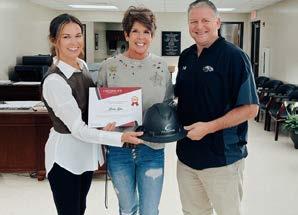
Greenbrier High School grads Rylee Brawley, left, and Jayda Tipton were two of the 28 students (out of a class of 258) who graduated with an associate of arts degree. They both will start college with a big head start and plan to double major. Many other students are taking concurrent credit classes, all taught on campus by high school teachers like Misty Burgess, center, with master’s degrees in the relevant content areas. Students can start earning college credit in the ninth grade. The program is one reason Greenbrier was rated an A district in the Division of Elementary and Secondary Education’s Arkansas School Performance Report Card.
ASBA News and notes
Preparations continue for Southern Region Conference July 19-21
Preparations are continuing for the 2026 Southern Region Leadership Conference July 19-21 at the Hot Springs Convention Center.
The conference will bring together school board members and other school leaders from Arkansas, Louisiana, and Mississippi for three days of learning, collaboration, and regional connection.
The conference will be hosted by the Arkansas School Boards Association. The three states alternate in hosting the annual conference. Next year’s conference will be in Mississippi.
The conference offers valuable professional development while fostering collaboration across state lines. It will focus on equipping board members and district leaders to navigate the evolving challenges facing public education
This year’s theme is “Meeting the Moment: Strategic Leadership for Today’s Schools.” Sessions will speak directly to the challenges leaders are facing now while also offering practical strategies, fresh perspectives, and meaningful solutions.
The conference’s keynote speaker will be Rex Nelson, senior editor at the Arkansas Democrat-Gazette and a respected voice on leadership, public policy, and Southern culture.
Nelson will speak about “From State of Disaster to State of Excellence.” He will guide attendees through the history of the Southern region, connecting past events to present-day realities and future opportunities. His message will highlight the critical role of education and the influence of school board leadership in shaping strong communities – challenging participants to lead their districts toward excellence.
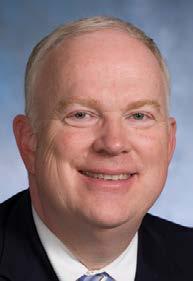
Nelson is a well-known Arkansas political figure. As senior editor, he writes three columns a week and also writes essays for the cover of the newspaper’s Sunday Perspective section. He is the author of three books, including the first full-length biography of Hillary Rodham Clinton, and is the author of the blog Southern Fried and hosts the Southern Fried podcast. He has been inducted into the Arkansas Sportscasters and Sportswriters Hall of Fame.
After starting his career in journalism, Nelson served for almost a decade as the policy and communications director for Gov. Mike Huckabee and then served for four years in the administration of President George W. Bush as one
Proud to Serve Arkansas Schools

of the president’s two appointees to the Delta Regional Authority. In 2016, Gov. Asa Hutchinson and the Arkansas Rural Development Commission named Nelson as the Rural Advocate of the Year for the state of Arkansas.
Registration for the conference begins at noon Sunday, July 19, with early bird sessions occurring from 3-5 p.m. Monday’s schedule will begin with a full buffet breakfast at 7 a.m. followed by the opening general session featuring Nelson starting at 8:15 a.m. Three concurrent sessions follow that afternoon. Tuesday’s events start with breakfast at 7 a.m. and a general session at 8:30 a.m. Attendees will hear from association leadership.

The closing general session begins at 9:30 a.m. and will feature Dr. Rochelle Redus, a member of the North Little Rock School Board. The conference adjourns at 11 a.m. Register online via ASBA’s website or visit bit.ly/arboardconnect under the “Registrations / Publications” tab. Hotel reservation information will be sent in the registration confirmation email. Cost to attend the conference events July 20-21 will be $545 per person,
One thing is certain: change is a constant in Arkansas public education. At Stephens, we stay focused on what’s ahead, helping school boards and administrators navigate new paths with confidence.
Our commitment to providing tailored advice with regard to financing educational opportunities across Arkansas will never change. In fact, Stephens proudly ranked as the No. 1 municipal advisor for Arkansas school districts in 2025, based on number and size of bond transactions (source: LSEG).
Let us put our experience to work for you.
Nelson
Redus
with guest meal tickets costing $199 per person. On-site registration will be $565 per person. The conference will kick off with an Early Bird Workshop on July 19 that will cost $175 per person.
This is an in-person only conference. A virtual option will not be available.
More details about the agenda and the speakers will be available at ASBA’s website, www.arsba.org.
Kees hosting ASBA seminar about employment law
Cody Kees, a school attorney with the Bequette, Billingsley & Kees law firm, is leading a seminar, “The School Leader’s Legal Playbook: Employment Law in Arkansas,” this summer.
Sessions have been occurring in May and in June at ASBA’s Little Rock headquarters with the final one occurring July 6 at the Northwest Arkansas


Education Service Cooperative in Farmington.
The workshop covers recent developments in federal discrimination laws and key Arkansas education employment laws, including updates under the LEARNS Act. Participants gain actionable guidance to help navigate personnel decisions, reduce risk, and stay compliant in a changing legal landscape. Licensed and classified supervisors, school leaders and board members are encouraged to attend.
The session provides five hours of training credit and lasts from 9 a.m. until 2 p.m. Cost to register for the Farmington session is $205 per person through June 28 and $225 per person afterwards. Register at www.arsba.org
ASBA News and Notes continues on page 7

Kees
Card
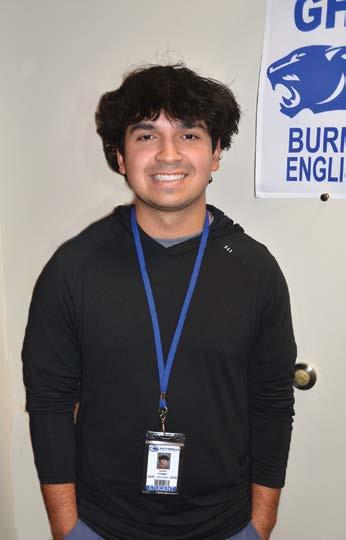
Daniel Cooper graduated from Greenbrier High School with an associate’s degree along with 27 of his classmates. That’s almost 11% of the senior class. Classes were all held on campus and taught by high school teachers with master’s degrees in the content area. He’ll be going to the University of Arkansas as a junior and seeking a double major in finance and accounting.
“We work as a team”
New board members should focus on student achievement, ASBA’s president said at the New Board Member Institute. They won’t be paid for their work, but they will be rewarded.
Enrollments are declining because of falling birth rates, fewer immigrant students and school choice. The ASBA - AAEA Joint Leadership Conference covered what schools should do in response.
The secretary of education told the ASBA - AAEA Joint Leadership Conference that 10% of seniors should be earning associate’s degrees, and some should be leaving high school as college graduates.
Rylee Brawley plans to double major in business and biology at the University of Central Arkansas. She’s thinking about doing something business-related in the medical field. And she has a head start by earning her associate’s degree at Greenbrier High School taking classes on campus taught by Greenbrier High teachers.
When Superintendent Scott Spainhour arrived at Greenbrier School District 18 years ago, the district was on school improvement. Greenbrier School District now is one of 23 school districts – 9% of the state’s total – rated an “A” on the Department of Education’s Arkansas School Performance Report Card.
Five children of Arkansas school board members and a current Des Arc School Board member who is studying to become an educator received ASBA Educational Foundation scholarships this spring.
The Senate chairman of the Arkansas Legislature’s Joint Budget Committee told ASBA’s BoardCast that school board members should communicate with legislators. After all, the two have a lot in common.
ASBA transitioning to Simbli Policy Module
ASBA is transitioning to the Simbli Policy Module as the new platform for hosting its model policies.
With Simbli, each user has an individual account to:
– Receive policy update notifications
– Access the ASBA Model Master Manual
– View and search model policies
Access to ASBA’s model policies through Simbli is included with the current ASBA Model Policy Service subscription. Districts are not required to purchase a Simbli Policy Module subscription to continue accessing the ASBA model policies. However, districts may choose to purchase one or more modules to access expanded features and integrations.
Simbli account activation emails were sent April 16. If you did not open this email, the link has expired. For help
activating your account, reach out to Jessica Prothro at jprothro@arsba.org.
Districts with an active Simbli subscription will continue to access model policies through their existing accounts. Districts that are currently implementing the Simbli module, or choose to add it later, will transition to their Simbli accounts once implementation is complete
The remaining 2025-26 policy updates will be posted on Simbli and on the ASBA Model Policies Updates webpage, which will no longer be available after June 30. No 2026 Master Manual will be posted on the Model Policy Updates webpage, as the versions of the policies accessible through Simbli are the most recent model policies versions. As long as users have an active Simbli account, they will continue to receive email notifications whenever updates are published, and districts will still be able to download policies in Word format.
On April 2, ASBA and Simbli hosted a webinar on navigating ASBA model

July 19-21
2026 Tri-State Southern Region Leadership Conference Hot Springs Convention Center
September 2
ASBA Fall Leadership Institute Hot Springs Convention Center
policies through Simbli. That recording is available at https://youtu.be/T7CqG7l0t2E
For answers about access, user setup, or the transition, please reach out to ASBA’s office at 501.372.1415.
ASBA News and Notes continues on page 7



by Doris Parham
You are part of something big
School boards serve as the bridge between the community and the school system. This role carries both responsibility and opportunity. Board members are tasked with setting the vision and direction for the district, but that vision is strongest when it reflects the collective input of those it serves.
In serving our districts’ work of education, reviewing policies, approving budgets, listening to concerns, and celebrating achievements, it can be easy to lose sight of the bigger picture. Meetings run long, challenges feel immediate, and decisions often carry weight. But amid all of this, one truth remains constant: If you are involved in public education, you are a part of something far greater than any single moment or meeting.
School boards are not just governing bodies. They are stewards of opportunity, guardians of community trust, and builders of minds for the future. Every vote cast, every question raised, and every policy shaped contributes to a larger mission, ensuring that every student has access to a quality education and a pathway to success, no matter their background or what side of the tracks they came from.
When you serve on a school board, you step into a role that connects generations. The decisions made today will influence students not just this year, but for years to come. A literacy initiative launched now may shape a child’s confidence for a lifetime. An improvement of facilities may create a safer, more inspiring learning environment for thousands of students who have yet to walk through the doors. That is the magnitude of the work.
It’s also important to recognize that school boards do not operate in isolation. They are part of a broader picture that includes educators, administrators, families, and the community at large.
Each plays a vital role, but the board helps set the vision and direction. Strong governance creates conditions where teachers can teach effectively, leaders can lead strategically, and students can thrive.
And in a state like Arkansas where communities are tight-knit and schools are at the heart of so many towns, that impact runs deep. People notice and they care. They are counting on good leadership. Leadership they can trust. Leadership that you and I have poured our hearts into.
Being part of something big also means embracing responsibility with humility. The role requires listening –truly listening – to diverse perspectives. It requires balancing competing priorities while staying focused on what matters most: student success. It requires courage to make difficult decisions and integrity to stand by them.
At times, the work may feel challenging or even overwhelming. Yet, those moments are also reminders of the importance of the role. Public education is one of the cornerstones of a thriving society. By serving, you are helping to uphold that foundation.
Of course, not every decision will be easy, nor will they all be well liked. There will be tough conversations and moments when opinions don’t line up. That’s part of the responsibility But it’s also a reminder of how important this role really is.
There is also something deeply meaningful about the collective impact of school boards across communities. While each district is unique, together they form a powerful network dedicated to advancing education. From rural areas to urban centers, school boards are shaping the future workforce, strengthening communities, and opening doors of opportunity.
Vol. 20, Number 2 June 2026
P.O. Box 165460 / Little Rock, AR 72216
Telephone: 501-372-1415 / 800-482-1212
Fax: 501-375-2454
E-mail: arsba@arsba.org / www.arsba.org
Board of Directors
President: Doris Parham, Bearden
President-elect: Nikki King, Pangburn
Vice President: Travis Warren, Farmington
Secretary-Treasurer: Joe Sheppard, Jonesboro
Past President: Jeff Lisenbey, Sheridan
Region 1: Suzanne Spivey, Rogers
Region 2: Jason Jones, Yellville-Summit
Region 3: Richard “Todd” Reed, Valley View
Region 4: Beth Ullrich, Paris
Region 5: John Gibson, South Conway County
Region 6: Keith Baker, Riverview
Region 7: Shane Bell, Cross County
Region 8: Graham Peterson, Mt. Vernon-Enola
Region 9: Donna Dunlap, Barton-Lexa
Region 10: Lonell “Dino” Lenox, Hot Springs
Region 11: Carl “Buddy” Puckett, Poyen
Region 12: Elizabeth Walker, Horatio
Region 13: Renee Skinner, El Dorado
Region 14: Debra Barnes, Crossett
Staff
Executive Director: Shannon Moore
Deputy Executive Director/Board Development
Director: Tammie Reitenger
Finance Director: Diana Woodward
Policy Director/Staff Attorney: Lucas Harder
Database Administrator/Commercial Affiliates Manager: Kathy Ivy
Board Liaison Manager: Angela Ellis
Communications and Technology
Director: Jessica Prothro
General Counsel: Jay Bequette
Risk Management Program & Workers’ Comp:
Misty Thompson
Linda Collins
Lisa Wigginton
Kara Worley
Julianne Dobson
Tamra Polk
Chelsea Ivy
Karri Neeley
TO CONTACT THE MAGAZINE
Please contact Steve Brawner, Editor 501.847.7743; brawnersteve@mac.com
Report Card is published quarterly by the Arkansas School Boards Association. Copyright 2026 by the Arkansas School Boards Association and Steve Brawner Communications. All rights reserved.
The Journal of the Arkansas School Boards Association
Big
Continued from page 6
So, when the agenda feels long or the challenges seem complex, take a moment to reflect. Remember the students whose lives will be touched by the decisions made. Remember the families who place their trust in the system. Remember the community that depends on strong schools to grow and succeed. Most of all, remember how important your role really is.
You are not just attending meetings. You are not just reviewing policies. You are not just making decisions. You are shaping futures.
You are building communities. You are a part of something big. And that matters more than words can fully express. And it’s something worth holding onto.
Duke joins ASBA in hosting seminars on employee leave
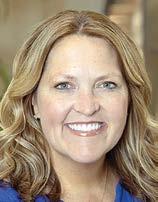
ASBA is once again partnering with Missy McJunkins Duke, attorney with Rose Law Firm, for an intensive one-day virtual training on Family and Medical Leave Act (FMLA),
Americans with Disabilities Act (ADA), Pregnant Workers Fairness Act (PWFA), and other relevant leave laws and their impact on school districts, administrators, and other central office staff who handle these issues daily.
While board members may attend, this training is geared toward central office employees who are responsible for administering employee leave.
Topics covered include:
– Administering FMLA leave properly
– Understanding your district’s obligations under the ADA and the PWFA
– Handling excessive absenteeism while complying with state and federal law
– Integrating Arkansas’ paid maternity leave law with existing laws
– Complying with the ADA and PWFA in addressing workplace accommodations
The virtual workshops were held in April, May and June and will also occur July 14 and Aug. 11. The morning sessions will last from 8:30 a.m. until 11:30 a.m., while the afternoon sessions will be from 1 p.m. until 3 p.m. Attendees will receive five hours of training credit, but they must attend both sessions. Cost is $205 per attendee.
Those interested in attending the workshop can register at ASBA’s website, www.arsba.org

Duke
Parham: ‘We work as a team’
New board members should focus on student achievement, ASBA’s president said at the New Board Member Institute. They won’t be paid for their work, but they will be rewarded.
“In simple terms, board members govern, not manage. We work as a team, and not as individuals.”
That was one of the central messages from ASBA President Doris Parham at the New Board Member Institute April 7.
The Institute annually brings together newly elected board members along with superintendents and school board veterans. This year’s Institute brought a large crowd to Hot Springs because of a state law placing all board elections in the March primaries. Previously some school districts held their elections in November.
Parham, a 31-year veteran who serves as president of the Bearden School Board, said school board members’ focus should be the big picture, which is ensuring students are educated to the highest level. An effective board is focused, disciplined and aligned around student achievement while governing with clarity, unity and purpose. It defines a vision and clear goals, spending less time on operational issues that are the responsibility of paid staff. It seeks to address a broad range of concerns rather than a single issue. It shouldn’t chase every initiative but instead should stay committed to a few high-impact priorities. It actively works to inspire parents and other stakeholders to have confidence in their schools. And board members don’t make promises to their friends they can’t keep. They have no power outside of a legally called meeting, when they are one of five or seven.
“In the end, school board service is a commitment,” she said. “And if you’re not committed, you shouldn’t run to be on a board. A commitment to children, to the community, and to the belief that what we do today can create a better tomorrow.”
Parham covered school board members’ 11 duties, which are:
– Attend board meetings.
– Determine the mission and direction of the school district.
– Follow all state and federal laws that govern public schools.
– Make, enforce and obey school district policies.
– Employ a superintendent to oversee day-to-day operations, and employ staff at the superintendent’s recommendation. Parham said employing the superintendent is the most important decision school board members make. Board
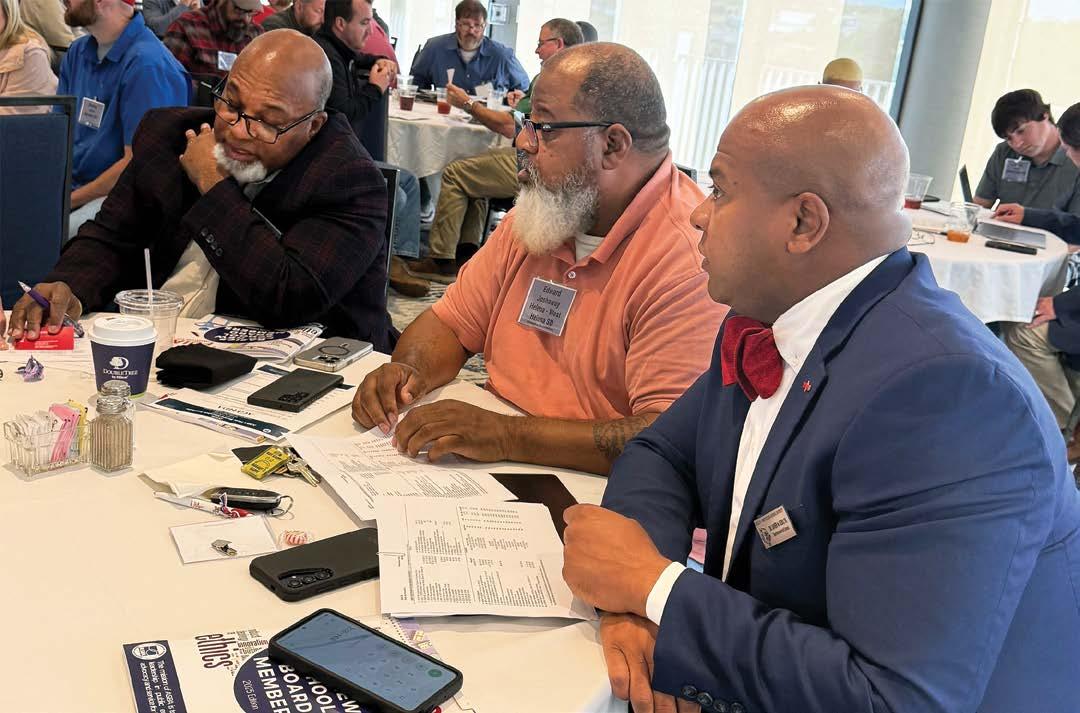
NEW BOARD MEMBER INSTITUTE. Veteran North Little Rock School Board member Henry Taylor, left, new Helena-West Helena School Board member Edward Joshaway, center, and Dr. Xavier Hodo, Helena-West Helena superintendent, participate in a session at the New Board Member Institute April 7.
members also conduct hearings, serving as the finder of fact.
– Oversee school district finances and all aspects of the budget, never permitting the district to end a fiscal year with a negative balance.
– Ensure all properties and facilities are properly built and maintained.
– Approve the selection of curriculum.
– Visit schools and classrooms when students are present at least annually and also attend some events and functions.
– Complete the training and professional development necessary to be active and informed.
– Do all other things necessary and lawful for the conduct of efficient free public schools in the district.
Parham urged board members to be transparent and provide the public accurate information about the district’s activities and how they are carried out. That way the community knows how the board makes decisions, how resources are used, and how needs are met. She urged board members to be prepared and read their board packets before the meeting.
She described procedural mistakes that are common in board meetings, including a president dominating a meeting or motions being handled improperly. Sometimes boards forget to manage a meeting’s pace, which is why one of her meetings at Bearden lasted until 2 a.m. Boards sometimes can fall into discussing multiple issues simultaneously instead of



focusing on one at a time. They might plan an agenda poorly, or there might be surprise additions to the agenda or at the meeting. Sometimes board presidents allow a member to speak without recognition, allow discussions without a pending motion, or allow too much informality. Sometimes they allow a confusing,

negatively worded motion that includes a word like “not.” It provides more clarity when the board says what the district should do.
Board members receive no pay or benefits, and their real rewards aren’t titles and recognition. Instead, their rewards


Continues on next page


NORTH LITTLE ROCK SCHOOL BOARD MEMBERS Crystal Barker, left, and Victoria Scott participate in a New Board Member Institute session April 7. Both were elected to the board in March.
Built for what’s next.
come from the impact a school board can make in improving schools and student learning; building a better future for young people, the community and state; and strengthening American democracy.
“The best thing you can do as a new board member is listen,” she said. “Listen to what others are saying. Hear what they’re saying. Don’t be so gung-ho to jump out and think you solve every
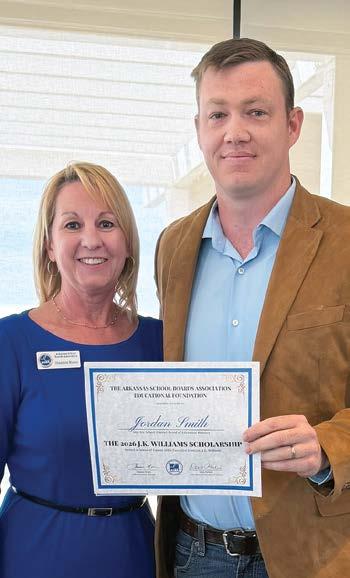
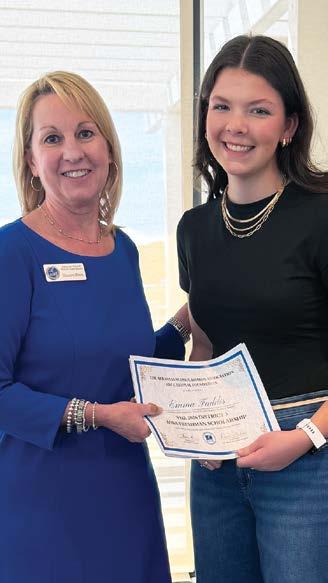
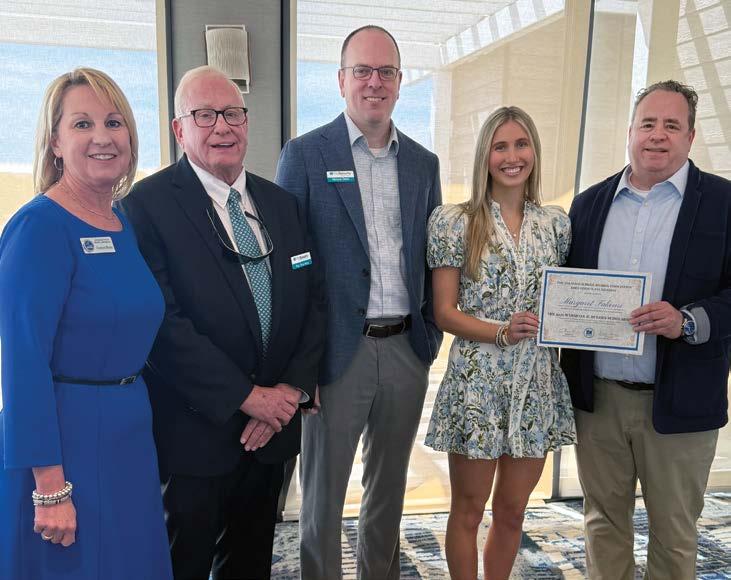
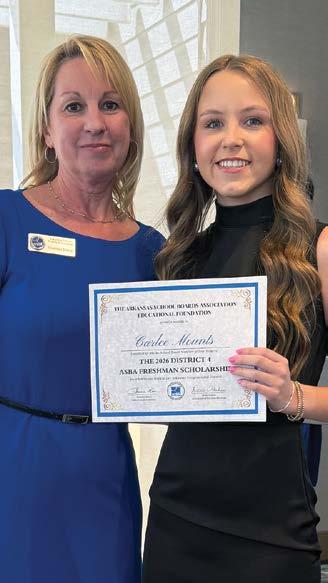
ASBA EDUCATIONAL FOUNDATION SCHOLARSHIPS. Six scholarship winners were honored at the New Board Member Institute. Top left, Jordan Smith of Lonoke, right, received the $2,500 J.K. Williams Scholarship. It is awarded to a college junior or higher who is pursuing an education degree. Smith is a Des Arc School Board member. With him is ASBA Executive Director Shannon Moore. The other scholarships were awarded to board members’ children. Top right, Margaret Fakouri of Monticello, the daughter of Monticello School Board member Dr. Joseph Fakouri, received the statewide $5,000 Marshall R. Hughes Scholarship. Hughes was a First Security Beardsley vice president who died in 2020. First Security Beardsley provided the award’s initial $50,000. Pictured with her are, from left, Moore, Ray Beardsley, Michael Dobbs, and Scott Beardsley. Left photo, Emma Faddis of Centerton, the daughter of Bentonville School Board member Jennifer Faddis, received the $2,500 award in the 3rd Congressional District. Middle photo, Carlee Mounts of Dierks, the daughter of Dierks School Board member Jeffrey Mounts, received the 4th District award. Other award winners were Maci Sickel of DeValls Bluff, the daughter of Hazen School Board member Mason Sickel, in the 1st District; and Dalton Greene of Wilburn, the son of Concord School Board member Kara Greene, in the 2nd District. (Story, page 28.)
problem that comes up to you, because you’re not able to. Just do your job as school board members, and you will be ‘paid’ for it.”
Prothro: Talk to property owners
Attendees also heard a presentation on school boards’ financial roles and responsibilities by Beebe School District Superintendent Zebulon Prothro. He opened
his presentation by calling it a “fire hose to the face” because of the amount of information and complexities of school finance. He said school finance is unlike personal or business finances. He described the different fund categories –the biggest being Funds 1000 and 2000, which include the certified and classified salaries that compose 78.9% of the Beebe School District’s budget. Prothro said
board members should trust but verify what their superintendent, chief financial officer, and business manager tell them about their district’s finances.
Prothro also described school districts’ three revenue sources: state, local and federal. In Beebe, the state provides 58.5% of revenues while local sources comprise 33.5% and the federal government supplies 8%. The federal revenue comes with strings attached, but it provides a valuable $3 million to Beebe’s budget.
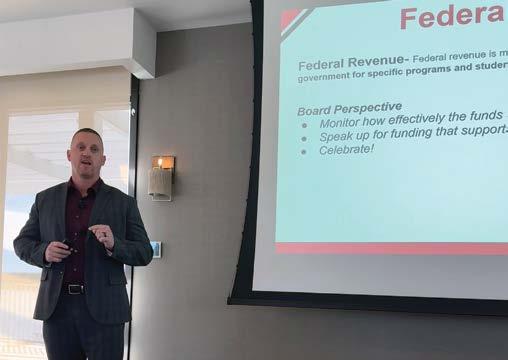
Federal money is devoted for specific programs and student needs. The money is restricted, but schools should not be afraid of them, he said. Boards should monitor how effectively those funds support students. Prothro encouraged attendees to speak up for effective funding, especially federal funding. Schools should take photos when the money is used well and share it on social media so government officials know the money isn’t being wasted. Medicaid is another federal source that can provide significant funding for services such as occupational therapy. Beebe tripled its reimbursements when it dedicated a staff member full time to Medicaid.
Prothro said at the state level, school districts are funded through various categories, including Enhanced Student Achievement funding, which is based on the number of students qualifying for free and reduced price lunches. While there are three tiers, the magic number is 70%,
for which a school district receives a significant bump. Schools should encourage parents to complete the forms. When he was superintendent at Mt. Vernon-Enola, the percentage increased from 63% to 70%, greatly benefiting the district.
Local money comes from property taxes. He emphasized the importance of analyzing trends, including the district’s property tax collection rate, which in Beebe is 95%. He said he considers at least a 5-10-year trend. He urged attendees to develop relationships with property owners long before they try to pass a millage. They should communicate with those property owners about what’s happening in the school district – both good news and the district’s needs.
“A millage increase affects these people the most because their property taxes go up, and if they own the most land in White County, you probably need to talk to them and tell them the why behind it,” he said. “Relationships matter, and communication matters.”
As part of new school board members’ required audit training, Prothro said districts can either have a legislative audit or a private audit. Legislative audits are free, but they are longer and more invasive. Private audits come with a fee, but they are more personalized and take less time. Auditors are looking at bid processes, travel reimbursements, credit card expenditures, charge accounts, and for a declining legal balance. The latter means a district’s finances are not in good shape,
and the Department of Education will be making contact. Inventory control is another. Auditors will literally climb ladders and look at serial numbers if an item is bought with federal money.
When studying an audit, board members should compare their budget to what the district actually spent, and they should look at long-term debt commitments, the summary of the auditor’s results, and the five-year trend history. If there are recurring problems, board members should ask why they aren’t being addressed.
Prothro said attendees are stewards of the patrons’ money and directors of a multimillion dollar corporation.
“A really good rule of thumb is to budget your revenue low, and your expenditures high,” he said. “You always come out happy at the end.
Public comments and FOIA
Attendees also heard a presentation about public comments, the Freedom of Information Act and ethics by school attorneys Cody Kees and Phil Brick with the Bequette, Billingsley & Kees law firm.
The two introduced the newly elected board members to the reality that their texts and emails are public records and that their informal encounters with fellow board members could constitute a meeting if they discuss school business. The good news is that legislators clarified the concept through Act 505 of 2025.
Continues on next page




Background and nondecisional information and ministerial acts like scheduling are now more clearly allowed in an informal conversation. The key word is “deliberate.” Board members are engaged in an illegal meeting if they deliberate toward a conclusion, disclose or inquire about support, or seek to persuade. Polling by board members and school employees is strictly prohibited.
Kees said that a couple of years ago, a school board met at a member’s private home to discuss hiring a superintendent. The newspaper saw what happened and photographed the scene. A complaint was

filed, and the situation was resolved with a civil penalty.
They also discussed Act 902 of 2025, which allows members of the public to speak for up to three minutes before other business is considered. The board can limit initial public comments to 30 minutes but must allow all others to speak before it votes on a related item, the only exception being a personnel or student disciplinary matter that is on the agenda. Public comment beyond the initial 30 minutes that is not related to an agenda item must be allowed to be completed prior to the adjournment of the meeting. The law applies to anyone who resides in the district, parents or guardians of a student, or district employees.
Brick advised attendees to ensure the periods remain focused on public comments rather than becoming a Q and A session. The meeting can spiral out of control if board members start answering questions, so instead they should listen to the comments and then decide later how to address them. Kees said school boards must be careful about policing commenters that veer into off-limit topics like student information or personnel items on the agenda. He said that some schools have taken the position that they
will read a warning at the beginning, and then any liability is the commenter’s responsibility.
The two warned board members against creating a public record that any Arkansas resident can obtain through the Freedom of Information Act. Attendees should not produce any notes while in executive session. The law expressly states executive sessions are confidential, so board members can’t take anything away from them or disclose what happened. Violating the statute is a felony.
“I’ve not known anyone to be convicted of that, but just don’t be the first,” Kees said.
The two attorneys also discussed reasons to go into executive session. The primary reason is personnel: employment, promotions, demotions, discipline and employment resignations. As a result of a law passed in 2023, school boards can also go into executive session for pre-litigation discussions, litigation updates, discussion and consideration of settlement offers, discussion and consideration of contract disputes, and discussions pertaining to real property. Another section of the law requires boards to go into executive session to discuss the school safety report.
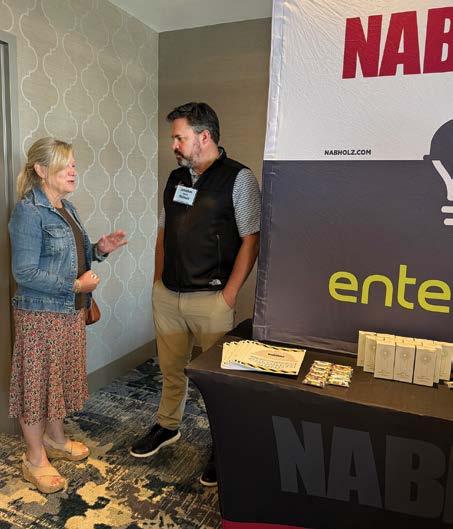
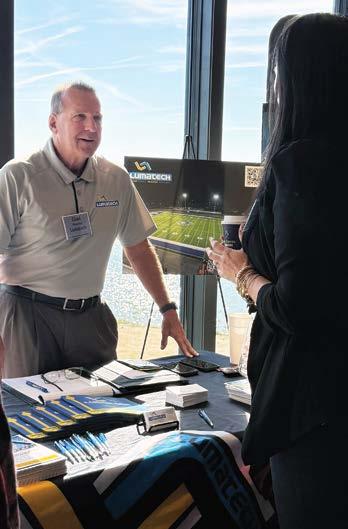
COMMERCIAL AFFILIATES. Exhibitors at the New Board Member Institute visited with attendees. Top left, Nabholz’s Jonathan Adams talks with new Benton School Board member Lorie Tudor. Tudor previously was director of the Arkansas Department of Transportation. Top right, Stephens Jason Holsclaw speaks with two attendees. Left, Lumatech’s Chad Thornton talks with an attendee.
Kees said it’s not hard to see the rationale behind these provisions. Obviously, when discussing a settlement offer, a board would not want the opposing attorney sitting in the audience. However, he warned attendees to use the provisions sparingly because some open government advocates do not support them.
Preventing the next shooting
Attendees also heard a presentation about student discipline and school safety by Jerry Keefer, the Division of Elementary and Secondary Education’s Safe Schools Unit director. It was part of the training required of school board members by Act 1029 of 2019. He said 20% of students ages 12 to 18 experience bullying nationwide, and Arkansas is not one of the better states. Every school district is required to report bullying incidents, but many schools report none, which is not realistic. Keefer said school board policy on bullying must describe the procedures for reporting it and the steps school employees may take to address a report of an alleged incident.
Keefer covered areas related to school safety included in the LEARNS Act of 2023. It requires schools to conduct a comprehensive school safety assessment every three years in collaboration with local law enforcement, fire and emergency management officials. His unit is conducting LEARNS compliance checks at districts. He said twice as many Arkansas school cyber networks were compromised in 2023 as were compromised in 2022. Some of those districts paid the ransom, despite the fact that there is no guarantee all the data will be returned.
He closed with a discussion of the 2018 school shooting at the Marjory Stoneman Douglas High School in Parkland, Florida, where a former student gained access to the school and killed 14 students and three staff members. He noted that Secretary of Education Jacob Oliva is from Florida and was a member of the commission that investigated the shooting. He said many Arkansans have the attitude that a school shooting won’t happen to them, even though shootings have already occurred at the Westside School District in Jonesboro and in Stamps. There also have been numerous targeted shootings in Arkansas where the
perpetrator sought a particular individual. It wasn’t long ago that a junior high student was targeted and killed during a class transition.
Keefer displayed a graphical representation of the Parkland shooter’s movements. The former student followed three students through the electronic controlled access door and shot and killed victims on the first floor. He was unable to shoot anyone on the second floor because staff and students had heard gunshots and had locked down. But third floor occupants had heard only a fire alarm, so many were in the hallway. After killing people there, he discarded his rifle and evacuated with the others.
Marjory Stoneman Douglas High School would seem to be less vulnerable than other schools. It was located in a wealthy neighborhood and was considered one of the safest schools in Florida and in the country. The shooter had undergone roughly 200 in-person counseling sessions.
However, there were still vulnerabilities. The shooter’s multiple counselors didn’t communicate with the school or each other, and there wasn’t a system for interventions. The campus was surrounded by perimeter fencing, but he knew that security unlocked the gates 20 minutes before arrival and dismissal. He was able to enter through an electronic accesscontrolled door by following three students whose IDs opened it. As a former ROTC student, he knew the cadets wore a maroon polo shirt on Wednesdays, so that’s what he wore as a disguise.
Keefer said he spoke to two building principals at a safe schools conference roughly two years ago. One of them
ZEB PROTHRO, Beebe superintendent, led a session on school finance at the New Board Member Institute April 7. Prothro’s presentation included newly elected board members’ audit training that is required by law. Prothro said school board members should “trust but verify” when it comes to their school district’s finances.
struggled to comprehend that schools must address these kinds of security concerns.
“The response from the other principal was, ‘You’re not going to get the 1980s back,’” he said. “When you got into education, protecting students may not have been an active part of your job description. It is now.”

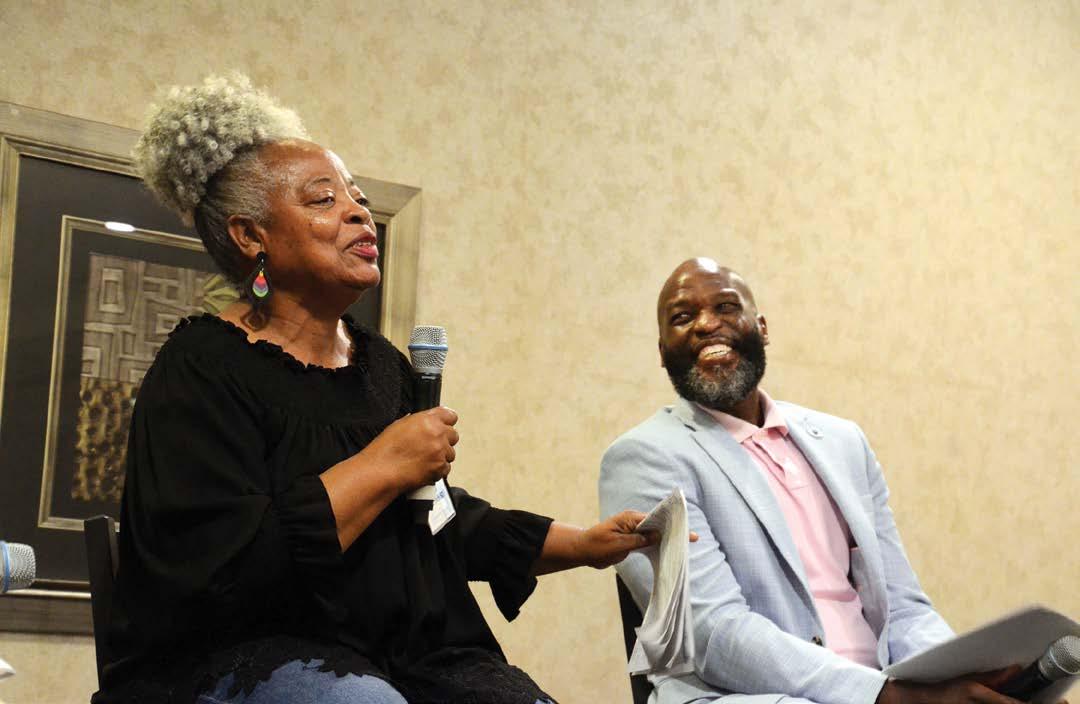
LITTLE ROCK SCHOOL BOARD President Norma Johnson and Superintendent Dr. Jermall Wright said the district is reimagining itself and communicating with its community in response to falling enrollment numbers.
What to do about ‘The Big Shrink’
Enrollments are declining because of falling birth rates, fewer immigrant students and school choice. The ASBA-AAEA Joint Leadership Conference covered what schools should do in response.
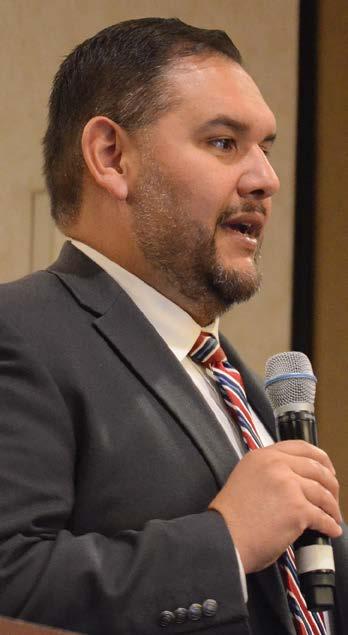
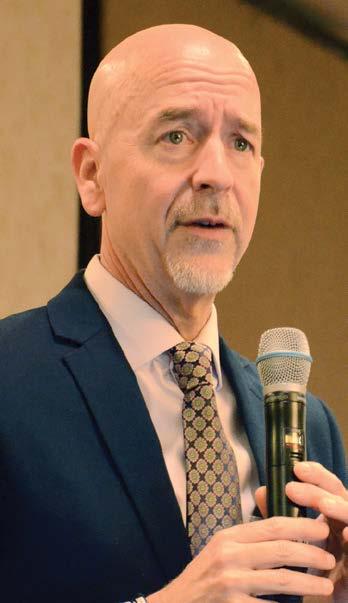
Schools are in the midst of “The Big Shrink” and must respond through a “deliberate redesign” that focuses on high-value activities that foster student achievement, Hot Springs Superintendent Dr. Mike Hernandez said May 5 at the 30th Annual Joint Leadership Conference.
The conference brought together ASBA and the Arkansas Association of Educational Administrators. Other presenters included Secretary of Education Jacob Oliva; school leaders from Little Rock, Searcy and Texarkana; and two school attorneys.
By “The Big Shrink,” Hernandez was referring to a term coined by the
Edunomics Lab where public schools face long-term declining enrollment. He said the state’s public school enrollment had fallen from 479,000 students shortly before COVID to 460,000 this year.
Enrollment dropped 9,500 students from last year to this year.
“So let that sink in – 9,500 students that we had last year in public schools, we don’t have this year, so that’s a big deal,” he said. “And so that’s why everybody’s feeling it.”
The decline is due to falling birth rates, fewer migrant students, and increased school choice. Hernandez noted the rising numbers of applications for the state’s educational freedom accounts, which provide public dollars for private and homeschooling students. The number of students accessing the EFAs reached 47,000 this past school year, with 48,000 having applied at the time of Hernandez’s address.
Hernandez opened his remarks by asking how many school districts had declining enrollments. Many raised their
hand. He noted that while some districts may be growing, they exist in areas where more choices will be available.
He noted that funding is tied to enrollment, but fixed costs remain for facility insurance, buildings, electricity, busing and other expenses.
Educational leaders have a choice in their response. They can “delay and degrade” – rely on fund balances, float for another year, and see if the numbers rebound. They avoid making hard decisions, chip away at certain offerings, and cut back here and there. They may engage in across-the-board cuts or reductions in force that don’t take into account what is good and effective. They may do uneven hiring freezes or early buyouts that cause the district to lose its most expensive but also most experienced employees. Some might try to protect everything, but then ultimately the district must degrade everything. Eventually, that choice could lead to a state takeover. Hernandez noted that he was part of that process in a previ-
If it’s important to you to have a winning football team, and you want to focus on that, at least y’all decided that’s our focus. But if academic achievement’s important, then you have to do everything and focus on that, and that’s where your dollars go. And then whatever is left over, you pay for other things.
- Dr. Mike Hernandez, Hot Springs superintendent ous role at the Arkansas Department of Education.
“Doing nothing is a decision, and a lot of districts do that,” he said. “They bicker; they start pointing fingers because they want to make a decision, but they can’t. And so, I promise you, there are people out there that will make the decision for you. I used to be one of them.”
The better choice is “deliberate redesign.” That’s where school leaders consider changes strategically rather than in a reactionary manner. They look at what’s valuable versus expenditures that are high-cost but low impact for student achievement. Districts that want


to achieve goals, such as graduating more students with associate’s degrees, must determine what is hindering them. Unneeded programs may need to go. In Hot Springs, school leaders realized the district had excess paraprofessionals. Consolidations may be necessary when enrollments reach less than 300 in a building. Districts should consider what is good for students rather than what adults want, which can be challenging because it’s the adults, not the children, who call and complain.
“Yes, there’s lots of things important, but a famous quote is, ‘If everything’s important, nothing is,’” he said. “And Continues on next page

ASBA-AAEA Joint Leadership Conference
so that’s what you have to determine. If it’s important to you to have a winning football team, and you want to focus on that, at least y’all decided that’s our focus. But if academic achievement’s important, then you have to do everything and focus on that, and that’s where your dollars go. And then whatever is left over, you pay for other things.”
Little Rock reimagines district
The Little Rock School District responded to its declining enrollment by making hard choices and communicating with its stakeholders, panelists said in another session.
The district’s enrollment fell from 22,338 students in 2017-18 to 18,964 this year. In the meantime, it reduced its number of campuses from 40 to 32, said Dr. Jermall Wright, superintendent. Meanwhile, two months after he arrived, the state released new school ratings that increased the district’s number of F schools from five to 20, with another five scoring a D.
At the same time the district was losing students, it was also receiving less funding. Over 33 years, it had received roughly $600 million in desegregation money, but that ended in 2018. Then the district received more than $100 million in COVID funding, but that has gone away, too. With the loss of $37.3 million in desegregation money, revenues fell from $131.2 million in 2017-18 to $86.7 million the next year and to $79.4 million this year.
People in the district were accustomed to having extra funds. Explaining the situation helped them understand things had changed.
“You can tell them what you’re doing,” President Norma Johnson said. “You need to be honest and clear, and let them know it has to happen, but they are not data-driven individuals. Some of them are, but most of them are not. We’re data driven, and they don’t understand that we have to go with the data, so you have to explain it to them.”
New board member Eugene Krupitsky said school districts should have honest conversations about the fact that they are shrinking. Meanwhile, the district must paint a picture of where it’s going. It’s better to create buy-in from
the bottom up rather than through a topdown approach. Not everyone is ready to move at the same pace district leaders might want to move. But by listening, leaders can learn where people are and where they are willing to go, and then make incremental change.
Krupitsky said when people are told what to do, they naturally resist. Change is difficult.
“But if we can instead bring stakeholders in on the bottom floor, build a vision together where everybody’s in agreement that this is the direction we have to move, as painful as the conversation may be, it still makes it a little bit easier to transition,” he said.
In addition to communicating with the community, Wright said it was important to communicate with the staff. He had mistakenly believed staff members knew what the district was doing. They did not. What he called the “street committee” typically reflects some truth, but in Little Rock the prevailing narratives were way off base. It helped when he began to communicate more directly with employees.
Wright is working with a different board than he was previously. The makeup went from nine members to seven in 2025, and three of its seven members are newly elected. The pre-
vious board had some high-profile conflict. Asked how to make tough decisions when the board isn’t fully aligned, Wright said some things must be non-negotiable where he would not compromise while continuing to engage in conversation.
One lesson learned: Don’t let the community’s loudest voices define the direction. There was actually a lot of support for what the district was doing.
“You have to have core values,” he said. “You have to have things that keep you on the straight and narrow. And for me, it’s making sure that we’re doing the best that we can do for the students and the families that we serve.”
Krupitsky said public schools must compete by learning what’s important to students and parents and then providing the resources. That process happens by listening. They must act like a business by engaging in customer service, considering short-term and long-term financials, and marketing themselves. They must start with the end in mind as they reimagine where they are going. What is the end goal when a child leaves the district? Then the district can backwards engineer.
“We can deal with the declining enrollment numbers and just say, ‘Woe is us,’ and die by a thousand little paper cuts,” he said. “Or we can become proactive and say, ‘No, no, no, these students belong in our district. They deserve the things our district can provide. Now we have to go communicate why parents want to choose us.’”
T-Town Prez: Evaluation ongoing
In another panel discussion, school board members and superintendents from the Texarkana and Searcy school districts agreed that superintendent evaluations should be continuous.
“Evaluation is not a once-a-year event,” said Texarkana School Board President Jesse Buchanan. “If the first time you’re talking to your superintendent about their performance is in January, you’re not doing your job. It doesn’t have to be formal, but you should be talking to your superintendent continuously throughout the year.”
The discussion also featured Texarkana’s superintendent, Dr. Lloyd Jackson,
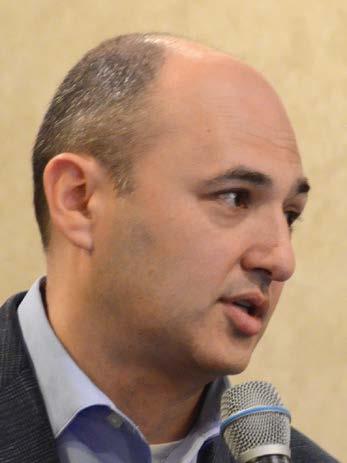
EUGENE KRUPITSKY, a newly elected Little Rock School Board member, said school leaders must obtain community buy-in and treat their school districts like businesses operating in a competitive environment.

along with Searcy Superintendent Dr. Bobby Hart and school board members Roy Showalter and Donna Rippey. Yellville-Summit School Board member Jason Jones moderated.
Jackson said evaluations begin when the superintendent understands the board’s goals. The conversations aren’t necessarily formal. Sometimes it’s about hearing a person’s heart and understanding the board’s priorities.
Texarkana moved its evaluation from January to the May-June time frame so board members would have more data.
Jackson said the data presentations that occur each board meeting provide bits of information throughout the year in preparation for that larger conversation. When the formal evaluation arrives, there should be no surprises for either the superintendent or the other board members, Buchanan said.
it wants him to achieve. When he was hired, Board President Dr. Brent Blakely gave him a list describing where the board wanted to see improvement and said Hart should tell the board what he needed in support.
“I think clarity on the front end is huge,” he said. “You don’t want your new superintendent wondering day one what he or she is supposed to do in that office and what levers they should be pulling. [You] need to be able to articulate clearly what it is that you want. As a superintendent, I want to know what they expect from me. I need to know that early so I can start living up to it.”
Buchanan said a healthy boardsuperintendent evaluation relationship involves trust and enough respect that a board can be honest. He recalled giving a past superintendent too much benefit of the doubt, which didn’t help matters.


Hart said the evaluation process starts when the board hires the superintendent and clearly communicates what
“If you’ve got a superintendent that gets mad over critical evacuations and

Continues on next page






TEXARKANA SCHOOL BOARD PRESIDENT Jesse Buchanan said superintendent evaluations are a continuous process, not a one-time event.
ASBA-AAEA Joint Leadership Conference
gets mad about the way the evaluation turns out, you’ve got probably the wrong person there,” he said. “So you have to be honest. You have to face the consequences. And unfortunately, there are sometimes that you need to move on from that person and separate that relationship.”
Jackson said superintendents want honest feedback.
“I don’t want to just hear about all the great things that we’ve got going on,” he said. “We do want to hear, how do we get better? How do we improve this work? And the only true people can tell us that are who? The board. Because those are our bosses, right? That collective board is the boss, and they can say whether or not we’re meeting those expectations.”
Panelists said districts should focus on the important goals. Jackson said a district has many moving parts that can’t all be measured. Districts must find what impacts everything else and then measure it. Buchanan said boards must do some soul-searching about what they really want. It’s all important, but student success is the most important.
Texarkana leaders this year focused on attendance, discipline, and literacy.
Hart said districts should start with their strategic plan and determine the district’s purpose. That conversation between the board, the superintendent and the stakeholders should recur every three to five years.
“You can’t do everything,” he said. “You can’t fix everything at one time. You’ve go to be willing to say, ‘These are our three wildly important goals.’ And then, going back to your planning, what are those actions, what are those things that are going to move that wildly important goal? What are the behaviors that are going to change the outcome?”
Attorneys cover grad ceremonies
The conference also featured a legal issues presentation by attorneys Cody Kees and Jacquelyn Harrison of the Bequette, Billingsley & Kees school law firm. The session covered topics ranging from graduation ceremonies to cheerleading tryouts to Title IX, the federal law covering sex-related legal issues. Regarding graduation ceremonies, Kees said the more serious Levels 3
and 4 sex offenders can attend graduations and can attend conferences if they are a parent or guardian. They must be escorted by a school official in the latter case. Levels 1 and 2 sex offenders can attend all school events open to the public, and, if a parent, all appropriate events involving their child.
The two also covered prayers at graduation ceremonies. The graduation program legally cannot include a time devoted to prayer. However, a school board member who prays during his or her speech is protected under the First Amendment. As for student speeches, school leaders should be cautious regarding how much they edit. They can ensure the speech is appropriate for families and doesn’t include profanity, ridicule or threats, but the student is generally allowed to speak about religion, prayer or current events.
The two also discussed off-campus speech. The Supreme Court ruled in 2021 that a school district wrongly suspended a student who posted profane comments on Snapchat after failing to make the varsity cheerleading squad. The rule of thumb is that comments made off campus must make their way onto campus or must disrupt the learning environment.
Cheerleading tryouts was another topic. Harrison said providing a scoring rubric at the parents’ meeting before tryouts can be a useful tool for preventing later problems. Most school policies let parents review their student’s scores one time in the presence of an administrator, but they legally cannot view other students’ scores.
The two spent several minutes discussing Title IX, which covers harassment, sexual misconduct, and unequal treatment based on sex, pregnancy, and gender identity, though not the latter in Arkansas. The state does not include gender identity as a protected class and is one of six states not required to enforce the federal provision under a stay granted by a federal judge. The law covers sexually based verbal remarks, social media posts, and conduct that creates a hostile learning environment. Anything related to sexual discrimination automatically invokes Title IX. If the parent doesn’t want to do the formal complaint
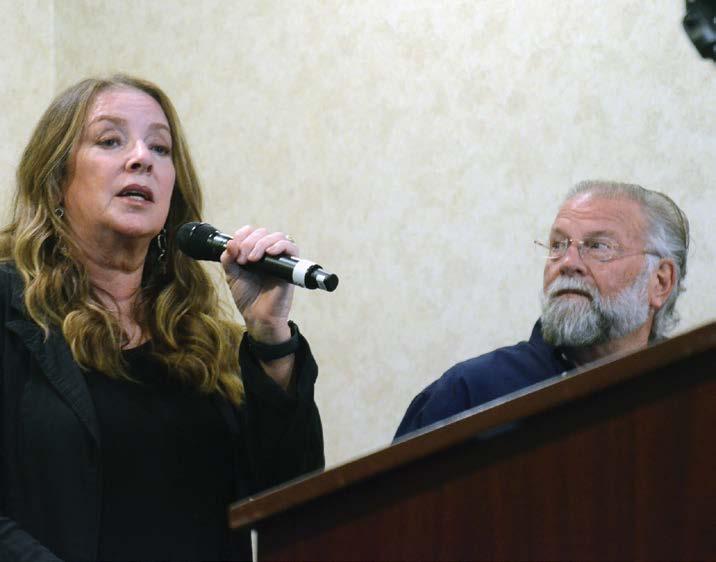
SEARCY SCHOOL BOARD MEMBERS Donna Rippey and Roy Showalter speak during a panel discussion at the Joint Leadership Conference. Showalter said the board was looking for someone who could promote the district and communicate with teachers when it hired the superintendent, Dr. Bobby Hart. When evaluating a superintendent, he looks to see Hart’s community involvement. Rippey said she also considers the district’s reputation as being a place that is open, accepting and helpful.
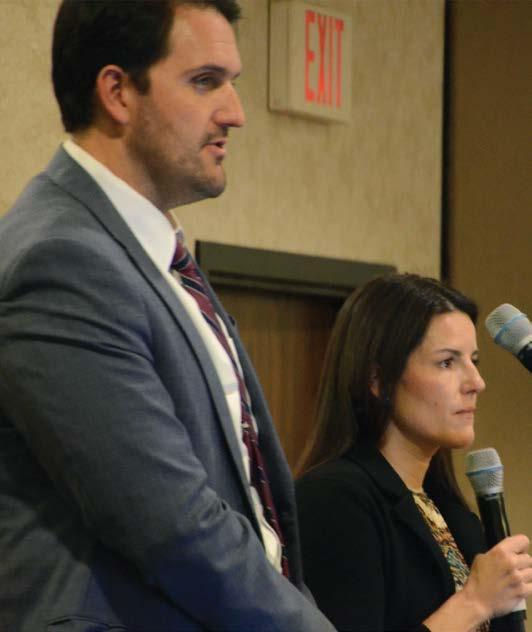
SCHOOL ATTORNEYS Cody Kees and Jacquelyn Harrison covered graduation ceremonies, Title IX sex-related issues, and board member access to school records. Kees said individual board members are not entitled to teacher records, but the board collectively can see records that are necessary for it to act.
process, the district must lodge the formal complaint in severe cases. If possible, the district can handle the issue under another policy. The two said it’s best to resolve problems quickly another way versus devoting months to the Title IX process. School districts should assure victims and their parents by offering supportive measures such as additional monitoring or moving seats in the classroom. School districts should ensure the investigator understands the process, is good at documenting, and does a thorough job.
The two also covered issues related to school board members seeking school records. A board member does not have the right to individually view a teacher’s attendance record or personnel file. The board as a whole can view records that are necessary for it to act. School board members can make a Freedom of Information Act request for any records that are available to the public, but Kees said it’s best for board members to have an open line of communication with their superintendent. If an individual board member does make a request, it’s a best practice for the superintendent to provide it to the entire board.

ASBA-AAEA Joint Leadership Conference
Oliva pushes ‘accelerated mindset’
The state’s secretary of education told the Joint Leadership Conference that 10% of seniors should be earning associate’s degrees, and some should be leaving high school as college graduates
Secretary of Education Jacob Oliva said Arkansas education needs an “accelerated mindset,” and that 10% of graduating high school seniors should be earning an associate of arts degree while some could be earning their bachelor’s.
Oliva made those comments May 5 at the 30th Annual Joint Leadership Conference that each year brings together ASBA and the Arkansas Association of Educational Administrators.
Oliva encouraged school districts to create pathways that deepen students’ academic experiences. A fourth grader scoring a four in reading, math and science should not be limited because the teacher’s focus is on other students. A second grader who is ready for fifth grade math should go to the fifth grade math class for part of the day. He suggested students scoring a 3 or 4 in math by the seventh grade be enrolled in algebra unless the parents opt out. Likewise, students scoring 3s and 4s in English language arts, math and science coming out of middle school should be enrolled in Advanced Placement courses as freshmen unless their parents opt out.
“We’ve created this culture and this mindset that we’ve got to focus on the bottom, which I agree,” he said. “Kids in the bottom need a lot of help. They need a lot of support. They need a lot of intervention. They need scaffolds. But while we’ve been focusing on the bottom, we’ve been holding everybody back. And our systems need to be designed to support all students, meet them where they are and push them as far as we can get them to go.”
In 2023, only 117 Arkansas students graduated high school with an associate of arts degree. He said the number should be much higher. Out of a cohort of 30,000 graduating high school
seniors, 10% should at least earn their associate’s degrees in school. In fact, accelerated students could have a program that leads to a bachelor’s degree. He said in Florida, from which he came to Arkansas, he once spoke to a high school junior who was one of the state’s top students and was on track to finish his biology degree the next year. He’d passed the Medical College Admission Test and had lined up a residency.
“Are these kids not in Arkansas?” he said. “Do we say for these kids, there’s a path for you? Because one path doesn’t meet the need of all of our kids, but those kids are in your district. We know who they are. You know who they are. You know who their brothers and sisters and families are. So how do we start really pushing that envelope and mindset?”
When he looked at the data when he arrived in Arkansas in 2023, only 17% of the state’s public school students were taking algebra by the eighth grade, while the readiness rate said 56% should be prepared. In many cases, the classes weren’t offered. In fact, he said the best and brightest students should be finishing geometry by the eighth grade.
“ ”
We’ve created this culture and this mindset that we’ve got to focus on the bottom, which I agree. Kids in the bottom need a lot of help. They need a lot of support. They need a lot of intervention. They need scaffolds. But while we’ve been focusing on the bottom. We’ve been holding everybody back. And our systems need to be designed to support all students, meet them where they are and push them as far as we can get them to go.
- Dr. Jacob Oliva, Secretary of Education
Oliva experienced this situation personally when he moved to Arkansas and enrolled his son in a public school ninth grade academy. His son had taken algebra in seventh grade and geometry in eighth grade in Florida, so he was ready for Algebra 2, and he was ready to take Spanish 2 and Advanced Placement human geography, which covers geography and population trends. None of those were available; they were all “high school” courses. His son was happy to retake his eighth grade classes and have an easy year, but his needs wouldn’t have been met. The school worked out some arrangements, but the incident illustrated the need for an accelerated mindset.
Furthermore, Oliva found that 47% of high school seniors left school before noon in 2023. He said the state has had a “rite of passage” that the senior year should be easy. But that mindset is not helping students graduate ready to be employed, enrolled in higher education or enlisted in the military. Of the students placed in remedial math in college, 67% of those with a 3.0 grade point average didn’t take a math class their senior year.
Oliva said the state Department of Education must allow schools to be innovative and creative while at the same time holding them accountable if students aren’t performing. Meanwhile,
the state wants to be a thought partner with schools.
Meet students’ needs, not adults’
He said the state’s education system should be focused on meeting students’ needs. Instead, it’s too often been focused on staffing buildings with adults the state says are needed. Those include requiring a small school to hire a halftime media specialist, which in effect requires hiring someone full-time, and the requirement that schools add another kindergarten teacher when the classroom size exceeds 20. That requirement can force students to change classrooms midyear.
The state is seeking a waiver that would provide more flexibility regarding federal requirements. Federal dollars compose roughly 10% of the state’s education budget, but for every dollar the state receives, it spends 34 cents meeting compliance requirements through bureaucracy and paperwork.
The 2023 LEARNS Act and other changes made in Arkansas’ education system provided clarity and alignment, he said. Teachers are getting information about their students so they can make instructional decisions while they’re still in their classroom. Schools know the results of their students’ ATLAS exams in time to provide support over the summer, make staffing decisions, and build out master schedules for the next year. Some parents are getting access to their student’s score the night of the test. Meanwhile, the Arkansas ACCESS Act of 2025 opened up increased opportunities for students to earn concurrent credit.
The LEARNS Act requires every high school to have three career and technical education-designated pathways, at least one of them related to the state’s high-skill, high-wage, highdemand list. Enrollment in CTE coursework this school year is up 30% from last school year, he said.
In response to an audience member’s question, he said homeschooling students can attend classes at a public school if they apply for a LEARNS Act educational freedom account. The EFAs provide state funds for families to spend on private and homeschooling expenses. Some districts are taking advantage of those opportunities to educate homeschooling students.
“Everybody wants to get mad at choice,” he said. “Choice is a good thing. A rising tide lifts all ships. I like to say, ‘Be the best choice.’ And if I’m a district, I want to really ask myself, are we meeting the needs of families? If I have a lot of families that are leaving to go to private schools, virtual schools, homeschools, EFA, I would be meeting with those folks and asking why. What are we not providing? And you can be creative. Kids want to be in band; they want to be in Spanish; they want to be in chemistry. Figure out how to provide that course choice.”


AA degrees at an A-rated district
At Greenbrier High School, students can earn associate’s degrees on campus in classes taught by Greenbrier High teachers with master’s degrees. Almost 11% did just that this year. Students can take their first class as young as eighth grade.
Twenty-eight of Greenbrier High School’s seniors this year graduated from the district’s Core Plus Impact Academy with an associate’s degree. Out of a class of 258, that’s almost 11%. And they earned those degrees on Greenbrier High’s campus while taking classes taught by Greenbrier High teachers.
The students earned their degrees through the University of Arkansas
Community College at Morrilton. The school-based program was possible because Greenbrier has many teachers with master’s degrees in the content area where they teach.
“That’s the big deal, that it’s here with teachers in a space they’re familiar with,” said Superintendent Scott Spainhour. “And it makes [them] more comfortable and willing to try, I think. Whereas, getting on a bus and driving to the college – that’s all right, but a lot of kids if they’re not sure, they’re not going to do that. I just don’t think we’d have near the numbers as we do if we were transporting somewhere to do that.”
Rylee Brawley graduated with an associate’s degree this May. She plans to double major in business and biology at the University of Central Arkansas. She’s considering doing something
business-related in the medical field.
Thanks to the Core Plus Impact Academy, she has a head start.
“I’ve always thought about going into the medical field, but these last few years, business has just grabbed a hold of my heart, so I think I’m going to do that as well,” she said.
Brawley said the fact that she will go to college with her associate’s degree in hand will save her the time and expense it would take to earn her double major. The school’s associate’s program shaped the classes she took. The hands-on banking classes she completed at Greenbrier helped her get a job at a bank. Teacher Misty Burgess helped her with any questions she had.
“It gave me another step on the ladder where I was able to build my own way, but it also helped me find the path I needed to go on,” she said.
GREENBRIER GRADS. Rylee Brawley, left, and Jayda Tipton, right, graduated from Greenbrier High School this year with an associate’s degree, as did 26 of their classmates. Greenbrier was the state’s first district to offer that opportunity, and it all happens on campus. With them is business teacher Misty Burgess.
Many students who don’t complete their associate’s degree will still earn valuable college credits in the school’s safe, supportive environment. Spainhour’s son graduated high school with 48 hours and finished college in three years.
“That’s not an avoidance cost,” he said. “I mean, that’s real money that they’re not having to fork out for. Listen, I had four kids. I saved at least one full year’s tuition on them going to college.”
Students can take college level concurrent health and business courses as young as the ninth grade. Nine freshmen completed the health course and 44 completed the business course in a class of 294.
Students must have college-acceptance-level ACT scores in order to earn college credit.
“But honestly, even if it’s just a handful for business or health at junior high, we’re going to make that happen, just to get them used to that level of rigor before they even get to high school,” said Deputy Superintendent Dr. Kelli Martin. Graduating more students with associate’s degrees is a goal of Secretary of Education Jacob Oliva. In a speech at the 30th Annual ASBA - AAEA Joint Leadership Conference May 5, he said 10% of graduating high school seniors should be earning an associate of arts degree while some could be earning their bachelor’s. (Story, page 20.)

Greenbrier was the state’s first district to initiate a process where all qualified high school students could graduate with an associate’s degree. The first students graduated n 2015 with a degree from the University of Arkansas at Little Rock that would transfer to any school in Ar-
kansas. The move occurred years after Greenbrier had been offering college credit classes.
“In those early years, it was just all about figuring out how we could get our teachers approved, working with the
Continues on next page
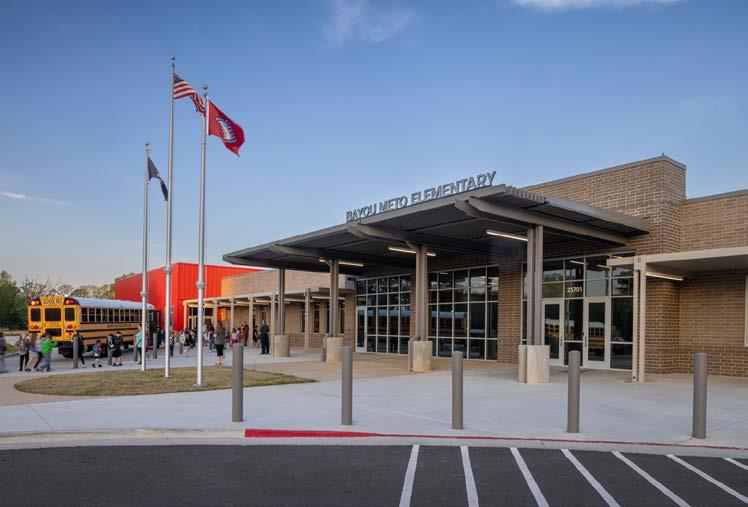
DESIGNING ENGAGING SPACES FOR LEARNING
WER Architects works with educational campuses across Arkansas to design flexible and functional solutions for our clients, including the new Bayou Meto Elementary School in Jacksonville. Working together, we can provide tailored solutions to your district’s needs
ADVANCED PLACEMENT ENGLISH TEACHER Jeremy Kennedy said he wants to ensure students learn college level writing in his class.
Cover / Greenbrier associate’s
university, so they could say, ‘OK, yes, we’ll approve you,’ because they had to approve every instructor before we would agree,” Spainhour said.
The district switched to UACCM a few years ago because a high percentage of its students were attending the school, and graduates from there can attend the University of Arkansas, Fayetteville at UACCM tuition rates. The high school counselor and UACCM’s registrar are in continuous contact. Teachers each semester attend training with UACCM’s faculty.
Now that the program has gained momentum, the district makes hiring teachers with master’s degrees a priority. It specifically recruits and advertises for those positions, and it attracts applicants who already know they want to teach at the college level. During the interview process, administrators will ask an applicant if they are willing to take more classes. If a teacher is working on their master’s degree, the district will pay for the Praxis exam. That commitment means Greenbrier has a higher-thanotherwise salary schedule, but administrators say it’s worth it. They budget for staff first, and the district has been growing in its assessment.
“Over half of our teachers have advanced degrees,” said Martin, the deputy superintendent. “Now, that doesn’t mean all of them are teaching concurrent credit, but over half of our certified teachers have a master’s degree or more.”
The district grows some of its talent at home. Martin is a Greenbrier grad who returned from college to teach in her hometown. The district recently hired two young Greenbrier alums. They had graduated from the high school a few years ago and knew the systems and the programs, and they were top students.
The school teaches Advanced Placement courses rather than college-level concurrent classes because it considers the AP courses to be tougher and was seeing so much success from them. Educators knew the rigor would be good for students when they arrived at college. Even if the student doesn’t score a “3” or above, they still get concurrent credit if they pass the course and show evidence of learning all year long. Spain-
hour said the percentage of students scoring 3s, 4s and 5s has been on an upward trajectory. The district is on the AP honor roll because of its number of students scoring proficient on the exams.
Students are self-motivated, but Greenbrier High does encourage them with monetary rewards. In addition to the college credit, the district offers $100 for a 5 on the test, $75 for a 4, and $50 for a 3. The district gave out $31,350 this year.
The district begins offering accelerated courses at the sixth grade level to start the necessary rigor. Students don’t have to take those courses, but it helps, and they don’t have to take an accelerated course in every subject. The district offers Algebra I in eighth grade and geometry in ninth grade.
Martin said educators try not to be gatekeepers as to which students take the accelerated classes. If a student wants to try it, middle school is the time to do that, and if it’s not a good fit, they can try a different track.
“We would rather them enroll in that and learn about productive struggle and having a growth mindset than being in another class and not be challenged,” she said.
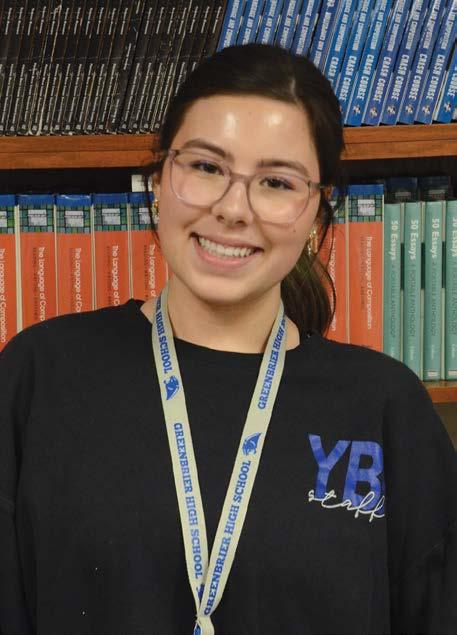
INCOMING SENIOR JAYLINN
FIEDLER produced a video eulogy about scam artist Charles Ponzi for her AP English class. The assignment was to memorialize a mostly bad historical figure from the perspective of someone who loved them.
The school is blessed to be located in a growing area. Greenbrier is a small town about 20 minutes from the jobs and amenities Conway offers.
But the school itself is another reason why the community has grown, Spainhour said. Greenbrier is one of 23 A-rated school districts in the Department of Education’s Arkansas School Performance Report Card. (Story, page 26.)
“This is very attractive to parents looking for a place to move to and live,” he said. “I think this is one of the reasons that we’ve grown because of that AP and other academic reputation that we have. That’s why we’ve grown. And that growth is what has allowed us to keep it going. So when we announced that years ago, I was getting calls that people were coming for that.”
The program gives students more opportunities for scholarships and college readiness and saves their parents money. It also exposes them to different life pathways. A student may take collegelevel courses and decide they may want to focus on career and technical education. That process happens in a safe, familiar environment, Spainhour said.
Like Rylee Brawley, Jayda Tipton’s associate’s degree will help her earn a double major. She plans to study both marketing and occupational therapy and eventually earn a doctorate. If the occupational therapy isn’t successful, she’ll have that marketing degree.
Eleventh grade AP English teacher Jeremy Kennedy is in his 20th year of teaching. The school began offering concurrent credit his first year. It was an adjustment. He said UACCM’s liaisons keep in touch and make sure the
schools are aligned and are meeting their requirements.
“There’s a lot more writing,” he said. “Again, if you’re getting credit for a freshman composition class, I feel like the main thing is I want to make sure you can handle college level writing before I send you on to do college level writing in college.”
Incoming senior Jaylinn Fiedler isn’t on track to earn an associate’s degree, but she is getting a lot of hours. She took three Advanced Placement courses in language, world history and pre-calculus this past year, and next year she will take classes in literature and statistics.
“They’re hard,” she said. “They’re definitely hard. They’re a lot harder than what I originally thought, but I feel like I’ve definitely succeeded better than I thought I was going to, if that makes sense.”
She and other students in Kennedy’s AP course were given an assignment to produce a video eulogy for a mostly bad historical figure as if they were someone who loved that person. She chose Charles Ponzi, the scam artist for whom the term “Ponzi scheme” was named. Fielder said he had a terrible childhood and scammed his victims to provide for his family.
One challenge is that students who graduate with an associate’s degree go straight from high school to their major. They’ll enter college as juniors, so they’ll need to be prepared and will need to have an idea of what they want to do when they graduate. Educators try to prepare them.
“Here again, it’s all about the rigor,” Spainhour said. “It’s all about the teacher and the rigor to get them prepared for that and developing the kind of habits that they need to be able to be successful. Part of this is teaching them those effective strategies for learning, for studying, for taking notes. All that stuff is part of what will make them successful when they do get to college.”
Daniel Cooper was another student who graduated with an associate’s degree this year. He was at a parent-teacher conference at the end of his eighth grade year when a teacher mentioned the opportunity because his older brother had traversed that path. He said classes

are faster paced, but he never really struggled that much. His junior year was the hardest with four AP classes, but he still finished last year with greater than
DANIEL COOPER graduated from Greenbrier High School with an associate’s degree and plans to seek a double major in finance and accounting. He doesn’t mind that he will skip his freshman and junior years of college.
a 4.0 grade point average. Things became a little harder in college algebra and pre-calculus towards the middle of the year, but teacher Kathleen Bain was available for him during his response-tointervention period, and he would get all the help he needed. He’ll be going to the University of Arkansas as a junior and seeking a double major in finance and accounting.
He doesn’t mind that he will be skipping his freshman and sophomore years of college.
“I’m fine with that,” he said. “I mean, honestly, I would kind of prefer to just go ahead and start on the things that I’m interested in rather than taking all the classes I’ve already taken now.”






Learning, not time, is GPS’s constant
Greenbrier, an A-rated district, focuses on skills mastery instead of test averages. In fact, younger students don’t get a letter grade. Instead, they are scored 1-4 based on proficiency. Middle grades also focus on proficiency while using a conversion chart to create letter grades, and the high school is moving in that direction. The concept is the same: What matters is whether students learn, not when.
When Superintendent Scott Spainhour arrived at Greenbrier School District 18 years ago, the district was on the state’s school improvement list. Now it’s one of 23 school districts – 9% of the state’s total – rated an “A” on the Department of Education’s Arkansas School Performance Report Card.
The Report Card says Greenbrier ranks “far above” the state average in meeting grade-level standards, student growth, and graduation rate, and ranks above the state average in growth of low-performing students and the percentage of students graduating with merit and distinction. During the 2024-25 school year, 57% of its students scored proficient or advanced in English language arts, compared to a state average of 32%. Greenbrier similarly outperformed the state in math (51% versus 33%) and science (65% versus 36%). Ninety-eight percent of its students graduated on time in 2023-24, compared to a state average of 90%. Four of its schools rated an A, while two were a B and one was a C.
The district does have advantages. It’s located in a growing community roughly 20 minutes north of Conway. It has a lower-than-average percentage of low-income students – 42.89% in 202425, according to the Arkansas Department of Education. That compares to a statewide profile in 2025-26 of 71%.
However, the district’s rise from school improvement didn’t just happen, said Spainhour and Deputy Superintendent Dr. Kelli Martin. Greenbrier has improved its results through its

standards and systems. The Core Plus Impact Academy allowing students to earn an associate’s degree is one specific way, but it’s far from the only one.
The grading system at Greenbrier is standards-based. The four elementary schools don’t give letter grades and don’t rely on averages attained over a nine-week period. Instead they assign numbers 1-4 that describe a student’s skills. A student who gains mastery at the end of a nine-week period is not penalized for struggling at the beginning. The school also does proficiency-based grading in middle school and junior high, although it uses a chart to convert those scores into letter grades. The high school is moving toward proficiencybased grading.
“It’s not about when you learn it,” said Martin. “It’s about did you learn it?”
Spainhour said the focus is not on scoring points but teaching and reteach-
ing. A student who fails an assessment will take it again and again if necessary. The district doesn’t let a student not complete their homework, because educators can’t assess them otherwise. If necessary, the student will do a working lunch.
“For most folks, time’s the constant. Learning’s the variable,” Spainhour said. “Here, time is the variable. Learning’s the constant.”
The district has a research-based model where it tells teachers what it wants to see every day, what it sometimes wants to see, and what it never wants to see. It never wants to see a teacher sitting behind the desk while students do worksheets. It doesn’t want to see teachers using a lot of videos unless they are part of their unit planners. While Greenbrier is a one-to-one district where all students have a digital device, it doesn’t want technology being overused.
GREENBRIER Superintendent Scott Spainhour and Deputy Superintendent Dr. Kelli Martin lead a district that was one of 23 scoring an “A” on the Arkansas School Performance Report Card.
Spainhour said classrooms should be arranged for students to communicate and collaborate. Westside Elementary is engaging in “fish bowl discussions” where a teacher facilitates a discussion with a small group of students sitting in an inner circle while students on an outer circle listen and take notes.
“We don’t like seeing rows,” he said. “We still have them. But we don’t like seeing kids sitting in rows.”
By law, student success plans must start in the eighth grade. Greenbrier starts them in the sixth grade. Students complete their career interest inventories, review their own data, find out what their strengths are, and plan their schedules.
“The ability to identify gaps and weaknesses and then having a system in place to address those is the biggest thing,” Spainhour said. “Being very systematic about it. Through common assessments, we’re able to diagnose what kids need early, and then we have
a system in place for them to get help remediated in those areas, starting in kindergarten.”
Student intervention teams meet and review each student’s progress. Then the school makes time to address those needs outside the regular class period during protected time each week. Students are assigned to specific teacher interventionists. Depending on the need, for some students it will be a group of five or six, and for some it might be 2530. In those time periods, students focus on academic intervention and extension some days, and life skills and social and emotional learning during others. For example, during the high school’s Panther Pathway Time, students learn how to be productive citizens after graduation. Students will focus on responsibility, self-care, punctuality, communication and other skills.
“I can’t tell you how many people have come and watched us do that,” Spainhour said. “I mean, it is a thing of
beauty, especially at those elementary grades, to watch those teachers and how that system works. I mean, it’s pretty awesome. You’ve got to do it and do it and do it to get good at it. It takes a long time. And I think that’s the best thing that I can say is that we’ve sustained. We haven’t given up on it. We haven’t taken our eye off the ball.”
Spainhour said educators have had the support of the Greenbrier School Board in making these changes.
“Starting off, this was hard,” he said. “Hard on teachers, difficult for kids, especially though the teachers. It was hard on teachers when we started this. They didn’t necessarily like it. They didn’t like the systematic stuff. We had to make changes. We had to make personnel changes. We had to get people on the right seat on the bus. It might be loud in the community, but the board has to let you. And as long as they let you, and they’ll support you, you can do great stuff.”


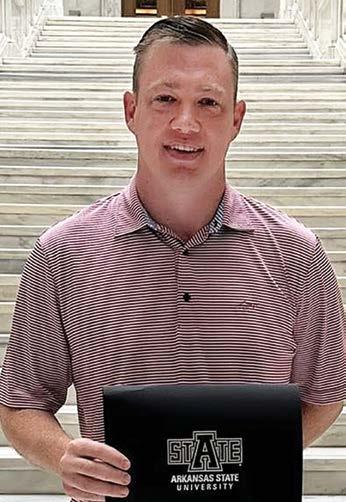


Six receive ASBA scholarships
Des Arc School Board member studying to teach is among the selectees
Five children of Arkansas school board members and a current Des Arc School Board member who is studying to become an educator received ASBA Educational Foundation scholarships this spring.
The one-time awards are based on a student’s academic record, leadership and community service. Financial need may be considered. This was the 33rd consecutive year the scholarships have been awarded. The students were honored at ASBA’s New Board Member Institute April 7.
Six scholarships are awarded. The $2,500 J.K. Williams Scholarship goes to a student who is at least a college junior and is pursuing an education degree. It is named for the former executive director who led ASBA for 14 years. Another student is awarded the statewide $5,000 Marshall R. Hughes Scholarship. Hughes was a First Security Beardsley vice president who died of cancer in 2020 at age 41. He had conducted board trainings across northeast Arkansas. First Security Beardsley provided the award’s initial $50,000 in funding. Four other students from each
of Arkansas’ four congressional districts each receive a $2,500 award.
Jordan Smith received the J.K. Williams Scholarship. He has been a member of the Des Arc School Board since 2019 and is pursuing a bachelor’s degree in education. The 36-year-old Arkansas State University junior had never taken a college course until May 2024. He had earned 79 college credit hours at the time of his application and had a 3.92 grade point average. He is a 2007 graduate of Des Arc High School.
Smith, a married father of three, works as a pest control technician and is a member of the Elder Board of Gospel Mission Church. He wrote in his essay that his school board service had alerted him to the struggles school districts can have hiring qualified teachers.
“Watching that happen again and again made something rise up in me,” he wrote. “I didn’t want to simply complain about the teacher shortage – I wanted to be part of the solution. I wanted to become the kind of educator I wished every student in our state could have.”
Margaret Fakouri of Monticello, the daughter of Monticello School Board member Dr. Joseph Fakouri, received the statewide Marshall R. Hughes Scholarship. Fakouri graduated first in her class with a grade point average of
4.1961. She plans to attend the University of Arkansas, Fayetteville and study biology on her way to medical school and practicing medicine in southeast Arkansas.
Fakouri was Student Council president, a member of the National Honor Society and the Beta Club, an All-State tennis player, co-captain of the cheerleading team, and a member of the Fellowship of Christian Athletes. She organized an annual youth tennis tournament benefiting The CALL of Southeast Arkansas and assisted with activities and mentoring younger children at the First Baptist Church Vacation Bible School.
“The major influence in my life has been my parents. In fact, they are the greatest gifts I will ever receive,” she wrote. “When I listen to other students talk about family influence, I am overwhelmed by the total positive influence my parents have provided. They have taught me through their words and examples to be honest, kind, inclusive, determined, hard working, and goal oriented.”
Maci Sickel of DeValls Bluff, the daughter of Hazen School Board member Mason Sickel, received the 1st Congressional District award. She plans to attend the University of Arkansas, Fayetteville to earn a communications
Jordan Smith Margaret Fakouri
Maci Sickel

degree with the goal of continuing on to graduate law studies and becoming a family attorney.
Sickel graduated in the top 5% of her class with a 4.05 grade point average and more than 25 hours of concurrent credit. She was secretary of the National Honor Society, editor-in-chief of the Hazen High School yearbook, captain of the cheerleading squad, a Beta Club member, and an Arkansas Girls State delegate. She also participated in golf and track.
She wrote in her essay that as a family attorney, “I want to advocate for families, parents, and children facing difficult circumstances, helping them find guidance, support, and fairness when they need it most. While this work will be challenging and emotional at times, I am driven by a desire to make a meaningful impact in people’s lives and to advocate rights and justice to those who need it most.”
Dalton Greene of Wilburn, the son of Concord School Board member Kara Greene, received the 2nd District award. He plans to earn a degree in finance and hopes to eventually become an investment banker and help people escape poverty.
Greene graduated first in his class with a 4.0 grade point average while being basketball team captain. He also played baseball and golf. He was FBLA president, class vice-president, Stu-

dent Council reporter, and a member of the Fellowship of Christian Athletes leadership team as well as a Beta Club member.
He wrote in his scholarship essay that he was influenced by his parents’ work ethic.
“Being the short, slow kid on my basketball team has always been a limitation, but I never made it seem like that to me,” he wrote in his essay. “This has always encouraged me to want to work two times as hard as anyone else so that I can have the same opportunities. I believe that the work ethic in itself is a more valuable skill than being good at basketball will be, especially since I can continue to apply it throughout my life.”
Emma Faddis of Centerton, the daughter of Bentonville School Board member Jennifer Faddis, received the award in the 3rd District. She plans to become a therapist like her mother.
Faddis had a 4.09 grade point average and was a member of Student Council, Bentonville West Leadership Organization, National Honor Society, Superintendent Student Leadership Board, and the cross country team. She serves on the student leadership team and has been a volunteer Kids Life group teacher at First Baptist Rogers.
“My parents are the most supportive and encouraging people I have in my life,” she wrote in her essay. “They both taught me what it means to be a positive

thinker, and a person who stands strong in my faith and beliefs.”
Carlee Mounts of Dierks, the daughter of Dierks School Board member Jeffrey Mounts, received the award for the 4th Congressional District. She plans to attend National Park College’s two-year radiologic technology program and then earn her bachelor’s degree at the University of Arkansas for Medical Sciences, specializing in sonography and CT scans.
Mounts graduated first in her class with a grade point average of 4.1538. She earned 49 concurrent credit college hours and earned technical certificates in general studies and health professions. At Dierks, she was involved in National Honor Society, Student Council, FCCLA, and Fellowship of Christian Athletes. She was All-State in both cross country and track. She graduated with more than 100 community service hours and volunteered at the Dierks Community Food Pantry, which her family manages, and The Call of Howard County. She also owned and operated a home cleaning and organizing business.
“I would love to work somewhere local because family and community means a lot to me,” she wrote in her essay. “I would love to continue to give back to the community that helped raise me. After all, this community has influenced me and helped shape me into the person I am today.”
Dalton Greene
Emma Faddis
Carlee Mounts
Simbli
Commercial Affiliates
www.diligent.com/community
www.crcrawford.com
www.captg.com
Chartwells Kellye Neal 501.615.3660 Kellye.Neal@compass-usa.com www.chartwellsk12.com
Clark Contractors Cory Olson 501.868.3133 colson@clarkcontractors.net clarkcontractors.net
Cromwell Architects Engineers, Inc.
Chris East 501.372.2900 ceast@cromwell.com www.cromwell.com
David H. Frieze Associates, Inc. Paul Frieze 501.922.9704 paul.frieze7@gmail.com
Dynamic Integrated Security
East Harding Construction
Educational Benefits, Inc.
Grand Canyon University
HES Facilities Management
Hight Jackson Associates, P.A.
Homeland Safety Systems, Inc.
ISG
J&J Flooring Group
Kinco Constructors
KLC Video Security
Lone Star Communications
McPherson & Jacobson, LLC
Modus Studio, PLLC
National Safety Shelters
Paragon Architecture
Precise
SFE - Southwest Foodservice Excellence
SOPA, Inc.
Southern Bleacher Company
SYNLawn
The Interlocal Purchasing System (TIPS)
Zeev Fragachan 954.641.3444 Zeev@dynamicintegrated.net www.dynamicintegrated.net
Trish Jones 501.661.1646 info@eastharding.com www.eastharding.com
Jon Collins 501.500.1412 jon.collins@ebiteam.com www.ebiteam.com
Danielle Johnson 480.646.7038 danielle.johnson@gcu.com www.gcu.edu
Chas Harris 901.378.6994 charris@hes.com hes.com
Kaylee Hopper 479.464.4965 khopper@hjarch.com www.hjarch.com
Ann Day
318.221.8062 ann.day@hssems.com http://homelandsafetysystems.com
Maria Pedroso 605.274.6401 maria.pedroso@isginc.com www.isginc.com
Brad Bunch 479.305.4004 brad.bunch@jjflooring.com www.jjflooringgroup.com
Clay Gordon 501.225.7606 cgordon@kinco.net www.kincoconstructors.com
Stacee Walker 903.792.7262 staceewalker.klc@gmail.com klcvideosecurity.net
Liv Barwinska 312.539.6196 liv.barwinska@lonestarcom.com lonestarcom.com
Norman Ridder 402.991.7031 mail@macnjake.com www.macnjake.com
Josh Siebert 479.455.5577 josh@modusstudio.com www.modusstudio.com
Dennis Corrado 866.372.1530 dennis@nationalsafetyshelters.com nationalsafetyshelters.com
Brad Erwin 417.885.0002 erwin@paragonarchitecture.com www.paragonarchitecture.com
Amy Finster 870.698.1734 afinster@go-precise.com precisearkansas.com
Diane Johannes 850.449.0970 diane.johannes@sfellc.org sfellc.com
Teresa Snook 501.920.1699 tsnook@sopainc.com www.sopainc.com
Sarah Lundgren 940.549.0733 slundgren@southernbleacher.com www.southernbleacher.com
Paul Held 816.886.2747 paul.held@synlawn.com www.synlawn.com
Stacey McPherson 866.839.8477 stacey.mcpherson@tips-usa.com www.tips-usa.com
The Kirkland Group Chan Cleveland 601.383.0766 c.cleveland@kirklandgroup.org www.kirklandgroup.org
The
www.playwellgroup.com Trane
jerry.shepard@trane.com www.trane.com
Law removes violent students
Act 565, effective August 4, 2025, empowers teachers in all Arkansas public schools to remove students exhibiting violent or abusive behavior and ensures they are not returned to the same classroom with the affected teacher or student.
The law was enacted to create a safer learning environment for teachers and students in Arkansas. It responds to high rates of student-on-teacher violence, with surveys indicating that more than 50% of teachers report being victims of threats or violent acts in schools. The General Assembly intended to prevent repeated acts of violence and provide clear procedures for handling disruptive or dangerous students.
Key provisions include:
– Student Removal: Teachers may remove a student from class if the student’s behavior is unruly, disruptive, violent, or abusive, or if it repeatedly interferes with teaching and learning.
Violent or abusive behavior includes threatening language, throwing objects that could cause harm, physical abuse, or any action presenting a physical danger to teachers or students.
– Interim Learning Environment: Students removed for violent or abusive behavior must be placed in an appropriate interim learning environment for up

by Jay Bequette Bequette, Billingsley & Kees, PA
to 10 days while a conference is held with school officials, parents, and the student.
An appropriate learning environment is a structured setting within the school, such as a classroom or in-school suspension, used temporarily for students removed from class.
– Conference requirements: The principal or designee, teacher, school counselor, parents/guardians, and the student (if appropriate) must attend a conference to determine whether a behavioral threat assessment is necessary.
– Prohibition on return: Students removed for violent or abusive behavior cannot be returned to the classroom with the teacher or student against whom the behavior was directed.
– Disciplinary action: After the conference, students are disciplined ac-
cording to district policy, consistent with state and federal law.
Act 565 requires school districts to review and update policies to comply with the law and train staff on its procedures. The law provides teachers with a sense of security and authority to manage classroom safety while ensuring that students who exhibit violent behavior are appropriately managed before returning to class.
DESE guidance
On September 12, 2025, the Arkansas Division of Elementary and Secondary Education issued a commissioner’s memo that provided important guidance to school districts on their implementation of Act 565. This guidance also summarizes key provisions of the law that are specific to students with disabilities who may receive special education services under the Individuals with Disabilities Education Act or may be protected under Section 504 of the Rehabilitation Act of 1973.
Act 565 represents a significant step in protecting educators and students by formalizing procedures for handling violent or abusive behavior in schools, ensuring safety, and maintaining a productive learning environment.

EXECUTIVE SESSION
with Renee Skinner
By Steve Brawner Editor
Renee Skinner has lived her life in El Dorado, but she wasn’t born there, and “Renee” was not her original name. It was Michelle.
The El Dorado School Board member’s biological mother lacked the support of Skinner’s father, so she gave her up for adoption at the hospital. Skinner would grow up in El Dorado never knowing much about her biological family. Eventually she and her mother made contact, and the two developed a relationship. Skinner later traveled to Crossett to meet her biological family.
In El Dorado, Skinner became a mother of three children of her own. She decided to run for school board because she wanted to make a positive difference.
In her new role, she helped lead a school district where much was happening. The district in 2007 had become the home of the El Dorado Promise, a scholarship funded by Murphy Oil Corporation that covered tuition and mandatory costs for El Dorado students to attend two- and four-year schools anywhere in the United States. In 2024, it was expanded to include vocational and technical certifications or degrees at South Arkansas College. The district had also recently passed a 4.6-mill millage increase to build a new high school.
Report Card met with Skinner in front of the high school to talk about her upbringing, the Promise, and her district’s use of professional learning communities where educators collaborate to help students succeed.
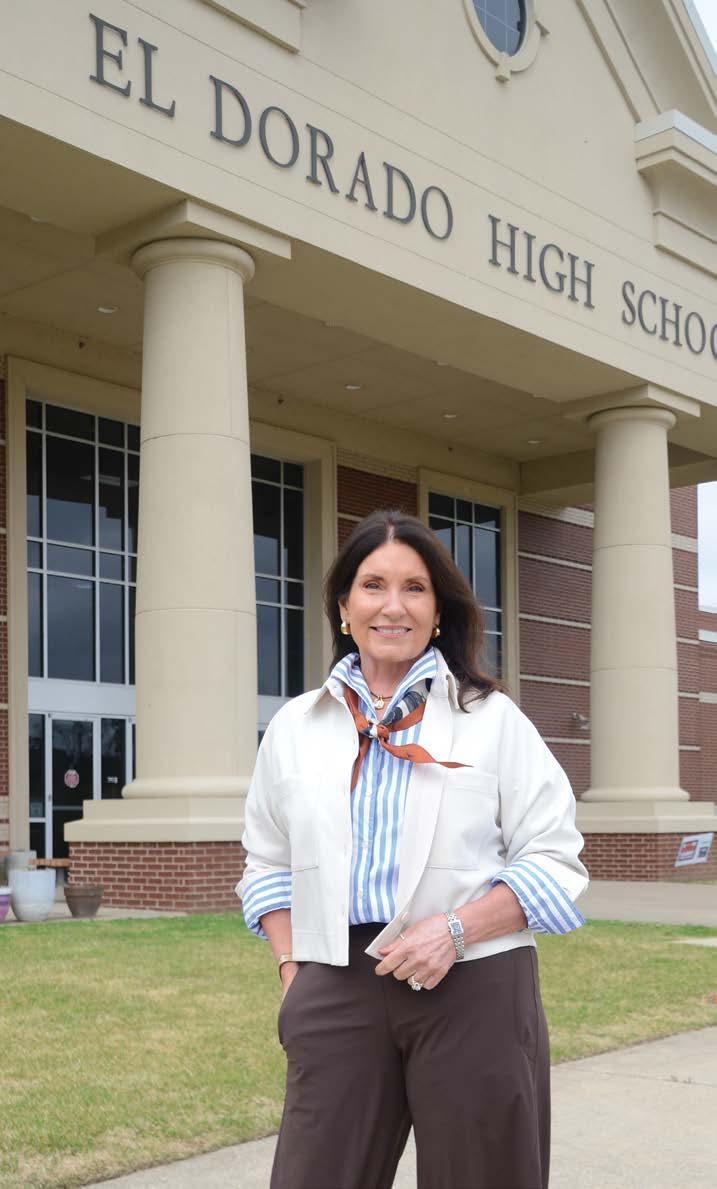
You’re from here?
“Yes. I was actually born in Little Rock, and I was adopted. My parents lived here, and so I was raised here.”
What was it like growing up here?
“I loved it. I loved it. It was just like anywhere else you grow up, just small town living.”
What was your experience like growing up in the school system?
“It was good, but then when my children started school, I saw, wow, we really missed out on a lot of stuff. I don’t think there was a lot out there when I was growing up to support the children who were falling through the cracks, as much as there is now. There also weren’t as many children falling through the cracks as there are now, I don’t think. But I was a kid, so there might have been a lot of kids struggling that I wasn’t aware of.”
I’m going to have to ask about your being adopted. What do you want to share about that?
“I got so lucky. I’m really proud of my parents’ attitudes about racism. They weren’t what you would call liberal, because nobody was anything when I was growing up, really. You didn’t talk about that. But they accepted everybody. That’s just what I grew up living. We didn’t use offensive words in our home, things like that. They also valued education, had high expectations of us, so that was good. But it is one of those things, when you’re adopted, you’re always going, one of these things is not like the other. But I have a younger sister who’s also adopted, and I have an older brother who is their biological child. So we have a mixed bag.”
Did you ever find your family?
“I did. I actually, back in the day, there was an Oprah episode. I was a stay-at-home mom, so I was watching Oprah. She was doing a segment on adopted people and finding their families, and they had this organization represented on the show that would connect you with your biological parents. Back then there was no internet or anything. This is in the ‘80s. So I got them to send me all the information, and I filled out a form and sent it back. It didn’t ask for any money or anything. I sent it all back in, and that was that. I never heard anything, and I thought, ‘This is probably a scam. They probably know everything about me now.’
“But nine years later, I got a phone call at my office where I worked for my father, so I was easy to find there because my name had changed, but my maiden name was his name. That’s what I had put on my information, what my maiden name was. My biological mother, like, three weeks before that, had registered with the same group, and we were a perfect match. I had quite a bit of information about my biological mother. I knew that my father was actually a dentist, and my adoptive father was also a dentist. I had a lot of information about her, and it was definitely a match, and we met.
“I was so scared. The organization called me and said, ‘Are you in a safe place to talk, and are you interested in any of this?’ Now I had forgotten about
this, and nine years later, I don’t know if I would have even wanted this because what if she’s on drugs? Or what if she needs money? Or what if she wants to live with me? And all that. And the lady said, ‘Well, I can tell you I’ve spoken to her, and I don’t get that feel from her, but also, what if you’re on drugs? What if you need money? She’s in the same boat you are. There’s as much risk on each side.’
“We met. She was delightful. Wonderful. We had a great relationship. It was easy. It’s one of those things that it’s not really fair, because I didn’t have any baggage with her. She didn’t ever reprimand me as a child, or ground me, or anything. We didn’t have any baggage. We just had two people come together who had some similar DNA. But we were great friends.”
Did you meet your father?
“I didn’t. He had advised her to not have me. They were not married. He had been married before and had gotten married because he had impregnated another woman, and he was not going to do that again. It had fallen apart, and he was just completely against it. And so her parents would not let her keep me, and they sent her to the Florence Crittenton home for unwed women. And she lived there throughout her pregnancy until I was born, and then she went home without a baby.”


Continues on next page
Rogers Oakdale Middle School Remodel
I was just on the outside looking in making observations or criticisms about something that I didn’t know anything about. And so I thought, that’s not the right perspective for me. Joining the school board gave me an inside look at what’s going on. Why are things happening the way they’re happening? And if they need to be better, how can I help make them better rather than sit on the sidelines and complain about it?
So how do you feel about all this now that you’re through it?
“I think that she made such a sacrifice. You have children. Can you imagine having a child and leaving it, just leaving, going out the door? She said she sat in a taxi. I guess she had to go back to that home to get well or whatever before she went home, and just looked out the window at the back window at the hospital. It’s very emotional to me that she made that sacrifice, but it was the right thing for her to do.”
You have three children. You said that they had opportunities that you didn’t have.
“By the time my children started going to school – particularly my daughter, she’s 28 and about to be 29 – there were all these efforts to make school interesting, and make learning interesting and make learning fun and engaging, and there was none of that when I was coming up. Now, I had a good education, I feel like. It’s just two different methods, but some fun would have been nice.”
Given that you thought school was better, why’d you run for school board?
“Well, we had a daughter in the district. When you’re not involved in the school district in any way but you have students, your children are students, you hear a lot of negativity, and you see things that maybe aren’t the way you would do it, and you don’t know why, and you have complaints. I was just on the outside looking in making observations or criticisms about something that I

didn’t know anything about. And so I thought, that’s not the right perspective for me. Joining the school board gave me an inside look at what’s going on. Why are things happening the way they’re happening? And if they need to be better, how can I help make them better rather than sit on the sidelines and complain about it?”
How has the El Dorado Promise affected the school district?
“I don’t know if it was the impetus for this, but I think it probably was that we started pushing college in kindergarten. We started telling kindergartners, you can go to college, have an understanding what college is. We started really pushing it all the way up, rather than maybe ninth grade. All these kids know that if they choose to go to college, they can go to college – now, as well, trade school. The Promise also does that. So, that’s one big difference that the district has done.”
Do you think that has changed students’ expectations?
“I do. I do. I think we have a lot more students go to college now, and we also had to focus on preparedness even more,
because all students can go, but they’ve got to be able to get in. So it changed things, I think.”
Did you have an influx of students?
“Not that we had hoped. There were some parameters. I think that the purpose of the Promise was to help students, but to also make El Dorado appealing to families who were moving in for industry – to make El Dorado more inviting, if you will, for people with families. You had to live here, and so we didn’t get as many students from outside our district that were in the county, because they were happy where they were. They didn’t want to move to town. They like their small school. You know, all the reasons. But it’s been positive for sure, but as far as that big influx, I don’t think that we saw anything.”
At the same time that you were starting the El Dorado Promise, you had the school that had been voted on, but not yet built. We’re sitting right in front of it. It looks brand new to me.
“I think it’s 10 years old. We’re very proud of it. Our students deserve to be in a building like this and have an education, and it feels collegiate. That was by intention. This is the step before college. And, of course, at that time we were starting to push more of the workforce stuff, but it was pretty new, the push for it. I don’t think at that time the Promise was covering that. But now we really, I think, do have a more equal balance with pushing the workforce and college.”
What was it like to be on the board while you’re building the high school that had already been approved?
“Oh, it was so exciting. It was so exciting. We needed the building, and the process was new to me, so I enjoyed that. At the time, Mr. Bob Watson was our superintendent, and he had a vision, and it was realized. The whole board had a vision. We had voted, the millage had been passed, but I was involved in the pictures of what it was going to look like and making decisions about that. So it was exciting, and coming out and watching the progress was amazing.”
And you’ve built another school.
“We’re in the process. It’s on the site where the high school was, the El Dorado High School site. It’s just not very far from here at all, and it’s going be an intermediate school.”
Did that require a millage increase?
“We did get a millage increase for that, yes.”
How did that go?
“The vote for the millage went very well. It was decided to go for it shortly before the election time. So it just kind of happened. But the community really does support us.”
Why do you think that is?
“You know, we have an incredible administration here, and I sit on our state association board, and so I get to see board members from all over the state and talk to them. And we have a really good functioning board, but we also have an incredible administration.”
The El Dorado Promise – are you still reaping the benefits of being a pro education-community so that it helped you pass the millage?
“Yes, I think our community just really supports anything that’s good for El Dorado, and education is, forgive the pun, but a no-brainer. That’s a good place to put your money, and I think our community goes along with that. … There are people who do comment on things on social media and things that is literally misinformation. There’s some of that, and I think that’s everywhere. But for the most part, we have support. And it’s because, I think, the community trusts our administration. I hope they trust the board. But the administration, our principals and our superintendent and assistant superintendents are unsurpassable. They are so good.”
What’s so good about them?
“They really care about the kids, and that’s what matters. They care about the kids, and they really care about getting every kid where they need to be, to do whatever it is they want to do. From the top down in our administration, from the board down, that is what the focus is,
getting every child in our district where they need to be, to live the lives they choose to live.”
El Dorado has made a big push toward professional learning communities. Can you talk about that?
“Well, yes. When they first got in the zeitgeist, we didn’t get to be a part of the pilot program where the state paid for some schools to have it. We didn’t get to do that, but we were so excited about it, we just went ahead and bought in. We’ve been doing it, gosh, I wish I could tell you the years, but for a long time. It has really taken hold here and has made a huge difference for our teachers and collaboration and everybody working together to bring students where they need to be.”
Why do you think it’s so effective?
“Well, one thing is, I think it’s effective because the board has voted on every single thing we can do to make it easier for them to do. The students get out of school at 1:30 on Wednesdays, and the teachers have from 1:30 to 3:30 to meet and collaborate and make plans on how they can all work together. They do lesson plans together. They figure out what’s working, and what’s not working, and what’s not working, they come up
with strategies to change that. I think also our intermediate school is going to have third, fourth, fifth, and sixth graders, so all third graders will be on a hall. All third grade teachers will be in one building, rather than having third grade at different elementary schools.”
You’re a regional director. What would you like to see the Arkansas School Boards Association do at the state level?
“I think they’re doing it. Of course, they are so impactful with the Legislature. They are there representing state educators because we can’t all be there. They’re there doing that. They ask the districts what matters, what they need, what they like, and what they don’t like, and then they help push the things that they like, and if there are things that come up during the session, they inform us, inform all the districts of what bill’s being introduced, and what it means, and how do you feel about this, and reach out to your representative to let them know. They’re very effective in that. In addition, educating board members is their passion, and they do a great job of that, providing continuing education all over the state.”
Note: Executive Session is edited for length, style and clarity.

Cromwell expands NWA office with education specialist

Cromwell Architects Engineers has announced that Alex Jackson has joined its northwest Arkansas office as a business development and marketing specialist. She will focus on building relationships with school districts and academies across Arkansas.
Jackson brings a unique perspective shaped by her experience as a teacher and coach in the northwest Arkansas region. She understands the needs of students, educators, administrators, and parents. Combined with her background in the design and construction industries, she is well-positioned to contribute immediately to the team.
For more information about Cromwell, go to cromwell.com

WDD Architects plans new PCSSD elementary school
Pulaski County Special School District recently broke ground on the new College Station Elementary, a longanticipated project that will replace the existing facility. WDD Architects first identified the need for a new school during a districtwide facilities assessment in 2000, beginning more than two decades of planning and design.
WDD partnered with PCSSD, Nabholz, and Doyne Construction on the new campus. The design addresses long-standing flooding and security con-
cerns while creating a vibrant, modern learning environment that can serve as a model for future schools.
Community members, district leaders, and stakeholders gathered to celebrate the milestone, marking an important step forward for the College Station community.
For more information about WDD Architects, go to wddarchitects.com

Nabholz helps districts renovate during summer
While students enjoy their summer, Nabholz teams stay busy delivering renovations, additions, and campus improvements before the first bell rings. With tight schedules and limited construction windows, summer months remain critical for completing work with minimal disruption to learning.
Nabholz crews have completed projects ranging from gym upgrades and classroom renovations to drainage improvements. In Greers Ferry, teams constructed a new agri-barn, while work in Morrilton included refinishing a gym floor with new graphics pictured above. In Clinton, crews reconstructed softball dugouts and installed drainage solutions to improve field conditions.
Nabholz’s environmental team also supported districts through asbestos surveys and abatement services, helping schools prepare aging facilities for safe renovation. These efforts helped districts move quickly on construction schedules while maintaining compliance and safety standards.
School construction is about more than completing projects. It’s about creating safe, functional spaces that support students, teachers, and communities for years to come.
To learn more, visit nabholz.com

Architecture Plus designs football field in Bee Branch
Architecture Plus, Inc. is proud to “join the swarm” with the South Side Bee Branch School District as plans move forward for a new synthetic turf football field and field house in Bee Branch.
Designed to support both athletes and the community, the new facilities will provide upgraded spaces for training, competition, and team development while creating a strong home field atmosphere for the Hornets. Nabholz is serving as construction manager.
The new football field and field house are being designed with functionality, durability, and school pride in mind. The project will enhance game-day experiences for players, students, families, and fans while supporting the continued growth of athletics within the district.
To learn more about Architecture Plus, contact Craig Boone at craig@ archplusinc.net or go to archplusinc.net

modus studio designs for England, Valley Springs
The interior design team at modus studio is dedicated to crafting healthy and sustainable learning environments that inspire student curiosity, beginning with a collaborative, evidence-based approach.
This approach informs projects like the Valley Springs High School and England Elementary School, pictured opposite page, both of which foster an inviting atmosphere through dynamic geometries and regional materials. The design process is strengthened by comprehensive teacher interviews and student engagement sessions, allowing modus studio to actively listen to the community and translate its wishes into actionable design strategies.
Backed by WELL AP and LEED Green Associate certifications, the interiors team has also conducted specialized research into materials and acoustics to ensure every educational space supports long-term well-being and environmental responsibility.
For more information about modus studio, go www.modusstudio.com or call 479.455.5577.
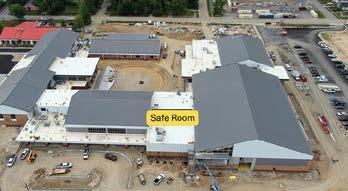
East Harding leads construction of new Pine Bluff High
East Harding Construction managed construction of the new Pine Bluff High School campus with eight buildings totaling 173,500 square feet.
The construction includes a 7,500-square-foot practice gymnasium/ safe room with a concrete tilt wall construction, a poured-in-place concrete roof, and welded connections. The doors, windows and other openings are impact-rated to meet code.
This dual-purpose building sits between a 2,200-seat competition sports arena and a separate building featuring a two-story volume dining area, coffee shop, cafeteria and commercial-grade kitchen.
The practice gym is constructed to withstand an EF5 tornado with wind speeds up to 250 miles per hour and
has an occupant capacity exceeding the campus’s total occupant load.
For more information, call East Harding Construction at 501.661.1646, or go to eastharding.com
Stephens provides finance training for board members
Stephens can assist board members with obtaining their required professional development hours. Arkansas law generally requires that school board members obtain up to six hours of certified professional development.
ASBA has deemed Stephens’ financial advisors as certified trainers who can provide up to four hours of school finance training annually toward ASBA’s Boardsmanship Awards Program. Normally held in the evening or on a weekend, this free training workshop addresses topics ranging from state and local funding revenue sources to debt financing of capital projects. Stephens believes this type of workshop can be particularly useful for boards considering how to finance future capital projects.
To learn more about how Stephens can assist your district, contact Michael McBryde of Stephens Public Finance at 501.377.2641, or go to stephenspublicfinance.com.
Southern Tire Mart’s tire program serves Bergman schools
The Bergman School District has started a tire dismounting/mounting program with the help of Southern Tire Mart that will keep the district supplied with maintained tires and wheels.
The program eliminates the need to take buses off campus for tire replacements. This will allow fleet mechanics to concentrate on core maintenance and reduce the need for additional shop equipment.
For more information, go to stmtires. com or call 877.786.4681.
TIPS helps schools prepare for next year’s purchases, projects
As the school year comes to an end, TIPS is here to help school districts get ready for the next one. From everyday purchases to larger projects, TIPS can help save time and money in the procurement process.
Become a TIPS member today, or contact Stacey McPherson with any TIPS inquiries at 870.565.6178 or at stacey.mcpherson@tips-usa.com. For more information about TIPS, go to www. tips-usa.com.

WER Architects designs Fayetteville Lisa Academy campus
WER Architects worked closely with LISA Academy leadership on its new Fayetteville Middle and High School campus.
The 64,000-square-foot school was designed with educational spaces for core classrooms, special education, intervention, Gifted and Talented, art and music for 700 students. The program focuses on technology and STEM curriculum. Engineering, computer and medical labs were provided in addition to traditional science labs. The building also contains a full-size gymnasium, a student dining space, and an ICC 500 storm shelter that can accommodate the entire student body.
The school features natural light, flexible furniture and an overall bright and colorful educational space. The Fayetteville campus is the fourth high school WER Architects has designed for LISA Academy.
For more information about WER Architects, go to werarch.com.

C.R. Crawford delivers first new Corning school in 50 years
C.R. Crawford Construction is leading the delivery of a new 100,000square-foot high school for the Corning School District, representing the district’s first major new school facility in more than 50 years.
This transformative project reflects a long-awaited investment in the community’s future, providing modern academic and administrative spaces designed to support evolving educational needs. Key safety features include an integrated storm shelter and infrastructure for emergency responder radio communication systems.
Through its construction manager at-risk approach, C.R. Crawford is guiding planning and construction to ensure long-term performance, safety and reliability. That approach involves the construction manager offering advice about construction costs and
other aspects during the project’s design phase.
For questions about K-12 construction, contact Leigh Ann Showalter at lshowalter@crcrawford.com, or visit crcrawford.com

Baldwin & Shell helps cut ribbon at Watson Chapel High
Baldwin & Shell and Watson Chapel High School led a ribbon-cutting ceremony April 22 celebrating the opening of the new school.
The event featured the presentation of colors by the school’s JROTC and remarks from Superintendent Dr. Keith McGee, community leaders, and student Madison Bagby.
Baldwin & Shell helped bring this 109,745-square-foot, two-story school to life. Designed to support both academic excellence and student experience, the new high school includes a 1,500-seat competition gym, modern media center,
advanced science and career labs, and an 8,000-square-foot storm saferoom.
The celebration concluded with a ribbon cutting and the unveiling of the Relyance Bank Arena and Central Moloney scoreboard, followed by tours.
To learn more about Baldwin & Shell’s offerings, go to www.baldwinshell.com
American Fidelity provides solutions for saving costs
As experts in employer benefit solutions, American Fidelity’s salaried account managers deliver year-round support, help employers overcome benefit administrative challenges, and always offer a different perspective – a different opinion.
American Fidelity provides employer cost-savings solutions and supplemental insurance benefits to the education community. It acts as an extension of a school district’s human resources department. It educates, enrolls, and supports the development of robust, competitive insurance packages – all while ensuring seamless administration and employee satisfaction.
To learn more about American Fidelity’s offerings, go to americanfidelity. com.

Dismang: Legislators seek board input
Joint Budget Committee chair tells ASBA BoardCast that lawmakers, school board members can relate as parttime elected officials who otherwise have real jobs
The Senate chairman of the Arkansas Legislature’s Joint Budget Committee said school board members should communicate with legislators. After all, the two have a lot in common.
“I think we need to increase the dialogue that happens between the school board members and the legislative body,” said Sen. Jonathan Dismang, R-Searcy. “We’re both elected officials. Both of us are working in a part-time job with real jobs out in the public, and I think that we probably relate a lot more than we realize, and I think there just needs to be an increased discussion from your perspective of what’s happening.”
Dismang made his comments in Episode 4 of ASBA BoardCast, the association’s podcast that is available on ASBA’s website, www.arsba.org, and on other major platforms. Dismang spoke to ASBA Policy Director Lucas Harder as legislators were wrapping up this year’s fiscal session.
Fiscal sessions occur in even-numbered years and focus on funding bills under the Revenue Stabilization Act, a law first enacted in 1945 that prioritizes spending categories. Category A contains priorities funded first, while following categories are funded if money is available. This time there was only a Category B, but sometimes there are additional categories, Dismang said. The process is designed to prevent the state from running a deficit. Fiscal sessions typically last about 30 days.
Lawmakers passed a net general revenue budget of $6.7 billion. That amount was an increase of $211 million from the previous year. Gov. Sarah Huckabee Sanders then called lawmakers into special session May 4 to lower the state’s top personal income tax rate from 3.9% to 3.7%, and its top corporate income tax rate from 4.3% to 4.1%. The Department of Finance and Administra-
tion projected the tax cuts would reduce state revenues by $191.8 million in fiscal year 2027 and by $144.8 million in fiscal year 2028.
DFA projects a budget surplus of $585.8 million in fiscal year 2026 and $389.6 million in fiscal year 2027.
The budget lawmakers approved includes $309.4 million for Sanders’s LEARNS Act educational freedom accounts. These next year will provide $7,208 per child to private and homeschooling families for educational expenses. Lawmakers added another $70 million for a reserve fund in case the program needs more money to support the growing number of participating students. More than 44,000 students received funding through the program this past school year, and more than that number had applied this year. Sanders noted that the state is also spending $3.3 billion on public education.
Lawmakers also allocated $300 million to help lure a potential large manufacturer that is considering locating a new facility in West Memphis.
Dismang said Sanders’ administration engages in more pre-session budget conversations with lawmakers than previous administrations did. As a result, when she announces her balanced budget, it already contains legislative input. Lawmakers have a pre-budget session that largely determines support for the governor’s budget before the drafting process begins.
Fiscal sessions are meant to focus on the appropriations process, but lawmakers can consider non-appropriation bills with a two-thirds vote by resolution by both chambers. Dismang said it is a high hurdle to overcome, although legislators used that process to increase the homestead tax credit this fiscal session by $75 to $675.
Lawmakers also can attach nonfiscal matters to an appropriations bill
through the Special Language Committee. Dismang said the special language process doesn’t allow for public debate or discussion.
Sen. Missy Irvin, R-Mountain View, used that process with language intended to make it easier for isolated districts to detach from their existing districts under Act 919 of 2025, which she had sponsored. Act 919 allows an isolated school to separate from the district that received it as a result of consolidation or annexation.
In March, patrons in Timbo and Rural Special voted to detach from the Mountain View School District. Patrons in Umpire voted to detach from the Cossatot River School District, and patrons in Kingston voted to detach from Jasper. Irvin said the new districts would not have enough money to operate without her amendment, which was written by the Arkansas Department of Education. Irvin’s amendment transferred to the new isolated school districts funding amounts that are equal to 90% of the state foundation funding that is going to the existing schools. It also clarifies how school buses, textbooks and other property would be transferred. Millage rates for the new isolated districts would start at the same amounts as the existing districts. The new isolated districts would assume the debt of the existing district if the debt is directly related to the real property transferred to the isolated district. The amendment says isolated school districts would have a civil cause of action to enforce the property distribution.
Dismang encouraged school board members to reach out to elected officials, express their concerns, and be open for discussion. Board members should talk to their fellow elected officials about the best way to communicate with them.
“The world has changed as far as how the public wants to interact with elected officials, and it makes it very difficult then to have broad conversations,” he said. “Someone trying to reach out gets drowned out because all of a sudden in one day, we’re up to 270 text messages, and you’ve missed one.”
Dismang


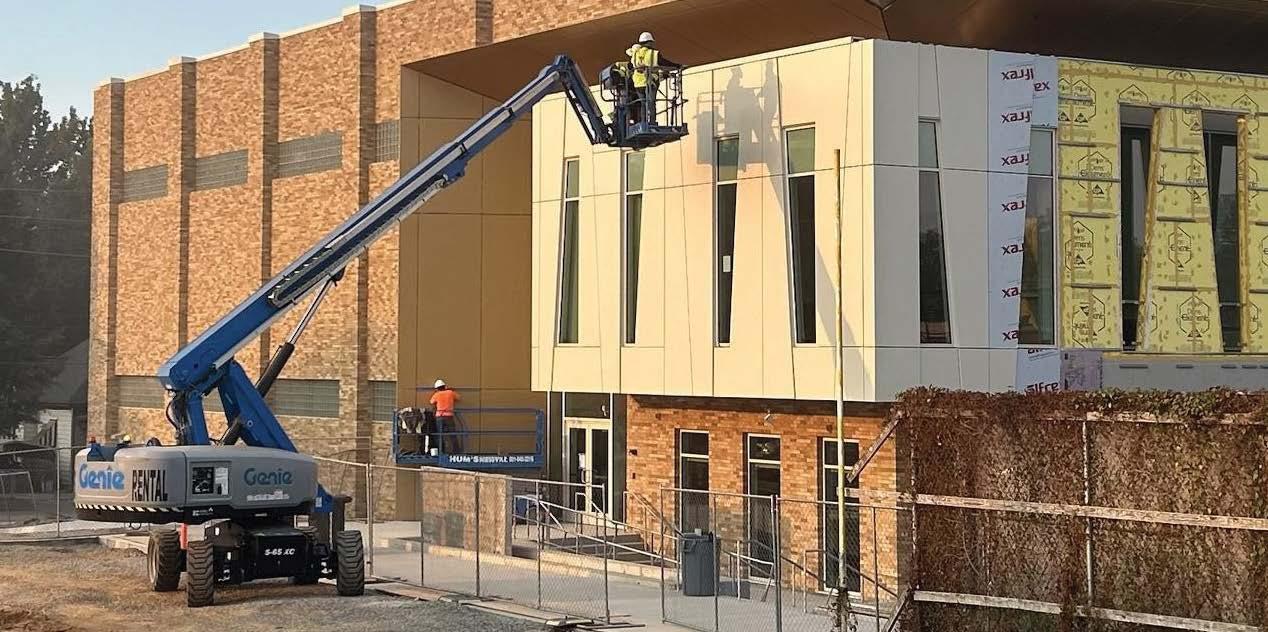
WE BUILD and renovate spaces before the first bell
Summer can be the ideal time to tackle renovations, additions, and campus improvements.
Nabholz is experienced in managing tight schedules and limited construction windows while minimizing disruption to learning. From gym upgrades and classroom renovations to lighting retrofits and HVAC maintenance, our teams help districts prepare campuses before the first bell rings this fall.