


















































T&Cs apply. Competition ends 26th June 2026.










T&Cs apply. Competition ends 26th June 2026.
First, we cherry-pick the world’s best writers in the fields of sport, style, cars, music, comedy, health & fitness, travel, adventure, and more.
Then we let them write the stories they want to tell.
The stories that matter.
And finally, we give it all away for free. Because when it’s this good, every man deserves to read it.
The result is the world’s greatest magazine for men who want the best of everything.
This is the important bit. We know that being a man can be tough sometimes. Looking after your mental health, and helping your friends and family do the same, has never been more important. That’s why we work with Mind and CALM, two of the UK’s leading mental health charities. We want to help end the stigma around mental health and ensure that every man gets the support he needs.






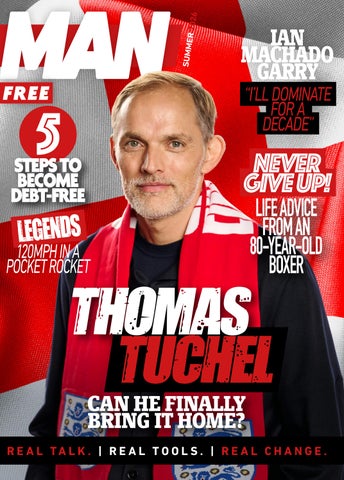
Welcome to the Summer 2026 issue.
Eevery morning I sit down with a cup of coffee and scroll through Instagram for upbeat posts to kick-start my day. It was on here that I first came across the inspirational Frank Gilfeather, who shares the lessons he’s learnt on page 74.
The 80-year-old boxer has become a social media sensation for his positive messages about making the most of life. It doesn’t matter how old you are, he insists – you can always do something for your physical and mental health.
We also explore the concept of self-belief in this issue, which MMA superstar Ian Machado Garry has in abundance. The Irishman explains why he believes he will dominate for a decade on page 14.
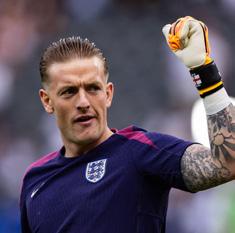
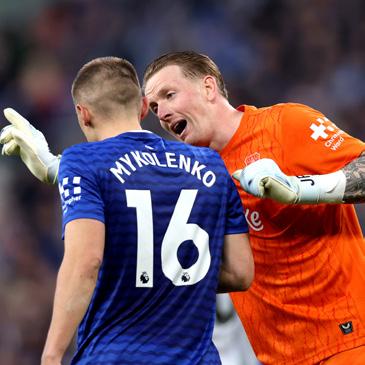
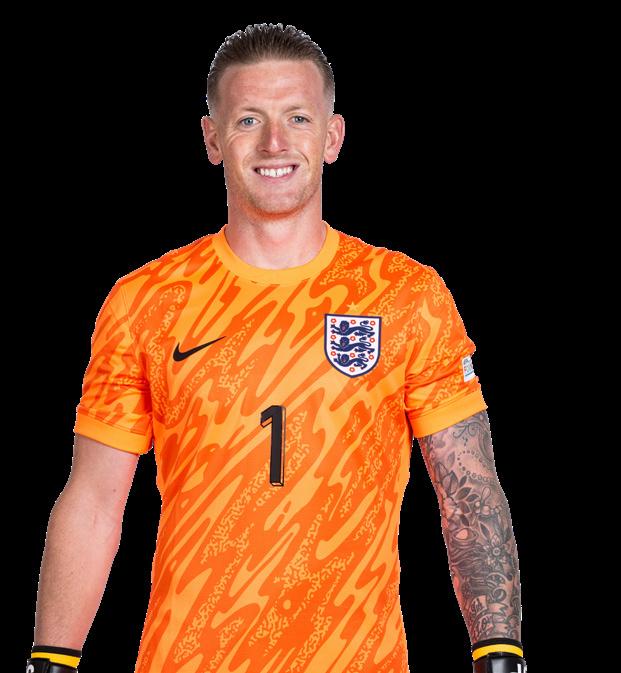
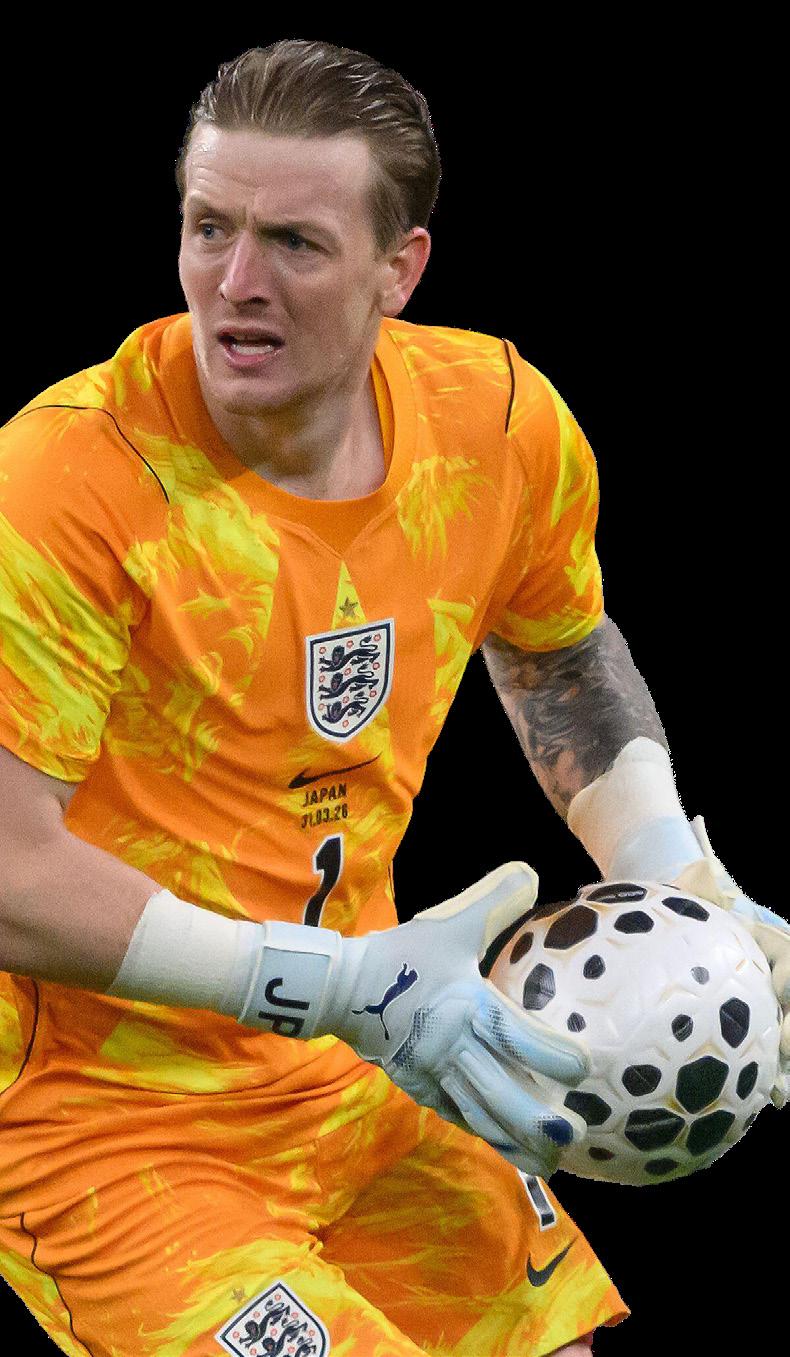
Of course, football fans are hoping their national teams can display a similar level of confidence going into the World Cup and England goalkeeper Jordan Pickford tells us on page 42 how he embraces pressure.
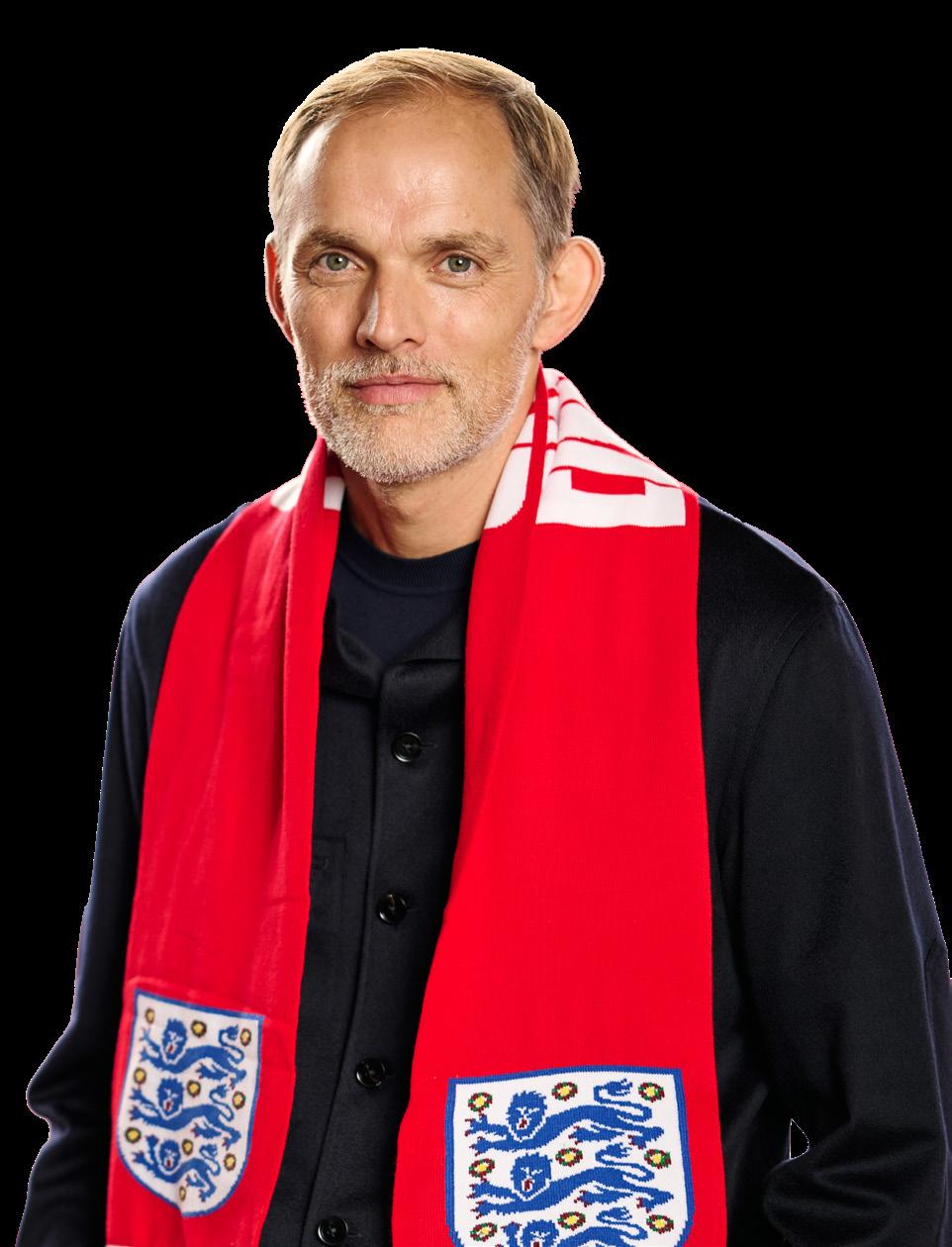
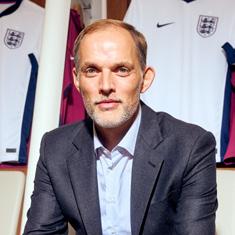
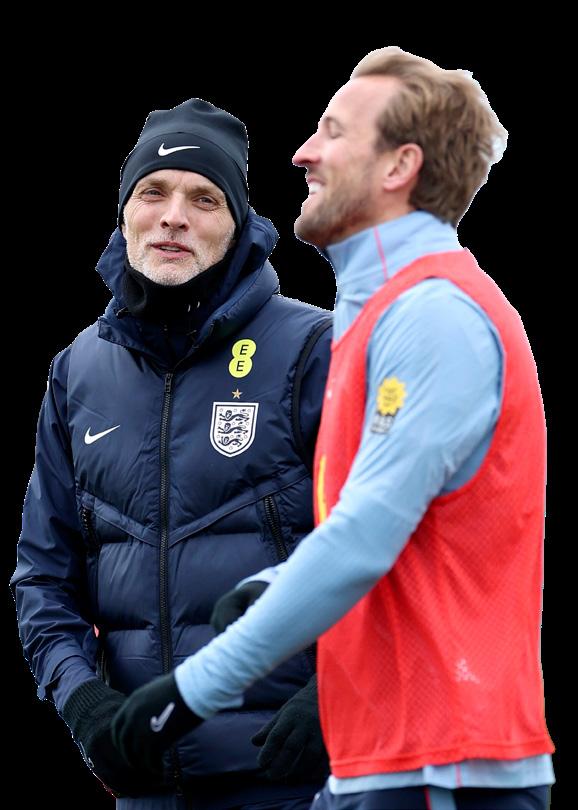
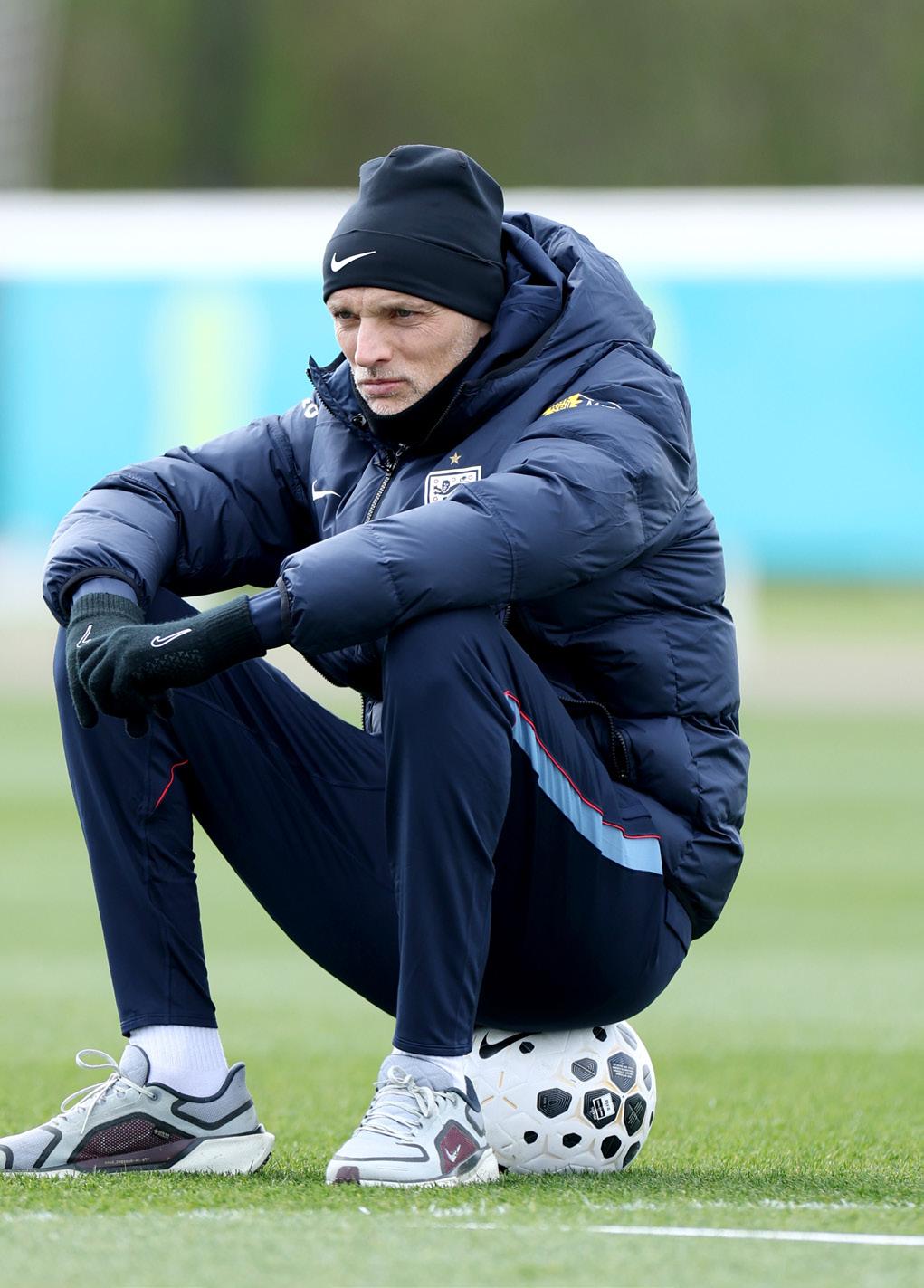
It’s 60 years since England lifted the trophy, and we rate the chances of Thomas Tuchel, the team’s head coach, becoming the first to win the tournament with a country that wasn’t their own on page 32.
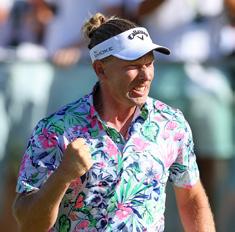
If all the football talk is too much, golfer Marcel Siem tells us on page 52 how he got his career back on track, and you can read about our day tearing around Brands Hatch with the Legends cars on page 60.
Have a great summer, and we’ll see you again later in the year.
Rob
Managing Editor
COVER CREDITS:
Cover Photographer: Michael Regan - The FA
Executive Editor: Lee Gatland
Art Director: Richard Hejsak
Managing Editor: Rob Griffin mail@robgriffin.co.uk
Sales Team: 01959 543 650 sales@sevenstarmedia.co.uk
Published by
SEVEN STAR MEDIA LTD
184 Main Road, Biggin Hill, Westerham, Kent Tel: 01959 543659 sevenstarmedia.co.uk

Disclaimer: Man Magazine is published bi-annually (twice per annum) by Seven Star Media Ltd. No part of Man Magazine may be reproduced, stored in a retrieval system or transmitted to any form without permission. Views expressed in the magazine are not necessarily those of Seven Star Media Ltd, and are included to provide advice only. No content is a substitute for professional medical advice. During printing, images may be subject to a 15% variation. © Copyright of content belongs to individual contributors with the magazine copyright belonging to Seven Star Media Ltd. All rights reserved. Please either keep this magazine for future reference, pass it on for somebody else to read, or recycle it.

also available in diesel
(1) Based on Master 87kWh E-Tech electric L2H2 4T version. WLTP test data shown for comparability purposes only. Actual real world driving results may vary depending on factors including the starting charge of the battery, accessories fitted after registration, weather conditions, driving styles and vehicle load. (2) Usable cargo capacity based on Master 87kWh E-Tech electric L2H2 4T version.

If you don’t like going to bed, then we’ve got some bad news: even one sleep-deprived night can negatively impact your life.
Not getting enough shut-eye impairs learning and has been linked to poorer physical and mental health, according to Professor Barbara Sahakian at the University of Cambridge. It can also make you less productive at work, while reducing your ability to manage stress and control your emotions.
Sleep is an active process in which the brain reorganises and recharges itself, clears toxins, boosts our immune system, and consolidates memories.
Professor Sahakian, co-author of ‘Brain
Boost: Healthy Habits for a Happier Life’, suggests creating a night-time routine, such as watching a happy movie or thinking about a recent holiday.
Seven to eight hours of sleep per night is ideal, so having a comfortable bed and keeping the room at an optimal temperature will also help.
Of course, sometimes it’s just impossible to get enough hours under the duvet. But if this happens, the advice is to get some exercise the following day.
This will not only boost your energy levels during the day but also help you sleep better that evening and get back on track.

Young adults see mood improve after a cuppa.
Good news for caffeine lovers! Your morning coffee really does make you happier, according to researchers from the University of Warwick and Bielefeld University in Germany.
They tracked the moods of more than 200 young adults by sending them prompts seven times a day to check how they were feeling.
And they found that caffeine drinkers regularly reported a better mood after a cup of coffee or tea in the first two and a half hours of the morning, compared to later in the day.
Professor Anu Realo, Department of Psychology at the University of Warwick, said: “Caffeine works by blocking adenosine receptors, which can increase dopamine activity in key brain regions, an effect that
studies have linked to improved mood and greater alertness”
Early caffeine consumption was linked to an immediate increase in positive emotions, particularly enthusiasm and happiness.
However, there were also some downsides. The study’s authors caution that caffeine can lead to dependence. Excessive intake is linked to various health risks, and consuming it later in the day can lead to sleep problems.
Professor Sakari Lemola of Bielefeld University said: “Around 80 per cent of adults worldwide consume caffeinated beverages, and the use of such stimulating substances dates far back in human history. Even wild animals consume caffeine; bees and bumblebees prefer nectar from plants that contain caffeine.”

Productivity coach Juliet Landau-Pope reveals her seven top tips for banishing procrastination.
Are you avoiding an essential project at home, at work or while studying – a report you need to read, a pile of paperwork to file, or an urgent email awaiting your attention?
Have you embarked on an important task, started with tremendous gusto, but then run out of steam? Well, you’re not alone.
As a productivity coach working with clients across the UK and worldwide, it’s clear that procrastination plagues men of all ages and at all stages of life. From decluttering to DIY or dealing with essential issues relating to your health, finances, career or relationships, there’s almost certainly something on your to-do list that you just don’t get around to completing.
Whether you’re struggling to get started or finding it difficult to finish, that feeling of being ‘stuck’ often leads to guilt, shame, embarrassment and self-criticism.
The good news is that procrastination isn’t a personality trait: it’s a habit that builds up over time and then starts to get in the way. And like other habits, it can also be shifted by exploring what drives you forward and what holds you back.
Instead of dwelling on what others expect of you, find positive and purposeful reasons to get things done. Tapping into intrinsic motivation will be more effective than trying to please anyone else. Why does a particular task matter to you? Does it reflect any of your core values? Or help you move closer to personal or professional goals?
Avoidance is often a symptom of overwhelm. If a project feels too daunting, identify the very first step that you need to take, however small or seemingly insignificant. Challenge yourself to take that first critical step and acknowledge success
when you accomplish it. This helps stimulate chemical changes in the brain that boost motivation. Delaying a tax return or a difficult email? A micro-goal might be simply turning on your laptop and locating the relevant documents.
3
Don’t wait until you have time – make time! Planning and prioritising are key to overcoming procrastination. And remember that ‘someday’ isn’t a day of the week. Decide on a specific action, then commit to a particular date, write it down in your diary or planner and set a reminder. Whether you prefer paper planners or digital diaries, find a scheduling tool that works best for you.
on track and focus for longer. From filing taxes to cleaning the fridge, spending time with others also makes the most mundane tasks much more fun.
6
Imposing a time limit creates a sense of urgency that helps to kickstart you into action. You’re unlikely to get bored in just a quarter of an hour. And you’ll be amazed at what you can get done when you’re up against the clock.
7
Tell your partner, trusted friend or colleague what you intend to do and when you intend to do it. Sharing your goals and intentions can help you develop a stronger sense of purpose and commitment to follow through. Try creating an accountability structure to get things done when there’s an urgent deadline.
4 5
Working or studying alongside someone else, in person or remotely, is a powerful way to beat procrastination. Whether or not you’re both tackling the same task, there’s more likelihood that you’ll be able to resist distractions, stay
Perfectionism and procrastination often go hand in hand. If you’re paralysed by the fear of getting something wrong, try lowering the bar just a little. Aim for excellence rather than perfection. Try to distinguish between tasks that really do require the highest standards and those where ‘good enough’ really could be good enough.
Juliet Landau-Pope is a productivity coach and author of What’s Your Excuse for Not Being More Productive? jlpcoach.com 1 2


































































































































































































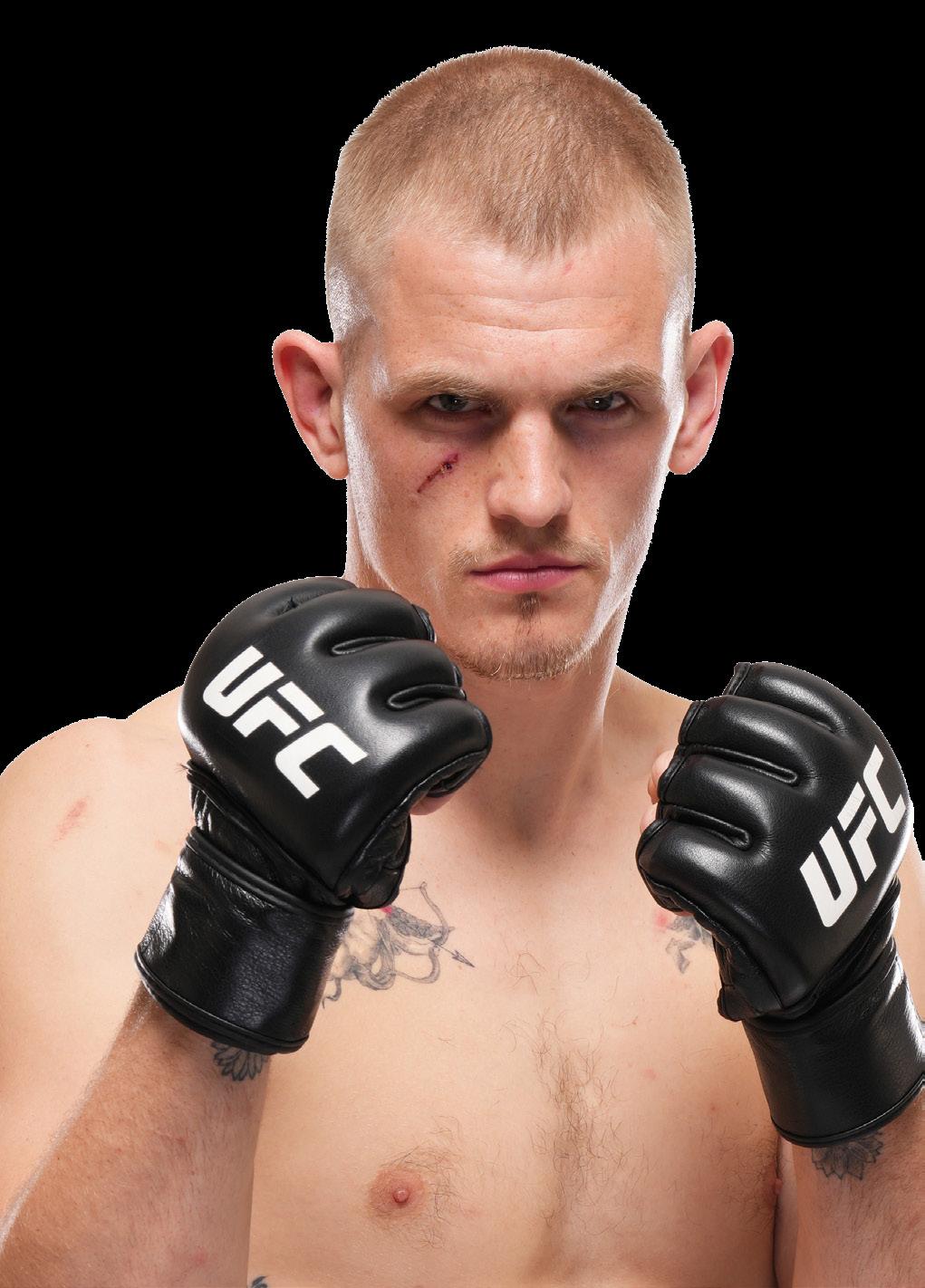
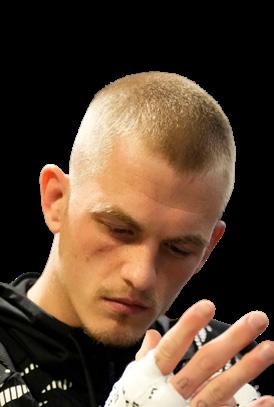
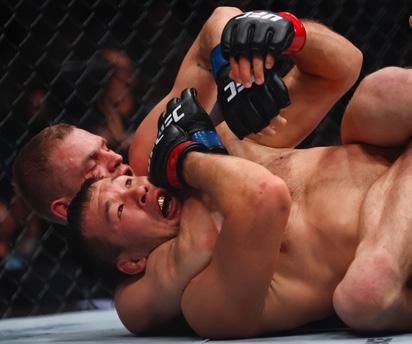
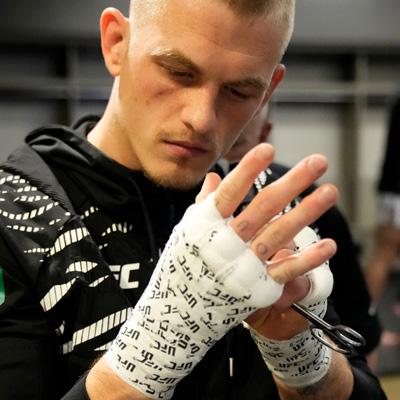
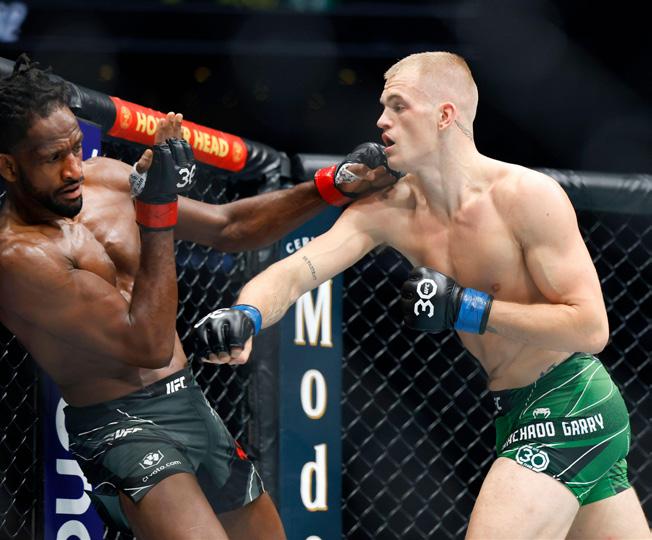
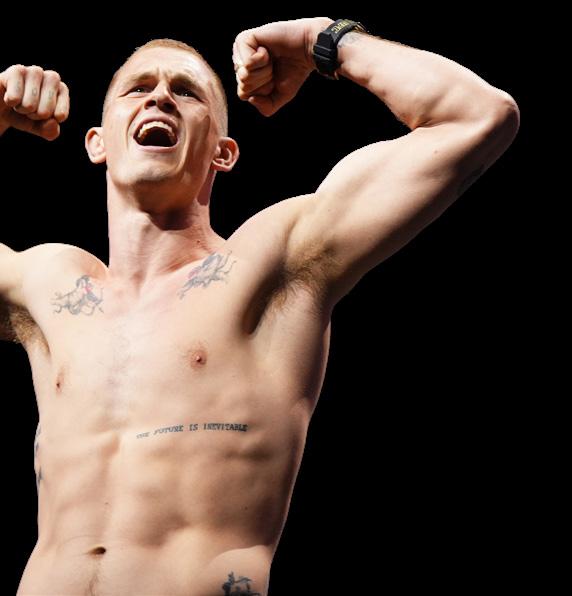
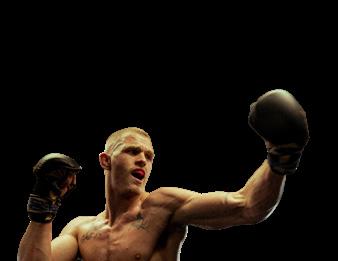
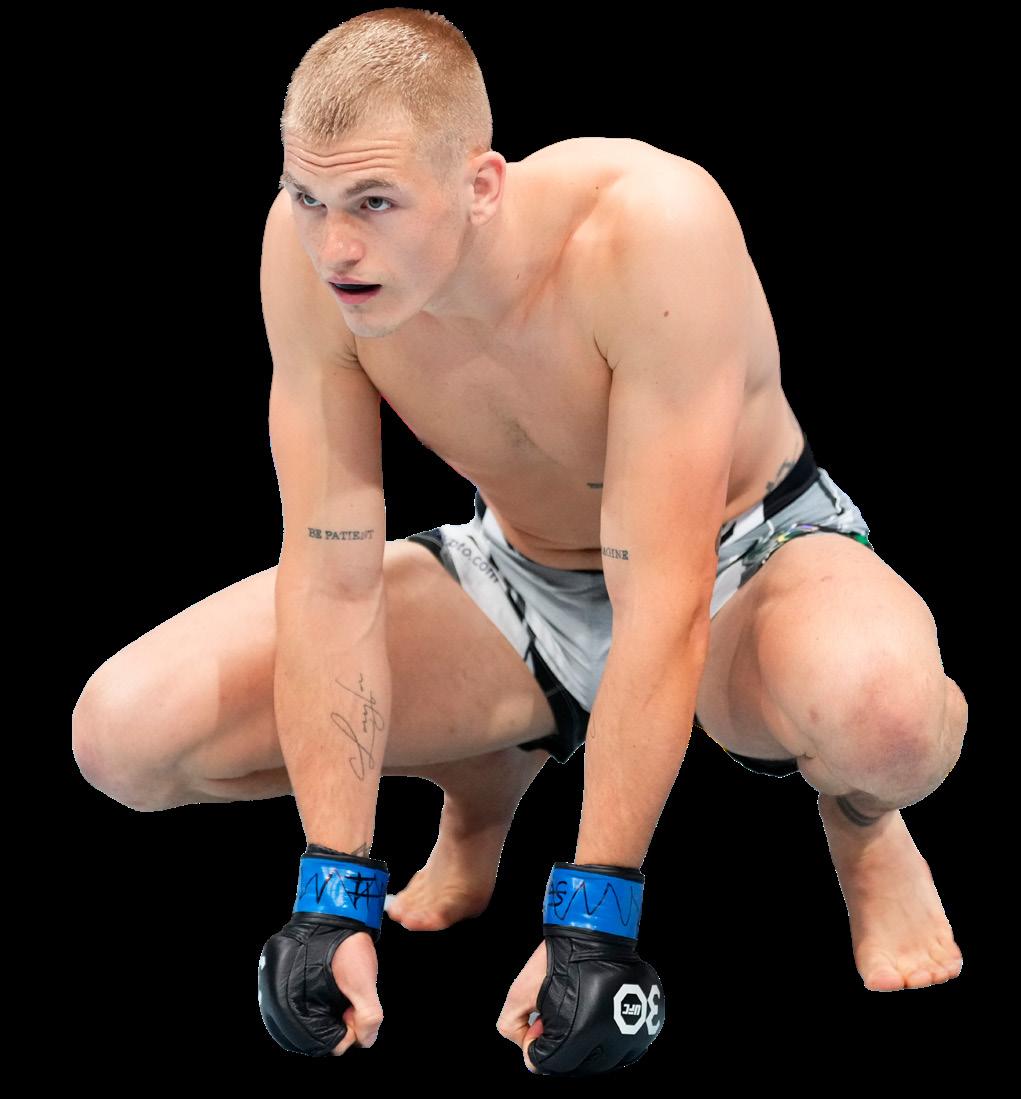
MMA fighter Ian Machado Garry believes he will dethrone Islam Makhachev for the coveted UFC Welterweight Championship and dominate for a decade.
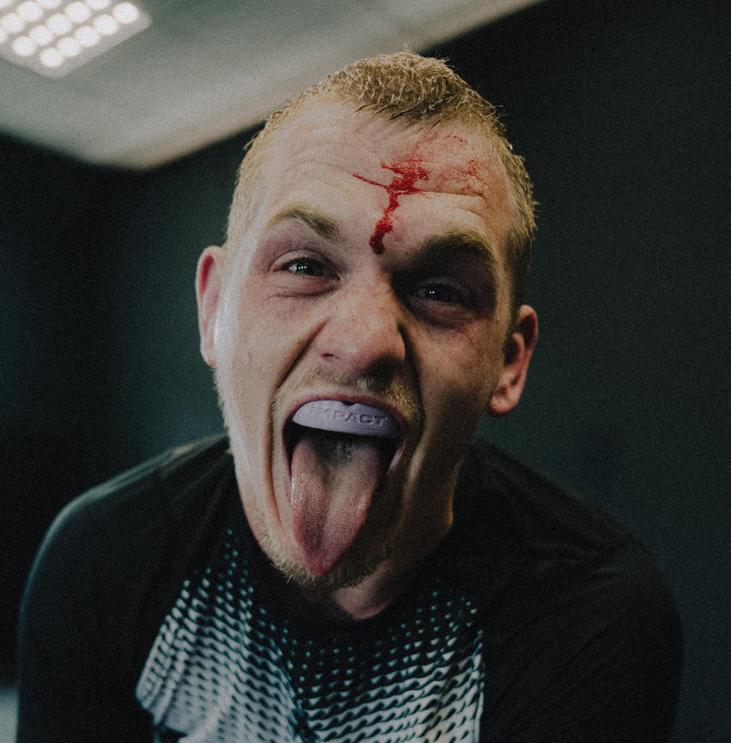
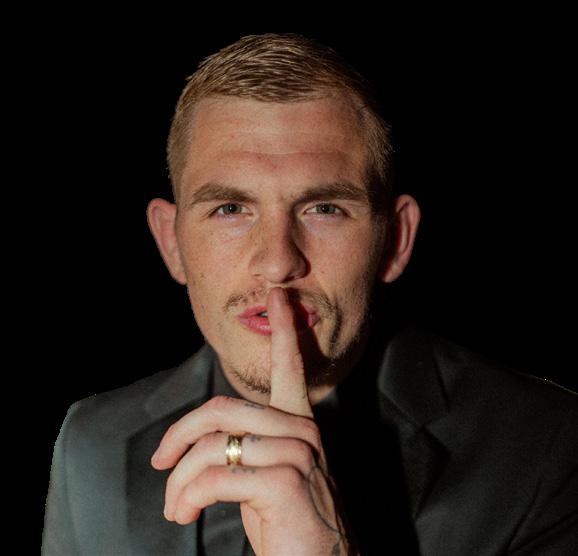
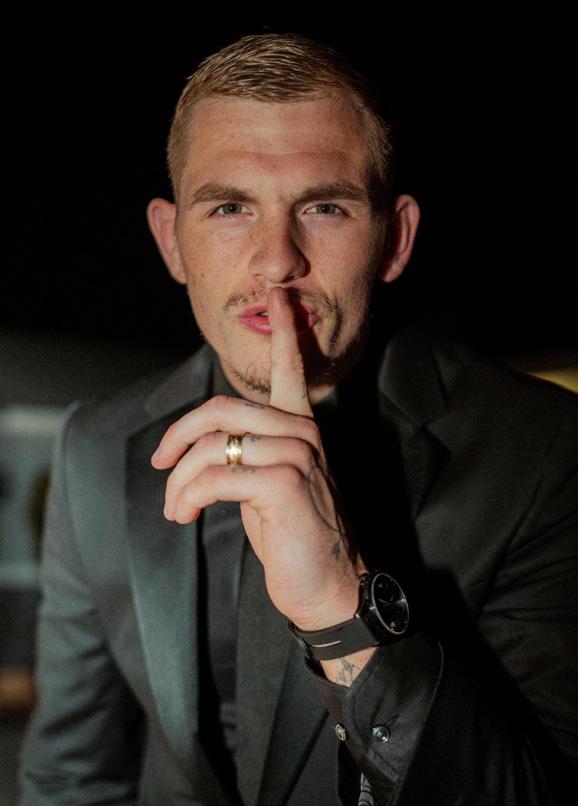
Ian Machado Garry doesn’t lack confidence. The 28-year-old Irishman is convinced he’ll become a UFC world champion and dominate for a decade.
Who would bet against him? He boasts an excellent 17-1 professional MMA record, and his only loss was such an impressive performance against Shavkat Rakhmonov that it actually elevated his reputation.
But the talented striker is now preparing for his toughest challenge. As the division’s number one contender, he’s expected

to fight for the UFC Welterweight Championship held by the all-conquering Islam Makhachev.
The Dagestan-born fighter blitzed through the UFC’s lightweight division, submitted Charles Oliveira to win the title, defended it four times, then vacated the belt.
\\ I’VE NEVER DOUBTED MY ABILITY. I KNOW WHAT I’M CAPABLE OF DOING. //
He then moved up to welterweight and defeated Jack Della Maddalena to secure his second UFC world title. He hasn’t tasted defeat for more than a decade.
It’s an incredible achievement, but the Dubliner is unfazed. He insists his rock-solid mindset puts him on a different level from his rivals and believes he’ll make the fight look easy.
This resilience has already been tested inside and outside the octagon, most notably ahead of his fight with Geoff Neal when lies were spread about his relationship with his wife, Layla.
Ridiculous rumours claimed he’d taken the surname of her ex-husband, who’d apparently moved in with the couple. It forced Layla to release a video to set the record straight.
Machado is actually Layla’s maiden name. Ian embraced it to make her son from a previous marriage feel included. It’s hard to think of a more honourable motive.
As for her ex-husband, Richard. He’s a respected nutritionist who has worked with Ian for a number of years. He doesn’t live with them but can travel with the team and be closer to his son.
\\ I’M GOING TO FIGHT THREE TIMES A YEAR, EVERY YEAR, UNTIL THE DAY I DECIDE TO HANG IT UP //
Here, the fighter nicknamed ‘The Future’ explains his unique approach to training, how he plans to dominate the sport for years and what brings him the most joy.
Hi Ian. Congratulations on becoming the number one contender. How are you feeling?
It’s amazing. I’m very happy, very excited. There aren’t many times that someone gets the opportunity to fight the number one pound-forpound fighter on the planet and twoweight world champion, to become champion of the world. I can’t wait.


Do you feel this opportunity has come relatively early in your career?
I feel I could have fought for it two or three fights earlier, but God works in ways we sometimes don’t understand. Standing here now, I can see how I’ve evolved mentally, physically, and emotionally. Two years ago, I don’t think I would have been as good a champion as I will be now.
I have absolutely nothing but respect for that man. There is no animosity towards him. For me, it’s all competitive. There’s nothing personal. From what I’ve seen, he’s a great human. He’s also one of the best fighters right now. If he wins his next fight, he’ll have the longest consecutive win streak in UFC history.
That’s an incredible achievement. I can’t wait to be the person to stop it.
How do you see the fight playing out?
I don’t care where the fight goes. If he wants to wrestle, we’ll wrestle. If he wants to grapple, we’ll grapple. And if he wants to strike, he’s dead. I’m going to dominate this fight from start to finish and prove to the world how good I am against the very best on the planet.
you plan to be an active champion?
There’s a lot of politics and bureaucracy at the top of this sport that I dislike. It slows the fights
\\ TWO YEARS AGO, I DON’T THINK I WOULD HAVE BEEN
down. That irritates me. I’ve told UFC bosses that when I’m champion, it’s going to change. I’m going to fight three times a year, every year, until the day I decide to hang it up. I don’t want to be someone who won a belt in 2026 and was champion for six years but only fought six times.
I’m talking five more years at welterweight, going through everyone from number one to 15. I want to prove that I am the single best fighter walking the planet right now, and anyone who has stepped in my way has failed. Once I feel there isn’t anything left for me, I will take some time and correctly ascend to the next division, where I plan to do the exact same thing.
Would the next logical step be moving to middleweight?
Yeah, I think so. Right now, as I talk to you, I’m 28 years of age. Justin Gaethje just won an interim world title and has secured himself as the main event for the White House card, and he’ll be 38 years old this year. So, I have 10 years. That’s an entire decade where I can be at the top of this sport and hold a belt.
How important is it to win belts in other weight classes?
Since Conor McGregor, more people are chasing doublechamp status, fame, and fortune rather than building a legacy that starts by dominating your division. I want both. I plan to dominate and be a champion for the next decade. I can get a second belt at some point, but I want to enjoy every second as champion. I’m going to embrace it, but I’m going to compete.
It’s been a long time since we’ve seen someone dominate. For me, the greatest fighters of all time are the likes of Georges St-Pierre, Jon Jones, and Demetrious Johnson. These are guys who completely destroyed the rest of their divisions. They wiped them out from top to bottom, rinsed, and repeated the process against the next number one contender.
You mentioned Conor McGregor. How do you feel about being compared to him?
As a 16-year-old kid from Dublin, he inspired me to get into the sport. I would stay up on Saturday nights and watch every single fight, every interview, every press conference. I’m here because of him. Any comparisons with him in that regard, I see as a positive. In basketball terms, for someone to compare me to him is like Kobe Bryant being compared to Michael Jordan.
He is the reason the UFC is as big as it is today. He is the special one. There’s an argument that no other fighter has reached his level of stardom. He’s one of the most recognisable faces on the planet. I’m here because of what he did, the power he did it with, the rise he had, and the impact it had. I consider him a friend. We don’t speak all the time, but we have a very friendly relationship, and whenever one of us needs advice or support, we’re always there for each other.
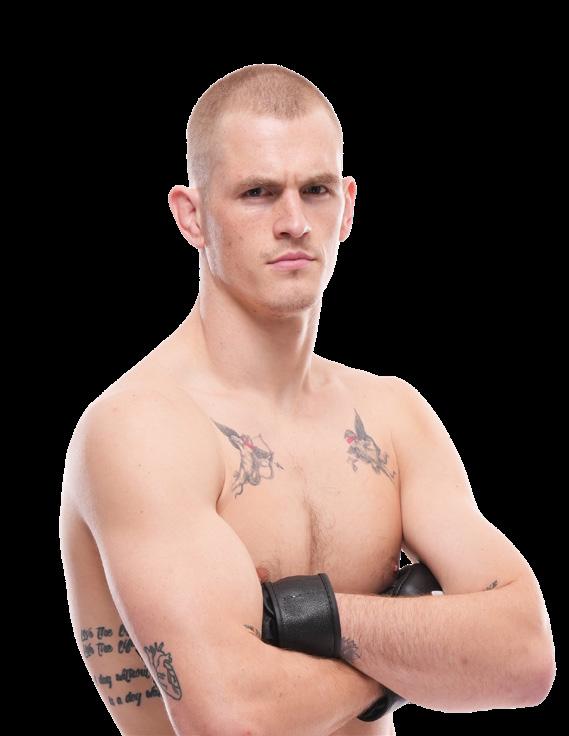
People have wanted to know what’s going on in my life since I was 18. They’re always interested in me, my family, and what I’m doing. I’ve never aspired to be rich or famous. What I have dreamed about is being one of the greatest fighters to ever walk this earth, to follow in the footsteps of Muhammad Ali. Now, the more success I have in the UFC and the more I defend the belt when I get it, the more famous I’m going to become. But that will be fame from my success in what I love and recognition as one of the greatest athletes on the planet. That excites me.
You are known for training in different gyms. How did this start?
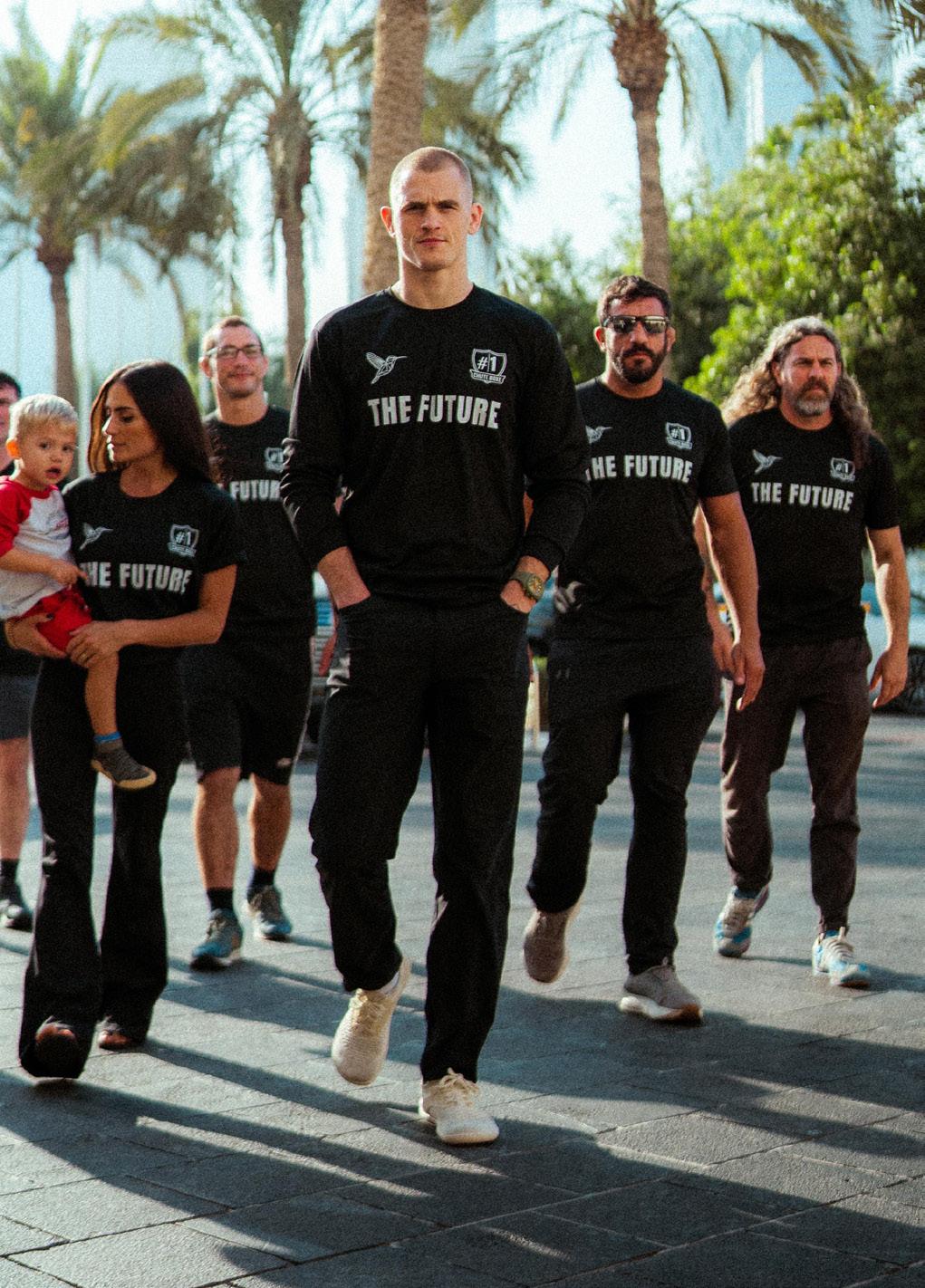
When I was training in America, Gilbert Burns, a friend of mine (and recently retired UFC fighter), told me I was too good to stay in one gym and that I needed to travel the world to learn, because it would take me to the next level. This is a massively populated world with some unbelievable fighters scattered around the globe. The sport of MMA is very blessed in this regard. Fighting at the highest level is an art form. I can learn just by watching the way their bodies move. I don’t need to speak the same language.
\\ THERE IS AN ABUNDANCE OF KNOWLEDGE AROUND THE WORLD. I WANT TO TRAIN AND LEARN FROM THE BEST OF THE BEST //
benefits does this provide?
There is an abundance of knowledge around the world. I want to train and learn from the best of the best. When you talk about Brazilian Jiu Jitsu, why not go to Brazil and learn from Demian Maia, one of the greatest practitioners of it we’ve seen in MMA? Why not train at Chute Boxe in Brazil with one of the most dangerous fighters we’ve seen in the octagon, Charles Oliveira, the guy with the most finishes in the entire UFC?
How often do you move around?
The second it feels monotonous is when I change it up and train with different coaches. I need a change. I need movement. I like to enjoy my life and enjoy my training. I don’t want to feel like I’m on a treadmill. I could have done anything, but I chose this sport and don’t want it to feel like work.
That’s still a pretty unique approach. Why do you think that is?
It’s a new evolution of the sport. You see it a lot in boxing. Fighters often change their coaches and teammates and pull in specific people who pose different threats. You can have the best coaches in England, Ireland, Ukraine, and Cuba, each of whom will say something different is most important. All of them will show you a golden nugget, and if you can take it away, you become a better fighter.
Why do you think some people have criticised you for moving around?
There’s a little handful that maybe don’t like me as a human, or don’t like my success, or are jealous, but I’m so at peace with who I am, what I’ve done, and all the good I do in the world that if someone speaks negatively of me, it goes over my head because they don’t know me. I have good relationships
with people from all these gyms. I can call the coaches from the gyms I’ve trained at, and they’d have me back tomorrow. I could call training partners from eight years ago and ask them to come help me with a fight, and their answer would be yes.
How do you plan for fights? Do you have a team manager directing operations?
No, it’s all on me. Everyone on my team chips in with ideas and ways to improve it, but they know how good this machine is. They see it work when we spend time in the
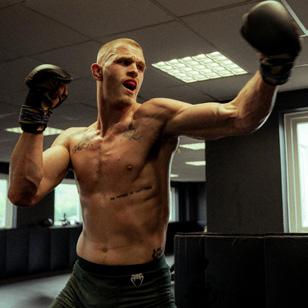
How do you decide where to spend your fight camps?
Every camp is different. I’ll go anywhere in the world for the right training and preparation for a fight. Wherever I need to go to prepare myself to win this world title against Islam Makhachev is where I’ll be heading.
Most fighters remain with the same team. Why don’t you like this?
That’s an old-style of MMA training. I take a more elite approach. Every
opponent presents a vastly different challenge, so I need to train specific skill sets and spar with people who mimic him and his style. I shouldn’t be in the same four walls training with the same 10 guys week in, week out.
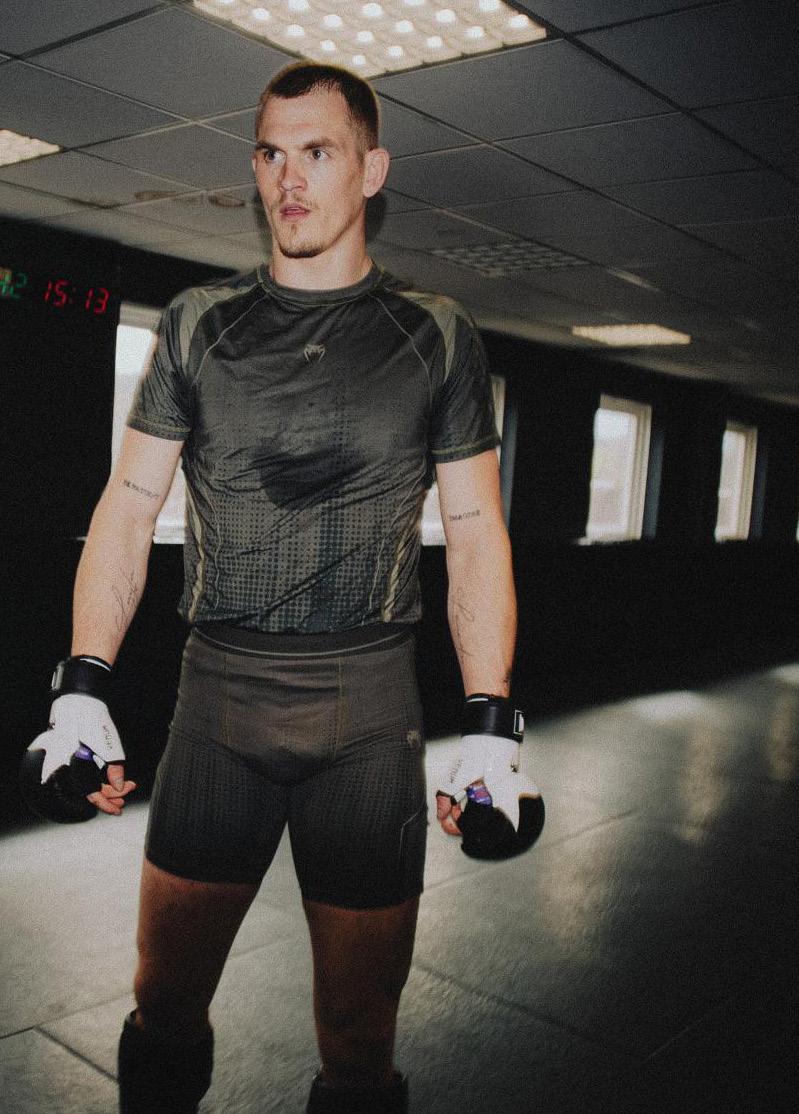
For example, I’ll use two people. Islam Makhachev is 5 feet 10 inches. He is an absolutely world-class wrestler and grappler, with very decent striking. Should I be training with the same people I sparred with before facing Carlos Prates, a Muay Thai specialist and knockout artist who is a 6-foot-1-inch southpaw?
Finding people who are similar in height to my opponent gives me a better idea of where his nose and chin will be, and how close he needs to be to grab my leg. It also enables me to begin to understand my range. It’s a wonderful approach, and I’m very proud of it. My knowledge of people and their skillsets is better than anyone else’s.
It’s not easy to find specific people who match your opponents. Sometimes you’re travelling to different parts of the globe because it’s easier to go there; other times, it’s easier for them to come to you. It’s just a logistical back-and-forth that I have no problem with because I know how elite the reward will be at the end.
Why don’t more people take this approach?
They don’t have the ability to do what I do because they’re not as mentally switched on. I have to pull in coaches and sparring partners from around the world and spend time analysing fights. What does he have that’s similar to my next opponent? Is it his chokes? Does he have the same kickboxing style? Then I train with them to see if they’re good enough to be on the team.
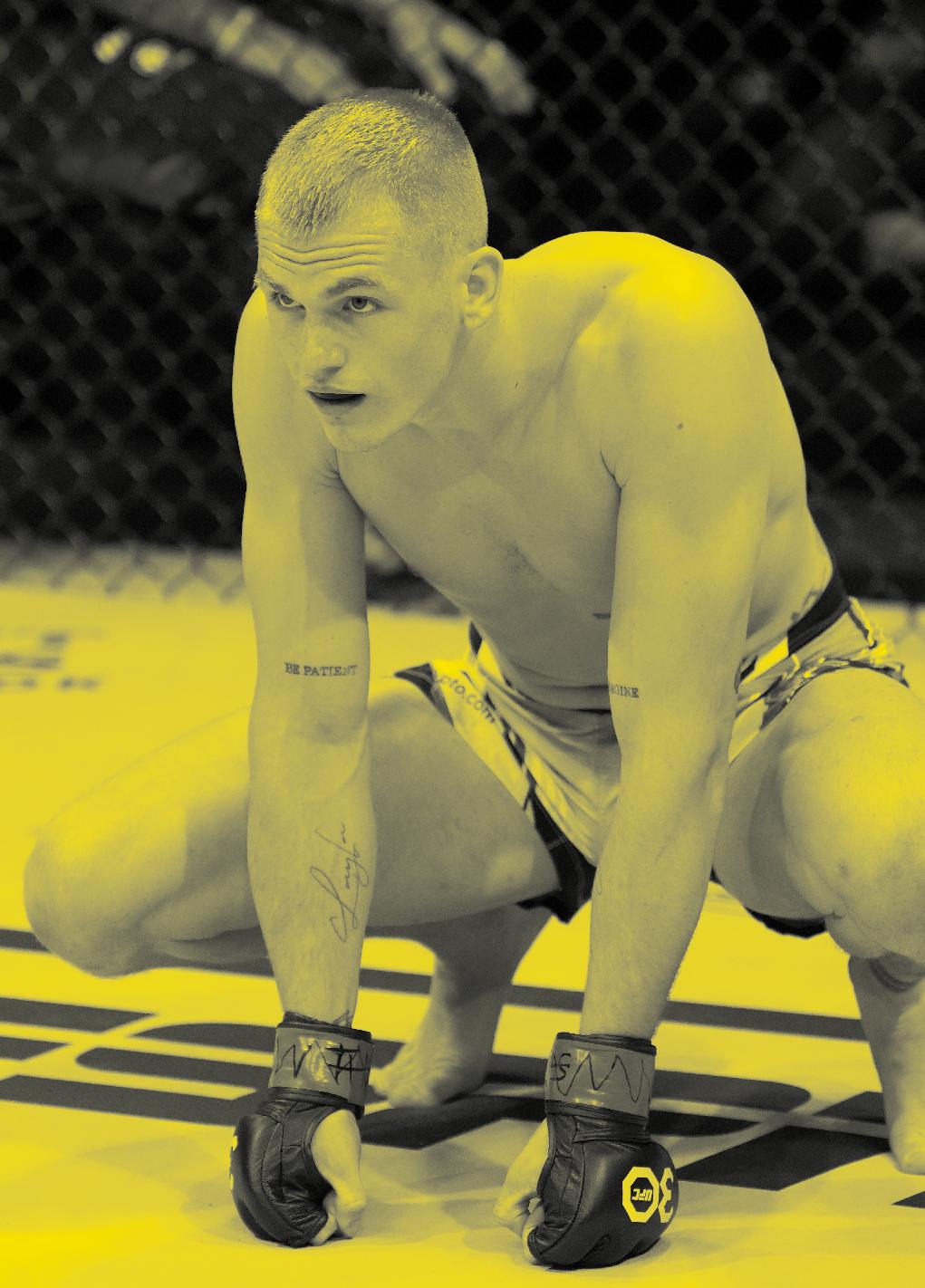
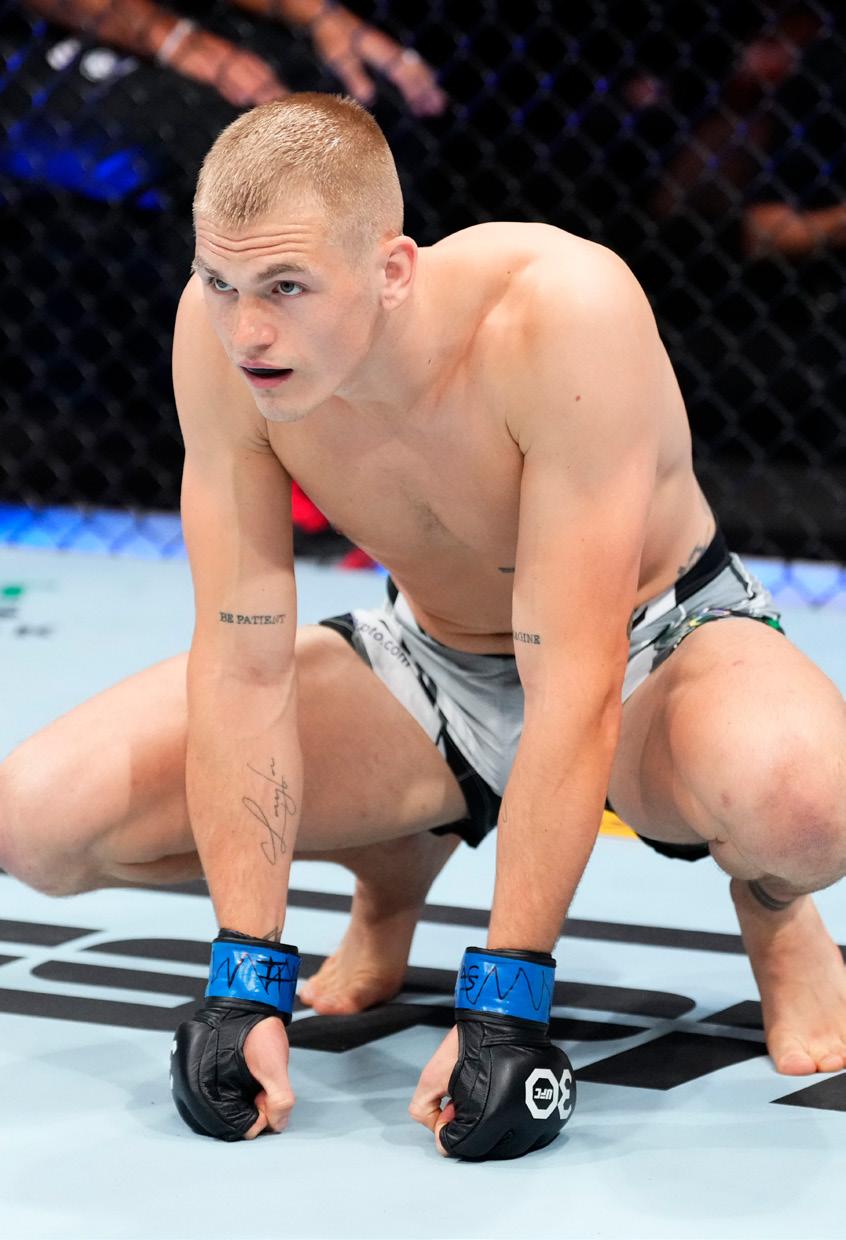
What have you been focusing most on?
I’ve been evolving my wrestling to give myself the most freedom on the feet. I love to kick. I love to strike. It’s what I enjoy doing, and I need to be able to defend the takedowns in order to stay on my feet. It’s something I’ve been doing for a long time. Hence, I travelled to Brazil, and I learned Jiu Jitsu because no one is ever finished with wrestling. It’s always Jiu Jitsu or punches.
How would you say your grappling has improved?
You can get me down all you want, but you have to keep me down, and to do that, you’ve got to deal with my fast-paced Jiu Jitsu. We haven’t really seen that in the UFC. I’ve been very good at stopping people taking me down, and this next fight will show how good I’ve become.
\\ I’VE BEEN VERY GOOD AT STOPPING PEOPLE TAKING ME DOWN //
You come across as supremely confident. Have you ever doubted yourself?
No. I’ve never doubted my ability. I know what I’m capable of doing. Have there been times when I haven’t had as much confidence? Absolutely. Different fights present different challenges. That’s just part of the sport. You’ve got to earn it every day. The harder you train, the more confident you become.
Every time I enter that octagon, I know I can win.
Have you always had a strong mindset?
Yes. My dad was a very confident human, and seeing him interact with so many people on the street inspired me. I’ve adopted the same personality, except I’m just gifted by God with talent. I know how good I am at what I do. It’s my job to go out there every time and put on a show for the fans.
What was it like fighting for the Cage Warriors Welterweight belt after splitting from your team?
I walked out for the title fight on my own, with no team, and asked someone I’d never met before to hold pads backstage. Two days before the fight, I was told they’d call it off if I didn’t have anyone in my corner, as it would be unsafe. So, I asked a friend (MMA fighter Paul Hughes) to hold my bottle of water and give it to me between rounds. I didn’t need him to do anything else.
How did you feel winning the title in those circumstances?
It was a big turning point. I proved to myself that I didn’t need anybody else in my life. If someone is by my side, it’s because I want them there, not because I need them. The more you take onto your own shoulders, the easier life becomes. I don’t ever point blame at anybody else; it’s all on me.
Are you concerned about losses?
I’m not here to live up to everybody else’s expectations. I’m here to live up to mine. My expectations are much higher than anyone else can set for me. If a fight didn’t go the way I wanted, I don’t care about their opinions. That’s why I keep getting better so much faster than everybody else.
\\ I’M GOING TO DOMINATE THIS FIGHT FROM START TO FINISH AND PROVE TO THE WORLD HOW GOOD I AM AGAINST THE VERY BEST ON THE PLANET. //
Which fight was your toughest?
The Geoff Neal fight was probably the toughest, mentally and physically, due to the abuse I received. I had 20,000 people shouting things about my family that weren’t true at the same time as preparing for one of the very best fighters in the division, who has genuine knockout power.
That fight camp didn’t feel like a life that I wanted to live. It felt very negative, very heavy. It made me fall out of love with the sport, but I didn’t want to give up on my dreams.
Is this why you were so angry about the online rumours?
It’s not that it gets under my skin; it’s just wrong. You don’t go to work and have someone chat shit about your missus or your kids. Nobody should do that. It’s the lowest of the low. If a fighter wants to talk about me, my personality, or anything I say, then cool, but it’s not right to bring up my family.
How did you cope with it?
It was a case of tuning out the online nonsense, bringing my circle tighter together, and giving those closest to me all my love and joy. Coping with the pressure and performing the way I did made me very proud. It showed that I can ignore everyone in the world and just focus on what I love to do.
Is there anything you’ve said in the past that you regret?
If people think I’ve ever crossed lines in interviews leading up to fights, they’re all completely wrong. I’ve only ever played the entertainment game with that fighter. There is an element of this that is pantomime. They know how to play this, but there’s a fine line.
Neil Magny suggested that your comments to him affected his own custody battle.
He brought it on himself. He said in an interview before our fight that as a father, he’d become accustomed to giving the kind of ass-whooping he’d give to me. As a father, it hit a nerve. I thought it was such a low thing to say. At the press conference, I told him to sit down and reflect on what comes out of his mouth.
You have only lost once, to Shavkat Rakhmonov, but what did that fight teach you?
It proved to me that I’m better than I think I am. I took a fight on three weeks’ notice against someone considered the boogeyman of the division, with 18 finishes and no losses. No one has ever made the final bell against him, and not only did I do that, but I very nearly won the fight. My favourite part was seeing the joy in his eyes and his body language when the fight was over. He was delighted. It showed me that I need to be more confident, more aggressive and more violent.
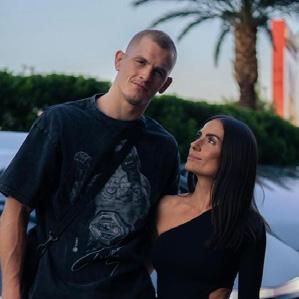
When you are gifted with talent and are one of the elite athletes on the planet, your brain operates on a different wavelength. A struggle I had was not having someone who understood me. But all that changed when I met my wife because she understood my talent and how my brain and body work. It’s enabled me to become better than I ever imagined. When you give a woman who truly loves you a problem, she’ll solve it.
\\
How important is it to have the right people around you?
My years of travelling have taught me to keep my circle close. I’ll listen to the people that I really love. If my wife turns to me and says, ‘Ian, you’re being a dick’, I’ll listen to her. If my coaches tell me to rein it in, I’ll listen. But someone who doesn’t know me can’t comment on me as a person.
I don’t care about people’s opinions of me. I’m currently walking in my beautiful back garden in Surrey, the sun is shining, the sky is blue, and my three-year-old is holding my hand. What matters is that little boy, my wife who’s in the house, and the team I surround myself with, not outside noise.
Is social media a powerful tool for fighters today?
As a fighter, having a voice and platform on social media gives you power because you can generate fan interest and bring more value to yourself inside and outside the octagon. I’m a very intelligent human and run a very tight ship. With my production company and my social media, I generate a lot of money outside the octagon. I fight for the love of fighting, not because I need a paycheque.
I want to be remembered for my legacy, inside and outside the octagon. I want to be a good role model, and that all starts with my little boy. I want him to see my hard work and dedication. It’s making sure I’m being the right influence on him, so when he grows up, he follows in my footsteps of being a good human, learning the right morals and not letting other things get in the way.
I haven’t thought about what I’m going to do long term, but I have a passion for golf. It wouldn’t be a bad life after I retire as one of the greatest fighters of all time, to caddy and walk the courses, dropping gems of information. There’s so much I can do, but right now I’m focused on being the best fighter that I can possibly be and the best inspiration for my child. The future is a long way away, but what’s next is the biggest step of my career, and that’s becoming a UFC world champion.

Available exclusively at Argos




When Dean Perryman lost his best friend to suicide late last year, he channelled the overwhelming grief into something positive.
ean Perryman is an unlikely crusader. The 30-year-old prefers to keep a low profile and regards social media as a very toxic place. But when his closest friend, Rob, took his own life in November 2025, he ended up launching a movement that has spread around the world.
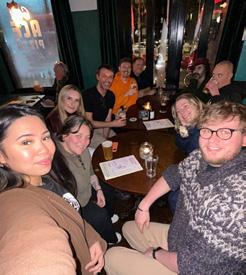
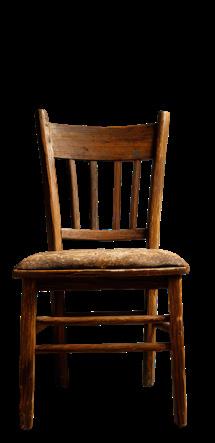
His community-led ‘Empty Chairs’ campaign is remarkably simple. Tables are booked in pubs and spaces are left free for anyone to come along. The idea is to provide an opportunity for people to connect and share problems in a relaxed, informal way, without any pressure.
Its growth has been nothing short of phenomenal. Hundreds of people are now involved, with meetings held
in 13 countries, including the US and Australia.
I was really struggling to deal with the grief and guilt that came from losing my best mate and felt compelled to do something with those emotions. I considered what I was good at, which turned out to be chatting to strangers and drinking beer. So, I set myself the challenge of going to a pub every day in December to meet one or two people and give them space for a conversation.
The first pub I hosted in was the Angel & Crown in Bethnal Green, East London. My hope was that Empty Chairs would be somewhere that Rob could have gone to if he ever needed it.
Not at all. I’d be lying if I said I had any kind of plan when I started. It was just me going out, hoping to meet people who were already there. Before Rob passed, I wasn’t exactly on the front line of men’s mental health or much for talking, so I was unaware of how many people were struggling. I didn’t realise how loneliness and depression were all-consuming for so many people until I put myself out there and realised it was a serious problem.

It’s to give people a safe space to have a conversation. There’s no stigma attached. It’s just meeting people in a pub. You’re sitting down and chatting to strangers. If you want to speak about something in particular, you can, but there’s absolutely no pressure. You can just come along, meet new people, have a beer, enjoy a conversation and make some friends.
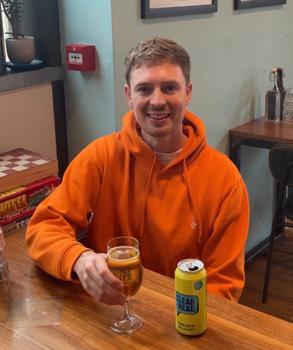
You’re known for wearing bright orange hoodies. How did that come about?
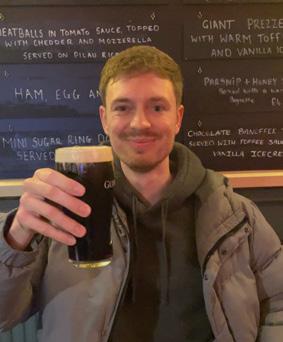
I’d love to say there was particular significance, like Rob’s favourite colour, but it was just so people could recognise me! When I started, someone mentioned that they’d come to the pub but couldn’t see me. That stressed me out, and I realised I had to start wearing something that stood out –and orange was the colour I chose.
The initial idea wasn’t very elaborate. It was just me documenting going to a pub to see if anyone would be interested enough to come along. I was worried that people would be put off by seeing videos of a strange man in a pub, but fortunately, many have much

more courage than I do.
I’m also the furthest thing from a social media expert and have no idea what I’m doing. I didn’t have my own profile, and one reason was that it can be such a toxic place.
At the start, I was very much driven by people messaging and saying it’s something they’d like and telling me the areas in which they lived. As long as it was doable, I’d travel. Most of the time, they wouldn’t turn up, but other people would come along. Early on, I met a lovely guy called James who had his own grief story and wanted to help out. He now looks after all the hosts for me.
When did you know it was taking off?

\\ I DIDN’T REALISE HOW LONELINESS AND DEPRESSION
WERE ALLCONSUMING FOR SO MANY PEOPLE //
I initially planned to do it just for December, but decided to mark what would have been Rob’s 30th birthday in January by asking if others were interested in setting up groups in their own communities. To my surprise, 14 people went out straight away, and we’ve since had an incredible 800 people sign up to put on an orange jumper and sit in their pub or coffee shop. It shows there are so many people who are desperate to give back in memory of their own friends. They’ve seen this as something they can get behind, which is lovely.
We’ve had everyone. The youngest was 18 and the oldest 85. It’s been incredible. What I’ve taken comfort and optimism from is that most nights, the group is so mixed. There
are different ages and stories, but everyone seems to get on. There’s just so much kindness, and that’s really lovely because if you go online, that’s not always the perception.
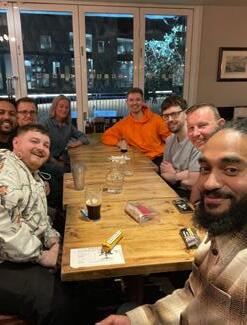
The two biggest themes are grief and loneliness. It’s been incredible to see how powerful the pub can be as a place to offer so many different things to different people. A guy in his mid-40s recently attended for a beer and a chat. He then came back and opened up a bit more about how he was doing, mentioning that he found it a safe space.
The third time he came, he was very honest about his situation and has since sought professional help. This was a lovely moment and illustrated how giving someone that space can be really powerful.
We’re now in 13 countries, including America, Australia, Canada, Norway, the Netherlands, Denmark, Switzerland and Spain. It’s been amazing how keen everyone has been to get behind the idea and make it work. There have been more than 200 events in the UK, and we have good coverage, though we still lack a strong presence in South Wales.
Yes. I knew early on that it would be important to have other people involved, as it can be a bit overwhelming. I also didn’t know if I would properly cope with my own grief at the same time as trying to make
Empty Chairs something for everyone. There’s now a group of us who are on hand whenever people need us.
It’s impacted how I see friendships. I always thought I was someone that Rob would have turned to if he was ever in a bad situation, but I never openly made that clear. I very much relied on the assumption that he’d know that because we were best mates, but I didn’t do a good enough job of making it known that I was happy to chat if he ever needed it. I also never really opened up myself, but when I talk about my
people who were moments away from taking their own lives. They’ve explained that they felt tunnelvisioned in their belief that everyone would be better off without them around, which obviously isn’t true. It’s hard to imagine being in that place, but that’s why it’s important to have somewhere people can come. Everyone deals with things differently. That’s what’s nice about Empty Chairs. It doesn’t matter what the problem is; if you want to talk about it, you’ll be treated with kindness.
It’s served as a very good distraction. I’m a bit of a typical Essex boy in the sense that we don’t really talk about emotions or how we’re doing. It’s not something we’re great at. But as people came along to Empty Chairs, it gave me an opportunity to speak openly about how I was coping with all of the emotions that came from losing Rob. I don’t think I would have been able to do so without it. As I’m now lucky enough to have a team, it’s given me more time to come to terms with the fact that Rob is gone and there’s nothing that I can do to change it.


I never intended to start a movement, so there aren’t any longterm goals. However, I’d love to see Empty Chairs in every town and city. That would be a nice target. There are so many places that desperately need it, but it all depends on whether we can find enough hosts.
If you want to find out more about Empty Chairs, where the next meeting is taking place, or even become a host, visit the website: emptychairs.org.uk. It’s also on Instagram: instagram.com/ emptychairsuk


Available at
Available in size 55” to 100”
Can a German finally end England’s 60 years of hurt this summer?
BY CHRIS FLANAGAN



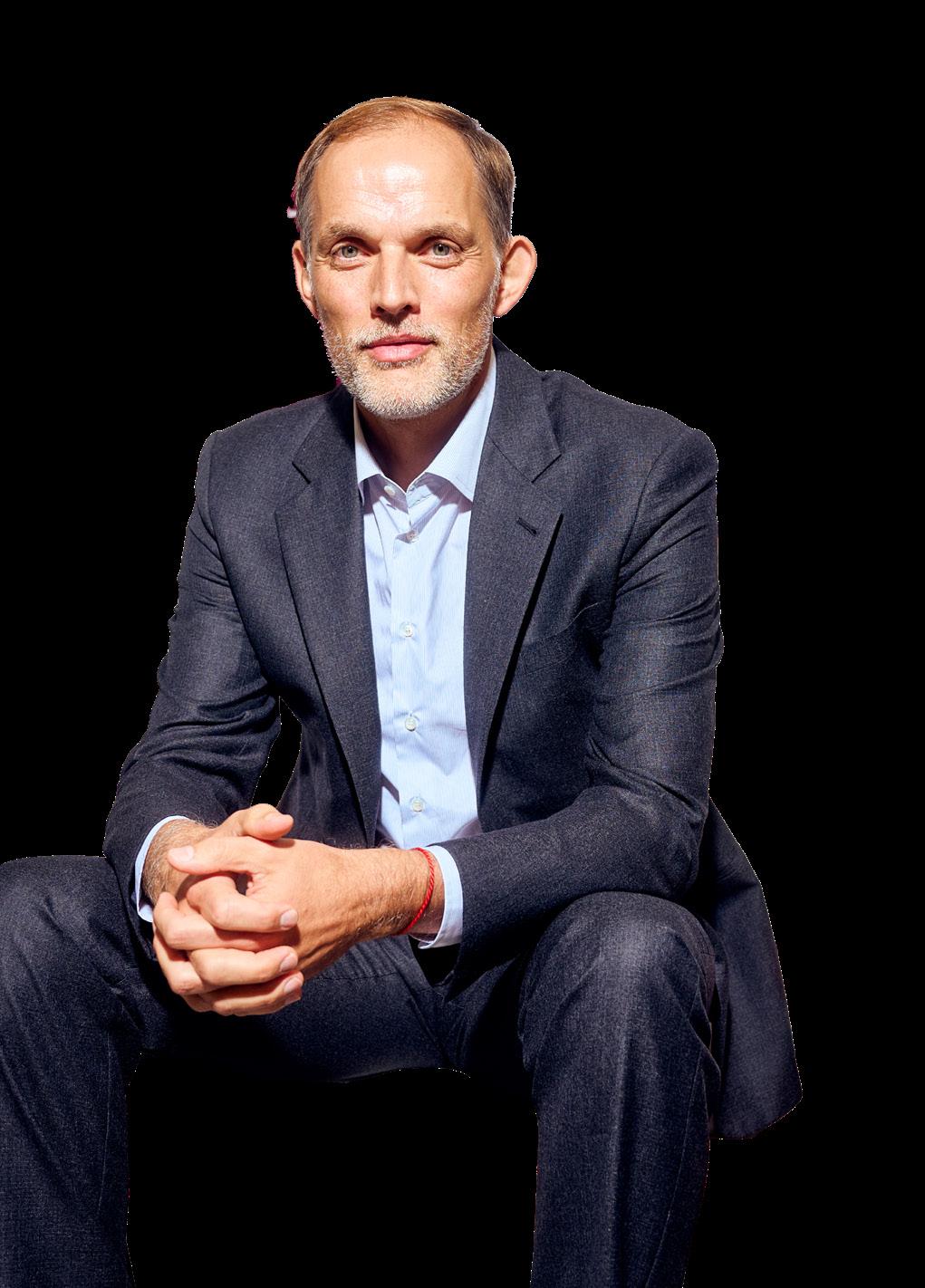
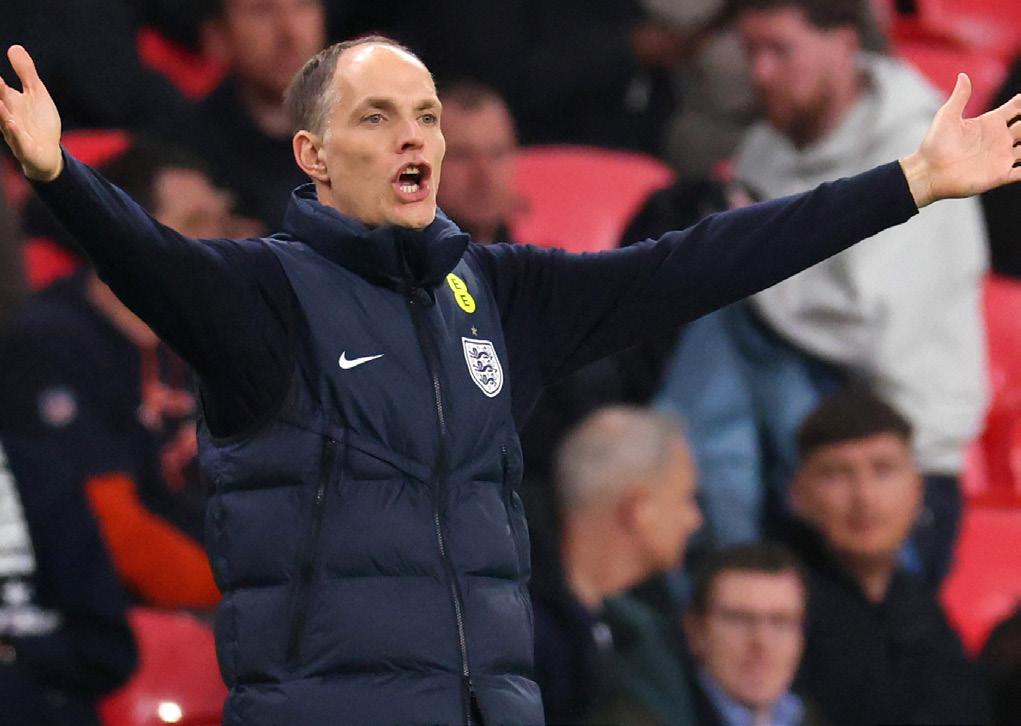
Since the World Cup first began, 96 years ago, no manager has ever won the trophy with a country that wasn’t their own. Only two have reached the final –Englishman George Raynor with Sweden in 1958, and Austrian Ernst Happel with the Netherlands 20 years later.
Widen it out to the semi-finals, and you’ll still find just five more names –Hungarian Jozsef Nagy (Sweden 1938), Dutchman Guus Hiddink (South Korea 2002), Spaniard Roberto Martinez (Belgium 2018), plus Brazilian duo Otto Gloria and Luiz Felipe Scolari (Portugal 1966 and 2006).
Sven-Goran Eriksson and Fabio Capello never managed to join the list, but Thomas Tuchel wants to add his name to it this summer. German managers have won a major international trophy on seven occasions since an Englishman last did so.
Sixty years of hurt – Euro 96 and its famous Three Lions song is now as close to 1966 as it is to the present day.
Inevitably, a German manager, Berti Vogts, denied England 30 years ago, too. Eventually, the FA decided that if you can’t beat them, get them to join you. After so many hard-luck stories and near misses, will Tuchel be England’s wild card this summer?
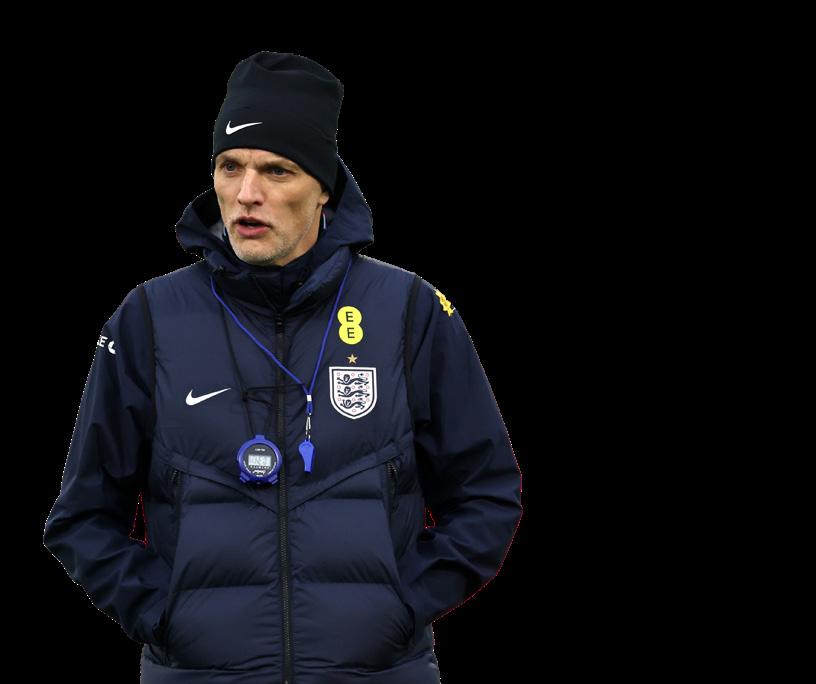
The 52-year-old’s record in the closing stages of tournaments provides hope that he could be – guiding PSG to their first ever Champions League final in 2020, then winning the trophy with Chelsea a year later, against all expectations.
Gareth Southgate did a fine job during eight years with England, taking the Three Lions to the first two Euros finals of their history, but he was accused of being found wanting tactically at key moments – particularly when mid-match alterations were needed.
Respected pundit Danny Murphy thinks that Tuchel could be England’s biggest asset in North America – even more than the talented squad at his disposal.
“I think that’s fair,” says the former
\\ AFTER SO MANY HARDLUCK STORIES AND NEAR MISSES, WILL TUCHEL BE

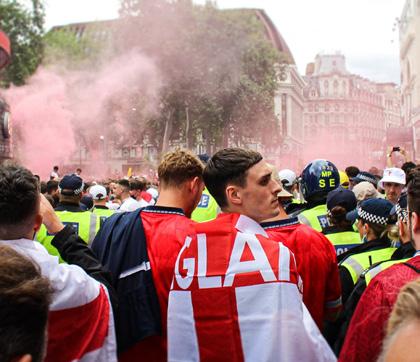
Tuchel’s reign started off in slightly rocky fashion, with underwhelming World Cup qualifying wins over Albania, Latvia and Andorra, before England’s first-ever loss to African opposition, at home to Senegal last summer.
The final four World Cup qualifiers were much more encouraging, including 5-0 wins in Serbia and Latvia – the former was particularly impressive. England, Ivory Coast and Tunisia were the only three sides to qualify for this World Cup without conceding a goal – in Europe, no side had ever achieved that feat before in a qualification campaign that lasted more than six games.
That record also didn’t come at the expense of attacking ambition.

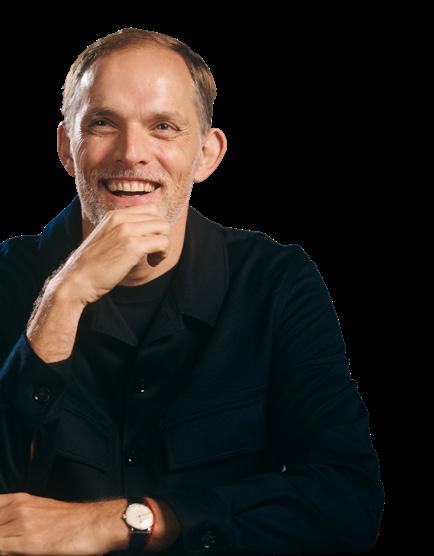
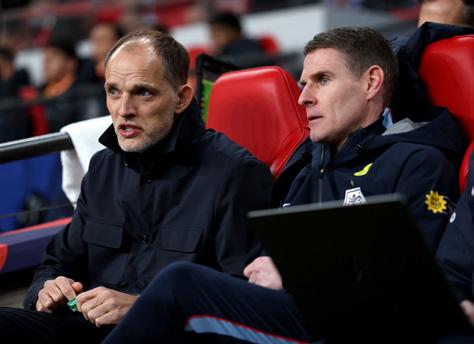
“He was more front-foot,” Murphy notes, assessing how England changed during qualifying under Tuchel, even if their opponents were not the strongest. “It’s difficult assessing any manager when they play poorer opposition, but they were really high energy and tried to press. He’s wanted his team to be more progressive than Gareth, and we’ll see against better opposition whether it’s beneficial. He’s wanted his wingers to go past people and be really positive – in central midfield, I think he’s also said to Elliot Anderson to play through the lines. He gave him that freedom.”
Of course, March friendlies at home to Uruguay and Japan were less impressive, albeit with an understrength side – after a firstever loss to African opposition, the latter was England’s first-ever loss to Asian opposition.
What’s possible for England at this tournament remains to be seen, but Chelsea have provided the most relevant sources of hope.
This summer, England must battle the North American heat – an English club side did that 12 months ago, when Chelsea won the Club World Cup.
This summer, England’s manager must overcome teams packed with the world’s best players – Thomas Tuchel did that in 2021, when Chelsea won the Champions League. This summer, though, Tuchel’s ultimate aim is to do something that no manager has ever done – lift the World Cup with a country that isn’t his own.
A man from Bavaria, winning the World Cup for England? The task looks tough, but never write off a German.
England’s final two warm-up games are against New Zealand on June 6 and Costa Rica four days later – both in Florida, where they’re holding their pretournament camp, before heading on to their main World Cup base in Kansas City.
There, they’ll train at Swope Soccer Village, a training facility of MLS side Sporting Kansas City, and stay at the intimate four-star, 54-room Inn at Meadowbrook, in a secluded area in the affluent suburb of Prairie Village.
They’ve chosen a location in the centre of the USA in an attempt to reduce possible flight times, wherever they end up playing as the tournament goes on.
Their first game is 450 miles south in Dallas against Croatia on June 17 –because they’re in Group L, they begin six days after the tournament kicks off.
After that, they’ll jet more than 1,000 miles east, to Boston to play Ghana on June 23, before heading to New York/New Jersey to take on Panama four days later.
Should they win their group, they’d play a last 32 fixture in Atlanta against the thirdplaced team from Group E, H, I, J, or K –predicting an opponent is tricky, but among the options could be Ivory Coast, Saudi Arabia, Senegal, Algeria, or DR Congo.
Finish first in Group L, and the World Cup’s new seeding system – keeping the top four teams in the FIFA rankings apart, if they each top their group – would at least mean that the Three Lions would avoid Argentina until the semis (Lionel Messi has never played against England).
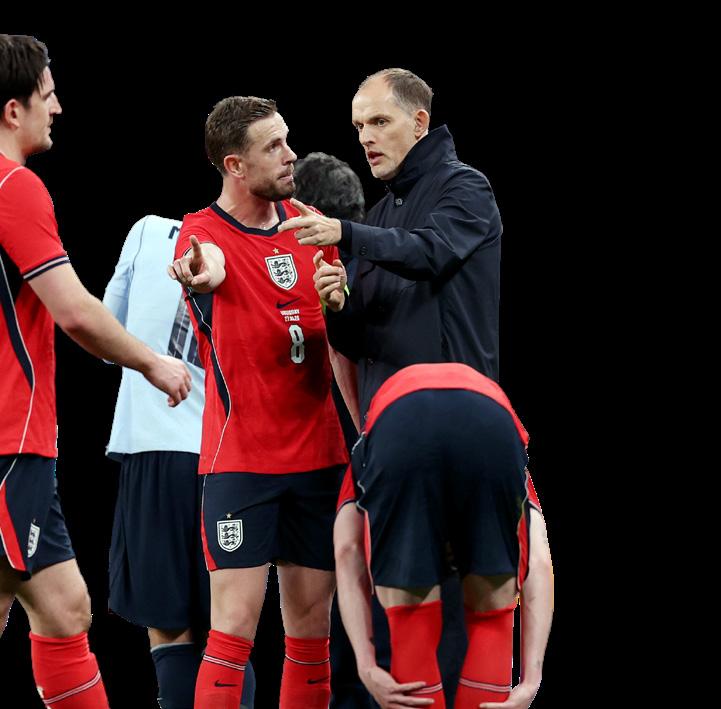


Spain and France would be on the opposite side of the draw, with no meeting possible until the final. Finishing second would take them to Toronto to play the runners-up of Group K, possibly Colombia, but that would put them on course for a last 16 tie with Spain back in Dallas.
England will hope to spend the best part of six weeks at their Kansas City base, by making it all the way to the final of the expanded 48-team tournament on July 19, although expect ‘We’re Not In Kansas Any More’ newspaper headlines if they arrive bleary-eyed back in England before that.
Temperatures in Kansas average around 30 degrees in June – that, and the pretournament camp in Florida, will help with acclimatisation.

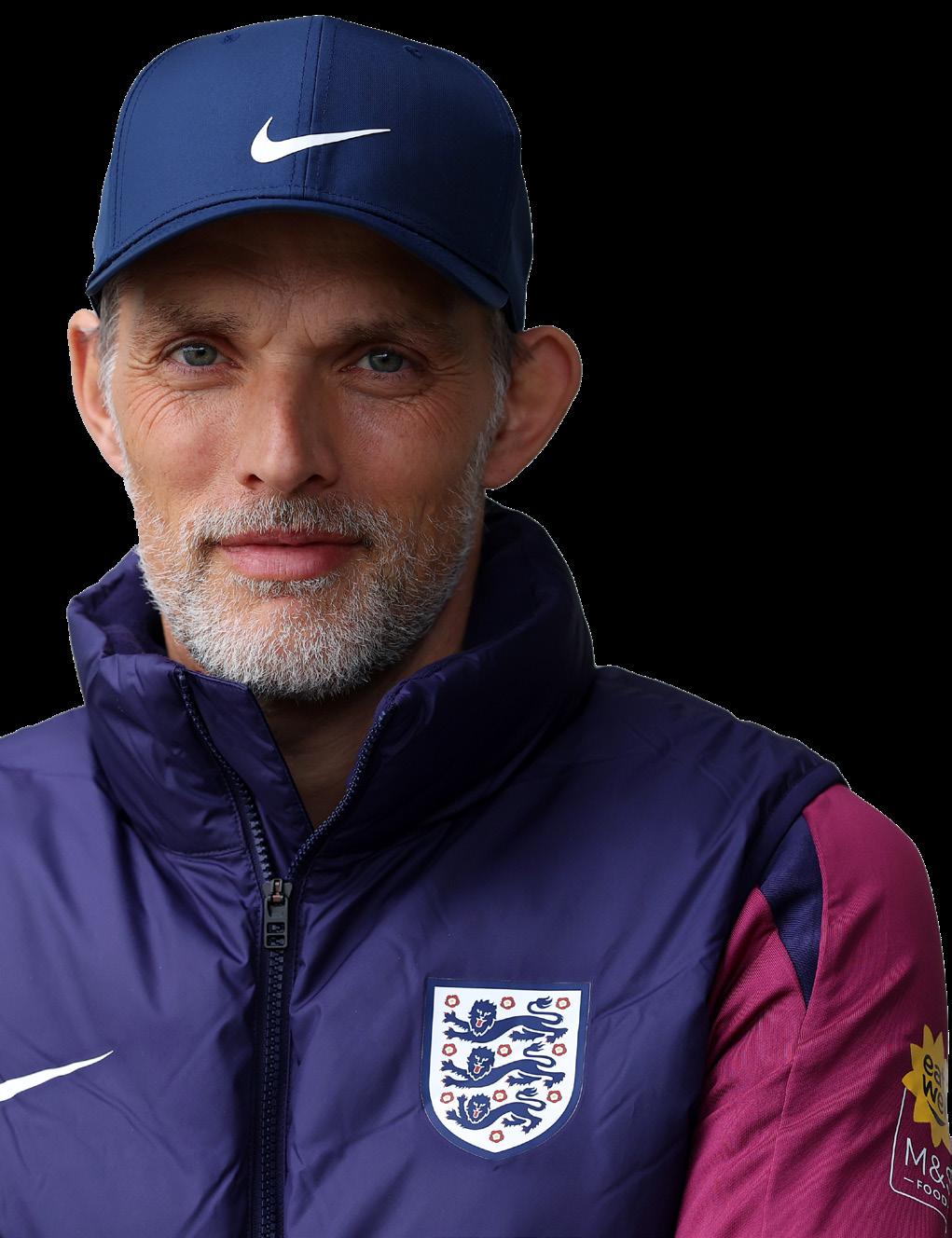
\\ SIXTY YEARS OF HURT –EURO 96 AND ITS FAMOUS THREE LIONS SONG IS NOW AS CLOSE TO 1966 AS IT IS TO THE PRESENT DAY //
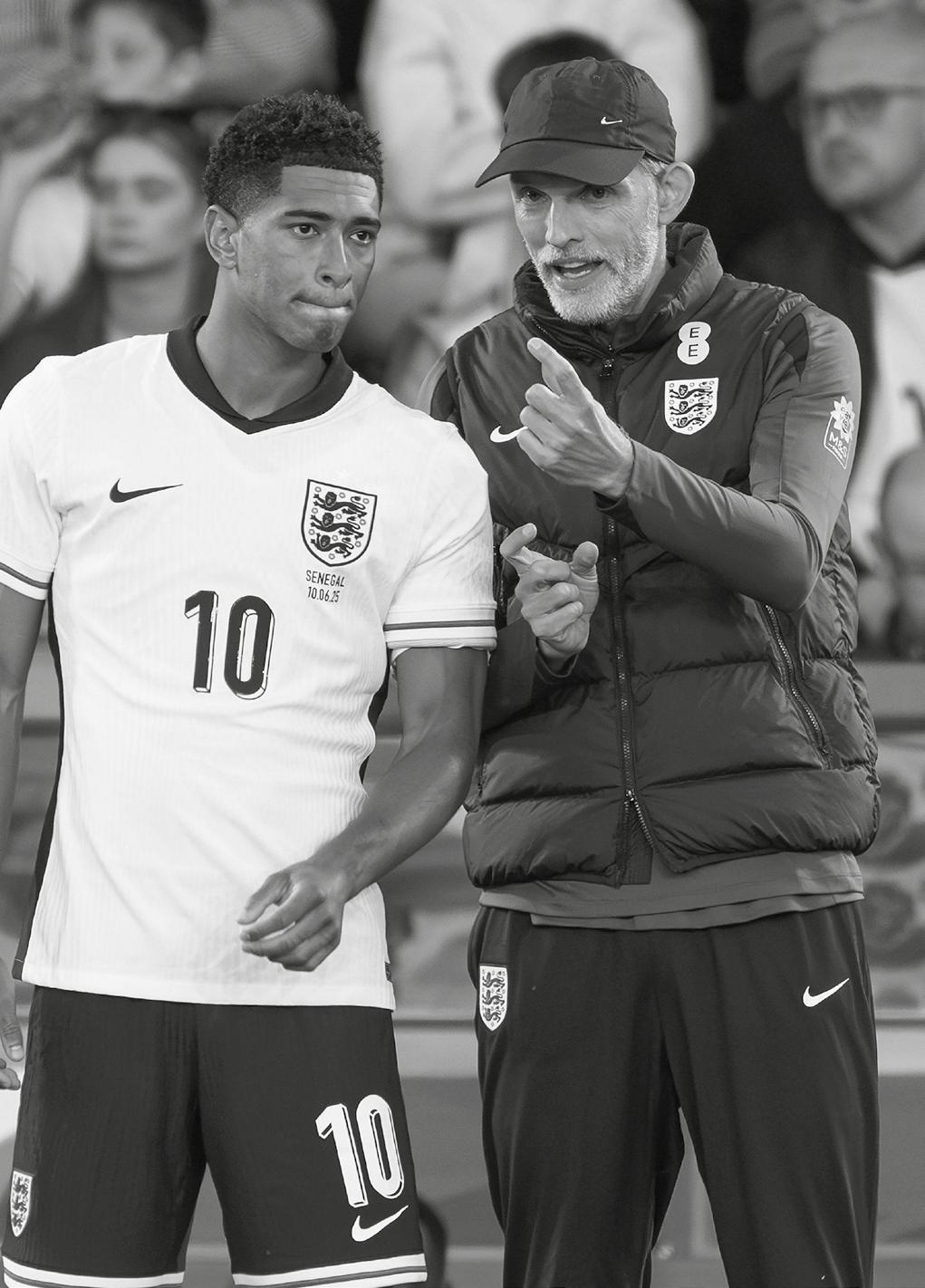
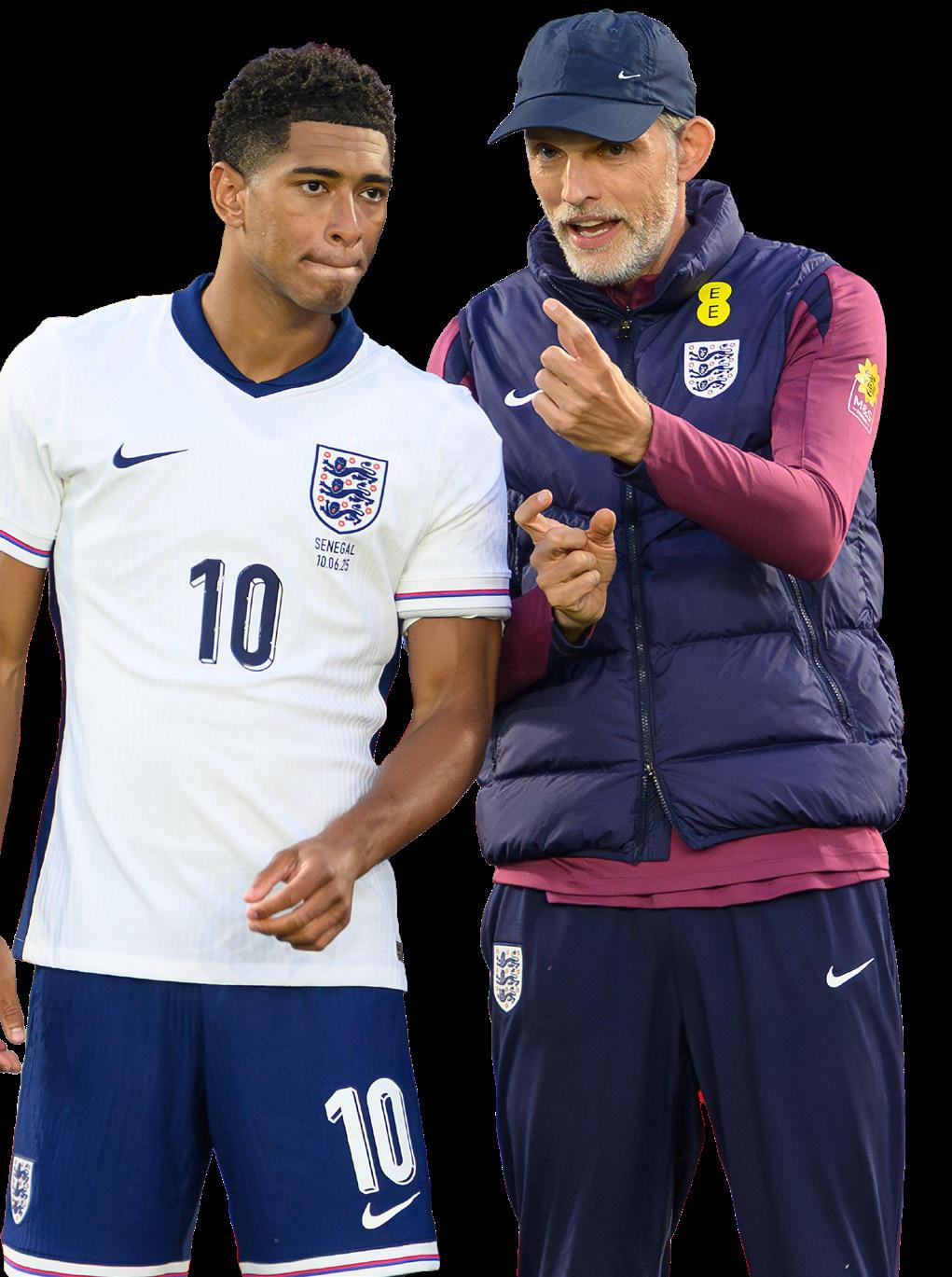

Teams at last summer’s Club World Cup in the USA experienced brutal heat, and the Republic of Ireland suffered similarly during some matches at the 1994 World Cup.
England famously didn’t qualify for that tournament, but finished bottom of the four-team group at the 1993 US Cup a year earlier – losing to the hosts when a goal from Alexi Lalas launched the goateed defender into the public eye.
“Heat is something you have to consider,” says former striker Emile Heskey, remembering England’s 2002 fixtures in Japan. “We went there early, and the humidity was the biggest thing. It was getting your breath – you have to acclimatise quickly. In 2010, it was also the altitude and the thinning of the air – I remember passing the ball, and it was moving all over the place, because the air pressure made it move differently. I thought, ‘What’s going on?’”
The Croatia game in Dallas takes place in an air-conditioned stadium with a retractable roof, so it shouldn’t pose a problem. Kick-off times for the other two group matches will help
\\ IT’S DIFFICULT ASSESSING ANY MANAGER WHEN THEY PLAY POORER OPPOSITION //
If they win their group, the last 32 tie in Atlanta will also be indoors with air conditioning, but they could then travel south to the Azteca in Mexico City (kickoff 6pm), potentially to face co-hosts Mexico, with the intimidating atmosphere that would bring. The altitude is 7,350 feet, nearly twice what England experienced in 2010. Get through that, and they’d play a quarterfinal in Miami (average June temperature, 31 degrees) at 5pm, possibly against
“That would be very difficult,” says former England striker Stan Collymore. “I’d be very surprised if England won this tournament. “At the Club World Cup, Chelsea’s subs had to stay in the dressing room because of the heat. It’s going to be very difficult for any European side bar Spain – only they can keep the ball for long enough periods to take the sting out of the South American teams, who are going to be the favourites for me. They’ll be more used to the conditions, and will have huge

EMILE HESKEY, who represented England at the 2002 and 2010 World Cups, believes that approaching the tricky opener against Croatia in the right frame of mind could be key.
“They just need to be positive,” he says. “You don’t want any negativity going into the first game – you want to play with freedom.”
In 2010, a disappointing draw in their opener against the USA set the tone for an unhappy tournament, amid criticism from fans and media – even if Heskey says it’s possible for the players to isolate themselves from that, inside the team hotel.
“It’s easy to avoid social media,”
\\ HE’S GOT EXPERIENCE, HE’S WON TROPHIES, HE TALKS WELL, AND HE’S GOT A GOOD SENSE OF HUMOUR //
he says. “A lot of players will switch off from that, log out and focus only on what they’re doing – you can put yourself in a bubble, which is good. You’re not really listening to what everyone else is saying. The only time is when you speak to family and friends, and they relay certain things.
“When I went to Euro 2000, one of Kevin Keegan’s ploys was to spread the newspapers in front of everyone, to show what people were saying, but not everyone deals with things that way – some feed off that, but the majority don’t want to see it. Nowadays, the best thing is to log out and focus on the task in hand.”

CHRIS WADDLE,
who played in two World Cups and missed a penalty in the 1990 semi-final against Germany, likes Tuchel.
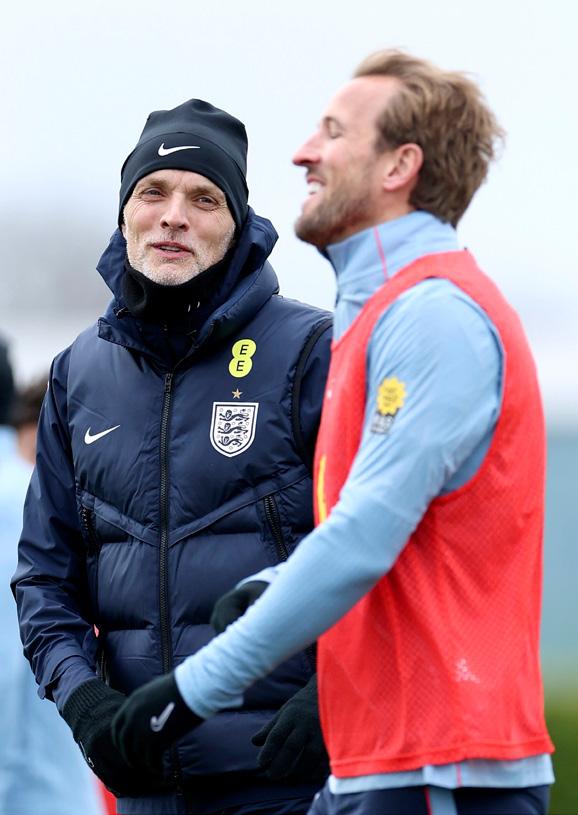
“He’s got experience, he’s won trophies, he talks well, and he’s got a good sense of humour,” he says. “He’s done well at club level wherever he’s been. I think he’s a good fit for England – I just hope he doesn’t pick players based on what the media say and reputation. He needs to pick players for his system, pick the player who does the job. He’s going to be judged at the World Cup – I think he’ll do all right.”
Waddle also believes it’s important not to focus too much on potential pitfalls.
“When we played in Mexico in 1986, there was the altitude, and the grass was the longest I’ve ever played on,” he adds. “People say ‘football’s football’, but it’s not, you need to get used to it. England aren’t the greatest team in the heat; other countries are more used to it, but we got to the semi-finals in Italy in 1990 when it was hot – if you let the little things get to you, it’s all negatives. You need to think positively and say, ‘We’re a good side’. I don’t see any reason why we can’t be in the frame in the latter stages. Why not?”
believes England are capable of tasting success this summer, even if they’re up against strong opposition.
“I don’t think we’re going to win the tournament by being the best team, because there’ll be better footballing teams there,” he says. “If we’re going to win, we’re probably going to do it on the counter.
There’s no shame in that. Play to your strengths. France have been the masters of it, as have Real Madrid in the Champions League. With our players in transition, I think we could destroy people.”
\\ IF WE’RE GOING TO WIN, WE’RE PROBABLY GOING TO DO IT ON THE COUNTER. THERE’S NO SHAME IN THAT. PLAY TO YOUR STRENGTHS. // Owen Hargreaves
Hargreaves, a European champion with both Bayern Munich and Manchester United, battled for an England place with Steven Gerrard, Frank Lampard and Paul Scholes during the Golden Generation.
“We had so many world-class players that we almost had the names pick themselves, and we didn’t really ever get the balance right, because we tried to pick everybody. I think Thomas Tuchel knows that. Scholesy and Stevie G were generational, but I love Declan Rice, he just gets better every time you watch him, and Morgan Rogers is such an underrated player. He’s got room to grow.

STUART PEARCE is backing Harry Kane to put his failure to convert a penalty late on in the 2022 World Cup quarter-final defeat to France behind him.
“I was in the stadium and my jaw just dropped – you never expect him to miss,” says the combative defender, who missed a crucial spot kick at a World Cup himself, in the 1990 semi-final shootout.
“He would have been so disappointed with that, but he’ll use that to spur himself on to deliver more big things for England. We’re talking about one of the strongest characters in the squad, almost unshakeable in his mentality. This season he’s been absolutely brilliant, and this might be his last World Cup.”
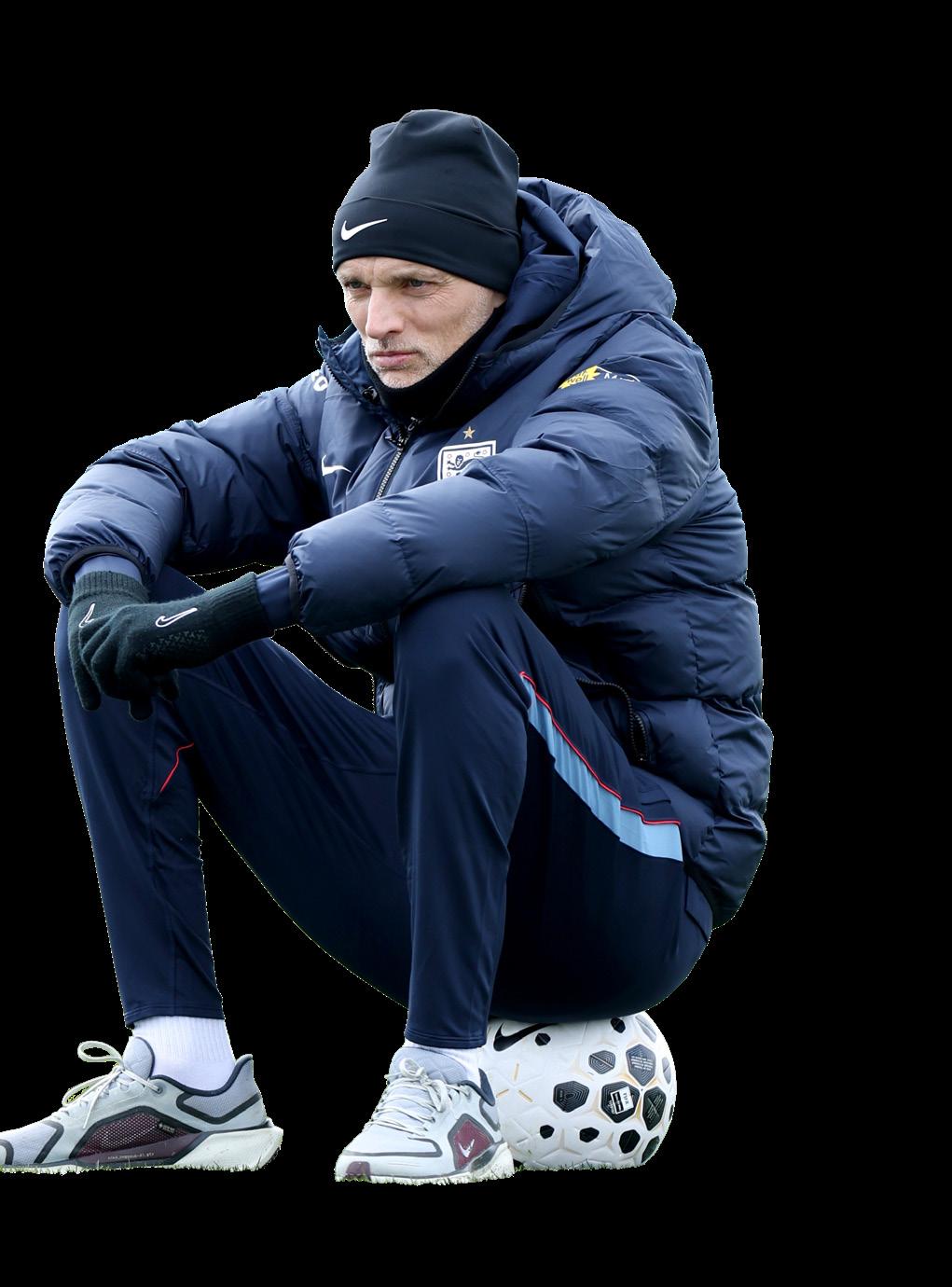
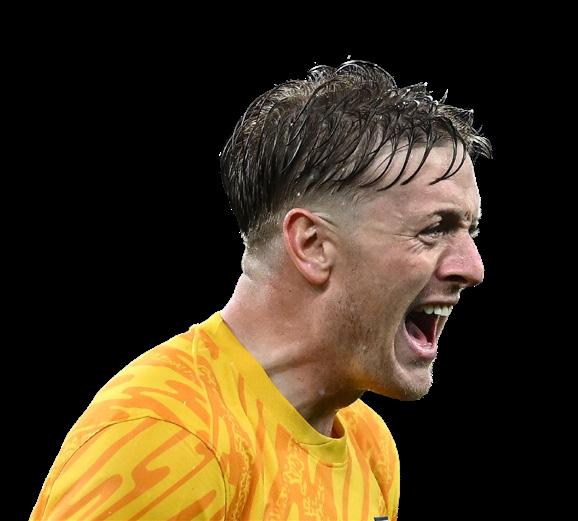
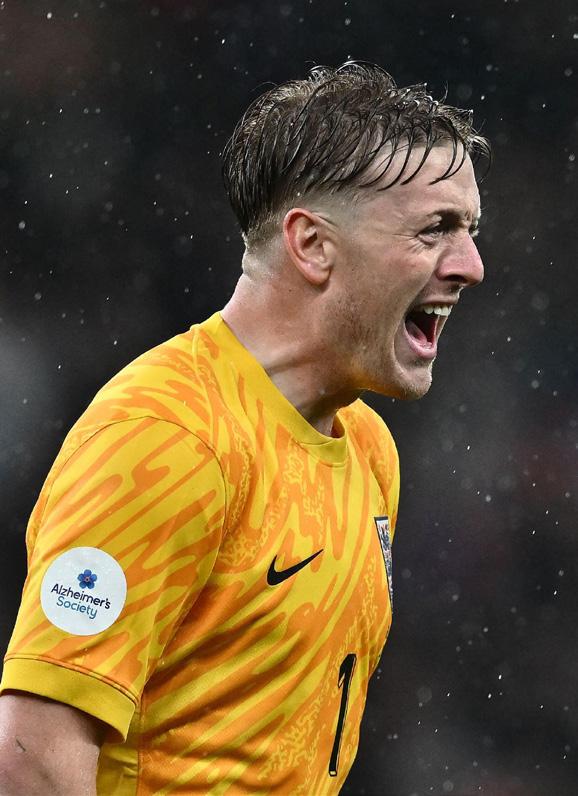
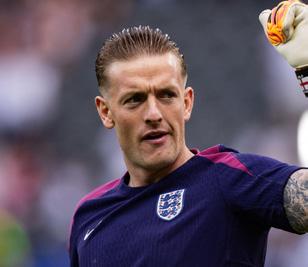
The Everton stopper is feeling confident ahead of this summer’s World Cup and tells us how he copes with the pressure of a major tournament.
WORDS NICK JUDD

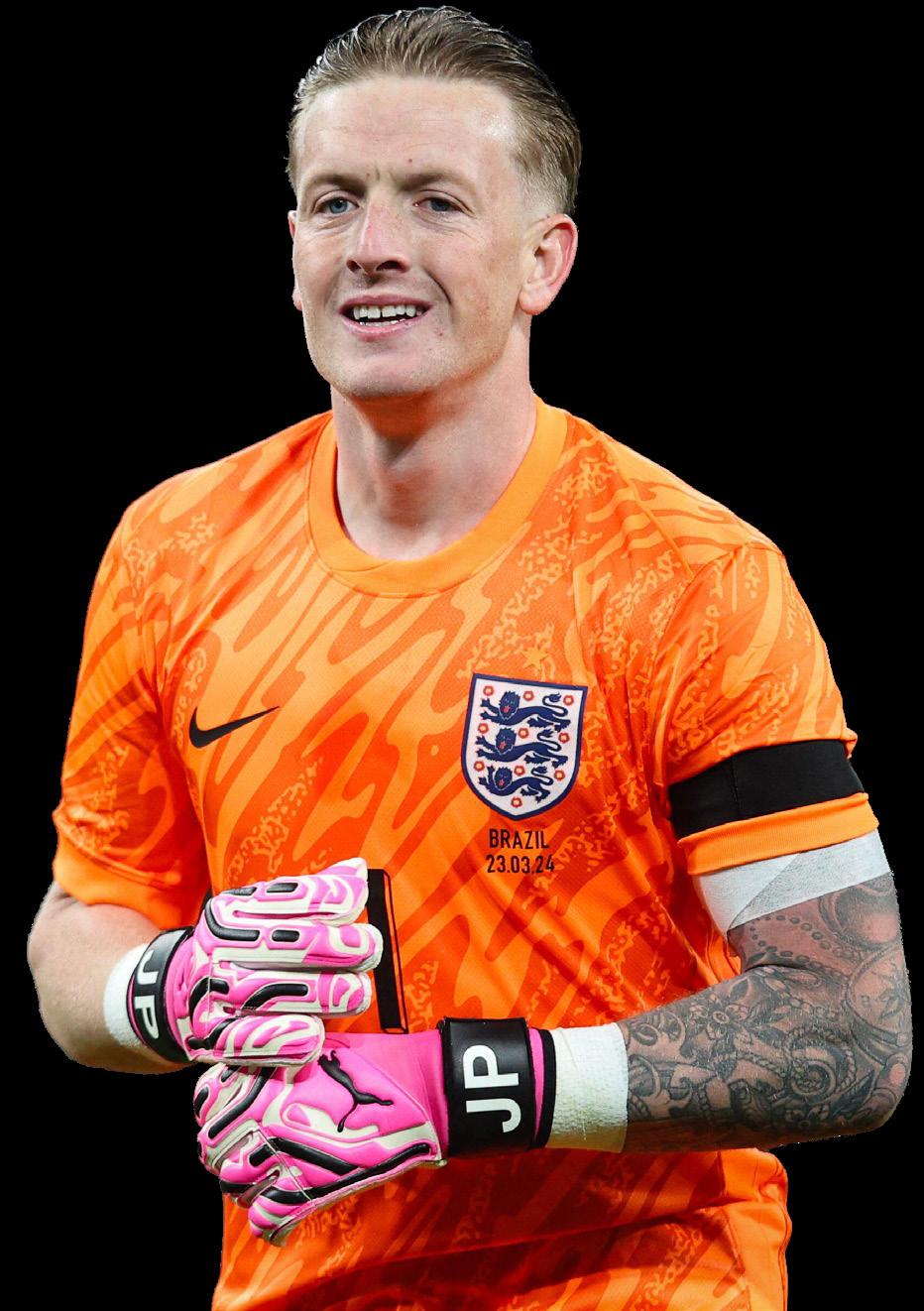
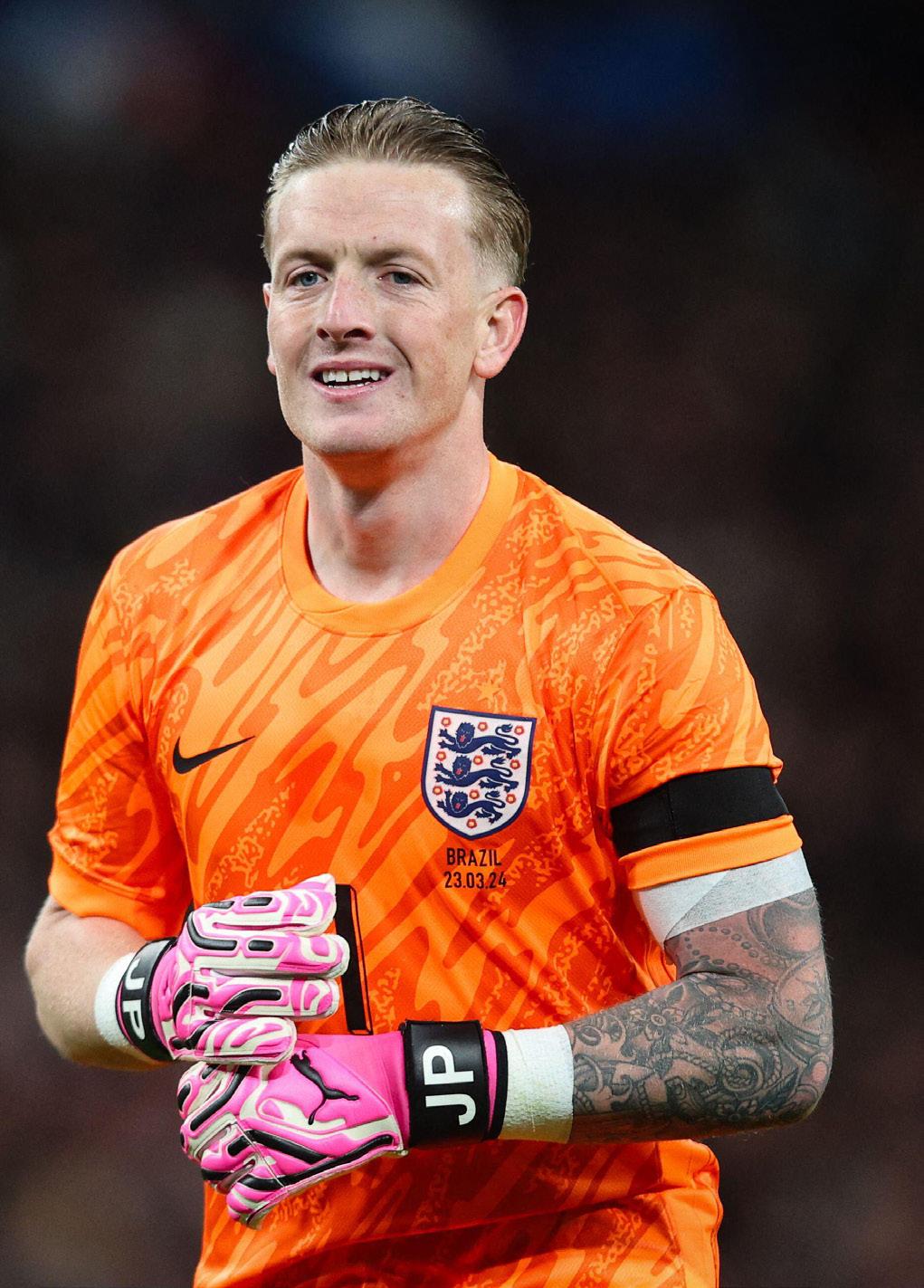
This will be your third World Cup – could you have envisaged such a run between the posts when you started the opening game against Tunisia in 2018? That was your first competitive appearance for England.
I’ve always demanded a lot of myself, to improve and be the best. This is my third World Cup and I want to win it – I think we have a good opportunity – and then keep going. I put in a lot of hard work, and I just want to keep proving I’m the best. I don’t usually get nervous, but that Tunisia game was one of the rare occasions when I felt it. What an experience, though. What a feeling to walk out to play your first-ever
World Cup game. It’s now up to me to pass on what I learned in those moments to the guys experiencing it for their first time.
You were instrumental in a psychological shift for England in penalty shootouts, with the save from Carlos Bacca against Colombia in 2018.
That was a huge moment for me, but also for us as a team – we all felt there was a shift around the country from that point, that we’d moved on from being underachievers to a nation that believed. That win was the result of a lot of
moment for England.
Your 50th England cap came in the 2022 quarter- final against France – a bittersweet moment…
It was. We had some big chances to win that game, but it came down to small moments that didn’t go our way. France were the reigning champions and probably knew how to succeed in those moments, and we just have to learn from them. We want to be the best, so we have to turn those negative moments into improvements. To be the best at anything these days, whatever sport or industry it is, you have to master the fine margins. It’s up to the staff to help us make sure we get every little tactical detail right,

and it’s up to us to execute that game plan. We have to be mentally prepared for anything that comes our way in 90-plus minutes. I think it’s something we’re learning to do better.
It wasn’t a successful moment, but at the time, it was amazing – Frank Lampard’s goal that wasn’t given against Germany. At that moment, that goal got us right back in the game, and I fully expected us to go on and win it, but then the ref didn’t give it. When that goal went in, there was no feeling like it. What followed was a huge disappointment.
What’s it like being part of huge moments like that yourself, particularly the
That’s what it’s all about. In those moments you create as a team, you can see what it means to fans inside the stadiums and to fans back home. You’re making memories, making your country proud.
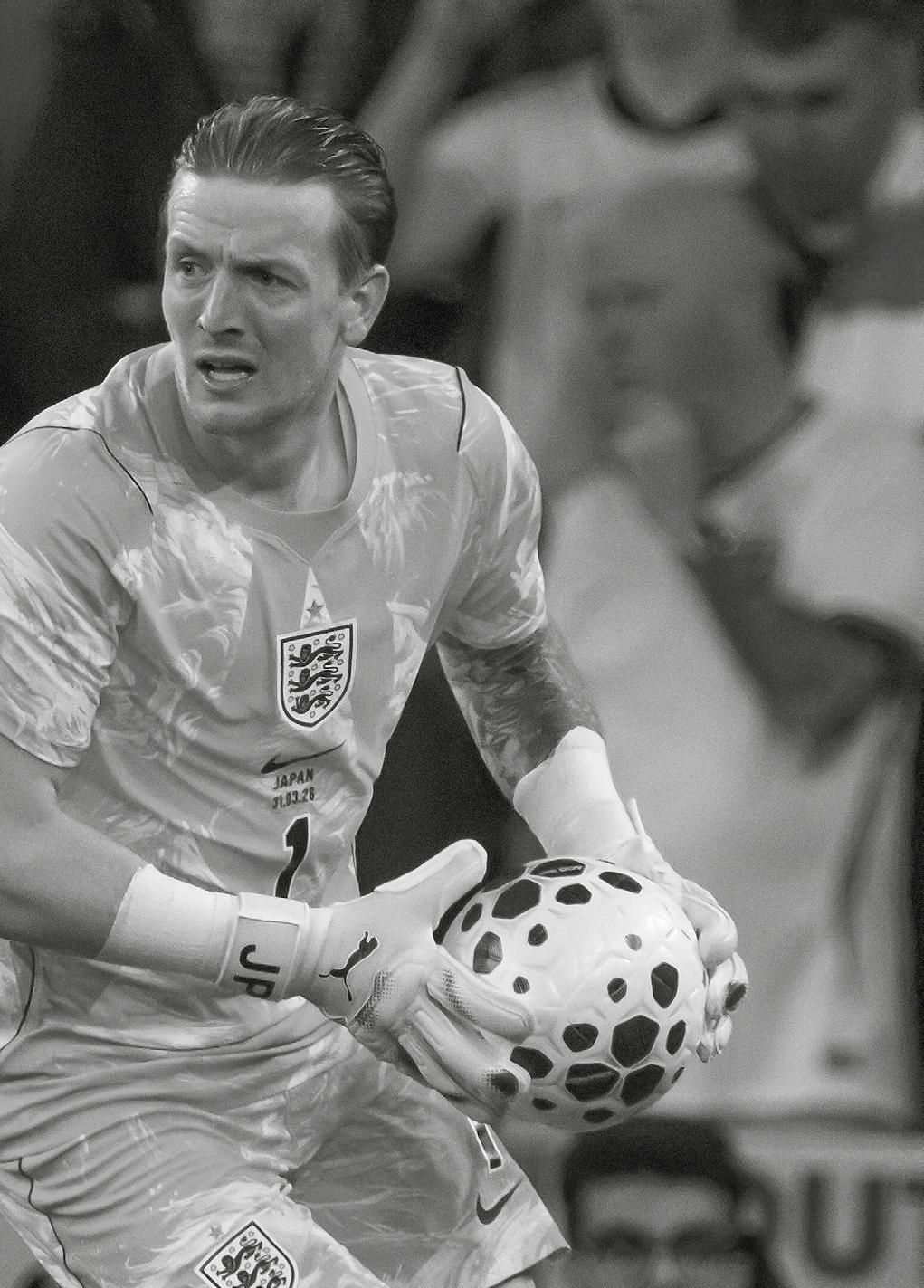
You’ve always performed well at tournaments. People talk about pressure playing for England – how do you feel when you’re in the thick of it?
The pressure is on every time you wear an England shirt, but there’s nothing better. I thrive off the pressure. There’s no better feeling than going to a World Cup, walking out before a game, seeing all the fans there and knowing the whole world is watching. Everyone’s different, and people deal with things in different ways, so I can only speak for myself, but I love the pressure. I find it an amazing feeling.
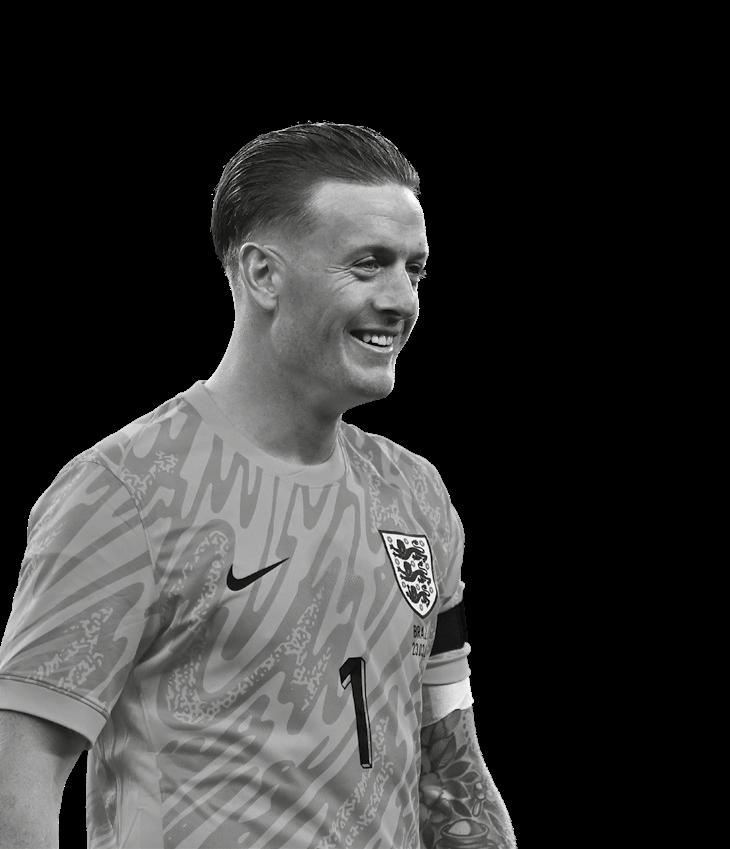

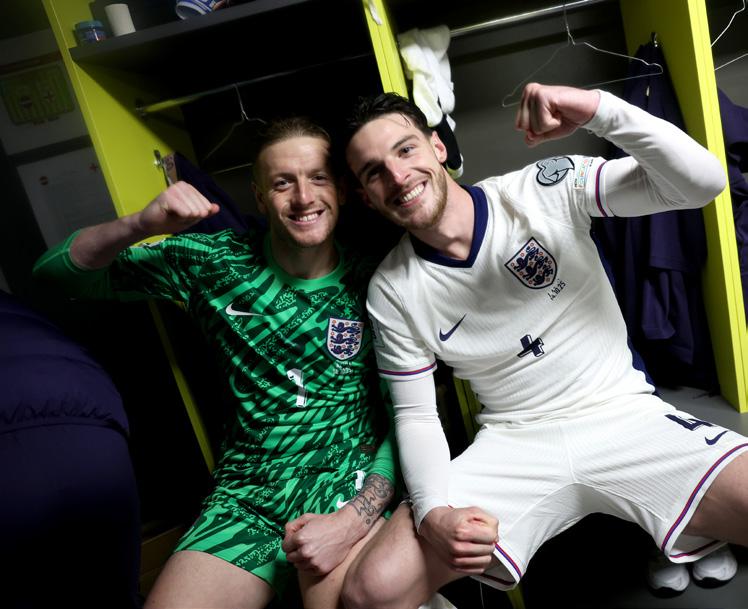
You have a record 11 clean sheets for England at major tournaments –before the recent friendly with Japan, you also hadn’t conceded a goal in your previous 10 internationals.
As a team, we’ve always had a pretty good defensive record. When we’re able to defend as we have done, we have such quality going forward that you give yourself a huge chance to win games. So there’s a demand on us to be solid at the back, and we have to make sure we continue that when it matters at the World Cup. I’m always prepared to put in the hard yards to do what’s required in training with the other keepers, to make sure I’m ready for the vital moments. Defending is an 11-man task – we take great pride in our
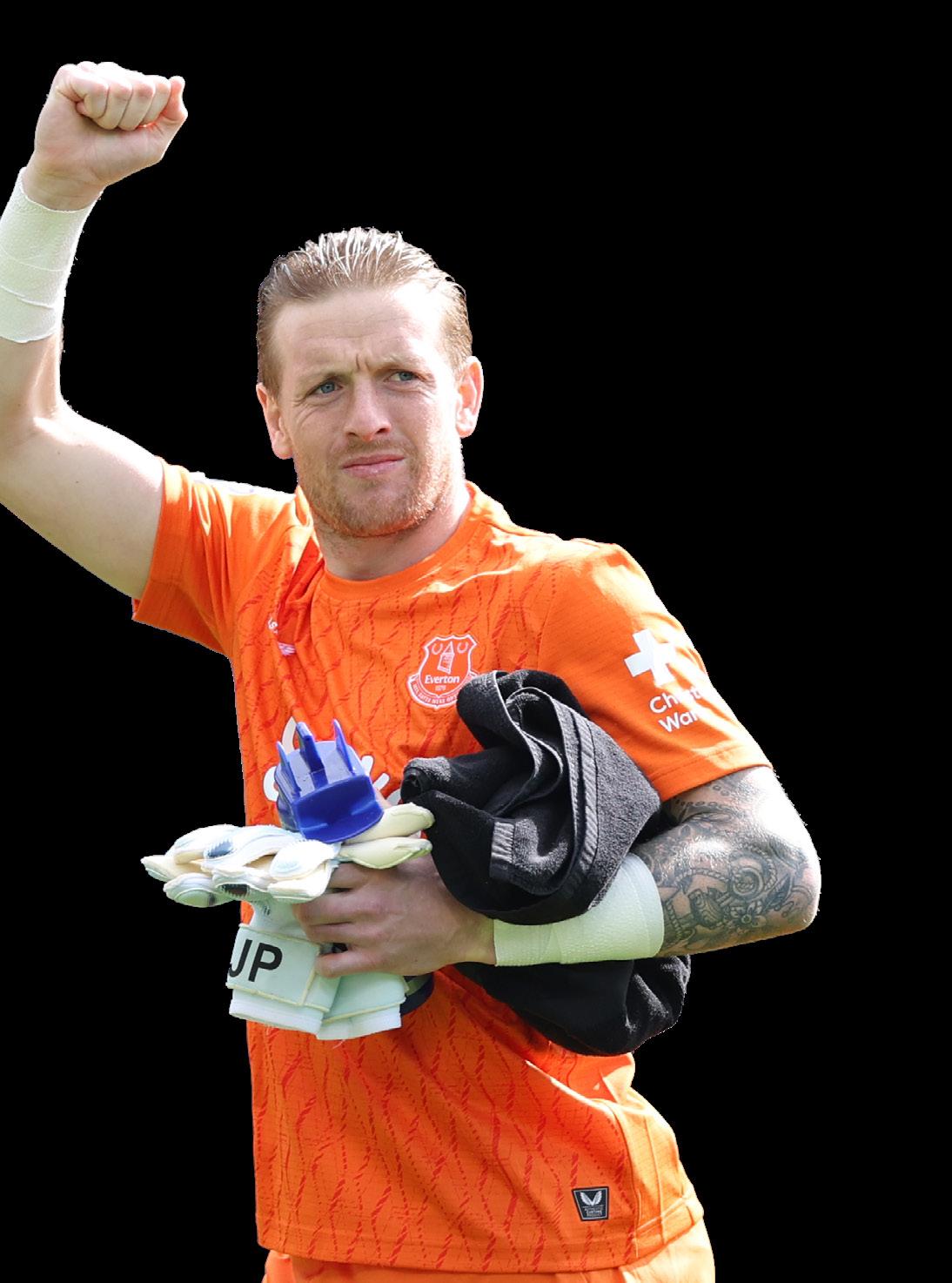
\\ WE HAVE TO BE PREPARED BETTER THAN ANYONE ELSE, THEN HIT OUR PEAK
England face Croatia, Ghana and Panama in the group stage. Are you confident of progressing without issue?
Of course. We go there looking to win every game and build momentum in the group stage. Every team we play is there on merit, so we know every match is likely to be tough, but we have to be at our best every time we play.
Croatia must bring flashbacks to the 2018 semi-final, when Kieran Trippier put you ahead.
Tripps scored that free-kick, and that was an amazing feeling, but we just couldn’t get the second goal to kill the game and put the pressure on. They got into the game and did enough to win it.
Looking at the nations at this World Cup, there maybe aren’t many obvious favourites?
That makes it even more important that we’re prepared as best as we can be, and at our best in each match. We have to be prepared better than anyone else, then hit our peak at the right time. To win the competition, you know you’re going to face moments of difficulty, so how we overcome those moments will define what we achieve. It won’t be plain sailing.
It’s going to be about how you navigate it. If you look back through history, the South American sides and Europe’s best tend to be there or thereabouts, and I don’t think that’ll change. I genuinely think we’re one of the best teams – how we get on depends on whether we can put out the best version of ourselves.
do you make of the narrative that the weather will suit the South American teams?
We know it’s going to be hot, but that’s why we’re heading there early to take part in a prep camp and play two games in those conditions. We plan things
\\ THERE’S NO BETTER FEELING THAN GOING TO A WORLD CUP, WALKING OUT BEFORE A GAME, SEEING ALL THE FANS THERE AND KNOWING THE WHOLE WORLD IS WATCHING //
very well, and so I think we’ll be prepared for every eventuality when we kick off on June 17.
You’ve toured the USA before. What sort of experience are you expecting?
Everything will be done to a high level. You look at some of the stadiums being used, particularly those from the NFL, and they’re magnificent; then everything around the football will be amazing too, not just for
the players. I’ve been planning my family’s trip, and I’ve already got a few mates going over who have made their own plans. They’re going to have an incredible experience.
You’ll be hoping to be there to the end. How do you plan for that amount of time in a hotel environment?
The team behind the team does an amazing job of making us feel at home as much as possible while we’re away. Mentally, you don’t get many opportunities to go to a tournament in an England shirt, so you have to take pride in it, try to enjoy the ride and make as many memories as you can, on and off the pitch, building a bond with your teammates. The football kind of takes care of itself; it’s more about making sure the environment away from the matches is as good as it can be, because that can carry you a long way.
you dream of lifting the trophy?
You get really excited about it and know what the end goal is, but there’s a lot of work to do beforehand. It’s about taking each game as it comes. It’s about topping the group first. Then it’s about getting on that journey in the knockouts. Of course, you dream of it, of the vision, but it’s about doing the right work first.




live matches across the Premier League, EFL, WSL and Scottish Premiership next season. Watch over





FIND THE PERFECT FATHER’S DAY GIFT FOR EVERY GOLFER - WHATEVER THEIR GAME, STYLE OR YOUR BUDGET
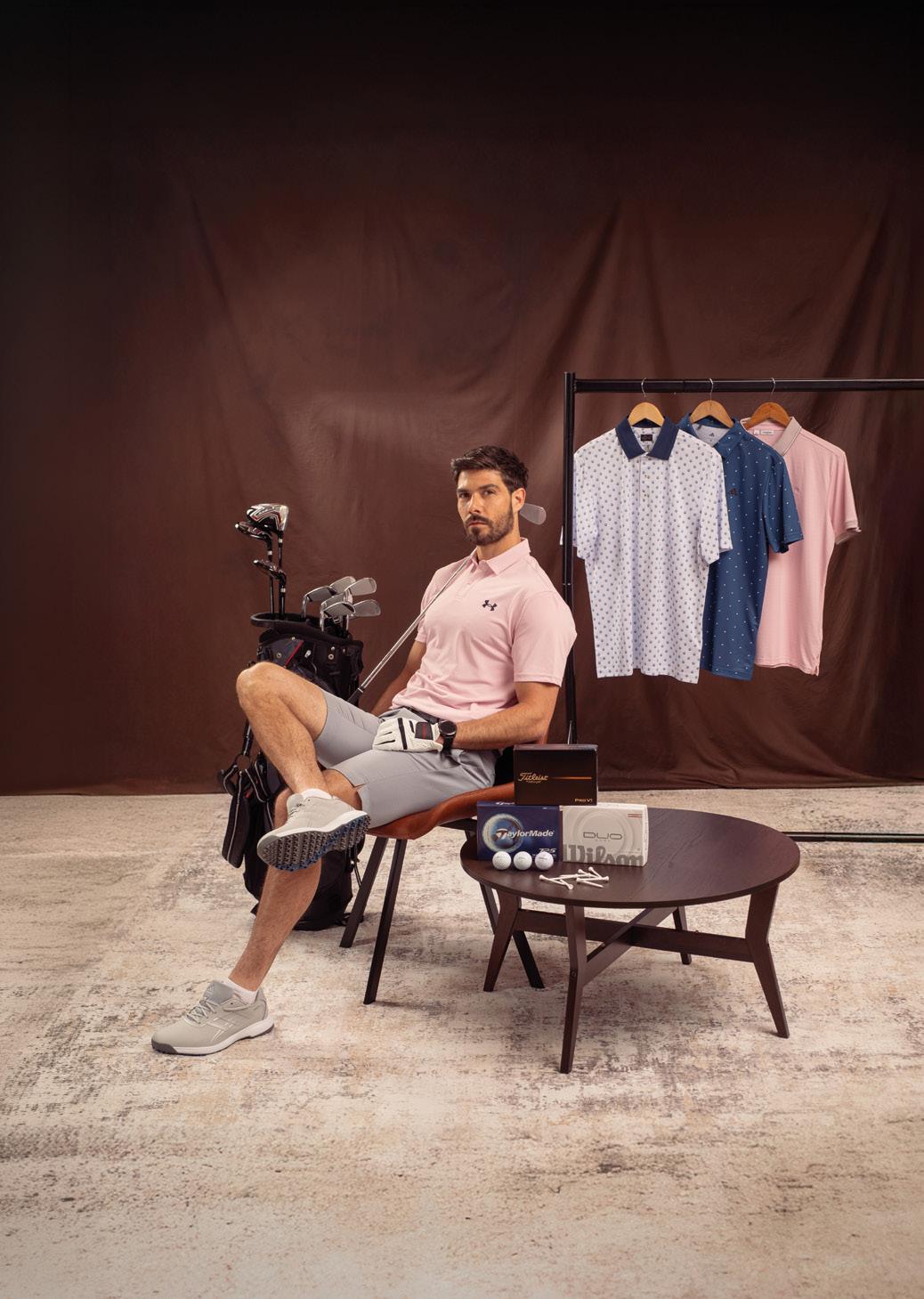


SCAN HERE TO EXPLORE GIFTS SUNDAY 21ST JUNE


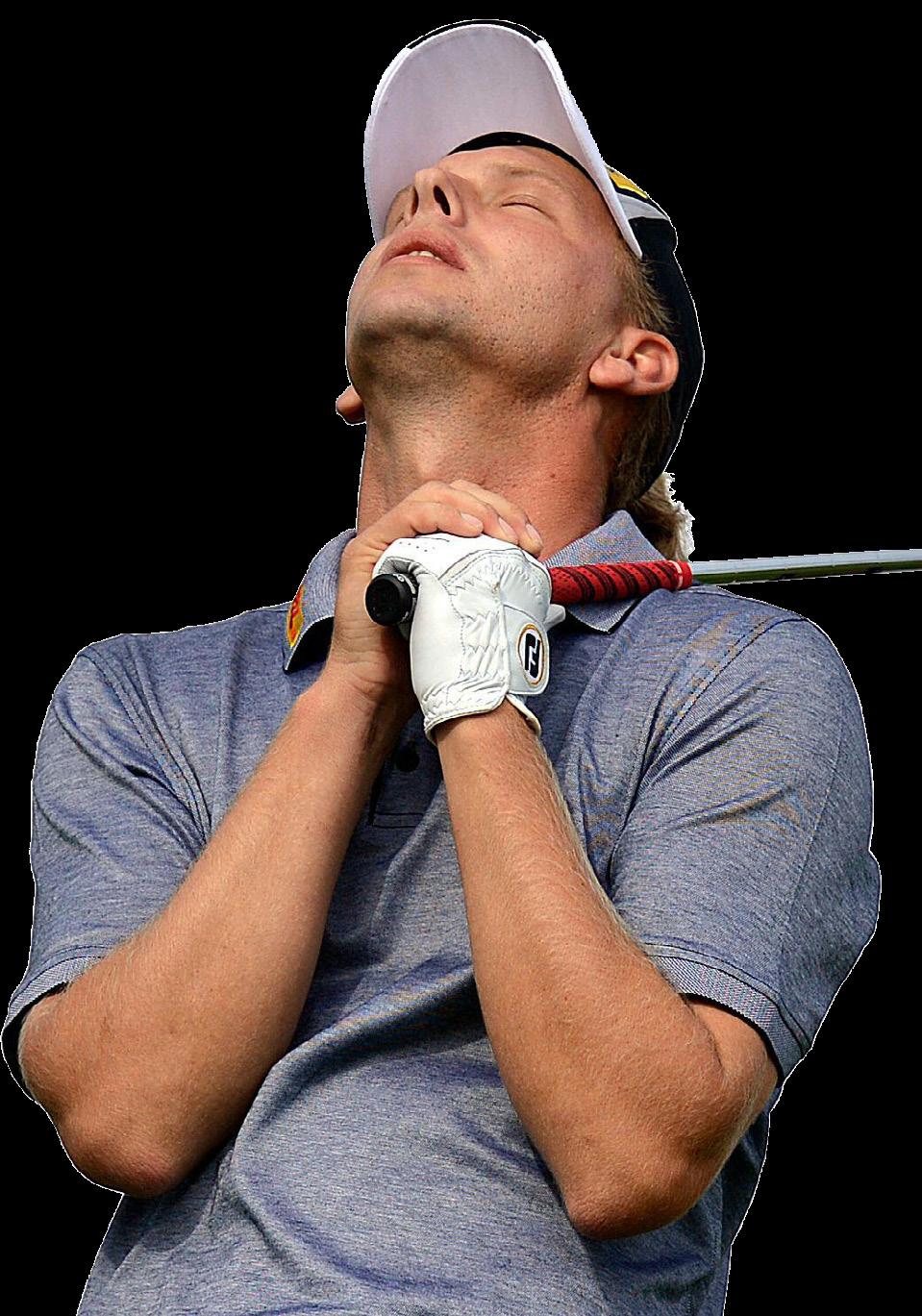


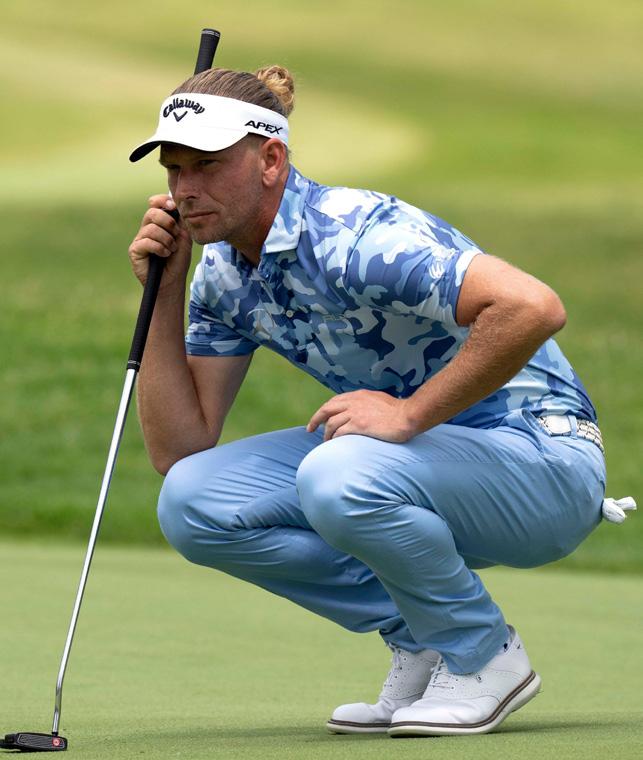
Marcel Siem reveals all about his mental health struggles and how a shock cancer diagnosis forced him to get his career back on track.

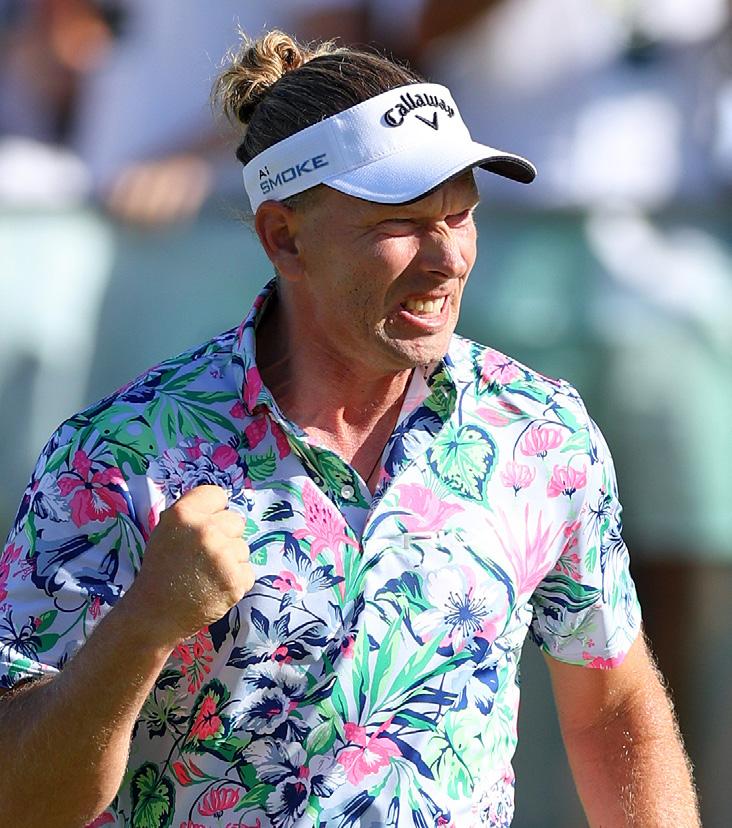
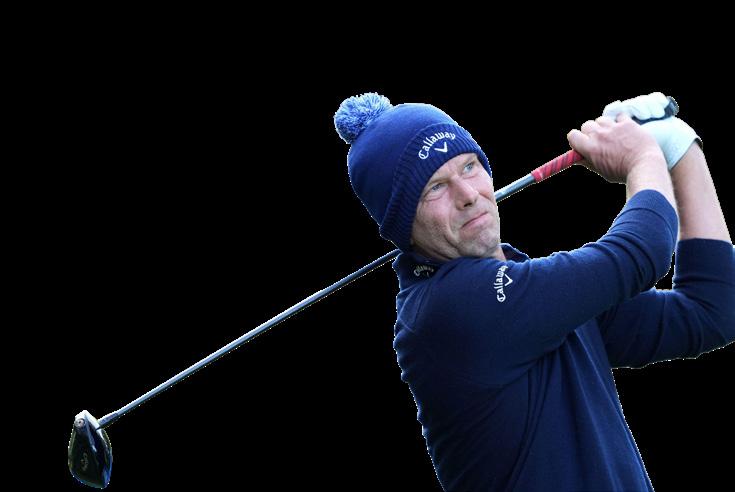
If there’s one thing Marcel Siem could never be accused of, it’s being boring. For the better part of two decades, the German maverick was as famous for his wild nights and bleary-eyed tee times as he was for his colourful outfits and swashbuckling golf.
He partied hard, broke three course records (possibly more) while hungover and carried a reputation as the European Tour’s resident rockstar. And he played the role very well, until he changed his grip, lost his card, and entered a whirlpool of depression and self-loathing.
What followed, he says, is a story of harsh truths, long car journeys, and the “painfully tough process” of trying to piece his game back together again while his wife, Laura, was battling cancer.
In this exclusive interview, the 45-year-old took time out from a cigarette break to open up about the emotional highs and lows, the now-infamous hangovers that led
to some incredible golf, and how he came back swinging again with the help of his daughter and life coach.
It’s been 25 years since you turned pro. How would you describe your relationship with golf these days? Do you still enjoy the daily grind?
It is great, especially when you do well. Travelling the world is fantastic, and now I’m really enjoying it more and more. That’s the truth because I think you become a bit more grateful once you lose your [tour] card. When that happened, I was like, do I go


into teaching? What about [becoming] a manager? Do I buy and sell houses? But none of those things I wanted to do. I love what I do, but I can also see why people struggle so much because once you’re up there, competing for big money, and then go back to the Challenge Tour, the ego is hurt and it is quite tough.
When you think about money on the golf course, that drains the enjoyment of the crowds, the courses, the amazing venues. Every year 50 of us make good money. The rest of us break even or, if you lose your card, you lose money. It’s really that simple. Unless you’ve got good sponsors, the pressure rises. There are always two sides to a coin. But if you do well, it is a great job.
Have you gone through that stage of putting yourself under too much pressure, thinking about the repercussions if you don’t play well?
When I was younger, that’s why I snapped so many clubs and threw putters in the lake. My expectation level was way too high. There are all these little pieces in golf that can go wrong, with the wrong side of the draw, a bad bounce, bad weather. You can still play great, but if things don’t fall for you, you can miss the cut and get really upset about it. I take these things for what they are now. I’m more patient. But when I missed cuts 10 years ago, I would lose the plot and just be really grumpy for a day.
How did you learn to deal with those disappointments, because you do lose more than you win in golf? That’s the irritating thing, right?
God, if you finish second, you’re the first loser. It’s not easy. I mean, a few months ago I finished fifth in Austria, then 22nd in Holland when I felt like it should have been another top five. I took two weeks off, went to Italy as the defending champion with these big expectations, and I missed the cut. Then I went over to Munich, where the people really wanted me to win, and I was nowhere. Now, I’m back to making baby steps. Trying to get a top 20, then a top 10.
So it’s about reframing your goals?
\\ I WAS FIGHTING FOR THE FAMILY. IT WAS NOT ONLY ABOUT ME ANY MORE; IT WAS ABOUT GETTING MYSELF BACK ON TRACK
Exactly. I had to do that on the Challenge Tour because I wasn’t in a great place. It’s not like I was broke, but if you have a certain level of lifestyle, which you’re scared of not being able to maintain with two kids and a wife, you need to rewire your brain a bit. I started to be more grateful for the opportunities given to me. But I’ll be honest, I nearly gave up going back to the Challenge Tour.
It was my life coach, Holger, who told me, “This is the biggest chance of your life.” He said I was taking everything for granted, blaming things on this and on that. He taught me to be harder on the people around me, instead of being so hard on myself. He said I needed to tell people what I required from each of them and if they couldn’t do it, I had to get rid of them. And that’s what I did.
Before, I tried to make everyone happy and put myself last, in a way. It looks different on the golf course when I lose the plot. People probably think this guy is arrogant, egotistical, but that’s not me. I’m a very emotional, soft person. So as soon as I took responsibility, everything got easier.
I got my card back and my confidence went through the roof. Then, of course, when I won again, the expectation went up and I got into this hole. So I’ve come to realise that every time I win, and my expectations go up, my performance level gets worse and worse. That’s something I still have to get better at.
Are you still dreaming big?
For sure, there are big goals ahead. I think I’ve got five more years before the senior tour starts. The dream is still to get a PGA Tour card, play in the Masters, and qualify for the Ryder Cup. Those are the three things I’ve never achieved, so they are on the to-do list.
Last year, after winning the Italian Open, you said it was going to be party time for the next three or four weeks. I’m curious to know what you got up to… I wish I could party as I used to [laughs]. I can’t any more. I went back to Mauritius, had a couple of good nights and that’s it. When
\\ THERE ARE ALWAYS TWO SIDES TO A COIN. BUT IF YOU DO WELL, IT IS A
you live in Mauritius, the lights go out at 10 o’clock in the evening so you don’t have these all-night benders. But I’m looking forward to another win so I can have a boys’ trip somewhere, hire a boat and party.
You gave an interview on the Life On Tour podcast recently and revealed that you had broken three course records while hungover. The story about Pebble Beach was brilliant. Can you tell me more about the other two?
The other two were both amateur times. I had four in total, actually,
the other was in the Canary Islands when I was just starting out on tour. These are things I’m not able to do any more. No chance. I don’t know how I did it. My dad actually got me out of the nightclub one of the times. I was misbehaving a lot, and I remember they kicked me out of the German team.
Then, at the last minute, they decided to have a competition for the ninth-best player through to the 16th-best player. I was so pissed off because I was the No.1 player and they had just kicked me out of the squad. They called my dad, without me knowing, at about 9pm and they said they wanted me to play.
My dad thought it would be a good lesson for me but he didn’t know where I was. And I was 16 years old and I had snuck my way into a nightclub. My tee time was 7.50am and he got me out of that nightclub at 6.30am. And I went and shot a 66 at Haus Kambach without sleep. Those were the days!
It was very much the thing to do among your generation. Do you miss that side, that kind of carefree nature? Is everything a bit too serious now?
Yeah. It’s the money thing as well. Nowadays, you can make so much money, even finishing in the top 20, and the pressure around you to perform just feels so much higher now than when I first came out on tour. I’m not going to say any names, but I was very surprised by how many guys were smoking cigars and cigarettes and going out drinking every night at the bar at the players’ hotel. It was like, holy moly. I was expecting it to be far more professional and it was not. Nowadays, you don’t see anyone doing that kind of stuff.
\\ I’LL BE HONEST, I NEARLY GAVE UP GOING BACK TO THE CHALLENGE TOUR
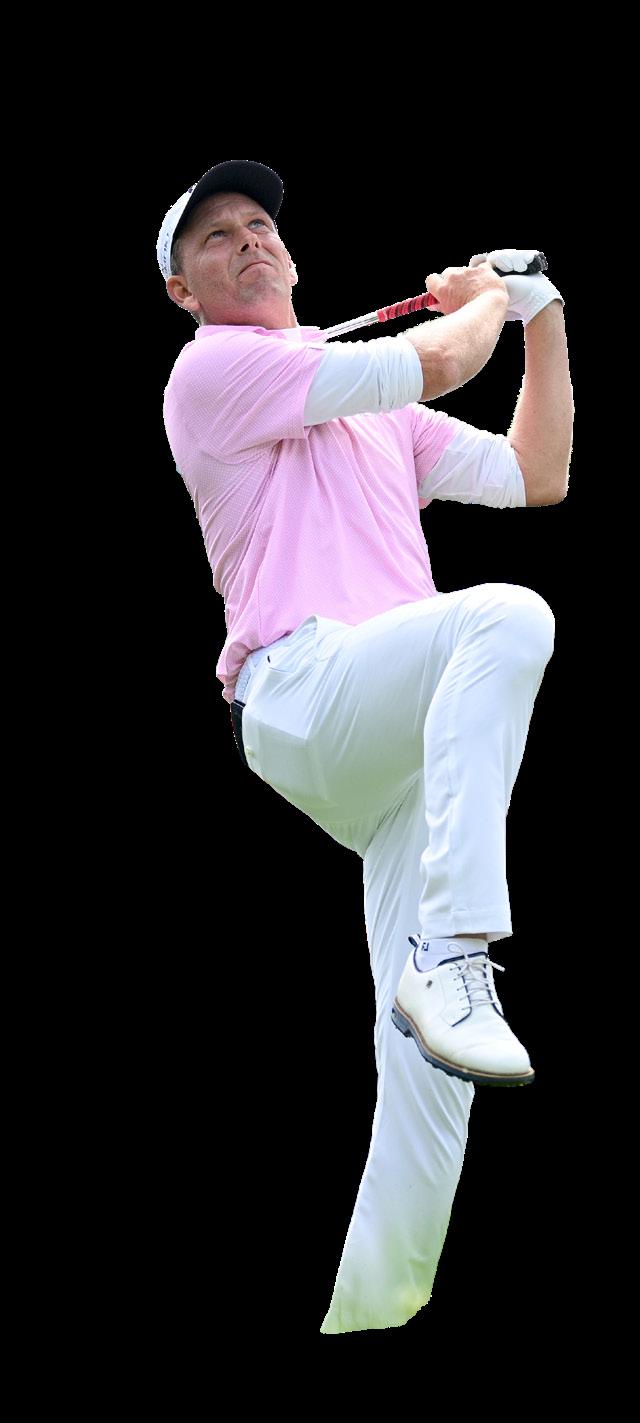
The boys are all in the gym. Is it less fun? Yes. Do I understand it? Yes. But I think you need a mix. There are some guys who could benefit from doing less and being a bit more relaxed and outgoing. I do see a little day job depression as well. There are a lot of guys who don’t seem too happy. The good thing is that if people see you are in a bad place, they will come up and try to help. There is a lot of friendship on our tour.
On that, is the one regret that you never – or at least up to this point –got your PGA Tour card? Would the lifestyle appeal to you?
Yeah, the golf courses especially. The crowds and the weather as well. I love when it’s firm and with high rough. That’s what I prefer. Looking now, what’s to come after my career on the European Tour, it’s got to be the Champions Tour. That would be easier to qualify for than the PGA Tour. I would definitely miss Europe, don’t get me wrong, but I just want to prove to myself that I can win in America.
You mentioned that you’re now living in Mauritius. How did that come about?
It was either Florida or Mauritius. Since 2018, I’ve been an ambassador for Heritage Resorts. We spent six weeks every winter there, and I saw how good it was for my golf and for my fitness level, plus my wife went through cancer and to heal up in Mauritius was much better than in the cold in Germany. We love it.
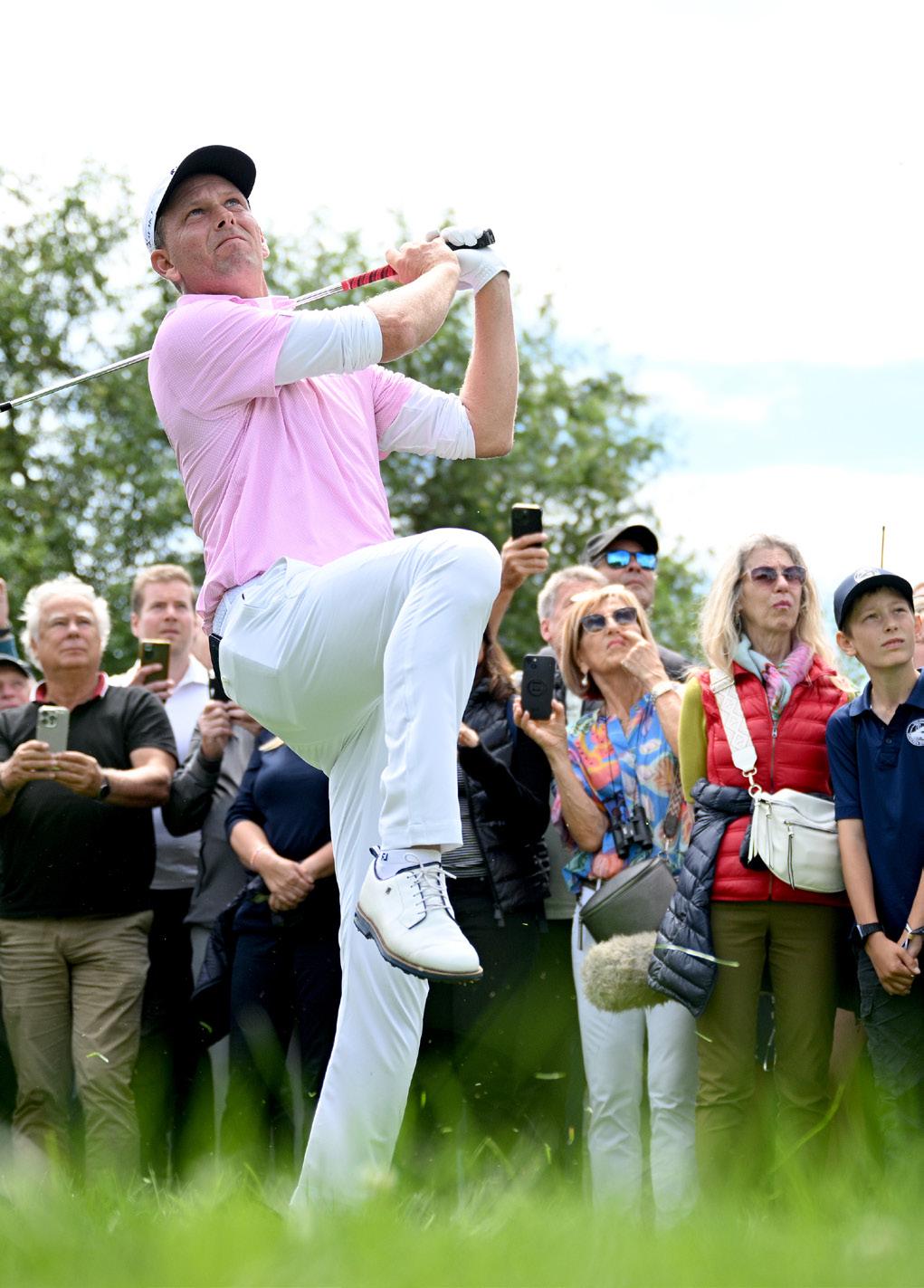
How is your wife now, and how difficult was that period, leaving her to go and play golf?
It was the same year I lost my card, so it was quite hard. But she’s great now, she’s all good, she’s cancer-free. All the surgeries are done which is great. But it was hard. Being on the Challenge Tour, with my wife at home with cancer, during Covid as well, it was a lot to take in. It made me stronger, a lot stronger.
Did it help put things into perspective?
I think it did. I was fighting for the family. It was not only about me any more; it was about getting myself back on track to provide for my family. It was a different pressure because my ego was so down, but the younger guys helped me a lot. They treated me so well and I ended up really enjoying that year I spent on the Challenge Tour. I played 13 events in a row, just driving all the way through Europe.
You’ve gone on to make more than 550 appearances on the European/DP World Tour. If you put away the clubs tomorrow, what would be the main highlights?
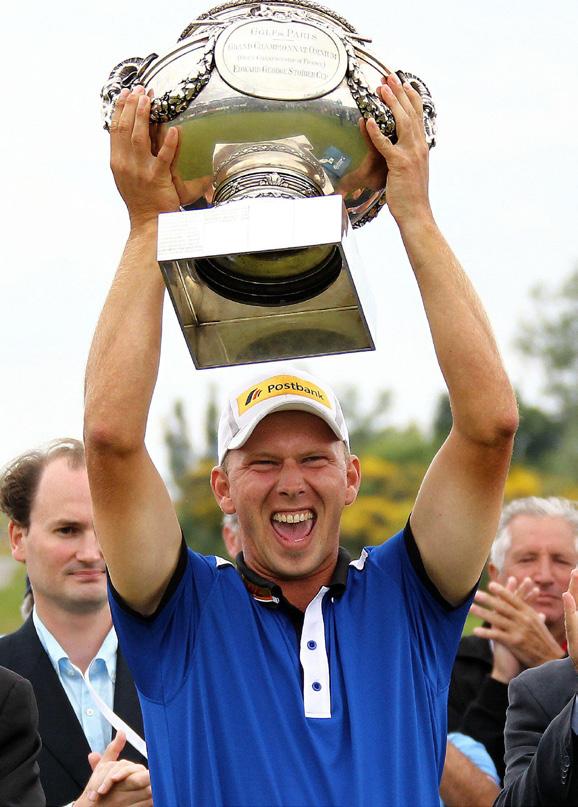
The win on the Challenge Tour in France [in 2021] I will never forget. When your daughter runs towards you, crying, it’s amazing. India [in 2023] was pretty special after eight years of not winning. And the World Cup of Golf, winning with Bernhard [Langer] in 2006, that was really cool.
Bernhard must have been an idol of yours, growing up?
Oh yeah. My parents were running the clubhouse restaurant in Eichenried in Munich in ’89, and I was nine years old when I met him for the first time. Bernhard was on the putting green with Greg Norman, Olazabal, Ballesteros, Faldo, Monty, Vijay Singh, all these guys. I remember looking at him in awe. They called me up to the putting green and I was allowed to putt with them, which was pretty cool. Bernhard is a great guy. I learned a lot of stuff from him in later life and
he took me under his wing when I was in Florida.
Around that time you changed your swing. Do you regret doing that?
Yeah, that was horrible. It was 2014 when I tried to get my card at the Web.com Tour Finals. I didn’t make it and then I changed my coach because I wanted to be more consistent. Everybody was always talking about my grip, so I was like, “OK, let’s change the grip, then.” And it was just horrible. I got injured and then finished 80th in the Race to Dubai. Each year I got worse until I lost my card in 2019. Eventually, I went to see a friend of mine, whom I played amateur golf with, and he got me back on track to my old swing. But it was not an easy process, believe me.
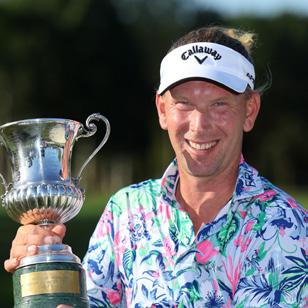
What
do you know now
that you maybe didn’t know when you first started out on tour?
Don’t surround yourself with energy suckers; surround yourself with energy givers. Be grateful, don’t be grumpy. I always wanted to be nice to people because I think that what you give, you get back. What else? I think when it comes to golf, less is more in a way because you can overtrain easily and lose your feeling. This is something I used to do when I was younger, especially when the bigger events came. All of a sudden, I cranked it up on the range and spent hours and hours there, then I had no energy on the Thursday. Recovery is much more important than hitting a thousand balls.
How do you view the current state of the professional game? Do you like the direction it has been heading in?
I think the game has got way too slow. I think Aimpoint should never be allowed. And I think the game’s still a little bit too stiff. The shirt should be tucked in, but people don’t like me wearing a hat at an angle, for example. They’re thinking about putting this in the rulebook now, that you must have the hat the right way round. I think our game needs to be more easy-going, for sure. Other than those things, there’s not a lot I would change.
What’s your take on the future of the DP World Tour? Are you excited or concerned about this proposed agreement with the PGA Tour and PIF?
It’s very tough for us players because we don’t know what’s happening. I think there were mistakes made, not sure from which side in particular, but it looks like we are the loser from the three parties. Yes, our prize money went up a little bit and is a bit more consistent. But I think there was a big chance to get us on the same level with the PGA Tour that was missed.
If you had a say, would you have been in favour of a partnership with the PIF?
I think all the players on tour thought that was going to happen. I think everybody was thinking that would be the way forward. At the end of the day, for us it would have been great to play for more prize money. Like I said, if you finish top 30 every year on the Race to Dubai, you make good money. But after that, most of the people pay 50% tax, and when you factor in coaches and caddies, it’s not that much.
Everybody thinks we’re super rich, but there’s a big difference between playing for €3 million and €6 million every week. But you have to be careful as a player not to get too wrapped up in all this stuff, otherwise you lose focus on what’s important. For a while, when all this talk began, we didn’t know what the hell was going on. It was very confusing. Even the guys in the office didn’t know, so we will see.

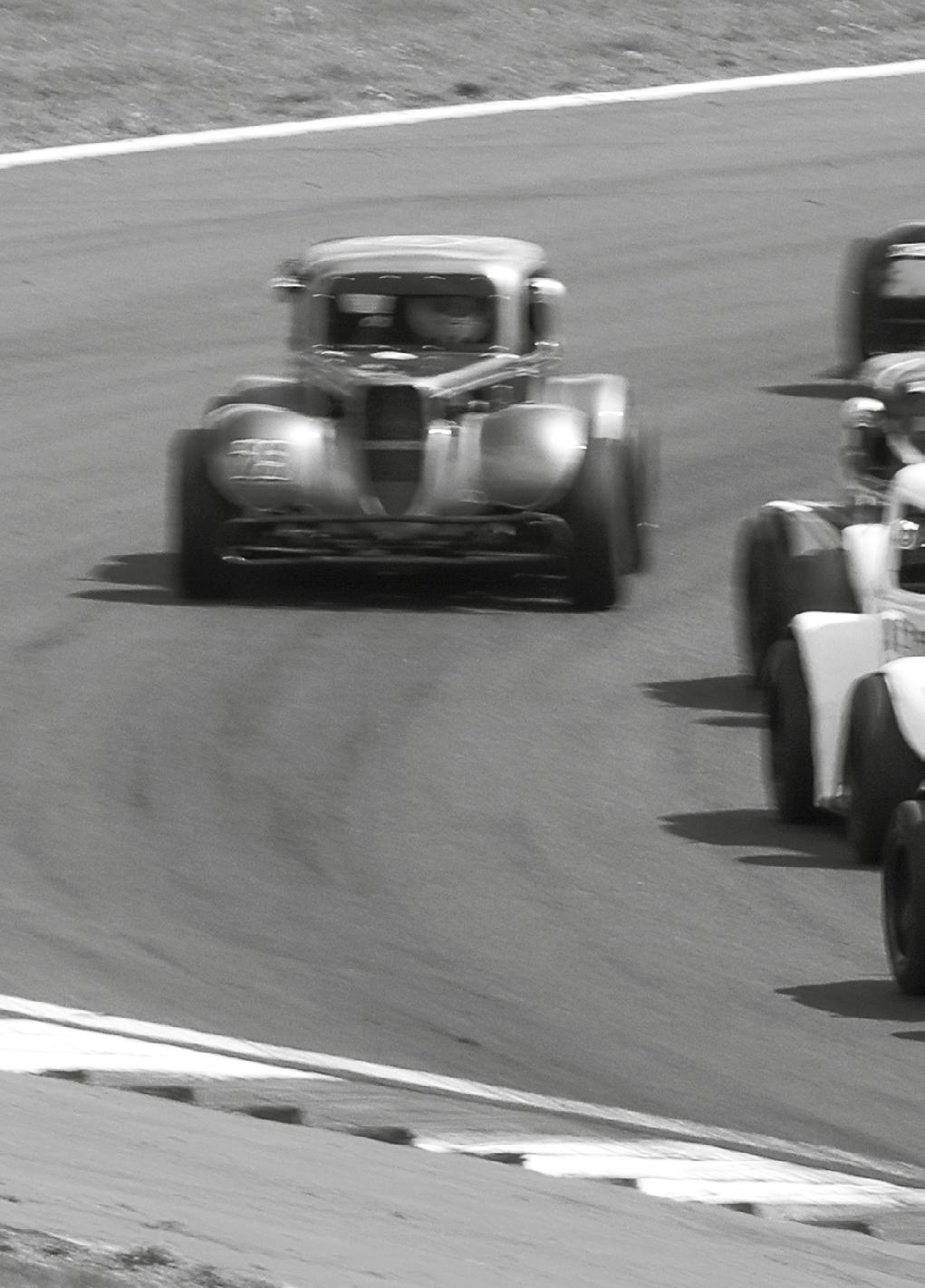
We join the Legends Cars Championship, which has been thrilling crowds across the country with bumper-to-bumper racing.
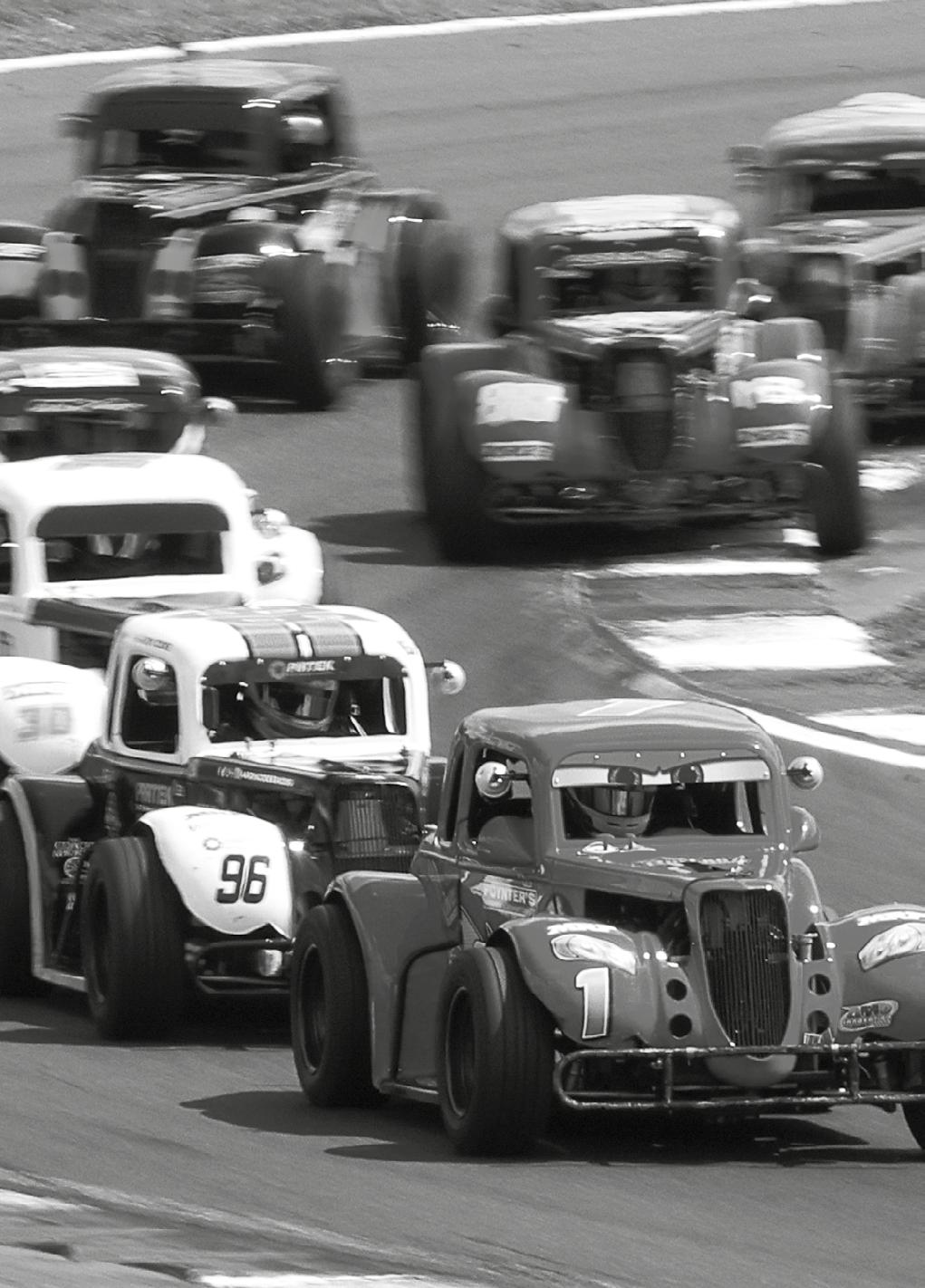

How do you fancy being propelled towards a blind corner at 120mph in what can reasonably be described as an enclosed go-kart on steroids?
Welcome to the mad world of Legends. These 5/8th scale replicas of pre-war American Fords and Chevys are completely insane – as we’re about to find out.
I’m strapped inside a special two-seater version alongside Will Gibson, a two-time champion and new owner of the Legends Cars Championship.

It’s hot and cramped inside. My helmet is touching the roof, the safety harness has me pinned to the seat, and I’m starting to fight waves of claustrophobia!
We’ve been in the assembly area at Brands Hatch in Kent for almost 30 minutes after a delay in the previous race, but the marshal has just signalled one minute to go.
There’s only enough time to pull the harness tighter and fold my arms over my chest before we lead the safety car and 20 snarling Legends out in front of a 20,000-strong crowd.
Will hits the accelerator, and the response is immediate.
I feel the back end twitch as we scream down the home straight, hitting almost 120mph, sitting inches from the tarmac. It’s absolutely exhilarating!
We brake sharply down to 80mph for Paddock Hill, effectively a drop of 35 feet, before climbing to the tight hairpin known
as Druids. The rest of the lap goes by in a blur.
Less than two minutes later, we’re coming to a stop in the pits. I’m devastated it’s over. I loved every second and have already fallen in love with these little cars.
We watch the main race unfold. It’s nail-bitingly close all the way with Oli Schlup taking the win, just 0.061s ahead of defending champion Tyler Read.
The teams applaud all the drivers as they return to the pit lane. “It’s something that we always do,” explains Will’s wife, Janine. It’s a lovely touch and illustrates the close-knit nature of the sport.
On our way back to the paddock, Will explains that Legends started in North America during the early 1990s and were brought to the UK by Phil Cooper, a music industry veteran.
Meetings are held between April and September at Silverstone, Brands Hatch, Donington Park, Snetterton and Oulton Park. A separate series races on the oval tracks.
The fact that Legends are also raced in Italy, France, Finland, Sweden, Australia, and South Africa makes it the largest single-make championship in the world.
However, despite thrilling crowds for more than three decades, they still have a criminally low profile. It’s something Will is determined to change now he’s at the
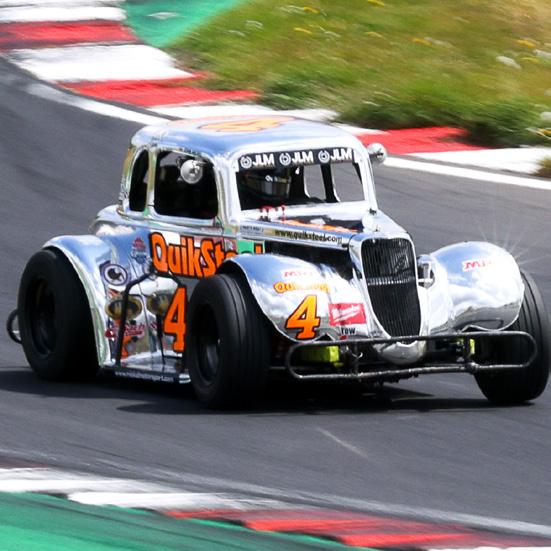
\\ YOU’VE GOT TO DRIVE THEM TO WITHIN A MILLIMETRE OF
THE LIMIT BUT NOT CROSS IT, OR IT WILL END BADLY //

“We always say that Legends are the UK’s best-kept motor racing secret,” says Will. “It still surprises me they don’t have a bigger following because they’re epic to drive and watch.”
I have to agree. The Legends are simply superb. Every race is fiercely contested. Cars are often three abreast, inches apart, constantly swapping places over seven to 12 frantic laps.
They may only last 10 to 15 minutes, but they’re full of action at the front, middle and back. It’s rare for a race to be won by more than a second.
There are two main reasons for this: how grid positions are chosen and the drivers’ use of techniques such as slipstreaming and bump drafting.
A public ballot determines starting positions for the first heat. This order is reversed for heat two, and the final is based on points scored that day. Those with the most start at the back.
This guarantees excitement, as the most successful drivers will have to fight through the entire pack to win, rather than starting on pole and disappearing into the distance.
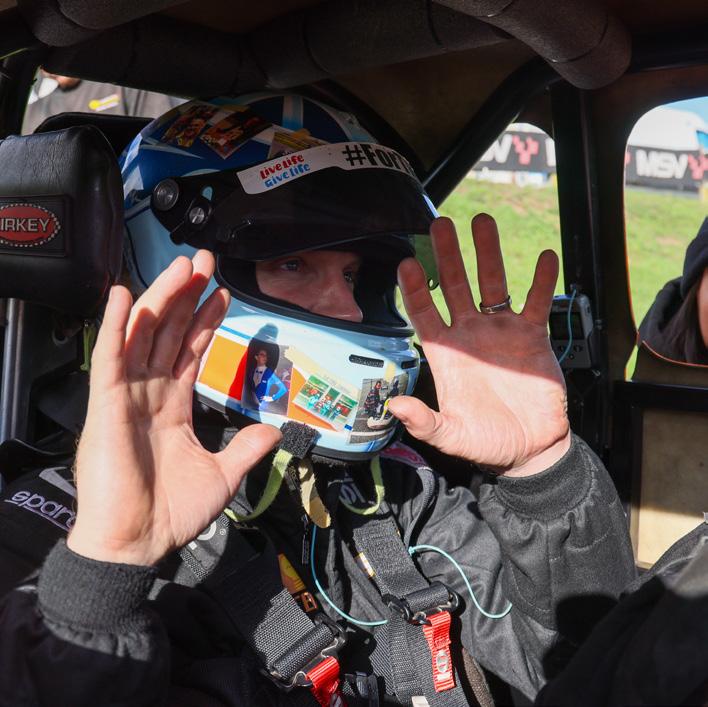
Without getting too technical, slipstreaming sees one car following closely behind the leader to reduce air resistance and enabling it to slingshot past.
Bump drafting is when the chasing car connects with the leader’s rear bumper, allowing them to work together to increase their combined speed.
According to Will, the best drivers overtake an average of 100 cars over the course of a weekend, a feat requiring considerable bravery and skill.
“You have to be able to race, not just be fast on a single flying lap,’ he says. “You need race craft because if you don’t have experience of overtaking people, you won’t win in Legends.”
One driver who clearly does possess it is Tyler Read. The defending series champion has continued his fine form into this season and holds a narrow lead after six rounds.
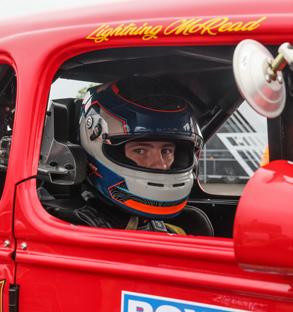
The talented 22-year-old is a firm crowd favourite, not just for his driving ability but also because his car is a replica of Lightning McQueen from the animated Cars movie.
The livery was down to fellow racer James Newbery,
who had the idea of turning some Legends into the film’s leading characters to raise money and awareness for Motor Neurone Disease.
“He said he’d love to do me as Lightning McQueen as I was a rookie and was obviously quite quick,” says Tyler. “It was all for charity, so it was great to do and got so much attention.”
Tyler, who started in karts at just eight years old, believes there are many similarities between the two classes.
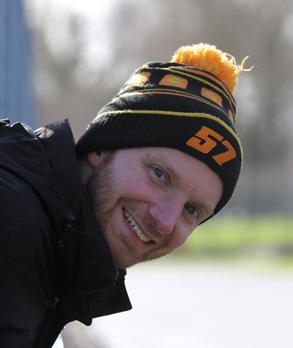
“A Legend is like a big gokart with gears, but obviously a bit more speed,” he says.
“Once you know how to drive them, you never really lose it.”
That’s not to say they’re easy to handle.
“They’re quite rear-end happy with a lot of braking power and not much grip, but you want it to be a bit sideways,” he grins. “If you’re not sideways, you’re not quick, but there is a limit!”
Soon after we finish talking, Tyler demonstrates his ability by scything through the field in devastating fashion from the back of the grid to finish second.
The performance doesn’t surprise Will. He points out that drivers such as Tyler, Aaron Cooke, Oli Schlup and Chris Needham are almost guaranteed to find a way past.
“It’s crazy how good those guys are,” he says. “I was looking at the results from the last meeting, and the top four in one of the races were covered by 0.1 of a second!”
A Legend consists of a steel tubular spaceframe chassis, over which sits a fibreglass shell. Different styles are available, but they’re all based on early Ford, Chevy and Dodge bodies.
To ensure fairness, all cars are built at the same factory in North Carolina, USA, and exported overseas. More than 9,000 have so far rolled off the production line.
The powerplant is a motorbike engine. Until recently, the aircooled Yamaha XJR 1250, but since its discontinuation, most drivers have switched to the water-cooled Yamaha MT09.
While safety regulations differ between countries – the UK and most European countries have an additional seatbelt strengthening mount, for example – Legends are known for their resilience.
“They’re designed to race on small ovals in America and hit solid concrete walls at 70 miles an hour,” explains Will. “This means that they’re very strong.”
One man who can confirm this is John Mickel, a five-time UK Legends Champion who has twice won the World Championship in the US.
Three years ago, he had a terrifying crash at Cadwell Park, which saw his number four machine barrel roll 11 times after clipping another car.
While he was pulled unconscious from the wreckage and spent two nights at the Diana Princess of Wales Hospital in Grimsby, he remarkably escaped without serious injury.
“That’s a testament to the cars as they’re so strong,” he says. “I remember the first roll, then nothing else until I got to the medical centre. I was concussed, but you would be after those rolls, as it’s known as the washing machine effect.”
He was placed on a medical suspension but ended up taking an extended break from the formula, only returning properly at the start of this season.
However, the tough former NASCAR pilot and Superstox World Champion remains just as passionate about these little cars as he was when he first raced them in the late 1990s.
“We’ve just come back so are finding our feet again, but the Legends always put a smile on your face,” he says. “A stock car is hard work, and there’s a lot of contact; a NASCAR hurts when you get it wrong, but a Legend is just great fun.”
So, how much does it cost to have a go at Legends? Well, a second-hand car will set you back at least £20,000, while a new machine costs around £27,000. However, this won’t be your only expense.
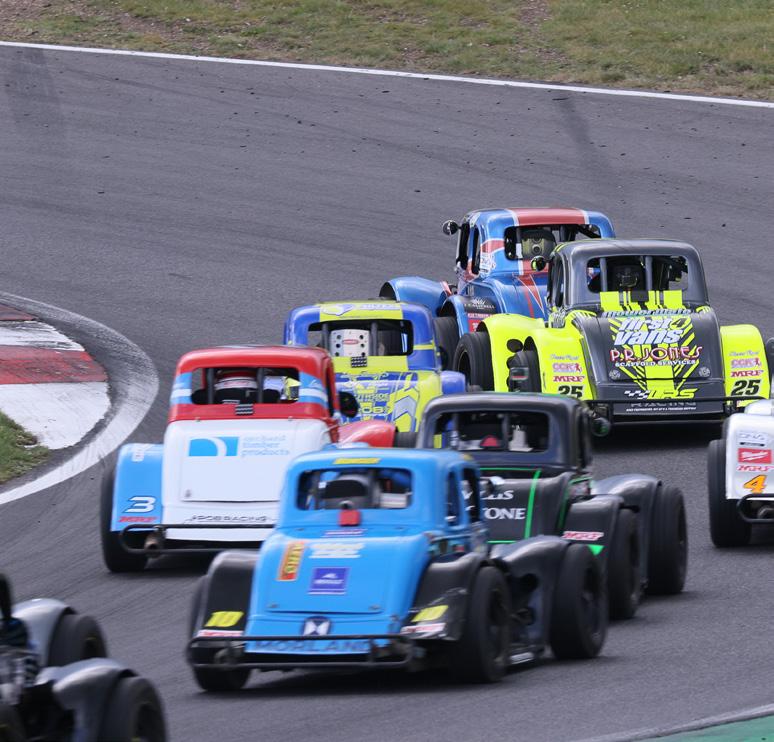

The Legends currently race on seven weekends during the season, with entry fees of around £1,000 each.
Factor in fuel, spares and food, and you’re looking at £2,500 per meeting.
“I’d probably say a season would cost £20,000 to £30,000 if you’re doing it yourself and upwards of £40,000 if you have people preparing the car,” explains Will.
Legends may be relatively straightforward, but they still require a lot of work. It’s not unusual for 50 hours of preparation to go into a weekend’s racing and more if repairs are needed.
This includes setting up everything for a particular track, replacing fluids, ensuring every nut and bolt is tight, and testing the engine on a rolling road.
Some drivers even fit forward and rear-facing cameras to record the action and research how their rivals drive. There may be great camaraderie, but everyone still wants to win.
All this means you either need relatively deep pockets – and a generous sponsor – to put a team together, or the ability to carry out the work yourself.
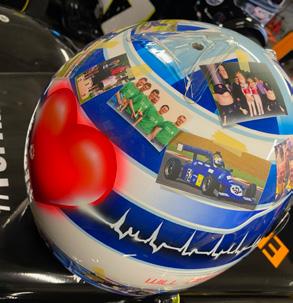
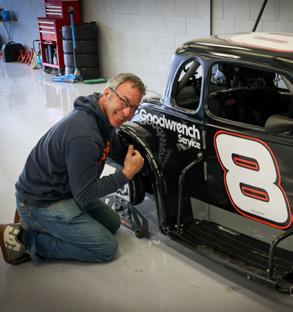
mean he needs to be more careful.
Someone in the latter camp is Graham Butler. The 44-year-old fireman has been building cars all his life, so he has the necessary skills. It’s the budget he lacks.
“It’s almost impossible to get sponsorship as a club-level racer, but we’re always on the lookout,” he says. “If you hear of anyone, then let us know!”
Graham financed a move into Legends by selling his drag-racing car, after briefly considering a return to bike racing.
“I’m not as fit as I used to be, and I don’t bounce as well, so a Legend was definitely the best option for me,” he laughs. “I’ve been an adrenaline junkie all my life, so racing things that are trying to kill you every few seconds if you’re not careful is fun! It’s living on the edge of disaster. You’ve got to drive these things to within a millimetre of the limit but not cross it, or it will end badly.”
While he can carry out the work himself – and even repairs Legends for other drivers – the financial constraints
“It’s a case of making things last a bit longer, such as tyres and brakes,” he says. “I also tend to be a bit more reserved and not take silly chances that could cause an accident.”
Graham’s also the only driver still running the older air-cooled engine, which puts him at a performance disadvantage to many of his rivals.
“People watching from the sidelines don’t know that my car’s different to everybody else and are probably thinking I’m a slow bloke,” he laughs.
Ideally, he’ll raise the funds needed to convert his car in time for next season, but for the time being he’s focused on remaining as competitive as possible.
Whatever happens, a major attraction of the Legends for Graham and his partner, Cindy, is the social side of racing.
“We look forward to loading up the truck and going on a bit of an adventure, spending four days with our friends,” he says. “We’ll have a
barbecue and a good time with a bit of racing in between.”
Brands Hatch is a special place for Will. It was where he first watched racing as a child, completed his racing licence, had his first circuit race, and won his first Legends Championship.
He and his wife, Janine, even got married at Brandshatch Place, a beautiful country hotel just a short walk from the track. It’s also the last circuit that Will saw his brother, Tim, who passed away in 2015.
“He was born with heart defects and had 24 major operations as a child, including having a pacemaker fitted,” explains Will. “He then had a heart transplant when he was 15.”
Although the operation gave him a new lease of life, it wasn’t a perfect match, and his body started to reject it after he turned 30. Sadly, he ended up passing away from a heart attack in hospital.
It’s why #For Tim appears on cars while Will’s crash helmet has a mix of his and Tim’s race colours, along with his pre- and post-transplant heartbeats and a big red heart on the back.
“We just try to keep his memory going,” says Will. “As soon as you stop talking about somebody, then the memory stops. The #For Tim means we keep talking about him, which makes us happy.”
JUNE 6/7
BRANDS HATCH
JULY 25/26
SNETTERTON
AUGUST 22
OULTON PARK INTERNATIONAL
SEPTEMBER 26/27
DONINGTON PARK



“ I’ve always trusted Wellman - my wellbeing is a top priority.”











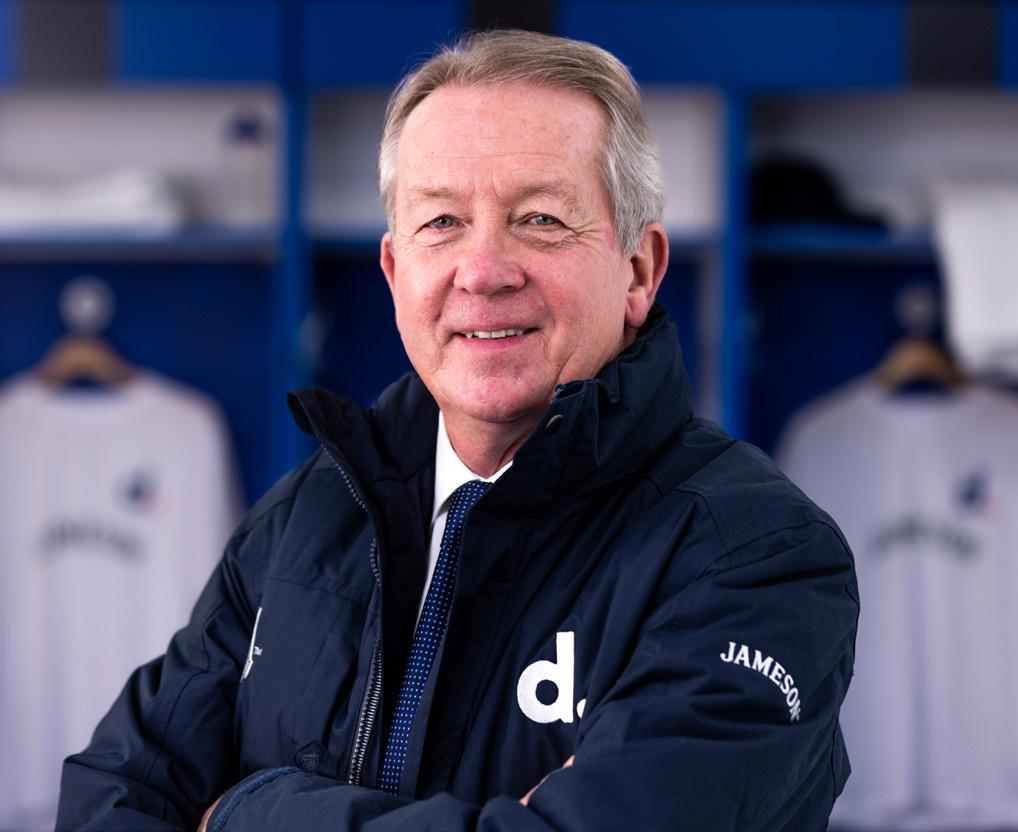
The former Charlton and West Ham manager reveals his biggest regrets and why he’s supporting the Jameson Whiskey Drinkaware campaign.
Alan Curbishley needs little introduction to most football fans. Charlton Athletic even named a stand after him in recognition of the 15 years he spent managing the club.
The 68-year-old took control of 729 games in a remarkably successful period that saw the Addicks become an established Premier League side.
He then saved West Ham United from
relegation before departing less than two years later with the club in the top five after players were sold against his wishes.
Curbishley, who had also played for West Ham and Charlton, as well as Birmingham City, Aston Villa and Brighton & Hove Albion, subsequently won a constructive dismissal case against the Hammers.
Here, we discuss his long career, how football has changed, and why he’s backing the Jameson Whiskey Drinkaware campaign that encourages fans to monitor their alcohol consumption.
Hi Alan. Why are you supporting the Jameson DrinkawareWhiskey campaign?
I think the campaign is a great idea. If supporters started writing down – if they can remember –exactly what they’ve drunk on a Saturday for the whole event, including travelling to the game, during it and perhaps afterwards, and check what is acceptable, they could be in for a shock. I recommend everyone keep a check for a few weeks and find out their limits.
has football changed for players?
I grew up playing football in a drinking culture. You played Saturdays and were off Sundays. You trained on Mondays and Tuesdays, and were off Wednesdays, so you knew when you had a free day. If you won, you’d go out and enjoy yourself as it was all in the name of team spirit. If you got beat, you still went out! Things have changed dramatically. There are no Sundays off, and players are tested so they can’t turn up for training after being out the night before.
Would you say attending games has also changed?
You used to have the hooligan situation, which obviously isn’t around now, but that would have been drink-fuelled. You went to certain grounds and knew it was going to kick off inside or outside, or even while travelling to games. Hopefully, it never comes back, but it was part and parcel of the culture.
It’s obviously a World Cup year. Do you wish you’d managed England?
I was interviewed when Steve McClaren got the job. I’ll be honest, I thought it was probably a bit too early for me to deal with the six or seven games a year. I
\\ I NEVER REALLY FULFILLED MY POTENTIAL AS A PLAYER OR MANAGER //
enjoyed the process, but I wasn’t expecting it to happen. I don’t think I would have enjoyed the pressures surrounding it.
How did you cope with the stresses of football club management?
I always reminded myself and the staff not to get too high when we were doing well, nor too low when we were struggling. If you go a couple of results without winning, it’s important not to let it affect everyone because they’re looking at you – the owners, directors and the press – as you’re the first port of call. Also, when you’re having a good time, it’s important not to get too blasé.
You’re a hero at Charlton, but what was it like in the early years?
We initially played home games at Selhurst Park and Upton Park, so it was like being away every week, and the crowds were dwindling. I was the first-team playercoach, and Steve Gritt was the reserve-team coach. When Lennie Lawrence left, we were made joint managers and had to pick up the pieces because there was no one else. We had no money, no stadium and a threadbare squad.
What was it like attracting players during this period?
Our priority was getting back to the Valley, so I could be told we weren’t able to buy anyone because we needed the money for the stadium.
Initially, it was all low fees and free transfers. Players knew if they did well for us, someone would come in and they’d be sold. We couldn’t hold onto them because of the finances.
I accepted it. When we were at Upton Park, we finished 7th in the Championship. We should have been in the play-offs, but blew it in the last couple of games. I then had to sell Rob Lee to Newcastle and Anthony Barness to Chelsea to raise a million pounds. The chairman and the other directors raised the remaining funds, and we bought the Valley. We had a chance of doing better if I could have kept the squad together, but we needed our ground. Half of the Rob Lee sale money went to West Ham in rent.
It was about being realistic with expectations. Before every season at Charlton, I’d sit down with the chairman, set realistic goals and discuss our plans for the transfer windows. The main thing was that we were singing from the same song sheet. I wouldn’t criticise the chairman, and he wouldn’t criticise me. Everyone was in it together.
In the first couple of years, the priority was not to be relegated. The longer you stayed in the top division, the more it was about finishing mid-table. As we progressed, we attracted and signed different players. It was a different philosophy. We’d talk about who could help us improve.
Yeah, we were punching above our weight. We finished around midtable most years. The main criticism was that once we were safe, we tailed off, so we changed the bonus scheme to include top 10 finishes. It meant the players were really rewarded for staying in the top half of the table.
Once we became established, we didn’t want people to leave. We were fourth in the league when we lost Scott Parker to Chelsea. It was the Christmas window, we’d just beaten Chelsea 4-2 on Boxing Day to go fourth, and the next day they came in for him. If they’d have waited six months, I’d have been happy. I had nothing against Scottie going; it was just a bad time for the club because of our league position. If we were midtable, it wouldn’t have bothered me. We ended up seventh.
You can’t be ‘nicey nicey’ all the time, and you can’t always be angry either. You’ve got to let the players know where you’re coming from, what’s acceptable and what’s not. While you have to deal with certain players differently, they need to know that, within reason, everyone’s treated the same. Obviously, you have a bond with the young lads you bring through, such as Scott Parker and Paul Konchesky. Then there are those you sign that do fantastically well, like Clive Mendonca.
When I was at Charlton, I signed Paolo Di Canio on a free transfer from West Ham, who was 34 at the time. I didn’t ask anyone’s advice. He was only with us a season, but had such a positive effect. He was the perfect professional. He trained properly – actually, too hard – ate properly, conducted himself properly, and the younger players just adored him. When I think about certain characters, I always come back to Di Canio coming in and changing how we all felt about each other.
Getting Charlton back to the Valley and putting ourselves on the map – me personally and the club – by winning promotion in the playoffs. It changed
how the club was seen; people started to become interested, and the chairman had more potential backers. It was the start of something new. Being given the opportunity at Charlton and establishing it as a proper club was the high.
The low was leaving West Ham the way I did. The more I think about it, maybe I should have toughed it out a little bit and got on with it, but I made a decision, and that was it. When I got there, we were in a relegation battle but stayed up a few games before the end of the season. The next year, we finished 10th. The following season, we were in the top five after four games, and that’s when I left.
Not really, but there were obviously bad times. At West Ham, my first game was at home to Man United, and we beat them 1-0. Then we

drew at Fulham and didn’t win again for 10 games. I’m sitting there at Christmas thinking I’m in a proper relegation battle. The club I was born next to and played for, I could be taking down. I went through some tough times over that period, but thankfully, we got out of it.
You have to deal with it. Your kids can be jibed at school that their dad’s
\\ I WOULDN’T CRITICISE THE CHAIRMAN, AND HE WOULDN’T CRITICISE ME. EVERYONE WAS IN IT TOGETHER //
going to get sacked, or you bump into someone walking out of a petrol station. It’s not good, but you just get on with it. Today, the situation is probably worse with social media. I get the feeling players can’t go anywhere after a game, as someone somewhere will have something to say or take a picture.
You have also had spells with Fulham. How did that come about?
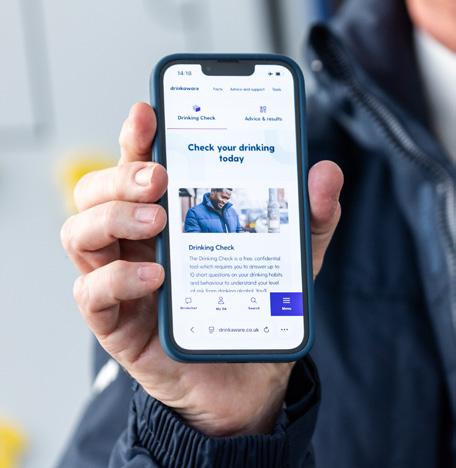
René Meulensteen took over as manager from Martin Jol and spoke to Sir Alex Ferguson about bringing someone in to help him. I didn’t have anything to do with team selection. It was more suggesting what to concentrate on in training. I enjoyed it, but it didn’t last too long, so I was a bit disappointed.
Was it ever suggested that you become Fulham manager after Meulensteen?
Not really. Felix Magath came in, so I left. When Kit Symons got the job, he asked me to do a similar role. Then, when he left, there may have been a situation (to take over), but I didn’t think it was right. I’d gone in to help Kit, a young manager, be successful. I wasn’t after his job, but that’s how it would have looked.
I’ve got a little bit of regret that I never really fulfilled my potential as a player or manager. The playing was down to two long-term injuries. I fractured my kneecap in 1982. Ron Greenwood was the England manager, and I thought I was in with a shout of being in the squad for the World Cup.
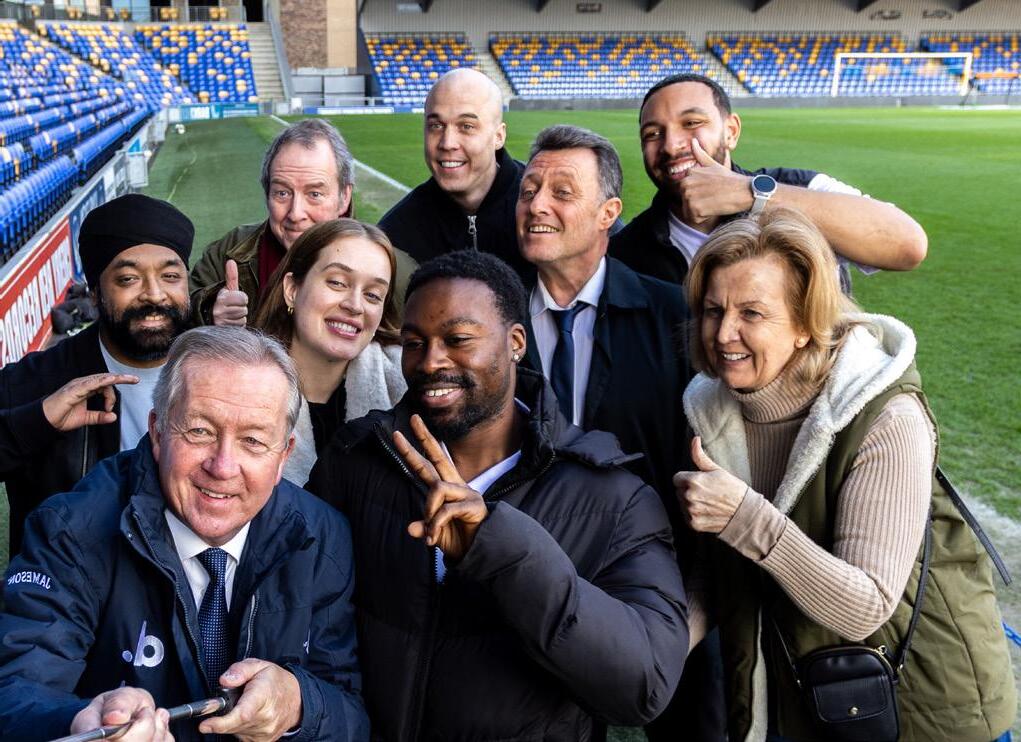
I also ruptured my Achilles. Charlton had just won promotion, and Lennie had to bring in a couple of players. When I got fit, it was a struggle to get back in the side, so I moved on. On the managerial side, it’s my decision to leave West Ham. I kept the club up, finished mid-table the next year and then left after five games or whatever it was. Perhaps I was a bit too hasty in leaving, and I should have toughed it out a bit, but it happened, and I’m not going to wallow in it.
It was from a player. He told me I could have 50 to 100 conversations a day with different people, but the only one each will remember is the one I had with them. He was basically saying that if you’re not honest with how you’re talking, you may forget what you’ve said, and this can come back to haunt you. That was a great bit of advice, and I’ve always remembered it.
I went to Charlton last night and go to West Ham when I can. I enjoy watching it, but it’s a little different now, given how football has developed, such as playing out from the back. I’m glad to see long throws have returned, so maybe other things will follow. I think the goal kick might come back, and maybe they’ll start crossing the ball or having a shot!
Alan Curbishley has teamed up with Jameson Whiskey and Drinkaware, the UK’s leading alcohol charity, to encourage fans to monitor how much they’re drinking.
The ‘Know Your Score’ campaign encourages them to take a three-minute online quiz on the Drinkaware website (drinkaware.co.uk) to understand the impact of boozing on their health.
1
To keep health risks from alcohol low, drink no more than 14 units of alcohol each week, spread over three or more days with several drink-free days, and no bingeing. Even one drink every evening can add up. A daily medium 175ml glass of wine or a can of lager amounts to more than 14 units in a week.
2
Do you know when and why you drink alcohol? Perhaps it’s a reward after a tough week, or maybe a celebration goes hand-in-hand with a drink. Identifying your drinking triggers will help you recognise the reasons – and think about how you can replace alcohol with something else.
3
Having a supportive friend or partner who knows you’re trying to cut back on your drinking can make a big difference. Tell them how important it is for you and why. If you’re in a relationship, you’re more likely to make a positive change for your health if you do it together.
4
If you have a stressful week ahead, plan something different to do that doesn’t involve alcohol. This can be as simple as taking a long walk, going to the cinema or booking a meal out. Plus, it gives you something different to look forward to.
Having at least three drink-free days each week will give your body a break from alcohol and help you stick to the low-risk drinking guidelines of no more than 14 units a week. Why not use them as an opportunity to pick up a new hobby, be more physically active or find new ways to socialise?
Try switching to low alcohol or alcohol-
If you’re looking for a way to cut down on alcohol without cutting it out completely, alcohol-free or low alcohol drinks could be right for you. These days, there are more, better tasting low alcohol and alcohol-free drinks to choose from than ever before.
The free MyDrinkaware app will support you on your journey (drinkaware.co.uk/tools/ mydrinkaware-app). It helps you to track your drinks, check calories, and see how alcohol is affecting your sleep – all with personalised support to achieve your targets.
5 6 7 8
Stick with it! Around two-thirds of our daily behaviours are determined by habits. That means building new, healthier ones is a process. Don’t forget to celebrate your achievements. Whether it’s relaxing on the sofa with a new box set or something else, reward yourself for achieving a goal.

If you’re worried about your own or someone else’s drinking, you can ring Drinkline, the national alcohol helpline: 0300 123 1110 (weekdays 9am–8pm, weekends 11am–4pm)























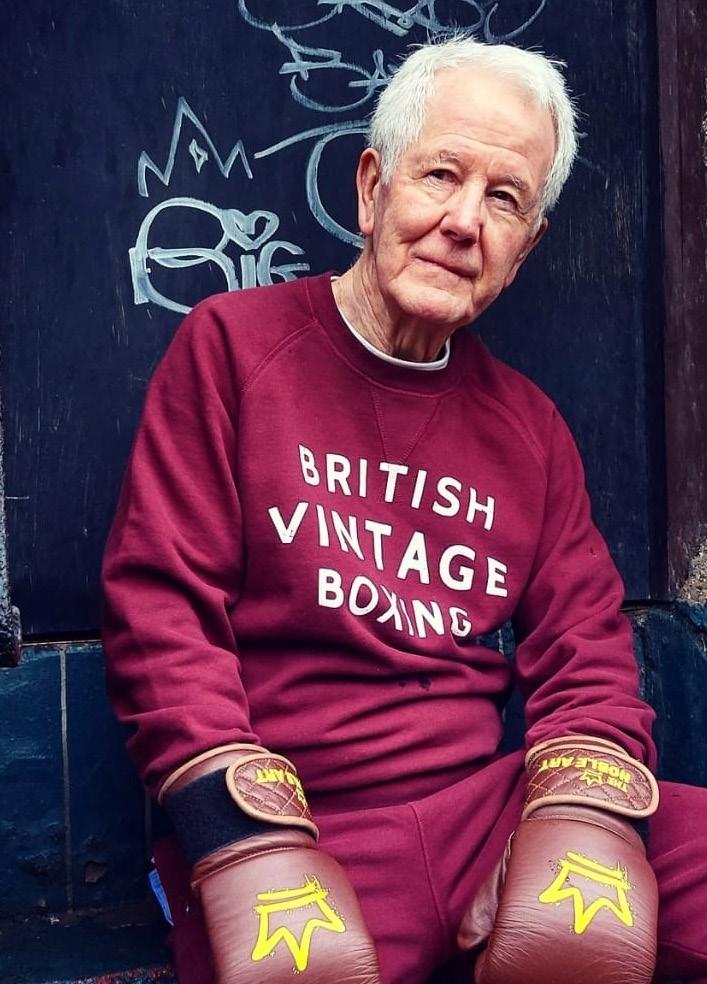
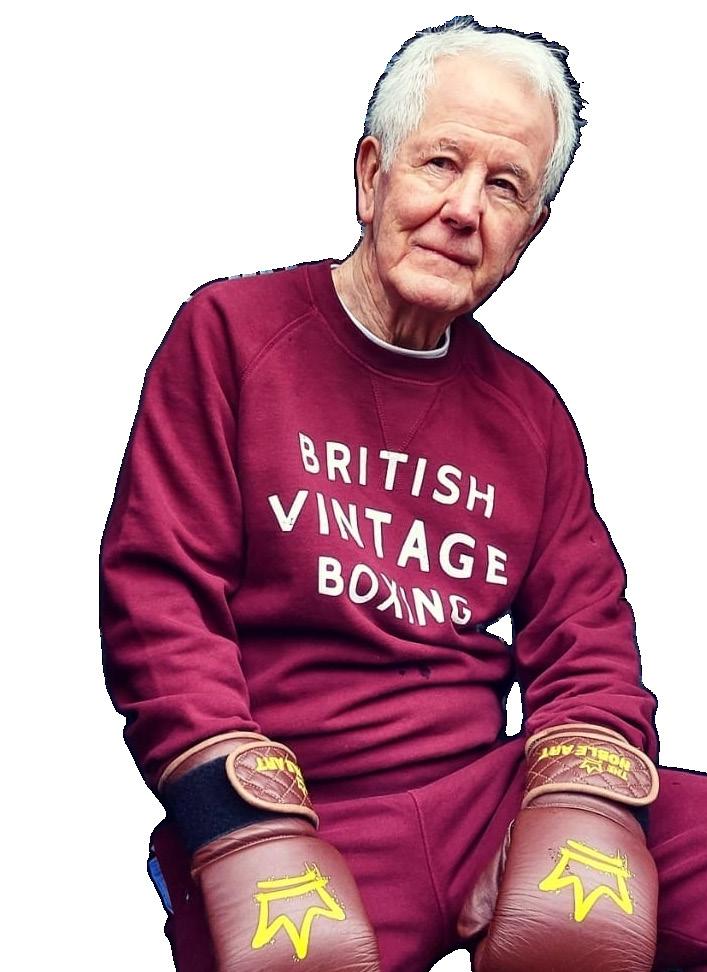

Social media boxing sensation Frank Gilfeather shares his life lessons and why he swears on brown-seeded bread and apricot jam.
WORDS ROB GRIFFIN


When Frank Gilfeather showed how to throw the perfect uppercut three years ago, he had no idea a video of the demonstration would change his life.
The retired journalist and boxing enthusiast had been living quietly with his wife in Aberdeen for many years, with no desire to be an influencer.
But that’s exactly what happened to the inspiring 80-year-old, who has become known worldwide for his positive messages and can-do attitude.
The initial clip went viral on TikTok after being put up by Frank’s son, Paul. But it was after being reposted by rapper 50 Cent that everything really took off.
“The social media side has all developed very quickly for me,” chuckles Frank. “I find it surreal and can’t quite get my head around it.”
Frank now has more than a million followers across various social media platforms, including international athletes, TV personalities and stars of the big screen.
Comedian Frankie Boyle, action hero Frank Grillo, presenter Gabby Logan, actor Rob McElhenney, and MMA icons Conor McGregor and Anderson Silva are all supporters.
He’s also on firstname terms with boxing royalty, such as Tyson Fury and Terence Crawford, and has spent time with heavyweight champ Oleksandr Usyk.
Turki Al-Sheikh, one of the most influential figures in boxing, even invited him to Saudi Arabia for the undisputed light heavyweight championship bout between Dmitry Bivol and Artur Beterbiev.
While Frank obviously enjoys the spoils of being a social media sensation, he’s more interested in spreading positivity and encouraging everyone to make the most of life.
His regular daily posts, a mix of boxing-related tips and life advice, are watched by everyone from schoolchildren to those well into retirement.
“It was like another world out there,” says Frank. “I had a suite that could have housed two families. I was thinking, ‘Is this all for me?’ It was unbelievable!”
//
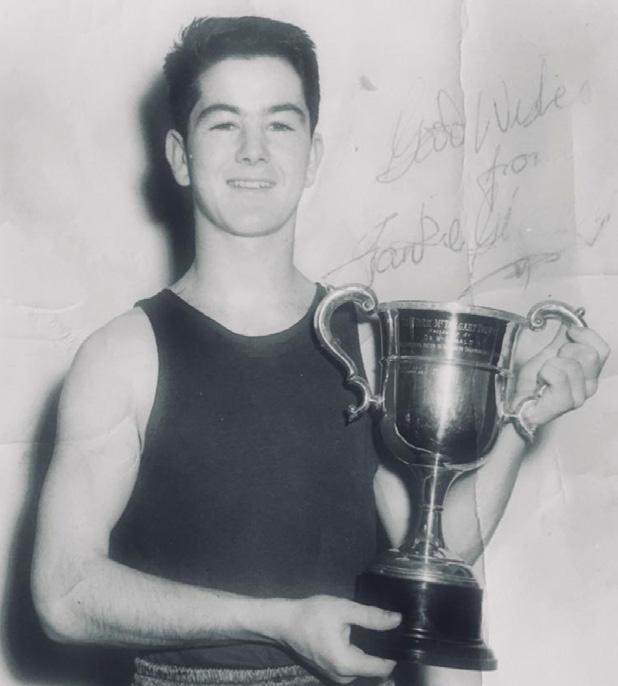
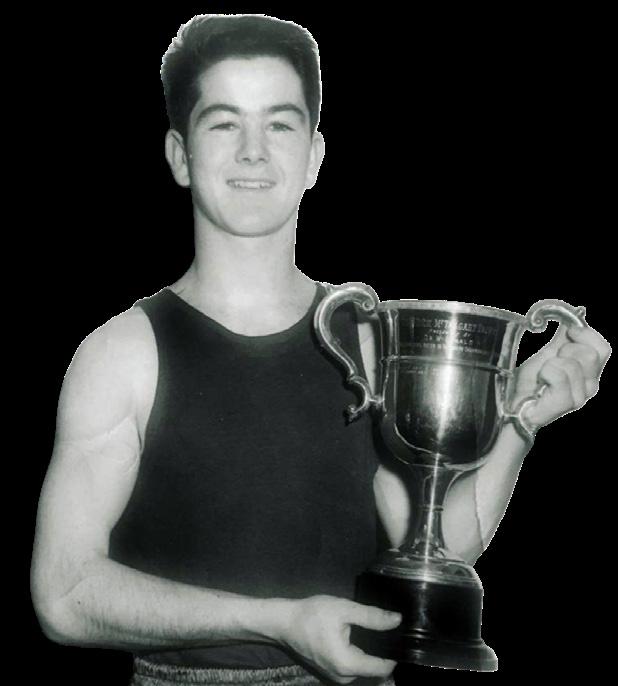
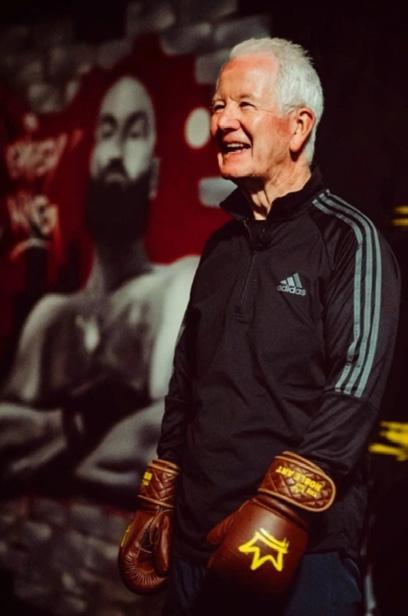
“Too many people give up on themselves,” he says. “If I had stopped training in my fifties, I would have missed out on three decades of exercise. My message is to never give up.”
Frank, a father of four, is modest and self-deprecating. He’s also razor sharp, as you would expect from a seasoned journalist, full of witty anecdotes and authentic.
“I can only tell people what I think,” he says. “Some people might not like it,
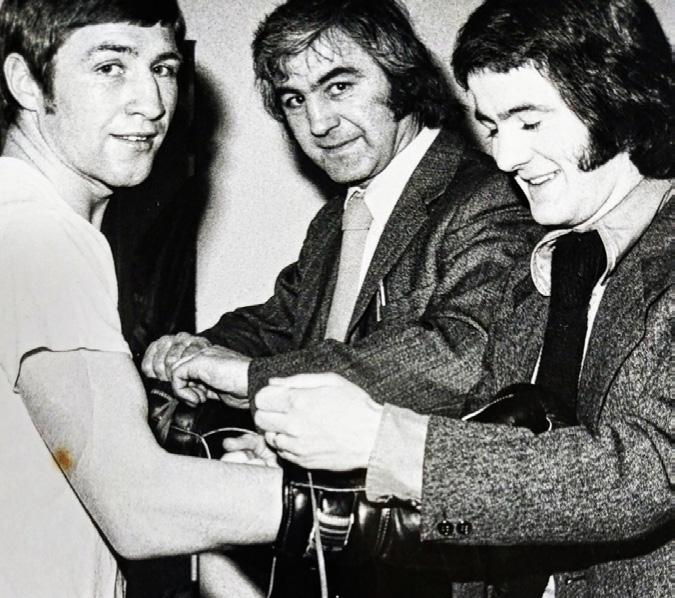

and that’s fine. I can only share the advice I think people need, and if it works for them, that’s great.”
The social media interest in him means he’s bombarded with questions about his life and how he remains so fit and active in his 80s.
“I have to stress, I’m not some kind of fitness guru,” he says. “I sometimes feel a fraud when people ask about my diet, as if it’s some kind of magic. I tell them it’s pretty boring.” Frank sticks to the same daily routine.
“My wife is very on the ball when it comes to what we eat,” he says. “She makes sure I have warm water with the juice of half a lemon every morning before my shower.”
Then it’s breakfast. “It’s brown-seeded bread with butter and the absolute necessity, apricot jam, along with a cup of tea,” he adds. “I’ll then have a cup of coffee at some point late morning.”
A fruit salad with yoghurt will then tide him over until a onecourse meal – “A big portion” –by 5pm, and then nothing else until the following morning.
He doesn’t take any supplements and is teetotal most of the time, apart from
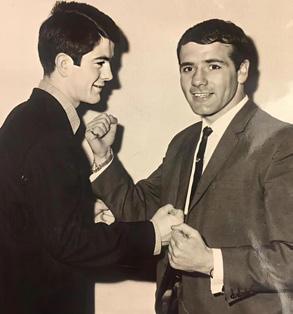
enjoying a few glasses of wine when he meets up with old colleagues.
As far as boxing is concerned, Frank certainly knows what he’s talking about. A former amateur champion in his youth, he first laced up a pair of gloves at just four years old.
The sport was already in his blood. Not only did his father run a boxing gym in the Lochee area of Dundee, but his two older brothers, whom he adored, trained regularly.
“I’d watch them on the punch bag and then have a go myself,” he recalls. “It was very primitive back then, as we used canvas kit bags that sailors used to carry and stuffed them full of sawdust.”
Frank was a natural and won all the district and national titles at youth level before getting permission to move up to the seniors a year early, after he turned 16.
“I was boxing and beating men in their 20s and 30s,” he says. “It was exhilarating for me when I got permission to box for Scotland before my 17th birthday.”
He even fought and became good friends with the late Ken Buchanan, who would go on to win several lightweight world championships.
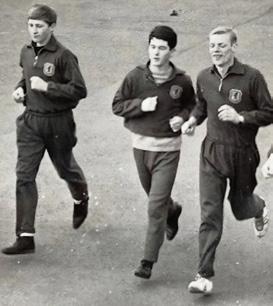
After approximately 200 bouts, Frank drifted away from boxing in his twenties. Work and family commitments filled up his time for many years.
His career included covering Aberdeen Football Club, where he regularly clashed swords with the team’s manager, Sir Alex Ferguson.
While he always kept himself in good shape, it wasn’t until his fifties that Frank returned to the boxing gym with any degree of consistency.
“I started telling my wife I was going to the gym and it didn’t take very long for that habit to become ingrained,” he says. “It was just to keep fit, but I really got into it, and then nothing would stop me going.”
He’d been training and coaching three times a week for decades before his son put that clip online of him delivering a fierce uppercut in 2023. It’s since been viewed millions of times.
Frank now receives thousands of messages every week and has welcomed visitors to Scotland for one-to-one sessions. He even had one guy make a detour from his honeymoon for training!
“He flew in from Chicago, left his wife at the hotel, and I picked him up to take him to the gym,” he says. “There was even a kickboxer from Thailand who came for some training before a fight.”
It’s reached the point where he can’t go anywhere without being spotted. While he was used to being recognised in Scotland when he was on the TV news, the attention today is on another level.
\\ IF I HAD STOPPED
TRAINING IN MY FIFTIES, I WOULD HAVE MISSED OUT ON THREE DECADES OF EXERCISE //
“We were at Charles de Gaulle airport in Paris when this big security guard with an earpiece came up and asked me for a selfie,” recalls Frank. “He apparently follows me on Instagram.”
As for the future, Frank has no intention of slowing down any time soon. He has his own range of boxing gloves, which are sold worldwide through his Nobleart website.
He has also released a series of boxing tutorials that explain the foundations for mastering footwork, defensive strategies and punching techniques.
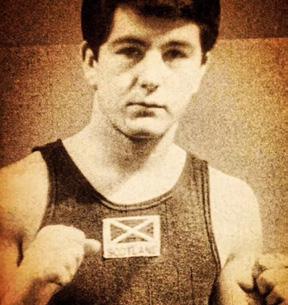
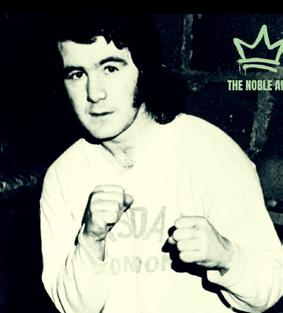
But his main goal is to inspire different generations. “I have received messages from people saying that my videos have saved their lives,” he says. “It’s so powerful. They reach out to me, and some of their stories are heartbreaking. My message to them is to never give up.”
Never give up!
If I had given up exercise in my fifties, I would have missed out on 30 years of exercise. It doesn’t
matter how old you are – 30s, 40s, 50s, 60s and beyond – you can do something meaningful for your physical and mental health.
Life is for living. It’s not just sitting in front of the TV or looking at your phone. If you want it hard enough, if you want to be physically fit, if you want to be mentally fit, then the only thing stopping you is that block in your brain that can’t be bothered. Step one is getting rid of it.
You don’t need to join an expensive gym. Anywhere under the sky can be your gym. When it’s a nice day, I’ll drive to the country walk for an hour. That’s my exercise for the day. We also do boxing classes at the top of a car park in Aberdeen, which has to be the most graffitied place in the world.
Boxing clubs are, generally speaking, extremely welcoming. You may meet like-minded people who have similar problems. Of course, it doesn’t have to be boxing. You can walk or cycle. My wife swims four times a week. She’s 73 years old and fit as a fiddle.
When you’re listening to people, give them your full attention. That will be so reassuring for someone who’s looking to unburden themselves. It will also make people feel more comfortable about talking to you again.
The key to solving a problem is taking the first step. It’s like dipping your toe in the water. Once you do so, then it might not seem as bad as you’d first feared. You will start to see a clear way out of an issue that was weighing you down.







Everyone goes through tough periods, but being a good friend can make all the difference, according to the Campaign Against Living Miserably (CALM).
It can be hard to know when someone you care about is finding things tough – and even more difficult knowing what to say. Talking about our mental well-being doesn’t always come naturally. But while we might squirm when asked what’s really going on, talking can really help.
Around one in four people will experience suicidal thoughts in their lifetime, but discussing the issue means they’ll be less likely to reach crisis point.
Of course, it’s not always easy. Asking someone how they really are can feel like squeezing the last bit of toothpaste from the tube, especially if they’re keen to change the subject.
Trust your instinct
Does something feel off? We can all be masters of disguise to hide what’s really going on. It’s not always easy to tell if
someone is down, but there are often signs. These include mood swings, low energy, distancing themselves, drinking more, neglecting their appearance, and even talking about suicide in a vague or joking way.
\\ DON’T TRY TO FIX THINGS, PRETEND TO KNOW HOW THEY FEEL, OR CONVINCE THEM HOW LUCKY THEY ARE. //
Check with mutual friends
It makes sense to have a second opinion – and to alert mutual friends that your pal might be going through a tough period. This isn’t gossiping, it’s caring.
Have their messages been met with radio silence, too? Or are they flaking on plans at the last minute? Decide together how best to support them, but approach things sensitively.
Let them know you’re worried and that they can talk to you in confidence. Don’t try to fix things, pretend to know how they feel, or convince them how lucky they are. Allow them time to talk, ask questions like “how does that make you feel?” and reassure them that these feelings aren’t permanent and support is available.
Laughter can be a great tonic. Just because you know someone is having a hard time doesn’t mean your messages have to be heavy. A little fun can go a long way when you’re feeling rubbish. Send a message to let someone know you’re thinking about them, share an amusing meme, ask them over for a movie, or maybe turn up at their door with a takeaway after a busy day.
Get comfortable talking about suicide. You might worry that talking about it will put ideas in your friend’s head, but that’s not the case. It’s time to get rid of the stigma attached to feeling suicidal. Acknowledging that they’re feeling this way can be a big relief and help them feel less alone.
When a friend doesn’t want to tell you what’s going on, it can feel a bit as if you’ve failed, but you haven’t. Don’t be offended or take it to heart if your friend doesn’t want to share. However, there’s nothing wrong with giving them a nudge in the direction of some professional support, such as CALM’s hotline on 0800 58 58 58, which is staffed every evening from 5pm to midnight.
Remember, it isn’t your sole responsibility to keep them safe. If you’re worried, share your concerns and direct them towards support. If you think they’re at immediate risk, you can ring their GP surgery, contact Samaritans, call 999, or take them to A&E and stay with them until they’re seen by a member of the mental health team.
Ups and downs in their mood
Wanting to hang out less
Changes to their routine, like sleeping and eating
Seeming flat or low on energy
Neglecting themselves, showering less, or caring less about their personal appearance
Seeming reckless or making rash decisions
Increased alcohol or drug abuse
Being more angry or irritable than usual
Talking about suicide/wanting to die in a vague or joking way
Giving away their possessions
Saying goodbye to friends and family as if they won’t see them again
\\ ALLOW THEM TIME TO TALK, ASK QUESTIONS LIKE “HOW DOES THAT MAKE YOU FEEL?” //
Campaign Against Living Miserably (CALM) is a suicide prevention charity that provides life-changing services and practical mental health support.





Singer LiamC has overcome rejection, public ridicule and depression to stand on the brink of turning his dreams into reality.
Life certainly hasn’t been easy for LiamC. The talented singer-songwriter left home at 16 and ended up homeless in London, surviving on his wits, personality and trademark ukulele.
He’s battled loneliness and depression, seen record deals collapse, and faced public ridicule after a video of him performing to Dua Lipa at Glastonbury went viral.
Most people would have given up. But quitting isn’t in the nature of this infectiously optimistic 24-year-old, and his dogged resilience is finally being rewarded.
He’s two months into a sold-out UK tour, has his own record label and recently tasted chart success with the irresistibly catchy ‘Tina’, which has all the hallmarks of a summer anthem.
We are standing outside the Blue Posts pub, right in the heart of London’s bustling Soho, on a sunny Tuesday afternoon. It’s an area he knows well from his busking days.
Liam is very much at home in this environment. He’s casually dressed in his now-familiar Ellesse sportswear and round sunglasses. Various festival and club entry bands adorn his wrist.A fan recently paid £1,000 and a penny for his distinctive red, white and blue Ellesse top, he tells me, and he’s been struggling to find a replacement.
The sale illustrates how his life is changing. As his recently released track, ‘Four Strings and the Truth’, notes with the line, ‘They used to judge me in the streets, but now they take photos’.
WORDS ROB GRIFFIN


As we chat, an older gent with a mop of untamed grey hair and a straggly beard shuffles past. He gives a slight nod in our direction before refixing his gaze on the pavement.
“That’s the best thief in London right there,” Liam tells me with a grin, rolling his first cigarette of the afternoon. “He can get anything you want.”
Liam’s also a familiar face, albeit for more law-abiding reasons. “Wahey, it’s LiamC”, a man yells from a passing white van. Liam chuckles and waves back, “Alright, geezer!”
He takes a final drag, hands tobacco to a homeless man, and we head inside to discuss his journey from obscurity to becoming one of this year’s most exciting breakout artists.
We commandeer the pub’s upstairs room. Liam’s on the lemonade. He acknowledges it might not seem very rock ‘n roll, but insists the universe rewards sobriety.
“Back in December, I was drinking every day and then got ill,” he says. “I went back to my mum’s for Christmas and collapsed in bed for seven days. Missed out on everything.”
It had been a tough few weeks. A hoped-for record deal had failed to
materialise, and ticket sales were poor for a headline show. On his return to London, he embraced Dry January.
“I cut out the alcohol, started drinking loads of water and ‘Tina’ went into the charts,” he says. “I started drinking again, and things dipped, so I’m back on the water. Life seems to help me when I recognise my problems and show I’m trying.”
While no stranger to the party lifestyle, Liam insists it’s the drinking rather than the occasional recreational drug use that has caused him problems.
There’s been plenty of weeks, he admits, where a few beers on a Friday evening have turned into a two-weeklong binge. “You’re then left wondering where all the time has gone.”
Thankfully, the trip home and this year’s tour have given him a new focus. As he acknowledges, he’s worked far too hard to let everything slip away now.
“People have also paid their money for the shows and deserve to have me showing up without my throat being in pieces,” he adds. “Some people can do both, but I can’t.”
LiamC – full name Liam Cowan – was born in Colchester and spent his formative years in the Shrub End area of the city. It’s a time he remembers fondly.
However, his idyllic life changed when he was eight years old with the sudden death of his beloved Nanny from a brain haemorrhage, followed soon after by his parents splitting up.
The relocation with mum Kelly and six-month-old sister Leah-Patricia to Shrewsbury, where his uncle Gavin was playing for the town’s football league side, didn’t go well.
“All the boys hated me. Some of the girls fancied me, and every time they did, there was a problem,” he recalls. “It was a tough time.”
Once reality dawned that he wasn’t going to be the next Cristiano Ronaldo, football-mad Liam began drifting towards the performing arts, inspired by his drama teacher.
The stage allowed him to mentally
\\ IT’S NOT THAT I DON’T TAKE NO FOR AN ANSWER, I JUST KEEP KNOCKING UNTIL THERE’S A YES. THAT’S THE DIFFERENCE //
escape the daily bullying. “I’m quite strong-minded and would like to say it didn’t bother me, but it obviously did,” he admits.
He also learnt to find solutions. When family finances were tight, for example, he bagged himself a scholarship to a £260-a-term drama group after evading security and gatecrashing auditions.
“It’s not that I don’t take no for an answer, I just keep knocking until there’s a yes,” he insists. “That’s the difference.”
However, it would be a Christmas present given to his sister that would change his life: a pink ukulele. At the time, he was studying music production, having left school with a couple of GCSEs.
“I’d walk around college playing it,” he says. “I started rapping but ended up spitting bars to someone in a freestyle and upset them.” The clash saw him quit college and return to Colchester.
“It was tough leaving my mum and sister but I decided that if I had to sacrifice five or 10 years away to give them someone they’re proud of, that they can rely on, who’s going to take them out of this loop and put some money in their pockets, it would be worth it,” he said.
Liam initially stayed with his dad, Lee, before declaring himself homeless and securing a place at a halfway house. “Mum had taught me to cook, so my currency was making everyone a bolognaise,” he recalls. “In return, they looked after me and gave me some weed.”
His days were spent writing rhymes and wandering around town with his ukulele, which, by this time, had been upgraded to a wooden one. It even helped him get a girlfriend, Lilly.
“I bowled up to her, played her a tune and got her Snapchat,” he recalls. “A couple of days later, she messaged me.” An action-packed day spent with Lilly in London would show him what was possible.
“We blagged our way up the Shard for dinner and a free bottle of Moet as they thought we were with another family,” he recalls. “We then sneaked onto a Thames river boat.”
When their luck – and money – ran out, Lilly suggested busking. “She cleaned out a tin of pineapple chunks, and we started going up to people outside bars,” he says. “We got £30 in the first one and couldn’t believe it. By the end of the night, we’d made £300 and stayed in a hotel.”
Lilly headed back to Colchester the following morning,
but Liam was smitten with London life and stayed. Aside from a couple of years when Covid hit, he’s been there ever since.
“I’d get to Soho at 11am, stash my bag in a bush, and just circle around busking. I could make up to £400 in a day,” he said. “I’d gone from being homeless to staying in hotels and visiting casinos.”
He soon began spotting celebrities and realised they could be his passport to getting noticed, particularly the reality TV stars.
“When Love Island first started, the girls would have millions of followers,” he said. “I’d play to people like Megan Barton-Hanson, they’d put it on their stories, and I’d get followers.”
Rappers Central Cee and Stormzy, hip hop star Harry Shotta and actress Emma Thompson were among the famous faces he met on the street before he turned his
attention to music festivals.
“I might go weeks without seeing anyone famous in London, but if you could get backstage at a festival, you were surrounded by them,” he says.
He soon began sneaking in regularly and recalls performing in Tion Wayne’s dressing room at Strawberries & Cream after getting a pass from British rapper French The Kid.



\\ I ASKED IF I COULD PLAY HER A SONG,” HE RECALLS
\\ THE TUNES I PLAYED HIM WERE TERRIBLE, BUT HE LOVED MY TENACITY //
Liam used his newly acquired ability to get into places uninvited after hearing Ed Sheeran was shooting a music video at The Box Soho, a cabaret nightclub.
After securing a hard hat and HiViz, he bypassed security and secured a 20-minute audience with the man himself. “The tunes I played him were terrible, but he loved my tenacity.”
This was enough for his manager, Richard Ramsey, whose clients have included Lily Allen, to put him in front of music producers Tunde Babalola and Darren Lewis of Future Cut.
Subsequent sessions with Jamie Reynolds of the Klaxons and Stephen Paul Manderson, better known as Professor Green, resulted in ‘Tina’, ‘Cherryade’ and ‘Dolla Dolla’ being written.
Liam spent months playing the same songs on social media –“I wanted to ram them down people’s throats” – before his now-infamous trip to Glastonbury in 2024.
After blagging his way into the corporate hospitality area of the Somerset venue, he spotted Dua Lipa and grabbed his chance.
“I asked if I could play her a song,” he recalls. “She said yes, which was so lovely of her considering she’s such a massive star, but I didn’t play her any of my bangers.”
The subsequent clip went viral for all the wrong reasons, with the interaction branded “unbelievably cringe”, and Liam ridiculed in the media.
“It got spun a hundred different ways,” he says, shaking his head. “Every single newspaper wrote stories. It was tough seeing people you’ve idolised, such as Chris Moyles, laughing at you.”
Even his management team, who wisely turned down the tsunami of subsequent interview requests to protect their young star, were frustrated that he hadn’t performed his best work.
It was Liam’s first taste of social media’s negative power.
“It took me back to getting bullied, man,” he admits. “I felt like the world was against me when I was just trying to do things with the right intentions.


\\ I’M A PERFORMER. I HAVEN’T GOT A VOICE LIKE GEORGE MICHAEL. I CAN’T RAP LIKE EMINEM. BUT I CAN PERFORM. I CAN ROCK ROOMS //
was both a massive high and massive low,” he says. “But while it was difficult to go through, it also gave me even more drive.”
He secured a new live agent, performed his first headline show at London’s Water Rats, and released the energetic ‘Tina’, with its soon-to-be iconic video shot in Camden.
“I got very lucky and met Rhys Wilkinson, one of the choreographers of Paddington the Musical,” he reveals. “He called in a couple of favours and got me four dancers.”
With perfect timing, we’re joined by a bubbly woman. Liam introduces her as the actual ‘Tina’ who inspired the song. “She’s like five-five, nice eyes, blonde curly hair,” he says, quoting his own lyrics.
We agree to keep Tina’s real name out of the article. It turns out they were seeing each other and remain close. Liam remains grateful for her kindness and willingness to “give me a kick up the arse”.
‘Tina’ – the song – hit the charts just after Christmas 2025, and Liam’s relentless promotion of it online helped secure plenty of traction. It was enough for him to launch his maiden tour.
“We thought we’d do six venues that could hold 100 people, and if we got 30 in each, we’d be happy,” he recalls. “Two days after it was announced, we’d virtually sold out. I couldn’t believe it!”
The tour has since been extended to 16 nights, taking in the likes of Newcastle, Brighton, Liverpool, Southampton and

Manchester. It’s where Liam is at his happiest.
“I just lose myself,” he says. “I dance and get caught up in what I’m doing when I’m on stage. I’ve never been in rooms full of people who knew the lyrics to all my songs.”
Liam’s musical influences include Michael Jackson and Ed Sheeran. His all-time favourite track, meanwhile, is ‘Jilted John’, a madcap, post-break-up rant.
But while his songs share the same gritty reality, they’re catchier and more upbeat, telling stories of life in London. “Tina is for any young person who’s having a good time,” he explains. “I wanted to capture the energy and madness of a night out.”
His recently released EP, entitled Personal Space, also includes the bubbly ‘Cherryade’, as well as slower, more honest, self-aware tracks such as ‘Four Strings and the Truth’.
“My music is my music, but I hope people like it,” he says. “If they relate to it and can take away a couple of lessons – or maybe feel less alien after listening to it –then that’s great.”
The fact that he has his own record label – Dolla Dolla Records – illustrates that he’s laser-focused on his future and safeguarding his creative work.
This includes a new EP that’s expected to be released soon. “I eventually want to write 12-track albums that take you on a journey, but I’m not quite there yet.”
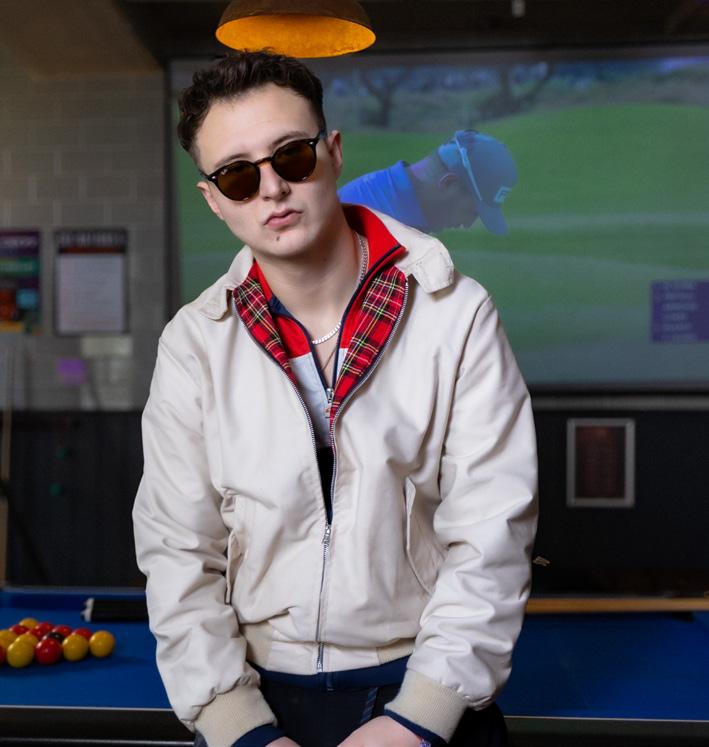
He may be touring the country and have 156,000 followers on TikTok, but he’s yet to make his fortune. His bed for the night is still a room in Camden, shared with the occasional mouse.
“When ‘Tina’ entered the charts, I was sleeping on an air mattress,” he laughs. “I’ve got enough to live on, but I’m still not earning much.”
While fond of London, Colchester remains home. “I want people to associate me with Colchester in the same way they do Amy Winehouse with Camden,” he says. “That’s the dream.”
His tour has also had the unexpected benefit of bringing together different parts of his disparate family. He’s on good terms with both his parents.
“My dad and I are pals,” he says. “We play a snooker game on our phones every night. He also came to my Norwich show, which was a big moment for me.”
However, loneliness is never far away. “Even in London, a city with 10 million people, you can still feel so alone,” he says. “That can roll into depression and anxiety.”
He has experienced bouts of both. “I try to think that the sun will set tonight and rise again tomorrow. And when it does, it

will be a new day.”
The music world is also notoriously fickle. It’s why Liam keeps his inner circle tight. “I’ve got two good mates I know I can trust,” he says. “I don’t have loads of friends, just people I know I can talk to if there’s a problem. It’s also important to be around people who provide positive energy.”
So, what’s his definition of success? “Inner happiness,” he replies. “It sounds sad, but my happiness comes from making other people happy. It’s walking around rooms and seeing fans.”
And if the performing career fizzles out? “There’s no plan B, so it has to work out, but I’ll always be happy as long as my family are around me.”
While confident in his abilities, he’s also realistic. He knows his strengths and weaknesses and doesn’t shy away from them. “I’m a performer,” he says. “I haven’t got a voice like George Michael. I can’t rap like Eminem. But I can perform. I can rock rooms.”
What can’t be denied is his deep-rooted work ethic. He proudly recalls how his mum worked different jobs to provide for the family, even though she’d have been better off on benefits.
Liam agrees he’s hard on himself but sees this as a positive. “I wouldn’t be able to fit the shoes of the person I want to become if I weren’t,” he says. “I need resilience to achieve my dreams.”
It’s almost 5pm by the time we leave the pub and emerge into the late afternoon sunshine. Liam displays an endearing combination of confidence and self-deprecation.
“I’m banned from there,” he admits with a shrug, nodding in the direction of one pub where drinkers are milling around outside. “They didn’t like me busking for their customers.”
However, rejection doesn’t worry him so much, and he is very aware of the fleeting nature of celebrity, particularly the ease with which you can go viral and get cancelled.
“Being famous on Instagram is like being rich at Monopoly,” he says. “I only answer to the mirror, you know what I mean? If I know that I’ve done the best job I can do, then I’ll be proud.”

On a cold Thursday evening in February, an enthusiastic crowd of all ages is packed into an upstairs room at the Prince Albert pub in Brighton.
It’s the perfect venue for the opening night of LiamC’s UK tour.
The outside of the building is plastered with murals of legends such as David Bowie; the inside is dark and intimate.
Liam emerges from a side door in a light blue Ellesse top, his right arm raised in acknowledgement of the cheers, and a ukulele strapped to his back.
He soon bursts into action on the small stage, belting out his most popular tracks, including ‘Dolla Dolla’ and ‘Cherryade’. The show is a masterclass in sweat and energy.
The crowd, some of whom have travelled from Cardiff and
Ireland, are word-perfect as they sing his lyrics back at him. It’s hard to believe he’s only performed on stage a relative handful of times.
As the gig starts drawing to a close, Liam takes a quick break, pours some water over his head and thanks everyone, ahead of belting out ‘Tina’.
“This song means so much to me, I’ve been grafting so hard,” he says. “This is a dream come true.”
It’s been a fantastic opening night. To finish it off, Liam comes down from the stage and heads into the centre of the room to perform an acoustic version of ‘Four Strings and the Truth’.
After soaking up the applause, there’s just enough time to thank everyone before he disappears for a well-earned breather.

Phobia expert Christopher Paul Jones reveals how you can tackle some of the most common workplace concerns.
Pitching a new idea, asking for a pay rise or applying for a promotion can all bring up fears of rejection and failure. Often, the mind plays vivid mental reels of everything going wrong: your boss saying no, colleagues dismissing your idea, or your application being ignored. The more you replay these imagined failures, the more real the fear feels.
Sadly, worrying about worst cases doesn’t keep you safe; it just makes you better at worrying. The more you imagine what you fear, the more you move towards it. Shifting those mental images and focusing on what you want instead makes a big difference. If you catch yourself
playing the negative scenario, make it silly by imagining it with cartoon music or an exaggerated filter to take away its power.
This fear can lead to hesitation, avoiding key conversations, and talking yourself out of opportunities before you even try.
Interrupt the mental film by asking, “How do I know this will happen?” Most fears are based on assumptions, not facts. Then, visualise the best realistic outcome. Shifting focus from worst-case to best-case moves you from anxiety to motivation.
Reframing rejection also helps. A “no” is rarely a verdict on your worth; it’s simply information. Treating it that way removes much of its emotional sting.
Lots of workers fear saying the wrong thing, making poor decisions, or having uncomfortable conversations. Ironically, this fear can increase the likelihood of mistakes because anxiety pushes the brain into a reactive state.
Perfectionism often drives this. The more you try to be flawless, the more pressure you put on yourself, and the more likely you are to slip up. Public speaking is a classic example. If you treat a presentation like brain surgery, your pressure skyrockets. Remind yourself it’s just a talk. If you make a mistake, you’ll learn and do it differently next time. Ironically, overthinking often causes the very mistakes you’re trying to avoid.
This fear can lead to hesitation, overanalysis, or avoidance of challenging tasks, which can erode confidence and trust over time.
Ask yourself whether you’re magnifying the situation. Most mistakes are not career-ending, but fear can make them seem that way. For difficult conversations, frame them as teamwork. Instead of saying, “What are you going to do about it?” say, “What are we going to do about it?” That small shift in language lowers defensiveness and turns a potentially tense conversation into a collaborative one.
Last but not least, one of the most common workplace fears is being judged. It can show up as nerves before speaking up in a meeting, a pounding heart before a presentation or the quiet dread of being the centre of attention in an interview. Underneath it all is usually the same concern: the fear of visibility and of other people’s opinions.
This often overlaps with imposter syndrome, which affects people at every level, from beginners to CEOs.
Many secretly fear they don’t deserve their position, that they got lucky, or that any moment someone will see through the cracks.
\\ WORRYING ABOUT WORST CASES DOESN’T KEEP YOU SAFE; IT JUST MAKES YOU BETTER AT WORRYING
This fear can cause people to hold back ideas, avoid speaking up, or shy away from leadership roles. Over time, it limits visibility, stalls growth, and feeds a cycle of self-doubt.
Shift your physical state before stressful moments. Stand tall, breathe slowly, ground your feet, and let your body settle. You can also use power poses. According to a study by Amy Cuddy and colleagues at Harvard, standing in an expansive posture for a couple of minutes (like the classic “Wonder Woman” stance) can increase feelings of confidence and reduce stress. Another useful tool is anchoring: recall a moment of confidence, press your thumb and forefinger together as you relive it, and use that anchor to bring that feeling into the present just before speaking.
Recognise – Identify What You’re Really Afraid Of
1
Name the real fear beneath the surface. Are you afraid of the task itself, or of how others might judge you? Clarity is the first step.
2
Use breathing and grounding to calm your body before meetings, interviews, or presentations.
3
Notice the hidden payoff of the fear. Avoiding a conversation might protect you temporarily, but recognising this lets you choose a better long-term strategy.
Observe the mental sequence that triggers the fear. Do you see a negative image, hear a critical voice, or feel tension? Identifying the pattern lets you interrupt it.
Let go of old workplace memories that are fuelling the fear. The past doesn’t dictate the present.
4 5 6
Rehearse confident body language, use anchors, and practise in low-pressure situations so it feels natural when the stakes are higher.
7
Visualise yourself handling the situation successfully. Mental rehearsal makes follow-through easier.
Our fears are often just repeated habits of thought and feeling. And like any pattern, if fear can be learned, it can be unlearned. In the end, fear only has the power you give it.
Christopher Paul Jones is a Harley Street phobia expert and author of ‘Face your Fears – 7 steps to conquering phobias and anxiety’.
Personal finance expert Sarah Coles insists there are solutions, even if your money problems have spiralled out of control.
For millions of people, short-term debts are a normal part of everyday life.
According to the Financial Conduct Authority, 39% of people have unsecured debts, such as credit cards and loans, with an average balance of £2,500.
The trouble is that because borrowing is so commonplace, it can lull people into a false sense of security and get out of hand. Last year, Citizens Advice helped more than 400,000 people with debt problems, and that’s just a small fraction of those who actually ran into trouble.
\\ ASKING FOR HELP ISN’T A SIGN OF WEAKNESS; IT SHOWS YOU’RE WILLING TO DO EVERYTHING TO TURN THINGS AROUND //
There are all sorts of reasons why debts can become an issue, from rising prices to major life changes, loss of income, or simply accidentally taking on too many financial commitments. It can build easily when you haven’t had the chance to get to grips with your spending, or when your mental health doesn’t feel robust enough to face it.
Unfortunately, it can easily become a vicious cycle, because the more you borrow, the more of your monthly budget goes on interest or debt repayments. This makes it harder to make ends meet, so you end up borrowing more and the debt snowballs.
Problem debts can take a major financial toll, bleeding you dry, affecting your credit record, and
making it more difficult to borrow for major life events such as buying your own home. It can also cause real harm to your wellbeing, building anxiety and keeping you up at night. If you have a difficult relationship with debt, you may know you need help, but there’s a risk you feel too embarrassed to ask for it. If this is holding you back, remember that debts aren’t who you are; they’re where you are right now. Asking for help isn’t a sign of weakness; it shows you’re willing to do everything to turn things around.
3
Tackle debts with the highest interest rates first, so less of your money goes on interest and more on repayments. Also, set up direct debits to ensure you meet all your minimum repayments.
4


You may want to consolidate debts while you tackle them, such as a personal loan or a 0% credit card. However, you need to be strict and stop borrowing immediately.
5
1
Make a list of everything you owe, from credit cards to buy-now-pay-later, overdrafts and loans – and how much interest you’re paying on each. That way, you’ll know exactly where you stand.
2
Until you know how much you have coming in and everything you’re spending, it’s difficult to plan effectively. Identify where spending can be reduced to free up a monthly sum for repayments.
Discuss your options with debt charities such as StepChange or Citizens Advice.

You and a debt charity can work out what you can reasonably afford to repay each month, then they will speak to everyone you owe money to and try to arrange an affordable repayment plan. You will usually make a single payment to the charity, and they’ll distribute it.
These are intended for people on low incomes, with very few assets and no home of their own. Payments are put on hold for a year, although the interest can still build. If your circumstances are no better at the end of the year, the debts can be written off. These are legal arrangements that will appear on your credit record for six years and will affect your ability to borrow.
Both are legal arrangements, with serious consequences if you miss payments. Monthly payments will be arranged and some of the debt will be written off at the end of the agreement. However, both arrangements will remain on your credit record for years, with serious implications for your ability to borrow.
Bankruptcy can also affect the kinds of jobs you may be able to do. They’re not arrangements to be entered into lightly, but for some people, they will be a lifeline.
Why am I borrowing? One-off expenses pushing you into the red need to be controlled. If you have too many spending commitments, the solution is structural cost-cutting.
4
Should I buy it now? Even if something is essential, consider if you can put off the purchase, and give yourself a chance to save towards it.
5
How much will this cost me in total? You must factor in the cost of the interest. With buynow-pay-later, it’s easy to focus on the monthly cost and lose sight of the full price.
6
Is there a behavioural element to any of this? It’s easy to fall into unhelpful patterns, such as spending when you’re feeling low or bored.
1 2 3
Do I really need this? Is it an essential purchase, or will you be borrowing money to pay for something that you don’t need?
Can I afford the repayments – even if my circumstances change? It’s also worth thinking about whether you can still afford them if you’re hit with the unexpected.
In what direction is my overall debt moving? The best way to avoid a debt spiral is to monitor your borrowing and stay alert if this rises.
7
Sarah Coles is head of personal finance at AJ Bell.