Music gives a soul to the universe, wings to the mind
~Plato
I apologize that a portion of an article written by Les Hicken was inadvertently omitted from the 2026 Winter Journal. The complete article will be published in the next print issue of the Journal this summer, and I regret any inconvenience this may have caused.
~Matt
Jason Fettig, President
Matt Temple, President-Elect
Elva Kaye Lance, Vice-President
Randall Coleman, Immediate Past President
Scott Tobias, Executive Secretary-Treasurer
Al & Gladys Wright Distinguished Legacy Award, Randall Coleman
Alfred Young Band Composition Contest, Audrey Murphy
AWAPA Commission, David Gregory
Citations & Awards, Heath Nails
Constitution & By-Laws, Matt Temple
Foster Project NBA Representative, Wolson Gustama
Hall of Fame of Distinguished Band Conductors Board of Electors, Thomas Fraschillo
Inclusion, Diversity, Equity, & Awareness, Tremon Kizer
Marching Band Committee, Adam Dalton & Bobby Lambert
Merrill Jones Composition Contest, Matt Smith
National Programs of Excellence, Melinda Mackenzie-Hall
NBA Foundation, Susan Creasap
Nominating Committee, Randall Coleman
Research Grants, Brian Silvey
Selective Music List – Concert, Arris Golden
Selective Music List - Jazz, Steve Shanley
Selective Music List – Marches, Col. Don Schofield
William D. Revelli Composition Contest, Matthew McCutchen
Young Composer Jazz Composition Contest, Richard Stichler
Young Composer Mentor Project, Frank Ticheli
Young Conductor Mentor Project, Linda R. Moorhouse
To promote and empower band performances throughout the world.
To encourage and promote the commissioning and performance of new wind band music.
To provide inclusive and authentic professional development opportunities and resources for everyone.
To acknowledge and celebrate the diversity of bands, educators, performers, and band support organizations.
To promote pride, commitment, and enthusiasm among band directors and performers.
To encourage lifelong involvement in music and to support interested students in pursuing musical careers.
To promote an inclusive community among directors, performers, the music industry, and all other band support organizations.
NBA Journal Editor, Matthew D. Talbert
NBA Journal Layout & Design, Nash P. McCutchen
Articles presented in the NBA Journal represent views, opinions, ideas and research by the authors and are selected for their general interest to the NBA members. Authors’ views do not necessarily represent the official position of the National Band Association, nor does their publication constitute an endorsement by the National Band Association.
This will be my final message to the membership of the NBA before I hand the leadership of our treasured organization to the next President and my friend and colleague, Matt Temple.
I want to express my gratitude to those who have helped make this past biennium a successful chapter in the ongoing history of the NBA. Everyone is so very busy these days, and anything we add to our already-full plates is far from insignificant. It is because of that fact that I am grateful to everyone who raised their hand when called to offer their time, expertise, and leadership to serve this organization.
The foundation of the NBA is our servant leadership team across the country—our fifty State Chairs and our five Division Chairs. Leading this essential team has been Andy Yozviak in the Eastern Division, Corey Spurlin in the Southern Division, Kevin Giraldi in the North Central, Dustin Seifert in the Southwest, and Nate Seamons in the Western Division. Thanks to each of these dedicated leaders for keeping our organization relevant and present across the nation.
If the State and Division leaders are the foundation of NBA, the Board of Directors is its backbone. This fantastic group
of professionals, both elected by the membership and specially appointed by the President each biennium offer such a wealth of expertise, creativity and perspective to the NBA. Many of our best programs have come from their ideas and counsel.
Beyond the appointed leadership, we have so many committees and special projects that run year-round in the organization. The chairs of these activities are the heartbeat of the NBA and the central activities that directly touch the lives of our members. There are too many contributors to these projects to list individually, but I do want to give one brief shoutout to Matthew Talbert who continues to serve as the editor of this wonderful Journal! To everyone who has spent valuable time helping to move the benefits and resources of the NBA forward in every possible way, thank you, thank you, thank you!
Lastly, I want to express my deep gratitude to my fellow members of the Executive Committee. With such an historic and wide-spread organization, one may assume that the NBA has a large central office with a staff that oversees all the ways in which we support bands across the nation. And one would be wrong! The Executive Committee is a group of five professional teachers who care deeply about this organization and work hard to grow it from our
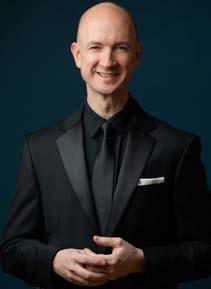
PROF. JASON K. FETTIG
... band is special because it truly represents the music of the people; across the spectrum of school, community, military, and professional ensembles, band is available to all, and all are welcome.
President’s Message, Jason K. Fettig, cont.
humble home offices. This work starts with the incredible service of our Executive Secretary and Treasurer, Dr. Scott Tobias. In addition to being a Past President of the NBA, Scott has taken on the Herculean task of running the administrative and fiscal aspects of several biennium now, and we are all grateful for his unequalled dedication to the NBA. Our Immediate Past President Randall Coleman will be rotating off the EC soon, and we have been so fortunate to benefit from his experience and continued leadership. Elva Kaye Lance joined the EC this biennium as Vice President, and she has set a new bar for commitment to all things NBA. She has been a fantastic addition to our leadership team and will no doubt be a major influence on our success in the years to come. And finally, our incoming President Matt Temple ascends to leadership after a record-breaking tenure on the EC. Matt has been the anchor of our team for a long time, and his wisdom, initiative, and innovative ideas are exactly what the NBA needs at this important time in its ongoing history. I am elated to pass the torch to him and to continue to serve as the Immediate Past President in support of his leadership for the next two years.
Finally, to all of you, my colleagues and my fellow bandmasters and supporters: Thank you for your membership in this organization, for sharing
your talent and passion for bands, and for your service to those who benefit from our cherished band tradition. I have long said that band is special because it truly represents the music of the people; across the spectrum of school, community, military, and professional ensembles, band is available to all, and all are welcome. Our music spans the entire history of our nation and continues to embody every corner of our diverse musical identities. Band is—and always will be—about community and sharing in our humanity with each other. And the National Band Association will always be there to celebrate and illuminate this precious gift.
With gratitude, respect, and joy,
Jason K. Fettig President National Band Association
Spring has sprung. I am always captivated by the vitality of nature and the resurgence of life each spring. The energy is palpable and is akin to the excitement I feel as one biennium closes and another begins. This transition is particularly meaningful to me as I prepare to become the President of the National Band Association for the next two years.
I will begin by acknowledging that I am indebted to my forebears. It has been a distinct privilege to work alongside the current members of the Executive Committee. The longest serving member of our team is Executive Secretary-Treasurer Scott Tobias, who is a master at keeping the many “plates” of the NBA spinning constantly. I will dearly miss the institutional knowledge and camaraderie of outgoing Past President Randall Coleman. He has faithfully served our organization for many years now. Even though President Fettig and I have riffed on the doppelganger theme many times, I can only hope to fill his shoes with as much vision and passion as he has demonstrated. I have also thoroughly appreciated the thoughtful advice and leadership of Elva Kaye Lance as Vice-President, who keeps us moving in the right direction at all times. Many more thanks are due to the division chairs, state chairs,
and other members of the Board of Directors. Truly, it takes a village.
As we look forward to the new biennium, I am thrilled to announce the expansion of some key initiatives. The Access Collective has been a pilot project for the past few years and will now become an official part of the NBA’s ongoing programs. Led by Mary Crandall, this important initiative addresses the importance of honoring diversity in bands, whether it be from the perspective of the performers, composers, or audiences at large. This fall, we will also begin a series of virtual clinics designed specifically for pre-service teachers. My hope is that these initiatives will expand the mission of our organization in timely and relevant directions.
Lastly, we welcome new members to the Board of Directors, who I know will serve our organization with renewed passion and unwavering commitment. Whatever your involvement with bands may be, the National Band Association is here to support your efforts and create an innovative future for all of us.
Let’s Band Together!
Matt Temple President-Elect National Band Association
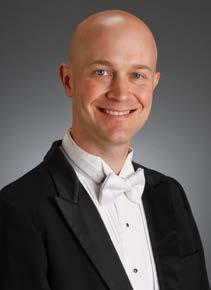
Whatever your involvement with bands may be, the National Band Association is here to support your efforts and create an innovative future for all of us.
The National Band Association was founded on September 11, 1960. This new organization was the dream and brain child of Traugott Rohner, the editor and founder of The Instrumentalist magazine. Rohner set up a meeting with two of the most capable leaders among America’s band directors, Dr. Al G. Wright, who was at that time Director of Bands at Purdue University, and John Paynter, Director of Bands at Northwestern University, and these two very able leaders established a new, inclusive band organization which grew into the largest band organization in the world.
Al Wright was the NBA’s first president, and he soon became aware of a need to establish a special, high level award program to recognize excellence and exceptional service to bands. The result of this was the establishment of The Academy of Wind and Percussion Arts (AWAPA). This award was established for the purpose of recognizing those individuals who have made truly significant and outstanding contributions to furthering the excellence of bands and of band music, and it was not to be limited to band directors, but to anyone who’s contributions were determined to be so outstanding that they deserved and warranted honor and recognition.
The nine-inch silver AWAPA figure is designed to be the “Oscar” of the band world. Elections to the academy are made from time to time by the Board of Directors acting upon nominations from the AWAPA Commission. Presentations of AWAPA awards are made at band performances or meetings of national significance. The new recipients of the award are announced at the annual National Band Association Membership Meeting at the Midwest Clinic in Chicago each December, and the honorees from the previous year are invited to attend that meeting for a formal presentation of the award.
If the recipient is not able to be present at that meeting, the award is presented at another prestigious band event where the recipient is properly honored and recognized. The award consists of a silver statuette, a silver medallion, and an engraved certificate. The Academy of Wind and Percussion Arts represents the highest honor which the National Band Association can confer on any individual.
The NBA represents the best there is in a great, proud profession. When we honor our very best, we bring honor on our organization and on our profession. A list of the past recipients of the AWAPA Award is literally a “Who’s Who” list of some of the greatest leaders involved in the band movement during the past six decades. The list includes an international cross section of important individuals representing all aspects of the band world, who have rendered remarkable service to bands.
William D. Revelli
November 25, 1961
Karl L. King
November 10, 1962
Harold D. Bachman
January 9, 1965
Glenn Cliffe Bainum February 21, 1965
Al G. Wright March 7, 1969
Harry Guggenheim August 18, 1969
Paul V. Yoder December 18, 1969
Toshio Akiyama December 13, 1970
Richard Franko Goldman
July 23, 1971
John Paynter March 5, 1972
Roger A. Nixon
July 12, 1972
Traugott Rohner
February 11, 1973
Sir Vivian Dunn March 2, 1973
Jan Molenaar July 11, 1974
Frederick Fennell August 3, 1975
Harry Mortimer August 3, 1975
George S. Howard December 16, 1976
Mark Hindsley March 2, 1978
Howard Hanson December 13, 1978
James Neilson December 13, 1978
Vaclav Nelhybel December 13, 1978
Leonard Falcone December 12, 1979
Alfred Reed December 12, 1979
Arnald Gabriel December 16, 1980
Nilo Hovey
December 16, 1980
Trevor Ford December 16, 1981
Vincent Persichetti December 16, 1981
Clare Grundman December 15, 1982
Morton Gould December 15, 1982
Karel Husa December 15, 1982
Harry Begian December 14, 1983
Francis McBeth December 12, 1984
Normal Dello Joio December 12, 1984
J. Clifton Williams December 18, 1984
Frank W. Erickson December 17, 1986
Neil A. Kjos December 17, 1986
Evans
December 20, 1986
Hugh E. McMillen
December 17, 1986
Claude T. Smith December 16, 1987
Warren Benson December 14, 1988
John Bourgeois December 14, 1988
Donald Hunsberger December 19, 1990
Edgar Gangware December 19, 1991
W J Julian December 16, 1992
Geoffrey Brand December 20, 1995
Harvey Phillips December 21, 1995
Richard Strange December 20, 1995
L. Howard Nicar, Jr. October 16, 1996
Kenneth Bloomquist December 18, 1996
H. Robert Reynolds December 18, 1996
Elizabeth Ludwig Fennell December 17, 1997
Arthur Gurwitz December 17, 1997
Russell Hammond December 14, 1999
William F. Ludwig December 14, 1999
John M. Long December 20, 2001
Raoul Camus December 19, 2002
Paul Bierley
June 14, 2003
William J. Moody
December 18, 2003
Earl Dunn
December 16, 2004
Victor Zajec
December 16, 2004
James T. Rohner
December 15, 2005
Frank Battisti
December 21, 2006
David Whitwell December 20, 2007
Frank B. Wickes
December 18, 2008
Ray Cramer December 17, 2009
James Croft
April 16, 2011
Paula Crider
December 15, 2011
Mark Kelly
December 15, 2011
Bobby Adams
December 19, 2013
Richard Floyd December 18, 2014
Edward Lisk
December 17, 2015
Linda R. Moorhouse
December 15, 2016
Thomas V. Fraschillo
December 21, 2017
John Whitwell
December 20, 2018
Richard Crain
December 19, 2019
Loras John Schissel
December 15, 2020
Bruce Leek
December 16, 2021
Julie Giroux
December 20, 2022
Frank Ticheli
December 20, 2022
Gerald Guilbeaux
December 21, 2023
John Stoner
December 21, 2023
Tim Lautzenheiser
December 19, 2024
Eugene Migliaro
Corporon
December 19, 2025
The mission for directors of school bands is understood inherently by those who think of themselves more often as instrumental music teachers rather than simply as band directors. The basic objective of instrumental music education is that students will learn performance skills in order to understand musical language and to experience the joys of recreating music in the expressive medium of their choice. Music education should prepare students also for a fuller understanding and appreciation of the music they will be hearing the rest of their lives regardless of its style or venue. Efforts to address the National Standards for Music Education in band class by including music theory, music history, improvisation, and composition will help the students be better listeners in adulthood and will make better musicians of those who wish to pursue musical careers or practice music as an avocation in adult life.
The National Band Association would like school administrators, teachers, and parents to recognize that students elect to study instrumental music for a variety of reasons, including: as an outlet for creativity, a source of social interaction with like-minded peers, a possible career choice, gratification that comes from recognition by responsive audiences, discipline through study and practice, and service to school and community. The evaluation of instrumental music programs should be grounded in a review of the educationally and aesthetically justifiable objectives that are explicit in this mission statement.
The long-respected model for learning to play a musical instrument based on the role of artist-teacher with a studio of private students applies as well to school bands. Band class must provide these same foundations: a correct concept of characteristic tone quality, development of technique based on a graded course of study, a formal system for counting rhythms, practice in developing good intonation, and the sure goal of playing expressively.
An instrumental music program should offer a broad range of musical experiences: an extensive solo and chamber music repertory that provides subtle opportunities for nuance and other systems of expression; a school jazz ensemble that stresses rhythmic precision, understanding of harmonic progression, and creative improvisation; a concert band, the core of the program, where our musical heritage is transmitted through inspirational compositions by the most creative composers.
Service activities such as marching band are often important to the school and community, and students who participate gain social, educational, and musical values. Because evaluative competition can raise standards and motivate progress, NBA strongly recommends that all bands participate in festivals or contests sponsored by district and state music education associations, especially when a rating rather than a ranking is the goal. However, the integrity of the instructional program can be threatened by a disproportionate emphasis on competitions and servicerelated performances. Marching band activities that require extra rehearsals and travel time should be scheduled with concern for the many responsibilities that students have in addition to their musical studies, and must never be the focus of the instrumental music program. Excessive demands on students, parents, and community––financial and otherwise––bring about consequences harmful to the essence of the instrumental music program.
History demonstrates that those who cultivate a special intelligence in an area of personal interest make great contributions to the way we live. Efforts by legislators or educators to emphasize one area of study alone stifle the pluralism that has been one of this country's strengths. Rather, schools should provide a broad base of knowledge for students and also encourage development of the special abilities of those who demonstrate the capacity to excel. Instrumental music studies provide a laboratory of artistic and social opportunities for individual development that contributes to the collective good.
The arts provide unique forms of knowledge, present a basic means of communication, and produce lasting works that are the hallmarks of a civilization. President Abraham Lincoln reminded us that education is not for the purpose of learning to earn a living, but for learning what to do with a living after it has been earned. Whether in the arts or other areas of interest, students who are encouraged to develop their talents and interests participate in the continuous regeneration of our democratic ideals.


Al G. Wright 1960 - 1962
Honorary Life President
John Paynter 1962 - 1966
Honorary Life President


James Croft 1986 - 1988
Frank B. Wickes 1988 - 1990


Edward W. Volz 1966 - 1968
William J. Moody 1968 - 1970

Edward S. Lisk 1990 - 1992

George S. Howard 1970 - 1974

F. Earl Dunn 1974 - 1976
William D. Revelli 1976 - 1978


W J Julian 1978 - 1980

Kenneth Bloomquist 1980 - 1982
James Neilson 1982 - 1984

James K. Copenhaver 1984 - 1986


Robert E. Foster 1992 - 1994
John R. Bourgeois 1994 - 1996


James Keene 1996 - 1998

Thomas Fraschillo 1998 - 2000

Paula Crider 2000 - 2002

David Gregory 2002- 2004

Linda Moorhouse 2004- 2006
Bobby Adams 2006- 2008
Finley Hamilton 2008- 2009
John Culvahouse 2009- 2012
John M. Long 2010 Honorary President
Roy Holder 2012 - 2014
Richard Good 2014 - 2016
Scott Casagrande 2016 - 2018
Scott Tobias 2018 - 2020
Rebecca Phillips 2020 - 2022
Randall Coleman 2022 - 2024










& AWARDS
All winners of the following awards are listed at NationalBandAssociation.org/Awards-Recognition
Academy of Wind and Percussion Arts (AWAPA) Award
Al & Gladys Wright Distinguished Legacy Award
NBA Hall of Fame of Distinguished Band Conductors
Programs of Excellence Blue Ribbon Award
The NBA/Alfred Music Young Band Composition Contest
The NBA/Merrill Jones Memorial Band Composition Contest
The NBA/William D. Revelli Memorial Band Composition Contest
The NBA Young Composers Jazz Composition Contest NBA
Mentor Award
Citation of Excellence
Outstanding Jazz Educator
Citation of Merit for Marching Excellence
Outstanding Musician Award
Outstanding Jazz Musician Award
Music Camper Award
Band Booster Award
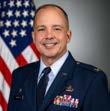
Elementary/Middle/Jr. High School Representatives
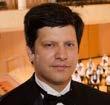



High School Representatives

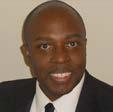
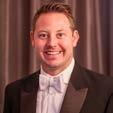
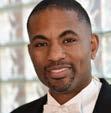
College/University Representative
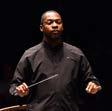
At-Large Representatives
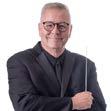
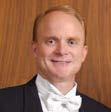



Growing up, I always wanted to be a teacher. I truly fell in love with school and the idea of school during my high school experience. I always knew I wanted to be a teacher. I just never knew what subject. Music was always a part of my world. I was involved with elementary music, starting clarinet in sixth grade band and then matriculating all the way to high school band and becoming the drum major for the marching band. It was my junior year of high school when I decided to attend a large state school’s honor band. After attending the festival, I was convinced music was my place and I wanted to teach band. I applied to Alabama Agricultural & Mechanical University and was awarded an academic and music scholarship. As a student at AAMU, I was a member of the Marching Maroon and white Band, University Wind Ensemble, and Athletic Pep Band. I also worked on campus as a resident assistant and lived all four years on campus.
Before I ever stepped into a
classroom as a teacher, I learned what it meant to belong in music. That lesson didn’t come from a textbook—it came from my experience at an HBCU. For many music educators, our training is rooted in technique, pedagogy, and content knowledge. While those are essential, my HBCU experience taught me something equally important: music is cultural, communal, and deeply tied to identity.
This article reflects on how my time at an HBCU shaped my musicianship, my teaching philosophy, and my understanding of what it means to educate the “whole” student.
At my HBCU, music was never treated as isolated notes on a page. Every rehearsal, performance, and classroom discussion was connected to something bigger—history, community, and lived experience. I remember rehearsals where we didn’t just play the music—we talked about
why it mattered. Whether it was a spiritual, a gospel arrangement, or a contemporary piece, there was always context. That approach fundamentally changed how I think about teaching music. I distinctly remember the Director of Bands during rehearsal giving us the history of pieces, making sure we understood the feeling and mood of the music, teaching us the context about why the piece was written. This teaching translated not only in music rehearsal but also into school culture and pride. The Director would share stories of the history of AAMU from past directors, the founders history, historical moments on campus and other rich traditions about the legacy of AAMU. All of these moments (which I will cherish forever) have shaped me and molded my way of teaching and thinking about how I engage with my own students in the classroom.
In my classroom now, I try to move beyond “perform this correctly” toward:
• What does this music represent?
• Who created it, and why?
• How does it connect to students’ lives?
• How does this connect with our school and community? This shift makes music education more meaningful and relevant, especially for diverse student populations.
Continued on next page
More Than a Degree ..., Caleb J. Norton, cont.
One of the defining characteristics of my HBCU experience was the expectation of excellence. There was no room for mediocrity—not because of pressure alone, but because of pride. The faculty didn’t just teach—they demanded your best because they believed you were capable of it. I had so many outstanding faculty members in music while an undergraduate student. They truly cared for us and nurtured us to be better human beings as well as scholars in the field. Our department felt like a family. We were all very close and connected.
That environment instilled:
• Strong work ethic
• Personal accountability
• Attention to detail
• Support for one another
As an educator, I’ve carried this into my own teaching. Students rise to the level of expectation. When we communicate belief in their potential while holding them accountable, they respond.
Representation matters, especially in music education where students may not always see themselves reflected in the curriculum or leadership.
My HBCU experience showed me:
• Students need role models who affirm their identity
• Cultural validation builds confidence
• Diversity in music education is not optional—it’s necessary
In my teaching, I intentionally incorporate diverse composers, genres, and musical traditions so students can see themselves in the music they study. It is up to us as educators to teach the next generation of scholars to believe in themselves and to love one another through the learning and teaching of various music and culture. In my own classroom, I teach a variety of world music genres and I am very thoughtful in showing a varied representation of composers and styles to my students.
At an HBCU, music is not an individual activity—it’s a shared experience. Whether in the band, choir, or classroom, there was a sense of family. We took pride in making sure our band room was clean, organized, and prepared. During the fall season during marching band some of us would gather and prepare the field or other task needed to ensure rehearsal ran smoothly. You weren’t just preparing for a performance—you were representing something bigger
than yourself.
This taught me:
• Collaboration over competition
• Responsibility to the group
• The importance of community in learning
In my classroom, I aim to build that same sense of belonging. When students feel connected, they engage more deeply and take ownership of their learning. One lesson I have learned through my experiences with HBCU music programs is that history does not live only in archives. It lives in people, in rehearsal rooms, in stories told between classes, in handwritten arrangements, and in the musical traditions passed from one generation to the next. This realization has shaped my own dissertation work on Warren L. Duncan’s career at Tuskegee University, where I am examining how one educator’s long-term service helped shape a musical community across decades.
One of the most powerful aspects of my HBCU experience was how tradition and innovation coexisted. There was deep respect for legacy—marching band traditions, gospel roots, historical repertoire—but also space for creativity and evolution.
Continued on next page
This balance influences how I approach teaching today:
• Honor musical traditions
• Encourage creativity and student voice
• Embrace new tools (including AI and technology)
Students should not only learn music—they should create, adapt, and innovate within it.
My HBCU experience offers several takeaways for music educators working in any setting:
1. Teach Music as Culture
Go beyond the notes.
Provide historical and cultural context.
2. Maintain High Expectations
Students will meet the standard you set—don’t lower it.
3. Prioritize Representation
Diversify repertoire and highlight voices from multiple backgrounds.
4. Build Community
Create classroom environments where students feel seen, valued, and connected.
5. Balance Tradition and Innovation
Respect the past while preparing students for the future.
More Than a Degree ..., Caleb J. Norton, cont.
6. Allow Student Voice
Give students opportunities to guide their own learning opportunities.
My HBCU experience didn’t just prepare me to be a musician—it prepared me to be an educator who understands the deeper purpose of music. It taught me that music education is not just about performance—it’s about identity, culture, and community. As music educators, we have the opportunity—and responsibility— to create spaces where all students can see themselves, hear themselves, and ultimately, be themselves through music.
It is easy, in the life of a band director, to let urgency dictate priority. Performances loom, adjudication deadlines approach, and high school ensembles often command the bulk of our attention. In rural 5–12 programs especially, the demands are unrelenting—and too often, our youngest musicians are left to develop in the margins.
This reality prompted a question:
What if we gave beginning band students a meaningful, performance-based experience of their own?
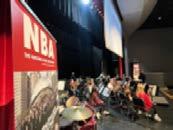
With that in mind—and with the generous support of the National Band Association—I planned and hosted the “Rising Stars” Band Festival, an event designed specifically for first- and second-year players. The goal was simple but intentional: to create an experience that would inspire, validate, and accelerate musical growth at the earliest stages of development.
Beginning students rarely have opportunities to see beyond their own classroom. By bringing together young musicians from multiple districts, this event allowed students to hear peers at similar stages, broadening their understanding of what is possible.
Equally important, the festival created a shared goal. Students were not just “preparing for class”—they were preparing for a performance. That shift in mindset alone proved powerful.
The inclusion of a guest clinician added another valuable layer. Hearing feedback from someone other than their own director helped reinforce core concepts and validated the daily instruction happening in each classroom.
From the outset, collaboration was central to the event’s design. I intentionally invited directors who were early in their careers and working in similar school settings. There is a unique
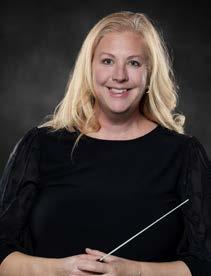
Claire Larson serves as Band Director at Kenyon-Wanamingo MS/HS in Kenyon, Minnesota. Larson earned a Masters of Arts in music education from the University of Minnesota and a Bachelors of Music in music education from St. Olaf College. Her principal teachers were; Miles 'Mity' Johnson, Dr. Timothy Mahr and Dr. Craig Kirchoff. Larson has both performed and presented at the MMEA midwinter clinic, and has coached the All State horn section. In 2017, Larson was nominated for Minnesota "Teacher of the Year." Larson has served as the president of the Minnesota Band Directors Association and is honored to be a member of Phi Beta Mu. Prior to her position in the Kenyon-Wanamingo schools, Larson served as visiting professor and director of the Symphony Band at Carleton College, band director at Brooklyn Center MS/HS and Patrick Henry High School in Minneapolis.
professional connection that forms when educators share the same challenges—and that sense of camaraderie became an unexpected strength of the day.
The clinician selection followed a similar philosophy. Rather than seeking a long-established figure, I chose an emerging educator— someone relatable, energetic, and eager to contribute. This decision paid off in both student engagement and professional relevance.
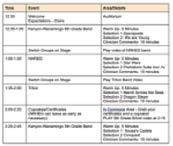
The structure of the festival prioritized efficiency and energy:
• Each ensemble had a 25-minute slot
• Performances included a warm-up, two selections, and clinician feedback
• Audience engagement was encouraged throughout
One particularly effective element was the use of prerecorded student reflection videos. In these clips, students shared what they felt they did well and
where they hoped to improve. These videos served two purposes: they provided the clinician with valuable insight ahead of time and created smooth transitions between performing groups.
A defining feature of the festival was the absence of competition. Instead of scores or rankings, the clinician used a simple framework: Developing, Established, Exceptional. This language shifted the focus from comparison to growth, allowing students to reflect without the pressure of judgment.
The result was a noticeably different atmosphere—supportive, celebratory, and focused on learning.
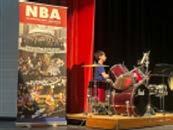
The impact on students was immediate and visible. They listened attentively to other groups, commented on repertoire, and engaged with clinician feedback in meaningful ways. Perhaps most importantly, they experienced success.
Rising Stars ..., Claire Larson, cont.
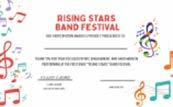
At the conclusion of the event, students were recognized with certificates and a simple celebration. While modest, this moment reinforced an important message: your work matters, and your growth is worth celebrating.

One of the most meaningful outcomes extended beyond the students.
Prior to the festival, participating directors engaged in an open email dialogue—informally titled the “Truth Room”—where we shared candid reflections on the challenges of teaching beginning band. These conversations revealed both common struggles and diverse approaches.
Following the event, we continued that dialogue in person, Continued on next page
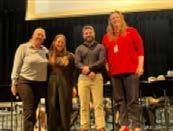
reflecting on what worked, what could improve, and how we might continue to support one another. This level of honest, peer-driven professional development is rare— and incredibly valuable.
No event is without its challenges. One clear takeaway was the need to intentionally plan for the attention spans of younger students. Fifth- and sixthgrade musicians require frequent engagement, and managing energy in the audience proved to be an important consideration.
However, even this challenge reinforced a broader truth: these
students are eager, energetic, and ready to learn—if we design experiences that meet them where they are.
As music educators, we often invest heavily in our most advanced ensembles. While that work is important, we must also recognize the untapped potential in our youngest musicians.
Experiences like the Rising Stars Festival demonstrate that, with thoughtful planning and collaboration, we can:
• Inspire early engagement
• Strengthen foundational skills
• Build lasting enthusiasm for music
When we elevate the beginning band experience, we do more than improve performance outcomes— we shape the future of our programs.

Morton Gould (1913–1996) wrote Ballad for Band in February of 1946 at the request of conductor Edwin Franko Goldman. Goldman and his band premiered the work on June 20, 1946 in New York City. Although Ballad was one of Gould’s earlier significant works there is confusion as to whether or not it is Gould’s first original work for wind band. In his 1995 article, Thomas Stone states that David Bennett, an arranger with Carl Fischer, had transcribed Cowboy Rhapsody (1939) and Gould had transcribed his own Jericho Rhapsody (1941) and “[did] not produce[ ] original works for the medium.”1 However, in his 1978 dissertation, Lee Evans asserts that Gould’s Jericho Rhapsody is an “early major work for symphonic band” and was “composed in 1940 for [Col.] George Howard.”2 In addition to these works, Gould was commissioned by the Cincinnati Symphony and conductor Eugene Goossens to be part of a project to compose a series of patriotic fanfares. This commission resulted in Fanfare for Freedom in 1943. Underneath the title however is the phrase “for symphonic wind ensemble” preceding Frederick Fennell’s use of this title by nine years, however Gould did not include
saxophones or euphoniums.3 Whether or not Ballad was Gould’s first original work for wind band, Gould had very few American band composers to emulate with very few original wind band works to draw influence from.4
While writing the piece, Gould was working in radio stations such as New York’s WOR, NBC, and CBS, conducting and arranging orchestral programs. He also served as the musical director for the William H. Weintraub advertising agency in 1943. Gould was also active as a composer for films (i.e., Delightfully Dangerous, Cinerama Holiday, Windjammer, etc.), and Broadway scores such as Billion Dollar Baby and Arms and the Girl. For additional information on Morton Gould and his biography please refer to Peter W. Goodman’s Morton Gould: American Salute as it is an exhaustive source including interviews with Gould himself.5
Despite Gould’s busy schedule he found time to complete Goldman’s request for his band. Ballad was inspired by African-American spirituals, and instead of using existing folk material as Gould often did (i.e., American Salute, Jericho Rhapsody), Gould developed original material. Gould expanded

Trevor Frost (b. 1994) currently serves as Assistant Professor of Music and Director of Bands at Lindenwood University in St. Charles, Missouri. He holds a B.M. in music education and a M.M. in music conducting from the University of New Hampshire as a student of Dr. Andrew Boysen Jr. and studied composition with Dr. Boysen and Dr. Michael Annicchiarico, and earned his D.M.A. in wind band conducting from the University of Nebraska-Lincoln as a student of Dr. Carolyn Barber and studied composition with Dr. Tyler White and Dr. Greg Simon.
Frost's primary area of research is influencing wind band literature focusing on its dynamic relationship between programming practices, trends, and band director thinking along with its role in diversity, equity, inclusion, and accessibility. Frost remains active as a published composer, receiving commissions and performances across the U.S.
on how spirituals influenced his music in an interview with Stone: Continued on
I have always been sensitive to and stimulated by the sounds that I would call our “American vernacular” –jazz, ragtime, gospel, spirituals, hillbilly. The spirituals have always been the essence, in many ways, of our musical art, our musical spirit. The spiritual is an emotional, rhythmic expression. The spiritual has a universal feeling; it comes from the soul, from the gut. People all over the world react to them…I am not aware of the first time I heard them. It was undoubtedly a sound I heard as a child; maybe at a revival.6
Gould is right in that AfricanAmerican spirituals have a “universal feeling” as West African tribes “viewed the world as one to relationship body, soul, and mind–-people connected to one another through family, customs, and dependency.”7 Spirituals are known to have originated from West Africa, an important distinction as the slave trade concentrated on the people from this region of continent, and passed down through oral tradition.8 The speech was rhythmic and musical because of the raised and unraised tones of the African languages but the words were not spoken in isolation but rather punctuated by responses from the listeners.9 Along with the rhythmic style and the use of call and response, spirituals use pentatonic scales that form the basis of most melodic material while utilizing parallelism usually at the fourth or fifth.10
With no direct quotations of pre-existing melodies, Gould constructed Ballad for Band with original melodies utilizing pentatonic scales and the use of open intervals, such as fourths and fifths, that resulted in a transparent quality. Along with Gould, composers such as George Gershwin, Aaron Copland, and Charles Ives had also turned to the American vernacular as sources of inspiration, creating works that were distinctly American.
The work is scored for the conventional symphonic band with the addition of flugelhorns. Gould used the flugelhorns to bridge the timbral gap between the trumpets and horns, which generates a uniquely warm and gentle tone color in the opening and closing sections of the work.11 He also included flugelhorns in his Jericho Rhapsody written for William H. Revelli and the University of Michigan Band.
The following quotation is the program note from the premiere:
The Ballad for Band is a lyrical expression for the band. The nature of the work is simple and evocative utilizing the rich sonorities of the symphonic band. The piece opens in an atmospheric mood. Fragmentary lyrical passages impose themselves. The work develops to a more rhythmic and dance-like middle section, rugged and incisive. This leads to a climax from which
there is a transition tapering-off of the original mood on which the composition ends.
The Ballad was composed in February 1946. It is scored for the conventional symphonic band.
[notes from the premiere, June 20, 1946]12
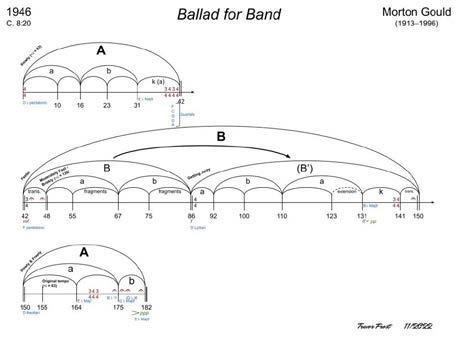
Ballad for Band is in ABA form with the slow A section contrasted with a lively and rhythmic B section. Below is an analytical chart for Ballad for Band (see figure 1, page 28). For another analysis, please refer to Dr. Thomas Stone’s dissertation and his article “Morton Gould - Champion of the Band” in BD Guide. 13
When asked about the structure of the work Gould said,
Ballad for Band is basically an introverted piece that starts slowly, is linear, and has a quiet lyricism; it is not big band in the sense that there is little razzle-dazzle. A discerning listener who is programmed to appreciate the nuances and subtlety of a contemporary piece would respond favorably to this, but others merely find it from relatively pleasant to slightly boring. Only certain listeners respond to what this piece represents musically.14
Gould, when asked about the contrasting fast middle section,
Continued on next page
Martin Gould's Ballad For Band ..., Trevor Frost, cont.
offered the following observation:
“You stop contemplating your navel, and you start to dance.” 15
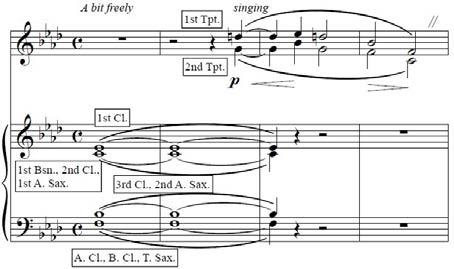
The work opens with D pentatonic scale (see figure 2, page 29). The bassoons, clarinets (including alto and bass clarinet), and the alto and tenor saxophones begin on a unison D♭. The 3rd clarinet and 1st alto saxophone remain on the D♭ while the bassoons, 1st and 2nd clarinets, alto and bass clarinets, 2nd alto saxophone, and tenor saxophone move in unison down to a B♭ on the upbeat of one. On beat two the bassoons, 1st clarinet, bass clarinet, and tenor saxophone then move up in unison to an E♭ as the previous voices continue to hold their pitches. On the downbeat of m. 2 the D♭ pentatonic scale is picked up by the 1st and 2nd cornet on F with the former moving down by step to E♭ on the upbeat. On beat two of the same measure, the 3rd cornet and 1st trombone playing a unison E♭ with the bassoons, 1st clarinet, bass clarinet, and tenor saxophone. The 3rd cornet then moves up to an A♭ on the upbeat of two, completing the scale: D♭ (3rd clarinet, 1st alto saxophone, and 1st cornet), E♭ (bassoons, 1st clarinet, bass clarinet, and tenor saxophone), F (2nd cornet), A♭ (2nd cornet), and B♭ (2nd clarinet, alto clarinet, and 2nd alto saxophone).
The scale increases rhythmic activity through the use of eighth notes being passed to and from the woodwind grouping to the brass
grouping.
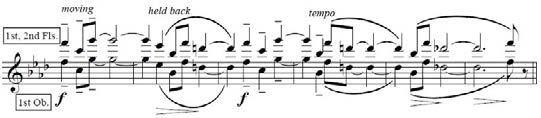
The already slow rhythmic activity stalls on beat three of measure five as the bassoons, clarinets (including alto and bass clarinet), and alto and tenor saxophones hold a Cm7/F chord. The downbeat of m. 6 introduces a new timbre with the flugelhorns and French horns as they move in parallel and oblique motion, primarily using perfect fourths and fifths (see figure 3, page 29 ).
After the short caesura in m. 9 the spacious opening continues with a quartal cluster that includes a tritone (A♭-D-G-C) on the downbeat of m. 10 in the trumpets and horns. This tension is released in the following measure with the 1st and 2nd cornet and 1st trombone playing a second quartal cluster without the tritone (G-C-F). This tension and release repeats all the while the flutes and 1st oboe play in octaves utilizing primarily leaps of fourths and fifths (see figure 4, page 30).
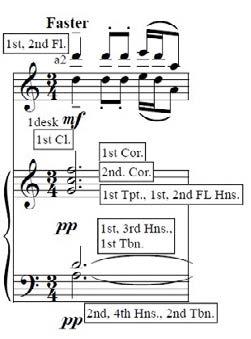
This spaciousness, along with the growth and release of tension, continues up until m. 42 where the B section begins and the rhythmic activity picks up. Held over from m. 41, a quartal harmonic structure in the brass outlining an F pentatonic scale (F-G-A-C-D) reinforces the flute and clarinet motive in octaves (see figure 5, page 30).
The B section, mm. 42–149, is divided into two smaller sections.
The first section (B), mm. 42–85, starts the new material established by the flute and clarinet motive in m. 42. The second section (BI), mm. 86–149, is derived from the B section (see figure 6, page 31).
The rhythmic activity is further increased starting in m. 86, the start of the BI section. This marks the first instances of syncopation and call and response material, common characteristics associated with the jazz idiom. The woodwinds expand the motive from the B section in octaves and is responded by the brass and contrabassoon. Before the response occurs, it is initiated by an Em chord with an 11th extension. The response is carried out by the 1st and 2nd cornet and the trombones moving, or planing in the jazz idiom, in parallel fourths (see figure 7, page 31).
Although Gould does not mention specific influences from jazz that are used in Ballad for Band, Gould recognized that jazz music was a popular genre that was unique to Americana and embraced it writing, “Jazz has its place and fundamentally is perfectly legitimate” and to “absorb the jazz idiom.”16 It is no surprise that Gould utilized characteristics of the jazz idioms in his compositions including Ballad for Band (see figure 7, page 31).
Another example that utilizes
Martin Gould's Ballad For Band ..., Trevor Frost, cont.
chord extensions can be found in mm. 173–2 while the flutes and English horn play the melody in octaves. The bassoons, clarinets (including alto and bass clarinet), cornets, and the horns hold a B♭11 chord with the B♭ in the 2nd clarinet and the 3rd and 4th horn and the E♭, the 11th, in the 2nd bassoon and 2nd clarinet (see figure 8). The final three fermatas (mm. 176, 178, and 181) that conclude the piece also feature chords with extensions: G♭Maj9, D♭6, and an E♭Maj9 respectively.
There are two main tempos found in Ballad for Band along with many tempo alterations that the conductor should respect. Both A sections are approximately ♩ = 63 with the B section at ♩ = 126. He does not give us another tempo marking until m. 42 where he indicates Faster. It is important not to go above ♩ = 126 until m. 48 which is marked Moderately fast - briskly (♩ = 126). A tempo discrepancy can be found at m. 150. Gould writes Slowly and freely while at m. 155 Gould writes Original tempo. Between these bars the conductor should be mindful of the tempo fluctuations needing control while smoothly leading into m. 155. While there is no indication of beats per minute, Gould writes Original tempo at mm. 155 recalling the first written tempo from m. 1, ♩ = 63.
resident composer/conductor at the Disney Institute. He left an impression that American musicians, composers, and conductors will always cherish. As one of the first original works for wind band by an American composer (excluding marches by Sousa, King, Fillmore, et al.), Ballad for Band set the standard for the American model as it captured the spirit of popular music of that era as well as dance forms and jazz.
Unfortunately, Ballad for Band, along with other works written by Gould, is not often performed. In 1998, Craig S. Young investigated what wind band literature was being performed by high school wind bands from 1994 to 1997 and to evaluate the quality of this performance core, a body of wind band compositions that are most frequently performed which appear in multiple repertories.17 Between 1994 and 1997 only three of Gould’s compositions had a total of four performances.18
Morton Gould was a 2005 Grammy Lifetime Achievement Award winner, and the first
Furthermore, many wind band conducting undergraduates are largely unaware of his works through performance. Four studies published between 2009 and 2012 reveals programming trends for university wind ensembles in different conferences. In 2009, Sean R. Powell investigated programming trends of Big Ten university wind ensembles between 2002 and 2006.19 Powell’s study found that 1,856 original band works were performed with 183 works being performed more
than once. Gould’s Symphony No. 4: West Point received three performances with Ballad for Band only receiving two performances.20 In 2010, Eric S. Wiltshire, Timothy A. Paul, Phyllis M. Paul and Erika Rudnicki investigated the programming trends of Atlantic Coast Conference (ACC) university wind ensembles between 2002 and 2009.21 This study found that 534 original band works were performed with 222 work being performed more than once. Gould’s Santa Fe Saga only received two performances.22 In 2011, Timothy A. Paul replicated an earlier study done by Powell investigating the programming trends of the Pac10 universities’ wind ensembles between the years 2002 and 2009.23 Paul’s study revealed that 826 works were original to the band medium with 189 works being performed more than once. None of Gould’s compositions were programmed. The following year, Paul replicated his 2011 study but focused on Big 12 university wind ensembles between 2002 and 2009.24 This study found that 1,158 works were original to the band medium with 290 works being programmed more than once. Only Gould’s Symphony No.4: West Point received five performances.25
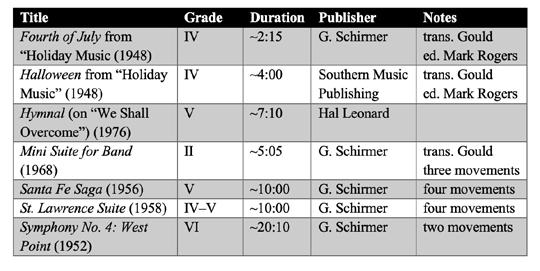
G. Schirmer, Inc. categorizes Ballad as a grade 4–5 but many of Gould’s original works for wind band are playable by many school bands, even some middle school bands (see figure 9, page 32).
Continued
References
Belser, Robert Steven. “Original Works for Concert Band Premiered or Commissioned by Edwin Franko Goldman, Richard Franko Goldman, and the Goldman Band, 1919–1979.” DMA thesis, University of Iowa, Iowa City, IA, 1994. ProQuest Dissertations & Theses Global.
Colburn, Colonel Michael J. “The President’s Own” United States Marine Band ®: Morton Gould: An American Salute. Washington, DC: “The President’s Own” United States Marine Band ®, 2012. https://www.marineband. marines.mil/Portals/175/Docs/Audio/ Educational_Series/morton_gould/morton_ gould_booklet_lowres.pdf.
Curtis, Marvin V., Lee V. Cloud. “The African-American Spiritual: Traditions and Performance Practices.” The Choral Journal 32, no. 4 (November 1991): 15–22. https:// www.jstor.org/stable/23548375.
Duffie, Bruce. “Presenting Morton Gould: A Conversation with Bruce Duffie.” Interview by Bruce Duffie. Bruce Duffie, June 18, 1988, http://www.bruceduffie.com/gould2.html.
Evans, Lee. “Morton Gould: His Life and Music.” (DE diss., Columbia University, New York, 1978). ProQuest Dissertations & Theses Global.
Frost, Trevor. “An Unnecessary Barrier: A Critical History of Efforts to Define a Core Repertoire for the Wind Band.” DMA doc., University of Nebraska-Lincoln, Lincoln, NE, 2024. ProQuest Dissertations & Theses Global.
Gelles, George, and Michael Meckna. “Goldman, Edwin Franko.” Grove Music Online. 2001; Accessed 13 Nov. 2022. https://www-oxfordmusiconline-com.unh. idm.oclc.org/grovemusic/ view/10.1093/ gmo/9781561592630.001.0001/omo9781561592630-e-0000011381.
Goodman, Peter W. Morton Gould: American Salute. Bradford, U.K.: Amadeus Press, 2003.
Gould, Morton. Ballad for Band: For Symphonic Band. New York: G. Schirmer, Inc, 1947.
–––––––. “The Sound of a Band.” Music Educators Journal 48, no. 5 (Apr.–May 1962): 36–7, 46. https://doi-org.libproxy.unl. edu/10.2307/3389579.
Hansen, Richard K. The American Wind Band: A Cultural History. Chicago: GIA Publications, 2005.
Kennedy Center, The. “Morton Gould.” Artists. https://www.kennedy-center.org/ artists/g/go-gz/morton-gould/.
Kirby, Percival R., “A Study of Negro Harmony.” The Musical Quarterly 16, no. 3 (July 1930): 404–14. https://www.jstor.org/ stable/738377.
Matthew, Ed. “Gould, Morton.” Grove Music Online. 2001; Accessed November 13. 2022. https: //www-oxfordmusiconline-com.unh. idm.oclc.org/grovemusic/view/10.1093/ gmo/9781561592630.001.0001/omo9781561592630-e-0000011544.
Paul, Timothy A. “Pac-Ten Wind Ensemble Programming Trends.” Journal of Band Research 47, no. 1 (Fall 2011): 49–61.
–––––––. “Programming Practices of Big Twelve University Wind Ensembles.” Journal of Band Research 47, no. 2 (2012): 11–26.
Pease, Andy. “Ballad for Band by Morton Gould.” Wind Band Literature: A Conductor’s Perspective by Andy Pease. Last modified June 12, 2015. https:// windliterature.org/2015/06/ 12/ballad-forband-by-morton-gould/#:~:text=Gould%20 wrote%20Ballad%20for%20Band, year%20 in%20New%20York%20City.
Powell, Sean R. “Recent Programming Trends of Big Ten University Wind Ensembles.” Journal of Band Research 44, no. 2 (Spring 2009): 1–12.
Scott, Ronald David. “Band music of Morton Gould.” PhD diss., Texas Tech University, Lubbock, TX, 1997. ProQuest Dissertations & Theses Global.
Stone, Thomas. “Morton Gould - Champion of the Band,” BD Guide 9, no. 3 (Jan/Feb. 1995): 2–5.
Wiltshire, Eric S., Timothy A. Paul, Phyllis M. Paul, and Erika Rudnicki. “Programming Practices of Atlantic Coast Conference Wind Ensembles.” Contributions to Music Education 37, no. 2 (2010): 45–63. https://www.jstor. org/stable/24127226.
Wise Music Classical. “Morton Gould.” Composers. https://www.wisemusicclassical. com/compo ser/565/Morton-Gould/.
Young, Craig S. “The Quality of Repertoire Chosen by High School Wind Band Conductors and the Resources and Criteria Used to Choose This Literature.” PhD diss., The Ohio State University, Columbus, 1998. ProQuest Dissertations & Theses Global.
1Thomas Stone, “Morton Gould – Champion of the Band,” BD Guide 9, no. 3 (Jan/Feb. 1995), 2¬.
2Lee Evans, “Morton Gould: His Life and Music,” (DE diss., Columbia University, New York, 1978), 50.
3Ronald David Scott, “Band Music of Morton Gould,” (PhD. Diss., Texas Tech University, Lubbock, TX, 1997), 10.
4Stone, 2.
5Peter W. Goodman, Morton Gould: American Salute (Bradford, U.K.: Amadeus Press, 2003).
6Colonel Michael J. Colburn, “The President’s Own” United States Marine Band ®: Morton Gould: An American Salute, (Washington, DC: “The President’s Own” United States Marine Band ®, 2012), 14, https://www.marineband .marines.mil/Portals/175/Docs/Audio/ Educational_Series/morton_gould/morton_ gould_booklet_lowres.pdf
7Marvin V. Curtis, Lee V. Cloud, “The African-American Spiritual: Traditions and Performance Practices,” The Choral Journal 32, no. 4 (November 1991), 16, https://www.jstor. org/stable/23548375.
8Ibid.
9Ibid.
10Percival R. Kirby, “A Study of Negro Harmony,” The Musical Quarterly 16, no. 3 (July 1930), 406, https://www.jstor.org/stable/738377.
11Colburn, 14.
12Robert Steven Belser, “Original Works for Concert Band Premiered or Commissioned by Edwin Franko Goldman, Richard Franko Goldman, and the Goldman Band, 1919–1979” (DMA thesis, University of Iowa, Iowa City, IA, 1994), 97, ProQuest Dissertations & Theses Global.
13Stone, 2–5.
14Andy Pease, “Ballad for Band by Morton Gould,” Wind Band Literature: A Conductor’s Perspective by Andy Pease, last modified June 12, 2015, https://windliterature. org/2015/06/12/ballad-for-band-by-mortongould/#:~:text=Gould%20wrote%20Ballad%20 for%20Band,year%20in%20New%20York%20 City.
15Colburn, “The President’s Own” United States Marine Band ®: Morton Gould: An American Salute, 14.
16Goodman, 72–3.
Continued
Martin Gould's Ballad For Band ..., Trevor Frost, cont.
17Trevor Frost, “An Unnecessary Barrier: A Critical History of Efforts to Define a Core Repertoire for the Wind Band” (DMA document, University of Nebraska–Lincoln, Lincoln, NE, 2024), 3, ProQuest Dissertations & Theses Global.
18Craig S. Young, “The Quality of Repertoire Chosen by High School Wind Band Conductors and the Resources and Criteria Used to Choose This Literature,” (PhD diss., The Ohio State University, Columbus, 1998), 37–8, ProQuest Dissertations & Theses Global.
19Sean R. Powell, “Recent Programming Trends of Big Ten University Wind Ensembles,” Journal of Band Research 44, no. 2 (Spring 2009), 1–12. The Big Ten universities at this time were the following: University of Illinois at Urbana-Champaign, Indiana University, University of Iowa, University of Michigan, Michigan State University, University of Minnesota, Northwestern University, The
Ohio State University, Pennsylvania State University, Purdue University, and University of Wisconsin-Madison.
20Ibid., 5–6.
21Eric S. Wiltshire, Timothy A. Paul, Phyllis M. Paul, and Erika Rudnicki, “Programming Practices of Atlantic Coast Conference Wind Ensembles,” Contributions to Music Education 37, no. 2 (2010), 45–63. https://www.jstor. org/stable/24127226. The ACC universities at this time were the following: Boston College, Clemson University, Duke University, Florida State University, Georgia Institute of Technology, University of Maryland, University of Miami, University of North Carolina, North Carolina State University, University of Virgina, Virginia Tech, and Wake Forest University.
22Ibid., 53.
23Timothy A. Paul, “Pac-Ten Wind Ensemble Programming Trends,” Journal of Band Research
47, no. 1 (Fall 2011), 49–61. The Pac-Ten universities at this time were the following: University of Arizona, Arizona State University, University of California-Berkeley, University of California-Los Angeles, University of Oregon, Oregon State University, University of Southern California, Stanford University, University of Washington, and Washington State University.
24Timothy A. Paul, “Programming Practices of Big Twelve University Wind Ensembles,” Journal of Band Research 47, no. 1 (Fall 2012), 11–26. The Big Twelve universities at this time were the following: Baylor University, Iowa State University, Kansas State University, Oklahoma State University, Texas A&M University, Texas Tech University, University of Colorado, University of Kansas, University of Missouri, University of Nebraska, University of Oklahoma, and University of Texas.
25Ibid., 20.
Figure 1. Trevor Frost, Analytical chart for Morton Gould’s Ballad for Band.
Continued on next page
Martin Gould's Ballad For Band ..., Trevor Frost, cont.
Figure 2: Morton Gould, Ballad for Band, mm. 1–2.
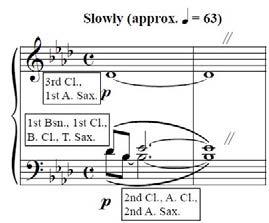
Figure 3: Morton Gould, Ballad for Band, mm. 6–9.
Continued on next page
Martin Gould's Ballad For Band ..., Trevor Frost, cont.
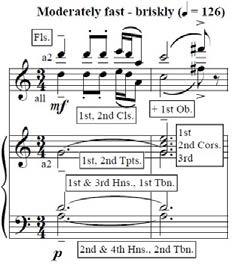
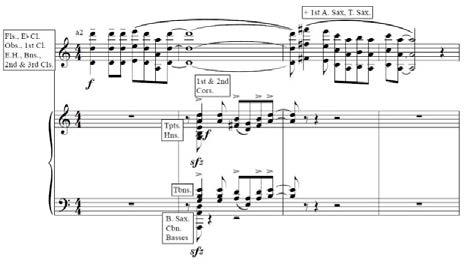
Continued on next page
8: Morton Gould, Ballad for Band, mm. 173–6.
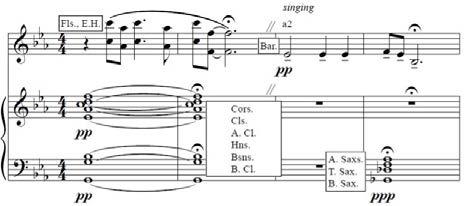
Figure 9: Selected list of original works for band and transcriptions done by Gould.

Research relevant to the field that you would like to share?
Professional advice or tips that might help other band directors?
Something to say?
The National Band Association welcomes and encourages members to submit articles for possible inclusion* in future editions of the NBA Journal. Peer-reviewed** and non-peer reviewed articles are accepted. The NBA Journal is published quarterly and deadlines/ instructions for submission are as follows:
Winter Edition (published in February)
Spring Edition (published in May)
Summer Edition (published in August)
Fall Edition (published in November)
*Articles are published at the discretion of the editor and may appear in a later journal edition or not at all.
**For guidance on how to submit a peer-reviewed article, please see page 34.
Please submit your article in Word document format to NBA Journal Editor Matthew Talbert: talbertm@ohio.edu.
BY MATTHEW TALBERT
The difference between a peerreviewed research article and the articles traditionally published in the NBA Journal is best described as a difference in the vetting process and source material. To have an article appear as “peer-reviewed” in the NBA Journal means recognized researchers and scholars in the field of music/music education will read, evaluate, and then recommend whether or not an article should be published, revised or rejected. This process is widely recognized as an indicator of quality scholarship in a particular discipline or field. Other names for these types of articles are “scholarly” or “refereed.”
A traditional NBA Journal article is most often written from the perspective of the author’s unique experiences in life, music, and/or the profession. These articles are of extraordinary value, as they often present a number of ideas that have been effective for the author and may
also be effective for the reader.
A research article is most often written as a continuation of ideas presented in previous articles, with the motivation drawn from combining the findings of those previous articles and the author’s own experiences, experiments, or observations. In building the article in this way, the validity of the information is heightened beyond the traditional article. These articles are also of extraordinary value as they may also impact the way the reader approaches the subject material in a potentially more generalizable way. When incorporating the peer-review process, the an author’s article now has a final layer of review (for accuracy) utilizing other experts within the same subject matter.
Dr. Russell Gavin, former chair of NBA’s Research (and Editorial) committees, shares his thoughts on the layout and value of these types of articles:

Matthew Talbert, Associate Professor of Music Education and Director of the School of Music, joined Ohio University in the fall of 2016. Talbert earned a Ph.D. in Music Education from the University of South Carolina (2012), a Master of Music in Music Education from Appalachian State University (2005), and a Bachelor of Music in Music Education from Appalachian State University (2004).
A number of peer-reviewed research articles may read like other articles found in the NBA Journal, with the author outlining their thoughts on a subject while using citations to support the premise of the issue being discussed. Other research articles will take on a bit more of a scientific approach. These articles begin with a review of literature summarizing the research on the topic that already exists, while simultaneously presenting the reader with the rationale driving the current article. A method section follows, describing what actually happened in the research, then a results and analysis
Continued on next page
section(s) describing what the researcher found, if anything. The article closes with a discussion of the findings and how they may relate to the world. The article concludes with a list of references from which the author drew information and ideas.
If you are inexperienced at reading research articles, you may want to read the discussion section first. This part of the article will explain how the information found in the rest of the article may impact you and others in the article subject community. Oftentimes this is the place where practical ideas will be most clearly expressed; however, taking in the entire article will always give a much clearer view of what the author was attempting to express.
As mentioned above, an ideal research article is adding to the research that came before it. This continuation and growth of knowledge is one of the defining characteristics of this kind of inquiry. At the end of the article, the reader is left with information that is not only new to them, but simultaneously new to the world. This level of investigation is of paramount importance in all areas of music and education, and the NBA is proud to present this new avenue for such exploration and thought.
How to Submit Peer-Reviewed Research to the NBA Journal, Matthew Talbert, cont.
A. Submission Method: Manuscripts should be submitted as Microsoft Word attachments via email to the Editorial Committee Chair: silveyba@missouri.edu
B. Length: The manuscript should not exceed 25 pages and should include an abstract of 100-150 words in length on a separate page. We encourage the submission of short form articles (4-10 pages) as well as full-length articles.
C. Cover Page: To ensure anonymity in the review process, the manuscript should contain no clues as to the author’s institutional affiliation or identity. Author’s name(s), address, institution affiliations, and pertinent information should be listed on a separate cover page at the beginning of the submission. The cover page should also include up to five keywords/phrases that describe the contents of the manuscript.
D. Style Guide: Manuscripts should conform to one of the following style manuals:
(1) Publication Manual of the American Psychological Association (7th edition, 2019), (2) The Chicago Manual of Style(17th edition, 2017), or
(3) A Manual for Writers of Term Papers, Theses, and Dissertations (K. L. Turabian, 9th edition, revised by Wayne C. Booth, Gregory Colomb, Joseph M. Williams, and the University of Chicago Press Editorial Staff, 2018). Note: Authors may not combine and/or mix styles within a single manuscript
E. Tables and Figures: Tables and figures may be included with the manuscript, however, these must be publishable in black and white. It is the author’s responsibility to make sure any tables/figures are checked for accuracy before submission. Additionally, if any copyrighted materials are submitted, it is the author’s responsibility to provide documentation allowing the reproduction of these materials.
F. Ethical Requirements: It is the author’s responsibility to ensure that no copyright issues have been violated by the submission, including images, charts, etc. Manuscripts already published in other journals can be submitted for consideration in the NBA Journal providing the author has permission to do so.
Questions about submitting a peer- reviewed article? Email Research Chair Brian Silvey at silveyba@missouri.edu