SETON HALL
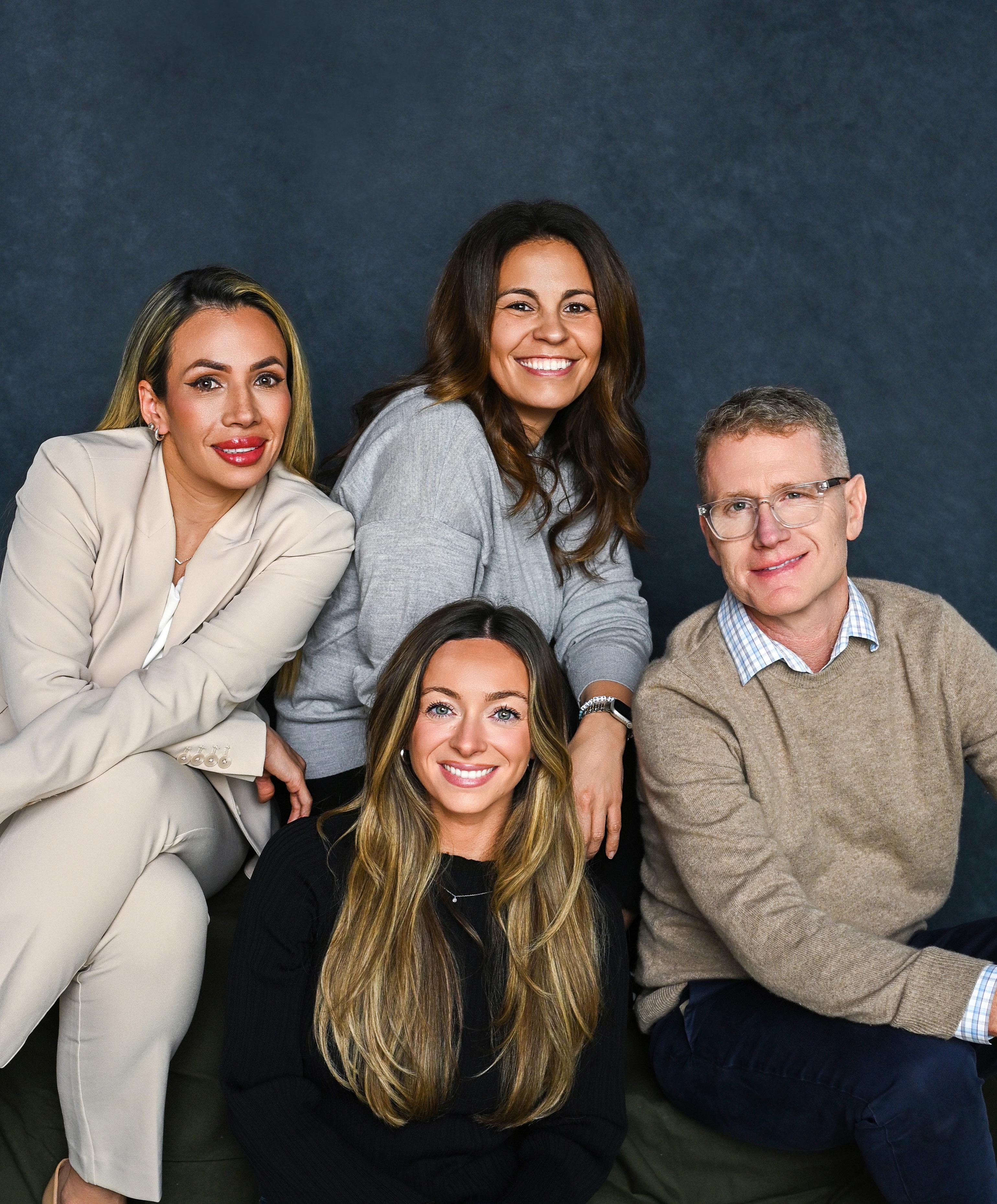
FOUR KIDNEY DONORS RECOUNT THEIR EXPERIENCES WITH THE LIFE-SAVING ACT
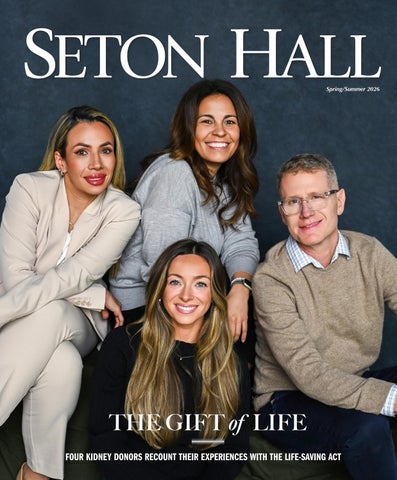
FOUR KIDNEY DONORS RECOUNT THEIR EXPERIENCES WITH THE LIFE-SAVING ACT
Spring/Summer 2026
Seton Hall magazine is published by the Division of University Relations.
President
Monsignor Joseph Reilly ’87, S.T.L., Ph.D.
Vice President for University Relations
Matthew Borowick ’89/M.B.A. ’94
Assistant Vice President, Strategic Communications and Brand
Pegeen Hopkins, M.S.J.
Associate Director, Strategic Communications and Brand
Emily Heric, M.A.
Art Director
Ann Antoshak
Copy Editors
Kim de Bourbon
Zachary Cooney ’20/M.A. ’26
News & Notes Editors
Julia Angeliadis
Aaron Smith
Gabrielle Chavenet
Contributing Writers for HALLmarks
Nadia Aboukaram
Michael Morano
Malcolm Steele
Sabina Lee
Send your comments and suggestions by mail to: Seton Hall magazine, Division of University Relations, 519 South Orange Avenue, South Orange, NJ 07079; by email to shuwriter@shu.edu; or by phone at 973-378-9834.
Seton Hall magazine staff reserve the right to edit submitted content and cannot guarantee that items received will appear in the magazine. Publication of an item does not constitute endorsement by Seton Hall.
Cover: Photo by Lisa Rayman.
Facing page: Bayley Hall, South Orange campus. Photo by Earl Richardson.
www.shu.edu
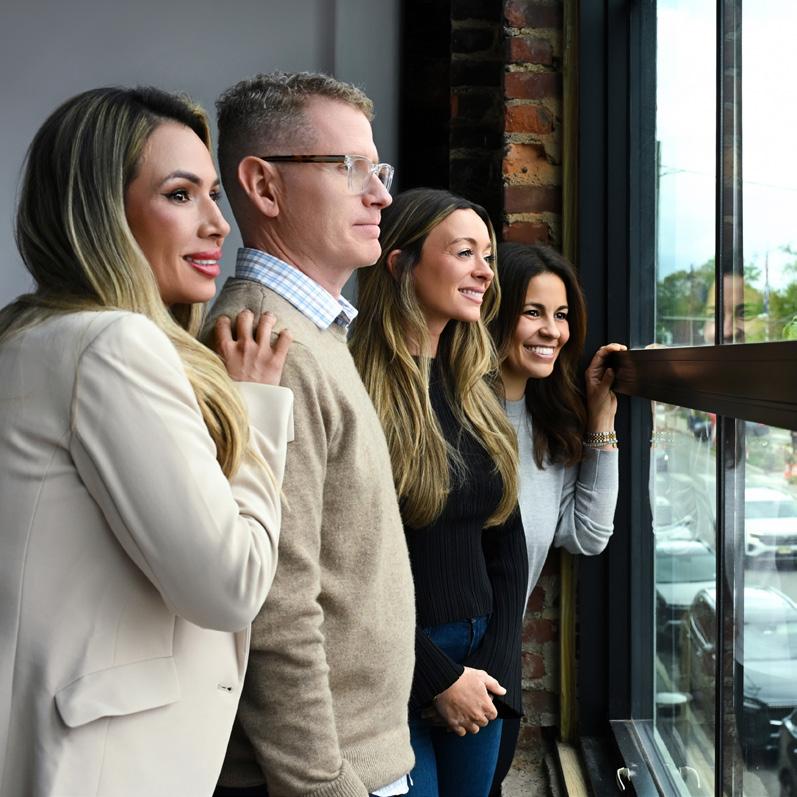
The life-affirming act of donating a kidney links four Student Services employees to their recipients and each other, in a gift of compassion of service.
Faculty mentorship and undergraduate STEM research shapes our students’ sense of purpose.
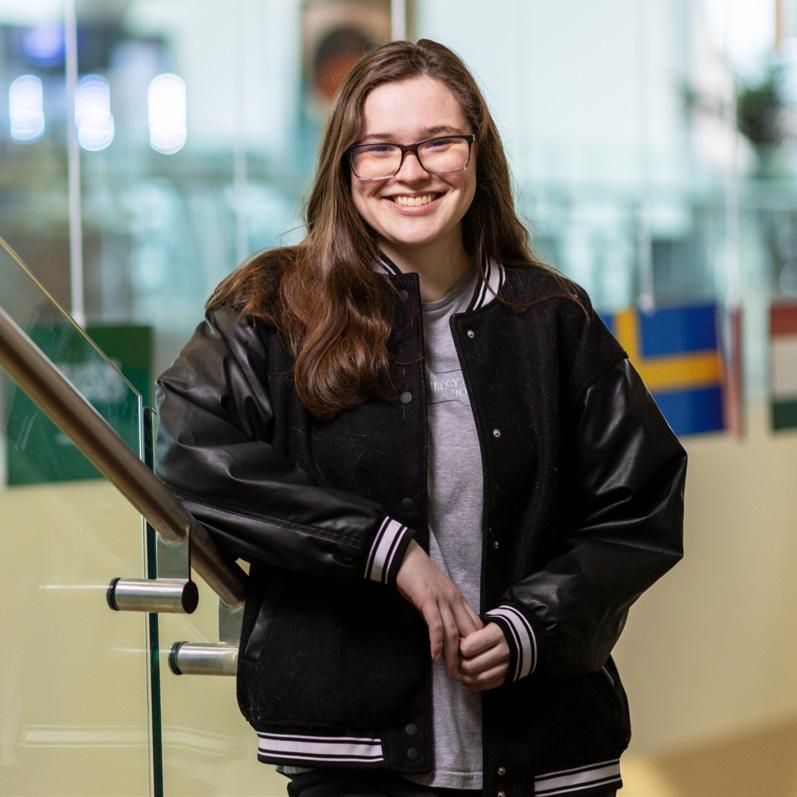
Sophomore Allison Bennett’s experience of learning abroad transforms the classroom into real-world experiences.
Ronald Weich, dean of Seton Hall Law, guides the next generation of lawyers to fortify and improve our legal institutions.
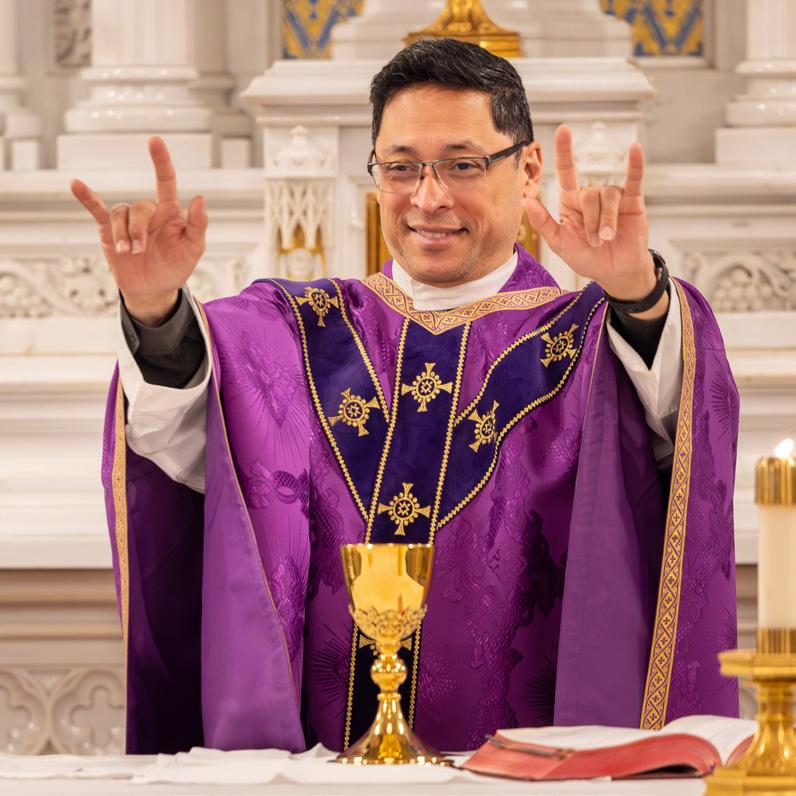
Bishop Bismarck Chau brings a longstanding commitment to serving the deaf Catholic community.
A collection of stories showcasing the possibilities through For All, Forever: A Campaign for a Greater Seton Hall
“The task laid before us is not to stop digital innovation, but rather to guide it and to be aware of its ambivalent nature. It is up to each of us to raise our voice in defense of human persons, so that we can truly assimilate these tools as allies.”
— POPE LEO XIV
ONE OF THE joys of springtime is watching our students graduate into lives of hope and purpose.
A few weeks ago, we cheered this year’s class as they traversed the dais at the Prudential Center, officially marking their transition to alumni.
Our new graduates received more than a first-rate education — they absorbed a thorough grounding in faith-based ethics, service and character formation, something woven into every aspect of the Seton Hall experience. Through their education, our students begin to understand and affirm the life God is calling them to lead.
As a Catholic university, we follow a long and distinguished tradition of combining faith and reason, learning with moral formation. The first universities, established in the Middle Ages, sought to integrate humanity’s ardent intellectual quest with human transcendence and the unquenchable desire for God. This is a tradition that Seton Hall proudly carries forward.
Today, our graduates enter a world that is changing rapidly. The 21st century has brought seismic shifts in many facets of human existence, and the pace of change shows no signs of slowing. With artificial intelligence making its presence felt, the values provided by Seton Hall will be even more vital to fostering human flourishing and creating a bright future, a future that recognizes the profound dignity of every human.
As Pope Leo XIV recently wrote about AI: “The question … is not what machines can or will be able to do, but what we can and will be able to achieve, by growing in humanity and knowledge through the wise use of the powerful tools at our service.”
Seton Hall remains in the forefront of fostering moral responsibility and ethical leadership for a new generation. Earlier this year, we hosted “Ethics and Values in the Era of AI,” a two-day seminar that brought students, educators, professionals and community partners together for lively dialogue on
the ethical, social and economic implications of artificial intelligence.
In light of our Catholic values and anthropology, we critically assessed this technology, recognizing its potential for great good when used to preserve human flourishing, and for great harm when it is used without moral grounding.
As the Holy Father has said: “Although AI can provide support and assistance in managing tasks, shirking the effort to think for ourselves risks eroding our cognitive, emotional and communication skills in the long run.”
With this in mind, the University then established an Artificial Intelligence Advisory Council, which includes campus experts in Theology, IT, Catholic Studies, and Computer Science. Among its chief aims, the council is aligning our AI use with Catholic moral principles and offering training and resources for faculty, staff and students.
Next year, we will continue leading the AI conversation by inviting eminent thinkers, theorists,

experts and policymakers from around the country to a national summit on artificial intelligence. The ultimate beneficiaries, of course, will be our students, whose lives will be influenced by AI as much as previous generations were affected by automobiles, personal computers and smartphones.
I look forward to the vibrant discussions that will take place as we continue to develop and assess AI and other important new tools. I can assure you that Seton Hall will remain steadfast in our commitment to educating the whole person, providing students with the necessary skills to create lives of success, fulfillment and generosity. n
Yours truly in the Lord Jesus,
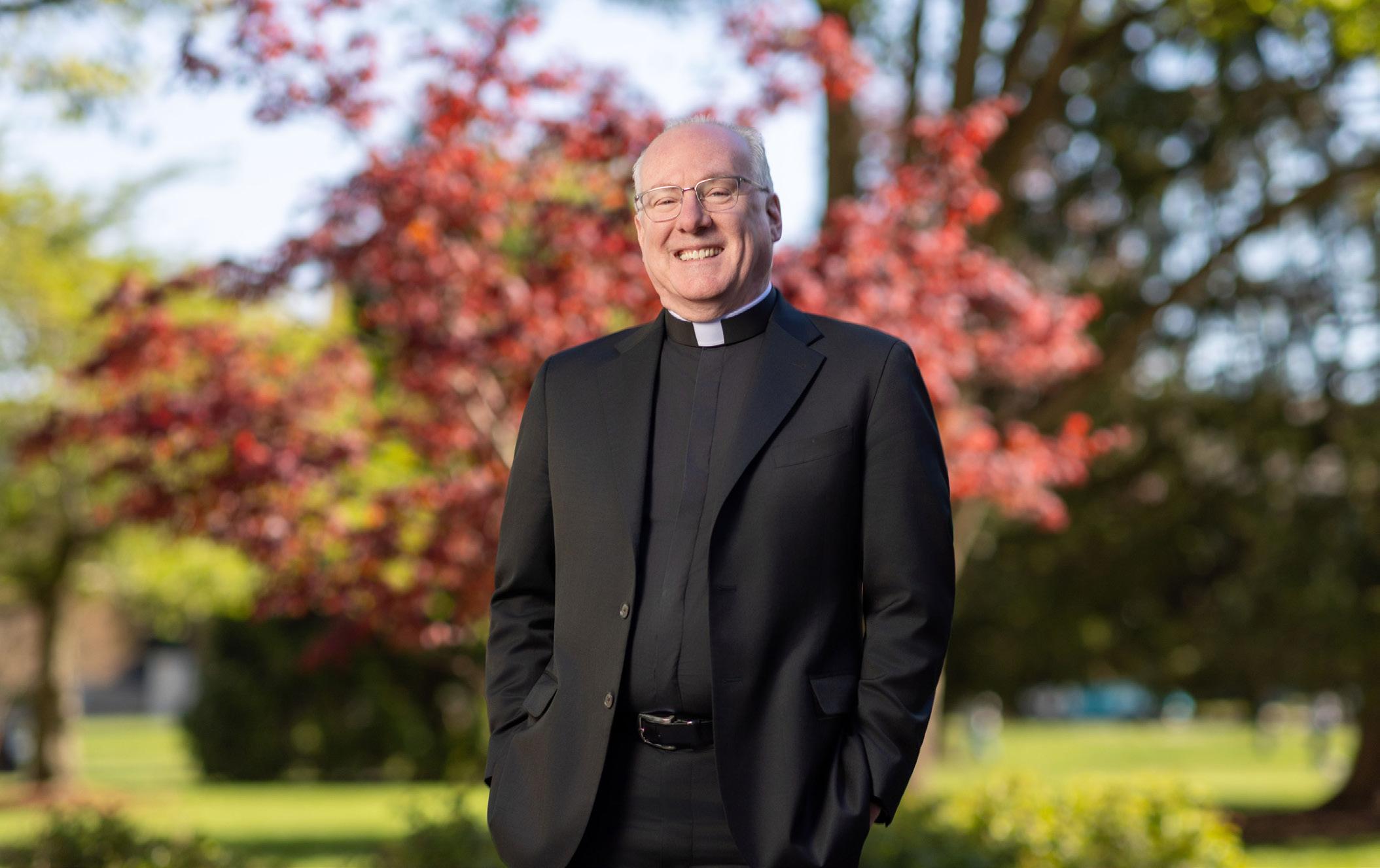
Monsignor Joseph Reilly President

l Father Peter H. Cho, rector of the College Seminary of the Immaculate Conception at Saint Andrew’s Hall and adjunct professor of systematic theology, earned a doctorate in sacred theology from the Pontifical Gregorian University.
l Courtney Smith, dean of the School of Diplomacy and International Relations, joined a United Nations Foundation learning delegation to Ghana and Togo alongside members of Congress to engage on developmental challenges — including food insecurity, disease propagation and deforestation — in both countries.
l Shen Zhang, assistant professor of finance, received HKU Jockey Club Enterprise Sustainability Global Research Institute’s “Best Working Paper Award” for the “AI and the Extended Workday” paper he co-authored with fellow scholars from Emory, Auburn and Fordham.
l Associate professor of nursing Katherine Hinic participated in the Environmental Health Research Institute for Nurse and Clinician Scientists’ external fellowship program.
l Professor of English Mary Balkun was appointed to the editorial board of Early American Literature, the leading scholarly journal in American literary studies.
l Kishon C. Hickman Sr., program director of the law enforcement executive leadership program, was selected for the Fulbright Specialist Roster by the U.S. Department of State’s Bureau of Educational and Cultural Affairs.
l A $180,563 grant from The Healthcare Foundation of New Jersey will support a new partnership between the College of Nursing and a Newark-based community health organization to expand training for M.S.N. students and increase access for Newark residents.
l Susan Nolan, professor of psychology, received the Society for the Teaching of Psychology’s presidential citation, one of the highest honors for contributions to psychology education.
l Mary Landriau, practicum director for the undergraduate social work program, was selected as the 2026 Practicum Director of the Year by the Baccalaureate Program Directors Association.
l Assistant professor of physics Peter Morse was awarded a fellowship from the Kavli Institute for Theoretical Physics at the University of California, Santa Barbara, widely regarded as one of the top institutions in the world for theoretical physics.
l Jennifer McCarthy, clinical associate professor, was named a fellow by the Society for Simulation in Healthcare.
Seton Hall is using an $8.4 million state grant to improve and modernize its campuses.
A significant portion of the New Jersey Higher Education Capital Facilities Grant awarded in January will be directed toward improvements to McNulty Hall, the School of Law and campus residence halls. The projects will modernize aging mechanical systems, enhance campus spaces and improve energy efficiency.
“The funding from the state represents a significant investment in the University’s future, allowing us to address important deferred maintenance needs across our three campuses while also advancing key strategic initiatives,” said Victoria Pivovarnick, associate vice president of Facilities and Business Affairs. “These improvements will help ensure our campuses continue to shine and provide modern, high-quality spaces that enhance the academic
experience for our students and make meaningful progress across the University.”
The grant is part of $250 million in capital funding awarded statewide for higher education facility upgrades, and is being distributed through the Higher Education Capital Improvement Fund and the Higher Education Facilities Trust Fund.
The grant application was prepared through a University-wide collaboration that identified the need for Seton Hall improvements.
“We are grateful to our state’s leaders in the executive and legislative branches for making this significant investment in our facilities,” said Matthew Borowick ‘89/M.B.A. ’94, who heads Seton Hall’s Division of University Relations. “New Jersey’s colleges and universities are noted as some of the best in the country, but with an aging infrastructure, it is vital that such investments are made in the increasingly competitive higher education landscape.”
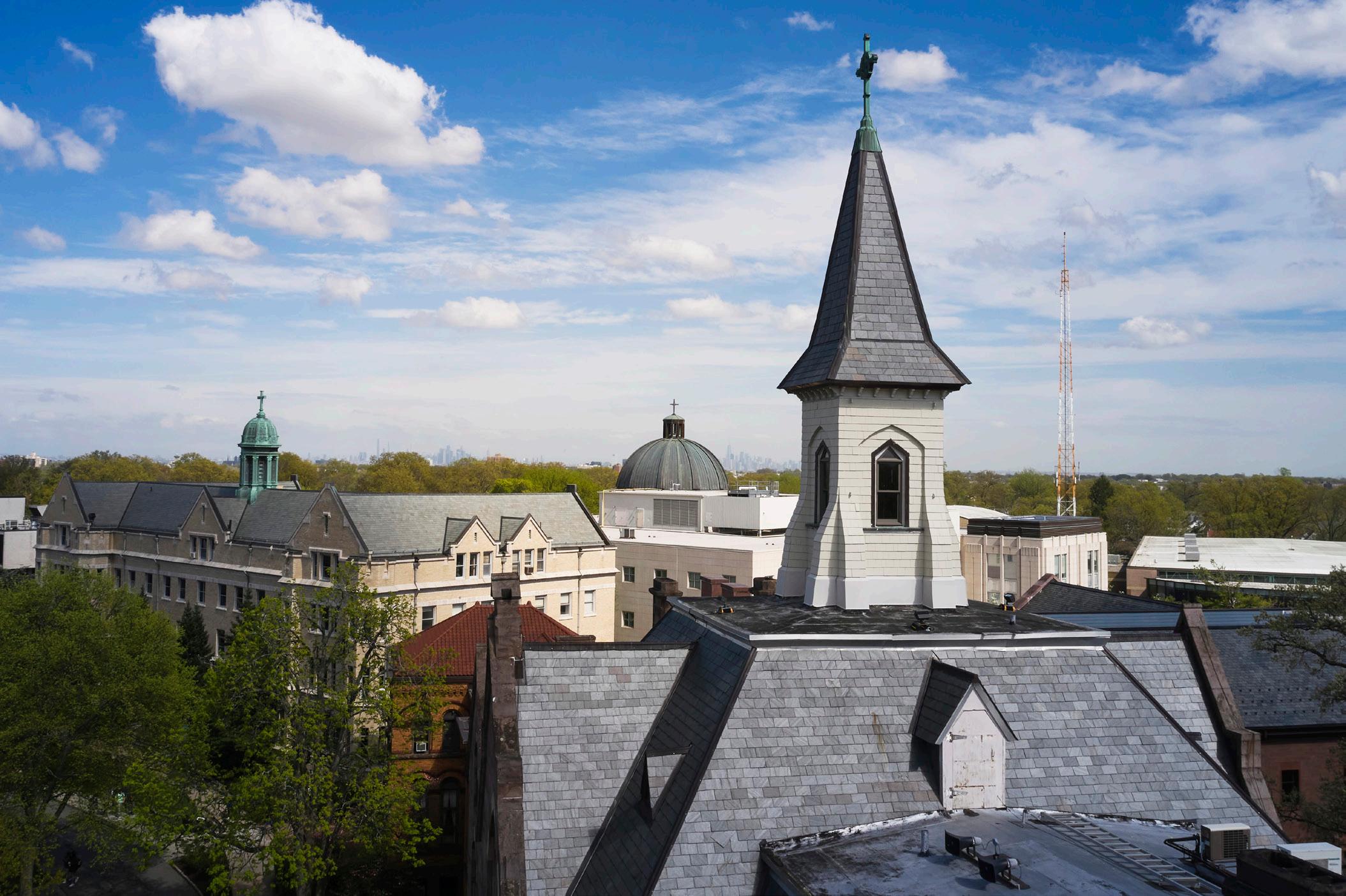
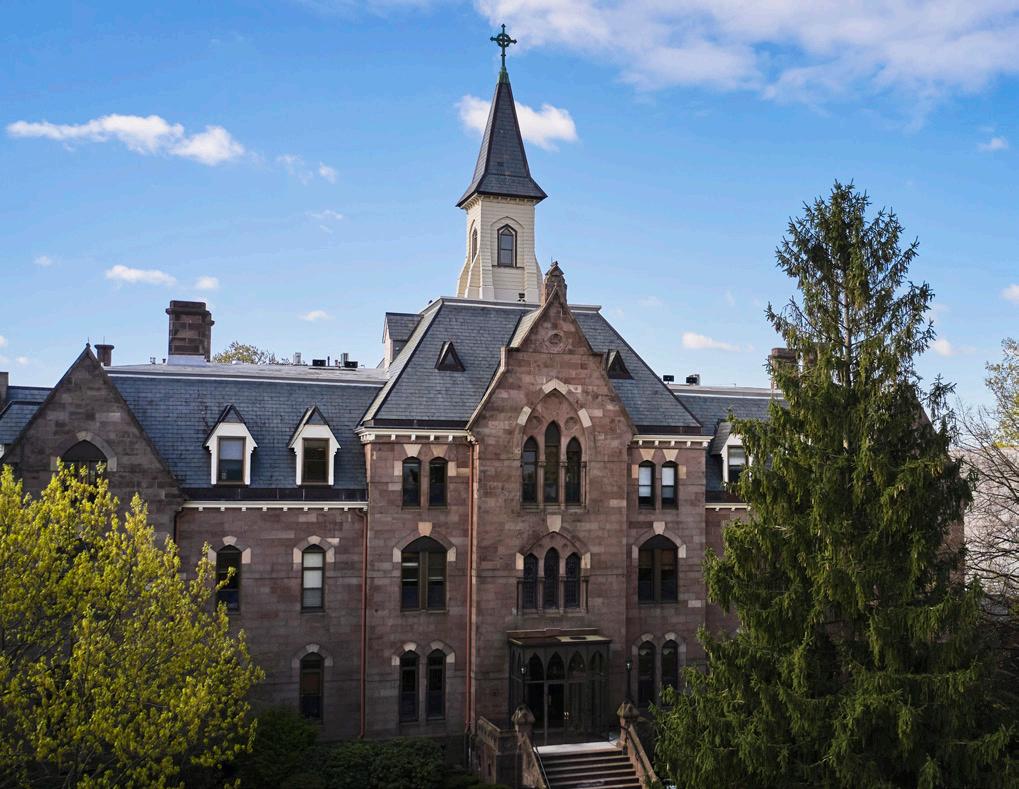
Seton Hall University has been named one of the “2026 Most Promising Places to Work in Student Affairs,” a national recognition for schools determined to be an excellent place for student affairs professionals to have a career.
The honor was presented by ACPA – College Student Educators International in partnership with The EDU Ledger.
The recognition followed a 2025 national survey evaluating institutions on their commitment to creating supportive and equitable work environments. The University stood out in family friendliness, salary and benefits, and professional development opportunities.
“This recognition reflects the dedication of our Student Services professionals and the University’s commitment to cultivating a workplace where staff are supported, valued and empowered to serve our students,” said Monica Burnette, vice president of the Division of Student Services. “Our ability to create meaningful student experiences begins with investing in the talented professionals who guide and support our campus community every day.”
“Working in Student Affairs at Seton Hall means being part of a team that truly values people,” said Nicole La Capria, assistant director of assessment and special projects. “There is a strong culture of support here — from leadership that invests in professional development to colleagues who genuinely care about one another and the students we serve.”
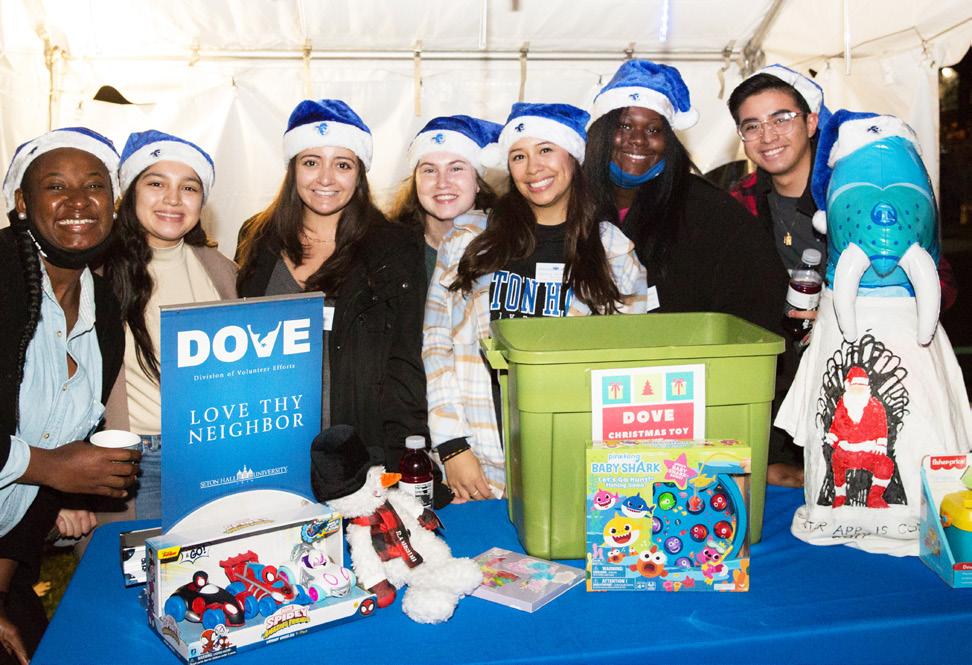
More than 2,000 toys made Christmas happier for children in New Jersey and West Virginia last Christmas season, thanks to a record-breaking toy drive organized by Seton Hall’s Division of Volunteer Efforts (DOVE).
Each year, the DOVE Toy Drive serves children across New Jersey and in the Appalachian region of West Virginia.
Through the donation of unwrapped playthings as well as monetary contributions, the 2025 DOVE drive was able to provide 2,063 new toys to children who otherwise might not have received a Christmas present. This was the highest total collected in the drive’s history, reflecting the generosity and commitment to service that define the Seton Hall community, with donations coming from students, alumni, faculty, staff and community members.
The donated toys were delivered to and distributed by DOVE’s community partners, who made sure they reached children in need in time for the holidays.
Four computer science students took their Seton Hall experiences to international conferences last fall, presenting their research in Southeast Asia and South America.
The presentations spanned topics in programming languages, visualization tools and formal verification, highlighting the computer science department’s emphasis on research-driven learning and global collaboration.
Andrés Maldonado Garced, David Anthony Fields and Sophia Turano showcased their work by presenting conference papers at the 2025 Implementation and Application of Functional Languages conference in Montevideo, Uruguay, on October 1-3.
The presentation was Turano’s first. “It was great practice for public speaking, and for building confidence,” she said.
SBrysen Pfingsten joined Maldonado Garced and Fields at the International Conference on Functional Programming in Singapore on October 12-18, with the three taking part in both the Student Research Competition and specialized workshops.
Pfingsten earned second place in the student competition with his paper on logic programming.
“Every conference teaches you something new,” Maldonado Garced said. “You walk away with fresh ideas and new techniques. There’s a world of information out there you wouldn’t even know otherwise.”
Maldonado Garced, Fields and Turano are research assistants supervised by professor Marco T. Morazán, Ph.D., while Pfingsten works under assistant professor Jason Hemann.
eton Hall’s online graduate education programs improved their ranking in U.S. News & World Report’s 2026 Best Online Programs list this year, moving up 13 spots to No. 64 nationally and ranked among the Top 10 private universities in the country for these programs.
Regionally, Seton Hall placed No. 2 in New Jersey and No. 6 across the tri-state area (New York, New Jersey and Connecticut).
The College of Human Development, Culture, and Media programs continue to rank in the top quartile of online graduate-level education programs nationwide, while also maintaining their standing among the Top 5 Catholic institutions in the country.
The Master of Science in Nursing program ranked 35 out of 201 programs at U.S. colleges and universities that met the criteria for inclusion. The latest survey places Seton Hall in the top 17 percent nationally, third among Catholic colleges and universities and, once again, the top-ranked program in New Jersey.
#6
NEW YORK, NEW JERSEY, CONNECTICUT TOP 10
PRIVATE UNIVERSITIES IN THE COUNTRY FOR ONLINE EDUCATION PROGRAMS
The Seton Hall Law School celebrates its 75th anniversary this year, marking a continuing commitment to transformational legal education and to the rule of law.
The school earned full accreditation from the American Bar Association in 1951 under the leadership of Miriam T. Rooney, the first woman dean of an accredited U.S. law school.
“Her pioneering example established a tradition of excellence that continues today,” wrote Dean Ronald Weich in an anniversary message.
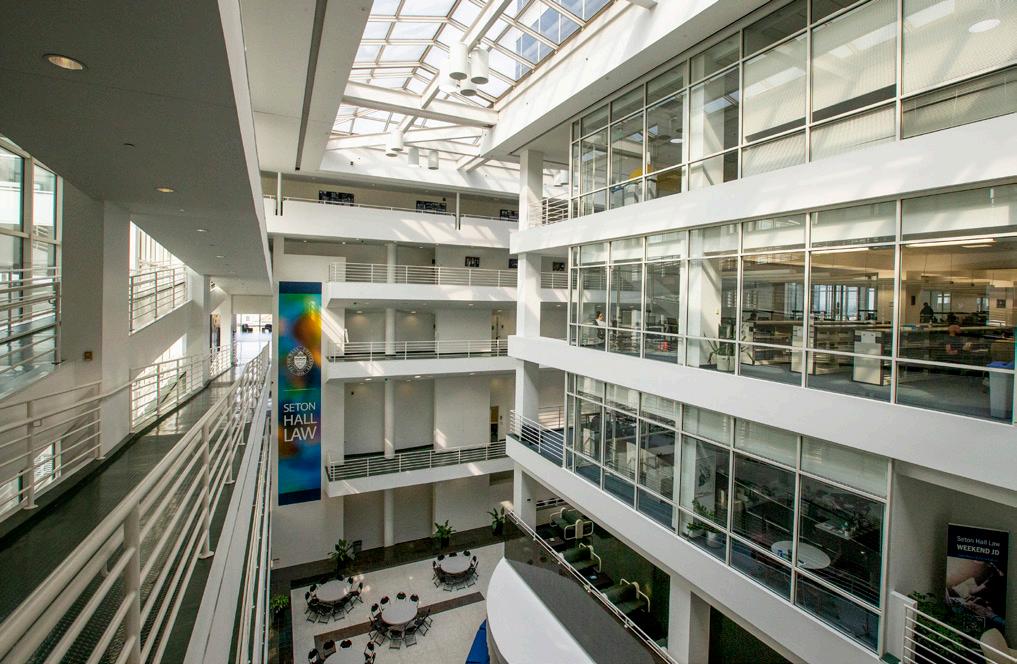
Weich noted that the Law School is embracing three core commitments as it looks to the future: maintaining excellence in legal education, welcoming students from all backgrounds through its Legal Education Opportunity program and having impact with a purpose — implementing real-world problem-solving and advancing justice and the rule of law.
“For 75 years, our mission has been clear: to open doors to the legal profession, advance justice and serve our communities. Generations of faculty, staff, students and alumni have carried this mission forward with distinction,” Weich said. “Our presence in the heart of Newark reflects a commitment to remain engaged with the life of the city and to anchor legal education in realworld challenges and opportunities.”
New Jersey U.S. senators Cory Booker and Andy Kim issued commemorations marking the Law School’s milestone on February 5.
“Over the generations, we have never lost sight of the fact that jurisprudence, at its highest level, is more than abstract concepts and contracts; rather, it is a powerful instrument that provides the blessings of a free and just society to all people,” wrote President Monsignor Joseph Reilly.
Seminarians learned how they might use St. Paul’s communication style during a lecture by Bishop Michael E. Saporito last fall, part of the “Preaching as Hospitality Formation” program at the Immaculate Conception Seminary School of Theology.
Referring to St. Paul as the Church’s most prolific preacher, Bishop Saporito focused his talk on Paul’s ability to use cultural empathy to connect with his audience, noting the structure of his letters was key to conveying his hospitable message. All of St. Paul’s letters began with a personal greeting that acted as both an acknowledgement of his audience and an invitation to receive his preaching, he said.
Greetings are important, Bishop Saporito said. “Such
things open the heart of those who may have rushed to be present,” he explained. “What it does is it prepares the way for your message to be heard. It’s kind of like, ‘Let’s take a breath.’”
The Preaching as Hospitality Formation program helps seminarians, diaconal students and religious and lay graduate students of theology become compelling preachers who will offer “hospitality of the heart.”
Analyzing how St. Paul’s communication style was essential for preaching, Bishop Saporito emphasized how priests can model his example in their own hospitable preaching. “Words have power,” the Bishop said. “Words can move our hearts to prayer, to action, to new hope, to encouragement, to comfort and to challenge.”
Anew program allows students to learn essential professional skills while working at their own pace to earn what are known as “microcredentials” and a digital Career Readiness Badge icon that they can add to their online profiles, résumés and portfolios.
A microcredential is a short, competency-based recognition that students can work toward to demonstrate their mastery in a particular area.
The self-paced career readiness program was launched this spring by Seton Hall’s Teaching, Learning and Technology Center in partnership with the University’s Career Center, and guides students through activities aligned with the National Association of Colleges and Employers’ career readiness competencies.
The program gives students a way to showcase their accomplishments on job applications, showing evidence of their skills to potential employers and gaining access to internships, leadership roles and full-time positions while they take ownership of their own professional development.
“Microcredentials and the Career Readiness Badge give students a real edge,” said Jorge E. Rivera, director of the Career Center. “They verify that a student has practiced and demonstrated key competencies such as communication, teamwork and technology skills, helping them stand out in a fastchanging job market.”
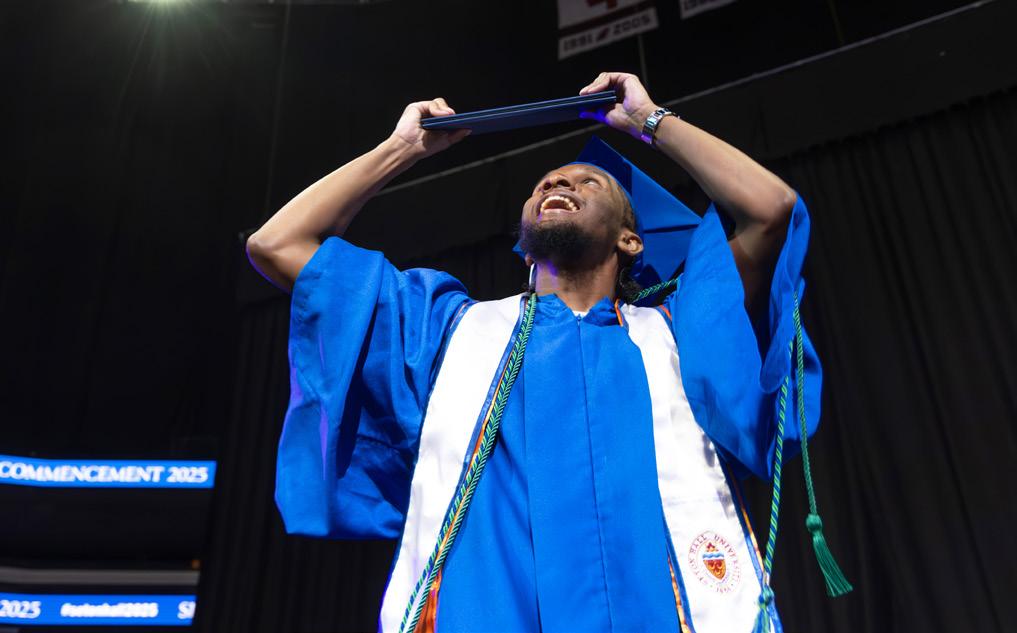
“After all is said and done, this is a man who cared very much for humanity.”
Jo Renee Formicola, professor of political science, discussing Pope Francis’ legacy on CBS New York
“I don’t read the label[s] in detail, I just see the natural products and the synthetic ones. … Paraffin is cheaper. As you go more clean, they’re more expensive.”
Nada Khan, chemistry professor and synthetic organic chemist, speaking to HuffPost about the safety of scented candles.
“AI companion bots are springing into the fertile ground prepared by social media and other addictive technologies. … You’re taking a generation of kids who are already alone, and now you’re giving them a solution that takes them away again from human relationship.”
Professor of law Gaia Bernstein, speaking to the Transparency Coalition about the impact and risks of artificial intelligence chatbots.
“The U.S. has a unique opportunity to remain the global leader in finance in this new digital currency era. With a deep talent pool, world-class technology, a trusted financial system, a stable currency and a growing economy, America is in the strongest position to lead.”
Assistant professor of economics, Danielle Zanzalari explains how the United States can shape global cryptocurrency rules in an opinion piece for the USA Today Network
“The deteriorated consumer confidence is driven by a historic partisan divide, the lingering strain of past inflation, an unequal K-shaped recovery and enormous uncertainty from tariffs, geopolitics and interest rates.”
Xiaoqing Eleanor Xu, professor of finance, speaking to WalletHub about consumer confidence as part of the 2025 economic Index.
“This is a great example of how state government is keeping up with the times in that we now recognize integrated care and it will hopefully continue to destigmatize mental health and substance use treatment.”
Dawn Apgar, director of the Bachelor of Social Work program, to NJ Spotlight News about New Jersey rewriting licensing rules for outpatient treatment centers.
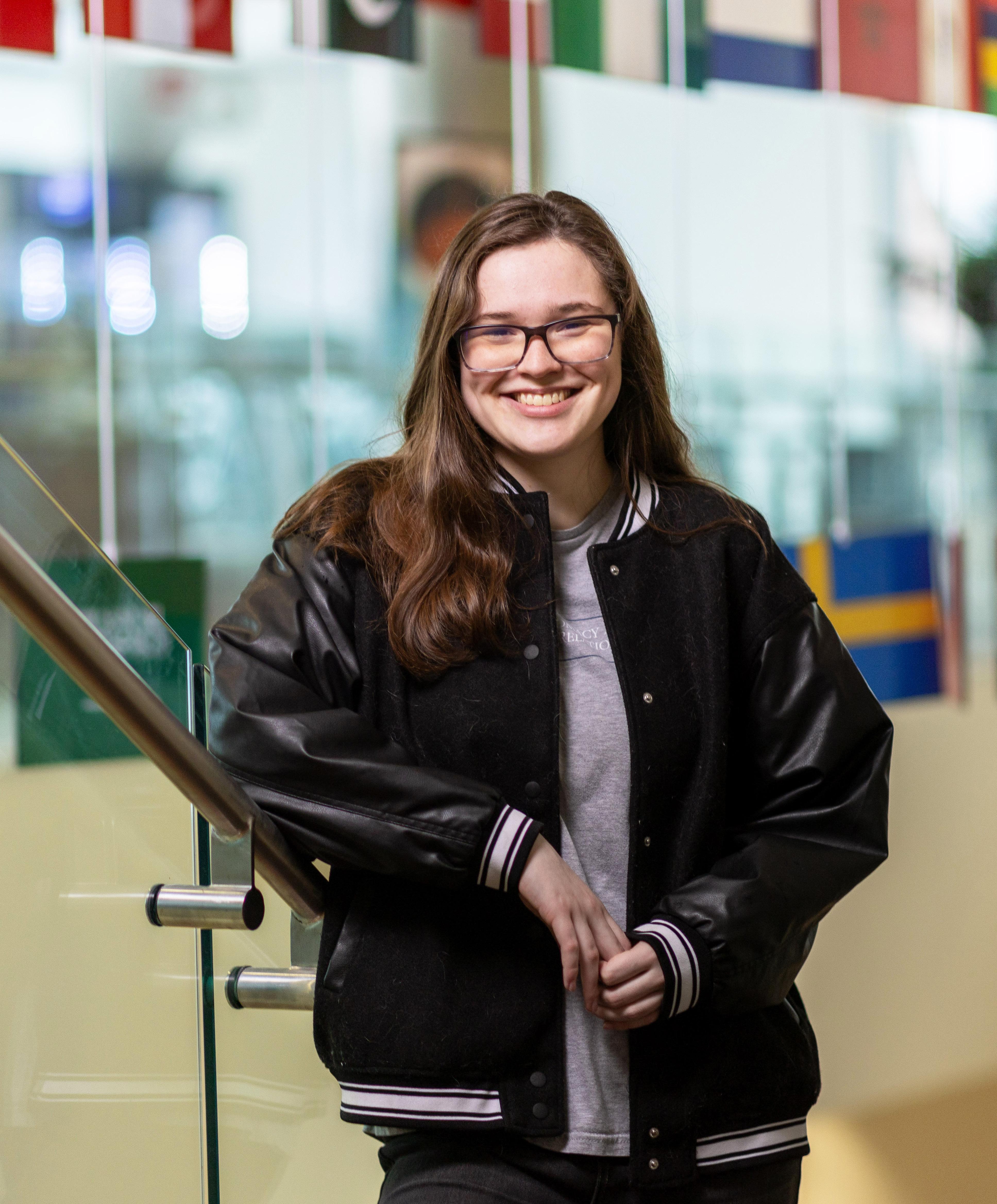
Sophomore Allison Bennett's experience of learning abroad transforms the classroom into real world experiences, showcasing the value of education beyond borders.
Photo by John O’Boyle
From an upper floor of a government building in Freetown, Sierra Leone, Allison Bennett could see the source of the city’s electricity: a ship anchored in the bay, supplying power to locations throughout the country. During her visit to the West African nation last spring, that power briefly went out, the result of recurring infrastructure problems occurring since the end of the nation’s long civil conflict.
For Bennett, a Seton Hall student majoring in international relations who was part of a study abroad program, the moment captured something she learned about in class — and was suddenly witnessing in real life.
She had been studying state-building and how the country is rebuilding its institutions and infrastructure after 11 years of devastating war. The course, Sierra Leone Seminar: Exploring Post-Conflict Reconstruction and Development — taught by Fredline M’Cormack-Hale — is offered by the School of Diplomacy and International Relations. Bennett was among the 12 Seton Hall students who traveled there as part of the seminar.
“It was incredible to learn about it and then actually go there to see the places we’ve been studying and meet people who are living during these pivotal experiences,” Bennett says.
While the trip was exciting for the students, its undertone was “very somber,” she says. Throughout their itinerary, they encountered what Bennett describes as “not light” themes. She met former child soldiers and saw many people whose limbs had been torturously amputated by rebel forces during the civil war.
“Before this trip, when I would think about a war, it felt more like something in history. But in Sierra Leone, this happened a few years ago. These people are still here. This happened to them, and this is actively their story. This realization was very eye-opening,” Bennett says. What stays with her most from the trip are the people she met.
“The people in Sierra Leone are super nice,” she says. “Almost everybody there had a story somehow connected to the civil conflict, but they were still so welcoming to us and also proud of where they are now.”
During the trip, Bennett and her classmates spoke with students at a public university. At first, the conversations were cautious. “I think they were holding back a bit, as though they didn’t know how we’d react to what they were saying, or if we were judging them,” she says.
But then the students began comparing experiences and perspectives, discovering they had more in common than expected.
“It was really cool to talk with them. They’re not very different,” Bennett says.
Encounters like that reinforced something she says cannot be fully learned from textbooks.
“You can’t just sit in New Jersey and learn about something and think you know all about it,” she says. “You’re not going to know until you go and learn firsthand.”
That belief may be a reason Bennett was awarded a Benjamin A. Gilman International Scholarship by the U.S. Department of State. The scholarship will pay for her to study this summer at Leuphana University in Lüneburg, Germany, where she will spend about 10 weeks completing coursework toward her German minor at Seton Hall.
“When she told me she won the scholarship, I screamed,” says Martin S. Edwards, the associate dean for academic and student affairs in the School of Diplomacy. “I think her future is very bright.”
As she prepares for this second international experience as a college student, Bennett says she is approaching it with the same mindset she brought to Sierra Leone: curiosity and an openness to learning from the people she meets.
“Doesn’t the world need more people who will listen to each other?” Edwards asks. “[Those] who understand the value in talking less and listening more?”
“I went into Sierra Leone ready to learn and experience something new,” Bennett says. “I’m excited to do that again in Germany, and hopefully in many more places around the world.” n
Lori (Varga) Riley, M.A. ‘06, is a freelance writer living in New Jersey.
Ronald Weich, dean of Seton Hall Law, guides the next generation of lawyers to fortify and improve our legal institutions.
Before he ever stepped into a courtroom, Ronald Weich watched one come to life in black and white. As a kid, Weich loved watching TV reruns of Perry Mason, the popular legal drama featuring a sharp criminal defense attorney as the title character. But the law was more personal than that for him because his mother was an attorney, and he was impressed by her dedication.
“I saw how much she enjoyed being a lawyer. She was a very strong advocate for her clients, and she inspired me,” he says.
Today, Weich is the dean of the Seton Hall University School of Law, and he credits those early exposures for influencing his decision to become a lawyer. His legal career has been varied, a quality he appreciates.
Weich came to Seton Hall Law in 2024, after serving 12 years as dean at the University of Baltimore School of Law. The preceding three decades saw him in Manhattan courtrooms as a criminal prosecutor, in the halls of Congress as a legislative counsel, accepting an appointment by President Barack Obama to serve as an assistant attorney general in the Department of Justice, and as a partner in a D.C. law firm.
“I’ve had a series of very exciting legal jobs. My job at Seton Hall is the most exciting of all. It's unusual to become a law school dean from outside academia, from the practice of law,” Weich says about his transition into higher education in 2012. “It’s been a great opportunity to take all of my experiences and pass on what I’ve learned to the next generation of lawyers.”
One principle that’s guided him throughout his career now shapes his role at Seton Hall: “A law degree is a license to help others,” he says.
This conviction applies to all types of legal practice, Weich notes. His early experience in the district attorney’s office, for instance, motivated him to pursue new ways to impact society.
“As a prosecutor, I didn’t feel I was doing enough to improve public safety,” he says. “But working in the Senate, I was able to advocate for programs that prevented people from committing crimes, like drug treatment, drug education, and mental health services. I was able to make more of a difference as a policymaker than as a prosecutor.”
When he was counsel to U.S. Sen. Edward M. (Ted) Kennedy, he helped write the 1992 law that established the federal Substance Abuse and Mental Health Services Administration. “Establishing that agency really sharpened the federal response to the drug epidemic,” Weich says, affirming his values-centered approach to public service.
He also saw the government’s fidelity to the rule of law tested. While Weich served as Kennedy’s chief counsel, the Senate considered a proposed Constitutional amendment to exempt flag burning from the free speech clause in the First Amendment.
“No one defended flag burning,” Weich says, “but Sen. Kennedy opposed that Constitutional amendment because it would dilute the First Amendment. I was proud to help him successfully defend the Constitution.”
One principle that's guided him throughout his career now shapes his role at Seton Hall: “A law degree is a license to help others.”
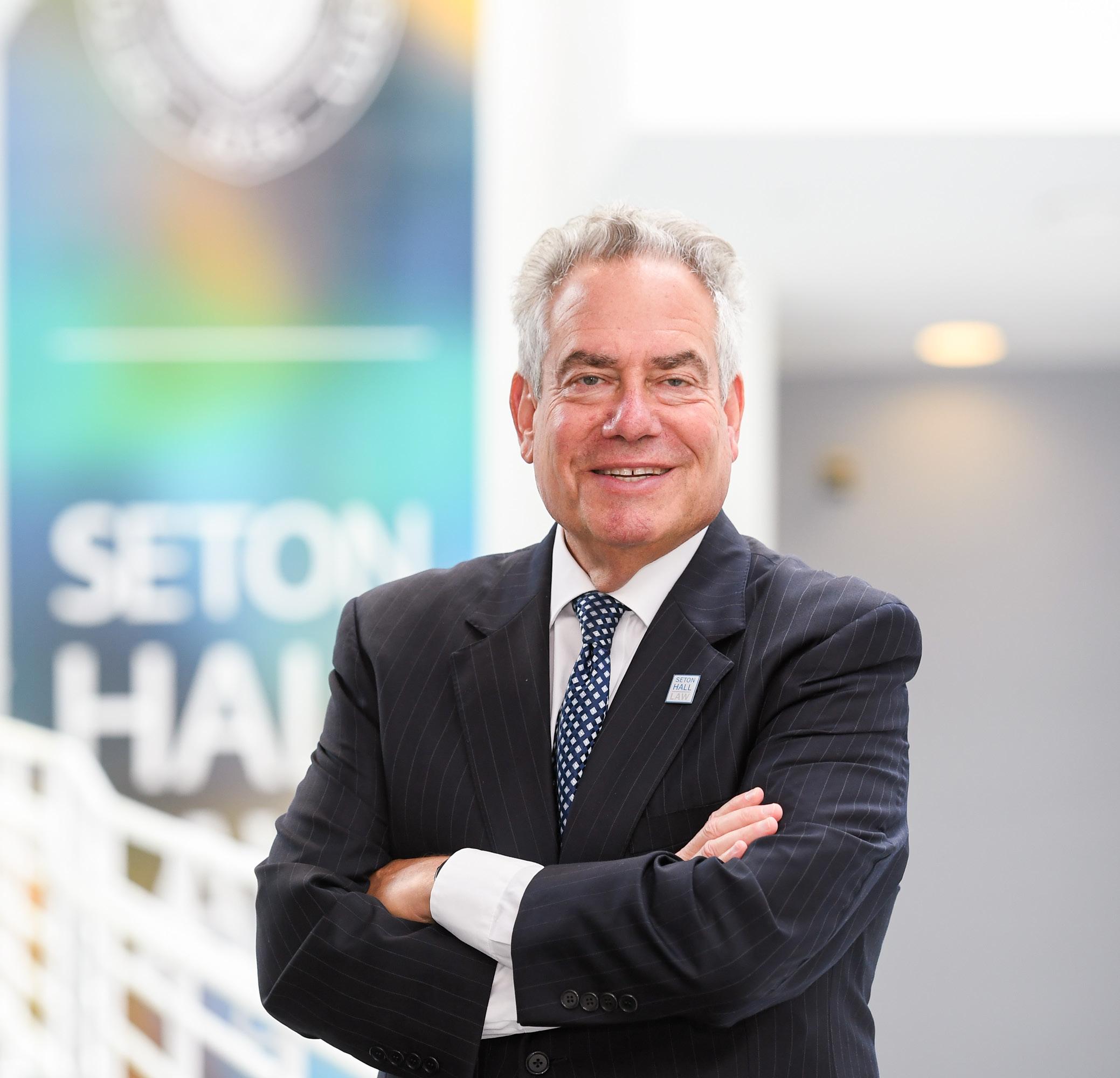
Though he’s no longer in the courtroom or on the Senate floor, Weich knows his responsibility to the rule of law is paramount. “I’ve seen the Constitution in action over the course of my career. Now, as a law school dean, it’s my job to help law students understand key institutions and values, and to make sure we’re graduating law students who are equipped to defend legal institutions and, at the same time, strive to make them better.” n
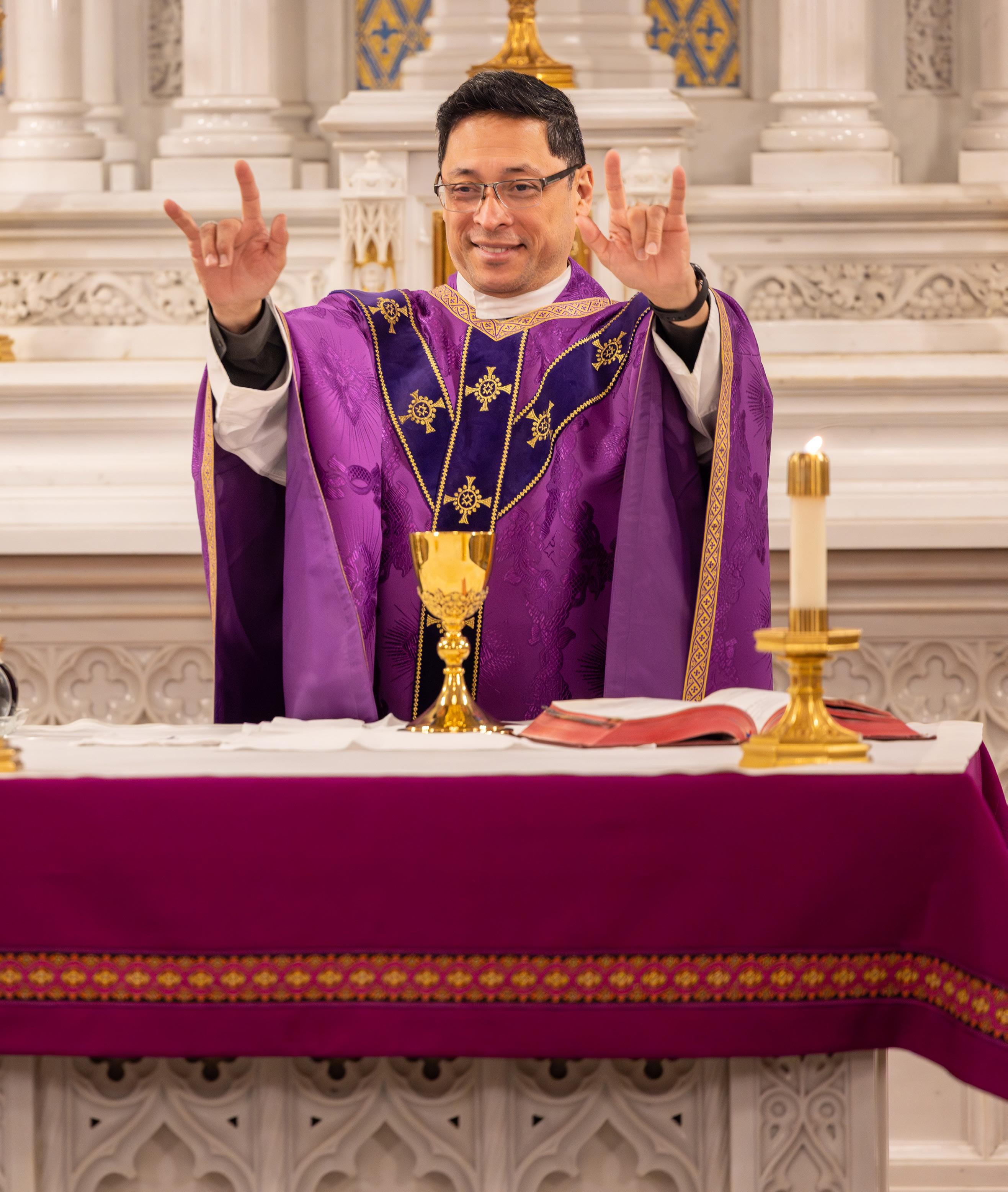
As the Archdiocese of Newark’s newest auxiliary bishop, Bishop Bismarck Chau brings a longstanding commitment to serving the deaf Catholic community.
Teaching and care for deaf Catholics of all ages is not just an element of Bishop Bismarck Chau’s priestly ministry; it has defined and enriched his vocation at its core. Since he was a young priest, it has been a singular expression of his passion to serve the people of God.
Most Rev. Bismarck Pedro Chau ’04/M.Div. ’08/M.A. ’08/M.A. ’21/Ed.S. ’21, the newest auxiliary bishop of the Archdiocese of Newark, is a beloved local pastor whose focus on an often-marginalized community within the Catholic Church follows the example of Jesus, and he carries forward a decades-long tradition that has existed within the Church of Newark. For him, it is largely a matter of addressing a longstanding injustice.
Early in life, the experience of his deaf sister opened Bishop Chau to an understanding of what the Catholic Church could — and did not — offer: she found welcome and a supportive community in a Baptist congregation, who recognized and served her needs as a deaf Christian.
Starting from his ordination to the priesthood in 2008, Bishop Chau learned to celebrate Mass in American Sign Language and received the blessing of Archbishop John J. Myers for his ministry to the deaf. He moved through assignments as campus chaplain in Newark to the pastorship of Saint John and Saint Patrick’s Pro-Cathedral, also in central Newark, with a zealous commitment to serving this minority of Catholics — countering prejudices and misperceptions of the deaf as disabled. “They are not. A deaf person can do everything a hearing person can, except hear,” he says.
In addition to celebrating Mass in ASL, Bishop Chau provides essential pastoral services to the deaf community throughout New Jersey, including confession, anointing of the sick, counseling on life matters and spiritual direction. He has also expanded this work through teaching, serving as the liturgy instructor for the Immaculate Conception Seminary program offering ASL to seminarians and students in 2019.
For Bishop Chau, there remain continuing areas of frustration in serving the deaf, which he notes should be of concern to all Catholics. “We need to focus on kids because a lot are growing up without faith,” he says, “and they are falling behind in school as well as in faith.”
Today, as most parents seek to “mainstream” nonhearing children, the specialized education traditionally provided by schools for the deaf is falling away, so language and life skills are not being taught in an environment focused on their needs, and religious education has lagged for the youth.
In his outreach efforts, he notes, “It’s like working with any minority group — language and culture do not exclude them from the community, and they must not feel excluded, as some do.”
He emphasizes expression in American Sign Language, with body movement and facial expression to help convey the Gospel in a clear and compelling fashion. When preaching, he moves closer to the congregation. “I want them to go home changed. I want nothing to stand in their way,” he says.
When the congregants respond, connect and question — when they “ooh and aah,” he said, “that just melts me. I really involve them in sharing the Word. And they do not forget that.”
As the only priest in the archdiocese who knows ASL, he celebrates Mass in sign language every fourth Sunday in the chapel of the Cathedral Basilica of the Sacred Heart.
At his episcopal ordination at the Cathedral Basilica of the Sacred Heart, Newark, last September, Bishop Chau drew enthusiastic cheers and applause for his greeting to deaf Catholics in ASL. It was a signal moment in one priest’s vocation of service to those most in need of hearing the Word of God to bring hope and healing to their hearts. n
Greg Tobin, M.A. ’06 is the former interim vice president of university advancement and author of The Good Pope
Lisa Rayman
by
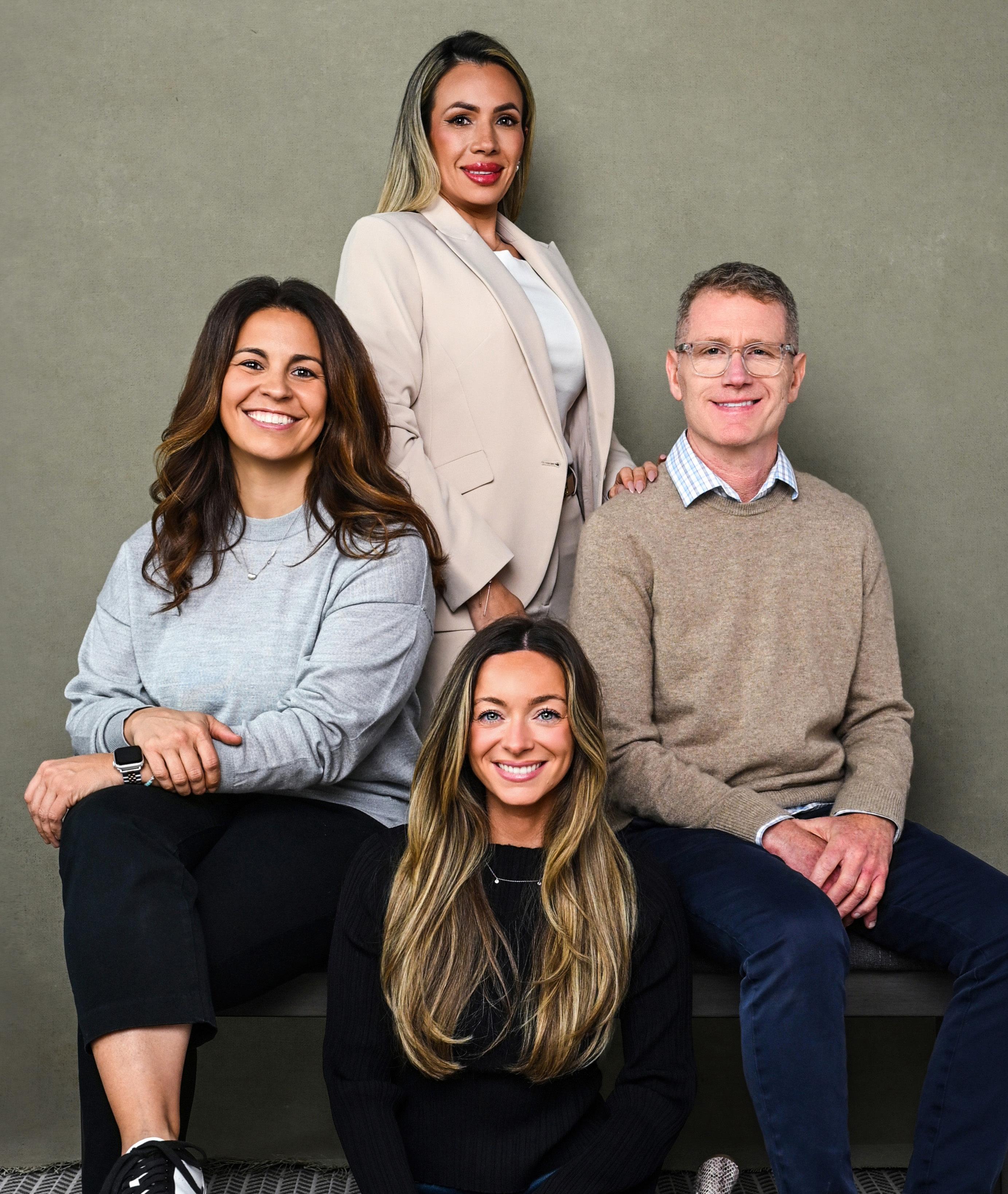
The life-affirming act of donating a kidney links four Student Services employees to their recipients and each other, in a gift of compassion of service.
Consider the kidneys. They measure about four to five inches tall and two to three inches wide — roughly the size of a fist — and weigh about 10 to 12 ounces. They are a powerhouse of an organ, removing waste and extra fluid from the body and helping the bloodstream maintain a healthy balance of minerals such as sodium, calcium and potassium. While most of us are born with two kidneys, we can survive with just one, which makes every donation of a healthy kidney to someone suffering from kidney failure a lifesaving act.
These are the stories of four employees in Seton Hall's Division of Student Services who have committed this selfless act. Their motivation varied. Matthew Geibel and Amanda Di Donato were trying to help siblings. Gianna Graw donated a kidney to honor her late father. Sandra Vanegas donated hers to her father, helping him live for more than two decades post-transplant. All four kidney donors said, if they could, they’d do it again.
Director of Academic Support Services for Student Athletes
When Matthew (Matt) Geibel learned his older brother was in need of a kidney transplant, he didn’t hesitate to offer one of his own.
Carl Geibel had suffered from chronic kidney disease for years, eventually requiring dialysis, a life-sustaining treatment that filters water and excess fluid from the blood. Carl knew the day might come when he would need a kidney transplant to survive, and in 2012, that day arrived.
Preliminary testing found that Matt did not qualify as a kidney donor for his brother. But a nurse at Our Lady of Lourdes Hospital, in Camden, New Jersey, told Matt about a program run by the National Kidney Registry known as paired kidney exchange. Under the program,
Matt would agree to donate his kidney to another person — a complete stranger — who, like his brother, was in need of a transplant. In exchange, the program would find a kidney donor. “There was no doubt,” Matt says. “I was happy to know that I could do something to help. My siblings were disappointed they weren’t able to do it.”
Now they needed a donor for Carl. “Hurry up and wait,” Matt recalls of the process. It took a year, but finally a donor was found. The brothers’ surgeries were scheduled for the same day — October 1, 2013 — at Our Lady of Lourdes. Matt was 42 years old. Carl, the oldest of the five Geibel siblings, was 50.
Matt’s kidney was flown to Baltimore and transplanted into a man at The Johns Hopkins Hospital. Afterward, Matt was thrilled to receive a letter from the recipient. “I got a very big sense of how overjoyed he was and how grateful he was,” Matt says. “Not only for him, but for his family.”
Carl did not fare as well. After several years, his transplanted kidney failed, and Carl needed to return to dialysis. Further testing showed he was not a good match for a second transplant, and he died on July 4, 2020. He was 57.
His brother’s death did not diminish Matt’s belief in the value of kidney donations. “I would do it again, absolutely,” Matt says. “It was by far one of the best things I’ve done. I want people to know this is something you can do.”
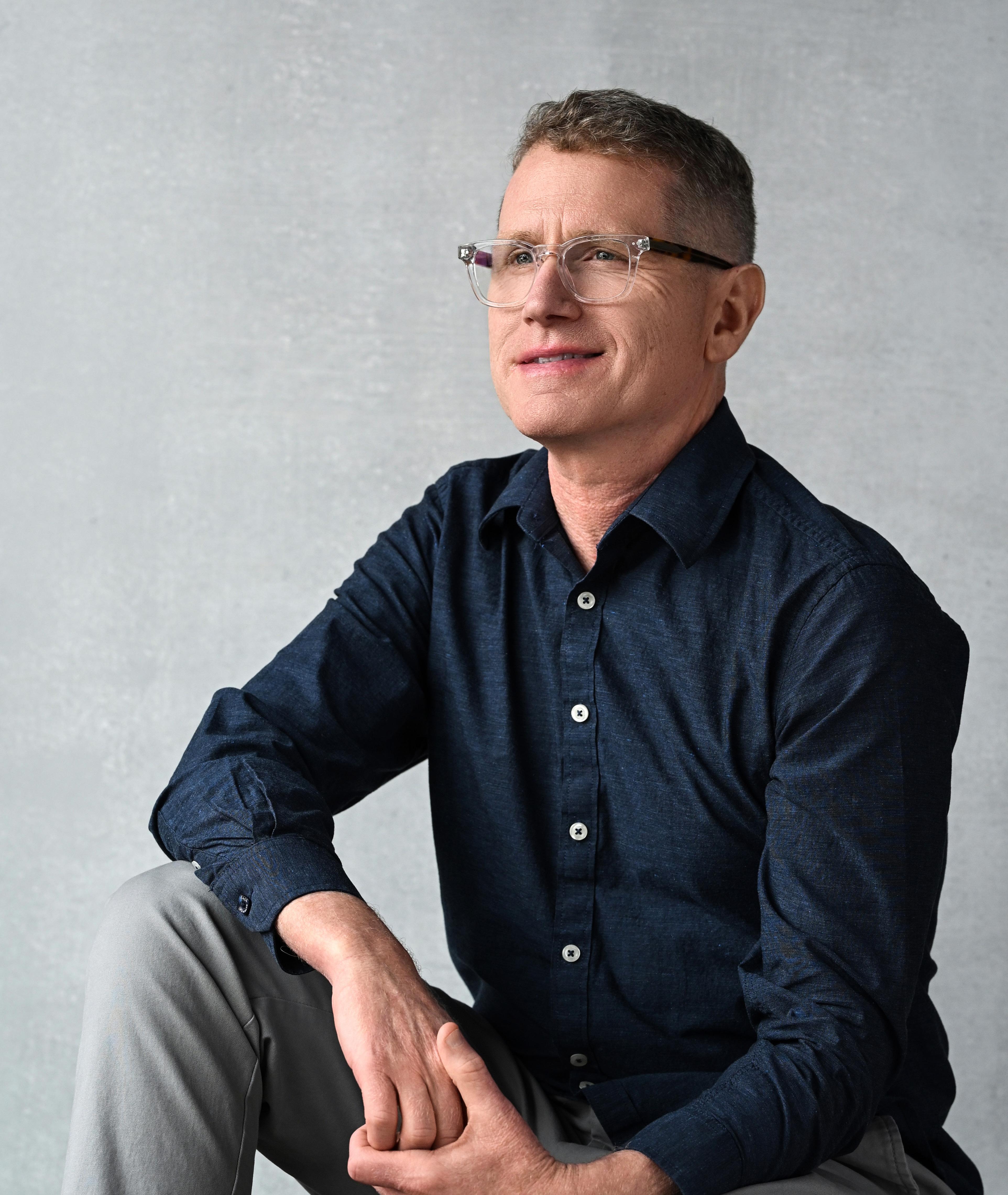
“I would do it again, absolutely,” Matt says.
“It was by far one of the best things I’ve done."
GIANNA GRAW
Associate Director for Disability Support Services
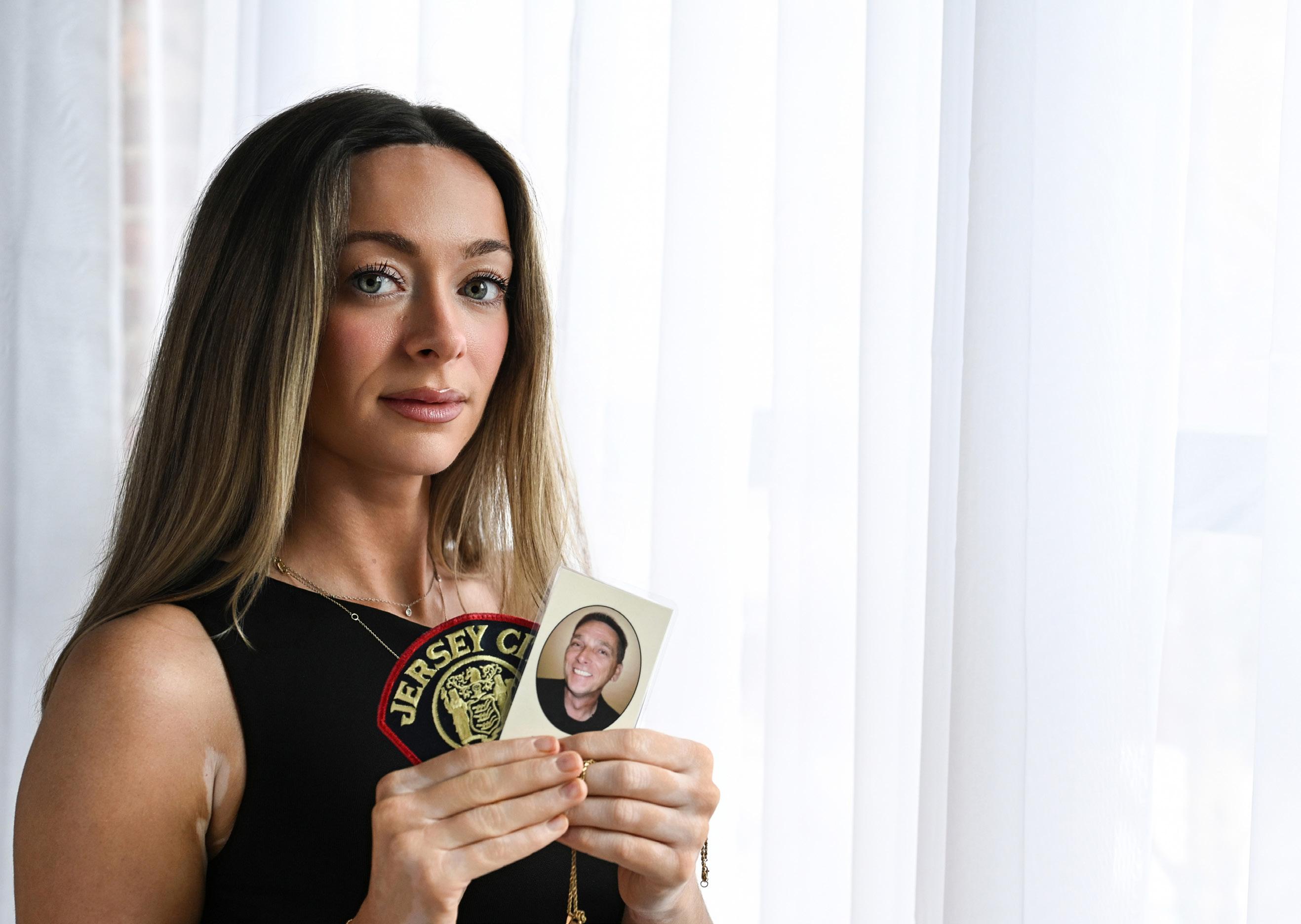
Gianna Graw was just 20 years old in 2016 when her father, William Graw, died. He had been a Jersey City police officer for 28 years. Besides Gianna and her older sister, Alexandria, he left behind Andrea, his wife of 30 years. “He was known for opening his home and heart to many,” the obituary read, “and his generosity and kindness are legendary.”
Three years after her father’s death, Gianna learned of another Jersey City police officer who needed a kidney transplant. Immediately she thought to donate one of hers.
“My dad’s department was so good when he passed away,” Gianna recalls. “So I thought, how full-circle would this be
if I had the opportunity to save a Jersey City cop’s life and donate my kidney to him?”
But when Gianna made some phone calls, she was told a donor had already been found. Undeterred, she decided she would donate her kidney to whoever was in need. Her motivation had not changed: She wanted to honor her father. “I was all ready to do it for him,” she says of her father’s fellow officer.” Why not just do it for anyone.”
At Hackensack University Medical Center, Gianna went through the battery of tests — with a social worker, a psychologist, a pharmacist and a nephrologist — required of all prospective kidney donors. Her surgery was scheduled for December 2021, shortly after she completed the final semester of a master’s program in higher
“Please let me start by saying thank you very much from the bottom of my heart,” he wrote. “You changed my life completely and you made me and my family incredibly happy.”
education at Montclair State University.
Her kidney was flown immediately to Los Angeles, where it was implanted in a 38-year-old man, a nurse, the father of two daughters, ages 10 and 14. Afterward, he sent Gianna a long letter of gratitude. “Please let me start by saying thank you very much from the bottom of my heart,” he wrote. “You changed my life completely and you made me and my family incredibly happy.”
For Gianna, the letter reinforced her desire to sustain her father’s memory. “It was always just very important for me to do what I could to help another and try to live on his legacy,” she says. “It’s almost been 10 years now, but I just never stopped talking about him, because I never want his spirit to die.”
SANDRA VANEGAS, E d .D. ’27 Assistant Director of Academic Services, Educational Opportunity Program
Sandra Vanegas was her father’s first child, and they always shared what she calls “a special connection.”
A native of Colombia, Sandra and her family spent much of her youth in Venezuela, where she watched her father, Rafael, cope with an assortment of health challenges. In 1996, when Sandra was 19 years old, Rafael was told he had polycystic kidney disease, which had caused fluidfilled cysts. The doctor described her father’s kidneys as looking like clusters of grapes. His diagnosis would impact both their lives.
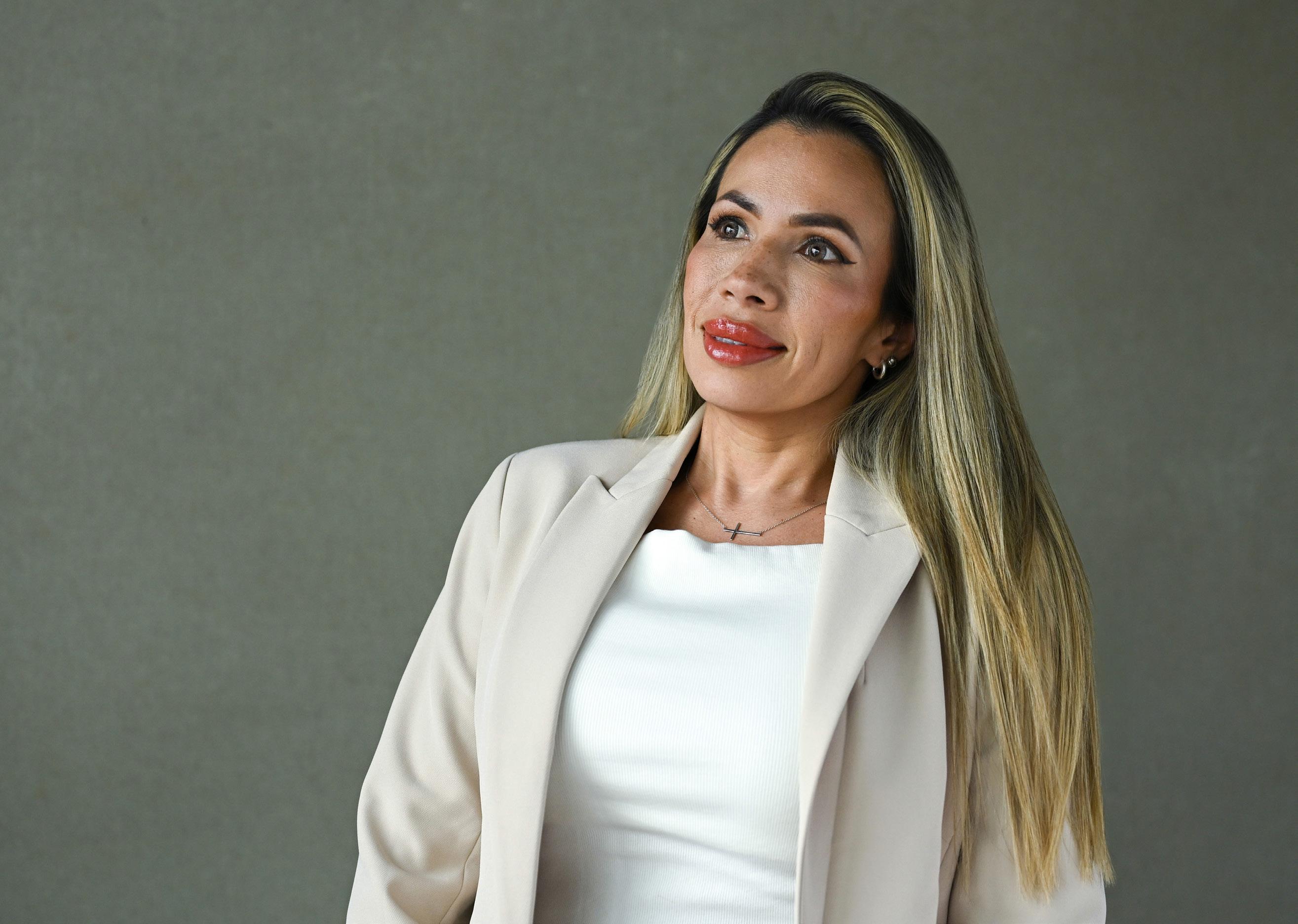
“I told [my father] my little brother has a right to have a dad the same way that I had a dad. So I said to [him], ‘Listen. I will donate my kidney with my eyes closed.’”
Sandra vowed immediately to donate one of her kidneys to her father. “I never had any doubt,” she says. “I was very sure what I wanted to do.”
At the time, she was the only one of three siblings who was 18 — her younger brother was just 3 at the time — and thus eligible to be a donor. Her father asked if she was sure she wanted to go through with the procedure. “I told [my father] I would do it 10 times,” she recalls. “I told him my little brother has a right to have a dad the same way that I had a dad. So I said to [him], ‘Listen. I will donate my kidney with my eyes closed.’”
Their respective surgeries were scheduled to take place in a hospital in Medellin, Colombia, in March 1998. Sandra was 21; her father was 47. As she was going through the extensive preparation process, Sandra recalls, “One of the doctors that was treating my dad told me, ‘If anything happens to you, it’s because it’s going to happen, not because you have just one kidney.’”
Both surgeries went off without a hitch. After her kidney had been transplanted into her father, Sandra visited him in his hospital room. “I remember he was very happy,” she says. “He just hugged me and cried. I think, at that moment, the connection becomes even stronger.”
Rafael Vanegas lived for more than 23 years following his successful kidney transplant, passing away in October 2021, just shy of his 70th birthday. He lived long enough to see Sandra give birth in 2017 to his second granddaughter, Mia Alexandra Penafiel.
Senior Associate Director of Academic Support Services for Student Athletes
“I have the best family in the world,” Amanda Di Donato says flatly, “and I should always begin every sentence with that.”
So it was not without anguish that Amanda had watched her sister Angela, 17 years her senior, struggle
with chronic kidney disease. Amanda had once offered to donate one of her kidneys, but testing showed she was not a match. Years later, when surgery became imminent, Di Donato turned to the paired exchange program run by the National Kidney Registry. “My motivation was that someone was also willing to enter this and do that for my sister,” she says. “Why couldn’t I do that for anyone else. Servant leadership is our guiding principle, and I believe that’s what this was.”
Amanda had learned of the paired exchange program from her Seton Hall colleague, Matt Geibel, who became an altruistic donor so that his brother could receive a kidney from another donor. Of her sister Angela, Amanda says, “I know that she and my other siblings would do the same for me. That’s just kind of how we roll.”
The surgeries were set one week apart in the spring of 2018 at Saint Barnabas Medical Center (today called Cooperman-Barnabas Medical Center) in Livingston, New Jersey. Their participation in the paired exchange program was part of a record chain of 46 kidney transplants, an undertaking later featured on NBC’s Today show.
The doctor who performed Angela’s implant surgery did the same procedure for the recipient of Amanda’s kidney. As Amanda’s mother sat waiting to visit her daughter post-surgery, the doctor approached. “He came out and he saw her,” Amanda says, “and he just said to her, ‘I want to let you know her kidney’s doing really well in its new location.’ So that was heartwarming, and my mom told me that. I felt good.”
Amanda did not learn who received her kidney. But, she says, “I pray for them every day.” And like so many kidney donors before her, she encourages anyone who can to make a similar donation. “I don’t think people realize how they can help,” Amanda says. “I can’t say enough: I have the best family. That was always our motivation. I believe that in giving this gift to Angela, it was a gift to my family.” n
Christopher Hann is a freelance writer and editor in New Jersey.
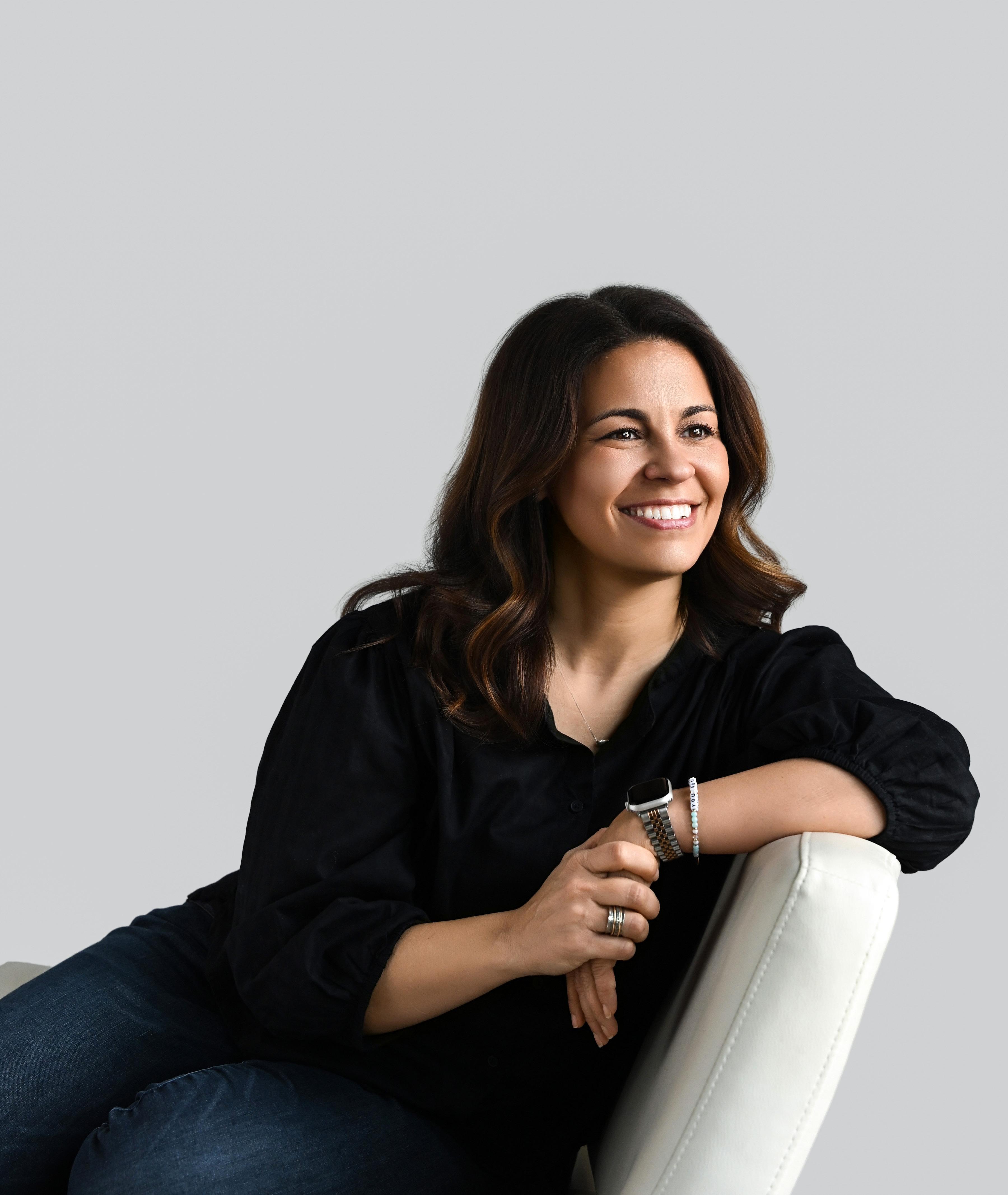
Of her sister Angela, Amanda says, “I know that she and my other siblings would do the same for me. That’s just kind of how we roll.”

At Seton Hall, faculty mentorship and undergraduate research allow students to discover unexpected pathways to reshape their goals and aspirations.
Kayla Wager came to Seton Hall to become a teacher. Instead, the second-semester senior is headed to a master’s program in data science and engineering, something she never would have considered were it not for professor John Saccoman’s introduction to the subject matter during Wager’s freshman year.
Senior Gabriella DeGuzman was interested in applying to medical school, and thanks to a research opportunity in neuroscience led by assistant professor Meghan Caulfield, DeGuzman became impassioned by the human brain as well as all that research can unlock in the medical field.
These examples exemplify the magic that can happen when a professor recognizes and nurtures the natural curiosity of students interested in the STEM fields — science, technology, engineering and math.
For decades, Seton Hall has supported faculty-mentored undergraduate research. From ensuring that students have access to funding and equipment, to opportunities for presenting research findings and publishing papers, to the dedicated connections formed between professors and students, the University sparks inspiration to guide students in discovering their greater purpose.
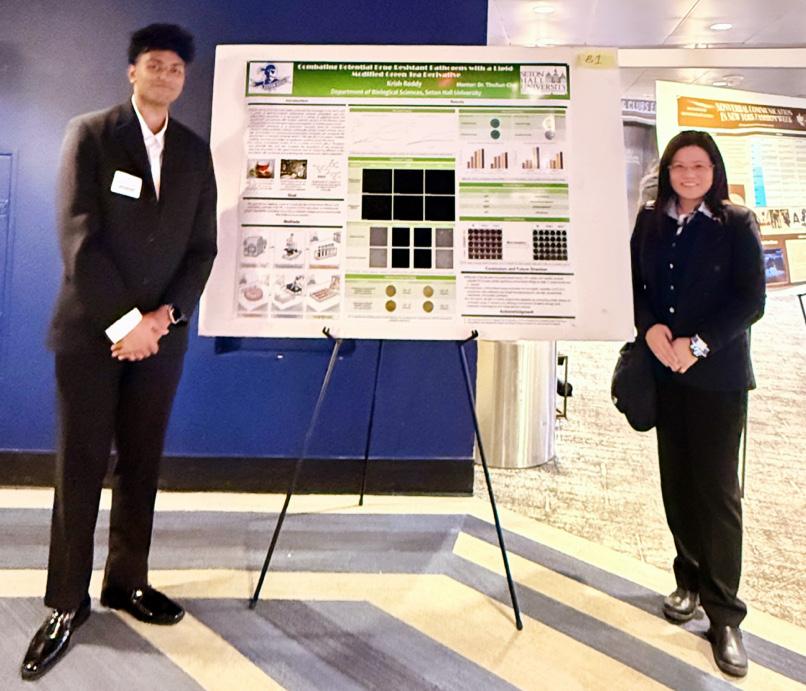
When biological sciences professor Tinchun Chu, director of graduate studies, mentors someone, she has in mind both technical training and teaching the student how to put that learning into use for the public good.
“I’m a firm believer that science is best learned through practice or active engagement,” she says. “Curiosity, critical thinking and well-planned experimentations or hands-on investigation are critical to meaningful discovery.”
Chu has applied this approach with junior Krish Reddy, an undergraduate pre-med student working in Chu’s lab who says the research work has inspired him to focus on how he might make a difference. “The first time we met, our focus wasn’t on technical skills, but instead an open discussion about how this research could contribute to public health,” Reddy explains.
Together, Chu and Reddy landed on a project that focuses on drug-resistant infections, particularly those caused by nosocomial pathogens that are predominant in healthcare settings. The professor/student team is testing formulas containing green tea to see if they are able to reduce colonies of bacteria. “Early on, Dr. Chu opened my eyes to the true responsibilities and nature of being a physician/scholar,” says Reddy. “At that point, I was committed to becoming a physician, but I had some tunnel vision regarding the precise obligations in a modern healthcare environment, relegating them to clinical practice only.”
Chu and Reddy meet weekly to interpret data, analyze results and consider next steps. Their work has been aided by Seton Hall’s commitment to undergraduate research, including the Dean’s STEM Connect Undergraduate Research Award that allows students to focus on projects full time over their summer breaks. “Dr. Chu has shown me that to truly care for your patients, it is paramount to remain engaged in scientific research and scholarship,” says Reddy. Reddy says Chu has inspired him to work on something intellectually satisfying. “Exploring these alternative treatments feels innovative and meaningful,” he says. “We can discover treatments that are both effective and cost effective. That complements my goals as a future healthcare worker.”
Gabriella (Ella) DeGuzman has always been ahead of the curve, beginning her college career at 15 at a nearby community college. And so she caught Meghan Caulfield’s eye when she took Caulfield’s cognitive neuroscience and neuroscience of art classes in her first year.
Knowing DeGuzman planned to attend medical school, Caulfield encouraged her to work as an experiential learning student in her cognition and neuroscience lab.
DeGuzman’s project measures the “startle response” in college students who have suffered concussions. “When a person has a concussion, the brain moves forward within the head, damaging areas of the prefrontal cortex,” says Caulfield. “That movement can put stress on the brainstem, too. Ella is researching whether there is long-term, residual damage in the brainstem using acoustic startle response.”
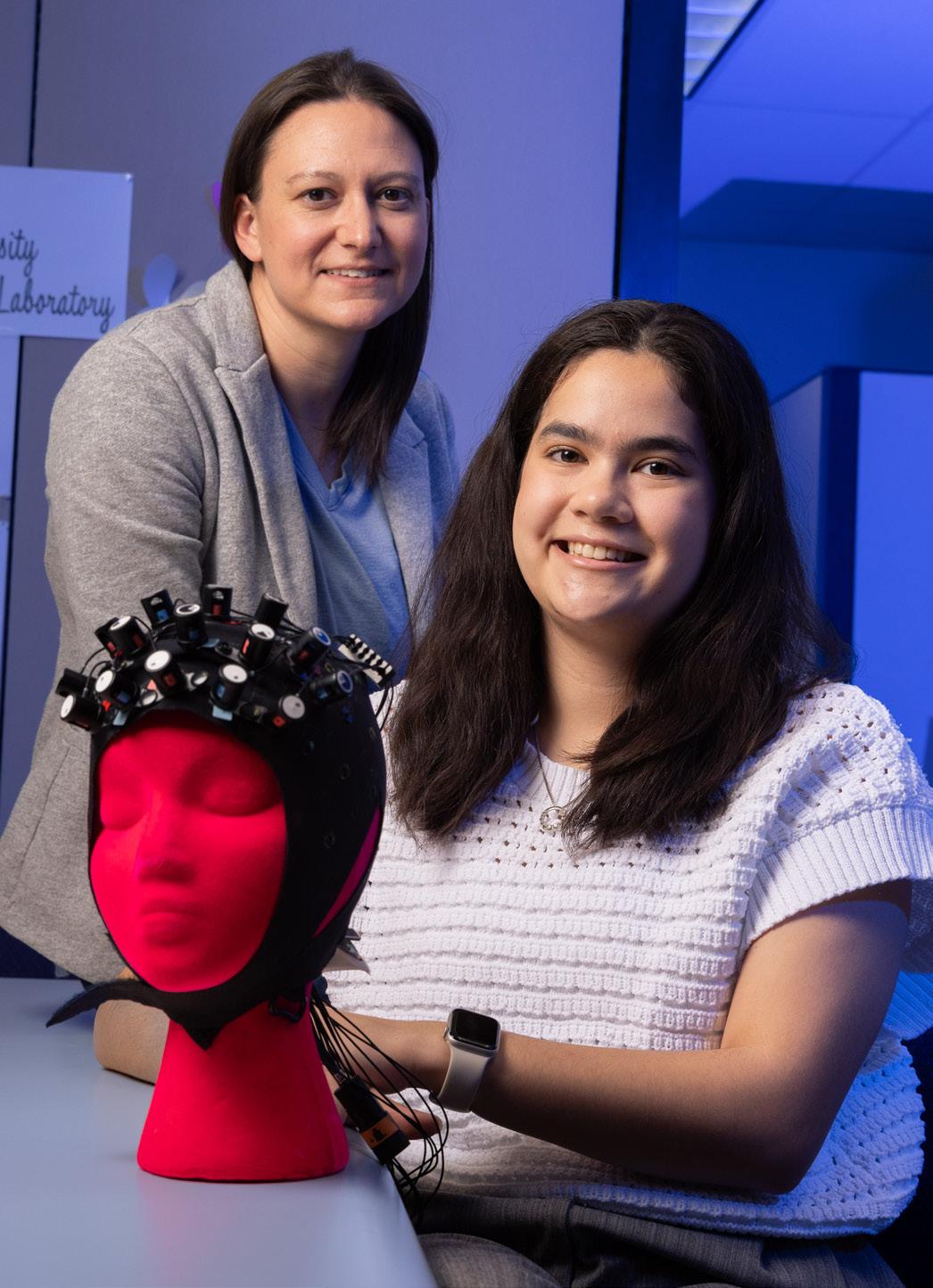
When she first arrived on campus, DeGuzman was interested in research, but didn’t know much about it. “Before I began at Seton Hall, I got my associate degree and worked a few different jobs,” she says. “Medicine and psychology stuck out for me, but it is the research that has taught me how they can work together and translate to better patient care.”
DeGuzman has worked on a couple of different projects with Caulfield, including one looking into how anxiety can impact the perception of images. “The work has given me an opportunity to explore my passion for the human brain,” says DeGuzman, “and see how research can be ingrained into my career.”
DeGuzman credits both Caulfield and the University for the inspiration. She was the recipient of the Dean’s STEM Connect Undergraduate Research Award and is appreciative of a supportive infrastructure while developing her thesis. “I’m surrounded by smart lab mates with the same passion for the human mind,” she says. “It’s such an uplifting environment and shows how far education can take you.”
John Saccoman, the department chair, professor and program adviser for mathematics, estimates he has worked on about 30 research projects with undergraduate students over the years. “Once students take linear algebra and have enough background to work with models of networks, we can do computations based on those graphs,” he explains. “It inspires undergrads to look at a new problem and come up with a solution or formula.”
All honors students in the math program must take on a research project, and Saccoman likes to instill confidence in them by pointing out they are the experts on a particular topic. Kayla Wager made an impression on him her freshman year when taking his discrete mathematics class. Not only did Wager sit at the top of her class, but she took advantage of office hours and began looking toward a future research project. “Kayla is one of the hardest working students I’ve ever had, and has been extremely successful in her research,” says Saccoman.
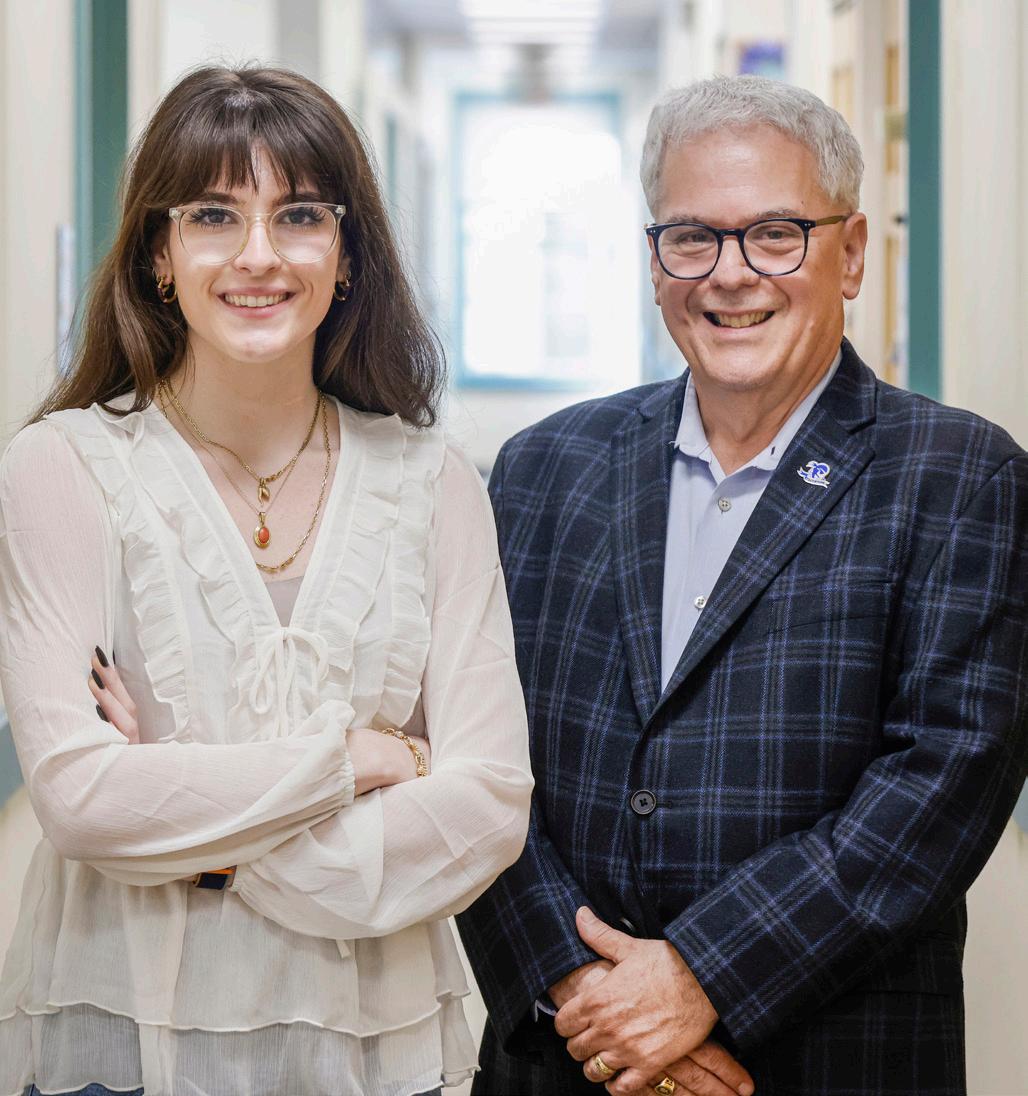
Together, Saccoman and Wager applied for the Dean’s STEM Connect Undergraduate Research Award, which allowed them to begin work on their network modeling project last spring. The two met weekly to generate examples, apply matrices and produce a final paper based on their findings — they are awaiting word on possible publication in a professional journal.
Throughout this process, Wager has discovered an entire new field and interests. “I presented a paper at a research exposition my junior year and learned I enjoyed presenting and defending research,” she says. “I never thought I’d like research; but working with Dr. Saccoman has allowed me to see I have a mind for it. He has made me feel I am more than capable of doing the work.”
As she looks toward graduation and beginning the master’s in data science program, Wager intends to continue the line of research she began with Saccoman, an unexpected outcome for the student who fully intended to become a teacher. “I’m honestly shocked I’m going into data science,” says Wager. “I can’t thank Dr. Saccoman enough for inspiring me.” n
Amanda Loudin is a Maryland-based freelance writer.
Growing up in a low-income family and working full-time following high school graduation, Bob Copeland ’80 could not have imagined that one day he’d earn a Ph.D. and contribute to the discovery of five FDA-approved medicines. But that’s exactly where he sits today, and that’s only scratching the surface.
As a biotech entrepreneur, Copeland built a long résumé that includes adjunct professor at the University of Pennsylvania’s Perelman School of Medicine; venture partner at Atlas Venture and adviser for Google Venture; author of over 200 scientific publications and seven textbooks; and fellow of the American Association for the Advancement of Science and the Royal Society of Chemistry.
Copeland had always demonstrated an interest in science and medicine, which led him to his first full-time job as a lab technician. When that company offered tuition reimbursement, Copeland jumped at the chance to attend evening classes at Seton Hall, allowing him to make his way through his undergrad program in six years.
Copeland credits Seton Hall’s evening program for giving him a start. “Otherwise, I wouldn’t have been able to afford the opportunity,” he says. “Because of my family’s situation, the idea of full-time college was a non-starter. Along the way, I took some inspiring classes in chemistry and the sciences, but Seton Hall provided a broad liberal arts education, too,” he says. “At the time, I wondered why I needed [the humanities classes], but in retrospect, I can see how they broadened my world.”
The time he spent on his chemistry major also introduced Copeland to the research lab, which led him to pursue graduate studies. “My education sat at the intersection of biology and inorganic chemistry, and I found that exciting,” he says. “Within the first six months or so, I had accumulated enough data for publication. This opened my mind to the possibilities.”
Following graduate school at Princeton and a Chaim Weizmann Fellowship at Caltech, Copeland began a career in the pharmaceutical industry and built on from there.
Today, he looks back on his time at Seton Hall as making all the difference in his life’s trajectory. “The environment was affirming and a place where I could realize my full potential,” he says. “It opened doors to places I never imagined possible.”
Cross-country runner Jacob Simon ’18 never could have foreseen stepping into his coach’s shoes. He wanted a career in sports, but coaching was not his goal. After majoring in social behavioral sciences at Seton Hall, he went on to pursue a master’s degree in athletic training at Fairleigh Dickinson University, and it was there — working as a graduate assistant with the cross-country team — he found his calling.
“This is what I want to do. I want to be a coach,” recalls Simon, who realized that desire in full last year when he was hired for the head coaching job at Seton Hall. “Working with the team, seeing the fruits of their labor; it all kind of took off from there.”
After earning his master’s in sports administration, he started looking for coaching gigs.
His first chance came as an assistant coach at New Jersey City University. Then he got a taste of Division I coaching as an assistant at the University of Florida, until Southern New Hampshire University hired him as head cross-country coach and assistant track coach.
But in 2025, one year after Simon’s first head coaching job, his collegiate coach John Moon retired, a legend after 53 years at Seton Hall.
“I didn't think Coach Moon would ever retire. He was Mr. Seton Hall,” Simon says. “But when I heard he was retiring, I was getting a lot of former teammates reaching out to me saying, ‘Dude, you’ve got to go for it!’”
Having spent just a year and a half in the job at Southern New Hampshire, he was unsure. But the doubts vanished with a visit back to South Orange. “Coming back to campus for the interview, it was just hard to see it any other way.” The full-circle moment came when he got the offer and accepted the job, starting in May.
His inaugural year went well — a highlight being the men’s team winning the Metropolitan XC Championship for the first time — and he sees even better things ahead.
“As runners we always want to see how much more we can reach,” he says. “I think the biggest thing was, they were immediately just ready to work and listen to the coaching and listen to what I was bringing to the program.”
Bryan Felt, director of athletics and recreation at Seton Hall, wasn’t surprised at the smooth transition. “Coach Simon represents both continuity and new energy for the program. As a Seton Hall graduate and former cross-country student-athlete, he understands the standards, expectations and traditions that Coach Moon established,” he says.
Felt uses terms like “character,” “consistency” and “competitive vision” when talking about the veteran coach.
Simon shares those values, describing Moon’s personal approach before saying anything about him as a coach. “This man had thousands of athletes come through his program, but he knew you as a person more than as an athlete. That, I think, is super important,” Simon says.
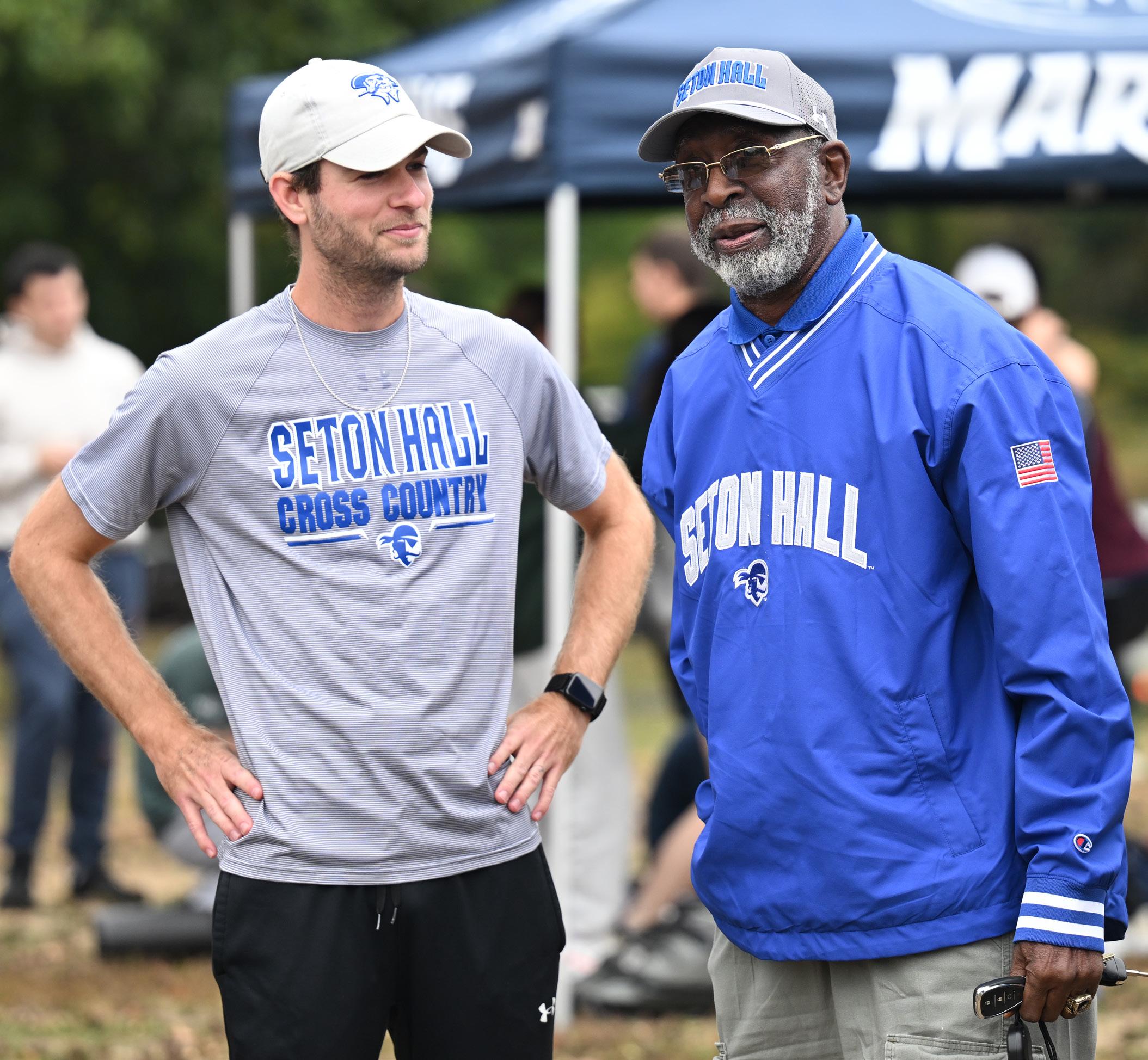
In September, a few months after announcing his retirement, Moon was honored with the John Thompson Jr. Award, given annually to someone who fights prejudice and discrimination while advancing societal change within the BIG EAST Conference. It all adds up to an enviable legacy. “Coach Moon modeled our program on work ethic, integrity and professionalism, earning respect from athletes, alumni and colleagues,” according to Felt.
Exhibiting all three of those things, Simon isn’t being trite when he says, “I owe a lot to Coach Moon.” His time with Moon at Seton Hall laid the groundwork for his professional and family life; it’s where he met his wife Isabella Whelan, a 2020 graduate and also a cross-country runner. They now have three children. n
Harris Fleming is a freelance writer based in New Jersey.
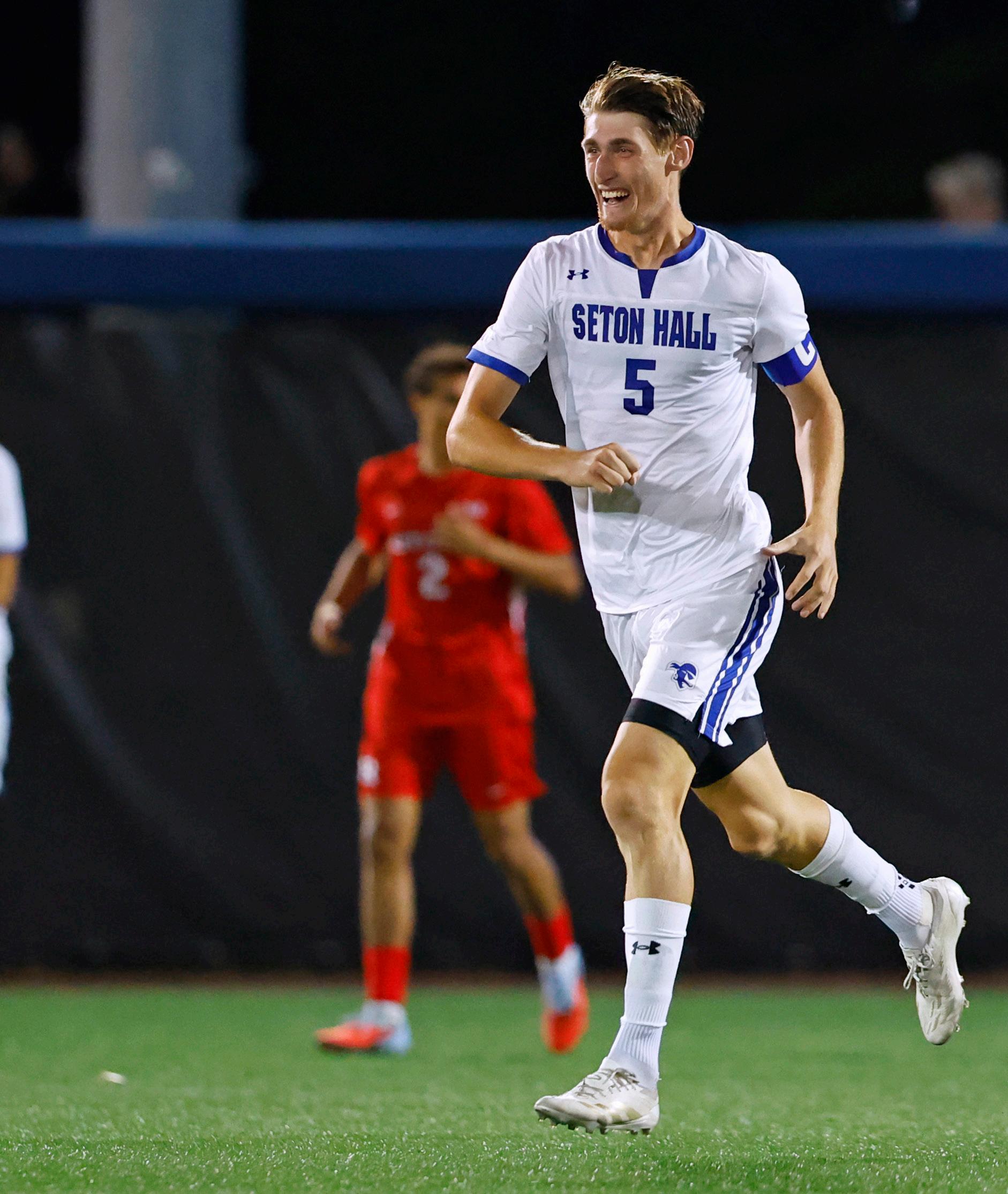
In a few short years, Agustin Resch has moved from Argentina to New Jersey, learned what it means to be a Seton Hall student-athlete, and as a recent graduate, realized his dream of playing professional soccer.
Resch was drafted by the Houston Dynamo in the third round of the 2026 Major League Soccer SuperDraft for college players. He signed with the club’s second team in February and, shortly after, earned a call-up on loan to the first team, making his major league debut at the start of the second half of their February 28 match against Los Angeles Football Club. In March, he signed a contract with the first team, officially joining the Dynamo at the highest level of U.S. professional soccer.
It’s a wonder Resch found his way to Seton Hall at all, though. “I didn't know about soccer in the United States, like college soccer,” he says. In Argentina he was playing at the amateur level when he learned about a tryout U.S. college coaches were holding to assess local talent. Seton Hall men’s soccer coach Andreas Lindberg was among them — and he was immediately impressed by what he saw in Resch.
“I loved him right away. He had a mischievous smile and a funny personality ... he was really, really competitive,” Lindberg recalls. “Right off the bat, I did think that there was something there. He’s 6’6” so he’s a tall guy, but he was also very athletic. He’s mature, no nonsense. He really wanted to become a pro.”
Lindberg wasn’t the only coach there who was impressed by Resch’s talent as a defender, but as Resch navigated the language barrier in their initial meetings — he spoke little English at the time — Seton Hall stood out.
“I had other options, but my advisers pushed me to go to Seton Hall, and it was the right decision,” Resch says. “The experience was great, but the beginning was really tough for me — being far from my family in a new place where there’s a new culture, a different language," but he quickly found his stride. “The Hall allows you to adapt quickly with all the tools, and
the professors are great. They help you be the best version of yourself.”
And Resch did that. In his senior year, he was named to the 2025 NCAA Division I Men’s All-America first team, first-team All-East Region and first-team All-BIG EAST honors. Finally, he was picked as the BIG EAST Defensive Player of the Year after having been selected as the preseason Defensive Player of the Year.
Just as important to both Resch and his coach, he graduated with a 3.879 GPA and a finance degree, earning selection to the BIG EAST All-Academic Team in both 2023–24 and 2024–25. He was also named to the 2025 CSC Academic All-America Third Team, and is one of only nine student-athletes in Seton Hall history to earn athletic and academic All-America honors in the same year.
Resch is just the latest Pirate to rise from Owen T. Carroll Field to a professional pitch. Earlier this year, Matias Molina, C.J. Tibbling and Mo Williams also signed pro contracts. And 2022 season standout Quenzi Huerman has been playing in the United Soccer League for several years; recently signing with the Louisville City FC.
Lindberg notes that success stories like these are beneficial in recruiting top talent, academically and athletically, to the Seton Hall soccer program. “It's good for us when it comes to recruiting, as we can talk to incoming players when we recruit them and show there is a pathway from Seton Hall into the pros,” he says.
He also notes that even the fittest, most successful athlete has a relatively short period of time to enjoy a professional career. “I always tell the boys to have a dual dream — the dream to go pro and then the dream of a profession outside of sports,” he says.
That message resonates with Resch, who hopes to “balance soccer with something related to finance” down the road. “I don't have a clear path right now, but we try to keep studying, keep getting more knowledge.” n
Eight months after the public launch of the For All, Forever campaign, I am incredibly impressed by, and grateful for, the generosity and engagement of our alumni, donors and friends. Since the launch, we have spent time on the road connecting with our community and sharing our vision and the pillars that bring it to life. From New York City to Naples, Florida, these conversations energized and reaffirmed our shared belief in the power of investing in our students, Catholic mission and the academic excellence that defines Seton Hall.
Recent gifts have established new endowed scholarships, enriched our educational offerings, advanced our research capabilities and enhanced our
physical space on campus. These acts of generosity are already impacting lives, and we extend our sincere thanks to all who make this possible.
As we continue this journey, the clearest reminder of why this campaign matters comes from the students and faculty who experience its impact every day. In the following pages, you will read stories of the progress and possibilities that are shaping Seton Hall. Together, we are building a future that honors our legacy and advances our mission for generations to come.
Jon Paparsenos Vice President for University Advancement Seton Hall University
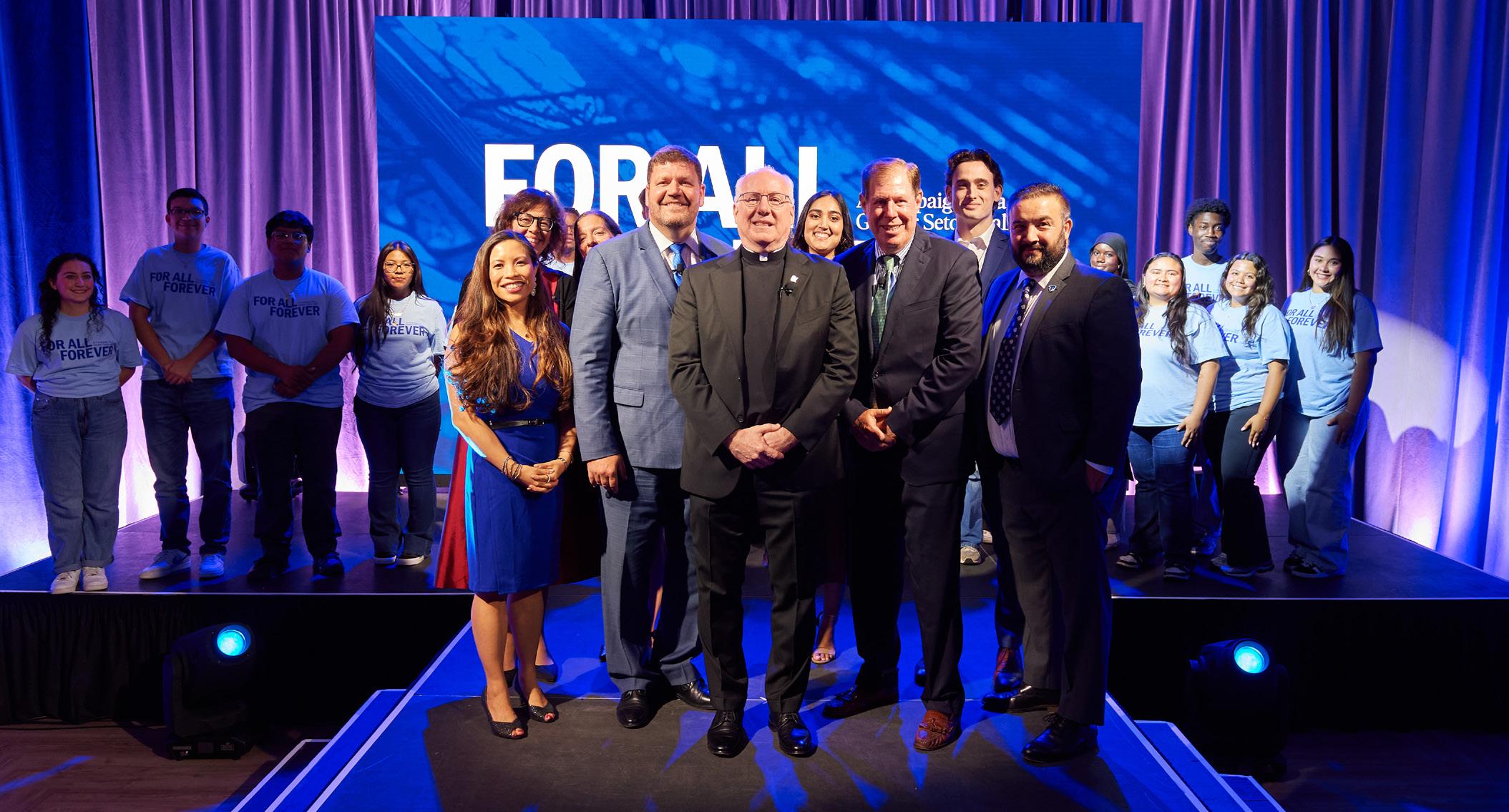
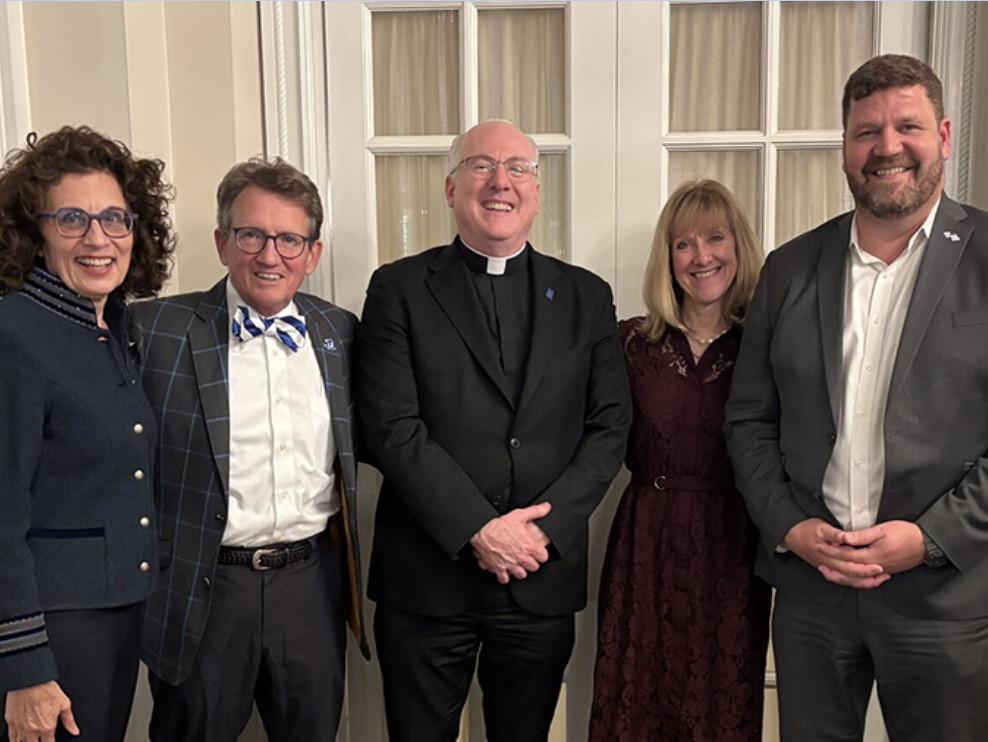
Seton Hall recently received a generous $500,000 gift from alumnus Stephen Lovelette, M.B.A. ‘85, in support of For All, Forever, the University’s $225 million comprehensive campaign. A longtime supporter of Seton Hall, Lovelette has directed his gift toward several initiatives close to his heart. In addition to strengthening the Stillman School of Business and advancing the University’s Catholic mission, his gift will ensure the long-term sustainability of his previously established endowed scholarship, which supports undergraduate students, with preference for those studying in the Immaculate Conception Seminary School of Theology.
Lovelette’s relationship with the University began in the early 1980s, when he moved to New Jersey for a role at Midlantic National Bank, where he used the bank’s tuition reimbursement program to pursue an M.B.A. in finance.
His engagement with Seton Hall deepened after a series of career moves led him to Chicago in 1989. There, he connected with a fellow alumnus who was forming a Midwest alumni network. “It helped reignite my relationship with the University,” he explains. “I started doing alumni telethons and built relationships with former deans Karen Boroff and Jack Shannon, and current dean Joyce Strawser. We became good friends, so I stayed involved and tried to give when I could.”
Lovelette says he’s not just giving back. “I’m playing a part in something I feel is very important,” he explains. Raised in the Catholic Church, he believes that universities like Seton Hall play a formative role
in shaping young people and strengthening society. “Seton Hall offers the spirit of the Church and a sense of camaraderie among the student body. It has grown over the years and become a beautiful community, not just a place where you go to get your degree and then move on.”
He has previously contributed to the University’s Catholic mission through the donation of a Marian mosaic shrine of Our Lady of Guadalupe outside the University Center, which serves as the heart of a quiet prayer garden for reflection and contemplation. “I’m proud of our Catholic identity. I like that you see priests walking around campus; they’re readily available to interact with students,” he says. “I try to get my own parish to be more like this. Our religious brothers and sisters should be accessible.” n
Carolanne Chanik is the director of advancement & campaign communications at Seton Hall University.
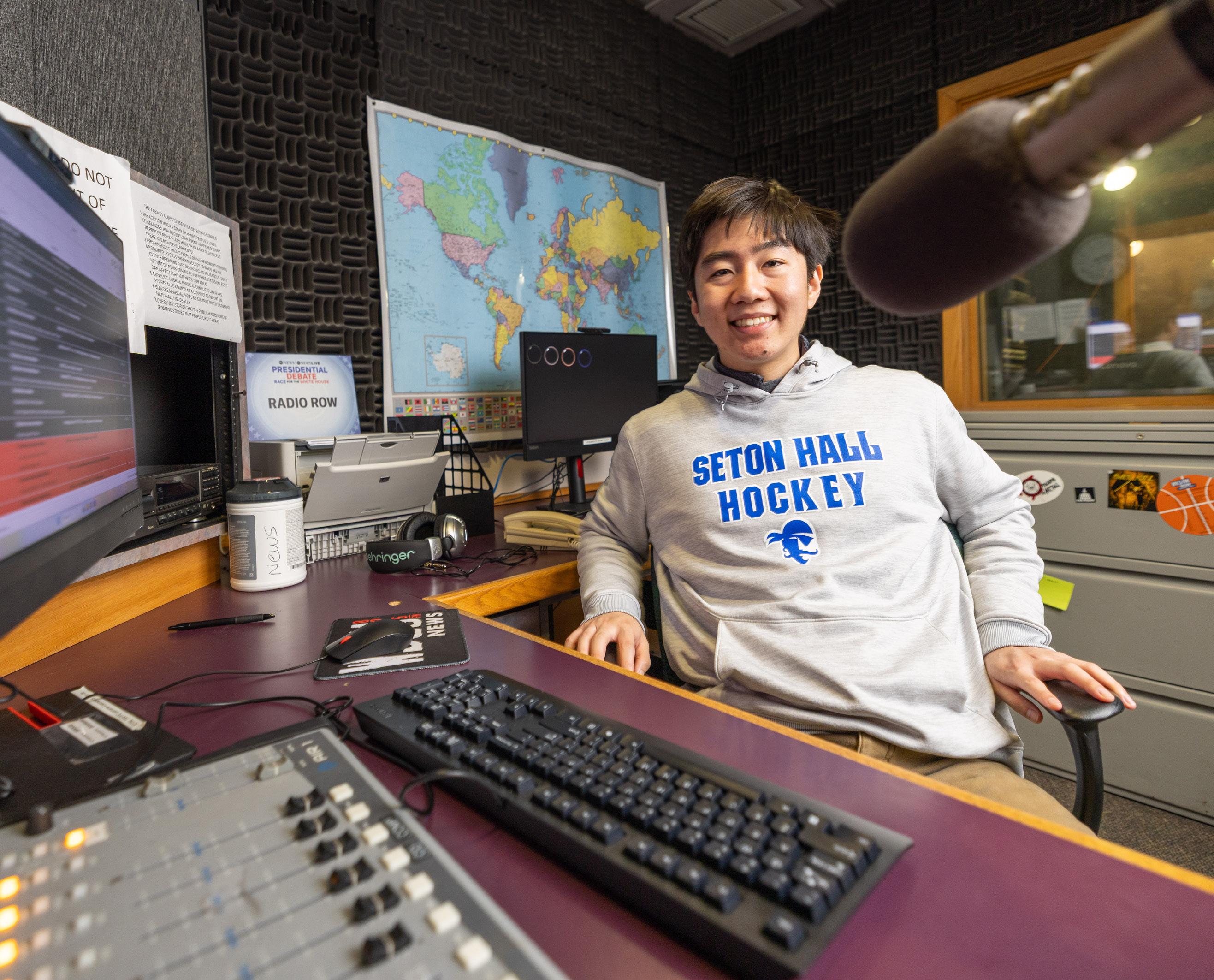
Photo by John O’Boyle
For Seton Hall junior Jeremy Son, sports are more than a hobby. They’re a calling.
When he’s not playing club ice hockey or rugby, he’s behind the mic or on the sidelines covering Pirates and professional games for The Setonian, Pirate Sports Network, Seton Hall University Television and WSOU, the University’s nationally recognized student-run radio station.
“I’m really involved, because I just love it so much,” said Son.
Hailing from Orange County, California, Son wanted a college experience where he could pursue athletics while also working closely with peers and professors. “Many universities in California are huge, which can make it difficult to really connect with your professors,” he said. “I really liked Seton Hall’s smaller class sizes and the professor-to-student ratio. I felt like I could learn a lot.”
When he arrived at Seton Hall, Son knew he wanted a role in sports media but wasn’t sure where he fit in. When he discovered the visual and sound media major in the College of Human Development, Culture, and Media, he knew he had found the right path. “I got to be on camera more, which I liked.”
As a recipient of the Picozzi Family Endowed Scholarship, which supports students involved with WSOU, Son can feel less financial pressure and focus his attention on developing his career.
Experiential learning is central to the campaign’s Enriching Our Education pillar, which expands hands-on learning opportunities across campus. For students in visual and sound media, broadcasting games, producing podcasts and working across student media outlets bring classroom learning to life.
“ I really liked Seton Hall’s smaller class sizes and the professor-to-student ratio. I felt like I could learn a lot. ”
From podcasting to calling play-by-play for Seton Hall games, Son is building the real-world experience he’ll need to succeed in the ultra-competitive world of sports broadcasting.
Stories like Son’s reflect the impact of For All, Forever: A Campaign for a Greater Seton Hall. Through the generosity of supporters like Robert “Bob” Picozzi ‘72 and the Picozzi Family Foundation, Seton Hall students are able to pursue opportunities that prepare them for meaningful careers.
Picozzi’s nearly 50-year career in sports media began at Seton Hall behind the mic at WSOU. As a student, he went on to become the station’s sports director by his senior year.
“I always tried to impress upon the members of the sports staff that we had a responsibility to sound as professional as we possibly could,” he said. “Back then, the only place you could hear a Seton Hall basketball game was on WSOU. We needed to learn how to be pros.”
For Picozzi, helping to enrich the education of Seton Hall students was a no-brainer.
“Who’s been luckier than I have to live their dream?” said Picozzi, who decided he wanted to call play-by-play when he was just 10 years old. “An incredible number of people helped me along my journey. This is my way of paying it forward.”
According to Son, the scholarship has provided both financial support and encouragement. “It means a lot,” he said. “With the burden of tuition, support like this helps students like me stay here. And I love it here.” n
Carolanne
Chanik is the director of advancement & campaign communications at Seton Hall University.
The life and legacy of Edward “Ed” Walsh ’87/J.D. ’90 lives on through an endowed scholarship supporting the next generation of Seton Hall students.
H“e bled Seton Hall blue.”
Those words echoed across the fairways last summer at the fifth annual golf outing honoring Edward “Ed” Walsh ’87/J.D. ’90. Family, friends and Seton Hall alumni gathered to commemorate Walsh, who died in 2020 at the age of 54.
A two-time Seton Hall graduate, attorney, husband and father of two, Walsh left behind a legacy defined by generosity and loyalty.
Born in Orange, New Jersey, to Irish immigrant parents, Ed and brother Patrick Walsh ’90 grew up in Newark’s Vailsburg neighborhood, frequently passing the University campus. “It was Ed’s dream to go to Seton Hall,” recalls Patrick, an accounting executive and member of Seton Hall’s Board of Regents.
After he arrived on campus in the fall of 1983, Ed blossomed, studying English and Latin. “He was a great ambassador for the University,” said classmate Luis Martinez ’87. “We met on our first day, in our first philosophy class.” After discovering they were both first-generation and commuter students, the two became fast friends.
“He was my best friend at Seton Hall,” Luis recalled. “If I go through the album of my life, Ed’s in every picture.”
Ed was thrilled to join the Pi Kappa Alpha (Pike) fraternity, where he formed what became a second
family. “I grew up hearing all about his time in Pike,” laughed Ed’s daughter and Seton Hall alumna, Katie Walsh ’22. “He made lifelong friends, and I even grew up calling one of his fraternity brothers my uncle.”
“He’d always greet you with the Pike secret handshake,” recalled fraternity brother Mario Visco ’89. “He was a true brother.”
After college and law school, Ed married Jannine Racine, and together they built a life in Cedar Knolls. “He was very warm and caring, and known for his hugs,” Jannine said. “They would almost crack your back they were so tight.”
Ed went on to model servant leadership in every corner of his life. He remained active in his church in Cedar Knolls, coached Little League and youth football, and provided pro bono legal services to veterans at the East Orange VA Medical Center through his work at BASF. Above all, he put the needs of his family first.
“As parents, we really wanted to be involved in our kids’ lives,” Jannine emphasized. “Ed would arrange his schedule so he was at all their activities. Being a parent and a role model was important to him.”
His son, Will Walsh, added, “The thing that sticks out the most to me is the sheer amount of time he gave us. My dad showed up every single day and was 100 percent present.”
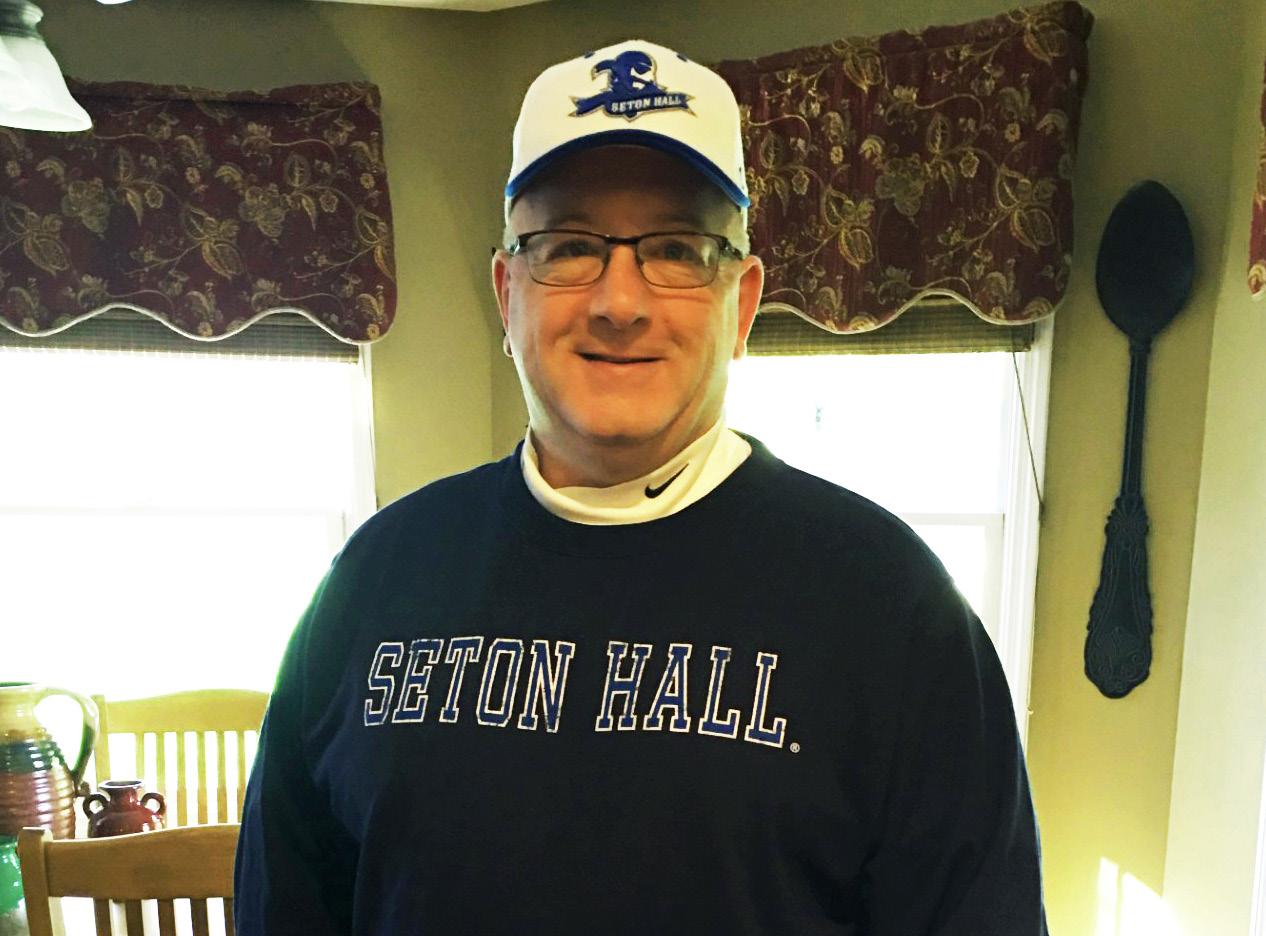
In the years since his passing, Ed’s family and friends have channeled their grief into action by establishing the Edward Walsh ’87 Endowed Scholarship, which supports undergraduate students at Seton Hall who embody servant leadership.
Proceeds from the annual golf outing support the scholarship, which to date, has been awarded to eight students studying diplomacy and international relations, business, social sciences and nursing.
“The generosity of the Walsh family gives me both the resources and the encouragement to continue my studies and deepen my commitment to servant leadership,” said Julia Brown, a diplomacy student from the Class of 2026 and recipient of the Walsh Endowed Scholarship.
“He was all about people helping people,” said Patrick,
reflecting on why a scholarship was an appropriate memorial. “He taught me that success and happiness come from giving to people who cannot give back.”
Seton Hall continues its mission of preparing leaders from all walks of life. Through the For All, Forever campaign, the University is prioritizing and expanding philanthropic support for scholarships so that more students can follow a path like Ed’s, regardless of financial circumstance.
When asked how Ed might react to the scholarship established in his memory, Jannine said, “He was a very giving person, but he didn’t expect a lot back. He’d be humbled by the outpouring of support.” n
Carolanne Chanik is the director of advancement & campaign communications at Seton Hall University.
Richard F. Riccardelli ’71 retired after a 55-year career, including 32 years in the U.S. Army, retiring at the rank of colonel. He also served as a Fortune 500 corporate executive and a U.S. government executive in the Senior National Intelligence Service. Kenneth F. Kobularcik ’72 wrote a children’s book, Going For a Walk With Papa: Story of Songs, a tale that highlights the joy of singing and discovering the world through music. Charles A. Bruns ’78 published his third book, Shorts: Poems and Short Stories, a collection of 40 original poems and four previously unpublished short stories inspired by life experiences in New Jersey and New York City.
Patrick J. Finn ’83 retired from Wakefern Food Corporation after 45 years of service as a perishables operations manager. He was also an aide to the grand marshal of the 265th New York City St. Patrick’s Day Parade. Michael V. Kennedy ’85 is retiring from High Point University’s history department after 36 years of teaching. He began his career as a sabbatical replacement at Seton Hall. He is also an award-winning author and is the writer
of the Dixon Franklin mystery series. Timothy J. Higgins ’80/M.S.T. ’86 was the executive producer for Him, a 2024 dark comedy movie about reality dating shows.
Frank J. Cordero, M.A.E. '92 was sworn in on January 1, 2026, as undersheriff of operations and corrections for the Hunterdon County Sheriff’s Office. Lucinda M. Ferreri ’95 was honored as the 2025-26 New Jersey Governor's Teacher of the Year at Hillsborough Middle School in Hillsborough Township, where she has taught English and language arts for 27 years.
Paul G. Mathew ’01 was named a fellow of the American College of Sports Medicine, which recognizes high standards of professional development, achievement and a commitment to the mission and goals of the organization. Michael P. Tully ’07 was promoted to director of content operations for the National Basketball Association. Tracy A. Matozzo ’97/M.A.E. ’08 defended her dissertation, Addressing Graduation Disparities: Double-Dose Algebra as a
Catalyst for Success Among Economically Disadvantaged Learners, in July 2025, earning her doctor of education degree from Rowan University.
Viannca I. Velez ’10 was invited to join the board of directors for Los Pleneros de la 21, a New York City cultural institution promoting community and education through Puerto Rican art and tradition for more than 40 years. Helder T. Mendes ’12 founded Emerald Psych LLC, a telehealth psychiatric practice expanding access to mental health care in New Jersey. Catherine L. (Peed) Howell M.H.A. ’13 was named CEO of VetEvolve, a company that provides support to veterinarians and veterinary practices. Adam G. Mowrer ’17 was named the York Adams Interscholastic Athletic Association Athletic Director of the Year. He is the athletic director at York Suburban School District in Pennsylvania.
Shardai R. Smith ’22/M.A. ’24, expects to publish her first novel, From Our Blood, with Bindery Books in Spring 2027.
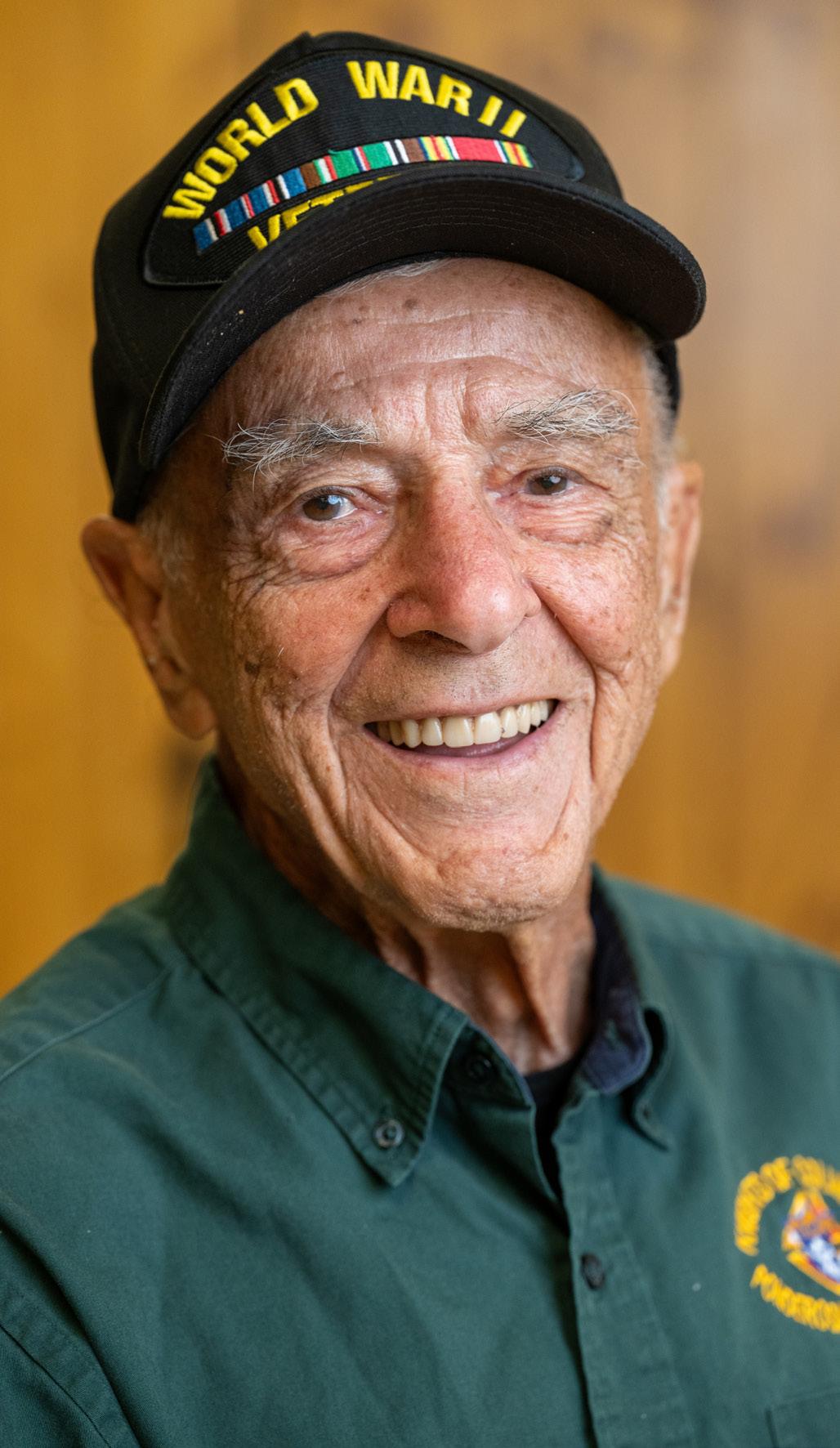
Anthony Pagano ’50, celebrated his 100th birthday last summer, and has lived a full life.
He volunteered to serve in the Army during World War II when he was 17, and out of all his life’s endeavors, nothing has had as profound an impact on him than his time in the service.
Pagano’s journey was shaped by his older brother Joe, affectionately known at home as “G.I. Joe.” A graduate of Stevens Institute of Technology, Joe also inspired Pagano to join the Army engineers. In a letter, he wrote what it was like to leave his hometown and travel to Syracuse, New York, for his first Army assignment. “It was there I would spend a semester of map reading and physics. Turning 18, I enlisted and was sent to the infantry school at Fort Benning, Georgia, in November 1943.”
Just over a year later, he would be a part of the Battle of the Bulge, fighting the Germans as they made their last major offensive on the Western Front in the Ardennes region of Belgium and Luxembourg.
“In mid-December 1944, we shipped to Normandy, and I was assigned to Gen. Patton’s 3rd Army. Our 1255th Combat Battalion hit the frontlines in January 1945, behind the infantry.”
The battle would end on January 28, 1945, and a few months later, on May 7, Germany would surrender, marking the end of World War II in Europe. Pagano was awarded the Bronze Star medal for his service in a combat zone, and his wartime experiences would shape his decision to pursue medicine as a career.
After the war, Pagano enrolled at Seton Hall, where fellow veterans became his friends. “I met Joe Murphy ’50, who was in D-Day, and Bill Nestler ’50, who was in the Marines, and I was in the Battle of the Bulge. We studied to get A’s and B’s, so we could go to medical school.”
Pagano graduated in 1950 with a degree in chemistry. He ended up going back overseas to Italy for his medical studies, graduating from the University of Rome medical
school in 1955. After a long career as an obstetrician/ gynecologist, he retired in 1990 at 65. He spent time in Monterey, California, before moving to Sparks, Nevada, where he continues to enjoy his collection of classic Mercedes-Benz automobiles.
As a centenarian, Pagano is often asked for the secret of his longevity. “My motto is ‘keep moving,’ and I enjoy the process of creating and making things.”
| ZACHARY COONEY ’20/M.A. ’26
Father Henry J. Schreitmueller, Ed.D. ’52
Henry M. Cooper ’54
Mario V. Di Martini ’54
Joan E. Carroll ’54
Ronald J. Zitani ’55
Anthony R. Vizzuso ’56
Charles E. Gibbs ’56
Jerome F. Amend ’56
Lawrence S. Kolota ’56
Edmund P. Murphy ’57
Philip J. Cocuzza ’57
Robert S. Burrows ’57
William A. Chabot ’57
Peter M. Callinan ’58
William F. Burns ’58
Estelle S. Miller ’59
John P. DeAngelo ’59
Philip J. Cassidy ’59
Robert L. Verderame ’59
Leon G. Viola ’60
Donald W. Grimm ’61
Joan E. Love ’62
John G. Breza ’62
John J. Ferro ’63
Paul J. Billy Jr. ’64
Rosemarie B. LoMarro ’64
James M. Boyle ’65
Raymond E. Foscante ’62/ M.S. ’65/Ph.D. ’66
James B. Krieger ’68
Michael C. Walsh ’68
Warren A. Stecker ’69
Richard P. Ascolese Jr. ’71
Frank V. Jasinski ’71
Fred C. Franco Jr. ’71
Bernard B. Candon ’65/M.S. ’71
Catherine M. Sullivan ’71
Edward L. Bayarski Jr. ’72
Elaine H. Constein ’72
Richard T. Fritzky ’72
Joseph S. Lakatos ’62/M.B.A. ’72
Brian Ormsby ’72
Michael J. Barrett ’67/M.A. ’73
Deborah C. Codella-Giemza ’73
Joseph G. Kozo ’73
Diane J. Biesel, M.A.E. ’74
Victoria J. Candon ’65/M.A. ’74
Alicia A. Adams ’75
Father Donald E. Blumenfeld ’75/M.A. ’86
Eric M. Perlmutter ’75
Martin Reznak ’75
Luis R. Sanchez ’75
Peter A. Burke ’76
Larry Genzer ’77
Patricia R. Healy ’77
Helen Post ’77
Jeffrey W. Byers ’78
James Balatsos ’79
Virginia Burggraf ’79
Deborah A. McLoughlin ’79
Robert W. Vanarnum ’80
Eleanor Heimstaedt, M.A.E. ’80/Ph.D. ’82
Sister Marie A. Stelmach ’69/M.A. ’82
Theodore W. Smalletz ’83
Kevin M. Foley ’84
Donald E. Mittermaier ’84
Cheryl J. Garcia ’85
Edward A. Murin ’85
La-Diné Williams Gamble ’88
Virginia H. Romanchuk ’91
William B. Battista ’93
Marilyn A. Guidi ’95
Paul J. Podesla ’98
Michael Burgess ’00
Edward F. Duncanson, Ed.D. ’03
Miguel A. Galloza ’04
Sister Immacolata Scarogni ’07
Shaprell Davis ’18
Friends
Frank M. Walsh
For Clare Byrne ’10/M.S. ’12, the desire and drive to serve others has always been a part of her identity.
Byrne found her calling to become an occupational therapist through her sister Kate, who has pervasive developmental disorder. Growing up, she says, “there was one therapist in particular who really stood out to me because she didn’t see my sister so much as a problem to be fixed, but as a person to understand.”
Pursuing an education in occupational therapy, she chose Seton Hall, where she found professors who were passionate about what they were teaching, as well as outside opportunities to experience the practical side of what she was learning in the classroom.
In 2013, she accepted a medical volunteer opportunity with Catholic Medical Mission Board in Uganda. Heading there, she didn’t know what to expect. “Initially I was really scared, but also eager to embark upon this path that I believe God was calling of me.”
When Byrne came back home in 2014, she worked at Children’s Specialized Hospital and Advanced Therapy of America for two years before founding a nonprofit
organization based in Uganda that serves the families of children with disabilities.
She serves as executive director of Imprint Hope, which has a team of 21 Ugandan nurses, therapists, clinical psychologists, nutritionists and other essential employees. The organization offers four programs that seek to bring a holistic approach to caring for children with disabilities, each of whom receives an individualized treatment plan.
“I have known families here for 10 years, and we still visit them and provide therapy in the home,” she says. Byrne finds success in what she does when the barriers to how children with disabilities are viewed are broken down, and when parents see the value of their child.
“That unconditional love that I see in a parent’s heart is just so encouraging, and it continues my passion for this work,” she says.
Byrne offers advice to those looking to live a more faith-centered life. “Be not afraid of what God is asking of you. I think God places the desires on every human heart to do good for other people.”
| ZACHARY COONEY ’20/M.A. ’26
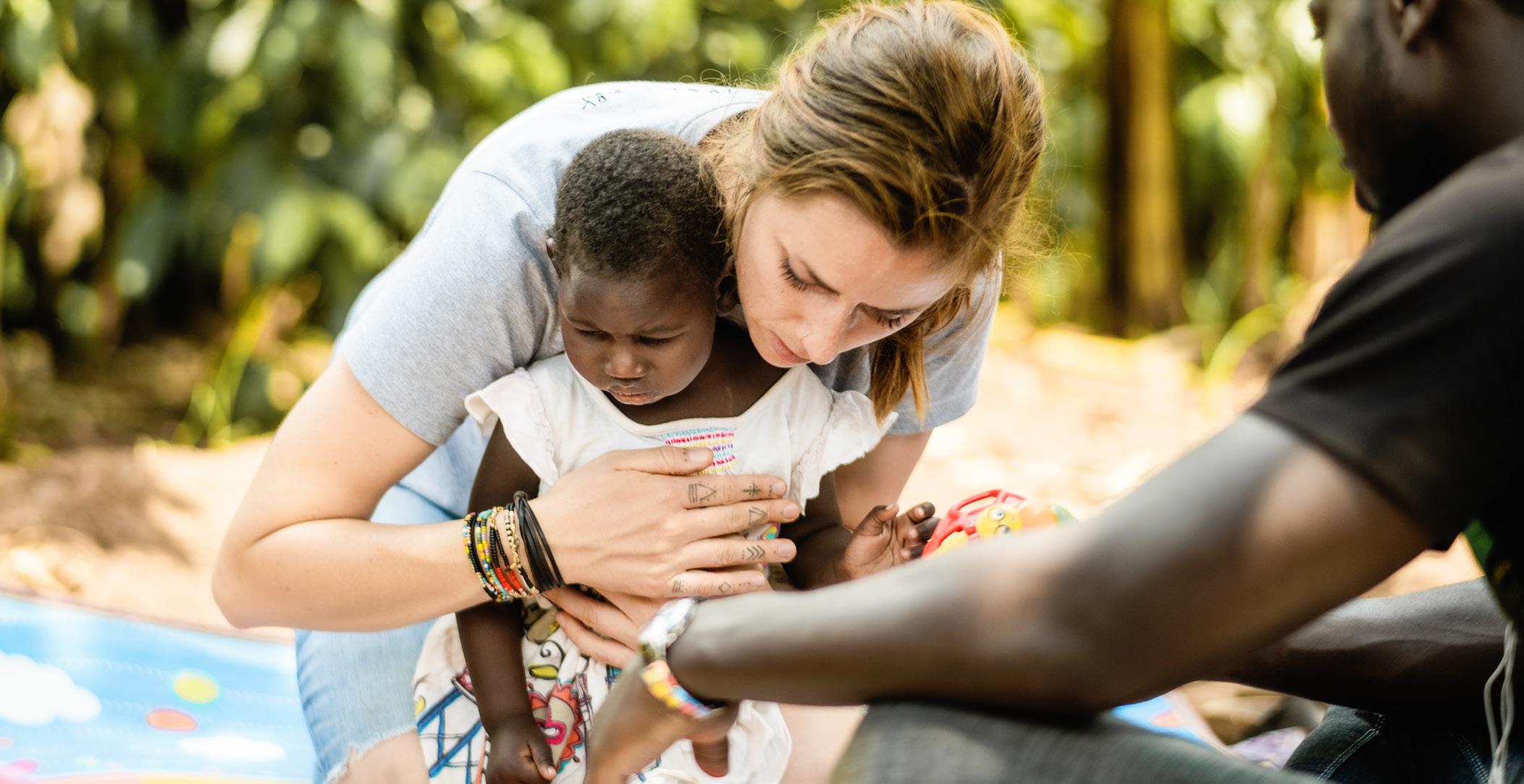
1. Kalie R. (Marshall) Gilbert ’13 and Brian C. Gilbert ’18 welcomed their son Kaden Thomas Gilbert on March 29, 2025.
2. Caroline M. (Egnatuk) Pecoraro ’13 and Joseph R. Pecoraro ’13 welcomed their second child, a girl named Giselle Mary, on December 11, 2025.
3. Andrea K. (Martin) Courtemanche ’11 and George Courtemanche ’11 welcomed their third child, Serena Nicol Courtemanche, in September 2025. She’s ready to cheer on the Pirates alongside her big brother, André, and big sister, Vanessa. Go Pirates!
4. Kristen M. (Rinaldi) Ciaglia ’18, M.S. ’20 and Eric Ciaglia Jr. ’18/M.B.A. ’19, welcomed their baby boy, Dominic Vito Ciaglia, on May 26, 2025.
5. Nicole A. (Battaglia) LaCapria ’11 and her husband Michael LaCapria welcomed their son Michael Vincent LaCapria and share their joy with his big sister, Luciana.
6. Mark A. Vitale ’14/M.A.’16 and his wife Julia R. (Rondinella) Vitale ’13 welcomed their second baby boy, Sonny Oreste, on October 29, 2025. Sonny’s middle name honors his great-grandfather, Oreste Rondinella, who served as chair of the Elementary Education Department.
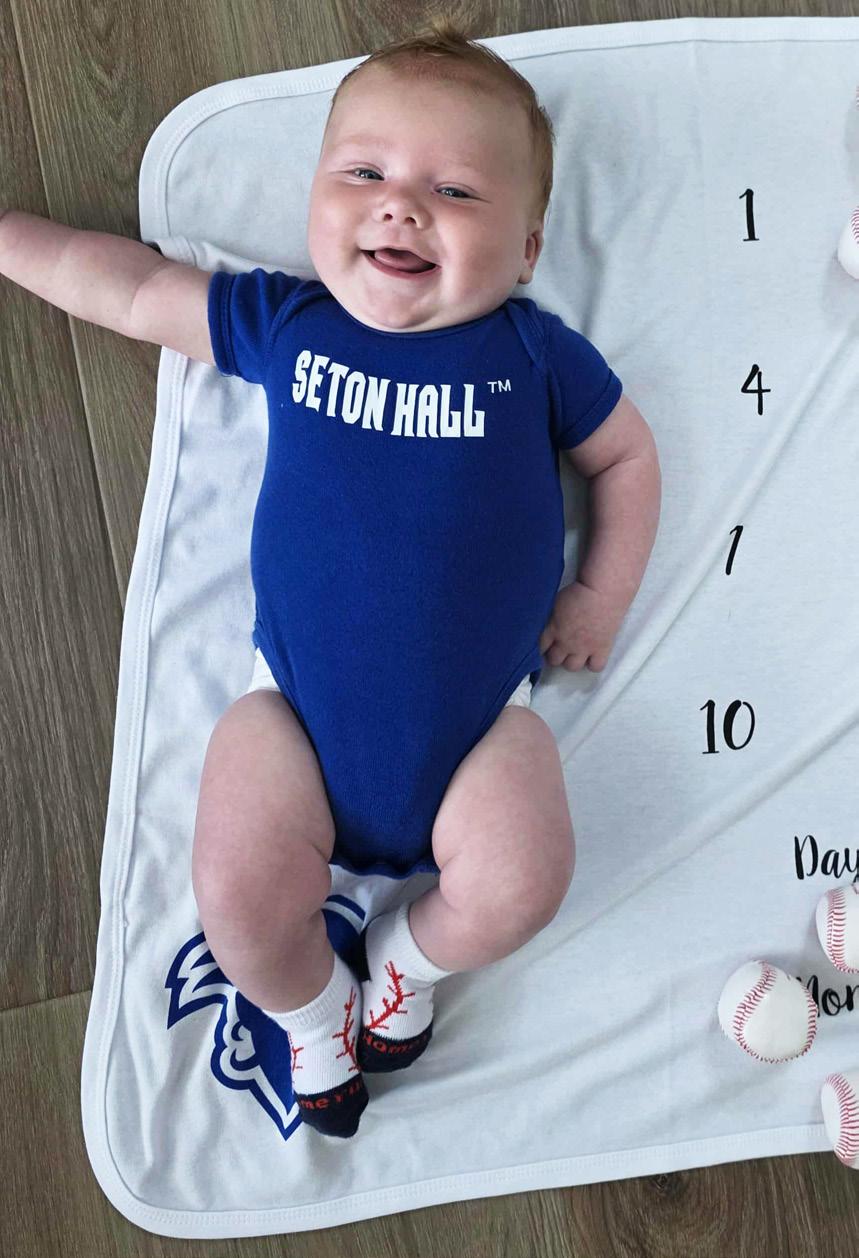
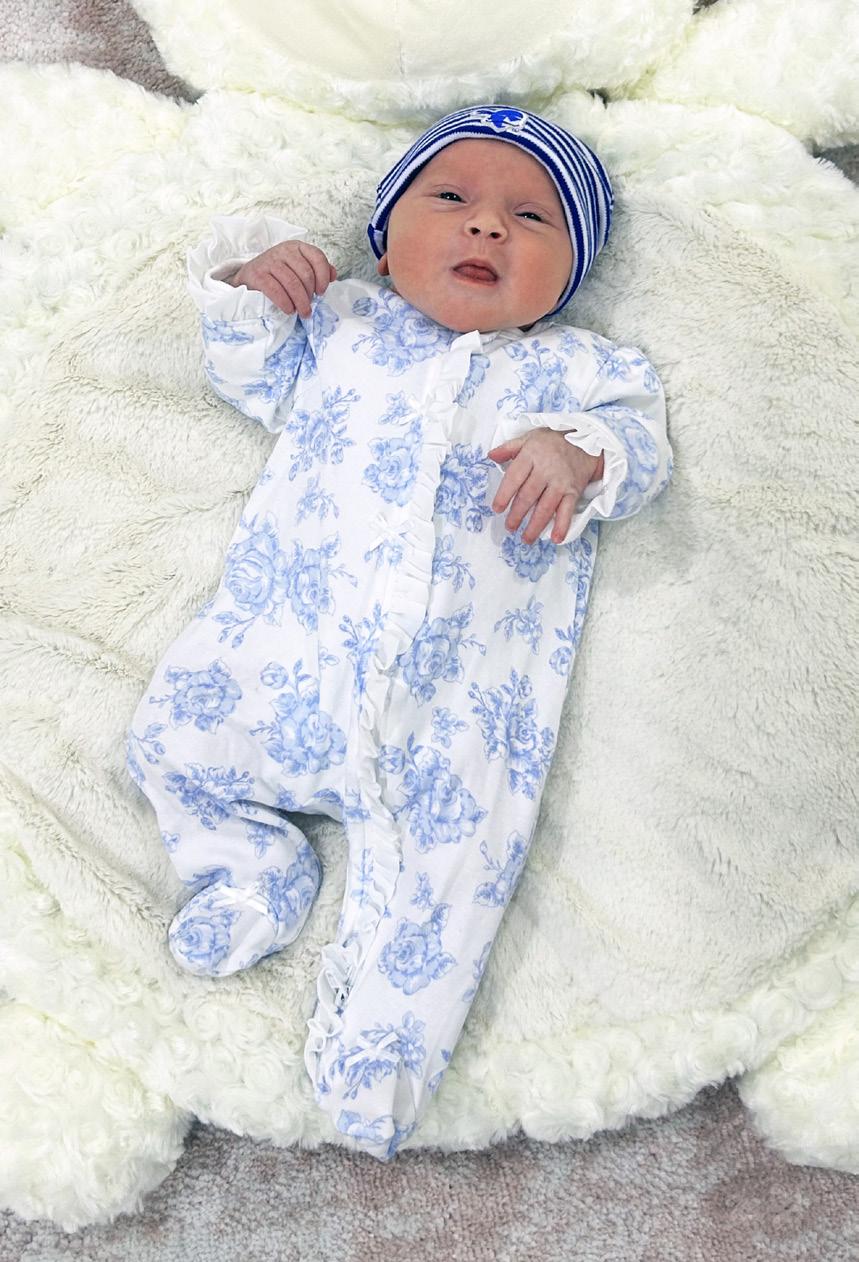
42 Tag us in your Wedding, Baby or Pirate Pride photos @setonhallalumni or email us at alumni@shu.edu
1. Erin M. Miu ’11, Maria T. West ’10 and Melinda M. Stevens ’10, took their Pirate Pride to Disney’s Pirates of the Caribbean attraction.
2. Monica (Murphy) Todaro ’84/M.A. ’93 brought her Pirate Pride to Glacier Bay, Alaska.
3. Michael J. Struening Sr. ’65 and his daughter, Kristine Struening Adase ’93, at the Tower of Pisa in Italy during their recent Mediterranean vacation.
4. Ronald A. Delmanto, D.D.S. ’64 fishing in the Gulf of Mexico.
5. Sharon M. Thomas ’99 atop a tower overlooking the marshlands of the Forsythe Wildlife Refuge in Galloway, New Jersey, in October, with Atlantic City in the background.
6. James M. Merendino ’92 outside the Santa Maria del Fiore, more commonly known as the Florence Cathedral, in Florence, Italy, in November.
7. Lorenzo Giuseppe, son of Jonathan J. Monterosso '16/M.A. '18 and Michela (Papaccio) Monterosso '13/D.P.T. '16 shows off his Pirate Pride.
44 Tag us in your Wedding, Baby or Pirate Pride photos @setonhallalumni or email us at alumni@shu.edu
1. Kristen S. Drake-Thiry ’16 married Mike Thiry, at Seton Hall on March 22, 2025. Mike’s parents, Nancy and Frank ’74, were also married at The Chapel of the Immaculate Conception on campus 51 years ago.
2. Bernadette Fitzpatrick ’14/M.S.’16, a Seton Hall adjunct professor, married Ryan Smith on August 2, 2025. They were joined by many Seton Hall alumni: Father John D. Dennehy Jr. ’79, Father Peter P. Gallagher ’16, Father Stephen Robbins ’18, Joseph W. Testa ’12, Rowena K. Testa ’14, Nicole Velzy ’15, Daniel T. Barnes ’12, Christina R. Barnes ’14, Jessica K. Formichella ’14, Jessica R. Aitken ’14, Elizabeth A. Johnson ’14, Craig M. Johnson ’15, Tom Yoos Jr. ’07, Widline (Compere) Luctama ’13, Amanda Johnson ’14 and Catherine Ziobro ’14. They were also joined by friends of the community, Lucy Vazquez, Father Joe Noche and Zach Johnson.
3. Kristen A. Sheridan, M.S.P.A.’12, and Michael Cassano were married on June 13, 2025, at The Venetian in Garfield, New Jersey. The bride celebrated the occasion with friends from the Delta Phi Epsilon sorority.
4. Jillian A. (Swogier) Hefferon ’11/J.D.’17, married Scott Hefferon on July 12, 2025, at the Niagara Falls Country Club in Lewiston, New York.
Tag us in your Wedding, Baby or Pirate Pride photos @setonhallalumni or email us at alumni@shu.edu
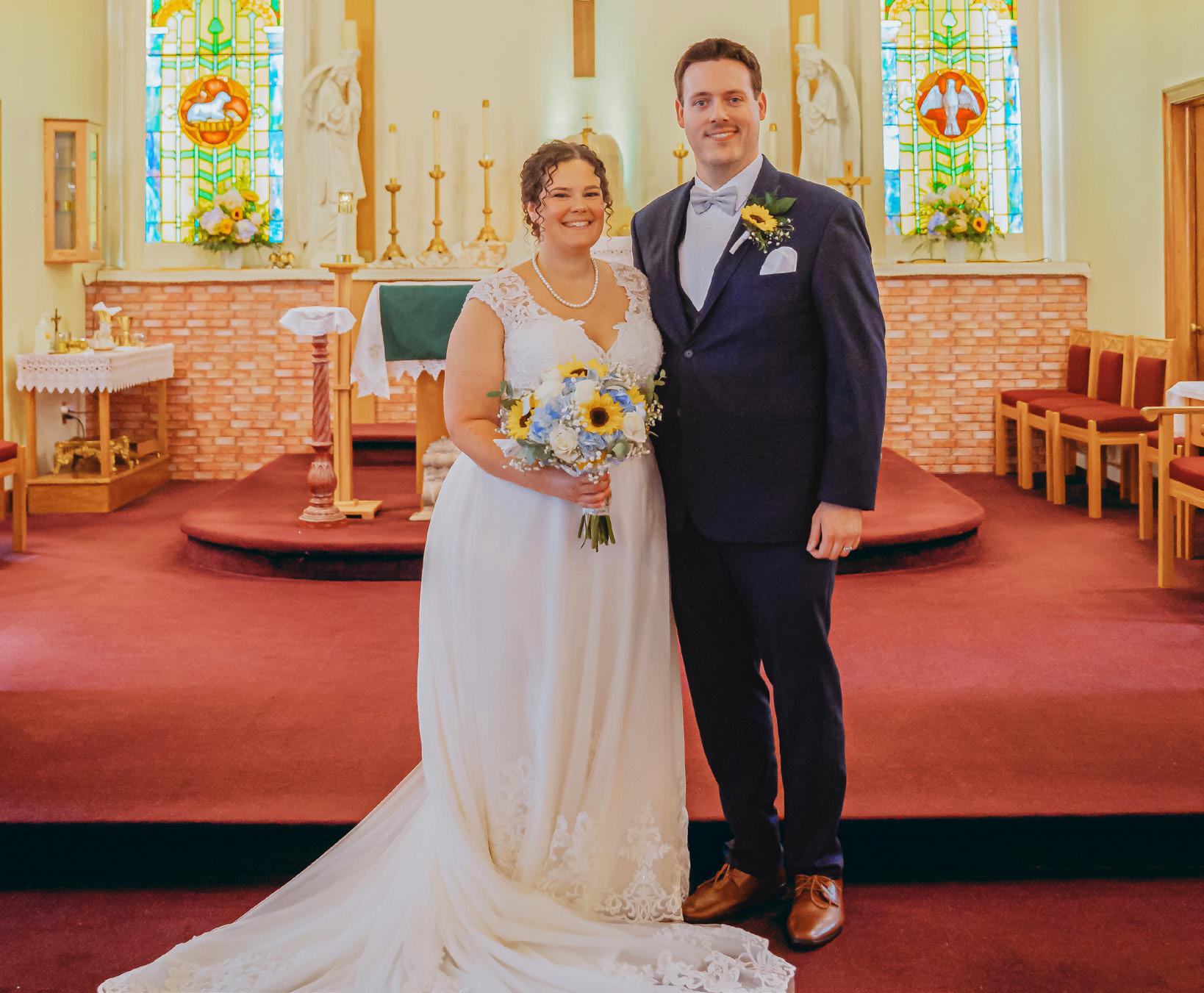
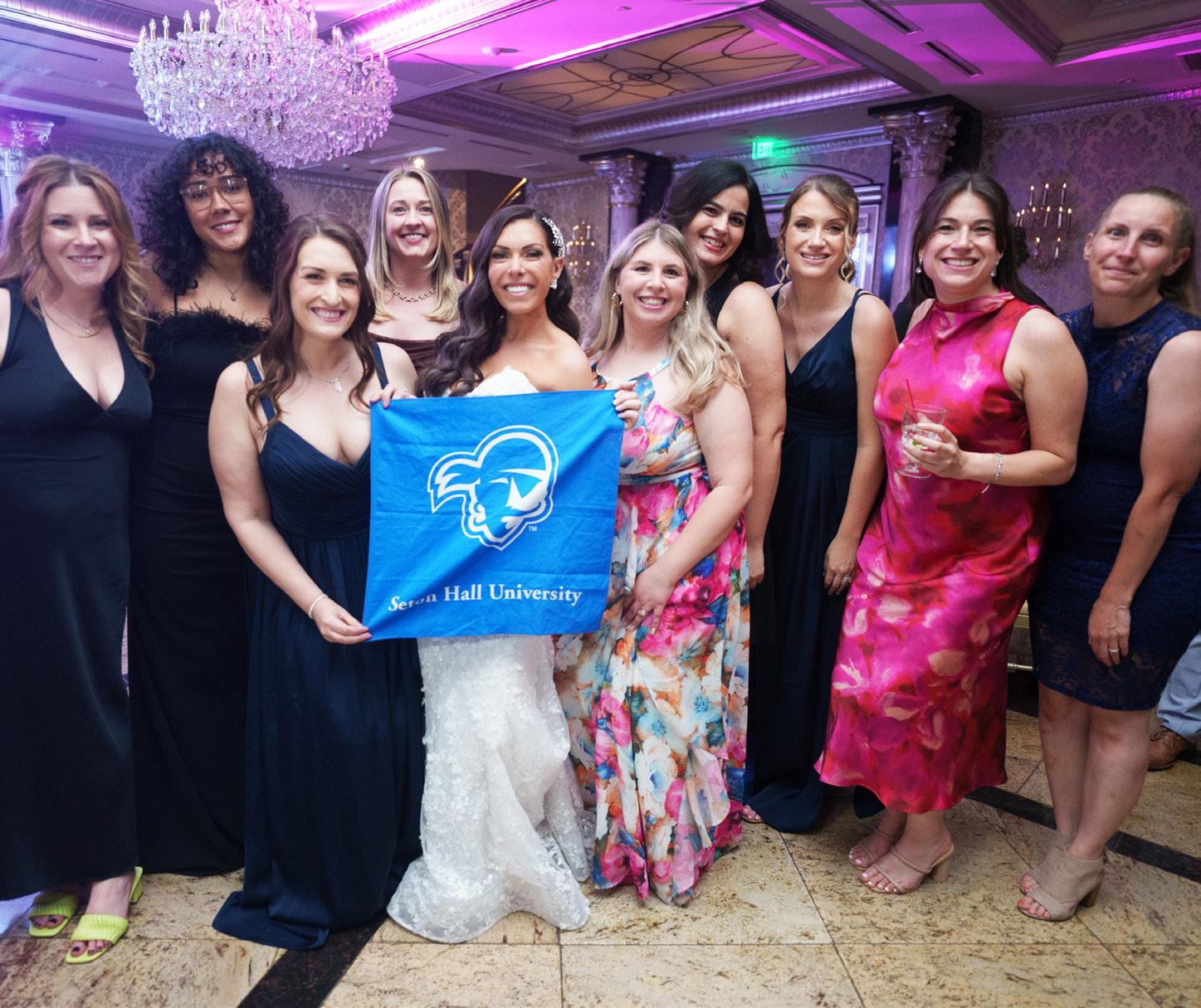
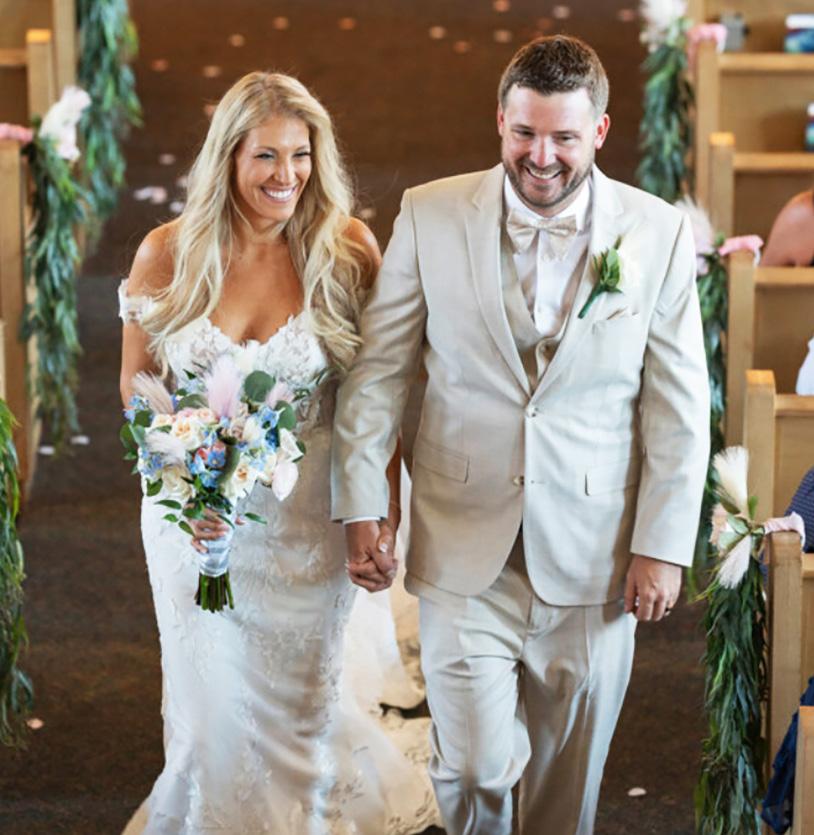
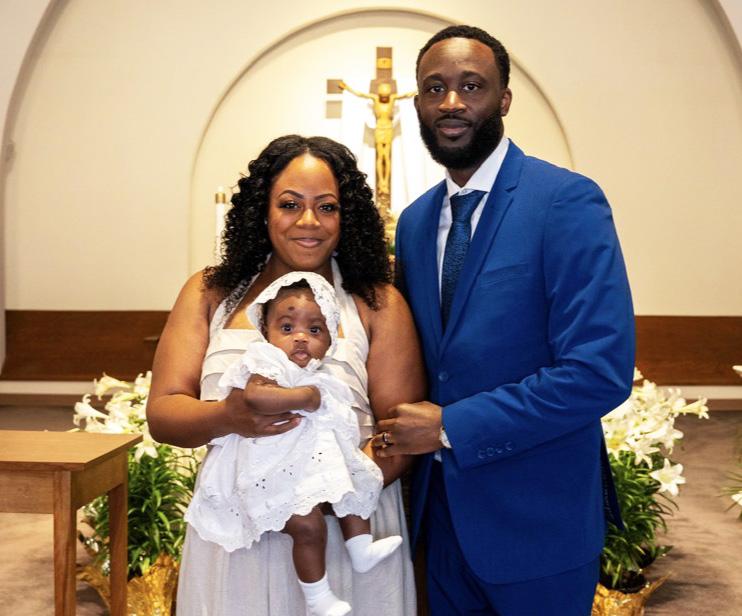
Have you been promoted? Earned an advanced degree? Been honored for professional or personal achievements? Recently married? Added a baby Pirate to the ranks? We want to know.
Send news to: Department of Alumni Engagement and Philanthropy

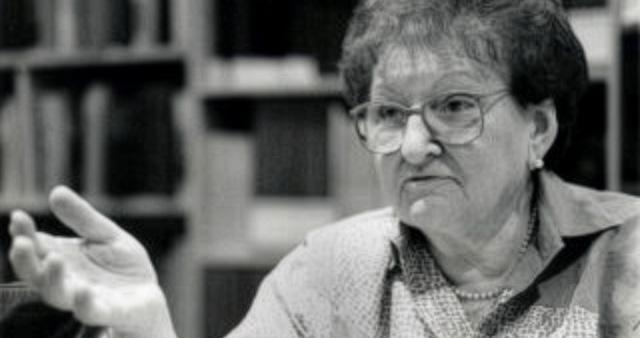
Spend time talking to members of Seton Hall’s Sister Rose Thering Fund organization, and the idea of passion bubbles up again and again. That’s not surprising. Her sustaining passion came from her Catholic faith, her Dominican vocation, her love of the Jewish people and her relentless pursuit of justice. A documentary film highlighting her decades-long fight against anti-Semitism was aptly named Sister Rose’s Passion. The fund bearing her name, developed in 1993 to support the education of teachers in Jewish-Christian studies at Seton Hall, honors an important milestone this year: 20 years since Sister Rose’s passing in 2006. To learn more, Seton Hall magazine editor Pegeen Hopkins spoke with two of its board members, Heather Mecka and Frank Stebbins.
How would you describe Sister Rose?
Stebbins: She embodied passion. One of the oftenunderrepresented aspects of her identity was as a woman, advocating and using her voice, at a time when strong women’s leadership was not showcased.
Mecka: Sister Rose was a master educator. A young teacher with little power as a nun in the 1940s and ’50s, she saw anti-Semitism and the perpetuation of myths. And she spoke out against it — to much resistance. It was not an easy road to take, but she remained dedicated to her cause. Cardinal Bea had the results of her doctoral dissertation in his hands when he arrived to Vatican II, which fostered the work that would later become Nostra Aetate. This ultimately led to a stronger interfaith community, where Christians and Jews work together to solve problems. Sister Rose influenced doctrine, teaching methods, curriculum: so much through the power of her own voice.
What aspects of her legacy endure?
Stebbins: Her vision for the education of educators and continued dialogue persists. Think of the sheer number of educators who have had the opportunity to take classes
in Jewish-Christian studies and the generations of New Jersey teachers who are able to continue Sister Rose’s work.
Where is the fund going from here?
Mecka: We’re working hard to make connections with other organizations and groups that, like us, are looking to engage in and foster equity in interfaith relations. We recently aligned with 3GNY, an organization of grandchildren of survivors and victims of the Holocaust, who are now carrying on their grandparents’ survivor stories.
Stebbins: Another thing we’re looking at are ways we can use the life and legacy of someone like Sister Rose to model change and foster community and civic participation. In this fast-paced world so much media is being thrown at everyone so quickly, especially young people. How can the fund help them slow down, look at impact and consider the why — for themselves and others?
What else is important for people to know?
Stebbins: I often hear, in moments of concern in our communities, that education is the answer. But it’s not just any education, it’s education that can lead to change. It revolves around learning from people who might be of a different religious background or from a different place in the world. It involves understanding that we can learn from dialogue as opposed to merely being in debate with each other.
Mecka: As with any nonprofit, we depend so much on our donors. The majority of ours have a personal connection, from either going through the program themselves or having a family member involved or having had some kind of personal connection to Sister Rose and the work she did. This is not a mere donation people make as a tax write-off. The incredible energy that Sister Rose had — that spirit is still there at every board meeting, at every event and in every classroom where we have teachers and scholars. n

When you include Seton Hall in your estate plans, you’re shaping the future for generations to come. With a new estate gift pledge, the University may receive an immediate matching gift to support the RISE (Resilience, Integrity, Scholarship, and Excellence) Scholarship while funds are available.
Visit our website to learn more: setonhall.planmygift.org
Contact
The Office of Planned Giving
Sharon Morrissey
973-378-9878
Sharon.Morrissey@shu.edu
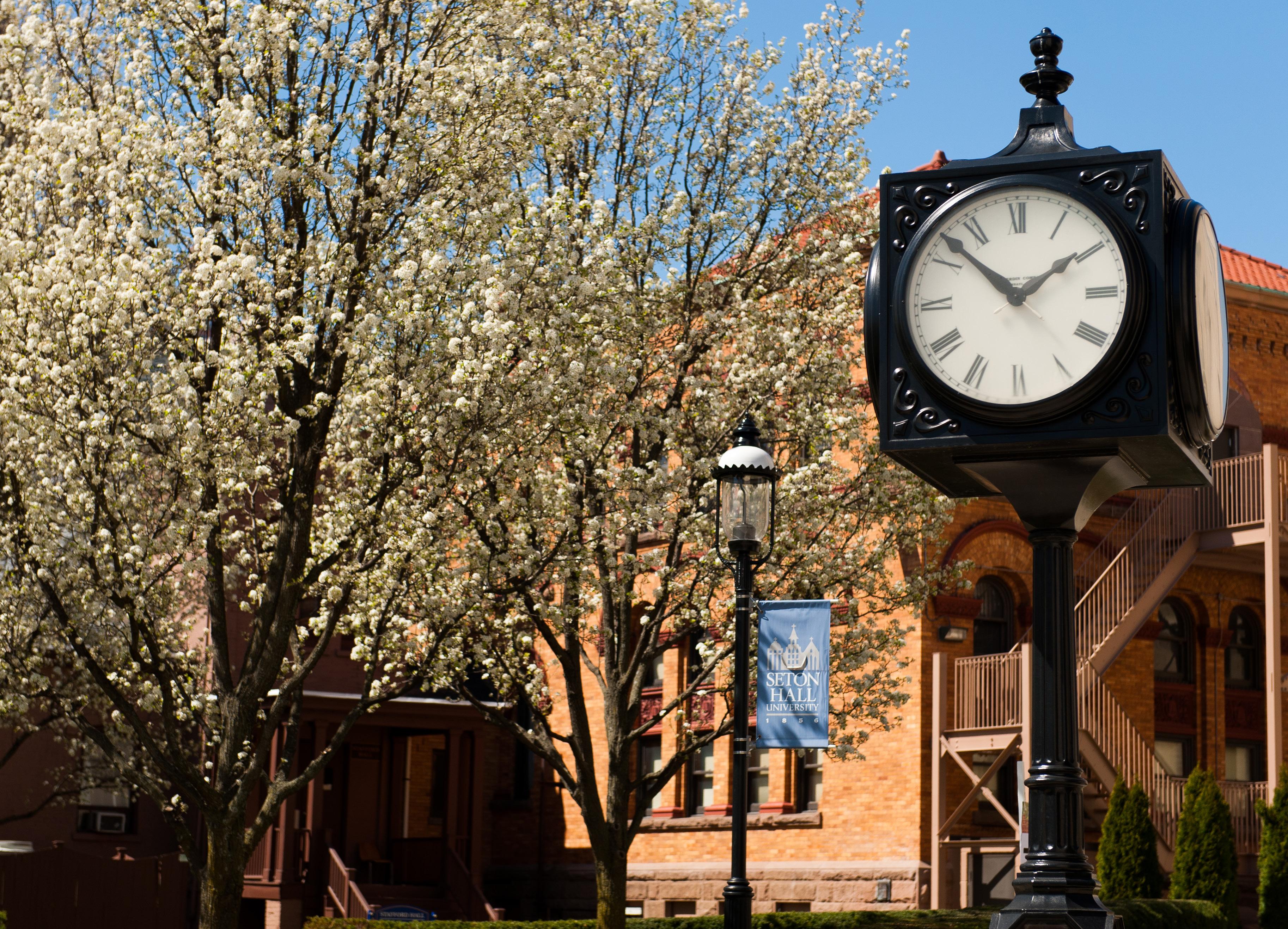
“The RISE program is central to our Catholic mission: it gives our most vulnerable students the academic and financial support they need to prepare for fulfilling careers and purposeful lives at Seton Hall.”
MONICA B URNETTE, VICE PRESIDENT, STUDENT SERVICES