5701 W Gate City Blvd Suite K, Box 186 Greensboro, NC 27407
SETC Board
Jeremy Kisling (he/him) President
Ginger Poole Avis (she/her) VP of Finance & Advancement
Ian Andersen (he/him) VP of States
continued from the previous page
We are especially energized by the leadership of Joanna Bell and the ongoing dedication of the SETC staff. Their commitment continues to guide the organization forward, ensuring that our efforts benefit not only our members but the broader theatre community
Together, we look ahead with enthusiasm and purpose as SETC continues to evolve, grow, and lead in meaningful ways.
Jack Benjamin (he/him) Elected Past President c j (they/them) VP of Opportunity & Access
Caroline Jane Davis (she/her) Secretary
Iris Goode-Middleton (she/her) VP of Communications
Matthew Leckenbusch (he/him) VP of Programming
Darren Michael (he/him) VP of Festivals
Lily Vetter (she/her) VP of Engagement
336-265-7489 info@setc org ADVERTISE withus!
SETC offers several affordable ways to put your program in front of a broad audience
Emailus for more information
Send your news to Thomas Pinckney Director of Advancement thomas@setc org
ConnectingYouto Opportunitiesin TheatreNationwide
CentralOffice
SETC
5701 W. Gate City Blvd. Suite K, Box 186 Greensboro, NC 27407 336 265 6148 info@setc.org
SETC offers several affordable ways to put your program in front of a broad audience
Emailus for more information
Send your news to Thomas Pinckney Director of Advancement thomas@setc org
Theatre is an Invitation to Connect
This past week, the Central Office staff began mapping out our fall and spring travel, and a question came up: Where and when is your theatre community gathering? I think we all know that theatre begins with an invitation. An invitation to share space and stories with strangers An invitation to create something together that could never exist alone
We want to know: Where can we join you?
Festivals, conferences, productions, celebrations, convenings, opening nights, workshops, and special events all strengthen the theatre community year-round That workshop production you are finally mounting That remarkable visiting artist leading a master class The festival your school has spent months preparing. The community theatre anniversary that brings generations of artists back together. The new play reading that could become the next great production. The gathering where artists trade ideas, share resources, and imagine what comes next. We want to know about all of it.
So, send us an invitation by email, tag us in your posts, message us on social media, or simply let us know what’s happening in your corner of the theatre world, where it’s happening, and when we should be there. We’d love to cheer you on, and whenever we can, we’ll be there. We may not make it to every event this year, but we want to know where the energy is, where the work is happening, and where SETC can show up.
Because that’s what theatre people do We invite each other in
You’ve probably already heard, but in case you haven’t, we’re formally inviting you to join us in Lexington, Kentucky, March 3–6, 2027, as the SETC community gathers for our annual convention. Registration opens August 15!
Joanna Sheehan Bell (she/her) Executive Director
From the SETC Job Fair to the New London Barn Playhouse
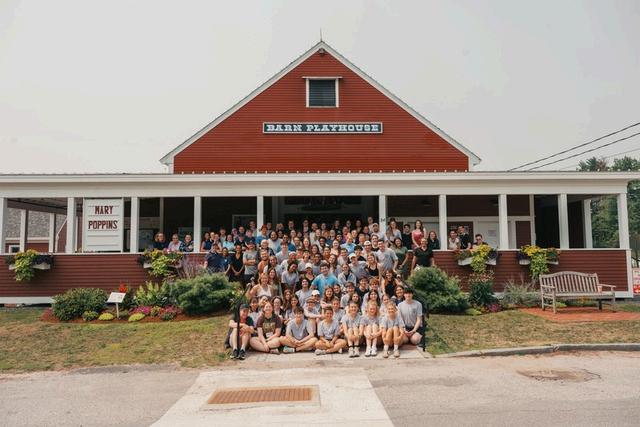
Every summer, the New London Barn Playhouse dusts off the seats, sweeps the stage, and turns the lights on. While Education programs run year-round in the Fleming Center, the Barn stage remains quiet until the summer rays of sunshine hit the front porch
As of 2026, the New London Barn Playhouse is currently in its 94th Summer Season and is the oldest continuously operated summer stock
in New Hampshire Almost two hundred theatre students, emerging artists, and professionals rotate through our spaces every summer, bringing stories to life. Coming from all corners of the United States, we welcome a wide variety of students at different levels to join us at this historic theatre.
The creative individuals who join us each summer make the barn a truly special place to cultivate learning opportunities for the students who join us in various roles From Designer mentorship to hands-on creative projects specific to a show! It is always amazing to see the talented work of both our Acting Intern Company and our Tech Staff throughout the exciting summer season.
Lily Vetter (she/her) VP of Engagement
Photo Credit: Maxfield Productions
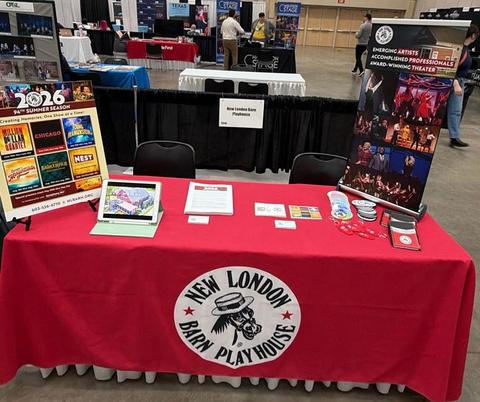
sk every year is hiring e number of staff we ach year to put on our d-packed season! While on sites such as ejobs.com and Playbill is talking face-to-face with ate folks is very ial for our process For y , he New London Barn Playhouse has participated in the Job Fair at the annual SETC
eat
continued from the previous page
s year we hired seven folks to join our tech
a great way to connect with prospective bout possible opportunities! It also serves as f applicants so that students from far and new opportunities As the Production n Barn Playhouse, I am looking for passionate earn, grow, and are ready to jump into a d the Job Fair the past few years and have have made with applicants throughout the art planning for the 2027 Job Fair and see h next summer!
Photo Credit: Jared Rosselli
Scene Shop Supervisor - Theatre and Dance
Southeast Missouri State University - Cape Girardeau, MO
JOB LISTINGS
Adjunct Professor of Theatre and Performance (Stage Combat)
William & Mary, Williamsburg, VA
Visiting Assistant Professor of Theatre Design
Wilkes University, Wilkes-Barre, PA
Take the next step in your career! Explore these and many more available positions at the SETC Theatre Job Board.
To post a job listing, click here
SETCMember2026
Thanks to SETC’s Contributors Contributions made by
Kimberly Frick-Welker
Paul Gabbard
Jeffery Gibson
Rebecca Land Hill
Veronica Neblett
Please consider making a monthly, annual, or even occasional contribution to SETC. It is tax-deductible and is the best way to ensure our organization's stability.
oving. The next audition. The next next contract. Momentum can feel n. We celebrate busy calendars and suring our success by what comes
at too. But life has now asked me to The first time, I fought it, but this it, and both have made me a better my choice. I graduated with my MFA e theatre industry to a standstill. ights in rehearsal rooms, and duate school would look like, I t had, almost overnight, gone quiet disorienting, my spouse and I moved to a small, sorta remote town in mmunities I had imagined building a career alongside. I remember ng had been leading toward... nothing. Cue existential crisis and nihilism.
ad spent years building had disappeared before I even had the chance way of redirecting us toward the things we didn't know we needed and I r, teaching theatre and film At first, it felt like Plan B; then something in love with teaching I remember crying on a drive home realizing how aching it to non-majors. And teaching didn’t replace acting for me, it n the first place.
a scene for the first time, wrestle with a character, or suddenly rytelling forced me to articulate instincts I had never put into words. I was rediscovering it Somewhere between lesson plans, classroom udent work, I realized I hadn't left my artistry behind It had simply
Tiffany Gilly-Forrer (she/her) SETC Member
NEWS
continued from the previous page
When I eventually returned to acting, I brought something with me that I hadn't possessed before. Perspective, patience, and a greater understanding of collaboration. Teaching had expanded my empathy, sharpened my communication, and reminded me that great actors are lifelong students, always staying curious and ready to grow I returned to the rehearsal room not diminished by the break, but enriched because of it That experience changed something in me
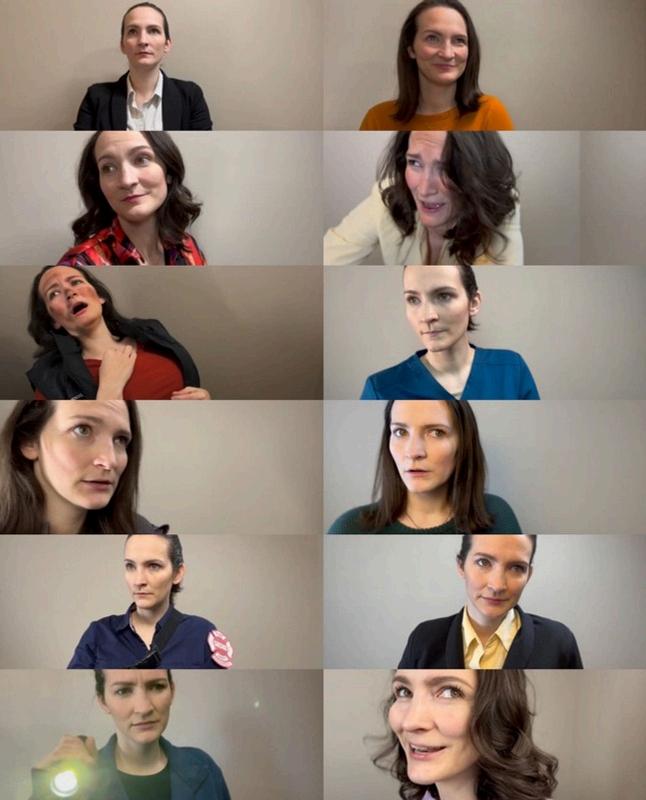
So when life invited me into another season away from the stage, I recognized it This time, the reason is much happier. I'm a new mom. For the first time in years, I'm not preparing for auditions or memorizing sides (though I am doing some unrehearsed Shakespeare in the park!). Instead, I'm learning how to soothe a crying baby in the middle of the night. I'm celebrating fine motor milestones like grabbing things and clapping, making time for stroller walks and “outside time,” and the unmatched feeling of a tiny hand wrapped around my finger.
This season feels profoundly different from the last Becoming a parent didn’t just rearrange my schedule It rearranged ME There are moments when I hardly recognize the person I was before my daughter was born, and yet somehow, I feel more myself than ever. This pause feels deeper than the one COVID forced upon me because it isn't simply about stepping away from my craft. It's about becoming someone new. Oddly enough, though, I'm less afraid of it. The first time I stepped away, I worried I would lose my identity as an actor. Now I know better, because I know that stepping away doesn't mean I’m no longer an artist. It means my artistry is quietly growing in places no rehearsal room could ever teach.
As actors, we spend our lives trying to understand people We study relationships Conflict Joy Grief Love Loss Hope We search for emotional truth because audiences can tell the difference between circumstances we ' ve imagined and circumstances we ' ve lived Motherhood has introduced me to emotional landscapes I couldn't have understood before. The fierce protectiveness. The vulnerability of loving someone so completely. The exhaustion that somehow coexists with overwhelming joy. The quiet grief of watching a baby outgrow yesterday's version of themselves. None of those lessons came from an acting exercise, they’ve come from living.
And isn't that what we ' re all trying to do as artists? Not simply collect techniques, but collect life That realization has changed how I think about rest Rest isn't simply sleeping more, although that would be very nice right about now rest is allowing yourself to inhabit your own life without constantly wondering how it will affect your career It's taking a hike Reading a novel just because it sounds interesting Learning to bake bread. Trying pottery. Gardening. Traveling. Volunteering. Having dinner with friends where no one talks about auditions. It might look like caring for aging parents. Recovering from burnout. Returning to school. Starting a family. Or simply giving yourself permission to breathe after years of chasing the next opportunity.
None of those experiences are detours from becoming an actor They are part of becoming one Our industry often treats careers as though they should move in one continuous upward line But very few lives actually work that way Careers pause Families grow Dreams shift People change Maybe we need to give ourselves permission to have seasons instead of constantly expecting momentum Trees don't produce fruit every month of the year. Fields aren't harvested in every season. Even theatres have intermissions. Not because the story is over. Because everyone needs a moment before the next act begins.
NEWS
continued from the previous page
Looking back, I don't think my career stopped during that time in Utah I think another part of it began And I don't think my career has stopped now because I'm home with my daughter. I think another chapter is quietly being written. When I return to the rehearsal room, whether that's months from now or years from now, I'll bring different stories with me. I'll understand love differently. Patience differently. Responsibility differently. Wonder differently. Just as teaching made me a stronger collaborator and actor, I have a feeling motherhood will deepen my work in ways I can't yet predict. That's the beautiful thing about this profession. Our greatest resource isn't our résumé It's our humanity Every season of living expands the stories we ' re capable of telling
If you ' re in a season that feels slower than you expected, or different than you planned, I hope you'll remember this: Intermission isn't the end of the play It's part of the performance The lights dim The audience stretches. The actors catch their breath. And when the curtain rises again, the story continues. Perhaps with even greater depth than before.
Reimagining Romeo and Juliet: A Modern Tale for Black Audiences at Hampton University
Reimagining Shakespeare’s Romeo and Juliet within the vibrant campus of Hampton University opens a doorway for accessibility, relevance, and cultural resonance My new retelling, Juliet & Romeo: A Street Saga, centers the daily realities and vibrant voices of Black students and families, with a setting that feels both intimate and expansive - my native New York City.
This piece is a continued reflection of my work as a director and writer, echoing the trajectory I began with Antigone Blue. In that project, I reimagined Sophocles’ Antigone through a Black Lives Matter lens, turning ancient tragedy into a contemporary indictment of injustice and a celebration of Black resilience The current Romeo and Juliet adaptation mirrors that same artistic impulse: to translate canonical questions of power, loyalty, and moral choice into urgent, twenty-first-century conversations within Black communities. Just as Antigone Blue held up a mirror to state violence, this Black-centered retelling refracts structural barriers and their impact on Black youth navigating life, love, and questioning their futures The throughline is clear: Shakespearean tragedy remains a powerful vehicle for social critique when anchored in lived experience and grounded storytelling
Communications
Rooted in the classics but designed for today, the play preserves the iconic force of forbidden love while foregrounding themes that speak directly to modern audiences: community, resilience, and courage to consider love even in the face of systemic obstacles. New York City is not just a backdrop; it is a living character that shapes dialogue, tempo, and rhythm. The score, infused with r&b, hip-hop, and jazz, weaves memory with momentum, helping students hear Shakespeare in a language that sounds like their own The result is a work where iambic pentameter meets streetsmart vernacular, creating accessibility without sacrificing poetic craft
Iris Goode-Middleton (she/her) VP of
NEWS
continued from the previous page
Intentional inclusivity guides every choice: a cast that reflects the communities it depicts; a design aesthetic that honors Black artistry; and a classroom-forward approach that invites students to see themselves as co-creators of the canon. The production invites students to explore how Shakespeare’s universal questions of identity, loyalty, fate, and choice which arrive with urgency when imagined through Black campus life What does it mean to love while navigating structural barriers? How can families guard legacies while empowering the next generation to redefine success?
In the workshop, the play has become a powerful teaching tool. Pre-performance discussions unpack historical context, contemporary parallels, and the mechanics of adaptation. The workshop has invited students to explore how the remixed story has translated the late-teen romance into mature, contemporary perspectives while preserving the emotional core of Shakespeare’s tragedy. The aim was not simply to “modernize” Romeo and Juliet, but to make it tactile and teachable: to show that classic literature can illuminate today’s conversations about equality, opportunity, and community
Ultimately, this retelling honors the enduring relevance of the Bard while celebrating Black youth voices and the educational mission of HBCUs. It is a love letter to Hampton University, to Black students, and to the belief that literature, when reimagined with intention, can teach, transform, and connect across generations.