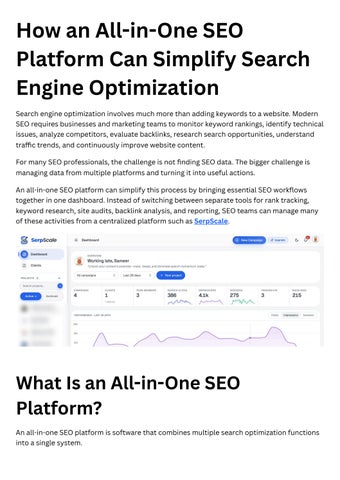
How an All-in-One SEO Platform Can Simplify Search Engine Optimization Search engine optimization involves much more than adding keywords to a website. Modern SEO requires businesses and marketing teams to monitor keyword rankings, identify technical issues, analyze competitors, evaluate backlinks, research search opportunities, understand traffic trends, and continuously improve website content. For many SEO professionals, the challenge is not finding SEO data. The bigger challenge is managing data from multiple platforms and turning it into useful actions. An all-in-one SEO platform can simplify this process by bringing essential SEO workflows together in one dashboard. Instead of switching between separate tools for rank tracking, keyword research, site audits, backlink analysis, and reporting, SEO teams can manage many of these activities from a centralized platform such as SerpScale.
What Is an All-in-One SEO Platform? An all-in-one SEO platform is software that combines multiple search optimization functions into a single system.
Typical features can include: Keyword research Keyword rank tracking Competitor analysis Website audits Backlink analysis Technical SEO monitoring Traffic analytics SEO reporting Content optimization AI-assisted content creation The primary benefit is workflow efficiency. SEO professionals can access different types of search data without constantly moving between unrelated applications. For freelancers and agencies managing multiple websites, this can make campaign management and reporting considerably easier.
Why Rank Tracking Matters for SEO Keyword rankings remain an important performance indicator for many SEO campaigns. Rank tracking allows marketers to monitor how individual search queries perform over time. Rather than looking at rankings only when a client asks for an update, an SEO rank tracker can provide historical data that helps identify trends. For example, a website may experience: Gradual improvement for target keywords Sudden ranking declines New keywords entering search results Keywords approaching page one Competitors overtaking important positions This information can help SEO professionals decide where to focus their efforts. However, ranking data becomes more useful when it is considered alongside other metrics such as organic traffic, technical website health, backlinks, and content quality.
Keyword Research Helps Identify Growth Opportunities Keyword research is another fundamental part of SEO.
Businesses need to understand what potential customers search for before creating or optimizing content. Effective keyword research can reveal search terms, related queries, keyword variations, and topics that may represent opportunities for organic visibility. A modern keyword research tool should help users move beyond individual keywords. For example, an SEO professional researching "SEO software" might also investigate related concepts such as: SEO tools rank tracking software keyword research tools website audit software backlink analysis tools SEO reporting software competitor analysis tools SEO platforms for agencies Understanding this broader search ecosystem supports topical relevance and can help content teams build more comprehensive resources.
Website Audits Help Find Technical SEO Problems Technical SEO problems can prevent otherwise valuable content from performing effectively. A website audit can help identify issues involving areas such as: Broken links Missing metadata Crawlability Indexing
Page performance Duplicate content Internal linking Website structure Technical errors Regular SEO audits can be particularly valuable because websites change over time. New pages are published, old URLs are removed, plugins are updated, redirects are added, and technical configurations can change. Instead of treating an SEO audit as a one-time task, businesses can use recurring audits to monitor website health.
Backlink Analysis Provides Important Off-Page Insights Backlinks remain an important part of understanding a website's authority and online presence. Backlink analysis allows SEO professionals to examine the links pointing toward a website and understand its overall backlink profile. This can help identify: New referring domains Lost backlinks Valuable linking websites Potentially problematic links Competitor backlink opportunities Changes in link acquisition over time Backlink data should not be evaluated in isolation. Relevance, authority, context, and the overall quality of a website's link profile matter more than simply counting the number of links. For this reason, backlink analysis is most useful when it contributes to a broader SEO strategy.
Competitor Analysis Makes SEO Data More Actionable
SEO is rarely performed in isolation. Businesses compete with other websites for visibility in the same search results. Competitor analysis can help marketers understand which keywords competitors rank for, where competitors are gaining visibility, and which areas may represent opportunities. For example, if several competing websites consistently rank for a particular group of related topics, that may indicate an important content area. Competitive research can therefore help answer questions such as: Which keywords are competitors ranking for? Which topics are missing from our website? Where are competitors gaining search visibility? Which pages appear to attract organic traffic? These insights can then be incorporated into a broader content and SEO strategy.
Why Agencies Benefit From Centralized SEO Software SEO agencies often manage multiple clients simultaneously. Each campaign may have its own keywords, competitors, websites, reports, and performance goals. Managing this information across several disconnected platforms can create unnecessary administrative work. A centralized SEO dashboard can make it easier to organize campaigns, monitor rankings, perform research, and generate reports. SerpScale is designed with this type of workflow in mind. Its plans support multiple campaigns and keyword tracking, while higher-tier plans provide additional capacity and AIpowered content features. For agencies, features such as white-label reporting and client-facing tools can also help create a more professional reporting experience.
SEO Reporting Should Focus on Decisions, Not Just Data An SEO report should do more than display hundreds of numbers. Clients and business owners generally want to understand: What changed? Why did it change? What improved? What needs attention? What should happen next? A useful SEO reporting process connects metrics to business decisions. For example, instead of simply reporting that a keyword moved from position 18 to position 11, an SEO professional can explain whether that improvement is likely to contribute to greater visibility and what additional work could help the page reach page one. This makes SEO reporting more understandable and actionable.
How AI Can Support Modern SEO Workflows Artificial intelligence is increasingly being incorporated into SEO software and content workflows. AI-powered tools can assist with tasks such as generating initial content drafts, creating blog ideas, rewriting text, developing metadata, and accelerating repetitive content processes. However, AI should support—not replace—human expertise. High-quality SEO content still requires accurate information, useful experience, editorial judgment, clear structure, originality, and an understanding of the intended audience. This is particularly important for EEAT-focused content, where experience, expertise, authoritativeness, and trustworthiness can influence how useful a resource is to readers.
What Should You Look for in SEO Software? When evaluating SEO software, businesses should consider more than the number of features advertised. Important considerations include: 1. Rank tracking: Can you monitor important keywords consistently? 2. Keyword research: Does the platform help uncover relevant search opportunities? 3. Site auditing: Can it identify important technical SEO issues? 4. Competitor analysis: Can you compare your search visibility with competing websites? 5. Backlink insights: Can you monitor and understand your backlink profile? 6. Reporting: Can you turn SEO data into understandable reports? 7. Scalability: Can the platform support additional campaigns and keywords as your business grows? 8. Usability: Can your team find and interpret the information efficiently? 9. Content tools: Can content teams use the platform to accelerate research and production? The right combination depends on the size of the business, SEO goals, number of websites, and reporting requirements.
Frequently Asked Questions What is the best all-in-one SEO tool? The best SEO platform depends on the user's requirements, budget, number of websites, and preferred features. An all-in-one solution such as SerpScale can be useful for users who want keyword research, rank tracking, site audits, competitor analysis, backlinks, and other SEO functions within one dashboard.
What does an SEO rank tracker do? An SEO rank tracker monitors where specific keywords appear in search engine results over time. It helps SEO professionals identify ranking improvements, declines, new opportunities, and competitive changes.
Why is keyword research important? Keyword research helps businesses understand the language and search queries used by their target audience. This information can guide content creation, website optimization, and broader SEO strategies.
What is a website SEO audit? An SEO audit evaluates a website for technical, structural, content, and optimization issues that could affect search engine visibility or user experience.
Can SEO software replace an SEO professional? SEO software provides data, automation, and insights, but it does not eliminate the need for human strategy and judgment. SEO professionals are still needed to interpret information, prioritize actions, understand business goals, and develop effective strategies.
Is an all-in-one SEO platform useful for agencies? Yes. Agencies can benefit from centralized SEO software because they often manage multiple websites, campaigns, keyword sets, competitors, and client reports. A unified dashboard can reduce tool switching and simplify campaign management.
Final Thoughts SEO becomes increasingly complex as websites grow and search competition changes. Managing every part of an SEO campaign through disconnected tools can consume valuable time and make reporting more difficult. An all-in-one SEO platform provides a more centralized approach by bringing together essential workflows such as keyword research, rank tracking, website audits, competitor analysis, backlink monitoring, analytics, and reporting. For freelancers, agencies, and in-house SEO teams, the goal should not simply be to collect more data. The goal is to turn reliable SEO data into clear decisions and measurable improvements. SerpScale provides a centralized environment for managing these essential SEO activities, helping teams spend less time switching between tools and more time focusing on search visibility, website growth, and SEO performance.