As we launch this latest edition of Impact Magazine, I’m pleased to reflect on the continued progress across Serco Asia Pacific, and the meaningful work delivered every day by our people. This edition highlights the partnerships, capability and commitment that underpin our operations across justice, defence and community services.
Across the region, our focus remains on delivering critical services that support governments and communities while responding to increasing complexity and demand. From integrated justice health models to strengthened rehabilitation and reintegration programmes, our teams are working collaboratively to improve outcomes for those in our care and the communities we serve. These efforts reinforce the importance of partnerships whether with government, community organisations, or local leaders in achieving sustainable, long-term impact.
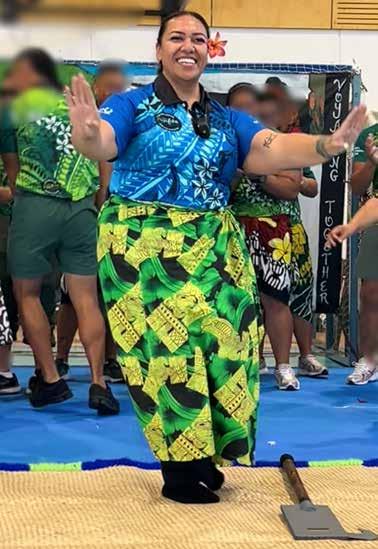
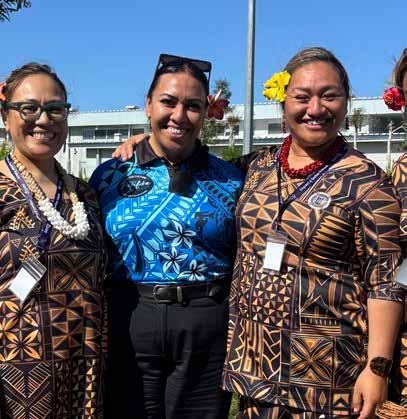
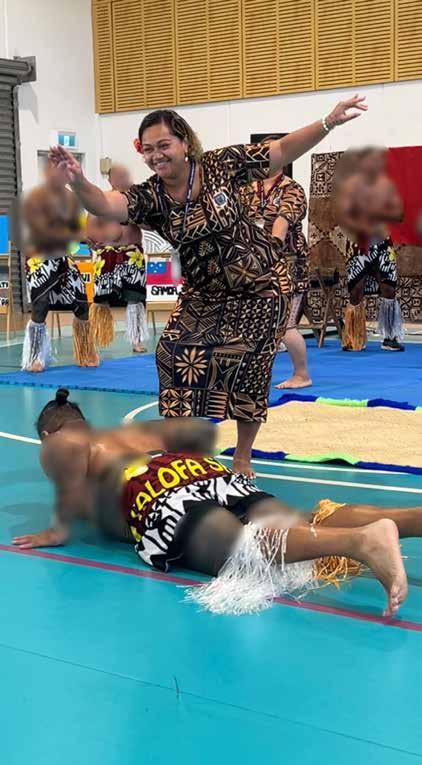
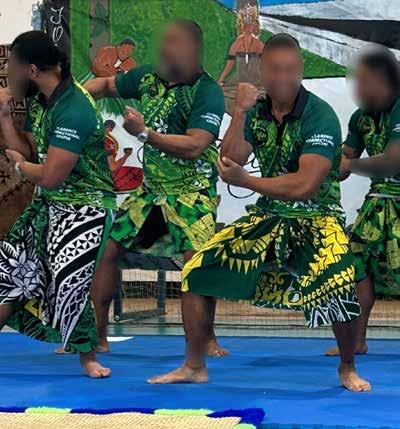
We also continue to see the strength of our First Nations and Pasifika engagement, grounded in respect, cultural understanding and practical action. Across all our sites, culturally informed programmes and partnerships are contributing to safer, more inclusive environments, supporting connection, wellbeing and opportunity. This work reflects our broader commitment to embedding cultural capability across our operations.
In Defence, Serco’s role as a trusted partner to the Australian and New Zealand Defence Force continues to evolve. Our teams provide essential support across training services, base operations, health services and logistics, ensuring readiness and resilience in complex environments. These contributions underscore the depth of our capability and the importance of reliable, responsive service delivery in supporting national priorities.
This edition also showcases milestones, innovations and the people behind the public service we deliver. From long-standing contracts to new initiatives, each story demonstrates our ongoing focus on operational excellence, safety and continuous improvement.
I encourage you to take the time to read the stories in this edition and reflect on how our people, partners and stakeholders whose continued commitment allows us to all work together to deliver outcomes that matter.
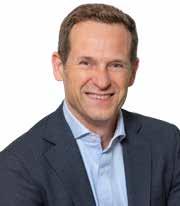
Andrew Head Chief Executive Officer, Asia Pacific
Shared strength: Together Serco and SSAANZ support veterans across Aotearoa
16 Human touch in the algorithm: What our nurses told us about AI-supported telenursing
26 Introducing Gareth Austin, Serco’s ICT Director at Fiona Stanley Hospital
29 What does it take to deliver groundbreaking operations safely on a world-class icebreaker?
31 Partnering for brighter futures: Serco and the KARI Foundation
Corporate announcements
I am proud to share a series of contract milestones, which reflect the confidence governments continue to place in Serco across justice, community services, infrastructure and defence.
At the heart of these achievements are our frontline people, whose professionalism, care and judgement underpin the public services Serco deliver every day. From continuing our long standing partnerships at Acacia Prison and Adelaide Remand Centre, to supporting safer communities through Justice Transport Services in Victoria, ensuring continued support for Australian Defence Force (ADF) including delivering healthcare and providing medical and dental equipment support services, expanding our custodianship of Westgate Park in Melbourne, delivering a critical freight vessel for Lord Howe Island, and celebrating a decade of partnership with the Australian Antarctic Division, each contract reflects the impact our people make where it matters most.
As we look to 2026 and beyond, I want to congratulate everyone who has contributed to these milestones that will see our teams continue to grow and deliver vital services that make a real difference for the communities we serve.
Andrew Head Chief Executive Officer, Serco AsPac
Serco to continue supporting safer communities, and strengthen Western Australia’s corrections capacity at Acacia
Prison
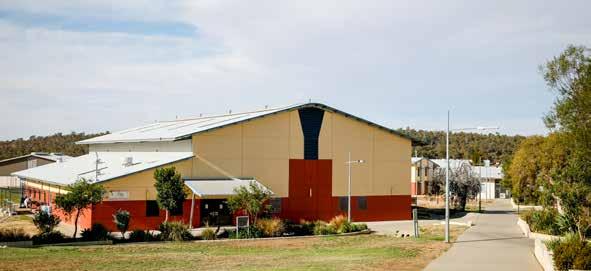
In March 2026, Serco welcomed the Western Australian Government’s decision to extend its contract to operate Acacia Prison, reinforcing a long-standing collaboration focused on delivering safe, secure and progressive correctional services for the community.
The extension reflects confidence in Serco’s strong operational performance, built over more than two decades of supporting Western Australia’s justice system. Alongside this, Serco has also been awarded the contract to operate and maintain the planned expansion of the facility. With an additional 320 beds expected to come online in late 2028, the expansion will enhance Acacia’s capacity, resilience and long-term sustainability in response to population growth and evolving operational needs.
At Acacia Prison, Serco’s approach places a strong emphasis on rehabilitation, constructive activity and continuity of care. Education, employment pathways, health services and wellbeing programmes support improved safety outcomes, reduced reoffending and positive reintegration for people returning to the community.
Serco remains proud to continue supporting best practice across Western Australia’s justice system through a strong, collaborative partnership with the Western Australian Government and the Department of Justice.
Aboriginal and Torres Strait Islander Mental Health First Aid
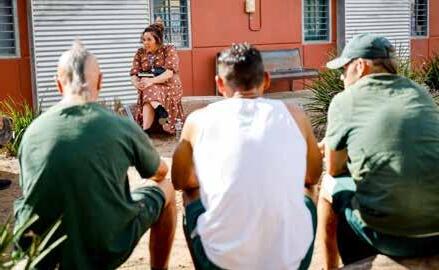
Since early 2025, Acacia Prison has been delivering Aboriginal and Torres Strait Islander Mental Health First Aid training to both staff and people in custody. The programme brings participants together to build shared understanding, strengthen relationships and recognise the invaluable lived experience men bring to conversations about wellbeing. To date, around 50 staff and prisoners have graduated, gaining a nationally recognised qualification held for three years. The training supports peer workers and ensures each accommodation block has trained participants who are well placed to notice early changes in wellbeing. Delivered by respected community educator Aunty Rosalie, the programme has continued in 2026, reinforcing culturally responsive care and safer, more supportive environments.
Acacia Prison
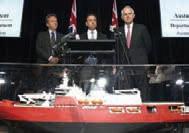
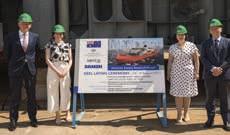
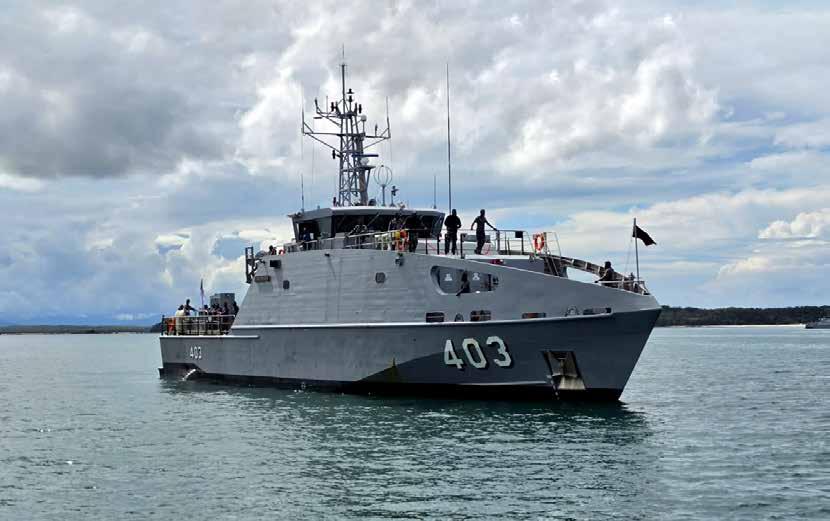
Serco to design and build new Lord Howe Island freight vessel
Serco is proud to have been selected for the design and build of a new freight vessel to support the critical freight needs of World Heritage listed Lord Howe Island for the next 40 years.
Delivered as part of the NSW Government’s Lord Howe Island Critical Infrastructure Programme, the project will provide a fit-for-purpose vessel designed to meet stringent environmental and biosecurity standards, helping protect the island’s unique native plant, bird and insect species.
The new vessel will deliver a reliable freight service for the island community, featuring roll-on roll-off capability and capacity for up to 35 ISO containers.
Its design prioritises environmental protection, biosecurity and operational efficiency, while ensuring safe cargo operations and minimising impacts on the island’s sensitive World Heritage environment.
Serco brings a strong track record in maritime programme management, having introduced 129 vessels into Australian Government service, including the Antarctic icebreaker RSV Nuyina.
Experience gained operating in extreme and highly biosecure environments has informed the vessel’s design, embedding proven controls and operational discipline from concept through to delivery.
The project will also deliver broader economic and social benefits, including student placements for
future maritime engineers, opportunities to upskill First Nations maritime capabilities, and engagement with regional small and medium enterprises to maximise local industry participation.
Community Engagement on Lord Howe Island
As part of the project, Serco representatives recently visited Lord Howe Island to meet with the local community and share early information about the new freight vessel. The on-island session brought together Serco’s project leadership team and delivery partner IMC Naval Architects to outline the vessel’s design, capabilities and construction timeline, and to answer questions directly from residents. This visit covered how the project will move from design into delivery, ensuring the vessel is well understood and built to support the island’s needs for generations to come.
Admiralty Islands
North Bay
Serco to support community safety in Victoria through secure Justice Transport Services
Serco is proud to be supporting the Victorian Government’s vision for safer communities through the delivery of secure, dignified and efficient Justice Transport Services across Victoria.
This partnership represents a significant milestone in Serco’s justice journey in Australia and reflects the trust placed in Serco to support the Department of Justice and Community Safety in building a safer, smarter and more resilient justice system.
Serco’s services encompass secure transportation, custodial services during transit, court transfers and emergency response, delivered by a skilled, highly trained and well-supported workforce. The approach is underpinned by innovation, safety and operational excellence, with advanced scheduling, tracking and telematics technologies improving efficiency, enhancing safety and ensuring strong compliance.
The fleet includes vehicles designed with accessibility solutions and specialised transport to support people with diverse needs. A strong focus on dignity and safety ensures every movement is managed with care and professionalism.
This contract builds on Serco’s extensive justice expertise across Australia, New Zealand and the United Kingdom, reinforcing our commitment to delivering high-quality justice services that support safer communities now and into the future.
Welcoming our first officers in Victoria’s Justice Transport Services
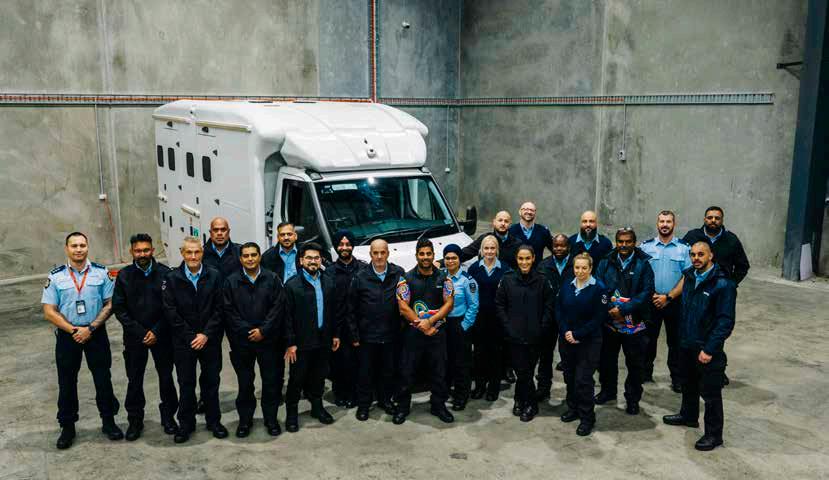
In March, Serco welcomed the first officers joining the Justice Transport Services contract in Victoria. These officers play a vital role at the frontline of the justice system, helping to ensure people in custody are transported safely, securely and with dignity at every stage of their journey.
Their professionalism, judgement and commitment underpin the delivery of reliable court and custodial movements and contribute directly to the Victorian Government’s corrections and community safety objectives.
Supported by strong training, modern technology and a focus on wellbeing, these Serco officers are central to creating a justice transport model that prioritises safety, respect and operational excellence. Serco is proud to support its officers as they work alongside the Department of Justice and Community Safety to help deliver a safer, smarter and more resilient corrections system for Victoria.
Defence extends trusted Serco partnership to sustain healthcare readiness
An extension of Serco’s Medical and Dental Equipment Support Services contract with the Australian Defence Force (ADF) reinforces our enduring role in supporting Defence health, wellbeing and operational readiness.
For more than 26 years, Serco has partnered with Defence to provide specialist medical and dental kitting, equipment management and maintenance services that underpin the ADF’s healthcare capability across Australia. The extension reflects Defence’s continued confidence in Serco’s ability to deliver reliable, responsive support in complex and operational environments.
Under the extended arrangement, Serco will continue to provide end‑to‑end medical and dental equipment support for ADF operations, peacetime training activities, ADF Medical Centres nationwide, and ADF units based in Penang, Malaysia.
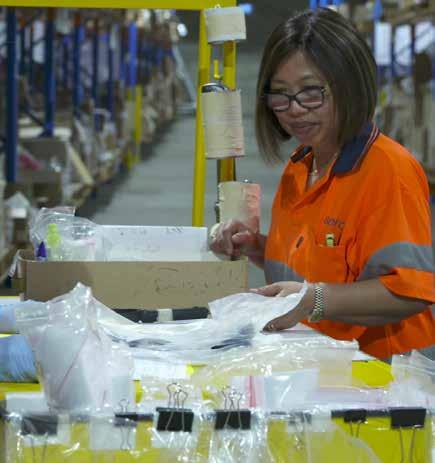
This includes assembling more than 5,000 medical kits each year and maintaining over 100,000 critical medical and dental items.
These services are vital to ensuring ADF personnel are equipped to deliver care wherever it is needed. Together with Serco’s Health Services contract, this work forms a comprehensive healthcare footprint focused on keeping ADF personnel fit, healthy and operationally ready in an increasingly complex strategic environment.
Westgate Park
Melbourne’s parks and gardens are central to the city’s lifestyle, providing places for recreation, connection and wellbeing. Each day, thousands of people visit local parklands to exercise, relax and enjoy nature as part of their daily routines.
Earlier this year, Serco’s Melbourne Parks and Gardens team proudly expanded its custodianship to include Westgate Park, following the City of Melbourne’s decision to extend the contract to this iconic Port Melbourne site. Spanning almost 40 hectares beneath the West Gate Bridge and alongside the Yarra River, Westgate Park is one of Melbourne’s most distinctive urban green spaces and a refuge for remarkable biodiversity.
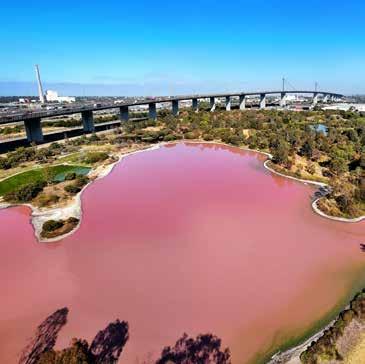
The park features wetlands, saltmarsh, a natural pink salt lake and habitat supporting more than 177 bird species. Serco’s team brings deep experience in caring for complex landscapes, with a strong focus on protecting biodiversity and nurturing thriving, resilient green spaces.
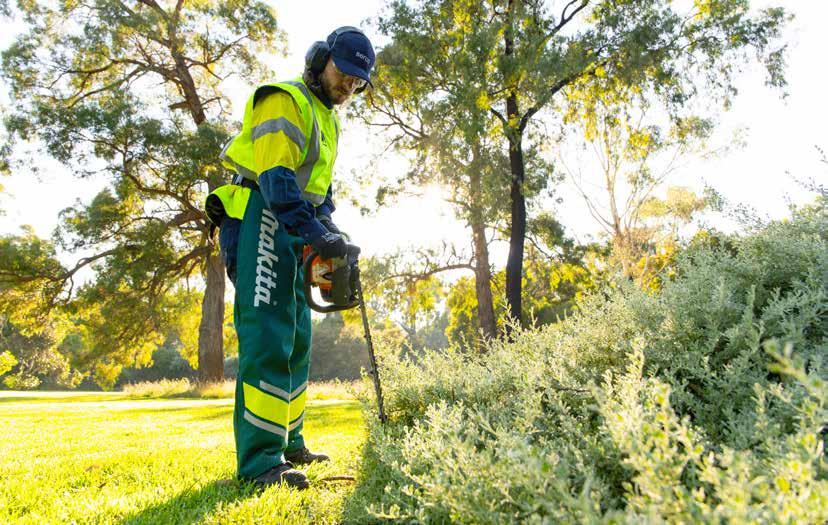
The contract expansion is also creating local employment opportunities, with additional full-time roles being recruited to help care for this important community asset. With Westgate Park now under Serco’s stewardship, the team manages almost 330 hectares of open space across Victoria, continuing a more than 30-year commitment to maintaining public spaces that support health, wellbeing and environmental sustainability for current and future generations.
Pretty in pink: The natural wonder of Westgate Park’s salt lake
A unique and much-loved feature of Westgate Park is its striking pink salt lake, a natural phenomenon that has become an iconic part of Melbourne’s urban landscape. The lake’s vivid colour is caused by salt-loving algae that thrive in the park’s saline conditions, changing in intensity depending on weather, light and seasonal variations. Caring for this delicate environment requires specialised knowledge and careful management to protect water quality, surrounding habitats and the balance of the broader wetland ecosystem.
Serco’s team works closely with environmental experts and local stakeholders to monitor conditions, manage vegetation and support the lake’s ecological health, ensuring it remains both a safe habitat for wildlife and a unique destination for visitors.
The pink lake not only showcases the remarkable diversity of Melbourne’s natural environment but also reinforces the importance of thoughtful custodianship in preserving places where nature and community intersect.
A decade of partnership between the Australian Antarctic Division and Serco
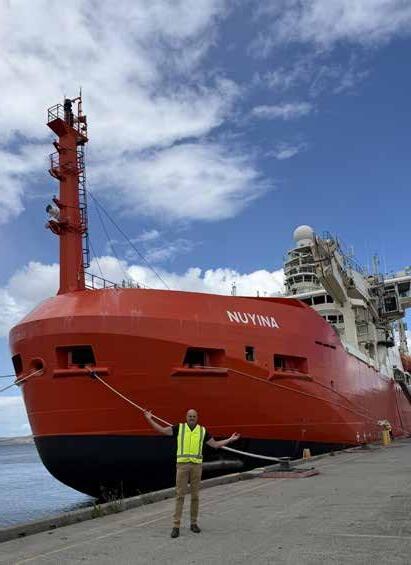
On 28 April 2016, Serco’s contract commenced to manage the design, build, operations and maintenance of Australia’s world-class icebreaker, the RSV Nuyina.
Over the past decade, the contract – and the vessel itself – has evolved to become a complex, innovative platform for the delivery of groundbreaking results, enabling everything from science missions to medical evacuations and resupply voyages to the most remote parts of the globe.
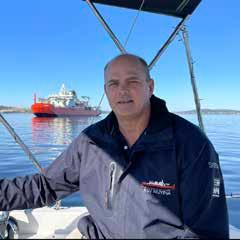
Ronan Maguire, Serco’s Antarctic Supply Research Vessel (ASRV) Contract Director, has been with the Nuyina team since the very beginning, supported by Operations Manager John East. On this milestone anniversary for Serco’s proud and truly collaborative partnership with the Australian Antarctic Division (AAD), Ronan reflects on the date’s personal resonance.
“Having been part of the ASRV team since 2016, it’s been rewarding to see how our partnership with the AAD has evolved and matured over time,” Ronan says.
“Being
part
of
something that supports critical national capability in such a unique environment has been a highlight of my career. What I’m most proud of, though, is the team behind it, our people.
Their expertise, resilience and commitment are the reason
behind our sustained success over the last ten years.”
deep canyon at Vanderford Glacier, through to a successful and safe medical evacuation in August 2023, Serco’s RSV Nuyina team has worked closely with the AAD to ensure that every voyage is delivered with operational excellence. Both Serco’s ship and shore teams are passionate about their work, and by constantly asking how further value can be delivered for the Australian Government, Australian community and taxpayers, have supported groundbreaking scientific discovery.
In 2025, the RSV Nuyina completed its longest and most successful voyage to date, enabling the AAD to access the Denman Glacier for the first time, which allowed for critical seafloor mapping, krill studies, and climate projections.
And just this year, Serco has been proud to support the AAD to make its first environmental campaign in twenty years to Heard and McDonald Islands, again enabling critical studies.
Today, as the team looks back on 10 years of trust, pride, care, safety and innovation, we would like to extend our thanks to the Australian Antarctic Division, led by Emma Campbell, the Hon Murray Watt – Minister for the Environment and Water, and the Hon Julie Collins – Minister for Agriculture, Fisheries and Forestry. We also thank the Tasmanian community, particularly in and around Hobart, the home of the Nuyina.
From the vessel’s Maiden Antarctic Season in 2021–22, which included the mapping of a previously unknown
We look forward to continued partnership to deliver many more years of safe, reliable maritime operations and innovation that cements Australia’s scientific leadership on the global stage and on the seas.
Place – Defence
The Bullwinkel Project
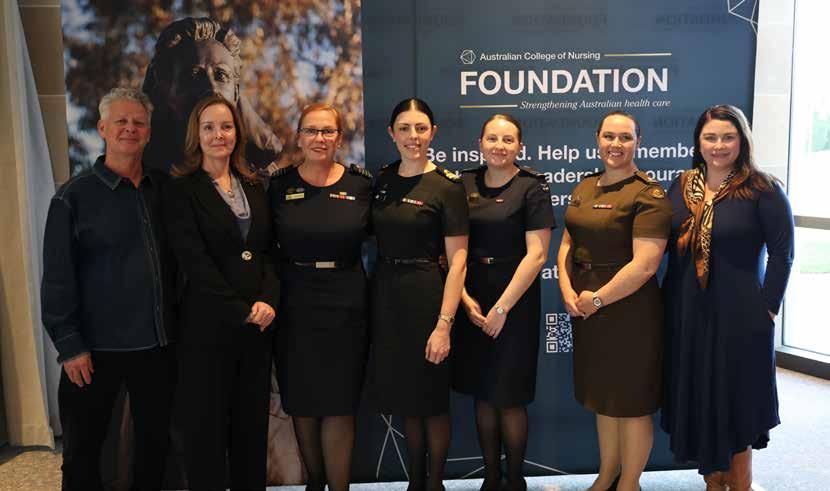
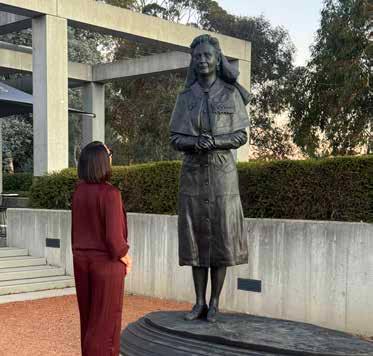
Recently, the Serco team was privileged to attend the premiere of The Bullwinkel Project Documentary at the Australian War Memorial – an important initiative led by the Australian College of Nursing (ACN) Foundation and proudly supported by Serco.
Set in a place that honours the service and sacrifice of more than 100,000 Australians, the event was a powerful reminder of the enduring legacy of those who have served and those who use their skills, compassion and commitment to support Defence personnel every day.
Our involvement reflects a long-standing partnership with the ACN Foundation, spanning more than six years as an Affiliate Partner, a major sponsor for the establishment of the Bullwinkel Memorial, and as a Founding Partner of the Bullwinkel Scholars Programme.
Through the scholars programme, 22 nurses are supported each year with scholarships to advance their leadership capability proudly continuing the legacy of Lieutenant Colonel Vivian Bullwinkel AO MBE ARRC ED and the 21 nurses who served with courage and sacrifice in the Second World War.
Terri Antonio, Serco’s Director Clinical Governance, shared how the legacy of service and commitment to healthcare comes together in initiatives like the Bullwinkel Project documentary.
“This remarkable documentary was created in partnership with the Department of Veterans’ Affairs and the ACN Foundation and connects strongly with Serco’s ongoing commitment to supporting veterans and the work being done by our healthcare professionals nationwide.”
“Serco has served Defence in Australia for almost 30 years through the delivery of various integrated
services. We also employ more than 540 veterans and reservists across our Australian and Aotearoa New Zealand operations, and more than 2,250 medical and allied health professionals who deliver care in some of the most complex and demanding settings.”
“We are incredibly proud of the dedication, compassion and expertise they bring to their roles every day through frontline care.”
The Bullwinkel Project documentary shares the story of the Lieutenant Colonel Bullwinkel sculpture, the first sculpture of an individual nurse or woman installed at the Australian War Memorial, alongside the establishment of the associated scholarships.
Across our operations, Serco supports veterans and emerging healthcare professionals at every stage fostering an inclusive environment and strengthening the future workforce. Programmes such as SercoVets and the Nursing University Placement Programme highlight how we continue to invest in a workforce that reflects experience, builds capability and delivers lasting impact.
Shared strength: Together Serco and SSAANZ support veterans across Aotearoa
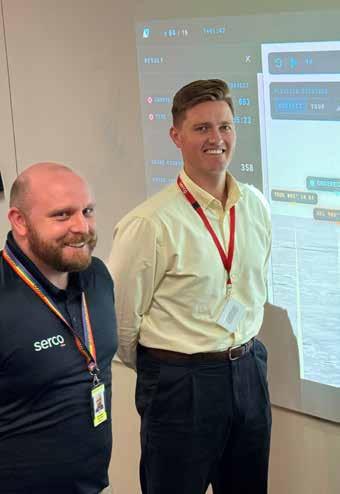
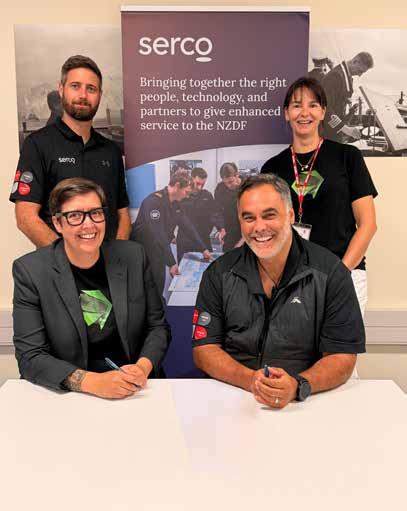
Serco is proud to support the Soldiers, Sailors & Airmen’s Association of New Zealand (SSAANZ) and in 2026, we’re already seeing the impact of that partnership across Aotearoa.
As a community-led New Zealand organisation founded and delivered by veterans, SSAANZ creates opportunities for serving and ex-service New Zealand Defence Force (NZDF) personnel and their whānau to reconnect, rebuild skills and strengthen wellbeing through shared experience. Their model is simple but powerful: bringing people together through outdoor adventure, with a focus on physical and mental wellbeing, community and practical skills.
Since commencing our partnership in October 2025, SSAANZ has continued to expand its reach from endurance-based initiatives like the Survival Traverse, to a growing calendar of events across the country.
In 2026, that momentum has accelerated.
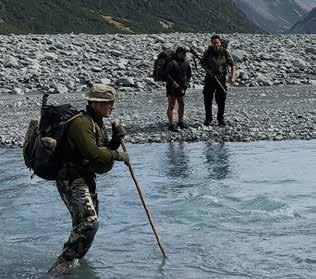
Already this year, SSAANZ with Serco’s support has delivered a series of hands-on training and connection opportunities, including hunting skills courses in Whanganui and North Canterbury, and a fly-fishing course in Turangi, all practical experiences that build confidence, independence and camaraderie.
Looking ahead, events such as the Southern Traverse in November, a multi-day crossing of the Southern Alps, will bring veterans together in a shared challenge that builds resilience while reinforcing the bonds formed through service. These are not just activities they are pathways to connection, wellbeing and longterm support.
Serco’s sponsorship as the prime partner for SSAANZ events in 2026 is helping to expand this reach even further, enabling more New Zealand veterans
and their whānau to access these opportunities nationwide. Together, we are supporting a programme that continues to grow in both scale and impact.
This reflects our broader commitment to supporting Defence and veteran communities across New Zealand both through our work with the NZDF and by backing organisations that make a meaningful difference beyond service.
SSAANZ National Coordinator David Benfell said the partnership is making a tangible impact.
“Serco’s support has allowed us to grow what we do, reaching more veterans, running more events, and strengthening the support network our people rely on. It’s enabling us to continue delivering the kind of meaningful, peer-led experiences that genuinely change lives.”
At Serco, we are proud to stand alongside SSAANZ ensuring those who have served New Zealand continue to feel connected, supported and valued.
Serco employs more than 540 veterans and reservists across our Australian and Aotearoa New Zealand operations because when we invest in people, we strengthen communities.
Turning insight into impact: Medical and academic research at
Serco
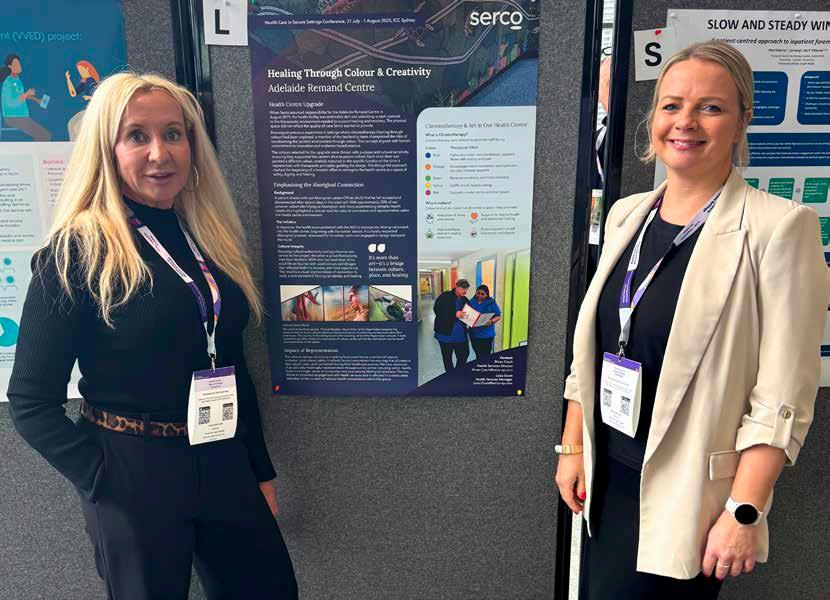
Serco’s presence across academic publications and major health and leadership conferences reflects a deep commitment to strengthening healthcare systems across Australia and New Zealand. From rehabilitation in secure settings and creative approaches to healing, to leading national telehealth, clinical governance, and workforce readiness discussions, Serco leaders and clinicians shared practical, evidence‑based insights shaped by real‑world delivery.
This body of work highlights a consistent focus: improving outcomes by putting people at the centre of care including patients, communities, clinicians and leaders alike. Whether exploring how fitness and mentoring can drive lasting rehabilitation, how creativity and environment support wellbeing, or how disaster medicine principles can guide decision-making under pressure, Serco’s research and presentations demonstrate the organisation’s unique role at the intersection of operations, clinical excellence and leadership. By contributing to national conversations and global best practice, Serco continues to support a more resilient, capable and sustainable healthcare sector — helping services not only respond to today’s challenges but build strength for the future.
Bridging military and civilian disaster deployments: Lessons from the USNS Comfort
Disaster readiness is strongest when military discipline and civilian adaptability intersect — highlighting the importance of interoperability, shared training and clear leadership across sectors.
Tin D, Antonio T
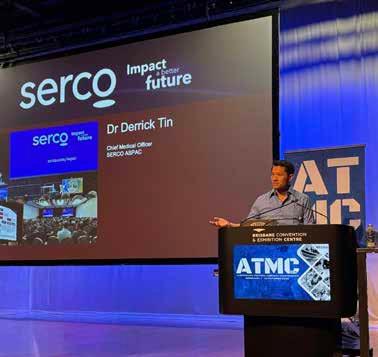
This poster presentation examines lessons from the USNS Comfort, a hospital ship deployed across military, humanitarian and disaster response missions, highlighting how military and civilian healthcare systems can learn from each other to strengthen preparedness and response. Using the Comfort as a case study, the authors demonstrate how rapid deployment capability, clear command structures and mass-casualty expertise can be effectively combined with civilian strengths such as local knowledge, continuity of care and community integration. Central to successful outcomes is interoperability — shared language, joint training and clear governance — supported by structured leadership and mutual respect. For Serco, operating across defence, health and emergency management, the insights reinforce the value of cross-sector readiness and hybrid models that balance military discipline with civilian adaptability in an increasingly disaster-prone world.
Applying disaster medicine principles to corporate clinical governance
Collaboration between military and civilian healthcare systems can strengthen disaster response, highlighting the importance of interoperability, leadership and shared capability in delivering effective, coordinated care during crises.
Tin D
In this Royal Australasian College of Medical Administrators presentation, Dr Derrick Tin applies disaster medicine principles to executive-level clinical governance, arguing that modern healthcare leadership increasingly operates in conditions akin to disaster environments — high pressure, constrained resources and complex, high-stakes decision-making. Core concepts such as triage, command and control, situational awareness and clear communication are reframed as essential governance tools that support prioritisation, ethical decision-making and organisational resilience during periods of system strain. The presentation challenges leaders to treat crisis management not as a niche capability, but as a core leadership skill, underscoring the value of cross-disciplinary engagement and trust at board and executive levels. For Serco, the insights reinforce the importance of strong clinical leadership, adaptive governance and resilience in navigating ongoing health system challenges.
Chance
for
Change:
A holistic approach to rehabilitation through fitness and mentoring
By combining structured fitness with mentoring, this programme reframes rehabilitation as capability‑building — supporting physical health, personal accountability and long‑term behavioural change in secure settings.
Dwyer C, Tin D, Czech R
Chance for Change presents a rehabilitation model designed for secure environments where complexity, trauma and disengagement are common. Integrating structured fitness with consistent mentoring, the approach moves beyond physical recovery to support behavioural change, mental wellbeing and long-term resilience. Fitness builds strength, routine and self-discipline, while mentoring provides stability, encouragement and positive role modelling — recognising that sustainable rehabilitation is shaped by relationships as much as capability. For Serco, Chance for Change reflects an outcomes-focused, person-centred approach, demonstrating how integrated interventions can shift services beyond containment toward empowerment, capability building and successful reintegration.
What are you doing for the health and wellbeing of your health sector leaders?
Leader wellbeing is a system issue. Supporting health leaders is essential to sustaining culture, performance and safe care across increasingly pressured health services.
Freitas E
This presentation confronts a critical but often overlooked issue: the wellbeing of health sector leaders themselves. Addressing senior delegates, it reframes leadership burnout not as an individual failing, but as a systemic risk with direct consequences for culture, decision-making, workforce engagement and patient outcomes. Drawing on growing evidence, the presentation calls for deliberate organisational strategies that prioritise psychological safety, peer connection and sustainable leadership workloads, particularly during periods of sustained pressure and change. For Serco, the message aligns strongly with its people-first ethos — reinforcing that investing in leader wellbeing is not a discretionary benefit, but a strategic necessity for resilient, high-performing health services.
Place – Justice
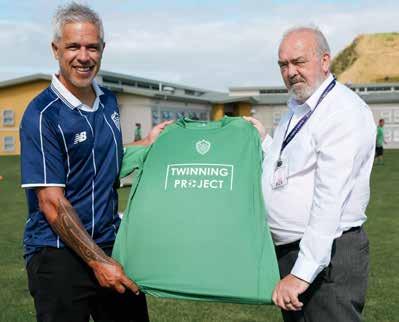
Building confidence, community and skills through the Twinning Project
Serco is proud to celebrate the first graduates of the Twinning Project at Kohuora Auckland South Corrections Facility, marking an important milestone for rehabilitation and reintegration in Aotearoa New Zealand.
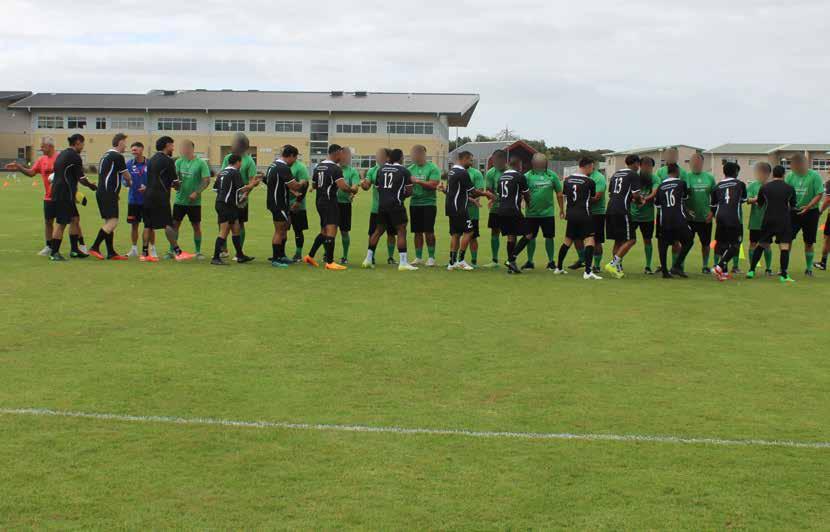
Delivered for the first time in New Zealand, the globally recognised Twinning Project pairs correctional facilities with professional football clubs to deliver structured programmes that build leadership, teamwork and life skills. At Kohuora, the six-week pilot programme brought together 16 participants who worked alongside professional football coaches to develop practical coaching capability, build confidence and work towards a recognised coaching qualification.
The programme has been delivered through a collaborative partnership with Auckland FC, the New Zealand Department of Corrections, the FIFA Foundation and the Twinning Project’s global team led by CEO Hilton Freund MBE. Together, these organisations share a commitment to supporting people in custody to build skills that can enable positive futures beyond the prison gate.
Graduation day was a celebration of both individual achievement and collective effort. Serco was honoured to welcome the Hon Mark Mitchell, Minister of Corrections and Minister for Sport and Recreation, to recognise the achievements of the programme’s first cohort. The event concluded with an exhibition match, with participants taking to the field alongside Auckland FC players past and present in a friendly match against a Serco staff team which was a powerful demonstration of teamwork, connection and shared purpose.
Gerry Smith, Prison Director at Auckland South Corrections Facility, said the success of the programme reflects Kohuora’s design and operational focus on rehabilitation.
“At Kohuora, our focus is on rehabilitation — helping the people in our care to develop the skills and
attitudes they need to successfully transition back into the community after their release,” said Mr Smith.
“Our dedicated programme spaces, and the breadth of initiatives we offer across sport, education and culture, allow innovative partnerships like the Twinning Project to thrive. We support initiatives like this because they give people the tools to lead better lives. When reintegration is successful, communities are safer.”
The Twinning Project has a strong international track record. In the United Kingdom, it has worked with almost every professional football club from Liverpool FC to Luton Town and globally has partnered with corrections facilities across Europe and the United States. Its introduction at Kohuora builds on this legacy, adapting a proven model to the Aotearoa New Zealand context.
Kohuora Auckland South Corrections Facility is New Zealand’s most modern prison, designed and operated by Serco on behalf of the New Zealand Government with rehabilitation at its core. The facility’s purpose-built infrastructure supports a holistic rehabilitative environment, alongside Māori and Pasifika cultural programmes, education and training, and health and wellbeing initiatives — all focused on supporting successful reintegration.
Serco’s Defence Marine Support Services
delivers seamless support for
Serco’s Defence Marine Support Services delivers seamless support for International Fleet Review
International Fleet Review
Serco’s Defence Marine Support Services (DMSS) team proudly supported the successful delivery of the Royal Australian Navy’s International Fleet Review on Sydney Harbour, marking 125 years of Australian Navy service and honouring generations of sailors who have defended Australia’s interests and strengthened international partnerships.
The Fleet Review represented one of the most significant naval events held in Sydney Harbour in more than a decade, bringing together 34 naval vessels from 19 nations, alongside veterans, Defence families and members of the public. The scale and complexity of the event underscored the importance of close coordination, operational precision and trusted industry partnership.
Operating behind the scenes, Serco’s DMSS workforce played an integral role in enabling safe, efficient and well coordinated harbour operations throughout both the planning and execution phases. Crews delivered passenger transfers, coordinated refuelling activities and provided continuous on water logistics support to visiting international vessels, ensuring all operations were conducted in line with Defence and international standards.
Serco’s shore based teams were co-located at the Navy’s operational hub and the DMSS crews worked extended hours on the water to support the needs of Defence throughout the review period. Their professionalism, flexibility and attention to detail were
central to the successful delivery of an event of this scale, supporting both ceremonial requirements and contemporary operational demands.
The Royal Australian Navy formally acknowledged Serco Asia Pacific’s contribution as a close industry partner whose performance was instrumental in achieving the high standard of outcomes delivered during the Fleet Review.
“The International Fleet Review demonstrated the depth of experience and professionalism across our DMSS workforce,” said David Astbury, General Manager Defence, Serco Asia Pacific.
Our teams delivered in a complex, multinational environment, reinforcing Serco’s role as a trusted partner to Defence for critical maritime operations.”
A strong result delivered by an exceptional team.
Human touch in the algorithm: What our nurses told us about AI-supported telenursing.
Every month, Serco’s telenurses support more than 40,000 Australians seeking trusted, clinically guided health advice. At the heart of this service is a powerful partnership between skilled clinicians and smart technology — where human judgement leads, and digital tools enhance care.
To better understand how our nurses experience AI-supported clinical decision support systems (CDSS) in telenursing, Serco recently undertook a national survey across a large telehealth service. The message from our workforce was clear: technology works best when it supports, not replaces, clinical expertise.
Nurses reported a high level of confidence in delivering safe and appropriate care through telehealth. The vast majority said CDSS strengthens clinical decision-making, enabling consistent, high-quality advice while allowing nurses to apply their own professional judgement. Importantly, nurses affirmed they remain firmly in control — using the system as a guide while confidently overriding prompts when clinical judgement calls for it.
The results were clear with nurses overwhelmingly trust the safety, consistency, and clinical value of CDSS when combined with their own expertise.
• 93% (7% neutral) felt tele-nursing with CDSS enables safe and appropriate dispositions.
• 81% (18% neutral) felt confident making decisions without a physical examination.
• 89% (7% neutral) reported they could apply independent clinical judgement alongside AIsupported prompts.
• And nearly all respondents (94%) (5% neutral) said they override the system when clinically necessary — a powerful demonstration that the human clinician remains firmly in the driver’s seat.
The survey also highlighted the positive impact of telenursing on workforce wellbeing. Nurses described strong work–life balance and high job satisfaction, reflecting a model of care that supports both patients and the people delivering care. Many also noted that CDSS tools are intuitive and well supported, helping nurses focus on what matters most: listening, assessing and caring.
• 86% (12% neutral) reported good work–life balance.
73% (18% neutral) described high job satisfaction.
Just as importantly, nurses expressed pride in their role and confidence in the model of care. Most said they would recommend CDSS-supported telenursing as a safe and effective way to deliver healthcare and would encourage colleagues to consider a career in telehealth.
This study reinforces what Serco has long known: technology can enhance healthcare, but it is the clinical judgement, and compassion of our people that truly make the difference. As AI and digital tools continue to evolve, Serco remains committed to supporting a telehealth workforce where innovation and human care work hand in hand.
Delivering healthcare excellence in custody
Across Australia and Aotearoa New Zealand, governments place a clear expectation on custodial operators: people in prison must have access to healthcare that is safe, ethical and equivalent to that available in the community. For Serco, meeting that expectation is not simply a contractual obligation, it is central to our purpose of creating positive impact and safeguarding human dignity.
Every day, Serco supports the health and wellbeing of around 4,500–5,000 people in custody across our correctional facilities in Australia and New Zealand. These environments present unique and complex healthcare challenges. People entering custody often experience higher rates of chronic illness, mental ill-health, disability and substance dependency, and many have had limited access to consistent healthcare prior to incarceration. Addressing these needs requires robust clinical governance, highly skilled teams and unwavering adherence to recognised standards.
Accreditation plays a critical role in assuring governments, communities and the people in our care that healthcare services meet those expectations. Independent assessment against nationally recognised standards provides confidence that clinical care is safe, consistent and continuously improving — regardless of location or operating model.
Serco’s health services in Australian correctional facilities are benchmarked against the Royal Australian College of General Practitioners (RACGP) Standards for Health Services in Australian Prisons, which set a clear framework for high-quality primary healthcare in custodial settings. These standards emphasise patient safety, clinical quality, continuity of care and culturally appropriate services — areas that align directly with government priorities for reducing harm, preventing deaths in custody and supporting rehabilitation.
At Clarence Correctional Centre, Serco has achieved a significant milestone in custodial healthcare. Clarence received full accreditation against the RACGP Standards (1st edition) from May 2022 to May 2025 and, following assessment in March 2025, achieved accreditation against the 2nd edition of the Standards through to May 2028. In addition, Clarence was assessed against the National Safety and Quality Primary and Community Healthcare Standards,
achieving accreditation until April 2028. Importantly, no non-conformities were identified, and Clarence is believed to be the only prison in Australia or New Zealand to hold dual accreditation in support of its health service delivery.
This commitment to excellence is consistent across Serco-operated sites. The Adelaide Remand Centre and Acacia Prison have both achieved full accreditation against the RACGP Standards, including early assessment and successful transition to the updated 2nd edition. Each assessment confirmed compliance with all applicable standards, with no non-conformities identified — reflecting strong clinical leadership and embedded quality systems.
In New Zealand, Auckland South Corrections Facility has also been reaccredited against the National Cornerstone Standards, reinforcing Serco’s commitment to safe, culturally responsive and person-centred care.
These accreditations are more than accolades. They demonstrate to governments that Serco’s healthcare services actively support key policy objectives: protecting human rights, improving health outcomes, reducing long‑term system costs and enabling better reintegration outcomes for people leaving custody.
By holding ourselves to the highest independent standards, Serco continues to build trust, strengthen partnerships with government and deliver healthcare that truly makes a difference—inside custody and beyond.
Strengthening capability through partnership across Aotearoa New Zealand
Delivering modern defence capability requires more than technical expertise, it relies on strong partnerships that bring together innovation, operational insight and local industry strengths.
Across Aotearoa New Zealand, Serco’s New Zealand Defence Force Training Services team is working alongside leading Kiwi organisations to shape the future of defence training, ensuring it is immersive, secure and aligned to an increasingly complex operational environment.
Rewi Thompson, Contract Manager Training Services, Serco New Zealand, said these partnerships reflect a deliberate focus on building capability through collaboration.
“Working alongside innovative New Zealand organisations allows us to bring together technology, learning and operational insight in a way that strengthens defence capability. These partnerships are about building something enduring creating training environments that are adaptive, future-focused and grounded in real operational needs.”
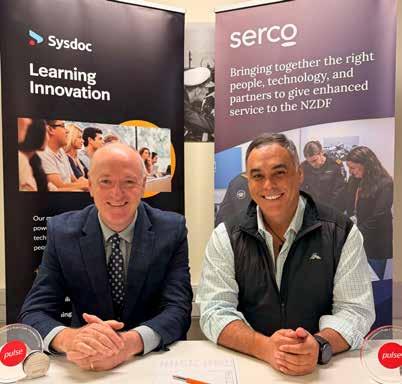
Through a series of Memoranda of Understanding, Serco is partnering with organisations at the forefront of immersive technology, digital systems and learning design. Together, these partnerships are enabling new approaches to training combining real-time data, simulation and human-centred design to build capability, improve readiness, and support the New Zealand Defence Force now and into the future.
Sysdoc: designing futureready learning and capability
Serco’s partnership with Sysdoc brings together expertise in business transformation, digital learning and capability development.
Founded in Aotearoa New Zealand, Sysdoc has a long track record of designing modern learning solutions that are practical, engaging and aligned to real-world operational needs. Their approach focuses on blended and digital learning, knowledge management and datadriven capability development — supporting organisations to build sustainable, future-ready workforces.
Together, Serco and Sysdoc are exploring nextgeneration training approaches that integrate immersive learning, digital platforms and humancentred design. This shift towards continuous, adaptive and personalised learning environments is helping accelerate capability development, while also creating opportunities for New Zealand organisations to grow their impact both locally and internationally.
JMC Technology: enabling secure, data-driven training systems
Through its collaboration with JMC Technology, Serco is strengthening how secure, automated systems support defence training and operations
JMC brings deep expertise in digital maritime training solutions, combining automation, intelligent simulation and real-time performance data to deliver efficient, measurable training outcomes. Their capability is already proven in complex operational environments, including maritime warfare training for the Royal Australian Navy, reinforcing the role of trusted technology in delivering adaptive and effective training at scale.
In New Zealand, this partnership focuses on building secure training ecosystems where systems are auditable, data integrity is maintained, and performance insights are embedded into how training is delivered and evaluated. This creates a strong foundation for future-ready, technologyenabled defence capability.
Serco’s partnership with StaplesVR highlights the role of immersive technology in transforming defence training. Working with the New Zealand-based leader, the collaboration brings together advanced virtual and augmented reality solutions with Serco’s operational training expertise.
StaplesVR’s technology enables personnel to train in realistic, high-consequence environments where skills can be developed safely and repeated as needed improving knowledge retention and building confidence in complex tasks. From sea-based scenarios to remote environments, training becomes portable and accessible, supporting flexibility while enhancing operational readiness.
Together, this partnership is helping to shift training from traditional static models to immersive, data-driven environments that better reflect real-world demands, creating scalable solutions that support both current and future defence capability.
Serco’s future leaders keeping culture connected
Grounded in culture, leading with purpose
Born in Aotearoa New Zealand and raised in Samoa until the age of 22, Debs Eviles' worldview has been shaped by fa’a Samoa a way of life grounded in service, respect and strong relationships.
“Samoa shaped my values, my sense of service, and my belief that leadership lives in va fealoa’i - the relational space between people,” Debs says.
Living and working across Samoa, Aotearoa New Zealand and now Australia has further strengthened that foundation, reinforcing the importance of staying grounded in identity while adapting to new environments. Originally trained as a teacher, Debs’ early career was centred on education, supporting Pasifika children as they transitioned into primary schools in South Auckland and community engagement. This work ultimately led her into the justice sector where she worked alongside her brother, who was a Pasifika Cultural Liaison Officer at Kohuora Auckland South Corrections Facility (ASCF).
“When I began volunteering at ASCF in 2016, I saw firsthand how powerful culture could be for Pasifika men in custody,” Debs reflects. “Helping people reconnect with their identity, their aiga and their culture showed me where real change could happen.”
What stood out early in Debs’ journey with Serco was the genuine commitment to supporting cultural leadership. “I saw an organisation that didn’t just allow cultural programmes, but actively backed them,” Debs says. “That told me Serco was a place where culture could truly thrive.”
Fast forward ten years from her first experience in corrections and Debs now proudly holds the role of Reintegration and Rehabilitation Team Leader at the Serco operated Clarence Correctional Centre in Northern NSW.
Her responsibilities span from rehabilitation, health and fitness, right through to cultural initiatives and events. The role providing vital wraparound support that strengthens wellbeing and prepares people for life beyond custody. “My role is about helping people build the skills, stability and mindset they need to return safely to their communities,” Debs explains. “It’s about structure and safety, but also about dignity, belief and opportunity.”
Inspired by her grandmother who modelled strength through service, Debs' commitment to strengthen cultural identity by uplifting others has been her guiding light in trying to find ways to contribute to a more positive and connected community. “I stay connected to Pasifika spaces, support cultural events, and encourage our young people to be proud of who they are,” says Debs. “The way I lead at work is the same way I support my family, church, and wider community.”
Cultural values sit at the heart of Debs’ leadership style. Raised with principles of humility, patience and respect, Debs leads by listening first and responding with care. A Samoan proverb provides daily guidance:
‘E sili le toa e na te pulea lona loto’ - the one who overcomes their impulses is as courageous as the one who conquers a fort. “It reminds me to stay calm under pressure and to lead with humility, especially in challenging moments,” Debs says.
One experience remains particularly meaningful to Debs when reflecting on the work of her and her team. “A man at the centre rarely engaged with anyone until we approached him in a way that acknowledged his culture, his family, and the values he was raised with,” shared Debs. “By focusing on connection rather than behaviour, speaking respectfully, giving him time, and recognising his identity, he slowly began to open and trust was gradually formed.” Over time, Debs proudly shared he reconnected with his mother after more than ten years of silence. “That change didn’t come from force,” Debs reflects. “It came from meeting him in a way that felt safe, respectful and culturally understood.”
Pride in culture continues to guide Debs’ purpose. “I carry my aiga, my ancestors and my Pasifika community with me every day,” Debs says. “If I can help create environments where people feel seen, supported and encouraged to make better choices, then I’m doing meaningful work.”
Debs is very humble about the work she has done in both Australia and Aotearoa New Zealand and her role in Serco and the community as a Pasifika leader where she leads with humility, respect, and service at all times. “I carry myself in a way that reflects the values I was raised with where cultural safety, dignity and genuine care are embedded into everyday practice. When you know where you come from,” Debs adds, “you stand stronger in every space you walk into.”
A voice for culture, connection and change
Sio Pomelile was born in Tonga but has lived over half of his adult life in Aotearoa New Zealand. He initially trained as a physiotherapist and had been working in the community for about five years when he was contracted to run a clinic in Kohuora Auckland South Corrections Facility.
“I was seeing prisoners for physiotherapy, but I could see they had a lot of frustration about progressing while they were in prison. While I was treating the men, I was hearing a lot about wanting to get into programmes, or navigating the slow climb up the programme waiting list.”
Sio thinks a newly discovered passion for wanting to help the men when he knew nothing about prison is what encouraged him to take the leap and join Serco as a programme facilitator.
“From the start I enjoyed the work and the team here, facilitating Alcohol and Other Drugs programmes and helping the men develop safety plans, but I didn’t last very long as a facilitator. The Pasifika Cultural Liaison role became available and the person leaving had suggested I apply. Immediately I could see that this role had a much broader brief, giving me more widereaching opportunities to help the men here.”
A lot of the role is prisoner facing, including working with men where language and cultural expectations and misunderstandings are a barrier to understanding.
“A lot of the men want clarity with the plan their Case Manager has prepared for them. They may have been given the opportunity to ask questions, but there is a cultural barrier, which can be a greater challenge than a language barrier. Pasifika people consider it disrespectful to question authority or ask for clarity. My first challenge is to bridge the communication gap, where staff need to detect subtle cues where ‘yes’ implies ‘no’, and Pasifika men must feel comfortable seeking clarity, including via an interpreter.
“I see that a big part of my role is to bring the groups together,
and New
Zealand’s Pasifika Language Weeks are
a
great starting point. Last year, people learned traditional dances, collaborated in art and design activities and held group discussions on culture cohesion.
While Sio is a staunch ambassador of Pasifika culture and manages events for staff and prisoners, he’s also open about the negative contributing factors to offending within Pasifika culture.
“Culture is no defence for crime and not a basis to dismiss responsibility or the need for meaningful change. None of us can point to historical wrongs as a justification for our actions today. There is nothing forward-looking in this, and any efforts to change behaviour would just be performative if we have that mindset.
“I don’t look at people’s crimes and judge them further than the judicial system has already done. I work with people to understand the factors behind their offending, cultural or otherwise, in a non-judgemental way, to support practical, lifelong change starting in prison. Clarity and understanding matters to me, so I see it as my role to bridge misunderstandings among prisoners, staff and between both. Everyone working in Kohuora has a role to play in trying to improve people’s lives and prevent this group of men from returning to prison. I’m grateful to be a part of this.
We hold cultural training sessions for all new custodial officers as part of their Initial Training Course. It is vital staff understand how their cultural background complements prisoner engagement and how specific Pasifika nuances can positively or negatively affect those connections. The cultural team encourages a big picture view of all the cultural elements that influence us. It’s in all of us to understand each other’s cultural norms and know how to engage in the most positive way with the people in our care.”
Sio believes his Pasifika Cultural Liaison role extends beyond the Pasifika community.
Connected by culture, driven by impact
For James Tomkins, identity has been shaped by connection across cultures, countries and community.
A proud Samoan, New Zealander and Australian man, James grew up between Sydney and Auckland, grounded in strong family values and a deep sense of responsibility to others.
“My culture, and the example set by my family, has shaped my core values and influenced how I try to live my life,” James says. “It’s about understanding what matters to my family and community and acting in line with that.”
Growing up across two countries brought both perspective and purpose. Exposure to hardship within communities, alongside strong role models, helped shape his direction.
“You see the consequences of poor decisions, but also people who persevere and support others,” he reflects. “That’s what I wanted to carry forward, having a positive impact and being a good example.”
That drive led James to study Social Science and Criminology before joining Serco in 2019. Starting in Alternative Justice, he contributed to developing approaches that support vulnerable cohorts and reduce occasions of incarceration. Today, he leads Reintegration Services at Acacia Prison, overseeing programmes, partnerships and teams focused on improving outcomes for people in custody.
“I was drawn to Reintegration Services because it’s a space where you can directly influence outcomes,” James explains. “It’s about working alongside individuals to identify their needs, build motivation to change, and provide the tools to support that.”
Central to his approach is a commitment to respect and dignity.
“My cultural values of kindness, respect and connection guide how I engage with everyone,” he says. “It’s important that every interaction reflects that, regardless of someone’s role or circumstances, or whether they are in green or blue.”
These values are embedded in the delivery of reintegration services, with programmes evolving alongside the needs of those in custody. Initiatives like Tū Kotahi demonstrate the importance of culturally informed approaches, particularly in supporting Māori and Pasifika men to reconnect with identity and community.
“Programmes like this create spaces where men can be vulnerable and feel understood and connected,” James says. “That connection can play a powerful role in supporting growth and change.”
For James, the most meaningful outcomes are seen in the personal development of the men in his care.
“The most rewarding aspect is the growth we see in our men,” he says. “Whether it’s reconnecting with family, finding stability, or engaging with support for the first time, it all contributes to a more positive future.”
He also recognises the responsibility of being a Pasifika leader within the justice sector.
“It’s important to ensure Pasifika perspectives are considered in how services are designed and delivered,” he explains. “That includes promoting cultural safety, inclusion and approaches that reflect our communities.”
Reflecting on his journey, James acknowledges the complexity of navigating multiple identities but sees it as a source of strength.
“Having a diverse background, you can sometimes feel like you don’t fully belong in one place or another,” he says. “But our communities are welcoming and supportive. That’s something to be proud of, and something we try to reinforce in our work.”
Through his leadership, James continues to create environments where people feel supported, understood and empowered, demonstrating the role culture and connection play in building better outcomes for individuals, families and communities.
Heading Intro
Celebrating culture, connection and community on Yaegl Country
Heading 2
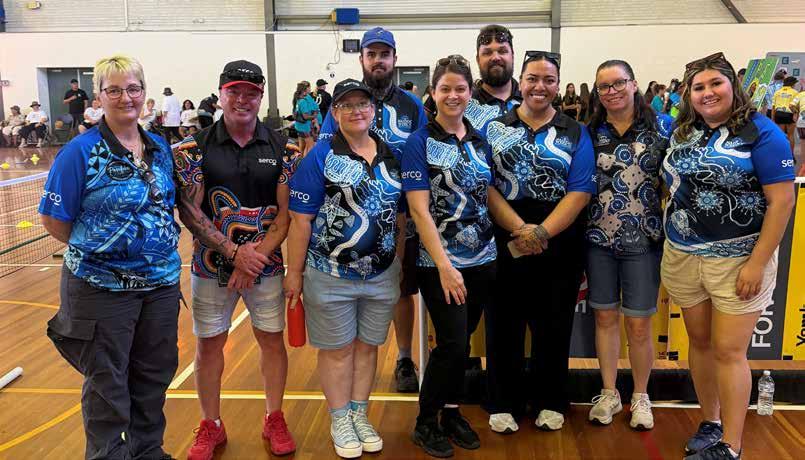
Recently, Serco had the privilege of being on Yaegl Country in the Clarence Valley to support the NSW Aboriginal Elders Olympics, a deeply significant event that brings together culture, community and connection while celebrating the vital role of Aboriginal Elders
Now in its 24th year, the NSW Aboriginal Elders Olympics is an annual gathering that welcomes more than 400 Elders from communities across the state. Through inclusive, tailored sporting activities, the event promotes physical wellbeing while creating space for laughter, reconnection and shared pride. More than a sporting carnival, it is a powerful celebration of Elders as knowledge holders, leaders
Serco was proud to support the event alongside the New South Wales Aboriginal Land Council and local Aboriginal organisations, with staff and inmates from the Serco operated Clarence Correctional Centre
ground support. Serco team also members assisted with catering and the facilitation of activities, helping ensure the event was welcoming, accessible
respected Elder, said the atmosphere throughout the day reflected deep cultural respect and genuine
activities, the sense of belonging and community pride was unmistakable,” Andrew said. “It reinforced the importance of culturally safe spaces where Elders can come together to strengthen connection and
engaging younger Aboriginal staff in moments like
Intro
At the conclusion of the event, Serco worked alongside Mudyala Aboriginal Corporation to ensure leftover food was distributed to Aboriginal community members in need across the local area as an extension of the day’s community-led, values-based approach.
Heading 2
Heading 3
Events like the Elders Olympics play an important role in supporting rehabilitation and reintegration outcomes. By strengthening cultural identity, social connection and wellbeing, we are actively supporting the NSW Government’s justice objectives focused on reducing reoffending and supporting people to return safely and positively to community.
This community-first approach also reflects Serco’s Stretch Reconciliation Action Plan (RAP) 2024–2027, which focuses on building enduring relationships, deepening cultural respect and creating meaningful opportunities across the communities we serve.
“We’re grateful to have walked alongside community at such a meaningful event,” Andrew said. “It’s through listening, respect and partnership that lasting change is created.”
Serco is proud to operate Clarence Correctional Centre on behalf of NSW Corrections and the NSW Government.
We would also like to share our heartfelt congratulations to Andrew Bartha for his recent acknowledgment as an Elder in the North Coast Men's Group.
This recognition reflects the deep respect Andrew has earned through his leadership, cultural integrity and unwavering commitment to supporting Aboriginal and Torres Strait Islander men, families and communities, as well as his advocacy for equity between Indigenous and non-Indigenous people.
The Elders group, known as Girra Girraway, is based on Gumbaynggirr country and carries a name that speaks to strength, guidance and walking together with purpose.
Introducing Gareth Austin, Serco’s ICT Director at Fiona Stanley Hospital
“I moved to Australia 26 years ago. It’s a privilege calling it home. In that time I’ve been blessed with two wonderful children, both now studying to become clinicians,” says Gareth Austin, Serco’s ICT Director at Fiona Stanley Hospital (FSH), who leads a team of over 120 employees.
“Currently, in my fourth year at Serco, I’m the Director of Information and Communications Technology, Digital, and Medical Technology services in a large digital tertiary hospital. I’ve gone from being a technical specialist in the early 2000s to completing an MBA degree, focusing on leadership.”
Gareth’s connection to FSH is special. The hospital’s Renal team prepared him for a kidney transplant when he donated to his sister in Cape Town 11 years ago.
When thanking him today, his sister often reminds him, “You haven’t really lived until you’ve done something for someone who can’t ever repay you.”
It’s therefore a matter of great pride for Gareth that the Serco team he now leads plays a critical role in tech efficiency and reliability across the whole of FSH, ensuring everything from CT scanners to clinical audio-visual equipment and meeting rooms function effectively, optimising clinical safety and patient outcomes.
Operating as one unit with FSH’s clinical and management teams, Serco ICT has also delivered
game-changing upgrades and innovation, all while ensuring seamless service continuity.
Gareth provides an example of a recent network refresh project, where his team upgraded a physical network during COVID in the complexity of a live hospital, without any substantial outages.
Another example is his team’s introduction of rolebased smart handsets.
“Safety is a hospital’s lifeblood. The handsets we’ve designed elevate personal security ,” Gareth says.
“Their functions range from mobile duress to code blue emergency response, and critical directory and telephone services for clinician-to-clinician contact, designed in direct partnership with hospital staff to aid their workflows.
“FSH clinicians care deeply. Their symbiotic relationship with our teams empower us to be better at all we do. Often, they’ll attend key ICT meetings, there’s a feedback loop, and they know we have their backs. If there’s a major outage, we’re in there with them.”
Here, Gareth pauses.
“How does Serco ICT continue to achieve the performance success we have since the hospital first went live?
“It’s borne from all being onsite together, over time building close working relationships that’ve enabled Serco’s team to deeply understand how technology empowers clinicians to provide the best medical care in a digital hospital.”
When asked about his leadership approach, Gareth simply says, “It’s built on integrity, credibility and trust. Trust is important. It’s earned.
“I’m proud of our smart, well-credentialled people: industry leaders with advanced knowledge who are passionate about their work.
“I’ll share with you a recent piece of feedback that really meant a lot.
“One of our key customer stakeholders said to me: ‘Gareth, I don’t see your team as Serco’s team. I see them as my own ICT team.’ That resonated with me; it’s exactly what we strive for here.”
How Serco’s Linen Service plays a critical behind-thescenes role at Fiona Stanley Hospital
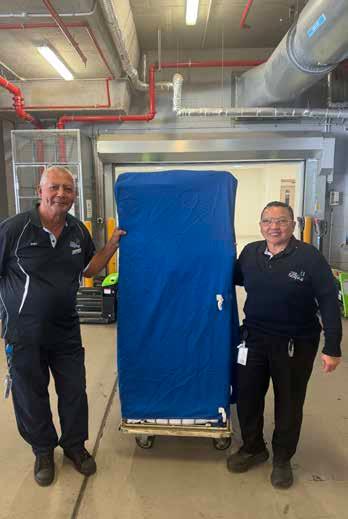
The Serco Linen team has proudly delivered its 50 millionth linen item since the opening of Fiona Stanley Hospital (FSH) in 2015. This milestone represents a decade’s dedication to supporting patient care via reliable, high quality linen services: a vital component of a hygienic, safe and efficient hospital environment.
Through strong coordination and responsiveness, the Linen team ensures essential items, from patient bedsheets to gowns and staff scrubs, are always where they need to be, exactly when needed.
Reliability, staff hygiene, and strict infection control standards are priorities, from collection and stock management right through to quality checks and timely delivery.
Top 3 Linen Items Utilised at FSH:
7 million bath towel uses
6.7 million pillowcase uses
5.2 million white blanket uses
Automation in Action
A dependable supply of clean, high-quality linen across the hospital supports clinical areas around the clock, underpinning safe patient care and comfort, and keeping workflows moving efficiently. Technology and collaboration enable these results.
16 Automated Guided Vehicles are dedicated to hospitalwide linen transport. These motorised trolleys reduce manual handling and injury risk, completing over 1,200 deliveries each week across 350 kilometres and 41 drop-off points. This automation improves safety and efficiency, reflecting Serco’s commitment to innovation in healthcare services.
Linen Use Optimisation
Each linen item is tagged with Radio Frequency Identification (RFID) to monitor usage, manage inventory and meet both operational and emergency needs. Tagging supports efficient lifecycle management and ensures stock availability at all distribution points.
Tackling Lost Linen
Linen that has been discarded, stored in lockers, or otherwise removed from circulation cannot be scanned by RFID, making it difficult to track and manage.
The South Metropolitan Health Service (SMHS) Contract Management team and the Serco Linen Service have formed a Lost Linen Committee focused on reducing linen loss through improved awareness, handling practices, and collaborative strategies.
As a result, Contract Year 2024/25 recorded the lowest lost linen figures since FSH opened. The first quarter of 2025 was the most successful to date. This marks the fourth consecutive year of reduced volume and spend, reinforcing the impact of strong partnership between the Serco Linen team, clinicians, and the SMHS Contract Management team.
Oliver Valentine, Serco’s Distribution Services Operations Manager, said of the achievement, “Reaching this milestone reflects the team’s commitment to excellence. Every item delivered plays a part in supporting patient care and hospital operations. It is a proud moment for all involved in the Linen Service, who’ve now delivered the equivalent of 19,231 years of laundry for a single household doing five loads weekly.”
One tonne of food waste diverted from landfill in one month at Fiona Stanley Hospital
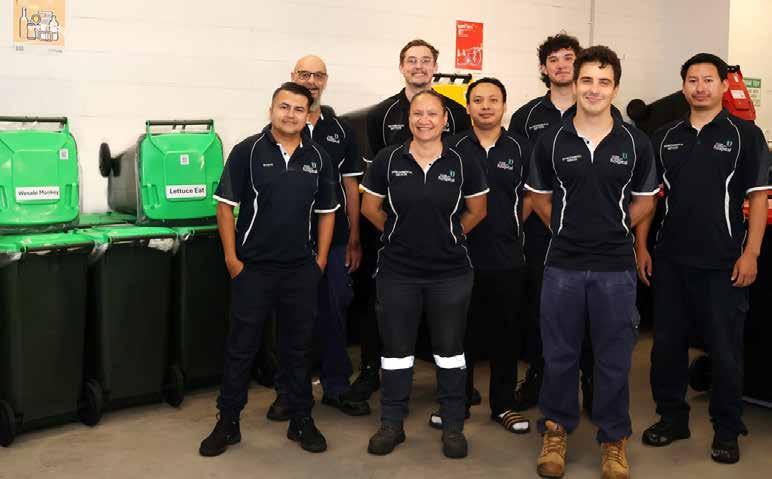
Jeremy Thwaites, Serco’s Environmental Team Leader at Fiona Stanley Hospital, has been working with the food vendors onsite to implement food organics recycling in the Back of House Food Court.
On the International Day of Zero Waste 2026, with the theme: “Zero Waste Starts on Your Plate”, we were proud to share a glimpse into the impact this programme has already been having.
As part of the initiative, food waste collected is taken to a processing plant where any packaging is separated and sent for recycling wherever possible, while the organics journey on to make compost.
In the first month alone, close to one tonne of food waste was diverted from landfill, with Jeremy and team leading strong stakeholder engagement and education. As a result, awareness about food organics, food waste and recycling has also increased.
As this programme is refined and scales, the team is expecting to see over 10,000kg of waste diverted from landfill this year.
In line with the Government of Western Australia’s target, through our work at FSH, Serco Asia Pacific is supporting the South Metropolitan Health Service to achieve its objective of diverting 75% of waste from landfill
We are also proud to have recently supported the hospital in achieving a statewide milestone – becoming the first hospital in WA to receive a NABERS rating.
To learn more about how Serco’s passionate team supports safety, sustainability and optimal clinical outcomes at Fiona Stanley Hospital, visit our website, or contact Serco’s Contract Director, Victoria Taylor-McCann.
What does it take to deliver groundbreaking operations safely on a world-class icebreaker?
Meet Serco’s RSV Nuyina Operations Manager: John East
“I’ll always remember sitting on the observation deck off the Bay of Biscay, the sun going down on the horizon as David Astbury, Ronan Maguire, other project team members and I shared a game of cards,” says John East, reflecting on a pivotal moment during the building of the RSV Nuyina, Australia’s world-class icebreaker, owned by the Australian Antarctic Division (AAD) and proudly operated by Serco.
The moment of tranquility, watching whales breaching not far from the ship, is a memory frozen in time for John. It captures an hour of calm in the period of excitement and preparation during the vessel’s sea trials off the coast of France.
John has always had a connection to the water, and complex logistics. A marine engineer from the age of 18, he gave 20 years of service in the Royal Australian Navy, reaching the rank of Warrant Officer.
Post-service, he went on to work in Defence with BAE and Thales, project managing dockings to the value of $20M. In one role, he managed four ships simultaneously. This saw him covering operations in Hobart, the Gulf of Carpentaria, and a fuel tanker that sailed between remote Papua New Guinea ports, operated by a hybrid crew from multiple countries.
Before the Nuyina was commissioned, John was also Ship Manager for the RSV Aurora Australis – fondly known as “Orange Roughy” – the vessel which served as the AAD’s primary icebreaker and resupply ship for over three decades, until it was retired in 2020.
In a flow as seamless as the ebb of the tide on a quiet French beach, John transitioned from looking after the Aurora’s crewing, maintenance, logistics and end-to-end operations, to supporting Serco’s build, design, maintenance and operation of the Nuyina.
This vessel, John says, is by far the most complex, due to its diverse functions and the extreme, remote environments in which it must stand the test of its endurance.
“From enabling studies on fish to assessing levels of microplastics, the Nuyina has evolved to be capable of really groundbreaking stuff for an icebreaker. All our ship and shore staff, particularly our engineers, are instrumental in enabling continuous improvements to the vessel’s safety, resilience, and scientific and operational capabilities.
“We do it all in support of marine science in one of the most important places on Earth. Antarctica is the last frontier, so to speak, and we’re proud to be enabling amazing work, from helping secure the region’s sovereignty through to ensuring we deliver maximum ROI for the Australian community, including taxpayers.”
For John, care and safety are intrinsic to his role.
“Not too long ago, we coordinated and conducted a medical evacuation with the Nuyina. That voyage was a great example of how we’re driven by care, and I’m very proud of the way the team responded. And then, from a day-to-day perspective, as a parent of a daughter with special needs, I’ve grown in understanding of what it means to be a caring and empathetic human."
Heading Intro
Heading 3
Congratulations Serco!
In the financial year of 2025, you prevented 2,453KG of textiles from being sent to Australia’s landfill by supporting our onshore recovery and recycling initiative.
This has also resulted in the prevention of at least 8,586KG of greenhouse gases from polluting our atmosphere.
We are so pleased that we were able to join forces to create a better planet and a brighter future for the next generation!
From the UPPAREL team
Here’s what you achieved
01/07/2024 – 30/06/2025
2,453 kg
textiles diverted from landfill
At Serco, Zero Waste Day is a reminder of our responsibility to lead by example, and to make choices that support the next generation and that is why today we are proud to share the impact our teams have made through our partnership with UPPAREL, helping divert textile waste from landfill and supporting their goals to support a more circular economy.
Why Zero Waste Day matters
Zero Waste Day calls on organisations, governments and communities to rethink how we produce, consume and dispose of materials. At its heart, it challenges the long-standing “take, make, waste” model and encourages a shift towards systems where resources are valued, reused and kept in circulation for as long as possible.
Textiles are a powerful example of this challenge.
8,586 kg
greenhouse gases prevented
Thank you again for joining our fight against textile waste.
Uniforms, workwear and textiles are essential to many of the services we deliver. Yet without conscious intervention, they can quickly become part of a growing waste problem when sent to landfill at the end of their life.
Zero Waste Day asks a simple but important question: what if we did things differently?
At Serco, we believe the answer lies in partnership, innovation and the collective commitment of our people.
Through our collaboration with UPPAREL, Serco has taken a practical step towards reducing textile waste and supporting recovery and recycling in Australia.
Partnering for brighter futures: Serco and the KARI Foundation
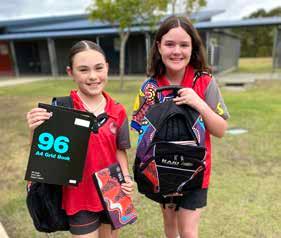
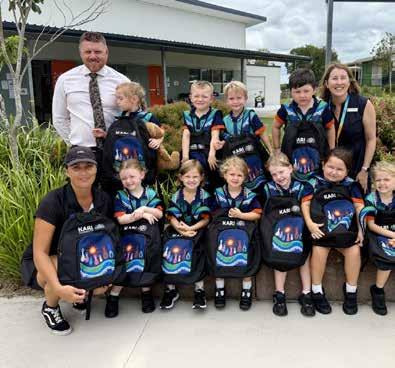
At Serco, we know that meaningful partnerships play a critical role in creating positive, lasting outcomes for communities. Our partnership with the KARI Foundation reflects a shared commitment to supporting Aboriginal and Torres Strait Islander young people through education, cultural connection and opportunity.
At the heart of this partnership is the KARI Foundation’s education programmes, a culturally informed education initiative designed to support Aboriginal and Torres Strait Islander students to stay engaged in learning and achieve positive educational outcomes. Delivered in partnership with primary and secondary schools, the programme provides regular in-school mentoring, cultural education, wellbeing support and positive role modelling.
By embedding Aboriginal mentors within the school environment, the programme helps students build confidence, strengthen identity and feel supported to attend, participate and succeed at school. Mentors play a trusted role in students’ lives, supporting them to set goals, navigate challenges and celebrate achievements, while also helping schools strengthen cultural understanding and inclusive practices.
A key strength of the KARI Foundation’s education programmes is its holistic, wraparound approach. It works not only with students, but also with families, schools and communities — recognising that strong outcomes are built through connection, collaboration and cultural safety. Through this model, the KARI Foundation aims to improve attendance, retention and pathways beyond school, while reinforcing pride in culture and connection to community as a foundation for long-term success.
Serco is proud to support this important work through a recent donation of technology and equipment to the KARI Foundation’s education programmes. The donation included laptops, tablets, computer monitors
Serco’s most recent donation:
• 3 fridges
• 15 computer monitors
• 33 laptops
• 26 tablets
and refurbished office equipment, with support from teams across the business. By repurposing equipment no longer required in our workplaces, Serco is helping to ensure valuable resources are redirected to where they can make a real difference.
Access to reliable technology can be transformative for students, supporting learning, connection and confidence both in and beyond the classroom. This initiative demonstrates how sustainability and community impact can go hand in hand.
Andrew Bartha, Serco’s National Manager Indigenous Affairs & Connection said that partnerships like this are about standing alongside community-led organisations.
“We’re incredibly proud to support the KARI Foundation’s education programmes and the culturally strong, holistic support it provides to students, families and schools. Together, we’re helping create environments where young people feel supported in their identity and confident about their future.”
Serco is proud to partner with the KARI Foundation and to support initiatives that strengthen education, cultural connection and opportunity for Aboriginal and Torres Strait Islander young people now and into the future.