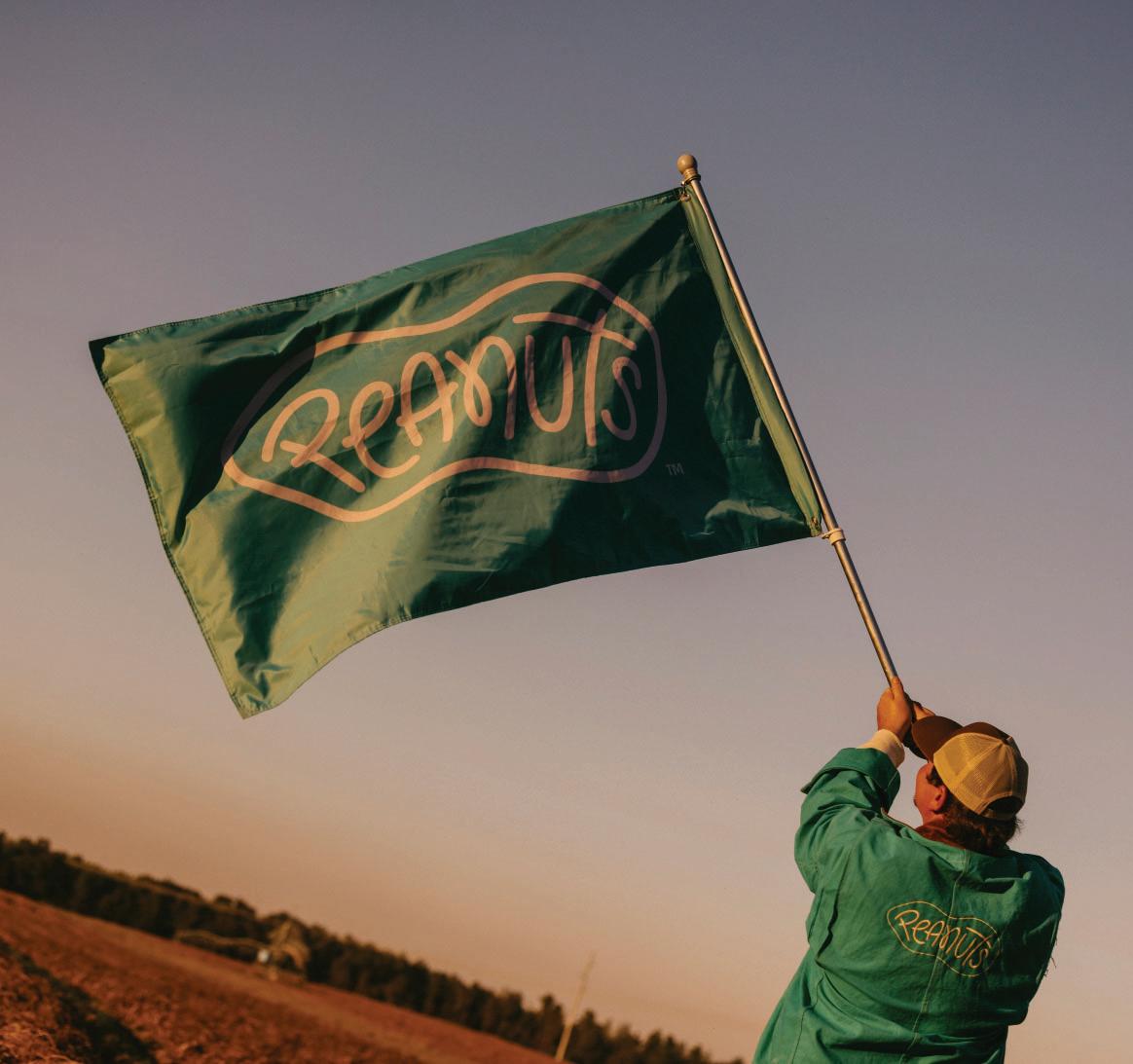

The National Peanut Board has unveiled a new bold brand for the industry to elevate peanuts as an influential brand in food culture.
Premium Peanut announces the grand opening of their newest shelling plant in Santee, South Carolina.
The Montgomery Biscuits transformed into the Alabama Peanut Runners for a special promotion celebrating Alabama’s peanut industry through baseball.
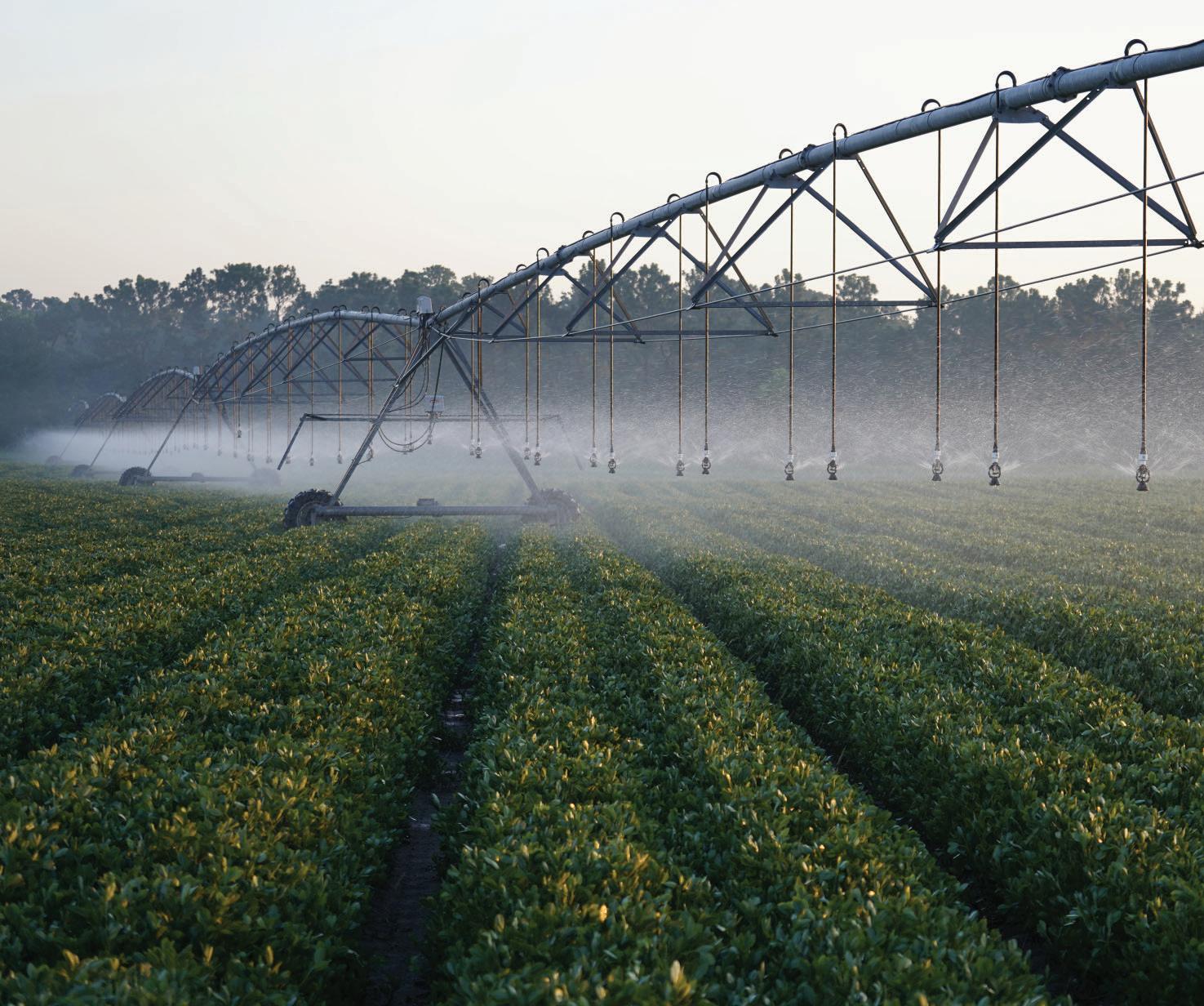
The Peanut Irrigation Guidebook provides information on managing irrigation during a drought, the Master Irrigator Program in Georgia and Mississippi, the Alabama Irrigation Initiative and the new utility tax exemption in Alabama.

Southeastern Peanut Farmer is published six times a year (Jan./Feb., March, April, May/June, July/Aug., and Oct./Nov.) by the Southern Peanut Farmers Federation. The publisher is not responsible for copy omission, typographical errors, or any unintentional errors that may occur, other than to correct it in the following issue. Any erroneous reflection which may occur in the columns of Southeastern Peanut Farmer will be corrected upon brought to the attention of the editor. (Phone 229-386-3690.)
Postmaster: Send address changes (Form 3579) to Southeastern Peanut Farmer, P.O. Box 706, Tifton, Georgia, 31793.
Throughout life, we all encounter individuals who show respect, or lack of respect, and those who become easily aggravated versus those who choose patience. Farming is no different. Farmers often deal with people who depend on them for food and fiber, yet still show little regard for their land, equipment or hard work, while others demonstrate genuine respect and understanding.
Recently, I saw a Facebook post from a Florida farmer showing a photo of a planted field where individuals had driven through with no regard for the tiny seeds or young crop just emerging from the soil. Farming is hard enough with tight margins; this is one more burden farmers do not need. According to comments on the post, it doesn't seem to matter whether it is a recently planted field, hay field, or sod,—some individuals still show little respect for the land or the farmer who works it.
I remember a year when my dad’s corn had just reached harvest. Some of our young cousins, who were not raised on a farm, were riding their three-wheelers and decided to have fun by riding through the "dead" corn. At least that's what they thought. As it turned out, they learned a valuable lesson that day when they had to pick up each ear of corn and clean up the damage they had caused.
In another Facebook post, I saw a thank-you message from an Alabama farmer who noticed something different with people showing respect and patience as he moved equipment on the road. He shared how motorists pulled over and waited patiently while he passed with farm machinery.
The post included several comments such as:
"We appreciate y'all!"
"Thank you for farming—even during the tough years!"
"God bless our farmers."
"We love our farmers! Keep doing what you're doing!"
"The importance of farmers can't be overstated."
"Blessings and best wishes to our farmers!"
"May God bless you and your family for choosing to farm. The sacrifice and hard work are real. Thank you to all farmers!"
These comments come from friends, neighbors and the very people you feed. Keep doing what you're doing despite the disrespectful actions of a few. You are keeping us all alive and well-fed.

Joy Carter Crosby SEPF Editor
American Peanut Research and Educational Society
July 14-16, 2026, San Juan, Puerto Rico. For more info visit apresinc.com.
Southern Peanut Growers Conference
July 21-23, 2026, Edgewater Beach Resort, Panama City Beach, Fla. For more info visit southernpeanutfarmers.org.
Attapulgus Row Crop Field Day
July 30, 2026, UGA Attapulgus Research and Education Center, Attapulgus, Ga. For more info contact Candace Gray at 229-522-3623 or arec@uga.edu.
American Peanut Shellers Association and National Peanut Buying Points Association Pre-Harvest Meeting Aug. 18-19, 2026, Albany, Ga. For more info call 229-888-2508 or visit peanut-shellers.org.
Brooklet Peanut Festival Sept. 19, 2026, Brooklet, Ga. For more info visit the festival's website at brookletpeanutfestival.com.
Plains Peanut Festival Sept. 26, 2026, Plains, Ga. For more info visit the festival's website at jimmycarterfriends.org.
Georgia National Fair Oct. 8-18, 2026, Perry, Ga. For more info visit georgianationalfair.com.
Georgia Peanut Festival Oct. 17, 2026, Sylvester, Ga. For more information call visit the festival's website at gapeanutfestival.org.
Sunbelt Ag Expo Oct. 20-22, 2026, Moultrie, Ga. For more info visit sunbeltexpo.com.
Florida Farm Bureau Annual Meeting
Oct. 28-30, 2026, Hilton Daytona Beach Oceanfront Resort, Daytona Beach, Fla. For more info visit floridafarmbureau.org.
National Peanut Festival
Nov. 6-14, 2026, Dothan, Ala. For more info visit nationalpeanutfestival.com.
Let us know about your event. Please send details to the editor at joycrosby@gapeanuts.com.
Mark your calendars for the 27th Annual Southern Peanut Growers Conference, July 21-23, 2026, at the Edgewater Beach & Golf Resort, Panama City Beach, Florida. This year's conference offers farmers an opportunity to learn more about legislative issues, peanut promotions and production issues.
The registration fee for growers is $275 which includes all conference events and meals. The registration deadline is June 15. The registration fee increases by $75 on June 16.
The theme for this year's conference, "Farming is a Circus," plans to focus on the struggles farmers face with health, weather, mental health and a Washington update.
The conference schedule and registration information is available at www.southernpeanutfarmers.org.

Tuesday, July 21
3:00 - 5:00 p.m.
6:30 p.m.
7:00 p.m.
Wednesday, July 22
7:00 a.m.
8:30 a.m.
Conference Registration
Welcoming Reception
Welcome Dinner and A Night at the Peanut Circus Sponsored by Syngenta
Featuring AscenDance Entertainment
Prayer Breakfast
Don Koehler, senior executive director of the Georgia Peanut Commission
General Session I
Juggling it All: Stress, Strength and Health in Farm Life
Dr. Marsha Davis, Dean of the University of Georgia College of Public Health
Dr. Lisa M. Renzi Hammond, Professor of Innovation in Public Health and Aging
Dr. Jenay Beer, Associate Professor at the UGA Institute of Gerontology
Dr. Christina Proctor, Clinical Associate Professor, UGA College of Public Health
10:00 a.m. Refreshment Break
10:30 a.m.
Ladies Program
Circus of Flavors by Mallory's Munchies
Features a Charcuterie Board Demo with Mallory Thompson
10:30 a.m. General Session II
Under the Big Top of Uncertainty: Weather in Modern Farming
Dr. David Zierden, Florida State University
Dr. Simer Virk, Auburn University
Dr. Marshall Lamb, USDA-ARS National Peanut Research Lab
Noon Luncheon
Under the Big Top: A Story of Pressure, Pride and Mental Health Marshal Sewell, Mind Your Melon
Thursday, July 23
7:00 a.m. Farm Press Peanut Efficiency Awards Breakfast
9:00 a.m.
General Session III
Tightrope Talks: From the Field to Capitol Hill
Bob Redding, The Redding Firm
High-wire Dreams: Featuring young farmers in a panel discussion
Garrett Moore, Alabama Jeffery Pittman, Florida
Adam Curles, Georgia Mary Katherine Harrington, South Carolina
10:15 a.m. Refreshment Break
Conference concludes Have a safe trip home!

By Peyton Woods
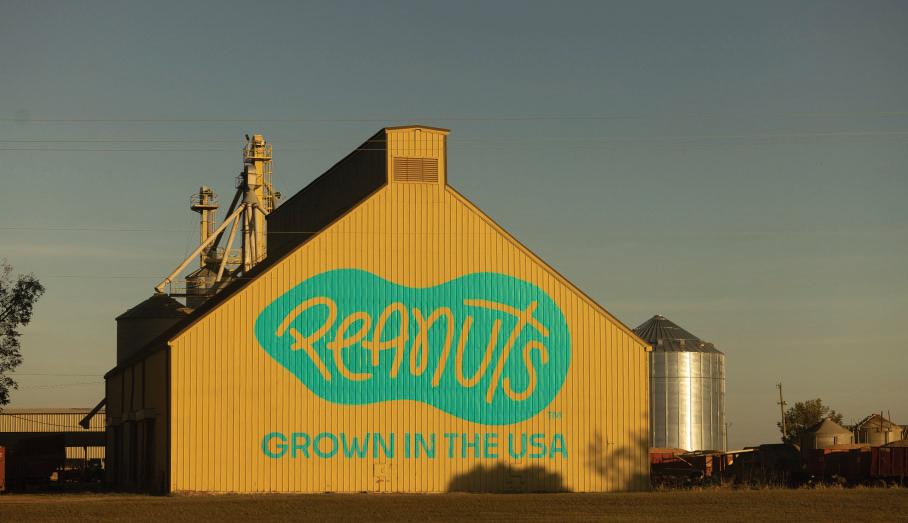
The National Peanut Board is ushering in a new era for the peanut industry with the rollout of its latest branding campaign, "It's Not Nuts. It's Peanuts."
Set to officially launch on May 18, 2026, the campaign represents more than just a refreshed look. It's a unified effort to elevate peanuts from a commodity to a recognizable and influential brand in today's food culture.
"May 18 is the day our entire industry comes together as one," says Ryan Lepicier, chief executive officer for the National Peanut Board. "This isn't just a National Peanut Board brand. This is your brand. This is our brand as an industry."
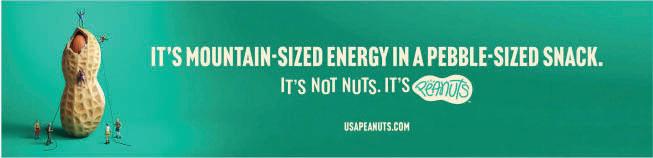
The campaign centers around a new bold creative platform built to highlight the unexpected benefits of peanuts. Through the tagline, "It's Not Nuts. It's Peanuts.," the campaign leans into surprising, attentiongrabbing facts about peanuts while celebrating their versatility, nutrition and everyday appeal.
According to campaign leaders, the effort has been in development for more than a year and a half and was shaped through extensive consumer research and testing with audiences across multiple generations.
"We talked to so many people across the country, and we heard similar feedback," says Chris Fitzgerald, director of brand and
consumer marketing. "Consumers wanted messaging that was much crisper and more singular. They wanted us to focus on clear benefits and what makes peanuts unique."
One of the campaign's most unique features is its stop-motion creative series featuring miniature Gen Z-inspired characters interacting within immersive "peanut worlds." The campaign was created in partnership with award-winning stop-motion studio Not to Scale, led by Anthony Farquhar-Smith, whose previous work includes collaborations with major brands and filmmakers.
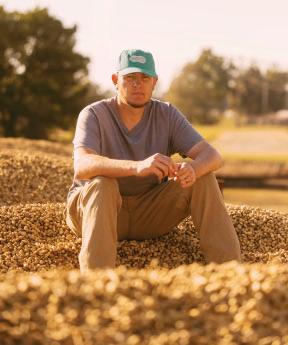

More than 800 hand-painted miniature characters were created for the campaign, with every movement individually animated by hand without the use of artificial intelligence.
"We wanted to reveal a campaign that shows just how unexpected peanuts and their benefits can truly be," Fitzgerald says. "Welcome to the tiny world of peanuts, where the smallest details are really telling the biggest stories."
The campaign includes 10 themed "worlds," each designed to showcase peanuts in different everyday moments and lifestyles such as hiking, studying and baseball.
The campaign rollout includes a national media strategy featuring a YouTube takeover beginning May 18, paid digital advertising, influencer partnerships, public relations outreach, experiential activations and college
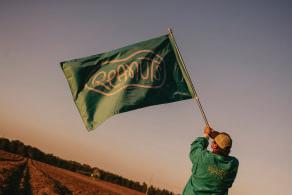
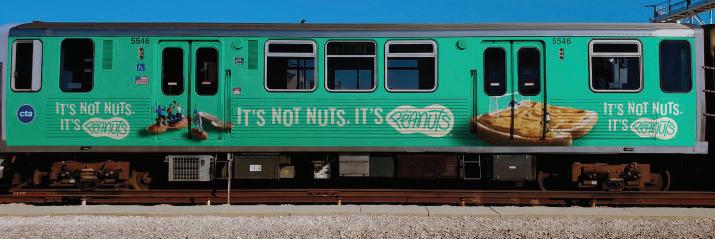
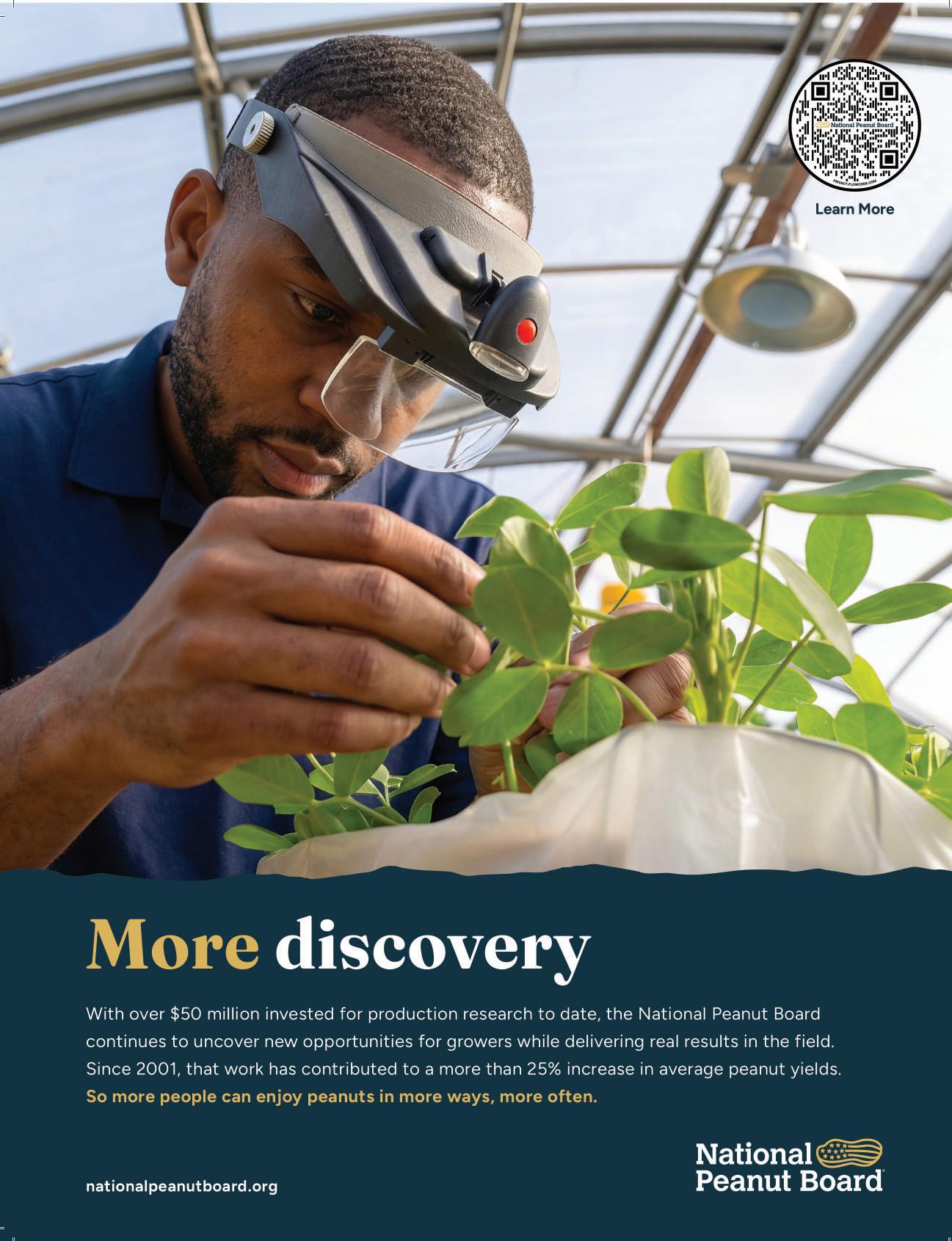
The new USA Peanuts campaign is rolling out across major markets through bold out-of-home advertising and immersive themed worlds designed to connect with consumers in new ways. In partnership with the Georgia Peanut Commission, the campaign now has a presence in Times Square alongside Chicago "L" train wraps and digital advertisements in Atlanta. The campaign's themed worlds highlight the versatility of U.S.A.-grown peanuts by showcasing connections to energy, wellness, performance and everyday snacking in a modern and engaging way.
campus tours.
Out-of-home advertising will play a major role in the campaign, with activations planned in major markets including Chicago, Atlanta and New York City. One of the campaign's most visible placements will feature a Times Square billboard in partnership with the Georgia Peanut Commission, alongside branded Chicago "L" trains and digital kiosks throughout Atlanta.
The National Peanut Board also plans to expand grassroots outreach through street teams, collegiate activations and partnerships with state peanut organizations and industry groups.
"What's most important is that we start building one voice for our industry," Lepicier says. "No matter
where you are, when people see USA Peanuts, they know exactly what it represents."
Industry leaders say the campaign comes at an important time for peanut producers facing challenges such as drought, rising input costs and market uncertainty. By modernizing the industry's voice and strengthening consumer awareness, the campaign aims to help build long-term demand for U.S.A.-grown peanuts and support the future of peanut farming families across the country.
"At the heart of this campaign are America's peanut farmers whose hard work and dedication make this crop possible," says Thomas Adams, Alabama peanut farmer and NPB board member.
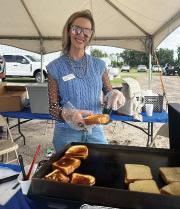
The Florida Peanut Producers had the opportunity to visit the UF IFAS Suwannee Valley Research Station to recognize the sixteen counties within the Suwannee River Basin. These counties are doing incredible work in environmental stewardship through the Farm Bureau CARES program, and it was great to celebrate their achievements.
During the event, FPPA grilled over 400 peanut butter and jelly sandwiches, which were a crowd favorite, as always!
The National Peanut Board Research Committee approved funding for three research proposals for Mississippi State University researchers. The projects funded include "Evaluating Return on Investments of Poultry Litter Amendments within a Peanut-Cotton Rotation" and "Determining effects of starter nitrogen and sulfur fertilizer applications on peanut productivity" by Brendan Zurweller, and "Standardization of Mississippi Peanut Variety Trials" by Brad Burgess. Since 2009, the National Peanut Board has allocated $603,907.87 for use in peanut research to the Mississippi Peanut Growers Association. These are part of the grower funds paid per ton to the National Peanut Board when Mississippi farmers sell their peanuts. The NPB uses additional checkoff funds as part of their mission to maintain and expand existing markets and develop new markets for peanuts and peanut products.
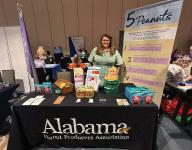
The Alabama Peanut Producers Association recently attended the Alabama Pediatricians Conference to promote early peanut introduction to healthcare providers. APPA highlighted the LEAP study which found that introducing peanuts early and often can help reduce the risk of peanut allergies in children. Pediatricians received educational materials and practical tools to support conversations with parents. As part of this effort, APPA is also distributing Early Introduction Boxes to pediatricians across the state, equipping them with resources to confidently recommend peanuts as a safe, nutritious first food for infants when developmentally ready.
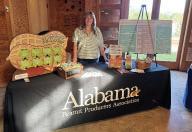
The Alabama Peanut Producers Association participated in the Wiregrass Career Expo, connecting with high school students from across the region to share the story of Alabama peanuts. Peyton Woods engaged with students and discussed how peanuts are grown, harvested and marketed, while highlighting the wide range of career opportunities within agriculture.
Shelby Askew serves as a part-time office assistant with the Florida Peanut Producers Association and the Florida Cotton Growers Association, where she supports a range of communications, administrative work, and event coordination. Since joining the organizations in September 2025, she has helped manage social media, create content that promotes industry efforts, assist with meetings, logistics and daily responsibilities. She also represents the associations at events, connecting with the public and helping share the story of Florida agriculture. Askew takes pride in supporting the work of growers across the state and continues to grow her experience within the agricultural industry.

The Mississippi Peanut Growers Association donated peanuts and literature to the Hancock County Mississippi Visitors Center, located off Interstate 10. The visitors center provided peanuts to their visitors during National Travel and Tourism Week, May 3 - 9, 2026. The center is located adjacent to the Stennis Space Center where the Artemis rockets were tested, thus expecting a larger than normal number of visitors. Roasted Peanuts, peanut tote bags and brochures were available to the visitors. The center is located north of New Orleans.



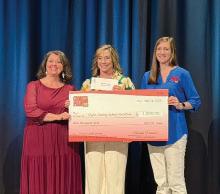
Jessie Bland, right, director of promotions at the Georgia Peanut Commission, presents the top award to Glynn County School Nutrition for the peanut usage contest at the Georgia School Nutrition Association annual meeting.
The Georgia Peanut Commission exhibited at the Georgia School Nutrition Association's annual meeting, April 16-18, 2026, in Jekyll Island, engaging school nutrition professionals with peanut nutrition, recipes and allergy management resources. A booth survey showed nearly 100 percent of 132 respondents serve peanuts. Programming included a food allergy session by Tarrah Westercamp, MS, RDN, SNS, supported by the National Peanut Board, and a cooking demo by Chef Josh Swinney of Northside Hospital. GPC also hosted recipe and usage contests, with Glynn County leading at 1.64 pounds per student, followed by Valdosta City, Coffee and Whitfield counties, highlighting strong growth in K-12 peanut consumption.
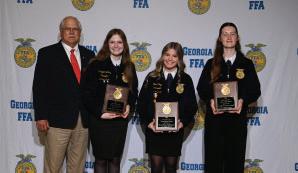
The Georgia Peanut Commission and The Peanut Institute teamed up to sponsor the Georgia FFA Star in Agriscience Award during the state convention held in Macon, Georgia. The State Star in Agriscience Award was presented to Emerson Toews of Tift County FFA. The additional state finalists included Elizabeth Whitley from Franklin County FFA and Olivia Hogg from LaGrange FFA.
The Georgia Peanut Commission also exhibited during the two-day career show. The event provided GPC with an opportunity to showcase various careers within the peanut industry.
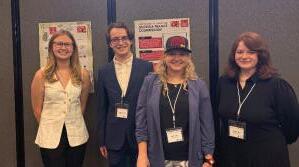
This spring, the Georgia Peanut Commission partnered with students in the University of Georgia Sustainability Certificate Program on a capstone project focused on improving peanut farmer profitability. The project explored value-added opportunities, new demand pathways, fairer market structures, right-to-repair issues and legislative impacts affecting peanut markets. Outcomes included a comprehensive report, right-to-repair infographic, feasibility research on grower-owned shelling facilities, a drying oil market implementation plan and legislative outreach resources. Students also engaged peers on campus through an Earth Day Fair survey. Future capstone groups were encouraged to focus on one promising demand pathway and build on this research to create actionable strategies for long-term economic growth for Georgia peanut farmers.

The Georgia Peanut Commission sponsored a capstone project with a team of University of Georgia engineering students who recently took top honors in the computerized system or software design category. The team consists of Jacob Kilburn, Tanner Williams, Tyler Williams and Keerthana Ramesh, who are advised by Kevin Wu. The team focused on creating a mobile app to help determine peanut maturity at harvest.
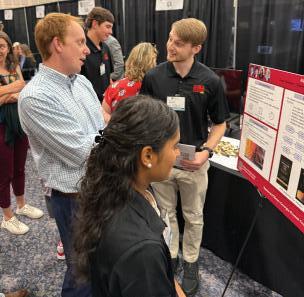
The students visited farms in the fall of 2025 during harvest and received samples of peanuts to develop and test their web based peanut maturity assessment app. County Extension agents also assisted in the process by sending the students samples of peanuts.
Students worked on their capstone projects from August 2025 until April 2026. The students display their prototypes, designs and solutions developed for their projects at the Capstone Design Showcase held April 22, 2026. Projects are evaluated by a judging team of engineering professionals in both industry and academia.
By Joy Crosby
With drought conditions lingering across the Southeast and aquifer levels and surface water sources already running below normal prior to the growing season, irrigation planning is taking on new urgency for peanut growers in 2026.
According to University of Georgia irrigation specialist Wes Porter, the current situation is unlike what many growers are accustomed to entering the 2026 season.
"We're already below surface and subsurface levels compared to where they were both in 2007 and 2011 at the same time of year, and we haven't reached peak demand for the season yet," Porter says. "That's what worries me. Once we start pumping during peak water requirements, we know what's going to happen."
Porter notes monitoring wells across Southwest Georgia that show groundwater levels significantly below average. While some winter recharge typically helps replenish groundwater supplies, this year has brought little relief.
"We've had no appreciable recharge because we really haven't had significant rainfall since September," he said. "We're moving into the season already in a drought scenario."
Despite the concerning outlook, Porter stressed that the message to growers is not panic, it is preparation.
"This doesn't mean we're going to run out of water," he says. "But it
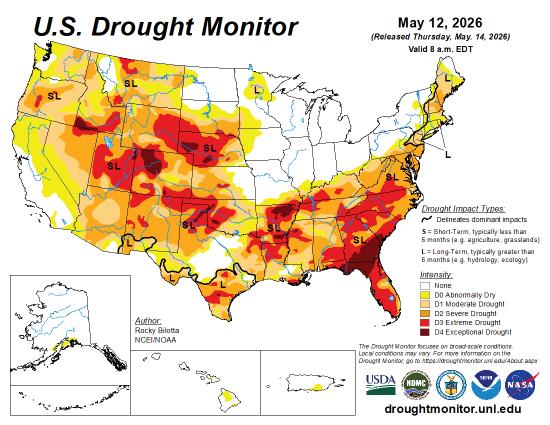
The Drought Monitor summary map identifies general areas of drought and labels them by intensity. D1 is the least intense level and D4 the most intense. Many areas across the peanut belt are showing extreme to exceptional drought intensity.
does mean we have to have a good plan in place. If we go into this season like a normal year expecting rainfall to refill the profile, and it doesn't happen, that's where we get into trouble."
One of Porter's biggest concerns is a long-standing misconception about early-season peanut irrigation.
"Somewhere along the way, people were told not to irrigate peanuts during the first 40 days," Porter says. "I get too many calls every
year from growers asking if they're allowed to irrigate yet."
His recommendation is straightforward: irrigate as needed early in the season while avoiding overwatering. The UGA Peanut Checkbook method is a good way to document water requirements throughout the entire season. While water requirements are low during the first 40 days after planting, the plants still need soil moisture to ensure that they are supplied with adequate moisture appropriately during the season.
"We know over-irrigating peanuts can reduce yield," he explains. "But we also know getting too dry reduces yield, too. There's a fine line in the middle where we need to hit the target."
Porter emphasized that maintaining adequate soil moisture late in the season may be just as important. Research conducted over the past several years has consistently shown yield reductions when irrigation is reduced too aggressively during the final 30 to 40 days before harvest.
"We've seen four- to five-hundredpound yield losses when growers back off irrigation too much at the end of the season," he says. "That's a significant economic hit."
At current peanut prices, Porter estimates those losses can equal roughly $80 per acre, while the irrigation required to protect that yield may only cost a fraction of that amount.
"You might spend $20 in irrigation to protect $60 to $80 worth of yield," he says. "The return is there."
Technology Can Help - But It Still Requires Judgment
Porter encourages growers to use available irrigation management tools, including soil moisture sensors and irrigation scheduling programs. Any of these irrigation scheduling aids will help farmers better manage their irrigation and target the water requirements so that water is not wasted.
Farmers can submit a Condition Monitoring Observer Report (CMOR), including photos. Reporting regularly can help people see what normal, wet and dry conditions look like in your part of the country.

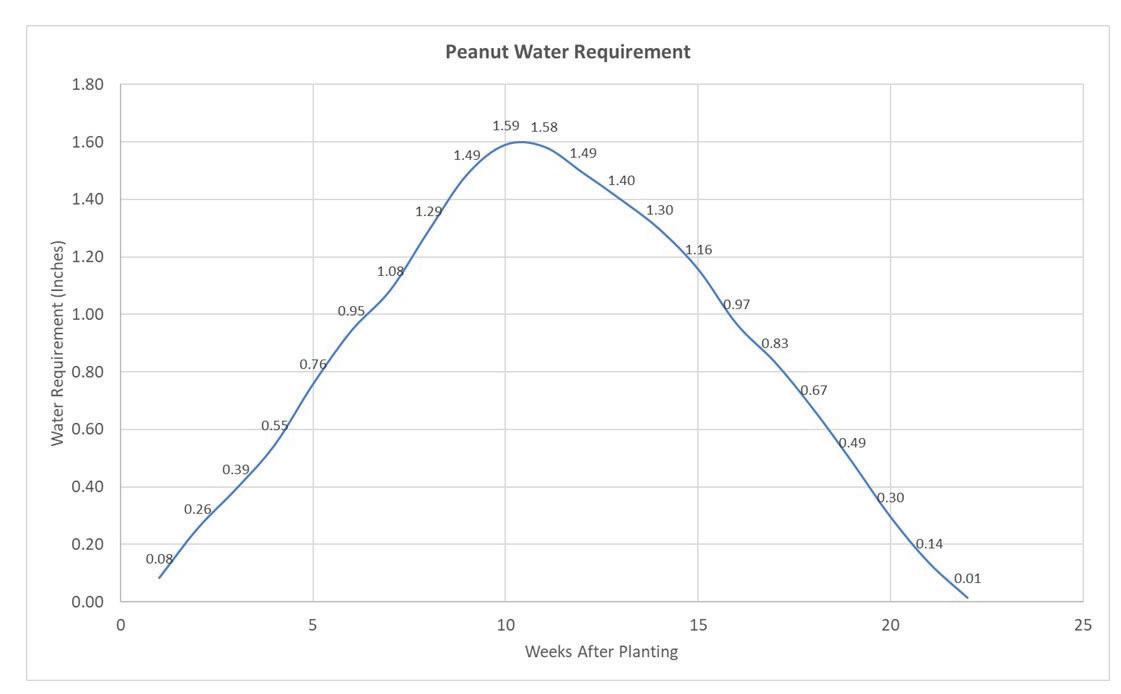
The estimated total water requirement for peanuts is around 18 inches per year.
Overall, he said Irrigator Pro continues to perform well, especially when paired with field sensors.
"When coupled with a sensor, Irrigator Pro does a very good job," Porter says. "But really, using a sensor in general does a good job. There are a lot of good options on the market."
He also mentions tools like the SmartIrrigation CropFit App, while cautioning growers against relying entirely on automated recommendations without field verification.
"You still have to take your own observations into account," Porter says. "If you blindly follow a crop model without looking at what's happening in the field, you can miss problems and not realize it until it's too late."
One example involved a center pivot system with incorrect sprinkler orifices that created uneven water application across a peanut field. This issue became obvious after aerial imagery revealed stressed bands running throughout the field.
"In a year like this, any irrigation problem is going to show up immediately," Porter says. "A nonuniform pivot is going to cost you yield."
Porter also encouraged growers to stay current with irrigation permits and
water-use compliance requirements, particularly in Southwest Georgia with the new permit options.
He noted that the Georgia Environmental Protection Division is actively working with growers to resolve compliance issues and help operations remain in good standing.
"The important thing is to stay on top of it," Porter says. "There are people willing to help growers get back into compliance."
While weather conditions could still improve, Porter believes growers should plan conservatively until significant rainfall materializes.
"We need to go into this year assuming we are not going to get refilled," he says. "And if we do get refilled, then great. But we can't count on it."
For peanut growers facing another potentially dry season, Porter said the key will be proactive management, careful irrigation scheduling and making full use of the tools already available.
"This is one of those years where attention to detail matters," he says. "Monitoring, scheduling and staying ahead of issues will make a difference."
By Joy Carter Crosby
Master Irrigator programs in Mississippi and Georgia are continuing to grow and equip growers with the latest tools for irrigation management. The program provides comprehensive education and resources for farmers to improve irrigation efficiency and water conservation.
"We've truly seen how this program has significantly enhanced participants' knowledge of the tools available to implement irrigation best management practices," says Jason Mallard, University of Georgia area water agent. "Farmers are now making data-driven decisions and have a better understanding of soil type and crop-specific water demands throughout the season."
The Master Irrigator Program addresses critical issues in irrigation management, equipping participants with the knowledge and skills necessary to adopt best practices and advanced technologies. The program is designed to provide advanced training on irrigation water management (IWM) practices, soil health, agronomics, irrigation scheduling, irrigation systems and equipment maintenance, economics of irrigated agriculture and policy and management.
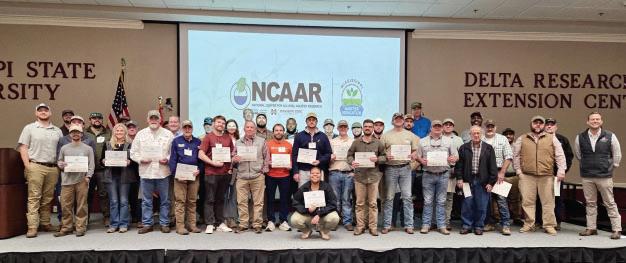
The Mississippi program offers a mix of online classes and in-person training. The program consists of online modules, classroom trainings, peer-to-peer exchange among participants and instructors, and field demonstrations. Online modules and classroom trainings are conducted by Mississippi State University Extension specialists and other individuals with specialized experience in each of the topics.
The Mississippi Master Irrigator program starts in October when the online modules are open, and participants have until Jan. 31 to complete them. The in-person session is held in February. In 2026, 41 people completed the class.
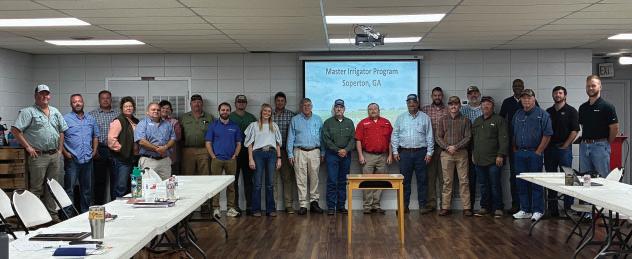
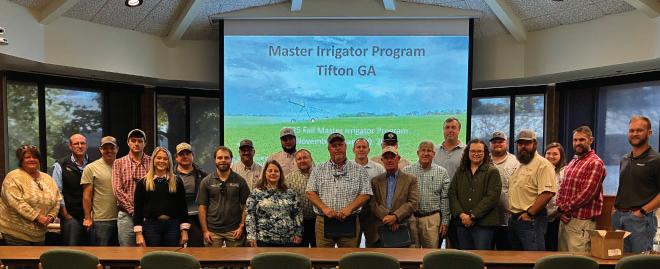
The UGA Extension Ag Water Team is currently in their fourth year of the Georgia Master Irrigator Program. Nearly 60 individuals have graduated from the program in Georgia. Participants attend two irrigation efficiency meetings and use a soil moisture sensor throughout the growing season to aid in irrigation scheduling. Participants are assisted by their County Agent and members of the Ag Water team in installing,
reading and interpreting the data that comes from the soil moisture sensors during the growing season.
For more information on the Mississippi program contact Dillon Russell at dar335@msstate.edu or the MSU Extension website. Farmers interested in the Georgia program should contact their local county Extension agent to sign up in January 2027 for next year's program.
By Peyton Woods
As weather patterns become increasingly unpredictable across Alabama, farmers are facing greater challenges when it comes to producing consistent, high-quality crops. Programs like the Alabama Irrigation Initiative are helping producers adapt by improving access to irrigation and promoting more efficient water use across the state.
The Alabama Irrigation Initiative is a collaborative effort led by the Alabama Soil and Water Conservation Committee in partnership with organizations like USDA's Natural Resources Conservation Service, Auburn University, and other research institutions. Its goal is simple but critical: to help farmers respond to drought and reduce the risk of crop loss by expanding the use of irrigation systems and water-saving technologies.
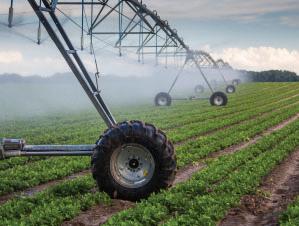
Through the initiative, farmers are encouraged—and often financially supported—to adopt irrigation systems such as center pivots, drip irrigation, and micro-irrigation. These systems not only improve crop productivity but also conserve water and reduce waste, making farms more sustainable in the long run.
In many cases, the program provides cost-share assistance to help producers install irrigation infrastructure, including wells, pumps, pipelines, and reservoirs. Advanced tools like soil moisture sensors, weather stations, and irrigation management software are also being introduced to help farmers apply the right amount of water at the right time.
The need for this kind of support is especially evident in crops like peanuts, which are highly sensitive to moisture during planting and early growth stages. While Alabama
receives ample annual rainfall, the state’s sandy soils and frequent dry spells mean farmers can quickly shift from adequate moisture to drought conditions.
Historically, Alabama has lagged behind neighboring states in irrigation adoption, despite having abundant water resources. Expanding irrigation has long been seen as a way to improve yields, stabilize production, and strengthen the state’s agricultural economy.
Today, the Alabama Irrigation Initiative is helping close that gap. By converting rain-fed farmland into irrigated acres and improving

water management practices, the program is building resilience at both the farm and statewide level. In addition to boosting productivity, the initiative also prioritizes conservation, protecting water quality, reducing soil erosion, and ensuring long-term sustainability for Alabama agriculture.
As drought conditions continue to impact regions like the Wiregrass, initiatives like this are becoming increasingly important. By investing in irrigation infrastructure and education, Alabama farmers are better equipped to navigate uncertain seasons and continue producing the crops that feed communities across the state.

By Peyton Woods
The Alabama House of Representatives passed legislation on the final day of the session to exempt certain agricultural operations from utility taxes. This move is expected to provide meaningful cost savings for producers across the state.
SB 159, sponsored by Jack Williams (R-Wilmer), passed unanimously, with a companion bill carried in the House by Danny Crawford (R-Athens). The legislation amends Alabama's utility gross receipts tax and utility service tax statutes to exclude natural gas and electricity consumed as fuel or energy in commercial greenhouses, pivot irrigation systems and poultry houses. An amendment also extended the exemption to catfish production.
The bill was later signed into law by Kay Ivey as Act No. 2026-595 and will go into effect Sept. 1, 2026. The exemption is set to sunset on Aug. 31, 2029.
Alabama Farmers Federation External Affairs Department Director Brian Hardin called the legislation a crucial win for farmers.
"With increased input costs and consistent attacks on affordability, this is a win for farmers and will help save money in uncertain markets," Hardin says. "We appreciate the leadership by Chairman Crawford, Sen. Williams, and members of both chambers who saw this through. We also thank the members who reached out to legislators, shared their stories and issues, and encouraged them to pass this bill."
For peanut producers, this legislation is particularly impactful as irrigation is one of the most energyintensive inputs in production. By reducing utility tax burdens on pivot irrigation systems, the law provides an
opportunity for growers to improve efficiency and better manage rising input costs.
As implementation details are finalized, producers are encouraged to contact their local county tax assessor for guidance on how the exemption will be applied or watch for additional information to be released by state agencies in the coming months.

Premium Peanut is pleased to announce the grand opening of North America's newest and most innovative peanut shelling facility, located in Santee, South Carolina. After beginning the expansion process in 2021, the company proudly celebrates the official ribbon cutting of this state-of-the-art facility, marking a significant milestone for Premium Peanut and its grower-owners.
The new shelling facility sets a new standard for innovation in the industry, expanding the company's capacity while enhancing operational efficiency. In addition to strengthening Premium Peanut's processing capabilities, the facility will create quality jobs and contribute to the continued growth of the Santee community.
"It is an exciting day for Premium Peanut as we celebrate the grand opening of our new shelling facility in Santee," says Clay Garnto, president and CEO of Premium Peanut. "This achievement would not have been possible without the support of so many partners. We extend our sincere thanks to Governor McMaster and the State of South Carolina; Secretary Lightsey and the South Carolina Department of Commerce; Commissioner Weathers and the South Carolina Department of Agriculture; the Orangeburg County Development Commission; the Orangeburg County Council; the South Carolina Power Team; the Town of Santee; Truist Bank; numerous Community Development Entities; and many others."
Garnto adds, "At Premium Peanut, our grower-owned model drives everything we do. We are dedicated to delivering greater value back to our growers, and this investment represents our commitment to fulfilling that mission."
"Premium Peanut's new facility is the first peanut shelling operation
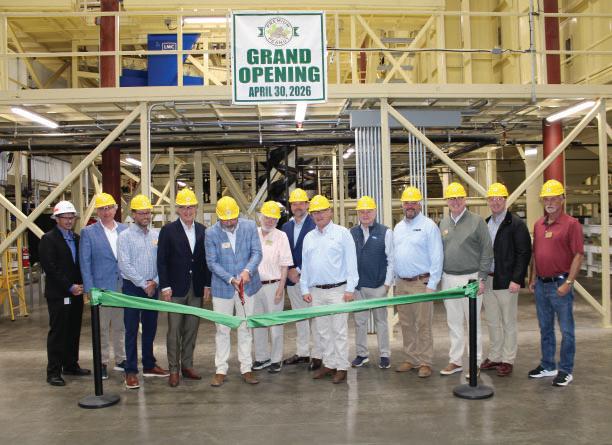
in the state of South Carolina, which is a significant step forward for South Carolina's peanut industry," says South Carolina Commissioner of Agriculture Hugh Weathers. "This facility means new value-added opportunities for South Carolina peanut growers and is an important addition to our agribusiness community."
"Today's ribbon cutting marks an important milestone for Orangeburg County as we celebrate Premium Peanut's shelling facility now in operation," says Kenneth Middleton, chairman of the Orangeburg County Development Commission. "Their expansion into South Carolina strengthens our agribusiness sector and creates new opportunities for our workforce. We're proud to have Premium Peanut operating in our community and look forward to their continued success."
Premium Peanut is an innovative, grower-owned peanut shelling
company, headquartered in Douglas, Georgia. The company started shelling peanuts in January 2016, and has since expanded to produce peanut oil, peanut meal, peanut hulls and peanut seed.
With more than 475 growerowners spread across Georgia and South Carolina, Premium Peanut has given peanut farmers an opportunity to retain more value from the peanuts that they grow. Over the life of the company, Premium Peanut has remained true to its profit-sharing model and has paid more than $120 million to its grower-owners in dividends.
Premium Peanut's customers consist of major domestic snack, candy and peanut butter manufacturers, as well as customers in more than 30 countries around the world.
For more information about Premium Peanut visit their website at premiumpnut.com.
By Morgan Flowers
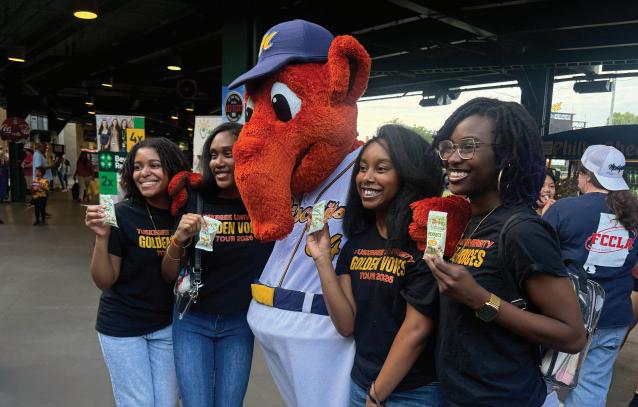
The crack of the bat and the rhythm of a Friday night game felt familiar at Riverwalk Stadium on April 24, but the scene carried a distinct Alabama twist. For one weekend, the Montgomery Biscuits took the field as the Alabama Peanut Runners, turning a routine matchup into a celebration of one of the state's most important crops: peanuts.
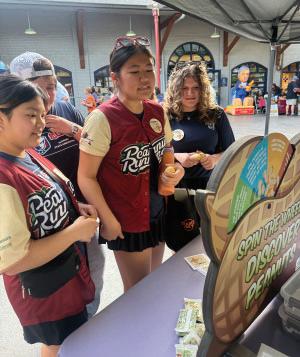
The rebrand came during a series against the Pensacola Blue Wahoos, but much of the focus extended beyond the field. Along the concourse, representatives from the Alabama Peanut Producers Association engaged with fans, handing out peanuts and sharing a simple message: peanuts are a nutrient-dense food, offering 7 grams of protein per serving.
The interaction created a steady flow of conversation as families, students and longtime fans paused between innings to sample peanuts and learn more about the crop's role in Alabama agriculture.
The evening also served as a tribute to George Washington Carver, whose research and advocacy helped establish peanuts as a cornerstone of Southern farming. A short in-game video highlighted Alabama peanut farmers and outlined the crop's economic impact across the state, connecting the ballpark experience to the fields where peanuts are grown.
Between innings, fans participated in peanut-themed trivia, reinforcing key facts about nutrition, production and the industry's reach. The promotion blended entertainment with education, offering a broader understanding of how peanuts contribute to both local communities and the state economy.
A limited-edition Peanut Runner bobblehead added to the evening's appeal. The collectible quickly
became a highlight for attendees and a visible reminder of the event's agricultural focus.
"Events like this give us a chance to meet people where they are and tell the story of Alabama peanuts in a fun, meaningful way," says Libbie Johnson, executive director of the Alabama Peanut Producers Association. "From
A limited-edition Peanut Runner bobblehead quickly became a highlight for attendees and a visible reminder of the evvent's agricultural focus.

the nutritional value to the farmers who grow them, we want folks to walk away with a better understanding of just how important peanuts are to our state."
While the final score marked the outcome on the field, the larger takeaway centered on connection. The Peanut Runners promotion provided an opportunity to link consumers with producers, recognizing the people and practices behind a familiar product.
For many in attendance, the event offered a new perspective — one that extended beyond baseball and into the fields that help sustain Alabama's agricultural heritage.
By Lisa M. Renzi Hammond Institute of Gerontology | College of Public Health University of Georgia
My grandmother Evelyn was a force of nature. She called me "honeybunch" and shared my childhood love of sparkly, dangly earrings. Her hair was a deep red, and she kept it that way through much of her older age. She loved me unequivocally and completely, and she was proud of me.
I remember that love fondly, but I also remember the deep pain of losing her, after she lived with Alzheimer's disease for ten years. I remember what would ultimately be her last visit for Thanksgiving, when she looked at me and said, "I don't know you, but I feel like I can trust you." If I think about that day, I can still hear the words in her voice.
Those words were some of the saddest words I have ever heard, and the most motivating. In her honor, and in honor of all the parents and grandparents we have lost, my colleagues and I have dedicated our lives to understanding how to prevent diseases like Alzheimer's disease. For the next few months, I’ll dig deeply into these diseases, and how they affect Southeastern growers.
This month, let's start by defining what dementias are. Simply put, dementias are problems thinking and remembering severe enough to interfere with your ability to do normal activities of daily living, like find your way home, pay your bills, or remember the names of people you know. Dementia is the name we give to the symptoms, but there are many diseases that can cause dementia symptoms, like Alzheimer's disease, Parkinson's disease, vascular dementias from stroke, and
frontotemporal dementias.
Each of these diseases are unique. Alzheimer's disease often starts with problems remembering –like a loved one repeating the same question again and again, even though you have already answered. Parkinson's disease often starts with a tremor – movement that happens while you're resting your muscles. Vascular dementias usually follow strokes, but people can have mini-strokes or even vascular diseases outside the brain that block blood flow to the brain in small amounts. Over time, that lost blood flow becomes a serious problem.
Whatever the cause, dementia symptoms are not a normal part of aging. All of us are a little slower later in life, and we may struggle with remembering names of new acquaintances. We certainly might walk into a room from time to time and forget why we are there. But dementia symptoms are not the same thing, and it's important to know the difference. Dementias are medical conditions, not normal aging, which means that if you notice the symptoms, you should make an appointment to see your doctor.

If you live in the Southeast, you probably know someone who has lived with one of these illnesses or cared for someone with dementia symptoms. In the Southeastern states, we have about 25 percent more people living with the diseases that cause dementias than in other parts of the United States. In my home state of Georgia, we have at least one county in the top ten nationally (out of more than 3,000 counties) for high rates of Alzheimer's disease. Georgia is not alone – Florida, Mississippi, Louisiana, and South Carolina each also have a county in the top ten.
One of the most common things we hear in our clinic is the misconception that dementias are simply genetic. Next month, we will develop a toolkit of things you can do to reduce your dementia risk, and it starts, as you might suspect, with plants.
• Memory loss.
• Difficulties solving problems or making plans
• Getting confused with day, time, month, or year
• Problems finishing conversations
• Misplacing things and being unable to retrace steps
• Mismanaging money and falling for scams
• Spending less time with others
• Mood and personality changes
By Robert L. Redding Jr.
On April 30, 2026, H.R. 7567, the Farm, Food, and National Security Act of 2026 was officially passed by the U.S. House of Representatives in a 224-200 vote. This legislation included multiple provisions for the U.S. peanut industry.
The Farm, Food, and National Security Act of 2026, or commonly referred to as "Farm Bill 2.0," builds upon the traditional Farm Bill provisions included in last year's final passage of H.R. 1, the One Big Beautiful Bill Act (OBBBA) in 2025.
Specifically, this legislation strengthens the operation of the Marketing Assistance Loan (MAL) program by clarifying program authority and ensuring that the program remains fully operational during any future lapses in federal government funding. These updates reinforce the farm safety net and provide greater certainty for producers and market participants who rely on the MAL program for financial stability and market flexibility. The legislation also underscores
continued support for agricultural export markets, which remain a top priority for the U.S. peanut industry.
In addition, the bill includes important provisions related to international and emergency food assistance programs—longstanding markets for U.S. peanut products. The allocation of $200 million annually to support emergency food assistance programs for the procurement and distribution of ready-to-use therapeutic foods will provide meaningful benefits to the entire U.S. peanut industry. Furthermore, transferring the authorities of the Food for Peace Act from the U.S. Agency for International Development to the U.S. Department of Agriculture will expand opportunities for program participation. The bill also reserves 50 percent of Food for Peace resources for U.S.-grown commodities, which will help ensure continued utilization of peanut products in these programs.
In his remarks prior to the House floor vote, U.S. House Agriculture Committee Chairman GT Thompson

said, "It is more evident than ever that rural America needs a new farm bill now — not next year or next Congress. Producers are operating under the third consecutive farm bill extension, and the simple truth is that the policies of 2018 are no match for the challenges of 2026. It is time to get this critical legislation done."
"The U.S. Peanut Federation appreciates the hard work of the U.S. House Agriculture Committee in completing the Farm Bill and leading the effort to pass the legislation on the House floor," stated USPF Chairman Jamie Brown. "The assurance of operations to the Marketing Assistance Loan program are significant for improving the process for all peanut industry sectors. Additionally, new investments in food assistance programs will benefit the entire U.S. peanut industry. USPF thanks Charmain GT Thompson for his leadership and applauds the Members of Congress who supported farm communities by voting to pass this important legislation."
On April 22, 2026, the U.S. House Appropriations Committee advanced numerous subcommittee allocations for Fiscal Year 2027. The measure was approved with a vote of 32 to 28. For the Agriculture, Rural Development, Food and Drug Administration, and Related Agencies subcommittee, $26,270,000,000 was allocated.
On April 29, 2026, the U.S. House Appropriations Committee met to consider the Fiscal Year 2027 Agriculture, Rural Development, Food and Drug Administration and Related Agencies Appropriations Act. The measure was approved by the Committee with a vote of 35 to 25.
The approved bill report included the following provisions for the peanut industry:
• Peanut Nutrition Research: Provides $3.5 million
• Peanut Aflatoxin Research: Provides $4 million
Agriculture Subcommittee
Chairman Andy Harris, R-Md., said, "The Agriculture, Rural Development, Food and Drug Administration and Related Agencies Appropriations Act delivers a disciplined, conservative agenda that puts America's farmers, ranchers and rural communities
first. This legislation reins in wasteful spending, restores focus to
USDA's core mission and advances commonsense priorities that strengthen American agriculture and protect taxpayers. Under President Trump and Secretary Rollins' leadership, this bill puts federal resources where they belong: behind the farmers and ranchers who feed, fuel and help keep our nation strong."
Congressman Sanford Bishop, D-Ga., is Ranking Member of the Subcommittee.
The U.S. Senate Committee on Appropriations is expected to soon host their markup for the Agriculture, Rural Development, Food and Drug Administration and Related Agencies bill.
House Democrats' Letter to Secretary Rollins on Fertilizer Prices
On March 30, 2026, a group of Democrat members of the U.S. House Agriculture Committee sent a letter to U.S. Department of Agriculture (USDA) Secretary Brooke Rollins regarding the recent increase in fertilizer costs.
The letter stated:
"It is clear that the pressure on fertilizer markets will not subside until safe passage through the Strait is restored, but that may take some time given Iran's strategic location and its well documented ability and playbook of holding shipping in the region hostage. Given that the President created this situation, we believe it
is incumbent upon USDA and the broader Administration to present to our nation's farmers an actionable plan to stabilize fertilizer prices."
"As members of the House Agriculture Committee, we request the following: 1.) A public action plan for how the Administration will reduce fertilizer prices and stabilize markets, 2.) An examination of how existing tariffs can be suspended or reduced to ease fertilizer prices, and 3.) An estimate of the increase in costs to farmers because of higher diesel and fertilizer prices since the onset of the war."
The Office of the United States Trade Representative recently published a request for comments to inform the development of trade policy recommendations on the modernization of the African Growth and Opportunity Act (AGOA), which is authorized through Dec. 31, 2026.
As part of forthcoming Congressional consideration of AGOA reauthorization, USTR will provide
recommendations to Congress on reforms and modernizations to AGOA to ensure the program meets the needs of American workers and businesses, advances U.S. national security and economic security goals, optimizes balanced bilateral trade flows with beneficiary countries and provides a path for reciprocal trade agreements with the more advanced countries as they develop and graduate from the program.
U.S. President Trump recently nominated U.S. Department of Agriculture Under Secretary for Trade and Foreign Agricultural Affairs Luke Lindberg to serve as the new Executive Director of the United Nations World Food Programme (WFP). If confirmed by United Nations leaders, Lindberg would succeed
Cindy McCain, who announced her retirement in February. McCain has directed the WFP since April 2023.
"The strength, generosity and leadership of the American people have always played a critical role in supporting WFP's mandate and I look forward to continuing that legacy," Lindberg said in a statement.
DEF Sensors No Longer Required on Various Diesel Equipment
The U.S. Environmental Protection Agency recently announced a change in policy, no longer requiring Diesel Exhaust Fluid (DEF) urea quality sensors (UQS). This sensor has reportedly been a constant irritant for diesel engine owners, leading
to reduced performance issues for growers and others involved in the agricultural supply chain. Instead, the EPA supports a more reliable Nitrogen Oxide (NOx) sensor to achieve the same results.
USDA Accepting Applications for an Agribusiness Trade Mission to Australia
The U.S. Department of Agriculture is planning an Agribusiness Trade Mission to Melbourne, Australia, scheduled for Aug. 30 – Sept. 3, 2026.
The mission, led by USDA's Foreign Agricultural Service, aims to expand export opportunities for U.S. producers in Australia, New Zealand and the Pacific Islands. The trip takes place at the same time as the USDAendorsed Fine Food Australia trade show, giving participants even more access to buyers in the region.
"With stable economic growth and proven demand for high-quality U.S. food in Australia, New Zealand and the Pacific Islands, now is the time for U.S. agribusinesses to build on the growing momentum in this region, and bring that prosperity back home to the people and communities we serve," said USDA Under Secretary for Trade and Foreign Agricultural Affairs Luke Lindberg.
In 2025, Australia ranked as the 18th-largest export market for U.S. agricultural products. Totaling $1.69 billion, with consumer-ready goods – such as packaged snacks, wine and fresh meats – accounting for 85 percent of that value. The same year, exports to New Zealand reached $620 million, with consumer-ready products making up more than half of the total.
The USDA anticipates strong opportunities for many specific U.S. exports in the region.
On April 27, 2026, the U.S. Department of Agriculture's Agricultural Marketing Service issued a solicitation for the procurement of peanut products, including peanut butter and roasted peanuts.
In total, more than 7 million pounds of peanut butter and 25,000 pounds of roasted peanuts plan to be purchased.
Northside Hospital celebrates Georgia Peanut Week
Georgia Peanuts were celebrated at the main Northside Hospital Campus during Georgia Peanut Week March 9 - 15, 2026. This campus serves 5,000 meals per day including the cafeteria, the coffee shop, the doctor's lounge and in-bed meals. All Northside foodservice employees were invited to submit peanut and peanut butter recipes that represented their cultural heritage or family favorites. Ten new peanut and peanut butter items were featured during the week including this fan favorite, Peanut Butter & Jelly Cupcakes.

Leslie Wagner spoke to fourthgrade students at Pace Academy, a private school in Atlanta, on April 14 about Georgia Peanuts. The students had been studying sustainability and wanted to learn how peanuts are sustainable. Wagner's presentation focused on the sustainability of peanut plants, the nutritional value of peanuts and the difficult reality of maintaining a family farm economically today.
The students asked a lot of good questions on a variety of topics including peanut allergy and how much the farmer receives for the peanuts in a jar of peanut butter. The
Makes 24 cupcakes
Developed by chefs at Northside Hospital
Cupcake Ingredients
2 cups all purpose flour
1 cup sugar
2 eggs
1 teaspoon baking powder
1/4 teaspoon salt
1/2 tablespoon vanilla extract
1/2 cup vegetable oil
1/2 cup butter, softened
1 cup buttermilk
1 1/2 cups creamy peanut butter
Cupcake Directions
Preheat oven to 350°F. Line two 12-cup muffin tins with cupcake liners. In a large bowl, whisk together flour, baking powder, and salt. Set aside. Cream butter, oil, and sugar together until light and fluffy. Add eggs one at a time, then mix in vanilla and peanut butter. Alternate adding flour mixture and buttermilk to the batter, beginning and ending with dry ingredients. Fill liners 2/3 full and bake 18–22 minutes, or until a toothpick comes out clean. Cool completely before filling.
Strawberry Mousse Ingredients
2 lbs. fresh strawberries
1 teaspoon lemon juice
2/3 cup honey
2 cups heavy cream
1/4 teaspoon vanilla extract
Strawberry Mousse Directions
Make strawberry sauce: combine strawberries, honey, vanilla, and lemon juice in a saucepan over medium heat. Cook down until thickened, then cool completely.
Whip heavy cream and sugar to stiff peaks. Fold in 1 cup of the cooled strawberry sauce gently until combined. Refrigerate until ready to use.
Peanut Butter Buttercream Ingredients
2 cups butter, softened
1 teaspoon vanilla extract
1 lb. powdered sugar
2—3 teaspoons heavy cream
1 cup creamy peanut butter
Peanut Butter Buttercream Directions
Beat butter until fluffy. Add peanut butter and vanilla, mixing until smooth. Gradually add powdered sugar, then add heavy cream 1 teaspoon at a time until spreadable consistency is reached.
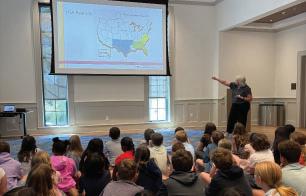
teacher sent thank you notes after the presentation with a note that several students have chosen to do their endof-year project on peanuts.

Peanut Butter Ganache Ingredients
1 cup heavy cream
1 1/4 cup white chocolate
2/3 cup cream peanut butter
Peanut Butter Ganache Directions
Heat heavy cream until just simmering. Pour over chopped white chocolate and peanut butter. Let sit 2 minutes, then stir until smooth. Cool to a pourable consistency.
Assembly
Core each cooled cupcake and fill with strawberry mousse. Pipe peanut butter buttercream generously on top.
Drizzle with peanut butter ganache. Garnish with roasted peanuts and fresh strawberries. Serve immediately or refrigerate.